Business RadioX ®

  • Home
  • Business RadioX ® Communities
    • Southeast
      • Alabama
        • Birmingham
      • Florida
        • Orlando
        • Pensacola
        • South Florida
        • Tampa
        • Tallahassee
      • Georgia
        • Atlanta
        • Cherokee
        • Forsyth
        • Greater Perimeter
        • Gwinnett
        • North Fulton
        • North Georgia
        • Northeast Georgia
        • Rome
        • Savannah
      • Louisiana
        • New Orleans
      • North Carolina
        • Charlotte
        • Raleigh
      • Tennessee
        • Chattanooga
        • Nashville
      • Virginia
        • Richmond
    • South Central
      • Arkansas
        • Northwest Arkansas
    • Midwest
      • Illinois
        • Chicago
      • Michigan
        • Detroit
      • Minnesota
        • Minneapolis St. Paul
      • Missouri
        • St. Louis
      • Ohio
        • Cleveland
        • Columbus
        • Dayton
    • Southwest
      • Arizona
        • Phoenix
        • Tucson
        • Valley
      • Texas
        • Austin
        • Dallas
        • Houston
    • West
      • California
        • Bay Area
        • LA
        • Pasadena
      • Colorado
        • Denver
      • Hawaii
        • Oahu
  • FAQs
  • About Us
    • Our Mission
    • Our Audience
    • Why It Works
    • What People Are Saying
    • BRX in the News
  • Resources
    • BRX Pro Tips
    • B2B Marketing: The 4Rs
    • High Velocity Selling Habits
    • Why Most B2B Media Strategies Fail
    • 9 Reasons To Sponsor A Business RadioX ® Show
  • Partner With Us
  • Veteran Business RadioX ®

WBE Feature – Women‘s Month & Stress Awareness: Workplace Wellbeing

April 9, 2024 by angishields

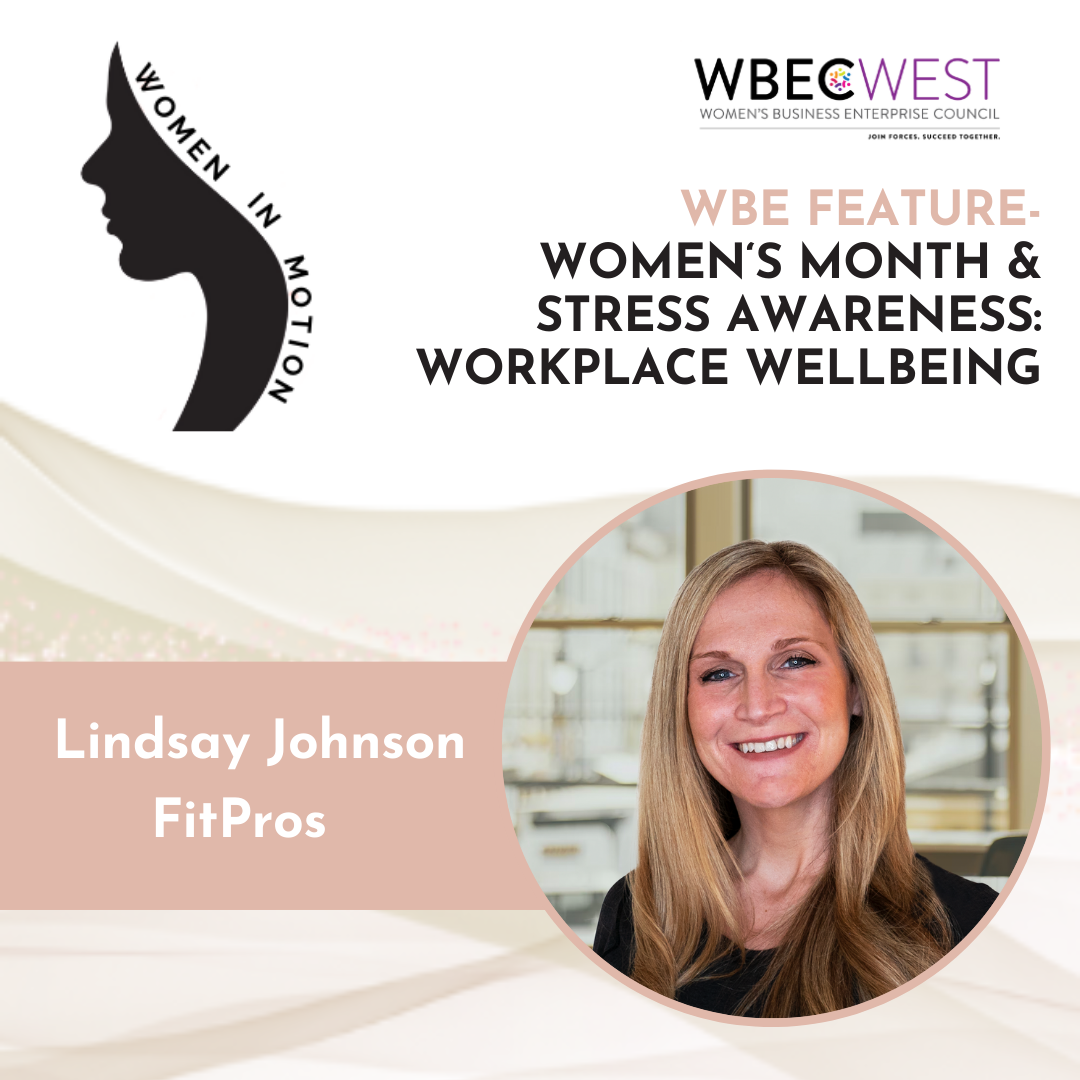
WomenInMotionTitleFitPros
Women in Motion
WBE Feature - Women‘s Month & Stress Awareness: Workplace Wellbeing
Loading
00:00 /
RSS Feed
Share
Link
Embed

Download file

In this episode of the Women in Motion, Lindsay Johnson, Founder of FitPros, discusses her company’s mission to enhance workplace wellbeing through a variety of services like fitness classes, speaker sessions, and team-building activities. She emphasizes the importance of live engagement, especially in remote work settings, and the use of breathwork for stress management. Lindsay also shares success stories from FitPros’ impact on individuals.

LIndsay-JohnsonLindsay Johnson is the Founder & CEO at FitPros.

After more than a decade of working in corporate America, Lindsay witnessed firsthand how well-being was deprioritized and often ignored entirely, leading to unhealthy and unmotivated employees.

She set out to change things in 2016 by founding FitPros, a corporate wellness company whose mission is to motivate employees through physical movement and mindful education.

FitPros services spans the globe, virtually, at worksites and through their mobile app platform.

Connect with Lindsay.

Music Provided by M PATH MUSIC

Transcript-iconThis transcript is machine transcribed by Sonix


TRANSCRIPT

Intro: [00:00:07] Broadcasting live from the Business RadioX studios. It’s time for Women in Motion. Brought to you by WBEC West. Join forces. Succeed together. Now here’s your host.

Lee Kantor: [00:00:27] Lee Kantor here, another episode of Women in Motion and this is going to be a good one. But before we get started, it’s important to recognize our sponsor, WBEC West. Without them, we couldn’t be sharing these important stories. Today on the show we have Lindsay Johnson with FitPros. Welcome, Lindsay.

Lindsay Johnson: [00:00:45] Well, thank you so much for having me.

Lee Kantor: [00:00:47] I am so excited to get caught up with you. Uh, for the folks who aren’t familiar, tell us a little bit about FitPros. How you serving folks?

Lindsay Johnson: [00:00:55] Absolutely. So FitPros is a workplace well-being service provider, and we help corporations offer on site and virtual well-being services that help them connect with the culture and with their personal health.

Lee Kantor: [00:01:07] So what’s your backstory? How’d you get involved in this line of work?

Lindsay Johnson: [00:01:11] Yeah. So, uh, I’ll try to give you the quick version. Um, but the fun version. So, uh, backstory is that I worked in corporate marketing for over a decade, and I, like many people, I was burnt out, I was overweight, I was unhealthy, I was drinking way too much, and I finally hit a wall. Let’s see, it was like 2011. And I said, I just can’t do this anymore. And so I started this, this journey. And then let’s skip ahead to 2013. I decided that I was going to stop drinking alcohol, and I decided to go on a retreat, a yoga retreat. Mind you, I’d never done yoga before. I was not, I had no idea what a downward facing dog was. I went on this yoga retreat and I woke up out of a meditation and I said, I think something has to change. Something has to change. And so, um, and I was only 90 days sober at that time. And so I decided to become a yoga teacher. And so I actually followed a teacher to India, and I got my yoga teacher training certification. And this was probably only a few months after the first retreat. And then in addition to yoga, I decided I was going to become a personal trainer and a health coach. And so and you can tell from my personality when I decide I’m going to do something, I just really jump right in, try to speed up and skip ahead.

Lindsay Johnson: [00:02:29] I did that for about two years. I was personal training women primarily and helping them attain their personal fitness goals. I was also, um, working on myself, doing a lot of inner work, and I also started competing in fitness competitions, and so I got down to 10% body fat. I was still, you know, sober at this point. So a couple years in, skip ahead to, uh, June of 2015, my youngest brother died in a car accident. And so when that happened, I hit another just, uh, rock bottom and decided that I needed to get away. I needed to get away from it all and just recenter my thoughts. And so so I went to Asia, I started backpacking and had some just really miraculous experiences. And I started writing a business plan. Uh, you know, I just, I connected my background of corporate marketing and sitting in that stale cubicle with a mean boss, and, um, and then I connected it with my new found passion for health and wellbeing and helping other people. And, um, when I got back to the States, I reached out to a friend and I said, hey, I have this idea. What do you think? And she’s a brilliant graphic designer and said, let’s build a brand. And so Fitpro was born officially in January of 2016.

Lee Kantor: [00:03:51] And then, um, when you started to, you know, try to get clients and explain the, the value proposition. What was that like? Because now this is it’s a different animal, like training an individual to be a client of yours, as opposed to explaining to a corporation the benefits of a workplace wellness program.

Lindsay Johnson: [00:04:12] Yeah. Great. Great question. Um, you know, I was when I was teaching yoga, I skipped over this part, but I was I was also teaching at Corporation, so I was living in the San Francisco Bay area at the time. And, um, I had the opportunity to teach yoga at a handful of tech companies. And so these were employers that already, for themselves, saw the difference of their employees when they went back to their desk. And I personally, as a teacher, was able to witness that myself. Um, and so I think employers, um, many employers know, especially today in this post-Covid remote world, which we can get more into, um, know that their employees are dealing with with things and they’re going to bring it to work no matter what. And so how can the employer help set the employee up for success? Because that’s truly going to help their bottom line when the employee is at their most productive. And so I truly believe at least the companies we work with at Fit pros see the positive ROI on investing in their investing in their employees.

Lee Kantor: [00:05:15] So is that, um, who your ideal client is? Is that kind of startup or that kind of tech tech type company that can has the vision for this type? Of culture they’re trying to have in their workplace.

Lindsay Johnson: [00:05:31] No. Well, no. Um, in the beginning of fitpro. So 2016, 2017, because it was started in the Bay area, that was tech was a lot of our clients. Um, and but today, I mean, we are a global company and so we are helping corporations, um, large and small. We have, you know, we have some clients, um, as small as 50 employees, up to, uh, 20,000 employees is probably about. Oh, no, we have a very, very large, uh, popular company I cannot name, um, who has probably nearly 100,000 employees. And so that’s the outlier. Our very sweet spot is probably 200 to 5000 employees.

Lee Kantor: [00:06:10] And then what’s the service you provide for them? Yeah.

Lindsay Johnson: [00:06:14] So, um, we provide virtual and on site services, everything from physical fitness classes. So yoga, boot camp, boxing, um, we also specialize in speaker sessions. So we call them health talks. And that is across the spectrum from financial well-being to mental health to physical development, um, to diversity, equity, inclusion and chiropractic care, you name it. We have hundreds of of professionals around the globe that speak on topics. And then a third category is a team building sessions. So that could be anything from cooking classes, trivia. We do magic shows for the family. Um, and I’ll throw in a nugget there because your family is so important. And so we know that a lot of employers also want to support their parenting groups. And so, you know, we we really like to offer the spectrum of, of sessions. Um, and this is, you know, the statement I usually say is all of us, all of us on listening in today are going through something, but we’re not all going through the same thing. So the best thing an employer can do is offer a variety of of well-being sessions and activities that engage their employees. In. The number one differentiator with Fit Pros is that we focus in live, live engagement because, um, you also get the on demand recordings with what we do, but we really focus in live because in today’s world, we’re we’re very disconnected from when when we were primarily in the office, we were able to pass the hallway and talk, talk about those conversations that help us belong and feel like a community. And now people are feeling so disconnected. So, um, we really are intentional about the live engagement within our programing.

Lee Kantor: [00:08:03] Now, it sounds like, uh, your menu of offerings to any given company is pretty holistic, like, it’s a wide range. It’s not you’re not you’re not defining fitness and wellness very narrowly. You’re taking kind of this, uh, wide net kind of point of view when it comes to this. Um, was that by the demands of your customers just telling you that or is that something how you believe that wellness really is all encompassing?

Lindsay Johnson: [00:08:30] Uh, I mean, it is a belief of mine that that it is all encompassing. Um, but I would say it was it was certainly hand in hand. Um, when Fitpro started, um, prior to Covid, we were primarily an on site company. And so we would bring professionals into corporations and perform the service. Um, as time went on, we in Covid, we had to get we had to perfect virtual. So we had to perfect the virtual services. Um, and. So that so today, um, you know, we we also rolled out another, uh, program, uh, last year called Fit Pros Live. Um, and just as of January of this year, we launched our app. And so, um, you know, even back when we started, one of our core values is making well-being accessible. That has not changed. And today, with the app that allows us to be in the hands of people wherever they are and our platform, our Fit Pros Live platform offers 400 or more live sessions throughout the year that employees can tune into and engage with the the speaker. They can engage in chat with the audience. Um. And did that answer your question.

Lee Kantor: [00:09:46] Yeah. And so there’s also it’s the live element is super important because it’s obviously bringing a lot of people together at one time. For one thing it’s a shared experience. But like if I miss that, is there still a library of, um, classes or workouts or, you know, different things that I can kind of get access to, you know, without a schedule, like just, you know, when it’s convenient for me 100%.

Lindsay Johnson: [00:10:13] Yeah, absolutely. Um, yep. We we include all of the recordings from all of the sessions. So things definitely come up and people miss the session so they can check it out at a later time. Yep. That’s that’s absolutely included with the platform.

Lee Kantor: [00:10:25] Now for the listener. Um, stress is so, uh, on a lot of people’s minds. Uh, way too often I think, uh, you know, for everybody’s own well-being. But any advice or tips you can give somebody listening now, when it comes to stress management, is there anything like somebody listening could take action right now and kind of lower their stress or manage their stress better?

Lindsay Johnson: [00:10:51] Breath. Oh my goodness breath. We I remember during yoga teacher training the the teacher said, um, breath is the first thing you come into this world with and it’s the last thing you leave with its breath is always with you. And so if anyone this is obviously a no cost thing that we can all do, I like to plant my two feet on the ground and put my hands on my belly and take the biggest belly breath that I possibly can. I expand my tummy. I expand my lungs, inhaling. I bet you guys are doing it right now, aren’t you?

Lee Kantor: [00:11:24] I am, I’m a big believer in in deep breathing.

Lindsay Johnson: [00:11:29] Oh, amazing. Do you, do you do some yoga yourself?

Lee Kantor: [00:11:32] I have dabbled I haven’t been able to be as consistent as I’d like, but I go through periods where I do it and then I stop doing it.

Lindsay Johnson: [00:11:41] Yeah. And that’s so natural. We all do. I was just talking to my mother in law about this yesterday. Um, because she was getting hard on herself about meditating. And I said, you know, one thing that a teacher told me was that meditating is what we make of it. A lot of people think they’re doing it wrong because they can’t concentrate. And wrong is only in our mind because the thoughts will constantly come in our mind. Um, so that’s okay. But what I like to do and what I suggest for people when those thoughts come in, so let’s just say, you know, we’ll take it back. We’re taking that big belly breath and we take a couple of moments to inhale and exhale. And that thought comes in and you’re like, oh, I don’t want this thought here. I like to think of it as elf on the shelf. And so I visualize this little thought and I put it up on the shelf. And that helps bring me back. And I just again put my hands on my belly, inhale and exhale. And it just really helps ground me and recenter.

Lee Kantor: [00:12:42] Yeah. And it’s not something you have to do for like an hour. Like just a couple of breaths kind of can recenter you.

Lindsay Johnson: [00:12:48] It’s so true. Oh my goodness.

Lee Kantor: [00:12:51] Yeah. It’s one of those things, um, when you learn that and you really apply that, it it does make a difference and it is noticeable difference. And I just think it’s, it’s so counterintuitive that your breath, which everybody’s breathing at all times, is the thing that can really, um, kind of get you out of a stressful situation. You can recenter.

Lindsay Johnson: [00:13:15] It’s so true. It’s so true. It’s when I, um, when I am preparing to go speak on stage at a conference or whatnot, I get so anxious even before talking to you today. Lee, I am so anxious. I, um, to manage my stress. I in my hand right now. You probably can’t see it, but I have this little rock, um, that says strength on it. And so I find that as a little tool. And so that might be another thing for people. Um, I’ve seen, I’ve seen people put, like a rubber band on their wrist and just kind of tap it gently when they’re feeling stressed. Um, do you have anything like that, Lee.

Lee Kantor: [00:13:48] I have, I have a little stone that says create. That’s my kind of mantra of life. Um, I would want to be a creator. Um, so that’s what I use to kind of center myself. And I have that around, around me. And then I try to be mindful and be in the moment, like doing this job. As long as I’ve done this job, it forces me to be in the moment. I’m wearing headset, I’m talking a microphone, I’m talking to a person kind of intimately, and I want to stay locked in and I want to be able to react to what’s happening. So I think it’s I mean, I’ve been doing this for so long, it kind of helps me stay kind of in the moment in real life as well.

Lindsay Johnson: [00:14:31] Yeah. Yeah yeah, yeah. Especially. Yeah. In a role like yours. Yeah. You can’t, you can’t just start thinking about something else or typing something else. And I think a lot of a lot. And just to kind of tie it back, you know, a I don’t know that. Statistic off the top of my head, but a majority of people are still working remote or hybrid, and it’s so easy. In zoom meetings I do this too. We get distracted and we’re trying to do so many things at once. A role like yours, that’s not that. That is impossible. Um, but I think that, um, you know, tying it back to, to Fitpro sessions and a reason we are focused on live is because that does help people stay intentional about the accountability piece. Um, you know, when something’s live and your colleagues are expecting you to show up to this session, um, let’s just because with our with our app platform, it includes challenges. And so one of the unique things that we have is it’s called check in challenges. And so, um, let’s just say a company wants to do a challenge for one quarter and per month. There’s approximately 30 to 40 sessions that fit pros offers, so employees can check in for however many they attend. Well, you know that that accountability of of oh, either a my colleagues are going to show up or B, I want to beat my colleagues like I want, I want to I want to win in this competition. Um, it helps kind of piece together the again the accountability piece, the showing up, the being present and um and help it helps build that company culture and help someone with their own well-being at the same time.

Lee Kantor: [00:16:09] Now, um, is there a story you can share? Obviously don’t name the person or the company, but they came to you and they were at, you know, a place. And then after working with you and your team for a period of time, they got to a new level. Um, can you share that kind of before and after, uh, with either an individual or a company you work with where you really made a difference?

Lindsay Johnson: [00:16:32] Yeah, I got a couple really good nuggets. I think the most recent, um, that made me cry because I’m. I am a new mother. I have a six month old, and, um, a gentleman came to a meditation, and mind you, um, it’s I’m so thrilled today in today’s age that we are seeing more men. But eight years ago, when I started Fitpro, a lot of men weren’t showing up very much. But today they are. And that that really fills my heart. Um, so this was a new father. He showed he, um, was in a meditation. Um, at the end of every session, our pro drops a link in the chat and encourages people to tell tell us about their experience. And so this gentleman filled out the feedback form, and he shared that, um, seven weeks ago, his daughter was born, um, and she’s been at Saint Jude ever since her birth. Um, and I think as a, as a male, um, in a father, um, you may perhaps are not as connected to the baby just because the mother carried them or, um, and so, um, he also shared that, and then he hadn’t been with her for seven weeks. And so, um, he was able to share that, that meditation, he sat in on a fitpro session, uh, whatever the speaker said, whatever the focus of that session was, um, really, it helped him go to a new level of connecting with his daughter, and he just felt this new closeness that he hadn’t been able to experience yet. And so I hope, I, I hope I expressed everything that he did top level, because the emotion when I was reading his words, I just I started bawling. And it just, um, when you can have an impact on that, that end user, that employee, um, is just that’s why we do this. Um, it’s, you know, of course. I’m sitting here and we’re working with corporations. Those are our direct clients. But truly, who we’re doing this for is the end employee that attend the session. Um, and in a story like that, it just it just reinforces why.

Lee Kantor: [00:18:48] Yeah, the impact is real. I mean, it’s tangible. That left a mark on that person and it’s going to carry with him and, and potentially make him a better father, a better spouse, you know, it’s a better employee. I mean, they’re all connected completely.

Lindsay Johnson: [00:19:04] Another quick one is we were doing, um, on site self-defense workshops in San Francisco. Um, and it was it was for a big tech company that was right downtown in the heart. And, um, someone got mugged. Um, one of the employees at this company got mugged. And so the company decided they’re going to do these consistent on site, um, self-defense workshops. And, um, the I just remember I attended this one, and, uh, a woman pulled me aside after, and she’s like, so and so was my friend. And, um, I was going to walk home with her that day, and I’m I’m so grateful that I now feel armed with knowing how to handle those situations like that. I could I will protect myself, but then I could also protect my friend. And so you know that again, it’s it’s these are real life things that people go through. Um, and so how can we arm people with the tools to, to handle that?

Lee Kantor: [00:20:00] And it says a lot, uh, for the culture of those organizations that are investing in fit pros for their employees and themselves is that they care about the totality of their employee, not just the work they’re doing while they’re there.

Lindsay Johnson: [00:20:18] Yes, 100%. They they realize that we’re all humans. We all have human issues. We we in it, you know, we have work to do. But if if we don’t feel whole in all the other parts of our life, then we’re not able to show up and be our best.

Lee Kantor: [00:20:36] Yeah. And this is something that is I’m sure helps in retention. It helps in when you’re trying to recruit new employees like this pays dividends. And there’s probably, I’m sure, a tangible ROI that’s associated with it. This isn’t just kind of a fluffy, nice to have. This is stuff that really pays off for those companies and it pays off for the employees. So it’s a win win win all the way around.

Lindsay Johnson: [00:21:03] Yeah, you nailed it. And, um, brought up another topic I think. Well, well wellness um, has such had and still has kind of a bad connotation that you can’t really find the value, the ROI on, on wellness. Well, you can um, you can a these tangible stories, you know, attaining the feedback that we do. And then we share that feedback, um, with the employer anonymously. And the employee note has the option to be anonymous if they so wish. Um, we have these feedback links, but then, um, at least at Fit Pros, we, um, have the check ins and we know how many employees are registering for events, how many are attending events. Um, and then also the engagement, which employees, which teams are engaging in the sessions and the commentary and the social hub wellness, the feed in the app. So my point is, like we do have ways to, to to tangibly let a company know your employees are seeing a difference. So, um, it’s critical.

Lee Kantor: [00:22:10] Now, before we wrap up, um, can you share why it was important for you to get certified and why being involved with WebEx West was a good investment for your organization?

Lindsay Johnson: [00:22:23] Absolutely. I remember a handful of years ago, someone asked me if I was part of Webbank West, and this was when I first started the company. And, you know, early on, entrepreneur. I was like, no, no, no, but I’ll look into it. And then three years ago, um, we joined again because it’s just Webbank has such a great reputation. Um, I’m so proud to wear the logo. We have it on our website, we have it in our emails, we put it on our, um, our, uh, our fliers. And so, um, it’s, we think is such a reputable, um, business. Um, also the connections I’ve met a lot of phenomenal women, um, through the webbank. And so, um, I’m really appreciative for the connections and, and the opportunity for referrals. Um, although I haven’t gone to the conference, which I believe is coming up very soon, I’m so excited to in the future, I think there’s a lot of opportunity with the uniqueness that is put into the curriculum with Webbank events. And so and then finally, I have attended a handful of really awesome training sessions. I think Webbank is so intentional about teaching people how to make the most. Get the most out of their certifications. So, um, it’s just it’s not like your normal. I’ve. I’ve joined a lot of, uh, certification type, uh, programs in the past, and, uh, Webbink takes the extra steps to ensure that people are getting the most out of it.

Lee Kantor: [00:23:50] Well, if somebody wants to learn more about fit pros and have more substantive conversation with you or somebody on the team, what is the website? What is the best way to get Ahold of you?

Lindsay Johnson: [00:23:59] Yeah, our website is fit Proz.com. Fit Proz.com. And email is helloapp. Proz.com.

Lee Kantor: [00:24:07] Well, Lindsay, thank you so much for sharing your story today. You’re doing such important work.

Lindsay Johnson: [00:24:12] Thank you so much. Thank you for this opportunity. Thank you and Webbank for this opportunity.

Lee Kantor: [00:24:16] All right. This is Lee Kantor. We’ll see you all next time on Women in Motion. Are.

 

Tagged With: FitPros

Women Business Owners Leading the Way (With Male Partners) Part 2

October 18, 2023 by angishields

WIM-Male-Partners-Pt2-feature
Women in Motion
Women Business Owners Leading the Way (With Male Partners) Part 2
Loading
00:00 /
RSS Feed
Share
Link
Embed

Download file

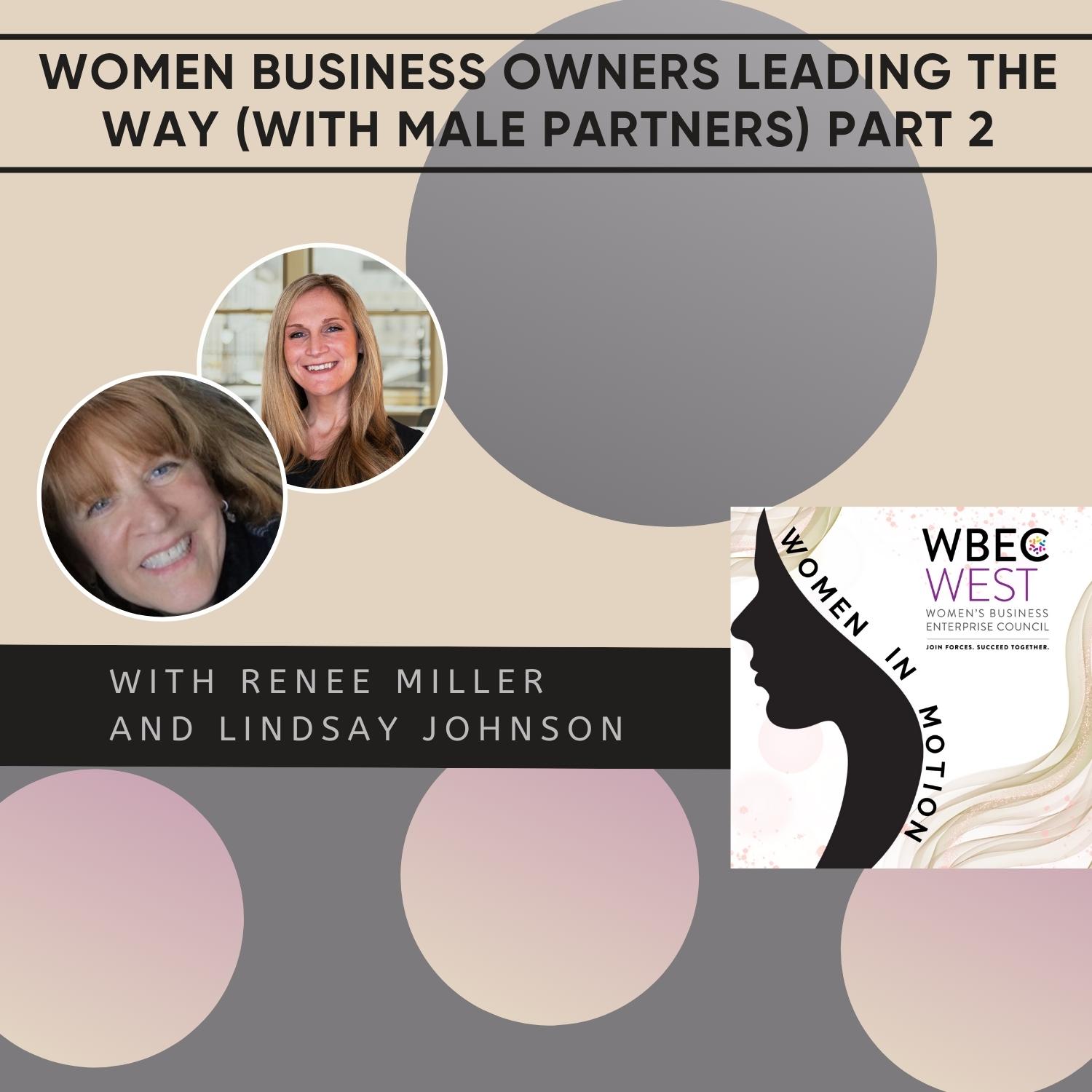
In this episode of Women in Motion, Lee Kantor and Dr. Pamela Williamson discuss women business leaders working with male partners with guests Lindsay Johnson, founder of FitPros and Renee Miller, founder of The Miller Group.

Lindsay’s husband joined her company full-time, helping with finances and operations, and Renee’s husband, an independent filmmaker, handles video production at her agency. Both women stress the importance of work-life balance, respect, and communication in their personal and work relationships. They also discuss how their relationships impact their corporate culture and how they navigate disagreements.

Lindsay-JohnsonAfter more than a decade of working in corporate America, Lindsay Johnson witnessed firsthand how wellbeing was deprioritized and often ignored entirely, leading to unhealthy and unmotivated employees.

She set out to change things in 2016 by founding FitPros, a corporate wellness company whose mission is to motivate employees through physical movement and mindful education. FitPros serves leading companies around the world by designing and implementing custom wellness plans that deliver high-engagement virtual and on-site employee programs.

With a roster of top trainers and expert speakers, FitPro’s comprehensive wellness initiatives improve retention and recruit high-caliber employees, all while reducing the cost of an organization’s healthcare claims. Lindsay reinforces the importance of healthy employees by regularly speaking to executive HR teams and at industry conferences.

Lindsay lives in San Diego with her husband, two cats and two sons under the age of two.

Renee-MillerRenee Miller is one of a handful of women to start her own branding/ad agency in 1990, The Miller Group, a woman-owned, purpose driven agency focused on sustainability.

Renee’s passion for sustainability goes back more than 30 years. Her branding efforts helped raise money and awareness for the Robert Redford Green Building, Southern California headquarters for the NRDC. She is currently a member of Resilient Palisades, Conscious Capitalism, She Runs It and Own It.

She mentors through WoMentoring – a career development program for women through JVS, and has been an ongoing mentor and judge for the One Club’s Creative Boot.

About our Co-Host

Pamela-Williamson-WBEC-WestDr. Pamela Williamson, President & CEO of WBEC-West,  is an exemplary, dedicated individual, and has extensive experience as a senior leader for over twenty years.

She has served as the CEO of SABA 7 a consulting firm, overseen quality control at a Psychiatric urgent care facility of a National Behavioral Health Care Organization where she served as Vice President and Deputy Director,and has served as the CEO of WBEC-West, since 2008.

Her extensive experience in developing and implementing innovative alliances with key stakeholders has enabled the organizations to reach new levels of growth and stability. Her ability to lead and empower staff members creates a strong team environment which filters throughout the entire organization.

She takes an active role in facilitating connections between corporations and women business enterprises and sees a promising future for WBENC Certified women-owned businesses.

Dr. Williamson holds a Doctorate in Healthcare Administration, a Master’s degrees in Business Administration, and bachelor degrees in both Psychology and Sociology.

Connect with Dr. Williamson on LinkedIn.

Music Provided by M PATH MUSIC

This transcript is machine transcribed by Sonix

TRANSCRIPT

Intro: [00:00:07] Broadcasting live from the Business RadioX studios. It’s time for Women in Motion. Brought to you by WBEC West. Join forces. Succeed together. Now here’s your host.

Lee Kantor: [00:00:27] Lee Kantor here with Dr. Pamela Williamson. Another episode of Women in Motion. Today the topic is Women Business leading the way with their male partners. Dr. Pamela, how are you doing today?

Dr. Pamela Williamson: [00:00:42] You know what? I am doing great. The weather is beautiful in Arizona. We are finally out of those 115 116 degree weather. So life is good here. So it’s a.

Lee Kantor: [00:00:53] Cold front in the low one hundreds.

Dr. Pamela Williamson: [00:00:55] Now it is a cold front in the low one hundreds.

Lee Kantor: [00:00:59] Well I’m so excited about this topic. Women that are leading their companies, but they have male partners. Tell us who we have today.

Dr. Pamela Williamson: [00:01:08] Well, I’m excited today because we have two amazing women, both from different industries, but both who have been extremely successful in what they do. We have Lindsey Johnson, the founder and CEO of Fit Pro Tips, and we have Renee Miller, founder and executive creative director of the Miller Group. So welcome, ladies.

Lindsay Johnson: [00:01:28] Thank you.

Renee Miller: [00:01:29] Thanks, Pamela.

Dr. Pamela Williamson: [00:01:30] So I’d like to kick off with just sharing, having you share with our audience a little bit about your companies, how you started your business. And, Lindsey, do you mind starting out?

Lindsay Johnson: [00:01:40] Absolutely, yeah. Hello. Thank you for having me. I’m Lindsey Johnson, founder and CEO of Fit Pros. We are a workplace wellbeing service provider. Super quick overview. I started this company back in 2016 and that was all obviously pre Covid. And back then we primarily serviced employers on site. So we would bring wellbeing services into their office and anything from exercise classes, speaker sessions and then also social engagement such as cooking classes or self-defense workshops. And then when Covid hit we had to get super creative and we went virtual. And so today we have over 200 wellbeing programs that engage the employees with their total holistic wellbeing. So we offer everything from parenting seminars to painting classes, both again virtual and on site. So it’s a lot of fun.

Dr. Pamela Williamson: [00:02:32] Well that’s amazing. Thank you. And Renee, tell us a little bit about your business and how you started.

Renee Miller: [00:02:39] Thanks, Pamela. So the Miller Group is a creative boutique marketing, advertising and branding agency. We have clients who are regional, national and international, and I started in 1990, and there were literally less than a handful of women owned ad agencies in Southern California at the time. And I just found out recently through another organization I belong to, that there are still less than 2% of all marketing, branding and ad agencies are women owned, which is very hard to believe. So a lot has changed and a lot hasn’t changed.

Lee Kantor: [00:03:26] Now, as we get into this topic of women business leaders with male partners, can you tell us a little bit about each of your companies? And we’ll start with you, Lindsay. Like, how is a male partner involved in your organization?

Lindsay Johnson: [00:03:40] Yeah. Well, if it’s okay, I’ll give a little bit of background about how it got started. And then when my husband, now husband, joined me. So like I said, I started the company back in 2016, but that was after working in the corporate world for over a decade, and I was in marketing at actually at an advertising agency for quite a while. So I but I was burnt out, I was overweight, I was unhealthy, and I was drinking way too much. And so, um, 2013, I decided to get sober, but that was with the help of my then boyfriend, now husband. Little secret there. But then boyfriend said, if you don’t realize that alcohol is not good for you, I can’t be in your life. So we split up and I went on this self self journey to find myself and um, got out of the corporate world and became a personal trainer, health coach and yoga teacher. I went to India, I did my yoga teacher training certification over there total eat, pray, love. And at that point I was 90 days sober. So I just my journey escalated from there. I did that for about two years. And then in 2015, my youngest brother died in a car accident. And it was one of those, again, life changes where I knew that I was doing things better for myself. I had gotten very healthy. I was competing in fitness competitions, and and I was helping other people find their health and happiness one on one. But I knew there was more, I knew there was more I wanted to do.

Lindsay Johnson: [00:05:12] And so I put my thinking cap on and I was like, man, I remember being that unhappy person in the corporate world. Working. Yeah, I’m sure, I’m sure. Renee, you know, sun up to sun down. You’re working at an agency. And I again, I was traveling so much with clients and drinking and embarrassing myself. I was like, how can I bring these resources to employees who could be suffering the way I was? And that’s when it took a couple of months. My brother died in June. It was, uh, September, October. I decided to go backpacking through Asia. So it was it was in Asia. I was there for about three months and I started writing a business plan. I put together the experiences I was having back in the corporate world, with my newfound knowledge of health and fitness and meditation and yoga, and how all of that brought peace to me. And that’s where Fitpro was born. I started the company in January 2016, and today we are a global wellbeing company, helping phenomenal employers around the world bring the gamut of activities to their employees because everybody’s going through something, but we’re not all going through the same thing. So some people need, you know, they need to feel that they belong within their their company. They need to grow within their career. And sometimes people just need some tools to meditate. So we we do the gamut of those things.

Lee Kantor: [00:06:42] So how did.

Lindsay Johnson: [00:06:44] Apologize.

Lee Kantor: [00:06:44] So how did your now husband kind of join back in. Like how did that occur? What was the catalyst for that?

Lindsay Johnson: [00:06:53] You got it. So he went off on his own venture. We were living in Silicon Valley, so he started a tech company and it it was acquired in 2016. And but he was he he went off and he started I’m not going to go too far on the details, but he started dating other people. I did not. And so I was building my company that whole time. Um, but then in 2016, we just started talking again and having conversations of, um, and, you know, life brings people together. His dad passed away the same time my brother passed away. And so when that happened, we just started leaning on each other, and he started helping me with the the finances and a little back end operational things. Um, and then through the years, he had to he had the golden handcuffs with the company that he was working with for a while. And then when he was able to leave that company, he decided to come on full time with Fitpro, which was actually January of this year. So all that time he was working in the back background, but he is now full time and we it’s a ride. We can talk more about that.

Lee Kantor: [00:08:03] Yeah, we’ll definitely get into that. But I want to let’s bring Renee back in. Renee, I know in your situation you’re the 100% owner of your company, but you have male male partners in leadership roles.

Renee Miller: [00:08:16] Yeah, thankfully. First of all, Lindsay, great story. One thing I want to mention, um, it looks like there’s a theme here today, which is life changes. And as Lindsay said, the advertising, marketing and branding business is very, very difficult. So before we get into the partner part of it, I do want to mention that we had very kind of a similar situation to you and that it’s like we all kind of came to the idea of how can. We be more of service to the planet. So we’re going through a transition with the company, and we’ve been focused on purpose driven business, and now we’re stepping it up and focusing on sustainability. So sustainable initiatives lead. To answer your question, my husband, who was a independent feature film maker for many years, joined the company about ten years ago, and he does all of our video production. We’re able to provide very high level video to clients at a fraction of the price they would pay an ad agency because of all of his relationships with directors and editors. So. So he’s been involved, and I’ve also had a consultant who’s been part of the agency now for 18 years, Bill Williams, who’s phenomenal. He’s an amazing researcher. He does a lot of work with strategy and he helps with business development. One of the smartest guys I know, I do want to mention Lee. Interestingly, back in the 90s, when I started the agency, I literally had to bring with me, hire several men to come on board. And in a couple cases in particular, the clients would address their questions directly to the men in the room. Even though I was the owner of the company, it was really an interesting time today that I don’t think that would ever happen again, because a lot more women are at the helm. But it was a very strange time, and you just kind of learn to adapt to the situation. And I knew that going in this was just something that had to, had to, had to be. So it’s learning how, as I said, learning how to adapt to the situation.

Lee Kantor: [00:11:10] So now each of you mentioned kind of this juggling act between your home life and your work life and the balance that you try to, you know, at least have between both of those. Each of you has a spouse involved in their in their organization. Can you talk a little bit about how you draw lines or if you draw lines between work time and home time? Has has that been a difficult dance?

Lindsay Johnson: [00:11:40] Yeah, I can start. Um, well, currently it’s a difficult dance because I have a six week old and a two year old. Um, so our house is a little chaos with two two in diapers still. But aside from that, the way that I’ve built the company, we are a fully remote company. And, um. And what? I don’t just encourage it. It’s kind of more of a mandatory that you need to take care of yourself. And so if my employees need to go get a massage during the middle of the day, I encourage them to do that if they need to work out, if they need to, you know, take a walk, do whatever they need to do. They’re highly encouraged to do that. So in our home life, we try to do the same with the company on our calendar. We have it blocked in on everybody’s calendar called intentional Hour, and so everyone blocks off their no meetings during that time, no slacking anybody. And so during that intentional hour, you know, I make sure that I exercise as does my husband. He likes to cycle. I like to weightlift. And so we just do our own individual things. Um, you know, even this morning I made sure I did not have much time, as you can imagine, trying to get the little one off the two year old off to daycare. But I took ten minutes and I meditated just to recenter. And so really making just being so intentional about the time, even when you just feel that you don’t have it, is critical.

Renee Miller: [00:13:11] Great answer. So I will say that having had the company for such a long time, there are ups and downs and it definitely there are times when very stressful times. There are times when when it’s, there’s a lot of elation and and it definitely does seep into the personal life. It’s it’s we also like Lindsay, we’re we’ve become virtual since Covid and and the nice thing about that is everyone who works for us really gets to create their own hours, their own schedule. We are very empowering of people. So, um, we don’t you know, there’s no there’s no clock punching and everyone’s accountable for their own time. So, um, but but it definitely it’s definitely been a challenge. It’s definitely been a challenge. And and yeah.

Lindsay Johnson: [00:14:24] I’ll add to that too, I think because both my husband and I are entrepreneurs, like we love to work. And so one thing we have I was recently meeting with one of my employees, and she was like, you’re supposed to be on maternity leave right now. And I was like, I love to work so much. And my husband and I talk about new ideas at breakfast, lunch, like all that. Even when we’re on a date date night, it’s like we go through business things and we certainly make time for family stuff. I think Rene knows it’s it’s it’s it’s a it’s hard to do when you’re when your work is your everything and your livelihood. Um, but we love it so much. I guess that’s what I wanted to add is, is it’s not, um, I don’t necessarily need the break as much as I want to make sure my employees have the break. Um, so that’s. It’s a weird balance.

Renee Miller: [00:15:17] Yeah, you’re absolutely right. I would just say one thing, too, is that we’re very. My husband and I are very different in that he is he processes things. He’s very even super organized, exceedingly detail oriented. And I’m one of those like type A, let’s go after. Give me the bottom line. You know, you know, he’ll want to tell a story about something and process. And I’m like, just tell me the bottom. He’s used to that because his sister and his mom are more like me. But it’s they’re very different styles and he always ends up we always end up at the same place. But, you know, it’s very different work styles. I don’t know about you, Lindsay. Same thing.

Lindsay Johnson: [00:16:03] I’m sitting here nodding. Yeah, 100%. He’s very analytical. And I think that’s what makes us such a great team is I just I can synthesize the information and run with it where he needs to just disseminate everything. And but I respect that that respect and communication are if we did not have those as pillars of our personal relationship and work relationship, it’s nothing would work. It would just all fall down. We have to respect that. That person is so good at doing the things I’m not great at and then vice versa. Same with parenting. We have very different parenting styles and like even yesterday, I let the two year old do something and he was like, can we not do that? I was like, you do you? I’ll do me.

Renee Miller: [00:16:52] And so that’s so true. That’s so true. Also know that one more thing, Lee, I’d like to add is that when there is a production, video production, film production, live streaming, I absolutely know that he will handle everything. I don’t have to jump. And in fact, one of our clients said, Renee, you don’t need to be coming to these anymore. Gary’s team can handle and he got to travel all over the country for many years with this client doing a streaming, live streaming broadcast, which was great. And, you know, and he I know that if I put anything video in his hands, I don’t have to worry about it.

Lee Kantor: [00:17:42] Now, how do you see your relationship impacting the culture that you have at your organizations, like how does the rest of the team feel, or how do they kind of deal with your relationship? Is that a helping them be better? Like, is it improving the quality of the operation? Like how does your how do you see your relationship kind of impacting corporate culture?

Lindsay Johnson: [00:18:10] That’s a really great question. I think I’d really need to serve my employer, survey my employees and ask them, I think, to again. But I’ll give an example. We were at a team retreat last a year ago and one of one of my male employees. What? When we met in person, he was like, I’m so relieved to see the respectful affection, I guess, um, that Andrew, my husband and I have together, when we were in person, that male employee was able to see that we do hold hands and we do, um, we’re, you know, no PDA of any of that sort. But we respect each other. And because when we’re virtual, the employees only saw us being very professional in our boxes. He has his office, I have my office. And I keep the lines very intentional. If my husband’s out of line, um, which matter of fact, about a month ago there was a situation where he said something an employee didn’t agree with someone else on our leadership team. And I had to basically tell my husband, like, that’s not okay. What you said was not appropriate. And, and then also address a situation with her because the way she reacted was. So I have to be very intentional about taking my role as a CEO very seriously, because it’s a it’s a I’m running a company here at the end of the day. And, you know, my husband and I have an agreement that if I have to treat him like every other employee, because if I was to give him fair treatment, everyone else would leave. That’s not that’s not okay for them. So, um, so it’s a it’s a fine line, but I, I hope that my employees feel that, that I take their opinion and feedback just in the work situation just as seriously as I intake all of his.

Renee Miller: [00:20:14] And on my end. As Lindy said, keeping things separate. We we don’t make a point of announcing to people that we’re married. I think especially clients, because it’s really I find that we did that many, many years ago. We ended up having a dinner with a client and mentioned that we were married, and it was very awkward. So we really keep those roles very separate. And some people figure it out and some people it doesn’t really. We don’t make a point of letting them know, as Lindsay said. So everybody feels equal.

Lindsay Johnson: [00:20:59] It’s a little complicated. Like on our website, we have both have the same last name obviously, and so similar to you. Like I don’t I don’t want to go out of our way to, to say, but I also don’t want to hide it either. So I’m proud of us building what we’re building. Um, so it’s it’s a weird, weird situation there because. Yeah, I’ve had a similar thing with a client. They were like, oh, your husband works with you. And it the way that she replied, it was almost like a downgrading what I’ve built. And I’m like, whoa, that’s not okay. Just because he’s phenomenal at things. I’m not so great at that. We’re a great partnership. So there are awkward situations which I don’t know why society does that.

Renee Miller: [00:21:41] Yeah, yeah, it’s very interesting.

Lee Kantor: [00:21:44] Now, you mentioned that stylistically you each have your own kind of way of doing what you do in each of your organizations. Can you talk about how you celebrate wins, like is the way you celebrate wins different or is that something where maybe you surprised each other about how one of you celebrates in one way and or the other a different way? Like, is there anything around that you can share?

Lindsay Johnson: [00:22:10] Yeah. Can. I think a difference between us is that I’m a very empathetic person, so I communicate my love language, I guess would be more attentiveness and just get in acts of service and and gifts. And so I, I like to, you know, give my employees certain things like when we’re in person, when we’re having a team retreat or a team meeting, I like to ensure that the food display has something that everybody likes, right? Where my husband is, he is great at we have a slack channel that’s called the winning channel that he started, and we celebrate wins in there. All of our big, all of our sales go through that. So like when there’s a sale, everyone cheers on the sales there. And he’s also more, um, he’s he’s better at monetarily rewarding our employees than I am. So I think that I like to I like to be the acknowledgment of and recognition where he’s better with the financial side and and documenting the wins. How about you? So?

Renee Miller: [00:23:22] So for me, I would just say a couple of words. When you talk about celebrating wins, I’m the eternal optimist. And he calls himself the realist. So I’m always looking at the glass half full. I wouldn’t say he looks at the glass half empty, but he says, you know, he’s much more of a realist. So. So I get he he grounds me a lot because I tend to look at things with rose colored glasses. Oh, you know, this is great. Everything is everything is wonderful. And and he’s much more realistic. Well, let’s let’s just see what happens. Let’s wait and see. And I have this whole mindset I do a lot of as as Lindsey said, I do a lot of meditating. I do yoga, I do a lot of spiritual work. I’m in a group with, in addition to Webbank, a group of very powerful women, and we feed off each other and we get together once a week and we talk about, you know, our wins. I do a lot of mentoring of young women. So I’m all about like really celebrating life and living big and just dreaming big. And sometimes things work out and sometimes they don’t. But I really that’s kind of my gestalt and it’s always been that way.

Lindsay Johnson: [00:24:58] Renee, this is the first time we’ve met, but I want to be friends for life. I hope so, Lindsay.

Renee Miller: [00:25:03] That sounds great.

Lee Kantor: [00:25:06] Now, can you share for the listener who is either thinking about partnering with a male partner or maybe is doing it and is struggling a little bit? Is there any advice that you can share? You know, do’s and don’ts, things that are kind of must do’s or things that you, you know, that are red flags that maybe you shouldn’t do some sort of advice for that person that is at the early stages, or is contemplating getting involved and having a male partner in their business.

Lindsay Johnson: [00:25:42] Well, I would say ensure that you have respect and good communication with with your partner because. Stuff’s going to hit the fan. And when it does, it’s hard, at least for me, to remain cool sometimes. And so with often happens when when I can’t remain cool, my husband does and then vice versa. So we tend to have that really good like communicate even even nonverbal communication with each other that we, we, we know when we need to support the other person. So I would try to ensure like those sorts of things are in place and then boundaries, you know, just knowing, knowing your personal boundaries of what you will and will not put up with, whether it’s with any other employee or with your spouse. Because again, things, things will get hard. And when they do, um, you, you know, you you would probably wouldn’t let a certain employee talk to you in one way. It’s it’s not okay for a partner or a spouse to to talk disrespectfully. So just being aware that things are not always going to be bright and shiny. And so just having tools and resources when when things are icky.

Renee Miller: [00:27:11] That’s a great answer, Lindsey. Yeah, it’s it’s, I think, talk things over, listen to each other, give each other feedback. Um, it’s hard sometimes. We all want to be. We all end up being judgmental of ourselves and of our employees, of our spouses. So it’s really being aware. I know sometimes it’s like I’m off to the races and my head is just chatting away and it’s like, whoops, I got to just be aware. Be grounded and see when I’m when I get like that, just I’ve got to just detach. And that’s as Lindsey said, it’s a challenge like marriage.

Lindsay Johnson: [00:27:55] It’s it’s always work too, because I especially right now, I’m six weeks off of having a baby. I’m very hormonal. And so we’ll be in the kitchen and my husband will say something and and I just start fuming. Right now and I have to check myself. I have to, you know, just say, I can’t do this right now. I will pick this back up later. And he might not always like that response either. But sometimes you just have to know, like tune back into yourself because it’s easy to get frustrated.

Lee Kantor: [00:28:29] So how do you break ties? Do you have like as a policy? Like sometimes if there’s a disagreement that’s an automatic no. Or is there like kind of rules you have when it comes to disagreements?

Lindsay Johnson: [00:28:46] Um, define break ties. So are you saying so?

Lee Kantor: [00:28:49] Like, say you believe in. We should do. We should go on the path to the left. And your partner believes we should go on the path to the right. What do you do?

Lindsay Johnson: [00:29:02] All right, Renee, you want to take this one first?

Speaker6: [00:29:05] Well.

Renee Miller: [00:29:06] I can honestly say that we revisit and one of us ultimately compromises. I can be exceedingly stubborn, and that can be to my detriment. So I have to be aware when that happens. To be more open. Because sounder minds prevail. And and I don’t always take advice. So it’s like eventually I listen. But it does take some time. And it’s we always go back. We’ll always go back to the table with an issue. We never, never leave it hanging and we’ll listen to each other and one of us will say, okay, you’re right and we’ll we’ll move it forward.

Lindsay Johnson: [00:30:00] And I think I had to tee it off to you because I needed a moment to to gather my thoughts, because we’re actually very deep in the middle of a not seeing eye to eye on something right now. So I as I was getting ready this morning, I thought, okay, what I’m going to do, which I, which I often do or try to do, is put time on the calendar. And before I have that meeting with him, just like I would with a leader or, you know, someone that was anyone else, I would come in with an agenda. And so I need to do my research, because with your partner it’s really easy to just, you know, especially similar to you, Renee. I’m like, hey, so I just want to get that dot, dot, dot. So I need to go in with this agenda saying, here’s the data as to why my way could work this. And and he because he’s so analytical, he already has the data already done on why his way of work. And so, um, that’s what I need to do even later today is do my research on why my way, I believe would work better, and then be respectful with his calendar and not just ambush him in the kitchen and and and be respectful in my tone, because that’s a big one for me is my my tone fluctuates a lot if you can’t tell. And and I need to ensure I am giving him the respect I would everybody else.

Lee Kantor: [00:31:30] So and that’s that’s great advice. And that just really it’s I think from both of you is just pause and breathe a little and then kind of look at this through fresh eyes, knowing that each of you are have the same true north. You’re each trying to get to the same place and everybody’s heart’s in the right place and not take this, get personal, or allow kind of emotions to really dictate how you’re going to behave and how you’re going to react to whatever the person is saying. Just listen like you would anybody else. But don’t let kind of the history kind of pile on to the the ultimate decision, because ultimately you’re all trying to go to the same place. You each have the same goals, you each have the same kind of values and beliefs and true north. So you’re going to get there and know that there they may have a differing opinion, but you have they have the best interest at heart and give them the benefit of the doubt.

Renee Miller: [00:32:27] Yeah. And detach. Detach from the results.

Lindsay Johnson: [00:32:31] There you go. Yeah, 100%. Well, amazingly sadly, it’s. And if we think about it, that’s why I married this human so many years ago. Because of of the end goal. Like, we ultimately have these same ambitions in life and, you know, kids and travel and home and all the things. So we have those same things in business. So just bringing it back to what the the intention is.

Lee Kantor: [00:32:59] Well, before we wrap, I’d like to give each of you a chance again to share maybe your ideal client and then your website so people can get a hold of you. Like, so who would be Lindsay? Your your ideal client and the problem they’re having and the website. And the best way to get a hold of you.

Lindsay Johnson: [00:33:18] Yeah. You got it. Our website is fit Proz.com. Fit Proz.com. And our ideal client is a corporation, an that is seeking to enhance the wellbeing needs of their employees so that that again means something different for everyone. And so what we do is we work with the employer group to survey their employees, to find out what they, the employees, feel that they need to help, help their work life balance. And then we also intake their data so from their medical claim data. So if the the health insurance is saying that they have high mental health claims or they have ergonomic problems, we can we intake that data and then we design a custom wellbeing program to meet their needs, to help lower their claim data. And then also looking at the survey data, hearing what the employees believe that they need. So a lot of, you know, we really can work wonders with helping all the vast majority of employees when we have that information. And again, we help companies that are both remote and hybrid or on site with with custom programing. So any employer, typically over 100 to 200 employees, up to 5000 is our sweet spot. But we have some clients with 50,000 employees. So we really work the gamut to design annual long term sustainable wellness plans.

Lee Kantor: [00:34:54] Great, Renee.

Renee Miller: [00:34:56] Great. So we like long term clients who bring us a challenge and say, help us solve it. Clients looking to be collaborative, curious about sustainability. They may or may not have a sustainable initiative program in place. We work directly with marketing directors, sustainability directors, people again who really value what a marketing partner can bring to their business and and and have a need. And it’s always good to when we have a client who comes in and says, here’s my challenge. Can you help me solve it? Those those are the most amazing clients versus, hey, I need a website because we’ll always go back and say, or I need, I need you to do email marketing. And we’ll say a problem. Looking for a solution? What is always bring it back to what is your challenge? What do you need help solving and the size of the clients? As I think Lindsay mentioned, our clients range from regional brands all the way up to international. But the biggest thing is that they understand marketing, branding, and they’re looking to add us as a collaborative partner.

Lee Kantor: [00:36:26] And the website Renee.

Renee Miller: [00:36:28] Miller Group dot com.

Lee Kantor: [00:36:31] Good stuff. Well, thank you both so much for sharing your story today. You’re doing such important work and we appreciate you.

Lindsay Johnson: [00:36:38] Thank you so much for having us. This was a lot of fun, Pamela.

Renee Miller: [00:36:42] Thanks, Pamela.

Lee Kantor: [00:36:43] Pamela, any last words?

Dr. Pamela Williamson: [00:36:46] You know, you did such a great job wrapping up. I’ve got nothing this time except to just say thank you both. The information you provided was phenomenal, and I’m sure our audience walked away with lots of nuggets today.

Lindsay Johnson: [00:36:59] Thanks, Pamela. Stay cool in Arizona.

Speaker6: [00:37:02] Thank you so much. Sweater weather. All right.

Dr. Pamela Williamson: [00:37:06] Great to meet.

Renee Miller: [00:37:07] You. Great to meet you. Pamela and Lee as well. Thank you. Thank you all so much.

Lee Kantor: [00:37:11] All right. This is Lee Kantor for Dr. Pamela Williamson. We will see you all next time on Women in Motion.


Tagged With: FitPros, The Miller Group

Business RadioX ® Network


Our Most Recent Episode

CONNECT WITH US

  • Email
  • Facebook
  • LinkedIn
  • Twitter
  • YouTube

Our Mission

We help local business leaders get the word out about the important work they’re doing to serve their market, their community, and their profession.

We support and celebrate business by sharing positive business stories that traditional media ignores. Some media leans left. Some media leans right. We lean business.

Sponsor a Show

Build Relationships and Grow Your Business. Click here for more details.

Partner With Us

Discover More Here

Terms and Conditions
Privacy Policy

Connect with us

Want to keep up with the latest in pro-business news across the network? Follow us on social media for the latest stories!
  • Email
  • Facebook
  • Google+
  • LinkedIn
  • Twitter
  • YouTube

Business RadioX® Headquarters
1000 Abernathy Rd. NE
Building 400, Suite L-10
Sandy Springs, GA 30328

© 2025 Business RadioX ® · Rainmaker Platform

BRXStudioCoversLA

Wait! Don’t Miss an Episode of LA Business Radio

BRXStudioCoversDENVER

Wait! Don’t Miss an Episode of Denver Business Radio

BRXStudioCoversPENSACOLA

Wait! Don’t Miss an Episode of Pensacola Business Radio

BRXStudioCoversBIRMINGHAM

Wait! Don’t Miss an Episode of Birmingham Business Radio

BRXStudioCoversTALLAHASSEE

Wait! Don’t Miss an Episode of Tallahassee Business Radio

BRXStudioCoversRALEIGH

Wait! Don’t Miss an Episode of Raleigh Business Radio

BRXStudioCoversRICHMONDNoWhite

Wait! Don’t Miss an Episode of Richmond Business Radio

BRXStudioCoversNASHVILLENoWhite

Wait! Don’t Miss an Episode of Nashville Business Radio

BRXStudioCoversDETROIT

Wait! Don’t Miss an Episode of Detroit Business Radio

BRXStudioCoversSTLOUIS

Wait! Don’t Miss an Episode of St. Louis Business Radio

BRXStudioCoversCOLUMBUS-small

Wait! Don’t Miss an Episode of Columbus Business Radio

Coachthecoach-08-08

Wait! Don’t Miss an Episode of Coach the Coach

BRXStudioCoversBAYAREA

Wait! Don’t Miss an Episode of Bay Area Business Radio

BRXStudioCoversCHICAGO

Wait! Don’t Miss an Episode of Chicago Business Radio

Wait! Don’t Miss an Episode of Atlanta Business Radio