
In this episode of Franchise Marketing Radio, Lee Kantor interviews Colt Florence, Senior VP of Franchise Development at Five Star Franchising. Colt shares insights into Five Star’s strategy for building a portfolio of home service brands, their approach to franchisee recruitment, and how franchisee expectations have evolved. He discusses the impact of economic trends on franchising, funding options, and the importance of ambition and problem-solving in franchise success. The episode also highlights cross-brand collaboration, franchisee growth strategies, and inspiring stories of franchisees building legacy businesses through Five Star’s supportive systems.

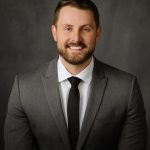 Colt Florence is Senior Vice President of Franchise Development for Five Star Franchising, an innovative, growing platform of home service brands, including Five Star Bath Solutions, Gotcha Covered, Bio-One, 1-800-Packouts, Card My Yard, and Mosquito Shield.
He has more than a decade of experience in franchise development and sales, including leadership positions with successful franchise brand platforms.
Connect with Colt on LinkedIn.
Episode Highlights
- Five Star Franchising’s approach to building and growing a portfolio of home service brands.
- Strategies for franchise development and recruitment of franchisees.
- The evolving profile and expectations of franchisees in recent years.
- The balance between creating new brands and acquiring existing ones.
- Market definition and targeted selection process for franchisees.
- The role of third-party brokers and online platforms in franchisee recruitment.
- Challenges in identifying potential franchisees and their readiness for ownership.
- The importance of franchisee focus and support in achieving business success.
- Trends in funding options for franchisees, including SBA loans and 401(k) rollovers.
- The significance of ambition and problem-solving skills for franchisee success.
 This transcript is machine transcribed by Sonix.
TRANSCRIPT
Intro: Coming to you live from the Business RadioX studio. It’s Franchise Marketing Radio.
Lee Kantor: Lee Kantor here. Another episode of Franchise Marketing Radio and this is going to be a good one. Today on the show we have Colt Florence, who is the senior VP of Franchise Development with Five Star franchising. Welcome.
Colt Florence: Thank you Lee. I’m super excited to be here. Anytime I get to talk about franchising I love it.
Lee Kantor: All right. Well let’s start with Five Star Franchising. How you serving folks?
Colt Florence: Yeah yeah great question. So just a quick background on Five Star Franchising. You know, we are an umbrella company of six different home service brands. We specialize in focus in the home service industry. And we’ve really taken the approach of saying what industries are out there that are unique and special, and how can we become the industry leaders within those different industries. And so we serve just by offering home services in spaces where a lot of people wouldn’t guess, needless to say.
Lee Kantor: Now, did you start out with kind of trying to build out this cluster of home services as a niche, or was that something that kind of just organically happened over time?
Colt Florence: Yeah, it’s a great question. So our our CEO Scott Abbott and our CEO Chad Jones are the founders of Five Star Franchising. And years and years and years ago they founded a company called Five Star Painting. And they grew that to be one of the largest residential painting franchises in North America. And during that time, I think it took a very natural progression as they learned what systems were working, how to support people from a sales aspect, how to support from a marketing aspect. They then said, well, why don’t we continue to replicate this into other concepts? And so then we naturally added in another concept with five star based solutions, and then another concept and another concept. So I think it was a very natural progression as we realized we were really good at supporting home services and offering a very unique experience for customers.
Lee Kantor: Now, was the growth kind of by creating your own brands or were you acquiring existing brands?
Colt Florence: Yeah, it’s been about half, half. So we’ve created our own brands and grown them from scratch. And then we’ve gone out and identified other existing brands that exist within certain spaces we were interested in, and then we’ve acquired those. So I’d say 50% on both sides.
Lee Kantor: Now you’re the VP of Franchise development. What’s your backstory? Have you always been involved in franchising?
Colt Florence: I, I wouldn’t say always. You know, I’ve been in franchising for about eight years now. I’ve been in sales my entire career and fell into franchising just by chance. I, you know, a gentleman reached out to me on LinkedIn and said, hey, I really like the things you’re posting and the videos that you’re doing and the way you approach a sales cycle. Come take a look at entering into franchising world. And so about eight years ago, I sat down and had lunch with him, jumped into franchising, and ever since then I’ve been in love not only with the franchising business model, franchise development and helping people become business owners, but then also in love with the home service space. Just given the, I think, the the strength associated with it. And given where I think it’s going to go in the future.
Lee Kantor: Now, in your role, are you the one that is trying to find franchisees for the various five star brands?
Colt Florence: Yeah, yeah. So that’s exactly it. We have the six brands. I oversee all of them from a development standpoint. So me and my team, our job is to go out and identify franchisees and markets where we would like to grow and open up new locations and identify franchisees that we feel would be a good fit, not only for the business model model, but also a good fit for the culture of what we’re trying to build and helping them be successful. So that’s what I do all day, every day, is seeing what other markets we could grow into, and then helping find people who want to own a business and finding the right fit for them within those markets.
Lee Kantor: So that is that the order of things. You decide on an area first and then you, uh, find the people in those in those areas rather than just kind of doing a nationwide search and then building out wherever somebody expresses an interest.
Speaker4: Yeah, I think it’s definitely a mix.
Colt Florence: We definitely have the areas we want to go after just because we have this historic trends and, uh, the data to support the viability. And what we believe that a viability exists within that area. So we’d love to get somebody there. But then there’s also the natural progression that happens where somebody in a market that we haven’t yet targeted or thought about reaches out and says, hey, I think there’d be quite a demand and quite a bit of demand in this area for, for one of your businesses. I’d love to open one. So majority of the time we’re really targeted, but there are instances where somebody reaches out and has interest and we take a look at that market at that point with them.
Lee Kantor: Now, how do you define market? Is it a region? Is it a city? Is it a neighborhood?
Colt Florence: Yeah, yeah, it’s a really good question. It depends on the brand. So that’s one of the reasons why I’ve really fallen in love with the home service industry as a whole. Because. Enfranchising, you know, you could define a market as saying, well, a city, we’re only going to put five McDonald’s in this city and we’ll find the best areas to put them where within the home service space, you could actually define markets based off of who the ideal target customer is. And so, for example, one of our mosquito shields or one of our brands Mosquito shield, we define a market based off of 50,000 single family households that make over $100,000 a year, because we know that is going to be the target customer that our franchisees are going to go after. And we know that is big enough to be able to support a viable mosquito shield business. So long way of answering that. Every one of our brands are different depending on their target customer base, and then we build based off of that to ensure viability.
Lee Kantor: So once you’ve identified that market, what’s the next step? How do you kind of go and identify now a person in that market that might be the appropriate franchisee?
Colt Florence: Yeah, there’s a mix of it. So there’s a lot of different marketing sources that we use from an online standpoint. You know, there’s portals that are constantly marketing. We take a very strategic approach of knowing historically this type of background, this type of skill set makes for some of the best franchisees. And so we target those people on things like LinkedIn and other platforms. But then also, we work really closely with consultants who are in the space constantly within those markets attending, you know, their their Chamber of commerce, BNI groups who could help us identify those people and pass them to us. So we take, I’d say, a pretty wide approach in a very narrow, narrow, targeted effort to get us the right person in the right place.
Lee Kantor: But it sounds like you’re using a lot of kind of I don’t want to call them third party people, but people that are outside the, um, five star brand, uh, that like you’re using franchise brokers or portals that are those are independent businesses that are probably, you know, other franchises that aren’t five star showing up in their world.
Speaker4: Yeah, yeah, yeah.
Colt Florence: No, that’s exactly right. I mean, those, those third parties, like a portal, they tend to dominate the online space just because they have so many different listings. They have so much brand awareness with the brands. And so it creates a really good opportunity for us because if somebody in San Antonio who we’re targeting gets onto one of the portals, they find our brand, they’re interested, it works really well. And a broker, they’re boots on the ground. You know, we we don’t have the ability to be boots on the ground in the different target areas that we’re going after and being part of referral, you know, networks or groups or chamber of commerce. And so they do a really good job of being the boots on the ground, identifying key people and helping us place franchises to people who want to be business owners in those targets.
Lee Kantor: Because it seems to me that a franchisee is is kind of a needle in a haystack. Like you don’t know when someone is approaching that, um, you know, where in the buyer’s journey they are and when they’re approaching that desire to either, you know, I want to own my own business, or I want to own a franchise like there. It must be difficult to identify them early on, and you need those kind of other people who, like you say, are boots on the ground or meeting people and then could at least kind of pique their interest in, in this being a path.
Colt Florence: That’s exactly. I mean, it’s it’s honestly finding the person at the perfect time, given the things that they’re experiencing within their life, to want to consider business ownership, wanting to consider one of the franchises we have available, and catching those people at that perfect moment in their life in the perfect markets, is very difficult to do so without the boots on the ground efforts and the other parties associated with it, it almost becomes impossible to do it. We’re having those people there. They are there 24 over seven, and can capture the moments perfectly when somebody is ready to consider something like franchise ownership and then make an introduction from there.
Lee Kantor: And at that point they could be repping, you know, 100 franchises, right. That a broker like it’s not just yours. So it’s just within that. Now you have to be the one that the person chooses out of that broker’s portfolio.
Speaker4: Yeah, that’s exactly it.
Colt Florence: I mean, it’s a mix of showing that the consultant that we’re really good at what we do and and showing them that we are a brand that supports franchisees and make them successful within business ownership. But then also on top of it, once the consultant believes that and and wants to pass somebody over to us in that market, it is now showing that person who is considering business ownership and maybe looking at us in five other business concepts, what we do and why it’s a better investment for them, specifically in the circumstances they are facing to move in a direction with our business. And you know, what I love about franchising is, you know, me and my team, we’re probably told no more than we’re told yes. And we actually probably tell people no more than we tell them yes, because it does have to be that that correct fit. It has to be the person with the right background, right headspace mindset stepping into it to be successful within the business. And so a lot of times we’re actually not competing against others. We’re actually competing against ourselves to see whether or not this could be the right fit for them.
Lee Kantor: Now, because you have multiple brands within kind of a niche, um, is it common that a person buys one and then kind of buys a sister brand?
Colt Florence: Um, I would say no. And actually, you know, over the years we’ve almost kind of discouraged it. So we’ve done a lot of research of people who diversify within their businesses. And typically what ends up happening is they will run a couple of good businesses or a couple of mediocre businesses. And the reason being they’re just in different segments being pulled in so many different directions, trying to learn different skill sets. And so we’ve actually taken a different approach of rather than saying diversification, you know, let’s help you purchase more of our businesses within our portfolio. We actually say, how can we help you grow your current business substantially more with the capital you were planning on investing anyway because you’re already good at it. You’re an expert within the space. You can almost guarantee, based off of your historical data, every dollar you funnel in will have a certain amount of ROI. So we’ve actually taken a unique approach of helping our franchisees double down within their own businesses and growing those substantially more. So they have one excellent business rather than two mediocre businesses.
Lee Kantor: So so then you would sell them more territories and expand that way.
Colt Florence: That’s exactly it. Yep. So rather than buying a new business in another territory, why don’t you just buy more territories and repeat the system? That is all working extremely well for you within the current business.
Lee Kantor: So because you have so many brands that have, I would think, a similar client amongst them all, is there a way to share that client with the sister brands?
Colt Florence: There is. Yeah. So what the number one thing that we encourage is because we have right now, I think our, our most current count is we’re over 1100 franchisees in North America, over 1700 locations open. Inevitably, a lot of our franchisees are going to be neighbors to each other within the current business and with also the sister brands. And so we encourage that cross-pollination between franchisees to pass leads back and forth, because somebody who is wanting to redo their bathroom could also be looking to redo all the the blinds and window shades within their house, which we have concepts to service both of those. And so franchisees work a lot together with referrals in between. And then from a future standpoint, we will be pushing towards Cross-pollinating marketing, where marketing efforts for franchisees actually represent multiple brands. So then everybody within an area can capitalize off of it.
Lee Kantor: Now, are you seeing the typical franchisee change over the years you’ve been in this business?
Colt Florence: Ah, I would say we’ve definitely seen the typical candidate change substantially over the past 2 to 3 years. I think our franchisees have stayed pretty close to the same. And what I mean by that is it’s, you know, we know what type of franchisee works within the business models. We have, for example, five Star Bass Solutions, which is a bathroom renovation company that’s under our portfolio. We need somebody that is very sales and marketing oriented to step in and own a bass solutions, because majority of what they’re doing is marketing, getting customers and selling to those customers. And so when we’re taking a look at bringing in new franchisees, those are some of the main qualities that we look at is can you sell and can you market. And so that’s something that hasn’t changed at all for us over the past ten years. What has been really fascinating, though, is I think people’s approach to business ownership has changed. So the candidates that we’re seeing coming in have changed substantially from somebody saying, hey, I actually want to do this full time. I’m ready to jump in. I want to be a business owner to now somebody saying, well, no, I’m planning on keeping my job. I’m going to keep my job and try and do this on the side. And I’d like to run a business. I think I have the capabilities and the bandwidth of doing it. So the candidate has changed for us in terms of their expectations going into business ownership, but our expectations of who makes a successful franchisee is actually stayed pretty consistent.
Lee Kantor: Now, are you finding, um, maybe parents buying a franchise for their child to run or where they’re become more family affairs rather than kind of entrepreneur driven?
Colt Florence: Uh, yes and no. I would say, actually, what is more common that we’re seeing right now is actually parents coming in saying, I want to be a business owner, I want to purchase this and go full time into it. And then hopefully within the next 3 to 5 years, I could build something that incorporates my family in and I could pass it on to a child. And so, you know, every so often we do get a parent saying, I will invest into it. And, you know, my son’s gonna run it. And let’s let’s see how well he does or my daughter feels that she could do it. But what’s becoming more and more common in people who are wanting to build almost a legacy wealth associated with their business, so they have something that they could pass down and incorporate children into and continue to support those children financially for years to come.
Lee Kantor: Now, um, in today’s climate with like, interest rates higher, is that impacted, uh, kind of the growth of the franchising world or, you know, buying new businesses, is that impacted that at all?
Colt Florence: Yeah, I think it impacts it from the standpoint of if you are somebody who is looking to purchase or open a business and you’re planning on utilizing capital from a lending company to be able to do it, you know, an increased interest rate incorporates or comes back in terms of an increased payment on a monthly basis, which means you have to make more money to cover expenses and and get to the point of profitability that you want. And so it makes people nervous, right? Because a larger loan payment should always make somebody nervous when they’re looking at buying anything, whether it be a business, a car, a house, but within the business environment. What is interesting is because the interest has gone up and because lending, you know, banks and things like that are charging more for loans. That’s actually a direct representation of how the economy is doing as a whole as well. And so that means more people are employed, more people are making money. And so a lot of times our franchisees, even though upfront they are nervous about interest rates being higher, we’re also charging more on the back end when it comes to overall jobs for our end consumer, because the economy is doing better and people can afford to pay more for the services being provided. So it’s almost all a circle of life thing. Interest rates, higher expenses, higher generates, you know, larger tickets and larger jobs and more revenue coming in where interest rates lower expenses a little bit lower labor easier to get. Could be jobs a little bit lower because you don’t need the profitability or the same revenue coming in to cover the expenses you have. So I guess that’s a long way of answering. It scares people up front until they realize everything impacts each other in the same way, whether we’re going up or down.
Lee Kantor: Now, do most people when they do a franchise or one of your franchises, is it something they do get a loan like an SBA loan of some kind, or do they just pull it out of their own funds?
Colt Florence: Yeah, I would say the two most common things that that we have seen over the years is going to be an SBA and US, which is great because SBA, a lot of times pretty easy process in terms of what they expect us Enfranchising you know, we have our initial investment that we disclose, and so SBA already knows exactly what it’s going to cost and how much money somebody is going to need. But what has become more and more popular over the past couple of years, our 401 K rollovers. And so, you know, these these lending institutions have found a very unique way to help people utilize their 401 to fund business ventures without necessarily pulling cash out of your 401 K, taking the tax hit associated with it, and then investing somewhere else. And so a lot of people have strategically used their 401 s to invest into the business that they’re starting. And then using that to not only hopefully increase the value of a 401 K, but start a business. So I’d say those two are the most common. It’s it’s actually probably becoming a little bit more rarer. People just doing cash funding. They’re looking to use either an institution or maybe stagnant money. They have sitting in an account like a 401 K and maximizing the value off of that 401 K with businesses.
Lee Kantor: So when you’re talking to a potential franchisee and you’re each vetting each other to see if they’re the right fit, um, are they asking you different questions today than they were when you first started?
Colt Florence: Yes, definitely. I think due to the market and the strength of the market and the economy we’re facing right now, the questions have definitely, uh, begin to revolve more around like, well, what are you guys going to do for me? Or how do you support me in ways if I’m going to keep a job or if I don’t have the time to put into the business? They’re almost looking more for something that is a side income or a passive income. Which man? I’ll tell you what, if somebody finds just complete passive income that they don’t have to do much in and could throw money behind? I’ll be the first one on board for it. And so those questions have changed where historically, when we’re going through times of maybe some economic difficulty, people losing jobs, their biggest question is I’m ready to go full time. I just want to make sure you’re going to be able to support me. If I put in the work and the energy and the effort to make this business successful. So I think a lot of the shift we have seen in the process has been, well, what have you guys done to automate? So I don’t have to put as much energy and effort into it. Where historically it was actually I’ll put in all the energy and effort. I just want to make sure you guys have my back.
Lee Kantor: So. So how do you define support? Like like where are the lines when it comes to that? Like you can’t get the client for them in the logo. Like at some point somebody’s got to sell somebody something like you. You don’t have a magic system in that regard, do you? And maybe you do.
Colt Florence: Yeah. Some of our brands, you know, we try and take as much off the plate of our franchisees as possible to help them generate as much revenue as possible. But the best analogy that I’ve ever found is, you know, if I decide today that I want to get into really good shape and so I go out and I think the best path for me is going to be to hire a personal trainer. So I hire a personal trainer. They come in, they design a diet for me, they design a workout regimen for me. They’re there anytime I have a call or need a question answered and they’re trying to hold me accountable, all of that is fantastic, but it still requires me to get my butt off the couch, go to the gym, and follow the workout regimen, to follow the diet, to make it to the grocery store and purchase the right things. And so I think that’s how we define support within our franchise models, is we will give you everything you need to be successful within this business, whether it’s the sales support, the marketing support, the operational support. We have the playbook and we have the team members ready to support you, to help you be successful. It still requires you to get your butt off the couch and go implement and push for the business. We’re here getting your back every single time you run into a hurdle or an obstacle or something that you feel that you just can’t overcome.
Lee Kantor: Now, is that something? I mean, I’m sure you hammer it relentlessly, but is it something that the franchisee sometimes doesn’t quite hear that you know, you’re defining support as playbooks, templates, training. But ultimately, like you said, they got to get off the couch and they have to do the work and they have to return the call and they have to follow up and they have to, you know, kind of do the blocking and tackling, uh, every day or, or do franchisees in your system kind of get that?
Speaker5: Yeah, I’d say it’s a mix for sure.
Colt Florence: You know, I years ago I decided to audit and take a look back at every transaction that I’d been a part of and, and thought to myself, okay, which ones did I think were going to be the most successful franchisees in the system? And which ones do I think were going to be kind of average performing franchisees in the system? And what was really fascinating is it that the people that I thought were going to be average just due to how they were approaching it and their mindset ended up being top performers and the people that were top performers that I thought were going to be top performers ended up being average. And so I say that because it’s really hard to to to dictate how somebody is going to approach the business and their mindset going into it and the expectations they’ve set for themselves. We can continue to reinforce it in the process, but whether or not they’re ready for it or whether or not they’re ready to implement is a completely different story. And in the franchising space, I think it makes it even more difficult because we do have increased probability of success just due to the business model and the historic value that we bring compared to somebody trying to start their business for themselves. However, because it is an increased probability of success, it doesn’t mean that it requires any less work or effort from the business owner to make it successful. And so that is what we try and hammer in, whether or not the person is prepared for it or whether or not they fully understand what to expect, I think completely relies on them, but we definitely message to make sure we’re doing our part. So they’re going in eyes wide open.
Lee Kantor: So what do you need more of? How can we help you?
Colt Florence: Yeah, I think more of we just need hustlers and I think we’re going to continue to see it. You know, honestly, I think we’re going to have some form of, of economic dip which will result in people realizing their future isn’t in their controls within their, um, their current job or their W2 that they have. And so those type of people are saying, no, I’m I’m ready to take control back into my life. I’m ready to do what it is going to take to be successful and to, you know, provide my family with a better future, provide myself with better financial standing. And so it is those type of things that we’re looking for, our systems in place, I would consider world class. I don’t think there’s anybody in the franchising space that is offering anything more unique or a support system that is better. We just need more people that are willing to come in and put in the work, because that’s what business ownership is, and people that are excited to put in the work due to the potential that it’s going to provide to them in the future.
Lee Kantor: So is that kind of that point of inflection where people are feeling some sort of fear and then they want to take back control of their financial future? Is that the thing that really tips them into, okay, I’m going to pursue something like this.
Colt Florence: Yeah. Yeah. No, it’s it’s it’s interesting. A lot of times one of two things will happen. Somebody is able to build themselves up into a financial position where they have very little risk to jump into a business venture, but they realize jumping into a business venture is the number one way to build wealth for themselves and their family. And so they say, I’m ready to step away from being in a W-2 position myself, because I feel like I’m in a position to do so, and I’m going to go push and try and provide a better future. Majority of the times, it’s actually somebody who was just laid off and they realized, oh my gosh, I was making $200,000 a year as an executive. I was just laid off within my company. I’ve had 50 interviews and no other company is willing to pay me the same amount or replace my position just due to the the economic position that we’re in right now. The only way that I can replace my income is by taking it back into my hands and building a business. And so a lot of times, it takes an eye opening experience for somebody to realize, even though you feel like you’re in control every single day, you’re really not as long as you are working for somebody else. And that eye opening experience to push them to business ownership, to say, I’m not going to, I don’t want to feel that that way ever again. And so I’m going to take control back.
Lee Kantor: But don’t I would think that. I mean, maybe, maybe you have the stats on this that their first move would be like, oh, I was, you know, a VP in ABC company. I’m going to do be a consultant in that same niche, because I’m already, you know, that I have deep knowledge within that, uh, niche. And I’m, I was a high level executive, so I should certainly be able to transfer that into some sort of a consulting gig. Is that do a I’m sure a portion do that, but maybe they get frustrated in a short time and then kind of go explore the franchising path.
Speaker5: Yeah. And I think it’s difficult.
Colt Florence: Taking a path like that. So you’re stepping into business ownership which requires you to market, requires you to sell, requires you to network, which a lot of us past positions probably don’t prepare people to do that. And so that’s why consultants make a ton of money. But there’s only a few of them that do, because most people that step into it, they don’t realize that the hardest part of their job is actually securing customers. The easiest part of their job is actually consulting. Once the customer has come in and they’re paying them. But then also when you know, any form of economic difficulty takes place and they lay off a VP of marketing, or they lay off a executive vice president, whatever it may be, the company isn’t necessarily looking to replace that expense, that they just took off their PNL with another expense within a consultant. And so a lot of people step in and say, well, I could go provide value to other companies, but the reality is, within that space, within that industry, within that specific position, companies are actually taking a look at decreasing the expense. And so they come to the realization pretty quick. Even though I’m an expert in that area, I’m not going to be a consultant. Can I take that same expertise and build my own business within a franchise? You know, I was a VP of marketing. Can I take my expertise within marketing and go in and work with a mosquito shield and use my marketing skills to open up my own mosquito shield and acquire new customers? And majority of the time they’re substantially more successful? The venture like that than trying to go out and do any form of consultancy.
Lee Kantor: Is there a story you could share or maybe don’t name the name of the person, but maybe, uh, what has come to you in terms of they came to you with a challenge or they were on the fence, and then now they have this legacy business that they’re able that has grown. And, you know, uh, you know, it kind of was bigger than they even imagined.
Speaker5: Yeah.
Colt Florence: Yeah, I countless stories there. There’s one actually that comes to a couple of them that comes to mind, but one from a past company where they as a young kid, they stepped into an electrical business and they went and got their certification to be an electrician, and they realized that they had capped out pretty quick in terms of being electrician at their $30 or $35 an hour rate that they had. And so they went out and said, well, I wonder if I could go purchase a company or start my own company and build it up and capitalize even more based off of not only skill sets I have in place right now and the licenses I have in place, but then also the ambition that I have. And so they went out and started their own electric franchise. They purchased electric franchise and within, I believe it was eight years, uh, they build it up and they sold it for over $100 million to a private equity group. And so it’s those type of things that I take a look at where people don’t realize what they’re capable of until they try and they don’t realize the skill sets that they have in place that they can utilize. And so when when you’re stuck in a tough position or when life is just getting at you, my guarantee is most of the time you have skill sets that are very useful to a franchise system and very useful in business ownership. And so combine the increased probability of success with your skill set and go and build a legacy business with it.
Lee Kantor: Now, what’s the quality like? If you were to list the 2 or 3 must have qualities to become successful in the five star franchising, uh, ecosystem. What would they be?
Colt Florence: Yeah, I’d say one. You got to put in the work. The quality has to be ambition. If you’re going into business ownership, the goal should be I’m going into this because I want financial freedom and I want to provide a better life for myself or my family or anybody associated with me employees, customers. And so having that drive on a daily basis, which is actually our core value here at Five Star, Having the drive to be successful is the number one quality we look for because we believe if somebody is coming in ambitious with the drive, we have the tools to make them successful, but they need that drive first. The second one is we want people who are going to come in and be problem solvers. You know, franchising, even though we have a proven system, we have a proven business model. We have hundreds and hundreds and hundreds of stories and experiences that each one of our franchisees can capitalize off of. You still need to be able to figure out some of the situations you’re running into, obstacles you’re running into something as simple as an employee didn’t show up today to work, how do I handle this? Or what do I do? And so one of our things that we look at is if you’re coming in driven and you’re able to problem solve, we have the back end systems to make you successful in business ownership.
Lee Kantor: So if somebody wants to learn more, have a more substantive conversation with you or somebody on the team, what is the website? What’s the best way to connect?
Colt Florence: Yeah, I’d say five star franchising.com is the best way of going about it. We have a quiz on our website where you could actually take a look at it and fill it out, and we’ll actually suggest a brand to you as to what we feel is the best fit, based off of what you’re looking to do and your background. And then from there, my different team members who represent the different brands will be in contact. But we are here. We’re here to answer any questions not only about franchising, but also the brands within ours. We consider it a win if we help somebody not only get into business ownership, but get into franchising through their business ownership that they’re trying to do.
Lee Kantor: Well, Cole, thank you so much for sharing your story today, doing such important work. And we appreciate you.
Colt Florence: Yeah. Thank you Lee. I love this industry. I love what I get to do on a daily basis and I’m very passionate. So I appreciate you having me on.
Lee Kantor: All right. This is Lee Kantor. We’ll see you all next time on Franchise Marketing Radio.