
Business RadioX ®

  • Home
  • Business RadioX ® Communities
    • Southeast
      • Alabama
        • Birmingham
      • Florida
        • Orlando
        • Pensacola
        • South Florida
        • Tampa
        • Tallahassee
      • Georgia
        • Atlanta
        • Cherokee
        • Forsyth
        • Greater Perimeter
        • Gwinnett
        • North Fulton
        • North Georgia
        • Northeast Georgia
        • Rome
        • Savannah
      • Louisiana
        • New Orleans
      • North Carolina
        • Charlotte
        • Raleigh
      • Tennessee
        • Chattanooga
        • Nashville
      • Virginia
        • Richmond
    • South Central
      • Arkansas
        • Northwest Arkansas
    • Midwest
      • Illinois
        • Chicago
      • Michigan
        • Detroit
      • Minnesota
        • Minneapolis St. Paul
      • Missouri
        • St. Louis
      • Ohio
        • Cleveland
        • Columbus
        • Dayton
    • Southwest
      • Arizona
        • Phoenix
        • Tucson
        • Valley
      • Texas
        • Austin
        • Dallas
        • Houston
    • West
      • California
        • Bay Area
        • LA
        • Pasadena
      • Colorado
        • Denver
      • Hawaii
        • Oahu
  • FAQs
  • About Us
    • Our Mission
    • Our Audience
    • Why It Works
    • What People Are Saying
    • BRX in the News
  • Resources
    • BRX Pro Tips
    • B2B Marketing: The 4Rs
    • High Velocity Selling Habits
    • Why Most B2B Media Strategies Fail
    • 9 Reasons To Sponsor A Business RadioX ® Show
  • Partner With Us
  • Veteran Business RadioX ®

Georgia Technology Summit 2025: Laura Gibson-Lamonthe with Georgia Fintech Academy

April 24, 2025 by angishields

ABR-Georgia-Fintech-Academy-Feature
Atlanta Business Radio
Georgia Technology Summit 2025: Laura Gibson-Lamonthe with Georgia Fintech Academy
Loading
00:00 /
RSS Feed
Share
Link
Embed

Download file

Georgia-Technology-Summit

Georgia Technology Summit brings together 1000+ Georgia-focused technologists to network, learn, and engage with the latest trends in Georgia innovation. This year’s summit was held at the Woodruff Arts Center, a stunning and iconic cultural landmark located in the heart of Midtown Atlanta.

Laura-Gibson-LamontheAs the Executive Director of the Georgia Fintech Academy, Laura Gibson-Lamothe’s primary objective is to drive meaningful impact within the industry through the implementation of a comprehensive diverse talent development program.

The Georgia Fintech Academy focuses on educating and empowering the next generation of fintech professionals by fostering collaboration with 26 institutions aligned with the University System of Georgia, as well as private universities and HBCUs. Our commitment extends to creating academic pathways to fintech at the secondary level, strategically cultivating a reservoir of talented individuals poised to shape the future of the industry.

Connect with Laura on LinkedIn.

Transcript-iconThis transcript is machine transcribed by Sonix.


TRANSCRIPT

Intro: Broadcasting live from the Georgia Technology Summit 2025 at the Woodruff Arts Center. This is Business RadioX. And now here’s your host.

Lee Kantor: Lee Kantor here, broadcasting live from the Woodruff Arts Center for the Georgia Technology Summit 2025. So excited to be talking to my next guest, Laura Gibson-Lamonthe. And she is with the Georgia Fintech Academy. Welcome.

Laura Gibson-Lamonthe: Thank you. So happy to be here.

Lee Kantor: Well, I’m so excited to learn what you’re up to. Uh, catch us up. Tell us about the Georgia Fintech Academy. How you serving, folks?

Laura Gibson-Lamonthe: Yes. So we are a talent development initiative within the University System of Georgia, serving all 26 public facing institutions across the state with a fintech curriculum. And so we’re not only providing this the skills and education for our students, but helping them navigate pathways into this industry. So it’s an exciting opportunity to join industry at events like this one. Um, and so we’re here today with several students representing a number of different universities, giving them access to the network and the insights from a technology perspective right here, live in action on campus here at the Woodruff Center.

Lee Kantor: So fintech is one of the, uh, hubs that we have here in technology in the metro Atlanta area. How do you develop the, uh, curriculum for your academies? Are you partnering with the enterprise organizations, like what does that kind of collaboration look like?

Laura Gibson-Lamonthe: Yeah, I like to say we are in lock step with the industry. The industry is evolving so quickly. It’s such a dynamic, uh, field and an exciting time around innovation. And so for us to innovate on the curriculum and how we deliver it means that we have to continuously refine and ensure that we have a close understanding of where the industry. Trends are heading and how we can best provide some of that education in. The curriculum. And so we work with a lot of our partners and have developed a routine where we’re reviewing the curriculum. We’re allowing industry to opine upon that curriculum, and then we’re making curriculum enhancements along the way. And so it’s it’s been exciting to to come and attend these events where, you know, people are showcasing real time some of the technology developments that they have on their radar. And we’re already, you know, writing down notes, um, have conversations, follow ups, obviously, I and embedded payments and some other trends are at the forefront of conversations. We now have to kind of take that back into our, our our mothership. I say, and dissect what that means from an education perspective and ensure that our curriculum is reflective of what the industry is doing and focusing on.

Lee Kantor: So, uh, tell us a little bit about the student who is attracted to this. Like, when does their interest begin? Is it something that you have to even start thinking about? Let’s create some curriculum for elementary and middle and high school.

Laura Gibson-Lamonthe: Yes, yes. So we work closely with the Department of Education. We have students that are taking under the dual enrollment program, uh, focused uh, classes on fintech. Uh, but then outside of that, we’re also providing some exposure early on. I think one of the things that’s a prerequisite to fintech is financial literacy. Um, which is a whole nother conversation we should have in the future. Right. But for math, I mean.

Lee Kantor: That’s critical for even if you’re not going to pursue it as a career, that just that kind of base education is invaluable.

Laura Gibson-Lamonthe: Yep. And I think financial literacy is almost the gateway to fintech for me personally, financial literacy and having to overcome some challenges, um, that I’ve had navigating, you know, just being a consumer, um, and someone who is, you know, starting to earn money and learning how to, you know, best, manage money. It it opened the doors to conversations around the technology that’s providing solutions and services for people to, uh, basically transact, uh, financially. And so for me, it became a career through my financial literacy journey. And I think for students, it’s about educating them about, you know, traditional finance, um, you know, best practices. And it kind of opens that door for, hey, there’s a career in this industry for me, right?

Lee Kantor: My dream is if education could explain to a young person the power of compounding, if they could just do that at a super young age. Um, I think it’s a game changer.

Laura Gibson-Lamonthe: Yes, it is. And I think one of the things that’s really exciting for me is to start seeing some of the students who are taking that, uh, extra step to become founders. So they’re identifying the pain points and the challenges through that financial literacy journey to say, I actually want to be a part of the solution, um, and bring that to the table. So it’s not necessarily just traditional pathways. We’re also focused on entrepreneurship as well.

Lee Kantor: So now, um, has how long has the academy been around?

Laura Gibson-Lamonthe: We’re about to celebrate our five year anniversary. So super excited. 10,000 students.

Lee Kantor: 10,000 students. Yeah. I mean, can you imagine 10,000 people going through the how? That’s so important.

Laura Gibson-Lamonthe: It is, it is. And it’s it’s all happening right here in Georgia. So we’re getting major focus from some of our competitors. And I think, you know, states outside of the state of Georgia that are looking in, uh, at the success of the program and what we’ve been able to achieve. But our focus now is, is really emphasizing the need for jobs, um, internships, full time placement. Obviously, the market is is, you know, taking a shift lately. And our focus is really trying to identify where those opportunities are and help students get placed in them. So we’re constantly facilitating those conversations with companies.

Lee Kantor: Now, has there been any, uh, graduates that have gone on either to start their own business or any kind of success stories you can share?

Laura Gibson-Lamonthe: Yeah, I think one of my favorite success stories, um, only because I’m here in the, uh, the Georgia Technology Summit, uh, last year at, uh, one of the other partner events, Fintech South, we had a student who was literally manning the table, the booth in the expo hall for Truist. Uh, and that student was a recent graduate of the Georgia Fintech Academy. We also had around 30 students attending that event, just as, uh, registrants for and participating in that event. They saw her and were like, that’s what we want to get to. We want to be on the other side working and representing that Truist brand. And I think for me, that was a full cycle of seeing that student, obviously, um, for me seeing her sophomore, junior, senior year and then now working as a career professional at Truist. But then seeing the students who were reflecting on that near peer as a as a goal for what they were aspirational.

Lee Kantor: And now it’s real.

Laura Gibson-Lamonthe: Exactly, exactly. And then the other.

Lee Kantor: Could be you.

Laura Gibson-Lamonthe: Yes, exactly. It could be you. It’s attainable. I think so many times students see, especially at these conferences, they see the executives. Right. You know, folks who are more, you know, tenured and senior in their roles. And it’s a little bit out of touch, right?

Lee Kantor: They don’t see they don’t connect the dots how that’s kind of viable for them. But when they see somebody they know or seen around, all of a sudden they’re there. Yep. Then why not me?

Laura Gibson-Lamonthe: Yes, yes. And we talk about representation that really matters. Representation means a lot of things. Um, it could be, you know, something where it connects with the student and they can they can now kind of realize that that goal and that, that focus. So, um, those opportunities are there’s so many of them that I’ve come across and watching students, you know, get on the stage and represent their own brands as entrepreneurs or as another one. Um, and we’ve had students that, you know, apprentice with some startups here in the state. Um, you know, we’ve had students go over and work at the Atlanta Tech Village, which is doing exciting things here in Atlanta and Georgia as well. Um, and so being able to see them shine in different ways, in different capacities and kind of broaden their horizons as far as where their career pathway could lead them has been been really rewarding.

Lee Kantor: So what do you need more of? How can we help you?

Laura Gibson-Lamonthe: Yes, I need jobs. I need job. Job jobs, I need internships. I’m looking for internships and and and jobs. Full time placement opportunities. These roles, um, vary. I think in the fintech space, people think, you know, traditionally data science, cybersecurity. But we have, you know, students that are navigating pathways towards product, uh, management, product development, project management, marketing, even, um, consulting sales. There are so many different segments in this space. And I think for our students, we’re we’re now looking at, uh, just the industry much more broadly. And so for for folks who are in an organization who are looking for early talent, um, and not just early talent, we also have, uh, folks that are continuing ed, they have, you know, more years of experience under their belt who are coming back into the academic fold to, you know, continue to refine their skills. And so we do have a growing portfolio of experienced professionals and some that are just embarking on their journey at the early talent stage.

Lee Kantor: Now, um, why was it important for you? Are you attending the event here or are you did you bring some students with you?

Laura Gibson-Lamonthe: I did bring some students with me. Um, and they’re they’re being good. They’re in the the main session right now and the main stage. Um, you know, we actually had a pep talk coaching session where we did kind of, like networking best practices, how to maximize what you’re getting out of this event. And so they’re they’re out here, um, meeting and learning and soaking up everything they can. Um, and so for us, it’s been, you know, kind of helping facilitate the, the networking, getting them warm and comfortable in this space. I think this also gives them an opportunity to demonstrate what they’ve learned, since they don’t necessarily get that, they get that with their peers. But to put them in a in an immersive experience where we are putting them, you know, with a couple of hundred or more, uh, professionals is is something that really gets them to, to get that practice and that skill refined.

Lee Kantor: So when you’re working with enterprise level organizations, or I’m sure you’re open to having conversations with startups as well. Yeah. Who at that organization is the right person for you to talk to? So you can explain the value of collaborating?

Laura Gibson-Lamonthe: Yeah. I think, you know, initially we start off with a lot of the folks in the talent space, air recruiting. Um, but for me, it’s really been, uh, extremely beneficial to, to meet with the folks that are on the tech side. You know, tech managers, leaders who are driving the talent acquisition strategy versus the execution of that strategy. So if you are anyone that’s influencing, uh, the plans for scalability within your organization when it comes to human resources and, and, and the people within your organization, that’s that’s who I really want to talk with. Um, for us, it’s going beyond the fact that you might have an immediate need to start starting to get more strategic about future state and what your growth goals are. Um, because those change over time and as we talked about earlier, the economy and where it stands today, and it’s a luxury to really invest in early talent, but it’s an imperative, uh, for the sustainability of any organization, no matter what stage you are in. Um, a matter of fact. So I think for having that conversation really requires leaders who are transforming and building and developing their organizations.

Lee Kantor: So if somebody wants to learn more, what’s the best way to connect with you or somebody on your team?

Laura Gibson-Lamonthe: Yes. So I would recommend going to our website, Georgia Fintech Academy. Org or you can find me on LinkedIn Laura Gibson Lamoth. Um, or if you just look up Laura Gibson, I pop up, uh, as well. Um, but we are always active. Um, you can find us at a lot of the industry events, uh, coming up, um, as well as, uh, some of the things that we’re doing on various campuses. So look out for us on on either channel.

Lee Kantor: Well, Laura, thank you so much for sharing your story today. You’re doing such important work and we appreciate you.

Laura Gibson-Lamonthe: Thank you for having me.

Lee Kantor: All right. This is Lee Kantor back in a few at Georgia Technology Summit 2025.
 

Tagged With: Georgia Fintech Academy, Georgia Technology Summit 2025

Bridging Academia and Industry: The Georgia Fintech Academy’s Role in Career Development

October 18, 2024 by angishields

HVR-Georgia-Fintech-Academy-Feature
High Velocity Careers
Bridging Academia and Industry: The Georgia Fintech Academy's Role in Career Development
Loading
00:00 /
RSS Feed
Share
Link
Embed

Download file

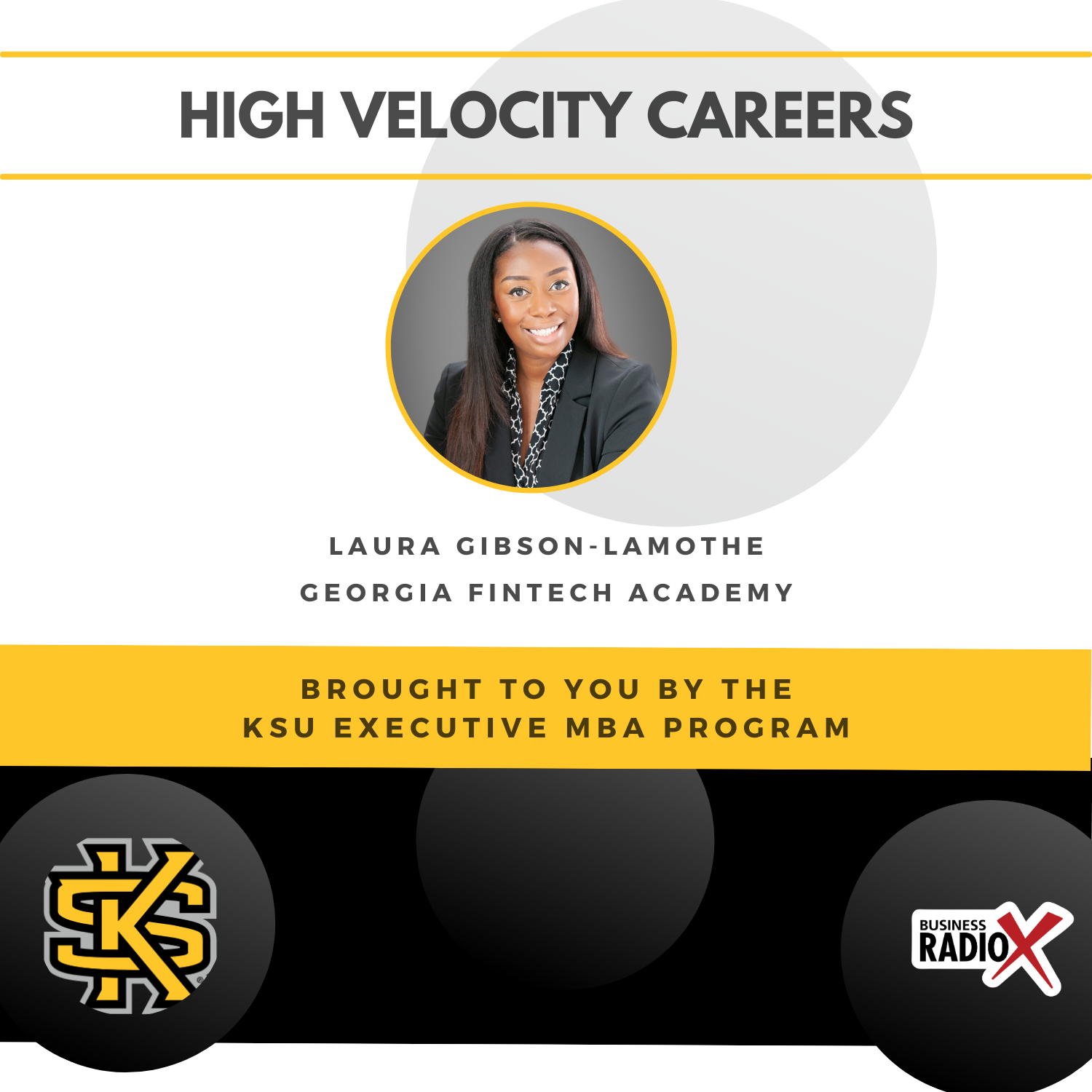
In this episode of High Velocity Careers, Stone Payton talks with Laura Gibson-Lamothe, Executive Director of the Georgia Fintech Academy. Laura shares her unique career journey from fine arts to fintech, highlighting the importance of creative skills in the tech and banking sectors. The discussion delves into the Academy’s mission to bridge academia and industry, offering fintech education, networking, and real-world experiences. Laura emphasizes the significance of networking, experiential learning, and continuous growth in fintech careers. The episode provides valuable insights for students and professionals aiming to thrive in the dynamic fintech industry.

Georgia-Fintech-Academy-logo

Laura-Gibson-LamotheLaura Gibson-Lamothe is the Executive Director of the Georgia Fintech Academy, headquartered at Georgia State University’s Robinson College of Business. In this role, Laura leads the academy’s mission to bridge the gap between academia and industry, equipping students across 26 institutions within the University System of Georgia with the skills and knowledge necessary for successful careers in the rapidly evolving fintech sector.

With a strong background in education and fintech leadership, Laura has been instrumental in expanding access to fintech education, fostering collaboration with industry leaders, and developing programs that enhance student employability in a competitive job market. Her work is centered on preparing the next generation of fintech talent through innovative educational initiatives, hands-on training, and strategic partnerships with leading financial institutions.

Laura’s leadership has earned her several accolades, including being named a finalist for the Women in Technology’s (WIT) 2024 Woman of the Year award and the Black Tech Awards’ 2023 Person of the Year. She was also selected for the Money20/20 Rise Up cohort in 2021, which highlights women leading and innovating in the fintech industry.

Laura is also a strong advocate for diversity, equity, and inclusion in the technology sector. She serves on the boards of PayTech Women and LaAmistad, where she contributes to advancing women in payments and empowering Latino students and families. An engaging speaker and mentor, Laura is passionate about helping students navigate their career journeys and creating opportunities for professional growth within the fintech ecosystem.

Connect with Laura on LinkedIn.

Transcript-iconThis transcript is machine transcribed by Sonix


TRANSCRIPT

Intro: Broadcasting live from the Business RadioX studios in Atlanta, Georgia. It’s time for High Velocity Careers. Brought to you by Kennesaw State University’s Executive MBA program, the accelerated degree program for working professionals looking to advance their career and enhance their leadership skills. For more information, go to Kennesaw Edu’s MBA. Now, here’s your host.

Stone Payton: Welcome to another exciting and informative edition of High Velocity Careers. Stone Payton here with you this afternoon. This is going to be a good one. Please join me in welcoming to the Broadcast Executive director with Georgia Fintech Academy, Laura Gibson-Lamothe. How are you?

Laura Gibson-Lamothe: I am so good. Thank you for asking. I’m excited about our conversation today with High Velocity Careers. This is an exciting topic and I’m always evangelizing on behalf of careers in fintech, so this should be a good one.

Stone Payton: We are clearly right in your wheelhouse. It may be a good place to start. Can you share with our listening audience a little bit about about your career path?

Laura Gibson-Lamothe: Yes, my career path is an interesting one. Academically. I, uh, undergrad focused on, um, a fine arts. I had a passion for the creative side of things and, um, being, uh, interested in, uh, fine arts and approaching potentially graphic design as my career focus was something that came to a head post-graduation when I realized I couldn’t make as much money as I had hoped with that degree. Um, I did not want to be a starving artist, I must say. I took a paid internship at the United States Patent and Trademark Office, which sounds very official, in Washington, D.C., where I did a server migration, a system server migration, um, initiative. And I led, uh, over 300, um, hardware installations, uh, for a very intense, uh, government funded initiative. And that was my gateway into tech, which led me into banking. Um, I no regrets looking back and reflecting on my, uh, life decisions to kind of pivot, uh, early in my career. But I like to say that fine arts degree gave me all of the, uh, cutting edge on being creative in the design and how I articulate messages, whether it be internal presentations or external customer facing, uh, engagement. So I’ve definitely put that fine arts degree to good use.

Stone Payton: You certainly did. And now you’re the grand Poobah of Georgia Fintech Academy. How would you describe mission? Purpose? What are you and your organization really trying to do for folks?

Laura Gibson-Lamothe: Yeah, we are bridging the gap between academia and industry by providing a full variety of services for our students. We engage with the 26 institutions underneath the University System of Georgia, which are all the public colleges and universities. We provide curriculum as a service, I like to call it. So we enable the offering of fintech degrees, and then we offer a whole suite of other services programing, which is really specifically targeted towards providing students visibility into the the, you know, multiple career pathways in the industry, providing them access to a network, giving them exposure into those, you know, very tough timelines for application to internship windows and and even long term, um, full time position opportunities. Our focus is to help students get staffed, um, provide them the education, create exposure into the opportunities in the industry, and then to help facilitate that connectivity into those those opportunities for employment. Um, and so it’s been a tremendous journey to over the past five years. See the evolution of that program. We’ve engaged over 8000 students. We’ve placed almost 3000 that we can track because tracking is quite laborious. Um, and unfortunately, data is hard to come by. But we’ve been able to to start sharing some of these success stories of students who have come in, uh, maybe outside of a Stem or Steam related discipline. Um, some who have, you know, from the beginning, uh, really targeted some more tech roles. Um, you know, tech focused roles with the fintech vertical or fintech lens, but seeing them progress to the point where they’re now on the the industry side, um, really paying it forward and kind of helping, you know, the future generations, um, navigate their, you know, career entrance into the industry is is a rewarding opportunity to see that that evolution.

Stone Payton: Well, I don’t pretend to know what they are, but I have to believe there must be an incredible variety of career opportunities available in fintech, probably a bunch of roles and responsibilities that not even on my radar. Yeah.

Laura Gibson-Lamothe: Yes, I love to start those conversations with defining what is fintech. I think a lot of people, um, have different views on what fintech, aka financial technology stands for. And for us, for our perspective, it’s it’s literally anyone that operates within that broader ecosystem. So a fintech, financial technology thinking, payments and how people interact as human beings with payments, with finances. Um, it’s an enabling mechanism, uh, bringing cutting edge solutions so that people can transact on the go. Um, most students I talk to, they’re very familiar with Venmo and Cash App. But thinking about banking, thinking about all of the retail, you know, scenarios where people are using their mobile wallets or their Apple Watch to pay and Apple Pay to Google Pay and all of these different wallet. Um, you know, uh, formations. Students can really, uh, relate to the leveraging that technology. And on the back end, there’s so many different services that support that from, you know, cybersecurity and info security to data science and machine learning. Um, you know, from a fraud perspective or just being able to provide tailored customer experiences and different types of scenarios and use cases. The opportunities are quite broad and so I always tell students, you know, especially for me being a fine arts major, as we started off with this call and I’ve, I’ve, you know, gained I continued my education. I explored, you know, technical certifications.

Laura Gibson-Lamothe: I have kind of a mixed bag of variety of education along the way. Um, along with my professional experiences. But I can say the industry opportunities are broad. It could be anything from, you know, project management, which many people are familiar with. It’s across multiple different industries to product management, people that are influencing the new products, the new features that that customers, consumers are interacting with to, you know, folks who are fingers to keys, developing, um, developers, engineers. Um, and then even cybersecurity analysts and folks that are really at the helm of protecting data, protecting the environment that contains, um, all of the information and the technology that’s keeping these, these technologies running, um, to even, um, we’re now exploring, you know, some, some newer trends. Um, AI has been a huge focus on from an industry perspective and then also academically. And people keep talking about generative AI specifically and, you know, prompt engineering. How can you leverage these technologies to advance the way that we operate and maybe even gain some efficiencies? And so there’s there’s roles abound. And I think I might have highlighted already eight of them. Um, but those are kind of the traditional ones that we, you know, tend to see a lot of students come in from an early talent perspective. Um, and things just expand beyond there. Um, beyond that point.

Stone Payton: Well, your enthusiasm is contagious and it just comes out over the airwaves in fabulous form. And you did hint at this a little bit earlier in the conversation. But what are you finding at this point in your career in this field? What are you finding the most rewarding? What’s the most fun about it these days for you?

Laura Gibson-Lamothe: I think for me, it’s looking at ways to provide the students that we serve a cutting edge, a competitive, competitive edge in the industry. So I think for me, moving the needle means getting students the opportunity for, yes, a, you know, exposure and a network, which is extremely important. I constantly am enforcing, reinforcing to students to take advantage of these opportunities to connect with the the volunteers, the guest leader, speakers that we have that are dedicating their time, um, you know, to the academy in itself, but then also being able to to kind of rationalize ways where we can really provide students opportunities to really demonstrate what they’ve learned or learn in unique ways. One example of this is we really focus on experiential learning as part of what we do at the academy, outside of the traditional coursework that a student might have, taking a specific class and learning through that class. Certain competencies. There’s a real special. I feel like the secret sauce is being able to bring industry into that academic setting. Um, you know, most likely through a capstone project or a project type of initiative or a mini hackathon, I call it. Um, but during that, that duration of that course, giving students a problem statement, a challenge, letting them, you know, demonstrate what they’ve learned in front of industry, to then have conversations that lead to potentially hiring opportunities and staffing opportunities.

Laura Gibson-Lamothe: That’s that’s one of those things that I feel like is a huge asset that the Fintech Academy has to offer and provide across the university system, and we look to broker those industry relationships with our academic partners to help facilitate that. Um, the other thing is we do and we’re starting to do more of them university wide, uh, events and In hackathons. We did recently a run it by the buyers, which is kind of like a junior Shark tank, where we gave out, um, just over $6,000 in scholarship monies. So students were able to pitch their idea, their innovative payments slash fintech solution to industry. Um, and I’m using air quotes you can’t see on the podcast, but air quotes for, um, buyers, uh, folks who would potentially be interested in investing, um, you know, from a venture capital perspective in those solutions. So almost a mock style pitch day, uh, and these students pitched, they were, you know, selected down, selected to a finalist group. And we had students from UGA to Kennesaw and Georgia State all participate in this competition. And we’re looking to do more of those in 2025. That’s a really meaningful opportunity. But again, it gets students in the front, uh, you know, kind of exhibition style demonstrating what they they’ve learned, demonstrating their skills and then building those relationships real time to to get those job opportunities.

Stone Payton: Well, I got to say, listening to you, this conversation is bringing into abundant focus for me. Uh, it’s challenging a preconceived notion, I guess, or a bit of a bias that I had, I guess. I guess me and maybe other laypeople when it comes to fintech, think of it as a very transactional ecosystem. But boy, this work and to be successful in the field is so grounded in relationship, isn’t it?

Laura Gibson-Lamothe: It really is. I mean, I wish I knew what I know now back in the day, I tell you, coming out, I remember my first time, um, in the banking world. Everyone told me, you know, I was in my early 20s. Like, everyone knows everyone. It’s such a small, tight knit group. And I’m like, how could it be tight knit when there’s. There’s folks everywhere scattered across the US, globally, the world just seems so big. But in reality, now that I’ve been, you know, in the industry for almost 20 years, it is quite small and my, my network is even bigger than I once thought it was. I come across people, you know, people move from, you know, bank to bank or financial institution to another financial institution to a fintech startup. Um, and we all are interconnected or what do you call it, one degree of separation away from each other. And I think, you know, now I hear panels constantly talking about network. Back in the day, I think we were so reliant on just demonstrating value, um, contributing to an organization, getting some, you know, big wins and successes.

Laura Gibson-Lamothe: But that can’t be done without, you know, truly also being your own PR, building your network, having connectivity internally within the organization or the company you work for. And externally, it’s the opportunity for internal growth and promotion and then also industry growth and promotion. There’s opportunities everywhere. You never know when you’re going to need that connection, that you have to get to where you need to to be. And so I, I promote all the time network. But yes, the industry does feel so small. And I recently went to Amsterdam for a conference and lo and behold, I’m walking in the showroom floor and people are like, Laura, how are you doing? And I’m like, I wasn’t expecting to see you all the way out here, um, in Amsterdam. But I am truly, to this day, still amazed at like how how we’re so, you know, connected and how how small the world seems to be. Um, but yes, completely agree with you. The network is the most powerful thing. And yes, this this industry does seem small at times.

Stone Payton: Well, it’s impressive that the enterprises, the industry leaders that you’ve gotten involved in this effort, it sounds like they’re coming to speak. They’re participating fully. And it occurs to me that some of this is genuinely some enlightened self-interest, because they want to, as much as anyone, kind of, uh, close the gap a bit between what a traditional graduate has coming out of this, uh, this domain and what they really need there in the workforce. Right.

Laura Gibson-Lamothe: Yeah, I think of it this way. You know, what better way to, you know, source talent that already is, you know, best prepared to transition into your organization. And I think, you know, doing some of these, uh, experiential learning projects is a great example of that. We’ve had students who have, um, you know, done some, uh, brainstorming around innovation concepts for business. And it required that company to, you know, dedicate a couple of hours volunteering, um, telling them about what the company does and what the business does and how it’s growing, and some of the strategic priorities for them. And then the students came out of this, this business challenge with recommendations and a solution. But they also learned about the organization. Right. Like when at the end of the day, if they were, you know, to pursue an opportunity at this company, they’re not starting from scratch. They know who a visa is or an FIS is. They know even some of the terminology because they learned that in the classroom, they learned, you know, some of the opportunities and some of the challenges that they’re facing as a company. And so they come in just a little bit ahead of the curve. They’re not like coming in fresh. They’re coming in with some background, some insights and some knowledge. And so I think that is a win win for both the student and for the employer. Um, giving the student the opportunity, the exposure and the experience and then giving the employer an opportunity to to even influence and see how students are able to adapt and apply some of the you know, critical thinking skills and soft skills as well.

Stone Payton: Well, this relationship oriented ethos, values, system mindset coupled with and you’ve mentioned it several times, experiential learning, first of all, vastly different than my little bit of formal education. I’ll tell you that. But I have to believe it also sort of sets a marvelous foundation for lifelong learning. I mean, that would if you’re going to experience learning that way, you’re going to continue. You’re going to be a life learner, aren’t you?

Laura Gibson-Lamothe: Yeah. You’re right. It’s a pattern that can be repeated. And I’m also interested, encouraged to see it happen on both sides, not only from a student perspective, but from the career professionals who are volunteering. We’re seeing the same thing, and it’s almost an entry point to kind of like refresh or re vitalize some of those thoughts of continuing their educational journey or going back and getting a certification of some sort. And so we do see it on, on both sides. And some of these themes that are being taught, um, are best practices no matter what industry you enter. I was joking around with some folks earlier today around, um, our focus on innovation and design thinking, uh, concepts. I applied some of those concepts. Um, and I should say principles to how I plan my personal life. I I’m going on vacation. Hopefully, I’m in the process of filling out this spreadsheet that I like to use for my personal life. I’m a project manager at heart, and I love to have things organized, and I use some of these things that I’ve learned from a functional perspective, uh, professionally in my personal life as well. So yeah, there’s opportunities abound to apply what they’re learning and to continue that evolution of continuous learning and growth and development.

Stone Payton: So let’s dive into the nuts and bolts logistics of this thing. If I’m a student within this multi-institution group, there’s a path for me to to learn about this. These are courses I take. Walk us through that a little bit.

Laura Gibson-Lamothe: Yeah. So it’s unique to each institution. So within the university system we have these collaborative agreements with each institution. And so we’re behind the scenes from a curriculum perspective, opening up the curriculum to be leveraged by these institutions. And so if you were, for example, like Kennesaw State, you would come through the fintech program, potentially get a fintech cert certificate in fintech. Um, or you could even pursue what they’re offering now is the, the Mis and financial digital financial technologies. Um, and so there’s there’s multiple pathways for you at that specific university, and it would be accessible through advisors, through the faculty, through your normal typical registration process. There’s nothing new, and it should be transparent to the student that’s coming by way of that university. One of the fascinating things to add, though, to that point is the fact that we’re we’re really unique in the fact that we have a network of faculty that are spread across multiple institutions. And so you might be taking a course at Kennesaw State in fintech, but taught by a professor at a different university, um, and vice versa. We have Kennesaw State, you know, faculty that are also a part of the faculty network teaching core courses that are offered at other institutions as well. Um, and so this shared model, almost a shared service across university system is very unique. But it’s it’s powerful because it’s enabling institutions who might not necessarily have the infrastructure or the faculty. Experienced faculty or the credentials to offer, um, you know, these degrees or some of these courses. The ability to tap into, um, that core set of courses and curriculum.

Stone Payton: The depth and breadth of what you’re able to provide. And I don’t know if it’s the right word or not, but the diversity of thought is, uh. That is incredible. You it is. Now, you have also taken specific interest in serving, uh, very specific constituencies within this arena as well. Uh, isn’t there something like Patek women or something like that that you’re involved with?

Laura Gibson-Lamothe: Yes. So Patek Women is a nonprofit organization focusing on moving the needle for diversity and for for women in the payments and fintech ecosystems. Um, it’s an amazing relationship because we have joined a little bit of what we’re doing at the Fintech Academy with Tech Women organization. I’ve been on the board. This will be my coming up on my fourth year, um, on the as a board member, always looking for ways to, you know, engage and to increase our member base. But one thing that we’ve identified as a service to our Georgia Fintech Academy community, which is, you know, the universities that we’re speaking of, is to extend those services to them. So students who are, you know, enrolled in undergrad can sign up for an account, um, to become a member and take advantage of, uh, mentorship, job board postings, um, in-person sessions, online virtual webinars. All of these resources extend to them. We pay tech woman has an annual leadership summit, which we just had recently, um, here in Atlanta. Companies from across the US traveled to Atlanta. And there are their big brand names like, like discover, for example, who hosted a lot of our students at, um, some on campus at the conference events and a private company dinner as well. Just talking about career opportunities at discover and and networking with these students. And so there’s been a lot of time like just benefit in seeing, you know, how these two pieces can come together to extend resource and opportunity to students who are interested in fintech and payments?

Stone Payton: I don’t know when or how or where you would find the time. I was encouraged to hear you mention vacation earlier in the conversation, but I’m interested to know interest pursuits, hobbies outside the scope of your work. What? Anything you have a tendency to nerd out about that’s not Fintech Academy.

Laura Gibson-Lamothe: Yeah, you know, it’s funny because I do. I I’m on borderline insanity when it comes to this job. I am Relentless when it comes to opportunities for students. I. I do appreciate the fact that I can’t be everywhere all the time. Um, and it’s it’s one of those opportunities for me as I continue to evolve, um, alongside with the Fintech Academy, um, you know, develop what that looks like. But for me, my passions outside of this, uh, include travel. I love travel. And when I think about travel globally, for me, I was born in Italy. I, I grew up abroad. My father played professional basketball overseas. So I lived in Israel, Holland, Spain, um, you know, came back in the States in middle school. But for me, I’ve always had a kind of a global view. And in my career it’s enabled me, um, I like to say fintech is, you know, money and there’s money in money. You can make money in money. And for me, it it enabled, uh, financial stability. Financial independence. All of these things that supported my opportunities to really enjoy some of these things I’m passionate about that you’re hitting on, like travel and I love traveling, and now it’s actually kind of intersecting not to bring back, because I know you were asking about my personal life, but like, it’s it’s allowed opportunities for me to connect with universities globally. Like we we went to Ireland this summer with the American Transaction Processors Coalition, um, and signed a cooperative agreement with two universities in Belfast and in Dublin. And there are opportunities to collaborate and leverage. Um, they’re interested in have developed a fintech program. They have a smaller but, you know, robust curriculum. They’re doing apprenticeships and some other things that we have not yet embarked on that journey here in the US for the Fintech Academy. Um, but I get to kill two birds with one stone personal trip. Love travel. Secondarily, there’s also a thing that I can do to help drive and promote what we’re doing at the Fintech Academy. It’s a win win.

Stone Payton: I am so glad that I asked. Before we wrap, let’s leave our listeners if we could students, business leaders alike with a couple things to chew on be thinking about. Sometimes I refer to them as as pro tips, maybe even what we in the in the larger business community and the media world, you know what we can be doing to help. But let’s leave them with a little something to chew on.

Laura Gibson-Lamothe: Yeah, I think for, you know, the the professional experience, professional audience, for me, it’s more of giving a call to action. You know, if you’re not giving back, if you’re not mentoring, then what are you doing with your time? Investing in the next generation is investing in the future. And to be honest, I can personally attest that I would not be where I am today. If I had not had influenced directly by folks who volunteered their time and mentored me throughout my career. Um, and so I constantly am promoting and advocating for folks to volunteer for those opportunities. Um, by way of the Fintech Academy, if that’s something of interest. Um, or just, you know, locally at any of your institutions at the high school level, you know, and college. Um, folks need people to, to help support what they’re trying to do to help move the needle for our students. And then secondly, from a student perspective, I know times are challenging and I’ve noticed, you know, post pandemic, there’s almost, uh, new social anxieties, um, and stresses that our students are facing. And I just, you know, like to impress upon students to put themselves out there, be vulnerable, connect with people we mentioned earlier, the network is the most powerful thing.

Laura Gibson-Lamothe: Take advantage of all of the opportunities that you have. For us, we promote open it up to almost anyone who is at the the undergraduate or graduate level. Doesn’t matter if you’re in the university system of Georgia or not. Um, we have plenty of opportunities that are externally facing and public on our website. Uh, Georgia Fintech Academy. Org. Um, and so I really like to impress upon people to take advantage of these resources because they are resources. Um, and if you’re ever in need to, you know, pursue opportunities in fintech or want to explore what that would look like. Um, we have a whole, you know, um, roster of resources out there to kind of help you navigate those decisions and provide you some, some foundational, um, knowledge in what that would look like for you. So those two pieces, I think I would, I would like to leave with, with everyone, um, to engage and to connect and to network.

Stone Payton: That is marvelous counsel and just all around good mojo. Let’s leave them with that website again and any other coordinates you might want them to have.

Laura Gibson-Lamothe: Yeah, I would go out to the Georgia Fintech academy.org website for those that are interested in volunteer, it’s just Georgia Fintech Academy. Org forward slash volunteer simple form. There’s four different ways to really volunteer and connect with us. Um we also are on LinkedIn heavily. So look at our, um, Georgia Fintech Academy member page out on LinkedIn. Um, we are constantly promoting a lot of our events, um, and our collaborations with industry out there. So so give us a follow. Uh, we also have recently stood up our YouTube channel, which is easily found under Georgia Fintech Academy. Um, as well as Instagram because that’s how students like to consume, uh, content these days. So we’re we’re hip. We’re hip and fresh at the Georgia Fintech Academy.

Speaker4: Well, Laura.

Stone Payton: It has been an absolute delight having you on the broadcast this afternoon. Thank you for your insight, your perspective, your enthusiasm, the momentum that you guys have gained, the work that you and your team are doing is so important for so many. And we sure appreciate you.

Laura Gibson-Lamothe: Thank you so much. You’ve been a great host and I’ve really enjoyed this conversation and really appreciate it.

Stone Payton: My pleasure. Alright, until next time. This is Stone Payton for our guest today, Laura Gibson, Lamoth Executive Director with Georgia Fintech Academy and everyone here at the Business RadioX family saying, we’ll see you next time on High Velocity Careers.


Tagged With: Georgia Fintech Academy

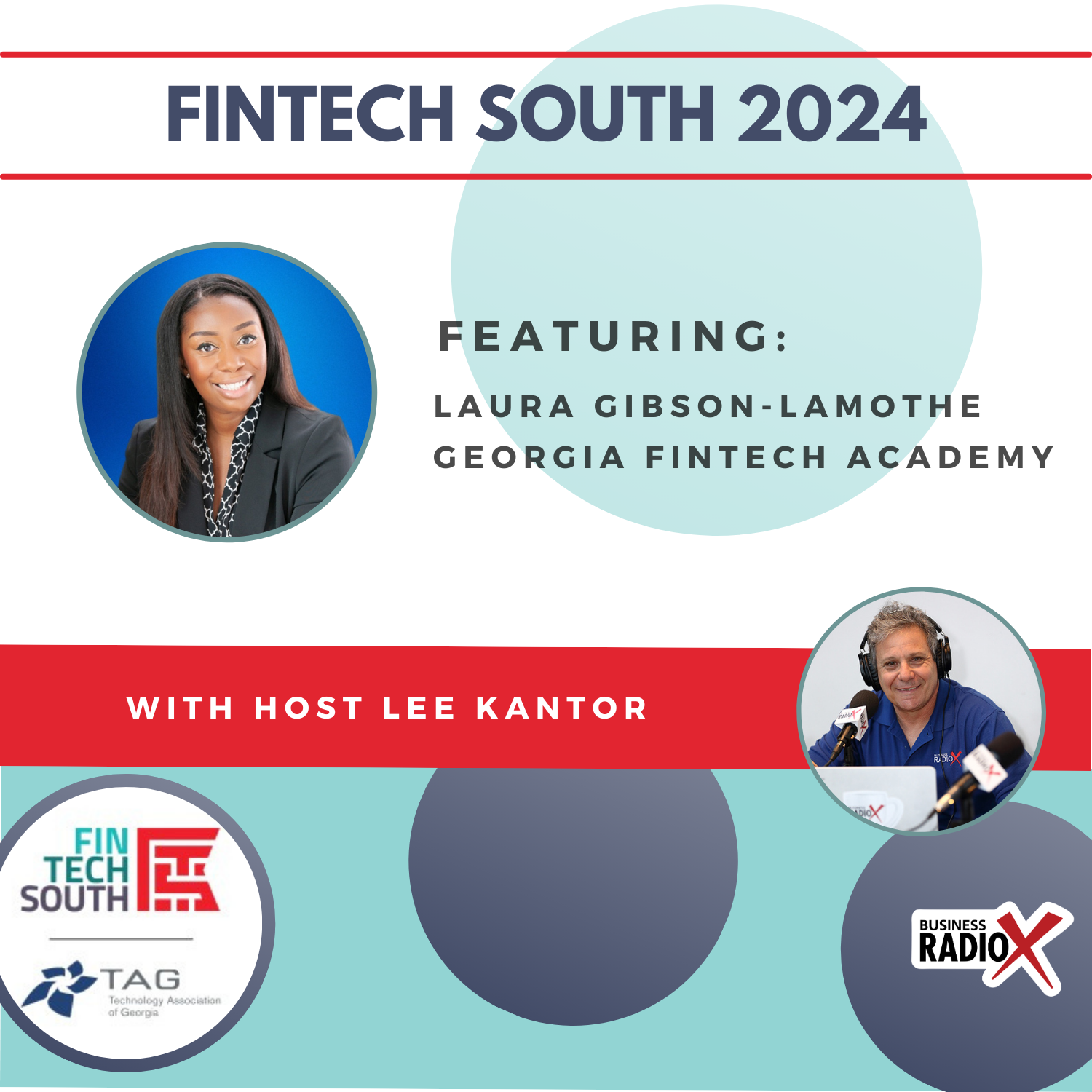
Fintech South 2024: Laura Gibson-Lamothe with Georgia Fintech Academy

September 5, 2024 by angishields

FS-Georgia-Fintech-Academy-Feature
Atlanta Business Radio
Fintech South 2024: Laura Gibson-Lamothe with Georgia Fintech Academy
Loading
00:00 /
RSS Feed
Share
Link
Embed

Download file

Fintech South 2024, hosted by the Technology Association of Georgia (TAG), took place on Aug. 27-28 at the Woodruff Arts Center and Atlanta Symphony Hall. This year’s theme was “Fintech Lives Here!”

Laura-Gibson-LamotheAs the Executive Director of the Georgia Fintech Academy, Laura Gibson-Lamothe’s primary objective is to drive meaningful impact within the industry through the implementation of a comprehensive diverse talent development program.

The Georgia Fintech Academy focuses on educating and empowering the next generation of fintech professionals by fostering collaboration with 26 institutions aligned with the University System of Georgia, as well as private universities and HBCUs. Our commitment extends to creating academic pathways to fintech at the secondary level, strategically cultivating a reservoir of talented individuals poised to shape the future of the industry.

Connect with Laura on LinkedIn.

Transcript-iconThis transcript is machine transcribed by Sonix.


TRANSCRIPT

Intro: Broadcasting live from the Business RadioX studio in Atlanta, Georgia. It’s time for Atlanta Business Radio, brought to you by Kennesaw State University’s Executive MBA program, the accelerated degree program for working professionals looking to advance their career and enhance their leadership skills. And now, here’s your host.

Lee Kantor: Lee Kantor here, broadcasting live from the Woodruff Arts Center for Fintech South. One more time. This is the seventh year, I think, that we’ve been here broadcasting, and I’m so excited to be talking to our next guest, Laura Gibson-Lamothe. And she is the executive director with Georgia Fintech Academy. Welcome.

Laura Gibson-Lamothe: Thank you.

Lee Kantor: Well, I’m so excited to learn what you’re up to. Tell us about Georgia Fintech Academy. How are you serving folks?

Laura Gibson-Lamothe: Yeah, the Georgia Fintech Academy has been around since 2019. We are a academic talent development initiative within the state of Georgia. We support all 26 of the universities and colleges that exist underneath the university system of Georgia, and we provide a curriculum, a fintech curriculum. We also provide experiential learning opportunities, career development services. We do a podcast that’s co-hosted with students, and we pull students in from across the entire state. There’s currently 350,000 students enrolled across the state of Georgia, and 8000 of them we have reached with our fintech curriculum, which is pretty amazing.

Lee Kantor: Now, how did the kind of this idea. What was the genesis of the idea? Like who raised their hand and said, you know what, there should be a fintech academy. You know, that seems very niche. Yes.

Laura Gibson-Lamothe: Back in 2019, it was a combination of industry and academics in the room. The idea stemmed from the fact that Atlanta is and has become a major fintech hub recognized globally for the fintechs that we have in this space. And given the rapid growth economically here in the state of Georgia, the focus has also been on workforce development to support that, that growing demand.

Lee Kantor: So how how does it work? You have your own curriculum teaching fintech kind of skills that young people can get involved with and then learn. Or is it something where you’re partnering with the different education places to build a curriculum so that you’re always kind of teaching them the right things at the right time?

Laura Gibson-Lamothe: Yeah, that’s a good question. I like to I think I coined the term curriculum as a service. If not, I’m going to trademark that eventually in the future. That’s a.

Lee Kantor: Good one. Yes.

Laura Gibson-Lamothe: So what we do is we offer a core set of courses, and over the years that that core has grown. But we enable each university to offer a fintech degree of study. And so we have a variety of those 26 institutions that are on board with the curriculum. And they’ve built their own packages per se. Kennesaw state’s actually one that I would love to reference is an example of evolution of that curriculum. They first onboarded with just the core, so they were offering certificate in Fintech, but now they offer a master’s in digital financial technology, which all is supported through the accreditation process and the curriculum oversight by way of the Fintech Academy.

Lee Kantor: So it’s evolved from a certification to an actual degree. Yes, exactly. Wow. That’s I mean, is that unique in the country? It is.

Laura Gibson-Lamothe: Very unique. And I think from a fintech perspective, if you look at the the market for other universities offering this type of curriculum, it’s still, you know, early days. And so that’s actually drawn some appeal outside of the state of Georgia, you know, for other universities and organizations to to look at what successes we’ve had from a fintech curriculum development perspective.

Lee Kantor: So why is this event, Fintech South important to you in the organization? Yeah, it’s extremely important.

Laura Gibson-Lamothe: I feel like one of the things that we do really well is compliment the the in the classroom education with actual real world experiences. And there is none better than coming to an event hearing in real life. Um, experienced leaders talk about relevant themes and topics, uh, applied to the industry, and then also providing them a one stop access to a very broad network. Um, and today we have 35 students and a few faculty that are joining us from six different universities that we support, uh, Kennesaw State, University of Georgia, Georgia State University, Mercer, Morehouse. I think I covered them all. Oh, middle Georgia, um, University as well. Um, and those students have taken this opportunity by storm. Um, there’s there’s some, you know, institutions that are a little bit further out. So they have kind of band together to, to stay here locally for this event overnight. And they woke up extremely early this morning to make sure they’re connecting with people via the app and other channels so they can schedule in-person meetings at this event.

Lee Kantor: Now, is there any story you can share of a student that’s gone through the program and then was able to take their kind of career to a new level?

Laura Gibson-Lamothe: Yeah, one that I’m really proud about. Astrid, who is a graduate at Kennesaw State University. She is at Truist, and today she is at the Truist Booth in the Expo Hall. And I’ve had students full circle, full circle moment. Right. And I had students approach me and they were so excited. They were like, oh, she’s on the other side. Like she made it on the other side. And I’m like, wow, it’s funny to. And I’ve only been in this role for two years and I’ve already seen that, that cycle, um, uh, across the university system where there’s examples of that. But it’s really fulfilling to see these students look up to other students who have just more recently, you know, made it through, and then they’re now leading the way for the next generation of students coming through as well. So it’s kind of that reciprocated type of perspective for the both of them, thinking about what challenges that that younger student had to navigate to to get, you know, find their way through the industry and then those who have made it, I call them near peers to be able to be mentors for that next generation right there.

Lee Kantor: Showing them what’s possible. Yeah. So what do you need more of? How can we help?

Laura Gibson-Lamothe: Oh, I need everything. So all the things that I kind of outlined need support. So whether it be curriculum, we are constantly looking at evolving the curriculum. And the industry is evolving so fast. So for me coming to these events, I love hearing about some of the emerging trends and some new technology capabilities. And you guys know like AI is a hot topic. And so we’ve been really focused on generative generative AI and incorporating some of that in the curriculum because we’ve been so data science, um, AI and machine learning focused. But that’s just an example of like some of the aspects of the curriculum where we’re really looking to plug into industry to make sure that the training that we’re providing in the classroom is as relevant and current state as possible. The other side is, you know, the services that we offer for students. So we’re always looking for mentors and advisors. We have a mentorship program where we we sync based on background and an area of study for a student or, you know, an interest of a student with some mentors from the industry. And so the mentorship piece is really key for us. We do a speaker series, so twice a week, Monday and Wednesdays. Every night during each semester, we host an event, um, which is virtual because we want to provide accessibility across the university system, across the state of Georgia, where we have industry leaders come in and speak on certain themes and topics. And that one’s really cool because we get a lot of variety of the type of leaders that are willing to dedicate their time to just speak about various topics. And so we’re looking for those types of support mechanisms from the industry.

Lee Kantor: So how does somebody connect with the Academy?

Laura Gibson-Lamothe: Yes. So on our website Georgia Fintech Academy. Org forward slash volunteer. We actually have a volunteer form, which I’m really excited about, because that volunteer form kind of leads into I built like a CRM. I’m a techie in my background and my nature, so I love having solutions that really optimize process. Um, and so this volunteer form is really important because it’s a database that our faculty, we have 20 faculty across the university system teaching these courses. They’re working so close with the students, they need all the support they can get. And so we provide them access to that database for, um, you know, the repository of folks that have volunteered. And so we’re now leveraging that as a resource. And then also at the mothership, the Fintech Academy, we’re using that data as well. Um, and so I would recommend folks to, to sign up out there.

Lee Kantor: Well, thank you so much for sharing your story. You’re doing such important work and we appreciate you.

Laura Gibson-Lamothe: Thank you so.

Lee Kantor: Much. All right. This is Lee Kantor will be back in a few. At Fintech South.


Tagged With: Fintech South 2024, Georgia Fintech Academy

Tommy Marshall with Georgia Fintech Academy and Brian Jennings and Davisha Patel with Robinson College of Business and Daniel Hadgu with Ethiopay

February 5, 2020 by angishields

GSU-Ep2-Featrure
Atlanta Business Radio
Tommy Marshall with Georgia Fintech Academy and Brian Jennings and Davisha Patel with Robinson College of Business and Daniel Hadgu with Ethiopay
Loading
00:00 /
RSS Feed
Share
Link
Embed

Download file

Georgia Fintech Academy

Tommy Marshall, Executive Director, Georgia Fintech Academy, University System of Georgia,  has spent his 20+ year management consulting career focused on digital financial services and fintech. He works to bring his depth in payments, banking, capital markets, finance & regulation together with the Georgia and global fintech ecosystem to lead and support the objectives of the Georgia Fintech Academy.

Tommy is a graduate of Davidson College and holds an MBA from Vanderbilt University. He has called Atlanta home for the past ten years.

Connect with Tommy on LinkedIn and Twitter.

Brian Jennings is the Associate Dean of Graduate Programs and Executive Education at Georgia State’s Robinson College of Business.

In this role, he has overall responsibility for the growth, go-to-market strategy and delivery of Robinson’s two MBA degree programs (Flexible and Executive) and a broad portfolio of 14 specialized masters’ offerings, overseeing the programs’ recruiting, admissions, financial aid, student experience, student advisement and alumni engagement functions. In addition, he leads the College’s non-degree executive education business and works closely with senior management teams and talent development executives at a number of Fortune 500 companies.

Prior to his appointment at Georgia State, Brian was an Associate Dean at Georgia Tech for 9 years, providing overall leadership for the expansion of Scheller College of Business’ Full-time, Evening and Executive MBA programs and non-degree executive education portfolio.

Before to moving to Atlanta in 2010, Brian held dual roles at the Wharton School at the University of Pennsylvania – as Senior Director at the Aresty Institute of Executive Education and as Managing Director of the Mack Center of Technological Innovation. His responsibilities at Wharton included assessing talent development needs at global Fortune-class companies in the manufacturing, energy and technology industries and aligning the School’s thought leadership and research capabilities to clients’ interests.

Prior to moving to academia, Brian had an extensive career in the technology consulting industry, spending 17 years in client-facing and business development roles at global firms such as Accenture, PwC and IBM.

Connect with Brian on LinkedIn.

Davisha Patel is currently finishing her last semester as an MBA student at the Robinson College of Business at Georgia State. During her time, she has participated in the Graduate Mentoring Program as well as been a part of the Graduate Business Association and Graduate Management Consulting Club.

Prior to joining Georgia State, Davisha attended Mercer University for both her undergraduate degree and Masters in Public Health. Her focus in healthcare allowed her the opportunity to intern at the State Capitol during a legislative session as well as perform research on telemedicine usage in rural Georgia.

With the combination of healthcare and business, Davisha plans to begin her career in the consulting industry after the completion of her program.

Daniel Hadgu has interned at several financial services companies such as IFS securities one of Atlanta’s Largest African American-Owned Broker Firms and Nomura Holdings on Wall Street.  This summer he will be joining Vanguard as an Investment Management Intern one of the few students from a nontarget to be selected for that position. He is currently an Equity Research Analyst at BLK Capital Management one of the largest student-owned non-profit hedge funds.

Daniel is also a founding member of a Fin-Tech company, EthioPay which specializes in cross-border payments to Ethiopia he is currently in TYE competing to win funding for EthioPay.  In his journey of understanding what it truly means to help others, he has uncovered the power of innovation. Innovation is the act or process of introducing new ideas, devices, or methods. Through his own life experiences of being a first-generation Eritrean American, he has found at the crossroads of innovation and entrepreneurship lies impact. This is what led him to my current pursuit of understanding the increasing global challenges faced in Ethiopia cross border payment. Ethiopay, is his entrepreneurial project to address this issue and develop a global payout platform.

Connect with Daniel on LinkedIn.

Tagged With: Ethiopay, Georgia Fintech Academy, Georgia State’s Robinson College of Business

Business RadioX ® Network


Our Most Recent Episode

CONNECT WITH US

  • Email
  • Facebook
  • LinkedIn
  • Twitter
  • YouTube

Our Mission

We help local business leaders get the word out about the important work they’re doing to serve their market, their community, and their profession.

We support and celebrate business by sharing positive business stories that traditional media ignores. Some media leans left. Some media leans right. We lean business.

Sponsor a Show

Build Relationships and Grow Your Business. Click here for more details.

Partner With Us

Discover More Here

Terms and Conditions
Privacy Policy

Connect with us

Want to keep up with the latest in pro-business news across the network? Follow us on social media for the latest stories!
  • Email
  • Facebook
  • Google+
  • LinkedIn
  • Twitter
  • YouTube

Business RadioX® Headquarters
1000 Abernathy Rd. NE
Building 400, Suite L-10
Sandy Springs, GA 30328

© 2025 Business RadioX ® · Rainmaker Platform

BRXStudioCoversLA

Wait! Don’t Miss an Episode of LA Business Radio

BRXStudioCoversDENVER

Wait! Don’t Miss an Episode of Denver Business Radio

BRXStudioCoversPENSACOLA

Wait! Don’t Miss an Episode of Pensacola Business Radio

BRXStudioCoversBIRMINGHAM

Wait! Don’t Miss an Episode of Birmingham Business Radio

BRXStudioCoversTALLAHASSEE

Wait! Don’t Miss an Episode of Tallahassee Business Radio

BRXStudioCoversRALEIGH

Wait! Don’t Miss an Episode of Raleigh Business Radio

BRXStudioCoversRICHMONDNoWhite

Wait! Don’t Miss an Episode of Richmond Business Radio

BRXStudioCoversNASHVILLENoWhite

Wait! Don’t Miss an Episode of Nashville Business Radio

BRXStudioCoversDETROIT

Wait! Don’t Miss an Episode of Detroit Business Radio

BRXStudioCoversSTLOUIS

Wait! Don’t Miss an Episode of St. Louis Business Radio

BRXStudioCoversCOLUMBUS-small

Wait! Don’t Miss an Episode of Columbus Business Radio

Coachthecoach-08-08

Wait! Don’t Miss an Episode of Coach the Coach

BRXStudioCoversBAYAREA

Wait! Don’t Miss an Episode of Bay Area Business Radio

BRXStudioCoversCHICAGO

Wait! Don’t Miss an Episode of Chicago Business Radio

Wait! Don’t Miss an Episode of Atlanta Business Radio