Business RadioX ®

  • Home
  • Business RadioX ® Communities
    • Southeast
      • Alabama
        • Birmingham
      • Florida
        • Orlando
        • Pensacola
        • South Florida
        • Tampa
        • Tallahassee
      • Georgia
        • Atlanta
        • Cherokee
        • Forsyth
        • Greater Perimeter
        • Gwinnett
        • North Fulton
        • North Georgia
        • Northeast Georgia
        • Rome
        • Savannah
      • Louisiana
        • New Orleans
      • North Carolina
        • Charlotte
        • Raleigh
      • Tennessee
        • Chattanooga
        • Nashville
      • Virginia
        • Richmond
    • South Central
      • Arkansas
        • Northwest Arkansas
    • Midwest
      • Illinois
        • Chicago
      • Michigan
        • Detroit
      • Minnesota
        • Minneapolis St. Paul
      • Missouri
        • St. Louis
      • Ohio
        • Cleveland
        • Columbus
        • Dayton
    • Southwest
      • Arizona
        • Phoenix
        • Tucson
        • Valley
      • Texas
        • Austin
        • Dallas
        • Houston
    • West
      • California
        • Bay Area
        • LA
        • Pasadena
      • Colorado
        • Denver
      • Hawaii
        • Oahu
  • FAQs
  • About Us
    • Our Mission
    • Our Audience
    • Why It Works
    • What People Are Saying
    • BRX in the News
  • Resources
    • BRX Pro Tips
    • B2B Marketing: The 4Rs
    • High Velocity Selling Habits
    • Why Most B2B Media Strategies Fail
    • 9 Reasons To Sponsor A Business RadioX ® Show
  • Partner With Us
  • Veteran Business RadioX ®

Navigating Payroll Complexity: How GetPayroll Can Save Your Business Time and Money

July 7, 2025 by angishields

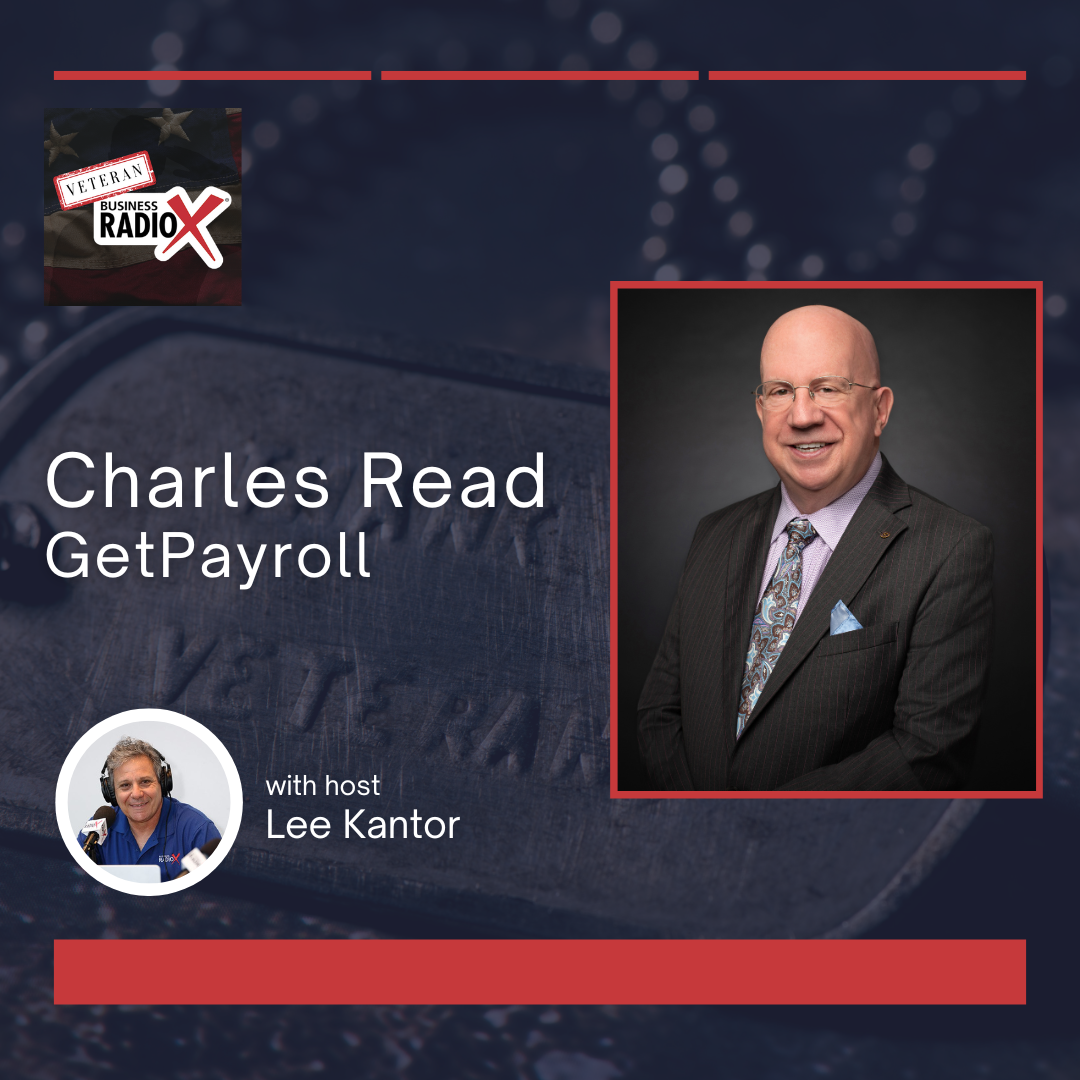
VBRX-GetPayroll-Feature
Veteran Business Radio
Navigating Payroll Complexity: How GetPayroll Can Save Your Business Time and Money
Loading
00:00 /
RSS Feed
Share
Link
Embed

Download file

In this episode of Veteran Business Radio, Lee Kantor talks with Charles Read, CEO of GetPayroll. Charles shares his journey from Marine Corps service to payroll expert, highlighting the challenges small businesses face with payroll management. He explains the benefits of outsourcing payroll, staying compliant with IRS regulations, and how GetPayroll supports clients through onboarding and collaboration with CPAs. Charles also discusses common pitfalls, IRS notices, and the differences between payroll providers and PEOs, offering practical advice for business owners seeking efficient payroll solutions.


GetPayroll-logo

Charles-ReadCharles J Read is a Certified Public Accountant (CPA), U.S Tax Court Practitioner ( USTCP), a former member of the Internal Revenue Service Advisory Council (IRSAC), a Vietnam Veteran, and the Founder of GetPayroll.

Mr. Read’s companies have provided full-service payroll, payroll tax, and other payroll-related services since 1991.

Connect with Charles on LinkedIn.

Episode Highlights

  • Overview of payroll services offered by GetPayroll for small and medium-sized businesses.
  • Discussion on the complexities and challenges of payroll management.
  • Importance of outsourcing payroll tasks to professional services.
  • Charles Read’s personal journey from military service to CPA and payroll business owner.
  • Common misconceptions among business owners regarding self-managing payroll.
  • The significance of staying updated with IRS regulations and tax requirements.
  • Guidance on how to respond to IRS notices and appeals.
  • Insights on Professional Employer Organizations (PEOs) and their cost-effectiveness compared to direct payroll services.
  • Onboarding process for new clients at GetPayroll.
  • Collaboration between GetPayroll and clients’ CPAs to streamline accounting processes.

Transcript-iconThis transcript is machine transcribed by Sonix


TRANSCRIPT

Intro: Broadcasting live from the Business RadioX studios in Atlanta, Georgia. It’s time for Veterans Business Radio, brought to you by ATL vets, providing the tools and support that help veteran owned businesses thrive. For more information, go to at vets. Now here’s your host.

Lee Kantor: Lee Kantor here another episode of Veterans Business Radio, and this episode is brought to you by ATL vets, inspiring veterans to build their foundation success and empowering them to become the backbone of society after the uniform. For more information, go to ATL vets.org. Today on the show we have Charles Read. He is the CEO of GetPayroll. Welcome.

Charles Read: Lee, it’s a pleasure to be with you. Thank you for having me.

Lee Kantor: Well I’m excited to learn what you’re up to. Tell us about GetPayroll. How are you serving folks?

Charles Read: Well, we provide payroll services to small and medium sized businesses around the United States. We handle everything. You tell us what your employees, the number of hours they worked. We already know how much they get paid. We do all the calculations. We create the paychecks, direct deposits, get them paid. Then we file all the taxes, all the reports, and do all the interfacing with the IRS and the states and so on to make sure you don’t have to.

Lee Kantor: So what’s your backstory? How’d you get involved in this line of work?

Charles Read: Well, I left the Marine Corps, uh, after four years. Work realized that business did not value military experience then. Just like now. So I went to college, got my degrees, went to work in business, worked in corporate world for about 15 years, got fed up with that and decided to open my own firm, hung up my own shingle as is a CPA and had payroll as a sideline, and payroll has grown and grown and grown and sold off the CPA business. And now we’re a payroll company.

Lee Kantor: So what are some maybe things that business owners don’t appreciate of partnering with a payroll company like yourself, instead of just trying to kind of power through it on their own?

Charles Read: Well, my analogy is when I grew up, Pelé was the world’s best soccer player. A wonderful athlete recently passed. But if you take Pele and you’d put him in a New York Yankees uniform at second base, he would be absolutely lost. He wouldn’t know the game. The rules. Pick up the ball with your hands. He’d still be a great athlete, but he’d be totally lost. So you take a businessman who’s successful at what they do, and now you say deal with the IRS. They’re an engineer. They’re an accountant. They’re a marketer. They’re. They’re a mechanic. They’re a cook. Whatever. They don’t know the IRS. They’re at second base. They’re totally lost. That’s where we come in. We’re experts at this. We’ll backstop you. We’ll take care of all that. We’ll make sure that the IRS stays out of your kitchen and out of your pocket as much as possible, so you just don’t have to worry about it. The time and trouble and cost. You would have to spend to be able to do what we do. You wouldn’t be able to be in business because what we do for a living. So that’s where we come in. We allow you to outsource that to a professional at a pittance and just solve all those problems.

Lee Kantor: Now the companies that are trying to do it on their own, is it something that they start small and then it’s like maybe manageable for 1 or 2 people, and then all of a sudden they got a few people and now it’s getting complicated. And they put somebody that’s, like you said, not an expert. That just is kind of Volun told to do this work, and then they get in over their head.

Charles Read: Well, you’d think that. But in reality, most small businesses screw it up. They get sideways with the IRS. They get sideways with the state, with either the state Revenue department or state unemployment department, because they don’t know what they’re supposed to do. They don’t understand how to classify employees. They don’t understand what taxes have to be collected and paid, when they have to be paid, what forms they have to file. All those things, all those complexities of a business entirely outside of the business they’ve chosen to be in. So yeah, you’d think they could start out small and get away with it, but in fact, they don’t. They get into problems even if they’re just trying to pay themselves as a single employee corporation. That’s what happens. And when they get a little bigger, then those errors multiply and come to the attention. And now it’s way too late. So our suggestion is the moment you have payroll, get a payroll provider. It’s not worth doing yourself. It just isn’t. When I was in corporate world, never tried to do payroll in-house. Just wouldn’t do it. It wasn’t worth it, I knew better. Uh, being a CPA. So, uh, no, they get into problems from day one because they they don’t know what they don’t know.

Lee Kantor: And then this is a situation where the rules are always changing. There’s so much nuance to this that this isn’t something that, like you said, if I’m a mechanic, I can’t be mechanics. And then, you know, learn about the latest IRS kind of new regulation.

Charles Read: I gave up trying to work on my car years ago. I had an milligram and the clutch was going out at 60,000 miles, which they always do. And I had my Chilton book and I opened it up to index and change the clutch. And I went to that chapter and it said to change your clutch. Step one. Remove the engine. See chapter seven. I closed the book and never opened it again. Okay, it’s worse with the IRS because the rules do change. You don’t know what they are, and if you’re not keeping up on them, you will not be current. It’s just like cars change the electronics and cars today. I have absolutely no idea what they do. None. I haven’t worked on a car in 50 years and it changes and it gets more complicated. And mechanics will tell you this, but they know it because they do it every day and they keep up on it. It’s their business. So their current when you take your car in to what’s going on, they get trained in it. I get trained on what’s going on with the Internal Revenue Service. I wish I was on the IRS Advisory Council for three years. Went up to Washington, you know, six times a year to work with them. So yeah, we get the trade journals. I get emails almost daily from from the States and from the IRS about changes. We get the trades. We all. We keep up with that. I don’t keep up with cars. I don’t keep up with a lot of things. I outsource a lot of things because that’s smart business. Uh, and people outsource payroll to us because that’s smart business, because we keep up with it.

Lee Kantor: So let’s let’s try to help our listeners and maybe, uh, share some of your expertise. So hypothetically, I get a notice from the IRS, which probably never is good news. I don’t think they send out birthday cards, but I get a notice. What? What do I do?

Charles Read: Well, first of all, is it wrong? And millions of them are. The IRS makes millions of mistakes every year. They won’t tell you that, but they do. 100,000 civil servants with technology, some of which goes back to the 1960s. So if they say you owe tax and you don’t. Now, if you do, just pay it. But if you don’t write a letter back to them explaining what what your position is, now, they’re going to ignore that letter. I guarantee you the first letter you write back, they will ignore. They will send you back and form a letter saying no, pay up. Your second letter. You may get a response that’s not automated. Canned response. Respond to that anyway. Your third letter then should go to the appeals coordinator, because each letter will tell you what you need to do. The appeals coordinator will actually look at what you’re saying. In all probability, they will deny your your your request to have that penalty abated. And so you continue to appeal it. There’s a whole series of appeals going up through and including Tax court that are available to you, both administrative and legal. And so whenever you’re dealing with a penalty appeal, appeal, appeal, appeal, appeal, you’re looking for that one person that says, yeah, okay. And then just shut up and take that and go away. Uh it will, in all probability happen at the worst. You get to Tax court and you’ll probably get an offer in settlement at some point, uh, for less than that. But the IRS cannot penalize you for simple mistakes, only for gross negligence in in for all practical purposes. So if you’re right. Appeal. Appeal appeal appeal. Sooner or later you’ll probably find somebody that says yes. Now if it’s $10, just pay it. It’s not worth fighting.

Lee Kantor: Now, is there? Uh, there’s a lot of talk about POWs. You have any thoughts on them?

Charles Read: Yeah, uh, I have POWs are an outsource of staff leasing. Uh, after all the legal problems that staff leasing had, they changed the name of the industry to get away from all the fraud convictions and so on. But it’s still the same business. It’s a way to shift tax burdens. Uh, Pose will promise you all kinds of things and charge you a fortune for basically nothing. Uh, we’ve never found a situation where we can’t take a company out of a P.O. and save them at least $1,000 per employee per year. Nobody buys a CPO. They’re sold a P.O.. Uh, the only thing they might do for you is offer you a Cadillac insurance policy for your employees that you couldn’t otherwise get. But you’re buying a Cadillac when you really want afford. So you’re going to pay through the nose for it. That’s about the only thing they can do that you can’t do on your own, or with the help of your payroll provider. We work with our clients, and we have contacts with all kinds of benefit providers that will produce a package that will handle all of this for you. Now, the one thing the POA peaoe does is they say, well, we’ll handle the air for you. But when Sally has a problem with a boyfriend, she’s not going to go cry on the po shoulder. She’s going to come to the boss and cry on his shoulder. So you’re really not getting much benefit.

Lee Kantor: So if I partner with Get Payroll, walk me through. Say, like you said, no business is too small and they should start. So I’m a I’m an entrepreneur, maybe a solopreneur. And I say, okay, I want to hand this off to Charles and his team. So walk me through what that looks like. You know what? What questions are you going to ask me, and what am I going to get for the service?

Charles Read: Well, if you’re a new business, we’re just going to ask you a few questions, get a few signatures because we take a 2848 an IRS power of attorney, limited power of attorney on every client. So we can advocate with the IRS for our clients and actually represent them up through and including tax court. Uh, because I’m not only am I a CPA, I’m also a US Tax Court practitioner, which allows me to represent clients in Tax court. So you’re going to sign a few pieces of paper, provide us some information, you know, names, addresses, rates of pay and so on. Then once per pay period, you’ll go into your computer and say, you know, people work 40, 80 hours, whatever. Or just pay all the salaries and we handle everything else. Send you copies of everything, copies of the payroll reports, copies of the reports. We file notices on what we’ve deposited for you and so on. What happens is you’ll send in the information to for the hours they worked. We’ll calculate that. Draft your bank account, pay out the employees, pay out the IRS, pay out the states, pay out the local taxing authorities, whatever, and file everything for you. So literally, you’re just going to have to keep track of. Sally worked 80 hours this pay period. You’re done.

Lee Kantor: And then. So And when I’m when I’m being onboarded. If I’m new to business, you, I have somebody on your team that’s going to kind of help me with any questions I have. Or is this something I have to.

Charles Read: Absolutely. We this this is this is what we do. We’re going to walk you through everything. Make sure everything is set up properly. Make sure that you get us set up with the states and or the local authorities and the IRS. Get all your numbers get because we can’t we can’t file the reports unless we have the identifying numbers. So we have a an organization that will do all that for you and file all that and make sure everything is, is copacetic. So you just don’t have those problems. So the only thing that’s going to happen. Is if there’s the IRS screws up, they’re going to send you a notice and we’ll fix it.

Lee Kantor: And so all all that’s happening is I have money in my bank account. And then you’re kind of allocating it to the proper places.

Charles Read: Absolutely. We’ll, we’ll we’ll draft your account and make all those payments for you. We do that. Uh, you know, I’m a CPA. I’m a licensed certified public accountant. Um, we do this for clients around the country. We have been in business for a third of a century. So, yeah, we’ll take care of it.

Lee Kantor: And then where does kind of the the, um, scope of work end? So you’re not my CPA. You’re just doing this one specific service around payroll.

Charles Read: Right. We handle the payroll and all the payroll reporting and all the aspects of payroll. Uh, and we handle ancillary payroll services. We can help you with benefits and and HR and employee handbooks and other associated things, uh, that involve payroll as far as your income taxes and your financial statements. That’s not something we do anymore.

Lee Kantor: And so. But you work with, like, my CPA. You’re. You’re.

Charles Read: Absolutely. We can electronically send your CPA the payroll reports in a, in a form that he can take in and put into his system. So it saves you and him time and money. He won’t have to charge you as much because he’s not going to be manually entering payroll reports. He’s going to be getting electronically.

Lee Kantor: So who is the ideal, uh, prospect for you in terms of get payroll? Is it, uh, or is it? I’m sure you mentioned that it’s all over the country, but is it industry agnostic or do you have some niches within certain industries?

Charles Read: We do. We do. You can’t you can’t imagine the kinds of businesses we do. I have restaurants, I have mechanics, I had a prophet who ran a profit professorial center, uh, in, in Lewisville. Uh, we have churches, we have gambling facilities. We have probably the only thing we don’t do is marijuana farmers because the banks don’t like them.

Lee Kantor: But if they’re a legitimate business in America, you have a solution for them.

Charles Read: Absolutely. If they, you know, everybody’s payroll is unique and we do understand that. But we do payroll and we do payroll for all kinds of businesses. So we haven’t. We do we do certified payroll for contractors that are doing federal contracts. If you’re a US payroll, we can take care of you.

Lee Kantor: And and like you said, if it’s a one person shop or, you know, 10,000 employees, you you can handle it.

Charles Read: Yeah. No, I’ll be honest. Normally companies, when they get to somewhere around 3 to 500 people take it in internally. Uh, and, and we understand that, but we have clients in the middle hundred of employees, and we have lots of social entrepreneurs that, uh, have incorporated and therefore they’re an employee and they need to pay W2 compensation and get it all reported. So yeah, we handle one season. We handle 300.

Lee Kantor: Good stuff. Well congratulations on all the success. If somebody wants to learn more what’s the website? What’s the best way to connect with you or somebody on the team.

Charles Read: Well we’re at on the net WW payroll.com. We’re all over the net. Um you can email me at J.R at get payroll.com. And frankly if you got a quick question (972) 353-0000.

Lee Kantor: Well Charles thank you so much for sharing your story. You’re doing such important work and we appreciate you leave.

Charles Read: My pleasure. Thank you.

Lee Kantor: All right. This is Lee Kantor. We’ll see you all next time on Veterans Business Radio.

 

Tagged With: GetPayroll

Charles Read with GetPayroll

March 7, 2025 by angishields

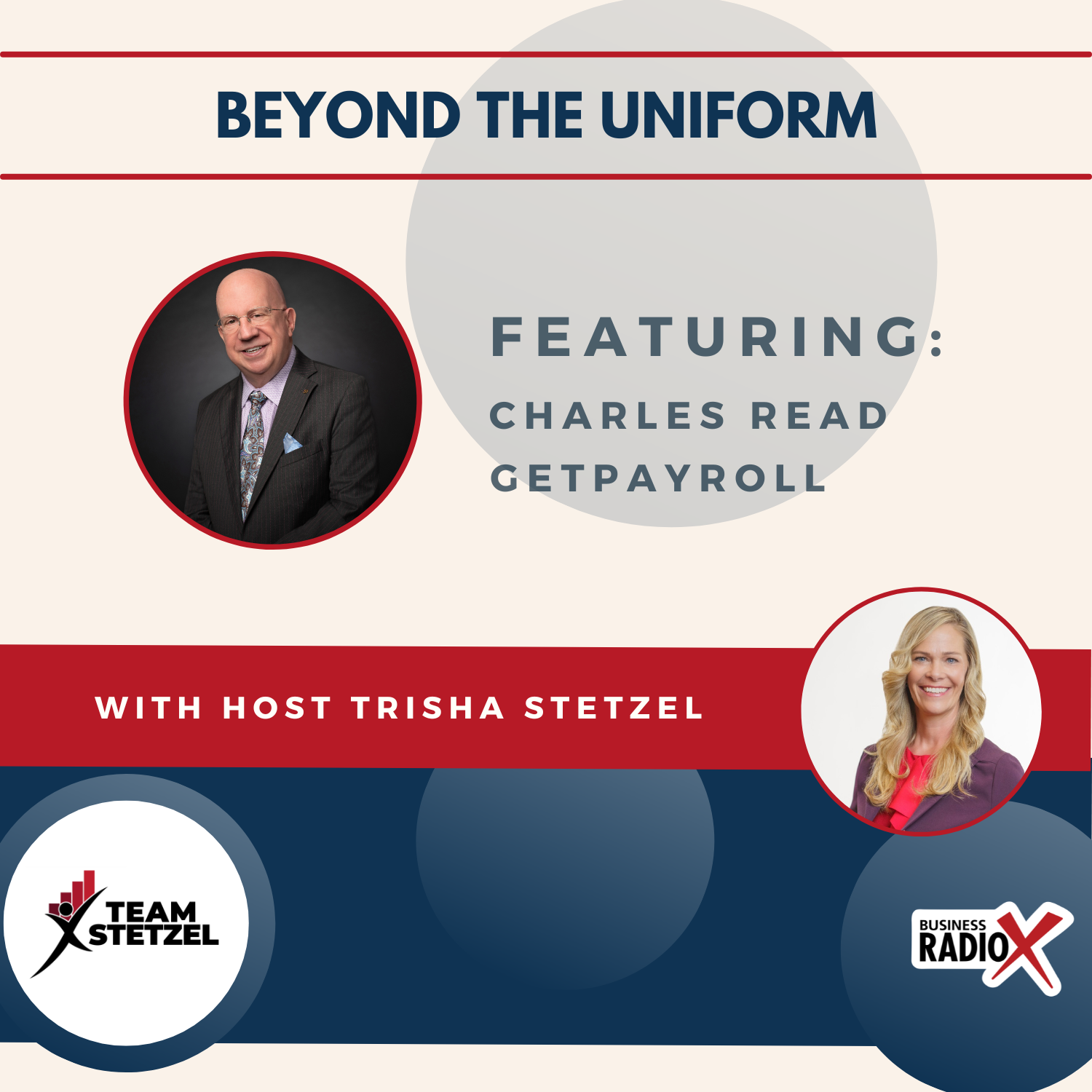
BTU-GetPayroll-Feature
Beyond the Uniform
Charles Read with GetPayroll
Loading
00:00 /
RSS Feed
Share
Link
Embed

Download file

Get-Payroll-logo
Charles-ReadCharles J Read is a CPA, U.S. Tax Court Practitioner, Vietnam Veteran, and Founder of GetPayroll, providing payroll and payroll tax services since 1991.

With over 50 years of financial leadership, he’s the author of four books, including The Payroll Book, currently a top-ranked small business guide on Amazon.

Trisha and Charles discussed the importance of promptly addressing IRS notices and the benefits of outsourcing payroll services to avoid tax penalties and related issues. They also emphasized the importance of tax compliance for businesses, particularly startups, and the need to prioritize employees’ needs over one’s own.

Charles also introduced his book, “The Payroll Book,” which provides insights into payroll taxes, deductions, and related topics.

Follow GetPayroll on LinkedIn.

Transcript-iconThis transcript is machine transcribed by Sonix.


TRANSCRIPT

Intro: Broadcasting live from the Business RadioX studios in Houston, Texas. It’s time for Houston Business Radio. Now, here’s your host.

Trisha Stetzel: Hello, Houston. Trisha Stetzel here bringing you another episode of Houston Business Radio. Beyond the uniform series, I have a very special guest with me today, Mr. Charles J. Read, who is a certified public accountant. I promise it’s going to be a good conversation. Not boring. Right, Charles? Uh, he is also a US Tax Court practitioner, a former member of the Internal Revenue Service Advisory Council, a Vietnam veteran, and the founder of GetPayroll. Charles, welcome to the show.

Charles Read: Trisha, thank you for having me. It’s a pleasure to be with you.

Trisha Stetzel: I’m so excited that we met a few weeks back. I knew that you would be perfect to come on the show. And let’s let’s bring some light to a conversation that some people might avoid or get very nervous about as a business owner. So, Charles, tell me a little bit more about you.

Charles Read: Well, I’m a midwestern boy. Uh, I grew up in Iowa. Um, graduated from high school, joined the United States Marine Corps, spent four years, uh, including two years overseas in combat tours in Vietnam. Came back, was stationed in Kansas City, met and married my wife. She was ten years older than I was and had five children. When I married her. I claim insanity, but we were married for 45 years before she passed, so it worked. In 1972, we moved to Texas, basically been here ever since. And and, you know, pretty much consider myself a Texan now after more than 50 years here. So we I went to work, I did my college. I went to work for Texas Instruments. I worked in the corporate world for 15 years. Large companies, small companies, turnaround startups. Wonderful experience. Realized I was never going to get to the top of a company. I don’t have the political skills. I’m unwilling to stab people in the back and toss them off the ladder, and I have a tendency to speak my mind. So if I was going to run a business, I’m going to have to start my own. Ruth and I started our own business here just a third of a century ago, uh, in 1991, and continued to grow it. I sold off the accounting portion here about a dozen years ago to my partner, and kept the payroll portion, and have continued to grow it to this day.

Trisha Stetzel: I love that it’s beautiful. So you can find Charles Reid, get payroll if you just do a search for him. But we’re going to talk about some more interesting things as we move through our conversation today. So I’ve heard occasionally a business owner will receive an IRS notice. That’s pretty darn scary. So if I received one of those notices, what should I do?

Charles Read: Well, first of all, do not ignore it. I have clients that just put them on the shelf and wait for me. But don’t. Don’t do that.

Trisha Stetzel: Okay.

Charles Read: Open it up. Look at it, read it. Now, if it’s taxes that you owe that you’ve forgotten for some reason, miscalculated. Whatever. Pay them and move on. Um, if it’s taxes you don’t owe and it’s $20, just pay it. It’s. It’s cheaper than fighting it, okay? Discretion is the better part of valor. Don’t don’t don’t don’t don’t fight minimal stuff. We get them from our clients. Sometimes we just pay them because it’s not worth talking to the client about. You know, we send the IRS a check for $7 just to be shut of it. And in all probability, two years later, they’ll get a refund for the $7. Uh. So look at it now, if you don’t owe the taxes, then write the IRS and tell them why you don’t owe them. Okay. Now, understand, the first letter you send will be you’ll get a form letter back saying, no, we’re not going to abate any taxes. They don’t even they don’t even read your first letter. They just send you a form letter back saying no. The second letter, uh, 95% of the time you’ll get a no. They they really don’t read that one. Only the third letter you sent. And this is a series of that. You send them, they’ll send you back. You send them, they’ll send you back on the third letter. You have a reasonable opportunity to get the the penalties abated. Okay. Or the tax is reversed if they’re wrong. Uh, but the IRS is a whole series of no’s followed by a single. Yes. So if the penalty or the taxes are wrong. Appeal appeal appeal appeal appeal appeal appeal and keep doing that until you get a yes.

Charles Read: Because if the IRS makes millions of mistakes every year, the IRS is not perfect by any stretch of the imagination. Don’t ever believe that they make millions of mistakes. Billions of penalties get reversed every year because the IRS is 100,000 civil servants using technology. In some cases, that goes back to the 1960s. Stuff that I worked on when I was in the Marine Corps. Uh, it’s it’s really a lot of problems. They don’t have the budget they’d like to do their civil servants. There’s training problems. There’s all kinds of things, as we all understand with government. So don’t ever think they’re unquestionably right because they’re not so. Appeal. Appeal, appeal, appeal. That’s why I became a US Tax Court practitioner. Because I can take my client’s case to U.S. Tax Court without being an attorney. I operate as a attorney, per se in the US Tax Court. I have a bar card, and I’m able to represent my clients in front of the tax court. And the nice thing about Tax Court is 95% of all tax court cases are settled. Pre-court the IRS at tax court level is very want to settle cases. So it’s a good route to go if you’ve got something that there’s a lot of argument about, you’ll get a settlement offer. So never give up. And one tip for your listeners. The IRS cannot penalize you for a simple mistake. They can only penalize you for gross negligence. The problem, of course, is who defines gross negligence? The IRS thinks they do, but in fact they don’t. The judge does. Okay, so don’t don’t ever give up. Just appeal appeal appeal appeal appeal.

Trisha Stetzel: Okay, so, Charles, everyone needs you on their side. I’m just saying, you have so much knowledge and experience to offer here. I want to back into then why business owners should think about and engage with a payroll company. What’s the benefit?

Charles Read: Well, when I grew up, Pelé was the world’s best soccer player. Wonderful athlete. But if you took Pelé and you put him in the New York Yankees uniform at second base, he’d be lost.

Trisha Stetzel: Yes.

Charles Read: He doesn’t know the playing field, the rules, the, you know, pick up the ball with your hands. It would be a disaster. He’d still be a great athlete. So when you have a a business man or a woman who’s successful produces a service or a product, uh, has employees, has clients, is a growing business. And now you say deal with the IRS. Mhm. They’re playing second base. They’re lost. This is what we do for a living. We live and breathe this stuff. I know it sounds boring, but you know it’s CPAs. What what what can I say. Okay. Uh, we we deal with the IRS daily. We get the trade magazines, we get the IRS updates, we read tax law, we study taxes. You know, we do all these boring things, which we enjoy. Uh, so our clients don’t have to. And on top of that, in doing payroll, we have all the equipment, the software, the facilities, the experience, the banking, relationships, everything to make it simple for us and very, very simple for our clients because they don’t have to go through all the 30 years of of toil and trouble that we’ve gone through to get to that point.

Trisha Stetzel: Yeah, absolutely. And for those of you who are listening and you’re still doing payroll, stop it. It is affordable and you should make it an investment in your business so that you have people like Charles and his team on your side. That’s just the bottom line.

Charles Read: In in reality, a payroll service bureau is a profit center for you, for your for for our clients, we save them more money than we charge them in time, energy, effort, facilities, equipment, software aggravation, tax penalties, everything else. We we’re free. So I mean, you know.

Trisha Stetzel: I love that. I think that’s fantastic. And what a great way to look at it. It is not a cost to your business bottom line right. So if you’re not using a payroll company you should. And Charles is going to tell us about the payroll book which is something very very important. So Charles, let’s talk about this book you wrote.

Charles Read: Well, I looked around here a few years ago to to have something to give to clients, uh, to, to help them and have a reference guide. The only thing out there is the payroll source from the American Payroll Association, and it’s $600. So I said I’ll write something. Well, two years later and and with the help of Wiley and Sons Press, uh, they’re obviously a huge, uh, publishing house. Uh, we produced the Payroll book, a guide for small businesses and startups. I refer to it as 30 Years of Wisdom, distilled down to 95,000 words. Uh, it’s done very well on Amazon. Um, we’ve sold a lot. We’ve given away a lot of them. Uh, it it’s a base for small businesses and startups. I mean, if you’re a 10,000 person company, it’s not for you. But if you’re a small business startup, it gives you a lot of information about payroll taxes, deductions. Who’s an employee? Who’s a contractor? Uh, how to handle aliens? Uh peos. Uh, employee handbooks, overtime taxes, tax penalties, tax forms, states, all these things that are involved in payroll. Because payroll is a very complex subject, when you when you get into it, it’s not just, you know, give the guy, you know, 200 bucks. Uh, that’s the simple part. Everything after that becomes complex. Uh, and whether you have to withhold taxes from that $200 or not. And what do you do with the withholdings afterwards? And where do they go? And what do you deduct from that $200? And, uh, what do you add on top of it and all these other things? So it’s 95, 95,000 words of, of of experience. Uh, lots of horror stories, lots of things not to do. And we’d love to offer it to your listeners if they’d like a copy, if they will go to the payroll book.com and hit the Discount Code podcast, we will ship them a free copy. No shipping, no handling, no cost, uh, to them if they would like to have a copy of the book.

Trisha Stetzel: Wow. Wait, wait. Charles, did you say free? Free? Free.

Charles Read: Free from a CPA?

Trisha Stetzel: Free what? I love that, that’s fantastic. All right, you guys head out to the payroll. Book.com using the code podcast. And you can get your free copy of this amazing 95,000 word ebook that Charles has poured 30 plus years of experience and expertise and stories into. Wow. Thank you. That is amazing. I’m going to go get my copy today. So, Charles, besides the book, we know we need to send people to the payroll. Book.com how else can people get in touch with you to have a conversation?

Charles Read: We’re all over the web at Get payroll.com. My personal email is c j r at Get Payroll. And if they’ve got just something they need a quick answer to. (972) 353-0000.

Trisha Stetzel: Wow. Fantastic. Charles, you’re such a great resource. I’m so glad that you came on the show today. All right, um, let’s dive back in. I know everyone loves taxes. Everyone loves the IRS. Kidding. Not kidding. Um, what’s your advice on or tips to avoid employment tax penalties?

Charles Read: There’s five big things that cause tax penalties, uh, that the employer can avoid. Now, there’s lots of tax penalties the IRS creates from their mistakes and their problems that you can’t avoid. But the five things you can do as an employer. First of all, the biggest source of penalties is arithmetic errors. I mean, people add, subtract, multiply and divide and put the wrong number down. So don’t do it by hand. Use a computer or use a service bureau. Okay, you use us. Don’t. Don’t do it by hand. If you do, use a calculator and double check your numbers, okay. That will eliminate a lot of penalties. The next two things. The next thing is to know what you have to withhold from your employees paycheck. You have federal, state, and in many cases local taxes that you have to withhold. You’ve got to know what those are. If you don’t know, find out. Read my book or call us. We’ll take care of it for you. Then know when you have to deposit those. Because if you deposit one second late, there’s a penalty one second late. And that’s not a simple mistake.

Charles Read: Normally that’s a gross negligence and you’re not going to get out of that penalty. The next thing is know what reports you have to file. Again, it’s knowledge. What gets employers into problems is they don’t know what they don’t know. Again, you have in Texas, you have the the TWC which is state unemployment. You don’t have a state revenue department for income tax withholding outside of Texas. Most states you will deal with two agencies, the the revenue portion where you have pay in the state, income tax withheld, and the unemployment where you pay in the unemployment withheld. In some states, they throw in other things worker’s comp, um, disability, all kinds of things. You’ve got to know what those are so you can withhold them and deposit them. And so you can report them to the state. And then you need to know again when you need to report it. Texas. If you’re a day late with your TWC report, it’s a $50 fine. Even if you owe no taxes, it’s $50 just for being. If you if it’s postmarked a day late, it’s a 50 bucks.

Speaker4: And oh my gosh.

Charles Read: Yeah. You can normally talk to TWC out of it on the first one. But the second one. No.

Trisha Stetzel: Wow. Oh my gosh. So Charles, this is why we need you, right? So that we don’t have to deal with all of the the questions and the ambiguity around these things because you have the answers. You know exactly what needs to be done.

Charles Read: That’s that’s our job. And we work at it very hard. And we keep up with, with all the states and everything else. And it’s, uh, yeah, that’s what we do.

Trisha Stetzel: So if people are listening outside of Texas, they can still call you.

Charles Read: Well, absolutely. We operate in all 50 states. We’re a national service bureau. Uh, and for Texas clients that have employees in other states, which is becoming more and more common. Yes. We’ve gone virtual to a great extent. One of my ladies has worked for us for ten years, got married and lives in Louisiana now, so it’s okay. You know, with technology, it doesn’t really matter so much anymore.

Speaker4: Yeah.

Charles Read: So it’s in many cases you’ve got a good employee and they want to move to Montana. If that job can be operated, you know, on a computer, who cares, right.

Speaker4: Yeah.

Trisha Stetzel: But you need to understand how to be compliant, which is why we need Charles.

Charles Read: And and and there are there are all kinds of nuances of dealing with remote employees in terms of payroll and HR that you need to be aware of and up to speed on. If you’re not, you need to get with somebody who is. Yeah. Us?

Speaker4: Yeah. That’s right.

Trisha Stetzel: Get payroll. Dot com. Okay. Charles, we’ve talked a lot about established businesses or businesses that are in a position where they need to make a decision. They shouldn’t be doing payroll anymore. They need to hire a service. But what about brand new businesses? So if I’m a startup, what do I need to be concerned about to be tax compliant?

Charles Read: Well, first of all, if you incorporate, which I normally recommend as a CPA for tax savings, you’re an employee. If you work in the business, you’ve got to be on payroll. You can’t just take a check every week or month, whatever, or as needed. That’s not acceptable. The IRS will come in and say, part of this is compensation, and you’ve got to pay Social Security and Medicare taxes on it. And since you didn’t, here’s all the penalties and interest on those payments that you didn’t make.

Speaker4: Okay.

Charles Read: And in my book, I have a story about a CPA who just took draws from his business, and the IRS came back in and reclassified half of what he took as compensation. And the penalties and interest were, you know, tens of thousands of dollars plus the taxes. So you you can’t just do it now if you’re if you’re a sole proprietor. Yeah. You can just write checks and everything goes on your 1040 and you pay all your employment tax purposes, uh, at, at when you pay your 1040. That’s an expensive way to go. You will overpay taxes that you don’t need to.

Speaker4: Okay.

Charles Read: Okay. So check with your CPA. Um, but the moment you hire anyone. You need a service bureau. You need a you need a payroll company. Don’t try and do it yourself. It’s not worth it. You don’t know what you don’t know. And this is this is the whole concept. We all outsource things. I, I quit working on my own car when my little milligram needed a clutch replaced. And the book, the Chilton book said. Step number one. Remove the engine. Okay, I quit working on cars. Then I, I, I went and bought two pair of shoes yesterday. I don’t make my own shoes. I don’t make my own clothes. I don’t even mow my own lawn. I’d rather do a tax return than mow the lawn. So I’ll do the tax return and make enough money to pay the guy to do the lawn and then buy dinner too. So we all outsource things. Payroll is one of those things you should always outsource. I always did when I was in business before I started my own company. It’s not worth doing. Don’t be Pele at second base.

Speaker4: Mhm. Yeah.

Trisha Stetzel: Don’t be Pele at second base. Thank you for sharing that story. It really does bring to life, uh, the chaos and disorder that can happen. And the penalties and the IRS letters if you put Pele on second base. Right. I yeah, I love that. Okay. So as we’re moving to the back end of our conversation today, I know it went by so fast. I want to dig back.

Speaker4: Into.

Trisha Stetzel: Your history of being a Vietnam veteran. So you spent four years as a marine? R is there 1 or 2 things that really things that you learned at being in the military that you’ve been able to bring into, whether it was you working in corporate space, working for someone else, or even into your own business? Charles.

Charles Read: Well, as an NCO in the Marine Corps, um, one of the things you’re taught is how the Marine Corps thinks about things. And one of that tenets is mission Min self. You complete the mission regardless of what it takes. The mission comes first. You accomplish the mission, then you take care of your men. Then you take care of yourself. Uh, I’ve seen this, and I’ve seen it from from good officers. Uh, they’re the one of the last of the chow line. Okay. They make sure everybody gets fed before they do. Okay. Um, that translates into business very well, as far as I can tell. Our job is to provide a perfect payroll on time. Every time we bend over backwards. For that, we do whatever it takes to accomplish that for our clients. And then I take care of not only my clients, but my staff. I couldn’t do the business without them. Um, as I retire, they’re going to get the business because they helped me build it. Um, so I take care of my people, and then I worry about myself. If you’re in business, if you can’t pay all the payroll, it’s your payroll that doesn’t get paid, not your employees. It’s it’s. You’ve got to put them ahead of you to be successful. That’s something that translates very well from the military. Now, one that doesn’t is of course, the military is a very hierarchical.

Speaker4: Yes.

Charles Read: Um, operation. And everybody, you either jump for them or they jump for you. Well, thankfully, my wife was very much of a people person and helped break me of those habits.

Speaker4: Uh.

Charles Read: You know, when I, when I had a family with five kids at 21, uh, and the boys were 14 and I was 21, uh, she, she had, she had to teach me to be a, a much better person and, and much less of a marine. Uh, so, uh, and I am eternally grateful that I found and married Ruth. Uh, it was the best thing I ever did in my life.

Speaker4: Mhm.

Trisha Stetzel: I love.

Speaker4: That.

Trisha Stetzel: And Ruth is listening to us right now. I’m sure of it. Yeah. Looking down on all of the amazing things that you do for others. So thank you for sharing that. You know, sometimes those lessons come from things that we shouldn’t be doing. Uh, and it sounds like Ruth helped you with that direction. Wonderful. So, Charles, as we close today, uh, I’d love for you to tell folks how they can get your book again and how they can connect with you if they’d like to learn more.

Charles Read: The book is available, the payroll Book.com enter the Discount Code podcast. We will ship it free of charge. No shipping, no handling. And if you find yourself still confused, my number’s in the book. So feel free. Uh, we’re on the web at Get payroll.com. I’m c.j.r at Get Payroll. That’s my email. And the phone number for the office. (972) 353-0000. The only good thing GT ever did for me.

Trisha Stetzel: I love that, Charles. So he makes it very simple. Can you guys see the incredible opportunity to work with Charles here, where he’s taking things that are really complicated and bringing them down to very simple steps that you can take in order to create some space in your business where you can focus on the things that you should be focused on versus the things that Charles can focus on for you and do an amazing job. Charles, thanks so much for joining me today. I really enjoyed our conversation.

Charles Read: It is my pleasure. Thank you for having me on.

Speaker4: Yeah.

Trisha Stetzel: You bet. Again, guys, you’ll find all of Charles contact information in the show notes. If you happen to be in a place where you can point and click. Otherwise, you have everything verbally. I hope you’ll reach out to Charles. And please take care. Take advantage of the payroll Book.com with podcast as the code so you can get that book from Charles. That’s all the time we have for today’s show. Join us next time for another exciting episode of Houston Business Radio. Until then, stay tuned, stay inspired, and keep thriving in the Houston business community.


Tagged With: GetPayroll

Business RadioX ® Network


Our Most Recent Episode

CONNECT WITH US

  • Email
  • Facebook
  • LinkedIn
  • Twitter
  • YouTube

Our Mission

We help local business leaders get the word out about the important work they’re doing to serve their market, their community, and their profession.

We support and celebrate business by sharing positive business stories that traditional media ignores. Some media leans left. Some media leans right. We lean business.

Sponsor a Show

Build Relationships and Grow Your Business. Click here for more details.

Partner With Us

Discover More Here

Terms and Conditions
Privacy Policy

Connect with us

Want to keep up with the latest in pro-business news across the network? Follow us on social media for the latest stories!
  • Email
  • Facebook
  • Google+
  • LinkedIn
  • Twitter
  • YouTube

Business RadioX® Headquarters
1000 Abernathy Rd. NE
Building 400, Suite L-10
Sandy Springs, GA 30328

© 2025 Business RadioX ® · Rainmaker Platform

BRXStudioCoversLA

Wait! Don’t Miss an Episode of LA Business Radio

BRXStudioCoversDENVER

Wait! Don’t Miss an Episode of Denver Business Radio

BRXStudioCoversPENSACOLA

Wait! Don’t Miss an Episode of Pensacola Business Radio

BRXStudioCoversBIRMINGHAM

Wait! Don’t Miss an Episode of Birmingham Business Radio

BRXStudioCoversTALLAHASSEE

Wait! Don’t Miss an Episode of Tallahassee Business Radio

BRXStudioCoversRALEIGH

Wait! Don’t Miss an Episode of Raleigh Business Radio

BRXStudioCoversRICHMONDNoWhite

Wait! Don’t Miss an Episode of Richmond Business Radio

BRXStudioCoversNASHVILLENoWhite

Wait! Don’t Miss an Episode of Nashville Business Radio

BRXStudioCoversDETROIT

Wait! Don’t Miss an Episode of Detroit Business Radio

BRXStudioCoversSTLOUIS

Wait! Don’t Miss an Episode of St. Louis Business Radio

BRXStudioCoversCOLUMBUS-small

Wait! Don’t Miss an Episode of Columbus Business Radio

Coachthecoach-08-08

Wait! Don’t Miss an Episode of Coach the Coach

BRXStudioCoversBAYAREA

Wait! Don’t Miss an Episode of Bay Area Business Radio

BRXStudioCoversCHICAGO

Wait! Don’t Miss an Episode of Chicago Business Radio

Wait! Don’t Miss an Episode of Atlanta Business Radio