Business RadioX ®

  • Home
  • Business RadioX ® Communities
    • Southeast
      • Alabama
        • Birmingham
      • Florida
        • Orlando
        • Pensacola
        • South Florida
        • Tampa
        • Tallahassee
      • Georgia
        • Atlanta
        • Cherokee
        • Forsyth
        • Greater Perimeter
        • Gwinnett
        • North Fulton
        • North Georgia
        • Northeast Georgia
        • Rome
        • Savannah
      • Louisiana
        • New Orleans
      • North Carolina
        • Charlotte
        • Raleigh
      • Tennessee
        • Chattanooga
        • Nashville
      • Virginia
        • Richmond
    • South Central
      • Arkansas
        • Northwest Arkansas
    • Midwest
      • Illinois
        • Chicago
      • Michigan
        • Detroit
      • Minnesota
        • Minneapolis St. Paul
      • Missouri
        • St. Louis
      • Ohio
        • Cleveland
        • Columbus
        • Dayton
    • Southwest
      • Arizona
        • Phoenix
        • Tucson
        • Valley
      • Texas
        • Austin
        • Dallas
        • Houston
    • West
      • California
        • Bay Area
        • LA
        • Pasadena
      • Colorado
        • Denver
      • Hawaii
        • Oahu
  • FAQs
  • About Us
    • Our Mission
    • Our Audience
    • Why It Works
    • What People Are Saying
    • BRX in the News
  • Resources
    • BRX Pro Tips
    • B2B Marketing: The 4Rs
    • High Velocity Selling Habits
    • Why Most B2B Media Strategies Fail
    • 9 Reasons To Sponsor A Business RadioX ® Show
  • Partner With Us
  • Veteran Business RadioX ®

Representative Sharon Cooper – Top Docs Radio

February 1, 2016 by angishields

Top Docs Radio
Top Docs Radio
Representative Sharon Cooper - Top Docs Radio
Loading
00:00 / 00:51:04
RSS Feed
Share
Link
Embed

Download fileDuration: 00:51:04

Sharon Cooper
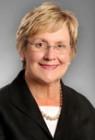
Georgia State Representative, Dist. 43, Sharon Cooper

Representative Sharon Cooper

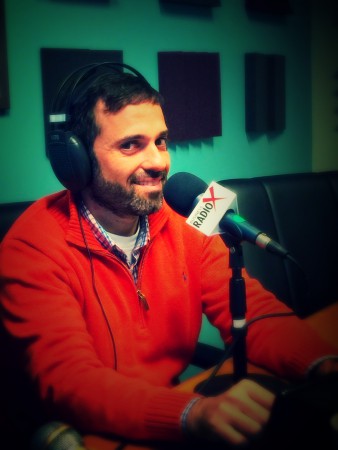
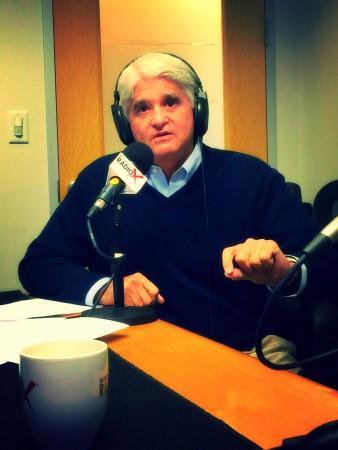
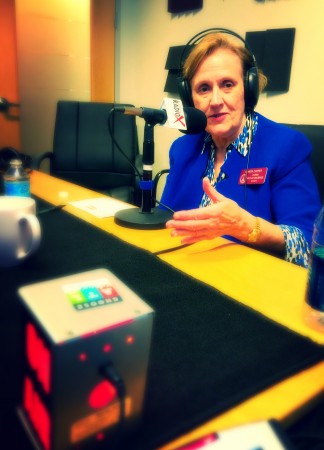
I hosted MAG CEO/Executive Director, Donald Palmisano, Jr., and Georgia State Representative, Sharon Cooper.  We talked about 2016 legislative priorities affecting healthcare in the state.  More information soon!

Special Guests:

Sharon Cooper, Rep. Dist 43, Georgia State House of Representatives (R) 

facebook_logo_small3

Representative Sharon Cooper

  • MA Education
  • MSN, Nursing
  • Authored 2 books on psychiatric nursing
  • Chair, Georgia Health and Human Services Committee

Donald Palmisano, CEO, Executive Director of Medical Association of Georgia  twitter_logo_small  linkedin_small1  facebook_logo_small3

Medical Association of Georgia

  • JD Law, Loyola School of Law
  • Board of Directors, Physician Advocacy Institute
  • Medical Payment Subcommitte Member, State Board of Workers’ Compensation
  • Treasurer, Board of Directors, Physicians’ Institute for Excellence in Medicine
  • Former Director, Government Relations/General Counsel/Director, GAMPAC


Tagged With: CW Hall, Donald Palmisano, Georgia Dental Hygienist Association, health and human services committee, Health Care Radio, healthcare legislation, healthcare radio, Ketchup Georgia, Law, Medical Association of Georgia, narrow networks, Sharon Cooper, Top Docs Radio

Dental Deserts – Top Docs Radio

December 23, 2015 by angishields

GDHA
Misty Mattingly, Charlie Craig, and Sarah Smith explain GA HB 684

Dental Deserts

In the state of Georgia, 118 counties out of 159 have too few dentists to treat those residents.  16 Georgia counties have NO DENTIST at all.  Clearly, this leaves a large, rural population in the state with limited or NO access to even basic, preventive dental care.

Today, there are only 5 states that do not allow hygienists to operate under a dentist’s supervision unless the dentist is physically on site where the dental hygiene care is provided.  One of those is Georgia.

President of Georgia’s Dental Hygienist Association, Misty Mattingly, stopped by, along with Sarah Smith and Charlie Craig of Solution Road to talk about a measure before the Georgia House of Representatives that will address the lack of access to preventive screenings and treatments that are provided by hygienists.

Currently, Georgia law requires that a dentist is ON SITE while a hygienist administers care.  Obviously, this is impossible in 16 counties without some sort of medical mission on the part of dentist and hygienist, and limited in 118 Georgia counties.  Under HB 684, hygienists would be able to be supervised remotely by a dentist rather than requiring them to physically be on site.  This would empower hygienists to provide diagnostic screening and preventive care in these areas with limited to no access.

When problems requiring restoration such as a filling or crown would be identified by the hygienist during these visits, they would be referred to a dentist for appropriate care.  Without question this is a win for all parties, particularly the patients who today, have problems often going undiagnosed until serious, often resulting in an ER visit for evaluation.

https://soundcloud.com/cwhall333/ga-hb-684-and-hb-350

Tagged With: CW Hall, dental deserts, dental health, dental screening, GA HB 350, GA HB 684, Georgia Dental Hygienist Association, Health Care Radio, healthcare radio, preventive care, Sarah Smith, Solution Road, Top Docs Radio

Insurance Reimbursement – Top Docs Radio

December 15, 2015 by angishields

Top Docs Radio
Top Docs Radio
Insurance Reimbursement - Top Docs Radio
Loading
00:00 / 00:59:52
RSS Feed
Share
Link
Embed

Download fileDuration: 00:59:52

John Oxendine PC
John Oxendine talks insurance reimbursement.

Insurance Reimbursement

This week’s show was part of our monthly series with MAG and we focused our conversation on legal issues around commercial insurance reimbursement for physicians.  Former insurance commissioner for the state of GA, attorney, and expert on the subject, John Oxendine, joined me in the studio to talk about some important things physicians need to know relating to commercial insurance reimbursement.
There are laws that lay out requirements for timeliness of payment and/or communications regarding submitted claims that must be adhered to by insurance companies.  Additionally, there are also rules around documentation of assignment of representation that can be the difference between losing five or six figures to insurance company claw back or being able to deny those requests to return payment for previously-delivered care.
John Oxendine is uniquely qualified to provide advice and information to physicians on the subject of health insurance reimbursement.  He spent over 15 years as Georgia’s State Insurance Commissioner.  He has worked closely with MAG, the Georgia Association of Physicians of Indian Heritage, AMA, and numerous other health care provider organizations.
While Insurance Commissioner, John created a division at the Department of Insurance to help physicians with claims payment issues.  Additionally, he was the first commissioner in the country to levy large fines against insurance companies not in compliance with the state’s prompt pay law.
Special Guest:
John Oxendine, Attorney, John Oxendine PC
John Oxendine PC
  • Doctor of Law, Mercer University, Walter F. George School of Law
  • Former Commissioner, Georgia Department of Insurance, 1995-2011

Tagged With: CW Hall, Health Care Radio, health insurance reimbursement, healthcare radio, Medical Association of Georgia, out of network, recoupment, Top Docs Radio

Health Insurance Mergers – Top Docs Radio

November 16, 2015 by angishields

Top Docs Radio
Top Docs Radio
Health Insurance Mergers - Top Docs Radio
Loading
00:00 / 00:52:22
RSS Feed
Share
Link
Embed

Download fileDuration: 00:52:22

Medical Association of Georgia
Donald Palmisano Jr.
Medical Association of Georgia
Dr. John Rogers of Coliseum Northside Hospital

Health Insurance Mergers

On this week’s episode I continued my monthly series with Medical Association of Georgia. MAG CEO, Donald Palmisano, Jr., and MAG delegate from Bibb County, Dr. John Rogers joined me in studio to talk about the challenges and concerns arising from recently-proposed mergers between large health insurance companies that will significantly reduce amount of competition in the space for Georgians to choose from.

Aetna/Humana and Anthem/Cigna are in the process of merging. At the same time, health insurers are offering insurance policies to the public that do not have adequate coverage resulting in more out of network charges by physicians.

Aetna/Humana and Wellpoint/Cigna have proposed mergers in the health insurance market. If these inadequate policies are being offered in the current environment, MAG is concerned about how patients will be negatively impacted with a further narrowing of the networks and increased physician reliance on out of network charges.

MAG recently sent a letter to the U.S. Department of Justice to call for it to scrutinize the mergers for antitrust violations.

MAG believes the mergers would reduce competition and place physicians and their patients at an even greater disadvantage as a shrinking number of health insurance companies gain increasingly-dominant positions in the marketplace.

The new Aetna (58 percent) and Anthem (30 percent) entities would control nearly 90 percent of the individual market in Georgia. In the small group market, Aetna would control more than 49 percent, while Anthem would control more than 33 percent. Each new company would control about 26 percent of the Medicare Title XVIII marketplace. And for large group market, Aetna would control more than 12 percent while Anthem would control nearly 55 percent.

Physicians have little-to-no leverage to negotiate contract terms with these multi-billion dollar conglomerates – which are imposing take-it-or-leave it agreements and unilateral, mid-term amendments with growing impunity.

Gone unchecked, a few insurers will be in a position to manipulate the marketplace to institute policies that will exacerbate the physician shortage and undermine the economic viability of the practice environment in the state and limit the accessibility of care and individual patient choice.

Georgia Department of Insurance has expressed concerns that the Aetna/Humana merger would violate Georgia’s standards for competition. Specifically, DOI has shared that the Aetna/Humana merger may violate Georgia’s competitive standard in the individual, small group, and Medicare Title XVIII markets while raising concerns of substantially reduced competition in the large group market.

More than 30 percent of the physicians in Georgia who participated in a survey that MAG conducted in the last several months said that they believe that the Aetna/Humana merger would threaten the long-term viability of their practice.

Special Guests:

Donald Palmisano, CEO, Executive Director of Medical Association of Georgia  twitter_logo_small  linkedin_small1  facebook_logo_small3

Medical Association of Georgia

  • JD Law, Loyola School of Law
  • Board of Directors, Physician Advocacy Institute
  • Medical Payment Subcommitte Member, State Board of Workers’ Compensation
  • Treasurer, Board of Directors, Physicians’ Institute for Excellence in Medicine
  • Former Director, Government Relations/General Counsel/Director, GAMPAC

Dr. John Rogers, Co-Medical Director, Coliseum Northside Hospital

Coliseum Northside Hospital

  • Member, Board of Directors, Bibb County Medical Society
  • Vice President, American College of Emergency Physicians
  • Doctor of Medicine, University of Iowa Carver College of Medicine
  • Residency, Medical Center of Central Georgia

Tagged With: CW Hall, Donald Palimisano Jr., Dr. John Rogers, EOB, Health Care Radio, health insurance, Humana, insurance marketplace, MAG, Medical Association of Georgia, mergers, monopoly, narrow networks, out of network, PPACA, WellPoint

Interventional Radiology – Top Docs Radio

October 23, 2015 by angishields

Atlanta Interventional Institute
Top Docs Radio
Interventional Radiology - Top Docs Radio
Loading
00:00 / 00:24:00
RSS Feed
Share
Link
Embed

Download fileDuration: 00:24:00

Atlanta Interventional Institute
Dr. John Lipman joins CW Hall talking interventional radiology

Interventional Radiology

We talked interventional radiology with Dr. John Lipman of Atlanta Interventional Institute on this week’s show.  Interventional radiologists are radiologists who are trained to perform a wide array of procedures using various radiologic images to guide their work.

In fact, as Dr. Lipman explained, it was interventional radiologists who invented the technology to perform procedures such as balloon angioplasty that was later used to open blocked arteries in the heart.

We talked about uterine fibroid embolization, a minimally-invasive procedure where a catheter is passed into the femoral artery and maneuvered to the arteries feeding uterine fibroids, where a chemical is instilled, caused the vessel to occlude.  This blocks bloodflow to the fibroid, causing it to shrink and die, allowing for easy removal.

The alternative for these women is hysterectomy, which is the surgical removal of the uterus, after which, the woman will need to take hormones to compensate for its loss.  Additionally, it takes days longer to recover from the surgery and bears the risk of anesthesia and post-surgical infection.

Dr. Lipman talked about other procedures interventional radiologists are able to perform such as treatment of migraine headaches, and reversing infertility related to blocked fallopian tubes.

It is important for patients and their loved ones to be sure to ask lots of questions and to inquire about other available treatment options when surgery is recommended, particularly when it involves removal of an organ or amputation.

In this way, patients can limit risk associated with surgery in many cases, and save cost and time away from work.  Dr. Lipman offered a number of questions patients and loved ones can ask to determine if an interventional radiologist is the one they should choose.

Special Guest:

Dr. John Lipman, MD, FSIR, Atlanta Interventional Institute  facebook_logo_small3  twitter_logo_small  linkedin_small1

  • Doctorate of Medicine, Georgetown University School of Medicine
  • Radiology Residency, Brigham & Women’s Hospital, Harvard Medical School
  • Fellowship, Vascular & Interventional Radiology, Yale New Haven Hospital, Yale University School of Medicine
  • Board Certified, Radiology, Vascular & Interventional Radiology
  • Fellow, Society of Interventional Radiology


Tagged With: CW Hall, Health Care Radio, infertility, migraine headaches, minimally-invasive procedures, pregnancy, Top Docs Radio, uterine fibroid embolization, Uterine Fibroids

Clostridium Difficile – Top Docs Radio

September 30, 2015 by angishields

Clostridium Difficile
Top Docs Radio
Clostridium Difficile - Top Docs Radio
Loading
00:00 / 00:25:50
RSS Feed
Share
Link
Embed

Download fileDuration: 00:25:50

Clostridium Difficile
Dr. David Dickensheets, CW Hall talk Clostridium Difficile

Clostridium Difficile

On this week’s episode we talked about one of the leading causes of hospital-acquired infections: Clostridium Difficile, or “C. Diff.”  I sat down with Dr. David Dickensheets, infectious disease specialist with Infectious Disease Services of Georgia in his Cumming, GA office.

According to the CDC nearly half a million persons experienced a Clostridium difficile infection last year.  Their website explains:

“Approximately 29,000 patients died within 30 days of the initial diagnosis of C. difficile.  Of those, about 15,000 deaths were estimated to be directly attributable to C. difficileinfections, making C. difficile a very important cause of infectious disease death in the United States.  More than 80 percent of the deaths associated with C. difficile occurred among Americans aged 65 years or older. C. difficile causes an inflammation of the colon and deadly diarrhea.

Previous studies indicate that C. difficile has become the most common microbial cause of healthcare-associated infections in U.S. hospitals and costs up to $4.8 billion each year in excess health care costs for acute care facilities alone.  The new study found that 1 out of every 5 patients with a healthcare-associated C. difficile infection experienced a recurrence of the infection and 1 out of every 9 patients aged 65 or older with a healthcare-associated C. difficile infection died within 30 days of diagnosis.”

Clearly it’s a big problem.  Dr. Dickensheets shared some great information on how the infection is diagnosed and why it’s so hard to eradicate from a hospital environment.  He also talked about an interesting treatment approach–the fecal transplant.

That’s right, in some instances, patients have been able to resolve the infection by having fecal material from a healthy human instilled into their bowel, allowing a repopulation of normal flora bacteria that compete with the C. Diff., helping to eliminate the infection.

Special Guest:

Dr. David Dickensheets, MD, of Infectious Disease Services of Georgia

Clostridium Difficile

  • Doctor of Medicine, Thomas Jefferson University
  • Residency, Roger Williams Medical Center
  • Fellowshp, Brown University
  • Board Certified in Infectious Disease

Tagged With: CW Hall, diarrhea, Dr. David Dickensheets, fecal transplant, Health Care Radio, Healthcare, hospital acquired infection, infectious disease, Infectious Disease Services of Georgia, nosocomial infection, Top Docs Radio

ICD-10 – Top Docs Radio

September 10, 2015 by angishields

ICD-10
Top Docs Radio
ICD-10 - Top Docs Radio
Loading
00:00 / 00:55:17
RSS Feed
Share
Link
Embed

Download fileDuration: 00:55:17

ICD-10
CW Hall and Dr. James Dunnick

ICD-10

This week I continued my monthly series featuring experts from Medical Association of Georgia.  Our conversation focused on the upcoming implementation of ICD-10 codes, which will significantly change how we document and are reimbursed for care provided to our patients.

I sat down with Dr. James Dunnick, a former practicing cardiologist of over 25 years who began to enhance his level of understanding of coding, compliance, and quality review later in his career.  He now provides consulting services to healthcare practices and hospitals on these important components of their businesses.

Within the healthcare industry, providers, coders, IT professionals, insurance carriers, government agencies, and others use ICD codes to properly note diseases on health records, track epidemiological trends and assist in medical reimbursement decisions.

The World Health Organization (WHO) owns, develops, and publishes ICD codes, and national governments and other regulating bodies adopt the system.

The differences between ICD-9 and ICD-10 are significant and physicians and practice management staff need to start educating themselves now about this major change so that they will be able to meet the ICD-10 compliance deadline of October 1 – in less than one month.

ICD-10-CM codes are the ones designated for use in documenting diagnoses. They are 3-7 characters in length and total 68,000, while ICD-9-CM diagnosis codes are 3-5 digits in length and number over 14,000. The ICD-10-PCS are the procedure codes and they are alphanumeric, 7 characters in length, and total approximately 87,000, while ICD-9-CM procedure codes are only 3-4 numbers in length and total approximately 4,000 codes. ICD-10-PCS is only used for coding hospital inpatient procedures. CPT remains the code set for reporting procedures and services in offices and outpatient settings.

Moving to ICD-10 is expected to impact all physicians. Due to the increased number of codes, the change in the number of characters per code, and increased code specificity, this transition will require significant planning, training, software/system upgrades/replacements, as well as other necessary investments.

WHO is expected to release ICD-11 in 2017.

Special Guest:

Dr. James Kennedy, MD, of

Within the healthcare industry, providers, coders, IT professionals, insurance carriers, government agencies, and others use ICD codes to properly note diseases on health records, track epidemiological trends and assist in medical reimbursement decisions.

The World Health Organization (WHO) owns, develops, and publishes ICD codes, and national governments and other regulating bodies adopt the system.

The differences between ICD-9 and ICD-10 are significant and physicians and practice management staff need to start educating themselves now about this major change so that they will be able to meet the ICD-10 compliance deadline of October 1 – in less than one month.

ICD-10-CM codes are the ones designated for use in documenting diagnoses. They are 3-7 characters in length and total 68,000, while ICD-9-CM diagnosis codes are 3-5 digits in length and number over 14,000. The ICD-10-PCS are the procedure codes and they are alphanumeric, 7 characters in length, and total approximately 87,000, while ICD-9-CM procedure codes are only 3-4 numbers in length and total approximately 4,000 codes. ICD-10-PCS is only used for coding hospital inpatient procedures. CPT remains the code set for reporting procedures and services in offices and outpatient settings.

Moving to ICD-10 is expected to impact all physicians. Due to the increased number of codes, the change in the number of characters per code, and increased code specificity, this transition will require significant planning, training, software/system upgrades/replacements, as well as other necessary investments.

WHO is expected to release ICD-11 in 2017.

Special Guest:

Dr. James Dunnick, MD, of SESEDN, LLC and The Dunnick Group, LLC

Dr. James Dunnick

  • Board Certified Cardiologist with 25 years of clinical practice
  • Certified Professional Coder (CPC) through the American Academy of Professional Coders (AAPC)
  • Certified in Quality and Utilization (CHCQM) by the American Board of Quality Assurance, Utilization Review Physicians (ABQAURP)
  • Certified in Compliance (CMDP) by the American Institute of Healthcare

Tagged With: CW Hall, Dr. James Dunnick, Health Care Radio, ICD-10, Medical Association of Georgia, medical coding, The Dunnick Group

Vitamin C and OBMedical Company

August 31, 2015 by angishields

Health Connect South
Vitamin C and OBMedical Company
Loading
00:00 / 01:04:28
RSS Feed
Share
Link
Embed

Download fileDuration: 01:04:28

Vitamin C
Osama Hashmi of Vitamin C

 Vitamin C and OBMedical Company

On this episode of Health Connect South Radio we hosted the CEO and co-founder of Vitamin C and President/CEO of OB Medical Company.  These two companies are creating technology innovations that help two distinct groups, physician practices and expectant mothers in the birthing process, respectively.

Vitamin C’s Osama Hashmi realized that increasing focus on population health management measures meant a need for greater engagement with particular patient groups.  In order to effectively manage chronic diseases such as diabetes or even regular wellness follow up, practices often need to interact with patients to get these visits scheduled.  In many cases, patients won’t take initiative to schedule them themselves.

Hashmi and his colleagues decided to create a platform that interfaces with existing EMR’s that allows providers to ID target populations and create a variety of pre-created content for distribution to patients.  In some cases, it’s a pre-recorded automated phone call that can encourage the scheduling of a follow up visit.  In others, it may be an automated call that queries the patient for particular data such as vitals or blood sugars, quantity of exercise, etc.

In still others, it may be a text or email generated that goes to the patient.  In this way, the providers are able to more effectively “scale” their resources to be able to reach what is often hundreds or even thousands of patients with necessary contact to facilitate follow up.  The end result is better patient outcomes as well as increased revenue for the practice due to scheduling of necessary, yet high-Revenue visits (based on time/acuity).

OBMedical Company saw an opportunity to improve upon monitoring technology used in the OB delivery room.  As I spoke with President/CEO, Weaver Gaines, he explained the technology for the fetal heart rate, contraction frequency/intensity, etc. have not really changed in roughly 40 years.

Today, mothers are tethered to a monitor by wires leading to sensors that are held in place by elastic velcro straps that encircle the mother’s abdomen.  They are challenging to keep in position and can provide limited accuracy in cases where the mother is particularly obese.

OBMedical Company has designed a monitoring device that uses wireless electrodes that measure electrical current through the patient’s skin rather than having to rely on skin tension.  This allows the mother to be able to ambulate in the room during labor while continuing to be monitored.  Additionally, it allows for greater accuracy when the mother is obese.

Osama Hashmi, CEO/Chief Product Officer, of VitaminC  github  linkedin_small1  twitter_logo_small-e1403698475314  facebook_logo_small3

VitaminC

  • Doctor of Medicine, College of Georgia, Georgia Regents University
  • Master of Public Health, University of Georgia
  • Previous Policy Director, Roosevelt Institute, University of Georgia
  • Former Research Assistant, Stanford University

Weaver Gaines, President/CEO of OBMedical Company  linkedin_small1

OBMedical Company

  • Juris Doctor, University of Virginia School of Law
  • Director and Treasurer, Dance Alive National Ballet
  • Chairman, Board of Directors, Florida Research Consortium
  • Adjunct Professor, University of Virginia School of Law

Tagged With: EMR, Health Care Radio, Health Connect South, Healthcare, healthcare technology, OB birth monitoring systems, patient engagement, Population Health Management, ShareWIK Media Group, wireless monitoring

Dr. Priyah Rudolph – Top Docs Radio

August 30, 2015 by angishields

Top Docs Radio
Top Docs Radio
Dr. Priyah Rudolph - Top Docs Radio
Loading
00:00 /
RSS Feed
Share
Link
Embed

Download file

Dr. Priyah Rudolph

On this episode of Top Docs Radio I hosted Dr. Priyah Rudolph, medical oncologist with Georgia Cancer Specialists.  Dr. Rudolph practices in the Athens, GA office for the group and has expertise with several forms of cancer.  She shared her poignant story about how she came to choose oncology as her specialty of practice.

Dr. Rudolph described how several members of her family experienced cancer in their lives, including her mother.  In speaking with her it’s clear she has a very personal connection with patients she sees in her practice and clearly understands the stress and concern they feel.

For this conversation, we focused on breast cancer.  According to breastcancer.org, in the US, roughly 1 in 8 women will develop breast cancer in their lifetime.  Nearly 300,000 new cases will be diagnosed this year.

Priya shared the importance self-breast exams, conducted at least monthly, paired with annual mammograms annually after the age of 40 or sooner if direct descendants of breast cancer patients.  Early detection helps give the patient more options for treatment, as well as the likelihood of successful treatment.

She talked about various treatments available and what to expect should the troubling news come that a finding is indeed cancer.  On a positive note, we talked about the fact that breast cancer is very survivable with today’s technology and medical advancements.

Special Guest:

Dr. Priyah Rudolph, MD, of Georgia Cancer Specialists  Pinterest-logo  facebook_logo_small3  instagram-logo-transparent-png-i11 (16x16)  linkedin_small1  youtube logo

Georgia Cancer Specialists

  • Doctor of Medicine, Coimbatore Medical College
  • Residency, Yale University School of Medicine
  • Fellowship, Yale University School of Medicine
  • American Society of Clinical Oncology
  • American Society of Hematology
  • PhD in Physiology at The Ohio State University


Tagged With: CW Hall, Dr. Priya Rudolph, georgia cancer specialists, Health Care Radio, health radio, mammogram, Top Docs Radio

  • « Previous Page
  • 1
  • 2
  • 3
  • 4
  • …
  • 10
  • Next Page »

Business RadioX ® Network


Our Most Recent Episode

CONNECT WITH US

  • Email
  • Facebook
  • LinkedIn
  • Twitter
  • YouTube

Our Mission

We help local business leaders get the word out about the important work they’re doing to serve their market, their community, and their profession.

We support and celebrate business by sharing positive business stories that traditional media ignores. Some media leans left. Some media leans right. We lean business.

Sponsor a Show

Build Relationships and Grow Your Business. Click here for more details.

Partner With Us

Discover More Here

Terms and Conditions
Privacy Policy

Connect with us

Want to keep up with the latest in pro-business news across the network? Follow us on social media for the latest stories!
  • Email
  • Facebook
  • Google+
  • LinkedIn
  • Twitter
  • YouTube

Business RadioX® Headquarters
1000 Abernathy Rd. NE
Building 400, Suite L-10
Sandy Springs, GA 30328

© 2025 Business RadioX ® · Rainmaker Platform

BRXStudioCoversLA

Wait! Don’t Miss an Episode of LA Business Radio

BRXStudioCoversDENVER

Wait! Don’t Miss an Episode of Denver Business Radio

BRXStudioCoversPENSACOLA

Wait! Don’t Miss an Episode of Pensacola Business Radio

BRXStudioCoversBIRMINGHAM

Wait! Don’t Miss an Episode of Birmingham Business Radio

BRXStudioCoversTALLAHASSEE

Wait! Don’t Miss an Episode of Tallahassee Business Radio

BRXStudioCoversRALEIGH

Wait! Don’t Miss an Episode of Raleigh Business Radio

BRXStudioCoversRICHMONDNoWhite

Wait! Don’t Miss an Episode of Richmond Business Radio

BRXStudioCoversNASHVILLENoWhite

Wait! Don’t Miss an Episode of Nashville Business Radio

BRXStudioCoversDETROIT

Wait! Don’t Miss an Episode of Detroit Business Radio

BRXStudioCoversSTLOUIS

Wait! Don’t Miss an Episode of St. Louis Business Radio

BRXStudioCoversCOLUMBUS-small

Wait! Don’t Miss an Episode of Columbus Business Radio

Coachthecoach-08-08

Wait! Don’t Miss an Episode of Coach the Coach

BRXStudioCoversBAYAREA

Wait! Don’t Miss an Episode of Bay Area Business Radio

BRXStudioCoversCHICAGO

Wait! Don’t Miss an Episode of Chicago Business Radio

Wait! Don’t Miss an Episode of Atlanta Business Radio