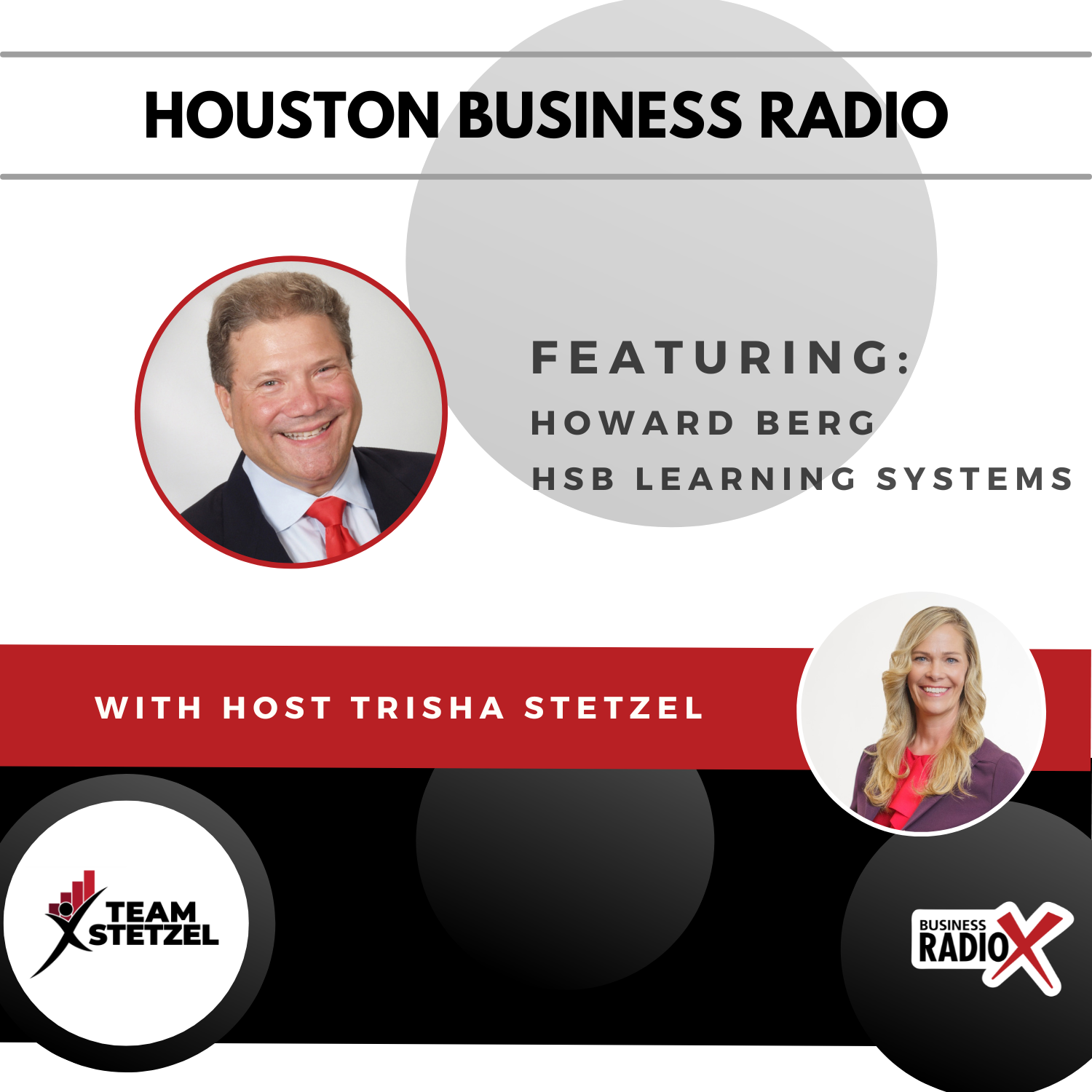

 Howard Stephen Berg is internationally recognized as the world’s fastest reader—officially documented by Guinness World Records for reading over 25,000 words per minute.
A pioneer in accelerated learning, Howard has developed cutting-edge techniques that turn information overload into an advantage. His methods have helped over a million people improve their reading speed, comprehension, and problem-solving skills across education, business, and personal development.
Respected for his contributions to the science of learning, Howard’s training programs empower professionals to master content faster and stay ahead in fast-moving industries. With a background in biology and psychology, his strategies are rooted in neuroscience and proven results.
In his conversation with Trisha Stetzel, Howard shared his journey to breaking the Guinness record, his background in education and psychology, and how he created his signature learning techniques. He discussed how speed reading can enhance business performance, citing companies like Netflix and Amazon as examples of adaptation and learning. 
Howard also demonstrated practical methods to boost reading comprehension and emphasized his mission as a Rotarian to help others learn faster, remember more, and solve problems with confidence.
Connect with Howard on LinkedIn.
 This transcript is machine transcribed by Sonix
TRANSCRIPT
Intro: Broadcasting live from the Business RadioX studios in Houston, Texas. It’s time for Houston Business Radio. Now, here’s your host.
Trisha Stetzel: Hello, Houston. Trisha Stetzel here bringing you another episode of Houston Business Radio. It is my pleasure to introduce you to my guest today, Mr. Howard Berg. He’s recognized as the world’s fastest reader thanks to the cutting edge, accelerated learning techniques he’s developed that turned information overload into information assets. I’m not going to tell you the rest of the interesting things about Howard, because I want him to tell us. Howard, welcome to the show.
Howard Berg: Well, thanks for having me.
Trisha Stetzel: I’m very excited about the topic we have at hand today. But, Howard, first, would you tell me a little bit more about you and maybe the Guinness Book of World Records that you happen to be in?
Howard Berg: Sure. Well, uh, I went to the, uh, State University in New York, Binghamton to major in biology when I was 17. And in my junior year, I got interested in psychology for learning. And the brain is a branch of biology called psycho biology, not psychotic biology. That’s Frankenstein. It has to do with learning and cognitive activities. So I went to the dean and he said, you’re a second semester junior. You haven’t had one cite course. You only have one year left. I’ll have to do the whole four year curriculum in one year and finish the bio curriculum. At the same time, we need to take six science courses, two for our labs. And I had three jobs. I was working on the site 18 hours a week. He said, you’re not smart enough. And that’s when I realized they don’t teach learning in school. They tell you what to learn. They tell you why to learn. They tell you what will happen. You’ll learn. But they don’t tell you why. You hear a song once on the radio and you never forget it. And then you read seven Habits of Highly Effective People in the next day, or an old single habit.
Howard Berg: They said there’s gotta be a way to learn things that matter, like you learn songs. And it got up to 80 pages a minute, which got me in Guinness in 1990. No one’s ever replaced me. And, uh, I did the four year program in one year, and I got an 800 on the GRE in biology, took a graduate school, sat I went to 48 books in three nights, like self physiology, genetics, uh, biochemistry, plant systematics. Not the lightest reading. So when people say, do you remember anything? I got three questions wrong and I was in the 99th percentile in the world. So I’m going to say, yeah, I remembered it. And then I started a school in Dallas. It was for homeschoolers, and the average student was graduating high school at 20 to 45 college credits. Most of the ones who started in junior high never finished high school because they finished college before they got out of high school, and they didn’t need a high school degree anymore. They were college grads. Many of them were working on their master’s when they were 1819 years old, and it was very exciting. And we talk a little about that today.
Trisha Stetzel: Yeah, absolutely. So, Howard, you must be a superhuman.
Howard Berg: Um, I had a combination of good teachers and some early childhood experiences. I grew up in the projects in Brooklyn, which was like West Side Story without the music and dancing. I met Bernardo. He had yeah. I had a knife to my throat. I was beaten with bats. My dad was pistol whipped. We moved when they raped an 88 year old man. My mom had a sister. My mom got worried, but, uh, I found the only safe place in my neighborhood was the library. The grandkids would rather be dead than caught in the library. So I read a lot. And I had college reading when I was 11. Because, you know, the worst thing in the library is a paper cut. You went outside, you could get killed. So it was a it was a process of reading and reading and reading. And I read, you know, college level books when I was nine years old. So I got pretty good at it because that’s what I could do.
Trisha Stetzel: Wow. All right, so I heard you say that you’re in the Guinness Book of World Records for reading more than 25,000 words a minute. Is that right? 1990. So 90 and 19.
Howard Berg: No one ever replaced it.
Trisha Stetzel: Wow. Okay, so, Howard, as you know, I have a lot of listeners who are in the business space. Business leaders, business owners. We are always looking for ways for to self improve or improve our businesses. And reading is one of those things. Right. For most of us, some of us like to read, some don’t. But we know we need to write for self-improvement. So why is it that we read? What I would consider very slow, especially compared to the way you read. But why do we read so slow? Why does it take so long to get through a book?
Howard Berg: Read slowly because I will show you exactly why. When you’re in a car, you’re driving on the highways. Well, it says 70, but no one pays attention to that. In Texas, 70 is the suggested speed. So you’re going at least 70 miles an hour. You’re reading the road from back left and right, and you’re reading your gauges. You’re watching your GPS, you’re watching the road, you’re bored. So you turn on the radio, you talk on the phone. You talk to people in the car. You’re still bored. And that’s in four directions. You read a book in one direction and around 200 words a minute, and remember 10% the next day. And the difference is, in a car, everything’s like a movie, and you’re seeing all the information as a visual. When you read a book, it’s like this somewhere in the back of your head, talking one word at a time. So most people read at the speed they speak. By learning to see movies in a book, you’re able to read at least 100% quicker in about four hours time with very good comprehension. And by the way, because we’re talking business, no one wants to read fast. That isn’t the goal. The goal is learning fast. If you’re in business, imagine if you could learn a new skill in an hour every day.
Howard Berg: Uh, internet skills, marketing skills, public speaking skills, emotional intelligence skills, and 365 days you’d have 365 new skills. What would that do to your business? It’s the learning. Reading’s a screwdriver or a hammer. It’s a tool. The payoff isn’t the reading. It’s the knowledge to be able to use that. Like, I just built the funnel, a very complex funnel that had to integrate, like 3 or 4 different external programs and communicate precisely. And you never did it before. So you read how to do it and they made a funnel. That’s a business decision. Most people would say it’s too hard. I don’t know what to do this too much to do. The difference is I know how to learn. I took the information and I applied it. When you want to make more money, you’re not going to make more money working more hours. You’re going to make more money making more money per hour. And the way you do that is that beefing up your your knowledge base with AI coming in, a lot of the businesses we have today will not function successfully in ten years. That’s Bill gates saying that. So you have two options. You could be blockbuster.
Howard Berg: Look how well that worked out. Or you could be Netflix. They started off with DVDs and they don’t use them anymore. They’re very successful online. They learned to morph their business model along with the market. And that’s what people need to learn. Just because you’re making money today is Sears and JCPenney. How? Well the business model is working for them now. And the interesting thing is the second richest man in the world, Bezos use their business model. He took the catalog that made them rich. In the late 1800s and early 90s and put it online and called it Amazon. They had the business model, they had the marketing, they had the products, they had everything. But no one said, why don’t we put it online? He did it. And now he’s the second richest man in the world. They’re going bro. That’s the difference between someone who knows how to learn and has a vision for where it’s going, and someone who’s using what’s worked successfully for decades. You can’t run a business today successfully by staying in the model you have. You have to have the vision and the skills to take it to the next level, or your competition will. And it’s blockbuster. How well that worked out for them.
Trisha Stetzel: Oof! Okay, all of that resonates with me. And I love that you said Learning faster. So it’s not about reading faster, it’s about learning the material faster. So can you give us some tips on how we get from just reading 200 or less? For some of us, words per minute, because we’re concentrating on each word to getting to a space where we’re learning faster.
Howard Berg: Absolutely. I’ll get you 20 to 40% faster in about 90s. So when I’m done, pick a book you’ve read, preferably nonfiction. So that the only thing confusing you is the speed, not what’s in the book. If you’re trying to learn quantum physics and reading fast simultaneously, neither thing will go well. So for learning something we know and understand, the only reason you don’t understand it is you went too fast. That’s why. Pick something you understand. Read for a minute with a timer and see how far you get. Don’t do anything. Just read the way you would read now and then when the bell rings on your phone or your watch, put a little mark in the margin with a pencil. Now go back to the beginning we started. Take your hand and go across one line at a time with your eyes following your hand. And this is the key. As fast as you could comprehend. That’s why you want something you understand. So as long as you know what you’re reading, go quicker and quicker and quicker. Till you don’t. That’s when you went too fast. So now slow down just enough that you can understand. And for about five minutes, go one line at a time, as fast as you can with comprehension. If you don’t know what you’re reading, it’s too fast. At the end of the five minutes. Get your timer. And test yourself on the same section again and read for one minute, using your hand to go as fast as you could comprehend. And that little pencil mark more that you had in the first minute, you’ll blow past it by 20 to 40%. Just doing that one change.
Trisha Stetzel: Wow. Okay, so we’ll use our hand to guide our eyes across the words, right? Um, from left to right.
Howard Berg: Don’t stop. Keep moving. If you see something interesting, keep going. Don’t stop. Keep going and you’ll see a dramatic improvement.
Trisha Stetzel: Okay, so how do we get past wanting to look at and read every single word that is there? I understand the exercise, but I think my brain.
Howard Berg: Is like a conductor in an orchestra. It keeps your brain engaged and keeps you moving. It’s the hand that moves the eye and overcomes the temptation to slow down.
Trisha Stetzel: Okay. Totally makes sense. So, Howard, I know that you have, um, you have a school or a way to actually dig a lot deeper into. How do you get much better at this? So maybe we could probably not get to 25,000, but something much better. Much better than 200.
Howard Berg: Realistic goal would be 100 to 400% in four hours. Uh, with good comprehension and retention. We did a double blind study, and everyone in the 100 person group at least doubled. Some tripled in, some quadrupled, but everyone at least doubled with no loss of comprehension.
Trisha Stetzel: Wow. That’s fantastic. So if people are already interested, Howard, and connecting with you and learning more about how to dig into this and get even better, how do they find you?
Howard Berg: They go to Howie reading. I do a monthly live class personally working with them. It’s not recorded. It’s me. And then I do two masterminds for free afterwards, where they have the chance to ask questions like, I’m not sure what I’m doing, you right, or they hear other people’s questions and learn things they didn’t even realize they should have asked. And I give them two free masterminds to make sure they actually learn the skill. And I’m not just doing reading, I’m doing reading to find what I need to know, and I’ll teach them what to look for. Now you’ve found what you need to know and you don’t understand it. That’s not a reading problem. You read the calculus book and you can’t solve a problem. You know all the equations. But what do you do with them? You have no idea. That’s a learning issue. So you study skills to connect the dots and make sense out of the information, so you can actually use it. Now you got to remember it so you can use it when you need. That’s a memory skill. And then I teach them emotional intelligence. What if you get nervous taking tests. What will it do to your performance? What if you get nervous speaking in public? A lot of professionals are uncomfortable doing what we’re doing. They affect your your ability. So you have the knowledge, but your emotions are impeding it. I train the U.S. Special Forces at Fort Bragg and the Royal Army in Bangkok on how to stay focused on the fire and remember their training and do what they were taught so they don’t get killed because they’re so flustered.
Howard Berg: Something went wrong that they can’t remember what they’re supposed to do and they can get killed. So that’s about as severe a business problem as you’re going to get. Someone wants to kill you and you can’t remember what you were supposed to do. So in business, sometimes it feels like someone wants to kill us. We have good and bad days, and the bad days are difficult, and the people that succeed are the ones that can stay focused on the problem and find the solutions they need instead of why is this happening to me? Well, I told them I’m going to teach you a secret. With that way, I taught them the single best question you can ask when you’re having a business problem or stress. Are you getting shot at? What’s the next best thing I can do now instead of this isn’t fair. Why is this happening to me? Waste of time. You’re digging a deeper hole and commiserating. What’s the next best thing I can do now? Your brain looks at the problem, looks at where you want to go. It starts showing you options to go from where you are to where you would like to be. Much better than saying, why is this happening? It isn’t fair. Maybe it isn’t. So what? It’s happening. We’ve all had days where it wasn’t fair, and the people who are successful learn how to overcome that. They block, they they focus in, turn off that emotional noise and remain focused on solutions to the situation instead of problems.
Trisha Stetzel: I love that, that’s fantastic. Okay, so I’ll put the link in the show notes so that you can go and find Howard’s, um, information that he just talked about. It sounds like a great way to get started.
Howard Berg: I’ll give you my email, Mr. reader. Maria der. That’s my email at MSN. So if you have a question or you’d like to I train companies all over the world. So if you’re interested let me know. Can come there or I can do it on zoom, which is a lot less expensive because you don’t have to have me fly out there. It’s the same program. You’ll learn the same thing. That’s the beauty of what we’re doing today. It’s so much more efficient than it was even a few years ago.
Trisha Stetzel: Absolutely. Mr. Reeder at MSN, that’s how you can find Howard. Okay, so, Howard, I’m curious about. Um. When learning faster works best. Is it in the morning? Is in the afternoon? Is it in the evening? When should I be practicing? Learning faster.
Howard Berg: The answer is yes. Are you a morning person who works better in the morning? If you’re an afternoon person, it will work better in the afternoon. And if you’re a night person, it’ll work better at night. One of the things I teach people and I teach speed writing. I wrote my last book in five hours. Find the time of day where you’re most alert and focused for the most challenging mental problems. And what do you do when the rest of the time is things that are more work related, like I’ll type in a database in my off time. It doesn’t require a lot of thinking. I’m just putting a database together so it doesn’t really. We really rely on a lot of deep intellectual connecting of dots. It’s just typing and listening to music. But when I’m looking to completely change something, then I’m going to focus while I do a lot of my work when I’m sleeping. Um, I can read ten books in three hours. And then I ask myself the questions that I need answered that are in those books. But I don’t have the answers yet. And while I’m sleeping, my brain starts looking at the questions in the data and starts pulling them together and forming outcomes. And I start seeing the information in my mind while I’m sleeping. And then I transcribe it when I wake up. And it’s a new program.
Trisha Stetzel: Can can a regular human being learn that skill? Howard.
Howard Berg: What I do, it’s what I teach. I teach people how to do. I had 11 year olds in college getting A’s in a week. We took a group of 11 to 15. We were in Sugarland right near you. Sugarland, Texas. Yeah, they did a 30 chapter book in lifelong developmental psych. Big Book. In one week and 15 out of 18 students passed the Clep test for full college credit. When one week of study went a sophomore college book and they were 11 to 15. Another one a very interesting. This was in Sugarland. Uh, one of the children that brother had Down’s syndrome, so they decided they wanted to find a cure and they weren’t doctors. So they raised they built the company and they studied how to make a website. Built it themselves. Learned public speaking. In their first year of business, they raised 93,000 USD. They were 11 or 15 at the time. And they won the silver pyramid. That’s the Oscar in advertising in Vegas. They beat rotary and they beat Red cross as the best not for profit business model in America. They were 11 to 15. Now think about if 11 or 15 year olds using these skills could do that. What would an adult with a good mind for business, an organization, be able to do with the same skill that an 11 year old was using? It’s there’s no limits to what people can accomplish with the right information and motivation.
Trisha Stetzel: Absolutely. So business owners and leaders these days are time strapped, right. So here’s here’s what here’s the narrative that I hear from the people who are listening to us right now, which is I don’t have time to go learn this new skill. So they just keep doing what they’re doing. So what would you say to them?
Howard Berg: Four hours, if you could double the rate at which you learn for the rest of your life of four hours, whatever time you gave, you’ll get back in spades, because you’re going to be plowing through tons of data for the rest of your life and half the time and understanding it better. Applying it more efficiently and making more money. That’s four hours and I do a money back guarantee. So they got nothing to lose. And I don’t like giving refunds. I want to make sure people learn the skill and part of it. Because if you watch the news, does anyone think the biggest challenge is too many smart people making too many good decisions in the world? I think we need more people who can think and make good decisions, and that’s how we’re going to solve a lot of the problems we’re facing as a species, not just as a country, but as a species. Energy issues, money issues, economy issues, health issues. We need people who can think. And my job isn’t to solve the problems, but to empower the thinkers that can solve the problems, to learn the information that’ll solve the problems. Because they’re looking at three, three, four times faster. They have more knowledge and they’re smart. They know what they’re doing, and now they have better data to work with that can make a difference. So I alone will not solve all the world’s problems. But I’ve reached over a million people.
Howard Berg: Uh, Nightingale Conan sold $65 million worth of my program in the early 90s. That it was a recording wasn’t even live or a video. And now it’s me live, working one on one with them in a live zoom meeting. And, uh, I would like to think I’ve learned a lot more since then. I teach new skills and keep it so it’s not just books anymore. People don’t read books. They they read ebooks. They read information online, newsletters, news. They’re listening to webinars like this, podcast videos. So how do you learn anything? It’s no longer just about books. It’s about information. It’s coming in various forms. Reading alone won’t solve that. So I’m teaching them how to take notes on all these different things and what to look for. How to know when you found it. How do you learn it when you don’t understand it? What do you do to remember it so you don’t forget it? And how to stay in the right mindset to use it appropriately. When you do that, it doesn’t matter if it’s a book or a podcast or a video or even an audio, you’re in a better position to master the knowledge. And that’s what business is based on today. It’s a knowledge based economy, and what I’m doing is showing them how to succeed in that economy in four hours time. So any business that can afford four hours to double their productivity is in the wrong business.
Trisha Stetzel: That is absolutely true. All right. And you guys heard it. Mr. Reeder at MSN. Listen, you’ve got a direct line from.
Howard Berg: Mr. Reader, not Mr. Moore.
Trisha Stetzel: Right? Yeah. Mr.. Sorry about that. So spell it out. Right? M r e r e a d e r. Just to make sure. And I’ll put it in the show notes as well so that everyone has that information. Yeah. That you can just copy and paste. So as we get to that question.
Howard Berg: Very happy to do it. I’ll even go on zoom with them and dial up. I’m really passionate about what I’m doing. The world’s in trouble. We need solutions. I don’t have every solution, but I know I can help people find the solutions they need. And that’s a responsibility. It’s not just about money. It’s about making a difference. And if the people with these skills don’t make a difference, we’re not going to have a world. And you could see that very clearly. But what’s going on everywhere? We need people who can think and do things correctly and I can help do that. So I feel a responsibility to make sure that I get out there and let people know that there is a solution to their overwhelmed information problem.
Trisha Stetzel: I love that. Howard, thank you so much for such a great conversation. As we get to the back end here, you and I were having a conversation about your Houston ties before we started recording. So can you just tell your Rotarian story real quick as we close up today?
Howard Berg: So I lived in Dallas for 23 years, and I was a rotary president at my club three times, and I speak at rotary on this topic, and a lot of the clubs are in Houston. It’s a big city. So I get on the bus at Greyhound because I had to pay for it. I wasn’t getting any money. This is all volunteer work. So I’d get on a bus at 3:00 in the morning, right to Houston. I get there about eight, 9:00, go across the street, rent a car, do my club, get back on the bus, go back to town and get home 1:00 in the morning. And it wasn’t for money, it was volunteering and making a difference. Rotarians are trying to make a better world and we don’t just do things for money, we do things to help. Uh, I’m doing work now. I’m trying to work with orphans, to do live programs, to raise money for the orphans to make. I got a half off of my mother. Uh, my father and mother got divorced when I was six. My dad was, uh, with General Patton in World War two. We went through North Africa and and and Italy and the battle of the bulge. And he had PTSD. And back then they diagnosed it as crazy. They didn’t have a knowledge of it. So they told my mom to get divorced, and she remarried, and my father adopted me, that she married. So I, I know what it’s like to be with a single mom, and I can only imagine the trauma of being by yourself and not even having that. In fact, my wife, uh, in her last marriage, she adopted two children whose mother died in a fire, and no one would take them, and they were going to split them apart. And she took both kids so they’d have a mom, and they were orphans, and she took them in and raised them. So I understand, you know, what the difference that makes. And I’m trying to help those people.
Trisha Stetzel: Yeah, absolutely. Howard, thank you so much for being on the on the show today and sharing your knowledge. I look forward to hearing how many people took your advice to spend four hours to learn faster and to be able to get past this information overload that we’re all experiencing.
Howard Berg: Dizzy. You know, I had an 84 year old Ruth Lubin. She read three books in three hours the day after I taught her. So it’s not an age thing. She was 84, my youngest student was eight, and she was in Toronto, and she read five seconds a page and I tested her because I read faster than that and she got everything right. So I’m like, what’s this kid’s future look like? She can learn at five seconds a page at eight, she can do anything. She could be anything. And that’s what I want for the rest of this country. We’re in trouble. There’s a real dearth of learning in schools. Can I say something? School is based on time. You spend a year in first grade, and the year you get a D, you can get a C, you go to the next one. You didn’t fail. D do you want a pilot who got a D in landings? Do you want a doctor who got a D in surgery? My school, we had one grade A and you didn’t go to the next lesson to you aced the one you were on. You had to learn what you were doing to learn the next thing correctly.
Howard Berg: And so one of our kids did high school bio in a week and said, how well could he have done? Well, our exams are essays. He can’t botch an essay. Either know it or you don’t. His questions were 300 of them. Explained the genetic code and how it works. What’s a mitochondria? If you’re 11 and you could do 300 essays like that in a week and get them right. And he did. You’re finished with high school biology. We work on learning, not time. If school would work not focusing on. You’ve got 12th graders who can’t read, write or count because they kept pushing them up in a system where they were incompetent at the lower level and never gave them the chance to learn the skills they needed to go to the next level. And then they’re like, why can’t anyone learn? Well, you never taught them in the first place. We taught learning before we content before we taught how to learn science or math or English. How do you learn? And if you can do that, you can do anything.
Trisha Stetzel: And what a way to circle back. That’s how the story started, right? You didn’t know how to learn, and now you’re teaching it. Howard, thank you so much for being on the show today. This has been absolutely wonderful. All right. If you want to connect with Howard, it’s m r r e a d e r at msn.com. He’s happy to answer your questions and lead you back to all of these amazing programs that he talked about today. Thank you again, Howard. That’s all the time we have for today. If you found value in this conversation, share it with a fellow entrepreneur, veteran or Houston leader ready to grow. Be sure to follow, rate, and review the show. It helps us reach more bold business minds just like yours. Your business, your leadership and your legacy are built one intentional step at a time. So stay inspired, stay focused, and keep building the business and life you deserve.














