Business RadioX ®

  • Home
  • Business RadioX ® Communities
    • Southeast
      • Alabama
        • Birmingham
      • Florida
        • Orlando
        • Pensacola
        • South Florida
        • Tampa
        • Tallahassee
      • Georgia
        • Atlanta
        • Cherokee
        • Forsyth
        • Greater Perimeter
        • Gwinnett
        • North Fulton
        • North Georgia
        • Northeast Georgia
        • Rome
        • Savannah
      • Louisiana
        • New Orleans
      • North Carolina
        • Charlotte
        • Raleigh
      • Tennessee
        • Chattanooga
        • Nashville
      • Virginia
        • Richmond
    • South Central
      • Arkansas
        • Northwest Arkansas
    • Midwest
      • Illinois
        • Chicago
      • Michigan
        • Detroit
      • Minnesota
        • Minneapolis St. Paul
      • Missouri
        • St. Louis
      • Ohio
        • Cleveland
        • Columbus
        • Dayton
    • Southwest
      • Arizona
        • Phoenix
        • Tucson
        • Valley
      • Texas
        • Austin
        • Dallas
        • Houston
    • West
      • California
        • Bay Area
        • LA
        • Pasadena
      • Colorado
        • Denver
      • Hawaii
        • Oahu
  • FAQs
  • About Us
    • Our Mission
    • Our Audience
    • Why It Works
    • What People Are Saying
    • BRX in the News
  • Resources
    • BRX Pro Tips
    • B2B Marketing: The 4Rs
    • High Velocity Selling Habits
    • Why Most B2B Media Strategies Fail
    • 9 Reasons To Sponsor A Business RadioX ® Show
  • Partner With Us
  • Veteran Business RadioX ®

Fintech South 2025: Charles Potts with ICBA

September 2, 2025 by angishields

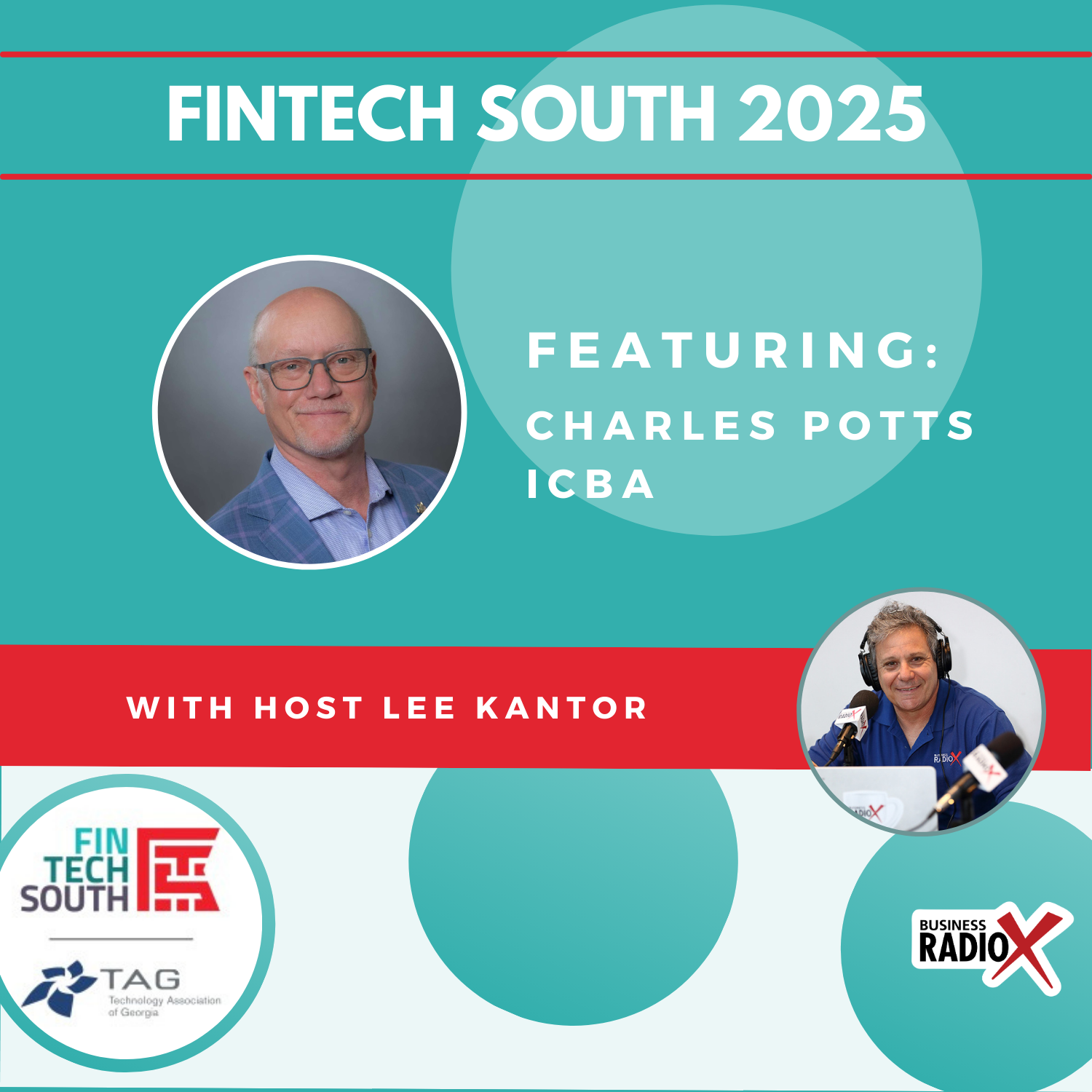
ABR-Charles-Potts-Fintech-South-2025-Feature
Atlanta Business Radio
Fintech South 2025: Charles Potts with ICBA
Loading
00:00 /
RSS Feed
Share
Link
Embed

Download file

Fintech-South-2025-ICBA-Banner

Fintech-South-TAG

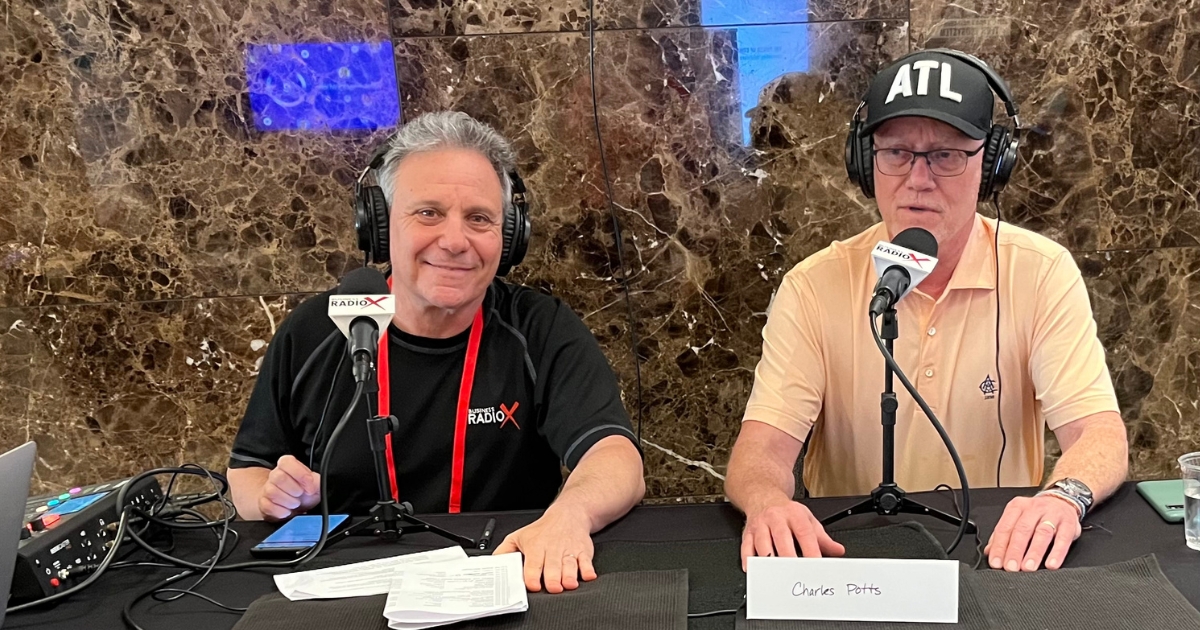
Charles-Potts-Fintech-South-2025Charles E. Potts is Executive Vice President, Innovation for the Independent Community Bankers of America® (ICBA).

In this role Potts drives ICBA’s innovation initiatives, and financial technology strategies, working with ICBA leadership to develop impactful, value-added solutions that help community banks seize new market opportunities to meet customers’ evolving financial services’ needs.

Potts’ extensive experience in banking and financial service firms provided the background Potts needed to start, co-found or lead various fintech start-ups including digital banking, mobile engagement, financial management and payments providers. Many had successful exits via IPO’s or acquisition via strategic acquirers.

A frequent speaker at national trade shows and conferences, Potts previously served as executive managing director at First Performance Global, where he led international business and corporate development activities for its card-control and fraud alert platform. Before that he served as CEO for NetClarity, a start-up in the University of Florida’s Business Incubation Hub. Prior to ICBA, he worked at the Advanced Technology Development Center (ATDC), leading the fintech practice where he mentored startups as part of the Georgia Tech-based incubator.

Charles attended the Georgia Institute of Technology, did his graduate studies at Georgia State University in Atlanta and attended the Graduate School of Banking at LSU. Potts, an avid masters runner, cyclist and soccer fan, lives with his wife in Atlanta, GA. They have a daughter who recently graduated from the University of North Carolina at Chapel Hill where she was a nationally ranked pole vaulter on the Track and Field team.

Transcript-iconThis transcript is machine transcribed by Sonix.


TRANSCRIPT

Intro: Broadcasting live from Fintech South 2025 at the Woodruff Arts Center in Atlanta, Georgia. It’s time for Atlanta Business Radio now. Here’s your host.

Lee Kantor: Lee Kantor here, broadcasting live from Fintech South 2025. So excited to be talking to my next guest Charles Potts with ICBA. Welcome.

Charles Potts: Thank you Lee. Glad to be here and I appreciate you guys giving us this chance.

Lee Kantor: Well, for folks who aren’t familiar, can you share a little bit about ICBA? Uh, who are you serving? And, uh, why is it so important to learn more about what you guys got going on?

Charles Potts: Yeah, absolutely. ICBA is the independent community banks of America. We are the Washington DC based trade association or lobbying firm, if you will, for the community banks here in the United States, a little over 4000 community banks. We are their primary voice and advocate in DC, with with the legislative body and all the policy people. And we have been around for over 90 years looking out after the interest of the community banks and why this is critically important. Well, I have a unique role in the organization and why Fintech South is is again part of what we, um, immerse ourselves in. As I’m the chief innovation officer, I lead an arm of the organization that helps our community banks, um, address the real needs of their communities through the types of fintechs that that we see here, and taking advantage of the new technology to really service those customers. And this is more and more important because, you know, what we know is almost two thirds of all small business lending comes from a community bank in the United States, and 80% of all farm loans comes from community banks. And so in this very dynamic marketplace, we need to ensure that our community banks have the best tools and solutions to keep them competitive, to keep them on par with the biggest banks and biggest fintechs, and make sure they’re meeting the needs of the small businesses and customers that they serve in their communities.

Lee Kantor: Now, I’m a big fan of community banks, but for folks who aren’t familiar with maybe the difference between a community bank and one of those stadium banks that might be in a given community, um, can you share kind of what how they’re different and why it’s so important that each community has a thriving community bank ecosystem in their neighborhood?

Charles Potts: Well, look, it’s it’s not that far in our rearview mirror. What we dealt with in 2020 with the Payroll Protection Program, uh, and ultimately, Small Business America recognized once again that they needed a banker, Are not just a bank. And so the relationship model that is critical to the success of these communities, knowing who you’re doing business with. Uh, you know, knowing, uh, who is looking out after your interest in these communities is one of the biggest differentiators in community banks. They take local deposits, they make local loans. They really serve the needs of the community and the businesses that they that they’re part of. And they do this with their local leadership. So probably that relationship, knowing who you’re banking with, I tend to say, is one of the most critical differentiators in what, uh, what makes a community bank and, and ultimately, you know, you, you, you tend to know, um, what the pain points are and what the needs are of the community that you serve because you are part of it. You grew up in it. You have multi generations, uh, that have served it. And um, and that is a huge differentiator and for the customers in that community. You know, these are people that their kids go to school with. They play little league ball together with. And so there is a there’s a set of relationships there that are ingrained. Um, you know, very, very deeply.

Lee Kantor: And then when you as a customer go into a community bank, there’s a higher probability they’re going to remember you and know your name as opposed to you walk into some of these larger mega banks where it’s going to be a different person every time you go in there. They’re not going to know who you are. You’re a name on a spreadsheet.

Charles Potts: Well, and and look, as I said, um, you know, businesses particularly want to know who they’re doing business with. And, and the business owners and the operators of those banks understand that critical symbiotic relationship. And those are those are job creators in those communities. And so it is incumbent upon the community bank to know and understand the needs of that small business Operator.

Lee Kantor: And it’s also it’s it’s symbiotic, though. I mean, the community has to embrace the community bank as well. Oh, and they can’t take it for granted.

Charles Potts: Absolutely. And, you know, there’s a there’s a long, deep, rich history there that, uh, that that frankly, uh, plays out very, very well when you look at, as I said before, uh, the growth in the growth in jobs in the United States in general comes from small businesses, and small businesses rely upon community banks as their primary source of funding.

Lee Kantor: So now when you come to an event like a fintech South, um, how do you and your team, uh, attack it to make sure that you’re getting the most value out of it? Is it the education or is it the, uh, connectivity where you’re interacting and meeting new folks? Uh, how do you get the most out of something as important as a fintech south?

Charles Potts: Yeah. So. So, uh, our relationship, uh, from the innovation arm of ICB, and we really have three different pillars. We have the traditional advocacy, the lobbying side, if you will. We have a very robust education arm that works with hundreds of thousands of bankers every year to make sure that they’re trained on all aspects of banking, from compliance to lending and everything in between. And then our innovation arm sits at this really interesting intersection between the bankers themselves and these fintechs and these fintech entrepreneurs. And so an event like Fintech South is really as much as, um, our ability to promote and highlight what these companies are doing and how they’re helping community bankers, as well as it’s helping the community banks that are in attendance understand what these companies can do for them. So we, you know, we we kind of jokingly play matchmaker, if you will. And so our job is to continue to evangelize for all the great work that our community banks are doing. And at the same time, the great work a lot of these companies are doing to help our community banks. So we’re, you know, we’re, uh, we’re in oftentimes an extension of a lot of these companies at these kind of events where we’re helping highlight and promote what they’re doing. And we’re also always actively recruiting for new early stage and growth stage companies to be part of our programs. And one of our cornerstone programs is our Think Tech Accelerator, where twice a year we have six companies in a ten week program that is, uh, Community Banking 101. It is an immersive ten weeks where they, they learn and know and understand the community banking world, and we help bring them to market to solve real world problems that our community banks have. So this kind of event like Fintech South gives us all facets of really the business development side of our innovation arm.

Lee Kantor: So now, has there been any technology or trend that you’ve kind of picked up from being here that you’re bringing back to your folks.

Charles Potts: We know we’ve gone. We’ve gone this long and we haven’t said AI. But of course, anything artificial intelligence related, which in our world is more about operational efficiencies, sometimes backroom operations, uh, applying those tools and technologies to address some of the more redundant labor, intense repetitive practices. So there are a number of solution providers here that we know and work with very closely, who have tools and services and capabilities that can help our banks and those kinds of functions. There are a number of participants here who are longtime, um, corporate members and supporters of what we do, uh, sponsors of our programs. And so we’re constantly staying on top of what they’re doing and looking at their new initiatives. And as we’re starting to explore, I say we the industry, not just we ICB how things like stablecoins can be applied to to to banking opportunities and use cases, as well as all all types of other payments vehicles. Those are the things that we continue to look at in an environment like Fintech South.

Lee Kantor: Now, um, where are you when it comes to physical checks? Oh, good. Like, well, a lot of the a lot of the consumers have kind of moved to digital. And then a lot of the, uh, maybe legacy companies are.

Speaker4: A little smaller.

Charles Potts: Um, you know, this is this is not for attribution to my employer, ICB. This is Charles Potts personal opinion. But the biggest problem we’ve had in the last couple of years has been the increase in check fraud in the. And it is a well known, uh, issue in our industry. We have a task force that has been, uh, spun up to focus on this. We, we spend a lot of our efforts also inside of DC and Capitol Hill, the legislative bodies and regulatory agencies working to make sure that the policies are addressing the right ways for our community banks to address this this burgeoning check fraud world that’s happened over the last couple of years and one of the largest, I guess, drivers of that was, frankly, the Treasury Department and the federal government sending out, you know, millions of stimulus checks that brought a whole bunch of new bad actors into the world to figure out new ways to go back old school and, and steal checks and wash checks and sell checks on the dark web. So that issue of checks, I mean, we we we have a check zero mindset. One of our policy guys came up with that term check zero. We want we want no checks.

Lee Kantor: And but and the consumer seems to want no check.

Speaker4: No consumer wants no jail.

Charles Potts: Look for everybody out there. Please tell your your congressional representatives to tell the Department of Treasury that’s to the part of jigsaw.

Lee Kantor: It’s like a disconnect. Like some industries are just, like, still look like holding on to this.

Charles Potts: Like the businesses, B2C, um, rebates, refunds, um, those kinds of companies that are in those businesses, telecom insurance, so forth, they still produce a a massive amount of checks that go out to consumers. It is not consumer. Consumers are not writing checks. Small businesses aren’t writing checks. It is, uh, it’s some of the big players who are in those kinds of small business.

Lee Kantor: It’s more trouble than it’s worth.

Charles Potts: It’s it’s I mean, my my daughter is a small business operator, and, uh, and she, she and I talk about this far too often.

Lee Kantor: So, um, if somebody wants to learn more about the community bank in their community or learn more about what eBay is doing in their community.

Charles Potts: Um, find me Charles Potts on LinkedIn. I’m happy to share and connect. Uh, we have a, we have a very robust, uh, uh, world of, of partners and affiliates at all the state levels as well. And, uh, we’d love for, uh, businesses are looking for a good community bank in their marketplace to serve their needs. We’d love to connect you as well. And that is that is a critically important part of keeping and growing a vibrant communities, making sure that businesses have capital to grow. They have a good capital, partners who support them and, uh, and go create jobs.

Lee Kantor: Well, Charles, thank you so much for sharing your story. You’re doing such important work and we appreciate you.

Charles Potts: Well, thank you so much, Lee, and I appreciate what you guys do here at Business Radio. And, uh, and for all of our listeners out there, uh, I want to make sure that, uh, you know, you go use a community bank when you can.

 

Tagged With: Fintech South 2025, ICBA

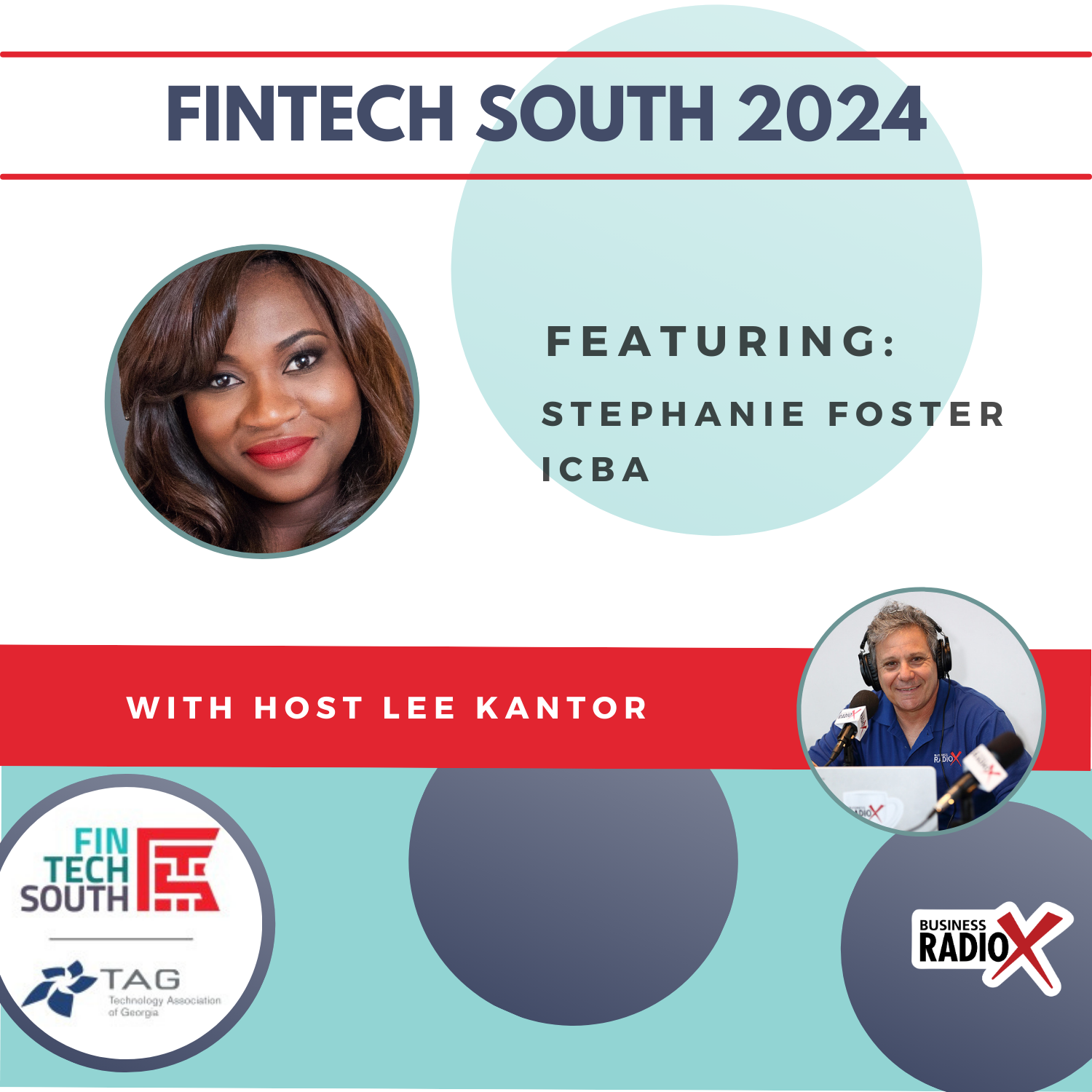
Fintech South 2024: Stephanie Foster with ICBA

September 6, 2024 by angishields

FS-ICBA-Feature
Atlanta Business Radio
Fintech South 2024: Stephanie Foster with ICBA
Loading
00:00 /
RSS Feed
Share
Link
Embed

Download file

Fintech South 2024, hosted by the Technology Association of Georgia (TAG), took place on Aug. 27-28 at the Woodruff Arts Center and Atlanta Symphony Hall. This year’s theme was “Fintech Lives Here!”

Stephanie-FosterStephanie Foster is Managing Director, ThinkTECH Accelerator for the Independent Community Bankers of America® (ICBA).

Foster is based in Atlanta and helps plan and execute the daily operations for ICBA’s ThinkTECH Accelerator programs, which will advance community bank-fintech partnerships through the development of targeted solutions for community banks.

Foster brings more than two decades of proven performance, managing over a dozen strategic partnerships and omni-channel products in peer-to-peer, business to business, and business-to-consumer platforms. She most recently served as chief administrative officer for XY Planning Network, an advisory service for Gen Y and Gen Z clients. Foster has also held management roles at Finastra, Fiserv and Western Union and was a founding board member for Women Driving Innovation at the Atlanta Innovation Forum.

Foster is a previous Electronic Transaction Association 40 Under 40 recipient, an annual award that celebrates gamechangers in the payments technology industry. In 2018, she was selected from a list of 500 international nominees to participate in Money 20/20’s inaugural Rise Up program, an exclusive cohort of 35 women leaders in the financial services ecosystem.

Foster is the co-host of One Vision: Fintech Fuse podcast where she interviews a diverse group of entrepreneurs, visionaries and thought leaders focused on stories with purpose. She also serves on the SouthEast Women in Fintech planning committee.

She holds a Bachelor of Science in marketing from Barry University and an Executive Master of Business Administration in international business from Florida Atlantic University.

Transcript-iconThis transcript is machine transcribed by Sonix.


TRANSCRIPT

Intro: Broadcasting live from the Business RadioX studio in Atlanta, Georgia. It’s time for Atlanta Business Radio, brought to you by Kennesaw State University’s Executive MBA program, the accelerated degree program for working professionals looking to advance their career and enhance their leadership skills. And now, here’s your host.

Lee Kantor: Lee Kantor here. Broadcasting live from Fintech South 2024 at the Woodruff Arts Center. So excited to be talking to my next guest. Stephanie Foster, Managing Director for ICBA ThinkTECH Accelerator. Welcome.

Stephanie Foster: Thank you for having me.

Lee Kantor: Well, for folks who aren’t familiar, can you share a little bit about the ICBA?

Stephanie Foster: Sure. So ICBA stands for Independent Community Bankers of America. We are a trade association for community banks. We’ve been around since 1930, headquartered in Washington, D.C., and our mission is to create and promote an environment where community banks flourish. We’ve got over 400, over 4700 community banks that are members of our trade association. And really we have three main pillars that build up our association. One of them is advocacy. So we advocate on behalf of all community banks whether or not they’re a member. Education is our second pillar and innovation is our third pillar. And that’s who I represent today.

Lee Kantor: Now, um, can you can you help the listener understand maybe the difference between a community bank and maybe one of those stadium banks? We do not.

Stephanie Foster: Say those names out loud.

Lee Kantor: I said stadium banks.

Stephanie Foster: Yeah, sure. So, you know, we always say the community banks are like snowflakes. They’re all unique and different. But your typical community bank, you know, is it focuses on their local community. A lot of them are still very much run by, you know, their fifth generation banker that was raised to lead the bank, collect deposits from the local community and reinvest those funds via loans to help support local businesses. You know, one way to describe community banks is that it’s all about relationship banking. It’s about developing a relationship with the local community. You know, it’s somebody that, you know, like you watch this kid grow up. Your bank was sponsoring the local T-ball team, and now they’ve opening up their own business. You know, their mom and dad. You’ve established over time that is what community banking is.

Lee Kantor: Yeah. And I think that it’s so important that people appreciate that because a lot of times they default to the bank that, you know, maybe they’ve heard of more, but the community bank is typically that person, like you said, in the community that’s going to make a loan in the community, the money is going to go back to the business owner that’s in the community. Like it’s very a kind of a righteous circle with everybody is really trying to help each other They’re locally.

Stephanie Foster: Exactly.

Lee Kantor: So now you’re the managing director for the Think Tech Accelerator. Can you talk about that initiative? Because that sounds pretty exciting.

Stephanie Foster: Yeah, of course I would love to. So six years ago, the Icba started this accelerator program. And really it was a vision of our leadership at the time to encourage our member banks to start thinking differently. Right. Thinking differently about different ways that they can grow their bank to become more competitive, more efficient and more profitable. Right. And it’s it’s hard to do that in this day and age without being innovative and looking at different ways of doing the same thing. So we put together this accelerator program essentially to help connect fintechs with our member banks. It’s a ten week program that we run every year. Um, we recruit companies across the US and even globally as well. North of the border. We have several companies from Canada actually, that have participated in our program in the past as well. But in the last six years, we’ve had over 50 different fintechs that have participated in this program, and they are solving problems for community banks, from compliance to deposits fraud. We’ve got some AI companies also come through. So it’s been a great way to support our our member banks and presenting new and evolving technology to them.

Lee Kantor: Now are the banks contacting the startups and saying, hey, we have this challenge, or the startups contacting the banks and saying we have the solution.

Stephanie Foster: I would say it’s a combination of both. What we do to our program, actually, we serve as the middleman, right? So we have this ten week program during which we are actively navigating and kind of owning that relationship and helping not only educate the fintechs to learn more about community banking, what it is, how it works, what are some of the problems that our banks are typically dealing with or what’s the most urgent need today? And we bring the banks to the table to come over three and a half period of hours on zoom, and they get to hear each company come in. They pitch for 15 minutes. The banks get to ask them questions for about ten minutes. We do a survey at the end and all that feedback goes back to the fintech. So it’s a great opportunity for the fintechs to get exposure to the banks, conduct customer discovery, and the banks in return are being exposed to the latest and greatest technology.

Lee Kantor: Now, is this happening locally or is this happening kind of for the community as a whole?

Stephanie Foster: Really good question. Our program is actually hybrid. So it’s ten weeks. Three weeks are in person and seven weeks are fully hybrid on zoom. So we’re able to access bankers from across the nation to participate the three weeks in person. Typically two weeks happen here in Atlanta. We have an office actually right down the street here from Woodruff Arts Center at 999 Peachtree, um, where we have the six fintechs come in for a week. We have bankers from all over as well that come in to spend time with the fintechs, learn about what they’re doing, provide feedback on the solution, and help them essentially to organize their value proposition to to banks. And then we have the hybrid version on zoom as well.

Lee Kantor: So what do you need more of? How can we help you?

Stephanie Foster: Thank you for asking. I am in recruiting season right now, so I am actively looking for fintechs to participate in our program. If anybody is interested, we look for growth stage companies between Seed and series A that are solving problems for community banks. This could be anything from AI compliance deposits, any regulatory tool fraud. For example, if you are interested you can check out our website wikborg or you can send me an email Stephanie Foster at wikborg. If you are interested in learning about the accelerator program.

Lee Kantor: Well, you came to the right place. You meet anybody interesting here at Fintech South?

Stephanie Foster: I met tons of folks yesterday actually, and I was a judge at the Innovation Challenge on stage. So yeah, I’ve got my recruiting hat on and I’m excited to walk away with a full list of recruits for my next program.

Lee Kantor: So how does the fintech scene here in Atlanta compare to other areas that you kind of work with?

Stephanie Foster: Fintech is hot in Atlanta. That’s why we’re here at Fintech South, obviously. But yeah, we actually have gotten several companies that are local from Atlanta that have participated in our program before. One of them is moment here locally moment. They were on stage with us yesterday as well, and they were one of the finalists for the Advance Awards. There’s another local company here, trust that, another Atlanta based company that participated in our accelerator program last year. So we’ve got a pretty strong Atlanta cohort, too.

Lee Kantor: Well, thank you so much for sharing your story today. You’re doing such important work and we appreciate you.

Stephanie Foster: Thank you for having me. It was a pleasure.

Lee Kantor: All right. This is Lee Kantor. We’ll be back in a few. At Fintech South 2024.


Tagged With: Fintech South 2024, ICBA

Business RadioX ® Network


Our Most Recent Episode

CONNECT WITH US

  • Email
  • Facebook
  • LinkedIn
  • Twitter
  • YouTube

Our Mission

We help local business leaders get the word out about the important work they’re doing to serve their market, their community, and their profession.

We support and celebrate business by sharing positive business stories that traditional media ignores. Some media leans left. Some media leans right. We lean business.

Sponsor a Show

Build Relationships and Grow Your Business. Click here for more details.

Partner With Us

Discover More Here

Terms and Conditions
Privacy Policy

Connect with us

Want to keep up with the latest in pro-business news across the network? Follow us on social media for the latest stories!
  • Email
  • Facebook
  • Google+
  • LinkedIn
  • Twitter
  • YouTube

Business RadioX® Headquarters
1000 Abernathy Rd. NE
Building 400, Suite L-10
Sandy Springs, GA 30328

© 2025 Business RadioX ® · Rainmaker Platform

BRXStudioCoversLA

Wait! Don’t Miss an Episode of LA Business Radio

BRXStudioCoversDENVER

Wait! Don’t Miss an Episode of Denver Business Radio

BRXStudioCoversPENSACOLA

Wait! Don’t Miss an Episode of Pensacola Business Radio

BRXStudioCoversBIRMINGHAM

Wait! Don’t Miss an Episode of Birmingham Business Radio

BRXStudioCoversTALLAHASSEE

Wait! Don’t Miss an Episode of Tallahassee Business Radio

BRXStudioCoversRALEIGH

Wait! Don’t Miss an Episode of Raleigh Business Radio

BRXStudioCoversRICHMONDNoWhite

Wait! Don’t Miss an Episode of Richmond Business Radio

BRXStudioCoversNASHVILLENoWhite

Wait! Don’t Miss an Episode of Nashville Business Radio

BRXStudioCoversDETROIT

Wait! Don’t Miss an Episode of Detroit Business Radio

BRXStudioCoversSTLOUIS

Wait! Don’t Miss an Episode of St. Louis Business Radio

BRXStudioCoversCOLUMBUS-small

Wait! Don’t Miss an Episode of Columbus Business Radio

Coachthecoach-08-08

Wait! Don’t Miss an Episode of Coach the Coach

BRXStudioCoversBAYAREA

Wait! Don’t Miss an Episode of Bay Area Business Radio

BRXStudioCoversCHICAGO

Wait! Don’t Miss an Episode of Chicago Business Radio

Wait! Don’t Miss an Episode of Atlanta Business Radio