Business RadioX ®

  • Home
  • Business RadioX ® Communities
    • Southeast
      • Alabama
        • Birmingham
      • Florida
        • Orlando
        • Pensacola
        • South Florida
        • Tampa
        • Tallahassee
      • Georgia
        • Atlanta
        • Cherokee
        • Forsyth
        • Greater Perimeter
        • Gwinnett
        • North Fulton
        • North Georgia
        • Northeast Georgia
        • Rome
        • Savannah
      • Louisiana
        • New Orleans
      • North Carolina
        • Charlotte
        • Raleigh
      • Tennessee
        • Chattanooga
        • Nashville
      • Virginia
        • Richmond
    • South Central
      • Arkansas
        • Northwest Arkansas
    • Midwest
      • Illinois
        • Chicago
      • Michigan
        • Detroit
      • Minnesota
        • Minneapolis St. Paul
      • Missouri
        • St. Louis
      • Ohio
        • Cleveland
        • Columbus
        • Dayton
    • Southwest
      • Arizona
        • Phoenix
        • Tucson
        • Valley
      • Texas
        • Austin
        • Dallas
        • Houston
    • West
      • California
        • Bay Area
        • LA
        • Pasadena
      • Colorado
        • Denver
      • Hawaii
        • Oahu
  • FAQs
  • About Us
    • Our Mission
    • Our Audience
    • Why It Works
    • What People Are Saying
    • BRX in the News
  • Resources
    • BRX Pro Tips
    • B2B Marketing: The 4Rs
    • High Velocity Selling Habits
    • Why Most B2B Media Strategies Fail
    • 9 Reasons To Sponsor A Business RadioX ® Show
  • Partner With Us
  • Veteran Business RadioX ®

Breaking the Glass Ceiling with Sandy Doyle-Ahern: From Environmental Leader to Affordable Housing Advocate

September 13, 2023 by John Ray

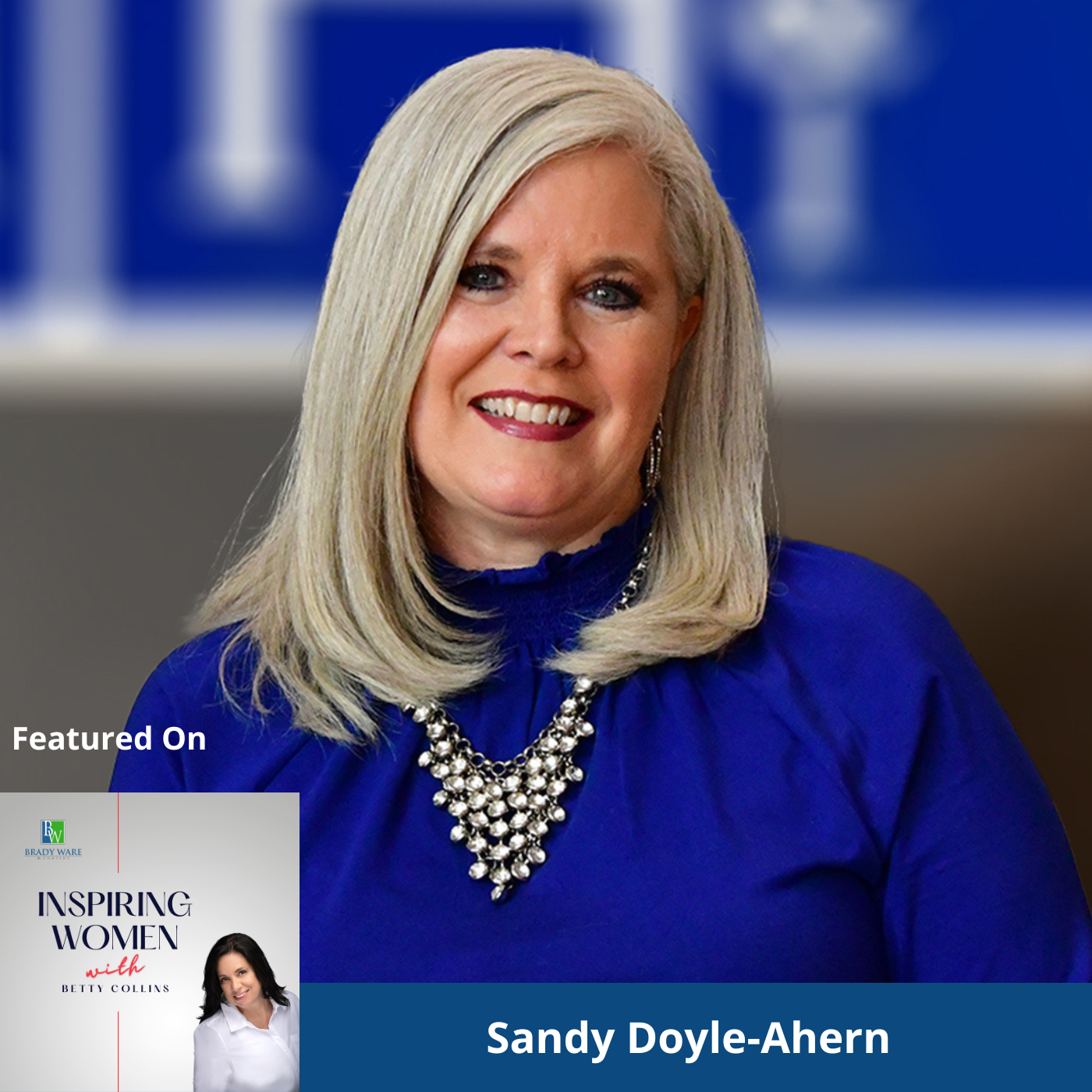
Sandy Doyle-Ahern
Inspiring Women PodCast with Betty Collins
Breaking the Glass Ceiling with Sandy Doyle-Ahern: From Environmental Leader to Affordable Housing Advocate
Loading
00:00 /
RSS Feed
Share
Link
Embed

Download file

Sandy Doyle-Ahern

Breaking the Glass Ceiling with Sandy Doyle-Ahern: From Environmental Leader to Affordable Housing Advocate (Inspiring Women, Episode 60)

On this episode of Inspiring Women, host Betty Collins welcomed a genuine trailblazer in her field, Sandy Doyle-Ahern. Sandy discussed her journey as a female in the male-dominated construction industry, her role as president of one of the largest engineering and survey firms in Ohio, the role of taking risks and following through in her success, and much more.

The host of Inspiring Women is Betty Collins, and the show is presented by Brady Ware & Company.

Betty’s Show Notes

I interview Sandy Doyle-Ahern, a pioneer for women in the male-dominated industry of construction and housing. From facing sexist comments to becoming the first female shareholder in her company, Doyle-Ahern shares her experiences and insights on leadership, risk-taking, and advocating for affordable housing in Central Ohio.

Through her inspiring message, women are encouraged to take small steps toward success and to make a positive impact in their communities. Listeners will be inspired to take risks, find ways to be impactful for others, and strive for success in their careers while making a positive impact in their communities. This podcast is a must-listen for anyone looking for inspiration and practical advice on achieving career goals and creating change.

Hosted by Betty Collins, CPA, and Director at Brady Ware and Company. Betty also serves as the Committee Chair for Empowering Women, and Director of the Brady Ware Women Initiative. Each episode is presented by Brady Ware and Company, committed to empowering women to go their distance in the workplace and at home.

For more information, go to the Insights page at Brady Ware and Company.

Remember to follow this podcast on Apple Podcasts and Google Podcasts.  And forward our podcast along to other Inspiring Women in your life.

TRANSCRIPT

[00:00:02] Betty Collins Has anyone ever inspired you to change your life that made you more fulfilled? Well, as a leader in your business and in your community, what are those questions that you ask yourself on a daily basis? It’s these questions that we explore on inspiring women. I am your host, Betty Collins, and I’m a certified public accountant, a business owner and a community leader who partners with others who want to achieve remarkable results for themselves and their organizations. I am here to help inspire you to a positive step forward for a better life. Well, today on Inspiring women, we have a guest that in central Ohio is somewhat of a legend. She’s a big deal. She is. She’s already laughing. But it’s true. Sandy Doyle is. She’s she I’ve heard her speak at NAWBO events. She’s all over. She’s everywhere. And she’s a champion for women, that’s for sure. So today, you’re going to get to hear just some great things that she’s doing and great things that can help you as a as a woman that is trying to be inspired. Right. So Sandy, she’s the president of EMH&T, that’s one of the Ohio’s largest professional engineering and survey firms. And she lends her talent and leadership skills to a range of organizations to beyond what who she were or what she works with, but such as like Affordable Housing Trust for Columbus and Central Ohio.

[00:01:26] Betty Collins
The Columbus Metropolitan Library, Columbus State Community College and Franklin County. Rise Together Innovation Institution or institute? I’m sorry. And among the many awards she has received, she’s been twice been named the most admired CEO and a member of the Power 100, a progressive women honoree and named CEO of the Year. But she is truly a legend and she’s a woman in a man’s industry that is becoming more women. But she’s definitely been a trailblazer. So, Sandy, welcome to the program today. Welcome to my podcast and thank you for the time that you’re going to give us today and give us some great insight. We really appreciate it. Well, thank you for having me. That’s part of the day. Yeah. There we go. There we go. Well, I love that. I love it. So before we get started, though, I always, like just take 30 seconds, 45 seconds and tell us something fun. Tell us something fun about you. Something maybe that that, you know, is not all your words and your, you know, all this stuff.

[00:02:25] Sandy Doyle-Ahern
Oh, gee, let’s see. Um, I was actually born in Canada, so that maybe is a little different. I grew up outside Philadelphia, but became a US citizen when I was 21. I think Awesome. And I’m a huge hockey fan. So is my favorite sport by far and the only one I actually really understand.

[00:02:44] Betty Collins
Yeah. Yes. Columbus Blue Jackets. And I assume you’re a big you go to those games.

[00:02:50] Sandy Doyle-Ahern
I do.

[00:02:51] Betty Collins
You know it’s one of the fastest paced games which I’ve gone to several, but not a lot. But it’s fun stuff. So. Well, I want to get down to kind of a little bit of background on you. Thank you for sharing about love hockey, too. But as a biology major from the East Coast, how did you end up in Columbus? How did you end up Ohio as the president of of your company this big, you know, huge, huge impact to the Columbus area for sure.

[00:03:19] Sandy Doyle-Ahern
So I’ll start by saying if you had told me that I was going to be the president of EMH and T someday, I would have laughed. So, you know, life is funny, but I actually ended up in Ohio for graduate school and that was a little bit of a coincidental thing, but it came from an internship opportunity that I had. I had started working for an environmental consulting company every summer between college semesters when I was 18, and I went back there every year. And when I graduated college, I was ready to go to grad school and they were all East Coast schools that I looked at, except there happened to be a gentleman I worked with who went to Miami University for his environmental science program, and I applied. And that was back in the day when you couldn’t look anything up on the Internet. So you had to actually go and see the place. And I did. And I remember driving out for my interview thinking this wasn’t going to be where I ended up. And then I did. You did. And, you know, it ended up being a great grad program for me. But what led me then to Columbus was actually an internship I needed to complete for the master’s degree, and it was going to be temporary, and I was going to be here just for about a six month to maybe 12 month period to to do the work for that degree. And I loved it. So the long story short is my husband also went through the same graduate program and he ended up in Columbus. And we kind of always thought we would see how it went. We had no family out here. We didn’t really know that many people thought we would go back to the Philadelphia area if it turned out that either one of us just, you know, weren’t happy here or whatever. And that never happened. And that was over 30 years ago. And we’re clearly not going anywhere now. But yeah, that’s just it was internships in school.

[00:05:06] Betty Collins
Yeah, I know. I’m like you. It’s like if you if you would have said to me, you know, when you’re almost 60 years old, this is going to be your life, right? I’d be going. Not a chance. I don’t see that happening. But we’re glad you’re in central Ohio. We’re glad. I mean, and Oxford. Did you like Oxford, though? Where where the. I mean, I just think it’s such a quaint town, that’s for sure. Yeah.

[00:05:28] Sandy Doyle-Ahern
Yeah. No, it was great. And it led me to such a huge opportunity here. So it just it all was circumstantial.

[00:05:34] Betty Collins
Yeah. Well, one of the great things about your resume beyond many things, but, I mean, is that you are the president of this company and you became the president. And with a career path that really is predominantly male and male is going to dominate that position for sure. And the leadership, you know, what challenges did you face throughout the year? Tell us a little bit about how that all came to be.

[00:05:59] Sandy Doyle-Ahern
Yeah. So when I first came to Columbus, my background’s in environmental work and I was around engineers all the time though, so a lot of what I was doing was regulatory compliance. It was restoration of natural habitats and it interfaces a lot with engineers. And so I started getting involved in projects really that MH was a part of, and I eventually ended up joining MH and T to open up their environmental division. And I think that was 1997. And, you know, honestly, it was a great opportunity because the owners of the company at the time said, you know, we don’t really understand what you do, but we know our clients need your help, so we’re going to let you just do what you do and do it here. And that’s literally what happened. So they’re very gracious about that and kind of gave me the opportunity to figure out how to fit within the realm of this engineering firm. But at the time, gosh, almost all of my work was out in the field. So I was out a lot with our survey crews. I was out with other engineering people. I was out with the clients literally in the field doing the work. And so over time, I just got the opportunity to to work on this environmental division for the company and it grew. So there’s there’s more to it. But I’ll stop there for a second and just talk about that first. Really nine, nine, ten years in my career with the I was doing that work and I loved it.

[00:07:25] Betty Collins
Yeah, Yeah. So, so with you probably being one of the few females and then you do something very, very different that they aren’t too sure. Yeah. Yet you become the president of the company and you’ve told this story a little bit at NABA where you were in the room with all the pictures on the wall and they were all men. Right? So, so tell us about this. The time that, hey, we’re going to become the president or I became the president, you know, I mean, I now I’m not just climbing up the hill for 9 to 10 years. I’m actually going to be in this leadership role.

[00:08:04] Sandy Doyle-Ahern
Yeah, I think it was a lot of things coming together. You know, obviously I didn’t go into working at EMC having any idea this was going to happen. But the reality is there’s a couple of things I had both. That my children, when I was young here at MH and running the environmental group, and that was kind of an early time when there there were almost no women here. Right? So at first I don’t think they knew what to do with me because I was the first female manager, kind of the first project manager. They weren’t really sure I wanted to keep working. I was not interested in being at home with my kids for very long. So I actually ended up bringing them to the office with me when they were really little. Wow. Um, and you know, I think back on that now and it’s funny because that that first time I did that when my, my first daughter was quite young, I walk into a room with a project meeting and I’ve got my briefcase and I’ve got a baby carrier and I’ve got all this stuff I’m walking into the meeting with. And the first couple of times with a couple of clients, they were like, What? What are you doing? Like, it’ll be fine.

[00:09:09] Sandy Doyle-Ahern
She’s sleeping. The meetings after that, they’re all like, Can we hold the baby? You know? And it’s really funny. But, you know, I think early all I know early in my career it was really challenging. I had I was around a lot of people who not an EMT. The company’s always been amazing, but kind of out in the field with some of the guys that like to make comments about what I was wearing make like to make comments about, you know, a lot of different things that were really sexist. But I wasn’t it didn’t really intimidate me all that much. It was just more I guess I was naive. I was more like, why would they do that or say that? And it didn’t happen a lot. Yeah, it happened once in a while. And there are a few memorable moments that I think about when I look back and think, Man, there’s some stuff that happened that should never really have happened. The truth is now no one does that to me anymore. I think I’m too old to care anymore. So, um. But you know what really ended up happening with the leadership opportunity really came about probably around 2005, 2006, when I had been running the environmental group.

[00:10:19] Sandy Doyle-Ahern
And what that did is put me in front of a lot of other divisions in our company. So because that group tends to kind of service some internal clients, you’re working with transportation, you’re working with them in development, whatever the case is. So I got to interface with a lot of different people. Um, and I’ve always kind of had a mindset around people, around the employees and what it, what we need to be doing as a leadership team. So I think early in my career I had the opportunity to become a shareholder, which was a big deal, you know, first female shareholder. It hadn’t happened before. A company that was doing really well had a strong reputation. I learned a lot in the process. And then frankly, what occurred was a few years later we had the Great Recession and my current partner and I who run the company together today were running the company then with the with the current president. And it was tough. I mean, it was, you know, all of a sudden you’re getting you get thrown into a situation where you have to make decisions quickly and you have to do what’s best for everybody as much as possible. And so, um, I think really it evolved out of that, partly that we, we were running things together and trying to make some tough decisions and, you know, watching the world around us really change.

[00:11:40] Sandy Doyle-Ahern
A lot of our clients struggled because we did a lot of home building work. So, you know, as we all know, the housing crisis happened. And so I think part of what emerged from that is I am a really big believer in in talking to the employees, telling them what’s going on, the good, the bad, the otherwise. And so when all that occurred, I did a lot of writing to the company at the time, and I wasn’t the president, but the president and myself and my other partner were all on the same page about the need for that kind of communication. So we started to push a lot of it out very quickly, and I’ve never changed that. So I fast forward to today running the company, starting at the end of 2011 into 2012. We’re still very much like that. Lots of lots of communication with employees, lots of employee update meetings on the status of the company, that kind of thing. So I’m getting a little ahead and we can come back to that if you want, but that’s kind of how things evolved.

[00:12:37] Betty Collins
Yeah, well, it’s interesting. You know, you have no idea how courageous you were bringing that child to work. I mean, at that time today, nobody would think a thing about it. And I think COVID finally has fixed that whole stigma, right where this is the way it is. This is there’s nothing wrong with it. Women don’t have to be exceptional to bring their kid to work. Yes. Or whatever it is. They just need to do their job. And and raising raising kids is parental, by the way, not just maternal. So I look at that and go, that’s huge that they would allow you to do that at that time. But, you know, for me, I know that a lot of times your opportunity, your nevers or your opportunity, you would never see you doing this, right. You would say, I would never do this. But you women that were able to be confident and courageous enough to say, My kid is really important, but I’m going to make this company a priority as well. We just have no idea, like right now what that means to us in today’s world. But COVID really kind of helped put that all to rest, right?
Hopefully so.

[00:13:46] Sandy Doyle-Ahern
Yeah. Yeah, We’ll see.

[00:13:48] Betty Collins
We’ll see. We’ll see. Let’s hope it does. Let’s hope it does. Because I know we could probably talk a lot about professional services in what we’ve got to do right now. Right. But in an article I recently read, you were quoted saying, I’ve learned to take risks and operate outside of my comfort zone. And you did that very early in your career. For young women, listening for any woman, listening for older women, whoever it is that isn’t comfortable taking risks, they’re not comfortable getting out of there. What suggestions would you have for them as they’ve started their journey or starting it or ending it or in between on risk and and operate outside that comfort zone? Let’s talk about that for a little bit.

[00:14:30] Sandy Doyle-Ahern
Yeah, no, it’s a great question. And I think you have to start by talking about the definition of risk. So I think the problem with the word is to even say it. People assume it means throw myself off the bridge, right? Something really risky. And that’s not what it means to me. It’s not what I’m talking about. I actually get this question a lot, and it kind of fascinates me because it’s a question that a 25 year old will ask and a 65 year old person will ask. And so and I think it’s partly because women kind of tend to not see themselves as taking risk all the time when in fact, they may be doing more of it than they realize. So what I mean by risk is it can be a small thing. It can be, you know, take the assignment that no one else wants. Yeah, that’s a risk. Or me showing up to work and saying I’m going to work on a project I’ve never done before because I’m going to tap the people I know that are talented. The risk on me is to do something I haven’t tried before. And so I think what it does is when you take small chances and you have a victory, it sort of develops your your confidence, I guess, around the fact that you can do the next thing that’s a little harder and the next thing that’s a little harder and you might fail in the process and that’s okay. But, you know, I, I did take risk early on. But again, it was small things.

[00:15:51] Sandy Doyle-Ahern
It was like getting put in a room where I don’t you know, I don’t know any of these people. I’m being asked to weigh in on some major decisions that they have to make as a client. So my job in that moment is to know what I’m talking about. And so kind of back to your comment a second ago about, you know, how did things evolve and how do they change? Well, for me, it wasn’t just about taking the risk. It’s I’m going to show up. I’m going to do what I said I was going to do. And if I fail at that or don’t know how to do it, then I’m going to go tap the resources I need. But you have to be the person other people count on. You have to be reliable. And so if you’re willing to take some small risks and you follow through, I think what happens eventually is you will take bigger chances in life. Yeah. And for me, how I ended up in this role, I mean, I honest to goodness would never have thought as the gal walking around in the field with mud all over my boots that this is what I would be doing. But I believe in it also, right? So I come here every day thinking about the people that are here, taking the risks themselves and what I can do to support them. So a little bit of a long answer to your question, but I it all kind of interrelates for me.

[00:17:04] Betty Collins
No, I love it. And I hope my audience heard the one thing from that comment that I’m still thinking about. I showed up and a lot of times who shows up, wins, who shows up, who is in the room? I deal with it with my own company. When I first came into Brady, where in 2012, I there were two shareholders we had I think at that time we had 26 and there are different levels of shareholders, but 26 people in the room, two women. So I didn’t think a thing about being in that room. And then as we were trying to encourage other women to come to the room, they didn’t think it was for them because it was mostly men. And I said, Get in the room, you know, show up, be there, go. I’m I mean, I’m totally different than most people in my company. And and I do things completely different. Kind of maybe like you in the terms they didn’t really what to do with me at that time but showing up and then and then it shows others. I am in the room. You can be here. You don’t need to not be here. So I love that. I love that in your answer. So I’m going to shift gears a little bit because this is this is something you’re passionate about. Um, you become a strong advocate for affordable housing. I don’t know that there is affordable housing anymore. Right. But you are an advocate for it. And what challenges are you facing and what can we do to help and assist you with this? It’s a big issue. And you know, we’ve got a thing called Intel coming as well. We’ve got all kinds of things happening around our city and there will be people left behind.

[00:18:39] Sandy Doyle-Ahern
So I appreciate the question for a lot of reasons. And let me give you a little context to how I’m going to answer the question. I think you have to take a step back for just a second and look at the central Ohio region. You know, Columbus is a great place to be.
There’s no question about it. We’re still operating in some ways like a smaller city than we really are. And if you look around the country, it does not take much to understand what we don’t want to do. So if you look at some of the major metropolitan areas across the United States, we have a playbook right in front of us that says unless you want to become like city X, Y, Z, don’t do these things. So I think Columbus is in a place and I say that meaning the greater outer belt area, multiple counties where we still have some time to do something about the housing situation, but not a lot. And so let me let me frame it a little bit, a little bit better than that. You know, the situation really does stem from what happened during the housing crisis in 2008 because we were building here at a pace that was generally keeping up with population growth.

[00:19:50] Sandy Doyle-Ahern
But since that time, we are nowhere close to that. Our population growth is happening much quicker than the number of units we’re building and understanding affordable housing. It’s a tough term because it it means different things to different people. But we’re talking about everything from single family to multifamily to senior housing to even residential housing for for students. Et cetera. So where we sit today is we need all housing. It’s not just one price point or another, because what’s been commonly understood is that when you have a shortage, it’s just like anything with a supply and demand model. When you have a shortage of something, all of a sudden someone who could afford to buy something a little higher. Price point doesn’t necessarily do that. They’ll buy down because they’re going to use that income, that money that they didn’t spend on the house for something else. Right. And what happens is it affects the supply even more for someone that only could be in that price point if you follow what I mean. I do.

[00:20:52] Betty Collins
I get it.

[00:20:52] Sandy Doyle-Ahern
So that situation is what’s happening right now in central Ohio. It does put us thousands of units behind. And so if we level set that issue behind what’s happening with population growth, the number of units were behind is even more staggering. So there’s a lot of challenges here. And without making this into an affordable housing podcast, because it could be it’s okay.

[00:21:20] Betty Collins
It’s okay
[00:21:21] Sandy Doyle-Ahern
Yeah. You know, one of the things that we have to really pay attention to is what happens when we make decisions in individual municipalities. And so when we live in a state like we do, where where every municipality sort of makes their own rules around what housing is going to look like, what transportation looks like. Et cetera. That home rule model that we have does make it difficult to cross over municipal boundaries to try and do collective work together. So what you’re hearing more and more now is you’ll hear a lot of conversation more about a regional housing strategy, a regional housing goal, instead of what’s Columbus doing, what’s Westerville doing, What’s Grove City doing what? You know, pick whatever. Yeah. Um, the challenge is significant and often it is the NIMBY syndrome. And there’s no question about it. It’s, it’s, you know, you understand it to some degree. But on the other hand, it’s it’s probably the most depressing part about trying to build housing is when you have neighbors that say, we don’t want that person here, we don’t want that type of housing here. So I do think when you ask the question about what can people do, I think have an open mind to neighbors, have an open mind to how we live together, have an open mind to how we grow and do all the things right for everybody. So it’s not just improving housing opportunity for people. It’s also transportation changes that need to occur over time. Here we have so much good stuff going on. We really do. We’re lucky to be in a region that is generally very positive, but these real challenges that we’re going to have are going to begin to affect us pretty significantly if we’re not careful. There’s a whole other aspect of this around homelessness that I want. I mean, I won’t go down that path, but I just have to mention it because the aspect around what it takes for somebody who’s not. Earning a true living wage to survive right now is getting more and more difficult.

[00:23:20] Betty Collins
It is. It absolutely is. I mean, we were talking today about just the cost of everything is like this and wages just are not following it. And so it creates other crisis and that’s just real. I appreciate your boldness and your tenacity about the issue. And I think just to get your thought on this, do you think having we got intel on this side of town and we got Marysville right now and they’re both doing major things right, that are going to take housing for everybody, It’s going to take infrastructure for everyone. Do you think the word region will become more about instead of Gahanna there and Dublin here? Because Intel’s here, you know, the stuff going on in Marysville, it’s it’s all encompassing. So maybe that will help us be more about a region.

[00:24:11] Sandy Doyle-Ahern
Yeah I think time will tell. You know what I worry about the most is the window to make those decisions gets smaller every year goes by. But I do think that there’s more conversation now than I’ve ever seen about thinking about a regional strategy. The one comment I would make, though, I think it’s something really important for people listening to think about in order for all of the regional success to go on, we have got to keep a strong core downtown. We need strong core neighborhoods. We have got to talk about redlining. We have to understand the effects of redlining and how we have to do what we can to reverse it, because it’s easy for us to say we’re going to build housing units in Union County and Lincoln County and Northern Delaware County or whatever without understanding that the impact on the core, what I call City of Columbus, really is incredibly critical to all of this happening. So as much as we want to look outward and think about impacts and housing and transportation, we also have to look inward and all of it needs to be successful. So that means reconciling with some really difficult situations to do that.

[00:25:24] Betty Collins
What’s great is you’re so beyond empty. And what I love is I see that as probably, Hey, this is what I do, this is my platform, this is my venue that I can now have impact in something like this. That kind of relates obviously with, you know, you build things, you’re building communities. But I mean, at the same time, there’s a lot of passion behind it. And to my audience, women, you know, this is part of the role when you play the roles that that Sandy plays that are that we all covered, that we all look at and go, this is a legend. There’s other sides to it besides EMH and T, But this is this is probably the coolest thing about you. There’s tons of it. But this is this I love. A few years ago you formed what is now dubbed as the Edge Sisters. It’s a group of women in leadership positions to lift up the community. Right. And push equity and drive change. Just talk to me about how that started and how you you know, what are you going to accomplish out of that? Because it’s pretty cool. And I really want viewers to look into this and see it because it’s neat. It’s cool. So.

[00:26:30] Sandy Doyle-Ahern
Well, thanks for asking. And I would start by saying, anybody can do this. This is not it’s not a club. It’s not an organization. It really what it stemmed from was all of us are in some way, shape or form in not only in our professional lives, but in our personal lives involved in community work. So we would see each other all the time. This philanthropic event, that event, whatever. And so every single time that I would see one of these women at one of these events, when you get past the, Hey, how’s the family doing? We’re all quickly in our conversations going to what’s happening in the community. Are we are we comfortable with the pace of change? Are we confident the things that need to happen to lift up other people? This is never going to be about us. This is always going to be about other people. Are we confident that that change is happening? Are we confident that we are doing what we can to kind of help push along a community that really looks at equity through the lens of opportunity and not just a buzzword, which it can be? And so what ended up happening was I guess it was right, It was right before the pandemic. I just sent a dinner invitation out to a bunch of these women and said, you know, I don’t know if there’s something here, but it just feels like we’re all talking about the same things all the time. So let’s go talk about it. And you really can’t get a group of 13 Typekit women together and not be like, Yeah, we’re going to do something. So Exactly. You know, we ended up having a great dinner. We talked for a long time about kind of what we all were seeing and what our concerns were and how could we help. So it ended up that we started down the path of meeting frequently for dinner and then the pandemic happened.

[00:28:14] Speaker3
Mm.

[00:28:14] Sandy Doyle-Ahern
And it was just the most bizarre and fortuitous thing because what actually ended up happening with all of us is we’re now all in these positions where we’re trying to figure out what the heck is happening and what we need to do to lead our organizations. So we ended up on weekly calls, and it was it was unbelievable. Some weeks, you know, you might be laughing about other things. Sometimes everybody was crying. I mean, it was just so much. But what we basically did is we we we brought Robin D’Angelo to to town to talk about race issues, which was, you know, controversial. And we knew it would be and that’s okay. But we purposefully wanted to try to bring people into a setting where they could just listen and learn and do with the information what they wanted. We also wanted to reach into the community to talk to some other women who had come into Columbus or central Ohio during during the pandemic. So I guess it was about a year and a half ago or so. We just sent an invitation out to all these women and we didn’t really know a lot of them, but we knew that they’d either moved here to take a job of some kind or had moved in. Their role in their organization didn’t know anybody. So we hosted an event basically and just said, Why don’t you come and we’ll get to know each other? And we’re actually getting ready to do the same thing here in about 2 or 3 weeks.

[00:29:38] Sandy Doyle-Ahern
We’re going to do it again. You know, we have all together, the group of us done some work around racism, the 13 of us, and been very honest with each other about it and learned together. It, you know, it’s been an incredible journey, really. Just to have them as as trusted sisters really is kind of how it is. So what are we going to do? We’re going to continue to in all the hats we all wear and we’re all in lots of different rooms around the community. We’re going to continue to push for doing what’s best for other people. I mean, it’s that is really how simple this is. I don’t think you’re going to see some big list of events we’re going to do. That’s not it. We’re just going to continue to kind of drive and push for change, especially with a region that’s really going through tremendous transition. Now you can see shifting power structures. You can see shifting dynamics about how to think of ourselves again, as a region much bigger than we used to be. We’re competing now with cities across the world, not just in Ohio. I mean, the whole situation is very different, and that’s the space we’re going to continue to be. We’re really kind of about that next generation and really, truly providing opportunity for everyone, not just certain people.

[00:30:57] Betty Collins
Right? Yeah, I could just sit and listen to you. I’m totally engrossed in what you’re saying. I truly love it. But, you know, to me, you know, what I like to have on my podcast is women who inspire other women. And you’ve certainly done that today. And it’s not just about I made it to the top in this company, you know, I’ve made it to the top. Okay. But these are all the other things that play into it. And and women need to be courageous. They need to show a lot of courage by touching and, you know, bringing your kid to work, coming together for racism, whatever it is. I mean, these are these are bold things. These are courageous. And it takes someone of courage to be that courageous. So I appreciate you coming on today and just talking and telling your story. I’ve heard it before. I always love it. I heard it pre-pandemic, but I had not really heard much about the Edge Sisters and I when I saw it, I thought I got to know more about that. So I really, really, really loved it. But thank you again for coming on today. And I would just ask you to do one last thing. What is it that you would want to say to the audience today for women who have they don’t need to be you know, Betty Collins is shareholder here and and Sandra does this and Jane Jane Greer. I mean, women every day, ordinary every day activities. What are we what’s the what’s what’s the word you what’s what? How do you want to encourage them? How do you want to inspire them as the last thing on the podcast?

[00:32:32] Sandy Doyle-Ahern
Well, I appreciate you asking. I guess I’d say two things. I think to the extent that you can do it, try to come from a place of gratitude. And that’s not easy for everybody. You know, some people have much, much more difficult situations they have to deal with every day. But finding gratitude, I think, makes you really begin to understand how impactful you can be because you’re not looking for what’s what’s going to be better for me. You’re looking for what’s going to be better for somebody else. So I think being grateful really matters a lot. And then I’m going to go back to the beginning risk. I think women need to be okay with taking chances. Women need to put themselves out there more. They have to be willing to take the assignment. Be the person that shows up and does something that no one else has done or do the assignment better. Because what happens is when you become that person who’s taken the chance and you become someone who delivers on what they say they’re going to do, you’re known as the reliable person then. And so this is what people forget when a colleague or a client or whatever says, I’ve got this assignment. Who do I want to work with?
They’re going to think of you because you are the reliable one. You are the one who showed up. You’re the one who admitted if you made a mistake, all the things that come with being reliable and it evolves, you know, it’s not like you have to kick in every single door all the time. Sometimes you do, but not always just be the person who shows up. And I do think risk taking gets easier for women when they try little things at a time to do it. Lady, you got this? Do it.

[00:34:07] Betty Collins
This is why I started the podcast with She’s a Legend. So again, thank you so much. Again. And I know my audience is going to love the love the time that they can spend with you.

[00:34:18] Sandy Doyle-Ahern
So thank you. Well, thanks for your time. It was good to see you. Yes.

[00:34:23] Betty Collins
As your career advances continue, your financial opportunities will continue to grow. Be prepared. Visit Brady World.com Backslash Resources to find everything about inspiring women. This episode, plus an outline of Brady wearing company accounting services can be found in the episode show notes.
Tagged With: Betty Collins, Brady Ware, EMH&T, Inspiring Women with Betty Collins, Sandy Doyle-Ahern

Beyond the Headlines: Unveiling the Hidden Power of Women with BBC’s Suzanne Kianpour

August 16, 2023 by John Ray

Suzanne-Kianpour
Inspiring Women PodCast with Betty Collins
Beyond the Headlines: Unveiling the Hidden Power of Women with BBC’s Suzanne Kianpour
Loading
00:00 /
RSS Feed
Share
Link
Embed

Download file

Suzanne-Kianpour

Beyond the Headlines: Unveiling the Hidden Power of Women with BBC’s Suzanne Kianpour (Inspiring Women, Episode 60)

“Women don’t need empowerment. Women are power. We just need a spotlight on women in power.” Hear the BBC’s Suzanne Kianpour as she speaks with Inspiring Women host Betty Collins on her experiences as a woman in a male-dominated field, the importance of journalism, her determination to support instead of blocking the progress of other women, and much more.

The host of Inspiring Women is Betty Collins, and the show is presented by Brady Ware & Company.

Betty’s Show Notes

Suzanne Kianpour is a journalist who has covered war zones and international events for the BBC. Fluent in multiple languages, she has made it a priority to highlight the stories of women in conflict zones. Her most recent project looks at the hidden power and politics of women in the Middle East. Kianpour believes that women in the region are often underestimated and that there are lessons to be learned from them.

In this episode, Kianpour discusses her experiences as a woman in a male-dominated field. She recounts a time when a senior female correspondent got in her way, preventing her from getting a job that would have put her on the Secretary of State’s plane. But Kianpour is determined to be a woman who supports other women, not one who blocks their progress. “Somebody has to take a chance on you,” she says.

Kianpour also talks about the importance of journalism and the responsibility of journalists to hold those in power accountable. She recognizes the seductive nature of those in power and the importance of maintaining objectivity, impartiality, and integrity.

Kianpour’s work in elevating women’s voices throughout the Middle East through the Center for New American Security’s Middle East security program highlights the importance of representation and storytelling in bringing about change. She emphasizes the need for more women in positions of real power.

As Kianpour continues her work, it is clear that she is a woman who believes in the power of journalism and the importance of supporting other women. Her dedication to highlighting the stories of women in conflict zones and her commitment to holding those in power accountable make her an inspiring figure in the world of journalism.

Hosted by Betty Collins, CPA, and Director at Brady Ware and Company. Betty also serves as the Committee Chair for Empowering Women, and Director of the Brady Ware Women Initiative. Each episode is presented by Brady Ware and Company, committed to empowering women to go their distance in the workplace and at home.

For more information, go to the Insights page at Brady Ware and Company.

Remember to follow this podcast on Apple Podcasts and Google Podcasts.  And forward our podcast along to other Inspiring Women in your life.

TRANSCRIPT

[00:00:00] Betty Collins
So today on Inspiring Women. This is a very exciting podcast for me. This is really kind of strange. In 2023, year five of doing podcasts that I’ve had really someone internationally known and has a business outside of the US. And then I have this amazing woman, Suzanne Kianpour today, and she is an Emmy nominated journalist and she travels all over the world. I mean, you’re going to hear some of her story. It’s pretty cool, but she’s been an anchor for over a decade of experience in TV and radio digital journalism, and she’s working on the front lines of some of the world’s biggest breaking news stories. As we know, those are so prevalent today, landing some high profile profile, exclusive interviews and providing insight and analysis on leading political, foreign policy and security issues. I mean, that in itself is a lot of hot topic right there. Right. But she spent again in foreign affairs public journals. She’s been in over 60 countries and she’s shuttling from war zones to Washington, from Helmand’s to heels. It’s kind of an amazing you got to look her up on the Web because you’ll find some cool stories and great interviews. She’s landed some multiple high profile exclusive interviews, including the Iranian foreign minister, Trump’s lawyer, as we’ve all heard about in the news these days, Michael Cohen and President Obama post the Iran nuclear deal. Her BBC film America’s Place in the World, features her exclusive sit downs with some names you would know, like Secretary of State Mike Pompeo, Senator Mitt Romney, the Australian Prime Minister, Kevin Rudd.

[00:01:41] Betty Collins
I mean, these are big, big people. So she was born and raised in Atlanta, Georgia, with a Persian and Sicilian background. She’s fluent in quite a few languages and she has to be because of where she lands for the BBC. She’s a graduate of Emory University, where she studied both abroad at Oxford University and attended Georgetown University. Post grad. So welcome today, Suzanne, and thank you so much for being with this. I really am in awe of your work and just the impact that you have. And I want to have a conversation about those things, especially with the world we live in today, and your impact on the international stage, especially for women. I know that in the US we get very wrapped up in the empowerment of women and opportunity or lack thereof, and sometimes we feel we’ve come a long way and sometimes we feel we’ve got a long way to go. But you’ve really seen the side of what other women face in other nations. So let’s get started and just give me a two minute bio, You know a little bit about just something about you and why you’re back. You’re back in the US this week.

[00:02:51] Suzanne Kianpour
Well, thank you so much for that introduction. I’m really happy to be able to discuss this topic of women and power with you as it’s dominating most of my work these days, and it is a topic that became front of mine while I was shuttling Washington and war zones, as you said, mainly because these the stories of these women were not at the time. And this is this is about almost a decade ago now when I was really in the war zones, when ISIS was chopping heads off in the Middle East. Right. Um, grimly. And and I noticed that these stories of these women were not really making headlines. Um, and so slowly but surely, throughout my work, I have made it a priority to highlight the stories of women. And I started my BBC series Women Building Peace, which is all about women and conflict and connecting high profile women like Hillary Clinton with women in conflict zones like Afghanistan. And this week I am in Washington for the White House Correspondents Dinner, which used to be just a dinner on Saturday night of correspondents and the president roasting the press. But now, in recent years, it’s become White House Correspondents dinner week, where there are loads of events surrounding the the dinner itself. And actually, on Friday, I’m going to be attending a event hosted by Elle magazine, which is all about women of impact. And so I’ve seen even in this little ecosystem, which is really a uniquely Washington bubble event, but I’ve seen the the highlight of highlighting of women and our work. And I think often we hear the words women empowerment.
[00:04:46] Suzanne Kianpour
And I like to push back on that and say women don’t need empowerment. Women are power. We just need spotlight on women in power. And I’ve been commuting between D.C. and Dubai. A 14 hour commute. Come to me for travel tips. I’ve got them all now. And part of that is because I am working on a project that looks at the hidden power and politics of women in the Middle East. Which, funny enough, this this recent exchange that I had in Washington with a congressman very much solidified why I’m doing this work. I mentioned to him that I was working on this and he said, Oh, women in power in the Middle East. That’s that’s kind of an oxymoron. I mean, can women even drive, which is a very tired view of the region, but also further illustrates how important it is to tell these stories right now, because, as you say, women in America especially, we feel like we’ve come such a long way. But ironically, being in the Middle East, I’m looking back at myself and my fellow American women with a completely different perspective and realizing how far we behind we still actually are and again, paradoxically, what kinds of lessons we can learn from women in the Middle East, which is traditionally, from a Western perspective, we’ve looked back and thought, oh, women in that region are suppressed. When look at the women of Iran, I would I would say, yes, they’ve been attempting to be suppressed and oppressed and it’s not working.

[00:06:26] Betty Collins
Right. Right. Well, I know when I you know, we see you on video clips or on screen and it looks so simple, right? Laugh out loud, of course. But in reality, I mean, you’re traveling you are called in the middle of the night for a deployment. Right. Or you’re covering tragedy and maybe hopefully more triumph. And you’re crisscrossing not just the US, but the world. And it’s got to be tough. But you have a front row seat at so many things. And when we talked about this interview, even in getting you scheduled, it was kind of hard to do. And at one point you emailed me, you said, I will get to you, but I’m in the middle of a woman’s revolution. And so I just that grabbed me and I thought, man, I’ve got to hear some of it. But can you talk a little bit about the front seat? Like you’re on that edge. You know, you’re sitting here watching a revolution. What’s the what is it like to be on that front seat? I’m sure it’s beyond that is exhausting. But tell us about that.

[00:07:26] Suzanne Kianpour
I’ve been I’ve been so lucky, frankly, to have been on in the front seat of history unfolding throughout the last decade in my career. I mean, some of some of the more surreal ones were actually I missed my birthday party in 2013 because John Kerry was my ride home back to Washington. And I was stuck in Geneva because John Kerry, aka my ride home, was in the diplomatic negotiating room with the P5 plus one members, and they were coming up with the interim Iran interim nuclear deal. And so at least I got a good news story for my birthday. If I missed my birthday party, at least I got a good news story because after months of negotiations, they finally came up with a framework. And it was a big deal because I was I was quite literally in that front row seat. Literally, I was in the front row of the press conference where the Iranian foreign minister and the American secretary of state together on stage two countries who are technically at war with each other do not have diplomatic relations, formally announced a, you know, a framework that led to an eventual nuclear deal. Right. Um, and and that that was just one of many. I was on I was front row seat to Hillary Clinton losing the presidential election in 2016 because I was traveling with her, covering her presidential campaign. You know, right now I’m in Dubai for a lot of the time and I’m 70km from Iran, where we’re seeing the first woman led revolution. And that’s about as close as we’re going to get because we can’t be on the ground as Western journalists are not allowing us in. And and so it’s it’s been wild. It’s been wild. But also, I think as journalists, when we’re in those positions, it’s really important to recognize the gravity of our job because we are quite literally the first draft of history.

[00:09:29] Betty Collins
Right. Well, that’s a great segue into because I’m just had all kinds of different questions and this is my next one. So it’s kind of that’s a great segue. You know, I read on your on your website and it’s putting people over politics to keep public service in journalism. I mean, what a statement to me. I read that and went, okay, that’s first of all, very needed. Right. And it’s encouraging because we don’t always think of that side in today’s world with the journalists. So and here you are embracing that and you’re living it, you know. Tell the audience, of course. I mean, it’s kind of a no brainer, but why is it so important? And how do you keep that perspective of of keeping people, you know, over politics and its public service? You know, because democracy relies on a media with integrity and public service attitude, you know, so that we can be informed of the truth and see history and see things playing out. We’re so used to that now. We’re seeing it as it’s happening, but you have a good perspective on it, and I don’t see that normally. So can you talk a little bit about people over politics and public service for media?

[00:10:45] Suzanne Kianpour
You know, it’s really interesting being back in Washington because Washington gets a lot of flak about not putting people over politics when it comes to the politicians. But actually, I think the media itself, as journalists, we every single day have to remember that we are here to hold the people in power accountable for the people who have elected those people in power. And so it’s really important for us not to get sidetracked, to get seduced. And mind you, those people in power are trying to seduce us all the time. So this this whole week, this White House Correspondents week. And I’m really glad we’re having this conversation right now because it’s the perfect example of the thin line that we have to walk to maintain our objectivity and our impartiality and our integrity, because Saturday night, I’m going to be at this dinner and I’m going to be rubbing shoulders, shoulders with all of these people in power, and we’re going to be having dinner and drinking champagne. And, you know, there’s going to be a few celebrities there. There usually are. I mean, who knows which ones? It’s a bit of a weird cast. I literally got an email asking if I could help place Anna Delvey. I don’t know if you know who that is. She’s the one.

[00:12:12] Betty Collins
Wow. Yeah.

[00:12:13] Suzanne Kianpour
So she was a fake heiress. There’s a Netflix film about her called Inventing Anna. She’s like, defrauded a bunch of people in New York. Yeah, it’s a crazy story. Look it up. But anyway, just to give you a bit of insight into what this dinner is like. Yeah, but mind you, you know, these kind of events start out with good intentions, but can very quickly end up, you know, spiraling into kind of that swampiness that Trump really grabbed on to in his campaign around America to say, look, I’m here to drain the swamp because Washington is corrupt and the media and the politicians are all in in on it together. And to be frank, parts of it he’s not wrong about. And so we as members of the media have to be really conscious of this, really cognizant of what kind of image we’re reflecting back to America. And when I say putting people over politics, that is part of what I mean. And I’ve been lucky, I think, because I’ve I’ve been you know, I’ve been a journalist for the BBC for most of my career. And so I’ve covered my own country through the eyes of a foreigner. And so I’ve had a bit of a life as an insider. But from an outsider’s perspective and now I’m I’m in the Middle East looking back at America from the outside. And so it’s similar. I’ve kind of taken that onto a global scale. And one of my documentaries called America’s Place in the World that you mentioned at the time I did that documentary from Washington, and now I’m really looking and living, what, America’s place in the world looks like. And America’s place in the world does not look as strong as it used to. And it looks like China is getting closer and closer to taking America’s former place in the world. Right.

[00:14:14] Betty Collins
And the American public. I mean, I’ve never been abroad like that. I’ve been through the Caribbean. I don’t consider that abroad. I’ve never looked at the US from the outside, although I will tell you, the one app I have on my phone is the BBC, because I just feel like it’s very fair reporting. I just like the story. I want to know that there’s truth behind it and then I can decide what I want to do with it, Right? And I think we’re so there. And so when I saw that that is right there under helmet to heels, you know, it’s right there on your website. I thought, wow, what a conversation that we need to have. We need to have this conversation everywhere about the integrity of it. And anything, it doesn’t matter. It’s not just media. Right? I mean, it’s more than that. But I really believe I’m a news buff. I love it all, but I’m so disenfranchised with it. So when I can find someone who really lives and breathes this and this is how they’re reporting, it’s it’s amazing. So appreciate that. So so we’re going to really shift gears. Here we go. But you are known for elevating women’s voices throughout the Middle East and you’ve been part of this Middle East security program. I’d love to just talk a little bit about it. I know that’s a huge open ended question, but but what is that? What is this program?

[00:15:38] Suzanne Kianpour
So I am kind of touching on a bit before when I had that conversation with the congressman who, you know, there are all kinds of people who are elected to Congress. This particular member of Congress is is actually a worldly one. A lot of them are not. And so to hear that from him this, do women even drive in the Middle East just further, just further entrenched the need to elevate the voices of women in the Middle East And the Center for New American Security has given me a platform in order to focus on that. And so, yeah, I’m looking forward to seeing how we can grow that and where it can go, because I think it’s really important and I think not just the Middle East, I mean, I’m sort of starting with the Middle East for this particular project because I feel like it’s timely and it’s a it’s a good place to start because it is kind of the the greatest paradox from a Western perspective. But I you know, in women Building Peace, I did an episode on the women in Colombia and how how important their role was in the peace process. Women’s role was women’s roles were in the peace process, and that serves as an example of how and why we need more of that. On the on the peace building front, on the global stage, and representation matters, quite frankly. So storytelling is how representation ends up reaching the points where we need to see it change comes from within. And a lot of the issues that I think what I’ve seen, a lot of the issues are linked to, quite frankly, not having enough women in positions of real power.

[00:17:34] Betty Collins
Yeah. And you know, when you say that, I mean, I think of, you know, as as a US person, as a person in business, as a person who empowers women. But but now you have challenged me on that. So I like that. But I we don’t think of the bravery and the tenacity and the boldness we think we are that in the US, you know what I’m saying? And it’s like, no, there’s probably all kinds of quote, revolutions because the more I research and look at what you’re doing and look at the women that are so effective, it’s inspiring. It’s great to see that, you know, it’s great to know, yeah, this is happening not just because I happen to be a business woman in Columbus, Ohio, who has success behind her. I just go, No, I look at the stories you’re telling and going, Wow, there’s all kinds of women leading the way in ways that I would never know how to lead a revolution. I don’t need to have one, I guess. But anyways, I just thought it was interesting. I think we.

[00:18:37] Suzanne Kianpour
All have our own little we all have our own little revolutions of our of, you know, I think the definition of a revolution is is saying no to the status quo, challenging it and changing it. I love. And so a revolution doesn’t mean you have to have 100,000 people in the streets that you’re reading or that you’re leading. Rather, a revolution can be something that you’re doing on your own internally to change whatever it is that you feel strongly about. And I think I think we need to be talking about these things, and I think we need to encourage each other, particularly among women. I actually posted something on my Instagram yesterday with a group of my girlfriends. I’d found a picture that I liked, but I felt the need to write in the caption that the world often pits women against each other and it is important to not let that happen because there are so many reasons we as women are not where we should be still after all of this time. And we need to be aware of every single one of those reasons, even if it’s reasons that we don’t we don’t care to really admit, like the women that get in the way of other women and generational gaps and and mindset concerns. And so all of these need to be discussed and there needs to be a. Countability not just discussed. I think we do a lot of talking, but we need to be doing just as much if not more acting. Right?

[00:20:06] Betty Collins
The action, action, Action. And I love I mean, this is so funny. The great minds think alike, I guess, but I always am stressing about women supporting women. And and I always say that’s why men still rule the world. Because if we were so much more supportive one on one with each other or in bigger cases, you know, it doesn’t really matter. But it’s just women supporting women, you know.

[00:20:31] Suzanne Kianpour
But also women supporting women off the stage. You know, there are a lot of conferences and summits and whatnot that I go to that’s all about women and empowering women, women supporting women. You know, we hear we hear about leaning in. We hear about confidence codes. We hear about knowing your value. These are all catch phrases that that powerful women have come up with in order to share their knowledge and ideas and write books and turn them into summits, etcetera. That’s all great. However, that needs those speeches that happen on stage in front of a crowd of young women who are looking up to these these women who have been successful for inspiration that needs to translate off the stage. So when these women come off the stage and a young 20 something comes up to her and says, you know, I admire you, can I get your advice on X, Y, Z? There needs to be actual follow up and action on that. And and I will say that I recently went to a summit and some of the it was it was women under 30 mostly and women over 50 mostly and then some like 30s and 40s. But most of the women were in their 20 seconds and in their 50s and and the women in their 20s. Some of them confided in me that actually when they went up to some of the speakers who were on the stage afterwards and the kind of networking meetups that they felt like the the the speakers sort of gave them the up and down and were a bit snobby to them and they didn’t feel like the message that they had just, you know, spread on stage. They didn’t feel like they were living that message. And that’s a problem we need to have. We need to be living our story and we need to be authentic. When we speak up.

[00:22:21] Betty Collins
I’m going to use your line somehow of when we’re off the stage, Are we? I like that whole that not that you’ve seen that people on stage say one thing and then do another. But but there’s so much to that in the every day, even if you’re not a big name on stage, I mean you women supporting women is the only way, you know, that we can continue to go further as we want to go. And so, you know, I think we’re doing some things really, really well. And I think we’re doing we still have a long way to go in other ways when it comes to supporting each other. And there’s all kinds of ways you can support people, you know, when it comes to women, to women. But, you know, for you in your industry, because there’s a lot of women in your industry. Right. How do you find that your know, being in media, being the storyteller, being in the front lines like you are, how do you feel like you have women supporting you in your task?

[00:23:21] Suzanne Kianpour
You know, truthfully, I’ve had women who have actually gone out of their way to get in my way. But then I’ve also have women have had women who literally are the reason why I’m here today. And so I’ve had both experiences and I’m grateful for both types of women, quite frankly, because the women who went out of their way to get in my way just fueled my fire. And the the women who you know, there’s one woman in particular, Kim Ghattas. She was the BBC’s State Department correspondent. And I was in my mid 20 seconds, you know, bright eyed, bushy tailed, total imposter syndrome, had no idea what I was actually doing, but had all of the knowledge, right? I had I had all of the foreign policy knowledge and, and, and excitement and energy, but I didn’t have the actual experience at that time. And it’s sort of a chicken or the egg, right? You can’t get a job without experience, but you got to start somewhere, right? So somebody has to take a chance on you. And most of the time it’s men in positions of power who have the position of power to give you the chance. And so a lot of what ended up happening later on with MeToo, etcetera, really brought all of this to light, right? The need to have women in positions of power, in media in particular.

[00:24:41] Suzanne Kianpour
But Kim Ghattas went on book leave to promote her book that she wrote about Hillary Clinton when Hillary Clinton was secretary of state. And she handpicked me and told the bureau chief that I was really good and should fill in for her while she’s on book tour. And that’s how I ended up on the. Of state’s plane. And I was the youngest by far. And, you know, it’s also there aren’t as many women and the women who are in these positions have been one of the few. And so it just makes it even more competitive or has up until recently, I would say. Um, and so, you know, him was a woman who effectively made my career. But before that, about 18 months before this happened, I’m not going to name names. There was a there was a senior woman, a very senior woman who, um, quite literally got in my way from what would have ended up being a job that would have put me on the Secretary of State’s plane. So I ended up where I was supposed to end up anyway, but I and I had two, two different experiences with two different female correspondents. Yeah. And I vowed to be the Kim and not the other one.

[00:26:07] Betty Collins
Well, that’s a great way to talk about women supporting women and women not supporting women and and learning from it and fueling fire from it and making sure that, you know, when you can bring someone along, you’re going to you know, exactly, you know, it’s what it is. So but I mean, that’s.

[00:26:23] Suzanne Kianpour
What my that’s what Women Building Peace is about. The reason why I created this show specifically the way I did was so that I have I have a lot of access to high level, influential people, and I needed to put my Rolodex to good use. And so I, I effectively am bringing these high profile women in in the room, whether it’s virtual or literal, with young women who are coming up in their fields and normally wouldn’t have access to these people. So I’m quite literally facilitating this is reaching back and lifting up.

[00:27:01] Betty Collins
Yeah, I love it. I love it. Well, I mean, I am so pleased and amazed that you would be part of my podcast today. I am so. So. Women supporting women. Women supporting women. That’s right. I’m in year five and I’m really trying to get a totally different take this year on the different voices that can that need to be heard. And I’m just still so in awe of of and still I’m a little nervous interviewing this person who interviews people for a living. But let’s talk about your website, Poor World. Is that where people find Because that’s where I found a lot about you. It was so informative and so, so great. Is that where we would get our audience to find you and then maybe talk about we have the Women in peace and some other things, but what could they come and go find you and get inspired as well and see what you’re doing?

[00:27:53] Suzanne Kianpour
Well, Kim Poor world is currently expanding. Stay tuned. There are exciting things coming along in the world. Okay, I would say we’re most active on Instagram right now, but we’re going to be we’re we’ve got some projects coming up and some content that’s being created that will launch soon. Okay. And so we’ll be we’re we’re cross platform because we recognize that people like to consume their content on different apps and different forms of media. So. Okay, stay.

[00:28:29] Betty Collins
Tuned. Okay. We will stay tuned for sure. And hopefully today my audience, you have gotten just you’ve just heard this surface. We just scratched the surface with Suzanne. And I would challenge you to find her and go to the BBC or the BBC, the BBC app, and really get in touch with what she’s doing. So, again, thank you, Suzanne, for coming on today. And we will change the world together, right?

[00:28:58] Suzanne Kianpour
Yes, indeed. Inshallah, as they say in the Middle East. But there’s two different kinds of it means, God willing, there’s the Arabic version, which sometimes has this joke. That’s if somebody says Inshallah, that means it’s never going to happen. Okay. But the the Persian side is more of a hopeful inshallah. Actually, I’ll end with a funny anecdote around this. Okay. Speaking of of front row seat to history. Okay. When when the Iran interim nuclear deal was reached. So right before it when I was just wasting away on my birthday in Geneva and the Intercontinental. Yes, I, I got wind that that Javad Zarif, the Iranian foreign minister, was going to be taking a particular elevator. And when you’re covering this, this this like high stakes diplomacy, it’s so much of a hurry up and wait. I mean, there are hours where you’re doing absolutely nothing and then you have to, like find anything. That’s a little nugget of news. Okay. And so I got wind of where he was going to be entering the. Elevator and myself and another reporter went and we we did a stakeout of the elevator. And he finally it was just the two of us. So this was basically a scoop. Okay. And so he finally shows up and we managed to get a question into him, which is something along the lines of, is there going to be a be a deal? How do you feel? And he just says one word, Inshallah. And so I tweeted it and it went viral because it was literally the only new new thing that we had got. And and Kim actually, Kim sent me a message. She said, And so obviously, Zarif said this in Farsi. He’s an Iranian, so he’s a Farsi speaker. And she she messaged me and she said, Does Inshallah mean the same thing in Farsi as it does in Arabic? Because in Arabic is not a good sign.

[00:30:47] Betty Collins
That’s a great.

[00:30:48] Suzanne Kianpour
Story. I said I said, no, I think it means there’s going to be a deal. And I was right. I was right. Wow. I read the tea leaves correctly.

[00:30:56] Betty Collins
Okay. Well, I mean, I love the whole scoping out the elevator. I love that. So now again, Susan.

[00:31:05] Suzanne Kianpour
These these things because you forget. I forgot. I honestly forgot about that story until right now.

[00:31:09] Betty Collins
Oh, no, that’s wonderful. I love. I mean, I could talk to you for another hour. There’s no question. But I don’t. I mean, I just am amazed of the the front seat you have, how you’re using your venue and your platform. So appreciated and have fun at your correspondents. If you’re ever in Columbus, Ohio, which I would love for you to be, we definitely have to get together, so.

[00:31:30] Suzanne Kianpour
Well, Ohio is a swing state, so you may get your wish sooner than you think.

[00:31:34] Betty Collins
Okay. Well, if you’re here, you make sure you look me up. Otherwise, have a have a great one and we’ll we’ll get you information about when we’re doing this and how we’re doing it and what we’re doing with it.

[00:31:44] Suzanne Kianpour
So wonderful. Thank you so much.

[00:31:46] Betty Collins
You got it. Thanks. Bye bye. Bye bye.

Automated transcription by Sonix www.sonix.ai

Tagged With: Betty Collins, Inspiring Women with Betty Collins, journalism, Suzanne Kianpour

The 3 Cs of Collaboration: From Combative to Collaborative with Teresa Harlow

June 19, 2023 by John Ray

Teresa-Harlow-Inspiring-Women
Inspiring Women PodCast with Betty Collins
The 3 Cs of Collaboration: From Combative to Collaborative with Teresa Harlow
Loading
00:00 /
RSS Feed
Share
Link
Embed

Download file

Teresa-Harlow-Inspiring-Women

The 3 Cs of Collaboration: From Combative to Collaborative with Teresa Harlow (Inspiring Women, Episode 58)

On this edition of Inspiring Women, mediator, coach, and author Teresa Harlow joined host Betty Collins to talk about her work championing conflict resolution & collaboration among co-parents, co-workers, and clients. Teresa discussed the three C’s of collaboration, civility, communication and caring, how to communicate in a healthy way, and much more.

The host of Inspiring Women is Betty Collins, and the show is presented by Brady Ware & Company.

Betty’s Show Notes

Teresa Harlow, the author of the Amazon best-selling book, Combative to Collaborative: The Co-Parenting Code, gives inspiring advice and strategies on how to transform combative relationships into collaborative ones.

Drawing from her 30 years of experience in the entrepreneurial and corporate world, Teresa shares her three C’s of collaboration – civility, communication, and caring – and discusses how to overcome the challenges of negative social media communication and nurture a respectful, collaborative relationship with others. We explore the power of collaboration and how it can open new possibilities in our relationships.

Get ready to take away powerful advice to help transform your relationships and communication!

Hosted by Betty Collins, CPA, and Director at Brady Ware and Company. Betty also serves as the Committee Chair for Empowering Women, and Director of the Brady Ware Women Initiative. Each episode is presented by Brady Ware and Company, committed to empowering women to go their distance in the workplace and at home.

For more information, go to the Insights page at Brady Ware and Company.

Remember to follow this podcast on Apple Podcasts and Google Podcasts.  And forward our podcast along to other Inspiring Women in your life.

TRANSCRIPT

Betty Collins: [00:00:02] Has anyone ever inspired you to change your life that made you more fulfilled? Well, as a leader in your business and in your community, what are those questions that you ask yourself on a daily basis? It’s these questions that we explore on inspiring women. I am your host, Betty Collins, and I’m a certified public accountant, a business owner and a community leader who partners with others who want to achieve remarkable results for themselves and their organizations. I am here to help inspire you to a positive step forward for a better life. Well, today, we’re going to have a great discussion on toxic communication. Yay. Right. But it is something that’s so needed in our society today, of course. And we have Teresa Harlow with us. You’re going to really, really enjoy her. Everyone knows that toxic communications can destroy relationships. The teams, it can even sink your business. What are you doing to ensure that your team knows how to prevent or defuse hostility? Yay, or move from combative to collaborative when tensions flare? So whether Theresa is co-parenting, running a business or working with large corporations, she has been transforming the combative relationships into collaborative, collaborative relationships.

Betty Collins: [00:01:22] See if I can say that again. While achieving extraordinary results for over 30 years, I admire anyone who can write a book, and she has one called Combative To Collaborative The Co-parenting Code, and it’s stayed on Amazon’s bestseller list for over 17 months. And it’s endorsed by Gary Chapman, amazing author of The Five Love Languages, and Jack Canfield, co-author of Chicken Soup for the Soul. So, Theresa, welcome to our show today. I’m so glad that you’re here for my audience. I think they’re going to find this very, very needed. They’re going to find that anything that you can get helps and tips we want to do. And at the end, we want to make sure they know how to get your book, where to get your book and your contact information. Sure. So we’re going to just jump right in. But tell us just take 30 seconds. Tell us a little bit about you. What do you do for fun? You know, that kind of just 30 seconds, 45 seconds of a little about you.

Teresa Harlow: [00:02:19] Well, what do I do for fun? Well, winter is a little bit difficult for me because, well, I’m a boater. Okay?

Betty Collins: [00:02:26] So not a place to boat. Ohio is not a place to boat. Yes. Right.

Teresa Harlow: [00:02:29] Right. So in the summer, we do a lot of that and travel to the Tennessee region and also northern Michigan and do water skiing and wake surfing and wakeboarding. Very nice. And of course, we have three kids between us and they’re all grown. So we’re constantly jetting off to see someone or spending time watching my son and his band up north and oh, very nice, Cleveland. Okay, so we do a lot of that.

Betty Collins: [00:02:56] There’s nothing like saying grown children. There’s nothing like saying adult children with jobs. That is the best, right? Yeah. Although I’m not real.

Teresa Harlow: [00:03:05] Fond of the idea. My son is now 29 and holding, as I’ll say now for the rest of my life. Yeah.

Betty Collins: [00:03:11] There you go. I’m good with it. My son is 31 and 30. My daughter is 30, so I’m right where you are. So. But good boating is a blast. Mid Lake Michigan is beautiful. All that’s just gorgeous up there. So but we’re going to talk about the fun stuff of confrontation, not necessarily confrontation, but toxic. Right. And how do we become collaborative? Collaborative. So your professional background is really varied. How did you end up on your current journey? Let’s talk about that.

Teresa Harlow: [00:03:38] Well, I like to say that my professional journey is a maze. Not amazing necessarily, but a maze, because I like that, you know, I kind of come in and out of two things that are that I have a love hate relationship with both entrepreneurship, starting businesses as well as corporate America and being an employee with a larger company and and really, I love how as an entrepreneur, you get to be creative and, you know, create something from nothing, right? And that’s kind of beautiful. And you get to follow a passion that you have personally and turn it into something that helps others. But let’s face it, having a business is hard, right? And you are your own support system. You don’t have technical support, marketing support and all that. Of course you can hire those things out, but as a solopreneur, you have to to think about all that. And there are no perks. You know, paid vacations are are something that don’t come with the territory.

Betty Collins: [00:04:46] Right? You take the vacation, but when you’re not working, no one’s getting paid. Right, Right.

Teresa Harlow: [00:04:50] Right. And then, you know, in my corporate journey, I was in that environment for a good 35 years. And I would. Really do quite well leading large teams. But I would come to a point where I felt like I was limited either creatively or just in where I wanted to take my passions. And, you know, while I love the perks and the paid vacations that come with corporate America, it can be stifling in that sense. And so I, I decided in 2020, right in the middle of the pandemic, know everybody.

Betty Collins: [00:05:28] A lot of people did. Yeah.

Teresa Harlow: [00:05:30] To step away from corporate America after my what I call my third tour of duty because it really felt like I had achieved what I was going to accomplish there. I was really ready to move on. And. And. Just come to a better place and being able to fuel that passion and bring it all together, really. So, you know, the book is about co-parenting, but it deals with relationships and moving from combativeness with someone to collaborative behaviors. And I found I was also living this pattern in my professional journey, bringing people together, figuring out how to overcome interpersonal relationship obstacles and turn foes into fans. And so after so many people telling me that they felt that I had something to share, I decided to combine all of those creative talents, my passion for it, and what I learned both in my personal and professional life with relationships and pour it all into this business.

Betty Collins: [00:06:46] Yeah. Well, today’s environment is nothing but combative. It doesn’t seem to matter what you’re looking at, whether it’s your school boards or your schools or your community or, you know, it goes beyond politics even and in business, definitely. Right. And people just they’re not knowing how. It’s like we have forgotten, forgot how to be professional and positive. Right. Or just interactive. The interactions of today can be positive, yet we can still feel different. We can still be different. But we we’re missing that. Right. So what prevents people from interacting more positively, professionally and personally? What prevents that?

Teresa Harlow: [00:07:32] Well, I kind of package it as what I call the three C’s of collaboration, civility, communication and caring. Right. And when I talk about civility, I’m really talking about the basics, politeness, courtesy, maybe a little empathy, just really understanding that things are happening to people around you and you have an impact on that. With every interaction you have, even with the person you pass on the street and they always say, you know, smile can be contagious. Right? And so I think we’ve we’ve lost a little bit of that awareness of of the need for civility. And also, I feel like we’ve really with all the abundance that we have of communication methods, right? You’ve got email and text and social media and all these ways to interact with each other. We’re doing it worse. And there’s just really a decline in our communication skills because so many of those modes are are really one sided. You put it out there and then you wait for a response as opposed to having conversations. So it’s a lost art, having a conversation. Our kids grow up texting each other and on social media and these things and we, you know, adopt slang sorts of interactions and lose sight of really the protocols that that make up language that is comprehensive and and caring.

Teresa Harlow: [00:09:06] And I think even starting with our our education system, I remember my son was like in fifth grade and fifth, sixth, seventh. And I remember when I was in school, I was diagramming sentences and understanding the structure of the English language and how to put it together in ways that people would understand what I was saying and the way I intended to. And I really felt like they weren’t doing that. They weren’t correcting grammar, and I was like, What is going on? But, you know, I think that that education is one area, but just in, in how we interact with each other, we need to practice that more, right? So the third one being caring is really about that idea of empathy and treating people the way you would want to be treated. Right. And how we’ve lost sight of that, in favor of thinking about where we want to go, what we’re doing. And so I really would love to see empathy be re infused into our everyday interactions. You know, thinking about the words you say, the actions you take, how do those land on the other person and would you want that to happen to you? Yeah.

Betty Collins: [00:10:27] You know, I think when you talk about live conversations, we just don’t have and you’re going to say something, you’re going to act totally different when you are live. Right. And I think that is part of the art of conversation has gone away because it is we’re going to do it and we’re going to wait for a response. And there’s no skin in the game because you’re not looking at that person. Yeah. You know.

Teresa Harlow: [00:10:46] Facing.

Betty Collins: [00:10:47] Someone, right. Right. Today I had a very interesting interaction. I had ordered stuff from Neiman Marcus or Marcus. Neiman Marcus. There we go. There we go. And I had one of the packages come. Didn’t really pay attention to that, the fact that I hadn’t gotten the other one. And so a woman from probably a half a mile to a mile away calls me and I see the number and I’m like, I don’t know who this is, should I pick up? But I’m trying to be more about someone’s reaching out to me, I’m going to pick up. So I pick up and she said, I’m so-and-so from Blacklick and I think I have your package. I said, Oh. And I said, She goes, Yeah. I think the driver probably was having a bad day and we just need to get the right packages. Do you by chance have my package? I said, I don’t. She goes, okay, well you’ll see another package on your on your doorstep today. Have a great day. And it was just refreshing. Yeah, it was just refreshing. It just that’s what we need to get back to. Even a neighbor call. I mean, I don’t know how she got my number even, except it must have been on the package. I don’t know. But it was. It was just as you’re talking about, having conversations, she just didn’t get mad at the FedEx guy. She just didn’t come and keep it. She didn’t just throw it. She reached out. Was intentional about having a positive conversation. She could have been a really negative. Right.

Teresa Harlow: [00:12:05] Well, and, you know, I, I think that even those I’ll say casual interactions we have can be really changing to someone’s day. Like if you have to call tech support or customer service because maybe you have a problem with Neiman Marcus or something. You know, if I’m feeling really reactive, I will tell someone if I’ve been going rounds with someone with a company for a while and then I have to call again, maybe I might give them fair warning. Look, I’m a little on edge about this so that if I do come across a little harsh that they realize it’s not directed to them. But, you know, just remembering that there’s someone on the receiving end of what you’re doing.

Betty Collins: [00:12:51] Do you think and and I’m digressing a little bit, but it kind of dawned on me when you said this. So you’re talking about people put it out on social media of all kinds, whether it’s I mean, doesn’t matter if it’s LinkedIn or Facebook or Instagram, TikTok, you name it, there’s all those venues, emails. I think we’re just used to seeing the bad behavior. We’re we’re seeing the negativity that we don’t even know maybe that we’re being negative when we put it out there because that’s just what we’ve gotten used to.

Teresa Harlow: [00:13:22] Yeah, there’s actually some level of acceptance that I think is damaging.

Betty Collins: [00:13:26] Yeah, Yeah, for sure. Well, you know, we’ve talked about how do we what prevents people from interacting a lot of is just they’re not interacting. Right? We’re living in kind of a negative world. What can we do to overcome these obstacles?

Teresa Harlow: [00:13:41] Well, I have a whole long list that I call Lessons for Mom. And it’s not me. Not me, the mom. They come from my mom. They come from your mom. They come from all of our moms or other caregivers that raised us. And these are basic things. I’m not I’m not inventing anything new here. I’m reminding people of basic principles. We were taught when we were very young, things like, if you don’t have anything nice to say, don’t say anything, right? And you need to practice to get better at something. So if you have a difficult relationship with someone, don’t shy away from it. That may be what you want to do, but it’s not going to improve if you don’t practice interacting with that person to learn more about them. Right. And understand what motivates them, what triggers them, and how you can overcome those things. And then above all, treating others the way you want to be treated. The golden rule is, is that and it’s it’s interesting because the more I say it, maybe it’s because it’s in my head so much. I see more and more authors and speakers and and others talking about that leaders. And I’m glad that I’m hearing it more and I just hope it sinks in.

Betty Collins: [00:15:06] Well, I think we need we on the positive side on collaboration. We need to speak louder for those who are negative and on the combative side. And if we speak louder, it’ll change and turn the course. My mother always used to say this, and we still say this to this day. She’s 86. She says False cheer is better than real crabbiness And she had that on her bulletin board for I can’t remember when it wasn’t there. Right. And she would Sunday mornings, you know, there were eight of us and getting up and going to church was in one bathroom. And you and you didn’t. I mean, you dressed up, right. Everybody went. And my mom. The false cheer is better than real. Crabbiness. We’re going to church. Everyone getting in the van. Get your smiles on. And you just that was just how you you thought whether you wanted to smile or not, whether you were happy or not. Sometimes that false cheer is better than the crappiness. Let’s go.

Teresa Harlow: [00:16:00] Well, it starts there, right? And, you know, there is something to be said for faking it until you make it right?

Betty Collins: [00:16:08] Right. I’m not saying you live there. You got to deal with problems. Absolutely. But in the basics, everyday routines, right? Yeah. So are there things we do unwittingly that triggers others to respond negatively to us? What do we do to set those triggers?

Teresa Harlow: [00:16:25] Well, so whether it’s in business, I was a people manager. Yeah, you’re a people manager or in your personal life where you’re coming to your spouse or your children or whomever in your family. When we want something, we come at them. If we’re if we’re more of a managerial sort, we may say, Hey, I need you to do this or you need to stop doing this. And we start there rather than setting up the conversation so that the other person is prepared to receive us and and understands that we’re not a threat to them. So I like to suggest that people start by remembering one, that everyone brings something to the table, and you can acknowledge that to start your conversation, I mentioned my son’s in a band and he started his first band when he was in fifth grade. Okay? And I was I was in bands before too. And so I sat the boys down and I told him, I said, There’s two things you guys all need to remember to do. One, leave your ego at the door. And that’s a hard thing to do when you’re dealing with something artistic because it is very personal, right? And two, remember, everyone brings something to the table and hopefully it’s different than what you bring to the table so that you you complement each other.

Teresa Harlow: [00:17:55] So don’t get upset because someone else doesn’t do exactly what you do. Look to what it is they do contribute and acknowledge that. So setting up a conversation that way by a simple acknowledgement, Hey, thank you for meeting with me today. Maybe all you can come up with if you’re really in conflict with someone, but it’s a start that that sets the tone. And then as the conversation progresses, remembering to I think we we tend to forget to listen. Yeah, we’re so caught up in thinking about what we’re going to say in response. We prepare our case, you know, that we actually don’t stop and hear what they’re saying, right? And we can then further acknowledge, Hey, I heard you. Now, that doesn’t mean you agree with them just because you acknowledge you heard them, it just lets them know that you’re listening. Right?

Betty Collins: [00:18:54] Right. You know, you’ll find this hard to believe, but I am a talker, so most people don’t think I listen. But a lot of times I really I’m already thinking something else in my mind. Why they’re finishing. Oh, yeah, a lot of people do. It’s a skill that we need to get back to the art of if we want to become more collaborative, right? Yeah, for sure. And I know when you talked about I’ve read a book and I’m going to have her on my podcast, She was at the Women’s Leadership Conference for Brady where last year and she has five core components to, to getting along with people. And one of them is the worst thing is not the only thing. Yeah, it’s not the only thing about that person. Right. You know, or about the situation. You have to sometimes just get pat, sometimes it’s hard to get past it. It depends on what it is. I’m not saying you just go, Oh, that’s just their worst characteristic, let it go. But it is helped me in approaching people because there’s other things than that.

Teresa Harlow: [00:19:51] Well, it can give you perspective, right? Yeah. Because then you’re not just focused on that that conflict. Because you know what I say when it comes to conflict and overcoming it is if you want to resolve conflict, then don’t focus on the conflict. Right? Focused on resolving it. So if you’re constantly thinking about what you don’t like about someone, then that’s where you’re going to live, right?

Betty Collins: [00:20:14] I had someone say to me once, I was telling them, well, under these circumstances and they said, Stop right there. Why are you under the circumstance, why are you not over and ahead of Interesting. Yeah, it was interesting. It made me kind of stop and go, oh, maybe, maybe. But anyways, but triggers are something in our society today that just are real. And you’ve got to be so aware when you have triggered somebody so you don’t do it again because or talk to them about their triggering because you have them as well. Yeah. So you know, when when someone is unloading. That negative energy on you, right? Which people do. What are strategies that you’ve seen in your 35 years and in your business that you have today? What have you seen that works to help the recipient of the combative behavior?

Teresa Harlow: [00:21:02] Yeah. Well, and I’ll start by saying I learned some of these lessons the hard way in my earlier career. I was very reactive. You know, the same mom that told me, if you don’t have anything nice to say, told me to speak my mind, right? So I was like trying to come to terms with those two. Took me a while, but, you know, understanding that you. You don’t have to react. You have a choice. No one can actually make you angry. Novel concept. You have a choice. And so remembering that there is a cost to reacting, there is a consequence that lives beyond that moment. And by all means, if you are communicating in a way that is documented, whether it’s email or text or social media or something that’s memorialized, even a voice message that’s saved. Yeah, don’t memorialize bad behavior. I mean, because then it absolutely lives beyond the moment. And while we all can get caught up and say things we regret, if you do that in the context of something that is documented, then it can be turned around and used as a weapon well beyond what you intended to convey in that moment. Right. And so we have to be mindful of that. And if necessary, pause. Ask the person, can we take this up later? You know, make some excuse for why you can’t handle it right now or literally bite your tongue or do whatever you need to do to take that pause. Right.

Betty Collins: [00:22:47] Well, it is it’s a hard that’s a hard on both ends to even maybe you are being negative and combative and then you catch yourself. Right. And you can’t go maybe go back. You can’t go back. You can’t, can you? Can You sure have to go. You don’t have to go. Well, I’ve already done it. Too bad. So sad, you know.

Teresa Harlow: [00:23:04] No, you can you can say, you know what? I’m going down the wrong path here. Let me back up. And I’ve done that with with my staff. I’ve done that with my managers. Right. And just said, I think I’ve I’ve gotten off track here. Let me try to say this differently.

Betty Collins: [00:23:18] It can be it can be the little things. I mean, last week I had this meltdown and I run our office. And so I put out this email with really shouldn’t have done this, put this email to all of Columbus. Right. And because people had left dishes in the sink again in the kitchen. So I went, I had this whole thing of do not in caps, you know, blah, blah, blah, underline, highlight, just ridiculous really, at the end of the day. And then two minutes later my admin team comes running in my office. We got it. So it was really simple. We just put all the hardware in a box and put paper aware only and didn’t make a big thing. We have a lot going on right now. We don’t need to talk about whose cup is in the sink. Yeah, right. And why I just went off like that was. It just looks ridiculous on my part, you know? And it was email. It’s already there. I’m sure it was kind of a laughable moment for people. But it’s a simple thing like that, though, that we just do because it triggered me that once again, we have stuff in the sink and it drives me crazy.

Teresa Harlow: [00:24:18] You know, I have a I have a solution for that little let me hear it reactive kitchen because, you know. Well, no. So in my last role in financial services, I had really large teams and, you know, communicating with potentially hundreds of people in any given email. And, you know, I spend lots of time revising, revising, revising emails. But if someone triggered me, even if it was just to one person back to them and I felt triggered, I would write it exactly what I wanted to say and put my name at the top in the to nobody else’s so that if I accidentally hit send, it was only coming to me. And if I was feeling particularly triggered by something, I would write that email like that, get it off my chest, send it to myself, then read it and start to realize, okay, that whole concept of how are my words going to be received on the other end? If I read them, how do I feel as a result of reading them? And then I can start to calm myself down and be more rational and whatever I put out there. So next time, send that to yourself would not be a bad idea.

Betty Collins: [00:25:33] My admin team responded immediately because they just know me, right? But I apologize to them the next day because I figured probably that they would respond and take care of it instead. I could have just asked them, but I promised him I’d stay away from the sink. That’s my solution at this point, because right now. I just need to stay out of sight. Out of mind. Right. Just stay away from the sink. So. But, you know, let’s talk a little bit about your book. You wrote a really good book and the title. When I first saw it, I thought, oh, this is for people going through divorce. But let’s talk about why you wrote the book and that it’s out there and where can people find it and what what would be who would this book apply to besides everyone?

Teresa Harlow: [00:26:12] Everyone, Right. Well, I mean, it is and isn’t about divorce. It’s really more about the relationship with two parents that are continuing to raise children after divorce.

Betty Collins: [00:26:26] They have a.

Teresa Harlow: [00:26:26] Commonality. Yeah. And I find that people are people, whether it’s your co-parenting relationship or your business colleagues or clients or suppliers that the same basic premises hold true, and how people want you to respect them and listen to them and acknowledge what they bring to the table. Right. And with that, we had when I say we, my son’s father and I had heard many times as we raised him from the time he was six on up, how they wished their parent had done that for them after they divorced or they wished that they had were doing this with their ex spouse. And I thought, well, obviously we figured something out because people compliment us. Why not put this information out there so that it could benefit others? And while the book in its current volume, the co-parenting code, is focused on the co parent relationship, the the ideas of how to overcome conflict and move to more collaborative behavior apply. And I really delved into a lot of conflicts that, frankly, my son’s father and I did not face, but that maybe I came upon as a step parent or in other roles in my excuse me, in my life to move a conversation forward. And some of those took years. And I’ve had some relationships in my life that have waxed and waned.

Teresa Harlow: [00:28:13] And, you know, they go from good to bad. But anyway, the book serves to help people understand the behaviors they they may be demonstrating that will trigger another person unwittingly. They may not realize they’re doing that to also cover if you’re on the receiving end, because I frankly started off by saying in the book, don’t do this. Don’t do that, you’re doing this. And then one of my friends read an early manuscript and he had went through the whole journey himself as a co-parent. He said, This is great, but my ex wouldn’t have read this book. I’d have been the one reading it. What are you doing for me? So I went back and infused in the book, added to it. Here’s what you can do if you’re on the receiving end of this to redirect the conversation, to avoid those triggers and to take the interactions back to a more productive place. So I go through the do’s and don’ts of both sides of that so that people can feel they get something out of it no matter what part of the journey they’re on, whether it’s something they’re going through now, they’re separating, whether they’ve been divorced for years or if they have, you know, maybe re coupled. And the whole step parenting thing is a whole other book. Yeah. Yes.

Betty Collins: [00:29:45] So, Well, I appreciate you being you know, today’s world is more combative than it is collaborative for sure. And we need to figure out how to switch that and turn that. Yeah, you can get the book on Amazon. This is Teresa Harlow. H a r l o w. And where can people are you on Twitter? Are you where’s all your media? You’re everywhere.

Teresa Harlow: [00:30:08] Yeah my my website is Teresa harlow.com. I like to keep it simple. If you misspell it I think I own several versions of that. Okay. And on all the social media mostly under Teresa Harlow one, two, three except for on LinkedIn and and of course the books on Amazon.

Betty Collins: [00:30:25] They’ll find you to my audience I would tell you toxic communication, destroying relationships being on the negative side, being the person, putting people on negative side, etcetera. We need to be more collaborative, not combative. And so today it takes courage to do that. It takes courage to choose to be cooperative versus combative. So I encourage you to read the book. I encourage you to think through. I encourage you to look in the mirror and say, Is this something I need to do? Thank you for joining us today. We sure appreciate it. Thank you.

Teresa Harlow: [00:30:56] Thanks for having me.

Betty Collins: [00:30:58] As your career advances continue, your financial opportunities will continue to grow. Be prepared. Visit broadwayworld.com Backslash Resources to find Everything about inspiring women. This episode, plus an outline of Brady wearing company accounting services can be found in the episode show notes.
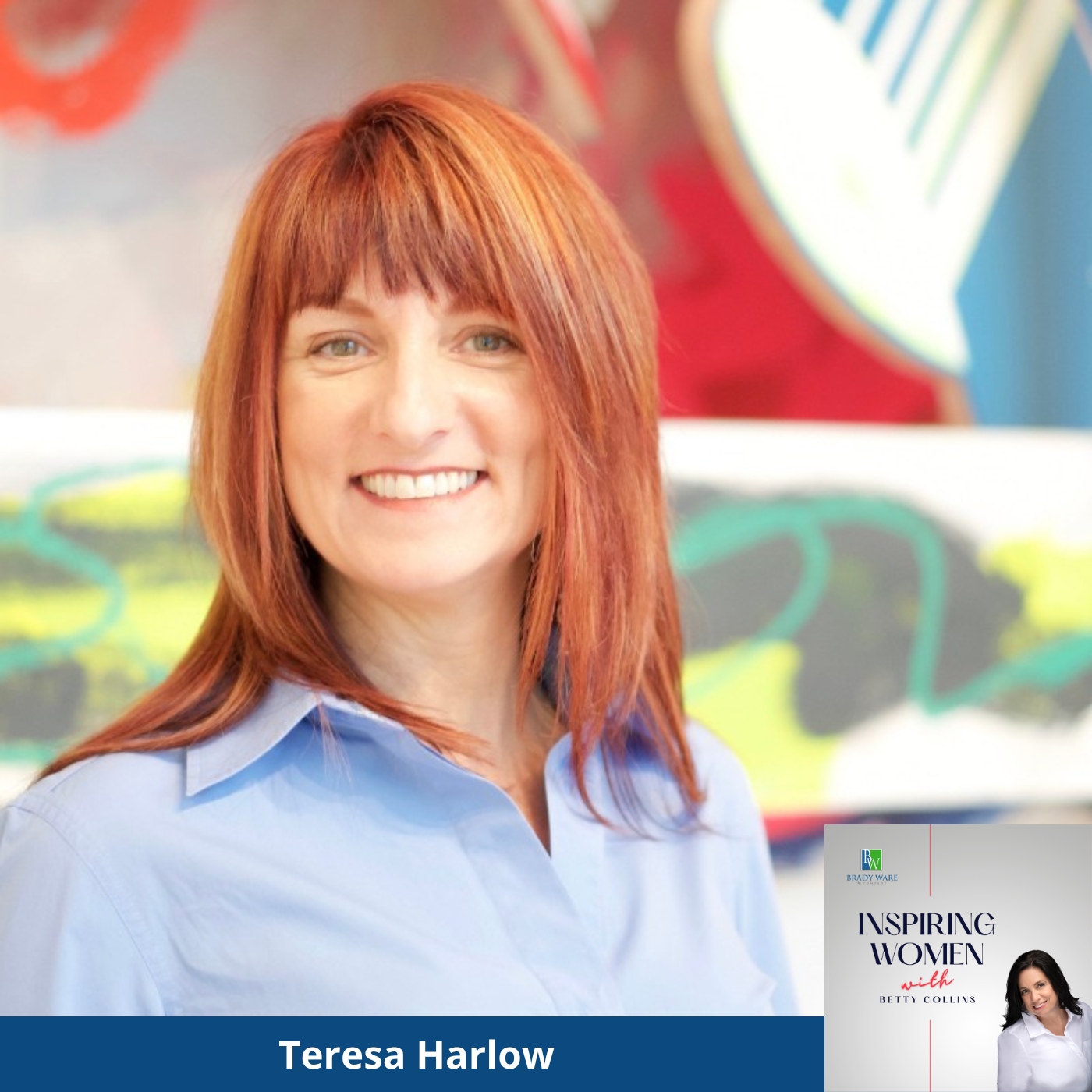
Tagged With: Betty Collins, collaboration, communication, Inspiring Women with Betty Collins, Teresa Barlow

Courage is Not Impossible: Making Fearless Moves

April 11, 2023 by John Ray

Courage-is-Not-Impossible-Making-Fearless-Moves
Inspiring Women PodCast with Betty Collins
Courage is Not Impossible: Making Fearless Moves
Loading
00:00 /
RSS Feed
Share
Link
Embed

Download file

Courage-is-Not-Impossible-Making-Fearless-Moves

Courage is Not Impossible: Making Fearless Moves (Inspiring Women, Episode 55)

In this episode of Inspiring Women, host Betty Collins discusses the importance of courage in unsettling times, with a particular focus on being courageous in everyday life. She provides examples of how courage can be defined and how it differs from confidence. Betty suggests that being courageous involves taking action in the face of fear, and offers tips on how to choose and tackle a courage challenge. Collins also introduces the four types of courage, namely blind courage, crisis courage, role courage, and core courage. She recommends using the “Snap” method to develop courage, which involves stopping, noticing triggers, acting, praising oneself, and processing the outcome.

The host of Inspiring Women is Betty Collins, and the show is presented by Brady Ware & Company.

Betty’s Show Notes

As we continue to face unprecedented challenges in our lives, it’s more important than ever to stand strong and stay courageous. That’s why this year, my podcast is focusing on courage. We’ll be exploring the questions and conversations needed to take positive steps forward for a better life, through my thoughts and my guests.

I will be talking to inspiring guests about how to identify and take on personal courage challenges and develop courage like a muscle. With inspiring quotes from Cindy Solomon’s books, “The Courage Challenge Workbook” and “Courage Goes to Work”, and the Snap Out Of It method from the movie Moonstruck, join me on a mission to help you unleash your courage and be ready and willing to do what needs to be done.

Hosted by Betty Collins, CPA, and Director at Brady Ware and Company. Betty also serves as the Committee Chair for Empowering Women, and Director of the Brady Ware Women Initiative. Each episode is presented by Brady Ware and Company, committed to empowering women to go their distance in the workplace and at home.

For more information, go to the Insights page at Brady Ware and Company.

Remember to follow this podcast on Apple Podcasts and Google Podcasts.  And forward our podcast along to other Inspiring Women in your life.

TRANSCRIPT

[0:00:00] Betty Collins: So I’m betty Collins, and I’m here with you today. And it’s an exciting day because this is year five of our podcast. I can’t believe that we have been doing this this long, but we are. And this year we are going to do something. Really, our theme is going to be centered around courage. And my guests and my interviews and what I’m writing will be about courage and being courageous. Those are two different things. Today’s, a moment. I believe that we need courage as well as we need people, especially women, to be very courageous. We live in times that are a little unsettling. Don’t worry, we’re not going to talk about pandemics and all the things that are terrible. My mom will tell you her generation, she’ll be 86 in March. They showed a lot of courage. They had unsettling times. They were courageous.

[0:00:51] Betty Collins: We could learn from that generation for sure. But what is unsettling to you may not be unsettling to me. It’s different. And courage is not always about the big stuff, right? So today’s podcast, this is about you. And where do you need to find courage and be courageous? This is an area that’s very hard for me. I’ll be very honest with you. Let’s not confuse courage with confidence. But I confuse I confuse courage with confrontation. I see it being hard. I see it as big. And it’s only where you’re climbing up a hill on a very hot day. I see it as something I have to muster up, and I see it as has to be emotional and a little sexy, right? It may be those things, but at in the day, I have to step back and I’ve been able to see it totally different.

[0:01:48] Betty Collins: I need courage and I need to be courageous in the every day. I’m just an ordinary person doing ordinary things, trying to be extraordinary, I guess. And I do have some big things I’m looking at, but I think it through first, and then I’ll execute those things. So courage can be defined as a lot of things in the strength of what it’s strength in the face of what to you, for me, it’s strength in the face as exhaustion. As a business owner, I mean, my clients are exhausted as well as business owners, my team is exhausted. So strength in the face of exhaustion, strength in the face of my health. Because 60s is coming very quickly. It’s daily. It’s never ending. What I did yesterday for my health is only for yesterday. And then transitioning out of my career, which, by the way, is going to be a while, and doing some of those wants, that’s pretty scary stuff. It’s going to take some courage, and it’s going to be taking some being courageous. Courageous can be defined as the ability to do something that you fear. It’s a mental or moral strength to do something. You fill in that blank.

[0:03:01] Betty Collins: It’s about soaring. Okay? It’s acting on one’s belief. Sometimes you just do it and you get it done. You don’t have to think about it. Having courage or being courageous is about being fearless or maybe fearing less. You need to think about that a little bit. And of course, being courageous, it undertakes whatever that is for you, boldly and it’s not lessened by difficulty. So those are some things I think of when I think of having courage. But being courageous is taking that courage, that badge, right, and being ready and willing to do. You fill in the blank. It’s doing something. And I didn’t say not without fear, but in spite of fear. So what holds you back? What holds you back from courage or being courageous?

[0:03:56] Betty Collins: For me, it’s plain and simple. It’s fear, like most of us, and I’m learning to confront it head on or I’m just going to do it afraid. But not having courage or not being courageous is not an option that we should be in today’s unsettling times or in today where you are going along in the path of your journey, whether it’s in your career or in your families. Also, another something that holds me back, quite honestly, is exhaust. It’s that overwhelming lifestyle that I’ve created, by the way, and built. Where have you, though, been complacent and you just played it safe? I did that in all aspects of my life, all my life. And honestly, until I was 38 and kind of had a reset and a meltdown, I was very a safe player. I was very much complacent. And I look back on those times and it seemed like it was easier and that it was okay. But did I really accomplish maybe the things I should have or wanted to? What are the barriers for you in not taking on courage, not taking on a challenge? Maybe it’s other people’s opinions, maybe it’s complacency, right, that I just talked about failure, your past, maybe emotions, they’re just the bad ones that get the best of you. But it’s time to push through those barriers and take on a courage challenge. When you have the will to push through a courage challenge all the way to the end, you did it.

[0:05:29] Betty Collins: You’ll feel fantastic on the other side. So my company, Bradywear, has a women’s conference each June. In fact, this year is year ten. It’s June 16 in Columbus, Ohio. And last year we had an amazing speaker, cindy solomon. She was the keynote for lunch. And wow. In fact, I’ll say that backwards. Wow. She nailed it and had to create a culture of courage. And that’s what she talked about for her. She wrote a very, very simple book. And it looks like this. It has yellow tabs and it’s highlighted. But it is the courage challenge workbook.

[0:06:06] Betty Collins: And it has been so impactful to me personally and professionally that I wanted to share it with you. So when I’m speaking a lot of today from here on out. It’s from the heart and mind of betty Collins but it’s really from a very courageous woman. Her idea is cindy solomon. Check out her book on Amazon. I would tell you you need to read it, you need to download it and you need to figure out how to incorporate a book club or lunch or something and learn with your team. It really is kind of very easy and hard all at the same time. It’s simple but it’s impactful. So think about your team in business, your social circles or your family or maybe your community and find the courage to be part of the everyday. You’ll see amazing changes and it’ll be for the good in today’s world. As I’ve talked about, we need courage and people, certainly women, not just the courage, but you have to be courageous, which is action. So the first step is you got to choose what’s the courage challenge I’m going to take and you need to understand the why behind it. cindy solomon challenges you to think about courage. I’ve kind of talked about definitions and I’ve kind of talked about the things that are out there. But here’s what you need to say.

[0:07:16] Betty Collins: It’s personal, it’s personal. It isn’t what everybody else is doing, it’s what you’re doing. Courage is not what you think. What was interesting at our conference is she had people stand up that thought about something and really she said only 50% of you are standing up that are supposed to be standing up right now. So sometimes courage is not what you think. Courage is not a superpower where we are wearing a big chest with a star and superman. It’s not that we think of courage as that’s the only thing that’s out there. But courage can be learned. So that’s the good news for you today. And here’s some tips when you’re picking out your challenge, because picking out the challenge is the hardest part. What am I going to do with courage and being courageous but tips, you got to be realistic and constructive. It’s got to be energizing but it’s also going to be a little uncomfortable probably and you have to be very clear, very specific. So here’s an example of a challenge. I wish I had the courage to ask for a pay raise. Okay, first you got to also go why do I want the pay raise?

[0:08:24] Betty Collins: Do I need the money or recognition? We all need the money. There is never enough. We’ll all take it, right? But really it could be more about recognition than it is about the money. So why do you want to have that? So when you’re making up your challenges or you’re thinking through that challenge where you need courage, you got to get to the heart of the why with it. That’s part of it. Here’s another example of a challenge that I’m trying to work through and get specific on and doing the things that she says, I wish my team would do what I want and get on board. Is that a very good way to say it? Probably not. I want the courage to inspire my team so that they see my vision. Why do I want that? Because right now, business owners are exhausted. They’re tired.

[0:09:12] Betty Collins: And this is one part of our country that needs to work, and I don’t want to see it slip away. There’s passion behind that. But I need the courage to do some different things. I need to be courageous with those business owners so that they will see to hang in there, they will see that it’s a journey and they’re going to make it. So that’s tough stuff. And so it isn’t the everyday accounting, it isn’t the everyday stuff. I need some courage and I need to be courageous and ready and willing to move it along. There are four types of courage that I think you need to be aware of, and then you know how to use them. Because there’s all kinds of courage. There’s blind that leap of faith. You go for it. If you are saying all the time, hey, that sounds like a lot of fun, it’s probably a blind type of courage. It’s that leap and it’s okay. Leap of faith is not what you do all the time. That’s why you need to know blind courage is just the impulse.

[0:10:12] Betty Collins: Maybe, hey, can’t hurt to do it. The other kind of courage, number two, is crisis. It’s completely instinctible. It’s life and death. It’s a pandemic. It’s PPP funds, it’s idle funds. It’s ERTC funds. We got to get this. And it’s not meant forever, by the way. It’s just for the moment because you’ll be exhausted if you live in crisis. Courage, it’s for what it says. It’s for a crisis. Here’s the one that has stuck with me, that has challenged me the most, and that is role courage. And it reads like this in her book. I love this line.

[0:10:51] Betty Collins: The confidence and fearlessness you experience when you fully understand the part you play in a particular situation. And that implied power and the responsibility that comes with it. And when I think about that, I think about I’m an owner in a company with 150 people counting on me to lead well. I’m a cpa advisor to over 300 people that need me to know that I’m confident and I’m fearless, and I play a role in their success. That’s called role courage. That’s what has spoken to me the most. And then there’s the core. This is good for cpas because it’s a step. You have a very clear vision of where you want to go. You’ve mapped it out, and you are so confident in that vision that you’re open to everyone around you jumping in with you, contributing, criticizing, accepting, praising, so that that vision becomes reality. It’s a core. It’s a long term type of courage. It’s not the blind faith. So that’s why it’s really important to know there’s different types of courage and there’s different types of when you use them and when you utilize them. So it’s time to tackle your courage challenge.

[0:12:10] Betty Collins: It starts and ends with only you. As I said before, it’s personal, right? So step back and take some time to figure out your challenge. That’s the hardest part of the step for me, the blind leap of faith in the crisis right now, that’s not applicable today. I’m not in a crisis. I don’t need to just jump. I don’t need to just get out there and go, I don’t need to go have fun. Right? For me, right now, it’s the role and it’s the core that I’m dealing with. The role is inspiring these exhausted business owners to stay the course with my team and what do I play in that and what’s my responsibility? And the core is about my transition. That will happen over the next five years as I changed a little bit about my life, right? Because I’m 60 or I’m going to be, and I’ve got some new ideas and I’ve got some new passions, and I want them to become reality. So core courage is what I need to invest in. There’s a really, really great method that is in her book that I would challenge you to get a team together and read through.

[0:13:14] Betty Collins: And it’s called Snap. Snap. And it’s inspired by cher in moonstruck. If you remember, the slap of the face where she goes Snap out of it kind of came from that. But Snap is about stopping, stepping back. Notice what triggers the things that you need courage with. Act. Use the right type of courage in the right moment. Praise yourself, which I don’t have problems doing that for me. And then process it, look back and go, wow, we really did it. It’s a really cool method. It’s a cool framework. Again, these aren’t my ideas and I want to claim them, but they’re really impactful. And because this year is about courage for me, I’m going to stick in this book for a while. And the book has really great ways of phrasing things where it works, where it doesn’t.

[0:14:01] Betty Collins: It’s cool stuff, but I’m grateful for getting to know cindy solomon, and I’m grateful that I dived into her workbook and she’s challenged me to take the challenge of being courageous. Having courage, I think it can change you as well. I would highly recommend to her as a keynote speaker, by the way, we’re a facilitator in your organization. Buy the book now. It’s got some great quotes in it. I’m going to read them to you and I hope that they inspire you. I hope that there’s something you go, wow, that helps me today. Courage is like any other muscle. If you’re strengthened by use, in other words, practice by Ruth Gordon, have the courage to write down the dream for yourself. No one else. You. Success doesn’t come to you. You go to success. Life shrinks or expands in the proportion of one’s courage. That’s probably my favorite in the whole book.

[0:14:57] Betty Collins: I’m going to read that one again. Life shrinks and expands whichever you choose in proportion to one’s courage. Nothing in life is to be feared. It is only to be understood. Now is the time to understand more so that we can fear less. And things are only impossible till they’re not. So I challenge you today to take the courage challenge. I challenge you today to dive into courage and become courageous. Have been ready and willing to do what needs to be done in your world, in your business, in your family. I’m betty Collins. Be courageous today. You’ve got it.

Tagged With: Betty Collins, confidence, Courage, Inspiring Women, Inspiring Women with Betty Collins

Work/Life Balance, with Dianne Grote Adams, Safex

September 19, 2022 by John Ray

Safex Dianne Grote Adams
Inspiring Women PodCast with Betty Collins
Work/Life Balance, with Dianne Grote Adams, Safex
Loading
00:00 /
RSS Feed
Share
Link
Embed

Download file

Safex Dianne Grote Adams

Work/Life Balance, with Dianne Grote Adams, Safex (Inspiring Women, Episode 50)

As a working mother juggling family and a career, Dianne Grote Adams felt a compulsion to start her company, Safex, with a core value of giving employees the opportunity to realize a better work/life balance. In this interview with Inspiring Women host Betty Collins, Dianne discussed the development of Safex, what role the focus on work/life balance has had in attracting and retaining talent, and much more.

The host of Inspiring Women is Betty Collins and the show is presented by Brady Ware & Company.

Betty’s Show Notes

Balancing your professional and personal life can be challenging, but it’s essential.

Often, work takes precedence over everything else in our lives. Our desire to succeed professionally can push us to set aside our own well-being.

Creating a harmonious work-life balance or work-life integration is critical, though, to improve not only our physical, emotional, and mental well-being, but it’s also important for our career.

My guest is Dianne Grote Adams. She is president of Safex, a health and safety consulting business, who started her company in 1992. As a working mom with a young family, she wanted to create a company that would respect the abilities of people in a technical career while also offering them some flexibility. From its beginning, Safex has offered flexible scheduling and benefits—vacation, insurance, and paid holidays—for anyone who works more than 25 hours.

Did you find that you attracted the right team around you because of that philosophy?

A lot of people, I think, have this myth that part-time workers aren’t committed.  And they say, well, they’re not really committed to their careers. And I found the opposite. They have time to do personal things. And guess what? They don’t make doctor’s appointments during work hours. They don’t make personal calls during work hours because they have other days to take care of that. So I find actually they are probably more committed because they knew they have a special opportunity that others might not have.

But there are people who maybe can’t handle flex time and flexibility. They need more structure. Do you find that sometimes that’s a challenge?

I think there are certain people who maybe need more guidance or more coaching to help them learn how to manage flex time. Many of us didn’t grow up with that as an option, right? Can everyone be successful? I don’t know. But you’ve got to be able to manage responsibility and accountability.

What would you tell employers who are starting businesses to get into this mindset today? How do you get started?

It has been a focus on what does that person. What is that person supposed to contribute, what are they supposed to do? And if you can put a good definition around that and they meet that, then why should you care what the exact hour is or whether they rode their bike for an hour at lunch or they left early to catch a concert?

So in your journey, what comes easy for you in the work-life balance?

For me, it’s really easy to tell someone else to go take the time off. I struggle still with that work ethic that I grew up with, that I need to be first in, last out, and yes, I need to on Sunday night to prepare for the upcoming week. I just don’t give myself that same grace.

Hosted by Betty Collins, CPA, and Director at Brady Ware and Company. Betty also serves as the Committee Chair for Empowering Women, and Director of the Brady Ware Women Initiative. Each episode is presented by Brady Ware and Company, committed to empowering women to go their distance in the workplace and at home.

For more information, go to the Resources page at Brady Ware and Company.

Remember to follow this podcast on Apple Podcasts and Google Podcasts.  And forward our podcast along to other Inspiring Women in your life.

TRANSCRIPT

[00:00:00] Betty Collins
I’m Betty Collins. And this is inspiring women. And today we’re going to go through a topic that all of us think about, all of us wish it were just easy. All of us some of us think it’s a it’s a myth. Some of us think it’s a lifetime journey of perfecting. But it really comes down to work life balance and knowing how to make that happen. And sometimes I do really well at it. Other times I’m like, okay, I’ve got to reset again and figure this out. So I think it’s a challenge. It’s all part of your journey. And then one day you figure out it’s probably is a little bit of a myth, but it’s something you can do if you’re intentional about it. It’s like everything intentionality makes it happen. So today I have a very special guest, Dianne Grody Adams, and she founded a company built this company for for quite a while and has and everything about it had in mind a work life balance. So we are just fortunate to have you today, Dianne. We are so glad that you are taking some time with us and the audience. And I know they’re going to be inspired by what you have to say. So the first thing I do want to do is just tell us a little bit about take a couple of minutes to tell us about Dianne Grote Adams.

[00:01:14] Dianne Grote Adams
Wow. Gosh, what is there to tell? So long time Columbus resident, born basically here and grew up here and started the company actually worth 30 years old this year. Very good. So but you’re right, work life balance was something that I aspired to when I was working and thus led me to start Safex. I started working back many years ago and obviously in the traditional workforce didn’t always have as much flexibility as I would have liked to have.

[00:01:49] Betty Collins
Correct. Today we’ve learned all about flexibility because you have a crisis come in and then everyone all of a sudden just went to flexibility. Right. But in 30 years ago, that wasn’t the case. So when you say you have something in mind for that, that you wanted to keep that at your forefront. Tell me just some specifics of what that would be back when you’re thinking through this has to happen, you know.

[00:02:14] Dianne Grote Adams
So I think the big part for me, the motivator for me was I had a professional career, I started a family and I couldn’t balance traveling full time and raising two sons and being a good wife and a good employee. Right. And I didn’t feel like I should have to sacrifice any of those things. So I looked for options and I found a part time job in my field, but it was not very fulfilling. The pay was terrible. There were no perks you got, as many of us probably have done. Hopefully it’s better now. But at that time, right. So as I started to start the business, I thought, well, why does it have to be that way? Why couldn’t I work less than 40 hours a week and still have benefits? Or why couldn’t other mothers or fathers that wanted to be caregivers? Or maybe they just were at a different point in their career and they didn’t want to work 40 or 50 hours a week. Right. Why couldn’t we model a company like that? So that was the intent.

[00:03:14] Betty Collins
Okay. Well, in those beginning stages was of of that and that was part of your culture, probably that was just part of the quote, the mission statement. That was part of how you thought. Did you find that you attracted the right team around you because of that?

[00:03:32] Dianne Grote Adams
That’s a great question, because a lot of people, I think, have this myth that part time workers aren’t committed.

[00:03:36] Betty Collins
Yeah.

And part time B, let’s define as less than 40 hours. And they say, well, they’re not really committed to their careers. And I found the opposite. Those of us who work there knew that we had something special, that we could come to work for three days a week, and then we could have time to do the personal things. And guess what? I didn’t make doctor’s appointments during my work hours. I didn’t make personal calls during my work hours because I had those other days to take care of that. So I found actually they were probably more committed because they knew they had a special opportunity that others might not have.

[00:04:13] Betty Collins
Right. And 30 years ago, this conversation would have been the extreme or it would have been on the out an outlier. It would have been like, okay, good. I’m good luck with that. Right? So you probably had a lot of critics at that point, but at the same time, you felt like you developed a great team that probably stayed with you a long time because of it. One of the things that I that I tell women is your seasons are different. So my twenties look nothing like my thirties. You know, my fifties weren’t my forties. I don’t know what 60 is, but it’s coming there. I’m going to find out pretty soon. Okay. And so sometimes when you look at work life balance, it’s just an easier time to make it happen versus other times. So as an employer and as that person that was building your team. That as far as the work life balance where you flexible as they tendered in came in and out of those seasons. So whether men or women it doesn’t matter.

[00:05:08] Dianne Grote Adams
Certainly and you’re right on and that we all have a different desire or need depending on where we are in our work journey. And sometimes it’s a young family that wants more flexibility. We’ve had other extreme where someone is in their sixties, wants to keep working, but they don’t want to be there five days a week. And so they would like the alternative as well. So I agree with you. It’s not limited to a certain demographic or a certain age group.

[00:05:37] Betty Collins
Right. And in today’s markets, completely different issues of the day. But I mean, people are really back to I want more flexibility. I got used to flexibility and now the things that in their seasons are become extremely important to them, which is not a bad thing. Right. So have you made we had this thing called COVID. You know, we had this thing called a pandemic. Have you made changes since COVID or, you know, as yet another generation is joining the workforce? How are you dealing in all of that? So 38 years ago, you were on the cutting edge. Now it’s like och post-COVID, millennials, all of that.

[00:06:14] Dianne Grote Adams
So actually what we’ve been saying to people is, you know, we’ve been doing this for 30 years. This for us isn’t something really new. But we did recently document our work, flex time, I guess for help for the younger people coming in. We actually got feedback from them is I like the thought here, but I think I need a better understanding and some. Boxes around what you want me to do and not do. Which I was kind of surprised because I was kind of like, Well, you got to take care of your customers and you’ve got to meet your client needs and your internal client needs. And other than that, if you need to run with the doctor under the doctor, but they wanted a little more structure around it. So we actually put it on paper and said, okay, here are your options and laid it out for them.

[00:07:03] Betty Collins
Right. So do you find that this model doesn’t, though, work for everyone? You know, because it’s like, oh, man, I get all this. But there are people who maybe can’t handle flex time and flexibility. They need more structure. Do you find that sometimes that’s a challenge?

[00:07:21] Dianne Grote Adams
I think there are certain people who maybe need more guidance or more coaching to help them learn how to manage flex time. Many of us didn’t grow up with that as an option, right? You went to school and you were expected to be there certain hours and you had homework and it was due a certain time in your first jobs if you’ve been working a while. We had very structured schedules, right? So I think some people need guidance on how do they manage that right now. Can everyone be successful? I don’t know. But you’ve got to be able to manage responsibility and accountability.

[00:07:59] Betty Collins
Right. And I think and I’m sure that you do this for Betty Collins. I do better when I’m in an office. I don’t know if it’s because I’ve always been in an office, but I know when I’m home, I’m like, I’ll just get one more thing done here and I’ll change one more laundry load and maybe I can just shop off to Kroger and then I’ll come back. So for me to go in and out like that, it’s not it’s not a good mindset. I need to stay focused and in there. But when I was raising my kids and that season of Sports and Youth Group and you name it, I could do it then. I can’t do it now. Like I could leave and go. I got to go to the game and then I’ll come back and fit and I was able to. So some of it has to do with the season, but for me, I know if I had I would have to still have a lot of structure around it. So but that’s just me. So when we’re balancing things, what do you find that people like to balance the most? I mean, for me, I look at my life and go, okay, this is the order. I have a spiritual life. I have a mental health life, a physical life. And then there’s this big category called The Routine of Life. And as long as I balance this first, I can handle routine fairly well. So when you’re finding people want that balance, is it that cut and dry? Because I’m a CPA and I’ve got four sections, you know, but when they talk about balance, what do you find your employees want to balance besides doctor appointments or or maybe that’s a lot of what it is.

I do think a lot of it is just life. Yeah. There are things you have to do, right? It’s part of that. Adulting. Yes. And it takes time. Yeah. And if all the people you need to make a phone call and appointments for work 8 to 5 and you work 8 to 5, that’s hard. So that is part of it. I think others I think it’s all over board depending on what their interests are. Right. I have some people who want to go use the gym for lunch or I have some people who want to go the grocery store before they pick a child up at childcare or somebody wants a long weekend to go hiking. So I think it’s really all over the board what those other things are, depending on what their personal interests are.

[00:10:01] Betty Collins
Yeah. So for you, you know, this is part of your culture. It’s been part of the why and the how, because it was personal to you 30 years ago that I need this in my life for people who still don’t grasp this, like maybe my older partners, they just don’t grasp it. What would you tell employers today or women who are starting businesses or anyone who’s starting a business, you know, to get this mindset, especially if it’s hard for them, like how do you really just get in there and go because this works? How do you get started? You know, how do you change that?

[00:10:40] Dianne Grote Adams
For us? I think it has been a focus on what does that person what is that person supposed to contribute, what do they is supposed to do? Right. And if you can put a good definition around that and they meet that, then why should you care what the exact hour is or whether they rode their bike for an hour at lunch or they left early to catch a concert? I mean, why should you care as long as you have our clearly communicating what the expectations are as consultants? I mean, it is a little easier. You have a certain amount of revenue you’re expected to generate and you have certain deadlines to meet with your clients. If you’re not meeting those, then it’s an obvious discussion that we have a problem. But if you are meeting those, should I really care?

[00:11:25] Betty Collins
Right. Right. And I mean so. So your company is very intentional about setting expectations. We are. Okay. So tell us a little bit about your company. So people kind of know that they might be going well, this is easy for her because. You know, what is it that Safex does?

[00:11:43] Dianne Grote Adams
So let me say first, I’m not going to say it’s easy. Well, and I grew up, as many of us did, with this work ethic that you’re in the office at seven, you’re the last to leave. And that’s what life is all about and that’s how you prove yourself. So that was the mindset I started with, and that is how I spent the first ten years of my career. So this was a mind shift for me, no question. And there were days I still have a little heartburn when I’m not sure that everybody has the client’s best interests at heart. But then you have to have a conversation, right? So that being said, because we are occupational safety and health partners with our customers, they often have a project and it has a known deadline. We have a budget. There are known hours to complete that project and each person knows how many hours of revenue they need to generate in a year. So you break that out month by month and then it’s easy, relatively easy to have a conversation about this is what you need to accomplish. And so if you have the open conversation and you share all that information and maybe that’s what helps us, we’re very transparent in our books, the revenue we generate, the hours that everybody is billing, the clients that are happy with us, the disappointments. And so that open communication perhaps reinforces the message of how much we trust you, but also the huge responsibility you have to maintain that trust.

[00:13:13] Betty Collins
So people really trying to to hear you today and go, I mean, I would love to get there. It all started with a Y and it was personal. But it also is your intentional. You’ve set expectations, communication being very open. So as I say in here, your flexibility cannot cause chaos to the overall client in your peer. Correct. And that’s just an expectation that has to be there from the beginning. So who have you seen do did you have a mentor or somebody that you saw in life that did this well or no? I was the mentor and I helped other people do this. It could be either way.

[00:13:56] Dianne Grote Adams
30 years ago, there weren’t a lot of people doing this right. I more went to This is not what we want to do. So how do we do this differently? Yeah, and it wasn’t just my desire for my life. My husband was working in consulting at the same time and he would often be out of town for ten straight days, back home for four gonn again ten. And he didn’t have a choice about that schedule. He was told, this is where you’re going. Yeah. And they expected him to figure out child care or whatever or they assumed he didn’t have to worry about it, that I would worry about it, whatever the case might have been 30 years ago. But then I also saw he came home. He was exhausted. Right. He didn’t have quality time at home. And then he still had to do his timecard and his marketing responsibilities and things. So those four days off really weren’t a four days off. Yeah. So I saw that as, okay, these are other things we can’t do, can’t dictate schedules. We can’t dictate. You have to go out of town this week. You’ve got to have a conversation with people on where they are in their life and who can we count on to travel this month or who can we travel on to next month? Or maybe you can travel next week, but the following weeks, not really good because your spouse is.

[00:15:09] Betty Collins
Gone, right?

[00:15:10] Dianne Grote Adams
And so those kind of conversations is what helped allow us to create that.

[00:15:15] Betty Collins
To create that. Yeah. Again, the flexibility can’t cause chaos, but let’s see what we can do to make it all work.

And there are days it doesn’t work. Yeah, we’re there more than we want to be or.

[00:15:27] Betty Collins
Right. Because if you.

[00:15:28] Dianne Grote Adams
Say we’re out of balance and we need to pull back and have a conversation about it, it happens.

[00:15:32] Betty Collins
Yeah. So. So for you, do you I mean I mean, you’ve had this incredible journey of a great company. You’re pretty known for it. Do you find that even though you’ve done this this long and I don’t like to make my podcast about about pandemics, but it was a pretty major thing. Was there any adjustment, though, even to that? Because now we can’t be maybe as flexible because clients we can’t be there when you know what I mean. There was definitely I know for us, for instance, auditors couldn’t just go on it, you know, and then all of our clients are doing these whole audits electronically, which they really didn’t want to do. And you’re doing safety. I mean, so was it Hey, we’ve been doing this, so we’re good to go. And the pandemic, or did you still find that challenging with with doing like everyone did?

[00:16:23] Dianne Grote Adams
There are certain things that we were probably more prepared for than others. Yeah, but no question, there are certain tasks that had never been done remotely that we either had to figure out, can this even be done remotely? Or is that something that’s going to have to wait? Yeah. So no, there’s still some adjustments that absolutely had to be made.

[00:16:45] Betty Collins
So this is a terrible question, but I’ll ask it anyway so you can say no. Edit this, take it out. So the question is so in your journey, what comes easy for you with work life and balance? But what comes hard? I mean, like, what’s the good and what’s the bad? And again, you don’t have to answer, but we’re waiting.

[00:17:03] Dianne Grote Adams
Oh, no, it’s okay. Yeah, there’s nothing to hide. Yeah, I struggle still with that work ethic that I grew up with, that I need to be first in, last out, and yes, I need to on Sunday night prepare for the upcoming week. I am so wired that way that I really struggle to not think about work on the weekend. Now that might be in part business owner and not just employee, a combination of the two. So that for me is still hard. Yeah, what is easy for me. A young man came to me yesterday and he said I got my work all caught up and I’m supposed to be here till the end of the day. But we have our new puppy and it has its first vet appointment. And I’m not a dog lover, so I didn’t really get it, but I’m like, okay, he’s all gushy about it, you know? And he says, I really want to go with my wife to see to the puppy’s first vet appointment. I said, So go. He goes, Really? I’m like, Yeah. Did you not read our flexible work policy? You can do that. You’ll work, you’ve met your needs. Go. So for me, it’s really easy to tell someone else to go do that. I just don’t give myself that same grace probably.

[00:18:18] Betty Collins
Well, it’s amazing to me and how I would answer is it’s the it’s the constant engagement that we have set ourselves up to be. And that first one is just the email, shut it down, quit having it on your watch, your phone everywhere round. That’s one that people you don’t really have your flexibility in my mind on the weekends if you’re getting emails from the person who wants to work all weekend and yet how you not you know and that one is the hardest for me and I’ve even learned I have ideas or emails that I draft and wait until Monday morning to send them all out. Good for you. You know, because you’re you may be wired to do this, but you’re your people maybe don’t want to do this or they don’t want to keep getting this stuff that engages them back in. And so as employers, we need to set a better example of that to me. But how did we ever do this? Because email, it’s hundreds a day. It can be where it wasn’t like I was on the phone all day in the eighties. But, you know, that’s one to me that’s a challenge for me and work life balance. Don’t answer email, shut it down. But then don’t send emails and think people will just come in on Monday and answer them. You put them in an anxious spot, right?

[00:19:39] Dianne Grote Adams
I agree. I resisted email on my phone long after. People are like, What do you mean you don’t check your email on your phone? I’m like, Because the minute I look at something, then my brain engages and I can’t disengage. But I don’t have a smartphone or a smartwatch because I don’t want email.

[00:20:00] Betty Collins
On my.

[00:20:01] Dianne Grote Adams
Wrist because I just will go nuts.

[00:20:04] Betty Collins
And I did turn off notifications because that does help at least. So then it is. If I don’t see a bunch of notifications on those two things, I’m not going to dig in to.

[00:20:14] Dianne Grote Adams
I have all my notifications off 100%.

Yeah.

[00:20:17] Dianne Grote Adams
Even in the office. Because if I’m focusing on something, I don’t need those little reminders that somebody has something to tell me. Right. Because sometimes what I’m. Doing is more important than whatever that person had to tell me at that moment. And if I’m engaging with a client, I need to be focused on what that client’s needs are. So I don’t use those at all. But you have a valid point.

[00:20:38] Betty Collins
It’s tough. It’s tough. So use the employer. If you’re really say you have work life balance and the weekend is yours, then don’t make it theirs. Don’t make it yours. I mean, you know, so the other thing I would ask, work life balance, we always think of it’s well, that’s the mom.

[00:20:53] Dianne Grote Adams
That’s for women, right?

[00:20:55] Betty Collins
It’s not for the dad or whatever. Maybe the dad is more of the caretaker or those type of things. How do your if you have a balance of men and women do men I mean, does it seem like it’s always geared to women and that’s what they think? Or are men going, no, I get this.

[00:21:14] Dianne Grote Adams
30 years ago when we started, we had some men who felt put out would probably be a good way to put it, that all of our women didn’t work full time and they worked like Monday through Friday every day, and that they had to take the really hard road. And we talked about it and got through it. But over time, no, it’s been men and women who have taken advantage of the part time at side effects. My husband joined us after a few years and he worked less than full time for a number of years because the our sons were in ball and it was perfect for him. Right. He got to leave at 230. When they got out of school, he went and helped coach. I mean, it was a great family environment and I would come later then and we’d have dinner together as a family. So for us, that worked great. I had he and another person came both men and at the end of their careers worked less than full time and we’re still able to mentor our young people, do productive work, feel good about themselves, but didn’t have to be there Monday through Friday. So I think it’s not just a woman’s issue, but it does take very strong men, I think, to be able to buck the tradition and be that less than full time person. And I think it’s more acceptable now than certainly 30 years ago.

[00:22:32] Betty Collins
Right.

[00:22:32] Dianne Grote Adams
And I’ll brag a little bit, my son is the primary caregiver of his two sons. And when right before he got married, he said, you know, Mom, what I would really like to do is be the stay at home dad. And I said, well, then talk to your wife to be about that. It may not happen for whatever reason, but that’s a conversation you two need to have. She’s an attorney. Her hours are not as flexible, and that’s a choice they’ve made. But he’s thrilled and he’s good at it. And so I think just giving all of our family members the option for whatever works for their family is what is that real work life balance.

[00:23:07] Betty Collins
What I really like is that your employees, your environment, your clients, whoever they solve from the top that it’s for, it’s for both. It’s for parents, not moms or it’s not the single dad who has to was you guys showed that example that this is how we want our work in life and balance to be. So then it gives people kind of the they see it and then they go, oh well maybe maybe I can do this right. So for women business owners who tend to go, everything is on me because it’s hard, right? And you’re and you take it all on. And one of the reasons I would say that women struggle in business more because men will start a business and it goes like this. Women are like this. You know, it’s the journey is a little bit longer. Doesn’t mean it’s wrong. It’s just they don’t and a lot of it is is because they think they have to do it all instead of you can have it all, you don’t have to do it all. So kind of our end today, I’d like to talk about how we inspire women to to think about that statement of you can have it all. You just don’t need to do it all. Can you kind of expand on that?

[00:24:27] Dianne Grote Adams
Sure. I think there’s two components to that, though. I’m not in business and this will upset some people. I’m not in business to see how much money I can make in a short period of time. I’m in business to provide a decent living for my family and for those that we work with. So my end game might be a little different than other business owners, so I didn’t need to go from 0 to 102 years. Right. So that being said, I might have a slightly different perspective, but it is hard, I think as a woman who was brought up, that you are the rock, right? I guess the core focus to be able to ask for help. And Betty knows I am a caregiver now and that is the hardest thing for me to do is to ask for help. And so I have been honest with our team that I can’t do what I use. To do, and it’s killing me in my soul because it’s still something I love. But I need other things for people to either pick up or if I ask you for help, it’s because I really need help. I’m not trying to quote unquote dump on you. Right. And I think, Ben, it’s back to that, just being honest and communicating. I don’t think anybody judges if you’re honest, I think we all think we’re being judged. Right. But if you have the conversation about it, I don’t really think people then are judging. It’s when you try to keep it a secret and they don’t understand that misconceptions maybe.

You’re guarding it close because oh my we can’t show that or but women business owners have a tendency to and not even the end game the end game they don’t see the full potential of who and what they could be because they’re wrapped up in in doing it all.
Because what you want to be and what you want to do might be completely different. At the end of the day. I mean, as a CPA, my goal is not to focus on your depreciation, and those things are all important. But the goal for me has always been if the marketplace is successful in this country, the world works, it just does. And when you get to be that employer you have, that means you have employees and you’re the provision, right? You’re the provision. And those are households and those households firm communities. And so how do I make sure that success happens and it’s not doing it all? Because, you know, there’s another balance and another world out there.

[00:26:57] Dianne Grote Adams
So one of our core values, we say, is equality. And that’s part of what we tell people when we first come is like, you have a different experience than me. You have a different skill set than me. None of us are better than the other. Without our collective skill set, we can’t be successful. Right. And so I think saying that does help a little bit and living that, not just saying it, but living that also helps you ask for help a little bit or say, you know what, your strength is really good in this area and I’m going to take 6 hours to do this because I am not good at this. I can do it, but I’m not good at it and being honest. And then that person picks it up, gets it done an hour, you’re like, Well, that was a much better use of time, right? And I’ll go do something that I’m better suited to do.

[00:27:43] Betty Collins
Yeah, well, today we’ve had Dianne Adams with Safex, and you have just been a delight. You have restored my. Maybe I don’t need to go through a big plan and reset. I just need to go know there is work life imbalance. It takes work, but it’s worth it. So we appreciate you coming with us today. We appreciate you talking to our audience and being part of this.

[00:28:06] Dianne Grote Adams
It’s my pleasure. I love to share our story and to hear from other women.

[00:28:11] Betty Collins
It’s a great story.

[00:28:12] Speaker1
It’s a wonderful part of being in business. Right. All right.

[00:28:16] Speaker1
Thank you very much.

Automated transcription by Sonix www.sonix.ai

Tagged With: Betty Collins, Brady Ware & Company, Dianne Grote Adams, Inspiring Women with Betty Collins, safety consulting, safex, work-life balance

What Millennials Want in a Job, with Danielle Godby

August 15, 2022 by John Ray

Danielle-Godby-Inspiring-Women
Inspiring Women PodCast with Betty Collins
What Millennials Want in a Job, with Danielle Godby
Loading
00:00 /
RSS Feed
Share
Link
Embed

Download file

Danielle-Godby-Inspiring-Women

What Millennials Want in a Job, with Danielle Godby (Inspiring Women, Episode 49)

Danielle Godby is a millennial retirement planner who talks about how her generation is often unfairly portrayed. She shares her own journey from ballet dancer to fitness instructor to retirement planner, highlighting how she has always been drawn to helping others. Godby discussed with host Betty Collins how job-hopping is often seen as the best way to make more money and get more experience, but she wonders why more employers don’t try to keep their employees happy and engaged. She also emphasizes the importance of offering value before asking for anything in return.

The host of Inspiring Women is Betty Collins and the show is presented by Brady Ware & Company.

Betty’s Show Notes

The millennial generation has been subjected to a lot of criticism – they are perceived as selfish, entitled and demanding, not to mention addicted to technology.

Are these stereotypes true? Certainly not for everyone.

But there are certain tendencies and habits associated with the millennial generation that are more prevalent than in the other generations currently in the workforce. However, bashing any one group of people does more harm than it does it good.

My guest is Danielle Godby, a Retirement Planner at Golden Reserve.

Danielle talks about her generation’s focus on their job search. What’s a priority to them?

When I talk to my friends, it’s a lot about feeling fulfilled by the work that they do, being able to go home at night and know that they helped someone do something better or they can feel better about their contributions to their own community.

Does money come into play?

It’s not necessarily about how much money you can make, which, honestly, it’s quite surprising given all the student loan debt that is saddling my generation. But that’s really not the dialogue that I hear. It’s a lot more about feeling good about what they do and feeling appreciated in what they do.

Among your colleagues and your peers, do you find that they value other job attributes like learning and advancement more than they do income?

There are a few different things that I hear come up in conversation and they’re surprising to me. You would think income would be front and center of the conversation, given that we were taught our whole lives to prepare for college.  But what I hear is they want to make an impact. They want to feel good about what they do. They want to have the flexibility to work from home if they need it or to take mental health days to have a work-life balance.

What can business owners do to motivate them to stay?

I think it’s very basic. If you pull it back to the bare bones, it’s just building a relationship with someone that’s strong, and consistent. You want something that lasts. So you have to invest in that relationship.

Hosted by Betty Collins, CPA, and Director at Brady Ware and Company. Betty also serves as the Committee Chair for Empowering Women, and Director of the Brady Ware Women Initiative. Each episode is presented by Brady Ware and Company, committed to empowering women to go their distance in the workplace and at home.

For more information, go to the Resources page at Brady Ware and Company.

Remember to follow this podcast on Apple Podcasts and Google Podcasts.  And forward our podcast along to other Inspiring Women in your life.

TRANSCRIPT

[00:00:00] Betty Collins
So today we’re going to interview somebody from Golden Reserve and what we really, really like about this person first, she’s a millennial. She’s full of life, she’s energetic, and she’s just been starting her career. And we just really wanted to talk today about her generation. I am not a millennial. I don’t even know what really bracket I’m in. I just know I’m 58. Right. And so we want to talk about millennials. Everyone wants to kind of put them in a box sometimes, you know, so we want to get inside your brain a little bit. But since that what you are. But so first, before we get started to talk about a little bit, two or 3 minutes of just kind of about you, you know, and golden reserve and and just take some time to to introduce yourself to the audience.

[00:00:48] Danielle Godby
Yeah. Hi, I’m Danielle Godby. I’m a retirement planner with Golden Reserve and a millennial. So I’m grateful for this opportunity to talk about things in a light that that might not be. Millennials are killing the cinema industry. What industry are we killing next? You know, I don’t think that’s the impression that my fellow millennials have of ourselves. You know, there’s a lot of intergenerational I won’t call it bullying. It’s all in good fun, you know. But I feel, you know, boomers are very down on millennials and Gen Gen Z is also, you know, so I feel that it’s good to have a representation of us. That is true. So I grew up in Mt. Vernon, Ohio. Oh, okay. Yep. I went to Ohio University down in Athens and I studied exercise physiology. Okay, so that’s something near and dear to me so that I can learn how to improve my own health and to help people around me to improve their health. That’s always been top of mind for me.
Yeah. I love to help people. I, I did ballet for 14 years.

[00:01:51] Betty Collins
Oh, very nice. Wow. How talented. That’s. I mean, that’s that takes strength. That takes a lot of discipline.

[00:01:59] Danielle Godby
Discipline is the word I would use. Yeah, certainly. But I remember finding that, you know, that core of who you are that always follows you and you tell stories about where you started out and where you ended up and have always been teaching people. Yeah, I started in ballet. I was doing we were doing stretches and people nearby would be bent in a certain way. And then like, you know, if you point your toe this way or straighten your leg in this way or or pivot this way, it’s going to feel a lot better. And I’ve always been helping people in little ways like that. So, you know, I found a strange little journey. I don’t know very many people who graduated with their bachelor’s and then continued on in that field. And I had done that for a while. I did fitness for about ten years, managed boutique fitness studios like Row House. And what was the act, the Amanda Kaiser technique. I love kickboxing, so a handful of of different things that I’ve done in the past. But I don’t think that it’s it’s something that I have to do to limit myself to being good at one thing. Yeah. You know, so I.

[00:03:03] Betty Collins
Learn that now do three things well, not ten things average.

[00:03:06] Danielle Godby
Yeah. Absolutely. So.

[00:03:08] Betty Collins
Well, my daughter loves kickboxing, I mean and so for Christmas, I always have my kids give a gift. Their spouse gives them a gift that they don’t know is coming because everything else is done with links. And they give me these lists and they know everything that’s going to be open. So I said, Are you sure you want to buy her boxing gloves? He goes, I can handle it. I got it. Incredible. But yeah, but she loves how it’s a good venting for her. It’s a great plus. She really works out and it’s a good exercise.

[00:03:36] Danielle Godby
A phenomenal workout.

[00:03:37] Betty Collins
Well, let’s talk the one thing millennials and I don’t look as millennials as the enemy, by the way. But, you know, a lot of times you’re known for job hopping. I mean I mean, that is it’s kind of the environment. And in fact, it’s three times higher than than that of non millennials who do the same job. So, you know, I’m a business owner. You really probably are too in what you do. I need to make it easier for millennial prospects to to choose me because I’m a little bit older and choose me over my competition. But what exactly in your mind do many millennials look for in their job search? What’s that priority to them? What’s what are what’s going to attract them? Right.

[00:04:18] Danielle Godby
Well, we have to keep in mind the advice that we’ve been receiving since we were children, like people in your generation have been telling people in my generation to look for something that they love, right? Do something that you love. You’ll never work a day in your life. And then we all laughed collectively because it’s still work. Right? Right. But I think I hear a lot of buzzwords like impact or, you know, what does that really mean? And I think when I talk to my friends, it’s a lot about feeling fulfilled by the work that they do, being able to go home at night and know that they helped someone do something better or they can feel better about their contributions to their own community. And so it’s not it’s not necessarily about how much money you can make, which. Honestly, it’s quite surprising given all the student loan debt that is saddling my generation, but that’s really not the dialogue that I hear. It’s a lot more about feeling good about what they do and feeling appreciated in what they do.

[00:05:13] Betty Collins
Yeah. So when, when, when millennials look in job searching, I know my daughter is is looking to do some job search or to make a change. She. Is more concern first about truly their mission statement and the culture. And she wants to know what they’re doing in the community. Now, that’s coming from my daughter. We didn’t talk about money a whole lot. We didn’t talk about her career aspirations in five years. What do you want to do? She talked about those things first. Talk to me about your generation with those things being mission culture and what are they really do for the community? Is that a driver for you? Is that going to be an attractor to you for a place to work?

[00:06:02] Danielle Godby
I think workplace culture is definitely a priority for me. Yeah, you know, I’ve left I left places because I don’t feel happy or comfortable. I’ve turned down jobs that were six figures because I didn’t like the story they were painting of their workplace culture. Yeah. And it boiled down to, I think the question they asked me was, do you ever lose sleep at night over your work? And I said, No, I do not, because I leave it all on the table every day. And I know that. And I get to go home and I get to close my laptop and feel good about what I did that day. And I thought to myself, that’s not very it doesn’t prioritize my mental health. Yeah. Or my time off. And then what is the point of then having all that money if you have no time to use it or a family or friends to spend it on, you know. Yeah. And so what are they doing in the community? I did not interview Golden Reserve and ask them what sort of philanthropy they were involved in, but it is important to me to know that their mission is to offer people tools to fight back against the financial industry. And what I mean by that is like seniors don’t have as many resources as the rest of us, like we are very well prepared to plan for retirement. But once we get into retirement, the skills are very different. The view is different. And, and it makes me very happy to know that we are doing extra things for that group.

[00:07:25] Betty Collins
Yeah, yeah, that’s good. That’s good stuff. Well, of course, this is a we’ll put you in the box because all of you want ping pong tables and free beer. Right. You know, what about the ping pong tables and the free beer that you hear that other companies are doing? You know, you see that? Is this something that really millennials want? I mean, is that a preference when they’re picking a company that will that help them learn, grow and be better or be who they want to be, to have those that typical ping pong table work? And I can be in flip flops and we have beer at lunch and nobody cares. I mean, is that really a driver for you?

[00:08:05] Danielle Godby
Well, I can only speak for myself. I would I would say no, definitely not. Those things are very novel. I love that we have a fancy schmancy water machine in our office and I can have cucumber water when I want, but I can make cucumber water at home. Right. You know, I think for me, it’s just wanting the resources required to do my job really well. And I want a group of people around me who will assume the best in me and offer me. Accommodations if I need them or, you know. Yes, wearing flip flops. That’s great. I’m wearing flip flops right now. I love that. It makes me feel happy. I know if that’s a dealbreaker for my job, I wonder how serious I am about that job, you know?

[00:08:48] Betty Collins
Yes.

[00:08:49] Danielle Godby
Yes.

[00:08:49] Betty Collins
I like the way you say that. That’s good. Yeah. Now, when you first interviewed for your job, was it a you just knew that this is it. And I’m I’m going and I’m going to jump in and do this.

[00:09:01] Danielle Godby
Well, they had a very different approach on their job posting. So a lot of the job postings in any sales position have to do with commission only. Or what do we need from you? We need top closers, top performers, very disciplined people who know what they’re doing, like that’s the dialogue. As always, this is what I need from you. And if you can’t check these boxes, then move on, you know, take it or leave it. And that’s always what I read. But this one was very backwards. It was this is what we’re prepared to offer to you. This is our 6 to 12 months of training with a partner of the firm. You know, we’re seeking people that don’t have finance backgrounds. And I asked them about that. I said, you know, I have a decade of fitness experience on this resume. Does that give you pause? Yeah. And they said no, because you have you know, you have personality and you have the desire to learn. And we’ll teach you everything else that you need to know. Yeah. And so ping pong tables and free beer, that’s not really my style. But if I have someone who’s willing to look at me in my strengths and my shortcomings and say, Hey, let me meet you where you.

[00:10:02] Betty Collins
Are, yeah.

[00:10:03] Danielle Godby
And let me give you some training where you need it to watch you shine. Like that goes a long way, right?

[00:10:08] Betty Collins
So are millennials getting a bad rap when that’s what we think that they like and that they’re motivated by? I mean, you know what I mean? I mean, is that not a fair assessment? Because, sure. You know, your generation, is that really I mean, you’re speaking for you, but is that not a fair assessment to put everyone in that box?

[00:10:27] Danielle Godby
The best advice I’ve ever gotten is someone else’s opinion of me is none of my business. And so if I look at Gen Z and think they’re the tide pod people, yeah, that’s not maybe a fair representation of their generation. Right? But it’s none of their business. What I have to think about them and vice versa. You know, all I can do is represent myself and what I know to be good and true. And when people get to know me, they see those qualities over time. So, I mean, if I have to pleasantly surprise employer after employer that I don’t want their ping pong tables and they can return them and save a couple of hundred dollars.

[00:11:00] Betty Collins
But we have an audience with a lot of business owners and, you know, and so I’m hoping they’re hearing what you’re saying. I mean, you’re getting to something that we all just think is the thing, right? And it’s.

[00:11:11] Danielle Godby
The novel.

[00:11:11] Betty Collins
Thing. Right? The novel thing. That’s a good way to say it. So so, you know, income is not among millennials. Top five factors when they’re applying for a job. I don’t even know what my daughter, who I’m helping, wants in salary. We’ve never talked about it.

[00:11:26] Danielle Godby
Interesting.

[00:11:27] Betty Collins
Yes, but it still has to matter with the high student debt that you have. But among your friends, among your colleagues and your peers, do you find that they value other job attributes like learning and advancement more than they do income? You’ve already kind of touched on that, but let’s expand on that.

[00:11:45] Danielle Godby
Definitely. There are a few different things that I hear come up in conversation and and they’re surprising to me. You would think income would be front and center of the conversation, given that we were taught our whole lives to prepare for college and then college seemed to be the only option for me. That was the only presentation. My mom, you’re going to college, right? No one in our family did. You are. And I’m like, Well, I guess I am. How will we pay for it? You know? So I would think that would be more more prevalent. But what I hear is. They want to make an impact. They want to feel good about what they do. They want to have flexibility to work from home if they need it or to take mental health days to have work life balance. I think is a really important thing. Or then you can go into the benefits package can really make a big difference. Like if you have health care, that could make a huge difference. I know a lot of potential business owners who are one foot in their job and one foot out because they have health care at that job. Right. And they have benefits that they wouldn’t otherwise have or things like paternity leave. You know, I hear a lot of maternity leave, but how many dads get the chance to go home and spend time with their new babies?

[00:12:57] Betty Collins
Right.

[00:12:57] Danielle Godby
You know, it’s the little things that kind of flag someone’s humanity. For me and again, in one person, I can speak for myself. But when I talk to my friends, they like to leave their job and know they feel good being there. They don’t want to have to vent about their co-workers or their managers or how how the culture there doesn’t align with them. You know, that’s a very stressful experience. It just gets in the way of doing the job. And so it sounds simple, but if you can just be good people to each other and remove the barriers between that person and accomplishing the goal of their job, that’s. That’s it.

[00:13:34] Betty Collins
Right?

[00:13:36] Danielle Godby
That’s it.

[00:13:36] Betty Collins
I know my son has said to me with his children, then they’re three and one and a half. But he’s like, I’m not going to just say college is your only option. There are all kinds of things that you can do, but it all starts with passion for it. And both of my kids, everything was about this is the experience I want to do. She ended up being a teacher. He’s a hospice chaplain and I’m a business person. Yeah, they give me a bad. They give me a bad rap. It’s all good. It’s all good. So business owners want to I think they want to do a better job than retaining millennials. They want that future. They want that next generation. They do. I mean, we we talk about it in Brady. We’re now a lot not just who’s going to replace Betty Collins, but who’s going to replace Betty Collins replace place. You know, it’s not just me. And here’s somebody now. We’re trying to think in two generations. Sure. So they want to keep them. But but investing in in their learning and advancement can be costly. And it can be uncomfortable for us to take that risk to some degree because we’re going, okay, of course, we’re thinking you want the novelties more than substance.

[00:14:45] Danielle Godby
Share.

[00:14:45] Betty Collins
Too, but what can business owners do to motivate them to stay? And then, you know, you’re not looking for the next thing or the next best thing and that kind of thing. How can we do that?

[00:15:01] Danielle Godby
Well, I think it’s very basic. If you pull it back to the bare bones, it’s just building a relationship with someone that’s that’s strong, consistent. You want something that lasts. So you have to invest in that relationship, right? It doesn’t matter if it’s a friendship, a romantic relationship or a work relationship. You know, you have to continue to follow up with these people and and check in with them and offer them choices. But I’ve noticed some of the things that piqued my interest is I’ll hear someone who’s been in a job for a long time and they seem to get these. I’m using air quotes here, promotions. Right. And they’re getting to other people’s jobs, but there’s no pay increase for these people. And so they’re being it feels like a reward. They’re being rewarded with this opportunity, but then it also feels like a punishment. Yeah. Why do I have to do all this extra work just because I’m good at it, you know? And so to me, it’s it might be simple on one side, not being a business owner yet. You know, I have a business mindset, but I don’t have to work with a pal.

[00:16:00] Danielle Godby
Right. So but consistent opportunities for promotions, you know, lateral roles in the same job. You don’t have to leave your workplace, but maybe they’re sick of doing that role. Maybe they want something where they can be paid the same and do something else and contribute in a different way. Or, you know, ultimately, if it’s a good workplace culture, I’ve been hit with a couple of non-compete agreements in my time, and I mean, that’s very common in fitness, it’s common in finance, common and anywhere in the industry. Yeah. So anywhere that there’s sales, you have talented people, you want to retain them and there’s a little bit of fear like I just invested so much time, so many resources into you and your growth. I don’t want you to leave me and that’s reasonable and fair. But if you take that into, let’s say, a romantic relationship, relationship and you’ve invested all this time and dates into this one person, you say, I don’t want to fully commit to you because what if you leave me?

[00:16:57] Betty Collins
Yeah.

[00:16:58] Danielle Godby
And that’s not a very productive or fruitful way to live the great relationship. Yeah, right. But I mean, it’s not easy to be the first one to go first. But one of the things I really liked about Golden Reserve is that they said, Hey, we’re going to take a bet on you and you’re going to take a bet on us, and it’s going to take a lot of work on your part. But we’re here for you and here are your resources, and it’s up to you if you succeed. And they told me one in ten people make it in this industry that I’ve decided to go into. Six months ago.
Right? Right.

[00:17:30] Betty Collins
But you’re making it.

[00:17:30] Danielle Godby
You know, I have the audacity and the boldness to know that’s me. I have to be that one person out of ten. Yeah, but I don’t think I would be that comfortable if they weren’t ready to sponsor my licensure or my certificates or to give me training when I ask for it, you know? So.

[00:17:47] Betty Collins
But you felt like they were all in with you. It wasn’t. Here’s what we’ll do, but here’s what we’ll do. If it was, we’re all in.

[00:17:56] Danielle Godby
Yes. And people don’t want to leave jobs like that because they become family. Yeah. And it’s not like that. We’re all a family here. So we’re going to abuse you mentally? Sort of.

[00:18:06] Betty Collins
Yeah, yeah, yeah. Get.

[00:18:09] Danielle Godby
I’ve seen some some memes as a millennial, we communicate in memes. Right. But the places that are the hardest for me to leave are places that feel like family. The communities that I’ve built in different fitness studios. I was really, really sad to leave those, but I was guided by people who know and love me. That job hopping is how you make more money, and if you leave one job, you get to bump your pay a lot. And if you do that every few years, you get more experience and more skills and more pay. What’s stopping us from keeping that person there and still giving them these bumps and these opportunities to contribute? Yeah, I guess would be my question.

[00:18:47] Betty Collins
Well, let me ask you a few things and see what you mean, because first of all, do you feel like you, your generation. The you guys who are going to take over the world one day and we’re all going to be going. They took over the world. Right. When you hear things like. Do you want a mentor? I want to be your mentor or I’m a mentee. I can’t be a mentor or whatever. What do you think of mentor mentee relationships? Your generation? That. Are you open to being teachable? Are you open to hearing and being part of somebody who just might know more? Or they might really want to generally help you?

[00:19:29] Danielle Godby
Absolutely.

[00:19:29] Betty Collins
Just expand on that a little bit.

[00:19:31] Danielle Godby
I think everybody knows something that I don’t know and you never know unless you listen to them talk and you ask them to tell you their story. And I’m very supportive of any mentorship that I hear about or participate in. I don’t think being a mentee precludes you from mentoring someone else. Because we have diverse skills and we can offer a lot to different groups of people. And I think if you are very closed off to that, you’re going to have a very hard time in and anything that you do. And that’s one of the one of the things that I attribute to my success and being flexible enough to go from one industry to the next is being coachable. Because if I came from a decade of fitness experience and I was closed off to the idea of somebody knowing more than me, I would know a fraction of what I know now, and I wouldn’t have nearly as much success as I do now in this new role. And I would probably be really lonely and anxious about it too. Right. Why is it just my job to do this when there’s a wealth of information around me? I think I’m a little bit. I like to offer value before I ask for anything. So engaging in those relationships can be can be, I don’t know, complex, difficult, I guess, to approach someone and say, hey, can you mentor me? Right. Like, what am I supposed to offer that person? You know? So I think it’s more comfortable in situations where I’ve met people who I know I can help and I say, Hey, you know, I drop a little breadcrumbs for them. I let them come to me. I don’t want to be overbearing at all. Sure, either side of that is a difficult conversation, though. Like I know something that would benefit you. I want to I want to take you under my wing. That’s delicate. But then being the person who wants to know more is delicate, too. So.

[00:21:19] Betty Collins
Right. Because I think there is a huge desire that boomers, which is kind of where I’m in. I was born in 63, so I don’t know where I’m at, but it doesn’t matter to me. I really could care less. But we love to be able to mentor, but sometimes turns into we’re going to tell you all we know and what we think. And and then it isn’t a relationship where you’re going to really get you’re not going to hear us, you know? So sure. But I think your generation, two or generations, that two and three behind me are craving somebody that was willing to jump in with them, whether it’s hard or not, whether it’s a it’s awkward or not.

[00:22:00] Danielle Godby
Right. Definitely.

[00:22:01] Betty Collins
So so interesting thing about you is when we talked just before we started in the podcast, what I find intriguing is that you were a ballerina, I don’t know, very many ballerinas. And you did that for what about you said 14 years and you said, I learned a lot of things about when I was a ballerina. Definitely talk about that.

[00:22:24] Danielle Godby
Well, I’ve always been a dancer. I think that was my mother’s not so subtle way of getting me out in front of people. Okay. Just she says my father is very awkward around people and he’s very is very shy. And she didn’t want that for me. And so, for better or for worse, I was three years old and she stuck me in a.

[00:22:43] Betty Collins
To get on stage.

[00:22:44] Danielle Godby
Right. So I’ve been performing since I was very, very little and I didn’t really know anything else and which is good because I’m pretty extroverted and it would be a strange combination of qualities to be extroverted and also shy. Right? Right. So I think you learn a lot about your limitations and how strong you can be. I think dance is a powerful form of self expression. You know, I didn’t have an outlet for that after college and that’s what prompted me to start Group Fitness. Yeah, and I missed it so much because it helped me feel valued, like I was contributing to my community. I had impact, all these things. And so kind of to bring this back into our earlier conversation. It’s kind of like you can look for these things in a job, but it’s almost the same concept of putting all of your eggs in one basket and looking for the same thing in a romantic partner, for example. Like you want them to be your everything, your whole universe. And that’s just not realistic, right? One job cannot be your whole universe. It’s not realistic. So I think it’s important to sort of pad your life with things that bring you joy and that bring you passion. So I find all sorts of opportunities to dance, whether that’s in my kitchen or at a ballroom dancing studio that I just found, fitness dance classes. I think that brings people out of their comfort zone in a really beautiful way.

[00:24:07] Betty Collins
Well, I will say to you that. It would be good if we just took our labels off. You know, I kind of want to end with a little bit about that, whether I’m a boomer or an X or gen. If we took our we took those names away, it would be so much better. Right. I agree. And then just having these kind of conversations, you’ve been such a delight today. It’s just restores my faith in OC. There are generations behind me that get a lot at at your age. You’re just because I shouldn’t ask this. But how old are you?

[00:24:41] Danielle Godby
I’m 29 inches.

[00:24:42] Betty Collins
49 in July. Oc OC We say we’re 29 again many times.

[00:24:48] Danielle Godby
I’m at the age I’ll always be.

[00:24:50] Betty Collins
Yeah, that’s right.

[00:24:51] Danielle Godby
That’s right. I have arrived.

[00:24:53] Betty Collins
So what would you like to say to my audience who probably looks a lot like me? Oc As a kind of a closing, inspirational thing coming from a millennial that we’re not going to call you a millennial, but what would you want to say to my audience that would just maybe wrap up all this in a nice bow?

[00:25:11] Danielle Godby
Well, I think if you can approach another human being with kindness and curiosity, it goes a really long way, no matter who you’re talking to or what kind of conversation you’re having, because there are many people in every generation that I’ve met who go in with this this thought that they they already know what that person is about to say, and that closes you off to actually listening to them.
And so listening actively being genuinely curious about what that other person has to say is it’s going to solve a lot of problems before they begin. You know, there are a lot of really educated, passionate people out there who just want to meet someone else in the middle. Right. It takes two to tango. I don’t think it’s an easy one. One sentence answer by any stretch. But I mean, I’ll stop making fun of boomers as soon as they start making fun of me. Right? That’s not going to work. I’m going to have to stop first. Yeah, right.
And then boomers can see that and they can say, like, okay, right. Maybe I’ll give this one slack.

[00:26:09] Betty Collins
I have a lot of people under the age of 40 here and they’ll say to me, When your generation keeps using the word you millennials, we shut down immediately. We don’t have we don’t hear anything else. You have to say. True. If we learn something today, it’s like, let’s stop putting everyone in a box. Well, Danielle, it’s been a pleasure to interview you today. I think my audience will get a lot out of what you have to say. Totally invigorating. Totally inspiring. And that’s what we do. Inspiring women.

Automated transcription by Sonix www.sonix.ai

Tagged With: Betty Collins, career, Danielle Godby, Golden Reserve, Inspiring Women with Betty Collins, millennials, retirement planning

2021. It’s A Wrap.

December 15, 2021 by John Ray

2021 Its a WrapAlbum 1
Inspiring Women PodCast with Betty Collins
2021. It’s A Wrap.
Loading
00:00 /
RSS Feed
Share
Link
Embed

Download file

2021 Its a WrapAlbum 1

2021. It’s A Wrap. (Inspiring Women, Episode 39)

On this episode of Inspiring Women, host Betty Collins looks back on 2021 and invites us to take time for renewal during the holiday season. Inspiring Women is presented by Brady Ware & Company.

Betty’s Show Notes

This is my last podcast of 2021. It is hard to believe that another year is behind us, 2022 is really upon us.

So today I want to celebrate this last year. How do you celebrate in today’s world?

Today’s world is consuming and overwhelming and really more negative than positive. So, how do you celebrate? First, you make the choice to celebrate and second it take times and daily effort. What you will find in celebrating, you will see that “today’s world” is not all negative. Be consumed in the positive. Take time to think and ponder on it. It takes effort. Be overwhelmed or grateful for the good.

Celebrating this past year, end it with a bang. Enjoy the Christmas season. Don’t fill it up with “stuff” but enjoy, sometimes it is just the simple stuff. Just don’t miss out. Live it up, eat, drink and be merry as well as reflect, renew, and restore your soul. Ring out New Years by being with the people you love, throw a party. Sit back and look over the past year and be grateful for the good, the bad and the ugly.

A recap of 2021. Business was good, relationships are strong, family is going well, health is awesome. We have learned to navigate through the continual pandemic. Covid is not over but we are fighting it and seeing better numbers. Schools are back in session. Businesses continue at home or in the office. Recreation and fun was done at capacity over the summer. Government is still working – LOL. We survived an election and saw people really engaged – my own district had so many people running and town hall meetings were full. Love seeing the debate and passion.

A challenge for you. Celebrate 2021 by choosing to be consumed and overwhelmed in the good and end it with New Year’s on your terms. Bring back what you are missing and make sure it is part of 2022.

Thanks for listening and being part of my podcast and my life.

This is THE podcast that advances women toward economic, social and political achievement. Hosted by Betty Collins, CPA, and Director at Brady Ware and Company. Betty also serves as the Committee Chair for Empowering Women, and Director of the Brady Ware Women Initiative. Each episode is presented by Brady Ware and Company, committed to empowering women to go their distance in the workplace and at home.

For more information, go to the Resources page at Brady Ware and Company.

Remember to follow this podcast on Apple Podcasts and Google Podcasts.  And forward our podcast along to other Inspiring Women in your life.

TRANSCRIPT

[00:00:00] Speaker1
It’s hard to believe that twenty twenty one is coming to an end, and this is my last podcast of the year. It’s really hard to believe, though, that we’re saying twenty twenty two because it’s right here, it’s so close.

[00:00:13] Speaker2
So today I want to celebrate this last year. I mean, how do you celebrate in today’s world?

[00:00:21] Speaker1
I mean, it’s consuming and it’s overwhelming, and it’s really more negative than positive.

[00:00:27] Speaker2
So how do you celebrate? Well, first you have to make a choice to celebrate. And it takes time and it takes daily effort. It might take more than one time in the day, right? What you will find in celebrating, though, you’ll see that today’s world is not all negative.

[00:00:53] Speaker1
I mean, you can choose to be consumed in the positive.

[00:00:57] Speaker2
Take time to think and ponder on it. Look back at this past year, I would even take a blank sheet of paper and have a column that says Pro and a column that says Con and start just writing it. You’ll be surprised at the positive that’s there.

[00:01:15] Speaker1
It takes effort and it takes a little bit of time and it takes maybe a quiet moment and it takes stepping back.

[00:01:20] Speaker2
But but, you know, pretty quickly you’re going to be overwhelmed or grateful for the good. So twenty twenty one, it wasn’t twenty twenty.

[00:01:34] Speaker1
I mean, both years have been challenging,

[00:01:37] Speaker2
But in different ways, but at the end

[00:01:38] Speaker1
Of the day, they were both doable, right?

[00:01:40] Speaker2
And I look back at

[00:01:42] Speaker1
The marketplace in this country, the business community and

[00:01:46] Speaker2
I continue to see such resilience and creativity.

[00:01:50] Speaker1
That determination is still there.

We’re a little more tired, but it’s still there. And it’s it is inspiring to me when I see that it energizes me, when I see that also as all the issues of today’s world, you know, the one thing that’s happened is people have kind of stepped back and they’ve assessed and they revised many

[00:02:13] Speaker1
Aspects in their life, I think for the better. My son has become more of a minimalist. And I don’t know how he becomes more mentally minimal than he is, but he’s chosen really to step back and say, maybe we don’t need to do and be all the things we were. I’m continually, though, inspired by how the everyday person continues to handle things. I love going on LinkedIn and I just do my little skimming to. I find positive

[00:02:41] Speaker2
Stories, things that are impactful, things that are inspiring. If you need to to

[00:02:49] Speaker1
To find something good, you can find it.

[00:02:53] Speaker2
So celebrating this past year, I would tell you to end it with a bang. Enjoy that Christmas

[00:02:59] Speaker1
Season. I didn’t say fill

[00:03:01] Speaker2
It up with stuff,

[00:03:02] Speaker1
But enjoy it. And sometimes it is this simple that makes the difference. I know for Thanksgiving month, the month of November, I decided to give my children journals on Halloween and I gave them fancy pencils and pens and some things to look in this journal.

[00:03:19] Speaker2
And every day of November, I asked

[00:03:22] Speaker1
Them to write something they’re grateful for. It doesn’t need to be a big poem in a book, and it doesn’t need to be fancy. It’s just think about your day or start your day, reflect on your day and write something that was good. And that’s what I want back on December twenty fifth for Christmas.

[00:03:40] Speaker2
It’s simple stuff like that. They can make your holiday season, but make

[00:03:45] Speaker1
Sure you end the year with a bang celebrating.

[00:03:49] Speaker2
Live it up. Drink, eat, drink and be merry as we all sit back, reflect, renew and restore that soul right and ring out

[00:03:58] Speaker1
New Years by being with the people you love. Either throw a big party or sit back with the one you care about the most and talk

[00:04:05] Speaker2
About how great it was celebrated. I don’t think twenty twenty

[00:04:09] Speaker1
Two is is is not going to be twenty twenty one, let alone twenty twenty. Who knows what it will bring? The only thing you can do, though, is control what we can and influence change on what we can’t control. It will be a new day with new challenges, but also new opportunities. So as you’re celebrating and wrapping up the year and reflecting on the good, so you’re not consumed in the bad.
Look at the fact that you’re going to get to have a new year right and look at the new opportunities and challenges it will bring. As I look in the past year, though, I am looking at what I missed pre twenty twenty and I’m going to make sure that I add those things back in over time and more and more

[00:04:52] Speaker2
All the things that stopped or have all these new rules. I mean, what are you missing? How are you going to bring it back at work? We stop breaking bread together, which means eating at my desk and not taking a break for lunch. Not good.

[00:05:05] Speaker1
I really miss being out in the marketplace. I realized this when I attended the SBA gala and I got to see people we all had mask on for a period of time. We ate dinner, we talked, we drink wine and then we got to

Hear really inspirational

[00:05:19] Speaker1
Stories. And even though I got home at nine 30 that night, I was so energized.

[00:05:24] Speaker2
For me, the

[00:05:25] Speaker1
Missing is part of wrapping up the year, so I make it sure that it’s in twenty twenty two. So some recaps of Twenty Twenty One.

[00:05:33] Speaker2
Well, business was good, it was for a lot of people it was it was good.

[00:05:37] Speaker1
My relationships are strong. I mean, I’ve been able to maintain and keep up with people in the Zoom thing and all the different ways you can act. My family’s going, well, you know, that’s a good thing.

[00:05:49] Speaker2
My health is awesome.

[00:05:50] Speaker1
I mean, we’ve learned to navigate through the continual pandemic. Covid is not over, but we’re fighting it and we’re seeing better numbers.

[00:05:57] Speaker2
Schools are back in session. Those are good things. Businesses continue at home or in the office, and they all make it work. The recreation and fun is being done at capacity over this past summer,

[00:06:09] Speaker1
Where I usually go to a place in

[00:06:11] Speaker2
Florida. They had 96 percent

[00:06:13] Speaker1
Occupancy in their rentals throughout

[00:06:16] Speaker2
That little route.

[00:06:17] Speaker1
30 a. that I love to go to. That’s encouraging, you know, even the government is still working. Laugh out loud, even if you don’t like them, they still are and they’re functioning.

[00:06:25] Speaker2
We survived an election year, whether

[00:06:28] Speaker1
We like the outcomes or not.

[00:06:30] Speaker2
And really, people are much more engaged in elections this year because of the last one we had. That’s a good thing. I mean, my own district where I live just for school board and the amount of people that ran for council and the amount of people that volunteered with voting and the turnout was exceptional. So I love the fact that I

[00:06:48] Speaker1
See all that debate and passion and engagement.

[00:06:52] Speaker2
I’m still able to do my podcasts and have this audience which

[00:06:55] Speaker1
Grew, and I was able to have the Brady Wear Women’s Leadership Conference this year. And like twenty twenty one around like twenty twenty, and we actually even had the governor of Ohio, and it was so pretty cool I was able to become a board member of the Ohio Women’s Coalition, which got $10 million in the budget in Ohio for women owned businesses. And I got to be on the weld calendar for December,

[00:07:19] Speaker2
So I just had a great great year and so did my clients.

They were banner in 20 and 21 for the most

[00:07:26] Speaker2
Part, and it has fueled tremendous growth and

[00:07:29] Speaker1
Optimism. But people are still very scared and very cautious, right? But they’re very engaged and they’re focused.

[00:07:36] Speaker2
You can choose the bad

[00:07:38] Speaker1
You can choose to good. But for me personally, this past year, my immediate family, my husband and I call them my adult children with jobs. We had great financial years and we didn’t have to really use any of the economic stimulus and assistance. I mean, how grateful can you be for that? My daughter got engaged and we are planning and doing the big wedding thing, so that’s cool. My business grew, adding new clients great revenue streams. I bet it did for you. We actually have ninety nine percent of our employees

[00:08:07] Speaker2
Filled at birdie.

[00:08:09] Speaker1
And my little grandsons, Jude, my man and Silas, I call my little side my little guy. They can actually say, Mimi, that’s awesome.

[00:08:18] Speaker2
And my health is good. At fifty eight, I

[00:08:19] Speaker1
Just got my my results back. I have no medications. My numbers are built better. The only problem I have is I still think PI is a fruit,

[00:08:27] Speaker2
So that’s a problem. But as you and I wrap up another year, as you’ve heard, I’ve talked

[00:08:32] Speaker1
About the good. I’ve talked about the things that are positive, the things that I choose to consume myself in. You need to do the same. Be challenged and energized on that new day, one one twenty two and consider it a new blank sheet of paper. It is my hope. I honestly mean this, that you’ve been impacted by the podcast and that we will enjoy another year together. My podcast is coming up in January. It’s called plain and simple. It’s just hard to be in business in that podcast. Here’s a few tidbits from it. If you don’t want to be as exhausted in twenty two, here’s some tips do very little social media, except my podcast, of course,

[00:09:16] Speaker2
Still be informed

[00:09:18] Speaker1
On the right places and the right outlets and make sure that you know you’re making some decisions on truths. Plan restoration. I can’t emphasize that enough. Eliminate those negative people. Not so easy to do. Make sure you don’t just think about your health. There’s emotional health, physical health and spiritual health. The one thing that’s helped me tremendously in twenty twenty one as I look back, is I chose how to start my day and end my day because what I found in this book, who knows if it’s true,

[00:09:47] Speaker2
But it worked the first hour and last hour of every

[00:09:50] Speaker1
Day determine how you sleep at night and how your day goes the next.

[00:09:55] Speaker2
So how I spend that first hour of the day kind

[00:09:57] Speaker1
Of dictates how my day goes and when I choose to wind down my day

[00:10:00] Speaker2
Is that that makes. That’s when I get the good sleep.

[00:10:05] Speaker1
Ok, so I learned that one of the great things remember you’re

[00:10:08] Speaker2
Created on purpose for a purpose,

And I love my life focus and statement in my in my why? And what are you missing? Bring it back to your life. So challenge. Celebrate twenty twenty one by choosing to not be consumed and overwhelmed in the in the negative, in the positive, but do it for the good and end it with a great year of Christmas and New Year’s on your terms. And bring back those things you’re missing during this holiday season. And most of all, thanks for listening and being part of my podcast and life.

Automated transcription by Sonix www.sonix.ai

Betty CollinsIW8-2021square is the Office Lead for Brady Ware’s Columbus office and a Shareholder in the firm. Betty joined Brady Ware & Company in 2012 through a merger with Nipps, Brown, Collins & Associates. She started her career in public accounting in 1988.

Betty is co-leader of the Long Term Care service team, which helps providers of services to Individuals with Intellectual and Developmental Disabilities and nursing centers establish effective operational models that also maximize available funding. She consults with other small businesses, helping them prosper with advice on general operations management, cash flow optimization, and tax minimization strategies.

In addition, Betty serves on the Board of Directors for Brady Ware and Company. She leads Brady Ware’s Women’s Initiative, a program designed to empower female employees, allowing them to tap into unique resources and unleash their full potential.  Betty helps her colleagues create a work/life balance while inspiring them to set and reach personal and professional goals.

The Women’s Initiative promotes women-to-women business relationships for clients and holds an annual conference that supports women business owners, women leaders, and other women who want to succeed. Betty actively participates in women-oriented conferences through speaking engagements and board activity.

Betty is a member of the National Association of Women Business Owners (NAWBO) and she is the President-elect for the Columbus Chapter. Brady Ware also partners with the Women’s Small Business Accelerator (WSBA), an organization designed to help female business owners develop and implement a strong business strategy through education and mentorship, and Betty participates in their mentor match program.

She is passionate about WSBA because she believes in their acceleration program and matching women with the right advisors to help them achieve their business ownership goals. Betty supports the WSBA and NAWBO because these organizations deliver resources that help other women-owned and managed businesses thrive.

Betty is a graduate of Mount Vernon Nazarene College, a member of the American Institute of Certified Public Accountants, and a member of the Ohio Society of Certified Public Accountants. Betty is also the Board Chairwoman for the Gahanna Area Chamber of Commerce, and she serves on the Board of the Community Improvement Corporation of Gahanna as Treasurer.

Inspiring Women Podcast Series

This is THE podcast that advances women toward economic, social and political achievement. The show is hosted by Betty Collins, CPA; Betty is a Director at Brady Ware & Company. Betty also serves as the Committee Chair for Empowering Women, and Director of the Brady Ware Women Initiative. Each episode is presented by Brady Ware & Company, committed to empowering women to go their distance in the workplace and at home. For more information, go to the Resources page at Brady Ware & Company.

Remember to follow this podcast on Apple Podcasts and Google Podcasts. And forward our podcast along to other Inspiring Women in your life.

The complete Inspiring Women show archive can be found here.

Tagged With: 2021, Betty Collins, celebrate, Inspiring Women, Inspiring Women with Betty Collins, New Year

Angel Investors – An Interview with Brianna McDonald, Keiretsu Forum

November 10, 2021 by John Ray

Brianna-McDonald-Keiretsu-Forum
Inspiring Women PodCast with Betty Collins
Angel Investors – An Interview with Brianna McDonald, Keiretsu Forum
Loading
00:00 /
RSS Feed
Share
Link
Embed

Download file

Brianna-McDonald-Keiretsu-Forum

Angel Investors – An Interview with Brianna McDonald, Keiretsu Forum (Inspiring Women, Episode 38)

It’s time for more women to become angel investors. That’s the message from Brianna McDonald of the Keiretsu Forum, one she offers in this interview with Betty Collins. Brianna discusses why the time is right for women to make angel investments, how to find angel investment groups, the importance of doing your research, diversification, and much more. Inspiring Women is presented by Brady Ware & Company.

Betty’s Show Notes

I have an amazing guest who is a top female investor. She offers a way to get started in angel investing and diversify your portfolio.

This is a smart way you can also help women.

Startups and entrepreneurs struggle. Because they lack capital a lot of the times.

They may have a lack of sense of how to run a business. But they have this passionate idea that they really want to get out there. And so capital is a huge issue.

An angel investor is someone who provides funding for small startups or entrepreneurs. The funding can be any amount, really, and sometimes the angels will get an ownership stake in the company for their investment, while other times there will be an agreement drawn up for getting your money back — plus profits — once the company gets off the ground.

You may sometimes hear angel investors referred to as “private investors,” “seed investors,” or “angel funders,” but one thing is clear — no matter what you call them, angels can make a huge difference in the life of an entrepreneur, and they can also make some serious money in the process.

With me on this episode is Brianna McDonald. She is the President of the Northwest Region of the Keiretsu Forum angel investment community, the largest and most active venture investor globally, comprising over 50 chapters with over 3,000 active members investing over $450 million annually into over 600 companies.

She’s an active leader and angel investor with Keiretsu Forum and has been a part of the organization since it launched in Seattle in 2005 and supporting its growth to become the largest and most active group globally.

She’s proven over time to be adept at screening companies for angel investment, coaching companies on presentation and investor relations, sales strategy execution, relationship management, and leading due diligence teams.

Listen in as Brianna McDonald gives us all a crash course in what angel investing really is, and breaks down how angel investing differs from crowdfunding and venture capital.

Brianna talks about how angel investors can find successful rates of return, and why now is a great time for women to consider becoming angel investors. Brianna also walks us through how she got started investing, how to find angel investing groups around the country and the importance of doing your research.

She offers up 7 tips.

  1. Is this something you want to do?
  2. Find female support
  3. Sit in on meetings (a great question to ask – rather than “how are things going?”, ask “what challenges are they going through?”)
  4. Pick the brains of the experts
  5. Find something that is interesting to you
  6. Stay active with the investment
  7. Reach your financial goals

This is THE podcast that advances women toward economic, social and political achievement. Hosted by Betty Collins, CPA, and Director at Brady Ware and Company. Betty also serves as the Committee Chair for Empowering Women, and Director of the Brady Ware Women Initiative. Each episode is presented by Brady Ware and Company, committed to empowering women to go their distance in the workplace and at home.

For more information, go to the Resources page at Brady Ware and Company.

Remember to follow this podcast on Apple Podcasts and Google Podcasts.  And forward our podcast along to other Inspiring Women in your life.

TRANSCRIPT

[00:00:00] Betty Collins
So, today, I want to talk about angel investing, and hopefully, you can learn how to be an angel investor or even use one. Hopefully, this will intrigue your attention. I have an amazing guest who is a top female investor, and offers a way to get started in angel investing, and diversify that portfolio. What a great thing to do. You should always be doing that, but this is a way you can also help women. So, startups and entrepreneurs struggle, not because of they have an idea or a passion, but it’s because they lack capital a lot of the times.

[00:00:38] Betty Collins
And there is that they have, maybe, a lack of sense of how to run a business, but they have this passionate idea that they really want to get out there. And so, capital is a huge issue, and you’ve got to get the right capital, though. I’ve heard plenty of people start businesses with credit cards, do not do that. You will never win, you will never get ahead. Or they get too much capital, or they don’t have enough, and they run out quickly. It’s all over the place. So, that’s why I like the angel investing, because they can help and guide you in a different way that maybe a bank can’t, or a private equity.

[00:01:14] Betty Collins
But you can get that right capital, and then diversify your portfolio by being an angel investor. So, startups and entrepreneurs, they struggle, but not because of a great idea or passion, but really it’s the lack of capital most of the time, and maybe some entrepreneurship skills. So, you got to get the right capital, and then you’ve got to get partners with you who can help you know how to navigate through your times. So, you could also be the capital, and get the capital, be the capital. And if you if you get to do that, you could diversify your portfolio.

[00:01:49] Betty Collins
So, what is it? Well, the dictionary says, an angel investor; it’s a private investor, maybe a seed investor, maybe that high-net worth person who’s providing financial backing. Sometimes we think of them as family and friends that come in, you always want to do that, for sure. But the funds that those angel investors provide is probably a one-time investment to help that business get off the ground, depends on how it goes. Or maybe it’s an injection to support and carry the company through it’s difficult, early stages. Or maybe you’re five, and you’re going to go to the next level, and it’s going to be some tough doing.

[00:02:30] Betty Collins
So, you know me if you’ve listen to my podcast, I’m passionate about the marketplace and its success, especially for women. Women are dominating the marketplace, but they don’t go as far faster. They have a longer uphill battle, sometimes. And I see women in business all the time struggle. It holds them back, and it slows down their progress when they don’t have that capital, or their frustration, and they can’t give any more, mentally and everything. I hate seeing that. And angel investing can be a way to solve that, whether starting up or investing, you can play a role in it. My guest today is Brianna McDonald.

[00:03:09] Betty Collins
She’s coming with this amazing experience, with an amazing company, and she has an amazing role in it. Their mission is very simple, I’m going to let her talk about what some of that is, but it’s to fund companies, and provide excellent investment opportunities for their members. And she’s going to talk a little bit about overview of investing, what it means to be an angel investor, or her experience as a woman investor in a very male-dominated industry. And then she’s going to drill down the seven tips. That’s something the accountants love, the steps, the numbers, seven tips.

[00:03:45] Betty Collins
So, I’m going to let her talk a little bit about her company, and introduce herself in that way. And then I want her just to really talk a little bit about her, not necessarily what we do. So, welcome, Brianna, to my podcast. Tell us about what you do, and your company.

[00:04:02] Brianna McDonald
Well, thank you so much, Betty, for having me on today to talk a little bit more about this topic. I’m super passionate about it. I’m currently the president for Keiretsu Forum, Northwestern Rockies region. I have been in this role now, four years, but I’ve been a part of the organization for 15 years. So, I participated a lot as an investor, as a member, learning, doing that for many years prior to stepping into the role that I’m in today. But where I really come from is a long line of entrepreneurs. My father had his own business, his father had his own business.

[00:04:41] Brianna McDonald
And I didn’t really realize that at the time, because in the ’90s you just didn’t talk a lot about entrepreneurship. It just wasn’t a word you heard very often. And I went into business for myself, I began selling real estate after I finished college, and worked with executive relocation, with Microsoft and all their Aqua hires that they were bringing on, and had a very successful business doing that, and thoroughly enjoyed it. I love to work hard and play hard. And my husband started Keiretsu Forum in Seattle in 2005.

[00:05:18] Brianna McDonald
And, essentially, when he started it here, we were the eighth chapter, we are, so we have the Northwest and the Rockies region. There’s over, now, 55 chapters globally, on four continents, and over 3000 investors in our network, which is really amazing, the work that everybody does. But when he started it here, we were number eight, and he said, “Come, come to a meeting.” And I was like, “Why would I go to this meeting? I’m busy. I’m busy doing other stuff.” And he’s like, “No, no, no, you’d be great. Come come to the meeting, come sit down.” And I was like, “Alright, fine.”

[00:05:52] Brianna McDonald
So, I wanted to be a supportive partner, and so, I went to the meeting, and I was 26 years old, and I sat at the table with a bunch of gray-haired men. And I listened to the company’s speech, and I thought, “What on earth am I doing here?” And I was trying to figure it out, and so, I am nice and friendly, I’m n the real estate business, I can just start- I’m personable, and can talk to people. And the first company goes, and I’m like, “What is this product, and what is this market, and what is your price point, and how do you make money? And I’m like, “Gosh, I don’t belong here.”

[00:06:34] Brianna McDonald
This is my internal thought process going on. All of us women, we have this internal critic that goes, “You don’t belong here. Why are you here?” So, I’m writing these questions down, but then these men started going, “Well, how do you make money, and what is your product, and what do you do?” And I’m like, “Oh, well, maybe I might be on to something.” And then the next company went, the next company went, and I sat and I listened, and it was really fascinating being part of it. And so, when the next meeting came up, I was like, “Hey, can I come to that meeting again? Can I come? That was interesting. I learned some things, and there were some cool people there, and I liked it.”

[00:07:15] Brianna McDonald
And Ethan was like, “Sure come along.” And it took me about a year. So, I sat and actually observed for a year, and I didn’t ask a single question in the room. Just being so young, and being the only woman at the table, I didn’t really feel like I fit. And one day, I finally mustered up the courage to ask a question. And the adrenaline was rushing, I was nervous, and it was just this tiny, little question, I don’t even know what it was. But what I do remember is, one of our investor members, who is still a member today, after I asked the question, leaned over to me and said, “That was a good question.”

[00:07:54] Brianna McDonald
And that was all the reinforcement that I needed to know, I was in the right place. I actually deserved to sit at this table, and I had something of value to bring. And over the course of my many years of being in this industry, and really being one of few women who participate, and really working to bring more women in, is that women are highly beneficial here. They understand markets, they understand pricing, we do most of the shopping. There is a lot of things that come into play with women, and how businesses get up and off the ground, how you pick your target market, how you pick your customers.

[00:08:34] Brianna McDonald
All of this is really important. We just think differently about it than men do. And it’s that togetherness that makes it really work. So, it took me over a year, and I wrote my first check in a company. I did receive a return, I can talk about that later, but I had some lessons I learned along the way of engagement and things. And so, even though I’ve been in this industry 15 years, the thing I love about it is, I’m still learning. You don’t know everything. And being able to be in an organization like Keiretsu Forum, we lean on each other. We don’t have to be experts in everything. We work together, the men and the women. But we need more women coming in.

[00:09:15] Betty Collins
And I think if there were more women coming in, there would be- it’s just a different perspective at the table. I know in Brady Ware, when I came there, there was about between 22 and 25 partners. And I came in, there were two of us there. And the discussion is different in the room, now that we have seven there. And it’s not because we’re maybe smarter, maybe we are, or it’s not because we’re better, maybe we are, we just think differently. And as women dominate starting businesses and getting them up, I know you see this every day, they get to a point, and men are going right past them because they have different skill sets, maybe, I don’t know.

[00:09:58] Betty Collins
Some of it is the type of businesses women go in, it’s hard to get lending. It’s hard to get that capital from a traditional bank, even private equity. So, I love your passion behind it because that’s what’s got to be there. And the marketplace is crucial in this country. If we don’t have the marketplace, it means employers don’t pay employees, and employees are families, and households, and communities. And when the US doesn’t work, the world doesn’t work. So, entrepreneurship has to work.

[00:10:31] Betty Collins
And this is just a way I wish more women who have had their success, they don’t have to have multimillion-dollar success, but when they have their success, they become that angel investor, and say, “I’m going to give someone a chance, because I’ve been there, I’ve done that.” So, obviously, you talked about your ‘why’, behind the passion behind that. Do you find yourself more attracted to the women-owned businesses that you’re hearing, or does it matter? It’s entrepreneurship, and business is business. Is there a difference for you?

[00:11:05] Brianna McDonald
So, every investor has their own investment thesis, and it’s really developed over time. It’s what moves you. And so, if any woman is thinking about getting into this space, I really encourage them to listen, to learn and to figure out what that is for them. For me, it’s team. And I need a good team. Now, team does not necessarily mean, for me, in my investment thesis, that it needs to be a female CEO, but the team better be diverse. I want to see diversity, and not just between men and women.

[00:11:38] Brianna McDonald
I want to see diversity across the board, across ethnicity, because that is going to be where the differences are made in terms of thoughts and opinions, and how they come together, and how that team culture works. Because at the end of the day, you can have the greatest product in the world with the best market, and if you have a team that fails to execute, the investment still goes to zero. That said, I’ve invested in some amazing women that lead teams, but I didn’t invest in them because they were a woman, I invested in them because they were awesome.

[00:12:12] Betty Collins
And as much as I am pro-business, pro-entrepreneurship, pro-woman for sure, it’s got to be the right mix. Everything, from the product to the execution. It can’t just be this passion idea, it has to all work together. Let me just follow up with one last question with what we’re discussing, and that is, would you commit as an angel investor, and you come in at 10 percent, or you come in at 50 percent depends on how much money you give, it depends on once you’re there. What generally happens? Is it more, you write the check and you wait and see, or is it, “No, we’re really hearing, we’re there, we’re on the ground, and we get to play a role.”? Because I think people think, “I’m writing a check and I’m done.”

[00:13:04] Brianna McDonald
So, I think that is something that is a big misconception about- if you want to be a passive investor, and you want to invest in early- stage companies, I would really recommend a fund vehicle, if that’s the direction you want to go. Because you’ll be able to diversify, and you’ll be able to take that passive role in what you’re doing. For me, what I love is, I love being engaged. I’m advisors to the businesses I invest in. I call them up, I text them, I ask them how things are going. And I usually ask them what challenges they’re having, because if I ask them how things are going, they’ll always tell me it’s great.

[00:13:40] Brianna McDonald
So, I’m like, “Hey, what challenges have you had the last month, and what can I do to support you in those challenges?” If you stop hearing from companies, that’s typically when things have gone south, and when the communication stops, and that’s when you need to reach out. And so, that was one of the big lessons I learned early on, was that the more you communicate, the more you understand, with what’s going on with your private investments, the better and safer you’re going to be. Lines of communication are super important, and I feel like, especially over the last five years, culturally, through the busyness, through all of the things that have gone on in our world, we just don’t communicate like we used to.

[00:14:18] Brianna McDonald
And we really should, we’re here to help and support one another. And when you get a private investor’s money, you also get their expertise. We’re here to help you figure out those problems. We’re alongside of you, we’re bought into you, we believe in you, let’s do this together. Let’s push forward innovation, and make the world a better place.

[00:14:43] Betty Collins
And I like how you talk about the advisory role. Because when I talk about small businesses having that hard time or they need capital, and they think everything’s about capital and lack of it, sometimes it’s just really, you’ve had bad advisors or lack of advising. So, when you, maybe, tap into an angel investor, or you become the angel investor, you have a role to play in that; of advising, and not controlling, but advising. Those are two different things.

[00:15:19] Brianna McDonald
Yeah, definitely not- it’s up to the CEO to make decisions. But knowing that you care, and that you’re engaged is good. It’s, definitely, also- through the due diligence process, we can get into that too, here, but through the due diligence process, prior to writing a check, you really get to know who that person is, how they operate, how they respond. And through that process, you’ll begin to understand what the rules of engagement are for you, as you go forward with that investment, if you choose to make that investment choice.

[00:15:54] Betty Collins
And I definitely want to get into the- let’s get to the seven tips, because now I have my steps, I have my tips, I love all that. I just went on a sales call with a company who just went through a purchase. And, boy, I wish they would have had advisors helping them get through the whole thing. And so, I took one of my senior people with me, and they said, “What are we going to do today?” I said, “We’re going to listen, we’re going to ask them who they are, and how many kids you have, and where do you like to travel, and we’re going to learn why they wanted to buy the business.” That’s a huge factor, I don’t think you can underestimate, especially when you’ve been in the marketplace and entrepreneurs for 20, 30 years, you have a lot to give to someone. But let’s get to the seven tips, let’s talk about that.

[00:16:43] Brianna McDonald
Well, so the first tip I have, tip number one, is getting started. So, the first thing you need to do is really think like, “Hey, is this something I really want to do?” And you have to start. If you don’t ever start, and take that first step, and that first leap, you’re not going to do anything with it. So, it is just something you’re interested in exploring, there’s lots of different investment groups. I would really encourage any woman who was thinking about doing this, to get involved in a group, so you don’t have to go into alone.

[00:17:15] Brianna McDonald
You can really lean on other people in the group, and the groups in your region all have different investment theses. So, it gives you some time to do some research, and as you sit in, and usually, if you just want to come sit in on a meeting or two, they’ll let you do that. They’ll let you come in, and try it on, and see. One thing, I just got off of a call today with a woman who was interested in becoming a member of my organization, and she’s like, “Well, I need to go fill out the accreditation form for the SEC.”

[00:17:46] Brianna McDonald
There is no accreditation application for the SEC. It is just, these are guidelines that are put in place by the Securities Exchange to make sure that you are qualified to lose money, because this is risky business and and that could happen. So, typically, you make more than $250,000 per year salary if you’re single, $300,000 if you’re married, or you have more than a million in assets. Last year, they expanded that out a bit to be able to include different areas of study. So, if you got your degree in biology, and you want to go invest in a biology company, you should know enough, that if you make a decision there, if you’re gonna lose your money or not.

[00:18:34] Brianna McDonald
So, they did expand that out a bit, so if you’re interested in looking into that, there is some information there. But go online, look at your regional groups, your local groups, they tend to invest locally. My organization’s a little bit different, we invested a little bit later- stage companies, not super-early. There’s more due diligence, and we are global. And so, wework together. So, we have our regional deal flow in our regions we work in, but we also work collectively with the other chapters, especially in North America, but across the world as well.

[00:19:07] Brianna McDonald
So, do your research, is the first step. The next one is tip number two, is find female support. Super, super important. Even reach out on LinkedIn, I have women reach out to me on LinkedIn, and they’re like, “Hey, I see we have similar backgrounds. Can we just have a call?” I love that. I will take those calls. I don’t usually take a lot of cool things off of LinkedIn, but if there’s women out there looking to get into angel investing, they want to chat with me, I’m always more than happy to do so. So, for any of the women who are listening in right now, and please don’t all bombard me at once, but reach out, I’m happy to.

[00:19:50] Brianna McDonald
Or find someone in your area, and they’ll share their experiences with you, and the things that they’ve learned, and how they got into it. But having a seat at this table is important, because we are driving forward innovation, and when things are cloudy and uncertain, that is the time when you actually have the greatest ability to make a lot of money, because you’re betting on the uncertainty. So, not everything- certainly, it’s a little uncomfortable for us ladies, sometimes. We like to be very pragmatic in our approach, and be very thoughtful about how we do things, which is also why I like investing in women entrepreneurs.

[00:20:31] Brianna McDonald
So, once you target those groups, reach out to them, talk to them, do some diligence on those groups, talk to some of the members, sit in on the meetings to see how they ask the questions. Are they nice? Are they kind? Are they mean? Is this a group that you want to be a part of? Do you find them engaging? And even online, it’s really opened up a whole new world of us being able to sit in on lots of different types of meetings. So, that’s been one silver lining of COVID. We had to pivot our entire business from in-person to to virtual, which was difficult last year, but I feel like we did it pretty well, and we’re able to- and we’ve created different programs to allow people to be heard.

[00:21:17] Betty Collins
Talk about- I had more people reach out to me this year to be on my podcast, because we don’t think about, “I got to go somewhere in Columbus. I could have a West Coast interview or an East Coast.” It’s been an amazing thing. And this is a great- I’m glad to hear you say that. It didn’t sound like it was maybe a hard pivot, you just had to pivot. You just had to do it, right?

[00:21:42] Brianna McDonald
Well, and we had to make sure it worked, because we are very professional organization, and the things that we do, and the steps, and the process. So, trying to recreate that was not easy, but anything that is worthwhile in this life shouldn’t be easy. But I feel like we’ve done a really good job keeping the professionalism, keeping it running on time, respecting people’s time, and respecting our processes, and how they all work. So, as you sit in on the meetings, my fourth tip is, to really pick the brains of the experts.

[00:22:18] Brianna McDonald
So, even if you’re on Zoom on a meeting, and you hear someone ask a really thoughtful question, message them say, “Hey, I really like that question, what’s your background? And I’m thinking about getting into angel investing, and I’d love to know a little bit more. Maybe we can have a quick call.” There’s so much we can learn from other people’s backgrounds and experiences. We do not need to be the experts in everything. And I firmly believe that in a collective-working together, and this is why a group is so important, being able to do that. Our members throughout Keiretsu Forum in our meetings message each other all the time, throughout the meetings, and they have private chats going, and things like that.

[00:23:01] Brianna McDonald
It’s our way to connect with one another, and talk about the deals that we’re seeing. My big one is, find something that’s interesting to you. And this comes back to the investment thesis that I mentioned earlier; what really perks your interest? I firmly believe in being able to diversify your portfolio. I do not believe in putting all of your eggs in one basket. So, at Keiretsu Forum, we look at a wide array of opportunities. We look at biotech, we look at technology, we look at medtech and medical devices. We look at consumer goods.

[00:23:35] Brianna McDonald
We even look at real estate, and being able to have a wide range of items in your portfolio is really important, because they offset the others in terms of the risk profile, and when you’re going to be able to see that return. Now, what works for you? And, really, figuring that out. And it’s not something you’re going to have the answers to overnight. It’s going to just take time, and sitting and learning.
Six, we already covered this, Betty, is staying active. So, if you do run through the diligence and choose to invest, staying active with that investment. Communicating with the CEO, even if you reach out every couple of months, just say, “Hey, how’s it going? What challenges do you have today?”

[00:24:19] Brianna McDonald
That should be a tip that we take, that’s a good question to start with; “What challenges do they have this month?” Because they will always tell you everything’s great, and when you approach it that way, it’s a little bit disarming. And then the final one is to be able to reach your financial goals. And there’s a lot of opportunity here. If you do the research right, if you mix up with the right groups that are good fit for you, and are thoughtful about how you go about diversifying, and even taking off, carving off 10 percent of your portfolio to these higher-risk investments, you can really do a lot of well and good, at the same time.

[00:25:03] Betty Collins
I like that. [CROSSTALK]. Well and good at the same time, I love that, because there’s nothing wrong with, “Here’s $100,000, and I want it back, and I’d like to get, actually, more than $100,000 back.” At the same time, probably, you’re injecting some energy in someone that needs it. And it’s all good. I was fortunate to be on a Shark Tank type of thing, I was a judge. And it was five young women who- and they had criteria to be there, so they weren’t completely startups. I was never so energized to do it. It was the fun, it was great. Now it’s an annual event, and I love doing it so. But I’d love for you to tell us a success story. End with a success story, and maybe then, we’ll talk about one take-away, because I would love to hear just where [INAUDIBLE] went so well.

[00:25:54] Brianna McDonald
Well, so, I will tell you, we’ve had a lot of success in life sciences. And life sciences is something that has been, it’s not easy to understand, and definitely having some good experts in the room for you to learn from is good. My first due diligence medtech device, I’ll never forget calling up one of my members who runs a medical device, he builds medical devices. And I was like, “Okay, they’re contract manufacturing in China, what are the 10 questions I need to ask, and what are the answers that I need to receive, if this is a good deal or not. So, being able to look at that, and see, and looking at the FDA process, it’s complicated, and it’s high risk, but it’s super rewarding.

[00:26:41] Brianna McDonald
We invested in the company Immunotherapeutics, and they worked on a vaccine for red cedar allergy in Japan. So, I guess the US went there during World War II, and they planted a whole bunch of red cedar trees, and it turns out Japanese are very allergic to red cedar, and it’s debilitating allergy. But they’ve also been able to work as a drug platforms, so they’ve been able to work in the multiple different allergies. And after a couple of years, they received $500 million purchase order. And we received our first return from that. And they didn’t divest us, they just gave us the return from that purchase order.

[00:27:25] Brianna McDonald
And then we kept our stock, and we got a second exit again last year, if we wanted it. There are opportunities, even with my first company, with my first investment, that I was able to get a 2X return out of, which isn’t awesome. It was a food company, and I probably would be more cautious investing in a food company again, lessons learned along the way. Because I do include some of the things that I have learned to be just as much success as the capital I received back. So, looking at food deals is hard; there’s a lot of competition, there’s a lot of things that go into the space.

[00:28:05] Brianna McDonald
I also thought it was going to be the most amazing thing in the world, and I put my my money in, and walked away, like what you talked about the beginning, Betty, and didn’t stay in touch. And they had an opportunity to exit in 2010, and if they would have done that, it would have been great. But they didn’t. And so, Idid receive a return later, that I was able to roll up into another investment that I’m super excited about. But there was lots of really good lessons along the way. And just as long as I’m not losing money, I consider it a win. And then my final company is the company, it’s called Vita Inclinata.

[00:28:43] Brianna McDonald
I’m an advisor, I’ve been an advisor for over three years now to this company. I invested at $8 million, they’re just closing $150 million-dollar round right now. And so, being able to be a part of that effort as they continue to grow, as they deal with their challenges, have a really good relationship with the CEO, it’s been so great to watch their success. You got Forbes 30 under 30 two years ago. It’s been so fun to watch them create this device that it just didn’t follow a formula for me, and that’s what made it exciting. It’s a system for helicopters, it’s a load stabilization system for helicopters.

[00:29:28] Brianna McDonald
I know diddly-squat about that, but I do know a lot about people, and about safety, and about our markets, and selling into that. So, pulling that expertise out, I know go-to market strategy has been really helpful. But they’ve been able to close some big military contracts, and really accelerate growth. So, I have a wide range of things that I invest in, but it’s exciting to be a part of. And then my last, my takeaway would be, if you are interested in learning, one, you can always come, reach out to me on LinkedIn, or you can go to my website, k4northwest.com.

[00:30:07] Brianna McDonald
You’re always welcome to come in, and sit in as a guest at one of my forum meetings. I do six per month, and you can see what goes on there. But if you are interested in learning more about angel investing, just go sit and learn. Just go join a group and learn for a year. We spend lots and lots of money on education, and it’s okay to spend this on your financial education, and be able to do that, and learn from others. And if it’s something that suits you after a year, then maybe think about writing a check. But there’s so much to learn.

[00:30:39] Betty Collins
And as you said from the beginning, tip one is, just get started. Just get going, do something, especially if it intrigued you. So, I would tell my audience today, if you want to get into angel investing, you’ve got your person. Or if you want to be, “Hey, I need an angel investor,” you probably got your person. So, I so appreciate you being here today. You just have been- I could talk to you for another hour, honestly. But I know your time is valuable, and, of course, you’re on the West Coast, and I’m in the Midwest, and I’ve never been, actually, to Oregon or Seattle, or let’s see, you’re in Idaho as well?

[00:31:20] Brianna McDonald
I’m in Seattle, yes, though I’m based in Seattle. Our region is Vancouver, B.C., Washington State, Oregon, Idaho, Montana, Utah, Colorado and New Mexico.

[00:31:33] Betty Collins
I’ve been to Montana, and I’ve done the whole California thing. I just needed to expand a little bit more, but it was great just having you on today. So, audience, if you want to be an angel investor, or you need an angel investor, don’t rule it out. Challenge yourself, and maybe get out there and get started, like we talked about today.

[00:31:53] Betty Collins
So, I’m Betty Collins, and so glad you joined me. Inspiring women, it’s what I do. And I’m going to leave you with this; being strong speaks of strength, but being courageous speaks to having a will to do more and overcome.

Automated transcription by Sonix www.sonix.ai

Betty CollinsIW8-2021square is the Office Lead for Brady Ware’s Columbus office and a Shareholder in the firm. Betty joined Brady Ware & Company in 2012 through a merger with Nipps, Brown, Collins & Associates. She started her career in public accounting in 1988.

Betty is co-leader of the Long Term Care service team, which helps providers of services to Individuals with Intellectual and Developmental Disabilities and nursing centers establish effective operational models that also maximize available funding. She consults with other small businesses, helping them prosper with advice on general operations management, cash flow optimization, and tax minimization strategies.

In addition, Betty serves on the Board of Directors for Brady Ware and Company. She leads Brady Ware’s Women’s Initiative, a program designed to empower female employees, allowing them to tap into unique resources and unleash their full potential.  Betty helps her colleagues create a work/life balance while inspiring them to set and reach personal and professional goals.

The Women’s Initiative promotes women-to-women business relationships for clients and holds an annual conference that supports women business owners, women leaders, and other women who want to succeed. Betty actively participates in women-oriented conferences through speaking engagements and board activity.

Betty is a member of the National Association of Women Business Owners (NAWBO) and she is the President-elect for the Columbus Chapter. Brady Ware also partners with the Women’s Small Business Accelerator (WSBA), an organization designed to help female business owners develop and implement a strong business strategy through education and mentorship, and Betty participates in their mentor match program.

She is passionate about WSBA because she believes in their acceleration program and matching women with the right advisors to help them achieve their business ownership goals. Betty supports the WSBA and NAWBO because these organizations deliver resources that help other women-owned and managed businesses thrive.

Betty is a graduate of Mount Vernon Nazarene College, a member of the American Institute of Certified Public Accountants, and a member of the Ohio Society of Certified Public Accountants. Betty is also the Board Chairwoman for the Gahanna Area Chamber of Commerce, and she serves on the Board of the Community Improvement Corporation of Gahanna as Treasurer.

Inspiring Women Podcast Series

This is THE podcast that advances women toward economic, social and political achievement. The show is hosted by Betty Collins, CPA; Betty is a Director at Brady Ware & Company. Betty also serves as the Committee Chair for Empowering Women, and Director of the Brady Ware Women Initiative. Each episode is presented by Brady Ware & Company, committed to empowering women to go their distance in the workplace and at home. For more information, go to the Resources page at Brady Ware & Company.

Remember to follow this podcast on Apple Podcasts and Google Podcasts. And forward our podcast along to other Inspiring Women in your life.

The complete Inspiring Women show archive can be found here.

Tagged With: Angel Investing, angel investment, Betty Collins, Brady Ware, Brianna McDonald, Inspiring Women podcast, Inspiring Women with Betty Collins, Keiretsu Forum

What Does It Take to Be an Inspiring Woman Leader? – An Interview with Lori Kaiser, Kaiser Consulting

September 15, 2021 by John Ray

Kaiser Consulting
Inspiring Women PodCast with Betty Collins
What Does It Take to Be an Inspiring Woman Leader? - An Interview with Lori Kaiser, Kaiser Consulting
Loading
00:00 /
RSS Feed
Share
Link
Embed

Download file

Kaiser ConsultingWhat Does It Take to Be an Inspiring Woman Leader? – An Interview with Lori Kaiser, Kaiser Consulting (Inspiring Women, Episode 36)

To get to where you want to go, says Lori Kaiser of Kaiser Consulting, you must push out of your comfort zone and into the roles you know you need to fill to reach your goals. Lori joined host Betty Collins on this edition of Inspiring Women to discuss what it takes not just to lead and succeed but inspire others while doing so. Inspiring Women is presented by Brady Ware & Company.

Betty’s Show Notes

For me, an inspiring woman is simply a woman who can fill somebody with the desire or urge to do something worthwhile.

It’s someone who lives their life every day, based on the core of what she believes. And it influences me to be open, and maybe even change.

So, it’s someone who creates a better world. They have to live their lives on their terms. There’s something very motivating about that.

We’re all inspired differently, so take some time to think about it. How can you inspire?

I need to have others around me, who are better, and have different insights, so I can be better. I challenge you to dig deep and realize that you have a role to play in that.

You need to figure it out, and then do it.

Become that inspiring woman leader.  I assure you that someone needs to see it and be influenced by you. And by the way, you might already be influencing other women and you don’t even know it.

With me on this episode is Lori Kaiser. She is a chief executive, corporate leader, visionary, and business strategist with a proven track record in assessing risk and creating solutions for Fortune 500 Company C-Level Executives and Boards.

As CEO of Kaiser Consulting, Lori provides clients’ value-based services that allow organizations to navigate transitions and successfully execute critical projects.

Women need to take more risk and be braver in career decisions. Lori gives us insight on that. Her passion about this subject shines throughout the episode.

Her advice to women on how to become an inspired leader. Ask yourself what is YOUR version of success.  Be bold, take risks.  Be a lifelong learner.  And last, but not least, connect with interesting people.

Mentioned in the podcast was Shonda Rhymes and her book Year of Yes.

How Women Rise by Sally Helgesen and Marshall Goldsmith.

And the podcast How I Built This.

This is THE podcast that advances women toward economic, social and political achievement. Hosted by Betty Collins, CPA, and Director at Brady Ware and Company. Betty also serves as the Committee Chair for Empowering Women, and Director of the Brady Ware Women Initiative. Each episode is presented by Brady Ware and Company, committed to empowering women to go their distance in the workplace and at home.

For more information, go to the Resources page at Brady Ware and Company.

TRANSCRIPT

So, today, what does it take to be an inspiring women leader? How we need that, how women are looking for that every day, we’re looking out there to see, who can be that person? And I’ve been really fortunate, I’m in the Columbus, Ohio area, and we have so many really good women’s groups. We’re going to have a podcast on three of them tomorrow. And I’m just fortunate that I’ve seen quite a bit of women around me.

[00:00:30] Betty Collins
And who is that inspiring woman in your life? Thank them. Think on why they inspire you. Who do you inspire then? Because you have a role to play in this as well. So, women are not all the same, and what inspires you may not inspire me, but nevertheless, we all need someone who inspires us. And as a woman business owner, a leader, and and someone whose passionate; I’m passionate about the marketplace; I’m very purposeful about empowering women, and supporting the organizations that do that.

[00:01:11] Betty Collins
For me, an inspiring woman is simply a woman who can fill somebody with the desire or urge to do something worthwhile. It’s someone who lives their life every day, based on the core of what she believes. And it influences me to be open, and maybe even change. So, it is someone who creates a better world, and you just, you watch them do it. Inspiring women for me, they have to live their lives on their terms. That’s something that motivates me.

[00:01:42] Betty Collins
Again, we’re all inspired differently, so take some time to think about it. How can you inspire? And get on it and go, and who’s inspired you? And thank them. For me, I need to see other women who have been there and done that, it’s important. I need to be inspired on days when I just feel like giving up. Maybe just a little bit of affirmation. Okay, probably Betty Collins needs way too much affirmation, but sometimes just that simple nudge.

[00:02:12] Betty Collins
And I need to have others around me, who are better, and have have different insights, so I can be better. I challenge you to dig deep and realize that you have a role to play in that. You need to figure it out, and then do it. Become that inspiring woman leader. And yes, you, because I assure you that someone needs to see it and be influenced by you. And by the way, you might already be influencing and you don’t even know it. So, make it a stretch goal, that goal that stretches you.

[00:02:42] Betty Collins
It’s a pretty simple concept. So, today I have a woman who inspires anyone and everyone she knows. She certainly has done that with me. She’s extremely respected and admired, especially in Columbus, Ohio, I can tell you, and outside of that, she knows what it takes to live, and be a professional. She’s a CEO, but a wife and a mother. She’s an expert, she’s successful. She’s even a trendsetter, which we’re going to talk about, just the way she does her business plan.

[00:03:12] Betty Collins
And she’s a pilot and a speaker. That’s a pretty amazing woman in itself. You are inspiring, Lori, and you live it through starting this business, that lets people, mostly women, lead great lives, and allocate more time to get to do the things that are important to them outside of their careers. And of course, I love it, because when you tell your story about it, you talk about, “When many people told me it wouldn’t work, I was going to make sure it did.”

You’ve had things that win in the best place to work for five years award, with employee engagement, over 95 percent. That’s just huge. You have many large clients, and yet a lot of small ones. But you have Honda nationwide, Ohio State, Cardinal. These are big places, L brands, Huntington, and going on 30 years with nonprofits, donating $300,000 of services each year. And I know a lot of those are geared to women. I think this is a really big thing, you gave the commencement address at Miami’s University’s Farmer School of Business.

[00:04:22] Betty Collins
Seven thousand people were there, and I think you even thought maybe you were a little intimidated, right? Teaching at the Ohio State University in their MBA program. You’ve done things, always taking the time to meet and call a woman who reaches out to you, just like when I had this request for you to come and be on my podcast, you were right on it. And you’ve done a lot of hard work and slow work of advocating for social change for women and minorities. And you’ll talk a little bit about some of those groups that you’ve been on.

[00:04:53] Betty Collins
So, Lori Kaiser, welcome to my podcast. I am so glad that you’re here to share with my audience. We would love to get more insight from you as an inspiring woman, so I’m going to start with some questions. And the first one is, I have talked a little bit about you, but just tell me a little bit about you, your husband, those things. If you can just do that first, and then we’ll get into questions.

[00:05:18] Lori Kaiser
Well, first of all, Betty, thank you for inviting me on your podcast.

[00:05:21] Betty Collins
Sure.

[00:05:21] Lori Kaiser
That was quite an introduction, so I hope I can meet expectations. Let’s see. So, I went to Miami University for my undergrad, and then I started my career at KPMG. And I loved being an auditor. I loved, oh, going to different clients, and working on different teams, and having different bosses. And it was a great job until it wasn’t a great job, when I decided to start my family. I didn’t really want to travel more than 50 percent of the time. So, I quit my job without a plan, and I’m not sure I’d recommend that.

[00:06:01] Lori Kaiser
Freaked my husband out a little bit. But my plan was that I was going to get a plan. And while I was figuring it out, I had some former clients call and say, “Hey, will you come out and do project work for us? You can work whatever days and hours that you’ll schedule, but you know us, and we know you, and we think it’d be great.” And so, that’s really how I started my business. Shortly, thereafter, within a year, I had way more work than I could do myself.

[00:06:30] Lori Kaiser
And so, I started hiring other people that looked just like me; had had a great career, didn’t really want the high number of hours and the travel, and public accounting. And this is early ’90s. So, they pretty much quit, because back then there was full-time work, and stay at home, and really not much in between. So, that’s how I started my business. And now, we have a company of about 80 people, and everybody at our company gets to pick the days and hours they want to work, so that they can have great lives and great careers.

[00:07:09] Betty Collins
I always love hearing it when you’ve told that at NAWBO events, or the Women’s Funds, things like that. Because in the ’90s, you’re right, it was one or the other, and there wasn’t balance. 2020, it’s like, “Oh, we have balance now. We’re at home, we’re at work.” It’s like that’s not what you were talking about, but you really gave women an opportunity to have some flexibility, yet contribute, and by the way, have a great career.

[00:07:37] Betty Collins
So, it’s why when I thought about inspiring women, you were definitely on that, because I know people who work for you and love it. So, talk a little bit about, though, you said, “My husband had a little heartburn,” maybe those are my words, but because you quit your job, and the plan was to get a plan. I’d like you to talk about women and risk-taking, because that was a lot of risk. Women need to take more risk and be braver in those career decisions. Can you just give us insight on that? Because I know you’re passionate about this.

[00:08:11] Lori Kaiser
Yeah, I am passionate about it. I think one of the reasons that there’s a wage gap between men and women, is that men feel more confident raising their hands and taking on a new role, that maybe they don’t tick the box and have every skill, but they’re willing to take that risk to get ahead. And women, generally, want to be more qualified, be able to tick every box, and be 100 percent sure they’re going to be successful. And so, therefore, men are constantly stretching and reaching for higher goals, and getting there.

[00:08:47] Lori Kaiser
And so, I think women need to have more of that risk-taking, because it’s holding us back from getting the next raise or promotion. I think I always tell women that I mentor, who would you rather take a risk on? You’d rather take a risk on yourself. So, take jobs outside your comfort zone, and say yes to things you’re not 100 percent sure that you can do, but you’ll work really hard to make sure you get there.

And when you see yourself get somewhere that you never thought you would get, your confidence builds. And then you’re like, “Well, man, I can really do this.” Betty Collins is that story, when I came to Brady Ware as a CPA, an accountant, and then all of a sudden, I’m in women’s groups, I’m doing podcasts, I’m growing my business right and left, and I’m doing it in my terms, and on my way. And it was a big risk, going to a big firm, when you’re a generalist, and you’re not an expert, per se. You loved auditing, right?

[00:09:54] Lori Kaiser
I did like auditing.

[00:09:55] Betty Collins
That’s okay. I know about auditing, I know about- but it might- you just build confidence, the more risk you take, because you can see you do it.

[00:10:06] Lori Kaiser
Yeah, and I think you can start out small. I like to tell the story, when people first started asking me to speak in public, I would say, “Oh, that sounds really interesting, send me an email with all the specifics.” And then an email would come and I’d see the date, and I’d set up an internal meeting, so that I was busy, and I would email back, “Oh, my calendar is busy. I can’t make that.” Because the whole idea of speaking in public was really intimidating to me.

[00:10:36] Lori Kaiser
And so, I decided that I needed to get over that, if I wanted to grow my firm, and be a subject matter expert. So, I really started out very small. I called up my son’s high school, and I said to the accounting teacher, “Hey, do you want somebody to come and talk about careers in accounting?” And, of course, they said yes. And I thought, “Okay, first of all, it’s a high school, so they’re not going to be listening, probably. And if they are, they won’t know if what I say is right or wrong. So, that’s a very low-risk place to start.”

[00:11:10] Betty Collins
Great strategy.

[00:11:11] Lori Kaiser
And so, yeah, I built up from there, to small groups, to 100, 200. And like you said, I did 7000 people last year.

[00:11:20] Betty Collins
That’s awesome. Caroline Worley, who you know, she got me to public speak, and I was petrified, just petrified. I thought, “What would I possibly have to say?” And there was an energy to it when I started it then. I’m still nervous to this day when I public speak, but it’s something- it’s a risk every time you get out there to do it. But there’s an energy to it, and a reward.

[00:11:45] Lori Kaiser
And the more you do it, the better you get.

[00:11:48] Betty Collins
It becomes a natural thing, maybe, or it becomes something that you could do it. And I’ll go to this next question, because when you start being able to be out there, and you could be on stage, you can be those things, you can have impact in a different way in your community, besides your work, besides your profession. It definitely has a big- it’s a big deal in community, and serving in organizations. So, your community involvement with organizations has been inspiring.

[00:12:17] Betty Collins
You’ve given your time, talent and treasure, as we always talk about. And part of that’s why people do, really, inspire and look up to you, and see you as that person. So, share the ‘why’ of NAWBO and the Women’s Fund. Tell us about these two organizations, and the importance of giving. Because it’s a role of an inspiring woman, is, we want more women to do these things.

[00:12:43] Lori Kaiser
So, I first got involved in NAWBO when I knew that I needed to build more of a network and grow my firm. I was a little nervous. I didn’t really want to take on that role, I really liked just doing client work. But again, you have to push yourself out of the role you feel comfortable with, and lean toward the role that you need to grow into. So, I chose NAWBO, and I started attending meetings, and NAWBO was super welcoming to me.

[00:13:18] Lori Kaiser
From the very first meeting that I walked into, it was a group of people that were supportive, who wanted to see you succeed, who were willing to share, not only the things that had helped them be successful, but also share mistakes. And I found that that was a great way for me to start what I considered my stage of working on my business, and not in my business. And then, so, I actually joined NAWBO, pretty quickly, I went on the board there and became the treasurer, and was involved on the board for several years. And that was great.

[00:13:56] Lori Kaiser
When my board term was up, I moved on to the Women’s Fund of Central Ohio. I’m very passionate about women and girls’ leadership, making sure that they’re as economically stable. There’s a lot of families in central Ohio, where they don’t know where their next meal is coming from, and there are- women who head up those families need help. And I’m still very upset about the fact that women still only make 78 cents for every dollar a man makes. So, I wanted to be able to work on social change, and really move some of those barriers.

And it’s so important for women to understand that you just don’t go to NAWBO and become the president. You go to NAWBO, and organizations like it, or you join the Women’s Fund, and organizations like that, partially, yes, for self-development and business development. But you really do go there because we need to inspire women. And so, it’s just part of being that inspiring leader that you are and others could be. It’s a huge, important role that you played in both of those organizations, and that other women can do it, and they need you. So, who, Lori Kaiser, inspired you? Who influenced you? I’m sure there’s more than one person, but who would come to your mind?

[00:15:33] Lori Kaiser
Yeah, many people, for sure. So, my dad was an entrepreneur. He started many businesses when we were growing up. So, he’s always somebody that I saw as willing to do something that other people weren’t willing to do. And that definitely helped me when I decided to turn my consulting into a real business, and even after people told me that it wouldn’t work. And then, also, my mom; my mom was a lifelong learner. She went back and got her undergraduate degree when I was in elementary, and her Master’s when I was in high school, and she was getting her PhD when I was in college.

[00:16:10] Betty Collins
I felt like I was really the King of the Hill when I got my four-year degree and my CPA license. Never going beyond that.

[00:16:19] Lori Kaiser
But you know what? You continue to keep your CPEs up, learning new skills. I think it doesn’t matter if you’re earning a degree. There’s so many ways now that you can grow your skill set, with LinkedIn learning and all sorts of webinars. And learning and growing has never been easier with all the things that are available on the Internet.

[00:16:43] Betty Collins
And also, the whole learning aspect, and I’m sure that you find this as well. As you go to prepare a speech, or you are on a podcast, or you, Betty Collins, start a podcast, what I have learned over three years of doing this podcast, is just, all this perspective from other women that I’ve interviewed. And that in itself is, again, you’re putting yourself out there, but it’s a way you learn without getting a degree, and then you, again, just go, “I could be more. I can do more. I can have more impact.”

[00:17:17] Betty Collins
But I like, always, hearing that, when people can talk about their mom and dad, that those were definitely people that inspired you. With all the challenges of today’s world, no, we’re not going to talk about COVID, and we’re not going to talk about politics and all the things that are going on. What advice do you have to women on becoming that inspired leader?

[00:17:39] Lori Kaiser
I would just share what has worked for me, and some of my core values. But I think that each woman has to decide what her version of success is. So, that you know what you’re aiming for. Some women, it might be, “I want to make more per hour, so I can work part- time and be home with my family.” Some people, it might be, “I want to switch careers or industries,” or it might be just to get that next promotion. So, you’ve got to decide what it is that you want out of your career. And then I also think you need to be bold and take some of those risks we talked about earlier.

[00:18:17] Lori Kaiser
I think that it’s helped me to be a lifelong learner, and be curious. And also, I’m really interested in people; I always want to hear somebody’s story, how they got where they are today, where they want to go. And I would say, be open to the things that you’re most interested in, and let them guide your choices. And I always like to say that I’m super persistent. If you don’t like where you are, then you’re really not done, just keep at it. And be grateful for all the things that your life has brought you.

[00:18:55] Betty Collins
Very nice. Very good. That’s for anybody, what you just said. Whether you want to lead or not, but we all lead in a different way. So, I cannot thank you, sure, for being here today, taking time to do this, and sharing your perspective. I’m truly, truly grateful. I have two questions, one is, where can we find you on social media? Where’s the best place? We are going to have things attached to this podcast about you, but is there anywhere you would want to direct the audience in regards to your business?

[00:19:28] Lori Kaiser
So, you can find my business at kaiserconsulting.com. And we’re always looking for more talented people that like our model, the part-time flexible work model. And then I’m mostly on LinkedIn. I don’t do a whole lot of other social media, other than that. But I’m pretty active there.

[00:19:47] Betty Collins
And then what podcast or book would you recommend to my audience today?

[00:19:53] Lori Kaiser
One that’s really impacted me recently was Shonda Rhimes book; Year of Yes. It’s a very interesting book where Shonda Rhimes goes and spends Thanksgiving with her sisters, and she’s in the kitchen, and they’re all making the food, and she’s bragging about all the things that she’s been invited to do, and parties that she’s been invited to. And one of her sisters says, “Well, you need to stop bragging, because you’re never going to do any of that.” And she went home and she thought about it, and she realized that they were right, that she was letting her fear control the things that she did in her life. And so, she had a whole year where she said yes to everything. And I read that book, and I was really inspired, and I decided that I was going to have a year of yes.

I have not heard of that, I will have to definitely research that. Thank you, definitely, for sharing that. That’s the one I haven’t heard of. So, very good.

[00:20:51] Lori Kaiser
And then there’s a book that I like right now, that I’ve been talking a lot about, called, How Women Rise. And it’s basically about habits that women have that might have been helpful for getting men to where they are in their career, but might be holding them back from getting to the next level. I also like a lot of entrepreneurial podcasts, like How I Built This, and Masters of Scale.

[00:21:17] Betty Collins
I’ve heard, How I Built This. I have not used it though, or I have not listened to it. But you’ve inspired me to do that. So, great, great choices. Thank you so much.

[00:21:28] Betty Collins
Well, I am Betty Collins, and I’m so glad that you have joined me today. Inspiring women, it’s what I do and I leave this with you; being strong speaks of strength, but being courageous speaks to having a will to do more and overcome.

Automated transcription by Sonix www.sonix.ai

Betty Collins, CPA, Brady Ware & Company and Host of the “Inspiring Women” Podcast

Betty CollinsIW8-2021square is the Office Lead for Brady Ware’s Columbus office and a Shareholder in the firm. Betty joined Brady Ware & Company in 2012 through a merger with Nipps, Brown, Collins & Associates. She started her career in public accounting in 1988.

Betty is co-leader of the Long Term Care service team, which helps providers of services to Individuals with Intellectual and Developmental Disabilities and nursing centers establish effective operational models that also maximize available funding. She consults with other small businesses, helping them prosper with advice on general operations management, cash flow optimization, and tax minimization strategies.

In addition, Betty serves on the Board of Directors for Brady Ware and Company. She leads Brady Ware’s Women’s Initiative, a program designed to empower female employees, allowing them to tap into unique resources and unleash their full potential.  Betty helps her colleagues create a work/life balance while inspiring them to set and reach personal and professional goals.

The Women’s Initiative promotes women-to-women business relationships for clients and holds an annual conference that supports women business owners, women leaders, and other women who want to succeed. Betty actively participates in women-oriented conferences through speaking engagements and board activity.

Betty is a member of the National Association of Women Business Owners (NAWBO) and she is the President-elect for the Columbus Chapter. Brady Ware also partners with the Women’s Small Business Accelerator (WSBA), an organization designed to help female business owners develop and implement a strong business strategy through education and mentorship, and Betty participates in their mentor match program.

She is passionate about WSBA because she believes in their acceleration program and matching women with the right advisors to help them achieve their business ownership goals. Betty supports the WSBA and NAWBO because these organizations deliver resources that help other women-owned and managed businesses thrive.

Betty is a graduate of Mount Vernon Nazarene College, a member of the American Institute of Certified Public Accountants, and a member of the Ohio Society of Certified Public Accountants. Betty is also the Board Chairwoman for the Gahanna Area Chamber of Commerce, and she serves on the Board of the Community Improvement Corporation of Gahanna as Treasurer.

“Inspiring Women” Podcast Series

This is THE podcast that advances women toward economic, social and political achievement. The show is hosted by Betty Collins, CPA; Betty is a Director at Brady Ware & Company. Betty also serves as the Committee Chair for Empowering Women, and Director of the Brady Ware Women Initiative. Each episode is presented by Brady Ware & Company, committed to empowering women to go their distance in the workplace and at home. For more information, go to the Resources page at Brady Ware & Company.

Remember to follow this podcast on Apple Podcasts and Google Podcasts. And forward our podcast along to other Inspiring Women in your life.

The complete “Inspiring Women” show archive can be found here.

Tagged With: Betty Collins, Inspiring Woman Leader, Inspiring Women with Betty Collins, Kaiser Consulting, Lori Kaiser, Women in Business, women leaders

  • 1
  • 2
  • 3
  • Next Page »

Business RadioX ® Network


Our Most Recent Episode

CONNECT WITH US

  • Email
  • Facebook
  • LinkedIn
  • Twitter
  • YouTube

Our Mission

We help local business leaders get the word out about the important work they’re doing to serve their market, their community, and their profession.

We support and celebrate business by sharing positive business stories that traditional media ignores. Some media leans left. Some media leans right. We lean business.

Sponsor a Show

Build Relationships and Grow Your Business. Click here for more details.

Partner With Us

Discover More Here

Terms and Conditions
Privacy Policy

Connect with us

Want to keep up with the latest in pro-business news across the network? Follow us on social media for the latest stories!
  • Email
  • Facebook
  • Google+
  • LinkedIn
  • Twitter
  • YouTube

Business RadioX® Headquarters
1000 Abernathy Rd. NE
Building 400, Suite L-10
Sandy Springs, GA 30328

© 2025 Business RadioX ® · Rainmaker Platform

BRXStudioCoversLA

Wait! Don’t Miss an Episode of LA Business Radio

BRXStudioCoversDENVER

Wait! Don’t Miss an Episode of Denver Business Radio

BRXStudioCoversPENSACOLA

Wait! Don’t Miss an Episode of Pensacola Business Radio

BRXStudioCoversBIRMINGHAM

Wait! Don’t Miss an Episode of Birmingham Business Radio

BRXStudioCoversTALLAHASSEE

Wait! Don’t Miss an Episode of Tallahassee Business Radio

BRXStudioCoversRALEIGH

Wait! Don’t Miss an Episode of Raleigh Business Radio

BRXStudioCoversRICHMONDNoWhite

Wait! Don’t Miss an Episode of Richmond Business Radio

BRXStudioCoversNASHVILLENoWhite

Wait! Don’t Miss an Episode of Nashville Business Radio

BRXStudioCoversDETROIT

Wait! Don’t Miss an Episode of Detroit Business Radio

BRXStudioCoversSTLOUIS

Wait! Don’t Miss an Episode of St. Louis Business Radio

BRXStudioCoversCOLUMBUS-small

Wait! Don’t Miss an Episode of Columbus Business Radio

Coachthecoach-08-08

Wait! Don’t Miss an Episode of Coach the Coach

BRXStudioCoversBAYAREA

Wait! Don’t Miss an Episode of Bay Area Business Radio

BRXStudioCoversCHICAGO

Wait! Don’t Miss an Episode of Chicago Business Radio

Wait! Don’t Miss an Episode of Atlanta Business Radio