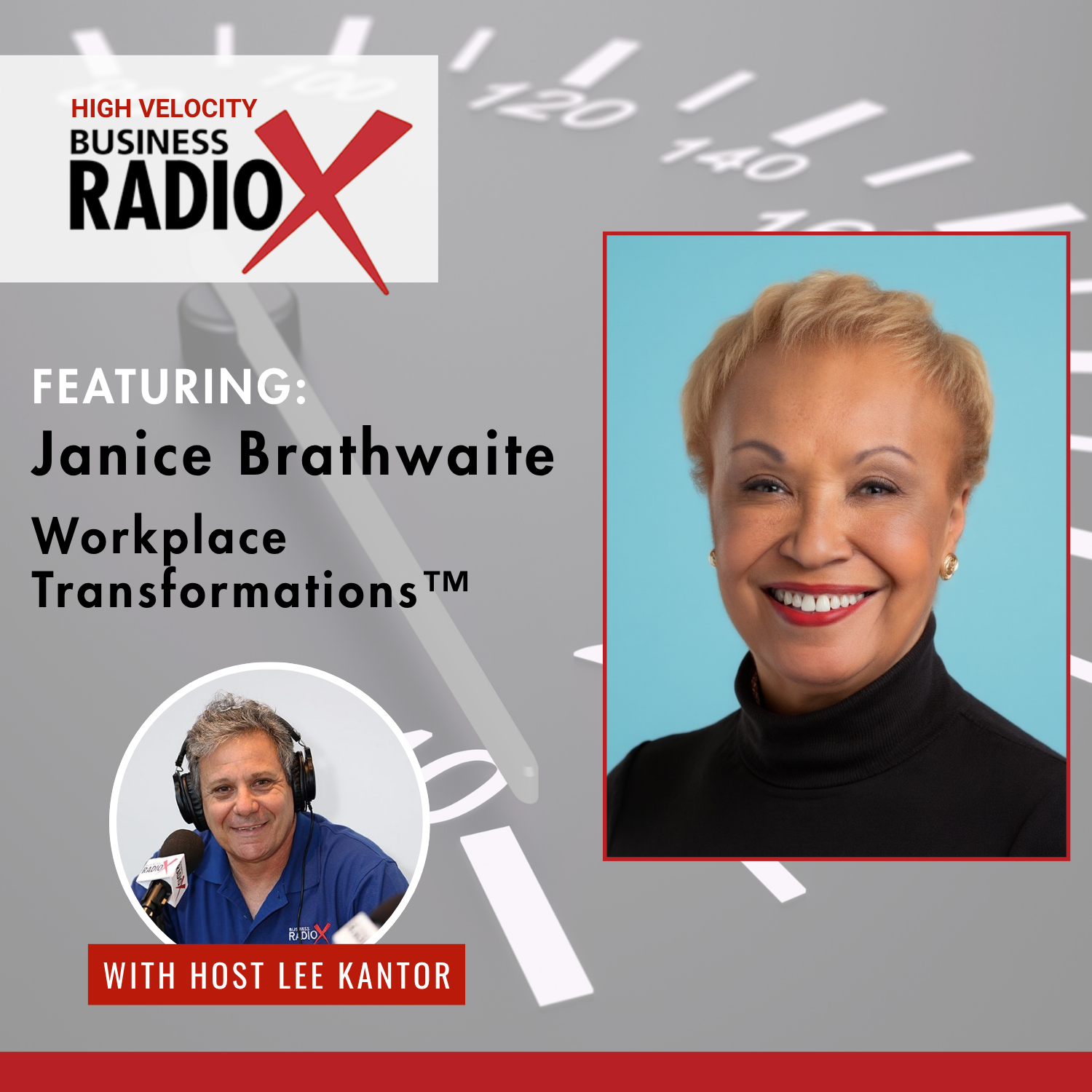


 Janice Brathwaite is an award-winning healthcare workforce leader, Organizational Culture Strategist, and Certified Executive and Life Coach with over 17 years of experience helping mission-driven organizations build people-first workplace cultures.
As the Founder and CEO of Workplace Transformations™, she developed the signature Workplace Transformations Method™, a proven five-part framework that helps leaders identify and address cultural misalignment to improve retention, engagement, and organizational performance.
Named Employer Partner of the Year by Operation Able, Janice has worked with health centers and Fortune 500 companies, including Xerox, Motorola, and Procter & Gamble. She holds a Master’s in Management from Cambridge College and is certified in Lean methodologies and organizational culture assessments. Her thought leadership has been featured on podcasts like Reach Radio, JD Hyman, and Notes on Resilience.
She also publishes The Culture Catalyst, a monthly newsletter on LinkedIn. Based in Salem, Massachusetts, Janice brings both strategic insight and lived experience to her work—grounded in her belief that everyone deserves to be seen, heard, and supported in the workplace.
Connect with Janice on LinkedIn and Facebook.
What You’ll Learn in This Episode
- The Problem with PIPs (Performance Improvement Plans)
- Culture Debt and how it can impact your organization
- Toxic Leadership
 This transcript is machine transcribed by Sonix.
TRANSCRIPT
Intro: Broadcasting live from the Business RadioX studios in Atlanta, Georgia. It’s time for High Velocity Radio.
Lee Kantor: Lee Kantor here. Another episode of High Velocity Radio, and this is going to be a good one. Today on the show, we have Janice Brathwaite and she is the CEO and founder of Workplace Transformations. Welcome.
Janice Brathwaite: Thank you. Good to be here.
Lee Kantor: Well, I’m excited to learn what you’re up to. Tell us a little bit about workplace transformations. How are you serving folks?
Janice Brathwaite: Well, a while back, probably in 2019, I had come up with this idea and I was thinking about why hasn’t things gotten better for employees? I mean, I’ve been in the workforce quite a long time, and it just doesn’t seem like we’re making any headway. So the question I asked myself is, what’s causing. What kinds of things are causing that. And as I continue to dig deeper and deeper, I realized that it was the foundation on which the culture is the foundation of an organization. And if there’s cracks in that foundation, those are going to be the things that are going to cause your problems. And a lot of people just try to ignore them and say they’ll go away. So I was working in health care at the time. And when Covid came along, I had to kind of put this on the back burner because there was no time when you were in health care to actually be doing anything else but health care. But once things kind of, you know, slowed down a little bit, I made a decision that I was going to leave health care, the place I was working, and, and go do this full time because I really feel there’s a value in what I have to offer.
Lee Kantor: So when you say do this full time, what exactly does that mean? How are you going? Are people coming to you and saying, I would like to transform my workplace. I feel like we have a culture problem. Or are you proactively going up to people and saying you might have a culture problem? Like how did how does your business work?
Janice Brathwaite: I, I actually reach out to to customers, to people in the organization, in organizations. And because I know a lot about health care, a lot of my focus has been, you know, talking to people in the health care area because I was in health care for 17 years. So I pretty much know what’s going on, especially today. There’s a lot of upheaval. So so it’s really a good time to try to take a look at what’s going on. So what I do is I reach out to people I, you know, I write articles, I do marketing, I have a marketing person, and I work with a PR person and just trying to get the name out there because the company and it’s, it’s really it’s fairly new. So building your brand, as you probably know, is one of the toughest things to do. You have to do it in many different ways because you want to get to many different audiences. So that’s what I’ve been doing. And reaching out, reaching out to my contacts in healthcare. I think I’m going to broaden my scope a little bit. I was in community health, but I think right now I need to broaden that out to make it more around medical services, not just community health.
Lee Kantor: So what are kind of some of the symptoms that an organization would be having, where culture might be at the heart of it? Are there some symptoms or maybe some clues that these organizations are feeling a pain, but they aren’t kind of, you know, putting their finger on what the cause is?
Janice Brathwaite: Right. One of the first places I worked with, they called me in because they said they were having problems on one particular floor of this facility, which I thought was kind of interesting in itself. And they wanted me to dig in and find out why that was. Why was that for a particular floor? Having all of these problems. So I met with the nurses first. And of course, nurses are very outspoken. And they’ll tell you exactly like it is. So they were telling me a story about how they were going to outsource some of the triage stuff that the organization, the health care organization was doing. And they told the nurses on a Friday that they were outsourcing it on Monday. So the nurses felt like, well, they didn’t ask us anything about, how do you do this? What kind of questions should you be asking our patients? You know, if you if you get this kind of situation, this is how you could handle it. So they just felt like there was no communication. They were kind of blindsided by all of this. And this is pretty pretty. It’s pretty much across a lot of organizations. Communication. When I do assessments, communication comes back as the most important thing. But the thing that’s not being done very well.
Janice Brathwaite: So the next group I went to was the doctors and I got in. I got in the meeting and the CEO was there and the doctors all filed in and I so I, you know, I turned it over to the CEO to kind of explain what was going on. And they’re like, what, what what I don’t I don’t know anything about this. Why were we told that this was going to be the topic of conversation? So I knew right then because they had no basis for a conversation at all. As we started to kind of, you know, pull the layers away, one of the persons, one of the doctors said to me, well said to the group, I’m doing the best I can, but nobody seems to recognize it. And then they started to cry. I’m like, oh my God, this is really bad. So, um, and then I went to the CEO and said, you know, the doctors are. They’re not in a good place there. You know, they feel like they’re not getting the, you know, the support of the communication that they need to get their jobs done. The next group was the front line, and the front line was the most candid about everything, and really brought up the similar types of situations in that area.
Janice Brathwaite: The things like around communication, you know, engagement around recognition. Recognition is another big thing that always comes up. People don’t feel like they’re being recognized for the work that they’re doing. And it’s not just getting a paycheck. It’s your boss coming to you and saying, hey, you know, you did a good job on that today. You know, good job. It doesn’t have to be some big, convoluted process. It has to be mindfulness. I mean, leadership has to be mindful that we’re dealing with human beings, and human beings need to know where they stand at certain times. So when I went back to the CEO and to kind of debrief, she said, I told you, I told you what they were going to do. They were going to blame us for it. And I started I almost started laughing because I was like, well, it is you. I’m saying to myself, it is you. Everything they’re saying is pointing right back at you. So I gave them a whole plan, which they implemented, which was very surprising and very, very encouraging. And they just they went from a really bad place to getting just recently I saw it on LinkedIn. They received a $30 million grant from a foundation. So they have completely turned that organization around.
Lee Kantor: And then what were some of your recommendations to like, how were you going to attack the improving of the communication and the, um, you know, stop taking people from granted.
Janice Brathwaite: Right? I think a lot of times that leaders, things like have a town hall and then we’ll talk to everybody together. And that sometimes works. It depends on what the conversation is. But it really is about, you know, meeting with your staff. You know, like managers, senior leaders and leaders need to meet more with their staff and be candid and clear about what they’re what they’re planning to do or what their what the problems are. A lot of times they kind of skirt around the problems. I was telling a funny story the other day that I actually wrote in my newsletter that when I was in working in one organization, I used to joke about this. You know, I’d be walking out of the conference room, and I turned to one of my colleagues and say, did you notice that big hump underneath the rug in the conference room? And they’d say, well, what? What are you talking about? There’s a big hump there. And they’re like, well, what is it? I said, it’s everything that we sucked under the rug all these years, but it’s not going to go away. I think sometimes people think it’s just magically going to, you know, things will magically get better. Um, and it doesn’t. You have to really, you know, be intentional about what you’re doing. So communication in recognition of the top two. And if and I know communication is a difficult thing and I’m not saying it’s easy to do. But as a leader hopefully you know you’ve learned some techniques to do that, which I’m not seeing a lot of that right now.
Lee Kantor: Now, do you find that culture is one of those things that if you’re not mindful about it and you’re not intentional about it, it’s going to form Without any input from you. Uh, a culture is going to exist whether you’re kind of, um, proactively, um, trying to nudge it or encourage it to be a certain way because it just it’s like branding, even if you’re not putting any effort into it, it’s happening. So how do you recommend the people be, you know, put more intentionality around kind of the the things that are important, like you’re saying how um, recognition and um, communication are important. You have to put things in place that encourage that type of behavior if you want it to continue to be important. Otherwise it’ll just be a mess and it’ll just kind of, uh, you’re not going to have any kind of say over the matter. It’s just going to happen in its own haphazard way.
Janice Brathwaite: Right? Um, when I think about that, I think about, you know, what they say about how to how would you eat an elephant? One bite at a time. In order to find out what’s going on, you really have to do an assessment, and you’re not going to be able to solve everything at the same time. I mean, if it depends, I mean, if there’s maybe five things you might be able to do, but it’s going to be over time. And that’s why it’s so important to have a plan, to have a plan on how to do this. And that’s where I come in. I do all of the, you know, I review all of the assessments and, and do all of the crunching of numbers. And then I come back with what I call a playbook that I can use, they can use to actually implement change in the organization.
Lee Kantor: So but in order for that to occur, they have to, number one, be self-aware. There’s a problem. And number two, give you permission to go out and kind of do the research you need to do in order to come up with the plan. And, and then hopefully they’ll, you know, act on it.
Janice Brathwaite: Right. Well, that’s why I start at the top. That’s where I know if this organization is really serious about this. You know, a lot of times people think you can push change from the bottom up. You can’t. It has to be top down. If the leader or the CEO or whoever the leading is leading that organization doesn’t believe that is important, then it’s not going to be important. They have to. And it really takes me talking to them and kind of guiding them and giving them examples of things and asking them questions. You know, so, you know, what are some of the what are what are two of the things that you find you’re struggling with the most in the organization? So I can get an idea, and then I can kind of use those as levers to kind of get the door open a little bit. And then slowly, you know, I start to bring them on board more and more and more. Then I move to senior leadership, and I work with them and get their Input, and then so on down the line within an organization so that everybody knows what’s going on. You know, you can’t do this without bringing your staff into it, because they’re the ones that are going to make going to do the assessment. So they have to be on the CEO has to be on board. There’s no doubt about it now.
Lee Kantor: Or is the problem kind of are they seeing a problem of in terms of employee retention or turnover. Are those kind of the clues for the leaders that something’s amiss. Like is that kind of the the big flashing light when you’re having a hard time hiring or you’re having a lot of turnover in an area, or those are the things that are like, okay, this has to be triage at some point.
Janice Brathwaite: Well, yeah, I mean, recruitment and retention is and especially in the health care field was really a, you know, high priority. And it’s, you know, they’re having very a lot of difficulty getting people to work in that particular field. Not not the only ones, but there are others out there as well. But that is a definite sign that something’s wrong. Because if you can’t recruit people, you ask yourself the question, well, what is it about this organization that’s making people not want to work here? Because people talk, you know, and they tell each other what’s going on. You know, like, I don’t know if you really want to work there. Yeah, I don’t know. I’ve heard some bad things. And, um, the retention is really, you know, the recruitment is the external, but the retention is internal, and that’s where you really have. Now you want to keep the people that you’ve got. And I have this thing that I’m not saying it’s a it’s a process called value driven hiring. So my theory is if someone doesn’t believe what you believe, then they’re probably not going to stay with you there. And this becomes especially important, I think is important in all industries. But how do you find out if they believe what you believe and they’re, you know, is clued into, oh, yeah. You know, like I really feel like, you know, like I could catch on to this, this process. I could catch on to this desire, this whole, this mission that this, this organization has. You’ve got to interview differently. And that’s what a lot of people don’t do.
Lee Kantor: So they’re not they’re not they’re not kind of making sure that the values are aligned that that they’re all kind of trying to get to the same place ultimately.
Janice Brathwaite: Right. And it’s not just in the interview, it’s in the job posting. I mean, you got to call out what you’re looking for because you want to attract the people who believe it, and you want to attract the people that don’t believe it. So you’re not wasting your time. I mean, I’ve seen this multiple times. Somebody gets in a the job. And then, you know, the front desk and they’re talking to patients and and a lot of times they think they’re thinking, well, I don’t understand why are they getting health care? And I you know, I have to pay for mine. Why are they getting this for? For nothing. You know, that is not the person you want when you when you’re working with patients, you know, you don’t want somebody just to say that, to think that. So you’ve got to figure out what are the what are their real thoughts are. And this became clear to me, I used to run an AmeriCorps program in the organization in which I worked. And the first year I got there, and I just did like the regular interviewing and, um, and these people were going to be sent out to various organizations. Um, so they weren’t in the same building as me. They were going to be somewhere else.
Janice Brathwaite: So I went through it, and I realized that I wasn’t getting the quality of the quality of person that I really needed to be able to send them out to someplace else and know they were going to work. So then I started, you know, working on and thinking about it, reading. And I came up with a value based hiring is is the key. So I changed my whole process of interviewing. I didn’t I mean, I looked at their I looked at their resume. I looked at, you know, a lot of these people right out of college. So they didn’t have, like, you know, extensive resumes. But I look at their resume and then I’d ask them questions like, so tell me how you deal with conflict. And I wouldn’t get I wouldn’t say anything after that. Just let them talk because you don’t want to lead them. You want them to say exactly what they mean. And the more I did that, the better the quality of the person and the happier the places that I was sending them to were because they didn’t have to babysit them. You know, they came in, they were ready to work. They wanted to do it, and they were there for all the right reasons.
Lee Kantor: Right? So it was a better fit. You were able to get better fits faster?
Janice Brathwaite: Yes, absolutely.
Lee Kantor: That reminds me of somebody I interviewed. Um, they work, uh, in leadership of a large, uh, fast food company. And they were in charge of hiring the the people, the front line people that were dealing with the customer. And they said they only hired people who were natural smiles. They wanted people that had the kind of that cheery disposition, naturally. Um, because you can’t really train that, and you can’t make a non smiler a smiler. So, you know, when they’re looking to hire, that’s, that’s a quality they look for because they’re, they’re already close, you know, in terms of customer service, if the person is smiling just naturally.
Janice Brathwaite: Right I mean you can it become clear to me you can teach someone a skill if they’re somewhat intelligent, you can teach them a skill, but you can’t teach them about it, you know. And I was I was saying I was talking to someone a while back and I said, no, my belief is that by the time you’re five years old, you have all your base values. You know, don’t hurt other people, don’t take what doesn’t belong to you. And then over time, as you get older, you start to say, well, maybe I need to vet that value. I don’t think I’m doing really good there with that particular thing. So you start to take on value. So if someone wants to take on a value, they will, but you can’t force them to.
Lee Kantor: Yeah it’s going to be voluntary.
Janice Brathwaite: So you know you just waste your time if you if you keep, you know, pushing and pushing and pushing. But they’re not going to, they’re not going to be able to get to where you want them to be. And I like that. I like that thing about smiling because it does tell something about the person. You know, you don’t want somebody grumpy coming in. Um, you know, when you’re dealing with the public. So that makes that makes good sense.
Lee Kantor: Now, how has the transition been for you? Working as an employee at different organizations and doing the type of mentoring and coaching you were doing there, to the type of work you’re doing now where you’re the entrepreneur that are that’s coming in. Um, but I would guess you’re doing kind of similar work in, in the actual activities you’re doing. But from an entrepreneurial standpoint versus an employee standpoint, was that a difficult transformation for you?
Janice Brathwaite: Not really, because I always said I was working. I felt like I was working for myself. And um, and luckily I had some managers and leaders that would allow me to do that. So I was kind of setting my own course, even internally. Um, and I think a lot of times I’d say, well, you know, if you don’t, if you don’t fall off the rails, it’ll be good. I’ll tell you. A program I developed is called Grow Your Own. And while I was there, and it was at this organization, and it was about, you know, instead of, you know, always looking outside for people. Let’s develop the people that are in the organization to become medical center assistants or dental assistants. And I just thought about that. And I, you know, I sat down and thought about it and I said, you know, I think this might work. And if people don’t think I’m crazy, I think they’ll go along with it. And they did. So I always felt like an independent. I really did. I’m a very independent anyhow, but I, I’ve always felt in myself that way and, and as long and I always knew what I needed to go and ask questions on like it was financial or, you know, something was involved.
Janice Brathwaite: It was confidential. I would go to a leader and say, hey, you know, I want to do this, but I’m not sure, you know, that’s the right thing to do just to get feedback. So I knew my I knew my my boundaries. You know, I say empowerment is like a highway. When you’re on the highway. I don’t know how many lanes you have down where you are, but say there’s three lanes and you can move your car from lane to lane. There’s nothing to stop you from doing that. But if you go too far to one side, you’ll hit the median. If you go too far the other side, you probably go down in a ditch. So that was the empowerment is not just like everybody does anything they want to do. It’s there are there are boundaries around it. And but people need to know what those boundaries are. You can’t think it’s intuitive that they’re going to know. But if you’re in this, you know, if you’ve got room to move, you’re going to I think you’ll be you’ll be pretty happy. And I think that’s what I had. I had room to move.
Lee Kantor: Right. They were giving you autonomy. And you obviously have the expertise and the trust of the organization that they were letting you, you know, play out your ideas. Um, you know, within the parameters that were within the organization. So that kudos to you.
Janice Brathwaite: So it was it wasn’t am I saying it’s an easy transition. But I, I felt like, you know, you know, just take what you’ve learned and, you know, transfer it over into something bigger. And and this is what I really love about this is the creativity. I mean, I really love about being an entrepreneur. I love the fact that I can be creative and develop things. And, you know, um, you know, and I did I spoke at a conference in Vermont and, uh, it’s an intergenerational understanding in the workplace, which seems to be a very big topic these days. And I developed this tool for them and, um, that they could take to start the conversation around, what are our what are the things that we share in common as generations? And one of the things that might be different, and how do we work together with the differences. The things that are different. And and it came. It went off really, really well. I’m going to do another I’m going to do it again in Illinois in October. The conference at a conference. So, um, you know, so that is something that now people wouldn’t that. Well, let me just back up. Culture is a big thing. When people you say culture, people go they, they, they glaze over because they don’t know what you’re talking about.
Janice Brathwaite: But intergenerational understanding in the workforce is part of your culture. So all these things that are causing the problems that these organizations are saying, we we have difficulty with Gen Z, Gen Y. So the you know, that that’s part of your culture. It’s not it’s it’s not something you can’t work with. And the one thing I don’t like about the way people have been handling it is I don’t like people stereotyping other people. And I think once you send, you give those little letters to people. People start thinking of whoever’s in that group in a certain way, whether that way, that way or not. So I’m trying to make them stop thinking in a different way. Let’s get rid of that. You know, these are individuals. I’m sure when I came into the workforce, they said some of the same things about me. Oh my God, those boomers, they want everything. You know. They don’t want anybody to tell. Tell them what to do. They want to. Oh, they know loyalty to the company. I mean, sure, they said all those things. Nothing different than what they’re saying today. So why are we doing this? Why are we why are we assigning labels to people?
Lee Kantor: Yeah. It seems, um, counterproductive. I don’t think that’s helping. Um, it. I guess in some ways it’s a shortcut for people, so they don’t have to make the effort to get to know the individual. They just kind of make a blanket assessment.
Janice Brathwaite: Right. And so, you know, you see, you know what you think you see sometimes that’s what you’re going to see, right.
Lee Kantor: Exactly. You’re going to have a bias and then everything’s going to fit into it. You’re not going to give the person the benefit of the doubt. You’re going to just assume it just opens up a can of worms. And none of them are good.
Janice Brathwaite: Right? No, it’s it’s. So that’s the that’s how I’ve been approaching it and using like, um, employee resource groups to actually deal with this, this, this issue to get to people, get people to know each other on it, not just by their letter by whom, but by who they are.
Lee Kantor: Right. And going back to your values, like if we just put do things around values, there’s going to be a lot more commonality if you’ve chosen the right folks that have similar values.
Janice Brathwaite: Absolutely. That’s absolutely that’s absolutely right. Spot on.
Lee Kantor: Now, what is the what’s the typical point of entry for you in these organizations? The speaking. Do you come in to do speaking or you do a workshop and then, uh, that gives you kind of the credibility and then you can build on some successes to get, uh, more and more work from the organization.
Janice Brathwaite: Yeah. I think the right I’m seeing what I’m seeing now is that the speaking has become a way to really touch a lot of people all at the same time. You know, and rather than reaching out to the individual units, sometimes they bring all these people together. Just so happens is of a health care conference and in community health. And so they’re going to bring all of their community health centers together. So I’m talking to a whole group of people in different areas, and we’re dealing with probably different things and some of the same things.
Lee Kantor: Right. So. So, uh, organizations and associations are, um, having you come and speak on these, um, kind of topics to help educate their folks on different strategies on how to manage them.
Janice Brathwaite: Correct. That’s right. Now, as the hot one is and I started this with a college who wanted me to speak on this, which I thought was really interesting, but they had a workforce group, um, of employers that they wanted. They wanted me to speak to that was part of a program they were running. And, um, so I, I went out, I, you know, I put together a presentation and I realized when I was sitting in the room that as I was presenting, that people really are struggling with this. You’ve hit on something here, you know, and I said, you know, I mean, I can do a I mean, I could do things on value driven hiring. And, I mean, I’ve got a lot of different topics I can talk about, but right now, I think this is one of the pain points that organizations are really struggling.
Lee Kantor: So what do you need more of? How can we help you?
Janice Brathwaite: Well, I’d like to get more opportunities to speak in front of organizations. And it’s not just healthcare. Um, I was in the for profit world for many years with Xerox, Motorola, you know, various various top mine companies. So I understand that environment as well, which I think is a plus. Um, speaking, you know, just reaching and reaching out to me, uh, if they’re on LinkedIn, I have a newsletter that I put out. Um, this month it was on, um, in the midst of a storm, and it was talking about the things that health care organizations are going through right now. And what do they do in the future if something comes up that they’re not expecting? Well, how do you how do you do like an emergency preparedness for organizational turmoil?
Lee Kantor: Yeah. So you’re available to speak when it comes to any type of this. Uh, culture, leadership, uh, the management side of things, the, um, you know, building resilience. It sounds like that there’s a lot of, um, topics to cover based on your expertise. And it doesn’t have to be healthcare because, um, you know, that you might have worked in healthcare for a minute, but these are kind of universal challenges for organizations.
Janice Brathwaite: Everybody’s dealing with them. You know, I, I have, uh, family members that are in the industry. And, you know, I hear them talking about things and they’re no different than what I heard people talk about in healthcare. So it’s it’s it’s universal. This is a universal problem. And, you know, unless people start using some tools to address this. This is going to continue. And you know the other thing. Now we have this thing around bringing people back to the office. Um, which is causing, you know, some just, you know, concern from employees. Um, and but, you know, I’m, I, I was a real advocate of, you know, working from home. I’ve kind of changed a little bit. I’ve taken a little bit of a turn because I do think it affects collaboration. And people say, well, we’re only on teams anyhow. Well, no, but you you do. I mean, I have the ability to have zoom when I was in the office, but we always had meetings, face to face meetings. You know, we didn’t go just on, on a zoom. And, you know, the late somebody down the hallway was sitting in their office. And I could have walked down there and had a conversation with them. So I’m, I’m I’m a little bit on the fence around that one. I don’t think it’s as good as people think it is.
Lee Kantor: Yeah, I think you miss out on some of these accidental, um, conversations and being a fly on the wall. And there’s other types of ways to learn and interact and bond, uh, that it’s difficult to, um, to do over zoom or some of these virtual platforms. I think there’s a lot of value to just running into somebody and just chatting for two seconds and getting an answer, um, or getting some help or asking a question where it’s that’s a little trickier in kind of a virtual setting.
Janice Brathwaite: And if you can’t get the feel for how the person’s really reacting to this, right, a little box, but, you know, you you I’m sure you’ve been in many meetings yourself and you you can tell by body language, right going.
Lee Kantor: And then the a lot of young people are not learning how to read that, like they’re missing out on some of that kind of, um, not, you know, like you’re saying the body language and things like that, the more subtle nuances of communication that maybe are difficult to, uh, translate through a zoom call.
Janice Brathwaite: Exactly. So, um, yeah. And it can be a lot of, you know, misunderstandings. Um, I’ve seen it happen myself in zoom meetings, misunderstandings amongst individuals. And, you know, it’s just it to me, it’s it’s not as as productive as people think it is. And it’s. And I understand the reason why people want to do this. But I say to myself, before Covid, didn’t I go into work five days a week? And now, and I’m not the only one that went in. So what? What’s the problem? This was because we had an epidemic. People don’t seem to remember that. It wasn’t because, oh, the companies all decided you all can work from home now. You can work from home. I used to be able to work from home one day a week, maybe on a Friday, but I always had to ask if I could do it. And, um, so it’s it’s not, it’s not necessary. And, and people say, well, well, you know, when I’m, when I’m working from home, I can do other things, I can go places, I can take my kids. Well, what did you do when you work five days a week, right? Kids not go.
Lee Kantor: Anywhere. Somehow that got done somehow.
Janice Brathwaite: Yeah. Um, so, um, so I’m not really buying that. But my friends, my, I get a lot of pushback from my friends about this because they think that, you know, it’s it’s great. And, um, okay, FaceTime is good, but, you know, zoom, zoom, zoom won’t get you there, right?
Lee Kantor: Well, if somebody wants to connect with you, is there a website? Is there a best way to connect with you and your team?
Janice Brathwaite: Yes. Um, my email is Janice at WP transformation. Not with no s.com. I’m also on LinkedIn. Um, and you can reach me there where I post a newsletter every month. And um, and you know, I have a website that’s my, my, my website is, is WP transformations, uh, transformation um, dot com. And um, so they can get me at any of those places.
Lee Kantor: Good stuff. Well, Janice, thank you so much for sharing your story today. You’re doing such important work, and we appreciate you.
Janice Brathwaite: All right. Thank you so much for having me on.
Lee Kantor: All right. This is Lee Kantor. We’ll see you all next time on High Velocity Radio.














