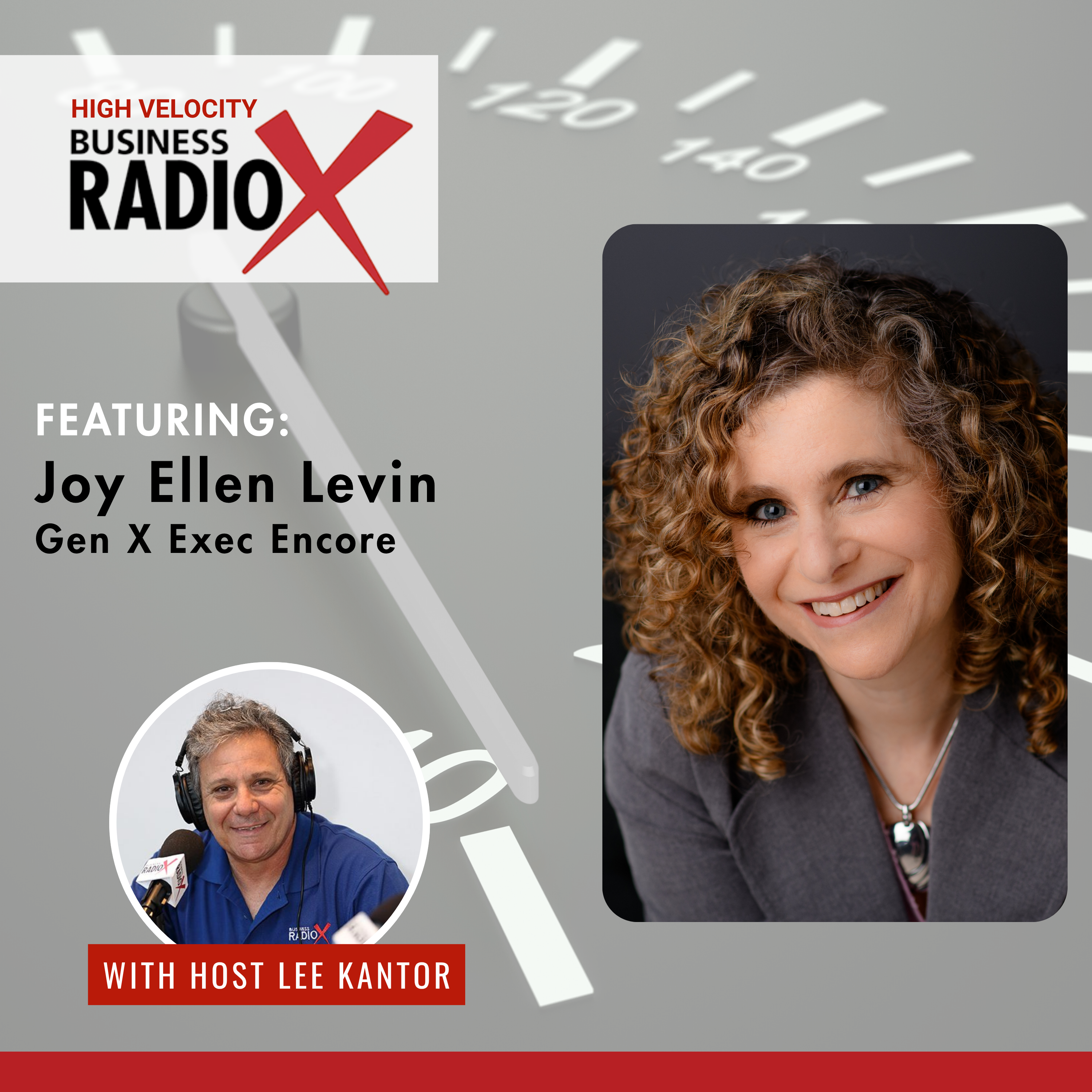


 Joy Levin is the Founder and President of Gen X Exec Encore.
In working with Gen X high-achieving professionals, she recognizes that for many, this next phase isn’t about traditional retirement—it’s about creating an encore that blends passion, purpose, and new opportunities.
As a market research consultant and entrepreneur for nearly three decades, Joy has guided executives and business owners across industries in making strategic, well-informed decisions. Like many Gen Xers, she wants a future in which she can remain productive, explore meaningful pursuits, and build new connections.
With an honest, warm, friendly and highly professional approach, she guides accomplished professionals to discover their next purpose-driven chapter, empowering them to create an encore life with confidence and clarity.
Connect with Joy on LinkedIn.
What You’ll Learn in This Episode
- How Joy’s coaching approach helps clients redefine success beyond the corporate title and accomplishments they’ve held for years
- What’s one powerful mindset shift that Gen X leaders can adopt to turn uncertainty about the future into excitement and purpose
- Some surprising opportunities Gen X professionals have taken once they began exploring their next chapter
- Advice for someone who feels stuck in limbo between the end of their corporate career and the start of something new
 This transcript is machine transcribed by Sonix.
TRANSCRIPT
Intro: Broadcasting live from the Business RadioX studios in Atlanta, Georgia. It’s time for High Velocity Radio.
Lee Kantor: Lee Kantor here. Another episode of High Velocity Radio in this is going to be a good one. Today on the show, we have Joy Levin, who is the President of Gen X Exec Encore. Welcome.
Speaker3: Thanks, Lee. It’s great to be here.
Lee Kantor: Well, I am so excited to be talking to you. Somebody who’s finally talking about Gen X. The boomers take up too much oxygen in the room, so I’m fired up about having somebody talk about Gen Xers. So tell me about your practice. How you serving folks?
Speaker3: Yeah, so I’m a certified professional retirement coach, and I specialize in working with Gen X leaders. So small business owners, executives, entrepreneurs to really empower them to navigate the transition to their post post-career chapter. So I focus on those who want to design like a fulfilling, purpose driven chapter in their retirement years, and they want to make the most of what is now commonly thought of as an encore, especially for Gen X leaders. So, you know, we coach them to clarify what’s next. Whether it’s launching a new business or shifting to a passion project, or just redefining work and lifestyle on their own terms. So we take them through a series of exercises that guide them to decide what they want to do. That’s in line with their values, because a lot of people who retire now, they have, you know, 10 or 15,000 more days ahead of them, lots of stuff left in the tank. And so we want to make sure that people are using that in an intentional way, to really make sure that they maintain a sense of identity and connection and relevance.
Lee Kantor: How did this kind of evolve for you? How did you get it? You go from whatever you were doing to this kind of work.
Speaker3: Right. So my background before this and I still continue to do this is market research and strategy consulting. So, you know, there were really three things that kind of came together that influenced me. So first of all, you know, as I’m a Gen Xer myself, I understand that we have a unique mindset and values. I mean, all generations have their uniqueness, but in our case, we’ve lived through so many societal and cultural experiences that really resulted in us developing this strong sense of like resilience and adaptability. And we were also raised to be independent and resourceful. But when it comes to what’s next, after a long career, many people in my generation just find there’s no clear roadmap, their expectations. But those expectations don’t always fit into what our aspirations are. So second, my background and market research and consulting also played a major role because for years I’ve worked with executives to uncover insights so they could make data driven decisions. And so in doing so, I’ve always been very inquisitive and analytical and strategic. And these are skills that I now use to guide Gen X leaders through one of the most important transitions of their lives. So just as I continue to work with businesses to find clarity in these complex market landscapes, I’m also working with individuals to gain clarity on their own next steps. And third, I was just inspired by my own journey, really. I went through transitions from being an employee to an entrepreneur to thinking about what will come next. And these were all defining moments for me. So each time I’ve experienced firsthand the mix of excitement and uncertainty and reinvention that comes with stepping into a new professional identity, and I’ve come to realize that many accomplished Gen X professionals face similar crossroads, and they need structured support to create a transition that aligns with their values and goals.
Lee Kantor: Can you talk about that transition when you went for from. You know, I’m working and now I’m coaching. And now, as a coach, I have to go and find a client. So I have to convince somebody that I can help them with this challenge that they’re having. Like those early clients. Can you talk about how that transition went?
Speaker3: Yeah. You know, so there are really a couple different ways. Um, I sort of have created this framework called from mixtapes to mindset to I’m sorry to meaning because, you know, um, mixtapes are like this huge, iconic thing for our generation. I mean, everybody’s created one. Um, and so they evoke a lot of nostalgia. They bring us back to some of the things we thought about when we were kind of starting off in our careers. And so I’ve kind of used that, and I do workshops and classes about it to reorient people to thinking about, you know, kind of rewinding that tape to the past, but then also reframing it and reinvigorating it to think about the future. So that’s one way. And I also partner with like financial planners and other people who touch retirees or soon to be retirees. Um, you know, and I do all kinds of things for them. And we partner together, um, to show that really, retirement planning is not just about the finance and the money. It really requires this holistic perspective. So, you know, a lot of people feel like, okay, I’m all set financially and yet they retire and they’re like, well, I don’t know what to do now. Like, I don’t know what to do with my time. I’ve lost my identity. You know, I’ve been an attorney my whole life or an entrepreneur. And those titles no longer fit. So they have to find something new to replace that with, to make sure that they will have this fulfilling next chapter. Because a lot of people, what they do is they say, you know, I’m retired and then they don’t have a fulfilling experience. So they go back to work and then they’re still unhappy and they don’t really understand why. Or it’s very frustrating. So those are a couple of the ways in which, you know, I engage with people and get them thinking about, you know, how can they create this very intentional, purposeful next chapter.
Lee Kantor: Do people of that generation think when they’re retiring that like it’s just going to be golf and fishing? Like, is that is there a picture in their head that maybe isn’t all that it’s cracked up to be?
Speaker3: Very much so. Yeah. And it’s so funny because that’s one of the analogies I use. People say, you know, I’ll play golf. And then, you know, after not too long, you’re like, I have, what, 25 more years of this? And to just think of doing that, it’s just not getting at the ambition they’ve had their whole lives. So there is definitely some misconceptions. They think, um, you know, they will just find their way. Um, and sometimes people are lucky enough to do that. Um, a lot of times it’s through a lot of false starts and delays, and so they waste a lot of time trying to figure that out. Um, whereas people like me who coach them can get to that much faster and help them to recognize, you know, what it is that’s going to carry them through to really have a next chapter that’s not just, you know, like you said, playing golf or fishing, but doing things that are really meaningful to them. And it could be volunteer work. It could be, like I said, starting a new business. It could, you know, just be so many different things. Um, but it really requires a lot of thinking and, you know, working through some exercises and assessments, I take them through to figure out what that’s going to be. And it’s, you know, it’s very unique for each person.
Lee Kantor: Now is it ideally you want to get to them before they’ve actually retired. Well, maybe they’re kind of have a year or two of working still. So you can maybe lay some groundwork and foundation.
Speaker3: Yeah, exactly. Usually a couple years is ideal. Um, because a lot of times they when they don’t do that and they just fall into retirement, then they kind of drift and they feel like I should have this figured out and I should not be feeling bad. Like, there’s this whole thing about, oh, you know, you’ve worked your whole life and you’re retired, and isn’t it wonderful? And there’s this psychological thing that goes on where people say it’s not wonderful. They’re thinking to themselves, this is just I mean, I just have nothing to do, and I just feel lost. And so ideally, it does help to start a year or two before you retire. So like you said, you lay the groundwork. You can start putting things in motion so that once you do make that big transition, you’re really ready to make the changes that you want to make in a way that will be fulfilling.
Lee Kantor: Now, I’ve met quite a few people recently that have maybe been laid off a little sooner than they thought they would be, and now they’re kind of a little untethered because like you mentioned earlier, when you work for, you know, big company, um, you’re used to people returning your calls or knowing you as that person. But when you’re just yourself, um, you know, without kind of that corporate identity around you. Life is a little trickier.
Speaker3: No doubt. Yeah. And, you know, it’s like they lose their relevance. And that is a terrible, terrible feeling. I mean, you know, they’ve gone, like you said, from these roles where they were thought of as a point person, as somebody with knowledge and wisdom, and all of a sudden they’re adrift. And so that’s a big thing that we work through, is making sure that they stay relevant in both their social lives and their identity in their relationships. Um, you know, it’s kind of this full view of what it takes to live this fulfilling life. So, yes, I agree with you. You know, there are people who you just feel very unmoored, and it’s a very uncomfortable feeling.
Lee Kantor: Yeah, I think that a lot of it stems like they thought that maybe they were the secret sauce, and then they realized that maybe their company was the secret sauce and that people, you know, aren’t as interested in themselves as they were when they was themselves and the company. Like I, I just think it’s a almost like an identity crisis. You know, at 50 or 60.
Speaker3: It’s definitely identity crisis for sure. And it’s either that or they just have thought of themselves as the one that people to go for, for answers or insights or whatever it is. You know, somebody who ran their own business, who knew so much, and it’s not like, you know, they retire and those things go away. They still have that knowledge. And so there’s a lot that’s also going on slowly but surely in the workforce about having these intergenerational workforces where these people who have gathered all this wisdom and knowledge and experience can really make a difference in, you know, helping people who are just entering or their mid-career to kind of shortcut some of the mistakes they made, um, and bring that different perspective that they bring from all those years of experience. And like I said, because they’re Gen X, they have these unique experiences that have helped shape their views. And those can help as well in kind of recharging a workplace and bringing different perspectives to the workforce than you would get from either, say, millennials or Gen Z or whoever else it is.
Lee Kantor: So can you walk us through what kind of those early engagements with you are like, is it a lot of kind of, like you said, assessments and asking a lot of questions just to kind of understand where they’re at mentally.
Speaker3: Yeah. So like I said, you know, this this framework I’ve developed is really inspired by the concept of a mix tape. So something very iconic. So in the context of what I do, it becomes this curated collection of these meaningful experiences and lessons and aspirations. So there are kind of these different phases that we go in and out of as we work through these exercises. You know, first, the rewinding right is looking back on your past experiences and really identifying patterns in what is either energize them or drain them over the years. And that way we can start to, you know, have some ideas of, wow, these are the things that are going to light me up going forward. And these are the things I want to kind of avoid. And then we get into this remix stage where we explore some new possibilities by blending, you know, existing skills that they still have. Like I said, it’s not like those get shut off, but we kind of blend them with fresh interests. So it’s about reimagining work and lifestyle and purpose in ways that feel, you know, exciting and aligned. And then we do a reset where we let go of some outdated definitions of success and limiting beliefs, because we want to work on shifting the mindset from what I used to be to what I want to become.
Speaker3: And some people say it’s like a shift from retiring from to two. But it’s more than that. It’s retiring with, because you do bring all of these experiences and skills into this next chapter. And then we do a reconnect where we work on strengthening relationships and building new networks. And many times, you know, I work with people that feel the need to redefine their social and professional circles to match these evolving aspirations. And then it’s about reviving, right? It’s about stepping into action with confidence and clarity, because this next phase is about making intentional choices that create what I call fulfilling encore life, whether that means entrepreneurship or impact driven work or new personal pursuits. So really, the framework ensures that they don’t just retire, they reinvent, and they get to really live out some of the values that they may have lost touch with, that they can re-identify and power them forward into things that have a lot of meaning for them.
Lee Kantor: Now, as most of your work, one on one coaching? Or do you kind of create your own mix tape with a bunch of your clients so they can, you know, create some mashups and maybe some unexpected community?
Speaker3: Yeah, yeah, I do both. Um, you know, I teach this framework through courses and workshops. So I do that and then I also do one on one. Typically, you know, people go into a workshop and they all of a sudden have more questions and they want to work on things in a more customized way. Um, and so then we’ll go into the one on one from there. But it really varies. People come in from a lot of different directions.
Lee Kantor: Is there a story you can share? Don’t name the person, but maybe explain where they were at and how you were able to help them get to a new place.
Speaker3: You know, there was an attorney I was working with for some time. Um, and she was really beginning to think of what would be next. Um, and started thinking about some of the things she enjoyed. She missed some connections. She missed some experiences she had, um, and she also realized that, you know, after a career of working in such a fact based field for so long that she kind of missed some of the creativity and things that she could kind of imagine. And so she decided to think about writing a book. So, you know, she kind of went from an attorney to be an author. And because she was going to be retiring, she was kind of able to take that in her at her own pace. You know, she didn’t have to worry about deadlines anymore or, you know, aside from those that are self-imposed, which I think are important because otherwise you just kind of drift. So, you know, she was able to figure out, okay, what are my goals for this book and when is it going to happen and all that kind of stuff. So, you know, it’s just so gratifying to see people who really rethink some of their old beliefs and ways they perceive themselves and really be able to kind of, you know, take this new direction in life.
Lee Kantor: So if you put your market research hat had on how does the Gen Xers kind of fare when it comes to the nimbleness to make these kind of transitions? Do you think that they are kind of uniquely qualified to be able to have a nice second act or third act?
Speaker3: Yeah, I think in a lot of ways they are, like I said, you know, it’s a very resilient and adaptive generation when you think of, you know, all the things from, you know, gas lines in the 70s and the energy crisis all the way up through, you know, the.com bust when we were in our careers, they’ve seen so many different changes. When you just think of technology. I mean, we were the generation that was still growing up with typewriters. And, you know, those changes without anything else is a lot. So, you know, because of that resilience and adaptability, they’re able to often make the shift a little bit quicker. But at the same time, they are the first generation to grow up without like pensions. Social security is at risk. And so they’ve had to rethink, you know, kind of the assumptions and expectations that other generations have had so that they can create something that’s still meaningful for them in a way that they can live it out, um, in their own way. So it requires both, you know, these, these adjustments, but they have that resilience that oftentimes the adjustments are a little bit easier to make, I think, than other generations.
Lee Kantor: Yeah. It’s going to be interesting how the digital native folks handle this.
Speaker3: Yes it will. Yeah. I mean, you know, it’s like you think about how a lot of older boomers, you know, really struggle with some of these digital enhancements. I mean, I think of, you know, people I know that it’s it’s really hard. Um, and so this is the first generation where they may not be as adept, you know, to or adept to doing these things as some of the younger people, but still they have enough that they’re able to navigate that pretty easily. And, you know, you just think about the changes that might be coming. You know, it wouldn’t surprise me if we ended up with in not a short period of time. Robots that are able to do a lot of the tasks that we require from people, you know, once they’re in their 90s, a lot of people need help. And so we may have robots being able to do that kind of stuff. And what that will mean for Gen X in terms of being able to live not just longer, but in a more fulfilling way, even into their, you know, later years.
Lee Kantor: Right. Especially you’re seeing a little bit of it now with a lot of this autonomous vehicles.
Speaker3: Definitely. Yes. Yeah, I mean absolutely. I don’t think it’ll be long before those types of vehicles are, are, you know, make a huge, huge difference in not just Gen X as they retire, but in people with disabilities and in all kinds of it will open the doors, I think, for a lot for a lot of people.
Lee Kantor: Right. I mean, just look at how a lot of the people in our generations had to have that hard conversation of taking the keys away from our parents, where it might be less painful for our children than us. Because there could be an autonomous. We can just summon a car and it’ll come and pick us up.
Speaker3: Exactly. Yeah, I I’ve lived through those conversations so I know what that’s like and yeah, very, very difficult. So yeah, maybe that will be one of the things that, you know, millennials and Gen Zers don’t have to worry about as much and similar with the care. You know, there might be advancements in care because we’ve you know, what we’ve done is expanded longevity, but we haven’t caught up with all the other things that go into making a life fulfilling as you live longer. So, you know, I’m optimistic that those things will come faster and more easily to this generation and make a better, you know, longer lasting life.
Lee Kantor: Yeah. And you make a good point about how this generation is the one that went from analog to, to digital. So having kind of a monumental change like that, Um, you know, we were able to kind of see what the before and after look like. But if you’re digitally native and you didn’t see a dramatic shift and it’s always been this way, it’s going to be interesting how they handle those kind of monumental shifts.
Speaker3: Oh, definitely. And you just imagine some of the shifts that will occur after them that their kids will be seeing. And, um, probably things we can’t even imagine right now.
Lee Kantor: So now, um, what kind of is the, I guess, the anxiety or the discomfort that a client is having before they become your client? Is it something that does something have to happen to trigger a call with you, or do you get, like you mentioned, referrals from my financial advisors and people like that, that they just probably say, hey, just go and and talk to Joy. But what like what’s happening were they’re like, you know what, maybe I do need help.
Speaker3: Yeah. I mean, I think it’s a lot of what we’ve talked about where it’s not necessarily one event. It’s, you know, realizing that the expectations they had, um, and just the way things are set up are not really serving what they need. You know, when you think of Social Security, it was set up for people who were going to live, you know, maybe 5 or 10 more years after retirement. And that’s just completely not the way it is anymore. It’s 30 or more years. And so it’s really sometimes it’s an extended period of time where they realize, okay, I’m doing like little chores around the house. That can be one trigger. A lot of times it’s a spouse that says, you know, I cannot see you on the couch anymore. You have got to get up and do something. And so sometimes that’s it. Um, you know, it’s a variety of different things. It is often not one event. It’s kind of this pervasive feeling of, I know there’s more out there. I, I just don’t know what it is or I, I’ve wanted to do this thing, whatever it is. But I don’t know how to get from point A to point B and what are the kind of minefields in between doing that? So, you know, and also it can be more than one thing. I mean, you can easily set up what I like to call a portfolio life of, you know, you have in your financial portfolio different assets and different combinations of things.
Speaker3: And it’s the same with a lifestyle where you can say, okay, I’m going to do this volunteer, I’m going to do this passion project, you know, I’m going to spend this kind of time doing this other thing. And so you bring into your life variety and often that’s what’s missing, is people feel like I’m doing the same thing every day, and I don’t need to be doing that. Like I used to have a job where I did the same thing every day. But there’s so much else out there, but they just don’t know how to figure out what that is that aligns with what they want. Or like I said, they’ve identified something and just have no idea how to get there. So that’s some of the instances where a coach can really help them, not to tell them what to do. But you know, that’s not what a coach does, but to kind of be a sounding board. Offer suggestions, work through some sort of scenarios, and like I said, do some exercises and assessments that help them to identify, you know, this is maybe something I thought of, but I’d forgotten or something I never even thought I wanted to do. But now it makes sense.
Lee Kantor: And you mentioned spouses. Do you do also work with the client and their spouses that unusual or is that the norm?
Speaker3: No, it’s not unusual. It’s I’ve worked with couples, um, you know, and it’s it’s interesting because, um, sometimes you’ll see patterns where, you know, one person in the couple feels one way, and sometimes there’s a lack of communication, you know, where, for example, you know, one person and a couple will say, I just want to travel a lot. And the other person saying, I don’t think I want to do that kind of hassle or whatever. And then once they get talking and realize, you know, really drill down into what they want, it often can be okay. We want to take 1 or 2 trips a year, and that way the person who wants to travel get gets what they want. And so does the person who really isn’t that into it, who’s just like, okay, a year or a week or two a year, I can manage. I cannot think of, you know, going from place to place months on end. And that wasn’t even what the travel person was thinking of. So a lot of times it’s just having these conversations and, you know, seeing where there’s room for compromise and, you know, understanding what the expectations are because these are conversations, you know, that people just don’t have.
Speaker3: A lot of the conversations are taken up with finances, um, whether it’s a couple or whether it’s just somebody thinking about what they want. They have been so conditioned to making sure they will have a good enough financial life that they have not thought of all the other stuff, so it’s a matter of having these conversations to really bring things to light that can be really very unifying or kind of serve up the ability to work on a compromise to find something they both like. And I think, you know, one of the things that when I work with couples is also very, very important is that they each have their own social lives. They can certainly have a social life together, but it’s so important for them to have their own hobbies and their own kind of tribe that they can explore things with, because there’s just a lot of differences. And, you know, it’s not like when they married, for better or for worse, they weren’t marrying to have lunch together every day. They were, you know, doing other things. So it’s it’s very important for them to approach it, not just as a couple, but for two individuals as well.
Lee Kantor: Good stuff. Well, thank you so much for sharing your story today. If somebody wants to learn more, have a more substantive conversation with you, or learn about all the different programs you offer. Is there a website? Is there a best way to connect?
Speaker3: Yep. They can go to my website, which is, um, Gen-X encore.com. Um, they can email me. Jay Levin at Encore Life. Com. Um, I’m on LinkedIn. Um, they can just look up my name, Joy Levin, and they’ll find me. So I encourage them to reach out and we’ll have a conversation. But I really enjoyed this, you know, talking about this. I so love it that it makes me realize that this is something that, to me, is very fulfilling.
Lee Kantor: Well, Joy, thank you again for sharing your story, doing such important work. And we appreciate you.
Speaker3: Oh you’re welcome. Thank you for the opportunity, Lee.
Lee Kantor: All right. This is Lee Kantor. We’ll see you all next time on High Velocity Radio.














