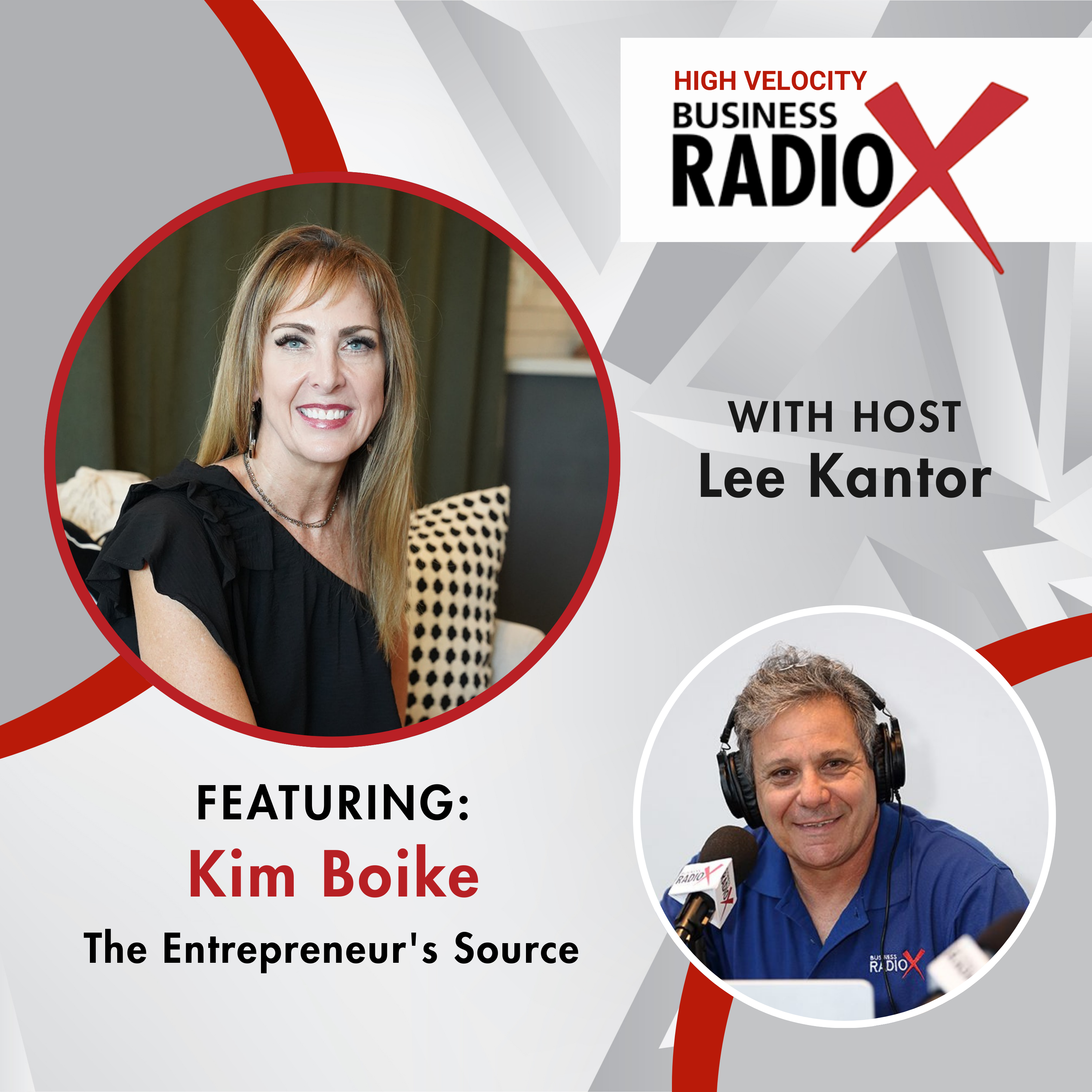

In this episode of High Velocity Radio, Lee Kantor interviews Kim Boike, a career ownership coach with The Entrepreneur’s Source. Kim shares her journey from teaching to coaching, and explains how she helps clients—especially those in career transition—explore new professional paths, including entrepreneurship and franchising. She discusses her holistic, supportive approach, the value of networking, and her focus on helping veterans and others discover fulfilling, flexible careers. Kim’s story and insights offer encouragement and practical advice for anyone navigating job changes or considering business ownership. Listeners can connect with Kim for further resources and coaching support.

 Kim Boike was born and raised in the suburbs of Detroit, Michigan. Six years ago, her husband’s career brought their family to Arizona. Her professional background is in elementary education, where she spent time as a classroom teacher and later as a Reading Specialist. After relocating to Arizona, she continued teaching for a few years before deciding to pursue a new professional direction.
 This transcript is machine transcribed by
TRANSCRIPT
Intro: Broadcasting live from the Business RadioX studios in Atlanta, Georgia. It’s time for High Velocity Radio.
Lee Kantor: Lee Kantor here. Another episode of High Velocity Radio, and this is going to be a good one. Today on the show we have career ownership coach with The Entrepreneur’s Source. Kim, welcome.
Kim Boike: Thank you Lee. Thanks for having me.
Lee Kantor: Well, I’m excited to learn what you’re up to. I have never heard of someone that is a career ownership coach. Tell me about it.
Kim Boike: Yes, yes. So what we do is we work with people that are in a transition. Maybe they’ve been laid off. Maybe they want to keep their jobs but have a multiple stream of income or diversify their portfolios, and they don’t really know exactly what step to take. And what we do is we work with what diving deep into? What are their goals, needs and expectations? You know, we want to talk to them holistically about it. You know, what are your professional goals as well as your personal goals? We think that so many people in the past have negated personal or didn’t look at them together. So we want to make sure that we’re looking at both areas and seeing what those goals are. And then what we do is we look at the different paths, whether what paths you can take to reach those goals and expectations. You know, is it looking at, you know, staying in the same industry? Is it looking at maybe more investment in stocks or real estate, or is it even learning about business ownership, whether you start your own business or looking into franchising? And the space that I’m affiliated with are the franchises. And it’s not about pushing people down that path, but it’s about giving people a safe space to learn about the franchising and to see if it’s a path for them or not. But we just want people to be open to a lot of what other possibilities are out there other than the traditional corporate or W-2 jobs.
Lee Kantor: So what’s your background? How’d you get involved in this line of work?
Kim Boike: Yeah, no, I was an elementary school teacher for 27 years. I worked in elementary schools, was in the classroom for about nine, and the rest of the time I was a reading specialist, so worked with the kids at risk and reading, uh, worked with community administration, working with closely with the teachers, uh, giving education when we could and when we moved out here. We’re originally from Detroit, and we moved out to Arizona six years ago because my husband’s company moved us out here. So out here, I just it wasn’t making sense anymore. I wasn’t working for the same pension. I took a huge pay cut. And so I just thought, you know, if I’m ever going to do anything different, now is the time to do it. So my husband and I, we were contacted by a coach just like myself, and we actually went through the exact same process that I take my clients through. And I learned about, you know, what my goals and expectations were. You know, we take a deeper dive. So I really had to really think about it and not just think about it on the surface level. Um, and what I really wanted, I really wanted a flexible schedule, you know, being from Detroit, where it’s cold in the winter, we have a lot of company that comes out here, you know, January through April.
Kim Boike: Uh, so I wanted to be able to have a flexible schedule and be able to spend time with family and friends. Also, if my, uh, parents ever needed my help, my sister, our family back home, uh, we wanted to or I wanted to be able to have that flexibility to go back and help them. And then another one was, if my husband’s job moved us again, I didn’t want to have to quit what I was doing to start over. So Looking at franchising and realizing that it had a, you know, systems and processes, processes that are in place, um, really gave me what I was looking for. Um, and so I decided myself to be a franchisee, owner of the Entrepreneur Source. Um, and there are many brands that we introduce people to, not just the entrepreneur source, but that’s just the one that I chose, um, with my coach, because that’s the one that met my goals and expectations the best.
Lee Kantor: So when you began this coaching relationship with your coach, was it something that is supposed to just kind of triage your situation that you’re in initially, or does the coach kind of stick with you just to make sure everything’s going well and to continue coaching you for other opportunities? Or is it something that you were like, I don’t know what to do next, and then they help you figure out what to do next? And then that’s kind of the end of the coaching relationship.
Kim Boike: Yeah. No, no, we, uh, we definitely. What we always want to do is we want to help our, uh, clients in any way that we can. You know, franchising isn’t the only pathway, right? That’s just the ones that I am set up for education. Uh, to help specifically with. If you decide to go down the franchising path and learn about it, then I do guide you through that experience. I do not leave you. I guide you all the way up until you sign. And even after, um, as investing and signing with a franchise, if you choose to go down that path, if you realize that franchising is not for you, that’s okay. You know it’s not for everybody. But at least you had taken that, um, time to learn about it and educate yourself about it. The one thing, uh, that we have after that, then, is like, if you choose to go back into the corporate and that’s where you feel that your calling is still, then we do have affiliates that we can set you up with, and they will help you look for a job. You know, they are a paid service where I am not a paid service. Um, my, uh, coaching and guidance is free of charge. Um, I get paid by a third party if they do invest. But we have enough people that go down that path that we’re not salesy, we’re not pushy, we’re not putting pressure onto people. We’re more about the education, which is another reason why I fell in love and chose this because it, you know, matched up with my background, with education. Um, if you choose to go into independent business, uh, instead of franchising, then we have an organization that we can set you up with that gives free mentoring and, uh, very inexpensive webinars and, um, seminars that they’ll give in person and, and online to help people start with, uh, their own business.
Lee Kantor: So when you meet somebody that’s kind of in this transitional, um, kind of place, then you can help educate them about all the variety of possibilities, and then you can point them in the right direction, no matter which kind of path they choose.
Kim Boike: Yes, we we first of all, like I said, we talk about their goals and expectations. Then we talk about the paths to take, and then we talk about the pros and cons of all the different paths, you know? And where are they coming from? What are their thoughts about these different paths, um, in order to reach their goals and expectations? Um, and then what we do then with me, if they’re going to choose to go into franchising, then it is a guided process. And we talk specifically like what type of business ownership would you like to learn about? What type of industry would you be interested in learning about? And we tell people to not don’t just pick on your passions, um, and experience. If there’s anything out there that you would be interested in learning about, you know, you don’t have to be the expert in enfranchising. Uh, or in that that industry, uh, you’re going to hire those people that are going to be working in the business. You’re going to be working on the business. Um, and then with the franchising, you get the training, you get the coaching, um, and all the support as you’re moving through the business, uh, to help you in that area. And then what we do is we go ahead and present them with three different possibilities to start learning. They have several, you know, 4 to 5 conversations with franchisors just to get a good understanding of the business, the model, how territories are set up and then the financials.
Kim Boike: And then they’re going to go into validation calls where they get to have conversations with the franchisees, where they are getting to get more of the nuts and bolts out of it. So, you know, they get to ask the people that are in the trenches working right now, how has this, uh, process and this business been for you? What were your challenges? How did you get through those challenges? What are are the franchisors supporting you in the way that they’re telling me that they would support you? Um, and I always tell my clients, you know, ask them if the franchisees if they would do it again. You know, that’s a really important question. And, um, you know, you can get a lot of information by talking with them. So then they take that information that they’ve gained, and then we’re talking again looking at their goals and expectations. Is this something that can help you get to that? Yes. And if so, do you want to move forward? If not, do you want to continue learning about franchises, maybe a different brand or, um, you know, and if they come to the the consensus that, yes, they want to keep learning, we’ll keep having phone calls. If they don’t, then we go ahead and see where I can pass them off to to learn more about either real estate, stock markets or other ways to invest or looking for a corporate job as well.
Lee Kantor: Now, can you remember back when you were, um, thinking about, okay, when you made the decision? Okay, I’m not going to get back to teaching because you spent your I mean, a long time, I mean, several decades involved in teaching, you know, through, uh, the school systems. And that was kind of your boss for, I guess, what, 20 or 30 years. Right?
Kim Boike: Right.
Lee Kantor: And then, um, when you said, okay, that’s not for me. Do you remember, like, did you go online and Google? What should I do next, like, or did you find, like, how’d you find this coach to help kind of guide you? Because I would think at that moment when you make that decision, you know, it’s one of those the world’s your oyster. Now, you could pick anything and then at some point you need some help in curating the list and narrow things down. And then you found a coach. But did you go online first and then find a coach? Like how did that find a coach part happen?
Kim Boike: Yeah, actually my husband, it was a LinkedIn outreach. Uh, that, uh, coach that contacted my husband and my husband actually responded back to them. So I didn’t I didn’t even think I was going to go into franchising. Uh, I had always thought of business ownership, but I just never knew what to do or how to how to get a business even started. So I didn’t even think about franchising until he had, uh, responded to the coaches, um, outreach. Um, so if people are looking for a coach, yes, you can Google and you can find coaches. But I never even knew that this even existed until we started going through the process. So we do do LinkedIn outreaches. We do do, um, like franchise shows. We do do webinars and networking and things like that, trying to get our names out, uh, and letting people know that we do have this opportunity out there for people to take the chance. But that is how we were engaged, um, was through a LinkedIn outreach.
Lee Kantor: So. But the outreach wasn’t to you. That was to your husband was what were you doing anything to look around? Were you, like talking to people or you were just like, I guess I’m not going to teach anymore. Oh you were.
Kim Boike: No, I wasn’t going to teach anymore. I just decided, um, it just didn’t fit our family anymore with the pay cut and, um, what was going on with our family at the time? So I took, kind of took the year to just kind of be home for a while and just kind of really think about what I wanted to do, not not knowing which direction to go. Uh, I started getting antsy. And I’m like, all right, now it’s time for me to go back to work. I, I enjoy work, uh, so I wanted to so honestly, I was just looking on LinkedIn, looking for jobs. Uh, I had been lucky enough to get at least one interview with one company, and I interviewed, had several interviews with them. Uh, but I really noticed that looking for a job was not at all what had been, you know, 27 years ago. You know, how do I get through the Linked in AI? You know, or, you know, get past that so that somebody can recognize my resume. You know, back in the day, I can make a phone call or even go into the office and hand my resume in, at least have a human connection, um, and at least maybe show my personality where it’s not like that these days, you know, um, they have filters, and you just.
Kim Boike: I was having a hard time getting noticed, so that was frustrating in itself. And I also see that with a lot of my clients as well. So we were lucky enough, honestly, uh, that a coach reached out to my husband and he started going through the process. At first I didn’t even I’m like, no, no, that’s your thing. And then he’s like, no, I really think you need to get on here and start listening. So I did, and yes, I wish I would have gotten done sooner, even, um, knowing what I know now, but I didn’t know what I didn’t know until I started learning. And that’s what I tell people. You know, you may have some ideas of franchising. Um, you know, people think of fast food restaurants right away. Um, or, you know, some of the, the bad things, you know. Oh, my uncle’s friend had a franchise, and they didn’t do so well. Um, but we want to go ahead. And it was nice for me and my husband to go through this experience, because we got to actually talk to the people that are doing it right now and what their experiences is, are, and not base it on other people’s perception of it.
Lee Kantor: Now, when you decided, okay, I’m going to do this now, and in your whole career, you never really had to do selling. Like you were there as a service provider, as a teacher and as a reading instructor. Um, and now you have to, you know, sell somebody something and ask for money. And for some people that’s, uh, you know, a little I don’t want to say difficult, but it’s challenging. It’s something new. It’s just they’ve just never had that. Hey, do you want to buy this thing? And I know when you’re selling in the way this is framed for people, it’s more of a. Here. I’m showing you options. Is this something you’re you’re comfortable with or want to learn more about? And it’s very you have a very elegant sales process. But ultimately you’re asking someone to invest a lot of money in something. Uh, so it’s a, you know, a high ticket sale. Uh, no matter how you frame it. And, you know, if it doesn’t work out, you know, they’re going to come to you and say, hey, you encourage me to do this. Did you feel any trepidation about that? Like, how did you kind of work through the emotions that are associated with selling somebody, you know, a you know, it could be their life savings.
Kim Boike: Right, right. No, it, um, it definitely was a concern of mine because I am not a sales person. I always said that, um, I was glad that my husband received the outreach, because I probably would have just deleted it because that’s what I do. I say yes too quickly, so I just have learned to say no right away. So, um, my with learning about the entrepreneur source and then the two, two other brands that we were looking at, um, the entrepreneur source for me was less of a hard sale. It was more about the education. And that’s what made me feel comfortable, you know, giving people that safe space to learn. And I had people that trained me. I had people that, um, are supportive, you know, through our franchise and coach us through that, um, uncertainty and through those fear feelings. Um, you know, can I do this imposter syndrome? You know, it definitely doesn’t happen overnight. It definitely is something that takes time. Um, and that was new for me. Um, but honestly, I feel like maybe like the first sales thing I have to do is just get them to move forward. Um, and I and but from my clients in the past, I’m always asking them, how are you? Are you getting value out of this? You know, give me some feedback. And a lot of it has been that they have felt very understood. They were given that safe space. They didn’t have the pressure. Um, obviously, if it’s not right for them, it’s not right for them. And then, like I said. And that’s okay. Um, it just happened to be right for us. Um, but you don’t know what you don’t know until you start learning. And then just having that opportunity to learn, um, is really was a nice experience for us and have been for many of our clients.
Lee Kantor: Now, do you remember that first person that you approached, that you talked talk to that said, hey, this is something I’m interested in and then went through the entire process and then ultimately, you know, purchase one of the franchises that you recommended.
Kim Boike: Yes, yes. He, uh, was in it. He was in corporate and had been laid off unexpectedly and, uh, didn’t know what to do. So was looking for jobs, uh, having a hard time with the AI as well. And so it’s like, you know what? I’ve got time right now. You know, he’s laid off, I’ve got time. And we always encourage people to take a parallel path. Don’t just do this. Also look for a job, you know, and I have many clients that will even get a job and continue the process. Um, but he, uh, he my my client, my first one that had triggered has, uh, went into a senior care service full time, uh, helping, um, families look for places, uh, for their family members. Um, and he is enjoying it. So in contact with him today? He is enjoying it and, um, really feels like he has a good purpose and he’s got control of his his time, his energy, his efforts, and he’s working and working hard for himself and making money for himself instead of for somebody else.
Lee Kantor: Now, as part of being a business owner yourself, is there activities you have to do every day to stay top of mind to find that next coaching client, or is that part of the playbook that they share with you?
Kim Boike: Um, yes. That is definitely part of the playbook that they share. Uh, we have LinkedIn campaigns that they have taught us how to use and how to, um, I use those effectively. Uh, we also are encouraged to get out and network. Um, networking was not easy for me in the beginning. I didn’t even do it until after the first year, gave myself the first year just to learn the business and get used to the business. Now I’m out in networking groups and it has just been a very welcoming and inviting and wonderful experience, uh, with the people, um, that are there. They’re just really there to help you and to help grow your business, uh, in ways and then also encouraged to go to franchise shows, um, and, you know, even do webinars and get involved with the community, um, in different ways because you never know who’s going to need you. And it may not even be the person, uh, sitting right next to me. Like I go to the networking events and those people don’t need me. They already have businesses, but it’s somebody maybe that they know that gets laid off later on down the line. And another one I’m really my goal this year is to really get involved more with the veterans. I’ve done recruit military, um, even working with the spouses of military, um, you know, coming out of that military life into civilian life for the veterans, uh, can always be challenging. Um, and, you know, looking for a corporate is definitely one, uh, area to look at, but also look at business ownership to see if it’s for you or not.
Lee Kantor: Now, when you were, um, going to these networking, uh, meetings for the first time, was there did people give you advice or tips on how to get the most out of those experiences? Because again, that’s another area that if the thing that’s interesting for one of the things that are interesting about your path is that you came from an environment that isn’t very it’s not a businessy thing. You’re, you’re you’re a really a public servant helping children. And now, uh, just from a mindset standpoint, like when you entered work every day, you were going to talk to a child about, you know, their reading or help them be better at better human beings. And now you’re helping somebody with their career. I know it’s learning and education, but it’s just a different type of interaction that you have to do now, every day after I’ve done done something for, you know, 30 years the other way and it just the mindset shift that it takes, it takes someone really strong and resourceful and resilient. And it just kudos to you for making that transition. And I’m sure it wasn’t it. There had to be some bumps in the road of doing that.
Kim Boike: Right. Well thank you. Um, but yes it’s it’s never easy right. If it was easy, everyone would do it. Uh, that’s what I tell my clients too, uh, that there definitely is growth. Um, and a mindset shift, um, as you go through the process and still ongoing, I’m not even where I want to be. You know, I’m always going to be improving myself in one way or the other. Um, it could be technical. It could be, um, just emotional, just myself. Talk to myself. You know, I’m not listening to those negative thoughts. Um, but getting the coaching through the franchising. You know, they have the coaching that they’ll give to you. Um, has been very beneficial. Uh, and then the support from other franchisees that are doing the exact same thing that I am. I’ve got people to, uh, rely on that. Hey, this is what’s going on for me today. You know, people in my training group, actually, we’re, you know, we’re talking and understanding and talking about challenges. Um, and then we also have the veterans, you know, that have been here for a while. The people that you know are five years ahead of me, you know, okay, you’re at this spot now, but how did you get there when you were at my spot, you know. What tips can you help me? And and a lot of times, it’s not even just with the business. It is mindset. For me, my biggest challenge probably is the mindset, um, because, you know, that imposter syndrome comes in and, like, you’re a teacher before Kim, you know, and you know, you’re like you said, like a public servant. Um, what what makes you think that you can do this now? Well, why can’t I do it? You know, and that negative talk.
Kim Boike: I really had to train my brain not to go there and to push it away right away and not listen to it. Um, because everyone is. A a growing, um, career that challenges them. I like to be challenged. So it does definitely challenges me. It definitely gets me out of my comfort zone. But one thing I’ve learned through this whole process is that if you’re you’re not growing, if you’re in your comfort zone, the only way that you’re going to grow is if you get to get yourself uncomfortable and getting past those barriers. Um, and so in that way, it has just been exponential, uh, experience for me. And I have appreciated all the support that everyone gives me. And everyone wants you to be successful, you know, um, it’s not worry. We’re not worried about oversaturation or things like that. Everyone’s rooting for you. And I also, and I tell my clients the same thing. Put yourself around like minded people. You know, you want to, uh, be around the positive, the optimistic people. You don’t want to be around the naysayers, uh, because that will just bring you down. And we talk about that sometimes. It’s your family and your friends. You know, they have the, um, your best interest at heart, but they’re not always as optimistic or can see the big picture like you can. So you have to be careful with who you’re sharing, what you’re doing with, um, until you have come to that absolute decision that this is what you’re doing and I don’t care what you say, I’m going to go ahead and do this. Um, but yeah, it’s not easy, but it’s, um, it’s been exciting, to say the least.
Lee Kantor: Now, in your previous work, I’m sure you had rewarding moments on the regular on a regular basis when kids got the, you know, the aha moment when they figured something out or you helped them kind of learn something new. Are you? Can you share maybe a rewarding moment that has happened since you’ve changed gears into this entrepreneurial venture? Is there a moment that has happened where you’re like, okay, I’m on the right path. This is making an impact.
Kim Boike: Yes, yes. No. Uh, I love working with the kids. You get those? You know, just making them feel safe, secure and, um, feeling and letting them know that they’re doing a great job always made me feel good. Uh, of course, students now that I’m working with are older. Uh, could very easily well be my old students, um, with how many years I taught. So I look at it that way as well. But, yes, uh, I have learned that there is a statistic within our franchise that there are 95% of the people that have gone into business with us, uh, have actually gone into something that they would have dismissed early on. But what we do is we really do challenge people to be open minded to the different possibilities. I want you to learn in the beginning. I don’t want you making decisions. I’ll learn about the business models, learn about the finances, learn about absentee or semi absentee and full time owner operator. See what it will get you. What the difference is. With that in mind, I’ve had many clients of course start looking at things they’re passionate about, uh, things that they have experience with.
Kim Boike: But when they learn that maybe those passions aren’t going to give them the income and the lifestyle that they’re looking for, uh, when they are hesitant with me in the beginning about looking at maybe plumbing, you know, or I have a female looking at automotive or I have a male looking at beauty, beauty and healthcare, you know, wealth care. They, um, they kind of hesitate, you know, and I said, I want you to learn, um, and then when they have that aha moment of like, wow, I never thought that this business could do this for me. That’s an exciting time. And that’s when they see, you know, why we challenge them, why we want them to keep that, be open to the different possibilities. Think about possibilities, not probabilities. Um, it’s very interesting. And that’s why I tell them you don’t know what you don’t know until you start learning. So when they have those, uh, insights and are finding out that there’s industries out there that they never even thought of, uh, that could give them their income, lifestyle, wealth and equity goals. Um, that gets me excited.
Lee Kantor: So if somebody wants to learn more, have a more substantive conversation with you. What is the website? What’s the best way to connect?
Kim Boike: Yes. They can uh, go to my website. At. And my, uh, you can read more about what we do. We have podcasts. We have a link to my calendar. Uh, there’s, uh, testimonials. And, uh, I’d be happy to have, uh, a call just to see if this is something that would be, um, kind of helpful to you. You know, if I, if I would have known that this opportunity was out there, I now wish I did. I would have done this a long time ago. I just never knew the opportunity was available.
Lee Kantor: And that’s k b o I k dot e o u r c e.com. Kim, thank you so much for sharing your story today. You’re doing such important work and we appreciate you.
Kim Boike: Thank you Lee I appreciate it.
Lee Kantor: All right. This is Lee Kantor. We’ll see you all next time on High Velocity Radio.














