Business RadioX ®

  • Home
  • Business RadioX ® Communities
    • Southeast
      • Alabama
        • Birmingham
      • Florida
        • Orlando
        • Pensacola
        • South Florida
        • Tampa
        • Tallahassee
      • Georgia
        • Atlanta
        • Cherokee
        • Forsyth
        • Greater Perimeter
        • Gwinnett
        • North Fulton
        • North Georgia
        • Northeast Georgia
        • Rome
        • Savannah
      • Louisiana
        • New Orleans
      • North Carolina
        • Charlotte
        • Raleigh
      • Tennessee
        • Chattanooga
        • Nashville
      • Virginia
        • Richmond
    • South Central
      • Arkansas
        • Northwest Arkansas
    • Midwest
      • Illinois
        • Chicago
      • Michigan
        • Detroit
      • Minnesota
        • Minneapolis St. Paul
      • Missouri
        • St. Louis
      • Ohio
        • Cleveland
        • Columbus
        • Dayton
    • Southwest
      • Arizona
        • Phoenix
        • Tucson
        • Valley
      • Texas
        • Austin
        • Dallas
        • Houston
    • West
      • California
        • Bay Area
        • LA
        • Pasadena
      • Colorado
        • Denver
      • Hawaii
        • Oahu
  • FAQs
  • About Us
    • Our Mission
    • Our Audience
    • Why It Works
    • What People Are Saying
    • BRX in the News
  • Resources
    • BRX Pro Tips
    • B2B Marketing: The 4Rs
    • High Velocity Selling Habits
    • Why Most B2B Media Strategies Fail
    • 9 Reasons To Sponsor A Business RadioX ® Show
  • Partner With Us
  • Veteran Business RadioX ®

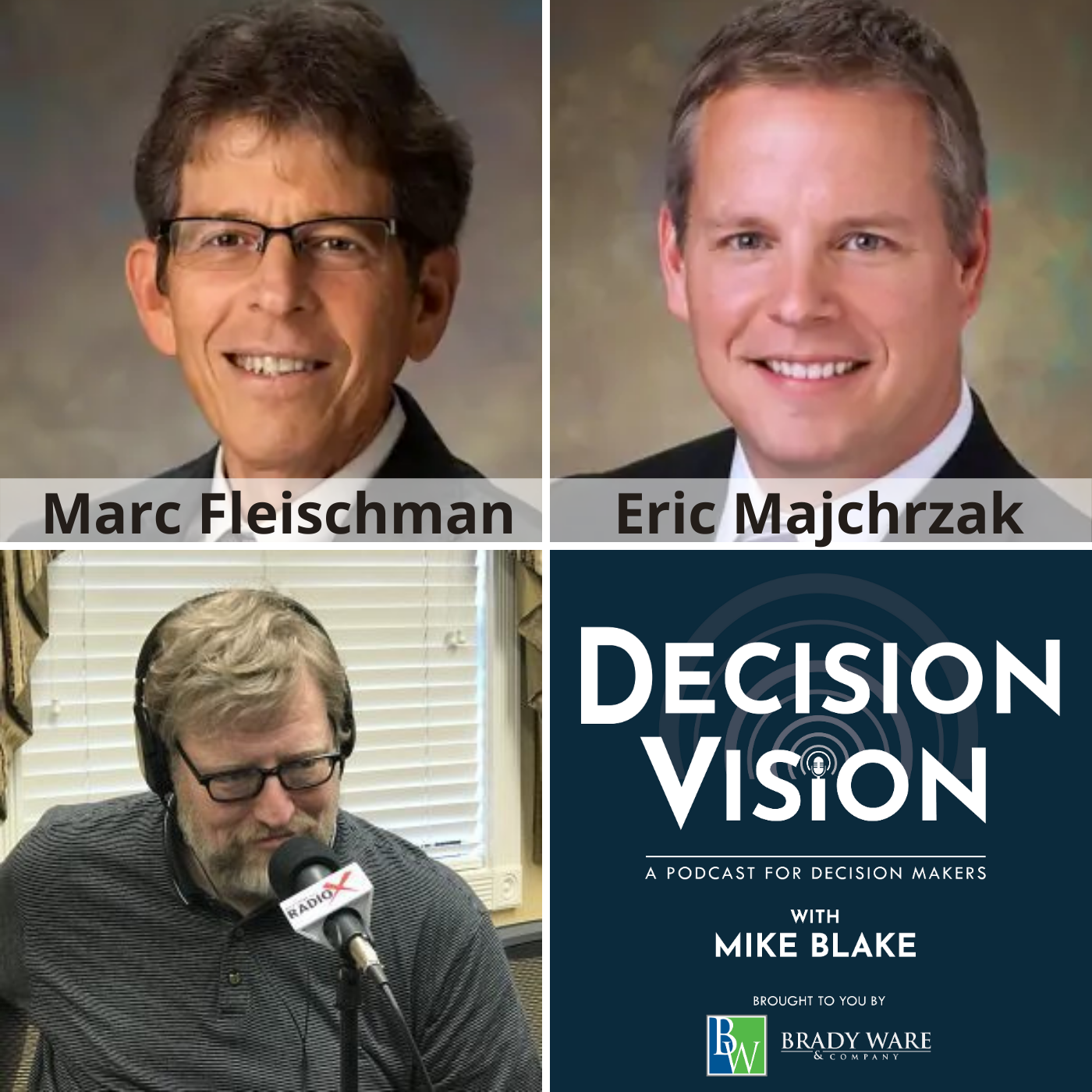
Decision Vision Episode 106: Should We Think Outside the Box for Our Next Chief Executive? – An Interview with Marc Fleischman and Eric Majchrzak, BeachFleischman

March 4, 2021 by John Ray

BeachFleischman
Decision Vision
Decision Vision Episode 106: Should We Think Outside the Box for Our Next Chief Executive? - An Interview with Marc Fleischman and Eric Majchrzak, BeachFleischman
Loading
00:00 /
RSS Feed
Share
Link
Embed

Download file

BeachFleischmanDecision Vision Episode 106:  Should We Think Outside the Box for Our Next Chief Executive? – An Interview with Marc Fleischman and Eric Majchrzak, BeachFleischman

When choosing a new CEO, should you consider unconventional options? How do you transition the CEO role to a non-founder? Marc Fleischman and Eric Majchrzak are in a management succession like this at their firm, BeachFleischman, and they joined host Mike Blake to discuss their own experience. “Decision Vision” is presented by Brady Ware & Company.

BeachFleischman PC

BeachFleischman PC is Arizona’s largest locally-owned CPA firm and a “Top 200” largest CPA firm in the U.S. The firm has over 200 client service and administrative professionals and provides accounting, assurance, tax, and strategic operations & advisory services to businesses (U.S. and foreign-based), organizations and individuals. The firm serves clients doing business domestically and internationally and specializes in a variety of Industry-related practice areas, including cannabis, construction, healthcare, real estate, manufacturing, hospitality, technology, nonprofit and professional service businesses. BeachFleischman has subsidiaries, including Pinnacle Plan Design LLC, a national provider of qualified retirement plan consulting, design, administration and actuarial services; MOD Ventures LLC, a virtual client accounting services and consulting firm; and Contempo HCM LLC, a payroll and human capital management company. Offices are in Tucson (headquarters) and Phoenix.

Company website | LinkedIn | Twitter

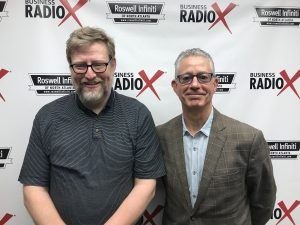
Marc Fleischman, CEO, BeachFleischman PC

BeachFleischman
Marc Fleischman, BeachFleischman PC

Marc Fleischman is a founding shareholder and current CEO of BeachFleischman PC, an accounting and consulting firm with offices in Tucson and Phoenix Arizona founded in 1990. The firm has approximately 200 office and remote employees. Marc retires at the end of 2021 and is currently mentoring his replacement to share knowledge and experience.

Eric Majchrzak, Chief Strategy Officer, BeachFleischman PC

Eric Majchrzak, BeachFleischman PC

Eric Majchrzak is a shareholder and chief strategy officer of BeachFleischman PC. He is also the firm’s appointed CEO-elect and will assume the role in 2022. He joined BeachFleischman in 2012 and is responsible for the firm’s overall strategic growth initiatives, including innovation, service line development, M&A, joint ventures, institutional firm branding, market alignment, and community outreach.


Mike Blake, Brady Ware & Company

Mike Blake, Host of the “Decision Vision” podcast series

Michael Blake is the host of the “Decision Vision” podcast series and a Director of Brady Ware & Company. Mike specializes in the valuation of intellectual property-driven firms, such as software firms, aerospace firms, and professional services firms, most frequently in the capacity as a transaction advisor, helping clients obtain great outcomes from complex transaction opportunities. He is also a specialist in the appraisal of intellectual properties as stand-alone assets, such as software, trade secrets, and patents.

Mike has been a full-time business appraiser for 13 years with public accounting firms, boutique business appraisal firms, and an owner of his own firm. Prior to that, he spent 8 years in venture capital and investment banking, including transactions in the U.S., Israel, Russia, Ukraine, and Belarus.

Brady Ware & Company

Brady Ware & Company is a regional full-service accounting and advisory firm which helps businesses and entrepreneurs make visions a reality. Brady Ware services clients nationally from its offices in Alpharetta, GA; Columbus and Dayton, OH; and Richmond, IN. The firm is growth-minded, committed to the regions in which they operate, and most importantly, they make significant investments in their people and service offerings to meet the changing financial needs of those they are privileged to serve. The firm is dedicated to providing results that make a difference for its clients.

Decision Vision Podcast Series

“Decision Vision” is a podcast covering topics and issues facing small business owners and connecting them with solutions from leading experts. This series is presented by Brady Ware & Company. If you are a decision-maker for a small business, we’d love to hear from you. Contact us at decisionvision@bradyware.com and make sure to listen to every Thursday to the “Decision Vision” podcast.

Past episodes of “Decision Vision” can be found at decisionvisionpodcast.com. “Decision Vision” is produced and broadcast by the North Fulton studio of Business RadioX®.

Visit Brady Ware & Company on social media:

LinkedIn:  https://www.linkedin.com/company/brady-ware/

Facebook: https://www.facebook.com/bradywareCPAs/

Twitter: https://twitter.com/BradyWare

Instagram: https://www.instagram.com/bradywarecompany/

TRANSCRIPT

Intro: [00:00:01] Welcome to Decision Vision, a podcast series focusing on critical business decisions. Brought to you by Brady Ware & Company. Brady Ware is a regional full service accounting and advisory firm that helps businesses and entrepreneurs make visions a reality.

Mike Blake: [00:00:20] Welcome to Decision Vision, a podcast giving you, the listener, clear vision to make great decisions. In each episode, we discuss the process of decision making on a different topic from the business owners’ or executives’ perspective. We aren’t necessarily telling you what to do, but we can put you in a position to make an informed decision on your own and understand when you might need help along the way.

Mike Blake: [00:00:39] My name is Mike Blake, and I’m your host for today’s program. I’m a director at Brady Ware & Company, a full service accounting firm based in Dayton, Ohio, with offices in Dayton; Columbus, Ohio; Richmond, Indiana; and Alpharetta, Georgia. Brady Ware is sponsoring this podcast, which is being recorded in Atlanta per social distancing protocols. If you like this podcast, please subscribe on your favorite podcast aggregator, and please consider leaving a review of the podcast as well.

Mike Blake: [00:01:08] Today’s topic is, Should we think outside the box for our next chief executive? And this is, I think in some respects, a hot topic, I think more companies are thinking outside the box in terms of retaining their next chief executive, because industries are finding that their markets are changing so rapidly. And this is even before we get into a coronavirus discussion, which has, basically, just yanked the tablecloth and everything sort of come crashing down wherever it’s going to come down. But, you know, we’re seeing this before.

Mike Blake: [00:01:46] And it’s an interesting conversation. If you look at Ford, right? They got rid of Mark Fields, he was a lifer inside the company and all he knew was making cars – I don’t mean to trivialize that. Knowing how to make cars is hard, just ask Elon Musk, especially doing it at scale. But they replaced him with a software guy – a woman, actually, from Silicon Valley – because they have decided that the future of driving is on autonomous vehicles. General Motors has done something similar because they are making a pretty all in bet on electrification.

Mike Blake: [00:02:32] Now, sometimes it doesn’t necessarily go as well. Those of us who are old enough may remember when Steve Jobs was forced out of Apple in the late 1980s. They hired a Pepsi executive to replace him. And they brought out products such as the Apple Newton, and if you’ve never heard of it, there’s probably a reason for that. But, basically, that was sort of the Neanderthal iPad and it was ten years too early before the the supporting technology was really ready to to support that kind of device.

Mike Blake: [00:03:08] So, it doesn’t necessarily all work out. But it is an interesting and a courageous decision and, I think, in particular as we’re in an interesting time where demographics are dictating turnover. And in my world where I live and I do a lot of transaction advisory, we tend to think that that is going to lead to a change in ownership, where people are going to be selling their companies because they feel like they’re too old to run them. Interestingly enough, we’ve thought that for the last ten years, we thought there was going be a massive turnover of companies. And that actually really hasn’t happened the way that we thought it was going to be, because it turns out that, you know, a lot of people still have their marbles at age 70 and can run their company. And there’s also a lot of data to suggest that the least healthy thing you can do is retire. But that’ll be a subject maybe for another podcast.

Mike Blake: [00:04:04] But it also brings to mind another issue, which is at the forefront even of Brady Ware, which is succession. That ownership is necessarily going to turn over at some point. And in professional services, one of the big tests of staying power and, frankly, whether the firm has value is, whether or not you’re able to have a successful transition of power, basically, and still retain the things about the firm that make it useful and valuable today while still positioning itself for the new challenges and opportunities that exist for that firm at the time that the succession is taking place.

Mike Blake: [00:04:51] And so, you know, for those reasons, I think this is an interesting topic. I think it will resonate with a lot of people, whether you’re in that succession plan yourself, whether you are maybe subject to that succession plan, or maybe you’re thinking that’s five to ten years away. And if there’s anything I’ve learned about succession, I’m not sure it’s ever too early to start thinking about it. Certainly, ten years is not too early because as Yogi Berra is famous for saying, it gets late early.

Mike Blake: [00:05:19] So, joining us today are Marc Fleischman and Eric Majchrzak, who are the current and future CEOs of BeachFleischman PC out in Arizona. So, we’re going to get a really interesting kind of perspective here of the full spectrum of transition, if you will.

Mike Blake: [00:05:40] Marc Fleischman is a founding shareholder and current CEO of BeachFleischman PC, an accounting and consulting firm with offices in Tucson and Phoenix, Arizona. Founded in 1990, the firm has approximately 200 office and remote employees. Marc is retiring at the end of 2021 – this year – and is currently mentoring his replacement to share knowledge and experience. And that replacement is Eric Majchrzak, who is a shareholder and chief strategy officer of BeachFleischman. He is also the firm’s appointed CEO-elect, and will assume that role at the start of 2022. He joined BeachFleischman in 2012, and is responsible for the firm’s overall strategic growth initiatives, including innovation, service line development, mergers and acquisitions, joint ventures, institutional firm branding, market alignment, and community outreach.

Mike Blake: [00:06:32] BeachFleischman PC is Arizona’s largest locally owned CPA firm and a top 200 largest CPA firm in the United States. The firm has over 200 client service and administrative professionals and provides accounting assurance, tax, and strategic operations and advisory services to business, U.S. and foreign based, organizations and individuals. The firm service clients doing business domestically and internationally and specializes in a variety of industry related practice areas, including cannabis, construction, health care, real estate, manufacturing, hospitality, technology, nonprofit, and professional service businesses. BeachFleischman has subsidiaries including Pinnacle Plan Design, LLC, a national provider of qualified retirement plan, consulting design administration and actuarial services; MOD Ventures, LLC, a client accounting services and consulting firm; and Contempo HCM, LLC, a payroll and human capital management company; offices are in Tucson and Phoenix. Marc and Eric, welcome to the program.

Marc Fleischman: [00:07:33] Thank you for having us.

Mike Blake: [00:07:35] So, lots of ground we can cover today. And although we have a general direction where we’re going to go, we’ll see if it stays that way. But the thing that I think is going to be helpful for the listener and myself to understand the context is, what are the circumstances leading to this transition? Marc, since you’re the one who’s currently in the seat and you’re leaving, I’ll ask you to kind of answer that first. What’s happening that’s leading to this change?

Marc Fleischman: [00:08:09] I’m happy to. Under our governance policy, at age 67 – which I’ll be this coming December – I need to sell my shares back. So, I will no longer be a shareholder in the corporation. As a result, we deemed it not appropriate for me to remain as CEO. And quite honestly, you mentioned earlier about retirement maybe not being good, I’m going to find out how good it is or how good it isn’t. And plan on, maybe, staying on as an advisor to the firm and helping where they need it, if they need it. But, basically, getting out of the way and allowing Eric and the team to lead into the future.

Mike Blake: [00:08:48] So, I’d like to pause on that for a moment, because, one, 67 is interesting to me because it’s a little older than I normally see accounting firms have. At Brady Ware, it’s 65. Other places I’ve worked, it’s 65. But can you answer for me – and Eric might be able to chime in too – why do a lot of professional services firms have a mandatory retirement age?

Marc Fleischman: [00:09:12] I think it relates primarily to succession and the ability to allow, number one, the relationships that have been fostered for a number of years. We have to transfer those relationships to new people, younger people. Otherwise, the client will no longer have a service provider that they feel comfortable working with. So, it’s necessary to start early. You talked about succession, maybe ten years is long enough or not long enough. Basically, here, we believe in continuous succession. Whereby, we are constantly attempting to – I’m going to use the term – pushdown client relationships, transferring them to younger people, giving them an opportunity so that there is a continuing success of the firm going forward.

Eric Majchrzak: [00:10:06] I would add, Marc just addressed the client side of things, which is very relevant. On the talent side of things, on the internal side, it creates more space for future leaders to step up. And it’s a great way to retain top talent is to have that succession plan in place so that others can step up and lead a practice, lead a division, become a future leader. And that’s always been part of our culture here. So, both on the client side and on the internal talent side, both very important.

Mike Blake: [00:10:40] So, I’d like to go back in time then to the point at which you decided or where you arrived at the point where you needed to name that successor. How long ago was that? Was that six months ago, a year ago, two years ago? How long has that transition practice been in place?

Marc Fleischman: [00:10:59] We started the process back in July of 2019, so we’re talking over a-year-and-a-half ago.

Mike Blake: [00:11:06] Okay. And then, how long has it been known that Eric is going to be the next person up?

Marc Fleischman: [00:11:13] Well, we made the announcement internally this November, but actually the selection was a full year before that. The shareholders and the committee that selected him knew of it, but everybody else did not.

Mike Blake: [00:11:28] Okay. So, it sounds like that it’s going to be 2020 or maybe even 2019 BC, before coronavirus. And think back to that time when you were deciding who was the right person to take on this role and this challenge, talk to me about about how you viewed your own firm. I love to hear about when you took inventory of its strengths and weaknesses. What did those kind of look like to you?

Marc Fleischman: [00:12:00] Well, from my standpoint, I think we were a successful firm, having been founded in 1990. We had a one long term CEO that that served that position almost 25 years. And then, I replaced him naturally. I mean his name was Beach. My name is Fleischman. It was a natural for me to take over after that. And I guess, I would say, that having been involved with my partner and my good friend since I got out of college many, many, many years ago, I was Avis to his Hertz. And I was always practicing to become number one.

Marc Fleischman: [00:12:42] So, in 2019, we were still in a growth mode as we are today. We were considering rolling out new opportunities, new service lines, and realized that it would probably would make sense to spend a fair amount of time with regards to being able to mentor our new CEO in that role. Because Mr. Beach and myself had been really co-drivers of this practice for a number of years as far as running it. And no one else had really had too much opportunity to fulfill those duties. And so, it was going to take a long time to transition, regardless of whether it was a practice partner or a nonpractice partner.

Mike Blake: [00:13:30] And so, it sounds like this is the first time that a nonpractice partner is really somebody not named Beach or Fleischman is going to be in that seat.

Marc Fleischman: [00:13:38] Exactly right.

Eric Majchrzak: [00:13:40] No pressure. No pressure, right, Mike?

Mike Blake: [00:13:42] Well, and that’s why I want to ask you about, you know, does that change your calculus about how you approach the job? Did it give you any pause in taking the job? Because, you know, as they say in coaching, you don’t want to be the guy that follows a guy. You want to be the guy that follows the guy that follows the guy. You know, did that give you any pause?

Eric Majchrzak: [00:14:05] You know, only to the extent that both Bruce and Marc are loved within the firm, significant shoes to fill, so the bar was set very high. And that’s never necessarily a position you want to walk into, where the bar is so high already to begin with, right? But I have to say, I think it’s a blessing because they have created a firm and a culture that’s committed to growth, that’s committed to clients, committed to our own people internally. And I can’t think of a better circumstance to step into this role than what we have here.

Eric Majchrzak: [00:14:45] During the time when we were going through the search process and the transition process back in the second half of 2019, there was significant change happening here. I mean, we have launched two of our new ventures, two brand new subsidiaries or two companies. We’re going through a lot of transformation on the technology side. We’re shifting our business model away from the hourly billing model. We’re entering new markets. So, there was just so much change happening. And, with change comes opportunity, of course. So, that was kind of the environment that we were looking at.

Eric Majchrzak: [00:15:29] And by the way, we’re no different than any other firm. Other firms are grappling with the same issues of innovation and disruption and that, so I just feel we’re in a really good spot to navigate through this.

Mike Blake: [00:15:45] Well, we certainly are. But what’s interesting in how you described the state of the firm, if you will, as the succession decision was taking place, everything you described to me was a business issue that could impact any business, whether it is an accounting or whether it was in manufacturing paper clips.

Eric Majchrzak: [00:16:07] Agree.

Mike Blake: [00:16:07] And I wonder and I suspect that that’s one of the reasons that may bring somebody in who’s not a practitioner of accountancy or one of the specific services as a viable, maybe even an optimal fit, because you weren’t trying to figure out how to get tax returns out more efficiently or figure out how to manage audit risk or whether you can take on public company audits or something. It is much more kind of – I hate to say garden variety – but really garden variety business stuff.

Eric Majchrzak: [00:16:38] Yeah. And in my case – and maybe the committee and Marc thought about this – the firm is my only client. I get to work on the business 100 percent of my time, because I don’t have a client list. I’m not serving clients externally. I get to work on the business. And I think because of the fast pace of change, that’s a good spot to be in where I can dedicate all of my time on anticipating change, anticipating our needs, and not being reactive.

Mike Blake: [00:17:14] I suspect – and I’d love you to comment – I think there are a lot of positives about that. One, you’re not distracted by a book of business. Two, you don’t have to worry about trying to regain that book of business if you then leave that role but want to stay in the firm, as can happen with CEOs. And, you know, something I talk about philosophically and it doesn’t always meet with a lot of receptivity, you know, I think partners should have the fewest billable hours in the firm anyway because you need that time to work on the business, and you’re set up in a way. So, I can’t fill out somebody’s tax returns anyway, so I may as well go work and make the firm more valuable.

Eric Majchrzak: [00:18:00] I know. That’s a great point. And Marc can, maybe, comment on the conversations that were happening internally at that time about just that, about wanting to have that person ultra focused on the business of the firm and where the accounting profession was headed. And what we need to do, the decisions today that we have to make that are going to align with the future exploration, and what that looks like.

Marc Fleischman: [00:18:31] It was kind of interesting the way we went about it. I mean, we created a committee of about eight shareholders from different disciplines, all of whom had decided that they didn’t want to put their name in the hat. We then asked for people to put their name in the hat. We had them go ahead and write us a little narrative about why they felt they were qualified. We went ahead and did some psychological testing to see how they matched up with myself and Mr. Beach, what their strengths and weaknesses might have looked like in comparison to ours. We went ahead and had an interview process with each one of them. And from my standpoint, it wasn’t even a question as to who was the most qualified and why.

Marc Fleischman: [00:19:25] Eric shined compared to my other partners, who I love very much. And they are my partners, so I am married to them from a financial sense. But I realized that Eric’s background and what he does every day made him uniquely qualified to take the position, number one. And number two, from the CPA firm standpoint, it wasn’t going to be we have to transition $1 million or 2 million book of business to somebody else to handle so that the next CEO would be able to have fewer billable hours and focus on running the business.

Mike Blake: [00:20:03] So, in those internal discussions with that committee, was there expressed any concern that, you know, “But Eric’s not a practitioner”. You know, was there any concern?

Marc Fleischman: [00:20:19] Oh, yes. Absolutely. I mean, we, as CPAs, we know everything and we know it best, right? And we work on our clients. We know how to do it better than anybody else. How could somebody who doesn’t do that understand what we do? But Eric’s been in the CPA profession, just not working on a multitude of clients, but one client, whether it’s with us or his predecessor firm, his whole accounting firm career. So, you know, he does understand what we do. We’ve developed a process here over the last – what will be – over two years of him learning more about what his partners do on a day-to-day basis, providing excellent quality service to clients and being involved with the community, and also training the new leaders of the firm that are going to come up behind him and everybody else.

Mike Blake: [00:21:21] So, if I understood you correctly, it sounds like you considered exclusively candidates that were already in the BeachFleischman house.

Marc Fleischman: [00:21:32] That is correct. We preferred to do that because we believe we have a culture that we want to be able to be easily sustained and built on. And feeling that if we brought an outsider in, we just don’t know what the ramifications might be. They could be great, but they could also be destructive. And to the extent we could find a qualified individual that’s already living under our roof, we were very happy with that possibility that being the decision.

Mike Blake: [00:22:02] And I think that’s an important point, because, you know, how far you go in terms of bringing in an “outsider” and Eric is kind of a tweener, sort of an inside outsider or an outside inner – I’m not sure which way I’d go with that. But, you know, as I mentioned a couple of examples in the intro, there are some firms that just decided they’ve got to go really outside. And I think what’s driving that is because they feel like there’s some massive trend upon which they must capitalize. Or there’s some massive existential threat that just cannot be handled with the internal firm culture. You know, with you, it seems like you prized quite a bit of continuity. And I want to be clear, some people may hear that and think that means complacent. I don’t think that’s what it means. It means exactly what it means, which is that continuity of culture is important.

Marc Fleischman: [00:22:55] Well, I think that, honestly, for success in a business like ours, culture is key. And if you disrupt it, you create earthquakes that you don’t know what buildings you may have built that are going to fall because of disrupting your culture.

Mike Blake: [00:23:15] So, I like both of you to kind of answer this next question if you can, because I think you both have different perspectives on the same thing. And that is, Marc, as the firm was considering Eric for this role and as Eric was considering taking it, was there a particular skill set or area of expertise that, Eric, you did have that made you sort of the right person for this role at this time?

Marc Fleischman: [00:23:45] Well, I’ll go first, and he may echo what I say. But, you know, marketing is key. We cannot live on our laurels. We have to be able to grow. And as a growth leader and a strategy leader, he had the the natural areas that we were looking at to be able to move the firm forward as we go into the unknown abyss of what the world is going to look like going forward, right? With all the transition and the fast growth that’s taking place in our particular world here of accounting firms, it’s necessary to be able to be a forward thinker and look towards what the future can bring before the future brings it to you. And so, I think he had this natural perspective being in the marketing area to be able to have those skills and traits and be able to exhibit it and lead the firm forward.

Eric Majchrzak: [00:24:50] Yeah. And I have a broad definition of marketing, which is perhaps even textbook, but there are 4Ps to the marketing mix. And so, it’s not just about promotion, and advertising, and social media, and lead generation, but there’s also product and service development, pricing, and business model. There is placement replace, which is about distribution channels and how you deliver that service. And, really, I’ve been working on all 4Ps of the marketing mix for my career.

Eric Majchrzak: [00:25:20] So, I think maybe some firms consider marketing just that fourth P, promotion. And along with that comes, you know, competitive pressures. You’re looking at disruption. You’re looking at trends in technology. I’ve done my best to stay in tune with where the profession is headed and what the risks are, and articulate that to the folks in my firm. So, I think that’s what I brought to the table, because everybody in our profession is talking about how firms now need to diversify, we need to get away from compliance, how we need to be consultants, how we need to be launching new practices and service lines and industry groups. And that stuff that I do every day working with my colleagues here, and so I have a level of comfort dealing with discomfort. Which I think is something that future leaders are going to have to get used to, is being uncomfortable a good amount of the time.

Mike Blake: [00:26:33] So, that’s a very interesting word, and a word with a lot of depth to it. So, I like to follow that up then with this question, do you agree with me, you are accepting a place that is not necessarily all that comfortable. There’s some comfort level, I get it, you have a history with the firm. You understand the firm. Obviously, you have the blessing of the leadership. But it’s not the same thing as, say, a lateral move to take another role that’s like yours, maybe let’s say, a bigger company. Is that fair to say?

Eric Majchrzak: [00:27:08] Yeah. I would say that’s fair, for sure.

Mike Blake: [00:27:11] So, how did you get comfortable as a candidate? As someone who is, obviously, a responsible steward of your own career that this was the right move? And in doing so – and I don’t want to be specific. I wouldn’t be that prying. It’s not necessarily be that specific – I’m curious, did that lead you to think about your terms of employment in a different way than you might have thought about your terms of employment had the move been more, you know, within the typical comfort zone?

Eric Majchrzak: [00:27:51] That’s a good question. I’ll address the earlier portion of your comment about being uncomfortable. I don’t know that even at this stage that I’m comfortable with the idea of being CEO. But I know it needs to happen. I know that the firm is going to be going through change that’s going to make a lot of people uncomfortable. I just feel it’s a job to do. I already felt the burden of a lot of these issues we’re talking about, about sustainability, about growth. So, it just seemed to be a natural transition for me to go from chief marketing and strategy officer to chief executive officer in terms of, you know, is it the right move for my career?

Eric Majchrzak: [00:28:45] You know, I feel like with a solid team in place, great people around me, a common vision, it’s going to make it that easier. In terms of having a special kind of agreement in your employment arrangement, I think that’s probably more relevant to, like we mentioned before, when you have an accountant or a partner that has a book of business with clients and they have to transition those clients away. I don’t have that. But what I do have, and I think there’s a general understanding, is, I am still going to be directing the strategic growth and marketing initiatives of the firm even as CEO. So, that is essentially my fallback where a lot of accountants would have some limited client where I’m still going to be working on guiding the firm where we need to be in the future, launching new growth initiatives, institutional branding, that kind of thing. So, I just gave you a lot to ponder there, but those are the things that kind of go through my head.

Mike Blake: [00:29:57] Yeah. I mean, that’s good. I mean, that’s exactly the kind of information we try to get on this podcast. So, I appreciate you giving us a lot. And I asked you a really hard question, so it’s fair that the answer is hard too. So, you’ve been in this transitional role, I’m guessing, for about 18 months, give or take. So, in that role, how have you found sort of the practical on the ground reception? Have people been wary? Have they been welcoming? Have there been areas of even obvious resistance? What has that looked like? What have you picked up either from direct cues or even informal body language, nonphysical cues? How’s that going?

Eric Majchrzak: [00:30:46] I mean, I feel I have been welcomed into the room. I certainly feel supported and I am being supported. I think there’s certainly no shortage of ideas and opinions, which I get a lot of those coming my way nowadays, maybe even more so than I did in my chief marketing and strategy role. And it’s good, because it’s all the things that – some of the things we need to be thinking about, having a holistic approach to governing the firm.

Eric Majchrzak: [00:31:21] You know, there’s a lot of folks commenting about how things aren’t so linear anymore and that competition is coming from all different angles. So, almost like an asymmetrical kind of approach to governing a firm. And I think that’s in our dialogue, we’re talking about it a lot. It’s in the language that we use. So, in that sense, I feel that the firm is identifying and my colleagues are identifying the issues at stake, which makes me feel pretty good. I don’t feel isolated in that sense. I do feel like we’re on the same page. Now, we may disagree with how to get there. But I think all in all, we have the same common vision, we have the same understanding of the issues at stake. And I think that’s important.

Mike Blake: [00:32:16] So, how are you two working together now, Eric and Mark? I mean, is it a de facto? I can see a lot of ways it’s working. Is it a de facto dual CEO role right now until the end of 2021? Is it still more of a master-apprentice kind of relationship? Something else that doesn’t come to mind that you describe differently? What does that look like between the two of you right now?

Marc Fleischman: [00:32:42] I would describe it as a mentor-mentee relationship, where I’m available to Eric 24/7, seven days a week, whenever he wants to reach out, whatever he wants to talk about, I’m there. I try to include him in in meetings where I think this is something maybe he hasn’t been exposed to, whether it’s dealing with insurance issues, banking issues, setting goals for partners. We had our goal setting session last month and he sat in all of the goal setting sessions that I would typically sit through with the partners, whether it’s the tax partner-in-charge or the A&A partner-in-charge also sitting in there.

Marc Fleischman: [00:33:29] So, he’s involved in everything I do other than a little bit of client work that I do, which no one wants to be involved in because it’s divorce work. So, you’ve got to be crazy to do what I do, and another reason that 67 is a good time to retire, because 65 probably would have been good, too, to get out of that type of work.

Marc Fleischman: [00:33:51] But in any case, I think that it is more mentor-mentee than anything else. I still sign the important stuff as necessary for the firm. But I think everybody is accepting that Eric is in his master’s degree program, and soon he’ll go through a quick doctorate, and then he’ll be ready to take on the world.

Eric Majchrzak: [00:34:16] And there is some structure behind that arrangement – and by the way, that’s a great place to be – and, Marc, literally, does have an open door policy. And I knock on his door several times a day to go in there and ask him his perspective on something, or ask him a question, or just to do an update. But we’ve had for a while now a standing recurring meeting where we meet on a regular basis, I did take the opportunity to kind of map out what I thought the transition should look like. Marc gave me his feedback on that. I attend an external managing partner, CEO Bootcamp, that I’m in right now. I am also making an effort to talk to CEOs and managing partners of other accounting firms and other businesses that are not related to accounting and just having a sounding board and a network of support and people that I can count on. And so, it’s all of that. And it’s been great. I couldn’t be happier with that process.

Mike Blake: [00:35:25] Eric, I think what you just said is interesting. And for it’s worth for me, I think it’s really smart, the fact you’re going outside and looking for different perspectives, both within the industry and outside. What is the most frequent question you find yourself asking? Or if that doesn’t jump to mind, what’s the most frequent piece of advice you’re hearing?

Eric Majchrzak: [00:35:49] Boy, that is a good question. You know, a lot of people are commenting and I agree with this, that, you know, you really have to govern with a shared set of core values and beliefs, so mission, vision, values. And I strongly believe in that. So, using those elements as the core tenets of who we are, the purpose of our firm, which will help us and help me make decisions in the future there’s a fork in the road and we’re not sure which way to go. I think part of that is going to be my job and part of that is going to be, you know, understanding what we’re all setting out to accomplish, and then choosing the path that gets us there. But the top down approach, the tone from the top is very important. So, I’ve been hearing a lot about that.

Eric Majchrzak: [00:36:49] I’ve also been getting some advice just about taking care of myself, making sure that I stay healthy, that I exercise, that I can have moments to clear my mind, and to think, and to do that kind of thing. So, I’ll have to work a little bit harder with that. And there’s a few other things in there. But, I would say, those are the main bits of advice that I’ve been receiving.

Mike Blake: [00:37:21] So, so far, you’re 18 months into this journey and, give or take, you’ve got about ten-and-a-half months left in the transitional part of the journey. What have both of you learned along the way that might be good advice to our listeners who may be thinking about a similar model to their executive succession?

Marc Fleischman: [00:37:40] Well, I would say to the CEOs out there that are going to be transitioning out, don’t be afraid of what the future is going to bring, embrace it. And be open to the ideas of your successor, because their ideas are extremely important to even your final education in your role. There’s nothing better, from my standpoint, to be able to say, “When I leave here, I have no fear of the success of this organization, because I’ve done everything I can and look forward to the next steps of whatever that brings for me.”

Marc Fleischman: [00:38:28] As far as Eric is concerned, I think what I’ve learned so far is we made the right choice. We’re lucky to have had an opportunity to have somebody like that internally in our organization. And I also would say that I never thought I’d be able to be a teacher. And, now, I’m finding that it comes easy and it’s fulfilling to be able to share ideas and then hear what comes back from Eric, because, obviously, his upbringing was different than mine as far as professional services are concerned. And I love hearing his perspective on things.

Eric Majchrzak: [00:39:08] Yeah. Thanks for those comments, Marc. I’ve learned a bunch of things. One is, that we have to give each other a lot of latitude on the pace and empathy during the transition process. So, just really identifying with each other, I think, is a challenging time for both of us, actually, maybe for different reasons. The other thing I learned, that by going through this process, it’s actually a bit of an opportunity to document and develop a transition process. You know, Marc mentioned, he was the likely and the logical successor to Bruce Beach. Me, being the first non-founder CEO, we got to map out what the transition process looked like. And I think we can leave it behind for the transition I’m going to go through in another 15 years down the road. So, there’ll be a framework there for people to follow.

Eric Majchrzak: [00:40:17] And I would also say, just looking at all the things that we’ve been covering in this process, it helps you identify opportunities. I mean, Marc, think about all the opportunities that we’ve identified just for things that we can be doing helps us address, maybe, some challenges. So, all in all, I just think it’s a great process to kind of redefine and agree upon what we want to be. And that’s always a good thing to go through.

Mike Blake: [00:40:49] We’re talking to Marc Fleischman and Eric Majchrzak of BeachFleischman PC. And the topic is, Should we think outside the box for our next chief executive? A question I want to get to, I’m curious, has anything about this process surprised you? Is there something that you thought this would be like going in and it turned out to be different than what you were expecting?

Marc Fleischman: [00:41:15] I guess, I didn’t have any preconceived notion of what this was going to look like going in. I think, maybe, what surprised me the most was how easy it’s going. You know, change is hard, always. Sometimes, you know, especially if it’s change you don’t want, it’s brought upon you. I won’t say that I don’t want to be able to move on to whatever life is going to look like post being the CEO of BeachFleischman. But it wasn’t something that I may have necessarily chosen to do, but it’s the right thing to do. So, here, I think that it’s been really quite a pleasure to be able to experience this with Eric and the rest of our management team, which we pretty much run our organization as a team. We have a leader, but many decisions are made collaboratively and collectively. So, I’m happy that it’s been so painless up until now.

Eric Majchrzak: [00:42:19] Yeah. I have to agree with that. Knowing a lot of firms out there and transitions that other firms have been through, doing a lot of reading, I know that these can be really trying times and they can be difficult transitions. And, you know, maybe I have that in the back of my head that there’s going to be much more friction than what there actually is. And so, I just think that would probably be the biggest surprise. But it’s been enjoyable. It’s been a great learning opportunity. And I think other people are excited, too. So, all in all, it’s been a great experience to go through this. And, gosh, but the documents kind of the process as we go along, I think is going to be helpful for a way that a future succeeding CEO can go through the process.

Mike Blake: [00:43:24] So, I’d like to offer an observation that I love your comment on, because one thing, this transition that you’re doing is a pretty long one, I think, by most standards, right? It’s not British royal throne long, I mean, Prince Charles has been waiting about 50 years or so to become King Charles III of England. I don’t know if they’ll ever do that. But to be sort of in the wings for two-and-a-half years when all is said and done, that’s a long time to kind of wait and kind of get that seat where you get to take the training wheels off and really run the job that you’re training for. And, to me, it speaks to a certain level of humility. It speaks to a certain level of, at least, being able to subordinate your ego, if not outright just not having a big one. And I wonder if that’s either explicitly or sort of backdoor implicitly part of the process as to why you have such a high level of confidence this is going to work. Or if I’m just playing amateur psychologist and I should just shut up and never say things like that again.

Marc Fleischman: [00:44:39] Well, I guess from my standpoint, you know, I think you’ve got to check your ego at the door. And this, I think, goes through being able to have a successful partnership or relationship in any professional services firm. Of my 45 years of observing law firms, accounting firms, architects and engineering firms, regardless of the leader, everybody thought they were a leader and everybody thought they were the most important person in the firm. And, often, that’s what breaks them up. That’s what we try to avoid here as much as we always can to make sure that your ego doesn’t get in the way of decision making. And so, although, it probably has in my past and probably will again maybe tomorrow, I try my best to not let that get in the way of anything we do here. And I think that is – you know, Eric is the one that’s waiting in the wings, so his comment is probably much more relevant than mine.

Eric Majchrzak: [00:45:43] Yeah. I think, definitely you have to be mindful of the trappings of ego. It’s not about me, it’s not about Marc, it’s about the future of the firm. And so, we just have to find a way to work together, to collaborate, to put our firm in the best position moving forward. And you know what? A two year transition is not going to work for every company and it’s certainly not going to work for every accounting firm. I’ve seen transitions that were, you know, six months out, a year out. I don’t know what the answer is, but, for us, this seems to be working and it’s a way to do it.

Mike Blake: [00:46:31] Guys, we’re running out of time, but there’s more ground that we could cover than we realistically have time for. And I realized that I’m taking up not just one, but two chief executive’s time here effectively. If people want to learn more about this topic, get your insight, ask a question I didn’t have a chance to ask, can they contact you to follow up? And if so, what’s the best way for them to do that?

Eric Majchrzak: [00:46:57] Sure. I mean, Marc and I are both on LinkedIn, they can definitely search us there. Beachfleischman.com has a Contact us form, you can request a conversation through that form. You can also message us on Twitter, we’re @BeachFleischman. And we have a Facebook page. So, really, there’s many ways you can get a hold of us. Marc, I don’t know if you want to add to that.

Marc Fleischman: [00:47:31] I’m very old fashioned, I still use a phone. My direct dial number, 520-618-7918. Call and leave a message if I don’t pick up.

Mike Blake: [00:47:43] That’s so retro. People actually use smartphones to make and receive telephone calls. That’s extraordinary.

Marc Fleischman: [00:47:49] I know. I haven’t learned not to do it.

Mike Blake: [00:47:52] I want to see if there’s an app that will let me convert my keypad to an old rotary dial phone, like a virtual rotary dial, just to mess with my kids.

Mike Blake: [00:48:04] Well, thanks, guys. That’s going to wrap it up for today’s program. I’d like to thank Marc Fleischman and Eric Majchrzak so much for joining us and sharing their expertise with us. We’ll be exploring a new topic each week, so please tune in so that when you’re faced with your next business decision, you have clear vision when making it. If you enjoy these podcast, please consider leaving a review with your favorite podcast aggregator. It helps people find us that we can help them. Once again, this is Mike Blake. Our sponsor is Brady Ware & Company. And this has been the Decision Vision podcast.
 

Tagged With: BeachFleischman, Brady Ware, Brady Ware & Company, CEO, Chief Executive Officer, CPA firm, Eric Majchrzak, management succession, Marc Fleischman, Michael Blake, Mike Blake

Decision Vision Episode 63: Should I Buy a Business? – An Interview with Ray Padron, Brightworth

April 30, 2020 by John Ray

should I buy a business
Decision Vision
Decision Vision Episode 63: Should I Buy a Business? - An Interview with Ray Padron, Brightworth
Loading
00:00 /
RSS Feed
Share
Link
Embed

Download file

should I buy a business
Mike Blake, Host of “Decision Vision,” and Ray Padron, Brightworth

Decision Vision Episode 63:  Should I Buy a Business? – An Interview with Ray Padron, Brightworth

Why buy a business? How do I manage the process of buying a business? How do I prevent an acquisition from destroying the culture of my existing business? Ray Padron speaks from his experience as CEO of Brightworth, an acquisitive private wealth management firm. The host of “Decision Vision” is Mike Blake and the series is presented by Brady Ware & Company.

Ray Padron, Brightworth

Brightworth is a boutique private wealth management firm that empowers its clients to focus on what matters most. They do that by helping their clients build, preserve and to make an impact with their wealth.

Their advisers have deep expertise across the financial disciplines with certifications that include the CFA,CPA, CFP and CIMA, JD and CFTA. The major client focus of Brightworth includes the dental industry nationwide, corporate professionals and executives, business exit transition services, and retiring well.

should I buy a business
Ray Padron, Brightworth

Ray is Brightworth’s Chief Executive Officer, leading strategic and management operations across the firm. In addition, as a Wealth Advisor, he provides comprehensive financial and investment advice to help clients achieve their financial goals and dreams. His experience working with senior executives and business owners and their complex transition and succession strategies helps him guide both Brightworth’s and his clients’ success.

Ray began his financial career with what is now PricewaterhouseCoopers, later working for the Marriott Corporation and then serving as Vice President of Accounting Operations and Financial Reporting for Finalco Group, Inc. In 1986, Ray became a Principal and Senior Vice President of Finance for Capital Associates, Inc., a regional venture capital firm that provided both capital and funding services for portfolio companies.

In 1988, Ray created ARC Financial Services, a financial planning firm that focused on the unique needs of business owners. He later merged that firm with Ron Blue Trust, a national wealth advisory firm, starting their Washington, D.C. and Baltimore, Md. branches and eventually becoming the Vice President of Practice Areas and Chief Financial Officer at the national headquarters in Atlanta.

Ray is a Certified Public Accountant and CERTIFIED FINANCIAL PLANNER™ practitioner. He has completed the Investment Management Consultants Association’s Investment Analyst Program at the Wharton School of Business at the University of Pennsylvania and is a Certified Investment Management AnalystSM. In addition, he is an Accredited Estate Planner®, a Chartered Life Underwriter and a Chartered Financial Consultant. Ray has been named several times in Atlanta Magazine‘s list of Five Star Wealth Managers*.

Ray is currently on the Board of Directors for the Georgia Chamber of Commerce as well as Junior Achievement of Georgia, the Executive Committee of the Buckhead Coalition, and is past President of CEO Netweavers, a community of CEOs and trusted advisors committed to helping and improving the Atlanta business community. He is also a founding board member of Matchbook Learning, a national non-profit K-12 school management organization focused on a unique blended, competency-based model of learning for struggling schools.

He is an active member of Business Executives for National Security (BENS), a non-profit organization focused on bringing the private sector together with our government partners to apply best business practice solutions to its most difficult national security challenges. In addition, Ray is a past member of the board of directors of the Financial Planning Association of Georgia, and a past chairman and board member of an international faith-based ministry.

Over the years Ray has been a frequent speaker to executives on retirement planning. He has also spoken on operational excellence within the financial planning and wealth management industry.

Ray and his wife, Sharon, have four grown children and ten grandchildren. His hobbies include international travel, golfing with friends, reading and exercise.

For more information, you can visit the Brightworth website or email Ray directly.

Michael Blake, Brady Ware & Company

Mike Blake, Host of “Decision Vision”

Michael Blake is Host of the “Decision Vision” podcast series and a Director of Brady Ware & Company. Mike specializes in the valuation of intellectual property-driven firms, such as software firms, aerospace firms and professional services firms, most frequently in the capacity as a transaction advisor, helping clients obtain great outcomes from complex transaction opportunities. He is also a specialist in the appraisal of intellectual properties as stand-alone assets, such as software, trade secrets, and patents.

Mike has been a full-time business appraiser for 13 years with public accounting firms, boutique business appraisal firms, and an owner of his own firm. Prior to that, he spent 8 years in venture capital and investment banking, including transactions in the U.S., Israel, Russia, Ukraine, and Belarus.

Brady Ware & Company

Brady Ware & Company is a regional full-service accounting and advisory firm which helps businesses and entrepreneurs make visions a reality. Brady Ware services clients nationally from its offices in Alpharetta, GA; Columbus and Dayton, OH; and Richmond, IN. The firm is growth minded, committed to the regions in which they operate, and most importantly, they make significant investments in their people and service offerings to meet the changing financial needs of those they are privileged to serve. The firm is dedicated to providing results that make a difference for its clients.

Decision Vision Podcast Series

should I buy a business“Decision Vision” is a podcast covering topics and issues facing small business owners and connecting them with solutions from leading experts. This series is presented by Brady Ware & Company. If you are a decision maker for a small business, we’d love to hear from you. Contact us at decisionvision@bradyware.com and make sure to listen to every Thursday to the “Decision Vision” podcast. Past episodes of “Decision Vision” can be found here. “Decision Vision” is produced and broadcast by the North Fulton studio of Business RadioX®.

Visit Brady Ware & Company on social media:

LinkedIn:  https://www.linkedin.com/company/brady-ware/

Facebook: https://www.facebook.com/bradywareCPAs/

Twitter: https://twitter.com/BradyWare

Instagram: https://www.instagram.com/bradywarecompany/

Show Transcript

Intro: [00:00:02] Welcome to Decision Vision, a podcast series focusing on critical business decisions. Brought to you by Brady Ware & Company. Brady Ware is a regional, full-service accounting and advisory that helps businesses and entrepreneurs make visions a reality.

Mike Blake: [00:00:20] And welcome to Decision Vision, a podcast giving you, the listener, clear vision to make great decisions. In each episode, we discuss the process of decision making on a different topic from the business owner’s or executive’s perspective. We aren’t necessarily telling you what to do, but we can put you in a position to make an informed decision on your own and understand when you might need help along the way.

Mike Blake: [00:00:39] My name is Mike Blake, and I’m your host for today’s program. I also touch my face, at least, 35 times a day. I’m a Director at Brady Ware & Company, a full-service accounting firm based in Dayton, Ohio, with offices in Dayton; Columbus, Ohio; and Richmond, Indiana; and Alpharetta, Georgia, which is where we recording today. Brady Ware is sponsoring this podcast. If you like this podcast, please subscribe on your favorite podcast aggregator, and please consider leaving a review of the podcast as well.

Mike Blake: [00:01:07] So, we’re talking about a subject that I’m a big fan of. And I’m a big fan of it because I think it’s extremely important, and nobody talks about it. And that is whether you should buy a business. And I say nobody talks about it because I’m in the transactional world, and I do my fair share of M&A, thankfully. And one thing that I’ve noticed is that there are plenty of seminars around that will talk about how you should sell your business and why. And there’s some that will even talk to you about succession planning, how do you transition at your business to a succeeding generation?

Mike Blake: [00:01:54] And I think those two subjects get covered a lot, quite frankly, because I think that’s where the most money is made. There’s a lot of money to be made, certainly, anytime a business sells, or brokerage fees, or legal fees, or accounting fees are, I don’t know, after deal dinner fees. There’s a lot of money on the move that occurs and is set in motion because a business is going to be sold. And that’s usually initiated by the seller. Not always, but usually. And to a lesser extent, that is true for businesses that are in succession. There’s a whole industry now around succession planning. There are organizations that offer some form of accreditation or some source of letters after your name because you’re a really awesome succession planner.

Mike Blake: [00:02:41] But buying a business, it’s really crickets. And even to the point where it’s actually hard to find an investment bank that wants to take on what we call buy side transaction. They don’t want to work for buyers because the perception is that buyers have less of a motivation to buy a business than a seller has to sell a business. And therefore, if you’re working on contingency, it’s a less reliable source of income. But buying a business, I would argue, is just as hard, if not harder than selling a business because the burden of information is on the buyer and it’s going to be in the asset that you buy.

Mike Blake: [00:02:41] So, Warren Buffett is famous for saying that “Price is what you pay. Value is what you get.” And if you do things right, you hope that value is, at least, equal to or maybe greater than the price. But the seller walks away with money, and they know what money is worth. But the buyer, they may not understand exactly what they’ve bought for a year or two or more after they’ve bought the business. And so, this is a rich topic for discussion. This can be one of these things. I may ask our guest to come back for a second part because I can just see right now that we’re going to cover a lot of ground and leave ground uncovered.

Mike Blake: [00:04:11] So, with that having been said, I would like to introduce you to my friend Ray Padron, who is Chief Executive Officer of Brightworth, a boutique private wealth management firm headquartered in Atlanta. Founded in 1997, they empower their clients to focus on what matters most. They do that by helping their clients build, preserve and make an impact on their wealth. Today, Brightworth has over 1400 individuals and families across the US, whom they helped build, preserve and be generous with their wealth, which is currently, according to their website, about $4 billion under management, letting them spend more time on the things that truly matter to them.

Mike Blake: [00:04:48] From the beginning, Brightworth built their firm to align their interests with those their clients that they’re always on the same side of the table with those they serve. A critical way in which they accomplish this is by being fee-only, selling no proprietary products and refusing to let compensation influence the guidance Brightworth provides to its clients. That’s important. Fee-based advisors are hard to find. Fee-based advisors who are good are very hard to find. That is not a usual model. So, pay attention to that.

Mike Blake: [00:05:16] They’re a team of over 50 professionals in Atlanta and Charlotte who are dedicated to providing independent and objective advice, taking care of their clients in the same manner they would want their own parents taken care of provide. By providing outstanding depth of expertise, the uniquely personal approach, they continue to create lasting relationships with clients to help build their financial future with confidence. Ray Padron, thank you for coming on the program.

Ray Padron: [00:05:40] Mike, it is a pleasure to be here. I’m glad you and I are getting to spend time together.

Mike Blake: [00:05:45] So, you’re now CEO and grand poobah of Brightworth. I know you’re a co-founder, but have you always been the CEO?

Ray Padron: [00:05:54] No. Actually, I took over the CEO position in 2014.

Mike Blake: [00:05:59] And in that time, how many acquisitions have you led Brightworth either through or maybe better yet into?

Ray Padron: [00:06:06] Sure. We actually have done three. And it was a very fortuitous. We had a chance to do a very small transaction first, which helped us sort of learn the ropes of integrating an individual practice into our firm. Then, the next transaction, which was probably within 12-18 months of that, it was sort of a team that was rolling out of another firm, they wanted to leave, and we brought them into our firm. A little more complicated. There was a lot more client work to do, paperwork, more conversations with the exiting that was taking place, et cetera. And then, there was a very large transaction we did, which doubled the size of the firm in 2017.

Mike Blake: [00:06:49] So, I’d like to talk about that one because it was clearly so material and so important. Why did you want to make that big an acquisition? Were you nervous about making that big an acquisition?

Ray Padron: [00:07:02] Right. Two questions. Yes, we were nervous, but the big reason for doing the acquisition was we decided we needed to actually have a a non-organic growth strategy. We’re in an industry, the wealth management industry is not actually that old, particularly the fee-only practice. So, when you look at what’s happening in our industry, there is issues around succession planning. We have literally hundreds, if not thousands of firms that are struggling with their own succession plans. All the first-generation owners who’ve created this business now were in what we would call a succession trap. They can’t sell their practice or their businesses to the next generation. It’s too late. It’s worth too much. And what’s happening is there’s this huge amount of consolidation that’s actually taking place because they have to do something.

Ray Padron: [00:07:54] At the same time, we’ve got private equity firms that are in large banks like Goldman Sachs that are buying up RIAs because they’re seeing changes in their own industry. So, there’s a lot taking place because the industry’s matured to the place it is. So, our choices are stick with organic growth or to do things that put us in the better position for the future. The future of this industry, there’ll be a handful of national firms. There’ll also be maybe 5 to 10 regional firms. And our decision six years ago was we want to be a regional firm. Let’s work towards that. And then, we can go from there. So, from a strategic standpoint, we needed to to do something and we needed to learn our way there. So, that’s pretty much the motivation for why we wanted to do an organic growth.

Mike Blake: [00:08:45] So, I like that distinction. That’s important kind of vocabulary point, organic growth versus inorganic. For our listeners who may not necessarily know that, organic growth simply means growth that you drive on your own by either expanding revenue from existing clients or adding new clients to your portfolio.

Ray Padron: [00:09:02] Exactly.

Mike Blake: [00:09:03] Right? So, I infer something. I wanna clarify. I wanna make sure I’m not assuming, but I infer from what you just said that you had a concern that if you did not acquire to become larger, you are at risk of potentially being acquired and maybe not under the best circumstances that you would like.

Ray Padron: [00:09:26] Sure. That’s exactly right. We actually had made the decision to work on our own succession plan 13 years ago. I was only 50 years old at the time. I was the oldest partner. So, we started our transition and our strategy for our own internal succession plan well in advance. We’re now at a point where the next generation, and we’re almost into third generation owners, own more of the firm than the original founders do. In fact, two of the founders are already gone. And the other two, myself included, will probably be gone in the next five to seven years. So, we’ve taken care of our part. Now, the question is, what do we want to become? And with all the consolidation taking place, it really is we wanted to be the masters of our own destiny. We’ve sold all our own succession plan. We should be able to survive all the changes that are taking place in the industry.

Mike Blake: [00:10:18] So, this big acquisition that you did in 2017, it’s hard to imagine. It’s three years ago now. How long did that take?

Ray Padron: [00:10:27] Longer than I anticipated. There was a really interesting process. We actually had met several years before that. They were interested in their own succession plan, wanted to meet with us to understand how we had done ours, and approached one private equity firm, in particular, to help them do that. After, I think, working with them for 18 months realized there wasn’t enough time, and they came back to us and said, “Would you be interested? We really like you. Why not consolidate the two firms?” And that was a great opportunity for us.

Mike Blake: [00:11:04] So, you said that the acquisition took longer than than expected. What knock-on effects did that have on other aspects of your business or maybe the acquisition itself? How did that change the tenor?

Ray Padron: [00:11:19] Sure. And I didn’t really s answer the last question well in a sense of why did it take so long. But there are a couple of things that had to take place. You have this whole LOI, which is our first time we actually did something as formal as sending out an LOI. You start doing some due diligence, and you realize, “You know what? The way we structured the LOI, some of the provisions really did need to change.” And one of those was there was a follow-on transaction that we felt was really important. There were two parts to the transaction. There was the investment, the registered investment advisor. And then, there was a planning firm. And there was issues with the planning firm. We realized we needed more than just a — what would you call it? An option. We needed an actual drop-dead date where we would actually be able to do something.

Ray Padron: [00:12:09] So, anyways, that process required us to sort of renegotiate from the LOI a different transaction. And that really is the reason why it stretched out. The cascading consequences of that are both positive in a sense for us and negative. The negatives, as I’m sure everybody can imagine, the longer you take, it’s like a death march. The more time people have to think of things, they want answers that I’m trying to explain to them, we’re going to answer those things on the other side of the transaction. So, where there are blanks in in people’s minds, they filled it with usually negative things. So, it’s this constant grind of trying to solve things and ghosts, I call it, that they think exist that just aren’t there. So, those are the negative things. The positive things where the firm actually grew during all that time, the firm we were buying. So, our initial upfront cost relative to the revenue we’re buying ended up becoming much lower.

Mike Blake: [00:13:10] Now, that’s interesting. And that speaks to the fact that on the sell side, they ran their process well because the more frequent outcome you see as that the firm stagnates or even declines in the sale process because selling a firm, and as I think you discover, buying a firm becomes a full-time job in and of itself. And so, frequently, the very asset you’re targeting can be neglected. If it’s not run well, if it hasn’t scaled well, it’s not as valuable an asset at the end of the process as it was when you started, but you encountered the reverse phenomenon.

Ray Padron: [00:13:42] Yeah. Good point.

Mike Blake: [00:13:43] And that must have given you, then, a lot of confidence. You found the right partner. You are doing the right thing.

Ray Padron: [00:13:48] Yeah, they’re a very focused business. They’re focused on the dental industry. So, they were able to continue to—what’s the word? Kind of run their flywheel. And they have this great marketing engine, which is one of the things that absolutely attracted us to the acquisition. And that marketing engine just kept working.

Mike Blake: [00:14:08] So, actually, I want to I want to touch on that ’cause something you led off with and now are coming back to, I think, is a very important instructive point, which is you didn’t buy a business for the hell of it. You bought a business because you had a specific objective that you wanted to meet with buying one or more businesses, right?

Ray Padron: [00:14:30] Correct.

Mike Blake: [00:14:30] And presumably then, you are prepared and perhaps did walk away from potential targets that we’re not going to help you meet that objective.

Ray Padron: [00:14:38] Correct.

Mike Blake: [00:14:38] Right? So, a there’s a deliberate process. And I think that’s important because— actually, what I’m going to back out, I’m assuming some of that may not be true. Do you, on occasion, receive unsolicited offers? Some firms or brokers say, “Hey, this this thing’s available. Would you like to buy it?”

Ray Padron: [00:14:54] Absolutely.

Mike Blake: [00:14:55] And most the time you say?

Ray Padron: [00:14:57] No.

Mike Blake: [00:14:57] Why?

Ray Padron: [00:14:58] Well, there’s some very specific things that we’re looking for. One is we love the idea of there being a succession trap because, usually, that means we can get this at a decent price. But there has got to be a whole host of things that have to be behind that to make it work. You got to have talent. There’s got to be a set of hungry next generation people who’ve been waiting for something to happen, so they can take over this business. I can’t just ask somebody from Atlanta to move up to Charlotte to run the firm.

Ray Padron: [00:15:31] So, we were looking for several things. One is a strategic location. If I get an offer to buy a firm in some small town in Alabama, I’m not interested in that. So, Charlotte was a strategic location. You’re looking for a strategic talent –  the credible talent and group of next-generation people that were ready to take over the business. And then, I’m trying to think of what the third thing was. Oh, a strategic market. So, our Atlanta business is very focused on corporate executives and professionals, as well as with business owners. Having a business up in Charlotte that’s entirely focused on the dental industry nationwide was a really cool and very unusual. You, usually, don’t see that in our industry.

Mike Blake: [00:16:13] And we had another guest on, Rod Burkert, who talked about the need to specialize. This is not really in our script, but I sort of have to ask you, do you feel that specialization has been a benefit?

Ray Padron: [00:16:24] Absolutely. People want to work with people who know their business and the phase of life that they’re in.

Mike Blake: [00:16:32] Yeah. And I think clients appreciate not having to educate their advisors-.

Ray Padron: [00:16:39] Absolutely.

Mike Blake: [00:16:39] … about their business. And being a generalist, it’s hard to sort of defend to a client that says, “Hey, should I get somebody that’s done one of these before or not?” No, you don’t need someone who’s done one of these before. Your business is any old business.

Ray Padron: [00:16:58] Right, exactly.

Mike Blake: [00:16:58] I’ve never been able to really figure how to carry that conversation and not sound dumb doing it. If there’s a way, please send something into info@decisionvision.com, whatever the hell our email is. Help me figure out how to do that.

Ray Padron: [00:17:11] Really.

Mike Blake: [00:17:14] So, this opportunity came about because you had some kind of relationship, and there was sort of a slow-burn conversation. Let’s just sort of dip your toe in, and I think sort of gradually weighed in. Is that fair?

Ray Padron: [00:17:25] Yeah, that’s fair statement.

Mike Blake: [00:17:27] So, at some point, you then flipped the switch from conversation to real negotiation discussion. You touched on this before, but I want to really dive into this. What was your due diligence process like?

Ray Padron: [00:17:40] So, the due diligence process actually went incredibly well. There are several reasons. The individuals we were dealing with, some of them actually were attorneys. And so, they had a really good understanding of some of the things we were going to be asking for. We also had a private equity firm, our financing arm, if I may, that was helping us do the acquisition, had done literally dozens and dozens of these in this space. So, we really knew exactly sort of what to ask for, and how to build out the data room, and et cetera. So, that process actually went really well and smoothly. We have a full-time compliance officer who knows exactly, again, what we need to be doing and looking for. So, it was a pretty smooth process. It didn’t take very long.

Mike Blake: [00:18:27] How long did it take? Do you recall?

Ray Padron: [00:18:29] It’s about 30 to 45 days.

Mike Blake: [00:18:31] Okay. That’s a well-run due diligence process, which I’m sure your buyer— I’m sorry, your seller appreciated.

Ray Padron: [00:18:37] Yeah, it was.

Mike Blake: [00:18:38] Because a seller, when I advise sellers, I tell them to be prepared for a 90-day, sometimes even 120-day due diligence. And that gets them to the death march things you talk about.

Ray Padron: [00:18:48] Exactly.

Mike Blake: [00:18:48] Everybody’s happy and cheerful for the first two weeks of questions. And then, after that, it’s, “Oh, God. I got to do this again,” right?

Ray Padron: [00:18:55] Yeah, yeah.

Mike Blake: [00:18:56] I can’t imagine what it’s like by day 100. You just want to chuck everything and say, “You know what, I’m just gonna sell this to the government.”

Ray Padron: [00:19:03] It’s funny, and I mentioned it earlier, there were these two parts – the getting the RIA part in the due diligence done. Really, we had that done all in 90 days, including the purchase agreement. It was renegotiating the aspect of the LOI that required the acquisition of the other part that took us another 12 months. It was that, which where we had the death march.

Mike Blake: [00:19:26] Now, what’s interesting in the due diligence too is that in your world, you’re a highly regulated industry.

Ray Padron: [00:19:26] Very, very very.

Mike Blake: [00:19:36] And one in which potential liability and, frankly, disaster is lurking around every corner. And as you said, you have a compliance officer, all RAs either have an internal or outsource compliance officer. You pretty much have to, I think.

Ray Padron: [00:19:51] Absolutely.

Mike Blake: [00:19:55] How afraid were you, concerned were you about finding that or maybe not finding that gremlin under the rug that, all of a sudden, now, it becomes your responsibility? How big a concern is that in your industry?

Ray Padron: [00:20:13] It’s a big concern. Obviously, there’s two things that you do. Well, or maybe three things that you’re doing that kind of help mitigate a lot of that. Obviously, we did an asset purchase. We weren’t buying the stock of the company. So, there’s sort of step one.

Mike Blake: [00:20:28] So, that gives you some level of protection.

Ray Padron: [00:20:30] They actually have compliance files, which they have to have. And if they’ve been recently audited, they’re probably very up to date. So, that gives you another layer of comfort. You’re going to do an audit of their CRM. Well-run firms got every client conversation or every issue sitting in CRM. So, you’re going to do a set of tests through their CRM for, particularly, their larger clients where there might be larger financial exposure. In this case, the firm that we purchased did have one issue with a client. It was disclosed to us right upfront. It wasn’t a big deal. Clients get upset sometimes.

Ray Padron: [00:21:08] And then, the last thing is the clients are required to sign a consent on the transaction. So, we can’t just buy a firm and then the clients go, “Wait a minute” all of a sudden, “Who’s Brightworth?” So, there’s this whole communication process. And the clients actually consent to the transaction. So, there’s another set of affirmations that there’s no problems lurking out there or if they are, they’re going to make a decision not to come.

Mike Blake: [00:21:32] So, that’s interesting. I think I kind of knew that but hadn’t really internalized it. Is a client consent such that they consent to be transitioned over or could a client potentially even hold a transaction?

Ray Padron: [00:21:46] They can’t hold a transaction, but what they can do is isolate what issues are. And effectively, then, they would not sort of consent to moving over, and they can no longer be a client.

Mike Blake: [00:21:57] They can opt out basically.

Ray Padron: [00:21:58] And then, it changes the math of the transaction.

Mike Blake: [00:22:01] Now, I wonder, the way you kind of work through this due diligence process and compliance, I guess I wonder if in a way it’s easier because you can kind of look up with FINRA what kind of actions have been taken, if any sensors, anything like that, that’s gonna be a matter of public record.

Ray Padron: [00:22:18] Exactly. And that’s not just at the firm level but also at each advisor level.

Mike Blake: [00:22:23] Okay.

Ray Padron: [00:22:23] Right. If there’s an action against a specific advisor that maybe they even hired after that issue came up, it’s all gonna be out in the disclosure systems that we check.

Mike Blake: [00:22:34] So, that’s a luxury relative to a lot of other industries-

Ray Padron: [00:22:38] Absolutely.

Mike Blake: [00:22:39] … that the skeletons, they can’t be in a closet or it’s a very easy closet to open.

Ray Padron: [00:22:44] Exactly.

Mike Blake: [00:22:47] So, you’re working through a due diligence process. At what point does your conversation talk turned to pricing terms?

Ray Padron: [00:22:56] Most of the pricing terms were worked out upfront and were in the LOI. We structured it that way. We are basically saying, “We’re going to purchase your revenue at X. And we’ve built out an earn out of whatever, over a five-year period.” And so, most of the pricing was already determined.

Mike Blake: [00:23:14] And how difficult was that? Was there a lot of back and forth? Or did you and the seller find that you had kind of a similar mindset?

Ray Padron: [00:23:22] In this case, it was very similar mindset.

Mike Blake: [00:23:25] In other cases. were there not? Are there cases where you found that a show stopper?

Ray Padron: [00:23:30] No. In the other ones, it was less of an issue because there was much smaller transactions and the multiples were just one time; where this was an earn-out calculation. So, it gets a little bit more complicated. And when you have market volatility like we do today, yesterday anyways, it becomes a much more complex conversation.

Mike Blake: [00:23:51] So, did you do this transaction yourself or did you have a team of advisors helping you with us?

Ray Padron: [00:23:57] Great question. Probably one of my— I call it both a strength and a fault was this one transaction, in particular, I did most of the work from a Brightworth perspective. Now, the good news is I had a private equity firm that specializes in this. So, they were a big part of helping keep things on track, make sure our thinking was clear, and moving the transaction forward.

Mike Blake: [00:24:23] You said you had a private equity firm. In what way? What? How are they involved? Were they a client that’s just sort of helped you along the way or professional contact?

Ray Padron: [00:24:30] No. They’re actually an investor in the transaction. So, it’s a-

Mike Blake: [00:24:33] Oh, I see. Okay.

Ray Padron: [00:24:34] Yeah. They’re just partly a Brightworth private equity purchase of the business.

Mike Blake: [00:24:39] Got it. Okay. So, I didn’t know that out of the transaction. So, it sounds like, I would think initially, my first reaction would be having another seat at the table would make the transaction more complicated, but it sounds like in your case, it also made it easier.

Ray Padron: [00:25:01] Yeah, it absolutely did make it more complicated. Quick funny story. My wife and I have a place in Florida condo. One day where I was working, negotiating with and against the private equity firm on pricing, I was working on the transaction itself, negotiating compensation. I don’t think I got off the phone over a 10-hour period, and I’d walked over five miles just inside my home working through those kinds of issues. So, yeah, it can get really complicated.

Mike Blake: [00:25:36] Now, a lot of people talked about the importance of culture. I’ve known you long enough to know, you are a big culture guy.

Ray Padron: [00:25:44] I am.

Mike Blake: [00:25:44] This is not something that’s just a Harvard Business Review article that you read. This is something that is critical to you. It’s part of who you are and what’s made you successful.

Ray Padron: [00:25:54] Thank you.

Mike Blake: [00:25:54] You are acquiring a large firm. How did you explore culture and get comfortable that an acquisition of that magnitude wasn’t going to blow up what you’d spent the prior 20 years building?

Ray Padron: [00:26:09] Yeah, great question. And probably the biggest concern that you have with your own team when you’re proposing this to your own management committee and your partners, in this case, it was really kind of an interesting process. Step one, and I do this as I’m looking at firms that are out there that I would call targets, they’re what I’d call stealth targets. I’m not using their name. Nobody else in the firm knows. But I actually go to their website, and I’ll sit there and look at the bios of what I would call the next-gen leaders or the senior team that we would probably be buying out. And in this case, when I looked at their website, it was, “Wow! I could take that that bio and that person, lift it out, I could set it right in the Brightworth, and you would know the difference. They’d look and feel just like a Brightworth advisor.” That’s not culture, but it is a big step. You see the things that they’ve done. You see what their hobbies are. You see what’s important to them, their certifications, et cetera. They were definitely felt like Brightworth.

Ray Padron: [00:26:09] The next thing is you’ve got to talk about how they make decisions. How do they govern themselves? That’ll tell you a lot about the leadership. Is it a top-down kind of thing? Is it consensus building? And then, the other part is you actually go in there and you show them, “Here’s how we run our firm. Here’s what we expect from ourselves as human beings working together to get things done for our clients. We want to look as healthy on the inside as we look to our clients on the outside.” And the other thing is you spend time with them. We encourage to do assessments if we can get them to do there. Step one is I share mine, “Here’s my assessments. I want you to see what my profile looks like.” The fact I’m a take charge person and I tend to be a bit spontaneous, et cetera. Those are the things I want them to know about. So, I open the firm up to them. And at the same time, hopefully, allow them to be and feel more open to us. And we kind of learn our way there.

Mike Blake: [00:28:15] I’m glad you say that one. When my firm was acquired by Brady Ware two and a half years ago, I volunteered my profiles because I wanted them to know what they are getting into, and I wanted them to self-select out. And my profile basically says that I am a raving lunatic that is always pushing the edge of stuff, that is a creative type, that doesn’t follow rules, that doesn’t pay attention to administrative detail and doesn’t acknowledge that they’re even important. And basically says that you’re retaining an anarchist.

Ray Padron: [00:28:51] Right.

Mike Blake: [00:28:52] Right? And I thought it was important that they sort of understood what they’re getting into. That when I told them that, I wasn’t just being self-deprecating. I have empirical data that demonstrates that’s the kind of person that I am, so that they understood what they kind of getting into.

Ray Padron: [00:29:10] Sure.

Mike Blake: [00:29:10] And I think that’s why our relationship has, although it’s had some bumps, I’ve only threatened to burn the building down twice, it’s had its bumps along the way, I think it survived because we also realized a culture is going to be a threat. And even as one person who was a loud mouth going into 160-person firm can be just as disruptive to culture if you don’t play it correctly-

Ray Padron: [00:29:38] Absolutely.

Mike Blake: [00:29:38] … as a large acquisition.

Ray Padron: [00:29:40] Yeah. If you think about it, you really are. The closer you can get the authenticity or in transparency is the sooner you can get to a win/win. They don’t want to buy trouble, and you don’t want to inherit trouble. And the best thing you can do is lay it out there, and just be clear on what life forward is going to be like.

Mike Blake: [00:29:59] And you don’t want to walk into trouble either.

Ray Padron: [00:30:01] Exactly. The other thing, and I did mention this, that you should look for, and that is turnover. Go back through the last five years and see how much turnover did the firm actually have.

Mike Blake: [00:30:12] And you’re an industry that has some turnover.

Ray Padron: [00:30:14] It really does. In large part because the way these businesses have been built, they tend to be very siloed. Everything’s concentrated at the top. And you have all these young advisors coming up through the ranks who are looking for opportunity. If you don’t bring that to them, which includes ownership, something we solved at Brightworth a long time ago, they get frustrated and leave. And we earn in talent race in our business.

Mike Blake: [00:30:37] Yeah. So, you’re the chief executive officer, but I don’t think you’re a dictator. You didn’t come in wearing a sash or a big hat and frilly shoulder pads or anything like that. So, how did you get your other partners on board? How involved were they? And how did you manage the— I don’t want to say politics. That’s not the right word. But how do you manage the relationship and communication, so that they would be inclined to be a constructive force in the transaction?

Ray Padron: [00:31:11] Sure. Great question. And there’s sort of several parts to this one too. There’s the management committee and the partners. And then, there’s the entire Brightworth team sitting in in Atlanta. So, one of the things we already had was what were our critical success factors in our mergers and acquisitions strategy that we were looking for? Check the boxes, strategic location, strategic talent, a focus in a niche market. Check, check, check. So, all of the basic things were covered.

Ray Padron: [00:31:43] The other part to this is that you have to realize that there’s sort of a— I call it there’s two kinds of people. At Brightworth, I saw two kinds of people. There’s always the wow group, which is, “Wow, this could be amazing and great.” They see the check next to the critical success factors. And then, there’s the other group, which is, “How in the world are we going to pull this off?” And you really have to take your time with the hows because they’re going to have a billion questions sitting in their head about, “How is that going to work from a compliance? How is that going to work from an investment standpoint? How are you going to integrate all this?” There’s all these millions of questions. And I’m an influencer. I am a very positive person. And at the same time, I have to be patient. You’ve got to bring them along. You’ve got to give them the time to process these things. And partly, you’ve also got to say, “Well, you’ve got to have a little bit of faith here.”

Ray Padron: [00:32:39] I had a great question at a staff meeting when I announced that we were pursuing this large acquisition. A gentleman in the group, he was one of our planners, said, “What makes us think we can pull this off? Like, what makes you think we can actually do this?” And the fact of the matter is I didn’t know we could do this. I can’t prove to them that we can do this. But I looked around the room, I said, “Look, we’re one of the few firms who’ve invested a lot in our next-generation leaders. They’ve done an amazing job over the last 10 years of moving from where they were to where we are now. We’re at the right place in our maturing as a company to go find out. I don’t know if we’re riding a 5-speed bike, a 10-speed bike, or an 18-speed bike. But the only way we’re gonna find out is to attack the hill, and let’s go see.” And that really won a lot of people over.

Mike Blake: [00:33:30] Interesting that you bring up, and not just bring up but that you involved your employees. I think that’s an unusual step to take. I think when most executives pursue a material transaction, buy or sell side, they try to keep that a very closed discussion with a very tight inner circle, I think, primarily, because they’re afraid of causing fear and uncertainty.

Ray Padron: [00:33:58] Sure.

Mike Blake: [00:33:58] Right? Although, I think that tends to backfire. We’re kind of seeing now with the coronavirus thing, the more that you try to cover up, all that does, it makes people’s imaginations become more active.

Ray Padron: [00:34:12] Yep.

Mike Blake: [00:34:12] Right? So, it hurts in the long run. But also, what you did is that you made yourself subject to scrutiny. You  put yourself in a position of a public forum where one of of your planners said, “Basically, what makes you so great? Who do you think you are that we can pull off this really successful thing?” and gave you the opportunity to put you in the position of being vulnerable and saying, “Well, I don’t know. But here’s what my faith is based on.”

Ray Padron: [00:34:41] Yeah, exactly.

Mike Blake: [00:34:43] But not all leaders appreciate being questioned right by the “rank and file” of the organization.

Ray Padron: [00:34:50] Sure. Just from a personal philosophical standpoint, I have found that the benefits of having the open conversation and the challenge outweigh the other way, which is don’t tell them anything. And we actually used to have that culture of telling these people very little. I want to have the questions in advance on a card. And that’s just not my style.

Mike Blake: [00:35:18] Well, I think you get buy-in. We just recorded a podcast with another individual talking about CPA firm relationships, and what he said was that the most disruptive thing to a CPA relationship is a surprise, a material surprise. Very few things are more surprising than an e-mail at 8:30 in the morning on a Monday saying, “Hey, we just acquired a firm equal our size in Charlotte. More to come.”

Ray Padron: [00:35:46] Right. Yeah, exactly.

Mike Blake: [00:35:48] Is that really helping you retain people? And B-.

Ray Padron: [00:35:52] No.

Mike Blake: [00:35:52] And [B], have people be more comfortable with the transaction than if you’ve kind of at least said some information along the line?

Ray Padron: [00:35:59] Exactly. Exactly.

Mike Blake: [00:36:02] So, you made this acquisition in ’17. You’ve had a few years to step back. How has it change your firm?

Ray Padron: [00:36:09] Okay We have not stepped back. That’s the funny part.

Mike Blake: [00:36:12] Okay.

Ray Padron: [00:36:12] All the work starts. You get that signature, you cut a check, and now you’ve got a lot of work to do. And we went from, like I said, with effectively, what were we? We were about 25 people. They were 16. We’re now 80 people. It was a big giant step for our firm. So, we had an awful lot of infrastructure we needed to build out while we were integrating. So, at the time that we did the acquisition, I was effectively CEO, CFO and COO. Well, that couldn’t last very long. So, over the last two years, we’ve spent time building out the infrastructure. We now have a chief operating officer, a chief financial officer, people officer. I’m trying to think what else, but we’ve built in the matrix management between the two offices, so that it’s really clear where all the planners actually report to. And it’s taken an awful lot of time and effort.

Ray Padron: [00:37:13] We’ve answered all the questions that I tried to push off until the other side of that the transaction, and that’s worked out really well. We follow through with our promise, which was we told them, “Look, we realized you’re the same size as us pretty much.” We had more infrastructure built out than they did, but we told them, “We will figure this out together.” I’m sure that was a Jimmy Carter ‘Please trust me” kind of a comment but we follow through. We said, “Look, okay, let’s go sit down. Let’s start talking about CRM. Let’s talk about our trading software. Let’s talk about where trading should take place.” And we’ve worked through all those things together.

Ray Padron: [00:37:51] Now, that’s going to be a lot harder on the next one because we’ve made a lot of decisions about how we’re going to organize ourselves, et cetera. So, the next one won’t be as— what’s the word? Together, if I may. It’s going to be-.

Mike Blake: [00:38:03] Quite as collaborative.

Ray Padron: [00:38:06] Thank you. We’ll be quite as collaborative. It’s got to be more our way than the highway or whatever, but we’ll still take the best. Like if we find another firm that’s of substantial size, and they’re doing something we really like, I think the pain of change now is going to be way better than just trying to force people into a system that’s not as good. So, we’ll make changes. It just won’t be as many changes as we’ve done this time.

Mike Blake: [00:38:34] So, you sound like you’re happy with the results of the acquisition.

Ray Padron: [00:38:37] Yeah. Great team. I love our partners. I can’t tell you how many times they’ve come up to me and said, “Man, we are so glad that we’re part of Brightworth now.” And from that standpoint, people’s standpoint, I could not ask for a better decision. Their firm, if I may, their part has grown by leaps and bounds. And so, everything’s working out. But it’s, again, really hard work. There are periods of time where they probably feel like, “We’re starting to feel like the stepchild,” and it means I’m not spending enough time up there or we’re not putting the right resources there. And we’re working through how to do all of that.

Ray Padron: [00:38:37] Our decision making around hiring, for example, is a little bit more driven around real calculations of what capacity is across the organization. Theirs was a little more by the— I’m not going to use the word seat of the pants, but hey, we’re feeling really busy. I think we need to hire somebody. So, now, we’re bringing structure around all that. They’re not used to that. And we’re learning a lot of things from them. So, it’s been a lot of, I would say, really a win/win from that standpoint.

Mike Blake: [00:39:43] Are you finding that your offices still have slightly different cultures? And maybe that’s a good thing.

Ray Padron: [00:39:49] Sure. And part of that is their service model is a little different. It needs to be. We’re very, obviously, Atlanta-centric. We, obviously, have clients all over the country. Those larger clients, we go fly to. And the Atlanta clients, they just kind of drive to the office. Well, their space, the dentists are all over the country. They actually have the dentists fly into Charlotte. So, the dentist will come in, come to the building. It’s almost like a Mayo Clinic structure. They’ll meet with the attorney. They meet with the transition’s person, the TPA, the CPA, and they meet with us. So, there are some cultural differences but we really are merging the cultures, and that’s working really well. We have very defined sort of terms and accountability around our culture. So, there are a lot of things and behaviors we don’t tolerate, and we’d make sure we jump on those. So, we’re seeing it really come together.

Mike Blake: [00:40:43] I don’t know if this is either here or there but I feel compelled to add in. Microphone’s turned on, so I’m just going to say it. But we were the result of the acquisition of Brady Ware and several firms, including two in the Atlanta area that became the Atlanta office. And our Atlanta office does have a different culture, I think, than the rest of the firm. And I think that’s a good thing. It’s a good thing for me because I do believe that our office is a little bit more entrepreneurial. We do feel like we’re kind of the rebels a little bit, and we’re not afraid to kind of do skunkworks kind of stuff and put things in place that we know are going to hurt the rest of the firm, but we just don’t feel like we got to wait for everybody to catch up to realize how brilliant we are and that we’re right. And we think that if we set a good enough example, the rest of firm will come along.

Ray Padron: [00:41:35] Sure.

Mike Blake: [00:41:36] Personally, our headquarters are in Dayton, Ohio. I don’t know that I would thrive in our headquarter office because it is the central office. It is the core of the firm. They are accountants. There’s nothing wrong with accountants. I worked for an accounting firm but it’s much more of a by-the-numbers kind of place.

Ray Padron: [00:42:00] Sure.

Mike Blake: [00:42:00] And so, personally speaking, having another location of the firm that is willing to be a little bit different where I can be a better fit, for me, has been a huge benefit. And I actually think it benefits our firm.

Ray Padron: [00:42:15] Sure. And I think that’s a really good thing. And I would think every organization, and this is even true around operational issues, which is what are things that have to be absolute, and what are the things where we have some flexibility around? And part of that is also culture and how people operate. But there are also some boundaries where things are just plain not acceptable. And we think those boundaries are really also important to enforce and make sure that there are no exceptions, particularly at the partner level. If we let the partners live in the exception area, the staff will never follow. So, they have to see that at the partner level. And we’ve actually had issues around that, and we’ve dealt with them. And that really speaks volumes to the team.

Mike Blake: [00:43:03] So, you’ve been through a couple of these. And thank you again so much for spending all this time with us and sharing your experience. If someone listening is thinking about buying a company, if we can distill down to a couple of pieces of advice, couple of bullet points, can you do that? Or are there a couple of pieces of advice you’d just give blanket thinking about buying a business, what do you need to think about?

Ray Padron: [00:43:26] Couple of things. One is we talked about it, it’s the death march. So, it’s almost like preparing for a marathon. You have to mentally say, “Okay. I may get this done in six months, but it also may take a really long time.” And just prepare yourself, which also means linked to neglect. So, you have to prepare. Also, know your team. Who are you going to draw into the process and when? And sort of understand how they’re built, right. Are they a wild type of a person or are they going to be a how type of a person? Knowing that it’s good to have those people were always asking how because they’re the ones you’re going to help you with the due diligence and really ask a lot of good questions. So, know your team, expect a long march.

Ray Padron: [00:44:07] One of the things that really was hard for me was realizing that everything matters to somebody. And I have to realize that, “Even though it may not matter to me, like, yeah, that’s just not an important deal point. Why are we bothering with that?” it matters to somebody in the firm. So, you have to take the time to address it and address it well. So, in a sense, details matter. Everything matters.

Ray Padron: [00:44:31] Know your boundaries. I work a couple of times where I got hooked on some policy that they had that they wanted to keep, and it was an absolute no for Brightworth. But when I really looked at it, it was just not a big deal. And I let it bother me. And I was really ready to just say the heck with it and walk away when the PE firm or our attorney would step in and go, “Ray, it’s just not that big a deal. It’s just small potatoes. We’re talking billions of dollars of assets to manage. Who cares whether you’re going to charge your parents or not for the services you’re doing,” that kind of stuff.

Mike Blake: [00:45:08] You want to charge a $5 million fine for a 50 cent crime.

Ray Padron: [00:45:10] Yeah, right. And then, the other thing is when you’re doing the LOI, again, it was my first time, there’s just an awful lot of cascading consequences of anything that’s in there and you need to think ahead. Like what are the cascading consequences of putting this specific thing in your LOI? I found myself having to cover a lot of areas that I didn’t think about because you’re sort of sold that the LOI is just this general document, you want to put too much detail in it, but sometimes you do. You really want to think ahead. Those are my suggestions.

Mike Blake: [00:45:47] I’m going to use that quote. I may even make it my quote of the day that I do on LinkedIn, “Everything matters to somebody.” That-.

Ray Padron: [00:45:53] Really do.

Mike Blake: [00:45:53] That is profound and insightful.

Ray Padron: [00:45:56] Thank you.

Mike Blake: [00:45:56] At least, to me, it is. I think, to other people, it will be as well. If somebody wants to ask a question about how to buy a business, as somebody who has been through the wars before, can they contact you?

Ray Padron: [00:46:05] Absolutely.

Mike Blake: [00:46:06] How do they do that?

Ray Padron: [00:46:07] Well, there’s always the website. My my email address is ray.padron@brightworth.com. And you can always call our phone number, which is 404-760-9000.

Mike Blake: [00:46:20] That’s going to wrap it up for today’s program. I’d like to thank Ray Padron so much for chair for joining us and sharing his expertise with us today. We’ll be exploring a new topic each week, so please tune so that when you’re faced with your next executive decision, you have clear vision when making it. If you enjoy this podcast, please consider leaving a review with your favorite podcast aggregator. It helps people find us, so that we can help them. Once again, this is Mike Blake. Our sponsor’s Brady Ware & company. And I’ve just touched my face three more times. And this has been the Decision Vision Podcast.

Tagged With: acquisition, Brady Ware, Brady Ware & Company, Brightworth, buy a business, buying a business, Decision Vision, Decision Vision podcast, due diligence, management succession, merger, Michael Blake, Mike Blake, private wealth management, Ray Padron, succession

Business RadioX ® Network


Our Most Recent Episode

CONNECT WITH US

  • Email
  • Facebook
  • LinkedIn
  • Twitter
  • YouTube

Our Mission

We help local business leaders get the word out about the important work they’re doing to serve their market, their community, and their profession.

We support and celebrate business by sharing positive business stories that traditional media ignores. Some media leans left. Some media leans right. We lean business.

Sponsor a Show

Build Relationships and Grow Your Business. Click here for more details.

Partner With Us

Discover More Here

Terms and Conditions
Privacy Policy

Connect with us

Want to keep up with the latest in pro-business news across the network? Follow us on social media for the latest stories!
  • Email
  • Facebook
  • Google+
  • LinkedIn
  • Twitter
  • YouTube

Business RadioX® Headquarters
1000 Abernathy Rd. NE
Building 400, Suite L-10
Sandy Springs, GA 30328

© 2025 Business RadioX ® · Rainmaker Platform

BRXStudioCoversLA

Wait! Don’t Miss an Episode of LA Business Radio

BRXStudioCoversDENVER

Wait! Don’t Miss an Episode of Denver Business Radio

BRXStudioCoversPENSACOLA

Wait! Don’t Miss an Episode of Pensacola Business Radio

BRXStudioCoversBIRMINGHAM

Wait! Don’t Miss an Episode of Birmingham Business Radio

BRXStudioCoversTALLAHASSEE

Wait! Don’t Miss an Episode of Tallahassee Business Radio

BRXStudioCoversRALEIGH

Wait! Don’t Miss an Episode of Raleigh Business Radio

BRXStudioCoversRICHMONDNoWhite

Wait! Don’t Miss an Episode of Richmond Business Radio

BRXStudioCoversNASHVILLENoWhite

Wait! Don’t Miss an Episode of Nashville Business Radio

BRXStudioCoversDETROIT

Wait! Don’t Miss an Episode of Detroit Business Radio

BRXStudioCoversSTLOUIS

Wait! Don’t Miss an Episode of St. Louis Business Radio

BRXStudioCoversCOLUMBUS-small

Wait! Don’t Miss an Episode of Columbus Business Radio

Coachthecoach-08-08

Wait! Don’t Miss an Episode of Coach the Coach

BRXStudioCoversBAYAREA

Wait! Don’t Miss an Episode of Bay Area Business Radio

BRXStudioCoversCHICAGO

Wait! Don’t Miss an Episode of Chicago Business Radio

Wait! Don’t Miss an Episode of Atlanta Business Radio