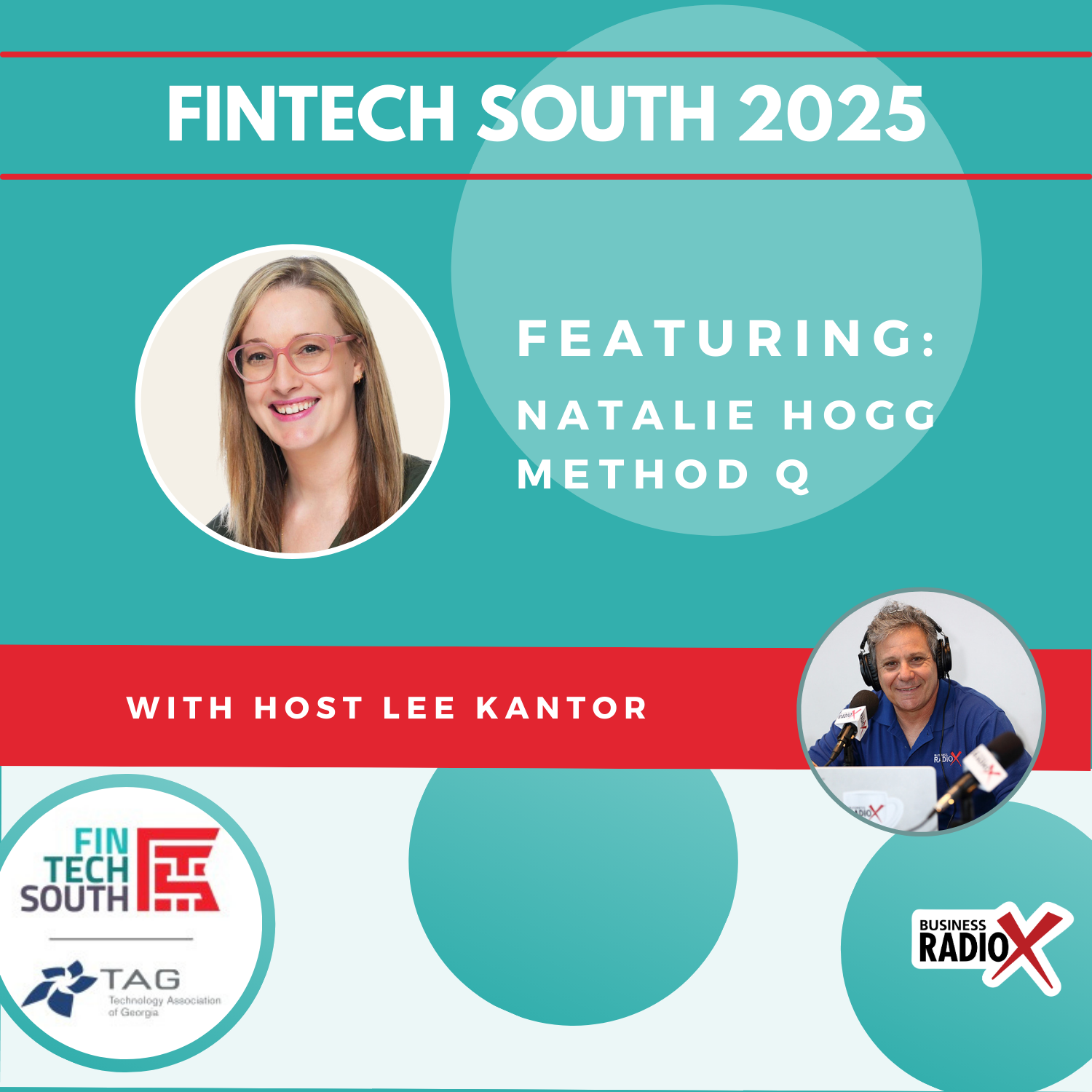



 Innovation runs in Natalie Hogg’s family. Her grandfather is credited with inventing direct deposit, and she carries that same drive to transform established systems.
At Method Q, we have developed a proprietary framework that applies scientific principles to marketing strategy and execution. This methodology enables our clients to achieve predictable growth through evidence-based decision making rather than guesswork.
Natalie’s expertise spans demand generation, growth marketing, and fractional CMO services across multiple industries including fintech, SaaS, and technology. She regularly speaks at conferences and moderate panels, focusing on creating valuable conversations and elevating the insights of industry leaders.
Her passion lies in building platforms that showcase executive expertise and drives meaningful business discussions. When not working with clients, Natalie enjoys playing piano, guitar, and banjo.
Beyond Method Q, Natalie serves on the National Board for StandUp for Kids as Marketing Chair, where she contributes to strategic initiatives supporting youth experiencing homelessness.
Connect with Natalie on LinkedIn.
 This transcript is machine transcribed by Sonix.
TRANSCRIPT
Intro: Broadcasting live from Fintech South 2025 at the Woodruff Arts Center in Atlanta, Georgia. It’s time for Atlanta Business Radio. Now. Here’s your host.
Lee Kantor: Lee Kantor here broadcasting live from Fintech South 2025. So excited to be talking to my next guest, Natalie Hogg with Method Q. Welcome.
Natalie Hogg: Hi. Thanks for having me.
Lee Kantor: Well, I’m excited to learn what you’re up to. Tell us about Method Q.
Natalie Hogg: So Method Q is a marketing agency here in Atlanta that specializes in fintech and cybersecurity. We apply the scientific method to marketing, and which is a fun little background that I have on putting the creativity and analytics together to make a very practical business case for your investments.
Lee Kantor: So what’s your backstory? How did you get involved in this line of work?
Natalie Hogg: Um, so my granddad actually is credited with inventing direct deposit. So I think I was a summit.
Lee Kantor: Born into.
Natalie Hogg: The into fintech. Yeah, whether I knew it or not at the time. Um, and, uh, my, my father owned a business growing up. So I think I just come from a group of entrepreneurs. So I always wanted to start my own business, um, and have the option to solve problems and travel the world. And that’s what I get to do today.
Lee Kantor: So tell us about kind of the scientific method when it comes to marketing, which has some people think is is part art and part science.
Natalie Hogg: It definitely is a combination of the both. So, you know, you’ve got seven steps in the scientific method. We start with a hypothesis. So, you know, in order to reach a hypothesis you need to know the business value. So what’s your revenue goal. What are you trying to achieve. Um, both from the founder or the CEO perspective and also the revenue perspective of the CFO. And it’s backwards math all the way. So then you understand where the specific parts of that roadmap and the buying journey that you can take a bet on, put the hypothesis together and, um, run it as a marketing campaign, knowing that those leading and lagging indicators are whether you you continue or pivot along the way. So very data driven.
Lee Kantor: So how does that kind of drill down to the tactics?
Natalie Hogg: Yeah. So the tactics would be I mean if you think about a leading indicator, it’d be, you know, something as simple as website impressions or clicks on your LinkedIn posts and all of those things drive to buying behavior these days. What’s really driving by driving buying behavior is AI use. So if you think about, you know, the ChatGPT conversation someone’s having before they even land on your website. Um, so all of these things are driven by content and, and really interesting problem focused content. Um, there’s a lot of noise out there with AI. At the same time, people are using AI to do all their research. So you have to find the balance between what’s really, really valuable, what’s driving decisions, and how are you being relevant to someone at the time when they actually need to make a change out of the status quo?
Lee Kantor: And who is the ideal client for method two?
Natalie Hogg: Uh, we work with companies between, uh, pre revenue all the way to $50 million in revenue. The sweet spot is really 10 to 50 million. Usually companies that either have not yet built their marketing engine and need support building it. We can also help place talent as they need and grow and expand beyond outsourcing. But then also we are a great augmented team to help. And I love mentoring, so I love to see marketing teams and marketing team members get promotions after working with us by setting them up for success with the right infrastructure to scale.
Lee Kantor: So when you’re, um, like, what’s a challenge that one of your companies has?
Natalie Hogg: Uh, typically they’ve invested in marketing with the different tactics. They’re being told what they should be doing. They’re frustrated because it’s not working and they don’t even know how to measure it. So we come in with that hypothesis really clearly articulating very logical steps. Usually engineers like us because we have that engineer mindset when it comes to marketing. Um, but we still have that creativity to push through that is, is a little less tangible. Um, and so we usually solve that frustration in the beginning with a clear path and then clear, clearly articulating the leading and lagging indicators on whether we continue to do something, what we’re testing, why it’s working, why it’s not working, what we’re going to do about it.
Lee Kantor: So there is there consumer like, would one of your clients be a bank and their their target is more consumers or I need more business clients. Like like what is it like you know, you know where the rubber hits the road.
Natalie Hogg: Great question. So we have several clients here at fintechs. Al tag is actually one of them. Um, so we’re grateful to to be part of their marketing journey. Um, we also work with mostly B2B, uh, financial technology SaaS companies or services companies in the cybersecurity space. Um, so usually it’s a long sales cycle cycle, enterprise driven. Um, and then tag is, you know, the unique exception where we know the industry really well. Um, but we’re trying to drive community.
Lee Kantor: And then how do you define community?
Natalie Hogg: Um, for me, it’s an interactive community. Um, that there’s value on both sides of the chain. So, um, fintech, in Atlanta has a history that is really awesome. We drive most of the transactions in the world and we have for quite a long time. And so the more that we we drive, innovation in Atlanta and Atlanta in itself is attracting more and more talent from all over the world. Revenue of businesses is increasing. And the mayor, as he said yesterday, Atlanta is a group project. I believe fintech is part of that.
Lee Kantor: Now, when you’re working with a tag, are you just counting the number of new members, like what is the metric that matters? Because a lot of times people kind of we call them cos metrics in our business where the number sounds good, but it may not really be connected to what the outcome they desire is.
Natalie Hogg: Yeah, I’d say and there’s two different ways to measure success with working with Tag. It would be obviously members and ongoing members. We want to retain members and then to get value out of it over years worth of time on our journey to 2030. Um, because you should attend the gala coming up soon. You’ll learn a lot more about 2030. And there’s some videos circulating right now about the the vision there and otherwise. It’s obviously attendees at events. Tag puts on several events a year, both their societies and their, um, their main work of business. And so, um, getting people to attend and participate and great speakers on stage is another measure of success.
Lee Kantor: So then I’m just confused and in terms of, okay, uh, the metric that matters is, is kind of nebulous to me. I’m not understanding it clearly about what is the like. Do you have a kind of, um, KPI that you’re saying, okay, this is how we’re judging whether this is working or not? Or is it kind of is this where the art comes in, where it’s kind of a gray area and it seems like it’s working?
Natalie Hogg: No, I’d say there’s always, unfortunately, a little bit of gray area in marketing because people don’t tell you how they intend to buy or participate. Um, but with Tag, it’s specifically the amount of people that have registered for an event, the amount of people that actually attend. The amount of people that open or return to an email or social post. Those indicators of active engagement. So you go from unaware to aware. The activity of engagement, of attending an event, or interacting with email or social. Tells us that they’re more likely to become a member, a sponsor, or an attendee at an upcoming event.
Lee Kantor: And then do you target those specific constituents like members? Is there an order of priority, or is that something that you’re that kind of is a moving target?
Natalie Hogg: Um, it’s definitely a moving target depending on the goals of the organization right now by 2030. Our goal is to attract more members from outside of Georgia. So more of a southeast play, um, and even global. So we would start tracking, uh, not only just members and event attendees based in Atlanta, but the other demographics associated with it, with where they’re from, the diversity of the the industry and where they come from.
Lee Kantor: So when you decide that that’s the objective. Like say, let’s just talk about the one that we want to expand. Technology Association of Georgia to be more southeast as a region. How does that kind of drill down to what is the tactic we’re going to use to get to that objective? Is that just by testing?
Natalie Hogg: Um, there’s a lot of testing that has to go out at the beginning of something that hasn’t been done before, but there’s a lot of data that tells us what hypothesis might work. So we know we need to, uh, get Larry out in the market and more spaces outside of Georgia. Um, connect with more organizations that we can partner with and expand our message to and make sure that we’re bringing in the community of wonderful, innovative speakers who can pour into the community of fintech Atlanta, um, in Atlanta, and all of our partners within the space.
Lee Kantor: So now, uh, the Fintech South event has been going on for quite some time now. How do you recommend kind of squeezing the most juice out of an event like this from a marketing standpoint?
Natalie Hogg: Well, if you’re attending and you’re interested in sponsoring, I think you you want to get on stage and speak, but you want to make sure you’re speaking about something that’s relevant to the industry and understand what your goals are coming in. Are you looking to recruit talent? Are you looking to find new business and make sure that your messaging and who you send to the event is aligned with that? And you set certain KPIs because there’s a dollar amount that goes with sponsoring an event. So, you know, I like to say at the high level of all the metrics we track, for every dollar you want to get 10 to $20 out of it in revenue for every dollar you spend in marketing. So if you think about that and apply what you’re looking to achieve here, I think there’s several paths to being part of this community. It’s either being heard, sharing your point of view, and raising awareness, or connecting with the community to find the upcoming talent. There is a shortage in talent in fintech right now, and I think that there’s a lot of value in making sure you’re part of the community, whether you’re looking to recruit now or in the future.
Lee Kantor: Because at some point, if you’re want to grow, you’re going to need to recruit.
Natalie Hogg: Yes people. Usually if if you’re growing a business, people help you grow the business. You know, people mixed with AI potentially in the future.
Lee Kantor: So you have any thoughts on how to leverage AI in marketing?
Natalie Hogg: Absolutely. Like I said, people are using AI to to go down their own buying journey, and they’re being prompted with questions that they should be asking throughout their buying journey. Um, so what used to be a lot of the old playbook and marketing isn’t working anymore. So I think a lot of marketers are going to be struggling. Um, I’m seeing that. Um, so you have to be on top of the way people change, the way that they learn information every day. And things like ChatGPT perplexity. Um, just like in the past with Instagram and TikTok influence how people consume information. So you have to change the way that you’re putting information out there. Um, so where you’re trying to used to rank for SEO, now you need to be ranking for EO AI content. So usually that’s in the form of a Q&A. Um, so something simple you could do is just change your headlines on your blog to be more addressing direct questions and answers related to specific pain points, because people are getting more specific in their research with AI.
Lee Kantor: Do you still believe in the power of brand?
Natalie Hogg: Oh, absolutely. Especially these days. People buy from people and people buy from brands they trust. So I think a lot of people moved away from brand, um, from a PE driven mindset of the spreadsheet tells the numbers of how many leads you get and the demand gen machine. Now you can’t have dimension without good brand.
Lee Kantor: So how do you recommend somebody kind of leveraging their brand? Because brand brand to me is going to happen whether you’re being proactive about it or not.
Natalie Hogg: Yes. And if you’re not proactive at it, you’re not in charge of your brand and who you are and how you’re showing up. Um, So it’s all about consistency. And it really is important to define that brand personality and the people that are representing that brand and make sure it’s aligning to who you’re selling to. So typically, you know, there’s you need to have that in-house brand of what what makes people excited to work there. You need to make sure that it resonates with the people that are looking to buy from you. So you need to be asking a lot of questions and understand people that don’t want to buy from you, and why that is as part of your brand.
Lee Kantor: So if somebody wants to learn more, uh, what is the best way to connect with you or somebody on the team? That method.
Natalie Hogg: Um, I am I’m very active on LinkedIn, so follow me. Natalie Hogg on LinkedIn, the CEO of method Q or go to method Q. Com.
Lee Kantor: Well, Natalie, thank you so much for sharing your story today. Don’t touch important work and we appreciate you.
Natalie Hogg: Thanks for your time. And I love the tough questions.














