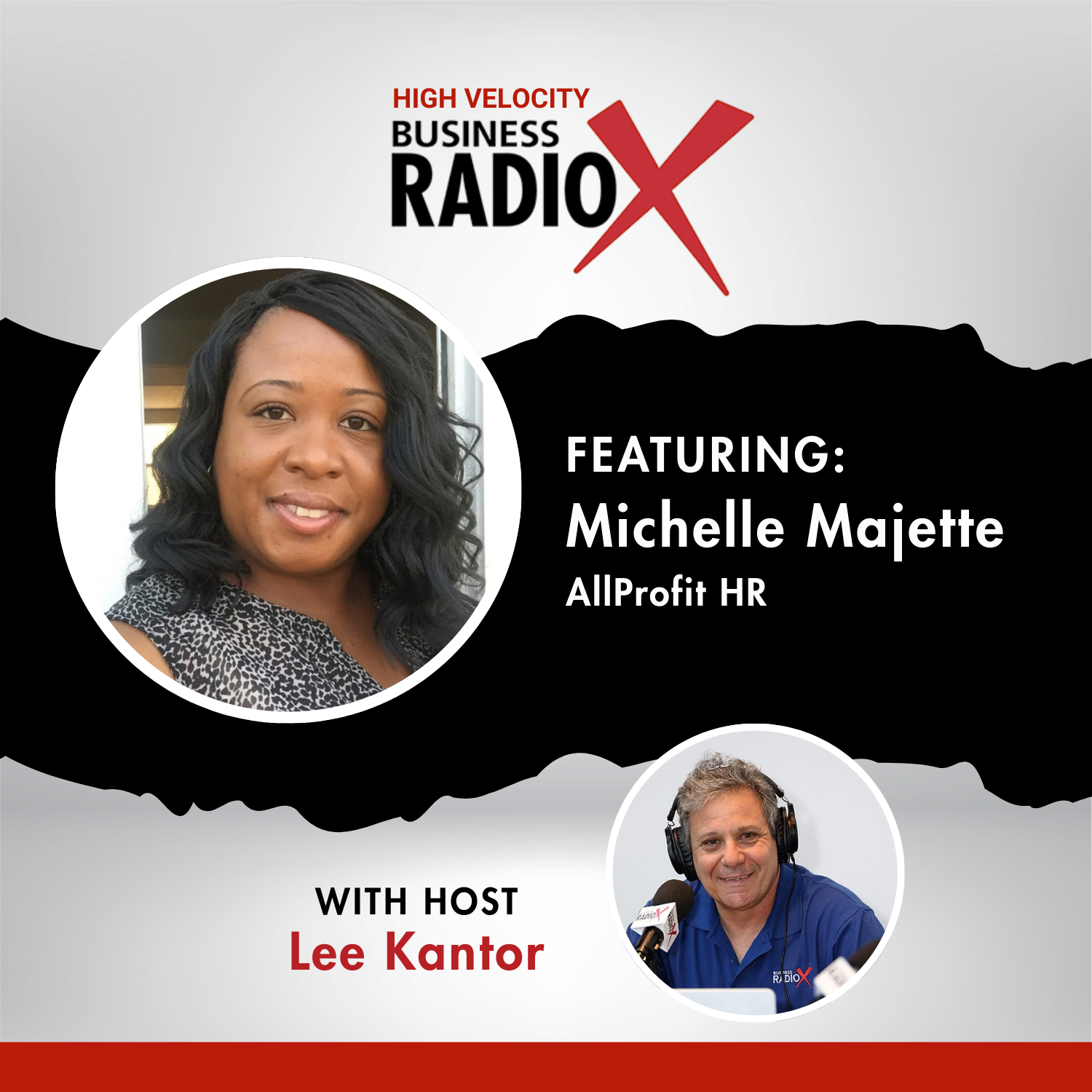

In this episode of High Velocity Radio, Lee Kantor interviews Michelle Majette, founder and CEO of AllProfit HR. Michelle shares her mission to transform workplace culture by prioritizing people, purpose, and equity over mere compliance. She discusses common challenges faced by mission-driven organizations, such as burnout and culture drift, and explains AllProfit HR’s proactive strategies—including stay interviews and their Workplace Empowerment Framework—to build thriving, equitable workplaces. Michelle also introduces the Butterfly Conservatory Collective, a community supporting women’s leadership and growth.
 Michelle Majette— architect for people, culture, and workplace empowerment.
With over 20 years in Human Resources and Organizational Development, she have had a front-row seat to how business decisions are made behind the scenes. And what she have seen is this: too many workplaces forget the people at the heart of their mission. So she founded AllProfit HR to flip the script—to help leaders build cultures where employees don’t just survive… they thrive.
At Team AllProfit, they proudly people-powered and purpose-driven. Their Work Empowerment Framework helps organizations define their culture, evolve their leadership, and inspire transformation—because they believe everyone deserves to profit when purpose leads the way.
But her work doesn’t stop with the boardroom. Her heart work is just as important. And that’s where the Butterfly Conservatory Collective was born. The Butterfly Conservatory Collective is a nurturing space for professional women—especially women of color—to grow, transform, and reclaim their power.
We are more than a network. We are a community rooted in care and accountability. Like the butterfly, we believe in metamorphosis—those sacred, sometimes unseen moments where transformation happens. This Collective is our chrysalis. A place to ideate, to be held, to emerge—stronger, freer, and more vibrant than ever before.
This isn’t just about business. It’s about belonging. And she’s so grateful to be doing this work.
Connect with Michelle on LinkedIn and Facebook.
What You’ll Learn In This Episode
- What inspired Michelle to start AllProfit HR
- Butterfly Conservatory Collective
- What does People-Powered and Purpose-Driven look like in action for clients
- How the Workplace Empowerment Framework helps organizations thrive
- Advice for leaders who want to build a more equitable, empowered workplace
 This transcript is machine transcribed by Sonix.
TRANSCRIPT
Intro: Broadcasting live from the Business RadioX studios in Atlanta, Georgia. It’s time for High Velocity Radio.
Lee Kantor: Lee Kantor hear another episode of High Velocity Radio, and this is going to be a good one. Today on the show we have Michelle Majette. She is the founder and CEO with AllProfit HR. Welcome.
Michelle Majette: Thank you Lee.
Lee Kantor: Well, I am so excited to learn what you’re up to. Tell us about AllProfit HR. How you serving folks?
Michelle Majette: Yeah. So just a little background on me. I’ve been serving in this capacity in terms of human resources and organizational development for about 20 years. All profit HR is meant to flip the script when it comes to what I have seen and experience from the corporate perspective. We are an organization that looks to center people purpose and equity and workplaces. We’re not about checking the box. We’re really about transforming lives. We’re really about healing and growth and equity. That may seem like things that don’t take place from a human resources and organizational development perspective. But I promise you, it is possible. One of our mantra is people powered, purpose driven, profit for all. So it’s really a part of our operating system as an organization.
Lee Kantor: So what type of clients do you serve?
Michelle Majette: We primarily work with mission driven organizations. However, we are also a women minority enterprise and a minority business enterprise, so we can compete for government contracts as well. But we’re really looking for organizations that are not just about compliance. They also want to pursue positive workplace cultures.
Lee Kantor: Now are they are they primarily for profit non profit. Both.
Michelle Majette: Both. But we do primarily have supported either community based or mission driven organizations.
Lee Kantor: And so how do you go about kind of getting on their radar. What is the pain that they’re having where they would reach out to all profit HR to solve that problem that they got?
Michelle Majette: Yeah, I would say that their pain points typically center around navigating growth burnout or culture drift. So for example, during the Covid period, right, a lot of organizations struggled with agility or resiliency and sustainability. Looking at how do we communicate uncertainty when we don’t even know as business owners or employers, what’s coming down the pike? And so really, putting the humanity when it comes to running your organization and being that trusted thought partner to those organizations. So while they’re navigating Rating, difficulty and change. And that can happen right out of any aspect in business at any point. It doesn’t have to be around crisis, right. But we’re really looking at how do you ensure that you keep human focus? Human resources is not just the title. It’s really a way that you can go about running your organization.
Lee Kantor: So for leaders who are out there, um, are there symptoms or signals that maybe your corporate culture has gone amiss or that your, um, you know, there’s kind of, uh, leading indicators that maybe something’s not going well? Um, when it comes to human resources, are there things that the leader can say, okay, for example, uh, we’re having a hard time filling this role, or it seems like we’ve had a lot of turnover lately. Wonder why? Like, are there certain things that are happening from a leader standpoint that could be kind of a aha. Maybe I should be looking into this a little deeper. Maybe I should get have a call with all profit HR.
Michelle Majette: Yeah. For sure. I mean, one of the phrases that many have heard, especially over the last few years, is quiet quitting. Right. And so when you notice you mentioned turnover, when you notice that there’s an impact in your retention, but you also may notice an impact in engagement or adrift in your, your team. Um, we are very much about intentional rather than a reactive approach to your strategy, your workplace strategy. So if you’re if you’re plugged in and you’re paying attention, not just the, the, um, metrics, whether it’s turnover rates or like you’re saying, hard to fill positions, but you’re actually having your 101 check ins and paying attention to what your employees are sharing. The verbal and non-verbal cues that can provide you with a signal, Home, and hopefully you will receive that signal in enough time to make an impact prior to something like a mass exodus of your workforce due to, um, an unexpected or unpleasant workplace culture. Um, so I would say that yes, those metrics are important, but but if you’re plugged in and you’re paying attention to your workforce, if you’re listening to what your employees are saying, oftentimes that will signal, hey, I need to, you know, institute some programing to see if I can uplift my workplace culture.
Lee Kantor: Now, is there any advice you can share with our listeners that are leading organizations when it comes to maybe, um, being proactive when it comes to quiet quitting, what are some things they could be doing, uh, that can prevent this from happening in the first place? So there are some do’s and don’ts. Is there some activities or exercises or engagement strategies you’ve learned that can help?
Michelle Majette: Absolutely. We I recently actually just completed a listening tour. Also, no estate interviews. So a lot of organizations love to do employee engagement surveys, which are great. Um, my approach is really to take the time to sit down one on one and have a conversation with the employees. Oftentimes, I ask open ended questions. So things like what’s working well, what isn’t working? And I let them know this is a confidential conversation. Um, I want you to think about anything that comes to mind when it comes to your employment at this particular organization. Nothing is off limits and nothing is off topic. And then we’ll capture that information and create an insight report for leaders or decision makers. We’re not providing identifying markers or names or job titles or even departments, but really looking at the themes and trends that are coming up. And when you allow a conversation to be open, anything could happen. While leaders may be thinking, you know, I need to increase pay. Who knows? That Insight report may talk about we really need more mental health benefits, or we’re really looking for maybe summer Fridays during the summer season. So it’s easier for us to spend time with family and our children when they’re out of school. So again, having that conversation and really think about putting yourself in the position, what is the human component? What is missing as a fellow human being? Right. How would I want to be treated in this workplace culture?
Lee Kantor: Now, when you’re having these conversations with leaders, I would imagine that, um, one of the selling points of working with you is its kind of fresh eyes that aren’t kind of, um, the company, like, these are kind of people coming in here that are trying to just take the temperature in a neutral manner and then make recommendations based on what they learn. So people might be more apt to share more with somebody like you or yourself, um, rather than if the boss comes and asks the same exact question.
Michelle Majette: Absolutely. Um, we also work alongside internal human with, excuse me, internal human resources team. So you’re absolutely right. I like to think about it as, you know, a parent child relationship where mom or dad may be telling their son or daughter the same thing over and over and over again, but when they go to school and hear it from a teacher or their coach, it resonates differently. Um, right. And so for me, it’s it’s also about co-creation. Um, that’s one of the things that we do at all profit chart we co-create. So sometimes we can be used in many ways as a resource to support both teams agenda, whether it be the employer or the employees and create that positive influence. So we all reach our ultimate goal. Because ultimately, if you have an organization where everyone feels like they can be themselves, they want to produce, and that is the end right result for the employer. Employees want to be treated well. Employers want their business to succeed. So our role is how do we fit in between sometimes those two opposing forces so that we can show there is a way for all of us to work together and for everyone to receive whatever it is that they’re looking for in their life.
Lee Kantor: Can you share a little bit about the workplace empowerment framework you’ve developed?
Michelle Majette: Oh, yes. So the Workplace empowerment framework is our signature framework. It really resonates the heart of our profit HR when it comes to creating, um, you know, workplace culture. I am really about, again, being intentional rather than reactionary. Where possible. Um, and so we guide our clients through three phases. Excuse me. We have defined, um, defining is where we really are just naming it. Right. What are what are the aspiration? What is the current state? Um, whether it be policy, but really just centering our workplace culture that embodies a lot of different things. Then we’re looking at evolving. So we move from once we define, we want to evolve, what do we need to change? What do we need to consider? What practices do we have that are spoken and unspoken? Right. And then we inspire, um, after we evolve. And that is where we activate the transformation from the inside out. Um, I really also like to look at how are you working externally, especially for those mission driven organizations that center the community in which they serve. How are you treating that external community. It doesn’t match your workflow. Workforce internally. If there’s a mismatch, we need to look at the define, evolve and inspire to make sure that we are the same person inside the house at the workplace as we are externally. Um, it’s very practical when it comes to the framework, but it has that transformation that take place. Um, one of the most beautiful compliments that I received from a client is that they said that the blueprint really elevated the soul of the organization. Um, so we utilize this framework as a way to activate that transformation and impact that we like to see at workplaces.
Lee Kantor: Now, is there a story you can share? Um, don’t name the name of the organization, but maybe share the challenge that they had when they met you and how you were able to help them get to a new level?
Michelle Majette: Yeah. So I am in the Washington, DC metropolitan area, and we have a client that, um, hired us to do a compensation market study. Um, so the goal of it was to really look at pay equity, really look at how are they, you know, in the marketplace, are they leading the marketplace to assess that data? Um, but we saw an opportunity to really go deeper. Um, so through our code designing sessions, we saw that there was a disconnect not only with the pay structure, but how employees felt about rewards at the organization. And we developed a roadmap. Um, so we worked with executive leadership, their internal human resources department. Um, they have a Dia committee as well as various caucuses. Um, to co-create the workplace empowerment program. Um, and this is where we’re looking at the compensation study, the, um, SOPs that activated the study and the policies. And did it align with the values of the organization. Did it align with things like, for example, if you’re doing a bonus structure or a cost of living increase? Are you prioritizing the highest paid personnel over those that may not make, for example, a six figure salary? And what does that mean to your workplace culture? What does that mean to the perception of the employees when it comes to working for a mission driven organization? So the compensation study became more than just about fairness and pay equity, but also about trust and transparency.
Michelle Majette: And the transparency was realized because the um, operational ization of the the data was shared across the organization. They understood how new higher pay was designed. They understood how to move about the pay structure. Um, so trust and transparency was developed and reaffirmed at the organization, and now we’re working with them to, uh, redo their employment manual. Um, to socialize the policy and, again, operationalize ways that it can impact culture in a meaningful way. Um, so workplace culture, as we know, is about our attitudes, our behaviors and our belief. Um, it really is often shaped by policy. Um, so again, how do you believe the workplace is when it comes to, you know, fairly applying policy across the behavior? It truly influences our culture. Um, so when our policies reflect the purpose, when it reflects the aspirational values, that’s when we can see transformation taking place.
Lee Kantor: Now is, um, is that how you typically enter a new relationship with a project, and then it maybe expands after they see what quality work that you’re delivering?
Michelle Majette: Yeah for sure. I would say more often than not, that’s the beautiful thing about having human resources at the table and not viewing HR or organizational development as transactional or check the box process. Um, when you have a expert in any area, right. But especially human resources at the table, we have a different pair of ears. We’re able to hear things differently that others may not recognize in the moment. Um, and so we’re able to make those strategic recommendations that will elevate any initiative or project or, or just being, um, simply because we were at the table and paying attention. Um, and so we truly value our co-creation because it’s, again, not just providing our clients with a scope of work. We really are seeing. How do we add value to your existence as an organization as well as the experience of your people?
Lee Kantor: So now, before we wrap, I’d like to ask you a question about the Butterfly Conservatory Collective. Can you share a little bit about that?
Michelle Majette: Yeah. Um, I’m over here smilingly. I wish you could see me. The Butterfly Conservatory Collective is another extension of my heart. Um, it is a sacred space for women. Uh, where we pause, we reflect, and we reclaim our power. Uh, we have been doing this, um, maybe since two years into the existence of all profit HR. Uh, we typically celebrate women in some way for our, um, anniversary. Um, and it’s just an opportunity for women to gather in community to honor what we like to say, the cocoon, moments of our life and leadership. If you look at our logo, our logo has the butterfly wing. And the butterfly is a metaphor for a lot of the things that we do at all profit air. And so when we think about the cocoon, we think about the the struggle of breaking out of the cocoon. But the beautiful thing about the cocoon experience is that it creates strength in your wings. So it’s strong enough to carry you. And that’s really the the vibe that we want to curate in the Butterfly Conservatory Collective. Um, and so it’s it’s not just a networking group. We’re really a community rooted in care and accountability and transformation. Um, this December, we’re actually excited to be going global with our first international retreat into Mexico to getaway and transform by a beach. We’re going to have curated workshops and healing experiences to go really, really deep into what it means to lead from a place of wholeness. And so this work directly complements our prophet Air because it centers the person. Um, while the collective is not just professional women, it’s anyone that leads their own life. So we’re looking at where we can meet power, purpose and rest.
Lee Kantor: So, um, what do you need more of at all profit air? How can we help you?
Michelle Majette: Well, I appreciate this conversation. Just to have the opportunity to share with those that we have not had the opportunity to meet the good and beautiful work that’s being done at all. Prophet air. Um, just to be able to expand our voice beyond just the metropolitan metropolitan area or the East Coast. Um, we’re really being very intentional about our scale, but we’re scaling with soul. Um, we’re looking at rolling out more coaching circle and cohort opportunities for communities. And we’re also growing our nonprofit arm, which is called Connect to Purpose. Um, so I would say that, um, I would love to continue to share more about the beautiful work and support that we give organizations through our LLC, the Our Profit HR, as well as connect to purpose for um eligible organizations that need pro bono HR services similar to that that we offer at our private HR.
Lee Kantor: So if somebody wants to learn more, connect with you or somebody on the team, what’s the website? What’s the socials? What’s the best way to find you?
Michelle Majette: Yeah for sure. So our website is WW profit. Hr and profit is singular. So WW profit.com. We are on Facebook and Instagram all prophet air as well as on LinkedIn. You can also find me on LinkedIn. I’m under Michelle Nicholson midget and my jet is m a e t t e.
Lee Kantor: Well Michelle, thank you so much for sharing your story today. You’re doing such important work and we appreciate you.
Michelle Majette: Thank you. Lee.
Lee Kantor: All right. This is Lee Kantor. We’ll see you all next time on High Velocity Radio.














