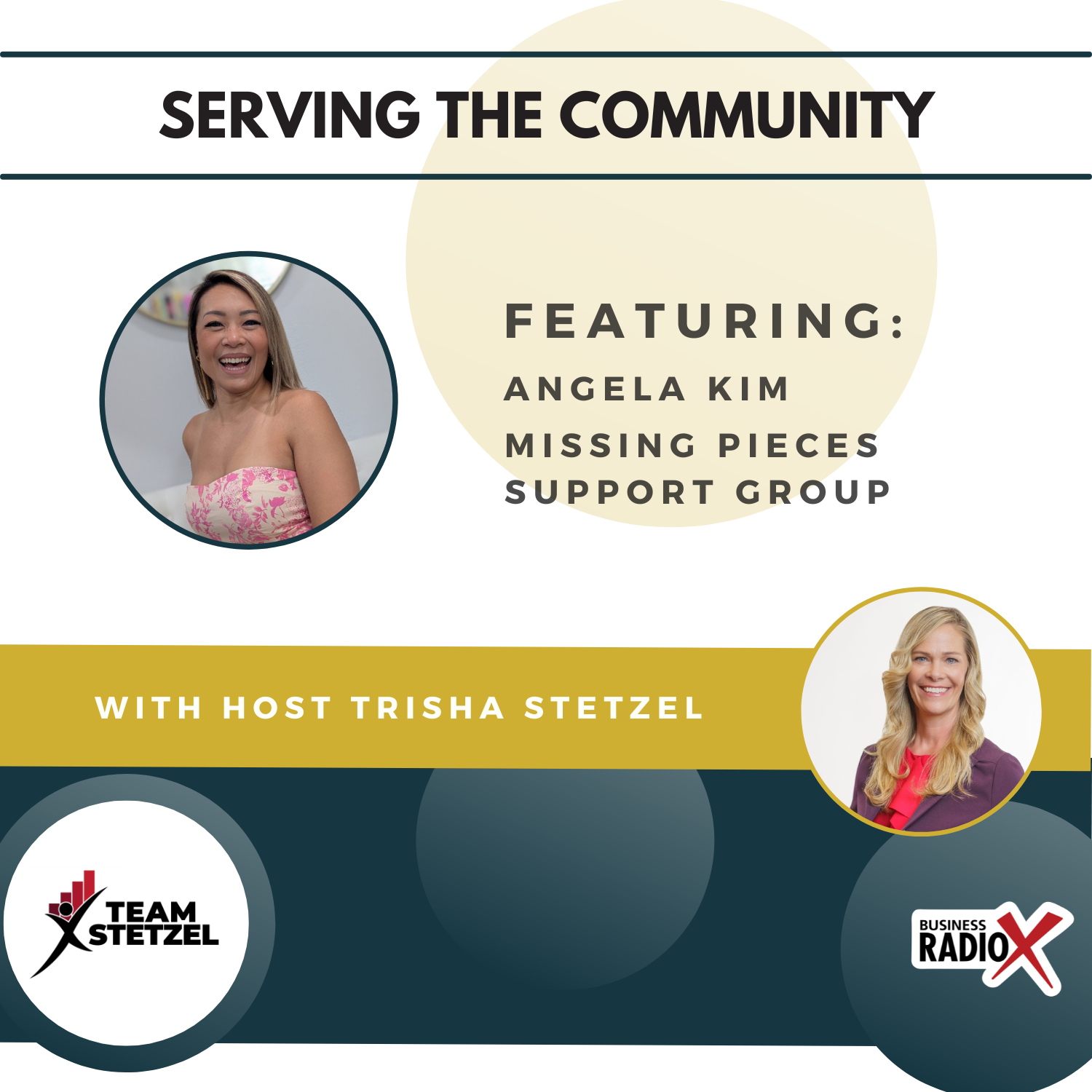


 Angela Kim is the founder of Illumines Core, a healing-centered space dedicated to mental, emotional, and self-development.
Her personal journey—from childhood trauma to overcoming suicidal ideation, abusive relationships, and the loss of a pregnancy—fueled her passion to help others heal. Through her studies in psychology and mental health at Walden University, Angela now empowers children, veterans, spouses, athletes, and professionals to move through trauma and into transformation.
In her conversation with Trisha Stetzel, Angela opened up about the emotional toll of miscarriage and the importance of processing grief and trauma. She emphasized the power of community, connection, and shared experiences in healing.
Angela also discussed the Missing Pieces Support Group, which provides trauma-informed resources and support—now including virtual panels that have expanded their impact nationwide, particularly reaching and supporting men in their healing journeys.
Connect with Angela on LinkedIn.
 This transcript is machine transcribed by Sonix.
TRANSCRIPT
Intro: Broadcasting live from the Business RadioX studios in Houston, Texas. It’s time for Houston Business Radio. Now, here’s your host.
Trisha Stetzel: Hello, Houston. Trisha Stetzel here bringing you another episode of Houston Business Radio. Serving the community. Series I have with me today. Someone that you might recognize Angela Kim. Only today she’s going to be representing Missing Pieces Support. She is a brand ambassador and a content creator for that organization. Angela, welcome back to the show.
Angela Kim: Thank you. Trisha.
Trisha Stetzel: I’m so. Yeah, I’m so excited to have you back now. Uh, some people may have missed the show that you and I had together. So I would love for you to tell us who Angela is. You’re going to have to give us a little bit of your story, and then we’ll take a deeper dive.
Angela Kim: Who Angela is. Oh my goodness, I. I guess we’ll just start with, um, we’ll start with the story of why and who and all that. So, um, my recent story would be more of, um, I went through a miscarriage before, um, the pandemic, a few days before the pandemic, and I was very confused. You know, it’s just didn’t really have any resources after the fact because we were on shutdown, like, everybody was closed. And so I just dealt with it myself, thinking that, okay, maybe it’s like another period. And I’m going into detail. So this may be triggering for some people. Um, and it was just the most intense, traumatic experience for me physically. You know, just seeing the amount of and I’m going to be gross is the amount of blood that came out. I was like, how is this? This doesn’t this isn’t right. There’s there’s something wrong. And I don’t think my body is is recovering. Right. Because afterwards I was just I was not myself. It took me a lot longer to complete simple tasks and I realized that I wasn’t able to work. I literally said, I, I’m having to look up things for work. It took me ten times longer. I was like, this is not right. Um, there’s something really off with me. And because we were going through the pandemic at the same time, for some people it was the worst experience for me, it was kind of a really bad experience because I was going through, you know, physical trauma. Um, yet at the same time, I was grateful because I didn’t have to work.
Angela Kim: Um, I wasn’t able to, um, and later on, come to find out, is it created or it opened up complex PTSD for me. So complex PTSD was something that it was coming to terms with. Dealing with PTSD in the first place was like, oh my gosh, there’s no way. You know, I thought I had a normal life. And I think that’s the story for most people is that they think they have a normal life, not realizing some of the things that we experience losses, um, you know, even physical trauma, even though we think that it’s a small thing, our body does not react, react or respond that way. It requires full processing for the emotions, for that trauma to process out of the body. Yeah. And that is I would say that’s like the the core of my story on understanding even more and being more compassionate when it comes to coaching individuals and recognizing the nuances. Okay. Is this somebody bullshitting me or are they really going through, you know, are they triggered because you can see a difference? There’s that nuance that it’s okay, it’s very fine line. Yet there’s when you’ve been through it, you kind of have more compassion for and grace for the the struggles that someone goes through, especially when they’re recovering from PTSD and complexes. Even more, it’s it’s going back to and it’s opening up all the traumas that you experienced from childhood until that time until that moment. And so it just it, I guess in a way, it confirmed and validated the work and the study that I had with mental health and just seeing how everything is connected, you know, how the body affects the mind, how the mind affects the body, vice versa, like how you’re feeding yourself and everything.
Angela Kim: And so, um, I started getting a little bit better, a little bit better. And I was, um, subbing at BNI, and I was introduced to BNI, and I just kept going here and there, and I that’s how I met Jamilah with Missing Pieces, the founder of Missing Pieces support Group. And she at first I was like, no, there’s no way I’m not going to talk to this lady. I don’t I’m I’m not ready. There’s this isn’t real because I didn’t really have the full term of anything. It was the appointment was for the heartbeat, and that was after that. That was when I had the miscarriage. So it everyone’s experience is very different. And actually talking to Jamilah and talking to women that I’ve connected with through Missing Pieces support group has allowed me to see that wow trauma at different stages in different parts of how the body responds to to things, memories, expectations. It’s all very different. And yet at the same time, there’s a there’s a same process of how the body is needing to process emotions like this. Um, and so that’s what I found out honestly. And through Missing Pieces support group, it’s just being able to share my experience and actually be heard by another woman who experienced a similar loss in the. The words were unnecessary. You know, when I, when I was sharing my story, um, I just needed someone to validate me.
Angela Kim: Hear me? Um, and and really know that I’m not crazy, right? Because it’s sometimes we get in our heads so much thinking. Okay, maybe we’re I’m making this up, or maybe. Maybe I’m crazy, or maybe I’m just being overly dramatic. And it’s not. It’s just the body’s reaction and response. And that’s why they call it muscle memory and the muscle. The memory just doesn’t go away until we allow and we acknowledge it. So it’s it’s really cool to be able to have an amazing nonprofit to share and provide this kind of support, because we provide support groups for women. And now opening it up to men, providing support groups for men, and then providing support for individuals who are pregnant again, you know, after going through pregnancy loss or infancy loss. So it’s it’s just we’re covering the basis of throughout any stage of your loss because there’s no time frame. Um, and it’s it’s heartwarming to see that some of the individuals, some of the women who have gone through this experience knowing that there’s no time, um, for this, because you’re your body as a woman changes, you know, your your DNA starts changing. And that’s why that connection and that bond with the child is so different and unique for each individual child that you have. And so when my body changed already, I already had that connection with this child, with this, you know, there’s already something there because my body changed. And so to say that that didn’t exist, that really hurts.
Trisha Stetzel: Yeah.
Angela Kim: And so that’s really my story about I went all the way around to.
Trisha Stetzel: Oh that’s wonderful. I appreciate your vulnerability and coming back on the show and telling that part of your story. And for those of you who, um, heard Jamila’s name. You may have recognized it because Jamila Robinson had been on the show, uh, late last year. I think we had her on. And she’s the founder of Missing Pieces support Group, and it’s so interesting, Angela, how everything comes full circle. And I continue to meet amazing women like you who know other amazing women that I’ve had conversations with. So, um, coming back on to tell your story, I really, really appreciate that. And telling us more about your experience and what you’ve been able to do and even get from and give back to, uh, Missing Pieces support group. Can we talk a little bit about just women’s health? Uh, I know there’s a specific, um, story around your health and where you came from. You do a lot of, uh, counseling and mental health, um, have mental health conversations with people around PTSD for lots of reasons. But I know this is one of those things that is near and dear to your heart, which is women’s health. Can you just give me your take on how good women are taking care of themselves, and how we find ourselves in these places where, um, we don’t feel good and we’re not sure why or what happened.
Speaker4: Yeah.
Angela Kim: For for women’s health and I, I, I’m speaking in particularly the population or individuals who have gone through a lot of various traumas in their life and they don’t recognize it as trauma, so they never really processed it. So it’s just there, right in the closet or this mountain that’s been created and it’s just there, just hovering, and they’re pulling it along wherever they’re going. Um, that whole concept is when we carry that trauma in our body for so long and we are in fight or flight. Um, our the way that we breathe is different. So if you talk to individuals who are, you know, they’ve been especially like, um, I would say refugees or people who have immigrated during during war and, you know, a lot of a lot of strife in the world or in their, their area, it becomes, um, you know, it’s the trauma, just in a sense, it’s it gets buried underneath all of the day to day. Let me survive. Let me move on. Let me keep going. So they become very great at getting things done because it’s next, next next next next next next. And then it doesn’t really show up for women’s health until emptiness. You know, they don’t have the kids anymore. They are now finally able to just relax and guess what? Their nervous system and their mind has a difficult time relaxing. So now it’s creating, you know, they’re not able to sleep. They’re not able to eat properly because the, you know, your body’s not recovering. You’re not you’re if you’re in fight or flight a lot, guess where most of the blood flows to your head, to your exterior extremities so that you can run or fight. So most of the blood is not here.
Angela Kim: So it’s it’s not allowing you to really digest nutrients and stuff. And so in realizing and seeing, based on my personal blood work and seeing other people go through this, even my aunt, my family, some people understand what I’m explaining. Some people are like, you’re crazy. You don’t know what you’re talking about. Emotions. What? What is emotions? I’m like, wow. So it’s it’s helping, you know, some of the emotions that most of us say, oh, yeah, we I’m never angry or. Yeah, they always get angry or there are certain things that we label ourselves as just being, and that’s where it becomes that manifestation of. If you say that you are those things and you get stuck in that. Um, and so that stuckness essentially gets stuck here. Either you’re saying those things or you’re pushing aside and telling your subconscious, hey, hold on to this information because I’m pushing it aside consciously. I want to be free. Um, and so most of the time, we have no idea what’s going on with our bodies because we’ve numbed out, right? The numbing out of what’s really going on or what has gone on in, in life and acknowledging that these are traumas that we’ve experiencing coming to terms with it is processing it. Tears is processing and allowing those toxins to get released from out of your body. And so it’s really helping women and men also to process emotions effectively and recognize and understand that emotions are just signals to tell us, hey, that’s danger, or that’s something that we’re used to and we’re addicted to. And what we’re used to and addicted to may be harmful for where we’re at now.
Trisha Stetzel: Yeah, absolutely. And, you know, it’s interesting that we’re having this conversation today because earlier I was having a conversation with another, um, amazing woman that and we were talking about how women tend to push themselves to the side so that they can take care of everyone else. Right? We’re amazing caregivers, and we’re not taking care of ourselves because we’re so worried about taking care of everyone else. So how do we get out of our own way when it comes to those things? And even in particular those women who may be listening today who, uh, may have lost a pregnancy or have gone through something as traumatic as you’ve been through. How do we get out of our own way and actually create space for having conversations, or reaching out to an organization like Missing Pieces support group?
Speaker4: Um.
Angela Kim: The easy way to say, um, to explain or to advise how to get out of your own way is to really be stepping out of, you know, your situation and kind of be if you can. It takes practice and it takes a lot of effort, however, is to look at yourself like as if you were visualizing yourself and seeing yourself from an observer standpoint and just, you know, be a kind person to you in that moment. Because if you’re cowering over and you’re crying and you feel lonely, guess what? If you step out of that and, you know, feel the feelings. However, if you can observe you and just comfort yourself in that way and it’s okay, and be patient with your body is just in shock. And the longer you push the feelings and the emotions and and that it’s not allowed and it shouldn’t be this way the longer you prolong it. So the more and faster you accept that this is what’s going on. That’s the way of really allowing yourself to overcome it, because you’re going to be in your own way.
Trisha Stetzel: Yeah, absolutely. We all think we’re superwomen and we can do everything for everyone, right? But we forget ourselves along the way.
Angela Kim: Yes. And when you actually have time to retire and not do things and have your hobbies, you’re too busy stuck in your head because you’re so used to worrying about everyone else.
Trisha Stetzel: Yeah, absolutely. You talked a little bit about a lot, actually, about mind and body, bond and body and mind and how they’re really interconnected. And, um, they can either care for each other or even harm each other. Uh, can you talk more about that and the work that you do, um, in getting people to understand that they really are connected to each other?
Angela Kim: Yes. Um, well, it takes some practice because the concept and how I explain it, it’s so easy. That’s why people are like, yeah, I can do this on my own. I can practice to breathe on my own. Yet when push comes to shove and things are triggering you, it’s automatic. Your muscle memory is in there. It’s taking action. It’s locking down, it’s taking care of you. So it’s actively remembering these basic things and practicing it with with a coach, um, or an individual, you know, or a therapist who can guide you on. Okay. Let’s slowly let’s, let’s practice this situation and let’s, let’s slowly learn how to, um, come back and feel, because women have an amazing ability to process things. We’ve already processed it 5 million times over. However, we’re not allowing ourselves to feel that and allowing our body to just, you know, relax and allow it to work through your body because it requires you to move. It requires you to work out. It requires you to dance like a silly person and look weird. And who cares because it’s stuck in our body. And children actually are the best teachers of this because when they have stuck stuff, guess what? They’re hitting stuff. Or they’re banging on stuff, or they’re kicking and they’re moving it out of their body, and guess what adults tell them to do? Sit still.
Trisha Stetzel: Yeah. Yeah.
Angela Kim: I used to do that to my child, and now I’m like, oh my gosh. I just told my child to trap his trauma in his body.
Trisha Stetzel: Yeah. So yeah, I love that. And, uh, you know, since we’re talking about support, uh, missing, um, missing piece of support group, can you talk about the difference that having a good support system in your life makes when you have gone through trauma, or when you do need someone to help you get out of your own way?
Angela Kim: Oh, wow. I, I I’ll share based on my experience of just. That’s why I became an ambassador, being able to meet these amazing women working on community, you know, projects or like content creation, talking to other women, um, hearing their story is that’s that’s something that it’s it helps me get out of my head and still reach out and say, hey, I’m having a hard time. However, just letting you know, can we still get stuff done? I may be off my game a little bit yet. Can we still do this? And they give me space. They provide that and they’re like, you know, if you ever need to talk. And sometimes I’m like, I don’t want to talk. And then there’s a part of me that’s like, yes, you do. That’s why you that’s why you, uh, you reached out and you said, hey, let’s talk. And then they felt something and they asked, and it’s just leaning into the, the support. Um, and that’s one of the hardest things to do, especially when it’s new and you’re still it’s still fresh because it’s it feels very isolating and you are still so unfamiliar with the feelings that you’re going through. It’s a lot of feelings and a lot of thoughts flooding all at once. So it’s overwhelming. So it’s being patient.
Trisha Stetzel: And surrounding yourself with good people, right. And people who can share their stories and make you feel like you’re not alone. Right.
Angela Kim: Yes. That’s why we volunteer. Yeah. Because it’s. You’re not alone. You don’t have to be if you. Unless you want to be.
Trisha Stetzel: Yeah, absolutely. Well, I know you’re doing such an amazing job as a brand ambassador and even helping with the content creation for Missing Pieces support group. Can you talk a little bit more about the services that they’re providing and how people can connect with them if they’re looking for that support?
Angela Kim: Yes. The services provided are the support groups. Um they are. There’s two for right now. There’s going to be more. Jameela will be the perfect person to give you more details. However, all of this should be on the website. It’s missing pieces support group org and it’s it just has all of the the resources we have the resources on which um, what is it like doctors, therapists, coaches, um, holistic practitioners? We have all of that there. And we also have grief sensitive books and stuff to provide for children who’ve lost their, you know, sibling, um, or parent or, you know, grieving. Um, and so it’s just we have all those resources and we, we do one that’s virtual for right now, the earlier part of the year when the virtual is in April, and I don’t remember the exact date right now. And then the other one is, uh, in September. And so it’s going to end right around the time that our marathon. Uh, yeah. Our five-k occurs. Um, it’s going to be an annual one. And so we do A5K, and it’s just bringing awareness to the community and just having the community come out and support and share because we’ve branched out to Dallas. And so that’s just all the different things that we’re doing. Um, and uh, also creating support groups for, for men, and it’s the support groups and, and the resources that we provide are very much more holistic based. Um, and even the, um, I believe the what is it called? I lost it right now. Oh, it’s called pals. It’s pregnancy after loss. Um, that one is also very holistic based. So everything that we do, the connections that we have through missing pieces is a lot of holistic practitioners. Um, myself is on there because my coaching is more holistic. And I look at you as a whole, not just your mind or your mental health, because everything is connected, Right. You’re what you eat. What you do, what you don’t do. And your little micro habits add up to the bigger picture.
Trisha Stetzel: Absolutely. I know Jameela has done a lot of work in collecting all of these resources and connecting with amazing people like you, who can be a great resource for anyone who may be going through trauma and wants to use the support from Missing Pieces Support group. Is there any piece of I’d like to circle back? As we kind of come to the end of our conversation today to Women’s Health, is there anything, um, maybe a tip or just a piece of advice that you would give to women today who are listening?
Angela Kim: Um, the tip, the advice I would say is, um, I mean, it’s for for men and women, right? Um, however, specifically for women is learning your biology. Learn about your biology. Learn about the cycle of how your body changes as you age. Um, as your body ages and matures, right? And what does your body need? Nutrients. You know, nutrition wise and just really looking and being a scientist to your health if you can um, is to to do that. Because sometimes when we’re first going through loss, it’s more challenging to do this. That’s why it’s the coaching guide you into this more holistic part. Or we get you to be more, you know, increase your self-care essentially. And if the self-care isn’t really good, then everything’s just going to go downhill. So recognizing what is it that we’re eating? How are we advocating for ourselves? Is the doctor making sense to what we’re saying? Um, are they are they hearing the symptoms and the issues that you’re having, because most of the time, um, men and women both, I would say even women have a difficult time advocating for themselves, especially when it comes to their health.
Angela Kim: Um, the doctors just say, oh, I hear that symptom. That must be it. Let me give you the prescription for that. Um, if something is providing or giving you internal bleeding or, you know, is why would you give your patient an ointment? Does that mean that the doctor’s right? Were they listening to you? So that’s the biggest advice I would say is learn how to explain your symptoms. Have those explanations ready because those doctors are vicious. They want to see us for five seconds so you can get out next. So it’s have it ready so you can fire away at them. You bombard them with all this stuff so they have to stop and think, um, about you, because most of the times the doctor’s doctor is just going to say, okay, this is what you’re going through. Here’s the medication. You try it out for you’re the test dummy. You get to be the you know, you learn how to test things on yourself in a healthier way because the doctor doesn’t. They’re not experiencing your experiences. You’re the one that is feeling all these things. Learn how to explain it.
Trisha Stetzel: Yeah. And if you don’t know how and you don’t, and you’re not comfortable advocating for yourself, then reach out to resources like Angela. And Angela can help you find the resources that you’re looking for, whether it’s with her or some other resource. Um, because I know you’re very embedded in that space. Angela, thank you so much for coming on with me today. Missing pieces support group is such an amazing, uh, organization. And when you told me that you were a part of it, I knew that I had to have you back on the show, so we just did it.
Angela Kim: Thank you so much.
Trisha Stetzel: You bet. I appreciate it so much. So, is there, um, one last story that you would like to share with us as we close today?
Angela Kim: Um hmm. I would say maybe it’s going to be about missing Pieces support group, and it’s going to be the good news. I would say that, um, that and I forgot to touch base on that too. It’s the, the content creation. We’ve shifted our panels to be more of, you know, this virtual platform to where we can actually have people from, you know, our other ambassador who’s in Maryland, and we can actually have conversations and they don’t have to fly all the way to the location. So we switch from in-person to virtual. And so now it’s opening it more nationwide. And so our next destination is Dallas. We’re opening Dallas next. And yet, you know, wherever we have ambassadors, it’s pretty much opening there because, hey, that’s the that’s the story I have regarding missing Pieces support group.
Trisha Stetzel: That’s amazing. So if you guys are interested either in being a part of Missing Pieces support or, um, giving back, I know that, um, the organization is always looking for monetary donations so that they can support all of the resources that are given back to these women and men who need the service. If you need the service, any of those things, you can visit the website at Missing Pieces Support group.org. I’ll put that in the show notes as well so you guys can just point and click. Angela, thank you so much for being on with me today.
Angela Kim: Thank you Trisha.
Trisha Stetzel: That’s all the time we have for today’s show. Join us next time for another exciting episode of Houston Business Radio. Until then, stay tuned, stay inspired, and keep thriving in the Houston business community.














