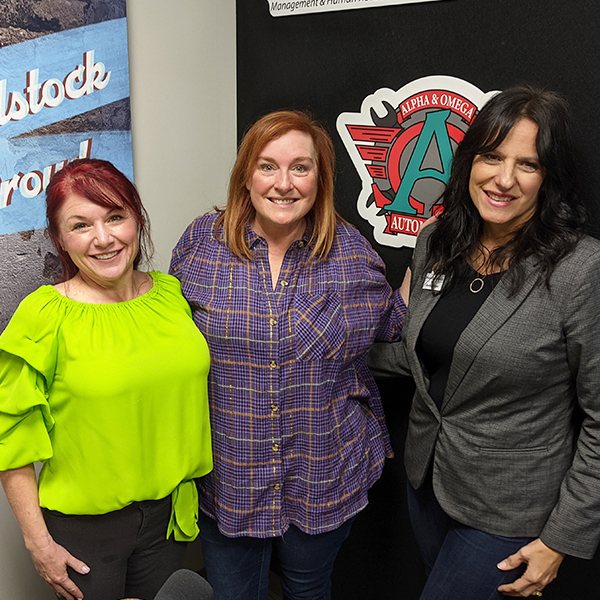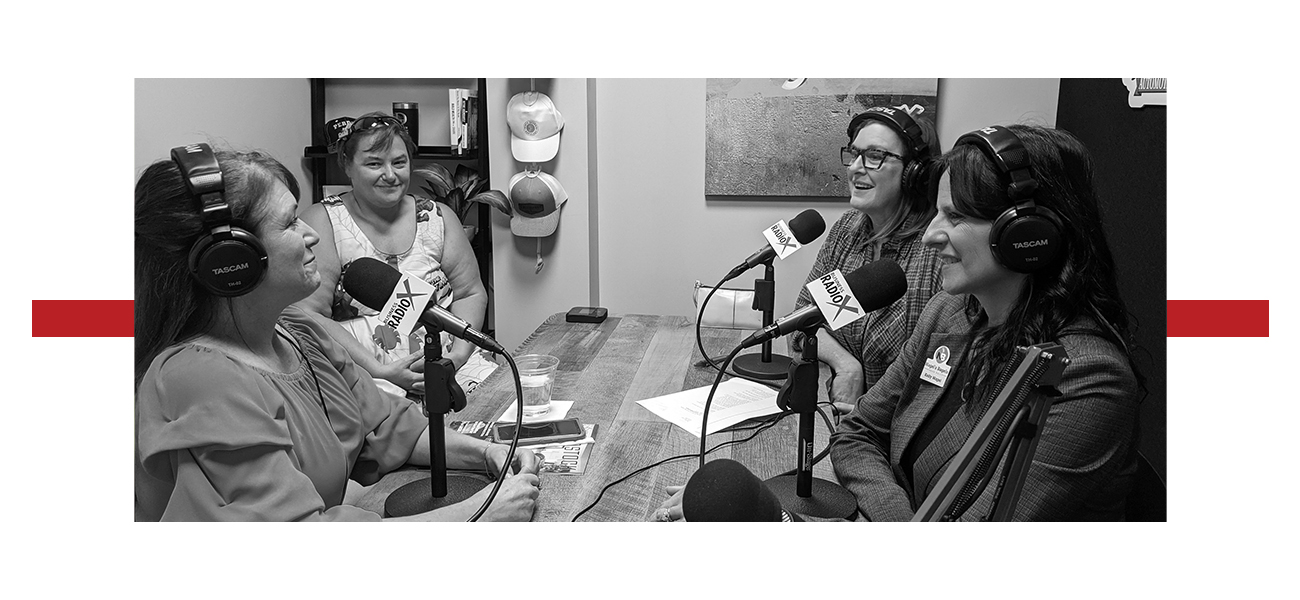

 Toni Kirkland is the owner of The Hidden Bookshelf and Beacon Marketing. She’s also the Marketing Director for Aurora 360, and also the creator and main cheerleader for I am here to stay which is a community for survivors of abuse and trauma. You can say that she wears a lot of hats along with being an author, al-anon wife, CoDa member, and currently single mom to a very bright and busy 23-month-old.
With 20+ years of Graphic and Web Design experience, 17+ years of Customer Service experience, 5+ years of Management experience, and being a published author of multiple books available on Amazon under M.A. Grace, Toni has lived a very interesting life.
Her main goal in life, along with being an excellent mom, is to help build communities wherever they are and provide support and encouragement to those chasing their dreams.
Connect with Toni on LinkedIn.
 Jo’El Lapp is a graduate of Canisius College and earned a Bachelors in Political Science with a minor in Criminal Justice. She went on to work for several years as a Customs and Immigration Agent on the Canadian Border.
She retired when she was pregnant with her eldest daughter, Madelynn Rose. Soon after, she started Blossom Hill Farm, a farm-to-table livestock operation while raising two daughters as a single mother. After leaving the farm, divorcing the life there, she met the love of her life, Jon Lapp.
Jo’El has had several businesses from working for Pampered Chef to being a Sales Agent for Rome Radio. Currently, she is stretched very thin running a travel agency as well as being a full-time foster mom for high-risk dogs.
She is also the State Director for Convention of States, a grassroots organization which is working towards change in the federal government. Between working to make major changes in policy, and saving foster dogs that have been within hours of being put down, she has continued being a mother and making the world a better place.
Connect with Jo’El on LinkedIn.
 Kelly Nagel and her husband Rich have been married for 23 years and started Nagel’s Bagels in 2019 after they both had long careers in the corporate world.
Kelly specializes in marketing, business development and facilitating connections within the community.
She has a Bachelor of Science from Florida State University, is a native of North Georgia and loves sports, mostly football (some say a little too much). Rich and Kelly have two teenage girls.
Connect with Kellyl on LinkedIn.
This transcript is machine transcribed by Sonix
TRANSCRIPT
Intro: [00:00:07] Broadcasting live from the Business RadioX studios in Atlanta. It’s time for Charitable Georgia, brought to you by Bee’s Charitable Pursuits and Resources. We put the fun in fundraising. For more information, go to Bee’s Charitable Pursuits dot com. That’s B.S. Charitable pursuits dot com. Now here’s your host, Brian Prewitt.
Brian Pruett: [00:00:45] Good, fabulous Friday morning. Everybody out there in the listing world, it’s another fabulous Friday and Stone, first and foremost, Happy National DJ Day. Did you know it was National DJ Day?
Stone Payton: [00:00:54] I did not know that. So what a marvelous opportunity.
Brian Pruett: [00:00:58] So we should have had some bagels for National DJ Day.
Kelly Nagel: [00:01:00] Can we have and we should have had some actual disks, you know. Exactly. Vinyl.
Brian Pruett: [00:01:05] So. Stone I’m also excited. I don’t know if you are looking around the room, but three fabulous young ladies in the room. And then there’s us.
Stone Payton: [00:01:14] Yes.
Brian Pruett: [00:01:14] Yeah, right.
Kelly Nagel: [00:01:15] So that’s so sweet.
Jo’El Lapp: [00:01:17] So sweet.
Brian Pruett: [00:01:18] Now we got another great show for you. So our first guest this morning is Toni Kirkland. So, Toni, there’s a lot of stuff that you do. Probably the best thing is tell us what you don’t do. But first of all, welcome and thanks for coming this morning.
Toni Kirkland: [00:01:31] Thank you. Yes, it’s a smaller list, if I tell you what, I don’t write right.
Brian Pruett: [00:01:36] So I know you have the hidden bookshelf. You have Beacon marketing, Aurora, you have an hour on the show getting ready to start as well. But the reason I wanted you to come on this show again, for those who don’t know or maybe the first time listening, this is a show about positive things happen in the community and that can be from sharing great things to doing great things to just being vulnerable. And that’s what you’ve been able to do and you’ve shared it on Facebook, a lot of stuff. So you have a story of perseverance in not giving up. So I’d like for you to share that, if you don’t mind.
Toni Kirkland: [00:02:05] Sure. My 2022 was very crazy, so best way to put that. Over summer, my husband let his addiction take over his life, and in the process of that, he took his family down to rock bottom with him. So in August, he got arrested and that left me with no money and a lot of unpaid bills. August and September. I spent a lot of time being unaware of what I was going to do. I wasn’t sure how I was going to make it, but I kept getting up because of our toddler, and every day was just another step. I didn’t know what direction it was going, but it was another step. And then in October one morning, I just woke up and I was like, This has to stop. I have to be able to provide for my son. I have to build the life that I want for us and the life that I want to live. And at that point is when I started pouring more of my attention into the Hidden Bookshelf Club and really putting focus on which direction I was going. I managed to get a remote marketing job for Aurora, and that mostly pays my bills.
Toni Kirkland: [00:03:39] I sometimes have to borrow from Peter to pay Paul, but for the most part it pays my bills and also the community. I would not have been able to get through all of this without the community. The people I have met at Canton Business Club at Roswell Business Club at Ball Ground, Business Club. They would bring me food. They helped me with fixing, trying to help fix a car that he had totaled. Ultimately, my mom had to help me get another car and another cell phone. But yeah, the community just really stepped up, and all the friends I’ve made in Cherokee County and surrounding counties have really stepped up and helped me get through that and continue today to support me. And when I’m having rough days, which is getting smaller amounts of time, but it still happens, they remind me of how strong I am and how much I inspire them. And I’ve had people come up and tell me that by me being vulnerable and talking about my story has helped them in their silence of their struggles. So I continue to do it.
Brian Pruett: [00:04:50] I think it’s awesome that you’re able to be that vulnerable and even putting it out there on social media because again, like like people have told you, people are reading that they’re going through something similar, you know, and that just helps those people to know that they’re not alone. But there’s also people out there sharing that they can feel like they can share. We’ve talked the last couple of weeks about the power of networking, and she just shared Stone and other positively awesome thing about networking where she mentioned three business clubs and they’ve helped her with food and just inspiration and just helping her along the way. So that’s just another great example of networking.
Stone Payton: [00:05:23] Well, it certainly is. And everybody in this community just loves them some. Toni Kirkland for one thing. But we have such a marvelous support system here in this community. I just I love everything about it. And every day I see tangible examples of us all kind of living into that mission of wanting to support each other and our growth. Yeah, I love it.
Brian Pruett: [00:05:44] These other two guests that we’ll be talking to, we’re all part of another group together too, so it is definitely a community. So Toni, share with us, first of all about Aurora, share what they do and then how people might be able to benefit from them.
Toni Kirkland: [00:05:57] So Aurora 360, is a renovation and handyman company, and they also use global cabinet central for their cabinetry, putting in cabinets and all that stuff. So if anybody needs a handyman to do things to help property maintenance, they do that and they do kitchen and bathroom remodels. So it gives you the time back because some of that stuff can be very time consuming. And it’s surprising how long it actually takes to replace a ceiling fan. So yeah, there’s no no project too small and no project too big. They will come in and they will tackle it for you.
Brian Pruett: [00:06:38] Do they work all over metro Atlanta or just certain areas?
Toni Kirkland: [00:06:41] Do they work all over Metro L.A.? So everything they try to stay in Atlanta or north of Atlanta. But yeah.
Brian Pruett: [00:06:50] How about Beacon marketing share? What do you do with Beacon?
Toni Kirkland: [00:06:53] Beacon Marketing is a small local marketing. So I work with the local community and the local businesses in those communities to help bring them together. So I work online and offline marketing to let your community know that you are there and for them to find ways to support you and come visit you so that you are part of the community and the community is in return supporting you.
Brian Pruett: [00:07:21] The coolest thing I think you’re doing is the Hidden Bookshelf Club. So share what that is.
Toni Kirkland: [00:07:26] The Hidden Bookshelf Club is connecting the literary world one book at a time. I do that through a blog podcast, literary magazine. In online, offline events, in book clubs. I work with everybody and anybody that is connected to the book world. So I have things for readers all the way up to authors, including publishers, editors for matters, graphic designers, you name it.
Brian Pruett: [00:07:54] You’ve written books yourself.
Toni Kirkland: [00:07:55] I have. I have written a young adult action adventure story called The Blazing Charm Series, which is available on Amazon. And my pen name is Emma Grace, and it is about high school kids who are into street racing and take on the Mafia.
Brian Pruett: [00:08:14] Nice. So your show, I guess, is going to be part of the Hidden Bookshelf Club or is that separate?
Toni Kirkland: [00:08:21] Yes, The podcast is also called the Hidden Bookshelf Club, and I bring on the people in the literary world. So I have authors, editors. I even bring on book bloggers and we talk about books, and then we also talk about the person so that we can connect with the people behind the websites that we or the books that we love.
Brian Pruett: [00:08:42] That’s really cool. So if somebody was just listening and listening to your story and going through something similar or, you know, having just a bad day or whatever. Can you share a little bit of inspiration for somebody? And just obviously, like I said, your stories of perseverance and not giving up, but can you just give them some advice for maybe some of our listeners?
Toni Kirkland: [00:09:03] So my my advice that I live by is that I focus on one day at a time. I can only deal with so much at a time. So whatever that day brings me, and then I remind myself every night that I’m worthy of being here. And my motto last year and it’s also part of my motto is this year, is that I’m doing it all scared that I don’t know how it’s going to end, but I’ll never know if I don’t do it.
Brian Pruett: [00:09:39] You know, definitely has some some strong words there. Great words, too. So if somebody wants to get a hold of you for any of the things that you’re doing, what’s the best way for people to get a hold of you?
Toni Kirkland: [00:09:52] They can find me on Facebook and on LinkedIn under Toni Kirkland.
Brian Pruett: [00:09:57] Awesome. Toni, thank you for again being here. Do you mind sticking around and listening to these next young ladies?
Toni Kirkland: [00:10:02] I am excited to listen to these next ladies.
Brian Pruett: [00:10:05] All right. Well, we’re going to move over to Ms. Jo’El Lapp from travel, John and Jo’El. So, Jo’El, thanks for being here.
Jo’El Lapp: [00:10:14] Thank you for having me.
Brian Pruett: [00:10:15] Jo’El is another one who’s got an incredible story. So what I know about and I’m sure we’ll hear more, but she is a former federal agent, so then she went from that to being a farmer to doing things in like sales and radio and fostering puppies and now a travel agent. So you also are a state director for convention of states. So just I mean, that’s a lot of stuff. How did you give us give us a little bit of background.
Jo’El Lapp: [00:10:45] Oh boy, how much time we got?
Brian Pruett: [00:10:48] As long as someone wants us to let this go.
Stone Payton: [00:10:50] That’s right. I got all day, man.
Jo’El Lapp: [00:10:55] Well, yeah. In like, the very beginnings of Joel after college, I got into the federal law enforcement right out of college. I was basically an intern, a paid intern with US immigration. And then I switched over. I went to the dark side because we were wearing dark blue from white. So we called it the dark Side. And I went over to customs. So basically you’re just trading at the port of entry, trading from inspecting people to items. And then I had a really good fall off my horse and followed by the birth of my first daughter. And I just couldn’t physically do that job anymore. So I kind of went from there. We went my husband, my ex husband and I bought some land out in the country because I’ve always loved horses. And then that kind of morphed into, you know, we bought a couple of cows because I was we were doing this game called Team Penning where horses chase cows into pens, and my horse hated cows, so I had to buy some cows so that she could get used to them. So I mean, I got disqualified once because she bit a cow on the butt.
Kelly Nagel: [00:12:07] So I’m sorry. That is hilarious.
Brian Pruett: [00:12:10] I love.That visual.
Jo’El Lapp: [00:12:12] Right. So I had to get some cows and that’s how it just started. It’s like, yeah, I’ll just make I’ll make her like cows. So then people started, Well, you know, if you have if you have beef, I’ll buy beef off you. And then, well, why don’t you get some pigs? Because, you know, if you raise in beef, you might as well raise pigs. Well, what about chickens? What about sheep? And then it just kind of morphed and then sell into friends and family. And I’m like, you know, I could make some money doing this. So I just started selling at a farmer’s market in downtown Buffalo, New York. And from there, I just I started knocking on doors of restaurants and just talking to them. And before you knew it, I was selling to some of the top restaurants in Buffalo, and I created some really cool programs that other farmers were actually coming to me. As far as marketing goes, you know, I say one of the silliest things I did and it worked like a charm was adopt a chicken. And people would come at the beginning of the season and they would adopt a chicken and they’d pay way ahead in advance for like a year’s worth of eggs, and they’d get a picture of a chicken and they’d hang it on their refrigerator and they’d name it. They didn’t know what chicken they had. But the the you know, it was great. The kids loved it. You know, they’d come and be like, Oh, how’s Percy? Oh, Percy’s doing great. And and then I started selling veal to restaurants, which was a big deal because I won’t eat veal because it’s, it’s ridiculously inhumane. So we started buying calves and putting them with mama cows, and they were pasture raised. So they lived a great, you know, life. Obviously, they’re butchered when they’re young, but they’re still living a very good life before butchering. And the restaurants loved it. They loved that humane aspect. Like anybody could come to my farm and the animals were in very good conditions, not factory farming at all.
Brian Pruett: [00:14:06] So you should do the chicken thing now, especially with the price of eggs.
Kelly Nagel: [00:14:10] Absolutely. I would adopt. Can I name the chicken that I adopt because I would name her Diana Ross just so you.
Brian Pruett: [00:14:17] Yes. Yes. So. Well, first of all, Stone, a pretty cool I mean, I know I’ve known Jo’El for a while and but her daughter, I wanted her to be on the show. So you have a daughter. Very proud of you, Mandy Rose, Shout out to Mandy.
Jo’El Lapp: [00:14:30] Thank you. You know. Yeah. That’s so funny, because she’s the type of kid where teachers will come up to me and be like, Oh My God, your.Daughter is amazing. She is such a nice kid. And I’m like, Are we talking about the same kid? Because it’s always the mom doesn’t see that side all the time, you know?
Brian Pruett: [00:14:47] So I’m curious to the convention of states that you’re the state director of. Sure, sure. What that is.
Jo’El Lapp: [00:14:53] All right. Convention of States is a national organization that is centered around Article five of the Constitution. So Article five of the Constitution allows the states to make proposals to amend the Constitution because you know how Congress can do it, where they make proposals. Then it comes back to the states and then 38 states need to approve it and then it becomes an amendment. Well, the states can do that, too. So the states can actually bypass Congress completely. And that’s if you’ve been paying attention. Congress isn’t going to regulate themselves. So convention of states has three main issues term limits, fiscal responsibility, and limit government overreach. So I can’t see any of them voting for term limits. Sure as heck can’t see any of them reducing their fiscal spending. And I sure as heck can’t see them reducing the amount of how they get into your business at home. I mean, they’re they’re regulating everything from what light bulb you can have in your house to what kind of toilet you can have. So we really want to push back on some of that and maybe get rid of some of those ABC agencies and, you know, save some money because why do we need to duplicate the Department of Education and Department of Energy, the Department of Transportation? We have all that and in every state has that. So why do we need to duplicate it? So I think the biggest two questions and answers is who should make the decisions and where should the decisions be made? You know, it should be made here.
Brian Pruett: [00:16:21] So if you had a lot of stuff coming up lately with that supposed outlawing of gas stoves.
Jo’El Lapp: [00:16:29] You know, it’s the ridiculousness of it. The. Legislators can throw anything out that they want. And if you look at some of the stuff that doesn’t get media attention, it’s all just ridiculous, the stuff that they come up with. So, I mean, it’s not going to happen. They can say all they want and they like the publicity. They like standing up and making a name for themselves. I mean, that’s how they get reelected. But yeah, it’s it’s not going to happen.
Brian Pruett: [00:16:55] That’s good to know, because I like a good gas stove.
Stone Payton: [00:16:59] So do I. It’s so much easier to cook on. And I do a lot of cooking.
Jo’El Lapp: [00:17:02] It is it’s much easier to regulate the heat. And I like a gas stove.
Brian Pruett: [00:17:05] Although you don’t want me cooking because I might burn down the place. You have a passion, obviously, for. For change, for people, but also for animals as you share with your farm. But you do a lot of stuff for at risk dogs. Yes, sure. Well, first of all, what is it that at risk dog.
Jo’El Lapp: [00:17:23] A dog that is dropped off at an animal shelter? Pretty much the animal shelters in Georgia are to the max. Those there’s oh, my gosh, hundreds of dogs being euthanized. And it’s just really irresponsible ownership. The dogs that are in the animal shelters are not there for the most part because they’re bad dogs. They’re there because humans pretty much suck. I mean, I really don’t have another way to say it. You know, when people drop off their dog because they’re getting a puppy for Christmas, how do you even wrap your head around that? And it happens all the time. As soon as they start advertising puppies around Christmas time, the animal shelters just get so full because people just, Oh, I want a puppy now. And these dogs come into the shelters and they’re I mean, they’re just they’re heartbroken because you’ve taken them away from their family, you know, So they’ve been removed from their family. Now they’re in this really obnoxious, horrible. If you’ve never been in an animal shelter, it is the most stressful environment you can’t even imagine. All the dogs are barking. All the dogs are terrified.
Kelly Nagel: [00:18:29] As some of.
Jo’El Lapp: [00:18:30] Them show aggression because they’re so scared. Just so scared. So what fostering does is it pulls the animal out, gives it a chance to unwind. You get to see what the dog is like. Do they like kids? Do they like other dogs? Do they like cats? Do they chase just all the little nuances? And right now I have actually I’ve got two foster dogs at home and one of them she came to me. She’s a bully, a Grabe, She’s a great pit bull and she’s a year old and she is the biggest knucklehead you’d ever want to meet in your life. But she’s she came to me at only about £40, and she should be about £60. So she was literally a walking skeleton. But she’s had no no socialization, no training, no nothing. So she is like literally the Tasmanian devil. She’s just she’s got so much energy. She just wants to go, go, go, go, go. So she’s actually the rescue is helping me raise money for her to send her for training. So she has a chance because she’s the sweetest girl you’d ever want to meet. But you know, she she’s a sled dog on a leash. And, you know, she’ll jump four feet in the air to get the bowl of food out of your hand and just little things like that. So she’s going for boot camp for three weeks. And and the rescues do all that for you. So people complain about spending money, you know, three or $400 on a rescue dog. But the amount of you’re getting a dog that’s been through all the paces, it’s usually house trained and leash trained. And just all those kinks are worked out and you don’t have to housebreak it and, you know, do all the stuff with the puppy.
Brian Pruett: [00:20:14] So a couple of months ago, am I correct that you actually drove some dogs to Virginia yourself?
Jo’El Lapp: [00:20:18] No, I didn’t drive them. I rescued them from a bad situation. It was a mom and four puppies. They were two weeks old. Actually. The the woman who owned them, she just she dropped off the dog. Her name was Jasmine and her for two week old puppies and just said, I’m sick of her having puppies. Well, hello and get her fixed. But she just dropped her off and the dog had obviously had many litters and she was gray around the muzzle. And here she is with her puppies just being dropped off at Bartow Animal Shelter. I mean, it was it was a horrible situation. So the mama was having a hard time lactating because of the stress and everything. So I just they called me and I went and I got her and I brought her back to the house and I. Put her up at that point. It was over Thanksgiving. And besides my three dogs, it wound up being 11 dogs in my house over Thanksgiving. It was lucky I’m still married.
Brian Pruett: [00:21:16] Or there’s got any food left.
Jo’El Lapp: [00:21:18] But yeah, they I just kept her for a week. And that’s a lot. A lot of times what it is, you just keep them for a couple of weeks until they can transport them out of Georgia because there’s a massive push to get dogs out of the south, because in other states there’s just a different mentality, you know, about getting your dogs fixed and proper, taking care of them and not chaining them outside. And they’re just treated better in other states or just the South in general, just has has a hard time with how they treat animals.
Brian Pruett: [00:21:49] So how hard is it to foster and find new homes? And I’m sure you get attached to them. So how hard is that?
Jo’El Lapp: [00:21:54] It’s hard, but you have to look at it. You have to just weigh it. You know, you’re saving their life. And when you get them into a new house and I am not fully responsible for getting them into a new house. The rescue does most of the heavy lifting. But, you know, you get pictures and you find out how they’re doing like that. Mom I just told you about, she just got adopted and it was just oh, my gosh. I mean, in her later years that she’s found a she’s with an older couple and she just looks so happy and it’s like, okay, that’s it’s worth it.
Brian Pruett: [00:22:25] Well, you also have a passion for helping people. And you guys are doing that with your business of travel by John and Joel. So share a little bit about your travel agency.
Jo’El Lapp: [00:22:34] Well, my husband and I have always just loved to travel and I’m like really OCD with doing our travel. You know, just everything’s very detailed. I mean, we would go around Disney and I had an itinerary at Disney so that we got into the rides at the perfect times and we just just really, really detailed. And so we started traveling by John and Joel and we put together trips that are customized. It’s kind of funny that you said that we’re talking about this because I just got an email from somebody that we know from Cartersville Business Club and she’s like, Well, I know you guys do packages and sales. Like, I never said that, but we don’t. I mean, we if you if we know what you’re looking for and it happens to come up as a special or a package, obviously we’ll, we’ll put you in that direction. But like right now, I’m planning a two week trip to Italy for somebody as a honeymoon. So and it’s it’s morphed from, you know, a couple cities to being out in a villa in the country and just having a rental car. So we just take whatever the client wants and just make it as special as possible.
Brian Pruett: [00:23:40] What’s the biggest myth about travel agents.
Jo’El Lapp: [00:23:44] That you’re going to be paying more to hire a travel agent? I mean, most before COVID, most travel agents did not charge a planning fee, But then after COVID, most are because when COVID happened, if you had say, let’s just say you had 30 trips planned for people, you now had to plan and cancel all of those trips. So you put all the work into planning them. Now you’re putting all the work in on planning when you didn’t get paid for anything. So it was it was a real hit to the industry. So I think now it’s like 70% of agents are traveling, know, doing a planning fee. But that planning fee, we sell insurance with all of our trips. So I’m now if you have to cancel, I’m now getting your money back for you. So it extends way beyond the trip. I’m getting that money back, lost luggage, switched airlines, whatever. I mean, I’ve had people message me in other countries and want to change their plans. Well, they they decided they want to do something else or go somewhere. And we’re changing that for them in real time so that their their vacation continues without a hitch.
Brian Pruett: [00:24:59] Does that fee vary, I guess, with the different travel agents, or is it kind of.
Jo’El Lapp: [00:25:02] Across the board to say, no, It does vary. I mean, some are a little they’re very proud of their planning fees, but it just depends.
Brian Pruett: [00:25:14] I had a question. I just kind of left me. Oh, I know what it was. If somebody is looking to travel and can you give any tips? I mean, I know people think about, you know, what can you do? Is there still people worried about COVID or any just any tips you can give somebody about the travel route now?
Jo’El Lapp: [00:25:29] Travel right now is tough. The airlines are overbooking. See, what happens is there’s so many different suppliers that sell travel. So you’ve got your Expedia’s your Travelocity’s you know just go online and search airlines and everybody selling airline tickets, everybody selling hotels and they overbook. So traveling with air right now is really difficult. So if you’re going somewhere, you know, well, there’s two things. You know, try, try, try to get a direct flight because they will lose your luggage, I guarantee you. And secondly, if you’re if you’re flying, just, you know, do like a Google flight search and try to find the you know, the if you do Google flights, you’ll see all the flights that come up and you want to be on. The earliest flight possible so that if your flight is canceled or you’re bumped, you can try to get on later flights. Otherwise, you’re going to be you know, if you try to get like a 10:00 flight, you’re going to be staying somewhere overnight, you know, until that flight goes out the next morning. So try to get on the earliest flight as possible because you just might have a long day at the airport.
Brian Pruett: [00:26:41] If somebody wants to get a hold of you for travel, how can they do that?
Jo’El Lapp: [00:26:45] They can go to jlapp travels dot com. So it’s Jlapptravels.Com and we’re on Facebook and Instagram at at jlapp travels.
Brian Pruett: [00:27:01] On the convention of states. Can people also get a hold of you in case they are concerned about any of that stuff.
Jo’El Lapp: [00:27:06] Yeah. Yeah. They can go to convention estates dot com and there’s a petition there. We ask that you sign the petition and what that’ll do is that’ll go to your legislator, your state legislator and let them know, hey you know, I really believe in all of this. So let’s make sure that Georgia supports it. Georgia’s was the first state to pass the convention of states resolution, and we have 19 states right now. We need 34. We’ve got nine on the docket this year. So we were we were involved in 450 elections last year or not last year, but this past year, in order to get more friendly legislators to pass the states that we’re holding out. So I think it’s going to happen pretty soon.
Brian Pruett: [00:27:47] Wow. You know, STONE Every time I listen to a show, I keep saying one word over and over, and that’s awesome. But I know what else to say when the when you hear these stories.
Stone Payton: [00:27:55] It sounds like a perfectly descriptive word to me. It is awesome. I think it’s incredible what these ladies are doing. What a pleasure to get a chance to visit with them and have them share their story.
Brian Pruett: [00:28:05] Yeah. So, Jo’El, thanks for again for coming. Do you mind sticking around for this next young lady?
Jo’El Lapp: [00:28:11] Absolutely not.
Brian Pruett: [00:28:12] All right. All right. We now have missed Kelly Nagel from Nagel’s Bagels to the show. She is I like what she says, Stone. She’s the carb dealer. And you can tell that I like carbs.
Kelly Nagel: [00:28:23] So don’t we all.
Brian Pruett: [00:28:25] Yes. Kelly, thanks. Thanks for taking your time to be in here as well this morning.
Kelly Nagel: [00:28:29] Absolutely. Thanks for having me.
Brian Pruett: [00:28:31] So I know you have a giving heart. You do a lot of stuff. So first of all, just share. I know you have a marketing background, but share how Nagel’s Bagels got started.
Kelly Nagel: [00:28:40] All right. Well, yes, I was in the business development marketing world very diversely. I did fundraising for nonprofits for a long time. I worked and actually produced content as well as did marketing for a thread and stabilizer company. I do. I am a seamstress. I do so as well. So that was there. I did it for a credit union for a little while and then I was working for a credit union when COVID and this whole thing hit. And and I got laid off because, you know, if your job is to go out and network and talk to people, you know, you can’t do that anymore during that time, allegedly. And so. Parallelly is that a word.
Brian Pruett: [00:29:32] Now.
Kelly Nagel: [00:29:33] That it communicated right? So at the same time, so my husband has had a long and amazing career with pharmaceutical companies. He is a subject matter expert in how your data is supposed to look when it gets submitted to the FDA for a clinical trial. So he has worked directly with pharmaceutical companies or has been a consultant and worked for Oracle. You know, just making that data look the way it’s supposed to look. And as you could probably guess, that was a lot in front of the computer. And Rich really just wanted something that was completely different as a hobby. It was supposed to just be his hobby. I just want to say that very clearly that this was supposed to be a hobby surprise. And and he was always obviously our last name is Nagel. He was always kidded with, you know, Oh, Nagel bagel. It was a little chubbier in middle school. And and then we had always said, Oh, wouldn’t that be fun? We could have a bagel. You know, Nagel bagel is a bagel company. Never took it seriously. I actually hate to bake. I’ve been fired from the bakery several times. And but he was like, I’m going to see if I can make a bagel. And he researched. He’s good at that and did watch some YouTube videos. And then he made the worst bagels in the entire world. I mean, oh, my gosh, they some of them couldn’t have even been a bagel. It was like a boat anchor and.
Brian Pruett: [00:31:07] Sell.
Kelly Nagel: [00:31:07] Them. Yeah, right. And so but he kept that was actually a really good thing to happen because he was like, well, this isn’t going to beat me. I’m going to figure this out. And so he kept trying. Kept trying. And then. They he started getting good and we were giving them to friends and things like that. And one of those friends that tried happen to be the person that runs the Cartersville Farmer’s Market. And so she called us and said, By the way, you have a booth at the farmer’s market. We had no idea what that meant. Like, we didn’t know, Is that good? Is that bad? But we figure we should bake. So we took 6 hours and baked 12 dozen bagels and we sold out in less than an hour. And at this point, this was 2019. At this point, I’m still thinking we’re this is just a good hobby. Like this is going to pay for some vacations that we can use John and Joel to help us plan, buy some more books, because that’s like my fantastic hobby is I and we should probably talk like, you know, but and, and then it just kind of started snowballing. And we kept at people kept wanting more bagels and and cafes and restaurants were wanting to sell our bagels and coffee shops. And so, so now we’re back at 2020 and I got laid off and our a friend and CPA said, if anybody can make this happen, y’all can just go for it 100% and make it happen. And that’s what we did. And we opened our new bakery and cafe in June in Cartersville, 125 West Main Street. And it’s so now we have a actual cafe, we have a full bakery that we can do both wholesale catering and support the restaurant. And, and this is what we do full time, both of us, which is awesome and scary and all those things.
Brian Pruett: [00:33:14] Have you seen a bagel that’s become the popular bagel?
Kelly Nagel: [00:33:18] Well, the looking at the stats, you know, our is the most sold bagel is the everything bagel in the plain bagel. And those are the most common. Most people know those. And so those are probably as far as actual sales. But I would say we do some unique things because we’re not Yankees. I say that term lovingly and we’re also not Jewish. So we don’t have like we don’t have to hold to this ancient recipe that great grandfather told us, and this is how you make bagels, because this is just the way it’s done. So we do some things that are different, a lot of things actually. And so we have a Asiago Jalapeno bagel that’s very popular.
Brian Pruett: [00:34:04] It’s very good, too.
Kelly Nagel: [00:34:05] Yes. And our maple bacon, which our youngest daughter actually came up with, was the maple bacon bagel. That’s probably the other one. That’s our unique that’s popular.
Brian Pruett: [00:34:14] So it’s not just flavors in cream cheese. You guys can make bagels, sandwiches and stuff as well.
Kelly Nagel: [00:34:19] Absolutely. And that’s part of what we do differently with our bagels is we have everything is natural. We don’t have a single preservative or anything artificial in the entire place. I could go off on my soapbox on that, but I won’t. We use the best flour. We use local honey, that is, you know, we use raw organic sugar, we use special oil, everything. So it’s actually good for you. But we also have Millie, who is our sourdough yeast starter. And Millie is what is the yeast? It’s in every bagel. And that actually that process and the proofing process we use makes them softer. And so they’re easier to make into sandwiches and to use, you know, in other ways than just like your regular bagel with just cream cheese. Although we do have that.
Brian Pruett: [00:35:12] Yes, you can get that because that’s one of my favorites is the blueberry that you have. Yes. So another cool thing that they’ve got in stone is they have a bagel bus, which, if I’m not mistaken, you got got you actually got that and brought up from another country.
Kelly Nagel: [00:35:24] Yes. So my husband is from Southern California and grew up in the bad part of Los Angeles.
Stone Payton: [00:35:30] That is another country, right?
Kelly Nagel: [00:35:31] Yes, that is actually completely different culture. He was it was very funny to when he moved here. And even though it’s been like 15 years that we’ve I grew up here, but we I brought him back after we lived in California. I still can use the excuse when he does something wrong. Well, you know, he’s from California and people are like, oh, yeah, that makes sense. That makes sense. But yeah, so we he’s always loved vintage VW busses and bugs and you know and we’re both car people anyway And so he actually commissioned a 19 6823 window VW Microbus and we had it restored in Brazil and brought over and got that in August I believe and it’s a. Bryant because it was fully restored, and yet he is in the garage every day doing something. And every day Amazon sends something and it’s for the bus. And I was like, Huh? Just thought it was fully restored.
Brian Pruett: [00:36:36] Which his baby. He’s got to take.
Kelly Nagel: [00:36:37] Care of it. Absolutely. Absolutely. We do love it, though. It’s a great, great thing.
Brian Pruett: [00:36:41] It’s a conversation piece as well.
Kelly Nagel: [00:36:43] It is. It’s a great marketing piece, quite frankly. I mean, people come in and they’re like, hey, I saw the bus. And so I decided to come and try a bagel.
Brian Pruett: [00:36:52] You guys actually sponsored our breakfast at the golf tournament That helped in September for Aces Youth Homeward Experiences Foundation. And if I’m not mistaken, that might have been the first event you brought the bus out to.
Kelly Nagel: [00:37:01] It was it was the first event. He was a little nervous driving it that far and everything, so but it went great. He and of course, got a great reception.
Brian Pruett: [00:37:10] Yeah, the golfers loved it. They couldn’t they just kept wanting to talk about they didn’t care about the bagels. Well, they did, but after they wanted to talk about the bus.
Kelly Nagel: [00:37:16] It’s true. It’s true. We get that a lot.
Brian Pruett: [00:37:18] So I know you have a big heart for giving as well. And you shared a few months ago at a luncheon about a nonprofit or program you want to do eventually with the bagels. Can you share share that?
Kelly Nagel: [00:37:31] Absolutely. As part of our vision statement, actually having, you know, having a marketing background, of course, we wrote, you know, a marketing plan, a vision statement, mission statement for needless bagels. And part of that is that we want to end hunger in every community where we are, have a presence, and we get that. That’s a big goal. We’re okay with that. With why? Why dream if you don’t dream big, right? And so as a part of that, we support organizations that feed people. So currently the big ones we do are a good neighbor, homeless shelter. We support backpack buddies and we support Live 2540, which is the love shirts that you’ve seen all around. And those are organizations that feed people. And eventually we would are. One part of that vision is to have our own nonprofit or arm, you know, of our business and it be called Bagel on the Hook because in Eastern Europe, every bakery, they buy their bread every day over there and you go in and you can buy a loaf of bread and then you could buy another loaf for the hook. And then when somebody else comes in to the bakery, if they don’t have any money, they just ask the proprietor, Do you have any bread on the hook? And if they do, no questions asked, they grab that bread off the hook and give it to the person. And so it just feeds people. And I don’t know, I just can’t make the basic sustenance of life, which is bread, and then not be giving that bread to people who are hungry. It’s ridiculous that we live in this country and there are still people that go home and don’t know where they’re going to eat their next meal. And that is, quite frankly, our irresponsibility as humans. And so we to we want to rectify that, not to make people feel bad, but just I just think people if people see more people doing it and if they see how easy it is, then they want to follow suit. And so that’s that’s how that’s how we do it.
Brian Pruett: [00:39:37] So you just mentioned the good neighbors, homeless shelter and backpack buddies, and you and Rich are taking part and the dances with Dancing with the Stars. Share what that is and how can people support you?
Kelly Nagel: [00:39:48] Yes. So I. Kondracke into dancing with me for the Cartersville Dances with the Stars. So we will be dancing as a couple. The event is actually March 4th, but up until then, every couple that’s dancing has to raise money. And Brian, you won’t be this doesn’t surprise you how competitive Rich and I are. So we’re like, oh, we want to raise the most money. And so we are doing several fundraisers and things as well as dancing several hours a week. Practice, y’all. I don’t even have to go exercise anymore. Just that in and of itself is so much exercise and quite frankly, so much fun to be able to do and do together. It solves a lot of arguments in our house that, you know, we can you know, you can’t be mad at somebody after you’ve danced with them for that long. And so that’s fun. But but yeah. So we they. The event goes to good neighbor homeless shelter and backpack buddies in Cartersville, Georgia. And if you don’t know what those do. So good neighbor homeless shelter has a an emergency shelter as well as transitional housing. They also help straight. They do a street program out of there. And it is the epitome of teaching someone to fish instead of giving them a fish. Guests come in that are you know, in situations like what Tony was in, they had no idea that they would be. I mean, so many people have no idea that they are one incident away from devastation and they can walk into this place that is a home and they are a guest and they are given education and they’re giving the resources on how to get back on their feet and they’re able to stay there for up to 10 to 12 weeks.
Kelly Nagel: [00:41:50] And there they get a job and they’re helped with how to do all those things. And I mean, there’s so many roadblocks to people if they don’t have a driver’s license or lost their driver’s license or Social Security card and, you know, just having help to get all that is awesome. And then to the point that then there’s transitional housing to help them get back on their feet that way. And and and it’s just there’s so many success stories. I met a guy a few years ago who was at the shelter, came in destitute. He had been living on the street for a long time, and he left the shelter as a manager of a fast food restaurant. And he was actually moving to, I think, South Georgia because they had transferred him to take over another store within this thing. And that that story is common with Good neighbor. So they’re not you know, they’re feeding people, obviously, and all of our leftover bagels for the day go to them. And but they’re also helping people get back on their feet and backpack buddies. A backpack goes home with children who don’t have any food. The only meals they get are at school and a backpack full of nonperishable food goes home with them on Fridays to feed them and most likely their family over the weekend. And it’s very discreet program. People, you know, other kids don’t know it’s happening. And that way they’re able to eat and still have some dignity and they do feed them over the summer as well.
Brian Pruett: [00:43:28] So, you know, let’s see, Wednesday night I started the first charity trivia giving back event and Good neighbor homeless shelter is going to be February’s. Yes. So make sure you put February 22nd, come to Saint Angelo’s, enjoy a great buffet, a great organization, and I’ll be doing backpack parties later in the year. So.
Kelly Nagel: [00:43:49] Yeah. And so rich and I’ll be there to to cheat so we can win.
Brian Pruett: [00:43:53] Yeah, we the trivia. I’ll make sure that all the phones get taken next time. So.
Kelly Nagel: [00:43:58] Yeah, that’s a good idea. That’s a good idea. So can I do a shameless plug for people to give money to our.
Brian Pruett: [00:44:04] Sure, go.
Kelly Nagel: [00:44:05] Ahead. All right. So if you text 4144, four, if you text the word Nagel in AGL to 41444, it will send you a link that you can donate to us so that we can raise the most money.
Brian Pruett: [00:44:19] There you go.
Kelly Nagel: [00:44:20] We’ll get a trophy for that. So.
Brian Pruett: [00:44:22] Well, there’s I mean, you’re doing a lot anyway, but you also have a heart for helping other small businesses. And you are the new president for the Growth Business Association for this year. So first of all, congratulations on that.
Kelly Nagel: [00:44:35] Thank you. That gave me a tiara. It’s the only reason I did it.
Brian Pruett: [00:44:38] There you go. Share a little bit about the ABA and how people can get involved with that.
Kelly Nagel: [00:44:43] Absolutely. So, yeah, the Acworth Business Association was integral in helping get Nagel’s Bagels started. I had been involved when I had worked for the credit union and met a lot of just amazing people. And I and so when I got laid off and said, Hey, this is what we’re going to do, we’re going to make it work, that organization was like the people, you know, that are members. They were like, What can we do? How can we help? And they really helped get us off the ground and continue to support us, which is amazing. And so my theme for this year, our goal with Acworth Business Association, is facilitating connections. We want to connect people with other people. One of that is that we have lost connection with humans because we had we do have that silly phone and we think that we’re really connecting people when we’re not. And so I want people to get face to face with other people and get vulnerable and, you know, really get real connection. But also I adhere to the business philosophy that Zig Ziglar says, and he says, if you can have anything you want. As long as you help enough other people get what they want. And so that’s what we do and that’s what we push for people to do, is, you know, you’ve been in business for a long time, Brian, so somebody who’s just starting out, you give them an hour of your time and hey, this is this is some mistakes I made. These are some right things I did. Here’s some connections. You’re amazing at connections and, you know, here’s some connections. I have to help you get started. I mean, those things are invaluable. And I mean in that what we’re supposed to do just as humans helping other humans.
Brian Pruett: [00:46:24] Absolutely. I mean, that’s I think I share this, but obviously my passions are are fundraising and sports, but connecting others is my other passion. And it’s just you get it high when you can see those connections and they work with other people.
Kelly Nagel: [00:46:36] Absolutely. Absolutely. Speaking of sports, I do feel like we need to ask Joel if she is in the Buffalo Bills Mafia. Oh, okay. Think. I mean, they kind of forced us all to be in it because of, you know, DeMar Hamlin, which I love and I’m glad he’s doing well. But isn’t it like the Mafia to, like, force us to be seafaring today? So I know I knew you were a Bengals fan. That’s why I was, like, making sure you didn’t bring the enemy into this room.
Brian Pruett: [00:47:03] Well, you can be frenemies.
Kelly Nagel: [00:47:04] Okay.
Jo’El Lapp: [00:47:05] All right. Yeah. My parents had season tickets for, like, 33 years for the Bills Games? And when you’re a Bills fan, you’re a fan because you’re going, you know, they’re shoveling off snow right before you sit down.
Kelly Nagel: [00:47:18] It’s ridiculous. I mean, they know they live in Buffalo, right? Like they know it snows there.
Jo’El Lapp: [00:47:25] And they go to season. Yeah.
Kelly Nagel: [00:47:26] I mean, we have a dome and we’re in Georgia. I’m pretty sure Tampa’s is a dome, isn’t it? No, not anymore. No.
Jo’El Lapp: [00:47:33] Once in a great while, my dad would take me to a game and we would have to pack, like, tons of newspaper to have, like, sit. I mean, it was like it was an endeavor to get ready for the game. It was. It’s very hardcore. So I spent my whole life like, my my whole my entire childhood was organized around home games.
Kelly Nagel: [00:47:52] Well, that I mean, that makes sense.
Jo’El Lapp: [00:47:54] Go on vacation. No, you can’t go to a friend’s house. There’s a game on. So I’m not really a very big Bills fan. My husband still watches the Bills, guys, but I’m just on my phone, you know, on Facebook.
Kelly Nagel: [00:48:05] All right. Well, yeah, I got married. They did. We chose the date of our wedding because it was a bye week for Florida State. So I get it.
Brian Pruett: [00:48:14] So nothing more cool or cooler? Is that a word? It is. You put food in, but nothing more cooler than women in sports, right? So, absolutely.
Kelly Nagel: [00:48:22] I unfortunately know more about sports than most humans should. So we won’t unless you want to do a whole hour on sports. We’ll have.
Brian Pruett: [00:48:28] Another show on.
Kelly Nagel: [00:48:29] That. All right.
Brian Pruett: [00:48:29] Sounds good. So somebody wants to get a hold of you for some catering or you also do a program, which is pretty cool with the bagels that have a company wants to send a thank you to their customers. You will do that as well. Sure. About that real.
Kelly Nagel: [00:48:43] Quick. Yes, absolutely. We do great bagel boxes. And it could be just bagels. It could be bagels and cream cheese. It could be like a bagel charcuterie box. And yeah, if you want to send thank you gifts to clients or whatever, we can do that. We can deliver them, packaged them, use your specific label, help design a label, all those things. And we have different price points for that, you know, depending on how much you want to thank them, you know, are you $10 happy with them or $75 happy?
Brian Pruett: [00:49:10] I think somebody gave the idea for the label, didn’t they?
Kelly Nagel: [00:49:12] So, yes, Brian was very integral in helping me figure out what how to do labels and personalize them for everyone. So I do thank you for that. Sure. Yes. But yes, we also do catering. We can come to your event. We can put a bagel bagel, breakfast board or charcuterie board in your, you know, your bridesmaids and bride room, if you want that before wedding or for Super Bowl Super Bowl party, you need a grazing table. I got you, though. Yes, we do that as well as have you know, we have specials every day at the shop. It’s today’s Friday, right? So it’s a brisket. We use Jonny Mitchell. He’s a award winning smoker and he provides us our brisket every Friday and Saturday. We have brisket bagels and they are addictive.
Brian Pruett: [00:50:02] Are you hungry now, Stone?
Stone Payton: [00:50:03] I am starving, absolutely. I love brisket and so does my bride. Yes.
Brian Pruett: [00:50:08] So again, if somebody wants to talk to you about catering, how can they do that? Or if somebody wants to talk to you about the Acworth Business Association, how can they do that?
Kelly Nagel: [00:50:16] Yeah, So anybody can go to our website. We it’s Nagel’s Bagels, Dot Co or Nagel’s bagels and brews because we do have beer and wine. So nagel’s bagels and brews. You can find us on Instagram, Facebook, all those as well as just you can just email me Kelly K l.y at Nagel Unlimited dot com.
Brian Pruett: [00:50:44] So the last couple of shows started the new Year. I think I’m going to do this all year long, though, is I want to ask you guys to share. You’ve already shared a little bit, but share either one word or something positive for this new year all year long that people should should do or live by. Tony let you start?
Toni Kirkland: [00:51:02] I would say that my words directly are worth and respect. You should respect yourself and know your worth and know that whatever room you walk into, you are worthy of being there and everybody starts somewhere. So don’t ever look down at yourself by comparing yourself to other people.
Jo’El Lapp: [00:51:25] Joel I would say be true, but be kind so you can absolutely stand up for what you believe in. You don’t have to cave, but just do it in a kind way.
Kelly Nagel: [00:51:34] Kelly Oh, that one’s good, both of them. So I always do pick a word every year. And my word for this year is not surprising. It’s connection. And I am all about connecting real with people, being vulnerable. All that, all of that. But I also I have I have ADHD, so I have trouble getting things done sometimes. And so I developed a thing called the Rule of three, and I write my list of all the things I think I have to do. And some, you know, sometimes it’s, you know, solve world peace or hunger or whatever. And then I pick three that I can do today, and I turn that piece of paper over. I write those three on there. And as long as I get those three done for that day, I don’t have to do anything else. And if you do the role of three Monday through Friday for a month, you get done 60 things, you check 60 things off your list. And quite frankly, if I can check 60 things off my list every month, I’m doing better than I am without that. So that’s kind of my my advice for this.
Brian Pruett: [00:52:36] Year, you know, doing this show. First of all, Stone, you and I have talked about this before, but it’s a great platform to get all these stories out there. Again, there’s so much negative in mainstream media. It’s great to get all this positive stuff out there. I’ve maybe I’ve had a long week and be tired and exhausted, but come Friday morning, man, I know I’ve got the shows coming up that are just incredible and being able to share these these stories. So everybody out there listening, remember, let’s be positive and be charitable.