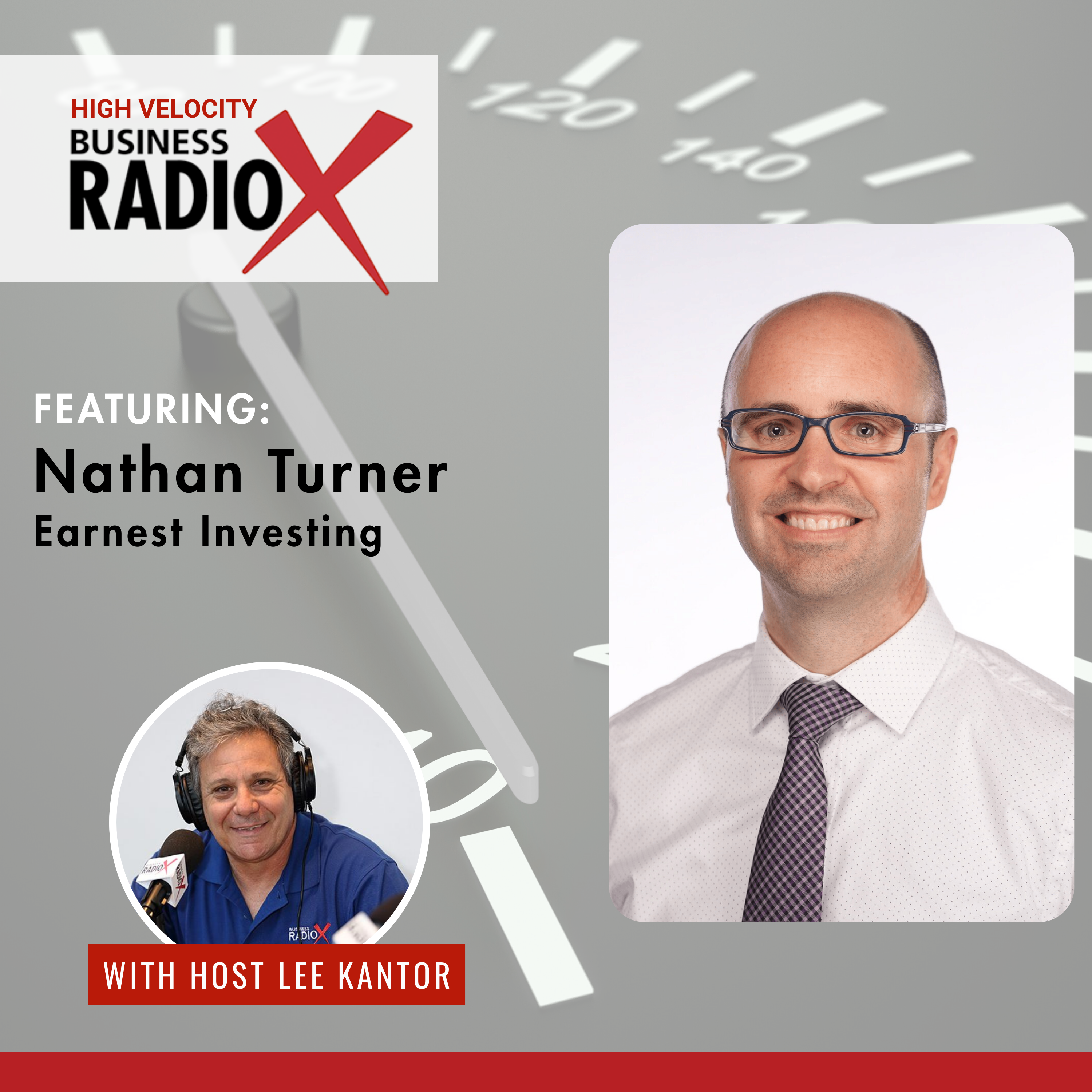

In this episode of High Velocity Radio, Lee Kantor interviews Nathan Turner, President of Earnest Investing. Nathan explains his fund’s approach to investing in residential real estate mortgages across the U.S., detailing how he acquires loans from private lenders and manages borrower payments. He shares insights on the benefits of note investing, the importance of networking in the industry, and educational opportunities like the Diversified Mortgage Expo. The episode provides an accessible introduction to note investing as an alternative real estate strategy, highlighting how accredited investors can participate and learn more.

 Nathan Turner is a leading voice in mortgage note investing, with more than 15 years of hands-on experience buying, managing, and optimizing large portfolios of performing real estate notes.
As founder of Earnest Investing, he works with accredited investors seeking predictable, secured, passive income backed by real property. He is known throughout the note-investing industry as “The Canadian Note Guy” and is the organizer of the annual Diversified Mortgage Expo in Nashville.
His signature “Be the Bank” philosophy empowers investors to shift from volatile, effort-heavy strategies to a more stable, secured approach rooted in first-position liens. With a fund that consistently pays an 8% annual return, he combines simplicity, transparency, and deep expertise.
Connect with Nathan on LinkedIn and Facebook.
What You’ll Learn In This Episode
- Overview of Earnest Investing and its business model.
- Explanation of note investing in residential real estate mortgages.
- Comparison of residential real estate notes versus commercial real estate.
- Process of purchasing loans from private lenders and collecting payments.
- Importance of vetting loans and assessing borrower reliability.
- Networking within the lending community for loan acquisition.
- Educational resources available for those interested in note investing.
- The role of the Diversified Mortgage Expo in promoting note investing.
- Insights on how to get started in note investing for beginners.
- Discussion on the target audience for the investment fund, specifically accredited investors.
 This transcript is machine transcribed by Sonix.
TRANSCRIPT
Intro: Broadcasting live from the Business RadioX studios in Atlanta, Georgia. It’s time for High Velocity Radio.
Lee Kantor: Lee Kantor here. Another episode of High Velocity Radio, and this is going to be a good one. Today on the show we have the president of Earnest Investing, Nathan Turner. Welcome.
Nathan Turner: Hey, thank you so much. So glad to be here.
Lee Kantor: Well, I’m excited to learn what you’re up to. Tell us a little bit about earnest investing. How are you serving folks?
Nathan Turner: Earnest investing is an accredited investor fund where people put money into the fund, and I go and buy residential real estate mortgages all over the country.
Lee Kantor: So what’s your backstory? How’d you get involved in this line of work?
Nathan Turner: You know, like so many things, I kind of fell into it by accident, which was a happy accident. So I’m glad to be where I am today. I just was introduced to it by, uh, by, you know, some friends, colleagues and started doing some seller finance where we had some properties that I was in charge of and we were selling them on terms. So meaning I would have somebody come in and say, okay, I have, you know, whatever it was a couple thousand dollars for a down payment. We would set them up with monthly payments with principal and interest rather than a rental, so that they’re the ones living in the house. And they are the homeowners. They’re the ones who are taking care of the property. And I’m just collecting. So in essence, I was kind of becoming a bank. I didn’t even realize that’s what it was doing at first, but but essentially that’s what we started doing. And the more I learned about it, the more people I met all those different things, the more I realized this is actually a fairly sizable industry. And there’s a lot of people doing this, even though almost nobody’s heard of it.
Lee Kantor: So what was the attraction of residential real estate over commercial real estate?
Nathan Turner: I think especially initially, the size just, you know, I only had so much capital available, and so that’s what initially attracted me to it. And then it just kind of fell in love with the asset class. I really I really liked that. Everybody needs a home. Everyone needs a place to live. And so that’s, uh, it’s become my niche just providing, uh, you know, the opportunity for people to get into these homes where maybe they wouldn’t otherwise have the opportunity.
Lee Kantor: So how does it work? Like, say, I would like to buy a home. Why do I pick you and your firm rather than, like you said, the bank or more traditional bank.
Nathan Turner: Well, this is where it gets really interesting because technically I don’t actually loan out the money. I let somebody else do that. So there’s private lenders all over the country, and there’s tons of them out there that do a really great job at what they do. I actually come in after the fact, so I’m not actually dealing with the person living in the house. I am dealing with the loan holder, whoever created that loan. And I approached them and say, well, you’ve created this loan for X amount of dollars x percent interest rate over so many months. If you’re interested in getting cashed out, I’m your guy, so I will buy that typically at some kind of a discount and I take over the receiving the payments. So instead of the borrower, the person living in the home, instead of them paying, you know, a company ABC or individual ABC. Now they’re paying me. So I just I’m I’m the vulture. I come in after the fact.
Lee Kantor: But is it invisible to them? Like, do they just say they just get a notice that now you write the check to this company instead of that company?
Nathan Turner: That’s exactly it. There’s very little that changes for the borrower. They just instead of sending a check here now they send it to me.
Lee Kantor: So now when you’re doing this kind of work, how do you know. Like how are you vetting that homeowner to make sure that they’re going to be able to make all the payments? Or are you just relying on the person who made the initial loan to do that kind of vetting?
Nathan Turner: There’s a couple of things I do look at whatever the the lender set up. Uh, hopefully they’ve gone and done it correctly, and they’ve gone through a mortgage loan originator and involved with that. There’s all kinds of paperwork and checks and balances that are tied into that. To me, that’s a very important part. First of all, that’s the legal way to do it. So that’s an important piece. Uh, but it definitely gives me peace of mind because of the, uh, what’s built in already to check that out. Secondly, I’m going to look at history. So if they typically I’m going to want at least a few months worth of regular payment history. And it’s not even necessarily did they pay that month, but what day did they pay if their due date is the first? Are they paying on the 10th or 12th, or are they paying, you know, the 31st of the month before? Just to kind of get a sense of who they are. What kind of habits have they established? Uh, that plays into it a lot as well.
Lee Kantor: Now, are you currently kind of teaching other people how to do the same thing, or are you just looking for more, um, companies that have loans that they’re looking to sell. Like, what’s your, um, kind of. What’s your end game in all this?
Nathan Turner: Yeah, that’s a great question. So I have a, I guess a couple of end games. My first thing, I guess, is I’m always looking for more investors, people that are going to put money into the fund so I can go out and buy more of these loans. I don’t actually teach it. However, I’ve got some really great colleagues that are interested in doing that, which I would highly recommend. Uh, and I don’t get paid for saying that, but it’s because it’s a finance game. It’s not real estate. We have a lot of people, including myself, where they get into this note investing thing and they have some kind of real estate background, which is great. And that was me too. But just because you’ve got real estate background does not mean that you understand the finance part of it and how the lending, uh, side of that works. There’s different kinds of rules. There’s different kinds of even licensing in certain states and things that you need to be aware of. So it’s important to get some education. Now, that being said, I don’t teach it, but I do host an annual conference. And the next ones coming up, actually in May in Nashville, where, um, anybody who’s either in the business or interested in learning more about it, you come together with everybody who’s already in the business and we just get together. My whole goal for that conference is just to establish a place where people can get to know each other, and as they get to know each other, they can get to like each other. And as they get to like each other, they can get to trust each other and they can start doing some deals together.
Lee Kantor: Now, if somebody wants to get involved with this for the first time, uh, does it just like, what do you need to do in order to kind of, uh, explore this or these opportunities? Like, it’s not you’re not, um, like, this isn’t flipping houses. This is kind of you’re playing one level higher than that in a way. Can you explain, like, what it takes for somebody who has some money that likes real estate and that feels that there’s opportunities there that maybe they could be leveraging in a different way than they’re currently leveraging it.
Nathan Turner: Yeah. For sure. So, uh, like I say, I came from a real estate background as well. So I’d done some flipping houses. I’d been a landlord for a little bit. What I discovered with being a landlord is it’s way more work than anybody talks about. And so I didn’t really love it. And that’s what I liked about this note investing is it’s the same kind of monthly income that I was getting with the rentals, but I don’t own the house, which means I don’t have to take care of the house. I don’t have to fix the roof. I’m not dealing with property taxes. All of that goes back to the borrower. And so that became very attractive to me. So if you’re just getting started and it sounds great and interesting, um, I would say go to my website, Ernest Investing.com, there’s some more information there. And if you’re looking for someone to teach you, like I say, I’m going to point you in a different direction. Uh, but some people, colleagues, friends that I’ve known for years, that would be great at doing that for you.
Lee Kantor: But if I was going to try to do this myself, how do I Do I look for somebody that is a small lender that maybe only has a few properties? Or do I find places that are doing this already and are just looking for ways to, you know, unload some properties, like what is the best, you know, kind of early fit for exploring this.
Nathan Turner: Yeah. And that’s the million dollar question is where do you find these things. And that’s one of the biggest challenges in this business is identifying where these loans are and then how to evaluate them and make sure that it’s going to be a good deal. It’s going to be something that’s going to produce long term. And of course, it’s never a perfect, uh, kind of evaluation, but we all do our best. Um, it’s really all about relationships. There are two, maybe three different websites where you can go and browse loans that are for sale. Um, but really and truly, the way this business is done is just getting to know people who are in the business and talking and networking and passing lists around and things like that. Oh, that’s really how the business is done.
Lee Kantor: So is this one of those things where you just wherever you are locally in the country, you just start kind of getting involved with the lending community and see who the players are and who, who, who is doing a lot of loans, who’s not doing a lot of loans, who maybe wants to stop doing loans. Like, is that is it just kind of old fashioned networking, you know, getting to know more people?
Nathan Turner: Yeah, that’s a really good way to do it. Um, if you want to expand your network, you start going online. There’s different Facebook groups and LinkedIn groups and things like that that you can get involved with just to, at the very least, dip your toe in and start meeting some people and having some conversations. Um, to give you an example, though, I actually live up in Canada and everything I do is in the US, so you don’t have to invest in your local market. Um, I’ve got loans spread out all over the country, and so it really doesn’t make that much of a difference where you’re located versus where the loans are.
Lee Kantor: So you just have to find the individuals who have the loans and then just start building relationships with those people.
Nathan Turner: Yeah. That’s right. And, uh, ideally my my best case scenario is I meet up with people who are creating these loans on a regular basis. So not necessarily just a one off where, you know, a mom and pop, they own a second property and then they, they sell it on terms and create this note. Those exist as well. And those are actually harder to find. Uh, so ideally you’re you’re trying to network with those who are doing this, at least, you know, semi-regularly where they’re creating a few of these, you know, a month or a year or something like that, where you can keep tapping into that same, same vein.
Lee Kantor: And then that way it’s a win win for both of you. You get to take over the loan, they get to exit the loan. They get something, you get something and you know, and the band plays on.
Nathan Turner: That’s exactly it. They get cashed out. They can go back and do it again and then come back and say, hey, are you interested in buying this one? It’s basically the same thing we did last time. Great. And we can just keep turning them over and over.
Lee Kantor: Now, what was kind of that first moment for you where you were like, hey, I think this is going to work out. Like, what was that aha moment early on when you were like, I think I’m on to something here.
Nathan Turner: Yeah. So when I first got started, it was 2008, 2009. Uh, the first.
Lee Kantor: So that’s right in the in a bad time for real estate. Yeah.
Nathan Turner: Yeah. And so that when I first heard about this, I thought, man, that sounds crazy. Um, especially because what was really popular, the time was what we call nonperforming loans. So loans where people were not making any payments. And I thought, why would you do that? That sounds nuts. So I had talked to some friends and kind of had been mulling it over, and then a friend of mine approached me and said, well, I have a package of three loans, all in Columbus, Ohio, on three different properties, three different borrowers, all that. And at the time, pricing was crazy, crazy good. So I bought the whole package for a total of $10,000. And I thought, this is worth a $10,000 experiment. So let’s see. And, uh, it worked the way that I hoped it would. At the time, I was very much centered on the real estate. So for the first two properties, I located the homeowner and just said to them, hey, I now own your loan. Um, I’m not here to collect any money. If you just deed the property over to me, then I will wipe out the balance of the loan. And two for two. They said absolutely, 100%. Let’s do this. And the third one? It was a house that wasn’t too far from Ohio State University, and it was a larger house.
Nathan Turner: And so the idea was I was going to turn it into student housing. Um, the challenge was that the house had had a fire, and so nobody had done anything with it for a while. The owner lived out in Arizona. I contacted him, he just didn’t really respond. And so, okay, what do we do? In the process? We found out that this property had a fairly sizable property tax bill, something like $12,000, like it was fairly large and I had already made my money back on the other two and then some. So to me, the aha moment was I’m not actually directly responsible for these taxes. I’ve already made my money over here on these other two deals. Uh, and so I can just let this go. And so that was, that was huge. Just to know that although those property taxes affected me, I wasn’t directly responsible for them. And I thought, man, that’s really cool. And so that was kind of what led me into thinking maybe there’s something to this, maybe there’s something that can, you know, work long term. And that’s kind of where I went from there. So.
Lee Kantor: Um, what could we be doing for you? What do you need more of? Are you just trying to get more people in America to go to this event of yours later this year? Is that kind of would that be a big win for you?
Nathan Turner: That would be a big win because, um, if you’re even if you’re doing any kind of real estate investing that you should at least be aware of this and have it as a tool in your toolbox. You don’t have to go out and start buying loans or whatever the way that I do, but you should at least be aware that it’s out there. Uh, and so when you’re doing some kind of they call it creative finance these days, a lot of the time you have some idea of if I’m going to create this loan, uh, there’s a chance that I’m going to want to sell this somewhere down the down the line. So if that’s the case, I know that this guy Nathan would like it structured a certain way so I can learn about that now so that when that deal comes up, I can structure it properly so that I can hang on to it if I want. But then I’ve also created a very attractive note for somebody else to purchase in the future.
Lee Kantor: And for you, the people that you’re working with, are they primarily accredited investors? Is that the level that you’re dealing with?
Nathan Turner: Yeah. My fund. It’s, uh, it’s a regulation D 506 C uh, that all the letters and numbers in there, but it’s, uh, limited to accredited investors. So that’s where I’m at with that.
Lee Kantor: And then the event that we’re talking about in Nashville is called the Diversified Mortgage Expo.
Nathan Turner: That’s right. Coming up May 1st and second.
Lee Kantor: Good stuff. Uh, Nathan, congratulations on all the success. You’re doing amazing work, and we appreciate you.
Nathan Turner: Hey, thank you so much for having me on.
Lee Kantor: And then the website, if people want to learn more about earnest.
Nathan Turner: Yeah. It’s earnest. Investing.com. That’s. Uh, and there’s more information about what I’m doing with the fund, about notes in general. And there’s a link over to the Diversified Mortgage Expo website as well.
Lee Kantor: Good stuff. All right. This is Lee Kantor. We will talk to you next time on High Velocity Radio.














