Business RadioX ®

  • Home
  • Business RadioX ® Communities
    • Southeast
      • Alabama
        • Birmingham
      • Florida
        • Orlando
        • Pensacola
        • South Florida
        • Tampa
        • Tallahassee
      • Georgia
        • Atlanta
        • Cherokee
        • Forsyth
        • Greater Perimeter
        • Gwinnett
        • North Fulton
        • North Georgia
        • Northeast Georgia
        • Rome
        • Savannah
      • Louisiana
        • New Orleans
      • North Carolina
        • Charlotte
        • Raleigh
      • Tennessee
        • Chattanooga
        • Nashville
      • Virginia
        • Richmond
    • South Central
      • Arkansas
        • Northwest Arkansas
    • Midwest
      • Illinois
        • Chicago
      • Michigan
        • Detroit
      • Minnesota
        • Minneapolis St. Paul
      • Missouri
        • St. Louis
      • Ohio
        • Cleveland
        • Columbus
        • Dayton
    • Southwest
      • Arizona
        • Phoenix
        • Tucson
        • Valley
      • Texas
        • Austin
        • Dallas
        • Houston
    • West
      • California
        • Bay Area
        • LA
        • Pasadena
      • Colorado
        • Denver
      • Hawaii
        • Oahu
  • FAQs
  • About Us
    • Our Mission
    • Our Audience
    • Why It Works
    • What People Are Saying
    • BRX in the News
  • Resources
    • BRX Pro Tips
    • B2B Marketing: The 4Rs
    • High Velocity Selling Habits
    • Why Most B2B Media Strategies Fail
    • 9 Reasons To Sponsor A Business RadioX ® Show
  • Partner With Us
  • Veteran Business RadioX ®

Considerations When Expanding Globally

December 16, 2022 by John Ray

Considerations When Expanding Globally
Advisory Insights Podcast
Considerations When Expanding Globally
Loading
00:00 /
RSS Feed
Share
Link
Embed

Download file

Considerations When Expanding Globally

Considerations When Expanding Globally (Advisory Insights Podcast, Episode 22)

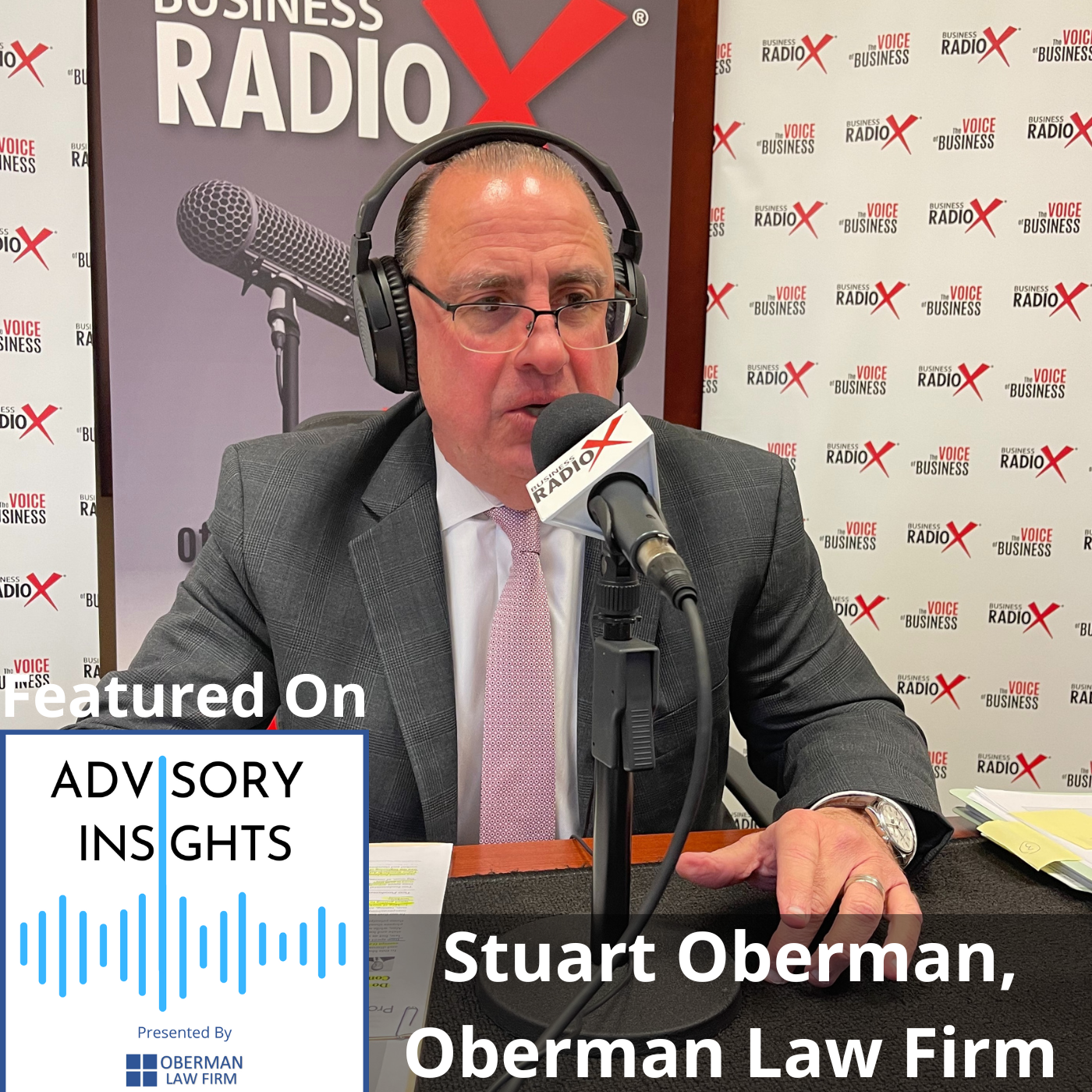
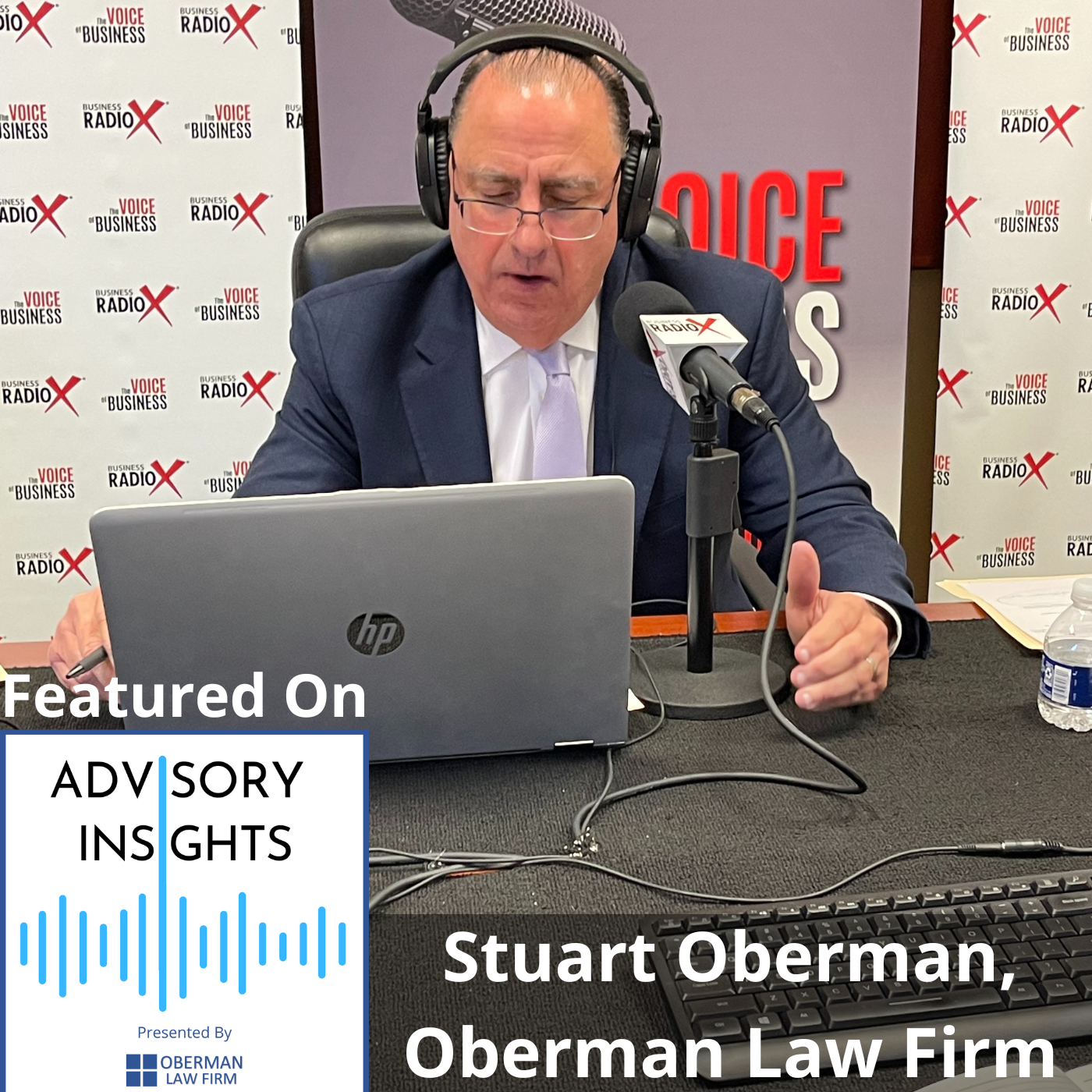
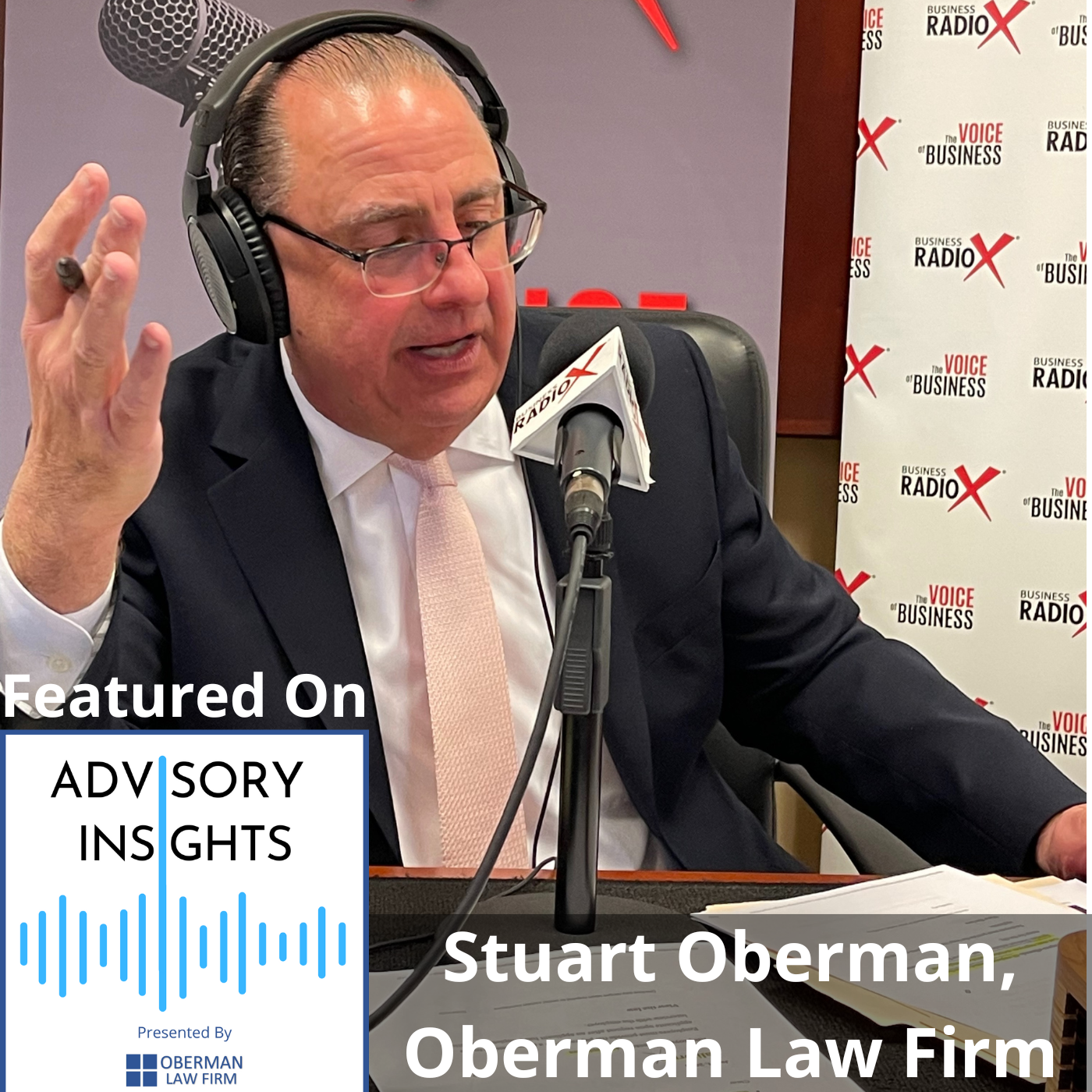
On this episode of Advisory Insights, Stuart Oberman of Oberman Law Firm discussed some of the challenges businesses face when expanding globally, including compliance with various laws and regulations. He stressed the importance of getting expert legal counsel to advise on these matters.

Advisory Insights is presented by Oberman Law Firm and produced by the North Fulton studio of Business RadioX®. The series can be found on all the major podcast apps. You can find the complete show archive here.

TRANSCRIPT

Intro: [00:00:01] Broadcasting from the studios of Business RadioX, it’s time for Advisory Insights. Brought to you by Oberman Law Firm, serving clients nationwide with tailored service and exceptional results. Now here’s your host.

Stuart Oberman: [00:00:20] Welcome everyone to Advisory Insights. Stuart Oberman here as your host. I want to talk a little bit about going global. So, as a law firm, we are very, very fortunate. We have clients that are growing globally. We have clients that are coming across border into the United States. And it’s got its own twists and turns. So, I want to drill down a little bit on considerations when expanding globally.

Stuart Oberman: [00:00:53] So, look, as we enter 2023, as we go into it, companies are anticipating and increasing international business activity. That’s just the way it is, whether it’s products, whether it’s services. Everything now, it seems, is going cross-border, whether it’s across the pond to Europe or to our friends up north to Canada. So, a lot of our clients think that going globally is necessary in order to maintain long term growth.

Stuart Oberman: [00:01:25] And a lot of those markets are Western Europe and China. But I will tell you, the emerging markets are Mexico, Brazil, and India. So, I think that you’ve got to take a look at some of those opportunities. Now, I will tell you, once you get into those countries and once those countries come into us, on the expansion side, you’ve got mandated compliance that is very different.

Stuart Oberman: [00:01:58] But I want to talk about our clients going globally. So, you’ve got absolute mandated regulatory compliance that is required. For every different country, you’re going to have a different regulation. You look at Canada, you’ve got providences. A lot of providences are absolutely separate. They’ve got their own rules, regulations, they’ve got their own regulatory boards. So, you’ve got to know this.

Stuart Oberman: [00:02:23] So, I want to take a look at a couple of considerations going global expansion, corporate governance. One is that, in a lot of jurisdictions, you have to have a physical presence. You have to have a registered agent. You have to have, in some cases, actual subsidiaries. And in some jurisdictions, you have to look at the regulatory compliance and tax considerations.

Stuart Oberman: [00:02:52] So, if you have an expansion that requires in a foreign jurisdiction forming a subsidiary, you’ve got to look in multiple corporate structures for that. Are they going to have shareholders? Are they going to have members? Are they going to comply with certain regulatory matters as far as registration goes? How’s the names?

Stuart Oberman: [00:03:19] Another area you have to look at is regulatory compliance. Folks, you know, some jurisdictions absolutely require import and export licenses. Do you know what that is? And that includes technology and products. So, are you exporting your technology into another country? What’s the compliance? Are you importing into another country products? What is the taxes? What are the tax stamps? So, depending on your service, your product, your facility, you’re going to have regulatory compliance issues and they are very, very complex.

Stuart Oberman: [00:04:03] Now, of course, we all know there’s tax considerations. So, some laws, depending on jurisdiction, are very, very strict, some are very high, some are very favorable tax structures. You have to know what your tax structure is, what your tax liability is before you start getting into the export of services and products. You have to retain counsel. You have to retain a CPA, if you will, that is well-versed on those particular regulations. What are the direct taxation rules? What are the antideferral rules? If you don’t know what antideferral rules are, you have to take a step back and understand that.

Stuart Oberman: [00:04:56] Now, I want to take a look at employment, area number four. In a foreign country, there are some cases where you have to enter into and adhere to strict collective bargaining requirements. Some require work permits for non-local nationals. What are your requirements if you have members of the company that are from the states, if you will, going into China, into Western Europe, into Mexico, Brazil, India? What are the local national requirements? You have to understand what the benefits are if you are hiring personnel from that particular country. What are the mandated benefits? Folks, there’s mandated benefits that are different in Canada, in Europe, Asia, South America.

Stuart Oberman: [00:05:49] Now, one of the biggest concerns that you should always have in any kind of expansion globally is trade secrets, privacy and non-compete agreements. What are you going to do if, all of a sudden, your models, your technology, your outsourcing is being stripped of its privacy? And all of a sudden you’ve got duplicates flooding the market. What are you going to do? How are you going to deal with it? Are you going to lose money? Just think of the counterfeit luxury brands that come into the states. Well, what’s going to happen if you’re over there and your brand, your product is hijacked? And then, you’ve got duplicates. You’ve got counterfeit. What do you do?

Stuart Oberman: [00:06:45] I also want to look at a couple things regarding global equity. So, certain security laws in certain countries may have very strict corporate equity distribution models. Some are unique. Some involve fund remittance limits. Some involve reporting. Some involve repatriate of funds and requirements. Do you know what those requirements are? Do you know the structure for the corporate equity distributions? You have to understand the accounting mechanisms for that as far as the tax benefits and the replacement or awarding of equity to the employees.

Stuart Oberman: [00:07:25] Again, I want to drill down a little bit on data privacy, intellectual property technology, and information law. So, again, each country is going to have different privacy, data transfer, customer employee notification laws, data monitoring, payment obligations. What happens if they are found to be liable for your stripping of ideas, they’re counterfeiting?

Stuart Oberman: [00:07:52] So, not only do you have state and federal law, if you will, going into different global jurisdictions, but you’ve got local laws regarding the enforcement and validation of intellectual property assignments. How are you going to transfer various company policies, procedures, and assignments to different entities that you create in a different country? Do you have those particular trade secrets protections in order? Are you training your staff, your team members, your office, or your directors who are located in that country and are national to that particular jurisdiction and country? Have you trained them? Are you training them?

Stuart Oberman: [00:08:40] And then, from an accounting standpoint, what are the tax or replacement benefits for, again, awarding equity to employees? Is that confidential? What about relevant technology regarding newly formed subsidiaries? How are you training your people? What are the restrictions on third party technology due to territorial restrictions? Do you know what those are?

Stuart Oberman: [00:09:09] Folks, these are just a mirror of some things you can run into. You’ve got corporate governance, regulatory compliance, tax considerations, employment matters, global equity distributions, data privacy, intellectual property, technology, information law. Those are the things you have to have a really, really expert grasp on before you’re ready to expand.

Stuart Oberman: [00:09:35] Folks, again, I can’t stress enough if you’re going to expand globally, you have to understand those ramifications and you’ve got to get appropriate legal counsel to outline those things.

Stuart Oberman: [00:09:47] Folks, thanks again for joining us on Advisory Insights. Stuart Oberman here. If you have any questions, give us a call, 770-886-2400, or send me an email, stuart@obermanlaw.com. Thanks a lot. Have a fantastic day.

Outro: [00:10:07] Thank you for joining us on Advisory Insights. This show is brought to you by Oberman Law Firm, a business-centric law firm representing local, regional, and national clients in a wide range of practice areas, including health care, mergers and acquisitions, corporate transactions, and regulatory compliance.

About Advisory Insights Podcast

Presented by Oberman Law Firm, Advisory Insights Podcast covers legal, business, HR, and other topics of vital concern to healthcare practices and other business owners. This show series can be found here as well as on all the major podcast apps.

Stuart Oberman, Oberman Law Firm

Oberman Law Firm

Stuart Oberman is the founder and President of Oberman Law Firm. Mr. Oberman graduated from Urbana University and received his law degree from John Marshall Law School. Mr. Oberman has been practicing law for over 25 years, and before going into private practice, Mr. Oberman was in-house counsel for a Fortune 500 Company. Mr. Oberman is widely regarded as the go-to attorney in the area of Dental Law, which includes DSO formation, corporate business structures, mergers and acquisitions, regulatory compliance, advertising regulations, HIPAA, Compliance, and employment law regulations that affect dental practices.

In addition, Mr. Oberman’s expertise in the healthcare industry includes advising clients in the complex regulatory landscape as it relates to telehealth and telemedicine, including compliance of corporate structures, third-party reimbursement, contract negotiations, technology, health care fraud, and abuse law (Anti-Kickback Statute and the State Law), professional liability risk management, federal and state regulations.

As the long-term care industry evolves, Mr. Oberman has the knowledge and experience to guide clients in the long-term care sector with respect to corporate and regulatory matters, assisted living facilities, continuing care retirement communities (CCRCs). In addition, Mr. Oberman’s practice also focuses on health care facility acquisitions and other changes of ownership, as well as related licensure and Medicare/Medicaid certification matters, CCRC registrations, long-term care/skilled nursing facility management, operating agreements, assisted living licensure matters, and health care joint ventures.

In addition to his expertise in the health care industry, Mr. Oberman has a nationwide practice that focuses on all facets of contractual disputes, including corporate governance, fiduciary duty, trade secrets, unfair competition, covenants not to compete, trademark and copyright infringement, fraud, and deceptive trade practices, and other business-related matters. Mr. Oberman also represents clients throughout the United States in a wide range of practice areas, including mergers & acquisitions, partnership agreements, commercial real estate, entity formation, employment law, commercial leasing, intellectual property, and HIPAA/OSHA compliance.

Mr. Oberman is a national lecturer and has published articles in the U.S. and Canada.

LinkedIn

Oberman Law Firm

Oberman Law Firm has a long history of civic service, noted national, regional, and local clients, and stands among the Southeast’s eminent and fast-growing full-service law firms. Oberman Law Firm’s areas of practice include Business Planning, Commercial & Technology Transactions, Corporate, Employment & Labor, Estate Planning, Health Care, Intellectual Property, Litigation, Privacy & Data Security, and Real Estate.

By meeting their client’s goals and becoming a trusted partner and advocate for our clients, their attorneys are recognized as legal go-getters who provide value-added service. Their attorneys understand that in a rapidly changing legal market, clients have new expectations, constantly evolving choices, and operate in an environment of heightened reputational and commercial risk.

Oberman Law Firm’s strength is its ability to solve complex legal problems by collaborating across borders and practice areas.

Connect with Oberman Law Firm:

Company website | LinkedIn | Twitter
Tagged With: Advisory Insights, Advisory Insights Podcast, Dental Practice, doing business globally, employment law, Expanding Globally, Oberman Law, Oberman Law Firm, Stuart Oberman

2023 HIPAA Updates

December 9, 2022 by John Ray

2023 HIPAA Updates
Advisory Insights Podcast
2023 HIPAA Updates
Loading
00:00 /
RSS Feed
Share
Link
Embed

Download file

2023 HIPAA Updates

2023 HIPAA Updates (Advisory Insights Podcast, Episode 21)

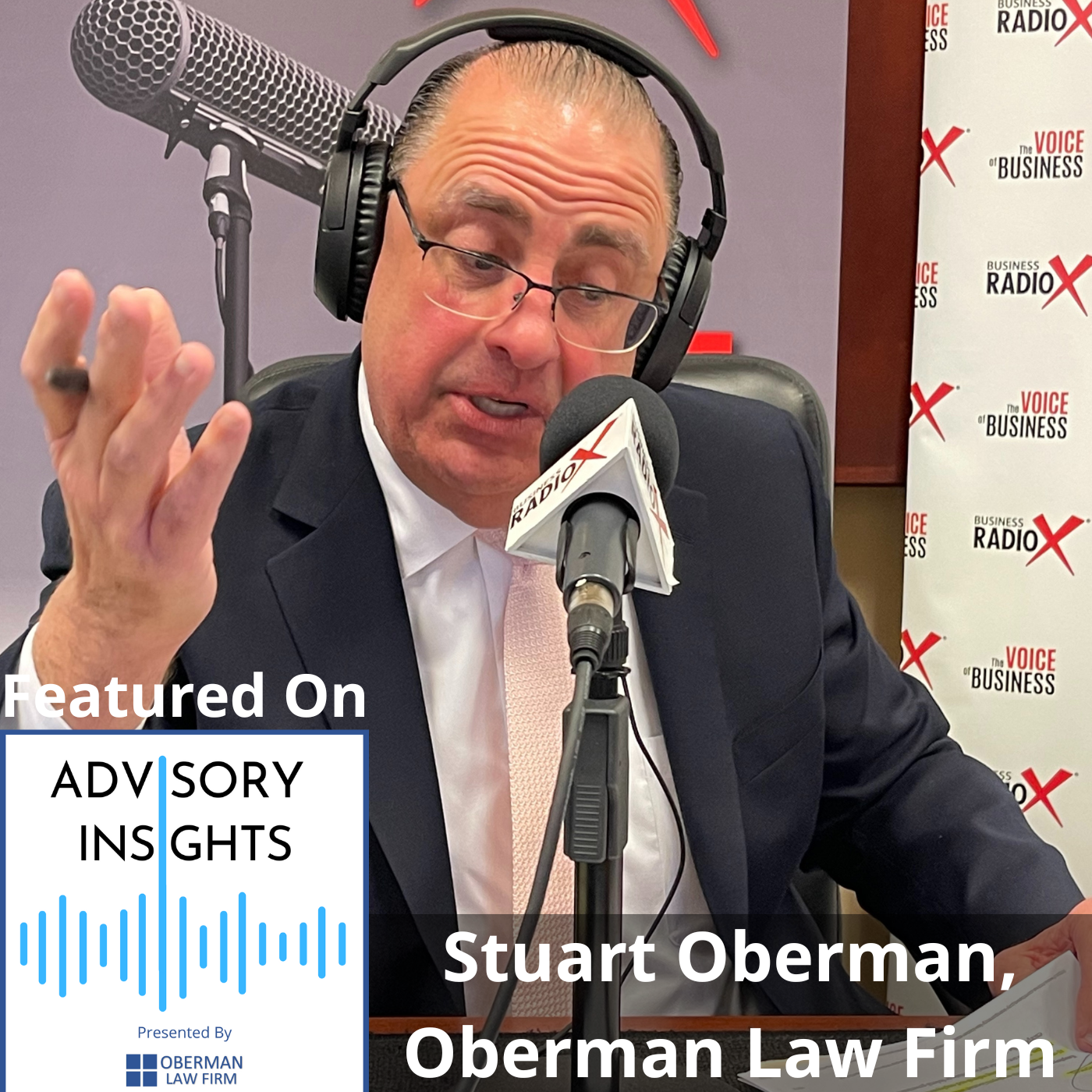
On this episode of Advisory Insights, Stuart Oberman of Oberman Law Firm discussed HIPAA updates coming in 2023, avoiding HIPAA violations, and the increased penalties for violators. He explained that patients’ access to their health care records will be more direct and timelier. Practices should know, however, that there is a potential for increased exposure if records are not properly secured.

Advisory Insights is presented by Oberman Law Firm and produced by the North Fulton studio of Business RadioX®. The series can be found on all the major podcast apps. You can find the complete show archive here.

TRANSCRIPT

Intro: [00:00:01] Broadcasting from the studios of Business RadioX, it’s time for Advisory Insights. Brought to you by Oberman Law Firm, serving clients nationwide with tailored service and exceptional results. Now, here’s your host.

Stuart Oberman: [00:00:20] Welcome everyone. Stuart Oberman here, your host for Advisory Insights. All right. We know that 2023 is right around the corner. Folks, I’m going to tell you, for my health care clients – and we have, as a firm, a lot of health care clients – our clients are not prepared for the new HIPAA changes. I want to run through a couple of these. I could spend three days talking about this particular topic, but I just want to hit the highlights and give our clients a view as to what’s expected and potential exposure.

Stuart Oberman: [00:00:57] So, from our area, we see a lot of violations. I want to walk through some what we call reoccurring violations. In plain English, it happens way too much. Where are some exposure? One, lost or stolen cellphones or tablets provide an extensive amount of sensitive data in our health care practices. Our doctors, they get information on their cellphones, they get information on their tablets, they get information that is easily extracted. What are you doing to secure that data on your cellphone or your tablet?

Stuart Oberman: [00:01:43] Number two, our medical providers do not train their staff. I’m going to go out on a limb to say 80 to 90 percent of all of our health care offices across the board do not properly, thoroughly provide training to their employees.

Stuart Oberman: [00:02:06] Number three – a common violation that keeps reoccurring, reoccurring, reoccurring – data breaches. Now, what happens is, on those breaches, a lot of times doctors don’t know what to do as far as the violations go. Who do they report it to? Do they report it to the government, to the FTC? Do they have to do a credit reviewer check? Do they have to set up a 1-800 number? Do they have breached notification rules? No, they don’t.

Stuart Oberman: [00:02:39] So, I just ran through three very quick topics and violations that could literally, literally shut down a practice if an investigation occurs. Now, I want to take a look at some other things. I want to take a look at some key changes in 2023. Key changes, first, more direct and timely patient access to electronic health care records.

Stuart Oberman: [00:03:08] There has been a dramatic increase in the time that patients can obtain their data from providers. Do you even know what that time period is? If you do not know what that time period is and you do not know the violations, then I would urge you to either give us a call, take a look at our website, take a look at some of our articles, because that is a huge, huge issue.

Stuart Oberman: [00:03:39] Folks, I’ll guarantee you, you deny patient access to their medical records within a timely manner, you will be getting a very nice I love you letter from the government, which is about 17 pages, and they will crawl up every nook and cranny in your office.

Stuart Oberman: [00:04:01] Now, one thing we have to look at is what is the increase in penalties. Yes, they increased the penalties. Now, they look at what’s involved in guidance, technical assistance. They’re looking at correction action plans.

Stuart Oberman: [00:04:17] You know, what happens is that a lot of these aren’t intentional. Our doctors just rely on the wrong people year after year who have no idea what they’re doing. Unfortunately, they’re not properly trained, so you really can’t blame them. You know, whether it’s office managers, compliance officers – well, let me back up on that. Every medical office should have a compliance officer.

Stuart Oberman: [00:04:43] So, under the new 2023 HIPAA changes, there’s been an increase in penalties. Are you even aware that there’s now a Tier 1, a Tier 2, a Tier 3, and a Tier 4? So, what’s Tier one? Lack of knowledge, “I just didn’t know.” I’ll be honest, that is hard to sell. Reasonable cause and not willful intent, “Look, I knew that I probably needed to do it, but I didn’t mean not to do it.” Willful neglect, “Basically, I don’t really care. I’ve got 30 days to correct it.”

Stuart Oberman: [00:05:24] Now, you get into willful neglect and you not corrected within 30 days, folks, the fines and fees become astronomical once you get into those particular tiers. Again, do you even know the Tier 1, Tier 2, Tier 3, Tier 4 structure? And have you even told your staff of that?

Stuart Oberman: [00:05:46] So, let’s take a look at do’s and don’ts. How do you avoid HIPAA violations and penalties? Now, HIPAA is also criminal penalties. Yep, criminal penalties. Let’s look at what we need to do. Conduct regular audits, spot check potential violations. If you’re not auditing your files – and I’ve been saying this for years on the speaking circuit – at least 15 or 25 a month, which won’t take you long, you have some potential exposure that you don’t want to have, obviously.

Stuart Oberman: [00:06:32] Let’s look at do. Regular employee training. Folks, you cannot train your employees enough on HIPAA. So, I’m going to have an article coming out that I was quoted in and had the pleasure of being a part of the Academy of General Dentistry. And it’s going to be a topic regarding cybersecurity. And in preparing for that, I did an awful lot of research. And I will tell you, it is shocking as to how many breaches there are and how unprepared the doctor is, the team is, the compliance officer is.

Stuart Oberman: [00:07:17] Next, set clear policies and procedures to all employees. Do they know what that is? Do you have a checklist? Do you have an up to date checklist? Are you still using the one from 1996? It’s a different world. Establish in your office a privacy officer. And you’ve got to be careful with this. If you’re a small office, you’re appointing a compliance officer who’s going to answer on your behalf, and you’re going to expect them to cover you with HIPAA issues.

Stuart Oberman: [00:07:52] My suggestion, if you have a small office, you are the compliance officer. If you get bigger, you have a compliance officer, you got to train them. Now, they could be part of your HR – I don’t necessarily like that. I want separation there. But if you have to do it, you’ve got to be both trained.

Stuart Oberman: [00:08:19] Don’ts. Goodness gracious to don’ts. Do not ever disclose or share login credentials. That is an absolute recipe for disaster. Two do not – maybe one of the biggest things – do not leave portable devices or documents unattended anywhere in your office, in public. Look, again, our cellphones are now our offices – our tablets, our laptops. If you go on HHS website and you look at how many fines are due to lost tablets, lost hardware, it’s amazing. Never, ever, ever take flash drives out of your office. Do not do that.

Stuart Oberman: [00:09:11] Folks, I could talk about HIPAA for 20 days here, but I just want to go through, again, some things that we just talked about, HIPAA 2023 updates. Listen to this podcast. Understand where you’re weak at. Fill the gaps. If you’re strong in areas, build on it. If you’re weak, fill it out.

Stuart Oberman: [00:09:32] Folks, thank you as always for joining Advisor Insights. Stuart Oberman. If you have any questions, please give us a call at 770-886-2400, or email, stuart, S-T-U-A-R-T, @obermanlaw.com. Have a fantastic day. Thank you everyone.

Outro: [00:09:53] Thank you for joining us on Advisory Insights. This show is brought to you by Oberman Law Firm, a business-centric law firm representing local, regional, and national clients in a wide range of practice areas, including health care, mergers and acquisitions, corporate transactions, and regulatory compliance.

About Advisory Insights Podcast

Presented by Oberman Law Firm, Advisory Insights Podcast covers legal, business, HR, and other topics of vital concern to healthcare practices and other business owners. This show series can be found here as well as on all the major podcast apps.

Stuart Oberman, Oberman Law Firm

Oberman Law Firm

Stuart Oberman is the founder and President of Oberman Law Firm. Mr. Oberman graduated from Urbana University and received his law degree from John Marshall Law School. Mr. Oberman has been practicing law for over 25 years, and before going into private practice, Mr. Oberman was in-house counsel for a Fortune 500 Company. Mr. Oberman is widely regarded as the go-to attorney in the area of Dental Law, which includes DSO formation, corporate business structures, mergers and acquisitions, regulatory compliance, advertising regulations, HIPAA, Compliance, and employment law regulations that affect dental practices.

In addition, Mr. Oberman’s expertise in the healthcare industry includes advising clients in the complex regulatory landscape as it relates to telehealth and telemedicine, including compliance of corporate structures, third-party reimbursement, contract negotiations, technology, health care fraud, and abuse law (Anti-Kickback Statute and the State Law), professional liability risk management, federal and state regulations.

As the long-term care industry evolves, Mr. Oberman has the knowledge and experience to guide clients in the long-term care sector with respect to corporate and regulatory matters, assisted living facilities, continuing care retirement communities (CCRCs). In addition, Mr. Oberman’s practice also focuses on health care facility acquisitions and other changes of ownership, as well as related licensure and Medicare/Medicaid certification matters, CCRC registrations, long-term care/skilled nursing facility management, operating agreements, assisted living licensure matters, and health care joint ventures.

In addition to his expertise in the health care industry, Mr. Oberman has a nationwide practice that focuses on all facets of contractual disputes, including corporate governance, fiduciary duty, trade secrets, unfair competition, covenants not to compete, trademark and copyright infringement, fraud, and deceptive trade practices, and other business-related matters. Mr. Oberman also represents clients throughout the United States in a wide range of practice areas, including mergers & acquisitions, partnership agreements, commercial real estate, entity formation, employment law, commercial leasing, intellectual property, and HIPAA/OSHA compliance.

Mr. Oberman is a national lecturer and has published articles in the U.S. and Canada.

LinkedIn

Oberman Law Firm

Oberman Law Firm has a long history of civic service, noted national, regional, and local clients, and stands among the Southeast’s eminent and fast-growing full-service law firms. Oberman Law Firm’s areas of practice include Business Planning, Commercial & Technology Transactions, Corporate, Employment & Labor, Estate Planning, Health Care, Intellectual Property, Litigation, Privacy & Data Security, and Real Estate.

By meeting their client’s goals and becoming a trusted partner and advocate for our clients, their attorneys are recognized as legal go-getters who provide value-added service. Their attorneys understand that in a rapidly changing legal market, clients have new expectations, constantly evolving choices, and operate in an environment of heightened reputational and commercial risk.

Oberman Law Firm’s strength is its ability to solve complex legal problems by collaborating across borders and practice areas.

Connect with Oberman Law Firm:

Company website | LinkedIn | Twitter
Tagged With: 2023 Hipaa Updates, Advisory Insights, Advisory Insights Podcast, Dental Practice, employment law, HIPPA, Oberman Law, Oberman Law Firm, Stuart Oberman

Best Practices for Employee Offer Letters

December 2, 2022 by John Ray

Best Practices for Employee Offer Letters
Advisory Insights Podcast
Best Practices for Employee Offer Letters
Loading
00:00 /
RSS Feed
Share
Link
Embed

Download file

Best Practices for Employee Offer Letters

Best Practices for Employee Offer Letters (Advisory Insights Podcast, Episode 20)

On this episode of Advisory Insights, Stuart Oberman of Oberman Law Firm discusses why offer letters for employees are so vital and best practices for offer letters. He emphasizes that offer letters can make or break a company, and advises employers to document salary, benefits, performance reviews, and special conditions in their offer letters.

Advisory Insights is presented by Oberman Law Firm and produced by the North Fulton studio of Business RadioX®. The series can be found on all the major podcast apps. You can find the complete show archive here.

TRANSCRIPT

Intro: [00:00:01] Broadcasting from the studios of Business RadioX, it’s time for Advisory Insights. Brought to you by Oberman Law Firm, serving clients nationwide with tailored service and exceptional results. Now, here’s your host.

Stuart Oberman: [00:00:20] Welcome everyone to Advisory Insights, Stuart Oberman. Folks, we’re going to drill it down today. So, in the Great Resignation, in the Great Boomerang, in the great process of I’m going to hang around for the job for a while and see what it does, I’m gonna lay low, assuming that you had an interview that was squeaky clean – as we mentioned on some other podcasts – assume that you did everything correct, you loved your candidate, now you’re going to offer them the job. This is where it gets sort of tricky.

Stuart Oberman: [00:00:53] We’re going to take you through the topic for today, Best practices for employee offer letters. You’re probably thinking, “Well, I really don’t even offer my employees an offer letter.” That’s a big mistake. Every employee that you hire should have some type of offer letter. I don’t care what the industry you’re in, your employees need an offer letter.

Stuart Oberman: [00:01:19] Now, we’ve seen some disastrous offer letters. We’ve seen some good ones. I would walk through some basics. I mean, our offer letters that we offer our employees at the firm, obviously, are very long. Some may be very short. But I want to walk through some basics.

Stuart Oberman: [00:01:36] So, first and foremost, the key is that employee offer letters should never, ever, ever be considered an employee contract. If you have any doubt whether or not your offer letter is an employee contract, I would urge you to call your local council, whoever your general counsel is for the business. Ask them, “Does this have employment contract language in it? Am I going to get burned?” I want all language that creates an employment contract out. I want all that language out. At no time should your offer letters ever, ever, ever have language in there regarding employment contract.

Stuart Oberman: [00:02:23] Now, I want to walk through some basics. You know, for every job, there are so many variables for an employment contract. I get that, but I want an offer letter. What’s the guidelines? What are you doing upfront? What are the obligations of you? What are the obligations of your employee without even entering into an employment contract? There’s millions and millions of people that have jobs that don’t have contracts, but they should have offer letters which outlines certain things.

Stuart Oberman: [00:02:53] I want to know what your start date is, that should be in an offer letter. When you start, do you start two weeks? Is it tentative? Is it depending on whether or not your candidate has to get fired, laid off from the other job, or quit?

Stuart Oberman: [00:03:10] Contingencies – first and foremost, you’ve got to be careful with this one – are you requiring that employee to pass a drug test? Now, why do I say that? Because states are starting to limit drug tests.

Stuart Oberman: [00:03:24] Now, in our previous podcast, we talked about employees and employers that are dealing with the marijuana issue. That’s a huge topic right now. Are employers working around the marijuana issue? Some of them want to test for it, some of them want to go into panels. Drug tests, but you got to be careful. So, people in this podcast are listening not only in different countries but different parts of the region in the States, what does your local state say, what does the federal law say about drug tests?

Stuart Oberman: [00:03:57] Next, background test screening. We’re seeing a lot of pushback on this issue. You’ve got to make sure you understand what your Local and State Law is for this. Job title, “Well, I don’t really have a job title. We just come to work.” That’s not going to work in today’s world. They need a job title. What’s their title? And then, does it correspond with the employee manual? So, I have a job title, but I have no job description. So, really, the title is worthless because you’ve got no description as to what that guideline is. How are you tracking your employees and what their protocols are? Job titles, job descriptions in that employee manual.

Stuart Oberman: [00:04:39] I would tell you, the podcasts we’re doing and articles that we write as a firm, we can’t stress enough employee manuals. And it’s going to vary from industry, but if you don’t have an employee manual, folks, you’ve got to get one. Because, otherwise, you’re going to lose a lot of governmental arguments that relate to employment law and those kind of things.

Stuart Oberman: [00:05:00] So, salary, how are you paid? Are you exempt, non-exempt? Here’s a new one, are your salary non-exempt? Are you hourly non-exempt? How are you categorized? You need to know that. Is what you’re categorizing legal? What are your benefits? Health insurance, paid vacation. What does your employee manual say? PTO, leave. Folks, you’ve got to put your benefits down, 401(k)s matching, simple IRAs matching. What’s the protocols? What do you need to put in there?

Stuart Oberman: [00:05:40] Now, what we see a lot of times missing is performance reviews. How often are you going to do performance reviews once a year, once a quarter, every six months? Now, when a candidate starts, do you have a 90 day review period? Hopefully, the answer to that is, “Yes, I do.” If not, get one.

Stuart Oberman: [00:06:05] Now, the biggest question, employment at will. Every person you hire should be at will. Depending on the state, it will depend on how they define at will. But every, every, every offer letter needs to say at will.

Stuart Oberman: [00:06:21] Next, special conditions, two very hot topics on the local, state, and national level, non-competes. Folks, we’re seeing a lot and a lot of pushback on these areas. We’re starting to see some trends regarding how much you make as an employee. Do you even apply to that non-compete? If you make over 100,000 or 120, you know, what profession are you in? Do you have restrictions on your non-competes? You’ve got to look at that, folks, especially if you are a cross-border company where you may have 20 employees that work in 20 different states.

Stuart Oberman: [00:07:00] You know, sometimes I’ll ask the question to our employers, what states are your employees in and what states do you need guidance on? And their answer is, it’s easier to tell you what states we’re not in than the states that we are in. So, again, what are we looking at? Non-solicitation, I don’t care what your title is or what your job description is if you’re an employee, folks, your employees need non-solicitation. If they leave, they’re taking their stuff, they’re taking their list, they’re taking their confidential information, they’re taking your letterhead, they’re taking everything they’re using because they’re going to the next level, they’re going to the next company, and they’re going to utilize whatever they learned from you or Skyped from you or lifted from you, whatever you want to call the term.

Stuart Oberman: [00:07:50] Folks, I tell you, that’s a quick podcast but it is so very important that, one, you interview your candidate in the proper way, and we’ve discussed that on previous podcasts. Two, that you know exactly what you can do as far as drug tests and background tests. Do you even allow those? Once you get past that step, I want you to do offer letters. Again, if you don’t have an offer letter that you need council to review, get one. I cannot stress that enough. You’ve got to have guidelines for your employees. Salary, benefits, performance reviews, special conditions, folks, they’re all critical. Sometimes they will make or break a company depending on who’s coming and who’s going.

Stuart Oberman: [00:08:39] Folks, that is all for today’s podcast. Offer letters, you got to have them, folks. You got to have them. Stuart Oberman, Advisory Insights. Thank you so much for joining us today. If you have any questions, please feel free to give us a call, Oberman Law Firm, 770-886-2400 or email me, stuart – that’s S-T-U-A-R-T – @obermanlaw.com. Folks, thanks so much. Thanks for listening. Have a fantastic day.

Outro: [00:09:10] Thank you for joining us on Advisory Insights. This show is brought to you by Oberman Law Firm, a business-centric law firm representing local, regional, and national clients in a wide range of practice areas, including health care, mergers and acquisitions, corporate transactions, and regulatory compliance.

About Advisory Insights Podcast

Presented by Oberman Law Firm, Advisory Insights Podcast covers legal, business, HR, and other topics of vital concern to healthcare practices and other business owners. This show series can be found here as well as on all the major podcast apps.

Stuart Oberman, Oberman Law Firm

Oberman Law Firm

Stuart Oberman is the founder and President of Oberman Law Firm. Mr. Oberman graduated from Urbana University and received his law degree from John Marshall Law School. Mr. Oberman has been practicing law for over 25 years, and before going into private practice, Mr. Oberman was in-house counsel for a Fortune 500 Company. Mr. Oberman is widely regarded as the go-to attorney in the area of Dental Law, which includes DSO formation, corporate business structures, mergers and acquisitions, regulatory compliance, advertising regulations, HIPAA, Compliance, and employment law regulations that affect dental practices.

In addition, Mr. Oberman’s expertise in the healthcare industry includes advising clients in the complex regulatory landscape as it relates to telehealth and telemedicine, including compliance of corporate structures, third-party reimbursement, contract negotiations, technology, health care fraud, and abuse law (Anti-Kickback Statute and the State Law), professional liability risk management, federal and state regulations.

As the long-term care industry evolves, Mr. Oberman has the knowledge and experience to guide clients in the long-term care sector with respect to corporate and regulatory matters, assisted living facilities, continuing care retirement communities (CCRCs). In addition, Mr. Oberman’s practice also focuses on health care facility acquisitions and other changes of ownership, as well as related licensure and Medicare/Medicaid certification matters, CCRC registrations, long-term care/skilled nursing facility management, operating agreements, assisted living licensure matters, and health care joint ventures.

In addition to his expertise in the health care industry, Mr. Oberman has a nationwide practice that focuses on all facets of contractual disputes, including corporate governance, fiduciary duty, trade secrets, unfair competition, covenants not to compete, trademark and copyright infringement, fraud, and deceptive trade practices, and other business-related matters. Mr. Oberman also represents clients throughout the United States in a wide range of practice areas, including mergers & acquisitions, partnership agreements, commercial real estate, entity formation, employment law, commercial leasing, intellectual property, and HIPAA/OSHA compliance.

Mr. Oberman is a national lecturer and has published articles in the U.S. and Canada.

LinkedIn

Oberman Law Firm

Oberman Law Firm has a long history of civic service, noted national, regional, and local clients, and stands among the Southeast’s eminent and fast-growing full-service law firms. Oberman Law Firm’s areas of practice include Business Planning, Commercial & Technology Transactions, Corporate, Employment & Labor, Estate Planning, Health Care, Intellectual Property, Litigation, Privacy & Data Security, and Real Estate.

By meeting their client’s goals and becoming a trusted partner and advocate for our clients, their attorneys are recognized as legal go-getters who provide value-added service. Their attorneys understand that in a rapidly changing legal market, clients have new expectations, constantly evolving choices, and operate in an environment of heightened reputational and commercial risk.

Oberman Law Firm’s strength is its ability to solve complex legal problems by collaborating across borders and practice areas.

Connect with Oberman Law Firm:

Company website | LinkedIn | Twitter
Tagged With: Advisory Insights, Advisory Insights Podcast, dental practices, employment law, Oberman Law, Oberman Law Firm, offer letter, Stuart Oberman

Should You Be Paying Employees for Travel Time?

November 25, 2022 by John Ray

Should You Pay Employees for Travel Time?
Advisory Insights Podcast
Should You Be Paying Employees for Travel Time?
Loading
00:00 /
RSS Feed
Share
Link
Embed

Download file

Should You Pay Employees for Travel Time?

Should You Be Paying Employees for Travel Time? (Advisory Insights Podcast, Episode 19)

On this episode of Advisory Insights, Stuart Oberman of the Oberman Law Firm discusses the topic of employee travel time, particularly the 1947 Portal-to-Portal Act and how it addresses job to job travel. He advises employers to have a clear policy in place to avoid costly mistakes, and urges them to keep track of travel-related expenses and policy changes.

Advisory Insights is presented by Oberman Law Firm and produced by the North Fulton studio of Business RadioX®. The series can be found on all the major podcast apps. You can find the complete show archive here.

TRANSCRIPT

Intro: [00:00:02] Broadcasting from the studios of Business RadioX, it’s time for Advisory Insights. Brought to you by Oberman Law Firm, serving clients nationwide with tailored service and exceptional results. Now, here’s your host.

Stuart Oberman: [00:00:20] Welcome everyone to Advisory Insights. Stuart Oberman here. All right, folks, we’re going to drill down on some things that is a topic that, really, we didn’t see much during COVID. But now as everything is starting opening up, we’re going to talk about employees that travel. Today’s topic, Do employers have to pay for employee travel or commute time?

Stuart Oberman: [00:00:43] You’re probably thinking to yourself, “No, I do not.” But the question is you’re probably wrong, depending on your business. And two, do you even have a policy for that? And are you even paying overtime? So, I want to hit a couple of topics going down this particular road that I want everyone to take a look at, because at some point your employees do something somewhere for you, whether they’re traveling from their home, whether they’re going to their office. A lot of our clients go on conventions, how are you paying? How are you paying? Travel, no travel, gas, no gas, overtime, no overtime. So, these are things I want to look at.

Stuart Oberman: [00:01:21] First, I want to take a look at whether an employer has to pay its non-exempt employees overtime. Are they even eligible? That’s your first question. So then, we want to look in today’s podcast looking at work related travel. That will include time spent getting to and from office or job sites. What if you’re a construction company and you have people driving from the office to the job site? What about from home to the job site? What about from job site-home? Do you even have a regulation for that? Are they driving company vehicles? These are things you have to ask.

Stuart Oberman: [00:02:10] So, I want to look at really two fundamental principles. One, actually performing work related tasks regardless, regardless of the day of the week, the time, or location. How is it being paid? Do you have employees that work on Saturdays at their home, Sundays at home, after hours, they’re coming home? How are you paying that? How are you verifying that?

Stuart Oberman: [00:02:33] Principle number two, the cornerstone of all this discussion is the 1947 Portal-to-Portal Act and its amendments to the Fair Labor Standards Act. Folks, that will put you to sleep if you read that. But essentially what it is, it’s employees spending time commuting from their home to the workplace, where do they begin the workday, and how do they end? Are they being paid for it going back home?

Stuart Oberman: [00:03:08] So, for those of you that never heard of the Portal-to-Portal Act and how it is related to the Fair Labor Standards Act, which governs what your employees do and what you pay every day, if you say I have no idea, I would advise you strongly to call someone who knows what that is.

Stuart Oberman: [00:03:31] Now, a couple topics. Do you have a policy for midday travel? Under federal regulations that’s considered all in a day’s work rule. You’re going to go down a road on that one. We’re not even going to go down there today because we’re going to go down for hours on that one.

Stuart Oberman: [00:03:52] So, what is it? It’s travel to the job site to job site during the workday. If you have a person that’s going job to job, site to site traveling salesman, construction foreman, whatever it is, do you have a regulatory item that you’re looking at and what are you guided by?

Stuart Oberman: [00:04:11] Next, I want you to look at multiple worksites. So, what if an employee reports to different sites each morning? Does that render the home to work commute not normal or ordinary? That’s a question you’ve got to ask yourself. And is that time spent on the road – big word – compensable overtime? Are you paying for that? How are you paying for it or why aren’t you paying for it? Are you even tracking that employee’s time?

Stuart Oberman: [00:04:47] Another hot topic, pre-commute activities. We have a lot and a lot of people that do work at their home before they even leave. I know I do. I know I do. My day starts at 5:30, and I’m doing work before I leave the house for the office. So, what if an employee brings some work home at night and then goes to the office, are they working at night? Are they working during the day? How are you tracking that? That is what we call a pre-commute activity. Do you have a regulatory item of review for that?

Stuart Oberman: [00:05:24] The next topic I want you to take a look at – these are all things I want you to understand that, again, are much too detailed for this podcast, but at least you know the topic and what it relates to and how it relates to what you do – same day travel to another city.

Stuart Oberman: [00:05:42] I’m located in Atlanta. Suppose I go to Chattanooga. You know, or I’ve got a company that’s in South Atlanta and they travel to Nashville for the day? That’s what we call special one day assignments. Do you have a policy in place for that or do you even track that? Because I will guarantee you, your employees that leave, folks, they’re tracking that. And you better be aware they are tracking it because otherwise they’re going to track it for you, which is never a good day.

Stuart Oberman: [00:06:14] So, let’s take a look at, also, do you have a policy in place for travel involving an overnight stay? Do you even have overtime travel expenses outlined? Are you paying overtime? How are you paying your people that travel? You know, again, through the COVID, everyone was locked down, no travel. And now, folks, it is wide open. If you look at the papers, you listen to the news, travel, it explodes. The airlines can’t keep up with it. Hotels are doing real well, You know, rush hour traffic going to and from on holidays, I mean, it’s amazing. So, how do you have overnight travel? How do you handle that?

Stuart Oberman: [00:06:58] Also, travel from a hotel to a worksite or worksite to hotel. Again, where are your salespeople going? Are they spending the night? How are they spending the night with their time? Are they working on their laptop when they’re at the hotel? How are you tracking that? You better believe they’re tracking that. Are they working at the hotel before they leave? That can be overtime. How are you tracking your job site issues? Is that going to be O.T.?

Stuart Oberman: [00:07:27] Now, question, what if driving is part of the job? You know, the FLSA, it outlines an employee who drives a bus, a car, automobile, boat, plane as part of their job. Do you have anything in place that outlines that, “Hey, we’re not paying you overtime, Mr. Employee or Ms. Employee, because it’s outlined here we’re not doing that.”

Stuart Oberman: [00:07:54] Now, the wonderful world of COVID, remote, flexible, agile – the keyword of today – agile work conditions. What if you have an employee that’s hoteling working remote, flexible hours? A agile working arrangement where they come into some particular place two or three times a week. Or what about two or three times a month? What’s the regulatory matter? Are you requiring them to come into the office? Are you requiring them to come into their location, whether it’s remote, not remote?

Stuart Oberman: [00:08:35] Now, I want to ask you this question, so do you have or do you even know the consequences of compensable travel time? Are you tracking those? Do you know when you must pay the employees? Do you have a process in place to track the time? First and foremost, how are you tracking time? “Well, my employees have logs.” I will tell you, employers are not keeping track of their logs.

Stuart Oberman: [00:09:02] I would venture to say that if you have an employee company car and you say,”Hey, Mr. Employee, Ms. Employee. I want you to produce your logs. I want to see how up to date they are.” I’m going to go out on a limb, I’m going to say at least 80 to 90 percent are not even up to date maybe in a day or two, some even months. So, I think you got to have a process in place of how much you’re paying them. Are they overtime hours? Are they not overtime hours? And what’s the threshold? Do your hours start at 42 hours O.T.? Do your hours start at 46 O.T.?

Stuart Oberman: [00:09:40] Next question is, how are you paying for travel? How much is compensable travel? Folks, you got people on the road and you got guys going to job, to job, to job, to job. You’ve got to ask yourself all these topics we went through today, how am I paying these people? And then, does paying for travel make it hours worked? How are you calculating these things?

Stuart Oberman: [00:10:06] So, employees often wonder, you know, what’s hours worked considered? Do I even have a definition of hours worked? Chances are probably not. I would venture to say that all the topics we listed today, 90 percent that have employees that travel have no guidelines whatsoever regarding this. I’ll go out on a limb and I’ll say 70 to 80 percent don’t even have a policy employee manual. Without a manual, you got no regulatory guidance on these things. So, you’re going to lose. You’re going to lose.

Stuart Oberman: [00:10:37] I want you to keep track of these things. I want you to listen on the topics. If you don’t have an agenda, if you don’t have a bullet point items that you’re looking at, I urge you to find counsel that understands this. Make sure your H.R. people are trained.

Stuart Oberman: [00:10:55] Folks, that’s going to conclude today’s podcast, Advisory Insights, Stuart Oberman. If you need to reach us, please feel free to call at 770-886-2400 or email stuart, S-T-U-A-R-T, @obermanlaw.com. Folks, thanks a lot. Have a fantastic day and we’ll look forward to more podcasts.

Outro: [00:11:19] Thank you for joining us on Advisory Insights. This show is brought to you by Oberman Law Firm, a business-centric law firm representing local, regional, and national clients in a wide range of practice areas, including health care, mergers and acquisitions, corporate transactions, and regulatory compliance.

About Advisory Insights Podcast

Presented by Oberman Law Firm, Advisory Insights Podcast covers legal, business, HR, and other topics of vital concern to healthcare practices and other business owners. This show series can be found here as well as on all the major podcast apps.

Stuart Oberman, Oberman Law Firm

Oberman Law Firm

Stuart Oberman is the founder and President of Oberman Law Firm. Mr. Oberman graduated from Urbana University and received his law degree from John Marshall Law School. Mr. Oberman has been practicing law for over 25 years, and before going into private practice, Mr. Oberman was in-house counsel for a Fortune 500 Company. Mr. Oberman is widely regarded as the go-to attorney in the area of Dental Law, which includes DSO formation, corporate business structures, mergers and acquisitions, regulatory compliance, advertising regulations, HIPAA, Compliance, and employment law regulations that affect dental practices.

In addition, Mr. Oberman’s expertise in the healthcare industry includes advising clients in the complex regulatory landscape as it relates to telehealth and telemedicine, including compliance of corporate structures, third-party reimbursement, contract negotiations, technology, health care fraud, and abuse law (Anti-Kickback Statute and the State Law), professional liability risk management, federal and state regulations.

As the long-term care industry evolves, Mr. Oberman has the knowledge and experience to guide clients in the long-term care sector with respect to corporate and regulatory matters, assisted living facilities, continuing care retirement communities (CCRCs). In addition, Mr. Oberman’s practice also focuses on health care facility acquisitions and other changes of ownership, as well as related licensure and Medicare/Medicaid certification matters, CCRC registrations, long-term care/skilled nursing facility management, operating agreements, assisted living licensure matters, and health care joint ventures.

In addition to his expertise in the health care industry, Mr. Oberman has a nationwide practice that focuses on all facets of contractual disputes, including corporate governance, fiduciary duty, trade secrets, unfair competition, covenants not to compete, trademark and copyright infringement, fraud, and deceptive trade practices, and other business-related matters. Mr. Oberman also represents clients throughout the United States in a wide range of practice areas, including mergers & acquisitions, partnership agreements, commercial real estate, entity formation, employment law, commercial leasing, intellectual property, and HIPAA/OSHA compliance.

Mr. Oberman is a national lecturer and has published articles in the U.S. and Canada.

LinkedIn

Oberman Law Firm

Oberman Law Firm has a long history of civic service, noted national, regional, and local clients, and stands among the Southeast’s eminent and fast-growing full-service law firms. Oberman Law Firm’s areas of practice include Business Planning, Commercial & Technology Transactions, Corporate, Employment & Labor, Estate Planning, Health Care, Intellectual Property, Litigation, Privacy & Data Security, and Real Estate.

By meeting their client’s goals and becoming a trusted partner and advocate for our clients, their attorneys are recognized as legal go-getters who provide value-added service. Their attorneys understand that in a rapidly changing legal market, clients have new expectations, constantly evolving choices, and operate in an environment of heightened reputational and commercial risk.

Oberman Law Firm’s strength is its ability to solve complex legal problems by collaborating across borders and practice areas.

Connect with Oberman Law Firm:

Company website | LinkedIn | Twitter
Tagged With: Advisory Insights, Advisory Insights Podcast, dental practices, employee travel time, employment law, Oberman Law, Oberman Law Firm, Stuart Oberman, Travel Time

Simple Steps to HR Compliance

November 18, 2022 by John Ray

Simple Steps to HR Compliance
Advisory Insights Podcast
Simple Steps to HR Compliance
Loading
00:00 /
RSS Feed
Share
Link
Embed

Download file

Simple Steps to HR Compliance

Simple Steps to HR Compliance (Advisory Insights Podcast, Episode 18)

On this episode of Advisory Insights, Stuart Oberman of Oberman Law Firm discusses the importance of compliance with state and federal hiring laws, and simple steps businesses can take to be HR compliant. He advises that interviews and telephone conversations should be recorded, and that organizations should have a process in place to ensure equal pay for equal work.

Advisory Insights is presented by Oberman Law Firm and produced by the North Fulton studio of Business RadioX®. The series can be found on all the major podcast apps. You can find the complete show archive here.

TRANSCRIPT

Intro: [00:00:01] Broadcasting from the studios of Business RadioX, it’s time for Advisory Insights. Brought to you by Oberman Law Firm serving clients nationwide with tailored service and exceptional results. Now, here’s your host.

Stuart Oberman: [00:00:20] Welcome everyone to Advisory Insights. Stuart Oberman here. All right, folks, we’re going to jump right into H.R. We’re going to have a series of H.R. podcasts coming through because it is such a topic going into 2023, and what’s being done in 2022 that lead into 2023. But I want to keep this really simple, because there’s only a handful of things you really need to do in H.R. side in order to stay in compliance and stay out of trouble.

Stuart Oberman: [00:00:52] So, what are we going to do? Topic today, simple steps to H.R. compliance. Simple steps. I’m not talking about reinventing the wheel. I’m talking about looking at things you’re doing internally, what you need to improve, what the map is that you need to follow to the compliance.

Stuart Oberman: [00:01:10] So, let’s take one of the first steps we need to do. First and foremost, folks, your managers have to be trained. A lot of companies, big, small, global do not have managers. They’re not trained. And they’re not really up to date for the challenges that lie ahead.

Stuart Oberman: [00:01:27] You know, look, I don’t care whether you are a startup or Fortune 500 company, H.R. compliance checks are mandatory nowadays. But there’s a couple of things that I want to take a look at. I don’t care whether you have a state, local, or federal issues you’re looking at or you’re a federal contractor or you are doing business with big or small companies, I want you to listen to a couple of regulatory issues from the federal government we want to take a look at that you just have to know.

Stuart Oberman: [00:02:00] One, Fair Labor Standards Act, FLSA. We talked about that on the previous podcast, but now we’re going to look at I want to know what your minimum wage requirements are. Are you paying overtime? Have you reviewed your Affordable Care Act? Now, all that’s going to be jumping into recruiting and hiring as we jump into our next section. American with Disabilities Act, do you even have a guideline for that? A little bit overlap from our last one, but still, I want to follow this trend. OSHA, you know, OSHA violations are very, very stiff. They come with a lot of fines, especially if you are in the healthcare area.

Stuart Oberman: [00:02:39] The Family Medical Leave Act, so what we’re seeing now is are there policies? You know, when couples are having babies, now they’re taking 12 longer weeks off. Are you prepared for that? EEOC, so we’re going to do a statistics with EEOC in, probably, next podcast or two that you’re not going to believe the statistics on those. So, that is why you have to be aware of what’s coming local, what’s coming national, and what’s coming into your area as far as what you’re doing, what you’re located at.

Stuart Oberman: [00:03:14] Recruiting and hiring, I’ll be honest, most of these issues that we’re going to talk about are an absolute disaster when it comes to company organizations. They’re not prepared. They don’t know. They just simply hire anyone who walks across the street and somebody in today’s world. We’re seeing a little bit of a pullback. But, still, you know, they’re hiring bodies and their H.R. compliance is a mess as far as recruiting goes.

Stuart Oberman: [00:03:37] So, as we move quickly into 2023 – again, I don’t care whether you’re a startup or Fortune 500 companies – we have some very, very, very big companies that I will assure you are substantial revenue companies, billion-dollar companies, half-a-billion companies, they are not where they need to be. And this is a great time for them to take a look at some things.

Stuart Oberman: [00:04:00] So, what are we doing? I want to look at recruiting. I want to run through some things that you have to have for recruiting or should at least take a look at, because now it’s down to H.R. And if H.R. doesn’t have the tools to go forward with these, then really the C-suites are going to have more headaches down the road. I want to see that my companies have use of non-discriminatory job descriptions.

Stuart Oberman: [00:04:22] Well, first and foremost, does anyone of you have an employee manual? Two, do they even have job descriptions that are non-discriminatory? You have to look at those. You have to put those guidelines up. Two, are there proper questions that you are asking for the interview process? Are you complying with the salary issues? Are you complying with records requests? Are your people even trained on asking questions for that?

Stuart Oberman: [00:04:51] I know we’ve said some stuff in the past about proper interview questions. I would urge all of our H.R. people, C-suites, employees that are listening to this, I don’t care whether you are on a dental office or you sell major manufacturing to global industries, you’ve got to understand what these questions are and where to stay away from.

Stuart Oberman: [00:05:12] Three, I’m going to tell you right now the questions you want to stay away from, marital status, religion – why you would want to get into religion on an interview is beyond my comprehension -sexual preference, citizenship, date of birth, age. Again, let me repeat those. Those are basics. So, when you have your questions all lined out for your candidates or employees, monitoring these questions regarding marital status, religion, sexual preference, citizenship, date of birth, age – I’m gonna throw one more at you – residence – residence.

Stuart Oberman: [00:05:52] Number four, I want you to keep all application forms and interview evaluations in order to document a reason for rejecting a candidate if you have an EEOC complaint regarding that person that was not hired. Yes, I did say that. If you reject a candidate, why did you reject them? And are you prepared to answer to the EEOC that you did not have discriminatory matters for rejecting that client?

Stuart Oberman: [00:06:30] And I will tell you, we’re seeing more and more of that. I’m going to tell you right now, I would assume that your interviews are being recorded by your candidates, so I think you need to be real careful about that. I would assume your telephone conversations are being recorded. And I will assure you, Zoom is being recorded. So, you need to be really, really, really careful and you need to be really based on your H.R. compliance issues as to what questions not to ask.

Stuart Oberman: [00:06:59] So, I want to make sure you provide equal compensation for equal work regardless, regardless of the internal job descriptions. Equal pay for equal work. Do you have guidelines for that? Is there a process for that. Now, obviously, you’re not going to have that as much detail as if you’re a small company versus a big company. Again, whether you make $1,000 or 100 million, do you have that process?

Stuart Oberman: [00:07:29] Now, what you have to show is that your payment structure is compliant with State and Federal guidelines. That’s a list of five things that you must look at before you do anything else. Before you overhaul anything else, take a look at those things. Are you in compliance? Are they in process? Are you in violation of any State, Local, Federal laws?

Stuart Oberman: [00:07:57] Now, folks, you really got to understand that in today’s world – and look, you can read The Wall Street Journal, you can read the local newspaper, you can watch your local news, I don’t care what you watch or what you read – H.R. is just no longer an option. You’ve got to comply with these things. And our hiring managers have got to keep up with this, and they’re not. You know, some great organizations out there, there’s the SHRMs of the world that are unbelievable great organizations. Get involved in those organizations and figure out what you need to do, and what you do not need to do, and what you need to change.

Stuart Oberman: [00:08:34] Folks, that’s the end of our podcast today. Stuart Oberman, Advisory Insights. If you have any questions, please feel free to give us a call at 770-886-2400 or email me at stuart, S-T-U-A-R-T, @obermanlaw.com. Folks, thank you so much. I hope you take a look at what you’re doing H.R.-wise and then we’ll wish everyone a fantastic day. Thank you.

Outro: [00:09:01] Thank you for joining us on Advisory Insights. This show is brought to you by Oberman Law Firm, a business-centric law firm representing local, regional, and national clients in a wide range of practice areas, including health care, mergers and acquisitions, corporate transactions, and regulatory compliance.

About Advisory Insights Podcast

Presented by Oberman Law Firm, Advisory Insights Podcast covers legal, business, HR, and other topics of vital concern to healthcare practices and other business owners. This show series can be found here as well as on all the major podcast apps.

Stuart Oberman, Oberman Law Firm

Oberman Law Firm

Stuart Oberman is the founder and President of Oberman Law Firm. Mr. Oberman graduated from Urbana University and received his law degree from John Marshall Law School. Mr. Oberman has been practicing law for over 25 years, and before going into private practice, Mr. Oberman was in-house counsel for a Fortune 500 Company. Mr. Oberman is widely regarded as the go-to attorney in the area of Dental Law, which includes DSO formation, corporate business structures, mergers and acquisitions, regulatory compliance, advertising regulations, HIPAA, Compliance, and employment law regulations that affect dental practices.

In addition, Mr. Oberman’s expertise in the healthcare industry includes advising clients in the complex regulatory landscape as it relates to telehealth and telemedicine, including compliance of corporate structures, third-party reimbursement, contract negotiations, technology, health care fraud, and abuse law (Anti-Kickback Statute and the State Law), professional liability risk management, federal and state regulations.

As the long-term care industry evolves, Mr. Oberman has the knowledge and experience to guide clients in the long-term care sector with respect to corporate and regulatory matters, assisted living facilities, continuing care retirement communities (CCRCs). In addition, Mr. Oberman’s practice also focuses on health care facility acquisitions and other changes of ownership, as well as related licensure and Medicare/Medicaid certification matters, CCRC registrations, long-term care/skilled nursing facility management, operating agreements, assisted living licensure matters, and health care joint ventures.

In addition to his expertise in the health care industry, Mr. Oberman has a nationwide practice that focuses on all facets of contractual disputes, including corporate governance, fiduciary duty, trade secrets, unfair competition, covenants not to compete, trademark and copyright infringement, fraud, and deceptive trade practices, and other business-related matters. Mr. Oberman also represents clients throughout the United States in a wide range of practice areas, including mergers & acquisitions, partnership agreements, commercial real estate, entity formation, employment law, commercial leasing, intellectual property, and HIPAA/OSHA compliance.

Mr. Oberman is a national lecturer and has published articles in the U.S. and Canada.

LinkedIn

Oberman Law Firm

Oberman Law Firm has a long history of civic service, noted national, regional, and local clients, and stands among the Southeast’s eminent and fast-growing full-service law firms. Oberman Law Firm’s areas of practice include Business Planning, Commercial & Technology Transactions, Corporate, Employment & Labor, Estate Planning, Health Care, Intellectual Property, Litigation, Privacy & Data Security, and Real Estate.

By meeting their client’s goals and becoming a trusted partner and advocate for our clients, their attorneys are recognized as legal go-getters who provide value-added service. Their attorneys understand that in a rapidly changing legal market, clients have new expectations, constantly evolving choices, and operate in an environment of heightened reputational and commercial risk.

Oberman Law Firm’s strength is its ability to solve complex legal problems by collaborating across borders and practice areas.

Connect with Oberman Law Firm:

Company website | LinkedIn | Twitter
Tagged With: Dental Practice, HR, HR Compliance, Oberman Law, Oberman Law Firm, Stuart Oberman

Regulatory Concerns for 2023

November 11, 2022 by John Ray

Regulatory Concerns for 2023
Advisory Insights Podcast
Regulatory Concerns for 2023
Loading
00:00 /
RSS Feed
Share
Link
Embed

Download file

Regulatory Concerns for 2023

Regulatory Concerns for 2023 (Advisory Insights Podcast, Episode 17)

On this episode of Advisory Insights, Stuart Oberman of Oberman Law Firm looked ahead to 2023 and covered some of the basic HR-related compliance reviews businesses should conduct at year end 2022, including manuals and checklists, time tracking and overtime policies, employee vs. contractor classification, and more. Stuart also urged employers use this time to verify their compliance with the FLSA, the Affordable Care Act, the Americans with Disabilities Act, OSHA, and EEOC.

Advisory Insights is presented by Oberman Law Firm and produced by the North Fulton studio of Business RadioX®. The series can be found on all the major podcast apps. You can find the complete show archive here.

TRANSCRIPT

Intro: [00:00:01] Broadcasting from the studios of Business RadioX, it’s time for Advisory Insights. Brought to you by Oberman Law Firm, serving clients nationwide with tailored service and exceptional results. Now, here’s your host.

Stuart Oberman: [00:00:20] Welcome everyone to Advisory Insights. This is Stuart Oberman. Well, I’ll tell you, folks, 2023 is almost here. So, at this time of year, it is a mad, mad scramble to get everything organized, closed out for 2022, and then see what we have for 2023. So, this is a perfect, perfect time that our clients, big or small, whether you make $100,000 a year or whether you’re half-a-billion to a billion dollars, it’s all, all, all regulatory time. So, what are we going to cover?

Stuart Oberman: [00:01:30] As we review regulatory concerns for 2023, it’s a mad scramble now. Our clients, whether they’re big, they’re small, whether they make $1,000 a year or half-a-billion dollars or a billion dollars, it is all regulatory time. So, what I want to do is really take a look at what are the basic things that you need to really look at on an H.R. Process, whether it is local, regional, national landscape. Human resources is an extremely, extremely hot topic right now.

Stuart Oberman: [00:02:01] You know, when you have states that are regulating hair color, when you have states that are regulating non-compete agreements, when you have states regulating background checks, whether we have employee classification issues, whether we have IRS issues, let’s take a quick look at some of the things that we need to look at and what everyone needs to look at as a checklist for 2023 starting today.

Stuart Oberman: [00:02:28] One, I want everyone to do a complete compliance review. What does that mean? That means all your manuals, all your checklists, all your personnel issues, all your tax forms, whatever you need to do to make sure that those personnel files are absolutely in order we need to take a look at.

Stuart Oberman: [00:02:50] Second step in this wonderful world that we live in of the revolving employee coming and going, boomeranging, the great resignation. I forgot the biggest term now is a great – I don’t know, where employees just sort of float along and they really don’t check in or check out. They just float and, eventually, wait to be fired.

Stuart Oberman: [00:03:13] I want you to take a look at hiring and recruiting, you know, what is your onboarding process. That’s the next one, employee onboarding. Do you have the regulatory matters? Do you have the offer letters, which we’re going to cover in another episode. Do you have the background checks? Are you granted permission to do background checks? Are you granted permission to do criminal checks? I mean, these are the things that you really, really have to take a look at as far as onboarding goes.

Stuart Oberman: [00:03:42] Do you have a training process in place for the employees or are they just sort of floundering? Have they received non-disclosure agreements? Have they received social media, cell phone, internet policy agreements? These are all the things that you need to handle right when they start the first day.

Stuart Oberman: [00:03:58] So then, let’s take a look at our payroll and time keeping measures. Huge topic issue. Are you properly paying your employees for overtime? We’re going to cover that issue as it relates to commuting employees in a couple episodes down the road. But how are you paying your employees? Are they W-2? Are they 1099? Are you paying them for travel time to the job, paying spending the night? Are you traveling?

Stuart Oberman: [00:04:25] You know, we’re going to get into a little bit of the The Portal-to-Portal Act. You’re probably thinking, what in the world is that? Well, that’s an early, early law that’s been around for about 60 or 70 years that, honestly, most H.R. people do not know about. So, timekeeping measures. Are you tracking time? How are you tracking time? Is it manual? Is it by computer? Is it by software?

Stuart Oberman: [00:04:48] Because what happens is we have some employers that will not pay their staff overtime until they reach 46 hours. Now, there’s a five hour gap there every week. That can be very, very costly. Do you have a policy in place? Is your OT policy, whatever that may be – I’ll use the word defensible – defensible? Is it defensible against the IRS? Is it defensible against the Department of Labor, no matter where your state is, or federal? What do those things look like?

Stuart Oberman: [00:05:26] Classification, independent contractor or employee. Do you pass the simple smell test? I think it was back in ’84, I believe, or the early ’80s, the IRS set up 20 checkmarks, if you will, on what you need to look at to determine whether a person is an employee or independent contractor. Are we looking at the control test? The old saying, if you control the time, place, and manner of an individual, they are an employee. So, that could be a very, very, very costly mistake.

Stuart Oberman: [00:06:05] Next question is proper record considerations. Are you keeping track of those? So, there’s a couple of things you need to look at when you’re saying you’re tracking those. So, I want you to take a look at do you comply with the Fair Labor Standards Act, FLSA, the minimum wage, overtime? Should that be reviewed? Absolutely. Are you looking at the Affordable Care Act? Do you comply with that? Simple things. Do you have enough employees to comply with those areas? American with Disabilities Act, the ADA, are you looking at those? Occupational Safe and Health Act, OSHA – OSHA, the big guys. Family Medical Leave Act, are you looking at that, FMLA, 50 employees or over?

Stuart Oberman: [00:06:53] Do some of your employees that are 15 or some of your companies that are 15 and more employees, do they qualify for that? And then, the beloved agency, the EEOC, which is a nasty, nasty governmental organization that, really, I say nasty, but they do a lot of good things. And we’re going to cover some areas on that down the road.

Stuart Oberman: [00:07:15] So, what are the next things? EEOC retaliation. So, if your employee reports you to a governmental agency or state agency or even a local agency, and you retaliate, well, what does that mean? You can’t fire, you can’t demote, you can’t reprimand, you can’t punish your employees because they simply went ahead and reported you, which they are allowed to do. The question is, how do you deal with that internally and do you have a retaliation process? That has to be reviewed. You’ve got to look at your H.R. You have to have specific guidelines for non-retaliation.

Stuart Oberman: [00:07:57] And, lastly, I’m going to take a look at federal guidelines for 15 or more employees. Now, have you even looked at whether or not the FLSA even applies to you? The question is it will. Affordable Care Act, Medical Disabilities Act, OSHA, FMLA, EEOC, do those even apply to you if you have 15 or more employees? If you don’t know the answer to that question, you’re way out of compliance.

Stuart Oberman: [00:08:24] And I would urge everyone to take a look at what their guidelines are, ask questions, seek counsel, go to the C-suites of your company. And if you are not in compliance, now is an absolute great time because people wait to the second, third, fourth quarter to do this. Now’s the time to deal with it going into 2023.

Stuart Oberman: [00:08:49] Folks, that is our H.R. concerns for 2023 entering. I want you to really take a look at these things and make sure because it is really a trap for the unwary if you are not.

Stuart Oberman: [00:09:02] Folks, Stuart Oberman, Oberman Law Firm and Advisory Insights. If you have any questions, please feel free to contact me at 770-886-2400 or email stuart, S-T-U-A-R-T, @obermanlaw.com. We’re going to have some great, great topics to follow on our next podcast. So, everyone, have a fantastic day. Thank you.

Outro: [00:09:25] Thank you for joining us on Advisory Insights. This show is brought to you by Oberman Law Firm, a business-centric law firm representing local, regional, and national clients in a wide range of practice areas, including health care, mergers and acquisitions, corporate transactions, and regulatory compliance.

About Advisory Insights Podcast

Presented by Oberman Law Firm, Advisory Insights Podcast covers legal, business, HR, and other topics of vital concern to healthcare practices and other business owners. This show series can be found here as well as on all the major podcast apps.

Stuart Oberman, Oberman Law Firm

Oberman Law Firm

Stuart Oberman, Founder, Oberman Law Firm

Stuart Oberman is the founder and President of Oberman Law Firm. Mr. Oberman graduated from Urbana University and received his law degree from John Marshall Law School. Mr. Oberman has been practicing law for over 25 years, and before going into private practice, Mr. Oberman was in-house counsel for a Fortune 500 Company. Mr. Oberman is widely regarded as the go-to attorney in the area of Dental Law, which includes DSO formation, corporate business structures, mergers and acquisitions, regulatory compliance, advertising regulations, HIPAA, Compliance, and employment law regulations that affect dental practices.

In addition, Mr. Oberman’s expertise in the healthcare industry includes advising clients in the complex regulatory landscape as it relates to telehealth and telemedicine, including compliance of corporate structures, third-party reimbursement, contract negotiations, technology, health care fraud, and abuse law (Anti-Kickback Statute and the State Law), professional liability risk management, federal and state regulations.

As the long-term care industry evolves, Mr. Oberman has the knowledge and experience to guide clients in the long-term care sector with respect to corporate and regulatory matters, assisted living facilities, continuing care retirement communities (CCRCs). In addition, Mr. Oberman’s practice also focuses on health care facility acquisitions and other changes of ownership, as well as related licensure and Medicare/Medicaid certification matters, CCRC registrations, long-term care/skilled nursing facility management, operating agreements, assisted living licensure matters, and health care joint ventures.

In addition to his expertise in the health care industry, Mr. Oberman has a nationwide practice that focuses on all facets of contractual disputes, including corporate governance, fiduciary duty, trade secrets, unfair competition, covenants not to compete, trademark and copyright infringement, fraud, and deceptive trade practices, and other business-related matters. Mr. Oberman also represents clients throughout the United States in a wide range of practice areas, including mergers & acquisitions, partnership agreements, commercial real estate, entity formation, employment law, commercial leasing, intellectual property, and HIPAA/OSHA compliance.

Mr. Oberman is a national lecturer and has published articles in the U.S. and Canada.

LinkedIn

Oberman Law Firm

Oberman Law Firm has a long history of civic service, noted national, regional, and local clients, and stands among the Southeast’s eminent and fast-growing full-service law firms. Oberman Law Firm’s areas of practice include Business Planning, Commercial & Technology Transactions, Corporate, Employment & Labor, Estate Planning, Health Care, Intellectual Property, Litigation, Privacy & Data Security, and Real Estate.

By meeting their client’s goals and becoming a trusted partner and advocate for our clients, their attorneys are recognized as legal go-getters who provide value-added service. Their attorneys understand that in a rapidly changing legal market, clients have new expectations, constantly evolving choices, and operate in an environment of heightened reputational and commercial risk.

Oberman Law Firm’s strength is its ability to solve complex legal problems by collaborating across borders and practice areas.

Connect with Oberman Law Firm:

Company website | LinkedIn | Twitter
Tagged With: 2023, Dental Practice, HR, Human Resources, Oberman Law, Oberman Law Firm, regulatory changes, regulatory concerns, Stuart Oberman

Material Risks in a Healthcare Merger

November 4, 2022 by John Ray

Material Risks Healthcare Merger
Advisory Insights Podcast
Material Risks in a Healthcare Merger
Loading
00:00 /
RSS Feed
Share
Link
Embed

Download file

Material Risks Healthcare Merger

Material Risks in a Healthcare Merger (Advisory Insights Podcast, Episode 16)

On this episode of Advisory Insights, Stuart Oberman of Oberman Law offered due diligence tips when purchasing a healthcare practice. He discussed the material risks and potential pitfalls of buying a healthcare business without fully understanding the requirements of governmental reimbursement, the importance of being knowledgeable about laws like the Anti-Kickback Statute, the Stark Law, the False Claims Act, and more.

Advisory Insights is presented by Oberman Law Firm and produced by the North Fulton studio of Business RadioX®. The series can be found on all the major podcast apps. You can find the complete show archive here.

TRANSCRIPT

Intro: [00:00:01] Broadcasting from the studios of Business RadioX, it’s time for Advisory Insights, brought to you by Oberman Law Firm, serving clients nationwide with tailored service and exceptional results. Now, here’s your host.

Stuart Oberman: [00:00:21] Welcome everyone to Advisory Insights. This is Stuart Oberman as your host. I would say I want to talk about mergers and acquisitions in health care. I will tell you, last year was an absolute blistering year in the industry. And I’ll tell you, for us, Oberman Law Firm, it was amazing last year what we did, how we did it, especially in the fourth quarter.

Stuart Oberman: [00:00:45] So, a substantial part of what we did on the mergers and acquisitions was health care related. But I want to talk about some items in general. A little background. Last year we did I think the numbers were about 135 transactions, I think maybe a little bit plus or minus. And I believe the number was a total of about $350 million worth of transactions. So, we saw a lot, a lot of things in healthcare transactions. I want to talk about a couple of things in particular.

Stuart Oberman: [00:01:17] So, first and foremost, for those that are in a highly regulated industry, especially in health care, you’ve got to be careful when you do diligence. So when you are doing a healthcare transaction, an acquisition, it should never be overlooked that what you’re doing is and has to be heavily regulated. So, one of the things that we look for is we want our buyers to sift through sellers’ records to ensure that that seller is in compliance with state and federal law, especially on the reps and warranties. That’s a whole other topic we may cover for another day.

Stuart Oberman: [00:02:07] But if you are in a healthcare-related transaction and you are the buyer, I cannot stress enough on your due diligence, do not, do not leave off compliance. So, especially – I want to talk especially about this area. If you are buying a business, whether it is a medical practice, whether it is a particular practice area in different industries, you have to be extremely careful if that buyer, or if that seller, participates in the Federal Health Care Programs. Acronym FHCP. That has to be scrutinized in every single healthcare transaction.

Stuart Oberman: [00:02:59] So, let me tell you if it is an FHCP practice or business and they get government reimbursement, there are extremely stringent provisions for participation in that particular payment structure, if you will, in how they submit claims. You have to audit how they submit claims because that is a material risk, a due that you will inherit if it is not done correctly. Once you purchase that business, you run the risk of being a successor to liability.

Stuart Oberman: [00:03:42] So, what happens is if they don’t, if the seller has not met stringent – I can’t stress this enough – stringent requirements, they are facing substantial civil fines and penalties. And also you cannot overlook the potential of clawbacks, allegations of overpayment, and in some cases, False Claims Act, FCA, liability. That is critical that you have to understand the requirements of governmental reimbursement and how they relate to any industry – I mean, excuse me, how they relate to any business in health care.

Stuart Oberman: [00:04:24] Now, what I’ll tell you is we’re seeing this a huge clampdown – the DOJ, strikeforce, regions throughout the country – fraud and abuse. Fraud and abuse under the FHCPs is rampant. Absolutely rampant. If you look at the advisory notices, the takedowns under the DOJ communications, you’re going to look at a couple of things. You’ve got to look at the Anti-Kickback Statute, AKS. If you don’t know what that is and you’re buying a business that is subsidized by governmental reimbursement, you have to get assistance with that transaction. Stark law, Physicians Self-Referral prohibition. You have to look under the criminal and civil False Claims Act.

Stuart Oberman: [00:05:20] Those under fraud and abuse will take you down financially quickly if you purchase a particular healthcare business and you’re not fully aware of this. One thing that we see a lot that is overlooked is licensures. So, depending on what business you are purchasing, every healthcare business requires certain licensure, no matter what it is. In some cases, they’re very specific. They could be generic. You have to do your due diligence under the licensure requirements in healthcare transactions because if you purchase a business and then you overlook the proper licenses, you are looking at potential disaster on a very, very expensive investment.

Stuart Oberman: [00:06:09] So, those are a couple of things. Again, I can probably speak for three hours regarding governmental reimbursement, FHCP programs, fraud and abuse. The Anti-Kickback Statute is a three-hour lecture in and of itself. Stark is a whole different world. That’s another – you know, you could easily talk an hour or 2 hours in Stark and not even hit half the topics. But I would strongly encourage you to know exactly what the False Claims Acts are and how they relate to you in the transaction.

Stuart Oberman: [00:06:42] So, folks, that’s a very, very short summary of a very complex matter. If you have a healthcare transaction, it does not have to be a large hospital. It could be a dermatology practice, dental practice, healthcare practice. It doesn’t matter. Anything that is regulated by the government in health care, especially if they take Federal Health Care Program subsidies, reimbursements, critical, folks.

Stuart Oberman: [00:07:13] Folks, that’s a very, very short topic for a long, long conversation.

Stuart Oberman: [00:07:17] I want to welcome – and thank you for joining Advisory Insights. Stuart Oberman here. Please feel free to give us a call at 770-554 – excuse me, 770-886-2400. Again, 770-886-2400. Or feel free to reach out, email, stuart, S-T-U-A-R-T, @obermanlaw.com. Folk, thanks for joining us again. We appreciate you joining us and have a fantastic day.

Outro: [00:07:45] Thank you for joining us on Advisory Insights. This show is brought to you by Oberman Law Firm, a business-centric law firm representing local, regional, and national clients in a wide range of practice areas, including healthcare mergers and acquisitions, corporate transactions, and regulatory compliance.

About Advisory Insights Podcast

Presented by Oberman Law Firm, Advisory Insights Podcast covers legal, business, HR, and other topics of vital concern to healthcare practices and other business owners. This show series can be found here as well as on all the major podcast apps.

Stuart Oberman, Oberman Law Firm

Oberman Law Firm
Stuart Oberman, Founder, Oberman Law Firm

Stuart Oberman is the founder and President of Oberman Law Firm. Mr. Oberman graduated from Urbana University and received his law degree from John Marshall Law School. Mr. Oberman has been practicing law for over 25 years, and before going into private practice, Mr. Oberman was in-house counsel for a Fortune 500 Company. Mr. Oberman is widely regarded as the go-to attorney in the area of Dental Law, which includes DSO formation, corporate business structures, mergers and acquisitions, regulatory compliance, advertising regulations, HIPAA, Compliance, and employment law regulations that affect dental practices.

In addition, Mr. Oberman’s expertise in the healthcare industry includes advising clients in the complex regulatory landscape as it relates to telehealth and telemedicine, including compliance of corporate structures, third-party reimbursement, contract negotiations, technology, health care fraud, and abuse law (Anti-Kickback Statute and the State Law), professional liability risk management, federal and state regulations.

As the long-term care industry evolves, Mr. Oberman has the knowledge and experience to guide clients in the long-term care sector with respect to corporate and regulatory matters, assisted living facilities, continuing care retirement communities (CCRCs). In addition, Mr. Oberman’s practice also focuses on health care facility acquisitions and other changes of ownership, as well as related licensure and Medicare/Medicaid certification matters, CCRC registrations, long-term care/skilled nursing facility management, operating agreements, assisted living licensure matters, and health care joint ventures.

In addition to his expertise in the health care industry, Mr. Oberman has a nationwide practice that focuses on all facets of contractual disputes, including corporate governance, fiduciary duty, trade secrets, unfair competition, covenants not to compete, trademark and copyright infringement, fraud, and deceptive trade practices, and other business-related matters. Mr. Oberman also represents clients throughout the United States in a wide range of practice areas, including mergers & acquisitions, partnership agreements, commercial real estate, entity formation, employment law, commercial leasing, intellectual property, and HIPAA/OSHA compliance.

Mr. Oberman is a national lecturer and has published articles in the U.S. and Canada.

LinkedIn

Oberman Law Firm

Oberman Law Firm has a long history of civic service, noted national, regional, and local clients, and stands among the Southeast’s eminent and fast-growing full-service law firms. Oberman Law Firm’s areas of practice include Business Planning, Commercial & Technology Transactions, Corporate, Employment & Labor, Estate Planning, Health Care, Intellectual Property, Litigation, Privacy & Data Security, and Real Estate.

By meeting their client’s goals and becoming a trusted partner and advocate for our clients, their attorneys are recognized as legal go-getters who provide value-added service. Their attorneys understand that in a rapidly changing legal market, clients have new expectations, constantly evolving choices, and operate in an environment of heightened reputational and commercial risk.

Oberman Law Firm’s strength is its ability to solve complex legal problems by collaborating across borders and practice areas.

Connect with Oberman Law Firm:

Company website | LinkedIn | Twitter
Tagged With: Dental Practice, Healthcare, merger, merger and acquisition, merger consulting, Oberman Law, Oberman Law Firm, Stuart Oberman

IT Due Diligence in a Merger

October 28, 2022 by John Ray

IT Due Diligence Merger
Advisory Insights Podcast
IT Due Diligence in a Merger
Loading
00:00 /
RSS Feed
Share
Link
Embed

Download file

IT Due Diligence Merger

IT Due Diligence in a Merger (Advisory Insights Podcast, Episode 15)

In this episode of Advisory Insights, Stuart Oberman with Oberman Law Firm discussed the importance of cybersecurity in today’s business world. He stressed the need for businesses to do their due diligence in evaluating potential acquisition targets, why he recommends a cybersecurity risk assessment, and cautioned IT and HR professionals to be aware of the risks involved in handling sensitive information.

Advisory Insights is presented by Oberman Law Firm and produced by the North Fulton studio of Business RadioX®. The series can be found on all the major podcast apps. You can find the complete show archive here.

TRANSCRIPT

Outro: [00:00:01] Broadcasting from the studios of Business RadioX, it’s time for Advisory Insights, brought to you by Oberman Law Firm, serving clients nationwide with tailored service and exceptional results. Now, here’s your host.

Stuart Oberman: [00:00:21] Hello, everyone. Stuart Oberman here for Advisory Insights, your host. Hey, I want to talk about a couple of things here in mergers and acquisitions. In a previous podcast, we covered material risks that involved governmental reimbursement, fraud and abuse, and licensure. But I want to sort of digress a little bit. So, I mentioned before in some of our podcasts that we had really a 2021 extraordinary year, mergers and acquisitions, that we did about 135 acquisitions and probably $330 million worth of revenue in those acquisitions.

Stuart Oberman: [00:00:59] So, one, as I digress and looked at some of those acquisitions that we are involved in, some of them are fairly big. One of the items that was, I could tell you, significantly overlooked is I.T. and what due diligence is required in a merger and acquisition for I.T. So, look, when you get – the first thing you can do is you ask for financials, then you ask for account receivables and you ask for the customer database, then you ask for the products and services. Then, you ask for facilities. What we don’t see a lot of requests for is I.T. Now, I.T. is sort of one of those things where, “Well, I’m not worried about I.T. Everyone knows I.T. I got an I.T. guy.” Your I.T. guy will send you right down the river if you don’t understand some of this stuff.

Stuart Oberman: [00:01:47] So, let me tell you. I want to take a look at a couple of things, a couple of bullet points. If you’re contemplating a merger and acquisition, big or small, does it matter? I.T. I want to know how their sensitive data is stored. I want to know that. I want a specific outline of how that occurs. I want to know all their software licenses. I want to know what I’m paying for. I want to know what I’m committing to. I want to know what I’m assigning myself to. I want to know what’s being purchased. I want to know what can be canceled.

Stuart Oberman: [00:02:16] So, another thing I want to look at is, is my equipment I’m going to purchase out of date? Is it end of its life cycle? Is it ready for the big waste bin in the sky? Is my Windows application up to date? Or is my license up to date?

Stuart Oberman: [00:02:36] Also, we talked previously in a podcast regarding health care. Health care. Health care. If you’ve got a – if you had – well, first you want to do is ask that particular seller, “Have you ever had a breach?” And, if they have and they are a health care industry, you want to go, “Are you under investigation? Have you received notice from HHS or any other state or federal agency?” So, otherwise, you really don’t know if there has been a breach or if there’s still a breach you’re ready to purchase and you don’t even know about it.

Stuart Oberman: [00:03:16] One thing you want to take a look at is, have your I.T. person as well versed in this area, see if there’s been a breach before with the software. I would always recommend a complete cybersecurity risk assessment. The last thing you need is a hack. And all of a sudden you’re asked to go to the nearest Bitcoin station and transfer $25,000 in Bitcoin. What is the risk, especially in health care? What is the due diligence? Is there an annual risk assessment which is required under HIPAA?

Stuart Oberman: [00:03:54] Another thing we see as grossly overlooked, I want to know about your firewalls. I want to know about your backups. Do you back up by taking a flash drive home every night? Are you backed up to your computer? What if someone steals your computer? Are you backed up to the server? Are you backed up to the cloud? How secure is a cloud? Does your Uncle Vinnie control the cloud? What are the securities? You got to know these things.

Stuart Oberman: [00:04:22] “Well, my buddy has a great server. He stores all my I.T.” Well, that’s great, but what’s – let me know the buddy’s protocols. What’s the IP address? There’s a floating. I want to know how your data is backed up. Again, is it backed up to a flash drive? Is it backed up to the computer? Or you have no backup, whatever it is. I want to know what cybersecurity protocols and procedures you implemented in the last 12, 24 months. “Well, I haven’t really done anything. Everything’s secure.” You’ve got a problem. You better know what’s been upgraded. You better know what the security protocols are. You better know what you’re purchasing and you better know if they’ve had a breach of cybersecurity, period.

Stuart Oberman: [00:05:13] So, let’s take a look at a couple of other things that we’ve been looking at. Again, I think there’s a laundry list here. But again, I could probably talk for two hours on this one subject, but we just have a very limited time. I want to take a look at whether or not they have cybersecurity insurance. It is becoming very difficult to obtain cybersecurity insurance. There are only a few players in the market. And what are the coverages? What is the non-coverage? What are they making you do and what are you certifying that you have done and maintained in relation for that coverage? So, you’re going to get a checklist probably from the cybersecurity insurance company. It’s going to outline certain things that you’ve done, that you haven’t done or that you need to do. And I would venture to say that if you put something false and misleading on that particular application and they find out you have no coverage, which is horrible, especially when some of these big hacks.

Stuart Oberman: [00:06:18] So, I want to know what your I.T. guy is doing or if you have hired or going to hire a third party to do a vulnerability screen. I want to know what your vulnerabilities are. I want to know how to fix it. I want to know what patches I need. I want to see when the last time you’ve patched. Are you getting constant upgrades? Are you outdated on Windows? You know, are you in Windows 6? I’m going to – for those of you that are a little bit older, I’m going to use the term DOS. We have clients that are still working on DOS. Yes, DOS. I can’t stress that enough. We have members of practices, businesses that they’re running two systems, DOS. And then, for the younger guys, of course, the Windows and Macs.

Stuart Oberman: [00:07:12] So, I want to make sure your information technology person understands what’s going on. What are their qualifications? Do they simply do your backups, or are they a legit, legit down and dirty cybersecurity company?

Stuart Oberman: [00:07:29] So, again, in evaluating every business that you’re going to acquire – and let me go so far as this. If you’re a business, period, you’ve got to look at cybersecurity policies. You got to look at protocols, procedures. You should do your due diligence as if you’re purchasing your own business. Are you doing it? Are you doing a security risk analysis? Are you doing the assessments? Take a look at all these things.

Stuart Oberman: [00:07:53] Cybersecurity is no longer an option. It’s absolutely mandated with everything that goes on your systems, payments, history, Social Security numbers. It’s amazing what will end up on the black market, if you will, on information.

Stuart Oberman: [00:08:11] Folks, I tell you, again, that’s a three-hour conversation. I just want to hit some highlights. I want to hit some bullet points whether or not you’re looking to buy a business, whether or not you’re owning, you have owned a business, or you’re an I.T. guy, or you’re actually an H.R. person. Are you taking a look at all these things that you need to do on a daily basis especially to be secure?

Stuart Oberman: [00:08:33] Folks, we’re going to wrap it up for today. Stuart Obermann here, your host on Advisory Insights. Thanks for joining us. Hope you took away one or two things which will make you an absolute success.

Stuart Oberman: [00:08:43] If you want to reach us, please feel free to give us a call, 770-886-2400. Or myself, stuart, S-T-U-A-R-T, @obermanlaw.com. Thanks for joining us and we’ll see you on the next podcast.

Outro: [00:08:58] Thank you for joining us on Advisory Insights. This show is brought to you by Oberman Law Firm, a business-centric law firm representing local, regional, and national clients in a wide range of practice areas, including healthcare mergers and acquisitions, corporate transactions, and regulatory compliance.

About Advisory Insights Podcast

Presented by Oberman Law Firm, Advisory Insights Podcast covers legal, business, HR, and other topics of vital concern to healthcare practices and other business owners. This show series can be found here as well as on all the major podcast apps.

Stuart Oberman, Oberman Law Firm

Oberman Law Firm
Stuart Oberman, Founder, Oberman Law Firm

Stuart Oberman is the founder and President of Oberman Law Firm. Mr. Oberman graduated from Urbana University and received his law degree from John Marshall Law School. Mr. Oberman has been practicing law for over 25 years, and before going into private practice, Mr. Oberman was in-house counsel for a Fortune 500 Company. Mr. Oberman is widely regarded as the go-to attorney in the area of Dental Law, which includes DSO formation, corporate business structures, mergers and acquisitions, regulatory compliance, advertising regulations, HIPAA, Compliance, and employment law regulations that affect dental practices.

In addition, Mr. Oberman’s expertise in the healthcare industry includes advising clients in the complex regulatory landscape as it relates to telehealth and telemedicine, including compliance of corporate structures, third-party reimbursement, contract negotiations, technology, health care fraud, and abuse law (Anti-Kickback Statute and the State Law), professional liability risk management, federal and state regulations.

As the long-term care industry evolves, Mr. Oberman has the knowledge and experience to guide clients in the long-term care sector with respect to corporate and regulatory matters, assisted living facilities, continuing care retirement communities (CCRCs). In addition, Mr. Oberman’s practice also focuses on health care facility acquisitions and other changes of ownership, as well as related licensure and Medicare/Medicaid certification matters, CCRC registrations, long-term care/skilled nursing facility management, operating agreements, assisted living licensure matters, and health care joint ventures.

In addition to his expertise in the health care industry, Mr. Oberman has a nationwide practice that focuses on all facets of contractual disputes, including corporate governance, fiduciary duty, trade secrets, unfair competition, covenants not to compete, trademark and copyright infringement, fraud, and deceptive trade practices, and other business-related matters. Mr. Oberman also represents clients throughout the United States in a wide range of practice areas, including mergers & acquisitions, partnership agreements, commercial real estate, entity formation, employment law, commercial leasing, intellectual property, and HIPAA/OSHA compliance.

Mr. Oberman is a national lecturer and has published articles in the U.S. and Canada.

LinkedIn

Oberman Law Firm

Oberman Law Firm has a long history of civic service, noted national, regional, and local clients, and stands among the Southeast’s eminent and fast-growing full-service law firms. Oberman Law Firm’s areas of practice include Business Planning, Commercial & Technology Transactions, Corporate, Employment & Labor, Estate Planning, Health Care, Intellectual Property, Litigation, Privacy & Data Security, and Real Estate.

By meeting their client’s goals and becoming a trusted partner and advocate for our clients, their attorneys are recognized as legal go-getters who provide value-added service. Their attorneys understand that in a rapidly changing legal market, clients have new expectations, constantly evolving choices, and operate in an environment of heightened reputational and commercial risk.

Oberman Law Firm’s strength is its ability to solve complex legal problems by collaborating across borders and practice areas.

Connect with Oberman Law Firm:

Company website | LinkedIn | Twitter
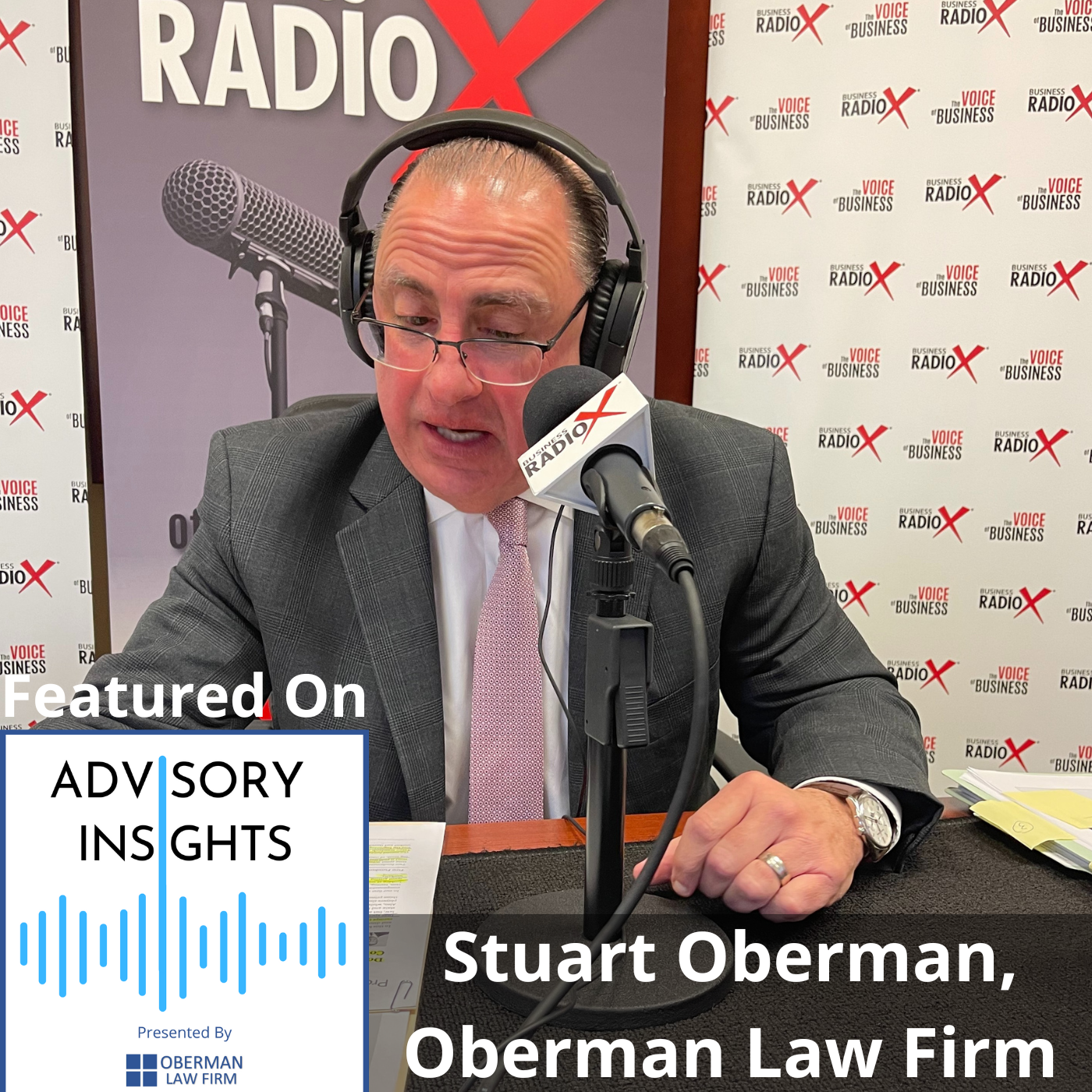
Tagged With: Dental Practice, due diligence, IT, merger, merger and acquisition, merger consulting, Oberman Law, Oberman Law Firm, Stuart Oberman

Scaling Your Dental Practice: An Interview with Chelsea Myers, Dental Life Coach

October 21, 2022 by John Ray

Scaling Your Dental Practice: An Interview with Chelsea Myers, Dental Life Coach
Advisory Insights Podcast
Scaling Your Dental Practice: An Interview with Chelsea Myers, Dental Life Coach
Loading
00:00 /
RSS Feed
Share
Link
Embed

Download file

Scaling Your Dental Practice: An Interview with Chelsea Myers, Dental Life Coach

Scaling Your Dental Practice:  An Interview with Chelsea Myers, Dental Life Coach (Advisory Insights Podcast, Episode 14)

On this episode of Advisory Insights, guest Chelsea Myers talks with host Stuart Oberman about her work as a dental life coach, the vital importance of people and culture in successfully scaling a dental service organization, developing leadership, and much more.

Advisory Insights is presented by Oberman Law Firm and produced by the North Fulton studio of Business RadioX®. The series can be found on all the major podcast apps. You can find the complete show archive here.

Chelsea Myers, Founder and CEO of Dental Life Coach

Chelsea Myers, Founder and CEO of Dental Life Coach

As the Founder and CEO of Dental Life Coach, Chelsea Myers has coached hundreds of clients individually and in group settings to facilitate personal and professional transformation enabling doctors to achieve their highest potential. She is an emotional intelligence expert deeply rooted in the dental industry. Chelsea is an author, speaker, and entrepreneur. She also hosts the popular podcast for dentists: Dental Brain Crops With Chelsea Myers.

When Chelsea was 15 years old, she came home from school one day surprised to be greeted by her mom and uncle who were both normally still at work. Her delight was soon shattered when she was hit with the news that her dad had been in a fatal car accident that morning.

In an effort to distract from the pain, she became overly busy with work, school, and pursuits for her future.

At the edge of burnout, she was reading a biography of a personal hero where a self-help book was referenced. She read that book and found the principles so impactful that she knew, without hesitation, that she wanted to devote her life to lift and help others.

Website | Facebook | Instagram | Chelsea Myers LinkedIn

TRANSCRIPT

Intro: [00:00:01] Broadcasting from the studios of Business RadioX, it’s time for Advisory Insights, brought to you by Oberman Law Firm, serving clients nationwide with tailored service and exceptional results. Now, here’s your host.

Stuart Oberman: [00:00:20] Welcome everyone to Advisory Insights. Stuart Oberman, Oberman Law Firm here. Amazing guest in the, I’ll use the word studio today, and the amazing and distinguished Chelsea Meyers. And I was looking — Chelsea, I was looking through your bio and I don’t have enough time to introduce what you have done with your dental consulting, your business, your branding.

I know that you have an extraordinary reputation within the industry. I know that you’re the Founder and CEO of Dental Life Coach. The podcast host of dental brain crops. I know your career started at Wells Fargo and you have done so many things regarding wellness and dentistry. And I love the retreats that you do in the workshops, the team building, trust, and accountability, and feeling good. You know, we have so many doctors that are just — they hate their job, and they look to someone to bring them around, and then all of a sudden, they’re back in the game and working and doing great.

And actually, I want to know, I want you to take me through some of the things you’ve seen at dentistry and where things are going. I know you do, obviously, corporate, you know, corporate transaction work and consulting side and individual side. But I really want to know really since Covid, what did our doctors learn and where do they need to go from here with what they need to do to get to the next phase, to enjoy what they do to their wellness side? I just — I’m looking for so much information that you want to provide, and it is truly an honor to have you on the studio today and on the air. And welcome aboard. Nice to see you.

Chelsea Myers: [00:02:07] Hey. thank you, Stuart. It’s nice to be here. And thank you for having me. You know, you bring up an interesting question. I think that Covid gave us all an opportunity to take our temperature on our stress level, on our flexibility, adaptability. And a lot of us were able to make choices about where we wanted to be.

And I think that fortunately, unfortunately, particularly when we talk about supporting staff and team members, a lot of doors were open and options were made available or at least made more aware that there are options out there if you don’t like where you’re at, that there are other places and ways to provide for your needs and be of service and expand yourself as a professional.

And so, when you talk about Covid and what that has opened our eyes to and meant for us as an industry, I think that we’ve become a lot more aware that the people aspect is really, really important. When I’m looking at organizations and we’re talking about mergers and acquisitions and change management, a significant portion of the individuals that are leaving or considering leaving, they’re not leaving for a more convenient location. They’re not leaving for a pay raise. They’re leaving because of their perception of their experience within our organizations. And so, I think we’ve become really clear on the importance that this needs to be in our minds and the priority level it needs to have when we’re growing our organizations.

Stuart Oberman: [00:03:44] And one of the questions I have is, you know, we have clients that in one practice, ten practices, fifty practices, and I know you got some very, very, very high-level contacts with a lot of people in the DSO world, if you will. What do they do different culturally that our guys who own one, to five to ten practices don’t do culturally? It’s, you know, because our guys are always asking, how do we scale? How do we scale? And I’m thinking, first of all, your internal operations a mess. Second, you’ve got resignations coming out every other week. And, you know, so I’m curious what you see from the big guys to the little guys. And I don’t know, there’s that much of a difference is just the economies of scale.

Chelsea Myers: [00:04:30] Yeah. Well, you know, the thing is, is that whatever you are when you go to scale, you become more of that. So, if you’re dysfunctional and you’re disorganized, that scales with you. And I would say it’s perhaps more easily scaled than organization and unity.

Stuart Oberman: [00:04:49] That’s true. It’s easier to do what you did yesterday, even though it’s not right. You still do it.

Chelsea Myers: [00:04:55] Right, right.

Stuart Oberman: [00:04:55] It’s easier.

Chelsea Myers: [00:04:55] Yeah. But I would say, you know, there’s not one cookie cutter or right way to implement change, especially big transitions. But one thing is certain, and that’s that everyone needs to be aligned and engaged in the movement. And we need to be ensuring that that human aspect of the organization is being addressed.

So, I think one of the biggest oversights — you mentioned operations, I think one of the biggest oversights that we see at Dental Life Coach is that an organization will go to expand and either acquire a new practice or merge with another organization and neglect to put the right supports in place to facilitate that people component of those acquisitions.

Stuart Oberman: [00:05:34] What kind of — that just opened up a whole different door. What kind of support don’t they have or what don’t they do right?

Chelsea Myers: [00:05:43] Yeah. Good question. And so, you know, I recently began working with a client who fractionally, and they’d acquired a few smaller groups. And what they did have in place was great operational consultants and programs in place that they were implementing as they were making these changes. But they didn’t have the buy in, and they weren’t able to create that electric culture that they’ve envisioned. Luckily for them, they had the awareness that this was lacking, and so we’ve already begun making some incredible gains.

But what’s got to be there, you’ve got to understand what is the perception of the people in the organization, and if you’ve just acquired new practices or you’ve grown and scaled, what is the collective opinion and now what are those individual opinions? Another thing that’s really important is and probably even prior to making those changes is having the executive team and the stakeholders on the same page. That’s going to be crucial for a growing organization.

But we need to know, you know, what are the changes? What are the key positions within those changes? What are the responsibilities of the people carrying them out? How does this change happen and what are the details of that? Are we going to be implementing new tech? Are we going to be outsourcing some things that we were previously doing? Do we have different vendors? Is that a life coach now or a resource? You know, what does this look like for us as an organization and how does that feel? What is the perspective of each person that it’s impacting?

Stuart Oberman: [00:07:12] You know, I want you to talk about two things that are on your workshop and retreats. And I love this because I think that there’s a big void during Covid, and I think we’re seeing a change a little bit. But talk to me about accountability, the culture of accountability, and then communication and how that has changed since Covid.

Chelsea Myers: [00:07:36] You know, it’s really interesting. So, the brain is just such a fascinating tool that we all have, right.

Stuart Oberman: [00:07:42] Well, for some of our clients, lack of that, right?

Chelsea Myers: [00:07:46] Right. Right. But, you know, when you when you really dive in, and you understand how we work as humans, and you talk about a communication and accountability, there are definitely strategic and effective ways to implement anything and there are ineffective ways. And so, when we look at the brain and our learning centers in the brain, they are deactivated or shut down when we feel threatened, when we feel attacked, when we feel unsafe.

And so, it’s really, really important that we have environments and that our culture is one that cultivates safe and trusted learning amongst our teams and that we’re able to be vulnerable and know that that’s okay within our organization. Because otherwise what you get is temporarily compliant people who eventually leave, eventually blow up, eventually kick back. And that’s not ever going to be something that you can grow, something that you can expand upon.

Stuart Oberman: [00:08:46] So how do you — so, when you got the dysfunctional office, right, and you know, and they always say there’s a 20 percent of the practices are A games and the rest of them are trying to figure out how to be the A games, right. So how do you get that office that’s a C-plus game and want to be an A game? How do you personally get them there?

And I know that’s a seven-hour conversation, but how do you — you walk in there and you look around and you can see the atmosphere. You know, the doctor is not in tune and he’s like, you know, I want to be a player. I want I want a quality of life. How do you analyze that, the brain that that doctor has, or partners have and get them to a different level? I’m fascinated because our doctors don’t really understand that culture yet of how powerful that mind can be mindset and clarity. And I’m just curious how you get them there.

Chelsea Myers: [00:09:49] Yeah. So, assuming that we’ve got our people, our executives and our stakeholders on the same page, I’m going to start from there and just say that we do.

Stuart Oberman: [00:09:57] That’s a big assumption right there. That’s a big assumption.

Chelsea Myers: [00:10:00] Right. If we don’t, that’s where we’ve got to start, right?

Stuart Oberman: [00:10:03] Yeah, yeah.

Chelsea Myers: [00:10:03] And so, because we all — you know, we’re being led in an organization, and we’ve got to want to be led by the people leading it. Otherwise, we’re going to beat our drum to our own tune. And again, not efficient, not scalable, right. So, let’s assume that we have our executives on the same page.

Then what we need to do is we need to figure out what does that doctor want? What is really driving that person? Why are they doing this every day? Why are they doing dentistry and not law, not finance, not anything else? Why are they here? And how do we align what they want and what’s important to them with what’s important to the organization? Or does it not align? Because that is an unfortunate and inconvenient but really important truth to understand as well.

Stuart Oberman: [00:10:49] How important is that first conversation you have with the doctor? And I know you’re in the professional arena, professional services. How do you know like, you know what, I’m just not going to work with that client. They are so far gone that there’s just there’s nothing I can do for him. What are those flags that you see of like, you know what, I’m just not going to get there with this guy and he’s just not a good fit for me?

Chelsea Myers: [00:11:14] Yeah, that’s a really good question because I think that — and, you know, I think anybody who owns a business —

Stuart Oberman: [00:11:19] I’m asking questions that I want to know. I don’t care what our listeners want to know, right? I just want to know what I want to know.

Chelsea Myers: [00:11:25] Yeah. So candidly, I think anybody who owns a business has been in the spot where, you know, at the very beginning you take on as many clients as you can, and you try and be really super flexible about that because you’re trying to grow your business. And I — and then we all, you know, the longer you go, you learn what you’re really good at and who are ideal clients for you and who are not ideal clients for you.

So, at this point, I feel fortunate to be selective about who I’m going to work with. For that reason, I want to be able to provide the transformation and the results that our clients are looking for. And at the same time, if it’s not a good fit, if it’s not a client, you know, red flags you mentioned, if they’re not willing, if they’re not honest, living in integrity, if they aren’t in a place where they’re willing or able to be coached, they’re not coachable individuals, then the results that they’re asking me for aren’t going to happen because, you know, I can’t patch a roof from the ceiling. You know, we’ve got to work from the top.

Stuart Oberman: [00:12:26] You’ve got to climb that ladder. That’s a big ladder sometimes.

Chelsea Myers: [00:12:29] Right? And so, you know, I’ve got to have a strong canvas for that leader to develop within. And from there, we can work, you know, with the team members. But I had someone come to me recently. It was a, you know, mid-sized organization. And they said, we just really want you just to work with our teams. And I said, well, what access am I going to have to the executives and the doctors? And they said, well, no access to the executives and doctors, just the team members. And I was like, well, who then is working with the executives and doctors? Because, you know, we’ve all — it’s fine if it’s not me, but if that support is not in place, it won’t be withheld.

Stuart Oberman: [00:13:04] Right.

Chelsea Myers: [00:13:04] And ultimately, our team members are our most transient, right? And so, we’ve got to have strong people in those leadership positions.

Stuart Oberman: [00:13:13] It’s amazing is that I think that was one of the things that our doctors learned, you know, Covid and post-Covid is you got to have leadership. If you don’t have leadership, you can’t start from the bottom up. You’ve got to work top down. So, you have a fascinating workshop. And I love this title. It’s The Pillars of Entrepreneurial Intelligence.

One, pillar says to me, look, you’ve got to have a strong foundation holding something up, which to me is the doctor’s entrepreneurial is I got to try different things, something’s got to work. And then intelligence is like, how am I going to do this? Explain to me what — explain how you take these pillars and what exactly is that particular workshop and how do our doctors utilize that? Or even parts of it, how do you implement parts of that? I just love that title. I love that title.

Chelsea Myers: [00:14:05] Thank you. Good question. So, this was where Dental Life Coach really was born back in its infancy. I started to see trends and similarities with the — at that time, I was working with individual doctors, you know. And took copious notes and tried to find how can I make a curriculum that is applicable to all of these people that I’m trying to work with?

And these 13 pillars were really the things that just kept showing up time and time again, which then triggered me to create the podcast because with each new client, they’d come to me and talk to me almost as if they were an anomaly. And it was a secret that they were struggling with their thoughts and beliefs about money or how to create success or how to actually manage their time. They had a clinical schedule they were following, but in their personal life they’re very scattered, which of course then translates to our professional experiences, right.

Organization and communication, is another huge one. And so, these were things that we were working on with each doctor that I’d work with. And as I bring them up in future conversations with new clients, they’d be like, oh yeah, that too. Yes, let’s work on that. And so, these are the 13 pillars and how they show up, they can show up in forms of workshops. But if we take on a new client, we end up going through each area because even if you’ve got a high proficiency, a lot of us still have room to create mastery within them.

Stuart Oberman: [00:15:33] Oh, gosh, yeah. Oh gosh, yeah. So, what do you — we get this all the time and I want your opinion on this, is that we get clients to say, you know, I hired a consultant and this particular person, this coach, and they, you know, they didn’t — they just didn’t do anything for me.

And then I start asking them questions. Well, did you do this? Well, did you do that? How often did you talk to them? Did you implement the plans? So how do you keep your guys on track? Because we hear that a lot. Like, you know, it just didn’t work. And come to find out, they didn’t do 90 percent of the things they were supposed to do. So, you know, I don’t know how they ask you to start from the bottom up when the leadership has to go top down on these projects and build that — for that culture.

Chelsea Myers: [00:16:17] That’s a valid concern. And so, you know, leadership development is a billion-dollar industry and less than 10 percent of the companies offering these types of services attach what they’re doing to any sort of bottom line. So, when I take on a new client, I want to know certain things.

You know, what is — how involved are your doctors in their case presentation? What is your case acceptance rate? What are your monthly, quarterly, annual goals? What are we working toward? Because as I’m doing my work, if I’ve taken a good client and I’ve done my job to choose the right client, as I’m doing my work, that we should start to see a trend in the positive direction.

And then there’s really no disputing, because, you know, you’re right. How do you quantify? I just feel better. That’s very subjective. So, we want to do both. We want to have the visual and emotional indicators that our teams that we’re working with are improving, but we also want to see that translate because ultimately, we are a business and an industry that’s trying to grow and do amazing things.

Stuart Oberman: [00:17:18] Now, you said the list, list those topics out for me that when you go into an office, you want some KPIs, you know, you want some indexes, you want to know where they start. Run through that list because I just — that was so important what you said. That was so important.

Chelsea Myers: [00:17:35] Yeah. So, here are the things that are important. We want to know we should be impacting revenue and retention. We should be impacting their culture, their case acceptance rates, and ultimately, the doctors take home should be improving as we’re doing this work.

Stuart Oberman: [00:17:50] That’s — yeah, I was going to ask, how can a doctor expect to get, you know, an increase of 25 percent per year on an ongoing basis if he has no idea what he’s what he’s doing. So, I mean how important are those initial metrics? And my next question is how many actually know their numbers?

Chelsea Myers: [00:18:12] That is such a good question. So, I sat down —

Stuart Oberman: [00:18:15] Again, I’m going to ask questions because I want to know. I don’t care about the listeners, you know.

Chelsea Myers: [00:18:19] No, I sat down with —

Stuart Oberman: [00:18:21] I got a free therapy session here. Are you kidding me?

Chelsea Myers: [00:18:26] You know, it varies. It really does. I sat down with a prospective client recently and I said, okay, you know, I asked the same questions. I, you know, for the metrics I was just asking you. And it was such a relief. He goes, Oh, let me share my screen with you. And just had this beautiful way of showing me weekly, monthly, quarterly, annually. He could show any question that I had.

Stuart Oberman: [00:18:48] Did they help you off the ground when you fell down?

Chelsea Myers: [00:18:52] Yeah, exactly. And I had to share them. I’m like, gosh, this makes our communication, you and I so much more fluid because I’m not probing. You know, when I get an answer like, oh, we’ve got, you know, 85% case acceptance and things are just falling apart. And I’m going, what is not matching here?

Stuart Oberman: [00:19:10] Yeah,

Stuart Oberman: [00:19:11] How are things falling apart with 85 percent case acceptance and where are you getting that number from exactly. And I don’t ever like the word about I’d rather wait for a more concrete answer because I don’t want my results with my clients to be about. Well, they’re sort of happier, or the retention might be going up. That doesn’t mean anything to me. I want to know by what and how much.

Stuart Oberman: [00:19:33] How much? So do you ever talk to the office managers who our doctors rely on? I’m going to say almost too much. Do you do do you get pushback from the office managers for change?

Chelsea Myers: [00:19:46] Well, no, I would say that there are times where I facilitate conversations between a doctor and an office manager because really there’s got to be unity there. Almost like within a home, you’ve got to have the parents on the same page. And so, within an office environment, regardless of how they actually feel about each other, or the things being communicated, we need everyone –.

Stuart Oberman: [00:20:12] Whether or not they like each other or their relationship is a little too close is what you’re saying, right?

Chelsea Myers: [00:20:16] I’m saying the team needs to know that that is one head, one unit. And that whichever one they go to, they’re going to get the same type of direction because, you know, our teams, they want to be a part of something that’s moving and growing. And like we talked earlier about having that environment of trust and growth, they can’t have that if there’s an inconsistency and a lack of clarity about who’s really in charge and where are we going and how are we getting there, that’s never going to fly.

And so, yeah, there are times where we’ll facilitate or coach on conversations or coach toward a change because there needs to be an understanding. And so sometimes, it’s really easy. You know, there’s just a communication error which sometimes doctors struggle to communicate effectively, right, or sometimes managers struggle to communicate effectively.

So, when we can clarify why we’re changing something, what it looks like, and what is the support in place as this is going forward, it’s usually a much more comfortable and seamless experience for everyone. Of course, there’s going to be questions and opinions and there’s going to be the process of getting there. But when we can create that clarity, it really does help the process a lot.

Stuart Oberman: [00:21:36] So, in the great world that we’re in, we’re seeing a little bit of a switch, but when doctors are moving, moving, moving up, up, up, up, up, and all of a sudden, they got the great resignation, and they lose half their staff, or we saw our doctors within the last year have had over a 200 percent turnover. How do you guide those doctors into the real world?

Again, this is, you know, this is — I would say when our clients that we have, even in the best practices, they’re not mentioned — they’re not matched pay scales. They’re way under on their scale, everyone’s leaving, and now we’re seeing a boomerang. They want to come back. So, I mean, how do you deal with when you have — because I love this. This is real life stuff our doctors are facing, you know.

Chelsea Myers: [00:22:23] Right.

Stuart Oberman: [00:22:23] How do you — they’re on a great track and all of a sudden, they got a turnover of 200 percent a year. How do you handle that with the doctors?

Chelsea Myers: [00:22:32] Well, first of all, you know, the more we understand about ourselves as leaders, the better equipped we are to lead. So, one of the most important things we need to understand is our brain, how they operate, our unique individual strengths, our default responses to things like stressful environments, like people leaving. And most importantly, we need to understand how to program or reprogram our brains.

So, we’re concerned with optimal efficiency and real-world functions. In these fast paced and multifaceted environments, our brains are constantly observing and concluding and suggesting action based on our perceptions and our programming. And to increase that flexibility, we need to figure out what is our ultimate goal and align all of our responses to that. Even when we’re stressed out, even when we’re upset, even when the third team member just called in sick on the same day, we’ve got to make sure that we are always that same strong leader.

And whatever those gaps are between that ultimate ideal we have of ourselves and where we’re currently operating from, we need to figure out how to fill that gap because research regarding neuroplasticity continues to clarify that brain and behavior are shapable by interaction and conscious programming, we just have to be responsible and willing to do that work.

Stuart Oberman: [00:23:54] I take it your job in some days is like bending metal. It’s just sometimes it works, sometimes it does not, you know. And that’s why I love The Pillars of Entrepreneurial Intelligence. I was looking through this and you sent me a lot of information. And this has stuck me that if our guys can even have remote possibility on how this stuff works before they even get to talk to you, they’re in such better position to have you take them forward on a successful rate. Because I think a lot of times, correct me if I’m wrong, these guys when they call you have no idea where to start. So, getting one and actually started is actually rare. Am I correct?

Chelsea Myers: [00:24:41] Yeah. I mean, you know, people come to us with all different levels of understanding and experience with or none — no experience in coaching in some cases. And really just it’s really just the willingness and the readiness that’s going to make the difference between a doctor or an organization that flies or one that it’s more like pulling teeth.

Stuart Oberman: [00:25:03] You know, one — now, you have some pretty important conversations with some pretty big guys in this industry, the masters and the founders of this industry, and the scalability and where they’re at, hundreds of practices. What do they talk to you about? I mean, what is their niche that they talk to you about?

Chelsea Myers: [00:25:28] You know, when you talk about scalability and culture, in a conversation I had with Pat Bauer, the CEO of Heartland Dental, when he says, you know, the doctor is our customer, it’s not just words that he’s saying. There is so much that goes into that. There is so much effort and resources and awareness and constantly putting fillers out there to see what more could be needed, how — what more might our customers benefit from and want to be a part of this organization. And the writings on the wall, you can ask anybody who is affiliated with Heartland Dental and they’re very happy. You know, they’re there.

Stuart Oberman: [00:26:12] Can you imagine if that one sentence our doctor said, whether or not they got once associated for, I wonder what I can do better for my associates? Can you imagine that? If the CEO of Heartland is saying that, why aren’t our doctors on a much lower level taking that same advice and scenario? That’s amazing to me that you just said that. That’s — I mean that’s amazing.

Chelsea Myers: [00:26:43] Yeah. You know, it’s a really — I think that people get shortsighted. I think that it’s, you know, once we just need to put a lot of focus on operations. We just need to put a lot of focus on systems and processes. And those are incredibly important. You just can’t leave out the people aspect because it is a human driven industry. Until robots are doing all the jobs, you’ve got to care about how people feel about the place of employment that they’re coming to every day as a volunteer because they have options. We all do.

Stuart Oberman: [00:27:13] Yeah. Wow. Well, we are — I got five hours of questions. And I mean, again, I’m being a little selfish, I want to know myself. Yeah, it’s like a therapy session, right. But no, we are really — the information that you have given has been absolutely amazing. And I really hope that our listeners really take a hard look of what you’ve said and how it affects their practices and what the big guys are doing that really is no different than what practice owners with one practice, 2.5 billion practice in making.

So, are there any closing words that you want to say to our listeners? And I think that no matter — you know, your industry specific. But I will tell you what, I don’t care what industry you’re in, whether you’re in a gas station ownership business or you’re in a dental business or whether you’re in machinery industry, what you said really can resonate across all platforms. So, I think it’s great advice. And do you have anything that you like to add or touch on that we haven’t touched on in closing?

Chelsea Myers: [00:28:30] Yeah. You know, I think the one thing I’d say is that in my experience, the most remarkable thing that I’ve observed about the future of dentistry is its flexibility. And it’s going to be the choices of those people leading that cause the future to shape. And so, we really need to ask ourselves as we are building and scaling our organizations, not what is the cost of prioritizing our people and the human aspect of the way we’re managing those acquisitions, but what is the cost of not prioritizing those things?

Stuart Oberman: [00:29:03] Wow. Well, so it’s a total opposite mentality. Total opposite. Wow. Just smart. You’ve been amazing, amazing guest. And I just again, I’m making notes. I mean, I’m writing down all this stuff. And I mean it sincerely that what you said resonates across all platforms.

And so, thank you so much for joining us. I know you are very busy and you’re very good at what you do. Your reputation far precedes you in the industry and it truly is an honor to be on the same podcast with you. So, without further ado, thank you again. And I want our listeners to find out how to get in touch with you. Please tell them.

Chelsea Myers: [00:29:49] Yeah, absolutely. I’m on LinkedIn, Chelsea Myers, M-Y-E-R-S, Dental Life Coach or our website at www.dentallife.coach. My email is Chelsea,C-H-E-L-S-E-A,@dentallife.coach.

Stuart Oberman: [00:30:06] Perfect. Perfect. Chelsea, thank you very much. Have a fantastic weekend. And listeners, thank you very much. Hope you’ve had a great experience with this. Take nuggets as you find them. So, thank you again, listeners. We will see you on the radio soon and thanks a lot. Have a great day.

Chelsea Myers: [00:30:23] Thank you.

Outro: [00:30:25] Thank you for joining us on Advisory Insights. This show is brought to you by Oberman Law Firm, a business centric law firm representing local, regional, and national clients in a wide range of practice areas, including healthcare, mergers and acquisitions, corporate transactions, and regulatory compliance.

About Advisory Insights Podcast

Presented by Oberman Law Firm, Advisory Insights Podcast covers legal, business, HR, and other topics of vital concern to healthcare practices and other business owners. This show series can be found here as well as on all the major podcast apps.

Stuart Oberman, Oberman Law Firm

Stuart Oberman
Stuart Oberman, Founder, Oberman Law Firm

Stuart Oberman is the founder and President of Oberman Law Firm. Mr. Oberman graduated from Urbana University and received his law degree from John Marshall Law School. Mr. Oberman has been practicing law for over 25 years, and before going into private practice, Mr. Oberman was in-house counsel for a Fortune 500 Company. Mr. Oberman is widely regarded as the go-to attorney in the area of Dental Law, which includes DSO formation, corporate business structures, mergers and acquisitions, regulatory compliance, advertising regulations, HIPAA, Compliance, and employment law regulations that affect dental practices.

In addition, Mr. Oberman’s expertise in the healthcare industry includes advising clients in the complex regulatory landscape as it relates to telehealth and telemedicine, including compliance of corporate structures, third-party reimbursement, contract negotiations, technology, health care fraud, and abuse law (Anti-Kickback Statute and the State Law), professional liability risk management, federal and state regulations.

As the long-term care industry evolves, Mr. Oberman has the knowledge and experience to guide clients in the long-term care sector with respect to corporate and regulatory matters, assisted living facilities, continuing care retirement communities (CCRCs). In addition, Mr. Oberman’s practice also focuses on health care facility acquisitions and other changes of ownership, as well as related licensure and Medicare/Medicaid certification matters, CCRC registrations, long-term care/skilled nursing facility management, operating agreements, assisted living licensure matters, and health care joint ventures.

In addition to his expertise in the health care industry, Mr. Oberman has a nationwide practice that focuses on all facets of contractual disputes, including corporate governance, fiduciary duty, trade secrets, unfair competition, covenants not to compete, trademark and copyright infringement, fraud, and deceptive trade practices, and other business-related matters. Mr. Oberman also represents clients throughout the United States in a wide range of practice areas, including mergers & acquisitions, partnership agreements, commercial real estate, entity formation, employment law, commercial leasing, intellectual property, and HIPAA/OSHA compliance.

Mr. Oberman is a national lecturer and has published articles in the U.S. and Canada.

LinkedIn

Oberman Law Firm

Oberman Law Firm has a long history of civic service, noted national, regional, and local clients, and stands among the Southeast’s eminent and fast-growing full-service law firms. Oberman Law Firm’s areas of practice include Business Planning, Commercial & Technology Transactions, Corporate, Employment & Labor, Estate Planning, Health Care, Intellectual Property, Litigation, Privacy & Data Security, and Real Estate.

By meeting their client’s goals and becoming a trusted partner and advocate for our clients, their attorneys are recognized as legal go-getters who provide value-added service. Their attorneys understand that in a rapidly changing legal market, clients have new expectations, constantly evolving choices, and operate in an environment of heightened reputational and commercial risk.

Oberman Law Firm’s strength is its ability to solve complex legal problems by collaborating across borders and practice areas.

Connect with Oberman Law Firm:

Company website | LinkedIn | Twitter
Tagged With: Dental Life Coach, Dental Practice, growth, Oberman Law, Oberman Law Firm, scaling, scaling dental practice, Stuart Oberman

  • « Previous Page
  • 1
  • 2
  • 3
  • 4
  • 5
  • 6
  • Next Page »

Business RadioX ® Network


Our Most Recent Episode

CONNECT WITH US

  • Email
  • Facebook
  • LinkedIn
  • Twitter

  • YouTube

Our Mission

We help local business leaders get the word out about the important work they’re doing to serve their market, their community, and their profession.

We support and celebrate business by sharing positive business stories that traditional media ignores. Some media leans left. Some media leans right. We lean business.

Sponsor a Show

Build Relationships and Grow Your Business. Click here for more details.

Partner With Us

Discover More Here

Terms and Conditions
Privacy Policy

Connect with us

Want to keep up with the latest in pro-business news across the network? Follow us on social media for the latest stories!
  • Email
  • Facebook
  • Google+
  • LinkedIn
  • Twitter

  • YouTube

Business RadioX® Headquarters
1000 Abernathy Rd. NE
Building 400, Suite L-10
Sandy Springs, GA 30328

© 2025 Business RadioX ® · Rainmaker Platform

BRXStudioCoversLA

Wait! Don’t Miss an Episode of LA Business Radio

BRXStudioCoversDENVER

Wait! Don’t Miss an Episode of Denver Business Radio

BRXStudioCoversPENSACOLA

Wait! Don’t Miss an Episode of Pensacola Business Radio

BRXStudioCoversBIRMINGHAM

Wait! Don’t Miss an Episode of Birmingham Business Radio

BRXStudioCoversTALLAHASSEE

Wait! Don’t Miss an Episode of Tallahassee Business Radio

BRXStudioCoversRALEIGH

Wait! Don’t Miss an Episode of Raleigh Business Radio

BRXStudioCoversRICHMONDNoWhite

Wait! Don’t Miss an Episode of Richmond Business Radio

BRXStudioCoversNASHVILLENoWhite

Wait! Don’t Miss an Episode of Nashville Business Radio

BRXStudioCoversDETROIT

Wait! Don’t Miss an Episode of Detroit Business Radio

BRXStudioCoversSTLOUIS

Wait! Don’t Miss an Episode of St. Louis Business Radio

BRXStudioCoversCOLUMBUS-small

Wait! Don’t Miss an Episode of Columbus Business Radio

Coachthecoach-08-08

Wait! Don’t Miss an Episode of Coach the Coach

BRXStudioCoversBAYAREA

Wait! Don’t Miss an Episode of Bay Area Business Radio

BRXStudioCoversCHICAGO

Wait! Don’t Miss an Episode of Chicago Business Radio

Wait! Don’t Miss an Episode of Atlanta Business Radio