Business RadioX ®

  • Home
  • Business RadioX ® Communities
    • Southeast
      • Alabama
        • Birmingham
      • Florida
        • Orlando
        • Pensacola
        • South Florida
        • Tampa
        • Tallahassee
      • Georgia
        • Atlanta
        • Cherokee
        • Forsyth
        • Greater Perimeter
        • Gwinnett
        • North Fulton
        • North Georgia
        • Northeast Georgia
        • Rome
        • Savannah
      • Louisiana
        • New Orleans
      • North Carolina
        • Charlotte
        • Raleigh
      • Tennessee
        • Chattanooga
        • Nashville
      • Virginia
        • Richmond
    • South Central
      • Arkansas
        • Northwest Arkansas
    • Midwest
      • Illinois
        • Chicago
      • Michigan
        • Detroit
      • Minnesota
        • Minneapolis St. Paul
      • Missouri
        • St. Louis
      • Ohio
        • Cleveland
        • Columbus
        • Dayton
    • Southwest
      • Arizona
        • Phoenix
        • Tucson
        • Valley
      • Texas
        • Austin
        • Dallas
        • Houston
    • West
      • California
        • Bay Area
        • LA
        • Pasadena
      • Colorado
        • Denver
      • Hawaii
        • Oahu
  • FAQs
  • About Us
    • Our Mission
    • Our Audience
    • Why It Works
    • What People Are Saying
    • BRX in the News
  • Resources
    • BRX Pro Tips
    • B2B Marketing: The 4Rs
    • High Velocity Selling Habits
    • Why Most B2B Media Strategies Fail
    • 9 Reasons To Sponsor A Business RadioX ® Show
  • Partner With Us
  • Veteran Business RadioX ®

New Laws and Regulatory Changes

August 12, 2022 by John Ray

New Laws and Regulatory Changes
Advisory Insights Podcast
New Laws and Regulatory Changes
Loading
00:00 /
RSS Feed
Share
Link
Embed

Download file

New Laws and Regulatory Changes

New Laws and Regulatory Changes (Advisory Insights Podcast, Episode 4)

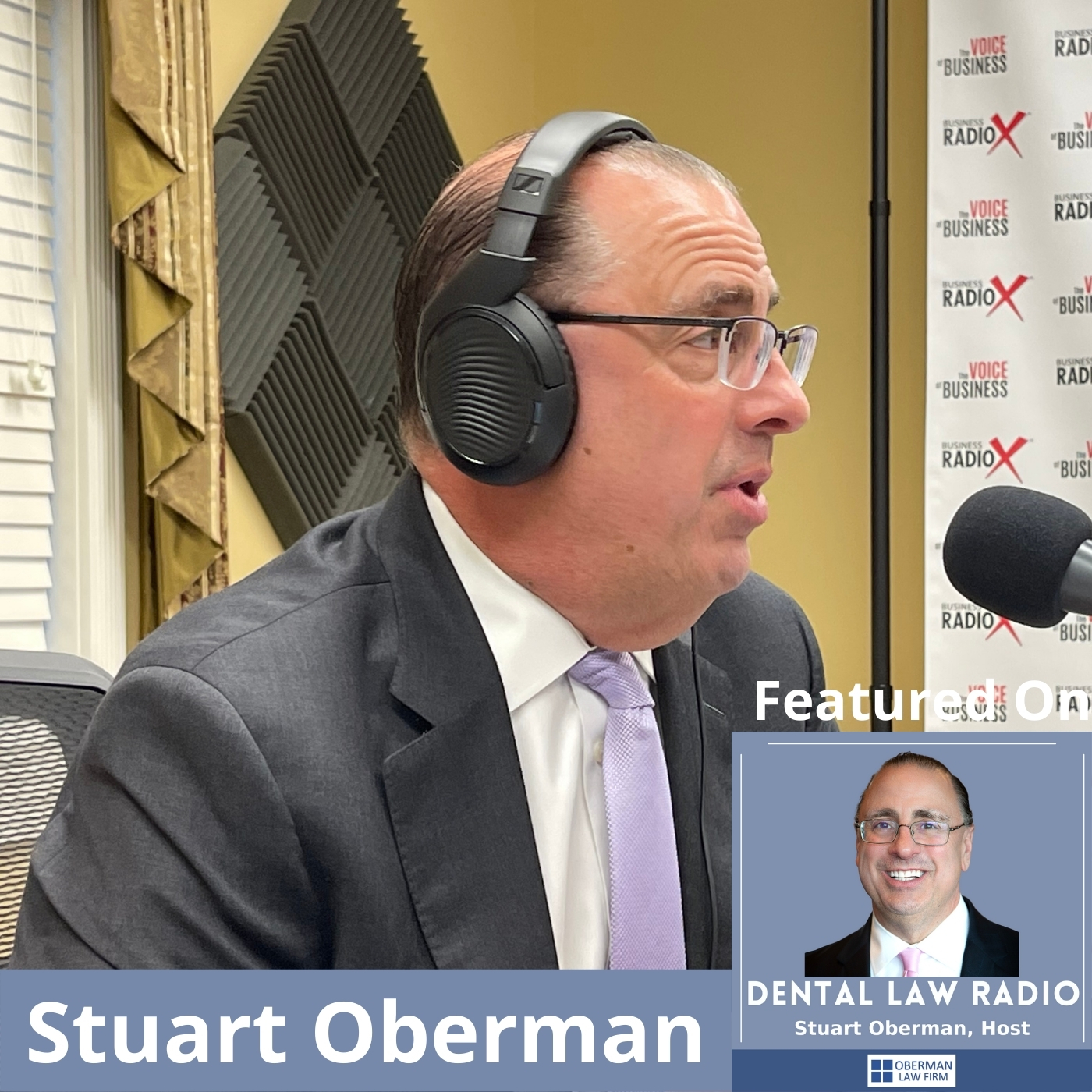
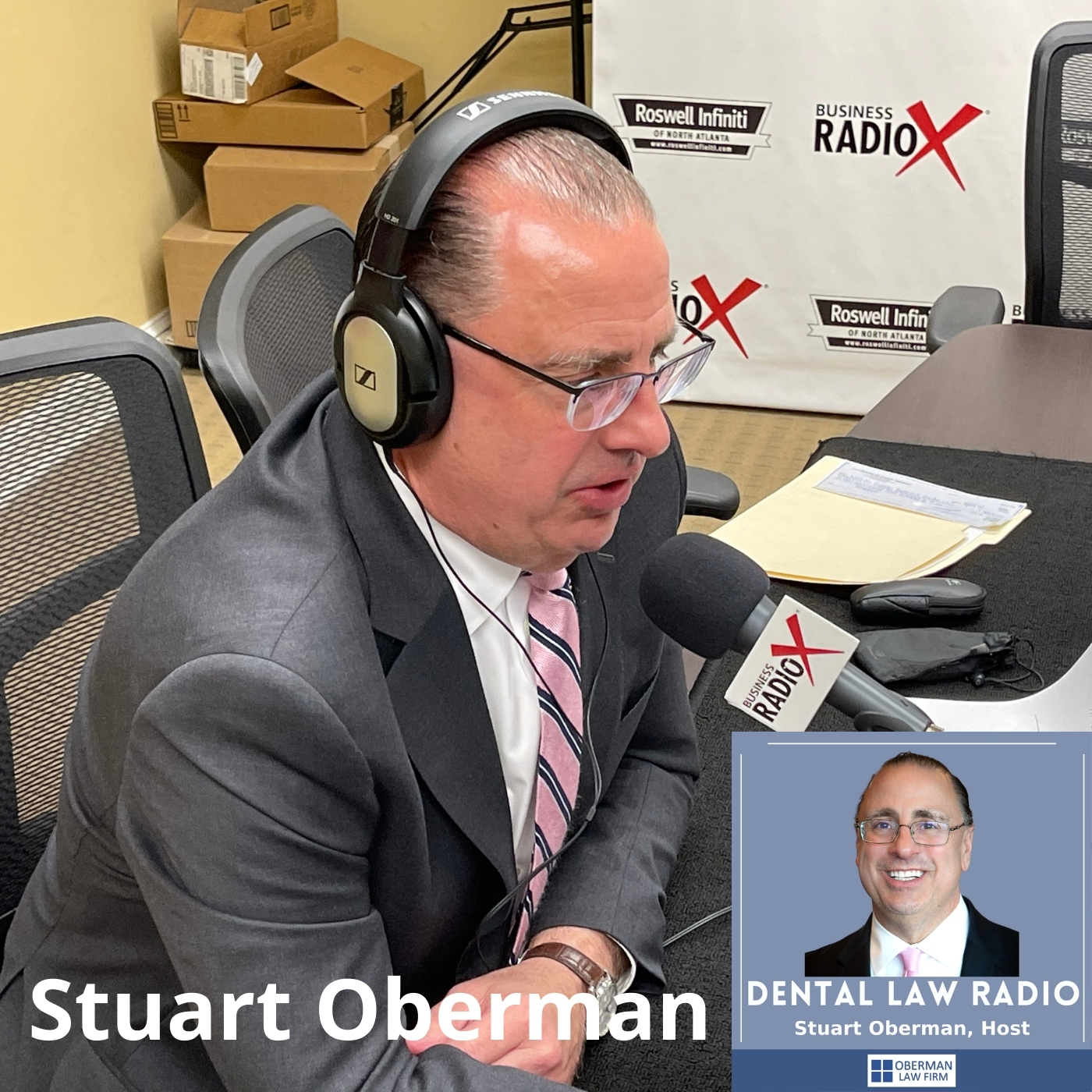
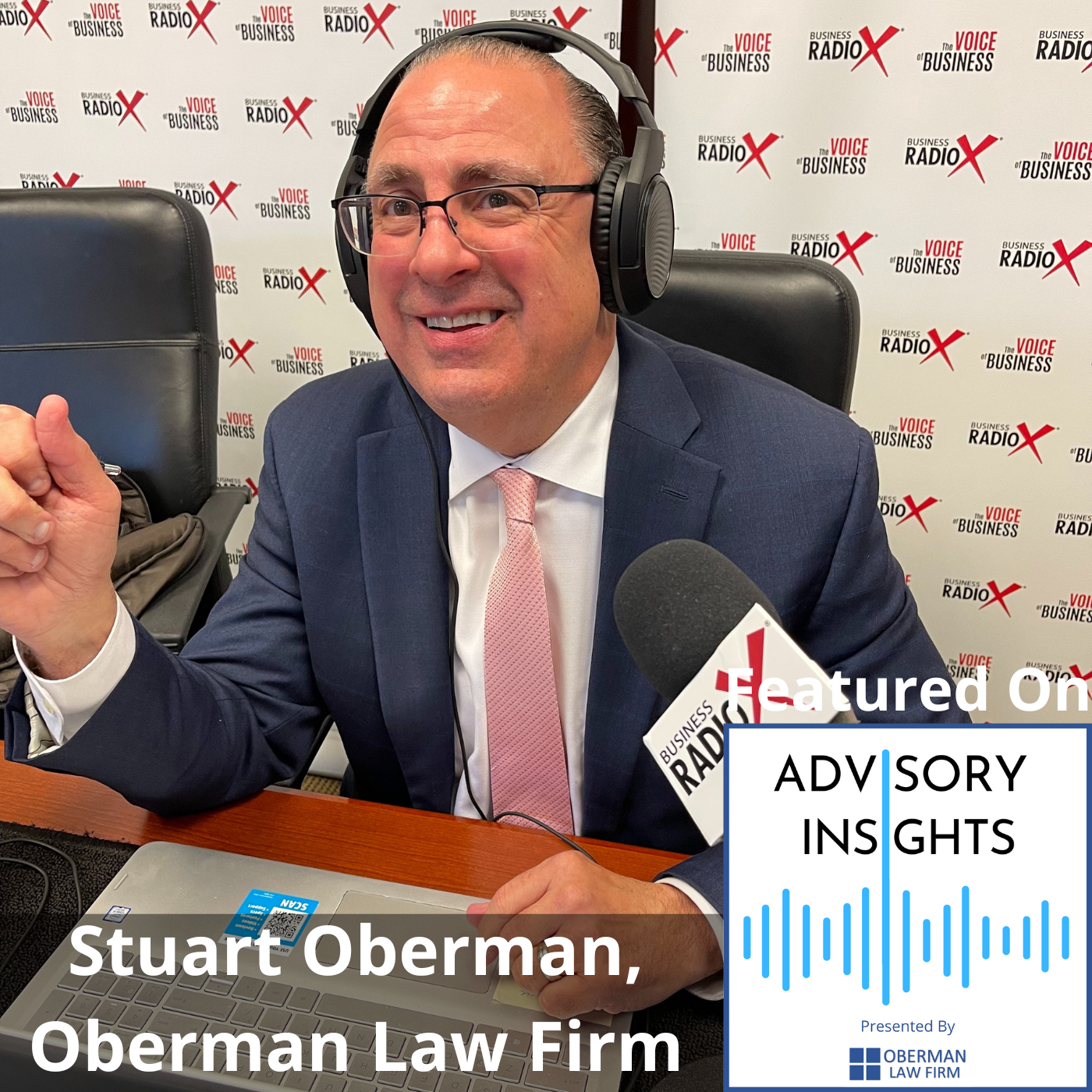
On this edition of “Advisory Insights,” Stuart Oberman discussed new laws and regulatory changes which could affect your employment practices. He covered the rise in prosecutions for not tracking and paying overtime wages due to employees, differences in state laws which can trip up multi-state employers, privacy breaches, and more.

Advisory Insights is presented by Oberman Law Firm and produced by the North Fulton studio of Business RadioX®. The series can be found on all the major podcast apps. You can find the complete show archive here.


About Advisory Insights Podcast

Presented by Oberman Law Firm, Advisory Insights Podcast covers legal, business, HR, and other topics of vital concern to healthcare practices and other business owners. This show series can be found here as well as on all the major podcast apps.

Stuart Oberman, Oberman Law Firm

Oberman Law Firm
Stuart Oberman, Founder, Oberman Law Firm

Stuart Oberman is the founder and President of Oberman Law Firm. Mr. Oberman graduated from Urbana University and received his law degree from John Marshall Law School. Mr. Oberman has been practicing law for over 25 years, and before going into private practice, Mr. Oberman was in-house counsel for a Fortune 500 Company. Mr. Oberman is widely regarded as the go-to attorney in the area of Dental Law, which includes DSO formation, corporate business structures, mergers and acquisitions, regulatory compliance, advertising regulations, HIPAA, Compliance, and employment law regulations that affect dental practices.

In addition, Mr. Oberman’s expertise in the healthcare industry includes advising clients in the complex regulatory landscape as it relates to telehealth and telemedicine, including compliance of corporate structures, third-party reimbursement, contract negotiations, technology, health care fraud, and abuse law (Anti-Kickback Statute and the State Law), professional liability risk management, federal and state regulations.

As the long-term care industry evolves, Mr. Oberman has the knowledge and experience to guide clients in the long-term care sector with respect to corporate and regulatory matters, assisted living facilities, continuing care retirement communities (CCRCs). In addition, Mr. Oberman’s practice also focuses on health care facility acquisitions and other changes of ownership, as well as related licensure and Medicare/Medicaid certification matters, CCRC registrations, long-term care/skilled nursing facility management, operating agreements, assisted living licensure matters, and health care joint ventures.

In addition to his expertise in the health care industry, Mr. Oberman has a nationwide practice that focuses on all facets of contractual disputes, including corporate governance, fiduciary duty, trade secrets, unfair competition, covenants not to compete, trademark and copyright infringement, fraud, and deceptive trade practices, and other business-related matters. Mr. Oberman also represents clients throughout the United States in a wide range of practice areas, including mergers & acquisitions, partnership agreements, commercial real estate, entity formation, employment law, commercial leasing, intellectual property, and HIPAA/OSHA compliance.

Mr. Oberman is a national lecturer and has published articles in the U.S. and Canada.

LinkedIn

Oberman Law Firm

Oberman Law Firm has a long history of civic service, noted national, regional, and local clients, and stands among the Southeast’s eminent and fast-growing full-service law firms. Oberman Law Firm’s areas of practice include Business Planning, Commercial & Technology Transactions, Corporate, Employment & Labor, Estate Planning, Health Care, Intellectual Property, Litigation, Privacy & Data Security, and Real Estate.

By meeting their client’s goals and becoming a trusted partner and advocate for our clients, their attorneys are recognized as legal go-getters who provide value-added service. Their attorneys understand that in a rapidly changing legal market, clients have new expectations, constantly evolving choices, and operate in an environment of heightened reputational and commercial risk.

Oberman Law Firm’s strength is its ability to solve complex legal problems by collaborating across borders and practice areas.

Connect with Oberman Law Firm:

Company website | LinkedIn | Twitter
 

Tagged With: dental law, employment practices, Oberman Law, Oberman Law Firm, overtime, privacy breaches, regulatory changes, Stuart Oberman

Harassment in the Workplace

August 5, 2022 by John Ray

Harassment in the Workplace
Advisory Insights Podcast
Harassment in the Workplace
Loading
00:00 /
RSS Feed
Share
Link
Embed

Download file

Harassment in the WorkplaceHarassment in the Workplace (Advisory Insights Podcast, Episode 3)

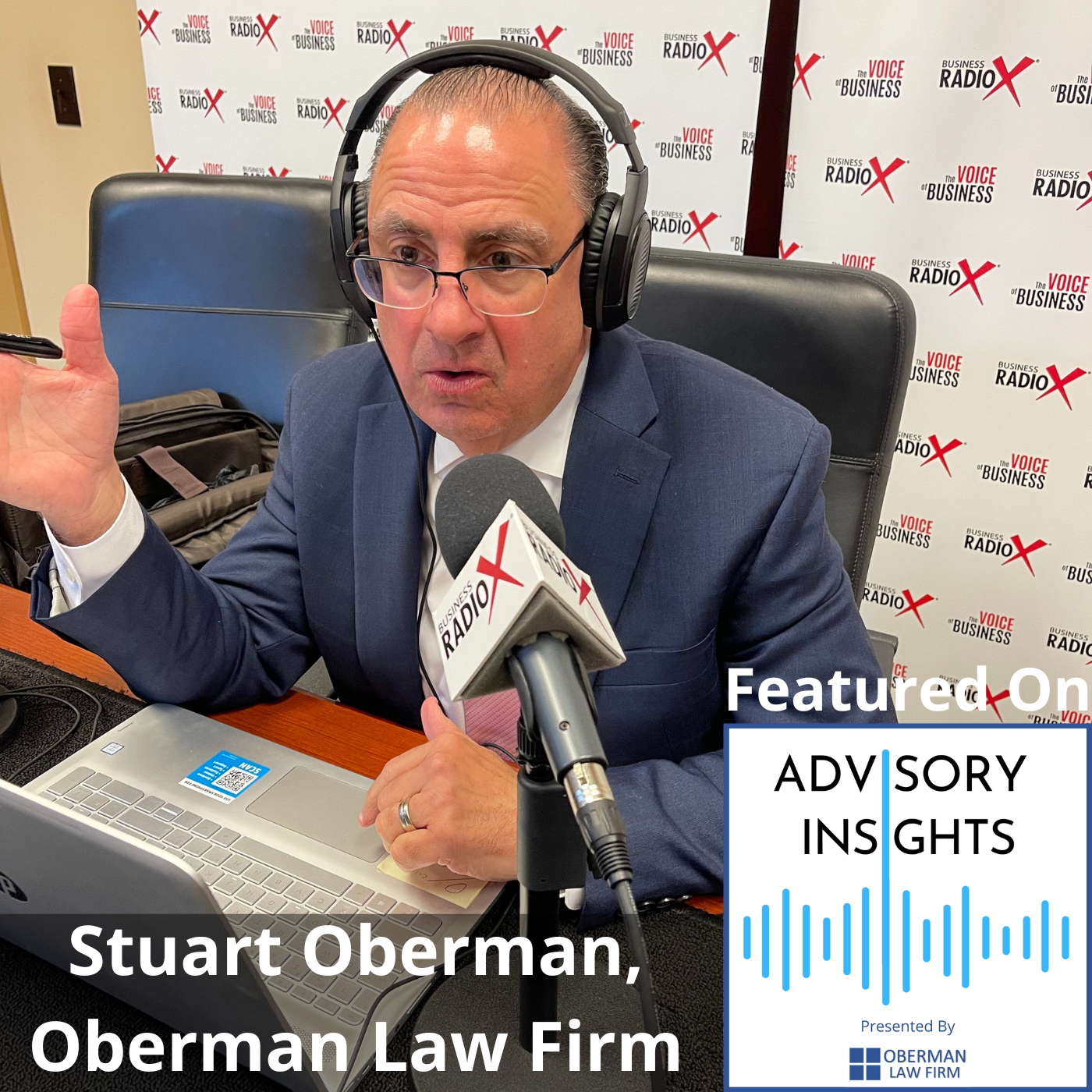
Harassment in the workplace, says Oberman Law Firm founder Stuart Oberman, is an enormous problem, from the largest to the smallest businesses. On this episode of Advisory Insights, Stuart discussed reporting of workplace harassment, prohibited conduct, romance in the workplace, and more.

Advisory Insights is presented by Oberman Law Firm and produced by the North Fulton studio of Business RadioX®. The series can be found on all the major podcast apps. You can find the complete show archive here.


About Advisory Insights Podcast

Presented by Oberman Law Firm, Advisory Insights Podcast covers legal, business, HR, and other topics of vital concern to healthcare practices and other business owners. This show series can be found here as well as on all the major podcast apps.

Stuart Oberman, Oberman Law Firm

Oberman Law Firm
Stuart Oberman, Founder, Oberman Law Firm

Stuart Oberman is the founder and President of Oberman Law Firm. Mr. Oberman graduated from Urbana University and received his law degree from John Marshall Law School. Mr. Oberman has been practicing law for over 25 years, and before going into private practice, Mr. Oberman was in-house counsel for a Fortune 500 Company. Mr. Oberman is widely regarded as the go-to attorney in the area of Dental Law, which includes DSO formation, corporate business structures, mergers and acquisitions, regulatory compliance, advertising regulations, HIPAA, Compliance, and employment law regulations that affect dental practices.

In addition, Mr. Oberman’s expertise in the healthcare industry includes advising clients in the complex regulatory landscape as it relates to telehealth and telemedicine, including compliance of corporate structures, third-party reimbursement, contract negotiations, technology, health care fraud, and abuse law (Anti-Kickback Statute and the State Law), professional liability risk management, federal and state regulations.

As the long-term care industry evolves, Mr. Oberman has the knowledge and experience to guide clients in the long-term care sector with respect to corporate and regulatory matters, assisted living facilities, continuing care retirement communities (CCRCs). In addition, Mr. Oberman’s practice also focuses on health care facility acquisitions and other changes of ownership, as well as related licensure and Medicare/Medicaid certification matters, CCRC registrations, long-term care/skilled nursing facility management, operating agreements, assisted living licensure matters, and health care joint ventures.

In addition to his expertise in the health care industry, Mr. Oberman has a nationwide practice that focuses on all facets of contractual disputes, including corporate governance, fiduciary duty, trade secrets, unfair competition, covenants not to compete, trademark and copyright infringement, fraud, and deceptive trade practices, and other business-related matters. Mr. Oberman also represents clients throughout the United States in a wide range of practice areas, including mergers & acquisitions, partnership agreements, commercial real estate, entity formation, employment law, commercial leasing, intellectual property, and HIPAA/OSHA compliance.

Mr. Oberman is a national lecturer and has published articles in the U.S. and Canada.

LinkedIn

Oberman Law Firm

Oberman Law Firm has a long history of civic service, noted national, regional, and local clients, and stands among the Southeast’s eminent and fast-growing full-service law firms. Oberman Law Firm’s areas of practice include Business Planning, Commercial & Technology Transactions, Corporate, Employment & Labor, Estate Planning, Health Care, Intellectual Property, Litigation, Privacy & Data Security, and Real Estate.

By meeting their client’s goals and becoming a trusted partner and advocate for our clients, their attorneys are recognized as legal go-getters who provide value-added service. Their attorneys understand that in a rapidly changing legal market, clients have new expectations, constantly evolving choices, and operate in an environment of heightened reputational and commercial risk.

Oberman Law Firm’s strength is its ability to solve complex legal problems by collaborating across borders and practice areas.

Connect with Oberman Law Firm:

Company website | LinkedIn | Twitter
Tagged With: harassment in the workplace, Oberman Law, Oberman Law Firm, prohibited conduct, sexual harassment, Stuart Oberman, workplace harassment

Tax Updates for 2021 and Beyond, with Danielle McBride, Oberman Law Firm

December 24, 2021 by John Ray

Danielle McBride
Dental Law Radio
Tax Updates for 2021 and Beyond, with Danielle McBride, Oberman Law Firm
Loading
00:00 /
RSS Feed
Share
Link
Embed

Download file

Danielle McBrideTax Updates for 2021 and Beyond with Danielle McBride, Oberman Law Firm (Dental Law Radio, Episode 28)

On this edition of Dental Law Radio, Stuart Oberman was joined by Danielle McBride, tax authority and Partner at Oberman Law Firm, to discuss tax updates for 2021 and beyond. Danielle discussed changes in the Employee Retention Tax Credit, potential tax increases, a surtax on net investment income, and much more. Dental Law Radio is underwritten and presented by Oberman Law Firm and produced by the North Fulton studio of Business RadioX®.


Danielle McBride, Partner, Oberman Law Firm

Danielle McBride
Danielle McBride, Partner, Oberman Law Firm

Danielle McBride has been practicing law for over 21 years, and her primary focus is representing healthcare clients on a local, regional, and national basis. Ms. McBride regularly consults with clients regarding simple to complex healthcare transitions, including mergers and acquisitions, employment law, governmental compliance, tax strategies, practice valuations, DSO formation and structures, employee compensation, associate and partnership contracts, joint ventures, and partnership buy-in/buy-outs.

In addition, Ms. McBride brings a wealth of knowledge and experience preparing practice valuations for clients, as well as formulating simple to complex tax strategies, and entity formations.

Ms. McBride holds a Bachelor of Arts in Sociology/Criminology from The Ohio State University, a Juris Doctor (J.D.) from Ohio Northern University Pettit College of Law, and a Master of Laws (LL.M.) in Taxation from Case Western Reserve University.

LinkedIn

TRANSCRIPT

Intro: [00:00:02] Broadcasting from the Business RadioX Studios in Atlanta, it’s time for Dental Law Radio. Dental Law Radio is brought to you by Oberman Law Firm, a leading dental-centric law firm serving dental clients on a local, regional and national basis. Now, here’s your host, Stuart Oberman.

Stuart Oberman: [00:00:26] Welcome, ladies and gentlemen, to Dental Law Radio. I have the absolute honor of having, Danielle McBride, Partner Oberman Law Firm, joining us today. And we’ve got a great, great topic. But first I want to get to talk to Danielle a little bit about really what she does at our law firm, which is amazing, and that’s why that I want to really have her on today’s podcast.

Stuart Oberman: [00:00:54] So, Danielle’s been practicing for about 21 years and focuses on health care and on the regional national basis. And Danielle handles a lot of dental transitions, healthcare transitions, employment law and tax. So, that’s going to be one of our topics today and, also, practice valuations. And Danielle has her Law Degree from Ohio Northern University and a Master’s in Tax from Case Western Reserve University. And there is no better topic today in today’s world if you’re a dental practice owner than tax.

Stuart Oberman: [00:01:36] So, Danielle, I want you to talk a little bit today about tax update for 2021 and beyond. I know that you are in tune immensely as to what’s going on with that. You have an enormous amount of resources. And we are extraordinarily happy to have you as a member of the firm. And I know we rely on you a lot for a lot of complex stuff. So, it is my absolute pleasure to have you on today. So, tax, tax, tax, tax, tell us what’s going on. And welcome, welcome, welcome.

Danielle McBride: [00:02:08] Tax. Well, thanks Stuart for the introduction. And I’m really happy to be here today and talk about tax, which to most people sounds like a boring topic, but it really plays a huge role in all of these transitions that we do. And part of what we do as a dental-specific lawyer is to make sure that we keep up to date on things that affect our clients in particular. And these tax laws, there’s a lot of stuff that does not affect clients in our business, but the things that do are important for them to learn.

Danielle McBride: [00:02:43] And we’ve got two real big bills, two bills that have gone through the the House, one passed into law. We’ve got the Infrastructure Investment and Jobs Act, which was actually passed and signed into law by the President November 15th. That had some major items. It’s the largest infrastructure act in decades. It’s got major items for disaster relief, capital contributions, public utilities, excise taxes, cryptocurrency provisions. And there’s one item in particular that has an impact on our dental clients. And that’s this Employee Retention Tax Credit, which was originally put into place under the CARES Act to allow those practices that had a decrease in revenues be able to claim some tax credits.

Danielle McBride: [00:03:33] So, the Infrastructure Investment Jobs Act actually ended that retroactively to September 30th of 2021. When it was originally put in place, it was supposed to — and it was extended through the end of 2021. So, now, we’ve lost the fourth quarter. That also keys up a few problems because they did this so late that there were some employers who had already withheld deposits thinking that they were going to get this credit. And so, there’s actually a new notice that came out on that. So, this earned income employee retention tax credit is 70% of qualified wages paid in a calendar quarter before, now, September 30th of 2021. The only exception to September 30, 2021 is the recovery startup business. And that’s someone who probably wasn’t in business before the March 2020 COVID shutdown. So, those clients have the ability to maybe qualify for quarter four when they wouldn’t have before this Infrastructure Act was signed into law.

Stuart Oberman: [00:04:57] I got one question. What kind of notice was sent out? What kind of notice when you say notice?

Danielle McBride: [00:05:02] It’s an IRS notice. So, the IRS notice, it’s Notice 2021-65 issued by the IRS. And that’s to provide guidance on the rollback of the employee retention tax credit, except for those recovery startups, like I mentioned. And so, for those employers that got an advance on the credit, the IRS isn’t making you repay that money until the due date of the fourth quarter return, which is January 31st of 2022. They’re also including a waiver-

Stuart Oberman: [00:05:32] Can our doctors get a copy of that from us? Because I know we get these questions from from CPAs.

Danielle McBride: [00:05:38] Yeah, we have access to it. We can give it. If there are dental CPAs or clients who want a copy of this notice, we have access to tax research. We can easily provide a copy of that notice. Notice also allows for some waiver of failure deposit penalties if you retain those deposits before December 20th of 2021. So, important piece of information for all those dental advisors to have in counseling their clients for this last quarter of the year.

Stuart Oberman: [00:06:14] Well, I know when you say — so, how do our clients or anyone who’s listening today get that information? They just email to you, and you can just send out-

Danielle McBride: [00:06:27] Sure, they can email our office.

Stuart Oberman: [00:06:30] Okay.

Danielle McBride: [00:06:30] They can email me at our office. It’s just Danielle@ObermanLaw.com. Or they can call and ask for me at our office phone number, 770-886-2400.

Stuart Oberman: [00:06:43] Now, there’s a lot of acronyms thrown around through all this legislature stuff that’s going on now and probably into 2022. So, when our doctors hear the acronym ERC, what does that stand for?

Danielle McBride: [00:06:58] Employee retention credit. And sometimes, also-

Stuart Oberman: [00:07:00] And that’s what you’re talking about.

Danielle McBride: [00:07:01] And sometimes, also, referred to as ERTC, employee retention tax credit.

Stuart Oberman: [00:07:06] Got it. Okay. Now, one thing is we get questions on how does the Back Better Act affect my practice? And I know you are on the forefront of that.

Danielle McBride: [00:07:20] Sure. And the Employee Retention Tax Credit was part of the Infrastructure Act. The second piece of legislation is the Build Back Better Act, and that has not been signed into law yet. It has passed the House and there is a Senate version. And that Senate version was passed or the act was passed by the House on November 19th. It’s been with the Senate. The CBO or the Congressional Budget Office has given some statistics to the senators on how much this is going to cost, what’s going into the bill, how are we paying for these things, tax increases and spending, all of that.

Danielle McBride: [00:08:02] And December 11th, a draft legislative text was released by the Senate Finance Committee chair. And so, that’s the current version of the bill that the Senate is looking at. It’s going to take all 50 senators for this thing to pass, and they’re still negotiating it. And there are senators like Senator Manchin who-

Stuart Oberman: [00:08:23] Of course.

Danielle McBride: [00:08:23] … are really pushing on this tax legislation. They have a couple of concerns; one with the Congressional Budget Office dollar amounts on this thing. And then, the other big issue that’s being debated under this Build Back Better Act is the SALT or the state and local tax deduction cap. It was a $10,000 cap. They want to raise it to $80,000. Cap was supposed to sunset in 2025, and they’re talking about pushing it out a little longer or maybe taking away that cap after 2025 or 2032, I think has been mentioned on this. So, that’s the biggest concern.

Danielle McBride: [00:09:12] For those of our clients who are concerned about this, the good news is this act had a lot of tax provisions in it that could have raised things like capital gains rates, individual and corporate business tax rates, estate planning issues and IRA contribution amounts. Things like that were contained in that bill. All the individual rates and the capital gains rate increases were removed from the bill. And some other limitations to that would have been a concern, most of those are no longer in the text of the bill, and it doesn’t look like those kind of things are going to get negotiated back in.

Danielle McBride: [00:09:54] So, those key provisions in this Build Back Better Act are going to be things like extended child tax credits, earned income tax credits, added childcare entitlements and paid family leave. There are some climate change spending in there. Tax increases, the state and local tax issue that I mentioned, there’s also tax increases for large corporations – a 15% tax on large corporations, one percent excise tax on stock buybacks for corporations. These are all things that are probably not going to affect our smaller dental practices. Even the larger dental practices are probably going to fall underneath the limits to where this is going to have an effect on them. There are surtaxes on modified adjusted gross income, but it’s on income from $10 million to $25 million, and 8% above $25 million.

Danielle McBride: [00:11:07] The one thing that does potentially have an impact is an expansion on the 3.8% surtax on net investment income. They want to include trade and business income, which would also include our Sub-S corporations, and a lot of our dental practices are Subchapter S corporations, and they take that income out of the business. Those distributions are not subject to a 3.8% Medicare payroll tax. If this expansion on the surtax on net investment income is expanded, then that’s going to take away what some people call the S-Corporation loophole. So, those are-.

Stuart Oberman: [00:11:49] Are major-

Danielle McBride: [00:11:49] There’s some other minimum distribution rules. Backdoor Roth IRA contributions and things like that are also being discussed. Roth IRA conversions, backdoor Roth IRA conversions may end in 2022. That’s one of the things that’s under this bill, which may have a big impact on some of our clients as well. Those are where there are certain income limits that don’t allow you to use a Roth IRA feature. And so, to take that away would mean you can’t get a Roth IRA. And those are the big issues in that act.

Stuart Oberman: [00:12:35] Wow. Well, I know that you are a major contributor to our Advisory Insights newsletter. And I know you’ll be bringing our listeners up to date on a regular basis regarding that. And I know-

Danielle McBride: [00:12:49] Right.

Stuart Oberman: [00:12:49] And we’re going to talk a little bit in a subsequent podcast regarding capital gains and ordinary income. I know you’re expert on that also. So, wow, there’s a lot of stuff. So, I think this is a great update. Again, we could talk for days on this topic, but I think this — I mean, it’s unbelievable. And I know some of this stuff that you’re reviewing, and looking at, and writing about, so this is major stuff.

Stuart Oberman: [00:13:20] Well, I think this gives our listeners a really, really good, good basis moving forward into the new year, especially what they need to do for this year. Although we got a week and a half, and I know there’s going to be lot of — or about week and half or so — a lot of scurrying activity. And this will keep our guys pretty busy with the CPAs. So, no, this is great stuff. Again, there’s so many moving pieces to this. And I know that you just scratched the surface of the highlights. I will tell you that.

Stuart Oberman: [00:13:54] So, well, I’ll tell you, well, it’s amazing. So, we’re going to bring you back on some subsequent podcasts. I know we got a couple more to go and our listeners are going to be even more informed. So, amazing. Danielle, thank you so much for joining us today. I know you’re very busy with yearend stuff and all the tax reviews coming up in the Legislature stuff. So, ladies and gentlemen, thank you for joining us.

Danielle McBride: [00:14:24] Thanks, Stuart, for having me.

Stuart Oberman: [00:14:25] And then, what we’ll do is if you have any questions, concerns, feel free to reach out to us. Number is 770-886-2400. Oberman Law Firm, if you have any questions, please feel free to email myself Stuart@ObermanLaw.com or Danielle@ObermanLaw.com. Folks, thanks for joining us, and have a fantastic day. Talk to you soon.


About Dental Law Radio

Hosted by Stuart Oberman, a nationally recognized authority in dental law, Dental Law Radio covers legal, business, and other operating issues and topics of vital concern to dentists and dental practice owners. The show is produced by the North Fulton studio of Business RadioX® and can be found on all the major podcast apps. The complete show archive is here.

Stuart Oberman, Oberman Law Firm

Stuart Oberman
Stuart Oberman, host of “Dental Law Radio”

Stuart Oberman is the founder and President of Oberman Law Firm. Mr. Oberman graduated from Urbana University and received his law degree from John Marshall Law School. Mr. Oberman has been practicing law for over 25 years, and before going into private practice, Mr. Oberman was in-house counsel for a Fortune 500 Company. Mr. Oberman is widely regarded as the go-to attorney in the area of Dental Law, which includes DSO formation, corporate business structures, mergers and acquisitions, regulatory compliance, advertising regulations, HIPAA, Compliance, and employment law regulations that affect dental practices.

In addition, Mr. Oberman’s expertise in the health care industry includes advising clients in the complex regulatory landscape as it relates to telehealth and telemedicine, including compliance of corporate structures, third-party reimbursement, contract negotiations, technology, health care fraud and abuse law (Anti-Kickback Statute and the State Law), professional liability risk management, federal and state regulations.

As the long-term care industry evolves, Mr. Oberman has the knowledge and experience to guide clients in the long-term care sector with respect to corporate and regulatory matters, assisted living facilities, continuing care retirement communities (CCRCs). In addition, Mr. Oberman’s practice also focuses on health care facility acquisitions and other changes of ownership, as well as related licensure and Medicare/Medicaid certification matters, CCRC registrations, long-term care/skilled nursing facility management, operating agreements, assisted living licensure matters, and health care joint ventures.

In addition to his expertise in the health care industry, Mr. Oberman has a nationwide practice that focuses on all facets of contractual disputes, including corporate governance, fiduciary duty, trade secrets, unfair competition, covenants not to compete, trademark and copyright infringement, fraud, and deceptive trade practices, and other business-related matters. Mr. Oberman also represents clients throughout the United States in a wide range of practice areas, including mergers & acquisitions, partnership agreements, commercial real estate, entity formation, employment law, commercial leasing, intellectual property, and HIPAA/OSHA compliance.

Mr. Oberman is a national lecturer and has published articles in the U.S. and Canada.

LinkedIn

Oberman Law Firm

Oberman Law Firm has a long history of civic service, noted national, regional, and local clients, and stands among the Southeast’s eminent and fast-growing full-service law firms. Oberman Law Firm’s areas of practice include Business Planning, Commercial & Technology Transactions, Corporate, Employment & Labor, Estate Planning, Health Care, Intellectual Property, Litigation, Privacy & Data Security, and Real Estate.

By meeting their client’s goals and becoming a trusted partner and advocate for our clients, their attorneys are recognized as legal go-getters who provide value-added service. Their attorneys understand that in a rapidly changing legal market, clients have new expectations, constantly evolving choices, and operate in an environment of heightened reputational and commercial risk.

Oberman Law Firm’s strength is its ability to solve complex legal problems by collaborating across borders and practice areas.

Connect with Oberman Law Firm:

Company website | LinkedIn | Twitter

Tagged With: Danielle McBride, Dental Law Radio, ERC, ERTC, Oberman Law, Oberman Law Firm, Stuart Oberman, Taxes

What You Need to Know When You Terminate an Employee

September 24, 2021 by John Ray

TerminateEmployeeDLREpisode21Album
Dental Law Radio
What You Need to Know When You Terminate an Employee
Loading
00:00 /
RSS Feed
Share
Link
Embed

Download file

TerminateEmployeeDLREpisode21Album

What You Need to Know When You Terminate an Employee (Dental Law Radio, Episode 21)

In Stuart Oberman’s experience with clients, the biggest problem he sees with employee terminations is the absence of a plan, and more specifically, lack of documentation. In this episode of Dental Law Radio, Stuart outlines what a solid employee termination process should include to avoid the significant long-term costs caused by emotional, seat-of-the-pants actions. Dental Law Radio is underwritten and presented by Oberman Law Firm and produced by the North Fulton studio of Business RadioX®.

TRANSCRIPT

Intro: [00:00:02] Broadcasting from the Business RadioX studios in Atlanta, it’s time for Dental Law Radio. Dental Law Radio is brought to you by Oberman Law Firm, a leading dental-centric law firm, serving dental clients on a local, regional and national basis. Now, here’s your host, Stuart Oberman.

Stuart Oberman: [00:00:25] Hello, everyone, and welcome to Dental Law Radio. Well, this is going to be sort of part two. Last week, we spoke about how to hire an employee and some of the things that you need to include in the new hire package. And I mentioned then that it’s easy to get married; it is tough to get divorced. Well, today, we’re going to get divorced. We’re going to talk about what you need to know when you terminate an employee.

Stuart Oberman: [00:00:57] And we get these calls all the time. What do I need to know? What do I need to do? How do I need to do it? And where are my pitfalls? And I will tell you, your biggest pitfall is not having the documentation upfront, and then not having a plan when you plan to terminate. And in today’s world, firing an employee is complex and challenging. You have a lot of scenarios, wrongful termination, discrimination issues, willful termination, quitting, resigning. So, before you even think about firing an employee and will not take you long to figure out that you need to fire an employee when you make up your mind to do it, there are signs, a lot of times, already there.

Stuart Oberman: [00:01:55] So, again, the process is complex and challenging. And then how to end the termination is often the most difficult part. But I want to take a look at some key steps that you need to look at when you involuntarily terminate. Not a resignation, not those kinds of things, but when you’ve got to make the hard decision, is “I’m cutting you loose. Now, I’m going to make a plan to do it.”

Stuart Oberman: [00:02:23] So, first and foremost, you’ve got to document the process. You have to create a plan. What is your strategy for termination? We’re going to get into that. Who do you communicate the termination to with your key staff members? There are some people in your office you never want to tell you’re terminating someone because that person will find out in 15 minutes. So, you have to understand who and what positions you notify. And then, one thing you have to do is notify your IT administrator or your provider. And we’re going to go into that in a little bit because that is a key process.

Stuart Oberman: [00:03:09] So, documenting the separation of an employment process is very difficult. And I will always say, and I’ve said it in the past, when I talk to the dental schools, talk about things in writing, if it’s not in writing, it never happened; if it was not in writing, it was never a procedure; and if it was not in writing, it was never a processed. So, what happens is when you compile detailed documentation, it shows you followed the company policy through the discipline and termination process, you were already ahead of the game.

Stuart Oberman: [00:03:44] Now, that’s assuming that you have a process. So, if we’re talking about all this, and you don’t have an employee manual or process for terminating, that’s your first step. What does your employee manual say? How detailed is it? If you have an employee manual that has no instructions, it’s 20 pages, I would urge you to shred it. Call us and get you another employee manual because that is a key denominator in this whole process here.

Stuart Oberman: [00:04:14] So, you have to figure out what your effective date of the termination and record it. What day did this happen? I do not want you to rely on text. “Well, we have a text message that says they were fired on August 1st.” No, no, no, no, no, no, no. That’s not going to get it. Did you document the termination? Supporting details. Did you have performance reviews? Did you have a warning and discipline, action or process? Did you provide an official termination letter to the employee, including the date of termination? And did you outline the benefits?

Stuart Oberman: [00:04:58] Now, I’m not talking about a 36-page letter to the employee, but something in your file documenting that they received notice, and here is the separation notice, and then here is what’s going to take place benefit-wise. So, one key area is that when you fire an employee, you got a void. Who’s going to fill that position void? “Well, we’ll get around to it.” You can’t do that. You already got to have a plan in place once that employee is fired. And when you make the plan, you’ve got to outline the process and functions of that employee’s responsibility. Who’s going to take over that? Because statistically, you, as a dental practice owner, spend more time in the chair with the patient contact-wise than any other profession, face to face. You do not have the time to do this as an afterthought.

Stuart Oberman: [00:05:57] So, what happens is that when you terminate, again, you’ve got to figure out what are the key steps that I’m going to talk to my employees about? Do you have an HR reporting process? Who is that person they’re going to talk to? What is the procedure? Do you have a benefits person? Do you have a CFO who they need to talk to?

Stuart Oberman: [00:06:23] One of the most important things I want to mention right now is your IT person, whether they are in-house or whether they are a third party. When you make the decision to terminate an employee, one of the first people you’re going to call or should call and sit down with and talk to is your IT person. You’ve got to outline what access that employee has; what access they will not have; how do you cancel the computer; how do you get their phone systems back to the office, if you will; what is on their cell phone; how do you disable passwords; how do you block access? So many employees in today’s world have access after hours. How do you block that record? How do you determine whether or not that employee has downloaded your confidential information?

Stuart Oberman: [00:07:26] Again, you must have a nondisclosure agreement and a confidentiality agreement, like we discussed in part one of this podcast. How do you delete two phone messages off their phone? Where do you go with the data? That’s absolutely critical. This is one of those important steps that you can do because as soon as you terminate that employee, there are times you’re going to have to do it over the phone. There are some cases, there’s just no way around that. And I will tell you, when that person hangs up on the other end that you’ve terminated, I will tell you, they’re going to go right to their computer, and you need to shut off access immediately.

Stuart Oberman: [00:08:12] Now, what protocols do you follow? Well, how many protocols? You got to have protocols. What’s the separation package look like? Do you have a termination letter? What are the benefits? What’s related paperwork? Who is going to be their contact in HR? Do you want that former employee calling you and asking you for information? Of course not.

Stuart Oberman: [00:08:40] One of the things you’ve got to take a look at also critically from a employment law standpoint is what money do you owe them or bonuses after they are terminated? I hear so many times. “Well, Dr. Smith did some really, really, really bad dental work. I’m going to withhold about $4000 from his pay because I know there’s going to be recalls, redos, remakes.” Wrong. You can not hold money like that.

Stuart Oberman: [00:09:13] Now, if you have an employment contract that states that you can withhold a certain amount of money for a certain period of time, that’s a different scenario versus you’re a lousy employee, you’re going to cause me money after you leave, and I’m just going to withhold money from your paycheck. That will get you in trouble really quick with the Federal and State Department of Labor. So, on that employee’s final paycheck, my strong recommendation is you evaluate the final amounts, and you determine what that final amount is. If you’re going to withhold any type of compensation, you better have a really, really good reason.

Stuart Oberman: [00:10:01] Now, one thing to consider also from a benefits standpoint, does your policy manual say that they’re entitled to unused vacation, sick time, PTO time? What does your manual say? “Well, it doesn’t say anything. I don’t have that information.” That is a very, very poignant sticking point. And when that person retires, all that has to be outlined. You cannot wait to do this, or decide this or make a sort of unrushed decision after they’re terminated. So, before that employee is terminated somehow, someway, you need to make sure you’ve got their updated contact information.

Stuart Oberman: [00:10:51] One thing that absolutely drives me crazy is that employees or doctors, a lot of times will have a — I’ll use the words Gmail accounts, Yahoo accounts, Comcast account, and it’s not to single out any of those companies, but what happens is, is that the employees have their own accounts. And what happens is, also, they change their passwords without telling our doctors or employers on those accounts.

Stuart Oberman: [00:11:27] From an IT standpoint, once that termination takes place, I will tell you point blank, you’re going to lose access to that employee’s email address because they’ve changed the password. And now, you are at their ransom. What’s going to happen if that employee somehow puts the Facebook account in their name? Is there a procedure for that? What does your IT company say? Do you even have an IT company? These are the things that you’ll be long litigating items after the termination process if you do not have it squared away. Now, I would urge you to have an email address that is tied to your website and not separate Gmail accounts. Again, there’s nothing wrong with Gmail accounts, but it is very difficult if everyone has their own separate island in a dental practice or any kind of employment.

Stuart Oberman: [00:12:35] So, you’ve got to start notifying patients that this person is no longer there. And they’re going to ask why, and you’ve got to develop the company policy as to why they are not there, which is very short, sweet, to the point. You never ever give away details, You never tell exactly why. I don’t care what the situation is, but it’s got to be across the company lines.

Stuart Oberman: [00:13:06] So, one of the things we also need to take a look at is keeping employee records. You must have a secure, centralized HR to house the employee records. Never, ever, ever in your lifetime do you have employees that have control of their own personnel files because what’ll happen is when they leave, I will guarantee you that those files are gone. So, do you have backup files? Who has access to your backup files? Are you using iCloud storage? Are these records safe from interruption, natural disasters, fires? Whatever it may be, these are all contingencies. And again, I cannot stress this enough where you have to have total, total strict confidentiality with this documentation as to who the employees who are concerned.

Stuart Oberman: [00:14:11] So, those are just really a couple of things that we want to do as far as the termination process. It is very complex. Do you want to have a severance? That’s a whole another conversation. That’s a whole another day. How much do you want to pay? “Well, I don’t want to pay anything.” I will tell you, there are sometimes where it is cheaper to get rid of employees with a monetary substance and a full release of liability, and a separation notice, depending on their age. It will depend on what kind of document that looks like meets the requirements. But again, it is so much easier to get married than it is divorced, and you’ve got to have these records in order to ensure a smooth transition in the termination process. And it can get rocky, folks. As a firm, we’re on both sides of that fence. We will represent employees, and we will represent employers. So, we get really both sides of that avenue. So, we’ve got a pretty good look as to what should be there and should not be there.

Stuart Oberman: [00:15:19] Well, folks, thank you for joining us today. Two-part series, hiring checklist and what you need to know to terminate employees. Critical steps, you need both. Thank you again. If you need to reach out to us, please feel free to reach out to me at stuart@obermanlaw.com. 770-886-2400. And we will see you soon on the radio.


About Dental Law Radio

Hosted by Stuart Oberman, a nationally recognized authority in dental law, Dental Law Radio covers legal, business, and other operating issues and topics of vital concern to dentists and dental practice owners. The show is produced by the North Fulton studio of Business RadioX® and can be found on all the major podcast apps. The complete show archive is here.

Stuart Oberman, Oberman Law Firm

Oberman Law Firm
Stuart Oberman, host of “Dental Law Radio”

Stuart Oberman is the founder and President of Oberman Law Firm. Mr. Oberman graduated from Urbana University and received his law degree from John Marshall Law School. Mr. Oberman has been practicing law for over 25 years, and before going into private practice, Mr. Oberman was in-house counsel for a Fortune 500 Company. Mr. Oberman is widely regarded as the go-to attorney in the area of Dental Law, which includes DSO formation, corporate business structures, mergers and acquisitions, regulatory compliance, advertising regulations, HIPAA, Compliance, and employment law regulations that affect dental practices.

In addition, Mr. Oberman’s expertise in the health care industry includes advising clients in the complex regulatory landscape as it relates to telehealth and telemedicine, including compliance of corporate structures, third-party reimbursement, contract negotiations, technology, health care fraud and abuse law (Anti-Kickback Statute and the State Law), professional liability risk management, federal and state regulations.

As the long-term care industry evolves, Mr. Oberman has the knowledge and experience to guide clients in the long-term care sector with respect to corporate and regulatory matters, assisted living facilities, continuing care retirement communities (CCRCs). In addition, Mr. Oberman’s practice also focuses on health care facility acquisitions and other changes of ownership, as well as related licensure and Medicare/Medicaid certification matters, CCRC registrations, long-term care/skilled nursing facility management, operating agreements, assisted living licensure matters, and health care joint ventures.

In addition to his expertise in the health care industry, Mr. Oberman has a nationwide practice that focuses on all facets of contractual disputes, including corporate governance, fiduciary duty, trade secrets, unfair competition, covenants not to compete, trademark and copyright infringement, fraud, and deceptive trade practices, and other business-related matters. Mr. Oberman also represents clients throughout the United States in a wide range of practice areas, including mergers & acquisitions, partnership agreements, commercial real estate, entity formation, employment law, commercial leasing, intellectual property, and HIPAA/OSHA compliance.

Mr. Oberman is a national lecturer and has published articles in the U.S. and Canada.

LinkedIn

Oberman Law Firm

Oberman Law Firm has a long history of civic service, noted national, regional, and local clients, and stands among the Southeast’s eminent and fast-growing full-service law firms. Oberman Law Firm’s areas of practice include Business Planning, Commercial & Technology Transactions, Corporate, Employment & Labor, Estate Planning, Health Care, Intellectual Property, Litigation, Privacy & Data Security, and Real Estate.

By meeting their client’s goals and becoming a trusted partner and advocate for our clients, their attorneys are recognized as legal go-getters who provide value-added service. Their attorneys understand that in a rapidly changing legal market, clients have new expectations, constantly evolving choices, and operate in an environment of heightened reputational and commercial risk.

Oberman Law Firm’s strength is its ability to solve complex legal problems by collaborating across borders and practice areas.

Connect with Oberman Law Firm:

Company website | LinkedIn | Twitter
Tagged With: dental practice management, firing employees, Oberman Law, Oberman Law Firm, Stuart Oberman, terminate employee

Are You Violating Federal Law in the Interview Process?

July 23, 2021 by John Ray

ViolatingFederalLawDLREpisode12DSOsAlbum
Dental Law Radio
Are You Violating Federal Law in the Interview Process?
Loading
00:00 /
RSS Feed
Share
Link
Embed

Download file

ViolatingFederalLawDLREpisode12DSOsAlbum

Are You Violating Federal Law in the Interview Process? (Dental Law Radio, Episode 13)

Before you start interviewing for that open position in your practice, you’d be wise to listen to this episode of Dental Law Radio. Host Stuart Oberman offered a reminder that ADA requirements apply in the interview process, not just after an employee is hired. Stuart also covered a growing trend: interviewees secretly recording their interviews with potential employers. Dental Law Radio is underwritten and presented by Oberman Law Firm and produced by the North Fulton studio of Business RadioX®.

TRANSCRIPT

Intro: [00:00:01] Broadcasting from the Business RadioX Studios in Atlanta, it’s time for Dental Law Radio. Dental Law Radio is brought to you by Oberman Law Firm, a leading dental-centric law firm serving dental clients on a local, regional, and national basis. Now, here’s your host, Stuart Oberman.

Stuart Oberman: [00:00:26] Hello everyone, and welcome to the Dental Law podcast. You know, as we go into this second half of the year, if you will, we’re seeing a lot of H.R. Movement in the Federal Law area. And we’re becoming more and more astute as to interviewing process, Americans with Disabilities Act. And we’re getting a lot of questions regarding the interview process. What do we do? How do we do it? What’s the questions? What’s not the questions? What’s the proper answer? Are we doing Zoom calls? What’s the protocols for the interviews now in today’s world?

Stuart Oberman: [00:01:04] So, I want to hit a couple of things that, really, our doctors are do not know about, I would say as a whole. And I think it’s important because it is one less step that doctors have to worry about. So, we’re going to talk a little bit about are you violating Federal Law during the interview process, which is an absolute loaded question.

Stuart Oberman: [00:01:24] So, what we’re discovering now is, actually, interviewees on Zoom calls are actually recording your phone calls or recording your sessions. We’re discovering that potential candidates are also recording your conversations during an interview process. So, what you thought was a confidential communication between a prospective employee and employer is now going viral. So, I think you got to be very, very, very careful how the interview process takes place, the procedures in place, make sure the questions are in place, make sure that you have the protocols in place to have a legitimate interview process, which is not in violation of State and Federal Law.

Stuart Oberman: [00:02:20] But I want to talk about a lawsuit that came about that, I think, has been on the horizon for a while and it’s been a topic of a lot of things that we see in our dental offices also. So, on April 29, 2001, the EEOC filed suit against Wal-Mart. Again, I want to drill this down to how this affects our doctors, an interview process. So, our doctors have to be aware of the American with Disabilities Act whenever they are interviewing anyone or actually working with employees on a day-to-day basis.

Stuart Oberman: [00:02:53] So, what does this lawsuit allege? It alleges something our doctors probably do not do on a daily basis. The allegation, that Wal-Mart violated the Federal Law by not providing a sign language interpreter for the applicant. So, the question is, doctors, staff members, team members, what are you going to do if you discover that an applicant who’s qualified, that’s a good candidate, comes with an ADA requirements – Americans with Disabilities Act requirements – for a legitimate interview, and you have to accommodate that. Do you have a procedure in place to accommodate that worker?

Stuart Oberman: [00:03:47] An interview process, you have to hire them, but do you have a process in place to accommodate them? So, the allegation is, they basically failed to hire this particular person because he was deaf. So, the EEOC, of course, says the ADA requires that employers provide a disabled and able-bodied applicants the same opportunity to compete for the job, which is fair. The question is, when you do your interview process, are you doing that? How are you doing that? What’s the process? Do you even know, when that person comes in, if there’s a disability? And if so, what do you do when you discovered that interview process? Or, do you do what probably a lot of our employers or doctors do, have a ten-minute interview and they’re done? You made the decision even before the person sits down.

Stuart Oberman: [00:04:47] So, the bottom line is, is that, when the H.R. process or an interview process, you have to make sure, one, your questions are legitimate. Two, your reasoning is legitimate. Three, that you’re absolutely complying with all the ADA requirements that are required to provide the applicant the same opportunity as a – I’ll use the term – normal bodied person that is not subject to the American with Disabilities Act.

Stuart Oberman: [00:05:21] So, the bottom line is, is that, as these rates increase, as our exposure increases because potential candidates are now recording conversations, candidates are now putting things viral, interview process-wise, the EEOC is going to hold you accountable. That’s the last thing you need. And you’re trying to hire a candidate and, all of a sudden, you’ve got the EEOC filing a complaint against you because you failed to comply with the ADA.

Stuart Oberman: [00:05:52] So, when you start this process again, H.R., H.R. in dental offices is your biggest nightmare. You got a procedure in place; you’ve got a person appointed in your office to understand this. This is not your sixth person position. You can’t have one person doing H.R. You can’t have one person doing payroll. You can’t have the same person doing hygiene, checking out. It’s not going to work. That’s a recipe for disaster.

Stuart Oberman: [00:06:21] So, again, take a look at your policies, tailor your procedures, what is your H.R. in place? Especially in today’s economy where it is so hard to find workers, workers are as transient as ever in today’s world. Some of our doctors are showing 30, 40, 60, 70 percent turnovers. That is a lot. And you have to have a policy in place, procedures in place, for interviews. It is critical. A bad interview, a bad procedure, a bad H.R. matter will set you back months and years.

Stuart Oberman: [00:06:58] So, quick update, H.R.. Do it, get it in place, keep up to date what’s going on. For those who really want to get involved in H.R. process, I would urge you to reach out to us. We do have a newsletter for our clients. We really try to have a lot of bullet points on H.R. process because it is so ongoing. They’re not comprehensive. It’s not a six day read. A lot of us just touch points what you need to know. Please feel free to give us a call. Please reach out to us. That’s what we do every day so we have a lot of knowledge with any industry.

Stuart Oberman: [00:07:37] Any questions, please feel free to give us a call at 770-886-2400. Feel free to reach out to me directly, stuartoberman – Stuart, S-T-U-AR-T – @obermanlaw.com. Thank you everyone. Hopefully, this has been of some value. If you just took away one particular piece of advice, then it’s a success as far as I’m concerned. Have a great day. And we’ll see you back in our next podcast.


About Dental Law Radio

Hosted by Stuart Oberman, a nationally recognized authority in dental law, Dental Law Radio covers legal, business, and other operating issues and topics of vital concern to dentists and dental practice owners. The show is produced by the North Fulton studio of Business RadioX® and can be found on all the major podcast apps. The complete show archive is here.

Stuart Oberman, Oberman Law Firm

Stuart Oberman, Dental Law RadioStuart Oberman is the founder and President of Oberman Law Firm. Mr. Oberman graduated from Urbana University and received his law degree from John Marshall Law School. Mr. Oberman has been practicing law for over 25 years, and before going into private practice, Mr. Oberman was in-house counsel for a Fortune 500 Company. Mr. Oberman is widely regarded as the go-to attorney in the area of Dental Law, which includes DSO formation, corporate business structures, mergers and acquisitions, regulatory compliance, advertising regulations, HIPAA, Compliance, and employment law regulations that affect dental practices.

In addition, Mr. Oberman’s expertise in the health care industry includes advising clients in the complex regulatory landscape as it relates to telehealth and telemedicine, including compliance of corporate structures, third-party reimbursement, contract negotiations, technology, health care fraud and abuse law (Anti-Kickback Statute and the State Law), professional liability risk management, federal and state regulations.

As the long-term care industry evolves, Mr. Oberman has the knowledge and experience to guide clients in the long-term care sector with respect to corporate and regulatory matters, assisted living facilities, continuing care retirement communities (CCRCs). In addition, Mr. Oberman’s practice also focuses on health care facility acquisitions and other changes of ownership, as well as related licensure and Medicare/Medicaid certification matters, CCRC registrations, long-term care/skilled nursing facility management, operating agreements, assisted living licensure matters, and health care joint ventures.

In addition to his expertise in the health care industry, Mr. Oberman has a nationwide practice that focuses on all facets of contractual disputes, including corporate governance, fiduciary duty, trade secrets, unfair competition, covenants not to compete, trademark and copyright infringement, fraud, and deceptive trade practices, and other business-related matters. Mr. Oberman also represents clients throughout the United States in a wide range of practice areas, including mergers & acquisitions, partnership agreements, commercial real estate, entity formation, employment law, commercial leasing, intellectual property, and HIPAA/OSHA compliance.

Mr. Oberman is a national lecturer and has published articles in the U.S. and Canada.

LinkedIn

Oberman Law Firm

Oberman Law Firm has a long history of civic service, noted national, regional, and local clients, and stands among the Southeast’s eminent and fast-growing full-service law firms. Oberman Law Firm’s areas of practice include Business Planning, Commercial & Technology Transactions, Corporate, Employment & Labor, Estate Planning, Health Care, Intellectual Property, Litigation, Privacy & Data Security, and Real Estate.

By meeting their client’s goals and becoming a trusted partner and advocate for our clients, their attorneys are recognized as legal go-getters who provide value-added service. Their attorneys understand that in a rapidly changing legal market, clients have new expectations, constantly evolving choices, and operate in an environment of heightened reputational and commercial risk.

Oberman Law Firm’s strength is its ability to solve complex legal problems by collaborating across borders and practice areas.

Connect with Oberman Law Firm:

Company website | LinkedIn | Twitter
Tagged With: ADA compliance, ADA requirements, Americans with Disabilities Act, Dental Law Radio, hiring employees, Interview process, interviewing, Oberman Law, Stuart Oberman

  • « Previous Page
  • 1
  • …
  • 4
  • 5
  • 6

Business RadioX ® Network


Our Most Recent Episode

CONNECT WITH US

  • Email
  • Facebook
  • LinkedIn
  • Twitter
  • YouTube

Our Mission

We help local business leaders get the word out about the important work they’re doing to serve their market, their community, and their profession.

We support and celebrate business by sharing positive business stories that traditional media ignores. Some media leans left. Some media leans right. We lean business.

Sponsor a Show

Build Relationships and Grow Your Business. Click here for more details.

Partner With Us

Discover More Here

Terms and Conditions
Privacy Policy

Connect with us

Want to keep up with the latest in pro-business news across the network? Follow us on social media for the latest stories!
  • Email
  • Facebook
  • Google+
  • LinkedIn
  • Twitter
  • YouTube

Business RadioX® Headquarters
1000 Abernathy Rd. NE
Building 400, Suite L-10
Sandy Springs, GA 30328

© 2025 Business RadioX ® · Rainmaker Platform

BRXStudioCoversLA

Wait! Don’t Miss an Episode of LA Business Radio

BRXStudioCoversDENVER

Wait! Don’t Miss an Episode of Denver Business Radio

BRXStudioCoversPENSACOLA

Wait! Don’t Miss an Episode of Pensacola Business Radio

BRXStudioCoversBIRMINGHAM

Wait! Don’t Miss an Episode of Birmingham Business Radio

BRXStudioCoversTALLAHASSEE

Wait! Don’t Miss an Episode of Tallahassee Business Radio

BRXStudioCoversRALEIGH

Wait! Don’t Miss an Episode of Raleigh Business Radio

BRXStudioCoversRICHMONDNoWhite

Wait! Don’t Miss an Episode of Richmond Business Radio

BRXStudioCoversNASHVILLENoWhite

Wait! Don’t Miss an Episode of Nashville Business Radio

BRXStudioCoversDETROIT

Wait! Don’t Miss an Episode of Detroit Business Radio

BRXStudioCoversSTLOUIS

Wait! Don’t Miss an Episode of St. Louis Business Radio

BRXStudioCoversCOLUMBUS-small

Wait! Don’t Miss an Episode of Columbus Business Radio

Coachthecoach-08-08

Wait! Don’t Miss an Episode of Coach the Coach

BRXStudioCoversBAYAREA

Wait! Don’t Miss an Episode of Bay Area Business Radio

BRXStudioCoversCHICAGO

Wait! Don’t Miss an Episode of Chicago Business Radio

Wait! Don’t Miss an Episode of Atlanta Business Radio