Business RadioX ®

  • Home
  • Business RadioX ® Communities
    • Southeast
      • Alabama
        • Birmingham
      • Florida
        • Orlando
        • Pensacola
        • South Florida
        • Tampa
        • Tallahassee
      • Georgia
        • Atlanta
        • Cherokee
        • Forsyth
        • Greater Perimeter
        • Gwinnett
        • North Fulton
        • North Georgia
        • Northeast Georgia
        • Rome
        • Savannah
      • Louisiana
        • New Orleans
      • North Carolina
        • Charlotte
        • Raleigh
      • Tennessee
        • Chattanooga
        • Nashville
      • Virginia
        • Richmond
    • South Central
      • Arkansas
        • Northwest Arkansas
    • Midwest
      • Illinois
        • Chicago
      • Michigan
        • Detroit
      • Minnesota
        • Minneapolis St. Paul
      • Missouri
        • St. Louis
      • Ohio
        • Cleveland
        • Columbus
        • Dayton
    • Southwest
      • Arizona
        • Phoenix
        • Tucson
        • Valley
      • Texas
        • Austin
        • Dallas
        • Houston
    • West
      • California
        • Bay Area
        • LA
        • Pasadena
      • Colorado
        • Denver
      • Hawaii
        • Oahu
  • FAQs
  • About Us
    • Our Mission
    • Our Audience
    • Why It Works
    • What People Are Saying
    • BRX in the News
  • Resources
    • BRX Pro Tips
    • B2B Marketing: The 4Rs
    • High Velocity Selling Habits
    • Why Most B2B Media Strategies Fail
    • 9 Reasons To Sponsor A Business RadioX ® Show
  • Partner With Us
  • Veteran Business RadioX ®

What Employers Need to Know About OSHA Complaints

May 15, 2025 by John Ray

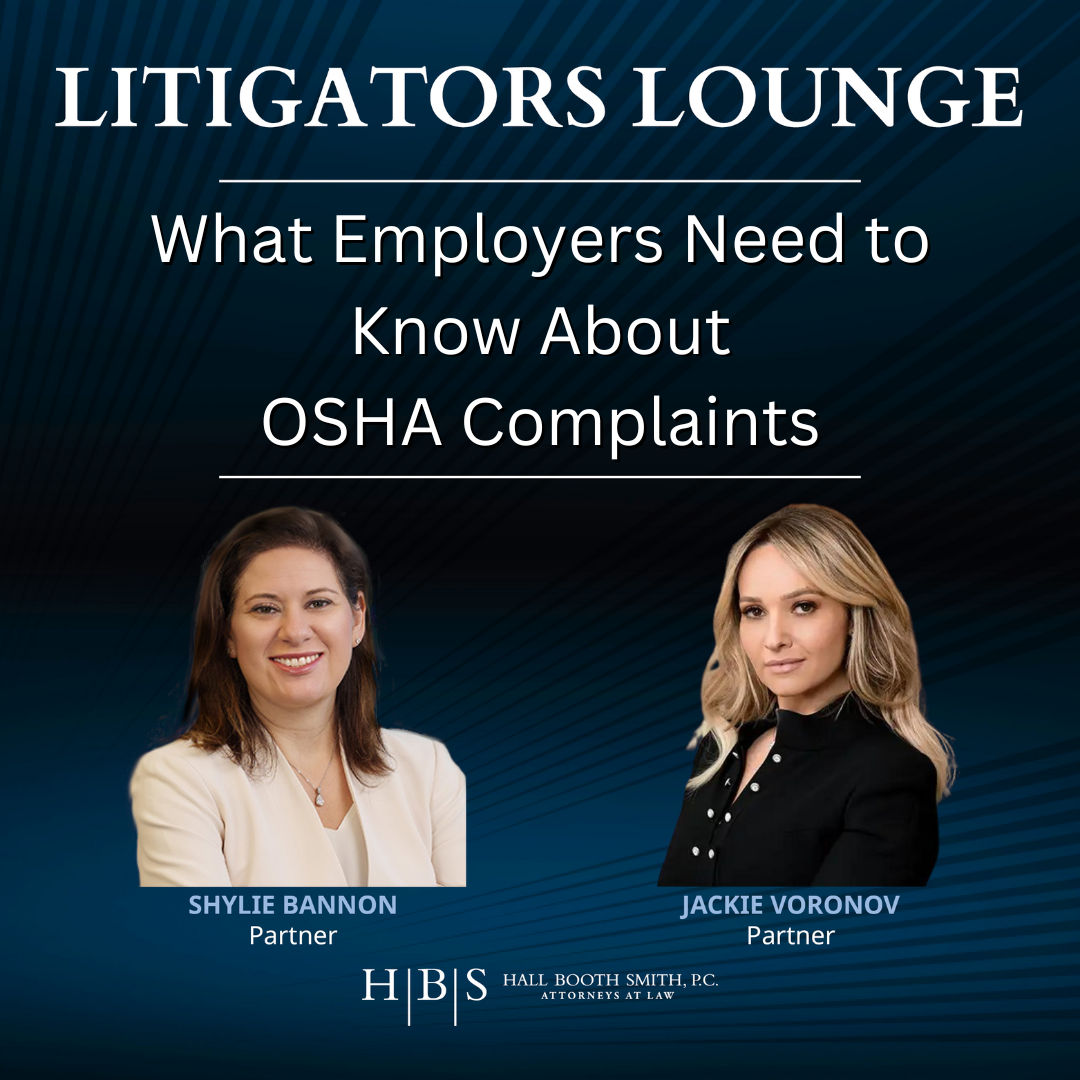
What Employers Need to Know About OSHA Complaints, on the Litigators Lounge podcast, brought to you by Hall Booth Smith
Hall Booth Smith Podcast Network
What Employers Need to Know About OSHA Complaints
Loading
00:00 /
RSS Feed
Share
Link
Embed

Download file

What Employers Need to Know About OSHA Complaints, on the Litigators Lounge podcast, brought to you by Hall Booth Smith

What Employers Need to Know About OSHA Complaints (Litigators Lounge, Episode 14)

When is a hot office more than just an annoyance? In this lively episode of Litigators Lounge, hosts Jackie Voronov and Shylie Bannon kick back with lychee martinis and dive into a surprisingly misunderstood topic: OSHA (the Occupational Safety and Health Administration). This episode provides a comprehensive guide for employers, covering everything from the unexpected ways employees are using OSHA complaints to air grievances (spoiler: it’s not just about hard hats anymore) to what actually happens during an unannounced inspection.

Jackie, who Shylie dubs “the OSHA Maven,” explains the real scope of OSHA’s reach, even in white-collar settings, and outlines practical strategies for employers to stay prepared without panicking. The hosts also discuss broader trends, like the effects of staffing shortages and administrative shake-ups on federal enforcement, and why getting too comfortable could be a costly mistake.

Whether you’ve never encountered an OSHA visit or experienced one three years ago that didn’t fully close (yes, it does happen), this episode provides employers with the wit, wisdom, and direct communication they require.

Cheers to staying both compliant and cool under pressure.

Litigators Lounge is underwritten and presented by Hall Booth Smith. The show is produced by John Ray and the North Fulton affiliate of Business RadioX®.

Topics Discussed in this Episode

00:00 Introduction to Litigators Lounge
00:20 Hosts’ Catch-Up and Banter
01:11 Today’s Topic: OSHA and Workplace Safety
03:43 Deep Dive into OSHA Regulations
08:23 OSHA Inspections and Employer Protocols
17:39 Impact of Administrative Changes on OSHA
27:14 Supreme Court Cases and Legal Implications
29:02 Conclusion and Farewell

Jackie Voronov, Partner, Hall Booth Smith

Jackie Voronov, Partner, Hall Booth Smith

Jackie Voronov is a Partner in Hall Booth Smith’s office in Paramus, New Jersey, and she represents management in a wide variety of employment matters and litigates employment claims before administrative agencies and state and federal courts. Her clients include major hotels, retailers, shipping companies, assisted living facilities and nursing homes, manufacturers, and national fast-food franchisees.

Jackie’s litigation experience includes the defense of employers in single and multi-plaintiff actions on claims of wrongful discharge, sexual harassment, race, national origin, gender, disability and age discrimination, breach of contract, family medical leave, failure to accommodate, retaliation, wage/hour laws, and related tort claims.  Jackie also works with her clients to prepare various employment agreements (including non-compete, confidentiality, independent contractor, and separation agreements). She has extensive experience before various administrative tribunals, including the Equal Employment Opportunity Commission (EEOC), the State Division of Human Rights (SDHR), the Division of Civil Rights (DCR), and other state, federal, and local agencies.

In addition, Jackie frequently conducts management training for employers on a wide variety of employment law topics, such as:

  • EEO/anti-harassment
  • employee recruiting and hiring practices
  • family and medical leave
  • reasonable accommodations for disabilities and religion
  • preventing and investigating harassment, discrimination, and whistleblower claims
  • wage and hour compliance
  • discipline and termination of employees
  • privacy in the workplace

Jackie is regularly invited to speak nationally on best practices and other employment-related issues. Before joining Hall Booth Smith, she worked for one of the country’s largest law firms, where she defended employers in a wide range of labor and employment matters, including wage and hour class actions under the Fair Labor Standards Act (FLSA), claims related to the New York State Human Rights Law (NSHRL), the New Jersey Law Against Discrimination (LAD), the Americans With Disabilities Act (ADA), the New Jersey Conscientious Employee Protection Act (CEPA), and Title VII.

Jackie was selected for inclusion as a New Jersey Rising Star by Super Lawyers® for six consecutive years (2010-2016), which honors the top 2.5% of young lawyers in New Jersey.

LinkedIn

Shylie Bannon, Partner, Hall Booth Smith

Shylie Bannon, Partner, Hall Booth Smith

Shylie Bannon is a Partner in Hall Booth Smith’s Jacksonville, Florida, office. She also serves as Hiring Partner for the region of Florida, where she oversees associate attorney hiring endeavors. Prior to joining Hall Booth Smith, Shylie was a partner in both a multi-state, multi-specialty firm and a boutique practice.

At Hall Booth Smith, Shylie continues to represent physicians, mid-level providers, and health care providers in high-exposure medical negligence claims and in administrative proceedings before the Florida Department of Health. She also represents national retailers in high-exposure premises liability, negligent security, and transportation litigation with our National Trial Counsel team.

In addition to litigating matters involving personal injury and negligence, Shylie also represents management in all aspects of employment-related litigation arising from allegations of sex, disability, race, and pregnancy discrimination; whistleblower actions; and alleged violations of the National Labor Relations Act and Fair Labor Standards. She does so in administrative proceedings before both the Florida Commission on Human Relations and the US Equal Employment Opportunity Commission, as well as in all of the state and federal courts in Florida. She also provides employment-related counsel to clients, helping them avoid employment-related litigation through the implementation of best employment, investigation, and risk management practices.

Shylie earned a Juris Doctor from the University of Florida Levin College of Law, cum laude, and graduated magna cum laude from Tulane University with a Bachelor of Arts in Political Science and History.

Shylie volunteers with the Guardian Ad Litem program and supports child welfare advocacy efforts in Northeast Florida. She is also a Member of the Board for the Jewish Federation & Foundation of Northeast Florida.

LinkedIn

About Hall Booth Smith, P.C.

Established in 1989, Hall Booth Smith, P.C. (HBS) is a full-service law firm headquartered in Atlanta, Georgia, with regional offices strategically located throughout Georgia and the United States. Experienced across a wide range of legal disciplines, HBS prides itself on providing knowledgeable, proactive, client-specific counsel to individuals, domestic and international corporations, state and federal agencies, and nonprofit organizations.

HBS possesses the legal knowledge, skill, and experience to meet their clients’ needs wherever they do business. HBS maintains the highest commitment to ethically and professionally serving their clients by providing the highest quality legal representation.

They deliver quality legal services in a variety of service areas. Experience across legal disciplines combined with a focus on the unique business or personal requirements of the client is the hallmark of the firm. Their clients receive the attention, expertise, and cost-effectiveness of a smaller law firm with the full service and strong regional presence typical of a larger one.

Company website | LinkedIn | Facebook | Instagram

Disclaimer

Litigators Lounge is a production brought to you by Hall Booth Smith, PC. This podcast is published for the purposes of providing general information and education on topics that include those related to the law and legal issues, but the contents of the podcast do not constitute legal advice. Listening to this podcast or utilizing the information contained in it in any way does not constitute nor does it create an attorney-client relationship between you and Hall Booth Smith or its lawyers. The contents of this podcast should not be used as a substitute for competent legal advice from a professional attorney licensed in your jurisdiction.
Tagged With: Hall Booth Smith P.C., Jackie Voronov, Litigators Lounge, Occupational Safety and Health Administration, OSHA, OSHA complaint, OSHA compliant, OSHA inspections, Shylie Bannon, workplace safety

Whistleblower Employees

May 7, 2021 by John Ray

Whistleblower Employees
Dental Law Radio
Whistleblower Employees
Loading
00:00 /
RSS Feed
Share
Link
Embed

Download file

Whistleblower Employees

Whistleblower Employees (Dental Law Radio, Episode 3)

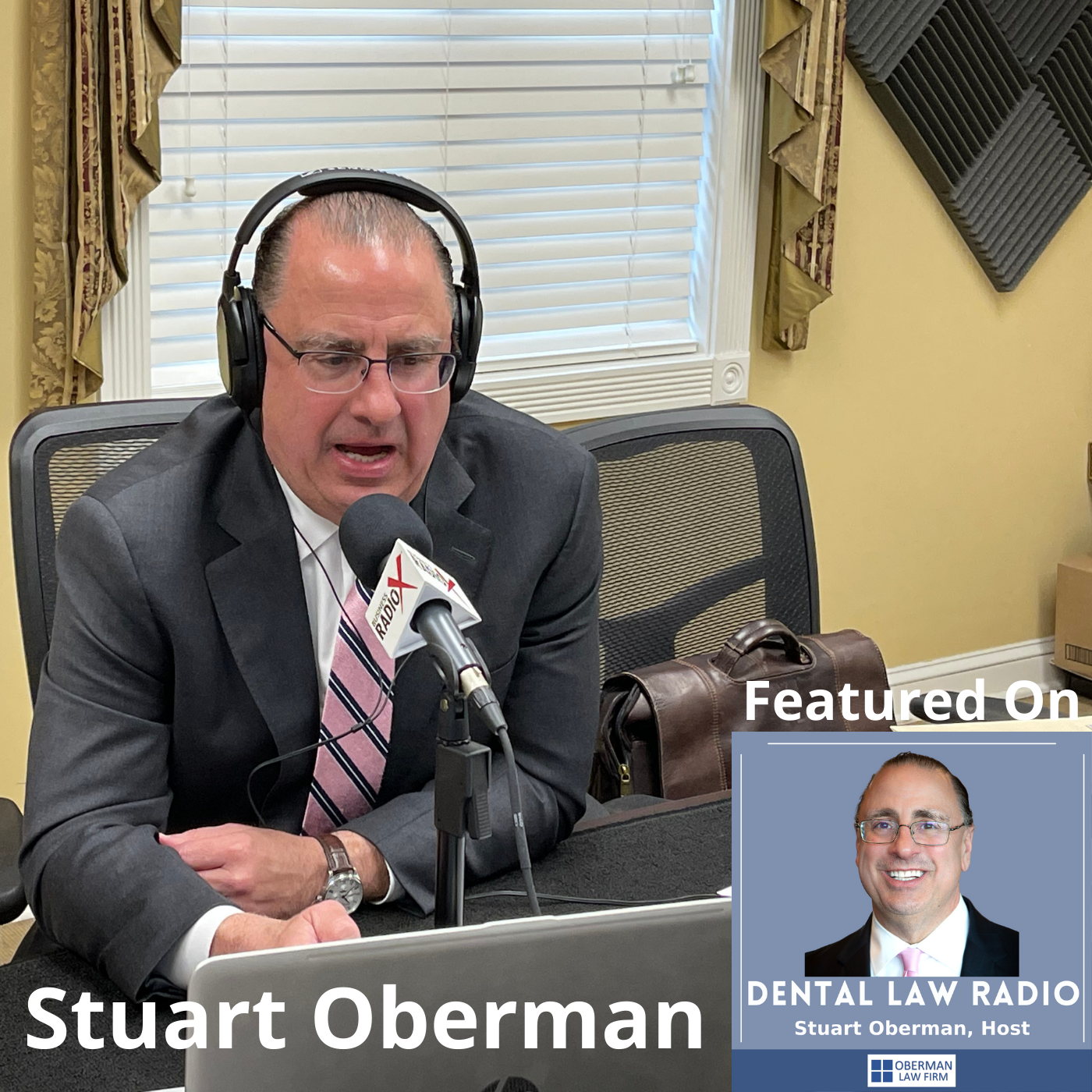
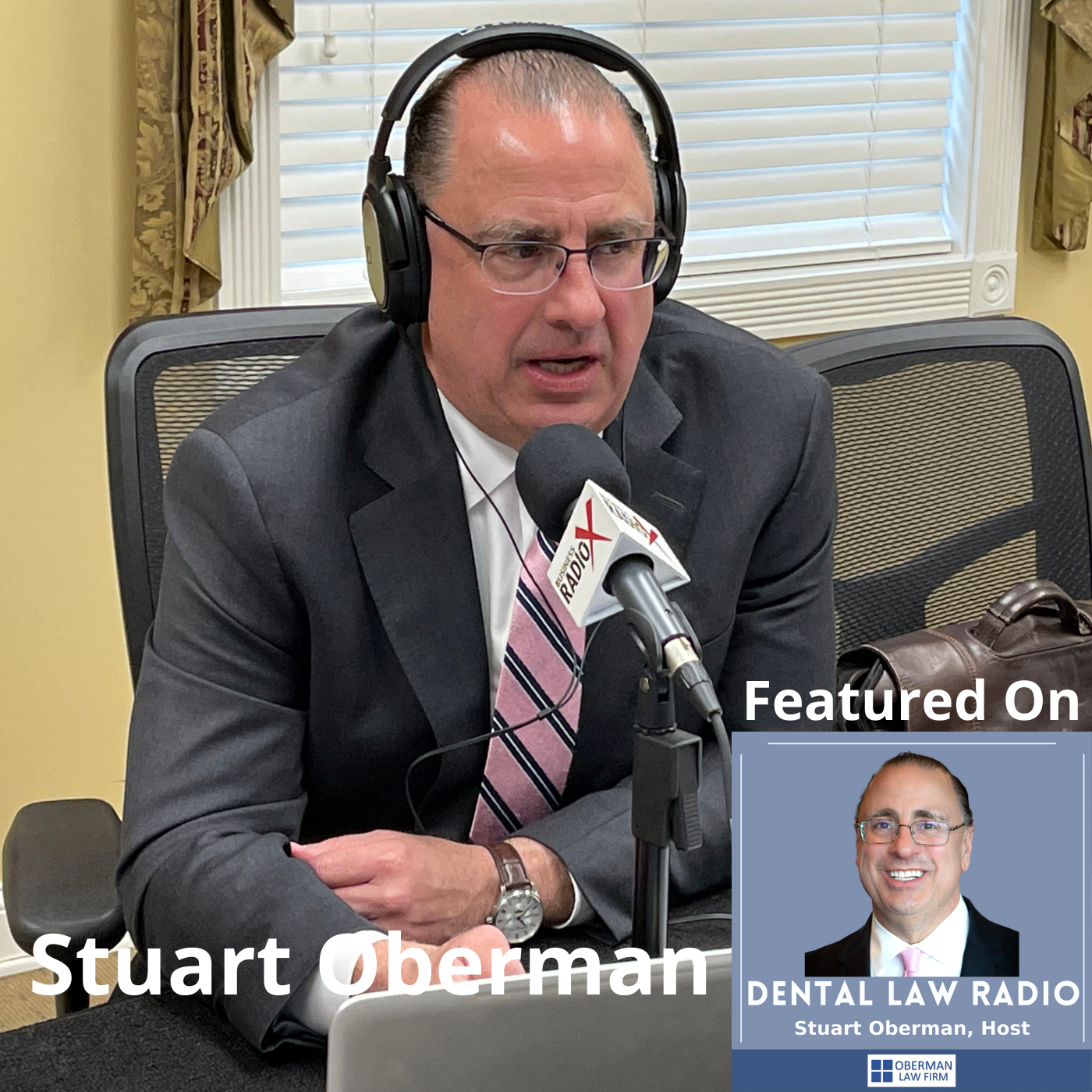
On this edition of Dental Law Radio, Stuart Oberman discussed problem employees who file complaints with OSHA and HIPAA, the preemptive actions a practice owner should take, how to handle the situation once a complaint has been filed, and much more.  Dental Law Radio is underwritten and presented by Oberman Law Firm and produced by the North Fulton studio of Business RadioX®.

TRANSCRIPT

Intro: [00:00:02] Broadcasting from the Business RadioX Studios in Atlanta, it’s time for Dental Law Radio. Dental Law Radio is brought to you by Oberman Law Firm, a leading dental-centric law firm serving dental clients on a local, regional, and national basis. Now, here’s your host, Stuart Oberman.

Stuart Oberman: [00:00:27] Hello, everyone. And welcome to Dental Law Radio. We’re going to cover two topics today that really have surfaced in the last couple of months. For the last couple of years, they really have been, I would say, on the rise. But with COVID-19, as I said before in previous podcasts, I don’t necessarily harp on COVID-19, so I think we’re ready to come out of that particular scenario – there’s a lot of lessons learned. And I think that that particular period of time, which is still ongoing, has really taught our doctors a lot of lessons.

Stuart Oberman: [00:01:06] So, one of the things that we’ve really, really want to harp on today is compliance and employees. You know, I’ve said before that the patients are easy. The employees can be very problematic at times. And I’ve heard a saying from one of our employees, practice of dentistry would be a fantastic career. But, again, those are different things that we want to take a look at. So, what are we talking about today? What’s on the topic today? What’s hot? What are we developing? OSHA and HIPAA whistleblower.

Stuart Oberman: [00:01:38] So, I’ve been talking about this for a while on the road, you know, before all this. But what’s happened is that, as I said before in a previous podcast, problem employees are going three places, OSHA, HIPAA, Department of Labor, State and Federal. So, your problem employees are going to file complaints with OSHA and HIPAA. The question is, how do you deal with that? What do you do when you get that nasty letter that says you have committed a whistleblower violation, or an OSHA violation, or HIPAA violation? So, how do you get to an OSHA whistleblower? And what in the world is a whistleblower?

Stuart Oberman: [00:02:24] So, we think a whistleblower, we think massive corporations, you know, the guys in the internal side that are complaining to the government that this is not correct, this is not correct, over expenditures here, this is wrong, this is wrong, compliance issues, violations of the law. But, really, in our dental practices, it’s simply employees who complain for whatever reason. A lot of it is disgruntled employees who are not happy with their pay, their circumstances, and they’re going to get even, and they’re going to file a complaint with OSHA or HIPAA for whatever reason.

Stuart Oberman: [00:02:59] So, the question is, you get these letters – as we talked about on a previous podcast, you have a system in place. And if not, you need to get one very quickly on how to respond to this. So, what happens is, you get this letter from either OSHA or HIPAA. You got a certain time period to respond. You have certain things that you need to do. And you’re going to know – depending on how big your practice is – right away who did it. Who complained to the government, you’re going to know. If not, you’re going to find out very quickly.

Stuart Oberman: [00:03:32] Of course, what’s going to happen is you’re going to be absolutely livid at that employee for filing a complaint against you when you’ve taken care of that employee, you give them all the raises. But for some reason, you got a complaint. Now, you’ve got to deal with it.

Stuart Oberman: [00:03:49] So, provided you have a process in place, you will respond to it. Hopefully, you will get counsel to do that, and not have your consultant do it or have a staff member do it. But you’ll get outside professional counsel to do it on the legal side that understands how to do it.

Stuart Oberman: [00:04:06] So, you will work that investigation. And the question is, you are absolutely livid to this employee who filed this complaint. And you’re going to get even. Bad thing to do. Bad thing to do. Wrong thing to do. Detrimental thing to do. So, under federal rules, the whistleblower statute, you cannot retaliate against an employee. So, what does that mean? That means you can’t fire them. You can’t demote them. You can’t lay them off.

Stuart Oberman: [00:04:38] Now, that does not mean that they have lifetime employment. But if they’re already a problem employee in a perfect world, you’ve already got an HR file on them. And if I don’t touch on it on subsequent podcasts, your employees should never have access to their own personal files. That is your lock and key. They should never take care of their own personnel file.

Stuart Oberman: [00:05:07] So, what happens is, on the whistleblower, you’re going to get mad, you’re going to get even, you want to go fire this employee and say “You’re fired.” Or better yet, “You’re demoted. I’m cutting your hours,” whatever it is. Now, the problem is that, if that occurs solely because they filed a complaint, you now have violated Federal Law under the federal whistleblower statute. So, that becomes a mess.

Stuart Oberman: [00:05:30] So then, what happens is now you get into the Solicitor General’s office where they send you a nasty letter that you now are under federal investigation for violation of the whistleblower statute. Which is, 99 percent of the time, if you handle an OSHA complaint correctly, it’s going to be a process, but usually it’s settled, it’s worked out well. You take the correction action. You go down the road.

Stuart Oberman: [00:05:59] The problem is, is that when you have a whistleblower issue because you fired, demoted, or laid an employee off, or cut hours, whatever it is because they filed a complaint, now you’re in a whole different realm. Now, all of a sudden, you are under the whistleblower statute. So, you’re going to be investigated by the Solicitor General, which is never good. Never good. Now, you’ve got another governmental agency investigating you.

Stuart Oberman: [00:06:28] Look, at the end of the day, a lot of the complaints are dismissed. Investigators get it. It’s a disgruntled employee, there’s no cause. But if they find that you have violated the federal whistleblower statute – now, I will tell you this, this goes to any industry that has OSHA or HIPAA. I know we’re talking dental specific, but this is any industry, whether it’s trucking or whether it’s some other kind of industry or business, this applies. So, this is across career lines.

Stuart Oberman: [00:07:05] So, again, they dismiss complaints or they do the investigation and they dismiss the complaint, and you’re done. But the problem is that, if they find that you violated the federal statute. So, what happens? So, you’re responsible for the employees back wages, which is never good. Or they require that you reinstate the employee. First, you got to understand this, you didn’t like the employee when they were there. You hated them when they filed the whistleblower complaint. And, now, you’ve got to bring them back because the feds say you’ve got to bring them back. And you got to reimburse the employee the attorney’s fees, which is very expensive sometimes, very, very expensive.

Stuart Oberman: [00:07:46] So, what’s the takeaway? Again, we’re looking at a 10,000-foot view as to what occurs. One, if you have an OSHA or HIPAA complaint, first and foremost, as I said in previous podcasts, you’ve got to have process in place to respond to it. Then, what happens is, when you get it, you’ve got to handle it correctly.

Stuart Oberman: [00:08:09] If you’re going to have an employee discipline matter while you have a whistleblower matter going on or OSHA or HIPAA complaint going on, you better have good reason to discipline an employee. That should be well documented previously. All employee problems should be documented. All employee problems should be of record. Signed by the employee on HR side. So, this way, if you are under investigation for OSHA or HIPAA violations and you fire the employee, you’ve got something that says this is not lifetime employment. And that we need to get rid of this employee for a lot of reasons.

Stuart Oberman: [00:08:54] So, the processes is, that once you get it, understand it, do not take a knee jerk reaction and fire the employee, demote. Talk to counsel, get guidance on how to handle this, what to do with it. And proceed with great caution. So, again, that’s a 10,000-foot overview on where we’re going with this and what we wanted to do.

Stuart Oberman: [00:09:17] We’ve talked about this for a lot of time, a lot of years. But we’re seeing an enormous increase in this. Now, one thing you’ll need to do is make sure that you’ve got your HIPAA issues under control for your patient flow of information. Encryptions, authorizations to get medical information, that’s a whole another topic for a whole another day. But we want to keep it on a high level with the whistleblower violation matters.

Stuart Oberman: [00:09:46] So, again, process, process, process, understand what you’re doing, understand the complexities, get guidance on these matters. Do not try to handle it yourself. Do not delegate it. This is something that doctors, or especially sole practitioners, need to get this done. So, that’s going to conclude our podcast today on OSHA and whistleblower allegations.

Stuart Oberman: [00:10:12] So, we want to thank you for joining Dental Law Radio. If you want to reach out to us or contact our firm, please feel free to do so. Please visit also dentallawradio.com, Oberman Law Firm at 770-554-1400. Or if you want to, send me an email, stuart@obermanlaw.com. Thank you again so much for joining us. We hope you just took one bit of information away. And if you did, it’s a complete success. Have a fantastic day. And we’ll look forward to talking to you soon on subsequent podcasts. Thank you very much. Have a great day.


About Dental Law Radio

Hosted by Stuart Oberman, a nationally recognized authority in dental law, Dental Law Radio covers legal, business, and other operating issues and topics of vital concern to dentists and dental practice owners. The show is produced by the North Fulton studio of Business RadioX® and can be found on all the major podcast apps. The complete show archive is here.

Stuart Oberman, Oberman Law Firm

Oberman Law Firm
Stuart Oberman, host of “Dental Law Radio”

Stuart Oberman is the founder and President of Oberman Law Firm. Mr. Oberman graduated from Urbana University and received his law degree from John Marshall Law School. Mr. Oberman has been practicing law for over 25 years, and before going into private practice, Mr. Oberman was in-house counsel for a Fortune 500 Company. Mr. Oberman is widely regarded as the go-to attorney in the area of Dental Law, which includes DSO formation, corporate business structures, mergers and acquisitions, regulatory compliance, advertising regulations, HIPAA, Compliance, and employment law regulations that affect dental practices.

In addition, Mr. Oberman’s expertise in the health care industry includes advising clients in the complex regulatory landscape as it relates to telehealth and telemedicine, including compliance of corporate structures, third-party reimbursement, contract negotiations, technology, health care fraud and abuse law (Anti-Kickback Statute and the State Law), professional liability risk management, federal and state regulations.

As the long-term care industry evolves, Mr. Oberman has the knowledge and experience to guide clients in the long-term care sector with respect to corporate and regulatory matters, assisted living facilities, continuing care retirement communities (CCRCs). In addition, Mr. Oberman’s practice also focuses on health care facility acquisitions and other changes of ownership, as well as related licensure and Medicare/Medicaid certification matters, CCRC registrations, long-term care/skilled nursing facility management, operating agreements, assisted living licensure matters, and health care joint ventures.

In addition to his expertise in the health care industry, Mr. Oberman has a nationwide practice that focuses on all facets of contractual disputes, including corporate governance, fiduciary duty, trade secrets, unfair competition, covenants not to compete, trademark and copyright infringement, fraud, and deceptive trade practices, and other business-related matters. Mr. Oberman also represents clients throughout the United States in a wide range of practice areas, including mergers & acquisitions, partnership agreements, commercial real estate, entity formation, employment law, commercial leasing, intellectual property, and HIPAA/OSHA compliance.

Mr. Oberman is a national lecturer and has published articles in the U.S. and Canada.

LinkedIn

Oberman Law Firm

Oberman Law Firm has a long history of civic service, noted national, regional, and local clients, and stands among the Southeast’s eminent and fast-growing full-service law firms. Oberman Law Firm’s areas of practice include Business Planning, Commercial & Technology Transactions, Corporate, Employment & Labor, Estate Planning, Health Care, Intellectual Property, Litigation, Privacy & Data Security, and Real Estate.

By meeting their client’s goals and becoming a trusted partner and advocate for our clients, their attorneys are recognized as legal go-getters who provide value-added service. Their attorneys understand that in a rapidly changing legal market, clients have new expectations, constantly evolving choices, and operate in an environment of heightened reputational and commercial risk.

Oberman Law Firm’s strength is its ability to solve complex legal problems by collaborating across borders and practice areas.

Connect with Oberman Law Firm:

Company website | LinkedIn | Twitter

Tagged With: dental practices, dentists, HIPAA, HIPAA complaints, HIPAA whistleblower, Oberman Law Firm, OSHA, OSHA whistleblower, OSHAA complaints, Stuart Oberman, Whistleblower Employees

COVID-19 and OSHA Compliance

April 30, 2021 by John Ray

OSHA Compliance
Dental Law Radio
COVID-19 and OSHA Compliance
Loading
00:00 /
RSS Feed
Share
Link
Embed

Download file

OSHA Compliant

COVID-19 and OSHA Compliance (Dental Law Radio, Episode 2)

On this episode of Dental Law Radio, host Stuart Oberman discusses current issues in OSHA compliance resulting from the COVID-19 pandemic, the risks of non-compliance for dental practice owners, and much more. Dental Law Radio is underwritten and presented by Oberman Law Firm and produced by the North Fulton studio of Business RadioX®.

TRANSCRIPT

Intro: [00:00:02] Broadcasting from the Business RadioX Studios in Atlanta, it’s time for Dental Law Radio. Dental Law Radio is brought to you by Oberman Law Firm, a leading dental-centric law firm serving dental clients on a local, regional, and national basis. Now, here’s your host, Stuart Oberman.

Stuart Oberman: [00:00:26] And welcome everyone to Dental Law Radio. Today’s topic, COVID-19, OSHA Compliant. So, during this whole period of about a year, what we saw was a massive, massive, massive problems with OSHA. You know, I would say this is not your father’s OSHA. And I’ve thought about this for a while where, you know, years ago we’re worried about bloodborne pathogens and needle sticks and how to dispose of items. All those are important. But what’s happened is, is through this whole process, our doctors have developed and continue to develop staff problems.

Stuart Oberman: [00:01:06] So, what happens is, I always tell our doctors, “Disgruntled employees are going three places in the medical field, OSHA, HIPAA, Department of Labor, State and Federal.” So, what happens is that our doctors, historically, botch how to handle OSHA complaints. And a lot of times they are easily handled if you get a grip on it pretty quick. But what happens is, you get the letter, they don’t know where to go, what to do. The office manager doesn’t know what to do because she’s not trained. The staff doesn’t know. Because now, all of a sudden, you’ve got the Hygiene Department, who’s your office manager, who definitely has not been trained on OSHA what to do.

Stuart Oberman: [00:01:52] So, I don’t care how big you are, whether you’re one practice, 300,000, or 40 practices, 40 million, you’ve got to have an OSHA system for regulatory matters. So, we want to talk a little bit about today as to what you do, and we’re seeing an uptick of this more so than we’ve ever seen before.

Stuart Oberman: [00:02:14] You know, through the COVID period – I know everyone’s trying to move out of the COVID period. But I think we got to look back and say, “Hey, what happened? What didn’t work? What worked?” – on the OSHA side, one of our biggest areas that we saw was our doctors were not compliant. They didn’t know how to deal with it. They didn’t have a system when they were running normal, if you will. And they definitely didn’t have a system during COVID-19, especially when they were shut down.

Stuart Oberman: [00:02:41] So, what happens to this whole process of getting an OSHA complaint? What is it? So, you’re going to get a letter from OSHA. OSHA is a massive governmental agency. A bureaucracy that if it’s not handled correctly, you’re going to have some problems to deal with it, and you got to have a system in place. So, depending on how many locations you have, you’re going to get a letter to that location. Now, if it is in relation to a different location and it goes to the wrong location, you got to make sure it gets there.

Stuart Oberman: [00:03:17] We have one particular case, our doctor had three or four locations. It took three weeks to get from point A to point B. That can’t happen. That’s a disaster. So, what’s going to happen is, you’re going to get an OSHA letter. It’s going to be how is this going to be reported. And, generally, you have about five days to respond.

Stuart Oberman: [00:03:35] So, I’m going to go out on a limb that most of OSHA problems can be very easily corrected with a simple process of responding correctly. What does that mean? That means, one, you’ve got to get the document very quickly in your possession. You’ve got to get a handle on the investigation, and it is an internal investigation. So then, you have to go ahead and get your supporting documents. Which a lot of times when doctors are in a mess, they can’t find the photographs, they can’t find anything.

Stuart Oberman: [00:04:05] So then, you got to figure out what’s your corrective action. You’ve got to let OSHA know what is your corrective action. And if you don’t have a corrective action, then they will usually tell you what your corrective action is, which is never ever good. When a governmental agency tells you, one, you’ve got a problem and, two, we’re going to tell you how to fix it, that’s not good. So, we don’t want that to occur.

Stuart Oberman: [00:04:27] So, what happens if you fail to respond and you have to respond? My advice is that, a doctor, office manager, no one internally should ever respond to an OSHA complaint. That, honestly, is the responsibility of counsel. You’ve got to be experienced in this how to respond, what to respond to, what they’re looking for, what they’re not looking for. And if it’s not within the counsel’s wheelhouse, now, you’ve got two problems. One, you’re under investigation. Two, counsel botched the investigation.

Stuart Oberman: [00:05:03] So, what happens if you fail to respond? If you fail to respond, it’s very simple. The government’s going to come in there and they’re going to start digging. And when you got the government coming in and digging on anything, that’s never good. So, they’re going to want a couple of things right off the bat. They’re going to want to know your injury and illness reports. And most doctors have no idea what that is. They’ve never completed it before. We’re lucky if they have an OSHA manual that’s now 20 years old.

Stuart Oberman: [00:05:29] So then, you got to have up to date hazard communication, which is mandated. And then, again, most of our doctors have no idea what that is. It’s been in the manual 20 years ago they bought from an organization, they have no idea what it is. Then, what’s your PPE, personal protective equipment? Where’s that at? Is it up to date? That’s a huge concern. And I think it’s a concern going forward as a whole.

Stuart Oberman: [00:05:55] Our doctors did enormous job on illness ratios. The COVID-19 reports that were coming out that the dental practices, for the most part, were in about the 90 percent range of having no problems whatsoever, and that’s a huge credit. And we’re not out of the woods yet. But I don’t want to harp on COVID-19. I want to harp on the process of what needs to be done and what’s been learned.

Stuart Oberman: [00:06:22] So then, they want to know what your bloodborne pathogens procedures are. They want to confirm your entry point. They want to know what tag outs are or lockouts are. So, those are all the things you’re going to have to address. So, what do we need to do? One, you’ve got to make sure that your OSHA manual is up to date. If it’s not up to date, you need to get it up to date. And I don’t mean, you know, five years. I mean within, like, 12 months from your last publication.

Stuart Oberman: [00:06:59] Be careful what you do if you buy it from an organization, that they don’t just give you a manual and say, “Here. Open it and you’re good to go.” They have to be custom-made. Be careful what you have, because a lot of the online publications are simply statutory codes, which have no relevance whatsoever as to how to handle things day-to-day. So, it’s got to be curtailed. Get an OSHA manual. Your employees got to be trained. They got to be trained. And you’ve got to have an internal process on how to handle the complaints. It’s not if, but it’s when you’re going to get a complaint. And a process is how do I handle it? What do I do? Who do I go to? How quick do we need to get it resolved?

Stuart Oberman: [00:07:38] Because as these fires continue to stay open, the flames get hotter. And the more they dig, the more problems you’re going to have. And the key is to keep the government out of your practices as quickly as possible and out of your life as possible.

Stuart Oberman: [00:07:53] So, those are a couple of things. You know, those are a couple of things we looked at that we’re seeing a lot of things on. And if any takeaways from this, it’s have a process. Understand what the process is, figure it out. It’s not complex. Take a few minutes, train, procedures, internal matters. Those of all have got to be done correctly, succinctly, and in great detail. So, again, a couple of things, 10,000 foot view on what we need to do on OSHA.

Stuart Oberman: [00:08:26] We’re going to be talking maybe one or two other things on OSHA that I’ve been talking about for a while, that we’ve been seeing an enormous rise on for the last couple of months. So, again, thank you for joining us today at dentallawradio.com. And if you want to contact us, please feel free to do so. Our main number is 770-554-1400. Or send me an email, stuart, S-T-U-A-R-T,@obermanlaw.com. And keep joining us and we’re going to try to provide as much relevant content going forward as is possible. Have a fantastic day and thanks again for joining us.

About Dental Law Radio

Hosted by Stuart Oberman, a nationally recognized authority in dental law, Dental Law Radio covers legal, business, and other operating issues and topics of vital concern to dentists and dental practice owners. The show is produced by the North Fulton studio of Business RadioX® and can be found on all the major podcast apps. The complete show archive is here.

Stuart Oberman, Oberman Law Firm

Oberman Law Firm
Stuart Oberman, host of “Dental Law Radio”

Stuart Oberman is the founder and President of Oberman Law Firm. Mr. Oberman graduated from Urbana University and received his law degree from John Marshall Law School. Mr. Oberman has been practicing law for over 25 years, and before going into private practice, Mr. Oberman was in-house counsel for a Fortune 500 Company. Mr. Oberman is widely regarded as the go-to attorney in the area of Dental Law, which includes DSO formation, corporate business structures, mergers and acquisitions, regulatory compliance, advertising regulations, HIPAA, Compliance, and employment law regulations that affect dental practices.

In addition, Mr. Oberman’s expertise in the health care industry includes advising clients in the complex regulatory landscape as it relates to telehealth and telemedicine, including compliance of corporate structures, third-party reimbursement, contract negotiations, technology, health care fraud and abuse law (Anti-Kickback Statute and the State Law), professional liability risk management, federal and state regulations.

As the long-term care industry evolves, Mr. Oberman has the knowledge and experience to guide clients in the long-term care sector with respect to corporate and regulatory matters, assisted living facilities, continuing care retirement communities (CCRCs). In addition, Mr. Oberman’s practice also focuses on health care facility acquisitions and other changes of ownership, as well as related licensure and Medicare/Medicaid certification matters, CCRC registrations, long-term care/skilled nursing facility management, operating agreements, assisted living licensure matters, and health care joint ventures.

In addition to his expertise in the health care industry, Mr. Oberman has a nationwide practice that focuses on all facets of contractual disputes, including corporate governance, fiduciary duty, trade secrets, unfair competition, covenants not to compete, trademark and copyright infringement, fraud, and deceptive trade practices, and other business-related matters. Mr. Oberman also represents clients throughout the United States in a wide range of practice areas, including mergers & acquisitions, partnership agreements, commercial real estate, entity formation, employment law, commercial leasing, intellectual property, and HIPAA/OSHA compliance.

Mr. Oberman is a national lecturer and has published articles in the U.S. and Canada.

LinkedIn

Oberman Law Firm

Oberman Law Firm has a long history of civic service, noted national, regional, and local clients, and stands among the Southeast’s eminent and fast-growing full-service law firms. Oberman Law Firm’s areas of practice include Business Planning, Commercial & Technology Transactions, Corporate, Employment & Labor, Estate Planning, Health Care, Intellectual Property, Litigation, Privacy & Data Security, and Real Estate.

By meeting their client’s goals and becoming a trusted partner and advocate for our clients, their attorneys are recognized as legal go-getters who provide value-added service. Their attorneys understand that in a rapidly changing legal market, clients have new expectations, constantly evolving choices, and operate in an environment of heightened reputational and commercial risk.

Oberman Law Firm’s strength is its ability to solve complex legal problems by collaborating across borders and practice areas.

Connect with Oberman Law Firm:

Company website | LinkedIn | Twitter

Tagged With: COVID-19, dental practie, Oberman Law Firm, OSHA, OSHA compliance, OSHA compliant, Stuart Oberman

Business RadioX ® Network


Our Most Recent Episode

CONNECT WITH US

  • Email
  • Facebook
  • LinkedIn
  • Twitter
  • YouTube

Our Mission

We help local business leaders get the word out about the important work they’re doing to serve their market, their community, and their profession.

We support and celebrate business by sharing positive business stories that traditional media ignores. Some media leans left. Some media leans right. We lean business.

Sponsor a Show

Build Relationships and Grow Your Business. Click here for more details.

Partner With Us

Discover More Here

Terms and Conditions
Privacy Policy

Connect with us

Want to keep up with the latest in pro-business news across the network? Follow us on social media for the latest stories!
  • Email
  • Facebook
  • Google+
  • LinkedIn
  • Twitter
  • YouTube

Business RadioX® Headquarters
1000 Abernathy Rd. NE
Building 400, Suite L-10
Sandy Springs, GA 30328

© 2025 Business RadioX ® · Rainmaker Platform

BRXStudioCoversLA

Wait! Don’t Miss an Episode of LA Business Radio

BRXStudioCoversDENVER

Wait! Don’t Miss an Episode of Denver Business Radio

BRXStudioCoversPENSACOLA

Wait! Don’t Miss an Episode of Pensacola Business Radio

BRXStudioCoversBIRMINGHAM

Wait! Don’t Miss an Episode of Birmingham Business Radio

BRXStudioCoversTALLAHASSEE

Wait! Don’t Miss an Episode of Tallahassee Business Radio

BRXStudioCoversRALEIGH

Wait! Don’t Miss an Episode of Raleigh Business Radio

BRXStudioCoversRICHMONDNoWhite

Wait! Don’t Miss an Episode of Richmond Business Radio

BRXStudioCoversNASHVILLENoWhite

Wait! Don’t Miss an Episode of Nashville Business Radio

BRXStudioCoversDETROIT

Wait! Don’t Miss an Episode of Detroit Business Radio

BRXStudioCoversSTLOUIS

Wait! Don’t Miss an Episode of St. Louis Business Radio

BRXStudioCoversCOLUMBUS-small

Wait! Don’t Miss an Episode of Columbus Business Radio

Coachthecoach-08-08

Wait! Don’t Miss an Episode of Coach the Coach

BRXStudioCoversBAYAREA

Wait! Don’t Miss an Episode of Bay Area Business Radio

BRXStudioCoversCHICAGO

Wait! Don’t Miss an Episode of Chicago Business Radio

Wait! Don’t Miss an Episode of Atlanta Business Radio