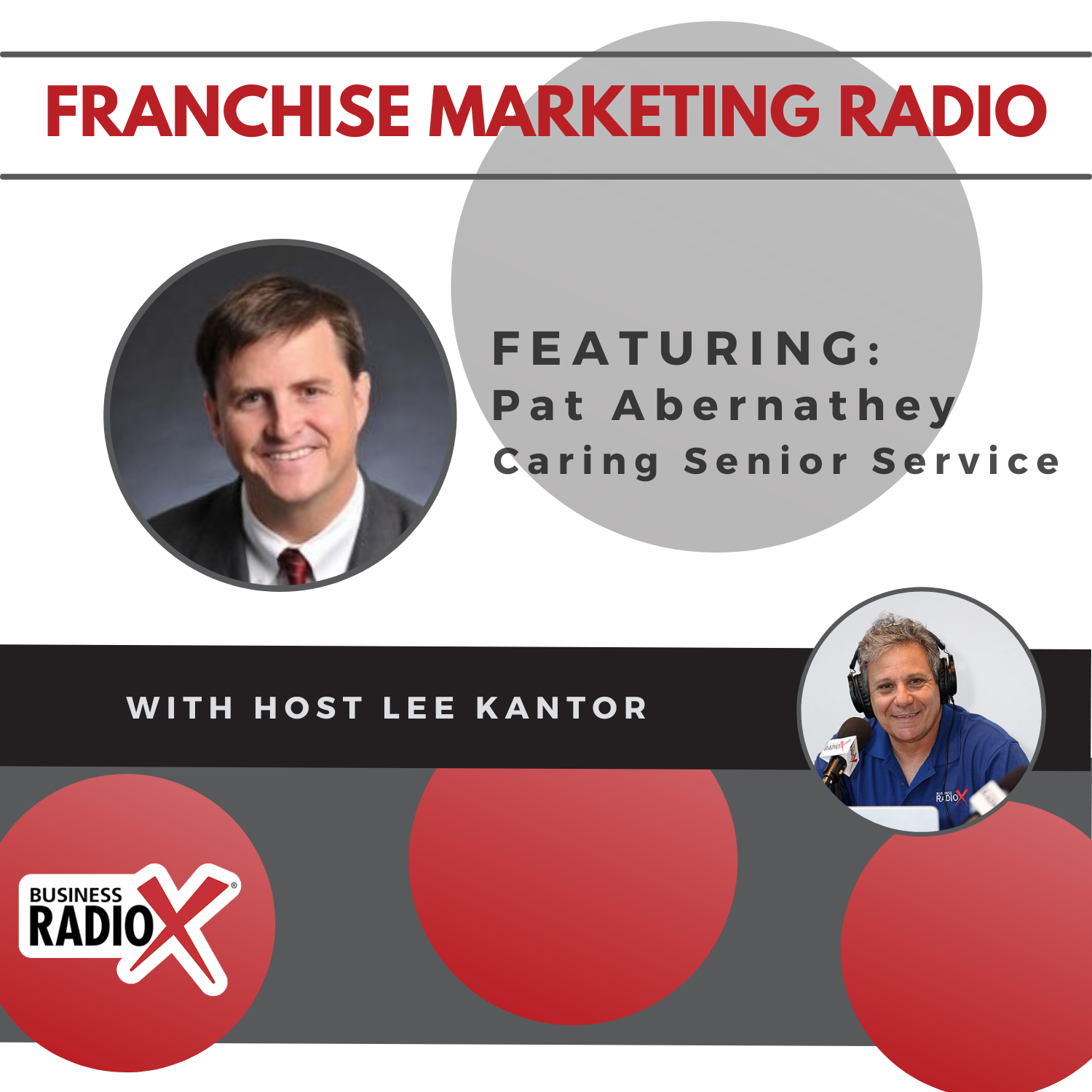


 Pat Abernathey is the owner of Caring Senior Service of Boulder. He joined Caring Senior Service in 2005 as the Marketing Director. After holding many positions within the corporate structure — most recently as Franchise Business Consultant — he opened his own franchise office in Boulder. He later began managing offices in Lakewood and Fort Collins.
As the owner of Caring Senior Service, it’s his goal to give seniors in Boulder the control needed to live safely at home and to give their families peace of mind. Pat and his staff believe that every senior should be able to remain healthy, happy, and home.
Connect with Pat on LinkedIn and Facebook.
What You’ll Learn In This Episode
- The factors that initially drew him to Caring Senior Service in 2005 and the reasons she has remained with the organization for nearly two decades
- The philosophy of helping seniors stay healthy, happy, and home — and how that philosophy is put into practice
- The ways he and his staff work to maintain independence and control for the seniors they serve
- The biggest challenges currently facing seniors in Boulder and the surrounding areas
- The methods he uses to work with families to build trust and provide peace of mind during emotional transitions
 This transcript is machine transcribed by Sonix.
TRANSCRIPT
Intro: Coming to you live from the Business RadioX studio. It’s Franchise Marketing Radio.
Lee Kantor: Lee Kantor here. Another episode of Franchise Marketing Radio and this is going to be a good one. Today on the show we have Pat Abernathey. He is an agency director with Caring Senior Service. Welcome.
Pat Abernathey: Thank you for having me.
Lee Kantor: Well, I’m excited to learn what you’re up to. Tell us about Caring Senior Service. How are you serving folks?
Pat Abernathey: Yeah. So we’re a non-medical home care company. We’re the franchise is based out of San Antonio, Texas. I am a franchisee. I own three locations in Colorado Northern Colorado, Fort Collins, Boulder County, Colorado, and Lakewood, which is a western Denver area. So three three territories all together Other. They’re here in Colorado.
Lee Kantor: So what’s your backstory? How’d you get involved in this line of work?
Pat Abernathey: You know, Leah, actually, it’s it’s an accident. Uh, my, uh, background had been in, uh, marketing. Sports marketing for a university and had been working at a local university there in San Antonio, Texas. And, uh, was also I was involved in, uh, the local rugby community and a couple people who were involved in rugby as well. Uh, Jeff Salter and Ian Claeys, we knew each other. And Jeff had a company called Caring Senior Service that he had just started franchising. Not and this would have been 2005 when this was taking place. And Jeff and I were having a conversation and unrelated to business, in all honesty. See, and we hit it off. And he invited me to come work for the franchisor and I. And my job was to go teach franchise owners how to how to market their business, how to sell, how to get referrals. And I traveled around the country and that’s my that was my background. That’s how I came to Caring senior service.
Lee Kantor: So what did you learn about kind of that? Because you were kind of in the early stages of the franchising part of the equation. And, and your background wasn’t in franchising, but you had some experience in marketing. So how did you kind of blend the two to, uh, come up with a plan that helps people be successful as a franchisee? Because those being a franchisor is one kind of a business. You know, you start something, you have an idea, you replicate it. But running a franchise, being that franchisor is no longer really in the I gotta care for one individual person anymore. Now I’m trying to make my franchisees successful, that the business kind of shifts a little bit. So what are some of the things you learned about how to take a great concept and then kind of make it so that people in other markets can be successful with that same kind of playbook?
Pat Abernathey: Sure. Well, one part of that is I came from a coaching background as well. So teaching franchisees how to grow their business was was really coaching. Uh, no different from coaching on the athletic side. So, um, but taking a proven model of, um, and in the home care business, we use the word marketing. And this is also home health and hospice, when really we mean sales. We’re, um, but marketing has has a better connotation in the healthcare world, I think. So people prefer that word over sales, but we’re talking face to face sales, trying to, um, get referrals, convince people to refer to our companies. Other healthcare professionals. So what we were doing was going out, um, and teaching people how to make fake, how to make cold calls, how to make face to face conversations. Um, and using a proven method that Jeff had developed, uh, with the help of others, but also just over time, um, because he had been in the business since 1991. And when I got there in 2005, I mean, he had been running his locations not as franchise locations, but just as his, um, kind of corporate offices or home offices for a long time. And he knew how to get business, and we were implementing his model. Um, so what I, what I really learned is sales, whether you’re trying to sell advertising for, um, a, an athletics. Um, program or you’re trying to get referrals is very similar. You’re making you’re making calls, you’re making face to face visits. And we were teaching franchisees those types of skills, which they often did not come to us with. Um, you know, they might have come from the corporate world where they were managers, or they may have come from other, other sales opportunities or sales jobs, but not not face to face kind of hardcore getting referral, um, jobs. So what I, what I really learned is sales is sales. I know that sounds kind of simplistic, but it’s true.
Lee Kantor: But it’s about relationships. Like, this is a hard business to do without kind of having human relationships with other human beings. This is not a, you know, somebody who’s who’s deciding whether to put their mother or grandmother Somewhere to get service for them. They want to talk to a human. This is. You’re not going. I don’t know if you’re going to make that buying decision based on a billboard or a a banner ad on a website.
Pat Abernathey: Well, and and one reason we don’t spend a lot of money on advertising in our, our particular company, um, is because you’re absolutely right. You make a meal decision three times a day. So advertising for a, for a restaurant may have a lot of effect on, on people. Um, even buying a car or buying a house is something that happens generally more often in someone’s live life than choosing home care, whether it’s for themselves or for for a parent, an aging parent. So no one out there is thinking about home care in your general day to day life until you have to think about it. Um, so that’s a lot of wasted advertising dollars just out there in the ether. Um, and you’re absolutely right. When it comes time, they don’t want to they may use the internet as a validation tool, but they want to talk to a human right.
Lee Kantor: Because this is personal. This is this isn’t like you. You don’t want to screw this one up. You know, the stakes are too high.
Pat Abernathey: Exactly, exactly.
Lee Kantor: So, um, so you’re doing your work there, and, uh, what brought you to Colorado to to do your own thing and and say, okay, that’s good. I’ve helped a lot of people out there. Now it’s time for me to kind of take this machine and work it for myself.
Pat Abernathey: Yeah. Um, well, I first and foremost, I believed in the model 100% had been teaching it, um, had seen a lot of success and a lot of failure. I mean, it’s franchising, Um, but a lot of success and people are respected. Other owners, um, had had a lot of success implementing the model and working hard. And also I, my family was young and I was I was traveling a lot. I was kind of tired of traveling. Um, and being from Texas, we thought about initially staying in Texas, but the a lot of the territories were already already bought up. We needed a metro area. Um, Colorado provided a metro area, a good, good, um, way of life for us. Um, good quality of life. And I wanted to stay home. So but I believed in the model, so I traded everything in for to become a franchisee. Um, because I knew I would be successful if I implemented the model and worked hard. And that has been the case.
Lee Kantor: Now, you mentioned an important point, and I think a lot of folks in franchising, they think that, oh, I buy a franchise, then this is like a guarantee, you know, for success. But there’s still a lot of variables. Do you find that the people who don’t find success with franchising, they they didn’t really understand what they bought. Like, maybe they thought they bought something that it really wasn’t like, this isn’t something that you buy the franchise and then you you pay for it and then you just sit at home and then it successful. Like you still have to do some work like this is it’s not a magic box that you can just, uh, you know, put it on the table and walk away. And then it’s going to create this kind of passive income. Like, this is absolutely this is this is a you know, you’re not it’s not I don’t want to say it’s a job, but it’s definitely work.
Pat Abernathey: Yeah. And the I think the biggest misconception on the on the franchise buyer, um. Side is that you are buying some sort of, you know, magic box, like, like you said, like the franchisor is going to do all the work for me and I’m, I’m investing some money and then I’m going to get this, this good return without having to put too much work into it. And that cannot be farther from the truth. Anyone buying a franchise needs to understand that, um, especially most franchise franchise models out there are small businesses. They’re not, you know, uh, and you’re and most people are buying one one unit at a time. Um, and they, they are trying to become their own bosses, which is admirable, which is very good. Uh, but when you become your own boss, whether you’re buying a franchise or you’re hanging a shingle and starting up, you know, Dave’s auto repair, um, you will, unless you have a lot of capital to pay someone to do the work for you, which which has its own problems. Um, you’re going to do a lot of the work until you stabilize your business and until you are experienced enough to train your replacement, um, and make those things happen. But but it is a lot of work up front, and no one’s going to do it for you. The franchisor is not going to do it for you. Their representatives are not going to do it for you. Um, and that’s that’s not really what you’re buying when you buy a franchise. Uh, the work is still you. And it all comes down to owners. And that’s a huge misconception.
Pat Abernathey: And also something that needs to be, I think spread is any franchise location of any probably any model. It really comes down to the dedication of the owner, how much they’re willing to put in, especially at the beginning, and how much they’re willing to work on their business. Some at the beginning, you got to work in it, get all your systems down, make sure they’re there. And the thing is, you get the systems from the franchisor, but someone still has to implement those systems. It’s not. They don’t just happen, um, you know, by themselves. So the, the work, the I always liken it to the mom and pop store. You still got to sweep the floor, mop the floor. You still gotta clean the restrooms. You need to put in the work, um, to, you know, to keep your business going and, and and then grow it and identify where you’re growing it. Personally, I also think that gives the owner the knowledge, the wherewithal to understand that you know this business better than anyone, um, better than any of the people you’re going to hire because you’ve done it. You’ve been in, you know, you’ve rolled up your sleeves and, and put in that work to, um, to then be able to teach someone how to do it properly. Your ethos, your, um, and you may they may not be 100% you, but they’re going to give you a pretty good, um, facsimile of yourself and get the job done, at least to, you know, 80, 85%, 90% of what you need. Um, then you can start scaling your business and growing from there.
Lee Kantor: Now, what was it like when you were making the transition? So you’re like, okay, I’m going to do this now. I’m going to be the franchisee. I’m moving to Colorado. I’m going to set up shop. I’m going to, you know, I know this playbook inside out. I’ve been coaching it for a while. I, I know you know what needs to be done. But what was it like when it now it’s your name that’s getting the call. You’re the one who has to deal with things. You know, at two in the morning, you’re the one who is is kind of the boots on the ground there. You’re not. You’re no longer the coach, but you’re the. You’re the quarterback.
Pat Abernathey: Yeah. Um, it’s funny, the even though I had all this background and experience and believed in everything 100%, there was still a tiny bit of self-doubt in would this would this actually work? I’m moving to a state. I have no contacts, no. No ties to Colorado. Um, would this actually work? Um, and the why? I had that doubt, I will never know because I, I saw it, I saw other people do the exact same thing. You know, open a business that they had no experience in. Um, I had experience, but they and and do well and I but there was still just that little seed. Um, until until I answered the phone correctly, signed up my first client. Then I and then and and placed a caregiver exactly the way that Jeff Saltzer and the franchisor and I had been teaching people how to do when until that happened, there was always just a little bit of reservation of, you know, am I? But then when it worked exactly the way it was supposed to work, that’s when I that that feeling of, you know, just a little bit of self doubt that went away. It went away. It was like this, this, this, this works exactly the way it’s supposed to work. Um, and now and there’s no difference between Denver, Colorado or San Antonio, Texas, or Houston, Texas, or, um, Bergen County, new Jersey in terms of. There’s a need and we’re filling that need. The need doesn’t change.
Pat Abernathey: The workforce really doesn’t change. Um, the accents change, you know, depending on where you are in the country. But other than that, the workers are the same. The referral sources are the same. The clients are the same. They have the same needs. And you’re meeting that those needs, um, in the exact same way. And that that was very helpful just to, just to reinforce, um, just to reinforce. But but again, it only, it only took a month or two, you know, once we got on the ground to start that process and get, get clients and, and it then it then all doubt was removed. I mean then it was yeah. This everything I’ve been talking about is actually I mean yes, I’ve seen it work, but now it’s I’m, I can feel it working. Right. Um, but I’ll say I’ve made I’ve still made a couple of mistakes. You know, I, I got caught up in a couple of things. I advertised a little bit when I knew I wouldn’t. I shouldn’t have advertised. No need, no need to advertise. But of course a new business owner every now and then wants to do something, and I, um, and I wasted a few dollars on on something that I should not have wasted on. And I quickly learned my lesson and went, trust the process, trust the process, trust the process. Um, but I’ll freely admit that even even I went out on my own just a tiny bit.
Lee Kantor: Now, um, obviously the the senior population is growing dramatically, and there’s the need. There’s no kind of shade of gray when it comes to, uh, the need for these types of services. Is it becoming more of a challenge nowadays in terms of finding the right talent to be the ones you’re deploying to serve these seniors? And how are you kind of managing that side of the equation?
Pat Abernathey: You know, I wouldn’t call it more difficult. It’s always been a challenge. Um, the, you know, even even 30, 30 something years ago when Jeff started, uh, he, you know, he’ll talk about the challenge, the. Finding the right caregivers is is a challenge. And it’s a constant. It’s, um, similar to maybe the restaurant business where you’re you’re trying to find talent, but also, you know, you have a built in, um, sort of there’s a constant you’re you’re you’re constantly hiring. You cannot stop. You can’t. There’s no sweet spot if you will. Um, but I mean, we, for example, and because I have three locations that are, are all in one group, We we’ve refined our hiring process to be able to hire across the three territories. Um, and we’re lucky in that way. But we have a full time person who’s just recruiting, recruiting, recruiting. It’s so, so really, it’s your volume. You’re filling your hopper with just a huge amount of volume and then shaking that that volume out to meet our standards. Um, and it just never, never stops. And you’re lucky, you know, if you’re getting one, two, three good people a week, um, then you’re you’re actually lucky. Um, some days, some weeks, you don’t get anybody who meets our standards. So it’s just it’s a it’s really the cost of doing business. You have to you have to really fill up that hopper and, um, and be thorough. So, so I would say that the the and that hasn’t changed. That has not changed the the numbers. You know, we’re looking for a certain person, a quality caregiver. And um, and we’re able to find those people, but you just it’s a lot of weeding out, working through that. Um, and we have to know our expectations, you know, know what numbers we’re looking for and and be okay. We can’t we, um, we can’t lower our expectations and lower our standards in order to get higher volume. Um, we just have to and we we the process just has to be really adhered to religiously.
Lee Kantor: So, um, in the areas that you’re serving, what are kind of some of the challenges that seniors are facing that you’re able to help them with?
Pat Abernathey: Um, cost of living? Colorado has a has a pretty high cost of living. Uh, so you’ve got a lot of we’ve got a lot of seniors. Their houses have. Gone up in value quite a bit. So they’re, they’re often um, sitting on a, on a big resource. But they, they have challenges maybe uh, accessing some of those resources. Um, so there’s because so there’s, there’s some cost of living issues there also because of the cost of living here in Colorado, our hourly rates are a little higher than, um, some other states. So, so cost of doing business is a little bit bigger, and the cost of service is a little bit bigger. Not, not too much and not, um, not prohibitive. But it is a, it is a challenge. Um, also because of the cost of living, certain parts of Colorado are underserved because the workforce is having a hard time living in those areas. Um. The affordability. So then that increases the cost of service quite a bit because you got to pay someone to to go somewhere. Um, or they have to make more to be able to afford to live in certain spots. Um. So, for example, in Boulder, Colorado, the workforce is, is limited. Um, and a lot of the, the caregivers live on the periphery of Boulder, um, and even further away because of, because of the housing prices, um, and the cost of living. So there’s some and that trickles down and affects the seniors because it affects pricing, things like that. Right.
Lee Kantor: It becomes one of those spirals.
Pat Abernathey: Yes, absolutely. Absolutely. And, um.
Lee Kantor: But still, you know, aging at home is less expensive, typically, than going aging elsewhere, right?
Pat Abernathey: Yes. Yeah, absolutely. And, um. You get you get a lot more, um, a lot more for your dollar in with one on one care than you would in a, um, in a community sometimes because you’re getting one to many care as opposed to one on one and that so your quality of life, your ability, also your freedom. You, you know, you’re not waiting on a bus to and and someone else’s schedule to do the things you still want to do. You have someone who can provide you with that type of freedom and that flexibility to go do what you want to do when you want to do it, um, and give you some physical help so you can really not, Um, not less than your quality of life. As much as you may think you need to. So that’s those are also, um, a huge benefit that really can’t be totally, um, quantitative.
Lee Kantor: Now, is that one of the challenges? Also on the flip side of, okay, there’s issues, obviously, with the caregivers being able to get to where they got to get to. But on the other side is you have the the individual, the senior who might be hesitant to pull the trigger and work with you guys, just maybe out of an ego or pride situation where they really do need some help and the families may be oblivious to it because especially in today’s world where families are so spread out, you know, it’s not like back in the day when all the kids lived near the parents who lived near the grandparents, like we’re all in the same kind of area now. The kids can be anywhere in the country. So is that hard to kind of help the senior kind of make the decision to, hey, you’re independent. We’re not debating this, but you might need some help a little bit, you know, a few hours just to just to kind of cover some of the bases that maybe are challenging to you and that maybe you should, like, you shouldn’t maybe be getting on the roof to blow the leaves, you know.
Pat Abernathey: Like, yeah.
Lee Kantor: Back in the day you could do that. But maybe today you can.
Pat Abernathey: It’s an epidemic right now in the elderly community of waiting too long to get help and I. And that could be not just waiting. If someone did eventually want to move into an assisted living type situation, which is absolutely their choice. They’re still there, waiting longer to do that as well. And, um, and we all respect our parents or our elders. We’ve all, you know, if you grew up with your your one of your parents being a dominant figure in your life? Um, in a good way or bad way. You and or if you respect them, you respect their individuality, respect their independence. You don’t. If they say they’re okay, it’s natural for us to to as children to go, yeah, okay. Mom or dad have they’ve always been a rock for us or independent. And if they say they’re they’re okay, they’re okay. But like you said, we do not live in, um, tight knit family communities like we like. We’re in the past, so we don’t see people every day. Um, also, sometimes when you see someone every day, you don’t you’re not you don’t see the gradual decline. Um, it doesn’t it doesn’t jump out at you quite as much. So what is happening is people are forced to get care or move because an emergency happens. And one one thing we’re trying to spread the education about is getting help earlier, especially home care, to help us avoid some of those emergencies.
Pat Abernathey: If we if you had a little bit of help and keeping, you know, keeping a loved one from doing some, some work around the house that they’re not maybe not able to do anymore, like, um, being on the roof or something like that to of which might avoid a fall, which a fall is catastrophic. So um, and can some, some home care a couple times a week allow for some of those chores to be done or allow for, um, someone just to have an extra set of eyes and extra set of helping hands to avoid that emergency situation. That then because what happens is you have freedom of choice until you don’t have freedom of choice. And what some sort of physical, um, I want to age in place or and in some sort of physical. Or mental problem then forces you to do to not do what you want to do. If you want to age in place, getting some help earlier can help avoid that emergency that forces you to move when you really didn’t want to move. And that’s happening often in not just here in Colorado, but just all over the United States, where, um, parents, aging parents and their children are avoiding getting some help and then they’re stuck there, they’re hit with an emergency that forces them out of their choice system.
Lee Kantor: Right. Like it’s one of those gradually, then suddenly, like, you know, the parent might be missing, not taking their medication regularly and no one’s noticing, and but they’re not getting better or they’re having side effects, and then all of a sudden, you know, a bigger problem happens. Or or if they’re not, you know, checking to see if the food’s expired and no one’s noticing, and then all of a sudden they get sick and it’s like, how did this happen? It’s like you’re missing kind of subtle clues, uh, where if somebody was there a little bit, they would pick up on it. But because a lot of these families are so spread apart, no one’s there enough to kind of catch some of these minor things that turn into major things because no one’s, you know, there’s not good eyes on it.
Pat Abernathey: Yes. And what happens with elderly people a lot is they we often and this happens to everybody, we forget. Um, but then people just forget. Sometimes they forget what they ate or how much they ate, and there they end up eating once and or they eat very small amounts and their, their strength begins to fail because they’re not or dehydration.
Lee Kantor: How much of a problem is dehydration? That’s a tremendous problem. And if if someone’s not there a little bit, that can really turn into a big problem pretty quickly.
Pat Abernathey: Absolutely. I can tell you a hundred stories, Lee, of someone who dehydration led to a major issue, um, with either a urinary tract infection that caused tremendous, um, mental, you know, instability that then led to either a fall or some sort of near catastrophic episode, um, that led to a hospitalization that then led to, you know, almost a forced relocation. And that and it was all had to do with someone if someone were just reminding someone to drink more water, that the whole situation could have been avoided or mitigated and that that’s that’s a great example. Um, it happens all the time.
Lee Kantor: So if somebody wants to learn more, if they have issue in Boulder, um, or Colorado about senior care, what is the best way to contact you there? And, and where should they go if they want to learn more about the, uh, caring senior Service franchise?
Pat Abernathey: Uh, both the Caring Senior Service website, uh, will get you to both to the three my three locations Lake Caring senior service, Lakewood caring senior service, Boulder caring senior service, Fort Collins. Um but that also that website uh caring senior service. Com will also get you to the franchise system. Um, I’ve been very happy with our franchise system. Our support is excellent. Um, we’re still. We’re a good size franchise system, but we still are small enough where all the owners know one another. We get together on a regular basis. Um, you know, we know all the corporate people very well. So we we do feel like we’re we’re a little family in our own way. Um, but I would I would start with caring senior service and its caring senior service singular. Um, so, um, that’s where I would start.
Lee Kantor: All right. Pat, well, thank you so much for sharing your story. You’re doing such important work, and we appreciate you.
Pat Abernathey: Yeah. Lee, thanks for having me.
Lee Kantor: All right. This is Lee Kantor. We’ll see you all next time on Franchise Marketing Radio.














