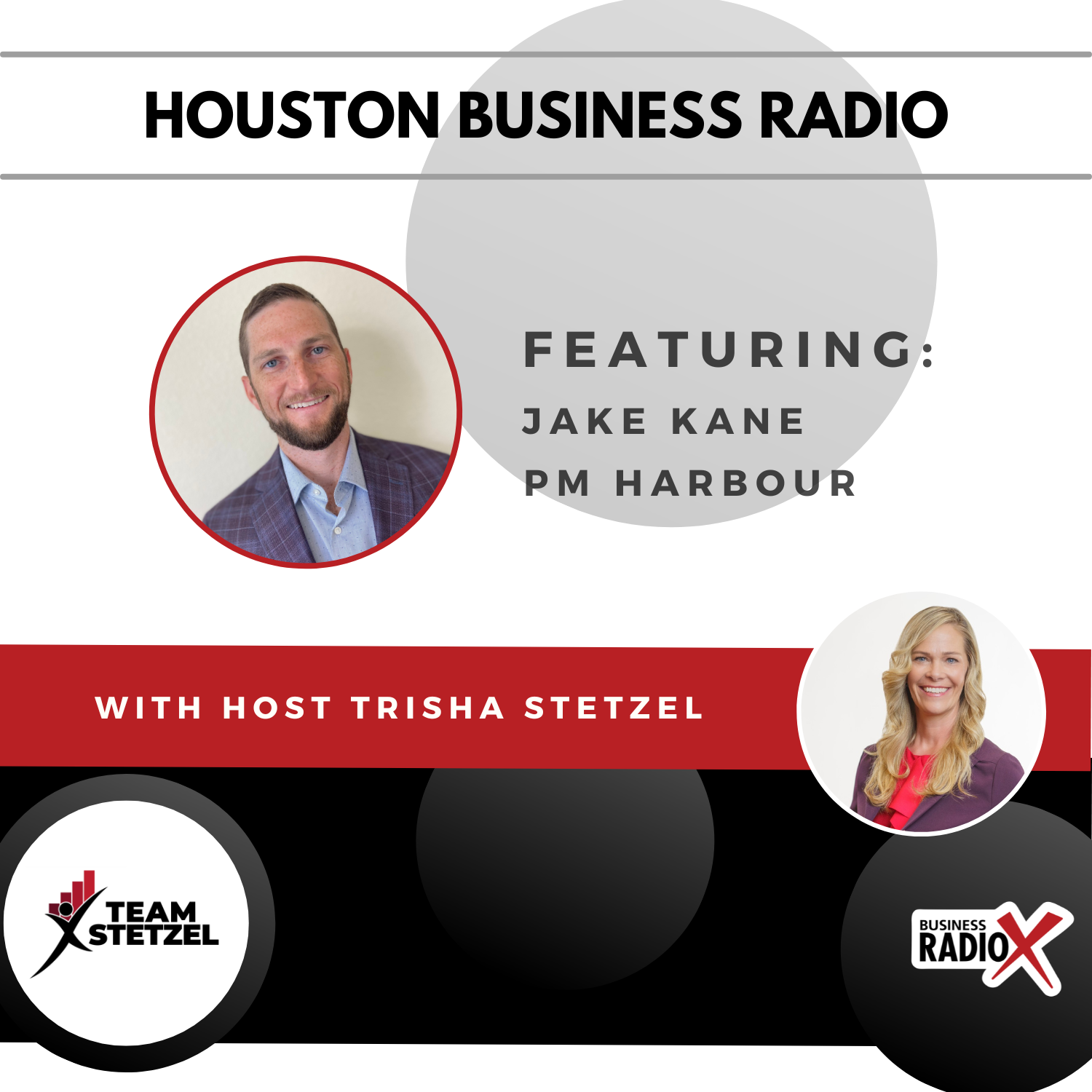

 Jake Kane is the Founder and CEO of PM Harbour, a firm specializing in mega project delivery, EPC execution, modularization, and strategic consulting.
With a global career managing high-profile industrial and commercial projects, Jake is a trusted expert in project execution, risk management, scheduling, and contract strategy. His leadership has guided both owners and contractors through complex project lifecycles, helping to prevent issues before they arise—or recover projects already in distress.
In his conversation with Trisha Stetzel, Jake shared how PM Harbour provides fractional project management and consulting services to smaller construction and engineering businesses. He explained how his team bridges the gap between small contractors and large EPC firms by offering expertise in contract management, risk mitigation, and staff training. 
Jake also opened up about his entrepreneurial journey, sharing both challenges and success stories, while emphasizing the power of outsourced project management in improving outcomes for smaller firms.
Connect with Jak on LinkedIn.
 This transcript is machine transcribed by Sonix.
TRANSCRIPT
Intro: Broadcasting live from the Business RadioX studios in Houston, Texas. It’s time for Houston Business Radio. Now, here’s your host.
Trisha Stetzel: Hello, Houston. Trisha Stetzel here bringing you another episode of Houston Business Radio. It is my pleasure to introduce this guest. By the way, another amazing introduction from John Brocato. He is amazing at connecting me with people that are doing great things in our community. Jake Kane, founder and CEO of PM Harbour. Welcome to the show.
Jake Kane: Hi, Trisha, thanks for having me. I’m really excited to be here with you today.
Trisha Stetzel: Yeah, I’m excited to have this conversation today, Jake. So before we jump into it and PM Harbour, I’d love to know more about Jake. So tell us about you.
Jake Kane: Um, so passionate about, uh, project management, construction and creating things, um, where they haven’t been in the past. I think it’s part of the progress that drives our world forward and passionate about making that happen.
Trisha Stetzel: Yeah, I love that. So how did you how did PM Harbour come to be?
Jake Kane: So it’s a it could be a bit of a long story, but the slightly abridged version is I’ve been working in project management for engineering, procurement and construction, uh, projects, EPC projects in the industry world now for over a decade. Um, started doing that down in Corpus Christi, building offshore oil and gas platforms. Um, and before too long moved up to Houston to take a larger role supervising the engineering and procurement projects, um, for some large EPC companies. Uh, spent some interesting time doing internal consulting on strategically critical projects for them. Basically, projects that were too big to fail or had already started going sideways and they needed help recovering. Um, and eventually that organization asked me to help them shift their systems and restructure to be more successful at avoiding the problems they had encountered in the past. Unfortunately, I ran into too much red tape and bureaucracy to make some of the changes we needed, and that led me to the idea that I could do some of this stuff on my own. Um, and not only just that, um, but serve a broader sector of the industry, smaller companies, smaller contractors that wouldn’t normally be able to afford us or make sense to afford the high level project management experience. So given that I started PM Harbour, um, the summer of 2023. So we’re just about two years old now. Um, and things are going well, we’re, we’re we’re growing into new markets and new client pools. Um, and excited about the opportunity to help people achieve, uh, new and better results.
Trisha Stetzel: Yeah. Fantastic. I love that, Jake. And you were telling me before we started recording today that some a big project that you had worked on may have, may have just come down the ICW in my neighborhood recently. That’s really cool. So you’re working with some really big firms and you’re also working with some smaller businesses. So I’d love to talk more about this idea of fractional project management and consulting. So can you tell me a little more about that? We’re seeing a lot more fractional businesses out there. I didn’t even know this existed, which is why I want to talk about this today. Yeah.
Jake Kane: I don’t think you’re alone in not realizing that project management fractionalization, um, is a possibility as we talk to more and more clients. Um, it’s things that they haven’t really considered a lot in the past. So. So PM Harbour is a project management services and consulting company. Um, that’s our tagline. But essentially what that means is we can break down portions of project management and execution and make them available on a fractional basis. So where a company, a large EPC company, may be able to afford a 150 and 50 to $200,000 a year. Project manager and keep them busy full time. A lot of smaller specialty contractors or fabricators in the Gulf Coast, um, don’t have the high level work that requires that year round. When they win that surprise contract, um, or that complicated project, uh, they, they have the opportunity to reach out to us and we can make the experienced staff available to them on a 5 or 10 hour a week basis. Um, or whatever’s really needed to help them accomplish their, their goals and overcome the challenges they’ve got going.
Trisha Stetzel: So tell me more about the companies from a small business perspective. Tell me more about the companies that, you know, have to give names, but the types of companies that you’re interfacing with for fractional project management.
Jake Kane: Yeah. So we still serve a lot of the owners and owners rep roles. Um, and the large EPCs and specialty consulting work, which is really my specific background. But the area I’m excited about and we’re growing into is supporting, um, disadvantaged businesses or smaller businesses that may be pursuing work for larger projects. Um, typically a lot of um, airport construction projects or data center projects may have objectives for achieving certain percentages of smaller, disadvantaged business scope. Um, and some of those contractors do great work but aren’t experienced at executing complex or larger contracts. Um, and that’s where we can really kind of come in and help bridge that gap. Um, explaining to contractors and helping them digest what’s all of the obligations in those larger contracts, be it pre-construction deliverables, um, or estimating in a manner they’re not used to estimating. Um, and then comply with the overall, either the bidding process or the execution of the contract. So allowing people that build good work to work on higher spec or higher complex projects than they would normally be comfortable undertaking on their own.
Trisha Stetzel: Okay. So if I I’m I’m a layperson at this. So my question is you’re connecting the people who are doing the work with these smaller businesses. Right. So you you actually are the not the negotiator, but the one that’s making things happen, right? Uh, because you’ve got your hands in both wheels. Yes.
Jake Kane: Yeah. So it’s worked both ways so far. Um, because because of our large experience and connections with the EPC contractors, sometimes they’ll come for us, come to us and ask us for help identifying a small business that does precast concrete.
Trisha Stetzel: Okay.
Jake Kane: We have some of those connections and bring them to some of our clients and help them comply with the bid process. Alternatively, we have some small contractors that we know that reach out to us and say we’re interested in trying to pursue X project or X work. Can you help us comply or network into it? Um, our value add isn’t really on the brokering of deals. Um, but much more on the execution side because that’s what drives all of us individually. Um, but you’ve got to win the work to be able to execute.
Trisha Stetzel: Sure, absolutely. And what about you really do play this role in protecting protecting these companies, right. As you’re talking between these larger EPCs or these companies that are going to do the work and the work that the entrepreneur or the small business owner needs. So how are you helping navigate those conversations or protecting that company? Who’s getting the work done by these larger EPCs?
Jake Kane: Yeah, that’s that’s actually one of the major motivations for reaching out and trying to help serve some of the smaller contractor community. Unfortunately, when I worked for the larger EPCs and owners, um, I saw over and over again many circumstances where smaller contractors were more or less bulldozed or bullied by the contractor and their lack of understanding by it. Um, and we want to make sure that we provide the skill set and knowledge to those smaller contractors, so that doesn’t have to happen going forward. Um, so the way we do that is really by empowering our experienced project managers that have sat on the other side of the contract and allowing them to serve directly, the smaller contractors making contract cheat sheets, um, or obligation lists. Um, so that there’s no question at the end of the day, did you fulfill all the contract obligations to get your retainage value? Um, or helping contractors do risk and opportunities workshops, looking through the contract and knowing where their opportunities for additional recovery are and where their opportunities or risks are from. Um, not being able to apply change orders, um, based on the way the contract is structured.
Trisha Stetzel: So I’m a small business owner listening to the show today. What I love the idea of fractional project management. So what what could I use your Services for. As a small business owner.
Jake Kane: So if a small business owner is already pretty aware of where their. I’ll say weaknesses are or internal challenges is better politically correct terms there. Um, we are very good at adept and adept at, um, helping you come up with systems, policies, procedures and or trainings to cover up those areas. So we had a client who said our client, our, their client was wanting a, um, logic link construction schedule, which they’d not developed in the past. So in that circumstance, we helped them two different ways. One, we built them the schedule, um, for this first client. And two, we provided a training to their project management, um, showing them how to do this for themselves going forward. Um, so it’s really coming down to identifying the challenges or shortfalls. And then from there we’ll come up with different, um, solutions or custom solutions, to help bridge that gap.
Trisha Stetzel: What types of industries like entrepreneur industries, if you will, are you interfacing with regularly?
Jake Kane: We. So we work primarily. Our expertise is in the heavy industrial world. Um, so a lot of smaller fabrication shops, um, skill building shops, um, or other industrial equipment, as well as um, on site contractors, specialty contractors. Um, for foundation work, roofing contractors. Um, those types of smaller contractors in the area or in the vicinity, uh, are kind of where we spend most of our time interfacing right now.
Trisha Stetzel: Okay. And the needs of those companies, I get how you’re interfacing with them, right? You’re protecting them. You’re helping them with change management. Maybe they have a particular project that they need help with. Um, what are you finding you’re spending the most time doing with these companies that you’re interfacing with?
Jake Kane: It’s a lot of education, which is great because that’s that’s a passion of mine. And most of our project managers is, is, you know, teaching a man to fish or a woman to fish. Um, we spend a lot of time doing the education. Um, and then the biggest needs that we’ve seen are really on the contract management side. Um, the, the bigger the owner, sometimes the bigger the contract, and and the more pages included. Uh, there’s more hidden opportunities and gotchas. Um, and so combing through those things and making sure everybody understands what’s actually in there.
Trisha Stetzel: Okay. Yeah, that’s a difficult thing to do as a business owner, right? It’s not my it’s not the thing. It’s not the thing that I excel at or I’m excellent at. It’s the thing that I’m probably not very good at. So I need somebody. Right? Like. Like you. Like Jake, like PM Harbour to come in and help me with that contract negotiation or at least understanding the contract. Right. Uh, and what that looks like.
Jake Kane: So a contractor that recently we talked to, um, had already started doing the work and was looking to send their first invoice, and it was rejected because on page 99 it talked about the first requirement for invoicing was providing of a certified bond. They had the bond, but they didn’t provide it and so their invoice was rejected. Okay. Small things like that that can really derail small contractors as they try to balance their cashflow. Um, it’s it’s unfair and not really the intent of the requirement there. Um, and so those are areas where we can help cover up some of those issues.
Trisha Stetzel: Oh, my. Yeah. And which I don’t know any business owners that are going to read 125 page contract and actually understand it. I’m not saying they wouldn’t read it. They might, but actually understand everything that’s in there. Right. And the language in there. Um, you’re providing such a valuable service to these small business owners, these entrepreneurs. We didn’t talk about really the investment or the cost associated with hiring someone who isn’t doing fractional work right. It’s very expensive to hire someone to do what you’re doing as an employee into my business. So having the ability to bring someone on fractional is really helping save a lot of money. So can we can we talk a little bit about that? I mean, when I talk dollars and cents, but it’s huge, right? For a small business owner.
Jake Kane: We’ve we’ve seen a number of of frankly horror stories from um, the the massive imbalance in supply and demand, especially in the Gulf Coast region, um, for experienced project managers, um, the oil and gas industry is great for a lot of things, um, and has served this region fantastically well. Um, and it’s afforded a lot of individuals to have great lifestyles, but it is also driven up the cost of experienced, highly technical and competent individuals, um, where project managers routinely here can cost between 150 and $250,000 per year from a salary based perspective, and that doesn’t cover the rest of the benefits and other burdened obligations. Um, and for smaller contractors, that’s a lot of times insurmountable. Um, fortunately, they don’t need project managers 40 plus hours a week, typically. Um, and so it doesn’t necessarily make sense to carry that burden on your books year round. And then, of course, there’s the risks associated with mis hires, um, or planning to hire somebody on a specific timeline where projects get delayed and you might miss that hire um, or that individual, um, takes another job opportunity. Uh, and you have a job posting that stays open for months at a time. Meanwhile, you’ve got ongoing contract obligations. So it’s it’s difficult to do just in time delivery with your, your staff. Um, and so the fractional aspect, it’s people are used to it on in many other areas from, you know, HR to uh, comptrollers and accountants. Um, Um, it’s it’s a new, newish spin on some of that old modeling, um, bringing it to the project management world.
Trisha Stetzel: Yeah. How how amazing is it to have such skilled project managers and the service that you provide at your fingertips? Right. And not somebody that you have to put in your office and pay 40 hours a week, but a partner that you can use in your business. Right. Um, with PM Harbour. So if listeners are already interested in connecting with you, Jake, how do they find you? What’s the best way to connect?
Jake Kane: So PM Harbour h a r b o u r spelled the British way. Um, it’s not a particularly interesting story there. Um, but that’s our website. Pm Harbour. Com. Um, you can find us on LinkedIn. We post a number of lessons learned and other blogs, um, that have touch on topics like contract management and change orders. Um, and then you can always email myself directly at Jake j e dot k e Any that pm harvard.com.
Trisha Stetzel: Harbour with a you.
Jake Kane: Harbour with a you.
Trisha Stetzel: You may have to come back so I can dig around at that story.
Jake Kane: It has to do with domain name availability and and not being able to buy the English or the American spelling version of that. So that’s maybe something that’ll resonate with a lot of small business owners. As you you find odd constraints you didn’t expect.
Trisha Stetzel: Uh, yes. Absolutely. I love that’s a fantastic story. I think that’s great. We, uh, many of us have felt that same pain with our domain names.
Jake Kane: Yeah. And having worked internationally and for a British company, and I have no issues with, uh, spelling things the British way. Yeah.
Trisha Stetzel: Absolutely. All right. We talked a little bit about before we started recording this morning about the, uh, veteran space, because I have a lot of friends in that space. Uh, I am a veteran. I own two businesses, and many of the listeners are also veteran business owners. So what would you like to say to them today?
Jake Kane: Um, one, first and foremost, you know, thank you for your service and dedication to to the country and our society. Um, it’s incredibly important subsect of of our community as a whole. Um, and I appreciate all the efforts that others do to support the industry. Um, and two, you know, if you have a contracting business, um, or something adjacent to it, um, or are going to be building a capital project, a new building, um, or something along those lines, and you’d like to have a conversation. Please reach out to us. Um, there’s a number of large construction projects that have, um, incentives and advantages for veteran owned businesses, and we’d love to help make sure that you’re able to compete for that work. And then once you’re successful competing for the work, um, execute the work excellently.
Trisha Stetzel: Um, yeah. That’s fantastic. So, Jake, do they need any particular certifications, uh, to start with?
Jake Kane: Um, so it’ll be a little bit specific to the industry that they’re working in. Um, assuming that they’ve already started their, their contracting business and they’re up and running, um, there are some veteran owned, um, business certifications, I believe it’s mostly state by state, which is a little odd. Um, but it’s similar to the small business and disadvantaged business areas. Um, I’m not firsthand an expert in that, but if there are questions there, we can absolutely help people figure out and navigate, uh, unfortunately, that bureaucracy, um, to, to achieve whatever certification they need.
Trisha Stetzel: Fantastic. By the way, uh, the Houston Regional Veterans Chamber of Commerce is trying to make that change. We’ve got some bills that are running up, uh, in Texas, uh, up in Austin right now where we’re trying to figure some of that stuff out and make some changes. And then if Texas can do it, maybe we can get it done in other places. Right? Which is really important.
Jake Kane: Um, I’m glad to hear that because it’s working across state lines. There’s nothing like trying to figure out another state’s regulations, rules, requirements, certifications, etc. the the easier it is for the smaller businesses to to do their good work wherever it’s required.
Trisha Stetzel: Absolutely. Okay. So that brings me to my next question. Then you had shared with me that you had a project that was coming out of Lake Charles. So talk to me about the work that you’re doing outside. I mean, you do work. Where?
Jake Kane: Where? So we serve clients. I’m gonna say internationally, primarily, it’s North America. And even inside of that, it’s primarily the Gulf Coast region. So the project I mentioned was, um, we served as a owner’s representative. So working for the owner, upholding that contract. Those modules were fabricated in Lake Charles, Louisiana, and then barged, probably not too far from from your facility, um, over to Bay city, Texas. Um, and recently that facility just got started up and is now making a specialty chemical that’s utilized in Plexiglas and bone cement. Um, so that was that was an exciting one. Um, we’ve got work that’s going on a new project that hopefully will be commissioned very shortly. That’ll be outside of Phoenix in Arizona. Um, the owner is located here in Houston, and engineering and procurement will be, um, all over North America. So we’ve got project managers in 4 or 5 different states. Um, and try to work where we need to be when we need to be there.
Trisha Stetzel: That’s fantastic. So by the way, my listeners outside of Texas, you can still reach out to Jake because he may be able to handle your project.
Jake Kane: Absolutely.
Trisha Stetzel: I know that you’re really passionate about about bringing this big, big business experience to smaller businesses because of where you come from and your background and the things that you love to do. And I really appreciate that you’re bringing all of that experience and expertise to small businesses as a fractional project management company, um, with PM Harbour. What would you say has been the biggest challenge for you in building this fractional project management and consulting business?
Jake Kane: So the probably the biggest initial challenge is I am not or was not an entrepreneur. Um, so networking in developing some mentors, learning all those things that you don’t know until you run into it. Um, that was a pretty initial big challenge, um, that we’ve, we’ve pushed through. Um, which has been great. Um, I’ve really enjoyed the, the learning stage of that. Um, market wise, the biggest challenge we have is helping contractors and companies understand that outsourcing, project management or some project management functions, um, is a possibility and is even a good idea. Our biggest competitors are self-performance, which is the way things have always been done. So we have a hurdle with most of the conversations we undertake of, well, I understand how you’ve always done things. Has that always been excellent and why is that the way that we need to do things going forward, or are there other opportunities? So, you know, change is never comfortable for some individuals. In some companies, especially when project management is so core to, uh, profit and losses of a lot of projects and, and companies. Um, and so that that hurdle has been one that we’ve been successful in, in demonstrating our value add um, and convincing companies to try to do things a little differently going forward than they have in the past. But that’s been a large challenge.
Trisha Stetzel: Yeah. If you if you continue to do the things you’ve always done, you’re going to get the same results, right? And change is hard. We all struggle with it. But I love the idea that you’re willing to just sit down and have a conversation. Let’s talk about the value that outsourcing project management can bring. Right. And we all know as business owners, or if we don’t know, we’ve at least heard it, we may not have internalized it, that we need to outsource the things we’re not good at. Right. And we need to focus on the things that we’re excellent at so that we can deliver a great product. So if you’re not good at project management, which most of us are not as business owners, we got into the business we’re in because we love doing fill in the blank, right? Uh, walking dogs, building driveways, building buildings, whatever that looks like. But we’re not great at project management, which is the perfect opportunity to reach out to Jake and have a conversation with him. So, Jake, as we get to the back end of our conversation, I’d love for you to share a success story with the listeners.
Jake Kane: So the project that I mentioned a minute ago about, uh, in Arizona. Um, that was a younger company. I’m not going to say a startup, but a younger company that had a asset they wanted to develop and a concept of how to develop it and understood the market, but did not understand the project life cycle and everything in between. Um, and as with all young companies, cash flow is always a challenge. Fortunately, I got introduced to them early on and was able to work with them and support them throughout this year, year and a half exploratory phase in a fractional perspective where they were able to save on bringing on a full time practitioner, um, and utilize our services as needed. Um, to finish their project concept, um, develop their final investment decision deliverables so they knew how long the project was going to take and how much it was going to cost. Um, and then eventually go back to the board for final funding, um, which we look like we’re about ready to achieve now, which is excellent and very exciting. So without the fractional perspective, uh, their commitment to the project execution side would have been dramatically more expensive for a year and a half as they were trying to figure out what they were going to do and how they were going to do it. Yeah.
Trisha Stetzel: And it may not have been successful because we all know when you get into that money pit, it’s really, really hard to continue moving forward. Right.
Jake Kane: When you’re running in the red or you’ve got a cash rundown curve as as many small business owners do have taped to their wall. Um, anything you can do to defer some of that cost or make sure that the cost is well utilized, um, is a major advantage.
Trisha Stetzel: Yeah. Fantastic. So, listeners, the lesson here is let the experts do that work. People like Jake. Jake Kane with PM Harbour willing to have a conversation with you about your project and see if it might make a good partnership. Jake, thank you so much for being on the show with me today.
Jake Kane: Thank you for having us.
Trisha Stetzel: Absolutely. We share your contact information one more time, please.
Jake Kane: Yes. Please visit our website PM Harbour. And that’s with a U. Um, as well as our LinkedIn, where we post our lessons learned and other blog posts that may be relevant. Um, and if you’d like to reach out to me directly, it’s jake.com. Look forward to hearing from you guys.
Trisha Stetzel: Yeah. Fantastic. Kane with a K and Harbour with a U. Yes.
Jake Kane: Perfect. Ironic because I’m very bad at spelling, so I pick things that need to be spelled out specifically.
Trisha Stetzel: That’s fantastic. Again, thank you for spending the time with me today.
Jake Kane: Thanks, Trisha.
Trisha Stetzel: That’s all the time we have for today’s show. Join us next time for another amazing episode of Houston Business Radio. Until then, stay tuned, stay inspired, and keep thriving in the Houston business community.














