Business RadioX ®

  • Home
  • Business RadioX ® Communities
    • Southeast
      • Alabama
        • Birmingham
      • Florida
        • Orlando
        • Pensacola
        • South Florida
        • Tampa
        • Tallahassee
      • Georgia
        • Atlanta
        • Cherokee
        • Forsyth
        • Greater Perimeter
        • Gwinnett
        • North Fulton
        • North Georgia
        • Northeast Georgia
        • Rome
        • Savannah
      • Louisiana
        • New Orleans
      • North Carolina
        • Charlotte
        • Raleigh
      • Tennessee
        • Chattanooga
        • Nashville
      • Virginia
        • Richmond
    • South Central
      • Arkansas
        • Northwest Arkansas
    • Midwest
      • Illinois
        • Chicago
      • Michigan
        • Detroit
      • Minnesota
        • Minneapolis St. Paul
      • Missouri
        • St. Louis
      • Ohio
        • Cleveland
        • Columbus
        • Dayton
    • Southwest
      • Arizona
        • Phoenix
        • Tucson
        • Valley
      • Texas
        • Austin
        • Dallas
        • Houston
    • West
      • California
        • Bay Area
        • LA
        • Pasadena
      • Colorado
        • Denver
      • Hawaii
        • Oahu
  • FAQs
  • About Us
    • Our Mission
    • Our Audience
    • Why It Works
    • What People Are Saying
    • BRX in the News
  • Resources
    • BRX Pro Tips
    • B2B Marketing: The 4Rs
    • High Velocity Selling Habits
    • Why Most B2B Media Strategies Fail
    • 9 Reasons To Sponsor A Business RadioX ® Show
  • Partner With Us
  • Veteran Business RadioX ®

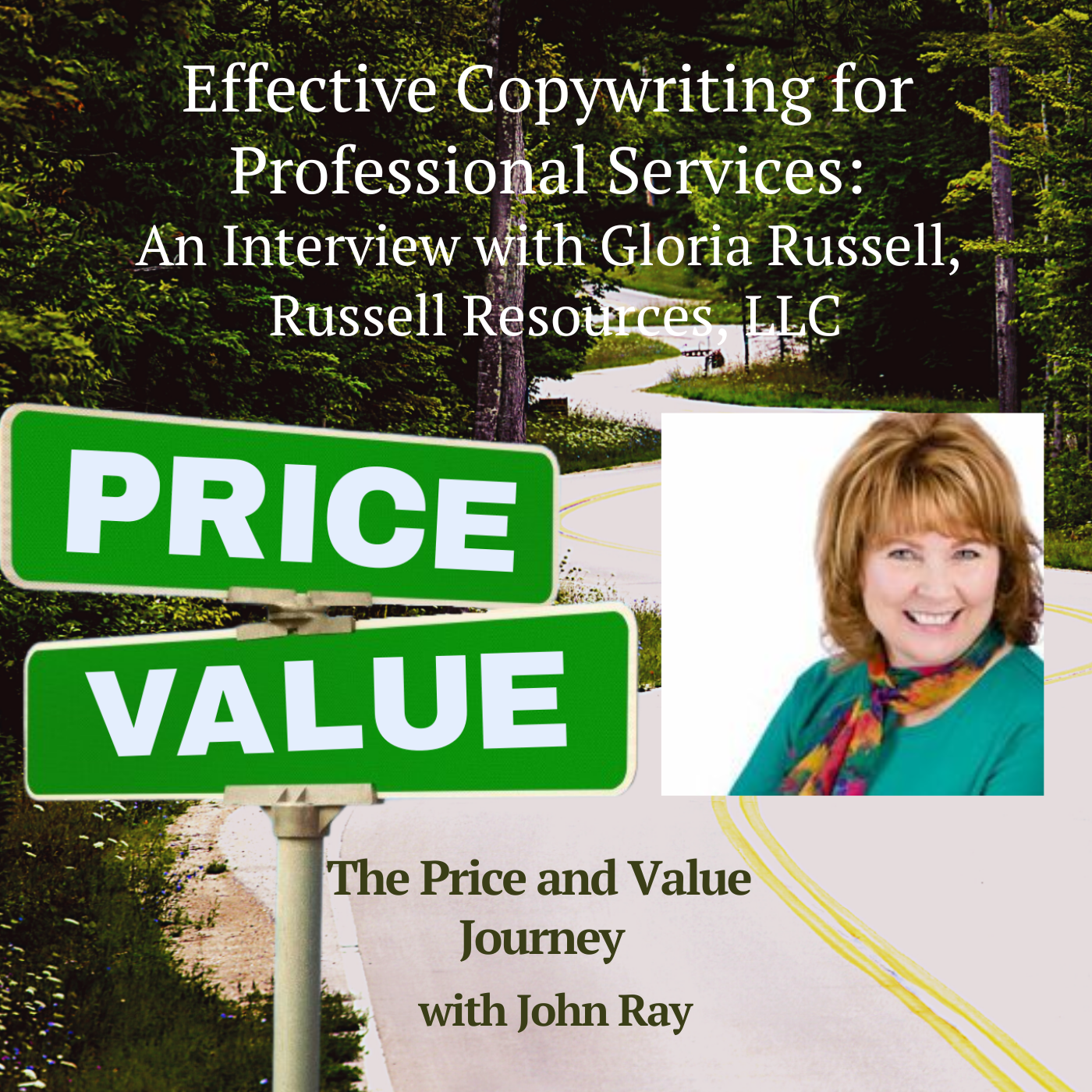
Effective Copywriting for Professional Services: An Interview with Gloria Russell, Russell Resources, LLC

March 29, 2023 by John Ray

Effective Copywriting
North Fulton Studio
Effective Copywriting for Professional Services: An Interview with Gloria Russell, Russell Resources, LLC
Loading
00:00 /
RSS Feed
Share
Link
Embed

Download file

Effective Copywriting

Effective Copywriting for Professional Services: An Interview with Gloria Russell, Russell Resources, LLC

Copywriter Gloria Russell joined host John Ray to discuss the elements of effective copywriting for professional services providers. Gloria talked about the problem of services providers talking too much about themselves, uncovering their unique brilliance, the rise of AI and what it means for copywriting, why reading makes for better copywriting, and much more.

The Price and Value Journey is presented by John Ray and produced by the North Fulton studio of Business RadioX®.

Russell Resources

How you show up and serve your clients is more important now than ever.

At Russell Resources and writer.mn, they help U.S. business owners who are bogged down with ineffective website content and unclear marketing messages.

They know that you would like to finally feel confident that you are sending the right message to the right audience. They understand that successful messaging must authentically resonate with your ideal clients. With their marketing and writing expertise, they would love to talk with you about helping you attract more of your ideal clients to increase revenue and profit.

Russell Resources can help you extend your reach, so it delivers value to you and your clients. They provide the strategic, client-focused, written content that sends your unique message to those you most love to serve.

Website | LinkedIn | Instagram

Gloria Russell, Founder and Lead Copywriter, Russell Resources LLC

Gloria Russell, Founder and Lead Copywriter, Russell Resources LLC

Nine years ago, Gloria Russell launched Russell Resources LLC to help entrepreneurs upgrade their marketing strategy and copywriting. She works with service-based businesses to gain clarity on their preferred markets, ideal clients, and services that provide in-demand solutions. Her compelling content enhances visibility, credibility, and marketability by reaching the right audience through engaging topics on websites, blogs, and LinkedIn posts.

After a lengthy corporate career, Gloria now enjoys working with clients across the country from her office in west central Minnesota. She treasures all the special times with her children and grandchildren who live out of state. Her son, Ryan, and family live in Virginia, and Michigan is home to her daughter, Odessa, and family.

Gloria enjoys travel, music, adventure or mystery books and movies, home improvement projects, and the cheery sound of birds chirping.

LinkedIn

TRANSCRIPT

John Ray: [00:00:00] And hello again, folks. I’m John Ray on The Price and Value Journey. And I’m delighted to welcome my friend Gloria Russell. Gloria is based in Minnesota, but she works all over the country and she works with a number of different verticals, you might say, performing copywriting services, giving them copywriting that they need for their website. It might be for brochures or social media posts or maybe LinkedIn or what have you.

But I’ve known Gloria for a while now and I really love her work. I love her perspective. And I thought she would be a great person to talk to about effective copywriting for professional services firms. Gloria, thank you so much for joining me.

Gloria Russell: [00:00:50] Thank you so much. It’s a pleasure. Thank you for the invitation.

John Ray: [00:00:54] Absolutely. So I didn’t do your background justice because you’ve done so much great work. But I’m going to turn it over to you and tell the listeners a little bit more about your background and how you became a copywriter.

Gloria Russell: [00:01:15] Well, I think, John, it actually started kind of a young age, at least for the writing part of it. When I was a young girl, I used to actually rip pictures out of a magazine and then I’d write my own story. I had quite the imagination. And I’m a reader and I think readers make good writers a lot of time. And it’s probably just because you have that exposure to the written word and the spelling and word usage, just all of that. And of course, you love the impact and the adventure. But I do feel like readers oftentimes make good writers.

And so that’s kind of how I began. I used to like to write. I always been a reader. But if you fast forward to my corporate career, there I had a variety of responsibilities. But part of it was I wrote internal and external communications. And for some of them I was the author, but for others I was writing for other people. It might have been the owner of the company, the VPs, the CEO, the C-suite, whomever.

And so I learned, and I feel like some of it might have been a little bit of a natural tendency. But I learned through years of practice how to write in the voice of many different people. And it was really fun for me. So I enjoyed that a lot.

John Ray: [00:02:49] You said something there I want to follow up on. You talk about the connection between reading and writing. Talk about how important it is to read in order to develop your writing skills.

Gloria Russell: [00:03:06] I think it is, most definitely, because and I think that’s one of those things that really helps. When you read, and I’ve got the whole bookshelf, when you read, you really see how stories develop. You see different styles of writing, but you can also recognize the good patterns and even just the words and the spelling and all of that. I’m one that finds the mistakes in books. And I’m always thrilled when I read a book and there are no mistakes, but I think it is important.

It’s kind of funny, John, because in my corporate days when I did a lot of writing, I didn’t call myself a copywriter. Even though I certainly was, but that was just one of my many duties. And I didn’t call myself a copywriter. It wasn’t until I decided to leave the corporate campus and start my own business that I realized, oh, now I’m a copywriter.

Because what I was trying to do, I wanted to help business owners with their copywriting, with their content, with how they projected themselves. And that’s what they told me they needed the most. So the things I love to do, that’s what I decided. And I do love it because it offers me a lot of freedom and flexibility at this stage of my career. But now I indeed do call myself a copywriter because that’s what I do all the time. So I’ve owned up to it now.

John Ray: [00:04:45] Okay. Well, I want to talk about that term for just a second, because the term itself, I understand why you use it because that’s what people are looking for. So you have to call yourself that, right? But the writing itself is the task, and you do so much more than that. And really, and this is true for any good copywriter, right? I mean, it does not start with the writing. It starts with something bigger than that. Talk more about that.

Gloria Russell: [00:05:20] Yeah, absolutely. Well, so there is the writing thing, and that’s the part where I say I kind of came by that early and came by that honestly. But when I talk about the content, really, it’s the marketing. And sometimes people don’t know that’s what they need and they’re asking for the writing, which is definitely the product. But a lot of times, it’s the marketing and they don’t quite understand that.

So when clients come to me, typically what they’ll say is they need the content, they need the writing, but they don’t have time, they don’t know how to write, they can’t write. Some of them just say it would be torture. So they want something professional, something that’s really going to serve them well, represent them well, but they’re not sure how to provide that for themselves.

So a lot of times, even I do use the word copywriting because you need to, but a lot of times I use the term marketing content. So I’ll say I write marketing content, or I create marketing content. And I think sometimes people understand that a little bit better.

John Ray: [00:06:33] You know, I think I’m qualified to judge a bad copywriter from a good one because I’ve had bad ones and I’ve had good ones, and that means you. And I think the difference is the copywriters that play into people’s point of view, right? I mean, and I think your talent, it seems to me, is giving professional services providers and other companies you work with a point of view makeover that it’s not about them and what they do per se.

Gloria Russell: [00:07:14] This is so true. I think what you need to do and what people want, sometimes they’re just not really able to express it. But really, we need to uncover their unique brilliance and how they’re different and how they relate to the client. Because in the writing and in the copy that people are going to read, it needs to be all about the client.

There are many different types of copywriters. There are some and they are professionals as well. But there are some that will write for a particular industry, and they will maybe create companies that will create a website and the copy that goes with it, and they sell that same thing to everyone in that niche or all the same.

So there’s really no way to differentiate when you see that. And if that’s something that works for you and that’s what you need, that’s great. You have to know what your objectives are and what your goals are. For me, I like to provide original content. And so that means I really need to get to know the business and who their ideal clients are.

John Ray: [00:08:22] Yeah. And I guess this also comes around to a lot of professional services providers have, they’ve gotten trained too. Right? I mean, they’ve done a lot of writing along the way, particularly attorney’s verticals like that. Right? They’ve done a lot of that. So. If you’re a good writer, why do you need to hire a copywriter?

Gloria Russell: [00:08:55] Well, there’s usually two reasons. People will come to me, and they’ll say, I am a good writer. And they are, but they don’t have time. They absolutely do not have the time. And that’s not where they want to focus their energy. But most of them are good, they’re good writers, but they don’t really understand the marketing side of it. And you need to really love the outcome.

So once you have new content, say for your website, your blogs, your LinkedIn profile, bios, whatever it is, you want to feel really good about that and proud of it because I feel really bad when people say, yeah, I wrote it but it doesn’t really do the company justice. It doesn’t really help me. People aren’t attracted to it.

And the whole thing is you need to speak to the clients. You need to show what’s in it for them and you need to do it pretty quickly. So I think a lot of times the real reason is it’s just a matter of the marketing side of it. People have trouble talking about their own, talking about themselves or their own business a lot of times.

John Ray: [00:10:06] Well, my sense of it is they talk too much about themselves. So maybe they’re too good at talking about themselves as opposed to talking about what’s going on in the heads of the potential client that they have, right?

Gloria Russell: [00:10:20] Right. Well, that’s absolutely true. And that’s one of the things that I see as probably the biggest, well, I would say undoubtedly the biggest mistake that people make when they write their own content. And a lot of people will do that, especially when they’re starting out. But they talk too much about themselves and too much about the company and we do this and we do that.

But the truth is, when someone comes to your website or looks at some marketing materials, whatever it is, they want to know what’s in it for them. And people don’t have a very long attention span anymore. I don’t either. So they want to see it and they want to see it quickly. So you really need to talk about the client and what’s in it for them. That’s what gains you the outcome that you’re really looking for.

John Ray: [00:11:11] Well, let’s talk about the, I guess, the piece of this that involves how you work with a client and how you get to that point. So dig into that for us. Take us through what that looks like for you as you unpack all that with a client.

Gloria Russell: [00:11:33] Well, when there’s a new client, the first thing always is to get to know them. So I will spend time with them to really understand what drives them their why, why are they in it? I’d like to know about their business, the mission, the vision, what they’re hoping to achieve. And so we have some discussions on that. Some of them will go pretty deep to see what’s it all about. I want to know what’s important to them.

But the second thing we’ll talk about is who is their ideal client? Who are they really looking for? Who do they want to serve? And those are the people that we want to attract because we want them to fall in love with you so that you can serve more of those type of people. So we discuss all of that with an understanding of what their goals are and who they’re really going to be basically a hero to. And then we decide what needs attention and where we can show the client some love. So it might be their website, it might be their LinkedIn, it might be blogs. Sometimes it’s video, video scripting, case studies, whatever they need. But you need to start with those elements first.

John Ray: [00:12:49] Do you find that you discover more about the clients of a service provider than maybe they knew themselves?

Gloria Russell: [00:12:59] It happens sometimes. Yeah. The interesting thing is when I talk with business owners, most of them know a lot about their business and what their goals are and what they’re trying to achieve, who they want to serve. Some of them are very clear on who their preferred clients are and who they can really make a difference for. But some of them are not so clear, especially if they’re a little earlier on in their business.

Or during the pandemic, a lot of people change their focus or do a little bit of a switch and they might have added services or just they’re doing their work differently. They might even be looking for a different set of clients. So we would talk about that. And sometimes we need to have a little bit more discussion on that to really understand who it is they’re looking for. Because until I know who those clients are that they really want to serve, I can’t write for them. I need to know who they are so that I can write directly to them, and it will speak to them and resonate with them.

John Ray: [00:14:11] Yeah, that makes sense, Gloria. Now, so you go through — and I know this from working with you. You go through a pretty extensive interview process, right? And you record that interview, so you have access to that later, right?

So I guess what are the big — are there surprises that come out of that? I’m just curious if your clients sometimes have epiphanies about their own business that maybe they didn’t fully appreciate? And just because you’re an independent third party and looking for their special sauce that you find things they didn’t know they had.

Gloria Russell: [00:15:01] This is true. It does happen sometimes. And it turns out to be a delightful journey for the business owner, I feel. And they’ll say, oh my gosh. And sometimes I think they’re a little bit worried about it, like, well, it will be too overwhelming, depending on where they are at. It depends really on how deep we go into that and how much we have to do.

But typically, at the end, they’ll just say, oh my gosh, I learned so much and I’ve narrowed things down and I have much more clarity now. And they realize that actually the exercise was fun. And so, I really love that because I don’t want anybody feeling nervous about it or like it’s going to be too much work. But you do have to ask the right questions so that you can uncover the essence of their business goals and what they’re really trying to accomplish.

John Ray: [00:15:57] Yeah, that makes sense. So what are the services businesses that you find maybe the most challenging to write for and why?

Gloria Russell: [00:16:13] That one’s pretty easy for me. And every copywriter might have a different answer. But for me, the most challenging are legal and financial. And it doesn’t mean that I don’t write for them. I do. I will write things like ads. I’ll do their LinkedIn profiles to make sure it really represents them well. I will do some website content, or it could be blogs or posts.

What I won’t do is I won’t do white papers or something that really gets deep into the topic. And the reason is I’m not the expert on the legal and the financial. That’s not my main focus. And there are a lot of things in those industries that you can’t say or certain ways you can’t say it. There are certain words you can’t use. And so, I just avoid that. And if there is someone who needs that type and that depth of copy for legal or financial, I refer them to someone who only works with that group.

John Ray: [00:17:23] Okay, cool. So let’s say we’ve got some someone listening to this, and they’ve decided, okay, I give up, I’m going to hire my own copywriter. So one question that I get a lot from people is I don’t know how to judge. I don’t know how to judge who’s a good fit for me and who’s not, because it all kind of sounds the same to me when I go to their website or what have you. So how do you counsel someone on how to make a good selection of a copywriter for their business?

Gloria Russell: [00:18:03] Well, I think there are ways that you can go about that. And first thing I would do is you have to have an idea of what you need. But you can go to the copywriters, look for their LinkedIn. And when you look at their LinkedIn profile, you can gain a little bit of an idea of who they are, what they do, what it might be like to work with them. And you can see a little bit about their style.

The other thing you can do is you can look at their recommendations and that will tell you something I think that’s valuable. And the LinkedIn recommendations are awesome. You can see who said what. You can even see the date that it was posted. So I think that’s really good. You can also go to their website and just see how they wrote their own website and who they seem to be speaking to, that kind of thing.

So I think those two. And then if it seems like something that speaks to you, you can ask for a conversation. I’m sure that any copywriter would be very happy to have a chat and you can decide if it’s a good fit.

John Ray: [00:19:22] Yeah. Okay. So I want to get to the topic of the day, which is AI and ChatGPT and Google has Bard coming out. Well, it’s already out right now, but talk about just how you view AI and copywriting and your ability to do what you do.

Gloria Russell: [00:19:52] Yes. It certainly is the topic of the day, isn’t it?

John Ray: [00:19:55] Oh, yeah.

Gloria Russell: [00:19:57] For me, I love technology, so I don’t think of AI or any kind of techno innovative happenings as any kind of a threat. If you think about over the years, all the technology changes we’ve had, it’s exciting and we have capabilities now that we never had before. And this is another thing. I mean, it’s ever-evolving and it will continue to evolve.

I know there are people who aren’t as fond of technology. Probably they think, oh, now we have to learn another thing. Or some people just don’t like change. And so that impacts how people feel about things. I’m one of those that really embraces change and technology. I mean, as long as it can do something for me that might be productive, it’s great. So change doesn’t bother me.

I mean, even in my personal life, John, I, like a lot of people don’t like to move and I have moved many times. For me, that’s just an adventure. I don’t have to clean my closets. I can just move. And I kind of take that same perspective with technology. And I think AI can really help a lot of business owners and it can help a lot of career professionals in many ways that might not have been available to them before. And it will keep getting better.

I’ve seen a lot of my clients use AI effectively for writing emails. Some of them, especially if they’re a little concerned about how to structure the sentence or which words to use, they find it very valuable. I’ve seen others use AI as they start projects, maybe to outline something or to gain some other ideas. That is another benefit.

And then of course, there are some people who are using AI to write their posts in their blogs and their eBooks and all of that. And it’s amazing if you just watch it unfold, it’s just like, oh my gosh, look at this, it’s amazing to just see it happen so quickly.

But here’s the caution. And this is my view, but here’s the caution. This is like anything, I believe the output is only as good as the input. And so to use it well, you really need to spend some time with it and improve the questions you ask, and you need to know when to use it and basically create a strategy.

John Ray: [00:22:35] Yeah. There’s something beguiling about getting the results as quickly as you get them. And what I mean by that is it’s kind of like if you, well, I’m dating myself. Probably not you, but I’m dating me. So, I mean, when, I guess it was VisiCalc, came out and the old spreadsheet software and because everything was so well organized and so forth, I mean, you maybe took a little bit of a, had more confidence in the results than you should. Right. Just because of the way the output looked. Right. And it strikes me that something like ChatGPT is very similar.

Gloria Russell: [00:23:28] Yes. Yes, I think so. I don’t believe for a minute that it would replace humans for exceptional copywriting, but it can help speed up the process a little bit if really learn how to use it to your benefit. And on the other hand, I’ve had clients come to me in the last weeks saying they don’t want to use AI for their content because they don’t feel that it gives the personality, or it doesn’t add to their branding, and it just doesn’t pull it all together. So that’s why they would like for me to do it so that they know that that’s they’ll get the outcome that they want.

But the whole thing is fascinating. And I think the other caution that I would have is it’s like anything else, it’s not perfect. And so when you use ChatGPT or the others, it will create content that can sometimes be inaccurate and there can be mistakes. It’s like any software actually even if — well, it’s because I know I guess. But if I use the grammar software, I can see it make mistakes or I can see it use a word that changes the meaning basically of what I want to say. And it’s not going to be a good thing for me.

So you have to be aware that all the information might not necessarily be accurate and some of it might be a little bit biased. So you have to, when you’re using it, I feel like you need to, in the end, really make it your own and edit it. Make sure that it has the proper content, grammar, tone and flow that you’re looking for. In other words, what you really want is something original, not strictly machine generated.

John Ray: [00:25:21] Right. Yeah. And so do you use ChatGPT or its equivalents? Do you use AI yourself?

Gloria Russell: [00:25:33] I do to a point. I do to a point. But I certainly don’t write my clients content with ChatGPT. No.

John Ray: [00:25:45] Okay.

Gloria Russell: [00:25:46] N-O.

John Ray: [00:25:47] So I got it. So are you using it for like research, outlining, prompts, or that kind of thing? Is that the extent of your usage?

Gloria Russell: [00:25:57] Pretty much. I would say, honestly, I’m using it just to see what it can do.

John Ray: [00:26:02] Okay. Okay.

Gloria Russell: [00:26:03] Really, I feel like we’re really at the beginning stages of this. And so I use it to see what it can do, but it does not replace the original content for me at all. So, but it’s very interesting. It’s fascinating.

John Ray: [00:26:20] Yeah, for sure. So let’s talk about tone and getting someone’s voice because I can hear someone saying it’s a valid point. That may be a problem with ChatGPT, but how do I get a copywriter that gets my tone and my voice, right, that makes it sound like me? So how do you accomplish that?

Gloria Russell: [00:26:50] Well, I don’t know that there’s really a class I could teach on that one. But again, I feel a little bit like I had maybe a little bit of a natural tendency there, but also probably just because I’ve done it for so long. That was part of my corporate work. And again, you need to really know your client and you need to know who you’re speaking to. So that’s the key to it right there, I think.

And it’s very important to have those conversations with the client, to understand their personality and their brand, what they’re trying to accomplish, their focus. And in working with them over time, if that changes, then you have those discussions again. But if you’re working with someone for the first time, like I will look at what has been created before and I’ll ask them how they feel about it. Sometimes they’re really happy with it, sometimes they’re not. They understand that that did not represent them the way they wanted. And so we talk about those kinds of things. But I think if you ask the right questions, you can really understand better who they are and how they would speak to their client.

The other part is knowing the client and how would they speak to those marvelous clients that they love to serve, and how do those clients want to be spoken to, what do they want to know? And again, you don’t want to use too much technical jargon or acronyms. You don’t want to get too technical. So there’s a lot to it, but it’s really fun. And I just am thrilled when I hear the comments that people say, oh, I don’t know how you can write so that it sounds like I wrote it, but you do a great job. And that really makes me feel good.

John Ray: [00:28:46] Yeah. And that really gets over the objection I think a lot of people have toward hiring a copywriter in general, right. And they put this in a category. They kick the can down the road because that’s what they’re afraid of and they’re waiting for a time they’ll be able to do it themselves. And they never get to that point, right?

Gloria Russell: [00:29:07] Yeah, it’s true. I have had a few, not many, but a few say, well, I don’t know that you could write my content because you don’t totally understand my business. Well, we have conversations so that I can understand enough. And I think what helps me too is that I have that corporate background and I was involved always from the strategy all the way through to the implementation.

So I do understand business and that probably helps me too. But sometimes it’s maybe better not to know all the details because you can write then in a way that more people will understand rather than when you’re really in the thick of it and you’re getting a little bit too detailed or too technical. It’s interesting.

John Ray: [00:29:54] Yeah. Sometimes knowing too much makes you a captive of all that, right?

Gloria Russell: [00:29:58] Yeah.

John Ray: [00:29:59] Yeah, yeah. Yeah, that makes perfect sense to me. Gloria, this has been great. And I can’t imagine that there aren’t some folks that would like to know more about you and your services. So can we give them your contact information and allow them to get in touch with you?

Gloria Russell: [00:30:18] Absolutely. Thank you so much. So they could Google Gloria Russell copywriter and they would find my LinkedIn and my website for Russell Resources. That’s one way. But I have a shortcut. The shortcut is you can just Google writer.mn. I’m based in Minnesota, so the MN is easy to remember. So writer.mn goes directly to my Russell Resources website.

John Ray: [00:30:44] Terrific. And you were again, work with clients really all over the place. You may be in Minnesota, but in terms of your clients, you’re all over the place.

Gloria Russell: [00:30:54] All over the country. I don’t do international anymore, but all over the country.

John Ray: [00:30:59] There you go. Gloria Russell. Gloria, this has been great. Thank you so much for joining me and our listeners and talking about your work and the copywriting profession. Thank you so much.

Gloria Russell: [00:31:14] Thank you so much. I appreciate it. It’s a pleasure.

John Ray: [00:31:18] Hey, folks, just a quick reminder that you can find the show archive for this series at pricevaluejourney.com, as well as your favorite podcast app. So whichever makes the most sense to you, just search pricevalujourney.com or go to pricevaluejourney.com or search Price Value Journey and you’ll find it.

Also, if you go to pricevaluejourney.com, you can find updates on my upcoming book. It’s called The Price and Value Journey, Raising Your Confidence, Your Value and Your Prices Using the Generosity Mindset Method. Be out later this year in 2023. So for my guest, Gloria Russell, I’m John Ray. Join me next time on The Price and Value Journey.


About The Price and Value Journey

The title of this show describes the journey all professional services providers are on:  building a services practice by seeking to convince the world of the value we offer, helping clients achieve the outcomes they desire, and trying to do all that at pricing which reflects the value we deliver.

If you feel like you’re working too hard for too little money in your solo or small firm practice, this show is for you. Even if you’re reasonably happy with your practice, you’ll hear ways to improve both your bottom line as well as the mindset you bring to your business.

The show is produced by the North Fulton studio of Business RadioX® and can be found on all the major podcast apps. The complete show archive is here.

John Ray, Host of The Price and Value Journey

John Ray The Price and Value Journey
John Ray, Host of “The Price and Value Journey”

John Ray is the host of The Price and Value Journey.

John owns Ray Business Advisors, a business advisory practice. John’s services include advising solopreneur and small professional services firms on their pricing. John is passionate about the power of pricing for business owners, as changing pricing is the fastest way to change the profitability of a business. His clients are professionals who are selling their “grey matter,” such as attorneys, CPAs, accountants and bookkeepers, consultants, marketing professionals, and other professional services practitioners.

In his other business, John is a Studio Owner, Producer, and Show Host with Business RadioX®, and works with business owners who want to do their own podcast. As a veteran B2B services provider, John’s special sauce is coaching B2B professionals to use a podcast to build relationships in a non-salesy way which translate into revenue.

John is the host of North Fulton Business Radio, Minneapolis-St. Paul Business Radio, Alpharetta Tech Talk, and Business Leaders Radio. house shows which feature a wide range of business leaders and companies. John has hosted and/or produced over 1,700 podcast episodes.

Coming in 2023:  A New Book!

John’s working on a book that will be released in 2023:  The Price and Value Journey: Raise Your Confidence, Your Value, and Your Prices Using The Generosity Mindset. The book covers topics like value and adopting a mindset of value, pricing your services more effectively, proposals, and essential elements of growing your business. For more information or to sign up to receive updates on the book release, go to pricevaluejourney.com.
Connect with John Ray:

Website | LinkedIn | Twitter

Business RadioX®:  LinkedIn | Twitter | Facebook | Instagram

Tagged With: AI, artificial intelligence, business writing, ChatGPT, copywriting, Entrepreneurs, Gloria Russell, John Ray, Price and Value Journey, Price Value Journey, pricing, professional services, professional services providers, Russell Resources, solopreneurs, value, value pricing, Write.mn

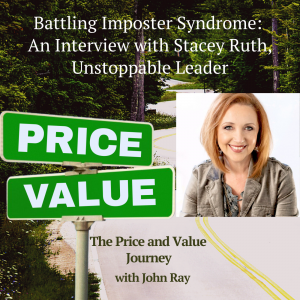
Battling Imposter Syndrome: An Interview with Stacey Ruth, Unstoppable Leader

April 5, 2022 by John Ray

Stacey Ruth
North Fulton Studio
Battling Imposter Syndrome: An Interview with Stacey Ruth, Unstoppable Leader
Loading
00:00 /
RSS Feed
Share
Link
Embed

Download file

Stacey Ruth

Battling Imposter Syndrome: An Interview with Stacey Ruth, Unstoppable Leader

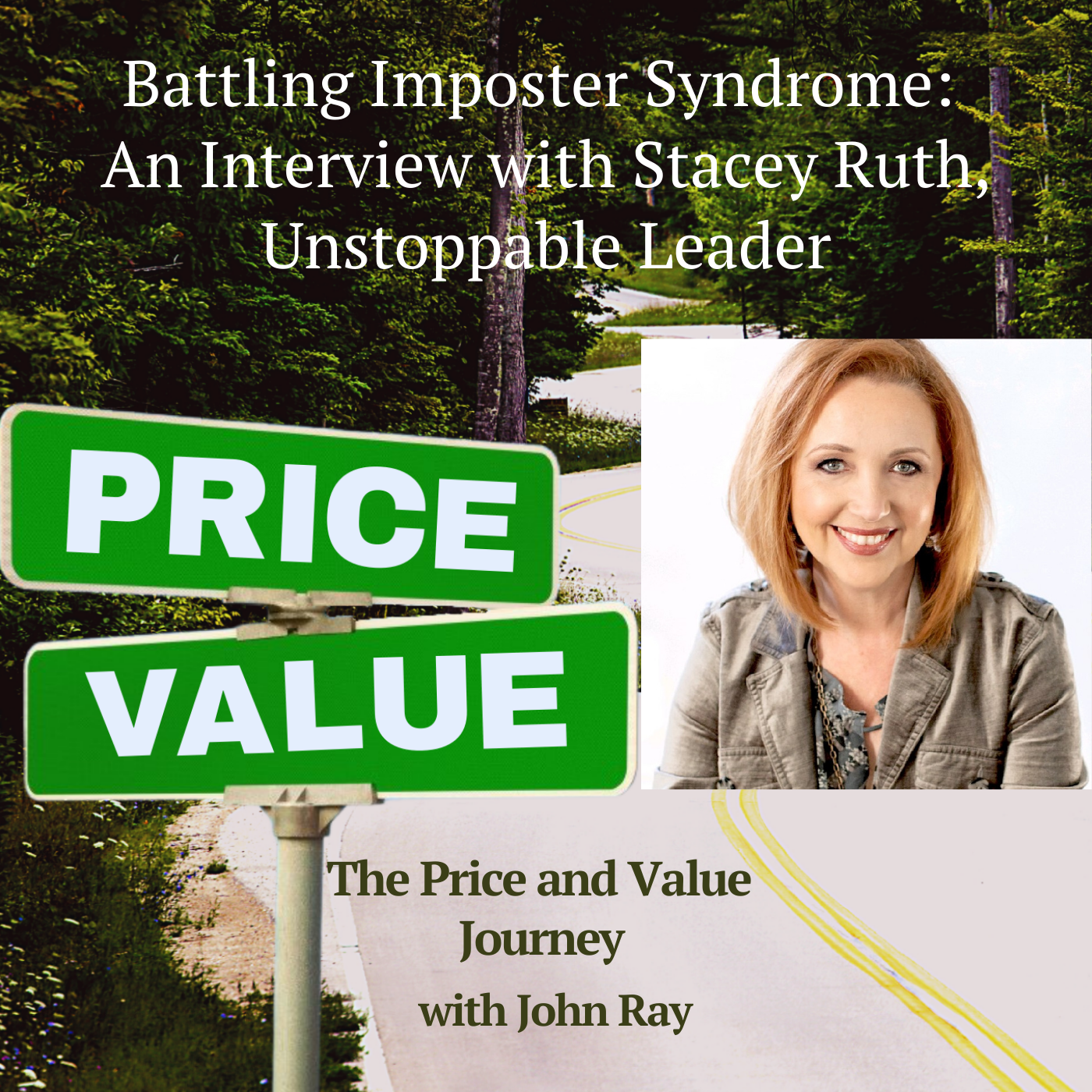
Anyone who has started their own professional services practice faces imposter syndrome at some point in their journey. What happens, though, when the stress of imposter syndrome is so severe that you find yourself on the bathroom floor, bleeding internally and suffering severe headaches and hair loss? In a frank, raw interview with host John Ray, Stacey Ruth, CEO of Unstoppable Leader, shared her battle with imposter syndrome, and how it affected not only her physical health but her professional services business as well. Stacey discussed the many ways imposter syndrome shows up, how to diagnose and deal with it, how imposter syndrome can become a diversity and inclusion issue, imposter syndrome and pricing, and much more.

To download the imposter syndrome workbook Stacey mentioned in the interview, follow this link.

The Price and Value Journey is presented by John Ray and produced by the North Fulton studio of Business RadioX®.

Stacey Ruth, CPC, CEO, Unstoppable Leader

Stacey Ruth, CPC, CEO, Unstoppable Leader

Stacey Ruth is unstoppable. She founded two multimillion-dollar agencies, has been among the Top 50 Entrepreneurs Under 50 in Atlanta, and twice awarded Top 100 “It” Agencies by Experiential Marketer.

As a novice entrepreneur, she made nearly every business decision mistake possible – and learned how to make the necessary personal transformations in order to thrive. Her businesses survived personal challenges, the fallout of 9/11, deep recessions, and her own health issues resulting from a battle with imposter syndrome.

Today she coaches other CEOs and executives on how to make faster and more accurate decisions, using their inner wisdom. She is a passionate advocate for women leaders claiming their own seat at the table they design for themselves.

Stacey delivers sustainable change, measurable results, and immediate impact for her clients. Her human-centered approach is designed to help ignite the transformational leadership every organization requires.

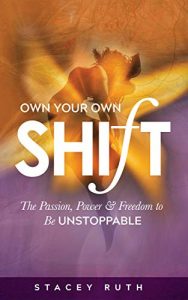
Her book, Own Your Own Shift is available on Amazon, and her new book, Inside Out Smart will be available April 19, 2022.

Website | Stacey’s books | LinkedIn | Instagram | YouTube | Twitter | Facebook

TRANSCRIPT

John Ray: [00:00:00] And hello again, everyone. I’m John Ray on The Price and Value Journey. Today, we’re going to talk about imposter syndrome. And I think that’s an important topic for anyone who sells what’s between their ears. Because what’s between your ears and imposter syndrome can get mixed up in a big way, particularly if you’re coming out of corporate. You’ve had this shelter of corporate, maybe the branding and the assistance that comes from corporate. And, suddenly, you’re out in your own practice trying to do all your own thing, comparing yourselves to everyone else out there that’s doing what you’re doing, and wondering whether you’re doing it right or whether you belong where you are.

John Ray: [00:00:50] And we’ve got a fantastic guest to talk about this important subject. Stacey Ruth is the CEO of Unstoppable Leader. Stacey founded two multimillion dollar agencies. She’s been among the top 50 Entrepreneurs Under 50 in Atlanta. And twice awarded the Top 100 It Agencies by Experiential Marketer.

Stacey Ruth: [00:01:14] As a novice entrepreneur, Stacey made nearly every business decision mistake possible – wow. And she learned how to make the necessary personal transformations in order to thrive – even bigger wow. Her businesses survived personal challenges, the fallout of 9-11, deep recessions, and her own health issues resulting from a battle with imposter syndrome.

John Ray: [00:01:41] Today, she coaches other CEOs and executives on how to make faster and more accurate decisions using their personal wisdom. She’s a passionate advocate for women leaders claiming their own seat at the table that they designed for themselves. She’s got a new book out, it’s her second book following her first one, and her new book is called Own Your Own Shift, and it’s available on Amazon. And as we record this, it’ll be out in a few weeks on April 19, 2022. Stacey Ruth, it’s a pleasure to have you on.

Stacey Ruth: [00:02:17] Absolutely a pleasure to be here. I think you’ve got a really, really great group of listeners who can really benefit from what we’re talking about today. This is going to be great.

John Ray: [00:02:27] Yeah. Thank you. I really appreciate you being willing to share what you’ve got to share about your own journey. But talk about how you started your practice and just the background of your practice. What led you to go out on your own?

Stacey Ruth: [00:02:44] That’s a great one, because I was actually in a corporate agency. We were the largest global production and event marketing agency in the world at one time. And I’ll say, it was pre-focused on diversity and inclusion. And it was very much a, I’ll say, male lily white type of environment, very much like Mad Men if anyone watches that. And I was very much seduced, if you will, by the excitement and being a part of it. And it was also a sweatshop and I was very exhausted. And couldn’t kind of keep up with the politics. We were buying a new company, literally, every week at the time. And so, I chose to take the leap out on my own. And it was still in an industry that was male dominated.

Stacey Ruth: [00:03:52] And I don’t know if you and your listeners are aware, but imposter syndrome is not just up to the moment term that people are using to describe self-doubt. It’s actually a diversity and inclusion issue. And it belongs to the people who are first only or different in an industry or in a business or an organization.

Stacey Ruth: [00:04:17] And I was a woman CEO of a fast growing agency, and what was at the time a male dominated field. And I immediately started experiencing this since I was young and I was female, that maybe I didn’t have what it took. And then, I started trying to shore myself up. And that’s when things went a little bit sideways.

John Ray: [00:04:47] Now, was this before you left to start your own firm, or was it during this big firm experience that you had, or both?

Stacey Ruth: [00:04:56] Well, both. The big firm experience kind of set me up to feel that I was down in power structure as a young female. And I talk about that in my upcoming book, Inside Out Smart. And we’re talking about biases. And we’re talking about assumptions. And we’re talking about how society shapes a lot of our beliefs about ourselves. And so, it’s shaped a lot of my beliefs about what I was and was not capable of, even though I’m a relatively gregarious and confident person. But in that context, I experienced a sense of maybe I don’t belong here and maybe they’ll find out I don’t know what I’m doing. And that just carried over into starting my own business.

John Ray: [00:05:54] So, how were you able to start your own business when you had imposter syndrome to begin with?

Stacey Ruth: [00:06:02] That’s great, because the idea behind being able to move forward is to be able to tap into our inner concept of our self, our inner wisdom. Some of that is intuition. Some of that is our ability to connect to our own purpose, our own values. And I had enough of that to be able to take the risk, to take the leap. And that’s true of most entrepreneurs. And we have a growing entrepreneurial culture going on right now.

Stacey Ruth: [00:06:41] But 84 percent of entrepreneurs self-identify with imposter syndrome. So, it’s not just women, it’s not just underrepresented demographics, it’s not just black or brown or gay, LGBTQ+, whatever it is. There are things that will lead us to believe that maybe we don’t have what it takes. And someone somewhere is going to find out and we’ll be outed.

John Ray: [00:07:15] So, talk about what happened with you as you built your own firm. What was that journey like? What was going on with the firm? And then, what was going on with this arc of imposter syndrome for you?

Stacey Ruth: [00:07:32] Oh, absolutely. And, you know, I’m going to be really real with you, because I was my own worst nightmare boss when I started the agency. And so, I did what a lot of individuals with imposter syndrome will do.

Stacey Ruth: [00:07:51] And when we talk a little bit about how people can contact me, I do have an imposter syndrome workbook where people can identify whether they have it. There’s some questions on there and then ways to deal with it.

Stacey Ruth: [00:08:05] But I was micromanaging, so I was hovering over the folks that worked with me. I brought in additional executives who were men, who were older than me, in order to shore up what I felt was lacking credibility. I also was over delivering, over performing. So, I was burning the candle at both ends. I was working around the clock, 80 hour workweeks. And it was never enough. It was never enough for me. And my employees could never do enough for me in that dynamic.

Stacey Ruth: [00:08:50] So, a lot of people who are solopreneurs can identify and then they can also experience what might be going on in their organizations if they have employees or vendor partners and suppliers.

Stacey Ruth: [00:09:02] And what wound up happening to me, I didn’t realize what was going on. That was just what I thought I had to do. And what wound up happening to me – and I share this when I speak on imposter syndrome – is there was a day when I found myself on the floor of the women’s bathroom. My hair had been falling out. I was having headaches 24/7. And, now, I was bleeding internally. And that’s the level of pressure and stress that imposter syndrome puts on us.

Stacey Ruth: [00:09:38] And I’ve heard other women leaders talk about similar kinds of health issues. Arianna Huffington talks about it. I know there’s a number of people that discuss it. So, if we internalize it rather than recognizing it and dealing with it, it can actually do some serious damage to our physical well-being.

John Ray: [00:09:59] Did you attribute at that time imposter syndrome to the physical symptoms you are having? Or did that take a time to make that connection?

Stacey Ruth: [00:10:11] No, I did not. It took time to make that connection. And one of the reasons that I’m so willing to share what I went through was I actually was reading what Arianna Huffington was going through. I was reading what other women with imposter syndrome were going through, because I was following other women leaders, like, what are they doing? And so, I was starting to hear these stories and I was like, “Oh. That’s me.” And so, it was this slow dawning by hearing other people share what they were going through and how they were dealing with it.

John Ray: [00:10:48] And so, you really didn’t know imposter syndrome was to blame for any of this until you really identified it in others.

Stacey Ruth: [00:10:59] Correct. And I mean, I’ve certainly studied it, immersed myself in it, so that I really can deal with it. And I think I’m on a mission to share it with others, because given that I am a lifelong entrepreneur, given that I do believe that entrepreneurship is crucial as a foundation for our entire economic structure, and 84 percent of entrepreneurs are dealing with this. I think it’s so important to get it out there and not let people just think, “Oh, well. I just doubt myself.” Oh, no. There’s more going on. And it’s possible to overcome it, and it’s not difficult once you recognize it.

John Ray: [00:11:47] But what you’re implying here – or you’re not implying. You’re saying it flat out – thank you – is that you can go on and function “normally” for years and suddenly hit a wall, because that’s what I think I hear you saying was it captures your experience with imposter syndrome.

Stacey Ruth: [00:12:13] Yes. And, in fact, the more you achieve and the higher you go, I’ll say, the rarer the air where you are, the more likely you are to experience imposter syndrome in a new role in an organization where there aren’t any others like you at the level at which you’ve achieved. So, that’s what really starts to trigger it, first, only different and high achieving.

John Ray: [00:12:49] So, you found yourself on the bathroom floor. You had all these physical symptoms that were so powerful. What happened? How did you take care of yourself physically, number one? And number two, when did that connection come? You know, did it take a while before you read about Miss Huffington and others that had this same issue?

Stacey Ruth: [00:13:15] Well, I think that it tends to be when we start to realize something’s wrong and we start looking around for what it could be, that we start to see things that were right there in front of our face that we never saw before. And that certainly was my experience. Now, I had already been through all of the physical tests and they couldn’t find anything physically wrong with me, with standard blood work and all. I even had an MRI.

Stacey Ruth: [00:13:44] But I did go get therapy help with what was going on because everyone pretty much settled on. It was stress. And as we were getting into that conversation, I started to realize that it was really my concept of what was necessary and what I deserved that was not being met. And I was the only one who could meet it. And, of course, I was seeing what other women were experiencing kind of in concert with that.

John Ray: [00:14:19] Right. Right. Say more about that, the part about what you deserved. I mean, what was your mindset there?

Stacey Ruth: [00:14:27] Well, my mindset was classic for imposter syndrome. And the definition of imposter syndrome is, no matter what you’ve achieved, you tend to dismiss it as luck, knowing the right people. It’s something outside of your control. It has nothing to do with the fact that you actually worked really hard for it. You were really qualified for it. You really did the work. You did the work and you got yourself there. So, I realized I was pushing away my own credibility and handing over my success to outside situations, people that they were supportive but they didn’t cause it, if that makes sense.

John Ray: [00:15:19] So, for you, what did the arc of recovery look like? Was it something that took a while? Was it something that you had on the other extreme, a moment of pure insight where you saw the light from the heavens and you knew you were worthy? I mean, talk about the arc of your recovery.

Stacey Ruth: [00:15:41] Well, the arc of my recovery was starting to apply a lot of the tools. And the tools, for the most part, they are self-awareness and mindset tools. So, was I picking up the tools going, “This will fix my imposter syndrome”? No, not exactly. The first thing I was trying to do was get my self back in balance. As I’m getting myself back in balance, what I’m doing is talking to other people about what I’m actually feeling inside.

Stacey Ruth: [00:16:18] As impostors, we don’t want to let others see how hard we’re paddling just underneath the surface. And being able to have someone that I trusted, who I didn’t feel like sharing with them was going to sabotage anything I was doing in my career was extremely powerful. So, being able to share what you’re going through is critical. It gets it out of your head and allows you to get perspective.

Stacey Ruth: [00:16:45] Another thing that’s very important was being able to let go of some perfectionism and let go of some of that micromanaging control, which was part of the work. The other thing – and this may sound a little woo-woo to your audience, but it is probably one of the most powerful tools for dealing with imposter syndrome – is to be able to shift our internal mantras. And one of the ones that imposters have, especially if they’re starting their own business, is, no one will pay that much for what I do.

John Ray: [00:17:22] Oh, yes.

Stacey Ruth: [00:17:25] And you can shift that into an affirmation. And my agency, initially, was notoriously under charging for our services. No one will pay that much for what we do. And when we flipped that and said, “No. We are charging fair market value for very valuable services.” So, when you do an affirmation, your brain has to believe it’s possible. So, the way out there, affirmations aren’t as effective as simply saying I provide a service that has real value, and owning the value that you provide.

Stacey Ruth: [00:18:17] So, those are some of the things that it’s not a grand sweeping shift. It’s making those micromovements that continue to assert, I deserve it, I’m worth it, and I bring something of value through my experience.

John Ray: [00:18:38] Folks, we’re here chatting with Stacey Ruth. She is the CEO of Unstoppable Leader. I want to circle back around to, I guess, the how I know I’ve got imposter syndrome. For you, it was more obvious than maybe it is for some others who maybe they don’t have the physical symptoms. Maybe they haven’t hit that wall yet. But how do they know that they’ve got something that’s serious that they better take care of?

Stacey Ruth: [00:19:11] Well, I think one of the easiest ways to get our brain around the symptoms are – and this comes out of the book, The Secret Thoughts of Professional Women by one of the kind of forerunner researchers on imposter syndrome in women, which was discovered in the early ’70s – she defines five personality types.

Stacey Ruth: [00:19:37] One of them is the super hero. And that’s the person who’s going to do it all and take on that one more thing. And people are like, “Oh, my gosh. How do you get that all done?” So, if that resonates with you, you might have imposter syndrome. Another one is the expert. That’s the person who always has to have one more degree, one more credential, one more certification. They have all of this knowledge, but they can’t quite get out of the gate. And, you know, a lot of coaches deal with that. But not just coaches, a lot of folks feel that need.

Stacey Ruth: [00:20:20] Another one is – and I don’t think she calls it this. Oh, yes. She does – the natural genius. And the natural genius has always learned things really easily and things come easily to them. So, they’re smart, they’re capable. And then, they bump up against that one thing that it doesn’t come as natural to them and they don’t really know how to learn something new because it’s always been so easy for them. And so, they start to doubt themselves because, “Why is this one hard?” So, that’s another one, if that resonates.

Stacey Ruth: [00:21:04] And then, there are the perfectionists, the person who’s always got to get it 100 percent right all the time or do nothing. So, there’s a fear of failure behind that, and that leads to a lot of procrastination, which can also be a hallmark of the imposter syndrome. [Inaudible].

John Ray: [00:21:23] Well, for those folks, if they ever get it sent out or hit send or hit publish, whatever, then they’re looking at all the errors in it that they should have caught. Right?

Stacey Ruth: [00:21:36] It’s what keeps a lot of people from writing that book. It keeps people from applying for that job. It keeps people from making their deadlines. Or – oh, my gosh. This one – that burst of energy that gets you across the finish line and the person says, “Oh, well. I’m really motivated when I have a deadline, so I’ll get it done.” And yet that’s actually not how our brains work. So, what actually happens is, yeah, you get it done, but it’s probably got a lot of mistakes in it. So, the procrastination and perfectionism which can go hand in hand can actually feed each other.

Stacey Ruth: [00:22:23] So, if any of those resonated, someone might be dealing with a case of imposter syndrome. Mine was classic and mine was intense. Not everyone’s is that classic or that intense. And yet, if it goes without being dealt with, it can build, which was also what happened for me.

John Ray: [00:22:46] Now, speaking of intense, I saw Sheryl Sandberg, formerly with Facebook and Google. She said that both men and women are susceptible to imposter syndrome, but that women tend to experience it more intensely and be more limited by it. What’s your perspective on that?

Stacey Ruth: [00:23:09] This is true. It was first identified in women and in the ’70s where women were coming into the workforce. And I said it earlier in the conversation, imposter syndrome is really a diversity and inclusion issue. Because we, as a society, tend to feel like if I’m the only woman or only fill in the blank, any underrepresented demographic – I’ll just use women because it was first discovered with women – then I feel like there’s no one I can relate to. And, therefore, I don’t belong.

Stacey Ruth: [00:23:53] So, there’s a sense of not belonging where we are, because when we look around in the landscape, we can’t identify with anyone else. So, that’s one reason that women and other underrepresented demographics will feel that way.

Stacey Ruth: [00:24:09] Another reason, especially for women, we feel like we might be betraying other responsibilities. So, we might be betraying because that’s still the way the society is structured, “I have the responsibility for the home. I have the responsibility for the kids.” And then, “I’m not being true to that responsibility.” And, also, “What about my peers? I’ve now left them behind.” So, all of those internal struggles can really feed it, especially for women.

John Ray: [00:24:44] Okay. I don’t want to get men off the hook here.

Stacey Ruth: [00:24:48] No. They’re not off the hook. No, no. Especially male entrepreneurs.

John Ray: [00:24:55] Yeah. Let’s pull them in here. So, what is the issue with men? Do they not have imposter syndrome as much? Do they not talk about it as much but they really do have it underneath the surface? What’s going on with men?

Stacey Ruth: [00:25:14] Well, again, I think that especially when men achieve a certain level within an organization, that high achieving man, the man who goes out on his own and starts a business, we have then put ourselves in a first only different situation. So, all the same feelings can apply, “I’ve left my peers behind. My peer group is back there, they’re behind me. Why am I so special? So, I don’t belong here.”

Stacey Ruth: [00:25:54] Maybe the guy was a the natural genius. And now suddenly, “I’m doing something I have no context for, no experience for, and I don’t know what to do. And I feel like somebody’s going to find out that I don’t know what I’m doing.” All the same rules apply.

John Ray: [00:26:14] I got it. So, let’s talk a little bit about, I guess, how you deal with it. And do you need a third party? You mentioned getting therapy, do you need a third party, a live person to be able to help? Maybe a trusted adviser or a coach, someone like that? And if so, how do you find that person? Because you’re at a moment of, obviously, doubt, how do you find a trusted person that you can walk that journey with?

Stacey Ruth: [00:26:54] Well, as a coach, I happen to believe that no one “needs a coach”. Now, all the coaches are going to cringe when I say this. I don’t believe anyone needs a coach. I believe that coaches accelerate what we’re ready to lean into. They give perspective, accountability, and all of those kinds of things that it just takes longer and it can be harder to do on our own.

Stacey Ruth: [00:27:26] So, can someone get over imposter syndrome on their own? Yes. Of course, they can. They can pick up the books. They can do the blogs. They can get all the information. Putting it into application is so much faster and easier when you do it with somebody who understands. So, that is possible with a mastermind support group. It’s possible with a coach, like myself. It’s possible with a mentor. It’s possible with a therapist. I mean, there’s a number of outlets that you can work through.

Stacey Ruth: [00:28:02] I think for CEOs, especially women CEOs, who especially deal with this, working with a coach who’s been there, done that, got the t-shirt, is a great way to accelerate getting through that because it does slow you down, limit your growth, and limit what kind of income you can generate.

John Ray: [00:28:27] Yeah. I want to get to that now because this is The Price and Value Journey and I’m all about pricing. And you brought that up earlier, so I want to get to income and pricing here in just a second.

John Ray: [00:28:42] But you mentioned the term get over it, getting over it, and I don’t know what the term is, do you ever really get over it? Or maybe it’s a bad analogy that once an alcoholic, you’re always an alcoholic. It’s just a matter of controlling it and dealing with it mentally, the mental aspect of it, and doing what you’ve got to do, whether you’re in AA or whatever, to walk that journey as an alcoholic. Are you always suffering from imposter syndrome or it’s just a matter of controlling it?

Stacey Ruth: [00:29:20] Well, that’s an interesting choice of analogy.

John Ray: [00:29:25] Maybe it’s a bad analogy, Stacey, but –

Stacey Ruth: [00:29:28] No. Actually, I don’t know that it is. Actually, I’m going to pause for a moment. I’m going to say something I really want your listeners to lean in and hear this.

Stacey Ruth: [00:29:45] If you’re dealing with imposter syndrome, it’s not your fault. Because a lot of people will take that on and say, “There’s something wrong with me. What’s going on?” It’s not your fault. You’re a product of the society and the society’s beliefs and values. You can change yours. So, choosing to change is the important thing.

Stacey Ruth: [00:30:12] And the reason I said that that’s not such a bad analogy with someone who’s dealing with addiction, whether it’s alcoholism, drug addiction, or any other kind of addiction, is, the 12 step programs say, the solution is actually to understand, have a self-awareness, a consciousness of who you are in the context of the greater whole. And change how you’re seeing yourself so that you don’t feel empty inside. That you don’t feel like you’re lacking something inside.

Stacey Ruth: [00:30:47] And they say it’s of a spiritual nature. Well, I believe spirituality is based on values, and purpose, and meaning. And a lot of people who are dealing with imposter syndrome have kind of disconnected from their internal guidance system, which is values-based, purpose-based, meaning-based. And we’re really measuring ourselves by these externals.

Stacey Ruth: [00:31:08] We’re constantly comparing ourselves to everyone else and looking for affirmation that we’re okay. They’re not going to kick us out of the club today because they didn’t find out that we don’t really belong here. So, instead, we can turn in to our own inner guidance system that says, “No. I’m perfect, whole, complete exactly the way I am and I can do this. And if I need help, that’s not an admission of weakness. That’s an admission of willingness to grow and learn.”

John Ray: [00:31:46] I mean, we talked extensively about your bathroom floor experience. I want to give you a chance to talk about the other side of that. And just as you’ve been able to recognize and then put that experience in the box it belongs in your life. What has been the result for you and your business and your life?

Stacey Ruth: [00:32:15] Oh, my gosh. Well, I will tell you, I stopped racing. I love that question. I stopped racing against myself. It felt like I was competing with people, competitors, the industry, other CEOs. I was trying to be better, stronger, faster, all of that. I was doing it at the expense of my poor body that was just trying to serve me.

Stacey Ruth: [00:32:51] And, by the way, I do want you to know that I am 100 percent healed physically from that. So, I feel more energetic. I feel more engaged. But mostly I feel more fulfilled. The money is great. I mean, here we are, price value, you know. The money is great. It doesn’t fill the gap of self-doubt that is created by imposter syndrome. It never is enough because it’s always external.

Stacey Ruth: [00:33:29] So, what happened is I got a lot more satisfaction and I’m like, “Well, hey, this is doing something that is really of service I really love, and I get paid good money for doing it. What more do you want?”

John Ray: [00:33:45] Great words and great story here from Stacey Ruth. She’s the CEO of Unstoppable Leader. So, Stacey, let’s talk about pricing. Let’s get there. So, for you, how did imposter syndrome affect your pricing? How did you get to a point where, again, you put that in the box and kept it from affecting how you communicate and talk about your value?

Stacey Ruth: [00:34:26] Yeah. Well, it’s interesting – let me collect my thoughts on this one. Imposter syndrome can continue to pop up even after you’ve done the work. You recognize it when it does. And one of the places that it popped up for me recently, in like the last three years, when I really leaned in to doing the executive coaching, which I had people asking me to coach them, so I said, “Well, there’s a need for this. I’d be happy to step in and do this and I love it. I absolutely love it.”

Stacey Ruth: [00:35:11] And that little impostor syndrome sitting on my shoulder whispered in my ear – this is classic imposter syndrome – “Who do you think you are to coach CEOs and executives who are more successful financially, hierarchy, all of that, than you are?” And so, I’m walking through this because the answer to that is, “I don’t need to be more powerful, more successful in order to be able to serve. What I’m able to do is help them bring out their own inner wisdom.”

Stacey Ruth: [00:35:58] That’s what coaches do. We ask powerful questions and we help people discover their own truth, and their own value, and their own worth. So, I don’t have to lord it over them. I’m not even supposed to. That’s not my job. And so, I know what my value is and so I could set that imposter syndrome off my shoulder and say, “No. No. Not today. We’re not going to do that because that’s not even the truth of the experience,” if that makes sense.

Stacey Ruth: [00:36:30] I’m not sure if I answered your question, but I felt like that was an important shift for people to be able to hear that. I can charge what an executive coach charges because I’m being an executive coach. I’m not being the executive.

John Ray: [00:36:43] Right. Right. And I think what I hear you saying is that you really switched in your head from thinking about making this comparison of externals, external position, power, authority, whatever, to the outcome that you’ll help foster in the person that you’re going to be working with. And that’s where the value is, right?

Stacey Ruth: [00:37:14] Correct. That’s where the value is. And I’ve been in other industries. I’ve been in marketing. And a lot of folks are starting all different kinds of marketing and sales type organizations right now just as rife with imposter syndrome and pricing is all over the highway. And a lot of startup businesses are nickeling and diming on things that really have more value.

Stacey Ruth: [00:37:49] And you can get something on Fiverr for $5. Why would I pay someone $1,200, $2,000 for the same thing I could get for $5 on Fiverr? And so, that leads to a lot of imposter syndrome. Why should I charge $2,000 for this? Well, because you are providing the service. You’re making sure it’s tailored and customized. Whatever is going on there that makes it a higher value, own it.

John Ray: [00:38:24] Well, people are making the wrong comparison, right? I mean, they’re looking at the competitors instead of looking at the outcome they bring about. And they may have done this – like you’re saying you may have done this – many times before, but that doubt and that, “Oh, they won’t pay that,” that voice that comes in your head, it still comes back. And so, do you treat it like a friend and just wave at it and say, “Okay. I see you,” and they keep going. Is that what you do? That’s what it sounds like.

Stacey Ruth: [00:38:58] A little bit. A little bit. And the steps I go through are awareness, “Oh, I recognize that voice. I know what that voice is about. Okay. We’re having an impostor moment. Let’s just have a moment.” And then, when that happens, “Okay. Is that true?” Questioning those thoughts is critical to shifting them, “Is that true?” If it’s not true or if I don’t know that it’s true, what’s an alternative? And then, pursuing the alternative and testing it. Being willing to test that alternative. And that’s really how the shift occurs. Individual variations, of course. But that’s the critical component is awareness and then questioning our thoughts about that.

John Ray: [00:39:57] You know, I’m so glad we could do this show because I work with folks a lot on their pricing, and what I recognized, the base problem for so many of them really is imposter syndrome. And that’s really the underlying problem. I’m not the psychologist. I’m not the coach like you are.

Stacey Ruth: [00:40:18] I’m not a psychologist, I just want to be clear. Neuroscience, yes. Psychologist, no.

John Ray: [00:40:24] Okay. Noted. But I guess what I would ask you, to submit to you, is, I think it’s dangerous for people to think about this in terms of, “Oh, I need to get what I’m worth, because that takes you down the internal conundrum that you’re going through and switch it toward outcomes I bring about.” And if you do that, it should help get you out of the whole business about thinking that it’s about you. It’s not about you. It’s about the outcomes you help foster with the work that you do.

John Ray: [00:41:15] And I realized for some people that may be a subtle difference. But that’s really the step folks need to take. That’s what I would think. Now, give me your reaction to that.

Stacey Ruth: [00:41:27] Well, it actually makes me think about something that a lot of new coaches are told, is, you’re not selling coaching. Coaching is what you do. It’s not who you are. And so, to be able to share the results that you create changes the entire conversation. So, helping someone get out of overwhelm, helping someone be able to get clarity around what next steps are, that’s what coaching does.

Stacey Ruth: [00:41:57] So, when somebody says, what do you do? I don’t say coaching. I say I help executives and CEOs who are dealing with exhaustion, overwhelm, a new position, a lot of change, and really help them get clarity and focus so they can grow their influence and impact. That’s what has value. That’s what creates the price value equation.

John Ray: [00:42:22] There you go. Yeah. I love it. I love it.

Stacey Ruth: [00:42:26] Yeah. Results are the deal. Results are the deal. And allowing yourself to own the results and not feel like you’re being full of yourself.

John Ray: [00:42:42] Yeah. I like it.

Stacey Ruth: [00:42:43] And to get the testimonials, to ask for the referrals, all of those things imposters will hold back on as well.

John Ray: [00:42:52] Great point. We could talk more about that, that’s for sure. But that’s a great way to end. Stacey Ruth, CEO of Unstoppable Leader. Wow. Stacey, I can’t tell you how much I appreciate you coming on and sharing your story in such a raw and real way. I really appreciate you.

John Ray: [00:43:16] And I just want to go back because I bungled your book when I mentioned your books.

Stacey Ruth: [00:43:21] All the books. All the books.

John Ray: [00:43:21] Yeah. That’s what happens when you release multiple books, right? So, Stacey’s first book was Own Your Own Shift.

Stacey Ruth: [00:43:32] Be careful how you say that. Yes.

John Ray: [00:43:35] That’s right. And I almost bungled that, too. But her new book is called Inside Out Smart. So, be on the lookout for Inside Out Smart.

Stacey Ruth: [00:43:45] Yeah. April 19th it launches.

John Ray: [00:43:46] Coming here in April 19, 2022. And Own Your Own Shift – I got that right – is out. It’s been out. You can get it right now. So, I wanted to clarify that for everyone. But, Stacey, again, thank you so much for coming on. Before we let you go, I would love it if you could, if you don’t mind, sharing your contact information so folks that are interested in hearing more about you and your work can be in touch?

Stacey Ruth: [00:44:15] Absolutely. I think one of the best places to reach me is through my website, unstoppable-leader.com. And you can find me all over social media, Facebook, Instagram, Twitter, Stacey Ruth Says, and that’s S-T-A-C-E-Y. So, I look forward to connecting with your listeners. You’re doing great work here.

John Ray: [00:44:42] Thank you, Stacey. I really appreciate you. And thanks again for coming on.

Stacey Ruth: [00:44:46] Thank you very much.

John Ray: [00:44:48] Folks, just a quick reminder, if you’re a newcomer to this series, you can find the full show archive at pricevaluejourney.com or on your favorite app. Just use that search term price value journey, you’ll find the show. And if you’d like to connect with me directly, just send me an email. john@johnray.co. Thank you for joining us.


About The Price and Value Journey

The title of this show describes the journey all professional services providers are on:  building a services practice by seeking to convince the world of the value we offer, helping clients achieve the outcomes they desire, and trying to do all that at pricing which reflects the value we deliver.

If you feel like you’re working too hard for too little money in your solo or small firm practice, this show is for you. Even if you’re reasonably happy with your practice, you’ll hear ways to improve both your bottom line as well as the mindset you bring to your business.

The show is produced by the North Fulton studio of Business RadioX® and can be found on all the major podcast apps. The complete show archive is here.

John Ray, Host of The Price and Value Journey

John Ray The Price and Value Journey
John Ray, Host of “The Price and Value Journey”

John Ray is the host of The Price and Value Journey.

John owns Ray Business Advisors, a business advisory practice. John’s services include advising solopreneur and small professional services firms on their pricing. John is passionate about the power of pricing for business owners, as changing pricing is the fastest way to change the profitability of a business. His clients are professionals who are selling their “grey matter,” such as attorneys, CPAs, accountants and bookkeepers, consultants, marketing professionals, and other professional services practitioners.

In his other business, John a Studio Owner, Producer, and Show Host with Business RadioX®, and works with business owners who want to do their own podcast. As a veteran B2B services provider, John’s special sauce is coaching B2B professionals to use a podcast to build relationships in a non-salesy way which translate into revenue.

John is the host of North Fulton Business Radio, Minneapolis-St. Paul Business Radio, Nashville Business Radio, Alpharetta Tech Talk, and Business Leaders Radio. house shows that feature a wide range of business leaders and companies. John has hosted and/or produced over 1,100 podcast episodes.

Connect with John Ray:

Website | LinkedIn | Twitter

Business RadioX®:  LinkedIn | Twitter | Facebook | Instagram

Tagged With: imposter syndrome, Inside Out Smart, John Ray, Own Your Own Shift, Price Value Journey, pricing, professional services, professional services practice, professional services provider, solopreneurs, Stacey Ruth, Unstoppable Leader, value

Business RadioX ® Network


Our Most Recent Episode

CONNECT WITH US

  • Email
  • Facebook
  • LinkedIn
  • Twitter
  • YouTube

Our Mission

We help local business leaders get the word out about the important work they’re doing to serve their market, their community, and their profession.

We support and celebrate business by sharing positive business stories that traditional media ignores. Some media leans left. Some media leans right. We lean business.

Sponsor a Show

Build Relationships and Grow Your Business. Click here for more details.

Partner With Us

Discover More Here

Terms and Conditions
Privacy Policy

Connect with us

Want to keep up with the latest in pro-business news across the network? Follow us on social media for the latest stories!
  • Email
  • Facebook
  • Google+
  • LinkedIn
  • Twitter
  • YouTube

Business RadioX® Headquarters
1000 Abernathy Rd. NE
Building 400, Suite L-10
Sandy Springs, GA 30328

© 2025 Business RadioX ® · Rainmaker Platform

BRXStudioCoversLA

Wait! Don’t Miss an Episode of LA Business Radio

BRXStudioCoversDENVER

Wait! Don’t Miss an Episode of Denver Business Radio

BRXStudioCoversPENSACOLA

Wait! Don’t Miss an Episode of Pensacola Business Radio

BRXStudioCoversBIRMINGHAM

Wait! Don’t Miss an Episode of Birmingham Business Radio

BRXStudioCoversTALLAHASSEE

Wait! Don’t Miss an Episode of Tallahassee Business Radio

BRXStudioCoversRALEIGH

Wait! Don’t Miss an Episode of Raleigh Business Radio

BRXStudioCoversRICHMONDNoWhite

Wait! Don’t Miss an Episode of Richmond Business Radio

BRXStudioCoversNASHVILLENoWhite

Wait! Don’t Miss an Episode of Nashville Business Radio

BRXStudioCoversDETROIT

Wait! Don’t Miss an Episode of Detroit Business Radio

BRXStudioCoversSTLOUIS

Wait! Don’t Miss an Episode of St. Louis Business Radio

BRXStudioCoversCOLUMBUS-small

Wait! Don’t Miss an Episode of Columbus Business Radio

Coachthecoach-08-08

Wait! Don’t Miss an Episode of Coach the Coach

BRXStudioCoversBAYAREA

Wait! Don’t Miss an Episode of Bay Area Business Radio

BRXStudioCoversCHICAGO

Wait! Don’t Miss an Episode of Chicago Business Radio

Wait! Don’t Miss an Episode of Atlanta Business Radio