Business RadioX ®

  • Home
  • Business RadioX ® Communities
    • Southeast
      • Alabama
        • Birmingham
      • Florida
        • Orlando
        • Pensacola
        • South Florida
        • Tampa
        • Tallahassee
      • Georgia
        • Atlanta
        • Cherokee
        • Forsyth
        • Greater Perimeter
        • Gwinnett
        • North Fulton
        • North Georgia
        • Northeast Georgia
        • Rome
        • Savannah
      • Louisiana
        • New Orleans
      • North Carolina
        • Charlotte
        • Raleigh
      • Tennessee
        • Chattanooga
        • Nashville
      • Virginia
        • Richmond
    • South Central
      • Arkansas
        • Northwest Arkansas
    • Midwest
      • Illinois
        • Chicago
      • Michigan
        • Detroit
      • Minnesota
        • Minneapolis St. Paul
      • Missouri
        • St. Louis
      • Ohio
        • Cleveland
        • Columbus
        • Dayton
    • Southwest
      • Arizona
        • Phoenix
        • Tucson
        • Valley
      • Texas
        • Austin
        • Dallas
        • Houston
    • West
      • California
        • Bay Area
        • LA
        • Pasadena
      • Colorado
        • Denver
      • Hawaii
        • Oahu
  • FAQs
  • About Us
    • Our Mission
    • Our Audience
    • Why It Works
    • What People Are Saying
    • BRX in the News
  • Resources
    • BRX Pro Tips
    • B2B Marketing: The 4Rs
    • High Velocity Selling Habits
    • Why Most B2B Media Strategies Fail
    • 9 Reasons To Sponsor A Business RadioX ® Show
  • Partner With Us
  • Veteran Business RadioX ®

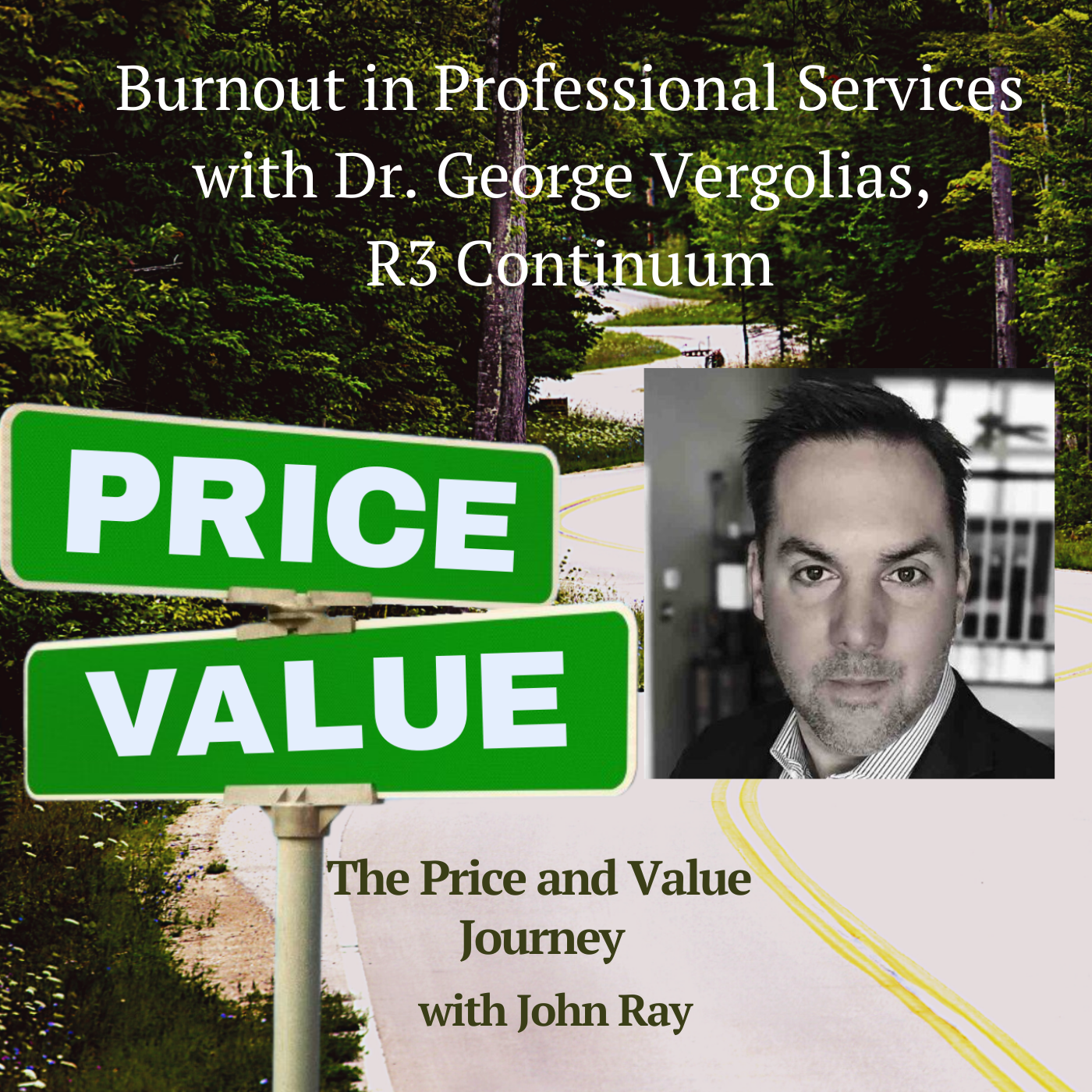
Burnout in Professional Services, with Dr. George Vergolias, R3 Continuum

June 8, 2023 by John Ray

Burnout
North Fulton Studio
Burnout in Professional Services, with Dr. George Vergolias, R3 Continuum
Loading
00:00 /
RSS Feed
Share
Link
Embed

Download file

Burnout

Burnout in Professional Services, with Dr. George Vergolias, R3 Continuum

Dr. George Vergolias, Chief Clinical Officer at R3 Continuum, joined host John Ray to discuss burnout in solo and small firm professional services providers. Dr. Vergolias described the stages of burnout, differentiated between stress and burnout, and offered tips and strategies to mitigate its effects, particularly when your firm is small without a lot of big firm resources. He also discussed building resilience in recovery from burnout, broaching the topic with someone you think might be suffering, and much more.

The Price and Value Journey is presented by John Ray and produced by the North Fulton studio of Business RadioX®.

R3 Continuum

Behavioral health is fundamental to workplace wellbeing, culture, and performance. It is also the key to resilient and thriving employees, organizations, and communities. For over thirty years, R3 has been a workplace behavioral health pioneer and innovator, providing rapid response and ongoing behavioral health solutions that help people and organizations recover, perform, and thrive in the wake of disruption and stress.

Company website | LinkedIn | Facebook

Dr. George Vergolias, Chief Clinical Officer, R3 Continuum

Dr. George Vergolias, Chief Clinical Officer, R3 Continuum

George Vergolias, PsyD, LP is a forensic psychologist and threat management expert. As part of his role of Chief Clinical Officer of R3 Continuum, he leads their Threat of violence and workplace violence programs.

Dr. Vergolias is also the founder and President of TelePsych Supports, a tele-mental health company providing involuntary commitment and crisis risk evaluations for hospitals and emergency departments. He has over 20 years of forensic experience with expertise in the following areas: violence risk and threat management, psychological dynamics of stalking, sexual offending, emotional trauma, civil and involuntary commitment, suicide and self-harm, occupational disability, law enforcement consultation, expert witness testimony, and tele-mental health.

Dr. Vergolias has directly assessed or managed over one thousand cases related to elevated risk for violence or self-harm, sexual assault, stalking, and communicated threats. He has consulted with regional, state, and federal law enforcement agencies, including the FBI, Secret Service, and Bureau of Prisons.

He has worked for and consulted with Fortune 500 companies, major insurance carriers, government agencies, and large healthcare systems on issues related to work absence management, workplace violence, medical necessity reviews, and expert witness consultation.

LinkedIn

TRANSCRIPT

John Ray : [00:00:00] Hello, I’m John Ray on the Price and Value Journey. As we pour our passion and energy into serving our clients and growing our respective businesses, we often find ourselves walking a tightrope, you might say, balancing multiple responsibilities in our firms and with our families, of course, and pushing ourselves to meet the ever-increasing demands of entrepreneurship. Those never stop. The risk of burnout is ever present in that kind of situation and understanding its causes, its consequences, and most importantly, prevention strategies is essential for our well-being and our long-term success.

John Ray : [00:00:44] So, to address the issue of burnout, I’m privileged to have Dr. George Vergolias join us today. George is a doctor of psychology. He’s a workplace resilience consultant. He’s an expert in workplace well-being. He’s got quite a CV, you might say, in this area. And he is the chief clinical officer at R3 Continuum, and R3 Continuum is a worldwide leader in providing tailored behavioral health solutions for organizations that help people manage through workplace disruption and stress. George, thank you for joining us.

George Vergolias: [00:01:23] Pleasure to be here, John. Thanks for having me.

John Ray : [00:01:25] Yeah, thank you so much. So before we get going on burnout, let’s talk a little bit about you and R3 Continuum and the work you’re doing.

George Vergolias: [00:01:34] Certainly. Let me start with talking about R3 Continuum. We’ve been in business for about 35 years, and as you said in the intro, we really offer tailored behavioral health solutions to workplaces to help promote well-being, help mitigate disruptive events. Those could be anywhere from a natural disaster like a fire or tornado, as well as manmade tragedies like an active shooter situation, an accidental death, a suicide at the workplace. We respond to almost 3000 individual events every month. We have an international network of providers that we leverage to do that. And our goal is in that front to really help people recover and bounce back from those events in a way that kind of maximizes their resilience and allows them to get back on their feet.

George Vergolias: [00:02:21] We also offer a range of psychological evaluations that might be required in the workplace, fitness for duty evaluations, pre-employment screens that help reduce risk and help, again, get people back on track that may be struggling with some issues. And then, we do workplace violence solutions as well because unfortunately, we see a rise in those across the workplace, across all sectors.

George Vergolias: [00:02:46] And then, we have a leadership program and executive optimization, leadership wellness program, where we work with high-level leaders and a number of organizations, both small and large, around helping promote their well-being and their leadership skills. And part of that is leadership wellness, support as well as performance coaching. So, it’s a wide range of activities that we engage in, but all of it is geared towards offering those tailored behavioral health solutions to the workplace.

George Vergolias: [00:03:14] As far as my background, I’ve been a psychologist, initially a clinical psychologist, and I did my post-doc in forensic psychology at Notre Dame many years ago, longer than I care to admit. But I’ve been doing this for almost 30 years. And early career, I actually did a lot of traditional forensic work. I did a lot of work with the courts. I did a lot of assessments for people not guilty by reason of insanity and so on.

George Vergolias: [00:03:39] And then, at one point I started moving into doing school violence assessments and school shooting assessments right around the time that Columbine hit and when that occurred, because there were so few specialists doing that, you were thrust into being an expert. A few years later, I transitioned that expertise into the corporate setting, working with workplace violence, and I’ve been doing that now for 20-plus years.

George Vergolias: [00:04:01] It was about 10 or 12 years ago that I really felt like when I joined R3 about 12 years ago, it was right around that time that I began to realize that dealing with individual threats, I still do that, by the way. It’s an important activity. There’s a lot we can do to mitigate threats if we’re aware of them. But I felt like it was whack-a-mole, like you would deal with one threat and mitigate it and then another would pop up somewhere else and another would pop up somewhere else.

George Vergolias: [00:04:28] And I began to ask the question, “What can we do at scale? What can we do larger? And I was watching a documentary on the Dalai Lama, ironically, and it struck me, John, that the Dalai Lama is probably close to 0% risk of engaging in a mass shooting because the Dalai Lama it’s because he’s living his life, maximizing a sense of emotional and psychological well-being. He’s living a really sharp, well-honed life of resilience and compassion. And that got me thinking. If we could build workplace cultures, and let’s be honest, we spend about a third of our life at work, if we could build workplace cultures that foster well-being and resilience, we at scale can really start moving the needle towards more people being somewhat inoculated from engaging in heinous, violent acts. That’s what got me into understanding psychological resilience and well-being. I approach it from a kind of a tougher edge. I don’t approach it from the let’s-go-to-a-mountain-top-and-do-yoga approach. I find it’s really useful. And then, of course, the pandemic hit and the awareness of employee well-being skyrocketed. It had to.

John Ray : [00:05:40] Yeah.

George Vergolias: [00:05:40] And that finds us here today. So that’s my trajectory with a lot of details left out. But that’s a larger part of my story that brings me here today.

John Ray : [00:05:48] Yeah, that’s really helpful. And that could take me on a bunny trail we don’t have time to go down, so I’m going to the Dalai Lama piece of that particularly, but we’ll let that go for the moment. But maybe that’s another episode. But let’s talk about burnout. And maybe what we can do is start by defining burnout, because everyone’s got their own idea of what that means.

George Vergolias: [00:06:10] Yeah. And there are many definitions of this, by the way. When I think of burnout, I think of feeling overwhelmed, right? And by the way, I’m stealing some of these ideas from Brene Brown. She does wonderful work. Many of your audience may know her. She does wonderful work on resilience and vulnerability.

George Vergolias: [00:06:25] So when we speak of overwhelm, it really means an extreme level of stress and emotional or cognitive intensity that really evolves to a point where we’re feeling unable to function. We’re immobile. Even if we’re somewhat functional, we’re just clearly not near the top of our game. What’s interesting is we can function with stress. We all have stress. We have stress every day at various levels. And some of that stress is good. When we think of negative stress we don’t want in our life, the word stress captures that.

George Vergolias: [00:06:25] There’s actually a psychological concept that’s not often used. It’s called eustress, E-U-S-T-R-E-S-S. And this stands for stress that we actually embrace or choose. Think of planning a wedding. Think of planning a large family reunion, of preparing for the birth of a first child or a second child, and the nesting that comes with that. These are very stressful events. Building a new home, which I’m doing right now. These are very stressful things, but they’re exciting stress. So there is a difference there. The key is we all experience that.

George Vergolias: [00:07:26] But when we get to burnout, really what we’re talking about is there are three stages we tend to think about. And the first is normative. We’re not even necessarily – I call it pre-burnout, right? It’s stage one. It’s stress. We feel increased arousal, increased demands on us, both personal and professional. We have some irritability and we might have some anxiety. We might wake up in the night and we can’t get back to bed.

George Vergolias: [00:07:50] Stage two, we actually go into almost an evolutionary defense of starting to conserve energy. We might be showing up to work late. Even if we’re working remotely from home as I do, we might be waking up later. It’s harder to get out of bed. It’s harder to be excited in the morning. We procrastinate a little more than we normally would, and that eventually could lead to presenteeism or quiet quitting.

George Vergolias: [00:08:16] Stage three, we get to a place we are psychologically and physically exhausted. In addition to that, there’s a disengagement from the work. The passion just is no longer there anymore. And that could also then lead to or spill into clinical levels of sadness, depression, and anxiety, among other things, which can lead to increased substance abuse if someone’s trying to cope or combat those.

George Vergolias: [00:08:40] That is my definition. But the stages I think are helpful because it helps people understand where they might be in that process of evolving or – I don’t like evolving – progressing into more and more burnout.

John Ray : [00:08:54] Yeah, that’s very helpful. But let’s dive into that a little further. These are signs or symptoms. But how do I self-identify? Particularly, our audience is particularly solo and small professional services providers. You know, the question of self-identification of where you are in those stages can be hard, right?

George Vergolias: [00:09:18] Absolutely. It absolutely can be. And what’s tough is when you are a solopreneur, right, a solo entrepreneur or whether even just a small group, most people that are running or leading those companies, they’re in it at some level because they feel some passion for it. Not always necessarily. It might be, I just got connected to a job, but often there is some degree of feeling some ownership, especially owners of these groups and solo folks.

George Vergolias: [00:09:46] And so, what’s interesting is, what I like to ask, is there a passion that has been lost? I remember a quote I heard a while back that said this, the reason that you feel burned out is not that you’re doing too much. The reason that you feel burned out is that you’re not doing enough of what really gets you excited. And what happens often with solo entrepreneurs or really small companies, especially leaders in those companies, is they go into the business because they love being an architect.

George Vergolias: [00:10:22] I love being a psychologist, but then once I start a group practice and I got four or five people under me and I’m running it, now I’m a business person, now I’m an H.R. director. Now I’m navigating malpractice insurance premiums. I’m navigating marketing and sales if I want to grow. And most small companies don’t have separate divisions for all of these functions. And it takes a while for that person to realize that I’m no longer doing the thing I love doing at the beginning, which is being a psychologist. Being aware of that, being aware of where has that passion gone and how has it been lost is the first step.

George Vergolias: [00:10:52] I think it’s also important to just be aware of how we feel emotionally and physically. And I know that sounds so easy, but for most people, and there are some gender differences, especially for men, we’re not very good at that. And entrepreneurs that maybe are a little type-A personality, maybe high motivation that goes, it’s really hard to slow down and take inventory around how we’re feeling. So, things like meditation, journaling, doing gratitude practices, they are helpful in their own right by slowing us down, but they’re helpful because they allow us to self-reflect and get an idea of where we stand. So that helps with that identification of that first stage of burnout even going into that second stage. It comes with awareness.

John Ray : [00:11:43] So, I would think a lot of professionals have the feeling, look, it’s supposed to be stressful. I’ve been in a stressful profession my whole life. I think of accountants, the tax deadlines and having to deal with that. Just, for example, attorneys with court filings and deadlines they have to meet and so forth, they are – stress is part of the deal. Right? And so – and how do I incorporate some sense of awareness when my default has always been stress?

George Vergolias: [00:12:19] Yeah, that’s a great point. So what I like to do to break that down, because it is hard, right? Because again, when you’re high performing, when the whole company lays on your shoulders or you feel like it does, it’s hard to turn that off. And the reality is you may not be able to, right? You just may not be able to. There’s people that depend on you, not only your family, but other workers that depend on you.

George Vergolias: [00:12:40] What I like to do is I like to look at barriers and goals. And what’s interesting is when people start out any kind of new business, even a new job, they tend to be focused on goals, right? How do I improve? How do I get these sales? How do I build this new production line? How do I grow this practice? Whatever it may be. And there’s excitement with that often. At some point, for many of us, what happens is we transition and we have to deal with the barriers that get in the way.

George Vergolias: [00:13:08] When we are focused, when we are waking up every day, or for me at times in my life, waking up at three in the morning and just focused and obsessing over the barriers and not focusing on the goals as well, I start asking for me at least, am I now entering some realm of burnout? Because the goal is what sustains us. We could be stressed and as long as we’re still focused on that ultimate goal, getting through law school, getting through med school, whatever it may be, even more benign issues like planning a wedding, that’s stressful, but there’s that ultimate goal that kind of sustains us.

George Vergolias: [00:13:45] When we start focusing just on the barriers, and I don’t mean just our attention emotionally, we’re just emphasizing and obsessing over the barriers in a way that we feel like we’re stuck in a sandbag or in a mud pit, the inertia, then I start asking the question the people I consult with, “Are we now in a burnout stage? And let’s reassess where we’re at.”

John Ray : [00:14:07] Right.

George Vergolias: [00:14:07] The question is, what can you do to reignite the spark? And that’s where – I don’t want to go down a rabbit hole because we might get to it, but just at a high level right now, that might mean time management. It might mean we have to give up some control and delegate so that we can get back to doing some of what we really love. And that doesn’t mean we’re doing it 50% of the time.

George Vergolias: [00:14:28] I remember when I was at the height of growing my hospital practice, I got to a point that 10% of my time was what I love doing, 90% I just felt like a daily slog. I just offloaded maybe an additional 20% to some key people and I paid them well to do it, and I still do. So, I didn’t go from 10% of what I love to do to 70%. I literally went from 10 to 30%. That made all the difference in the world. That sustained me. So, it’s finding that balance and then reigniting what it is that brought you to this work and what used to get you excited in it.

John Ray : [00:15:04] This is a really important point here because I think a lot of professionals, service providers, think of outsourcing as something that’s purely economic, that, hey, my time is worth more when I’m working on a case or I’m working on a client issue than it is when I’m doing the social media, or I’m doing the bookkeeping, or I’m doing administrative tasks in the business. And so, they think of it in economic terms purely as opposed to self-care terms, which is what you’re getting at.

George Vergolias: [00:15:36] Yeah. And I would even push back a little. I absolutely am getting at that about the self-care because, again, as leaders, we are not optimizing our performance. We are no different than a track star or a hockey player or an NBA player that is coming off an injury and trains or forces them to play the next night. We know that doesn’t happen, right? It doesn’t happen, right? Now, they have huge resources. They have massive budgets. Right? They have cold plunge baths and all kinds of technology to help recover from injury. But it’s the same logic from an emotional well-being perspective. You can’t lead, you can’t grow if you’re not working close or trying to push towards your optimal performance. And so, there is a cost from that angle: innovation, creativity, flexibility, just good management of people, all suffers, when we feel we don’t have the time to do those things or focus on those things. So, I think it is important to be aware of that from the self-support or emotional support angle to ourselves.

George Vergolias: [00:16:38] But I would say one other thing that I want to push back on only, John, is that from a purely economic stance, my time certainly is better spent seeing a client at a couple of hundred dollars an hour or whatever the rate would be than social media. But the question is, if I want to scale, if I want to grow, if I want to expand, I got to figure out how to do that. And maybe for me, it makes sense for me to do it. If maybe I’m good at it, maybe I enjoy it. I actually enjoy social media a bit myself, so maybe it actually fuels me so then I’ll just keep it. But if it is just another task that continues, I wake up every day loathing, there’s a value in offloading that in some cases. And that’s where each individual has to decide what makes sense.

John Ray : [00:17:30] Yeah. I like the way you frame that because I guess what you’re saying is there are hidden economics in there that you need to recognize and maybe they’re not – maybe they’re hidden, maybe they’re long-term versus short-term. But they have an economic impact on the business one way or the other.

George Vergolias: [00:17:50] Yes.

John Ray : [00:17:50] Ultimately.

George Vergolias: [00:17:51] The most common variation of this that I see, John, and I see it in Fortune 500 companies down to companies that have four employees, I don’t have time to really manage my people and grow them. Like, I can manage them in terms of problems. You made a mistake, let me bring out the stick and admonish you for – but don’t have time to grow them. And my rebuttal constantly is you don’t have time not to, because the cost of replacing them, the cost of building talent in your organization, whether you have two people or 2000 people, is extremely costly in terms of time, lost opportunity, lost sales and lost customer satisfaction. And so, we have to make time for these things. We have to carve out time.

John Ray : [00:18:37] Yeah, for sure. Those costs are only going up, right?

George Vergolias: [00:18:40] Especially since the pandemic hit. Because workers now are really saying, you know, the old model that I grew up in, and perhaps you and I both grew up in and certainly our parents did, you work at a place for 10 or 12 years, you work like a dog, and hopefully there’s some payout at the end. We have Gen X and Gen Z workers that want a lot out of their – they want to feel valued, they want to feel supported, they want to feel like they have a growth trajectory, they want to be compensated well, and they are not afraid to move around every two or three years. They don’t care if their resume has a new job on it for every two years. Whereas I remember coming up early on, all of my advisors were saying, “Oh, you can’t leave a job under five years because it looks terrible.” So as leaders, we have to be mindful of those new dynamics in the workforce because otherwise, we’re just going to lose talent.

John Ray : [00:19:27] Yeah, for sure. George, you mentioned a little earlier and I want to get to this before we get too far away from it. You mentioned the term stepping outside yourself. It strikes me that phrase is a vital one for people that hear the phrase mindless – mindfulness and think, I’m not that person. I’m not the Dalai Lama. You’re pointing toward something I think that may be helpful to people like that.

George Vergolias: [00:19:57] Yeah. Exactly.

John Ray : [00:19:59] Say more about that.

George Vergolias: [00:20:00] Yeah. Yeah. I have a saying and I’ve heard it around. It’s not mine. I didn’t coin it. But we are at a place, I think, in business understanding well-being where yoga does wonderful things. But the saying is you can’t yoga your way out of this. And that’s what we learned from the pandemic, right? All the stressors hitting us and even now, economic stressors, high-interest rates, tremendous difficulty getting reasonable rates on loans and lending, all of that. We’re just not going to be able to sit on a mountaintop and yoga our way out of this as leaders.

George Vergolias: [00:20:30] And so, the mindfulness isn’t necessarily just about meditation or gratitude practices. It’s about really understanding what are you good at as a leader and what are you not good at. And related to that, overlapping that, is what charges you, refuels you, and what burns you out, and then architecting, structuring your workplace, your leadership, whether again three people or a thousand people, in a way that builds on your strengths and builds on what refuels you, and then finding people to do those other things that fuel them, that they’re good at it. And that’s going to take some time to restructure that. That’s how I think about mindfulness. But it begins with really taking a deep inventory, right, of what works for you and then what doesn’t work for you.

George Vergolias: [00:21:19] And that, I think is at the core of resilience as well, is understanding where am I, what do I need to do in this situation and what’s my best plan forward, and having that approach. It can be difficult to figure that out. For many people, they’re like, “Listen, I’m not a meditation person.” That’s fine. By the way, I cannot sit and just meditate. I actually do walking meditation. I’m way too active. I have ADHD. I manage it. Sometimes it’s a superpower, sometimes it’s a liability. You know, my mindfulness is I fly fish. I go out in the river and there’s a meditative thing to that fly fishing unless I get caught in the tree and then it’s frustrating. But I don’t think of work. I come back after two hours on the river.

John Ray : [00:22:03] Yeah.

George Vergolias: [00:22:04] My family will ask, “So what’d you do? What’d you think about?” Nothing. I didn’t think about anything. But I am now ready to attack the day either later or tomorrow.

George Vergolias: [00:22:13] So, mindfulness isn’t just meditating or putting Tibetan bowls in front of you, right? It can be any activity that allows you to recharge and allows the dust to settle so you can re-approach the barriers and issues in front of you with a fresh eye.

John Ray : [00:22:28] Yeah, that’s really liberating, I think, for a lot of people because it’s not -you’re talking about practices now.

George Vergolias: [00:22:35] Yes.

George Vergolias: [00:22:35] And so, those practices can be as varied as there are human beings, right? It just – it depends on your own mindset, your own DNA when it comes to that kind of thing.

George Vergolias: [00:22:46] Yeah, absolutely. The other thing I would add, I encourage, is seek input from other people. Get an inventory around, whether it’s your workers, whether you have a business coach, whether there’s just somebody you respect in the community that is a colleague of sorts. Maybe you’re part of a business group, maybe you’re part of a church-based group and someone understands you. What kind of leader do you think I am? How do I engage with people? If you could give me feedback on improving my leadership approach or helping grow people, what would that be like?

George Vergolias: [00:23:21] You know what I did early career and I still do it from time to time, I will ask this of coaches of soccer or baseball, not necessarily super young, but grade school to high school coaches that have done it for 15 plus years, ten, 15 years, because these people that stick with that, they know how to develop kids. They know how to develop youngsters. And what I love about when I ask people that do that regularly, they’ll tell me, “I know you, George, and I think you’re too harsh on yourself and as a result, you’re too harsh on your people.” That’s interesting. And then I’ll take that back and I’ll think about that. So you have to seek that input. One of the difficulties of being a solopreneur or just even a small business is you don’t have the feedback loop.

John Ray : [00:24:05] Exactly.

George Vergolias: [00:24:06] Yeah. And so you have to seek that where else you can from people that know you reasonably well. That’s part of the mindfulness as well.

John Ray : [00:24:14] Yeah, for sure. Let’s talk about workload management, and to your point about solo and small professional services firms, there’s a heavy workload, and I’m sure a lot of folks hear tips about time management or what have you and think, “Oh, that’s great for them. I’m not sure it works for me.” So, let’s talk about how you see that for these particular professionals.

George Vergolias: [00:24:40] Yeah. It’s a great question and it’s something that really strikes a lot of people. You know what’s interesting? I consult with a number of firms. I’m not going to mention them but they are in the financial or tax arena, and they have seasons in which half the year they’re working 12, 14 plus hours a day.

John Ray : [00:24:59] Sure.

George Vergolias: [00:24:59] Sometimes six days a week. And we apply these concepts. The first thing we talk about is you have to make it feasible. And so, I’m going to start with what not to do, right? If you go on Instagram or TikTok these days, you’re going to find some productivity guru that’s going to say, you should wake up at 6 a.m., go out – and by the way, I love all of these techniques. I do. But they’re saying do this every day. Go get ten, 15 minutes of sun, then do a cold plunge, and then, or a cold shower, then do like 10 or 15 minutes of mindfulness meditation. Then maybe do 5 to 10 minutes of breath work, then go work out, then come back and have a nice breakfast and fuel yourself. Then do a gratitude. Who has time for that? I got kids. I got to get up and get to work. Right? Chronic, not chronically, but often, I’m up at two in the morning and I can’t get back to bed. I have mental insomnia occasionally, so I need that extra hour of sleep to compensate for what I missed.

George Vergolias: [00:25:53] So what I say is, you can’t do all of that. The question is what can your morning ritual be even if it’s really minimized down that allows you to at least get something in. Just because you can’t do a ten-minute meditation, do a two minute. Just do it. Just get it going, right? Get it started. If you can’t do a 15 or 20-minute walk, do a five-minute walk. Whatever it may be, try to find those places in your day where you can carve out the things that you feel you need to sustain yourself. There will be days that are just not feasible.

George Vergolias: [00:26:28] But what I think one of the hardest things that many solopreneurs and small business leaders do, but I also see this at higher leadership levels with big companies, is they will say, I just don’t have time for that. And I will often say, you know, you have 40 hours a week to get done your work. The question isn’t you don’t have the time. The question is how are you allocating it. A little bit about different ways to think about that and try to do that, it becomes very individualistic. Now that takes time. It takes time to architect that.

George Vergolias: [00:27:02] So one thing that I do, John, usually the first weekend of the new year, I will purposely not plan anything for the weekend. Obviously, there might be some family activities within reason, but I try to have nothing planned and I take that weekend and I do it on the weekend because during the week it’s hard. Business stuff comes up. And I really try to architect what worked for me last year, what do I need to change in my schedule this year, and let me lay that out.

George Vergolias: [00:27:31] I also go into my goals, writing my objectives, but I really try to architect my day of what habits do I want to instill and how do I do that, and then how do I set a goal for 21 days because we know that 21 days is typically your window of really solidifying a habit, and then I build on that. That takes time to do that. It takes time to build that out. I know that’s pretty high level, so we could get into some detail if you want, depending on –

John Ray : [00:27:57] I think everyone’s mileage may vary. Right? And I think to some degree, we’re not going to be able to hit all the possibilities there. But certainly, you’ve given folks, I think, a lot to think about. So, maybe we can just leave it at that because I want to get to recovery. So, building resilience as you recover from burnout, for those of our listeners that may have had an episode, a time in their life when they experienced burnout, how do they recover?

George Vergolias: [00:28:30] Yeah. So, it does begin with awareness of just being aware that I need to recover and I need – where I am today is not where I want to be. There’s a quote I heard not long ago, which I absolutely love, and it is, the reason that you’re burned out is not – no, sorry, I already said that one. Sorry. It’s – bear with me. I’ve got some notes here.

John Ray : [00:28:51] Sure.

George Vergolias: [00:28:54] And actually, I know this by heart. I don’t even need to say it. The single most important factor in determining your success in life is the degree into which you can keep a promise to yourself. And what I love about that is because think about it, how many times on January 1st we said, I’m going to lose weight, I’m going to learn Spanish, I’m going to do something else. February is completely riddled with the broken promises that we made in January for all of us.

George Vergolias: [00:29:19] But when you frame it as I am making a promise to myself, one, there’s total accountability there now. And you’re really framing it in a way that you could choose to go back on that promise. And I do. There’s things I promised, and I said, this isn’t the year for that or this isn’t the month for that. I need to reassess my goals. Nothing wrong with that. But that’s a different dynamic than I let myself down. So I think it starts with awareness and knowing what do you want to improve on. From there, I think what comes with the resilience piece, and this is pretty critical, is understanding the different components of resilience.

George Vergolias: [00:29:58] So for me, I go back to the old Jim Collins analogy from Good to Great, the mirror, the window and the interaction between. So what I like to say when I think of resilience, it’s the ability to absorb adversity and to bounce back from difficult situations. So it really has two forms. One is when I’m resilient emotionally and psychologically, I can take the blow better. I can take a punch better without completely falling down. But there are times in life that I’m going to fall down and resilience also helps me get back on my feet more quickly, right, emotionally and psychologically.

George Vergolias: [00:30:35] And so, from the mirror perspective, I ask the question, “Am I responding to this situation the best way I know how? Am I maximizing my response?” So, I’m looking in the mirror at what can I do, what can I control. It’s a very stoic kind of way of looking at the world.

George Vergolias: [00:30:50] I’m also looking out the window, which is not I’m blaming John because he was mean to me or he didn’t give me the promotion. I’m looking out the window and saying, how has this dilemma or situation been broken down into actionable steps that I can act on? Because again, now I have locus of control. I’m not blaming the world. I’m I now have some ability to control the situation, even if it’s seemingly not in control. And what I mean by that, John, is sometimes there are things we simply cannot control.

George Vergolias: [00:31:21] A great example of resilience, and this was not easy, many local, very small family-owned restaurants or bars when the pandemic hit were just completely limited when everything shut down.

John Ray : [00:31:34] Sure.

George Vergolias: [00:31:36] Bars were – in North Carolina, bars could not open. They were just stuck. But those that had food, they were starting to pivot to doing DoorDash, takeout, delivery. And for a number of them, that allowed them to barely get by. That’s an example where they looked at the situation, said this isn’t ideal, what can we do in the moment?

George Vergolias: [00:31:54] And then, the third aspect there is exploring what are the options. So what resources in me and what resources externally based on the situation and the actionable steps I’ve identified need to come together to maximize the outcome I want to drive towards, right? It’s a very analytical way of looking at it. But the problem when we get beat down or when we get knocked down in life is we tend to get stuck in the emotionality of it. And so, breaking it down that way at least gets us back on track.

George Vergolias: [00:32:25] The other thing that we have to be mindful of or just aware of is there’s a tendency when we feel broken down, beat down, to sink into a state of inertia and hopelessness. That can be very difficult and it could even elevate to clinical levels of depression or anxiety. It’s important that we try to break through and push through those, and there are a number of things we can do to do that, and we could talk about that depending on what direction you want to go in the conversation.

John Ray : [00:32:51] Yeah.

George Vergolias: [00:32:53] You want to do that?

John Ray : [00:32:54] Yeah, let’s briefly do that because I’ve got another little particular piece of this puzzle I want to get to as well.

George Vergolias: [00:32:59] So, I will say that what we saw even pre-pandemic, exacerbated in the pandemic and still lingering on, is four big areas related to burnout that affect people. One is stress and anxiety, two is depression, three is general sleep problems, and four is difficulty with focus.

George Vergolias: [00:33:17] So under anxiety, stress and depression, I’m not going to go into all of these, but it’s important to, one, deep breathing exercises can help with stress and anxiety. Doing easy stuff. Start the day if you feel like I can’t get the motor going in the morning, start with easy stuff. Wash the dishes. In some cases, if you’re simply procrastinating or emotionally avoiding a task, “I don’t want to do my taxes,” right, then start with the harder task. Do something unrelated that’s even more difficult. And what happens is in both of those scenarios, you’re actually priming your dopamine circuit. And not only is it psychologically beneficial because you say to yourself, “I just did that harder thing that was even more annoying, now I’m more open to doing the taxes. The taxes are actually a relief compared to having cleaned out the garage this morning.” But there’s a dopamine effect, a circuit of the dopamine circuit that kicks in, based on achieving those tasks. That’s why when we check off a to do, we often feel good. It’s a little win for the day. There’s actually both a psychological and a biological basis for that.

George Vergolias: [00:34:21] The other is with depression especially or withdrawal, trying to prioritize FaceTime with people. And now that we’re back to engaging, it’s important to try to get out, push past inertia and keep it simple. The KISS technique, Keep It Simple, Stupid. Right? Often people will say, “I need to paint the bedroom. I can’t get motivated.” I’ll tell you what, just paint one wall. Get started.

George Vergolias: [00:34:48] Years ago, I was quite young, but years ago, I just – I procrastinated and I didn’t floss much. Right? A lot of people. Some people floss regularly, others don’t. I had a dentist that said something amazing to me. “I don’t want you to floss your whole mouth. All I want you to do in the morning and when you go to bed is floss one tooth. You floss one tooth. Just do it for a while.” And I did. But what happened is once I got the floss on my fingers and I started doing one tooth, my mind said, “You’re already there, man, finish it. Just finish it.”

George Vergolias: [00:35:16] So when you start with small steps, it creates “All right, now, I’ll take the second. Now, I’ll take the third.” And before you know it, you’ve taken 100 or 200 steps. So that helps in terms of dealing with that bouncing-back inertia that often hits people.

John Ray : [00:35:31] Yeah, that’s very helpful. So, let’s talk about a different aspect of this burnout issue, and that’s what we see in others that we care about. So, maybe it’s a colleague, maybe it’s a strategic partner that has their own firm that we spend a lot of time with, that we refer business back and forth to each other, whatever. What are those warning signs that we need to be watching out for with them? And how do you broach that topic with a colleague that you may think is suffering from burnout?

George Vergolias: [00:36:06] Yeah. That’s a really great question and something that I think affects all of us, not perhaps just on the being burnout side, but certainly on knowing or interacting with others. So, I’ll start with the signs and they can be different, certainly, but some of what I mentioned earlier. So, people that are either more aroused, more vigilant, more emotionally volatile than they used to be, especially if they were subdued and now they’re just acting or their arousal is more, they get more upset, they get more irritable. But the flip side can happen. If you have somebody that’s normally – I’m Greek and Irish, I tend to be a little more dynamic.

John Ray : [00:36:44] You don’t have a chance, George.

George Vergolias: [00:36:45] I don’t. I don’t. Here’s what’s funny, though. I was out a week ago, got some bad news about a friend going through health issues. And ironically, I was at a bar with some friends for a Thursday night trivia thing, and a buddy came up and he goes, “Hey, George, you seem really subdued and quiet today. Everything okay?” I wasn’t, like, sad. I wasn’t crying in my beer, but I was just subdued and he noticed. So, a change in someone’s demeanor is important to notice. That’s one of the first steps. Irritability, more anxiety. And at some point, especially for smaller organizations or companies, because we interact so much with each other when it’s four or five or six of us or less, we can tell when people are off for a period of time. Now, people might be off for a few days or a week or two weeks. Typically what I like to look at is if you’re off for a week or two, I now want to start checking in with you. That’s not just a blip on the map once you get past two or three weeks.

George Vergolias: [00:37:45] What’s interesting, a lot of the diagnostic categories in the Diagnostic and Statistical Manual of Mental Disorders use two to three weeks as a window by which you go from simply having symptoms of depression to now you are in a depression. So I often look at that too. And then, what I will – so, again, irritability, increased anger, just a change in mood, is there a sense that they’re phoning in work where before they weren’t? Are they more scattered with their focus? Are they more short or curt in their emails or a little more hostile? And you’re like, “God, that’s not like John. What’s going on with him?” And I noticed that for a week or one to two weeks for a while.

George Vergolias: [00:38:26] What I will do is, one, I’m pretty direct but in a supportive way. So what I’d like to do is I don’t do it in an audience. I don’t do it in a group format. Let’s say to you, John, I’ll pull you aside and say, “Hey, John, we’ve been working together for five, what, five, six years now?” And if it’s a small business, it might be something like, “You come over to the pool, I’ve come and seen your kids play basketball. We know each other pretty well. I’m a little concerned. I just noticed a change in you, and I just want to check in. How are you doing? Is there anything I can help or support with?” And I open that up not in an accusatory way, “John, you look depressed. John, what the hell is wrong with you?”

John Ray : [00:39:03] Sure.

George Vergolias: [00:39:04] Especially men, especially men. And so really, it’s “I care about you. I’m noticing a change. I just want to check in and see how you’re doing and how can I help.” Hopefully, that leads to a little more dialogue around how things are going. This gets back to what we said earlier, John, around we don’t have time to not manage and engage with our employees. It’s part of that process. The more that we do that as a baseline and we know what their baseline is, the easier it will be for us to spot that they’re sliding a bit into burnout or they’re struggling with their mental health.

John Ray : [00:39:42] Do you find that individuals like this are they’re really just waiting for someone to break that ice for them, to broach this and that by us just knowing that, if that’s the case, that might give us the courage to have that conversation when it’s needed?

George Vergolias: [00:39:59] Yeah, I think it’s one of two things, but both should embolden our courage. One is just they may not be aware, they may not be aware. They may be – their MO in life and in business might be just I am that knight on the white horse and I’m going to ride this white horse until I fall off and die. That’s just – that’s been successful for me for ten years. And damn it, I’m going to keep doing it.

George Vergolias: [00:40:22] And if your ankle was just – imagine a running analogy. If your ankle is a little sore or your Achilles tendon is just tight, maybe pushing through that and doing a marathon works. If you have a broken leg, that’s not going to work. It’s just not going to work. You have to take time away. So that’s the first bucket is they’re just not aware.

George Vergolias: [00:40:41] The other bucket is exactly like you said, they are aware and they feel I cannot slow down. Everyone is depending on me and I can’t let myself down. I can’t let my family down. I can’t let my employees down. When someone comes to you and opens up in the way I said, checks in, they still might be a little bit defensive, but it softens. It makes it more open for them to engage.

George Vergolias: [00:41:08] I heard something ironically from a cartoon. There’s a great cartoon called The Horse, the Fox, I think, the Hare and the Boy. And the fox and horse are walking along and the horse says to the fox, “What’s the bravest word you ever said?” And the fox said, “Help. That’s the bravest thing I’ve ever said is help.” What’s funny is when you ask for help or if we were to go, if I saw you struggling and I came to you and checked in and you admitted, “Yeah, I am struggling and this is what I’m dealing with,” in a way, you’re saying help. If it’s nothing more than just hear me out, just listen to me, that is decidedly not giving up because you’re still in the fight. You’re still wanting to engage. Right?

George Vergolias: [00:41:53] So I think it’s important that we try to have those conversations earlier, then better. There is a point when people get so burned out that they are now just checked out. They are just disengaged. It doesn’t mean it isn’t worth having. It’s just harder to get them back. But I think those are really important discussions that we don’t have enough at work.

John Ray : [00:42:14] Yeah, absolutely. So, we were talking before we came on here about just the plethora of resources that are out there that have come about here over the last few years, even really before the pandemic as you pointed out, and some innovative approaches to address burnout and workplace well-being. Talk about the ones – help people sort through those, if you will, and the ones that our listeners ought to pay attention to in your view.

George Vergolias: [00:42:47] So, I want to open this by just anchoring a critical concept and that is I do a lot of training internationally and I always ask around this topic. If I were to write a blog, let’s say, or an article on physical health, what do you think I would talk about? And typically people say nutrition, weight lifting, cardio, working out, yoga, Pilates, whatever. And if I was going to talk about physical illness, what would I be writing about? Cancer, diabetes, heart issues. Okay.

George Vergolias: [00:43:17] What’s funny is when I ask the same question about mental health, people mention anxiety, depression, bipolar disorder, suicidality, substance abuse. We automatically attribute mental health to mental illness. We equate them in the zeitgeist, in the general culture. It’s important to know that mental health is like physical health. We are all invested in that. Some of us do better than others in managing that. Some of us do well for a while and we fall away. But every day we are invested in our mental health the way we are invested in our physical health. We all don’t have physical illness and we all don’t have mental illness.

George Vergolias: [00:43:53] So, it’s important for us to understand there’s a difference. As a leader, you have to be engaged and invested in your people’s mental health, even if they don’t have mental illness. Those are not always the same. So, it’s important for us to realize that.

George Vergolias: [00:44:04] In terms of resources, larger companies have employee assistance programs or they have internal wellness or well-being programs that are built in. Solo entrepreneurs don’t have that. Smaller companies often don’t have that. So what you can do, in some ways, maybe you could bring in training to help build on these concepts of resilience and well-being even that can be expensive. But there’s a benefit to being a small company with only a few employees, and that is if you or maybe you designate your office manager because he or she is really into well-being issues, right, you designate them to learn about some of these techniques and then you have them educate or train maybe the rest of the company or just check in with people, or you have certain incentives.

George Vergolias: [00:44:51] You can have – at a local company in Raleigh here, literally, I think they had six people. And what they did is they did a really simple thing. They said, for people that want to do hot yoga or Pilates or even CrossFit, we are going to supplement 25 or 50% of the cost of your training for two months. So it didn’t break the budget. It wasn’t like exactly, totally cheap, but it didn’t break the budget. And what they found, why two months? If you do these things for two months, people either drop out after two weeks, but those that go for two months, they tend to stick with it and they tend to find, hey, this is now is worth it to me and I’m going to pay for it on my own and it’s going to help with my well-being.

George Vergolias: [00:45:35] So, there are creative ways to think about how to connect people to resources without necessarily paying for them for the next two years. The other thing that we will do or we recommend with small companies is have occasional check-ins, right, where it might be once a week, it might be once every other week where you’re checking in with your employees in a morning huddle, and you’re decidedly, for those days, not talking about the business. You’re checking in with how are you doing, how are things at home? Not pushing for that but you’re creating a space in which people feel open to raise their hand and say, “You know what? I’m struggling. My kid’s struggling in school and there’s a lot of tension in the marriage right now and it’s adding to my overall burnout.” Sometimes just sharing that or having coworkers know what that understanding is helps a lot. And then, from there, it’s amazing that other coworkers might say, “You know what? I dealt with that three years ago, and I went and talked to this counselor,” or, “I joined this group,” or My church has a group that deals with this issue.” It’s amazing what those resources are organically if we can tap into those.

John Ray : [00:46:43] Yeah, for sure. And I want to follow up on that, just to be specific. Are you suggesting that as leaders of our teams that we should bring that up in a small group or just in our one-on-one sessions with our team members, or both?

George Vergolias: [00:47:00] No, that’s a great distinction. And I’m glad you made that because I don’t want to, I don’t want to – I was not totally clear on that. What I would recommend is if you have a concern in particular about one employee, back to your previous question, I would do that on a one-to-one basis. Again, let’s say, John, I thought you maybe were struggling. You’ve had a change in behavior. I wouldn’t call you out in front of a group for confidentiality reasons, for stigma. Sometimes people feel a little bit shamed or shameful. They shouldn’t, but they do. It’s a natural reaction. I would do that on a one-to-one basis to keep the confidentiality and the privacy intact.

George Vergolias: [00:47:34] But what I’m talking about in the group format is, let’s say I did this for a while when I was working in the hospital, we would have a Wednesday morning huddle and it was always patient care and what do we need to work on and what do we need to change in our documentation. But what I did at least once a month is I would say the first 15 minutes, no business. I’m just checking in. And how are you guys doing? Let’s just take a temperature. On a scale of 1 to 10, how are you coping? And then, if someone said – ten being bad, they might say – I’m at an eight, do you want to say anything more about that? And invariably, the first few times, no. But as soon as one person starts opening up and engaging, the other group starts feeling more comfortable. So what you’re doing is you’re creating just a safe environment for people to open up and talk and share ideas about how they’re dealing with it.

George Vergolias: [00:48:22] Often you know what one of these is, I’m working with a certain client who’s extremely demanding, maybe even hostile. And someone says, “I had that client last year and this is what I found works with him.” It can be something just really tactical like that that really can help take the edge off and give somebody some insight on how to face a certain problem.

George Vergolias: [00:48:44] So, that’s what I would do in the group format is keep it more general and then allow people to explore whatever or discuss what they feel they need to.

John Ray : [00:48:53] Yeah. Wow. That’s extremely valuable advice there, George. We’re coming up on time for sure. And you’ve been so generous with your time and thank you again for that. But before we let you go, any other success stories of individuals that have overcome burnout or lessons that can be learned that maybe we haven’t touched on?

George Vergolias: [00:49:18] I think there are a lot of success stories. None immediately come to mind. But what I would say is what’s really interesting about burnout is it’s not about – people – we keep thinking it’s about stress. It’s about our reaction to the stress. It’s fascinating how much the human individual, the human being can take in terms of managing stress if we’re managing it in a way that’s palatable. It isn’t about volume. It’s about the quality of how we’re managing that and prioritizing things. And so often what leads to burnout is we are prioritizing things in a way that doesn’t necessarily have to be put at the front of the line.

George Vergolias: [00:50:03] So a classic example for me, and I guess maybe I’m the story, is being a bit ADHD and being a bit driven, I chronically for years, I’m 54, up until literally about 50 years of age I did this, I would make a list of 25 things every day I wanted to get done, and if I didn’t get them done, I really felt like I’m a loser. What am I doing? What did I accomplish? I finally just had to make – I have three key things I want to get done. Everything beyond that is gravy. And if I only get two of those, I feel like it’s a major success. If I get one, I still feel positive about the one. I just had to reorient my sense of priority and my sense of accomplishment. It didn’t take away my drive or my motivation.

George Vergolias: [00:50:47] So, those things that I think are important to realize is that the burnout is yes, we have a lot going on outside of us, but it’s really about our reaction to that and how we’re managing that.

John Ray : [00:50:58] Yeah. Wow, George, this has been terrific. And I can’t imagine there aren’t some folks that having heard some of the advice, tips, guidance that you’ve shared would like to know more. Can they be in touch, and if so, how?

George Vergolias: [00:51:13] Certainly. One is our website, of course, r3c.com, is a great place to find more about the topics I’m talking about. You can reach me directly. It’s george.vergolias – I’ll spell that, V-E-R-G-O-L-I-A-S – @r3c.com. And I’m also, if you use that same name I just linked to you, I’m on LinkedIn, which is another wonderful way to reach out to me.

John Ray : [00:51:41] Terrific. Dr. George Vergolias, R3 Continuum, thank you so much for joining us here on the Price and Value Journey.

George Vergolias: [00:51:48] My pleasure, John. Thanks so much for having me.

John Ray : [00:51:51] Thank you. And, folks, just a quick reminder as we wrap up here, if you want to be in touch with me directly, feel free to email me at john@johnray.co. I’m happy to respond there. Or also on LinkedIn, John Ray, on LinkedIn. You can find me there.

John Ray : [00:52:09] If you would like to receive an update or updates on my upcoming book due to be released later this year, 2023, you can go to pricevaluejourney.com. The name of the book is The Price and Value Journey. Imagine that. The Price and Value Journey: Raising Your Confidence, Your Value and Your Prices Using The Generosity Mindset Method. So if those are issues for you, this book may be right up your alley. Feel free to be in touch to learn more on that.

John Ray : [00:52:39] So for my guests, Dr. George Vergolias, I’m John Ray on the Price and Value Journey. Thank you again for joining us.


About The Price and Value Journey

The title of this show describes the journey all professional services providers are on:  building a services practice by seeking to convince the world of the value we offer, helping clients achieve the outcomes they desire, and trying to do all that at pricing which reflects the value we deliver.

If you feel like you’re working too hard for too little money in your solo or small firm practice, this show is for you. Even if you’re reasonably happy with your practice, you’ll hear ways to improve both your bottom line as well as the mindset you bring to your business.

The show is produced by the North Fulton studio of Business RadioX® and can be found on all the major podcast apps. The complete show archive is here.

John Ray, Host of The Price and Value Journey

John Ray The Price and Value Journey
John Ray, Host of “The Price and Value Journey”

John Ray is the host of The Price and Value Journey.

John owns Ray Business Advisors, a business advisory practice. John’s services include advising solopreneur and small professional services firms on their pricing. John is passionate about the power of pricing for business owners, as changing pricing is the fastest way to change the profitability of a business. His clients are professionals who are selling their “grey matter,” such as attorneys, CPAs, accountants and bookkeepers, consultants, marketing professionals, and other professional services practitioners.

In his other business, John is a Studio Owner, Producer, and Show Host with Business RadioX®, and works with business owners who want to do their own podcast. As a veteran B2B services provider, John’s special sauce is coaching B2B professionals to use a podcast to build relationships in a non-salesy way which translate into revenue.

John is the host of North Fulton Business Radio, Minneapolis-St. Paul Business Radio, Alpharetta Tech Talk, and Business Leaders Radio. house shows which feature a wide range of business leaders and companies. John has hosted and/or produced over 2,000 podcast episodes.

Coming in 2023:  A New Book!

John’s working on a book that will be released in 2023:  The Price and Value Journey: Raise Your Confidence, Your Value, and Your Prices Using The Generosity Mindset Method. The book covers topics like value and adopting a mindset of value, pricing your services more effectively, proposals, and essential elements of growing your business. For more information or to sign up to receive updates on the book release, go to pricevaluejourney.com.
Connect with John Ray:

Website | LinkedIn | Twitter

Business RadioX®:  LinkedIn | Twitter | Facebook | Instagram

Tagged With: behavioral health, burnout, Dr. George Vergolias, John Ray, Price and Value Journey, pricing, professional services, professional services providers, R3 Continuum, solopreneurs, stress, value, value pricing

Workplace MVP: Victoria Hepburn, Hepburn Coaching

November 17, 2022 by John Ray

Minneapolis St. Paul Studio
Workplace MVP: Victoria Hepburn, Hepburn Coaching
Loading
00:00 /
RSS Feed
Share
Link
Embed

Download file

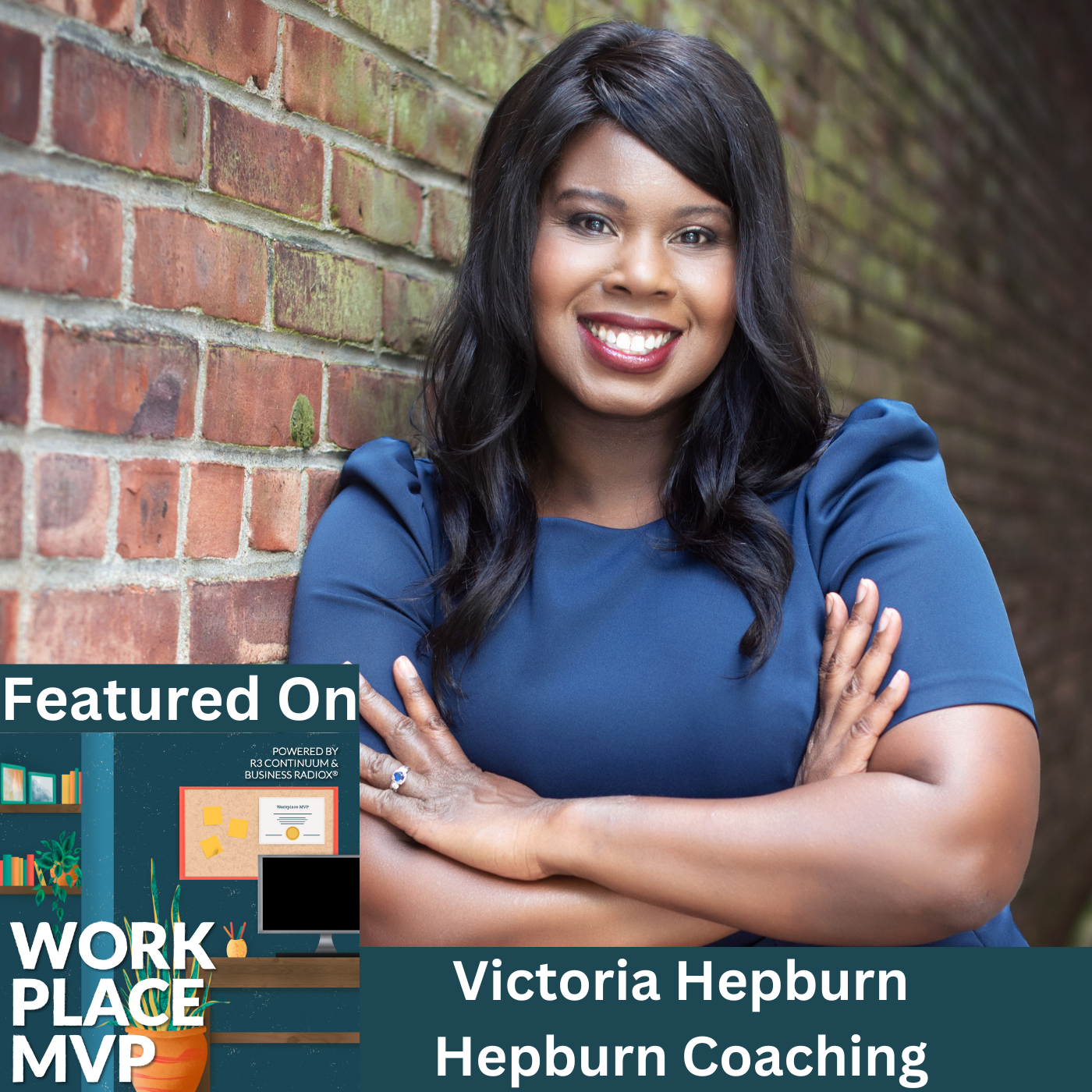
Victoria Hepburn

Workplace MVP: Victoria Hepburn, Hepburn Coaching

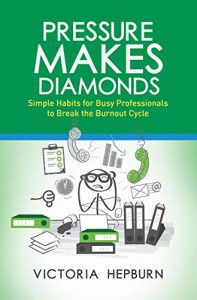
Bestselling author, coach, and speaker Victoria Hepburn of Hepburn Coaching joined host Jamie Gassmann to discuss stress and burnout, particularly for leaders. After experiencing her own burnout, Victoria took proactive steps to get healthy and happy without leaving her corporate career. She and Jamie talk about that journey, Victoria’s book, Pressure Makes Diamonds: Simple Habits for Busy Professionals to Break the Burnout Cycle, how leaders can identify and approach their own stress, how a coach can help, and much more.

Workplace MVP is underwritten and presented by R3 Continuum and produced by the Minneapolis-St.Paul Studio of Business RadioX®.

Victoria Hepburn, PCC, Author, Speaker, and Remote Work Strategist, Hepburn Coaching

Victoria Hepburn, PCC, Author, Speaker, and Remote Work Strategist, Hepburn Coaching

Remote Work Strategist Victoria Hepburn, PCC, is an author, speaker, and certified business transitions coach specializing in remote work productivity and career development. Victoria teaches professionals how to create efficiencies in their life and business to stay visible and valued while working remotely, on virtual teams, or in hybrid offices. She has nearly twenty years of award-winning experience in Fortune 500 engineering and sales roles that were on remote, hybrid, and global virtual teams.

Her mission is to share the proven tools for building a rewarding career journey without sacrificing your home life and health. Her programs are designed to help talented, hard-working professionals navigate the world of remote and hybrid work, including building trusted relationships, preventing burnout, and finding new career opportunities. Her Amazon New Release #1 bestselling book, Pressure Makes Diamonds: Simple Habits for Busy Professionals to Break the Burnout Cycle gives clear and simple actions to boost productivity and resilience without quitting.

Prior to becoming a bestselling author, coach, and speaker, she enjoyed over a decade-long award-winning engineering and sales career at Merck, GE Healthcare, and BD. Victoria earned a Bachelor of Science in Chemistry from New York University and a Bachelor of Chemical Engineering from Stevens Institute of Technology through a dual degree program. She is an IPEC-certified professional coach,  a certified Heartmath Coach and was awarded a Professional Certified Coach (PCC) accreditation by the International Coaching Federation in 2021. Victoria’s a busy wife and mother who enjoys walks with the family’s large rescue dog, who refuses to play fetch.  

Victoria’s most popular talk titles are “Building Remote Relationships: How to Use the Pressure You’re Under to Shine In Your Career” and “Build Your Career Board of Directors to Maximize Growth and Opportunity”. Her upcoming book series, “The Future is Now” will be available on Amazon on November 30, 2022.

Website | LinkedIn | Facebook

About Workplace MVP

Every day, around the world, organizations of all sizes face disruptive events and situations. Within those workplaces are everyday heroes in human resources, risk management, security, business continuity, and the C-suite. They don’t call themselves heroes though. On the contrary, they simply show up every day, laboring for the well-being of employees in their care, readying the workplace for and planning responses to disruption. This show, Workplace MVP, confers on these heroes the designation they deserve, Workplace MVP (Most Valuable Professionals), and gives them the forum to tell their story. As you hear their experiences, you will learn first-hand, real-life approaches to readying the workplace, responses to crisis situations, and overcoming challenges of disruption. Visit our show archive here.

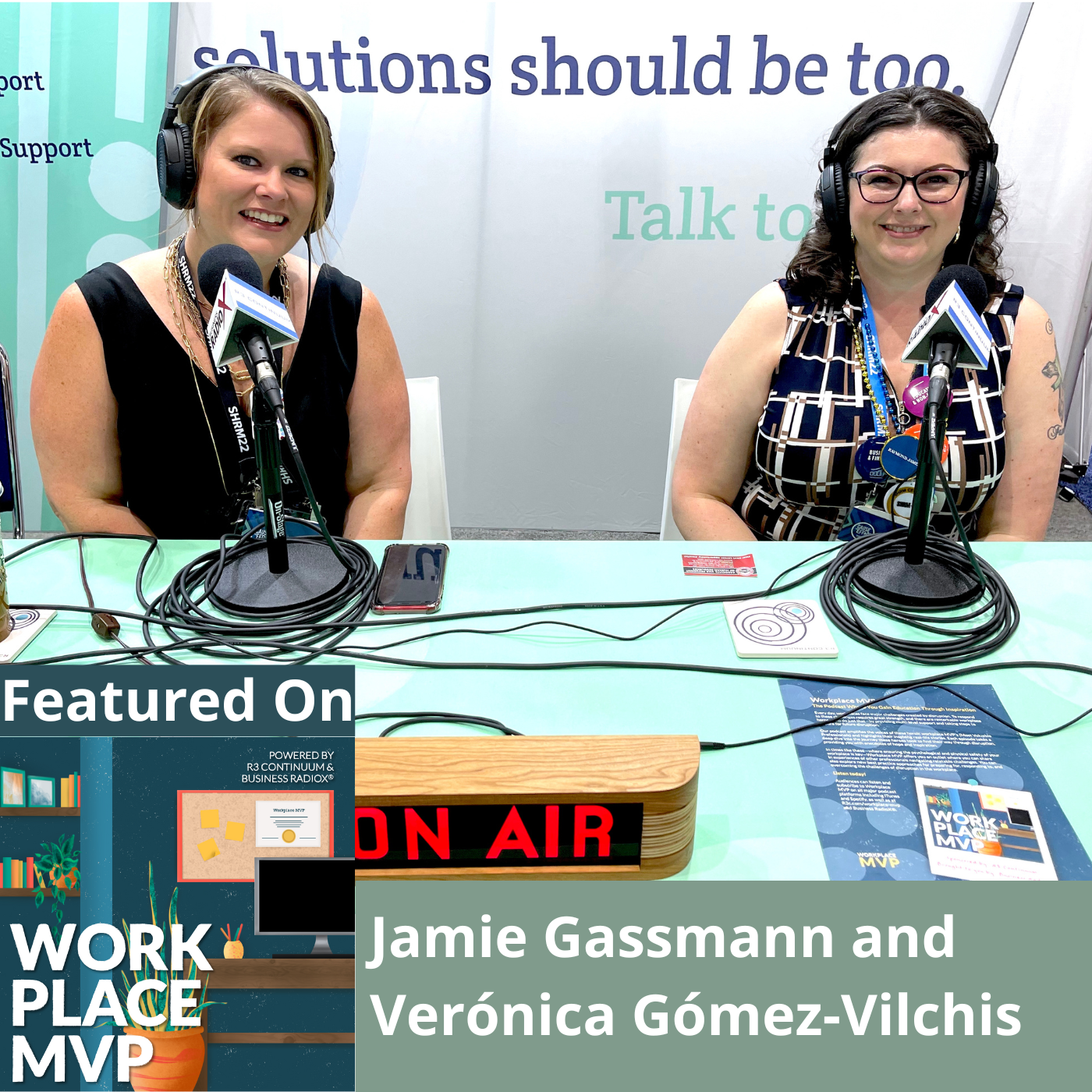
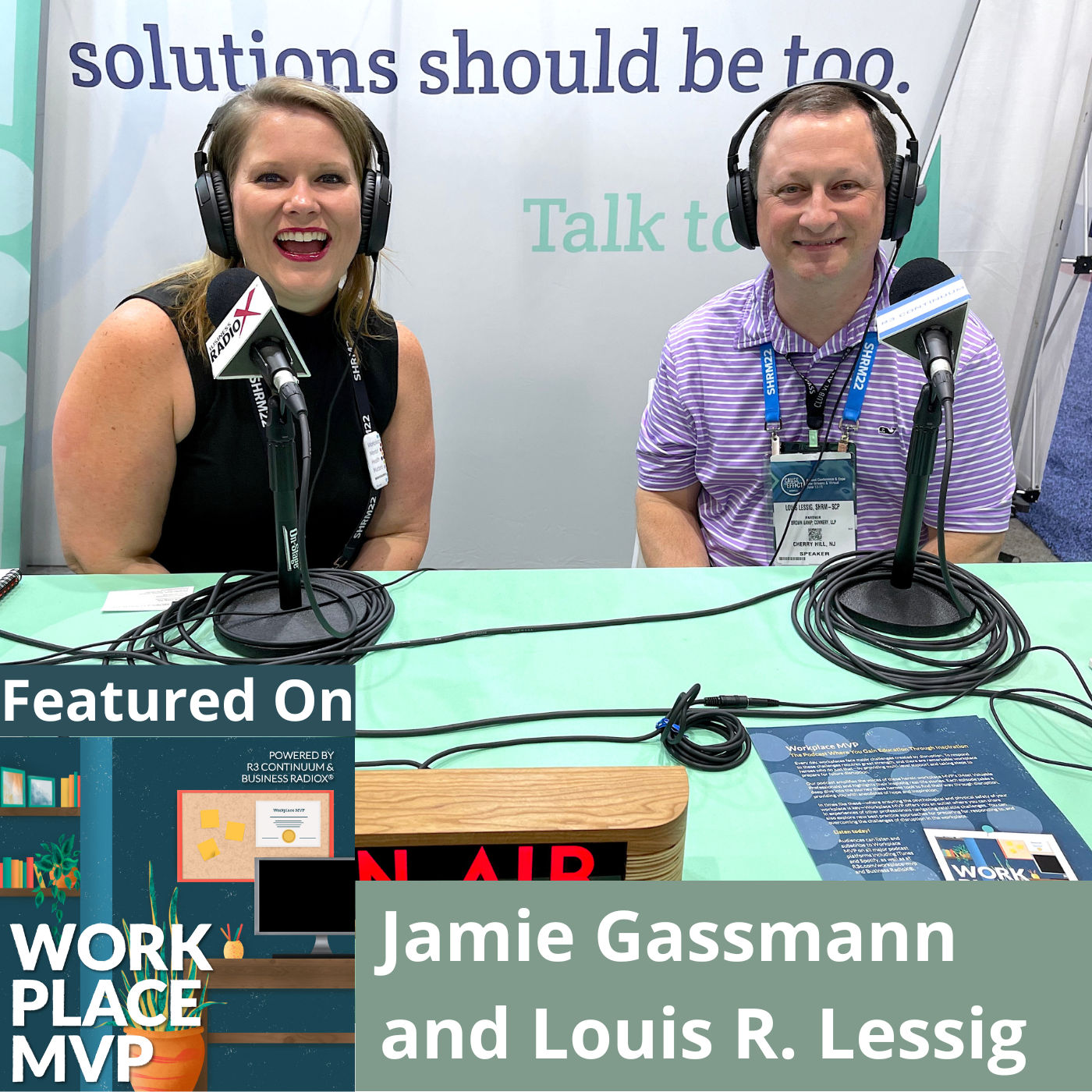
Workplace MVP Host Jamie Gassmann

Jamie Gassmann, Host, “Workplace MVP”

In addition to serving as the host to the Workplace MVP podcast, Jamie Gassmann is the Director of Marketing at R3 Continuum (R3c). Collectively, she has more than fourteen years of marketing experience. Across her tenure, she has experience working in and with various industries including banking, real estate, retail, crisis management, insurance, business continuity, and more. She holds a Bachelor of Science Degree in Mass Communications with special interest in Advertising and Public Relations and a Master of Business Administration from Paseka School of Business, Minnesota State University.

R3 Continuum

R3 Continuum is a global leader in workplace behavioral health and security solutions. R3c helps ensure the psychological and physical safety of organizations and their people in today’s ever-changing and often unpredictable world. Through their continuum of tailored solutions, including evaluations, crisis response, executive optimization, protective services, and more, they help organizations maintain and cultivate a workplace of wellbeing so that their people can thrive. Learn more about R3c at www.r3c.com.

Company website | LinkedIn | Facebook | Twitter

TRANSCRIPT

Intro: [00:00:02] Broadcasting from the studios of Business RadioX, it’s time for Workplace MVP. Brought to you by R3 Continuum, a global leader in helping workplaces thrive during disruptive times. Now, here’s your host, Jamie Gasmann.

Jamie Gassmann: [00:00:20] Hi, everyone. Your host, Jamie Gassmann here, and welcome to this episode of Workplace MVP. Stress, burnout, resignations are common terms we’re hearing all across various industries, particularly of concern at the executive and senior leadership levels. The navigating of continuous disruption within work environments, the shifting economic situation, and other professional and personal challenges that present themselves is taking a toll on key leadership.

Jamie Gassmann: [00:00:49] While they spend a good amount of time focusing on ensuring their people’s wellbeing is taken care of, they are forgetting that their own wellbeing is just as important in ensuring organizational success. But how do you strike that balance between work success, home life, and your own wellbeing?

Jamie Gassmann: [00:01:05] Well, joining us today, we have a special guest, bestselling author, keynote speaker, and Workplace MVP Victoria Hepburn, who’s going to share her perspective on how leaders can tackle and benefit from the challenges of stress and burnout. So, let’s get this conversation going. Welcome to the show, Victoria.

Victoria Hepburn: [00:01:23] Thank you so much, Jamie. It’s a pleasure to be here.

Jamie Gassmann: [00:01:26] I’m really excited to have you on the show after talking with you at the GSC-SHRM Conference. I think we had such a great dialogue around how leaders, you know, can combat this. They can get after that stress and burnout that they’re facing. So, before we dive into the content of the conversation, let’s start with hearing about how you came to be an author and a speaker on stress and burnout. And what does your career journey look like? Because I recall from our conversation, you had your own kind of personal experiences that kind of drove you to where you’re at today. So, why don’t I have you share that story with us?

Victoria Hepburn: [00:02:02] Oh, well, thank you. What really brought me to it is I needed to solve my own burnout journey, as I’ve grown to call it. But at the time when I was in the weeds – just to step back, I have spent more than 18 years in corporate America in engineering and sales roles, Fortune 500. And I was working at the point where I said I have to do something about my burnout.

Victoria Hepburn: [00:02:27] I was working internationally and I would have to be, like, on calls at 3:00 a.m. with my European counterparts and then stay up and connected enough to meet with Japanese project teams. So, that was being stretched in a million directions. And it’s a uniquely American problem, I learned, because my colleagues in Asia and in Europe had assistance to do all the logistical stuff I didn’t have. I had to, like, schedule my travel, send out quotes. So, I was just pulled in so many directions. And I also had to drive forward project teams at the same time.

Victoria Hepburn: [00:03:05] So, I couldn’t quit because I loved my work. We were doing amazing things, but I needed to stop feeling the sense of cynicism, the exhaustion, and just generally not loving my life and saying no to all the people that I loved and who loved me all the time. It was miserable. So, that’s really when I had my epiphany where I have to do something. I have to find time, space, and attention for me because my health was also failing. I was starting to gain weight. I thought I had a heart condition, but it was really like an anxiety and panic attack kind of situation. And I just had that moment where, no, I have to do something.

Victoria Hepburn: [00:03:45] So, my first step was to get back into exercise and meditation, because those are things that I knew worked for me. And then, in my quest to find a meditation that worked, it was insight meditation. Then, I found HeartMath, which is a stress relieving technique that you can do with your eyes open. So, in meetings I could calm myself down and focus because, really, it was about focusing on what mattered the most to me and creating a new goal.

Victoria Hepburn: [00:04:14] All my goals were professional at that point in my life, and that was the first time where I created a triple bottom line, where it was my professional goals but also my social goals, who did I want to be around. And my health, I had to start making my health a priority. And this is in my 30s. This isn’t like it took a long time. This is my early 30s that I was making these decisions.

Victoria Hepburn: [00:04:35] And what changed for me was so profound that other people I worked with took notice. Because I didn’t quit to fix myself and to fix my issues, but it required me to do three things differently than how we’re taught to be as professionals. The first thing was actually holding time for me and that exercise, you know, that’s an appointment as if it was a customer meeting or a senior leadership meeting. Making time every single morning, even if I was running late or whatever, for my insight meditation to practice bringing my focus back to what matters.

Victoria Hepburn: [00:05:13] And then, finally, making time for people in my life, which was crazy making. I’m not going to lie and say I eased into it effortlessly. I put it in my book, Pressure Makes Diamonds, because it is not easy to shift your mindset to say you actually have that time. But I started by just taking one night off a week. One night off a week, where I would do something for me with another human, and that’s it. That was the level that I had to get through. It’s really challenging to create that time.

Victoria Hepburn: [00:05:48] And then, fast forward, I was able to keep winning awards. I take pride in having a whole wall of glass over here from all my different corporate sales roles and engineering roles. And keep making a difference for our customers, but I also had quality of life. And this is coming from someone who cancelled vacations and missed family holidays and things like that. So, I believe that it’s a necessary thing in order to preserve your life force. At this point, in this moment, a lot more people are thrust into that life that I had with remote work and interdisciplinary work. Teams are much leaner than they ever have been. And we have to start acknowledging our humanity.

Jamie Gassmann: [00:06:30] And you really become a better performer at the end of it, it sounds like. You know, you kind of personally experienced that, that creating that balance in your life to be able to take care of yourself from a health and wellbeing perspective allows you to perform even better because you probably had more of a clear mind. You know, what were some of the feeling that you felt when you had that differentiation, when you started really taking care of yourself and making that time to take care of yourself?

Victoria Hepburn: [00:07:00] Initially terror, because I felt like I was going against the grain. I’m doing things. They’re going to fire me because I’m saying no. Like, I had all the feelings around it. If you’re listening to this, you can’t see me, I’m a woman and I’m a person of color. I’m Black. So, I stand out. If I say no to a meeting, people are like, “Where’s Victoria?” Like, specifically looking for me because I stand out. And it’s happened, that’s the only reason why I say that. So, I felt that I would be forfeiting opportunity. I felt that I was putting a lot at risk, like all that I had worked for would be at risk. But I figured if not now, when? Because if I fall apart, it’s all at risk too. So, it was that level of terror.

Victoria Hepburn: [00:07:45] But then, after you get some positive reinforcement, setting small goals towards today it’s just about getting my workout in at the end of the day. That’s the goal. Keep it small and attainable. And keep reflecting each week. Reflect what was I able to do, what got in my way. And I developed a practice over time of just looking, what do I need to do, what do I want to do, and what am I ready to let go of.

Victoria Hepburn: [00:08:15] Because it’s a process. You can’t just say, “Oh, I’m starting a whole new life,” like New Year’s resolution style. It doesn’t work like that. People are used to you showing up a certain way. Like, if you’re always available at 9:00 at night, people feel some kind of way when all of a sudden you’re not available at 9:00 at night. Like, “What’s this?” Especially if your colleagues are in another time zone and they rely on that.

Victoria Hepburn: [00:08:37] So, you have to train people. Having conversations and telling people I’m going to start disconnecting. Putting it on your Slack that I won’t be available from these hours. And sometimes for me it was like an auto message that went out to people saying, “I’ll get back to you in a few hours” or something, I tried to use that sparingly. It was really about communicating directly to my team members and saying, “Listen, I’m going to be disconnecting every Wednesday at 6:00 because I have a commitment.” You don’t have to go crazy on what that commitment was, but just being practical and saying, you know, I respect and appreciate what we’re working on, but I need this time. And most people were gracious.

Jamie Gassmann: [00:09:18] You create boundaries for yourself, right? You’re kind of structuring out for people, like, this is what I’m available to do and not do. That’s great. And I think that’s – go ahead.

Victoria Hepburn: [00:09:26] The blessing of working with Europeans is they totally said, “Okay, fine.” You would see their –

Jamie Gassmann: [00:09:33] They’re probably like, “I’m glad to hear about that.” No. I mean, from your perspective, these are such great tips. And looking at the challenging and complex environment that we currently have, both professionally and personally, coming off of three years of fast and rapid and dramatic change that people are experiencing, in the work that you do with coaching leaders, what are you seeing as a common theme within leadership today?

Victoria Hepburn: [00:10:04] The speed of everything is coming at everyone so fast, particularly leaders. Because right now, if you’re running any kind of organization, you’re standing in charge of a major transformation that no one asked for. We have the great reshuffle, plus the pandemic after effects or ongoing pandemic, depending on who you talk to, plus a changing workforce dynamic with the different generations at work, and the needs of people have changed. So, the speed of transformation is going like never before.

Jamie Gassmann: [00:10:42] And then, now you’ve got the economic shift, too, that’s on the mind of a lot of leaders as well that they’re trying to navigate. And sometimes making some really tough decisions, as we’ve seen kind of with some of the tech industry recently. So, definitely a challenging time and complex time for leaders. So, this is a very timely conversation.

Victoria Hepburn: [00:11:03] Yes. And there’s so much they can do that aren’t commonly taught. Like, I didn’t learn any of this in my business or academic education. You know, my degrees are in chemistry and chemical engineering and I took a lot of business classes as an engineer. But nothing they talked about with regards to team dynamics prepares you for this. And then, I talk to my friends who have great MBAs and they’re like, “Yeah. There’s no class that tells you how to make these tough choices or to work at the pace of disruption that we’re seeing.”

Jamie Gassmann: [00:11:34] Yeah. No, there’s not. And the other thing, too, is, I think when you get to a certain point in leadership when you’re in what they consider that senior leadership and above, there’s almost this expectation that you know how to manage yourself and you know how to navigate those challenges and complexities that are coming at you. Though I think there is some truth to that, because you’ve gotten where you’re at for a reason, there’s also sometimes, to your point that you made, there’s things that you feel are expectations upon you.

Jamie Gassmann: [00:12:08] So, you’re almost carrying the weight of the world. You don’t want to make anything different that goes against that because you’re in your position for a reason. So, there’s some kind of barriers almost that you have to kind of overcome, I think, sometimes within your own mindset of what you should be doing during that time frame.

Victoria Hepburn: [00:12:28] Yes.

Jamie Gassmann: [00:12:28] So, in looking at your book, Pressure Makes Diamonds, you talk about how you felt that burnout was something that you had to put up with. So, kind of getting after what I was just kind of talking about, and particularly some of that is, you know, you seeing others dealing with it and having those high stress days and kind of witnessing that rundown. And, you know, I know myself as a leader, I would say, “Yep. Onward and upward, I’m still breathing. We got this.”

Jamie Gassmann: [00:12:55] But I imagine a lot of leaders across various different industries are looking at that and going, “Yeah, I see that, too.” How can they look at that differently? How can they look at what we see as what we think of status quo is it’s normal to be high stressed and burned out all the time. How can they be looking at that from a different lens to take better care of themselves?

Victoria Hepburn: [00:13:19] I always say, just because it’s normal doesn’t make it right for me. And just permission, give yourself permission to say what I need matters. And it’s not disruptive to save yourself, that’s the thing. It’s disruptive if you try to force it on other people. But when you are trying to save yourself, that’s not disruptive.

Victoria Hepburn: [00:13:44] Also, there’s a lot of data in the business process about unlearning old mindsets, old habits. And right now we’re in the process of unlearning this industrial revolution style work ethic, which says we have to keep working endlessly and be the expert and give all the directions. That’s just false in the knowledge economy.

Victoria Hepburn: [00:14:07] We have more information at our fingertips than we ever have in human history, so the answers don’t have to come from a leader. They need to come from the team more so because now you have a team of experts. Even as stressed out as our teams are, we can get more done together. And there’s a lot of opportunity for delegation, but it requires a leader to unlearn that old top down approach and to say openly to your team, “What is it that we are not doing that we should be doing?”

Victoria Hepburn: [00:14:41] And it’s the cardinal rule of business, I was taught, was, never ask questions you don’t know the answer to. And now we’re in a moment where if you don’t ask questions you don’t know the answer to, you won’t know where the problems are, where the low hanging fruit is. And that will relieve a lot of the stress and the worry from the uncertainty is having certainty with your team.

Jamie Gassmann: [00:15:05] Yeah, I love that. I love that unlearn the bad habits in a way of what we’ve been taught or how we’ve been kind of groomed to be as leaders.

Jamie Gassmann: [00:15:14] So, what are some of the personal contributors to a leader’s own stress and burnout? So, you know, I know there’s always some things that kind of in the work environment just come by the nature of the work. But what are some of the kind of personal things that could be kind of exasperating some of the things from work.

Jamie Gassmann: [00:15:33] I know in your book you talk a little bit about perfectionism. You know, that not wanting to fail. You kind of mentioned I don’t want it to seem obvious I’m not there. You know, working in the need to always be on, if you will, culture or that perceived culture. What are ways that they can kind of get around those? Or how are those impacting that overall stress and burnout?

Victoria Hepburn: [00:16:00] Well, always on culture was definitely a contributor to my burnout. So, I definitely can speak to that. It really comes down to getting at the heart of what is urgent and what is important. And we don’t have those conversations enough. Collaboration was the key source for me, for my burnout. And I think the biggest thing is the longer you’re in your role, the more your scope and your expertise grows. The more people ask you for those shoulder tap kind of conversations, virtually or in real life. And that’s what consumed me and created the most fatigue.

Victoria Hepburn: [00:16:39] And because I’m a bit of a nerd, I researched it. And I, as a coach, learned from an expert 40 years of studying high level leadership, Dr. Rob Cross. And he basically wrote a book outlining collaboration fatigue as one of the largest contributors. And what happens is, as your scope of work grows, you never drop things off your list. You never delegate them. So, you have to do more and more and more just to be okay. And that is something that most of us are unaware of that we’re doing it until we hit burnout, until we can’t physically do all the things.

Victoria Hepburn: [00:17:21] So, one of the things that is most helpful, and this something I point out in my book, is creating time to reflect. Putting in on the calendar each day what your actual goals are, and also time for you to work on those things. Just blocking it out and having that precious time for you, it’s not selfish. It’s survival.

Jamie Gassmann: [00:17:44] Yeah. And I think just speaking from my own personal experience, when I have a day where there’s no meetings, it’s like, “Wow. Where do I begin with what I can work on?” And holy cow, the ideas that can come out when you’re not moving meeting to meeting to meeting, and you have that time to really clear head and think through a project or a task. You kind of learn from it. In my mind, it’s like I learned from that. It’s like, so it’s okay to block out time and say I’m going to be working today, but I’m not available for meetings or conversations. I’m just in my world.

Jamie Gassmann: [00:18:19] So, carving out time for yourself, especially if your perfectionism can get in the way of that, too. Like, I want it to be perfect. I want it to look great. But you’ve got to have that time to be able to do that. And sometimes you need that time alone to create that. And, again, I think it’s getting after those boundaries and creating that sense of, like, carve out that time, take that time to go for the run.

Jamie Gassmann: [00:18:44] I was actually just talking to my own boss about how I take lunchbreak runs. I go for a, you know, three mile run on my lunchbreak. And at first I felt really guilty about it. You know, as an executive myself, I was like, “Oh.” I felt kind of bad because I’m trained the 8:00 to 5:00 grind. You’re at your computer, you’re fully accessible, anybody can contact you if they need to. And so, that was a shift for me.

Jamie Gassmann: [00:19:13] But what I found is I’m still actually technically working when I’m running because I’m thinking about things. And I’m strategizing as I’m on that run, things are running through my mind. And because it’s a different environment, I sometimes get some really good ideas or really good thoughts that get kind of pulled out of that. Have you experienced some of that, too, when you allowed yourself some of that free time?

Victoria Hepburn: [00:19:35] One hundred percent. Part of what I talk about in the book, one of the parts of my method, the T in BOOST is take time for yourself. And I tell the story about how I adopted my rescue dog and he fundamentally drove me out into the world and got me off my laptop – similar to what you said – all these ideas, this energy. So, the sound of my laptop closing was like his excitement moment because we’re going out.

Victoria Hepburn: [00:20:06] And it was so beneficial for me because I got, not just the walk, but my community. Like running, you’re in the zone. But I didn’t realize, I got to know my neighbors. I had this expansion of my circle and my support network. So, now I have a neighbor if an emergency happens and I need to leave my dog with someone, I just go around the corner. That’s a gift. That’s like a mental load lifted. And professionally, it gave me a fresh set of eyes just taking that 15 minute walk. Yeah, I have to come back for my evening calls with the West Coast in Asia, but it clears the slate.

Victoria Hepburn: [00:20:44] Now, I’m not telling anyone to adopt a rescue dog as a strategy for fitness. That’s a huge undertaking. But I do think that we don’t see how taking time for ourselves helps other people. But it’s that old very much used cliche of put your oxygen mask on first before you can help other people.

Jamie Gassmann: [00:21:03] Oh, absolutely. And I love that. I have a rescue dog as well, and it never fails. As soon as she sees that it’s the end of my workday, it’s like, “All right. it’s time to go for a walk. Let’s go.”

Victoria Hepburn: [00:21:12] It doesn’t matter the weather either.

Jamie Gassmann: [00:21:14] Oh, no. Especially in Minnesota, it does not. So, you also discussed how leaders get into a cycle of feeling overwhelmed and get stuck feeling professional exhaustion or burnout. Can you tell us a little bit about how one might identify that they’re in that cycle?

Victoria Hepburn: [00:21:32] I think the simplest way is you don’t feel like you anymore. And for everybody that’s different. So, for me, it was about getting headaches halfway through my workday. And it wasn’t just eyestrain. You know, you check your eyes, you check everything else, there’s nothing there. And then, also my attitude towards my work shifted. Whereas, I was still showing up. I was still working hard. But I was much more cynical.

Victoria Hepburn: [00:21:56] I’m normally a pretty upbeat person. And I didn’t notice it as much as the people in your life notice it. And they may or may not tell you, so it might be a friend, a spouse, a trusted ally at work. That’s who’s going to tell you. Your team will never tell you. Your team will just think you’re on one today or every day. They’re never going to tell you because they like to live. So, those are the best thing.

Victoria Hepburn: [00:22:20] Sometimes that Mel Robbins approach of sending the text to someone who cares about you saying what could I do to be a better person or better friend to you or a better loved one to you. And what you get back will help you understand it. Because when you’re in it, you just feel like you’re in it and you’re trapped and you’re stuck in it. And that stuck feeling is very limiting. We can’t see possibilities. We can’t see much of anything.

Victoria Hepburn: [00:22:48] And that’s why the tagline of my book is helping busy professionals to break the burnout cycle, because, for me, I would get out of it, I would get back into it. I would get out of it, I’d be like, “Oh, I’m fixed. I don’t have to do those healthy things anymore,” and then I fall back into it. You know, kind of like yo-yo dieting but with stress.

Jamie Gassmann: [00:23:07] Yeah. Oh, my gosh. I had a friend one time that said I always started my diets on a Monday. She’s like, “Oh, you have your Monday diet again.” I’m like, “Oh, I didn’t realize I did that, but I do.”

Jamie Gassmann: [00:23:20] I was just reading something and I don’t know if it was in your book or if it was in an article somewhere I was reading that you feel like you’re underwater trying to run. And I was like, “That is such a great analogy to that feeling.” And when you’re talking about that stuck feeling and how you feel like you’re trying to keep going, it’s like you’re almost like you’re not getting anywhere, but things are moving around you, it made me think of that verse in something that I was reading. Kind of that feeling, and I’m like you can totally feel that when you’re like I’m just trying to get moving forward and I just can’t get there.

Jamie Gassmann: [00:23:57] So, when a leader is stuck in this cycle and they’re showing up to work stressed, they’re showing up burned out, probably even exhausted, obviously it’s got an impact on them physically and probably mentally. But what is the impact on their people and their projects and their performance? What starts to happen to them in that professional world when they’re starting to feel that stuck feeling?

Victoria Hepburn: [00:24:20] Well, most of us, and myself included, try to hide it. The problem is we try to say everything’s okay. We default to toxic positivity because everyone’s counting on us. And the challenge with that is none of us are the Academy Award winning actor we think we are. You know, I’m not channeling my inner Helen Mirren or Dame Judi Dench or Denzel Washington. We’re not as good at covering as we think and so our teams feel tension. Then, as humans, their brain starts spinning because we’re not telling them why we’re tense.

Victoria Hepburn: [00:24:57] It could be about an acute issue, like an upcoming challenge point for the business, but most likely it’s not. It’s just because we’re stressed out, we’re juggling the most, and we don’t have the resources we need to help ourselves or others in that moment. But how are teams interpreted a lot of times is very disruptive because people just get the vibe that you’re not as jolly as you used to be. You’re not sharing information like you used to be. You’re working all the time and you’re not doing the things we know you love to do. What’s wrong with the business that you have to do that?

Victoria Hepburn: [00:25:31] And then, your best people are going to be dusting off their resumes. They’re not going to say anything to you. And that’s the insidious cost of this, because your best people have options. And in this economy, more than ever, that is a terrifying thought as a leader.

Victoria Hepburn: [00:25:48] So, the best thing you can do is to get the support. For some people, it’s about actually healing trauma that they’ve experienced and seeking those mental health services. I know when I had a difficult experience at work, I went to therapy. I needed to talk it through. I needed to make sure I had systems in place to help me move forward. And I also knew I needed to have structure. So, I joined a mindfulness-based stress reduction course, which they fully admit in the first two weeks it’s really mindfulness-based stress creation, trying to fit all those exercises into your life and trying to do all those things.

Victoria Hepburn: [00:26:27] But whatever you do, you have to fix it. You have to. Because those people who are counting on you need you healthy and they need your attention shifted back. But more importantly, you need it. The people who love you want you to be healthy. And the people who care about you and know what you’re capable of when you’re healthy, they need you too. So, I think that’s what it comes down to.

Victoria Hepburn: [00:26:54] And being corporate, you have the blessing of resources, the resources both to get the support you need. It’s really about taking the time. For some people, it’s just about having accountability partnership. I mean, as a coach, that’s what I do a lot of times is remind people of their goal, and help them take the the steps through the messy middle from when you declared everything is going to change to where you’ve achieved the change. That middle part is uncertain. And we humans crave certainty, so it’s hard. And having that accountability partner along the way is super helpful.

Jamie Gassmann: [00:27:29] Yeah. No, absolutely. Even in all wellbeing kind of avenues too. I always tell people I’ll be your accountability workout partner, just let me know. So, that’s great. We’re going to just take a moment to hear from our show sponsor.

Jamie Gassmann: [00:27:44] So, Workplace MVP is sponsored by R3 Continuum. R3 Continuum is a leading expert in providing behavioral health support to people and organizations facing workplace disruption, workplace violence, critical incidents, and extreme stress. They help leaders navigate the complexity and challenges disruption can have on a work environment, guiding them and their organization on the journey to recovery. To learn how they can help your workplace make tomorrow better than today by helping your people thrive, visit r3c.com today.

Jamie Gassmann: [00:28:16] So, diving in, you built a program and I know you talk about it in your book, Pressure Makes Diamonds. You built a program called BOOST. Can you talk us through that program?

Victoria Hepburn: [00:28:28] Yes. So, the BOOST Method I created because I realized I needed to hold myself accountable for what was working for both me and my clients. So, people come to me at that level of, “I can’t take it anymore. I never thought I’d downshift my career, but I have to because this is just too much.”

Victoria Hepburn: [00:28:49] And the BOOST Method is an acronym. So, first is Be specific. You know, consciously understand your why, why you need to change, why this matters, both what you’re working on at work, at home, creating that triple bottom line. That’s the first step is to get clear on what you want. And it has to be appealing enough that you want to commit to working towards it.

Victoria Hepburn: [00:29:15] The next thing is the first O is organize your priorities. Listen to others, ask specific questions to make sure what you’re spending your time on serves your specific goals and the team’s goals.

Victoria Hepburn: [00:29:28] Three is operate like a leader. Because fast movers and organizations, they are adept at disagreeing with people without being disagreeable. So, think about ways where you can show your leadership in a new way that supports your goal and supports the company’s goal. So, a lot of times what that can mean is just not being a supervisor, not caring about what people are working on, but what outcomes are they achieving. Just that shift alone frees up a lot more time and attention.

Victoria Hepburn: [00:30:03] Four is sharing responsibility of others. So, really taking that forward, not just what can you delegate, but encouraging people to actively bring solutions to you in a lot more avenues than you already are doing. And people are super busy, but sometimes these solutions can come from what they’re already working on.

Victoria Hepburn: [00:30:22] And then, finally, as I mentioned before, is, take time for yourself. The guilt and the shame we all have around taking time for our fitness, our families, and our health, and wellbeing has got to stop. As humans we’re not born alone. We’re social creatures. If we don’t nurture that side of ourselves, we are not going to appreciate the business wins. We’re not going to be our best and most creative. The curiosity and the drive that made us successful to this point, if that’s not there, we can’t get to the next level. So, just really taking time to understand what concessions need to be made in order for you to have that time. So, that’s basically the BOOST Method. It is a lot because you need a holistic solution.

Jamie Gassmann: [00:31:12] Yeah, absolutely. And that take time for yourself is just one of my favorites, because I’ve learned myself as a leader how much value is there. So, I love that that’s a key part of your overall program.

Jamie Gassmann: [00:31:26] And looking at the work that you are doing with leaders, and I know you work with a number of them, when they’re kind of going through their day-to-day, and, yes, they might be feeling stressed out, maybe they’re feeling exhausted, there are some that maybe aren’t as in-tune to know that that’s their red flags or the signs that they need to do something.

Jamie Gassmann: [00:31:49] Or how do they give themselves permission to get that support and help from a program like BOOST? What are some of the things that they can watch for where they might need to give themselves that permission to engage in a program? You know, is there a way to kind of help them to kind of be more alert or self-aware of some of the things that could be going on that are impacting their overall wellbeing?

Victoria Hepburn: [00:32:13] I think the biggest thing is asking the question, Who in my life can I talk about this stuff with? Because talking about it is a lot of what heals us. And if the answer is no one, you need to have someone.

Victoria Hepburn: [00:32:29] Now, as a coach, I hold the same kind of confidentiality I did in my corporate career. I was working on super secret drug development programs. So, I have had really good experience toeing the line and holding space for people, and that’s what my clients appreciate. Some coaches are like splash everything. No, no, no. I want to help the person. So, I don’t care how big you are. That’s a problem, the higher you go in anything, fewer and fewer people, one, understand your struggles, and, two, you can’t share your honest perspective because it will shift your relationships sometimes.

Victoria Hepburn: [00:33:06] So, having a disinterested third party, any kind of executive coach or even if it’s past trauma and you know it’s rooted, like you haven’t been able to get over something bad, getting a quality therapist on your team, the answer is always “I don’t have someone to talk to,” then you need to hire, period. That’s the number one thing that I’ve seen is the most effective thing. Because, otherwise, you can join a Facebook Group or a LinkedIn Group and find someone you get along with. People in your industry who you can trade stories with or who will help you along and give you that support, that mentorship, or alliance.

Victoria Hepburn: [00:33:46] But if you don’t have that or you can’t seek that out, the shortcut is hiring a coach, like me, who is skilled in the transition. Change is the hardest thing for us humans. I’m a transition coach because I’ve struggled with it so much. I feel like I’ve learned so much and I’ve done so much research. I could write many, many, many books on that alone.

Victoria Hepburn: [00:34:09] I also stay current on what’s working now in business. Because that’s the other thing, you’re busy doing your thing. You don’t have time to read all the literature. You don’t have an organizational management and development. You don’t read half the HBR articles you probably flagged. That’s most of us. But coaches, therapists, if that’s your job, that’s what we do.

Victoria Hepburn: [00:34:31] And coaching and therapy are different. I always like to point that out. You seek out a therapist to heal your past. You seek out a coach to solve today and look forward because coaches are not clinical professionals. So, I just want to throw that in there as well.

Jamie Gassmann: [00:34:48] Just makes a little bit of a difference in the type of conversations that you might be having. And you hit on something that was really interesting in that response around having somebody that you can talk to that understands what you’re going through. There’s a common theme where it’s lonely at the top. Even though you have other executives that you’re working with, depending on the organization and the culture and that structure, sometimes you don’t want to talk to somebody else or have them know that you might be struggling with something. You don’t want your team to know you might be struggling with something. You don’t want that perception that you’re weak or you’re vulnerable.

Jamie Gassmann: [00:35:24] Sometimes even though everything you read today about how a leader should be showing up in the workforce of today, that’s different than the workforce of yesterday as they want to see that vulnerability. But giving yourself that permission and having that confidence to be able to show that is really tough, because as a leader you’re kind of taught not to. So, there is definitely some personal things that we have to change and some adaptation to the modern workforce and modern world. So, lots going on there. But I think I like the point that you made where it’s okay to seek that help and give yourself that permission to go and find it, if you know you can’t talk to somebody who understands. That’s great.

Victoria Hepburn: [00:36:08] Yeah. Because I grew up with a grandmother who was a therapist, a mental health professional. And that’s one thing that she would always say, is that, a lot of her clients come to her just because there’s no one else who they can talk to. And she had a private practice for 30 years. No advertising or anything. Just because of the whisper network. So, there’s been a need for centuries for this level of support, to your point, we’re just at the point where we can talk about it publicly and not get laughed at.

Victoria Hepburn: [00:36:37] And I totally understand people because I always used to joke with a friend whenever people said, “Oh, I want authenticity on our team and I want people to be how they would be at a backyard barbecue.” And I’m like, “That flies in the face of everything I’ve ever been taught about business.” It took me a long time to realize, no, they just want stories from my life. I don’t need to look perfect all the time. You’re like, “Oh, man. Did I do that? I’m so sorry. I messed up.” Like, it’s little moments of humanity.

Victoria Hepburn: [00:37:07] I hate the word authenticity. I feel like it’s moments of humanity. If you phrase it like that, it sounds more doable for people like me who are like, “No, no, no, no. I want to be professional.”

Jamie Gassmann: [00:37:15] Yeah, I like the term true self. Like, can you bring your true self to work? I’ve heard that in some of our other shows that we’ve done, and I kind of ponder on that sometimes like, “Do I bring my true self to work?” I mean, I’m told I wear all my emotions on my face in meetings. But does my team really get to see the true me? And so, as a leader, I do try to let them see by sharing stories and other personal things that you typically don’t, like you wouldn’t have in years past.

Jamie Gassmann: [00:37:47] But what I have found as a leader is how much more you learn about your people that way. It becomes more of that work family, because you really do know each other at a different level. And when people feel that way, I don’t think they leave as often because they feel comfortable. They know they can come to work and they can be honest about their feelings and people are listening and hearing them.

Jamie Gassmann: [00:38:10] So, looking at it like that and creating a culture, you know, that culture of vulnerability, that ability to come to work as your true self, even at that senior leadership level, what can a workplace do to help support their leaders while being more? How can a workplace create opportunities for leaders to be able to seek that help, whether they want to do it very confidentially or be able to do that where they’re showing a little bit more vulnerability. What, in your opinion, can a workplace do more of?

Victoria Hepburn: [00:38:42] I think a lot of workplaces are now looking for solutions. That’s how I met you at the SHRM Conference. When I was speaking, I noticed how open people are to new providers and solutions more than they ever have been in the past to deal with the soft skills part of leadership. Because everybody has always called them soft skills. I think now they’re called power skills because that’s the difference maker. How you connect with people is a skill that can be learned. And as you said, it opens your team up and it makes it so much more possible. It makes better retention possible.

Victoria Hepburn: [00:39:20] But I think bringing in those resources and also holding space for people to be human, whatever that is, for your industry. It’s about not just saying in the policy it’s okay to take time off, but to actually allow that time off. That seems so basic, but I’ve never worked at an organization where that axiom was 100 percent. Like, “Yeah. Time off.” And some organizations have unlimited time off. And I personally know for a fact people who’ve never taken time off from those organizations.

Victoria Hepburn: [00:39:54] So, just making sure that people feel okay to use the resources that you already have, making sure that a leader has the space to share what is going on, making sure that leaders have their one-on ones. I think that’s the biggest issue since 2020 is I’ve never known so many managers and higher level leaders not be able to speak with their next level on a regular basis. And that is, to me, cutting off all positive resources and engagement.

Victoria Hepburn: [00:40:37] Because your front line and higher, the more empowered they are, the more uplifted they are. And I know Gallup’s research says that, that the secret to employee engagement is those first line managers. And just holding the space to have those rhythm meetings with them. If you’re in the C-suite, you need to be meeting with your people and de-risking their struggles to the greatest extent possible by having just the conversation. You don’t actually have to do things sometimes. They just need to make you aware or get your buy-in on something.

Victoria Hepburn: [00:41:09] But how are they otherwise going to have the time? There’s just so many conversations that you don’t feel right doing a shoulder tap because you feel like I don’t want to burnout all my goodwill and opportunities. And they just need that 20, 30 minutes every other week, but they’re not getting it. So, I think those are the two biggest things that I would say, allow people to use the resources that we have on paper. And the second part is normalize checking in with each other, especially if you work remotely, because then your managers, your leaders feel like they’re out in the ether. They feel relegated to being managers and not leaders when they’re out on an island on their own.

Jamie Gassmann: [00:41:52] Yeah, that’s great. So, if you had one piece of advice, and I’m sure you do like a key piece of advice, you want to leave our listeners with who are in a leadership role and navigating stress and burnout, maybe they might after listening this go, “Gosh, I think I’m in that cycle she’s talking about,” what would that advice be as it relates to ensuring they’re keeping themselves out of the cycle or get themselves out of the cycle for now and then even into the future. They don’t kind of repeat some of those bad habits. What would be a piece of advice you would want to leave them with?

Victoria Hepburn: [00:42:26] I think the one piece of advice I would say is, what’s the one thing you’re ready to let go of? Because as perfectionists, as high achievers, we’re always adding. But it’s the letting go that gives us more power in burnout and these scenarios.

Victoria Hepburn: [00:42:43] So, I’m not talking about quitting, because as a high achiever, that doesn’t feel good. But it’s really about an expectation for me. It’s expecting that I do everything on my list. Like, once I let go of that expectation, I’m about 15 years into letting go of that expectation. And what changed for me was I’m able to see the big picture more often. And I do tasks that align with my smart goals more often. So, just what are you willing to let go of? And I know that’s what I put in the book, it’s like what do you want to let go of right now? Like, for most of us, it’s like top of mind. We can just blurt.

Jamie Gassmann: [00:43:24] Yeah. Yeah. That’s a great piece of advice. Because, really, what you let go of is what creates you to have that opportunity in time to do other things that help to take care of yourself. So, it’s a great piece of advice.

Jamie Gassmann: [00:43:38] So, this has been an awesome conversation. And I know our listeners, if they want to get a hold of you or if they want to get your book, you know, how can they get more information from you or kind of purchase that book? If they had questions on that, how would they do that?

Victoria Hepburn: [00:43:54] Okay. Well, they can go to my website, victoriahepburn.com. And if you go to victoriahepburn.com/giveaway, I’m giving away an unpublished copy of my next book only to my email subscribers for this month. Again, that’s victoriahepburn.com/giveaway. And I will provide a link and everything for your show notes as well.

Jamie Gassmann: [00:44:16] Wonderful. Awesome. Thank you so much, Victoria, for being on the show. It’s been so great to have the opportunity to talk with you again on what I think is actually a really important topic, and I’m really glad we were able to cover it here. So, thank you so much. It’s been truly a pleasure to have you on the show.

Victoria Hepburn: [00:44:32] Same here. Thank you so much, Jamie. It’s great to continue our conversation from the conference.

Jamie Gassmann: [00:44:37] Yes. So, also, we want to thank our show sponsor, R3 Continuum, for supporting the Workplace MVP podcast. And to our listeners, thank you for tuning in. And if you’ve not already done so, make sure to subscribe so you get our most recent episodes and other resources. You can also follow our show on LinkedIn, Facebook, and Twitter at Workplace MVP. If you are a Workplace MVP or you know someone who is, we want to hear from you, so email us at info@workplace-mvp.com. Thank you all for joining us and have a great rest of your day.

Outro: [00:45:17] Thank you for joining us on Workplace MVP. R3 Continuum is a proud sponsor of this show and is delighted to celebrate most valuable professionals who work diligently to secure safe workplaces where employees can thrive.


Tagged With: burnout, executive burnout, Exercise, Hepburn Coaching, Jamie Gassmann, Pressure Makes Diamonds, R3 Continuum, stress, Victoria Hepburn, wellness, Workplace MVP

Workplace MVP: Nicole Roberts, Forta

September 29, 2022 by John Ray

Forta
Minneapolis St. Paul Studio
Workplace MVP: Nicole Roberts, Forta
Loading
00:00 /
RSS Feed
Share
Link
Embed

Download file

Forta

Workplace MVP: Nicole Roberts, Forta

Nicole Roberts, Senior Vice President of People at Forta, joined Jamie Gassmann in an insightful conversation about the current work culture, including the phenomenon known as “quiet quitting,” the impact of remote work on workplace culture, indications of employee disengagement, how to handle exits with empathy, and much more.

Workplace MVP is underwritten and presented by R3 Continuum and produced by the Minneapolis-St.Paul Studio of Business RadioX®.

Forta

Forta is clearing the path to quality healthcare. Forta continuously improves the patient journey and delivers personalized care by applying AI and machine learning. The first care vertical Forta is improving is Autism ABA therapy. Care is difficult to access, and the delivery model must be reinvented to provide early access to families. 1 in 44 children [CDC, 2021] is diagnosed to be on the autism spectrum.

Forta has a team of driven, innovative, patient-focused individuals working together to reinvent the care and tools available to neurodiverse families.

Company website | LinkedIn | Twitter

Nicole Roberts, Senior Vice President of People, Forta

Nicole Roberts, Senior Vice President of People, Forta

Nicole is the Senior Vice President of People at Forta and is responsible for the overall people and culture strategy, fostering and strengthening a culture of collaboration, recognition, empowerment, and initiative. Nicole has a passion for service-first and people-first leadership – inspiring others to bring their best, most authentic selves to work each day.

She has extensive proven experience throughout Human Resources, specifically in the manufacturing, energy, telecommunications, and veterinary and behavioral health industries. Nicole’s expertise includes HR consulting, leadership, strategic workforce planning, building and developing high-performing teams, change management, recruitment and retention, and coaching.

Nicole is a proud member of the SHRM A-Team, and she is the former Social Media Director for the Ohio SHRM State Council and her local SHRM Chapter, GCHRA. She is a member of the SHRM Annual Conference and Exposition Influencer team. She is a contributing member of the Forbes HR Council, the 3Sixty Insights Global Executive Advisory Council, the Select Software Reviews Expert Council, and Moguls in HR.

HR Without Ego Website | LinkedIn | Twitter

About Workplace MVP

Every day, around the world, organizations of all sizes face disruptive events and situations. Within those workplaces are everyday heroes in human resources, risk management, security, business continuity, and the C-suite. They don’t call themselves heroes though. On the contrary, they simply show up every day, laboring for the well-being of employees in their care, readying the workplace for and planning responses to disruption. This show, Workplace MVP, confers on these heroes the designation they deserve, Workplace MVP (Most Valuable Professionals), and gives them the forum to tell their story. As you hear their experiences, you will learn first-hand, real-life approaches to readying the workplace, responses to crisis situations, and overcoming challenges of disruption. Visit our show archive here.

Workplace MVP Host Jamie Gassmann

Jamie Gassmann, Host, “Workplace MVP”

In addition to serving as the host to the Workplace MVP podcast, Jamie Gassmann is the Director of Marketing at R3 Continuum (R3c). Collectively, she has more than fourteen years of marketing experience. Across her tenure, she has experience working in and with various industries including banking, real estate, retail, crisis management, insurance, business continuity, and more. She holds a Bachelor of Science Degree in Mass Communications with special interest in Advertising and Public Relations and a Master of Business Administration from Paseka School of Business, Minnesota State University.

R3 Continuum

R3 Continuum is a global leader in workplace behavioral health and security solutions. R3c helps ensure the psychological and physical safety of organizations and their people in today’s ever-changing and often unpredictable world. Through their continuum of tailored solutions, including evaluations, crisis response, executive optimization, protective services, and more, they help organizations maintain and cultivate a workplace of wellbeing so that their people can thrive. Learn more about R3c at www.r3c.com.

Company website | LinkedIn | Facebook | Twitter

TRANSCRIPT

Female: [00:00:03] Broadcasting from the studios of Business RadioX, it’s time for Workplace MVP, brought to you by R3 Continuum, a global leader in helping workplaces thrive during disruptive times. Now, here’s your host, Jamie Gassmann.

Jamie Gassmann: [00:00:20] Hi, everyone. You’re host Jamie Gassmann here and welcome to this episode of Workplace MVP. As we look at the current workforce of today, a common theme I am hearing from business leaders is that they are not the same as the workforce of yesterday. And realistically, that would be likely true of any timeframe.

But what makes now so different is the surge of change following the pandemic. Employees are looking for something more, particularly in how workplaces look at work-life balance, flexibility and schedules, the ability to work from anywhere, and the benefits offered for mental health, physical health and creative out-of-the-box benefits.

This shift is one that, for leaders caught flat footed, can lead to employees jumping ship to work for organizations that can offer the benefits they are looking for or the work lifestyle they want to have. Gone are the days of status quo and the classic this is how we have always done it. That approach impacts a lot of areas within your organization, your culture, employee happiness and satisfaction, and ultimately the success of your business.

Well, joining us today, we have a special guest, SHRM influencer and senior vice president of People — Senior Vice President of People for Florida, Nicole Roberts, who’s going to share her perspective on how employers can navigate the changes in today’s workforce, keeping them satisfied while driving needed business results and what are some of the watch outs you should consider? So, let’s get this conversation going. Welcome to the show, Nicole.

Nicole Roberts: [00:01:55] Good morning.

Jamie Gassmann: [00:01:56] I’m so excited to have you joining us. I know we’ve talked a couple of times at SHRM National. So, this is really exciting to have you on your own episode here at the show. So what —

Nicole Roberts: [00:02:06] [Inaudible]

Jamie Gassmann: [00:02:07] Yeah, absolutely. So, let’s just start out. Talk to us about your career journey. I know you just came on board with Forta. So, why don’t you share with our audience your career journey that you’ve taken from the beginning to where you’re at now?

Nicole Roberts: [00:02:21] Sure. So, I started my career in HR over 18 years ago. I was actually a dual major in finance and accounting and switched to HR. I started in benefits and then moved into roles that would further expand my skillset and challenge me, earning my PHR and my SHRM-CP along the way. I didn’t actually complete my bachelor’s degree until 2018. And I’m currently earning my Master’s in Management and Leadership, so I certainly don’t have a conventional path.

Leadership and culture is my passion. And I’ve been in a cycle of continuous improvement on how I show up as a leader and sharing that with others for about ten years now. Recently, I joined Forta, as you mentioned, as the Senior Vice President of People supporting a fully remote distributed workforce.

Jamie Gassmann: [00:03:15] Wow. Wow. And so, tell us a little bit about what Forta does and what they what they provide to their clients.

Nicole Roberts: [00:03:23] Sure. So, at Forta, we are reinventing how we deliver ABBA support so that families impacted by autism can get the care that they need without these months, year-long waitlists. One in forty-four children has been identified with autism spectrum disorder, according to the CDC.

And so, they are facing these — one, they get this diagnosis and there’s so much uncertainty. But then even in addition to that, they’re scrambling to find care and to find help and to find resources and to find support. And the waitlists are just insurmountable.

So, our ABA Parent Training course empowers families to work directly with BCDAs to deliver quality certified care. And we’re also improving the future of ABA experience for families by creating software and predictive algorithms that help clinicians work smarter with the latest and most effective care knowledge.

Our tech empowered care personalizes the child’s ABA therapy plan so that they can thrive. And it’s just really fascinating and exciting to be part of it.

Jamie Gassmann: [00:04:35] Yeah, I bet. That’s such a great opportunity to help families. And as a parent, I mean, my kids don’t have autism, but I just know when you need support for something, having a resource that you can lean on in a timely way is so important. That’s awesome. Great work.

Nicole Roberts: [00:04:51] Absolutely.

Jamie Gassmann: [00:04:52] So, let’s dive in. I wanted to start today’s conversation today talking about the shift in employee expectations and what you as an HR leader, what is your perspective and what have you been seeing from employers?

Nicole Roberts: [00:05:08] So, one thing that I love is seeing the partnership that people are seeking. You know, they’re not just, you know, oh, it’s a job and it is what it is. You know, that’s not what I’m seeing anymore.

Work isn’t just something that people do. They want to know that the companies that they join are investing in their growth and their development. They’re wanting to see career plans and be supported in furthering their skills and knowledge. At the same time, people do want that flexibility to have balance and be present with their friends and loved ones as well.

And from a leadership perspective, people want to know that they have support with clear direction, but also autonomy. They want to be trusted to do their best work and have clear expectations and deliverables that are realistic and that matter. And also, corporate social responsibility is huge. People want to know more about the company and where they stand on a myriad of issues. And with the technology and the access that we have today, they have the ability to get that information.

Jamie Gassmann: [00:06:17] Absolutely. I’ve seen it even in our own work environment, but that classic term you hear a lot of work is just work is not, you know, if you’re passionate about what you do, work is not just work. Work is a part of you. And so, it’s finding — I love that, finding that balance between your life and work, because if you’re passionate about it, consumes it too, and trying to drive your career success.

So yeah, definitely seeing some of that from what I’ve been hearing so that’s interesting. So following 2020, we started to experience what some are referring to as the great resignation. I’ve also — John Baldino called it the great re-shift. There’s a term for it that he was using that was like it’s like the shuffle, the great reshuffle.

And now in 2022, we’re starting to see what they’re calling the quiet quitting. And I kind of think that quiet quitting has probably been going on for a while now. They’ve just created a term for it. I don’t know that’s any different than an employee looking for something elsewhere. But what’s your perspective and your thoughts of what might be driving some of the shift in people really looking at work in a different lens?

Nicole Roberts: [00:07:33] So, you know, the great resignation was that bottled up mobility. And people who had already planned to leave their organization were already thinking of making a change, looking for a different job. They had a lot of uncertainty with everything, work, personal, their families, you name it. And also, companies held off on hiring because they have so much uncertainty or they were cutting back or just kind of holding still.

And so, when things opened up, you know, as John mentioned, people made moves. There was a reshuffle. And so, now that there’s this quiet quitting, I see this from a couple of perspectives. So, one, people are navigating a whole new world of work that includes an integration into their personal lives as well as their professional lives. And they may have been perpetuating that culture of exhaustion for so long that they just can’t sustain that any longer.

And now, it finally feels safe to breathe. So, the past two years have changed all of us in such a way that I don’t think we even fully realize yet. And people are trying to rebuild. They’re trying to nurture their mental health and really just survive in a lot of ways.

And so, we have a mental health crisis in this country and throughout the world. And many people just don’t have the energy to give 200 percent at work anymore. And we need to make it safe for them to feel that way and for them to not feel pressured in that way.

Then there’s also the aspect of people meeting expectations, which is honestly what we ask of people. I mean, we say, hey, don’t be upset if you didn’t meet expectations on your performance review. That’s what we’re asking of you because we’ve got this bell curve that we’re trying to make. And so, some people are going to get to meet expectations. but then we shame them if they’re just meeting expectations.

So, you know, we don’t need all of our teams to be full of people who are fighting like The Hunger Games for that next promotion. It’s okay to have people that are just rock steady. They get stuff done, they’re reliable, they do their job, and they don’t live to work. And that’s okay because there’s plenty of people that are like next in line for The Hunger Games that are going to make up for them.

And then we also have people who are fully remote. And they never see their manager. They never see their teams. And maybe those managers are not leading them well. They don’t communicate with them. They don’t set expectations and hold their teams accountable, and they don’t keep them engaged and dialed in to the culture and why they should care and why it matters and why their contributions are so important to the organization.

So for those people, they’re going to be more tempted to see if the grass is greener elsewhere. There’s plenty of companies lining up to compete for that talent and take those people off their hands. And the technology makes it so much easier to do it.

Jamie Gassmann: [00:10:47] You know, and you hit on something that’s really interesting where managers that might have been used to managing and being able to observe productivity and, you know, end results, you know, right inside the workplace. And then shifting over to being a manager that’s remote where you don’t have visibility. I mean, they could be out walking their dog all day long and you have no idea.

So, what are some of — what some suggestions that you have when somebody does have this remote work environment and they feel like they might be struggling to manage them effectively and they want to or even gauging, you know, are these people enjoying their job? What are some of the things they can watch for to kind of help be that leader that they want to show up as?

Nicole Roberts: [00:11:35] I mean, the number one thing is having a strong relationship with the people that report to you. I mean, I cannot emphasize strongly enough the importance of having weekly, regularly scheduled kept one-on-one meetings where, you know, your direct report goes first. They tell you about what’s going on and it’s safe to talk about work and life and kids and pets and, you know, aging parents and just, you know, whatever they want to talk about. And also, to ask for help on projects or to give a status update on something.

But that meeting should not ever be where we are on this. Where are we at on this? Where are we at on this? That’s a relationship focused meeting. If you don’t ever talk about work in that meeting, that’s even still a successful meeting. And when you can start to identify changes in people, if you’ve done the work ahead of time, you’ve built that strong relationship, you’ve built that trust, that’s when you can say, hey, you know what kind of noticed that you’re not participating as much in our teams chat or you used to be somebody who would be first to volunteer to champion a project or even co-sponsor it. And I’m not seeing that anymore.

Like, do you first of all, see that in yourself? And is there anything that’s driving that I can help you with? Because it may be, hey, I need to shift and focus on something in my personal life right now and I’ll get right back to that. Or there may be something else that’s going on that has nothing to do with you as the manager, with the team, with the organization, with how they feel about the company. Maybe they just need to rotate that priority list for a second and they need to know that they’re supported by their manager to be able to do that.

Jamie Gassmann: [00:13:30] Yeah, absolutely. Because there’s still a lot of personal stuff that people are navigating. So, with quiet quitting, what I’m hearing is that they’re still meeting expectations of their job and but while they’re searching for something new. And so, if you’ve got that employee who’s been going like 200 percent and now, they’ve scaled it back to like 100 percent, well, how is this really any different than before the pandemic and people doing that, then, you know, why is it getting a new term now? And what do you think is driving some of that?

Nicole Roberts: [00:14:04] So, I don’t think it’s new. I think it’s just different and I think it’s way more accessible. And I think that maybe people are paying attention more to it now just because it’s impacting their businesses more. So, it’s more visible. It’s more accessible for sure. I mean, whether you’re in an office or not, most interviewing is being done virtually.

And so, the time to go through a process is dramatically reduced. And you don’t have to take time off for an interview. You’re not driving anywhere. You’re not, you know, I mean, people can integrate this so much easier and so much more efficiently into their day. And it’s not a matter of, oh, I need to take a sick day and spend all this time half day interviewing with people. Like that’s just not the state of recruitment and interviewing and with this super high, competitive nature of talent right now.

And so, you know, if you aren’t keeping your teams engaged and we’re all competing for talent, I think that you’re going to see a lot more of this.

Jamie Gassmann: [00:15:13] Yeah, it’s just showing up a little bit different, just in the fact that it’s a lot more accessible to be able to. What I think too like with LinkedIn, you have more access to jobs across the country than ever before. And for some, that could mean a significant pay increase compared to what they’re getting in their current marketplace. So, it definitely is creating a lot more opportunity for people.

Nicole Roberts: [00:15:39] Well, and you know, to your point about improving your income potential and all that, I mean, with inflation, what it is, if your company didn’t do everything in their power to try to help offset that and some of them couldn’t. I mean, you know, I’m certainly not shaming businesses in their budgets. But there are companies out there that have certainly built that into their budget, and they are happy to attract your people away. And they’re maybe offering a full remote culture like we are. We have our pick of anywhere in the country, even international, that we can find talent. And I mean, that’s just — it is the state of what we’re dealing with. And companies need to be aware of that.

Jamie Gassmann: [00:16:26] And employees are demanding it in some cases. So, I know culture is a passion area for you as well. So, talk to me about how the great resignation or the quiet quitting can impact the culture of the workplace. Or is culture what is driving the employee to make that decision to quit?

Nicole Roberts: [00:16:45] So, all factors aside, such as, you know, I have some circumstance in my life where now I need to dramatically change my circumstances. People don’t leave cultures where they feel seen, supported, and appreciated. When someone says that they’re leaving for more money, better benefits, better opportunity, unless they were cold called and offered a job, that curiosity to look elsewhere did not happen overnight.

I can recall times in my own career and actually in speaking to other people and preparing for this when if you’re perfectly content and a recruiter contacts you, you say, “Hey, you know what? Thanks so much for thinking of me. I’m actually going to refer you to somebody else. But I’m not interested in making any moves right now. But, you know, feel free to keep me in mind in the future.”

People that see the impact that they’re making in the organization, that know that they are impacting the future, that they’re part of plans, that they have a plan, and they know what next steps are for them in their career, they’re not quiet quitting.

Jamie Gassmann: [00:16:45] Yeah. They’re content and happy with everything that they’re getting and don’t need to make that move. Yeah, absolutely. That’s great. Great, great points to call out for any leaders that might be listening in. So, what can leadership do to lessen the likelihood of quiet quitting, great resignation, of that happening within their actual own workplace?

Nicole Roberts: [00:18:18] So, this is kind of a passion project of mine right now, which is understanding that you need to put as much focus, if not more, into onboarding and acclimating somebody as you did in getting the person in the door and on the team. You need to get them from the beginning interwoven into your culture, dial into what they’re doing, understanding how important their role is.

Your work is not done when the person enters orientation. The organization has put trust in you to take care of this person and to help them do their best work. And it’s your responsibility to ensure that they acclimate in the organization, that they’re introduced to people that they’re going to be doing business with.

And for those people that may push back and say, I don’t really have time to meet your new hire, you don’t not have time to teach somebody new how to best do business with you. You’re teaching them right away, hey, this is how we do things in this area of the business, and this is how you can be most successful when it comes time for us to interact, and when I might need something from you or when you might need something from me. Like you don’t not have time for that.

Share company specific systems, processes. There are only gains to be made with getting someone dialed in, promoting your brand, and feeling like part of the team sooner, and then focus on communication, building the relationship, building trust, learning about their specific needs to do their best work.

You know, people need to be seen, supported, and appreciated. And it’s simple, but it’s not easy and it takes work. And you need to prioritize that. And then have other people cross-functionally check in with them and see how they can best help them succeed.

I mean, if you have a situation in the organization where maybe the manager changes, you don’t want to feel like you’re going to lose that entire team because all of their relationship and all of their connection to the organization is that manager. And if they leave, they’re either going to take their entire team with them or you’re going to start to see people resigning left and right.

So, get other people in the organization involved in them and make sure that they know who are additional people that they can reach out to for support and then get feedback and data from people.

How was your experience with us so far? Did the expectation match the reality? If not, why? What can we do better? Do you have the tools you need to be successful? Do you have the appropriate resources and training? What suggestions do you have for us?

You know, be curious and follow up on any action plan so that people know that you’re truly listening to them and you’re not just hearing them. If you send out a survey and you don’t do anything with it, it’ll be the last survey somebody takes.

And then if they do leave because they are not sworn to life to your organization, thank them for their contribution to the mission thus far. Wish them well. Ask them what’s exciting them about this new role or this new opportunity. What are they getting there that they couldn’t get here? Did they not even realize that they could have gotten that in your organization and you either didn’t communicate it well or they didn’t feel comfortable asking?

And then treat them with as much respect, care, compassion, and grace as possible in their exit. You know, it’s not only the right thing to do as a human and as a leader, but all those remaining team members are going to pay attention to how you treat people that give notice.

So, if you shame them, if you treat them like they’re not loyal to the organization and take it personally, you want people on your teams that are proud to be on the team based on how we treat people that are going to be moving on to another organization and proud of how we treat people at every stage in their journey.

We’re seeing a lot of boomerang employees. And how wonderful would it be to have that really amazing person want to come back because they have such a positive, lasting impression of your team and how you treated them.

Jamie Gassmann: [00:22:39] Absolutely. I mean, there’s always — you got to keep that bridge unburned because they might know somebody who say okay, I saw you worked there, what was your experience like? So, you never know who they might be connecting with in terms of future employees to or connections they might have.

So, we’re going to take a quick commercial break so, to hear from our sponsors. So, Workplace MVP is sponsored by R3 Continuum. R3 Continuum is a leading expert in providing behavioral health support to people and organizations facing disruption, violence, and critical incidents. Through their evidence-based interventions, specialized evaluations and tailored behavioral health programs, they promote individual and collective psychological safety and thriving. To learn how they can help your workplace make tomorrow better than today by helping your people thrive, visit R3C.com today.

So, now going into some additional questions, we’re continuing on with that culture and employee expectations. What, in your opinion, would be some common red flags that leaders should be watching out for that might signal an employee is quietly quitting?

Nicole Roberts: [00:23:52] So, one thing for sure is a lack of engagement, a declined interest in wanting to be part of projects. I mean, if you’re setting quarterly goals and let’s say you have three or four people on your team and you’re divvying up goals among the team. And you’ve got somebody who is not volunteering, who normally would who doesn’t seem to be interested in it, I mean, if you’re them and they’re thinking, well, I’m not going to be here for that, so I don’t want one, the team to be counting on me to take that through and to push that initiative forward. Those are some of those indicators.

And again, if you’ve built that trust, then in your one-on-one, you can be like, hey, you know something going on? Because I kind of noticed that normally you’re all about championing these projects and I just, you know, is there something else going on? Is somebody else asking you for something that you feel like you don’t have the time for? Or I really would love to see you be the person that drives this project. Like, what is there that’s going on either personally or professionally that’s interfering with that and how can I help?

Another thing for sure is people who were more engaged before, and you start to see that change, people who were maybe really, really quick to respond before and you’re starting to see a decline. I mean, it’s not just people that are in remote environments that can get distracted or that can feel like they’re not really, you know, kind of motivated and dialed in. I mean, that can happen when somebody is sitting in their office as well. And you have to notice those subtle nuances with people when that behavior starts to change.

Jamie Gassmann: [00:25:47] And I would imagine a manager who’s very involved in multiple place — I’m hearing a little bit of an echo. Hopefully it’s not coming through. But you know, who has created that safe environment where employees can feel, you know, safe to talk about their personal lives and, you know, create kind of almost that opportunity where they can be vulnerable and it’s okay. They would start to pick up on some of the cues that somebody might be — so, you know, going back to a point you made earlier. You know, having that manager that’s really engaged with both that kind of that some of the personal for what they want to share and then also that person’s professional growth, you know, really can play well into being able to pick up on some of those concern areas. Would you agree?

Nicole Roberts: [00:26:34] Yeah, for sure. I mean if someone starts to really see that kind of lack of engagement or lack of engagement and they are wanting to try to either reinvigorate the engagement or get that person kind of back on the team, I mean, you know, you’ve got to let people know that you’re paying attention, right?

If somebody is like, oh, man, my manager really noticed that I maybe not participating as much as I did before or maybe it doesn’t feel like my heart’s in it as much as it was before. I mean, that really says a lot to somebody like, hey, you are not just my manager, but you really care about me and you’re noticing differences with me. And you not only notice it, but you’re taking action too. And we have that trust built, right?

So, it doesn’t feel unsafe. If you’re asking me, I don’t feel like my job is on the line because you’re having a conversation with me about my performance, right? Because I mean, we see it all the time on social media and whatever where people are like, oh my gosh, this pit in my stomach. When my manager says they want to talk to me. Like that’s the same as like being the principal’s office, right? Like that’s that perspective and that’s that lack of trust.

And that I mean, you got work to do if you’re giving people that pit of despair when they want to talk to you. And if you’re doing regular one on ones, you don’t have to say like, hey, do you have a second? Can we talk? Because, you know, you’ve got scheduled time coming up, at least in the next set of days to have a conversation with somebody.

Jamie Gassmann: [00:28:12] Yeah, and that’s scheduled time is so important. You know, I travel occasionally, and I try to if you need me to reschedule it later in the week or if you need to get a hold of me for whatever reason while I’m on the road, I’m at your disposal, just let me know.

So, you kind of hit on this a little bit with my next question around how a leader can help to reengage the employee. And you touched on some ways that they can do that. But if you’ve got somebody who’s really checking out, is it worth it? I mean is it worth trying to bring them back in? I suppose it really would depend on the situation. But what are some of your thoughts around that that a leader should consider?

Nicole Roberts: [00:28:50] I think that it depends for sure. And of course, that’s like HR’s favorite answer, right? It depends. But it really does depend. I mean, you can tell when you’re having a conversation with somebody, if this is going to be somebody that you’re going to be able to reengage. Or I mean, if they’re already super excited about the next chapter, there’s nothing that you can say.

And we have to make sure that from a workforce planning perspective, all of those different aspects that have we cross-trained our teams, are we making sure that we’re not holding on to people simply because there’s nobody else to do the work? We want people who want to be there and don’t feel obligated to be there. And we want to have teams that are not going to be just overburdened if somebody leaves unexpectedly or planned, right.

And so, we need to make sure our recruiting processes are strong and that we have a really strong employer brand, so people want to come and join us and that it’s not going to take six months to fill that job because it’s really unfair to the rest of the people on the team. They’re trying to do their best work to be doing this, this job of this other person simply because we fail to plan.

Jamie Gassmann: [00:30:13] Yeah. And I mean, looking at kind of some then you talk a little bit about some of the common mistakes, but, you know, there might be reasons that an employee is trying to leave that an employer cannot feel. You know, there might be some things that they’re just really want for themselves.

And so when you’re looking at an employer who’s identifying that there might be somebody who’s on the verge of quitting or looking to make a move, what are some of the mistakes that they make when an employee is in that role that could be detrimental to maybe their reputation, of the organization, or cause the employee just to be like, well, I’m just going to resign without having anything in place because I’m done. What are some of the mistakes that that you’ve heard of?

Nicole Roberts: [00:30:54] So, the number one thing and I kind of touched on it a little bit earlier with my soapbox on treating people with respect and compassion is, you know, if somebody has made the decision that they are going to move on from your organization, don’t treat them like a pariah, like they are not personally out to sabotage your organization. And if they are, like you have way bigger problems to worry about than that, you know,

But if somebody gives notice, I mean, congratulate them, thank them for everything that they’ve done, ask them if they know anybody that would be a great fit for that role or hopefully you’ve worked some kind of informal or formal succession plan. There’s cross-training that’s going on. I mean, I always tell people that you should always know 50 percent of the job above you because you should always be prepared for that next promotional opportunity.

But if somebody gives notice, let them plan their transition. Let them tell the organization. The worst thing that I can see is when a company does not let somebody handle their own exit. And all of a sudden there’s this message that goes out says, so-and-so is no longer with the company. You have just triggered so much anxiety and fear and just unnecessary upheaval in your organization from either a personal perspective or it’s just a lack of EQ, right.

And now, you’ve got people in the organization that are like, oh my gosh, well, I thought that person was awesome and doing a great job. Like, are we going to have layoffs? And, you know, is this like the beginning of something? Or, oh my gosh, did something really crazy happen?

Like, was there — I mean, now all of these people that received this message, they’re not focused on your customers. They’re not focused on your services. They’re not focused on doing their best work. They are either panicked. They’re now going to answer those calls from the recruiters because they don’t know what the future holds for them.

Like if somebody is leaving because they have found another opportunity, let them share like, “Hey, company. I wanted to let you know I’m leaving in the next few weeks. It has been my privilege to support you during this time that I’ve been here. Thank you so much.” You know, I mean, just treat people with grace and dignity. I mean, it’s really not that hard. And that’s why I always say that like the strength of an organization and the success of an organization is going to rise and fall with the strength of their leadership. If you have people in positions that don’t understand the impact of their actions to the culture, I mean, you’re going to struggle.

Jamie Gassmann: [00:33:54] Yeah, that’s such great advice. And giving them that opportunity to kind of tell why they left, where they’re headed, you know, the opportunity that they’re seeking and give some reasoning behind it. Because I know those empty, they no longer work here, you’re going to fill with lack of information answers for yourself.

So, looking to the future, is it expected that the workforce was going to continue to stay consistent with what we’re seeing today? Or do you think that we’re going to go through even more changes of evolution in terms of how employees want to show up or the benefits they want from an employer?

Nicole Roberts: [00:34:35] I mean, I think that it’s always going to change and that’s what’s so exciting and wonderful about HR, right. I mean, if you look at even how it’s changed over — I mean, it was personnel, and then HR, and now people operations because we’re shifting from being this administrative support to being the people who are putting out fires and are solving problems to being the people who are partnering at the business level and looking at, hey, what’s the business trying to do? Okay, this is how people operations can help support that, right?

So, we have seen work change and really for the better. I mean, obviously, if you ask me. And I think it’s going to continue to change, and I’m really excited to see how that is. But what I love the most is that CEOs are embracing it. And there are world-class organizations that are out there helping businesses to relate better to your people and to get people dialed into your culture and to communicate and to engage.

And all of those things that used to be like the nice to haves. Like, oh, we’re going to try to put it in our budget this year to have a party or we’re going to try to, I mean like the fact that it’s not a one-time event anymore to get people together and to engage them is I’m so proud of us that we’ve gotten this far.

Jamie Gassmann: [00:36:06] Yeah. It’s actually a core focus of pretty much every workplace I’ve been at is how do we get people to know the rest of the organization, be involved, be a part of a team, you know, because really, I like to think of work as like the home away from home. Even though now, you know, in this remote work environment still, yeah, in my home. But we’re still interacting with them all day, our families, you know.

So, it’s just — and now it’s even more of an integration because, you know, I know my daughter is at school right now, but she’s notorious for being in the background of any call that I’m usually on. So, it’s kind of fun to see how some of those integrations and the kind of the acceptance of different things than what before the pandemic would have been like oh, no, no, no, that’s not okay. If a dog barked on a webinar, it was like, whoa, I’m so sorry. Now, it’s like, there’s my dog.

Nicole Roberts: [00:37:04] Your animal that has no regard for the fact that you’re on a call to stop doing what animals do. Oh, yeah, I’ll get right on that.

Jamie Gassmann: [00:37:17] Yeah.

Nicole Roberts: [00:37:17] Yeah. My all-time favorite makes my day is if I’m on a video call with somebody and a child interrupts, a spouse that has no idea they’re on a call interrupts, or a pet like makes my whole day, right? Because we get to, for just a second, relax. Remember that we’re human. I want to know. I want to meet the pet. I want to meet the child.

I want, you know, I know the names of all the people on my team. I know the names of their kids and their spouses and their pets. And we share — we have a Teams channel that is called fur to fur babies and we share pet pictures all the time. I mean –.

Jamie Gassmann: [00:37:57] Love it.

Nicole Roberts: [00:37:58] I mean people want to share to the extent that they’re comfortable with that they do have a life and they do have passions. I mean, if you look at TikTok and Instagram and the Reels and whatever, I guarantee you the number one thing people are looking at is kitties and puppies and some kind of furry thing and because it’s that welcoming rush, right. People love that and they want to connect on that too. And there’s absolutely nothing unprofessional about taking a minute to share in that humanity.

Jamie Gassmann: [00:38:29] Yeah. And you hit it when you said humanity. It makes us humans, not just workers. Like it gives us that connection into who they are as a person fully. And I think as a leader, it allows you to be a better leader because you can have more empathy, compassion. You understand their world a little bit more.

And you know, because the person you know, as a whole person, you’re then — you can see how they work. You start to kind of understand like how you can even better lead them and coach them because you can see their vulnerabilities. You can see where their confidence might be weakening and you can go, hey, no, you, I got you, you got this, you know.

So, I think there’s just so much that leaders have access to today that the leaders of before maybe didn’t. And, you know, but it’s okay now where before it might have been like, no, don’t ask them about their home life. Like just it’s all about work, you know. And I think that that shift is just such a great change that just helps us be better humans, but also better leaders.

So talking about our listeners and the leaders that might be kind of chiming in on this episode, you know, what piece of advice would you want to leave them with as it relates to ensuring that they’re creating that culture of employees who want to stay in the now and into the future?

Nicole Roberts: [00:39:54] So, the number one thing that I can say is invest time and resources into your people, find out what they’re interested in and what would help them do their best work. Ask people what they want to be involved with at work. I mean a lot of the times we can get siloed in our communication and even in our projects and have no idea that there’s something going on over here with this team that you can really add a lot of value to.

So, ask people what they want to be involved with at work. Ask people what they want to do more of or who they would want to learn from. One of the really amazing things about virtual environments and about the technology that we have is you can have a conversation with somebody who is not down the hall from you or is not directly part of your immediate team or even in a cross-functional team. And you can learn so much more from them and maybe get somebody a coach, if that’s possible. I’m seeing a huge surge in people wanting coaches to further their development.

You cannot ever overinvest in your people, that there’s never a downside to investing in your people. And I cannot think of any leader or manager that I’ve ever had that I was like, man, he just cared too much about me, you know? I mean, it’s like I have a thing on my phone that says you’ll never look back and think you spent too much time with your kids. You’ll never look back and think that you invested too much in your people either.

Jamie Gassmann: [00:41:24] Yeah, I love that. That’s a great, great advice to end the interview on. It’s wonderful. So, this obviously, great conversation. I’m sure our listeners are going to be taking away some great tips and information from you. So, if they wanted to get a hold of you, learn a little bit more, maybe ask a question about something you shared, how could they do that?

Nicole Roberts: [00:41:46] So, I am active on LinkedIn and Twitter professionally. I kind of saved Facebook and Instagram for my personal life. And so, @NRobertsHR, can’t get easier than that. And if you send me a note on LinkedIn, please, if you send me a connection, please send me a note with why you’re wanting to connect so that I have some source of context of where it’s coming from.

I am always happy to help. I am never too busy. I’m very busy, but I’m never too busy. But I need to be able to prioritize that time and also prioritize connections because we do get a lot of cold call, you know, people trying to sell us stuff. And I would love to listen to all of them. I just simply don’t have time.

Also, I have a blog that I’m not as active as I used to be, especially since working on my Masters, and that is HRwithoutego.com. But I was super engaged with it and writing all the time for a period of time. So, if you ever want some insight into my point of view, that’s a great place to go.

Jamie Gassmann: [00:42:54] Wonderful. Well, thank you again so much, Nicole, for being on our show. It’s been such a pleasure to have an opportunity to celebrate all the great work that you do and your expertise. And thank you so much for sharing all of your great advice with our listeners.

Nicole Roberts: [00:43:09] Thank you so much.

Jamie Gassmann: [00:43:10] So, we also want to thank our show’s sponsor R3 Continuum for supporting the Workplace MVP podcast. And to our listeners, thank you for tuning in. If you’ve not already done so, make sure to subscribe to subscribe so you get our most recent episodes and other great resources that we share on those feeds.

You can also follow our show on LinkedIn, Facebook and Twitter, @WorkplaceMVP. And if you are a Workplace MVP or you know someone who is, we want to hear from you. Email us at info@WorkplaceMVP.com. Thank you all for joining us and have a great rest of your day.

Female: [00:43:50] Thank you for joining us on Workplace MVP. R3 Continuum is a proud sponsor of this show and is delighted to celebrate most valuable professionals who work diligently to secure safe workplaces where employees can thrive.


Tagged With: Forta, HR, HR Without Ego, Human Resources, Jamie Gassmann, Nicole Roberts, quiet quitting, R3 Continuum, Workplace MVP

Workplace MVP LIVE from SHRM 2022: Verónica Gómez-Vilchis, Central Washington University

August 16, 2022 by John Ray

Central Washington Univesity
Minneapolis St. Paul Studio
Workplace MVP LIVE from SHRM 2022: Verónica Gómez-Vilchis, Central Washington University
Loading
00:00 /
RSS Feed
Share
Link
Embed

Download file

Central Washington Univesity

Workplace MVP LIVE from SHRM 2022: Verónica Gómez-Vilchis, Central Washington University

Verónica Gomez-Vilchis is an HR Business Partner with Central Washington University, and a graduate of CWU. She shared with host Jamie Gassmann her experience at SHRM, the role the University is hiring for, a profile of the University, and much more.

Workplace MVP is underwritten and presented by R3 Continuum and produced by the Minneapolis-St.Paul Studio of Business RadioX®.

This show was originally broadcast live from the 2022 SHRM Annual Conference held at the New Orleans Convention Center in New Orleans, Louisiana.

Verónica Gómez-Vilchis, SHRM-CP, Central Washington University

Verónica Gómez-Vilchis, SHRM-CP, Central Washington University

Verónica Gómez-Vilchis is a Human Resources Business Partner at Central Washington University, which is also her alma mater.

She is a first-generation college graduate from a farm-worker background and prides herself on being bilingual, bicultural, and bi-literate. As a proud Latina of Mexican heritage, she loves dancing, exploring other cultures, and she is a foodie! Food is one of the best ways to learn about others.

Human resources has become the pathway for Verónica’s professional growth and advancement. Her passion is to serve, guide, and be an anchor for those who are in her care. It is essential to her to interact with employees to learn what motivates them, what success looks like to them, and to explore avenues that can lead to highly engaged and happy employees.

Verónica wants to inspire and uplift. While doing all of this, she aims to be intentional, understand the organization’s mission, vision, and goals, and seek to be aligned while being true to herself.

LinkedIn

Central Washington University

Central’s commitment to hands-on learning and discovery and individual attention takes students beyond the limits of the classroom and books. Students get to do what they’re studying in real-world, professional settings, which makes learning exciting and relevant.

Each year, CWU graduates thousands of well-educated citizens who are ready for high-demand careers in the workforce: construction management, accounting, engineering technology, teacher education, wine business, paramedicine, aviation, and more.

CWU prepares students to succeed in a global economy through strong partnerships with 30 colleges and universities around the world. In recent years, we have welcomed more than 400 students from 36 countries to our campus.

CWU’s residential campus in Ellensburg encompasses 380 acres. There are also six university centers (Des Moines, Lynnwood, Pierce County, Moses Lake, Wenatchee, and Yakima) and two instructional sites (Joint Base Lewis-McChord and Sammamish).

Website | LinkedIn | Facebook| Instagram

About Workplace MVP

Every day, around the world, organizations of all sizes face disruptive events and situations. Within those workplaces are everyday heroes in human resources, risk management, security, business continuity, and the C-suite. They don’t call themselves heroes though. On the contrary, they simply show up every day, laboring for the well-being of employees in their care, readying the workplace for and planning responses to disruption. This show, Workplace MVP, confers on these heroes the designation they deserve, Workplace MVP (Most Valuable Professionals), and gives them the forum to tell their story. As you hear their experiences, you will learn first-hand, real-life approaches to readying the workplace, responses to crisis situations, and overcoming challenges of disruption. Visit our show archive here.

Workplace MVP Host Jamie Gassmann

Jamie Gassmann, Host, “Workplace MVP”

In addition to serving as the host to the Workplace MVP podcast, Jamie Gassmann is the Director of Marketing at R3 Continuum (R3c). Collectively, she has more than fourteen years of marketing experience. Across her tenure, she has experience working in and with various industries including banking, real estate, retail, crisis management, insurance, business continuity, and more. She holds a Bachelor of Science Degree in Mass Communications with special interest in Advertising and Public Relations and a Master of Business Administration from Paseka School of Business, Minnesota State University.

R3 Continuum

R3 Continuum is a global leader in workplace behavioral health and security solutions. R3c helps ensure the psychological and physical safety of organizations and their people in today’s ever-changing and often unpredictable world. Through their continuum of tailored solutions, including evaluations, crisis response, executive optimization, protective services, and more, they help organizations maintain and cultivate a workplace of wellbeing so that their people can thrive. Learn more about R3c at www.r3c.com.

Company website | LinkedIn | Facebook | Twitter

TRANSCRIPT

Intro: [00:00:02] Broadcasting live from SHRM 2022 at the New Orleans Convention Center, it’s time for Workplace MVP. Brought to you by R3 Continuum, a global leader in helping workplaces thrive during disruptive times. Now, here’s your host.

Jaime Gassmann: [00:00:20] Hey, everyone. You’re host, Jamie Gassmann here, and I am coming to you from the SHRM 2022 Exhibit Hall in R3 Continuum, our show sponsor’s booth. And with me is Veronica Gomez Vilchis. Did I say that correctly? Awesome. And she is an H.R. partner in human resources with the Central Washington University. Welcome to the show.

Veronica Gomez Vilchis: [00:00:42] Hi. Thank you. Glad to be here.

Jaime Gassmann: [00:00:44] So, let’s start out with you telling me a little bit about your H.R. background and how did you make your way to the Central Washington University in the H.R. role you’re in today?

Veronica Gomez Vilchis: [00:00:54] It was an interesting journey because I graduated from Central Washington University with my bachelor’s in education. And then, I took a job mentoring college students, taught a little bit. I did a little bit of everything at the university. In 2012 and 2014, I did my first stint in H.R., focusing on training and development. Then, I went into more of the diversity and equity work, and then just recently in November, I came back to H.R. at Central Washington University, and now I’m a business partner.

Jaime Gassmann: [00:01:30] What a fun journey.

Veronica Gomez Vilchis: [00:01:32] Yeah. It’s been a great journey.

Jaime Gassmann: [00:01:32] And I’d love that you came back to like your alma mater if I’m saying that. I always make those words come out a little goofy, but that’s really kind of fun.

Veronica Gomez Vilchis: [00:01:38] Yeah, yeah.

Jaime Gassmann: [00:01:39] Very cool. So now this is your first time at SHRM.

Veronica Gomez Vilchis: [00:01:42] Yes.

Jaime Gassmann: [00:01:42] So what are you – what got you most excited about coming to SHRM this year? What were you most excited to see and experience?

Veronica Gomez Vilchis: [00:01:50] Well, a couple of things. I think one is as I was talking with my colleague, Tracy, who’s here with me, we were talking about how do we expand our knowledge in H.R., looking at ways that we can deepen it, thinking that we’re not the only ones that are battling situations. So, building that network to learn more about what others are doing and sharing ideas and getting inspired to come back to our institution and say, “Okay, these are major things that we’ve learned. And what about we apply these? These might work for us as well.” So that’s one of the biggest reasons.

Veronica Gomez Vilchis: [00:02:24] And then, the second reason is that we’re here to recruit. We want to look for folks who would like to work at Central Washington University. There’s a major role that we’re trying to fill. Our leader is retiring, gave us plenty of notice to allow for us to do a really solid recruitment plan for that particular role.

Jaime Gassmann: [00:02:43] Yeah. Give you that time to really make sure you’re bringing in that right candidate that fits that culture the best.

Veronica Gomez Vilchis: [00:02:48] Right.

Jaime Gassmann: [00:02:48] So, I’ve kind of – you were talking a little bit before, you jumping on these microphones about your approach at hiring and you’ve got like a business card you’re handing out. So, are you just like, you know, handing them out to everybody, kind of like the swag here at the conference, or are you like really looking at somebody, having a conversation and choosing the people you want to hand that to?

Veronica Gomez Vilchis: [00:03:08] Well, it’s kind of like a mix. You know, we are partnering with a recruiting agency, another source. And part of the idea from them was to do a drip campaign. So basically, start getting the word out because eventually we’ll start taking applications this summer. But we wanted to get people excited and think about Central as an opportunity to grow in their career, right?

Veronica Gomez Vilchis: [00:03:33] So, we created these business cards. It has basic information about the role, and then it has a QR code that links them to the web page that has more in-depth information about the position as well as about the area that they would be in and the students they would be serving indirectly, right, in all those pieces. So when we interact with folks, we learn a little bit about them and then we say, “Hey, you know, we have this position,” give them the business card. And they’re like, “Oh, interesting.” Right? Because you never know.

Jaime Gassmann: [00:04:02] No, you never know.

Veronica Gomez Vilchis: [00:04:04] Right?

Jaime Gassmann: [00:04:04] Yeah.

Veronica Gomez Vilchis: [00:04:04] So, you know, we’re trying to avoid that passive approach of recruitment and really engage and get to know another person and say, “Hey, have you ever thought about Central Washington University, Washington State, and come and work for us?”

Jaime Gassmann: [00:04:19] Yeah. Well, and it’s interesting in the hiring process when you think about it, the candidate is very much vetting you as an employer nowadays as much as you are vetting them as that candidate. I mean, it really is kind of that relationship that needs to be, you know, you both have to kind of, you know, like each other basically. So, yeah, no, that’s a great approach that you’re doing. So, so far, how many have you been handing out, like a ton?

Veronica Gomez Vilchis: [00:04:44] It’s little by little, right? We just got here yesterday. So today has been really the day that we started to connect with folks and spread the word. Some are like, “Oh, you know, I’m pretty happy where I am.” And I said, “Well, can you still take the card because you might be able to find somebody in your network that might be interested, and please just let them know about it.”

Jaime Gassmann: [00:05:03] It’s kind of like social media in person in a way, right?

Veronica Gomez Vilchis: [00:05:07] Yes.

Jaime Gassmann: [00:05:07] Like just take the card. You might want to share that with somebody. Well, I think that’s really an interesting approach. And so, if there’s anybody listening –

Veronica Gomez Vilchis: [00:05:14] Yes.

Jaime Gassmann: [00:05:15] That is, you know, really excited about hearing about that opportunity, so tell us a little bit about the university. What makes it so wonderful to work at? What would they be getting themselves into? Maybe talk a little bit about the role, you know, so if you share this later, people can hear about it.

Veronica Gomez Vilchis: [00:05:31] Yeah.

Jaime Gassmann: [00:05:31] Kind of go there.

Veronica Gomez Vilchis: [00:05:32] Yeah. Well, Central Washington University is located really at the center of the state, in Ellensburg, Washington. And we serve about 10,000 students. We have seven centers, seven to eight 8 centers, around the state as well. And we’re in a small town, which is kind of great, but we’re not that far away from cities so an hour and a half southeast of Seattle and about 45 minutes from Yakim, so that’s another big city.

Veronica Gomez Vilchis: [00:06:06] So, it’s a great, great university to work for. We have a new president, university president. He’s about a year in now and has great initiatives, great ideas to really diversify our staff, our faculty, looking for ways to serve our students in ways that make them feel like they’re part of the institution, right, which is really important for us because students are the whole reason that we’re there. So, without students, right – so our intention is to hire people that can really make an impact on student lives. That’s the whole purpose. Right?

Veronica Gomez Vilchis: [00:06:45] So, I think anybody who’s out there who’s interested in the associate vice president, human resources, I think that they will have a great team. We have about maybe 20, 25 folks in the H.R. department itself. This person will be integral in really leading that department and also leading in important conversations on campus to make some changes on campus in partnership with other leaders of the institution.

Jaime Gassmann: [00:07:14] Wonderful. And if somebody wanted to check out that role, where would you direct them to?

Veronica Gomez Vilchis: [00:07:19] Okay. So if they wanted to learn more about it, they can visit our website at cwu.edu/hr. And then on the left-hand menu, just click jobs in the spotlight and they will be able to learn more about the role.

Jaime Gassmann: [00:07:35] Wonderful. It’s been such a pleasure to have you on our show.

Veronica Gomez Vilchis: [00:07:38] Thank you.

Jaime Gassmann: [00:07:38] Thank you for stopping by.

Veronica Gomez Vilchis: [00:07:39] Thank you for the opportunity to share.

Jaime Gassmann: [00:07:41] We’re absolutely honored to be able to let you share that information and showcase that kind of, that really cool, creative approach to hiring. Yeah.

Veronica Gomez Vilchis: [00:07:48] Thank you.

Intro: [00:07:54] Thank you for joining us on Workplace MVP. R3 Continuum is a proud sponsor of this show and is delighted to celebrate most valuable professionals who work diligently to secure safe workplaces where employees can thrive.


Tagged With: Central Washington University, HR Business Partner, Jamie Gassmann, R3 Continuum, SHRM 2022, Verónica Gomez-Vilchis, Workplace MVP

Workplace MVP LIVE from SHRM 2022: Shari Arends, Rollout Systems

August 10, 2022 by John Ray

Rollout Systems
Minneapolis St. Paul Studio
Workplace MVP LIVE from SHRM 2022: Shari Arends, Rollout Systems
Loading
00:00 /
RSS Feed
Share
Link
Embed

Download file

Rollout Systems

Workplace MVP LIVE from SHRM 2022: Shari Arends, Rollout Systems

At her third SHRM conference, Shari Arends visited with Jamie Gassmann in the R3 Continuum booth. Shari is Human Resources Manager for Rollout Systems and has been in HR for seven years. She talked with Jamie about her journey in HR and her passion for it, her work with SHRM, the sessions she attended, and much more.

Workplace MVP is underwritten and presented by R3 Continuum and produced by the Minneapolis-St.Paul Studio of Business RadioX®.

This show was originally broadcast live from the 2022 SHRM Annual Conference held at the New Orleans Convention Center in New Orleans, Louisiana.

Shari Arends, SHRM-CP, aPHR, Human Resources Manager, Rollout Systems

Shari Arends, SHRM-CP, aPHR, Human Resources Manager, Rollout Systems

Shari Arends is the Human Resources Manager at Rollout Systems. She has been involved with HR for seven years.

Currently, she sits on the board of the Human Resource Association of Southern Maryland (HRASM), her local Chapter which is an affiliate of SHRM, and the MD SHRM board as the MD State HR Conference Committee Chair.

She volunteers at her church, the local rescue squad as a fundraiser, and manages the squad store.

LinkedIn

Rollout Systems

Rollout Systems is a California, Maryland-based, highly regarded information technology and training solutions provider specializing in Cyber Security, Application Development, Network Operations, Cloud Services, and Mission-Focused Training Support. Rollout Systems is an agile government technical services provider; delivering cost-effective solutions in rapidly changing technology and warfare landscapes.

They continue to provide innovations through in-depth experience in global and complex enterprise environments and their mission-critical technical capabilities.

Founded in 2001, Rollout Systems has operating offices nationwide (Northern VA, San Diego CA, PAX River MD) with approximately 65 employees throughout the U.S.

Website | LinkedIn | Twitter

About Workplace MVP

Every day, around the world, organizations of all sizes face disruptive events and situations. Within those workplaces are everyday heroes in human resources, risk management, security, business continuity, and the C-suite. They don’t call themselves heroes though. On the contrary, they simply show up every day, laboring for the well-being of employees in their care, readying the workplace for and planning responses to disruption. This show, Workplace MVP, confers on these heroes the designation they deserve, Workplace MVP (Most Valuable Professionals), and gives them the forum to tell their story. As you hear their experiences, you will learn first-hand, real-life approaches to readying the workplace, responses to crisis situations, and overcoming challenges of disruption. Visit our show archive here.

Workplace MVP Host Jamie Gassmann

Jamie Gassmann, Host, “Workplace MVP”

In addition to serving as the host to the Workplace MVP podcast, Jamie Gassmann is the Director of Marketing at R3 Continuum (R3c). Collectively, she has more than fourteen years of marketing experience. Across her tenure, she has experience working in and with various industries including banking, real estate, retail, crisis management, insurance, business continuity, and more. She holds a Bachelor of Science Degree in Mass Communications with special interest in Advertising and Public Relations and a Master of Business Administration from Paseka School of Business, Minnesota State University.

R3 Continuum

R3 Continuum is a global leader in workplace behavioral health and security solutions. R3c helps ensure the psychological and physical safety of organizations and their people in today’s ever-changing and often unpredictable world. Through their continuum of tailored solutions, including evaluations, crisis response, executive optimization, protective services, and more, they help organizations maintain and cultivate a workplace of wellbeing so that their people can thrive. Learn more about R3c at www.r3c.com.

Company website | LinkedIn | Facebook | Twitter

TRANSCRIPT

Intro: [00:00:02] Broadcasting live from SHRM 2022 at the New Orleans Convention Center, it’s time for Workplace MVP. Brought to you by R3 continuum, a global leader in helping workplaces thrive during disruptive times. Now, here’s your host.

Jamie Gassmann: [00:00:19] Hi, everyone. Your host, Jamie Gassmann here, coming to you from SHRM 2022’s Exhibit Hall and I am in R3 Continuum, our show sponsor’s booth. And joining me is Shari Arends from Rollout Systems. Welcome to the show, Shari.

Shari Arends: [00:00:35] Hi. Thank you. It’s good to be here.

Jamie Gassmann: [00:00:37] So, tell me a little bit about your background in getting into H.R. and a little bit about Rollout Systems, the company that you work for.

Shari Arends: [00:00:46] So, I’ve been in H.R. for a little over seven years. My husband was about to retire from the Navy and I was a stay-at-home mom and it was like, “Okay, it’s time to do something else now. Time to go back to work.” And kids were in school full day, and a friend of mine worked for a company that was looking for an H.R. generalist. So I got talking with her and she became my mentor and the company hired me on and I’ve been with them since, Rollout Systems, a government contractor. We have 66 employees today working in seven states.

Jamie Gassmann: [00:01:17] Wow! That’s an interesting story because I can totally relate. I grew up an Army brat and so my mom was that stay-at-home Army mom and, and then went into banking. You know, my dad wasn’t retired, but went into banking when we got into grade school. So, that’s very interesting. So, now you’re here at SHRM. So, is this your first time coming to the conference or is this – have you come multiple times or?

Shari Arends: [00:01:39] This is my third conference. I went last year, we were in Vegas, it was just in September. And then, a few years ago we had the conference in D.C. So that was my first time. That one was overwhelming. You’ve got to experience it once, just like eyes open, deer in headlights, kind of like, wow.

Jamie Gassmann: [00:01:53] Yeah.

Shari Arends: [00:01:55] It’s huge with just thousands of people and hundreds of exhibitors and all of these things to learn. And so, being here now, it’s like, okay, they have the app that makes it a lot easier. You walk around, you meet people. I’ve connected with people from my home state here that I’ve never met before and met people from all over the country.

Jamie Gassmann: [00:02:16] Yeah. And you’re really involved in SHRM if you wear several hats within the SHRM community. So, tell me a little bit about some of the different things that you’re involved with and that you do for the organization.

Shari Arends: [00:02:29] So, I work with my local chapter in Southern Maryland, Charles, St. Mary’s and Calvert County. We’re in a group called HRASM. It’s a lovely acronym, Human Resource Association of Southern Maryland. And I am the membership director with them. I sit on the board. So, I help, you know, drag in people to come and and sit with us and hang out with us and learn and network. And we recently had a conference too for that, so that was awesome. And then, I also work with the State Council as the chairman for the state conference for Maryland SHRM.

Jamie Gassmann: [00:03:04] You seem very busy in that SHRM kind of H.R. space, which is great.

Shari Arends: [00:03:08] I do, yeah. It’s a lot of fun. I get to work with amazing people from all over the state and we put on a great conference in October, so really looking forward to it.

Jamie Gassmann: [00:03:20] So now, obviously, at SHRM, there’s like so many different types of sessions, lots of different topics in between benefits and FMLA and DE&I and mental health. So, what are some of the challenges that you’re here to learn more about for your organization?

Shari Arends: [00:03:38] So, I sat through earlier today a really good conversation on influence, how to speak and how to direct the conversation to focus on the positives rather than the negatives. You can do anything from choosing a new platform service, you know, to having communication with an employee who may be not doing so well in their work. You know, why? Why are they – why is it that way? Have conversations, dig deeper and show empathy. And so, a lot of things that we do, my company right now, is mostly remote. So then, there’s engagement, keeping people engaged, keeping people involved, keeping them connected, not just to us but to one another with their teams when they’re working from home in various locations.

Jamie Gassmann: [00:04:28] That remote work, you know, making sure they’re coming into a meeting on your Zoom call and prepared and productive.

Shari Arends: [00:04:34] Yes, absolutely.

Jamie Gassmann: [00:04:36] So along with influence, are there other areas that you’re exploring here at the show? Because there’s so much.

Shari Arends: [00:04:44] Yeah. So, I have several different types of sessions that I’ve selected to attend, and it’s everything from FMLA to, you know, communicating better and trying not to be too dry, but, you know, following the laws, right? You gotta follow the laws.

Jamie Gassmann: [00:05:07] Yeah. Well, and they keep changing over the last three years.

Shari Arends: [00:05:07] It’s important, right?

Jamie Gassmann: [00:05:07] Yeah.

Shari Arends: [00:05:08] There’s a special session just for California employees, which we have. And so, you know, it’s just important to keep up to date on all of those things. And with employees living and working in eight states total but contracts in seven states, it’s a lot to keep track of. It’s a lot to manage. It’s a lot to do. But I love it. Yes, it’s a great work every day. And then, my volunteer work on top of that, it’s just – it’s very satisfying.

Jamie Gassmann: [00:05:37] Yeah. You find your passion and work. Yeah.

Shari Arends: [00:05:39] Yeah, yeah.

Jamie Gassmann: [00:05:39] Very cool.

Shari Arends: [00:05:40] One of my swag badges says I heart H.R.

Jamie Gassmann: [00:05:43] Love it. Yeah. That’s awesome. You know, it’s a great badge to have it sounds like. And we’re so excited that you joined us on the show today and shared your expertise and your background and what you’re excited for here at the show and all that great involvement that you do. Thanks for joining us.

Shari Arends: [00:05:58] Thank you. I appreciate being here.

Outro: [00:06:04] Thank you for joining us on Workplace MVP. R3 Continuum is a proud sponsor of this show and is delighted to celebrate most valuable professionals who work diligently to secure safe workplaces where employees can thrive.


Tagged With: HR, Human Resources, Information technology, Jamie Gassmann, R3 Continuum, Rollout Systems, Shari Arends, SHRM 2022, Workplace MVP

Workplace MVP LIVE from SHRM 2022: Sue Greene, PA SHRM State Council

August 4, 2022 by John Ray

PA SHRM
Minneapolis St. Paul Studio
Workplace MVP LIVE from SHRM 2022: Sue Greene, PA SHRM State Council
Loading
00:00 /
RSS Feed
Share
Link
Embed

Download file

PA SHRM

Workplace MVP LIVE from SHRM 2022: Sue Greene, PA SHRM State Council

Sue Greene is State Director for the PA SHRM State Council. She and host Jamie Gassmann talked about the work that the Council does, their focus on dual membership with SHRM, Sue’s experience at SHRM 2022, and more.

Workplace MVP is underwritten and presented by R3 Continuum and produced by the Minneapolis-St.Paul Studio of Business RadioX®.

This show was originally broadcast live from the 2022 SHRM Annual Conference held at the New Orleans Convention Center in New Orleans, Louisiana.

Sue Greene, SHRM-CP, PHR, State Director, PA SHRM State Council

Sue Greene, SHRM-CP, PHR, Director, PA SHRM State Council

Sue Greene is the State Director of PA SHRM.  Sue has been with PA SHRM in some capacity for over a decade.

She is an executive leader and strategist in business, operations, and organization development.

Sue lives in Lewisburg, Pennsylvania.

PA SHRM, a conduit to the Society for Human Resource Management, is a trusted resource to our chapters through engagement, education, and advocacy through business acumen to the HR Profession and Professional.

PA SHRM supports and develops leaders to achieve sustainable businesses by influencing change.

PA SHRM provides a number of programs to benefit Human Resources Professionals, their employers and their chapters.

Website | LinkedIn

About Workplace MVP

Every day, around the world, organizations of all sizes face disruptive events and situations. Within those workplaces are everyday heroes in human resources, risk management, security, business continuity, and the C-suite. They don’t call themselves heroes though. On the contrary, they simply show up every day, laboring for the well-being of employees in their care, readying the workplace for and planning responses to disruption. This show, Workplace MVP, confers on these heroes the designation they deserve, Workplace MVP (Most Valuable Professionals), and gives them the forum to tell their story. As you hear their experiences, you will learn first-hand, real-life approaches to readying the workplace, responses to crisis situations, and overcoming challenges of disruption. Visit our show archive here.

Workplace MVP Host Jamie Gassmann

Jamie Gassmann, Host, “Workplace MVP”

In addition to serving as the host to the Workplace MVP podcast, Jamie Gassmann is the Director of Marketing at R3 Continuum (R3c). Collectively, she has more than fourteen years of marketing experience. Across her tenure, she has experience working in and with various industries including banking, real estate, retail, crisis management, insurance, business continuity, and more. She holds a Bachelor of Science Degree in Mass Communications with special interest in Advertising and Public Relations and a Master of Business Administration from Paseka School of Business, Minnesota State University.

R3 Continuum

R3 Continuum is a global leader in workplace behavioral health and security solutions. R3c helps ensure the psychological and physical safety of organizations and their people in today’s ever-changing and often unpredictable world. Through their continuum of tailored solutions, including evaluations, crisis response, executive optimization, protective services, and more, they help organizations maintain and cultivate a workplace of wellbeing so that their people can thrive. Learn more about R3c at www.r3c.com.

Company website | LinkedIn | Facebook | Twitter

TRANSCRIPT

Intro: [00:00:02] Broadcasting live from SHRM 2022 at the New Orleans Convention Center, it’s time for Workplace MVP. Brought to you by R3 Continuum, a global leader in helping workplaces thrive during disruptive times. Now, here’s your host.

Jamie Gassmann: [00:00:20] Hey, everyone. You’re host, Jamie Gassman here, and I am coming to you from the SHRM 2022 Expo Hall. And I’m in our show sponsor, R3 Continuum’s Booth. And joining me is Sue Greene from the PA SHRM. Hi, Sue.

Sue Greene: [00:00:35] Hi, how are you?

Jamie Gassmann: [00:00:36] Good. So can you tell me a little bit about your background and how you got into H.R. industry and just share a little bit about your career history?

Sue Greene: [00:00:48] Yeah. I sure can. Well, first of all, thanks for the invite, I think. But on the same token, though. I’m 20, probably approaching 25 years now in some fashion or form in workforce development human resources. I started my career as an employment manager at a local hospital.

Jamie Gassmann: [00:01:06] Wow!

Sue Greene: [00:01:07] And it just – yeah, and it was interesting even then, 25 years ago. They were looking for somebody with business background and not necessarily H.R. background because they thought, well, you know, we can teach you the H.R. stuff. And they were like forward thinking folks, similar to how SHRM looks at it today. It takes all blends of your skillsets to be a real business partner in your company.

Jamie Gassmann: [00:01:28] Yeah. No. I would agree with that. And now you do a lot with SHRM. So tell me a little bit about the work that you do with SHRM.

Sue Greene: [00:01:33] Sure. I started as a state council member at PA SHRM at the local level. I was a chapter president. And there’s a whole litany of volunteer roles that you can kind of work your way through, and having been on multiple different committees, voluntold, volunteered, however that all works. And most recently I’m now sitting at the state director level for PA SHRM. And our role is really a liaison piece between local chapters at the state level in Pennsylvania and then their conduit to SHRM national. So, we get to promote workforce development. We have core leadership areas for college relations, for students, membership, of course, and there’s legal and legislative, all of those different pieces that are extremely important to companies.

Jamie Gassmann: [00:02:28] Yeah. And so, in looking at the work that you guys are doing at SHRM, what are some of the challenge areas that you’ve been seeing that your group is focusing on and helping your members to get more education on and more information on?

Sue Greene: [00:02:41] Well, I can tell you, just from a priority sake from SHRM and at the state level and local level, we want to make sure that, first of all, we’re an association-driven group. So, dual membership is really important to us. So, I’ll just take a second on that. So that means if you have a local member but they may or may not have the full resources of what SHRM offers at the national level, white papers, you know, just experts to talk to. So we’re promoting pretty heavily that you should be a dual member, both with SHRM and with the local. But everything we’re hearing is still very workforce retention being as key as it is hiring right now, because it’s just as we’ve all heard anybody it’s like two jobs for every person out there right now.

Jamie Gassmann: [00:03:27] Wow! Wow! So, I really think that –

Sue Greene: [00:03:28] It’s really a shortage.

Sue Greene: [00:03:30] Definitely a shortage. And I know we’ve had a lot of, you know, throughout the course of the SHRM show today, just a lot of conversations around creative ways for retention, things that employers need to be thinking about. So do you have any, like, educational events coming up or things that, you know, H.R. leaders in your area can attend in person?

Sue Greene: [00:03:52] It’s interesting you say that. In August, I want to say this 5th and 6th of August out towards the Pittsburgh area, we’ll have a more leadership-centric conference for folks that are belonging to the local chapters that are either on their current boards or aspire to be. And we’re excited. We have three really great keynotes that we’ll have. It’s a full day. It’s not like it’s multi-day. It’ll be plenty for them. But our big deal is in September. We have our big annual conference in state college at Penn State University. We’ve had it there for years. It’s more the central part of the state so folks can come in, and that has a whole litany of different tracks and different, and that’s a multi-day event.

Jamie Gassmann: [00:04:35] Yeah. I suppose there’s a lot of very important information for these H.R. leaders to grab a hold of, especially me. Even at the national event, I know there’s several different tracks. Is there something that you as an H.R. leader and with the PA SHRM that you’re excited to take in from this particular conference?

Sue Greene: [00:04:52] You know, it’s just nice being on site.

Jamie Gassmann: [00:04:56] Yeah.

Sue Greene: [00:04:56] I hate to sound that way. Yeah, it’s been a couple of years because, you know, we kind of had to all pivot and figure out what that means. So it’s been really good to see colleagues that I haven’t seen face-to-face. Zoom’s okay. But I will tell you, I have – it’s encouraging just – my breakouts and just with Johnny C. Taylor, Jr. today, just the motivation and wanting to make a difference and to truly cause the effect ’cause it’s been – you know, the drum keeps beating there, but that’s probably my biggest takeaway, is that we can make differences small and large.

Jamie Gassmann: [00:05:30] Yeah. I love that. It’s such a great, great thing to take away. I have not heard that yet on the show, so that’s very awesome. Well, if anybody wanted to get more information on your upcoming PA SHRM event, how would they go about doing that?

Sue Greene: [00:05:43] Probably the easiest way to find us at the state level is pashrm.org, on the our website, then that goes on down to the local level. So they would actually, depending on where they live across the Commonwealth, they could tap into any local chapter and get connected there too.

Jamie Gassmann: [00:06:00] Wonderful. Well, thank you so much for joining us. It’s been a pleasure to talk with you.

Sue Greene: [00:06:04] Yeah. Thanks for the time. Appreciate it.

Outro: [00:06:10] Thank you for joining us on Workplace MVP. R3 Continuum is a proud sponsor of this show and is delighted to celebrate most valuable professionals who work diligently to secure safe workplaces where employees can thrive.


Tagged With: Jamie Gassmann, PA SHRM, PA SHRM State Council, R3 Continuum, SHRM 2022, Sue Greene, Workplace MVP

Workplace MVP LIVE from SHRM 2022: Jeremy May and Matt Lee, Ramsey MediaWorks

August 3, 2022 by John Ray

Ramsey MediaWorks
Minneapolis St. Paul Studio
Workplace MVP LIVE from SHRM 2022: Jeremy May and Matt Lee, Ramsey MediaWorks
Loading
00:00 /
RSS Feed
Share
Link
Embed

Download file

Ramsey MediaWorks

Workplace MVP LIVE from SHRM 2022: Jeremy May and Matt Lee, Ramsey MediaWorks

Jeremy May and Matt Lee, both with Ramsey MediaWorks, were at SHRM 2022 and joined Jamie Gassmann in the R3 Continuum booth to chat. They talked about how Ramsey MediaWorks focuses on helping companies with talent acquisition and crafting an appealing message to job candidates. They discussed the opportunity to be at SHRM, what they’re hearing from their clients, how to amplify their identity, and much more.

Workplace MVP is underwritten and presented by R3 Continuum and produced by the Minneapolis-St.Paul Studio of Business RadioX®.

This show was originally broadcast live from the 2022 SHRM Annual Conference held at the New Orleans Convention Center in New Orleans, Louisiana.

 Jeremy May, VP Client Services & Strategy and Matt Lee, VP Sales, Ramsey MediaWorks

Jeremy May, VP Client Services & Strategy, Ramsey MediaWorks
Matt Lee, VP Sales, Ramsey MediaWorks

Jeremy May is Vice President of Client Services & Strategy for Ramsey MediaWorks and joined the company in May 2021. Matt Lee is Vice President of Sales/Client Development. He has been with Ramsey MediaWorks since 2013.

Ramsey MediaWorks is a full-service agency specializing in transportation recruitment marketing for clients across the United States and Canada.

They are passionate about crafting and executing high-quality recruitment campaigns that ensure your company’s success. While transportation is their niche, they have worked with customers across multiple industries since opening in 2002.

Website | Facebook | Jeremy May LinkedIn | Matt Lee LinkedIn

About Workplace MVP

Every day, around the world, organizations of all sizes face disruptive events and situations. Within those workplaces are everyday heroes in human resources, risk management, security, business continuity, and the C-suite. They don’t call themselves heroes though. On the contrary, they simply show up every day, laboring for the well-being of employees in their care, readying the workplace for and planning responses to disruption. This show, Workplace MVP, confers on these heroes the designation they deserve, Workplace MVP (Most Valuable Professionals), and gives them the forum to tell their story. As you hear their experiences, you will learn first-hand, real-life approaches to readying the workplace, responses to crisis situations, and overcoming challenges of disruption. Visit our show archive here.

Workplace MVP Host Jamie Gassmann

Jamie Gassmann, Host, “Workplace MVP”

In addition to serving as the host to the Workplace MVP podcast, Jamie Gassmann is the Director of Marketing at R3 Continuum (R3c). Collectively, she has more than fourteen years of marketing experience. Across her tenure, she has experience working in and with various industries including banking, real estate, retail, crisis management, insurance, business continuity, and more. She holds a Bachelor of Science Degree in Mass Communications with special interest in Advertising and Public Relations and a Master of Business Administration from Paseka School of Business, Minnesota State University.

R3 Continuum

R3 Continuum is a global leader in workplace behavioral health and security solutions. R3c helps ensure the psychological and physical safety of organizations and their people in today’s ever-changing and often unpredictable world. Through their continuum of tailored solutions, including evaluations, crisis response, executive optimization, protective services, and more, they help organizations maintain and cultivate a workplace of wellbeing so that their people can thrive. Learn more about R3c at www.r3c.com.

Company website | LinkedIn | Facebook | Twitter

TRANSCRIPT

Intro: [00:00:02] Broadcasting live from SHRM 2022 at the New Orleans Convention Center, it’s time for Workplace MVP. Brought to you by R3 Continuum, a global leader in helping workplaces thrive during disruptive times. Now, here’s your host.

Jamie Gassmann: [00:00:19] Hey, everyone. Your host, Jamie Gassmann here. We are coming to you from SHRM 2022’s Exhibit Hall. And I’m sitting in R3 Continuum’s booth here at the conference, our show sponsor. And with me is Jeremy May and Matt Lee from Ramsay MediaWorks. Welcome to the show.

Jeremy May: [00:00:41] Thank you for having us today.

Matt Lee: [00:00:42] Yes. Absolutely. Thank you for having us today.

Jamie Gassmann: [00:00:45] So, I really want to hear, well, little and a lot about you guys, both, kind of your career history and kind of what brought you to Ramsay MediaWorks, and then about Ramsay MediaWorks, and what brings you here to SHRM. So, how about we start with you, Jeremy. Why don’t you share with us kind of a little bit of your background?

Jeremy May: [00:01:03] Sure. Yeah. Well, Jeremy May here, Vice President of Client Services at Ramsay MediaWorks. We’re an ad agency. A lot of our clients are around talent acquisition, so we help them fill a lot of those vacant positions. My role, I work with a lot of our clients. But behind the scenes, I’m working with a lot of the vendors, where we place those job ads and improve our performance and our procedures and things like that to just get our clients good value, and have that information that the CFO wants to see about where their money’s going and what it’s getting for them. And so, that’s really where I focus my time is just developing our team and our processes to help our clients win that talent work.

Jamie Gassmann: [00:01:41] Wonderful. How about you, Matt?

Matt Lee: [00:01:43] Well, we had the opportunity to meet at the ATA recently. I believe that was – when was that in?

Jamie Gassmann: [00:01:50] April.

Matt Lee: [00:01:51] Yes. In April. In April. Wow. Time flies.

Jamie Gassmann: [00:01:53] It does. Yes. That was a busy month for me. It was a busy travel month.

Matt Lee: [00:01:57] It sure was. So, we, at Ramsay, are really heavily involved in the transportation space. And that’s where we met at the American Trucking Association. And so, this is our first time here at SHRM. And we are excited to kind of bring some of the ideas that we have been seeing success within that space in more of this space with the folks that are going to be attending, you know, here at SHRM. So, we’re just excited to kind of take it all in, maybe hear a little bit about what some of their pain points are, and maybe be able to help address some of those.

Jamie Gassmann: [00:02:34] Yeah. Absolutely. Because, I mean, staffing is on the minds of a lot of hiring HR leaders. I know at R3 Continuum, our HR leaders had to get creative on some of our roles and positioning them.

Jamie Gassmann: [00:02:45] So, what are some of the things you’re hearing within your customers? I know you do advertising for that. So, I’ve got to imagine you’re hearing some of their goals and the challenges of achieving those goals. So, how about we start with you, Matt. Share with us kind of some of the things that you’ve heard in the space.

Matt Lee: [00:02:59] Sure. After COVID, you know, the whole pandemic thing, it’s a different dynamic than what we had before the pandemic. And like I said, we’re heavily involved in the transportation space, so finding truck drivers today is just a little bit more of a challenge than it was in the past. So, we have to change up the way that we target those specific candidates, the way that we talk to them, we have to change the messages.

Matt Lee: [00:03:37] So, I guess it’s just we have to make sure that we’re relevant, and listen to what that applicant needs and is looking for. And be able to change those messages to attract those good candidates. Because that’s one of the biggest things that we heard post-pandemic was, we’re getting applicant flow, but the quality is not quite there. And so, again, we just kind of had to change those messages. And the customers we’re working with are seeing success. And so, you know, we continue to grow at Ramsey. And, again, we’re kind of here just to kind of take it all in and learn what the other side is doing.

Jamie Gassmann: [00:04:15] Yeah. There’s a lot to take in at SHRM. And I got to imagine, you know, getting creative, changing up the approach with maybe changing the language in the ad, operationally did you have to do any changes internally to address those modifications with the customer? How about you comment on that, Jeremy?

Jeremy May: [00:04:34] Yeah. So, I don’t think that we had to change too much on our end. You know, the industry is in a state where, really, in any vertical, there’s more positions open than there are people to fill them. And so, I think that’s what everybody’s dealing with. That’s what we’re hearing that’s the pain point. We’re not really having a problem getting applicants to apply for jobs, though.

Jeremy May: [00:04:55] That’s really the thing that’s different, is that, because of inflation, those underlying things happening, people are looking for pay. They’re looking for, you know, as we’re in transition now of, are you going to be an in-office company or are you going to be a remote company? Those are catalysts for why people are interested and just looking what’s out there. So, the applicant is taking place.

Jeremy May: [00:05:14] What’s changed is not really our process, but it’s the conversation we’re having with the clients around addressing those things Matt mentioned around the candidate quality is just really looking at who is a good fit in your organization, and how do we identify that. Some of that through some of the things we would do with our processes via the landing page or a form filled, because we know they’re an interesting candidate. But then, we’ve got to look at the velocity of them getting through your process. Can we remove barriers? Can we compete with whoever else they may be looking at a job? Because that’s what’s different is they’re not just looking at your position.

Jeremy May: [00:05:53] And so, we just take that conversation a little bit deeper than we used to because it’s an employee’s market. They have a lot of choice. And so, that’s where the conversations changed, where we’re getting a little bit further into the process of our clients, what is it that they can change to get those candidates onboarded and have the right talent.

Jamie Gassmann: [00:06:13] Well, I mean, it’s interesting, I’ve talked on the show with lots of different HR leaders, one of the common themes is they’re interviewing you as much as you are interviewing them. And so, I got to imagine, the advertising ,that’s like your first point of entry. And so, how you’re portraying yourself to that candidate has got to be a huge component to that first initial experience that they’re experiencing with your organization. So, how do you advise customers on that? Like, what are some of the things that you tell them as you’re crafting that message that’s really important that they think about?

Jeremy May: [00:06:47] Yeah. One thing that I think that is probably a struggle for clients today is there’s a buzz word with a unique value proposition, if you will, but it’s around the brand, unique brand things. And a lot of companies are looking to find what that is, and they’re asking the agencies to answer the question. And, really, what we do as an agency is, we go in and ask the question about what makes them unique themselves, what is their culture that’s been set. You know, they could be a 20 year old company, a 100 year old company, we’re not going to redefine their brand. That culture is set.

Jeremy May: [00:07:20] And so, what we really need to do is understand what some of their long term employees say about them. Why do you stay? Because that’s the message that we’ve got to portray. And so, it’s really just a listening exercise for us to go in and understand what is it that’s unique about you. Is it your culture around your family-work life balance? Is it your pay? Because some companies just say, “We’re going to pay you more. We’re not going to provide a great workplace, but we’re going to provide you better pay.” Some people, it’s not about the pay, it’s the flexibility.

Jeremy May: [00:07:50] You know, I think individuals are generally motivated by one of three things. It’s pay, flexibility, or recognition. And so, what I’m listening for when I’m talking to a client is, what is it that they actually have that’s just part of their identity already, because we don’t have to sell that. We just have to amplify that voice for them.

Jamie Gassmann: [00:08:09] Yeah. Absolutely. And I like that you touched on that because you’re right, candidates are going to be exploring that organization through those three lenses. That’s what I was thinking when you were talking about that, is, it’s not always about the pay. Sometimes it’s just about who am I working for? You know, if you have a bad boss or bad leadership, people aren’t going to stick around to watch it to, hopefully, see it get better.

Jamie Gassmann: [00:08:34] So, Matt, what are some of your perspectives from your role within Ramsay Media that you’ve seen and you’ve experienced that, you know, you want to share with these HR leaders that they should be looking for and paying attention to right now, especially in this job market?

Matt Lee: [00:08:48] You know, I think like what Jeremy said, it’s just becoming more and more about the culture and being able to kind of differentiate yourself from your competitors. Like Jeremy said, on those long term folks that have been with you, figure out why they’re staying. And then, the new folks, why they’re coming onboard. And learn from that and then be able to change that message to target people more like that.

Matt Lee: [00:09:21] And so, you know, just being able to get in there, do some analysis because it’s a very, very, very competitive market. And so, being able to use some of the technologies, there’s a lot of technology here at SHRM, for sure. This is a great place to learn about a lot of different technologies, you know, that are up and coming. Some new, some been around for a long time.

Matt Lee: [00:09:48] But, also, it’s time to kind of take a step back and make sure that that you have the technology in place to be able to let the candidates talk to you how they want to talk to you. Because they’re doing their research before they ever call you. So, being able to have landing pages that explain exactly what that position entails, if you’re able to add some video components to that landing page, some messaging actually from some of your current employees, as well as some of your long term, as well as some of your new folks about the onboarding process. You know, that’s always good to have.

Matt Lee: [00:10:31] Because one of the things that candidates have is that fear, that anxiety of, “Man, what’s this job going to be like?” So, if we can answer some of those questions through video, it’s just going to take some of that anxiety away before they make that phone call to figure out if this is going to be the place they want to call home.

Jamie Gassmann: [00:10:52] Yeah. And it’s a change. And for them, to your point, it’s a really big decision. I mean, it’s more than just that paycheck. It’s probably somewhere where they spend the majority of their day. You know, it’s like a work family. So, very interesting.

Jamie Gassmann: [00:11:06] So, if somebody wanted to get a hold of you, if one of our HR leaders listening in is like, “I really want to learn a little bit more from you in terms of what Ramsey MediaWorks does,” how can they get a hold of you?

Matt Lee: [00:11:17] You know, we have a website, ramseymediaworks.com. And on there, we have all of our social media channels. We’re on LinkedIn. We’re on Facebook. You know, all the big ones. We’re starting some TikTok for some customers and having some fun there. So, yeah, check us out, ramseymediaworks.com. We’d love to talk.

Jamie Gassmann: [00:11:39] Yeah. Well, it was an absolute pleasure to meet you at ATA. And I’m so glad you found us here. And I was honored to have you on the show. And thank you for joining us. And good luck at the show. It sounds like it’s going well so far, but I hope the rest of the time here goes well for you both.

Jeremy May: [00:11:56] Thank you very much. Thanks for having us.

Matt Lee: [00:11:57] Thank you so much.

Outro: [00:12:03] Thank you for joining us on Workplace MVP. R3 Continuum is a proud sponsor of this show, and is delighted to celebrate most valuable professionals who work diligently to secure safe workplaces where employees can thrive.


Tagged With: Jamie Gassmann, Jeremy May, Matt Lee, R3 Continuum, Ramsey MediaWorks, SHRM 2022, talent acquisition, Workplace MVP

Workplace MVP LIVE from SHRM 2022: Greg Hawks, Hawks Agency

August 2, 2022 by John Ray

Greg Hawks
Minneapolis St. Paul Studio
Workplace MVP LIVE from SHRM 2022: Greg Hawks, Hawks Agency
Loading
00:00 /
RSS Feed
Share
Link
Embed

Download file

Greg Hawks

Workplace MVP LIVE from SHRM 2022: Greg Hawks, Hawks Agency

Speaker and culture specialist Greg Hawks of the Hawks Agency joined Jamie Gassmann live from SHRM 2022. He shared the mission of his firm, his impressions on the culture shifts from the pandemic, the key points of his presentation at SHRM, and much more.

Workplace MVP is underwritten and presented by R3 Continuum and produced by the Minneapolis-St.Paul Studio of Business RadioX®.

This show was originally broadcast live from the 2022 SHRM Annual Conference held at the New Orleans Convention Center in New Orleans, Louisiana.

Greg Hawks, Hawks Agency

Greg Hawks, Hawks Agency

Greg is on a mission to shape environments where everyone gets to contribute their best daily! For two decades he has mentored leaders, developed teams, crafted culture, and empowered employees. His approachable personality and vibrant demeanor are useful attributes for attacking mediocrity. Motivated to grow high-capacity performers who serve, sell and lead with excellence, Greg is relentless in discovering ways for individuals, teams, leaders, and organizations to grow.

LinkedIn | Instagram | Twitter

Hawks Agency

Hawks Agency values a relentless spirit, retaining an amusing attitude while creating distinct experiences that provide consistent excellence in every encounter.

They create content that sticks in the mind and hearts of audiences, compelling them towards action! Whether consuming online or in-person, they fashion experiences that move individuals and organizations forward.

They are here at this time in history to impact humanity in a significant way. They believe words, ideas, beliefs, and the spaces they occur in matter. They know partnership and collaboration is the best way to make an impact!

Company website | LinkedIn | Facebook 

About Workplace MVP

Every day, around the world, organizations of all sizes face disruptive events and situations. Within those workplaces are everyday heroes in human resources, risk management, security, business continuity, and the C-suite. They don’t call themselves heroes though. On the contrary, they simply show up every day, laboring for the well-being of employees in their care, readying the workplace for and planning responses to disruption. This show, Workplace MVP, confers on these heroes the designation they deserve, Workplace MVP (Most Valuable Professionals), and gives them the forum to tell their story. As you hear their experiences, you will learn first-hand, real-life approaches to readying the workplace, responses to crisis situations, and overcoming challenges of disruption. Visit our show archive here.

Workplace MVP Host Jamie Gassmann

Jamie Gassmann, Host, “Workplace MVP”

In addition to serving as the host to the Workplace MVP podcast, Jamie Gassmann is the Director of Marketing at R3 Continuum (R3c). Collectively, she has more than fourteen years of marketing experience. Across her tenure, she has experience working in and with various industries including banking, real estate, retail, crisis management, insurance, business continuity, and more. She holds a Bachelor of Science Degree in Mass Communications with special interest in Advertising and Public Relations and a Master of Business Administration from Paseka School of Business, Minnesota State University.

R3 Continuum

R3 Continuum is a global leader in workplace behavioral health and security solutions. R3c helps ensure the psychological and physical safety of organizations and their people in today’s ever-changing and often unpredictable world. Through their continuum of tailored solutions, including evaluations, crisis response, executive optimization, protective services, and more, they help organizations maintain and cultivate a workplace of wellbeing so that their people can thrive. Learn more about R3c at www.r3c.com.

Company website | LinkedIn | Facebook | Twitter

TRANSCRIPT

Intro: [00:00:02] Broadcasting live from SHRM 2022 at the New Orleans Convention Center, it’s time for Workplace MVP. Brought to you by R3 Continuum, a global leader in helping workplaces thrive during disruptive times. Now, here’s your host.

Jamie Gassmann: [00:00:19] Hey, everyone. You’re host, Jamie Gassmann here, at the SHRM 2022 Exhibit Hall. And I am in our show sponsor, R3 Continuum’s booth. And joining me is Greg Hawks.

Greg Hawks: [00:00:31] Yes, I am.

Jamie Gassmann: [00:00:32] Welcome, Greg.

Greg Hawks: [00:00:32] It is a pleasure to be here. I love your booth set up. The colors are fabulous. Location is delightful. People are all over the place. Thanks for letting me sit down.

Jamie Gassmann: [00:00:40] Yeah. Well, I’m glad you sat down. And I love your energy.

Greg Hawks: [00:00:44] Thank you so much.

Jamie Gassmann: [00:00:44] And thank you for the compliment on the booth. You worked so hard to design those, so I appreciate that.

Greg Hawks: [00:00:49] Absolutely. It’s a great color. It really is.

Jamie Gassmann: [00:00:50] Yes. Yes. It’s inviting.

Greg Hawks: [00:00:52] It’s distinct. And I love green, but it’s like a teal but it’s a little minty. It’s a lovely minty flavor. Yes, indeed.

Jamie Gassmann: [00:01:02] So, I’m really excited you sat down. So, I know you own your own agency.

Greg Hawks: [00:01:06] I do.

Jamie Gassmann: [00:01:06] So, tell us a little bit about what your agency does and what you do for HR Leaders.

Greg Hawks: [00:01:11] Well, for HR Leaders, we work in culture. That’s what we do. So, we have three, I’ve got myself and two other folks, on our team that are culture specialists. So, we do a lot of speaking. So, I do a lot of keynote speaking at organization events, at HR conferences, state conferences around the nation. And then, we serve some consultancy around how they’re shaping an ownership culture.

Greg Hawks: [00:01:31] So, our mission is shaping environments where everyone gets to contribute their best daily. So, we’re really focused on this idea of how do we cause people to get better every day. And so, that’s the way kind of metrics are best, how are you the best version of you. That’s what people talk about. I’m like, “Today is it, baby.” You don’t get any better than this because today is last year’s future. And so, everybody’s like, “I’ve got this idea of what I’m going to be.” And so, we really work with leaders and teams on really shaping the environments where people can bring their best daily.

Jamie Gassmann: [00:02:00] Yeah. And I got to imagine, with the change in work environments across the country, where you’ve got a hybrid or you’ve got full remote work or they’re bringing people back and there’s that hesitation, talk to me about how has culture evolved in organizations?

Greg Hawks: [00:02:18] Here’s what I have found with culture and organizations that immediately shifted to the remote workforce that didn’t have it before, is that, in that initial season, it magnified who they already were. So, the organization had cultures that were literally people first. You know, the language that people use about we respect our people, we care for our people, COVID magnified it.

Greg Hawks: [00:02:41] So, I’ve got a client in Atlanta, they sent everybody home, and immediately they replicated their desk environment at home, in both places, and they said, “Whenever we come back, you’ll have your stuff here, and you’ll have your stuff there, and we’ll just work, whatever.” They just immediately. Whereas, other people were, like, stingy or they just didn’t care. They just didn’t have it in their culture that they really did respond to challenges that kept their people first, if you will.

Greg Hawks: [00:03:10] And so, in the initial season, I’d say the first year or so, it really magnified it. Now, we’ve been through the transformation of it, what we see is people who really value innovation and the thoughtfulness of always keeping their people first is how they’re structuring their conversations.

Greg Hawks: [00:03:26] Because culture isn’t within a building anyhow. When people think of culture not in a workplace, they think of Paris, they think of New York City, they think of Minneapolis. Every location has a culture and it’s not based on what happens inside of a building. It’s based on the traditions, and the communication, and the look. There’s so many elements that create culture for a people group. And so, just because people are distributed, it doesn’t make it more difficult if those values are entrenched in the hearts and minds of people.

Greg Hawks: [00:03:58] And so, the challenge leaders are having is they’re so used to having a physical structure to fashion that in. That now being mindful of, whether we’re Zooming or we’re just having phone calls more or everybody’s just distributed and we’re no longer hiring in a geographical location, all over the nation is now our place, and people don’t have to move, it’s how do we instill our heart, how do we instill our way of thinking, how do we instill the way we communicate. Because those things aren’t contained in a building, but they really reflect a lot about who we are as an organization. I mean, really the values that we have.

Greg Hawks: [00:04:36] So, for me, the remote world has really magnified if people really align with their values. It’s really exposed what the culture is because you can’t lie about it. We see how people are as a collective in our teams or organizations in these companies. And it’s just not as well hidden when everybody comes together and they got the words on the wall and this is what we’re about, but didn’t really have to play it out every day.

Jamie Gassmann: [00:05:02] So, with that, exposure to the true identity or the true culture of the organization, do you think that for some that’s contributed to that Great Resignation or that great reshuffle that we’ve experienced over the last year?

Greg Hawks: [00:05:15] I’ve got a friend, Ben, who calls it the great reprioritization. He’s like, “It doesn’t flow well,” but it is that.

Jamie Gassmann: [00:05:21] Yeah. I keep hearing different names.

Greg Hawks: [00:05:22] I know. I mean, resignation is the one that got it because that was the actual activity. I absolutely think so, you know, there’s a combination because people recognized that they weren’t as cared for as maybe they thought they were. And they also recognized, “I want to give my life every day in an organization and a place with people that my own personal values align with.” And so, I would definitely say it’s exposure. People don’t talk about it in that language, but that what was exposed on who the company really is, what values really mattered.

Greg Hawks: [00:05:56] Because as people and as teams, because we’re made of people, we act out of our beliefs. Like, however anybody is acting, it’s because there’s a belief structure within their own internal value system. And so, that plays out true in an organization. And so, when that was revealed and keeps being revealed, honestly, it was a collective courageousness that was like, “I just don’t want to do this anymore in life.”

Greg Hawks: [00:06:17] So, that’s my thought on it. The exposure definitely did give people a sense of at least the playing field level on how people really think about me here. And then, What do I want to do with that? What’s acceptable to me? What’s not acceptable to me?

Jamie Gassmann: [00:06:31] Yeah. And I know you presented here at SHRM. I heard your presentation was amazing.

Greg Hawks: [00:06:36] It was fabulous this morning. So much fun. Thanks for saying that.

Jamie Gassmann: [00:06:38] You know, they got me chained in the booth here talking about work culture, right? I’ve got lots of things to do. But, no, I heard your presentation went really, really well. Talk to us about what you presented on.

Greg Hawks: [00:06:50] I did my ownership culture message because I’ve owned single family properties, so I do this idea of kind of a comparison. Because people, as you know, they’re like, “We need people to buy in around here. We just need you to own it.” And it’s a very subjective idea. And I own single family properties, and so I talk about how renters perceive living in a home and how owners perceive it differently. And so, I’ve got these five attributes what an ownership spirit looks like, whether it’s around commitment, or increasing value, or reach for responsibilities, or being inclusive, and then valuing the whole house.

Greg Hawks: [00:07:24] And so, I give HR professionals, and really leaders and organizations, some clarity on if you want people to buy in, then be very specific about what that entails. And if you create a place, you shape the culture, you shape this environment where people can bring their best daily around what commitment looks like. Because here’s what you find, people want to do a good job at work. People are fulfilled when they feel like they’re succeeding. And when they don’t feel like that, it’s as much to do with the environment that they’re doing it in, the leadership that’s leading, and then their own sense of ability to do it.

Greg Hawks: [00:08:00] And, oftentimes, it seems to reflect so much on the individual instead of the culture that they’re in. And so, I’ll talk about contribution, because one of the characteristics is people who have an ownership spirit want to contribute. And yet, oftentimes, we create an environment where we say, “We don’t want to hear that. No, no, no.” You know want to say they’ll crush your spirit. Then, you go in, start out really eager and really excited, and then they just, like, squash your spirit. And they’re like, “Fine. I’m not going to share anything more.”

Greg Hawks: [00:08:26] And so, all of a sudden, they want people to give their best, but their environment actually produces renters in the workplace instead of people with the spirit of ownership. And so, that was a little bit where I talked about. I love this message. It’s a good language for people. Everybody who’s owned or rented understands that. And it just really gives a construct for organizations to think about what they’re inviting their employees to bring and what that can look like in an organization.

Jamie Gassmann: [00:08:51] Yeah. It sounds like there’s some interesting kind of new approaches of thinking about that environment.

Greg Hawks: [00:08:56] Absolutely.

Jamie Gassmann: [00:08:57] So, if there was one or two key takeaways that you wanted that audience to leave with, what would they be?

Greg Hawks: [00:09:04] There are several key takeaways, but one of my favorite things, because I talk about increasing value, and oftentimes people will say, “Well, I don’t have access to a budget. I’m not in charge of anybody.” And so, the offering is, the way you increase value is through encouragement that you can use free words to become more valuable and to cause others to feel valuable.

Greg Hawks: [00:09:26] And so, I’ll interact with somebody in the audience and I’ll say really positive, specific things to them, and appreciate them in a way. And I don’t know them, but I can assume I get to know them a little bit what they’re doing, and I’ll just say to them. And one of the takeaways is, people like people who like them. So, I’ll say it again because some people don’t understand that, people like people who like them. So, I’m always an advantage. Jamie, I like you. I start out liking you before I know you, not based on who you are, but based on who I am.

Greg Hawks: [00:09:54] And most leaders, most people go, “I’m going to get to know you. I’m going to see what you’re like. I’m gonna figure you out. And then, I don’t know if I’ll like you or not.” And what that does is, you’re going to be more different than me than like me. And differences create distance.

Greg Hawks: [00:10:05] But if I start out saying, “I like you.” I’ll start from the place of I already give that to us in a relationship, it creates this reciprocity that really engages people. And it’s not so that you have people like each other. It’s so that trust is accelerated. Because once we trust each other, then we can have really meaningful conversations and we get right to the heart of things that oftentimes people dance around, even because they just have personality differences and they don’t have the capacity within themselves to go, “I choose to like you based on me, not based on you. Because of that, we’re going to grow a better relationship.” So, that’s one that increase my value and your value in an organization.

Jamie Gassmann: [00:10:41] Yeah. I love that. I actually felt that. And you’re like, “I like you.” I’m like, “Oh. I like you too.”

Greg Hawks: [00:10:46] That’s exactly what happens.

Jamie Gassmann: [00:10:48] You instantly feel that.

Greg Hawks: [00:10:50] You instantly feel that. And it’s transformational. And, literally, just those words, when you say that to somebody, all the guard drops. It’s this weird connection thing that happens. Just what happened here.

Jamie Gassmann: [00:11:01] It’s like a human connection.

Greg Hawks: [00:11:02] It’s, literally, the best of the human connection.

Jamie Gassmann: [00:11:04] It’s like you have been accepted. It’s different.

Greg Hawks: [00:11:05] Yes. And you can start that out. Because most people are like, “Let me get a feel for you. Let me get to know you a little bit.”

Jamie Gassmann: [00:11:11] You have one opportunity.

Greg Hawks: [00:11:12] And it’s all a defensive position. And when I start out liking you, I’m on the offense. I’m intentionally going to build rapport with you so we can really deal with things that need to be dealt with. And so many leaders don’t do that.

Jamie Gassmann: [00:11:24] I love that. You’re setting them up to bring their best selves to work because they can bring themselves to work.

Greg Hawks: [00:11:28] Yes. Exactly.

Jamie Gassmann: [00:11:30] That’s so cool. How powerful.

Greg Hawks: [00:11:31] It’s potent. Yeah, it really is.

Jamie Gassmann: [00:11:33] So, if anybody wanted to learn more from you, or just kind of get a little bit more information, or explore your agency –

Greg Hawks: [00:11:40] Come on. That would be just fabulous. I wish they would do that.

Jamie Gassmann: [00:11:43] … how do they get a hold of you?

Greg Hawks: [00:11:44] They can go to hawksagency.com, H-A-W-K-Sagency.com. It has all the information. It has our little team on there. It has video. All kinds of great resources on there. It’s just a great website. So, hawksagency.com. Thank you.


Jamie Gassmann: [00:11:58] Fascinating. Well, thank you so much for joining us.

Greg Hawks: [00:12:00] My pleasure.

Jamie Gassmann: [00:12:00] It’s been an absolute pleasure to have you on the show.

Greg Hawks: [00:12:03] Good, good, good. I hope people benefit from it. Let me know how I can help you guys.

Jamie Gassmann: [00:12:07] Perfect. Thank you.

Greg Hawks: [00:12:07] Okay. Thank you.

Outro: [00:12:12] Thank you for joining us on Workplace MVP. R3 Continuum is a proud sponsor of this show, and is delighted to celebrate most valuable professionals who work diligently to secure safe workplaces where employees can thrive.


Tagged With: company culture, Greg Hawks, Hawks Agency, HR, Jamie Gassmann, R3 Continuum, Workplace MVP

Workplace MVP LIVE from SHRM 2022: Louis Lessig, Brown & Connery, LLP

July 26, 2022 by John Ray

Brown & Connery
Minneapolis St. Paul Studio
Workplace MVP LIVE from SHRM 2022: Louis Lessig, Brown & Connery, LLP
Loading
00:00 /
RSS Feed
Share
Link
Embed

Download file


Brown & Connery

Workplace MVP LIVE from SHRM 2022: Louis Lessig, Brown & Connery, LLP

Louis Lessig, a partner with Brown & Connery, LLP, joined Jamie Gassmann on Workplace MVP LIVE from SHRM 2022. Louis is an employment attorney who got his start in HR. He and Jamie talked about his journey, his work, and hot topics in the HR space these days, including marijuana & ADA. He also shared highlights from his presentations on ADA and retention at SHRM and much more.

Workplace MVP is underwritten and presented by R3 Continuum and produced by the Minneapolis-St.Paul Studio of Business RadioX®.

This show was originally broadcast live from the 2022 SHRM Annual Conference held at the New Orleans Convention Center in New Orleans, Louisiana.

Louis Lessig, Partner, Brown & Connery, LLP

Louis Lessig, Partner, Brown & Connery, LLP

Louis Lessig is a partner with the firm of Brown & Connery, LLP.  His practice concentrates in labor and employment counseling, litigation, negotiations, and training.

Mr. Lessig represents clients in all types of employment matters, including but not limited to claims of discrimination, harassment, hostile work environment, wage and hour irregularities, and retaliation in state and federal courts as well as before administrative agencies including the Equal Employment Opportunity Commission, National Labor Relations Board, U.S. Department of Labor, American Arbitration Association, New Jersey Division on Civil Rights, New Jersey Office of Administrative Law, Pennsylvania Human Relations Commission, and Philadelphia Commission on Human Relations.

In 2018, he received the Delaware Valley HR Consultant of the Year Award. In 2016 he was an Honoree for the SmartCEO Centers of Influence Awards.  In 2015, he received the SmartCEO ESQ Industry Practice Award – recognizing the region’s most trusted advisors. Since 2012, Mr. Lessig has been selected each year as a “Super Lawyer” in Labor and Employment law.  In 2010, Mr. Lessig was selected by the New Jersey Law Journal as one of the “Top 40 Attorneys Under 40” in New Jersey.  Mr. Lessig was also selected in 2010 as a Delaware Valley Human Resources Consultant of the Year Nominee.  Mr. Lessig is a nationally recognized speaker and publishes articles that have appeared in periodicals including Westlaw Journal Employment, Westlaw Journal Computer and Internet, the Family and Medical Leave Handbook, Employment Litigation Reporter, Corporate Risk Spectrum, HR Professional, The Tri-State and Labor and Employment Law Quarterly.  He was an adjunct professor at the Comey Institute for Industrial Relations at St. Joseph’s University.  Mr. Lessig was also a principal in the Pinnacle Employment Law Institute (PELI), which conducted training sessions and provided developmental assistance in employment relations.

After graduating from law school, he served as judicial law clerk to the Honorable M. Allan Vogelson, Presiding Civil Judge of the Superior Court of New Jersey in Camden County.

In addition to his professional activities, Mr. Lessig currently serves on the Garden State Council – SHRM as the New Jersey State Director.  He is also immediate Past President of the Board for the National Speakers Association (NSA), Philadelphia chapter.  He is also a member of Tri-State HRMA where he is a Past President of the chapter and serves as Chair of the Legislative Committee. Mr. Lessig is past President of the Muhlenberg College Alumni Board.

Martindale-Hubbell “AV” Preeminent® Rating

LinkedIn 

Brown & Connery, LLP

Brown and Connery is one of South Jersey’s oldest and most well-regarded law firms.  In 1928, Horace G. Brown, a preeminent trial lawyer, and Thomas F. Connery, a distinguished litigator, founded the practice in Camden, New Jersey. The firm has continued to evolve to meet changing times, changing culture and changing client needs. Driven by the ideal of excellence, Brown and Connery is proud to have earned an “AV” rating by Martindale-Hubbell*, its highest rating.

We take our work and our client’s needs seriously, and have built a reputation for quality legal services grounded in our founder’s tradition of thoroughness, hard work and integrity. Our talented attorneys and support staff are committed to our high standards, which means those who turn to our firm can count on us to maintain the highest ethical and intellectual standards when representing their needs.

The firm practices all across New Jersey with offices conveniently located in Westmont, Woodbury and Camden. Our Philadelphia office supports our practice in Pennsylvania.

Brown and Connery provides a wide range of legal services to its clients. These services can be seen listed and more fully described on this website among our Key Practices.

Company website | LinkedIn | Facebook

About Workplace MVP

Every day, around the world, organizations of all sizes face disruptive events and situations. Within those workplaces are everyday heroes in human resources, risk management, security, business continuity, and the C-suite. They don’t call themselves heroes though. On the contrary, they simply show up every day, laboring for the well-being of employees in their care, readying the workplace for and planning responses to disruption. This show, Workplace MVP, confers on these heroes the designation they deserve, Workplace MVP (Most Valuable Professionals), and gives them the forum to tell their story. As you hear their experiences, you will learn first-hand, real-life approaches to readying the workplace, responses to crisis situations, and overcoming challenges of disruption. Visit our show archive here.

Workplace MVP Host Jamie Gassmann

Jamie Gassmann, Host, “Workplace MVP”

In addition to serving as the host to the Workplace MVP podcast, Jamie Gassmann is the Director of Marketing at R3 Continuum (R3c). Collectively, she has more than fourteen years of marketing experience. Across her tenure, she has experience working in and with various industries including banking, real estate, retail, crisis management, insurance, business continuity, and more. She holds a Bachelor of Science Degree in Mass Communications with special interest in Advertising and Public Relations and a Master of Business Administration from Paseka School of Business, Minnesota State University.

R3 Continuum

R3 Continuum is a global leader in workplace behavioral health and security solutions. R3c helps ensure the psychological and physical safety of organizations and their people in today’s ever-changing and often unpredictable world. Through their continuum of tailored solutions, including evaluations, crisis response, executive optimization, protective services, and more, they help organizations maintain and cultivate a workplace of wellbeing so that their people can thrive. Learn more about R3c at www.r3c.com.

Company website | LinkedIn | Facebook | Twitter

TRANSCRIPT

Intro: [00:00:02] Broadcasting live from SHRM 2022 at the New Orleans Convention Center, it’s time for Workplace MVP. Brought to you by R3 Continuum, a global leader in helping workplaces thrive during disruptive times. Now, here’s your host.

Jamie Gassmann: [00:00:19] Hey, everyone. You’re host, Jamie Gassmann here, and I’m coming to you from SHRM 2022 Exhibit Hall. And I’m in R3 Continuum, our sponsor’s booth. And joining me is Louis Lessig from Brown and Connery. Did I pronounce that all correctly?

Louis Lessig: [00:00:36] You absolutely did. Thank you.

Jamie Gassmann: [00:00:38] Awesome. Well, welcome to the show, Louis.

Louis Lessig: [00:00:40] I’m thrilled to be here. Thank you.

Jamie Gassmann: [00:00:41] Oh, we’re excited to have you on. I know we’ve been doing a lot of talking before getting on the actual microphone. So, give us a little background about your career journey into this space and coming into the kind of H.R. perspective. I know you’re not an H.R. person, but talk to me a little bit about how you got here.

Louis Lessig: [00:00:57] So, actually my undergrad is in H.R., and I was a student member of SHRM. We won’t say when, but when I got out –

Jamie Gassmann: [00:01:05] Ten years ago?

Louis Lessig: [00:01:05] Sure. Absolutely. But when I was in my major, I was doing an internship at a hospital and the generalist turned to me and said, “Do you want to do benefits your whole life?” I’m sure no one listening to this does benefits. I said, “Actually, I absolutely do not.” And he said, “Well, then you know what you should do? You should go to law school.” So that’s what I did.

Louis Lessig: [00:01:29] And then, while I was in law school, I gravitated towards the labor and employment kind of work, got out and started – I clerked for a judge and then went to one firm, spent 11 months there, and then went to the firm I’m with now, doing employment labor. Simultaneously, I was also doing a – I had a training company where we were doing harassment sort of stuff, all on the side. So, I was doing both till 9/11 and the training stuff went south and I’ve been doing the whole employment labor stuff since.

Jamie Gassmann: [00:02:01] Wow! And you’re in a great spot here, lots of H.R. leaders. So, what are some of the hot topics you’re seeing with your clients right now in the labor and employment law arena?

Louis Lessig: [00:02:12] Well, it depends on what state you’re in.

Jamie Gassmann: [00:02:14] Oh, okay.

Louis Lessig: [00:02:15] Because the whole medical versus recreational marijuana component is fascinating. The truth is, because of everything around COVID, there’s been a lot of the reasonable accommodation components around the ADA and, of course, how we deal with leave and the desire or shifting desires, if you will, in terms of the workforce and how much do they want to come back to the workplace, do they not want to come back to the workplace? How do we make that happen? Because the law is always trying to catch up. And so, it’s been a bit more of a challenge than one might think. And, of course, everybody dumps all the stuff at H.R.’s feet, which makes sure that the billable hours just keep on rolling.

Jamie Gassmann: [00:02:57] I bet. Yeah. And I got to imagine with a lot of this remote work, people working from home, that’s got to be a whole new kind of caveat with some of the different like Work Comp rules. Like, if I slip in my own kitchen, is that Work Comp because I was on the clock? I mean, like, I’m just so curious and fascinated about that. Like, what are you seeing from that perspective with some of the changes in the work environment that employers are facing?

Louis Lessig: [00:03:22] Well, you can start as early as taking a look at things like how much real estate do they really need anymore? And then, from there, you move into like to your question. You probably don’t know this, but if you own your own home, the comprehensive insurance you currently have in your home already includes part-time Workers’ Comp generally speaking. You can get a rider if you want full comp coverage on top of your homeowners. Most people don’t know this. But when my kids were really young, had like the nanny working full time and I inquired about this, it was a $60 rider a year for full Worker’s Comp coverage.

Jamie Gassmann: [00:04:03] Wow!

Louis Lessig: [00:04:04] That’s 60 bucks I cut every year.

Jamie Gassmann: [00:04:06] Yeah. And that covers you as the worker because you’re inside the home.

Louis Lessig: [00:04:11] Correct.

Jamie Gassmann: [00:04:11] Interesting. Okay. Well, that’s a great lesson for our listeners to be hearing about it. I might have to call my insurance company. So, now I know you’re speaking at this year’s conference and it sounds like you’ve got a couple of different presentations. So, let’s start with you giving kind of the titles of the two, and then let’s dive into each of them and talk a little bit about each one of them.

Louis Lessig: [00:04:30] Sure. So, tomorrow I’ll be talking on “ Adventures in ADA, the Good, the Bad, and the Oh My’.

Jamie Gassmann: [00:04:38] I love that, oh my.

Louis Lessig: [00:04:40] Any time I’m dealing with the ADA, it’s always a function of you cannot make this up.

Jamie Gassmann: [00:04:47] Yeah.

Louis Lessig: [00:04:47] And your jaw would either hit the floor or you’re just going to start dying laughing. The other, on Wednesday morning, the intro to the president speaking actually. I will be talking on “Positive Conversations Using Employment Laws as a Retention Tactic”.

Jamie Gassmann: [00:05:05] Interesting. And I suppose that’s going to be a hot topic with all the labor and the great resignation or the great reshuffle, depending on who you ask. So, let’s dive into your ADA and the oh my. So, looking at that presentation, what are you hoping your attendees come out of that with like a top three takeaways that you want them to get from your presentation?

Louis Lessig: [00:05:27] So both presentations are hybrid. So, the cool part is I’ve designed them to engage both the virtual audience as well as the live audience. When we talk about the ADA, it’s really about having folks understand two things, the lay of the land in terms of some of the court decisions that have come out over the last year but then it’s also what’s in those decisions that are the true takeaways. Because I can tell stories till the cows come home, but it’s really what’s in it for me, right? That’s why everybody’s coming to a session.

Jamie Gassmann: [00:05:58] Yeah.

Louis Lessig: [00:05:59] And a lot of what you see in the ADA is employers end up tripping up because they don’t legitimately go through the interactive process, or they have a manager that says, “Oh, I’m sort of fed up with this person. They’ve got too many issues. I don’t want to play ball”. And it’s as if they want to buy litigation. So, the hope is that you understand the good in terms of good for employers, the bad in terms of did you really want to do that? And the oh my in terms of, seriously, this fact pattern just makes my skin crawl.

Jamie Gassmann: [00:06:32] Yeah.

Louis Lessig: [00:06:33] And, hopefully, what they take away from that is a level of empathy for the people that they work with.

Jamie Gassmann: [00:06:42] Yeah. I love that. And now, let’s look at your Wednesday presentation because I think that that, you know, anything you can do to try to increase retention for some of these organizations, it’s got to be huge, so talk to me a little bit about that one. What are the takeaways of that presentation?

Louis Lessig: [00:06:56] So, that presentation I’m very passionate about. I sort of view the ADA, it’s very nuts and bolts. This other one that’s on Wednesday is really taking the way in which everyone presumes as an employment lawyer I would approach things and flip it on it’s head.

Jamie Gassmann: [00:07:14] Interesting.

Louis Lessig: [00:07:15] And what I mean by that is this, most folks look at employment laws, ADA, FMLA, FLSA, it’s a bunch of acronyms and it’s all about this crazy thought process of compliance, like the most overused word in the H.R. space. That’s not what it’s about. It is a road map to help us, help our employees get what they need, have them understand, look, we’re here for one another. The better we do, the better we do. And really taking a look at those employment laws, appreciating what the parameters are and how you can better your business by sort of following the proverbial path rather than, “Oh, my God. What did we do wrong? I think we got to go run or cut a check.”

Jamie Gassmann: [00:08:00] Oh, yeah. I love that. They’re going to be taking definitely some interesting points from that, something different hopefully than what they’ve probably thought of it before.

Louis Lessig: [00:08:09] Exactly.

Jamie Gassmann: [00:08:11] Amazing. So any other things you want to leave our audience with? You know, you got the microphone here, you know, your expertise in the employment law. What are your thoughts? What do you think that H.R. leaders need to be watching out for?

Louis Lessig: [00:08:25] I think they need to be very unique in their view of the world. We can’t look at -whether you have ten employees or 10,000 employees, we are truly at a point where the level of customization that we need to do in this space is in a way that no one has ever anticipated before. I’m not sure everybody’s really ready for. But that’s why the talk on the ADA makes so much sense right now because it is individualized and most organizations want to be able to say, “Here’s the cookie-cutter approach.” You know, you guys do some behavioral health stuff. And when you think about it, the challenge there is what each person needs is something different. And that’s where life gets hard. Because when you have issues, you try to figure out, well, how do I avoid it or how do I get past it? And if it’s individualized in nature, it can be more challenging. And I’m really here to tell everybody, take the time to figure it out. It’s better to spend a little bit up front to try and come up with those policies and the procedures that are going to allow you to engage with your employees rather than deal with them when they’re complaining and filing litigation.

Jamie Gassmann: [00:09:33] Yeah. It’s kind of like don’t take the one-size-fits-all approach.

Louis Lessig: [00:09:37] Exactly.

Jamie Gassmann: [00:09:38] Look for how you can tailor it. Great advice. Love that. Well, Louis, it’s been an absolute pleasure to have you on our show. Thank you so much for stopping by.

Louis Lessig: [00:09:46] It has been my honor. Thank you so much.

Outro: [00:09:53] Thank you for joining us on Workplace MVP. R3 Continuum is a proud sponsor of this show and is delighted to celebrate most valuable professionals who work diligently to secure safe workplaces where employees can thrive.


Tagged With: ada, Brown & Connery, employment law, Garden State Council – SHRM, Human Resources, Jamie Gassmann, LLP, Louis R. Lessig, New Orleans, R3 Continuum, retention, SHRM 2022, Workplace MVP

  • 1
  • 2
  • 3
  • …
  • 12
  • Next Page »

Business RadioX ® Network


Our Most Recent Episode

CONNECT WITH US

  • Email
  • Facebook
  • LinkedIn
  • Twitter
  • YouTube

Our Mission

We help local business leaders get the word out about the important work they’re doing to serve their market, their community, and their profession.

We support and celebrate business by sharing positive business stories that traditional media ignores. Some media leans left. Some media leans right. We lean business.

Sponsor a Show

Build Relationships and Grow Your Business. Click here for more details.

Partner With Us

Discover More Here

Terms and Conditions
Privacy Policy

Connect with us

Want to keep up with the latest in pro-business news across the network? Follow us on social media for the latest stories!
  • Email
  • Facebook
  • Google+
  • LinkedIn
  • Twitter
  • YouTube

Business RadioX® Headquarters
1000 Abernathy Rd. NE
Building 400, Suite L-10
Sandy Springs, GA 30328

© 2025 Business RadioX ® · Rainmaker Platform

BRXStudioCoversLA

Wait! Don’t Miss an Episode of LA Business Radio

BRXStudioCoversDENVER

Wait! Don’t Miss an Episode of Denver Business Radio

BRXStudioCoversPENSACOLA

Wait! Don’t Miss an Episode of Pensacola Business Radio

BRXStudioCoversBIRMINGHAM

Wait! Don’t Miss an Episode of Birmingham Business Radio

BRXStudioCoversTALLAHASSEE

Wait! Don’t Miss an Episode of Tallahassee Business Radio

BRXStudioCoversRALEIGH

Wait! Don’t Miss an Episode of Raleigh Business Radio

BRXStudioCoversRICHMONDNoWhite

Wait! Don’t Miss an Episode of Richmond Business Radio

BRXStudioCoversNASHVILLENoWhite

Wait! Don’t Miss an Episode of Nashville Business Radio

BRXStudioCoversDETROIT

Wait! Don’t Miss an Episode of Detroit Business Radio

BRXStudioCoversSTLOUIS

Wait! Don’t Miss an Episode of St. Louis Business Radio

BRXStudioCoversCOLUMBUS-small

Wait! Don’t Miss an Episode of Columbus Business Radio

Coachthecoach-08-08

Wait! Don’t Miss an Episode of Coach the Coach

BRXStudioCoversBAYAREA

Wait! Don’t Miss an Episode of Bay Area Business Radio

BRXStudioCoversCHICAGO

Wait! Don’t Miss an Episode of Chicago Business Radio

Wait! Don’t Miss an Episode of Atlanta Business Radio