Business RadioX ®

  • Home
  • Business RadioX ® Communities
    • Southeast
      • Alabama
        • Birmingham
      • Florida
        • Orlando
        • Pensacola
        • South Florida
        • Tampa
        • Tallahassee
      • Georgia
        • Atlanta
        • Cherokee
        • Forsyth
        • Greater Perimeter
        • Gwinnett
        • North Fulton
        • North Georgia
        • Northeast Georgia
        • Rome
        • Savannah
      • Louisiana
        • New Orleans
      • North Carolina
        • Charlotte
        • Raleigh
      • Tennessee
        • Chattanooga
        • Nashville
      • Virginia
        • Richmond
    • South Central
      • Arkansas
        • Northwest Arkansas
    • Midwest
      • Illinois
        • Chicago
      • Michigan
        • Detroit
      • Minnesota
        • Minneapolis St. Paul
      • Missouri
        • St. Louis
      • Ohio
        • Cleveland
        • Columbus
        • Dayton
    • Southwest
      • Arizona
        • Phoenix
        • Tucson
        • Valley
      • Texas
        • Austin
        • Dallas
        • Houston
    • West
      • California
        • Bay Area
        • LA
        • Pasadena
      • Colorado
        • Denver
      • Hawaii
        • Oahu
  • FAQs
  • About Us
    • Our Mission
    • Our Audience
    • Why It Works
    • What People Are Saying
    • BRX in the News
  • Resources
    • BRX Pro Tips
    • B2B Marketing: The 4Rs
    • High Velocity Selling Habits
    • Why Most B2B Media Strategies Fail
    • 9 Reasons To Sponsor A Business RadioX ® Show
  • Partner With Us
  • Veteran Business RadioX ®

The R3 Continuum Playbook: Workplace Stress and Burnout

November 4, 2021 by John Ray

Burnout
Minneapolis St. Paul Studio
The R3 Continuum Playbook: Workplace Stress and Burnout
Loading
00:00 /
RSS Feed
Share
Link
Embed

Download file

Burnout

The R3 Continuum Playbook: Workplace Stress and Burnout

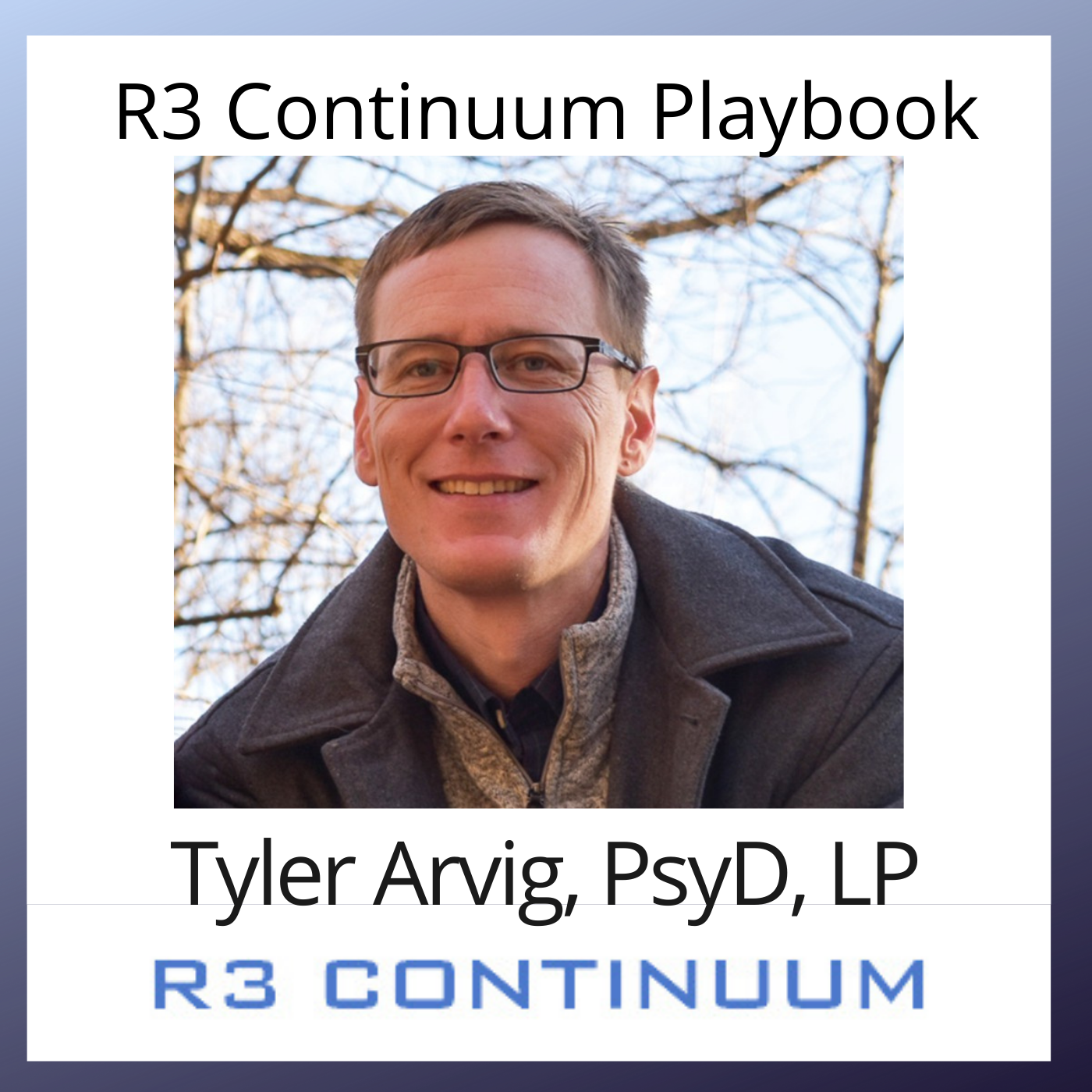
Stress and burnout, says Dr. Tyler Arvig, Associate Medical Director at R3 Continuum, affects not just the health of employees but that of the overall organization. With numerous surveys and studies revealing that employee stress and burnout have risen dramatically over the past year, Dr. Arvig discusses signs to watch for and resources that can be employed to address these conditions. The R3 Continuum Playbook is presented by R3 Continuum and is produced by the Minneapolis-St.Paul Studio of Business RadioX®. R3 Continuum is the underwriter of Workplace MVP, the show which celebrates heroes in the workplace.


TRANSCRIPT

Intro: [00:00:00] Broadcasting from the Business RadioX Studios, here is your R3 Continuum Playbook. Brought to you by Workplace MVP sponsor, R3 Continuum, a global leader in workplace behavioral health, crisis, and security solutions.

Tyler Arvig : [00:00:15] Hi. My name is Dr. Tyler Arvig, Associate Medical Director at R3 Continuum. Over the past two years, we’ve seen a dramatic increase in stress and burnout in employees. Stress and burnout, if left unaddressed, can have a significant impact on the mental health and overall wellbeing of our employees and our organization. There are a handful of challenges that surround stress and burnout in the workplace. Stress and burnout affect every level of an organization, from the executive level on down.

Tyler Arvig : [00:00:51] Stress and burnout affect people really on three different levels, personal, professional, and organizational. They are also often multifactorial, which can make finding the root cause a challenge. Employees have been through a lot over the past two years. While it may seem like working from home, practicing social distancing, masking, temperature checks, and the like, are just second nature these days. Many impacts on employees have yet to be fully realized.

Tyler Arvig : [00:01:26] Over time, stress and burnout can slowly erode employees until that level of stress that they’re feeling just becomes normal to them. And, often, when that happens, it’s simply quite unhealthy. In a recent webinar by R3 Continuum, we asked our audience if they felt an increase in stress due to work over the last year. We’ve received over 800 responses, 94 percent of which indicated they felt an increase in stress over the last year due to work. In that same webinar, we asked our audience if they’ve experienced any form of burnout over the last year. Again, those same 800 respondents, 84 percent said they have.

Tyler Arvig : [00:02:19] We can see just based on these numbers – and by the way, there are several other studies out there that show essentially similar findings – the stress and burnout are real and they’re having significant impact on employees in all industries. Having a better understanding of stress and burnout and knowing different ways to address these are critical to maintain the mental health and wellbeing of our employees and also, parenthetically, ourselves.

Tyler Arvig : [00:02:54] There are many different signs or key indicators of stress or burnout. If you noticed early these individuals, what they’re experiencing can be drastically reduced. Having keen observation skills can help identify some of the signs in employees, such as unusual changes in mood, difficulty getting stuff done, increased cynicism, having constant negative thoughts, or a negative attitude, having difficulty concentrating, sleeping too much or not getting enough sleep, concerns about substance use or abuse, and feelings of hopelessness. If you see these things, that may indicate an employee who is struggling with some level of stress or burnout.

Tyler Arvig : [00:03:50] If you do observe the above in your colleagues or you notice them in yourself, it’s important to recognize and to try and address these things. When it comes to supporting coworkers, there are numerous approaches we can take. But one of the most important and also easiest to do is simply to stay in touch. Communication and having a positive attitude is really important. And positive attitude, in particular, can be infectious and help rub off on others.

Tyler Arvig : [00:04:29] Help a coworker take a break from a project, because that’s also going to help them to have a little bit of a break from the stress they might be experiencing. When connecting, it’s important to not ask invasive questions. But if the coworker is beginning to open up or share, share your own experiences with them if you’ve had a similar situation. This will help them to validate the feelings they might be experiencing and to feel less alone or isolated in what they’re experiencing.

Tyler Arvig : [00:05:02] Make time to connect with others also outside of work. Letting that coworker take a break from work interactions and unwind is also a good way to help support them. But be mindful in any of these things to maintain professional boundaries and, certainly, to keep any information that’s shared privately, private.

Tyler Arvig : [00:05:27] As mentioned earlier, stress and burnout can affect anyone in the organization. Whether you’re at an executive level or you’re an intern, self-care needs to be a priority. Take some time to step back from your work and recognize when you’re feeling stressed or when you’re feeling burned out. This is key to being able to be effective at work and also help those around you.

Tyler Arvig : [00:05:54] Leaders often feel stress and burnout and never address it because they’re too busy supporting others. However, if an executive is no longer feeling motivated or a passion for the organization, that will trickle down through the workplace and through the workforce. Ensuring executives know the importance of addressing mental health for themselves and their employees is a really good way to make sure that your organization is supported from the top down.

Tyler Arvig : [00:06:26] There are many resources available, some through your organization and others that are more open sourced. Your workplace will probably have an employee assistance program or EAP. Most EAPs offers several no cost counseling sessions available for situations just like we’re discussing. Your H.R. department may also have resources available. I would recommend that people consider also engage in psychotherapy if they are struggling.

Tyler Arvig : [00:07:03] It is easier than ever to utilize psychotherapy as telehealth has made it possible to engage in therapy with your computer or even your smartphone. You don’t even need to leave your home or your desk. There are also other options such as free apps you can get on your phone or your computer that might help provide some basic skills or tips for managing stress, anxiety, or depression. You could also consider mutual support groups. An example of this that everyone might be aware of are Alcoholics Anonymous or Narcotics Anonymous. But these are groups were, essentially, people that are going through similar situations can help support each other. There’s lots of them out there, so utilize that. They don’t cost anything.

Tyler Arvig : [00:07:51] The point here is, you have many different options and nobody should hesitate to use anything and everything that’s available to them. Understanding the impact that stress and burnout can have on employees and knowing how to address these things properly can and does make a quantifiable difference on the health of your people and your organization.

Tyler Arvig : [00:08:17] R3 Continuum can help your organization support the wellbeing of your employees in many ways, including a service we call Proactive Wellness Outreach. To consult with an expert regarding your unique situation or to learn more about our custom solutions, you can contact us at www.r3c.com or reach out by email at info@r3c.com. Thank you very much.


Show Underwriter

R3 Continuum (R3c) is a global leader in workplace behavioral health and security solutions. R3c helps ensure the psychological and physical safety of organizations and their people in today’s ever-changing and often unpredictable world. Through their continuum of tailored solutions, including evaluations, crisis response, executive optimization, protective services, and more, they help organizations maintain and cultivate a workplace of wellbeing so that their people can thrive. Learn more about R3c at www.r3c.com.

R3 Continuum is the underwriter of Workplace MVP, a show which celebrates the everyday heroes–Workplace Most Valuable Professionals–in human resources, risk management, security, business continuity, and the C-suite who resolutely labor for the well-being of employees in their care, readying the workplace for and planning responses to disruption.

Connect with R3 Continuum:  Website | LinkedIn | Facebook | Twitter

Tagged With: burnout, Dr. Tyler Arvig, employee mental health, R3 Continuum, stress, Workplace MVP, workplace wellness

Workplace MVP: Wendi Safstrom, SHRM Foundation

October 28, 2021 by John Ray

Wendi Safstrom, SHRM Foundation
Minneapolis St. Paul Studio
Workplace MVP: Wendi Safstrom, SHRM Foundation
Loading
00:00 /
RSS Feed
Share
Link
Embed

Download file

Wendi Safstrom, SHRM Foundation

Workplace MVP:  Wendi Safstrom, SHRM Foundation

In this conversation with host Jamie Gassmann, SHRM Foundation Executive Director Wendi Safstrom observed that a failure to support employees’ mental health not only weighs on the employees themselves but also weighs heavily on an organization’s bottom line. With that factor in mind, Wendi outlined several new initiatives of the SHRM Foundation, including an in-person summit which included participants across the organizational structure, including CEOs. She discussed issues which have made mental health and wellness a top priority for the foundation, the research they are drawing on, the costs of an organization doing nothing, and much more. Workplace MVP is underwritten and presented by R3 Continuum and produced by the Minneapolis-St.Paul Studio of Business RadioX®.

SHRM Foundation

The SHRM Foundation’s mission is to mobilize the power of HR and activate the generosity of donors to lead positive social change impacting all things work. The Foundation is committed to elevating and empowering HR as a social force through its innovative solutions to workplace inclusion challenges, programming designed to inspire and empower the next generation of HR leaders, and awarding scholarships and professional development grants to educate and develop students and HR professionals.  The SHRM Foundation is a 501(c)(3) philanthropic arm of the Society for Human Resource Management.

Company website | LinkedIn

Wendi Safstrom, Executive Director, SHRM Foundation

Wendi Safstrom, Executive Director, SHRM Foundation

Wendi Safstrom is a senior non-profit leader committed to serving the public through philanthropic program management, cultivating strategic partnerships and managing and developing high-performing teams. She has both association and nonprofit management experience including; national program development and administration, membership strategy, marketing and product development, grant management, development and donor stewardship, and leading cross-functional teams. Safstrom currently serves as Executive Director for the Society for Human Resource Management Foundation (SHRM Foundation), where she leads the development and implementation of SHRM Foundation’s programmatic, development, and marketing and communication strategies in support of SHRM Foundation’s new mission and vision, creating growth plans and ensuring alignment with SHRM goals.

Prior to assuming the role at SHRM Foundation, Safstrom served as Vice President at the National Restaurant Association and National Restaurant Association Educational Foundation, where she led the development and implementation of their Foundation’s most recent five-year strategic plan, and was responsible for all Foundation programming, including workforce development initiatives, scholarship and event management, community relations and engagement initiatives. The NRAEF’s philanthropic programming supported a number of audiences including high school youth, veterans transitioning from service to civilian work and life, opportunity youth and incumbent workers. Of particular note, she led the implementation of the restaurant industry’s premier high school career and technical education program, growing the program to over 2,000 public high schools, engaging over 150,000 students annually, nationwide. In 2016, she served as lead project director for the development of a $10 million contract awarded by the U.S. Department of Labor to develop the hospitality industry’s first apprenticeship program, and was instrumental in the Foundation’s reorganization and relocation of operations from Chicago, Illinois to Washington, D.C., transforming the staff and culture.

Safstrom has also held human resource management roles with the Leo Burnett Company and Hyatt Hotels Corporation in Chicago, Illinois. She has a BS in Business Administration from the Eli Broad School of Business at Michigan State University and was recognized as a member of the 2014 “Power 20” by Restaurant Business Magazine as a leader in philanthropy within the restaurant industry.

LinkedIn

R3 Continuum

R3 Continuum is a global leader in workplace behavioral health and security solutions. R3c helps ensure the psychological and physical safety of organizations and their people in today’s ever-changing and often unpredictable world. Through their continuum of tailored solutions, including evaluations, crisis response, executive optimization, protective services, and more, they help organizations maintain and cultivate a workplace of wellbeing so that their people can thrive. Learn more about R3c at www.r3c.com.

Company website | LinkedIn | Facebook | Twitter

About Workplace MVP

Every day, around the world, organizations of all sizes face disruptive events and situations. Within those workplaces are everyday heroes in human resources, risk management, security, business continuity, and the C-suite. They don’t call themselves heroes though. On the contrary, they simply show up every day, laboring for the well-being of employees in their care, readying the workplace for and planning responses to disruption. This show, Workplace MVP, confers on these heroes the designation they deserve, Workplace MVP (Most Valuable Professionals), and gives them the forum to tell their story. As you hear their experiences, you will learn first-hand, real life approaches to readying the workplace, responses to crisis situations, and overcoming challenges of disruption. Visit our show archive here.

Workplace MVP Host Jamie Gassmann

Jamie Gassmann, Host, “Workplace MVP”

In addition to serving as the host to the Workplace MVP podcast, Jamie Gassmann is the Director of Marketing at R3 Continuum (R3c). Collectively, she has more than fourteen years of marketing experience. Across her tenure, she has experience working in and with various industries including banking, real estate, retail, crisis management, insurance, business continuity, and more. She holds a Bachelor of Science Degree in Mass Communications with special interest in Advertising and Public Relations and a Master of Business Administration from Paseka School of Business, Minnesota State University.

TRANSCRIPT

Intro: [00:00:04] Broadcasting from the Business RadioX Studios, it’s time for Workplace MVP. Workplace MVP is brought to you by R3 Continuum, a global leader in workplace behavioral health and security solutions. Now, here’s your host, Jamie Gassmann.

Jamie Gassmann: [00:00:25] Hi, everyone. Your host, Jamie Gassman here, and welcome to this episode of Workplace MVP. So, I just saw a statistic the other day that indicated that $23 billion dollars is spent annually in the United States from the loss of work productivity as a result of depression alone. Depression also contributes to 200 million lost workdays annually around the world. Now, imagine the other common mental health diagnoses that employees may be dealing with, like anxiety or bipolar disorder, and what the loss of productivity and workdays might look like with all of them combined.

Jamie Gassmann: [00:01:02] A focus on mental health in the workplace has become more of a priority to employers and employees over the last year. But there’s still a stigma that workplaces are facing when it comes to talking about or offering mental health support in the workplace. How can employers ensure they’re offering the right level of mental health and wellness support? And, how can they ensure they are reducing, if not eliminating, the lingering presence of stigma?

Jamie Gassmann: [00:01:27] The Society of Human Resource Professionals, also known as SHRM, is on a mission to help employers create better workplace wellness through their SHRM Foundation. And, with us today to share the great work SHRM Foundation is doing to better workplace mental health and to offer best practice advice for our employers and listeners of Workplace MVP is SHRM Foundation President, Wendi Safstrom. Welcome to the show, Wendi.

Wendi Safstrom: [00:01:53] Thank you. Thanks so much for having us today.

Jamie Gassmann: [00:01:56] So, let’s start off. Can you walk us through your career journey and how you kind of – the path you took to getting to the position you’re in today?

Wendi Safstrom: [00:02:06] Sure, absolutely. And, thanks for asking. So, I have been with SHRM Foundation for just over four and a half years, and I have the great pleasure of working with the CEO and President of SHRM, Johnny C. Taylor, Jr.

Wendi Safstrom: [00:02:18] And, over the last couple of years, we’ve really morphed the work we do, our purpose, vision, and mission. And, again, I’m just really honored and proud to be representing the foundation today, and I’m really excited to be in this particular role when you talk about my professional journey because I was an H.R. professional way back. Back in the day, right after I graduated from school, from college, I had different recruiting and H.R. roles with the Leo Burnett Company, a large advertising agency in Chicago, and with Hyatt Hotels, their corporate offices in Chicago as well.

Wendi Safstrom: [00:02:51] Fast forward, about 20 years later, now, really, what I would consider an association and nonprofit lead, right? So, I’ve got experience in National Program Development Administration, membership strategy, marketing and product development, grant management, all the kinds of things you have to do to fundraise, to actually feel your work, and really focusing on leading cross-functional teams. And, this position is really the perfect blend of supporting an industry for which I have, or profession I should say, a deep respect and affinity for in a nonprofit role, so we can really help H.R. professionals lead positive social change in the workplace. And, really excited to be talking with you about workplace mental health and wellness today.

Jamie Gassmann: [00:03:37] Absolutely. It’s such an important topic right now, especially after the last year and a half that we’ve been navigating, especially for workplaces and leaders themselves trying to figure out how to help support those employees. So, with that in mind, you know, talk me, tell me a little bit about the SHRM Foundation, you know, some of the different types of work that you do and then particularly some of the work that you’re focused around with mental health and wellbeing.

Wendi Safstrom: [00:04:03] Sure. Just really quickly, sure. We’re the SHRM Foundation. We’re the 501(c)(3) philanthropic affiliate of the Society for Human Resource Management, SHRM. And, SHRM is the world’s largest professional society for H.R. We engage about 300,000 members and by extension over 115 million employees in countries around the world every single day.

Wendi Safstrom: [00:04:24] So, our platform to affect change is tremendous and we’re here to leverage that opportunity. Our mission at the foundation is, as I mentioned, to mobilize the power that H.R. professionals have and really help them activate positive social change and help them lead positive social change, impacting all things work. And, we think that, perhaps more so now than ever before, it’s so important to realize or help realize our shared vision, which we share with SHRM of that being a world of work that works for all. And, when we talk about the foundation at a very high level, we often refer to our work and kind of four pillars of work and we have programming tools and resources to support each of those pillars of work, and all of this information is available on our SHRM Foundation website, which I’m sure will show some of the resources at the end of the podcast.

Wendi Safstrom: [00:05:14] So, I think one of the most effective but least utilized solutions to addressing gaps in diversity, equity and inclusion strategies is hiring and retaining workers who may not be the standard that businesses consider when they’re seeking talent due to biases or uninformed misconceptions or perceptions. So, through our Building an Inclusive Workplace Initiative or our untapped pools of talent programming, we help H.R. professionals develop and provide equitable opportunities for employment and provide them a pathway by which they can create inclusive cultures and workplaces for those valuable members of untapped pools of talent, veterans, individuals with criminal records, individuals with disabilities, older workers, opportunity youth, who bring tremendous potential to workplaces but are often overlooked.

Wendi Safstrom: [00:06:05] And, a newer initiative for the foundation in partnership with our SHRM membership team is a targeted focus on supporting emerging professionals, so the H.R. professionals of the future. And, in our role as a professional society, we care and should care about the development of that next gen of H.R. professionals. So, we help activate student professional networks. We provide scholarships and opportunities for students who are considering and are pursuing H.R. to connect with working H.R. professionals in the event, or they hope that they continue their journey, their professional journey with SHRM.

Wendi Safstrom: [00:06:41] And then, really, the two areas of focus that have emerged over the last year are linked to upskilling and reskilling that helps prepare people not only for the future of work but helps prepare people who have been displaced to get them back into the workforce, and that all lends itself truly to the primary focus why we’re here today, which is workplace mental health and wellness.

Wendi Safstrom: [00:07:03] And, the statistics that you mentioned are staggering in terms of the impact that workplace mental health and/or lack of support and the stigma – with stigma comes silence – the impact that it has on businesses and their bottom lines. There is a tremendous need, if now, so if not now, probably moreso ever than before for these strategies, evidence-based tools, resources, especially in the wake of the pandemic, times of social unrest, and really economic instability. So, in a nutshell, that’s what the foundation does, and workplace mental health and wellness is at the top of our priority list.

Jamie Gassmann: [00:07:44] Yeah. A lot of amazing work. Some areas, obviously, that you kind of drawing out concepts and thinking that maybe, you know, H.R. leaders or business leaders haven’t thought of before or maybe haven’t, you know, maybe bold enough or brave enough or even considered going into looking into those areas for workers and helping workers. So, that’s great. So, you know, with talking about this, this mental health, I mean, there’s a core focus and a purpose for the foundation around that. Can you talk a little bit about what that looks like and what you’re working towards with that enhanced focus?

Wendi Safstrom: [00:08:22] Sure. Our shared purpose again in alignment with SHRM is really to elevate H.R., and we talk about elevating H.R., we’re talking about elevating the professional knowledge and skills that H.R. professionals have and practice every single day. We’re talking about elevating the profession of H.R. and the thoughts and attitudes and stereotypes people may have of what it means to work in H.R. or what it means to have H.R. serve as a business leader in which they are. They’re in positions to really affect change in the workplace. And, you know, we’re long past the day where H.R. was thought of as the payroll and paper processing, you know, we’re going to hire and fire people. Those are long gone.

Wendi Safstrom: [00:09:05] And, if there were ever a time for excellence when it comes to H.R., it’s now. And, in fact, the need for H.R. professionals has continued to grow nearly twice the average growth rate for all other occupations so there’s a need. And, this workplace mental health and wellness, this was an issue even prior to COVID and everything that’s happened over the last year, year-and-a-half.

Wendi Safstrom: [00:09:27] Mental illness and mental wellness continue to be an issue that H.R. professionals, together with other members of the C-suite or their CEO and leadership need to come together and make a commitment to affect cultural change within their organizations. So, really, we’re elevating H.R. and their knowledge skills, competencies related to workplace mental health wellness, and we’re elevating those kinds of positions so that they are viewed in the same lens that other members of the C-suite are if they’re not there already.

Jamie Gassmann: [00:09:57] Yeah. Now, fantastic, because they really are kind of the eyes and ears to culturally how people are feeling. I mean, sometimes I, you know, as a leader myself, find that my employees might be and not at a fault of my own or in a fault of another leader is just H.R. is kind of like that person they can go to for that, you know, different level of support than what they might be able to obtain from their actual leaders. So, they really do have eyes and ears into people’s wellbeing at a different level than other organizational leaders might.

Wendi Safstrom: [00:10:30] Yes.

Jamie Gassmann: [00:10:31] And so, to help kind of further expand your foundation’s focus on workplace mental health, you recently held a workplace mental health summit in New York. And, I believe if I’ve got my information correct, it was like the first of its kind that you had created just specifically this year. Can you share with us what were some of the main topics that you covered, you know, based on what you were seeing within the workplace that’s become more common?

Wendi Safstrom: [00:10:55] Yeah. Actually, it was the first, not only the first summit of this kind for organization addressing workplace mental health and wellness, but it was in-person and we had every COVID protocol you can imagine in place. I think it was a tremendous opportunity for subject matter experts, scientists, psychologists, CEOs, CHROs, philanthropists, policymakers, other business leaders, because it’s going to take all of us, truly, to affect change in work as it relates to workplace mental health and wellness. It can be implemented and impacted by H.R. professionals, but it’s going to take a village, so to speak, and all those kinds of people working together to make things happen.

Wendi Safstrom: [00:11:36] And, you know, we held this meeting despite the odds because we recognized the status quo would not do. We had speakers. We had, I think, 33 panelists in different speaking roles and covering different topics that were very passionate and knowledgeable about the topics that they brought to the table as it relates to workplace mental health and wellness.

Wendi Safstrom: [00:11:57] There’s a phrase that I’ve picked up somewhere, so now I’ve continued to use it, which is we’ve admired the problem, right? We understand that there is an issue. The statistics are staggering in terms of impact on people and business and communities. And so, rather than focus on talking to one another and telling one another what an issue and a challenge we have, we framed the topic of workplace mental health and wellness and then we started to move into that deep and what can be often crowded or complicated space of mental health and mental illness right out of the gate, right? So, we were really focused on discussions around what’s working ideas in terms of strategies and tactics in terms of attitudes, thoughts, perceptions, and tools that H.R. professionals could be using or should be using to affect change within their organizations.

Wendi Safstrom: [00:12:47] Some of the speakers we had, Dr. Arthur Evans was the CEO of the American Psychological Association. His topic was really focusing on that, a psychologically healthy workplace. Amazing, amazing dialogue. With other psychologists who brought that kind of scientific and clinical perspective to the table, but made it real and relevant to the working professionals who are in the audience.

Wendi Safstrom: [00:13:11] We had the Honorable Patrick J. Kennedy. He’s a former congressman from Rhode Island, and his whole focus was talking about there is no health without mental health and different kinds of strategies that we can, as that village, really help advance this national priority of mental health.

Wendi Safstrom: [00:13:29] And, we had an amazing speaker, Dr. Nadine Burke Harris, and she’s the California surgeon general. She brought some insights to the table with regard to adverse childhood experiences and its impact on the workplace, not only today but in the future, and the impact of trauma that is compounded certainly by what’s been going on over the last year and a half.

Wendi Safstrom: [00:13:51] So, lots of different perspectives, lots of topics. We landed on kind of a six-point plan or outcomes that were going to be activating and putting into motion here in the next couple of weeks.

Jamie Gassmann: [00:14:02] Wow. Sounds like a great event. Lots of great information and takeaways.

Wendi Safstrom: [00:14:06] Lots of good energy. And, I’ve, you know, rarely been to a summit where people stay the whole time and they’re taking notes the whole time and that was really neat to see, people at all levels and all different kinds of, representing different kinds of organizations.

Jamie Gassmann: [00:14:21] Oh, fantastic. So, you know, you kind of mentioned status quo. So, you know, some experts also say that employers can no longer afford the status quo of mental health support. So, share with me a little bit about your thoughts on this.

Wendi Safstrom: [00:14:36] Sure. So, we often say that the cost of doing nothing about or continuing to do what we’re doing, which is likely most often nothing, right, about workplace mental health and wellness is significantly higher than investing in evidence-based prevention and treatment. And, we know that failure to support employees’ mental health not only weighs on the employees themselves but it also weighs heavily on an organization’s bottom line. And, some of the statistics that you mentioned are truly staggering, the loss of productivity. The fact that depression alone costs people workdays. So, not only are the individual workers at risk, you’re putting the business at risk. The businesses go out of business that impacts the individual workers themselves and their communities.

Wendi Safstrom: [00:15:24] We do know in terms of why you can’t afford to do this. By investing in workplace mental health and wellness, you’re increasing retention and recruitment. You’re adding to your recruitment strategies or your talent management strategies. You’re increasing productivity. You’re helping lower absenteeism. You’re lowering the costs related to disability and medical-related costs for your medical plans, and you’re also reducing employee-related risks and other types of liabilities.

Wendi Safstrom: [00:15:56] And so, for every dollar invested in good mental health, promoting good mental health, providing the tools and resources, every dollar invested has a $3 to $5 return. So, in terms of no longer afford, I think we can help businesses become not only more successful perhaps by really making investments in these critical solutions as opposed to continuing with that status quo and continuing to pretend that it’s not an issue or a problem.

Jamie Gassmann: [00:16:25] Yeah. They need to look at it as more of an investment into their organization as opposed to a cost.

Wendi Safstrom: [00:16:32] Exactly.

Jamie Gassmann: [00:16:32] Which is probably what they maybe still kind of so changing that thinking around that might help them. So, if an H.R. leader was going to put that into context, do you have recommendations for how they might, you know, proactively go to leadership and change some of that thinking from it as a cost to and it’s an investment into the organization?

Wendi Safstrom: [00:16:58] Yeah. I think that there are – we were just on another call with folks talking about more tactical solutions for like EAPs and having addressing stigma and having a communication, making it okay to talk about workplace mental health and wellness and organizations if employers are struggling. We talked about the importance of investing in training managers. So, managers, I think more so than H.R. professionals, are the folks that see folks every day. And so, training managers not to be psychologists or psychiatrists or social workers but to train managers to understand the signs when employees are struggling so that they can head off issues at the earliest stage possible.

Wendi Safstrom: [00:17:38] But I think that leaders and managers should embrace, really, four qualities, I think. They include awareness. We talked a little bit about this at the summit. They include awareness, vulnerability, empathy. We talk a lot about empathy and humility here at SHRM, and compassion. I think that those are really critical qualities for business leaders in order to care for people who are in crisis and to really set the stage for business recovery as we’re headed in that direction.

Wendi Safstrom: [00:18:07] And, I think managers can start that by creating a space to get a better awareness of what’s going on in and around them. I think managers can be, should be bold in exhibiting vulnerability and lowering their own guard, and confront what’s unfolding, and understanding and acknowledging that employees are indeed struggling. And, they should be demonstrating empathy to really better tap into the emotions that others are feeling.

Wendi Safstrom: [00:18:37] So, it’s tools and resources and training, but it’s also affecting change within your culture, making it okay and having leaders and managers really practice what they’ve been preaching, if you will.

Jamie Gassmann: [00:18:49] Yeah, absolutely. And, looking at employees and, you know, this kind of thinking around the next generation of employees and their expectations of employers, you know, we see a lot in just different areas that employees are expecting more from their employer in the types of support and mental health options that they have and kind of having that mixture of multichannel approaches. What are some of your thoughts around the changes that you’re seeing with generations coming into the workforce versus previous generations?

Wendi Safstrom: [00:19:25] One of the advantages that we have at the foundation in working with SHRM as the broader enterprise is tapping into this tremendous expertise we have in our very own research division within SHRM, and they have uncovered some really interesting data that kind of goes along the lines that you would anticipate. But it really does provide that qualitative, excuse me, quantitative evidence so that we can plan more effectively. So, that research does find, right, the younger generations or younger workers, I should say, do expect more out of their employers and that includes that in the area of workplace mental health and wellness. It’s one thing to have health benefits that relate to physical health, but mental health is incredibly important as well.

Wendi Safstrom: [00:20:09] And, the research that we’ve gotten from SHRM shows that Americans who are older millennials, perhaps 35% of them, are more likely to indicate that they feel comfortable discussing their mental health at work as compared to baby boomers or traditionalists at 21% percent. Working Americans who are Gen Z or younger millennials or 30% are more likely to indicate that since the start of COVID, they feel more comfortable talking about their mental health at work than before the pandemic. But you compare that to Gen X, myself, or even baby boomers and traditionalists that hovers around 15% to 8%. So, that’s a big gap in terms of wanting to access expecting benefits when it comes to choosing an employer because employees are in a position now to choose their employer as much as employers are in a position to opt to hire employees. And, that is just another layer of why it’s so important that you can manage a multigenerational workforce because of the attitudes and the perceptions in their approaches, even amongst the different generations that exist in the workforce.

Jamie Gassmann: [00:21:23] Yeah. So interesting, you know. And, speaking of research, so, you know, also from your research, the work the foundation has done, you’ve identified benefits to employers when they’re investing in workplace mental health and wellness. Can you talk to some of those benefits that, you know, trickle down from putting focus on this?

Wendi Safstrom: [00:21:42] Yeah, and I touched on some of that, but it’s kind of lends itself to that business case again, right? The cost of doing nothing as opposed to making the investments in mental health strategies in affecting and changing our culture are much higher if you’re doing nothing. So, some of the benefits employers can expect by investing in those strategies are really, like I said, in lockstep with the business case and it helps increase retention, helps improve recruitment, which all comes at a cost to the organization. And, as I mentioned, it lowers absenteeism and medical costs and reduces employer-related risks and other potential liabilities. Those all factor into the cost of doing business when it comes to employees or labor.

Wendi Safstrom: [00:22:28] It’s great news for businesses, but I think that focusing on the business benefits. Yes, there is a business case for investments in these strategies and paying attention to the issues at hand, but the point is that it’s also the right thing to do. Your employees, they’re struggling. They said that they’re struggling, they’re suffering. And, the events of the past two years have left a lot of people traumatized, fearful, angry. Some of them are grieving.

Wendi Safstrom: [00:22:59] And, SHRM’s research says that a recent study of American workers shows 76% of those people think companies should do more to support the mental health of their workforce. So, all of those points to cost savings, yes, from a business case perspective, but also lend themselves to taking good care of an organization’s most valuable resource, which are its employees.

Jamie Gassmann: [00:23:25] Absolutely. Wow, staggering. The 76% are looking for them to do more.

Wendi Safstrom: [00:23:29] Exactly.

Jamie Gassmann: [00:23:30] Yeah. So, you know, and obviously like on the flip side of that, in terms of the impact to the organization when they aren’t doing more, we can say, you know, there’s more turnover, but there’s other impact and factors that come into play when they’re not doing more. Can you speak a little bit to that in terms of the impact to the organization when they are like status quo, everything’s fine here. What –

Wendi Safstrom: [00:23:57] Nothing to see. Moving right along…

Jamie Gassmann: [00:23:59] Nothing to see. Let’s just keep going. What are some of the impacts from a negative perspective that they could be experiencing?

Wendi Safstrom: [00:24:05] As you say, it’s the exact opposite, increased productivity versus the loss in productivity. An increase in medical costs, an increase in retention rates. If they’re not investing, those are the things that they will see. And, I do think because of the shift in mindset on the next generation of folks who are entering the workforce, as baby boomers begin to retire and Gen X and millennials kind of move along their professional careers, people are expecting and anticipating to receive that kind of support. They’re wanting to work in cultures that prioritize workplace mental health and wellness. And, I think employers will have an increasingly difficult time, not only retaining employees but recruiting them, because employees are considering not only their salary, right, but it’s a total comp package and that includes benefits, and they’re looking for benefits linked to good physical health and increasingly important, as all the data shows, benefits linked to supporting good mental health. So, if we don’t do anything, I think it’s going to be more difficult to both hire and retain top talent.

Jamie Gassmann: [00:25:13] Yeah. And, I think too that trickles down to hiring or not hiring but obtaining, you know, implementing new clients and retaining clients because that customer experience starts to be degraded when you’ve got employees who are not happy and satisfied as well.

Wendi Safstrom: [00:25:28] Or leaving or getting sick. It gets to the point where they can’t cope and that’s when the lost productivity to your point comes into play. That’s when lost days in terms of work comes into play. So, absolutely.

Jamie Gassmann: [00:25:41] Yeah, interesting. And, obviously looking at turnover this last year, we’ve been experiencing what they’re calling the great resignation where employees are voluntarily leaving jobs. And, I’ve even seen in some stats where they’re leaving and not having another job lined up. They’re just deciding I’m done. You think there’s a correlation between the great resignation and mental health within employees.

Wendi Safstrom: [00:26:07] Yeah. And, I think a lot of factors are contributing to that great resignation. I think to your point, people are leaving jobs without plans for another because they feel that this is a moment for them to make a personal professional change, right? And, there’s not necessarily anything we can do directly about that. But that is just a factor, including, as you mentioned, better compensation.

Wendi Safstrom: [00:26:31] We’re seeing astronomical salaries in some instances for people to leave an organization and go work for another organization doing similar and often even dissimilar but related work. People are leaving in anticipation of better work-life balance, maybe better benefits, perhaps people see opportunities for career advancement in different organization. And, I think that the remote work, there are pluses and minuses, right, to remote work versus in an office. And, I think organizations have to decide what kind of culture they want to be. I think people are making assumptions that remote work is better than in-office culture, or in-office companies require folks to work in office, and so they may be looking for organizations specifically to go work for that offer those kinds of opportunities.

Wendi Safstrom: [00:27:20] And, the research again shows that workers will opt to look for another job if they don’t feel they have that mental health support in addition to the physical health in the workplace and, 53%, excuse me, my researchers would correct me. Fifty-three percent of working Americans have said they’re likely or very likely to leave their current job to resign if they were offered a new job with significantly better mental health benefits and 47% of converse are unlikely or very unlikely to leave for better mental health benefits, but that’s going to be on the rise and, again, gives organizations a competitive edge when it comes to talent if they’re investing in these types of solutions.

Jamie Gassmann: [00:28:05] Interesting. So definitely something that needs to be not just status quos sweep under the rug but focused on as an organization because the impact, if you’re not feeling it right now, it’s eventually going to come.

Wendi Safstrom: [00:28:16] It’ll catch up. Yeah, absolutely.

Jamie Gassmann: [00:28:18] Interesting. We’re going to take a moment to hear from our show sponsor. Workplace MVP is sponsored by R3 Continuum. R3 Continuum is a global leader in providing expert, reliable, responsive, and tailored behavioral health disruption and violent solutions to promote workplace wellbeing and performance in the face of an ever-changing and often unpredictable world. Learn more about how R3 Continuum can tailor a solution for your organization’s unique challenges by visiting r3c.com today.

Jamie Gassmann: [00:28:52] Now, diving in a little bit into the foundation itself, so SHRM Foundation is offering a new Workplace Mental Health Ally Certificate. Can you tell us more about that certificate and what, you know, individuals need to do in order to achieve that?

Wendi Safstrom: [00:29:07] Sure. We actually launched – our President and CEO, John C. Taylor, Jr., announced the launch of our new Workplace Mental Health Certificate at our annual conference that I mentioned that took place in August to September. We kind of moved it from June to later in the year. And, when he announced the fact that we had a solution on-hand at SHRM Foundation, you could hear an audible gasp from the audience, which really surprised me, but gave me reason for hope, because people, that’s just an indicator, anecdotal indicator of how important this kind of training and access to this kind of training is to those H.R. folks.

Wendi Safstrom: [00:29:47] The certificate itself was developed in partnership with an organization called Psych Hub, which is, really, as they define themselves, and I would tend to agree, the world’s most comprehensive multimedia platform for mental health education. And, again, we worked with SHRM, some of the instructional designers at Psych Hub, and the foundation to really create and craft this training specifically for H.R. professionals and people managers.

Wendi Safstrom: [00:30:15] It’s an online learning program that is comprised of a series of eight multimedia courses. They cover things like mental health, common mental health conditions, issues linked to substance abuse and suicide, safety planning, diversity bias and equity and its links to mental health and the impact on one’s mental health, and, I think, most importantly, communication skills. And, after the H.R. folks complete all eight hours, the intent is that they have more knowledge and skills to really develop that empathy and support for the mental health and wellness of employees and their colleagues and themselves really in the workplace.

Wendi Safstrom: [00:30:59] And, they get a certificate at the end, another addition to your professional portfolio. The cost is $99 per user and actually a portion of that cost is donated back to the foundation, which allows us to continue doing the work we do. And, again, all of this is on our website or www workplacementalheath@shrm.org and I encourage you to check it out.

Jamie Gassmann: [00:31:25] Awesome. And, you also are offering awards to workplaces.

Wendi Safstrom: [00:31:29] Yes.

Jamie Gassmann: [00:31:29] And, I’m going to – hopefully I say this word name correctly. It’s the Tharseo award there.

Wendi Safstrom: [00:31:35] Tharseo. Trust me [inaudible]

Jamie Gassmann: [00:31:36] Tharseo. Okay. Close. And, I should have asked you beforehand how to pronounce that.

Wendi Safstrom: [00:31:42] No, no, that’s okay. Trust me.

Jamie Gassmann: [00:31:43] And, you’re recognizing leaders who are boldly changing their workplace. So, some of the things we’ve talked about already on the show today about, you know, it really does take change management. You know, now you offer this award for those workplaces who, you know, are doing that. And so, talk to me a little bit about some of the recipients you’ve had, some of the work, and maybe some of the case examples of how they achieved that award.

Wendi Safstrom: [00:32:08] Sure. We were busy last Monday. We had this. We had our workplace mental health and wellness summit from 7:00 in the morning until about 3:30. And then, we continued into our Tharseo Awards and that’s what you just described here. We recognize a CEO, a CHRO, and an individual who is involved in policy related to all things work.

Wendi Safstrom: [00:32:32] At this awards program we had, Arianna Huffington had a sit-on-down dialogue with Johnny C. Taylor Jr. I’m talking about the importance of wellness. So, we continued the thread of the discussion that we had at the summit into the actual awards program itself. And, I think you’ll find this interesting. Tharseo is really derived from the Greek word, meaning courageous, confident, and bold. And, the awards themselves were inspired by and made possible by contribution from Ram Charan, who in the H.R. space he is certainly a legendary businessman. He’s an author and speaker.

Wendi Safstrom: [00:33:09] And, we identified the recipients through the awards through quite an extensive process. You cannot nominate yourself. We had an independent group of jurors who really evaluated each of the candidates, and they were evaluated on qualitative and quantitative measures. And, the criteria we were looking for was looking for actions and attitudes, and implementation linked to innovation and overall impact on the company and the global workforce and how the two really need to work together. So, the Policy Transformer of the Year was Bobby Scott from Virginia, US congressman from Virginia. And, our Ram Charam Human Resource Innovation Award was Gloria Chen. She is the Chief People Officer and Executive Vice President and Employee Experience at Adobe. She has a really interesting background. Prior to becoming and assuming the CHRO, for lack of a better word kind of catch-all phrase, in Adobe, she spent 20 years in leading strategy at Adobe. So, she was part of crafting that culture as she was in charge of strategy and she’s made that transition to H.R. and she’s seeing where all of those pieces fit together. So, neat background. I encourage you to check out our website and see her bio.

Wendi Safstrom: [00:34:24] And then, our CEO of the Year was Ajay Banga, excuse me. He’s the Executive Chairman and immediate former CEO of MasterCard, and he’s an amazing, amazing man. He does work all over the world. He truly puts H.R. and the function, the profession, right up there with that of the CFO, the CMO, and the C-suite, understanding the connectivity between working with people and doing good business as it relates to people and employees equates to successful businesses and to businesses being successful in terms of a financial return.

Wendi Safstrom: [00:35:02] So, all three of them were recognized. Congressman Scott was called away to Washington, but we had a great opportunity to engage with Ajay and Gloria at the Awards themselves.

Jamie Gassmann: [00:35:13] Wonderful. And, what a great honor to be recognized for making that change within your work, your organization, but also being able to speak to the benefits that they’ve seen from that change. That’s amazing.

Wendi Safstrom: [00:35:26] Yeah.

Jamie Gassmann: [00:35:26] So, looking at leaders and those H.R. leaders or C-suite leaders or other business leaders that might be listening to this episode, what advice would you give to them for what they should be focused on when it comes to mental health in the workplace?

Wendi Safstrom: [00:35:42] Just underpinning of that, it can no longer be ignored. That’s admiring the problem. We know it’s an issue and it lends itself to a financial success, continued financial success, and that it really starts from the top. It’s got to be a commitment from the CEO. I hate the phrase trickle down, but truly it’s got to permeate throughout the organization.

Wendi Safstrom: [00:36:01] We know that mental health issues in the workplace, it’s not a new thing. I mean, we were dealing with and managing through mental health and mental illness prior to COVID, the pandemic, and the issues linked to social justice and other kinds of unrest. But it’s really magnified the challenges that employers are facing. And, now so more than perhaps ever before, mental ill, not necessarily mental illness, which is diagnosed and treated like things like schizophrenia or being bipolar, but things like suicide, depression are really, if not, being experienced by the employees by themselves, but people within their sphere of care.

Wendi Safstrom: [00:36:44] So, I just would suggest they create a supportive culture that includes empathy, as I mentioned before, and really arming not only your H.R. professionals but those first-line supervisors and managers first with the tools and the tools to recognize and communicate when they see issues and provide support to their employees. That’s going to be vital to really building these better workplaces, and we’re going to continue to build on our partnerships. The 33 speakers we had at our summit, we access them all through partnerships and talking to people smarter than us. In this particular space, we bring the voice of the employer together, but we’re going to continue to build on those partnerships to shape further opportunities so that leaders and employers will be ready hopefully and able to provide this culture of support.

Jamie Gassmann: [00:37:35] Wonderful. And, looking at the foundation itself, you know, what are some of the accomplishments that the foundation has received with focusing on mental health and wellness in the workplace?

Wendi Safstrom: [00:37:46] Yeah. So, we really launched an initiative. We realized that workplace mental health and wellness was going to become, would be exacerbated in 2020. And, yes, there’s return-to-work conversation and there are H.R. folks dealing with furloughs and layoffs. But we really felt strongly, back in April really of last year, that workplace mental health and wellness was going to be a challenge.

Wendi Safstrom: [00:38:10] And so, what we launched was this initiative and that’s been really carefully designed to accelerate the movement, not only to provide training and create cultures that are conducive to good mental health and workplaces but to really eliminate the stigma, right, of mental health in the workplace and what it means and to help individuals foster that culture where mental health can be discussed openly and organizations can build a more complete approach to employee wellness. So, we’re doing three things and we’re working. These are continued things in motion if you will. One of them certainly being the summit that we just had last Monday. We’ll be acting on the outcomes from that summit and continuing the conversation with another follow-up summit into 2022.

Wendi Safstrom: [00:38:58] We’ve developed a platform for thought leadership or research that really supports mental health and wellness in the workplace so that we can create that portfolio of resources that are things like the Mental Health Ally Certificate and other evidence-based programming, including additional training modules and educational resources, so we can continue to curate and build on the resources that we’ve already established in our mental health and wellness hub.

Wendi Safstrom: [00:39:24] So, the summit was a great moment for us to really convene subject matter experts. The worst thing I think you can do is attend a great meeting where there’s phenomenal dialogue. Leave the meeting, everybody goes back to their places of work and nothing gets done. And so, I think what I’m most proud of at the foundation to date with regard to this topic is the execution of that summit and our commitment to making things happen after the summit itself.

Jamie Gassmann: [00:39:50] Wonderful, and it sounds like a lot of great resources, great information, and great work that you’re doing overall. And, looking at that, you know, with our listeners, if they wanted to get more information on how they can take advantage of the information and tools and resources from the foundation or from SHRM overall, or if they just want to get a hold of you to get, you know, to get insights or information from you, how would they be able to do that?

Wendi Safstrom: [00:40:19] A couple of different ways. You can go to the shrmfoundation.org website and that you’ll find information about each of those pillars of work that I described at the very beginning of our conversation. If you’re interested in most specifically about our workplace mental health and wellness, you can go to workplacementalhealth, all kind of one word, .shrm.org, and certainly staff. We’ve got a team on the foundation, I think seven of us including me, and feel free to reach out to any of the team that’s listed on our website. If they’re not managing workplace mental health and wellness, the individual you reach out to, perhaps directly we’ll find the people to help you get to where it is you need to go. And, again, really appreciate the opportunity to be here with you today.

Jamie Gassmann: [00:41:04] Well, thank you. It’s was a privilege to be able to have the opportunity to connect with you, Wendi, and to celebrate you and the great work that you’re doing with the foundation, but also to celebrate the great work the foundation is doing as well. So, really appreciate you being a part of our show.

Wendi Safstrom: [00:41:21] Thank you.

Jamie Gassmann: [00:41:22] Yeah. And, we also want to thank our show sponsor, R3 Continuum, for supporting the Workplace MVP podcast and, to our listeners, thank you for tuning in. If you’ve not already done so, make sure to subscribe so you get our most recent episodes and other resources. You can also follow our show on LinkedIn, Facebook, and Twitter at Workplace MVP. If you are a Workplace MVP or know someone who is, share with us. We’d like to have them on the show. Email us at info@workplace-mvp.com. Thank you all for joining us and have a great rest of your day.


Tagged With: employee mental health, Jamie Gassmann, mental health, Mental Health Support, R3 Continuum, SHRM Foundation, Wendi Safstrom, workplace mental health, Workplace MVP, workplace wellness

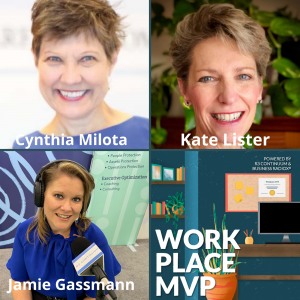
Workplace MVP: Cynthia Milota, Ware Malcomb, and Kate Lister, Global Workplace Analytics

October 21, 2021 by John Ray

Ware Malcomb
Minneapolis St. Paul Studio
Workplace MVP: Cynthia Milota, Ware Malcomb, and Kate Lister, Global Workplace Analytics
Loading
00:00 /
RSS Feed
Share
Link
Embed

Download file

Ware MalcombWorkplace MVP:  Cynthia Milota, Ware Malcomb, and Kate Lister, Global Workplace Analytics

While many companies adapted to a fully remote work model last year, shifting to a hybrid, in-person/remote workplace this year raises many questions. Creating equitable arrangements among employees and bottom-line implications are just two of the considerations. Cynthia Milota, Ware Malcomb, and Kate Lister, Global Workplace Analytics, joined host Jamie Gassmann to outline issues employers must address, potential solutions, the responsibility of leaders, and much more. Workplace MVP is underwritten and presented by R3 Continuum and produced by the Minneapolis-St.Paul Studio of Business RadioX®.

Ware Malcomb

Established in 1972, Ware Malcomb is a contemporary and expanding full-service design firm providing professional architecture, planning, interior design, civil engineering, branding, and building measurement services to corporate, commercial/residential developers and public/institutional clients throughout the world. With office locations throughout the United States, Canada and Mexico, the firm specializes in the design of commercial office, corporate, industrial, science & technology, healthcare, retail, auto, public/institutional facilities and renovation projects. Ware Malcomb is recognized as an Inc. 5000 fastest-growing private company and a Hot Firm by Zweig Group. The firm is also ranked among the top 15 architecture/engineering firms in Engineering News-Record’s Top 500 Design Firms and the top 25 interior design firms in Interior Design magazine’s Top 100 Giants.

Company website

Cynthia Milota, Director of Workplace Strategy & Change Management, Ware Malcomb

Cynthia Milota, Director of Workplace Strategy & Change Management, Ware Malcomb

Cynthia is the Director of Workplace Strategy & Change Management for the architecture firm, Ware Malcomb. Her practice focuses on employees and experience-based work environments.  She partners with clients to formulate their unique objectives: mindful of wellness, culture, talent strategy and success measures. She has held roles as the consultant and as the workplace strategist for a Fortune 500 financial services firm. She has published and presented her research at academic and professional conferences, held adjunct faculty positions, served on juries and editorial review teams.

LinkedIn

Global Workplace Analytics

Global Workplace Analytics (GWA) is a research-based consulting organization that helps employers and communities create and communicate the people, planet, and profit business case for strategies that involve workplace flexibility, mobile work, telecommuting, activity-based working, hoteling, well-being, and more.

In partnership with a handful of global product and service organizations, GWA provides on-call research and develops custom ROI calculators, white papers, e-books, and other authoritative content.

GWA’s specialties include: Workplace Strategy, ROI Analyses, Consulting, Writing, Stakeholder Engagement, Speaking, Research, Advocacy, Remote Work, Telework, Telecommuting, Activity-Based Working, Hoteling, Well-Being, Infographics, Marketing, Publicity, and more.

Company website

Kate Lister, President, Global Workplace Analytics

 Kate Lister, President, Global Workplace Analytics

Kate Lister is a recognized thought leader on trends that are changing the who, what, when, where, and how of work. She is president of Global Workplace Analytics, a research-based consulting firm that has been helping communities and organizations optimize the employer, employee, and environmental outcomes of flexible and distributed workplace strategies for nearly two decades.

Kate has written or co-authored five business books including, the U.S. chapter of “Telework in the 21st Century” (Edward Elgar, 2019), a multi-country peer-reviewed study on remote work. She is a trusted source of insights about the future of work for news outlets including the New York Times, Washington Post, Wall Street Journal, Newsweek, and dozens of others.

As a recognized thought leader, Kate was one of only three witnesses invited to testify before a U.S. Senate committee regarding the potential for remote work in government once the pandemic ends.

LinkedIn

R3 Continuum

R3 Continuum is a global leader in workplace behavioral health and security solutions. R3c helps ensure the psychological and physical safety of organizations and their people in today’s ever-changing and often unpredictable world. Through their continuum of tailored solutions, including evaluations, crisis response, executive optimization, protective services, and more, they help organizations maintain and cultivate a workplace of wellbeing so that their people can thrive. Learn more about R3c at www.r3c.com.

Company website | LinkedIn | Facebook | Twitter

About Workplace MVP

Every day, around the world, organizations of all sizes face disruptive events and situations. Within those workplaces are everyday heroes in human resources, risk management, security, business continuity, and the C-suite. They don’t call themselves heroes though. On the contrary, they simply show up every day, laboring for the well-being of employees in their care, readying the workplace for and planning responses to disruption. This show, Workplace MVP, confers on these heroes the designation they deserve, Workplace MVP (Most Valuable Professionals), and gives them the forum to tell their story. As you hear their experiences, you will learn first-hand, real life approaches to readying the workplace, responses to crisis situations, and overcoming challenges of disruption. Visit our show archive here.

Workplace MVP Host Jamie Gassmann

In addition to serving as the host to the Workplace MVP podcast, Jamie Gassmann is the Director of Marketing at R3 Continuum (R3c). Collectively, she has more than fourteen years of marketing experience. Across her tenure, she has experience working in and with various industries including banking, real estate, retail, crisis management, insurance, business continuity, and more. She holds a Bachelor of Science Degree in Mass Communications with special interest in Advertising and Public Relations and a Master of Business Administration from Paseka School of Business, Minnesota State University.

TRANSCRIPT

Intro: [00:00:03] Broadcasting from the Business RadioX Studios, it’s time for Workplace MVP. Workplace MVP is brought to you by R3 Continuum, a global leader in workplace behavioral health and security solutions. Now, here’s your host, Jamie Gassmann.

Jamie Gassmann: [00:00:24] Hi, everyone. Your host, Jamie Gassmann, here, and welcome to this episode of Workplace MVP.

Jamie Gassmann: [00:00:30] Making decisions on how flexible and accommodating a workplace is willing to be with remote or hybrid work is not a new decision that is exclusive to the COVID-19 pandemic. What the pandemic has done is made that decision even easier or more complex for organizations. Easier in that they discovered over the last year that their workforce can remain productive and thrive in a remote work environment, which is something that may have been an underlying concern pre-COVID. And, for others, they may be looking at organizationally leadership wanting something different than what their employees are wanting. And, how do you strike the balance? How can you approach this decision strategically with the best interests of everyone involved? Is there really a balance here and how can you obtain that?

Jamie Gassmann: [00:01:23] And, with us today to share their expertise and educated thoughts on the return-to-office opportunities and challenges, our SHRM 2021 presenters and Workplace MVP’s Cynthia Milota, Director of Workplace Strategy of Ware Malcomb, and Kate Lister, President of Global Workplace Analytics. Welcome to the show, Cynthia and Kate.

Cynthia Milota: [00:01:45] Great to be here.

Jamie Gassmann: [00:01:48] So, we’re going to go ahead and get started with our first Workplace MVP, Cynthia Milota, Director of Workplace Strategy of Ware Malcomb. Hi, Cynthia.

Cynthia Milota: [00:01:58] Hey, Jamie. Thanks for having me.

Jamie Gassmann: [00:02:00] So, let’s start out with you walking us through your career journey.

Cynthia Milota: [00:02:06] Well, I studied undergraduate in interior design in Cincinnati, and really the first half of my career I spent in corporate office planning and design. But after graduate school, my focus really shifted to strategy and change. I worked as a global strategy for a strategist for a financial services firm. And, now at Ware Malcomb, I lead the strategy and change practice where we’re really helping our clients navigate what’s best for their people and for the business. And, luckily, those two things generally align.

Jamie Gassmann: [00:02:34] Great. And so, can you share a little bit with our listeners about Ware Malcomb and what they’re known for?

Cynthia Milota: [00:02:41] Well, Ware Malcomb is an architecture and design firm with 800 people, and we have some 20 offices around North America. Our interiors practice specializes in workplace, which is the arena I’m in, as well as health care, science and tech, and retail. And, our architecture team is known for their industrial and their cold storage building types.

Jamie Gassmann: [00:02:59] Great. And so, in your opinion, looking at this last year with the COVID-19 pandemic and how it’s impacted workplaces, why is it an important time now for workplaces to be exploring new ways of working?

Cynthia Milota: [00:03:14] Well, I’m not the first to say that COVID has accelerated what was really already underway for the past decade. Many, many pre-COVID studies indicated that people wanted the choice and flexibility to work from home, even if only on occasion.

Cynthia Milota: [00:03:27] The fact that business really carried on without much disruption during this global lockdown was really the litmus test that executive leadership needed. COVID primed that pump for change and really an acknowledgement that many knowledge workers and many knowledge work jobs could be really accomplished, you know, outside of the office. So, we’re really encouraging our clients to keep this momentum of change going and really explore what’s next specific to their organization.

Jamie Gassmann: [00:03:55] And, you know, so in looking at your clients and kind of the recommendations, what should they be considering as they explore these new ways of working?

Cynthia Milota: [00:04:05] Well, let’s start by saying, let’s not underestimate the power of choice, not only for where to work, but when to work. More and more, we’re seeing our clients are setting up something called the core hours of operation, where you have to be available between certain times of the day but then they allow flexibility outside of those core hours.

Cynthia Milota: [00:04:24] We’re really working also on the equitability of the experience in and out of the office, fighting things like presence bias or gender inequality. Women want to work from home 50% more than men. No surprise. Yet, we know that out of sight can be damaging to career advancement. So, we’re asking and working with our clients to examine their culture to not penalize or stigmatize remote workers.

Cynthia Milota: [00:04:48] We’re also looking at planning for teams to be in the office, not just individuals, thinking about what’s the setting for people to do their best work. It might not always be in the office, but when it is in the office, we want to make sure that the workplace is really a destination. It’s memorable. Because right now the office is competing with all those amenities and conveniences of home and in your home neighborhood.

Jamie Gassmann: [00:05:10] Well, and a lot of workers are almost demanding that opportunity to have that choice. So, it really is putting, kind of, employers under a little bit of pressure to make a decision and really almost make a decision in favor of those employees to some degree.

Jamie Gassmann: [00:05:26] So, you know, when you talk about the employee experience, you mentioned that it’s important. Can you talk us through what makes that so important? What is it and what should employers really be thinking about when they’re looking at that employee experience?

Cynthia Milota: [00:05:44] Well, we would like to take the broad view of employee experience, and really, it’s essentially how people think and feel about their work journey, their interaction with their organization. It’s no surprise people cost ten times more than real estate. So, how can companies provide the best employee experience for, really, their most important asset?

Cynthia Milota: [00:05:44] In many studies, Gallup has made the notion of engagement famous but other aspects of employee experience include authenticity, optimism, purpose, and meaning. We know the younger generations are super interested in that, social connections and belonging. Employee experience is going to be especially important because of this phrase they’re calling the great resignation.

Cynthia Milota: [00:06:27] You know, Microsoft’s 2021 Work Trend Index indicated that about 40% of the global workforce is considering leaving their employees. So, employers need to look at employees as individuals with different likes, different needs, preferences and really gather insights and turn that into action. It’s not going to be a one-size-fits-all solution.

Jamie Gassmann: [00:06:48] So, what are some approaches that they can do to gain those insights? I mean, I know obviously that they can take a survey. Aut are there other ways that they can engage that employee in, you know, establishing transparency so they feel comfortable sharing with their employer their preferences?

Cynthia Milota: [00:07:05] Right. And, of course, there’s lots of ambiguity and uncertainty going on right now. So, the [inaudible] of employee sentiment are continuing to shift. But if we fall back on that old adage, you know, if you can’t measure it, you can’t improve it. Let’s just go out and collect some data and just start building a database.

Cynthia Milota: [00:07:20] So, you’re right, it’s everything from employee surveys to badge data who are really coming into the office, all manners of interviews and focus groups. It’s really been a bit more challenging gathering some of that data from the home workforce. But mobile tools are one way that we’re using. People might answer questions using their phones, or they may take some photographs.

Cynthia Milota: [00:07:45] But in any of these data gathering techniques, we’re really careful to set expectations with the stakeholders, right? You kind of ask the right questions. You don’t ask what you want but you ask what you need to do your job. And, I guess the most important thing is to be sure that you’re reporting back. There’s nothing more damaging to a change initiative than taking a survey and then never hearing anything about the results.

Cynthia Milota: [00:08:06] And, the last thing I’d like to say is that we’re doing lots of pilot plans to help them road test what some of these recommendations are. And, this level of transparency has really helped answer that question. How is this going to impact me, an employee, in these pilots? Employees have a firsthand ability to have some skin in the game by proactively commenting. And so, that’s been a super positive way.

Jamie Gassmann: [00:08:30] Yeah. If you want to influence the change, you got to speak up, right?

Cynthia Milota: [00:08:34] Exactly, exactly.

Jamie Gassmann: [00:08:36] So, in looking at new ways of working, you know, you mentioned this on a previous call that there’s been some environmental impacts as a result of more people staying at home, you know. What are some of the things that you’re seeing good or bad from that?

Cynthia Milota: [00:08:54] Sure. Well, the obvious positive environmental impact is that we’re driving less. You don’t need a study to understand that. And, obviously, we’re reducing greenhouse gas emissions and the consumption of fossil fuels. In 2020, the offsets for the reduction of the greenhouse gas emissions translated into planting 91 million trees just for that year. So, it’s pretty formidable. But we’re also printing less to the tune of 247 trillion sheets of paper, less paper printed in 2020. Or, you could just look at your procurement records for all the paper plates and the napkins and the plastic silverware that didn’t get purchased during COVID, right, and all that stuff never found its way to a landfill. So, that’s all good.

Cynthia Milota: [00:09:35] As for energy consumption, right, when you’re at home, you automatically turn off the bathroom light. But when you’re at the office, most of the time, right, you can’t do that. There’s been a really nice study done by Sun Microsystems found that the energy consumption was nearly twice as high at the office as compared to at home.

Cynthia Milota: [00:09:52] So, you know, not surprisingly, buildings account for 40% of CO2 emissions, and so, the fewer buildings that we have, the less emissions that we have and certainly the fewer buildings that we’re building and occupying. So, from an environmental standpoint, hybrid work is all good.

Jamie Gassmann: [00:10:09] Yeah. So, it sounds like, you know, from comparing the environmental to looking at the workplace experience to looking at just that great resignation, how do you find ways to keep the employees, you know, engaged in at your worksite, employers need to be looking at more than just productivity levels and getting things done. They need to be looking at a bigger picture, correct?

Cynthia Milota: [00:10:35] Absolutely. I mean, all of those are just pieces to a larger puzzle. And, you really have to look at what makes sense for your organization, what makes sense for your employees. You know, don’t get roped into the benchmarking [inaudible], you know, other companies and organizations are doing this or that but what makes sense for you, not what makes sense for someone else.

Jamie Gassmann: [00:10:57] Yeah, absolutely. Great feedback and advice there. So, now, we’re going to just shift gears to our next Workplace MVP, Kate Lister, President of Global Workplace Analytics. Welcome, Kate.

Kate Lister: [00:11:11] It’s great to be here. And, boy, Cynthia, great job. You said everything I would have said.

Jamie Gassmann: [00:11:17] Great minds think alike, right?

Cynthia Milota: [00:11:22] Great, right.

Jamie Gassmann: [00:11:23] Yeah. So, Kate, talk us through your background and your career journey.

Kate Lister: [00:11:28] Sure. Well, I started out as a banker, and I think that that really shaped how I look at the world, or maybe that’s why I became a banker, to begin with, you know, nature and nurture. But it also gave me the language of the C-suite, the language of talking to executives in terms.

Kate Lister: [00:11:46] I’ve run a number of businesses. I wrote three boring business books and kind of stumbled into this business almost two decades ago. After writing the last book, it was a consumer title on remote work, and when I’d first gone to John Wiley & Sons and proposed a title on remote work, I wanted it to be a business title. And, they said, “No, we don’t think that’ll be of any interest to anybody.”

Kate Lister: [00:12:12] But it was in doing the research for that book that I realized that nobody had made the business case to the C-suite for remote work. And, the more I looked at it, it wasn’t just about remote work that really H.R. and corporate real estate weren’t talking to the C-suite in terms that they understood. They needed a way to quantify what the expenditures on things like remote work or flexibility or health and wellness. What did that – what would that really do for the company and what would it do for the bottom line? You know, what’s in it for me?

Jamie Gassmann: [00:12:49] Great. And, Global Workplace Analytics, what type of services do you provide to them?

Kate Lister: [00:12:57] Well, things have shifted a bit in the last two years. As I said, I’ve been working in pushing that remote work rock uphill for about 20 years and it really has been a lot of that. And then, in the last two years, it’s kind of been chasing me down the other side.

Kate Lister: [00:13:15] So, working with large companies, 3000 employees, and over to, well, from the beginning of the pandemic, you know, just surviving, figuring out what technologies we need, figuring out how are we going to do this kind of triage almost through the last year of just making work work. And then, in 2021, hear more about, okay, now that we’ve done this, now that we’ve learned some lessons, what are we going to take forward? How are we going to operate going forward? What have we learned? What’s worked? What hasn’t worked? How do we get the best of both and then bring them into the office or not? You know, who do we want to return to the office? When are we going to do it? And, that’s kind of, like, the very right now question.

Kate Lister: [00:14:08] Last week it was vaccinations, but then the president answered that one. So, this week it’s return-to-office. Most of my clients had set a return-to-office date of January, and then that got moved out to September, then that got moved out to July and then that got moved out to September and then October. And, now most of them are really in the throes of deciding whether or not that’s going to move to beginning of next year.

Jamie Gassmann: [00:14:35] Wow. Yeah. Constant changes over this last year for sure in navigating that. So, you know, in talking about your clients, what, from your perspective, is keeping them up at night these days, if you will?

Kate Lister: [00:14:50] Yeah. As I said, it’s kind of a moving target. But really a lot of them, as Cynthia said, have now gotten over the question of will my people be working? You know, can they be productive? Can we continue to be profitable? And, this has been historically the way it’s worked. Once a manager has had the opportunity to work remotely themselves, then they’re much more accepting to it.

Kate Lister: [00:15:19] So, we’ve gotten over one really big hurdle for the most part. It’s still out there. We’re still making the business case, but it’s become a whole lot easier. And, you know, I guess what’s keeping them up at night, they’re thinking about all that empty real estate. They’re thinking about those big buildings that they’ve been paying for the last year and a half, almost two years, and practically nobody’s in them. So, what are we going to do about that going forward?

Jamie Gassmann: [00:15:52] Yeah, I suppose. Have any of your clients made decisions on that? I’ve been thinking the same question with, you know, thinking of some of the skyscrapers in my area and going, “Oh my goodness, they’ve got to be sitting empty.”

Kate Lister: [00:16:03] Yeah, yeah. All have decided that they’re going to go to some form of hybrid, that it’s going to be much more extensive use of remote work going forward. But they’re taking their time on the decision about getting rid of real estate, I mean, unless there’s, you know, a lease coming up this year that they have to make a decision on.

Kate Lister: [00:16:25] They understand that what people say and what they do is often very different. What people say they want and what they actually do is often very different. So, while 80% of the workforce now says they want to work from home at least one day a week, are they going to really? The ones that say they are going to come into the office. The 20% that say they want to be all in the office or at least largely in the office, are they going to come in the office? How are teams going to collaborate? How are we going to deal with some of the hybrid issues that Cynthia talked about?

Kate Lister: [00:17:05] So, really, taking kind of a wait-and-see attitude about, do we need to? Can we get rid of – excuse me. Can we get rid of real estate? Should we get rid of real estate? Do we need to restructure our real estate? Most are realizing that, you know, home is going to be the place for focus work and office is going to be the place for collaborative work and for community and for socializing.

Kate Lister: [00:17:31] But that’s not the way offices were built. Offices were built with primarily, you know, I’d say, probably in the 70-30, 80-20, the high number for heads-down work and then the other for social so that pendulum may swing and that may mean that we need to reconstruct those office spaces. A lot of my clients also are looking at the potential to go to hoteling where employees don’t have an assigned seat at the office. They reserve a space on their iPhone or on their desktop when they come in, or there are drop-in spaces when they come in. As Cynthia said, these were all trends that were happening before the pandemic. But now there’s this acceleration. Some of my companies even sent all of their employees’ stuff home last year. They just cleared out the offices, got rid of it, with the intent of perhaps moving to this hoteling approach.

Jamie Gassmann: [00:18:33] Interesting. So, in terms of, like, how they would prepare for that, you know, and thinking, I mean, obviously, they keep, you know, a number of your clients, you mentioned, are extending their return-to-office date. You know, what are some of the things that might be happening in the background in terms of preparing for that date? Because I know it’s probably feeling like a moving target, but eventually it’s going to stick and it’s going to be one that now it’s implementing that return to office. So, how do they get ready for that?

Kate Lister: [00:19:02] It’s kind of been just – it’s been a bit of a breather for me thinking that we might actually get to wait until the beginning of next year because we have just been rushing through the change process when companies, I mean, I’ve got one client that accelerated a program that probably we would have done prior to the pandemic but what probably would have rolled out over six months to a year, maybe even more, and we had to accelerate it into eight weeks. So, you know, it was a bit of a crunch and everybody’s kind of in that bit of a panic to meet that next deadline.

Kate Lister: [00:19:38] One of the things that I think has really been maybe a silver lining is that it has lofted this whole conversation about people and place to the C-suite. Before the pandemic, companies were either allowing remote work, kind of on an ad hoc basis. You know, we’ll let Jamie do it. We’ll let Cynthia do it. But not really in any formal way. And, either that or they were deploying it tactically kind of as a solution to the problem du jour.

Kate Lister: [00:20:09] So, if the problem was trying to reduce your costs, then real estate handled it and then they were running the show. If it was about attracting and retaining talent, then that went through H.R. and they were running the show, but they didn’t really talk to each other.

Kate Lister: [00:20:24] And, now that we’ve got the C-suite involved and they’re saying, no, we see this not tactically. We see this as a new way, a new strategy for working in the future. All of those functional areas are coming together. So, one of the things that you know we do as soon as we get into an organization is to form that cross-functional team that includes H.R., I.T., real estate, but also marketing, sustainability, risk management, finance. They all have to be at the table. Everybody has a stake in this, and it’s only when they’re talking together are we going to get the sort of optimal solutions.

Kate Lister: [00:21:02] So, as Cynthia said, you know, we’re looking at the across cross-functional teams at leadership readiness. So, we’re doing interviews with the leaders and seeing where they sit. You know, how open are they? How ready are they? Because, if the leaders don’t buy in, and we’ve known this for decades, it’s just not going to happen. I mean, they can’t just talk the talk even. They’ve got to walk the walk. They’ve got to live the vision.

Kate Lister: [00:21:36] For the employees, we are typically deploying a company-wide survey and getting higher participation than companies have ever seen in their employee surveys because this is something that they are really passionate about. I mean, we’ve been getting as high as 90% participation in surveys. In one company, they actually did a contest to see which group would get the highest and they were going to get an extra day off, which was cool.

Jamie Gassmann: [00:22:02] A great incentive.

Kate Lister: [00:22:04] Yeah, exactly if this group won. And, they came in with 100%. They got 100% of their people to participate. Then, we go in and we actually get talking to the people. We sit them down in focus groups. We ask them, what’s working? What isn’t working? What training do you need? What training does your manager need? Do you want to come back? How often do you want to come back? So, that we have a kind of a read on the whole organization, and with that we recommend a strategy and put together policies and put together change management and communications to keep employees informed and involve them in decisions, to be part of the decisions. And, you know, going forward than looking at how will they actually use the space. And, you know, that’ll be the next step.

Jamie Gassmann: [00:22:56] Interesting. Yeah, I’ve spoken to other business leaders and there is definitely power in involving those employees into some of that decision-making. You know you get it almost like instant buy-in if you will.

Kate Lister: [00:23:12] It’s being done with you and not at you. And, unfortunately, most organizations don’t share the findings of their surveys with the employees, and that’s terribly frustrating.

Kate Lister: [00:23:25] Another thing that I’m seeing companies do that is just a huge mistake is failure to communicate. At first, for the first six months, they were doing town halls. They were doing, you know, weekly conversations with the CEO. They were really on it. But that’s kind of gone by the wayside in 2021 for the most part, and it’s really showing. You just can’t leave that ambiguity out there of, am I going to come back? When am I going to come back? Are you going to force me into the office?

Kate Lister: [00:23:55] And, It’s not until the CEOs start seeing the people leave, you know, because they don’t. If they can jump to something where they know they’re going to have the flexibility they want when they have an answer, then they’re going to do that. I mean, even if CEOs don’t have the answer, it’s just critical that they say, “Hey, look, we don’t have the answer, but these are the things that we’re looking at. And, here’s, you know, here’s what, here’s how we’re trying to make those decisions. You know, bear with us.”

Jamie Gassmann: [00:24:26] Yeah, interesting. So, in looking at, you know, hybrid versus remote, you had indicated previously in a conversation we had earlier that hybrid is harder than remote. Can you talk me through what makes it that much more harder?

Kate Lister: [00:24:45] Sure. I guess. Let’s take meetings as an example. We’re all these same squares on the screen. You know, it’s become very egalitarian. It’s even become more empathetic because you’re seeing the CEO in kind of their home setting with their dog on their lap or their kids running through the background or whatever. And, it’s kind of brought us together on an even playing field.

Kate Lister: [00:25:13] Now, we go to hybrid and we’ve got 10 people sitting in a conference room and 10 people or three people that are not there. I’ll actually give you an example. I was just wrapping up an engagement with a 65,000-person manufacturing company and we’d gone all through those things that I talked to you about the change management, training, and all that. And, I was presenting to the board of directors what our findings were, you know, kind of closing out the engagement. And, 12 of them were in the conference room and I was not. And, at the end of the meeting, I said, okay, I think we should rate this meeting. Everybody gets to rate this meeting, but I go first. I’m going to give it a three. And, here’s why. You were all in the room. You all could all see each other, but none of you had your laptops open so I couldn’t see you. I couldn’t see your faces. I couldn’t see how you were responding to what I was saying. I mean, I was talking for 40 minutes. You only had one screen in the conference room and all you could see were my slides, so you couldn’t see my face, you know. You couldn’t see me gesticulating. You couldn’t see when I wanted to say something.

Kate Lister: [00:26:26] In fact, there was a question that was asked that I had an answer to. And, I couldn’t get a word in edgewise. I wound up texting the CEO or the chairman and say, “Hey, you know, I’d like to answer that question.” And then, he brought me into the conversation. You all took a break for five minutes and you turned off the sound. I got excluded there.

Kate Lister: [00:26:52] And, you know, it was just an altogether bad experience for me. The room went a little silent for a minute, and then one of the directors said, “You know what? Didn’t we just go through a consulting engagement that told us how to have better hybrid meetings? And, I think we talked about all these things.” And, we all had a good laugh about it.

Kate Lister: [00:27:13] But, I mean, it just demonstrates how intentional it has to be. This is not something that comes naturally. Inclusiveness, including the people that are not in the room, and that’s just in meetings. The bigger issue goes to, am I going to be passed over for promotion if I’m a remote worker or if I’m a possible remote worker? And, am I going to get the same salary or compensation? Am I going to get the same projects if I don’t walk down the hall and see Jamie, and say, “Jamie, oh, you’re just the person I need to see.”

Kate Lister: [00:27:47] So, all of those things make it very difficult to be hybrid. You know, we were doing it before. Sure. I mean, people were working outside the office. We’re global organizations. We’re talking across the world, but not to this extent. And so, we just have to be very, very intentional when we go back of keeping that in mind that we all are, you know, one organization and we need to treat one another as such.

Jamie Gassmann: [00:28:16] Yeah, interesting. And, some of those things that you described, did that meeting happen pre-COVID? But it wasn’t unlike, to your point, the scale of the number of individuals that we would be working through that. Now, it’s you’re on mute, unmute your –

Kate Lister: [00:28:29] Exactly.

Jamie Gassmann: [00:28:30] And, it happens at least two or three people in a call, you know, every day, right?

Kate Lister: [00:28:34] You know, doughnuts. We don’t get any doughnuts here at home. You’ve got that wonderful plate of doughnuts in the middle of the table. I want a doughnut.

Jamie Gassmann: [00:28:43] That’s the truth. You’re like, really? Oh, I’ll go heat up my, you know, my lunch meal while you guys eat, you know, the nice, fresh stuff that just came in.

Jamie Gassmann: [00:28:52] And, if you had, so, speaking of like, you know, talking to that C-suite and some of the CEOs and chairmen, I’ve seen in some articles where there’s some that are just really, you know, hard-set on, their people are going to come back into the office. This is going to be the model. But then we’ve got this, you know, the people that are speaking and saying, that’s not what we want. How do you talk to that CEO? How do you convince them to have more of this open mindset into either a hybrid or a remote working environment?

Kate Lister: [00:29:31] Well, my natural instinct is to just slap him or her. But I can’t do that because I wouldn’t get very good reviews. So, I go back to the business case. It’s got to be, you know, what’s in it for them.

Kate Lister: [00:29:46] Typically, there are two things that that person’s worried about. It’s a control thing. You know, they want to feel like they have some control over the organization. I picture the supervisor standing on the balcony, looking down over his minions, all working on the factory floor, and we still sort of have that mindset even after almost two years of doing that. So, it’s kind of getting to those fears. What is it that this person is afraid of?

Kate Lister: [00:30:17] Another thing that I’ve seen and there have been some very public cases of this, CEO just lives in their own world. They in fact believe that everybody wants to come back. They believe that everybody is like them, and it’s not until you show them the numbers.

Kate Lister: [00:30:36] I won’t mention the name, but a very large company of CEO came out and said, “No, we’re all going back to work. This is just the worst thing, this remote work thing. We’re all going back to work.” I happen to have the person, head of H.R., on a podcast that I was doing the next day. And, before we got on, I said, “Am I allowed to ask you about this? Because, you know, here you are talking about workplace flexibility, but your CEO just said no way.” And, she said, “Yeah, well, we had a bit of a conversation about that.” And, truly, he did not realize. He thought everybody was like him and wanted to be back in the office. And, when they showed him the surveys, you know, he was just blown away. He had no idea.

Kate Lister: [00:31:22] So, sometimes it’s really just, you know, bringing them back to reality. And, you know, if they don’t, and showing them what’s there is to lose and what there is to lose is good people and what that means is a real hit to their bottom line. And, that’s the language of the C-suite.

Jamie Gassmann: [00:31:45] Yeah, interesting. Yeah. And, a lot of them probably don’t because they may be not as in the thick of the day-to-day as much or kind of in the details to see what some of the people in their organization are actually feeling and thinking at that time, you know.

Jamie Gassmann: [00:32:01] And, looking at, you know, we talk a lot about the productivity and the inclusiveness and engagement. Let’s talk a little bit about innovation and the remote work environment. Do you feel from your opinion that being in a remote or hybrid setting will impact or hurt innovation?

Kate Lister: [00:32:23] I try not to speak from opinion. I speak from research, and the research just does not prove that face-to-face improves innovation, has any impact on innovation. The New York Times, just maybe two or three weeks ago, had a large article that says there is no proof, and I’ve been saying that for years. But now the New York Times said it. So, that’s great.

Kate Lister: [00:32:52] There are two parts to innovation. First is creativity and the second is innovation. So, creative concept. People are most creative when they’re in private. You know, think about when you’re at your most creative, in the shower, in the car, when you’re walking in the woods. And so, even in all of the surveys that we’re doing, people are saying that they’re more creative working at home. Innovation often, you know, that means taking that creative thought [inaudible].

Kate Lister: [00:33:27] It’s often done in groups. So, there are two parts to it, but not necessarily. There are a lot of lone inventors, and it doesn’t necessarily mean face-to-face interaction with groups. Innovation is really founded on trust. It’s do you trust the people that you’re working with enough to throw out a crazy idea and not feel like you’re going to be told that’s a crazy idea. That’s what’s really fundamentally needed with a team. And, once they’ve got that trust, once they have that trust bond, they can do it remotely, just as easy as they can in person.

Jamie Gassmann: [00:34:08] Great. So, we’re going to take a word from our sponsor. Workplace MVP is sponsored by R3 Continuum. R3 Continuum is a global leader in providing expert, reliable, responsive, and tailored behavioral health, crisis, and security solutions to promote workplace well-being and performance in the face of an ever-changing and often unpredictable world. Learn more about how our R3 Continuum can tailor a solution for your organization’s unique challenges by visiting www.r3c.com today.

Jamie Gassmann: [00:34:41] So, now, I’m going to bring Cynthia back into the conversation, and I have some questions for the two of you. Starting out with as workplaces move to making decisions on their new work approach, how can they make the business case from a financial perspective that supports their decision? And so, let’s start with you, Cynthia. Can you talk us through kind of your thoughts on that?

Cynthia Milota: [00:35:05] Well, I’m going to start with a couple no-brainers that are really easy to start, and then we’ll let Kate talk about some of the great financial measurement tools that she offers. But I’m sure you’ve been a part of many conversations about work-from-home stipends. And, as employees are really sort of settling in for the long run on this home-office gig, they’re looking to upgrade. No one wants to be sitting at the dining room table anymore, and there’s been lots of, lots of studies about all the success that people are having, depending on where they’re working. So, clearly, we need to upgrade where we’re sitting at home.

Cynthia Milota: [00:35:40] So, we like to talk about the idea of monitors and a good ergonomic chair at home. That’s sort of the low-hanging fruit that a lot of these work-from-home stipends talk about. So, if you just take a break-even approach regarding providing dual monitors, assuming each one costs a hundred bucks, they have a three-year lifespan. If the monitor saves someone 95 minutes a year, which translates into 23 seconds a day, it’s worth the investment. So, we really are advising our clients. And, I know at the beginning of the pandemic, many people brought their monitors home from the office, and now some of those monitors are being recalled. Folks are asking them to bring them back, but we’re advising our clients just to allow folks to have monitors at home.

Cynthia Milota: [00:36:27] The second thing is the idea of a chair. So, if you look at, put it in the context of a workman’s comp. That an average workman’s comp claim is $28,000. So, if you assume a chair is $500, it has a five-year life, you could purchase 1400 chairs if you avoided one workman’s comp claim. Like, the math is definitely there. So, when we also – I think there’s also sort of a sustainable circularity thing, right? We don’t want people buying chairs, you know 100-dollar chairs from the office supply store, which are just going to break and go into the landfill. But we want to get higher quality, good products so that it withstands the test of time.

Cynthia Milota: [00:37:15] So, employers that do provide some significant or/and significant work-from-home stipends I think really are going to help the planet as well as their workforce. But Kate, I’m going to let you talk about some of the financial tools, measurement tools that you guys are doing with clients.

Kate Lister: [00:37:32] Yeah. This is where we really got started emerging. The banker in me came out, trying to figure out what the bottom-line impact of remote work is. About 12 years ago, maybe more, we came up with a remote work savings calculator. We called it the Telework Savings Calculator at the time that shows a typical employer can save about $11,000 per halftime remote worker per year. And, that is a combination of increased productivity, reduced turnover, reduced absenteeism, and reduced real estate costs, also the continuity of operations being able to operate in the event of a disaster. And, in our standard model, it included one day a year, like one snow day a year, that people would be able to work other if they weren’t able to get to the office. Never did we consider putting in 700 whatever days.

Kate Lister: [00:38:35] Just imagine what dent on global productivity if we hadn’t been able to make this transition. And, that calculator, about six years ago, the federal government came to me and they were responding to an inquiry from Congress who wanted to justify the amount of money that the government was saving in their telework program. And, they were asked to find tools that could help them do that. So, they asked and I gave them a peek behind the curtain of what’s behind the calculator. We’ve got 125 variables and 600 calculations, and they went back to Congress and said that it was comprehensive and thoroughly researched.

Kate Lister: [00:39:20] So, that was a very good endorsement for us. It’s available free on our website. It has been for, as I say, more than a decade. So, companies can quantify their own impact, not just on the employer but on the employee who typically saves 11 days a year when half-time remote work, the time they would have otherwise spent commuting and typically saves between three and $5000. And, it also calculates the environmental impact, as we talked about earlier.

Jamie Gassmann: [00:39:54] Interesting. And, you know, when you think of the ergonomics, I can give a personal testament. I was sitting at my kitchen table and I’m a runner and I started to have really weird leg cramps and I switched to my ergonomically, you know, I brought my chair from my office, actually rolled it out the elevator and took it home, and the leg cramp stopped. So, there is definitely something behind having an appropriate chair when you’re sitting for the amount of time that we sit for work.

Jamie Gassmann: [00:40:26] So, it’s really interesting to hear some of the financial savings that these organizations can have just by simply these easy modifications that can help those employees at home, especially now that it’s become a lot more of a long term solution as opposed to the short term solution that it was probably back in March of last year for a lot of these organizations. And, I know, we’ll put that link to Kate’s financial tool on our page, on the Business RadioX page, as well as on the Workplace MVP page, so our listeners can access that.

Jamie Gassmann: [00:41:04] So, looking at the benefits to hybrid remote work and back office, you know, what are your thoughts around the benefits of each of those that employers should be considering?

Kate Lister: [00:41:19] It’s funny. For years, the conversation has been polar. People, particularly in the media, it’s you know, “Oh, remote work, it’s going to ruin the world,” and, “Oh, nobody likes the office.” It’s both. One’s good for one thing, one’s good for another thing. So, the best of both is to allow people the flexibility to work at home some of the time if they want to and there’s about 15-20% of the population that typically does not want to and to come to the office for the kinds of things that are better done in person.

Kate Lister: [00:41:58] One of the things we learned from a number of the surveys during the pandemic was that people felt they could collaborate just as easily, just the same remotely as they did in the office. But they preferred doing it in the office so, you know, we can get it done. We can have our meetings, but we would really prefer to be in person. So, it’s really just taking the best of both.

Jamie Gassmann: [00:42:23] Great. How about from your perspective, Cynthia?

Cynthia Milota: [00:42:30] I think our clients are understanding this is a unique opportunity to embrace hybrid. You’re right, we’ll talk a little bit more. We have talked about the difference between the C-suites perspective and the average employee’s perspective, but we are encouraging and I would say, by and large, they understand that they’re at a unique time right now and they’re moving forward.

Jamie Gassmann: [00:42:55] Interesting. So, as an organization, you know, if they have differences to what you just kind of alluded to, Cynthia, you know that work environment preference between senior leadership, you know, and what they’re looking for versus what the employers are looking for, how can they approach it and find a balance between both sides that really benefits the entire organization? So, we’ll start with you, Cynthia.

Cynthia Milota: [00:43:23] Yeah. Well, I guess I’d like to pick up on something that Kate said. Let’s go back to the data, right? Perhaps some executives have a command and control thing going on. Perhaps they’re in their walnut row and they don’t see it, but we’ve done a few executive listening sessions, which are a really great start, right. It’s almost – and that has sort of opened the eyes, as we’ve said before. And, I think every H.R. person on the planet now is telling their C-suite, 40% of the workforce is considering changing jobs added at the cost of between one and three times your salary to replace every position, depending on the nature of the job. Employees are really emboldened. They have the upper hand to have their voice being heard. And, I think most of the C-suite is getting it. So, I don’t know, Kate, if you want to add anything to my perspective.

Kate Lister: [00:44:20] Yeah. I mean, it also opens the opportunity for a whole new talent pool, you know. I’ve got a law firm that I’m working with right now and finding top law talent is really difficult. The law firms are poaching one another like crazy.

Kate Lister: [00:44:38] But, now, they don’t have to limit themselves to somebody that’s near their San Francisco office or their Philadelphia office, or whatever it is. They can hire somebody from all over the world. They can also hire a better opportunity to hire disabled military spouses, people living in rural areas that, you know, didn’t always have the opportunity for these kinds of jobs. So, it really does, not only stop people from leaving but opens up the talent pool so much more.

Jamie Gassmann: [00:45:15] Yeah. Did you ever [inaudible] you wanted to add to that?

Cynthia Milota: [00:45:18] No, I’m good.

Jamie Gassmann: [00:45:18] Oh, okay. Yeah. No, I would agree. I mean, that’s kind of – in a previous episode, we were talking about that, you know, how, really, there are no boundaries anymore to where you can obtain your employees when you have that remote work environment. So, it really does open up the prospects of different candidates that they could have across, you know, not just the U.S. but really the globe. And, you know, and I love the point you made about military spouses and others that maybe wouldn’t have had that flexibility before and now being able to give that opportunity to have a career themselves where previously they maybe wouldn’t have been able to. So, that’s a great point to make on that.

Kate Lister: [00:46:01] I also typically show them a spreadsheet of what their competitors are doing. A little peer pressure never hurts and not just their direct competitors, you know, so that if I’m talking to an insurance company, I’m not just showing them what other insurance companies are doing but what tech companies are doing, because the people that they’re trying to hire these days are getting, you know, have to be more and more tech-savvy and jobs are getting more and more tech-oriented. So, they’re not just competing with the guy across the street. They’re competing with Silicon Valley and some of those other places, too.

Jamie Gassmann: [00:46:41] Yeah. Very interesting. I bet that’s a very effective approach to show kind of that kind of data. So, looking at our listeners, what can they do today? What are some simple approaches that can make a difference with their workforce and with the organization?

Kate Lister: [00:47:00] For me, the word sludge comes to mind. Get rid of the sludge. There are so many things that we do that keep us from doing our best work, not the least of which is doing stuff that we’re not good at or that we don’t like. You know, I’m waiting for the day when I’m doing a PowerPoint presentation and my keyboard starts to jiggle and it says, you know, you’re not very good at this. Did you know we have 10 contractors that are already vetted that are better at doing this than you are? And, by the way, do you know that Joe, you know over in the other department, just did a presentation on this? Maybe you should talk to Joe.

Kate Lister: [00:47:33] That’s not something they can do immediately, but it is something that’s coming, kind of the disaggregation of work so that we can all work on what we’re best at. But just the little things, the meetings, and how stressful meetings are, and how much of the day they occupy. Start to think about. Does everybody really need to be here at this meeting? Does it have to be a meeting at all? I’ve got one executive who said, “If there’s more than nine people in a meeting, it shouldn’t be a meeting. It should be something that I record and they can listen to.”

Kate Lister: [00:48:06] One of the things that all remote companies, you know, companies that are all remote get right is using asynchronous versus synchronous behaviors. And, this is something that the companies that Cynthia and I are working with are just learning.

Kate Lister: [00:48:22] So, you don’t always have to have a meeting. Maybe you just need to send a memo. Maybe you only need a few people in that meeting and you can record it and other people can listen at another time. Maybe they’re in a different time zone. They don’t have to get up at 4:00 in the morning to be a part of this meeting. When to use chat, when to use email, when to use Slack, and when, you know how to use those tools so that we’re more efficient in how we work.

Kate Lister: [00:48:51] I’m looking at – and this is also a time for looking at every process and every practice. I think one of the stressors out there right now is that we’re trying to work in new ways, using old processes, practices, and technologies. And, it just drives me batty when I hear somebody say we need to replicate the water cooler. It’s like, who said the water cooler was that great to begin with? First of all, it excludes everybody who’s not at the water cooler. So, you know, we need to use technologies to do things better, not to replicate things that were broken to begin with. Like, people always talk about, “Oh, it’s been really hard onboarding during the pandemic.” Excuse me, 60% of people quit in the first two years, and half of them quit in the first six months. So, let’s not say that onboarding was working that great before the pandemic. Let’s find out, let’s figure out a better way to do things.

Kate Lister: [00:49:46] And, you know, even for just some very, very simple tips. When you’re having a hybrid meeting, everybody has to have their cameras on. Assign somebody in the room to somebody that’s out of the room, kind of a buddy system, so that they can chat back and forth if one person feels like they aren’t being heard. Call on every person. Use polls instead of, you know, hands up and that kind of thing.

Kate Lister: [00:50:17] One of the things that we’ve learned during the pandemic is that introverts are performing better. I’m an introvert and, you know, I don’t think as quickly as extroverts. You know, when I’m in a meeting, you know, people are blurting out their thoughts and their answers to questions. I take time. I think about it after we get off the meeting. And, that means that we’re not hearing a lot of voices and I think there are opportunities that we can exploit in what we’ve learned over the last couple of years that can really bring more equality to the voices in the room and make sure that everybody’s heard.

Jamie Gassmann: [00:50:58] Great. That’s great feedback. I love that. Cynthia, how about you?

Cynthia Milota: [00:51:03] I guess I would go back to the employee experience and I would go at it from two perspectives. One is the stakeholders. I know many of our clients are engaging their stakeholders, but it seems like many that you [inaudible] are not. Leadership has made some plan and they’re going to send a bunch of memos and say, this is how we’re going to do it.

Cynthia Milota: [00:51:25] So, for sure, it’s more complicated. For sure, it’s fraught with more complexities. But the more we have stakeholders involved, the better that’s going to help, the bigger change, whatever it ends up being. So, that’s the first thing.

Cynthia Milota: [00:51:25] And then, I guess the second thing is don’t stop collecting data, right? Don’t stop, you know, even once. You know, in my world, we do something called the post-occupancy evaluation, which is like, you did it like three months after people moved in and then you close that off, and then you’re done with it. Really, we’re seeing continuously collected data whether it be pulse study, pulse surveys. Now, technologically, there’s a tremendous amount of data, everything from badge data to utilization data and I know we’re not doing that much because we’re not in the office much. But once we’re back, I think data informing decisions is going to be the future of what’s happening, and I think we can’t, again, have that data without communicating to our stakeholders what it is that we’re learning and how that’s going to potentially impact and let them have a seat at the table. So, that’s where I’d like to leave it.

Jamie Gassmann: [00:52:37] Fantastic. Great advice and thoughts to leave our audience with. So, if any of our listeners wanted to get a hold of you. And, I’ll start with Cynthia, how can they do that?

Cynthia Milota: [00:52:49] Well, I’m on LinkedIn, so search me on LinkedIn. My email’s on there and my company is Ware Malcomb. If you go to the Ware Malcomb website, you can get my phone number and my email that way too.

Jamie Gassmann: [00:53:01] Great. And, how about you, Kate?

Kate Lister: [00:53:03] I’m there on LinkedIn, as well. I’d be happy to link in with anyone. You can message me. You can also email me at kate@globalworkplaceanalytics.com. And, we have probably a dozen white papers on our website that say things more elegantly than I do in person, so you could just download them there.

Jamie Gassmann: [00:53:27] They’re fantastic. Well, thank you both so much for letting us celebrate you. I’m sure your presentation at SHRM went really well and was well-received, and thank you for sharing your stories and your great advice with our listeners. And, we appreciate you and we’re sure that your organization and your staff do as well. So, thank you so much for being a part of our show. We also – yeah, thank you.

Jamie Gassmann: [00:53:52] We also want to thank our show sponsor, R3 Continuum, for supporting the Workplace MVP podcast. And, to our listeners, thank you for tuning in. If you’ve not already done so, make sure to subscribe so that you get our most recent episodes and other resources. You can also follow our show on LinkedIn, Facebook, and Twitter at Workplace MVP. And, if you are Workplace MVP or know someone who is, please let us know. Email us at info@workplace- mvp.com. Thank you all for joining us and have a great rest of your day.


Tagged With: Cynthia Milota, Global Workplace Analytics, hybrid work, Jamie Gassmann, Kate Lister, R3 Continuum, remote work, remote workers, Ware Malcomb, Workplace MVP

The R3 Continuum Playbook: Compassion Fatigue in the Healthcare Industry

October 14, 2021 by John Ray

Compassion Fatigue
Minneapolis St. Paul Studio
The R3 Continuum Playbook: Compassion Fatigue in the Healthcare Industry
Loading
00:00 /
RSS Feed
Share
Link
Embed

Download file

Compassion Fatigue

The R3 Continuum Playbook:  Compassion Fatigue in the Healthcare Industry

As we approach two years into a pandemic, compassion fatigue–prioritizing the needs of others over self-care–is a particular difficulty with workers in healthcare.  Jeff Gorter, Vice President of Clinical Crisis Response at R3 Continuum, helps distinguish compassion fatigue from burnout, the unique impact on healthcare workers, and how to instead nurture “compassion satisfaction.” The R3 Continuum Playbook is presented by R3 Continuum and is produced by the Minneapolis-St.Paul Studio of Business RadioX®. R3 Continuum is the underwriter of Workplace MVP, the show which celebrates heroes in the workplace.


TRANSCRIPT

Intro: [00:00:01] Broadcasting from the Business RadioX Studios, here is your R3 Continuum Playbook. Brought to you by Workplace MVP sponsor, R3 Continuum, a global leader in workplace behavioral health, crisis, and security solutions.

Jeff Gorter: [00:00:16] Hi, my name is Jeff Gorter, Vice President of Crisis Response Clinical Services at R3 Continuum. Today, I’d like to discuss compassion fatigue, specifically within the healthcare industry. As healthcare workers have dealt with an excessive exponential amount of trauma, suffering, and stress throughout the COVID-19 pandemic, it’s no surprise that many are experiencing what is known as compassion fatigue. Caring for the caregivers has never been more important.

Jeff Gorter: [00:00:49] Now, compassion fatigue has been characterized as an extreme state of tension and preoccupation with the suffering of those being helped, this, as defined by Charles Figley, one of the pioneers in the field. It’s often a result of prioritizing the needs of others over self-care.

Jeff Gorter: [00:01:10] For doctors, nurses, surgeons, and other healthcare workers, compassion is essential to their occupation. Without compassion, how can these workers be expected to properly care for their patients if they can’t empathize with them? But this same empathy, the ability to connect and identify with our patients, can also create an unexpected vulnerability in the healthcare worker if we are not intentionally mindful about our own self-care.

Jeff Gorter: [00:01:44] Now, while burnout is often equated or confused with compassion fatigue, they are actually two different conditions. Burnout is more severe and comes from living in prolonged periods of unrelenting stress that’s gone unaddressed or unattended. But compassion fatigue is almost always the precursor to burnout, the thing that presages it.

Jeff Gorter: [00:02:11] So, compassion fatigue can be defined as the physical, emotional, and spiritual result of chronic self-sacrifice and/or of prolonged exposure to difficult, painful situations that render a person unable to nurture, care for, or to empathize with another’s suffering. This is from Dr. Chelsia Harris, the Executive Director at Lipscomb University’s School of Nursing.

Jeff Gorter: [00:02:41] So, healthcare workers are not only operating on elevated levels of stress for long periods of time, they are also being continuously exposed to death, end-of-life situations, trauma, suffering. While this is no surprise, in fact, many healthcare workers entered the profession to impact exactly those issues, this characteristic occupational hazard, if you will, has become exponentially exacerbated by the COVID-19 pandemic. This is extremely problematic, as compassion fatigue that’s left unaddressed can be detrimental to healthcare workers and healthcare systems impeding their effectiveness. If workers are trying to care for others while operating on empty, it’s unlikely that they can perform at the needed capacity necessary for successful completion of their occupation, their duties.

Jeff Gorter: [00:03:44] Compassion fatigue, the cost of caring, can lead to inadequate performance, severe behavioral health consequences for the healthcare worker, and perhaps even attrition and loss of the workforce, if healthcare workers choose to leave their professions because of it. Whether you’re a COVID-19 unit nurse who was working 12-hour shifts or a surgical tech who’s struggling to make ends meet, you are apt to be experiencing distress right now and are potentially at risk for developing behavioral health concerns. You are vital to the operation of hospitals and healthcare settings, patient care, or other systems.

Jeff Gorter: [00:04:32] But I want to be clear. Compassion fatigue is not inevitable, nor is it the only path. I’m going to repeat that. Compassion fatigue is not inevitable, nor is it the only path. Experienced and savvy healthcare workers have long realized that purposefully maintaining their compassion satisfaction is the best defense against compassion fatigue.

Jeff Gorter: [00:04:56] Compassion satisfaction is the pleasure, the emotional reward, and the sense of fulfillment that comes from helping others. Most healthcare workers were drawn to the field because of a natural empathy to those in distress and a strong desire to alleviate that distress as best they can. Veteran healthcare workers who have sustained themselves over a full career report that compassion satisfaction is often related to several factors, and [inaudible] review them right now.

Jeff Gorter: [00:05:28] First, the simple act of providing care and alleviating distress as we talked earlier is in and of itself rewarding. Next, they also find being part of a larger system, a healthcare system designed for care. A system that serves the greater community is a positive experience itself and is also affirming.

Jeff Gorter: [00:05:58] Next, working with like-minded colleagues who are committed to care, who are mission-driven, and know what it’s like to be in frontline healthcare situations, is also sustaining. Many healthcare workers report the opportunity to express their core beliefs about themselves, the things that they feel are essential values that they live their lives by to do that in a healthcare setting. Things like, for example, purpose and faith and service to others, these core beliefs are also positive and fulfilling.

Jeff Gorter: [00:06:38] And, finally, altruism, that belief and satisfaction that comes from doing something worthwhile, something that makes a difference in the lives of others or their community is again empowering and sustaining. These factors help us to think about the challenge of compassion satisfaction in a healthy way.

Jeff Gorter: [00:06:38] Now, I’d also like to suggest some things we can do, some actions we can take that have been proven to be helpful in maintaining compassion satisfaction as other healthcare workers have reported. First, let’s start with the basics. Make sure you are attending to food, fluid, sleep as best you can, making sure you’re eating in a healthy, balanced way, making sure you’re staying hydrated during the course of a shift, and maintaining a regular sleep pattern as best as possible.

Jeff Gorter: [00:07:36] Now, while this may seem simplistic, it’s almost a badge of honor in helping professions to skip lunch yet again, to drink nothing but coffee during my shift, or to go without rest because, you know, I’m helping people. The truth is, all that that does is exhaust me physically and makes me less able to actually help. Taking care of yourself is taking care of others.

Jeff Gorter: [00:08:04] Next, closely related to this is doing something physical, some form of moderate exercise on a regular basis. The research is abundantly clear that even small efforts, small movements, for example, a brisk walk around the block or simply standing up and stretching periodically throughout the day, intentionally building that into my schedule, can have a surprisingly big impact on one’s mental and physical health.

Jeff Gorter: [00:08:34] Movement of any kind helps the body begin to rebalance the chemicals released by the stressful situation, and it reminds the mind that I’m not stuck. I’m not physically stuck. I’m not emotionally stuck. I can take action even if it starts with something small, like standing up and stretching or walking around.

Jeff Gorter: [00:08:56] Finally, cultivate a support system outside of work. While your co-workers, what’s come to be called your work family, can be an undeniable source of support and encouragement, it’s essential to have friends outside of the healthcare industry as well. The intensity, the camaraderie of health care tends to form strong, equally intense connections among the co-workers. But if co-workers become my only social connection, it can be stifling. Having a wide network of people is grounding. And, it reminds us that there is life outside of the hospital as well.

Jeff Gorter: [00:09:40] Now, healthcare workers have without a doubt been on the frontlines of managing the global pandemic for the last 18 months. But it’s not as if their jobs were stress-free before COVID-19 struck. Maintaining compassion satisfaction has never been more essential than right now in the current crisis, but also as a continuing practice, even when the pandemic no longer dominates our horizon.

Jeff Gorter: [00:09:40] R3 Continuum can help healthcare organizations to do this with consultation, educational resources, behavioral health support, and direct onsite support delivered by trained crisis consultants. On our website at r3c.com, we provide resources under the Our Resources tab. To learn more about how we can support your organization, contact us today.


Show Underwriter

R3 Continuum (R3c) is a global leader in workplace behavioral health and security solutions. R3c helps ensure the psychological and physical safety of organizations and their people in today’s ever-changing and often unpredictable world. Through their continuum of tailored solutions, including evaluations, crisis response, executive optimization, protective services, and more, they help organizations maintain and cultivate a workplace of wellbeing so that their people can thrive. Learn more about R3c at www.r3c.com.

R3 Continuum is the underwriter of Workplace MVP, a show which celebrates the everyday heroes–Workplace Most Valuable Professionals–in human resources, risk management, security, business continuity, and the C-suite who resolutely labor for the well-being of employees in their care, readying the workplace for and planning responses to disruption.

Connect with R3 Continuum:  Website | LinkedIn | Facebook | Twitter
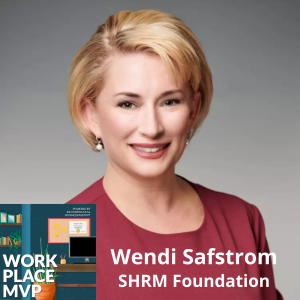
Tagged With: compassion fatigue, compassion satisfaction, Healthcare, healthcare industry, Healthcare workers, Jeff Gorter, R3 Continuum, Workplace MVP

Workplace MVP LIVE from SHRM 2021: Beth King, Motif FoodWorks

October 13, 2021 by John Ray

Motif FoodWorks
Minneapolis St. Paul Studio
Workplace MVP LIVE from SHRM 2021: Beth King, Motif FoodWorks
Loading
00:00 /
RSS Feed
Share
Link
Embed

Download file

Motif FoodWorks

Workplace MVP LIVE from SHRM 2021: Beth King, Motif FoodWorks

Beth King, VP of People and Culture at Motif FoodWorks, shared her journey to HR, from a focused role to a generalist, which is her passion. She and host Jamie Gassmann discussed the difference between HR in small and large organizations, her advice to those just starting, her company’s experience during Covid, and much more.  Workplace MVP is underwritten and presented by R3 Continuum and produced by the Minneapolis-St.Paul Studio of Business RadioX®.

This show was originally broadcast live from the 2021 SHRM Annual Conference held at the Las Vegas Convention Center in Las Vegas, Nevada.

Beth King, Vice President, People & Culture at Motif FoodWorks, Inc.

Motif FoodWorks
Beth King, Vice President, People & Culture at Motif FoodWorks, Inc.

Elizabeth King is a seasoned Human Resources professional with 12+ years experience growing and cultivating dynamic organizations.

She is well respected as a business partner and thought leader who in her career has taken small companies through the Initial Public Offering (IPO) process, acquisitions, and integration processes.

She says her passion is being a generalist. She lives in Boston and has been with Motif FoodWorks since 2019.

LinkedIn


Motif Foodworks

We make plant-based food better by analyzing, discovering and designing differently. The result? Crave-worthy food that’s better tasting, more nutritious and sustainable.

Unlike other food and ingredient companies, we’re built to bring the outside in. We’re a lean, nimble organization with seasoned professionals who have lived and led food businesses, along with science and technology experts who have renovated, innovated and designed leading-edge solutions. Together, we curate and connect with world-class scientists, universities, partners and technology platforms.

We’ve assembled an unrivaled team of experts from the food industry and world-class science and academic institutions.

We integrate and apply cutting-edge technology focused on closing the biggest gaps and solving the food innovation challenges of today and tomorrow.

We’re creatively aggregating proprietary insights and an exclusive network of partnerships to holistically unlock the secret building blocks of food to rewrite today’s food design rules.

Company website

About Workplace MVP

Every day, around the world, organizations of all sizes face disruptive events and situations. Within those workplaces are everyday heroes in human resources, risk management, security, business continuity, and the C-suite. They don’t call themselves heroes though. On the contrary, they simply show up every day, laboring for the well-being of employees in their care, readying the workplace for and planning responses to disruption. This show, Workplace MVP, confers on these heroes the designation they deserve, Workplace MVP (Most Valuable Professionals), and gives them the forum to tell their story. As you hear their experiences, you will learn first-hand, real-life approaches to readying the workplace, responses to crisis situations, and overcoming challenges of disruption. Visit our show archive here.

Workplace MVP Host Jamie Gassmann

Jamie Gassmann, Host, “Workplace MVP”

In addition to serving as the host to the Workplace MVP podcast, Jamie Gassmann is the Director of Marketing at R3 Continuum (R3c). Collectively, she has more than fourteen years of marketing experience. Across her tenure, she has experience working in and with various industries including banking, real estate, retail, crisis management, insurance, business continuity, and more. She holds a Bachelor of Science Degree in Mass Communications with special interest in Advertising and Public Relations and a Master of Business Administration from Paseka School of Business, Minnesota State University.

R3 Continuum

R3 Continuum is a global leader in workplace behavioral health and security solutions. R3c helps ensure the psychological and physical safety of organizations and their people in today’s ever-changing and often unpredictable world. Through their continuum of tailored solutions, including evaluations, crisis response, executive optimization, protective services, and more, they help organizations maintain and cultivate a workplace of wellbeing so that their people can thrive. Learn more about R3c at www.r3c.com.

Company website | LinkedIn | Facebook | Twitter
TRANSCRIPT

Intro: [00:00:03] Broadcasting live from the SHRM 2021 Conference at the Las Vegas Convention Center, it’s time for Workplace MVP. Brought to you by R3 Continuum, a global leader in workplace behavioral health, crisis, and security solutions. Now, here’s your host.

Jamie Gassmann: [00:00:21] We are broadcasting from SHRM 2021 on Day two here in Las Vegas, Nevada. And with me is Beth King, the Vice President for People & Culture at Motif FoodWorks. Welcome to the show, Beth.

Beth King: [00:00:34] Thanks, Jamie. I’m excited to be here.

Jamie Gassmann: [00:00:36] So, why don’t we start off with you sharing a little bit about your journey kind of getting into H.R., and what you do as Vice President of People & Culture at Motif FoodWorks.

Beth King: [00:00:50] Sounds great. So, in terms of getting into H.R., I have to say I fell into it. I graduated college with the ever-popular liberal arts degree, which provides you with very little direction on how to actually get a job. And, my parents said, “Well, you have to get a job.” And I said, “Okay.”

Beth King: [00:01:09] And so, I started out as a recruiting coordinator, which is a very popular entryway, as you know, to H.R. and really enjoyed that. But I was lucky enough to have an opportunity to transition into a broader role and go into more of a generalist role. And, I started in a startup-like environment, which was really, really fun, and was able to take that, take my learnings from that company and move to a true startup that had gone through Series A and Series B funding, and went through an IPO with them as an H.R. manager. We were subsequently acquired and I was able to transition ultimately into an H.R. business partner.

Beth King: [00:01:53] So, my journey went from a more focused role in recruiting to a broader role and in the more generalist and business partner sector. And, that’s where I found my true passion and enjoyment, and, ultimately, that’s how I landed where I am today. And, throughout that journey, I also realized that there are so many great things about H.R. and what they can do in different types of companies whether it’s a startup, a midsize, or a very large company because I have experience in all of those. But my passion really lies in entrepreneurial ventures, in startups, and in growing something small into something mid-sized. And, that’s a really enjoyable place for me to be in H.R. But when you’re doing that, you need to have a broader perspective.

Jamie Gassmann: [00:02:47] Absolutely. So, you mentioned that there’s a lot of great things that H.R. does within all these different organizations. Let’s dive into that a little bit. Tell me a little bit about what you see as those great things. Like, what is it to you –

Beth King: [00:03:01] Sure.

Jamie Gassmann: [00:03:01] That you think is most impactful.

Beth King: [00:03:02] So, what I love about being in a small company, which is something that I’ve done several times throughout my career, is that you’re all things to everyone. So, you never have the luxury of getting bored, right? Because there’s just always something. So, one day you might be recruiting. The next day, it might be benefits. The day after that, it’s employee relations, et cetera, et cetera.

Beth King: [00:03:24] But when you have the opportunity to work for a mid-sized or a large firm, then you have the opportunity to engage with individuals who have done one thing for the majority of their careers. And, while that may not be attractive to all of us in terms of a career path, it’s a huge opportunity to learn about what does it mean to truly be a subject matter expert in XYZ area.

Beth King: [00:03:50] So, you have the opportunity in a mid or a large company to talk to people who have done payroll for 25 years and they know everything about payroll. They know everything about the state laws, they know everything about multistate, they know everything about international, they know how to interact with Treasury. And, it’s so incredible to go through your career and have those resources available to you even if it’s not your own journey, right?

Beth King: [00:04:19] And, that is what I love about working at different types of companies or having worked at different types of companies. And, it’s why I would always encourage people. If you think you love small business, that’s great, but don’t be afraid of trying something new. Don’t be afraid to go to that big or mid-sized company because you never know. And, even if it turns out not to be your thing, the insight and the information and the context that you’ll gain will be incredible, and it’ll be a wonderful addition to your own résumé.

Jamie Gassmann: [00:04:54] Absolutely. So, do you think it’s a hard transition for some that go from more of that generalist role to a more kind of subject matter, like specifics, specialty role? You know, is there a hard transition with that, do you think?

Beth King: [00:05:09] There can be. I think it depends on, obviously, the person’s interests and personality.

Jamie Gassmann: [00:05:13] Sure.

Beth King: [00:05:14] But I certainly think that we all naturally gravitate even as generalists to one discipline or another. So, for example, although I have made a career out of being a generalist, if I have the opportunity to focus my time on a specific discipline, it’s always going to be OD, organizational development.

Beth King: [00:05:37] To me, that’s what gets me excited. That’s where I see – it’s the work that is the most fun. It is the work that allows me to engage with employees in the most meaningful way for me. And, if I were to go into a specific discipline, that would be the one. But that’s not always going to be everyone’s choice.

Beth King: [00:06:02] So, I think that it doesn’t have to be a tough transition because if you just go with the discipline that excites you, that you’re passionate about, that you find joy in, and that you find to be really worthwhile for the employees, then I think it’s going to be more natural than anything else.

Jamie Gassmann: [00:06:21] Wonderful. And so, if somebody, let’s say they’re new in their career.

Beth King: [00:06:25] Sure.

Jamie Gassmann: [00:06:26] You know, maybe they work for a small organization, or maybe they work for a large organization and they’re kind of, you know, in one specialty and they’re looking at broadening that or trying to figure out where they go. You know, what are some things that have helped you in your career and kind of identifying that passion in organizational development? You know, how did you discover that?

Beth King: [00:06:45] So, I was very, very lucky early in my career. The organization that I worked for, the H.R. organization that I worked for, was actually led by someone who had done OD for about 20 years prior to joining our team. So, because of her specific background, the very nature of our day-to-day work had a bit more of an OD bent to it. So, it was a little bit more natural.

Beth King: [00:07:13] But that being said, it certainly wasn’t the only work going on in our team because we were H.R., so benefits still had to be done. Comps still had to be done. Payroll still had to be done. Recruiting. All of those things, right? We couldn’t just play around with creating trainings and what’s the next great employee engagement thing that we’re going to do for the team.

Beth King: [00:07:32] So, we had to focus our time differently. And, I would say for those folks who are looking to explore different disciplines in H.R., talk to your peers and colleagues. You know, go to – even if going to a SHRM event isn’t something that maybe is available to you, SHRM has an incredible amount of free resources that you don’t even have to be a member of SHRM to access. If you are able to get a SHRM membership, all the better because then you have even more resources available to you.

Beth King: [00:08:04] But I think one of the great things about SHRM is that it does offer a number of different points of reference and contacts even for those who, for one reason or another, may not be able to have a membership. But you can do that. I would say your local SHRM affiliates.

Beth King: [00:08:22] So, our company is based in Boston, so we have NEHRA, the New England Human Resources Association. They often will have free-to-member or pay-for-non-member events that you can go to. Look those up and just keep yourself informed. You know, do the research. Go online. I fully appreciate that keeping up with the newest labor laws isn’t exactly the world’s most riveting information. But if you want to grow and develop your H.R. career, you might want to check it out once a year or something. But there are great podcasts out there.

Jamie Gassmann: [00:09:00] Yeah.

Beth King: [00:09:01] There are great YouTube channels. There are so many wonderful resources out there. So, I would say talk to your partners and colleagues and, you know, do your research yourself and see what you think might be the right fit.

Jamie Gassmann: [00:09:15] Awesome. Awesome. So, one quick question, kind of looking at that organizational development and looking at, you know, you kind of mentioned that Motif FoodWorks does kind of almost like lab kind of work.

Beth King: [00:09:29] We have a heavy lab presence. Yes, we hired many scientists and engineers.

Jamie Gassmann: [00:09:33] So, how did the last year in terms of like, you know, I know with being that you’re involved in like managing culture and overseeing that, how did you balance that culture and support those individuals that – were they in the office? Were they considered essential? Were they hybrid? Like, how have you approached that? Because it sounds like you’ve got a lot of passion in that organizational development kind of that cultural aspect of an organization? How have you been able to implement some different things or explored your challenges [inaudible]?

Beth King: [00:10:02] Sure. So, I have to admit for our company specifically, COVID could not have come at a better time because we had about six weeks prior to COVID. So, in the state of Massachusetts, we went into lockdown on March 13, 2020, and about six weeks prior, maybe a little bit less than that, we had embarked on a buildout of our new facility, which was going to include our labs. So, the truth of the matter is in our organization we didn’t actually have our labs ready to go anyways, and they were able to be built out over the pandemic. So, it kind of worked.

Beth King: [00:10:39] But we got really creative with a lot of the work that had been going on in the office in terms of lab work. And, we had application engineers and scientists who work with food ingredients and creating different applications. They worked in their own personal kitchens, at their homes. Their families became – you know, we would send them the correct forms to sign and their families became the testers of those ingredients. Does this ingredient really do what we’re looking for it to do in the way that we want it to do it? And, what was helpful, obviously, is that we got very real-time and authentic feedback because I think most people would agree that your family is always going to be very clear if they don’t like your cooking. So, that’s the truth. So, it was very helpful to have that, right? And so, we were able to get that sort of non-biased – they weren’t going to sugarcoat it – feedback.

Jamie Gassmann: [00:11:45] That’s like your best test subject.

Beth King: [00:11:46] Exactly, exactly. I always say if we ever do a chicken nugget, give it to my kids, that’s all they eat, so.

Jamie Gassmann: [00:11:53] Oh, fantastic. Well, you can sign my kids up for that too. They’re like, you know, chicken nugget connoisseurs, right?

Beth King: [00:11:58] Exactly, exactly. Their absolute snobs. So, we were able to think creatively about what we were going to do. But our organization is not solely scientists and engineers. We also have [inaudible] staff, we have marketing staff, we have sales staff, et cetera.

Beth King: [00:12:16] And so, for those folks, you know, we really did have to get creative. Tools like Zoom and Teams became critical infrastructure for us. We did stay home for quite a bit of time in part because of COVID and in part because of the build-out, where it was like, well, if you know we’re supposed to be at home anyways, then I guess, you know, we don’t have a place to go back to. We were sort of homeless.

Beth King: [00:12:39] And then, when we came back to work, we had this big, beautiful new office with brand new labs and it was really wonderful. But we did things like we did the now-ever-prevalent Zoom happy hours. We tried to make it fun, tried to do different themes, ’80s themes. We did a “come as your favorite Nicolas Cage character,” which we had to explain to certain generations that Nicolas Cage had done more than just some Disney movies, that he had actually in fact been around since the early ’80s but that was before they were born. But it was really fun. We did things like that.

Beth King: [00:13:24] And, as I said Zoom and Teams just became critical. So, it was just kind of getting in the mindset of if I need someone using those types of tools, using Slack to get in touch, to kind of recreate that sort of grab you in the hall real quick that we get when we’re in person. Using Slack as the alternative to that has really helped. “Hey, I have a quick question.” “Hey, did you hear this?” “I’m on a meeting. They’re talking about this.” “What are they talking about? I haven’t heard about this. Can you explain it to me?”

Beth King: [00:13:53] All of that stuff was done through these new tools, or at least new-to-us tools or less frequently used tools, that really helped create remote business. And then, when we went back, we did do a hybrid model and we still are doing a hybrid model for many roles.

Beth King: [00:14:09] Lab roles, what we’ve done as we have said, you need to be here when you need to be here. Meaning, if you’re running experiments, you need to be here for that. But if you’re just analyzing data and you would prefer to work from home, then you can do that from home.

Beth King: [00:14:23] We also have employees who have that option and choose to be in the office for a variety of reasons. They like the personal interaction. Maybe, they have three more roommates at home who are also working from home and they don’t want to do that. Maybe, if someone, like myself, who’s a parent and getting work done at home is more of a challenge than it is to get work done at the office and so it’s just a productivity issue.

Beth King: [00:14:50] But we try to be as flexible as possible because we recognize that there has been a real shift in workplace culture, not just with our company but the expectations of candidates, right? Folks are looking more and more for flexibility in the workplace for that hybrid offering and what does that looks like. And, the truth of the matter as well is that we’re based in the seaport in Boston and driving in and out of the seaport on a Friday year-round is not the most pleasant experience. So, if we don’t have to have folks do that, we tend not to. But, again, some people want to go in on a Friday because maybe they want to do a happy hour after and you don’t want to drive to a happy hour.

Jamie Gassmann: [00:15:34] Yeah. No, absolutely not. And, well, and it’s just great having that flexibility and kind of meeting people where it best fits them with their lifestyle and their work style and – fantastic.

Jamie Gassmann: [00:15:46] Well, if anybody wanted to get in touch with you, Beth, and kind of hear a little bit more about, you know, your Nicolas Cage happy hours, how would they be able to do that?

Beth King: [00:15:54] Sure. So, LinkedIn, I’m under the name Beth Kelly King, would be one great way, or an email, eking@motiffoodworks.com. And, they can always check out our website, which is www.madebymotif.com.

Jamie Gassmann: [00:16:12] Fantastic. Well, thank you so much for joining us today in the show.

Beth King: [00:16:15] Thank you for having me.

Jamie Gassmann: [00:16:16] You’ve been a fabulous guest. And, I hope the rest of the SHRM Conference goes great for you.

Beth King: [00:16:20] I’m sure it will. Thank you so very much.

Jamie Gassmann: [00:16:22] And, for those listening, definitely if you are in the booth area and the Expo Hall for SHRM 2021, stop by R3 Continuum’s booth at 4076 and check out our podcast.


Tagged With: Beth King, HR, Human Resources, Jamie Gassmann, Motif FoodWorks, R3 Continuum, SHRM 2021, Workplace MVP

Workplace MVP: Rosana Preston, Rosedale Transport

October 7, 2021 by John Ray

Rosedale Transport
Minneapolis St. Paul Studio
Workplace MVP: Rosana Preston, Rosedale Transport
Loading
00:00 /
RSS Feed
Share
Link
Embed

Download file

Rosedale Transport

Workplace MVP:  Rosana Preston, Rosedale Transport

Rosana Preston, Director of HR and Administration for Rosedale Transport, has decades of experience in trucking yet makes responding to changing times a priority. In this conversation with Workplace MVP host Jamie Gassmann, she cites other fundamental principles for her work and for Rosedale corporately, including a culture of transparency, respect in the workplace, consistency, and a sense of fun. As Rosana says, “You’re never too big that you can’t listen. You have to keep your finger on the pulse of what’s important to people.” Workplace MVP is underwritten and presented by R3 Continuum and produced by the Minneapolis-St.Paul Studio of Business RadioX®.

Rosedale Transport (The Rosedale Group)

The Rosedale Group is a privately held, family-owned Canadian company. Opening its door with a fleet of one truck and two customers, today Rosedale has grown to 15 terminals with a fleet of 40 straight trucks, 500 tractors, and 1300 trailers that are operated and supported by over 800 employees.

Rosedale’s growth was based on quality service, competitive rates, and the strength of its people. These factors remain to this day why customers choose Rosedale.

For years, Mississauga, Montreal, and Ottawa were their only terminals. That evolved to include London, Barrie, Quebec City, Granby, and Dalton, Georgia. In 2001, Rosedale expanded into Western Canada with terminals now in Winnipeg, Saskatoon, Regina, Edmonton, Calgary, and Vancouver.

Over their long history in transportation, they have steadily improved their people resources, technology, equipment, and terminal network. Rosedale continues to offer quality service to its customers and is committed to getting the job done, and done right.

Company website

Rosana Preston, Director, Human Resources & Administration at Rosedale Transport

Rosana Preston, Director, Human Resources & Administration at Rosedale Transport

Rosana Preston has been with Rosedale Transport since 1991. She began her career in trucking in the safety department, moved into training and development, and eventually into HR and Administration at Rosedale.

Her priority is to create a respectful workplace that encourages growth and psychological safety.

Rosana is the 2020 HR Leader of the Year from Trucking HR Canada, celebrating her 50 years in the trucking industry.

LinkedIn

R3 Continuum

R3 Continuum is a global leader in workplace behavioral health and security solutions. R3c helps ensure the psychological and physical safety of organizations and their people in today’s ever-changing and often unpredictable world. Through their continuum of tailored solutions, including evaluations, crisis response, executive optimization, protective services, and more, they help organizations maintain and cultivate a workplace of wellbeing so that their people can thrive. Learn more about R3c at www.r3c.com.

Company website | LinkedIn | Facebook | Twitter
About Workplace MVP

Every day, around the world, organizations of all sizes face disruptive events and situations. Within those workplaces are everyday heroes in human resources, risk management, security, business continuity, and the C-suite. They don’t call themselves heroes though. On the contrary, they simply show up every day, laboring for the well-being of employees in their care, readying the workplace for and planning responses to disruption. This show, Workplace MVP, confers on these heroes the designation they deserve, Workplace MVP (Most Valuable Professionals), and gives them the forum to tell their story. As you hear their experiences, you will learn first-hand, real life approaches to readying the workplace, responses to crisis situations, and overcoming challenges of disruption. Visit our show archive here.

Workplace MVP Host Jamie Gassmann

In addition to serving as the host to the Workplace MVP podcast, Jamie Gassmann is the Director of Marketing at R3 Continuum (R3c). Collectively, she has more than fourteen years of marketing experience. Across her tenure, she has experience working in and with various industries including banking, real estate, retail, crisis management, insurance, business continuity, and more. She holds a Bachelor of Science Degree in Mass Communications with special interest in Advertising and Public Relations and a Master of Business Administration from Paseka School of Business, Minnesota State University.

TRANSCRIPT

Intro: [00:00:04] Broadcasting from the Business RadioX Studios, it’s time for Workplace MVP. Workplace MVP is brought to you by R3 Continuum, a global leader in workplace behavioral health and security solutions. Now, here’s your host, Jamie Gassmann.

Jamie Gassmann: [00:00:25] Hi, everyone. Your host, Jamie Gassmann, here and welcome to this episode of Workplace MVP. When a crisis event happens, whether it is a large scale or small scale incident, the effects of the event tend to put things into perspective, leading us to reflect on our current lives and reevaluate what matters most. Over the last year with the COVID-19 pandemic, many of us have done just that. And as a result, it is leading to a dramatic increase in resignations and what is now being referred to as the great resignation.

Jamie Gassmann: [00:01:01] In April and June alone, the Department of Labor recorded a record of four million people resigned their jobs in each month. And this level resignation, coupled with a shortage of job seekers, has workplaces looking to strengthen cultures and create a work experience for their employees where they have no need to leave. What are the secrets to keeping that strong work experience that no one wants to leave?

Jamie Gassmann: [00:01:25] And with us today to share best practices for how they have been able to create a great work experience for employees is Workplace MVP Rosana Preston, Director of HR and Administration for Rosedale Transport. Welcome to the show, Rosanna.

Rosana Preston: [00:01:42] Thank you. It’s a pleasure to be here.

Jamie Gassmann: [00:01:44] So, let’s start off, walk us through your career journey and how you came into your position as Director of HR and Administration at Rosedale Transport.

Rosana Preston: [00:01:54] Well, I was kind of just trying to figure out what I wanted to do with my life, and I got a job at a nearby transportation company. And I was very fortunate in that I met many different mentors that afforded me the opportunity to move through, learn, and grow. So, my all things trucking passion started with me working for the safety department, the recruiting department, the administration, getting involved in training and development, and then moving into management.

Rosana Preston: [00:02:32] As my career continued to progress, again, I remained able to continue to grow and kept me so involved in the trucking industry with mentors and support. I moved forward and I have been able to continue my career in HR and administration as a director for Rosedale. And focus on a goal, my own goal, to be committed to creating a respectful workplace, one that encourages personal and professional growth and is psychologically safe for everyone.

Jamie Gassmann: [00:03:11] Fabulous. So, tell us a little bit about Rosedale Transport. How many employees do you have? Obviously, it does transportation like trucking. So, talk to us about, you know, where your drivers are transporting to and just kind of give us a little bit of background.

Rosana Preston: [00:03:27] I can. About 52 years ago, two gentlemen and one truck decided to start a trucking company. They had a vision. While we celebrated our 50th anniversary with a huge, huge party, that vision turned into what Rosedale is today. Predominantly, we specialized in floor covering. The transportation of floor covering represents about 60 to 70 percent of our business. The rest is general freight. We have a terminal location in Dalton, Georgia, which everyone knows is the carpet capital. So, two men and one truck grew to 15 locations across Canada, one in the U.S., and about 800 employees and 1,700 pieces of equipment.

Jamie Gassmann: [00:04:17] Wow. All from two men and a truck.

Rosana Preston: [00:04:21] Two men and truck, that’s how it all started.

Jamie Gassmann: [00:04:23] Fabulous. So, on a previous call that you and I had had, you shared that the organization has had a very strong retention history. So, can you share with us and kind of elaborate a little bit on what your retention history looks like.

Rosana Preston: [00:04:38] Absolutely. So, when we talk about retention in the trucking industry, it generally focuses with drivers because that is one of the biggest problems. I’m proud and happy to say that when I look at the company’s retention from zero to one year, we’re running at 77.3 percent. From zero to 30 years, we’re running at 85 percent. I believe our retention numbers are high because we’re a good company to work for and we’re a people company.

Rosana Preston: [00:05:09] As far as the staff – we talked a little bit about that – there’s many, many people across our organization that have received their 25 year watches, like myself, for over 30 years. And I guess we kind of joke anybody under ten years is a newbie. And, again, that speaks for the company and people just don’t leave.

Jamie Gassmann: [00:05:33] Yeah. So, obviously, are you looking at this year coming out of COVID and having organizations with this great resignation, are you seeing any impact on that or is your retention still staying strong?

Rosana Preston: [00:05:47] Our retention is still staying strong. During COVID, unfortunately, the economy and every company, I think, took a bit of a hit. And for the first time in our history, we had to lay off some employees on the operating side of the company. Most of them have been brought back.

Jamie Gassmann: [00:06:08] Great. Great. So, what do you feel is really helping to create this work environment that employees want to stay at, especially your truck drivers? I mean, you see a lot of articles that there’s hiring issues with truck drivers and even in the trucking industry in general. So, what do you think is helping with your work environment that’s making that difference?

Rosana Preston: [00:06:31] I think being visible, being honest, transparent, and down to earth has created an environment that promotes that kind of retention. Over the years, we have kept our focus on staying current. And we’re not a one size fits all type of organization. We stay current and try and know what is important to our people. And I believe those are some of the facts that promote retention.

Jamie Gassmann: [00:07:03] Yeah. So, by staying current, what types of things do you do to make sure that you’re staying current with them? Are you out having conversations with the staff? Are you doing team surveys? What are some of the things that you’re monitoring that help you to know that you’re hitting that mark?

Rosana Preston: [00:07:20] I think, first of all, staying in touch with the times. You know, today’s worker is a lot different than someone 30 years ago. We all know that today people are looking for that work-life balance. The days of people working from sunup to sundown are gone. People don’t want to do that anymore. And there’s been a lot of corporations that at one time demanded that type of time from their employees. They’re not around anymore.

Rosana Preston: [00:07:51] So, understanding the culture, understanding how people have changed, that is learning that we have to stay on top of. And not just hunker down and think, “Well, that was the way it was 40 years ago.” Because that’s not the way it is today. So, we’ve kept that focus on staying current and listening to the people, being visible. Kind of establishing that comfort where someone sees you, they’re not shy to come up and say, “Hi, How are you doing?” whether it’s the president, the vice president, or any one of the directors I mean, no one is reluctant to come and say hello, that’s for sure.

Jamie Gassmann: [00:08:31] Yeah. That’s fantastic. And you mentioned culture a couple of times. You know, why is that so important in relation to retention in your opinion?

Rosana Preston: [00:08:41] Well, we spend a lot of time at work. Sometimes we see the people that we work with more than we might see a family member. Liking what you do and where you do it makes it all the better. If you have all the other factors that work for you, such as salary, opportunities to grow, you like where you work, and you feel like you’re a part of the organization, why would you leave? I mean, other than, of course, if someone got transferred or there’s some extenuating circumstances. But why look for greener grass when your grass is already green?

Jamie Gassmann: [00:09:20] That’s a great point. And a lot of people do that, they’ll seek that greener grass. I know in my own career I’ve seen people that will leave, you know, when you’ve got things that are pretty good. And then, I, generally, see them come back, which is interesting. Do you sometimes see that in your own work environment?

Rosana Preston: [00:09:37] Oh, very much so. I mean, we have one gentleman, unfortunately, he knows that if there’s a spot open, we’ll bring him back. But he left for greener pastures. And sometimes I find people are not always honest about the job that they’re presenting, and someone leaves, and they get to their other place, and it’s not quite what they thought it was. And then, they either stay there or try and come back. We have a lot of people that we’ve rehired.

Jamie Gassmann: [00:10:06] Yeah. Interesting. And I know you’ve previously shared when you talk about the culture that you’ve built, which sounds like an amazing environment for those employees with that visibility to leadership and kind of transparency and comfort. You built that culture within the main terminal, but you’ve been able to replicate that across all the other terminals and also replicate that with your drivers that are out on the road. So, can you share a little bit about what were some of the ways that you’ve been able to kind of maintain that culture across the entire organization and all areas that employees might be working?

Rosana Preston: [00:10:48] Sure. One of the things is consistency, the same message throughout the organization. Whether you’re in Winnipeg, Montreal, or Toronto, it’s the same message. It’s the same company. We promote an inclusive management style. And respect in the workplace is paramount here. Again, so it’s the same message that transcends all the locations.

Rosana Preston: [00:11:15] One of the things we like to do a lot is have fun. And pre-COVID, I think, I was explaining to you, we celebrated everything that we possibly could. So, head office would send out a call to action that we’re going to be celebrating these days. But then, how that location is decided to celebrate it was up to them. They know what their people like. They know which day would be the best day to celebrate. And we allowed the managers and their cheerleaders were able to run with creativity, food choices, decorations. Everything was left up to them. If we were having food truck in Mississauga, that necessarily didn’t mean Montreal was going to have one. They might have done something different.

Rosana Preston: [00:12:04] Our marketing team always helped by sending all the branches out material. We probably have bought more baseball caps – I don’t know what – the Toronto Blue Jays. And we have them distributed throughout the organization. And, of course, that’s good advertising for us as well. We change them up because you can’t have the same hat two years in a row. So, different locations know what works best for them.

Rosana Preston: [00:12:34] And, of course – and, again, pre-COVID. I’m hoping we can get back to this – we always had chocolate at all of the stations, the office, the warehouse, the dispatch area. Chocolates for Valentine’s Day, Easter, Halloween. There’s just something that starts off your day when you walk in and you can put your hand in a bowl and take some chocolate and away you go.

Rosana Preston: [00:12:58] So, we would definitely want to get back to that. We might do it a little different. All the candy will be wrapped and so on. We’ll figure it out. But it certainly won’t stop us from celebrating in the future.

Jamie Gassmann: [00:13:09] Yeah. It’s amazing what chocolate can do for a work environment, right?

Rosana Preston: [00:13:13] Chocolate, and I’ll tell you one of the most popular was the ice cream truck. It was really funny. It was only going to be here in Mississauga until about 3:00 or 3:30. City drivers had gotten stuck in traffic or whatever, and they were calling and saying, “Hold the ice cream truck. I’ll be there. I’m going to be a-half-an-hour away.” So, a little thing like the ice cream truck was the highlight of everybody’s day.

Jamie Gassmann: [00:13:40] Yeah. And, you know, it breaks a little bit of business as usual and gives you something fun to look forward to. That’s fantastic.

Rosana Preston: [00:13:47] Absolutely. Absolutely.

Jamie Gassmann: [00:13:47] So, in addition to some of the fun that you’ve kind of created within that culture, you also talked a lot about some of the incentives that you’ve established. So, how did you identify what’s the right fit for the incentives? And how did that help in driving motivation and employee engagement and involvement in achieving those?

Rosana Preston: [00:14:10] We have two incentives that surround dollars, money. And one of them is a years of service bonus. And what that one is that, the years of service, every employee receives $150 every year, accumulates to a maximum of $3,000. So, a 30 year employee like myself, I look forward to getting a $3,000 bonus check just because that’s the seniority that I have. We give that bonus out at Christmas time. And a few years ago, someone questioned, was that the right time during the holiday season. So, we asked our employees, “Do you like getting your years of service bonus at the holiday season? Would you like to get it at a different time?” Overwhelmingly, everybody liked it during the holiday season. So, that’s one bonus.

Rosana Preston: [00:15:03] And the second one is a profit sharing bonus. And based on the profitability of the organization, everyone top down, bottom up, it doesn’t matter how you say it, part-time, full-time receives an annual profit sharing portion. And, again, that is something that everybody looks forward to. I’ve been here 30 years, we haven’t missed a year yet. And it’s inclusive of all employees.

Jamie Gassmann: [00:15:32] Yeah. I like that you’ve kind of got that balance of a personal type bonus as well as a team incentive bonus. You’re kind of meeting both areas of what, typically, would drive some of that motivation from employees and balance.

Jamie Gassmann: [00:15:48] So, in looking at your drivers, I know you mentioned early on that one of your objectives is to make sure that the full work environment has that psychological safety. And you talked about how you extend the culture a little bit into your drivers. But how do you extend some of that psychological safety when they’re out on the road? Because I imagine some of your drivers are probably out, you know, for the full week, they’re long road drivers. So, how are you supporting them when they’re not actually in the terminal?

Rosana Preston: [00:16:20] So, we have the city drivers and the highway drivers. Most of our highway drivers are home a minimum of twice a week. So, they don’t have runs that take them away for weeks on end, like some other carriers do. So, communication is key, and we use different forms of communication.

Rosana Preston: [00:16:42] Our line haul team, which works closely with the highway drivers, is responsible to make sure that they pass on information. We use satellite messaging. We use emails to their home. That’s something new we started a couple of years ago, sending emails out to their homes so that they can receive communications, share them with their wife, and so on. There’s always posters, events, and we try and make sure that there’s enough lead time so that everybody can see what’s going on and what’s new.

Rosana Preston: [00:17:18] We take into consideration all of our shift workers too. Like, we have people that work midnights and afternoons and so on. So, we have to make sure that the highway drivers and people on different shifts are never excluded from anything that’s going on.

Jamie Gassmann: [00:17:35] Yeah. Perfect. And I imagine, you know, receiving that information at home helps them to push that communication to their spouses or significant others if they are getting a little busy in transporting goods.

Rosana Preston: [00:17:49] Absolutely. Absolutely. Sometimes we have to put up a notice to say, “Please make sure you check your home email when you go home tonight because there’s a message from us.” But, yeah, we do find a way to communicate, that’s for sure.

Jamie Gassmann: [00:18:03] Yeah. Fantastic. So, we’re going to take a word from our sponsor real quick. So, Workplace MVP is sponsored by R3 Continuum. R3 Continuum is a global leader in providing expert, reliable, responsive, and tailored behavioral health crisis and violent solutions to promote workplace wellbeing and performance in the face of an ever changing and often unpredictable world. Learn more about how R3 Continuum can tailor a solution for your organization’s unique challenges by visiting r3c.com today.

Jamie Gassmann: [00:18:37] So, over the last year when you were navigating the pandemic, what were some of the things that you implemented that helped to maintain your work culture, especially as you had employees that moved to remote?

Rosana Preston: [00:18:49] Well, the first thing that we did was take a look at what we could change and to help promote that safety. For example, we implemented changes to longstanding procedures such as a driver will go to a customer, get paperwork, sign the paperwork, there’s an exchange of pens and paperwork and so on. So, we took a look at those things. And to lower the risk, we changed those policies that have been ingrained for years and years. We told them they don’t have to get signatures anymore. Just make sure you write down the name of the person that received the goods or that you picked up from.

Rosana Preston: [00:19:34] We formed a team across the country with individuals from all of the locations to assist with questions, and deal with concerns, and help with communication. We created a hotline for employees to reach, either by phone, because our cell phone numbers were posted, or by email, they could reach the hotline by email, again, if they had any concerns.

Rosana Preston: [00:20:01] We continue to provide personal protective equipment for all the employees. That includes canisters for the highway drivers to keep with them. When the canister is empty, they bring it back, they get a new one. So, they can wipe down where they’ve been, wiped down their trucks, and so on. We provide daily kits for the city drivers. They pick up their bills, they pick up their kit, away they go, again, to wipe down, gloves if they need them, and so on. So, we continue to do that.

Rosana Preston: [00:20:32] We’re transparent. We always let employees know. And we’re very fortunate, we have very few cases of COVID, but we did have some. And we were very transparent about it. We let all the employees in that facility know that there had been an outbreak – I don’t know that that’s an outbreak. Probably the wrong word – one individual had COVID and then we got the terminal fogged or we did whatever corrective measures we had to add and make sure, again, that it was safe.

Rosana Preston: [00:21:05] So, as an essential service, most of our employees worked from the facility. We had very few that worked remote. We did have a couple and we made sure that we always passed on through communication anything that was important to them.

Jamie Gassmann: [00:21:22] Yeah. So, were those remote employees ones that requested to work remote or were they in positions that it felt like it was, you know, more necessary that they be in a remote setting?

Rosana Preston: [00:21:34] A little bit of both. Some people were very nervous of COVID or had elderly parents at home. They felt like they might want to work from home, and we were able to facilitate that.

Jamie Gassmann: [00:21:47] Yeah. Very great. That’s always nice to be able to offer that option. So, now, everyone’s back. Obviously, you continue to work as essential workers and in the office. How are the employees now? I mean, it sounds like you still have some of the PPE procedures in place.

Rosana Preston: [00:22:09] Yes.

Jamie Gassmann: [00:22:10] You know, have things kind of started to go back to that new normalcy? Or how are the employees at this particular point with some of the COVID, if the cases have risen or things of that nature, in your area?

Rosana Preston: [00:22:24] We took a position that until the branch is heard differently from head office, everything stayed the same. So, all COVID protocols stayed in place. We still wear masks unless you’re in your own office. We wear masks as we travel through the building. We stay six feet apart. So, we have not stopped any of the COVID protocols. And we still, as I say, continue to supply all the branches from head office we could get out of here, the personal protective equipment for the people.

Jamie Gassmann: [00:23:01] Awesome. Yeah. And so, obviously, Rosedale Group is a private organization. So, some of the things that we talked about is, in your opinion, do you feel you’re at more of an advantage in creating this work environment with different incentive programs and different fun activities than maybe a larger organization might be that is a little bit more matrixed or siloed. What are some of your thoughts around that?

Rosana Preston: [00:23:32] Well, I think there’s definitely an advantage to being privately owned. But more than that, it’s the mindset of ownership. And we’re privately owned and we’re a flat organization. We don’t have a lot of red tape to go through. The management team is small. It’s a case of, you know, two doors down and walking down to see the president and saying, “What do you think about this? How if we do this?” And the same with our VP and GM and our sales manager.

Rosana Preston: [00:24:06] So, we’re privately owned and families involved in running the company. And I guess we’re blessed because we have very similar mindsets. And we’re all for, as I said, celebrating. We’re all for listening to the people. So, it’s very easy to navigate through those things. I mean, we don’t always agree. And I don’t want to create that big lie. But it’s easy. There isn’t a lot of us. We talk about it, pros and cons. We try it. More importantly, we’re not afraid to say, “Well, we won’t be trying that one anymore.” Sometimes things don’t work and you have to remember that you’re human and you just move on to the next thing.

Jamie Gassmann: [00:24:51] Yeah. And so, from a larger organization and knowing that they might have a little bit more red tape to go through or kind of more layers that they have to consider when making a decision, what are some of the things, from your opinion, that they could do in some of those maybe departments or sections of their organization that could help to instill that strong work culture?

Rosana Preston: [00:25:15] Well, I think you’re never too big that you can’t listen. You can’t pay attention. You can’t have empathy. And, I mean, we’re in business to make money, of course. But we also employ 800 people. So, you have to keep your finger on the pulse of what’s important to people. There’s no point in putting a procedure in place or a policy and it has no merit, it has no place in your organization.

Rosana Preston: [00:25:56] And we talked about that a little bit at the beginning, keeping focus on what’s new, what’s important, what’s changed, the different age demographics. You know, we have drivers that have come to us, there’s five of them just in this location, and they’ve crested 65 and they’re not ready to retire, but they know they can’t work five days a week. Well, that’s easy. You just go and you talk to ownership and say, “So-and-so has been with us 30 years. He’d like to go down to a four day workweek.”

Rosana Preston: [00:26:28] Why would you say no if the person can still do the job, still valuable to the organization from many perspectives, then, yeah. Okay. You can work four days a week. You can maybe take Wednesday off, so work Monday, Tuesday, take a break, work Thursday, Friday, move on. Again, we’re non-union. We can do a lot of those things and we, certainly, try to do our best.

Jamie Gassmann: [00:26:51] Yeah. Creating a flexible environment to meet that employee where they’re at. And I got to imagine they appreciate that so much, especially, if, like, it’s a temporary thing, they’re going to remember that.

Rosana Preston: [00:27:04] Yes. Absolutely. And, again, that holds true, like, if you have a line haul driver. And, again, this has happened. The highway driver, maybe his wife’s having surgery, so he asks if he can stay more local for a little while, maybe only do Toronto, Montreal. That way, he’ll be home for sure. And, again, you can do those things, but you have to listen and you have to balance running an organization, being profitable with the needs of the people as well as the company.

Jamie Gassmann: [00:27:33] Yeah. And that’s that whole creating that culture of transparency where the employee feels comfortable bringing that to you.

Rosana Preston: [00:27:42] Absolutely.

Jamie Gassmann: [00:27:44] So, in your opinion, just looking at what they are calling the great resignation, why do you think so many people are making career changes and moves at this particular point, from your opinion?

Rosana Preston: [00:27:58] Well, I can give you a real life example. Recently, I’d say within the last 18 months to two years, we’ve had four individuals leave the same place of employment in our industry and apply for positions at Rosedale. And we hired them all and they’re great. They have fit into our organization. They like it. They stop me sometimes in the lunchroom and tell me how much they like it here.

Rosana Preston: [00:28:30] Why didn’t four people all leave the same company? So, of course, I’m going to ask. And I found out that, basically, the years that they had there took a secondary place to how they were feeling. They didn’t like to come to work. There was broken promises. There was a lack of empathy and caring. And they were no longer happy. So, it didn’t matter that some of them had four, five, six, eight years vested. Things deteriorated for whatever reasons. And the people started to feel that and they they left.

Rosana Preston: [00:29:08] And one of the gals, she said, “If I get this job at Rosedale, great. But it isn’t going to make a difference. I’m still leaving my place of employment and I will find another job.” Fortunately, it worked out, she came to Rosedale. So, there’s an example where four people all left one company because people stopped listening, people stopped caring, and broken promises, as I said.

Jamie Gassmann: [00:29:33] Yeah. They lost that people focus.

[00:29:36] Absolutely. Absolutely.

Jamie Gassmann: [00:29:37] So crucial. So, if you could provide advice to the leaders that are listening to our show right now for what you found works in ensuring strong retention, what would that be?

Rosana Preston: [00:29:49] Well, I think you have to believe in yourself. If you believe in yourself, if you have confidence within yourself, then other people are going to believe in you as well. I find being transparent is really key. We all make mistakes, admit it, and regroup, and move forward. We’re all human and we should never act or feel as if we’re on a pedestal. I think for HR leaders, you have to stay current. You can draw on your experience, but don’t let that experience rule how you view things or rule your judgment.

Rosana Preston: [00:30:31] People are complicated, and I think you have to be careful that you avoid a rush to judgment. What works well for one person may not be the formula for another. Never stop listening. Never stop listening. And you need to build trust and have a passion for what you do. I think you have to make sure that your actions mirror your words. People say, “Oh, we have an open door. We do this. We do that.” But if it’s not real, people understand that very quickly and they don’t have any faith in you or your organization. You can do the organization a disservice. And I think those are the the important things to me.

Rosana Preston: [00:31:19] Everyone knows – I’d like to think everyone knows – if they come to me for an answer, they’re going to get an answer. It may not be the answer they were looking for, but it will be an answer. And I think that is really important. If you say you’re going to get back to somebody, get back to them.

Jamie Gassmann: [00:31:39] Yeah, absolutely. I love that advice. That’s great advice to leave our listeners with. So, if somebody listening does want to get a hold of you and learn a little bit more or just, you know, connect with you, how can they do that?

Rosana Preston: [00:31:54] Well, I would suspect email is probably the easiest. Would you agree?

Jamie Gassmann: [00:32:00] Email, yeah. Or if you’re on LinkedIn. I know some of our guests are on LinkedIn. But email can also be a great way. Absolutely.

Rosana Preston: [00:32:06] Yeah. Linkedin is fine. I don’t seem to check that as often as I should. I promise I’ll get better. But my email is R-O-S like Sam-A-N like Norman-A-P as in Peter@rosedale.ca, R-O-S-E-D-A-L-E.ca. So, it’s rosanap@rosedale.ca.

Jamie Gassmann: [00:32:32] Oh, thank you so much for joining us today, Rosanna, and being on our show, and for letting us celebrate you, and sharing your stories, and great advice with our listeners. We appreciate you, and I’m sure your organization and staff do as well.

Rosana Preston: [00:32:47] Thank you. It was certainly my pleasure. I enjoyed it and it was great. Yeah, absolutely great. Thank you.

Jamie Gassmann: [00:32:54] Yes. Absolutely. And we also want to thank our show sponsor, R3 Continuum, for supporting the Workplace MVP podcast. And to our listeners, thank you for tuning in. If you’ve not already done so, make sure to subscribe so you get our most recent episodes and other resources. And you can also follow our show on LinkedIn, Facebook, and Twitter at Workplace MVP. If you are a workplace MVP or know someone who is, please let us know. Email us at info@workplace-mvp.com. And thank you all for joining us and have a great rest of your day.

Tagged With: Human Resources, Jamie Gassmann, R3 Continuum, Rosana Preston, Rosedale Transport, The Rosedale Group, trucking, trucking industry, Workplace MVP

Workplace MVP LIVE from SHRM 2021: Michelle Heiliger, Sellenriek Construction

September 30, 2021 by John Ray

Sellenriek Construction
Minneapolis St. Paul Studio
Workplace MVP LIVE from SHRM 2021: Michelle Heiliger, Sellenriek Construction
Loading
00:00 /
RSS Feed
Share
Link
Embed

Download file

Sellenriek Construction

Workplace MVP LIVE from SHRM 2021: Michelle Heiliger, Sellenriek Construction

Speaking with host Jamie Gassman live from SHRM 2021 in Las Vegas, Michelle Heiliger, Director of Human Resources with Sellenriek Construction, shared key pieces of advice from learning the business, investing in the development of people, giving younger workers leadership opportunities, and much more. Workplace MVP is underwritten and presented by R3 Continuum and produced by the Minneapolis-St.Paul Studio of Business RadioX®.

This show was originally broadcast live from the 2021 SHRM Annual Conference held at the Las Vegas Convention Center in Las Vegas, Nevada.

Michelle Heiliger, SHRM-CP, Director of Human Resources, Sellenriek Construction

Michelle Heiliger, SHRM-CP, Director of Human Resources, Sellenriek Construction

Michelle Heiliger is Director of Human Resources for Sellenriek Construction.

She has been in HR for twenty-three years beginning at a Taco Bell franchise. She moved to Missouri and went to work for Sellenreik Construction. She began in training and development and is now Director of Human Resources.

LinkedIn


Sellenriek Construction

Sellenriek Construction Inc. is a family-owned and operated utility construction company located in Missouri.

Robert “Bob” Sellenriek started his telephone construction company in 1979 with a vision, a used backhoe, a truck, a trencher, and 2 men. Today, Sellenriek Construction, Inc. operates from five locations and employs almost 150 people. Sellenriek Construction was founded on March 12th, 1979 by Robert “Bob” Sellenriek and his wife, Dixie. Prior to this, Bob had worked for L,P&H and Burnup & Sims for ten years. At its beginning, Sellenriek Construction’s areas of service were primarily in east-central Missouri.

Company website

About Workplace MVP

Every day, around the world, organizations of all sizes face disruptive events and situations. Within those workplaces are everyday heroes in human resources, risk management, security, business continuity, and the C-suite. They don’t call themselves heroes though. On the contrary, they simply show up every day, laboring for the well-being of employees in their care, readying the workplace for and planning responses to disruption. This show, Workplace MVP, confers on these heroes the designation they deserve, Workplace MVP (Most Valuable Professionals), and gives them the forum to tell their story. As you hear their experiences, you will learn first-hand, real-life approaches to readying the workplace, responses to crisis situations, and overcoming challenges of disruption. Visit our show archive here.

Workplace MVP Host Jamie Gassmann

Jamie Gassmann, Host, “Workplace MVP”

In addition to serving as the host to the Workplace MVP podcast, Jamie Gassmann is the Director of Marketing at R3 Continuum (R3c). Collectively, she has more than fourteen years of marketing experience. Across her tenure, she has experience working in and with various industries including banking, real estate, retail, crisis management, insurance, business continuity, and more. She holds a Bachelor of Science Degree in Mass Communications with special interest in Advertising and Public Relations and a Master of Business Administration from Paseka School of Business, Minnesota State University.

R3 Continuum

R3 Continuum is a global leader in workplace behavioral health and security solutions. R3c helps ensure the psychological and physical safety of organizations and their people in today’s ever-changing and often unpredictable world. Through their continuum of tailored solutions, including evaluations, crisis response, executive optimization, protective services, and more, they help organizations maintain and cultivate a workplace of wellbeing so that their people can thrive. Learn more about R3c at www.r3c.com.

Company website | LinkedIn | Facebook | Twitter
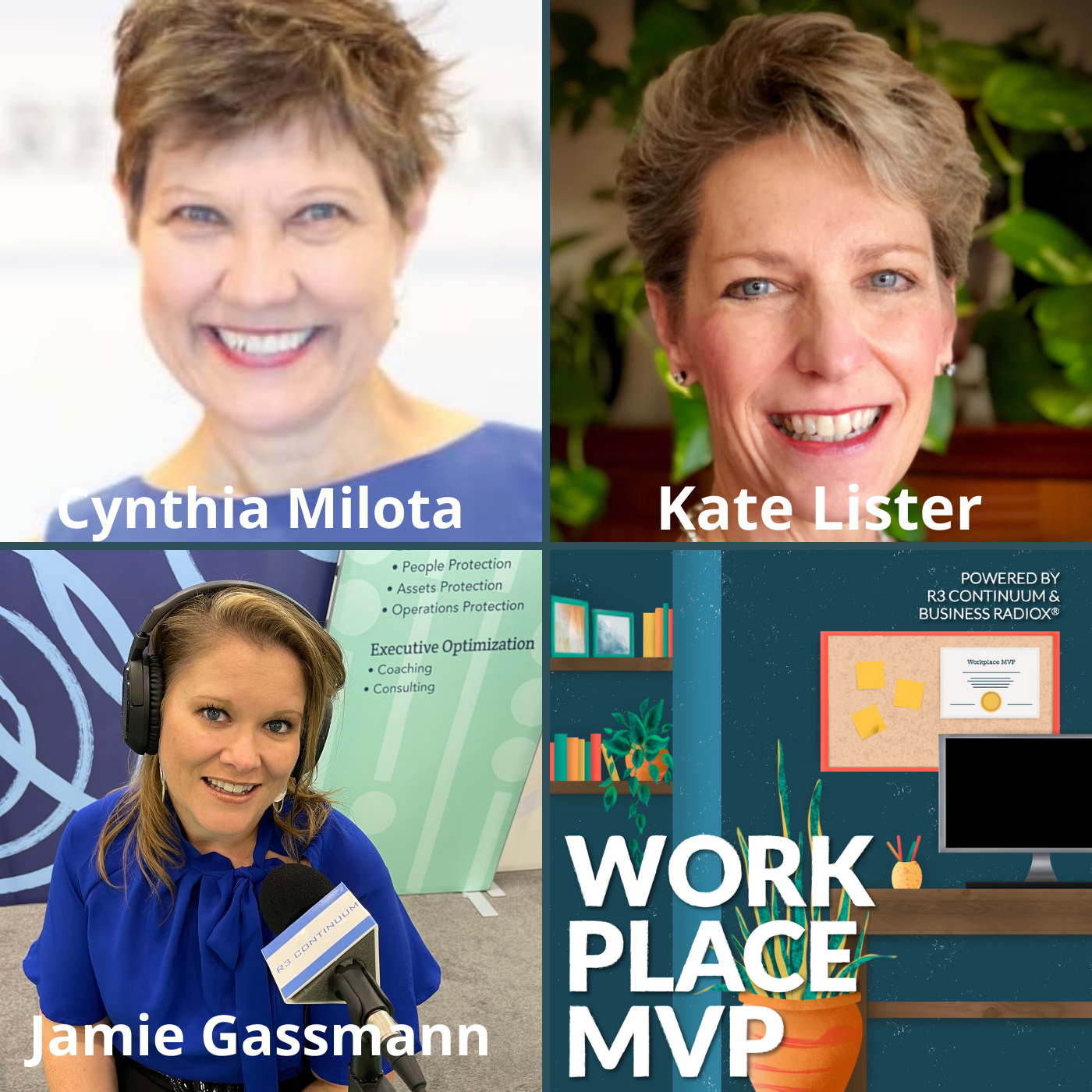
TRANSCRIPT

Intro: [00:00:03] Broadcasting live from the SHRM 2021 Conference at the Las Vegas Convention Center, it’s time for Workplace MVP. Brought to you by our R3 Continuum, a global leader in workplace behavioral health, crisis, and security solutions. Now, here’s your host.

Jamie Gassmann: [00:00:21] Hello, everyone. Jamie Gassmann here, your host of Workplace MVP. And we are broadcasting from SHRM 2021 here in Las Vegas, Nevada. And with me today, I have Michelle Heiliger, who is the Director of Human Resources from Sellenriek Construction. Welcome to the show.

Michelle Heiliger: [00:00:40] Thank you.

Jamie Gassmann: [00:00:41] Now, did I pronounce your name correctly?

Michelle Heiliger: [00:00:42] You did. You did great.

Jamie Gassmann: [00:00:43] Okay. Good. Now, why don’t we start out, Michelle? Tell us a little bit about your career journey and how you got into H.R. and kind of where it’s taking you.

Michelle Heiliger: [00:00:54] So, I’ve been in H.R. for, I guess, it’s been almost 23 years. I started out with a small 23 unit Taco Bell franchise. And actually started working in the office as the office manager and, basically, the franchise crew. And the owner said, “Look. I really need somebody who can do H.R. Can you go take this class?” I was like, “Why not?” And that’s sort of where it started.

Jamie Gassmann: [00:01:23] I started there, moved through multiple acquisitions, and ended my Taco Bell career with the largest franchisee in the nation. So, at that time, I was covering four states, about 150 stores. And then, I had a loss in my family and needed to not be on the road all the time. So, I moved home and was looking for a job closer to keep me local. I had a child in school still.

Michelle Heiliger: [00:01:52] So, I took a job with Sellenriek Construction, who is pretty close to my home. A family-owned organization who was looking for somebody who believed in teaching and development, who would come in and help them grow their organization. When I started with them, they had just a little over 100 employees. I’ve been there two years and we’re at 250, so huge.

Jamie Gassmann: [00:02:16] It’s grown. So, obviously, construction, fast food restaurants with franchising, two completely different worlds. What are some of the differences that you’ve had to navigate between the two as an H.R. representative?

Michelle Heiliger: [00:02:32] I think it’s more about taking knowledge, base knowledge, and applying it to a new situation. So, you’re still managing people. I’m fortunate to still work for an organization that really wants to do the best thing for their people. The challenge for me is that the motivation is completely different. You know, what motivates construction workers is completely different from what motivates Taco Bell employees. The other big difference for me is I deal far more with a rural organization now. Whereas with Taco Bell, it was more urban areas. So, their lives are different.

Michelle Heiliger: [00:03:17] You know, so from an H.R. perspective, the best way to empower your people and help understand them and help them grow is to understand their lives. And so, completely different mindset in the construction industry and the folks that I have now compared to where I was before.

Jamie Gassmann: [00:03:35] And so, you know, individuals coming into H.R. and new to that, how do you learn that? Like, how do you get to know those employees at that level? And how do you get comfortable? Because some people are afraid to learn people from their personal lives, but there’s so much power in it. So, what would you recommend to them and the benefits to that?

Michelle Heiliger: [00:03:55] So, if I were going to give advice to a new person coming into H.R., the number one thing that you have to be able to do is know your business. Because the people that are sitting at the table making the decisions, they already know their business. And in order to gain their trust and have them offer you a seat at the table is if you can have those conversations with them. You have to be able to speak on their level. You have to understand where their risks are. You have to understand where their opportunities are. And you have to be able to be their business partner.

Michelle Heiliger: [00:04:34] Otherwise, real life, you’re going to struggle in that role. You’re going to struggle getting the complete buy in from a leadership team. And by starting there and understanding the business, you know, you have to be willing to get your hands dirty to go out on a job site. Before it was, you had to show up in a restaurant, you had to show up in a restaurant at midnight. H.R. is not an 8:00 to 5:00 job in most cases. So, you have to be willing to do those things in order to be successful and to get the buy in from the team members.

Michelle Heiliger: [00:05:07] You know, laborers will call me, operators will call me, but it’s because they know I’ll show up in a shop or I’ll show up on a job site. And you know, I’m not just some girl sitting in the office. So, in order to progress in your career and get where most people want to go, you have to be able to do those things, you have to want to do them.

Jamie Gassmann: [00:05:25] Yeah. You got to show up and meet them where they’re at. Especially in a construction site, I can’t imagine. So, there’s lots of different things. What are some of the most common things from an H.R. perspective that you deal with in the construction industry?

Michelle Heiliger: [00:05:38] Well, for me right now, the biggest piece is the growth and development. In most construction organizations, they don’t invest at the foreman level. So, one thing that we did this year is we created a foreman development class. We tapped 50 guys from the field and we brought them in for four months straight. We bring them in for three days at a time. And pulling that many guys out of the field at one time is huge. But it was our commitment this year. It was our commitment to our people.

Michelle Heiliger: [00:06:12] And so, we offered them this, and it was everything from leadership to P&L. Understanding your P&L, understanding where your bottom line is, where do we actually start to make money, how do you get an extra five points on a job. Those are all things from a foreman level that these guys had never been introduced to.

Michelle Heiliger: [00:06:31] So, when you invest in your people and they see that every day, then you get their buy in. You’re opening a door for them. Like, “If I’m willing to do this and learn these things, I can get ahead.” In the average construction industry the age is 47, that’s about the median. In our company, the average age is 27. We have foremen that are 20. Because our leader, Bob Sellenriek, is a firm believer in the idea that you can be young and work hard. And they still want to grow. And they still want to support their families. And they want to do all the same things that all these other guys want to do. And if you give them that opportunity to do it, they will rise to the occasion, and we’ve seen that happen.

Jamie Gassmann: [00:07:17] Yeah. Like giving them a chance for career development that maybe they didn’t think they’d have the opportunity with.

Michelle Heiliger: [00:07:23] Yeah, for sure. And we started an apprenticeship program this year. So, the Department of Labor has tapped 25 companies across the nation to start an apprenticeship program for overhead and underground fiber installation. And that’s what we do, we deliver the internet. So, we design and build fiber networks. And we were one of the companies that were chosen.

Michelle Heiliger: [00:07:47] So, this year, we have worked really hard to develop an apprenticeship program within our organization. It’s another opportunity for our guys, “Here’s a career path for you, which is great because not only does it help them, but it holds us accountable.” You know, we’ve given them a career path here, the things that we are required to teach you, and it sets a timeline for us as well. So, it’s really been a good thing all the way around.

Jamie Gassmann: [00:08:12] And I imagine that helps from a talent recruitment perspective. Because, you know, I’ve heard a lot here at the show about how talent and acquisition has been really challenging, especially with the group resignation and everything of that nature. So, when you go out for recruiting, you know, is this something that you share with them in terms of outlining that career path? And how has that helped you in competition with other maybe construction companies that are in your area?

Michelle Heiliger: [00:08:40] For sure, it helps us. We kind of switched gears a little bit. Job fairs, per se, have always been a struggle for me. I’ve never really found that you get a lot of return on that investment. It’s a lot of time that you spend sitting at a table and you’re hoping they’ll come and talk to you. And so, we’ve sort of switched gears and we’ve created career days where we bring high school students who potentially don’t have a path, either they know they want to go to a technical school or they just don’t have a path out of high school. And we invite those schools to bring those kids to our campus.

Michelle Heiliger: [00:09:18] And we walk them through every job that we have available that you could get right out of school. And then, we tie in the apprenticeship programs. We have State Technical College out of Linn, Missouri, it’s a tech school. And we invite them to the campus the day we have it. So, we kind of create these moments, per se, for these kids to come in and talk to people who are close to their own age who they see as being successful. “Here’s where I started. Here’s what I’ve done to get here.”

Michelle Heiliger: [00:09:48] And we introduce a couple of ideas to them, first of all, that the number one thing that they have to have in order to do this job is the ability to work hard. We can train you to do anything else, but you have to bring that piece to the table.

Jamie Gassmann: [00:10:03] Bring your good attitude, positive attitude, willing to put everything out.

Michelle Heiliger: [00:10:08] Yeah, for sure. And then, we kind of challenge them as we go through the day with, “As you go to interview – like, we want you to go to interview with other people – here are questions you should ask. Like, what is my career path? What is that going to look like for me? What do I have to do to get to the next level? You know, what kind of benefits are you going to offer me?” So, we kind of make it an educational experience for them as well so that when they walk away, it kind of gives them some things to think about.

Michelle Heiliger: [00:10:32] You know, in my mind, from my perspective, if they go to another company and they ask three of those questions, probably at least one of them, the company is going to be like, “This kid is 18 years old. I can’t even believe this is happening.” So, for me, that’s a win. And then, if they remember that’s where that came from, in most cases, they’re going to come back.

Jamie Gassmann: [00:10:53] And that’s great because you’re meeting those individuals, almost like you’re connecting with the target audience you need to connect with for recruitment as opposed to waiting and hoping that that comes your way. You’re really kind of forging the path to make sure they come to you directly. Fascinating. And giving them hope, probably, too, especially if they didn’t have any direction. That’s fantastic. It sounds really creative and a great way to kind of change the script a little bit on that whole recruitment side of things.

Michelle Heiliger: [00:11:20] Yeah. Well, and that’s the boat everybody’s in right now. You’ve got to think outside of the box. If you’re not thinking outside the box on how to get there, then you’re pretty much standing still.

Jamie Gassmann: [00:11:31] Yeah. Interesting. Yeah. Great advice and great techniques. So, if somebody wanted to get a hold of you and kind of talk a little further about some of those innovative approaches you’ve implemented, how would they be able to do that?

Michelle Heiliger: [00:11:42] Well, they can reach out to Sellenriek Construction online. We’re on Facebook. We’re on LinkedIn. You know, any of those comes directly to me because I manage almost all those platforms. So, it’s really easy.

Jamie Gassmann: [00:11:57] That’s awesome. Like, it’s all me.

Michelle Heiliger: [00:12:00] So, go on to any of those things and you’re probably going to get a direct line.

Jamie Gassmann: [00:12:03] Yeah. That’s fantastic. Well, thank you so much, Michelle, for joining us on the show today. And I hope you have a great rest of your SHRM Conference experience.

Michelle Heiliger: [00:12:10] Yeah. Thank you. I appreciate it.


Tagged With: Jamie Gassmann, Michelle Heiliger, R3 Continuum, Sellenriek Construction, SHRM 2021, Workplace MVP

Workplace MVP LIVE from SHRM 2021: Katrina Branson, SBDC Louisiana, and Paula Harvey, Shulte Building Systems

September 30, 2021 by John Ray

Paula Harvey
Minneapolis St. Paul Studio
Workplace MVP LIVE from SHRM 2021: Katrina Branson, SBDC Louisiana, and Paula Harvey, Shulte Building Systems
Loading
00:00 /
RSS Feed
Share
Link
Embed

Download file

Paula Harvey

Workplace MVP LIVE from SHRM 2021: Katrina Branson, SBDC Louisiana, Paula Harvey, Shulte Building Systems

Katrina Branson with the SBDC Louisiana and Paula Harvey of Shulte Building Systems joined host Jamie Gassmann for a live show in the Workplace MVP Booth at SHRM 2021. The pandemic has created a bevy of new entrepreneurs, and Katrina talked about using her HR experience to support new business owners at the SBDC. Paula Harvey is a SHRM veteran and SHRM Foundation board member, and she discussed her career, her work with Shulte, and the SHRM Foundation. Workplace MVP is underwritten and presented by R3 Continuum and produced by the Minneapolis-St.Paul Studio of Business RadioX®.

This show was originally broadcast live from the 2021 SHRM Annual Conference held at the Las Vegas Convention Center in Las Vegas, Nevada.

Katrina Branson, Special Project Consultant, America’s Small Business Development Center Louisiana

Katrina Branson, Special Project Consultant, America’s SBDC Louisiana

Katrina Branson is Special Project Consultant for SBDC Lousiana. SBDC, funded by the SBA, is a network of centers for low or no-cost business consulting.

Katrina is also the president of her local SHRM Chapter. She has been in HR for fifteen years and part of SHRM for all of those years.

She uses her experience in human resources with business owners using the SBDC as their business grows and they hire employees.

Katrina has an MBA from Grambling State University and lives in Monroe, Louisiana.

LinkedIn

America’s SBDC Louisiana

America’s SBDC represents America’s nationwide network of Small Business Development Centers (SBDCs) – the most comprehensive small business assistance network in the United States and its territories.

SBDCs are hosted by leading universities, colleges, state economic development agencies and private partners, and funded in part by the United States Congress through a partnership with the U.S. Small Business Administration.

There are nearly 1,000 local centers available to provide no-cost business consulting and low-cost training to new and existing businesses.

Small business owners and aspiring entrepreneurs can go to their local SBDCs for FREE face-to-face business consulting and at-cost training on a variety of topics. Learn more about how SBDCs are helping local businesses start, grow and thrive.

Company website

Paula Harvey, Vice President of Human Resources and Safety, Shulte Building Systems

Paula Harvey, Vice President of Human Resources and Safety, Shulte Building Systems
Paula H. Harvey is the Vice President of Human Resources and Safety at Schulte Building Systems, Inc., a metal buildings manufacturer, in Hockley, TX. She has more than 30 years’ experience as a HR generalist in the retail, services, construction and manufacturing industries. She also owned her HR and Safety consulting firm for several years.
In addition to teaching business and leadership topics including the SHRM Learning System, Paula is an internationally recognized speaker on global and strategic business issues. Her work has been published or appeared in articles on HR topics and she co-authored three books with other HR professionals.
Paula is an active member of the Society for Human Resources Management (SHRM) and is currently serving on the board of the SHRM Foundation and the SHRM Talent Acquisition Panel. She has also served as the SE Membership Advisory Council Representative (MAC), NCSHRM State Director/President and President of Union County HR Association, and Charlotte Area SHRM. She is a member of HR Houston mentoring students on the University Liaison committee.

Paula earned her Bachelors of Business Administration in International Marketing and Operations Management from the University of Texas at Austin and her MBA with a concentration in HR Management from the University of North Carolina at Charlotte. She is a past recipient of the NCSHRM HR Professional of the Year and NCSHRM HR Humanitarian of the Year awards.

Paula lives in Cypress, TX, a suburb of Houston, with her husband, Kenneth, and their fur babies. She enjoys martial arts, church activities, spending time with her grandchildren and traveling all over the globe visiting lighthouses. She is a member of the All Fifty States Club.

LinkedIn

Shulte Building Systems

SBS is an IAS AC472 accredited manufacturer of pre-engineered metal buildings, steel framing systems and building components. We have three state-of-the-art manufacturing facilities located in Hockley, TX (HQ), Hueytown, AL and Cullman, AL. These modernized plants and a team of dedicated people help us meet the growing needs of Architects, Builders, Contractors and Erectors throughout the Midwest and Southeast United States.

Company website

About Workplace MVP

Every day, around the world, organizations of all sizes face disruptive events and situations. Within those workplaces are everyday heroes in human resources, risk management, security, business continuity, and the C-suite. They don’t call themselves heroes though. On the contrary, they simply show up every day, laboring for the well-being of employees in their care, readying the workplace for and planning responses to disruption. This show, Workplace MVP, confers on these heroes the designation they deserve, Workplace MVP (Most Valuable Professionals), and gives them the forum to tell their story. As you hear their experiences, you will learn first-hand, real-life approaches to readying the workplace, responses to crisis situations, and overcoming challenges of disruption. Visit our show archive here.

Workplace MVP Host Jamie Gassmann

Jamie Gassmann, Host, “Workplace MVP”

In addition to serving as the host to the Workplace MVP podcast, Jamie Gassmann is the Director of Marketing at R3 Continuum (R3c). Collectively, she has more than fourteen years of marketing experience. Across her tenure, she has experience working in and with various industries including banking, real estate, retail, crisis management, insurance, business continuity, and more. She holds a Bachelor of Science Degree in Mass Communications with special interest in Advertising and Public Relations and a Master of Business Administration from Paseka School of Business, Minnesota State University.
R3 Continuum

R3 Continuum is a global leader in workplace behavioral health and security solutions. R3c helps ensure the psychological and physical safety of organizations and their people in today’s ever-changing and often unpredictable world. Through their continuum of tailored solutions, including evaluations, crisis response, executive optimization, protective services, and more, they help organizations maintain and cultivate a workplace of wellbeing so that their people can thrive. Learn more about R3c at www.r3c.com.

Company website | LinkedIn | Facebook | Twitter</a

TRANSCRIPT

Intro: [00:00:03] Broadcasting live from the SHRM 2021 Conference at the Las Vegas Convention Center, it’s time for Workplace MVP. Brought to you by R3 Continuum, a global leader in workplace behavioral health, crisis, and security solutions. Now, here’s your host.

Jamie Gassmann: [00:00:21] Hello, everyone. Jamie Gassmann here, your host of Workplace MVP. And we are again broadcasting from the SHRM 2021 Conference in Las Vegas, Nevada. And, if you hear some thundering, it has started to storm, you know this 108-degree temperature. Mother Nature’s finally giving us a little bit of a cool off. But with me right now, I have two guests. I’ve got Katrina Branson, who’s a Special Project Consultant for America’s SBDC Louisiana. And I’ve got Paula Harvey, who is the VP of Human Resources for SBS Schulte Building Systems. Welcome to the show, you two.

Paula Harvey: [00:00:59] Thank you.

Katrina Branson: [00:01:01] Thank you so much for having us.

Jamie Gassmann: [00:01:02] Yeah. Really excited to talk with the both of you. So, I’m going to go ahead and kind of start with Katrina. So, Katrina, tell us a little bit about yourself, how you got into your role at SBDC, and a little bit just kind of your background.

Katrina Branson: [00:01:15] Yeah. So, I am a special project consultant with the Small Business Development Center in the State of Louisiana. We have 10 centers all across Louisiana. There is typically an SBDC center within 100 miles of where you live in the United States. We are funded by SBA, the Small Business Administration, and we are a network of centers that provides no-cost or low-cost business consulting.

Katrina Branson: [00:01:42] If you are looking to start a business and you have an existing business and you’re looking to grow a business, you come to us and we provide those resources for you. So, whether that be training, any technical assistance, we would be the person to hold your hand and walk you through the process of starting a business.

Jamie Gassmann: [00:02:02] Wow. So, talk me through, you know, kind of what are some of the normal things that are typically needed as somebody’s venturing into starting that new business.

Katrina Branson: [00:02:10] Right. We have, you know, this new renaissance of people who are wanting to start a business. You know the pandemic and COVID has really taught people that they can do things on their own now. So, we have an influx of serial entrepreneurs who are coming to us for assistance.

Katrina Branson: [00:02:29] When they come to us, typically one of the main things that we want to share with our entrepreneurs is to make sure that they have enough cash flow. That’s important when you’re starting a business, not just, you know, starting that business but making sure that you can sustain yourself within the next three to five years, so working with those small businesses, making sure that they have the cash flow in the financial projections that they need for where they’re going. So, we walk them through that process and detail those things that they are going to need when they start their business. So, we do that.

Katrina Branson: [00:03:02] We also offer a series or a plethora of training programs for how to continue to operate your business, whether that be with QuickBooks software or training that you’re going to need. So, various things like that are kind of the hub of what we are able to offer those small businesses.

Jamie Gassmann: [00:03:23] Wow. So, you’re here at the SHRM Conference. So, is H.R. kind of learning about, like, if they grow big enough that they’ve got a staff? Is that part of some of the support that you provide to them?

Katrina Branson: [00:03:34] Very good question. So, I wear many hats. I am the current president of our local SHRM chapter. So, I’ve been in human resources for about 15 years and SHRM has been a great addition to my career and my professional development and growth. I’ve been a member of SHRM for all of those 15 years that I’ve been in H.R.

Katrina Branson: [00:03:59] But being the leader of our chapter, kind of, is what brings me here. I started my career in human resources and then just kind of progressed with SBDC. So, being here allows me to not only become and continue to be well versed in the field of H.R. but to really help those small and medium-sized businesses with what they are dealing with in human resources and employee retention, especially during these times, where you’ve got those who are wanting to continue to work from home and be offered those hybrid options to be able to work from home and in the office. So, having the network and the support here at the conference is really able to allow me to take back to my hometown in the State of Louisiana, kind of what the industry is saying in those areas.

Jamie Gassmann: [00:04:55] Fascinating. So, it’s kind of almost you’re using it for the chapter but also I got to imagine some of those business owners, you know, once they get that business up and going, and do they come back downstream to kind of seek out additional help if like, okay, I’ve gotten to this point, like, and I’ve gotten out of this hundred employees, what do I do.

Katrina Branson: [00:05:14] Absolutely, absolutely. We don’t just let them go when they start their business. We are there to help them continue to grow and look at different strategies on how they can, you know, not just work in their business but work for their business. You know, we want to allow them to be able to grow and hire more employees so they can be more hands-off to really develop that strategic role that they need to be as a CEO.

Jamie Gassmann: [00:05:38] Wonderful. And so, being at the sessions, what has been some of your best takeaways that you can’t get, you know wait to get back and share with those that you kind of bring that information back to?

Katrina Branson: [00:05:49] Right. I think one of the important things really when I talk about remote workforce is really, you know, how do we retain our employees now? I mean, we have to really look at different ways that we are going to be able to support our employees. If we allow them to work remotely, how do we support them mentally when you’re sitting at home and you’re, you know, whether that be you have someone who is a mother or someone who works alone at home. But being able to support them mentally is going to be a challenge because you’re sitting at a desk and you’re sitting there all day with no human interaction if you’re working from home. So, there are just so many things that we need to change and look at and adapt to with this new dynamic of remote workforce.

Jamie Gassmann: [00:06:37] And, SHRM, I know, has a number of different sessions that are focused around this, so you’re probably getting some great information that you can take back.

Katrina Branson: [00:06:44] I am. I am.

Jamie Gassmann: [00:06:44] Wonderful.

Katrina Branson: [00:06:44] Absolutely, yes, yes.

Jamie Gassmann: [00:06:45] So, we’re going to move to our next guest. We’ve got Paula Harvey, VP of Human Resources with Schulte Building Systems. Welcome, Paula.

Paula Harvey: [00:06:55] Yeah. Thank you. I’m really glad to be here.

Jamie Gassmann: [00:06:57] So, tell us a little bit about your career journey and how you got into H.R. and kind of, you know, how you kind of climb the ranks into the VP role?

Paula Harvey: [00:07:05] Okay. Well, I have been in human resources 34 years, so quite a while. Graduated from UT Austin, and my degree in international business and operations management took me to my first role as a recruiter. I’ve worked in retail. I’ve worked in manufacturing. I had my H.R. consulting business for 12 years and was very successful with it and then sold it to go back in-house that I’ve done for the last six years and been with Schulte Building Systems. They are a metal buildings manufacturer.

Paula Harvey: [00:07:37] But on the H.R. side, to even get some more, I am, assure me I think for life now, I’m on the SHRM Foundation’s board. I’m a board member for the SHRM Foundation. I’ve been a chapter president of two chapters. I started a chapter. I’ve been the State Council Director for North Carolina for three and a half years. And then, I was then elected to the Membership Advisory Council for SHRM for two years. So, I’ve been doing SHRM volunteer work for a very, very long time and absolutely love spending time, helping people, and getting people involved in our wonderful profession of human resources.

Paula Harvey: [00:08:18] So, I’m currently at this conference as a SHRM 21 influencer. So, I’m known as one of the Peacock sisters, and so I’m here supporting one of my dear friends, who is, this is her very first SHRM Conference and she is a speaker. And so, she’s speaking at 4 o’clock today, and her name is Tina Marie Wohlfield. So, she’s excited. She’s going to be talking about how to get better collaboration in the workplace.

Jamie Gassmann: [00:08:44] Oh, such a powerful topic. But, you know, and it makes such a difference in that workplace.

Paula Harvey: [00:08:49] Yeah.

Jamie Gassmann: [00:08:50] So, great. So, Peacock sisters, that’s great. Is that like a –

Paula Harvey: [00:08:54] There’s three of us.

Jamie Gassmann: [00:08:55] There’s three of you.

Paula Harvey: [00:08:55] So, Melanie Peacock is the other one.

Jamie Gassmann: [00:08:58] Okay.

Paula Harvey: [00:08:58] She is in Canada. And, because of what’s going on with the COVID, she could not come here. She was supposed to be speaking. I often speak at the conferences too. But just this year, I’m too busy with the SHRM Foundation and other things, so. But, yeah, we miss Melanie, our third member of the #peacocksisters. So, we’re pretty well known on Twitter and in the #hrcommunity for all our fun that we have with our bright colors, so.

Jamie Gassmann: [00:09:27] I love that. I love that. Definitely have, you know, builds that collaborative spirit.

Paula Harvey: [00:09:34] Absolutely.

Jamie Gassmann: [00:09:34] And, you know, kind of finding people that you can kind of have as like lifelong friends almost within that industry.

Paula Harvey: [00:09:38] You know, Tina Marie’s in Detroit, I’m in Houston, and Melanie’s in Calgary, and we are on a text feed all day long, talking back and forth to each other. And, now, I have three best, you know, two best friends for life, so the three of us.

Paula Harvey: [00:09:55] And, it’s just, you know, and if it hadn’t been for SHRM and all the things that they’ve been doing and the H.R. social hour group, that’s how we became friends. Melanie spoke at her first conference in 2017 and we’ve been friends since then and then now Tina Marie here, and Tina Marie and I met a few years ago because she was posting about H.R. and peacock. So, it’s amazing how you can make friendships over Twitter and then they grow into lifelong friendships.

Jamie Gassmann: [00:10:25] Yeah. That’s fascinating, you know. And, that’s what kind of the beauty of some of these conferences, which is nice, that they were able to have it back in person again this year to kind of, you know, that networking capacity. So, from your, you know, being in the industry as long as you’ve had, how do conferences like this help in building some of that networking, some of that take-home education, you know? And, I know you’ve got the SHRM Foundation. There’s lots of great information within them, you know within that foundation as well. You know, kind of share a little bit about that because –

Paula Harvey: [00:10:54] Well, this is my 20th SHRM Conference. So, I actually wrote a blog on it so you can find it on the SHRM website and find it. I’ve posted it through Twitter too. And, it’s amazing, all the different places and all the different friends and all the different things.

Paula Harvey: [00:11:10] But I think out of all of them, besides it being a family affair because my daughter’s also in H.R., so this is her 9th conference. And so, she’s, you know, it’s just helped to bring some friendships and allow me to do things that I would have never done otherwise. I’ve been an instructor for the certifications since 2001 and teach the SHRM CP and SCP prep courses for Rice University as my side gig. And, it’s really, you know, it’s given me a chance to do things I would have never done otherwise and to be an expert in my field.

Jamie Gassmann: [00:11:45] Yeah. That’s wonderful. So, and being an expert in the field with all of that background that you have, you know what have been some of the trending that you’ve seen that maybe even pre-COVID that maybe got heightened, you know, post-COVID?

Paula Harvey: [00:11:59] We were already starting to see a talent war and that has been coming on. But now it’s a talent tsunami, as we call it, and everything else going on. It is. And, with the great resignation going on, I see it in my own company that we had had really pretty decent turnover because we pride ourselves as being an employer of choice.

Paula Harvey: [00:12:19] But we’ve already passed just recently our normal yearly turnover is, you know, happened in early August. And, I mean, it’s just, especially we hire manufacturing people, welders and fitters and, you know, machine operators, and they can pick and choose their jobs. And, if they just don’t go for 50 cents more now, that they wouldn’t do that. And, we had people, you know, 15 years with the company and making those changes.

Paula Harvey: [00:12:49] So, talent acquisition. I serve on SHRM’s Talent Acquisition Panel and have been on it for several years now as one of the experts in talent acquisition. And, even it’s challenging me who does this and really, you know, gets to talk about how to do it right. It’s challenging me to do it right just because it is such a change.

Paula Harvey: [00:13:10] And then, the other thing is just all the stuff, of course, on DEAI and B, diversity, equity, inclusion, and belonging, for those of you not aware of those letters. But that’s been a challenge since all the stuff from George Floyd and, you know, just how to react and say the right things, to do the right things and be understanding and supportive of all our employees, all of our employees, because we have a very diverse mix in my organization and just supporting that and being, you know, a leader of that is important.

Paula Harvey: [00:13:43] And then, I would say, of course, I’ve become the COVID queen. And, I never thought I would ever learn how to procure masks, hand sanitizer, you know, cleaning supplies, and all those things that I’ve had to do over the last year and a half. And, you know, unfortunately, we’ve had several people test positive and I’ve had three deaths. And so, having to deal with the family and the tragedy of that. And it’s hard and the mental health that it’s hitting for us H.R. people, to be honest, but also with the mental health that’s hitting for our employees. And, I think Michael Phelps talking this morning was such an important and impactful conversation.

Paula Harvey: [00:14:23] And, we are moving with the SHRM Foundation and we have sponsors for this and there’s going to be some education that people can get on how to be a supporter of mental health and understand how to deal with mental health in the workplace.

Jamie Gassmann: [00:14:38] Yeah. And, you brought up a lot of great, you know, kind of challenges that workplaces across, you know, really the globe almost are experiencing. You know, if an employer – you know, from your perspective, if an employer hasn’t been paying attention to those three things, you know, what would you say to them from? I mean, obviously from a consulting role that you’ve had before, but knowing and experiencing it yourself and your current role, what would you say to them?

Paula Harvey: [00:15:03] I would say, you know, each company is different. I work for an essential employer. That means people talk to me about, “Oh yeah, well, I’ve been working and I’m Zoom fatigued and working from home,” and I look at them, I wish. I have been to work every single day. I haven’t been working out of my home. Instead, I’ve had to be – someone has to be there and, as an executive, I need to be there and to support. I’ve let some of my staff work from home, but it’s just a handful of the staff that could do that in a manufacturing setting.

Paula Harvey: [00:15:33] So, realizing that everybody’s different and we’ve all handled this last, you know, two years very differently and had different experiences. But, you know, being respectful of that and caring about that and realizing we all have different things that have happened to us, but it’s been a shell shock to everyone.

Jamie Gassmann: [00:15:50] Yeah.

Paula Harvey: [00:15:51] And just being supportive of everyone in the H.R. industry and knowing what they’ve gone through and sharing our stories and being, you know, part of this greater H.R. community is important.

Paula Harvey: [00:16:05] I really have loved that these – one of my friends runs this thing called a coffee talkie, and so it’s called the H.R. Unite Group. And so, that’s Tina Marie, actually. She runs this out of – and so this is virtually done and you have this group that you meet with once a month and just talk about what’s going on.

Paula Harvey: [00:16:25] There’s another group that I know runs an H.R. Rebels Group that I’m in, and they meet every Wednesday at 2:00. And, having those people just to talk with all over the place is just wonderful because you’re all going through a lot of the same things but then different things and then giving better perspective by, you know, realizing this is a greater size group. We have one gentleman who’s in our Rebels Group who calls out of Spain. He’s on there from Spain all the time. So, it’s just amazing, you know, and you get friends from all over the world if you’re willing to open up your life and, you know, participate. I think that’s the biggest thing. You have to participate.

Jamie Gassmann: [00:17:04] Yeah. That’s been a common theme at this show that I’ve heard. There’s been several things that have been standout, and one of them is, you know, start communicating, getting to know people, and asking questions. And, you know, and everybody has a different experience. But there are similarities in some of those experiences, but you can learn from each other as well. So, that’s very powerful. And, I guess, you know, with an employer like, you know, talk to your people too, like how are they feeling and what’s going on?

Jamie Gassmann: [00:17:28] So, from your H.R. perspective, you know, and I know you’re an influencer here at the show and you’re working with the foundation. Can you talk a little bit about what the foundation does and how you’re focused in some of those areas you’ve mentioned?

Paula Harvey: [00:17:42] So, we are a non-profit entity. We are really like, you know, we’re the foundation for SHRM. So, you can you could use the word charity also. But, you know, people, mainly H.R. folks, donate money for research, for scholarships, for all sorts of wonderful things that we’re doing. And, you can find from the regular shrm.org website, down at the bottom, click on the thing to go to the SHRM Foundation. You can see all the wonderful things that we’re involved in. We’ve done projects on aging. We’ve done projects on getting veterans jobs. We’ve been helping with projects on the formerly incarcerated and having opportunities for them. The more recent ones have been on disability and understanding what it means for that and now this mental health is our next big project, but that we keep supporting the older projects, too. So, we want people to, you know, because these are all topics that are important and that we’re dealing with with our employees in the workplace.

Jamie Gassmann: [00:18:46] Wonderful. So, I’m going to leave with one last question for both of you. You know, what is your passion with H.R.? What makes you wake up in the morning excited to do what you do in that H.R. role? And, I’ll go ahead and start with you, Paula.

Paula Harvey: [00:19:01] I think making a difference in people’s lives. That’s probably the biggest thing. And, I actually will pull it all the way back as someone was asking about this to me recently and I said, I love talent acquisition. Because that’s kind of the foundation of what H.R. starts with is finding that amazing, maybe diamond in the rough, person that you just want you to take a chance on them and giving them an opportunity to come work at your organization and mold them and see them grow into making an amazing employee and, you know, get promotions and things like that. To me, that just makes me feel so good in my heart.

Jamie Gassmann: [00:19:39] Yeah. You made a difference in someone’s life.

Paula Harvey: [00:19:41] Right.

Jamie Gassmann: [00:19:42] Yeah, amazing. How about for you?

Katrina Branson: [00:19:44] Yeah. I’m going to – this is going to sound really cliché-ish, but it’s really the people. You know, I am a real proponent of diversity, and having the gift to be able to talk to and train and really speak to a diverse group of people from the lowest level employee to the highest level is really a gift that’s been given to me. And, to be able to share that in a space of human resources is really rewarding for me. So, I’m really happy to see that. We now have this conversation with, [inaudible], and how important that is. So, being able to really hone in and really stress the importance of the differences in people is really something that is really rewarding for me.

Jamie Gassmann: [00:20:34] Awesome. And, it’s rewarding the organization too, the different perspectives they can bring. Awesome.

Katrina Branson: [00:20:39] Absolutely.

Jamie Gassmann: [00:20:40] Well, thank you both for being on the show. If somebody wanted to get a hold of you, how would they go about doing that? Paula, why don’t you share how they can get in touch with you.

Paula Harvey: [00:20:47] Find me on Twitter, @paula, number 4, Harvey, so paula4harvey.

Jamie Gassmann: [00:20:52] Great. How about for you?

Katrina Branson: [00:20:54] I’m on all of, pretty much all of the social media channels. I spend most of my time on Facebook and also Instagram. Our center is also on Facebook as well, so you can follow us there as well.

Jamie Gassmann: [00:21:10] So, that would be the America’s SBDC Louisiana, and that’s Katrina Branson, so just to kind of – and then Paula Harvey, I know you shared your name. I just want to make sure.

Paula Harvey: [00:21:19] Thank you.

Jamie Gassmann: [00:21:20] Well, thank you both so much for joining us here. It’s been so great to chat with you. And, if you are listening in and you are in the SHRM Expo area, stop by Booth 4076 and visit our sponsor, R3 Continuum.


Tagged With: Human Resources, Jamie Gassmann, Katrina Harvey, Paula Harvey, R3 Continuum, SBDC Louisiana, SHRM 2021, SHRM Foundation, Workplace MVP

Workplace MVP LIVE from SHRM 2021: Kris Garcia, Sandvik, and BriAnn Rachele, NOW CFO

September 30, 2021 by John Ray

NOW CFO
Minneapolis St. Paul Studio
Workplace MVP LIVE from SHRM 2021: Kris Garcia, Sandvik, and BriAnn Rachele, NOW CFO
Loading
00:00 /
RSS Feed
Share
Link
Embed

Download file

Kris Garcia

Workplace MVP LIVE from SHRM 2021: Kris Garcia, Sandvik, and BriAnn Rachele, NOW CFO

Taking a break for your mental health and finding the work that is right for you are two themes in this episode. On this live edition of Workplace MVP, Kris Garcia with Sandvik and BriAnn Rachele with NOW CFO joined host Jamie Gassmann to have an inspiring conversation about doing what you love, learning your way into a new job, imposter syndrome, and much more. Workplace MVP is underwritten and presented by R3 Continuum and produced by the Minneapolis-St.Paul Studio of Business RadioX®.

This show was originally broadcast live from the 2021 SHRM Annual Conference held at the Las Vegas Convention Center in Las Vegas, Nevada.

Kris Garcia, HR Generalist, Sandvik and host of BFF Energy

Kris Garcia, HR Generalist, Sandvik and host of BFF Energy

Kris says he feels like the Bruce Wayne of the HR world.  He is an HR professional with experience in recruitment, talent management, analytics, relationship management, and operations. Much like Bruce, his past has definitely defined his present and will continue to define his future.

With over seven years of human resource experience, Kris has had the opportunity to mentor and provide guidance to individuals through all stages of the employment lifecycle. He has provided cost-effective solutions and championed cross-collaboration amongst departments. He likes to say he’s working toward creating the Justice League of HR.

From day to night he transforms into an even more self-driven, creative powerhouse set on building my own space in fashion & entertainment. He makes bow ties for all occasions.He officiates weddings and coordinates events, MCs and moderates panels.

Now he’s the cohost of BFF Energy,  a podcast where he talks about it all.

LinkedIn | Instagram | Twitter

Sandvik

Sandvik is a high-tech and global engineering Group with about 37,000 employees with a strong commitment to enhancing customer productivity, profitability and sustainability.

Their operations are based on unique expertise in materials technology, extensive knowledge about industrial processes and close customer cooperation. This combination, coupled with continuous investments in research and development (R&D), has enabled them to achieve world-leading positions in the following areas:

  • Tools and tooling systems for industrial metal cutting
  • Equipment and tools, service and technical solutions for the mining and construction industries
  • Advanced stainless steels and special alloys as well as products for industrial heating

The Sandvik Group conducts operations in four business areas with responsibility for research and development (R&D), production and sales of their respective products and services

Company website

BriAnn Rachele, Utah Market President at NOW CFO

BriAnn Rachele, Utah Market President at NOW CFO

BriAnn Rachele is the Utah Market President at NOW CFO. She has been with NOW CFO since 2018 and now runs the flagship office at NOW CFO.

BriAnn has a circuitous route to NOW CFO. She began her journey in modeling and hospitality. She was in a sales position in hospitality and transferred that skillset, learning the financial aspects on the job at NOW CFO.

BriAnn considers herself a constant learner.

LinkedIn

NOW CFO

Financial services are key to better cash flow control, increased operational efficiency, and accelerated business growth. With the help of a financial consultant, your business can achieve financial visibility. NOW CFO’s outsourced CFO services are available on a fractional, part-time or as-needed basis.

NOW CFO adopts a “roll-up-your-sleeves” approach to financial consulting. They specialize in providing full-service CFOs, controllers, and operational accountants to consult with their clients. The success of their clients is their singular focus. With that focus in mind, they hire advisors with extensive experience in financial reporting and management. They are skilled professionals who can take on any finance or accounting problems a company might face.

NOW CFO’s reputation stands on their talented management consultants and financial analysts. Their entrepreneurial spirit leads NOW CFO to share that talent with many industries and businesses.  NOW CFO aims to become their clients’ partner in success. This desire builds strong bonds between them and their clients, many of whom are respected industry leaders.

Company website

About Workplace MVP

Every day, around the world, organizations of all sizes face disruptive events and situations. Within those workplaces are everyday heroes in human resources, risk management, security, business continuity, and the C-suite. They don’t call themselves heroes though. On the contrary, they simply show up every day, laboring for the well-being of employees in their care, readying the workplace for and planning responses to disruption. This show, Workplace MVP, confers on these heroes the designation they deserve, Workplace MVP (Most Valuable Professionals), and gives them the forum to tell their story. As you hear their experiences, you will learn first-hand, real-life approaches to readying the workplace, responses to crisis situations, and overcoming challenges of disruption. Visit our show archive here.

Workplace MVP Host Jamie Gassmann

Jamie Gassmann, Host, “Workplace MVP”

In addition to serving as the host to the Workplace MVP podcast, Jamie Gassmann is the Director of Marketing at R3 Continuum (R3c). Collectively, she has more than fourteen years of marketing experience. Across her tenure, she has experience working in and with various industries including banking, real estate, retail, crisis management, insurance, business continuity, and more. She holds a Bachelor of Science Degree in Mass Communications with special interest in Advertising and Public Relations and a Master of Business Administration from Paseka School of Business, Minnesota State University.
R3 Continuum

R3 Continuum is a global leader in workplace behavioral health and security solutions. R3c helps ensure the psychological and physical safety of organizations and their people in today’s ever-changing and often unpredictable world. Through their continuum of tailored solutions, including evaluations, crisis response, executive optimization, protective services, and more, they help organizations maintain and cultivate a workplace of wellbeing so that their people can thrive. Learn more about R3c at www.r3c.com.

Company website | LinkedIn | Facebook | Twitter</a

TRANSCRIPT

Intro: [00:00:03] Broadcasting live from the SHRM 2021 Conference at the Las Vegas Convention Center, it’s time for Workplace MVP. Brought to you by R3 Continuum, a global leader in workplace behavioral health, crisis, and security solutions. Now, here’s your host.

Jamie Gassmann: [00:00:22] Hello, everyone. Jamie Gassmann, your host of Workplace MVP, here again, broadcasting episodes from our SHRM 2021 Conference here in Las Vegas. And with me, I have two guests with me for this episode. I’ve got Kris Garcia, Human Resource Generalist for Sandvik. And, I’ve got BriAnn Rachele, who is the Market President for Now CFO. Welcome to the show, you two.

Kris Garcia: [00:00:45] Thank you.

BriAnn Rachele: [00:00:46] Thanks, Jamie. Happy to be here.

Jamie Gassmann: [00:00:47] So, I’m going to go ahead and start out with Kris here today. Kris, tell us a little bit about yourself and what drove you into H.R. or kind of enticed you into H.R. however you want to approach that? Give us a little background on you.

Kris Garcia: [00:01:00] Yeah, sure. So, Kris Garcia, working at Sandvik. I’ve been there for about five years and, you know, I think that what started it for me was the people aspect of H.R. I really gravitate towards that. I came to a point in my life where I said, what is it that I really have a passion for? What is it that I really want to do? And, I took a three-month hiatus. I left the job that I was at before, and I said I can’t really do this anymore. I don’t like the people. I’m not feeling valued. I feel like I’m being criticized. Like, I can’t be my most authentic self.

Kris Garcia: [00:01:38] And so, what did I do? I said, well, let’s pick up a hobby. Let’s make bow ties. So, I made bow ties. So, I learned how to make bow ties, right. So, just like continue peeling layers and onion layers here, because that’s kind of what I am. So, I said, let’s do it, let’s try it for a couple of months. And then, I went to Europe for a little bit to just kind of find myself and took a little vacation. And then, I came back and I said let’s reevaluate who you are and what is it that you want to do? And, it came down to people. I like people operations. I like having empathy. It’s a big component of who I am as a person, and that kind of drove me into the world of H.R. And I said, yeah, this is where I belong. In whatever capacity that would have been, that’s what I want to do for the rest of my life.

Jamie Gassmann: [00:02:30] I love that. That’s so powerful. You know, I have a mentor of my own that always says it’s okay to pause to speed up, slow down to speed up. You almost did that yourself with your career going this isn’t the direction I want. It’s so fascinating. And, bow ties.

Kris Garcia: [00:02:46] Yeah.

Jamie Gassmann: [00:02:46] Of all things.

Kris Garcia: [00:02:47] Of all things.

Jamie Gassmann: [00:02:48] Interesting.

Kris Garcia: [00:02:48] You know what? It’s funny because I said, “Hey, what is something quirky that not everybody wears?” And I said, “Yeah, it’s a bow tie.”

Jamie Gassmann: [00:02:56] Yeah.

Kris Garcia: [00:02:57] And, I want it to be like men, women, anybody in between can wear it. And it’s just, it gives you a little bit of personality. It gives you a little bit of something. So, tomorrow for the concert, you’ll most likely see me in one of my own creations.

Jamie Gassmann: [00:03:12] Awesome.

Kris Garcia: [00:03:13] So, stay tuned to me. Look out for me.

Jamie Gassmann: [00:03:15] Stay tuned. That’s fantastic. So, you were also sharing with me. Now, over the last year, H.R. professionals across the globe have been challenged in balancing, you know, different work environments, you know, different regulations and rules. Talk to me a little bit about that, and I know you have a personal story that we’re going to get to a little bit. But how has that been for you as a professional over this last year?

Kris Garcia: [00:03:41] Well, you know, it’s funny because even with my job, I was 100% remote. I am 100% remote. I work from home doing H.R. I support the folks on the West Coast and I’m an East Coaster. I’m from New Jersey. So, I am three hours. And so, you know, I have to kind of be always in that kind of emotion where like, if someone needs me like 8 o’clock my time, it’s only 5 o’clock their time.

Kris Garcia: [00:04:05] So, a lot of it for me has been, how do I continue, especially after this pandemic and all this stuff that’s been going on that we’re currently living in how do I continue to best support my people who are a lot of them are our technicians that have to go into the office. They don’t have this flexibility of going and working from home. You can’t rebuild a machine from your garage. It’s too big. Our machines are too big, so it’s for mining and construction, so you can imagine the behemoths that we have. So, for me, it’s more like I want to be able to still show my presence there, even if it’s virtual.

Jamie Gassmann: [00:04:51] Yeah, amazing. And, you know, and I’m going to go into this like self-care channel because you shared something that was just really inspiring before we got onto the show itself. But, you know, from a self-care perspective, you know, they promote a lot of that and how you need to take care of yourself, not just in the work environment, but, like, whether it’s meditation or finding some type of an outlet to relieve stress and burnout. Share with us a little bit about what you did over the last year as you kind of balance that isolation that was felt when you were in quarantine.

Kris Garcia: [00:05:21] Yeah. It really was quite a feat for myself. I said I needed a place to have an outlet, especially that was virtual. I went and, you know, I usually go and see my friends all the time, brunches and gatherings, book club, you know wine club, whatever club, all the clubs, just so it gives us an opportunity to hang out, be together and do things together and share our stories. But with the pandemic, I didn’t get to see any of them.

Jamie Gassmann: [00:05:57] Yeah.

Kris Garcia: [00:05:58] We all were very aware of our surroundings and said, you know, we want to be part of our own clusters and we have to be. Like, we created our own clusters so that we knew who we were being a part of. But at the same time, it just didn’t give me that enough of a sensation to say, I don’t feel that connected to you anymore. So, I said, guys, I’m coming up with a podcast.

Jamie Gassmann: [00:06:21] Yeah.

Kris Garcia: [00:06:22] And, you know, my podcast evolved. It was originally just going to be more pop culture-related and ’90s driven. I’m a ’90s baby, so, for me, ’90s, anything excites me.

Kris Garcia: [00:06:35] But then as I kept doing it, I shifted into this what I called now, the podcast is now called BFF Energy! And, it’s just us. And, it’s my friends. I mean, I do it with my best friend and she’s my co-host. Shout out to you Neen. But we go in there and we just talk. And, it could be from anything from self-help to how we’re feeling, how we’re feeling at work, what frustrations we have. She’s about to get married in November, so we’ve been talking about that a lot. But it has brought me this overwhelming sense of joy that gave me a chance to do a check-in with myself.

Jamie Gassmann: [00:07:19] Yeah.

Kris Garcia: [00:07:20] You know, and it has been so great.

Jamie Gassmann: [00:07:23] So, looking at that from a personal kind of realization of the impact of that, from your H.R. perspective, how could something similar to that be implemented into a work environment that might aid in helping some of the employees have some of that connection?

Kris Garcia: [00:07:39] Yeah. Honestly, I think it starts with self-empathy, which it’s not, I don’t – it’s not really even a term, but to me, it is. It’s about really understanding who you are, what you want, and how – if your job isn’t helping you, figure out how to get that. Because sometimes it’s outsourcing the information. Sometimes it’s just not available whether because, you know, your H.R. person or your local manager or whoever maybe doesn’t have that knowledge base, and that’s okay. There’s nothing wrong with that. But it’s about you understand you better than anybody understands you. So, you have to be the one to empower yourself to say, what’s going to help me stay focused, not go crazy, especially when things around me are out of control?

Jamie Gassmann: [00:08:31] Sure. Yeah.

Kris Garcia: [00:08:33] For me, that would be, the best advice is self-empathy.

Jamie Gassmann: [00:08:36] Yeah. And, you had that ability to take a three-month hiatus and kind of take some time off. If there’s somebody listening who’s just finding that really intriguing, going how can I do that? I can’t stop working to do that. How can they navigate that? Or what kind of resources do you know of that are accessible, like, maybe in an H.R. capacity that they can tap into? That might help them to be able to do that.

Kris Garcia: [00:08:59] Absolutely. So, I would say first thing, if you can take, you know, some FMLA, some short-term leave, that’s definitely one part to kind of, one secure that you still have a job when you come back if this is the job for you, right? If you are, I’m at a company that I love but right now I need a mental checkout. That’s okay. H.R. understands that. Your manager will at some point understand that. It may not feel right for their agenda, but we can’t be working off everybody’s agenda.

Kris Garcia: [00:09:29] I always say the most H.R. – the most non-H.R. thing sometimes is everybody at the end of the day is an employee ID number, and people hate when I say that. And, the reason I say that is because that kind of puts you in check to say, I am just a number, so I need to learn how to value myself and that the company that I’m at really values who I am. And if they don’t, then don’t.

Kris Garcia: [00:09:55] But also from a monetary perspective, because we have to worry about the bills and we have to worry about that stuff and you have to prepare yourself. I prepared myself six or eight months in advance.

Jamie Gassmann: [00:10:07] Yeah.

Kris Garcia: [00:10:08] I knew at some point that this was coming. So, I said, I need to do this and how am I going to do that? Fortunately, for me, I was living with some roommates, so it was easier for me to pay some stuff and kind of put stuff aside. But not everybody has that luxury. I would just assess what you have. If you have to take a small loan, you know that’s something that you have to do, that’s fine. It’s, again, at the end of the day, you have to have that mental check-in for yourself so that you can say, “Hey, self, if we’re going to do this, let’s plan today and let’s not wait till tomorrow.”

Jamie Gassmann: [00:10:41] Yeah. Let’s be prepared for it. But then, obviously, what you’re meant – what you’re sharing is that there’s options out there and people just may need to look at what’s the best option for them. And, just one final question and just kind of a thought to leave the audience with. If, you know, for you, what has this done in your life and career direction, taking that time out and kind of self-evaluating what’s important? What’s changed for you?

Kris Garcia: [00:11:08] My creativity has been heightened. I’m a very creative person. I like to do many things and giving myself that mental check to one say, what am I really passionate about career-wise? And, where do I see it going? It’s in H.R. Eventually, I joke with my boss, but I always say, at the end of the day, I’m going to take your job because I do, and he knows that and it’s great. But at the same time, it’s also about the job. The company that I work for and the people that I’m surrounded by also give me the space to be creative. And I can think outside the box, what I call my H.R. 2.0 version, and it’s what I go by. That’s what keeps me running so that I can maintain that creativity, that flexibility and then apply it to other things that I’m passionate about, like my podcast.

Jamie Gassmann: [00:12:07] Yeah.

Kris Garcia: [00:12:07] And, you know, maybe making more bow ties. I mean, who knows, right?

Jamie Gassmann: [00:12:11] Yeah.

Kris Garcia: [00:12:11] Like, the possibilities are endless, but I haven’t had done that. It really changed my entire outlook on my whole life. And, I would never take that back again.

Jamie Gassmann: [00:12:24] Yeah, wonderful. And, such a brave move. And, it’s paid off for you.

Kris Garcia: [00:12:28] It has.

Jamie Gassmann: [00:12:29] Very great. Awesome.

Jamie Gassmann: [00:12:30] So, now, we’re going to shift over to our next guest. We’ve got BriAnn Rachele, Market President at Now CFO. Hi, BriAnn.

BriAnn Rachele: [00:12:37] Hi, Jamie.

Jamie Gassmann: [00:12:38] So, BriAnn, share with us your career journey, how you got into being Market President for Now CFO.

BriAnn Rachele: [00:12:43] Okay, yeah. First, can I just say, Kris that was a really inspiring conversation.

Kris Garcia: [00:12:49] Thank you.

BriAnn Rachele: [00:12:49] Jamie, you asked great questions. It was really cool to listen to you and I learned a lot just from the short time that I’ve been sitting next to you.

Kris Garcia: [00:12:55] Thank you so much.

BriAnn Rachele: [00:12:55] Yeah, thank you. Yeah. So, I kind of have a really weird background. I dropped out of high school when I was 15 and I started modeling. I moved overseas and traveled around for 10 years, working full time as a model, and got my GED, didn’t go into any schooling after that. And so, I was kind of always in sales mode, right? As a model, you’re going on castings, you’re selling yourself, you’re trying to get jobs through your personality and trying to build that rapport with a potential client. And, you know, 30 seconds to five minutes of meeting someone, showing them your photos, which is the product, right? And then, trying to convince them that you’re the one that they want to work with.

BriAnn Rachele: [00:13:40] So, I feel like I’ve always had that sales face on, and then I always held a second job in hospitality, working as maybe a cocktail waitress or a barista or a server. And then, when I stopped modeling, I moved into events for hospitality groups, so restaurant and bar groups. This sounds so off-topic with where I’m sitting, but I promise I’m getting somewhere. And then, I moved into management for hospitality, moved into sales, and then I was just kind of complaining to my girlfriends over brunch about my job. And, I had moved back to Utah, which is where I live now.

BriAnn Rachele: [00:14:19] And, I wasn’t happy with where I was and my girlfriend just said, “You’re doing sales anyway, why don’t you come work for this company called Now CFO?” A few of my girlfriends worked there, and I said, “Well, what do they do?” They tried to explain it to me, and I didn’t really understand it, to be honest, at first. So, I had to do a lot of digging and a lot of learning. I interviewed with my former boss and I got the sales job.

BriAnn Rachele: [00:14:41] So, I’ve been with Now CFO for three years now. I worked as a sales, you know, business development representative for two and a half of those years under the founder of the company, worked for the flagship practice there in Utah. We do outsource accounting and finance for those of you who don’t know, so mostly high-level stuff, CFO controller level type stuff. We have a staff of CFOs and controllers even down to bookkeepers that we rent out on an hourly basis to clients who might not need them full time.

BriAnn Rachele: [00:15:13] So, I had to learn a lot in that position about finance and accounting. I got the opportunity to meet with different business owners and business leaders every single day, learning the ins and outs of different industries and how they came to be where they were. And then, I got to advise them on the financial and accounting side, on what they needed to do to get to where they wanted to go.

BriAnn Rachele: [00:15:35] So, I did that for two and a half years, and then my boss sidestepped into the CFO role at Now CFO, and me and the director at the time got bumped up to fill his role. He was a really great guy, is a really great guy. So, it took two of us to fill his position. And so, here I am, you know, no finance or accounting background, running my own practice, the flagship practice there in Utah for almost 400 person company. Super, super fun.

BriAnn Rachele: [00:16:05] I’m learning a lot every single day, and kind of the biggest takeaway for me right now is kind of running my own, it’s like I’m running my own business. I get to be the client, right. I have my CFO who I’m talking to on at least a monthly basis, going through our reports and everything, and I really get to see the client-side of why a CFO is so important. Because if I didn’t have him explaining the numbers to me, I would not know what I’m doing.

BriAnn Rachele: [00:16:31] So, anyway, very long-winded answer of how I came to be where I am. I definitely have, like, the imposter syndrome thing going on. I feel the people around me, especially at this conference. It’s great to see so many women, first of all, at a conference in general, but so many executive women who have worked really hard to get to where they are. And, yeah, it’s really great to be here.

Jamie Gassmann: [00:16:54] Yeah. That’s fascinating. So, it sounds like you kind of had your own kind of career track at some point in time going, “Gosh, this isn’t really what I want to be doing,” and got into something that’s now kind of brightened like a passion in you and kind of learning a different trade. Very cool.

BriAnn Rachele: [00:17:08] Thank you.

Jamie Gassmann: [00:17:09] So, you know, and you mentioned imposter syndrome, and that’s so common and a lot of, you know, as people climb ranks within, you know. What does that feel like for you? You know, in your role? Like, what are some of the things that you, you know – how do you combat that?

BriAnn Rachele: [00:17:26] Yeah. So, it is difficult and it is interesting as I talk with peers. You know, I’m a part of a lot of different networking groups. Now, I get to be amongst executives, and I’m learning that more often than not, other people, like you said, are experiencing the same thing, which sucks. But it’s also really great for me to be able to, you know, relate to these people.

BriAnn Rachele: [00:17:52] As far as combating it, I guess kind of what I’m doing here today. So, I came to this conference to meet people to be able to learn what resources are out there so I can take that back to our prospects and our clients and give them resources. A lot of the time the companies that we’re working for also don’t have, you know, an H.R. person or a department. And so, that’s what I’m really doing here is just learning so I can take that back to them.

BriAnn Rachele: [00:18:19] But from being here, I’m learning a lot for myself on how to become a better leader, which is really important to me. It’s a new thing for me, running a team. And so, I think I’ve kind of just fallen into this part of it. But that’s something that I’m doing, and I’m just trying to wrap my arms around it and really soak everything in and really listen to the people that I’m meeting, and everyone’s really interesting here. They all have their own stories like Kris. Had I not sat down to do this podcast, I probably wouldn’t have run into Kris and learn all this. And, there’s so much knowledge in this room alone. So, I think today I’m definitely going to just talk to as many people as I can and learn from them and try to fix that imposter syndrome and become the leader that I want to be so I don’t feel that anymore.

Jamie Gassmann: [00:19:02] Yeah, that’s fantastic. And, honestly, it’s always good to know when you talk to other people and open that dialogue that you’re not alone. And, that’s a very common feeling when people move into those certain roles. And, obviously, you know, the mentorship, you kind of mentioned that you moved into your previous boss’ role, you know. How has that been for you and kind of, because, obviously, you know, coming into that industry, maybe not with as much of the knowledge as maybe some of your peers might have had, you really have been able to embrace and kind of learn from others and I think it’s really fascinating. So, how has that mentorship helped you as you’ve grown in your career?

BriAnn Rachele: [00:19:40] With my previous boss specifically?

Jamie Gassmann: [00:19:43] Or just in general?

BriAnn Rachele: [00:19:44] Okay.

Jamie Gassmann: [00:19:44] It sounds like you’ve had a lot of mentors that have helped to guide you along your path.

BriAnn Rachele: [00:19:48] Yeah, super, super important. So, if I didn’t have those people, I would not be where I am today. I think I definitely would have given up and changed, you know, made a change, had some excuse as to why I would have needed to change industries or professions in some way, shape, or form. So, it’s been imperative. Can I throw a couple of names out there?

Jamie Gassmann: [00:20:11] Oh, absolutely. Yeah.

BriAnn Rachele: [00:20:12] So, my former boss, Brian Hayes, our founder, Jim Bennett, have been just the best resources, learning from them, watching them work, being able to be, work side by side with them for the last three years, and learn everything, be able to feel like I can openly ask questions. And, you know, they make me feel like those questions are valid and they walk me through it, and they’ve just given me so much knowledge. Also, my co-market president, Nate Sorenson, I would not be here without him. He is just so smart and we do things very differently from each other. So, really trying to have open conversations about how both of us can be better in whatever way has really helped. And then, Jeff Erickson, he’s with a company called Carta, my main mentor. I kind of go to him for everything in life, personally and professionally, and he’s been great.

BriAnn Rachele: [00:21:04] So, I think it’s imperative to make those connections with people and even if it’s a mentor for five minutes. And, I learned so much from Kris or you, Jamie. Or, if you have a mentor that you can have there for you over the years, just take it all in as you can, and it’s imperative that you have those people in your life.

Jamie Gassmann: [00:21:20] Yeah, absolutely. Well, and they see things in you that you don’t see in yourself. And so, I’m sure you probably have, you know, identified that in your career where it’s like, gosh, really me? Like, okay, I can do this, you know, they believe in me. I’m going to take that step forward, which is fantastic.

BriAnn Rachele: [00:21:37] Yeah, and I think the keyword is they, you know, I think, if people can really try to branch out and have many mentors. If you’re hearing it from one person, it can kind of get, you think that it might be biased, you know. But when you’re hearing it from different people around you, then that’s when it really kind of sinks in more and when it’s consistent. So, I think other people are the key. People are the key.

Jamie Gassmann: [00:22:00] Yeah. Well and as leaders too, right? When you think of like a leader, like you’re in a leadership role, you know, I lead a team of marketers as well, you know, being able to be that mentor for somebody else, you know, how much is – you know, do you feel like you’re doing that for your team or are you anxiously waiting to go back and be able to do some of that?

BriAnn Rachele: [00:22:24] I feel like I’m not there yet. I’m really trying, yeah.

Jamie Gassmann: [00:22:28] Yeah. You’ll get there. Yeah. I know, I mean, and it’s just being aware of, like, the impact that’s made on your own career. And so, here at the SHRM Conference, you know, obviously you mentioned that some of the sessions you’ve just gathered so much information. What have been some of the great takeaways that you can’t wait to kind of bring back to your team from what you’ve heard throughout the sessions?

BriAnn Rachele: [00:22:50] Yeah. I think, first of all, the resources that are here, I mean, I’m looking around the Expo Center right now and there are just so many booths and I’ve only made it through not even a quarter of them yet. And, I am writing notes on all the business cards. You know, there are just so many resources out there.

BriAnn Rachele: [00:23:08] So, that’s one thing that I that I’ve taken away is, and it’s kind of what you said, Kris, where if you don’t know, go searching for it, you’re going to find it. There are so many different services out there and technologies and they’re all there to help there, especially in the H.R. space, right. They’re there to help you. So, I think that’s one for sure.

BriAnn Rachele: [00:23:29] And then, the other big takeaway for me, I was sitting on in the general session yesterday with, oh gosh, I forgot his name but the founder of Chipotle and their H.R. director. And, culture, culture, culture, right? That’s what everyone says. But it’s so hard to figure out where to start with that. It’s like, what do you do? What do you – do I just have a meeting and say, hey, guys, we’re going to work on our culture.

BriAnn Rachele: [00:23:56] There’s so many steps that you can take, and I think it’s really important like Kris said, again, start with anything, start today, don’t start tomorrow because it keeps getting pushed off. Start with one little thing and then let it grow from there. You’ll see a difference and then you can start adding things. So, that’s a huge takeaway that I got from yesterday’s general session.

BriAnn Rachele: [00:24:14] I think what I’m going to do, and maybe you should check up on this with me. Make sure I do it, Jamie.

Jamie Gassmann: [00:24:20] [Inaudible] hold you accountable.

BriAnn Rachele: [00:24:22] One thing that she said is listen to your employees so they’ll go in and they’ll just – or they’ll have their leaders go in and just say they’ll take one minute to talk. Hey, this is what I’m doing here. Nice to see you guys. And then, instead of them presenting as a leader, they open it up and the next 59 minutes or 55 minutes are for the employees to talk and present to the leaders. And, I think that that’s awesome. So, I’m going to give that a go and we’ll see how it works.

Jamie Gassmann: [00:24:54] Yeah, yeah. Having that transparency and giving your employees that comfortability to know that it’s okay if they talk.

BriAnn Rachele: [00:25:02] Yes.

Jamie Gassmann: [00:25:02] That you want to hear from them is so important, especially after this last year, right? I mean, you need to hear from them because everything has changed so much, not only in our business world but also in our employees’ lives and worlds that, you know, hearing that conversation with them makes such a difference.

BriAnn Rachele: [00:25:19] Yeah. And, I think the other thing that they said was, you know, you can listen all you want but if you don’t do anything after, it doesn’t mean anything.

Jamie Gassmann: [00:25:26] That’s such a key takeaway right there. You got to put into action at least something.

BriAnn Rachele: [00:25:30] Yeah. And then, what they said beyond that because then it’s like, well, that’s really huge. That’s a lot of pressure. You know, like, what am I going to do? I’m going to go fix everything now. So, what they preface that with is, hey, we’re going to do – we’re going to make changes. We’re going to do the best that we can. If we don’t get it right, we’re going to try again until we get it right.

BriAnn Rachele: [00:25:48] So, I think that’s a really solid promise that you, as long as you’re trying, you’re going to be able to keep that. So, that takes a lot of pressure off of like getting things right the first time and probably the biggest takeaway thus far.

Jamie Gassmann: [00:26:00] Yeah. Well, I’m glad you shared that here on our show because that’s such a great takeaway and it’s also a really good reminder for leaders to know you don’t have to have it perfect right out the gate. But as long as you can show that you tried and that you heard and you listened and you took action from what they heard, it makes such a big difference. So, thank you for sharing that.

BriAnn Rachele: [00:26:18] Thank you.

Jamie Gassmann: [00:26:19] Now, if our guests wanted to get a hold of either of you, to touch base, learn a little bit more, find out where your podcast is or where to get a bow tie, or just wanting to hear more or like reach out in terms of mentoring and, you know, helping with imposter syndrome, which is so common, a lot of people go through that, how can they reach out to you? How would you like them to get in touch? Try that again.

Kris Garcia: [00:26:44] Let’s try that again. There you go. [Inaudible] once I can hear myself.

Jamie Gassmann: [00:26:47] Yeah.

Kris Garcia: [00:26:48] It’s like.

Jamie Gassmann: [00:26:48] Yeah.

Kris Garcia: [00:26:49] You can reach me on Instagram, Twitter, @krisjgarcia, K-R-I-S, J Garcia. And, I feel free. I love talking to people. I love being able to share my own journey but also listening to your journey and how best you can kind of get that. And, also, if you want to have a fun distraction, you can listen to the podcast. It’s called BFF Energy! With Neen and Kris, and that’s available on all platforms. Actually, it’s BFF Energy! With Kris and Neen. I made it up so it’s me first. What? How dare I? See. That’s how good of a friend I am. Put my friends first. But you can also follow that, BFF Energy! pod, on all the platforms and it’s available on all streaming services.

Jamie Gassmann: [00:27:36] Wonderful. How about for you, BriAnn?

BriAnn Rachele: [00:27:39] Yeah. So, I mean, everyone, please go add me on LinkedIn, Instagram. I couldn’t say it better than Kris had just said, just love meeting new people, hearing their stories, sharing mine. So BriAnn Rachele, B-R-I-A-N-N R-A-C-H-E-L-E.

Jamie Gassmann: [00:27:57] Wonderful.

BriAnn Rachele: [00:27:57] Yeah.

Jamie Gassmann: [00:27:57] Thank you both for being on our show. Very inspiring stories, both of you, honestly. I’ve learned so much and it’s just so great. You know, it’s okay to take a time out and reassess your career. And, that’s such a great takeaway from this conversation. Thank you for sharing all that.

Kris Garcia: [00:28:10] Thank you.

BriAnn Rachele: [00:28:10] Thanks, Jamie.

Jamie Gassmann: [00:28:11] And, if you are in our SHRM Expo, stop by Booth 4076 to hear our podcast or to kind of meet our show sponsor, R3 Continuum. And, with that, you guys have a great rest of your day.

Kris Garcia: [00:28:23] You too. Thank you so much.

BriAnn Rachele: [00:28:24] Thank you.


Tagged With: BFF Energy, BriAnn Rachele, Fractional CFO, Jamie Gassmann, Kris Garcia, NOW CFO, podcasts, R3 Continuum, Sandvik, Workplace MVP

  • « Previous Page
  • 1
  • …
  • 6
  • 7
  • 8
  • 9
  • 10
  • …
  • 12
  • Next Page »

Business RadioX ® Network


Our Most Recent Episode

CONNECT WITH US

  • Email
  • Facebook
  • LinkedIn
  • Twitter
  • YouTube

Our Mission

We help local business leaders get the word out about the important work they’re doing to serve their market, their community, and their profession.

We support and celebrate business by sharing positive business stories that traditional media ignores. Some media leans left. Some media leans right. We lean business.

Sponsor a Show

Build Relationships and Grow Your Business. Click here for more details.

Partner With Us

Discover More Here

Terms and Conditions
Privacy Policy

Connect with us

Want to keep up with the latest in pro-business news across the network? Follow us on social media for the latest stories!
  • Email
  • Facebook
  • Google+
  • LinkedIn
  • Twitter
  • YouTube

Business RadioX® Headquarters
1000 Abernathy Rd. NE
Building 400, Suite L-10
Sandy Springs, GA 30328

© 2025 Business RadioX ® · Rainmaker Platform

BRXStudioCoversLA

Wait! Don’t Miss an Episode of LA Business Radio

BRXStudioCoversDENVER

Wait! Don’t Miss an Episode of Denver Business Radio

BRXStudioCoversPENSACOLA

Wait! Don’t Miss an Episode of Pensacola Business Radio

BRXStudioCoversBIRMINGHAM

Wait! Don’t Miss an Episode of Birmingham Business Radio

BRXStudioCoversTALLAHASSEE

Wait! Don’t Miss an Episode of Tallahassee Business Radio

BRXStudioCoversRALEIGH

Wait! Don’t Miss an Episode of Raleigh Business Radio

BRXStudioCoversRICHMONDNoWhite

Wait! Don’t Miss an Episode of Richmond Business Radio

BRXStudioCoversNASHVILLENoWhite

Wait! Don’t Miss an Episode of Nashville Business Radio

BRXStudioCoversDETROIT

Wait! Don’t Miss an Episode of Detroit Business Radio

BRXStudioCoversSTLOUIS

Wait! Don’t Miss an Episode of St. Louis Business Radio

BRXStudioCoversCOLUMBUS-small

Wait! Don’t Miss an Episode of Columbus Business Radio

Coachthecoach-08-08

Wait! Don’t Miss an Episode of Coach the Coach

BRXStudioCoversBAYAREA

Wait! Don’t Miss an Episode of Bay Area Business Radio

BRXStudioCoversCHICAGO

Wait! Don’t Miss an Episode of Chicago Business Radio

Wait! Don’t Miss an Episode of Atlanta Business Radio