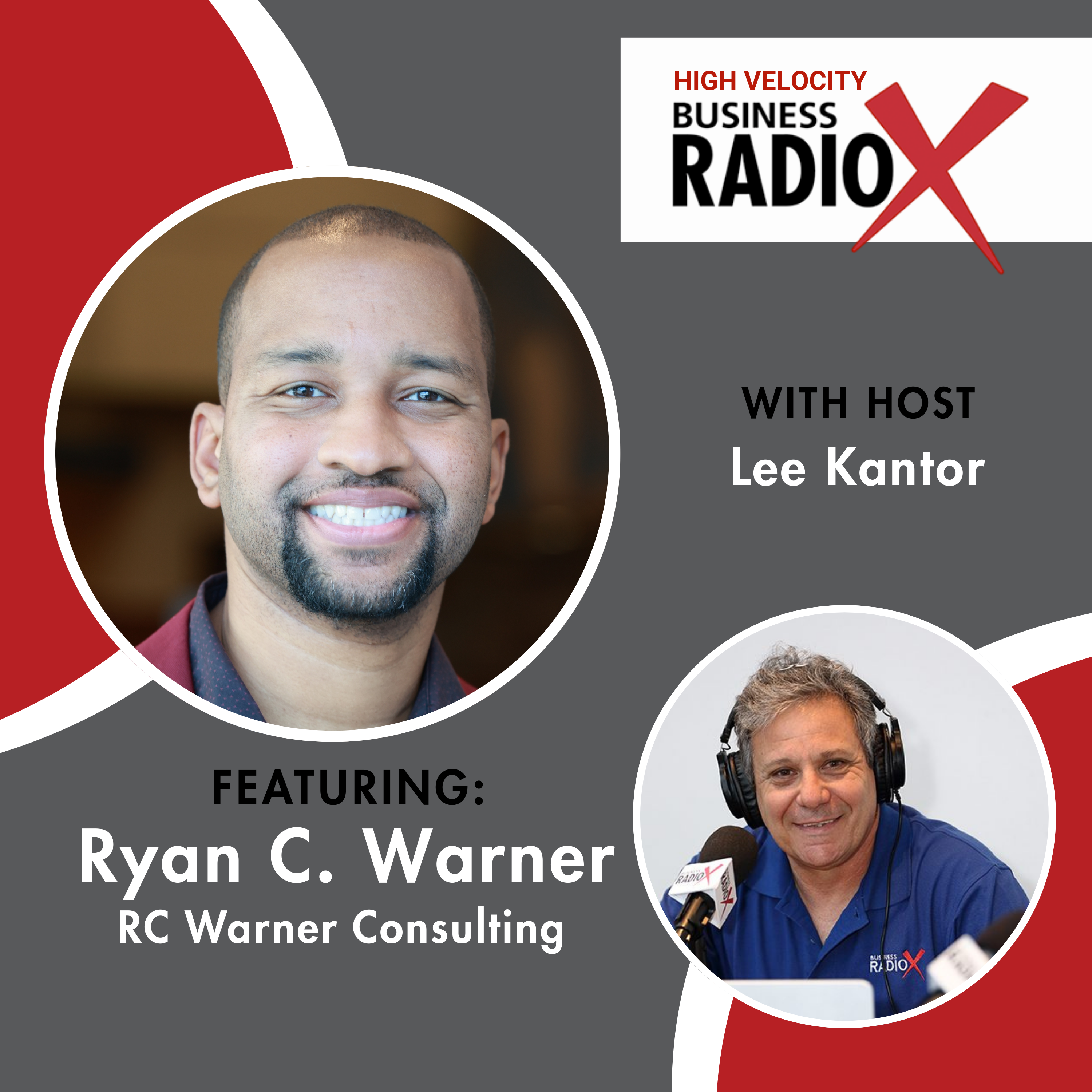

In this episode of High Velocity Radio, Lee interviews Dr. Ryan Warner, consulting psychologist and founder of RC Warner Consulting. Dr. Warner shares insights from his military background and discusses strategies for improving workplace mental health, leadership development, and organizational effectiveness. The conversation covers recognizing signs of burnout, the value of 360-degree assessments, and the importance of coaching at all levels. Dr. Warner also offers practical advice for entrepreneurs on building visibility, credibility, and strong support teams. The episode provides actionable tips for fostering healthier, more inclusive, and high-performing organizations.

 Dr. Ryan C. Warner is a globally-recognized speaker, award-winning consulting psychologist, and decorated military Veteran. As the Chief Executive Officer of RC Warner Consulting, he enhances organizational performance by amplifying inclusion and mental wellness in the workplace.
Leveraging his expertise in human behavior, team dynamics, and organizational inclusion, he empowers high-performing teams to achieve success by cultivating a positive and fulfilling work culture where all employees thrive.
Connect with Dr. Ryan on LinkedIn.
What You’ll Learn In This Episode
- Expanding your small business through government contracting
- Entrepreneurship: Common struggles and tips to build success
- Using emotional intelligence to excel in entrepreneurship
 This transcript is machine transcribed by Sonix.
TRANSCRIPT
Intro: Broadcasting live from the Business RadioX studios in Atlanta, Georgia. It’s time for High Velocity Radio.
Lee Kantor: Lee Kantor here. Another episode of High Velocity Radio, and this is going to be a good one. Today on the show, we have Ryan Warner, who is the consulting psychologist with RC Warner Consulting. Welcome.
Ryan Warner: Thank you for having me. I’m excited to be here.
Lee Kantor: Well, I’m excited to learn what you’re up to. For folks who aren’t familiar, can you share a little bit about RC Warner Consulting? How you serving folks?
Ryan Warner: Yeah. So RC Warner Consulting is a management consulting firm in which we work with high performing organizations and leaders across the globe to improve their performance and effectiveness. Specifically, we offer training and facilitation, executive coaching, and strategic planning so that organizations can In, become the top 1% within their industry and be able to thrive. Specifically by improving workplace inclusion and workplace wellbeing.
Lee Kantor: So what’s your backstory? How’d you get involved in this line of work?
Ryan Warner: So I started my career as a military psychologist. I was active duty in United States Air Force, and it was my job as director of psychological health for Air Force installation to promote the psychological well-being and workplace mental health for over 20,000 individuals on this Air Force installation. And during my time in that particular role, I engaged in a lot of consulting with high level leaders and generals to be able to reduce suicide on base, to be able to improve overall workplace well-being and mental health, and also work with high level leaders to enhance their leadership development. And I began to see this theme and this connection between workplace effectiveness and also workplace well-being and belonging. So I started my own business in 2020 because I recognized that we need to look a little bit deeper at this connection, because if we help individuals within the workplace be able to thrive, and through improving their mental health and helping ensure that they’re able to utilize their voice to make a difference in the workplace, then they’re going to be able to enhance both personally and professionally, just their overall development. So that’s that’s how I started my business. That’s my background. And, you know, that aligns with my passion as well. Just being a psychologist and using my knowledge about human behavior to go into the workplace to improve human based issues.
Lee Kantor: So what are some symptoms or signals that a leader of an organization has some issues with their people when it comes to some of these psychological issues that you’ve mentioned?
Ryan Warner: Yeah. So things in service like burnout, right. Right now research shows that in the entire workplace about 60% to 70% of individuals are burnt out and stressed out at their job, right? If we think about it, we spend majority of our adult life at work. Okay, so if we go to work every single day and feel that we’re not engaged, feel that we’re not attached to any bigger purpose, then that’s going to impact our engagement, that’s going to impact how we perform, that’s going to impact just our overall mental well-being. Right. So on the surface, we see individuals not being engaged in the work that they do. We see performance based issues. We see individuals feeling disconnected from their jobs as well. Um, we also see conflict, you know, subtle conflict, uh, communication issues. Right. Um, so all of this comes together, um, to really impact, um, the revenue of businesses as well and their overall effectiveness.
Lee Kantor: But how like if I’m a leader of an organization, how am I going to are there things that are happening that are like in my bottom line, on a spreadsheet or on a dashboard that’s telling me, hey, maybe this guy’s burnt out, or maybe this woman, um, isn’t feeling heard. Uh, do things show up? Like, am I like, how do they show up from a business standpoint, not a feeling standpoint? Or is it, is it maybe something like, um, I can’t fill this position. Maybe I have a problem with the leader, or maybe I have a lot of turnover or.
Ryan Warner: I see retention, we see retention challenges. Right. Uh, when I go into workplaces, if I constantly see people in and out all the time, then that shows, hey, there may be something going on underneath the surface, right? Um, if we’re not able to keep individuals there for a long period of time, uh, we also see, um, complacency when it comes to, uh, continuing to engage in innovation, uh, different innovative ideas. Right. And that impacts the bottom line in revenue. Um, you know, we see a lot of, uh, complaints as well. So maybe EEO complaints, uh, equal opportunity complaints related to discrimination. Uh, we also may see pay equity issues. Right. Um, so all of these business related, uh, outcomes, you know, negatively impact overall business performance.
Lee Kantor: Now, how do you recommend a leader handle somebody who maybe is performing well? And I see this a lot with salespeople. Maybe this person is a great salesperson, but he’s not a great human being in the office. How do you help them kind of manage that situation?
Ryan Warner: Yeah. So that’s tough. Oftentimes, I don’t think anyone may intentionally try to be a bad person. They just may not have those right personality traits that align with, you know, improving team dynamics. So what I typically do is we provide 360 assessments, you know, and that’s we use an evidence based measure. So we’re able to go in and say hey let’s collect feedback from your direct reports, your your peers, your supervisors. Right. Um, and in turn, they’re able to give you anonymous feedback that that can help your overall performance. So it may just be some blind spots that individuals may not even be aware of, you know? And in turn, when you bring that to light using 360 assessments, uh, in the in the ethical appropriate way, then that can boost their awareness and then they can begin to create goals to work on those issues so that they can better perform in the workplace.
Lee Kantor: So what is kind of your ideal client look like? Are they large firms? Are they smaller startups, entrepreneurial ventures? Uh, who is that ideal client for you?
Ryan Warner: So we typically work with local, state and federal government entities as well as fortune 500 companies. So thus far we’ve worked with like the United Nations, we work with the US Air Force, US Marines, uh, Cheesecake Factory, um, AMD Airbus, um, uh, and other just high performing organizations across the globe. So typically they have at least 10,000 employees or more.
Lee Kantor: And then when you come in, are you coming in to solve a problem or triage a situation, or are you coming in as a speaker? Like, how do you kind of, um, get your foot in the door in these large organizations?
Ryan Warner: Yeah. So typically, um, we engage in training and facilitation first. So that’s our foot to get into the door. So it’s not just myself. We actually have a team of 13 individuals, um, who are psychologists. They’re expert speakers. They’re trainers, um, and they’re consultants and executive coaches. Um, and typically we engage in the training facilitation related to, um, workplace burnout or leadership development or, um, solving workplace conflict. Right? Um, you know, etc. and in turn, that helps build trust. So once individuals actually hear what we have to say, uh, recognize that we are engaging and we’re bringing evidence based research and relieving them with practical tools that they can actually implement day to day to make their workplace better. Then they’re like, okay, hey, we really like what you said. Now I want you to come in and help with our strategic planning, or I want you to help engage in executive coaching with our mid-level managers. Right. Or I want you to engage in 360 assessments, you know, so we can get that data to then guide the change.
Lee Kantor: Now, you mentioned executive coaching. Are you finding that more and more organizations are leaning into coaching, not just for maybe the highest level of people in the organization, but it’s kind of trickling down?
Ryan Warner: Yeah. So, um, actually, like we’re noticing that, um, individuals of all different levels, right, are can benefit from executive coaching. So it’s not just when you think about executive coaching, you obviously think about executives like the top of the top right, the senior managers, the individuals responsible for making the daily decisions and the business decisions. But actually, research shows if you start coaching, um, just at entry level to mid-level managers, that actually helps boost retention, that boosts engagement and that keeps individuals, you know, there at the organization. So they continue to move up and thrive, right. So, um, coaching could benefit individuals of all different levels to boost their awareness to, to boost their, their leadership development so they can continue to, to improve both personally and professionally.
Lee Kantor: So if you were, um, making recommendations for senior leadership to, uh, broaden the scope of their executive coaching program, how would you recommend them pilot maybe some coaching for those, uh, entry level or lower level people to test to see if this is something that could be beneficial for the organization.
Ryan Warner: Yeah. So we’re actually already doing something similar with the United States Marines. So the United States Marines, um, from level E-1, uh, to I think E-4, which is more entry level individuals, um, they’re given 360 assessments and then they’re given one debrief with the executive coach. So the 360 assessment would go to their supervisors, direct reports, you know, colleagues. Um, and in turn, they will review that report and then meet with a coach just a one time so they can review the results. So right there, that pilot can can really be helpful because now it says, okay, here are my strengths. Let’s figure out how to leverage my strengths. And here are my areas of growth. And let’s figure out how to close these gaps. And just with that one debrief um, they’re able to create accountability partner in the workplace. And they’ll be able to have that foundation so they can continue to grow. So right there that’s an example of a pilot that has shown to be effective in a, you know, large organization, um, that we want to continue to implement in other organizations as well.
Lee Kantor: Now, you mentioned 360, uh, assessments more than one time. Can you talk about, um, why that’s so instrumental in your practice?
Ryan Warner: Yeah, because oftentimes feedback and organizations are unidirectional. So I meet with my supervisor. They tell me all the things I do well, I need to improve. But what about receiving that that that bidirectional feedback? What about individuals in top senior leadership roles in which, you know, they need feedback as well? Because oftentimes we notice that those are isolating positions and they may not receive that honest, direct feedback from others on how they can improve. Right. So that’s why 360 assessment. That’s one reason why it can be so helpful. Um, so that everyone is able to get that anonymous feedback. Um, so they can boost their growth.
Lee Kantor: So talk to me about how you, um, deployed that 360 assessment. Like, what does that look like? Obviously you have to get buy in from leadership to do this and get their permission that this is something worthwhile pursuing. But the individual that you’re doing the 360 on, how do you, uh, speak to them about what to expect and what, uh, that follow up is going to look like in order to kind of get the most value from that?
Ryan Warner: Um, yeah. So we first, when it comes to what to expect. Um, one fear that people may think is like, oh, this is going to impact my pay or promotion, right? So we want to make sure that it’s not utilized as a tool for that, because in turn, that that may be more detrimental. Uh, because there are ways that you can deploy 360 that are actually, um, harmful in the workplace, right? If you’re not aware and mindful. Right. So we we always give the premise like, hey, this is not impacting your promotion or pay or this is not going to be used as a tool against you. It’s used as a tool to help support you. Okay. So that communication is really important. And then that communication typically comes from a top level leadership. Right. Because when it comes from them now we’re able to actually have more buy in versus when it comes from an external consultant in which nobody knows. Right. So, um, when that’s that communication deployed within the organization, now the people you know are really engaged a little bit more. They have that buy in. Um, and then when we meet with individuals, we always ensure that we’re saying, hey, this is anonymous. We’re not sharing your information with anyone. This is confidential, right? It’s up to them to decide you know, who they want to share this with, how they want to create accountability partners. Um, and if they want to share these results with anyone else. So that psychological safety is essential so that individuals can be fully engaged.
Lee Kantor: Now, is there a story you can share when it comes to, um, the after effects of one of these assessments? Maybe. Obviously don’t name the individual, but maybe explain what showed up in their assessment and how they were able to kind of grow and learn from that and get to a new level.
Ryan Warner: Um, yeah. So I was working with a high performing fortune 500 company, and, um, there was a senior leader, and she was at this company for maybe 30 years or so. Um, and during her 30 years, she never really received direct, honest feedback. And she always wanted to know why. Right. She would ask individuals, hey, can you give me feedback? And they would they wouldn’t really give her anything, you know, meaningful. You know, just more generic. So after we deployed this 360 assessment with her, we were able to collect data from over 50 individuals. And then that really opened her eyes. People were like, hey, well, the reason why we’re not able to give feedback in the past is because this person is kind of intimidated, right? Their nonverbals. Right. Are are, you know, are kind of intimidating. Like, we don’t feel that she’s open, right? She only talks about business. We don’t really get to know the personal side of her. Right. So this was the first time she was able to receive that open, honest feedback. Um, and at first, she was defensive. Right. But then once we dove into it, she was like, okay, I can see this because in my personal life, people give me feedback and that way as well. Like I get that same feedback from my spouse, from my friends, etc.. So this really opened our eyes like, hey, it would benefit her from showing that personal side of her a little bit more. That can help build rapport, that can help, um, you know, individuals feel more open to go to her when issues come up. Right. And in turn that’s going to improve overall team dynamics. Um, and help the bottom line right. So that right there was just an eye opener that she was now able to create accountability partner with someone she trusts. She was able to just, um, schedule time with her direct reports a little bit more just to get to know you type meetings, right, that are not as business focused. And in turn, that helped just create more psychological safety within the workplace.
Lee Kantor: Is there a sweet spot in terms of number of people to include in one of these three 60s?
Ryan Warner: Um, I think it depends on the organization size and the size of team. But, um, I mean, typically at least like to get like 8 to 10 responses minimum. Um, typically, yeah, we get around get around at least eight total. Um, like minimum up to it could be 30, 40, you know. So um, the sample size, you know, may may vary depending on the organization, the team that we’re working with. But, um, you know, at least having, you know, 8 to 10 responses can, can give us a good starting point.
Lee Kantor: Now, I know you do a lot of work with large organizations. Some of our listeners are entrepreneurs. Are there any tips you can give an entrepreneur to be successful?
Ryan Warner: So I typically, um, it’s funny because every single month, uh, entrepreneurs reach out to me and they say, hey, you know, I’m curious how you started your business. I’m, you know, I’m curious if you can give me tips. You know, how I can thrive, you know, within my industry. And no matter what industry you’re in, it doesn’t matter if you’re starting a cleaning company or you’re a contractor. Uh, you know, laying concrete for the government or if you’re in consulting. Right. Oftentimes entrepreneurs, we have to take a multifaceted approach for us to reach success. So one of my mentors always said this. And he said visibility plus credibility equals profitability. And oftentimes we have that credibility, maybe through our, you know, past experiences or our degrees or our credentials, but we’re missing that visibility piece. How do we get our face out there and our name out there, our brand out there, so that individual knows us, right, um, and know of us. And once we’re able to do that, the next thing we need to do is we need to take a interpersonal approach, an interpersonal approach, and also a systemic approach. So by that I mean interpersonally I need to look within myself. What are some barriers that are stopping me from getting to that next level? Maybe it’s my self-limiting beliefs. Maybe I feel that I’m not smart enough or, you know, I don’t know enough or, you know, I don’t have enough connections, right? I need to challenge those self-limiting beliefs because interpersonally, that may hold me back.
Ryan Warner: The next thing I need to do is look interpersonally within my relationships. You know, what are the connections that I have? How can I strengthen my my preferred professional network so that I can boost my visibility and get my name out there. Right. Um, often, again, it’s not what we know is who we know. And in turn, we need to ensure that we’re connected with the right networks. Um, so we can boost our visibility. And last thing, the systemically right. What are the policies and procedures and systems that I have in place within my business that’s going to help me scale and help me thrive? Okay, so at first when I started my business in 2020, it was just me doing everything right. I was the accountant. I was the bookkeeper. I was the the sales manager. I was the trainer and facilitator. But now, as we’ve progressed, now we have certain systems in place to help give me more time, right. And give my executive team more time so that we can actually focus on the business development. Right. So putting those systems in place, being able to have a strong team around you. Right. And being able to challenge these self-limiting beliefs that may arise. That multifaceted perspective is going to help entrepreneurs thrive in whatever industry they’re in.
Lee Kantor: Now, a lot of entrepreneurs tend to be kind of lone wolves. And you said you started your business by yourself. How important is it to kind of have a mentor or a coach or somebody with kind of fresh eyes and, uh, no agenda really, as a partner in order to maybe help you with some of your, um, subconscious biases or some blind spots that you might have.
Ryan Warner: Oh, yeah. I mean, it’s essential. I mean, we, uh, you know, success is a team sport, okay? You can’t do it on your own. So, like I have, I even though I’m an executive coach myself and I coach entrepreneurs on how to get to that top 1% of their industries. I also have an executive coach myself that I meet with on a weekly basis. Right. I have mentors not only in the psychology world, but also in the risk management world. Um, I have mentors in the financial industry. Right. So you have to create a strong team around you, right? Uh, you have to, you know, get an attorney. You need, uh, mentors in various industries. Uh, you need to ensure that you get a bookkeeper or CPA. Um, so you need someone that’s going to help you with risk management, right? So, um, you need a tax strategist, not just a tax advisor. All of these individuals, you know, together, you know, when you create that strong team around you, it’s going to help you thrive.
Lee Kantor: And if somebody wants to learn more about your practice and have a more substantive conversation with you or somebody on your team, what is the website? What is the best way to connect?
Ryan Warner: Yeah, so if you’re an entrepreneur and you’re just trying to figure out, hey, how do I, you know, boost my practice, how do I do things like government contracting? Right. We know government the government is the largest buyer of goods and services in the United States. Right. Um, we focus a lot on that, and I do a lot of coaching around that. Or rather, your entrepreneur just trying to say, hey, how do I challenge myself and any beliefs? How do I take a more intrapersonal perspective so that I can, you know, mitigate those barriers? Feel free to reach out to us. Um, we have various coaching programs and various ways that we can support you. You can go to our website, WW. Consulting. You can also Google my name, Ryan C Warner. Uh, and find me on all social media platforms.
Lee Kantor: Well, Ryan, thank you so much for sharing your story today. You’re doing such important work and we appreciate you.
Ryan Warner: I really appreciate the time. Thank you.
Lee Kantor: All right. This is Lee Kantor. We’ll see you all next time on High Velocity Radio.














