Business RadioX ®

  • Home
  • Business RadioX ® Communities
    • Southeast
      • Alabama
        • Birmingham
      • Florida
        • Orlando
        • Pensacola
        • South Florida
        • Tampa
        • Tallahassee
      • Georgia
        • Atlanta
        • Cherokee
        • Forsyth
        • Greater Perimeter
        • Gwinnett
        • North Fulton
        • North Georgia
        • Northeast Georgia
        • Rome
        • Savannah
      • Louisiana
        • New Orleans
      • North Carolina
        • Charlotte
        • Raleigh
      • Tennessee
        • Chattanooga
        • Nashville
      • Virginia
        • Richmond
    • South Central
      • Arkansas
        • Northwest Arkansas
    • Midwest
      • Illinois
        • Chicago
      • Michigan
        • Detroit
      • Minnesota
        • Minneapolis St. Paul
      • Missouri
        • St. Louis
      • Ohio
        • Cleveland
        • Columbus
        • Dayton
    • Southwest
      • Arizona
        • Phoenix
        • Tucson
        • Valley
      • Texas
        • Austin
        • Dallas
        • Houston
    • West
      • California
        • Bay Area
        • LA
        • Pasadena
      • Colorado
        • Denver
      • Hawaii
        • Oahu
  • FAQs
  • About Us
    • Our Mission
    • Our Audience
    • Why It Works
    • What People Are Saying
    • BRX in the News
  • Resources
    • BRX Pro Tips
    • B2B Marketing: The 4Rs
    • High Velocity Selling Habits
    • Why Most B2B Media Strategies Fail
    • 9 Reasons To Sponsor A Business RadioX ® Show
  • Partner With Us
  • Veteran Business RadioX ®

The R3 Continuum Playbook: Empowering Yourself – How You Can Be a Catalyst for Change in the Workplace

July 22, 2022 by John Ray

Catalyst
Minneapolis St. Paul Studio
The R3 Continuum Playbook: Empowering Yourself - How You Can Be a Catalyst for Change in the Workplace
Loading
00:00 /
RSS Feed
Share
Link
Embed

Download file

Catalyst

The R3 Continuum Playbook: Empowering Yourself: How You Can Be a Catalyst for Change in the Workplace

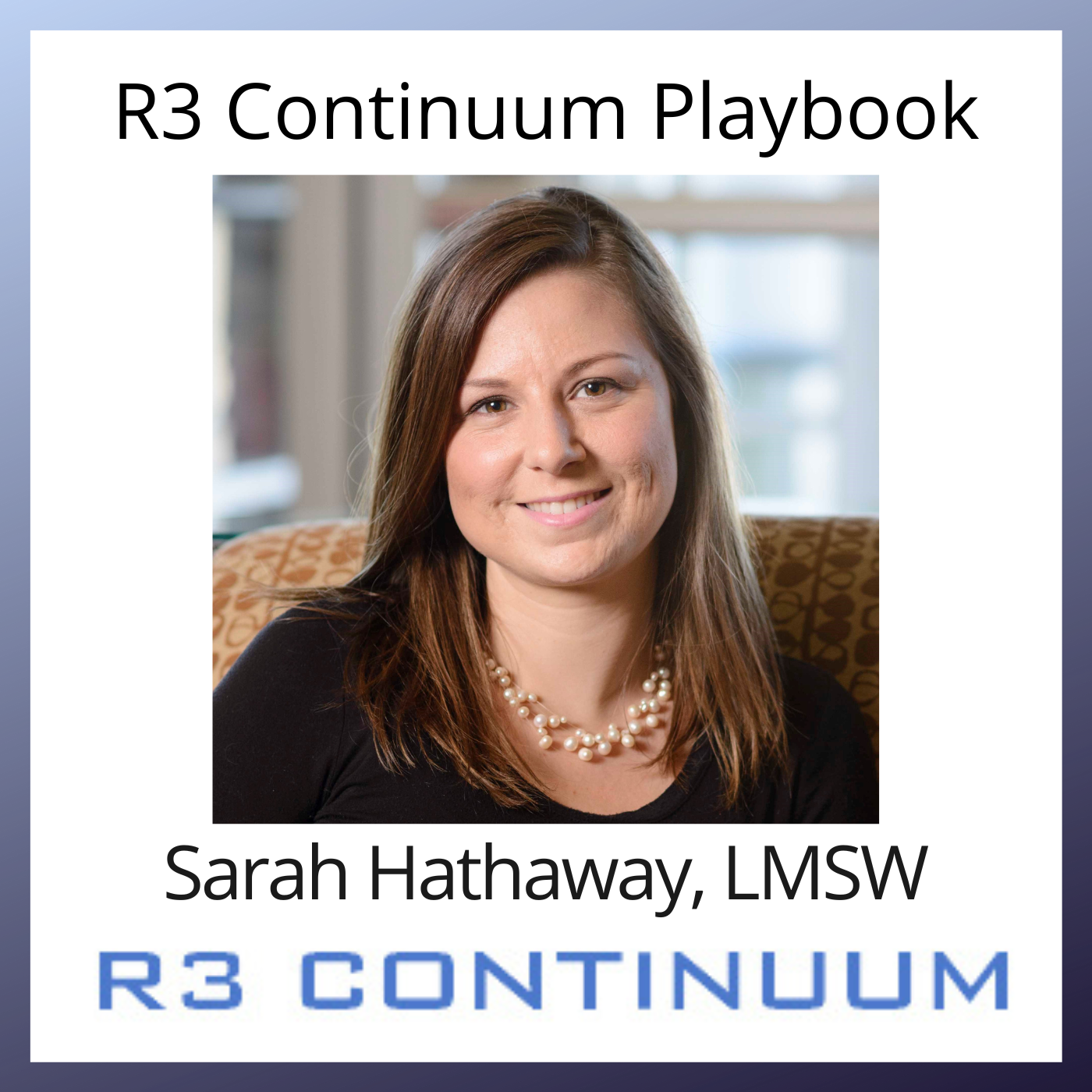
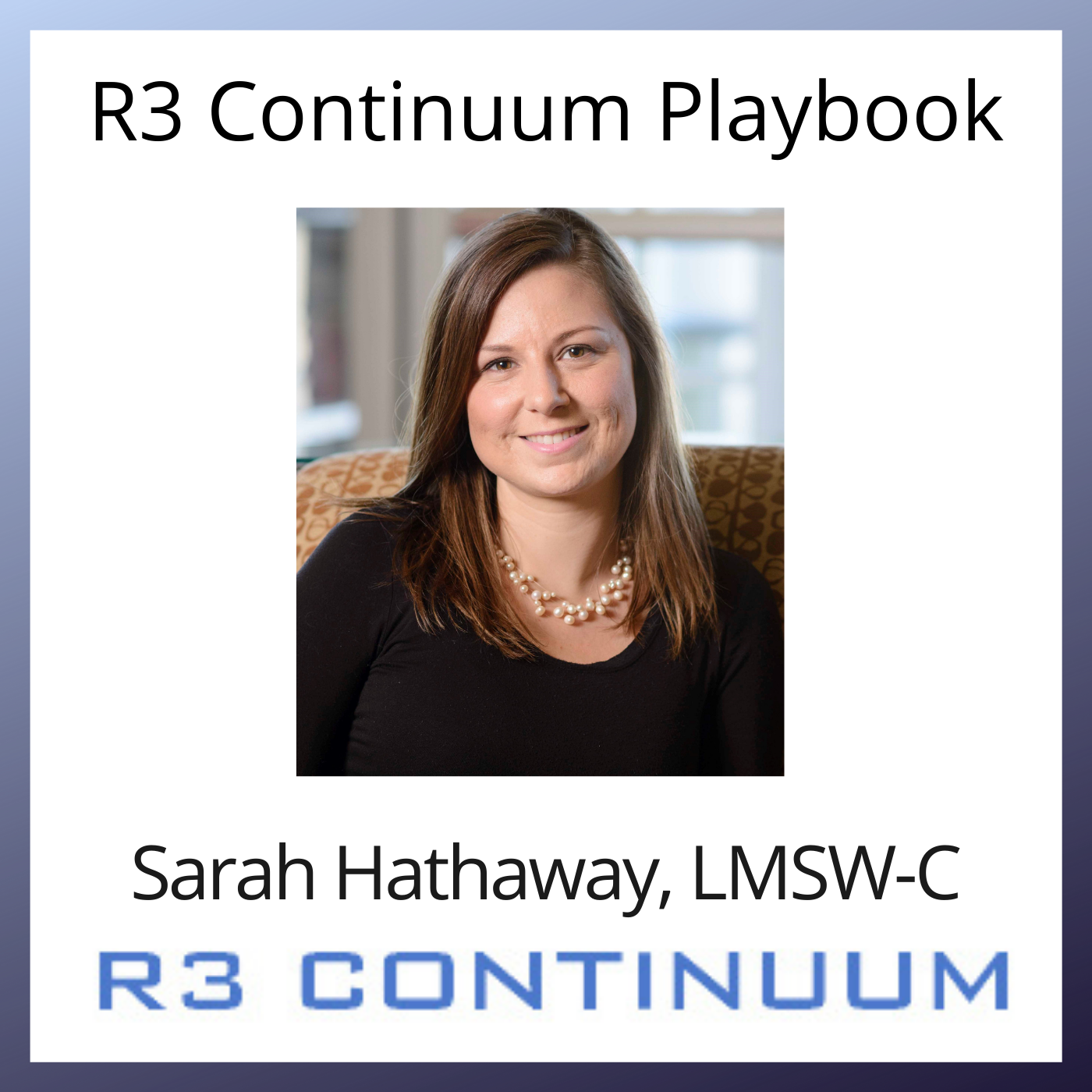
How do you go about discussing difficult topics with your company’s leadership? How can you effectively advocate for causes which you are passionate about? R3 Continuum’s Associate Director of Strategic Solutions, Sarah Hathaway, discussed these questions and more as she addressed how to become a catalyst for change within your workplace.

The full webinar from which this excerpt was taken can be found here.

The R3 Continuum Playbook is presented by R3 Continuum and is produced by the Minneapolis-St.Paul Studio of Business RadioX®. R3 Continuum is the underwriter of Workplace MVP, the show which celebrates heroes in the workplace.

TRANSCRIPT

Intro: [00:00:00] Broadcasting from the Business RadioX Studios, here is your R3 Continuum Playbook. Brought to you by workplace MVP sponsor R3 Continuum, a global leader in workplace behavioral health, crisis, and security solutions.

Shane McNally: [00:00:14] Hi, everyone. My name is Shane McNally, Digital Marketing Project Lead at R3 Continuum. On this episode of The R3 Continuum Playbook, we’ll be featuring a segment from a recent webinar presented by R3 Continuum Associate Director of Strategic Solutions, Sarah Hathaway. This recent webinar is titled Empowering Yourself, How You Can Be a Catalyst for Change in the Workplace.

Shane McNally: [00:00:35] In this short segment from her webinar, Sarah talks about how employees can become workplace champions and create a more positive culture in their workplace by utilizing the strategies she outlines.

Shane McNally: [00:00:47] So, I think let’s move forward and kind of go over what are some actual strategies to go about creating change.

Sarah Hathaway: [00:00:55] Yes. And, you really led into some of these specific points. The first one is identifying your allies. So, who is most likely to be in alignment with me on this change? And then, also your obstacles. Who are the people that are probably not going to be on board right away?

Sarah Hathaway: [00:01:15] Now, when I say obstacles, this doesn’t mean that these people are just a problem to be solved but they may present some barriers and we want to be aware of those barriers so that we can start to identify, okay, how do I address that challenge. This person has a very different viewpoint than me or this person is really committed to the status quo. What might influence them toward this change or what’s important to them? And why is the status quo important?

Sarah Hathaway: [00:01:45] So, that’s where – the next step is, just really getting the perspectives of other people. Our viewpoint may not be the right viewpoint, and maybe there’s not only one right viewpoint. Maybe, there are reasons that these other views are important, too. So we want to do a little bit of perspective-taking to really understand where is everyone else at. Are people really motivated for this change? Do they see the need that you see, or are there other things driving their perspective, other things of importance to them?

Sarah Hathaway: [00:02:16] So, you really want to tap into that motivation of what’s important and recognize, again that that may not be the same for everyone. So, for some people it might be a really passion-driven change of this is important, you know, for the well-being of our company, for the well-being of our employees, while others may be a little bit more methodical about their decision making. And so it might be a business-driven choice of, well, this is going to drive profits or reduce costs, and the return on investment is really important. So what’s that individual’s motivation or what’s the group motivation? And be able to tap into those different areas and what motivates individual people.

Sarah Hathaway: [00:03:04] Now, I mentioned the idea of the status quo. There is value oftentimes in the status quo. We wouldn’t generally be in the situation that we’re in. Even if it’s not the ideal situation, we wouldn’t be dealing with a status quo if there wasn’t some purpose for it. The status quo generally serves a purpose, even if it’s just for stability and consistency. So we have to recognize that the possibility of not changing has some value, too. It helps us to really create a bit of a counterbalance there to our own plan or ideas.

Sarah Hathaway: [00:03:39] We need to get really clear in defining what’s the ask, what needs to change, and what do we need in order to affect that change, get that buy-in as we talked about, and ultimately start to identify if I can’t have all of what I want to change, if we can’t have all of this, if that’s not possible, where are the areas where we might be able to compromise? Where can we kind of pare back the goals or the plan, or where can we maybe start small to build up a little momentum toward the change?

Shane McNally: [00:04:15] So, going off of what you were just saying about kind of the different types of changes, which do you think is typically harder to gain buy-in? Would that be like a cultural change in the organization or a business change?

Sarah Hathaway: [00:04:30] You know, it could be really any of them. That’s a good question. I think cultural changes can be harder in some ways because they’re more difficult to define at times. It’s more of a sort of nebulous shift, right? Process changes are very clear. When we’re working with widgets, I can replace this widget with that one or, you know, replace the phone call here with an email. That’s very clearly defined. Those cultural shifts are a little bit more complex. It doesn’t mean that they’re impossible or that we can’t tackle those, but they’re just different.

Shane McNally: [00:05:17] Yeah. Okay. I mean, that makes complete sense, I think. Another question following this up, and we do have about 8 minutes left, so we will answer some questions if anybody in the audience has some more as well. But is this something that is like you can only do if you’re a leader or a manager in your company, or do you think that going about these strategies and trying to create change for the better of the company can be anybody in the organization?

Sarah Hathaway: [00:05:45] I think that it can be anyone within the organization. Change starts somewhere, right? Now, I think we also have to acknowledge that at the leadership level, there oftentimes is a greater opportunity for influence. There’s greater authority, ability to make decisions that you may not be able to make at another level of the organization. But everyone can influence change. It’s about sort of setting the standard being the example at times. Creating, again, creating that buy-in, building allyship in that change, and really just starting the momentum and recognizing that even those really small changes are a catalyst toward greater change.

Sarah Hathaway: [00:06:35] Sometimes when we look at having these big, lofty goals and things that we want to shift, especially when we’re talking about a cultural shift or a team shift or program design shift, these are big things. And so sometimes it can feel like, well, gosh, we’re not making any progress, or our movement is very slow, or maybe we only got this one little piece of what we wanted. But that generally if you start to kind of look from A to Z, look over a period of time, you start to see that maybe that one small change created an opportunity for another change and another change. So, never underestimate the power of momentum in making change.

Shane McNally: [00:07:20] Reducing the amount of toxicity in the workplace can help to improve the overall well-being of you, your colleagues, and the organization as a whole. If you or your employees are feeling significant amounts of stress and workplace disruption, you’re not alone. R3 Continuum can help. Connect with us and learn about our services at www.r3c.com or email us directly at info@r3c.com.


Show Underwriter

R3 Continuum (R3c) is a global leader in workplace behavioral health and security solutions. R3c helps ensure the psychological and physical safety of organizations and their people in today’s ever-changing and often unpredictable world. Through their continuum of tailored solutions, including evaluations, crisis response, executive optimization, protective services, and more, they help organizations maintain and cultivate a workplace of wellbeing so that their people can thrive. Learn more about R3c at www.r3c.com.

R3 Continuum is the underwriter of Workplace MVP, a show which celebrates the everyday heroes–Workplace Most Valuable Professionals–in human resources, risk management, security, business continuity, and the C-suite who resolutely labor for the well-being of employees in their care, readying the workplace for and planning responses to disruption.

Connect with R3 Continuum:  Website | LinkedIn | Facebook | Twitter
Tagged With: Catalyst, catalyst for change, Empowering Yourself, R3 Continuum, R3 Continuum Playbook, Sarah Hathaway, Workplace MVP

The R3 Continuum Playbook: How to Talk to Your Employer About Personal Disruption

January 27, 2022 by John Ray

talk to your employer
Minneapolis St. Paul Studio
The R3 Continuum Playbook: How to Talk to Your Employer About Personal Disruption
Loading
00:00 /
RSS Feed
Share
Link
Embed

Download file

talk to your employer

The R3 Continuum Playbook:  How to Talk to Your Employer About Personal Disruption

When confronted with some disruptive circumstance, whether it’s simply being late to work or a more serious situation involving their mental health, employees must answer a few critical questions, including what to tell an employer. In this excerpt from a R3 Continuum webinar, Sarah Hathaway offers some advice on how to talk to your employer about personal disruption.   The R3 Continuum Playbook is presented by R3 Continuum and is produced by the Minneapolis-St.Paul Studio of Business RadioX®. R3 Continuum is the underwriter of Workplace MVP, the show which celebrates heroes in the workplace.

Other R3 Continuum webinars can be found here.

TRANSCRIPT

Intro: [00:00:00] Broadcasting from the Business RadioX Studios, here is your R3 Continuum Playbook. Brought to you by Workplace MVP sponsor, R3 Continuum, a global leader in workplace behavioral health, crisis, and security solutions.

Shane McNally: [00:00:14] Hi, there. My name is Shane McNally, Marketing Specialist for R3 Continuum. We’ve all experienced daily struggles in the workplace. Maybe the printer is jammed, WiFi issues, maybe someone just finished off the last of the coffee, the little things. But what about the greater disruptions that happen outside of the workplace in your personal life? It can be tough to open up to your employer to discuss issues that are happening in your personal life, but it’s something that should not be left unaddressed.

Shane McNally: [00:00:38] Sarah Hathaway, Associate Director of Strategic Solutions at R3 Continuum, offers expert insight into different strategies to approach your employer for support when faced with personal disruption.

Sarah Hathaway: [00:00:49] There are a few things to really think about when you are seeking support from your employer. The first one is, “What do I share? What do I tell my employer?” And depending on your circumstances, the answer to that question may vary. If it’s, “You know what? I got a flat tire and my car is going to be in the shop. And I’m going to need some flexibility today and I’m going to miss a meeting,” or something of that nature, that might be a little bit easier to have that conversation of here’s what’s going on.

Sarah Hathaway: [00:01:24] But if it’s a mental health condition or it’s a compounding of stressors, those are sometimes a little bit more difficult to articulate and they might be harder to figure out, “Where’s the line? What do I tell my employer?”

Sarah Hathaway: [00:01:39] Some factors that you can consider here are, first of all, what do they need to know? What information is necessary for them to understand the gravity of the situation? If I just say, “I have a personal concern and I’m going to need to be out of work for the next two weeks,” that might be a little bit hard for your supervisor to understand. So, it might be necessary to give a little bit more context to what’s going on. Or if it’s, “I’m going to be needing just some understanding. I might be late on a project,” that might be a little bit easier to understand.

Sarah Hathaway: [00:02:19] One of the other things that you’ll want to consider here is what are the potential ramifications of what I may share? It’s not necessary for you to share any medical and mental health diagnoses. And, oftentimes, employees are concerned about potential discrimination or what other ways that can have negative consequences.

Sarah Hathaway: [00:02:39] So, think about that here in what you’re going to share, and we can talk some more when we get to the question and answer about specific ways to manage that. But think about what is necessary for them to understand. Again, that gravity of the situation, and then what are you comfortable sharing, and what are the potential consequences of sharing.

Sarah Hathaway: [00:03:04] The next one is, who do you tell? And, oftentimes, the simplest answer is your direct supervisor. If there’s an impact to your work, let your supervisor know what that will be and what adjustments may need to be made. You may also want to notify human resources if you have any concerns about how this information may be perceived. Or if you’re in need of particular resources or accommodations, human resources may be necessary to notify as well.

Sarah Hathaway: [00:03:37] And then, the third option is your colleagues. Is this something that you want your colleagues to know about? Is there a reason that they should know? Keep those things in mind when planning to have those conversations.

Sarah Hathaway: [00:03:51] And then, third thing is to define what you need. And you’ll look at that in four areas. The first is, do I need problem solving? Do I need to talk with my manager about what are my next steps? What can I do here? Do we need to work together and collaborate to figure out a reasonable solution?

Sarah Hathaway: [00:04:14] Or maybe you don’t need any solution at all. Maybe you’re just looking for understanding of I might be a little bit late here, or I might show up midway through this meeting, or I might need a little bit of adjustment on deadlines. “I just need some understanding here of this is what I’m going through, and I want you to know so that you’re not wondering why I seem a little bit less reliable than usual.”

Sarah Hathaway: [00:04:41] The third is resources. Do you need any resources that your employer offers? That may be an employee assistance program. It could be your health insurance information. It could be other options that your employer offers. So, think about what resources your employer may offer or do you just not know and your manager or HR can help you figure that out.

Sarah Hathaway: [00:05:07] And then, the fourth piece is flexibility. Do you need time off? Do you need adjusted responsibilities at work for a period of time? If you’re requiring some level of flexibility, it’s important to communicate that to your manager.

Sarah Hathaway: [00:05:20] So, think about these four areas when you’re planning on talking with your manager or HR, and what exactly are you looking for from them. Because, oftentimes, when your manager doesn’t necessarily know what you’re looking for and you’re just bringing here what’s going on, they may jump to problem solving when that’s not what you need. And all you need is some understanding of the situation. And so, if you can come with the ask up front, it can be really helpful in determining how to move forward.

Shane McNally: [00:05:48] All right. Hey, I have a question to kind of jump in, in here as well. And it actually came up from that very first slide of what is a sign that somebody might need to reach out for support? Like, when is kind of enough is enough type of thing? Is there something where I should look inside and be like, “You know what? I do need to reach out?” Do you kind of have any thoughts on that?

Sarah Hathaway: [00:06:13] You know, that’s a really great question. I think there are a couple of signals that you might need to reach out. And the first is, if you’re coping with something where you need help, you need support, or maybe you just need a listening ear, somebody to understand what you’re going through. If you’re feeling like you need help, oftentimes, your employer has some type of a resource for that. Again, it may be your manager, maybe HR, or maybe something like that employee assistance program.

Sarah Hathaway: [00:06:42] The other indicators that you may need help is if there’s an impact to your work, if there’s an impact to your performance, or impact to availability or your reliability. Those are indicators that your manager probably needs to know what’s going on so that it isn’t viewed as just strictly a performance issue. If you can communicate at least semi-openly, again, there may be some things that you keep personal, keep to yourself. But if you can communicate at least on some level of what’s going on, that can help them to identify that there’s something else other than just a performance concern.

Sarah Hathaway: [00:07:18] And then, the third thing is, if you’re noticing any specific changes in your emotions, your behaviors, if you think that there may be some potential impact to your mental health, again, this is another opportunity to communicate with your employer about how to get support and resources.

Shane McNally: [00:07:41] It’s extremely important to know how and when to approach an employer about a personal disruption. Well, it can be difficult to do. It’s not impossible. R3 Continuum can help organizations ensure they’re offering the best support and resources available for their employees through our Workplace Behavioral Health Support Services. R3 Continuum offers a proactive support approach and tailors the services to fit the unique challenges of each workplace. Learn more about R3 Continuum services and contact us at www.r3c.com or email us directly at info@r3c.com.


Show Underwriter

R3 Continuum (R3c) is a global leader in workplace behavioral health and security solutions. R3c helps ensure the psychological and physical safety of organizations and their people in today’s ever-changing and often unpredictable world. Through their continuum of tailored solutions, including evaluations, crisis response, executive optimization, protective services, and more, they help organizations maintain and cultivate a workplace of wellbeing so that their people can thrive. Learn more about R3c at www.r3c.com.

R3 Continuum is the underwriter of Workplace MVP, a show which celebrates the everyday heroes–Workplace Most Valuable Professionals–in human resources, risk management, security, business continuity, and the C-suite who resolutely labor for the well-being of employees in their care, readying the workplace for and planning responses to disruption.

Connect with R3 Continuum:  Website | LinkedIn | Facebook | Twitter
Tagged With: employee well-being, employee wellness, employers, mental health, Mental Health Support, personal disruption, R3 Continuum, Sarah Hathaway, Workplace MVP, workplace wellness

R3 Continuum Playbook: Organizational Culture

June 3, 2021 by John Ray

Organizational Culture
Minneapolis St. Paul Studio
R3 Continuum Playbook: Organizational Culture
Loading
00:00 /
RSS Feed
Share
Link
Embed

Download file

Organizational Culture

R3 Continuum Playbook:  Organizational Culture

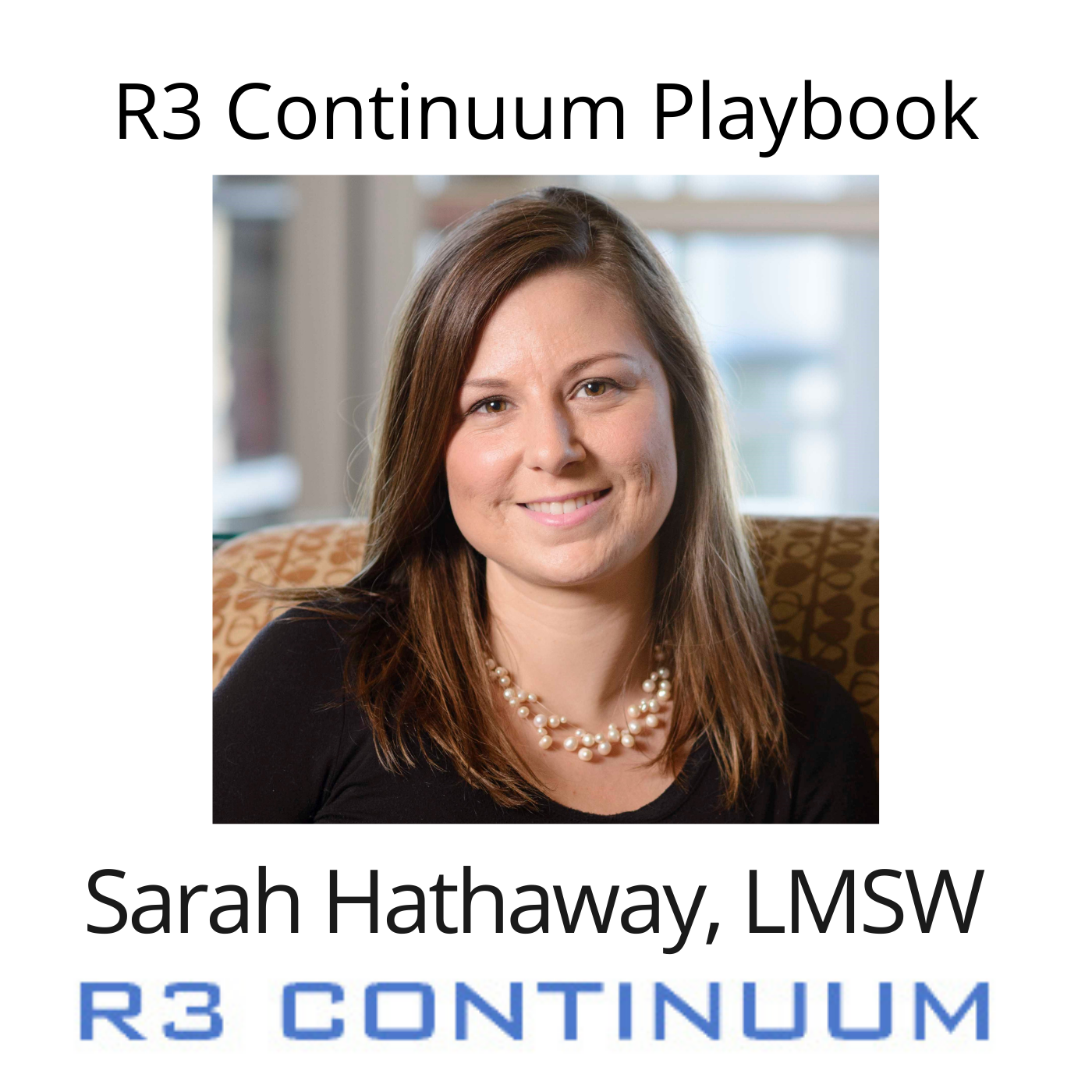
Sarah Hathaway, Associate Director, Strategic Solutions draws parallels between employee well-being and organizational culture. She outlines three ways leaders can support a healthy culture and potentially create a competitive advantage.  The R3 Continuum Playbook is presented by R3 Continuum and is produced by the Minneapolis-St.Paul Studio of Business RadioX®. R3 Continuum is the underwriter of Workplace MVP, the show which celebrates heroes in the workplace.


TRANSCRIPT

Intro: [00:00:00] Broadcasting from the Business RadioX Studios, here is your R3 Continuum Playbook. Brought to you by Workplace MVP sponsor, R3 Continuum, a global leader in workplace behavioral health, crisis, and security solutions.

Sarah Hathaway: [00:00:16] Hi. I’m Sarah Hathaway, Associate Director of Strategic Solutions at R3 Continuum. Today, I want to talk about a topic that has received increasing focus in recent years, and that’s organizational culture. Take a moment to think about what words come to mind when you think about your company’s culture. You might be thinking about its purpose, its values, or maybe some of the daily norms. You might even be thinking about the diversity of the people, the experience and perspectives that each person brings to your organization.

Sarah Hathaway: [00:00:51] Discussions of organizational culture tend to focus on how individual’s team to accomplish a common goal. But if there is too strong a focus on this end goal, this output, we can lose sight of our greatest advantage, the employees themselves. There’s a symbiotic relationship that exists between wellbeing and culture. An inclusive and equitable company culture with diverse skills and perspectives promotes employee wellbeing. While employee wellbeing in turn enhances the culture of an organization.

Sarah Hathaway: [00:01:25] The last year or so has brought a great deal of stress upon many individuals and companies. Throughout the COVID-19 pandemic, organizations have had to adapt their practices and norms significantly for the health and safety of staff and clients. Communication methods have changed. Personal work routines have shifted. And for some, the feeling of connectedness has suffered. During the last year, diversity, equity, and inclusion initiatives have received increased priority for a good reason. Organizations are being influenced by the broader society, and the ongoing polarization and inequity in the community at large pose a risk of the similar issues in the workplace.

Sarah Hathaway: [00:02:08] While these circumstances present challenges to organizations everywhere, this time of transition creates a unique opportunity for growth. So, how do we support a healthy culture during a time of discord and uncertainty? It’s first important to understand that while employees at all levels contribute to the values, identity, and norms of a company, it’s the leaders that are the drivers of culture. And while changes to company policies are sometimes necessary to create an equitable workforce, it’s important that the change begins with the culture itself.

Sarah Hathaway: [00:02:44] As a leader, you can take a proactive approach to enhancing cultural wellbeing through three important approaches. The first step to a healthy culture is to promote learning opportunities for yourself and your organization. You can proactively increase cultural literacy and awareness through specialized trainings. The foundational knowledge offers opportunities to establish common inclusive language through which to discuss cultural issues and removes the ever common burden placed on marginalized individuals to educate others about their identity or life experience.

Sarah Hathaway: [00:03:21] Education forms the lens through which we view our interactions. With this new information, you can take the role of conscientious observer at work, looking at things like daily interactions and company communications to identify opportunities to be more inclusive. Openly look for and acknowledge areas of strength within the culture. Those things that contribute to the wellbeing of your company and staff. Also, seek out those areas in need of growth, instances in which a shift in behavior could better engage employees.

Sarah Hathaway: [00:03:55] When looking for these growth opportunities, the point isn’t to condemn yourself or your colleagues for missteps, but to identify opportunities for change. If you’re finding it difficult to identify these opportunities, which is common when focusing on your day-to-day responsibilities, it can be helpful to put yourself in the shoes of those around you and consider how their experience of the same interaction might be different than yours. Whether they have a different background, personal identity, education, or role, each of these things can color the way in which each person views the situation.

Sarah Hathaway: [00:04:32] Consider those not involved. Are there individuals who should be included? Are there any aspects of the interaction that might be unwelcoming to others? As you assume the role of conscientious observer, you might notice that some people participating in meetings rarely get a chance to give their perspective. Or the individuals in the break room typically past one another without even a hello.

Sarah Hathaway: [00:04:56] Second, enhance engagement by fostering inclusion and connectedness amongst your employees. In the workplace, this begins by ensuring that individuals understand the organization’s purpose, how their role connects to it, and how it connects to their individual values and goals. Incredibly well-written mission, vision, and value statements aren’t meaningful unless they mean something to each person who represents the company. But this is just one piece of the puzzle.

Sarah Hathaway: [00:05:27] While leaders often look at the big picture identity of a company, most frontline employees perceive their employers inclusivity and culture based upon everyday interactions, the chatter over coffee or the quick strategy call. You serve as a model for inclusion in every interaction you have with others. Often, a small step can go a long way to making others feel included, like being sure to say hello to each person as they join a meeting or making space for all voices. You can say things like, “I’d really like to hear Rose’s thoughts on this.” Or, “Can we look back? I’m not sure Sean was able to finish what he was saying.” While these statements might seem quite subtle, they empower staff to be more engaged, to take ownership in activities, and when done often, they can establish a new norm for others to follow.

Sarah Hathaway: [00:06:24] The third approach is to create space for safe open discussion. Often, we’re afraid to talk about things like culture, inclusion, and equity in the workplace because it forces conversations about things like exclusion and inequity. But what tends to happen when we provide this space is that it allows us to address critical issues and acknowledge concerns that may otherwise be overlooked for the purpose of getting the job done. It’s true that the need for job security can cause employees to withhold feedback that may be viewed as critical of their employer. When these concerns go unaddressed, it can lead to decreased employee morale, job satisfaction, and productivity, all of which contribute to turnover and inhibit company success.

Sarah Hathaway: [00:07:14] While this third step can sometimes appear daunting, it can provide a wonderful chance to build empathy, trust, and commitment. This type of progress rarely comes without discomfort or uncertainty, so it’s important to establish ground rules which allow individuals to share without fear of repercussions. Fear of saying the wrong thing sometimes keeps us from saying anything at all. As a leader, you can model open and honest sharing and remove the expectation to do things perfectly by acknowledging your own limitations and intention for development. Because conversations of this nature may involve sensitive topics, consider seeking objective resources for support in this endeavor, such as a trained facilitator or a mental health clinician to allow individuals a chance to debrief.

Sarah Hathaway: [00:08:05] As with any change, cultural shifts can take time and should not be approached with the intent to rush to a fix. By creating space for dialogue and processing, you allow your employees to evolve as individuals and as a whole. Your company’s culture has the potential to be your competitive advantage. Enhance your culture with the assistance of education, support, and consultative resources.

Sarah Hathaway: [00:08:32] You can find additional information about cultural wellbeing on our website, r3c.com. To learn more about our organizational culture training and consultation services, email us at info@r3c.com. We’d love to support your organization.


Show Underwriter

R3 Continuum (R3c) is a global leader in workplace behavioral health and security solutions. R3c helps ensure the psychological and physical safety of organizations and their people in today’s ever-changing and often unpredictable world. Through their continuum of tailored solutions, including evaluations, crisis response, executive optimization, protective services, and more, they help organizations maintain and cultivate a workplace of wellbeing so that their people can thrive. Learn more about R3c at www.r3c.com.

R3 Continuum is the underwriter of Workplace MVP, a show which celebrates the everyday heroes–Workplace Most Valuable Professionals–in human resources, risk management, security, business continuity, and the C-suite who resolutely labor for the well-being of employees in their care, readying the workplace for and planning responses to disruption.

Connect with R3 Continuum:  Website | LinkedIn | Facebook | Twitter
Tagged With: employee well-being, inclusion and equity, organizational culture, R3 Continuum, Sarah Hathaway

Business RadioX ® Network


Our Most Recent Episode

CONNECT WITH US

  • Email
  • Facebook
  • LinkedIn
  • Twitter
  • YouTube

Our Mission

We help local business leaders get the word out about the important work they’re doing to serve their market, their community, and their profession.

We support and celebrate business by sharing positive business stories that traditional media ignores. Some media leans left. Some media leans right. We lean business.

Sponsor a Show

Build Relationships and Grow Your Business. Click here for more details.

Partner With Us

Discover More Here

Terms and Conditions
Privacy Policy

Connect with us

Want to keep up with the latest in pro-business news across the network? Follow us on social media for the latest stories!
  • Email
  • Facebook
  • Google+
  • LinkedIn
  • Twitter
  • YouTube

Business RadioX® Headquarters
1000 Abernathy Rd. NE
Building 400, Suite L-10
Sandy Springs, GA 30328

© 2025 Business RadioX ® · Rainmaker Platform

BRXStudioCoversLA

Wait! Don’t Miss an Episode of LA Business Radio

BRXStudioCoversDENVER

Wait! Don’t Miss an Episode of Denver Business Radio

BRXStudioCoversPENSACOLA

Wait! Don’t Miss an Episode of Pensacola Business Radio

BRXStudioCoversBIRMINGHAM

Wait! Don’t Miss an Episode of Birmingham Business Radio

BRXStudioCoversTALLAHASSEE

Wait! Don’t Miss an Episode of Tallahassee Business Radio

BRXStudioCoversRALEIGH

Wait! Don’t Miss an Episode of Raleigh Business Radio

BRXStudioCoversRICHMONDNoWhite

Wait! Don’t Miss an Episode of Richmond Business Radio

BRXStudioCoversNASHVILLENoWhite

Wait! Don’t Miss an Episode of Nashville Business Radio

BRXStudioCoversDETROIT

Wait! Don’t Miss an Episode of Detroit Business Radio

BRXStudioCoversSTLOUIS

Wait! Don’t Miss an Episode of St. Louis Business Radio

BRXStudioCoversCOLUMBUS-small

Wait! Don’t Miss an Episode of Columbus Business Radio

Coachthecoach-08-08

Wait! Don’t Miss an Episode of Coach the Coach

BRXStudioCoversBAYAREA

Wait! Don’t Miss an Episode of Bay Area Business Radio

BRXStudioCoversCHICAGO

Wait! Don’t Miss an Episode of Chicago Business Radio

Wait! Don’t Miss an Episode of Atlanta Business Radio














