
Decision Vision Episode 62: Should We Sell the Family Business? – An Interview with Dr. Gaia Marchisio, Cox Family Enterprise Center at Kennesaw State University
How do you recognize when it’s the best decision to sell the family business? Can a dysfunctional family operate a functional and successful business? Dr. Gaia Marchiso of the Cox Family Enterprise Center at Kennesaw State University joins the show to answer these questions and much more. The host of “Decision Vision” is Mike Blake and the series is presented by Brady Ware & Company.
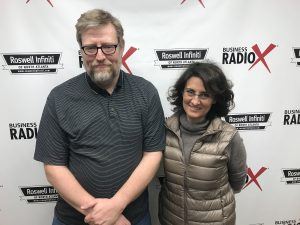
Dr. Gaia Marchisio, Cox Family Enterprise Center at Kennesaw State University
The family enterprise field shares a common experience: navigating the space where family relationships and professional demands coexist. Family members, non-family executives, external advisors and students all traverse this unique sphere, mutually working through the complexity in pursuit of success.
The mission of the Cox Family Enterprise Center (CFEC) is to act as an intellectual and practical hub for this community. With specialized programming, events and services tailored to the needs of each segment of our community, we focus on creating growth opportunities that empower individuals and organizations. We are proud to be a gathering place of learning, facilitating new skills, richer capacities, and sustainable relationships.

Dr. Gaia Marchisio is the Executive Director of the Cox Family Enterprise Center at Kennesaw State University. As a tenured Associate Professor of Management at Kennesaw State University’s Coles College of Business Gaia developed several curricula for family business classes, and teaches undergraduate and MBA courses on family business, management and behavioral sciences, and consulting services. She has been a visiting faculty under numerous Family Business Centers in Latin America, Asia, Europe, and New Zealand.
Gaia’s academic experience allows her to be rigorous and up-to-date in dealing with family business topics. She has been participating in research projects with international partners from Academic and Professional environments (including McKinsey & Company and the Italian Stock Exchange); and has strong global experience in collaborating with financial institutions and associations working with family firms, such as International Finance Corporation (IFC – World Bank Group), Inter-America Investment Corporation (IIC – Member of the IDB Group), Credit Suisse, UBS, and Australia and New Zealand (ANZ) Banking Group, to name few. In particular, Gaia has experience working with financial institutions, both consulting with them on family business related topics, and training their clients and/or associates.
In 2013/14, Gaia spent her sabbatical leave, during which she served as the Chief Learning Officer for FBN Academy, an initiative by the Family Business Network in Asia. Gaia is an active international speaker and family business advisor. She regularly presents and/or advises families on various topics in family business management around the world, including facilitating some of the owners meetings. These families are from around the world including Europe, North and Latin America, the Caribbean, Asia, Australia and New Zealand. Gaia brings a unique combination of knowledge and experience from the fields of management and entrepreneurship to her work with family businesses, combined with a growing expertise in family dynamics and communication.
Gaia was raised as a 4th generation successor in her family’s business. This experience helped her understand the emotional challenges and responsibilities of being a young member of an entrepreneurial family. After finishing her BBA, she joined the SDA Bocconi School of Management where she served as Assistant Director of the full-time MBA Program; as Coordinator of the first Chair in Strategic Management in Family Business; and as a Coordinator of Entrepreneurship Entrepreneurs’ Research Center. Gaia earned her Doctorate in Business Administration in Family Business. She moved to Atlanta, Georgia, USA in 2006.
For more information on the research and services offered by the Cox Family Enterprise Center, you can visit their website or email directly.
Michael Blake, Brady Ware & Company

Michael Blake is Host of the “Decision Vision” podcast series and a Director of Brady Ware & Company. Mike specializes in the valuation of intellectual property-driven firms, such as software firms, aerospace firms and professional services firms, most frequently in the capacity as a transaction advisor, helping clients obtain great outcomes from complex transaction opportunities. He is also a specialist in the appraisal of intellectual properties as stand-alone assets, such as software, trade secrets, and patents.
Mike has been a full-time business appraiser for 13 years with public accounting firms, boutique business appraisal firms, and an owner of his own firm. Prior to that, he spent 8 years in venture capital and investment banking, including transactions in the U.S., Israel, Russia, Ukraine, and Belarus.
Brady Ware & Company
Brady Ware & Company is a regional full-service accounting and advisory firm which helps businesses and entrepreneurs make visions a reality. Brady Ware services clients nationally from its offices in Alpharetta, GA; Columbus and Dayton, OH; and Richmond, IN. The firm is growth minded, committed to the regions in which they operate, and most importantly, they make significant investments in their people and service offerings to meet the changing financial needs of those they are privileged to serve. The firm is dedicated to providing results that make a difference for its clients.
Decision Vision Podcast Series
 “Decision Vision” is a podcast covering topics and issues facing small business owners and connecting them with solutions from leading experts. This series is presented by Brady Ware & Company. If you are a decision maker for a small business, we’d love to hear from you. Contact us at decisionvision@bradyware.com and make sure to listen to every Thursday to the “Decision Vision” podcast. Past episodes of “Decision Vision” can be found here. “Decision Vision” is produced and broadcast by the North Fulton studio of Business RadioX®.
Visit Brady Ware & Company on social media:
LinkedIn: https://www.linkedin.com/company/brady-ware/
Facebook: https://www.facebook.com/bradywareCPAs/
Twitter: https://twitter.com/BradyWare
Instagram: https://www.instagram.com/bradywarecompany/
Show Transcript
Intro: [00:00:01] Welcome to Decision Vision, a podcast series focusing on critical business decisions, brought to you by Brady Ware & Company. Brady Ware is a regional, full-service accounting and advisory firm that helps businesses and entrepreneurs make visions a reality.
Mike Blake: [00:00:20] And welcome to Decision Vision, a podcast giving you, the listener, clear vision to make great decisions. In each episode, we discuss the process of decision making on a different topic from the business owner’s or executive’s perspective. We aren’t necessarily telling you what to do, but we can put you in a position to make an informed decision on your own and understand when you might need help along the way.
Mike Blake: [00:00:39] My name is Mike Blake, and I’m your host for today’s program. I’m a director at Brady Ware & Company, a full-service accounting firm based in Dayton, Ohio, with offices in Dayton; Columbus, Ohio; Richmond, Indiana; and Alpharetta, Georgia, which is where we are recording today. Brady Ware is sponsoring this podcast. If you like this podcast, please subscribe to your favorite podcast aggregator, and please consider leaving a review of the podcast as well.
Mike Blake: [00:01:03] So, today we’re going to talk about whether you should sell the family business. And this is something that I’ve had a chance to get up close and personal with. As it happened the last couple of years, I’ve been asked to help some pretty high net worth families with the third comma and helped them with something that’s called a family charter, which is basically the constitution of how a family decides it’s going to govern itself, usually over multiple generations.
Mike Blake: [00:01:34] And over that time, I’ve had an opportunity to study family businesses in a way that I really had not before. Those of you who have listened to this podcast before know that I’m more of a tech guy. And tech companies, generally speaking, measure themselves in years or even months, but not generations. Family businesses, on the other hand, very much can measure themselves in generations. And there are family businesses that go back centuries. The Rothschilds investment banking empire can date itself to the early 18th century and Bavaria. The Kikkoman Soy Sauce company is actually a Japanese family business. Actually, an amalgamation of eight families in Japan that date back in to the 17th century. Many of the bit of the great a time museums, in fact, are legacies of the Milanese merchant bankers that date back to the Renaissance.
Mike Blake: [00:02:38] And so, we can see that some family imprints actually last for half a millennia or longer. And so, I’ve become very interested in family businesses because they offer a dynamic that you don’t see anywhere else. So, over the course of the last couple of years, I’ve managed to become, I’m not going to say expert but, at least, reasonably well read. And as is the habit with our podcast, when I know that I’m not an expert, I bring in somebody who is.
Mike Blake: [00:03:09] And so, joining us today is my new friend, Dr. Gaia Marchisio, CEO, who is Executive Director of the Cox Family Enterprise Center at Kennesaw State University, which is a university that’s about 25 miles north and west of downtown Atlanta, maybe 30 miles for those of you who are not from the Atlanta area, where she is also an Associate Professor of Management. She holds a doctorate from the University of di Pavia in Italy. I hope I’m pronouncing that correctly. And her research interests include family businesses, business strategy and business communication.
Mike Blake: [00:03:42] Some of her publications include Game Theory and Family Business Succession, Narcissism in Organizational Context – I’ve got to read that one – The OOIDA Loop: A New Strategic Management Approach for Family Business; From Burning Out to Being On Fire: A Conceptual Model of Burnout in the Family Business. Corporate Venturing in Family Business – it’s a topic that’s near and dear to my heart – The Effects on the Family and Its Members. And she’s also the author of several chapters in other books as as well. And on the the list of hits goes on and on and on.
Mike Blake: [00:04:16] The Cox Family Enterprise Center is the oldest of its kind in the world, founded in 1987, holistically supporting business families by creating comprehensive education tailored to their needs. And by the way, again, for those of you who are not in the Atlanta area, the Cox family themselves are a family business. They are on – Guy will correct me – but either the second or third generation. They are telecommunications and internet data magnates, media magnates here in the Atlanta area.
Mike Blake: [00:04:48] For those working within family enterprises, the Cox Family Enterprise Center offers programs designed to foster greater strength and services intended to create degenerates synergy in both family and business contexts. For those working as advisors to business families, the Cox Family Enterprise Center has designed education to deepen their perspectives and equips them with the necessary skills for working in their field. Both getting these efforts, they engage in industry-shaping research and undergraduate and graduate educations for the Coles College of Business at Kennesaw State University. At the core of these efforts perpetually remains their commitment to education as a crucial tool for enhancing the wealth and success of the entire community. Professor Marchisio, thanks for coming in today.
Dr. Gaia Marchisio: [00:05:29] Thank you for having me.
Mike Blake: [00:05:31] So, let’s start because it may not necessarily be obvious, what makes a business a family business? At what point does a business evolve from just sort of being something or somebody started up, and then we classify it as a family business?
Dr. Gaia Marchisio: [00:05:46] Sure. I can give you the traditional description. And then, I would like to add some of the more recent thoughts that I think we have to think about. So, typically, we have an entrepreneur, as you mentioned, that start the business. And at some point, he or she can have the family joining in the ownership structure. And that’s number one. Now, there is some debate around whether should the family have the majority to be classified as a family business. Typically, we say that they need to have enough control to have decision making power on strategic decisions. Then, there is another component. Do they need to have the family working in the company of not to be a family business? And that’s another layer. And do they need to have the intention to pass the company to the next generation?
Dr. Gaia Marchisio: [00:06:38] One thing I think it’s very important to really define whether family is a family business or not is that, do they have the mindset? Do they think as a we as a family or are they do everything they can with the tools they have from their ownership perspective to maintain their control in one person? Because that would still be an entrepreneurial family with just a little bit larger pool of owners, as opposed to start thinking as we, as a family, as a multitude of people that as owners have to make the key important decisions.
Mike Blake: [00:07:14] And is there a particular point that kind of prompts that conversion from being a family that happens to own a business to then being a family business? Is there a typical point at which that is restart? Does each family get there differently?
Dr. Gaia Marchisio: [00:07:30] I think a little bit of both.
Mike Blake: [00:07:30] Got it.
Dr. Gaia Marchisio: [00:07:33] So, some is the life event. They may bring them there. So, it can be a challenge and an opportunity at the same time. And other families become more intentional in doing so. So, they are mindful they want that to happen. And so, they start working to get ready to be able to make those decisions together, because that’s the biggest difference is how the whole decision making process in the ownership or in the daily operation change when it’s not more one person making the whole decision, but you have to share and create alignment around the key most important.
Mike Blake: [00:08:09] Now, what what are things that make family businesses different from, I guess, a non-family business, if you will?
Dr. Gaia Marchisio: [00:08:18] Several. The most well known probably is what you mentioned before, these orientation to longevity to think about across generations. They call it patient capital. I think for what I see through both research and practice, there are other factors that we have to take into consideration. One has to do with the goal setting of their company. Typically, there is a way to think about the business of the business is business. And so, having a heavy goal around making money, which is great, don’t get me wrong, and creating a different perspective, which is money becomes a tool instead of the end goal. And they allow for a variety of other reasons why to be in business. From just being with you … not just. From being with my family, creating more job opportunities, have any impact on the community, create some good. So, it can be really different from every family, but it has a lot of to do with, why are we in business, and what’s the purpose of what we do?
Mike Blake: [00:09:22] I think that patient capital point is extremely important. One of the things I’ve learned as I’ve had to give myself a crash course on family businesses, I think one of the things that makes them unusual, and we’ll talk about, extraordinarily successful is the fact they are patient capital.
Dr. Gaia Marchisio: [00:09:41] Yeah.
Mike Blake: [00:09:41] Right? So many businesses, even private ones, measure themselves by the monthly P&L, the quarterly P&L, even the annual P&L. And in some cases that’s appropriate. But on the other hand, it leads to a short-term thinking that leaves longer term opportunities on the table, I think. And when you are thinking in terms of multi-generational investing, where the time horizon is almost taken off the table, it kind of opens different opportunities, doesn’t it?
Dr. Gaia Marchisio: [00:10:12] Right, absolutely. And I want to stress these. We’re not saying that orientation to the short term shouldn’t be there. So, it’s a short and long term. The difference I think is that in non-family business, the short is the everything; while I think that family has a capacity to absorb some sacrifice in the short to invest and to have other consideration, like what kind of quality do … Is profit at any cost? What does it cost not only for the company, but for the shareholders, but also for the employees? How does that change the relationship with them? How does it change the quality of what we give to the clients?
Dr. Gaia Marchisio: [00:10:54] You mentioned some companies who went through generations. Some of them had to make very difficult decisions around quantity of their product that if they weren’t at the quality that they wanted to, they decide to withdraw them from the market, absorb a huge loss, but maintaining that long-term relationship and trust with the clients, which is a very important piece to be able to stay in business for so long. So, I think that shift a little bit the whole idea around corporate social responsibility, that often is a mistakenly taken as a giving away some money to reduce stocks, and having a true deep understanding of all the different stakeholders, and how can I create long-term relationship which each of them, so that I can survive over time and thrive, not just survive.
Mike Blake: [00:11:51] So, what led to your interests in family businesses? Why have you devoted your life to researching this phenomenon?
Dr. Gaia Marchisio: [00:12:03] I was once. I was raised as a next gen. I had no idea there was a whole community of people like us. I saw … I’m dating myself. That was over 30 years ago when the whole thing kind of hit me. I was in college. I saw that there were professors who were talking about things were happening in my family without knowing my family. They were describing me and all of us in a way that nobody else we’re able to capture. And when my family came to the decision of closing the business, at that point, I realized that what if we had the help that we needed at the time? And because it didn’t work for me. I thought, well, maybe we can learn some of the pain and the mistakes that have been made. How about turning that in a great opportunity to help other families?
Dr. Gaia Marchisio: [00:12:54] And then, I was very fortunate to have a great mentor back then, my professor, who is a leading authority in the field in Europe. And from there, I started intentionally learning more and making sure that my story was important enough to inspire the motivation but not condition the way I was looking at other families. So, to not have a lens that pre-determined a way of looking at these companies.
Mike Blake: [00:13:22] So, what are you researching now that is interesting? And why do you think that research is important?
Dr. Gaia Marchisio: [00:13:30] So, all my life I devoted my research mainly to next generation with the idea of it’s important to understand before getting to the business. And then, I realized that, really, what’s the biggest challenge and the biggest opportunity is once you’re entering the company; and hence, the topic you’re mentioning about entrepreneurship and how can you be an entrepreneur in an already existing company? What’s the effect? We talk about burnout. What’s the effect on the emotional attachment?
Dr. Gaia Marchisio: [00:14:01] More recently, I realized that family enterprises exists in a bigger ecosystem. And there is a huge overlook at the advisors that serve families. I commend what you said before that you have started reading and putting yourself in a place of as a learner of family. Not just because we work with client, that makes us experts. And what I realized before in the last five years is there is a huge need and huge opportunities in that community to create more awareness around what is that you need to learn before being able to work with this client.
Dr. Gaia Marchisio: [00:14:44] And so, the research with my team at Kennesaw we are putting together, it’s a survey and it’s aimed to better understand how advisor – being attorneys, being accountants, financial planners, so everyone that lives in this space, which is very much needed, where are they? What are their way of working with families? And there is not enough understanding of what is an effective way of working with clients that is not just anecdotal. And I don’t think we can dare to try without some reasonable support from research. As always, it has to be the relevance that comes from practice, but the rigor that come from research.
Mike Blake: [00:15:31] So, we’re talking about facts and talking about research. One of the things that I’ve learned that surprised me is that data, now, seems pretty consistent and pretty clearly indicate that family-owned businesses not only generate higher returns than their non-family counterparts but, also, at lower risk. Have you seen similar data? And if so, what do you think are the reasons for that?
Dr. Gaia Marchisio: [00:15:59] Well, I’ve seen the similar data. I have to be careful, I’m pausing because I want to be mindful and not reduce what I’ve seen, what’s my experience, which is long, but it’s not the whole thing. So, I don’t want to jump on something. What could be the-
Mike Blake: [00:16:23] The problem is it’s hard, right, because it’s hard enough to observe even how family businesses perform.
Dr. Gaia Marchisio: [00:16:28] Right.
Mike Blake: [00:16:29] But then, collecting the data to really run the analytics to find out why.
Dr. Gaia Marchisio: [00:16:33] Exactly.
Mike Blake: [00:16:34] It’s difficult to do it from a fact-based perspective.
Dr. Gaia Marchisio: [00:16:37] Absolutely. So, that’s why I was pausing because before expressing an opinion on something that is so important. It was because I have kind of a skewed perspective because when they come to me is because they are in trouble. Because I’m in the line of business of helping those families to get to be the one performing better. So, I think that the biggest shift, that’s what I feel comfortable saying, the big shift is when they become intentional. So, when they they realize that there is some work that needs to be done. And the fact that their family doesn’t prevent them from … so, yes, you know each other, but it’s a profound shift in to thinking, what is that we need to do, not just in reaction to opportunities that comes, which is a great way of growing above all in the first stages of a company, but at some point, what are the things that we need to do in the family, in the ownership, and in the business setting.
Mike Blake: [00:17:36] So, I would speculate. I’m not an academic. But if I were to undertake an academic study, one hypothesis I would explore would be this long-term time horizon because there’s there’s been a lot of data. And Warren Buffett’s a big proponent of this, that long-term sort of buy and hold over time as a return maximizing strategy, especially on a risk adjusted basis, I think families are very good at that. You touched upon something that I wonder if this is the case as well, and that’ll be a hypothesis I’ll explore is family businesses have a mission beyond making money? They realize they have to make money to sustain themselves, but I’m a huge fan of Simon Sinek. Simon, if you’re listening, come on the podcast. We’s love to have you on.
Dr. Gaia Marchisio: [00:17:36] I adore him. I adore him.
Mike Blake: [00:18:29] So, I just finished his book, The Infinite Game. And there’s no better example in the real world of the infinite game than the multi-generational family business.
Dr. Gaia Marchisio: [00:18:39] Absolutely.
Mike Blake: [00:18:39] So, the hypothesis I would explore would be is the fact that family businesses play that infinite game, a driver behind their their outsized success relative to their peer group.
Dr. Gaia Marchisio: [00:18:52] Absolutely. I was looking forward to that book. I think it’s a very important kind of approach. And this is what I actually suggest families in my daily work with them. And in fact, I think, that it’s one of the key success factors. Those might create a mindset that are about continuous learning and continuous improvement. And reducing the competition and the confronting themselves with others. They’re all internally. I think that internal competition is really not ideal within families, but it’s more about how can we keep getting better with that perspective of the long-term impacting more stakeholders.
Mike Blake: [00:19:35] And an area of research or an area of study that I think overlaps, but it’s not entirely the same thing, are hundred-year business phenomena. Some businesses do last a hundred years, but they change ownership. Others, of course, may stay within the family. And I suspect there’s a lot of overlap there. And one of the things you talked about, that how does a business last a hundred years in any form? They must be in a learning mode. And they must be willing, at some point, to disrupt themselves because technology taste must change over a century period or longer, right? How does how does Ford remain relevant a hundred years later?
Dr. Gaia Marchisio: [00:20:22] And then, I think that we didn’t do a good job as as academics and advisors for a long time, because the whole field … And I get that it’s part of the evolution and it’s a learning process for the field itself, but the whole point is around successions. As if that’s the only moment in time where family needs to look at themselves and their businesses. While I always make the example, what is that you own anything from a car to a dishwasher that leaves longer than a year that you don’t put maintenance, that you don’t want intentional work?
Dr. Gaia Marchisio: [00:20:59] Even on the relationship, right? So, the only thing we know is that everything constantly change. And the huge mistake is to look at these every 20-30 years when succession happens because imagine what has even happened in these last two days in this world and how that has been completely disruptive. So, now, without thinking such an extreme example, but individuals in the family keep changing. Family has great event to minor event that keep changing perspective needs, desire. The company keeps changing.
Dr. Gaia Marchisio: [00:21:33] So, it’s crazy not to keep an eye on. And not just monitor but becoming, again, intentional around what are the things that we want to change, and keeping the communication open. Because people always ask me about communication in family business. It’s not just the quality of the communication, that’s a whole chapter in itself, but it’s also the quantity. How often do we have communication? And do we even finish our communication? Do we finish the conversation that we start?
Dr. Gaia Marchisio: [00:22:06] My colleague, Marj Blum, she’s a psychologist, and we work together with the rest of the team. she is huge on this point around making sure that we finish the communication because we start so many topics, but we never end up. And so, we have the illusion of communication. And when you have to keep changing, that’s one of the most important tool that we have.
Mike Blake: [00:22:30] So, one of the things forces that is always there that’s going to press for a family business to end is a desire for liquidity. The name of the game now – I think, really more so now than a generation ago – is every company must be built to sell. And you’re not really successful until a private equity firm buys you, your IPO, or something happens, and you have a big pile of cash that you can then distribute to your family members. And I think that does, sometimes, drive both the desire for the family business. I think it, also, is harmful to the family fortune. Liquidity is not always the best thing in the world for everybody. If a family business is feeling the pressure to become more liquid, are there alternatives they can consider other than simply selling out in order to satisfy whatever the cash needs or wants of the family are, so they can have the cash, but keep the engine that generates the cash as well?
Dr. Gaia Marchisio: [00:23:34] I’m a huge fan of why people do what they do or they don’t do what they don’t do, which is another reason why I like Simon Sinek so much. And so, I think that what’s very important for each family to consider is why to sell the company, but also why to keep the company because I think they’re related but they’re different. And so many times I see struggle in the family or struggle in the business, but I want to focus on the struggle in the family, and how many times family think, “If we didn’t have the business, this wouldn’t be the case.” And they’re are strongly invited or recommended to sell the company thinking that, “If I don’t have a company anymore, I won’t have those issues.” And rest assured that they sell the company, and there are different levels of engagement in that decisions. And people can look back and be very frustrated because they probably gave away something that they loved.
Dr. Gaia Marchisio: [00:24:35] And so, thinking why things are a struggle, where do they originate, and what’s the right decision to fix the root cause of the trouble, not the symptoms? Because being unease in the relationship, it’s normal. It’s not necessarily symptoms that something is wrong, but it’s more of the fact that it’s difficult to stay in relationship, and live together, work together, making and sharing decisions. It requires work. And so, why to sell? What are the real reason? And on the other hand, give the family, and above all, the next generation a purpose to keep that company because it’s a different thing. And it has to be a higher reason because of the work that is required prior to that.
Mike Blake: [00:25:24] So, one of the challenges I think many family businesses face, if they’re going to keep the family businesses, who’s the next person who’s going to run it? And sometimes, I know the Mars family, for example, they are notorious or they’re famous for the fact that, basically, cradle to grave, they groom you to run that business. You work in there as a toddler, which is interesting for a candy business. But in other cases, things don’t work out where there’s necessarily an obvious successor, right? You may not have children. You may have children, but they’re not business people. Can a family hang onto a business or maintain control of a business in that scenario? And if so, how do they go about it?
Dr. Gaia Marchisio: [00:26:07] So, choosing to not run the business, I think, is one of the toughest. And I remember years ago, I was in China, I was giving a lecture there, and there was a 20-year-old boy who start crying as I was picking. And I immediately thought, “Oh, my gosh. Did I say anything wrong?” So, end of the class. I went there, I talked to him, and he explained to me that those tears were of joy. And I was like, “What do you mean?” And he said, “Well, all my life, I was raised with the expectation I was supposed to be the next one. And as much as I loved my family and the business, I don’t see myself being there. And so, hearing that you don’t cease to be a family business if you don’t operate the business is a huge relief. And now, we have to talk about that.”
Dr. Gaia Marchisio: [00:26:55] So, for sure, it’s not a simple decision. It’s almost a make or buy kind of decisions. What competence can you find on the market? And it opens a conversation around, what kind of person do you want? What kind of governance mechanism between the owners and the management you want to have? How to navigate boundaries? You want to make sure that the person don’t miss the importance of the culture and the values that the family want to have. So, it requires a lot of coordination, but it will also open two great opportunities for growth.
Dr. Gaia Marchisio: [00:27:33] And here’s the other thing. We, historically, are used to think about the family business as one family, one business. And I think that some of the shift that has been happening is to think about entrepreneurs … enterprising families, sorry, where it could be that you can generate an abundance of opportunities if you use your human capital, intellectual capital as a family to start even more than a company, and then to choose to have someone who helps to run. And that creates an opportunity to scale without losing who you are.
Mike Blake: [00:28:10] And sometimes, family businesses evolve into multi-family businesses, right?
Dr. Gaia Marchisio: [00:28:13] Absolutely.
Mike Blake: [00:28:13] I think La Roche, the Swedish … I’m sorry, Swiss pharmaceutical company, I can;t remember now. There’s another family name that’s associated with it but, over time, they became intertwined with a second family that provided new blood and expertise. So, they can evolve that way. And then, there are the Mercks that have been around in Germany since the early 19th Century. And their family weaves in and out of direct management. They have a separate board. So, there are models around there. Even if you think there’s no way the family can do that, you can still hang onto it.
Dr. Gaia Marchisio: [00:28:46] Yes. And they are way more common than we think about. Now, of course, it’s really complex to have one family running one business. And so, for sure, finding the right partners. As every partnership, you need to have trust and you have to have a similar values because if you have these two conditions, some that you create, some that you need since the beginning. And again, it’s the evolution. It’s managing how they both grow. And it’s more complexity, for sure, but I do believe strongly that this can be a great opportunity for growth.
Mike Blake: [00:29:28] Now, we know, and you hinted at this, that families sometimes are highly functional and some families are not as highly functional. And in America, we have this holiday called Thanksgiving where we devote one day to making sure that families are as dysfunctional as we can possibly make them. Can a dysfunctional family have a functional family business?
Dr. Gaia Marchisio: [00:29:53] So, sometimes, I think that we use the term dysfunction easily. And I think that it’s important to have people that are experts in that field to use that appropriately. I think that what often is described as dysfunctional is more a family who has to learn how to navigate through some of the dynamics that are very normal given the age and the stage , both of the individual and the family combined. If you think about that, one thing that everyone has is a family. Nobody teaches us about that. Nobody teaches how a family function. Nobody teach us what is normal. We have classes of how to run a business. We don’t have a minute spent to learn how to run interaction. We expect that because we are family, we know each other. And probably, the last time you had a conversation with your children is before they left for college and think how much they changed. And we all grow.
Dr. Gaia Marchisio: [00:29:53] And so, first point is not everything that looks dysfunctional is actually dysfunctional. And second point is when it’s really becoming dysfunctional because, unfortunately, there are those situations that are extremely painful – and so, have a huge respect for that – again, it’s a matter of choice. Do I want to put the work there to make that better? What can I do to protect the business? Because their system, their open system, there are spillovers when bad things happen in the family that end up being in the company as well. It depends to the extent. So, I think that it’s important to create mechanisms that can prevent and protect the company.
Dr. Gaia Marchisio: [00:31:44] Is that for sure 100% proof? Probably at the cost of some individual expenses both emotionally and physically. So, it is possible. I have in mind a few examples. Would I strongly recommend to not take care of your family dynamics because in any case, you can have a profitable business? Again, it’s what you want for your life. And I think that the other big mistake that has been shared is that it’s okay to separate family and business because to be professional, you need to pretend the family is not there. That’s a huge lie. We can’t pretend that the family is not there. We can’t pretend that emotions are not there. We don’t have to act emotionally and reactively in the business setting, but we have to respect and work with what we have in the family.
Mike Blake: [00:32:42] So, are there particular tools and techniques that that you’ve observed that are successful in helping them manage that dynamic?
Dr. Gaia Marchisio: [00:32:51] Yes, I think that talking about that is number one, right?
Mike Blake: [00:32:56] Yeah.
Dr. Gaia Marchisio: [00:32:56] And I put that as the number one because my biggest fear around tools is that we are culture-oriented to a solution, which is great. We don’t want to drag up problems. But I don’t think that we spend enough time understanding what is it that we’re really trying to solve. And because there are a bunch of tools in the market ready to be used and promise an easy fix, I don’t believe in easy fix above all when it comes to family and when it comes to family and businesses together.
Dr. Gaia Marchisio: [00:33:27] So, yes, can you put in place governance? Governance is excellent tool. Different kind of governance, different way of implementing. But expecting that governance is the panacea for everything happening is very wrong. Trusts are great tools. But again, it’s a tool. Applying a trust to every family to protect it, it cannot be the right thing. It’s like the difference between a screwdriver and a pot. Can you cook with a screwdriver? No. Is a screwdriver a great tool? Yes. It depends on what you need. So, I urge advisors, as well as families, to be very mindful. Not one tool fits every situation, which is unfortunately way more the case that I see happening.
Mike Blake: [00:34:15] Well, that’s the reason for your family enterprise center, right, is you explore those things and each family is going to probably need a different set of tools and even at different times, I’m guessing.
Dr. Gaia Marchisio: [00:34:26] Absolutely. I think that what family needs is to be empowered to learn and understand what they need. They will always need advisors. That’s the beauty of that interdependent relationship. But I think that what’s very important is to teach these families what they need and how to problem solve together, how to identify the challenge that they have, so that they can be more intentional and proactive in choosing it. Because at the end of the day, advisors, we are they are, even the longer relationship, but at some point, we leave and they have to stay and live with the consequences of the choices that they make.
Dr. Gaia Marchisio: [00:35:03] So, the biggest favor if you are a family business owner listening is to really invest in understanding enough to be able to have a more educated conversation. It is scary to me when I have family, and I can tell you how many that they have trusts and documents in place that they signed because they blindly trust their advisor, which is great trust in someone. But I heard people say, “That the document so complicated. It must be good, so I signed it.” And it’s not just once that has happened. And it comes from people that I know that are very business savvy. So, it’s never allowing the … I mean, it’s understanding that you don’t have to give up on understanding, and growing, and improving your capacity as as a family and as owners.
Mike Blake: [00:36:00] So, I’m going to ask you right now the toughest question of the interview.
Dr. Gaia Marchisio: [00:36:04] All right.
Mike Blake: [00:36:05] And that question is, I know you’re a big fan of family businesses, as am I, but not every family business is gonna work out, right? In your case, you said – I did not know this – that you come from a family business that ultimately was sold. How do you recognize where you’ve got problems that are so deep that it really is the best thing to sell the business and kind of get a clean slate or it’s just not going to be recoverable?
Dr. Gaia Marchisio: [00:36:45] I don’t want to answer that question.
Mike Blake: [00:36:47] I didn’t think you would.
Dr. Gaia Marchisio: [00:36:47] No, no, no, no. But let me let me say why and how. So, I’m a a huge, passionate person of medical doctors in that field. And I think that we can learn so much from there. I think it’s a big issue around boundaries. What’s our job as someone who helps families there? And what I’m going with this is I do believe that it’s mainly an educated choice for the people in the situation. I’ve seen families who chose to stay in incredibly difficult situations, and they had their own reasons. So, I think that it’s about respecting that it’s our responsibility and our job to help them think about what’s recoverable and what’s not.
Dr. Gaia Marchisio: [00:37:42] What I know is that the more people wait to raise difficult conversations, which I’m not saying go home now and talk about the elephant in the room that has been there for 30 years in your family, but if things are-.
Mike Blake: [00:37:56] That’s what’s Thanksgiving’s for.
Dr. Gaia Marchisio: [00:37:57] Exactly, exactly. And even without wanting that just to happen. But my point is the fact that we don’t talk about difficult things, it doesn’t make them go away. Just make them grow even stronger. So, those families that I saw that they came to the conclusion that it’s better to go separate ways, there is a way to get there where exiting the company doesn’t mean exiting the family. There is a way to even get there, which is actually a great decision for the good of the family and the good of the business. So, I think that as much as the family can provide value to the business and the business can provide value – and I’m not just talking about financial value – it’s worth trying. Where that threshold is, it’s all about the family.
Dr. Gaia Marchisio: [00:38:44] That’s why I was talking about boundaries. I’ve seen so much biases on behalf of advisors that really push for people to leave and to go away because of their own choices or preferences. I think that our job is, really, to help families think through why it’s worth to keep it. why is that worth to give you the way and to think at the same time, which is the most difficult thing because we live in a culture where it’s either or. Is that the family or the business more important? I’m a huge believer that both has to be important for the individual, and the family, and the business. And in that tiny word ‘and,’ that lies all the complexity of how can you manage three systems to be able to coexist in the long term?
Mike Blake: [00:39:42] Aside from Cox, because I know there’s a special interest in relationship there, what is an example of a family business that is successful? Who’s really doing it well that you can talk about?
Dr. Gaia Marchisio: [00:39:56] I’m always resistant to give names. I think those families that are great at learning, and keep learning and learning from their mistakes, that they see every situation, and keep trying, and put a lot of work, and they don’t allow for a difficult moment to become their life’s work. Become a learning family. And when I talk about becoming a learning family, I’m not saying that everyone needs to go in and sign up for an educational class. That’s a piece of that. But a learning family is the infinite game we’re talking before. It’s this idea of how can I … okay, so last week, and I quote this woman, the company is CI², they were one of the honorees. We have a yearly honoration, which is as the word says, honoring and celebrating companies.
Dr. Gaia Marchisio: [00:40:52] And one of the six finalists, we had is Mrs. Andrella. And she’s the founder of CI². They manage an incredible number of controlled-towering airports in the US and the Caribbean. And her mantra is she wakes up every morning, and her pray is, “Let be today better than yesterday.”So, I commend and I love her intention as an individual, as a businesswoman, and as a business owner to wake up with intention of, how can I make today better than yesterday? I think that if a family is able to do something like that, even the mistake that we all make to have become something totally different and an opportunity for growth.
Mike Blake: [00:41:46] We are out of and and past time, but we could easily make this a three-part series or longer but unfortunately, can’t. If somebody is looking at a family business and is thinking about these issues, how can they contact you to learn more?
Dr. Gaia Marchisio: [00:42:02] So, we have our website. And otherwise, we have a relatively easy e-mail address. Am I allowed to plug it?
Mike Blake: [00:42:11] Yes, please. Yeah.
Dr. Gaia Marchisio: [00:42:12] Okay. It’s cfec@kennesaw.edu. cfec@kennesaw.edu. And we are happy to have a conversation with whomever wants to learn more. And I really want to thank you for being one of those people that really are into learning and getting better. It is refreshing to meet people like you, and it’s very meaningful. So, thank you.
Mike Blake: [00:42:37] Well, when you get to know me, you won’t think so highly of me. But that’s going to wrap it up for today’s program. I’d like to thank Dr. Gaia Marchisio so much for joining us and sharing her expertise with us today.
Mike Blake: [00:42:47] We’ll be exploring a new topic each week. So, please tune in, so that when you’re faced with your next executive decision, you have clearer vision when making it. If you enjoy this podcast, please consider leaving your review with your favorite podcast aggregator. It helps people find us, so that we can help them. Once again, this is Mike Blake. Our sponsor is Brady Ware & Company. And this has been the Decision Vision Podcast.