Workplace MVP: Wendi Safstrom, SHRM Foundation
In this conversation with host Jamie Gassmann, SHRM Foundation Executive Director Wendi Safstrom observed that a failure to support employees’ mental health not only weighs on the employees themselves but also weighs heavily on an organization’s bottom line. With that factor in mind, Wendi outlined several new initiatives of the SHRM Foundation, including an in-person summit which included participants across the organizational structure, including CEOs. She discussed issues which have made mental health and wellness a top priority for the foundation, the research they are drawing on, the costs of an organization doing nothing, and much more. Workplace MVP is underwritten and presented by R3 Continuum and produced by the Minneapolis-St.Paul Studio of Business RadioX®.
SHRM Foundation
The SHRM Foundation’s mission is to mobilize the power of HR and activate the generosity of donors to lead positive social change impacting all things work. The Foundation is committed to elevating and empowering HR as a social force through its innovative solutions to workplace inclusion challenges, programming designed to inspire and empower the next generation of HR leaders, and awarding scholarships and professional development grants to educate and develop students and HR professionals. The SHRM Foundation is a 501(c)(3) philanthropic arm of the Society for Human Resource Management.
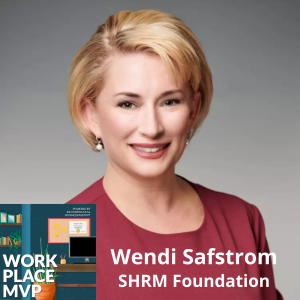
Wendi Safstrom, Executive Director, SHRM Foundation

Wendi Safstrom is a senior non-profit leader committed to serving the public through philanthropic program management, cultivating strategic partnerships and managing and developing high-performing teams. She has both association and nonprofit management experience including; national program development and administration, membership strategy, marketing and product development, grant management, development and donor stewardship, and leading cross-functional teams. Safstrom currently serves as Executive Director for the Society for Human Resource Management Foundation (SHRM Foundation), where she leads the development and implementation of SHRM Foundation’s programmatic, development, and marketing and communication strategies in support of SHRM Foundation’s new mission and vision, creating growth plans and ensuring alignment with SHRM goals.
Prior to assuming the role at SHRM Foundation, Safstrom served as Vice President at the National Restaurant Association and National Restaurant Association Educational Foundation, where she led the development and implementation of their Foundation’s most recent five-year strategic plan, and was responsible for all Foundation programming, including workforce development initiatives, scholarship and event management, community relations and engagement initiatives. The NRAEF’s philanthropic programming supported a number of audiences including high school youth, veterans transitioning from service to civilian work and life, opportunity youth and incumbent workers. Of particular note, she led the implementation of the restaurant industry’s premier high school career and technical education program, growing the program to over 2,000 public high schools, engaging over 150,000 students annually, nationwide. In 2016, she served as lead project director for the development of a $10 million contract awarded by the U.S. Department of Labor to develop the hospitality industry’s first apprenticeship program, and was instrumental in the Foundation’s reorganization and relocation of operations from Chicago, Illinois to Washington, D.C., transforming the staff and culture.
Safstrom has also held human resource management roles with the Leo Burnett Company and Hyatt Hotels Corporation in Chicago, Illinois. She has a BS in Business Administration from the Eli Broad School of Business at Michigan State University and was recognized as a member of the 2014 “Power 20” by Restaurant Business Magazine as a leader in philanthropy within the restaurant industry.
R3 Continuum
R3 Continuum is a global leader in workplace behavioral health and security solutions. R3c helps ensure the psychological and physical safety of organizations and their people in today’s ever-changing and often unpredictable world. Through their continuum of tailored solutions, including evaluations, crisis response, executive optimization, protective services, and more, they help organizations maintain and cultivate a workplace of wellbeing so that their people can thrive. Learn more about R3c at www.r3c.com.
Company website | LinkedIn | Facebook | Twitter
About Workplace MVP
Every day, around the world, organizations of all sizes face disruptive events and situations. Within those workplaces are everyday heroes in human resources, risk management, security, business continuity, and the C-suite. They don’t call themselves heroes though. On the contrary, they simply show up every day, laboring for the well-being of employees in their care, readying the workplace for and planning responses to disruption. This show, Workplace MVP, confers on these heroes the designation they deserve, Workplace MVP (Most Valuable Professionals), and gives them the forum to tell their story. As you hear their experiences, you will learn first-hand, real life approaches to readying the workplace, responses to crisis situations, and overcoming challenges of disruption. Visit our show archive here.
Workplace MVP Host Jamie Gassmann
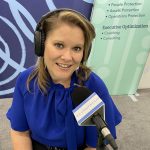
In addition to serving as the host to the Workplace MVP podcast, Jamie Gassmann is the Director of Marketing at R3 Continuum (R3c). Collectively, she has more than fourteen years of marketing experience. Across her tenure, she has experience working in and with various industries including banking, real estate, retail, crisis management, insurance, business continuity, and more. She holds a Bachelor of Science Degree in Mass Communications with special interest in Advertising and Public Relations and a Master of Business Administration from Paseka School of Business, Minnesota State University.
TRANSCRIPT
Intro: [00:00:04] Broadcasting from the Business RadioX Studios, it’s time for Workplace MVP. Workplace MVP is brought to you by R3 Continuum, a global leader in workplace behavioral health and security solutions. Now, here’s your host, Jamie Gassmann.
Jamie Gassmann: [00:00:25] Hi, everyone. Your host, Jamie Gassman here, and welcome to this episode of Workplace MVP. So, I just saw a statistic the other day that indicated that $23 billion dollars is spent annually in the United States from the loss of work productivity as a result of depression alone. Depression also contributes to 200 million lost workdays annually around the world. Now, imagine the other common mental health diagnoses that employees may be dealing with, like anxiety or bipolar disorder, and what the loss of productivity and workdays might look like with all of them combined.
Jamie Gassmann: [00:01:02] A focus on mental health in the workplace has become more of a priority to employers and employees over the last year. But there’s still a stigma that workplaces are facing when it comes to talking about or offering mental health support in the workplace. How can employers ensure they’re offering the right level of mental health and wellness support? And, how can they ensure they are reducing, if not eliminating, the lingering presence of stigma?
Jamie Gassmann: [00:01:27] The Society of Human Resource Professionals, also known as SHRM, is on a mission to help employers create better workplace wellness through their SHRM Foundation. And, with us today to share the great work SHRM Foundation is doing to better workplace mental health and to offer best practice advice for our employers and listeners of Workplace MVP is SHRM Foundation President, Wendi Safstrom. Welcome to the show, Wendi.
Wendi Safstrom: [00:01:53] Thank you. Thanks so much for having us today.
Jamie Gassmann: [00:01:56] So, let’s start off. Can you walk us through your career journey and how you kind of – the path you took to getting to the position you’re in today?
Wendi Safstrom: [00:02:06] Sure, absolutely. And, thanks for asking. So, I have been with SHRM Foundation for just over four and a half years, and I have the great pleasure of working with the CEO and President of SHRM, Johnny C. Taylor, Jr.
Wendi Safstrom: [00:02:18] And, over the last couple of years, we’ve really morphed the work we do, our purpose, vision, and mission. And, again, I’m just really honored and proud to be representing the foundation today, and I’m really excited to be in this particular role when you talk about my professional journey because I was an H.R. professional way back. Back in the day, right after I graduated from school, from college, I had different recruiting and H.R. roles with the Leo Burnett Company, a large advertising agency in Chicago, and with Hyatt Hotels, their corporate offices in Chicago as well.
Wendi Safstrom: [00:02:51] Fast forward, about 20 years later, now, really, what I would consider an association and nonprofit lead, right? So, I’ve got experience in National Program Development Administration, membership strategy, marketing and product development, grant management, all the kinds of things you have to do to fundraise, to actually feel your work, and really focusing on leading cross-functional teams. And, this position is really the perfect blend of supporting an industry for which I have, or profession I should say, a deep respect and affinity for in a nonprofit role, so we can really help H.R. professionals lead positive social change in the workplace. And, really excited to be talking with you about workplace mental health and wellness today.
Jamie Gassmann: [00:03:37] Absolutely. It’s such an important topic right now, especially after the last year and a half that we’ve been navigating, especially for workplaces and leaders themselves trying to figure out how to help support those employees. So, with that in mind, you know, talk me, tell me a little bit about the SHRM Foundation, you know, some of the different types of work that you do and then particularly some of the work that you’re focused around with mental health and wellbeing.
Wendi Safstrom: [00:04:03] Sure. Just really quickly, sure. We’re the SHRM Foundation. We’re the 501(c)(3) philanthropic affiliate of the Society for Human Resource Management, SHRM. And, SHRM is the world’s largest professional society for H.R. We engage about 300,000 members and by extension over 115 million employees in countries around the world every single day.
Wendi Safstrom: [00:04:24] So, our platform to affect change is tremendous and we’re here to leverage that opportunity. Our mission at the foundation is, as I mentioned, to mobilize the power that H.R. professionals have and really help them activate positive social change and help them lead positive social change, impacting all things work. And, we think that, perhaps more so now than ever before, it’s so important to realize or help realize our shared vision, which we share with SHRM of that being a world of work that works for all. And, when we talk about the foundation at a very high level, we often refer to our work and kind of four pillars of work and we have programming tools and resources to support each of those pillars of work, and all of this information is available on our SHRM Foundation website, which I’m sure will show some of the resources at the end of the podcast.
Wendi Safstrom: [00:05:14] So, I think one of the most effective but least utilized solutions to addressing gaps in diversity, equity and inclusion strategies is hiring and retaining workers who may not be the standard that businesses consider when they’re seeking talent due to biases or uninformed misconceptions or perceptions. So, through our Building an Inclusive Workplace Initiative or our untapped pools of talent programming, we help H.R. professionals develop and provide equitable opportunities for employment and provide them a pathway by which they can create inclusive cultures and workplaces for those valuable members of untapped pools of talent, veterans, individuals with criminal records, individuals with disabilities, older workers, opportunity youth, who bring tremendous potential to workplaces but are often overlooked.
Wendi Safstrom: [00:06:05] And, a newer initiative for the foundation in partnership with our SHRM membership team is a targeted focus on supporting emerging professionals, so the H.R. professionals of the future. And, in our role as a professional society, we care and should care about the development of that next gen of H.R. professionals. So, we help activate student professional networks. We provide scholarships and opportunities for students who are considering and are pursuing H.R. to connect with working H.R. professionals in the event, or they hope that they continue their journey, their professional journey with SHRM.
Wendi Safstrom: [00:06:41] And then, really, the two areas of focus that have emerged over the last year are linked to upskilling and reskilling that helps prepare people not only for the future of work but helps prepare people who have been displaced to get them back into the workforce, and that all lends itself truly to the primary focus why we’re here today, which is workplace mental health and wellness.
Wendi Safstrom: [00:07:03] And, the statistics that you mentioned are staggering in terms of the impact that workplace mental health and/or lack of support and the stigma – with stigma comes silence – the impact that it has on businesses and their bottom lines. There is a tremendous need, if now, so if not now, probably moreso ever than before for these strategies, evidence-based tools, resources, especially in the wake of the pandemic, times of social unrest, and really economic instability. So, in a nutshell, that’s what the foundation does, and workplace mental health and wellness is at the top of our priority list.
Jamie Gassmann: [00:07:44] Yeah. A lot of amazing work. Some areas, obviously, that you kind of drawing out concepts and thinking that maybe, you know, H.R. leaders or business leaders haven’t thought of before or maybe haven’t, you know, maybe bold enough or brave enough or even considered going into looking into those areas for workers and helping workers. So, that’s great. So, you know, with talking about this, this mental health, I mean, there’s a core focus and a purpose for the foundation around that. Can you talk a little bit about what that looks like and what you’re working towards with that enhanced focus?
Wendi Safstrom: [00:08:22] Sure. Our shared purpose again in alignment with SHRM is really to elevate H.R., and we talk about elevating H.R., we’re talking about elevating the professional knowledge and skills that H.R. professionals have and practice every single day. We’re talking about elevating the profession of H.R. and the thoughts and attitudes and stereotypes people may have of what it means to work in H.R. or what it means to have H.R. serve as a business leader in which they are. They’re in positions to really affect change in the workplace. And, you know, we’re long past the day where H.R. was thought of as the payroll and paper processing, you know, we’re going to hire and fire people. Those are long gone.
Wendi Safstrom: [00:09:05] And, if there were ever a time for excellence when it comes to H.R., it’s now. And, in fact, the need for H.R. professionals has continued to grow nearly twice the average growth rate for all other occupations so there’s a need. And, this workplace mental health and wellness, this was an issue even prior to COVID and everything that’s happened over the last year, year-and-a-half.
Wendi Safstrom: [00:09:27] Mental illness and mental wellness continue to be an issue that H.R. professionals, together with other members of the C-suite or their CEO and leadership need to come together and make a commitment to affect cultural change within their organizations. So, really, we’re elevating H.R. and their knowledge skills, competencies related to workplace mental health wellness, and we’re elevating those kinds of positions so that they are viewed in the same lens that other members of the C-suite are if they’re not there already.
Jamie Gassmann: [00:09:57] Yeah. Now, fantastic, because they really are kind of the eyes and ears to culturally how people are feeling. I mean, sometimes I, you know, as a leader myself, find that my employees might be and not at a fault of my own or in a fault of another leader is just H.R. is kind of like that person they can go to for that, you know, different level of support than what they might be able to obtain from their actual leaders. So, they really do have eyes and ears into people’s wellbeing at a different level than other organizational leaders might.
Wendi Safstrom: [00:10:30] Yes.
Jamie Gassmann: [00:10:31] And so, to help kind of further expand your foundation’s focus on workplace mental health, you recently held a workplace mental health summit in New York. And, I believe if I’ve got my information correct, it was like the first of its kind that you had created just specifically this year. Can you share with us what were some of the main topics that you covered, you know, based on what you were seeing within the workplace that’s become more common?
Wendi Safstrom: [00:10:55] Yeah. Actually, it was the first, not only the first summit of this kind for organization addressing workplace mental health and wellness, but it was in-person and we had every COVID protocol you can imagine in place. I think it was a tremendous opportunity for subject matter experts, scientists, psychologists, CEOs, CHROs, philanthropists, policymakers, other business leaders, because it’s going to take all of us, truly, to affect change in work as it relates to workplace mental health and wellness. It can be implemented and impacted by H.R. professionals, but it’s going to take a village, so to speak, and all those kinds of people working together to make things happen.
Wendi Safstrom: [00:11:36] And, you know, we held this meeting despite the odds because we recognized the status quo would not do. We had speakers. We had, I think, 33 panelists in different speaking roles and covering different topics that were very passionate and knowledgeable about the topics that they brought to the table as it relates to workplace mental health and wellness.
Wendi Safstrom: [00:11:57] There’s a phrase that I’ve picked up somewhere, so now I’ve continued to use it, which is we’ve admired the problem, right? We understand that there is an issue. The statistics are staggering in terms of impact on people and business and communities. And so, rather than focus on talking to one another and telling one another what an issue and a challenge we have, we framed the topic of workplace mental health and wellness and then we started to move into that deep and what can be often crowded or complicated space of mental health and mental illness right out of the gate, right? So, we were really focused on discussions around what’s working ideas in terms of strategies and tactics in terms of attitudes, thoughts, perceptions, and tools that H.R. professionals could be using or should be using to affect change within their organizations.
Wendi Safstrom: [00:12:47] Some of the speakers we had, Dr. Arthur Evans was the CEO of the American Psychological Association. His topic was really focusing on that, a psychologically healthy workplace. Amazing, amazing dialogue. With other psychologists who brought that kind of scientific and clinical perspective to the table, but made it real and relevant to the working professionals who are in the audience.
Wendi Safstrom: [00:13:11] We had the Honorable Patrick J. Kennedy. He’s a former congressman from Rhode Island, and his whole focus was talking about there is no health without mental health and different kinds of strategies that we can, as that village, really help advance this national priority of mental health.
Wendi Safstrom: [00:13:29] And, we had an amazing speaker, Dr. Nadine Burke Harris, and she’s the California surgeon general. She brought some insights to the table with regard to adverse childhood experiences and its impact on the workplace, not only today but in the future, and the impact of trauma that is compounded certainly by what’s been going on over the last year and a half.
Wendi Safstrom: [00:13:51] So, lots of different perspectives, lots of topics. We landed on kind of a six-point plan or outcomes that were going to be activating and putting into motion here in the next couple of weeks.
Jamie Gassmann: [00:14:02] Wow. Sounds like a great event. Lots of great information and takeaways.
Wendi Safstrom: [00:14:06] Lots of good energy. And, I’ve, you know, rarely been to a summit where people stay the whole time and they’re taking notes the whole time and that was really neat to see, people at all levels and all different kinds of, representing different kinds of organizations.
Jamie Gassmann: [00:14:21] Oh, fantastic. So, you know, you kind of mentioned status quo. So, you know, some experts also say that employers can no longer afford the status quo of mental health support. So, share with me a little bit about your thoughts on this.
Wendi Safstrom: [00:14:36] Sure. So, we often say that the cost of doing nothing about or continuing to do what we’re doing, which is likely most often nothing, right, about workplace mental health and wellness is significantly higher than investing in evidence-based prevention and treatment. And, we know that failure to support employees’ mental health not only weighs on the employees themselves but it also weighs heavily on an organization’s bottom line. And, some of the statistics that you mentioned are truly staggering, the loss of productivity. The fact that depression alone costs people workdays. So, not only are the individual workers at risk, you’re putting the business at risk. The businesses go out of business that impacts the individual workers themselves and their communities.
Wendi Safstrom: [00:15:24] We do know in terms of why you can’t afford to do this. By investing in workplace mental health and wellness, you’re increasing retention and recruitment. You’re adding to your recruitment strategies or your talent management strategies. You’re increasing productivity. You’re helping lower absenteeism. You’re lowering the costs related to disability and medical-related costs for your medical plans, and you’re also reducing employee-related risks and other types of liabilities.
Wendi Safstrom: [00:15:56] And so, for every dollar invested in good mental health, promoting good mental health, providing the tools and resources, every dollar invested has a $3 to $5 return. So, in terms of no longer afford, I think we can help businesses become not only more successful perhaps by really making investments in these critical solutions as opposed to continuing with that status quo and continuing to pretend that it’s not an issue or a problem.
Jamie Gassmann: [00:16:25] Yeah. They need to look at it as more of an investment into their organization as opposed to a cost.
Wendi Safstrom: [00:16:32] Exactly.
Jamie Gassmann: [00:16:32] Which is probably what they maybe still kind of so changing that thinking around that might help them. So, if an H.R. leader was going to put that into context, do you have recommendations for how they might, you know, proactively go to leadership and change some of that thinking from it as a cost to and it’s an investment into the organization?
Wendi Safstrom: [00:16:58] Yeah. I think that there are – we were just on another call with folks talking about more tactical solutions for like EAPs and having addressing stigma and having a communication, making it okay to talk about workplace mental health and wellness and organizations if employers are struggling. We talked about the importance of investing in training managers. So, managers, I think more so than H.R. professionals, are the folks that see folks every day. And so, training managers not to be psychologists or psychiatrists or social workers but to train managers to understand the signs when employees are struggling so that they can head off issues at the earliest stage possible.
Wendi Safstrom: [00:17:38] But I think that leaders and managers should embrace, really, four qualities, I think. They include awareness. We talked a little bit about this at the summit. They include awareness, vulnerability, empathy. We talk a lot about empathy and humility here at SHRM, and compassion. I think that those are really critical qualities for business leaders in order to care for people who are in crisis and to really set the stage for business recovery as we’re headed in that direction.
Wendi Safstrom: [00:18:07] And, I think managers can start that by creating a space to get a better awareness of what’s going on in and around them. I think managers can be, should be bold in exhibiting vulnerability and lowering their own guard, and confront what’s unfolding, and understanding and acknowledging that employees are indeed struggling. And, they should be demonstrating empathy to really better tap into the emotions that others are feeling.
Wendi Safstrom: [00:18:37] So, it’s tools and resources and training, but it’s also affecting change within your culture, making it okay and having leaders and managers really practice what they’ve been preaching, if you will.
Jamie Gassmann: [00:18:49] Yeah, absolutely. And, looking at employees and, you know, this kind of thinking around the next generation of employees and their expectations of employers, you know, we see a lot in just different areas that employees are expecting more from their employer in the types of support and mental health options that they have and kind of having that mixture of multichannel approaches. What are some of your thoughts around the changes that you’re seeing with generations coming into the workforce versus previous generations?
Wendi Safstrom: [00:19:25] One of the advantages that we have at the foundation in working with SHRM as the broader enterprise is tapping into this tremendous expertise we have in our very own research division within SHRM, and they have uncovered some really interesting data that kind of goes along the lines that you would anticipate. But it really does provide that qualitative, excuse me, quantitative evidence so that we can plan more effectively. So, that research does find, right, the younger generations or younger workers, I should say, do expect more out of their employers and that includes that in the area of workplace mental health and wellness. It’s one thing to have health benefits that relate to physical health, but mental health is incredibly important as well.
Wendi Safstrom: [00:20:09] And, the research that we’ve gotten from SHRM shows that Americans who are older millennials, perhaps 35% of them, are more likely to indicate that they feel comfortable discussing their mental health at work as compared to baby boomers or traditionalists at 21% percent. Working Americans who are Gen Z or younger millennials or 30% are more likely to indicate that since the start of COVID, they feel more comfortable talking about their mental health at work than before the pandemic. But you compare that to Gen X, myself, or even baby boomers and traditionalists that hovers around 15% to 8%. So, that’s a big gap in terms of wanting to access expecting benefits when it comes to choosing an employer because employees are in a position now to choose their employer as much as employers are in a position to opt to hire employees. And, that is just another layer of why it’s so important that you can manage a multigenerational workforce because of the attitudes and the perceptions in their approaches, even amongst the different generations that exist in the workforce.
Jamie Gassmann: [00:21:23] Yeah. So interesting, you know. And, speaking of research, so, you know, also from your research, the work the foundation has done, you’ve identified benefits to employers when they’re investing in workplace mental health and wellness. Can you talk to some of those benefits that, you know, trickle down from putting focus on this?
Wendi Safstrom: [00:21:42] Yeah, and I touched on some of that, but it’s kind of lends itself to that business case again, right? The cost of doing nothing as opposed to making the investments in mental health strategies in affecting and changing our culture are much higher if you’re doing nothing. So, some of the benefits employers can expect by investing in those strategies are really, like I said, in lockstep with the business case and it helps increase retention, helps improve recruitment, which all comes at a cost to the organization. And, as I mentioned, it lowers absenteeism and medical costs and reduces employer-related risks and other potential liabilities. Those all factor into the cost of doing business when it comes to employees or labor.
Wendi Safstrom: [00:22:28] It’s great news for businesses, but I think that focusing on the business benefits. Yes, there is a business case for investments in these strategies and paying attention to the issues at hand, but the point is that it’s also the right thing to do. Your employees, they’re struggling. They said that they’re struggling, they’re suffering. And, the events of the past two years have left a lot of people traumatized, fearful, angry. Some of them are grieving.
Wendi Safstrom: [00:22:59] And, SHRM’s research says that a recent study of American workers shows 76% of those people think companies should do more to support the mental health of their workforce. So, all of those points to cost savings, yes, from a business case perspective, but also lend themselves to taking good care of an organization’s most valuable resource, which are its employees.
Jamie Gassmann: [00:23:25] Absolutely. Wow, staggering. The 76% are looking for them to do more.
Wendi Safstrom: [00:23:29] Exactly.
Jamie Gassmann: [00:23:30] Yeah. So, you know, and obviously like on the flip side of that, in terms of the impact to the organization when they aren’t doing more, we can say, you know, there’s more turnover, but there’s other impact and factors that come into play when they’re not doing more. Can you speak a little bit to that in terms of the impact to the organization when they are like status quo, everything’s fine here. What –
Wendi Safstrom: [00:23:57] Nothing to see. Moving right along…
Jamie Gassmann: [00:23:59] Nothing to see. Let’s just keep going. What are some of the impacts from a negative perspective that they could be experiencing?
Wendi Safstrom: [00:24:05] As you say, it’s the exact opposite, increased productivity versus the loss in productivity. An increase in medical costs, an increase in retention rates. If they’re not investing, those are the things that they will see. And, I do think because of the shift in mindset on the next generation of folks who are entering the workforce, as baby boomers begin to retire and Gen X and millennials kind of move along their professional careers, people are expecting and anticipating to receive that kind of support. They’re wanting to work in cultures that prioritize workplace mental health and wellness. And, I think employers will have an increasingly difficult time, not only retaining employees but recruiting them, because employees are considering not only their salary, right, but it’s a total comp package and that includes benefits, and they’re looking for benefits linked to good physical health and increasingly important, as all the data shows, benefits linked to supporting good mental health. So, if we don’t do anything, I think it’s going to be more difficult to both hire and retain top talent.
Jamie Gassmann: [00:25:13] Yeah. And, I think too that trickles down to hiring or not hiring but obtaining, you know, implementing new clients and retaining clients because that customer experience starts to be degraded when you’ve got employees who are not happy and satisfied as well.
Wendi Safstrom: [00:25:28] Or leaving or getting sick. It gets to the point where they can’t cope and that’s when the lost productivity to your point comes into play. That’s when lost days in terms of work comes into play. So, absolutely.
Jamie Gassmann: [00:25:41] Yeah, interesting. And, obviously looking at turnover this last year, we’ve been experiencing what they’re calling the great resignation where employees are voluntarily leaving jobs. And, I’ve even seen in some stats where they’re leaving and not having another job lined up. They’re just deciding I’m done. You think there’s a correlation between the great resignation and mental health within employees.
Wendi Safstrom: [00:26:07] Yeah. And, I think a lot of factors are contributing to that great resignation. I think to your point, people are leaving jobs without plans for another because they feel that this is a moment for them to make a personal professional change, right? And, there’s not necessarily anything we can do directly about that. But that is just a factor, including, as you mentioned, better compensation.
Wendi Safstrom: [00:26:31] We’re seeing astronomical salaries in some instances for people to leave an organization and go work for another organization doing similar and often even dissimilar but related work. People are leaving in anticipation of better work-life balance, maybe better benefits, perhaps people see opportunities for career advancement in different organization. And, I think that the remote work, there are pluses and minuses, right, to remote work versus in an office. And, I think organizations have to decide what kind of culture they want to be. I think people are making assumptions that remote work is better than in-office culture, or in-office companies require folks to work in office, and so they may be looking for organizations specifically to go work for that offer those kinds of opportunities.
Wendi Safstrom: [00:27:20] And, the research again shows that workers will opt to look for another job if they don’t feel they have that mental health support in addition to the physical health in the workplace and, 53%, excuse me, my researchers would correct me. Fifty-three percent of working Americans have said they’re likely or very likely to leave their current job to resign if they were offered a new job with significantly better mental health benefits and 47% of converse are unlikely or very unlikely to leave for better mental health benefits, but that’s going to be on the rise and, again, gives organizations a competitive edge when it comes to talent if they’re investing in these types of solutions.
Jamie Gassmann: [00:28:05] Interesting. So definitely something that needs to be not just status quos sweep under the rug but focused on as an organization because the impact, if you’re not feeling it right now, it’s eventually going to come.
Wendi Safstrom: [00:28:16] It’ll catch up. Yeah, absolutely.
Jamie Gassmann: [00:28:18] Interesting. We’re going to take a moment to hear from our show sponsor. Workplace MVP is sponsored by R3 Continuum. R3 Continuum is a global leader in providing expert, reliable, responsive, and tailored behavioral health disruption and violent solutions to promote workplace wellbeing and performance in the face of an ever-changing and often unpredictable world. Learn more about how R3 Continuum can tailor a solution for your organization’s unique challenges by visiting r3c.com today.
Jamie Gassmann: [00:28:52] Now, diving in a little bit into the foundation itself, so SHRM Foundation is offering a new Workplace Mental Health Ally Certificate. Can you tell us more about that certificate and what, you know, individuals need to do in order to achieve that?
Wendi Safstrom: [00:29:07] Sure. We actually launched – our President and CEO, John C. Taylor, Jr., announced the launch of our new Workplace Mental Health Certificate at our annual conference that I mentioned that took place in August to September. We kind of moved it from June to later in the year. And, when he announced the fact that we had a solution on-hand at SHRM Foundation, you could hear an audible gasp from the audience, which really surprised me, but gave me reason for hope, because people, that’s just an indicator, anecdotal indicator of how important this kind of training and access to this kind of training is to those H.R. folks.
Wendi Safstrom: [00:29:47] The certificate itself was developed in partnership with an organization called Psych Hub, which is, really, as they define themselves, and I would tend to agree, the world’s most comprehensive multimedia platform for mental health education. And, again, we worked with SHRM, some of the instructional designers at Psych Hub, and the foundation to really create and craft this training specifically for H.R. professionals and people managers.
Wendi Safstrom: [00:30:15] It’s an online learning program that is comprised of a series of eight multimedia courses. They cover things like mental health, common mental health conditions, issues linked to substance abuse and suicide, safety planning, diversity bias and equity and its links to mental health and the impact on one’s mental health, and, I think, most importantly, communication skills. And, after the H.R. folks complete all eight hours, the intent is that they have more knowledge and skills to really develop that empathy and support for the mental health and wellness of employees and their colleagues and themselves really in the workplace.
Wendi Safstrom: [00:30:59] And, they get a certificate at the end, another addition to your professional portfolio. The cost is $99 per user and actually a portion of that cost is donated back to the foundation, which allows us to continue doing the work we do. And, again, all of this is on our website or www workplacementalheath@shrm.org and I encourage you to check it out.
Jamie Gassmann: [00:31:25] Awesome. And, you also are offering awards to workplaces.
Wendi Safstrom: [00:31:29] Yes.
Jamie Gassmann: [00:31:29] And, I’m going to – hopefully I say this word name correctly. It’s the Tharseo award there.
Wendi Safstrom: [00:31:35] Tharseo. Trust me [inaudible]
Jamie Gassmann: [00:31:36] Tharseo. Okay. Close. And, I should have asked you beforehand how to pronounce that.
Wendi Safstrom: [00:31:42] No, no, that’s okay. Trust me.
Jamie Gassmann: [00:31:43] And, you’re recognizing leaders who are boldly changing their workplace. So, some of the things we’ve talked about already on the show today about, you know, it really does take change management. You know, now you offer this award for those workplaces who, you know, are doing that. And so, talk to me a little bit about some of the recipients you’ve had, some of the work, and maybe some of the case examples of how they achieved that award.
Wendi Safstrom: [00:32:08] Sure. We were busy last Monday. We had this. We had our workplace mental health and wellness summit from 7:00 in the morning until about 3:30. And then, we continued into our Tharseo Awards and that’s what you just described here. We recognize a CEO, a CHRO, and an individual who is involved in policy related to all things work.
Wendi Safstrom: [00:32:32] At this awards program we had, Arianna Huffington had a sit-on-down dialogue with Johnny C. Taylor Jr. I’m talking about the importance of wellness. So, we continued the thread of the discussion that we had at the summit into the actual awards program itself. And, I think you’ll find this interesting. Tharseo is really derived from the Greek word, meaning courageous, confident, and bold. And, the awards themselves were inspired by and made possible by contribution from Ram Charan, who in the H.R. space he is certainly a legendary businessman. He’s an author and speaker.
Wendi Safstrom: [00:33:09] And, we identified the recipients through the awards through quite an extensive process. You cannot nominate yourself. We had an independent group of jurors who really evaluated each of the candidates, and they were evaluated on qualitative and quantitative measures. And, the criteria we were looking for was looking for actions and attitudes, and implementation linked to innovation and overall impact on the company and the global workforce and how the two really need to work together. So, the Policy Transformer of the Year was Bobby Scott from Virginia, US congressman from Virginia. And, our Ram Charam Human Resource Innovation Award was Gloria Chen. She is the Chief People Officer and Executive Vice President and Employee Experience at Adobe. She has a really interesting background. Prior to becoming and assuming the CHRO, for lack of a better word kind of catch-all phrase, in Adobe, she spent 20 years in leading strategy at Adobe. So, she was part of crafting that culture as she was in charge of strategy and she’s made that transition to H.R. and she’s seeing where all of those pieces fit together. So, neat background. I encourage you to check out our website and see her bio.
Wendi Safstrom: [00:34:24] And then, our CEO of the Year was Ajay Banga, excuse me. He’s the Executive Chairman and immediate former CEO of MasterCard, and he’s an amazing, amazing man. He does work all over the world. He truly puts H.R. and the function, the profession, right up there with that of the CFO, the CMO, and the C-suite, understanding the connectivity between working with people and doing good business as it relates to people and employees equates to successful businesses and to businesses being successful in terms of a financial return.
Wendi Safstrom: [00:35:02] So, all three of them were recognized. Congressman Scott was called away to Washington, but we had a great opportunity to engage with Ajay and Gloria at the Awards themselves.
Jamie Gassmann: [00:35:13] Wonderful. And, what a great honor to be recognized for making that change within your work, your organization, but also being able to speak to the benefits that they’ve seen from that change. That’s amazing.
Wendi Safstrom: [00:35:26] Yeah.
Jamie Gassmann: [00:35:26] So, looking at leaders and those H.R. leaders or C-suite leaders or other business leaders that might be listening to this episode, what advice would you give to them for what they should be focused on when it comes to mental health in the workplace?
Wendi Safstrom: [00:35:42] Just underpinning of that, it can no longer be ignored. That’s admiring the problem. We know it’s an issue and it lends itself to a financial success, continued financial success, and that it really starts from the top. It’s got to be a commitment from the CEO. I hate the phrase trickle down, but truly it’s got to permeate throughout the organization.
Wendi Safstrom: [00:36:01] We know that mental health issues in the workplace, it’s not a new thing. I mean, we were dealing with and managing through mental health and mental illness prior to COVID, the pandemic, and the issues linked to social justice and other kinds of unrest. But it’s really magnified the challenges that employers are facing. And, now so more than perhaps ever before, mental ill, not necessarily mental illness, which is diagnosed and treated like things like schizophrenia or being bipolar, but things like suicide, depression are really, if not, being experienced by the employees by themselves, but people within their sphere of care.
Wendi Safstrom: [00:36:44] So, I just would suggest they create a supportive culture that includes empathy, as I mentioned before, and really arming not only your H.R. professionals but those first-line supervisors and managers first with the tools and the tools to recognize and communicate when they see issues and provide support to their employees. That’s going to be vital to really building these better workplaces, and we’re going to continue to build on our partnerships. The 33 speakers we had at our summit, we access them all through partnerships and talking to people smarter than us. In this particular space, we bring the voice of the employer together, but we’re going to continue to build on those partnerships to shape further opportunities so that leaders and employers will be ready hopefully and able to provide this culture of support.
Jamie Gassmann: [00:37:35] Wonderful. And, looking at the foundation itself, you know, what are some of the accomplishments that the foundation has received with focusing on mental health and wellness in the workplace?
Wendi Safstrom: [00:37:46] Yeah. So, we really launched an initiative. We realized that workplace mental health and wellness was going to become, would be exacerbated in 2020. And, yes, there’s return-to-work conversation and there are H.R. folks dealing with furloughs and layoffs. But we really felt strongly, back in April really of last year, that workplace mental health and wellness was going to be a challenge.
Wendi Safstrom: [00:38:10] And so, what we launched was this initiative and that’s been really carefully designed to accelerate the movement, not only to provide training and create cultures that are conducive to good mental health and workplaces but to really eliminate the stigma, right, of mental health in the workplace and what it means and to help individuals foster that culture where mental health can be discussed openly and organizations can build a more complete approach to employee wellness. So, we’re doing three things and we’re working. These are continued things in motion if you will. One of them certainly being the summit that we just had last Monday. We’ll be acting on the outcomes from that summit and continuing the conversation with another follow-up summit into 2022.
Wendi Safstrom: [00:38:58] We’ve developed a platform for thought leadership or research that really supports mental health and wellness in the workplace so that we can create that portfolio of resources that are things like the Mental Health Ally Certificate and other evidence-based programming, including additional training modules and educational resources, so we can continue to curate and build on the resources that we’ve already established in our mental health and wellness hub.
Wendi Safstrom: [00:39:24] So, the summit was a great moment for us to really convene subject matter experts. The worst thing I think you can do is attend a great meeting where there’s phenomenal dialogue. Leave the meeting, everybody goes back to their places of work and nothing gets done. And so, I think what I’m most proud of at the foundation to date with regard to this topic is the execution of that summit and our commitment to making things happen after the summit itself.
Jamie Gassmann: [00:39:50] Wonderful, and it sounds like a lot of great resources, great information, and great work that you’re doing overall. And, looking at that, you know, with our listeners, if they wanted to get more information on how they can take advantage of the information and tools and resources from the foundation or from SHRM overall, or if they just want to get a hold of you to get, you know, to get insights or information from you, how would they be able to do that?
Wendi Safstrom: [00:40:19] A couple of different ways. You can go to the shrmfoundation.org website and that you’ll find information about each of those pillars of work that I described at the very beginning of our conversation. If you’re interested in most specifically about our workplace mental health and wellness, you can go to workplacementalhealth, all kind of one word, .shrm.org, and certainly staff. We’ve got a team on the foundation, I think seven of us including me, and feel free to reach out to any of the team that’s listed on our website. If they’re not managing workplace mental health and wellness, the individual you reach out to, perhaps directly we’ll find the people to help you get to where it is you need to go. And, again, really appreciate the opportunity to be here with you today.
Jamie Gassmann: [00:41:04] Well, thank you. It’s was a privilege to be able to have the opportunity to connect with you, Wendi, and to celebrate you and the great work that you’re doing with the foundation, but also to celebrate the great work the foundation is doing as well. So, really appreciate you being a part of our show.
Wendi Safstrom: [00:41:21] Thank you.
Jamie Gassmann: [00:41:22] Yeah. And, we also want to thank our show sponsor, R3 Continuum, for supporting the Workplace MVP podcast and, to our listeners, thank you for tuning in. If you’ve not already done so, make sure to subscribe so you get our most recent episodes and other resources. You can also follow our show on LinkedIn, Facebook, and Twitter at Workplace MVP. If you are a Workplace MVP or know someone who is, share with us. We’d like to have them on the show. Email us at info@workplace-mvp.com. Thank you all for joining us and have a great rest of your day.