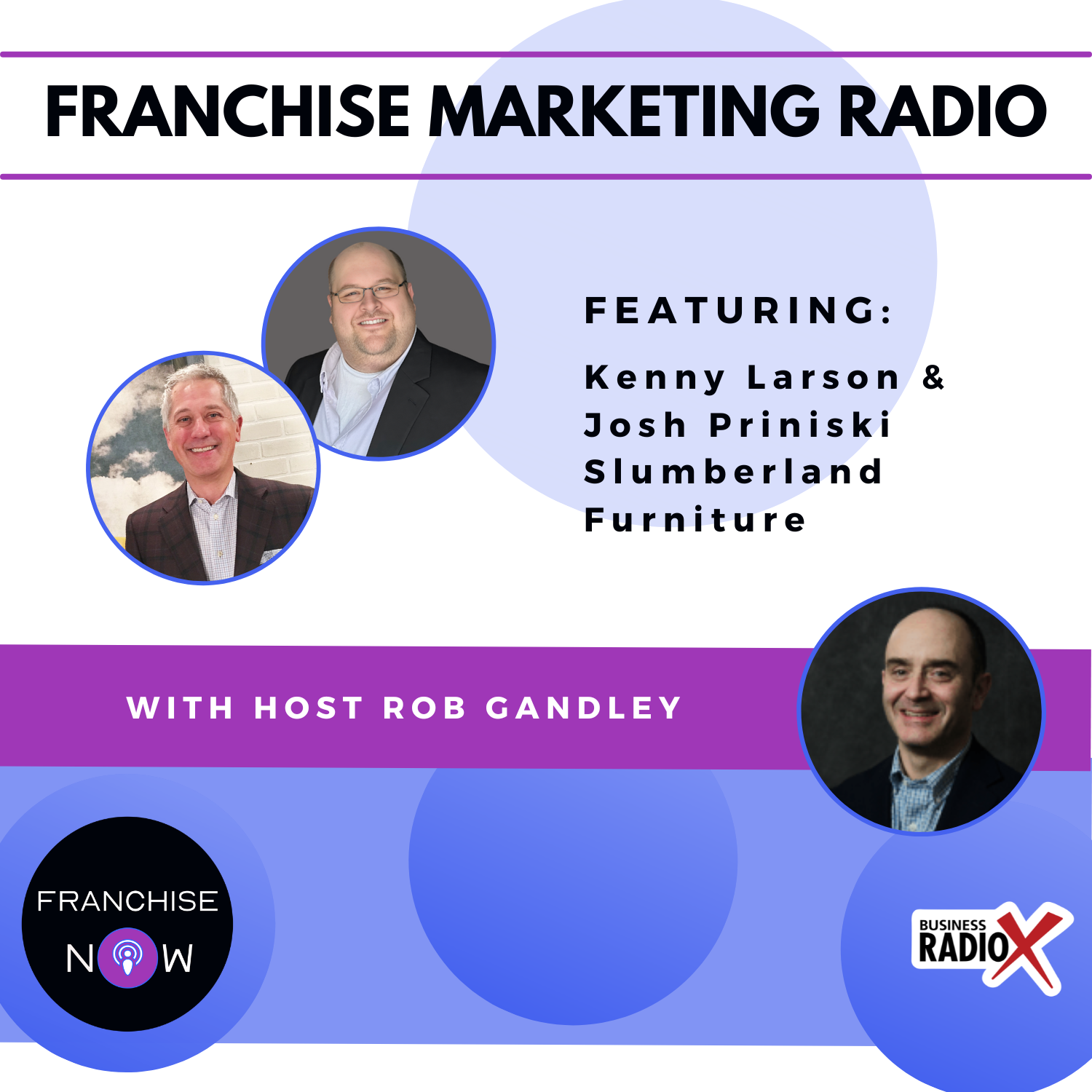

 Kenny Larson is the President & CEO of family owned Slumberland Furniture. Slumberland is a top 25 home furnishing’s company with 125 corporate and franchise stores throughout the mid-west. The Larson family is also heavily involved in commercial real estate with close to 4 million square feet owned and managed.
Kenny graduated from Wheaton College with a BA in Economics and Theology and then Arizona State with an MBA in Marketing. He joined Slumberland the fall of 1990 and held many positions before becoming President in 2008. Slumberland continues to be focused on developing strong people who understand the company’s mission, live out our values and execute on an excellent customer experience every day.
Kenny has been married to Monica (a very talented artist who teaches, collaborates & creates her own work) for the past 38 years. They have two boys one who is a chef in St. Paul and the other joined the Slumberland Marketing team in 2025.
 Josh Priniski is the Vice President of Franchise at Slumberland Furniture, a family-owned company with locations across 12 states in the heart of the country. A proud Midwesterner, Josh grew up in the region and earned his B.S. in Philosophy from the University of Wisconsin–Oshkosh—a degree that laid the groundwork for thoughtful problem-solving and people-centered leadership.
With a diverse background spanning both retail and hospitality, Josh brings a practical, hands-on approach to business strategy and franchise development. He is particularly passionate about helping others achieve success and translating that success into meaningful contributions within their communities.
Outside of work, Josh enjoys life at home with his wife and two teenagers—who keep things lively. He believes that whether in business or at home, success begins with listening, learning, and leading with intention.
Connect with Josh on LinkedIn.
 This transcript is machine transcribed by Sonix.
TRANSCRIPT
Intro: Coming to you live from the Business RadioX studio. It’s Franchise Marketing Radio. Ready to revolutionize your franchise with AI? Franchise now empowers franchises with advanced AI solutions, automatic processes, and enhanced marketing strategies. From personalized customer interactions to predictive analytics, we help you harness AI to drive growth and efficiency. Transform your franchise with the power of AI. Visit Franchise Now to learn more and take your business into the future. Now here’s your host.
Rob Gandley: Welcome back, everybody to Franchise Marketing Radio, where we spotlight the most dynamic minds and franchising leaders who are building brands, growing communities, and reshaping the future of business ownership. On today’s episode is no different. I have with me Kenny Larson, he’s the CEO of Slumberland, and I also have with me the brand’s VP of Franchise development, Josh Priniski. So welcome to the show, gentlemen.
Kenny Larson: Hey, good to be here.
Josh Priniski: Thank you.
Rob Gandley: So before we dive in, I always like to kind of tie things up for the audience so they really understand you. And we do have an audience across the country. And I know maybe your brand isn’t as well known in certain places, but certainly I know it is in certain states. So be good to kind of share with the audience a little bit about the brand. And Kenny, it’s been part of your life, right? It was started by, I believe, your father. So you could maybe tell us that the story, how this has developed. I know the franchising started much later than the original business, and that I think was 2008. You’ll correct me to get that right, but could you give us a little background and how this whole thing started and where this brand is today?
Kenny Larson: Yeah, super interesting story started in 1967. I think at that time it probably was the first mattress specialty store. So my dad and a couple other guys had a idea to do things a little bit differently. And so that we’ve made it. We’re now into our 58th year I think is really, really cool. And obviously being my dad, I was really young at the time but don’t know life without Slumberland. Through the years, I would say we’ve been very entrepreneurial. Started adding a couple of key categories. The first one was sleep sofas. Early on felt that brand names were really important. So coming out of the mattress business, we learned that lesson early. And Ken wanted to not just add recliners. It had to be La-Z-Boy. And so we added La-Z-Boy to the mix. There was probably a leap of faith on their part to say, we’re going to put our chairs in a mattress store, which there weren’t a lot of them at that time. But they did it. And, you know, one of the things that it speaks to Rob is we’re still with La-Z-Boy today. We’re their largest customer. So we have done since that time over $1 billion worth of La-Z-Boy.
Kenny Larson: And we we we continue to value that relationship along with some of the early ones like Sealy that has been there from the beginning. You mentioned the franchising piece. Actually early on we started franchising in the mid 70s. So Ken saw it as an opportunity to grow faster than he could otherwise. And as you know, mid 70s franchising was still relatively new as a concept and has built that out. And you know, real testament is we still have a few of our original franchisees still with us after changing store size concept and all of all of that over the years. Today we’re more of a full line furniture store. And if you walked into one of the stores, it would look like a more of a furniture store with a strong emphasis on mattresses. But that’s still our, you know, our key category, our heritage. You mentioned the footprint. We’re in 12 states based here in Minneapolis, Saint Paul, but we go as far west as Billings, Montana, down to Wichita, Kansas, and then up to Benton Harbor, Michigan and the 12 states in between that are where we’ve got our footprint today.
Rob Gandley: I love it, I love it. That’s America right there. That’s beautiful. So and I know, like you covered a lot of ground in that answer. Um, and I know I want to get in a little bit about the heart behind the brand. Right. So you you did mention franchising, and I was way off. I thought it started later on, but it started way back in the 70s. And yeah, that was like the the beginning of, like really formulating what is a franchise supposed to be structured as and how to do it right and make sure that and that’s why I love franchising because it is it is built for, you know, everybody to to kind of, you know, get the most out of the relationship and, and you know, so I think prior to that it probably didn’t have as much structure. But yeah, you’ve seen it all then you’ve seen it since the beginning. So but but before I dive into the community aspects and the heart of your brand, um, I want to understand a little bit about the decision to franchise. Like, what was that about you and your dad and your family? Because there’s that connection. Not only did you build an incredible company, right, and a brand and you mentioned things like these, these like La-Z-Boy being with you since the beginning, being their best customer. I mean, that that does say a lot to be anyone’s biggest customer and for that long. So from that side of things, you guys have clearly have a certain way, uh, to, to run a business. But what was it about the franchising side where you’re really extending that to other people to become part of this family? How is it in your dad’s mind and your vision of doing that? Like, that’s early on to, like, like talking about being an early adopter. So tell me more about the thought behind becoming a franchise and how that’s impacted the brand.
Kenny Larson: Yeah, I think, you know, Ken has always had a mind towards growth, mind towards continuing to ask the question of what’s next. Um, I think when we first began franchising and Rob, I was not part of those early conversations because I think I was ten years old, but I think he he really saw it as an opportunity that had something special with this concept of Metro specialty store and wanted to take it further out. So there. I know at the beginning a large part of it was growth. I do know one of the things that was really important to Ken was the, you know, the values of the company, which is everything from certainly honesty and integrity, treating people with love, dignity and respect. And one of the key questions we had to answer with that is how do we continue to grow, if that’s important to the brand, how do we continue to extend that with franchisees coming in? So there was a big part of at the beginning, making sure we were partnering with the right people that weren’t not only going to be good store operators. That was that was a for sure. But also we’re going to be aligned with those values and the way that we did it. So I think early on with Ken recognizing that those those values are still in place today and the way that we really try to approach the business. So I think just foundationally, you obviously need to have a business concept that works. You need to be able to support it. But I think you also need to have the, you know, the values associated with that to be able to continue to grow into into the future.
Rob Gandley: I love what you said because, you know, I think the number one piece of advice and I don’t specifically work in the franchising of businesses, but I have a lot of friends that that work in that side of it where they help a business owner like your dad way back then, you know, nowadays. Well, then he was a pioneer, but like, now it’s a hey, here’s how you do it. Here’s the pathway to follow. And one of the main pieces of advice that is always given to an emerging brand and a visionary, or an owner or a founder is you’ve got to take what’s in your heart and somehow, you know, get that over to the franchise owner and it has to be aligned. And if it’s not aligned, that is one of the biggest reasons franchisors can’t get past, say, ten units, right? Or just don’t get off the ground and don’t, you know, hit that level of success that you guys have hit. And just because of bringing people in that are aligned, just knowing that he thought that way originally is pretty. It’s pretty profound because that is one of the main pieces of advice we have to, you know, don’t just go for that first person or someone who’s ready to make the investment right. You really have to think about that. So that’s brilliant.
Kenny Larson: And I think with that, I’d love to tell you we were perfect throughout the years in identifying and making sure that that was in place. You know, there there there are times that that hasn’t been the case. But we continue to say that this is important, who we are. And some of the some of the transitions that have taken taken place have been because of that. There just wasn’t the alignment.
Rob Gandley: Yeah, yeah. You gotta, you know, it’s a pruning in the tree does happen. Things change too. Yup. And, uh, it’s just it’s just having that thing that that that thought process as a leader, I appreciate that. It’s why I love the industry. It usually works pretty well because of those reasons. So anyway, let’s dive into okay, being a franchisee, we’re going to talk more about the business side. But I really think the heart for a lot of brands that I talk to is these business owners really become connected to their communities. They become leaders. And it’s one of the fulfilling things about it is that, you know, if you’re running a sizable business like your operations and you’re in the community, there’s impact there, right? And obviously, being able to be proactive and and structure some ideas not only for your franchisees to think about, but just just in general, uh, just being a good business leader. But you do have some programs that you work with them on. And one of them, I think is 40 winks. Right. And I wanted to see Josh, if you could share more about that. But more than just the program itself, what’s behind that? And how do you try to use those types of programs and others so that the franchisees, the owners there in those markets can really connect with not only consumers in the market, but other businesses and make an impact.
Josh Priniski: Yeah, absolutely. I think I’ll let Kenny speak a little bit more to the history of how 40 winks got started and, and kind of the family enterprise behind that. But what I’ll say is on on the franchise side, we really do from the very beginning, make this part of part of our message, part of what we do overall, uh, as we bring talk to franchisees that are coming into the system and then make it part of our daily, daily speak ever, every day. Right. And so as we’re talking about giving to the community and connecting with community, and that’s that’s part of the beauty of franchising, right, is that you have, uh, you know, at Slumberland, right? We’ve got owner operators living in the communities. And so you, you work where you live and you make connections, and and being part of the community becomes just incredibly important. And so to have resources like 40 winks as a foundation to sort of lean on and say, this is something we can stand for, uh, to be able to give, uh, beds to kids and, uh, to, uh, to help in the community in the area that’s needed most. Uh, it’s just it’s incredibly impactful. But again, I’ll let Kenny speak a little bit more to the history of that.
Kenny Larson: Yeah, I would say Rob mentioned the values at the beginning. One of them is that, uh, we were we do give back to the community. We have an aggressive goal every year that it’s 10% of our profits go back to communities. And that’s something that has been in place from the beginning. One of the things that we recognized is that there’s a, you know, a tremendous amount of need with, uh, too many kids sleeping on the floor. It ties to our key categories. So we set up a foundation called 40 winks. The sole purpose is to give mattresses through different charities to kids that are sleeping on the floor. And, um, we want to make sure that that’s happening not only in the corporate markets, but also, give the opportunity to make that happen in the franchise markets, too. So, um, the Larson family takes care of all admin expenses, everything associated with that foundation. So 100% of the dollars that get donated to this foundation go back, go to a mattress so the kids, we can leverage that as much as we can. To Josh’s point, to Josh’s point on the on the franchise piece, one of the things that I should have said at the beginning, we do have corporate stores and we do have franchise stores. It’s about 55 corporate, 70 franchise round numbers, and we’ve got a lot of just phenomenal store managers, and they do incredible work every day. But I would tell you, they can’t have the same impact in the community by saying, I’m the franchise owner of this one. It’s just it’s just a different message. And we have a lot of our store managers that are active with 40 winks. They’re serving on the chamber. They’re part of it, and we encourage that as much as we possibly can. But I would just tell you, it’s different when you’re when you’re the owner of that location or locations and you’re part of the community. So I think it’s a it’s it’s a tremendous part that. Franchise franchisees need to leverage because it is it’s a tremendous impact.
Rob Gandley: Yeah, I look at it as this is kind of marketing. I like to do, you know, uh, giving back first, I think the, the uh, the previous, say, 30 years with all this technology that’s come into our lives very much it’s become, you know, a results in advanced world. And that’s just good marketing. Um, because of the change in the way we kind of give people like with software or even Google using Google search. Right? A tool like that, that’s. Yeah, it’s free. You know, just use it. Well, it’s not really free in a sense, But but that’s the way consumers think today. And so I think having programs that make it natural to just represent the brand in the way that you talk about those values, it kind of makes second, make buying furniture secondary. It’s like, yeah, absolutely. Yeah, sure. Let me just find the right the right piece of furniture. But I absolutely love doing business with someone that thinks about kids first. Right. So I mean, it’s such a profound way to just be the right business owner. And you’re right, as a business owner, you do have the opportunity to to lead in your community in that way. So so it is a valuable business tool. Go ahead.
Kenny Larson: Yeah. And it starts within our mission. Um, you know, we really look to try to improve people’s lives and strengthen our communities. And with some of the products like mattresses, there’s a direct connection when we ask the right questions and get people sleeping on the right mattress. When you’re sleeping better, your life is better. I mean, that’s physically, emotionally, I’d say spiritually. There’s a lot of things that just come better with that. Um, but as we talk about strengthening our communities, we certainly there’s jobs and there’s great product values, but we want to have a piece that we’re we’re active and we’re trying to make make the community better. And one of our big ideas is we believe that a community, a city town is going to be better if there’s a slumberland there. So that’s part of what we’re really excited about. Every time we open up a new location, it’s just not another location because we’re, you know, we’re able to sell more. It’s we’re making another community better.
Rob Gandley: Yeah, yeah. And there’s a lot of a lot of wisdom in what you were sharing earlier about giving back and, you know, really being doing it with intention in the right purpose. Um, and, you know, 10%, that’s a that’s a big chunk to commit, right? And, um, but that’s, uh, that’s powerful. And I think that just helps everybody in the brand. So I’m glad that you lead that way. So anyway, let’s talk about growth though. Let’s let’s talk about we just talked about some very important. So then the question is how do you approach, you know, launching the next location and how can you kind of keep an eye on this quality, this, this integrity that we talked about and this mission? In other words, what you just said, you want the franchise owner to have the same exact feeling like, man, I can’t wait to make that impact in my community. So how do you scale your business plan for growth but also keep that balanced out? And I think, Josh, maybe you’ll maybe you could take and then Kenny, you could follow up.
Josh Priniski: Yeah. Happy to. Rob I think uh, it’s a great question. And I think that when you have core values that really are core to your business. Right. And you really do, um, you know, everyone in the organization believes that, you know, we need to lead with honesty and integrity, that we need to have love, dignity and respect, that we need to work with excellence. Right. These things that are just part of our core values, they end up becoming less of a hindrance to growth and sort of the roadmap for growth, right where you can you can lean on your core values and say, this is this is who we want to be. This is who we are. And so as we look to say, hey, we want to engage in adding additional franchisees. We want to make sure that we have the right people coming into our system. We look at that and we say, can can we be honest with with them and say, here’s where the opportunity is. Can we look at our supply chains and our marketing opportunities and say, hey, are we would we be able to work with excellence if we added these seven additional markets right, in these additional states? Right. Those if you if you use the values in those ways to say, you know, we’ll always check ourselves in those with those things to make sure that we are able to execute with love, dignity and respect in all of our conversations with our franchisees, both the ones that want to come on, but the ones that we’re that that are in our system now.
Josh Priniski: Right. Every every time you make a change, every time you add a location, um, it’s a, it’s a, it’s a big deal for the entire system. And to, uh, be aware of that and to be aware of the impact and to make sure that every, every, uh, change that we make and everyone that we bring on and, uh, is, is, is further furthering the mission and not just sort of, uh, making us a little bit like, alright, can we do this one? Can we do this one? How do we just keep grow, grow, grow. It’s like, no, we’ve got the values. And then we say, hey, you know what? Maybe, maybe in order to bring on the next 20 stores, we need to do x, y, Z in order to do it. Excellent. Right. And so then that, then that creates the roadmap, uh, to be able to do that. So it ends up being less of a hindrance and more of a, of a map. Right. A guidepost to how to, how to do that.
Rob Gandley: Yeah. So you have a lot of intention like with the way you expand, you kind of know where where the options are, what the best options are. It may take you a while to get there, but you already have the intention. Um, how how do you. So for anyone just zeroing in and listening, thinking about, you know, the idea of of getting involved with the furniture industry, how, first of all, what are sort of the criteria? What what would you be looking for if someone is listening, who is that other than the the the values part right and the alignment part? What are you looking for otherwise for a franchisee? And how do you how do you train them and bring them in either way when they come into the system?
Josh Priniski: Yeah, absolutely. We you know, the the one of the things we’ve seen with a lot of our, the franchisees that are in our system, as Kenny mentioned, we have a number of people that have been around with us from the very beginning. Right. And so we’ve got a lot of history, but we also have a number of people that have come into the system a lot of different ways. And, um, you know, I it you don’t have to have a furniture background, right? You don’t have to have a real estate background with a big, you know, 400, you know, four, four, 40,000 square foot building. Right? You, uh, you can come you can come into this, uh, really just, again, the values being important, but also the willingness and the desire to, uh, to, to to, you know, a lot of our stores are owner operated, right? So the really get into the business and, um, and actually manage the sales teams and engage with the customers and understand the operations and the. You know, there are a lot of, uh, complexities sometimes to owning a bigger retail retail store, right? Especially you sell it today and you deliver it tomorrow. And there’s all of those things. Of course, we help with all of that, right? As as the franchisor, we provide lots of really good systems. But someone coming into the system that’s just really hungry to learn, right? Really hungry to, uh, engage and uh, and to and of course, then, uh, engage with their community. Those become the become the roadmaps right there. There’s obviously plenty of opportunity for people to invest in the system and find a manager to do all of that for them. Right. But, uh, where we found really good success is to have people who are just really hungry, hungry to learn, hungry to engage and, uh, and utilize the systems.
Rob Gandley: Yeah. I was just thinking, as you were answering that, you know, just personally, um, and I’m not shopping as much as I have in the past, you know, for for my homes and different things, I have different lifestyles I’ve lived through, but I just remember raising my kids, and one of our favorite things to do was to go to furniture stores and just check things out. I like the environment. I like the environment of most of them. If they’re well done, you know? Uh, but I could see what you mean by wanting to be a part of that and wanting to be more involved with your employees and your client, your customers, and interacting with the community. Right. It’s a place, it’s community.
Josh Priniski: No, that’s exactly it’s such a fun space to be. Right. Because you walk into a furniture store and and, you know, again, it’s not a it’s not a, you know, fast food, right, where everything’s just quick, quick, quick, right. Like, let me get this. Let me do that. It’s a space to think about your home, right. You know, where are you going? To relax in your home. How are you going to to, uh, sleep better at night, right. These are these are all very aspirational things. And so, uh, whether you’re looking for something to take home today or you’re looking for something that’s going to sit, you know, you’re going to pass down from generations right in your dining table or, you know, like there’s there’s just a lot of aspiration, a lot of desire that people have when they walk into furniture stores and to be a part of that energy, right? And to be a part of engaging with customers and helping them improve their lives. Right. I think is, uh, it becomes a big part of it’s sort of just naturally dovetails into everything else that we do.
Rob Gandley: Yeah, yeah, yeah. One of the yeah.
Kenny Larson: One of the things that we, we really try to think about with the, the products that we offer is to think as big as possible. So as Josh mentioned, the dining table, you know, it’s not just a place where you eat. It’s a place where some of the most important family discussions take place. It’s where Homework’s getting done. It’s where, you know, bills are paid. That may not be the most fun part, but, you know, it’s like it’s a big part of the family’s home. And the sectional isn’t just a place to sit. It’s like where families come together and they watch movies and they sporting events. And when we start thinking about it in those terms, it’s a real privilege to be able to interact with people and then literally come into their homes. We do the delivery and to be able to set that up and to see the impact. And it’s. I don’t know, it’s one of the things that gets me excited every day coming in.
Rob Gandley: Yeah. Yeah. It’s everyday life. It’s it’s such a big impact. Like you said, these things you use every single day of your life, some of them, and they become integral to your lifestyle. So it’s very cool. Um, so I want to I want to get into innovation a little bit because like, I don’t I don’t want to under I want to underscore a little bit the, I mean the, the undertaking that you guys, you know, you make it look easy, right? So we just talked about someone coming in. They really have a background in furniture, uh, running a furniture operation. So you’ve got the roadmap to make that happen. If they’ve got the right, uh, you know, call it DNA to, to do it. Um, but there’s got to be a lot that goes into that operationally. Right? You’ve got a lot of smart people and you guys have processes. So tell me a little bit about technology, a little bit about innovation, how you’ve used it, uh, through these years and how you plan to use it. Now, we we know there’s a lot of new technology in front of us every day. We hear about AI a lot. Don’t know if you guys how you’re thinking about that right now, but at the end of the day, thoughts on innovation? How have you do you have some specific examples, uh, that you could share that have really made not only it better for your franchisees, but better for your clients alike and customers?
Kenny Larson: I’ll go. I’ll go first. Josh, we can tag team this one. You know, coming out of the I’ll start in one key, which is just a a big challenge for the industry is supply chain coming out of the pandemic, uh, which blew up literally everybody’s supply chain. We took the opportunity to completely redo it. And today have built, um, multiple tools within there to make sure that we’ve got the product flowing that we need. Now, if we don’t, I wouldn’t say we’re perfect, but we’re really leaning into it and we’re really at the front edge as we’ve kind of built out not only the process for it, but the data that we need, where we’re going to be able to start leveraging some of the AI tools to do it even better. And I think over the last couple of years, we certainly haven’t had an eye towards our data to be able to get us ready for all the automation that’s coming. And I think the, the, the back end work is some of the, you know, the least sexy part of it. But if you don’t have really pristine data, the AI tools just don’t work like it’s going to just give you not only inaccurate but potentially damaging. So it has been a really a long roadmap over the last two, three years trying to get us to that point. And we’re really on the front end where we’re mentioned supply chain, where we’re going to be able to start leveraging some of those things. Josh has been involved in a couple of those those efforts too. So you want to share Josh?
Josh Priniski: Yeah, I’d, you know, even just dovetail um, of course supply chain has been a huge one. Right. But one of the things, you know, we, uh, you know, we don’t make any of our own of our own furniture, right? We partner with people like La-Z-Boy, right? People like Sealy. Uh, and so those connections within those, those supplier networks and those, uh, not only on the supply chain side, but also on the marketing side, right. And on the e-commerce side and on all of these different areas where, um, the building of the connections between the different teams and the different systems to make sure it feels seamless. Right. As you said, that kind of everything is, is taken care of and using that data right across systems to make sure that we can make not only really good, really good decisions within individual departments, but to really make it feel like everything is working is working together. And that, again, when you don’t own every part of the system, right? It really means that you have to you have to be, uh, responsible and really, uh, and take seriously what your, your role is in partnerships, right, with, with people that you bring into your system and that work alongside you and make sure that you’re open and honest about what you need out of that system, and how we need different partners to work together. Right, in order to, to, to bring these things together. And I think that’s one thing that we’ve been able to, to manage really well, and we’re continuing to be on that journey. But ultimately having that vision towards what do we want this to look like. So that way to your point, Rob, things, things will continually change, right? Ai is going to change a lot of things. Uh, technology is going to change, but if you’ve got the structure in place, then you just are able to sort of implement them going forward. And we really feel like we’ve got a good system that we’re that we’re building to be able to do that into the future.
Rob Gandley: Yeah. And I I’ll tell you, I, I wouldn’t necessarily say it this way, but I would say that Covid was probably a good thing in the sense that you responded in a way that then gave you a chance to clean it, kind of clean up, do some house cleaning, and actually get ready for 2022. When ChatGPT was released and I was someone involved in AI prior to that. Um, but I’ll tell you, that made it very clear very early on what companies would have to do. And it’s what you said. If you don’t have the data structured in a certain way, you can’t make it accessible and usable and, and make get the the impact that you would want to get for anything that is real internal, right. So you’ve got to start to restructure and look at your data and your integrations and your partners. And and now you’re taking the lead. You’re being a thought leader. And that’s what we need. I mean, for for those that are going to really transform at the pace where it makes sense, they’re the ones that are doing what you’re doing, right. The ones that are already already doing it. So it’s perfect positioning for you guys because you’ll be able to pivot as things start to present, you know, opportunities present themselves and make sense for your for your people. But what if you guys were to sum it up right now just on that one point of, say, AI, is there something you had on your mind? Let’s just take franchisee onboarding and training and support. Any thoughts there on how you might use AI? Or maybe it’s in marketing on the e-commerce site? Any thoughts there on how you might leverage some things? Or are you and have you been testing things or what are your thoughts?
Josh Priniski: Yeah, I’ll tell you. You know, there’s there’s a lot of really fun tools emerging around, uh, sort of training and onboarding and different capabilities that we’ve been looking at, um, sort of leveraging partnerships, right, to take advantage of, uh, to, you know, have we’ve got lots of training content, of course. Right. And lots of onboarding documents and lots of videos and everything across the sun. Right, to help people, uh, get up to speed with what we do, both on the corporate side and on the, on the franchise side. And, um, again, some of these AI tools that are coming out to be able to just get the question in the moment, right, to say, hey, help me see, uh, you know, I need to I need to to learn this real quick thing about this, this particular sofa or this particular process or how, you know, how far are my deliveries go or any of those sorts of things, right, to be able to, you know, ChatGPT style, right? Be able to go in, but look at the at the content and um, again, to Kenny’s point, it takes building that content over a long time and making it consistent, which has been on has been on our radar such that we can again, they’ll still work to do, but to be able to leverage those tools and put them in the hands of our franchisees. So that way they can again, there’s plenty that we’ll do here at HQ to leverage those. But, um, at the store level, um, and at the owner level, to be able to leverage those and to, to learn the systems really well and ultimately learn their data really well. Right. There’s a, there’s a lot and we’re, we’re we are, uh, continually evaluating those for sure.
Rob Gandley: Uh, it’s nonstop. Right. But believe me, you want to focus on the things that you could see that, okay. This can make an impact. It makes the franchisees life better. It makes the consumers better. Whatever. Can you see it? Because otherwise there’s a lot of noise and a lot of change. Right? But you’re hitting all the right things. And it’s about that data being structured in a certain way. Right. It can reference it. But if you don’t have great training data, then it wouldn’t be that good. Right, right. Give me the wrong answers to the outdated question, right? Or whatever. But anyways, yeah.
Kenny Larson: One.
Rob Gandley: Of.
Kenny Larson: The things we’re wrestling with too, and it kind of goes back to our values. Rob, you know, our the experience we create with our customers is really important to us. We use Net Promoter Score. Uh, today we’re maintained over 85. I think we’re one of the best in retail. And that’s for our home delivery or for our, um, salespeople, our contact center. But as you think about AI, there’s a lot of extensions now into the contact center. And we’re we’re trying to understand that we’re playing around with it. We’re doing some testing with it, but it would be one of those if we took a step backwards from our customer experience of what they’re getting, that it’s not as good. I don’t doubt that it’s going to get there at some point, but I those are the things you need to say. What’s important to you as a company? And for some people, the customer experience, the way we’ve defined it may not be as important. It may be more transactional and that’s okay. There’s lots of ways to. There’s lots of ways to do business. But we know the things that’s really important to us, and we just need to make sure that it’s in alignment with that.
Rob Gandley: Yeah, I bring up sometimes, uh, there’s a quote, Jeff Bezos has a quote, um, I’m not going to get it. All right. But it’s just basically someone asked him, you know, oh, this high tech stuff. And, you know, Jeff, what do you think in ten years will be the big thing or the important thing? And he’s like, well, I don’t know what it’ll be like in ten years. But I know what won’t change in ten years. And that is why our customers want their packages faster, you know, or they you know what I mean? And that’s if we can keep doing that, then whatever it takes to do that. So it’s not so much the tool, it’s the impact. That’s right. Yeah. And I think relationships are still like no matter what happens in the coming decades, relationships will still be there. It’ll. In fact, I hope the idea of all this is that I can remove some of the burdensome administration and just the grind work of things, so that you can literally spend more time out on the floor and literally talking about things like you said, like, hey, let’s talk about kitchen tables. And, you know, kind of get in the mindset of, why would you eat? How are you going to use it? And I know you guys probably do that anyway, but I mean, there would be no shortage of time if you could remove some of the other things.
Rob Gandley: And to me, again, it’s all about relationships. So that’s what I like to see. Yeah. Well great. All right. Well, let me, uh, as we kind of approach the end of the show, I want to make sure we have plenty of time to talk about how you guys are leading your brand. Right? As you said, it makes a big impact. It’s making an impact in all the owner’s lives. All the all the employees, all the all the people in the communities, all the children, which is pretty cool. Um, tell me a little bit about leadership. Um, what do you think? You know, if you could. And I’ll start with you, Kenny. Is there anything you can point to in your, in your career as as being CEO that you’ve learned, right? Any, any any one thing that you look back on and say this is this is tried and true for me, and I always follow this.
Kenny Larson: Well, that’s a big one, Rob. So I’ll I’ll.
Rob Gandley: Be a lot of them. Maybe pick one good one.
Kenny Larson: A lot of them. You know, I think one of the things that’s really important is to. Understand who you are first. That self-awareness piece. And to lead through that to the best of your abilities. I think it’s really hard to do some things that, um, don’t resonate with yourself personally. So I had a unique challenge coming up, following my dad, who was maybe one of the best people persons ever. Um, he just was he was really, really strong. And we have really a lot of similarities, but there’s differences too. So one of the things I had to figure out certainly was my voice in terms of how we do that. But also, I knew I needed to be aligned with the values that were set. Like, I didn’t have the ability to just change those because that wasn’t. So I had a decision to say, can I? Am I aligned with that? But now I need to figure out what’s the best way for me to articulate those. And I think that’s one of the things that I would encourage any leader that it needs to be from a place that’s genuine with conviction and that you can lean into it. And as I said before, there’s lots of ways to be successful. There’s lots of different values that you can identify, but they need to be yours. And then you need to figure out building out your team and having the right people part of it. Because I would be the first. First to say it is not all about me. I can’t be everywhere. I can’t do everything. But I need to set the stage for the for the leaders like Josh to be able to do the work in their areas.
Rob Gandley: Yeah. Yeah. And I and I gotta say, I haven’t known you long, but I’ve noticed in our interactions you’re very much that way as a leader, and the way you interact with Josh and the way you, you know, you guys do things together. It’s very much about empowering others around you. And I, I think the best leaders in the world are surrounded by really smart people, and they kind of like, look at themselves like, man, I’m lucky. Yeah.
Kenny Larson: Absolutely.
Rob Gandley: And you must, like, I’ve heard from a lot of, uh, CEOs of brands like. And Josh, you probably feel the same way. It’s like the franchisees you get to work with, right? You bring some of these people in and and some of these businesses, you learn from them too, right? And what a what a powerful way to keep growing. Right? Right. I mean, Josh, what are your thoughts?
Josh Priniski: Yeah, absolutely. And and I think the when you get to work, you have the opportunity to work with franchisees, with independent business owners. There’s just a wealth of knowledge there. Right. And and expertise and and to Kenny’s point, right. When you when you know who you are, right. And you get a bunch of business owners that also know who they are, right, They bring lots of different perspectives to the table. And, um, the beautiful part about being a franchisor is you get to, you know, sort of leverage all of that knowledge and work together and, and figure out how to grow the brand together. And that’s and that’s amazing. And, and I would say one of the biggest things that I’ve learned through that is to is to always assume whenever you’re communicating with people and you’re having conversations, you know, you’re not always going to agree with everyone all the time, right? You know, that’s the part about about leadership is it’s not always it’s not always, you know, just straight cut and dry. It’s not a straight path all the time. Right. But when you’re having any conversation to both listen actively of course.
Josh Priniski: Right. But also just it’s always healthier to assume best intentions. Right. Assume that when you’re having conversations with people that they’re coming at it from from a place of goodness, right, that they’re really trying to achieve, well, right, to do the best by themselves, their family, their community, right. Their business. Uh, and again, you may not always agree, but when you assume best intentions and some of those roadblocks that end up, that sort of sit in the way of future growth and future conversations. They sort of move out of the way, right? Because then you can come at it from the same place. And I think, you know, again, you can’t can’t lead anybody if there’s no one following. Right. So you have to you have to make sure that you’re, that you’re understanding that everyone, everyone that you’re talking, whether you’re leading directly or you’re just helping to kind of bring everyone together, that you’re just assuming that we’re all coming from the same spot. Uh, and then you and then you. It’s much easier to move forward.
Rob Gandley: I love that. Thank you. Thank you. Because I do think, I mean, obviously you have to work through conversations, but I and I think we all experience this where, you know, you have these conversations with folks and there’s this sort of wall, there’s this sort of, you know, blockage of, you know, we’re animosity or what have you. And it’s like, no, don’t approach it that way, approach it from we all want the same end goal, which is to be successful, help the customer be, you know, be better at what we do. So at the end of the day, get their focus there. And that that would make any conversation a bit easier to get through just approaching.
Josh Priniski: Exactly. And when you have things like core values and missions that are just, you know, they’re they’re set in stone and it’s what you do, right? It makes it easier for everyone to just come back to the source. Right? Because we all know where we started, right? And so then it makes it easier to just assume that we’re coming from the same spot, even if we don’t agree in the moment. Right.
Rob Gandley: I love it, love it. So I wanted to just ask one quick question, uh, before we do wrap things up officially. But I want to make sure because I know this type of business is a big operation. You said earlier that, uh, you know, it could be different types of people, right? It’s not necessarily someone who has previous experience in retail or in furniture industry. Is there something that you want to make sure that anybody’s out there thinking or wondering, you know, is this a fit for me? Is there anything you want to remove, or just make sure there’s no preconceived notions about how they could get into it? Also being very transparent at the same time. Is there anything that you find when you have your initial conversations that is usually not known by the other party, and you kind of clear it up real quick. But is there anything you want to make sure that you clarify about the opportunity and and so that no one has any preconceived notions like, oh, I could never do that. I don’t want to have these limitations when they shouldn’t be there. So what would you say to that? Yeah.
Josh Priniski: Yeah, I would say, you know, we’ve we’ve, uh, we’ve we’ve had lots of opportunities to have these, you know, we go to franchise shows and different things, right? And people walk up to the booth and say, oh, owning a furniture store like that seems like a really big endeavor, right? And, um, and and it’s true. Right. There’s there’s some complexity to that. But, uh, one of the beauties is you’re not opening a furniture store alone, right? That’s why you become part of a franchise. Right? And so, um, while there are complexities about, you know, how do you get the furniture and how do you how do you get it into your customer’s home? And how do you know what to sell and what customers? You know, what’s inside this couch cushion, right. And all of those things, frankly, you don’t need to come with any of that knowledge, right? You you just need to come and be willing to work with customers, be willing to engage in your community. We take care of getting the furniture to your store. We take care of sourcing and supplying and providing marketing and doing all of these things. We handle it right. And so while you need to operate your business right, you don’t really just need to be willing to be engaged and willing to learn. But it’s not necessary that you know how to go source product from overseas. Right. Or or figure out, you know, like none of those things, like, we take care of all of it. And so really, that’s where I said people can come from, from all different backgrounds. And as long as you’re willing to engage and willing to learn, right. Um, the, the again, it’s a big square foot. Right. But it’s ultimately it’s really just the process of taking care of people and, uh, and taking care of your own people and taking care of customers in the right way. And and we do really try to help with, with most everything else.
Rob Gandley: I, I’m just thinking about myself. So I do the podcast as you’re on it right now. So, you know, if you said to yourself, I’m going to start a podcast or be in a podcasting business, it’s obviously one of the things is you don’t mind talking and meeting people, right? But I feel like that very same essence would work in a furniture store environment. You know, it’s really that sort of connection, right? More than the other obvious things like, oh, no, I don’t know what to do to source the furniture kind of thing.
Kenny Larson: Right. Yeah. We’re going we’re going to talk to you right after this wrap about opening one in Colorado.
Rob Gandley: Yeah, we need one. We need some competition. So, yeah, it’d be good. Well, that that’s tremendous. I wanted to kind of just make sure that the audience knew how to get Ahold of you guys or the brand, but. But, Kenny, before. Before I let you go is there. I like to ask leaders like you this question. Is there anyone other than your dad? And maybe it’s your dad, but who who is one of your mentors? Or is there anyone in franchising? Is there a lesson that they kind of left with you, that you kind of hit you and you kind of still think about it today sometimes?
Kenny Larson: Um, yeah. There’s been a lot of people over the years. Rob. It’d be hard not to point to my dad because, you know, obviously from the beginning was there watching it. And I would tell you, I’ve got three brothers and a sister, two are involved in the business, two are not. There was never any pressure that you had to be part of it. And all of us are wired really differently. But I would just tell you, for me, growing up in it and watching it, I knew at a young age this is what I wanted to do. So I’ve been doing it for a long time now. And it’s been it’s been it’s been awesome. I think one of the things that Ken just did a great job with is, you know, creating that environment to say, be here if you want, but also then the opportunities. So over the years, I got exposed to all sorts of things, probably earlier than maybe I even should have given what my title was. So between whether it was people on the marketing side or research side, people that were on the, you know, the, um, I’ll say the business improvement and the operations or process side, I did get exposed to a lot. And, you know, I I’d be the first to say there were tons of people that, uh, gave me a lot of, uh, gracious leeway as I was coming up.
Rob Gandley: Yeah. That’s beautiful. So what would be, um, the the best way if someone is now now that we’ve tipped them over the fence. Right. What’s the best way to get Ahold of you guys? Uh, if someone would be interested in learning more.
Kenny Larson: I’m happy to. I’m happy to talk to anybody. But Josh can give on our website. There’s an easy way on Slumberland. Com, there’s a franchising piece to it, too, that if there’s anything there. But, uh, feel free to give them my mobile number. Rob, when we’re done. I know I love talking to people.
Rob Gandley: You got it? You got it. Well, and then slumberland is a slumberland.com, right I think.
Josh Priniski: Yeah, that’s that’s exactly right. And I’d say check us out. Right. Slumberland com. It’s just as, as the retail site. You can see what we’re all about. You can see what we offer and all of those things. And then of course, there is a franchising page right on the home page, right in the upper left hand corner. You can get to franchising opportunities. And all of my contact info is right on that page as well.
Rob Gandley: I appreciate it. Thanks guys, and I always encourage folks to reach out and learn more because again, that first level of consulting that all of you guys are generous enough to give, you know, for anyone that says, I think this might be for me, it’s always great to talk to people like Josh, so take advantage of that can help you understand the big picture of his industry and others in the franchise world. So, uh, it’s been great having you guys on the show. I really appreciate it.
Kenny Larson: Yeah, I enjoyed it a lot. Thanks, Rob.
Josh Priniski: I appreciate it.
Rob Gandley: Thank you. Just want to thank the audience as well and encourage you to share the the episode if you found value. And bye for now.














