


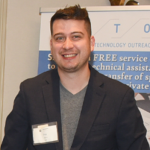
 Troy Morris is a Project Specialist with the Space Alliance Technology Outreach Program (SATOP), where he connects small businesses, entrepreneurs, and inventors with engineering firms to provide free technical assistance. Through SATOP’s 40-Hour Technical Assistance initiative and university capstone projects, Troy helps bring innovative ideas to life using existing technologies.
In his conversation with Trisha Stetzel, Troy shared how SATOP and its related SayTop program support small businesses by offering expert engineering guidance at no cost. They discussed real success stories from the program and the powerful impact of these partnerships.
Troy emphasized that the program—funded by the Texas legislature—is actively seeking new alliance partners and encourages businesses to take full advantage of this unique opportunity to accelerate growth and innovation.
Follow SATOP on LinkedIn.
 This transcript is machine transcribed by Sonix.
TRANSCRIPT
Intro: Broadcasting live from the Business RadioX studios in Houston, Texas. It’s time for Houston Business Radio. Now, here’s your host.
Trisha Stetzel: Hello, Houston. Trisha Stetzel here bringing you another episode of Houston Business Radio. I’m so excited about the guests that I have on today that was introduced to me by Amy Reed. You guys probably heard her show just a few weeks back, Troy Morris with, uh, the Saturday program, which is the Space Alliance technology outreach program. Troy is a project specialist with the Space Alliance technology outreach program. Um, he works with various engineering firms to provide free technical engineering assistance to small businesses, entrepreneurs and investors. Yes, you heard me right. This is administered administered through a 40 hour technical assistance program and through a university capstone program. Troy Morris, welcome to the show.
Troy Morris: Yeah. Thank you for having us or having me, I should say.
Trisha Stetzel: Yeah. I’m so excited to talk about this program when when you and I were having a conversation about. It’s been about a month ago. Uh, I was so excited because I’d never heard of it. And you probably get that all the time. Like, how do people not know about this program? So I said, Troy, you have to come on the show so we can talk about this program. Before we get started, though, I would love for people to learn more about you. So who is Troy?
Troy Morris: Yeah, so I’ve been with the program for, uh, a couple years now. Prior to that, actually, my background is in is in the tax business. I spent about ten years, uh, in Houston, uh, working with various, uh, engineering firms with their tax businesses and their tax models. And so I kind of got a foundation of the different, uh, firms, you know, Jacobs, KBR. All those guys and, um, kind of built some, uh, connections through there. And then, uh, kind of when that part of my career came to a close, uh, I learned about satop and, uh, what they’ve been doing because they’ve been around a while, actually. But, uh, prior to me coming on, I hadn’t heard of it either. And traditionally it was just in the, uh, it’s just been the Houston Bay area. Uh, but now Satop is a program is expanding across the whole state of Texas. So, um, really, what I’ve been doing is kind of leveraging my contacts with the various different engineering firms and, uh, using that to, uh, promote Satop as a program and how it can benefit all the different small businesses.
Trisha Stetzel: Okay. So give us the basics of the program, and then we can take a deeper dive into some of those areas.
Troy Morris: Yeah. So Satop is a program, like you said, it’s, uh, it provides free technical engineering assistance to small businesses. And we do it, uh, a couple different ways. So, uh, like I said, traditionally, Satop was just in the Bay area of Houston. Uh, but actually, it’s been around for about 20 years. And when it first started, it was a national program. Actually it was. We had offices in, uh, gosh, New York, uh, Florida, New Mexico. And one by one, each of those, uh, branches of the program just ceased to exist. Texas is really the area where it’s just continued to remain pretty stable. And, uh, there seems to be a need here for it, especially with the small business climate of, uh, the state. And it is, uh, state funded. So it’s funded by the Texas Legislature. And, uh, that money is used, uh, to bring aboard engineering firms to help small businesses and also to market and promote the program. So what we do is we leverage a network of what we call alliance partners. Uh, NASA is one of them. We have some larger engineering firms. We also have some smaller engineering firms as well, some of which are just one man shows who are trying to get their their name out there. So it’s a different variety, and it doesn’t cost the alliance partners anything to join.
Troy Morris: And they don’t have to work on any projects that don’t seem interest of interest to them because different, uh, engineering firms have, you know, different areas of expertise. And so, uh, with us, it’s about acquiring, um, pretty much as many alliance partners as we can to cover different areas because, um, there’s really no, uh, drawback for them joining because they don’t really have to work on anything that doesn’t make sense for them to work on. And so we leverage this network. And, um, what we do is we submit proposals to them that these small businesses are giving us and with their approval, obviously, first, we, um, send this to different alliance partners to work on. If they agree, then we coordinate a meeting between whoever the requester is of our program and the alliance partner so they can hammer out the details, make sure they understand what the scope of work is. Uh, just make sure basically, we’re managing expectations. And from there, uh, they, they will provide, uh, up to 40 hours of their time of free engineering assistance, whatever that might entail. These projects are all very different. So sometimes it’s, you know, material selection, sometimes it’s design, sometimes it’s quite literally just their, uh, technical input, their advice, their expertise.
Troy Morris: Uh, the idea is that these small businesses, um, either don’t have the resources to go pay a large sum to an engineering firm to try to hammer out whatever, uh, prototype or product they are working on or they, you know, don’t have the technical background to tackle that challenge themselves. So this is this program is meant as a bridge to connect them to the expertise at no cost to them. Um, and once that 40 hours has expired, that’s kind of the the end of that project. Um. Obviously nothing. Well, not everything can get solved in 40 hours. Some projects are just very large. So when we, uh, initially meet with these requesters, we, uh, kind of do an analysis of their project. We just, uh, you know, look at what all they’re trying to tackle. What’s a priority for them? And if a project is deemed very large, has multiple facets to it. Uh, we do have the avenue of university capstone program. And what that is, is where a team of, uh, senior engineering students at a university, usually it’s a 4 to 5 of them, uh, and their last semester or last two semesters of school will, uh, work on this project or whatever this prototype is as a capstone course and obviously under the guidance of a faculty member.
Troy Morris: They work on this project over the course of a year. Currently, the university’s we partnered with is A&M College Station. They’re the largest one we’re with right now. We’re actually I’ll be up there next month for their engineering capstone where they showcase a lot of these. We’re just got through wrapping up about a dozen projects with them. Um, we also partner with Texas State University in San Marcos. Um, with Sam Houston, State University of Houston-clear Lake, and also A&M Galveston as well. We have a few projects with them, and really, that’s a year long project. They spend two semesters working on it, and the small business owner, uh, will meet with the students, give them their overall vision of the product, what they’re kind of expecting. And it’s up to the students at that point to tackle the project. And it’s really cool because they get really, really into it. And the idea is that it gives the students real world, um, you know, experience dealing with a potential client in whatever engineering expertise they’re going to go into. And the requester, you know, gets to see what their, the overall product, uh, that they get out of the program is. And again, it’s a no cost to them.
Trisha Stetzel: That is that’s just amazing. Like my mind is just completely blown. I don’t know about it. And I’m guessing that most of the listeners have no idea that setup even exists. So I’d like to start from the beginning. An entrepreneur has a project. Talk to me about the types of people who are applying, or the types of entrepreneurs that are applying for these 40 hours of technical assistance, or even moving into the university capstone program.
Troy Morris: Yeah, absolutely. And what’s really the main kind of projects we handle is physical prototypes. Every now and then we’ll get some, uh, requester who will, uh, kind of reach out to us and say, hey, I already got a prototype. I need, you know, a thousand manufactured or something of that nature. And we’ll refer them to an organization like Texas Manufacturing Assistance Center or something like that. And what we’re, uh. What really what our aim is, is, uh, product development. And so if someone has an idea that they’re trying to get off the ground of some sort of prototype or product, uh, what we’ll do is we’ll, um, refer them to our website. Uh. And we have a request form right there, and it’s pretty basic. It’s like 5 or 6 lines and just their name and what, their, uh, challenges that they’re facing. Just a brief summary, and they’ll hit submit on our website, and it gets sent out to myself and all of our team. Uh, we have about five or we have about six employees on our team. So, uh, we’re all monitoring, uh, our emails, and we’ll reach out either the same day or the very next business day. We don’t make it any longer than that. And, uh, we’ll coordinate a meeting, either in person or over zoom and, uh, talk to them and try to get a little bit more detail from that meeting. Uh, we’ll have them fill out what’s called a request for technical assistance.
Troy Morris: And it’s similar to what they did on our website, just a little bit more in depth. Uh, you know, what’s your expectation for this product? What do you plan to do with it? And again, we just kind of hammer out what exactly the scope they’re trying to deal with is whether it be, um, some sort of design issue or they already have a design, but it’s some particular piece of that that they’re trying to get figured out. And once that form is submitted to us, we’ll draft what we call our proposal. It’s just a one page, uh, um, just a one page, uh, proposal we fill out. It’s, uh, brief summary of the scope of work, preferably the picture of a prototype if they have it, and with their approval first. That is what is distributed to our network of alliance partners. And from then on, one of our alliance partners will reach back out to us. Usually they do within a few days or sometimes a week. Some of the larger organizations take a little bit longer to reply because they have to distribute it to their internal network. So we try to give them a little bit of time to reply. And once they do, we uh, usually we have a few different, uh, firms or businesses replying to us. So we kind from then we vet through and look what makes the most sense.
Troy Morris: Who benefits the most in terms of both the business and the the requester. And so from then, we’ll coordinate a initial meeting with the small business owner and the, uh, whichever engineering firm is working on the project. And, uh, we’ll have them meet each other and they’ll hammer out the details of the project as well. Make sure we’re all on the same, same page. Uh, it is important to note, uh, the whole purpose of that proposal we drafted is. So we have something in writing that shows this is the scope you are working on. We’re not doing anything outside of that. Uh, just manage expectations here, and usually that’s not an issue at all. Uh, again, we get the small business owners, uh, approval on that scope of work first before we send it. But from there, uh, the engineer will, uh, spend 40 hours working on it. They can meet however often the requester would like. If it’s a university capstone program, will distribute that that same proposal to our network of universities. And we have a contact at each one and their engineering department. Uh, and I mean, they’re all awesome. They’re they’re great. They love getting these kinds of projects. So I mean, we love sending it to them. We just want to make sure that the scope of work makes sense for the students and that everything’s very crystal clear. Um, and they’ll reach back out to us and say, oh, yeah, we’ll send this over to, um, computer engineering, or we’ll send it over to our manufacturing, you know, engineering department.
Troy Morris: I mean, some of them are kind of smaller, but then in the case if we’re sending it to A&M College Station, I mean, they’ve got a gazillion departments there. They’re they’re just huge. But, um, from then, a faculty member will reach back out to us and we’ll coordinate a meeting between the faculty member and the requester. Um, with the university program, though, it is important to note, and we try to explain this to the small business owners first, that you are on the university’s timeline. If that’s the case, meaning whenever the fall semester starts or spring semester starts, I mean, it’s just it’s going to be a two semester project, and it’s whenever the semester starts because that’s when the students start the class. So once that starts, they they meet with the students, uh, usually once a week or once every two weeks, uh, over zoom or however they want to do it. And the students will just always come back and ask questions and they’ll say, oh, yeah, I kind of want this or this looks good, this doesn’t look good. And they’ll keep going. And with the university capstone program, the first semester will always be the they call the design phase. And then the second semester is actually assembly and prototyping of the project and everything.
Trisha Stetzel: Oh my gosh, this is so exciting. So, um, give me some examples of a 40 hour, uh, engagement. Like what kinds of things are entrepreneurs asking for in the 40 hour program? And, and then what are some examples of the the capstone university programs or. Yeah, projects.
Troy Morris: Yeah, yeah. So I mean, for example, we uh, had um, gosh, we’ve had a few this past year, but uh, one individual, without giving away too much information, was working on a, uh, it was a simple, uh, almost like a sun visor for an automobile and it attached to, like, the windshield. And when he first came to us, we were kind of thinking, really? I mean, why don’t you just put the, uh, little mirror down or something? But he had a he actually had a very big client base that was looking at it, a professional trucking industries were asking him about it because apparently when you’re driving in Texas, uh, and the sun’s coming through the the the windshield. You still get, you know, sunburned and everything. And apparently whatever’s in the trucks isn’t quite covering them. And he he already had his design. He just he noticed the material he was using wasn’t cutting it. It just wasn’t stopping or it was stopping it to a degree, just not what they were expecting. So we had one of our, uh, professors, uh, or I’m sorry, I’m saying, professor, because he’s a retired professor and he owns his own consulting firm now. And we had him, uh, look into it. And he did basically spend 40 hours researching different materials that, uh, the guy can use in his prototype. And it was successful. He, uh, he’s already started marketing it out to a different, uh, logistic distribution companies who have already been interested in it. In fact, we need to follow up with them again. But he yeah, he’s already had some success with that. It was one of those projects that was simpler than you would think. But, um, yeah. The professor gave him a very detailed, uh, gosh, I think it was like 75 pages of recommendations.
Troy Morris: Wow. Thrilled with it. And it was at no cost to him. Um, so, I mean, that was a great project. That was, gosh. Um, uh, last summer, uh, I think it last September, uh, uh, last August. But, um, that was a really great one. Um, with the university capstone program that’s been a very popular lately with these requesters. Um, because, I mean, they go with the understanding that, yes, it’s going to take a while, but what we’ve noticed is a lot of these small businesses have been working on these prototypes for years now. So another year they don’t seem to mind at all. Um, but they do go in with the expectation that these are students. Yes, they’re under the guidance of a faculty member, but these are students, at the end of the day working on this. It’s not, um, to be blunt, free labor. It’s, uh, you know, it still, it needs to be an academic experience for them. And you need to, be available to participate in meetings. And we explain all that to these guys beforehand. But, um, actually, we were very proud because, uh, uh, this last semester in, uh, yeah, in the fall semester, um, we just wrapped up a project with A&M College Station, and at each at the end of each semester, they have what’s called an engineering capstone, uh, showcase, uh, where all the different teams, uh, showcase all the products they worked on and everything. And, gosh, they have about I think they had over 400 this last semester, and one of our projects got second place overall. So we were happy about that.
Trisha Stetzel: Awesome.
Troy Morris: Uh, it was a couple individuals who have, uh, they created a machine that fills sandbags, basically is what it does, but it’s all automated. And they were having multiple issues with it, with the hydraulics in it and all sorts of mechanical issues. And so A&M took the project and they said, yeah, let’s give it to our, uh, mechanical engineering department. And I think they had a team of six students work on it, actually. And, uh, they worked on it starting, uh, spring of 2024 and then concluded in fall 2024. And those those kids really got into it. They did a they did a great job. Uh, I mean, they they had a full blown prototype by the end of it that was filling sandbags at, uh, I can’t remember the exact rate it was doing, but they were filling them very quickly. And those guys were, I mean, ecstatic about about it. Uh, they lived over in Waller, Texas, and the students were traveling from College Station to Waller to kind of to meet them constantly in person with questions. It was really cool. And actually, they just from what I understand, because I was just talking to this guy a couple weeks ago, they they just got a contract with US Army Corps of Engineers for, uh, a bunch of, uh, because they like their technology with filling sandbags, apparently with, uh, disaster relief and flood control. They were very interested in that. Uh, so they had a lot of success with that. But I mean, again, I’m going to keep saying this. It was at no cost to them. It was it was it was free. All it cost was their their time with the students. And um, it was great. And obviously we were happy because they won second place had like 400 teams.
Trisha Stetzel: Yes. That is amazing. So are there any qualifications that the these entrepreneurs or these business owners have to have pre requesting help from startup.
Troy Morris: They just need to operate in the state of Texas. Uh, it’s a state funded program. So the idea is that we’re investing the money that’s given from the legislature back into the state to help the overall, uh, economic landscape of Texas. The idea is to help these small businesses grow. Um, give them a leg up with these prototypes that they’re trying to get off the ground and running. And a lot of what we’re discovering is that, uh, a lot of this technology that these businesses are trying to figure out or trying to apply, uh, actually already exists, and these engineers are looking into it and saying, oh yeah, you know, there’s something with this that we used on this project, you know, six years ago here. And they would apply that as well. And, um, that’s actually how the program started, because NASA worked on a lot of these projects, and they applied quite a bit of technology from the space program and applied it into the commercial sector. Um, and I was I’ll give one more success story, if that’s all right. Uh, because it was, uh, it was a very, very early project. Uh, so it was actually before my time with Saturn.
Troy Morris: But I always loved reading about it because it was just so cool. But, uh, they, uh, it was, uh, it was actually for a hospital, and, um, it was for, uh, infants that were born prematurely and transporting them in ambulances. A lot of the turbulence was proving to be very troublesome, uh, potentially, you know, uh, very, very dangerous with transporting these infants, especially because they’re so tiny. And so they were looking for a way to either get rid of the turbulence altogether or drastically reduce it. And we actually had a two NASA engineers looking at it. And, um, on the International Space Station, they have a treadmill up there that the astronauts use. And, uh, they actually applied some of that dampening technology from the treadmill in the International Space Station to these, uh, transporters that they’re putting on the ambulances to transport infants to, you know, various hospitals or various different sections. And actually, they got rid of the turbulence altogether. That was probably like 15 years ago, but they’re still using it. Actually, Texas Children’s Hospital still using it today. And it was just so crazy because that it was a very simple project, very quick fix. But who would have known?
Trisha Stetzel: Yeah. Oh my gosh. So the website again guys is say top space. So go to space and you’ll find the application and the information that Troy’s been talking about. Troy, if anyone has any questions, what’s the best way for them to reach out?
Troy Morris: Yeah. If they have any questions, they can always go to that, uh, inquiry form on our website. Uh, that that Trisha just said. And just fill it out really quick. It’ll send an email to the entire team and, uh, we’ll reply with either the same day or the very next business day. If you want to reach out to myself directly, feel free. It’s Troy at Bay area houston.com. Um, we are a program that is administered by the Bay Area Houston Economic Partnership. Uh, we’re just a street down from NASA over in Clear Lake. And, uh, up top, like I said, has been around for quite some time, but now we’re expanding across the entire state of Texas. So just to qualify, you just need to do business in the state of Texas. Uh, you don’t necessarily need to have a formal, you know, business license or anything if you’re just someone trying to get the ground up and running. We may look into maybe some DBA options for the business or something, but I do want to clarify that that’s certainly not something that would prohibit you from using our program if you don’t have a license.
Trisha Stetzel: Wow. Okay. You guys, if you didn’t catch it already, you get 40 hours of engineering assistance through these alliance partners and or depending on the project, maybe a full year from a university capstone program. All right. So we still have a few minutes left together. And I want to focus on the alliance partners, because there may be people listening who want to get involved or engaged from that perspective. So how do you you said you need more partners. So how if people are wanting to get engaged, what are you looking for in an alliance partner and how do they get engaged?
Troy Morris: So with the alliance partners, really, there’s, uh, yeah, there’s not really a constraint to apply. Now we’re pretty much open to anyone. We would obviously meet with them first to see what their, uh, you know, expertise is and what they would cover. So we know what kind of projects to, to send them. Uh, but there is no, uh, no limit to what they can work on there. There’s nothing in a contract or anything that says you have to work on this many projects, you know, for this year or something. They can work on whatever they want. And, uh, the requesters who work on this are informed of that as well, that this is essentially a. Relationship with us in the alliance partner. And they do not have to work on anything that obviously does not make sense for them to, to work on. Um, and they also are in the understanding as well that these engineers are, uh, they have their daytime jobs as well. Now with the Alliance partners, if they’re working on a 40 hour program, say, top does use the money to compensate them $100 an hour for the 40 hour program, and that money is used, uh, intended to be used back into professional development for the for the company. That’s, that’s using it. And so they can they can use that however they, they want obviously.
Troy Morris: But um, with alliance partners really they would just sit down, meet with us, uh, explain what their expertise is and, um, we’ll just, uh, see what kind of projects we have and if anything makes sense to send them their way. That’s what we’ll do. Um, it just depends, because there are so many different, um, you know, aspects, you know, anything involved with sensors that’s such a niche section of engineering or fluid dynamics. That’s another very niche set of sector. So, um, and it’s kind of it’s pretty cool because we, uh, you know, we have some bigger names like Jacobs and, you know, KBR and some of those guys in the area. But we also, uh, we just signed on an individual up in Austin, Texas. Uh, I met him, gosh, at an event in San Antonio, I think, uh, last year, but he owns his own engineering consulting firm up in Austin. He’s a one man show and he has been phenomenal. He’s he’s already taken so many projects and he’s done a fantastic job. And he loves working with these small businesses. So if anyone is interested, feel free to reach out. Again my email is Troy at Bay Area houston.com and I’d be more than happy to meet with you. We’re always looking to expand our network of alliance partners.
Trisha Stetzel: Fantastic. So engineering firms, uh, even these solo, uh, engineering companies, consultants, universities, uh, any aerospace companies, any other industries that might be interested in being an alliance partner?
Troy Morris: Yeah. Well, uh, aerospace companies as well, whatever their, uh, engineering expertise is, uh, uh, what we found is, uh, a lot of these different, um, uh, products that we’re looking at. Uh, like I said, the technology already exists, and they can apply it from the aerospace area or the space program into these projects. Now, despite the name um, Space Alliance Technology Outreach program, these products do not need to be space related. I just want to make sure I make that very clear. That’s a question I’ve gotten very often. Um, we’ve done everything from medical devices to agricultural projects to beauty products. I mean, it’s it’s been all across the board. So it’s any kind of prototype that you’re looking at. We do cover all industries. And, uh, with the engineering firms, it is pretty much all areas of engineering. Uh, I mean, we’re in Clear Lake, so we’ve got all of these different, uh, we got, I mean, axiom down the street, Intuitive Machines, uh, Egis is another one of our alliance partners, and they’ve done some projects for us as well. And, uh, we do also have professors from community colleges like, you know, sand Jack down the street who who work on 40 hour projects for us as well.
Trisha Stetzel: Fantastic. Troy, this has been amazing. Thank you for coming and talking to me about this program and for the listeners, I hope you guys got some really great value out of this. It is a program we need to take advantage of. So if you’re struggling or if you’re starting up, this is a great place to go. If you really need some help figuring out this product, right, that you want to put in front of people. So again, if you want to contact Troy, it’s Troy at Bay Area houston.com. Or you can go to the website at the top. I’ll put all of that in the show notes so you can point and click if you happen to be sitting at your computer. Troy, thank you so much for being on with me today. This has been fun.
Troy Morris: Thank you for having me.
Trisha Stetzel: That’s all the time we have for today’s show. Join us next time for another amazing episode of Houston Business Radio. Until then, stay tuned, stay inspired, and keep thriving in the Houston business community.














