Business RadioX ®

  • Home
  • Business RadioX ® Communities
    • Southeast
      • Alabama
        • Birmingham
      • Florida
        • Orlando
        • Pensacola
        • South Florida
        • Tampa
        • Tallahassee
      • Georgia
        • Atlanta
        • Cherokee
        • Forsyth
        • Greater Perimeter
        • Gwinnett
        • North Fulton
        • North Georgia
        • Northeast Georgia
        • Rome
        • Savannah
      • Louisiana
        • New Orleans
      • North Carolina
        • Charlotte
        • Raleigh
      • Tennessee
        • Chattanooga
        • Nashville
      • Virginia
        • Richmond
    • South Central
      • Arkansas
        • Northwest Arkansas
    • Midwest
      • Illinois
        • Chicago
      • Michigan
        • Detroit
      • Minnesota
        • Minneapolis St. Paul
      • Missouri
        • St. Louis
      • Ohio
        • Cleveland
        • Columbus
        • Dayton
    • Southwest
      • Arizona
        • Phoenix
        • Tucson
        • Valley
      • Texas
        • Austin
        • Dallas
        • Houston
    • West
      • California
        • Bay Area
        • LA
        • Pasadena
      • Colorado
        • Denver
      • Hawaii
        • Oahu
  • FAQs
  • About Us
    • Our Mission
    • Our Audience
    • Why It Works
    • What People Are Saying
    • BRX in the News
  • Resources
    • BRX Pro Tips
    • B2B Marketing: The 4Rs
    • High Velocity Selling Habits
    • Why Most B2B Media Strategies Fail
    • 9 Reasons To Sponsor A Business RadioX ® Show
  • Partner With Us
  • Veteran Business RadioX ®

Tax Updates for 2021 and Beyond, with Danielle McBride, Oberman Law Firm

December 24, 2021 by John Ray

Danielle McBride
Dental Law Radio
Tax Updates for 2021 and Beyond, with Danielle McBride, Oberman Law Firm
Loading
00:00 /
RSS Feed
Share
Link
Embed

Download file

Danielle McBrideTax Updates for 2021 and Beyond with Danielle McBride, Oberman Law Firm (Dental Law Radio, Episode 28)

On this edition of Dental Law Radio, Stuart Oberman was joined by Danielle McBride, tax authority and Partner at Oberman Law Firm, to discuss tax updates for 2021 and beyond. Danielle discussed changes in the Employee Retention Tax Credit, potential tax increases, a surtax on net investment income, and much more. Dental Law Radio is underwritten and presented by Oberman Law Firm and produced by the North Fulton studio of Business RadioX®.


Danielle McBride, Partner, Oberman Law Firm

Danielle McBride
Danielle McBride, Partner, Oberman Law Firm

Danielle McBride has been practicing law for over 21 years, and her primary focus is representing healthcare clients on a local, regional, and national basis. Ms. McBride regularly consults with clients regarding simple to complex healthcare transitions, including mergers and acquisitions, employment law, governmental compliance, tax strategies, practice valuations, DSO formation and structures, employee compensation, associate and partnership contracts, joint ventures, and partnership buy-in/buy-outs.

In addition, Ms. McBride brings a wealth of knowledge and experience preparing practice valuations for clients, as well as formulating simple to complex tax strategies, and entity formations.

Ms. McBride holds a Bachelor of Arts in Sociology/Criminology from The Ohio State University, a Juris Doctor (J.D.) from Ohio Northern University Pettit College of Law, and a Master of Laws (LL.M.) in Taxation from Case Western Reserve University.

LinkedIn

TRANSCRIPT

Intro: [00:00:02] Broadcasting from the Business RadioX Studios in Atlanta, it’s time for Dental Law Radio. Dental Law Radio is brought to you by Oberman Law Firm, a leading dental-centric law firm serving dental clients on a local, regional and national basis. Now, here’s your host, Stuart Oberman.

Stuart Oberman: [00:00:26] Welcome, ladies and gentlemen, to Dental Law Radio. I have the absolute honor of having, Danielle McBride, Partner Oberman Law Firm, joining us today. And we’ve got a great, great topic. But first I want to get to talk to Danielle a little bit about really what she does at our law firm, which is amazing, and that’s why that I want to really have her on today’s podcast.

Stuart Oberman: [00:00:54] So, Danielle’s been practicing for about 21 years and focuses on health care and on the regional national basis. And Danielle handles a lot of dental transitions, healthcare transitions, employment law and tax. So, that’s going to be one of our topics today and, also, practice valuations. And Danielle has her Law Degree from Ohio Northern University and a Master’s in Tax from Case Western Reserve University. And there is no better topic today in today’s world if you’re a dental practice owner than tax.

Stuart Oberman: [00:01:36] So, Danielle, I want you to talk a little bit today about tax update for 2021 and beyond. I know that you are in tune immensely as to what’s going on with that. You have an enormous amount of resources. And we are extraordinarily happy to have you as a member of the firm. And I know we rely on you a lot for a lot of complex stuff. So, it is my absolute pleasure to have you on today. So, tax, tax, tax, tax, tell us what’s going on. And welcome, welcome, welcome.

Danielle McBride: [00:02:08] Tax. Well, thanks Stuart for the introduction. And I’m really happy to be here today and talk about tax, which to most people sounds like a boring topic, but it really plays a huge role in all of these transitions that we do. And part of what we do as a dental-specific lawyer is to make sure that we keep up to date on things that affect our clients in particular. And these tax laws, there’s a lot of stuff that does not affect clients in our business, but the things that do are important for them to learn.

Danielle McBride: [00:02:43] And we’ve got two real big bills, two bills that have gone through the the House, one passed into law. We’ve got the Infrastructure Investment and Jobs Act, which was actually passed and signed into law by the President November 15th. That had some major items. It’s the largest infrastructure act in decades. It’s got major items for disaster relief, capital contributions, public utilities, excise taxes, cryptocurrency provisions. And there’s one item in particular that has an impact on our dental clients. And that’s this Employee Retention Tax Credit, which was originally put into place under the CARES Act to allow those practices that had a decrease in revenues be able to claim some tax credits.

Danielle McBride: [00:03:33] So, the Infrastructure Investment Jobs Act actually ended that retroactively to September 30th of 2021. When it was originally put in place, it was supposed to — and it was extended through the end of 2021. So, now, we’ve lost the fourth quarter. That also keys up a few problems because they did this so late that there were some employers who had already withheld deposits thinking that they were going to get this credit. And so, there’s actually a new notice that came out on that. So, this earned income employee retention tax credit is 70% of qualified wages paid in a calendar quarter before, now, September 30th of 2021. The only exception to September 30, 2021 is the recovery startup business. And that’s someone who probably wasn’t in business before the March 2020 COVID shutdown. So, those clients have the ability to maybe qualify for quarter four when they wouldn’t have before this Infrastructure Act was signed into law.

Stuart Oberman: [00:04:57] I got one question. What kind of notice was sent out? What kind of notice when you say notice?

Danielle McBride: [00:05:02] It’s an IRS notice. So, the IRS notice, it’s Notice 2021-65 issued by the IRS. And that’s to provide guidance on the rollback of the employee retention tax credit, except for those recovery startups, like I mentioned. And so, for those employers that got an advance on the credit, the IRS isn’t making you repay that money until the due date of the fourth quarter return, which is January 31st of 2022. They’re also including a waiver-

Stuart Oberman: [00:05:32] Can our doctors get a copy of that from us? Because I know we get these questions from from CPAs.

Danielle McBride: [00:05:38] Yeah, we have access to it. We can give it. If there are dental CPAs or clients who want a copy of this notice, we have access to tax research. We can easily provide a copy of that notice. Notice also allows for some waiver of failure deposit penalties if you retain those deposits before December 20th of 2021. So, important piece of information for all those dental advisors to have in counseling their clients for this last quarter of the year.

Stuart Oberman: [00:06:14] Well, I know when you say — so, how do our clients or anyone who’s listening today get that information? They just email to you, and you can just send out-

Danielle McBride: [00:06:27] Sure, they can email our office.

Stuart Oberman: [00:06:30] Okay.

Danielle McBride: [00:06:30] They can email me at our office. It’s just Danielle@ObermanLaw.com. Or they can call and ask for me at our office phone number, 770-886-2400.

Stuart Oberman: [00:06:43] Now, there’s a lot of acronyms thrown around through all this legislature stuff that’s going on now and probably into 2022. So, when our doctors hear the acronym ERC, what does that stand for?

Danielle McBride: [00:06:58] Employee retention credit. And sometimes, also-

Stuart Oberman: [00:07:00] And that’s what you’re talking about.

Danielle McBride: [00:07:01] And sometimes, also, referred to as ERTC, employee retention tax credit.

Stuart Oberman: [00:07:06] Got it. Okay. Now, one thing is we get questions on how does the Back Better Act affect my practice? And I know you are on the forefront of that.

Danielle McBride: [00:07:20] Sure. And the Employee Retention Tax Credit was part of the Infrastructure Act. The second piece of legislation is the Build Back Better Act, and that has not been signed into law yet. It has passed the House and there is a Senate version. And that Senate version was passed or the act was passed by the House on November 19th. It’s been with the Senate. The CBO or the Congressional Budget Office has given some statistics to the senators on how much this is going to cost, what’s going into the bill, how are we paying for these things, tax increases and spending, all of that.

Danielle McBride: [00:08:02] And December 11th, a draft legislative text was released by the Senate Finance Committee chair. And so, that’s the current version of the bill that the Senate is looking at. It’s going to take all 50 senators for this thing to pass, and they’re still negotiating it. And there are senators like Senator Manchin who-

Stuart Oberman: [00:08:23] Of course.

Danielle McBride: [00:08:23] … are really pushing on this tax legislation. They have a couple of concerns; one with the Congressional Budget Office dollar amounts on this thing. And then, the other big issue that’s being debated under this Build Back Better Act is the SALT or the state and local tax deduction cap. It was a $10,000 cap. They want to raise it to $80,000. Cap was supposed to sunset in 2025, and they’re talking about pushing it out a little longer or maybe taking away that cap after 2025 or 2032, I think has been mentioned on this. So, that’s the biggest concern.

Danielle McBride: [00:09:12] For those of our clients who are concerned about this, the good news is this act had a lot of tax provisions in it that could have raised things like capital gains rates, individual and corporate business tax rates, estate planning issues and IRA contribution amounts. Things like that were contained in that bill. All the individual rates and the capital gains rate increases were removed from the bill. And some other limitations to that would have been a concern, most of those are no longer in the text of the bill, and it doesn’t look like those kind of things are going to get negotiated back in.

Danielle McBride: [00:09:54] So, those key provisions in this Build Back Better Act are going to be things like extended child tax credits, earned income tax credits, added childcare entitlements and paid family leave. There are some climate change spending in there. Tax increases, the state and local tax issue that I mentioned, there’s also tax increases for large corporations – a 15% tax on large corporations, one percent excise tax on stock buybacks for corporations. These are all things that are probably not going to affect our smaller dental practices. Even the larger dental practices are probably going to fall underneath the limits to where this is going to have an effect on them. There are surtaxes on modified adjusted gross income, but it’s on income from $10 million to $25 million, and 8% above $25 million.

Danielle McBride: [00:11:07] The one thing that does potentially have an impact is an expansion on the 3.8% surtax on net investment income. They want to include trade and business income, which would also include our Sub-S corporations, and a lot of our dental practices are Subchapter S corporations, and they take that income out of the business. Those distributions are not subject to a 3.8% Medicare payroll tax. If this expansion on the surtax on net investment income is expanded, then that’s going to take away what some people call the S-Corporation loophole. So, those are-.

Stuart Oberman: [00:11:49] Are major-

Danielle McBride: [00:11:49] There’s some other minimum distribution rules. Backdoor Roth IRA contributions and things like that are also being discussed. Roth IRA conversions, backdoor Roth IRA conversions may end in 2022. That’s one of the things that’s under this bill, which may have a big impact on some of our clients as well. Those are where there are certain income limits that don’t allow you to use a Roth IRA feature. And so, to take that away would mean you can’t get a Roth IRA. And those are the big issues in that act.

Stuart Oberman: [00:12:35] Wow. Well, I know that you are a major contributor to our Advisory Insights newsletter. And I know you’ll be bringing our listeners up to date on a regular basis regarding that. And I know-

Danielle McBride: [00:12:49] Right.

Stuart Oberman: [00:12:49] And we’re going to talk a little bit in a subsequent podcast regarding capital gains and ordinary income. I know you’re expert on that also. So, wow, there’s a lot of stuff. So, I think this is a great update. Again, we could talk for days on this topic, but I think this — I mean, it’s unbelievable. And I know some of this stuff that you’re reviewing, and looking at, and writing about, so this is major stuff.

Stuart Oberman: [00:13:20] Well, I think this gives our listeners a really, really good, good basis moving forward into the new year, especially what they need to do for this year. Although we got a week and a half, and I know there’s going to be lot of — or about week and half or so — a lot of scurrying activity. And this will keep our guys pretty busy with the CPAs. So, no, this is great stuff. Again, there’s so many moving pieces to this. And I know that you just scratched the surface of the highlights. I will tell you that.

Stuart Oberman: [00:13:54] So, well, I’ll tell you, well, it’s amazing. So, we’re going to bring you back on some subsequent podcasts. I know we got a couple more to go and our listeners are going to be even more informed. So, amazing. Danielle, thank you so much for joining us today. I know you’re very busy with yearend stuff and all the tax reviews coming up in the Legislature stuff. So, ladies and gentlemen, thank you for joining us.

Danielle McBride: [00:14:24] Thanks, Stuart, for having me.

Stuart Oberman: [00:14:25] And then, what we’ll do is if you have any questions, concerns, feel free to reach out to us. Number is 770-886-2400. Oberman Law Firm, if you have any questions, please feel free to email myself Stuart@ObermanLaw.com or Danielle@ObermanLaw.com. Folks, thanks for joining us, and have a fantastic day. Talk to you soon.


About Dental Law Radio

Hosted by Stuart Oberman, a nationally recognized authority in dental law, Dental Law Radio covers legal, business, and other operating issues and topics of vital concern to dentists and dental practice owners. The show is produced by the North Fulton studio of Business RadioX® and can be found on all the major podcast apps. The complete show archive is here.

Stuart Oberman, Oberman Law Firm

Stuart Oberman
Stuart Oberman, host of “Dental Law Radio”

Stuart Oberman is the founder and President of Oberman Law Firm. Mr. Oberman graduated from Urbana University and received his law degree from John Marshall Law School. Mr. Oberman has been practicing law for over 25 years, and before going into private practice, Mr. Oberman was in-house counsel for a Fortune 500 Company. Mr. Oberman is widely regarded as the go-to attorney in the area of Dental Law, which includes DSO formation, corporate business structures, mergers and acquisitions, regulatory compliance, advertising regulations, HIPAA, Compliance, and employment law regulations that affect dental practices.

In addition, Mr. Oberman’s expertise in the health care industry includes advising clients in the complex regulatory landscape as it relates to telehealth and telemedicine, including compliance of corporate structures, third-party reimbursement, contract negotiations, technology, health care fraud and abuse law (Anti-Kickback Statute and the State Law), professional liability risk management, federal and state regulations.

As the long-term care industry evolves, Mr. Oberman has the knowledge and experience to guide clients in the long-term care sector with respect to corporate and regulatory matters, assisted living facilities, continuing care retirement communities (CCRCs). In addition, Mr. Oberman’s practice also focuses on health care facility acquisitions and other changes of ownership, as well as related licensure and Medicare/Medicaid certification matters, CCRC registrations, long-term care/skilled nursing facility management, operating agreements, assisted living licensure matters, and health care joint ventures.

In addition to his expertise in the health care industry, Mr. Oberman has a nationwide practice that focuses on all facets of contractual disputes, including corporate governance, fiduciary duty, trade secrets, unfair competition, covenants not to compete, trademark and copyright infringement, fraud, and deceptive trade practices, and other business-related matters. Mr. Oberman also represents clients throughout the United States in a wide range of practice areas, including mergers & acquisitions, partnership agreements, commercial real estate, entity formation, employment law, commercial leasing, intellectual property, and HIPAA/OSHA compliance.

Mr. Oberman is a national lecturer and has published articles in the U.S. and Canada.

LinkedIn

Oberman Law Firm

Oberman Law Firm has a long history of civic service, noted national, regional, and local clients, and stands among the Southeast’s eminent and fast-growing full-service law firms. Oberman Law Firm’s areas of practice include Business Planning, Commercial & Technology Transactions, Corporate, Employment & Labor, Estate Planning, Health Care, Intellectual Property, Litigation, Privacy & Data Security, and Real Estate.

By meeting their client’s goals and becoming a trusted partner and advocate for our clients, their attorneys are recognized as legal go-getters who provide value-added service. Their attorneys understand that in a rapidly changing legal market, clients have new expectations, constantly evolving choices, and operate in an environment of heightened reputational and commercial risk.

Oberman Law Firm’s strength is its ability to solve complex legal problems by collaborating across borders and practice areas.

Connect with Oberman Law Firm:

Company website | LinkedIn | Twitter
Tagged With: Danielle McBride, Dental Law Radio, ERC, ERTC, Oberman Law, Oberman Law Firm, Stuart Oberman, Taxes

Top 10 Mistakes Dentists Make

December 3, 2021 by John Ray

DentalBoardComplaintsDLREpisode26Album1
Dental Law Radio
Top 10 Mistakes Dentists Make
Loading
00:00 /
RSS Feed
Share
Link
Embed

Download file

DentalBoardComplaintsDLREpisode26Album1

Top 10 Mistakes Dentists Make (Dental Law Radio, Episode 27)

With clients in about 35 states, Stuart Oberman and his dental law team at Oberman Law Firm have seen a bit of everything. In this episode of Dental Law Radio, Stuart reviews the top mistakes dentists make in their practice, starting with failure to recognize problem patients. Dental Law Radio is underwritten and presented by Oberman Law Firm and produced by the North Fulton studio of Business RadioX®.


TRANSCRIPT

Intro: [00:00:01] Broadcasting from the Business RadioX Studios in Atlanta, it’s time for Dental Law Radio. Dental Law Radio is brought to you by Oberman Law Firm, a leading dental-centric law firm serving dental clients on a local, regional, and national basis. Now, here’s your host, Stuart Oberman.

Stuart Oberman: [00:00:26] Hello everyone and welcome to Dental Law Radio. All right. Today’s topic, I am very passionate about. As I said before, we are a dental-centric law firm, Oberman Law Firm. Clients from multiple states, probably 30, 35 states last count, clients from California, Maine to Florida, all points in between. And what I see is the same, same mistakes over and over and over again, until I just have to beat my head against the wall.

Stuart Oberman: [00:01:05] So, I want to review for you Oberman’s Top Ten List of Mistakes. So, let’s start off, let’s run right into it. Mistake number one, failure to recognize problem patients. I can’t tell you how many calls a week I get, “I got this problem patient. What do I do? I got this problem right now. I got the patient in the chair. What do I do?”

Stuart Oberman: [00:01:32] Let me make this point real clear. And I’ve said this over and over and over again, you’re going to know you’ve got a problem patient before you put your hand in their mouth. You know why? Because when they called your office, they were rude. When they made the appointment, they were rude. When they went to your front desk to check in, they were rude. When they walked back to your chair, they were rude. They’ve cussed at your hygienist. They’ve cussed at your assistant. And yet you’re going to treat them. And you’ve got 17 people in your office tell you, “Doc, bad news. Doc, bad news.” And yet because you see $1,000 coming in your checkbook, you’re going to treat them.

Stuart Oberman: [00:02:14] Let me make this point clear, you touch one tooth and you bought that problem patient, and you will live with that patient forever. Get rid of that patient. Do not ever, ever, ever, ever treat a problem patient. Your gut is going to tell you, you’ve got a problem patient. And when that patient sits in your chair, before you touch them and they tell you what’s wrong, I don’t care what it is. You don’t do it. You do not do cavities. I don’t care. You do not do whatever that problem is. You get rid of that patient.

Stuart Oberman: [00:02:52] Two – a good friend of mine is going to kill me on this one – collections. Rule of thumb, my opinion is never, ever, ever send your patient to collections. We do a lot of board complaints, a lot of risk management, and I’m going to say at least 90 percent of all problems stem from collections. Once you send a patient to collections, you lose control of what the stature of that case is because then you’ve got some collection agency person harassing your patient and never ends. So, I mean, we’ve had clients before that have sent a patient to collections for a $100. So, they’ve got a problem, then they pay me $2,000 to put the fire out, so that is very good business sense. Do not send your patients to collections.

Stuart Oberman: [00:03:54] Mistake number three is, our dental offices are horrible at communication. They fail to advise the staff for the need of consistent, accurate documentation. Document your charts. Let me make this point clear, if you rely on your staff to document your charts, you’re going down a dark hole. It’s okay to delegate that. But at the end of the day, that’s your responsibility. If they put down the wrong x-ray right left side, tooth wrong.

Stuart Oberman: [00:04:25] And you go in front of the board and that board calls you out. Or you go in a deposition for malpractice claiming, that other attorney calls you out. What are you going to say? “Well, that was my staff’s problem. I didn’t do that.” And you got three people on the board or five people on the board, sitting and looking at you like, “Why do you have the wrong x-ray in the file? Why do you have the wrong x-ray marked?” “Well, it’s my staff’s problem, it’s not my problem.”

Stuart Oberman: [00:04:56] Do not rely on your staff for everything. You’ve got to document it. Teach them what is consistent, accurate, complete documentation. If it’s never in a file, it never happened. If it’s wrong in the file, it’s your responsibility.

Stuart Oberman: [00:05:16] Four – and this is an interesting problem – failure to maintain good chair side manner with patients. And let me tell you, there’s a difference. So, our younger doctors are enormously successful clinically. But the bedside manner is a little rough. It’s quick. They’re under pressure. Our doctors have been practicing a little bit longer, I would say, as a whole or probably a little bit better with chair side manner. That’s a broad statement, so I could have it in every case.

Stuart Oberman: [00:05:55] But chair side manner will keep you out of trouble. A very good friend of mine practicing for 30 years, never had a board complaint. Never had a malpractice claim. I asked her one day, I said, “How did you avoid this kind of trouble? Thirty years never had a board complaint. Malpractice claim, never.” She was, “Let me tell you what I did. First five minutes, I want to know how the family’s doing because it’s already in my chart. I know they’re married. I know the wife passed away. I know their child is sick. I know the child was sick. I know they’ve got kids in college. I know all that. So, for five minutes, I want to know how the family’s doing.”

Stuart Oberman: [00:06:41] You can spare five minutes out of your time with every patient at least five minutes to figure out what’s going on with that patient. And that, from a pure risk management standpoint, will reduce your malpractice claims. And if it’s a new patient, and you don’t get a good feeling talking to that patient, you better take action right away.

Stuart Oberman: [00:07:02] But chair side manner is so important because, look, people love you, but they don’t want to be there. They don’t want be [inaudible]. They don’t want to be poked and prodded. They’re getting divorced. They’re struggling. They’re being laid off. Their kids are in jail. Their mother is sick. They’re taking care of families. They’re going back and forth to nursing home. Their dad’s house is being foreclosed upon. People got problems.

Stuart Oberman: [00:07:29] And all you’ve got to do is be that sunshine and that light. And if there’s a problem and you’ve got a connection with that doctor, we’re painting a connection with that doctor and you got a connection with that patient. You’re going to avoid a problem. All communication.

Stuart Oberman: [00:07:47] Mistake number five, failure to designate a point person. Let me tell you, you got someone in your office that’s handling payroll, OSHA, HIPAA, Compliance, EEOC, Department of Labor, Audits, everything in between. You’ve got to have a designated point person. You can’t have every person doing everything. You can’t have the hygienist or your wife or husband who’s managing a practice do everything. You’ve got to have a point person.

Stuart Oberman: [00:08:20] What are you going to do when you get an OSHA complaint? Where’s it going to? Do you have a process? What are you going to do when a board investigator comes to your office and wants to have information? What are you going to do? Who are you going to direct that person to? Is it going to be you? You don’t have the time for that. You don’t have the resources. You don’t have the training for it. Designate that person on an H.R. standpoint.

Stuart Oberman: [00:08:48] Six, failure to avoid negative comments in charts. Let me tell you, you write something bad in a chart and a patient gets a copy of that chart, it’s going on the internet, folks. I have seen every cuss word imaginable in a chart. I’ve seen every patient called every name in the book. Every patient’s child, mother, wife, husband called everything under the sun in a chart. I’ve seen comments in there that will violate Federal Law regarding race, color, creed, sex, or origin.

Stuart Oberman: [00:09:28] Never ever, ever put anything in the chart that you would not want to put on the front of the New York Times. Because once it goes viral, you are dead in the water. There is no retraction. What are you going to do? Patient decides to go seek another doctor. It is what it is. You’re not going to please everyone and that patient is going to move to another location.

Stuart Oberman: [00:09:55] What are you going to do if all of a sudden you discover that someone in your office, because you never read the chart, put something derogatory about that patient physically, mentally, race, color, creed, sex, or origin? What are you going to do? And, now, that patient has got that file because they picked it up at 10:00 and you didn’t get to your patient until 5:00. You lost control. You absolutely lost control.

Stuart Oberman: [00:10:25] You better know what goes in your files. You better have a policy to prevent that. You better have something in writing from your staff outlining they will not violate that provision. Because, again, if it goes viral, you have a huge, huge problem.

Stuart Oberman: [00:10:42] Mistake number seven, failure to follow up with a patient. Look, I know when I’ve had dental issues, my doctor’s office will call and say how are you doing. Doctor’s offices, we have clients who have regular routine. Our clients have a regular routine. They will call that patient and say how are you doing. It only takes five minutes. You’ve got a complex procedure, “How are you doing?” Or your staff calls, “How are you doing?” Follow up.

Stuart Oberman: [00:11:18] Now, another aspect of this is follow up and document it. Because you will have a patient go south and you will call them 17 times, they will not answer 17 times. Or you call them 17 times, they don’t answer 16, they answer the 17th time. But they will swear under the sun, moon, and stars that you never, ever, ever called them. So, if you’re going to call them, document it. Document the conversation that you followed up. I can’t stress how much that means to the patients and how much of a concern it will be if you don’t get an early reading on that patient that they’ve got a problem.

Stuart Oberman: [00:12:01] So, here’s another concern with our doctors, failure to properly discharge patients from care. I get this question all the time, “I’ve got a problem patient. I wish I could discharge them, but they just won’t go away.” The answer is, you can discharge the patient at any time. Now, my general rule is, you got to be specific on your state rules, but, generally, you discharge, you give a reason, a non-combative reason. And then, you give them 30 days of emergency service.

Stuart Oberman: [00:12:37] Now, that is going to vary state by state. We’d have to check that out. But you can discharge a patient if they do not listen, if they’re not paying their bill, if they are constantly late on appointments, if they reschedule appointments. There is a process. Never ever, ever text a discharge. Never ever, ever text a discharge or send a discharge by email.

Stuart Oberman: [00:13:05] First and foremost, you’ve got to have permission to correspond with a patient by email. It’s electronic communication that involves HIPAA. Send it regular mail or send it certified mail, one of each, or FedEx. Not that I’m endorsing FedEx, UPS is fine too. But that’s a term of art. But get rid of that patient, put it in writing. And then, what you want to do is make sure you keep it for your file. “Well, I discharged that patient.” “Well, is the discharge letter in the file?” “No. But I know I did.” “I sent a certified.” “Do you have the certified receipt?” “No. But I know I did.” “I sent a FedEx.” Again, I’m not endorsing FedEx. “I sent a FedEx.” “Well, you know, I just forgot the receipt.” Figure it out.

Stuart Oberman: [00:13:56] Mistake number ten, failure to refer when needed. I don’t know why in today’s world, our doctors do not refer more cases out. In many cases, they are not qualified to do the treatment that they are doing. But yet they will certainly engage in that conduct and try to do it because they took a course on it at one time. If it’s not what you do every day and if you have to ask yourself, “Am I capable of doing that?” The answer is refer it out. The $1,000 or $2,000 that you save long term will save you a long list of headaches down the road. Refer it out. Know to say when.

Stuart Oberman: [00:14:48] So, mistake number ten, final number ten. So, when you get a board complaint, you get a malpractice claim. And I always say, “It’s not if, it’s when,” because patients are nuts and things happen. In today’s software, you have to be very, very careful to remove or modify notes because it comes up as modification in your software many times. I would not alter notes in the computer. I would do supplementals.

Stuart Oberman: [00:15:25] Look, we all go back and write notes on cases. It’s impossible to remember everything within five minutes of a meeting. You’re going to remember things that occurred at a later date. There’s nothing wrong with adding a typed out or handwritten note to supplement what you have. But if you start modifying notes to avoid a malpractice claim or a dental board complaint or deleting information, you’re in a whole different world and a whole different problem set of headaches that you never wanted to go down. So, be very, very careful what you modify in your communications.

Stuart Oberman: [00:16:08] Folks, that is a simple, simple, simple, 15 or 20 minutes presentation on mistakes. They’re simple mistakes. It’s the simple things that cause you the biggest headache. It’s not the massive things. It’s the little things that add up to the big things. Take a look at what you’re doing. Take a look at these top ten mistakes. And then, let’s look at what we need to do or how you need to improve what you’re doing. But it’s simple steps.

Stuart Oberman: [00:16:39] Thank you for joining us once again on Dental Law Radio. My name is Stuart Oberman. If you have any questions, please feel free to give me a call at 770-886-2400 or stuart, S-T-U-A-R-T, @obermanlaw.com. Thanks for joining us and have a fantastic day.


About Dental Law Radio

Hosted by Stuart Oberman, a nationally recognized authority in dental law, Dental Law Radio covers legal, business, and other operating issues and topics of vital concern to dentists and dental practice owners. The show is produced by the North Fulton studio of Business RadioX® and can be found on all the major podcast apps. The complete show archive is here.

Stuart Oberman, Oberman Law Firm

Oberman Law Firm
Stuart Oberman, host of “Dental Law Radio”

Stuart Oberman is the founder and President of Oberman Law Firm. Mr. Oberman graduated from Urbana University and received his law degree from John Marshall Law School. Mr. Oberman has been practicing law for over 25 years, and before going into private practice, Mr. Oberman was in-house counsel for a Fortune 500 Company. Mr. Oberman is widely regarded as the go-to attorney in the area of Dental Law, which includes DSO formation, corporate business structures, mergers and acquisitions, regulatory compliance, advertising regulations, HIPAA, Compliance, and employment law regulations that affect dental practices.

In addition, Mr. Oberman’s expertise in the health care industry includes advising clients in the complex regulatory landscape as it relates to telehealth and telemedicine, including compliance of corporate structures, third-party reimbursement, contract negotiations, technology, health care fraud and abuse law (Anti-Kickback Statute and the State Law), professional liability risk management, federal and state regulations.

As the long-term care industry evolves, Mr. Oberman has the knowledge and experience to guide clients in the long-term care sector with respect to corporate and regulatory matters, assisted living facilities, continuing care retirement communities (CCRCs). In addition, Mr. Oberman’s practice also focuses on health care facility acquisitions and other changes of ownership, as well as related licensure and Medicare/Medicaid certification matters, CCRC registrations, long-term care/skilled nursing facility management, operating agreements, assisted living licensure matters, and health care joint ventures.

In addition to his expertise in the health care industry, Mr. Oberman has a nationwide practice that focuses on all facets of contractual disputes, including corporate governance, fiduciary duty, trade secrets, unfair competition, covenants not to compete, trademark and copyright infringement, fraud, and deceptive trade practices, and other business-related matters. Mr. Oberman also represents clients throughout the United States in a wide range of practice areas, including mergers & acquisitions, partnership agreements, commercial real estate, entity formation, employment law, commercial leasing, intellectual property, and HIPAA/OSHA compliance.

Mr. Oberman is a national lecturer and has published articles in the U.S. and Canada.

LinkedIn

Oberman Law Firm

Oberman Law Firm has a long history of civic service, noted national, regional, and local clients, and stands among the Southeast’s eminent and fast-growing full-service law firms. Oberman Law Firm’s areas of practice include Business Planning, Commercial & Technology Transactions, Corporate, Employment & Labor, Estate Planning, Health Care, Intellectual Property, Litigation, Privacy & Data Security, and Real Estate.

By meeting their client’s goals and becoming a trusted partner and advocate for our clients, their attorneys are recognized as legal go-getters who provide value-added service. Their attorneys understand that in a rapidly changing legal market, clients have new expectations, constantly evolving choices, and operate in an environment of heightened reputational and commercial risk.

Oberman Law Firm’s strength is its ability to solve complex legal problems by collaborating across borders and practice areas.

Connect with Oberman Law Firm:

Company website | LinkedIn | Twitter
Tagged With: Dental Law Radio, dental practice management, dentists, Mistakes Dentists Make, Oberman Law Firm, Stuart Oberman

Dental Board Complaints

November 19, 2021 by John Ray

DentalBoardComplaintsDLREpisode26Album
Dental Law Radio
Dental Board Complaints
Loading
00:00 /
RSS Feed
Share
Link
Embed

Download file

DentalBoardComplaintsDLREpisode26Album

Dental Board Complaints (Dental Law Radio, Episode 26)

Patients can file dental board complaints for reasons which are spurious or even sinister. How do you lessen the likelihood of such complaints? As Stuart Oberman explains in this episode of Dental Law Radio, there are some basic “know your patient” and patient experience practices you can implement to lessen the livelihood of these complaints, and if they are filed, mitigate their risk to your practice. Dental Law Radio is underwritten and presented by Oberman Law Firm and produced by the North Fulton studio of Business RadioX®.

TRANSCRIPT

Intro: [00:00:02] Broadcasting from the Business RadioX Studios in Atlanta, it’s time for Dental Law Radio. Dental Law Radio is brought to you by Oberman Law Firm, a leading dental-centric law firm, serving dental clients on a local, regional and national basis. Now, here’s your host, Stuart Oberman.

Stuart Oberman: [00:00:25] Welcome everyone to Dental Law Radio. I always say that it’s a great profession, except for the patients. The patients will drive you nuts. And, I always say in the meetings that I’m a pleasure speaking at, online, tell our clients, it is not if you’re going to get a board complaint, it is when because what happens is that it is so easy nowadays to file a board complaint.

Stuart Oberman: [00:01:01] Many things are done online in many states. In some states, I can literally go out of your office after I just had a cavity filled, go to QT, grab a Diet Coke, and I can sit in the parking lot and file a board complaint because I didn’t like you, I didn’t like your staff, I didn’t like how much you charged me. It is too easy.

Stuart Oberman: [00:01:28] So, what happens is you get this letter notice from the board. You’re shocked, you’re angry. What are you going to do? Well, the question is how do you prevent that. Going forward is a whole different scenario than prevention. So, you know, a couple of things to think about on the prevention side. Okay.

Stuart Oberman: [00:01:50] So, a patient you do not know is more likely to file a complaint than Aunt Betty who you’ve seen for the last 30 years. Patients who do not pay their bills are a huge problem. You’ve got to look at that. Is it risky? Is it risky to file or send him over to collections than it is to let $100, $200 go? Look, at the end of the day, it’s a board’s responsibility to make sure that you are doing your job correctly.

Stuart Oberman: [00:02:18] However, a couple of things. Preventive. Before that patient leaves your practice, you better make sure they understand what’s expected, what’s not expected. There’s no way possible that you can have an inkling as to what that patient is thinking. If there is a concern, then you need to make an additional appointment with that patient because an extra five, 10, 15 minutes will save you a world of headaches down the road. If you have a problem patient, again preventative, you have your assistant in there with you telling the patient what is good, the bad, the ugly, and straightforward.

Stuart Oberman: [00:03:03] One thing I always say is you need to look your patient in the eye. That’s a lost art in today’s world. When you’re looking at your patient and you’re telling the patient what’s going on, that’s a whole different ballgame. You’re going to pick up a lot of things you’re not going to pick up by talking on telephone. Always, always, always give the patient extra time if they need it, and, let me say this if you’ve got a problem patient, we had doctors that will not talk to patients.

Stuart Oberman: [00:03:40] If I get a patient that is a problem patient and communicates with my office manager, whomever is not working, gosh, pick up the phone, call these patients. I say guys plural ’cause I’m from the North. So, pick up the phone. Call the patient, get the problem solved. Now, for 10 minutes, they’re going to vent and they’re going to blow your ear off, which is fine, let them vent. [inaudible] could this problem matters and I call the patient and I’ll say, “Hey, look, I represent Dr. Jones. Tell me what’s going on.” For 15 minutes, I’m lambasted about everything that the doctor didn’t do, the price, the staff, everything. Great. I’m a venting board. Now, let’s get to the problem-solving matter. Okay.

Stuart Oberman: [00:04:28] So, when a board matter, when you get a board letter, you got to make sure you understand what the complaint is, the timeframe within which this client filed that complaint. And, let me tell you this. You don’t always have to give a complaint to your malpractice carrier. It is up to you and the facts and circumstances. But let me make this statement very clear. If you have someone from your malpractice carrier that’s representing you at a board hearing, they better know what they’re doing.

Stuart Oberman: [00:05:02] We’ve had cases that I have handled and I’ve made it very clear to the malpractice lawyer, “Look, we do this time and time and time again. This is your second hearing. It’s my 700th hearing. Sit back, relax. If you want to join the meeting, fine. Let us take the lead. We know what we’re doing. We know the boards. We know what’s going on, and you can report back to the insurance company at a later date.” So, you better know the experience of that lawyer, how to respond. And, if that lawyer is just showing up without responding or sending down different documents or what be required to be proactive, you need to find someone else.

Stuart Oberman: [00:05:42] So, the board’s going to request, you got to be ready for this, an updated CV, copies of your license, continuing CE education requirements. It’s amazing how many of our doctors can’t find their CE and wait until after the board hearing, [inaudible] if it’s informal to gather it up. These are things you need to gather up beforehand. Give a complete copy of all the records. The last thing you want in the world is the board to discover that you’re not being forthcoming with records. That is a huge, huge problem.

Stuart Oberman: [00:06:16] So, then let’s talk about defenses, defenses. Document your instructions to the patient [inaudible]. Document every complaint, every concern. Put it in the file. Our previous podcast, we discussed the certain things you can’t put in the file, certain things you do not want to put in a file. Derogatory comments, comments regarding race, color, [inaudible], sexual origin. Those are inappropriate. It should never be in a file. Keep copies of all your correspondence. Keep records of all incidences. Look, things are going to happen. Document him, keep him, keep him in the chart. Update your CV. Update your attendance. Keep your resume up to date. And, note, note, note extensively all problems with that particular patient. Document it, document it, document it.

Stuart Oberman: [00:07:17] So, what are the most common complaints that we receive? And, we receive a lot of complaints from our dental offices. A lot of them are garbage, but some of them are very realistic and we’ve got to deal with them. So, what’s the number one complaint? It’s hard to say.

Stuart Oberman: [00:07:34] Let me go through some of these things, but it’s hard to say what’s number one and number 10. But what we consider unprofessional conduct is a failure to release records. You want to get an OSHA complaint, you withhold records. You want to get a board complaint, you withhold records.

Stuart Oberman: [00:07:52] Substandard practice. License expires when you’re hygienist and you’re associate doctors.

Stuart Oberman: [00:07:59] Malpractice claims. Be thorough.

Stuart Oberman: [00:08:04] Sexual misconduct on both sides of the fence, male and female. There are things that are absolutely inappropriate.

Stuart Oberman: [00:08:15] Now, board complaints will also come from your staff. So, you’ve got to be careful also with patient relations.

Stuart Oberman: [00:08:25] Financial issues. Billing for services that are not rendered, multiple billing and billing discrepancies. Look, there’s times we’ve been in board complaints and we thought it was clinical. Clinicals was fine and we got absolutely hammered on the financial side because it wasn’t documented. There’s double entries. Lab referrals were incomplete. So, those are things that you’ve got to take a look at on a broad scale that may go wrong.

Stuart Oberman: [00:08:53] So, what I would do is, on the complaint side, figure out what the problem is with your patients. Figure out what needs, how the problem needs to be rectified. Take a look at these proactive matters that we’ve discussed. Review them internally with how your procedures are going. And, I will tell you, the longer a problem goes on, the bigger the fire, the more expensive it gets. A problem matter is happy when it’s closed. Get it done, get it closed, get it released.

Stuart Oberman: [00:09:32] That is a very, very, very quick update on dental board complaints. Again, I could talk a whole day on this. Just take a look at a couple of things. Take a look at your procedures and everything should work out okay.

Stuart Oberman: [00:09:46] Thank you for joining us on Dental Law Radio. My name is Stuart Oberman. If you have any questions, please feel free to give us a call, 770-886-2400. My email is stuart, S-T-U-A-R-T, @obermanlaw.com. Thanks for joining us and have a fantastic day.


About Dental Law Radio

Hosted by Stuart Oberman, a nationally recognized authority in dental law, Dental Law Radio covers legal, business, and other operating issues and topics of vital concern to dentists and dental practice owners. The show is produced by the North Fulton studio of Business RadioX® and can be found on all the major podcast apps. The complete show archive is here.

Stuart Oberman, Oberman Law Firm

Oberman Law Firm
Stuart Oberman, host of “Dental Law Radio”

Stuart Oberman is the founder and President of Oberman Law Firm. Mr. Oberman graduated from Urbana University and received his law degree from John Marshall Law School. Mr. Oberman has been practicing law for over 25 years, and before going into private practice, Mr. Oberman was in-house counsel for a Fortune 500 Company. Mr. Oberman is widely regarded as the go-to attorney in the area of Dental Law, which includes DSO formation, corporate business structures, mergers and acquisitions, regulatory compliance, advertising regulations, HIPAA, Compliance, and employment law regulations that affect dental practices.

In addition, Mr. Oberman’s expertise in the health care industry includes advising clients in the complex regulatory landscape as it relates to telehealth and telemedicine, including compliance of corporate structures, third-party reimbursement, contract negotiations, technology, health care fraud and abuse law (Anti-Kickback Statute and the State Law), professional liability risk management, federal and state regulations.

As the long-term care industry evolves, Mr. Oberman has the knowledge and experience to guide clients in the long-term care sector with respect to corporate and regulatory matters, assisted living facilities, continuing care retirement communities (CCRCs). In addition, Mr. Oberman’s practice also focuses on health care facility acquisitions and other changes of ownership, as well as related licensure and Medicare/Medicaid certification matters, CCRC registrations, long-term care/skilled nursing facility management, operating agreements, assisted living licensure matters, and health care joint ventures.

In addition to his expertise in the health care industry, Mr. Oberman has a nationwide practice that focuses on all facets of contractual disputes, including corporate governance, fiduciary duty, trade secrets, unfair competition, covenants not to compete, trademark and copyright infringement, fraud, and deceptive trade practices, and other business-related matters. Mr. Oberman also represents clients throughout the United States in a wide range of practice areas, including mergers & acquisitions, partnership agreements, commercial real estate, entity formation, employment law, commercial leasing, intellectual property, and HIPAA/OSHA compliance.

Mr. Oberman is a national lecturer and has published articles in the U.S. and Canada.

LinkedIn

Oberman Law Firm

Oberman Law Firm has a long history of civic service, noted national, regional, and local clients, and stands among the Southeast’s eminent and fast-growing full-service law firms. Oberman Law Firm’s areas of practice include Business Planning, Commercial & Technology Transactions, Corporate, Employment & Labor, Estate Planning, Health Care, Intellectual Property, Litigation, Privacy & Data Security, and Real Estate.

By meeting their client’s goals and becoming a trusted partner and advocate for our clients, their attorneys are recognized as legal go-getters who provide value-added service. Their attorneys understand that in a rapidly changing legal market, clients have new expectations, constantly evolving choices, and operate in an environment of heightened reputational and commercial risk.

Oberman Law Firm’s strength is its ability to solve complex legal problems by collaborating across borders and practice areas.

Connect with Oberman Law Firm:

Company website | LinkedIn | Twitter
Tagged With: Dental Board Complaints, Dental Law Radio, dental-centric, malpractice, malpractice claims, Oberman Law Firm, patient experience, patient experience/satisfaction, Stuart Oberman

Informed Consent

November 12, 2021 by John Ray

InformedConsentDLREpisode25Album
Dental Law Radio
Informed Consent
Loading
00:00 /
RSS Feed
Share
Link
Embed

Download file

InformedConsentDLREpisode25Album

Informed Consent (Dental Law Radio, Episode 25)

Do you seek to avoid malpractice claims and board complaints in your dental practice? Who doesn’t, right? Informed consent is an essential ingredient of that goal. If you don’t know much about informed consent, or you wonder whether the informed consent form you’re using is adequate, then Stuart Oberman offers critical advice on this episode of Dental Law Radio which might save you thousands of dollars. Dental Law Radio is underwritten and presented by Oberman Law Firm and produced by the North Fulton studio of Business RadioX®.

TRANSCRIPT

Intro: [00:00:02] Broadcasting from the Business RadioX Studios in Atlanta, it’s time for Dental Law Radio. Dental Law Radio is brought to you by Oberman Law Firm, a leading dental-centric law firm, serving dental clients on a local, regional and national basis. Now, here’s your host, Stuart Oberman.

Stuart Oberman: [00:00:26] Hello, everyone, and welcome to Dental Law Radio. Today’s topic, risk management. I want to talk about malpractice claims and the board complaints. And, one of the biggest defenses that you could have, and we’re going to talk about informed consent, avoiding malpractice claims, and board complaints.

Stuart Oberman: [00:00:48] First and foremost, I think there’s a misconception from our dental practice owners and associates as to what exactly the informed consent process is. And, it’s very simple. It is a very, very effective tool for malpractice claims and board complaints. And, I will tell you, we are extremely fortunate as a law firm that does a substantial amount of dental work throughout the country. And, by and large, the finest practices that we work with, the finest doctors, the informed consent process is almost nonexistent, which leaves them wide open for a malpractice claim or a dental board complaint.

Stuart Oberman: [00:01:38] So, let’s take a look at some basic things regarding informed consent form. And, I know what you’re thinking, well, you know, well, we don’t really need consent forms. You know, Mary’s been our client for 30 years and she’s never had a problem. That’s great. So, the other 99% of the problems are just waiting to happen.

Stuart Oberman: [00:01:58] So, what is informed consent? I want to make this, you know, our podcast brief. I want to go through a couple of things, but basics. So, the informed consent is nothing more than an educational process to tell the patient in writing and verbally what the benefits are, the risks, the alternative treatments, and to assess the patient’s understanding. You know, the decision regarding process, are you giving your patients and documenting your process and choices to the patient? Most of the time, it’s no. Most of the time it is, well, I don’t really think so. So, it’s basically an open dialogue, written and oral, if you will, so the patient can ask questions.

Stuart Oberman: [00:02:51] So, what should happen is you as a dentist should assess the patient’s understanding of the procedure in place. I don’t care if it’s a drill and fill, whether it’s a graph after an implant. Whether it’s an extraction of a molar, I don’t care. But it’s got to be documented. There has to be a process.

Stuart Oberman: [00:03:22] So, what is the process for the informed consent? First and foremost, it’s initial diagnosis. Are you diagnosing the problem? What is the problem? What is the recommended treatment plan? Now, I’m going to tell you right now. Your treatment plan is not the bill you give your patients. That is not a treatment plan. If you’re going to do a full-mouth restoration, if you’re going to do a multiple tooth implant, if you’re going to do wisdom extractions, what is the plan? Are you doing bridge, whatever maybe? Are you giving your patient ultimate treatment options? Are you allowing them to choose? Or are you telling them what they need to do? You’re going to have to evaluate this on every patient.

Stuart Oberman: [00:04:22] Now, our doctors do not know when to get out of trouble. And, many times they can’t get out of their own way. Are you giving the patient the option to refer to a specialist? I’m going to tell you now. Folks, if it’s not in your wheelhouse, get out of it. If you don’t do it every day, get out of it. We’ve run into multiple problems where our doctors will go to a weekend course and all of a sudden they’re an absolute expert in the area of implants. They’re now an expert in finding the B2 canal. Let me tell you, some of the best and Adonis that I know have trouble finding the B2 canal. If you don’t do root canals, stay out of the arena. Refer it out. It’ll be much easier on your life and your checkbook if you do that.

Stuart Oberman: [00:05:27] Outline the potential risks. All this has to be in writing. Okay. You can’t just say, “Well, here it is. Here’s your options I told you,” or, “You know, I made a note and you said, no.” You’ve got to have this documented to the T. What are the risks for not treating? Now, you’re probably thinking to yourself, “Look, Stuart, man, I’m seeing 30 patients a day. How in the world can I do this on every patient?” The question is how can you not do this because it’s going to have one that’s going to blow up on you. So, how you schedule is up to you. How you get this information is up to you. How you delegate this is up to you.

Stuart Oberman: [00:06:10] But you’ve got to do that. Give the patient the opportunity to ask questions. Pros and cons. What are the options? And, I will tell you, all this has to be documented in your charts. If it is not in your charts, I don’t care if you write on a sticky. I don’t care if you have the most complex digital system or your still charts. If it’s not in your notes, it never happened. Options. Again, things go wrong in an operatory. Things break.

Stuart Oberman: [00:06:52] Client of mine sent me a text and wanted to know can a dog come into the operatory and sit on a patient’s lap. How do you make that question up? How do you make that question? You don’t make it up because it happens. And, the next question is, well, it’s, you know, it’s a companion dog.

Stuart Oberman: [00:07:20] I’m going to go out on a broad limb here. Folks, I’m going to tell you right now. You cannot have dogs in your operatory. You cannot have dogs on your patient’s lap when you got high-speed drills at one wrong move is going through someone’s mouth, tongue, eye.

Stuart Oberman: [00:07:37] So, those are the things that you’ve got to take a look at. And, those are things you’ve got to have a risk assessment on.

Stuart Oberman: [00:07:47] So, again, documentation is critical, so in informed consents. Okay. Now, I’ve seen some really bad informed consents. I’ve seen informed consents that are so basic they will never cover anything complex like an extraction, root canal, bridge. They’re too, too basic. So, what should they include? Again, I’m talking to a separate document risk-benefit analysis. One included a doctor’s name, procedure. Do I need an informed consent for every treatment that I do? I think you do. If I’m going to my dentist, who’s fantastic by the way, hope he’s listening, and I’m getting a root canal and then a month later, I’m getting an extraction. I will guarantee you my informed consent will not cover that and it needs to be a new one.

Stuart Oberman: [00:08:47] What are the alternative treatments? What are the risks for not treating? What are the questions? How much time is involved? The date? Witness the informed consent. Place a copy in the patient’s file. “Well, you know, Stuart, I don’t have hard files anymore.” Great. Get a hard file. I have clients that have an amazing digital system, but yet they will still have a hard copy of an informed consent. What are you going to do?

Stuart Oberman: [00:09:26] Regarding the call I got yesterday, client’s buying a practice. Failure on the server. X-rays, charts wiped out. They can’t recover everything. What are you going to do? And, you got a board complaint or malpractice claim, and all of a sudden you’ve got a failure and you can’t find that consent form. What are you going to do? You’re going to be in a bad place. That’s what’s going to be.

Stuart Oberman: [00:09:58] I’m very serious about informed consent form because I see what they can do, I see what they can’t do and I see in the problems. What happens is when you don’t have them, it’s basically damage control.

Stuart Oberman: [00:10:10] Now, for informed consent, it’s going to get a little tricky. But if you have minors and special needs individuals, you’ve got to take the extra steps to getting those done correctly. You know, with special needs patients, we do work guardianships for special needs patients, and that’s a whole different area. But who’s the guardian? Is the guardian signing the informed consent? Have you documented who the guardian is?

Stuart Oberman: [00:10:35] Divorce cases. Can you imagine what it’s like dealing with a divorce case with a minor child in your office? Who’s in charge? Who’s signing the informed consent? Dad, mom don’t even have visitation. Who’s going to sign? Does grandma have the authority to bring the child in the authorized treatment? No, they do not, most of the time.

Stuart Oberman: [00:11:00] So, also in our diverse world that we live in where English may not be our first language and you have a cultural base. Are you drafting these documents to your base, or are you saying I know your English is not good, I know it’s not our first language? Are you curtailing this so they understand? Chances are probably not. You have an obligation to do so.

Stuart Oberman: [00:11:39] What if your patient is blind? How are you doing – how are you working with that? What are you doing if your patient is hard of hearing? It’s elderly and can’t hear. How are you doing it? What are you doing for this? Well, you explain to them. Well, how do you relate that into a board complaint? Where’s the proof?

Stuart Oberman: [00:12:03] So, now you get into this situation where, you know, my patient is refusing x-rays. Let me tell you this. So, if your patient is refusing x-rays because of cost, you have two choices. One, run quickly away from that patient, or, two, absorb the cost, document the file. My thought is run quickly. A patient should never dictate the standard of care because they’re going to be the first ones to say to you, “Oh, you messed up, doc.”

Stuart Oberman: [00:12:41] So, then you got to document the refusal and I mean get them to sign something. “Well, you know, they refused. They told me they refused.” Not good enough. Got to be documented. I don’t care how you document it. I don’t care whether it’s on an iPad, whether they sign a document, get it documented. You should have a process for refusal, and I’m gonna tell you right now, if your patients are refusing treatment, you need to find another patient because that is a problem waiting to happen.

Stuart Oberman: [00:13:11] So, these are just a couple of things on informed consent. I can’t really stress how important informed consents are from a legal standpoint, malpractice, and board complaint wise and how simple they are. If you have a patient that refuses to sign a consent form, you need to move on down the road and not treat them. Because as soon as you treat them, you bought that patient, and then you bought the problems that go with it. So, it’s the little things to avoid problems on the informed consent side.

Stuart Oberman: [00:13:41] Again, the whole topic for another day. You know, I could talk three hours on consent forms, the laws, and what we look at, but it’s critical. It’s critical. It’s critical.

Stuart Oberman: [00:13:49] So, [inaudible], thank you, everyone, for joining us today. Informed consents. Please make sure every patient has one. If you don’t have them, please get them.

Stuart Oberman: [00:14:02] I want to wish everyone a fantastic day. Thank you for joining Dental Law Radio. My name is Stuart Oberman. If you have any questions, please feel free to give us a call at 770-886-2400 or stuart, S-T-U-A-R-T, @obermanlaw.com. Thank you, folks. And, we will see you soon.


About Dental Law Radio

Hosted by Stuart Oberman, a nationally recognized authority in dental law, Dental Law Radio covers legal, business, and other operating issues and topics of vital concern to dentists and dental practice owners. The show is produced by the North Fulton studio of Business RadioX® and can be found on all the major podcast apps. The complete show archive is here.

Stuart Oberman, Oberman Law Firm

Oberman Law Firm
Stuart Oberman, host of “Dental Law Radio”

Stuart Oberman is the founder and President of Oberman Law Firm. Mr. Oberman graduated from Urbana University and received his law degree from John Marshall Law School. Mr. Oberman has been practicing law for over 25 years, and before going into private practice, Mr. Oberman was in-house counsel for a Fortune 500 Company. Mr. Oberman is widely regarded as the go-to attorney in the area of Dental Law, which includes DSO formation, corporate business structures, mergers and acquisitions, regulatory compliance, advertising regulations, HIPAA, Compliance, and employment law regulations that affect dental practices.

In addition, Mr. Oberman’s expertise in the health care industry includes advising clients in the complex regulatory landscape as it relates to telehealth and telemedicine, including compliance of corporate structures, third-party reimbursement, contract negotiations, technology, health care fraud and abuse law (Anti-Kickback Statute and the State Law), professional liability risk management, federal and state regulations.

As the long-term care industry evolves, Mr. Oberman has the knowledge and experience to guide clients in the long-term care sector with respect to corporate and regulatory matters, assisted living facilities, continuing care retirement communities (CCRCs). In addition, Mr. Oberman’s practice also focuses on health care facility acquisitions and other changes of ownership, as well as related licensure and Medicare/Medicaid certification matters, CCRC registrations, long-term care/skilled nursing facility management, operating agreements, assisted living licensure matters, and health care joint ventures.

In addition to his expertise in the health care industry, Mr. Oberman has a nationwide practice that focuses on all facets of contractual disputes, including corporate governance, fiduciary duty, trade secrets, unfair competition, covenants not to compete, trademark and copyright infringement, fraud, and deceptive trade practices, and other business-related matters. Mr. Oberman also represents clients throughout the United States in a wide range of practice areas, including mergers & acquisitions, partnership agreements, commercial real estate, entity formation, employment law, commercial leasing, intellectual property, and HIPAA/OSHA compliance.

Mr. Oberman is a national lecturer and has published articles in the U.S. and Canada.

LinkedIn

Oberman Law Firm

Oberman Law Firm has a long history of civic service, noted national, regional, and local clients, and stands among the Southeast’s eminent and fast-growing full-service law firms. Oberman Law Firm’s areas of practice include Business Planning, Commercial & Technology Transactions, Corporate, Employment & Labor, Estate Planning, Health Care, Intellectual Property, Litigation, Privacy & Data Security, and Real Estate.

By meeting their client’s goals and becoming a trusted partner and advocate for our clients, their attorneys are recognized as legal go-getters who provide value-added service. Their attorneys understand that in a rapidly changing legal market, clients have new expectations, constantly evolving choices, and operate in an environment of heightened reputational and commercial risk.

Oberman Law Firm’s strength is its ability to solve complex legal problems by collaborating across borders and practice areas.

Connect with Oberman Law Firm:

Company website | LinkedIn | Twitter

Tagged With: Dental Board Complaints, Dental Law Radio, Informed Consent, malpractice, malpractice claims, malpractice lawsuit, Oberman Law Firm, Stuart Oberman

Employee Embezzlement

November 5, 2021 by John Ray

EmployeeEmbezzlementDLREpisode24Album
Dental Law Radio
Employee Embezzlement
Loading
00:00 /
RSS Feed
Share
Link
Embed

Download file

EmployeeEmbezzlementDLREpisode24Album

Employee Embezzlement (Dental Law Radio, Episode 24)

While industry statistics indicate about 40% of all dental practices are embezzled, Stuart Oberman believes the actual number is 60% or more, based on his work with clients and his conversations with other industry experts. So what are the most common employee embezzlement schemes, and how do you protect your practice? Stuart has answers in this episode. Dental Law Radio is underwritten and presented by Oberman Law Firm and produced by the North Fulton studio of Business RadioX®.

TRANSCRIPT

Intro: [00:00:02] Broadcasting from the Business RadioX Studios in Atlanta, it’s time for Dental Law Radio. Dental Law Radio is brought to you by Oberman Law Firm, a leading dental-centric law firm, serving dental clients on a local, regional and national basis. Now, here’s your host, Stuart Oberman.

Stuart Oberman: [00:00:26] Hello, everyone, and welcome to Dental Law Radio. Today’s topic is not a pleasant topic, but we are seeing a rise. Now, I have not talked about this topic in probably a couple of years because there has not been a necessarily need to but now it is rearing its ugly head.

Stuart Oberman: [00:00:48] Employee embezzlement. That’s right, folks. Employee embezzlement. And, the reason why I have not talked about this in a couple of years is because [inaudible] COVID-19. Our guys got hit number-wise. But we’re seeing an enormous rebound in our practices. Many, many, many of our practices, I’m going to say about 80% of our dental practices, had a record year. They’re busy. They’re having staff problems. They can’t keep up with the work. And, what happens is they’re simply losing track of what in the world they’re doing internally. I don’t have any other, I had no other explanation for it, is that they have no idea and can’t keep track what they’re doing internally.

Stuart Oberman: [00:01:33] So, employee embezzlement, and I will make this general statement. If you think your employees are not stealing from you, you are grossly mistaken. I’m going to give you some statistics, then I’m going to give you sort of what I think the real world is. Statistically, 40% of all dental practices are going to be embezzled, 40%. I’m going to tell you right now I believe it’s 60 to 70%. From what I’m seeing, from what I discover, when I talk to our consultants and industry experts, it’s about 60%. So, the average embezzlement statistically is about $110,000.

Stuart Oberman: [00:02:18] Now, I will tell you that statistically our average embezzlement that we handle is about 200,000 and has actually gone up to $500,000. Folks, if you don’t know where $500,000 is going, you’ve got a huge problem. You got a huge, huge problem.

Stuart Oberman: [00:02:46] So, the question is, you know, how, again, this is a relatively short podcast. This is a two-day seminar on the how’s, the why’s, the what’s, the reasons, and what you are not doing for employee embezzlement.

Stuart Oberman: [00:03:04] So, let’s take a look at some basic things here, without getting into white-collar crime to a great extent, numerous ways employees may embezzle. Take petty cash, [inaudible] you just shouldn’t have, you just shouldn’t have cash laying around. Altering deposit statements, where your deposit ticket is going. Do you even know what is being deposited in the bank?

Stuart Oberman: [00:03:32] Practice writing checks. Your practice writing checks for personal expenses. Your employees are paying their own credit cards with your money. Your office manager is writing fictitious invoices and diverting payments. And, let me tell you this, I will not give this speech, this podcast, this information to any organization that has dental office managers in it. Because that’s, I’m going to go very broad on this statement, but that is where most of the embezzlement is taking place on the management side because of the trust. So, I am not going to give this speech to that kind of audience.

Stuart Oberman: [00:04:21] So, you got phony bank accounts in a practice name and diverting payments, issuing fake refunds and taking refunds, paying their own medical expenses, bills, labs, supplies, drugs under the patient’s name. Do you even know what is being issued check-wise? So, those are just a few scenarios.

Stuart Oberman: [00:04:47] So, you know, how do you prevent this? You got to have a system in place. First and foremost, you have to have a system in place. The days are gone where you’re just running willy-nilly, you’re not paying attention and you’re trusting everyone under the sun that they’re not going to steal you blind.

Stuart Oberman: [00:05:08] So, how do you prevent it? First and foremost, you’ve got to screen your employees. In today’s world, in today’s tight labor market, our doctors are hiring bodies. Now, there are some agencies that will allow you to post for employment. Our doctors will go on those websites. And, I will guarantee you that if you pick 10 names today, and in a year you go back and say, I wonder what those employees are doing. Probably a good percent of them are going to be back looking for a job because our doctors don’t screen employees. They don’t have a hiring package. They don’t do background checks, which you have to have. For $100, your life can be very, very easy as far as background checks. They don’t check credit references. That’s a whole another area of fraud. You don’t verify information.

Stuart Oberman: [00:06:14] Good friend of mine has a recruiting agency for dental staffing. Amazing statistic, 70% of all application information, résumés are fraudulent. Seventy. You got to have procedures in place. You’ve got to implement internal controls. That’s going to vary practice to practice. But I would urge you to take a look at your system.

Stuart Oberman: [00:06:44] So, how do we prevent this? One thing you have to start doing is you’ve got to encourage employees and mandate employees to take days off for vacation because what happens is employees who are embezzling do not want to take time off because that’s where problems develop. They don’t take vacation days because that’s when problems develop. That’s when it seems to hit the proverbial fan if you will.

Stuart Oberman: [00:07:10] Rotate jobs among your employees. You want to cross-reference job descriptions. You want to have multiple people. Now, you’re going to have everyone under the sun have access to confidential information, your financials for sure, but cross-train. Enforce your regular hours. Why in the world is a team member in your office coming in at 6:00 in the morning and leaving 9 o’clock at night on a Friday or Monday through Thursday? And, why is your employee coming in on Saturdays and Sundays? And, are you checking your alarms for access? Are you checking your logs? Who’s coming in, who’s coming out? You may want to cross-reference and divide your financial responsibilities.

Stuart Oberman: [00:07:58] For goodness sakes, check your bank statements. If you are a solo practitioner, recommendation would be to have those sent to your home. After you look at them, then you could give them to the team member, or if you’re a small practice, you’re the sole owner, maybe multiple locations, have them sent to your house or your P.O. Box.

Stuart Oberman: [00:08:19] I said before eliminate petty cash. So, we could just question, you know, Stuart, you know, how do we know? What are the signs that employees may be embezzling? Flag giveaway. Failure to receive financial information in a timely manner. Let me tell you this. It’s not your employees are too busy, they don’t want to give you information. You’re asking, you’re asking and you’re asking for information, you’re not getting it. There’s a really good reason why in the world you are not getting your financials.

Stuart Oberman: [00:08:53] Employees resist change to an accounting system. Bingo. Accountability. We run into this a lot when our younger doctors who are all tech, all tech, are buying well-established practices who are not as tech. The well-established employees in those practices are kicking and screaming to change the accounting system. Why? It’s not because they don’t like you. It’s because they’re stealing their doctor blind.

Stuart Oberman: [00:09:30] Unexplained accounting adjustments. Let me tell you this. You better check, you better audit your files once a month. I don’t care if it’s 25 or 50. You better understand adjustments. Why are adjustments being made or do we make it for? Is it because Aunt Sarah was a great customer or is it because your employee, the front desk, is stealing you blind by adjustments?

Stuart Oberman: [00:09:55] In today’s world we used to say, well, you know, our collections have slowed if you’re drilling and feeling like no tomorrow, and all of a sudden you’re figuring out where your revenue’s at. Your billing cycle is good, you’ve got a huge problem.

Stuart Oberman: [00:10:10] So, what do you do? What do you do? What do you do? What do you do? First and foremost, you never, ever, ever confront the employee. You’re going to say, are you stealing from me? What are they going to say? Yes, I’m stealing you blind. So, you never confront the employee. First and foremost, hire a counselor who understands employee embezzlement on the dental side. And then, get a forensic accountant that understands auditing, that understands the Dentrix, that now understands open-source systems under today’s technology world. Do they understand the software? Do they understand Eaglesoft? So, those are just things you have to keep in mind.

Stuart Oberman: [00:11:00] Spot audit if you suspect there’s employee embezzlement. Take 25, take 30 files. Audit those files like there’s no tomorrow. Where’s the money going? Where’s the money staying? Is it coming into credit card accounts? Do you even know where your money is going? Are you looking at your EOBs? Are you reconciling your day sheets, your credit cards? What are you doing? How are you looking at it?

Stuart Oberman: [00:11:24] I will tell you, your CPA has absolutely no clue regarding embezzlement. If you think that you’re relying on your CPA to catch your embezzlement, you are grossly and sadly mistaken. Your CPA, on average the general CPA that does dental work has absolutely no clue regarding employee embezzlement or how to handle it.

Stuart Oberman: [00:11:48] So, what do you do? First and foremost, again, obtain legal counsel. Get a strategy. Work with an outside CPA or on a forensic audit. Figure out what you have, what you don’t have, and then confront. If you suspect embezzlement, everyone in your office is in play including, I’m going to say this and I’m sorry ladies and gentlemen, but your spouses. Your spouses. That is right, your spouse.

Stuart Oberman: [00:12:19] I will never forget. One of our doctors was missing about 60 to $80,000 in funds. Come to find out, the doctor was having an affair and the wife was stealing off the top to build a war chest for divorce. And then, that’s where our doctor’s 60 to $80,000 went. You can’t buy this information. So, everyone is in play, including your partners, spouses, partner’s spouses, the longtime assistants. You cannot believe who will be stealing from you.

Stuart Oberman: [00:13:00] So, overall, if you suspect that there is employee embezzlement, chances are you’re probably correct. Start with an internal audit. Start with what don’t I know. Get help immediately. Get access to information quickly. And then, formulate a game plan before you confront the employee who’s never ever in their life going to tell you, yeah, I’m stealing you blind.

Stuart Oberman: [00:13:33] And, if you think for one second that your local police department is going to help you recover 2 or $300,000, guess again. One, they’re under enormous pressure. Our police departments on a local level are under enormous pressure. They’re understaffed. During a working environment that I’ve never seen before in my life, they’re dealing with gangs, murderers, rapists, large-time thieves. Do you think they, I’m not going to say they don’t care but they don’t have the time to worry about a dentist who’s had a couple of $100,000 stolen from them.

Stuart Oberman: [00:14:19] So, again, it’s a five-hour broadcast that I could talk with all day. Take a look at what you have. If you suspect you have embezzlement, your gut instinct is probably right. Take the steps on what you need to do to get it under control and move forward.

Stuart Oberman: [00:14:36] Folks, thank you very much for joining the podcast on employee embezzlement. If you have any questions or concerns, please feel free to give us a call, Oberman Law Firm. My name is Stuart Oberman, 770-886-2400, or email me at stuart, S-T-U-A-R-T, @obermanlaw.com. Thanks for joining us and have a fantastic day.


About Dental Law Radio

Hosted by Stuart Oberman, a nationally recognized authority in dental law, Dental Law Radio covers legal, business, and other operating issues and topics of vital concern to dentists and dental practice owners. The show is produced by the North Fulton studio of Business RadioX® and can be found on all the major podcast apps. The complete show archive is here.

Stuart Oberman, Oberman Law Firm

Oberman Law Firm
Stuart Oberman, host of “Dental Law Radio”

Stuart Oberman is the founder and President of Oberman Law Firm. Mr. Oberman graduated from Urbana University and received his law degree from John Marshall Law School. Mr. Oberman has been practicing law for over 25 years, and before going into private practice, Mr. Oberman was in-house counsel for a Fortune 500 Company. Mr. Oberman is widely regarded as the go-to attorney in the area of Dental Law, which includes DSO formation, corporate business structures, mergers and acquisitions, regulatory compliance, advertising regulations, HIPAA, Compliance, and employment law regulations that affect dental practices.

In addition, Mr. Oberman’s expertise in the health care industry includes advising clients in the complex regulatory landscape as it relates to telehealth and telemedicine, including compliance of corporate structures, third-party reimbursement, contract negotiations, technology, health care fraud and abuse law (Anti-Kickback Statute and the State Law), professional liability risk management, federal and state regulations.

As the long-term care industry evolves, Mr. Oberman has the knowledge and experience to guide clients in the long-term care sector with respect to corporate and regulatory matters, assisted living facilities, continuing care retirement communities (CCRCs). In addition, Mr. Oberman’s practice also focuses on health care facility acquisitions and other changes of ownership, as well as related licensure and Medicare/Medicaid certification matters, CCRC registrations, long-term care/skilled nursing facility management, operating agreements, assisted living licensure matters, and health care joint ventures.

In addition to his expertise in the health care industry, Mr. Oberman has a nationwide practice that focuses on all facets of contractual disputes, including corporate governance, fiduciary duty, trade secrets, unfair competition, covenants not to compete, trademark and copyright infringement, fraud, and deceptive trade practices, and other business-related matters. Mr. Oberman also represents clients throughout the United States in a wide range of practice areas, including mergers & acquisitions, partnership agreements, commercial real estate, entity formation, employment law, commercial leasing, intellectual property, and HIPAA/OSHA compliance.

Mr. Oberman is a national lecturer and has published articles in the U.S. and Canada.

LinkedIn

Oberman Law Firm

Oberman Law Firm has a long history of civic service, noted national, regional, and local clients, and stands among the Southeast’s eminent and fast-growing full-service law firms. Oberman Law Firm’s areas of practice include Business Planning, Commercial & Technology Transactions, Corporate, Employment & Labor, Estate Planning, Health Care, Intellectual Property, Litigation, Privacy & Data Security, and Real Estate.

By meeting their client’s goals and becoming a trusted partner and advocate for our clients, their attorneys are recognized as legal go-getters who provide value-added service. Their attorneys understand that in a rapidly changing legal market, clients have new expectations, constantly evolving choices, and operate in an environment of heightened reputational and commercial risk.

Oberman Law Firm’s strength is its ability to solve complex legal problems by collaborating across borders and practice areas.

Connect with Oberman Law Firm:

Company website | LinkedIn | Twitter
Tagged With: Dental Law Radio, dental practice management, dental practices, embezzlement, Employee Embezzlement, employee theft, Oberman Law Firm, Stuart Oberman

Top 10 Human Resource Mistakes in Dental Practices

October 29, 2021 by John Ray

Top10DentalHumanResourceMistakesDLREpisode23Album
Dental Law Radio
Top 10 Human Resource Mistakes in Dental Practices
Loading
00:00 /
RSS Feed
Share
Link
Embed

Download file

Top10DentalHumanResourceMistakesDLREpisode23Album

Top 10 Human Resource Mistakes in Dental Practices (Dental Law Radio, Episode 23)

As a rule, Stuart Oberman observes, HR in the dental practices he works with is “non-existent,” and remediating those lapses and blunders can be quite costly. So what are the top ten mistakes he sees in his work, and how do those problems get fixed? Use this episode of Dental Law Radio to gauge some areas of improvement your practice may require. Dental Law Radio is underwritten and presented by Oberman Law Firm and produced by the North Fulton studio of Business RadioX®.


TRANSCRIPT

Intro: [00:00:01] Broadcasting from the Business RadioX Studios in Atlanta, it’s time for Dental Law Radio. Dental Law Radio is brought to you by Oberman Law Firm, a leading dental-centric law firm serving dental clients on a local, regional, and national basis. Now, here’s your host, Stuart Oberman.

Stuart Oberman: [00:00:25] Hello everyone and welcome to Dental Law Radio. Today’s topic, H.R. I’m going to start off by saying that, as a general rule, H.R. in our dental practices is nonexistent. We run into a lot of issues regarding H.R. in our dental practices. So, what’s the topic for today? Avoid the Top Ten Dental Human Resource Mistakes.

Stuart Oberman: [00:00:57] So, I talked about before that COVID-19 exposed a lot of issues regarding H.R. Mainly, it was nonexistent. So, going forward with that, we’re seeing a little bit of improvement, but not a lot, not enough that I feel comfortable, especially with statistics regarding the Department of Labor and the increased scrutiny of the Fair Labor Standards Act.

Stuart Oberman: [00:01:25] So, a recent survey came out from the Department of Labor that 70 percent of employers are violating the Fair Labor Standards Act. If you don’t know what that is, then you need to, honestly, listen closely. You need to join our email lists, because the Fair Labor Standards Act is under federal scrutiny right now to tighten that up from the employment side.

Stuart Oberman: [00:01:55] So, let’s take a look at what are the most common mistakes. I want to keep this simple, because, again, this can very easily go down a rabbit hole. Progress is short steps, especially on the H.R. Side. You don’t have to recreate and reinvent the wheel. Just take small steps. One of the biggest questions is, number one, failure to follow employment policies and procedures.

Stuart Oberman: [00:02:22] So, I’m talking to a doctor yesterday and he’s talking about a hygienist who is off of work. She was in an accident in a totally different state that I’m in, Georgia. And this is a doctor up north. And he was outlining how and what she was not doing, what he wanted done. Point blank question, “Doctor, does she sign a nondisclosure?” “Nope.” “Doctor, do you have an employee manual?” “Nope.” “Are there any internal documents that govern employee conduct?” “Nope.”

Stuart Oberman: [00:02:59] So, the first thing I thought to myself and I didn’t say this out loud was, you’re dead in the water. You’re just dead. I mean, it’s damage control as to what it’s going to look like. So, what do we do? You have to follow policies and procedures. You have to – I can’t even stress this enough. I feel like getting up on the table and screaming. You have to have a policy manual.

Stuart Oberman: [00:03:25] Now, I looked at one this morning, it’s 30 pages. It’s better than nothing. But we’re going to have to beef that up a little bit. They’re a little bit out of compliance with some issues, so it’s probably going to be 70 or 80 pages. By the time we get through the job descriptions and everything else, we’ll be about 100. That’s the first step, is, you’ve got an employee manual.

Stuart Oberman: [00:03:43] That doctor yesterday, dead in the water. Forget about it. It was a short conversation. He wasn’t happy with the answer that I gave him, which was to protect him going forward.

Stuart Oberman: [00:03:57] Number two, failure to keep good records. When you have a Department of Labor audit, State or Federal, if it is not in writing, if it is not in a file, it never happened and you never enforced it. One thing I would strongly recommend we do is that for each employee, you have two separate files. The professional file, which is the credentialing file and regular employment file. And I said this before on previous podcasts, never ever, ever in your life let your employees control their own personnel file. Never. Keep good records.

Stuart Oberman: [00:04:40] If you keep good employee records, then you are more likely to succeed in the Department of Labor audit, OSHA audit, and other State and Federal audits, because you’ve got the documentation. You know, as we say in the board complaints, if it wasn’t in writing, it never happened. So, writing is critical.

Stuart Oberman: [00:05:07] So, one thing our doctors do not do, number three, failure to conduct performance reviews. In today’s world where turnover is greater than ever – and I was reading a publication, it’s called Boomerang. The employees that left on the mass exodus are going to now want to start coming back – the question is, do you hire those employees back? That’s an individual question that you’ve got to answer for yourself. So, are you evaluating your employees? Do you have a valuation process on a monthly, quarterly, or yearly basis?

Stuart Oberman: [00:05:47] Because if you’re going to fire an employee and you have no performance reviews, you’re already behind the eight ball. You’ve got to provide constructive criticism. You have to jointly discuss problems and concerns. And then, you’ve got to document it. If you’re going to fire an employee, the next thing is you’re going to get slapped in the back of the head with the Americans with Disabilities Act allegation or EEOC, Equal Opportunity Employment Commission, lawsuit or complaint. And you have no documentation, you might as well open up your checkbook.

Stuart Oberman: [00:06:20] Number four is a growing concern among our dental practices, failure to follow harassment and discrimination policies. This is the fastest growing segment of problems in our dental practice across the board, small, large, large scale, doesn’t matter. Harassment and discrimination policies, in plain English, you better have a policy for that. It better be in your employee manual. And you better know how to deal with the complaint on either one of those fronts, harassment or discrimination policies.

Stuart Oberman: [00:06:57] So, in today’s world, you also probably should obtain discrimination harassment policy and contact your local insurance broker for those particular coverages. But you got to have a plan. It’s got to be written. And you’ve got to have a procedure in place to enforce it if you have complaints.

Stuart Oberman: [00:07:16] Number five is a growing area of concern as far as the Federal Fair Labor Standards Act goes. Number five, failure to pay overtime to nonexempt employees. So, the law is constantly changing, states are constantly changing. You have to keep up to date as to what exempt and nonexempt is in your state. If you do not have this documented, I will guarantee you, you will be slapped hard by the State or Federal Department of Labor. States are actually worse than the IRS, especially if your employees complain on their whistleblower statute, State or Federal.

Stuart Oberman: [00:07:59] So, again, you have to understand what the Fair Labor Standards Act is, how that applies. In January, what President Biden said as far as enforcement goes and regulatory concerns.

Stuart Oberman: [00:08:15] A gray area now in the news, creating a perception of retaliation. So, I’m not saying nothing is confidential. It’s all in the news. Whistleblower came forward on Facebook, that’s common knowledge. So, in your practice, you have to have specific policies in place that if an employee complains, they will not be retaliated against, especially if you are allegedly violating Federal Law, OSHA, HIPAA, Department of Labor, whatever it may be.

Stuart Oberman: [00:08:52] There are very specific whistleblower statutes out there that if you penalize an employee for complaining to the State or Federal agency, you can be amazingly sanctioned – and I know that’s not even a good sentence. But you will get slapped. And then, you got to come on the Federal Whistleblower Statute, which is never ever, ever a good thing.

Stuart Oberman: [00:09:18] So, as employees are quitting, as employees are being fired, laid off, one thing you have to consider, number seven, your failure to consider the impact of a layoff. The days are gone where you simply fire an employee and not worry about anything. In today’s world, you have to prepare for a layoff or a fire. One thing you have to do – and I say this all the time when I speak and I tell our clients this on our calls – you have to have a nondisclosure agreement. You have to have a cell phone, social media, and internet policy.

Stuart Oberman: [00:09:59] One thing your employees will do if you fire them, they will go straight to the internet and then you have absolutely no recourse to prevent that, unless you have these nondisclosure confidentiality agreements. Your employees are going to go to three places, OSHA, HIPAA, Department of Labor for complaints. How do you deal with that? How do you deal with an employee being fired in wanting money for severance? Are you prepared to sign a release?

Stuart Oberman: [00:10:31] A complaint that is filed by an employee never ends, it seems like, once a government gets involved. If you can resolve a case with your employee prior to any litigation complaints being filed – and that includes OSHA, HIPAA, and Department of Labor, where your employees are going to go if they have problems – get the case resolved, get a severance agreement in place, and get that employee to sign a release. If that employee goes under bad terms, there’s a pretty good chance you’re going to have an ongoing problem.

Stuart Oberman: [00:11:12] One of the biggest areas that we try to take a look at, under number eight, is the failure to manage or resolve conflicts before litigation. Get the problem resolved prior to the employee leaving or litigation. Because once you step into that arena, it is a long and expensive time consuming process that you will live with for a long, long time.

Stuart Oberman: [00:11:44] In today’s employment world, you have to consider, number nine, the Americans with Disabilities Act and the Family Medical Leave Act and, also, Employee Pregnancy Act. So, the Americans with Disabilities Act applies to a specific number of employees. Every decision that you make, hiring and firing, has to be with that in mind. And under the Family Medical Leave Act, FMLA, that is 50 employees or over.

Stuart Oberman: [00:12:22] Now, what happens is, our doctors say, “Well, you know, in three or four practices and I got them all sectioned out. And I got ten employees here. I got 20 here. I got ten here. So, all my practices, I don’t have 50, but combined I have 80.”

Stuart Oberman: [00:12:36] So then, you get a question as to whether or not they are closely connected, a nexus, and whether or not you’re going to come under that particular scenario. If you’re going to scale, you have to be concerned about that because that reflects a lot of what you’re going to do internally. So, every decision has to be made, hiring and firing, regarding those particular things in mind. If you do not know what they are, if you are not familiar with those, then I suggest you contact your legal counsel. And if they don’t know, please feel free to give us call. We deal with this every day. So, cybersecurity is first and foremost on everyone’s mind in today’s world.

Stuart Oberman: [00:13:19] So, number ten, problematic. Careless use of email and the internet. Most breaches, cybersecurity experts will tell you, comes internally from poor usage of your emails, stuff is open, viruses are spread. Every, every, every practice should have a written policy on computer usage.

Stuart Oberman: [00:13:49] And let me tell you folks, the spammers are good. The phishing – and I don’t mean at Lake Lanier – is good. It gets to the point where it is, at times, impossible to tell whether or not it’s spam. And we have actually had cases that we were working on where opposing counsel, we find out has actually been sending wire transfers to fraudulent email participants on the other end, because they were hacked and they didn’t even know it. We’re talking about billions of dollars being shifted on these particular transactions.

Stuart Oberman: [00:14:34] So, you’ve got to take a look at what the policy is. It’s got to be in writing. You’ve got to have internet guidelines. You have to monitor access to your employees. And I would urge you, urge you, to reach out to your IT company, if you have one. If not, let me know. We can, certainly, try to get you in the right direction on a lot of areas. But they should be running tests to determine your vulnerability internally and whether or not your employees will open up these emails randomly, because that’s the key.

Stuart Oberman: [00:15:09] Folks, that is a long segment, I believe, on Dental Human Resource Mistakes. It’s the little things you can do to avoid the big problems. Again, I can talk probably an hour on each topic. But just take away one thing, go through this list. Make sure you are in compliance. Make sure you have outlines. Make sure you’re taking the right steps to move forward in security and prevent problems with the employees.

Stuart Oberman: [00:15:42] Folks, thank you very much for joining us. My name is Stuart Oberman. Feel free to give us a call if you have any questions or concerns, 770-886-2400, Oberman Law Firm. Or please feel free to give me an email at stuart, S-T-U-A-R-T, @obermanlaw.com. Thank you, and we will see you on radio soon.


About Dental Law Radio

Hosted by Stuart Oberman, a nationally recognized authority in dental law, Dental Law Radio covers legal, business, and other operating issues and topics of vital concern to dentists and dental practice owners. The show is produced by the North Fulton studio of Business RadioX® and can be found on all the major podcast apps. The complete show archive is here.

Stuart Oberman, Oberman Law Firm

Oberman Law Firm
Stuart Oberman, host of “Dental Law Radio”

Stuart Oberman is the founder and President of Oberman Law Firm. Mr. Oberman graduated from Urbana University and received his law degree from John Marshall Law School. Mr. Oberman has been practicing law for over 25 years, and before going into private practice, Mr. Oberman was in-house counsel for a Fortune 500 Company. Mr. Oberman is widely regarded as the go-to attorney in the area of Dental Law, which includes DSO formation, corporate business structures, mergers and acquisitions, regulatory compliance, advertising regulations, HIPAA, Compliance, and employment law regulations that affect dental practices.

In addition, Mr. Oberman’s expertise in the health care industry includes advising clients in the complex regulatory landscape as it relates to telehealth and telemedicine, including compliance of corporate structures, third-party reimbursement, contract negotiations, technology, health care fraud and abuse law (Anti-Kickback Statute and the State Law), professional liability risk management, federal and state regulations.

As the long-term care industry evolves, Mr. Oberman has the knowledge and experience to guide clients in the long-term care sector with respect to corporate and regulatory matters, assisted living facilities, continuing care retirement communities (CCRCs). In addition, Mr. Oberman’s practice also focuses on health care facility acquisitions and other changes of ownership, as well as related licensure and Medicare/Medicaid certification matters, CCRC registrations, long-term care/skilled nursing facility management, operating agreements, assisted living licensure matters, and health care joint ventures.

In addition to his expertise in the health care industry, Mr. Oberman has a nationwide practice that focuses on all facets of contractual disputes, including corporate governance, fiduciary duty, trade secrets, unfair competition, covenants not to compete, trademark and copyright infringement, fraud, and deceptive trade practices, and other business-related matters. Mr. Oberman also represents clients throughout the United States in a wide range of practice areas, including mergers & acquisitions, partnership agreements, commercial real estate, entity formation, employment law, commercial leasing, intellectual property, and HIPAA/OSHA compliance.

Mr. Oberman is a national lecturer and has published articles in the U.S. and Canada.

LinkedIn

Oberman Law Firm

Oberman Law Firm has a long history of civic service, noted national, regional, and local clients, and stands among the Southeast’s eminent and fast-growing full-service law firms. Oberman Law Firm’s areas of practice include Business Planning, Commercial & Technology Transactions, Corporate, Employment & Labor, Estate Planning, Health Care, Intellectual Property, Litigation, Privacy & Data Security, and Real Estate.

By meeting their client’s goals and becoming a trusted partner and advocate for our clients, their attorneys are recognized as legal go-getters who provide value-added service. Their attorneys understand that in a rapidly changing legal market, clients have new expectations, constantly evolving choices, and operate in an environment of heightened reputational and commercial risk.

Oberman Law Firm’s strength is its ability to solve complex legal problems by collaborating across borders and practice areas.

Connect with Oberman Law Firm:

Company website | LinkedIn | Twitter
Tagged With: Dental Law Radio, employees, HR, HR mistakes, Human Resources, Oberman Law Firm, performance reviews, Stuart Oberman

Dental Associate Contracts

October 22, 2021 by John Ray

DentalAssociateContractsDLREpisode22Album
Dental Law Radio
Dental Associate Contracts
Loading
00:00 /
RSS Feed
Share
Link
Embed

Download file

DentalAssociateContractsDLREpisode22Album

Dental Associate Contracts (Dental Law Radio, Episode 22)

What are some of the key provisions in effective dental associate contracts? What form of non-compete is permissible and defendable? If you’re fresh out of dental school or even a seasoned dentist working for a practice, what are some vital stipulations you should have in any contract to protect yourself in case you leave that practice? Stuart Oberman answers these questions and much more in this episode. Dental Law Radio is underwritten and presented by Oberman Law Firm and produced by the North Fulton studio of Business RadioX®.


TRANSCRIPT

Intro: [00:00:02] Broadcasting from the Business RadioX Studios in Atlanta, it’s time for Dental Law Radio. Dental Law Radio is brought to you by Oberman Law Firm, a leading dental-centric law firm serving dental clients on a local, regional, and national basis. Now, here’s your host, Stuart Oberman.

Stuart Oberman: [00:00:25] Hello everyone and welcome to Dental Law Radio. We’re going to talk about something so near and dear to our hearts if you own a dental practice or if you are a general dentist working for a practice, dental associate contracts. I think what we’re going to discuss today can really apply whether you are a student in dental school – which I personally have the great honor of speaking at, and it’s amazing what the process is in dental school to get to that finish line – and whether you’re a small practice, large practice, whether you’re scaling, whether you have ten practices, 20 practices, one practice. Conceptually, it’s going to be all the same.

Stuart Oberman: [00:01:12] There’s a couple of points that, really, we could spend a whole day on this, but we only have a little bit of time. So, I’m going to touch on some highlights, especially some new regulatory matters regarding independent contractor status. So, the first thing we want to take a look at, you know, when you’re coming into a practice, what is your status, you’re hiring or you’re going into a practice as an employee or even a contractor, or you an associate dentist. One thing you got to consider is the Internal Revenue Service. Are you an independent contractor or are you an employee?

Stuart Oberman: [00:01:44] Now, I believe on some previous podcast, we talked about some regulatory matters regarding independent contractors and how everyone, State and Federal, is cracking down on that. So, again, it’s a key because, if you’re coming in as an employee, your contract will be totally different than if you’re an associate – I mean – excuse me – if you are independent contractor. We’re getting into tax issues. We’re getting into 1099 issues. So, I think we need to take a strong look at data as to what the relationship is. We see contracts that are actually geared towards independent contractor, but yet the wording is all of the contracts as employee, which is a disaster if you are a practice owner.

Stuart Oberman: [00:02:25] So, now, I think, number two – we want to look at a couple of things. Again, I could talk probably an hour on each topic here, but we want to drill this down to very specifics. So, you’ve got to look at your schedule locations. What are the number of days are you going to work? What dental office are you going to work at? If you work for a large group or if you own some practices, where are your associates going to work at? And then, what’s the work schedule? Is it weekdays, weekends, emergency calls? Who’s going to handle, you know, after hours? Who’s going to work on Fridays? Where are those Saturday and Sunday appointments coming in?

Stuart Oberman: [00:03:01] I think all these things are critical because if it’s not explained fully what the expectation is, as far as date, time, and locations, then you run into some issues regarding non-competes.

Stuart Oberman: [00:03:16] Now, we’re going to get into the benefit issues a little bit as to malpractice insurance. One, are you covered under your employer’s coverage? Two, if you are an independent contractor, do you have your own coverage? And then, if you have your own coverage, is it going to cover the practice that you are working in? So, I would never touch a patient with less than a million dollars in coverage. Never.

Stuart Oberman: [00:03:43] What are your deductibles? One thing that comes into play is that, on the risk management side, we will have to put out patient fires. And the first thing I’ll ask our doctors is, what is your deductible? So, if you turn in a malpractice claim – which is a whole another topic – and your deductible is 5,000 but you can resolve a case for 3,000, get it resolved. Do not turn in a malpractice claim. And if you do get it resolved – for goodness sakes – get a release signed before you issue a check.

Stuart Oberman: [00:04:22] So, now, we will look at item number four, duties of an owner and associate, what are their responsibilities? It should be specifically lined out what your responsibility is, what the owner’s responsibility is, staff, billing, collections. Let me say this as far as billing goes, I don’t care whether you work for yourself, own a practice, or you work for a group, or you work for a doctor that owns one practice, you are responsible for your own billing. If billing is fraudulent, if billing is incorrect, if billing is grossly overstated, you have bought that problem. You cannot delegate that problem to a staff member that you work with.

Stuart Oberman: [00:05:08] Next, number five, I would say, would be compensation, which is all over the map. If you’re going to work for a group, you’re going to be around 30, 31 percent. If you’re going to work for an owner, depending on what it is, relationship, you’re going to be around 35 to 40 percent collections. There’s a growing trend to do away with production. We haven’t seen that number in a while.

Stuart Oberman: [00:05:33] Are you working at a flat fee? Do you have a basis? Do you have an upside? Are you looking at 35 percent or the greater of that base pay? So, on a reconciliation, we run into a lot of problems on the associates side, where the doctors who own the practice or group are not reconciling on a monthly basis. If your last days at the end of the month, that should be reconciled, probably within five days, I would say. Sometimes, it’s going 30, 60 days on a reconciliation and that is never good because you don’t know where your numbers are at. So, again, compensation is a huge issue. That’s a whole another day topic.

Stuart Oberman: [00:06:18] But going up to number six, these are items that we see a lot that are excluded. And these are essentially what are the business related expenses. Who’s paying for your license fees? Who’s paying for your associate memberships? Automobile expenses? Are you a 1099? Are you an employee? What’s the entertainment? You’re going to be expected to bring in business.

Stuart Oberman: [00:06:46] Even on the dental side, marketing never stops. I would say that entertainment can be, you know, events. It could be fundraisers, promotional expenses, continuing education. I will tell you that a simple seminar for a general practitioner is a lot different than it is for an oral surgeon who’s doing implants. I think you need to have a defined number as to who is going to pay for the expenses and for how much. Malpractice insurance, are you going to pay that? Health insurance, who is going to be responsible for that? Disability and life insurance?

Stuart Oberman: [00:07:30] These are all basic things that should be absolutely listed in your expense portion of your contract. Again, the more you put in your contract, the less speculation, and the less you will have to call me down the road.

Stuart Oberman: [00:07:48] Charts, a question we get was, “Well, you know, I was with Dr. Smith for ten years and I have an established patient base. I look forward to taking those with me when I leave.” You’re absolutely wrong. Your patients do not go with you when you leave. Your patients will stay with the practice. That is a practice ownership.

Stuart Oberman: [00:08:07] Now, the question is, what do you advertise when you leave? How much do you advertise when you leave? Are you able to advertise when you leave? And if so, does that affect your non-compete? Those are all valid questions. It depends on your agreement.

Stuart Oberman: [00:08:20] We’re going to jump into another section, but one area you want to make sure you have access to is, if a malpractice claim is filed or a board complaint is filed when you leave that practice, you must have stipulated in your contract that you have access to those records to defend the lawsuit and to defend the board complaint. Rule of thumb is you take no charts with you, take no information with you. You take nothing with you except your instruments.

Stuart Oberman: [00:08:53] Number eight, noncompete. I get this question all the time, is my noncompete enforceable as a general rule? Yes. General rule, yes. Now, there are some states where that is not true. You’ve got to look at your specifics on each state. So, the question is, well, what’s fair and reasonable? It’s got to be geographically non- restrictive. It’s got to be fair, reasonable. I will tell you there’s some locations where a 60 mile noncompete is extremely reasonable, where a five mile noncompete is not.

Stuart Oberman: [00:09:31] I know on our contracts that we draft as a firm, we try to push the limit, honestly. I want a noncompete this 10 or 15 miles from my doctor, my owners. Now, when I’m on the other side of the fence and I get an associate, I want a three to five mile radius. So then, you get a question of is it air miles or is it as the crow flies, as we say? Or is it by Google Maps? That is a huge difference because sometimes a practice that you’re looking to buy or you’re looking to move to is within two blocks of your restriction. So, you’ve got to specify, is it air miles as the crow flies or is it a Google Drive Maps. Critical.

Stuart Oberman: [00:10:17] So, again, you want to look at the specific time period. What’s your time period on the noncompete? What’s your geographic area? Is it fair and reasonable? Again, depending on your location, two years, ten miles, maybe unreasonable. Depending on the practice that you’re at, three years, 30 miles, 50 miles, 60 miles may very well be reasonable. We have some clients that, for a variety of reasons, their patient base is 60 miles. So, if they have associates come in, we’re going to draft a 60 mile noncompete radius. Critical, critical, critical.

Stuart Oberman: [00:10:52] Again, going forward, number nine, confidentiality and trade secrets. All information in a practice is deemed confidential. For those practice owners, I would urge you to have every employee that you employ, including all independent contractors, including staff members, including associates, including hygienists, everyone signs a nondisclosure agreement. Everyone signs a nondisclosure agreement.

Stuart Oberman: [00:11:27] Trade secrets, I will tell you the first thing that will leave will be your patient base data. That is all ownership interest in the practice. That information belongs to the practice owner. Work for hire. That’s a whole different world as far as trade secrets go.

Stuart Oberman: [00:11:50] So, let’s take a look at retreatment, number ten. There are some dentists that are better than others. There are some that are a disaster. If you hire a disaster, what are you going to do when that doctor leaves and you have retreatment, redo, after retreatment, after redo for years to follow? Who is responsible for that? For the most part, you’re going to take care of that patient and you’re going to absorb that cost. But that can be thousands and thousands and thousands of dollars later. This is one of the reasons in our Asset Purchase Agreements on the buyer side, we put down the owners responsible for what they do prior to the sale.

Stuart Oberman: [00:12:43] So, let’s take a look at number 11 – and we get this question a lot – associates right to buy in. It’s amazing to me that when we talk to our dental students that are getting their first job, they have not even discussed this matter with the owner. They’ve not even met the team members, the staff members, they have absolutely no idea what the culture is in that practice and they already want to be an owner. They already want to be a buy in partner within a year.

Stuart Oberman: [00:13:19] My strong recommendation is that there is absolutely no discussion whatsoever upfront regarding a buy in. Unless that is a relationship that you’ve known that doctor for years, you have filled in every now and then. But there is nothing worse that will kill a good rollover relationship before you even step one foot into the practice or before you have one hand in someone’s mouth is ownership. If it is a good fit, it will take its course naturally. A lot of our associates are misled, “Well, you know, we’ll have you buy in for a couple of years.” That never happens, unfortunately.

Stuart Oberman: [00:14:06] So, I think you’ve got to gauge the relationship. Now, there’s nothing wrong in there of putting in a contract that you have the first right refusal should the doctor sell the practice. But I think is it a gross mistake to get in there and say, “I want in my contract valuations, buy in options. I want to know what your EBITDA is. I want to know what your numbers are. And I want to buy it within a year and here is the price.” I would throw that out the window and not worry about that.

Stuart Oberman: [00:14:35] So, you know, again, this is a very, very short segment on associate contracts. There are times, you know, we could speak on this for hours at a time. But I think if you look at what we’ve discussed in, you know, these 11 topics, I feel certain that you will take a look at your contract.

Stuart Oberman: [00:14:53] And let me say this about a contract, so do not get contracts off the internet. Do not use what your buddy did. Do not use what your brother-in-law did with his associates. It is ever evolving. Employment laws change. Circumstances change. An interesting part on our side, as a firm, we had dental clients probably in about 30 states or so. And we happen to see different trends, different things coming east, coming west, going north, going south. So, things change, wording changes, relationships change, laws change.

Stuart Oberman: [00:15:32] So, we see contracts that are used over and over and over for five to ten years. And those are absolutely a recipe for disaster, as I often say. So, do not go on the internet, do not download one, do not cut and paste one, because it is so different for each practice.

Stuart Oberman: [00:15:53] That is going to conclude our segment on dental associate contracts. And if you have any questions, any concerns, please feel free to give us a call, 770-886-2400, Oberman Law Firm. And if you want to email me, please feel free to email me, stuart, S-T-U-A-R-T, @obermanlaw.com. Thank you for joining our segment. And we’ll have much more to follow in future podcasts. Have a great day.


About Dental Law Radio

Hosted by Stuart Oberman, a nationally recognized authority in dental law, Dental Law Radio covers legal, business, and other operating issues and topics of vital concern to dentists and dental practice owners. The show is produced by the North Fulton studio of Business RadioX® and can be found on all the major podcast apps. The complete show archive is here.

Stuart Oberman, Oberman Law Firm

Oberman Law Firm
Stuart Oberman, host of “Dental Law Radio”

Stuart Oberman is the founder and President of Oberman Law Firm. Mr. Oberman graduated from Urbana University and received his law degree from John Marshall Law School. Mr. Oberman has been practicing law for over 25 years, and before going into private practice, Mr. Oberman was in-house counsel for a Fortune 500 Company. Mr. Oberman is widely regarded as the go-to attorney in the area of Dental Law, which includes DSO formation, corporate business structures, mergers and acquisitions, regulatory compliance, advertising regulations, HIPAA, Compliance, and employment law regulations that affect dental practices.

In addition, Mr. Oberman’s expertise in the health care industry includes advising clients in the complex regulatory landscape as it relates to telehealth and telemedicine, including compliance of corporate structures, third-party reimbursement, contract negotiations, technology, health care fraud and abuse law (Anti-Kickback Statute and the State Law), professional liability risk management, federal and state regulations.

As the long-term care industry evolves, Mr. Oberman has the knowledge and experience to guide clients in the long-term care sector with respect to corporate and regulatory matters, assisted living facilities, continuing care retirement communities (CCRCs). In addition, Mr. Oberman’s practice also focuses on health care facility acquisitions and other changes of ownership, as well as related licensure and Medicare/Medicaid certification matters, CCRC registrations, long-term care/skilled nursing facility management, operating agreements, assisted living licensure matters, and health care joint ventures.

In addition to his expertise in the health care industry, Mr. Oberman has a nationwide practice that focuses on all facets of contractual disputes, including corporate governance, fiduciary duty, trade secrets, unfair competition, covenants not to compete, trademark and copyright infringement, fraud, and deceptive trade practices, and other business-related matters. Mr. Oberman also represents clients throughout the United States in a wide range of practice areas, including mergers & acquisitions, partnership agreements, commercial real estate, entity formation, employment law, commercial leasing, intellectual property, and HIPAA/OSHA compliance.

Mr. Oberman is a national lecturer and has published articles in the U.S. and Canada.

LinkedIn

Oberman Law Firm

Oberman Law Firm has a long history of civic service, noted national, regional, and local clients, and stands among the Southeast’s eminent and fast-growing full-service law firms. Oberman Law Firm’s areas of practice include Business Planning, Commercial & Technology Transactions, Corporate, Employment & Labor, Estate Planning, Health Care, Intellectual Property, Litigation, Privacy & Data Security, and Real Estate.

By meeting their client’s goals and becoming a trusted partner and advocate for our clients, their attorneys are recognized as legal go-getters who provide value-added service. Their attorneys understand that in a rapidly changing legal market, clients have new expectations, constantly evolving choices, and operate in an environment of heightened reputational and commercial risk.

Oberman Law Firm’s strength is its ability to solve complex legal problems by collaborating across borders and practice areas.

Connect with Oberman Law Firm:

Company website | LinkedIn | Twitter
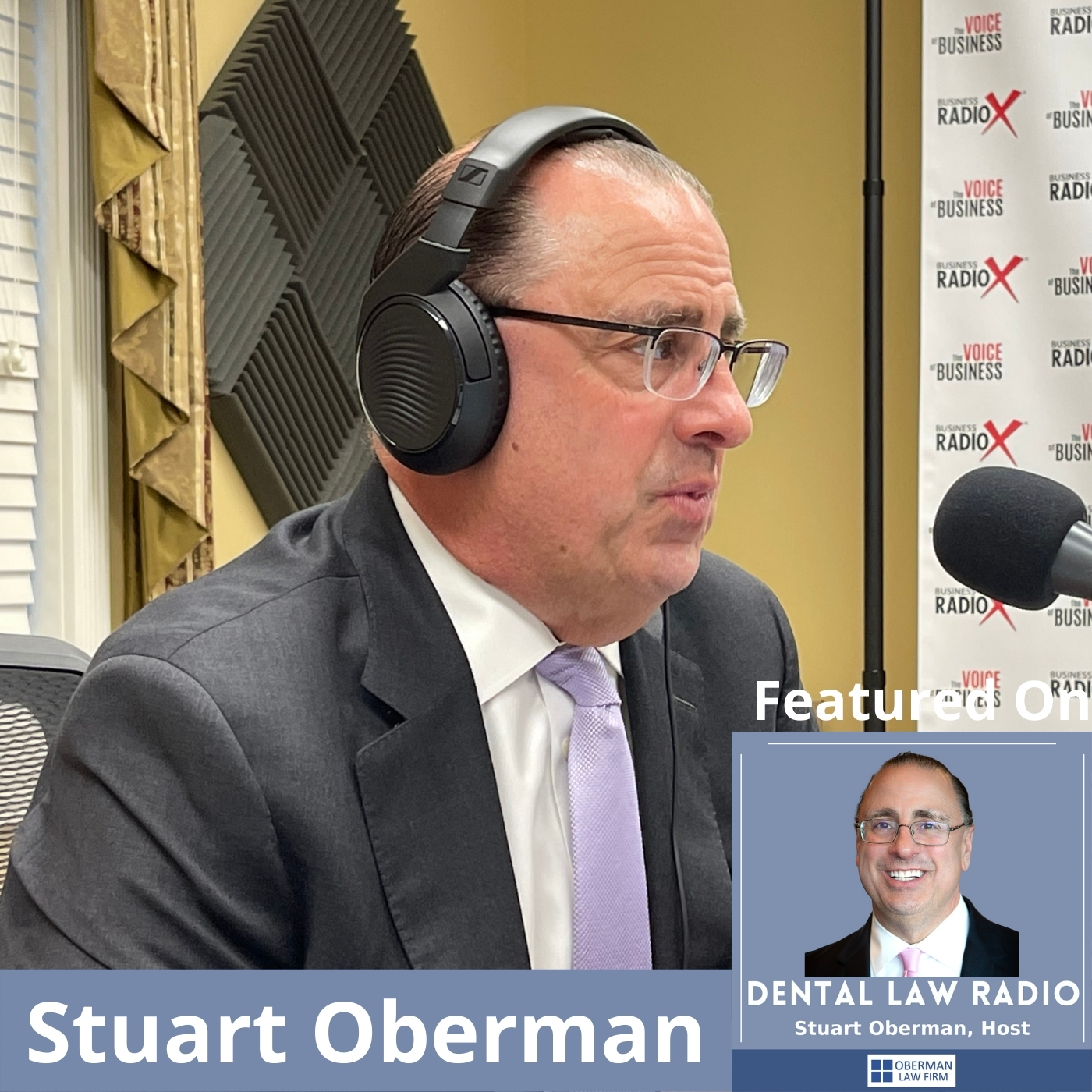
Tagged With: Dental Associate Contracts, Dental Law Radio, non-compete agreement, Oberman Law Firm, Stuart Oberman

What You Need to Know When You Terminate an Employee

September 24, 2021 by John Ray

TerminateEmployeeDLREpisode21Album
Dental Law Radio
What You Need to Know When You Terminate an Employee
Loading
00:00 /
RSS Feed
Share
Link
Embed

Download file

TerminateEmployeeDLREpisode21Album

What You Need to Know When You Terminate an Employee (Dental Law Radio, Episode 21)

In Stuart Oberman’s experience with clients, the biggest problem he sees with employee terminations is the absence of a plan, and more specifically, lack of documentation. In this episode of Dental Law Radio, Stuart outlines what a solid employee termination process should include to avoid the significant long-term costs caused by emotional, seat-of-the-pants actions. Dental Law Radio is underwritten and presented by Oberman Law Firm and produced by the North Fulton studio of Business RadioX®.

TRANSCRIPT

Intro: [00:00:02] Broadcasting from the Business RadioX studios in Atlanta, it’s time for Dental Law Radio. Dental Law Radio is brought to you by Oberman Law Firm, a leading dental-centric law firm, serving dental clients on a local, regional and national basis. Now, here’s your host, Stuart Oberman.

Stuart Oberman: [00:00:25] Hello, everyone, and welcome to Dental Law Radio. Well, this is going to be sort of part two. Last week, we spoke about how to hire an employee and some of the things that you need to include in the new hire package. And I mentioned then that it’s easy to get married; it is tough to get divorced. Well, today, we’re going to get divorced. We’re going to talk about what you need to know when you terminate an employee.

Stuart Oberman: [00:00:57] And we get these calls all the time. What do I need to know? What do I need to do? How do I need to do it? And where are my pitfalls? And I will tell you, your biggest pitfall is not having the documentation upfront, and then not having a plan when you plan to terminate. And in today’s world, firing an employee is complex and challenging. You have a lot of scenarios, wrongful termination, discrimination issues, willful termination, quitting, resigning. So, before you even think about firing an employee and will not take you long to figure out that you need to fire an employee when you make up your mind to do it, there are signs, a lot of times, already there.

Stuart Oberman: [00:01:55] So, again, the process is complex and challenging. And then how to end the termination is often the most difficult part. But I want to take a look at some key steps that you need to look at when you involuntarily terminate. Not a resignation, not those kinds of things, but when you’ve got to make the hard decision, is “I’m cutting you loose. Now, I’m going to make a plan to do it.”

Stuart Oberman: [00:02:23] So, first and foremost, you’ve got to document the process. You have to create a plan. What is your strategy for termination? We’re going to get into that. Who do you communicate the termination to with your key staff members? There are some people in your office you never want to tell you’re terminating someone because that person will find out in 15 minutes. So, you have to understand who and what positions you notify. And then, one thing you have to do is notify your IT administrator or your provider. And we’re going to go into that in a little bit because that is a key process.

Stuart Oberman: [00:03:09] So, documenting the separation of an employment process is very difficult. And I will always say, and I’ve said it in the past, when I talk to the dental schools, talk about things in writing, if it’s not in writing, it never happened; if it was not in writing, it was never a procedure; and if it was not in writing, it was never a processed. So, what happens is when you compile detailed documentation, it shows you followed the company policy through the discipline and termination process, you were already ahead of the game.

Stuart Oberman: [00:03:44] Now, that’s assuming that you have a process. So, if we’re talking about all this, and you don’t have an employee manual or process for terminating, that’s your first step. What does your employee manual say? How detailed is it? If you have an employee manual that has no instructions, it’s 20 pages, I would urge you to shred it. Call us and get you another employee manual because that is a key denominator in this whole process here.

Stuart Oberman: [00:04:14] So, you have to figure out what your effective date of the termination and record it. What day did this happen? I do not want you to rely on text. “Well, we have a text message that says they were fired on August 1st.” No, no, no, no, no, no, no. That’s not going to get it. Did you document the termination? Supporting details. Did you have performance reviews? Did you have a warning and discipline, action or process? Did you provide an official termination letter to the employee, including the date of termination? And did you outline the benefits?

Stuart Oberman: [00:04:58] Now, I’m not talking about a 36-page letter to the employee, but something in your file documenting that they received notice, and here is the separation notice, and then here is what’s going to take place benefit-wise. So, one key area is that when you fire an employee, you got a void. Who’s going to fill that position void? “Well, we’ll get around to it.” You can’t do that. You already got to have a plan in place once that employee is fired. And when you make the plan, you’ve got to outline the process and functions of that employee’s responsibility. Who’s going to take over that? Because statistically, you, as a dental practice owner, spend more time in the chair with the patient contact-wise than any other profession, face to face. You do not have the time to do this as an afterthought.

Stuart Oberman: [00:05:57] So, what happens is that when you terminate, again, you’ve got to figure out what are the key steps that I’m going to talk to my employees about? Do you have an HR reporting process? Who is that person they’re going to talk to? What is the procedure? Do you have a benefits person? Do you have a CFO who they need to talk to?

Stuart Oberman: [00:06:23] One of the most important things I want to mention right now is your IT person, whether they are in-house or whether they are a third party. When you make the decision to terminate an employee, one of the first people you’re going to call or should call and sit down with and talk to is your IT person. You’ve got to outline what access that employee has; what access they will not have; how do you cancel the computer; how do you get their phone systems back to the office, if you will; what is on their cell phone; how do you disable passwords; how do you block access? So many employees in today’s world have access after hours. How do you block that record? How do you determine whether or not that employee has downloaded your confidential information?

Stuart Oberman: [00:07:26] Again, you must have a nondisclosure agreement and a confidentiality agreement, like we discussed in part one of this podcast. How do you delete two phone messages off their phone? Where do you go with the data? That’s absolutely critical. This is one of those important steps that you can do because as soon as you terminate that employee, there are times you’re going to have to do it over the phone. There are some cases, there’s just no way around that. And I will tell you, when that person hangs up on the other end that you’ve terminated, I will tell you, they’re going to go right to their computer, and you need to shut off access immediately.

Stuart Oberman: [00:08:12] Now, what protocols do you follow? Well, how many protocols? You got to have protocols. What’s the separation package look like? Do you have a termination letter? What are the benefits? What’s related paperwork? Who is going to be their contact in HR? Do you want that former employee calling you and asking you for information? Of course not.

Stuart Oberman: [00:08:40] One of the things you’ve got to take a look at also critically from a employment law standpoint is what money do you owe them or bonuses after they are terminated? I hear so many times. “Well, Dr. Smith did some really, really, really bad dental work. I’m going to withhold about $4000 from his pay because I know there’s going to be recalls, redos, remakes.” Wrong. You can not hold money like that.

Stuart Oberman: [00:09:13] Now, if you have an employment contract that states that you can withhold a certain amount of money for a certain period of time, that’s a different scenario versus you’re a lousy employee, you’re going to cause me money after you leave, and I’m just going to withhold money from your paycheck. That will get you in trouble really quick with the Federal and State Department of Labor. So, on that employee’s final paycheck, my strong recommendation is you evaluate the final amounts, and you determine what that final amount is. If you’re going to withhold any type of compensation, you better have a really, really good reason.

Stuart Oberman: [00:10:01] Now, one thing to consider also from a benefits standpoint, does your policy manual say that they’re entitled to unused vacation, sick time, PTO time? What does your manual say? “Well, it doesn’t say anything. I don’t have that information.” That is a very, very poignant sticking point. And when that person retires, all that has to be outlined. You cannot wait to do this, or decide this or make a sort of unrushed decision after they’re terminated. So, before that employee is terminated somehow, someway, you need to make sure you’ve got their updated contact information.

Stuart Oberman: [00:10:51] One thing that absolutely drives me crazy is that employees or doctors, a lot of times will have a — I’ll use the words Gmail accounts, Yahoo accounts, Comcast account, and it’s not to single out any of those companies, but what happens is, is that the employees have their own accounts. And what happens is, also, they change their passwords without telling our doctors or employers on those accounts.

Stuart Oberman: [00:11:27] From an IT standpoint, once that termination takes place, I will tell you point blank, you’re going to lose access to that employee’s email address because they’ve changed the password. And now, you are at their ransom. What’s going to happen if that employee somehow puts the Facebook account in their name? Is there a procedure for that? What does your IT company say? Do you even have an IT company? These are the things that you’ll be long litigating items after the termination process if you do not have it squared away. Now, I would urge you to have an email address that is tied to your website and not separate Gmail accounts. Again, there’s nothing wrong with Gmail accounts, but it is very difficult if everyone has their own separate island in a dental practice or any kind of employment.

Stuart Oberman: [00:12:35] So, you’ve got to start notifying patients that this person is no longer there. And they’re going to ask why, and you’ve got to develop the company policy as to why they are not there, which is very short, sweet, to the point. You never ever give away details, You never tell exactly why. I don’t care what the situation is, but it’s got to be across the company lines.

Stuart Oberman: [00:13:06] So, one of the things we also need to take a look at is keeping employee records. You must have a secure, centralized HR to house the employee records. Never, ever, ever in your lifetime do you have employees that have control of their own personnel files because what’ll happen is when they leave, I will guarantee you that those files are gone. So, do you have backup files? Who has access to your backup files? Are you using iCloud storage? Are these records safe from interruption, natural disasters, fires? Whatever it may be, these are all contingencies. And again, I cannot stress this enough where you have to have total, total strict confidentiality with this documentation as to who the employees who are concerned.

Stuart Oberman: [00:14:11] So, those are just really a couple of things that we want to do as far as the termination process. It is very complex. Do you want to have a severance? That’s a whole another conversation. That’s a whole another day. How much do you want to pay? “Well, I don’t want to pay anything.” I will tell you, there are sometimes where it is cheaper to get rid of employees with a monetary substance and a full release of liability, and a separation notice, depending on their age. It will depend on what kind of document that looks like meets the requirements. But again, it is so much easier to get married than it is divorced, and you’ve got to have these records in order to ensure a smooth transition in the termination process. And it can get rocky, folks. As a firm, we’re on both sides of that fence. We will represent employees, and we will represent employers. So, we get really both sides of that avenue. So, we’ve got a pretty good look as to what should be there and should not be there.

Stuart Oberman: [00:15:19] Well, folks, thank you for joining us today. Two-part series, hiring checklist and what you need to know to terminate employees. Critical steps, you need both. Thank you again. If you need to reach out to us, please feel free to reach out to me at stuart@obermanlaw.com. 770-886-2400. And we will see you soon on the radio.


About Dental Law Radio

Hosted by Stuart Oberman, a nationally recognized authority in dental law, Dental Law Radio covers legal, business, and other operating issues and topics of vital concern to dentists and dental practice owners. The show is produced by the North Fulton studio of Business RadioX® and can be found on all the major podcast apps. The complete show archive is here.

Stuart Oberman, Oberman Law Firm

Oberman Law Firm
Stuart Oberman, host of “Dental Law Radio”

Stuart Oberman is the founder and President of Oberman Law Firm. Mr. Oberman graduated from Urbana University and received his law degree from John Marshall Law School. Mr. Oberman has been practicing law for over 25 years, and before going into private practice, Mr. Oberman was in-house counsel for a Fortune 500 Company. Mr. Oberman is widely regarded as the go-to attorney in the area of Dental Law, which includes DSO formation, corporate business structures, mergers and acquisitions, regulatory compliance, advertising regulations, HIPAA, Compliance, and employment law regulations that affect dental practices.

In addition, Mr. Oberman’s expertise in the health care industry includes advising clients in the complex regulatory landscape as it relates to telehealth and telemedicine, including compliance of corporate structures, third-party reimbursement, contract negotiations, technology, health care fraud and abuse law (Anti-Kickback Statute and the State Law), professional liability risk management, federal and state regulations.

As the long-term care industry evolves, Mr. Oberman has the knowledge and experience to guide clients in the long-term care sector with respect to corporate and regulatory matters, assisted living facilities, continuing care retirement communities (CCRCs). In addition, Mr. Oberman’s practice also focuses on health care facility acquisitions and other changes of ownership, as well as related licensure and Medicare/Medicaid certification matters, CCRC registrations, long-term care/skilled nursing facility management, operating agreements, assisted living licensure matters, and health care joint ventures.

In addition to his expertise in the health care industry, Mr. Oberman has a nationwide practice that focuses on all facets of contractual disputes, including corporate governance, fiduciary duty, trade secrets, unfair competition, covenants not to compete, trademark and copyright infringement, fraud, and deceptive trade practices, and other business-related matters. Mr. Oberman also represents clients throughout the United States in a wide range of practice areas, including mergers & acquisitions, partnership agreements, commercial real estate, entity formation, employment law, commercial leasing, intellectual property, and HIPAA/OSHA compliance.

Mr. Oberman is a national lecturer and has published articles in the U.S. and Canada.

LinkedIn

Oberman Law Firm

Oberman Law Firm has a long history of civic service, noted national, regional, and local clients, and stands among the Southeast’s eminent and fast-growing full-service law firms. Oberman Law Firm’s areas of practice include Business Planning, Commercial & Technology Transactions, Corporate, Employment & Labor, Estate Planning, Health Care, Intellectual Property, Litigation, Privacy & Data Security, and Real Estate.

By meeting their client’s goals and becoming a trusted partner and advocate for our clients, their attorneys are recognized as legal go-getters who provide value-added service. Their attorneys understand that in a rapidly changing legal market, clients have new expectations, constantly evolving choices, and operate in an environment of heightened reputational and commercial risk.

Oberman Law Firm’s strength is its ability to solve complex legal problems by collaborating across borders and practice areas.

Connect with Oberman Law Firm:

Company website | LinkedIn | Twitter
Tagged With: dental practice management, firing employees, Oberman Law, Oberman Law Firm, Stuart Oberman, terminate employee

A Checklist for Hiring New Employees

September 17, 2021 by John Ray

ChecklistforHiringDLREpisode20Album
Dental Law Radio
A Checklist for Hiring New Employees
Loading
00:00 /
RSS Feed
Share
Link
Embed

Download file

ChecklistforHiringDLREpisode20Album

A Checklist for Hiring New Employees (Dental Law Radio, Episode 20)

You’ve hired that new employee. Now what? As host Stuart Oberman discusses, there should be an onboarding process which involves an offer letter, a well-written employee manual (not the 20-page version downloaded from the internet), consent forms, and much more. Missing steps and inadequate documentation here sow the seeds of costly problems later. Dental Law Radio is underwritten and presented by Oberman Law Firm and produced by the North Fulton studio of Business RadioX®.

TRANSCRIPT

Intro: [00:00:01] Broadcasting from the Business RadioX studios in Atlanta, it’s time for Dental Law Radio. Dental Law Radio is brought to you by Oberman Law Firm, a leading dental-centric law firm serving dental clients on a local, regional and national basis. Now, here’s your host, Stuart Oberman.

Stuart Oberman: [00:00:26] Hello, everyone, and welcome to Dental Law Radio. So, this topic, today’s topic, a checklist for hiring new employees. I will tell you, I said this before on previous podcasts, we are very fortunate. As a law firm, we have clients in approximately 30 states all the way from California, Maine to Florida. And we do a substantial amount of HR work. Now, what does that mean, HR, human resources? So, we work with our clients on hiring, firing, internal operations, documents, non-competes, nondisclosures, non-solicitations. And one of the things that we have found out that our doctors do not – do not – onboard properly, they don’t have the processes in place, they don’t understand how to onboard, they don’t have a checklist, and they have absolutely no process in place because, at some point, without a good hiring process, if that employee does not work out your firing process, which we will cover in a subsequent podcast, will be an absolute disaster.

Stuart Oberman: [00:01:45] So, let’s take a look at a couple of things that we’ve run into. First and foremost, before that employee starts, day one, you have to have a series of forms and onboarding documents. What does that look like in your practice? You probably think, “Well, I don’t have an onboarding process.” So, then next step is you better get one because you have to have one. So, I would encourage you – encourage you – to have a new hire checklist. If you don’t have one, I’ll give you information on how to get one at the end of this podcast.

Stuart Oberman: [00:02:25] So, first and foremost, when you interview – and we covered interviewing on our previous podcasts – the proper way to interview. So, let’s assume you hire the employee. Now what? Every position that you hire has to have … or I say has to, should have an offer letter. Now, that doesn’t mean one paragraph, that means a formal offer letter, which should include a couple of things. A job description: What department are they working in? What’s their work schedule? Now, you maybe thinking, “Well, I’m going to give them an employment contract.” No. In many cases, an employment contract will get you in more trouble than not having one. So, it depends on your position within the dental practice or for those that are listening that do not own a dental practice, within your organization.

Stuart Oberman: [00:03:26] So, again, first and foremost, offer letter, job information, title, department, what is the work schedule, how long are they going to be there, what’s the compensation, what’s the benefits, what are the employer responsibilities? So, with a caveat to that, the employee benefits, assuming it’s employer’s responsibilities, should already be outlined in your employee manual.

Stuart Oberman: [00:03:56] So, we see a lot of problems with employee manuals. We have doctors that will come up to us and say, “Hey, you know what? I got an employee manual for my friend, and it’s about 25 pages.” My first thought on that is you probably need to shred it. It’s just going to get you in more trouble than not. And what are the termination conditions? It is easy to get married; it is hard to get divorced.

Stuart Oberman: [00:04:24] So, then is next step is what forms do you need from a governmental standpoint to classify and compensate employees with? And it is amazing to me how many CPAs will ask us for this information, which is, a lot of times, very basic. Again, you should have all this prepared, especially in today’s market where turnover is rampant. Of course, you got to have a W-4; for contractors, W9. It is a key concept to have your workers classified as employees or independent contractors. That’s a whole another discussion on classifications. You’re I9s, your state and federal withholdings. What are you going to do when you have multiple practices that are in multiple states? Each one is different. Do you fall for a foreign entity in that particular state, even though that is not your home base? Your E-system verification. Again, those are your basic forms. You should already have those prepared and ready to roll from day one.

Stuart Oberman: [00:05:40] So, your internal forms are a little bit different and they’re relationship-based. So, these are more what I call your protectionary forms, which every practice – and again, for those that are listening that are not dental-related – every business should have. Now, depending on your position, whether or not that is a key employee position, you will want to have a non-compete. “Well, non-competes are not enforceable.” They are absolutely enforceable. It depends on the extent. As a general rule, depending on your state, it has to be geographically specific, it cannot be overly broad, and you can’t say, “I will not allow this employee to do this anywhere in the country or in the world.” That is a recipe for disaster.

Stuart Oberman: [00:06:33] Non-disclosure forms. Every – every employee should sign a nondisclosure. What happens in your place of business must and should stay in your place of business. “Well, they won’t sign one.” Then, they should not be working in your office. Every employee signs one, including social media, cell phone, and internet policy. And I would encourage you not to get those forms off of the internet. They’re very complex employment law forms.

Stuart Oberman: [00:07:06] So, then, an employee acknowledgement handbook. So, I can’t tell you how many times I say, “What’s your employee manual say?” “Well, you know, we really did give it to him,” or “We gave it to him.” “Great! Where’s the acknowledgement form that they received it?” “Well, I don’t think they ever gave back to us.” So, honestly, unless your employee really signs an acknowledgment form, in all likelihood, you probably should assume that they did not get it.

Stuart Oberman: [00:07:34] Next, drug and alcohol consent forms for testing. Now, what are you going to do if you have a state that has legalized marijuana? That is a whole another topic for another day. That is special considerations.

Stuart Oberman: [00:07:57] Employee equipment list. Lot of our doctors, a lot of our employers will provide laptops, cellphones, equipment. You better log those in because once that employee leaves, good luck getting them back unless you inventory it. Confidentiality agreements, an absolute must. Again, what stays in the practice — what happens in practice stays in the practice.

Stuart Oberman: [00:08:24] So, then, let’s take a look at a couple of other things. These are just basic things that you really should have. So, then, in the offer letter, an employee benefits documents. You need to give the employees documents regarding life and health insurance. You can’t wait 60, 90, six months, a year later to give the employees this particular set of documents.

Stuart Oberman: [00:08:54] Cellphone plan. What is your cellphone plan? It is amazing in today’s world what employees will keep and store on their cellphones. What happens when that employee leaves and all of your data, because they downloaded it at your request, is on their cellphone? Do you have a policy to delete that? Do you have a policy that will certify from your employees when they leave that that will be deleted? Do you have an app on your phone that will essentially self-destruct the employment information that you’ve sent over to your employees? If you look at the text messages and everything else that you sent over to your employees on a daily basis, it will be amazing what data is on there, and it will be also amazing what happens if that phone is hacked, and where the data goes. Then, I would strongly recommend you specify paid vacation, time off, paid holidays, sick leave. Do not assume that your employees will know that. That’s got to be in writing.

Stuart Oberman: [00:10:07] Then, the next final data is emergency information. People move. Numbers change. Do you know how to get in touch with relatives should something happen at your office place? Now, you’ve got to be really careful with this because in some instances you’re talking about the ADA, American Disabilities Act, and EEOC. Have you obtained a brief medical history in an employment application? Again, we got to take a look at EEOC issues, especially in this world of COVID. We have to take a look at GINA Title II as far as DNA information goes. So, there’s all kind of regulatory matters we need to take a look at, whether it’s food allergies. I mean, in today’s world, we don’t know what employee problems are.

Stuart Oberman: [00:11:05] So, this is a very, very, very brief, brief summary as to what you need on a new hire checklist. And I’ll tell you, we discovered this when our doctors go through an insurance or third-party governmental audit, and they want personnel files for the last five or seven years, they want ID information, they want application information, they want checks as to whether or not those employees were checked off as far as whether or not they’re eligible to provide treatment or see patients that are on the governmental payer list, if you will.

Stuart Oberman: [00:11:50] So, those are all the things that we really want to take a look at that are absolutely mandatory because when you get a governmental order from attorney general’s office or the DOJ on a federal level, and all of a sudden, they are asking for a personnel file, you’ve got a problem if all this is not in there. And all you do is have one photograph and a one-page application process, that’s an absolute recipe for disaster on a audit.

Stuart Oberman: [00:12:18] So, hopefully you’ll take away a couple of things. Take a look at your personnel file, which should always be kept separate from all the other records, especially regarding COVID-19 shot information. That should be absolutely separate from all the other personnel files and should be maintained separately. So, in summary make sure your new hire process is in place, it’s implemented because it is so easy to get into a relationship plan-wise; it is absolutely devastating to, at times, get out of these relationships.

Stuart Oberman: [00:12:59] So, thank you for joining us today. Hopefully, you picked up a couple of good ideas. If you would, feel free to reach out to us. My name is Stuart Oberman, stuart@obermanlaw.com. 770-886-2400. And please follow us on our podcast. And I always say, if you just pick up one bit of information from each podcast, it is a fantastic day. Thanks for joining us. And we will talk to you soon.

About Dental Law Radio

Hosted by Stuart Oberman, a nationally recognized authority in dental law, Dental Law Radio covers legal, business, and other operating issues and topics of vital concern to dentists and dental practice owners. The show is produced by the North Fulton studio of Business RadioX® and can be found on all the major podcast apps. The complete show archive is here.

Stuart Oberman, Oberman Law Firm

Oberman Law Firm
Stuart Oberman, host of “Dental Law Radio”

Stuart Oberman is the founder and President of Oberman Law Firm. Mr. Oberman graduated from Urbana University and received his law degree from John Marshall Law School. Mr. Oberman has been practicing law for over 25 years, and before going into private practice, Mr. Oberman was in-house counsel for a Fortune 500 Company. Mr. Oberman is widely regarded as the go-to attorney in the area of Dental Law, which includes DSO formation, corporate business structures, mergers and acquisitions, regulatory compliance, advertising regulations, HIPAA, Compliance, and employment law regulations that affect dental practices.

In addition, Mr. Oberman’s expertise in the health care industry includes advising clients in the complex regulatory landscape as it relates to telehealth and telemedicine, including compliance of corporate structures, third-party reimbursement, contract negotiations, technology, health care fraud and abuse law (Anti-Kickback Statute and the State Law), professional liability risk management, federal and state regulations.

As the long-term care industry evolves, Mr. Oberman has the knowledge and experience to guide clients in the long-term care sector with respect to corporate and regulatory matters, assisted living facilities, continuing care retirement communities (CCRCs). In addition, Mr. Oberman’s practice also focuses on health care facility acquisitions and other changes of ownership, as well as related licensure and Medicare/Medicaid certification matters, CCRC registrations, long-term care/skilled nursing facility management, operating agreements, assisted living licensure matters, and health care joint ventures.

In addition to his expertise in the health care industry, Mr. Oberman has a nationwide practice that focuses on all facets of contractual disputes, including corporate governance, fiduciary duty, trade secrets, unfair competition, covenants not to compete, trademark and copyright infringement, fraud, and deceptive trade practices, and other business-related matters. Mr. Oberman also represents clients throughout the United States in a wide range of practice areas, including mergers & acquisitions, partnership agreements, commercial real estate, entity formation, employment law, commercial leasing, intellectual property, and HIPAA/OSHA compliance.

Mr. Oberman is a national lecturer and has published articles in the U.S. and Canada.

LinkedIn

Oberman Law Firm

Oberman Law Firm has a long history of civic service, noted national, regional, and local clients, and stands among the Southeast’s eminent and fast-growing full-service law firms. Oberman Law Firm’s areas of practice include Business Planning, Commercial & Technology Transactions, Corporate, Employment & Labor, Estate Planning, Health Care, Intellectual Property, Litigation, Privacy & Data Security, and Real Estate.

By meeting their client’s goals and becoming a trusted partner and advocate for our clients, their attorneys are recognized as legal go-getters who provide value-added service. Their attorneys understand that in a rapidly changing legal market, clients have new expectations, constantly evolving choices, and operate in an environment of heightened reputational and commercial risk.

Oberman Law Firm’s strength is its ability to solve complex legal problems by collaborating across borders and practice areas.

Connect with Oberman Law Firm:

Company website | LinkedIn | Twitter
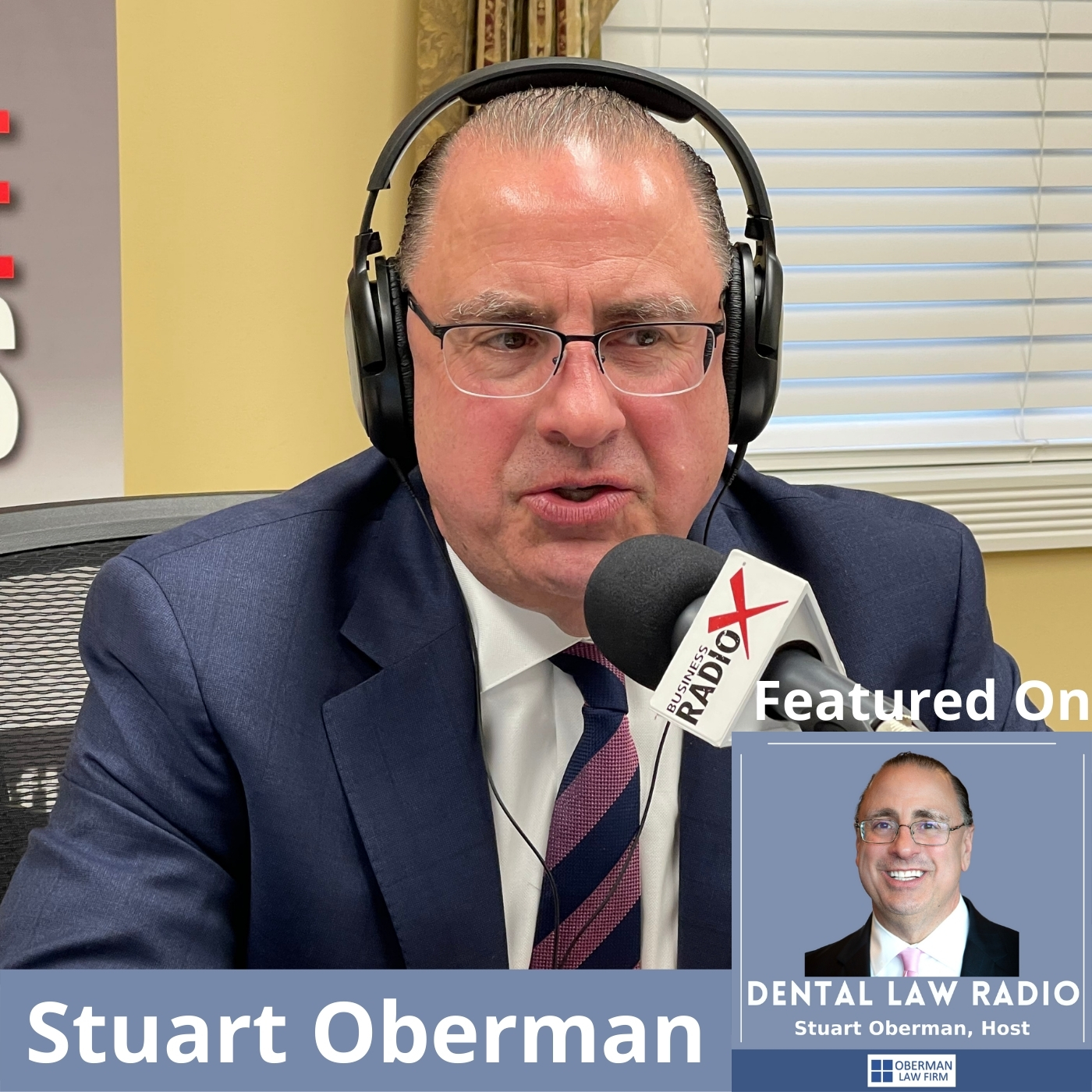
Tagged With: checklist for hiring new employees, dental practice management, employees, Oberman Law Firm, Onboarding new hires, Stuart Oberman

  • « Previous Page
  • 1
  • …
  • 5
  • 6
  • 7
  • 8
  • 9
  • 10
  • Next Page »

Business RadioX ® Network


Our Most Recent Episode

CONNECT WITH US

  • Email
  • Facebook
  • LinkedIn
  • Twitter

  • YouTube

Our Mission

We help local business leaders get the word out about the important work they’re doing to serve their market, their community, and their profession.

We support and celebrate business by sharing positive business stories that traditional media ignores. Some media leans left. Some media leans right. We lean business.

Sponsor a Show

Build Relationships and Grow Your Business. Click here for more details.

Partner With Us

Discover More Here

Terms and Conditions
Privacy Policy

Connect with us

Want to keep up with the latest in pro-business news across the network? Follow us on social media for the latest stories!
  • Email
  • Facebook
  • Google+
  • LinkedIn
  • Twitter

  • YouTube

Business RadioX® Headquarters
1000 Abernathy Rd. NE
Building 400, Suite L-10
Sandy Springs, GA 30328

© 2025 Business RadioX ® · Rainmaker Platform

BRXStudioCoversLA

Wait! Don’t Miss an Episode of LA Business Radio

BRXStudioCoversDENVER

Wait! Don’t Miss an Episode of Denver Business Radio

BRXStudioCoversPENSACOLA

Wait! Don’t Miss an Episode of Pensacola Business Radio

BRXStudioCoversBIRMINGHAM

Wait! Don’t Miss an Episode of Birmingham Business Radio

BRXStudioCoversTALLAHASSEE

Wait! Don’t Miss an Episode of Tallahassee Business Radio

BRXStudioCoversRALEIGH

Wait! Don’t Miss an Episode of Raleigh Business Radio

BRXStudioCoversRICHMONDNoWhite

Wait! Don’t Miss an Episode of Richmond Business Radio

BRXStudioCoversNASHVILLENoWhite

Wait! Don’t Miss an Episode of Nashville Business Radio

BRXStudioCoversDETROIT

Wait! Don’t Miss an Episode of Detroit Business Radio

BRXStudioCoversSTLOUIS

Wait! Don’t Miss an Episode of St. Louis Business Radio

BRXStudioCoversCOLUMBUS-small

Wait! Don’t Miss an Episode of Columbus Business Radio

Coachthecoach-08-08

Wait! Don’t Miss an Episode of Coach the Coach

BRXStudioCoversBAYAREA

Wait! Don’t Miss an Episode of Bay Area Business Radio

BRXStudioCoversCHICAGO

Wait! Don’t Miss an Episode of Chicago Business Radio

Wait! Don’t Miss an Episode of Atlanta Business Radio