Business RadioX ®

  • Home
  • Business RadioX ® Communities
    • Southeast
      • Alabama
        • Birmingham
      • Florida
        • Orlando
        • Pensacola
        • South Florida
        • Tampa
        • Tallahassee
      • Georgia
        • Atlanta
        • Cherokee
        • Forsyth
        • Greater Perimeter
        • Gwinnett
        • North Fulton
        • North Georgia
        • Northeast Georgia
        • Rome
        • Savannah
      • Louisiana
        • New Orleans
      • North Carolina
        • Charlotte
        • Raleigh
      • Tennessee
        • Chattanooga
        • Nashville
      • Virginia
        • Richmond
    • South Central
      • Arkansas
        • Northwest Arkansas
    • Midwest
      • Illinois
        • Chicago
      • Michigan
        • Detroit
      • Minnesota
        • Minneapolis St. Paul
      • Missouri
        • St. Louis
      • Ohio
        • Cleveland
        • Columbus
        • Dayton
    • Southwest
      • Arizona
        • Phoenix
        • Tucson
        • Valley
      • Texas
        • Austin
        • Dallas
        • Houston
    • West
      • California
        • Bay Area
        • LA
        • Pasadena
      • Colorado
        • Denver
      • Hawaii
        • Oahu
  • FAQs
  • About Us
    • Our Mission
    • Our Audience
    • Why It Works
    • What People Are Saying
    • BRX in the News
  • Resources
    • BRX Pro Tips
    • B2B Marketing: The 4Rs
    • High Velocity Selling Habits
    • Why Most B2B Media Strategies Fail
    • 9 Reasons To Sponsor A Business RadioX ® Show
  • Partner With Us
  • Veteran Business RadioX ®

The National Black Business Pitch: How Support Networks Fuel the Success of Women-Led Startups

January 14, 2025 by angishields

WIM-April-Kelly-Feature
Women in Motion
The National Black Business Pitch: How Support Networks Fuel the Success of Women-Led Startups
Loading
00:00 /
RSS Feed
Share
Link
Embed

Download file

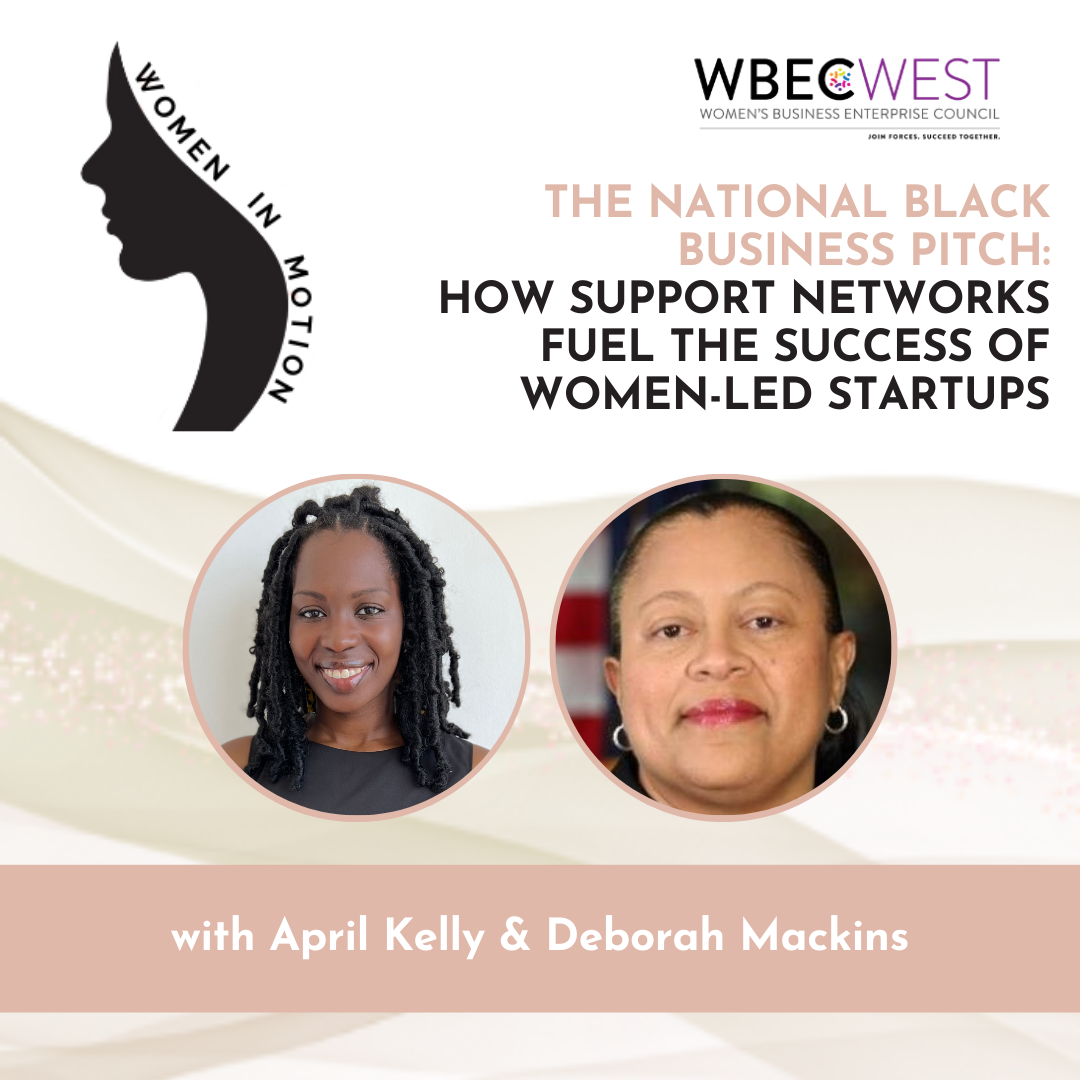
In this episode of Women in Motion, April Kelly, CEO of the plant-based infant formula startup Sure! and her mentor Deborah Mackins, Senior Manager of Vendor Diversity at Arrow Electronics, join Lee Kantor to discuss April’s journey as a Black female entrepreneur, her second-place win in the National Black Business Pitch competition, and the challenges of securing funding. April shares how her personal experiences as a mother inspired her product, while Deborah emphasizes the importance of mentorship and authentic storytelling in successful pitching. The episode highlights resilience, community support, and the power of personal narratives in entrepreneurship.

April-KellyApril Kelly, the CEO and self-proclaimed startup supermom is the founder of Sure! a groundbreaking plant-based infant formula startup company trailblazing with their allergen-centric approach. Over the past few years, April has assembled a remarkable team of healthcare professionals, regulatory experts, and food scientists, setting new standards in the industry.

Her impressive achievements, including the NC Idea $10K Micro grant and National Black Business Pitch 2nd Place Winner, two-time participation in ECU’s I-Corp Program, and recognition in the Women’s Business Enterprise National Council pitch competition, highlight her potential to revolutionize infant formula and create lasting impact.

As the first black female-owned infant formula startup in the country, her mission focuses on fostering innovation powered by inclusion to create a healthier, more equitable world—a “sure” world.

Connect with April on Instagram.

Deborah-MackinsDeborah Mackins, Senior Manager of Vendor Diversity, joined Arrow Electronics in May of 2023 to launch and lead Arrow’s Vendor Diversity program. She has robust Supplier Diversity, Strategic Sourcing and Procurement experience in several industries including retail, financial services, electrical utilities, aerospace, and automotive.

Deborah is passionate about supplier diversity and has helped companies increase their spending and access to diverse suppliers, manage risk in the supply chain, and provide suppliers with opportunities for growth, mentoring and development.

Deborah currently serves on WBEC-West’s Board of Directors and is a recipient of DiversityPlus Magazine’s 2023 “Top 25 Women in Power Impacting Diversity”.

Follow Arrow on LinkedIn, Facebook and Instagram.

Music Provided by M PATH MUSIC

Transcript-iconThis transcript is machine transcribed by Sonix


TRANSCRIPT

Intro: broadcasting live from the Business RadioX studios, it’s time for Women in Motion. Brought to you by WBEC-West. Join forces. Succeed together. Now, here’s your host.

Lee Kantor: Lee Kantor here. Another episode of Women in Motion, and this is going to be a good one. But before we get started, it’s important to recognize our sponsor, WBEC-West. Without them, we couldn’t be sharing these important stories. Today on Women in Motion, we’re focusing in on the National Black Business Pitch. We have some of the people who participated, along with their mentors. And on today’s episode, we have April Kelly and her mentor, Deborah Mackins. Welcome.

Deborah Mackins: Thank you.

April Kelly: Thank you. Glad to be here.

Lee Kantor: Well, I am so excited to learn about each of you. And we’ll kick it off with April. April, please tell us a little bit about your company.

April Kelly: Absolutely. So, I am the CEO and Startup Supermom of Sure. We are a plant-based infant formula startup company trailblazing with our allergen-centric approach. So, we’ve been on this journey for about five and a half years now, and we are gearing up to launch our very first product out into the market. And so, the funding that we receive from the Pitch competition is actually helping us to do that. And so, it was a great opportunity working with Deborah, and I’ll pass it off to her to introduce herself as well.

Lee Kantor: All right. Deborah, do you want to tell us a little bit about yourself and how you got involved in the NBBP?

Deborah Mackins: Sure. And I’d just like to say thank you for the opportunity, Lee. My name is Deborah Mackins. I’m Senior Manager of Vendor Diversity with Arrow Electronics. I have been in this role for about a year and a half now to stand up our program. And I had the pleasure of meeting April Kelly and being her mentor for the National Black Business Pitch. This is my second year being involved with this. And for me personally, it was just a great experience, not only working with April, but just being involved with the National Black Business Pitch overall.

Lee Kantor: Now, April, can you tell us a little bit about this Pitch contest? Why was it important for you to get involved? And what did you kind of get out of going through it, obviously, other than the seed money and the victory or the second-place victory?

April Kelly: Yeah, absolutely. Well, when I first learned about the National Black Business Pitch, I definitely felt a need to participate and at the very least, shoot my shot because as a black female founder, that is one of our biggest pain points and obstacles is the funding piece. And so, that was the first reason. But after learning more about who they are as an organization and what they do and just some of the previous winners, it just seemed like a no brainer. And then, so after winning, coming in place, second place, just shy of about a full point. So, we did a great job, Deborah, working together to get me geared up for that. But the mentorship was really what made the difference for me because not only was it… did it help me to really refine my pitch, but it also boosted my confidence. Just having that additional layer of support, the expertise that Deborah was able to bring about, it really helped me to do things and see things from a different perspective than I had before.

And so even the pitch that we… our winning pitch, we continue to use that same pitch. So, it’s definitely a great wealth of relationship that I feel like I’ve been able to accomplish with Deborah. And then, also just getting better… well, more well versed on how to articulate, you know, our value proposition and what makes us different, what makes us stand out. And, you know, at the very end of the day, why should people support what we have going on with their time, with their connections and with their funding?

Lee Kantor: So, I’m going to ask you each this, and I’d like kind of your angle on it, but what are some of the key factors that make a successful pitch? Let’s start with you, April. Like what do you think was the thing that helped you get the victory that you got or the second-place victory that you got?

April Kelly: It’s definitely the authentic storytelling. That’s what always stands out. It doesn’t matter how well my deck is put together or the different visuals or even the stats, the numbers, it’s all about how it ties back into my own personal story as a founder and the why behind what it is that I’m doing. And that’s always been my secret sauce. And I think if I could speak for most entrepreneurs, it’s everyone’s secret sauce because no one can tell your story like you can. And all of our stories are a little different. And so, that’s what makes it interesting and makes you competitive in the market.

Lee Kantor: And, Deborah, when you’re mentoring folks, how do you help them kind of build this successful pitch? And what are the kind of key elements that you’re looking for when you’re helping them?

Deborah Mackins: Well, for me, it’s very important for me to do the research to understand what the products or services are that the business owner has developed, just to understand that and it’s really very close to having a very powerful elevator pitch. You know, I go to a lot of conferences and meet many business owners, and typically you have about 30 to 45 seconds to capture someone’s attention that they’re going to want to know more about your products or services. So, you know, just discussing that with April to ensure that she had that elevator pitch that was crisp, sharing her personal story. You know, April has a lot of passion on the product that she has developed. It is her own personal story, and it’s very impactful to large communities. So, I think when you tie that elevator pitch, as well as personal stories, passion, I think that can be very impactful. And also, the visuals. I think April mentioned having visuals, so that people can see your logo, see… you know, possibly see your product, something to capture someone’s attention and keep it. And April, she did a fantastic job doing that.

Lee Kantor: Well, April, let’s get kind of into the weeds about your product. Can you share us a little bit about your backstory and maybe a little bit about how this came to be?

April Kelly: I’d be happy to. So, as I mentioned, when I introduced myself, I refer to me as a startup supermom. And so, that would have to mean that I’m a mom and I am of four. And so, with my youngest daughter, when I brought her home from the hospital, I planned to nurse her, and I did for a very short period of time. Unfortunately, I started to struggle with postpartum depression and prematurely had to switch over from nursing full time to completely supplementing with the formula, a very well-known formula on the market. And so, about maybe 24 to 48 hours, somewhere in between that, into us transitioning over into the formula, my daughter ended up having a severe allergic reaction.

And so, at this point, I was really frustrated and holding on to what little sanity I had left. Because we were a vegan family at the time, it was very difficult to find a formula that was plant-based and that had, you know, more natural, recognizable ingredients than the preservatives and the fillers. And so, my husband and I really were kind of at a lost initially and didn’t know, you know, what the next best option would look like. And so, we kind of pulled our family together and we were, you know, just saying, “Hey, just be on the lookout for different formulas or if you come across a safe, healthy recipe that’s been published, please do share it with us.” We, then, begin to just research and spend hours honestly in the grocery stores looking for formula, but not only looking for formula, also educating ourselves on what’s actually in formula, which is a question that I had never asked myself prior to this experience. I kind of just took, you know, what worked for other moms or what the doctor recommended, but I never turned the container to the back to really look at the ingredients that are in formula.

And one thing that I found that was kind of mind blowing was that the number one ingredient in most formulas is corn syrup. And so, we think about, you know, some of the issues that we see our kids having or our infants having when we’re feeding them formula, and one of those is constipation. And corn syrup, actually, causes or attributes to that. And so, we were able to thankfully come across a recipe that had been published and that partnered with the research that we had already been doing gave us enough confidence to go into our own kitchens, and really start to dig into ingredients, and think about, you know, what do we want our baby to eat? Like, how do we want to make sure she’s gotten that complete nutrition?

And so, we started to look at, you know, what… which of these ingredients can be substituted for plant-based, natural, recognizable, store-bought ingredients? And so, once we came up with a recipe that we felt was pretty satisfactory, we went to our pediatrician and kind of told them what our plan was and what we had been doing, and we actually let them screen our recipe, and he ended up giving us the go ahead to feed it to our daughter for the first year of her life. And so, once we made that switch to our recipe, the symptoms that she had started to have as far as the allergic reaction, they started to subside within that first 24 hours. Within 72 hours, she was completely free from all of the symptoms. They had all gone away.

And so, we would continue to monitor her for the first couple of weeks to the next few months, and she started to gain weight. She started to become regular with her bowels and everything was great. And so, I had planned to go back to work. I was actually working in corporate America at the time. And so, I was on my way back in to work. But shortly before that, I decided to hop on to Facebook, and I was going on a mom community at the time, and I started to just… that mom group was really just for moms to come together in a safe space to share some of the more taboo things that we don’t always get the opportunity to discuss in open forum. And so, I talked about my postpartum. I talked about how we came up with this, you know, new recipe for milk for our baby and how she was doing. And while I was doing that, I was making the actual recipe on the live, and I had my daughter wrapped, how they do the baby wearing. I had her wrapped around me and she was asleep.

And so, once I got off that live, I started to get pinged left and right from other viewers that had watched it or that were on during the time that I was or during the live, and they were saying things like, “Hey, I wish I had something like this around when my kids were babies,” or “I could use it now. Is it safe for me to follow your recipe?” and “Thank you so much for sharing your story.” And that, Lee, was my aha moment that led me to believe that “Okay, I thought this was a personal problem, but it sounds like it might be much more of a bigger problem.” And so, from there, we started walking in the dark and trying to put steps in place to figure out if our solution could be commercialized.

Lee Kantor: Now, were you or anybody on your early team food scientists? Like, how did you even like… Or you were just kind of fooling around in the kitchen, just mixing stuff up, and hoping that it tastes good, and it works?

April Kelly: We were literally just parents trying to find a solution for our child. And one thing I like to say is that I truly believe that moms are the world’s best problem solvers, because on a day-in and day-out basis, there’s so many issues that we come about with our little ones, and we have to just throw on the hat and figure it out as we go. However, I will say, after having that success with our pediatrician and being given the green light and then deciding that “Okay, we’re now wanting to see how we can commercialize that,” we very quickly got in contact with the experts because we wanted to make sure that safety was our first and main priority. So, we then partnered with universities like NC State and UNC Chapel Hill and graduate students from their marketing or that were studying marketing and things of that nature, market research, and food scientists, manufacturers and they were able to help us to tweak it just a bit. But I’m proud to say that our recipe is still about 98% the same as it was when we first started. So, we got it almost close to being exactly right.

Lee Kantor: So, at what stage are you at now? Do you have it out in the marketplace?

April Kelly: So, no, we don’t have it out in the marketplace. What we’re doing, we have to do somewhat of a pivot. And because the infant formula industry has such high barriers to entry, and we truly are a startup company building it from the ground up, we noticed that it was going to take a little bit longer to get the infant formula out into the market and to be able to market it as that, as an infant formula. So, we have to continue to do some additional animal studies, human studies and other research before we can get the FDA approval to do that. And so, we pivoted into a toddler beverage, a complete nutrition toddler beverage, very similar to our infant formula recipe that allows parents to safely introduce allergens early and often to de-risk the chances of their child developing allergies later in life. And so, that product is complete and will be on the shelves in the first quarter of next year.

Lee Kantor: Deborah, you must be so proud of April and the progress she’s made.

Deborah Mackins: I am. I mean, it was a total pleasure working with April. Actually, I think I learned a lot just from the experience. I would say yes, I was the mentor but, in some ways, she was the mentor. So that in itself is just remarkable. I’ve never worked with anyone that was a startup owner or business for any type of food or beverage products. So, just learning about that, learning about the product. April also has a marketing background. So, she… and this is very natural for her to, you know, do her due diligence, you know, on the product and, you know, just understanding what customers are looking for, so on and so forth. So, I mean, it was just very, very easy to do. Just a total pleasure.

Lee Kantor: Now, Deborah, do you have any advice for other corporates out there that haven’t gotten involved with the National Black Business Pitch Contest or just any of these other kind of opportunities to mentor? I think that a lot of corporates like yourself, you mentioned you can benefit by learning about these startups and businesses of a smaller size, and that could bring insight to you and your work every day.

Deborah Mackins: Yeah, absolutely. And I think that some corporate members may feel that they don’t have anything to offer to these types of pitches and events, but you do. You know, you work with businesses, whether it’s small or large business every day, you hear some of the things that are going on within your company and others. And so, you have a wealth of knowledge to be able to bring to these entrepreneurs. So why not share it? You’re in these positions, you know, not only to be a benefit to your company, but I think also to entrepreneurs and small businesses. So, I just say just give it a try. And who knows, you may participate year after year, which is something that I’ve been doing for not only with the National Black Business Pitch but with other pitches for some years now. Just give it a try.

Lee Kantor: And would the same thing go towards kind of becoming part of the WBEC-West community? That’d be… I would think that if you’re a woman business owner, that’s kind of a no brainer.

Deborah Mackins: It is. WBEC-West. And actually, I’m on the board of directors for WBEC-West. It has been an absolute pleasure to work with this RPO. Some of the things that WBEC-West does, they certify women business owners. So, basically, if you say that you’re a woman-owned business, they validate that. They also provide opportunities for these businesses to connect with other women businesses to share best practices. WBEC-West also provides opportunities to build relationships with the women business owners and representatives from corporations such as Arrow Electronics, which is the company that I work for. And it’s a great opportunity to build relationships because why people do business with people they know, like and trust. And also, I’d say if you get involved with WBEC-West, get certified, really do get involved. So, that means participating in events, taking advantage of the webinars, perhaps even attending the regional conference. And I should say Dr. Pamela Williamson, who’s the president and CEO of WBEC-West, her and her staff are phenomenal and that’s a bonus as well.

Lee Kantor: So, April, what do you need more of? How can we help you?

April Kelly: Absolutely. As we are gearing up for first quarter and our product debut, we invite anyone who’s listening to check out our website. We are going through a rebrand, so we will no longer be known as The Sure Company. We will be changing our name now to Hello Tavi. And that’s T as in Tom, A, V as in Victor, I. hellotavi.com. Tavi is actually my daughter’s name. And so, just as a nod to her for being our first Sure baby, we are rebranding to fall under her name, and there will be several different micro brands that fall under that. For example, Tavi Babes will be the infant formula. Tavi Tops will be the toddler beverages. And then, as our product portfolio grows, you’ll see the names and the new brand names come out as well.

So, definitely check us out, hellotavi.om. And then, on Instagram follow us at @thetaviway. And we are looking for investors right now. We’re gearing up for our biggest trial run at the end of 2025. And so, every little contribution counts. So, no matter how big or small, we are actually entertaining serious conversations about or with angel investors as well. And so, we would love to have some introductions to investors that may be listening or that you may know of in your network. And then, lastly, introductions to different pediatric or different healthcare professionals in the pediatric and immunology space. We are looking for someone to come on board with us and lead the research project or partner with me in doing so for the human-centered studies that will be happening later on next year.

Lee Kantor: Well, April, congratulations again on being the second-place winner of the $10,000 microgrant from the National Black Business Pitch. And Deborah, thank you so much for your mentoring and all the service you do for WBEC-West and the community. And thank you both for doing the important work that you do. We appreciate both of you.

April Kelly: Thank you. Lee. Thank you for having me.

Deborah Mackins: Great.

Lee Kantor: All right. This is Lee Kantor. We will see you all next time on Women in Motion.
 

Tagged With: Arrow Electronics, Sure!, The National Black Business Pitch

The National Black Business Pitch: Navigating the Spirits Industry and the Power of Mentorship

January 7, 2025 by angishields

WIM-Rachel-Ransom-Feature
Women in Motion
The National Black Business Pitch: Navigating the Spirits Industry and the Power of Mentorship
Loading
00:00 /
RSS Feed
Share
Link
Embed

Download file

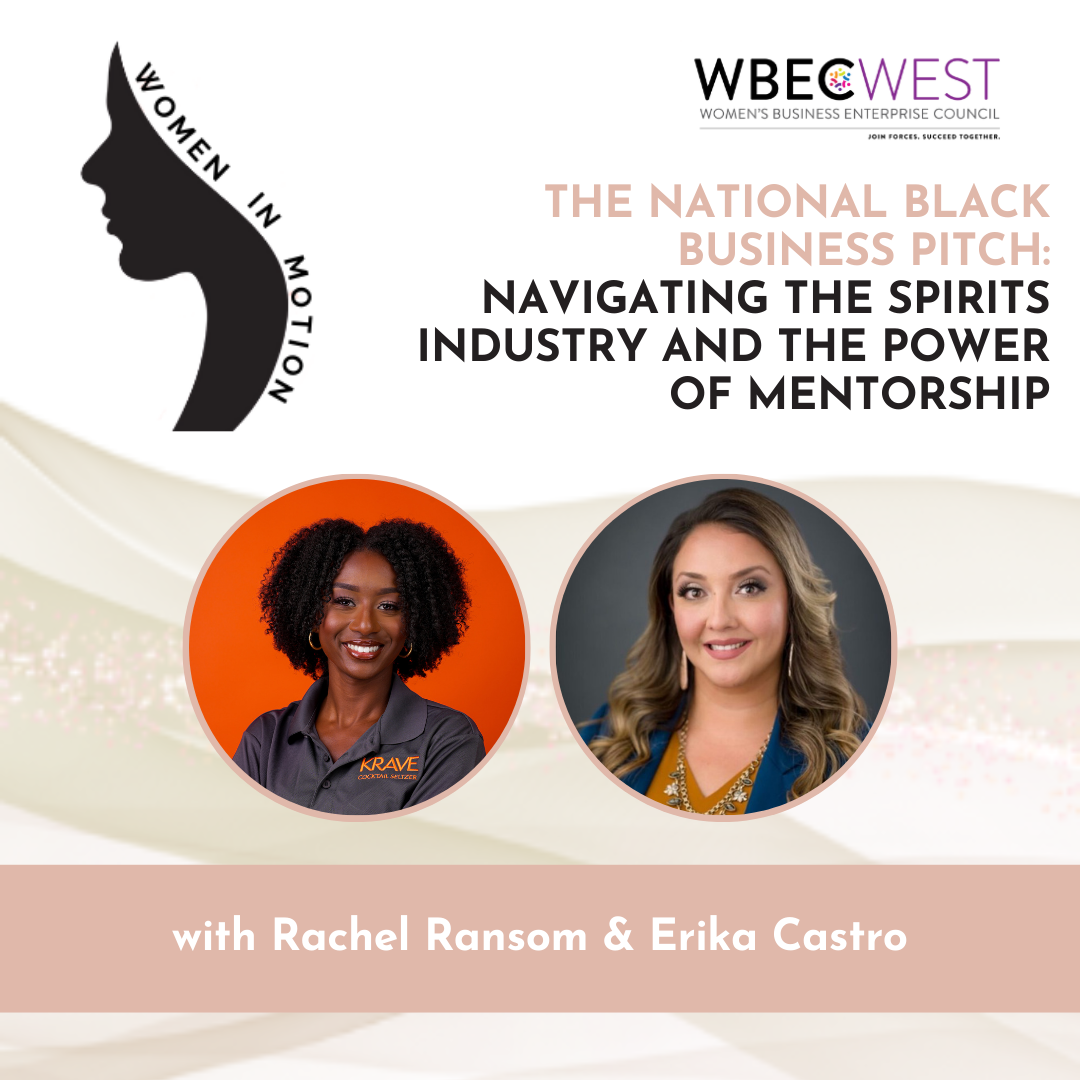
In this episode of Women in Motion, Lee Kantor speaks with Rachel Ransom, co-founder of Krave Cocktail Seltzer, and Erika Castro, a corporate representative from Salt River Project and Rachel’s mentor. Rachel shares her journey in launching Krave, a Washington D.C.-based canned cocktail brand, discussing the challenges of entering the spirits industry and the importance of pitch competitions for funding. Erika provides insights on mentoring, the significance of business certifications for minority and women-owned businesses, and the value of networking. The episode highlights the collaborative spirit and resilience needed for entrepreneurial success.

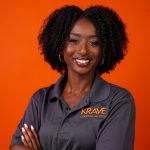
Rachel-RansomRachel Ransom is the Co-Founder of Krave Cocktail Seltzer, a vibrant brand dedicated to redefining the ready-to-drink cocktail experience.

A proud Hampton University alumna, Rachel launched her career in technology and real estate sales, where she honed her expertise in business development and relationship-building. This experience in high-energy industries fueled her passion for entrepreneurship and equipped her with the strategic mindset to bring Krave to life.

Today, Rachel channels her sales acumen and entrepreneurial spirit into expanding Krave’s presence throughout Washington, DC, with a particular focus on Virginia, her home state. Krave-logo

She remains committed to creating a refreshing, quality cocktail brand that resonates with diverse communities and aims to make Krave a staple in the local spirits market.

Follow Krave on LinkedIn.

Erika-CastroErika Castro is the Supplier Diversity and Supplier Management Manager at SRP Salt River Project.

SRP is a community-based, not-for-profit organization providing reliable, affordable and sustainable water and energy to more than 2 million people in central Arizona.

Follow the Salt River Project on LinkedIn, Facebook, X and Instagram.

Music Provided by M PATH MUSIC

Transcript-iconThis transcript is machine transcribed by Sonix


TRANSCRIPT

Intro: Broadcasting live from the Business RadioX Studios, it’s time for Women In Motion. Brought to you by WBEC-West. Join forces. Succeed together. Now, here’s your host.

Lee Kantor: Lee Kantor here, another episode of Women In Motion and this is going to be a good one. But before we get started, it’s important to recognize our sponsor, WBEC-West. Without them, we couldn’t be sharing these important stories. Today on Women In Motion, we have Rachel Ransom with Krave Cocktail Seltzer, and Erika Castro who is the corporate representative from Salt River Project. Welcome.

Rachel Ransom: Thank you.

Lee Kantor: All right. Well, before we get too far into things, let’s talk to Rachel about Krave Cocktail Seltzer. Tell us about your business.

Rachel Ransom: Yeah. So, Krave Cocktail Seltzer is a Washington, D.C. based and black women-owned canned cocktail seltzer brand. We launched the brand back in July of 2024, and we focused on creating your classic cocktail recipes in seltzer form. So, the recipe we have out right now is our Lemon Drop Cocktail, and we’ll be looking to add on a tequila-based cocktail in the upcoming summer.

Lee Kantor: So, what’s your backstory? How’d you get involved in this line of work?

Rachel Ransom: So, Krave was started by me and two of my friends. One of my friends had an idea to start a canned cocktail line, and then in perfect timing a spirits investment company called Pronghorn, who solely invests in minority-owned spirit brands, hosted a pitch competition for former HBCU students. Two of the three of us went to a Historically Black College, Hampton University, and so we applied for this pitch competition with our idea of Krave.

Rachel Ransom: So, basically, we just submitted a PowerPoint to them. They liked our PowerPoint, gave us startup money of $10,000, and flew us down to Miami to pitch to investors. So, from there, we utilized that money to hire a beverage formulator, hire a manufacturer, graphic designer, get the proper licensing. And had to put in some additional money of our own, but that really helped us get kickstarted and launch Krave in D.C.

Lee Kantor: Now, was that kind of the trajectory you were on prior to Krave? Were you going to be an entrepreneur? Were you looking for a venture like this?

Rachel Ransom: So, I was always going to be an entrepreneur, but I had no thoughts of getting involved in the spirits industry. Professionally, I sell cloud computing technology, so I’ve been involved in sales for a while. Outside of that, I had started about two years ago, gotten into real estate. I got my Virginia real estate license, which is where I’m from, and was a practicing realtor when this opportunity came. Since then, I have paused real estate. I still do my technology sales, but I’m all in on Krave.

Lee Kantor: So, what was part of that learning curve to get into the spirits industry? I’m sure you were aware of spirits, but you weren’t aware of the business of spirits.

Rachel Ransom: Right. No, it was a huge learning curve from what the licensing laws look liked state to state, to what type of information you have to have on your actual can, and so many things in between. What was really helpful for us was finding some mentors in the industry, so between the relationship we developed with the spirits investment company, Pronghorn, alongside finding some other canned cocktail brand owners who had been in the business for either a few years or up to 20 years, and utilizing them as mentors to help us learn what we didn’t know. But then, there were also a lot of instances of trial and error and figuring things out as we went along.

Lee Kantor: So, what was it like at the beginning stages where you have maybe an idea, but how do you kind of iterate that and make it come to life for that prototype, you know, first test beverage, are you just hanging out together, just mixing things in a pitcher, shaking it up?

Rachel Ransom: So, actually, that is kind of how it started. We thought of what were the one to two cocktails we want to start with. We landed on lemon drop and mojito. From there, we spent an afternoon making kitchen recipes, different versions of a lemon drop, and a mojito cocktail to see what we liked the best. We were looking for something that wasn’t too sugary, wasn’t too high in alcohol content, and also had a nice fizz, but also wasn’t too diluted by the soda water.

Rachel Ransom: So, once we finally landed on something that we liked, we interviewed probably 12 beverage formulators across the U.S. and landed on a great company out of Oregon called Sonoma Beverage Consulting. We worked with them, basically we sent them our kitchen recipe, and then they utilized commercial grade ingredients to recreate that recipe. And we went back and forth over about five or six iterations until we solidified what the the perfect Lemon Drop Cocktail would taste like.

Lee Kantor: So, you went from just hanging out to sending it to a formulator. You didn’t have like a mid-step of should we just bring this to a farmers market or just the public in general to see what they think?

Rachel Ransom: No. And honestly, looking back, that’s something we would do future state for our next run. We’d make a smaller batch so that we could get the community’s feedback on it to ensure we were on the right track. So, that was a risk that we were taking. But we knew we wanted to make this a beverage that could be eligible to be in retailers, so we didn’t want it to be something that we were, you know, just batching in our kitchens and then giving it to the public.

Rachel Ransom: So, with that, we knew we wanted to work with a beverage formulator. But we know that in the future we’d want to, again, work with the beverage formulator, but make a small batch quantity to have some sort of a focus group to test out the product before bringing it directly to shelves.

Lee Kantor: Now, did you have Krave as a brand that you had kind of a look and feel for that was kind of the foundation of this and then building the beverage to it, or was the beverage first and then you built Krave around that?

Rachel Ransom: So, the name was actually first. The name came from just we were going through a couple different names and wanted to find something that felt like someone was doing something. We wanted it to be an action verb, so Krave is something that we landed on. And then, from there we built the brand concept around it of thinking how can we differentiate ourselves from all of the cocktail seltzers that are already out there? So, our focus was, let’s focus on your classic cocktails that have a higher ABV than average, less amount of fizz, not as diluted, really flavorful. And so, that’s how we we got to what the beverage would be after establishing what the name would be.

Lee Kantor: So, what was it like when you have the idea, you find these folks in Oregon, you send them the idea, and at some point they’re sending you that first can that you have to crack open. And you’re like, “Well, I hope this tastes like I picture in my head”?

Rachel Ransom: Yeah. So, with our beverage formulator, they would send us back a small sample of bottles with the lemon drop cocktail in it. From there, once we finally got it finalized, we got the final recipe, and then we had to hire a completely separate vendor. We had to hire a manufacturer. So, the manufacturer would take the recipe that we got from the beverage formulator. They’d create it on a larger scale. So, for our first run of product, we did 1,000 gallons of the Lemon Drop cocktail, and then that’s who puts it in the actual cans for us to then sell to retailers. So, it was a long process.

Lee Kantor: And isn’t it a little nerve-racking because at each stage you got to, you know, hope that it’s the way that you picture? I mean, even like if you’re printing something, they still check the printer to make sure they’re printing colors exactly, right?

Rachel Ransom: Yeah. It was extremely nerve-racking, especially going from such a small sample size to a large production run.

Lee Kantor: Right. Like how many cans is that?

Rachel Ransom: So, that was 10,000 cans. And so, if something went wrong, that was a lot of money that was gone.

Lee Kantor: Exactly. That’s times 10,000.

Rachel Ransom: Yeah. Thankfully we found a manufacturer that was local. So, we found a company called Nidra down in Chesapeake, Virginia. And so, we were able to visit the facility before they created our drink. And we were able to be there as they were mixing the drink, so that before they put the mixed ingredients into cans, we were able to taste it and make sure it still tasted like our small batch recipe before going into the cans. So, that helped a little bit to make us feel a little more comfortable.

Rachel Ransom: Now we’re running another production with them actually this week. It’s double the size, so it’s 20,000 cans. And we’re not going to be there for them to put it in the cans because we just have to trust that they’re going to, you know, follow the same recipe. But, again, it is nerve-racking especially as you start to create more and more product.

Lee Kantor: Now, why was it important for you to become a part of the National Black Business Pitch series?

Rachel Ransom: Yeah. So, with having a business like Krave, like I said, we just launched in July, and we’re not at the point exactly where investors are willing to invest in us just because we don’t have enough history of proving ourselves in terms of revenue and growing and scaling our business. But we’re not in a place as three founders to self-fund this business completely on our own.

Rachel Ransom: So, utilizing pitch competitions has been extremely helpful for us to be able to fund our business and just continue with the next production run and things like that. So, after doing some research online and finding the National Black Business Pitch, it was really important for us to apply and hope to participate in hopes to obtain the necessary funding to keep pushing our business forward.

Lee Kantor: Now, what was it like working with Erika Castro as your mentor on this adventure?

Rachel Ransom: I had an awesome experience with Erika. First, Erika has a lot of experience judging pitch competitions, which was extremely helpful in terms of reviewing my pitch with her. I got some great feedback that, obviously, was really helpful in terms of winning the pitch competition. But Erika also gave me some great information that comes from the WBEC group in terms of applying for or getting my business certified as a minority business and as a woman-owned business. Because what I learned from Erika is that there are a lot of organizations out there that have specific funding to work with these minority or women-owned businesses. And so, if we can get ourselves certified in that capacity, that’s going to help us in terms of obtaining new and larger retailers.

Lee Kantor: Now, Erika, as a seasoned business person and business leader that you are, what was it like mentoring the folks from Krave?

Erika Castro: Well, I would just say it was so easy. And, Rachel, congratulations. I haven’t gotten a chance to tell you, but I am so proud of you.

Rachel Ransom: Thank you.

Erika Castro: I was just so delighted to hear that you won, so it was kind of, you know, a validation that the the feedback worked. But honestly, Lee, I don’t know that Rachel needed too much feedback because she was just great. She, I think, already had a refined pitch. I had recently come out of judging another pitch competition. There was a few things that we talked about in terms of tweaking her pitch, but other than that, I mean, I think she was ready and she was prepared.

Erika Castro: And the other thing that I will have to say, too, is I think people’s energy really shows to the audience, to the judges. And I think when you have someone that has the energy that Rachel has, I think it’s so easy to work with them and to believe that a company as young as theirs that started earlier this year, is in the place that it’s at. And so, that’s the biggest takeaway for me is, man, if someone really wants something, it is achievable. And, obviously, it’s so much work to get there, but it just makes me really proud. So congrats, Rachel.

Rachel Ransom: Thank you.

Lee Kantor: Now, Erika, do you have any advice for other people doing pitch competitions or leaning on pitch competitions as a way to launch their venture? Are there some do’s and don’ts, you know, as being somebody who has judged these events and mentored these events? What are some do’s and don’ts for someone that’s entering their first pitch competition?

Erika Castro: Yeah. I mean, I think I would just say, before you probably come to a pitch competition, you probably want to have done a lot of homework and your research on what your business is. And I think Rachel kind of showcased that. She was a perfect example of that with her and her teammates at Krave because, as you heard, there was so much backend that had to be done before she even got to that point. And to even be able to navigate the beverage formulators and the manufacturers and all of that, I feel like there’s just so much backend and homework. So, that’s what I would recommend is, obviously, be able to do your homework.

Erika Castro: And then, I’m sure people have heard of the Business Model Canvas, but use that to your benefit. Because I think once you kind of know who you’re trying to target in terms of a customer, what do you want your company to look like in terms of a brand, what do you want people to think, see, and feel when they’re interacting with your brand, and so I think all of those things you can kind of lay out with developing a really great Business Model Canvas.

Erika Castro: And so, that’s what I would say is, before you kind of embark in any of these pitch competitions is make sure you kind of have that ready. Because I think for Rachel and her team, it was kind of a natural next step in terms of the recommendation that I provided to get certified, because it just opens up the opportunity for more markets, and for other corporations to maybe have their beverage in their supermarkets. And a lot of companies are trying to find women-owned, minority-owned businesses to feature, and so by them having the certification, it’s only going to be a benefit.

Lee Kantor: Now, Rachel, is there any advice you can give to people doing their first pitch? It sounds like you guys did a great job of preparation, but is there anything maybe from the nervousness or the actually getting on stage or getting in front of people and sharing maybe for the first time, is there anything you learned from that experience?

Rachel Ransom: Yeah, absolutely. And I think there’s a differentiator between a pitch competition that’s virtual versus in-person. Virtual being that it’s easy to have that pitch and presentation mode and read off your notes. But I think the biggest thing, one, is to make your pitch conversational. You don’t want it to feel to the judges that you’re just reciting a script. And then, if you are pitching in-person, it’s always great if you can memorize the pitch versus reading off of note cards, but it takes a lot of practice to be comfortable and confident and conversational in how you deliver your pitch.

Rachel Ransom: So, I just think that continuously practicing to different people to get their feedback, seeing what kind of questions they have from your pitch, that way, you can intertwine those answers in your pitch, and that’s one less thing that the judges have to ask you. I think that’s that’s a big thing, so practicing and specifically doing so in front of different audiences to get different perspectives.

Lee Kantor: Now, Rachel, if somebody wants to learn more about Krave, is there a website? Where are you at in your rollout?

Rachel Ransom: Yeah, absolutely. So, right now, Krave has placement across 21 to 22 retailers in Washington, D.C. In January, we will be expanding across the State of Virginia as well to be in grocery retailers. And if you want to keep up with Krave in terms of knowing what stores we’re located in and what events we’re hosting on a monthly basis, you can go to our website at drinkkrave – with a K – .com or @drinkkrave on Instagram.

Lee Kantor: Now, Erika, before we wrap, I know Rachel isn’t a WBEC member just yet, a WBEC-West member just yet. But for folks who are at this stage, do you have a recommendation, when would you become part of the WBEC-West community? Like, what’s the right time for a business to join the WBEC-West community?

Erika Castro: I think anytime you want to kind of expand to new markets – like in Rachel’s case, she’s expanding to Virginia – anytime you want to have any new retailers, I think that kind of just opens up the door. So, I would say for a business like hers, absolutely, I would say you do that right away. Not only does it provide access to potential retailers and companies that could have your brand, but I think it also expands your network. And they do say that people do business with who they trust. So, the more that you can develop those relationships, I think the more people are willing to listen to you. And I’d love to see Krave come to Arizona and everywhere else.

Rachel Ransom: Yes.

Erika Castro: So, that’s the next goal, Rachel, let’s get this across the country.

Rachel Ransom: Absolutely.

Lee Kantor: So, Rachel, what do you need more of? How can we help you?

Rachel Ransom: What do we need more of? Honestly, to take us to the next level, we definitely need more funding so that we can fulfill larger orders for all of the grocery retailers that we’re starting to inquire with. So, from our team standpoint, we’re going to continue to participate in pitch competitions and start looking for investors as we get closer to the summer.

Lee Kantor: All right. Well, Rachel and Erika, thank you so much for sharing your story today. You’re both doing such important work and we appreciate you.

Rachel Ransom: Thank you for having us.

Erika Castro: Thank you.

Lee Kantor: All right. This is Lee Kantor, we’ll be back next time on Women In Motion.


Tagged With: Krave Cocktail Seltzer, Salt River Project, The National Black Business Pitch

Business RadioX ® Network


Our Most Recent Episode

CONNECT WITH US

  • Email
  • Facebook
  • LinkedIn
  • Twitter
  • YouTube

Our Mission

We help local business leaders get the word out about the important work they’re doing to serve their market, their community, and their profession.

We support and celebrate business by sharing positive business stories that traditional media ignores. Some media leans left. Some media leans right. We lean business.

Sponsor a Show

Build Relationships and Grow Your Business. Click here for more details.

Partner With Us

Discover More Here

Terms and Conditions
Privacy Policy

Connect with us

Want to keep up with the latest in pro-business news across the network? Follow us on social media for the latest stories!
  • Email
  • Facebook
  • Google+
  • LinkedIn
  • Twitter
  • YouTube

Business RadioX® Headquarters
1000 Abernathy Rd. NE
Building 400, Suite L-10
Sandy Springs, GA 30328

© 2025 Business RadioX ® · Rainmaker Platform

BRXStudioCoversLA

Wait! Don’t Miss an Episode of LA Business Radio

BRXStudioCoversDENVER

Wait! Don’t Miss an Episode of Denver Business Radio

BRXStudioCoversPENSACOLA

Wait! Don’t Miss an Episode of Pensacola Business Radio

BRXStudioCoversBIRMINGHAM

Wait! Don’t Miss an Episode of Birmingham Business Radio

BRXStudioCoversTALLAHASSEE

Wait! Don’t Miss an Episode of Tallahassee Business Radio

BRXStudioCoversRALEIGH

Wait! Don’t Miss an Episode of Raleigh Business Radio

BRXStudioCoversRICHMONDNoWhite

Wait! Don’t Miss an Episode of Richmond Business Radio

BRXStudioCoversNASHVILLENoWhite

Wait! Don’t Miss an Episode of Nashville Business Radio

BRXStudioCoversDETROIT

Wait! Don’t Miss an Episode of Detroit Business Radio

BRXStudioCoversSTLOUIS

Wait! Don’t Miss an Episode of St. Louis Business Radio

BRXStudioCoversCOLUMBUS-small

Wait! Don’t Miss an Episode of Columbus Business Radio

Coachthecoach-08-08

Wait! Don’t Miss an Episode of Coach the Coach

BRXStudioCoversBAYAREA

Wait! Don’t Miss an Episode of Bay Area Business Radio

BRXStudioCoversCHICAGO

Wait! Don’t Miss an Episode of Chicago Business Radio

Wait! Don’t Miss an Episode of Atlanta Business Radio