
Business RadioX ®

  • Home
  • Business RadioX ® Communities
    • Southeast
      • Alabama
        • Birmingham
      • Florida
        • Orlando
        • Pensacola
        • South Florida
        • Tampa
        • Tallahassee
      • Georgia
        • Atlanta
        • Cherokee
        • Forsyth
        • Greater Perimeter
        • Gwinnett
        • North Fulton
        • North Georgia
        • Northeast Georgia
        • Rome
        • Savannah
      • Louisiana
        • New Orleans
      • North Carolina
        • Charlotte
        • Raleigh
      • Tennessee
        • Chattanooga
        • Nashville
      • Virginia
        • Richmond
    • South Central
      • Arkansas
        • Northwest Arkansas
    • Midwest
      • Illinois
        • Chicago
      • Michigan
        • Detroit
      • Minnesota
        • Minneapolis St. Paul
      • Missouri
        • St. Louis
      • Ohio
        • Cleveland
        • Columbus
        • Dayton
    • Southwest
      • Arizona
        • Phoenix
        • Tucson
        • Valley
      • Texas
        • Austin
        • Dallas
        • Houston
    • West
      • California
        • Bay Area
        • LA
        • Pasadena
      • Colorado
        • Denver
      • Hawaii
        • Oahu
  • FAQs
  • About Us
    • Our Mission
    • Our Audience
    • Why It Works
    • What People Are Saying
    • BRX in the News
  • Resources
    • BRX Pro Tips
    • B2B Marketing: The 4Rs
    • High Velocity Selling Habits
    • Why Most B2B Media Strategies Fail
    • 9 Reasons To Sponsor A Business RadioX ® Show
  • Partner With Us
  • Veteran Business RadioX ®

To Your Health With Dr. Jim Morrow: Episode 31, Telemedicine and Georgia Opens Up

April 23, 2020 by John Ray

telehealth
North Fulton Studio
To Your Health With Dr. Jim Morrow: Episode 31, Telemedicine and Georgia Opens Up
Loading
00:00 /
RSS Feed
Share
Link
Embed

Download file

telehealth
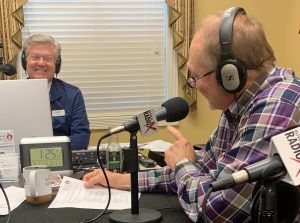
Dr. Jim Morrow, Host of “To Your Health”

To Your Health With Dr. Jim Morrow: Episode 31:  Telemedicine and Georgia Opens Up

Dr. Morrow offers his thoughts on Gov. Brian Kemp’s “opening” of Georgia, as well as a thorough discussion of telemedicine, its pros and cons, and how he is using telemedicine currently to treat patients at Morrow Family Medicine.  As always, Dr. Morrow responds to listener emails and feedback, including one from a disgruntled tinnitus sufferer. “To Your Health” is brought to you by Morrow Family Medicine, which brings the CARE back to healthcare.

About Morrow Family Medicine and Dr. Jim Morrow

Morrow Family Medicine is an award-winning, state-of-the-art family practice with offices in Cumming and Milton, Georgia. The practice combines healthcare information technology with old-fashioned care to provide the type of care that many are in search of today. Two physicians, three physician assistants and two nurse practitioners are supported by a knowledgeable and friendly staff to make your visit to Morrow Family Medicine one that will remind you of the way healthcare should be.  At Morrow Family Medicine, we like to say we are “bringing the care back to healthcare!”  Morrow Family Medicine has been named the “Best of Forsyth” in Family Medicine in all five years of the award, is a three-time consecutive winner of the “Best of North Atlanta” by readers of Appen Media, and the 2019 winner of “Best of Life” in North Fulton County.

Dr. Jim Morrow, Morrow Family Medicine, and Host of “To Your Health With Dr. Jim Morrow”

Dr. Jim Morrow is the founder and CEO of Morrow Family Medicine. He has been a trailblazer and evangelist in the area of healthcare information technology, was named Physician IT Leader of the Year by HIMSS, a HIMSS Davies Award Winner, the Cumming-Forsyth Chamber of Commerce Steve Bloom Award Winner as Entrepreneur of the Year and he received a Phoenix Award as Community Leader of the Year from the Metro Atlanta Chamber of Commerce.  He is married to Peggie Morrow and together they founded the Forsyth BYOT Benefit, a charity in Forsyth County to support students in need of technology and devices. They have two Goldendoodles, a gaggle of grandchildren and enjoy life on and around Lake Lanier.

Facebook: https://www.facebook.com/MorrowFamMed/

LinkedIn: https://www.linkedin.com/company/7788088/admin/

Twitter: https://twitter.com/toyourhealthMD

The complete show archive of “To Your Health with Dr. Jim Morrow” addresses a wide range of health and wellness topics, and can be found at www.toyourhealthradio.com.

telemedicine


Dr. Morrow’s Show Notes

Coronavirus Update


Worldwide cases: 2,561,915

Total Deaths: 177,200

Total Recovered: 679,819

Total Hospitalized in the US: 120,268

Hospitalized in Georgia: 3,779

Incidence rate: 198.89 per 100,000 persons

Antibody test not yet generally available and the tests have a cross reactivity with some of the common cold CVs.

The average number of people who become infected by an infectious person is declining in every state. See this at rt.live.


Telemedicine Facts

  • According to Healthcare Business & Technology,
    • Almost 75% of all doctor, urgent care, and ER visits “are either unnecessary or could be handled safely and effectively over the phone or video,”
  • MedCity Newsreports that 90% of healthcare executives say their organizations are developing or already have a telehealth application.
  • The majority of healthcare organizations are increasing or maintaining their telehealth investments this year.
  • According to the American Hospital Association, about 20% of Americans live in rural areas without easy access to primary care or specialist medical services.
  • A survey conducted by American Well found that 65% of consumers want to use telehealth
  • According to the American Hospital Association, more than three-fourths of hospitals are currently using or implementing telehealth.

Pre-Pandemic Situation

 Limited Medicare coverage impeded the expansion of telehealth services.

    • Current statute restricts most telehealth services to patients located in
      • rural areas and
      • in specific settings (such as a hospital or physician office),
      • covers only a limited number of services, and
      • allows only real-time, two-way video conference capabilities.
  • Changes needed include:
    • widespread elimination of geographic and setting locations requirements so patients outside of rural areas can benefit from telehealth;
    • expanding the types of technology that can be used, including remote monitoring; and
    • covering all services that are safe to provide, rather than a small list of approved services.
  • Additional research is needed to evaluate telehealth.
    • Research and experience under the Medicare program suggest that policymakers’ concerns about increased access to telehealth leading to increased spending may be overstated,
      • particularly when weighed against the potential benefits in quality, patient experience and efficiency.
      • However, there are insufficient studies on the cost-benefits of telehealth outside of a limited number of services.
    • Federal programs to expand broadband need to be simplified.
      • According to the FCC, 34 million Americans still lack access to adequate broadband.
      • And, there is a large digital divide, with almost 40 percent of those living in rural areas lacking access.
        • The FCC has a program that supports broadband adoption, but it is administratively burdensome and provides an insufficient level of subsidy for remote health care providers.
          • While the FCC has taken positive steps by increasing the subsidy, we need even greater federal investment in broadband access, particularly in rural areas.
        • More and better research is needed for other conditions and newer technologies, such as remote monitoring of patients.
      • Telehealth connects patients to vital health care services through
        • videoconferencing,
        • remote monitoring,
        • electronic consults
        • and wireless communications.
        • By increasing access to physicians and specialists,
          • telehealth helps ensure patients receive
            • the right care,
            • at the right place,
            • at the right time.
          • Currently, 76 percent of U.S. hospitals connect with patients and consulting practitioners at a distance through the use of video and other technology.
            • Almost every state Medicaid program has some form of coverage for telehealth services,
              • and private payers are embracing coverage for many telehealth services.
              • However, there are barriers to wide adoption of telehealth.
              • Medicare generally still limits coverage and payment for many telehealth services, lagging behind other payers.
              • The Medicare program recently expanded coverage for telehealth services for stroke patients and substance use treatment in response to statutory changes.
              • Medicare also expanded payments to clinicians for virtual check-ins.
                • While promising,
                  • these incremental steps are not sufficient.
                • In addition, limited access to adequate broadband services hampers the ability of some rural facilities to deploy telehealth.
                • The challenge of cross-state licensure also looms as a major issue.
                • Other policy and operational issues include credentialing and privileging,
                  • online prescribing,
                  • privacy and security
                  • and fraud and abuse.
                • The federal government needs to do more to increase the use of telehealth.

Telemedicine and Covid-19

  • Healthcare is seeing a surge of direct-to-consumer telemedicine providers
    • operating at a large scale
    • helping to provide care to patients who might be wondering if they need care after exhibiting potential symptoms associated with the novel coronavirus.
  • Simultaneously we’re also seeing a rapidly increasing need for on-demand acute care via telemedicine.
    • This includes ICU programs offering intensive care for the most critical patients.
      • However, tele-triage is exploding in terms of the number of use-cases that involves determining when a patient presents in the emergency department whether they need to be issued a bed or if they can be seen in another area within the hospital in order to keep the patient safe and to reduce potential exposures.
    • This helps to limit providers’ exposure to the virus and other infectious diseases.
  • If a hospital worker is exposed without adequate protection, they’d be put into self-quarantine for 14 days
    • Using acute telemedicine for tele-triage is helping keep staff in a low-risk category for infection
      • by completely eliminating exposure for those doctors or other hospital staff.
  • Unfortunately, providers and policymakers are playing catch-up with telehealth technologies right now
    • and are just beginning to recognize that they are essential solutions for keeping potentially infected individuals out of hospitals and doctors’ offices
    • As this public health crisis continues to escalate, however,
      • telemedicine is quickly gaining recognition as a critical tool to slow the spread of COVID-19
    • There are three primary roles for telehealth technologies during this crisis
      • The first:
        • to screen patients remotely rather than having them visit the practice or hospital.
        • They can be used to triage patients with cold and flu-like symptoms and to remotely care for those who don’t need medical intervention or could receive care at home.
        • By keeping potentially infected individuals out of hospitals and doctors’ offices, the healthcare system can lower the risk of transmission to other patients and healthcare staff.
      • Second:
        • To help provide routine care for patients with chronic diseases who are at high risk if exposed to the virus
      • And third:
        • Providers and their staff are not immune to infection and are at increased risk for contracting COVID-19 due to their continuous exposure to infected patients
          • Once tested and confirmed, these providers will be quarantined and become unavailable to the healthcare system just when it needs them most.

Limitations of Telehealth

  • Inability for most clinicians to fully examine a patient
    • The hardware exists to do this but it is expensive and has limitations
  • Limitations in broadband and device access
  • Laboratory testing not possible
  • In cases where patients are using on-demand telemedicine services that connect them with a random healthcare provider, care continuity suffers.
  • A patient’s primary care provider may not have access to records from those other visits and end up with an incomplete history for the patient.
    • Service provider shuffling increases the risk that a doctor won’t know a patient’s history or have notes about care routines.
  • Healthcare laws, reimbursement policies, and privacy protection rules struggle to keep up with this fast-growing industry.
    • As a healthcare provider, you want to promote best practices when approaching telemedicine.
  • While major developments have been made to telehealth reimbursement over the past couple years, it still remains a common stumbling block for providers interested in telemedicine.

The Bottom Line

  • Telehealth helps increase health care value and affordability.
    • Virtual care technology saves patients time and money,

      • reduces patient transfers,
      • emergency department and urgent care center visits,
      • and delivers savings to payers.
    • In addition, telehealth helps address physician burnout by reducing clinicians’ drive times and allowing more time for patients.

Tagged With: Dr. Jim Morrow, Gov. Brian Kemp, Jim Morrow, Morrow Family Medicine, teleHealth, telemedicine, tinnitus, To Your Health, To Your Health With Dr. Jim Morrow

To Your Health With Dr. Jim Morrow: Episode 28, Coronavirus Update and Tinnitus

March 12, 2020 by John Ray

tinnitus
North Fulton Studio
To Your Health With Dr. Jim Morrow: Episode 28, Coronavirus Update and Tinnitus
Loading
00:00 /
RSS Feed
Share
Link
Embed

Download file

tinnitus
Dr. Jim Morrow

To Your Health With Dr. Jim Morrow: Episode 28:  Coronavirus Update and Tinnitus

On this edition of “To Your Health with Dr. Jim Morrow,” Dr. Morrow updates the current information on the coronavirus and also discusses tinnitus, its causes and symptoms, and treatment options for people living with “ringing in the ears.” “To Your Health” is brought to you by Morrow Family Medicine, which brings the CARE back to healthcare.

About Morrow Family Medicine and Dr. Jim Morrow

Morrow Family Medicine is an award-winning, state-of-the-art family practice with offices in Cumming and Milton, Georgia. The practice combines healthcare information technology with old-fashioned care to provide the type of care that many are in search of today. Two physicians, three physician assistants and two nurse practitioners are supported by a knowledgeable and friendly staff to make your visit to Morrow Family Medicine one that will remind you of the way healthcare should be.  At Morrow Family Medicine, we like to say we are “bringing the care back to healthcare!”  Morrow Family Medicine has been named the “Best of Forsyth” in Family Medicine in all five years of the award, is a three-time consecutive winner of the “Best of North Atlanta” by readers of Appen Media, and the 2019 winner of “Best of Life” in North Fulton County.

Dr. Jim Morrow, Morrow Family Medicine, and Host of “To Your Health With Dr. Jim Morrow”

Dr. Jim Morrow is the founder and CEO of Morrow Family Medicine. He has been a trailblazer and evangelist in the area of healthcare information technology, was named Physician IT Leader of the Year by HIMSS, a HIMSS Davies Award Winner, the Cumming-Forsyth Chamber of Commerce Steve Bloom Award Winner as Entrepreneur of the Year and he received a Phoenix Award as Community Leader of the Year from the Metro Atlanta Chamber of Commerce.  He is married to Peggie Morrow and together they founded the Forsyth BYOT Benefit, a charity in Forsyth County to support students in need of technology and devices. They have two Goldendoodles, a gaggle of grandchildren and enjoy life on and around Lake Lanier.

Facebook: https://www.facebook.com/MorrowFamMed/

LinkedIn: https://www.linkedin.com/company/7788088/admin/

Twitter: https://twitter.com/toyourhealthMD

The complete show archive of “To Your Health with Dr. Jim Morrow” addresses a wide range of health and wellness topics, and can be found at www.toyourhealthradio.com.

Dr. Morrow’s Show Notes

What is tinnitus?

  • Tinnitus is a problem that causes you to hear a noise in one ear or both ears.
    • People commonly think of it as ringing in the ear.
    • It also can be roaring, clicking, buzzing, or other sounds.
    • Some people who have tinnitus hear a more complex noise that changes over time.
    • You may hear the noise constantly, or it may come and go.
  • In most cases, people who have tinnitus hear noise in their head when no outside sound is there.
    • They are the only ones who can hear the sound.
      • This type of tinnitus is called “subjective tinnitus.”
      • It can happen because certain nerves are not functioning normally or because there is a problem with part of your ear.
    • In rare cases, tinnitus is caused by an actual sound that occurs inside or near the ear, such as from nearby blood vessels.
      • The sound can also be heard by the doctor examining you.
      • This type of tinnitus is called “objective tinnitus.”
    • Another type of tinnitus is”pulsatile tinnitus”
      • This is basically when you can hear your heartbeat in your ear.
      • It can be related to vascular disease
        • but more often than not, it is just you hearing your heartbeat in your ear.
      • The word tinnitus is of Latin origin, meaning “to ring or tinkle.”
        • Tinnitus has two different pronunciations, both of which are correct and interchangeable:
          • ti-NIGHT-us: typically used by patients and laypeople
          • TINN-a-tus: typically used by clinicians and researchers


The Journey of Sound to the Brain

  • This is how this magic happens:
    • Sound waves are captured by the out ear
    • They travel through the ear cana to the eardrum
    • The eardrum vibrates and causes three little bones to vibrate
      • The malleus, the incus and the stapes.
    • These cause vibration in the cochlea where the waves are converted into electrical energy and an impulse is sent down the auditory nerve to the brain.
    • The brain interprets the impulse as sound.


  • So… if a tree falls in the forest and no one is there to hear it, does it make a sound?


  • Included in our show notes will be a link to a YouTube video from NIH about this journey.

https://youtu.be/eQEaiZ2j9oc


Symptoms of tinnitus

  • The main symptom of tinnitus is hearing sounds in your ears.
    • The sound could be ringing.
    • It may also sound like blowing, roaring, clicking, buzzing, hissing, or humming.
    • The noises can be soft or loud.
    • They can be high pitched or low pitched.
    • You may hear them in only one ear or in both ears.


What causes tinnitus?

  • Tinnitus is not a disease itself.
    • It is a symptom of an underlying health problem.
    • The following are among the most common causes of tinnitus:
      • Exposure to loud noises,
        • which can lead to noise-induced hearing loss over time.
      • Hearing loss related to aging.
      • Certain medicines that can damage the inner workings of the ear.
        • For example, taking high doses of aspirin every day may lead to tinnitus.
      • Eustachian tube dysfunction.
        • This is the tube that leads from the middle ear to the back of the throat.
      • Infections of the inner ear, such as
        • otitis media or
        • labyrinthitis.
      • Meniere’s disease,
        • an inner-ear condition that involves hearing loss and dizziness.
  • Other causes:
    • Allergies,
    • high blood pressure,
    • low blood pressure,
    • diabetes,
    • tumors, and
    • head injuries can also cause tinnitus.
    • If you have a foreign object in your ear or a build-up of ear wax, you may also experience tinnitus.
  • In most cases, the cause of tinnitus cannot be identified.

How is tinnitus diagnosed?

  • Your doctor will probably take a detailed medical history.
    • He or she will want to know about any medical conditions you may have and any history of infections.
    • Your doctor also needs to know what medicines you are taking,
      • including herbal products or supplements.
    • He or she will check your ears.
    • They may give you a hearing test.
    • They may also order other tests to find out what is causing your tinnitus.
      • These could include
        • a head CT scan,
        • a head MRI scan, or
        • blood vessel studies.
        • Your doctor might refer you to an otolaryngologist.
          • This is a doctor that specializes in the ear, nose, and throat (also called an ENT doctor).


Can tinnitus be prevented or avoided?

  • To prevent tinnitus or keep it from getting worse,
    • avoid long-term exposure to loud noises and activities that put you at risk for hearing loss.
    • If you know you’re going to be around loud noises, take precautions by wearing earplugs or earmuffs.
    • If you listen to music through headphones, keep the volume low.


  • If you have tinnitus, avoid things that seem to make it worse.
    • These may include:
      • nicotine,
      • alcohol, or
      • cafffeine


Treatment

  • Treatment will depend on what is causing your tinnitus.
    • For example, if a medicine you are taking causes your tinnitus, your doctor may recommend you stop taking that medicine.
      • Remember, you should never stop taking a prescription medicine without talking to your doctor first.
    • If an underlying condition, such as high blood pressure, causes your tinnitus,
      • your doctor can create a treatment plan for you to follow.
      • Usually, tinnitus goes away once the condition that is causing it is treated.
    • When no specific cause can be identified,
      • your doctor will probably focus on making your tinnitus easier to tolerate.
      • Some possible methods include:
      • Hearing aids:
        • For people who have tinnitus and hearing loss, using a hearing aid may be helpful.
        • When you wear a hearing aid, things you need to hear will be louder than the ringing, buzzing, or clicking sound.
      • Sound generators (maskers):
        • Wearable sound generators can be placed behind your ear and create white noise (constant background noise) or other sounds.
        • This “masks” the tinnitus and makes it less noticeable.
        • Some people also use bedside sound generators to help them sleep.
      • Counseling:
        • Some people who have tinnitus become anxious or depressed.
        • If you have tinnitus and are struggling, seeking help through a counselor and/or a support group may help you cope.
        • Counseling can also be used to teach you how to take the focus off your tinnitus.
      • Tinnitus retraining therapy:
        • This method uses a mix of counseling with maskers or other approaches.
        • The goal is to teach your brain to ignore the sounds you hear.
        • This isn’t a quick fix, but many people find it useful with time and practice.
      • Relaxing:
        • Stress can make tinnitus worse.
        • Your doctor can suggest relaxation techniques that might help you deal with your stress.
      • Medicines:
        • Currently, there are no medicines specifically designed for treating tinnitus.
        • Some medicines, such as certain ones used to treat anxiety, have been shown to relieve tinnitus for some people.
        • Talk to your doctor about whether medicine might relieve your symptoms.


Living with tinnitus

  • For many people with tinnitus, the condition is just a mild distraction.
    • But for some, tinnitus causes distress and negatively affect their quality of life.
    • It can cause
      • anxiety,
      • depression,
      • sleep disturbances, and
      • poor concentration.
    • To lessen the impact of tinnitus on your life, try the following:
      • Avoid loud noises and sounds.
      • Control your blood pressure.
      • Exercise regularly for good circulation.
      • Get plenty of sleep and avoid fatigue.
      • Take the focus off your tinnitus.
        • Use techniques such as sound generators and counseling to push it to the background.
        • Remember that the more you think about tinnitus, the more bothersome it will become.


Tagged With: coronavirus, Dr. Jim Morrow, hearing loss, Morrow Family Medicine, Novel Coronavirus, ringing in the ears, tinnitus, To Your Health, To Your Health With Dr. Jim Morrow

Business RadioX ® Network


Our Most Recent Episode

CONNECT WITH US

  • Email
  • Facebook
  • LinkedIn
  • Twitter
  • YouTube

Our Mission

We help local business leaders get the word out about the important work they’re doing to serve their market, their community, and their profession.

We support and celebrate business by sharing positive business stories that traditional media ignores. Some media leans left. Some media leans right. We lean business.

Sponsor a Show

Build Relationships and Grow Your Business. Click here for more details.

Partner With Us

Discover More Here

Terms and Conditions
Privacy Policy

Connect with us

Want to keep up with the latest in pro-business news across the network? Follow us on social media for the latest stories!
  • Email
  • Facebook
  • Google+
  • LinkedIn
  • Twitter
  • YouTube

Business RadioX® Headquarters
1000 Abernathy Rd. NE
Building 400, Suite L-10
Sandy Springs, GA 30328

© 2025 Business RadioX ® · Rainmaker Platform

BRXStudioCoversLA

Wait! Don’t Miss an Episode of LA Business Radio

BRXStudioCoversDENVER

Wait! Don’t Miss an Episode of Denver Business Radio

BRXStudioCoversPENSACOLA

Wait! Don’t Miss an Episode of Pensacola Business Radio

BRXStudioCoversBIRMINGHAM

Wait! Don’t Miss an Episode of Birmingham Business Radio

BRXStudioCoversTALLAHASSEE

Wait! Don’t Miss an Episode of Tallahassee Business Radio

BRXStudioCoversRALEIGH

Wait! Don’t Miss an Episode of Raleigh Business Radio

BRXStudioCoversRICHMONDNoWhite

Wait! Don’t Miss an Episode of Richmond Business Radio

BRXStudioCoversNASHVILLENoWhite

Wait! Don’t Miss an Episode of Nashville Business Radio

BRXStudioCoversDETROIT

Wait! Don’t Miss an Episode of Detroit Business Radio

BRXStudioCoversSTLOUIS

Wait! Don’t Miss an Episode of St. Louis Business Radio

BRXStudioCoversCOLUMBUS-small

Wait! Don’t Miss an Episode of Columbus Business Radio

Coachthecoach-08-08

Wait! Don’t Miss an Episode of Coach the Coach

BRXStudioCoversBAYAREA

Wait! Don’t Miss an Episode of Bay Area Business Radio

BRXStudioCoversCHICAGO

Wait! Don’t Miss an Episode of Chicago Business Radio

Wait! Don’t Miss an Episode of Atlanta Business Radio