

Business RadioX ®

  • Home
  • Business RadioX ® Communities
    • Southeast
      • Alabama
        • Birmingham
      • Florida
        • Orlando
        • Pensacola
        • South Florida
        • Tampa
        • Tallahassee
      • Georgia
        • Atlanta
        • Cherokee
        • Forsyth
        • Greater Perimeter
        • Gwinnett
        • North Fulton
        • North Georgia
        • Northeast Georgia
        • Rome
        • Savannah
      • Louisiana
        • New Orleans
      • North Carolina
        • Charlotte
        • Raleigh
      • Tennessee
        • Chattanooga
        • Nashville
      • Virginia
        • Richmond
    • South Central
      • Arkansas
        • Northwest Arkansas
    • Midwest
      • Illinois
        • Chicago
      • Michigan
        • Detroit
      • Minnesota
        • Minneapolis St. Paul
      • Missouri
        • St. Louis
      • Ohio
        • Cleveland
        • Columbus
        • Dayton
    • Southwest
      • Arizona
        • Phoenix
        • Tucson
        • Valley
      • Texas
        • Austin
        • Dallas
        • Houston
    • West
      • California
        • Bay Area
        • LA
        • Pasadena
      • Colorado
        • Denver
      • Hawaii
        • Oahu
  • FAQs
  • About Us
    • Our Mission
    • Our Audience
    • Why It Works
    • What People Are Saying
    • BRX in the News
  • Resources
    • BRX Pro Tips
    • B2B Marketing: The 4Rs
    • High Velocity Selling Habits
    • Why Most B2B Media Strategies Fail
    • 9 Reasons To Sponsor A Business RadioX ® Show
  • Partner With Us
  • Veteran Business RadioX ®

Jess Chew With Trella Health

May 10, 2022 by Jacob Lapera

Atlanta Business Radio
Jess Chew With Trella Health
Loading
00:00 /
RSS Feed
Share
Link
Embed

Download file

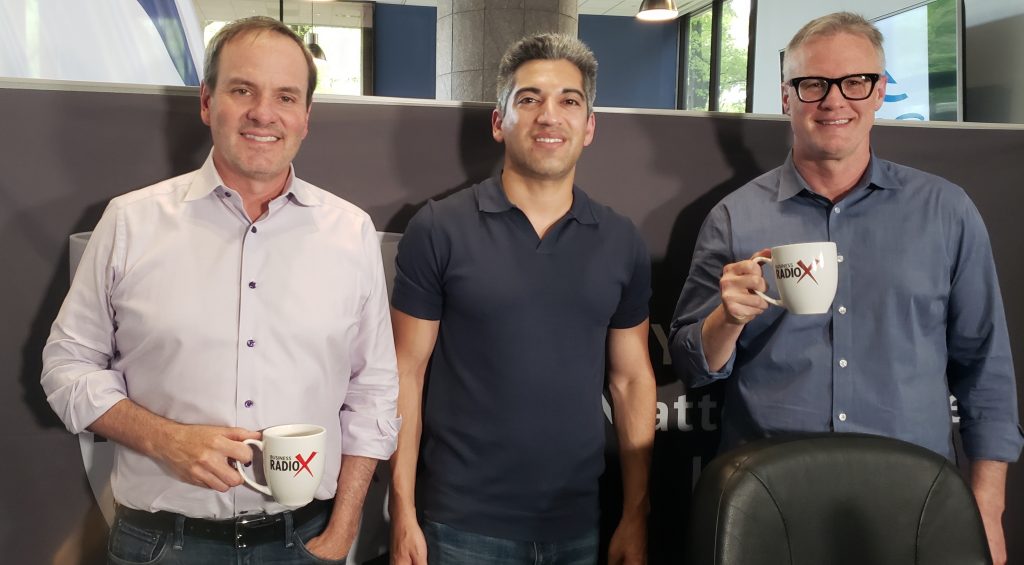
JessChewJess Chew, VP of Marketing at Trella Health

With more than 10 years’ experience in healthcare marketing, Jessica leads Trella Health’s marketing team.

Prior to joining Trella Health, Jessica served as a marketing leader at Greenway Health, an EHR and practice management solutions company that serves the independent physician market.

After graduating from the University of Georgia with a bachelor’s in journalism, Jessica got her start in marketing at Gannett, the largest newspaper publisher in America. She thought this entry-level job was the first step on the road to a career as an investigative reporter — but immediately became hooked on marketing.

At Trella Health, she’s able to do all the things she loved about journalism — digging for information and insights, helping people share their stories — and she’s also able to make a meaningful difference in the way post-acute care is provided.

Connect with Jess on LinkedIn.

What You’ll Learn In This Episode

  • Healthcare tech
  • Atlanta Tech scene
  • Branding/marketing

This transcript is machine transcribed by Sonix

TRANSCRIPT

Intro: [00:00:04] Broadcasting live from the Business RadioX studios in Atlanta, Georgia. It’s time for Atlanta Business Radio brought to you by on pay Atlanta’s new standard in payroll. Now here’s your host.

Lee Kantor: [00:00:24] Lee Kantor here, another episode of Atlanta Business Radio. And this is going to be a fun one. But before we get started, it’s important to recognize our sponsor on pay. Without them, we couldn’t be sharing these important stories. Today on Atlanta Business Radio, we have Jess Chew with Trella Health. Welcome, Jess.

Jess Chew: [00:00:42] Hi, Lee. Great to be here.

Lee Kantor: [00:00:44] Well, I’m excited to learn what you’re up to at Health. Tell us a little bit about kind of mission purpose. How you serving folks?

Jess Chew: [00:00:52] Yeah. So telehealth provides growth solutions for health care organizations. We really believe that by providing insights and performance metrics, making those visible for health care organizations across the board, that we can really make a difference in how patients are treated and how in reducing unnecessary health care costs. So at our core, we give customers insight into what’s happening in their markets and with their competitors, as well as the tools to take action on those insights.

Lee Kantor: [00:01:21] You use an interesting word visible. Everybody talks about data and a lot of organizations have access to lots and lots of data, but they don’t know how to make it visible and how to kind of discern what is the most important things I should even be looking at. How does Trello kind of help in that way?

Jess Chew: [00:01:41] Yeah, no, it’s a really great point. We do there’s two things that makes what we do at Trello special. One is the data that we have access to. So while health care organizations have a ton of data on their own organizations and their own patients, the missing piece for them is often knowing what’s happening in their markets with their patients at different providers and with some of their competitors. So we have a special relationship with Medicare where we get access to all the fee for service claims as well as Medicare Advantage claims. And we take all of that and aggregate it and provide one clear view into what’s happening in your market and your state and your county nationally. So that’s a differentiator because like I said, health care organizations have a ton of information at their own buildings, but they don’t necessarily have what’s happening at a broader level. And then, like you said, data is only as useful as what you can do with it. And we have an awesome team of data scientists that take all of that information and compile it into helpful calculations, surface information. We have a great Web team that turns that into more visuals. We do a lot of things with color coding and just trying to make data as simple as possible and surfacing up what we think are the most critical points for each user.

Lee Kantor: [00:03:07] Now, is the user the the medical center or facility, or is it the consumer? Because I would you know, from the medical center and I know I charge X for this type of A procedure and I can see around, oh, these people charge why these people charge? Z That’s interesting for me to see where I stand from that standpoint. But as a consumer, if I know that center charges, you know, X and Center B charges, you know, five X, you know, maybe I’ll choose this other place. Does it go down to the consumer level or is it just kind of one institution to another?

Jess Chew: [00:03:47] Yeah, it’s not done to the consumer level. It’s the health care organizations themselves. And the primary users at those health care organizations are like the strategic folks, the sales and marketing teams, so that they know who should they be working with to help bring in more patients and who should they be collaborating for in terms of making networks like who? Who would be a good fit for their practice to be working with from a business standpoint?

Lee Kantor: [00:04:11] So it’s, it’s giving you kind of outcomes. So you can see that Surgeon A is more successful in this manner than the surgeon.

Jess Chew: [00:04:19] B Yeah, that’s part of it for sure. And another thing, for example, home health agencies, they’re a big part of our business. We sell to them a lot, helping them understand what types of doctors in your area are referring patients to home health who maybe isn’t but should be because their patients are not having the types of outcomes that doctors who are referring to home health are having. So that’s a big piece about of what we do.

Lee Kantor: [00:04:45] So what was the genesis of the idea? How did this whole company get started?

Jess Chew: [00:04:51] Yeah. So our our founder was working in the post-acute space. He’s actually working at a CRM, a company at the time. And what he found was he was, you know, selling into sales and marketing organizations. But what those teams needed was more information about where they should be going, where they should be spending their time. And then once they do finally get that ultra important meeting with the physician, what should they be saying? And so that’s we were founded around helping them get the insights and information that they need to make their time really efficient. And also at the time, he just saw not a lot of companies were innovating in the post-acute care space. It’s not as big as some of the other health care markets. There’s a lot more small and medium sized businesses. So it’s not as many of these. Giant health systems, and it’s also a big driver of costs for our health care system. And so he really felt like we could make a huge impact in this space and and provide better resources to these companies who are caring for our nation’s most vulnerable.

Lee Kantor: [00:06:00] Now, was this happening at the time when I think the rules change, where they that the insurance companies cared more about outcomes and they were kind of almost penalizing you for bad outcomes?

Jess Chew: [00:06:13] Absolutely, yeah. As we’ve started shifting away from a volume based system where you get paid for a service rendered and moving more towards a value based system where you’re getting reimbursed based on outcomes, and now health systems are getting dinged if their patients are coming back into the getting readmitted into the hospital. So it’s just so much more important now that as you’re referring patients, as you’re sending them from one place to another, that you’re working with people not based on relationships, but based on how they treat patients. Do they treat the types of patients that you treat? Do they have expertize in that area and are they known for having really good outcomes because it ultimately is now starting to affect every single health care organization’s business, whether or not they’re the ones treating them at the time.

Lee Kantor: [00:07:04] So when you say relationships as a driver in the past, that was like that was the person I played golf with was kind of a driver in terms of should I partner with this facility as opposed to who is the one that’s really delivering, you know, the outcome that we all desire.

Jess Chew: [00:07:21] Exactly. Or we, you know, we like to say we’re moving away from donuts and moving towards data. And, you know, donuts are still an important piece of business development in the health care world, for sure. But, you know, a lot of times back in the day, it was who who brought something to the office most recently, who have I known forever that I should send my patients to? And while that’s is certainly merits to working with people that you have good relationships to now, it’s just so much more important that you’re paying attention to. Is this organization best suited to care for my types of patients? Are they well versed in caring for people with these types of conditions, and are they known for having really strong outcomes so that I know my patients are going to get the care they need and they’re not going to rebound and come back for the exact same thing.

Lee Kantor: [00:08:08] And that’s really where kind of the secret sauce of Trello, you’re able to parse that data and say, okay, you know what, this organization might be great for people over 80, but they’re not great for people at 35 with a similar injury.

Jess Chew: [00:08:24] Exactly. We only deal with patients 65 plus and older, but. Exactly. You’re right on. You’re exactly right on the track. I mean, we help you understand this group is really good at caring for cancer patients or this group is really good at caring for those who have just had major heart surgery. So every every organization is going to have their own specialties. And we help really surface that information and showcase what a difference in outcomes for the patients that can make.

Lee Kantor: [00:08:53] So now how has kind of the trajectory of cello’s growth gone? I know that early in your career you worked with maybe some early stage folks in the past and you so your background is kind of interesting. So I’d like to kind of touch on that as well. But where are we at with Trello right now?

Jess Chew: [00:09:12] Yeah, I mean, we’ve been growing, growing like crazy. We’ve entered a couple of new markets. We had an acquisition at the end of last year. So it’s been I’ve been with Trello for about three and a half years. It’s been a really great ride and I think, you know, as seniors are continuing to age, there’s continuing to be more value based care type programs coming out that are impacting all the different care settings that we serve and and highlighting other care settings that we should probably enter into to help support them during these times. So it’s just it’s been a really exciting time to to be at Trello.

Lee Kantor: [00:09:49] Now for you personally, it seems like you’re attracted to these fast growing emerging brands.

Jess Chew: [00:09:55] Yeah, absolutely. I was actually just thinking about it because this week, 13 years ago, I was just moving back to Atlanta from from my first job, which was at probably the largest company that I ever worked at, which was Gannett, one of the largest newspaper publishers in the country. And I was was moving back to Atlanta and trying to figure out what I was going to do next. It was honestly one of the worst job markets.

Lee Kantor: [00:10:19] So at that time, you were you had a journalist hat on at Gannett or you were in marketing at Gannett.

Jess Chew: [00:10:26] So I was in marketing at Gannett. I thought I was going to be a joy. I spent my entire life dreaming of being a journalist, and then when I graduated college, had the opportunity to work on the business side of a newspaper and absolutely fell in love with marketing and realize just how many similarities there are with. Journalism and marketing. So I did have my marketer hat on at that point, but I knew the likelihood of getting another job at a newspaper was very slim. So I started thinking about other alternatives. Ended up at an apparel company. It was a startup. It was really fun. We were we were mostly selling flannel pants, so it was really fun. But I, I missed kind of that mission driven work, which is what I felt like. I was getting in a newspaper. I felt like I was doing something really important by helping getting news in front of people. And so that’s when I started working at a small marketing agency supporting health care companies, doing B2B marketing. And that’s where I was like, Ooh, yes, I love this. I love helping health care organizations and those that are serving health care organizations. So from there, I went to work at an HR company serving ambulatory practices, which is like your primary care doctor. So I was at Greenway and I was there for a couple of years in their marketing department with marketing ops and demand generation, and then got the call to come join the Trello team. And I couldn’t say no to that because it just was such an exciting product and a market that I hadn’t been able to serve, but felt was just a really important one.

Lee Kantor: [00:11:59] So how is your experience been in the Atlanta tech scene? I’ve had the opportunity to interview lots and lots of startup founders, lots of startups, and I’ve seen the kind of startup scene grow over the last ten, 15 years. What has it been for you to be kind of immersed in, especially this health care tech scene?

Jess Chew: [00:12:22] Oh, yeah. No, it’s been phenomenal. I mean, I remember when I was working at the apparel company, which is a startup, Sara Blakely came in the founder of Spanx. She came in and this was before Spanx was like crazy big. But I still knew of her because they’d had some early success and just walked down the halls. I was talking to people and I’m like, Oh my gosh, so crazy Spanx is here. But yeah, I mean, it is. There’s so many people in my network that I talk to on a very frequent basis that are at other similar stage growth companies, some in health care, some not. We’re right around the corner from Atlanta Tech Village in Buckhead. And I just I feel like I’m always running into somebody wearing another startup t shirt in the elevator, in the office.

Lee Kantor: [00:13:08] It’s a lifestyle.

Jess Chew: [00:13:09] It’s it is a lifestyle.

Lee Kantor: [00:13:13] I believe it is. I mean, to me, I think startup t shirts were the concert t shirts. You know, today they are what the the concert teacher was, you know, a generation ago.

Jess Chew: [00:13:24] Oh, absolutely. I mean, and I take a lot of pride in making sure that Estrella, we have really nice t shirts because I totally get it. And I, I sometimes I feel bad when I hop on an interview and like, I’m interviewing a candidate to work for us and I have like a t shirt on and they’re in a very fancy business outfit for an interview. But, you know, I’m like, this is what it’s like when you work at a startup, you get to wear t shirts.

Lee Kantor: [00:13:49] And then it’s not everybody gets that. I mean, it’s it’s not for everybody.

Jess Chew: [00:13:54] Exactly.

Lee Kantor: [00:13:55] So now what’s it like kind of recruiting talent in today’s market? And you’re in the health care tech Atlanta, and I’m sure you’re you’re searching all over the country, if not the world, for talent today.

Jess Chew: [00:14:11] Yeah. I mean, honestly, this is one of the hardest markets I’ve ever had to recruit in because you’re competing just with a lot of different companies. There’s a lot of different benefits that people are offering. I mean, it’s it’s really the opposite job market of when I quit my job 13 years ago and moved back to Atlanta. And that’s a really exciting thing for employees. I think it’s a really great time, but it has made it extremely difficult. And so what I try to do is lean on the autonomy that we have here and the fact that I have such trust from my boss, the CEO, and all he asks of the marketing team is that we drive pipeline, that we nurture and engage customers so they want to retain and renew and that we help build up Treloar as a place where people want to work. How we do that is completely up to us. And so I think for a marketer that’s something really exciting and hopefully I’m trying to attract people that want to be at a place like that. And also just going back to our mission, I mean, I think there’s a lot of people like me who want to be working at a company where they feel like they’re doing something really important. And so try to tap into that too, because it is really competitive out there right now.

Lee Kantor: [00:15:31] So now what is the kind of the office situation? Is it in office? Is it remote? Is it hybrid?

Jess Chew: [00:15:40] Yeah, it’s really. Really up to the individual. So we still have our headquarters here in Atlanta. I’m actually in the office right now. I love coming into the office, so I’m here pretty much every day. But I’m one of the few people that that that is my preference. And it’s completely up to every single person. We have like a workday Wednesday where it’s just a day where a lot of people do tend to come in. And that way people know like, hey, if I want to see somebody one day this week, which what day should be Wednesday, but it’s completely up to everyone what their preference is.

Lee Kantor: [00:16:09] So when you are doing that kind of hybrid work day, can you. How did how does it work? This is something that I’m it’s a puzzle for me as a layperson, as an outsider. If you if on one side, I can be remote and I can, you know, live in Michigan because I got to take care of my parents who are in Michigan. And and you’re okay with that? I mean, during the pandemic, everybody was okay with anybody living anywhere. And then if if it’s still okay and then you do things like Workplace Wednesday and I’m in Michigan, is that still okay or is it do I really have to be kind of in the metro Atlanta area so that or, you know, within a drive so that I could come in and work day Wednesday?

Jess Chew: [00:16:57] Yeah, no, it’s totally we have people all over the country and even my team that used to be pretty much an Atlanta based team just because we’d hired most of the people before the pandemic, when we did really want to be in the office together. Now I have a couple of people spread out, so yeah, there’s no pressure to be together. It is. We are still figuring out, gosh, if you have some people in one office and you have a couple of people remote, how do you make that meeting as effective as possible? I would say we’re still stumbling through that like others are. Sometimes, even if there’s three of us in the office, we still take it from our desk just because we want it to each be our own little square on the screen. But for Workday Wednesday, we try to do things that it’s most important to be together for. Otherwise, if we’re just coming to the office to sit on Zoom calls, it’s like, Well, why did we do that? So, you know, we try to we try to find time to make sure that the people that we know are going to come in, that we’re spending time with them and and then prioritizing people who may not be in the office on the other days.

Lee Kantor: [00:18:01] So what for you was that clue when you were you know, you go from unit, you go into this startup world now you’re you’re exploring, you know, you’re with, like you said, that fashion company and then you get into health care. How did you start sensing, you know what this is? I’m good at this. I have a superpower that maybe is different than other people hear. My kind of lens on the world is unique because of my background and who I am and what I can do. Like can you talk a little bit about that from just that self-discovery standpoint of getting you to where you are now and having kind of this your own great trajectory of your career as it’s expanded and grown over the years?

Jess Chew: [00:18:45] Yeah, well, I think for me, it started when I was at the apparel company because when I was working at newspaper I was like living my childhood dream and I used to go it every morning and this is going to sound ridiculous. But there was a table where all the newspapers that we published at that at that press would be laid out on the table. And I’d grab one of each one to take to my desk so I could read on my coffee break. So I was like living my childhood dream. I always knew I wanted to do that. And then when I was at the apparel company, I thought it was crazy fun. I mean, I was organizing photo shoots. I was picking out which pattern of flannel we were going to put on the cover of the catalog. It was crazy fun, but there was just this element of like, why? Like, why does it matter that there’s going to be pink flint on this on this cover for me? And I just I didn’t have that same passion that I had about picking up my newspapers every morning as I did about picking out the flannel. And then when I, I really didn’t choose on purpose to go to a health care agency, I was really intrigued by it, but I wasn’t like, Ooh, this is my calling.

Jess Chew: [00:19:49] But once I started talking to customers, so not not necessarily the organizations that we were supporting, but their customers when I started interviewing them for different marketing projects and getting to hear in their words, like what their day to day was like, how the products we were helping market were we’re solving real problems for them and giving them like time back in their day so that they could spend more time with their families, so that they could provide a better experience for their patients. That to me it was just like a light bulb went off for me and I’m like, yes, this is this is something I can really get excited about and give me that feeling of I’m making a difference. I’m contributing something. I’m putting marketing messages out there, but that they’re ultimately driving to, you know, a patient getting better care or a doctor being able to. Go home and actually spend time with their family because they’re not having to to sit there and try and type notes into a ear system because it’s clunky.

Lee Kantor: [00:20:49] So the impact was real. Like it wasn’t a theoretical or it wasn’t. You were seeing actual impact.

Jess Chew: [00:20:56] Exactly. And it was through talking with my I guess it was technically my customers, customers, the organizations I was supporting at the time from the agency side, talking to their customers and really hearing firsthand how technology was was truly having a positive impact in their lives. And that was just yeah, it was really game changing for me in my career.

Lee Kantor: [00:21:19] And that’s when that light bulb went off and you were like, I am on the right path. This does you know, this is, you know, an exciting reason to get up every day and every Monday. I’m looking forward to I’m not dreading it.

Jess Chew: [00:21:32] Exactly. And that’s I mean, that’s when I basically said, you know, and there’s also so many health care tech companies in Atlanta. I was like, yes, I’ve found my niche. I’m set. This is where I’m going to spend the rest of my marketing days is is helping support health care companies.

Lee Kantor: [00:21:48] Now, how did you kind of keep your skills relevant and fresh as this tech scene is obviously expanding and growing and changing and chaotic? And so, you know, not only it’s one thing to have your passion pointing in the true north, but it’s another thing to say, okay, well, I’ve got to get good at this and stay good at this.

Jess Chew: [00:22:13] Yeah. And my role was not necessarily at the agency focused on some of the marketing technology that we were using for clients. But I found that in order to answer clients questions, I needed to get a lot deeper. And then and I never thought of myself as somebody who was good at technology or somebody who was particularly skilled at computers or whatever. I fell in love with Marketo, which is the marketing automation system that we were using at the time. It just clicked for me, and so I actually went way down that rabbit hole and that’s when I got my next job at Greenway I was in marketing operations, is running the tech stack for the company and I, I really appreciated that I was a member of we had a, I think they called it mug like a marketo user group but then did need to branch out and start because marketing changes so fast. So I’ve also joined gosh, what do they call it now? I always want to call it Revenue Collective, but there’s a group of like minded go to market leaders, there’s a Slack community and there’s regular meetups part of that. I’m always on LinkedIn. I have a couple of people that I follow very closely because I’m always looking to see what they’re saying and I’m paying attention to that. And I’m just an avid reader, too, of different business books, different business philosophies. And that’s one thing I love about working for Scott Tap, the CEO that we have now and at Trello is he’s introduced the concept of executive book club. So the exec team reads a book and then we talk about it every Friday as as we read it, we don’t wait till the very end. We kind of meet progressively. So those are just some of the ways in which I try to stay. Freshen and on my game.

Lee Kantor: [00:24:03] So what do you need more of? How can we help you?

Jess Chew: [00:24:07] Whew. I don’t know. That’s a really good question. I would definitely say, you know, even though I’m in some of these groups where I feel like and I have network connections with like minded people, it’s ever since the pandemic, it has been a little bit hard to continually find places and ways to meet up with other people in similar roles and similar stage companies. And so I just think that’s something I’m always looking for, is trying to connect with others at similar phases of their career, similar stage companies, because there’s just always so much that we can learn from each other. And, and so I could always use more networking opportunities around that.

Lee Kantor: [00:24:48] Well, if somebody wants to connect with you, whether it’s on LinkedIn or whether they want to, you know, maybe a job at Trello, what’s first the website for Trello and then maybe your LinkedIn coordinates.

Jess Chew: [00:24:59] Yeah. So. W w w Trello. Health.com. And then my I actually don’t even know the exact URL for my LinkedIn, but it’s it should be Jessica Levine.

Lee Kantor: [00:25:13] Good stuff. Well, Jess, thank you so much for sharing your story. You’re doing important work and we appreciate you.

Jess Chew: [00:25:19] Thank you.

Lee Kantor: [00:25:20] All right. This is Lee Kantor. What’s your next time on the Atlanta Business Radio?


About Our Sponsor

OnPay’sOnPay-Dots payroll services and HR software give you more time to focus on what’s most important. Rated “Excellent” by PC Magazine, we make it easy to pay employees fast, we automate all payroll taxes, and we even keep all your HR and benefits organized and compliant.

Our award-winning customer service includes an accuracy guarantee, deep integrations with popular accounting software, and we’ll even enter all your employee information for you — whether you have five employees or 500. Take a closer look to see all the ways we can save you time and money in the back office.
Follow OnPay on LinkedIn, Facebook, and Twitter

Tagged With: Jess Chew, Trella Health

Scott Tapp With Trella Health And Kelly Bryant With AMI

April 22, 2022 by Jacob Lapera

TechTalkFeatureImage
Tech Talk
Scott Tapp With Trella Health And Kelly Bryant With AMI
Loading
00:00 /
RSS Feed
Share
Link
Embed

Download file

This episode is brought to you in part by our Co-Sponsor Trevelino/Keller

TKNewLogosv002-02

20220418154937

Scott-TappAs CEO and a Board member, Scott Tapp leads Trella Health’s advancement of our main mission: to impact meaningful change in healthcare. Passionate about building and leading teams, Scott works alongside Trella’s Board and executive leadership team to formulate and execute our corporate strategy and implement operational best practices and metrics to scale and grow our business.

For 20 years, Scott guided rapidly growing companies to successful exits. Prior to joining Trella, he was managing director of SBI, a consulting firm advising PE-backed companies on growth acceleration. Before that, he was CEO of Software Brands, a fast-growing SaaS company providing software and payment solutions to small businesses.

He also held several leadership positions at PGi, a communications technology firm, where he helped grow the business to $560M in revenue and $140M EBITDA through organic growth and 24 acquisitions. He held multiple general manager roles, including the company’s SaaS division, which started from a small acquisition and quickly grew to over $100M in revenue when the company sold in 2015.

Scott started his career in investment banking and worked in two venture capital firms investing in early-stage technology companies. He is a US Navy Veteran and graduated in Finance from the University of Georgia.

When he’s not cooking up new creations on his Green Egg, Scott enjoys kite and wake surfing, snow skiing, and fishing with his family, friends, and yellow labs Bailey and Beau.

Kelly Bryant, Chief Product Officer with AMI, drives the cross-functional process of market analysis, monetization of products, evaluation of products’ fitness for ecosystem and go-to-market strategies.

He has an MBA from the University of Chicago Graduate School of Business, a master’s in electrical engineering from the University of Florida, and bachelor’s degrees in electrical engineering and physics from North Carolina State University.

This transcript is machine transcribed by Sonix

TRANSCRIPT

Intro: [00:00:07] Coming to you live from Atlanta, Georgia. It’s time for another episode of Tech Talk with your host, Joey Klein.

Joey Kline: [00:00:18] Good afternoon. Welcome, everyone to another episode of Tech Talk. So on this show, we’re going to be interviewing two companies. First, we’ll be talking to Kelly Bryant, chief product officer at RMI.

Kelly Bryant: [00:00:29] Hi, Joey. Thanks for having.

Joey Kline: [00:00:30] Us. Yeah, sure thing. And then we’re going to get to Scott Tapp, who is the CEO of Telehealth.

Scott Tapp: [00:00:35] Hey, Joey. Thanks for having me.

Joey Kline: [00:00:36] Yeah. Sure thing. So, you know, the I think the interesting part about both companies today is one of them, Amy, that we’re going to start with is a company that a lot of us interact with on a day to day basis and don’t really know it. And I’m going to I’m going to be interesting to have Kelly tell us more about that. Telehealth is a really interesting health care IT company. Born and bred here in Georgia and working on some really ubiquitous and widespread issues that I think are going to be interesting to explore. So, Kelly, we are going to start with you. Okay. Okay. So RMI. What does Amy stand for? Or did it used to stand for something and now it’s somewhat meaningless.

Kelly Bryant: [00:01:16] Like most companies that ended up just going to the acronym Army Stood for American Megatrends and now just known as. Am I.

Joey Kline: [00:01:25] Right?

Kelly Bryant: [00:01:26] And if you’re old enough as I am, most people remember Amy, because whenever they would turn on a server or a computer, there’d be a boot banner. And it always say American Megatrends. So that’s what got embedded into a lot of people’s minds in terms of what army did.

Joey Kline: [00:01:41] Okay, this is like one of those things where, you know, based upon what television shows you watched or music you listen to, you know, you can tell sort of where you are in the age range by did you see that come up on the banner or not?

Kelly Bryant: [00:01:51] We’re going to talk about context in a minute. So, yeah.

Joey Kline: [00:01:55] Okay. So what is what what is so ubiquitous about Amy? Why, you know, this is somewhat fascinating to me when I encounter companies that are based right here in Georgia that really touch all of our lives, that if you ask most people, they wouldn’t really have a good idea of what they do. That’s kind of what I like to do on this show. So give us kind of the high level. What was Amy? What is Amy? What is am I going to be okay?

Kelly Bryant: [00:02:21] So the reason why I is ubiquitous is that when anywhere there’s a compute. Right. And we’ll talk about that in a minute. In terms of what’s driving compute, you’re going to have Amy. And so most people don’t know this, but you’ll find if you’re walking down Hartsfield Jackson and Hartsfield-Jackson Concourse and you see a video advertisement display, that’s more than likely am-I in it, the modern kiosk where you print out your ticket, that’s an Army solution. You’ll find us in automotive sector, you’ll find us in trains and the German train system. So anywhere there’s a compute system, there’s some type of army technology. We ship in about 70% of all the servers that ship out every year. And then also desktop and laptops. We’re in about 40% of those as well. So like I said, Army and what we focus on, we’re primarily a technology company, focus on the world of compute. And what that means is that we provide essential technology and that technology is defined as firmware, and that form is going to let you do three core functions of three critical functions and compute the first, it’s going to let you turn on your computer. There’s some stuff that has to happen before your CPU can actually turn on. We’re going to let you manage it. So over the life cycle and more importantly, we’ll let you manage it remotely because a lot of servers, there’s no one physically there or it’s deployed out on the edge somewhere or in a 5G tower. And then most importantly, we’ll let it run secure or we’ll ensure that it runs secure. You know, given all the vulnerabilities that we hear about today, we’ll make sure that nothing is tampered with that firmware and if it has, will correct it.

Joey Kline: [00:04:05] Okay. So so let’s take a couple of those examples. You talked about a kiosk display at the airport. You talked about a turnstile at a martyr station. Are you selling your solution into a chipmaker or into a hardware manufacturer or both? And it just depends.

Kelly Bryant: [00:04:22] It’s both and it just depends the route to market. So let’s let’s back up and talk about the supply chain, because that really will show how we go to market. So in the days I.T. world, the supply chain is pretty complex and it really begins with working with the silicon technology partner. And what that means is that when their CPU starts to turn on, it’s got to have firmware, it’s got to have something that runs it, which means that we have to be engaged very early in the development with an Intel and Ampere and AMD to bring up that silicon, to make sure that we enable certain features and certain capabilities that gets designed in what’s called sort of a playbook, if you will, customer reference platform. And then that playbook is seeded out through the market. So anyone that wants to design in that system has a playbook. It says This is how you design it, this is the component you need. This is a software you need. Okay. Now, today, and especially in the server space, most everything comes out of Taiwan. That’s where it begins. And it comes out of the original design manufacturers or odms for short. They take that reference platform and then they design multiple SKUs of that.

Kelly Bryant: [00:05:34] So so we so we partner with the technology, partner on the silicon, and then we sell sometimes directly to the ODM because they are manufacturing the motherboards in the systems that then get deployed out in the industry. Now those gifts are shipped to the what we call the point of use market, these people that are actually using it. So I think a big hyperscalers, you know, think of your Fortune 1000 companies, right? Those are the end users of it. And so we’ll also work directly with them because sometimes they need some customization or they want to actually design their stack themselves and we’ll partner with them. So, so we really have a three pronged approach in terms of how we go to market and how we ship it. The kiosk ships into the embedded market and the embedded market is a set of manufacturers that really focus on a specialized type of server. It’s a ruggedized server that can withstand temperature, heat, you know, a ruggedized environment, small form factors, and then they will develop it for general use, case market that gets deployed, like I said, all over the market.

Joey Kline: [00:06:41] Okay. So we’re talking about a critical piece of technology that we interact with on a day to day basis, whether or not we know it. This sounds like when I try to say here, not necessarily a sure thing, but it sounds like a really good way to stay in business as in, you know what the technology that we use needs you. So you as the chief product officer, you come on board to build a product group. And I guess my question is, okay, we have technology that is used all over the place in many different types of functions. Your job as a product guy, are you there to ideate on new products to increase the bandwidth of existing products, to get into new markets? What’s the charge on your end, given that you you know, part of this, I’m sure, sells itself.

Kelly Bryant: [00:07:33] So, yes, to all of that. So the way I conceptualize chief product officer is my job is to my team’s job is to come in and to develop a product vision based on the CEO’s mission and what we want them to do and then to execute on that vision. And that vision includes existing markets, making sure that we stay relevant in there, going into new markets and the new market segments and then developing or building completely new capabilities, capabilities. But these are all aligned under sort of a holistic product family, if you will. Everything needs to sort of have a purpose and fit in place. And that’s you know, I strongly believe that the product portfolio needs to have a narrative and a story of what is it there for and what’s the value to the customer as well.

Joey Kline: [00:08:25] And so you’ve you’ve been with me for, what, maybe a year, year and a half or so.

Kelly Bryant: [00:08:30] A little over a year, but it feels like 20. And the reason for that is that so I moved down from from New England to run a division of AMI that got sold to LSI. Lsi is now known as Broadcom, so it was the mega division. And we’ll talk in a minute about this, one of the superhero powers of AMI. But AMI was really the first that pioneered that market. It was it was firmware for RAID, which basically is how you protect your disk to make sure you can keep your data. Every Dell server today which would have a controller is a mega raid card, NFC, Lenovo and so forth, with the exception of HP. Q So when I moved down, I took that team, and that team has the same culture, you know, the same philosophy on how they support the customers. And of course, we knew a lot of the same people. So when I joined RMI, we knew the same customers, you know, we knew the same sort of focus on innovation and so it was like just sort of coming home again.

Joey Kline: [00:09:33] Yeah, that’s it’s interesting where our lives take us.

Kelly Bryant: [00:09:37] Small world.

Joey Kline: [00:09:37] Yeah. Really. Yeah. So, but, but this is very much kind of a new phase in am-I. I believe that you have there’s a new owner involved, correct?

Kelly Bryant: [00:09:45] Yeah. So the original founder. And so let me back up for 1/2. So the way am I started was one of our founders was at Comdex. And if you’re as old as me, people remember that was the show that everyone went to for electronics for PC. And so he was there with for design services and they had developed motherboards. So this young man came by and says, Can you develop a 386 motherboard, which has been very cutting edge at the time, the 88. Reality sex. Well, that gentleman was Michael Dell. So Dell was our first customer and that really sort of bootstrapped the entire company. Now, now am-I, like I said, there’s superhero power in my mind is the ability to recreate themselves over time, to be able to understand what inflections are coming in the market and then how to address them. So, Sam, I got out of the motherboard business whenever that market started to shift over to type one, and that’s when they began to focus on sort of the firmware element of what makes your computer run. And then, like I said, so then they develop the firmware that lets you power up your computer, the firmware which lets you manage your computer.

Kelly Bryant: [00:10:59] And then most recently we announced something that lets you let your computer run secure. And then, like I said, the raid that they did was firmware. But whenever the market started to shift to sell that the deployment mechanism was through a host bus adapter. Know they didn’t really want to do that because that was not their core values. So original founder finally retired. And so we got bought by a private equity firm called HGC and people that may not know that company. Steve Young is a president of that company and so we are really a 37 year old startup company right now. We are in growth mode, and part of that is that everybody knows with the pandemic, it really lit a fire in everybody’s digital transformation. So we’re growing like crazy. There’s new adjacent products that we’re going after. When you look at sort of how the market is evolving and how it is transitioning, firmware is going to take a much more central role. And when you look at how it gets used into the data center, there’s things that you have to do that only RMI can do to support the customer.

Joey Kline: [00:12:05] Well, I imagine that the the data center world is quite a target rich environment for you.

Kelly Bryant: [00:12:11] Well, yeah. Like I said when I was at LSI at the time, the thing that drove the market was the OEMs and the Fortune 1000 companies. The change when I came came back is now it’s all driven by the hyperscalers and that just has to do with the fact that that market is so much more relevant. Now, if you look at sort of how workloads are trending, how most of the enterprises have moved, you know, their enterprise applications to the cloud, the cloud, the Hyperscalers continue to grow and to grow and grow. And actually, if you look at reports of the total unit shipped, there’s a crossover point between the number of units that all the OEMs ship versus the HYPERSCALERS. And that inflection point is now.

Joey Kline: [00:12:52] And is that one of the product adjacencies that you’re referring to the work with?

Kelly Bryant: [00:12:57] Hyperscalers Well, we’ve always worked with Hyperscalers, right? So again, when we sell into the ODM market, it will go as a commodity off the shelf server and then it gets used in a lot of general applications. And one of the, you know, the cloud service providers like any data center or providing workloads that run on, you know, generic, generic hardware.

Joey Kline: [00:13:18] Okay. So you have always been a product guy yourself. What what is it that that appeals to you about that world and that function?

Kelly Bryant: [00:13:26] Yeah. Yeah. So I did start life as an engineer. I did it for a couple of years, but for some reason I gravitated towards the intersection between customers and business and technology. And for me, I wanted to learn how to products get designed. I mean, how do they get defined to begin with? Right? How do you solve customer problems? How do you create a business? And so the nice thing about that intersection is that you can be as technical as you want. You need to be somewhat technical because you have to translate requirements from the customer so that the engineers can then take that and and then build a product. But you get to work with finance, you get to work with sales, you get to work with marketing. So it lets you be a generalist, if you will, and maybe you’re a master of none. But but it’s still an exciting area. And the other thing I will say is that I view product management and planning as a destination. Meaning when I bring people in, I typically like to bring people that have had foundational experience in different parts of the company because they will bring different experiences into that. As we define products.

Joey Kline: [00:14:37] How do you balance the need for technical expertize and business expertize on your team.

Kelly Bryant: [00:14:43] So no one person can do it? All right. So you you like any team, right? A baseball team. You have a catcher, a pitcher, infielder. You collect a team that has different skill sets. In my view, at least I view my role is and everyone has a role. My job is to find where they fit in that organization and they can obviously best contributed. So today, you know, we have people that are extremely technical, but they need to be customer friendly. And what I mean by that is they need to be able to know what to say to the customer and what not to say to the customer. Then we have more sort of. Operational, business oriented people that can help run the business case and the pal and then we have go to market people I mean go to market is is a big thing in terms of the product realization process and how do you start to promote a product? How do you make sure, you know the pricing is right in all of that? So it’s a collection of people that form a team. That function is one overall unit.

Joey Kline: [00:15:39] Yeah, well, and you’re entering it a interesting place because I recall from our first conversation, it sounds like this is really the first time there has been a dedicated product team.

Kelly Bryant: [00:15:48] Yes. Yes. So I think, you know, RMI is primarily an engineering focused company and like I said, the there was there was product, it just wasn’t consolidated. So if the way they were organized before was a bit in silos, but they that that’s no longer the case. And of course, scale of business, you need to have product management, product planning, someone that’s thinking about the product holistically. So, so that’s really been my role to come in and really am I was doing that but it’s really just like I said, you know, providing some vision, focus and a framework for how do you think about products and then more importantly, how do you take them to the marketplace?

Joey Kline: [00:16:29] Sure. Having a centralized place in the organization for it to sit and someone you basically to. So, Harold, that vision.

Kelly Bryant: [00:16:38] Yeah. And then, like I said, I mean, I truly believe it’s it’s a team sport meeting. It’s not like product management comes in and says, okay, this is what you guys need to do and you just need to listen to me. I’ve worked in a lot of companies where that will not work. And, you know, great ideas come from all over parts of the company. So our job is to really, like I said, create a framework, create an environment where we can have these open discussions and then collectively as a team, hopefully we’ll make the right decision on what to build, when to build it, and more importantly, what not to build. That’s the other challenge that you’ll see in a lot of organizations is that, you know, they end up taking more and more on and I call it the tyranny, the urgent, right. It’s like when you’re supporting an existing business and you have customers that you need to support, which you need to support flawlessly, you can end up taking on too much, which then can suffocate your innovation side as well.

Joey Kline: [00:17:32] Sure. It’s you can you can try and be too many things to too many people. Right. And end up becoming nothing to no one. So, I mean, look at a time when you are building a team and helping this organization grow, how do you avoid that? How what is your leadership style such that it makes sure that everyone does stay on track and keeps the primary goal in focus.

Kelly Bryant: [00:17:55] So I think. So again, again, I, I think that the goal here. Right, is to understand what the team is good at. The other thing that so way there’s three sort of phases. We’ve got sort of lead, engage and build. It’s sort of the mantra that we have here. So the first thing is, is that we’ve got to set a priorities really around maintaining the existing business, making sure that we don’t get caught flat footed with new technologies and other things like that. We have an engage element, which is a K. We want to work with market leaders because at the end of the day am-I, we provide something that goes into another product. And so we don’t necessarily sit at those in markets. So the best way to learn is to engage with the market leaders from a requirement standpoint to make sure that we get those in there. And then the build element, the build element is really the things that are unique above and beyond the adjacency. So what we do basically is that we have a priority list and we have a team that we focus on a given set of things. And so we basically have prioritize those things and then we manage those because assumptions change. The other thing is we carve out resources that focus on incubation because again, the concern, the problem that you’ll have is if you don’t do that, tyranny of the urgent will come in and consume resources that you need to focus on the next generation platforms and products. Because again, as a technology company, I can only, which is I would think most technology companies understand is that the pace of innovation is extremely fast. And if you move, if you lose an inflection point, your ability to catch up is very difficult and you may even be out a whole generation. So you do everything you can to make sure that you don’t lose that inflection point.

Joey Kline: [00:19:46] Yeah, it’s a lot of pressure.

Kelly Bryant: [00:19:50] Yeah, but it’s fun. Like I said, I’m having a great time. It’s a great team. Like I said, the culture at RMI is really good. The one thing, like I said before when I came in, the culture that existed before is it’s an innovation, it’s a core focus of RMI and the way they have. We have 700 patents and growing. The the thing that gets reinforced is that every year there’s Innovation Week. And so what we do is we try to encourage all walks of the company to come in and provide innovative ideas. And the key thing here is it doesn’t have to be technology, it could be business, it could be it could be process. How do you do things better, faster and smarter? So then we’ll put these these teams through a Shark Week kind of environment. We give them four pages. They’ve got to get to the point. And then more importantly, they have to be able to articulate what’s the value to the customer. Because at the end of the day, if it’s not aligned to a customer value or a benefit, then we probably wouldn’t pursue it. And then we take that and we try to operationalize it.

Joey Kline: [00:20:57] That’s that’s that’s a cool, cool project. What has changed, if much of anything since private equity has been involved and CEOs transition has occurred?

Kelly Bryant: [00:21:08] Just like I said, I think there’s there’s more focus, there’s a stronger alignment across all the product teams and what we’re trying to do. Shawn Joy is our CEO and he’s set a vision that we all we all execute to. We we are private equity. So we’re back. So we’ve been in investment mode trying to grow the team. We hired 600 people last year, so we are growing and expanding.

Joey Kline: [00:21:35] That’s incredible.

Kelly Bryant: [00:21:36] Quite rapidly, right.

Joey Kline: [00:21:38] Where across what geographies are you are all geographies. Everything.

Kelly Bryant: [00:21:41] Yeah. Yeah. Taiwan, India and also the US as well. Yeah.

Joey Kline: [00:21:45] Wow. That is that is very fun.

Kelly Bryant: [00:21:47] And I will say like the other unique thing about RMI is that it’s been here for 37 years, but most people have stayed. I mean we have people that have tenures of 20 to 20 5 to 30 years.

Joey Kline: [00:22:02] That’s incredible.

Kelly Bryant: [00:22:03] And it is especially in the technology field because most people, especially in the compute, which is really a small world, you know, most people most of that is out on the West Coast. But I think the reason for that is largely Atlanta’s a great place to raise a family. The you know, the sort of the you know, the environment here is great, the university, the transportation system as well. And then I think, you know, if you look at Intel’s moving in, Microsoft’s moving in, you know, they’re only finding out now what a lot of tech companies in Atlanta have known for a long time.

Joey Kline: [00:22:37] Yeah, that’s right.

Kelly Bryant: [00:22:37] Secret’s out. This is a great place to come and to recruit and to grow a business.

Joey Kline: [00:22:42] Yeah, it is. So what are the next 12 to 18 months look like for you? What’s what’s the big goals for the team other than just, you know.

Kelly Bryant: [00:22:50] Security, security, you know, security, and then making sure that the that our solution in the data center is easy to match. Manage. It’s easy to secure. It’s easy to orchestrate. You know, like I said, when you look at sort of where the industry is going back in the nineties, early 2000, it was the Enterprise Data Center. They are basically consolidating and building out these huge enterprise data centers toward these workloads. Mid 2000 to early 2000s to mid, you know, you had the emergence of the HYPERSCALERS. So AWS initially, you know, most people didn’t want to put enterprise applications out there. Now that’s, you know, common SAP ERP are out there. So as you move in the 20. So today, 90% of all data that is created and process is done in that core data center. By 2025, 70% of all data created is going to be out on the edge. And the reason for that is if you look at all these connected devices, autonomous driving, you know, manufacturing to date, all these things are generating a ton of data, streaming data, and it has to be analyzed at the source because you can’t transfer it over and analyze it. And you’re driving a car, which generating a lot of data you can’t afford to delay in terms of making an intelligent decision. Right. So you have to move, compute, compute to wherever the data is being generated and data is growing like crazy. And so that’s a big focus of RMI as well in terms of making sure that we provide solutions and capabilities that are optimized for that environment.

Joey Kline: [00:24:29] That’s great. That is super interesting. So if anyone listening wants to learn more about AMI, what’s the website? Where should they go? Amica dot com. Right. Easy enough. Great. Kelly, thanks a lot for coming on and telling us your story.

Kelly Bryant: [00:24:42] Thank you so much.

Joey Kline: [00:24:43] Appreciate it. Sure. All right, Scott, you’re up.

Scott Tapp: [00:24:46] Thanks, man. That was awesome. Thank you. I always love learning more about product organizations. I had a lot of questions, but I’ll wait.

Joey Kline: [00:24:53] So afterwards. Well, yeah, we can that’s that’s kind of part of that’s kind of part of the fun of this that, you know, you guys get to meet and hang out as well. Yeah, yeah, yeah, yeah. So so you have an interesting story as well just in terms of your path to Trello and just kind of what your operating procedure has been, you know, company to company, maybe give a little bit about your your background and how you started and what your what your M.O. is and what’s going on at Trello.

Scott Tapp: [00:25:22] Yeah, well, that’s a lot.

Joey Kline: [00:25:25] Like it’ll take us through at least a couple of minutes.

Scott Tapp: [00:25:28] Quick background. Well, first of all, I’m from Atlanta, GA. Six generations and never other than being in the Navy, kind of found myself here most of the time and traveling, of course, I started in investment banking and the finance side and then in the venture business, working with a couple of family offices, investing in companies, which I loved, but I wanted to sit on the other side of the table for a while and just become, you know, get some operating experience. And so in 2004, I decided to do that. And it’s been 18 years of operating experience. Yeah, and it’s been fun. So we built a pretty cool communications company, public company. We ultimately sold. I was a general manager of the SAS business there and 24 acquisitions and a lot of growth in the business, which was great. I then was recruited to be CEO of another software company. Then I was managing director for a strategic consulting company, kind of focuses or competes with Bain and McKinsey and go to market execution and then decided to take on for the first time a fairly early stage growth company, another SAS business, but health and it’s been super exciting.

Joey Kline: [00:26:41] And so the decision to take on a business that was a little bit of a different profile both in stage as well as industry. From what you’d been involved in, was it, hey, I want a new challenge or was it this business is just so compelling I can’t look away from it? Or was it some combination of those two?

Scott Tapp: [00:27:00] Yeah, it’s definitely a combination, but it’s also a strange time. And so most of my career has been on the road building, growing regionally, expanding internationally, launch in India, whatever it may be. And when I was when I was approached by the board and this particular opportunity one, it was functionally a SAS business, which is my sweet spot. But one thing I had not done is spent time in health care and just dig it in the diligence on the company and understanding more about what they’re doing. It was really appealing. Not only that, what was really appealing was the fact that they’re based right here in Atlanta and.

Joey Kline: [00:27:41] Stay for a little.

Scott Tapp: [00:27:42] While. You could get your hands around, you know, 60 people is a fairly early stage company. And so that’s why I decided to do it. And interestingly, started April 1st, April Fool’s Day in the middle of the pandemic, right when it started. So. Years ago. But it’s been it’s been fantastic. We’ve had just a great ride and things are going quite well.

Joey Kline: [00:28:05] That’s great. We’re going to get into that. So give us the headline of Trailer Health and let’s not bury the lead here. What’s what’s the goal of the organization?

Scott Tapp: [00:28:14] Yeah, so well, the headline is really a data insights company that helps the health care world understand what’s going on in their markets. And we have access to and we focus our our time on the senior care population 65 plus we have access to all of the claims that they file and process. And we take those claims and we watch these people move longitudinally throughout the care settings from one doctor to one hospital to one place at a time. And we can track everything that’s happening with them, and we learn a great deal from that. And we turn that learning into insights that we provide back to the providers, the providers of the care, to help them improve performance and help them improve outcomes and hopefully lower costs get better outcomes.

Joey Kline: [00:29:05] Well, and look, it’s a I think whenever anyone talks about health care, they talk about the 17% of GDP that our health care spending takes up. And what do you do about that and how does that how do you manage that, especially with a older population that is going to use up a lot of health care? The number that you gave me in terms of what value that takes up of the 4 trillion spend, I guess I shouldn’t have been surprised, but it is quite large. It’s what, one and a half out of.

Scott Tapp: [00:29:34] Four, not quite half the spend is in that world and it makes up about 20% of the US, the 60 plus with about 360 people there, 60 million. So it’s about 20% of the US population. But understandably as you get older, costs more and care is needed more and comorbidities happen. And that’s just where a great deal of the cost is the the, the cost of health care in the US and my opinion is never really going to go down. Right. Populations grow in technology, innovation happens, things are more expensive. But the the challenge is figuring out how to care and provide optimal care at a better price with better outcomes. Sure. Which in turn is targeting waste.

Joey Kline: [00:30:19] Especially for the population that is using the most.

Scott Tapp: [00:30:21] Care. Exactly. Yes, we were we were just on this morning, there’s about $26 Billion of waste that goes from a hospital to when you leave a hospital. Knowing where to go and what to do next is a gap.

Joey Kline: [00:30:36] When you say waste, let’s define exactly what you mean by waste.

Scott Tapp: [00:30:39] Well, people end up in the wrong place spending money on things that they shouldn’t be spending money on. Maybe they get discharged from a hospital and needed to go to a home health setting for some specialty or expertize. And they were discharged without any any recommendation for home health. So they go home and next thing you know, something happens in their back in the hospital where the most expensive part of care sets. So those little those little simple mistakes not knowing what to do next. Yeah they add up.

Joey Kline: [00:31:06] So so what is the weak link there? What or who is not communicating to produce that waste and what or who is the solution?

Scott Tapp: [00:31:16] Well, that’s a great question. So the biggest issue is from our from our view is when you when you think about leaving a hospital or leaving a physician, you get lost. Literally you would ask your person who referred you to some other service if it’s a rehab facility or whatever it may be. How are things going with your patient? And you have no idea. You know, it’s just the visibility is people say going from acute or the world of the hospital to non acute meaning post acute where they leave the hospital, they have other services. There’s no clear way of figuring out who’s going, where and how they’re doing and the communication gap. Everyone’s on different systems or different infrastructure or different platforms. They have different insurance providers. And you can imagine the it’s just it’s just very complex.

Joey Kline: [00:32:06] Yeah. But okay. So, so, so yes, I think anyone, whether whether you’re old or young who has interacted with the health care system, can understand this. We’ve all seen it in our own lives. You know, look, especially in an emergency setting, you know, there’s just churn. Doctors churn through patients. It’s on to the next and it’s not saying it’s right. It’s somewhat understandable how the outcome occurs. Oc So then we have your technology, yes, that is designed to reduce, alleviate, you know, get rid of some of these problems. How does the technology interact with health care providers in order to get that outcome?

Scott Tapp: [00:32:46] Yes, great, great question. So our focus has been on what we consider the post-acute market. So you leave a hospital, what happens to that person and care before our data and insights came out? You have no idea. So you have all these post-acute providers who are providing care. They don’t know what their competition looks like. They don’t know how they’re performing as it relates to cost and readmission rates back to hospital compared to their competition. The they don’t know what. Physicians are referring patients to what location in their geography and the challenge with that being that maybe you as a post-acute provider have a specialty, maybe it’s cardiology. Some sort of cardiology specialty is something you provide where they’re sending patients to the wrong place. What our insight has done in the post-acute world is it’s given enough market data to see their competition, to look at their performance, to look at their readmission rates so they can really raise the bar against the rest of the market. That’s what we’re trying to do, because ultimately that competitive nature is going to improve outcomes. Sure. So the insights alone, great example. I’ll give you just some simple ones. If you were to leave Brady and be referred to a skilled nursing facility for maybe you had a hip surgery and you need to go for 30 days for rehab, they’re going to possibly send you to three facilities. But what Grady doesn’t know is which one is the best facility, which one has the lower cost of care but better outcomes, meaning they have lower reimbursement rates back to a hospital. And we found in our in our data and our insights that you could send a patient to a skilled nursing facility, one that cost $30,000 of service, and the same patient would go to skilled nursing facility two and it would only call 17,000 and they would have better outcomes. That transparency is what we’re trying to.

Joey Kline: [00:34:45] So now we’re getting a little off track here because I’m curious about this. So let’s take those skilled nursing facilities. So from a pricing perspective, I understand that your technology also allows them to see how they’re doing next to competitors when those skilled nursing facilities are pricing their services. Is it in a vacuum? You know, how does one in a similar geography charge 17 and one charges 30 example?

Scott Tapp: [00:35:10] It’s not the way they price, it’s the services they’re providing. So maybe they’re doing something and keeping a patient longer. Maybe it’s something around. They’ve they’ve done something to have to have the patient go back to the hospital. And they weren’t taking care of a symptom that was happening.

Joey Kline: [00:35:27] They’re simply not using as much care. Yeah. Yeah.

Scott Tapp: [00:35:30] And right, exactly. Yeah, sure. Most of most of the time, the the procedures being paid for by Medicare, they’re all set. They’re all settings.

Joey Kline: [00:35:40] Sure. Okay. That’s that’s that’s right. We are talking about the over 65 crowd. You know, a very high percentage of them are going to have Medicare or Medicaid, I imagine.

Scott Tapp: [00:35:48] Exactly. 95 plus percent.

Joey Kline: [00:35:50] And so what the rest of them are just those who choose to pay for some sort of supplemental. Very.

Scott Tapp: [00:35:55] Yeah, very few. But maybe commercial. You wouldn’t want to buy something.

Joey Kline: [00:35:57] Yeah. Okay. Okay. So it’s a really, really big market and a really big problem. And especially when you’re at your stage of growth, it’s very important to focus and not try and be everything to everyone as we sort of, you know, discuss with Kelly. So how do you how do you keep that vision now? And, you know, how do you guide a team to be laser focused? Because I imagine as I’m thinking about this technology, it can probably apply to a lot of different areas of health care. And I imagine that you maybe have had some investors or board members that have said, hey, why don’t you branch out and do this? So how do you keep the vision and the focus to the team?

Scott Tapp: [00:36:37] Yeah, it’s a great question. And the answer to that is, yeah, we we have a lot of opportunity. We we we have about 14 billion claims that we can process and create analytics. We’ve only touched about two and a half billion of them. So, you know, your mind starts to go, Oh, wow, you know, we should guy, there’s so much more we can do. But the reality of it is we we have to just stay focused. And the way we do that is we implement and have implemented. I started at two years ago. Rockefeller habits were just some simple scaling up methodology where you can sit back and say, okay, where, where is our priority? How is everyone aligned? Are we doing the right things every day and every week to make sure that we’re hitting the simple goals? And when it comes to ideation and when it comes to things like, Hey, we can go do this and we can go to that, that’s great. But it’s really just executing on what our plan is. And, you know, you take all these ideas and there’s a chief product officer, he would know better than anyone. You know, you get them from everywhere. Everyone has an idea, but it’s where you channel your energy and then just make sure you’re staying focused.

Joey Kline: [00:37:43] What has been again, this is so clearly SAS, SAS veteran, but first time health care company, what has been the most interesting or something that you just didn’t think you would encounter in health care that, you know, obviously, you’re we all enter we all interact with the industry. Right. You have not interacted with it necessarily from a professional technology standpoint, what surprised you the most?

Scott Tapp: [00:38:08] It is complex. And as much as I’m so curious, I I’m reading every day. I learn every day. I talk to people every day. And it’s amazing how much you can keep learning. Yeah, every day. And that’s what’s so fascinating and wonderful about this industry. And even even in the small area that we’re focused, not even we’re just we’re not in life sciences, we’re not in devices. We’re not we haven’t even touched. We’re just in a segment of senior care.

Joey Kline: [00:38:39] Segment of a sector. Yeah, totally.

Scott Tapp: [00:38:41] And it’s it’s really fascinating. So that’s been I don’t know if I’m surprised, but I think I’m it’s been it’s been really fun.

Joey Kline: [00:38:49] That’s I mean well, look, here’s the thing. That’s for for curious for intellectually curious people. That’s how it works, right? The more complex something is, the more fascinating it tends to be because you go down a rabbit hole and then there’s a your decision. Trade is kind of keeps adding limbs on to it never ends. Yeah. Yeah. Okay. So you’ve been with the company for two years and obviously it’s sort of an odd time to join a company. But, you know, at the end of the day, you know, being what a company is, being with a company, right? You hire people, you build on a vision, whether it’s covert or not, you know, that’s that’s what it takes to build a company. But I am curious, this being your fourth time as an operator and it sounds like the smallest organization that you’ve that you’ve led. So what have you learned from the other three that you’ve brought to this one?

Scott Tapp: [00:39:39] Have different things from all of them. But I think nothing shocking, nothing that really should surprise anyone. I think as you as you build, like one of my first companies, we went from 72 to 600 million in the ten year period and public and then sold. And, you know, with that comes a lot of change of 500 employees to 2500 employees. And the management that you need to develop to run a company at one size to the next size is is probably the what I would argue where I spend more of my time than anything else, developing people, you know, developing their careers and watching them and finding the right people and knowing, you know, when they’re right and when they’re not. So that’s something you definitely you bring. I think the other thing is I’ve been fortunate to have scaled some companies. So when you for me, when you get to a small business where you have a lot of maybe people who’ve done things for the first time, I have a lot of first time VP’s. Yeah, right. And they’re so ambitious and driven and exciting. Yeah. It’s really fascinating being able to help them and weave through a decision and how to scale the business. Those are the things that I think you can add to. And then fundamentals around being a data driven. We are a data company, but we have to run our business with data and leverage and data and analytics on how you’re making decisions internally, things. And then and I would say the last thing for me is the two things that we’ve been successful in the companies I’ve worked with is one customer driven innovation, not creating ideas in a vacuum, really listening to our customers. So we immediately create a customer advisory boards and we’re out in front of them all the time and we love it when they drive our innovation well.

Joey Kline: [00:41:30] So that’s that that’s an interesting point. I remember this from our first conversation. I think that I’m forgetting the order, but you’ll of course, correct me the CRM and the data. I forget which one came first, but I believe that one of them was a result about feedback that you were getting from from from customers, right?

Scott Tapp: [00:41:45] Yeah, that’s it. So we started as a data insights company and as we over the last couple of years just talking to customers, they kept saying, wow, your data in our CRM, your data in our CRM is so effective. Could we get both of those from you? So we leaned in and we started looking at design and build efforts and decided at the same time we we had a competitor who was in data but also had a CRM. So we bought them to go faster. And it’s it’s been a great transition.

Joey Kline: [00:42:14] So is there anything else like that that’s on the horizon that you can talk about in terms of just new products or new markets? What is the next 12 months look like for you all?

Scott Tapp: [00:42:22] Yeah, well, we’ve got a number of acquisition thoughts, but nothing I’m probably going to talk about right now.

Joey Kline: [00:42:29] We’ll have you back on to talk about those.

Scott Tapp: [00:42:31] Yeah. Yeah, we we believe this industry. There’s a lot of potential to integrate data insights into workflows and help decision paths. So CRM is just one of many for us. And as we scale, you know, we’ve got great financial support and backers who have a lot of dollars that they want to invest to help us keep scale. And so M&A is definitely on in our mind. But the other side of innovation for us is where the market and I don’t want to take this into a big health care conversation, but this of wherever it goes, this concept of value based care, how we manage cost and how we especially in the senior world and how we’re there just not spending fee for service and typical Medicare. The the movement is to this value based care where people are taking on risk providers are taking on risk and capitated the amounts of money that an insurance or a care provider payer is going to going to provide. So we’re we’re looking and have just launched a product that helps that value based care world. Think about how they’re building out optimal networks for performance. Who are the best physicians to bring in your network, the best facilities providers to bring in your network so that you can ultimately do things to really drive better outcomes for patients at a much more manageable cost. So we launched a product recently called Mosaic, and that’s right in the middle of kind of looking into this value based care concept.

Joey Kline: [00:44:06] And so in this instance, is that a health care system that would be your customer?

Scott Tapp: [00:44:11] In this instance, it’s accountable care organizations and direct contracting organizations who are their whole goal is to take on risk. Okay. It could also be a big payer of health care. They know the payers, the Medicare Advantage plans that are out there, you see advertised all the time on TV, possibly helping them figure out, okay, where do we build? Optical network. What’s happened in leakage? When patients are leaving our network, that costs a lot of money. We don’t we lose sight because they’re out of the net.

Joey Kline: [00:44:46] Sure.

Scott Tapp: [00:44:47] We can help them with that sort of visibility.

Joey Kline: [00:44:49] And from from the data side. Right. Kind of the classic product. Who’s your typical customer there?

Scott Tapp: [00:44:55] Well, the post-acute so the the buyer is a C level, mostly someone who’s focused on understanding their market penetration and growth. So the CEO to the chief growth officer of the Home Health Agency, the skilled nursing facility, the hospice facility, who’s growing their business, that’s the primary. Those are a primary targets.

Joey Kline: [00:45:15] And are those buyers using any sort of technology right now or. Are you the first time they’re using technology for this or is this just superior to what they’re currently using?

Scott Tapp: [00:45:28] So they’re using different types of technology, electronic health record systems to manage patients. But this is the first time they’ve had access to data like this. So it’s somewhat of a greenfield for us. And we very quickly have taken market share and kind of lead the market around.

Joey Kline: [00:45:44] Yeah, that’s. That’s great. Yeah. What, what, what else have we not talked about that you think folks need to know about Trello.

Scott Tapp: [00:45:52] Well, I think we talked about a lot. We’re growing super fast and we’re trying to hire people as fast as we can.

Joey Kline: [00:45:58] What sort of roles are you.

Scott Tapp: [00:45:59] Hiring for or you name it? Data analysts, engineers, sales, go to market across the board product, you name it. We’re we’re scaling the company. There’s a ton of demand and it’s been a lot of fun. And we see, you know, we get a good opportunity in front of us. So that’s that’s the big thing for us.

Joey Kline: [00:46:17] Yeah. Okay. So if you’re listening and you want to you want to work at Trello or you want to be a customer, the Trello. Health.com.

Scott Tapp: [00:46:23] Yeah, Trello.

Joey Kline: [00:46:24] Trello with two.

Scott Tapp: [00:46:25] L’s. Yeah, that’s it.

Joey Kline: [00:46:26] Okay. Scott, thanks for coming on.

Scott Tapp: [00:46:28] Yeah, thanks for having me.

Joey Kline: [00:46:29] Yeah. Kelly, thank you. Great conversation, guys.


Tagged With: AMI, Kelly Bryant, Scott Tapp, Trella Health

Business RadioX ® Network


Our Most Recent Episode

CONNECT WITH US

  • Email
  • Facebook
  • LinkedIn
  • Twitter
  • YouTube

Our Mission

We help local business leaders get the word out about the important work they’re doing to serve their market, their community, and their profession.

We support and celebrate business by sharing positive business stories that traditional media ignores. Some media leans left. Some media leans right. We lean business.

Sponsor a Show

Build Relationships and Grow Your Business. Click here for more details.

Partner With Us

Discover More Here

Terms and Conditions
Privacy Policy

Connect with us

Want to keep up with the latest in pro-business news across the network? Follow us on social media for the latest stories!
  • Email
  • Facebook
  • Google+
  • LinkedIn
  • Twitter
  • YouTube

Business RadioX® Headquarters
1000 Abernathy Rd. NE
Building 400, Suite L-10
Sandy Springs, GA 30328

© 2025 Business RadioX ® · Rainmaker Platform

BRXStudioCoversLA

Wait! Don’t Miss an Episode of LA Business Radio

BRXStudioCoversDENVER

Wait! Don’t Miss an Episode of Denver Business Radio

BRXStudioCoversPENSACOLA

Wait! Don’t Miss an Episode of Pensacola Business Radio

BRXStudioCoversBIRMINGHAM

Wait! Don’t Miss an Episode of Birmingham Business Radio

BRXStudioCoversTALLAHASSEE

Wait! Don’t Miss an Episode of Tallahassee Business Radio

BRXStudioCoversRALEIGH

Wait! Don’t Miss an Episode of Raleigh Business Radio

BRXStudioCoversRICHMONDNoWhite

Wait! Don’t Miss an Episode of Richmond Business Radio

BRXStudioCoversNASHVILLENoWhite

Wait! Don’t Miss an Episode of Nashville Business Radio

BRXStudioCoversDETROIT

Wait! Don’t Miss an Episode of Detroit Business Radio

BRXStudioCoversSTLOUIS

Wait! Don’t Miss an Episode of St. Louis Business Radio

BRXStudioCoversCOLUMBUS-small

Wait! Don’t Miss an Episode of Columbus Business Radio

Coachthecoach-08-08

Wait! Don’t Miss an Episode of Coach the Coach

BRXStudioCoversBAYAREA

Wait! Don’t Miss an Episode of Bay Area Business Radio

BRXStudioCoversCHICAGO

Wait! Don’t Miss an Episode of Chicago Business Radio

Wait! Don’t Miss an Episode of Atlanta Business Radio