Business RadioX ®

  • Home
  • Business RadioX ® Communities
    • Southeast
      • Alabama
        • Birmingham
      • Florida
        • Orlando
        • Pensacola
        • South Florida
        • Tampa
        • Tallahassee
      • Georgia
        • Atlanta
        • Cherokee
        • Forsyth
        • Greater Perimeter
        • Gwinnett
        • North Fulton
        • North Georgia
        • Northeast Georgia
        • Rome
        • Savannah
      • Louisiana
        • New Orleans
      • North Carolina
        • Charlotte
        • Raleigh
      • Tennessee
        • Chattanooga
        • Nashville
      • Virginia
        • Richmond
    • South Central
      • Arkansas
        • Northwest Arkansas
    • Midwest
      • Illinois
        • Chicago
      • Michigan
        • Detroit
      • Minnesota
        • Minneapolis St. Paul
      • Missouri
        • St. Louis
      • Ohio
        • Cleveland
        • Columbus
        • Dayton
    • Southwest
      • Arizona
        • Phoenix
        • Tucson
        • Valley
      • Texas
        • Austin
        • Dallas
        • Houston
    • West
      • California
        • Bay Area
        • LA
        • Pasadena
      • Colorado
        • Denver
      • Hawaii
        • Oahu
  • FAQs
  • About Us
    • Our Mission
    • Our Audience
    • Why It Works
    • What People Are Saying
    • BRX in the News
  • Resources
    • BRX Pro Tips
    • B2B Marketing: The 4Rs
    • High Velocity Selling Habits
    • Why Most B2B Media Strategies Fail
    • 9 Reasons To Sponsor A Business RadioX ® Show
  • Partner With Us
  • Veteran Business RadioX ®

The R3 Continuum Playbook: Employee Burnout

May 13, 2021 by John Ray

Employee Burnour
Minneapolis St. Paul Studio
The R3 Continuum Playbook: Employee Burnout
Loading
00:00 /
RSS Feed
Share
Link
Embed

Download file

Employee Burnour

The R3 Continuum Playbook: Employee Burnout

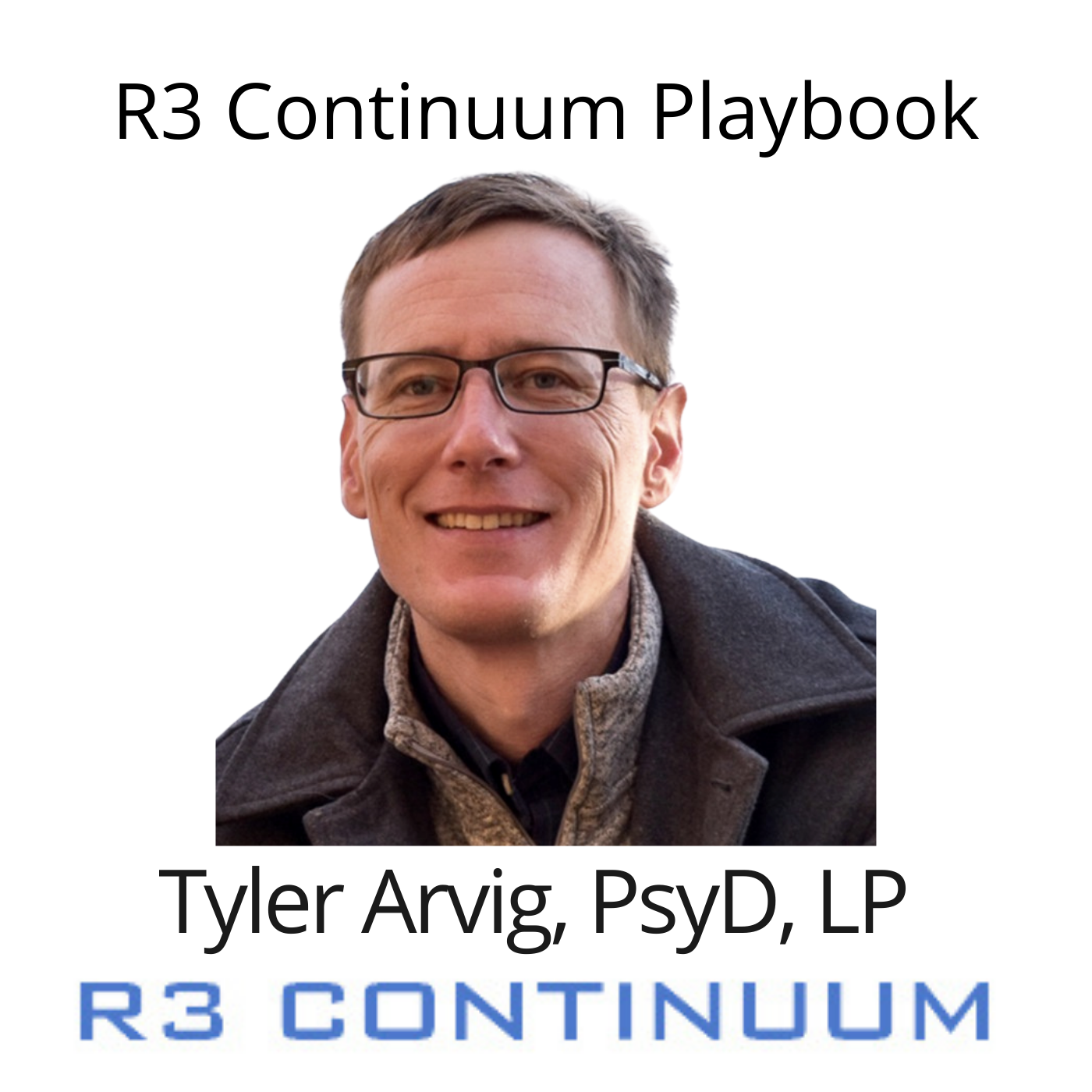
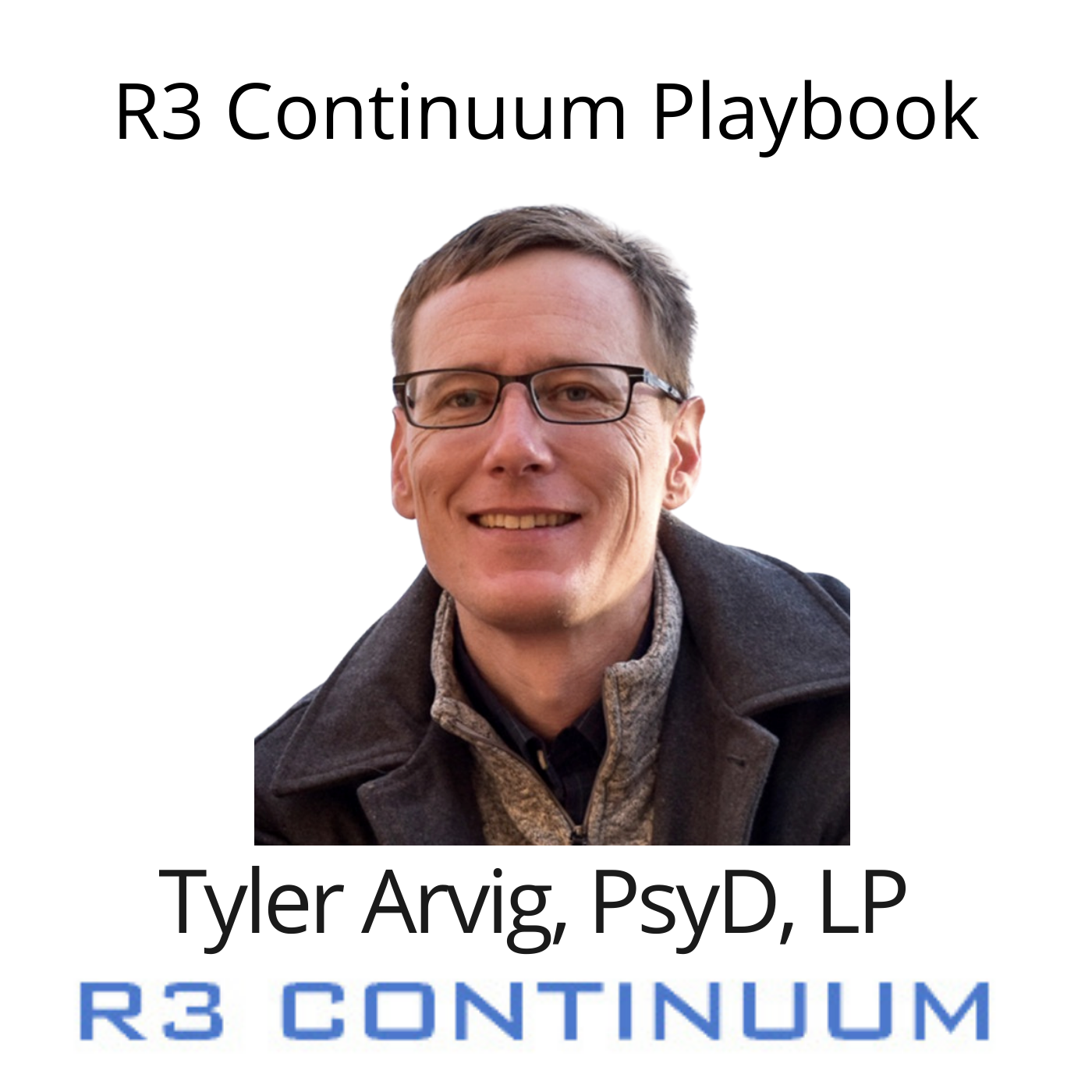
Dr. Tyler Arvig reviewed conditions that create employee burnout and several tips for businesses to help curb burnout in their employees. The R3 Continuum Playbook is presented by R3 Continuum and is produced by the Minneapolis-St.Paul Studio of Business RadioX®. R3 Continuum is the underwriter of Workplace MVP, the show which celebrates heroes in the workplace.

TRANSCRIPT

Intro: [00:00:00] Broadcasting from the Business RadioX Studios, here is your R3 Continuum Playbook. Brought to you by Workplace MVP sponsor, R3 Continuum, a global leader in workplace behavioral health, crisis, and security solutions.

Tyler Arvig: [00:00:14] Hi. I’m Dr. Tyler Arvig, Associate Medical Director for R3 Continuum. And today, I want to talk about employee burnout. And, in particular, how to support your employees who might be struggling while managing life challenges and work demands.

Tyler Arvig: [00:00:32] Burnout has long been a topic of discussion in the workplace for obvious reasons. And although the term burnout isn’t my favorite, we all have a mental picture of what this might look like. Decreases in productivity and job satisfaction, lack of stamina, feeling as if you’re at a dead end. None of this is new. However, the current state of life poses new challenges and stressors that, for many, have increased the sense of feeling burned out.

Tyler Arvig: [00:01:02] Employees at every level are balancing work with more demands than ever before. There are increased family needs, social stressors, financial constraints, and lack of time to devote to recreational activities. This, combined with high levels of sustained anxiety, depression, and stress, can culminate in people reporting feeling burned out, having hit a wall, or just feeling stuck. With that, here are some helpful tips to keep in mind for your employees. This is not an exhaustive list, but we have seen these to be helpful in our extensive work around COVID-19 over the past year or so.

Tyler Arvig: [00:01:52] The first thing is to help others keep a sense of perspective. It’s easy to get drawn down into details or problems and to feel as if this represents someone’s life. The more we can do to keep perspective, including all of the things that are happening and how well we have done given the difficult situation that we’ve been in, the more likely we are to feel productive and satisfied in life. And the less likely we are to get that sense of feeling burned out.

Tyler Arvig: [00:02:25] The second thing is to learn to let things go. The old adage that you need to pick your battles certainly applies here. Being able to prioritize things that are truly important over things that are non-important will help us to make better decisions. Letting go of little things is one way to stave off a sense of burnout.

Tyler Arvig: [00:02:49] The third tip that I have is, first, to expect some hard days. This is not to say that we should assume every day is going to be hard. But it’s to say that some days are simply going to be a challenge. Yet every day is a new day. And just because today was hard doesn’t mean that tomorrow is going to follow suit.

Tyler Arvig: [00:03:12] The next tip is to keep a sense of humor. All too often as things get difficult, we forget to add levity in situations where it might be appropriate or helpful. Humor can help build relationships, relieve stress, and gain much needed perspective on a particular problem or situation. Appropriate humor can have an infectious positive effect on your work environment and can be a boon to productivity as well as employee satisfaction and devotion.

Tyler Arvig: [00:03:46] The next tip is for us to learn to accept good enough. Good enough will not suffice for every task that we do, but will suffice for most of the tasks that we do. Lowering the bar where it can be lowered into having the energy and drive to achieve the task that truly require the highest standard.

Tyler Arvig: [00:04:11] The next piece of advice would be, to avoid comparing ourselves to others and encourage your employees not to compare themselves to others. The sense of burnout or unhappiness is often amplified by comparing ourselves to others. Or more specifically, by comparing our internal emotional states to the outward appearances of others. As you can imagine, this is never a fair comparison and usually results in feeling as if other people are doing better than might actually be the case.

Tyler Arvig: [00:04:47] The next tip that I found to be particularly helpful, and it’s a bit of perhaps an unusual suggestion, but consider encouraging others to master something new. This could be something personally that we take on, but it could also be something new that we take on in the workplace, a new skill, learning a new task, or even taking on a new role. The sense of mastery, learning, and discovery is likely to help stave off feelings of burnout or frustration.

Tyler Arvig: [00:05:27] Encourage building and nurturing relationships. In the ever changing work environment, it is often about simply just getting things done. And while this is needed at times, it is often not sustaining. Encourage your people to actively build and engage in workplace relationships that will not only foster greater teamwork, but aid in more creativity, better problem solving, and improving the team’s overall productivity.

Tyler Arvig: [00:06:00] The next tip really can’t be overstated, and that is, to encourage your people to seek professional help if they need support. As a manager or leader, what resources are available for your employees who might need more formal help? R3 Continuum offers several options, as do your EAP and probably your private health insurance plan as well. Burnout in the workplace is often amplified or exacerbated by personal issues that we all may be experiencing. So, getting professional help is certainly appropriate for most of us at many times.

Tyler Arvig: [00:06:42] Finally, communicate. Frustration or burnout in the work environment is often a reflection of feeling undervalued, under informed, or out of the loop. Communicate often. Show appreciation for employee efforts. Address challenges and celebrate successes. Employees who are engaged and feel part of the organization are less likely to feel burned out.

Tyler Arvig: [00:07:10] I hope you have found these tips to be helpful as you go about supporting your people. Realizing that you might need additional help, please do feel free to reach out to us at www.r3c.com or email us at info@r3c.com. As experts in employee behavioral health, my colleagues and I would be happy to have discussions with you regarding any challenges that you may be facing in your work environment.


Show Underwriter

R3 Continuum (R3c) is a global leader in workplace behavioral health and security solutions. R3c helps ensure the psychological and physical safety of organizations and their people in today’s ever-changing and often unpredictable world. Through their continuum of tailored solutions, including evaluations, crisis response, executive optimization, protective services, and more, they help organizations maintain and cultivate a workplace of wellbeing so that their people can thrive. Learn more about R3c at www.r3c.com.

R3 Continuum is the underwriter of Workplace MVP, a show which celebrates the everyday heroes–Workplace Most Valuable Professionals–in human resources, risk management, security, business continuity, and the C-suite who resolutely labor for the well-being of employees in their care, readying the workplace for and planning responses to disruption.

Connect with R3 Continuum:  Website | LinkedIn | Facebook | Twitter
Tagged With: burnout, employee burnout, R3 Continuum, Tyler Arvig, workplace mental health

The R3 Continuum Playbook: Considerations for Returning to the Office After Remote Work

April 29, 2021 by John Ray

returning to the office
Minneapolis St. Paul Studio
The R3 Continuum Playbook: Considerations for Returning to the Office After Remote Work
Loading
00:00 /
RSS Feed
Share
Link
Embed

Download file

Return to Workplace

The R3 Continuum Playbook:  Considerations for Returning to the Office After Remote Work

Dr. Tyler Arvig of R3 Continuum detailed considerations involved in returning to the office after a long season of remote work, including adjusting to a commute again. He also addressed issues of physical safety, productivity, and how business leaders can support their employees. The R3 Continuum Playbook is presented by R3 Continuum and is produced by the Minneapolis-St.Paul Studio of Business RadioX®. R3 Continuum is the underwriter of Workplace MVP, the show which celebrates heroes in the workplace.

TRANSCRIPT

Intro: [00:00:00] Broadcasting from the Business RadioX Studios, here is your R3 Continuum Playbook. Brought to you by Workplace MVP sponsor, R3 Continuum, a global leader in workplace behavioral health crisis and security solutions.

Tyler Arvig: [00:00:13] Hello. I’m Dr. Tyler Arvig, the Associate Medical Director for R3 Continuum. And today, I’m going to discuss an issue we’re all thinking about, which is, bringing workers back to the office after an extended period of time working from home.

Tyler Arvig: [00:00:31] As the world has now normalized work-from-home, returning to the office actually might seem quite far and involves more challenges than we might have anticipated. As with near everything over the past several months, the simplest things can be the hardest to manage. This includes the seemingly uncomplex task of going back to the office. People have become accustomed to working from home with everything that that entails, including spending more time with family, not having to commute, having more flexible work hours, and being in a more casual environment. The routine act of going to the office now takes more time and mental energy.

Tyler Arvig: [00:01:19] As we see some employers opting to allow continued and potentially indefinite remote work for some or all of their workforce, other employers are making the decision to bring everyone back in-house while they’re related to financial considerations, concerns about productivity, outward appearances, or belief that team work is best done on an individual and in-person basis.

Tyler Arvig: [00:01:47] The decision to bring people back to the office was likely not an easy one and required much planning, both from human resources and executive leadership. The decision to bring people back into the office will cut both ways. It will be unpopular for employees who had thrived in a work-from-home environment. For others, however, they may relish the opportunity for human interaction, personal collaboration, and a return to routine.

Tyler Arvig: [00:02:20] There are some things you can expect in bringing people back to the office and advance knowledge of these things will help to make the transition more successful. Business leaders who take a more proactive approach to supporting their employees are going to be the most successful in the return to the office process. Let’s dive into some key areas that we need to be proactively addressed with your employees.

Tyler Arvig: [00:02:51] Perhaps the most obvious issue to be addressed is one of physical safety. We bring people back to the office at this point because the prevalence of COVID-19 has decreased in the population and vaccines are more widely available. With that said, COVID-19 is still present in relatively high numbers, and vaccine access, particularly for younger adults, continues to be a bit of a challenge. Furthermore, fears over variants of COVID-19 still exist. For these reasons, returning to the office will feel differently than it has in the past. The use of personal protective equipment, distancing measures, and other things are likely to be required, at least in the near term.

Tyler Arvig: [00:03:39] As a leader, part of this is going to mean providing extra measures of support as people navigate anxiety. Welcoming people back in a unique way is one way to make the transition a bit easier. It is not just another day at the office, acknowledge that. And provide something enjoyable or meaningful as people return. Frequent communication is another way to ease the transition. Communication is key in this process, so communicate often and in personal ways to help employees feel valued and safe as this process unfolds.

Tyler Arvig: [00:04:20] It is reasonable to anticipate some decreased productivity, at least at first. The same way you might have seen this when folks started working from home, you’re also likely to see this as they return to the office. Anxiety, as we just discussed, may contribute to that decrease in productivity. Working with the use of personal protective equipment and with physical distancing also might decrease productivity, at least temporarily. And personal relationships and conversations, which may have been limited over the past year, may also contribute to that decrease in productivity.

Tyler Arvig: [00:05:02] While it might seem counterintuitive to communicate to folks about the likely blip in their productivity, it also shows understanding of the unique circumstance they’re in. Being supportive in helping people to re-find their rhythm of productivity should be done as well. People will find their way back to their previous level of productivity in short order if we do the right things.

Tyler Arvig: [00:05:30] We also cannot discount further complicating factors for office work that have been silent over the past year, such as reintroduction of the commute, re-establishing child care, and re-establishing other routines that, frankly, we haven’t had to do over the past year. Adjusting to this will take some time. And to the extent that minor flexibilities are available to employees who are returning to the worksite, this could be incredibly helpful, both personally and from a work productivity standpoint. Returning to the office in a less rigid manner is likely to make the experience more successful.

Tyler Arvig: [00:06:12] Lastly, it is important to have resources available to employees who need additional support. One solution R3 Continuum offers is wellness outreach, which reaches out to employees proactively to provide support in the return to work transition process. It may also mean leaning on your EAP for additional support. Or implementing other programs that help your employees adapt to the changes in their work life.

Tyler Arvig: [00:06:41] As always, R3 Continuum is here to help you navigate the challenges of bringing people back into the office, whether consulting with your management team, providing direct employee support, or providing customized trainings. We have the tools and resources you need to be successful. You can find more information on our website, www.r3c.com. Or you can email us at info@r3c.com. My colleagues and I are always available to consult on this or a variety of other employee and organizational wellbeing initiatives. Thank you.


Show Underwriter

R3 Continuum (R3c) is the underwriter of Workplace MVP, a show which celebrates the everyday heroes–Workplace Most Valuable Professionals–in human resources, risk management, security, business continuity, and the C-suite who resolutely labor for the well-being of employees in their care, readying the workplace for and planning responses to disruption.

R3 Continuum is a global leader in workplace behavioral health and security solutions. R3c helps ensure the psychological and physical safety of organizations and their people in today’s ever-changing and often unpredictable world. Through their continuum of tailored solutions, including evaluations, crisis response, executive optimization, protective services, and more, they help organizations maintain and cultivate a workplace of wellbeing so that their people can thrive. Learn more about R3c at www.r3c.com.

Connect with R3 Continuum:  Website | LinkedIn | Facebook | Twitter
Tagged With: COVID-19, R3 Continuum, remote work, return to office, Return to Work, returning to the office, Tyler Arvig, workplace

Business RadioX ® Network


Our Most Recent Episode

CONNECT WITH US

  • Email
  • Facebook
  • LinkedIn
  • Twitter
  • YouTube

Our Mission

We help local business leaders get the word out about the important work they’re doing to serve their market, their community, and their profession.

We support and celebrate business by sharing positive business stories that traditional media ignores. Some media leans left. Some media leans right. We lean business.

Sponsor a Show

Build Relationships and Grow Your Business. Click here for more details.

Partner With Us

Discover More Here

Terms and Conditions
Privacy Policy

Connect with us

Want to keep up with the latest in pro-business news across the network? Follow us on social media for the latest stories!
  • Email
  • Facebook
  • Google+
  • LinkedIn
  • Twitter
  • YouTube

Business RadioX® Headquarters
1000 Abernathy Rd. NE
Building 400, Suite L-10
Sandy Springs, GA 30328

© 2025 Business RadioX ® · Rainmaker Platform

BRXStudioCoversLA

Wait! Don’t Miss an Episode of LA Business Radio

BRXStudioCoversDENVER

Wait! Don’t Miss an Episode of Denver Business Radio

BRXStudioCoversPENSACOLA

Wait! Don’t Miss an Episode of Pensacola Business Radio

BRXStudioCoversBIRMINGHAM

Wait! Don’t Miss an Episode of Birmingham Business Radio

BRXStudioCoversTALLAHASSEE

Wait! Don’t Miss an Episode of Tallahassee Business Radio

BRXStudioCoversRALEIGH

Wait! Don’t Miss an Episode of Raleigh Business Radio

BRXStudioCoversRICHMONDNoWhite

Wait! Don’t Miss an Episode of Richmond Business Radio

BRXStudioCoversNASHVILLENoWhite

Wait! Don’t Miss an Episode of Nashville Business Radio

BRXStudioCoversDETROIT

Wait! Don’t Miss an Episode of Detroit Business Radio

BRXStudioCoversSTLOUIS

Wait! Don’t Miss an Episode of St. Louis Business Radio

BRXStudioCoversCOLUMBUS-small

Wait! Don’t Miss an Episode of Columbus Business Radio

Coachthecoach-08-08

Wait! Don’t Miss an Episode of Coach the Coach

BRXStudioCoversBAYAREA

Wait! Don’t Miss an Episode of Bay Area Business Radio

BRXStudioCoversCHICAGO

Wait! Don’t Miss an Episode of Chicago Business Radio

Wait! Don’t Miss an Episode of Atlanta Business Radio














