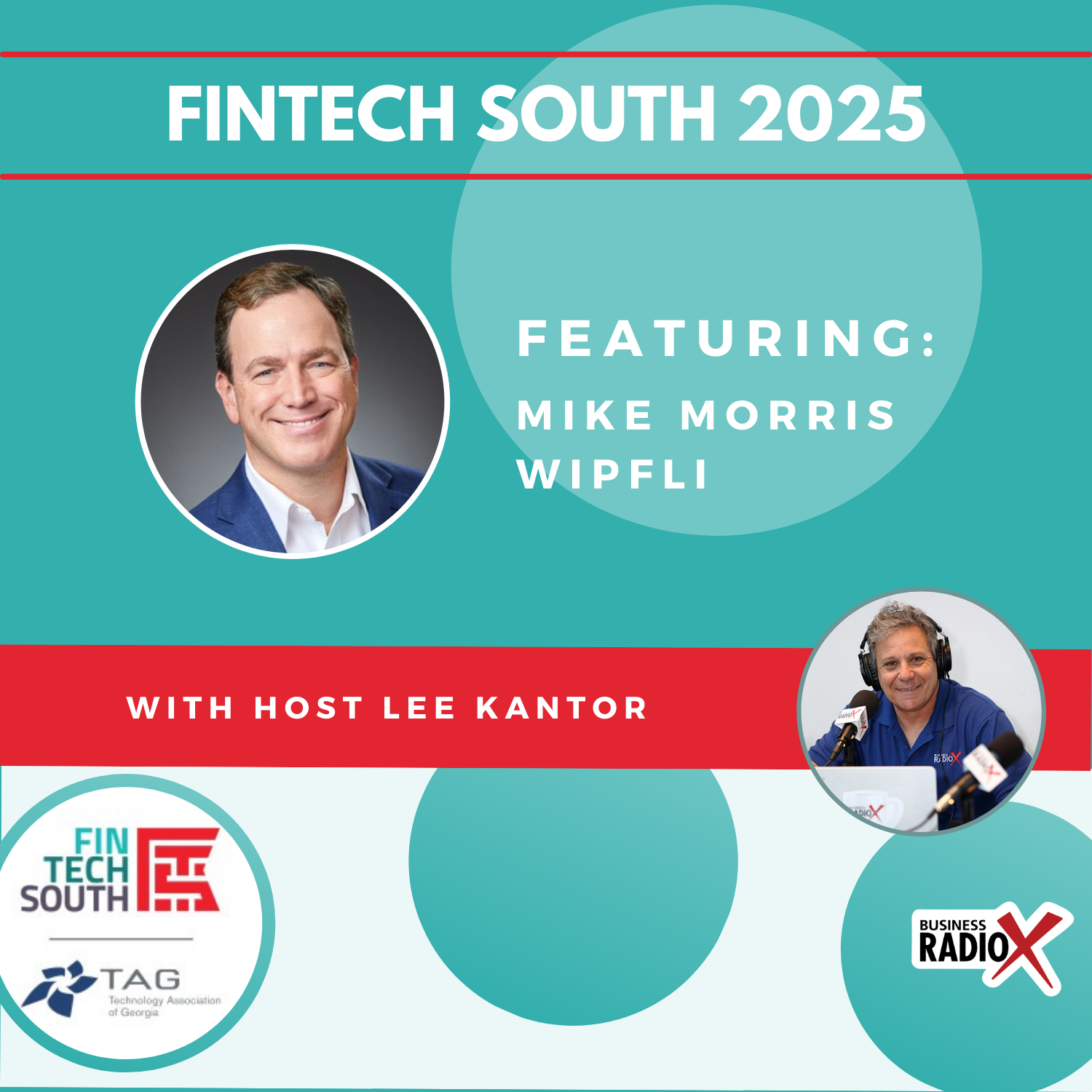

 Mike Morris, with Wipfli, oversees projects, including Service Organization and Control (SOC) reports (SOC 1 and SOC 2), Sarbanes Oxley IT 404 testing, network vulnerability and penetration testing and IT general control reviews for FinTech companies, banks, and insurance companies.
He is a member of the Information Systems Audit and Control Association (ISACA) and is an active member of the Technology Association of Georgia (TAG), serving the chair of the board of the FinTech Society.
Over the years, Mike has led a variety of seminars and webinars, as well as served on panels relating to internal fraud, preparation for an IT audit, vendor management and risk management.
Connect with Mike on LinkedIn.
 This transcript is machine transcribed by Sonix.
TRANSCRIPT
Intro: Broadcasting live from Fintech South 2025 at the Woodruff Arts Center in Atlanta, Georgia. It’s time for Atlanta Business Radio now. Here’s your host.
Lee Kantor: Lee Kantor here broadcasting live from ten Tech South. So excited to be talking to my next guest, Mike Morris with Wipfli. Welcome.
Mike Morris: Thank you. Thank you for having me.
Lee Kantor: Uh, for folks who aren’t familiar to share a little bit about Wipfli, how are you serving folks?
Mike Morris: Yeah, so we’re in a county advisory firm, and my area specifically focused on the financial technology companies and the financial institutions that put the fin in fintech. Uh, so helping them work together with third party risk management and, you know, all the other type of accounting needs that they could, could have.
Lee Kantor: So how do you attack a conference like fintech. So.
Mike Morris: Well, it’s always great networking. So catching up with your old friends and making new contacts is always exciting. And then it’s just a really good learning experience. We always have really, really strong content that’s up to date with what’s going on in the industry and, you know, great education opportunities.
Lee Kantor: So you’re coming in here to looking to learn and also to kind of connect with folks.
Mike Morris: Exactly, exactly. We have such a great ecosystem. And it’s such an open ecosystem with, you know, our our southern openness and friendliness. It’s it’s a lot of fun and everybody’s, you know, welcoming and and here to meet and talk.
Lee Kantor: So does Wipfli send just you or do you send a contingent, uh, to take advantage of this conference?
Mike Morris: Oh, we have a couple people here, and I’m a part of the, uh, fintech society. So, uh, you know, I’m pretty tied in with what’s going on, so, uh, you got pretty good coverage here, so.
Lee Kantor: So what? How are you? Um, what kind of trends are you looking at moving forward? Anything you learned here that you’ll be able to bring back to Wipfli?
Mike Morris: Well, definitely. I mean, AI is such a hot topic, and, you know, it’s such a nebulous or a huge, huge idea or thought of what’s going on out there, but really boiling it down to practical uses and how is it really impacting payments and the financial technology sector.
Lee Kantor: So how are you, uh, kind of dealing with, uh, crypto and stablecoins?
Mike Morris: Yeah. I mean, now that it’s kind of open back up, we were pretty heavily into it, uh, a couple of years ago. And obviously that got squashed for a while. But, you know, with the new administration, it has changed and opened up. And, uh, we’re definitely helping our financial institutions especially understand how they can get involved with stablecoin and what it’s going to mean for them in the future.
Lee Kantor: So what advice can you share? What information can you share when it comes to stablecoins and crypto? Uh, for folks who aren’t maybe as familiar as you.
Mike Morris: Well, yeah, just understanding the difference between, you know, what is backed by and and the difference between that and Bitcoin, uh, you know, that it is backed by the dollar and that we have, you know, the ability to use it in different ways. And it’s a little more palatable to the financial institutions, the banks that want to get involved because they have a better understanding of the like the you know, how it works. And uh, uh, what’s the right word here. Uh, you know how it works and how they’re going to be able to use it to help their customers.
Lee Kantor: So how would you recommend using it?
Mike Morris: Well, it’s looking at demand to your customer base. You know, who is interested in having that type of currency and using that on in a transaction basis. And then how can we use that in day to day transactions to make it, uh, you know, again, easy to use and as easy to use as a credit card or cash.
Lee Kantor: Now, are we there yet or is this something that’s kind of evolving?
Mike Morris: It’s definitely evolving, especially in the financial situations when you get more into the community banks, uh, really getting the board level understanding and education there and looking at use cases and again, understanding your customer base, understanding what they’re looking for and how how much of a demand is there.
Lee Kantor: Now, how do you kind of leverage, uh, tag. Are you, uh, you mentioned being part of the fintech society. Uh, in what ways do you kind of lean on tag when it comes to your own personal education or networking? Is this something that’s an active part of your week or month?
Mike Morris: It is. I’m a part of the society, so we have regular meetings. We’re setting up regular content. We have an event coming up here in September. Uh, so we’re always looking to grow content, uh, and we’re kind of have our hands on the steering wheel. You know, being a part of the steering committee, uh, you know, be able to determine what the hot topics are, what we want to know, what our companies are, want to bring to the table. Uh, and putting that out there and getting people together. And we always make a big part of our events being the networking component. People love coming out and talking and meeting, but also getting that content throughout the year. So then the next one is going to be on open banking and embedded finance. Uh, so this could be exciting. So we can kind of give you the things that are still a hot topic. And especially with the the administration change. How is that how does that impact how how we’re going to move towards these, these areas.
Lee Kantor: So, um, what’s it like from a talent standpoint is willfully finding talent, the talent that they need?
Mike Morris: Yeah, definitely. And, you know, looking at the George ecosystem specifically, you know, if the Georgia Fintech Academy, that’s a part of the university system that is putting a lot of great education out there for preparing students to get into the fintech world, so we have a better labor pool of people able to come in and help immediately.
Lee Kantor: So when you’re onboarding folks, are you finding the people that you need that are they’re coming in prepared, or do you have to spend a lot of time kind of training them up to get them to the place that you need them?
Mike Morris: Well, I mean, they’re coming with a good baseline, but we definitely have to coach them up and train them and get them real world hands on experience and, you know, oversight.
Lee Kantor: So what do you need more of? How can we help you?
Mike Morris: Uh, for here, it’s just making sure we’re getting the word out for, you know, who we are and what we do and able to, you know, make connections and, you know, grow our business. So obviously, getting the word out here through radio business radio X is great. And we love the opportunity to be here.
Lee Kantor: So who is your ideal client.
Mike Morris: So we usually work with financial institutions that are trying to be a little more progressive and understanding that they need to be relevant in the world and do more than what they’ve done in the past, and getting us getting involved and partnering with fintech partnerships and making sure they’re understanding how they can be more relevant to their customers and compete with with the nontraditional banks that are popping up and competing directly with them.
Lee Kantor: So what’s the pain they’re having right before they contact somebody who willfully?
Mike Morris: A lot of it is just the unknown. They they know they need to do something different, but they don’t quite know how to do it. So we’re able to come in and show them, hey, here’s hey, here’s how you build a foundation. You’re going to build a house. You got to build a good, solid foundation to get the right people, the right, uh, you know, attitude and mindset. And then obviously it’s a risk management issue, too. They need to make sure they understand the risks, and they can articulate that, especially to the regulatory bodies that oversee them.
Lee Kantor: So if somebody wants to learn more and connect with you or somebody on your team, what is the best way to do that? Is there a website?
Mike Morris: Yeah. Com and you can reach out to me directly and I’d love to have a conversation.
Lee Kantor: Well, Mike, thank you so much for sharing your story, doing important work. And we appreciate.
Mike Morris: You. Thank you. I appreciate the opportunity here.