Business RadioX ®

  • Home
  • Business RadioX ® Communities
    • Southeast
      • Alabama
        • Birmingham
      • Florida
        • Orlando
        • Pensacola
        • South Florida
        • Tampa
        • Tallahassee
      • Georgia
        • Atlanta
        • Cherokee
        • Forsyth
        • Greater Perimeter
        • Gwinnett
        • North Fulton
        • North Georgia
        • Northeast Georgia
        • Rome
        • Savannah
      • Louisiana
        • New Orleans
      • North Carolina
        • Charlotte
        • Raleigh
      • Tennessee
        • Chattanooga
        • Nashville
      • Virginia
        • Richmond
    • South Central
      • Arkansas
        • Northwest Arkansas
    • Midwest
      • Illinois
        • Chicago
      • Michigan
        • Detroit
      • Minnesota
        • Minneapolis St. Paul
      • Missouri
        • St. Louis
      • Ohio
        • Cleveland
        • Columbus
        • Dayton
    • Southwest
      • Arizona
        • Phoenix
        • Tucson
        • Valley
      • Texas
        • Austin
        • Dallas
        • Houston
    • West
      • California
        • Bay Area
        • LA
        • Pasadena
      • Colorado
        • Denver
      • Hawaii
        • Oahu
  • FAQs
  • About Us
    • Our Mission
    • Our Audience
    • Why It Works
    • What People Are Saying
    • BRX in the News
  • Resources
    • BRX Pro Tips
    • B2B Marketing: The 4Rs
    • High Velocity Selling Habits
    • Why Most B2B Media Strategies Fail
    • 9 Reasons To Sponsor A Business RadioX ® Show
  • Partner With Us
  • Veteran Business RadioX ®

The R3 Continuum Playbook: Should I Start a Mental Wellness Program at My Company? – An Interview with Dr. George Vergolias, R3 Continuum on the Decision Vision Podcast

February 24, 2022 by John Ray

R3 Continuum
Minneapolis St. Paul Studio
The R3 Continuum Playbook: Should I Start a Mental Wellness Program at My Company? - An Interview with Dr. George Vergolias, R3 Continuum on the Decision Vision Podcast
Loading
00:00 /
RSS Feed
Share
Link
Embed

Download file

R3 Continuum

The R3 Continuum Playbook: Should I Start a Mental Wellness Program at My Company? – An Interview with Dr. George Vergolias, R3 Continuum on the Decision Vision Podcast

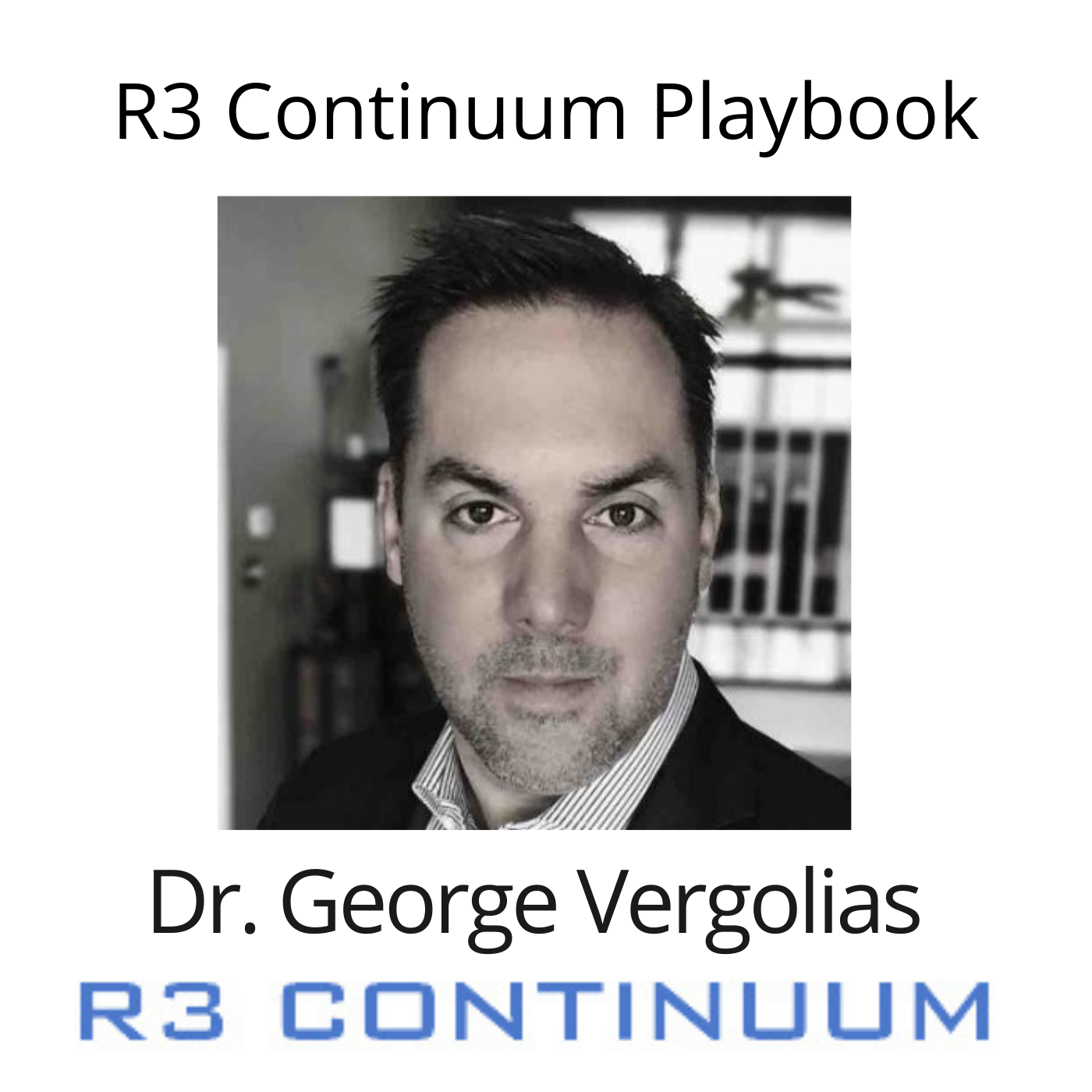
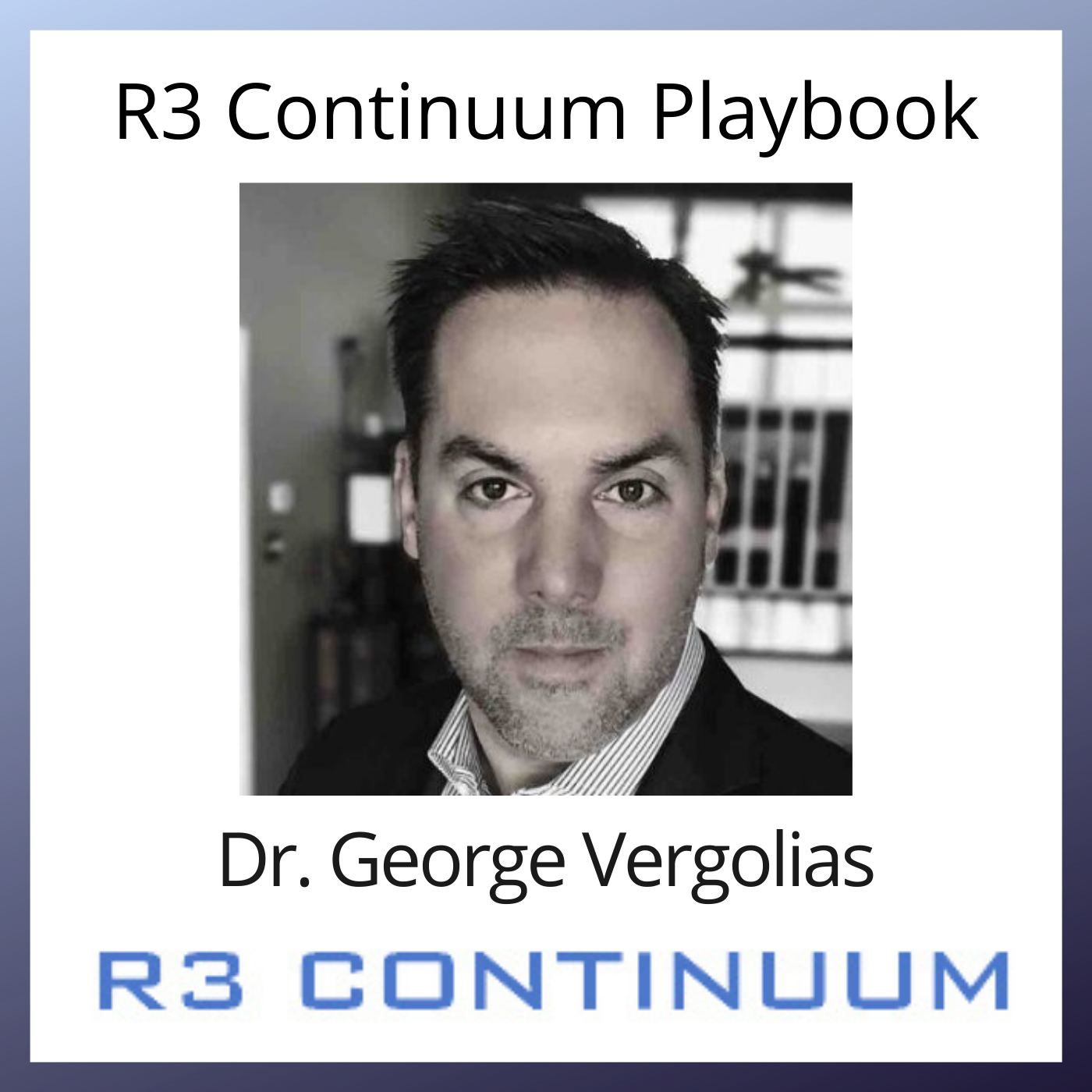
Dr. George Vergolias, Medical Director at R3 Continuum, was a guest on the Decision Vision podcast, hosted by Mike Blake, discussing whether an organization should start a mental wellness program. In this insightful episode, Dr. Vergolias laid out the considerations and issues involved, best practices for meeting the needs of people’s emotional and psychological health, the rise of telehealth, the potential returns of such programs, the characteristics of a successful program, and much more.

The show archive of the Decision Vision podcast can be found here. The R3 Continuum Playbook is presented by R3 Continuum and is produced by the Minneapolis-St.Paul Studio of Business RadioX®. R3 Continuum is the underwriter of Workplace MVP, the show which celebrates heroes in the workplace.

TRANSCRIPT

Intro: Broadcasting from the Business RadioX studios, here is your R3 Continuum Playbook. Brought to you by Workplace MVP sponsor R3 Continuum, a global leader in workplace behavioral health, crisis and security solutions.

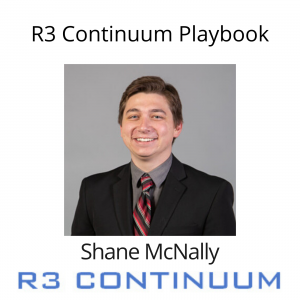
Shane McNally: Hi, there. My name is Shane McNally, marketing specialist for R3 Continuum. This week’s R3 Continuum Playbook is going to be a bit different. We’re really excited to share that R3 Continuum Medical Director, Dr. George Vergolias, was recently a guest on the Decision Vision podcast. Dr. Vergolias had a conversation with Mike Blake from Brady Ware & Company, where they discussed mental wellness programs, and if it’s worth considering the implementation of one at your organization. They also discussed best practices for supporting emotional and psychological health, the rise of telehealth and what it takes to create and implement a mental wellness program successfully. Here’s the full conversation between Mike Blake and Dr. George Vergolias.

Mike Blake: Dr. Vergolias, welcome to the program.

George Vergolias: Thank you, Mike. It is a pleasure to be here.

Mike Blake: So, let’s start from the basics because I think people could define this differently depending on their context. How do you define mental wellness?

George Vergolias: So, the World Health Organization has, I think, a very usable and approachable definition. They define it as a state of wellbeing in which the individual in his or her own abilities can cope with the normal stresses of life. They can work productively and fruitfully. And they can make a contribution to their society. I kind of simplified that a little bit, and I like talking about mental wellness as a synergy between emotional, psychological, physical, and spiritual ways of being in the world that allow us to thrive.

Mike Blake: So, you’ve been doing this a long time, obviously, you have a lot of expertise in this field. When people think about or consider implementing a mental wellness program, what does that look like? Most of us know what a physical wellness program looks like. It could be gym memberships, and it could be walks, it could be stretching at your desk, not sitting for too long, all kinds of things of that nature, healthy snacks in the break room. But I’m not sure all that familiar with what a mental wellness program looks like. So, what, in your mind, does that look like? And maybe you can share some best practices with us?

George Vergolias: Sure. Really, it is a program that is designed at the highest level around meeting the needs of people’s emotional and psychological health. I mean, that’s kind of built into the definition. So, what does that mean in terms of best practice or what should you consider if you’re a leader at an organization? There’s a number of things that I’d recommend.

George Vergolias: And the first is, it has to be catered to your organization’s needs and to your organization’s culture. I’m not a fan of a one size fits all. There are different pain points. There are different needs, different industries, different companies, different cultures. And even in the same company, you might have different regions of the world or of the country in the U.S. that have different needs. So, it has to be catered to your needs and culture. It has to be collaborative both internally amongst various departments, as well as with outside vendors that can provide additional resources that you, as the organization, may not be an expert at.

George Vergolias: Leaders and managers need to be invested, engaged, and accountable at the highest level. I think a good example of this, which also shows some vulnerability, is Sheryl Sandberg from Facebook. Strong advocate of a mental health program, came out with her book a number of years ago, Lean In, and really was very open about her own experiences and her own vulnerabilities.

George Vergolias: That really sets a tone for employees. You want the employees to be engaged and you want their input to be part of the process of developing a program. You need to have a clear rollout and a communication plan. You need to leverage technology to support the initiative. On this front, remember, technology is a tool, it’s not the goal.

George Vergolias: I think what has happened in recent years is there have been some technology driven giants that have come on the scene that have wonderful apps and they have wonderful engagement in terms of the technology side. But they don’t necessarily have the best throughput in terms of impacting functional or behavioral change.

George Vergolias: And two more things I’d recommend. Consider a plan for anticipated barriers. Given your unique needs and culture, what are the things that you might hit roadblocks on and anticipate that ahead of time. And lastly, you want to address a menu of offerings in that service plan. Ideally, it shouldn’t be just psycho-educational trainings, or just peer support, or just access to the EAP, or access to mental health services. One size doesn’t fit all, and you really want a range of those things as you’re applying these programs.

Mike Blake: So, an argument might be that employees have it pretty good right now. And I’m not saying I’m saying this, but I have heard this argument, and you probably have too. Employees have not had as much power as they have right now – in my lifetime, for sure – to kind of pick and choose where they want to work, how they want to work. Many of them are working home. And for baby boomers and some Gen Xers, that seems kind of cushy, frankly.

Mike Blake: And so, that leads to the question, you know, is this question of a mental wellness program relevant to organizations that now have large numbers of people working from home? Can a company even put something in place to help them? Because with people working at home now that each have their own individual environments, now their each individual needs that are no longer kind of collectivized by an organization, they’re so diffused and so diverse now. Does that take a mental wellness program off the table? Are there things that companies can do to promote mental wellness, even if you have a largely remote workforce?

George Vergolias: It’s a great question, Mike. And my answer is, it absolutely does not take it off the table. In an interesting way, it heightens the need. Let me throw out some details for you. In March of 2021, the Microsoft Work Trends report was published. And what they came out with is a number of interesting findings, and I’m just going to throw a few out just to anchor this discussion. Compared to 2020, as they went into 2021, they saw a 100 percent increase in the use of Microsoft Teams. The average meeting was extended by ten minutes.

George Vergolias: There was an increase of 45 percent more chats being sent at random times of the day. And one of the difficulties we were finding is you always had to be on camera. So, if you were on camera, it’s really interesting that people don’t realize is if you’re in a board meeting or just a conference meeting at your workplace, you can see the speaker or your boss, and you can see if they’re paying attention to you. So, you can divert your gaze. You could take a sip of water. You can scratch your nose. You can do a million things.

George Vergolias: What’s so odd is when you’re on a Zoom meeting with eight people, you don’t know who’s looking at you at that exact moment. And so, there’s this sense of you always need to be on. You always need to be completely focused. That’s mentally exhausting. And so, there’s these realities of working remote that has really been difficult.

George Vergolias: What we’ve also seen is – this is really a fascinating study – the increased number of emails delivered in February of 2021 versus February of 2020 based on this same study, it increased in the U.S. 40.6 billion more emails were sent. So, what’s interesting is when you think of chat and you think of email, think of the disruptive nature. At any moment in the day, these things can come in and interfere with your work productivity, with your focus.

George Vergolias: And it’s like the real exhaustion. Eighty percent of employees say that they’re more productive through 2020 and through 2021, but 60 percent feel they’re overworked, and 40 percent feel exhausted. And leaders tend to be out of touch. A study from about three or four months ago by Deloitte showed that 61 percent of leaders say that they’re thriving, but only 38 percent of employees say that they’re thriving.

George Vergolias: So, the point with all of this is although that remote environment early on seemed really nice, “I could pick my kids up. I could eat lunch in my own, you know – I could wear my gym bottoms if I’m not showing, you know -” all of these things are wonderful. This sense of merging my home-personal life and my work life and not having clear boundaries with all the things I’ve already mentioned really resulted in a great deal of emotional exhaustion.

George Vergolias: And so, now, more than ever, the creative but problematic issue is, how do we engage employees in a remote work environment in a way that still meets those needs, that meets those behavioral and cognitive and psychological needs. So, it’s definitely needed and it’s a big challenge.

Mike Blake: The Zoom thing is interesting, and you’re right, it is exhausting. It is exhausting to be on camera. I think we all now have a greater appreciation for how hard it is for people who are on TV or the movies as a living. And I think, also, you become so aware because you see yourself often. If you haven’t turned off your own sort of picture that creates a self-consciousness that, I think, is also draining.

George Vergolias: You know what’s interesting, Mike, if I could just interject. What we’ve done at R3 Continuum – which I love this idea. It wasn’t my idea. I think our ops director came up with this because she read an article – is we tacitly or explicitly gave permission for people to go off camera, whether it’s because their kids are screaming in the background, or their dogs barking, or maybe they didn’t clean up, some of our folks were doing these calls from their bedrooms. There’s a number of reasons why you would want to do that. But that really gave permission for people to say as long as you’re still focused within reason as you normally would be in the office, you can go off camera if you need a relief.

Mike Blake: Yeah. And, also, I wonder, you know, I’ve heard that some people are more focused when they can be also a little distracted. You know what I mean? They’re doodling or something, right? But being on camera where you just sort of have to lock your eyes into the camera and you can’t do that, I think that’s also very stressful for people. And turning off the cameras is a really good idea.

George Vergolias: Yeah. Absolutely. Absolutely.

Mike Blake: So, speaking of boundaries, here’s a question I want to ask. Are there any limits or are there boundaries in terms of how realistic it is to expect a mental wellness program to perform in terms of addressing potential sources of mental unwellness? Are there certain things that a corporate mental wellness program can or can’t do despite your best of intentions throwing all the resources at it that you want? Or is anything on the table? Could a well-constructed, well-funded mental wellness program achieve almost anything you want?

George Vergolias: I don’t think it can achieve anything you want. I think what it can do, it can really help prevent a host of developing issues, like anxiety, depression, substance abuse, even suicidal ideation. It can’t fully prevent those. But what it can do is help catch those upstream when they’re developing, and then get people to the proper resources, be they formal clinical treatments, or what we call more organic supportive resources, like peer support, mindfulness programs, psycho-educational training, things of that nature. That could be really helpful.

George Vergolias: And by doing that, the upside is that can impact morale. It could impact productivity, which has a bottom line impact on businesses. And most importantly, it can impact cultural cohesion and cultural engagement. It impacts talent retention, all of those.

George Vergolias: There are some limits, though. So, some things I think it cannot really do is, if somebody has a moderate to severe mental health problem, they probably need formal clinical treatment. They need to be referred to proper treatment providers that can address that either through psychotherapy and/or medications. It’s important to know that it can’t do all of that.

George Vergolias: The other thing I don’t think it can do fully without a separate approach is we see that there’s a host. And we certainly have seen in ’20 and ’21 a host of cultural tensions that emerge at the workplace, be they related to political, ethnic, racial, gender, regional differences. The big two that we’ve been involved in a great deal are the collective response to the murder of George Floyd and the demonstrations, and those demonstrations that then turned into riots. And then, of course, mask mandates and vaccine mandates.

George Vergolias: These are really tough hot points that all the way wellness program can raise the emotional IQ of your employees. And they can alleviate how that tension manifests. If you want to address those kind of cultural issues, you need to address them head on and in some different ways. A wellness program can complement that process very well. But it is not in in it of itself going to take those cultural issues away or off the table.

Mike Blake: And I’m glad you brought that up because it leads into a question I wanted to make sure to cover, and I’ll bet you encountered this. What if the company itself is the source of the mental and wellness? The new word in everybody’s lexicon now is toxic. And there are toxic people, there are toxic workplaces. I think that social media has amplified toxicity in a profound and pervasive way. And as a company reflects on or considers putting in a mental wellness program, is it possible they’re going to find that they’ve seen the enemy, and it is us. That they may be actually self-defeating because they’re the cause of the mental unwellness to begin with?

George Vergolias: One hundred percent, I agree with that. It can be very counterproductive. And I said this earlier, but it’s important to just say it again, it’s really important to know thyself as an organization, to know your culture, know your employees, know your leaders, know your pain points.

George Vergolias: It’s interesting, Mike, the image that comes to mind is imagine you spend $10,000 to landscape your backyard. The landscaper comes in, does wonderful works for weeks and does great. It looks like a Zen garden when they leave. And then, for the next six months, you don’t do anything. You don’t water, you don’t mulch, you don’t weed. What happens? It falls in complete disarray.

George Vergolias: We have seen some companies who do a pretty good launch of a wellness program, or they partner with groups like R3 or others, and we do a really good launch working in tandem with them, but they’re not dealing with their cultural toxicity. And that just undermines the foundation on which all of that is based. What’s really interesting when you think of a physical wellness, bring in massage therapists, have a dietician come in, there’s a number of other ways you can do that. In part, you need to be engaged in that process for it to be beneficial. But there’s physical benefits that one can get without necessarily voluntarily being engaged in the process.

George Vergolias: When you think of mental wellness, the recipient has to have buy in. They have to believe in it and they have to do the work. And if you don’t have a culture of trust, if you have a culture of stigmatization against feeling vulnerable or admitting that you have mental health challenges, the best program in the world just isn’t going to take off. So, it’s a really poignant question that you raise.

Mike Blake: So, in point of fact, this may be something that might be considered hand in hand with a leadership and cultural evaluation. Because it seems to me this is a real double-edged sword of a mental wellness program is that, if you put that in, you may find things out about your organization that you don’t necessarily love.

Mike Blake: I can easily see a scenario in which you put in a mental wellness program, let’s say, you have a telemental health consultations. And then, an employee says, “Yeah. I’m not the underperformer. My boss is really toxic. I’m quitting.” I mean, that’s a very real possible outcome, right?

George Vergolias: That’s absolutely right.

Mike Blake: And I kind of even wonder if before you put in a mental wellness program, you may want to do some sort of self-evaluation to make sure that, again, you’re not the one causing the mental unwellness in the first place.

George Vergolias: I think that’s very important. And that’s why that engagement, all the way from top to bottom, of getting input, certainly, from leadership – that’s important – middle management, all the way down to your frontline employees is critical, so you can understand what those insights are. And it’s critical to do it in a way, I recommend doing that in an anonymous way so that people can feel more comfortable being open and there won’t be backlash on their job. Because what you really want is you don’t necessarily want people to fall in line in that step of the process. You want really honest and candid, almost gut punch data so you can take a really good appraisal of where are we as a company, and what are the pain points that we need to solve along those lines? I totally agree with that.

Mike Blake: So, you’ve done this for a long time and, of course, you’re right in the middle of it with coronavirus, are you able in any way to measure kind of the ROI of putting programs like this? And what have you seen in terms of improved company performance, bottom line-wise, for companies that have successfully implemented mental wellness programs?

George Vergolias: Yes. Again, great question. And it’s something that if you go back five years and certainly ten years ago, there was some studies that showed ROI, but I don’t think they were nearly as well developed. What we’re seeing just in the last two years is what I’d refer to as an explosion of studies looking at what is the ROI, not only in terms of human impact, but also in terms of bottom line.

George Vergolias: And the ultimate conclusion – I’ll give you a quick data point from a Canadian study that was done recently – you have to make a business case for the benefit as well at some point to get that buy in. So, what’s interesting is Deloitte did a study – now, this was November of 2019. So, what’s interesting here is that was actually at the frontend or just before the pandemic – and they were looking at a wellness program across ten different large companies in Canada.

George Vergolias: And what they found going in, they estimated that ten percent of those employees across that sample size had depression. And the annual cost of depression – and this is in the U.S. – is $31 to 51 billion in terms of lost productivity, absenteeism, presenteeism, and so on.

George Vergolias: And what we know is the World Economic Forum estimates that the cost globally is going to be six trillion and that’s for mental health problems globally, the business loss or the cost of decreased productivity. What’s interesting is when they did this study and they looked at productivity, they looked at engagement of employees, they looked at talent acquisition and overall throughput of work, they found that after three years, there was a 60 percent ROI on dollar spent. And after four plus years, four or five six years, that ROI went up 118 percent. And that’s based on the productivity, and the output, and the creative inventive-ism, if you will, or ingenuity that people were bringing to the table.

George Vergolias: Because the hard reality is, if you have a burned out, exhausted, anxious, depressed core group in your workforce, they’re not being innovative, they’re not being collaborative. They are getting by day-by-day and they’re not pushing the envelope from a business perspective. That’s not the talent you want. Well, you want that talent, but you want that talent to be more at a place of wellness and thriving is what I meant by that.

Mike Blake: So, one question that comes to mind and probably may come to mind with some of our listeners is that, we’re reading all over the place that this is a great time to be a therapist or a psychologist or psychiatrist. You know, most doctors, they’re not even taking new patients right now. You can’t get a consult. How do companies kind of address that or not let that stand in the way of providing resources to their employees?

George Vergolias: So, first, that’s an absolute harsh reality right now. And what’s interesting as a side note, in my work with my Telepsych company, we’ve been doing telehealth for almost 19 years. And up until the pandemic, we struggled with a lot of hospitals getting them to really adopt a telemental health approach. As you said earlier, Mike, as soon as COVID hit, it was like overnight that acceleration adoption just accelerated.

George Vergolias: So, an upside is that there are a lot more options of access to therapists, psychiatrists, social workers, psychologists, and so on via telemental health. And those definitely should be explored. If you are a company, or an HR director, or a company leader, and you are not open to telemental health options, you are really missing out on a wonderful opportunity to expand the reach of resources to your employees. And very soon you’re really falling behind. So, that’s one point.

George Vergolias: The difficulty, though, is I would say that corporations, companies, particularly HR directors, I think they really need to demand and expect their EAPs to continue to build those networks in a way that can meet their client’s needs. They’re paying for services, and it’s important that those networks be developed, be they incite or onsite evaluations and treatment or telemental health services.

George Vergolias: So, that’s one thing I would recommend that if you have an EAP in place, really have dialogue with them about what are the options that you’re offering and how are you shoring up those service gaps. I think that’s really important.

Mike Blake: Now, aside from direct consultations with therapists, what are some other examples of features of wellness programs that companies can put in place, or offerings, if you will?

George Vergolias: Yeah. Certainly. Certainly. So, what we tend to see in those that are most successful is we tend to see an array of offerings. So, these can include psycho-educational resources. Many of those are online trainings, various videos, how to manage conflict at home, how to handle marital conflict, how to handle conflict with your teenage child, managing anxiety, navigating through a panic attack. Again, I could go on. There could be hundreds of topics.

George Vergolias: We actually have a software program that we’ve developed that has well over 100 different modules on mental health and mental wellness that people can choose. And get a quick three to five minute kind of video on either educating them on the nature of the condition of the symptoms or helping them navigate and understand how to navigate those symptoms. There’s a lot of programs out there that do that.

George Vergolias: Another would be, these programs really should also have a factor of peer support and empowering a culture of support and, what I call, empowering a culture of vulnerability, where it destigmatizes mental health, it allows people to feel like they have support, and it allows people to feel safe to reach out and say I need some help. It’s important to have a clear communication plan and roll out the program. We see good programs where half the employees don’t even understand the program exists or understand how the program can benefit them.

George Vergolias: Beyond that, emotional and physical health education, adoption, and integration into the culture, self-help or mindfulness initiatives, peer support, disruptive event management is something R3 does a great deal of across the U.S. and globally. Helping people adjust to traumatic or disruptive events that occur at the workplace. Early intervention support, whether it’s destigmatizing campaigns, mental health first aid, all of these other things that we provide.

George Vergolias: And then, at some point, helping people identify when do you need more formal clinical treatment, mental health treatment, and then linking people to resources so they can access that.

George Vergolias: One last thing I’ll add that I don’t think is explored enough is developing access to what I call organic community resources. I mean, it used to be, and for some of us it still is. It used to be where you can go to your church, you can go to your local clubs, you can go to your local neighborhood groups, ethnic groups, whatever it may be, and you can still get a lot of support. Now, we have a culture by which many of us move around state by state. We are more disjointed than we were pre-COVID. And it’s harder to access some of those more natural supports or organic supports. So, I think that’s another thing that programs should consider as well.

Mike Blake: Now, what about things that are really sort of – I want to get a little bit granular with you if that’s okay – like encouraging meditation or meditation training, breathing exercises. A big one might be, for example, trying to organize some kind of group events, whether in-person or remotely. Because, you know, one of the downsides for many people for remote working is loneliness and isolation.

George Vergolias: Now, not for me, I’m an extreme introvert. So, you know, my wife is not concerned about me cheating on her. Her biggest concern is that I’m going to be picked for the Mars mission because I’m like, “You’re going to put me in a tin can by myself for three years? I’m in.” But, unfortunately, they don’t want fat old people on the mission, so there’s no danger of that. But the point is that sort of these other programs that just try to be a little bit kind of interventional. I guess my question is, are they used with any effectiveness in the workplace alongside the other things that you’re describing?

George Vergolias: I think they are. I think what’s really interesting is mindfulness and meditation programs, including just apps. There’s a proliferation of apps that talk about this as well. The value that they have shown over time, over the last five plus years, has really been astounding in terms of people just being more mindful, more aware of what they’re feeling, more aware of developing conflicts or symptoms over time.

George Vergolias: And I think that has been a huge development forward. Now, this is hard to measure, but I believe anecdotally and based on 20-some years of experience, it has been a huge benefit in helping people stem off more severe development of, not only interpersonal conflict, but other symptoms, developing more severe symptoms of depression or anxiety.

George Vergolias: I also feel it has a counter. These things not only prevent things from getting bad. They help us do better. They help us perform better. They help us have more meaningful relationships. They help us have more happiness and moments of gratitude in our life. So, I think that those are very powerful aspects to a program without doubt.

Mike Blake: So, how expensive are these programs? I understand that it depends on how kind of deep you want to go. I’m sure there are Cadillac programs and there are cheaper programs. But let’s say relative to a conventional healthcare physical health program, are mental wellness programs or should companies expect to spend roughly as much, or more than, or less than whatever they’re spending on their physical health programs?

George Vergolias: That’s a tough one to answer. I’ve got some insights that I’ll offer. Please take these with a certain degree of flexibility. I have to say that, of course, it’ll vary by scope and size. We work with companies that want to roll out a mindfulness meditation program that can be really focused and relatively inexpensive, depending on the nature of what they want to do. We’ve had companies that want to roll out an app that’s already well developed on the App Store or on the Android Store, and they just want some communication around benefits of using it. That can be really kind of low budget, relatively speaking, and still can have some value.

George Vergolias: And then, there’s companies that want to offer a full menu of all the things I already talked about in terms of the full comprehensive menu. So, that will depend a great deal. The key, I think, is identifying the needs and the pain points of your organization and then prioritizing what is it that you want to impact first. And realize that even the biggest, best programs out there with the most resource laden companies that make billions of dollars a year, none of them do all of this that we’re talking about today, Mike. None of them do all of it.

George Vergolias: You know the the old saying, “How do you eat an elephant? One bite at a time.” So, start with where do you think your biggest pain points are? What do you think you’re going to get the best buy in from employees all the way up to leadership? And start with that. It might be a psycho-educational training library. It might be a mindfulness program. It might be just offering peer support groups so people can talk about what they’re struggling with pertinent to remote work or work from home.

George Vergolias: Interestingly, at R3, we offered a parenting support interface, kind of a peer support for parents, including some resources. And what we did is we actually sent those parents a three month subscription to Tinker Crate. And I don’t know if you know what Tinker Crate is, but it’s like a little kit developmentally appropriate for different ages. They could put together different types of little engines or little mechanized things, and it’s kind of a nice, scientific-based project that they can do.

George Vergolias: Well, what we had is we had a whole bunch of our single workers say, “What about us? We’re still struggling. And in a way, we’re struggling more because I’m home alone in an apartment. I don’t have a wife, a husband, or two kids.” And so, it made us really think, “Darn. We really missed that.” And so, we pivoted and we offered other support resources.

George Vergolias: But that’s what I would say, it’s really hard to come up with a price tag because the scope could vary greatly. What I will say, I would not expect it to cost as much as the physical wellness.

Mike Blake: So, I have a view – and you tell me if I’m full of it or not – but I think one thing that mental and physical wellness programs have in common is that, in the right circumstance, you can get a lot of bang for the buck with a very minimal investment. Those Tinker Crates, I think, is a great example. It might cost you $20 per month per employee, maybe. But that can make a huge difference. If that keeps an employee happier, more stable, more actualized for a couple of weeks after that, boy, what a great investment.

George Vergolias: I can’t agree more. You know what’s it’s interesting, Mike? I think of those times in my life where I’m having a really rough day and I’m checking out at the grocery store. And the person at the register clerk or the cash register says, “Boy, I really like your haircut,” or, “I love that shirt”. I’m not feeling like the Dalai Lama. Like, I’m not absolutely at the zenith of my happiness as a result. But it just lifts me enough to feel like, “Well, that was kind of nice.” And that then sets in motion a trajectory of incremental steps throughout the rest of the day or the night where I keep improving on that.

George Vergolias: I call those emotional strokes. Small emotional scopes that give you that uplift, that just give you that feeling of I’m not alone, these other people or these leaders get it, they understand what I’m dealing with. And this was just a nice little small blessing for me today. Those make a big difference. They really do.

Mike Blake: I’m talking with Dr. George Vergolias. And the topic is, Should I start a mental wellness program at my company? We’re running out of time, unfortunately, so I only have time for a couple more questions. But what I do want to make sure we get out there is, what are best practices for companies to measure whether their wellness programs are working or doing the job they’re being asked to do?

George Vergolias: So, certainly, what I would say is, you have to start by being very clear on what are you trying to achieve. Absolutely. You need to know that. What are you trying to achieve? What are the goals? And then, operationalizing those in a way that you can measure them. And what I tend to do is I tend to put it into two buckets.

George Vergolias: One is satisfaction, because you want your employees and your leaders to have engagement in the program. And often, in its highest form, it’s a satisfaction type question or a series of questions. How’s the program working? Do you feel you’re getting better? Do you feel it meets your needs and so on?

George Vergolias: By the way, a lot of companies stop there. And some people may not agree with me, but I’m a big fan that satisfaction doesn’t always indicate outcome or functional benefit. I could be very happy with a therapist and I’m still not getting better. And one of the reasons I’m happy with a therapist is they’re not challenging me to get better. Think of a physical therapist or think of a personal trainer that doesn’t piss you off occasionally or get you angry, that’s not a very good physical therapist and that’s not a very good personal trainer.

George Vergolias: So, what you also need to measure is what are the behavioral functional changes that are occurring over time? And from a business perspective, what is the productivity or the impact on the business that is promoting the business forward? It could be increased team collaboration. It could be a measure of increased innovative ideas. It could be increased operational efficiency.

George Vergolias: There’s a number of ways companies can define that. But that’s what I would say that you need to answer both of those buckets, satisfaction and then – what I call – functional outcome. And that has two types, the behavioral and kind of functional aspect of the individual and then the business functional improvement that you’re seeing as a result. That’s how I would structure that.

Mike Blake: Yeah. And it occurs to me, I’ll bet you there are KPIs that can be structured around this. You know, for example, it could be productivity, it could be turnover, it could be tenure, in some cases, even your pay scale. You have to pay people more to work for you just because you’re not all that pleasant to work with.

George Vergolias: Absolutely.

Mike Blake: George, this has been a great conversation. I’ve got about ten more questions I love to ask, but we’re running out of time.

George Vergolias: I understand.

Mike Blake: I’m sure that there are questions that our listeners would have liked me to cover that we didn’t or would have liked us to cover in more depth. If they’d like to follow up with you on some of these issues, can they do so? And if so, what’s the best way to do that?

George Vergolias: Absolutely. So, you can do so by emailing me at George, G-E-O-R-G-E, .vergolias, V as in Victor-E-R-G-O-L-I-A-S, @r3c.com. Or my office line, feel free to give me a call, area code 952-641-0645, and I’d be happy to engage.

Mike Blake: That’s going to wrap it up for today’s program. I’d like to thank Dr. George Vergolias so much for sharing his expertise with us.

Shane McNally: What an educational and important podcast episode. If you’re a small business owner, make sure you check out Mike Blake and the Decision Vision podcast, where Mike covers topics and issues small business owners are facing and talks with experts about solutions for those issues. If you’d like more information on mental wellness programs or are looking for different strategies to offer the best support and resources for your employees, R3 Continuum can help. Learn about our R3 Continuum Services and contact us at www.r3c.com or email us directly at info@r3c.com

Show Underwriter

R3 Continuum (R3c) is a global leader in workplace behavioral health and security solutions. R3c helps ensure the psychological and physical safety of organizations and their people in today’s ever-changing and often unpredictable world. Through their continuum of tailored solutions, including evaluations, crisis response, executive optimization, protective services, and more, they help organizations maintain and cultivate a workplace of wellbeing so that their people can thrive. Learn more about R3c at www.r3c.com.

R3 Continuum is the underwriter of Workplace MVP, a show which celebrates the everyday heroes–Workplace Most Valuable Professionals–in human resources, risk management, security, business continuity, and the C-suite who resolutely labor for the well-being of employees in their care, readying the workplace for and planning responses to disruption.

Connect with R3 Continuum:  Website | LinkedIn | Facebook | Twitter

Tagged With: Decision Vision podcast, Dr. George Vergolias, Mental Wellness Program, Mike Blake, R3 Continuum Playbook, workplace mental health, Workplace MVP

Workplace MVP: Wendi Safstrom, SHRM Foundation

October 28, 2021 by John Ray

Wendi Safstrom, SHRM Foundation
Minneapolis St. Paul Studio
Workplace MVP: Wendi Safstrom, SHRM Foundation
Loading
00:00 /
RSS Feed
Share
Link
Embed

Download file

Wendi Safstrom, SHRM Foundation

Workplace MVP:  Wendi Safstrom, SHRM Foundation

In this conversation with host Jamie Gassmann, SHRM Foundation Executive Director Wendi Safstrom observed that a failure to support employees’ mental health not only weighs on the employees themselves but also weighs heavily on an organization’s bottom line. With that factor in mind, Wendi outlined several new initiatives of the SHRM Foundation, including an in-person summit which included participants across the organizational structure, including CEOs. She discussed issues which have made mental health and wellness a top priority for the foundation, the research they are drawing on, the costs of an organization doing nothing, and much more. Workplace MVP is underwritten and presented by R3 Continuum and produced by the Minneapolis-St.Paul Studio of Business RadioX®.

SHRM Foundation

The SHRM Foundation’s mission is to mobilize the power of HR and activate the generosity of donors to lead positive social change impacting all things work. The Foundation is committed to elevating and empowering HR as a social force through its innovative solutions to workplace inclusion challenges, programming designed to inspire and empower the next generation of HR leaders, and awarding scholarships and professional development grants to educate and develop students and HR professionals.  The SHRM Foundation is a 501(c)(3) philanthropic arm of the Society for Human Resource Management.

Company website | LinkedIn

Wendi Safstrom, Executive Director, SHRM Foundation

Wendi Safstrom, Executive Director, SHRM Foundation

Wendi Safstrom is a senior non-profit leader committed to serving the public through philanthropic program management, cultivating strategic partnerships and managing and developing high-performing teams. She has both association and nonprofit management experience including; national program development and administration, membership strategy, marketing and product development, grant management, development and donor stewardship, and leading cross-functional teams. Safstrom currently serves as Executive Director for the Society for Human Resource Management Foundation (SHRM Foundation), where she leads the development and implementation of SHRM Foundation’s programmatic, development, and marketing and communication strategies in support of SHRM Foundation’s new mission and vision, creating growth plans and ensuring alignment with SHRM goals.

Prior to assuming the role at SHRM Foundation, Safstrom served as Vice President at the National Restaurant Association and National Restaurant Association Educational Foundation, where she led the development and implementation of their Foundation’s most recent five-year strategic plan, and was responsible for all Foundation programming, including workforce development initiatives, scholarship and event management, community relations and engagement initiatives. The NRAEF’s philanthropic programming supported a number of audiences including high school youth, veterans transitioning from service to civilian work and life, opportunity youth and incumbent workers. Of particular note, she led the implementation of the restaurant industry’s premier high school career and technical education program, growing the program to over 2,000 public high schools, engaging over 150,000 students annually, nationwide. In 2016, she served as lead project director for the development of a $10 million contract awarded by the U.S. Department of Labor to develop the hospitality industry’s first apprenticeship program, and was instrumental in the Foundation’s reorganization and relocation of operations from Chicago, Illinois to Washington, D.C., transforming the staff and culture.

Safstrom has also held human resource management roles with the Leo Burnett Company and Hyatt Hotels Corporation in Chicago, Illinois. She has a BS in Business Administration from the Eli Broad School of Business at Michigan State University and was recognized as a member of the 2014 “Power 20” by Restaurant Business Magazine as a leader in philanthropy within the restaurant industry.

LinkedIn

R3 Continuum

R3 Continuum is a global leader in workplace behavioral health and security solutions. R3c helps ensure the psychological and physical safety of organizations and their people in today’s ever-changing and often unpredictable world. Through their continuum of tailored solutions, including evaluations, crisis response, executive optimization, protective services, and more, they help organizations maintain and cultivate a workplace of wellbeing so that their people can thrive. Learn more about R3c at www.r3c.com.

Company website | LinkedIn | Facebook | Twitter

About Workplace MVP

Every day, around the world, organizations of all sizes face disruptive events and situations. Within those workplaces are everyday heroes in human resources, risk management, security, business continuity, and the C-suite. They don’t call themselves heroes though. On the contrary, they simply show up every day, laboring for the well-being of employees in their care, readying the workplace for and planning responses to disruption. This show, Workplace MVP, confers on these heroes the designation they deserve, Workplace MVP (Most Valuable Professionals), and gives them the forum to tell their story. As you hear their experiences, you will learn first-hand, real life approaches to readying the workplace, responses to crisis situations, and overcoming challenges of disruption. Visit our show archive here.

Workplace MVP Host Jamie Gassmann

Jamie Gassmann, Host, “Workplace MVP”

In addition to serving as the host to the Workplace MVP podcast, Jamie Gassmann is the Director of Marketing at R3 Continuum (R3c). Collectively, she has more than fourteen years of marketing experience. Across her tenure, she has experience working in and with various industries including banking, real estate, retail, crisis management, insurance, business continuity, and more. She holds a Bachelor of Science Degree in Mass Communications with special interest in Advertising and Public Relations and a Master of Business Administration from Paseka School of Business, Minnesota State University.

TRANSCRIPT

Intro: [00:00:04] Broadcasting from the Business RadioX Studios, it’s time for Workplace MVP. Workplace MVP is brought to you by R3 Continuum, a global leader in workplace behavioral health and security solutions. Now, here’s your host, Jamie Gassmann.

Jamie Gassmann: [00:00:25] Hi, everyone. Your host, Jamie Gassman here, and welcome to this episode of Workplace MVP. So, I just saw a statistic the other day that indicated that $23 billion dollars is spent annually in the United States from the loss of work productivity as a result of depression alone. Depression also contributes to 200 million lost workdays annually around the world. Now, imagine the other common mental health diagnoses that employees may be dealing with, like anxiety or bipolar disorder, and what the loss of productivity and workdays might look like with all of them combined.

Jamie Gassmann: [00:01:02] A focus on mental health in the workplace has become more of a priority to employers and employees over the last year. But there’s still a stigma that workplaces are facing when it comes to talking about or offering mental health support in the workplace. How can employers ensure they’re offering the right level of mental health and wellness support? And, how can they ensure they are reducing, if not eliminating, the lingering presence of stigma?

Jamie Gassmann: [00:01:27] The Society of Human Resource Professionals, also known as SHRM, is on a mission to help employers create better workplace wellness through their SHRM Foundation. And, with us today to share the great work SHRM Foundation is doing to better workplace mental health and to offer best practice advice for our employers and listeners of Workplace MVP is SHRM Foundation President, Wendi Safstrom. Welcome to the show, Wendi.

Wendi Safstrom: [00:01:53] Thank you. Thanks so much for having us today.

Jamie Gassmann: [00:01:56] So, let’s start off. Can you walk us through your career journey and how you kind of – the path you took to getting to the position you’re in today?

Wendi Safstrom: [00:02:06] Sure, absolutely. And, thanks for asking. So, I have been with SHRM Foundation for just over four and a half years, and I have the great pleasure of working with the CEO and President of SHRM, Johnny C. Taylor, Jr.

Wendi Safstrom: [00:02:18] And, over the last couple of years, we’ve really morphed the work we do, our purpose, vision, and mission. And, again, I’m just really honored and proud to be representing the foundation today, and I’m really excited to be in this particular role when you talk about my professional journey because I was an H.R. professional way back. Back in the day, right after I graduated from school, from college, I had different recruiting and H.R. roles with the Leo Burnett Company, a large advertising agency in Chicago, and with Hyatt Hotels, their corporate offices in Chicago as well.

Wendi Safstrom: [00:02:51] Fast forward, about 20 years later, now, really, what I would consider an association and nonprofit lead, right? So, I’ve got experience in National Program Development Administration, membership strategy, marketing and product development, grant management, all the kinds of things you have to do to fundraise, to actually feel your work, and really focusing on leading cross-functional teams. And, this position is really the perfect blend of supporting an industry for which I have, or profession I should say, a deep respect and affinity for in a nonprofit role, so we can really help H.R. professionals lead positive social change in the workplace. And, really excited to be talking with you about workplace mental health and wellness today.

Jamie Gassmann: [00:03:37] Absolutely. It’s such an important topic right now, especially after the last year and a half that we’ve been navigating, especially for workplaces and leaders themselves trying to figure out how to help support those employees. So, with that in mind, you know, talk me, tell me a little bit about the SHRM Foundation, you know, some of the different types of work that you do and then particularly some of the work that you’re focused around with mental health and wellbeing.

Wendi Safstrom: [00:04:03] Sure. Just really quickly, sure. We’re the SHRM Foundation. We’re the 501(c)(3) philanthropic affiliate of the Society for Human Resource Management, SHRM. And, SHRM is the world’s largest professional society for H.R. We engage about 300,000 members and by extension over 115 million employees in countries around the world every single day.

Wendi Safstrom: [00:04:24] So, our platform to affect change is tremendous and we’re here to leverage that opportunity. Our mission at the foundation is, as I mentioned, to mobilize the power that H.R. professionals have and really help them activate positive social change and help them lead positive social change, impacting all things work. And, we think that, perhaps more so now than ever before, it’s so important to realize or help realize our shared vision, which we share with SHRM of that being a world of work that works for all. And, when we talk about the foundation at a very high level, we often refer to our work and kind of four pillars of work and we have programming tools and resources to support each of those pillars of work, and all of this information is available on our SHRM Foundation website, which I’m sure will show some of the resources at the end of the podcast.

Wendi Safstrom: [00:05:14] So, I think one of the most effective but least utilized solutions to addressing gaps in diversity, equity and inclusion strategies is hiring and retaining workers who may not be the standard that businesses consider when they’re seeking talent due to biases or uninformed misconceptions or perceptions. So, through our Building an Inclusive Workplace Initiative or our untapped pools of talent programming, we help H.R. professionals develop and provide equitable opportunities for employment and provide them a pathway by which they can create inclusive cultures and workplaces for those valuable members of untapped pools of talent, veterans, individuals with criminal records, individuals with disabilities, older workers, opportunity youth, who bring tremendous potential to workplaces but are often overlooked.

Wendi Safstrom: [00:06:05] And, a newer initiative for the foundation in partnership with our SHRM membership team is a targeted focus on supporting emerging professionals, so the H.R. professionals of the future. And, in our role as a professional society, we care and should care about the development of that next gen of H.R. professionals. So, we help activate student professional networks. We provide scholarships and opportunities for students who are considering and are pursuing H.R. to connect with working H.R. professionals in the event, or they hope that they continue their journey, their professional journey with SHRM.

Wendi Safstrom: [00:06:41] And then, really, the two areas of focus that have emerged over the last year are linked to upskilling and reskilling that helps prepare people not only for the future of work but helps prepare people who have been displaced to get them back into the workforce, and that all lends itself truly to the primary focus why we’re here today, which is workplace mental health and wellness.

Wendi Safstrom: [00:07:03] And, the statistics that you mentioned are staggering in terms of the impact that workplace mental health and/or lack of support and the stigma – with stigma comes silence – the impact that it has on businesses and their bottom lines. There is a tremendous need, if now, so if not now, probably moreso ever than before for these strategies, evidence-based tools, resources, especially in the wake of the pandemic, times of social unrest, and really economic instability. So, in a nutshell, that’s what the foundation does, and workplace mental health and wellness is at the top of our priority list.

Jamie Gassmann: [00:07:44] Yeah. A lot of amazing work. Some areas, obviously, that you kind of drawing out concepts and thinking that maybe, you know, H.R. leaders or business leaders haven’t thought of before or maybe haven’t, you know, maybe bold enough or brave enough or even considered going into looking into those areas for workers and helping workers. So, that’s great. So, you know, with talking about this, this mental health, I mean, there’s a core focus and a purpose for the foundation around that. Can you talk a little bit about what that looks like and what you’re working towards with that enhanced focus?

Wendi Safstrom: [00:08:22] Sure. Our shared purpose again in alignment with SHRM is really to elevate H.R., and we talk about elevating H.R., we’re talking about elevating the professional knowledge and skills that H.R. professionals have and practice every single day. We’re talking about elevating the profession of H.R. and the thoughts and attitudes and stereotypes people may have of what it means to work in H.R. or what it means to have H.R. serve as a business leader in which they are. They’re in positions to really affect change in the workplace. And, you know, we’re long past the day where H.R. was thought of as the payroll and paper processing, you know, we’re going to hire and fire people. Those are long gone.

Wendi Safstrom: [00:09:05] And, if there were ever a time for excellence when it comes to H.R., it’s now. And, in fact, the need for H.R. professionals has continued to grow nearly twice the average growth rate for all other occupations so there’s a need. And, this workplace mental health and wellness, this was an issue even prior to COVID and everything that’s happened over the last year, year-and-a-half.

Wendi Safstrom: [00:09:27] Mental illness and mental wellness continue to be an issue that H.R. professionals, together with other members of the C-suite or their CEO and leadership need to come together and make a commitment to affect cultural change within their organizations. So, really, we’re elevating H.R. and their knowledge skills, competencies related to workplace mental health wellness, and we’re elevating those kinds of positions so that they are viewed in the same lens that other members of the C-suite are if they’re not there already.

Jamie Gassmann: [00:09:57] Yeah. Now, fantastic, because they really are kind of the eyes and ears to culturally how people are feeling. I mean, sometimes I, you know, as a leader myself, find that my employees might be and not at a fault of my own or in a fault of another leader is just H.R. is kind of like that person they can go to for that, you know, different level of support than what they might be able to obtain from their actual leaders. So, they really do have eyes and ears into people’s wellbeing at a different level than other organizational leaders might.

Wendi Safstrom: [00:10:30] Yes.

Jamie Gassmann: [00:10:31] And so, to help kind of further expand your foundation’s focus on workplace mental health, you recently held a workplace mental health summit in New York. And, I believe if I’ve got my information correct, it was like the first of its kind that you had created just specifically this year. Can you share with us what were some of the main topics that you covered, you know, based on what you were seeing within the workplace that’s become more common?

Wendi Safstrom: [00:10:55] Yeah. Actually, it was the first, not only the first summit of this kind for organization addressing workplace mental health and wellness, but it was in-person and we had every COVID protocol you can imagine in place. I think it was a tremendous opportunity for subject matter experts, scientists, psychologists, CEOs, CHROs, philanthropists, policymakers, other business leaders, because it’s going to take all of us, truly, to affect change in work as it relates to workplace mental health and wellness. It can be implemented and impacted by H.R. professionals, but it’s going to take a village, so to speak, and all those kinds of people working together to make things happen.

Wendi Safstrom: [00:11:36] And, you know, we held this meeting despite the odds because we recognized the status quo would not do. We had speakers. We had, I think, 33 panelists in different speaking roles and covering different topics that were very passionate and knowledgeable about the topics that they brought to the table as it relates to workplace mental health and wellness.

Wendi Safstrom: [00:11:57] There’s a phrase that I’ve picked up somewhere, so now I’ve continued to use it, which is we’ve admired the problem, right? We understand that there is an issue. The statistics are staggering in terms of impact on people and business and communities. And so, rather than focus on talking to one another and telling one another what an issue and a challenge we have, we framed the topic of workplace mental health and wellness and then we started to move into that deep and what can be often crowded or complicated space of mental health and mental illness right out of the gate, right? So, we were really focused on discussions around what’s working ideas in terms of strategies and tactics in terms of attitudes, thoughts, perceptions, and tools that H.R. professionals could be using or should be using to affect change within their organizations.

Wendi Safstrom: [00:12:47] Some of the speakers we had, Dr. Arthur Evans was the CEO of the American Psychological Association. His topic was really focusing on that, a psychologically healthy workplace. Amazing, amazing dialogue. With other psychologists who brought that kind of scientific and clinical perspective to the table, but made it real and relevant to the working professionals who are in the audience.

Wendi Safstrom: [00:13:11] We had the Honorable Patrick J. Kennedy. He’s a former congressman from Rhode Island, and his whole focus was talking about there is no health without mental health and different kinds of strategies that we can, as that village, really help advance this national priority of mental health.

Wendi Safstrom: [00:13:29] And, we had an amazing speaker, Dr. Nadine Burke Harris, and she’s the California surgeon general. She brought some insights to the table with regard to adverse childhood experiences and its impact on the workplace, not only today but in the future, and the impact of trauma that is compounded certainly by what’s been going on over the last year and a half.

Wendi Safstrom: [00:13:51] So, lots of different perspectives, lots of topics. We landed on kind of a six-point plan or outcomes that were going to be activating and putting into motion here in the next couple of weeks.

Jamie Gassmann: [00:14:02] Wow. Sounds like a great event. Lots of great information and takeaways.

Wendi Safstrom: [00:14:06] Lots of good energy. And, I’ve, you know, rarely been to a summit where people stay the whole time and they’re taking notes the whole time and that was really neat to see, people at all levels and all different kinds of, representing different kinds of organizations.

Jamie Gassmann: [00:14:21] Oh, fantastic. So, you know, you kind of mentioned status quo. So, you know, some experts also say that employers can no longer afford the status quo of mental health support. So, share with me a little bit about your thoughts on this.

Wendi Safstrom: [00:14:36] Sure. So, we often say that the cost of doing nothing about or continuing to do what we’re doing, which is likely most often nothing, right, about workplace mental health and wellness is significantly higher than investing in evidence-based prevention and treatment. And, we know that failure to support employees’ mental health not only weighs on the employees themselves but it also weighs heavily on an organization’s bottom line. And, some of the statistics that you mentioned are truly staggering, the loss of productivity. The fact that depression alone costs people workdays. So, not only are the individual workers at risk, you’re putting the business at risk. The businesses go out of business that impacts the individual workers themselves and their communities.

Wendi Safstrom: [00:15:24] We do know in terms of why you can’t afford to do this. By investing in workplace mental health and wellness, you’re increasing retention and recruitment. You’re adding to your recruitment strategies or your talent management strategies. You’re increasing productivity. You’re helping lower absenteeism. You’re lowering the costs related to disability and medical-related costs for your medical plans, and you’re also reducing employee-related risks and other types of liabilities.

Wendi Safstrom: [00:15:56] And so, for every dollar invested in good mental health, promoting good mental health, providing the tools and resources, every dollar invested has a $3 to $5 return. So, in terms of no longer afford, I think we can help businesses become not only more successful perhaps by really making investments in these critical solutions as opposed to continuing with that status quo and continuing to pretend that it’s not an issue or a problem.

Jamie Gassmann: [00:16:25] Yeah. They need to look at it as more of an investment into their organization as opposed to a cost.

Wendi Safstrom: [00:16:32] Exactly.

Jamie Gassmann: [00:16:32] Which is probably what they maybe still kind of so changing that thinking around that might help them. So, if an H.R. leader was going to put that into context, do you have recommendations for how they might, you know, proactively go to leadership and change some of that thinking from it as a cost to and it’s an investment into the organization?

Wendi Safstrom: [00:16:58] Yeah. I think that there are – we were just on another call with folks talking about more tactical solutions for like EAPs and having addressing stigma and having a communication, making it okay to talk about workplace mental health and wellness and organizations if employers are struggling. We talked about the importance of investing in training managers. So, managers, I think more so than H.R. professionals, are the folks that see folks every day. And so, training managers not to be psychologists or psychiatrists or social workers but to train managers to understand the signs when employees are struggling so that they can head off issues at the earliest stage possible.

Wendi Safstrom: [00:17:38] But I think that leaders and managers should embrace, really, four qualities, I think. They include awareness. We talked a little bit about this at the summit. They include awareness, vulnerability, empathy. We talk a lot about empathy and humility here at SHRM, and compassion. I think that those are really critical qualities for business leaders in order to care for people who are in crisis and to really set the stage for business recovery as we’re headed in that direction.

Wendi Safstrom: [00:18:07] And, I think managers can start that by creating a space to get a better awareness of what’s going on in and around them. I think managers can be, should be bold in exhibiting vulnerability and lowering their own guard, and confront what’s unfolding, and understanding and acknowledging that employees are indeed struggling. And, they should be demonstrating empathy to really better tap into the emotions that others are feeling.

Wendi Safstrom: [00:18:37] So, it’s tools and resources and training, but it’s also affecting change within your culture, making it okay and having leaders and managers really practice what they’ve been preaching, if you will.

Jamie Gassmann: [00:18:49] Yeah, absolutely. And, looking at employees and, you know, this kind of thinking around the next generation of employees and their expectations of employers, you know, we see a lot in just different areas that employees are expecting more from their employer in the types of support and mental health options that they have and kind of having that mixture of multichannel approaches. What are some of your thoughts around the changes that you’re seeing with generations coming into the workforce versus previous generations?

Wendi Safstrom: [00:19:25] One of the advantages that we have at the foundation in working with SHRM as the broader enterprise is tapping into this tremendous expertise we have in our very own research division within SHRM, and they have uncovered some really interesting data that kind of goes along the lines that you would anticipate. But it really does provide that qualitative, excuse me, quantitative evidence so that we can plan more effectively. So, that research does find, right, the younger generations or younger workers, I should say, do expect more out of their employers and that includes that in the area of workplace mental health and wellness. It’s one thing to have health benefits that relate to physical health, but mental health is incredibly important as well.

Wendi Safstrom: [00:20:09] And, the research that we’ve gotten from SHRM shows that Americans who are older millennials, perhaps 35% of them, are more likely to indicate that they feel comfortable discussing their mental health at work as compared to baby boomers or traditionalists at 21% percent. Working Americans who are Gen Z or younger millennials or 30% are more likely to indicate that since the start of COVID, they feel more comfortable talking about their mental health at work than before the pandemic. But you compare that to Gen X, myself, or even baby boomers and traditionalists that hovers around 15% to 8%. So, that’s a big gap in terms of wanting to access expecting benefits when it comes to choosing an employer because employees are in a position now to choose their employer as much as employers are in a position to opt to hire employees. And, that is just another layer of why it’s so important that you can manage a multigenerational workforce because of the attitudes and the perceptions in their approaches, even amongst the different generations that exist in the workforce.

Jamie Gassmann: [00:21:23] Yeah. So interesting, you know. And, speaking of research, so, you know, also from your research, the work the foundation has done, you’ve identified benefits to employers when they’re investing in workplace mental health and wellness. Can you talk to some of those benefits that, you know, trickle down from putting focus on this?

Wendi Safstrom: [00:21:42] Yeah, and I touched on some of that, but it’s kind of lends itself to that business case again, right? The cost of doing nothing as opposed to making the investments in mental health strategies in affecting and changing our culture are much higher if you’re doing nothing. So, some of the benefits employers can expect by investing in those strategies are really, like I said, in lockstep with the business case and it helps increase retention, helps improve recruitment, which all comes at a cost to the organization. And, as I mentioned, it lowers absenteeism and medical costs and reduces employer-related risks and other potential liabilities. Those all factor into the cost of doing business when it comes to employees or labor.

Wendi Safstrom: [00:22:28] It’s great news for businesses, but I think that focusing on the business benefits. Yes, there is a business case for investments in these strategies and paying attention to the issues at hand, but the point is that it’s also the right thing to do. Your employees, they’re struggling. They said that they’re struggling, they’re suffering. And, the events of the past two years have left a lot of people traumatized, fearful, angry. Some of them are grieving.

Wendi Safstrom: [00:22:59] And, SHRM’s research says that a recent study of American workers shows 76% of those people think companies should do more to support the mental health of their workforce. So, all of those points to cost savings, yes, from a business case perspective, but also lend themselves to taking good care of an organization’s most valuable resource, which are its employees.

Jamie Gassmann: [00:23:25] Absolutely. Wow, staggering. The 76% are looking for them to do more.

Wendi Safstrom: [00:23:29] Exactly.

Jamie Gassmann: [00:23:30] Yeah. So, you know, and obviously like on the flip side of that, in terms of the impact to the organization when they aren’t doing more, we can say, you know, there’s more turnover, but there’s other impact and factors that come into play when they’re not doing more. Can you speak a little bit to that in terms of the impact to the organization when they are like status quo, everything’s fine here. What –

Wendi Safstrom: [00:23:57] Nothing to see. Moving right along…

Jamie Gassmann: [00:23:59] Nothing to see. Let’s just keep going. What are some of the impacts from a negative perspective that they could be experiencing?

Wendi Safstrom: [00:24:05] As you say, it’s the exact opposite, increased productivity versus the loss in productivity. An increase in medical costs, an increase in retention rates. If they’re not investing, those are the things that they will see. And, I do think because of the shift in mindset on the next generation of folks who are entering the workforce, as baby boomers begin to retire and Gen X and millennials kind of move along their professional careers, people are expecting and anticipating to receive that kind of support. They’re wanting to work in cultures that prioritize workplace mental health and wellness. And, I think employers will have an increasingly difficult time, not only retaining employees but recruiting them, because employees are considering not only their salary, right, but it’s a total comp package and that includes benefits, and they’re looking for benefits linked to good physical health and increasingly important, as all the data shows, benefits linked to supporting good mental health. So, if we don’t do anything, I think it’s going to be more difficult to both hire and retain top talent.

Jamie Gassmann: [00:25:13] Yeah. And, I think too that trickles down to hiring or not hiring but obtaining, you know, implementing new clients and retaining clients because that customer experience starts to be degraded when you’ve got employees who are not happy and satisfied as well.

Wendi Safstrom: [00:25:28] Or leaving or getting sick. It gets to the point where they can’t cope and that’s when the lost productivity to your point comes into play. That’s when lost days in terms of work comes into play. So, absolutely.

Jamie Gassmann: [00:25:41] Yeah, interesting. And, obviously looking at turnover this last year, we’ve been experiencing what they’re calling the great resignation where employees are voluntarily leaving jobs. And, I’ve even seen in some stats where they’re leaving and not having another job lined up. They’re just deciding I’m done. You think there’s a correlation between the great resignation and mental health within employees.

Wendi Safstrom: [00:26:07] Yeah. And, I think a lot of factors are contributing to that great resignation. I think to your point, people are leaving jobs without plans for another because they feel that this is a moment for them to make a personal professional change, right? And, there’s not necessarily anything we can do directly about that. But that is just a factor, including, as you mentioned, better compensation.

Wendi Safstrom: [00:26:31] We’re seeing astronomical salaries in some instances for people to leave an organization and go work for another organization doing similar and often even dissimilar but related work. People are leaving in anticipation of better work-life balance, maybe better benefits, perhaps people see opportunities for career advancement in different organization. And, I think that the remote work, there are pluses and minuses, right, to remote work versus in an office. And, I think organizations have to decide what kind of culture they want to be. I think people are making assumptions that remote work is better than in-office culture, or in-office companies require folks to work in office, and so they may be looking for organizations specifically to go work for that offer those kinds of opportunities.

Wendi Safstrom: [00:27:20] And, the research again shows that workers will opt to look for another job if they don’t feel they have that mental health support in addition to the physical health in the workplace and, 53%, excuse me, my researchers would correct me. Fifty-three percent of working Americans have said they’re likely or very likely to leave their current job to resign if they were offered a new job with significantly better mental health benefits and 47% of converse are unlikely or very unlikely to leave for better mental health benefits, but that’s going to be on the rise and, again, gives organizations a competitive edge when it comes to talent if they’re investing in these types of solutions.

Jamie Gassmann: [00:28:05] Interesting. So definitely something that needs to be not just status quos sweep under the rug but focused on as an organization because the impact, if you’re not feeling it right now, it’s eventually going to come.

Wendi Safstrom: [00:28:16] It’ll catch up. Yeah, absolutely.

Jamie Gassmann: [00:28:18] Interesting. We’re going to take a moment to hear from our show sponsor. Workplace MVP is sponsored by R3 Continuum. R3 Continuum is a global leader in providing expert, reliable, responsive, and tailored behavioral health disruption and violent solutions to promote workplace wellbeing and performance in the face of an ever-changing and often unpredictable world. Learn more about how R3 Continuum can tailor a solution for your organization’s unique challenges by visiting r3c.com today.

Jamie Gassmann: [00:28:52] Now, diving in a little bit into the foundation itself, so SHRM Foundation is offering a new Workplace Mental Health Ally Certificate. Can you tell us more about that certificate and what, you know, individuals need to do in order to achieve that?

Wendi Safstrom: [00:29:07] Sure. We actually launched – our President and CEO, John C. Taylor, Jr., announced the launch of our new Workplace Mental Health Certificate at our annual conference that I mentioned that took place in August to September. We kind of moved it from June to later in the year. And, when he announced the fact that we had a solution on-hand at SHRM Foundation, you could hear an audible gasp from the audience, which really surprised me, but gave me reason for hope, because people, that’s just an indicator, anecdotal indicator of how important this kind of training and access to this kind of training is to those H.R. folks.

Wendi Safstrom: [00:29:47] The certificate itself was developed in partnership with an organization called Psych Hub, which is, really, as they define themselves, and I would tend to agree, the world’s most comprehensive multimedia platform for mental health education. And, again, we worked with SHRM, some of the instructional designers at Psych Hub, and the foundation to really create and craft this training specifically for H.R. professionals and people managers.

Wendi Safstrom: [00:30:15] It’s an online learning program that is comprised of a series of eight multimedia courses. They cover things like mental health, common mental health conditions, issues linked to substance abuse and suicide, safety planning, diversity bias and equity and its links to mental health and the impact on one’s mental health, and, I think, most importantly, communication skills. And, after the H.R. folks complete all eight hours, the intent is that they have more knowledge and skills to really develop that empathy and support for the mental health and wellness of employees and their colleagues and themselves really in the workplace.

Wendi Safstrom: [00:30:59] And, they get a certificate at the end, another addition to your professional portfolio. The cost is $99 per user and actually a portion of that cost is donated back to the foundation, which allows us to continue doing the work we do. And, again, all of this is on our website or www workplacementalheath@shrm.org and I encourage you to check it out.

Jamie Gassmann: [00:31:25] Awesome. And, you also are offering awards to workplaces.

Wendi Safstrom: [00:31:29] Yes.

Jamie Gassmann: [00:31:29] And, I’m going to – hopefully I say this word name correctly. It’s the Tharseo award there.

Wendi Safstrom: [00:31:35] Tharseo. Trust me [inaudible]

Jamie Gassmann: [00:31:36] Tharseo. Okay. Close. And, I should have asked you beforehand how to pronounce that.

Wendi Safstrom: [00:31:42] No, no, that’s okay. Trust me.

Jamie Gassmann: [00:31:43] And, you’re recognizing leaders who are boldly changing their workplace. So, some of the things we’ve talked about already on the show today about, you know, it really does take change management. You know, now you offer this award for those workplaces who, you know, are doing that. And so, talk to me a little bit about some of the recipients you’ve had, some of the work, and maybe some of the case examples of how they achieved that award.

Wendi Safstrom: [00:32:08] Sure. We were busy last Monday. We had this. We had our workplace mental health and wellness summit from 7:00 in the morning until about 3:30. And then, we continued into our Tharseo Awards and that’s what you just described here. We recognize a CEO, a CHRO, and an individual who is involved in policy related to all things work.

Wendi Safstrom: [00:32:32] At this awards program we had, Arianna Huffington had a sit-on-down dialogue with Johnny C. Taylor Jr. I’m talking about the importance of wellness. So, we continued the thread of the discussion that we had at the summit into the actual awards program itself. And, I think you’ll find this interesting. Tharseo is really derived from the Greek word, meaning courageous, confident, and bold. And, the awards themselves were inspired by and made possible by contribution from Ram Charan, who in the H.R. space he is certainly a legendary businessman. He’s an author and speaker.

Wendi Safstrom: [00:33:09] And, we identified the recipients through the awards through quite an extensive process. You cannot nominate yourself. We had an independent group of jurors who really evaluated each of the candidates, and they were evaluated on qualitative and quantitative measures. And, the criteria we were looking for was looking for actions and attitudes, and implementation linked to innovation and overall impact on the company and the global workforce and how the two really need to work together. So, the Policy Transformer of the Year was Bobby Scott from Virginia, US congressman from Virginia. And, our Ram Charam Human Resource Innovation Award was Gloria Chen. She is the Chief People Officer and Executive Vice President and Employee Experience at Adobe. She has a really interesting background. Prior to becoming and assuming the CHRO, for lack of a better word kind of catch-all phrase, in Adobe, she spent 20 years in leading strategy at Adobe. So, she was part of crafting that culture as she was in charge of strategy and she’s made that transition to H.R. and she’s seeing where all of those pieces fit together. So, neat background. I encourage you to check out our website and see her bio.

Wendi Safstrom: [00:34:24] And then, our CEO of the Year was Ajay Banga, excuse me. He’s the Executive Chairman and immediate former CEO of MasterCard, and he’s an amazing, amazing man. He does work all over the world. He truly puts H.R. and the function, the profession, right up there with that of the CFO, the CMO, and the C-suite, understanding the connectivity between working with people and doing good business as it relates to people and employees equates to successful businesses and to businesses being successful in terms of a financial return.

Wendi Safstrom: [00:35:02] So, all three of them were recognized. Congressman Scott was called away to Washington, but we had a great opportunity to engage with Ajay and Gloria at the Awards themselves.

Jamie Gassmann: [00:35:13] Wonderful. And, what a great honor to be recognized for making that change within your work, your organization, but also being able to speak to the benefits that they’ve seen from that change. That’s amazing.

Wendi Safstrom: [00:35:26] Yeah.

Jamie Gassmann: [00:35:26] So, looking at leaders and those H.R. leaders or C-suite leaders or other business leaders that might be listening to this episode, what advice would you give to them for what they should be focused on when it comes to mental health in the workplace?

Wendi Safstrom: [00:35:42] Just underpinning of that, it can no longer be ignored. That’s admiring the problem. We know it’s an issue and it lends itself to a financial success, continued financial success, and that it really starts from the top. It’s got to be a commitment from the CEO. I hate the phrase trickle down, but truly it’s got to permeate throughout the organization.

Wendi Safstrom: [00:36:01] We know that mental health issues in the workplace, it’s not a new thing. I mean, we were dealing with and managing through mental health and mental illness prior to COVID, the pandemic, and the issues linked to social justice and other kinds of unrest. But it’s really magnified the challenges that employers are facing. And, now so more than perhaps ever before, mental ill, not necessarily mental illness, which is diagnosed and treated like things like schizophrenia or being bipolar, but things like suicide, depression are really, if not, being experienced by the employees by themselves, but people within their sphere of care.

Wendi Safstrom: [00:36:44] So, I just would suggest they create a supportive culture that includes empathy, as I mentioned before, and really arming not only your H.R. professionals but those first-line supervisors and managers first with the tools and the tools to recognize and communicate when they see issues and provide support to their employees. That’s going to be vital to really building these better workplaces, and we’re going to continue to build on our partnerships. The 33 speakers we had at our summit, we access them all through partnerships and talking to people smarter than us. In this particular space, we bring the voice of the employer together, but we’re going to continue to build on those partnerships to shape further opportunities so that leaders and employers will be ready hopefully and able to provide this culture of support.

Jamie Gassmann: [00:37:35] Wonderful. And, looking at the foundation itself, you know, what are some of the accomplishments that the foundation has received with focusing on mental health and wellness in the workplace?

Wendi Safstrom: [00:37:46] Yeah. So, we really launched an initiative. We realized that workplace mental health and wellness was going to become, would be exacerbated in 2020. And, yes, there’s return-to-work conversation and there are H.R. folks dealing with furloughs and layoffs. But we really felt strongly, back in April really of last year, that workplace mental health and wellness was going to be a challenge.

Wendi Safstrom: [00:38:10] And so, what we launched was this initiative and that’s been really carefully designed to accelerate the movement, not only to provide training and create cultures that are conducive to good mental health and workplaces but to really eliminate the stigma, right, of mental health in the workplace and what it means and to help individuals foster that culture where mental health can be discussed openly and organizations can build a more complete approach to employee wellness. So, we’re doing three things and we’re working. These are continued things in motion if you will. One of them certainly being the summit that we just had last Monday. We’ll be acting on the outcomes from that summit and continuing the conversation with another follow-up summit into 2022.

Wendi Safstrom: [00:38:58] We’ve developed a platform for thought leadership or research that really supports mental health and wellness in the workplace so that we can create that portfolio of resources that are things like the Mental Health Ally Certificate and other evidence-based programming, including additional training modules and educational resources, so we can continue to curate and build on the resources that we’ve already established in our mental health and wellness hub.

Wendi Safstrom: [00:39:24] So, the summit was a great moment for us to really convene subject matter experts. The worst thing I think you can do is attend a great meeting where there’s phenomenal dialogue. Leave the meeting, everybody goes back to their places of work and nothing gets done. And so, I think what I’m most proud of at the foundation to date with regard to this topic is the execution of that summit and our commitment to making things happen after the summit itself.

Jamie Gassmann: [00:39:50] Wonderful, and it sounds like a lot of great resources, great information, and great work that you’re doing overall. And, looking at that, you know, with our listeners, if they wanted to get more information on how they can take advantage of the information and tools and resources from the foundation or from SHRM overall, or if they just want to get a hold of you to get, you know, to get insights or information from you, how would they be able to do that?

Wendi Safstrom: [00:40:19] A couple of different ways. You can go to the shrmfoundation.org website and that you’ll find information about each of those pillars of work that I described at the very beginning of our conversation. If you’re interested in most specifically about our workplace mental health and wellness, you can go to workplacementalhealth, all kind of one word, .shrm.org, and certainly staff. We’ve got a team on the foundation, I think seven of us including me, and feel free to reach out to any of the team that’s listed on our website. If they’re not managing workplace mental health and wellness, the individual you reach out to, perhaps directly we’ll find the people to help you get to where it is you need to go. And, again, really appreciate the opportunity to be here with you today.

Jamie Gassmann: [00:41:04] Well, thank you. It’s was a privilege to be able to have the opportunity to connect with you, Wendi, and to celebrate you and the great work that you’re doing with the foundation, but also to celebrate the great work the foundation is doing as well. So, really appreciate you being a part of our show.

Wendi Safstrom: [00:41:21] Thank you.

Jamie Gassmann: [00:41:22] Yeah. And, we also want to thank our show sponsor, R3 Continuum, for supporting the Workplace MVP podcast and, to our listeners, thank you for tuning in. If you’ve not already done so, make sure to subscribe so you get our most recent episodes and other resources. You can also follow our show on LinkedIn, Facebook, and Twitter at Workplace MVP. If you are a Workplace MVP or know someone who is, share with us. We’d like to have them on the show. Email us at info@workplace-mvp.com. Thank you all for joining us and have a great rest of your day.


Tagged With: employee mental health, Jamie Gassmann, mental health, Mental Health Support, R3 Continuum, SHRM Foundation, Wendi Safstrom, workplace mental health, Workplace MVP, workplace wellness

Workplace MVP LIVE from SHRM 2021: Jay Hollins, Labelmaster Products

September 30, 2021 by John Ray

Labelmaster Products
Minneapolis St. Paul Studio
Workplace MVP LIVE from SHRM 2021: Jay Hollins, Labelmaster Products
Loading
00:00 /
RSS Feed
Share
Link
Embed

Download file

Labelmaster Products

Workplace MVP LIVE from SHRM 2021: Jay Hollins, Labelmaster Products

Treating all employees as family and treating everyone the way you want to be treated are the values Jay Hollins with Labelmaster Products says are important in her company. She spoke with host Jamie Gassmann about how she got into HR, how Labelmaster recruits, the resources they provide to employees, how they seek to treat the whole person, and much more. Workplace MVP is underwritten and presented by R3 Continuum and produced by the Minneapolis-St.Paul Studio of Business RadioX®.

This show was originally broadcast live from the 2021 SHRM Annual Conference held at the Las Vegas Convention Center in Las Vegas, Nevada.

Jay Hollins, People Manager, HR/HRIS Manager, Labelmaster Products

Jay Hollins, People Manager, HR/HRIS Manager, Labelmaster Products

Jay Hollins is People Manager for Labelmaster Products.  She is in charge of  Recruitment, Human Resource planning, organizational development, training & development, employee relations, safety, security, employee assistance, policy development & implementation, compensation & benefits and Human Resource information systems – to the advantage of the company and its employees.

Jay fell into Human Resources and recruiting and loved it, even though she considers herself shy.

Jay has been in HR since 2014 and joined Labelmaster Products in 2019.

LinkedIn

Labelmaster Products

At Labelmaster, they help businesses take the complexity out of hazmat transportation. In short, they help to make the world a safer place. They manufacture and distribute products, develop software, and provide consultative services that all kinds of businesses need to keep their stuff moving across the globe safely and compliantly.

Labelmaster has been around for 50 years and their customers include Fortune 500 manufacturing, healthcare, automotive, transportation and other businesses that need to move hazmat (or Dangerous Goods).

In the ever-shifting world of dangerous goods shipping, Labelmaster keeps your business ahead of regulations and compliant every step of the way. Whether you’re shipping hazardous materials by land, air, or sea, they provide always up-to-date expertise to ensure every shipment runs smoothly. With the most comprehensive assortment of software, products, and services available, every box is checked and nothing is left to chance. From hazmat labels and UN certified packaging to regulatory training, Labelmaster keeps you cool, and compliant, every day.

Company website

About Workplace MVP

Every day, around the world, organizations of all sizes face disruptive events and situations. Within those workplaces are everyday heroes in human resources, risk management, security, business continuity, and the C-suite. They don’t call themselves heroes though. On the contrary, they simply show up every day, laboring for the well-being of employees in their care, readying the workplace for and planning responses to disruption. This show, Workplace MVP, confers on these heroes the designation they deserve, Workplace MVP (Most Valuable Professionals), and gives them the forum to tell their story. As you hear their experiences, you will learn first-hand, real-life approaches to readying the workplace, responses to crisis situations, and overcoming challenges of disruption. Visit our show archive here.

Workplace MVP Host Jamie Gassmann

Jamie Gassmann, Host, “Workplace MVP”

In addition to serving as the host to the Workplace MVP podcast, Jamie Gassmann is the Director of Marketing at R3 Continuum (R3c). Collectively, she has more than fourteen years of marketing experience. Across her tenure, she has experience working in and with various industries including banking, real estate, retail, crisis management, insurance, business continuity, and more. She holds a Bachelor of Science Degree in Mass Communications with special interest in Advertising and Public Relations and a Master of Business Administration from Paseka School of Business, Minnesota State University.

R3 Continuum

R3 Continuum is a global leader in workplace behavioral health and security solutions. R3c helps ensure the psychological and physical safety of organizations and their people in today’s ever-changing and often unpredictable world. Through their continuum of tailored solutions, including evaluations, crisis response, executive optimization, protective services, and more, they help organizations maintain and cultivate a workplace of wellbeing so that their people can thrive. Learn more about R3c at www.r3c.com.

Company website | LinkedIn | Facebook | Twitter

TRANSCRIPT

Intro: [00:00:02] Broadcasting live from the SHRM 2021 Conference at the Las Vegas Convention Center, it’s time for Workplace MVP. Brought to you by R3 Continuum, a global leader in workplace behavioral health, crisis, and security solutions. Now, here’s your host.

Jamie Gassmann: [00:00:20] Hello, everyone. Jamie Gassmann, your host here with Workplace MVP, broadcasting from the SHRM 2021 Expo here in Las Vegas, Nevada. And with me, I have Jay Hollins. She’s People Manager at Labelmaster Products. Welcome to the show, Jay.

Jay Hollins: [00:00:37] Thank you. I’m so excited to be here.

Jamie Gassmann: [00:00:40] So, Jay, you were sharing with me that shyness is what brought you into your H.R. career. Can you tell us a little bit more about that?

Jay Hollins: [00:00:46] Yeah. So, I am, like, ridiculously shy, but you wouldn’t be able to tell. But I got into H.R. with recruiting by accident. The recruiter that we had she couldn’t make one of the job fairs, and my manager was like, “Hey, I need you to go.” And I’m like, “Oh.” He was like, “Just talk about the company and pass out applications.” And while I was there, he came and was like looking over me and he was like, “Oh, my God. This is you.”

Jay Hollins: [00:01:17] So, I went from the recruiting path all the way up to where I am now. So, my shyness, I use it as a way to, like, break out of my shell. So, it takes me a minute. But once I’m involved and I’m so passionate about H.R. that, you know, it just shines.

Jamie Gassmann: [00:01:33] That’s fascinating. So, you went from being behind the scenes to in front of the scenes and promoting your organization to other candidates.

Jay Hollins: [00:01:40] Yeah. Because, you know, one thing is to get them in the door. You can get them in the door sometimes. But to keep them there and to nurture them there, that’s where all the excitement is, you know to be able to mentor them and to go deep inside. That’s all about H.R. to me.

Jamie Gassmann: [00:01:58] Yeah. Awesome. So, tell me a little bit about that. Like, Are you – is that from when they’re, like, applying and you’re introducing the program, or not the program but the job itself, or when you actually get them into the organization and they’re hired. You know, what part are you referencing?

Jay Hollins: [00:02:14] It’s all of it.

Jamie Gassmann: [00:02:16] All of the above.

Jay Hollins: [00:02:16] Yeah. I’ve been told that when people interview with me, I make them feel like it’s not an interview. Like, we’re having a conversation. And, that nurture continues all the way through because once you get them in there, you have to keep them, right.

Jay Hollins: [00:02:30] So, I want to make sure that the first face you see is the same face you see 10 years from now, five years from now. I want you to know that we’re passionate about our employees. I’m passionate. I didn’t just do a sales gig to get you in the door. I want to get you in the door and I want to keep you there, and I want to make sure that you’re happy and make sure that you’re going to be able to succeed while you’re here.

Jamie Gassmann: [00:02:53] Yeah, absolutely. So, now looking at Labelmaster Products, so let’s talk a little bit about what does that company do and the type of people that you’re hiring, and kind of start there.

Jamie Gassmann: [00:03:03] Okay. So, we are a Dangerous Goods Compliance company. So, what that means is we help companies stay compliant with shipping any type of dangerous or hazardous material either by land, sea, or air. So, we do manufacturing, we do warehouse, we have professional, we have I.T., we have a whole variety of different positions that we hire for. And, no matter what background you have, we can find a spot for you. You can do entry-level, you can do mid-level, you can do professional to executive. And, we are a family-type company, where once you’re in, you’re in.

Jamie Gassmann: [00:03:46] Beautiful. So, you’re hiring all different types of skill levels.

Jay Hollins: [00:03:51] Correct.

Jamie Gassmann: [00:03:51] And so, when you’re looking – like, especially in today’s hiring market, you know, with manufacturing and some of the other jobs that you kind of mentioned, where are you seeking these candidates out? Like, what are the types of things that you’re doing to try to find them?

Jay Hollins: [00:04:02] So, now, that’s the tricky part, you know, because you want to be creative and you want to make sure that you’re not limiting yourself to get candidates that are all the same. So, we want to have a diverse crew. So, we do social media, we do job fairs, we do community fairs, we open our doors to do job fairs in the community. We do – we don’t really do a lot of print, but that’s something that we’re interested in, so social media, word of mouth. A lot of our sales teams when they’re going out into their conventions, they all say, “Hey, we’re looking for a few good people.” So, we’re pretty advocate about that.

Jamie Gassmann: [00:04:45] Yeah, in trying to, kind of, get creative it sounds like, and you leverage different channels to try to meet people in a different way. So, now being manufacturing, it’s probably very competitive, I got to imagine with some of the candidates out there. How do you stay, you know, I know that whole kind of engagement piece and, like, bring them in and, like, kind of, nurturing them through that. You know, I’ve heard the term throughout the show and a lot of my different interviews of that employee life lifecycle, if you will. But how do you engage with them and like, you know, show them that this is a really good opportunity? Because you’re competing with other employers out there. So, what are some of the tactics you use?

Jay Hollins: [00:05:22] So, there’s no tactic really. It’s just we’re intentional about what we’re doing with our employees. Once we bring you in, we love all you like no other. You know, we’re a very employee-friendly company. We let people know we may not be the box brand or the big-name manufacturing or warehouse company because we compete with that. You know, we compete with different big names. So, we want to – once the employees come in, they see that we are all about the employee, what services that we’re doing to make you feel, okay, not only while you’re working, but personal.

Jay Hollins: [00:06:04] So, we reach out to employees if they’re having any type of personal issues. We’re not just like, “Okay, call the EAP number.” No. We’re in there. We’re trying to figure out what can we do as a company as a whole to make you feel like you’re important.

Jay Hollins: [00:06:20] With our industry, it is ever-changing and it’s in and out. But I can say a lot, probably about 50% of our employees, have been with the company for over 30 years.

Jamie Gassmann: [00:06:30] That’s amazing.

Jay Hollins: [00:06:31] Yeah.

Jamie Gassmann: [00:06:31] That’s amazing.

Jay Hollins: [00:06:31] And, that’s in the warehouse manufacture department, as well as in the office. And, we’ve had a lot of employees that leave. But then they come back because they realize, you know, we’re passionate about our employees and we care about how our employees feel, even if it has nothing to do with the job.

Jamie Gassmann: [00:06:50] Yeah, which, you know, and really I – another kind of common term I hear is that whole person coming into the workplace and that’s not just the job that they’re there to do but it’s also that person outside of work because you really can’t leave that at the door. So, it’s interesting that you’ve built this culture wrapped around how do I take care of that employee, not just when they’re here at work but kind of all inclusively. And, you’re showing the benefits of that with that retention rate. That’s incredible.

Jay Hollins: [00:07:16] Yeah. Like, we have some employees that you know you’re not going to please everyone. But when people leave, they know that we cared about them as a whole and not because of what you were able to do or produce for the company. But we have people that no longer work with us but still call to get advice from us or still calls to get some type of help from us. And, we don’t shy them away like, “Oh, you don’t work here anymore and I can’t help you.” No. We’re all involved with whatever they need as a person. Because once you’re part of our family, then you’re part of the family. Like, any type of event that we have, we reach out to old employees and say, “Hey, we’re having an event. Are you coming?” So, once you’re part of our family, you’re part of the family.

Jamie Gassmann: [00:08:01] Yeah. And, now and obviously, I mean, you mentioned it’s a little bit smaller than some of your bigger box locations or bigger box locations you compete with. Does that start at the top? Is that like a culture that was established by maybe the founders or the owners or, you know, leadership of that organization?

Jay Hollins: [00:08:18] Absolutely, absolutely. The funny thing is, no matter if you are in the warehouse or the manufacturing or you’re one of the top executives, you’re going to interact with the president, you’re going to interact with the CFO. Like, the president knows everyone by name. He’s in the warehouse, walking around, interacting with individuals. All of the executives, they’re open doors. It’s not like the executives, you close the door. I can’t go in and talk to you. Any given moment, you’ll see one of the employees in the manufacturing department or in the warehouse over into the office side, and they’re talking to one of the executives because it’s no high me and little you. It’s we’re all in this together and it’s like, “Hey, we can all have” – you know, the biggest thing at our location is the Sox fans against the Cubs fans.” So, once we all get round up –

Jamie Gassmann: [00:09:08] Are you located in Chicago?

Jay Hollins: [00:09:11] I am.

Jamie Gassmann: [00:09:11] I know that. I’ve heard that team before.

Jay Hollins: [00:09:11] So, that’s the biggest thing that’ll get everybody talking, and you’ll see that’s the only dispute. The Sox fans against the Cubs fans. That’s the only one.

Jamie Gassmann: [00:09:22] I bet that gets really interesting when the season is going.

Jay Hollins: [00:09:25] Oh. So right now – because I’m a Sox fan, so right now we’re on cloud nine. So, all the Cubs fans are kind of quiet. So, it’s all about that camaraderie. And, you know, no matter what office, no matter what location, no matter what department you’re in, you can always find some type of common ground where we’re all in this together.

Jamie Gassmann: [00:09:46] Yeah. And, you know, from your perspective, what role does H.R. play in helping to fuel kind of that camaraderie and the programs that helped to drive some of that cultural success?

Jay Hollins: [00:09:57] So, we look at people as individuals. We look at people at how would I want to be treated and we’re looking to see what we can do to make you feel good in the inside and out. So, because if you’re not – if you’re having a bad day, it’s going to affect your work, you’re going to see it in your work.

Jay Hollins: [00:10:17] So, we want to be so in tune and so engaged with that employee that if they’re having an off day, instead of easily going to write them up, it’s like, “Hey, something’s off about this person. They don’t normally act like this,” or, you know, we don’t just pass the buck and was like, “Oh, that’s the manager thing.” We’re involved. We work with the managers to see, “Okay. Is there an issue with the employee? Let’s figure out what’s really going on. What’s the root cause?” And we work with them.

Jay Hollins: [00:10:44] So, I think the compassion that the whole team has, not just with the H.R. department, but even with our managers, we love the employees, and it’s not because we are here to do a job. It’s because we enjoy what we do.

Jamie Gassmann: [00:10:58] Yeah. That’s fascinating and great words of wisdom of just, you know, treating that employee as a person, keeping that holistic human approach to it. That’s [inaudible].

Jamie Gassmann: [00:11:07] So, if any of our guests wanted to contact you, reach out to you, how would they be able to go about doing that?

Jay Hollins: [00:11:12] So, you can either go on our website, it’s labelmaster.com, also known as American Label Mart, or you can research me, I mean, not research, don’t research me, please. Or, you can email me at jhollins@labelmaster.com.

Jamie Gassmann: [00:11:31] Wonderful. Well, thank you so much, Jay, for being on our show. You’ve been a pleasure to interview.

Jay Hollins: [00:11:35] Thank you.


Tagged With: Jamie Gassmann, Jay Hollins, Labelmaster Products, Manufacturing, R3 Continuum, workplace mental health, Workplace MVP

Choosing Resources to Support Employee Behavioral Health, with Dr. Thomas Young, nView, Robyn Hussa Farrell, Sharpen, and Dr. George Vergolias, R3 Continuum

August 12, 2021 by John Ray

Nview
Minneapolis St. Paul Studio
Choosing Resources to Support Employee Behavioral Health, with Dr. Thomas Young, nView, Robyn Hussa Farrell, Sharpen, and Dr. George Vergolias, R3 Continuum
Loading
00:00 /
RSS Feed
Share
Link
Embed

Download file

Nview

Workplace MVP:  Choosing Resources to Support Employee Behavioral Health, with Dr. Thomas Young, nView, Robyn Hussa Farrell, Sharpen, and Dr. George Vergolias, R3 Continuum

With all the newly developed approaches, resources, and tools that employers can access to support employee behavioral health, how does one decide on which to use? It’s a high stakes question which many employers are struggling to solve. Host Jamie Gassmann explores answers with three outstanding professionals:  Dr. Thomas Young of nView, Robyn Hussa Farrell with Sharpen Minds, and Dr. George Vergolias, R3 Continuum. Workplace MVP is underwritten and presented by R3 Continuum and produced by the Minneapolis-St.Paul Studio of Business RadioX®.

nView

nView is a team of doctors, scientists, authors, technologists, parents, families, survivors – passionately focused on mental illness and how it’s perceived, assessed, diagnosed, and treated.  They are activists, advocates, business leaders, and disruptors who are determined to alter a status quo that is failing by any statistical measure.

They are realists who know change is difficult, and also dreamers who understand change is necessary.  They categorically refuse to go quietly into that good night, and they are hopeful for meaningful dialogue and change. They are committed to doing better, being better, driving big changes in the perceptions of and treatments for mental health.

Cited in thousands of FDA-approved studies and clinical trials, nView empowers healthcare professionals, educators and researchers with software solutions that allow them to more accurately and efficiently identify, diagnose, and monitor these individuals who need behavioral health assistance.

They uniquely do this through evidence-based solutions that have been referenced or validated in more than 17,000 studies and used by physicians all over the globe for the past 25+ years.

Thomas R. Young, MD is a board certified family physician with more than 35 years of medical experience. He is recognized as an innovator and thought leader in the fields of Consumer Directed Health Care and Population Healthcare Management.

Company website

Dr. Thomas Young, Chief Medical Officer & Founder, nView

nView
Dr. Thomas Young, Founder and CMO, nView

Dr. Young served for six years as the Medical Director of Idaho Medicaid and has remained active in the formation of medical and mental health policy for the state of Idaho. Dr. Young was also Chief Clinical / Medical Officer of Idaho Medicare QIO Qualis Health.

Previously, Dr. Young served as Executive Vice President and Chief Medical Officer at Connextions Health, a Florida-based healthcare technology company that was acquired by Optum Health, a division of United HealthGroup.

Dr. Young also served as President of Behavioral Imaging Solutions, a technology firm recognized for its application of video imaging for the treatment of children with autism. Most recently, he served as Chief Operating Officer at US Preventive Medicine, a health technology leader in Population Health Management.

He is also a successful entrepreneur. His businesses ventures include Diversified Franchises, LLC which owns a chain of specialty restaurants, a home health business, and Elite Sports Society, a successful sports marketing business where he serves as the business development officer.

LinkedIn

Robyn Hussa Farrell, MFA, E-RYT, Founder and CEO, Sharpen

Robyn Hussa Farrell, MFA, E-RYT, Founder and CEO, Sharpen

Robyn Hussa Farrell, MFA, E-RYT, Founder and Chief Executive Officer for Sharpen, extends knowledge in building large-scale initiatives to listen closely to the stakeholders, individuals with lived experience and clinicians to ensure all voices have been incorporated into prevention of mental illness and substance use disorders. For nearly two decades, Robyn has been building collaborative relationships between state agencies, educational systems, public health, and researchers across the U.S. to increase connectedness and primary prevention for communities.

Hussa’s tiered model for teaching mental health, population health, and prevention in schools has been published in peer-reviewed medical journals. She has built mindfulness-based stress reduction initiatives that incorporate trauma-informed Resilient Schools frameworks in the state of South Carolina. Robyn served as an advisory committee member for Way to Wellville/Rethink Health Community Engagement and Listening Campaign and served as SC Youth Suicide Prevention Spartanburg County coordinator through the SC Department of Mental Health Office of Suicide Prevention. She founded four companies, first an award-winning NYC theatre company, Transport Group, which earned the prestigious Drama Desk award its first 7 years of operation and celebrates its 20th anniversary.  Robyn and her husband Tim met as award-winning artists in NYC almost 30 years ago and have directed over 3,000 films, live events and educational programs through Sharpen and their production company, White Elephant Enterprises.

LinkedIn

Sharpen

Healthy communities are made up of healthy individuals. Sharpen provides a cost-effective and flexible platform that: Provides easy access to research-based, standards-aligned, and award-winning content for mental wellness, enhances, extends, and expands the reach of therapists or counselors. connects and coordinates local and regional community resources, provides data to improve resource utilization, and builds individual, family, and community capacity, competence, and confidence to navigate successfully in these uncertain times and in the future.

IMPACT:
– 15 years research
– Suicide prevention focus
– Trauma-informed
– Self-guided CBT available 24 hours a day
– Evidence-based
– Highly customizable
– 200+ experts in 450 modules

Company website| LinkedIn |Facebook | Twitter

Dr. George Vergolias, Vice President and Medical Director, R3 Continuum

Dr. George Vergolias, Medical Director, R3 Continuum

George Vergolias, PsyD, LP is a forensic psychologist and threat management expert serving as Vice President and Medical Director for the R3 Continuum. As part of his role of Vice President and Medical Director of R3 Continuum, he leads their Threat of violence and workplace violence programs. Dr. Vergolias is also the founder and President of TelePsych Supports, a tele-mental health company providing involuntary commitment and crisis risk evaluations for hospitals and emergency departments. He has over 20 years of forensic experience with expertise in the following areas: violence risk and threat management, psychological dynamics of stalking, sexual offending, emotional trauma, civil and involuntary commitment, suicide and self-harm, occupational disability, law enforcement consultation, expert witness testimony, and tele-mental health. Dr. Vergolias has directly assessed or managed over one thousand cases related to elevated risk for violence or self-harm, sexual assault, stalking, and communicated threats. He has consulted with regional, state, and federal law enforcement agencies, including the FBI, Secret Service, and Bureau of Prisons. He has worked for and consulted with Fortune 500 companies, major insurance carriers, government agencies, and large healthcare systems on issues related to work absence management, workplace violence, medical necessity reviews, and expert witness consultation.

LinkedIn

R3 Continuum

R3 Continuum is a global leader in workplace behavioral health and security solutions. R3c helps ensure the psychological and physical safety of organizations and their people in today’s ever-changing and often unpredictable world. Through their continuum of tailored solutions, including evaluations, crisis response, executive optimization, protective services, and more, they help organizations maintain and cultivate a workplace of wellbeing so that their people can thrive. Learn more about R3c at www.r3c.com.

Company website | LinkedIn | Facebook | Twitter

About Workplace MVP

Every day, around the world, organizations of all sizes face disruptive events and situations. Within those workplaces are everyday heroes in human resources, risk management, security, business continuity, and the C-suite. They don’t call themselves heroes though. On the contrary, they simply show up every day, laboring for the well-being of employees in their care, readying the workplace for and planning responses to disruption. This show, Workplace MVP, confers on these heroes the designation they deserve, Workplace MVP (Most Valuable Professionals), and gives them the forum to tell their story. As you hear their experiences, you will learn first-hand, real life approaches to readying the workplace, responses to crisis situations, and overcoming challenges of disruption. Visit our show archive here.

Workplace MVP Host Jamie Gassmann

In addition to serving as the host to the Workplace MVP podcast, Jamie Gassmann is the Director of Marketing at R3 Continuum (R3c). Collectively, she has more than fourteen years of marketing experience. Across her tenure, she has experience working in and with various industries including banking, real estate, retail, crisis management, insurance, business continuity, and more. She holds a Bachelor of Science Degree in Mass Communications with special interest in Advertising and Public Relations and a Master of Business Administration from Paseka School of Business, Minnesota State University.

TRANSCRIPT

Intro: [00:00:04] Broadcasting from the Business RadioX Studios, it’s time for Workplace MVP. Workplace MVP is brought to you by R3 Continuum, a global leader in workplace behavioral health and security solutions. Now, here’s your host, Jamie Gassmann.

Jamie Gassmann: [00:00:24] Hi, everyone. Your host, Jamie Gassmann here, and welcome to this episode of Workplace MVP. Employee behavioral health has been a growing focus for employers over the years. And looking at the last year-and-a-half with the global pandemic, this focus has become even clearer and the need to take action even more prominent. For years, employers have leaned on the support and resources made available through more traditional methods. Now, along with the increasing focus, comes a new set of approaches, resources, and tools that employers can leverage in expanding the support they offer to their employees.

Jamie Gassmann: [00:01:00] Knowing which to choose in offering additional support to employees can be overwhelming. Do I go with the new app? Do I go with the new service, resource? And the list goes on. How can one choose the most effective approach in offering support services for their employees?

Jamie Gassmann: [00:01:17] Well, today, to help shed some light on how employers can approach making a decision on choosing the most appropriate support tools and resources for their employee’s behavioral health are three amazing MVPs: Dr. Tom Young, Chief Medical Officer and Founder of nView; Robyn Hussa Farrell, CEO and Cofounder of SharpenMinds; and Dr. George Vergolias, Medical Director for R3 Continuum. Welcome, everyone, to the show. So, our first workplace MVP is Dr. Tom Young, Chief Medical Officer and Founder of nView. Welcome, Dr. Tom Young.

Tom Young: [00:01:55] Good morning. Glad to be here.

Jamie Gassmann: [00:01:58] So, let’s start off with you telling us a little bit about yourself and your company, nView.

Tom Young: [00:02:04] Sure. Thank you, Jamie. My background is in family medicine. I started out in family medicine many years ago. And have evolved my practice life over the years to behavioral health. The last 20 years, I’ve been in the behavioral health space seeing the need for improved tools and improved methodologies, particularly for primary care doctors. I practiced everywhere, from small rural towns where I was the only doctor for a thousand square miles, to city-based areas, and seeing the need.

Tom Young: [00:02:43] And so, that’s kind of how nView began to evolve, back in early 2016, running across some tools that were out there, but finding a better way to get those in the marketplace, to get those to primary care doctors. But, basically, to help and begin to help in the battle, if you will, that we have in this country and have had for years around mental health issues.

Jamie Gassmann: [00:03:12] So, your company, nView, has won several awards. Talk to me about how you’ve won those awards. What were some of them focused on?

Tom Young: [00:03:21] Yes, we have, and we’ve been very proud of that. We started out our sort of journey, if you will, in the mental health space, in the pure research space. Our tools have been used around the world over the past 25 plus years, particularly in pharmaceutical research trials, large clinical trials, multinational clinical trials. Our tools have become available in about 160 languages. So, from that pure research base, I started looking for more digitally acceptable ways to bring them into the common space, if you will, of health care. So, some of the awards have been just sort of about creativity and changing something that’s very staid and tried and true in the research space, and making it a little bit more usable in the digital health space for providers. Trying to take some of those things and then gradually move them into partnerships with other groups to be able to make them more patient friendly, if you will, more engaging.

Tom Young: [00:04:27] I think one of the keys for us in getting there is really finding a space in the world of behavioral health as it’s evolved to being the key to doing, what I call, opening the door. We’ve become the way you put your hand on the doorknob if you’re a patient, the way to open up something to begin to get some information, whether that’s information about children in your family. So, that’s some of the things that we’ve evolved to and that’s where some of the awards have come from is kind of fun ways to start to look at new ways to do things.

Jamie Gassmann: [00:05:05] And part of that is some of the screening and the assessment tools, you’ve mentioned them already, that your organization offers. Can you share with us a little bit information around what those assessment tools are that you have available and how are they different than other tools that might be out there?

Tom Young: [00:05:23] That’s a great question. Really, I think one of the things about our tools is the ease of use of most of them and the fact that they differ significantly. The big difference is, most screening tools that people are used to, both providers and patients, are tools that really screen for a specific set of symptoms. I’ll give you a tool that helps screen for depression. I’ll give you another tool that helps you screen if you’ve got anxiety. So, the trick is, if you’re the patient, all you have to know is what’s wrong with you and then you can pick the right screening tool, which is sort of a perverse way of getting in the system, if you will.

Tom Young: [00:06:02] So, our tools focus on generally helping people discover what type of disorder they might be involved with. If it’s your child, it’s the ability for a parent to understand is their son or daughter depressed or are they anxious. Are they showing tendencies towards bipolar disease? Do they have ADHD? Some of the things that concern parents. Rather than saying, “Okay. Yes. You have some of the symptoms of depression. Thank you.” So, our tools are based in that world, if you will, of being more specific. Providing the average physician, pediatrician, nurse practitioner, the ability to understand, not just that the patient has symptoms of depression, but that they may well have major depressive disorder or they may well be bipolar, and thereby speeding the process for getting the right diagnosis to people.

Jamie Gassmann: [00:06:59] Great. And so, talking about it from the hospital sense and maybe a practitioner using these tools, how would an employer be able to leverage these assessment tools in helping the overall wellbeing of their organization or their employees?

Tom Young: [00:07:13] Well, I think that’s where the employer uses my term called opening the door. If I’m an employer, what I want to offer my employees is the ability to get information, to get highly validated, quality information, to be able to make their own decisions. If I’m a parent – again, as a good example and I’m concerned about my child – and my employer has offered me some tools that I can go to, I can begin to understand where I need to go. And by offering a simple assessment tool, the employer is saying to the employee in one way, “I care about your mental health. Let’s talk about your mental health. Let’s get this on the table.” We, together, the employer and employee, understand that there are problems.

Tom Young: [00:08:05] So, it’s that door opening kind of technology, if you will. It doesn’t have to make all the diagnoses and do all the treatment. It has to get you started on that mental health journey, if you will, or behavioral health improvement journey. So, that’s, I think, what employers can do.

Jamie Gassmann: [00:08:23] It almost empowers their employee to be a little bit more kind of informed about what they might be feeling. Would that be a correct kind of assessment?

Tom Young: [00:08:33] Absolutely. I think that’s the key element, is, giving them opportunity to become more informed. And one of the terms I use, particularly with families, is that, often, a family will choose a child to be sort of the point person in the family. And so, one of the things I used when I was working actively in the pediatric space was telling parents that, “Well, children are very often explorers into the wonderful world of psychotherapy for their families.”

Tom Young: [00:09:05] So, very often, the first person through the door that brings the family with them is a child. So, employers then are empowering a family. And so, from the employer base, if I can make the family stronger, I have a stronger employee, I have a more valuable employee, I have a more focused employee. So, providing tools not just to the employee themselves, but to the family, I think, are really key items.

Jamie Gassmann: [00:09:35] And looking at society and you’ve mentioned this a couple of times already in some of your responses, there’s a lot of focus on depression and anxiety. But why is it important to screen employees for mental health disorders beyond depression and anxiety?

Tom Young: [00:09:49] Well, there are many other disorders which mimic anxiety and which mimic depression. But a perfect example if somebody is obsessed with a simple tool and says, “Well, you have depression, so let’s treat you for depression.” That’s fine if that’s what you have. But if what you have is bipolar disease, or what you have is PTSD with depressive symptomatology, or if you have some psychotic features to your depression, simple treatment is going to sometimes make it worse. So, the real key is getting a more specific diagnostic nomenclature to the discussion.

Tom Young: [00:10:27] So, if somebody, for example, an adolescent, may appear quite depressed, but the underlying disorder may be an eating disorder. A child or an adult may look anxious, but the underlying disorder may be a specific phobia. An adult may look anxious, but may have underlying OCD, which a certain portion of the population has. So, getting the correct diagnostic understanding at the beginning shortens the process and improves the outcome for the individual patient, as well as for the employer who gets back to their employee in a much more rapid fashion, if you will.

Jamie Gassmann: [00:11:14] Great. And I know we have more questions to kind of focus around this, but for right now, if somebody wanted to connect with you, how would they go about doing that?

Tom Young: [00:11:23] Well, nView has a website, nview.com, N-V-I-E-W.com, you can reach me that way. Through there, we have a phone number, you can call me. When the phone rings, I answer. I’m happy to talk to people. So, either by email or off the website is the phone number, and certainly happy to touch base with people at any point in time.

Jamie Gassmann: [00:11:48] Great. And so, we’ll be bringing you back in for the group conversation later. For right now, I want to move to our next Workplace MVP, who’s returning to our show for a second time, Robyn Hussa Farrell, CEO and Cofounder of SharpenMinds. Welcome back to the show, Robyn.

Robyn Hussa Farrell: [00:12:06] Thank you so much, Jamie. It’s great to be here.

Jamie Gassmann: [00:12:09] So, give our audience a quick refresher on your career journey and kind of some background around how you moved through your career and what led to creating SharpenMinds.

Robyn Hussa Farrell: [00:12:20] Yeah. My career began really bringing a live health education program into schools. So, I was really looking at disordered eating prevention and the comorbidities thereof. And the avenue into reaching a lot of individuals and families was through a high quality arts intervention. So, I looped all the clinicians and the researchers to that program and connected over 4,000 kids appropriately to care. During that process, we surveyed over 80,000 participants over the course of four years. And we kind of came up with 160 most commonly asked questions. So, that also led us to kind of developing the 50 risk factors that we’re seeing in schools.

Robyn Hussa Farrell: [00:13:10] And so, it was through that, a lot of learning, a lot of listening campaigns, that my husband and I picked up a camera and we started seeking out the answers to those questions. Really finding the top scientists around the country. And to date, we have captured over 3,000 videos and over 500 evidence based psycho educational modules that we deploy through Sharpen, which is our turnkey service.

Jamie Gassmann: [00:13:40] Great. And when you were on our show earlier this year, we discussed how things, like stress and anxiety, have been increasingly affecting employees mental health. So, since then, have you seen any major changes in overall employee mental health?

Robyn Hussa Farrell: [00:13:53] Oh, yeah, for sure. So, in fact, we have been doing a lot of listening with CHRO executives and what we know, they’ve said many different things to us that they’re seeing this year. But in particular, one quote that kind of stands out in my mind they’ve said, “If you’re just sending employees to a 1-800 number, that’s like Russian Roulette.” So, they’ve been requesting a lot of nonclinical on demand services. They’ve been telling us that employees need to be able to talk to someone immediately, and in a safe and identified environment. They’re desperate to learn how to normalize the conversation around mental health and decrease that stigma, like Dr. Young was just talking about. So, I think there’s a lot of worry in some that’s happening at the employee level and at the employer level. And we’re excited, actually, that we have all this research and data to be able to support them.

Jamie Gassmann: [00:14:53] And from your perspective, you know, I know you’ve kind of mentioned that they’re starting to look for more options to support those employees, but have you seen changes in how employers are responding to the growing need for behavioral health support?

Robyn Hussa Farrell: [00:15:12] Yeah, Jamie. So, I think what they’re finding, there’s a couple of things going on, and Dr. Young addressed it earlier. Number one, that traditional EAP model, they’re noticing that really isn’t working. It’s not enough. We know we need a comprehensive solution. They need more supplemental customizable services that sort of help with that destigmatization piece and normalizing the conversation around mental health.

Robyn Hussa Farrell: [00:15:39] I think, also, from what I’ve heard in the listening campaigns that CHROs really feel like they’re starting at the ground level having to figure out the mental health space. And so, what I always say is, there are so many experts who’ve been navigating this space for decades and established those best practices, like Dr. Vergolias and Dr. Young and the companies that they have founded, that it’s really essential that, I think, those employers and employer groups really start connecting with those best practice frameworks.

Jamie Gassmann: [00:16:15] And so, there’s many different ways to support the behavioral health of employees, from traditional methods to more nontraditional or even alternative approaches. In your opinion, how would you say they compare for an employer looking at all of these different approaches? What are the comparatives?

Robyn Hussa Farrell: [00:16:34] Yeah. So, what we know is the EAP service, I don’t think it was really designed as an ongoing feature. It was really kind of a supplement to the traditional health insurance model. So, I don’t think it was intended to have utilization on this large of a scale, which, of course, we’ve seen increase with COVID. Fewer than five percent of employees actually engage with their EAP service. What we learned through our listening campaigns is, often, employees don’t even know it exists or they don’t know what it is so why would I ever call it. So, I think that H.R. executives are finding that they are having to be that mental health navigator in the moment, either of a crisis or, like Dr. Young was talking about, when a family member is in crisis. And so, we just need to enhance the system pretty much all together.

Robyn Hussa Farrell: [00:17:25] And so, from my perspective, what is needed is ongoing mental health literacy training, the social emotional skills development, and the ongoing sort of resiliency builders, they meet every employee, every employer, but also every family member where they are. And it kind of helps normalize that conversation around mental health.

Jamie Gassmann: [00:17:47] So, can an employer have one versus the other? Or is there true power in more of a comprehensive, multifaceted offering to employees?

Robyn Hussa Farrell: [00:17:59] Yeah. I’m biased, obviously, because I offer a comprehensive solution with partners like nView and R3C. And so, why I say that is specifically because there are experts, specialists, and researchers who’ve been finding these outcomes over the course of four decades. What we want to do is plug in to those experts and make it a seamless one stop sort of experience. And so, that is what’s required right now. It’s fabulous to have a mindfulness app. It’s fabulous to just take a screening. It’s fabulous to have evidence-based crisis intervention or postvention. What you want is the whole wheel of support so that at any step along the way, you can identify someone who’s struggling, get them connected to care, help them in between visits, and keep that wheel going.

Jamie Gassmann: [00:18:56] Like, a full continuum of supports. Wonderful. If someone wanted to connect with you, how can they go about doing that?

Robyn Hussa Farrell: [00:19:04] Yeah. We’re sharpenminds.com. You can learn more all about our services and reach out to us directly there.

Jamie Gassmann: [00:19:10] Great. And so, moving to our next Workplace MVP, it’s another returning MVP to our show, is our guest, Dr. George Vergolias, Medical Director for our show sponsor, R3 Continuum. Good to have you back to the show, George.

George Vergolias: [00:19:26] Great to be here, Jamie. My pleasure.

Jamie Gassmann: [00:19:28] So, let’s start off with you giving our listeners a refresher on your career journey.

George Vergolias: [00:19:34] Certainly. So, I actually began in engineering in college, believe it or not. And then, went into philosophy and then realized I wouldn’t have a job other than working as a teacher. That led me into psychology. And then, I kind of pursued the ranks of clinical psychology and just kind of fell into a postdoc in forensic psychology. I won’t bore you with all the details there, but really just fell in love with it and fell in love with it after my doctoral degree. That’s when I kind of found my love for forensic work is after I got a concentration in neuropsychology. So, there’s hope for people that are in their doctoral programs and still don’t know what they want to be when they grow up. So, that’s good news for folks out there.

George Vergolias: [00:20:16] Early career, I did a lot of court based testimony, diminished capacity, not guilty, by reason of insanity. I did a lot of threat assessments for child and family services, the Department of Corrections, and so on. And that kind of led into kind of a general expertise in violence and violence risk assessment. And then, along the way, this was around just a year or two after Columbine, so I’m dating myself here. And what happened around that time is, if you were in forensic psychology and ever dealt with violence risk at all, you suddenly were the expert on school violence because there really wasn’t an expertise back then. And you just had to learn it quickly and dive in because there wasn’t anyone to fill that gap.

George Vergolias: [00:21:00] I happened to be working at a juvenile detention center and we did see a lot of would be school threateners and a lot of would be school shooters come through the system over a number of years. And so, I developed a proficiency and a specialty in that. And then, naturally, what happened a few years later is, local corporations – I live in Raleigh, North Carolina. We have a big kind of East Coast technology hub at Research Triangle Park – began to reach out to me and say, “Hey, we’ve got a guy or a woman -” usually, overwhelmingly men, but occasionally a woman “- who’s making a threat. And we don’t know what to do. And someone said to call you.”

George Vergolias: [00:21:36] And that kind of led me into the corporate space of understanding workplace violence and the impact of workplace culture and management and other variables that contribute to both effective workplace violence as well as, what we tend to hear about more often, predatory or targeted workplace violence. And I’ve been in that space now for 17 plus years.

George Vergolias: [00:22:00] In addition to that, I’ve continued to maintain a private practice going on 19 years now, where I have a group of doctors that work exclusively in emergency departments. And we do crisis evaluations and involuntary commitment evaluations that we deal with people at their most vulnerable coming into the emergency departments. And we try to figure out, do they need to be in the hospital? Can they be safely diverted home or to community resources?

George Vergolias: [00:22:26] So, those kind of bookended kind of my career in a way that provided me a really sound clinical basis around, not only the threat space and behaviors of concern, but the flip side of that – and this is relevant to what Tom and Robyn are talking about – resilience. Because what we know is people that are resilient and have high levels of emotional intelligence and are functioning well are almost immune – I’m never going to say it fully, 100 percent. I never say that in my field – but they’re almost fully immune to going on a shooting spree. The Dalai Lama is not going to go on a shooting spree. Why? Because he’s managing his emotional relationship life in a way that that is not a viable solution to his problems, among many other, more prosocial, proactive, appropriate ways of managing.

George Vergolias: [00:23:19] So, that led me into also needing to understand the world of resilience and the world of more adaptive functioning as a buffer to violence risk. And then, I joined R3 about ten years ago. And in that time, we have expanded our Disrupted Event Management program. We’ve expanded our Fitness for Duty program. I developed a specialized Fitness for Duty evaluation called the Fitness for Duty with the Violence Screen, which identifies people that are struggling at work with hostility and anger management issues. And that has kind of brought me to today.

Jamie Gassmann: [00:23:54] Great. And so, from the work that R3 Continuum does, and you mentioned a few of the different service outlets that they provide, I mean, you obviously see all varieties of workplace impact from either a death of a coworker, workplace violence, pandemic stress. Based on the cases that you’ve seen and worked, what is the common impact on employees that you’re seeing from the challenges and stressors faced over the last year-and-a-half?

George Vergolias: [00:24:22] Yeah. It’s a great question, Jamie. There’s a lot of individual variables, to be sure. But we’re clearly seeing patterns. And the patterns are consistent with what the data is coming out of CDC, Department of Health, Johns Hopkins, among other places. Clearly, we’re seeing an uptick in anxiety. We know that during the pandemic, anxiety has been up fourfold. We also know depression, depressive symptoms, has been up roughly threefold.

George Vergolias: [00:24:47] We are seeing an uptick in suicidal ideation. But, interestingly, we’re not necessarily seeing an uptick in suicide attempts. That’s kind of an interesting dynamic that I still think, across the field, we’re unpacking a little bit and trying to understand that. Typically, a suicidal ideation goes up, attempts go up. So, it’s kind of an interesting variable that we’re seeing there.

George Vergolias: [00:25:06] Stress in general is also going up. All of that, I think, is expected given the nature of the pandemic, how disruptive it has been in all of our lives. But there’s been this kind of bimodal or opposite effect I’ve seen where people are simultaneously – well, it’s changing a bit now. But you go back a year ago, many people, many workers were simultaneously disconnected and reconnected at the same time.

George Vergolias: [00:25:36] The disconnection was all the ancillary, more superficial, but still very meaningful connections we had in our day-to-day life. Bumping into that person at Starbucks every morning. Going to your kid’s little league and talking with the other parents. Bumping into people at the grocery store that you would actually stop and talk to you or give a hug to. Coworkers in the office, stopping at the water cooler, having a lunch at the breakroom, going out to lunch.

George Vergolias: [00:26:04] All of those things came to a pretty abrupt stop in early 2020. And we lost that immediately. And I think for most people, including myself, who’s been doing this almost all my adult life, I grossly underestimated the positive impact those small connections make. I call those emotional strokes. Those small emotional strokes every day when they’re ripped away from us.

Intro: [00:26:28] At the same time, for many of us – not all of us – what it did is, it forced us to go very, very local. So, after a couple of months of struggling in the soup, in the thickness of it, what started happening – at least in my neighborhood, and I heard this about others – as people started having fire pits, and they started getting together in the driveways, and they started reconnecting with neighbors in a way that the manic lifestyle previous to the pandemic just didn’t allow us to do. And so, it was kind of this weird thing of disconnecting with something that’s very powerful. But also for many – not all of us – reconnecting.

George Vergolias: [00:27:06] What we have found at R3, both internally and externally, with many workers is perhaps one of the hardest hit groups, were those groups that were typically younger, unmarried, and living in apartments. They didn’t have the neighborhoods necessarily where they could go to someone’s driveway and bring lawn chairs and socially distance. They were literally just stuck in their apartment and they didn’t necessarily have that kind of engagement. So, we saw it across the age span, but we tended to see that really negatively impacting those younger groups, the 20s and young 30s, a little more intensively. But I would say those were some of the big trends that we saw in our work and even internally amongst our own employees.

Jamie Gassmann: [00:27:53] So, for an employer, when they’re looking at supporting their employee mental health, particularly since there is so many different individual variables that can impact it, what is one thing that you would say they need to make sure they’re considering that someone might be missing right now as they’re looking at different programs or ways to support their employees?

George Vergolias: [00:28:14] So, there’s a lot of talk, Robyn made a great point, about understanding and awareness. There’s a lot of talk about communication. And these are the ones that are kind of out there. The one I don’t hear as much that I would pick – if you’re going to force me to be on an island, Jamie, and pick one, which is a great question. It really makes me think – I would say this, model strength in vulnerability. Everybody this last year has fallen.

George Vergolias: [00:28:41] And, again, get off social media, because, again, what we tend to do with social media is reviewing other people’s highlight reels when we have our behind the scenes reel that we’re comparing our behind the scenes reel to their highlight reel.

George Vergolias: [00:28:52] But model strength and vulnerability, as a leader do that as well. It doesn’t mean we break down totally. It doesn’t mean we lose control. But it does two things. It gives our people – I’m going to use that more generally term here – permission to feel whatever they need to feel during this process. And as we go into the upswing of the Delta variant and how they’re talking about a possible Lambda variant down the road, this continues to be a valid thing. But it gives people the permission, if you will, the validation to say, “Yeah. You can stumble. You could fall down. That’s okay.” Because we’re all going to do that at different times.

George Vergolias: [00:29:31] But what it also does by modeling that you have done that as a leader and then you’ve gotten back up, it also models what resilience is about. Resilience is about never faltering. Resilience is about when you falter, you’re able to work through that, learn from it, and grow better from it.

George Vergolias: [00:29:48] I always think of the image of a lobster. I saw a talk years ago where a rabbi was talking about how does a lobster grow. And a lobster grows by constantly pushing against its shell until it literally breaks out of its shell. And then, it grows bigger and it forms a new shell. And then, it grows bigger and breaks out of that shell. When you look at resilience through the lifespan – by the way, breaking of the shell isn’t easy. It’s a tough process. It’s painful. But when we do that through the life span, we’re not always getting better on a linear trajectory. But over the aggregate, we’re constantly improving and getting stronger in terms of our sense of emotional functioning and resilience. I would say model that in a way that gives your employees a sense of hope and motivation.

Jamie Gassmann: [00:30:35] So, are there support tools, or resources, or approaches aside from showing that vulnerability that they can use to help support their employees as they’re showing that vulnerability? Maybe it’s, “I use this service too.” Can they promote it? What are some approaches that they can use that help their employees to get that support that they need?

George Vergolias: [00:31:00] Sure. And I’m going to start with something that’s going to sound tremendously self-serving, but I mean it authentically, and that is, you need to understand the problem. If you don’t understand what’s going on with your people, you’re going to be just throwing things at the wall and some might stick, but many won’t. So, you need to screen the problem and understand the nature of it. And that’s where Tom and his group with nView are instrumental in terms of the kinds of surveys, and questionnaires, and tools that they have available to help understand that.

George Vergolias: [00:31:30] From there, you also need resources that can help deepen awareness, educate people, and guide them in the right direction towards either whatever self-help structures they need. Or, in some cases, if they need guidance to more formal clinical services. And, again, that’s where Robyn and SharpenMinds comes in. So, I know that sounds very self-serving, but again, we wouldn’t be partnering with these groups if we didn’t have that kind of fully-round full support that we all provide together in a way that enhances all that we’re bringing to the table.

George Vergolias: [00:32:02] In addition, I would say you need clear communication strategies. So, people feel able to come forward with the concerns that they have, but also feel able to give feedback to leadership about what’s working and what isn’t. And then, we all need a sense of humility. And leaders, it’s so hard when you roll out a big program. It’s really hard a year later to look in the mirror and say, “That isn’t working.” r “Parts of it aren’t working.” And we need to reshape it so that it works. And I think that’s where that humility comes in to constantly reassess our tools and redesign what is working and what isn’t working.

George Vergolias: [00:32:40] What I love about, in particular both these groups, SharpenMinds and nView, is – you know the old saying, if all you have is a hammer, every problem is a nail – both of these groups have a full toolbox of solutions that they bring to the table. I also think that – I think we’re going to get to this maybe later – leveraging apps in the right way can be very useful. I’ll leave that as a teaser because I think we might be touching on that later on.

Jamie Gassmann: [00:33:10] Awesome. And so, if somebody wanted to get in touch with you, how could they go about doing that?

George Vergolias: [00:33:15] The best way to reach me is if you go to our website, obviously, www.r3c -that’s the letter R-the number 3-the letter C.com, and you could just search under our profiles and about, George Vergolias, Medical Director. I’m quite easy to find. And both my number and my email are located in there.

Jamie Gassmann: [00:33:38] Perfect. So, now, we’re going to have a word from our sponsor. Workplace MVP is sponsored by R3 Continuum. R3 Continuum is a global leader in providing expert, reliable, responsive, and tailored behavioral health, crisis, and security solutions to promote workplace wellbeing and performance in the face of an ever changing and often unpredictable world. Learn more about how our R3 Continuum can tailor a solution for your organization’s unique challenges by visiting r3c.com today.

Jamie Gassmann: [00:34:10] So, now, we’re going to come to a group discussion and conversation. I have some questions here for our Workplace MVPs. The first one is, why should employers be concerned with the mental health of their employees today? And so, let’s start out with Dr. Young. From your perspective, why should employers be concerned?

Tom Young: [00:34:31] You need to understand your employees. You need to communicate with them. So, I think that’s the first thing. I think we just take the broader picture for just a moment. Healthy emotionally strong individuals also spend less money in the medical space. So, if you think about it from the employer’s standpoint, just a minute and step away from the behavioral health space and, say, talk about cost issues. If you’re self-employed, for example, you’re an employer who pays their own bills, healthy emotionally strong people don’t spend as much money on their health care. Their chronic diseases are not as bad, diabetes, hypertension, heart disease. So, from that standpoint, good mental health is associated with lower cost.

Tom Young: [00:35:23] And then, secondarily, we all know and I think it’s readily apparent, people who are resilient, as George and Robyn have talked about, as I often say to people, “Look, you know, there’s a choice between being happy and being right. Which one do you want?” So, those who choose happy often are more productive, they’re more creative. They’re less likely to be absent. They’re less likely to make mistakes. So, all of those things, I think, are reasons for employers to be involved in, and communicate with, and discuss, and make offerings into the wonderful world of wellbeing, if you will, on a mental health level.

Jamie Gassmann: [00:36:14] Robyn, do you want to add your thoughts around this conversation?

Robyn Hussa Farrell: [00:36:18] Sure. Of course, in addition to what Tom and George have shared, there’s a statistic that, I think as we all know, but the Kaiser Family Foundation found in particular 47 percent of women and 34 percent of men experienced increased anxiety or depression last year working remotely. So, as we’re looking at what could be, again, around the corner here in the pandemic, we want to just be really mindful of all of those resiliency builders that, both, George, Tom, and I have been kind of talking about. And know that the little steps that you take do matter.

Robyn Hussa Farrell: [00:37:00] And there’s been also an incredible impact on women in the workplace and in the workforce to be mindful of, in particular, what the sort of burden on women in the workspace has been like. We also know there’s just been a substantial increase. I know eating disorder treatment has increased almost double last year, the admissions. And we’re seeing that because of things like increased time on social media, lack of kind of that structured environment, irregular sleep schedules. So, all of these things speak to that loss in productivity that Tom was referencing. And it’s all a great reason to begin the conversation if you haven’t already.

Jamie Gassmann: [00:37:50] And, George, how about from your perspective?

George Vergolias: [00:37:54] Yeah. So, there’s two things I would highlight, and they’re not exactly related. I’m going to start by piggybacking off something that Robyn just said because I think it’s a great point. Related partly to the burden on women, but the impact of social media. And that is, as we re-enter the workforce, I think there’s going to be a tendency for leaders to be like, “All right, guys and women, we’re back.” And by the way, as a Chicago native, guys means all inclusive. “All right, guys, we’re back. Let’s make up ground. Everybody work, work, work, productive, productive, productive.” People need socialization. They need some water breaktime. They need that lunchbreak more than ever. They’ve been deprived of it for a-year-and-a-half plus.

George Vergolias: [00:38:38] And those emotional strokes are tremendously life affirming. We spend a third of our life at work, most of us that don’t work remotely. Even when we travel, a third of our life is spent with this cohort of peers. We’re going to need time to re-engage. So, keep that in mind as a leader.

George Vergolias: [00:38:57] So, another thing that I would highlight is, hostility is up. We have clearly seen an increase in incidents of mass attacks, which the FBI defines as four victims or more not including the assailant. What’s really interesting is, historically, for the past 30 years, those mass attacks have almost predominantly been targeted predatory violence, meaning non-emotional. An assailant would be attacking a group in a very cognitive, focused, predatory mindset. Most of the attacks we’ve seen throughout the pandemic, massive shootings, have been emotionally charged attacks, barbecues, parties, family get togethers where there’s an emotional dispute, neighbors, arguments at a grocery store over masks or whatever or vaccines or whatever. It’s a different dynamic than we’ve historically seen.

George Vergolias: [00:39:51] And what it clearly is telling us is, people are more and more on edge in general. We know this from depression and anxiety and stress levels. But they’re also on edge at a level where it’s boiling over more into emotional reactive anger and even violence. And so, I think companies have to be very mindful as they enter back that the role of workplace violence prevention and hostility management is going to be more important than ever. That’s an important thing to keep in mind.

Jamie Gassmann: [00:40:25] Great. And so, looking at mental health issues, the stigma, though, there’s been a lot of work to kind of break down the stigma of mental health, it’s still very real. So, when looking at an employer, what can be done, as Dr. Tom Young has mentioned, as open the door for employees to have a place to begin that journey easily? How can an employer create that comfortable environment where an employee knows what resources they have available to them and can feel comfortable to seek out those resources without that stigma being attached to it? And we’ll go ahead and start with you, Dr. Vergolias.

George Vergolias: [00:41:07] I heard something recently by a colleague that was quite brilliant. It was in response to the Olympics and it was in response to Simone Biles and Naomi Osaka pulling out of the games. And he said, “Wouldn’t it be interesting in a much better world if we were disappointed for them or with them versus in them for pulling out?” And that’s me kind of captured is, as we re-enter and if we want to destigmatize mental health – which I think is continually to be important – we have to change the dialogue from being disappointed in people and conveying messages both overt and covert, and understanding that we could still be disappointed for them.

George Vergolias: [00:41:48] When somebody that’s on a high career trajectory and skyrocketing in their career at a large firm suddenly has a mental health breakdown, and it kind of very well may derail that career trajectory, it’s not like they woke up one day and planned it and wrote out, “Dear Diary. I’m looking forward to my breakdown.” So, we could be disappointed for them and with them. And then, work on getting them the resources that are needed to help them get kind of back on track and reclaim their life. And I think just those subtle rewording kind of changes our orientation to the problem and it becomes less of a stigmatizing issue.

Jamie Gassmann: [00:42:24] How about you, Dr. Young?

Tom Young: [00:42:27] Well, interesting, I was saying the same thing George was, you know, how can we change the discussion, for example, around Simone and those folks. And so, I agree totally with George on that. I think the other thing is, I think, employers, leaders, and organizations need to be more humanized. I think one of the things that happens as we ascend to leadership, we tend to become a little bit less our own selves, our own humanness, if you will.

Tom Young: [00:42:59] And so, I think one of the things that is important is for leaders to understand and be able to voice their own personal struggles, not only with the pandemic, but to be able to own up to, if you will, their emotions, so that their employees understand, “Well, if he can talk about it or she can talk about it, then maybe I can talk about it. Then, maybe I can ask someone about it.” So, I think that process of self-humanization or re-humanizing, depending upon what the process has been, is critical at all stages of employee relationships. People need to understand that you have struggles, you’ve had problems.

Tom Young: [00:43:57] And I think, often, when employers can have those levels of discussions, when they can level the discussion playing field between the individuals in an organization, whether it’s a boss, an employee. But if everybody is on the same level emotional playing field, then good things happen.

Jamie Gassmann: [00:44:26] Robyn, do you have anything you want to add to that?

Robyn Hussa Farrell: [00:44:28] Yeah. I mean, I’m going to keep my talking points a little bit more examples of what I’ve seen deployed. Sharpen offers various components that are supportive to getting this conversation started. It’s kind of our specialty in terms of that pure engagement, that George is talking about, and the real focus on those human stories of not only the struggle piece, but the stories of strength. So, we know it’s extremely protective when we’re listening and hearing stories like Simone Biles and others who are coming out and talking about.

Robyn Hussa Farrell: [00:45:06] And it’s not just mental health disorders or substance use disorders. This is like life has been hard. We are talking real challenges. Like, how do I juggle all this? So, one of the things that I think has been really effective, we’ve seen a lot of employer groups and a lot of our clients leaning into kind of lunch and learns where, again, we have all of these video based stories that are resiliency focused. You can play those afterwards, sort of have a little dialogue, just literally leaning in and getting the conversation started right there in the workplace. People are very interested in that.

Robyn Hussa Farrell: [00:45:47] They’re also very interested, there’s really simple like poster campaigns, daily email, daily prompting that just, again, normalizes this conversation using content that is validated and has a strong evidence base. And then, through these CHRO groups, what we’ve heard – and I’ll tell you, it’s just so simple – they were like, wouldn’t it just be cool if we could have a place where different groups of employees and maybe the manager groups in a safe and identified way could just share with each other, either in text, maybe it’s just through another platform, conversations about, “Hey, how are you guys managing raising three kids and then getting to work on time?” Again, not necessarily about mental health disorders, but just life stress. So, those were some of the examples that we’ve heard, of course, especially in the last year.

Jamie Gassmann: [00:46:41] Great. So, looking at those various resources, apps is a big topic. So, there’s a lot of different consumer apps and business apps that are available to help people assess their own mental health and find a therapist to talk to, either online or in-person. So, how does what nView, Sharpen, and R3 Continuum offer differ from these other apps that are out in the space? And we’ll go ahead and start with you, Robyn, and get your perspective on that.

Robyn Hussa Farrell: [00:47:10] Yeah. So, aside from R3 and nView being, literally, the gold standard, so when you look under the hood of what’s there, the research validity, the number of clinically validated studies – I think Tom, nView, you guys are up to, what, 19,000 now? So, I mean, there’s nothing else like it. So, it’s truly the gold standard. And I think you want to know that when you are putting a mental health screening tool in front of an individual and also those best gold standard crisis response supports and intervention, that George has been discussing, I think, you want to make sure you’re obviously in the best care possible.

Robyn Hussa Farrell: [00:47:53] I think it’s the combination of the three with the high customization, the localization, so it’s really local when you’re talking about where do I go to get care, what kind of sliding scale, other supports are available for the family members that are involved. It’s that level of detail that I think, as a trio, we are laser focused on.

Jamie Gassmann: [00:48:17] Great. How about you, Dr. Tom Young?

Tom Young: [00:48:20] I agree with what Robyn said. I think it really is key. It’s hard for people, and always has been, to make decisions about quality in broad areas like health care. It is difficult. And I think the more straightforward and uncovered we can make that, we can make those statements with whatever we’re offering to people, I think that’s critical because people have a look into our world as much as others.

Tom Young: [00:48:54] And then, I think the other thing is the ability to respond to what they are asking. Here’s my product, respond to it. But that might not be what you’re asking and what your need is. So, helping people find the right spot, there’s sort of one I always use. There’s a old tribe of Apache Indians that used to live in the mountains of New Mexico. And their whole goal in life from a religious standpoint was to find the right spot. And that was the drive, that was the journey of life. And so, I think sometimes we need to help people find the right spot, even if it’s not our spot, it’s their spot.

Tom Young: [00:49:40] And so, I think having broad tools that are all quality allow people to have the right place to find themselves in that tool is the way to go. Not just, “You have to like my tool. You have to like what I’m saying. You have to believe what I’m saying.” But rather, “Here it is. Let us help you find your spot in this tool. Where does it fit for you?”

Jamie Gassmann: [00:50:04] Great. How about you, Dr. Vergolias?

George Vergolias: [00:50:07] Boy, you know, between Robyn and Dr. Young’s response, I don’t have a whole lot to add. Other than, I guess I’ll amplify that slightly by just saying, I remember one of the earliest things I learned in writing forensic reports. I had a mentor – it’s like my second mentor, actually. I wish my first told me this, it would have been better years earlier. But he said, “You know, the problem with your reports, George, is you’re writing for other psychologists. You’re not writing for your audience.” And at the time, my audience were lawyers and judges, and judges don’t think like psychologists.

George Vergolias: [00:50:37] And in this space – and this is what I love both what Dr. Young and Robyn are doing and our own app, R3 resiliency app, which is an app for employers and EAPs that give you a number of tools around stress management and so on – what I love about all of these is that they really are based on evidence-based approaches to these problems. That’s important. You can’t be making this stuff up. There needs to be an evidentiary base. But it’s written in a way that is very accessible. It’s written in a way that laypeople can understand the concepts and then apply them in a way that it quickly gets off psychobabble and gets on to what is the functional impact in your life. How is this going to help your life and help you help make your life better?

Jamie Gassmann: [00:51:24] Great. So, one last question for this group. You know, obviously, there is employers out there considering different resources, different tools. They’re making lots of decisions around how do they put that program together. If you could leave one advice or one thing that they should be considering or looking for when making these decisions for either the employees or supporting just the employment, the health, but also then expanding it to their families. From your experience, what would you advise employers to be thinking and doing as they’re making those important decisions for their employees? I’ll go ahead and start with you, George.

George Vergolias: [00:52:08] Again, these are good questions. It’s hard for me to pick one, but I will. You know, we all know the saying, hope floats, right? I love it. It’s a big saying that we’ve heard. It’s big in the south. But I like to say hope floats, but it don’t swim. Hope is great. And that elevates people. But they need tools. They need direction. And they need support to get from the middle of the river to the bank, if that’s the goal.

George Vergolias: [00:52:38] And related to that, I’ll just say that, one doesn’t drown by falling in the river. They drown by staying submerged in it. And so, if we keep these in mind as kind of our guiding mantra as leaders – I certainly try to, I don’t always succeed – I think we’re going to be in a really good place as we go forward. Because this next year – as we return, whatever that may mean for different organizations – as we return to work, it’s going to be different than what we’ve ever experienced. We’re not just going back to 2019. It’s not going to happen. So, we need to be thinking differently as we go forward.

Jamie Gassmann: [00:53:13] And how about you, Robyn?

Robyn Hussa Farrell: [00:53:15] Well, of course, I would agree with Dr. Vergolias and everything Dr. Young has conveyed thus far. I think I would encourage employers to have some self-compassion. This is big what you’re faced with, especially in the H.R. space. I’ve seen and I’ve heard directly the stress you guys are under. And so, just give yourself a little grace there and to know that there are really smart people who have got you and who can help you put this together. So, I would say don’t think you have to do this all on your own.

Jamie Gassmann: [00:54:01] How about you, Dr. Young?

Tom Young: [00:54:03] Well, I’m going to key on what George said about falling in the river and hope floats, being a guy from the south. I think, as an employer, what you have to understand is when your employee is in the river, what you need to throw them is what they need, which is a life vest, a lifebuoy, if you will. And not just any rock you pick up off the shore. And there’s an old Winnie the Pooh story about when Roo fell in the river. And everybody was standing on the bridge, so Eeyore decided that somebody had to do something. And what seemed like the most important thing at the time was he put his tail in the river so Roo would have something to grab on to.

Tom Young: [00:54:54] And I think there’s a certain truth to that, employers need to know that I’ve got to just be there to throw what I can that’s appropriate. And somebody may have had to tell me, “Here’s a lifebuoy.” But when they’re in that crisis, when they’re in that river, you have to do something. And, often, we need to just help employers understand what the most appropriate thing to do is at that moment. And the moments are always going to be different. They’re never going to be the same. No two people are the same. So, I think the real key for an employer is to be willing and open to themselves to ascertain the right thing to do at the moment and not be stuck in their own belief system.

Jamie Gassmann: [00:55:50] Great. Well, thank you all for letting us celebrate you and for sharing your expertise and advice with our listeners. We appreciate you and I’m sure your organizations and staff do as well. We also want to thank our show sponsor, R3 Continuum, for supporting the Workplace MVP podcast. And to our listeners, thank you for tuning in. If you have not already done so, make sure to subscribe so you get our most recent episodes and other resources. You can also follow our show on LinkedIn, Facebook, and Twitter at Workplace MVP. If you are a workplace MVP or know someone who is, we want to know. Email us at info@workplace-mvp.com. Thank you all for joining us and have a great rest of your day.


Tagged With: behavioral health, dr, Dr. George Vergolias, employee behavioral health, employee mental health, Jamie Gassmann, Nview, R3 Continuum, Robyn Hussa Farrell, Sharpen Minds, Thomas Young, workplace mental health, Workplace MVP

R3 Continuum Playbook: Proactively Preparing the Workplace for the Next Normal

July 29, 2021 by John Ray

Next Normal
Minneapolis St. Paul Studio
R3 Continuum Playbook: Proactively Preparing the Workplace for the Next Normal
Loading
00:00 /
RSS Feed
Share
Link
Embed

Download file

Next Normal

R3 Continuum Playbook: Proactively Preparing the Workplace for the Next Normal

Shane McNally of R3 Continuum addresses the “next normal,” noting that while it might be different for everyone, normal is never static. Shane outlines key steps employers can take in preparing the workplace for employees to return to the physical workspace. The R3 Continuum Playbook is presented by R3 Continuum and is produced by the Minneapolis-St.Paul Studio of Business RadioX®. R3 Continuum is the underwriter of Workplace MVP, the show which celebrates heroes in the workplace.


TRANSCRIPT

Shane McNally: [00:00:00] Broadcasting from the Business RadioX Studios, here is your R3 Continuum Playbook. Brought to you by Workplace MVP sponsor R3 Continuum, a global leader in workplace behavioral health, crisis and security solutions.

Shane McNally: [00:00:13] Hi there. My name is Shane McNally, Marketing Specialist at R3 Continuum. Today, I wanted to share some information on proactively preparing your workplace for the next normal. This information is provided by R3 Continuum’s Vice President of Crisis Response Clinical Services Jeff Gorter, as well as R3 Continuum’s Medical Director, Dr. George Vergolias, and Senior Vice President Hart Brown.

Shane McNally: [00:00:37] I remember when I was told that I’d be working from home for two weeks at the beginning of 2020. I never would have expected any of what we’ve all gone through over the course of the last year and a half. While nobody can tell the future, many organizations ran into the challenge of being unprepared for handling a crisis situation. With the vaccines being largely distributed throughout the United States, many employers are just excited to go back to some sense of normal in the coming months.

Shane McNally: [00:01:04] But what if there’s more to it than that? What if instead of having something return back to normal, organizations instead proactively prepared for the next normal? There’s a distinct difference between the terms new normal and next normal. The phrase ‘new normal’ is used often but has a very passive or reactive connotation. It’s taking a wait-and-see approach, waiting to see how everything settles, and then adjusting to it; while the phrase “next normal” is more proactive and recognizes that normal, whatever your definition for that is, is never a static or fixed point, meaning there’s always room for change and what was once considered normal will likely not be considered that in the future.

Shane McNally: [00:01:53] Wise leaders try to anticipate and shape the next change, looking for opportunities or market advantages. To put it bluntly, it’s the difference between riding the wave or getting caught in the tide. Here are some tips that can help leaders shape the next normal for their organizations. First, celebrate the victories, if your company is still standing after the pandemic, it means that you and your team have done thousands of things right to get to this point. Celebrate that. So many of us have been living one day at a time that we’ve forgotten what we had to do to survive and even thrive throughout the pandemic. Remember your first Zoom meeting with your newly remote team? Remember the production and operational experiments that you tried before landing on a workable adaptation? Remember how you got through the great toilet paper shortage of 2020? Take a second to honor those efforts and be generous in recognizing the efforts of others.

Shane McNally: [00:02:52] Next, resist complacency. While all of us are hoping for a moment to catch our breath and just enjoy whatever post-COVID stability emerges, the reality is that life probably won’t respect that desire. Leaders have to be thinking about the future and encouraging that same approach with their teams. Which leads to the third point, embrace your weakness. By embrace, I don’t mean accept or approve of it, I mean openly acknowledge and avoid avoiding it. This sounds simple, but many leaders, particularly after just coming off the crisis for the last 18 months, may have a natural tendency to want to steer clear of this kind of vulnerable exploration, at least for a little while. A thorough and clear eyed risk assessment is crucial at this stage.

Shane McNally: [00:03:42] Finally, adopt an all-hazards approach for your organization, if you haven’t already. For many of us, we’ve gotten pretty good at adapting and managing the demands of COVID on our business. Maybe, we even have a little justifiable swagger, if you will. The trouble is, everyone is an expert at the last crisis. But what about the next totally unexpected and utterly unique crisis? No one can anticipate every possible threat, but having an all-hazards approach leads an organization to invest in plans, policies and procedures that get them about 80 percent ready for anything, with the understanding that the other 20 percent has to be devised once the crisis is known.

Shane McNally: [00:04:26] One way of adopting an all-hazards approach is through your organization security and safety program. Security programs have been around for a while, and they’re often thought of as a means of protecting company assets. However, security programs are constantly evolving. They no longer only cover company assets, but they also help make employees safe, secure and comfortable. Through improving the overall well-being of employees, security programs help to boost productivity, and in turn, benefit both the employees and the organization.

Shane McNally: [00:05:02] Just like I mentioned with the all-hazards approach, the key to a good security program involves having proper procedures and policies in place, as well as the knowledge to recognize how the program is implemented throughout the company. The training, the company culture, the employees and how potential risks are conveyed all play a role in the success of a company’s security program. Security programs are also a good way to improve the relationship with other services that your organization may utilize, such as employee assistance programs, otherwise known as EAWs, risk management and insurance services to help protect your organization through any disruptions that occur, your company HR program, which can help in providing training, evaluations and policies for the organization, as well as the company’s security team.

Shane McNally: [00:05:53] Well, the stress and struggle over the last 18 months has been undeniably painful and gut wrenching for so many of us. There is a window of opportunity right now to begin to recognize and celebrate all that we collectively have done to survive and even thrive in the face of COVID-19. In no way is this dismissing or minimizing the grief caused by the pandemic. It’s more to reiterate the power of the human spirit to rise to the challenge of this moment and even rise above. Post-traumatic growth is a very real. And perhaps now, as we see signs of hope on the horizon, it’s a good time to take stock and reflect on those thousands of things we did, big and small, to exercise our resilience and cope through the chaos.

Shane McNally: [00:06:39] It’s no longer a question of if we can get through this. We are getting through this and we’ll continue to reclaim more of our lives as we move ahead together. And that is worth celebrating. As organizations begin to look to the future. Remember not to settle into the new normal, but rather prepare and plan for the next normal. Ensure you’re taking that proactive approach to maintaining the psychological and physical safety of your employees. R3 Continuum can help. Our tailored services can assist organizations with crisis prevention and preparedness, crisis response and recovery and more. You can learn more about our custom services and contact us at www.r3c.com or email us directly by emailing info@r3c.com.


Show Underwriter

R3 Continuum (R3c) is a global leader in workplace behavioral health and security solutions. R3c helps ensure the psychological and physical safety of organizations and their people in today’s ever-changing and often unpredictable world. Through their continuum of tailored solutions, including evaluations, crisis response, executive optimization, protective services, and more, they help organizations maintain and cultivate a workplace of wellbeing so that their people can thrive. Learn more about R3c at www.r3c.com.

R3 Continuum is the underwriter of Workplace MVP, a show which celebrates the everyday heroes–Workplace Most Valuable Professionals–in human resources, risk management, security, business continuity, and the C-suite who resolutely labor for the well-being of employees in their care, readying the workplace for and planning responses to disruption.

Connect with R3 Continuum:  Website | LinkedIn | Facebook | Twitter
Tagged With: all-hazards approach, Next Normal, R3 Continuum, Shane McNally, workplace mental health, Workplace MVP, workplace wellness

Workplace Mental Health and HR Communications in a Crisis, with Geoff Topping, Challenger Motor Freight Inc.

July 26, 2021 by John Ray

GeoffToppingWorkplaceMVP
North Fulton Studio
Workplace Mental Health and HR Communications in a Crisis, with Geoff Topping, Challenger Motor Freight Inc.
Loading
00:00 /
RSS Feed
Share
Link
Embed

Download file

GeoffToppingWorkplaceMVP

Workplace Mental Health and HR Communications in a Crisis, with Geoff Topping, Challenger Motor Freight Inc.

Geoff Topping: [00:00:00] Communication, I think, was the biggest thing, and we started right away. Back on March the 11th, 2020, we started a communication plan that still continues to this day. We’re actually working on COVID Communication number 73. We started working on it this morning.

Geoff Topping: [00:00:16] Then, we started, they were going out kind of every other day for a little while, then we switched it to weekly, and then biweekly, and as needed. But very detailed communication that went out. We sent it out to all the drivers in the trucks via the satellite system. We sent it to every drivers’ email. We sent it to every employees’ email. We sent it to all of the mechanics. We posted it on our social media pages.

Geoff Topping: [00:00:41] But a very detailed communication that kind of explain what’s happening, what’s changed since last week, here’s what we’re hearing in dealing with the various levels of government, various industry associations. We really tried to keep people up to date on what we knew at the time, with the caveat that this is a very fluid situation, it changes, and we’ll update you as we can.

Geoff Topping: [00:01:04] Mental health is something I’m concerned about for sure, still to this day. I kind of refer to it as the mental health hangover that could come from this pandemic. And we’ve tried to share a lot of resources with people, resources that our EAP providers gave us, resources that are available online for people, whether that be just websites with information or access to virtual counseling, virtual doctors to get medical appointments, all those kinds of things. For the drivers, that’s certainly something that’s helped them a lot because they can’t always get home to get to the doctor at a certain time.

Geoff Topping: [00:01:43] But every one of those communications, we not only shared what we’re doing health and safety wise just to reiterate all the protocols and safety measures, but we tried to share as many resources as we could for people to access to help them, or their family, or their friends. We also sent out messages to the leadership team and the managers kind of on a biweekly basis during the initial phases of the pandemic with how to help manage your team or how to help coach your team through this situation.

Geoff Topping: [00:02:12] We just tried to provide a lot of extra information. We also made a point of doing management by walking around. I’m a big fan of that. And I tried and still do try to take a lap of the the full building at least once a day and just kind of check in with the various departments, see how people are doing, and kind of keep my ear to the ground of what might be the pinch points so that we can address that in those communications as well.

Geoff Topping: [00:02:38] In a time like this, communication, I think is the key. I’m sure we’ve over communicated in some ways. But I felt it was important to keep people up to date on what’s going on.

Geoff Topping, Vice President of People & Culture, Challenger Motor Freight Inc.

Geoff Topping has been in the trucking industry for over 25 years and has held many roles in that time. Geoff started his career as a Driver and has since held positions in Operations, Sales, Recruiting and Human Resources. Currently, Geoff is Vice President of People & Culture including Safety, Recruiting and Risk Management for Challenger.

Geoff has also served Industry associations such as the Truck Training Schools of Ontario where he acted as the Chair of the Carrier committee and is currently the co-chair of the Recruiting, Retention and HR committee at TCA as well as a Commissioner for the Niagara Bridge Commission. In 2018 Geoff was awarded the HR Leader of the year by Trucking HR Canada and is 2017 was also recognized as the HR Innovator.

Company website | LinkedIn | Facebook

You can find the complete Workplace MVP interview here.


The “One Minute Interview” series is produced by John Ray and in the North Fulton studio of Business RadioX® in Alpharetta. You can find the full archive of shows by following this link.

Renasant Bank has humble roots, starting in 1904 as a $100,000 bank in a Lee County, Mississippi, bakery. Since then, Renasant has grown to become one of the Southeast’s strongest financial institutions with over $13 billion in assets and more than 190 banking, lending, wealth management and financial services offices in Mississippi, Alabama, Tennessee, Georgia and Florida. All of Renasant’s success stems from each of their banker’s commitment to investing in their communities as a way of better understanding the people they serve. At Renasant Bank, they understand you because they work and live alongside you every day.

Tagged With: HR Communications, workplace mental health

Bipolar Disorder in the Workplace, with Jacqui Chew, iFusion, and Colton Mulligan, FoxFuel Creative

July 15, 2021 by John Ray

Mental Health
Minneapolis St. Paul Studio
Bipolar Disorder in the Workplace, with Jacqui Chew, iFusion, and Colton Mulligan, FoxFuel Creative
Loading
00:00 /
RSS Feed
Share
Link
Embed

Download file

Mental Health

Workplace MVP:  Bipolar Disorder in the Workplace, with Jacqui Chew, iFusion, and Colton Mulligan, FoxFuel Creative

On this edition of Workplace MVP, Jacqui Chew, iFusion, and Colton Mulligan, FoxFuel Creative, each share their stories on working with a bipolar disorder with host Jamie Gassmann. Jacqui and Colton discuss how leaders can foster psychological safety in the workplace so that employees can be open about their mental health. It’s essential listening for HR and other workplace leaders. Workplace MVP is underwritten and presented by R3 Continuum and produced by the Minneapolis-St.Paul Studio of Business RadioX®.

Jacqui Chew, Managing Director, iFusion, and Licensee, Curator at TEDxAtlanta

Mental Health
Jackie Chew, Managing Partner, iFusion, TEDxAtlanta

iFusion is a storytelling consultancy that deploys the power of narrative design to create brand stories for companies and social impact initiatives that resonate and inspire action.

Jacqui works at the intersection of storytelling, innovation and business. She deploys the power of narrative design in reframing an organization’s brand story for resonance and to inspire action.

Described as a “Lara Croft of Problem-solving,” Jacqui is a seasoned business operator with a passion for building inclusive teams, and working cross-functionally to bring disparate groups together toward a common goal.

As the curator and licensee of TEDxAtlanta, Jacqui is always on the lookout for change-makers and innovations that are solving for the challenges of today and those just around the corner. Under her leadership, first of TEDxPeachtree from 2009 to 2018 and presently of TEDxAtlanta, Atlanta has grown in recognition within the global TEDx community as an innovation hub for technology, healthcare and social impact initiatives.

She is resourceful, tenacious and well networked in the Atlanta business, social impact and technology communities.

Website | LinkedIn | Jacqui’s TEDx video | Brain Babel

Colton Mulligan, CEO, FoxFuel Creative

Colton Mulligan, CEO, FoxFuel Creative

FoxFuel Creative produces effective outcomes for brands and people through design, content, and technology. The company helps consumer goods and products, healthcare, music and entertainment, finance, and real estate brands speak genuinely and effectively to their audience.

Their specialties include brand and marketing strategy, consumer insights, content development, creative ideation and execution, advertising concepts, and website development.

At FoxFuel, Colton Mulligan serves as CEO and is responsible for client relationships, guiding the discovery process through brand strategy into early creative concepting.

With 15+ years of branding and marketing experience, Colton has worked to develop brand and marketing strategies for TSA Pre-Check, Hilton Hotels/Home2Suites, Ben Folds, Fiesta Grande, Chip and Joanna Gaines, Pinnacle Bank, HarperCollins, Narus Health, Lifepoint, HCA, and Community Health Systems.

He also speaks at various events on Digital Marketing, Healthcare Marketing, Entrepreneurship, and the relationship between mental health and creativity. He lives in Nashville with his lovely wife Aly, and Goldendoodle JT.

Company website | LinkedIn

R3 Continuum

R3 Continuum is a global leader in workplace behavioral health and security solutions. R3c helps ensure the psychological and physical safety of organizations and their people in today’s ever-changing and often unpredictable world. Through their continuum of tailored solutions, including evaluations, crisis response, executive optimization, protective services, and more, they help organizations maintain and cultivate a workplace of wellbeing so that their people can thrive. Learn more about R3c at www.r3c.com.

Company website | LinkedIn | Facebook | Twitter

About Workplace MVP

Every day, around the world, organizations of all sizes face disruptive events and situations. Within those workplaces are everyday heroes in human resources, risk management, security, business continuity, and the C-suite. They don’t call themselves heroes though. On the contrary, they simply show up every day, laboring for the well-being of employees in their care, readying the workplace for and planning responses to disruption. This show, Workplace MVP, confers on these heroes the designation they deserve, Workplace MVP (Most Valuable Professionals), and gives them the forum to tell their story. As you hear their experiences, you will learn first-hand, real life approaches to readying the workplace, responses to crisis situations, and overcoming challenges of disruption. Visit our show archive here.

Workplace MVP Host Jamie Gassmann

In addition to serving as the host to the Workplace MVP podcast, Jamie Gassmann is the Director of Marketing at R3 Continuum (R3c). Collectively, she has more than fourteen years of marketing experience. Across her tenure, she has experience working in and with various industries including banking, real estate, retail, crisis management, insurance, business continuity, and more. She holds a Bachelor of Science Degree in Mass Communications with special interest in Advertising and Public Relations and a Master of Business Administration from Paseka School of Business, Minnesota State University.

TRANSCRIPT

Intro: [00:00:04] Broadcasting from the Business RadioX Studios, it’s time for Workplace MVP. Workplace MVP is brought to you by R3 Continuum, a global leader in workplace behavioral health and security solutions. Now, here’s your host, Jamie Gassmann.
Jamie Gassmann: [00:00:25] Hi, everyone. Your host, Jamie Gassmann, here. And welcome to this episode of Workplace MVP. According to a recent study performed by Mental Health America, only five percent of employees surveyed indicated that they strongly agree that their employer provides a safe environment for employees who live with mental illness.

Jamie Gassmann: [00:00:44] With the increased availability of workplace resources and tools for ensuring the psychological safety of their employees, along with the increase in conversations globally about reducing the stigma of mental health, particularly in the workplace, this stat seems to indicate that there’s still a level of discomfort with employees being open and honest with their employers about their mental health in a large majority of workplaces.

Jamie Gassmann: [00:01:08] Which leads to the question of how can leaders within organizations help their employees to feel psychologically safe and to create work environments that invite open dialogue about how employees are truly feeling. Are there ways to create an environment that invites vulnerability, creates a feeling of safety for being open and honest with leadership, breaking down those walls of fear that so many employees are likely still having?

Jamie Gassmann: [00:01:33] Well, today, we have two wonderful MVP’s that will share from their perspective, personal experiences and approaches for how organizational leadership can create a psychologically safe work environment. And with that, the benefits it can have on the employee, leader, and organization overall. With us is Colton Mulligan, CEO of FoxFuel Creative, and Jacqui Chew, Entrepreneur and Mental Health Advocate. Welcome to the show, Jacqui and Colton.

Jacqui Chew: [00:02:03] Thanks for having us.

Colton Mulligan: [00:02:04] Glad to be here.

Jamie Gassmann: [00:02:06] So, we’ll start off with our first Workplace MVP, who is Jacqui Chew, Entrepreneur and Mental Health Advocate. Share with us, Jacqui, a bit about your background and how you came to be a mental health advocate.

Jacqui Chew: [00:02:20] Thank you, Jamie, for having me. I have been on this journey since being diagnosed in 2005, it’s been a long time. And so, I was diagnosed at a time where mental health/mental illness was not discussed. There was still a heavy, heavy stigma around it. For the first few years, I’ve lived in silence, and in fear, and in shame with what I had. I was diagnosed with bipolar disorder in 2005.

Jacqui Chew: [00:03:03] And at the time, I owned my own business. I had a marketing consultancy. And my main clientele were and they still are high growth startups that are either angel backed or venture capital backed. And those cultures tend to have a very hard charging, high performance base type culture. And I didn’t realize it at the time, but those are definitely stressors. They are conditions that exacerbate my illness.

Jacqui Chew: [00:03:49] So, today, though, happily after years of psychotherapy and I continue my treatment protocol, I am managing my condition quite a bit better. And here I am.

Jamie Gassmann: [00:04:06] Great. Yeah. Great to hear kind of some personal experience that you’ve worked through. So, from your perspective, taking that personal experience into account, when you look at the stat that only five percent of employees strongly agree that their workplace is a safe environment for those with a mental illness. What are your thoughts on that?

Jacqui Chew: [00:04:27] You know, sadly, the stigma behind mental health and just the dialogue around it, I mean, there’s still such shame. I recently had a conversation, actually, just a-week-and-a-half ago with a young professional who was very concerning. She had an anxiety, she felt anxious, she had already been diagnosed with depression, and she was very, very afraid of losing her job. And there were so many stresses going on with her job that it sort of exacerbated her symptoms and she had no one to talk to.

Jacqui Chew: [00:05:16] And her situation is really very common. It’s still really difficult to talk about, say, your depression, or your bipolar disorder, or your recent manic episode, and how it’s affecting your job to your supervisors, your managers, because there’s this fear that, “Oh, my gosh. I don’t want to tell my manager about it, but yet I know I’m not performing to my usual level. And I know I’m going to be evaluated. My quarterly MBOs are coming up.” And all of this just builds and it’s a cumulative effect that just exacerbates all the symptoms of someone with bipolar disorder or depression.

Jacqui Chew: [00:06:09] And it is very common, unfortunately. And it’s quite unfortunate, with COVID and the isolation that we have all had to go through, of being alone, of being locked down, even for those of us who don’t have a chemical brain imbalance, there are many everyday folks who are being diagnosed with clinical depression. So, this sort of thing is more and more common.

Jacqui Chew: [00:06:46] But, unfortunately, the sense of safety that we can talk about it at work, just as we could talk about our blood pressure or our heart condition, or how we’re doing better now because our blood pressure is better, because we’re taking better care of ourselves, we’re exercising, and so on and so forth. We can talk about that but, yet, we still can’t talk about our mental wellness or the lack thereof. And that’s a real issue.

Jacqui Chew: [00:07:14] And that’s what that five percent statistic is all about, is, there is so much misinformation, disinformation, and misconception around mental illness. And workplaces, I don’t believe are doing enough to bring their managers and their supervisors to detect symptoms or signs of distress in an employee, which is unfortunate.

Jamie Gassmann: [00:07:49] Yeah. And, you know, you bring up a good point about kind of leaders doing enough. And when we connected previously, you mentioned that it was important that leaders educate themselves on mental illness. Can you talk a little bit about how that would be helpful in a work environment? And particularly on some of the things that you brought up, like with rising diagnoses from the COVID, working remote last year, how would that education be able to help these leaders to create more of an open environment for their employees?

Jacqui Chew: [00:08:27] That’s a really good question. I think, you know, this pandemic has really created an interesting dynamic, because depression or diagnosis of depression and anxiety is so widespread now that the managers themselves are being diagnosed. And so, not only are the folks who are individual contributors who may have been diagnosed prior to the pandemic, but the managers who may be fine prior to that, but because of the pandemic – depression being one of the effects or anxiety being one of the after effects of the lockdown – they’re being diagnosed.

Jacqui Chew: [00:09:13] I think that it has increased the sensitivity to want to understand. Because when you are a manager and you are all of a sudden diagnosed with something that you do not have to think about or not have to even be basically be educated on, you, all of a sudden, are faced with a whole range of symptoms yourself and you’re getting the treatment protocols and et cetera, et cetera. And I think that makes you more empathetic to folks at the workplace, to the people that you manage, the people on your team.

Jacqui Chew: [00:09:58] And, I mean, perhaps this is rather Pollyanna-ish of me, but I would hope that this would make leaders, managers, supervisors more empathetic and more sensitive to the signs and the symptoms because they themselves are going through treatment. They themselves are wrestling with the many challenges that come their way as someone who had been diagnosed with depression or bipolar disorder or anxiety disorder.

Jacqui Chew: [00:10:29] So, I truly believe that people in that power dynamic who are themselves going through treatment and are being educated because they have to be are going to be leading the way at work in creating a safer workplace, if you would, for these kinds of issues to be discussed. Just as you would discuss teamwork and team collaboration, you think about your work team is your support team for the project. Well, part of that support system could be key members that are understanding the person who is perhaps not having a good day, not having a good week, and being more empathetic and understanding about that.

Jamie Gassmann: [00:11:27] And I suppose with a leader who has their own diagnosis, they can be a lot more open with their team as well, which can create some of that breakdown, some of that vulnerability, or create that environment to be more vulnerable, and allow people to feel like they can be more open and bring things to their leader that maybe they wouldn’t have before because there’s a level of understanding. Would you agree with that?

Jacqui Chew: [00:11:54] Yes. Absolutely. There’s a heightened awareness, I believe, because more and more people are getting their diagnosis. They’re being diagnosed. And so, that is, certainly, I think, raising the level of conversation around mental illness.

Jamie Gassmann: [00:12:13] So, you also shared in that previous conversation that we had that it was important that a leader not assume that every person with a mood disorder is going to have the same cognitive disability. Can you talk through the impacts that that could have if an employer just assumed that it was like a one size fits all with the diagnosis and why they should be looking at it more kind of on an individual basis?

Jacqui Chew: [00:12:39] Certainly. So, it’s not a project, but we actually know more about space and getting into space or extra space than we know about the way the brain works, unfortunately. Two people could be diagnosed with bipolar disorder – there are two versions, bipolar 1 and bipolar 2. And they could both be diagnosed with bipolar disorder 2, but they could exhibit very, very different symptoms. And the severity could be very, very different as well.

Jacqui Chew: [00:13:29] So, for myself, I am the bipolar 1, that is my diagnosis. But, generally, I’m really high performing. I can perform at a very high level so long as I get my sleep and I am eating well and exercising, I am fine. But then, there are others who have a really tough time managing the symptoms, even with the exercise and the diet and the sleep. And so, it affects people very differently. And, once again, I’m not a doctor, but I do know that this is a chemical imbalance in the brain that causes at least bipolar disorder. And it affects people very differently because everyone’s physiology is just a little different.

Jacqui Chew: [00:14:31] And so, for a manager to assume that, say, if two people on their team have, say, anxiety disorders or depression, that they are going to be the same way, they’re going to have the same symptoms, and such, would just be, really, sort of a bad assumption. And it could lead to very inaccurate type of assessment of a person’s performance, or a person’s behavior, or attitude, or things like that.

Jamie Gassmann: [00:15:07] And we’re talking a lot about, you know, creating that open dialogue and showing that empathy to employees who may have a mental health diagnosis. There’s going to be probably some listeners going, “Yeah. But we can’t ask those questions. We’ve got regulations we have to follow. There’s certain H.R. rules that are applied here. We can’t discuss their medical condition.” So, from your perspective, how can a leader show support for their employee that has been open about their mental illness without violating those H.R. rules and regulations so that they can show that empathy, create that open environment, but do so in a way where they’re not putting that employer at risk?

Jacqui Chew: [00:15:53] Sure. That’s always a tricky scenario. As a manager, what I had done is, when someone is struggling, say, at work, just as a rule of thumb, regardless of their diagnosis, regardless of whether they’ve been diagnosed or they’ve disclosed, I basically say, “Hey, it seems like you’re really having a tough day. How about taking a long weekend?” So, sometimes just being human and being empathetic to someone who’s clearly having a tough day or a tough week, and we all have those regardless of whether we’ve been diagnosed or not. Just letting them know that they’re allowed, that they can take a day off, take a weekend, take a long weekend.

Jacqui Chew: [00:16:59] The other thing is, you know, most companies – the companies that I’ve been a part of – have as part of the healthcare benefits, employees have access to talk therapies as part of the package. And so, for instance, if someone has disclosed that they’ve just lost a close family member, it’s really, really common for someone with a traumatic life experience to experience clinical depression, I mean, that is a trigger or a known trigger. And so, for something like that, I mean, there’s no H.R. rule – you wouldn’t be violating any rule to say, “Hey, we have available this particular benefit. And I just want to make sure that you are aware that it’s available to you should you need it.” And that is a caring and a responsible thing for a leader or a manager to do.

Jamie Gassmann: [00:18:11] And that also is a great way to show that empathy and that support. And through education and understanding, what might be a trigger for that employee helps you to be able to spot that when you need to pull some of those other approaches that could be helpful in that moment without bringing up the actual diagnosis. That’s great feedback and approaches to use.

Jamie Gassmann: [00:18:37] So, looking at your career, what is something that you would say you were just most proud of within your career overall?

Jacqui Chew: [00:18:48] Gosh. Well, apart from the obvious, since I work with startups, it’s always fantastic when the startups that I work with thrive – more than survive but thrive – and they grow and they scale. But, actually, this might sound a little strange, but I am most proud of feeling empowered and strong enough to fire asshole clients. I have no asshole rule – and I’m not sure if I’m supposed to say that on a podcast, but I’m sure y’all can bleep that out.

Jacqui Chew: [00:19:32] But I think drawing boundaries, and having boundaries, and learning to identify as someone with a bipolar disorder diagnosis, working with all kinds of personalities is a trigger. Certain kinds of behaviors are triggers. And certain kinds of situations that these types of personalities tend to create are stressors. And over time, they can bring on some very, very severe episodes for me. And I had that happen. And so, I have essentially a no asshole rule. Whereby, there are certain types of personalities that I will not work with. And if a client exhibits those behaviors and continues to exhibit those behaviors, despite my conversation with them, I just won’t work with them anymore. And I see it as self-preservation.

Jamie Gassmann: [00:20:45] And it probably took you a little bit to get there, but I could see where that could be a really proud moment for yourself to have that empowerment and strength to be able to say what you’re willing to put up with or put yourself through. So, great example. So, if our listeners wanted to connect with you, what is the best way for them to do that?

Jacqui Chew: [00:21:10] So, you can reach me at jacquichew.com, that’s an easy way. And I have started a community driven organization called Brain Babel, B-A-B-E-L. It’s in its infancy. So, I’m on Instagram as Brain Babel, so that is where I’ll be sharing tips and I’ll be sharing the latest research and trends sort of demystified and in layman’s terms for caregivers as well as folks who are dealing with mental illness, and as well as parents who are taking care of children who’ve been diagnosed with a variety of mood disorders.

Jamie Gassmann: [00:22:04] Great. So, we’re now going to move to our next Workplace MVP, so joining us is Colton Mulligan. He’s the CEO of FoxFuel Creative. Colton, can you share a little background with us in how you came to be the CEO of FoxFuel?

Colton Mulligan: [00:22:22] Sure thing. In 2014, I was working at another agency with two people that had basically become my best friends. We looked around and realized there was an opportunity to leave the agency because we were the ones effectively managing half of the agency on the creative services marketing side. So, we went to the owners of the business and we want to buy out our non-compete contracts, start our own agency, and ask some clients to go with us. They said okay, and threw out a number that was way more than the three of us had. So, I took a second mortgage out of my house. I cleaned out my investments. I borrowed money from my grandmother, doctor friend, and dad, and the partners all scraped money together.

Colton Mulligan: [00:23:06] And so, we bought out our contracts, and on January 1st, 2015, we started FoxFuel Creative in my basement. And, yeah, that was the beginning of it. So, I was the CEO and I had two business partners that manage the digital side and then also the creative side of the business. And that same month, I was diagnosed with type 1 bipolar disorder.

Jamie Gassmann: [00:23:27] Was it difficult to get that diagnosis in that first month? Or did it answer questions? Or how did you feel in that moment?

Colton Mulligan: [00:23:41] I mean, it definitely answered a lot of questions. And kind of in my little story there, I skipped past a lot of the events of 2014 that led me to that point. But, yeah, I think it was relieving. Almost exactly one year prior, I’d been diagnosed with generalized anxiety disorder, ADHD, and major depressive disorder. Bipolar is commonly misdiagnosed in the first or second pass. So, it was definitely relieving.

Colton Mulligan: [00:24:06] It was a fun dinner with my two partners when I was like, “Hey, update. I know we just formed an LLC and bought a whole bunch of money and we’re starting this new thing. Update, I’ve got bipolar disorder.” I mean, my two business partners, unbelievably supportive, said, “Hey, you know, understanding the symptoms kind of tracks out with your manic energy and all that stuff.” I was pretty good at hiding the downside. But it’s damn near impossible to hide the upside, the energy, just all the passion that comes with that.

Jamie Gassmann: [00:24:36] And it’s great that they took it very much with open arms and probably helped to answer some questions that they had as well. And just love that support that they provided to you from the story that you’ve told me or that I have seen on some of the documentaries that you’ve done. So, from your perspective, why do so many employees still lack a feeling of psychological safety in their work environment?

Colton Mulligan: [00:25:03] I think it’s probably a couple of factors. Thing one, is probably, like, it’s just awkward for most people. And, you know, we’re not a super corporate environment. But thing two, I would assume that there’s all these gray areas within ADA compliance and H.R. regulations and, “Oh, no. Once they disclosed, is there a whole bunch of new protocols I have to have?” So, I would almost say there’s one, like, the lack of clarity for a lot of professionals in the H.R. space what you’re supposed to do.

Colton Mulligan: [00:25:33] And then, there’s also, like, the personal side of it. It’s just, you know, among just humans in general, it’s a weighty thing a lot of folks just aren’t prepared for. Like, how do I go through that conversation saying something beyond, “Oh, I’m so sorry. Let me know how I can help and I’ll pray for you.” Outside of those two things, most people are just like, “I don’t know what to say.”

Jamie Gassmann: [00:25:55] So, if you were in that situation, like, what would you have them say? From your perspective, like with your two partners, if you could have the ideal response from somebody, what would that sound like?

Colton Mulligan: [00:26:15] I mean, that’s an interesting question and it’s one that I get asked commonly. Like, I wind up doing a lot of coffees and meet ups with folks where they just ask, “Hey, my brother got diagnosed, or I have this employee, or whatever, what should I do?” And there’s an odd way to say it, which is like, if you don’t have a framework or sandbox or an ongoing conversation/relationship with that person where you have regular check ins on headspace or a depth in your relationship, you’re kind of behind the eight ball on that. So, you can start fostering that.

Colton Mulligan: [00:26:49] But like with our employees, I’m in a comfortable space, like, I’ve had employees disclose to me, “Hey, Colton. I want to let you know I’m trying a new antidepressant.” “Hey, I’m going back to my therapist. I haven’t seen him in three years, but I’m going through some stuff personally, et cetera.” Fortunately, we already have a regular cadence and rhythm where as part of our check ins on their career goals and stuff like that. There’s space where they go, “I just want to know, like as you enter this week -” it’s like Monday, Tuesday “- what’s your headspace? Are you a five? Are you an eight? What’s going on?” And that provides the employee the space where like I’m not saying, “Hey, do you have a recent mental health diagnosis? Quick question. Just wanted to throw that out there.”

Colton Mulligan: [00:27:26] But it gives them the opportunity to share what they want, and they don’t have to. I can read between the lines. But I know, hey, there are five this week and that gives me space to I don’t have to ask personal questions, but I can say, “Hey, what do you need from me?” Rather than saying, “Hey, let me know if you need anything.” That’s a really crap answer. A really great answer is, “What do you need from me? Can I be like a support and kind of a listening ear right now? Do you want to talk through some of your brain space? And maybe I can help sort priorities and share from my own experience. Hey, I know when I’m overwhelmed. Or if I feel anxious or if I do whatever, I know and I just speak from personal experience.”

Colton Mulligan: [00:28:04] Sometimes if I just talk through what I got to do the day or this week, I can kind of figure out what’s important and what I should focus on, you know. And, normally, I can try and share in that way. It’s not always perfect. But for me, personally, I love it when somebody gives me the options, “Do you need advice right now? I’m happy to help. But likewise, I can be a sounding board.” Or, “Let’s just sort through what you got going on.” I love that.

Jamie Gassmann: [00:28:26] Yeah. A little bit more, probably, natural feeling and kind of true response in that regard as opposed to just kind of, “Oh, can I help you with something or let me know?” I think it’s probably like a default maybe that they don’t know what to say, so they go to that.

Jamie Gassmann: [00:28:43] So, at FoxFuel – and you were kind of getting to this, too – you have a great approach to ensuring that your employees feel psychologically safe. Can you share how you have created a culture that welcomes vulnerability and openness? And I know you kind of touched on it a little bit, but you have, like, a specific meeting that you’re doing with your team and individuals each week and doing different approaches. So, can you kind of dive into that a little bit and share kind of some of those approaches that you’ve done?

Colton Mulligan: [00:29:13] One hundred percent. I just feel the need to disclose upfront, I am not an H.R. professional. And don’t get me wrong, there are probably past employees or people, like, “Colton was terrible at this. I can’t believe you’re talking about culture.” I like to think that over time we’ve cultivated, it’s by no means perfect.

Colton Mulligan: [00:29:29] But at least I feel better when I explain this by talking about the fact that we’ve been around seven years, and in year four, maybe five, our longest running employee that have been with us from the beginning, like, we were on a road trip and we were talking about something that came up. She was like, “You’re a really crap manager.” And she was great. She was just like, “I’ve been looking for a mentor and I had all the stuff. And you were clear that you don’t like to micromanage or manage. You just want to lead, which was great for a while, but like, we need more.”

Colton Mulligan: [00:29:57] And so, then from that, we went to StrengthsFinder conferences and I read The One Minute Manager and It’s The Manager from StrengthsFinder and Gallup and all them. And we went to emotional intelligence workshops and we had a consultant come through, so all of that. And then, I would find the threads that I noticed a lot of different areas picked up on. And one of those was a very personal check in that went hand in hand with the other times you check in with employees.

Colton Mulligan: [00:30:26] And so, as part of that, a regular cadence we have now that, at least, I think it bears fruit. Every Tuesday with my team, we manage accounts and we would normally say, “Hey, what are you looking at this week? What do you need to prioritize, like professional things?” And then, there’s always a question in there that said, “Hey, you know, how ever much you want to share with your headspace, what’s going on with you now?” And that has created a space that has helped me, I like to think, as a manager because someone can say, “I had a really rough conversation with my mom this weekend and I do not feel real confident just being honest going into this week.”

Colton Mulligan: [00:31:02] And that would let me take pause throughout the week if we left a client meeting, or there was feedback I had to share, or I realized, “Man, this person needs a win.” And I’m not always great about praising folks. And so, that would always give me a prompt, it’s like, “This week I’ve got to look for something to let a Cathy or a Lauren, you know, let them really feel accomplished and celebrated by the team.” I’m making up these names real quick because I want to scrub it. So, we’ve never employed a Cathy, but I’m just throwing these things out there.

Jamie Gassmann: [00:31:32] And I love your share of that, which is why I brought it up, because I think you touched on a little bit of what Jacqui was sharing earlier in the show about the human side of that employee leader relationship. You know, you’re really getting to know those employees at a level that they feel comfortable being able to come to you with what they might be going through and vice versa. You’re able to pick up on maybe some of those cues. I think it was just such a great example of just a tactic that’s clearly worked for you in your leadership style.

Jamie Gassmann: [00:32:06] And so, we talked a little bit about the focus internally on supporting employee wellbeing and trying to, you know, be aware of when they might need that when or when they might need that little bit of extra support. You also shared an example where FoxFuel helped its clients to do the same, I think it was regarding over the last year with COVID. Can you share that example with the audience about what you did and kind of some of the unique approaches that you took that kind of bared fruit for them?

Colton Mulligan: [00:32:43] We have a healthcare client across, basically, 22 counties. They’ve got 10,000 or 11,000 employees. They’ve got ten hospitals. And when COVID hit, you can imagine how slammed all these hospitals were. You’re terrified. You have no idea how deadly this disease is. Yet they’ve got to show up to work. They’ve got to wear all this new equipment. There are pieces of their facility that are locked down and taped over with plaster. It was terrifying. And on top of that, you have a staffing shortage, and those that are showing up are overworked, they’re working a long time. Like, you want to talk about an incredibly negative impact on culture. And then, you know, with the economy tanks and people are then worried about their jobs. And this company did so much to try and help.

Colton Mulligan: [00:33:36] So, during that time, what was great, we’d spun up a video series because a lot of these employees don’t check email, et cetera. But we tried to make a really accessible way where every week we would release one of two kinds of videos. One, a video from leadership. So, from the CEO that was looking and speaking directly to all of his employees, not with, like, platitudes, but just saying, “I appreciate you. I appreciate the effort that you’re putting in.” And we would get him on the video to name specific things, “I know at home, you’re dealing with kids trying to do, you know, virtual learning. And I know that it’s scary.” And I think he was just very honest in just saying, “I appreciate so much what you’re doing in the impact on patients.”

Colton Mulligan: [00:34:27] So, we did that and we would produce these videos, put them out via email, put them on Facebook, all that stuff. And then, likewise, just inspiring stories. So, we would come through and don all the PPE equipment. And I would interview folks off camera and we would try to highlight the inspiring stories of what was going on. So, folks of, like, excellent care that was happening, people that had best friends on their team that they still got to show up to work with. So, I don’t like to think that it was silver lining everything. It was just reminders of what you do matters and hearing from leadership that I appreciate what you’re doing and what you’re going through.

Jamie Gassmann: [00:35:03] Yeah. It’s a great example. And sometimes those little reminders can go such a long way. So, in your opinion, what are some ways that organizations can better connect with their employees? And are there some out of the box or alternative approaches you feel can make a difference in helping to better connect with employees? Because you mentioned email, that is tough, I think, in any organization. If you think of the mass amount of email that most employees get, you know, there’s got to be different approaches that a leader can consider when trying to get important communication. Like, “Here’s where support is accessible to you.” Or, you know, “Here’s a quick update on how this person did this really well.” But just that other ways of being able to connect.

Colton Mulligan: [00:35:49] People connect via story, that’s something true long before companies and technology and all the stuff, right? And that’s what FoxFuel tries to lean into with our clients or whatever. Hey, there’s email, but, now more than ever with our clients, I try to focus on the fact that story is your driver. And whether you are trying to get your employee to feel something or your prospect or client or whatever it is, I now don’t think of email or Facebook or anything as the solution. I think of it is like the medium or the conduit where you can take these stories. So, whether they’re written stories or whatever, and we’re pushing video just because it’s accessible. By and large in any community you’re in now, you got your phone, you’re surrounded by screens.

Colton Mulligan: [00:36:33] So, if you can move to video, you can tell someone a story that will actually move them with everything that you can do there in two to three minutes versus a five page blog. And it’s very accessible. And like what you guys are doing here with podcasts and stuff, making it accessible where it doesn’t interrupt their day. So, that’s thing one that I would say things that folks can do.

Colton Mulligan: [00:36:55] And then, the second thing is a much longer burn, but it’s just investing, I think, in the management styles of your folks. The leaders are the ones that really hold the power at signaling what is psychologically safe. And so, for me, I like to think that our team feels more comfortable when they hear me say, “It’s a five. And I’m not going to go into it, but, you know, I had this fight or this incident.” Or, “I had this thing.” Or, “I’m low energy this week.” And things like that signal that it’s A-OK for you to share the same, thing one, encouraging folks to do that.

Colton Mulligan: [00:37:33] And then, thing two, is just equipping everybody with common language, I think. So, we’ve used all kinds of stuff. But, you know, the common language that we’ve used is things like radical candor or letting people use an Enneagram or StrengthFinder or Myers-Briggs. All of that just gives people common language where they can admit, “Hey, one of my strengths is not presenting. One of my strengths is not working in data.” And then, it gives people some more psychological safety that they can own what they’re bad at and then share that with a manager, so they don’t have to pretend to be a jack of all trades without a weakness. And displaying and naming weakness is like the definition of vulnerability, which creates psychological safety.

Jamie Gassmann: [00:38:20] Great. And so, similar to what I asked Jacqui, what is something that when you look at your career, what are you most proud of?

Colton Mulligan: [00:38:34] I’ll try to rattle off because Jacqui gave a great answer and I loved it. And so, I didn’t want to, like, say, “Yeah. Me too.” But to go through some real quick because I’m trying to think about this, but we just had most recently a recent thing, like, we had an employee that just left because, you know, she’s ready for the next chapter in her career and we’re excited for her. And when she left, she cried in telling clients in meetings about it. She cried in her exit interview and all that stuff. Because what she wants to do professionally is great and managing teams like that. Like, FoxFuel kind of has an intentional angle to stay a small entrepreneurial group of 9, 10, 11 folks.

Colton Mulligan: [00:39:14] But what was great was in the exit interview and some words that we exchanged via email, et cetera, she talked about she went through a rough time in her life and she said, “I came in and I am leaving FoxFuel an entirely different person, how confident I am, my approach to life, my approach to relationships, standing up for myself.” To me, there’s a lot of stuff you can look back.

Colton Mulligan: [00:39:34] But when I think about the kinds of impact that we have on folks, I like the idea that people won’t say, “Oh, yeah. I was an AE at FoxFuel and then I did this.” But on the inside, I love to think that we have folks come through our doors that may be with us for a couple of years or however long – you know, don’t get me wrong, you got your ups and downs. And I’m far from a perfect manager. I’m probably a crap manager on some days – that someone that leaves overall and says, “Man, it was a time where I felt supported and I grew personally in that time,” that means the world to me.

Jamie Gassmann: [00:40:08] That’s a great example. It’s always great that you know that you had that positive mark on somebody’s life and career. So, if our listeners wanted to connect with you, what’s the best way for them to do that?

Colton Mulligan: [00:40:20] You can email me, colton@foxfuelcreative.com, or hit me up on LinkedIn, or whatever. Or if you go to our website, foxfuelcreative.com, there’s a thing that’s going to pop up and say, “Hey, quit snooping. Grab drinks with Colton,” or something like that. So, yeah, any of those.

Jamie Gassmann: [00:40:35] Great. So, now, we’re going to hear a word from our sponsor. Workplace MVP is sponsored by R3 Continuum. R3 Continuum is a global leader in providing expert, reliable, responsive, and tailored behavioral health crisis and security solutions to promote workplace wellbeing and performance in the face of an ever changing and often unpredictable world. Learn more about how R3 Continuum can tailor a solution for your organization’s unique challenges by visiting our r3c.com today.

Jamie Gassmann: [00:41:06] So, now, I’m going to bring both of our MVP’s together and ask some questions to the both of you. So, the first question is, how can leaders create a work environment that is psychologically safe? Now, I know you both have touched on a few different components of that. But if there was one particular way, what would you say? And let’s go ahead and start with you, Colton.

Colton Mulligan: [00:41:31] I’d go back to what I said before, hands down, leaders can find spaces to (A) make it clear that they can share their vulnerabilities and share their headspace. And then, (2) create the regular rhythm of an ongoing conversation. Not like, “Hey, can I check in on your mental health diagnosis.” But instead, “Hey, can you share with me, like, what’s your headspace like this week? How confident do you feel? I’d love to talk about that to see how I can support you.”

Jamie Gassmann: [00:41:58] Perfect. And how about you, Jacqui?

Jacqui Chew: [00:42:00] Sure. There are, believe it or not, H.R. modules now, where – and I’m forgetting the name of it, gosh – basically, it incorporates this sentiment aspect of performance of work, sort of a touch base, if you would. And so, I agree with Colton this idea of a cadence, so that if you’ve established a cadence of meetings where the discussion is around the work as well as sentiment, so, how are you feeling, how are you feeling about work, about your work, it’s more accessible than, to Colton’s point, “how’s your mental health”.

Jacqui Chew: [00:42:56] And so, there are actually sort of like – gosh, I forget. Gosh. I was actually a part of an organization that had this that was quite interesting because it was a weekly check in. And as a manager, we check in with each member of my team every week where, as part, they would complete a module or web module that basically says what their five priorities were or their four priorities were for the week, how they felt about themselves and their priorities. And then, we would talk about it.

Jacqui Chew: [00:43:37] So, there was this confluence of the work as well as the self. And I thought that was really helpful and useful to them because, say, if they had a bad week, they could talk about it from the perspective of these were things that I didn’t think that I felt that I did very well at all. I had a couple of nights where my baby was crying or kept me up all night or whatever. So, it just allowed for more human conversation to happen in a corporate environment.

Jacqui Chew: [00:44:19] Now, Colton, your wonderful because you have a workplace that is accessible, it’s friendly, it’s safe. In a large organization of even 50 or 100 people, when you start having department heads and when there is a talent organization, when there’s an employee handbook – that’s basically my litmus test. When a company has an employee handbook, then, I think, that managing and leading becomes a little less human and a little more robotic. But it doesn’t have to be so. And I think and I hope that we will, as a workplace, as businesses, be more like yours, Colton, than the large sort of thousand person corporations that are out there.

Colton Mulligan: [00:45:22] Thank you very much. That’s very sweet. I don’t know that all my employees would say that, but I like to think so. So, that’s great.

Jamie Gassmann: [00:45:31] So, looking at these employers and kind of to your point, it’s almost like what you’re saying, Jacqui, when the employer gets a little bit bigger, they almost have to be more intentional about making that a cultural priority with their organization. As opposed to, you know, like it has to be kind of embedded in their handbook of how they’re going to approach that.

Jamie Gassmann: [00:45:53] So, if you were looking at employers, what do you want them to know when it comes to mental health with their employees? Like, what would be kind of, you know, the message you would want them to be aware of? If they haven’t educated themselves, if they’re being told by an employee they have this diagnosis, what message would you send to them?

Jacqui Chew: [00:46:15] Gosh. Be less afraid of litigation and more concerned about the person. I didn’t mean to rhyme, that was not intentional. But large companies, they’re about risk mitigation. I mean, I hate to say this, but every H.R. department that I’ve come into contact with has been about risk mitigation, and liability, and managing liability. At the end of the day, we are people, we are humans. And if we led and managed by just being human with compassion and empathy, I truly believe that those activities, those behaviors will naturally fall into place. It’s the humane thing to do.

Jacqui Chew: [00:47:15] If you see someone in distress, what do you do? You want to help. What makes being at the workplace any different? Well, it’s the fear of a lawsuit. So, I truly believe that if corporations can slowly retreat from this fear of litigation mindset and more of a compassion mindset of a positive versus subtractive mindset, I think we we will see more healthy workplaces. We will see healthier employees all around.

Jamie Gassmann: [00:47:55] How about you, Colton?

Colton Mulligan: [00:47:58] I’d lean into one of the things that Jacqui said, I would say a very clear and intentional investment into emotional intelligence, that umbrella. She used the word empathy, which, to me, is the largest thing more than finding just the right curriculum or mental health check in, et cetera. Investing in that at the individual level is the ongoing effort to keep finding the resources and things and spot the small elements.

Colton Mulligan: [00:48:24] To give an example, I spun up a small group that I ran for seven years on mental health where folks would get together. And there were ridiculous things I realized now that H.R. was rolling out all these wellness programs and things. And I realized that for those with eating disorders, all of the wellness campaigns right now that healthcare companies push that do weight loss challenges and stuff, are ridiculously triggering. Where you manage as a team, and you’re losing weight and pounds, and the language, and the things that are celebrated, there’s no real clear curriculum that would do that. That’s a checklist.

Colton Mulligan: [00:48:56] The biggest thing is if you invest in emotional intelligence, your team and your folks, it’s the ability to dynamically look at things in an ongoing way and exercise a greater degree of empathy, which, to me, is the solve more so than a book everybody reads together, whatever. It’s a continual emotional intelligence improvement.

Jamie Gassmann: [00:49:16] Those are both great points. I hadn’t even thought about that with the weight loss challenge, and you see that quite often, especially after The Biggest Loser came out. The biggest loser challenge is everywhere. That’s very interesting.

Jacqui Chew: [00:49:27] Sorry, Jamie. I do want to add – I completely forgot and they’re so important – there’s another whole group of people or population, they would be Founders of Color. So, startup Founders of Color faced a whole new layer of stressors, especially when they are raising funds. There was trauma for Founders of Color when they’re raising funds. This may not be the case this year or the last, maybe, two years, but I can tell you, so we have a startup circle, sort of a wellness circle where founders – primarily Founders of Color – would come together to talk about more of their personal and health issues.

Jacqui Chew: [00:50:26] But what services often is, it’s the microaggressions that happen on a daily basis when they’re raising funds from primarily non-person-of-color venture capitalists. And the questions are different, the tone is different, the assumptions that these venture capitalists make are different.

Jacqui Chew: [00:51:03] I’ll give you an example. There is this now prominent African-American female founder of a startup that also has a social group, social good sort of mission. And one of her investors actually said to her thinking that he was being so nice, he said, “Wow. I’m really glad I listened to my wife who suggested that I invested in your startup to ensure that we were being inclusive. I’m so glad that your startup is doing so well and I just wasn’t expecting the return.” I’m paraphrasing. But that is the microaggression and it caused her to doubt herself. Like, “Did my startup get funded because it was a good idea and we have a strong team and there’s a business here? Or did we get funded because I’m Black?” And so, that’s the good story.

Jacqui Chew: [00:52:19] But the bad story, this happened at TechCrunch. TechCrunch, they used to have twice a year this huge confab where they would have a startup alley of sorts. And the founders, a whole bunch of Black founders that I know of who’s ever been to those wherein the investors were primarily non-African-American, non-persons-of-color would actually physically avoid the booths of this Founders of Color. And there’s no reason for this, except for it is pure discrimination and this is what they have to deal with.

Jacqui Chew: [00:53:08] So, we, in these conversations in the support circles – we call them – I mean, these are the additional stressors that Founders of Color go through that are quite different. And to exacerbate the issue there, the percentage of psychologists/psychiatrists who look like them, a very small percentage, which is difficult as well. So, that is one of those little known challenges and issues that still plague sort of the mental health specter and category.

Jamie Gassmann: [00:53:49] So, it sounds like there could be a lot of different kind of triggering events and different things that might lead to some of those mental health concerns in all varieties of different businesses, whether startup or – it’s a very interesting point.

Jamie Gassmann: [00:54:04] So, if you were going to leave one advice on the table for a leader who’s listened to this podcast that you want them to just take with them – and if they do something with it, fantastic – but if there’s just one thing that you could leave that would help to make a difference in their work environment – and we’ll start with Colton – what would that be? What would that one piece of advice that you want to leave to that leader?

Colton Mulligan: [00:54:30] No pressure, right? What’s the one way to improve mental health in your thousand person organization? I am torn between, like, the one that’s really tactical and easy is, just go create your cost center line item, whatever for emotional intelligence training, is thing one. The other thing that’s harder is, just the idea of encouraging vulnerability between your leaders and those that they’re supporting.

Jamie Gassmann: [00:55:02] Great. And how about you, Jacqui, if there was one piece of advice?

Jacqui Chew: [00:55:06] Sure. It was a thing that I had my husband do. So, I figured if it’s good enough for him, it’s good enough for the rest of us. Pick up Mental Health for Dummies, the book. Get educated.

Jamie Gassmann: [00:55:23] Yeah. Get educated. I love it. So, thank you both for being on the show, for sharing your personal experiences, sharing approaches you’ve used, your expertise around this topic, and for letting us celebrate you by being on the show. And we really appreciate the advice and suggestions you left the listeners. We appreciate you, and I’m sure your organizations, and staff, and co-workers, and friends, and everyone else involved into your lives do, too.

Jamie Gassmann: [00:55:55] We also want to thank our show sponsor, R3 Continuum, for supporting the Workplace MVP podcast. And to our listeners, thank you for tuning in. If you’ve not already done so, make sure to subscribe so you get our most recent episodes and other resources. You can also follow our show on LinkedIn, Facebook, and Twitter at Workplace MVP. If you are a workplace MVP or know someone who is, we want to know, email us at info@workplace-mvp.com. Thank you all for joining us and have a great rest of your day.


Tagged With: Bipolar disorder, Brain Babel, Colton Mulligan, FoxFuel Creative, iFusion, jacqui chew, Jamie Gassmann, mental health, Nashville, R3 Continuum, TEDxAtlanta, workplace mental health, Workplace MVP

The R3 Continuum Playbook: Employee Burnout

May 13, 2021 by John Ray

Employee Burnour
Minneapolis St. Paul Studio
The R3 Continuum Playbook: Employee Burnout
Loading
00:00 /
RSS Feed
Share
Link
Embed

Download file

Employee Burnour

The R3 Continuum Playbook: Employee Burnout

Dr. Tyler Arvig reviewed conditions that create employee burnout and several tips for businesses to help curb burnout in their employees. The R3 Continuum Playbook is presented by R3 Continuum and is produced by the Minneapolis-St.Paul Studio of Business RadioX®. R3 Continuum is the underwriter of Workplace MVP, the show which celebrates heroes in the workplace.

TRANSCRIPT

Intro: [00:00:00] Broadcasting from the Business RadioX Studios, here is your R3 Continuum Playbook. Brought to you by Workplace MVP sponsor, R3 Continuum, a global leader in workplace behavioral health, crisis, and security solutions.

Tyler Arvig: [00:00:14] Hi. I’m Dr. Tyler Arvig, Associate Medical Director for R3 Continuum. And today, I want to talk about employee burnout. And, in particular, how to support your employees who might be struggling while managing life challenges and work demands.

Tyler Arvig: [00:00:32] Burnout has long been a topic of discussion in the workplace for obvious reasons. And although the term burnout isn’t my favorite, we all have a mental picture of what this might look like. Decreases in productivity and job satisfaction, lack of stamina, feeling as if you’re at a dead end. None of this is new. However, the current state of life poses new challenges and stressors that, for many, have increased the sense of feeling burned out.

Tyler Arvig: [00:01:02] Employees at every level are balancing work with more demands than ever before. There are increased family needs, social stressors, financial constraints, and lack of time to devote to recreational activities. This, combined with high levels of sustained anxiety, depression, and stress, can culminate in people reporting feeling burned out, having hit a wall, or just feeling stuck. With that, here are some helpful tips to keep in mind for your employees. This is not an exhaustive list, but we have seen these to be helpful in our extensive work around COVID-19 over the past year or so.

Tyler Arvig: [00:01:52] The first thing is to help others keep a sense of perspective. It’s easy to get drawn down into details or problems and to feel as if this represents someone’s life. The more we can do to keep perspective, including all of the things that are happening and how well we have done given the difficult situation that we’ve been in, the more likely we are to feel productive and satisfied in life. And the less likely we are to get that sense of feeling burned out.

Tyler Arvig: [00:02:25] The second thing is to learn to let things go. The old adage that you need to pick your battles certainly applies here. Being able to prioritize things that are truly important over things that are non-important will help us to make better decisions. Letting go of little things is one way to stave off a sense of burnout.

Tyler Arvig: [00:02:49] The third tip that I have is, first, to expect some hard days. This is not to say that we should assume every day is going to be hard. But it’s to say that some days are simply going to be a challenge. Yet every day is a new day. And just because today was hard doesn’t mean that tomorrow is going to follow suit.

Tyler Arvig: [00:03:12] The next tip is to keep a sense of humor. All too often as things get difficult, we forget to add levity in situations where it might be appropriate or helpful. Humor can help build relationships, relieve stress, and gain much needed perspective on a particular problem or situation. Appropriate humor can have an infectious positive effect on your work environment and can be a boon to productivity as well as employee satisfaction and devotion.

Tyler Arvig: [00:03:46] The next tip is for us to learn to accept good enough. Good enough will not suffice for every task that we do, but will suffice for most of the tasks that we do. Lowering the bar where it can be lowered into having the energy and drive to achieve the task that truly require the highest standard.

Tyler Arvig: [00:04:11] The next piece of advice would be, to avoid comparing ourselves to others and encourage your employees not to compare themselves to others. The sense of burnout or unhappiness is often amplified by comparing ourselves to others. Or more specifically, by comparing our internal emotional states to the outward appearances of others. As you can imagine, this is never a fair comparison and usually results in feeling as if other people are doing better than might actually be the case.

Tyler Arvig: [00:04:47] The next tip that I found to be particularly helpful, and it’s a bit of perhaps an unusual suggestion, but consider encouraging others to master something new. This could be something personally that we take on, but it could also be something new that we take on in the workplace, a new skill, learning a new task, or even taking on a new role. The sense of mastery, learning, and discovery is likely to help stave off feelings of burnout or frustration.

Tyler Arvig: [00:05:27] Encourage building and nurturing relationships. In the ever changing work environment, it is often about simply just getting things done. And while this is needed at times, it is often not sustaining. Encourage your people to actively build and engage in workplace relationships that will not only foster greater teamwork, but aid in more creativity, better problem solving, and improving the team’s overall productivity.

Tyler Arvig: [00:06:00] The next tip really can’t be overstated, and that is, to encourage your people to seek professional help if they need support. As a manager or leader, what resources are available for your employees who might need more formal help? R3 Continuum offers several options, as do your EAP and probably your private health insurance plan as well. Burnout in the workplace is often amplified or exacerbated by personal issues that we all may be experiencing. So, getting professional help is certainly appropriate for most of us at many times.

Tyler Arvig: [00:06:42] Finally, communicate. Frustration or burnout in the work environment is often a reflection of feeling undervalued, under informed, or out of the loop. Communicate often. Show appreciation for employee efforts. Address challenges and celebrate successes. Employees who are engaged and feel part of the organization are less likely to feel burned out.

Tyler Arvig: [00:07:10] I hope you have found these tips to be helpful as you go about supporting your people. Realizing that you might need additional help, please do feel free to reach out to us at www.r3c.com or email us at info@r3c.com. As experts in employee behavioral health, my colleagues and I would be happy to have discussions with you regarding any challenges that you may be facing in your work environment.


Show Underwriter

R3 Continuum (R3c) is a global leader in workplace behavioral health and security solutions. R3c helps ensure the psychological and physical safety of organizations and their people in today’s ever-changing and often unpredictable world. Through their continuum of tailored solutions, including evaluations, crisis response, executive optimization, protective services, and more, they help organizations maintain and cultivate a workplace of wellbeing so that their people can thrive. Learn more about R3c at www.r3c.com.

R3 Continuum is the underwriter of Workplace MVP, a show which celebrates the everyday heroes–Workplace Most Valuable Professionals–in human resources, risk management, security, business continuity, and the C-suite who resolutely labor for the well-being of employees in their care, readying the workplace for and planning responses to disruption.

Connect with R3 Continuum:  Website | LinkedIn | Facebook | Twitter

Tagged With: burnout, employee burnout, R3 Continuum, Tyler Arvig, workplace mental health

The R3 Continuum Playbook: Workplace Mental Health in a Pandemic

April 15, 2021 by John Ray

workplace mental health
Minneapolis St. Paul Studio
The R3 Continuum Playbook: Workplace Mental Health in a Pandemic
Loading
00:00 /
RSS Feed
Share
Link
Embed

Download file

workplace mental health

The R3 Continuum Playbook: Workplace Mental Health in a Pandemic

Dr. George Vergolias discusses how the pandemic has quite significantly affected workplace mental health, and he shares strategies employers can adopt to mitigate the effect of this pressing problem. The R3 Continuum Playbook is presented by R3 Continuum and is produced by the Minneapolis-St.Paul Studio of Business RadioX®. R3 Continuum is the underwriter of Workplace MVP, the show which celebrates heroes in the workplace.

TRANSCRIPT

Intro: [00:00:00] Broadcasting from the Business RadioX Studios, here is your R3 Continuum Playbook. Brought to you by Workplace MVP sponsor, R3 Continuum – a global leader in workplace behavioral health, crisis, and security solutions.

George Vergolias: [00:00:13] Greetings. I am Dr. George Vergolias, Medical Director at R3 Continuum. And today, I want to discuss the broadly known issue that behavioral health is being identified as the next pandemic. And with this increasing realization comes the challenge of figuring out how the pandemic is impacting the current state of wellbeing in our workplaces. This has had a significant impact on workplaces across the globe.

George Vergolias: [00:00:36] According to a recently published World Health Organization study, the pandemic has disrupted or halted critical mental health services in 93 percent of countries worldwide while the demand for mental health has been increasing. From the National Institute of Health, in the pre-COVID years leading up to 2019, roughly 10 percent of adults reported anxiety or depressive symptoms. However, in 2020, post-COVID, that incidence quadrupled to 40 percent. A survey in June of 2020 showed that 13 percent of adults reported new or increased substance abuse and 11 percent of adults reported onset of suicidal thoughts.

George Vergolias: [00:01:16] Fears of the virus created a significant stressor as well. But the response of governments to minimize spread, while understandable and needed, also created a host of other psychosocial stressors. Which, not only increased overall stress load, but simultaneously strained worker’s coping resources. These have had a profound impact on the workplace. Just some examples, unemployment or risk of such, reduced work productivity, increased absenteeism and presentism, increased irritability and hostility, reduction in team engagement, isolation and loneliness. And work from home with all of its attendant challenges such as home schooling and other issues. All of these have been present.

George Vergolias: [00:01:55] In my opinion, one of the most damaging aspects to business is when people are highly stressed, anxious, and depressed, they greatly struggle to bring innovation and creativity. And without innovation and creativity, businesses suffer. It’s kind of a classic Catch-22.

George Vergolias: [00:02:16] As a business leader, there are things that you can do to mitigate these issues within your organization. Proactively supporting your employees is a primary approach. And I want to highlight five key suggestions towards that aim that we continually find at R3 in the consulting work that we do with large and small organizations.

George Vergolias: [00:02:36] First, remember that even one year into the pandemic, this is still new to all of us. Even with very positive news of vaccines coming online, remember, this is a vaccine produced within a record-breaking timeframe for a disease that has not been known to us before in this particular manner or strain. Certainly, coronaviruses have been part of the human species journey for at least 10,000 years. But this particular version is a new wrinkle and we’re still sorting it out.

George Vergolias: [00:03:04] As leaders, it is critically important to place that in proper context. To explain that while science has made miraculous strides in combating this virus in such a short time, we still have more to learn and we still may have more adjustments. This helps level set expectations and tempers fears across your organization, and it’s an important first step.

George Vergolias: [00:03:26] Second, provide timely and accurate information to your employees. I like to say that fear loves a vacuum. In the absence of good intel, humans will tend to speculate. And when we do that without good information, we tend to do so in a negative direction. And in some cases, that can border on paranoid thinking and paralyzing fear. As leaders, it is important to provide our employees with information that is credible, believable, and based on the best available science at the time.

George Vergolias: [00:03:55] This doesn’t mean that what we share today will be accurate in a few months, as the science is evolving and the medical understanding is evolving over time. That is why the point above is critical to set the proper expectations so people can adjust to changes as we move forward. And then, provide your employees information so they can be informed based on best evidence science at the current time. And thus, make informed decisions pertinent to their safety concerns and in a manner that reduces anxiety and fearful isolation.

George Vergolias: [00:04:27] Third, we need to communicate clearly to our employees. Once you level set expectations and then find clear and credible information to disseminate, you must clearly communicate such to your company, employees, and, if appropriate, other stakeholders. Communication should be clear, concise, and placed into context of it being based on the best available evidence and information currently available.

George Vergolias: [00:04:52] This has several benefits. It allows you as a leader to convey a sense of accountability and competence at the highest level of your organization. And in doing so, you become a trusted voice and one that employees can rely on to find answers and provide needed resources. It also initiates a dialogue with your employees within the context of trust and candor, which can be vitally important at times of increased stress. And lastly, this allows you to later clarify any misunderstandings that might arise. And in the current context, if needed, reframe things later as the medical field learns more about the disease, about vaccinations, and even about new strains and their impact on people.

George Vergolias: [00:05:34] A key component of communication is communicating bidirectionally, in both ways, to your employees, but also listening. In a landscape of potential fear, communication must go in both directions. The best military generals seek input from and listen to their soldiers on the front lines because they have the most relevant up to date information of the battlefield. In many ways, as leaders, we could learn from this. Thus, communication must occur in both directions.

George Vergolias: [00:06:03] When people are fearful, they do want timely and clear information shared with them. But equally important is that they want their concerns to be heard and understood. Additionally, they may have suggestions for coping. They may have suggestions for accessing additional resources that leadership was not aware of. And they can offer support to others in ways that they have been dealing with things that leadership may not be aware, but which can be beneficial to others in your organization. Your employees are a resource for resilience, so do not let that resources go untapped. So, I recommend opening up a dialogue with your employees so that leadership can understand those concerns and then direct interventions and policies accordingly.

George Vergolias: [00:06:47] A fourth point is, set clear policy and act consistent with that policy over time, but make changes when needed. Let me explain that a little further. To be clear, I am not recommending any specific policy here as any policy must be anchored to your company, and culture, and your risk tolerance, as well as your particular organizational needs. Yet whatever policy you have about requiring vaccinations or not, returning to work or not, when to return or not, travel restrictions and so on, all of those should be outlined and explained as clearly as possible and as often as needed.

George Vergolias: [00:07:26] We often say that one has to repeat something up to seven times for a group to understand it and retain it. So, consistency is important here. As frequent shifts in policy can lead to increased confusion and frustration, as well as employees emotionally checking out if they keep hearing different variations of a policy. The only exception to this, of course, and something to be mindful of, is that, if medical experts make changes to best practice recommendations that directly impact your policy, that would require adjustments over time.

George Vergolias: [00:08:01] But, again, if you open up with my first bullet point saying that there clearly is kind of a new direction that we’re figuring out as we go and you set that level of expectation, people will adapt well to that. So, it is not the occasional change that is the problem here. It is rapid, seemingly irrational changes that can be problematic as your employees view leadership and their decisions. So, set a North Star by picking a course of action and follow that as long as it remains consistent with medical guidelines. As I said earlier here, consistency goes a long way. If you build in expectations properly, as noted above, your employees will be able to adjust accordingly and with minimal frustration.

George Vergolias: [00:08:45] Fifth, mobilize resources to build resilience and enhance coping. Employees will show individual responses to uncertainty and fear, and this will vary greatly. Some will seemingly show no noticeable response, and they’ll seem to be managing things very well. Others will evidently be struggling emotionally. And others may still be experiencing a silent struggle where they’re struggling internally, but they’re not showing it on the surface, and it may be much more difficult to detect.

George Vergolias: [00:09:14] And further, all of these different variations will occur on different trajectories as some people will improve in their functioning and coping with this, as others will continue to struggle. And when others are coming out of their struggle, different people that have been coping well might fall into a struggle. So, it is imperative to make available resources to help build resilience, tap into existing coping mechanisms, and in some cases, seek additional, more formal clinical treatments when needed.

George Vergolias: [00:09:45] Since the onset of this pandemic, we at R3 have seen a dramatic increase in request for these support services across the many organizations with whom we consult. These include the following, wellness outreach. Wellness outreach is timely and proactive outreach calls by trained resilience coaches with the goal of checking in on how people are coping, and assisting them to maximize their coping strategies, or tighten up existing strategies that may not be working as well as they’d like.

George Vergolias: [00:10:14] Another thing we’ve been doing is what we call facilitated discussions. These are group format discussions aimed at supporting employees and allowing them to address their fears, navigate cultural differences that might be existing in the organization, and share successful strategies for adapting and thriving to the pandemic and other social stressors that are occurring. In this role, we are really trying to help facilitate this discussion in a way that business leaders may not be comfortable with or may want an outside party as more of an objective support resource.

George Vergolias: [00:10:48] Another thing we’ve been doing quite extensively is what we call disruptive event management. When a negative event impacts a workplace, it could be the onset of a breakout of COVID. It could be an untimely death, in some cases of suicide. Any kind of event that really disrupts the flow and functioning and emotional stability of a workplace, we can respond providing onsite or virtual behavioral health coaching that supports and helps individuals adjust to that emotional impact after that specific disruptive event impacts the workforce. And the goal is maximizing a resilient adjustment. What we know is when these types of disruptive events occur, the sooner that we can get in and help people tap in to organic natural coping resources, the better people tend to do.

George Vergolias: [00:11:40] Then, another thing to consider is referring people to more formal clinical behavioral health options. In some cases, an individual is emotionally struggling at an intensity or for a long duration, such that linkage to a behavioral health provider and into clinical treatment is warranted. So, as you navigate forward as a leader, be aware of resources in your area. Be aware of resources through your employee assistance program, if appropriate, and others that might be covered through your available insurance options. So that if this need arises, you can mobilize those resources quickly and link employees to the proper resources if they need that level of treatment or support.

George Vergolias: [00:12:26] So, in summation here, employee behavioral health is suffering. And I expect and what we’re seeing from all the data is, we expect this to continue well into 2021 and likely into 2022. But here’s the good news, you can help change that and R3 Continuum can help. On our website, which is r3c.com, there are a number of resources that can be found in our Resources tab. Along with that, we have a number of tailored solutions to help support your unique challenges. Contact us today for a free consultation at info@r3c.com.

George Vergolias: [00:13:04] I want to thank you for giving me this time. And, hopefully, these tips and suggestions have been helpful so you can bring leadership to bear in a very proactive and positive manner as we navigate forward through the pandemic. Thank you again.

Show Underwriter

R3 Continuum (R3c) is the underwriter of Workplace MVP, a show which celebrates the everyday heroes–Workplace Most Valuable Professionals–in human resources, risk management, security, business continuity, and the C-suite who resolutely labor for the well-being of employees in their care, readying the workplace for and planning responses to disruption.

R3 Continuum is a global leader in workplace behavioral health and security solutions. R3c helps ensure the psychological and physical safety of organizations and their people in today’s ever-changing and often unpredictable world. Through their continuum of tailored solutions, including evaluations, crisis response, executive optimization, protective services, and more, they help organizations maintain and cultivate a workplace of wellbeing so that their people can thrive. Learn more about R3c at www.r3c.com.

Connect with R3 Continuum:  Website | LinkedIn | Facebook | Twitter
Tagged With: behavioral health, George Vergolias, mental health, pandemic, R3 Continuum, workplace mental health, Workplace MVP

  • 1
  • 2
  • Next Page »

Business RadioX ® Network


Our Most Recent Episode

CONNECT WITH US

  • Email
  • Facebook
  • LinkedIn
  • Twitter
  • YouTube

Our Mission

We help local business leaders get the word out about the important work they’re doing to serve their market, their community, and their profession.

We support and celebrate business by sharing positive business stories that traditional media ignores. Some media leans left. Some media leans right. We lean business.

Sponsor a Show

Build Relationships and Grow Your Business. Click here for more details.

Partner With Us

Discover More Here

Terms and Conditions
Privacy Policy

Connect with us

Want to keep up with the latest in pro-business news across the network? Follow us on social media for the latest stories!
  • Email
  • Facebook
  • Google+
  • LinkedIn
  • Twitter
  • YouTube

Business RadioX® Headquarters
1000 Abernathy Rd. NE
Building 400, Suite L-10
Sandy Springs, GA 30328

© 2025 Business RadioX ® · Rainmaker Platform

BRXStudioCoversLA

Wait! Don’t Miss an Episode of LA Business Radio

BRXStudioCoversDENVER

Wait! Don’t Miss an Episode of Denver Business Radio

BRXStudioCoversPENSACOLA

Wait! Don’t Miss an Episode of Pensacola Business Radio

BRXStudioCoversBIRMINGHAM

Wait! Don’t Miss an Episode of Birmingham Business Radio

BRXStudioCoversTALLAHASSEE

Wait! Don’t Miss an Episode of Tallahassee Business Radio

BRXStudioCoversRALEIGH

Wait! Don’t Miss an Episode of Raleigh Business Radio

BRXStudioCoversRICHMONDNoWhite

Wait! Don’t Miss an Episode of Richmond Business Radio

BRXStudioCoversNASHVILLENoWhite

Wait! Don’t Miss an Episode of Nashville Business Radio

BRXStudioCoversDETROIT

Wait! Don’t Miss an Episode of Detroit Business Radio

BRXStudioCoversSTLOUIS

Wait! Don’t Miss an Episode of St. Louis Business Radio

BRXStudioCoversCOLUMBUS-small

Wait! Don’t Miss an Episode of Columbus Business Radio

Coachthecoach-08-08

Wait! Don’t Miss an Episode of Coach the Coach

BRXStudioCoversBAYAREA

Wait! Don’t Miss an Episode of Bay Area Business Radio

BRXStudioCoversCHICAGO

Wait! Don’t Miss an Episode of Chicago Business Radio

Wait! Don’t Miss an Episode of Atlanta Business Radio