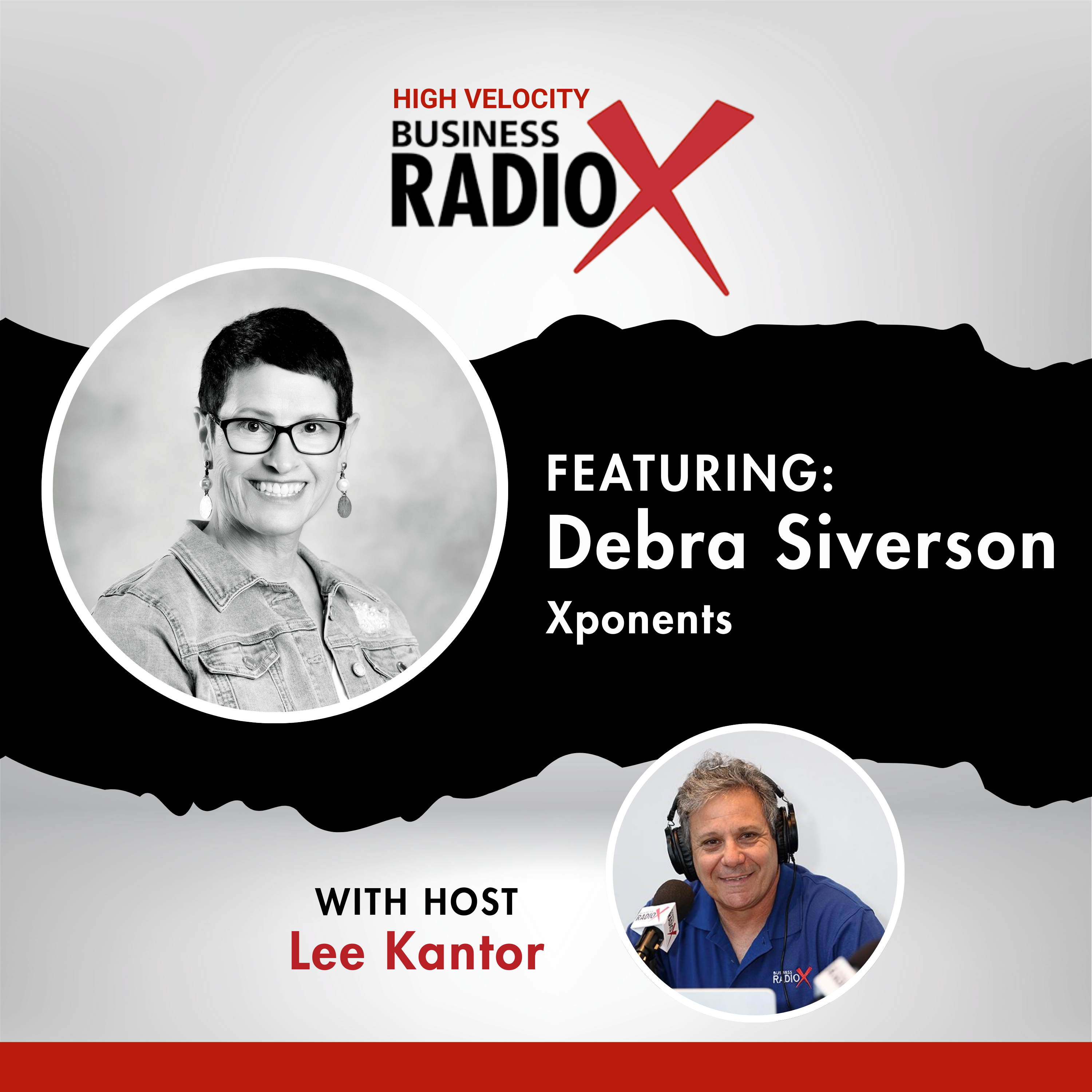


 Deb Siverson is passionate about helping organizations drive results through connected and transparent conversations in the workplace. Her expertise includes design and delivery of leadership development programs, customized team development, individual and team coaching.
Her 20-year career inside Corporate 500 organizations included progressively senior roles in both line and staff positions. Her responsibility ranged from Market President with sales and business performance accountability, to Senior Vice President, where she led the team responsible for sales leadership training, sales measurement and reporting, and sales development for the Western United States.
As the owner and founder of Xponents, Deb has worked with a variety of clients in large and small firms, such as Advent Software, Nelnet, Hub International, Charter One, Wells Fargo, Bank of New York, Tenaris, Kyrio, Rio Tinto, Oracle and in government agencies such as the United States Forest Service, Department of Interior University, Bureau of Reclamation, Bureau of Indian Affairs, Department of Labor, and Department of Energy.
She is credentialed as a Professional Certified Coach by the International Coach Federation. She completed advanced education in organizational and relationships systems (team) coaching and is certified in a variety of assessment tools, including Emotional Intelligence (EQi), MBTI, and Human Patterns.
She holds a BS in Business from Regis University and an MSOL through University of Colorado-Boulder. She is the author of, The Cycle of Transformation: igniting organizational change through the leader coach.
Connect with Deb on LinkedIn.
What You’ll Learn In This Episode
- Primary reasons leaders hire a coach
- The most common challenges today’s managers/leaders face
- The role of reflection in personal and professional growth
- Strategies for fostering trust and autonomy
- The importance of emotional intelligence in leadership
 This transcript is machine transcribed by Sonix.
TRANSCRIPT
Intro: Broadcasting live from the Business RadioX studios in Atlanta, Georgia. It’s time for High Velocity Radio.
Lee Kantor: Lee Kantor here. Another episode of High Velocity Radio, and this is going to be a good one. Today on the show we have Deb Siverson. She is the Owner and President of Xponents. Welcome.
Debra Siverson: Ainsley. I’m excited to be here.
Lee Kantor: Well, I’m excited to learn what you’re up to. Tell us about Xponents. How you serving folks.
Debra Siverson: Yeah. Well Xponents was my own company that I co-founded or founded I’m sorry about 20. Gosh now it’s been 25 years ago. So I came out of corporate and had worked throughout my career in leadership roles and just decided that I wanted to spend most of my time focusing on developing and growing Leaders rather than, you know, some of the other administrative types of tasks that I found myself doing. So that’s what our focus is. We focus on leadership development, executive coaching, team development, not just ways for people to have a bigger impact.
Lee Kantor: Now, what was it like 20, 25 years ago in the coaching kind of world? Was coaching as accepted as it is today? Is that something that you’ve seen evolve and that’s what drew you to it?
Debra Siverson: Definitely. It’s been evolving over the course of the last 25 years. I certified as a coach in 2003, and I would say at that point in time, many didn’t even really know what it meant to be a coach. They thought of it in terms of like a sports coach or in the industry I came out of. It was more about performance coaching, so a little more focus on technical rather than people really transforming the way that they communicated and operated with other people.
Lee Kantor: Now, is your work today kind of at the organizational level where an organization will bring you in and you’ll work with teams or a variety of individuals, or are you coming in to kind of work with one person at a time because of their specific need?
Debra Siverson: Yeah, it’s a great question. I have always focused on entering through the organizational level. I mean, I certainly do and have, um, brought on individual clients that were separate from the organization. But it’s just, you know, frankly, it requires a lot more to market, uh, one on one to individuals to fill up your, your work space. So, yeah, I’ve always focused on organizations.
Lee Kantor: So what’s it so what’s your pitch when you’re going to an organization, are they coming to you to kind of proactively deal with the situation or are they coming to you to triage something? Like what? What’s kind of your entry into an organization?
Debra Siverson: It’s such a great question, I would say, and there’s been a variety of probably problems that organizations are seeking to solve using somebody that has, you know, my type of experience and credentials. So oftentimes, let me give you an example. It could be that there’s some sort of an initiative, and they’re wanting to support their leaders to be able to move through that initiative in a, in a way that helps them to be more even coach like. So sometimes I work in organizations to help leaders ask better questions, be more communicative with their teams, and in particular during times of of change.
Lee Kantor: Now what are like say you’re a leader of a company. What’s kind of some symptoms or Symptoms are signals that, hey, maybe I should bring in somebody with a coaching background that can really up level my team here. Are there some symptoms that are like, hey, this could be handled through coaching. This isn’t, you know, maybe that’s the best path here.
Debra Siverson: Yeah. It’s it’s not uncommon. I think for us in particular, when you think about a team, um, and the team is maybe not performing at its best, it could be that they need some sort of process improvement, but oftentimes underneath that is that they haven’t figured out together how to align around specific goals, for example, or, uh, roles in terms of who’s doing what. Uh, maybe they haven’t come up with almost they’re operating how they’re going to operate with each other. So for example, you know, uh, how do we communicate when things aren’t working well? And so, uh, some of that is Triaging so that they almost create the space so that work can happen, right? So sometimes that could be a challenge that that an organization sees. I’d say another really common one though is morale issues or engagement is low. Um, and so it’s almost like how do you help people reconnect with themselves and with the work. And, um, and help leaders learn how I think to, um, motivate people by creating psychological safety. And again, spaces where people can work without feeling like they’re walking on eggshells.
Lee Kantor: Now, in today’s world, that’s so turbulent and there’s so much chaos for the, you know, the for the worker. How do they how does a team today, uh, create that environment and culture of trust, uh, when you know every it feels like six months, 12 months, 18 months. There’s upheaval in the organization.
Debra Siverson: Yeah, I have actually, um, a methodology that I use when I’m working with organizations to accelerate trust and to my way of thinking. Uh, the first thing that needs to happen is the group needs to talk about, you know, what does trust look like? And, uh, what are the ways that we can authentically build trust with each other? And there’s a lot of research out there that would say that trust happens over time, and it’s usually through the making and keeping of commitments to each other. Well, there’s a way that we can actually do that intentionally and create, uh, agreements with each other so that that process can, uh, work its way through intentionally and and quicker. Right. So, uh, so I think that’s a piece of it. I think sometimes people just talking about, you know, what, It. Uh, what does it take for me to trust you? And what are some situations in the past where you felt like trust was broken? And by talking about those things, I think we can sometimes also avoid stepping, you know, into past situations that have not been healthy.
Lee Kantor: So now where in in your work? Uh, it sounds like a lot of what you’re dealing with and a lot of the skills you’re trying to impart are in and around kind of emotional intelligence rather than maybe the technical aspects of people’s jobs. Is that an area that you find that leaders are open to, um, kind of learning more about and delving into, or is that something that is a bridge too far for too many people?
Debra Siverson: Um, yeah, it it’s actually gotten quite, um, I would say mainstream more so than what it was 20 years ago when I certified in emotional intelligence. I used use that tool quite a bit in leadership development. Like especially 1 to 1. So having somebody maybe do AA3 hundred 60 leadership development, um, uh, assessment so that they can get a sense of how others view their emotional intelligence. And, um, I would say more and more, we recognize that, uh, people connect to leaders who are able to connect emotionally, right, to bigger picture, to, um, to the individuals, to what they need to what, uh, maybe their goals are. And so I think emotional intelligence, more and more, we recognize as being a critical skill set, uh, for leaders.
Lee Kantor: Now, how do you kind of unlock that? Um, the vulnerability and the empathy, uh, that’s needed in order to be effectively emotionally intelligent and avoid kind of those people that are me first, a narcissistic kind of people that it’s my way or the highway.
Debra Siverson: Yeah, I, I find that for the most part, people do want to have safe space to be able to be genuine and to talk about what’s really going on for them and maybe where their insecurities are. And so a part of the role I think, of coaches always is how you create that safety for other people. And I think one of the ways we do it is ensure that they know that if, in fact, you’re in a coaching relationship, certainly with someone that’s credentialed, we adhere to a code of ethics that includes confidentiality. So whatever, uh, is shared with me in a coaching setting stays with me. I’m never going to share it outside of the the two people that are in the conversation, myself and the coachee. So, uh, I do think that helps to build some of that safe space. Um, I also think that people, frankly, are not used to having, um, somebody that is so focused on them and that practices listening really well and having their only interest in, um, the coachee actually getting more of what they want. So I think that naturally builds some of that safety and vulnerability in. Once people see that, you know, you’re in it for them, that that’s your purpose is to help them be as successful as they want to be.
Lee Kantor: So early on when you come in, especially through an organization like it has to be conveyed to the individual, the coachee that, hey, the coach is going to be advocating for, or maybe not advocating, but working with you. And that is confidential, even though they are working for the organization. So there is kind of a church and state, um, Separation.
Debra Siverson: There absolutely is. And that’s a great way to actually think about it. And, uh, I always have the conversation also with if I’m being hired, for example, by a manager that says, I want you to coach, you know, John, I’ll use that as a and so I always have to be really clear that, you know, any information about the coaching that John and I are engaged in will come from John to you, uh, not from me. So it really does help to make sure that you set those clear expectations upfront with the organization so that they know that your alliance is to the coachee.
Lee Kantor: Right. And it’s important for the coachee to understand that, that there is a line there that they can it is a safe. It’s a truly safe place. This isn’t a place where they’re going to just all of a sudden get blindsided by something that was shared.
Debra Siverson: Yeah. And honestly, I think it’s one of the reasons that external coaches are so valuable in organizations is that it does allow for that vulnerability without any fear of consequences for the coachee so they can really explore the places they’re struggling. Uh, and, you know, you can’t always get that when you’re working, you know, with an internal coach or mentor. I don’t know that people can create that same level of safety. Um, you know, just because of the hierarchical nature of organizations.
Lee Kantor: Right. And the and the kind of unique politics, you’re not privy to any of that. But when you come in organizationally, you kind of get a glimpse behind the curtain a little bit.
Debra Siverson: Yeah, exactly.
Lee Kantor: Now, uh, tell us about the book, uh, the cycle of Transformation. How’d that come about?
Debra Siverson: Yeah, I, um, it’s so interesting. The Cycle of Transformation is a book. I actually wrote it. Now. It’s been almost ten years. In fact, I’m. I’m working on updating it right now, but I, um, as I mentioned earlier, I had grown up in a corporate environment. My first, uh, entrance into coaching was, uh, more performance coaching. And at some point, um, I really felt like there was an opportunity to help leaders learn how to use some of the coaching skills, even if they were in the organization. So with their direct reports, for example. And, um, so I, um, I wanted to create, um, some clarity around how I help other people, um, be able to get more of what they want. And so I created a methodology and I started using it first in workshops. So I was going in and teaching a certain, you know, set of skills and also an approach to having a coaching conversation in an organization as a as a leader, as a leader, coach. And, um, at some point I kept having people say, you should write a book, you should write, you should put this in a book. And so I finally did. I mean, one year, I, I just really, uh, committed to it. And I spent, um, a lot of time, uh, putting all of my thoughts into, uh, more of a book format, and, um, and there you have it. So, uh, it’s really just a way, again, I think, to create more transparency, I think in relationships, in a work setting that are based on authentic trust. I talk about authentic trust in the book. And, um, and just to give leaders, uh, some real tools to be able to have, uh, you know, more authentic conversations at work.
Lee Kantor: So if you were going to give advice to a leader right now, what are some low hanging fruit that they could be doing to create more of that authentic trust within their In their organization.
Debra Siverson: I think. Ask more questions. Uh, really value other people’s opinions about, um, you know, the work itself. Um, listen, uh, really well to what people are saying and maybe what they’re not saying, um, and really try to understand, you know, how to help people, um, be able to live more of their values in the workplace and also, um, to be able to, um, lean into their strengths more. So I think that leaders find that out by really being present and paying attention and asking the right questions.
Lee Kantor: Is there any advice for the folks who are working with a team that maybe is remote or hybrid? How do you create kind of that level of intimacy and kind of serendipity that maybe you would get if everybody was in the same place for all those hours every week. And now it’s it’s much less. And people are, you know, kind of their job and their life are, are, are blended in a different way than they were 20 years ago.
Debra Siverson: Yeah. It’s such a great question. It’s interesting. I did a research paper right before Covid about this very topic, because we were already kind of moving in the direction, right, where there was a lot of geographically dispersed, uh, work teams. And, um, and the research would say that when you’re the leader is not in the same geography, it does take a more effort to build trust. And so, um, I think if I were to give advice, it would be to make sure that, um, when you have those virtual meetings that that you have cameras on and that you’re actually, you know, seeing each other and that you’re spending some time, uh, really getting to know each other, um, at a human level. Um, not making it just all of a sudden just right. Always about work, but also about how people like to engage in the work. Um, so just changing up the way that you’re connecting, um, and I think you can do it virtually. To be honest, I do most of my work virtually these days, uh, since, uh, the Covid, um, you know, the pandemic, I mean, more and more, we had to move that direction. And I think it’s about just really intentionally connecting with people as people.
Lee Kantor: Yeah, I agree. I think that the when you’re dealing with kind of a remote workforce, you have to mindfully be intentional and schedule these things because you just take for granted. When everybody’s in the same place, you bump into people there. Serendipity. You see each other in the hallway or the elevator and, and you have those connections that aren’t there at all unless you mindfully, intentionally put them into place.
Debra Siverson: Yeah, it’s a great way to think about it. I mean, it connection is an intentional, uh, skill set, I think. I mean, you you decide to connect with another person, right? Um, or you decide to keep them at a distance. Um, really, I think we just want to be conscious about that. And what? That’s, um, you know, what the impact is of not creating connection.
Lee Kantor: Right? But if you’re remote, it doesn’t happen unless you you make you do it on purpose. Whereas in, in a business that everybody’s in the same location, you’re going to run into people like that’s going to happen unplanned.
Debra Siverson: You bet. Well, and I guess, I mean, Lee, you probably know even better than I mean, you’re also in the business of finding connection in these, you know, podcasts that you’re doing and, you know, you’re having conversations with people that you don’t know that you haven’t bumped into, right? Um, uh, and, and gotten to know. So, yeah, here I am. This is the coaching me, right? I want to say, how do you do it? How do you create those connections.
Lee Kantor: Right. For me personally is I have to lean into being a very good listener. Like, I can’t just go down a list of questions for my guests. I have to listen to what they’re saying. I have to look for any type of thread that I think is there that I can pull, that maybe we’ll unlock some more information and maybe share a deeper part of themselves that they didn’t think that they were going to talk about. But it’s important because my objective, again, I have an agenda here, and my agenda is to help you articulate what your superpower is, what makes you special and interesting and unique. And that’s the only thing I’m caring about. So I’m looking for opportunities to do that mindfully. So I’m listening very closely to what you’re saying. You have my undivided attention. Uh, whereas, you know, sometimes people who do this kind of work are multitasking. They’re doing 50 other things. I’m not. I’m just focused on you and trying to give you as good of a piece of content as I possibly can.
Debra Siverson: And I think that’s like the best advice that we can give leaders, right? If you think about, um, you know, when you’re a leader that can completely put your focus over there on the other person and have your mission to, um, actually support them presenting themselves in the best possible way, being as successful as possible. Uh, it’s magic, right? And so, um, yeah, I think I think it’s exactly what you said. That’s what we really want to create in those remote settings.
Lee Kantor: Right? I think because I’m a, a hyper introvert, it’s I lean into the listening part of my personality. And, um, I don’t like maybe in a real world setting that that wouldn’t come across as dramatically as it does in this setting. So I found a mechanism for myself to be as authentically myself and to serve the folks that I’m having conversations with, uh, as well.
Debra Siverson: That’s just a great example, too, of how, you know, sometimes, um, you know, somebody shines in one arena in a very specific way, right, because of the skills they bring to the table. And it kind of brings me back to leadership. You know, I think if leaders can really listen for where are those spaces that, uh, this person with their unique talents and gifts can actually, you know, really shine? I mean, that’s, uh, that’s the role of a leader, you know, how how do I, um, look for ways to leverage this person’s strengths and talents?
Lee Kantor: Yeah, that’s that’s where the magic is.
Debra Siverson: Yeah, absolutely.
Lee Kantor: Now, is there a story you can share that maybe illustrates how, uh, you you came on into a situation? Obviously don’t name the company or the individual, but maybe share what the challenge was they had and how you were able to help them get to a new level.
Debra Siverson: Yeah. I was thinking in terms of, um, an organization, I might tell a story that, um, that feels really poignant to me right now. I, um, had the opportunity to start working in a government agency about maybe 12, 13 years ago and, um, creating a leadership development program for them that, uh, we use for aspiring leaders. And there was a one group that like for each region, one group would be selected each year and they would, uh, they would go through the program. And, um, I think what was really amazing for me is that I at the time, the folks that I was working with, um, were very collaborative in terms of the content. So creating the content for the program really allowed me to use a lot of creative. Um, um, I don’t know, just ideas that were, um, some of them maybe a little, uh, um, untried in this particular organization. And it could have been a little bit risky, I think, for them, even, because, you know, how will this land will people be this open to this kind of content? And in fact, it, uh, they were um, and the, the program started to get just so much, um, energy every year when we would do the graduation, they would people would come in in droves to watch the graduation ceremony.
Debra Siverson: And then they would sign up for the next year. And, you know, it was just it became this momentum, right? That people wanted to be part of it in some way. And I have to say, and it’s the reason I say it, it feels very poignant to me right now is that, um, it was maybe one of the the pieces of work that I’m the most proud of, that I’ve had the opportunity to participate in over and over again. And I think it had a huge impact. Uh, people would send me messages and say, this is the most powerful thing I’ve ever been a part of. And, um, and then, of course, you know, with all of the things that are happening this year, um, I it’s it’s fairly clear that I, I may not be able to do it again. So it’s one of those things that, um, you know, feels like it’s kind of come, you know, to the end of that particular cycle. Um, and I still think about it, and my heart kind of fills, and I and I, I feel both. Um, you know, both sad and happy that I had a chance to be a part of it. Right.
Lee Kantor: Yeah. It’s bittersweet. I mean, you know, the impact is real, and then, you know, things end. So.
Debra Siverson: Yeah, very bittersweet. And it is a good reminder that everything has a beginning, a middle and an end. Right. Um, and, and, you know, we use those, those experiences to go on and do the next thing. Right. So, um, yeah. But I think also I’m very relationship driven person. So I love working with clients where there’s like this, um, connection over time. And we continue to do work together. So, um, so that’s always a blessing for me as well.
Lee Kantor: So who is that ideal client for you? Is it a government entity or nonprofit or fortune 500. Who is kind of that, uh, avatar for you?
Debra Siverson: It’s such a great question. I’ve done work in all, uh, in government, uh, many different agencies, um, in, in nonprofit and most, I would say in fortune 500, that’s been the probably the primary place that I’ve, I’ve worked over the course of my career. Um, I would say right now, um, government is probably something I’m not necessarily courting. Not that I wouldn’t, but I think that they’re still trying to sort some things out and figure out how they’re going to, you know, reorganize and and come together and create whatever the future looks like there in terms of leadership development. Um, but, you know, not that it’s off the table. Uh, so, yeah, for now, I’m, I’m, um, continuing to focus on, uh, folks that I know in different corporate settings. And, um, and that’s really my. Yeah, that’s really my focus area.
Lee Kantor: So if somebody wants to learn more, get Ahold of your book or just have a conversation with you or somebody on the team, what’s the website? What’s the best way to connect?
Debra Siverson: Yeah, yeah. Um, the best way to to connect probably would be just to, um, to drop me a line. Um, I think you’ve got my email address as well as the website, but the, the website is spelled with an x exponents.com. Um, and, uh, you can reach me at uh, d for Debra Severson. S I v e r s o n@exponent.com.
Lee Kantor: Well, Deb, thank you so much for sharing your story today, doing such important work. And we appreciate you.
Debra Siverson: Thank you Lee. It’s been a pleasure.
Lee Kantor: All right. This is Lee Kantor. We’ll see you all next time on High Velocity Radio.














