

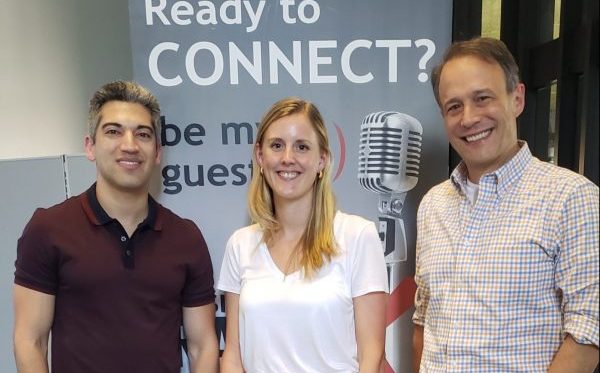
 Zoe Newman joined Capital on Tap in 2012, its founding year, fresh out of school. She has worked her way around the business from operations, product, partnerships, and, most recently, launching the product and team in new geographies.
Having recently moved from London to Atlanta in the US, she is now the US Managing Director and building out the US business and team – along with enjoying all the new local Southern experiences and culture…and the fried chicken!
 John Lariccia is the CEO and Founder of WelcomeHome Software, which provides senior living operators the most innovative sales and marketing tools available. Prior to starting WelcomeHome, John was a senior partner with Bain & Company, the global management consulting firm.
During his two decades with Bain, John worked in the Atlanta, San Francisco and London offices. He was a member of Bain’s Private Equity Practice and the founder of Bain’s work with financial investors in the Southeastern United States.
Within private equity, John has led over 200 due diligence assignments, more than a dozen portfolio engagements, and multiple fund strategy and organizational design projects. Outside of his work with financial investors, John has worked in a number of industries including software, logistics, retailing, construction, manufacturing, media, consumer packaged goods and telecommunications.
His work experience has included a wide range of projects including corporate turnarounds, operations excellence, growth strategies, mergers and acquisitions, and pricing policies. Earlier in his career, John served in the Department of the Air Force’s Office of the General Counsel, specializing in government acquisition and resource planning.
John attended the University of Virginia School of Law and earned his Juris Doctorate in 1996. John is also a graduate of the University of Notre Dame where he received a Bachelor in Business Administration degree in finance with high honors. John resides in Atlanta, Georgia, with his wife and five children.
This transcript is machine transcribed by Sonix
TRANSCRIPT
Intro: [00:00:07] Coming to you live from Atlanta, Georgia. It’s time for another episode of Tech Talk with your host, Joey Kline.
Joey Kline: [00:00:17] Good afternoon and welcome. So, as always, try and think that we have some of the more interesting companies in the Atlanta area. On this show, we try and stay away from, you know, your standard 20th marketing automation firm. And these two companies that we’re going to have today I think are doing something really unique within both their sectors. So first, we’re going to talk to Zoe Newman, who is the managing director of the US at Capital on tap.
Zoe Newman: [00:00:41] Hi, Jerry.
Joey Kline: [00:00:42] Hello. And then we are going to chat with John Lariccia, who’s the CEO and co-founder of WelcomeHome Software.
John Lariccia: [00:00:48] Hey, Joey. Thanks for having me.
Joey Kline: [00:00:49] Sure. So we have two seemingly disparate industries that we’re going to discuss today at a high level financial services with capital and TAP as well. And then senior living and and that space in the growing need for CRM in that space with John. So as always, we’re going to start with the first company in the alphabet which would be capital on tap. So that would be you.
Zoe Newman: [00:01:14] Yes.
Joey Kline: [00:01:15] So you have you have only worked at capital on tap?
Zoe Newman: [00:01:19] I have, yeah. I graduated from university ten years ago and first first job out of uni. I met co-founder David Luck and the team. When we were just getting started, there was less than ten people in the office and I joined as customer service, jumped right into it and helped kind of figure out what our products would. Our our market segment we were going to go after was going to be. And then, yeah, I’ve been been working in building and supporting the team at Gap on tap ever since.
Joey Kline: [00:01:50] Okay. So I think that when when someone thinks of the standard professional story of a millennial, which is obviously a very wide range of ages, they think of someone who jumps from job to job, maybe doesn’t have too much company loyalty. I think there’s a number of things wrong with that. For certain reasons, however, you are seem to be the epitome against that. So were you specifically looking for something entrepreneurial when you graduated or just happenstance? It’s, hey, here’s the opportunity. Let’s see what happens.
Zoe Newman: [00:02:23] Yeah, it was definitely the latter. So yeah, didn’t really know what I was getting into in 2012. Even the term tech fintech didn’t kind of really exist. It definitely didn’t exist for me. And yeah, a lot of friends at the time were just jumping into grad programs, management, consulting, banking, and I wasn’t sure what I wanted to do. And yeah, just stumbled over the opportunity and met a great team. And that’s really the thing that’s kept me with capital on tap ever since, is is working with the amazing people we have on the on the team and your comment there on jumping job to job I feel like I’ve kind of done that but at the same employer the same company. So I’ve had the opportunity to do a lot of different things during my time at Capital ONTAP, which is the the main reason I’ve saved. I’ve been interested and been challenged, and those opportunities has definitely kept me kept me here.
Joey Kline: [00:03:18] Okay, let’s for anyone who is going to shut this off, although you shouldn’t, you need to keep listening. But for anyone who just wants the high level, let’s talk about what capital on tap does. So everyone gets an idea from the outset.
Zoe Newman: [00:03:29] So we are a small business credit card and we are purely focused on supporting local mom and pop shops, retailers, construction companies, the kind of high street, small businesses that kind of are running our our economy in the UK and the US are our current markets that we’re that we live in. Kind of mission is to make that as streamlined, easy, simple as possible and provide a great payment solution, a great product and service that is built just for SMEs.
Joey Kline: [00:03:57] And so what is the model now where people just maxing out their credit cards and getting as many as they can?
Zoe Newman: [00:04:04] I think there’s there’s it’s interesting, actually, the markets, the UK versus the US has definitely been a learning curve for us to kind of see the difference in competition and difference in in credit usage over here compared to the UK. But I think it’s really small businesses trying to find the, the credit card provider that best works for them and is kind of building a product that is kind of specialized and bespoke for what their needs are. So if you can provide the best product in terms of integrations to QuickBooks or the best employee cards that have the right restrictions and right management tools, those are what is kind of those pain points that small businesses face. That is what we’re trying to build to to make their lives easier.
Joey Kline: [00:04:47] Is this something that a Visa or MasterCard or American Express either doesn’t want to do or just or has ignored or simply just can’t do? Because, you know, they’re just too focused on on other types of businesses and customers? Why does it take someone else to come in and do this?
Zoe Newman: [00:05:08] Yeah. So I think our cards are actually issued by Visa, and so kind of the card issuing platform behind the banks is the Visa or MasterCard or Amex. And in terms of our competition, it’s the the American Express, the Capital One, the Chase business cards that are out there. But what we’ve seen historically is that those banks are actually servicing a lot of different people with a lot of different products. And actually that focus and providing the perfect small business credit card is what we really want to do. And we’re we’re here to build it and listen and get that feedback from our from our customers to to evolve and to kind of adapt quickly to what they’re they’re looking for.
Joey Kline: [00:05:47] Okay. So so it’s the specialization. It’s the kind of focusing on one lane and really being the best at that. That is seems to be what differentiates.
Zoe Newman: [00:05:56] Exactly. Yeah.
Joey Kline: [00:05:57] Okay. So you moved to the United States and specifically six months ago.
Zoe Newman: [00:06:03] Yep. Just over February.
Joey Kline: [00:06:05] Had you ever been to Atlanta before?
Zoe Newman: [00:06:07] I’d been a few times the previous year, so I actually really struggled to get over here initially because of COVID, and they weren’t letting anyone in from Europe for for a while. But yeah, I spent kind of a week per month here for the last few months of the year and yeah, got adjusted and was like, oh, I could, I could move out here, this would be fun.
Joey Kline: [00:06:25] And how why was Atlanta chosen as the United States place to plant a flag?
Zoe Newman: [00:06:34] Yeah, I actually was speaking to, to a company about this this morning. I think the three big reasons for us one was kind of our HQ is London. So time zones is is a is a real, real challenge, kind of jumping online in the morning and UK being halfway through that day. That’s tough if you’re in West Coast California. Sure, it makes it really tricky. And second, our CEO is originally from Atlanta and our CEO, he also is as well. And he’s moved out over here kind of a year ago or so. So kind of the connection was was strong. And then the third piece has been kind of talent, having some great universities here, a great pool of talent for us to kind of dip into. And yeah, just a great space in terms of entrepreneurial fintechs kind of seem to be sort of popping up here more than well, than a lot of other areas. And so, yeah, really kind of saw a huge opportunity from moving over here.
Joey Kline: [00:07:30] Yeah, it does sort of seem to be the, the nexus of that industry. Yeah. What have you noticed again, it hasn’t been that long, but just since you’ve been here, what have you noticed that you think that we as a city are doing a very good job of as it relates to growing technology companies, providing the right talent? And where do you think there’s a little bit of room for improvement?
Zoe Newman: [00:07:50] Yeah, I think the university pool of talent is definitely a huge opportunity. I’ve seen some really interesting kind of other organizations, particularly in the fintech space, FinTech, Atlanta, the team there and some other kind of fintech connections with the universities is really great and pushing people to be aware of it. As I said, I came out of university and didn’t know what fintech meant. So the fact that there’s a lot more kind of vocal involvement, the community around that, I think there’s a huge opportunity there in terms of what to do more of and I guess just continuing to push that out and to kind of one of the things I suppose that I’ve seen a little bit in the US compared to the UK is there seems to be kind of graduates come out of university and they have a a kind of connection to big names, big banks, big insurance companies, Home Depot here, Delta here. And it’s kind of how can the sort of startup opportunity be publicized a little bit more? Right? So in London particularly, it’s kind of great. Go work at a startup, a tech company. It’s a bit of a a bit of a gamble, but it’s going to be more fun and you can kind of make it more of an impression and more of a have have more responsibility in that role. And so I think kind of continuing to push that in Atlanta would definitely be a good thing.
Joey Kline: [00:09:06] I wonder if that. So I guess I’m trying to think to myself, what does that have to do with. Right. You know, I understand that for someone starting their career, there is it’s already scary, right? Entering a totally unknown company where maybe you’re sacrificing pay for equity. Do you have no idea what it’s going to be worth? That could be scary as well. Yeah. You know, I’m curious. I imagine that, you know, the UK probably has a much more generous public university system, public university system than we do. You know, this is just sort of us pontificating on the spot. I wonder if this has a little bit to do with well, you have people here who probably have a little bit more debt coming out. Totally have to really bank on that sure thing. But it’s do you do you think that it’s an Atlanta thing specifically that you saw where people are maybe kind of going to big names more or is this a US thing?
Zoe Newman: [00:10:02] I don’t have a solid answer on that. It’s just just. In my experience, Atlanta so far, and just kind of meeting some kind of recent grads or young people just kind of stepping into their career on the career ladder. Just just kind of anecdotally what I’ve heard and yeah, totally. I agree. Kind of having a massive student loan and it’s a safe bet to go to a grad program where you’re going straight onto a good, good salary. But yeah, for me it’s the opportunity to learn faster, be exposed to more and to really get thrown into something. You’re going to learn fast and learn on the job. If you’re jumping into a small company that, as you say, could, could, could pay off and could work out really well, but for me is definitely worth the worth the gamble, I.
Joey Kline: [00:10:46] Think I look, I would agree I’ve you know, until recently I’ve really only worked at small companies. And the fun is that, you know, it’s just it’s always different. You get to see everything. I think for someone that gets bored easily, it’s quite useful. Slash necessary. Okay, so you’ve been here for six months and what is the charge for growth in the US? Is this simply, Look, we’re very popular in the UK. We really need you to come over and just scale this across North America.
Zoe Newman: [00:11:15] Yeah. Yeah, exactly. We saw some amazing traction in the UK with our products, small businesses across the UK. We’ve got over 120,000 small businesses we’ve supported there and had built that technology and that foundation and realized it was possible to kind of bring that over to a new market, take that sort of vision, one really a copy and paste format and then iterating it to the market. And so adjusting our credit underwriting, adjusting the product and tweaking some of the communications and yeah, just seeing a really big market opportunity where there’s a ton of small businesses here that we that we’re really keen to support.
Joey Kline: [00:11:52] What is the sales marketing process like? Because we’re talking about I mean, these could be, you know, 5 to 10 person companies, right? Some of them even less than that, a floral shop bar, you know, I mean, really the we’re not talking about the big chains. We really are talking about the one and a half one off mom and pops. Yeah, that would seem to be quite a wide market. That would also seem to be quite a quite a challenge in terms of focus.
Zoe Newman: [00:12:19] Mm hmm. Yeah. So I think our marketing strategy has been really kind of combination of online marketing. So looking at affiliates like a credit karma, nerdwallet sort of the traditional platforms that you go to if you’re looking for a credit card, we look at some kind of social pieces. So we’ve had some good traction on on Facebook, YouTube and advertising on there. And then we also do some direct mail. So kind of reaching out to small business owners directly. One of the challenges we found is over the above the line marketing. So kind of posting on TV ads or kind of doing billboards where it’s quite expensive and it’s not so targeted really the market we’re kind of going after as those small businesses rather than kind of broader consumers. So, yeah, really trying to focus in and use the technology and availability that we’ve got with online marketing to kind of focus in on that segment. And the same with our data analytics team. We have an amazing team that kind of help us find the right small businesses to send out those letters to. And that kind of means that we have the businesses that are most likely to respond to us and get approved. So those basically those two channels are really our focus at the moment.
Joey Kline: [00:13:32] And is as much of the customer base, at least as far as the US goes in Georgia, the Southeast, is it all over? How does the geographic focus break down?
Zoe Newman: [00:13:40] Yes, we’re all over. We’re not not kind of focused in any particular geography. We’ve got customers in Hawaii, we’ve got customers in Alaska and New York across the whole of the states. And one of the interesting things I think that’s come out of our launch in Atlanta is we have done a bit more PR than we previously done in the UK or had done before, just based on kind of launching in the city, kind of employing and building our team out here and getting our kind of office space set up. And so we’ve actually seen quite a lot of traction in the Atlanta area, seeing a lot of entrepreneurial kind of small business community here. That’s something that I’ve been trying to get involved in just some really interesting events and entrepreneurial focused kind of networking opportunities that I think has kind of driven quite a lot of traction here as well.
Joey Kline: [00:14:27] Okay, that makes sense. And our outlook, obviously, this is very early on into your tenure here and it’s important to scale up. I’m curious if there are other ancillary financial products that you guys are thinking of rolling out in the future. You know what? In addition to just simply blanketing the marketplace with Marketplace with as much coverage as you can, what else is on the horizon?
Zoe Newman: [00:14:54] Yeah. So for us, we’ve still got work to do to get our our business credit card to the best it can be. We’ve still got more opportunities connecting in with QuickBooks, with card management, virtual cards. All of those those features that we really want to deliver to our customers. And we have been looking into kind of general B2B payments. So I hadn’t used a checkbook in 20 years until I arrived in America. And so I think there’s still some opportunity that the US has in terms of businesses paying their suppliers, making those payment solutions more streamlined. So that’s something we’re definitely looking into and kind of probably the next opportunity that we that we see. And then obviously kind of considering other markets, geographies is, is the other approach is the way we look at it is either we keep really focused on our one product and look at new markets or we start to kind of drill in on our two markets we’re in now and look at those other other products or opportunities.
Joey Kline: [00:15:52] Sure. So let’s I want to switch to kind of you and your your leadership style, the culture you’re trying to build because you’re in a very unique position in that you have this team here in Atlanta and you are all part of a larger company, but you’re also kind of your I recognize that for, you know, business licensing reasons, you’re not your own entity. Right? But it’s like, you know, you sort of are just based you know, you are geographically separate. It probably feels like you’re sort of a team within a team and you’re kind of the CEO of the team. And so you function as both, I imagine, an executive leader of the company and also kind of a CEO of this business unit. How how does it work? What are you trying to build here? What are you trying to foster in the community and and the people?
Zoe Newman: [00:16:44] Sure. So I think one of the best traits features of capital on tap in the UK has been the culture that we’ve built and the team that we’ve built. As I said, I’ve stuck it out for ten years. If I didn’t like the people I was working with, I probably would have laughed a lot sooner. So yeah, keen to kind of replicate that, that great culture that we’ve built in the UK and trying to kind of take any of those really positive kind of traits that we’ve got and replicating those over in the US. So as an example, I think one of the reasons I’ve been so engaged and kind of felt like I’ve been invested in and developed through my career at Capital ONTAP, TAP has been opportunities, autonomy being given kind of those projects to to run with and and kind of the get big. I would take that on my own and just figure it out. And so that’s definitely something we’re we’re trying to replicate here. So finding great talent, really ambitious people who want to make their mark and have the opportunity to do that and kind of have that autonomy to to kind of prosper, to succeed and to make their mark on the company. And as I said earlier, the opportunity to do that with a small business means you really can be okay, I want to fix this. I’ve got this idea. I want to run with it. Can I just go? And that’s that’s something we really want to foster and give give people that that chance, that opportunity to do that.
Joey Kline: [00:18:06] Yeah, I imagine it’s you are not just hiring for a certain set of skills. You are hiring for a mind set as well. Someone that you can trust and who wants to be autonomous.
Zoe Newman: [00:18:17] Yeah absolutely. And a lot of our team, our core founding team in the UK, none of us came from banks. We were all generalists. We all had kind of that experience in There’s a Problem, we want to fix it. We want to solve it in the best possible way, in the best experience for our customers. And similarly in the US, obviously we’ve got our fraud experts up in crime, those kind of core skills that we need to run a financial products. But outside of that, it’s it’s kind of ambitious, smart generalist that really want to kind of make a mark and get stuck in.
Joey Kline: [00:18:49] Yeah. And I assume you are hiring.
Zoe Newman: [00:18:52] Yes. Always looking for great people.
Joey Kline: [00:18:54] Yeah. Okay. And what kind of positions?
Zoe Newman: [00:18:56] So we are actually right now hiring for a head of credit, a head of growth and some a lead analyst data analysts that as I said, a lot of our marketing, a lot of our approaches are all super data driven and our business is run on run on data really. So kind of looking for more smart people in that area as well.
Joey Kline: [00:19:15] Okay. Well, everyone out there, if you’re a great candidate looking for an exciting new opportunity or if you are a small business capital on tap, I’m assuming. Yes. Yes. One capital with an A, everyone. Oh, okay. Well, Zoe, thanks a lot for coming on. I appreciate it.
Zoe Newman: [00:19:31] Thanks so much for having me.
Joey Kline: [00:19:32] Sure. Hey, John.
John Lariccia: [00:19:33] Hey there. I should have renamed my company. I don’t want to follow Zoe. I don’t know how I’m going to top that.
Joey Kline: [00:19:40] Well, you know.
John Lariccia: [00:19:41] I’m not.
Joey Kline: [00:19:42] Along. I think you’ll be fine. So. Senior living.
John Lariccia: [00:19:46] Senior living?
Joey Kline: [00:19:47] Yeah. So you’ve got. I like both of your stories. They’re very unique. Separately, you have Zoe, who’s just kind of grown with the same firm and has a lot of loyalty to this place, and you’ve got you that has made the jump from the big, bad corporate world into the fun startup.
John Lariccia: [00:20:06] Is that your way of saying I’m old?
Joey Kline: [00:20:07] No. You could have been in the big, bad corporate world for two years and then jumped. We don’t know how old you are.
John Lariccia: [00:20:12] That is.
Joey Kline: [00:20:13] True. Yeah. Okay, So. So headline. Let’s talk about Welcome home. Sure. Executive summary.
John Lariccia: [00:20:19] What you do know. So the executive summary is we are a technology company focused on helping senior living operators perform the sales functions more efficiently and effectively. That is the summary. You know, senior living operations are something that are hidden in plain sight. You’ll now start looking around and start noticing them. There’s a million seniors that live in residential care. It is an enormous business within the United States, almost $60 Billion, a million seniors living in these types of communities. And it’s an incredibly complicated sales process. It’s complicated from logistics standpoint. It’s complicated from the emotional standpoint that families are going through. And at the center of it all is a salesperson that’s well-meaning and extroverted but not always well supported. And we’re here to support that person, both with the technology and the form of the CRM, but also with our entire team.
Joey Kline: [00:21:18] Traditionally are I imagine it’s probably not necessarily even the actual resident that is looking. It’s typically maybe an adult child. It could be a spouse, I suppose.
John Lariccia: [00:21:31] Yeah. So it breaks down about a third of the time. It is the senior themselves that are initiating it, a third. It’s a family decision and the third of the time it’s entirely driven by the family. So you have an independent living, which is almost college on steroids and it’s driven by the senior. They sit there and whether they’re 65 or 85, they’re still spry and lively and fully independent, and they just don’t want to live in their home anymore. They don’t want to care for the yard. They don’t want to care for the neighbors. They don’t want to care for the kids that are that are running through their backyard and they downsize and they get to go into independent living and everything is taken care of. There’s amenities, there’s people driving them, there’s food that’s being served. The bar is always open. And so that’s that’s a third of the instances. And on the other end of the spectrum, unfortunately, you have a lot of seniors that are battling dementia and they can’t drive the process legally. And so the family has to take over. And a third of the time is somewhere in between where mom typically mom is starting to struggle with activities of daily living. She is coming to appreciate that the burden is being borne by the family and they all collectively come to the decision to to find an alternative way of living.
Joey Kline: [00:22:51] And so our most inquiry will look at whether it is sole family, sole elder, elderly resident or a combination. Are most of the inquiries that the centers get from some from the outside, or is there a lot of outbound push that a salesperson is doing? Yeah. What is the what is the pitch process there?
John Lariccia: [00:23:13] Yeah, it is shifted dramatically since the pandemic. So before the pandemic it was an equal mix where the sales director was calling on hospital discharge planner or senior centers or synagogues and making themselves known to establish that footprint and that relationship early. Yeah, When the pandemic hit, you couldn’t do that anymore and the need was still there. And so we’re now seeing upwards to 80% is inbound. It’s everyone is starting every search online, whether you’re buying a car or a house or now senior living. And so they will go on some digital platform, start researching and then do an inbound. It’s slowly getting back to normal. But I think that the kink is the kink of the curve is more systemic and structural.
Joey Kline: [00:24:03] Okay. So I want to talk about the ins and outs of the product and the experience. But let’s let’s move back for a little while. Okay. So you come from the consulting world.
John Lariccia: [00:24:13] I believe I do.
Joey Kline: [00:24:14] And had you worked on in this industry, how did you identify and get passionate about this problem?
John Lariccia: [00:24:21] Yeah, so I spent 20 years in management consulting at a place called Bain and Company, and this is a very funny small world. I’ve just met Zoe, her CEO. David Locke. Yep. I hired him out of Emory.
Zoe Newman: [00:24:35] Really?
John Lariccia: [00:24:38] Yeah. And. And I remember when he moved to the UK and around halfway through my two decades there, I had the good fortune of working with a senior living community. And like a lot of folks that have a brush with senior living, you fall in love with the people, you fall in love with the mission. But I was quite simply appalled by the technology they were using. And, you know, I just. But in the back of my mind. And then over the course of the next decade, I worked with a variety of other operators and kept finding the exact same thing and got to a point where it’s like, Well, are you going to do something about it, or are you just going to keep lamenting it? And so that just gave me the context that this was a real issue and it gave me contacts that I could I could reach out as I was exploring what to do.
Joey Kline: [00:25:29] Yeah. You never know. You never know what those early life experiences are going to lead to. Right. That’s exactly right. So what are the folks that you would consult with as well as the ones who are not using your system? What are they doing? Is this just an Excel spreadsheet? How does it work?
John Lariccia: [00:25:46] It runs a gamut. So some folks are using nothing more than paper and pen. Excel would be the next step up, right? There are handful of systems that try to do every single function within a senior living operator, whether it’s managing the menu to sending out the invoices to the clinical records, and they’ll have a CRM that’s tacked on to it. Typically, you pay nothing for it and you get exactly what you’re paying for. And on the kind of far end, you’ll have a few folks that have gone so far as to have a salesforce and do a customized build of Salesforce, which is incredibly expensive to maintain and to understand how to operate. So we are going to all of them with Welcome Home and and having them migrate, whether it’s from something like a Salesforce to to paper and pen and so.
Joey Kline: [00:26:39] Obviously I get the pitch from paper and pen and excel to welcome home. Right. What I’m curious about is why a company like a Salesforce can’t customize this. And I’m going to I’m going to guess you can tell me if I’m right, but it sounds like, one, it’s too expensive for what it is. Because because of course, you have the that that that person is partially subsidizing all the other stuff at Salesforce that they focus on. And too, it’s probably just too complicated for what they need.
John Lariccia: [00:27:10] Yeah, that’s that’s exactly that’s what came screaming through when we were even thinking about building the CRM, which is my power user, is not necessarily a technologically adept individual who doesn’t want to become technologically adept. And so the key was building a piece of software that was easy to use, but also simultaneously useful. And so we like to joke that ours is incredibly robust, but that’s behind the scenes. When you log on, it looks like something that I imagine your kids would know how to use. And so there’s a lot of popular phrases about gamification, but at the end of the day, it’s make it user friendly and make it useful and and allow folks to kind of get on with their day, with without having to spend a lot of time getting up to speed on how to use a piece of software.
Joey Kline: [00:28:04] This seems like one of those industries. And it’s always interesting to me when I come across one of these that have not been truly changed by technology yet because they seem to becoming, you know, smaller and smaller, whether it is tech, whether it’s industry or function. And this seems to be one that there’s probably a pretty big old green field of opportunity out there.
John Lariccia: [00:28:26] We certainly hope so. And we launched the product three years ago and had three different pilots and now we’re into 4500 different, different clients using it. It’s humbling, but it’s also very gratifying because, as most operators would say, they are probably 10 to 15 years behind most other industries. Mm hmm.
Joey Kline: [00:28:47] And what percent I’m trying to kind of figure out how much of this is an enterprise sale and how much of this is kind of a one off, right. You know, like, how are your people focusing? Is it geographic? Is it let’s just go after the largest users? How does that.
John Lariccia: [00:29:04] Work? Yeah, even an operator has a single community. This is change and change is hard. And the systems all have to talk to one another. So they’re all enterprise sales. They all take months from initial inquiry to to final conversions. Sure. And so we focus on slightly larger operators. They don’t have to have hundreds of communities. They have five communities. That’s kind of a target market for us. And we have three salespeople and we’ve divide it up the nation based on geography as well as size. And so my head of sales is going after the larger. And then we have two executives that are going after the midsize and smaller based on where they are in the United States.
Joey Kline: [00:29:51] What is the distribution of industry concentration?
John Lariccia: [00:29:56] It is very fragmented, I would imagine. It is. You know, the the provision of of senior living is a very local enterprise. And so you have most of the operators that will have somewhere between ten and 20 communities and they’ll be clustered geographically.
Joey Kline: [00:30:14] Yeah, I think everyone probably gets a sense that there is a looming wave of a very large number of elderly people in the United States. And I’m curious from. Your bird’s eye view of this industry. Are there enough of these facilities that either exist or are being built to handle what is about to happen?
John Lariccia: [00:30:37] Yeah, the silver tsunami there aren’t is a short answer. But it also, again, is very local In Atlanta. We have enough to handle the wave. But if you go across the United States, you will find enormous pockets where there is undersupply.
Joey Kline: [00:30:57] I mean, I would imagine that this is you know, let’s let’s take just health care in general, Right? You have increasingly, you know, your major cities that are health care centers, and then you have the rural areas again, whether it’s in our state or in another that are deserts. Yep. And I’m going to guess that this isn’t really in the top 30 metros that we’re talking about that are issues. It’s in those outlying areas that aren’t growing or are shrinking.
John Lariccia: [00:31:24] Yeah, that’s right. So I’m from a place called Youngstown, Ohio. Youngstown, Ohio needs more senior living communities because it’s got plenty of seniors that need somewhere to go.
Joey Kline: [00:31:34] How do you incentivize Is it just that, you know, the big cities or the sexy places to do this and no one’s thinking about that lack of opportunity, but lack of competition?
John Lariccia: [00:31:46] Yeah, I think that’s what ends up happening, is that you have more and more data that you put in front of operators and developers, and they’ll start to realize that I just have to shift my focus 40 miles to the west and I’m going to find places that have opportunity that someone else hasn’t hasn’t gone to. Because the kicker in the larger cities where the operators and developers want to personally live and they want to work where they live is you build a beautiful community that suddenly gets full. Then another operator and developer is going to open one right down the road and you can get some of these smaller communities like Madison, Georgia, which is a lovely place. You build one, you’re going to get all the volume there for years and there’s really no math is going to tell you to build another one.
Joey Kline: [00:32:32] Big fish, small pond.
John Lariccia: [00:32:33] Exactly.
Joey Kline: [00:32:33] Yeah. Clearly, right now you are laser focused on this industry. When you look at this software, which would seem to have applications for other sales processes that aren’t fully technology ified yet. Right. I’m thinking, I don’t know. Lawn care, cleaning services, etc., etc.. Right. Do you do you look at that? And it’s this kind of shiny object on the horizon that you want to grab after? Or is it just, you know what? Let someone else handle that? We are focused on being the absolute dominating force in senior living.
John Lariccia: [00:33:13] Yeah. 20 years of being beat it into me that you want to focus, right? And as long as there’s opportunity in your core business, you should go after that. And so that’s part of my answer. The other part is senior living operators have unique challenges and I want to dedicate all my time to them and it resonates with them. When you sit there and say, My entire company is focused on senior living and how to make you better. Yeah. And so that’s what we’re going to do until we run out of, of opportunity, which I don’t see happening in the next couple of decades.
Joey Kline: [00:33:45] Yeah. Are there any other CRM companies out there that are solely focused on this vertical?
John Lariccia: [00:33:51] There are two that are solely focused on it, and we’re chipping away.
Joey Kline: [00:33:56] Excellent. Yeah. Okay. So at what point did you I imagine there was probably an overlap where you were at Bain and you were doing this as well? I didn’t mean to be that like a gotcha. I guess more what I meant was at what point, whether, you know, at what point did you make the full leap? Were you mentally there to do it?
John Lariccia: [00:34:20] Yeah. At the end of the day, businesses are about collection of human beings and and the collection of human beings that were the first few that were founding members. Welcome Home looked at me and said, We’re all in, Are you all in? And it was only fair to them to say, yes, it was time to to cut the cord and and and leave big bad corporate. Yeah. And and be there for them. And so, again, the pandemic helped because it forced me off the road. And so I was spending more time working in Welcome home and realize that this was the next chapter and this is where I wanted to be.
Joey Kline: [00:35:04] Yeah, that’s I think those sort of things become a demarcation line in the sand that divides time. Yeah, Yeah. Okay. And so, so you’ve, you’ve had roles in a large organization, you have roles in a small organization. Right now you’re running a small growing team. I mean, kind of similar question that Zoe and I talked about, but. What do you take from what you learned about leadership, either from your consulting clients or from Bain itself? And what do you take from there and bring to this new opportunity, whether things that you have dedicated yourself not to do or that you want to implement as well?
John Lariccia: [00:35:46] Yeah. Authenticity really matters, right? So I feel like it is going to resonate with clients, it’s going to resonate with recruits, it’s going to resonate with team members to just speak from your heart. Having a mission driven organization, which oftentimes I thought was just lip service matters because it’s a way to encapsulate what you’re there for. Culture. Culture kills again. It’s one of those things that before I was in the seat thinking about growing, I didn’t always believe or also I’ve just joined places that already had great culture and now that I have to build it, it is incredibly important. I had a client that refused to take the CEO title. He called himself Chief Culture Officer, and I kind of rolled my eyes at it until I was CEO. And you get to a certain point and we’re at 40 employees. It’s not even like we’re hundreds of employees and real jobs someone else has been hired to do.
Joey Kline: [00:36:56] That’s right. You’re not you’re not everything.
John Lariccia: [00:36:59] You’re not everything. Yes. And and so it’s like, all right, what exactly is my primary role here? And building and maintaining culture might not be number one, but it’s in the top five.
Joey Kline: [00:37:11] Well, I really do see it as you’re sort of like an orchestra conductor. Yes. They’re, you know, kind of pointing people in the right direction, making sure that they’re playing in sync. And yes, your date, certainly you’re still executing, right, Like your days of deep within each function, just, you know, by imperative have to go out the window at a certain point.
John Lariccia: [00:37:34] Yeah. Let’s dead on.
Joey Kline: [00:37:35] Right. Yeah. What I’m also curious about so you’ve look obviously you’ve been with this company since the beginning up until 40 people. Right. And the leadership needs when you’re under ten people or one thing the leadership needs when you’re 40 to 70 or another and then of course, past 100 is very different. So what are you doing now that you didn’t use to do and what do you think you’ll have to do in, you know, whatever when you double hopefully that you’re not doing now.
John Lariccia: [00:38:03] Defining and selling vision. Right. And even if it at times feels like Groundhog Day is something that is core to what I’m doing all the time. The other at this stage of of of our evolution and growth is I’m constantly thinking about organization constantly. Right in the beginning it was grab some team members, let’s serve and let’s just keep up. And now it’s about let’s be much more intentional. Let’s think about every single person’s development path within the company and, and, and overall as, as the leaders themselves and thinking about how do we make this not just survive, but but scale. And so that’s how I’m really thinking about it.
Joey Kline: [00:38:52] Yeah, that’s exciting.
John Lariccia: [00:38:54] It’s been great. Yeah.
Joey Kline: [00:38:56] So. Atlanta. Atlanta. Atlanta is a backdrop to your company. What are we good at? What do we need some work on?
John Lariccia: [00:39:06] What are we great at? You know, I do think that we are emerging to be very friendly towards startups and tech. It’s if I even think when a place like ATB started, it was a lone bastion, right? It was just sitting out there and now it’s much more expected. And so I think that. That there’s something that’s cool and hip and expect it and respected that you’re going to be in a startup world. I think that we’re still affordable relative to everything else. And so while people certainly are taking a leap to come here versus going to management consulting or go to Home Depot, the no one’s living in poverty, even if they have to take the pay cut. So I think those are both great. You know, where I think that we have room is probably much more a marketing marketing. Local companies for both employees to relocate to come here marketing so folks can seek outside capital. Again, we’re getting slightly better, but you know, startups are living off of people in capital.
Joey Kline: [00:40:28] That’s you started plan planet like this but you know really that is that goal is the reason why kind of the three of us are sitting around this table right now. And I do think that we’ve gotten much, much better at it. But at the end of the day, what you hear about most here are the Fortune one thousands. And not that those are not important and large employers and a large customer base for startups and small growing companies. Yes, not enough people really know about the really interesting things that are happening beneath the surface that the two of you all are doing as an example. And so, I mean, that is absolutely the reason why this exists and why we broadcast this out.
John Lariccia: [00:41:12] Yeah, And I think it’s a great service that you’re doing for Atlanta and the two of us and ones that came before and the ones that came after.
Joey Kline: [00:41:19] Didn’t didn’t certainly didn’t make the mean to make that self-serving statement. But it’s just I think it it reinforces the mission here.
John Lariccia: [00:41:28] Yeah.
Joey Kline: [00:41:29] So if you are a senior living operator or know someone adjacent to that community, welcome home software.
John Lariccia: [00:41:38] Is that that’s exactly.
Joey Kline: [00:41:39] It Welcome home software dot com.
John Lariccia: [00:41:41] And similarly you can find our job board there. We’ve gotten to this point with absolutely no marketing department so I am actively building a marketing department. We are looking for more enterprise account executives, we are looking for more customer success people. So we are hiring to to serve all of those clients.
Joey Kline: [00:42:03] Excellent candidates and customers alike Capital on Tap and WelcomeHome. Shameless self self-promotion. Zoe and John, thanks a lot for joining us today.
Zoe Newman: [00:42:14] Thanks, Joey. Thank you so much
Joey Kline: [00:42:15] And thank you everyone out there for listening to Tech talk. Have a great one.
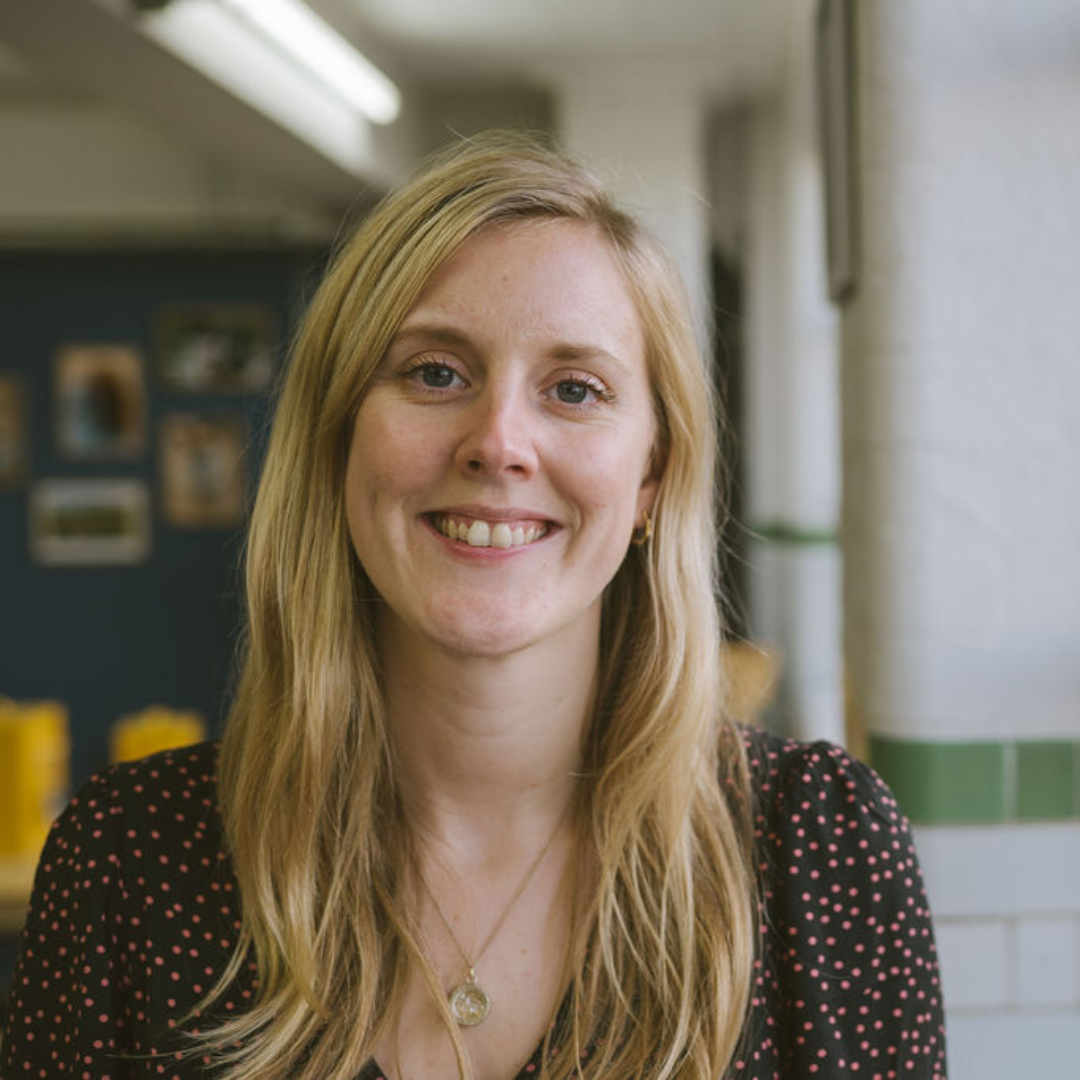


 Zoe Newman joined














