Business RadioX ®

  • Home
  • Business RadioX ® Communities
    • Southeast
      • Alabama
        • Birmingham
      • Florida
        • Orlando
        • Pensacola
        • South Florida
        • Tampa
        • Tallahassee
      • Georgia
        • Atlanta
        • Cherokee
        • Forsyth
        • Greater Perimeter
        • Gwinnett
        • North Fulton
        • North Georgia
        • Northeast Georgia
        • Rome
        • Savannah
      • Louisiana
        • New Orleans
      • North Carolina
        • Charlotte
        • Raleigh
      • Tennessee
        • Chattanooga
        • Nashville
      • Virginia
        • Richmond
    • South Central
      • Arkansas
        • Northwest Arkansas
    • Midwest
      • Illinois
        • Chicago
      • Michigan
        • Detroit
      • Minnesota
        • Minneapolis St. Paul
      • Missouri
        • St. Louis
      • Ohio
        • Cleveland
        • Columbus
        • Dayton
    • Southwest
      • Arizona
        • Phoenix
        • Tucson
        • Valley
      • Texas
        • Austin
        • Dallas
        • Houston
    • West
      • California
        • Bay Area
        • LA
        • Pasadena
      • Colorado
        • Denver
      • Hawaii
        • Oahu
  • FAQs
  • About Us
    • Our Mission
    • Our Audience
    • Why It Works
    • What People Are Saying
    • BRX in the News
  • Resources
    • BRX Pro Tips
    • B2B Marketing: The 4Rs
    • High Velocity Selling Habits
    • Why Most B2B Media Strategies Fail
    • 9 Reasons To Sponsor A Business RadioX ® Show
  • Partner With Us
  • Veteran Business RadioX ®

Ainsley Toal with The Steel Magnolia Bar and Olivia Newell with Theory Salon

October 31, 2023 by angishields

CherokeeBusinessRadio103023pic1
Cherokee Business Radio
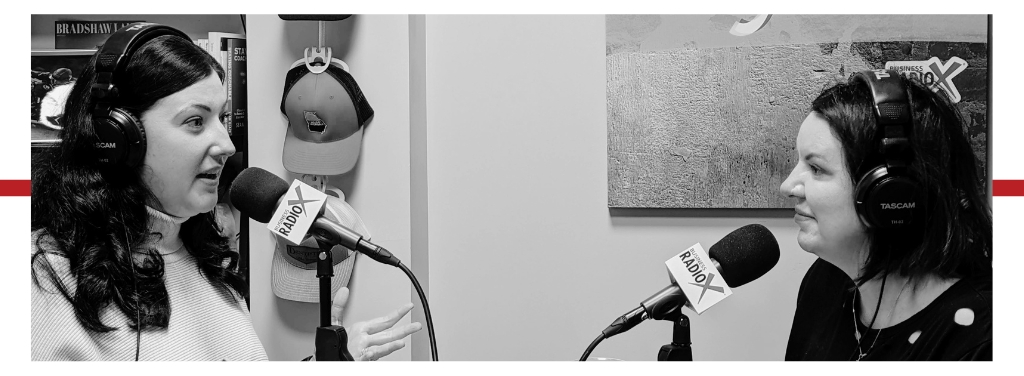
Ainsley Toal with The Steel Magnolia Bar and Olivia Newell with Theory Salon
Loading
00:00 /
RSS Feed
Share
Link
Embed

Download file

CherokeeBusinessRadio-103023-banner

Sponsored by Woodstock Neighbors Magazine and Business RadioX ® Main Street Warriors

Woodstock-Neighbors-logo

Main-Street-Warriors-Banner

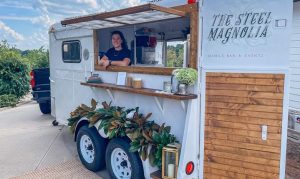
The Steel Magnolia is a full-service mobile bar focused on creating a unique, exclusive experience for you and your guests to remember forever.

We believe that any reason is a good reason to celebrate, and a great bar will take any event to the next level. Our charming 1970s horse trailer makes a lasting impression wherever she goes. We’re more than a bartending service – we’re an elevated addition that provides handcrafted cocktails, beer and wine service, an interactive experience, and a photo-worthy backdrop.
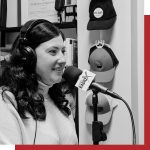
Ainsley-Toal-The-Steel-Magnolia-BarbwI am Ainsley Toal, the founder and owner of The Steel Magnolia Bar.

What started as a quick “Why not? I can do that!” idea turned into the most rewarding opportunity. I swiftly got to work on converting the family farm’s rusty trailer into a stunning mobile bar.

The trailer originally belonged to my husband’s grandmother, who purchased it in 1972 when she moved to Dawsonville, GA. In recent years, it was utilized to haul animals for our family farm, Seven Seay’s Farm.

After five months, with the help of my family (kids included!) and lots of elbow grease, we completed the renovation of the trailer.

I have planned and produced countless events, from small gatherings for friends and family to award-winning festivals and events attended by thousands. The-Steel-Magnolia-Mobile-Bar
I take pride in the details, thrive with a checklist, and find joy in creating memorable experiences.

Let’s get together and throw a party!

Follow The Steel Magnolia Bar on Facebook and Instagram.

Theory-Salon-logov2

CherokeeBusinessRadio092623pic1bwOlivia Newell is a small business owner in Woodstock that does it all, from hair and makeup to consulting for other local businesses.  She is a L’Oreal Professionnel Educator and she grew up in the Woodstock area. She graduated from the University of Georgia in 2013 with a degree in Public Relations.

For over 18 years, Olivia managed, staffed and trained in the salon industry upon opening Theory Salon with her two business partners. She firmly believes in continuing education and travels from New York to LA throughout the year to train, coach, and mentor other salons.

She has a passion for both hair and makeup, while specializing in cutting, blonding, balayage. Olivia is a L’Oreal Pro Certified Balayage Artist, Network Expert Color Specialist, as well as being Keratin Complex Smoothing Treatment certified.

When she’s not behind the chair making her clients laugh, you can find her planning her next travel adventure or spending time with her hubby, son Sullivan and three pups!

Theory Salon is a culture that provides visionary looks with a world class customer experience. With a welcoming environment and luxury product lines like L’Oreal Professionnel and Oribe, we value integrity.

You will find through our passion for one’s craft, our dedication to establishing a salon that works with purpose and meaning.

Commitment to innovation, and continued education is a must, because we know that it is integral to keeping our skills sharp and our artistry inspired.

The driving forces behind the Theory Salon experience are to provide unparalleled hospitality and extraordinary hair artistry.

Follow Theory Salon on Facebook and Instagram.

This transcript is machine transcribed by Sonix

TRANSCRIPT

Intro: [00:00:07] Broadcasting live from the Business RadioX studios in Woodstock, Georgia. It’s time for Cherokee Business Radio. Now, here’s your host.

Stone Payton: [00:00:24] Welcome to another exciting and informative edition of Cherokee Business Radio. Stone Payton here with you this morning, and today’s episode is brought to you in part by Woodstock Neighbors magazine, bringing neighbors and business together. For more information, go to Facebook and Instagram at Woodstock Neighbors wbvm. And if you have a heart for community and want to continue to grow your small business, consider joining the Main Street Warriors movement. Go check us out at Main Street warriors.org. All right, now it is my distinct pleasure to welcome back to the Business RadioX microphone with Theory Salon, Miss Olivia Newell. How have you been?

Olivia Newell: [00:01:10] Good morning. I’ve been so good and I’m so excited to be back.

Stone Payton: [00:01:14] Oh, I am delighted to have you back in the studio. You got so much really cool stuff going on. Tell us about what you did a couple of weeks ago and tell us who you brought with you today.

Olivia Newell: [00:01:26] Yeah. I’m excited. So we had our fall market pop up a couple of weeks ago at the salon, where we hosted just about 40 vendors that are local businesses in the area. And today I’m so excited. I brought my good friend Ainsley Toal with me. She was one of our vendors at the event. I’ve been so honored to meet her and get to know her a little bit. I think her business is so cool. So I want to welcome Ainsley today and tell you a little bit about her her business.

Ainsley Toal : [00:01:56] Thank you so much for having me, I appreciate it.

Olivia Newell: [00:01:59] So, Ainsley, tell me what’s what’s your business? Give me. Give me some details. What? What is it? What do you do? Why do I love it so much? The listeners have got to know.

Ainsley Toal : [00:02:10] Well, a few months ago, actually, back in April, I started renovating a old horse trailer. It’s a 1970s double horse trailer that I renovated to start a mobile bar business located in Dawsonville, Georgia. But obviously a mobile. I’ll travel wherever I am. Mom and I work full time, and so I just really wanted to do something that was for me and learn a new skill set. And so I’ve always been in the food and beverage industry, hospitality industry. So that’s something that’s been very important to me. I’m passionate about making experiences for people that are memorable, and so I kind of just wanted to get back to that and do something fun and something to bring a little extra income to my family. And so I started renovating this horse trailer. That was an absolute rust bucket. It actually belonged to my husband’s grandmother. She bought it in 1972 when they bought when they moved to Dawsonville, Georgia. And so I just started renovating it and filming myself. And so now I’m up and ready. I’ve done a couple of events so far. I’ve done did Olivia’s pop up event, which was super fun, super successful, and I’ve just had a bunch of fun.

Olivia Newell: [00:03:25] I love it, I love it, that’s awesome. So give me a little bit more of your backstory, because I feel like with your business, there’s lots of elements here. One being for me, the horse trailer itself is so cool, you guys. She did such a good job. I mean, talk about like DIY, I want you to come to my house and everything else. So the trailer itself is so cool. And then there’s that layer of element that you just said about having the hospitality background. I mean, your drinks were killer. So there’s so much that kind of went into it. I want to hear more of, like your story of, I mean, how do you have these skills to be able to build this horse trailer? I saw you out there working. I’m like, dang, girl, she knows how to work a tool.

Ainsley Toal : [00:04:05] Well, I didn’t, so and that was part of this whole journey for me, is that I wanted to learn how to do something. And so I had no idea what to do. I, I watched a couple of YouTube videos, and there’s not really a lot of DIY horse trailer like videos and stuff. So I was like, I don’t, I literally have no idea. So I’ll just get started. And here, here I go. And I spent six weeks just sanding like the dirt and rust away. Like 50 something years worth of oh my gosh, crud. Yeah. And and I just started doing it and I was amazed with myself of what I could do because I’ve never used a power tool. I mean, I can use a screwdriver, but like that’s about the extent of what I can do. And so that was a real fun thing for me to learn is because I wanted to learn a new skill set and have a new hobby. And so that was part of that whole journey for me. But but I’ve always, like I said, been in food and beverage since I was 15 years old.

Ainsley Toal : [00:05:09] We started at Little Country Cafe back home in South Georgia. And then through college I worked at Sea Island Resorts and a bartended at Mellow Mushroom, so I have about eight years experience doing that. Excuse me. And and then post college, I actually graduated with a marketing degree. And so I went to work for Jekyll Island Authority, hosting and putting on events with them. And so I did that for almost four years. The biggest event we did was the Shrimp and Grits Festival, which was 45,000 people. Yeah, that’s so cool. And we did small ones that were just a couple hundred. So that’s kind of my background in doing events and bartending and just giving back to people and giving them experiences and being in the service industry. And that’s something that’s important to me, because just getting to do experiences with people and of all walks of life and getting to know them, and that’s something that’s important to me. And I love talking to people and getting to know people.

Olivia Newell: [00:06:12] Yeah, yeah, you can definitely see your passion through and through. And you had your husband with you that night, which I thought was cool, and he helped you build the trailer. He had no choice. I love it, I love it, put him to work. Yes.

Ainsley Toal : [00:06:23] I have been putting him to work, so I love it. So he’s he’s like, I’ve always wanted to bartend. And I’m like, well, here I go, making your dream come true. So he’s had fun doing it. And actually, I mean, we did the whole thing ourselves. I mean, from start to finish. There’s nothing that we hired out. So amazing. I did have to have his help toward the end of doing some of the more major power tools and woodworking, and my father in law. But but that’s okay. Yeah, it does, it does. And so and my son was helping me paint and my niece and my other daughter. So like, it was really a family affair. So it’s been so fun for all of us to do it. Yes, I.

Olivia Newell: [00:07:02] Loved following you on Instagram and seeing your whole family out there and your kids. It was so cute. You can just see the passion that you have and it’s just I love like a small business. I love a female owned business. I think that’s so cool. It’s very empowering to see. So tell me so far, what has been probably your most challenging thing that you’ve come across?

Ainsley Toal : [00:07:24] I would say just my, I guess, self confidence of knowing like, you can do this. I’ve never owned a business, I don’t know how to own a business, but I know, I know how to make a drink and I know how to, you know, have help. You have a good time. But the whole. Yeah. So like the behind the scenes part of that, I guess, is been the most challenging for me. And, and just having, being totally transparent imposter syndrome because I look at people and I’m like, I don’t know that I could ever be that good, or I don’t know that I am that good. And you know what I am. Yes. And so I need to believe that in myself and I and I want other women and other business owners to believe that too, is like, you can do this, you can do hard things. You can do things that you didn’t think that you could. And don’t compare yourself to other people, you know. And so that’s that’s been a little bit of a journey for me. And just learning and being confident in who I am and what I’m doing, and I’m getting there and every day it’s getting better. So yeah.

Olivia Newell: [00:08:21] I love that and I love that your kids get to see that too. I think it’s really impactful on the family to kind of, you know, be something more than just your husband’s wife or mom. You know, it’s like you’ve got this whole business that you’ve created and you’re touching lives left and right, picking up power tools, learning how to do it. No YouTube videos. I’m shocked. Like, that’s crazy. I’m you took on a challenge I would be very afraid of early on.

Ainsley Toal : [00:08:43] My son, he he was out there helping me and he came out and he was like, mom, I’m just so proud of you. And I’m like, that’s that’s so that’s what I want you to see. I want you to see that you can do things that you didn’t think that you could. And so that was really important to me. And he has no idea how much that meant to me. He’s seven. And and so I just it just really hit my heart. And I was like, okay, good. He sees this. So I have.

Olivia Newell: [00:09:11] To say that after throwing the pop up event, my son Sullivan, that’s three was at the event with me. And the next morning he said, mom, you’ve thrown a lot of cool parties. But last night was so cool. You did such a good job. So I feel the same way. I’m like, I don’t care if most of the people didn’t have a good time. My son loved it and he said, I did great and I win. That’s all that matters. That is all that matters. So I totally can relate on that. That’s awesome. Let’s see. Well, I feel like we kind of touched on what your most rewarding thing is. It sounds like. Do you have any mentors or anyone that has kind of helped you along to kind of get where you are? Where do you find your inspiration from?

Ainsley Toal : [00:09:49] I see things that I like, and I just kind of like Pinterest and Instagram, TikTok, those sorts of things, those kind of inspire me and just my, my personal what I like. And so I guess that’s kind of my style. And as far as drinks, I like, you know, all over the board and I, I should say also that I don’t want to just focus on on doing alcohol. I want to do mocktails, I want to do kids parties because those I have friends and family that are choosing a sober lifestyle for whatever reason. And just my circle has so many young kids. And so it’s important to me that I focus on doing something that can I can offer experience to someone that no matter their stage or age in life. So that’s something important to me.

Olivia Newell: [00:10:34] You’ve got a good reach there. So that kind of leads me to you. What are your future plans like? Where do you see Steel Magnolia going next?

Ainsley Toal : [00:10:41] Hopefully to your next party. Yeah.

Olivia Newell: [00:10:45] I love that. Yeah. It’s a good reason to have a party. Yeah.

Ainsley Toal : [00:10:48] I really I would love to have a whole fleet of trailers, but that’s a, that’s a big dream. But I guess for here and right now I really would like to be able to leave my full time job and focus on this so that I can have more time with my family and really put more effort into this business.

Olivia Newell: [00:11:08] So this is your side hustle? I didn’t know that. Okay, so what’s your full time job? Fill me in on that.

Ainsley Toal : [00:11:13] I’m in insurance. Okay. Boring. Well, but I’m like very important.

Olivia Newell: [00:11:18] Well, you know what? I’m just so impressed again, because the way that you run Steel Magnolia, you would think that it’s your full time job. I mean, you just kill it. It’s amazing. You do the social media, you’re booking events, doing a couple a week here and there. You got weddings, parties, holiday events, everything. And then you’re working another job and three kids. Okay, let me just bow down. Hold on. Whoa. That’s awesome. Okay, so tell me a little bit where what is your your next big thing that you have coming up?

Ainsley Toal : [00:11:51] Well, actually this weekend it’s at Theory Salon. So your salon here in Woodstock, I’m super excited. We’re going to do a couple mocktails and just have a good time. And I’m looking forward to.

Olivia Newell: [00:12:03] That’s awesome. That’ll be really fun. Okay, so we have to leave the people all your information so that that way they can find you and hire you for their next event. Because I’m going to book her up guys. So how do they find you? What’s your website?

Ainsley Toal : [00:12:16] I you can find me at the Steel Magnolia bar.com. That’s my Instagram handle, my Facebook and TikTok. Candle. And again, I’m located in Dawsonville, Georgia, but we’re very excited. Thank you.

Olivia Newell: [00:12:29] So much. Yeah. And do they have like you get to do like an inquiry on your website. Yeah, yeah.

Ainsley Toal : [00:12:34] So we have an inquiry form an intake form. Just fill out some basic information about your event. When, where how many people do you expect. And we kind of just take that information and determine a package for you what fits your needs. We can do custom. We do as big as weddings or small little private events like I’m doing tomorrow night, a little Halloween party. So yeah.

Olivia Newell: [00:12:59] And what areas do you really kind of cater to that you will go to literally anywhere.

Ainsley Toal : [00:13:04] Yeah. So mobile I will I will go that’s so cool.

Olivia Newell: [00:13:08] I love it. That’s awesome.

Speaker5: [00:13:09] So I have.

Stone Payton: [00:13:10] A question for you, Olivia. Why are you so invested in giving people like Ainsley a platform to share their story? Why are you so invested in other people? Don’t you have enough on your plate already?

Olivia Newell: [00:13:24] I’m crazy. I’m the problem. Um, no, I just I love, you know, obviously I’ve talked about it on the show the last time. I love what I do so much, and nothing makes me happier than to see, like, boss babes. You know, I love moms and females that do everything. We are like Wonder Woman, you know, speaking of and being that for Halloween. So. But no, I do. I love it and I feel like, you know, I’ve been given some cool opportunities, like I was able to come on this show before. And so I always want to share resources that I have and be able to put it in front of other people. I think we as women, the best thing we can do, especially in 2023, is just unite with one another. We’re more powerful in numbers, and so I just think it’s cool to pass that baton and help each other grow.

Stone Payton: [00:14:15] I think it’s marvelous, and I think there are a lot of people in our community here, particularly in Cherokee County and surrounding counties, that are that are genuinely invested in helping everybody. Right? Not just one of the things I just love about this area. And I got to say, as an entrepreneur, you know, I’m a little longer in the tooth than you two. So I’ve been at it a while and had ups and downs. I think people like for me, they see where we are now with multiple studios around the country. Now they see your renovated horse trailer and all the cool stuff, and I don’t think they necessarily understand, particularly non entrepreneurs, what it took to get there. You guys marveled at the at being able to manage the power tools and restore the trailer and all that, and believe me, that is so far outside my skill set. I got two tools in my house a telephone and a checkbook.

Speaker6: [00:15:00] Oh my God.

Stone Payton: [00:15:02] But but one of the things that occurred to me that the big hairy thing, because I would have never even thought about touching, that I definitely would have hired that out. But weren’t there some hoops you had to jump through to, like, get the right licensing and all to be to serve the alcohol and all that?

Ainsley Toal : [00:15:16] Well, actually, I don’t have a liquor license because in the state of Georgia, if you don’t have a brick and mortar, you can’t have a liquor license. So what I am considered is a dry hire. So you buy the booze and I serve them, but I am fully licensed and insured. I have a pouring license in my county so I can. That’s how I can legally do it, right? But just as most venues they you you purchase the alcohol or private party, you you purchase the alcohol and I provide literally every single thing else except for the alcohol. Right.

Stone Payton: [00:15:48] But but you knew that. You figured all that out. You had to jump through all the all those hoops. A lot of.

Speaker6: [00:15:53] Research.

Stone Payton: [00:15:55] Absolutely. So how does the whole I guess I’m from the training consulting world, but the sales and marketing thing work for a for a new company like yours, or are you just out there shaking the bushes and meeting people like Olivia? Like, how do you how do you get to work?

Ainsley Toal : [00:16:10] Well, I haven’t really promoted myself yet just because I am so brand new. I finished up the trailer in September for a wedding, but I’ve just been using social media, primarily Instagram and Facebook, and that’s how Olivia found me. And I’ve been so grateful and and just word of mouth and promoting on there. And I’ve reached out to a couple venues that I’m actually on a preferred preferred vendor list. Just saying, hey, I’m in your area, you have this really cool thing. I’m the only one in this area. I’d love to connect with you. And so that’s primarily where it’s been. It’s been with social media. And so once I get some more photos and things like that, I plan on reaching out to more venues, but primarily word of mouth. But that’s that’s gold in my opinion.

Speaker6: [00:16:57] So. And oh, by.

Stone Payton: [00:16:58] The way, I’m a I’m a wife. I’m a mother.

Speaker6: [00:17:01] I’m.

Stone Payton: [00:17:02] In the insurance business. I mean, goodness gracious, I am just in awe. Yeah, I could I could see why you wanted to bring Angelina. Well, we wish every success for you. We’re going to do everything we can to support you. I’ve got one quick idea that I’ll mention to you off air, because I don’t know if I can pull it off. Okay, but at least let you know about it. But, you know, you had.

Speaker6: [00:17:22] Me at bar. Yeah.

Olivia Newell: [00:17:24] Yes, that’s usually a good one. I’m like, where are you?

Ainsley Toal : [00:17:25] Find me.

Olivia Newell: [00:17:26] Mobile bar. Say no more.

Stone Payton: [00:17:29] So I’ll swing back around to you. Because one more time I want to make sure our listeners have your contact info. But, Olivia, where can people reach out and learn more about theory?

Speaker6: [00:17:37] Yeah, absolutely.

Olivia Newell: [00:17:38] So our website is theory dash Salon.com. You can follow us on social media. It’s theory underscore salon and something cool that we are doing for the month of November and December. We are bringing in local businesses to spotlight them and do a shop small Saturday. And instead of just doing it the Saturday after Thanksgiving, I’m going to do it every Saturday in November and December. So you guys come any Saturday, November, December, you’ll find one of our awesome vendors and local business people that were either at our event or I’ve met through some walk of life. We’ve got an alley that’ll be here this weekend with her mobile pop up bar, serving some nice mocktails while you get your hair done next weekend I’ve got some permanent jewelry, some spray tan businesses garnished with Grace, which actually teamed up with Ainsley at our event, which was really cool. She does like.

Ainsley Toal : [00:18:33] Dehydrated fruits and.

Olivia Newell: [00:18:34] Dehydrated fruit that went with her. Yeah, that went with her.

Speaker6: [00:18:37] Like an old fashioned.

Stone Payton: [00:18:38] Like the dehydrated. Oh, baby.

Speaker6: [00:18:40] Okay. Yes.

Olivia Newell: [00:18:41] So the two of them together. Power couple. But yeah, lots of that. So anytime November and December, if you guys are looking for holiday or gifts this is incredible. Please support your local small businesses. We really appreciate it and just come see us.

Stone Payton: [00:18:56] There is a special place in regular heaven, but particularly small business heaven at the right hand of the King himself or herself. For you. Yeah. God, you’re a wonderful person. All right, Ainsley, one more time. Coordinates for our folks to reach out and learn more and have a conversation with you and book you.

Ainsley Toal : [00:19:15] Yeah. You can find me at the Steel magnolia.com or the Steel Magnolia on Facebook and Instagram.

Stone Payton: [00:19:22] Fantastic. Well, it has been an absolute delight having you two in the studio. Thank you both so much and neither of you don’t be a stranger. We’ll have you back. And Olivia, tell her I’m being sincere. Right. I’ll really have you back.

Olivia Newell: [00:19:35] It’s so fun to. He doesn’t know what he got into telling me. I could come.

Speaker6: [00:19:38] Back.

Stone Payton: [00:19:40] Well, thank you both. This has been.

Speaker6: [00:19:41] Fantastic.

Stone Payton: [00:19:43] All right, until next time. This is Stone Payton for our guest today. And everyone here at the Business RadioX family saying we’ll see you again on Cherokee Business Radio.
 

Tagged With: The Steel Magnolia Bar

BRX Pro Tip: Studio Partners: Don’t Forget the Non Profits

October 31, 2023 by angishields

Michelle Cleveland with Project 24 Seven, Becky Hart with Mary Kay and Caroline Momper with Berkshire Hathaway

October 30, 2023 by angishields

Charitable-GA-Feature-102723
Charitable Georgia
Michelle Cleveland with Project 24 Seven, Becky Hart with Mary Kay and Caroline Momper with Berkshire Hathaway
Loading
00:00 /
RSS Feed
Share
Link
Embed

Download file

Charitable-GA-102723-banner

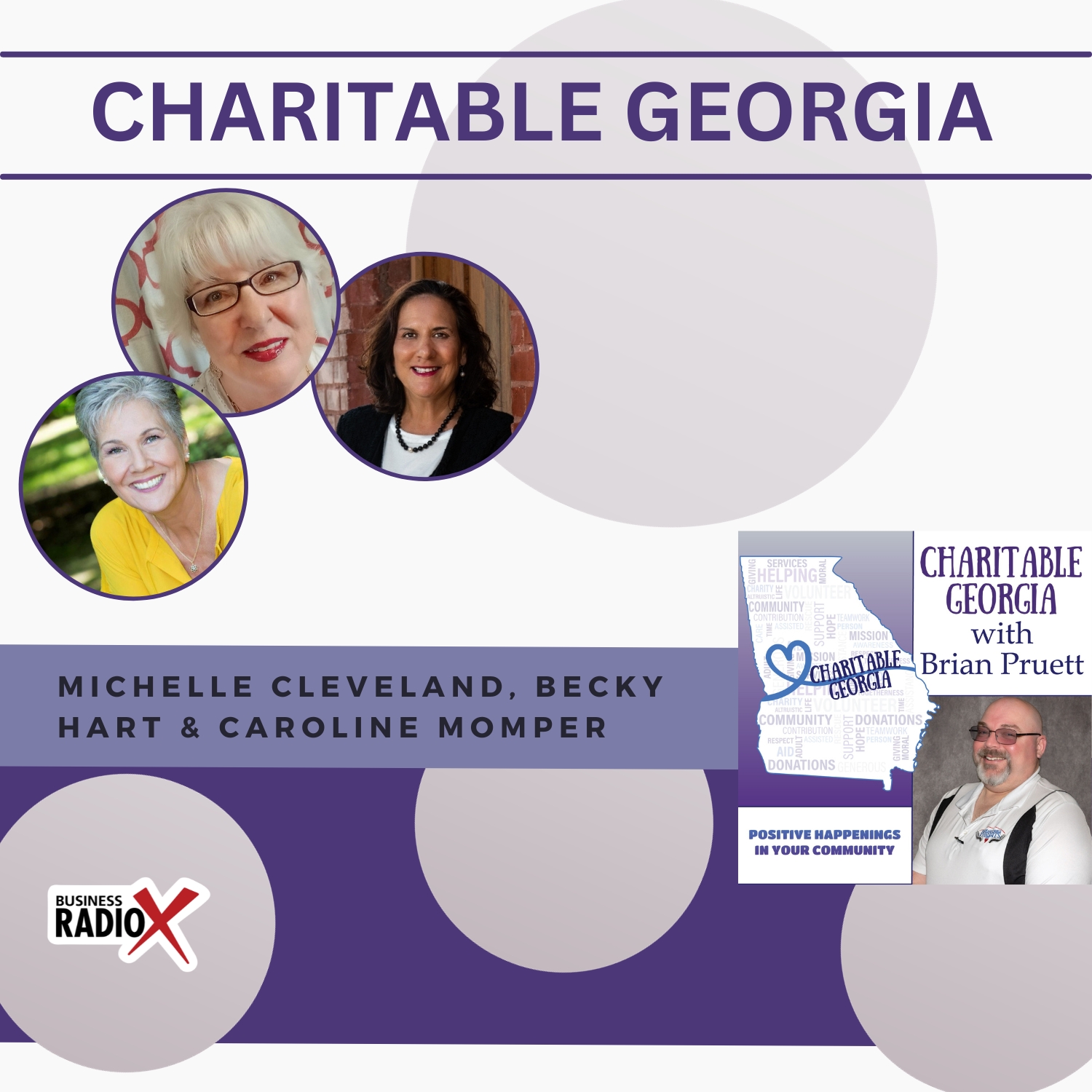
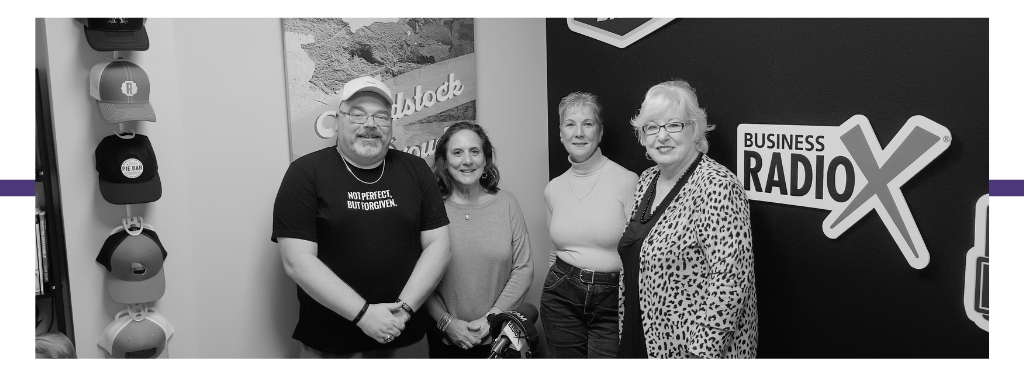
In this episode, host Brian interviews Caroline Momper with Berkshire Hathaway, Becky Hart with Mary Kay, and Michelle Cleveland with Project 24 Seven. Together, the guests provide a diverse range of perspectives on community involvement and the importance of making a positive impact.

Michelle-Cleveland-bwIn September 2022 Michelle Cleveland sold her house and embarked on a journey to save lives. Since then, she has traveled 40,000 miles through 30 states and one Canadian province on her Triumph Tiger motorcycle, talking with countless individuals sharing information and stories. It has also been a journey to heal her own brokenness.

Her journey actually began years earlier, in 2016, when she lost two of her children to suicide. She has since become a passionate advocate for suicide prevention. Through the non-profit she founded, Project 24 Seven, Michelle is working to save other families from the fallout of suicide.

Becky-Hart-bwBecky Hart – All of the hats I wear have one common theme. Beauty for ashes. God has given me a gift of bringing beauty into both the hearts and bodies of those I serve.

Wife, mother, grandmother, even great grandmother. My identity has found its place in my career as a Mary Kay consultant. God placed in my DNA a love for people in the quieter places in communities. Senior centers, boys, and girls, clubs, homeless shelters, and battered women shelters are often my workplace.

From a very young age, I knew my identity was being formed in my circumstances. I am the oldest of 12 children, and embraced that position in my family as it allowed me to discover who God created me to be, and develop the passions in my life.

I always say God and Mary Kay have taken Great care of me.

Caroline-Momper-bwCaroline Mompe – As a 26- year seasonedNew Home Sales Consultant and Realtor, I recently relocated to Cartersville Georgia after living in South Florida since 2000. My passion is to help buyers and sellers during their home buying and selling experience by providing excellent customer service and creating a smooth transition from the contract to the closing table.

I strive to educate and negotiate for my sellers and buyers so that they can get the best market value for their home. My enthusiastic personality, positive attitude, and my ability to be a great team player has allowed me to have years of success in real estate. The number of client referrals I have received have been some of my favorite moments over the years.

My real estate experience has involved selling a variety of product types, allowed me to work with a broad spectrum of clients, and serve a variety of price points. I enjoy working with 1st time buyers guiding them through the homebuying process which can be stressful for them.

My motto is to know like and trust me as well as be their FOREVER AGENT! Joining the Cartersville Chamber of Commerce as well as the Cartersville Business Club has given me the opportunity to make some amazing friendships and network with amazing business owners who have the same passion of reciprocity helping others is what we do BEST!!

I joined Berkshire Hathaway “because of who they are, HomeServices is what we do, and Georgia is where we bring you home.  Please contact me if you have questions on my website, local market conditions, financing, or anything else that I can help you with in your search for real estate. Thank You!

This transcript is machine transcribed by Sonix

TRANSCRIPT

Intro: [00:00:07] Broadcasting live from the Business RadioX studios in Atlanta. It’s time for Charitable Georgia. Brought to you by B’s Charitable Pursuits and resources. We put the fun in fund raising. For more information, go to B’s Charitable Pursuits dot com. That’s B’s Charitable Pursuits dot com. Now here’s your host, Brian Pruitt.

Brian Pruett: [00:00:45] Good fabulous Friday. It’s another fabulous Friday morning and we’ve got three more fabulous guests. If this is your first time listening to Charitable Georgia. This is all about positive things happening in the community and we are going to get started with this. Caroline Momper from Berkshire Hathaway. Welcome, Caroline.

Caroline Momper : [00:01:03] Good morning and welcome, everyone.

Brian Pruett: [00:01:06] So you and I got to talk a little while about 2 or 3 months ago. You shared a little bit of your background. And if you don’t mind, we’ll talk about your real estate here in just a little bit, but share a little bit of background and we’ll talk about why you’re passionate about helping others.

Caroline Momper : [00:01:20] Well, as always, Brian and I connected by growing up in Ohio. I was born and raised in Cleveland. My husband and I met in Cincinnati in college back in 87 and relocated to South Florida. So as a child growing up, my passion was always just enjoying life and having family around as well as friends, creating relationships with people. And we just really connected on that family side of life and moved to South Florida back in 87. We I was in the real estate as well as retail side of my life, and my family all had gone on vacation as kids. We used to travel there in the summer, never went to Disney World, but always loved the South Florida area. So I enjoyed being in retail there for about 20 years and just connecting with people in the community and just always having a great relationship with people in networking, moving forward into my real estate side of life. My. My passion started in new home sales, but I have a two adult children to back up to my life in growing through the years. They both were graduated from college by now and all out in the real world working. I have now relocated to Cartersville, where I’ve met Bryan and all of these other wonderful people through connecting at the Chamber of Commerce.

Caroline Momper : [00:03:04] Joining the Cartersville Business Club, which is how we all became great group of networking, collaborating friends. And it’s just been a great opportunity for me. The changes through life of having lost my mom to a stroke back in 21. A lot of my passion came from serving and helping her throughout her really struggle with my father passed away in 17 and mom was being independent, wanted to stay at home, and then had the stroke and ended up in assisted living. So a lot of my life was kind of put on hold throughout that time period, just taking care of her. And then she ended up having a second stroke and we lost her in 21. So that whole year has been really made me realize that there’s a lot of things that you want to keep close to your heart, and she was one of them. She always kept us together as a family, always had the holidays together. So now I’m trying to incorporate that. And I do have a future thoughts of trying to do more community service work within the assisted living and Alzheimer’s communities, because those were the two things that had affected her as well. So.

Brian Pruett: [00:04:24] Well, when you sat down, I also told you that I didn’t hold it against you just from Cleveland because you’re either Cincinnati or Cleveland. So I think you redeemed yourself when you went to Cincinnati, right? No. It’s awesome. You talked about your your caregiving and stuff like that, because I know a lot of families where there where there’s one child or none of the child, children will take care of the parents as they get older and the things that happen. So you mentioned the networking piece of it. We talk about that a lot here on the show as well. That networking is is huge, especially when you’re a small business owner to get out there. And really it’s about establishing relationships. It’s not about selling even though people get that wrong. Um, but so give us a positive story since you’ve been networking that you can share, that’s maybe happened with your business since you’ve been networking.

Caroline Momper : [00:05:11] I actually wanted to share. Three of us, as well as myself, are working with Georgia Highlands College, the campus in Cartersville. We’re doing a financial literacy program that started just this month with the students there because, as we all know, when you go away to college, all it is is have fun and joy and figure out what you want to do in life. Well, these are some of the things that we’re trying to educate the students and understanding that we all don’t know what we want to be when we grow up, but having the experience of a credit union person from GE, we have Maggie Yost, who’s the mortgage broker, and we have Shannon Botfield, who’s the financial side of it. So we’re trying to group all four of us together to educate these students in coming into the real world, because as we know, we start out somewhere and we may not end up there. So that’s been one group we’re meeting now again in November, and then we’re going to skip the holidays and do one in March and end with a great, hopefully, experience to trade, you know, to educate and help those kids throughout their ending careers in college and where they want to become in the future.

Brian Pruett: [00:06:23] That’s awesome because they don’t teach that enough hardly at all these days. So that’s awesome. You guys are doing that. So other than the fact of taking care of your mom and being passionate on helping people with real estate, but why is it important for you to be part of the community?

Caroline Momper : [00:06:38] Well, I think that all over all again, networking, meeting people that are of like minds, as we all are at the table here, we all want to be looking out to help each other and understanding that there’s always someone that needs something that you may not see from behind the scenes, and that’s what’s most important.

Brian Pruett: [00:06:58] So in your industry, it’s kind of up and down right now, a little weird, a lot of stuff weird going on. So how is it affecting you guys that one of the biggest mortgage groups just announced two days ago that they’re closing their, their, their doors or at least their retail side? How is that affecting real estate right now?

Caroline Momper : [00:07:17] Well, as I call it, it’s the real estate roller coaster at the moment. And you just never know how things are going to be next day, next hour, next week, next month. And unfortunately, a lot of the buyers that were in the market last year with the increase of rates and things are not able to buy. This year, which is. They waited, but in hopes that they could. So my real passion was always working with first time homebuyers and educating them into the market. So it’s been a good. The thing for again education to understand how they can afford. But now, with the roller coaster that we’re on, it has become tough. And it’s it’s just always a lot of my what they call sphere of influence are my clients from Florida in the past because I was a realtor there as well for 20 years doing new home sales and general real estate. So I try to work, work, you know, the as well as finding things for them here in the area, but they’re all in the same boat. Basically. Everybody’s kind of just wondering when and how and what’s going to happen in the next, say, six weeks to six months.

Brian Pruett: [00:08:29] So can you, other than the fact of waiting and see what’s going on, can you give somebody who might be listening? That’s maybe thinking about buying a home, especially a first time home buyer? Give us some advice on what they should be kind of looking for and planning for when they’re doing this.

Caroline Momper : [00:08:44] Well, I think the most important thing is, again, establishing what is most important to you is always the payment. But unfortunately, with the rates up and down as they are, there’s always the chance to refinance in the future, which doesn’t always give them the right payment in the beginning. But they can search to find maybe not everything that checks their boxes, as we always say that they there’s a lot of new communities that are offering programs to those first time homebuyers. My first closing in Cartersville was actually through the USDA, and it’s a loan program that’s the first time homebuyers can qualify for with zero money down. And people always think that you have to put 20%, but you do not. And there’s a lot of hope grant programs in the Bartow County that is offered to them as well, which that’s kind of one of the things that I’m working on educating those buyers that there is a possibility, don’t think doom and gloom and there are opportunities out there.

Brian Pruett: [00:09:47] Also, would you agree with we got there are so many real estate agents out there, a lot of people jumping into the industry or maybe jumping out now. But what’s important to look for in an agent?

Caroline Momper : [00:09:58] Well, we at Berkshire Hathaway have a forever agent program that’s led by a great speaker, Alan Dalton, and he tries to educate us on being that forever agent and not just looking, as Brian mentioned, for that end result of the sale, but as your sphere of influence. We we look at past clients, but we also want to them to know, like and trust us the best. And there’s always competition out there. And Berkshire Hathaway has 29 offices and over 1500 agents. But finding that fit and finding the the right comfort level is what I try to do with my buyers and sellers.

Brian Pruett: [00:10:36] So is your your office is here in Woodstock, correct? Yes. We’re all can you service though?

Caroline Momper : [00:10:41] I service all of Bartow County. My first opportunity was actually out in Kingston. So we I’ve had buyers throughout Acworth and Cartersville, the Kingston area, canton, Woodstock and further south into Powder Springs as well.

Brian Pruett: [00:11:00] Okay. Also, if there might be somebody listening who’s thinking about getting into the industry other than saying, don’t do it, what would you give them? What advice would you give them?

Caroline Momper : [00:11:11] I would say, don’t worry, things are a little bit on the roller coaster side, but there’s always the opportunity that if you work hard, save hard, as we’re trying to learn that the credit background, things like that, work on that if it need be, but there’s always going to be a place it just may not be tomorrow, but it could be in the future. So things unless they’re. Leasing. You look at the comparisons to rent versus buy that you should just really think positive and hope that it will happen. It may not be tomorrow, but it will happen for you.

Brian Pruett: [00:11:52] So again, there is a lot of people in your industry or agents out there, and we talked about networking and an important piece of it. Why is it important for especially agents to be out there networking, even though there are so many out there?

Caroline Momper : [00:12:05] Well, I think that my personal coming from the industry in South Florida, learning the Georgia market has helped me becoming part of the networking and the chamber, because there’s just so many things that they do out in the community. We do a lot with the business club outside as well, and it’s the with Berkshire Hathaway, we also do five K runs. We do a few other opportunities which help meet and greet more people in the industry. We don’t. We like to collaborate, as we always say, and and help each other. And there is a number of agents that I do work side, you know, just bouncing ideas off of and trying to work together to to let everyone know we’re not competing. We’re just all in this together.

Brian Pruett: [00:12:58] And that’s important to the collaboration over competition. Because, you know, even though everybody in the industry that might be agents, I’m sure there are some agents that can do some things that others can’t do. And you may come across an agent who might just be strictly commercial. So obviously they can’t help you if you’re looking for a home. So I love the aspect of collaborating over competition, so it’s just pretty incredible. Well, you mentioned about the five K’s. You guys got anything coming up you want to share?

Caroline Momper : [00:13:23] We do one in April. I just finished one last week at the Burnt Hickory Baptist Church in Powder Springs, and there was about 50 of us that ran. We’re doing the five hour five K for the Woodstock offices in April, and that’s the they’re planning it for the Etowah River run there. So it’s a great opportunity. We do have another few things that we try to do here in Woodstock. There’s a cornhole competition and we raise the funds for kids with cancer. So everybody comes out and enjoys their night. And we usually we’ve had it at the Reformation Hardware Brewery here in Woodstock.

Brian Pruett: [00:14:02] Is that coming up any time soon?

Caroline Momper : [00:14:04] We actually just missed that one. It was a last month, the next probably couple of weeks. There’s not anything scheduled at the moment but the one back in April.

Brian Pruett: [00:14:14] All right. Well, if somebody’s listening and wants to get a hold of you for your services, how can they do that?

Caroline Momper : [00:14:18] My website is w-w-w. Dot Caroline Mopper at best Georgia.com. And of course my. As far as Facebook, we have a website for Berkshire Hathaway as well. One thing I did want to mention for all of those who are out trick or treating or doing a blood drive at our office in Woodstock, and it’s from 10 to 4. So anyone who wants to come out and donate blood, we’d love to have you.

Brian Pruett: [00:14:50] So you got Dracula. There is what you’re saying. Yeah. Nice. Nice.

Caroline Momper : [00:14:54] We’re on the perfect day, right? There you go.

Brian Pruett: [00:14:57] And that’s actually a good day to do that. I never thought about doing it. That’s pretty cool. You do it every year. Awesome. Well, Caroline, thanks for sharing a little bit of your story and a little bit of advice on some real estate. Don’t go anywhere. We’re not done with you yet. So but thank you for sharing. We’re going to move over to Ms. Becky Hart, Mary Kay, consultant. Becky, thanks for being here this morning.

Becky Hart: [00:15:13] Good morning. Thank you for having me.

Brian Pruett: [00:15:15] So it’s just in your name heart. You have a big heart. Yes. So you shared with me. You got a good story too. But your husband’s got an incredible story. So you like sharing his story? And we’ll talk a little bit about yours too. But we’ll get into Mary Kay and what you do with that. But share, share Kenny’s story because it’s pretty incredible.

Becky Hart: [00:15:35] He started out having a stroke. He’s been a diabetic most of his life, had a stroke and lost his kidney. And he didn’t know during his life that he actually only had one working kidney till they did the full body scan. So now he’s not down one, but he’s down two. My husband’s very positive. When he went into dialysis his first day, I started crying. He’s like, why are you crying? I said, because I didn’t want to see you go through this. And he said, you know what? God’s put me here. I don’t know why I’m here. He does. So I’m just going to pray for everybody that comes through that door. My husband received his kidney five years ago in February, actually turned out to be a friend, and nine days after he got his kidney. I think this is the story you want me to tell. We were in the Mason transplant house. You have to stay there a certain amount of time by the doctors, and my husband just got enraged. Well, it could be the 500mg. Of steroids I give them to keep them from rejecting. Makes them really sweet, right? And he said, I’m going home. And I said, oh, you’re not going home. The doctor said, we’ve got to be here. And he said, why? And I said, you know what? It’s been Team Kenny all this time. It’s going to be Team Becky. Now we’re staying till the doctor says you can go home.

Becky Hart: [00:17:02] He pouted a little, but he got over it. At 1 a.m. that morning he woke up asking for his nitro, and he’s carried nitro for six years but never used it. I said, well, baby, why do you think you need it? He said, I don’t know. My heart’s beating really fast and I can’t breathe. Good. Gave it to him. Call the hospital. They sent the ambulance. They were there within three minutes and started to hook him up to the to my mind just went crazy. Hook him up to monitor his heart and all of a sudden he falls over. Now I don’t watch medical shows because I’ve got too much empathy for those people. I start crying when they die and when they fall over. And I said, what’s wrong? And he said, he’s coated. I said, well, what does that mean? He said, his heart stopped. Get the ambulance back in here. He’d sent a bunch of people away. He said, we’re good. We’ll transport him anyway. Three times. They shot Kenny that night and finally got him back. But God is so good guys that his new kidney stepped in when his heart stopped and he woke up just like he went to sleep. And the girl that gave him the kidney said, I’m your husband’s perfect donor. We just kind of thought she was being nice. She was his perfect donor. She saved his life not once, but twice.

Becky Hart: [00:18:30] She gave him a new kidney and then his heart that night. He has an amazing story. He’s been through a lot, but the last year has been great, has been wonderful.

Brian Pruett: [00:18:41] You said he doesn’t like sharing it, so that’s why you like to share it. But I like to share something about Kenny, too. Because Kenny came a couple of times with you to the Emerson Connects group. And we were there one time. And as you mentioned earlier, before we got on the air, it’s a smaller networking group and it’s a little more intimate. And we had one of the folks there that particular morning that Kenny was there asking for prayer, and we started going around talking after she got done talking and Kenny stopped, said, wait a minute, guys. When somebody asks for prayer, you pray, right? Then I just thought that was really cool because it’s not something I ever thought about, right? You tell somebody you’re going to pray for them and then you get busy. And sometimes a lot of times it may not happen. You have good intentions too, but I just thought that was really cool that he did that. So but your story too, of perseverance, especially the last several months, you’ve had some things going on, losing several folks in your life that’s been very important to you. So it’s just great to see you out and about because again, it could be one of those things where, you know, what the heck with it. I’m not going anywhere, you know? So can you share a little bit about being somebody of perseverance?

Becky Hart: [00:19:47] I guess that goes back to number one. Like you said, I’m a child of God. I’m a wife, I’m a mother, even a great grandmother. And I’m the oldest of 12 children. So I learned early in life that I’m a caregiver, I’m a caregiver, I love people, and my husband says my gift is the gift of empathy, that that’s why I don’t watch medical shows, because I feel that in my heart I feel your pain. So in doing that, that prepared me for my role as a caregiver with my husband, my three children, my grandkids, great grandkids, but also in the community as being a Mary Kay consultant. It’s not about selling. You said earlier, it’s about building relationships. It’s about sitting down and getting to the heart, sitting over a table and finding out, just looking in that woman’s eyes. How are you today? What can I do for you? It’s not about the sale. It’s about building her up. I found that God must have put in my DNA to go to homeless shelters, battered women’s shelters, boys and girls clubs. Anywhere where somebody would need my heart, my love.

Brian Pruett: [00:21:04] Well, it’s really cool, because the last several weeks you’ve got up and talked about, again, not about the sell and who you’re looking for, but what you’re looking for are people to pamper. And you mentioned, you know, lately you’re talking about looking for people with cancer and, you know, the battered women’s shelter and stuff like that. So you just briefly touched on it. But why is it important for you to be part of the community?

Becky Hart: [00:21:24] Um, I’ve had a lot of loss in my life. Children, grandchildren. The loved ones, sisters, parents and I want to leave the world a better place than I found it. I want to reach people. I think, like I said, in my DNA, God said, you need to go and serve before Kenny’s transplant. We help build churches. We fed the carpenters that built the churches. So I know it’s my job. Is serving in what capacity? Mary Kay is just an avenue for me to do that. To be with women. Um. I had a rough childhood growing up. So in doing that, I guess. Why? That’s why I’m especially drawn to women. We aren’t. We aren’t taught to take care of ourselves. We’re taught to take care of our loved ones. And we’re the last ones. I tell ladies, there’s a reason you put the mask on on the airplane first. If you don’t take care of yourself, you can’t take care of others. You can’t pour from an empty cup.

Brian Pruett: [00:22:35] And that’s important too, because it took me actually just a few years ago to realize, you know, I used to think, man, that’s selfish. Why would you put the mask on the player on you first versus somebody next to you that needs help? But you’re right. If you can’t take care of yourself, you can’t take care of anybody else. I also think that it’s cool the way God works, because he works in a lot of mysterious ways, and he obviously knew of giving you the last name Hart, when you got married, because that’s what you needed, and that’s what you got to give to people. So that’s that’s pretty awesome. So you guys do a lot with Mary Kay as far as giving back to the community. You guys did something a few couple of months ago, I guess with the, the, the enlisted and and you’re doing something now for the people with cancer. Can you share about both those? Right.

Becky Hart: [00:23:19] Both of those people think that it’s a selling opportunity. It’s not. It’s a it’s a giving opportunity. My group, my friends and family, we sent 50, 150 packs to the military women that are stationed overseas. And it’s a chance to let them know, hey, we care about you there in the middle of the desert. There in a mountainous region. They can’t get things for their skin. They can’t get things for sunburn. So we send them packs. And what I’m doing this month is I’m doing the chemo package, and that’s with the hydrating lotion, and it’s unscented, and that’s with the extra mile night cream. There’s no profit made by the consultants when we do this, but we allow our customers to sponsor two people.

Brian Pruett: [00:24:07] And how can they do that?

Becky Hart: [00:24:09] Contact me on my website or my phone number, or even through Facebook. My Facebook name is Becky Hart MK.

Speaker5: [00:24:18] When.

Brian Pruett: [00:24:19] You say sponsor to people, what does that look like when they say, hey, I want to sponsor folks. Can you give them a little more detail on what that looks like when they’re sponsoring them? Right.

Becky Hart: [00:24:27] What that is, is they’re sponsoring two people. They’re not like I said, I’m not making any profit on it. I’m just the go between. Sorry. I’m losing my ears.

Brian Pruett: [00:24:36] Well, you got two here, so go. Yeah.

Becky Hart: [00:24:41] I will deliver a package with their name to someone they love. Someone you know that’s going through cancer or to the local cancer clinic and will be cutely decorated. And the little card telling them how much we love them with two products inside.

Brian Pruett: [00:24:56] What does that cost? So somebody.

Becky Hart: [00:24:58] It’s $25.

Brian Pruett: [00:25:00] All right. So I had you’re the second Mary Kay consultant I’ve had on our show. We had Kimberly George on here talking about her experience in the Navy and and all that as well. So first of all, I got to ask, do you have the pink Cadillac?

Becky Hart: [00:25:11] No, but Kenny’s got a new kidney now.

Brian Pruett: [00:25:13] Well, there you go.

Brian Pruett: [00:25:14] There you go. Is it pink?

Becky Hart: [00:25:16] No, but it’s a Georgia bulldog.

Brian Pruett: [00:25:18] Yeah. There you go.

Becky Hart: [00:25:18] And he’s an Alabama fan, so they might not be tussling in there.

Brian Pruett: [00:25:22] There you go. So because there’s also quite a few Mary Kay consultants around. But you shared we’re sharing some yesterday at the group of how you guys have a code of ethics. Yes. Which I think is really cool. Can you share about that? Because, you know, again, there’s a lot of Mary Kay consultant out there and you don’t ever at least I don’t see people in the same group. But now I know why. Yeah.

Becky Hart: [00:25:45] If I enter a group for the first time, like when I came to Cartersville, I first found out there was no Mary Kay consultant there. Mary Kay just set up a strong code of ethics for us. Morals. I think it’s morals. If there’s a consultant there, we just kind of bow out. We don’t want to cause any conflict for her or her customers. If I meet you and I’m going to try to talk to you about products, first I want to say, hey, do you have a Mary Kay consultant? You do. That’s great. I’m glad you’re being taken care of and I walk away. If you don’t, I want to tell you about our amazing products. I’ve been using Mary Kay for 35 years. I’ve sold it for about ten. I’m my best customer.

Brian Pruett: [00:26:29] There you go.

Becky Hart: [00:26:30] I’ll be 70 in February. And I tell everybody that God and Mary Kay have been very good to me. I’ve been blessed.

Brian Pruett: [00:26:39] Awesome. Well, you didn’t start out. You said you’ve only been ten years, Mary Kay. But one of our mutual friends, Lisa Lewis, you were one of her bosses, is that right? Yes.

Becky Hart: [00:26:50] Lisa and I go back probably 40 years, and I worked for McDonald’s. I was an assistant manager and Lisa was my 16 year old cashier. Amazing girl.

Brian Pruett: [00:27:02] Yeah. She’s awesome.

Becky Hart: [00:27:03] And it’s nice to have relationships. Living in Cartersville have relationships that last that long.

Brian Pruett: [00:27:09] So I’m kind of curious. Obviously, you’ve talked about how you’re a people person, you’re a caregiver, you’ve got the heart. How is it going from the fast food world into something like Mary Kay?

Becky Hart: [00:27:23] No different. If you’re a good person, a good manager, people, people will love you. You treat them the same way. You treat them with respect. If they say no, that’s fine, you know. Glad it’s nice meeting you. Have a wonderful day. I do network events on the weekend with my daughter to to meet people, to get out in the community. And I think you just you just got to be a good person.

Brian Pruett: [00:27:49] We’re going to put that on recording and send that all over the world, because people need to hear that, especially these days. So when you hear your voice, that’s why.

Becky Hart: [00:27:57] Well, I heard something last night. I watched a movie and it was about Mel Trotter Ministries. If you’ve never watched that movie, watch it. And the young man asked another young man, what’s the difference between privilege and entitlement? Do you know the answer?

Brian Pruett: [00:28:14] No.

Becky Hart: [00:28:14] It’s gratitude.

Becky Hart: [00:28:18] And that really resonated with me. It’s like gratitude. There’s not enough gratitude in the world.

Brian Pruett: [00:28:22] No, that’s a lost art. Yes, it definitely is. All right, so you just started networking not too long ago, right? Yes. You got a positive story you want to share about networking?

Becky Hart: [00:28:36] I know you’re not going to believe this, but I’m basically a shy person. And had Lisa Lewis told me I was going to have to stand up and introduce myself, I probably wouldn’t have came. But when I got there, that’s when she told me. And every day I would be like, I can do this, I can do this. And now it doesn’t bother me. Coming on the radio station six months ago. Nah, I think I’ll pass. I’m just I’m just going to pass standing up and telling people what I want. The hardest thing is telling somebody what you want.

Speaker5: [00:29:09]

Becky Hart: [00:29:09] You know. I’m just thinking you ought to know.

Brian Pruett: [00:29:12] Well, especially if somebody you know who was there for the wrong reason. They don’t have a problem asking for what they want because it’s the wrong reason to ask. Yeah, I think all of this, that and we’ve done a pretty good job, I think, of running those people away from Carville Business Club intentionally unintentionally. But it’s it’s you know, I just love the fact that we’ve got a room full of people who are out there to help others. It’s just really cool. So. All right, let me ask you this. You were just talking about your things that you’re doing for the cancer folks. Um, what do you have anything other things coming up you want to share?

Becky Hart: [00:29:50] Um, doing the Christmas open house for my for my customers. And in that, we always give back. I do a drawing for them, a gift basket, and then I’ll do a drawing for a basket to donate to the battered women’s shelter or to the homeless shelter, whichever has a need.

Brian Pruett: [00:30:08] So speaking of donations, you’ve donated a couple of times to our trivia that I do for some prizes. And let me just tell you, I don’t think I’ve ever told you this, but when I go up and give to the person that they’ve won something from Mary Kay, they’re like, what? That’s awesome. Really? So I mean, but I think it’s a misnomer because Bob talks about this all the time. When he first met Kimberly, he thought, I’m never going to use you, right? Because there’s not stuff for men, but there is stuff for men, right? Yes.

Becky Hart: [00:30:33] We have a complete skin line for men. We have colognes. I laugh and say we have everything but toothpaste and shampoo, and actually the men can use the women’s products as well.

Brian Pruett: [00:30:44] Wow.

Becky Hart: [00:30:44] But we do have a men’s line and some great smelling colognes. I’ll bring you a sample next week.

Brian Pruett: [00:30:49] All right.

Brian Pruett: [00:30:50] Sounds good. All right, one more time. Share how people can get Ahold of you in case they want to get Ahold of for your services.

Becky Hart: [00:30:55] Becky Hart MK on Facebook WW dot Mary kay.com/r Hart 82.

Speaker5: [00:31:05] Phone number.

Becky Hart: [00:31:06] (678) 535-8946. Awesome. Thank you.

Brian Pruett: [00:31:11] Thank you Becky for coming on and sharing. And thanks for for being vulnerable to share not only your husband’s story, but talk a little bit about your past as well. So speaking of being vulnerable and talking about their past and things, we’re going to Michelle Cleveland, Project 24 Seven. Michelle, thanks for being here this morning.

Michelle Cleveland: [00:31:29] Well, thank you for having me on. I really appreciate it very much.

Brian Pruett: [00:31:32] So you are on a mission. I mean, that’s one way to put it is you’re definitely on a mission to to get awareness out there, specifically on suicide. And you have a real reason. Not that there shouldn’t be people out there doing this, but you have a particular real reason why you’re doing this. Do you mind sharing your story?

Michelle Cleveland: [00:31:49] Not at all. Because it’s my why. And I think people need to know why people do these things. Crazy things. I guess we’ll talk about later. But in 2016, my youngest son took his own life. And then less than 30 days later, my oldest son also took his own life. So in less than a month, I lost two children to suicide.

Brian Pruett: [00:32:15] Yeah, it’s. Becky’s been touched by suicide. You shared you had a grandson share. I have two brothers that committed suicide. So I can only imagine, though, being a parent and having that happen. So. Obviously you’re persevering as well. You’re on a mission now to get the awareness out there. So I’ve always told people, because I used to be a sportswriter, I never wanted to ask those stupid questions. I mean, how did that feel? But talk about being a parent and then moving forward. How do you do this on a day to day basis and working, trying to get this when you’re that close to the situation.

Michelle Cleveland: [00:32:50] The calls has to be bigger than you. And project 24 over seven is a suicide prevention tool. So I think about all those families that won’t be going through what my family has gone through. Every time I talk to somebody so many times I’ve spoken with somebody. Oh, I’m so glad you told me this. I needed to hear it. Or. There was one time when I was talking to a girl at a cash register and she said, you see that car out there? That’s my mom. She’s coming to pick me up at the end of my shift. I attempted the other day and I just can’t tell her. Can you please go tell her?

Brian Pruett: [00:33:36] Wow.

Michelle Cleveland: [00:33:37] So the cause has to be bigger than you. And everybody knows suicide is a problem. Awareness is out there. From 2019 to 2021, the rate of suicide went up by almost 10%.

Brian Pruett: [00:33:53] Covid didn’t help.

Michelle Cleveland: [00:33:53] With that going up. Yeah, Covid did not help because we need peopling is what I call it. Yes, right. People need to have that contact with other people and isolating people was so detrimental to their mental health. It was awful. We are creatures of community, and when we’re cut off from that community and just the masks, think about the masks. How many times a day do we look at someone and smile? Uh huh. And with the masks, you can’t see the smile. You can see it in the eyes. But that’s not the same thing. It’s not the same at all. And so wearing masks was literally killing people.

Brian Pruett: [00:34:37] Well, and you talk about the mask. I mean, you think about two people I particularly think about is Robin Williams and Twitch from The Ellen Show. Two people that you never thought would have done what they did. And so you never know by looking at somebody, you know, what’s going through them or what. You know, what they’re dealing with. So it’s very important, like Becky said, to have gratitude, but also just treat somebody with respect. Yes. Because you know, again, you don’t know somebody’s story. And it’s hard. I mean, we’re all humans, but if somebody does something wrong to you and the natural thing is, well, I want to get them back. But it’s not that you don’t need to do that. So when you and I first met, we went at the Woodstock Business Club. But you had your own business. Yes, I did, and you decided to quit that and go. You’re you’re traveling nationwide for this. So first of all, speak about being a business owner and then really being on a mission about going nationwide.

Michelle Cleveland: [00:35:30] Well, it was in the spring of 2022 that I had the idea that became project 24 seven, a networking colleague that I knew just only from networking. Not a personal friend, but a networking colleague, just called me one afternoon to check on me, and we had really connected because of my background, and he just wanted to see how I was doing. And it occurred to me, you know, when I needed help. When I was at my lowest, I made it as far as scrolling through my contacts. But then as I looked at each contact, I made excuses not to call. Oh, it’s too late at night. You know, I really don’t know that guy that well. And these are people that if you do end your life, they’re going to be at your funeral saying, damn it, why didn’t they call me? Those are the people that are going to be pissed off at you. So why don’t you call? Well, you make excuses. And so project 24 over seven is about removing those excuses, removing any friction to make it easier for people to call. And once I had that idea, I mentioned it to a therapist and a psychiatrist and a few more professionals in the field, and they all said, oh my God, that’s amazing. People need to know about it. People need to hear about it. And so I put together a program about it.

Michelle Cleveland: [00:37:01] And then I thought, you know, this is bigger. And so I mentioned it to another business colleague and he said, you know what? This needs to be an app. It needs to be an auto dialer, not just something you set up on your phone to remind you, but an auto dialer that’s going to dial through your friends that you indicate are 24/7 contacts. And so it’s going to dial through those people one at a time. Not like the Apple function for help that you push the two side buttons and it sends out a blast to everybody. You don’t want to do that when you’re feeling low. What you want is one person to answer the phone, so it dials through one at a time, and it keeps going until a live person hits a prompt. Yes, I’m available right now to talk. Because people aren’t always available. I’m in the shower and I just grabbed the phone real quick. I saw it was you. Oh no, I can’t talk for a whole hour. I got to dry off. So, you know, they either don’t answer or they hit the prompt. No, I’m not available right now. And if none of your contacts are available, it goes to the suicide hotline you preselected in the app. So you’re guaran damn teed. Oops. Bad word.

Brian Pruett: [00:38:13] No. You’re fine.

Speaker5: [00:38:14] Not guaranteed.

Michelle Cleveland: [00:38:16] You’re guaranteed to talk to somebody. So now I have this app I have to build. And he said, you know, you need a nonprofit to do this. Well. A non profit is another business. And so I shuttered my business and decided, this is what I’m going to do. And I sold my house. I’m a motorcyclist and I hit the road, and I’ve done over 40,000 miles in 30 states, and I have these little stickers that I give out at the same time that I rolled. The month before nine eight, eight for mental health had just rolled out to the state of Georgia. It took years to get nine, eight, eight in all 50 states, but it’s finally some of the last states or last year. And so I put that on the outside ring of the sticker. 988 National Suicide Hotline. And on the inside is project 24 over 7.org to let people know to go see about it and how to set it up manually for now. And we’re setting up the nonprofit.

Brian Pruett: [00:39:27] So you talked you just talked about that, that you’re in the process of setting up the nonprofit. How can individuals and businesses get involved and help you?

Michelle Cleveland: [00:39:36] Oh, that’s a great question because it’s expensive to set up a 501. And, you know, people don’t realize before you can be a 501 with the IRS. There’s a lot of background stuff. And just application for the easy form for the 501 is $275 I’ve spent, don’t want to say the dollar amount. A lot of money out of my own pocket to get this set up. So we really need some funds. And right now we’re doing a fundraiser. It’s t shirts, only $15 a t shirt, and it promotes project 24 over seven. And it’s really cute. It’s aqua blue and it says save a life because that’s what you’re doing. By setting up and having those conversations with your friends to set it up in your phone. Somebody is going to talk to one of their friends and they’re going to say, I’m so glad you said that. I really need to talk. Because like you mentioned Robin Williams, you don’t know what’s behind that smile. You don’t know who’s really struggling because they don’t want to make people feel uncomfortable. They don’t want people to know that they’re struggling. We’re all supposed to be just doing great and they don’t want to burden people. Right. And so when you put it out there, I want to be there for you anytime, any day. Can you please put me in your phone? That conversation is going to strike up other conversations and it will save lives, is what I’m told.

Brian Pruett: [00:41:13] Well, share how people can get involved with that t shirt fundraiser.

Michelle Cleveland: [00:41:16] Absolutely. If it’s not on the website today, it should be on there tomorrow. But go to the website and set this up on your phone. It’s project the word, the number 24 and the word spelled out seven. Dot org so project 24 7.org. Word, number. Word and the shop to buy the t shirt should be up there shortly if it’s not already.

Brian Pruett: [00:41:42] Awesome. So if you guys are listening, make sure you go take care of that and get get some of those and help Michelle out. There’s hopefully some things we’ll do as well to help you soon. So I’m curious, what’s a typical day when you’re out riding on your motorcycle? Cross country. Are you speaking at events? Are you just handing out stickers? All of the above. What’s the day look like for you?

Michelle Cleveland: [00:42:04] All of the above. I’m always looking for opportunities to speak. If anybody has any connections with the local schools, with the school board, I’d love to work with the county school boards, with the local school boards to plug into their suicide prevention programs, because it’s about prevention. And for the schools, it would be the counselors, perhaps school resource officer. It would be a list of contacts that the kids would be putting into their phones. And then first responders, rotary lions, any organizations who need a speaker, I would love to speak for them. And yeah, just handing out those stickers. Like I said, I’m having those conversations at a gas station. I see some first responders filling up their vehicle. I walk up to them because they’re one of the highest risk categories. So I walk up to them and I give them several stickers and I say, hey, share this with your buddies because you guys need to set this up in your phone. You don’t go buy a fire extinguisher when you know you’re not going to need it, right? When when the kitchen’s on fire. I said that backwards. You don’t buy a fire extinguisher when the kitchen’s on fire, you buy it when you hope you’re never going to need it. So that’s when you set it up in your phone, is when you hope you’re never going to need it.

Brian Pruett: [00:43:24] What’s it look like? How far out are we? Do you think the app is from being ready to launch?

Michelle Cleveland: [00:43:31] It’s going to be at least a year because it’s $80,000 was the the average estimate I got. But we have to have at least 20 to get a deposit down to get them to start development. So it’s at least a year away.

Brian Pruett: [00:43:47] So I’m just this is just a curiosity question for businesses, because maybe somebody listening who wants to go in and donate things without a 500 and 1C3. You know, I don’t know. Is there still a way to get. I know people should do this because of their heart, but they always want to know about the tax breaks and stuff like that. Are there still ways to go in and donate and get those?

Michelle Cleveland: [00:44:06] There is no tax deduction yet. We’re still waiting on the 501, but like I say, it costs a lot to get to that point. So we’re waiting to hear back from the IRS. It was retroactive. But you know the tax year is near the end. So we’re still.

Brian Pruett: [00:44:26] Waiting. All of you listening. Don’t worry about that. Go ahead and donate. Get this thing going because it’s a definite need out there. So um, share again how people can get a hold of you, you know, in case they want to take advantage of you coming to speak or wanting to help you.

Michelle Cleveland: [00:44:39] Absolutely. On project 24 over 7.org, there is a contact form, so you can use that to reach the team. You can also reach me at Michelle Cleveland at Project 24 over 7.org or info is much easier info at project 24 over 7.org or you can find us on the web.

Brian Pruett: [00:45:03] So I like for you to answer this. The couple people that I like to because this is about sharing too on businesses and things as that as well. So being a former small business owner yourself and now being a non profit, working on being a founder of a profit, as you mentioned, it’s still a business. But I’d like for you to give advice. First of all, somebody listening who might be thinking about starting a business, what they should do, and then somebody who might be thinking about trying to start a non profit. Some advice on that.

Michelle Cleveland: [00:45:31] If you want to start a business, have a solid business plan, find a good mentor. If it’s a new business that you’ve never had any experience in, for example, someone wanting to start a restaurant. If you’ve never worked in a restaurant, go get a job in a restaurant. Go and do some work in that field so that you understand the ins and outs behind the scenes before you dive in. Having a mentor is so important, so, so critical and pick their brains because they know what you don’t know and you don’t know what you don’t know. So that’s really important. Have a mentor. Also, if possible, use s m somebody else’s money. Have your business plan put together and go look for financing and see if you can get some startup money going because you don’t want to just use your own nest egg. That’s a hard row to hoe, and there’s limited resources when you do things like that. If you want to start at a small pace and you can do it bit by bit, having a day job and just starting your business on the side, you can always do that, but always have a plan for when you’re going to be big enough to say goodbye to that day job. And like I say, try to get somebody else’s money so that you can quit that day job and actually make a go of that business.

Brian Pruett: [00:47:04] And the last thing you want to do is have an idea and be passionate about something and not go do it, and then you’re miserable because if you’re working at a job and you’re miserable and you don’t know why. Find your why. All right. So if somebody listening wants to start a non profit, you’re in the middle of that. Give some advice.

Michelle Cleveland: [00:47:19] Very much the same because it’s another business. But non profits have a lot of little tweaks to them. So your mentor needs to be in that non profit space. Ask a lot of questions. Find other nonprofits, ask what kind of management software they use for managing all of their contacts and their donations. Ask people at networking events, hey, I need this kind of help and you’re in that line of business. Would you be willing to donate your services or would you be willing to donate? For example, I need brochures printed, go to printers and say, hey, I need this, so ask for donations in kind. So many people are so willing to help you out when you’ve got a nonprofit and you have a good cause. So look at donations in kind. Not just, oh, I need this much money for that, because money buys a lot, but not everything. And when you’re setting up a nonprofit, you want to hoard those resources as much as you can because you want to have as much available for the cause as possible. So you’ve got to be really stingy, right? Real frugal.

Brian Pruett: [00:48:35] Well, also collaborate with others because collaborating with, like you’re doing with the Outer Circle Foundation. Yes. You know, collaborating with other people that are doing somewhat of the same thing, you know, maybe not doing the exact same thing, but you’re both on a mission to help get the awareness of suicide out different groups, but all the same thing. So the other thing you mentioned a little bit ago about the networking, and you shared the story of the person checking on you. What other positive story can you share about networking?

Michelle Cleveland: [00:49:05] Well, just yesterday I was at a networking event and I was talking to different people and as they were talking about what businesses they had, I thought, oh, wait a minute, I need that service. Oh, wait a minute, I need that service. And so I talked to these people after the meeting, and sure enough, I got somebody on board who’s going to help us. And so that’s huge. But also on a personal level, I’ve had people come up to me and say, I attempted, thank you so much for what you’re doing, or this is who I lost. Thank you for doing what you’re doing and hearing that. That support really keeps me going, hearing that I’m making a difference.

Brian Pruett: [00:49:51] So I can share this because she was on my show and shared. But have you sat down and talked to Hilary McDermott? If you haven’t, you need to because she shared her story about attempting yesterday. Attempting, and she talked about how God kept her and because she did attempt it, and there’s no reason why she should be walking around other than God wanted her still here. So yeah, I.

Michelle Cleveland: [00:50:11] Saw Hillary again yesterday. We’ve spoken.

Brian Pruett: [00:50:14] She’s an amazing person. So yes, she is. Um, all right. So other than the fact, obviously, of getting the awareness out of suicide and what happened to your to your boys, can you give me a different answer about what’s important, about why you’re part of the community? I mean, that’s the big reason. But there are other reason, things that you can share.

Michelle Cleveland: [00:50:34] When I was a little girl, we escaped. The communists in Czechoslovakia, the Czech Republic and Slovakia were Czechoslovakia back then. And when we came to America, so many people donated clothes and furniture. And I saw the power of a community. I saw how they can help. I was on the receiving end of all of that love and caring. And when we lost our boys, I wasn’t very religious. I’m not very religious, but I can tell you all the prayers. Of people around when I would start to feel low. It was like somebody putting a warm blanket over my shoulders. I could feel the prayers lifting us up and holding us. So I know from the receiving end how important it is. So that’s what gets me. That’s what motivates me to be part of a community.

Brian Pruett: [00:51:36] Awesome. That’s another reason I love this show. I mean, there’s things like that is incredible. So. All right. So you mentioned a few things, but give us some things that are immediate needs for you that you’re trying to get done right now, that maybe somebody listening might be able to help you with. Obviously the financial is obviously a big one, but what other. You mentioned printing and things of that. Are there other things that people can get involved and help you with and what are those?

Michelle Cleveland: [00:52:00] Absolutely. Um, well, we’ve got some marketing needs. Anybody who wants to help us with promotion, advertising, things like that, that would be awesome. And brain block. We can accept checks, cash donations. Yes. They’re not deductible right now. But the big thing is getting the word out for us and speaking engagements, speaking opportunities that would really help us a lot. Getting the word out.

Brian Pruett: [00:52:36] Well, are you are you fixing to go on the road again?

Michelle Cleveland: [00:52:40] I’m parked here in Georgia for a while. Okay, but if you have someone anywhere in the country, especially school districts, if you know a school district who’s looking for something to boost their suicide prevention programs. I do travel all over the country. I’m staying in the warmer states right now for obvious reasons. I live on a motorcycle, but suicide prevention programs are planning six months to a year out. So if you have any contacts anywhere in the country, I’m willing to travel there.

Brian Pruett: [00:53:12] Okay. All right. One last time, share about how can people get a hold of you and, you know, in case they need speakers and things like that, go ahead and share it one more time. How they can do that?

Michelle Cleveland: [00:53:21] Absolutely. Thank you. Project 24 over 7.org. It’s the word project. The number 24. The word 7.org. There’s a contact form there or info at project 24 over 7.org is the easiest way to reach us.

Speaker5: [00:53:38] Awesome!

Brian Pruett: [00:53:38] Michelle, thanks for coming on and sharing just a little bit of your story, because I know it wasn’t the whole thing, but on your why? Because it’s just an incredible thing that you’re doing and and it’s a definite need that we have to get out to the community. So thanks for sharing that. All right. Well, as we wrap this up, I always like to do this. When we end, I would like for the three of you to share one positive word quote nugget for somebody listening today, the rest of 2023 and beyond with. So Caroline, we’re going to start with you. What you got.

Caroline Momper : [00:54:06] Well, as Michelle always says, the why in the world we need to have one. And mine has become much stronger. Being a part of the Cartersville community and meeting all the wonderful people that I have through networking. And it’s it’s just been an amazing experience that you have to do it. Because back to isolation and Covid and masks and all of that, you say to yourself, I couldn’t do it. My kids both work remote at home and I’m always like, go out, do something else, find it. But it just is so important to be among. And amongst is one of the things that one of our trainers always says, that you really have to stay focused, stay positive and be in the community helping others, seeing why it makes it so important in your heart to do that.

Brian Pruett: [00:54:56] Becky.

Becky Hart: [00:54:58] I think above all else, be kind. That person you’re meeting on the street or in the store when you’re checking out, you don’t know what’s going on in their life. So the smile and the kind words you give them may be the only one they get today. So what took a moment may last all day or a lifetime for them.

Brian Pruett: [00:55:16] Michelle.

Michelle Cleveland: [00:55:18] Going back to advice for business people. Money buys choices and so many people are chasing the money. Chasing the money, chasing the money because that buys them choices for their future. But. Not all choices can be bought. Focus on those choices that can’t be bought, because so many times you’re saying no to something that’s so much more important than money.

Brian Pruett: [00:55:42] Good stuff. The other thing I like to do at the end of this too, is again, we thank you as a lost art. So, Caroline, thank you for what you’re doing for especially the first time homebuyers. Becky, thank you for what you’re doing for the community in itself. And, Michelle, thank you for what you’re doing, not just for this local community, but everybody out there nationwide and worldwide. You getting the message out there on suicide prevention. Everybody out there listening. Let’s remember, let’s be positive. Let’s be charitable.


BRX Pro Tip: Checkbox Task vs High Five

October 30, 2023 by angishields

BRXmic99
BRX Pro Tips
BRX Pro Tip: Checkbox Task vs High Five
Loading
00:00 /
RSS Feed
Share
Link
Embed

Download file

BRX-Banner

BRX Pro Tip: Checkbox Task vs High Five

Stone Payton: [00:00:00] And we are back with Business RadioX Pro Tips. Lee Kantor and Stone Payton here with you. Lee, let’s chat a little bit about just getting stuff done and the difference between, you know, a checkbox task and a, you know, and a high five.

Lee Kantor: [00:00:16] Yeah. Some of the things that you do every day, those are checkbox tasks. You know, those are just table stakes. And, you know, they’re important to recognize that, “Hey, I’m accomplishing things. I’m moving the needle,” and they’re achievements. But I look at them more like mile markers on the path to your ultimate goal, not milestones to be celebrating. So you got to really kind of discern between the two.

Lee Kantor: [00:00:40] For example, you can be happy that you sold something today, but remember, your job is to sell stuff so you can be a little happy and, you know, celebrate that win. But one sale is kind of a checkbox achievement. But hitting your quarterly or annual goal, that’s a high five for everybody on the team. Celebrate and enjoy that victory. But then just get back to work because there’s more work to be done.

Writer Christine Fitzgerald

October 30, 2023 by angishields

Christine-Fitzgerald
Cherokee Business Radio
Writer Christine Fitzgerald
Loading
00:00 /
RSS Feed
Share
Link
Embed

Download file

Christine-Fitzgerald-bwChristine Fitzgerald is a writer by day and a performer by night. She works full-time in Digital Advertising for The Home Depot and has a freelance copywriting business, Write Choice Copy. Christine has been working in celebrity journalism since 2001 when she worked for Planet Hollywood’s website.

She has written for numerous entertainment websites since and is currently the Features Editor for SocialiteLife.com, where she has interviewed everyone from RuPaul to Elvira, Mistress of the Dark. Christine loves to be on stage.

She has an extensive background in improvisational comedy, training with Laughing Matters and Dad’s Garage. She has also graduated twice from Lace Larrabee’s Laugh Lab for stand-up comedy.

Since 2017, she has been a member of the comedy group Cineprov, voted Best of Atlanta by the readers of Creative Loafing in 2018. She has appeared on television in Good Girls and Star and in the films The Conjuring: The Devil Made Me Do It and Richard Jewell.

Christine has also worked with the Cherokee Theater Company for two years and has appeared in four productions at the historic Canton Theater.

Monica Lewis with Southern Live Oak Wellness and Kaila Caldwell with Prime IV Hydration

October 27, 2023 by angishields

Chamber-Spotlight-Feature-102623
Chamber Spotlight
Monica Lewis with Southern Live Oak Wellness and Kaila Caldwell with Prime IV Hydration
Loading
00:00 /
RSS Feed
Share
Link
Embed

Download file

Chamber-Spotlight-Monica-Kaila

In this episode of Chamber Spotlight, host Lola Okunola is joined by guests Monica Lewis from Southern Live Oak Wellness, and Kaila Caldwell from Prime IV Hydration and Wellness. Monica discusses the mental health services provided by her center, emphasizing the importance of comprehensive care and Kaila explains her franchise’s focus on IV hydration services for overall wellness. They also touch on joint events, client referrals, and future business plans.

Monica-Lewis-Chamber-SpotlightMonica Lewis serves as the Director of Business Development for Southern Live Oak Wellness, a behavioral health company offering a full range of mental health and substance abuse treatment services.

Monica graduated from Macon State College in 2012 with a Bachelor of Science in Psychology, and continued on the obtain her Master’s degree in Clinical Mental Health Counseling at Mercer University. She has a passion for helping other overcome personal struggles stemming from her experience in a military family and observing the lasting effects mental health can have on individuals.

Through her work as a counselor Monica was able to assist clients on their healing journey, and developed a strong passion for helping to change the shortcomings she observed in our current behavioral healthcare system. Monica transitioned into her current role, with a goal of helping develop a program that provides quality care and provides solutions to the issues clients face when reaching out for help.

Kaila-Chamber-SpotlightKaila Caldwell is an established trainer, experienced educator and multi-unit franchisee operator. Kaila is a graduate of Spelman College, Georgia Tech, and Georgia State University with B.S. degrees in Mathematics, System Industrial Engineering, and a M.S. in Secondary Math Education respectively. Kaila has over 20 years of experience leading the academic and career development of our future leaders from elementary through college.

Most recently Kaila has led the management of operations, staffing, and training for six The Joint Chiropractic clinics across two states. With The Joint Chiropractic, Kaila leverages a data driven approach to extract and leverage key performance information to optimize business performance and drive results. Kaila leads the development of in-clinic teams and has built a successful team of 30+ employees to ensure clinic success and the delivery of top-notch patient experiences.

In addition to being a franchisee with The Joint Chiropractic, Kaila is also the Area Developer with Prime IV Hydration & Wellness. At Prime IV, her primary responsibility is franchise business development across the state of Georgia where she helps to identify, select, train and support franchisees as the first point of contact and an extension of the franchisor.

Kaila is also passionate about community building and contributes through the academic and professional development of our youth. Kaila is poised to be a part of the solution to help our future leaders strive for excellence and achieve their dreams.

This transcript is machine transcribed by Sonix

TRANSCRIPT

Intro: [00:00:07] Broadcasting live from the Business RadioX studios in Sandy Springs, Georgia. It’s time for Chamber Spotlight, brought to you by Southern Live Oak Wellness, providing quality mental health treatment to a population in dire need of being treated as equal. For more information, go to Southern Live Oak wellness.com. Now here’s your host.

Lola Okunola: [00:00:42] Welcome everyone to the Chamber Spotlight Podcast, brought to you by Southern Live Oak Wellness. I’m your host, Lola Okunola, and I’m excited to kick off our inaugural show. Today in this series, we’re going to introduce you to some of our new chamber members, share insights about their businesses, and explore potential referral opportunities. Our inaugural episode features two fantastic guests, each bringing their unique expertise to the table. We have Monica, a counselor and marketing director of Southern Live Oak Wellness. Kaila, the owner of Prime IV Hydration and Wellness. We’ll dive into their backgrounds, the services they offer, and explore how they can collaborate with one another, with chamber members and the Sandy Springs perimeter community at large. To start things off, let’s get to know our guests a bit better. Monica, could you tell us a bit about your background and what SLOW is?

Monica Lewis: [00:01:57] Slow is the short version of Southern Live Oak Wellness.

Lola Okunola: [00:02:02] Tell us about slow and what you do there.

Monica Lewis: [00:02:06] Yeah. Of course. Thank you for having me. And I will refer to it as slow from this point forward, because the Southern Live Oak Wellness is a mouthful. So I, like you said, am a fully licensed professional counselor. I started my career working at a psychiatric hospital, which is short term mental health help for people who are in a crisis situation and did not love it, mostly because it’s just not a length of time in which you can actually see progress. And for people to really explore what’s going on and things like that. It’s mostly for medication management and then they’re discharged to other options. And so I went to work for a residential substance abuse facility as a therapist, and really loved that because you could see a little bit more of their progress. And then when I got the opportunity to kind of get back into the mental health primary world through slow, I kind of jumped on that. And slow is just a really amazing organization. Like the owners, the founders, every member of our staff is so committed to really helping people who struggle with significant mental health. So we have clients that struggle with depression. We have clients that struggle with anxiety, with trauma, and then we also have clients that struggle with kind of more severe mental health illnesses like schizophrenia or bipolar, where they have like significant mania or psychotic features. And what I love about our program is every client really does get individualized care.

Monica Lewis: [00:03:36] We offer kind of traditional therapeutic modalities, you know, group therapy, individual therapy. We do some family therapy as well. They’ll get medication management. But then we really hone in and focus on more holistic modalities that they can utilize, like meditation, like yoga. We do Reiki, those types of things as well as some more. I’m going to call them technologically advanced modalities. So we have like bio sound therapy, which is like this really cool like bed that they lay in that uses like theta waves to stimulate different areas of the brain. And we are a provider of like TMS, which is transcranial magnetic stimulation, which is a mouthful, but it’s shown for clients who are like medication resistant towards, you know, antidepressants. It’s incredibly helpful for them because it uses magnets to stimulate the parts of the brain that are way deep down, that aren’t able to respond to the medications. And each client is kind of seen as that individual. So we look at them and what’s going on with them and make the recommendations based off that. We don’t have, like a set, like every client is going to be with us for X amount of time. And we’ve had clients who have been with us for 30 days. We’ve had clients who have been with us for six months. It just really depends on how they’re progressing, what their needs are and really like what they want for their life and their stability, and getting them on like the best path to being able to maintain good mental health once they’re no longer with us.

Monica Lewis: [00:05:12] And so that’s just a really kind of like my favorite part of us as a program. I just think that, you know, there’s so many issues in the mental health world. We’re here on an interesting day filming the podcast, because there was just a mass shooting in Maine. Yeah. And one of the initial news articles has already kind of revealed that that individual in July was at a psychiatric unit for two weeks with visual and audio hallucinations and was having some homicidal ideations to commit a mass shooting. And unfortunately, it seems as if, like the mental health care system has kind of failed in this regard. And I wish that that was rare. But unfortunately, I think a lot of times, while it’s not as severe as a mass shooting, I think a lot of times the mental health care system fails and people don’t get the adequate level of care. They don’t get the amount of time and services that they need. And a lot of that has to do with insurance companies, which is a whole nother Ted talk and tangent. I could go on, but I mean, it’s it’s one of those things that if there was a slow in every community and everybody had access to that. It just makes you think about, like, how much better we could be. Yeah, yeah.

Lola Okunola: [00:06:33] Wow. That’s great Monica. Mental wellness is so important and we’re glad to have you in our community. With that, I wanted to ask. I mean, I know we don’t have enough time to solve the problems of the world, obviously, but, like, are there things that you think we could do to prevent, like mental illness or like to at least reduce it because we’re hearing more and more about it, as you said. And it is it’s right in our faces. I mean, the effects of mental illness. I mean, it could be very dangerous. It has proven to be very dangerous. So like, what are some tips or what are some things that you could just kind of share with our listeners, you know?

Monica Lewis: [00:07:23] Yeah, I mean, obviously not everybody who struggles with mental health issues is going to commit a mass shooting. But, I mean, I think that some of the ways that we could just be better as a society with mental health in general is being more accepting of when people are struggling. I think, and it’s kind of a generational thing. Right? So like as we’ve gone through generations, it seems to be becoming more normalized for people to struggle with mental health. But there was periods of time where it was kind of like a it doesn’t matter what traumatic event happened, it doesn’t matter how you’re feeling. You’re just supposed to like, pull yourself up by your bootstraps and like, keep going. And it’s like, that’s not really an effective way to have people really, like move on. They don’t move on. They don’t heal from that. They just shove it further down and it continues to cause lifelong issues. And. I’m super excited. Kyle is here because nutrition is actually a huge part of that. And like vitamins and those types of things, because the better you treat your body, the better you like feed your body and your brain, kind of the more resilient you are to some mental health issues. There’s obviously a genetic component that nobody really can control. But I think if just in general, people were more kind to those who suffered with mental health and looked at it as something with empathy, that like, these people need to be treated with kindness and with assistance to get the help that they need.

Monica Lewis: [00:08:56] We could circumvent some of the bigger problems, like if somebody who was first starting to feel depressed, felt comfortable enough to go into therapy immediately, rather than feeling like they had to hide that and keep pushing forward. It might prevent a suicide attempt later down the line. And then a large part of that is access to resources. If you look even specifically in the state of Georgia, there’s not enough resources. I mean, 1.4 million people in the state of Georgia suffer from mental health issues. And I promise you, there’s not enough providers to see all of those people. And so that’s part of the issue as well, is like, there’s just not. Enough people going into the mental health field to serve all the people suffering from mental health. And it’s only kind of continued to get worse since, you know, the internet has taken off and now there’s like cyberbullying, which was never a problem before. And there’s all this, you know, media in your face to show you what you don’t look like or what you don’t have. And then, of course, you know, the pandemic kind of changed a lot for a lot of people as well. Yeah.

Lola Okunola: [00:10:08] Wow. Thank you so much, Monica. We’re now going to move on to our next guest, Kaila. Kaila, can you tell us about Prime IV Hydration?

Kaila Caldwell: [00:10:20] Yes. Thanks for having me. I’m Kayla Caldwell, the owner of Prime IV Wellness and Hydration, and I am located in Sandy Springs. We are a franchise, so there will be about 44 locations across the state of Georgia over the next several years. Opening up. Our location is the third location to open in the state of Georgia, so we’re really excited about that. We should be open in a few weeks early part of November. And so our core business is IP hydration. So that’s where we give you the equivalent of about two and a half gallons of water through an IV bag. And what we do is include other nutrients and vitamins in it. So it can really take the replacement or the substitute. You having to take oral vitamins on a daily basis. Studies show that oral vitamins you only absorb about 10% of the nutrients, whereas with IV hydration it’s 100% absorption. So instead of having to take your multivitamin on a daily basis, you can come and get a drip two once or twice a month. And that will alleviate you having to take those vitamins. So that’s the core of our business. In addition to IV hydration, we also have injections. So we do injections for like vitamin D, vitamin C, biotin which is good for your hair and nails. We do magnesium which is good for sleep. So sometimes speaking of health and wellness, a lot of people do have outside stressors in life and have a hard time sleeping so that magnesium, zinc, things like that can help you get a restful night’s sleep.

Kaila Caldwell: [00:12:21] So we offer that. Another thing that our location is going to offer is cryotherapy. So that’s a lot of fun. It’s super cold and it is the equivalent of taking like a 20 minute ice bath. So a lot of athletes and those who are recovering from like ten KS marathons, triathlons, they come and do the cryotherapy. So instead of having to sit in an ice bath for 20 minutes or 15 minutes, you get in this chamber for about a minute and a half. So three minutes max, and it does the same thing. So it’s really great. I would recommend it for anyone who is a super athlete or just someone who wants to try it out. So that’s another thing we’ll offer. In addition to that, we’re also going to offer peptides. So everyone has probably heard about semaglutide and how it can assist you in weight loss. And so that is also something that we’ll be offering. So we have a lot of different offerings. We also also we also offer Nad+. And Nadp+ is a rejuvenation therapy. So it allows you to kind of turn back the clock and help rejuvenate your cells. So that’s that’s a good offering. So those are the core things that we’ll be offering right now as we grow as a franchise. I’m sure there’ll be other things that will add on, but it’s just really important to stay hydrated so that you can just feel your best and perform your best in your daily activities. So that’s what we’re here to do.

Lola Okunola: [00:14:09] Awesome. It really, really sounds so awesome. Like I cannot wait for you to open. It sounds like a really valuable service. And you know, I love that both of you, Monica and Kyla are both in the wellness space. I mean you, Monica mental wellness and Kyla is more physical, but their synergies here, right? And as Monica mentioned earlier, you know some of the mental illness issues stem from, you know, not having the right nutrients. So I want us to kind of talk about how both of your businesses kind of could come together in some shape or form, like, you know, do you see any kind of collaboration that you could do or knowledge sharing anything like that?

Kaila Caldwell: [00:15:01] Yeah, absolutely. So we look to partner with similar businesses. So definitely people in the health and wellness aspect. So I’m thinking we can definitely either put together a package or a plan that we could promote to your clients that would, you know, need some type of hydration or injections or whatever services that they may know that they’re lacking. We can definitely do that. We’ve done it in the past at other locations across the nation, and they make specific trips just for other businesses, and they’ll come up with a cute name for it and just market it towards your clients. So it could be, you know, the slow drip or, you know, whatever that we want to name it. We’ve also had opportunities where we do mobile services so we could partner that way where we come to your location, maybe you’re having an anniversary event or some type of event celebration, and you want to offer injections or drips as part of the celebration. Other franchisees have done that in the past, so that’s something we can do as well. We would love for your clients to come into our location so they can get the full spa experience. That is something that sets us apart from other hydration and wellness therapies. Around town is we are a spa versus a clinic. So in a spa, from the minute you walk in, it’s we call it the one hour vacation. So we cater to your senses, whether it’s your the sense of smell. So when you walk in we have a signature scent. So we want your clients to smell that. We offer vitamin infused water for taste. We have our signature radio station. We have full body massage chairs. So the whole thing. Right. We offer oxygen. So we would love to partner with your clients and have them to come in and experience the spa, and also to come to your location and be a part of any celebration that you may be having.

Monica Lewis: [00:17:12] Yeah. No, I mean, I think that sounds amazing. It’s something I would love to be able to offer to our clients. We have kind of multiple levels of care. So in one of our levels of care it’s residential. So they’re with us for like the full 30 days. And so that one would probably be better for you guys to come to us. But I think it would be really amazing. We also have an alumni program, so we do like events with them. So we could potentially partner to do like an alumni event where we have clients get hydration and or former clients, I should say, because we do like to really focus on like all ways in which somebody can promote general like wellbeing.

Kaila Caldwell: [00:17:55] Okay. Sounds good.

Lola Okunola: [00:17:58] Wow. We’ve explored some exciting collaboration opportunities here. Now, before we wrap up, let’s discuss potential referral scenarios. So Monica and Kyla, can you share the types of referrals you’re looking for within the chamber? Monica you want to go first? Sure.

Monica Lewis: [00:18:18] I think for Southern Live Oak Wellness, like her main goal is just to be a resource for the community. So we offer residential level of care. We also offer some outpatient levels of care like day programing, half day programing, things like that. But we’re happy to be a resource. If you just as yourself or have a family member or an employee or a friend or whoever that just you notice might be struggling. Like we are always happy to be a resource, so you’re more than welcome to reach out to us. Our website is Southern Live Oak wellness.com. There’s a contact form if you just want to reach out in a gentle way at first or our phone numbers on there, and we’re happy to kind of just help navigate what that looks like, we can do an assessment to figure out maybe what’s the best path for somebody, whether that’s, you know, full residential treatment, or maybe they just need to start seeing a therapist and see if that is what is beneficial to them. But yeah, like our goal in general is just how can we help the mental health crisis and the lack of services by just being in general, like a place for people to reach out to and say, I’m not really sure what I need, but I know I need something.

Lola Okunola: [00:19:41] That sounds great. Monica. Thank you. Kayla.

Kaila Caldwell: [00:19:44] Yes. So a great referral for us is anyone who’s looking for a better way of living. So we start as early as the teenage years and we go all the way up until 100. So we are really looking for anyone who wants to feel better, look better, perform better, and they can do that through hydration. So we partner with schools, local schools, their athletic departments. So that’s for the adolescent age. We partner with senior living communities and make sure that our senior citizens are staying hydrated, and we partner with anyone in between. So really just the common people who are looking to stay well and stay healthy.

Lola Okunola: [00:20:35] Thank you Monica and Kayla for sharing your insights and potential referral opportunities. This has been a fantastic first episode of Chamber Spotlight. We hope our chamber members can connect, collaborate, and grow together. We’d like to thank our sponsor again, Southern Live Oak Wellness, for supporting this podcast. And to our listeners, if you’re interested in becoming a member of the chamber or have any questions, don’t hesitate to reach out to us. Stay tuned for future episodes where we’ll continue to shed light on our chamber members businesses and create opportunities for growth and collaboration. Until then, stay connected and stay well.


Tagged With: Prime IV Hydration, Southern Live Oak Wellness

GSU Main Street Entrepreneurs Seed Fund Demo Day 2023

October 27, 2023 by angishields

GSU ENI
GSU ENI
GSU Main Street Entrepreneurs Seed Fund Demo Day 2023
Loading
00:00 /
RSS Feed
Share
Link
Embed

Download file

Winner-Meagan-Naraine

Georgia State’s award-winning Main Street Entrepreneurs Seed Fund (MSESF) business accelerator program is designed to support underrepresented student, recent alumni and Georgia State community entrepreneurs with seed funding and mentorship to start and grow new ventures. 

Recha-ReidRecha Reid, Assoc. Director ENI /  Georgia State’s Main Street Entrepreneurs Seed Fund

LinkedIn

https://stats.businessradiox.com/39576.mp3

DOWNLOAD HERE

MK-KhanMK Khan, MSESF EIR / Georgia State’s Main Street Entrepreneurs Seed Fund

LinkedIn

https://stats.businessradiox.com/39577.mp3

DOWNLOAD HERE

Jennifer-ShererJennifer Sherer, ENI Director /  Entrepreneurship and Innovation Institute at Georgia State University

LinkedIn

https://stats.businessradiox.com/39578.mp3

DOWNLOAD HERE

Erica-GwynErica Gwyn, The Nonprofit Guru

https://stats.businessradiox.com/39579.mp3

DOWNLOAD HERE

Tamara-BrownTamara Brown, Gatson Training

https://stats.businessradiox.com/39580.mp3

DOWNLOAD HERE

Mel-ClemmonsMel Clemmons, SAMM Staffing & Consulting

LinkedIn

https://stats.businessradiox.com/39581.mp3

DOWNLOAD HERE

Shelvin-MackShelvin Mack, CBS

https://stats.businessradiox.com/39582.mp3

DOWNLOAD HERE

Cade-JoinerCade Joiner, ShredX Secure Document Destruction

https://stats.businessradiox.com/39583.mp3

DOWNLOAD HERE

Myles-JacksonMyles Jackson, Jackson Small Business Funding & Consulting

https://stats.businessradiox.com/39584.mp3

DOWNLOAD HERE

Amir Helmy, CEO and Co-Founder,  EPIPAL

https://stats.businessradiox.com/39585.mp3

DOWNLOAD HERE

Michele de Liniere, GSU

https://stats.businessradiox.com/39586.mp3

DOWNLOAD HERE

Phil Ventimiglia, GSU

https://stats.businessradiox.com/39587.mp3

DOWNLOAD HERE

Lexi-NewhouseLexie Newhouse, Boomtown Accelerators

https://stats.businessradiox.com/39588.mp3

DOWNLOAD HERE

Davia Rose LassiterDavia Rose Lassiter, GSU and The Lassiter Firm

https://stats.businessradiox.com/39589.mp3

DOWNLOAD HERE

Meagan Naraine & Tamir Mickens, Culturally Relevant Science

https://stats.businessradiox.com/39591.mp3

DOWNLOAD HERE

Angad Sahgal & Amit Sahgal, Let Me Do It

https://stats.businessradiox.com/39592.mp3

DOWNLOAD HERE

Tagged With: GSU Demo Day

BRX Pro Tip: Fix it Now

October 27, 2023 by angishields

BRXmic99
BRX Pro Tips
BRX Pro Tip: Fix it Now
Loading
00:00 /
RSS Feed
Share
Link
Embed

Download file

BRX-Banner

BRX Pro Tip: Fix it Now

Stone Payton: [00:00:00] And we are back with Business RadioX Pro Tips. Lee Kantor and Stone Payton here with you. Lee, probably one of the most insidious expressions of procrastination, and I’ve been guilty of it, is delaying fixing a problem; once you know you have a problem, delaying fixing it.

Lee Kantor: [00:00:21] Yeah, this is one of the things that drives me crazy in my personal life and my business life. Once you know you have a problem, don’t delay fixing the problem because, you know, now intellectually you have a problem. So put something in place that’s going to change things because facts are still facts and they still exist even if you don’t want to think about it or you don’t believe that they’re true. You can’t just put your head in the sand and wish your problems away.

Lee Kantor: [00:00:50] It’s that book, I think it’s Hope Is Not a Strategy. If you have a problem, get to the root of the problem and solve the problem. You just can’t afford to wait and hope things are going to resolve themselves somehow.

Lee Kantor: [00:01:03] You know what’s the rule of when you’re in a hole? The first stop of – the first rule is to stop digging. The next rule is to get out of the hole. So take action. Once you know there’s a problem, take some action.

Terri Haswell with Seniors Helping Seniors and Bill Neglia with Neglia Insurance Group

October 25, 2023 by angishields

CherokeeBusinessRadio102423pic2
Cherokee Business Radio
Terri Haswell with Seniors Helping Seniors and Bill Neglia with Neglia Insurance Group
Loading
00:00 /
RSS Feed
Share
Link
Embed

Download file

Cherokee-banner-102423

Sponsored by Woodstock Neighbors Magazine

Woodstock-Neighbors-logo

Seniors-Helping-Neighbors-logo

Terri-HaswellAtlanta natives, Kip and Terri Haswell opened the doors of Seniors Helping Seniors Northwest Atlanta on June 1, 2023.

They hire an often-overlooked workforce of active adults, who are looking for meaningful work while also supplementing their income, to come alongside and care for their less active senior counterparts.

They serve Cobb, Cherokee and Pickens counties and have lived in Cobb and Cherokee counties for over 30 years as do many members of their own family.

They both have worked with seniors at various times over the course of their careers.  In 2020, Terri became a primary caregiver for her dad while also juggling the last two years of their only son’s high school years. After losing her dad and then they became empty nesters, eventually looking to start their next chapter.

While Kip still works full time, he supports the business in various ways. Their mission is to provide meaningful connections while also fulfilling the needs of their Caregivers, Clients and Families.

They understand the challenges of being a family caregiver as well as how difficult it is for their aging loved ones to accept care.  Upon learning of the unique concept of Seniors Helping Seniors, they knew this was what they were meant to be doing.

Founder, Kiran Yocom, worked with Mother Teresa for 14 years, learning from one of the greatest humanitarians how to treat others with dignity and respect. By hiring more mature adults to assist seniors in need, the clients feel like they are getting a little help from a friend, rather than from someone who does not understand the aging process.

It is a connection and relationship built on empathy rather than sympathy.  “We get to meet the needs of two sectors of seniors as well as give their adult children peace of mind that their loved ones are receiving quality care,” said Terri.  “It is a win-win-win.”  “We are grateful to be able to take our passion and our personal experience and be able to turn around and help others in our community in such an impactful way.”

Connect with Terri on LinkedIn.

Bill-NegliaInspired by a family friend’s offer of mentorship, Bill Neglia started his career in insurance over 40 years ago. He was drawn to the autonomy of the industry and the desire to make a difference in people’s lives.

This commitment was underscored when a meeting led a client to discover a life-threatening heart condition, which reaffirmed the importance of his role.

To best serve his clients, Bill begins with a comprehensive questionnaire, ensuring he understands their unique needs before discussing solutions. Guided by transparency and genuine care, he always prioritizes the client’s interest, setting him apart in the industry.

Outside work, rock concerts are his escape, where he sees parallels to his profession: individual performers coming together for a harmonious result. That balance is pivotal in his personal life too. When his wife, Sandy, faced a cancer diagnosis, he became her primary caregiver. This period cemented his belief in the importance of personal connection and empathy in his business.

His family is his inspiration. With Sandy, their children Danny and Caitlin, and six grandchildren, he finds joy in spending time with them, either at home or traveling with his family. Whether it’s golf with his son, watching sports, or being amused by their five granddogs, these experiences enrich his interactions with clients.

Bill’s not just your insurance agent with decades of experience, but he’s a compassionate adviser committed to serving your individual and family needs.

Connect with Bill on LinkedIn and Facebook.

This transcript is machine transcribed by Sonix

TRANSCRIPT

Intro: [00:00:07] Broadcasting live from the Business RadioX studios in Woodstock, Georgia. It’s time for Cherokee Business Radio. Now, here’s your host.

Stone Payton: [00:00:24] Welcome to another exciting and informative edition of Cherokee Business Radio Stone Payton here with you this morning, and today’s episode is brought to you in part by Woodstock Neighbors magazine, bringing neighbors and business together. For more information, go to Facebook and Instagram at Woodstock Neighbors wbvm. And if you have a heart for community and you want to grow your small business, consider joining the Main Street Warriors movement. Go check us out at Main Street warriors.org. All right, you guys are in for a real treat. Please join me in welcoming to the broadcast. First up on Cherokee Business Radio this morning with Seniors Helping Seniors. Northwest Atlanta, Ms. Terri Haswell, how are you?

Terri Haswell: [00:01:14] I’m great. How are you? I am.

Stone Payton: [00:01:16] Doing well. It’s an absolute delight to get you in studio. I’ve really been looking forward to this conversation. I got a thousand questions. I know we’re not going to get to them all, but maybe a good place to start would be if you could articulate for me and our listeners, mission. Purpose. What are you and your team really out there trying to do for folks?

Terri Haswell: [00:01:38] Well, our mission is to create meaningful connection between our clients, our caregivers and our clients families. So connection, I mean, after the pandemic and everything, we know that that’s difficult, especially for seniors. So if they’re at home and they’re in there. Yeah, they’re not able to get out and do as much as many things, then that would be we have caregivers that can come alongside them and help them do those things that they’re not able to do.

Stone Payton: [00:02:03] I have to believe that that is a business that is going to continue to grow. The demand for that is going to continue to grow, I would think. Yeah, it.

Terri Haswell: [00:02:13] Is, it is. I think it’s the statistic is every, every day 10,000, 10,000 people turn 65. So in the nation. So that’s a lot of people. And so we actually get to hire the people who want to do meaningful work in the community. But they’re older and they may not have that job opportunity like they had before. So we get to hire those people, they get to do something meaningful, supplement their income, and then go alongside somebody else who is a little less able to do some of the things they normally do.

Stone Payton: [00:02:47] Well. Now that strikes me as as a true distinction. The people who you are engaging to help these seniors are seniors themselves. I’m gathering by the by the name of the company.

Terri Haswell: [00:02:59] Yes, yes, yes. It’s awesome. They understand the aging process, right? I mean, I know in in my 40s, I started feeling all the aches and pains and stuff like that. But as we age, we have different aches and pains and different things that we understand a little bit more about in the aging process. So it really helps to create that empathy versus sympathy. So when you’re going alongside another senior, somebody who is in their home, it creates that friendship. It creates that bond because they understand they get it.

Stone Payton: [00:03:29] Okay, I got to know what is the backstory? How does someone find themselves in this arena doing this kind of work for these this particular constituency? I’m operating under the impression it wasn’t a straight path.

Terri Haswell: [00:03:43] Well, it wasn’t, however, I could say it’s a little bit a little windy because before I ever got into this, I worked before our son was born. We have one son. My husband, Kip, and I have one son, and before he was born, I worked for an organization called Christian City that south of the airport, and they had a home for children and a home for seniors. So, I mean, seniors love kids, you know, it’s a brilliant concept. But I was there helping out with the fund raising for the children. But I have a love for seniors. So I would go down at lunch time and go dance with the seniors when they’d have the big bands. You know, I just absolutely loved it, absolutely loved it. And then after that, when my son was born, I mean, I would take him to the local assisted living. He’d be two years old and he’d just roll the ball with seniors because again, seniors love kids, right? So it was something that got him out and we did something meaningful and good. I used to take puppies from the from the Humane Society and bathe them, and then I would take them over to rehabilitation places and stuff like that with a little Polaroid camera, so they’d get little puppy kisses and they’d be encouraged while they’re healing.

Terri Haswell: [00:04:46] Right. And then I’d give them their little Polaroid picture to hang up just to have them smile or something, just to help them get through all of that. So I’ve always had a love for that kid sister she owns, Sensing Transitions, which helps seniors downsize. So while my son was growing up, I had the luxury of being able to work part time thanks to my husband and I went alongside Tina and would help her, and she would help seniors downsize. And then she also does estate sales, so he and I both have helped her along the years too. So we’ve really had seniors, a passion for seniors along the way. But then after. Or I became a caregiver for my father for two years, I got to understand what it was like to be that family member, that adult child that is caring for your loved one while also juggling your family. And my son’s last two years of high school. So that’s called the sandwich generation. I didn’t realize that, but I was part of the sandwich generation, and I really just saw the difficult the difficulty.

Terri Haswell: [00:05:49] It was for my dad to accept help from someone he didn’t know. So, I mean, which was great. I loved the time that I spent with him, but I also had a lot, you know, it was hard. It was hard going back and forth. I was the closest in proximity to him, so I really felt like I missed out on my son’s last two years of high school with all the activities that are going. So I just saw that. But after he we lost him and my son moved off to college. Empty nesters, you know, all the activity. I’m like, now what? You know. And so my husband and I were just talking about that, and we thought it would be a great time to start something new and take our experience, my experience, and turn that into something positive and be able to help others in the community now going through things like that as well, because I’ve got that understanding now. I’ve got that empathy, right. So I’ve got that understanding of what other people may be going through and that difficulty and balancing, you know, life and family and loved ones and all of that kind of thing.

Stone Payton: [00:06:49] What a marvelous foundation you have for the business. And there are some, some differences. What has the transition been like? Has it been unnerving? Exciting? A little bit of both, yeah.

Terri Haswell: [00:07:01] I would say a little bit of both. I mean, it’s like I tell people I’m like, well, we became empty nesters and then we birthed a business, right? So we’re starting we’re starting all over. And in a way, you know, it really is. So I love it, I love it, it is challenging, but I love the people I meet. It’s so rewarding. I mean, the clients that I have are so interesting. And that whole era, like I have one gentleman, we were over doing some crafts at one of the local senior communities and he says, you’ve got an old soul, don’t you? Because I’m like, I love Cary Grant. I love all of these things. He didn’t think I’d know who those people were. He was like, make me look like Ryan Reynolds. And I’m like, Ryan Reynolds. Why is he talking about that? Because he didn’t think I understood and got that with, you know, with Cary Grant and Jimmy Stewart. I love them so well.

Stone Payton: [00:07:47] It’s a it’s a very timely conversation for me. And it might be a good frame for you to help us understand the work, the process from both sides of the table. My wife and I moved here two years ago. I was telling Bill before we came on the air, we bought a little patio home right here on the edge of downtown Woodstock. It is my first lily pad. I know every bartender in town. I got a golf cart, and I told him it’s like living in a hallmark movie here. I love it, and we’ve had family visit us over the course of those two years. Cut to just a few weeks ago, I guess one sister in law closed on a home in Acworth. Another one closed on a home over here at village at Town Lake. My parents closed on a home in that same neighborhood. Village at Town Lake two weeks ago. Nice. And we’ve got the two sister in laws moved in and my folks are coming like, I don’t know, within 2 or 3 weeks. And so and in the transition for all of them, it’s a little bit different between the three. But it’s there are some there’s some similarities. For example, you mentioned your sister’s outfit. I mean, my folks are downsizing considerably. And at this very moment, I think what’s on the table is bringing everything in the kitchen sink here.

Terri Haswell: [00:09:02] Right, right.

Stone Payton: [00:09:03] It probably buying a storage thing and having to get get rid of it. But knowing that I am living through a little bit of this, or maybe I’m a little on the front end of it, because in all three situations, they’re quite capable of taking care of their selves themselves. Now, for the most part, talk about the work. Let’s would you engage let’s let’s take would you engage my parents directly? Would you engage me? Would we kind of all sit down? Let’s walk. Let’s walk through it a little bit. Right?

Terri Haswell: [00:09:31] Right. Well, I mean, it really depends because a lot of times seniors are not they they say, no, I can do it. I don’t want I don’t want help. I don’t need help. You know I can. But at the same time, they also don’t want to always depend on a neighbor or always depend on their child because they know their child’s got a busy schedule too, or their adult child has got a busy schedule too. So it really just depends. I have one client that both of her kids live out of state and. But she has a granddaughter here who’s pregnant, you know, got young kids and everything like that. Well, the daughter contacted us, and so I went over to talk to the mom, and the mom was like, I don’t want to do this. I don’t need help. She’s just worrying, you know, that type of stuff. I said, it’s going to make her be quiet. Just, just, I mean, it’s really like getting help. From a friend. I said, we’ve got people that will come alongside. It’s going to be like helping, you know, getting help from a friend, really, because we try to match. We have a matching process. So we want to learn your hobbies, your interests. I want to learn your background like I’ve got I’ve got a client that have the husband and the dad helped build the Twin Towers. Oh my. Like I mean, interesting, like I just love it. And so we hire people who also have that still that connection to that generation. You know, they might be a step away, but they’re not 2 or 3 steps away right where they can’t relate to it. So it’s really like bringing a friend alongside them and creating that connection. And then it feels like you’re not really getting help. Really. It feels like, oh boy, I’m looking forward to it. I’ve had one of our clients say that same thing. She’s like, at first I wasn’t quite sure what to do while she was here, but now I look forward to it, you know, like, I’m really looking forward to her coming. We’ve created a friendship.

Stone Payton: [00:11:18] Okay, so there’s aunt Sandy in Acworth, but I mean, she’s like, you know, 15 minutes away. And then there’s Mom and Dad. This could sounds like it could be very customized. Maybe aunt Sandy needs and wants services that are a little bit different than what Mom and dad feel like they, they need. So there’s, there’s probably some consultative kind of really drilling down on what do they need and want.

Terri Haswell: [00:11:43] Yeah, definitely. Well, we offer two types of services. It’s all non-medical but but two types of services. One is companion care. So companion care would be like all hands off type things, but it would be a meal preparation, maybe some transportation to and from doctors or to grocery stores, or helping with some finances, doing some light housekeeping. And I stress light housekeeping because I am hiring, you know, older adults, and we don’t want them on their hands and knees scrubbing, you know, showers and stuff like that. But some light housekeeping help with the walking the dog or cleaning the litter box, you know, things like that. So things that might be harder for someone who can’t bend or who can bend but can’t get back up, you know, different things like that. We offer services like that, which is companion care, and obviously companionship is included in that. And that that connection is what we’re trying to create. Then we have personal care. So that’s a little bit more of the hands on care. So like if someone needs help with a shower, if someone needs help with dressing, if someone needs help with feeding or toileting, hygiene, any of those types of things, we also offer that service as well. So while some might call it personal care, they say that well, they’ll they’ll say, no, I can shower by myself. I just might need someone to watch when I’m getting out of the shower. So that’s you see what I’m saying? So we just drill it down to, okay, let’s talk about how well you can do these things. What kind of help do you see yourself needing? And if a family member is there, they’ll put their input in as well. And then we come up with a plan for that.

Stone Payton: [00:13:12] Okay. This is a little bit of a different style of question, but I am always curious when I see this. And we see it more often than I would have anticipated or I have in the interviews that I’ve done. I love my wife dearly. We have a marvelous relationship. I don’t know that we could be running a business together and we didn’t Mike kip up, so you get to say whatever you want to say. But no, I’m interested. Did you bum bum? What did you like? Assign very specific roles, and you stay in your lane and I stay in mine. Or is it one big mash pot? Just. It just share what you’re. You know, what you’re willing to share. But I’m genuinely curious how that how you make that work.

Terri Haswell: [00:13:54] Well, we we each have different strengths, really. I mean, I obviously have a passion for seniors. I obviously have a passion for going out and doing what I do and talking with people and making them feel comfortable and at home and making them feel at ease and trusting that we’ll do what we say. We’re going to do that type of thing. Kip is as personable as he can be. However, he will help out a little bit in the back office, so he’ll do more of the billing and the finance and managing some of the caregiving things and like all of that stuff. So I get to be out and be in people’s homes and talk with people and stuff, and we both are out talking with people and meeting people such as yourself or in other organizations, things like that. But we do a little bit. I guess I’m more the face of it, I guess, if you will. And he’s a little bit more back office and he he still works full time. So he, he supports and helps out when and where he can. So I’m grateful for him.

Bill Neglia: [00:14:49] And you can’t you can’t underestimate the value of back office work right. Many businesses fail because they’re good at what they do, but they’re not good at the bookkeeping or the business end of the business. Right. So that’s that’s that’s great that you guys are able to work together, right?

Terri Haswell: [00:15:04] Definitely. I did some coaching and stuff too before I we started this. And I’m recognizing my strengths. I recognizing, like you mentioned, staying in my lane. Like I know what I’m better at than, than other things. And I’m okay. I’m happy with being humble and saying here, this is not my thing. How about you doing this thing?

Stone Payton: [00:15:24] So what are you discovering about the whole sales and marketing aspect of this business? Are you out there shaking the trees, building relationships, or is it coming to you because you’ve had so much experience in foundation or.

Terri Haswell: [00:15:39] You know, it’s a little bit of both. We are definitely out there when we, you know, obviously there’s a lot of agencies out there and they’re all great. We’re meeting some great people who run these agencies. When we talk to people, new people, when we tell them what we do, they clearly see the difference. You know, that we hire more mature adults who understand that aging process to come alongside their less active counterparts. They’re like, oh, I get that because this this industry has a high turnover rate. Well, we want to love on our caregivers. I tell our caregivers in our orientations, I’m like, this is just as much about you as it is about our clients, as it is about their families. So we want them to feel just as important and just as loved on because we’re meeting one of their needs just as much as we’re meeting one of the clients, the client’s needs. So people get it when we talk to people. I’ve actually got friends that are working for us. I’ve got a teacher I worked alongside. I was in the school system for several years, and she’s like, you know, this is what I want to do when I retire.

Terri Haswell: [00:16:38] I’m going to start doing this on the weekends. I’ve got two years to retire and I want to do this. So, so it’s a little bit of both. I mean, we’ve been in this community in Cherokee and Cobb counties for for over 30 years. So our families are in this area kind of like yours, except we’re a little bit more spread out. But still in these our service areas, which is Cobb, Cherokee and Pickens counties and a little bit of Paulding. But because of our involvement in the community and what we’ve done over the last 30 years and the relationships that we’ve built, we’ve had people coming to us wanting to work with us, wanting. I mean, people are referring us. So it’s really right now, I would say almost 5050. We’re out, you know, telling new people about us, but also other people that we’ve we’ve known for so long or telling others about us as well, and coming to work for us.

Stone Payton: [00:17:23] Well, you’ve been here long enough to know and experience like I have just over the last couple of years, this community, this Cherokee County area. Oh my gosh, the other business people in the community and the civic leaders just will rally behind you and genuinely try to help you. That’s been your experience as well.

Terri Haswell: [00:17:41] I mean, I love this community. I mean, one of the things that brought us to this community as as our son was getting older, we were looking for a place that was really family oriented. And funny thing is, my my one of my best friends in college, she grew up and went to the same high school that my son graduated from. You know, like so I’ve been brought to this community before with her, and then I end up in this community and the people that we meet. I mean, it’s like three generations of community, I mean, of family all within this community, like our areas have their their parents, them and then their grandkids. And some people move back to this area. It’s just a great area. I love it.

Stone Payton: [00:18:18] I’m gonna switch gears on you a little bit before we before we wrap, I’m interested to know I don’t know when you find the time, but passions, hobbies outside the scope of your work, outside of what we’ve been talking about. My listeners know I like to hunt, fish and travel in that order. But how about you and you and Kemp?

Terri Haswell: [00:18:37] Well, when I met you, you were talking about hunting, so I remember that. Not surprised. We enjoy it. Well, I mean, getting outside, exercising, hiking, things like that. Travel. Really have the travel bug, movies, concerts, you know, wineries like we I mean, I think during Covid and stuff, we really getting outdoors in Georgia. Being a native from here, I feel like I’ve been there, done that with all the things that are around Atlanta, but getting outside and discovering all the things outside, you know, ever since Covid and all that stuff has really given me even a newer appreciation for where we live. So just just getting outside and enjoying the little towns and.

Stone Payton: [00:19:16] And you’re in the right spot to do everything that you mentioned, from the kayaking and hiking to the wineries. It’s all right.

Terri Haswell: [00:19:23] Here it is. It is I love it. Yeah. All right.

Stone Payton: [00:19:26] Let’s leave our listeners with a couple of actionable pro tips, if we could. And and I’m doing this for myself as well. I’m telling you, gang, if you want to get really good insight, professional counsel from people who are experts in their domain, get yourself a radio show. Bring them in here, pour me a glass of water and you can ask them anything you want, but let’s. Yeah, let’s leave them. Like for for me, my folks, maybe even in trying to identify, you know, where are we in the timing and or if we decide, hey, we need to get them some help. Those early conversations, whatever tips you think would be helpful, just anything we should be reading, doing, not doing. I’d love to leave them with a couple of actionable tips.

Terri Haswell: [00:20:12] I guess it really depends on what their particular, I guess challenge could be or whatever. I mean, if it’s more memory challenges, things like that. Introducing someone who’s going to be growing with them, you know, as they do, like introducing someone to them so that they don’t they’re not a stranger to them is really important if that’s one of the challenges. I mean, really, it’s just being aware and maybe dropping dropping some, I mean, just talking, talking through it with them, really. And like I said before, I think one of the things that convinced my dad, one of the things that’s helped with, like I said, some of the clients was just that you may not need the help, but by by accepting this, it’s going to help me too, because I can’t do all the things that I’m doing, you know? So it’s really I mean, the way I look at it is they’re helping their adult children, but because of the unique way of our business, they’re actually helping another senior who needs to supplement their income to, you know, like they’re getting to do they’re getting to do good just as much as they’re receiving good. So I love that about this whole concept of everything, too, because they are really helping other people too, by accepting some help.

Stone Payton: [00:21:25] That is marvelous insight. I’m so glad that I asked, because I know for my parents that is very high on their value system hierarchy is is in their words, they would say not to be a burden to you and Russ, but but but you know, they want us very much to have our own lives. And so that would be important to them. And I think it would be important to them too, providing that opportunity for, for, you know, for other folks. So any upcoming events, anything cool happening over the next couple of months we ought to know about?

Terri Haswell: [00:21:59] We do have an event coming up November 5th. So we are. So November is National Family Caregiver Month, so I didn’t know there was a thing, but there’s a thing. So being a family caregiver myself, I, you know, I want to celebrate these people. I want to let them know that they’re seeing that they’re supported. I would love for the community. Anybody who actually can serve or assist or support a family caregiver, you know, by what, prepared meals, I don’t know, something to spoil them, some kind of little spa thing because it’s really important for self care, super important for self care. I always picture the when you’re in the airplane, the flight attendant says, when you know, take, take the oxygen first and then give it to the person next to you. Good illustration. So I always picture that and just being able to breathe in exhale. So we’re partnering with Aloha to Aging who is a nonprofit that’s local here as well. And they serve they have a lot of programs that they do for whether it’s dementia or Parkinson’s or different things like that too. But they do a program where it’s a hands on a day in the life. So you get to understand kind of what your loved one might be experiencing, whether it’s neuropathy or aphasia or dementia or seeing and vision, vision and hearing problems, things like that. So they kind of walk you through this workshop. It gives you a little bit more understanding. We also are going to have some things to spoil people there so that when they come, they feel loved on. Like I said, hopefully they’ll make some connections of other people who are experiencing the same thing, and we’re just going to spend a couple of hours and just like I said, a little educate, empower, love on and support support them. That’s November 5th and it’s going to be at the Wellesley clubhouse over in Town Lake. They’ve actually offered that too, because they like what we’re doing and they’re partnering with us as well. Yeah. So we’re doing that okay.

Stone Payton: [00:23:47] So yeah.

Terri Haswell: [00:23:47] Go ahead. No, I was just going to say I did forget to say one of the things that makes this place special, this this organization special that we work for and that attracted us to it, is the actual person who started seniors helping seniors, Karen Yocum. She worked alongside Mother Teresa for 14 years. Oh my. So when I say that pedigree, I know I’m exactly well. And I say that because when I tell people that like sometimes I’m like now glossing over that, which I shouldn’t because I’m like excited about what I’m talking about. But I get chill bumps still every time I say that. But I got to give people a moment to digest that, right? But I feel like she’s just really learned how to treat others with dignity and respect from one of the greatest humanitarians that ever lived. Right. So I love I think that’s how this concept was created, because we get to have that dignity and respect and treat them more with that. Like I said, empathy or that understanding than maybe others do, I guess I don’t know.

Stone Payton: [00:24:44] And for our friends at home, Kip really is important to this operation. He handed her the the piece of paper that had that info on her so she would remember to share that.

Terri Haswell: [00:24:54] So that is important.

Stone Payton: [00:24:55] We don’t want to dismiss. It was a clean handoff. That was very nice. All right. What’s the best way for our listeners to connect with you? Is there a website or some. Let’s give them some coordinates.

Terri Haswell: [00:25:05] We do have a website. It’s SHS so stands for Seniors Helping Seniors SHS Northwest Atlanta. Dot com, or you can reach us at 470995. My senior mistress, which is (470) 995-6977.

Stone Payton: [00:25:24] Fantastic. Well, thanks for coming in and sharing your story.

Terri Haswell: [00:25:27] Thank you for having us and.

Stone Payton: [00:25:29] Please come back and keep us updated. Let’s don’t be a stranger. We’ll we’ll have you back I loved it.

Terri Haswell: [00:25:35] This is a lot of fun. Thank you for having us.

Stone Payton: [00:25:37] My pleasure. All right. How about hanging out with us while we visit with our next guest? Certainly. All right, gang, y’all ready for the headliner? Here we go. Please join me in welcoming back to the Business RadioX microphone with Neglia Insurance Group. The man himself, Bill Neglia. How are you, man?

Bill Neglia: [00:25:56] I’m good. Stone, thanks so much. And Terry, you crushed that.

Terri Haswell: [00:26:00] Oh, thank you so much.

Bill Neglia: [00:26:01] I’d almost like you to do my interview.

Terri Haswell: [00:26:04] You’re a good listener. Because you were easy to talk to.

Bill Neglia: [00:26:07] There was nothing I could add to make it any better. Oh, well, thank you so. And you were good enough as it is. And then you dropped a mother Teresa bomb, and I’m like, good Lord, what am I doing here?

Stone Payton: [00:26:20] That’s a tough act to follow. Sorry about that.

Bill Neglia: [00:26:22] There is no following it. I am just going to sit in the back and just, you know, mouse my way along here. But fantastic job. That was great.

Stone Payton: [00:26:30] So tell us about your outfit, man. What are you out there doing?

Bill Neglia: [00:26:34] So I’ve got an insurance agency Stone, that I started back in 1983. It was just a little operation. And, you know, my back story is not nearly as sentimental as Terry’s. I was desperate, I got out of college, couldn’t find work in my field, which was finance and accounting, and saw an ad. That’s how far back I go. In one ad in the newspaper for a company called John Hancock. So I may have known or know of selling life insurance. So that’s what I started doing back in 1983, in New York, where I’m from, born and raised. And then about 1991, I moved my wife and two, two young children down to Georgia. We settled in Roswell, not very far from here. And and then I changed. And then the agency dynamic took a little bit of a change to where it was more of a benefits book of business. Not just life insurance, but health insurance became our primary bread and butter product. And and here we are now, 40 years later, just last week celebrated our 40th year in business and we’ve got a full service agency, health, life, disability, long term care, and Medicare for seniors products that I’m sure you guys are familiar with. And also recently, my son and my son in law have both joined the agency.

Stone Payton: [00:27:59] Oh wow.

Bill Neglia: [00:28:00] Part time. My son is a helicopter pilot instructor for the Army, and my son in law works in an agency as an analyst. But they’re both working part time in sales as part of our agency. So we literally just created a family LLC. And I’m thrilled. And never in my wildest dreams thought that my business would become a family business. I love that, so so that’s that’s kind of where where my roots and and that’s where we are right now.

Stone Payton: [00:28:31] Yeah. So 40 years at this or some aspect of it at this point in your career, what’s the what’s the most rewarding? What are you enjoying the most?

Bill Neglia: [00:28:42] Having the freedom to be my own boss. That’s what attracted me to the business. And even though I wasn’t a good agent early on, I struggled giving up that freedom was always a challenge. So yes, having the freedom to be your own boss as long as you manage your time is very rewarding. And now here I am. I’ve got six grandchildren, so my why is now my wife, my two kids and my six grandchildren. And the most rewarding thing is to be able to take time off from work and spend time with them, watching them play sports, going to plays, you know, just hanging out. They at one point they all lived out of state. Now they all live in state. My son and and daughter, daughter in law and five kids just moved back from Alabama to Acworth. And my daughter, son in law and granddaughter moved from Seattle. To Decatur. So for the first time in a long time, I’ve got all my family close by, and I’m just absorbing it like a sponge, getting as much time as I can while while running a pretty successful operation.

Stone Payton: [00:29:57] Well, and that’s a good opportunity for a public service announcement. You have to be careful about inviting family to come visit you here, because they’re going to want to move here. So.

Bill Neglia: [00:30:09] Funny story. As we speak in my basement, I have my sister and brother in law from North Carolina who three weeks. It’ll be three weeks tomorrow. They came to visit just for a couple of days, and then a couple them two weeks ago yesterday they came down with Covid, so they have been bunkered in my basement for the last two weeks, and we have even offered them to come stay with us permanently, because we do have a full basement and we’re empty nesters and we’re not happy being empty nesters, even if it’s with adults. So we always grew up with kids at the house. You know, our house was always the neighborhood playground and it made us feel great. And so, yeah, we always encourage family to come. And we’ve, we’ve we’ve had family live with us over the years. Different variations of family.

Stone Payton: [00:31:04] No. It’s marvelous. I think it’s terrific. So don’t take this personally. But when I hear the word insurance, the mental image that is conjured up for me is this big tangled hairball spaghetti ball. I’d love it if you could untangle it a little bit for us and speak, you know, a little bit to pros and cons of different kinds of personal plans, what the landscape is on, group plans. And, I don’t know, we probably don’t even have time today. But, you know, my wife is getting Medicare oriented mail, too. I mean, we are buried in it. Just just attack any of those that you want to. But maybe this is a good form for almost like a little education panel. Yeah.

Bill Neglia: [00:31:47] So no, your your view, your visualization is exactly correct. The and it’s not just health. It’s all insurances. They’re all complicated. Understand this. Insurance policies are written by attorneys.

Stone Payton: [00:32:03] There you go.

Bill Neglia: [00:32:03] So so first and fundamentally the policies are not designed to be understood by the average consumer okay. That’s why they’re 3040 pages with all kinds of little text and caveats. And you know, there’s, you know, three pages of benefits and 40 pages of disclaimers. It’s almost like watching a drug ad. There’s one thing that it does well. And then there’s 250 side effects that and and they always say could end in death. If you ever watch a pharmacy commercial, just listen to the small, the small print and the fast talk at the end and could lead in death. That’s very alarming. Insurance is the same way. It is a tangled mess. Health insurance in particular, because it’s all terms and variable based. What what is a covered claim versus what’s not covered is all definition. And a lot of it is interpretation. And unfortunately the interpreter is the insurance company. So if you know their policy is written in such a way that it’s vague and you as the consumer go to access it, and the insurance company says, no, that’s not a claim. By our definition, you’re out of luck. All right. And that happens a lot. And the problem with health insurance, again, because you’ve got you’ve got platforms now you’ve got healthcare.gov. You’ve got call centers. You have avenues where consumers can go do it themselves without the aid of professionals, which I don’t recommend. Even if you’re not working with me, work with a professional, you don’t pay anything more.

Bill Neglia: [00:33:41] Insurance agents are compensated by the insurance carriers, not by the client. 40 years of doing insurance, I’ve never charged my client a dime. So there is no economic benefit when you do your own insurance planning or purchasing. But what I have found is that people will go on to a website. They’ll look at a plan. It appears to be good. The price appears to be in their price range, and then they’ll buy it. And then the first time they go to use it, they find out their doctor doesn’t take it, or the pharmacy, the medication that they are on that $600 a month, you know, Wonder pill is not covered. Now they’re in a big pickle. They’ve bought something that is not responsive to their needs. With me as an agent, I take the time to identify what their needs are, what their meds are, who their doctors are, and I work all of that into the quotes that I generate, and I’ll tell them, okay, this plan looks good, but your doctor may not be on it, or this plan has all your doctors. It might be a little pricier, but you’ll be happier. That’s the kind of advice and guidance that I give my clients before a purchase is made. And for people who are doing it themselves, that’s the risk they take in buying something that ultimately is not going to be what they need. You know, life insurance is a lot simpler because really, life insurance has one claim.

Stone Payton: [00:35:10] Mm.

Bill Neglia: [00:35:10] Okay.

Stone Payton: [00:35:12] And you can prove it. And you’re.

Bill Neglia: [00:35:13] Not. And the person who the claimant is gone. So really, life insurance is a pretty simple product to understand and explain to people. But things like long term care, long term disability, Medicare, those are more variable and term driven. And as a consumer, you have to know all of the terms to determine what is a covered expense and what is not before you make a purchase decision. And those are the things that you know me and now my son and son in law, that’s what we do on an advisory basis.

Stone Payton: [00:35:51] So is it high season for you right now? I hear the term open enrollment. Is it like is yeah.

Bill Neglia: [00:35:58] It’s it is so so there’s there’s two open enrollments. One just started the Medicare started last week. And next Wednesday November 1st starts the under 65 personal health insurance open enrollment season. So you’ve got to open enrollment windows crossing over. And then the other part is that with employers most of them start their plans January 1st. So they’re shopping as well this time of year. Yeah. So you don’t have to.

Stone Payton: [00:36:27] You can’t hunt.

Bill Neglia: [00:36:29] No I know I can’t hunt for you. Although I might want to put a gun to my head, but yeah. So I’ve got all three of my worlds because I do a lot of personal individual, I do a lot of Medicare and I do a lot of group. So all of my worlds are basically colliding at the same time. And I’ve got basically two months and change to put everybody, everything together. I laugh when I hear people say, oh, so you’re like an accountant. Your business is seasonal. Well, yeah, we have seasons. But an accountant, if you think about it, their season is really January to October. That’s ten months. I’ve got six. I’ve got eight weeks. Oh, wow. I’ve got November 1st to January 15th. Uh, no. Ten. Yes. Ten weeks. That’s my season. There’s no extensions beyond that. Wow. So it’s not quite like an accountant. It’s much more pressure, much more intense and much more narrow. So, yeah, this is this is a jam in time for me right now.

Stone Payton: [00:37:35] Yeah. So is is one of the groups that you would help? Would Hollie and I fit this description? She is threatening. Is the word I use to retire? No. She’s going to retire in December of next year. She works for a little company some of you may have heard of called IBM. And we are golden right now. I mean, we are golden health all all that stuff. But I assume things are going to look a lot different.

Bill Neglia: [00:38:01] Well, when she reached. So when she retires, she’ll, she’ll come off the, the payroll. Yeah. And she’ll be reclassified now IBM as a as a giant corporation. They may have a retiree program. Oh that would be available to her okay. Some large corporations have retiree programs. Mom and pop shops obviously do not. Yeah. So let’s say there is no retiree option. Then she would have the ability to go on to personal insurance. And if she’s over 65 or 65 or older, then she would want to go on Medicare. Okay. And then more than likely want to wrap at least a Medicare supplement around Medicare only at the time that she’s retired and coming off of her corporate insurance. But yeah, she you she would be somebody that I would work with and do work with.

Stone Payton: [00:38:55] Okay. So at the risk of getting into the weeds and don’t but maybe at a, at a higher level I see like Joe Namath get on there and talk about the, the the.

Bill Neglia: [00:39:06] Free benefits.

Stone Payton: [00:39:07] And the supplement thingy. Right.

Bill Neglia: [00:39:09] That Medicare Advantage is what he’s okay. Yeah. It’s a different so so for for Medicare recipients you’ve got two different policy types. You’ve got what’s called Medicare supplements, which basically Medicare is your primary. And then the supplement wraps around Medicare and covers some of the expenses that Medicare does not. Then you have Medicare Advantage plans, which basically replace Medicare, and they act as an all in one policy, just like insurance was before you went on Medicare. So they cover your hospital, your doctor visits, your prescriptions, you’ve got copays, deductibles, out-of-pocket maximums, and most of them have networks, either HMO or PPO. I’m getting.

Stone Payton: [00:39:52] Dizzy. But no, this is why we sit down. Are growing.

Bill Neglia: [00:39:56] Huh? I got.

Stone Payton: [00:39:57] You know, but this is why you sit down with Bill, and you don’t try to navigate this terrain yourself. It’s crazy.

Bill Neglia: [00:40:03] Yeah, that’s why I say, you know. And again, nobody pays a penny for any of this that’s coming out of my mouth. Yeah. So, yeah, there’s a lot. There’s a lot to know and a lot to understand about Medicare. Just like any just like for policies for folks under 65. And the problem with Medicare is that the recipients are older and they may not be aware of of what the challenges are. And if they don’t have a younger child or a younger person advocating for them, they could easily get duped or even not intentionally buy something that’s not appropriate and then find out that they’ve got a large claim that’s not covered, or they have an exposure that could have been avoided if they had spoken to the right person prior. So.

Stone Payton: [00:40:51] So my folks, years and years ago, they were teachers as well, by the way, Terry. And but years and years ago they bought a cancer policy and they’re so glad that they that they did because they, they had they needed to tap into that at one point. Is that still an option for people? There’s cancer. Oh, sure.

Bill Neglia: [00:41:15] Aflac is the is the creator of cancer policies, and they’re the number one company worldwide in terms of cancer insurance. And, you know, policies like that are called supplemental. Okay. And how they work is that instead of paying a benefit or reimbursement to a doctor or a hospital, they pay directly to the insured. So if you’re if you’re, let’s say, an Aflac client, you have a cancer policy. And God forbid, you have a diagnosis of cancer, your policy is going to pay you a check for X amount of dollars based on the contract that you signed up for. Plus, cancer policies also help reimburse things like gas, car expenses, meals, things people don’t don’t think about when they’re when they’re dealing with cancer or dealing with a loved one. My wife is a is now a five year remission breast cancer survivor. We drove back and forth to Cornerstone Hospital like three times a week for three years. The amount of the gas, the parking, the wear and tear on my car, food while we were out waiting between set treatments and whatever. Thousands of dollars. Okay, Aflac reimbursed me. And I was able to use some of that money to offset those costs, which again, people don’t think about. Right? They think about, oh my God, I need major medical, which. Absolutely. You need good health insurance. But the ancillary costs of something like that could be, you know, thousands of dollars over a period of time. And that’s what cancer policies and policies like Aflac and companies like that, that’s what their policies are designed to help offset.

Stone Payton: [00:43:00] And then you’ve got accidental you’ve got life. Now, you mentioned earlier in the conversation, in a lot of ways, the life insurance is at least easier to explain to someone like me. But but none of it, including even the life is like one size fits. All right? There’s this whole life, universal life, term life, maybe even a time to quit carrying the life. I’ve heard some people I don’t. Yeah. Speak to that a little bit.

Bill Neglia: [00:43:23] Well, I don’t know that there’s ever a time where you don’t benefit from having life insurance. The word need and want. Those are subjective terms. And everybody is on a case by case basis. But they’ll always be a benefit to having life insurance. Even if you’re fabulously wealthy, there’s going to be estate tax issues that life insurance can help. If you’re dirt poor, there could be burial expenses that life insurance can help with. So regardless of your circumstances, there’s always going to be a benefit to having life insurance. Yeah. So there’s different kinds. And you mentioned them all eloquently. You you sound like a life insurance agent. Well, I’m just.

Stone Payton: [00:44:01] I’m living this right. I’m in that sandwich thing you’re talking about because I need to sit down. Or maybe I don’t need to sit down. Maybe I just call you and have you sit down. But, you know, there’s a three ring binder or a bunch of paper stacked somewhere in a moving truck. I’m sure that I’m going to, you know, I got to sit down and sort through all that for them. I’ve got to sort it through it for us.

Bill Neglia: [00:44:20] Yeah. So, so there’s, you know, there’s there’s old school life insurance, there’s newer school life insurance. Old school was the, you know, the original policy in the 1800s, whole life you paid a premium for life and it paid you a fixed benefit or paid your beneficiary a fixed benefit. Premiums for some were unaffordable. So the industry came out with term life. Term life is more of a temporary policy. You pay a premium for a fixed period of time. If you die during that period, your beneficiary collects. If you don’t, you just move on and the money you pay just basically is a is an uncovered expense. I use the analogy of home ownership versus rent. Whole life is like owning a home and having a mortgage. You’re going to pay more monthly. In the early years, it all goes to interest. But over time you start building equity in that policy. Term is like rent. You pay a landlord X amount a year or a month. Usually it goes up every year and at some point you move out and whatever you paid is gone. That’s the difference between whole life and term. The new format or the new School of Life insurance, and you’ll appreciate this are the ones that now also include long term care. Okay. So you’ve got the ability now in one insurance contract to have life insurance protection with long term care protection. I like that. It’s one underwriting. So for some people who are marginally healthy, it could be easier than applying for life or long term care separately.

Bill Neglia: [00:46:08] You got one policy. And what they do is and this is, this is this is where it works wonderfully. If you’ve got somebody with a with an old whole life policy, let’s say they’ve been paying into it for 30 years and they’ve built up a decent amount of equity or cash value. You can take that policy and that cash value, roll it over into the new policy, okay. On a tax free basis. The new policy in most situations will provide more death benefit than the old policy and provide the long term care benefit. The old policy didn’t even have. So you’ve got two better benefits than you had before, just by transferring money from one policy into another. I’ve done that with a half dozen clients over the last year and a half, and it’s worked out fabulously. So that’s because here’s the thing. As people are living longer, the mortality, which is the cost of life insurance tables have actually gone down. So life insurance as a unit is actually less now than it was 20, 25 years ago. Yeah. Oh yeah. Because we’re because as, as people we’re living longer. Yeah. So the, the mortality tables reflect that. So yeah. If you had a policy you bought a policy 20 years ago at, at the old mortality table versus now the cost per unit or per thousand, which is how it’s generated, is actually lower now than it was back then.

Stone Payton: [00:47:44] So we were talking before we came on air about hosting your own radio show. You had been around the Business RadioX group a while. I don’t know if you need your own radio show, but you need some vehicle. Just if you don’t already have it, just to get on the air or on YouTube or something. Oh, brought to you by seniors helping seniors, of course. But of course, just to get the education, there’s just so much or maybe just enough education to convince people, as you have me today. Just give Bill a call and set out. Let him know.

Bill Neglia: [00:48:16] I appreciate that, and I do take a lot of pride in. My knowledge, I’ll never say I’m an expert. I’m always learning.

Stone Payton: [00:48:27] But the goalpost is always changing. It’s a movie. Competency is a moving target in your business.

Bill Neglia: [00:48:32] Well, and then when you have an entity like the government who can’t stop being involved in it, making it more challenging not only for agents but for consumers, even though they claim that’s not their goal. Yeah. It just it everybody’s learning and everybody’s evolving and everybody’s changing. And if you don’t evolve you’re going to get buried. So yeah, I’m always learning and I do continuing ed every year. It’s mandated. But I would do it even if it wasn’t. Yeah. Because again the goalposts, as you said, are always changing.

Terri Haswell: [00:49:04] I just have to say you have made that tangled web you were talking about, like, understandable. Like I’m like, really like you explained something that to me, I just want to say bless you for even being in that business because I can’t understand it, but you just made it understandable. So thank you. I appreciate that. You’re welcome.

Bill Neglia: [00:49:21] That’s that’s kind of you to say. Yeah. Again I it’s complicated to folks, you know. Again, 40 years I’ve seen it all. I’ve experienced it all the good, the bad, the ugly. Government involvement. And again, it’s about adapting. You know, I thought when when the Marketplace Affordable Care Act started, my career was going to be over, I was going to be replaced by a website. Really. I had a pity party for about a minute and nobody came. I said, I better make this work. And honestly, that was 2014 and I’ve had my best years incrementally ever since. So it’s a matter of of adapting to the environment and not feeling sorry for yourself.

Terri Haswell: [00:50:07] Do you have things for small business owners as well?

Bill Neglia: [00:50:10] I’ve got several hundred groups on the books. Yes, I write group, individual family, children, seniors. Yeah. The only thing I don’t do personally is home and auto insurance. But my agency has multiple agency partners that we refer out for those services. So indirectly and certainly directly, our agency can handle anything within the insurance or even the, the, the investment sphere like 401 seconds and things like that. Okay.

Terri Haswell: [00:50:41] Good. That’s good.

Stone Payton: [00:50:42] To know. So sales and marketing for you, you know, other than stone brokering these relationships know sales and marketing for you. Even 40 years in you, you still got to get out there and let folks know what you’re doing and why and how you can help, don’t you? Oh, yeah.

Bill Neglia: [00:50:57] No, I do a lot of networking. I’ve been I’ve been a big proponent in New York. There was there was no such thing as network groups, batches and chamber and powercor and things like that. So everything was just I had to just hump, you know, and find, you know, dial, dial for dollars. And, and that was a train wreck. But when I came here and I, and I, and I got introduced to BNI groups and Chamber of Commerce and all these different networking outlets, I embraced it. And here I am today, all my business is organic and referral based and has been for over 20 years, but I’m still out weekly at 2 or 3 networking events, you know, just not only promoting myself, but meeting and promoting my co co cohorts. I’m big on giving back to the community, to my fellow colleagues. I’m a big brother, part of the Big Brothers Big Sisters. Yeah. So that’s been rewarding. So yeah, no, I’m all about community too. And you know the golden rule I love it.

Stone Payton: [00:52:04] So all right. What’s the best way for people to connect with you. Website phone number email.

Bill Neglia: [00:52:10] Yes.

Stone Payton: [00:52:10] So social security number whatever you think is appropriate.

Bill Neglia: [00:52:13] Now we’ll hold off on that. I’ll have to buy me a meal first before they get that number. So we actually have a website that has been re rebranded and nice little site. It’s Negley Insurance.com. Please check it out. Let us know what you think. Direct. You can direct. Call me at area 404 4338838. Or you can email me at Bill at Negley Insurance.com.

Stone Payton: [00:52:45] Well, thanks for joining us, man. And thanks for making Terry and I and Kip sure to I’m sure, feel a little bit better about this and a lot more. And for what you’re doing important work, man. We certainly appreciate.

Bill Neglia: [00:52:58] You. It’s been a pleasure. I really appreciate.

Stone Payton: [00:53:00] You. Well, I have thoroughly enjoyed it. All right. Until next time. This is Stone Payton for our guest today, Terry Haswell and Bill Neglia and everyone here at the business Radio X family. Sam, we’ll see you again on Cherokee Business Radio.
 

  • « Previous Page
  • 1
  • …
  • 164
  • 165
  • 166
  • 167
  • 168
  • …
  • 1333
  • Next Page »

Business RadioX ® Network


Our Most Recent Episode

CONNECT WITH US

  • Email
  • Facebook
  • LinkedIn
  • Twitter
  • YouTube

Our Mission

We help local business leaders get the word out about the important work they’re doing to serve their market, their community, and their profession.

We support and celebrate business by sharing positive business stories that traditional media ignores. Some media leans left. Some media leans right. We lean business.

Sponsor a Show

Build Relationships and Grow Your Business. Click here for more details.

Partner With Us

Discover More Here

Terms and Conditions
Privacy Policy

Connect with us

Want to keep up with the latest in pro-business news across the network? Follow us on social media for the latest stories!
  • Email
  • Facebook
  • Google+
  • LinkedIn
  • Twitter
  • YouTube

Business RadioX® Headquarters
1000 Abernathy Rd. NE
Building 400, Suite L-10
Sandy Springs, GA 30328

© 2026 Business RadioX ® · Rainmaker Platform

BRXStudioCoversLA

Wait! Don’t Miss an Episode of LA Business Radio

BRXStudioCoversDENVER

Wait! Don’t Miss an Episode of Denver Business Radio

BRXStudioCoversPENSACOLA

Wait! Don’t Miss an Episode of Pensacola Business Radio

BRXStudioCoversBIRMINGHAM

Wait! Don’t Miss an Episode of Birmingham Business Radio

BRXStudioCoversTALLAHASSEE

Wait! Don’t Miss an Episode of Tallahassee Business Radio

BRXStudioCoversRALEIGH

Wait! Don’t Miss an Episode of Raleigh Business Radio

BRXStudioCoversRICHMONDNoWhite

Wait! Don’t Miss an Episode of Richmond Business Radio

BRXStudioCoversNASHVILLENoWhite

Wait! Don’t Miss an Episode of Nashville Business Radio

BRXStudioCoversDETROIT

Wait! Don’t Miss an Episode of Detroit Business Radio

BRXStudioCoversSTLOUIS

Wait! Don’t Miss an Episode of St. Louis Business Radio

BRXStudioCoversCOLUMBUS-small

Wait! Don’t Miss an Episode of Columbus Business Radio

Coachthecoach-08-08

Wait! Don’t Miss an Episode of Coach the Coach

BRXStudioCoversBAYAREA

Wait! Don’t Miss an Episode of Bay Area Business Radio

BRXStudioCoversCHICAGO

Wait! Don’t Miss an Episode of Chicago Business Radio

Wait! Don’t Miss an Episode of Atlanta Business Radio