Business RadioX ®

  • Home
  • Business RadioX ® Communities
    • Southeast
      • Alabama
        • Birmingham
      • Florida
        • Orlando
        • Pensacola
        • South Florida
        • Tampa
        • Tallahassee
      • Georgia
        • Atlanta
        • Cherokee
        • Forsyth
        • Greater Perimeter
        • Gwinnett
        • North Fulton
        • North Georgia
        • Northeast Georgia
        • Rome
        • Savannah
      • Louisiana
        • New Orleans
      • North Carolina
        • Charlotte
        • Raleigh
      • Tennessee
        • Chattanooga
        • Nashville
      • Virginia
        • Richmond
    • South Central
      • Arkansas
        • Northwest Arkansas
    • Midwest
      • Illinois
        • Chicago
      • Michigan
        • Detroit
      • Minnesota
        • Minneapolis St. Paul
      • Missouri
        • St. Louis
      • Ohio
        • Cleveland
        • Columbus
        • Dayton
    • Southwest
      • Arizona
        • Phoenix
        • Tucson
        • Valley
      • Texas
        • Austin
        • Dallas
        • Houston
    • West
      • California
        • Bay Area
        • LA
        • Pasadena
      • Colorado
        • Denver
      • Hawaii
        • Oahu
  • FAQs
  • About Us
    • Our Mission
    • Our Audience
    • Why It Works
    • What People Are Saying
    • BRX in the News
  • Resources
    • BRX Pro Tips
    • B2B Marketing: The 4Rs
    • High Velocity Selling Habits
    • Why Most B2B Media Strategies Fail
    • 9 Reasons To Sponsor A Business RadioX ® Show
  • Partner With Us
  • Veteran Business RadioX ®

Entrepreneur and Author Bob Tinker

May 18, 2020 by angishields

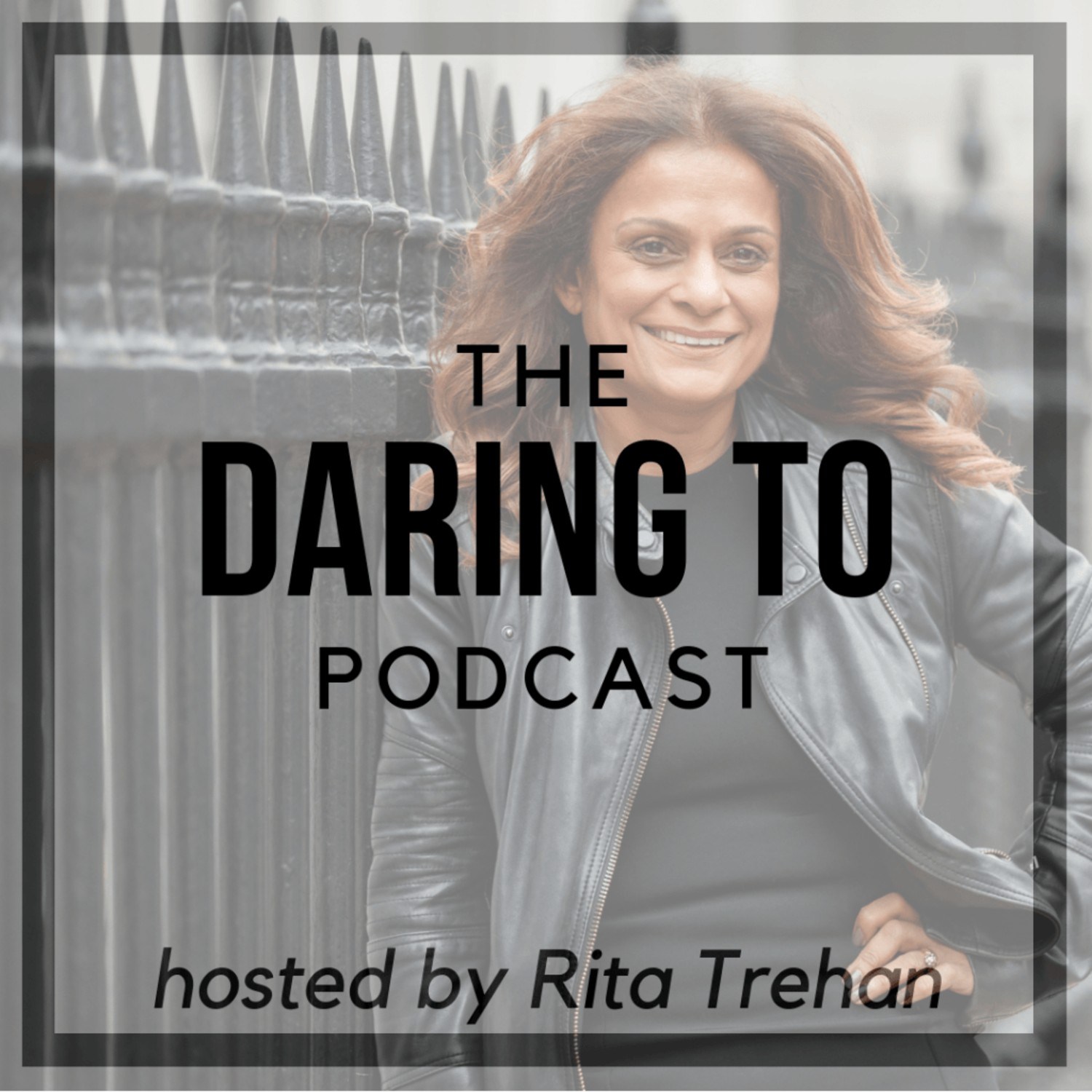
rita-trehanfeatureimage-1500x1500
Daring to
Entrepreneur and Author Bob Tinker
Loading
00:00 /
RSS Feed
Share
Link
Embed

Download file

Welcome to Daring To, a podcast that finds out how CEOs and entrepreneurs navigate today’s business world – the conventions they’re breaking, the challenges they’ve faced and the decisions that they’ve made, and lastly, just what makes them different.

Bob-Tinker-Survival-to-ThrivalBob Tinker is a 3-time entrepreneur. Most recently, Bob was founding CEO of mobile security company, MobileIron, from 2008 to 2016. He led MobileIron from 3 people and initial idea to over 12,000 enterprise customers and $150M of revenue, and an IPO in 2014. During the five-year period from 2009-2013 MobileIron was named the fastest growing technology company in the world and ranked #1 in Deloitte’s Fast 500 Index.

Inspired by the question, “What do you wish you could tell yourself 15 years ago as a newbie entrepreneur?”, Bob recently co-authored the book series, Survival to Thrival: The Enterprise Startup Guide. The book is #1 on Google search for “Enterprise Startup Book”. Bob’s 2nd book — Change or Be Changed — was just released in late 2019.

[Personal trivia: Bob grew up in the midwest, and lived in Silicon Valley for over 20 yrs. He collects Onomatopoeias from different languages, is obsessed with fruit trees, and has an oddly good muppet voice.]

Connect with Bob on LinkedIn and follow Survival to Thrival on LinkedIn.

Show Transcript

Intro: [00:00:02] Welcome to Daring To, a podcast that finds out how CEOs and entrepreneurs navigate today’s business world, the conventions they’re breaking, the challenges they faced, and the decisions that they’ve made. And lastly, just what makes them different?

Rita Tehran: [00:00:19] Well, hi, listeners, and welcome to Daring To. And today, joining me on the podcast, I’ve got really interesting guests, I can’t wait to get started talking to Bob Tinker. He is a serial entrepreneur, three-time entrepreneur, had one of the fastest growing technology companies in the world, believe it or not, which was ranked number one by Deloitte in their Fast 500 index. It was a company that was focused on mobile security called MobileIron.

Rita Tehran: [00:00:45] That was the last of one of his ventures, which eventually was IPO, which started with like three people. Can you imagine, three people? And then, it became $150 million company revenue, right? So, I mean, that’s pretty amazing. But that’s not just the first venture that he’s had. He’s been very successful as an entrepreneur. So, we’re going to have lots of questions. He’s had written two books, both of which I have found riveting. One is called Survival to Thrival, and the other is Change or Be Changed. Now, Bob, welcome to the podcast.

Bob Tinker: [00:01:20] Thank you, Rita. Great to be here.

Rita Tehran: [00:01:22] So, listen, let’s dive into it, right? Because I did read-

Bob Tinker: [00:01:26] Yes.

Rita Tehran: [00:01:26] … the book, Changed or Be Changed. And I’m like, “Here’s a guy that is like a serial entrepreneur, a successful entrepreneur, but he describes the entrepreneurial journey in a really interesting way.” You talked about aging the soul that it’s like it can be lonely; that when you first start out, the first thing that you’re really focusing on is making sure that you don’t die as a business. But yet, within that, you also conjure up this amazing view of what it feels like when you grow a company to success and talk about just the amount of self-awareness and personal growth that you get as an entrepreneur.

Rita Tehran: [00:02:13] And that while the journey might be hard, it sounds absolutely exhilarating. So, I kind of juxtaposed all of those emotions and feelings and go, “Wow!” Tell me what it’s like that made you … I mean, it’s probably why you decided to write the book, right? But did you start out as a young kid going, “I’m going to be an entrepreneur. That’s what I’m going to be. I can tell that. Even I think it’s gonna be painful, I’m going to do it anyway.” How did you start?

Bob Tinker: [00:02:44] I love that you used the word juxtaposition because that’s exactly what it’s like to sort of try and get a company off the ground, and build it, and the highs and lows, things that go great, things that go terrible. I would even go as far as to say that sometimes, it feels actually a little more schizophrenic than that. It really does feel very split personality. And in many ways, like starting a company is kind of irrational.

Rita Tehran: [00:03:14] Tell me more. How could it be irrational? All these entrepreneurs that are listening right now going like, “You think? Bob is telling me I’m going to be irrational.”

Bob Tinker: [00:03:22] Usually, what happens is you’ve got a good job somewhere, you’ve been successful, and you’re like, “I’m going to quit that, go start a company that most likely will fail, and I’m going to work my tail off, and it’s going to be awesome and miserable at the same time.” It is kind of an irrational thing to go do. But when you have an idea or just believe that something needs to exist, and you want to go try and build it, you just got to take the leap and go do it.

Bob Tinker: [00:03:58] When Ajay and Suresh, my two co-founders of MobileIron, approached me to join them as CEO in 2007, I was at Cisco. My last company had been bought by Cisco. And I had a great job there, actually. But when I saw the idea that Suresh and Ajay were working on, I had this, “Oh, crap. I got to go do that,” reaction. And I left, vested stock on the table. My Midwestern father executive thought I was crazy leaving. But sometimes, you just gotta go do it. And it’s an irrational act in some ways, but like many great things in life, they often start with somewhat of an irrational act.

Rita Tehran: [00:04:46] What were you most scared about? I mean, obviously, you like leaving all the stock options and the security. So, moving into that role as CEO in a startup is different to being part of a big enterprise organization like Cisco. What was the thing that you’d say, “That kept me up at night”? If there was one thing that was really, “Yeah,” and then you’re like, “Oh, crap,” what was it?

Bob Tinker: [00:05:09] Yeah, the thing I was most scared, I was to rewind back to 2007 when I was jumping into the chair with Suresh and Ajay. The I was most scared of is failing as a first time CEO, failing Ajay and Suresh as my co-founders if I were not to be a good first-time CEO. I’d never been a CEO before. It’s sort of a big job, and it was a big compliment that they’re willing to bring me on board, but I was scared that my biggest fear was actually don’t do a good job as first-time CEO and actually screw up a perfectly good startup opportunity for these guys.

Bob Tinker: [00:05:47] And I actually spent some time trying to figure out how to answer that question. So, I’m actually not sure I’ve ever told this story before, but I’m like probably 40 or something like that. And-

Rita Tehran: [00:06:05] Young. I like that, young.

Bob Tinker: [00:06:07] Yeah, yeah.

Rita Tehran: [00:06:08] Yeah.

Bob Tinker: [00:06:08] I think, it depends on your point of view. Okay.

Rita Tehran: [00:06:09] It’s definitely young in my books.

Bob Tinker: [00:06:13] So, at 40, I’ve been an executive, never been a CEO. And I wanted to figure out, like, if I thought I could do a good job at this and not screw it up. And so, one of the questions I asked myself was, would I be able to actually hire people – more experienced, smarter, better at their jobs than I was? Because I couldn’t. Like then, I actually wouldn’t be a very good CEO, and I would actually be a roadblock for the team. So-

Rita Tehran: [00:06:47] Is that hard though, Bob? Isn’t that hard though, Bob? Don’t you think that people find that hard? As much as they want to, maybe that’s one of the things that leaders find difficult to be in that position where you actually trying to hire and have talent that is better than you, potentially? Do you think CEOs generally find that hard?

Bob Tinker: [00:07:08] Oh, yeah. And look, it’s actually one of the key criteria of the job, right? Because in the beginning, it’s just sort of you and a small team. But eventually, the job shifts to be more like you sort of do the analogy of like superhero analogy. The first CEO job is kind of like Captain America was put in the woods or Wonder Woman was put into the woods. It’s like you in a small team like back in a tree getting punched and getting dirty. But then, the CEO job turns into more like Captain America, The Avengers, where it’s like you and a band of superheroes. And you have to be able to hire grade A superheros who all have better superpowers than you. You need a marketing superhero, product superhero, engineering superhero, a finance superhero. And they better be better at their jobs than you are. Otherwise, you’re not hiring the right person.

Bob Tinker: [00:07:57] So, I think one of the most important criteria for an early and mid-stage CEO is, can they hire people better than them? And candidly, I was worried that I wasn’t far enough along my career that I’d be able to do that. So, I called one of my old colleagues. So, my previous company, he was one of my peer executives. He’s the CFO, and I was the VP of Business Development. His name is Jim Buckley. I called Jim, and I said, “Hey, Jim.” We didn’t talk in like a year. “I have an important question for you. And please be honest because it affects other people.”

Bob Tinker: [00:08:36] And the question was, “Here’s what I’m thinking about doing. I’m worried about not being able to hire strong executives at this point in my career. If I were to go do this, Jim, like, would you ever come work for me someday?” And Jim’s a super seasoned and super senior CFO. And Jim was like, “Yeah, I would.” I was like,”Seriously, Jim. Please tell me because, look, there are people whose careers are on the line here.” He said, “No, yeah. I would.” So, that was one of the ways I went, at least, to try and figure out whether I thought I could hire people with more experience than [inaudible].

Rita Tehran: [00:09:11] It’s a great litmus test, right? Because if people are willing-

Bob Tinker: [00:09:13] Yeah.

Rita Tehran: [00:09:13] … to follow you, then that says, “Hey, look, you’ve got something that they want to be part of,” or “You’ve got some type booty’s that they really believe in,” and all those and more, right? So, that’s a great fellowship litmus test for leaders to ask. It’s a great question to go and actually solicit. It’s asking-

Bob Tinker: [00:09:34] Here’s the fun anecdote there is that six months later, Jim joined as our consulting CFO, and then actually became our full-time CFO. And he and I worked together to build the company from zero to a hundred million.

Rita Tehran: [00:09:48] He made a good decision. There’s a CFO that read that right. And look, it’s interesting as you talk about it. I mean, in Changed or Be Changed. I love that phrase. I use it myself. And it’s the fact that you actually bring to reality what happens with startups, right? That’s sort of when you start out as the three-person company, maybe a two-person company, to then suddenly growing. And with that growth, not only is it company growth that happens, but there’s also growth within the company itself, right, whether it’s the company culture, whether it’s the people, whether it’s-.

Bob Tinker: [00:10:28] Exactly.

Rita Tehran: [00:10:28] … the CEO role. And so, tell us about that because I think that there are some really interesting … I kind of likened it to it’s a plant that’s starting to grow, and you start like, “Look at what I can do. I can grow all these great leaves. And now, I’m growing all these flowers and just flourishing.” But actually, you need a lot around it as well as it grows because things change. So, when do you think the first sort of aha moment comes in for a new CEO where they go, “Actually, it’s not the same as it was when I first took this on. I need to think differently. I need to be different”? And from your own experience, when’s that first sort of, I don’t know, transition if you like?

Bob Tinker: [00:11:13] The first time that hits is at about 50 people in my experience. And the book, Changed or Be Changed, like many things, sort of the inspiration for that was born from a frustration like many things. And what frustrated me, having been a first-time CEO and being in the fortunate position to be part of a company that we grew from zero to a thousand people, is that I don’t feel like I was very well prepared for how the CEO job was going to change as the company changed, right? As we grew from zero to 50, 50 to 150, 150 to 450, 450 to a thousand, the company changed. And as a result, my job as CEO changed. It’s not like I woke up one day with a different title or anything. It’s like I’m still a CEO, but my job’s different. And I didn’t feel like anybody kinda sat me down and said, “Hey, Bob, as your job changes…” I’m sorry, “As your company changes, your job changes. So, therefore, you have to change.” And-

Rita Tehran: [00:12:26] And why would you, right? You are successful. What you were doing was bringing success. Why would you need to change?

Bob Tinker: [00:12:32] Exactly. That’s the irony of it is that what I discovered the hard way is that the very things that actually helped make me successful in sort of the first CEO stage become the very things that sort of hold me back, get my way, and screw things up at the next. And so, to answer your question, like what made me start to realize, “Uh-oh, this is not working,” was I started to fail at things, things stopped working that used to work. Like, it’s kind of weird when all the sudden, you’re like the things that used to work suddenly stopped working. And it’s kind of maddening, actually.

Rita Tehran: [00:13:13] And you go like, “It must be somebody else. It can’t be me, can it? Because, like, look, I started the company. I got it going. So, what else is going on in this environment that is causing this?”

Bob Tinker: [00:13:23] Yes. Sometimes, that’s the reaction, “Okay. Maybe it’s the environment.” I think, one of the more important characteristics of a CEO that is particularly a first timer is a little bit of self-awareness because when something’s not going right, it’s sort of like a parent. Like if your kids are acting out,  you can blame it on the kids or, often, you got to kind of look in the mirror and be like, “What am I doing that’s contributing to the situation?” It gets kind of the same thing when you’re a CEO. Something’s not going right with the company. Sometimes, it’s the situation or the team of the company. Sometimes, it’s you. So, you got to look in the mirror and be like, “What am I doing to contribute to this situation?”

Bob Tinker: [00:14:01] And I’ll give you a really specific example. So, when MobileIron got to about 50 people, two things changed that, suddenly, what used to work stopped working. So, the first thing was when we grew from like 45 to 55 people, I felt like we got worse. You think when you add people, you get better, but there’s this weird organizational break point where like 50 people, the human brain loses its ability to track one-to-one connections. And all of a sudden, what used to work sort of organically just started failing. Like, I remember my customer success team and my QA team, it used to organically be able to stay in touch on customer issues. Now, we’re like dropping balls between.

Bob Tinker: [00:14:48] I’m like, “What happened? We actually hired more people. We should be getting better.” The irony was, as we got bigger, like the way we used to behave, and that applied to the team, it also applied to me that that was about when … like, look, and like a lot of founding CEOs in tech, like I was sort of a product customer person. Like I like spending time on product and customers. And I was good at it. And that was what was important in the very beginning of the company is you work with few people because you’re just trying to survive. You’re just trying to find some customers and sort of prove that you have a business that’s worth getting more capital.

Bob Tinker: [00:15:26] But then, once we started winning some early customers and started to grow that I kept spending my time on product and customer stuff, which is fine. But my team – and I give them huge credit for this – basically sat me down and was like, “Hey, Bob, we are not getting from you what we need. Like, we need you to be the CEO of the whole company, not just product stuff and customer stuff.” And that was kind of a wake-up call for me, right that the things that I was gravitating towards because that’s what the company needed and I was good at, I had to change my behavior to be the CEO of the whole company. Like, “What are we doing on go-to market? What are you doing on team? What are we doing on finance?” Like, I needed to be thinking across all the different swim lanes of the business, not just spending time in sort of my comfort zone that I had gotten good at over the last year and a half as we were sort of getting the company off the ground.

Rita Tehran: [00:16:22] So, let me just ask about that. That’s quite brave of your organization to actually confront you with that. There are often sort of-

Bob Tinker: [00:16:30] Yes, it was.

Rita Tehran: [00:16:30] …  situations that you wouldn’t find that, even in a small startup, even if they’ve known you for a long time. What do you think it was that-

Bob Tinker: [00:16:40] What enabled that?

Rita Tehran: [00:16:41] Yeah. What was your secret sauce that enabled people to sort of like stare you in the face and go, “Hey, take a look in the mirror. You might not like what you see, but you need to hear this”? What do you think it was?

Bob Tinker: [00:16:56] So, there are two things. One was culture that in the very beginning of getting MobileIron off the ground, we sat down as a team, which is actually the three core founders. The second meeting we had as a team was what type of culture do we want to have as a company? And one of the things that was important to us was a concept we called intellectual honesty, which is, “Hey, celebrate the good, but it’s okay to talk about the bad.” And we had sort of built that into the culture where it’s OK to sort of, you know, put a stinker on the table and say this isn’t working or something’s broken. This is not going well and it’s okay to do that. So, I think, culturally, the team was wired, and we had made it safe to sort of talk about the bad stuff.

Bob Tinker: [00:17:51] The second thing that enabled that conversation and that feedback from the team to me was that I regularly asked my team for feedback on me. I’d be like, “Hey, do you have any feedback for me? What can I be doing better than I’m not doing?” And at first, they’re like, “Yeah, yeah, yeah, whatever. We’re not going to really tell you what we really think.”

Rita Tehran: [00:18:16] They said, “We love you, Bob.”

Bob Tinker: [00:18:16] But, eventually, if you sort of keep asking the question, and they give you feedback, the key is how you react as a CEO and leader, like if you get defensive or trying to…


BRX Pro Tip:Using Signage in Your Studio

May 18, 2020 by angishields

Franchise Bible Coach Radio: Sean Manning with Payroll Vault Franchising

May 18, 2020 by angishields

Payroll-Vault
Denver Business Radio
Franchise Bible Coach Radio: Sean Manning with Payroll Vault Franchising
Loading
00:00 /
RSS Feed
Share
Link
Embed

Download file

Sean-Manning-Payroll-VaultAs CEO of Payroll Vault Franchising, LLC— a nationally based payroll service business—Sean Manning works with entrepreneurs to help them successfully leverage the incredible opportunity offered by the payroll industry.

Payroll Vault has re-defined payroll—offering a sound, efficient model that provides clients with outstanding service and support while also offering a lucrative, scalable franchise opportunity for entrepreneurs looking to launch a highly profitable payroll business. Outsourced payroll services continue to prove a must-have for business owners who are too busy running their businesses to keep up with the complexities of payroll.

In addition to leading Payroll Vault, Sean is a nationally recognized speaker and the author of Six Steps to Small Business Success. He’s also published numerous industry articles and whitepapers. Sean provides consulting and coaching through Manning Business Solutions to help entrepreneurs grow their businesses.

Connect with Sean on LinkedIn and follow Payroll Vault on LinkedIn, Facebook and Twitter.

About the Show

The Franchise Bible Coach Radio Podcast with Rick and Rob features no-nonsense franchise industry best practices and proprietary strategies that franchisors and FranchiseBibleCoachRadioTilefranchise owners can implement to improve their profitability and operational efficiencies.

Our show guests are franchise superstars and everyday heroes that share their tips for growth and strategies to survive and thrive during the current challenges.

About Your Hosts

Rick-GrossmanRick Grossman has been involved in the franchise industry since 1994. He franchised his first company and grew it to 49 locations in 19 states during the mid to late 1990s. He served as the Chief Executive Officer and primary trainer focusing on franchise owner relations and creating tools and technologies to increase franchisee success.

Rick developed and launched his second franchise organization in 2003. He led this company as the CEO and CMO growing to over 150 locations in less than three years. He developed the high tech/high touch franchise recruiting and sales system.

Both companies achieved ranking on Entrepreneur Magazine’s Franchise 500 List. During this period Rick served as a business and marketing consultant to small business and multimillion dollar enterprises. He also consulted with franchise owners and prospective franchisees, franchisors, and companies seeking to franchise.

Rick had the honor of working with his mentor, Erwin Keup as a contributing Author for the 7th edition of Entrepreneur Magazine’s Franchise Bible published by Entrepreneur Press.

Mr. Grossmann has been chosen as the new Author of Franchise Bible and his 8th Edition was released worldwide in January of 2017. He currently serves as an executive coach and strategist for multiple franchise clients.

Follow Franchise Bible Coach on Facebook.

RobGandleyHeadShot250x250Rob Gandley has served as SeoSamba’s Vice President and Strategic Partner since 2015.

With 25 years of experience in entrepreneurship, digital marketing, sales, and technology, he continues to focus on leading the expansion of SeoSamba’s product and service capabilities and US market penetration. SeoSamba specializes in centralized marketing technology built for multi-location business models and continues to win industry awards and grow consistently year over year.

Concurrent with his work at SeoSamba, Gandley is a strategic growth consultant and CEO of FranchiseNow, a digital marketing and sales consulting firm.  Gandley consults digital businesses, entrepreneurs, coaches and multi-location businesses across diverse industries.  Prior to SeoSamba, he built an Internet Marketing business and platform responsible for generating over 100,000 qualified franchise development leads used by more than 400 US-based franchise brands for rapid business expansion.

Gandley also held various senior sales and management positions with IT and Internet pioneers like PSINet, AT&T, and SunGard Data Systems from (1993-2005) where he set sales records for sales and revenue growth at each company.  He graduated from Pennsylvania State University’s Smeal Business School in 92’ with a BS degree in Finance and emphasis on Marketing.

Connect with Rob on LinkedIn.

Andy Tran with Lush Nail Bar

May 17, 2020 by angishields

Lush-Nail-Bar-Logo
Atlanta Business Radio
Andy Tran with Lush Nail Bar
Loading
00:00 /
RSS Feed
Share
Link
Embed

Download file

Onpay-blue

Brought to you by OnPay. Built in Atlanta, OnPay is the top-rated payroll and HR software anywhere. Get one month free at OnPay.com.

Andy-Tran-Lush-Nail-BarAndy Tran is CEO of Lush Nail Bar, Atlantic Station’s premier luxury nail salon that boasts over 300 polish choices from reputable brands such as OPI and Essie.

Their advanced nail technicians are highly trained in services such as manicures, pedicures, gel nails, acrylics and special paints such as holographic, chrome, and glow nails.

Follow Lush Nail Bar on Facebook, Twitter and Instagram.

About Our Sponsor

OnPay’sOnPay-Dots payroll services and HR software give you more time to focus on what’s most important. Rated “Excellent” by PC Magazine, we make it easy to pay employees fast, we automate all payroll taxes, and we even keep all your HR and benefits organized and compliant.

Our award-winning customer service includes an accuracy guarantee, deep integrations with popular accounting software, and we’ll even enter all your employee information for you — whether you have five employees or 500. Take a closer look to see all the ways we can save you time and money in the back office.

Follow OnPay on LinkedIn, Facebook and Twitter.

Tagged With: and friendly, luxurious, Sanitary

Joseph J. Busch, Jr. with The Busch Center

May 16, 2020 by angishields

Busch-Center
Atlanta Business Radio
Joseph J. Busch, Jr. with The Busch Center
Loading
00:00 /
RSS Feed
Share
Link
Embed

Download file

Onpay-blue

Brought to you by OnPay. Built in Atlanta, OnPay is the top-rated payroll and HR software anywhere. Get one month free at OnPay.com.

dr-joseph-buschJoseph J. Busch, Jr. has read more than 15,000 mpMRI scans and performed and more than 1,700 MRI in-bore targeted biopsies over the last 11 years.

Dr. Busch brings a culmination of 40+ years in Diagnostic Radiology and hundreds of international research studies to Busch Center in Alpharetta, Georgia. His approach focuses on preventative screening, accurate diagnosis with personalized care.

Dr. Busch began using mpMRI in 2010. He was trained by the world’s leading experts, including Professors Jelle Barentsz and Jurgen Futterer, on how to perform targeted biopsy of the prostate using mpMRI. Dr. Busch now works alongside Professors Jelle Barentsz and Jurgen Futterer on prostate cancer and treatment.

Dr. Busch also collaborates with Professor Anwar Padhani, the world’s leading authority on Whole Body Imaging, studying and learning Whole Body MRI techniques for diagnosis and response to therapy. Dr. Busch is interpreting PSMA and F18 Axumin PET/CT scans for recurrent prostate cancer in post-treatment men.

Dr. Busch is also part of the European and USA prostate working groups. He has lectured and taught mpMRI at RSNA, Johns Hopkins, and Scottsdale, Arizona, and is a member of the ESUR, International Cancer Imaging Society and RSNA.

Follow Busch Center on LinkedIn.

What You’ll Learn in This Episode

  • How Dr. Busch got started in Radiology
  • What drew him to open his business
  • About the Busch Center

About Our Sponsor

OnPayOnPay-Dots is a fast-growing software company that offers small businesses and accountants the best payroll in the cloud backed up by a team of helpful, friendly experts. And as a payroll service provider with more than 30 years of experience, we know how to get it right.

Whether business owners have three employees or 1,000, OnPay makes payroll fast and easy. We also serve nonprofits, restaurants, religious organizations, and ag businesses without skipping a beat.

Follow OnPay on LinkedIn, Facebook and Twitter.

Tagged With: prostate cancer, prostate cancer treatment Atlanta, prostate treatment

TMB E37: Mary Foote PipelineAZ, COVID-19 impact

May 15, 2020 by angishields

Tucson Business Radio
TMB E37: Mary Foote PipelineAZ, COVID-19 impact
Loading
00:00 /
RSS Feed
Share
Link
Embed

Download file

Mary Foote, Director/
Partnership for Economic Innovation and Pipeline AZ
1475 N Scottsdale Road,
Scottsdale, AZ
480.205.1568
mfoote@pipelineaz.com
www.c19az.com
SOCIAL MEDIA: Facebook | Instagram | LinkedIn | Twitter |

Mary Foote serves as Director for the Partnership for Economic Innovation, the parent organization of Pipeline AZ. She has been in economic development for more than ten years, focusing on tax incentives, business attraction and retention, innovation ecosystems, and workforce development. Mary is actively involved in her community through board participation and volunteering. She also oversees Valley Leadership’s Jobs and Economy initiatives. She lives in Phoenix and is currently quarantining with her pitbull-mix, Hayden.

About Pipeline AZ

The mission of Pipeline AZ is to connect job seekers with rewarding careers, helping them connect the dots through career exploration, training programs, internships, and apprenticeships made possible through collaboration between Arizona industries and educators.

Right now, Pipeline AZ is working to help alleviate the impact of COVID-19 by aggregating realtime immediate job openings and offering pathways to future careers for all out-of-work Arizona’s, connecting those affected by the crisis with industries in need.

Partnership for Economic Innovation (PEI)

We believe innovation’s next challenge isn’t exponential growth, it’s exponential impact. That’s PEI is investing in community-building technology and R&D designed to make Greater Phoenix more resilient and empower individuals to take agency over change.

Our mission is to transform Greater Phoenix into a top global market for innovation, fueled by world-class research centers, advanced industries, and creative entrepreneurs.

Read more about Our Mission During Crisis | #C19AZ.

Forty-Niner Golf & CC – Tucson’s Hidden Jewel

Tagged With: Mary Foote PipelineAZ, Tucson Means Business

ATDC Radio: Take 5 – Omni Legal, Moonlight Therapeutics, Agency Spotter, Versusen, & Oncolens

May 15, 2020 by angishields

About Your Host

Jane McCracken returns to ATDC as a Startup Catalyst, having started her career here many years ago. She then moved into venture capital and investment banking both in the United States and Europe before joining an early-stage, medical diagnostics company as chief financial officer.  During her time there, she raised $60 million and completed eight international acquisitions. The company was listed on both the London and Oslo stock exchanges.

Jane then worked with two venture-backed companies.  She joined the founders of an online travel company as CEO, and took it from startup to the world’s second-largest hotel booking site before Travelocity acquired it. At the request of her venture investors, Jane then joined a computer games developer as CEO and turned around the faltering enterprise before it was sold to a NASDAQ-listed games company.

Most recently, Jane was CEO of an oncology-focused clinical research company, which grew from startup to a multinational firm with $15 million in annual revenue and offices across Europe and the United States.  The company was financed through its own cash flow and was sold in early 2012 to a larger clinical research organization.

Jane continues to work with fast growing companies — in interim and full-time positions — as a consultant, board member, and angel investor. In addition, Jane has served on boards for public and private companies, as well as government-related and non-profit organizations. She is a frequent speaker and panelist at conferences, companies, and universities and is an active volunteer in her community. Jane obtained her bachelor’s degree from Wake Forest University and her master’s degree at the Georgia Institute of Technology.

Connect with Jane on LinkedIn.

GWBC Radio: Jan Levie with Handy Entertainment

May 15, 2020 by angishields

GWBC Radio
GWBC Radio
GWBC Radio: Jan Levie with Handy Entertainment
Loading
00:00 /
RSS Feed
Share
Link
Embed

Download file

Logo-Handy-Entertainment

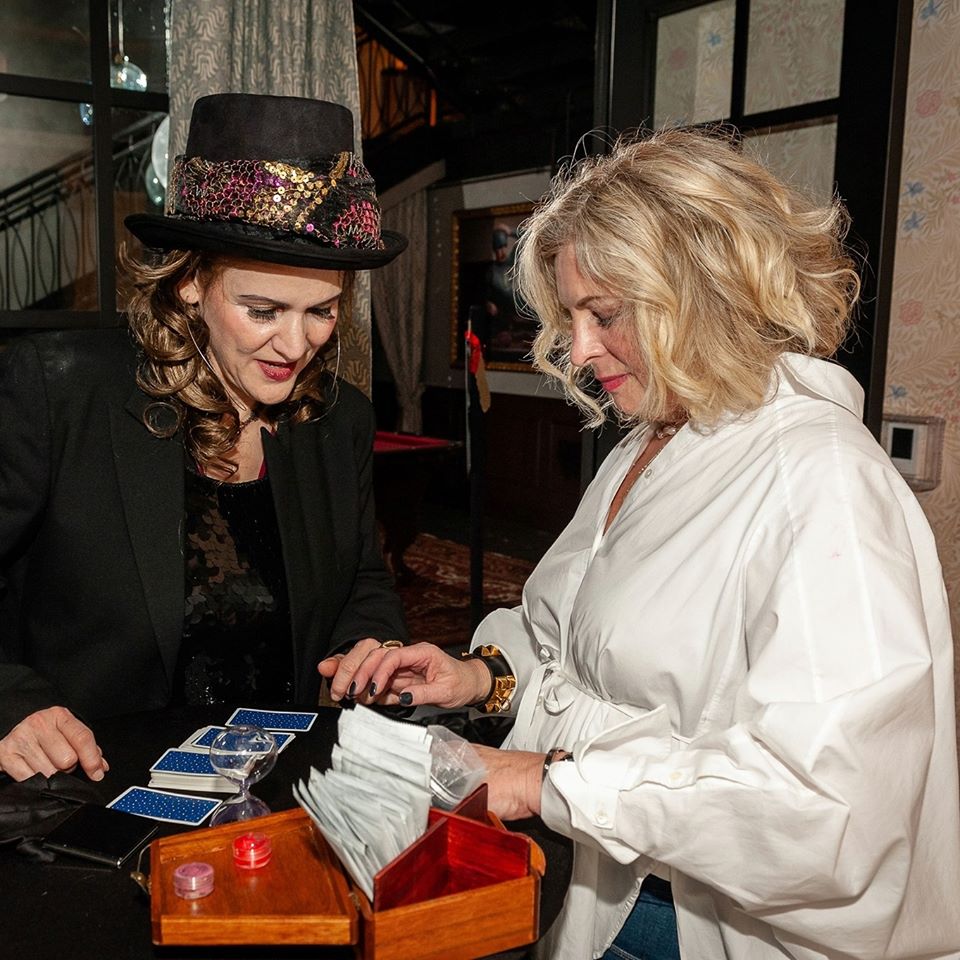
Jan-LevieJan Levie is the CEO and Creative Director of Handy Entertainment, your go-to for exciting event entertainment. Handy Entertainment creates hi-touch, customized activations for social, corporate and promotional events. We are currently offering Virtual Sessions of Tarot, Palm Reading, Handwriting Analysis, and Lip Readings.

Clients include Cirque du Soleil, Emory University School of Medicine, Atlanta Botanical Garden, the Hay House Museum, Macy’s, and a multitude of marketing, advertising, media, transportation, and technology companies.

Jan earned her B.A. from Indiana University in Theater and Journalism. She has worked professionally in stage, film, television, voiceover, industrials, as a print journalist, and translator. Jan has worked with corporate, legal, educational institutions, and government entities, both in the U.S. and internationally.
An educator at heart, Jan has taught French, German, English, Hebrew, Literacy, and Theater to students of all ages and nationalities.

Jan currently serves on the Marketing Committee of the Greater Women’s Business Council, and is a member of the Atlanta Convention and Visitors Bureau, the Out Georgia Business Alliance, and the Georgia Production Partnership. Jan speaks to professional, civic, and special interest groups on a variety of topics ranging from events and the entertainment industry, non-verbal communications, building your non-profit’s membership and reach, to Networking for the Socially Challenged. She is a regular guest lecturer at Georgia State University’s School of Hospitality.

Jan and Handy Entertainment have been collaborating with the Bobby Dodd Institute since the beginning of March 2019 to create more opportunities and positions for people with physical, mental, and intellectual disabilities in the live events industry.

Jan lives with her husband and family in Atlanta, and was used to spending her free time in traffic.

Connect with Jan on LinkedIn and follow Handy Entertainment on Facebook and Twitter.

Show Transcript

Intro: [00:00:04] Broadcasting live from the Business RadioX studios in Atlanta, Georgia, it’s time for GWBC Radio’s Open for Business. Now, here’s your host.

Lee Kantor: [00:00:18] Lee Kantor here. Another episode of GWBC Radio’s Open for Business. And this is gonna be a fun one. I’ve got with me today. Jan Levie. And she is with Handy Entertainment. Welcome, Jan.

Jan Levie: [00:00:30] Well, thank you, Lee. It’s really great to be here with you.

Lee Kantor: [00:00:33] Well, before we get too far into things, tell us about Handy Entertainment. How are you serving folks?

Jan Levie: [00:00:39] What we do normally before this is we create event entertainment that is unique to the corporate or social circumstances, and we bring people together.

Lee Kantor: [00:00:52] So, you create events customized to whatever the needs of your clients or do you have kind of standard events that you do that your customer chooses?

Jan Levie: [00:01:01] We customize what we offer for each event depending on its needs. If they want to reach out to more prospects or clients, just increase their revenue, get their message out, or actually bring people together to speak with each other to learn more about each other. And it’s the entertainment that we used to do that.

Lee Kantor: [00:01:24] Now, how did you get into this line of work?

Jan Levie: [00:01:28] Well, apparently, what happened is a journalism and theater background collided. And this is what came out of it.

Lee Kantor: [00:01:38] Now, what was your first event you did?

Jan Levie: [00:01:43] The first event I did, apparently, was throwing off some people who were trying to cajole a friend of mine in Paris and me into joining, and our French wasn’t that good. And I said to them, “Here, let me give you a palm reading.”

Lee Kantor: [00:02:04] So, you start-

Jan Levie: [00:02:04] And-

Lee Kantor: [00:02:04] So, it was through palm reading was your first foray in this?

Jan Levie: [00:02:10] It was. And it was because of my French.

Lee Kantor: [00:02:13] Did you know how to palm read?

Jan Levie: [00:02:14] Not really, not really. So, that’s what was so strange about it. And they were shocked not at what I told them but, apparently, that it was really, really resonating with them, and they left us alone. And I didn’t even remember the story until I heard it from this friend last week.

Lee Kantor: [00:02:38] That’s funny. Now, for your business, historically, I’m sure it’s been a lot of in-person, face-to-face. And now, you, as well as a lot of other businesses, have had to kind of reconfigure your business. How have you adapted during this COVID-19 pandemic?

Jan Levie: [00:02:58] Well, what we’re doing right now is moving our entertainment to virtual sessions for the time being. That means that our fabulous handy beverage or anything you wanted to be squirt with 93 three-ounce test chips is a no go. We can’t use any of those high-touch items that we’ve created over the years – the lip cards for lip readings. And so, we’re creating individual and group handwriting analysis, lip print readings, coffee cup readings, tarot readings, palm and more. And one of the exciting things that’s going on right now is that some large caterers in Atlanta have been reaching out to us and asking if they can attach our menu to their menu, so that they’re not only delivering food for big events, big celebrations around town, but they’re also giving people a way to truly interact.

Lee Kantor: [00:03:55] So, you’re forming partnerships with people that historically you hadn’t been partnering with?

Jan Levie: [00:04:03] I would say that we have worked with them in the past, we just haven’t worked with them in this format. We do get hired by caterers, and event planners, and venues all the time, but they’re looking at ways of pivoting, and we’re looking at ways of pivoting, and this is working out for both sides, I think.

Lee Kantor: [00:04:25] Now, is there any advice you would give other business owners on ways to kind of creatively pivot while still staying in your lane, but you’re still kind of expanding your offering?

Jan Levie: [00:04:38] What I would look at if I were a small business who has operated in one specific area in one specific way over time is to sit down or stand up and write the things that are most important to you, write down the things that are most important to your clients, how you’ve served them, and do a mind map of sorts where you look at different ways to recreate those things that are meaningful to you and to your clients.

Lee Kantor: [00:05:11] And did you have kind of a support to help you do this, or are you doing this by yourself to your partners or advisors?

Jan Levie: [00:05:21] I do have advisors. I do have people that we work with. I have a trusted circle. And what I’ve done, on one hand, is reach out to people, and I’ve created surveys to see what they’re interested in, and trying to really find a way that we can get the people that we’ve worked with over time back on board and involved. And that’s really what’s so chilling about this time is that it’s not that simple. First of all, you’ve got the limited touch capabilities. How are you going to reach someone? How much time do they have? And how can you get all those pieces together for the same time? And that’s what a lot of our planner friends are experiencing, and venues, and caterers in terms of rescheduling or postponing events. There’s nobody who knows what’s coming.

Lee Kantor: [00:06:20] Now, do you have kind of an ideal client? Is there an industry that you serve a lot? Or can anybody hire you or does anybody hire you?

Jan Levie: [00:06:31] We have worked historically with a lot of social events, and we have begun working over the last four years with lots of corporate. And corporate is something that I personally believe is going to come back faster and larger than social because, basically, they have the option of putting things in place, so that they can follow recommendations and provide the resources that, then, people need in order to successfully execute.

Lee Kantor: [00:07:09] Now, let’s talk a little bit about your relationship with GWBC. How have they helped you through this pandemic because they’ve been available for support in terms of education, networking? How have you leverage that group?

Jan Levie: [00:07:27] Well, GWBC has been an incredible boon. I am so grateful for the fact that, initially, before people were even aware of what was going on, and what was happening, what was coming down, and what to expect, they reached out. There were phone calls made, and I believe to all members, seeing what they needed. They fed an incredible resource in terms of education, in terms of networking, in terms of connecting. They’ve gone to extraordinary lengths to include everybody and to make sure that people have the tools that they need as soon as they come up. For example, I believe, Friday evening, they sent out information about another PPP loan server that was available and still had funds, things like that. Last minute up-to-date information that we can rely on. I’m very thankful.

Lee Kantor: [00:08:25] Now, if you were to kind of encourage a woman business owner to get involved with GWBC, how would you kind of make them aware of the organization and maybe share some tips that you use to leverage it?

Jan Levie: [00:08:43] In terms of getting a third-party certification as a woman-owned small business, I personally believe that GWBC, as a part of the greater women’s … I’m sorry, the Women’s Business Enterprise National Council is uniquely positioned to really help women take their businesses to a national and international level. The breadth and the depth of the contacts, the conferences, the networking opportunities, the ability to really engage top executives in all different markets and bring them together is extraordinary. I’m privileged right now to serve on the marketing committee for the Greater Women’s Business Council, and I get the acronyms mixed up sometimes. And the people I’m working with are amazing. I’m really, really … I’m shocked. I’m shocked at how great they are at what they do. And I’m really happy, really honored to work with them.

Lee Kantor: [00:09:49] Now, going through this crisis, have you learned anything about yourself? Has anything you’ve done surprised you in terms of kind of rising up to handle this crisis?

Jan Levie: [00:10:01] One of the things that I see happening, not just for me, but for people around me is that things come in cycles. And I think that resilience is something that is really an American trait and that we have an abundance of resilience. For me, I go through moments where I think, “Oh, my gosh, I’m starting all over again.” And then I think, “Well, okay, that’s that’s an opportunity.” And it’s that grounded optimism, I think, that for me has been essential and that I see reflected by so many of my really valued, trusted colleagues.

Jan Levie: [00:10:49] And we’ve reached out to each other, whether we’re women-owned businesses, whether we’re minority businesses, whether we’re just colleagues or friends. And people are really supporting each other in all different ways, sharing information about government forms, about timelines, about regulations, about business opportunities. It’s just it’s been a great coming together that I wouldn’t have ever expected in this mass and as quickly as it’s happened.

Lee Kantor: [00:11:22] So, now, through this pandemic, have you developed any superpowers you want to share?

Jan Levie: [00:11:29] Well, this is really not on point, but I’m not a gardener, and I finally found myself ripping ivy out by the roots, tons of ivy. And I was sort of shocked that I was out there weeding. And I realized that when my daughter asked me, “Why are you doing this?” I said, “Well, it’s it’s really finite. And I can see my progress. I can see what I’m doing, and where it begins, and where it ends, at least, until the next rain.”

Jan Levie: [00:12:03] And the other superpower I have is being able to reach out to people. And that’s what I did a lot of at the very beginning. I called friends, and acquaintances, and community members who were elderly and sick, or alone, or caring for someone else. And just just doing that, for me, really gave me an incredible amount of strength. And really, it helped me just find some happiness in really scary moments.

Lee Kantor: [00:12:35] Now, what could we be doing to help you? Is there anything that you need in order to help you grow your business through this difficult time?

Jan Levie: [00:12:45] Which we are we talking about?

Lee Kantor: [00:12:48] Just the listeners.

Jan Levie: [00:12:51] Listeners. What I would love for people to do to the extent they’re able is to support small businesses, which most people are already doing by ordering food through them directly or finding a way to patronize your local businesses, if you can, safely to purchase things. For me, personally, I’m going to put some links in the landing page out this week, and I would love to help people find their happy spot with palm readings, and lip readings, and tarot readings, and handwriting analysis. That’s something that I would really love to do.

Lee Kantor: [00:13:37] Now, if somebody wanted to learn more, is there a website?

Jan Levie: [00:13:40] Yes, there is, www.handyentertainment.xyz.

Lee Kantor: [00:13:52] That’s handyentertainment.xyz.

Jan Levie: [00:13:57] Yes, and it’s a www in front of it because I transitioned from one platform to another recently.

Lee Kantor: [00:14:06] Now, do you think, is there a silver lining when we all get through this? Is there anything you’re gonna be able to take that you’re doing now during your pivot that you might still continue doing after the pandemic’s over with?

Jan Levie: [00:14:22] I am sure that there are so many things that not only I am doing but that other people are doing that will prove to be really great blessings, that they will show us ways to do things better and in a more meaningful way, and that it won’t be over in just one day, or one week, or one month. A lot of the changes are the kinds of changes that better creative destruction. If you look at how the world has changed over time, there are always going to be things that are successful and things that fade away. And the question is, how can we use this to learn things that really help bring people together even when they can’t be together?

Lee Kantor: [00:15:11] Well, Jan, thank you so much for sharing your story today.

Jan Levie: [00:15:15] Thank you so much, Lee, for having me. It’s been a real pleasure.

Lee Kantor: [00:15:18] All right. This is Lee Kantor. We will see you all next time on GWBC’s Open for Business.

About Your Host

Roz-Lewis-GWBCRoz Lewis is President & CEO – Greater Women’s Business Council (GWBC®), a regional partner organization of the Women’s Business Enterprise National Council (WBENC) and a member of the WBENC Board of Directors.

Previous career roles at Delta Air Lines included Flight Attendant, In-Flight Supervisor and Program Manager, Corporate Supplier Diversity.

During her career she has received numerous awards and accolades. Most notable: Atlanta Business Chronicle’s 2018 Diversity & Inclusion award; 2017 inducted into the WBE Hall of Fame by the American Institute of Diversity and Commerce and 2010 – Women Out Front Award from Georgia Tech University.

She has written and been featured in articles on GWBC® and supplier diversity for Forbes Magazine SE, Minority Business Enterprise, The Atlanta Tribune, WE- USA, Minorities and Women in Business magazines. Her quotes are published in The Girls Guide to Building a Million Dollar Business book by Susan Wilson Solovic and Guide Coaching by Ellen M. Dotts, Monique A. Honaman and Stacy L. Sollenberger. Recently, she appeared on Atlanta Business Chronicle’s BIZ on 11Alive, WXIA to talk about the importance of mentoring for women.

In 2010, Lewis was invited to the White House for Council on Women and Girls Entrepreneur Conference for the announcement of the Small Business Administration (SBA) new Women Owned Small Business Rule approved by Congress. In 2014, she was invited to the White House to participate in sessions on small business priorities and the Affordable Care Act.

Roz Lewis received her BS degree from Florida International University, Miami, FL and has the following training/certifications: Certified Purchasing Managers (CPM); Certified Professional in Supplier Diversity (CPSD), Institute for Supply Management (ISM)of Supplier Diversity and Procurement: Diversity Leadership Academy of Atlanta (DLAA), Negotiations, Supply Management Strategies and Analytical Purchasing.

Connect with Roz on LinkedIn.

About GWBC

The Greater Women’s Business Council (GWBC®) is at the forefront of redefining women business enterprises (WBEs). An increasing focus on supplier diversity means major corporations are viewing our WBEs as innovative, flexible and competitive solutions. The number of women-owned businesses is rising to reflect an increasingly diverse consumer base of women making a majority of buying decision for herself, her family and her business. GWBC-Logo

GWBC® has partnered with dozens of major companies who are committed to providing a sustainable foundation through our guiding principles to bring education, training and the standardization of national certification to women businesses in Georgia, North Carolina and South Carolina.

Dayton Business Radio: Valerie J Lewis Coleman with Pen of the Writer

May 15, 2020 by angishields

valerie-2
Dayton Business Radio
Dayton Business Radio: Valerie J Lewis Coleman with Pen of the Writer
Loading
00:00 /
RSS Feed
Share
Link
Embed

Download file

penofthewriterlogo-1

valerie-2Best-selling author and award-winning publisher, Valerie J. Lewis Coleman serves professional speakers and experts to magnify and monetize their message by publishing quality books. With over fifteen years of experience in the book business, she has published over 130 authors and helped thousands of writers navigate the challenges of self-publishing.

This expert divulges industry secrets on avoiding the top five mistakes made by 95% of new authors, pricing your book to sell and identifying shady publishers. Valerie hosts citywide book events, which have connected almost 700 authors to avid readers. Her dynamic presentation and knowledge of the business takes writers from pen to paper to published as they master self-publishing to make money!

Follow Pen of the Writer on LinkedIn, Facebook and Twitter.

  • « Previous Page
  • 1
  • …
  • 436
  • 437
  • 438
  • 439
  • 440
  • …
  • 1334
  • Next Page »

Business RadioX ® Network


Our Most Recent Episode

CONNECT WITH US

  • Email
  • Facebook
  • LinkedIn
  • Twitter
  • YouTube

Our Mission

We help local business leaders get the word out about the important work they’re doing to serve their market, their community, and their profession.

We support and celebrate business by sharing positive business stories that traditional media ignores. Some media leans left. Some media leans right. We lean business.

Sponsor a Show

Build Relationships and Grow Your Business. Click here for more details.

Partner With Us

Discover More Here

Terms and Conditions
Privacy Policy

Connect with us

Want to keep up with the latest in pro-business news across the network? Follow us on social media for the latest stories!
  • Email
  • Facebook
  • Google+
  • LinkedIn
  • Twitter
  • YouTube

Business RadioX® Headquarters
1000 Abernathy Rd. NE
Building 400, Suite L-10
Sandy Springs, GA 30328

© 2026 Business RadioX ® · Rainmaker Platform

BRXStudioCoversLA

Wait! Don’t Miss an Episode of LA Business Radio

BRXStudioCoversDENVER

Wait! Don’t Miss an Episode of Denver Business Radio

BRXStudioCoversPENSACOLA

Wait! Don’t Miss an Episode of Pensacola Business Radio

BRXStudioCoversBIRMINGHAM

Wait! Don’t Miss an Episode of Birmingham Business Radio

BRXStudioCoversTALLAHASSEE

Wait! Don’t Miss an Episode of Tallahassee Business Radio

BRXStudioCoversRALEIGH

Wait! Don’t Miss an Episode of Raleigh Business Radio

BRXStudioCoversRICHMONDNoWhite

Wait! Don’t Miss an Episode of Richmond Business Radio

BRXStudioCoversNASHVILLENoWhite

Wait! Don’t Miss an Episode of Nashville Business Radio

BRXStudioCoversDETROIT

Wait! Don’t Miss an Episode of Detroit Business Radio

BRXStudioCoversSTLOUIS

Wait! Don’t Miss an Episode of St. Louis Business Radio

BRXStudioCoversCOLUMBUS-small

Wait! Don’t Miss an Episode of Columbus Business Radio

Coachthecoach-08-08

Wait! Don’t Miss an Episode of Coach the Coach

BRXStudioCoversBAYAREA

Wait! Don’t Miss an Episode of Bay Area Business Radio

BRXStudioCoversCHICAGO

Wait! Don’t Miss an Episode of Chicago Business Radio

Wait! Don’t Miss an Episode of Atlanta Business Radio