
Business RadioX ®

  • Home
  • Business RadioX ® Communities
    • Southeast
      • Alabama
        • Birmingham
      • Florida
        • Orlando
        • Pensacola
        • South Florida
        • Tampa
        • Tallahassee
      • Georgia
        • Atlanta
        • Cherokee
        • Forsyth
        • Greater Perimeter
        • Gwinnett
        • North Fulton
        • North Georgia
        • Northeast Georgia
        • Rome
        • Savannah
      • Louisiana
        • New Orleans
      • North Carolina
        • Charlotte
        • Raleigh
      • Tennessee
        • Chattanooga
        • Nashville
      • Virginia
        • Richmond
    • South Central
      • Arkansas
        • Northwest Arkansas
    • Midwest
      • Illinois
        • Chicago
      • Michigan
        • Detroit
      • Minnesota
        • Minneapolis St. Paul
      • Missouri
        • St. Louis
      • Ohio
        • Cleveland
        • Columbus
        • Dayton
    • Southwest
      • Arizona
        • Phoenix
        • Tucson
        • Valley
      • Texas
        • Austin
        • Dallas
        • Houston
    • West
      • California
        • Bay Area
        • LA
        • Pasadena
      • Colorado
        • Denver
      • Hawaii
        • Oahu
  • FAQs
  • About Us
    • Our Mission
    • Our Audience
    • Why It Works
    • What People Are Saying
    • BRX in the News
  • Resources
    • BRX Pro Tips
    • B2B Marketing: The 4Rs
    • High Velocity Selling Habits
    • Why Most B2B Media Strategies Fail
    • 9 Reasons To Sponsor A Business RadioX ® Show
  • Partner With Us
  • Veteran Business RadioX ®

Tucson Business Radio – Weeding out Business ep 2

August 20, 2018 by angishields

Tucson Business Radio
Tucson Business Radio - Weeding out Business ep 2
Loading
00:00 /
RSS Feed
Share
Link
Embed

Download file

Tucson Business Radio – Weeding out Business ep 2 with Host Josh Grubaugh

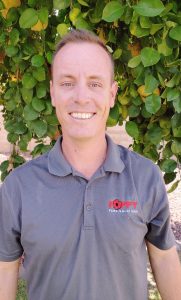
Josh Grubaugh is a Tucson native with 12 years of experience in the agriculture industry. His passion for the game of golf and the desire to spend as much time as possible on the course led to the start of his career.

In 2006, Josh began working at Oro Valley Country Club. There, he acquired the basics of landscape and turf management. He also earned his Arizona Pesticide Applicator license. He quickly realized that not only did he have a knack for keeping vegetation alive in Arizona heat, he was also really loving the work that went into it!

Just a year into this career path, Josh took full advantage of an opportunity to help build the Golf Club at Dove Mountain, former home of the PGA Tour’s WGC Accenture Match-Play Championship. This amazing 6-year experience gave him the drive to advance on to The Views Golf Club at Oro Valley, where he became the Assistant Golf Course Superintendent. This was a game changer for Josh as his growing passion for and knowledge of turfgrass management further solidified that this was his calling.

With his skills and experience, Josh advanced onward to Tucson Country Club as the Assistant Golf Course Superintendent. Within two years he accepted the position of Golf Course Superintendent at Forty Niner Country Club.

Shortly after joining the Forty Niner family, Josh and Brandy married and within a year were proud parents of their first child, Tripp Joshua Grubaugh. Things were getting real!

Josh had a very successful tenure at Forty Niner Country Club. His extensive knowledge and attention to detail allowed him to complete many in-depth landscape and irrigation projects, which improved the operation of the course.

Some have even said he brought it back from the dead! Josh will tell you, he is only as good as his team. His hard work, respect for others and willingness to think outside of the box were, and continue to be, essential to his success.

In early 2018, Josh knew there was something bigger for him and his growing family. With the support and encouragement of his wife, Brandy, he decided to take his knowledge, skills, and passion in another direction. This led to the launch of Poppy Yard Solutions. The company was named after his daughter, Poppy Louise.

Today’s guests on Weeding out Business:

Guy Welsh

Owner

Empower Financial Group LLC

1 South Church Avenue, Suite 2200

Tucson AZ 85701

Bus: 520 620.5388

Cell: 520 955-1426

Fax: 520 622 0819

www.empowerfinancialgroupllc.com

guywelsh@empowerfinancialgroupllc.com

https://www.linkedin.com/in/guywelsh

https://www.facebook.com/EmpowerFinancialGroupLLC/

Guy was born and raised in beautiful Tucson, AZ, where he grew up playing baseball at Sabino High School and went on to play professionally for the Seattle Mariners organization from 2007-2009.  After finishing his degree at the University of Arizona, Guy’s experience in the financial industry began in 2012. He quickly became a leader in the New York Life Tucson General Office and served as a member of the management team before taking his passion and commitment to help others accomplish their goals to the individuals and businesses of Tucson.  It is Guy’s vision to bring passionate and trustworthy information to every individual he serves! He is kept motivated by his wife, Shannon, and his 1-year-old son, Donovan.  

“I stand for bringing passion, positivity, and value to every individual I come in contact with.  Whether personally, professionally or socially, I aim to be a positive influence in the lives of those around me.”


Alex Mastrangelo

Owner, Designated Broker

Habitation Realty, Inc.

www.habitationrealty.com

alex@habitationrealty

520-465-2539

Alex was born in New York City and moved around the country as he grew up. He finally arrived in Tucson in 1994, never to move again. Alex attended the University of Arizona and graduated in 2000 with a Bachelor’s Degree in Communications, and a minor in Creative Writing. He attended Real Estate school immediately after graduation and began work at Centra Realty in January 2001. In 2007, he formed Habitation Realty, which was conceived as a boutique firm specializing in the historic and unique homes of Tucson.

As the housing market declined in the following years, Alex expanded into the property management business and began to focus on residential investment property. While other companies struggled to survive, Habitation Realty developed innovative systems for property investment and management and was poised for significant growth once the housing market recovered.

Alex is an avid property investor and has owned nine properties in Tucson, two buildings in Brooklyn, New York, and one historic miner’s shack in Bisbee, Arizona. He is fascinated with the historical aspect of older homes and has restored several back to their period splendor. While he has experience with all areas of Tucson, Alex especially loves working with the funky old homes in the downtown and central areas of Tucson. He loves to share this intimate knowledge of older homes with his clients, and will often brainstorm with them on potential projects. Disgusted by the shoddy “fix and flip” plague of the last few years, he makes a point to use unconventional techniques and materials to transform neglected properties.

Alex has worked with various investors to transform neighborhood blight into opportunity. He believes that the sustainability of the housing market is largely dependent upon investors who are willing to renovate underappreciated homes and return them to habitability. Alex has extensive contacts in the renovation business and is always happy to pass these resources on to his clients.

In addition to Real Estate, Alex has been collecting antiques since he was seven years old. He has amassed a significant collection of tube radios, vintage televisions, furniture, and various oddities from the past. He also restores and collects vintage cars, with an emphasis on Buicks and Cadillacs from the 50′s through the 70′s. When he is not selling real estate or working on his car collection, Alex enjoys bike riding, traveling, and camping with his son Dashiell in their restored 1957 El Rey trailer.


Justin Musgrove

Owner Agent

American Family Insurance

6700 N Oracle Rd Ste 506

Bus (520) 299–8878

Fax (855) 814-3093

www.justinmusgroveagency.com

email: jmusgrove@amfam.com

As your American Family Insurance agent, I can offer you dependable auto, home, business, health and life insurance, as well as other insurance products.

Tagged With: Designated Broker, Empower Financial Group LLC, Guy Welsh, Habitation Realty, Owner, Poppy Yard Solutions

Thought Leader Radio featuring Nancy Newman with International Action Network for Gender Equity & Law (IANGEL)

August 18, 2018 by angishields

Nancy Newman
High Velocity Radio
Thought Leader Radio featuring Nancy Newman with International Action Network for Gender Equity & Law (IANGEL)
Loading
00:00 /
RSS Feed
Share
Link
Embed

Download file

Nancy Newman

Nancy J. Newman is president of the International Action Network for Gender Equity & Law (IANGEL), a partner with Hanson Bridgett LLP specializing in commercial and real estate litigation, and a lifelong feminist activist. A past president of Queen’s Bench Bar Association in San Francisco, and of the National Conference of Women’s Bar Associations, she has spoken at multiple international conferences on women’s rights issues for over 15 years. She founded IANGEL in March of 2013.

Follow IANGEL on Twitter.

Tagged With: High Velocity Radio, IANGEL, Thought Leader Radio

Leo Rojas & Gerson Cardona with MobiCap, and Shaun Priest with Clearwave

August 16, 2018 by angishields

MobiCap
High Velocity Radio
Leo Rojas & Gerson Cardona with MobiCap, and Shaun Priest with Clearwave
Loading
00:00 /
RSS Feed
Share
Link
Embed

Download file

MobiCap

Prior to joining Clearwave, Shaun Priest was Senior Vice President and Chief Growth Officer for Streamline Health where he managed all sales and client relationships to drive growth and increase client satisfaction. Mr. Priest also served as Senior Vice President of Strategic Accounts & Business Development at Influence Health, where his responsibilities included sales, account management, partnerships, and strategies for health systems in both the United States and Canadian markets. Mr. Priest’s healthcare background includes over 20 years of healthcare information technology experience in management, sales, business development, marketing, support, and project implementations. In addition to Streamline Health and Influence Health, earlier in his career, Mr. Priest held a Vice President position with Eclipsys (now Allscripts), plus implementation and project management positions at both Cerner and Meditech.

Follow Clearwave on Facebook, LinkedIn, and Twitter.

The following segment of High Velocity Radio is brought to you by the Merlin Auto Group. Follow Merlin Auto Group on Facebook, LinkedIn, Instagram, and Twitter.

Merlin Auto Group

Gerson Cardona, CEO (Co-Founder) of MobiCap, served on Tesla service expansion team, helping grow new service centers in the U.S and Canada. Gerson also managed a classic car restoration center in San Francisco CA. Leo Rojas, President (Co-Founder) of MobiCap, served in the United States Marines, and worked for Apple, then later worked at Tesla where he met Gerson.

Follow MobiCap on Facebook, LinkedIn, Twitter.

Tagged With: High Velocity Radio, MobiCap

Bryan Russell and Ron Crump with Contineo Group, and Mollye Rhea with For Momentum LLC

August 16, 2018 by angishields

Contineo Group
Atlanta Business Radio
Bryan Russell and Ron Crump with Contineo Group, and Mollye Rhea with For Momentum LLC
Loading
00:00 /
RSS Feed
Share
Link
Embed

Download file

Contineo Group

Since 1996, Bryan Russell with Contineo Group has led US and international projects and is a frequent speaker on sustainable design. He advocates for an integrated design process that requires close cooperation among the design team, architects, engineers and client at all project stages. As a leader, he creates an energetic, fun workplace where talent and diversity thrive. Crediting Abraham Lincoln as his inspiration, Bryan describes himself as persistent and proud to have assembled a high-quality group of professionals who enjoy working together in a family environment. He draws motivation and inspiration from his staff and clients alike. Ron Crump serves as the senior engineer and focuses on design and project management. A well-known industry educator, he teaches classes statewide for Georgia’s storm water regulation authority and is regarded as a leader in erosion control. Ron is also an accredited professional in designing key elements required for obtaining sustainable design points under the LEED rating system. He has extensive experience in commercial site design as well as residential and commercial office parks, telecom systems, solar plants, and wastewater lagoon systems. In addition, he is nationally recognized as a certified professional in erosion and sediment control (CPESC) and storm water quality (CPSWQ). A native of Germany, Ron is known for his trustworthiness and diligence, and is proud of having a diverse portfolio of international projects as well as developments in virtually every major American city. His ability to speak German, Spanish and English has helped Contineo Group, LLC, expand its footprint globally.

The following story was made possible by DecisionLink Corporation. To learn more about DecisionLink, follow them on Facebook, LinkedIn, and Twitter.

When Mollye Rhea founded For Momentum in 2003, she recognized that she was leading one of very few agencies that specialized in cause marketing. Since then, as cause related marketing and corporate social responsibility (CSR) have become more prevalent, For Momentum has grown into one of the leading cause marketing firms in the United States. On a daily basis, Mollye realizes her goal of strengthening communities by cultivating partnerships between nonprofit organizations and corporations—a goal she envisioned as a result of a volunteer opportunity she had early in her career. While Mollye began her career in advertising, working as a media planner at Young and Rubicam in New York and an account executive at McCann-Erickson in Atlanta, that path took a momentous detour when she spearheaded a philanthropic project for the Atlanta Ad Club. Recognizing her passion for cause when she was asked to help the Ad Club raise money for a foster youth program, Mollye decided to work outside of the traditional advertising agency environment, pursuing opportunities that would pair her marketing and sales acumen with her desire to positively impact society. Mollye spent eight years with the Arthritis Foundation national headquarters, leaving as Group Vice President of Strategic Marketing Alliances. In this role, she was responsible for overseeing relationships with more than 40 corporate partners and raising millions of dollars in support for the organization. Mollye led the Arthritis Foundation toward greater integration and seamless delivery of key nationwide initiatives, and secured funding through the development and delivery of creative, impactful cause marketing programs. For seven years, Mollye assumed leadership roles for InterContinental Hotels Group. In her oversight of marketing strategy for the Holiday Inn brand, Mollye implemented new product concepts for consumer and trade marketing programs and managed all phases of key marketing initiatives for 1500+ Holiday Inn hotels in North America. Through her work in nonprofit development, brand marketing and cause marketing, Mollye has a unique 360-degree perspective of what fosters success in strategic cause partnerships. In her 25+ years in the field, she has developed sponsorship strategies for dozens of nonprofit organizations and hundreds of brands. Mollye has served a broad range of nonprofit organizations including the American Cancer Society, March of Dimes, Arthritis Foundation, Communities in Schools, Paralyzed Veterans of America, SeriousFun Children’s Network, US Fund for UNICEF, Covenant House, National Stroke Association and National Audubon Society to name a few. Corporate and media partners include large pharmaceutical companies, cable networks, hotel brands and their franchisees and retailers.

Follow For Momentum on Facebook, LinkedIn, and Twitter.

Tagged With: Contineo Group, For Momentum

Learning Insights featuring David Amborski with Training Pros

August 15, 2018 by angishields

Learning Insights
Learning Insights
Learning Insights featuring David Amborski with Training Pros
Loading
00:00 /
RSS Feed
Share
Link
Embed

Download file

As the TrainingPros Vice President of Enterprise Learning Solutions, David Amborski serves markets and clients throughout the United States. Over his long career, he has developed extensive experience in the information technology, manufacturing, oil & gas, utilities, financial services, healthcare, higher education, pharmaceuticals, mining & metals, transportation, and retail sectors. David’s primary areas of learning & development expertise are leadership development, executive & career coaching, project management, change management, performance consulting, Six Sigma quality, Business Process Improvement and Enterprise Resource Planning (ERP) systems.

Prior to joining TrainingPros, David worked for Union Carbide Corp, IBM, Deloitte Consulting, Bank of America, Ciber Consulting, and Virtual Consulting Solutions. He is active in the American Society for Quality (ASQ), Association for Talent Development (ATD), Lean Process Improvement, Six Sigma, Certified Master Training, and American user groups for SAP, Oracle, PeopleSoft, and Infor. David’s passions are spending time with his family and friends, classic car restoration, traveling, and enjoying good food, a cigar, and a Scotch. With his prowess in ensuring organizations get the most out of their ERP investments, TrainingPros is delighted to have David on board to serve our clients’ needs.

Follow Training Pros on Facebook, LinkedIn, and Twitter.


DavidAmborski081418.mp3

: Broadcasting live from Business RadioX Studios in Atlanta, Georgia, it's time for Learning Insights, featuring learning professionals improving performance to drive business results.

: Welcome to another exciting and informative edition of Learning Insights brought to you by our good friends at TrainingPros. Stone Payton and Lee Kantor here with you this afternoon. Lee, you ready for this?

: I am. It's exciting.

: Hey, this really is going to be a lot of fun. Please join me in welcoming to the broadcast VP of Enterprise Learning Solutions for TrainingPros, Mr. David Amborski. Good afternoon, sir.

: Good afternoon. How are you guys doing?

: We are doing well. We're excited to have you in the studio because it has come to our attention that you are spearheading a brand-new initiative for the folks at TrainingPros called Training as a Service.

: That's correct.

: Can you tell us a little bit about your vision of that? What exactly is Training as a Service?

: Training as a Service is an answer to a lot of the activity in the enterprise resource planning space where people have put in large scale computer systems, and everybody did all the preparatory work to go live and getting the system live. And then, after the system is live, people kind of drift back to their normal jobs, and things kind of slip away. And, unfortunately, training is one of the things that slips away the quickest because there's not as much emphasis on it after go live.

: Because, sometimes, they think that just by implementing the ERP system, then their work is done.

: Yeah, that's correct. And, certainly, with the onset of some of the new approaches that these systems developers are providing, like moving to the cloud, that means that there's going to be many more changes that are going to be coming at a more rapid pace. And when those changes occur, of course, that trickles down to changing someone's job, which means they have to change the training that they're going to prepare people with.

: And then, when they're buying the system, training isn't included usually, right? It's the system implementation that's included.

: Yeah. Normally, there's really three components. There is the system software itself. There's the integration of the software into the business process, which can be done either by the software company or an outside consultant. And then, there are the change management and training aspects to prepare people to be users of the software.

: And then, like, back in the day, before the cloud, pre-cloud, the software would physically be there. And then, an update would be actually more software. You would just kind of replace, and plug in, and it would update. Now, like you said, it's in the cloud. So, those changes happen instantly.

: Really automatically.

: In real time, right?

: Yeah.

: They're happening constantly.

: Yup. That's the interesting part. And some of the misunderstanding that people have with the movement to cloud is that back in the initial implementation days, things would show up on a disk, and that people would read it, and you see what the changes were that the software companies were proposing. And they had a choice whether they wanted to load it or not load it in the cloud. There's not a choice for that.

: It's happening. It's happening.

: It comes whether you want it or not.

: So, when these changes come, does it often mean that my job is changing as well? Why the emphasis on the whole people side of things?

: Well, yeah. Yeah, definitely. It's the job is changing because if the software changes in how you — and I'll make something up here. If how you prepare a purchase order, or something gets modified in the system to make it different, then that trickles down to what somebody is going to be doing on their job, and how they have to retrain themselves or re-skill themselves to be able to do work in the new environment.

: And they love that, right?

: Yeah, yeah. Occasionally, they love it. We try to make them love it because that's the beauty of what we do.

: So, now, this Training as a Service initiative, is it going to be for every ERP system primarily, or like what are the main ones that it's going to focus on?

: Yeah, we're going to focus on, really, the four main systems. And that's SAP, Oracle, PeopleSoft, which is now a combined system, Infor, and a couple of other smaller ones, but those are really the main ones.

: Those are the main ones.

: Yeah.

: And then, what are the areas of learning that it's going to cover?

: It will cover the full spectrum of what somebody has to know to do their job. What we do is we really prepare training to be an activity-based training event. So, it's really based on what you need, not just what keys do I have to press to make things happen, but what's happening in my job that when I press those keys, where's the data going, what's it doing, how does the process work. So, it's really activity-based training.

: So, this whole change management human thing, it fascinates me, right?

: Mmhmm (affirmative).

: As a kid, my dad was a basketball coach. Coach Pete Payton, at home, his change management leadership methodology was because I said so.

: Right, right.

: He eventually became superintendent of schools for a pretty large school system. I suspect that in that role, he probably had to employ some different strategies and tactics, you know, for however many thousand employees to get them all going in the right — But it seems like a very involved endeavor because, again, I really don't know but I can imagine that it's not even like everyone is reacting the same way at the same time to whatever the changes are, right. They're all over the map, yeah?

: Right. Yes, yes. And it's interesting because as the ERP software has evolved and moved to this new place called cloud, in the very beginning, it was exactly what you said, executives would look at this process and say, "We don't have to spend a lot of money or do a lot of things because they have to do it, or else, they can't get their job done, and they'll do it because we're gonna make them do it."

: And that made, initially, for lots of unhappy people and a very difficult time because we know the technology works because thousands of companies use it around the world. We know that we can put the best business process in place. But unless the people embrace it, and really adopt it, and make it their own, then they're the ones that breathe life into the software. Otherwise, it's just processes and technology.

: And they cannot embrace it and not tell you that they're not embracing it, right?

: Yeah.

: So, that could be fun to deal with. Like you don't even see it, or you'd really rather, if they're not embracing it, at least, tell you, right. At least, you got something you can deal with.

: Yeah. As a matter of fact, through many of the projects that I worked on, I had a term, and people used to chuckle at it when I said it, but I really meant it. There is such a thing as a covert agreer. And a covert agreer on these projects says, "Oh, yes. I embrace it. I love it. I'm going to do it." They smile at you when they walk out of the conference room. They just look at you, look back, and say, "I'm not doing that." And those are the worst kind of people to deal with because they'll scuttle a project faster than anybody.

: Okay. So, with those kinds of dynamics at play and with the stakes so high, is some of your training or your methodology focused toward the on-site, I don't know, manager, supervisor, leader because they got to-

: Oh sure, oh sure.

: They got to be cognizant of all these things and factored into their day-to-day leadership.

: Well, actually, they're the lead group. I mean, if you don't — The whole premise of the training and change movement in these projects is that the leadership has to buy in. They have to not only buy in, but they have to demonstrate that they're going to help, and they're going to reward people for doing the right behaviors.

: And so, you've got to get what they call leadership alignment done first. And then, you start working on the middle managers and the lower level managers. And then, finally, you get to the end users that are really going to be doing the physical work, and they'll see that leadership is behind them, and that they're leading the charge.

: Now, how does Training as a Service to integrate into the learning department of the client?

: That's an interesting question because my vision for that is that many companies, over the last few years, have really downsized their training activities and have used outsourcing for other kinds of training. For example, HR classes and, you know, sexual harassment classes, you know, how to do payroll, some of those kinds of things, management leadership classes, some of those things are online now.

: What we're trying to do with the ERP classes is do the same type of thing is to say, "Look, we can outsource those things. Even though you have a custom system, we'll provide people that will come back on a routine basis, and check your system, make sure that all look — the courseware and the things that you're training people on are gonna match what your system is for the present day and make those changes. And either give it to you to teach it to some of your resident experts, or we'll teach it for you."

: So, you're going to just flex to whatever outcome that they desire.

: Yeah, exactly. And it's a pretty open format. There are some companies that have a very strong training and a group. And they're usually attached to the HR organization. Very rarely are these training activities conducted by IT. And so-

: I think maybe that's good. Yeah?

: Yeah. Oh, yeah.

: Is that unfair to say?

: Yeah. No, it isn't. Yeah, actually, it's right on point because with the onset of ERP, that was the transition point from people having an IT shop that would come in, and listen to what the business had to say, and say, "Oh, yeah. We can make a custom piece of software to do all these different things."

: And then, they were kind of in charge of everything, and its role reversal these days because the business people now say, "I'm going to buy this piece of software, and I want it configured in this manner, so that I can conduct my business the way I want to do it." And so, it's kind of a reversal of roles, which, in essence, really changes the job description quite readily of the IT people as well.

: Vetted. Well, let's talk about business case for a moment because it strikes me that establishing and articulating business case for what I would call compliance training, right. You've got to have the sexual harassment training. You've got to check that box. You got to do the diversity training. You got to do the safety training.

: Exactly.

: I suspect capturing, documenting, articulating the business case for that, easy enough, straightforward, but there's probably little more art than science to crafting the business case for some of these things that you're talking about, right.

: Yeah.

: And the ROI. Can you speak to that a little bit?

: Yeah. You bring up a great point because calculating the business case for the things that you outlined is pretty easy because trying to avoid fines and –

: Right, screwed up math.

: … many things are pretty easy to change, but when it comes to the business aspect of things, you know, there are some clients that I've talked to recently that they say that, "Well, gee. You know, after go live, we've added to people's job descriptions that they have to do training editing or documentation editing. And, number one, they don't like it because it's not part of their main job description. So, they're unhappy about it. And, secondly, they're not really trained professionals at doing that. So, they don't do as good a job as maybe somebody that's a professional instructional designer, for example, would do.'

: And so, it's kind of easy to ROI some of that because of the cost avoidance that you can get on taking people away from their normal job. And I'll say normal kind of in quotes. The job that they do on a routine basis, and take them away from doing the training work, and give the training to a training professional that can do it, number one, faster most likely, and also the quality of work is usually higher where it doesn't have to be reworked or reedited.

: And so, everybody, it's really a win-win-win because the people that don't like doing it don't have to do it, and the people that want the work done correctly are going to get it done correctly. And then, it's going to be cost-effective because we'll do it in less time.

: And then, haven't you found that by, in the past, implementing this kind of Training as a Service for other groups that the company gets the most out of the software. They're really kind of getting more out of the investment, the multimillion dollar investment they made in this software to begin with.

: Yeah. Yeah, that's true. And, of course, everything revolves. Once the go live happens on the software, then everything really reverts to a business case of what's the cost of ownership of this over a long period of time. And if you can diminish that cost of ownership for the training piece of it, that's a big piece because that's an ongoing thing that's never going to go away because changes are going to be there forever, right.

: I mean, the definition of going live is you're just beginning the change journey, right, because there's going to be new things, new functionality, new ways of doing business. You're going to add businesses. You're going to add people. You're going to do a lot of different things. And the training aspect of it is so important because you need to meet all those goals along the way.

: And so, having this kind of flexibility where we can bring people with the right skills at the right time to bear on fixing some of these things is really the essence of the value of Training as a Service.

: Now, for the companies that are thinking about Training as a Service is something for them, like, is there a way, a baby step to get in there to try it out? Like what's that process look like from an onboarding standpoint?

: Yeah. I think, what we're looking at right now is offering some clients an assessment phase where we come in and really do a look. So, you kind of look under the hood a little bit of their system, and see how they're running, and what they're doing, and where there may be some mismatches in some things.

: And then, getting at the heart of asking some questions of the management team. You know, are you having some heartburn over this aspect of the business not running well, or are there some problems? And that will stimulate us, at least, starting the ROI business case process to tell them what we can do for them and at what cost.

: And then, what are some symptoms that they might be having that Training as a Service might be the solution for? What are some of the, you know, pains that might have bubbled up that this might be a good fit to solve?

: If there were some changes in the software that have been made where certain things needed to be done in a certain sequence, and then the process changed, and it wasn't — And we find this to be many times is that's not well-communicated across the organization, we end up having to go in in what we call delta training or do a delta to the original training package to make sure that the training really demonstrates what's going on in the system today.

: And so, the advantage that you have is that because we're going to be doing periodic reviews because we come back every three months or every six months to review your system to make sure the training matches it, we're going to catch these things, and where and catch them quicker and/or a company can say, "Hey, I'm having a big problem. You know, my payables department is not paying things out at the right rate, or we're slipping behind. Maybe we need some help, and have people reeducated on some of that stuff." And we can go in and do that.

: This assessment that you're describing, it seems like it has standalone value in its own right. I mean, even if I were on the back side of that to hire my brother-in-law to do the Training as a Service or try to pull it off on my own, it just seems like that would be a good foundation in and of itself. And then, you would certainly want that as foundation going forward if you're going to do the work. Is that accurate? It would have standalone value, wouldn't it?

: Absolutely, it does have standalone value. As a matter of fact, we think it's so important that it's the cornerstone for the ongoing work. So, you know, it's not a one-and-done assessment. You can go in the first time and say, "Hey, here's what the courses look like versus what the system looks like." But on a period of every three to six months, because of the way cloud is changing, you have to go back in and see what has changed in the system. And so, you really have to do a mini assessment, if you will, you know, every time you put in-

: Periodically, yeah.

: Periodically just to make sure that everything matches.

: All right. I'm going to shift gears on you because I'm getting kind of curious. I want to know the back story. How in the world does someone end up being the grand poobah of whatever it was I said, enterprise learning solutions now for, like, TrainingPros. Obviously, you must have some background in this arena. Walk us through your career path a little bit, if you would.

: Yeah, I started out a long time ago with the IBM company. I worked for them for 18 years.

: I've heard of them.

: Yeah, they're a little computer company. And I was fortunate enough to be trained in SAP software at the very beginnings of the whole ERP movement back in the early '90s.

: Before it was cool.

: Before it was cool and before everybody wanted it, and before Y2K, right. And so, I got involved with SAP software. And I have a pretty deep manufacturing background because I did some plant work for the IBM company in semiconductor plant.

: And so, I have always been very pro making sure that people know what to do, right, because what I learned in a manufacturing plant is people might not have known, you know, why things happened in the manufacturing process, but they could sense that something smelled funny, sounded funny, you know, looked funny, and to talk to engineers like myself was very important.

: So, I really respected people very early in my career. And that's what got me involved in doing change management training as I moved into this ERP world because I felt it's the people that really have to know what the software is capable of doing and how to do it. Otherwise, it's not going to work.

: That's where it always comes off the rails, right, with the people?

: Yeah. Yeah, exactly.

: Or it sticks very nicely if managed properly.

: Yeah. Yeah, it's an important aspect of it. And many times, when you go to talk to clients, they say, "Oh, yeah. You know, technology guys were here, and the software guys were here. Well, what do you do?" Well, we work with the people side of it, right. I mean, that's what we're all about. So, it's really important.

: And then, after I left the IBM company, I went to work for Deloitte & Touche. And I was a director for Deloitte & Touche, partner director. And I ran the training and change management practice for Deloitte for the US for a number of years. And, again, that just reinforced the things that I knew were important as far as dealing with people.

: And so, we developed many, many techniques. And I worked on probably 23 plus projects that have implemented this stuff. So, I know some of the pains and some of the joys that people get out of this. Sometimes, more pains than joys, but I know how some of those things work.

: And I've talked to — I've done a lot of research in the last two years around clients that I have worked on and have implemented in the last five to seven years. And one of the things they always talk about is, you know, we never spend enough money on our people. We didn't do enough change management. We didn't do enough training. I wish we could have done more. And, now, we're faced with how do we not fall into the same trap in maintenance of this system.

: And so, I've had people come up to me at trade shows and stuff and say, "Hey, do you guys do upgrades of training? Will you come in and help us do that kind of stuff?" So, a couple of years ago, the whole Training as a Service idea kind of blossomed in my head. And this is really the finale of it. It's working with TrainingPros to get this thing launched.

: And it works hand-in-hand with the Software as a Service that these ERP are utilizing. So, it makes perfect sense to have training aligned with the software.

: Exactly.

: So, if the software is going to be updated and changed regularly, doesn't it make sense that the training should be as well?

: Yeah, absolutely. And it's kind of interesting because as the whole service economy has kind of blossomed, right, with people outsourcing things and going to outsourcing ways of doing business, it's becoming more normal, if you will, to do it with the training aspect of things because, frankly, when there were downturns in the economy, and there were things that were going badly, and I hate to say this because I was part of the old training world back then, but we were the first ones not to be around because people thought that, "Well, it's just training. Let's cut them right."

: Right.

: Right. And then, they put themselves in a hole by doing that.

: There's a cost.

: Yeah, absolutely.

: The timing just seems perfect. It seems like the market is probably as coachable, if that's the right word, as they've ever been right now, right, because they've lived through it, they've skinned their knee. Some of them are coming out and asking you. And you're out there letting folks know, and framing this up for them. Is that accurate?

: Oh yes, absolutely.

: The timing is good right now. So, how are you going to the market? Or is it really, are they just coming to you, or you have some grand, I don't know, plan to get out there and have these conversations?

: Yeah, there's two things there. I think, you hit it right on the head. I mean, the whole aspect of doing, not only just training, but skills management of people and the retainment of people in today's world, people are finally figuring out it's cheaper to retain people and re-skill them than it is to go out and hire new ones.

: Than to find a new one. Right, absolutely.

: Amen.

: Yeah. And so, we're — And I've always been a proponent of that. And so, we're going out, and we're doing some things around that. But, also, it's important to know that, you know, this is top of mind in a C level office. I mean, I have had CEOs, CFOs, CTOs come to me and say, you know, "I get all that technology stuff, and I get all that implementation jargon that these guys are babbling, but what are you going to do to help my people learn that stuff? How are you going to help me?"

:  And I literally, in a couple of instances, and I chuckle about it once in a while, but when I think about it, but I have had the opportunity to hijack a couple of orals presentations when we were trying to win some business because they would ask the right question, and then I would get up and talk about it. And the technology guys would all be sitting down going, "Why are they talking about this stuff? We're here to sell software, you know." But if they don't know how to work it, it's not of any value. So, that's why we're talking about it.

: So, now, your vision of Training as a Service, what is going to be the deliverable to the client then?

: So, the deliverable to the client is, number one, in the first phase, we're going to do the assessment. So, there'll be, obviously, a written report and a whole outline of the assessment of what we find, and where the holes are, if you will, between the training and the system.

: And then, we'll give them — take a look at how are they remedying that today. And if they build their own stuff, we'll give them a business case to take a look at to say, "Okay, do we build, buy, or modify, the courses that are required?" because you can buy some standard stuff on the market, and we wouldn't be wanting to reinvent the wheel. So, we would do a build, buy, or modify strategy.

: And then, we'll do a run strategy that says, "Okay, if you buy into that, and you want us to work with you, we can both build it and teach it. And in an ongoing basis, we'll send the same team to you that knows your system and knows as much as we can. Of course, in a consulting environment, people move around a little bit but-

: Yes, they do.

: … I'm used to that. But we're going to try and put a team together that's going to have the responsibility for specific clients, so that they know the system, they know the people, and they can come in. And that will speed up the assessment process on the follow-on.

: Now, what you're describing right there, putting a team together, deploying seasoned people with specialized expertise, I mean, this is TrainingPros. That is their wheelhouse. I mean, that, they're already good at that.

: Yeah, absolutely.

: That's fantastic. What an exciting time for you.

: I know. This has just been a dream come true to start working on this. So, I'm thanking Steve and the team there for all the support they're giving me because we're getting this launched. And I'm just really, really, really happy at the way things are going. It's progressing very well.

: So, now, the ideal client for you are somebody who has just implemented a new ERP, or, like, where are they in the ERP kind of life cycle?

: Well, the beauty of it is that this whole process is very adaptable and can be adapted in both directions. So, obviously, our initial target base is going to be because there are so many people that have implemented and have implemented since the Y2K effort, right, there's lots of people that are 10-15 years into the process, and some of them are the worst ones as far as the training world goes, right.

: Yeah.

: And so, our target market is really people that have already implemented, and go in, and say, "Here's the ROI. Here's how we can save you money by you doing it yourself." But it doesn't preclude us from going into even a company that, say, wants to implement for the first time. Our people are seasoned enough and know enough about how to do this type of work that they can work on either side of the ball.

: All right. So, where can our listeners go if they want to speak with you or someone on your team about these topics, maybe set up one of these assessments? What's the best way for them to connect with you?

: They can either go out to the TrainingPros website, and there's a way for them to contact us through the website.

: Right. It's Training-Pros.com.

: Yeah. And they could also give me a call. And my direct contact information is at 770-335-9061. And I'd certainly be happy to answer any questions that anybody has or any of those activities. And they can, also, contact me via email at DavidAmborski@TrainingPros.com.

: Well, congratulations on the momentum, man. Keep up the good work and keep us posted. And I think there's probably some wisdom in maybe sitting down with you periodically and sort of tracking your progress. I think that would be interesting to do that. You'd be up for that?

: I would be very happy to do that.

: Fantastic. All right. Until next time, this is Stone Payton for Lee Kantor, our guest today, David Amborski with TrainingPros, and everyone here at the Business RadioX family saying we'll see you next time on Learning Insights.

Automatically convert audio to text with Sonix


Tagged With: Learning Insights, Training Pros

Tuesdays with Corey Episode 11

August 15, 2018 by angishields

Atlanta Business Radio
Tuesdays with Corey Episode 11
Loading
00:00 /
RSS Feed
Share
Link
Embed

Download file

TWC 11

Bonnie Daneker is a Consultant and Owner at Write Along With You. The former CEO of Write Advisors has been working in publishing and advising writers for more than a decade. If you’re a would-be author, you can rely on our seasoned writing professionals to ease you toward the destination of a finished manuscript. You’re not alone with Write Along With You.

Bonnie Daneker holds an MBA from Emory University, and a BA in Journalism from The Ohio State University. She is President-Elect of the National Association of Women Business Owners (Atlanta Chapter) and serves on the Board of the Green Chamber of the South. She is the author of several books including her latest, It’s In There! The Innovation, Dedication and Determination Behind the Birth of Prego Spaghetti Sauce.

The $30 billion marquis product from Campbell’s Soup can be found in kitchens worldwide. Foodies and biography lovers alike will love It’s in There! The book is part memoir and part product history, highlighting the many professionals who contributed to the famous sauce. All proceeds go to fund food technology scholarships at Ohio State University. Available at amazon.com and OhioStatePress.org.

Follow Bonnie on Twitter.

Rhonda Caudell RN, CCM, The Aging Parent Expert, at Endless Legacy, struggled helping her aging parents utilizing the same planning process that worked well with her senior clients in her care management consulting practice. Ultimately, she discovered the transformational breakthrough of what must change for an aging parent and adult child cooperative partnership to work well. Over time her Dad developed Alzheimer’s and Vascular Dementia requiring her care for 8 years. She also helps other adults of parents with dementia to know how to thrive and connect with their parent, not just survive. Those adults find community with others and support at Dementia Distress Relief & Facebook closed group: Answers for Adults of Parents with Alzheimer’s & Dementia.

Follow Rhonda on Twitter, Facebook, LinkedIn.

Cody Jones, the owner of Bernadette’s Hair Salon and Wig Studio, was hired by Bernadette while fresh out of beauty college in 1999, and purchased the business from her friend and still-mentor in 2006 in an effort to further Bernie’s original vision for the salon.  For 15 years, Cody has concentrated on cuts and cuts only, She has enjoyed attending shows and classes in Las Vegas, Miami, New York, and Chicago.  Cody is also trained in Toni & Guy cutting techniques, Keratin straightening, and works with the Aveda Institute for continuing education, as well as boasting training with Jacque Desage, as well as Martin Parsons on up-styling. She is our leader, our mentor, a fabulous mom, and an incredibly motivated business owner.

Follow Bernadette’s on Pinterest.

Corey Rieck is the President and Founder of The Long Term Care Planning Group, a firm that specializes in delivering Long Term Care education and coverage to companies, high net worth individuals and large organizations. Since 2001, Corey has devoted his career to Long Term Care as a result of multiple personal experiences.  A neutral provider of Long Term Care Solutions since 2001, Corey brings a unique and comprehensive consultative perspective to this issue.  Since 2003, part of his commitment to the Long Term Care Industry includes his having trained over 3,500 advisors from San Francisco to Wall Street on how to properly position Long Term Care to clients through the CLTC organization. Additionally, he has authored dozens of published industry articles on Long Term Care and has assisted many of the nation’s leading LTC carriers on operational and educational matters.

Tagged With: Long Term Care Planning Group, Tuesdays with Corey

– Tucson Business Radio – Community Law -Episode #1

August 14, 2018 by angishields

CommunityLaw
Tucson Business Radio
- Tucson Business Radio - Community Law -Episode #1
Loading
00:00 /
RSS Feed
Share
Link
Embed

Download file

Community Law is Hosted by Michael Shupe

Michael Shupe

Owner/Partner

Goldschmidt|Shupe, PLLC

6700 North Oracle Road, Suite 240

Tucson, Arizona 85704

(520) 265-4462

Website: www.gshoalaw.com

michael@gshoalaw.com

Michael has worked with Carolyn for the past 12 years, beginning when he was an undergraduate at the University of Arizona. He has been a licensed attorney for the past 8 years and practices exclusively in community association law.

Carolyn and Michael formed their law partnership in the Fall of 2014. He has experience in a wide variety of community association and real estate issues, including covenant enforcement and assessment collection, as well as county and municipal zoning requirements, and easement and right-of-way disputes.

Michael is a member and Past-President of the Southern Arizona Chapter of Community Associations Institute (CAI) and is a member of the Arizona Association of Community Association Managers (AACM).

Michael has lectured on community association issues and provided instruction to various community boards and community management groups.

Carolyn B. Goldschmidt, Esq.

Owner/Partner

Goldschmidt|Shupe, PLLC

6700 North Oracle Road, Suite 240

Tucson, Arizona 85704

(520) 265-4462

Website: www.gshoalaw.com

carolyn@gshoalaw.com

Carolyn has practiced community association law in southern Arizona for 30 years, including covenant enforcement, construction defects, architectural control, assessment collection, transition from developer control, dispute resolution, counseling, and drafting and review of governing documents. She is certified as a real estate specialist by the State Bar of Arizona and is a long-time member of the Community Associations Institute (CAI).

Carolyn served on the Board of Directors of the Southern Arizona Chapter of CAI for more than 8 years and is a Past President of the Chapter. She also is a member of the Arizona Association of Community Association Managers (AACM). In addition, Carolyn has training and experience in alternative dispute resolution as a mediator and communication facilitator.

Carolyn has taught courses in community association law for CAI, AACM, the Hogan School of Real Estate, and Lorman Educational Services, and has lectured frequently on community association law for various other groups and community boards.

She hosted the Legal Hotline: Community Law Edition on KNST-790-AM radio.


Don Weaver

President

Green Valley Council

(520) 648-1936        

president@gvcouncil.org

The reason I serve on the GVC Board is the benefits that the Council provides to Homeowners Associations in Green Valley. GVC is the voice for Green Valley citizens on matters affecting all of us, and speaking as “one,” the HOAs, property owners, and investors have greater influence when communicating with all levels of government officials and agencies.

Dee and I retired to Green Valley in 2001. We joined the Green Valley Country Club and in 2002, I served on the Country Club of Green Valley & House Committee. I served as club manager and was President of the Board of Directors. I also served as a member of the Board and President of the Country Club Estates HOA. In addition to my position as President of the Council, I serve on the Green Valley/Sahuarita Chamber of Commerce Governmental Relations and Economic Development committees. I am a member of the Community Water Board and a volunteer mediator and small claims officer with the Green Valley District Court.

Before I retired, I worked for 37 years in Executive Management positions in private and public offices in Greensboro North Carolina, in utilities and HOA general management in Buck Hill and Pocono, Pennsylvania and for African and Middle East business in Cairo, Egypt. I graduated with a B.S. Degree in Civil Engineering at Virginia Tech, and a Master’s Degree in Public Affairs at UNC, Greensboro. I am also a Graduate of the UNC, Chapel Hill, Executive Program and a Registered Professional Engineer (retired, NC). Over the course of my career on served on many community boards in the areas of health, business, preservation, youth services, and civic organizations.


Mike Polletta

Director of Marketing

Cadden Community Management

https://cadden.com/

1870 W Prince Rd #47, Tucson, AZ 85705

Phone: (520) 297-0797

mpolletta@cadden.com

Mike Polletta joined the Cadden team in August of 2013 as Director of Marketing and Sales. Before being hired at Cadden Community Management, Mike owned and operated his own graphic design and printing company which provided services to Cadden Community Management going all the way back to 1997 when the company was originally called Cadden Parfrey Services.

Mike’s responsibilities with Cadden Community Management include community outreach, social media, networking with various southern Arizona business groups including SAHBA, MPA, Marana Chamber, Greater Oro Valley Chamber, Green Valley Chamber, GVCC and the Tucson Hispanic Chamber.

Mike is a graduate of the Columbus College of Art and Design where he majored in illustration and minored in fine arts. After working as a graphic designer for several companies, Mike and his wife Pi moved to Tucson from their hometown of Columbus, Ohio in 1996. They currently live in Oro Valley with their son Jenk and a variety of pets including horses, goats and a dog.

Tagged With: Director of Marketing, Don Weaver, Goldschmidt/Shupe, Green Valley Council, Mike Polletta, Mike Shupe, Owner/Partner, President, Tucson, Tucson Business RadioX

Culinary Atlanta featuring Reiko and Noah Clark with PONKO Chicken

August 14, 2018 by angishields

PONKO Chicken
Atlanta Business Radio
Culinary Atlanta featuring Reiko and Noah Clark with PONKO Chicken
Loading
00:00 /
RSS Feed
Share
Link
Embed

Download file

PONKO Chicken

This episode of Culinary Atlanta is brought to you by Taste of Atlanta. Follow Taste of Atlanta on Twitter, Facebook, and LinkedIn.

Maggie Uyehara was born and raised on Crenshaw Boulevard in the heart of Los Angeles. An all-American girl, she is the proud daughter of her 2nd generation-born (nisei) Japanese-American parents. Her father Howard, was a Purple Heart World War ll veteran, and her mother, Emiko, was a farm girl from central California who passed on the family’s love for cooking and spirit of entrepreneurship. With that heritage, Maggie invented and perfected her signature PONKO Chicken recipe and opened an LA-based catering business when she was 18. The blend of Asian spices and southern California cooking style made the chicken tenders a wildly popular dish. Two decades after providing craft services for Hollywood studios and corporations, Maggie joined her sister Reiko in suburban Atlanta where they, their supportive husbands and amazing kids crafted a fresh casual menu that revolves around that original PONKO Chicken recipe. In 1998, they opened the original restaurant, with a sophisticated urban vibe that gave a sense of home to everyone who ate there. “My mom was an amazing cook. We always had the proverbial pot of Japanese steamed rice. She made Japanese classics like the frying pan dinner (aka: sukiyaki) to all-American favorites like fried chicken and meatloaf. And every other week, a slow cooked pot of beef stew would be turned into Japanese curry the next day! I refer to the food I have created as Japanese Soul Food. Straight from the heart. Authentically Japanese. Authentically Western. My parents referred to it as ‘good eatin’!” “On top of that, my family owned and operated Arlington Bowl, where my mom served one of the city’s best bowls of ramen and her legendary hamburger. We grew up when L.A. food joints, like Tommy’s, Golden Bird, and Walts were thriving. And let’s not forget the lil Japanese diner called ‘Bungo’ on Washington Boulevard. No sushi, nobody throwing knives around, just good Japanese home cooked meals!” Maggie confessed. Today, two of the Uyehara grandkids have decided that they are ready to move the company forward. Noah Clark, Reiko’s son and Mia (Antoine) Seilern, Maggie’s daughter, have taken the helm with great leadership, passion, and business acumen. Dubbed by their family as the Prince and Princess of PONKO, Noah and Mia are poised to turn the family catering company into a global fast-casual dining concept by connecting cultures and cultivating happiness, one chicken tender at a time.

Follow Ponko Chicken on Facebook, Instagram, and Twitter.

Tagged With: Culinary Atlanta, PONKO, Taste of Atlanta

Sean O’Grady with Rally Atlanta

August 14, 2018 by angishields

Atlanta Business Radio
Sean O'Grady with Rally Atlanta
Loading
00:00 /
RSS Feed
Share
Link
Embed

Download file


Rally Atlanta

This episode of Atlanta Business Radio is brought to you by the Merlin Auto Group. Follow Merlin Auto Group on Facebook, LinkedIn, Instagram, and Twitter.

Merlin Auto Group

Sean O’Grady is a thirty year old Georgia native currently residing in Alpharetta. Sean is the Dodge Viper and SRT specialist and eBay manager at Palmer Dodge in Roswell, one of the five largest Viper and SRT dealerships in the country, helps run one of the largest Viper forums online, and organized the largest Viper group order and factory pickup in Chrysler history. Recently, Sean founded Rally Atlanta, the first official road rally in Atlanta, all to benefit the Muscular Dystrophy Association.

Follow Rally Atlanta on Facebook and Instagram.

Tagged With: Rally Atlanta

  • « Previous Page
  • 1
  • …
  • 597
  • 598
  • 599
  • 600
  • 601
  • …
  • 1326
  • Next Page »

Business RadioX ® Network


Our Most Recent Episode

CONNECT WITH US

  • Email
  • Facebook
  • LinkedIn
  • Twitter
  • YouTube

Our Mission

We help local business leaders get the word out about the important work they’re doing to serve their market, their community, and their profession.

We support and celebrate business by sharing positive business stories that traditional media ignores. Some media leans left. Some media leans right. We lean business.

Sponsor a Show

Build Relationships and Grow Your Business. Click here for more details.

Partner With Us

Discover More Here

Terms and Conditions
Privacy Policy

Connect with us

Want to keep up with the latest in pro-business news across the network? Follow us on social media for the latest stories!
  • Email
  • Facebook
  • Google+
  • LinkedIn
  • Twitter
  • YouTube

Business RadioX® Headquarters
1000 Abernathy Rd. NE
Building 400, Suite L-10
Sandy Springs, GA 30328

© 2026 Business RadioX ® · Rainmaker Platform

BRXStudioCoversLA

Wait! Don’t Miss an Episode of LA Business Radio

BRXStudioCoversDENVER

Wait! Don’t Miss an Episode of Denver Business Radio

BRXStudioCoversPENSACOLA

Wait! Don’t Miss an Episode of Pensacola Business Radio

BRXStudioCoversBIRMINGHAM

Wait! Don’t Miss an Episode of Birmingham Business Radio

BRXStudioCoversTALLAHASSEE

Wait! Don’t Miss an Episode of Tallahassee Business Radio

BRXStudioCoversRALEIGH

Wait! Don’t Miss an Episode of Raleigh Business Radio

BRXStudioCoversRICHMONDNoWhite

Wait! Don’t Miss an Episode of Richmond Business Radio

BRXStudioCoversNASHVILLENoWhite

Wait! Don’t Miss an Episode of Nashville Business Radio

BRXStudioCoversDETROIT

Wait! Don’t Miss an Episode of Detroit Business Radio

BRXStudioCoversSTLOUIS

Wait! Don’t Miss an Episode of St. Louis Business Radio

BRXStudioCoversCOLUMBUS-small

Wait! Don’t Miss an Episode of Columbus Business Radio

Coachthecoach-08-08

Wait! Don’t Miss an Episode of Coach the Coach

BRXStudioCoversBAYAREA

Wait! Don’t Miss an Episode of Bay Area Business Radio

BRXStudioCoversCHICAGO

Wait! Don’t Miss an Episode of Chicago Business Radio

Wait! Don’t Miss an Episode of Atlanta Business Radio