BRX Pro Tip: Jobs to Be Done Theory Explained


/
RSS Feed

BRX Pro Tip: Jobs to Be Done Theory Explained
Stone Payton: And we are back with Business RadioX Pro Tips. Stone Payton and Lee Kantor here with you. Lee, thank goodness you’re such a prolific reader, and you capture so much, and return it to the organization and share it with our community. Give us a little bit of a primer, if you would, on the Jobs to Be Done Theory.
Lee Kantor: Yeah, Jobs to Be Done Theory is kind of developed by a guy named Bob Moesta, M-O-E-S-T-A. He has a book called Demand-Side Sales 101 Stop Selling and Help Your Customers Make Progress. I think everybody should definitely check out that book. But the theory is… The Jobs to Be Done Theory says that people don’t simply buy products or services; they hire them to accomplish specific jobs in their lives. And I think that that is absolutely true. And then, what you have to do as a business owner is to figure out how to frame what you’re doing as a way for your clients to hire you.
So, what is the job people hire you or your firm to do for Business RadioX? What the job studio partners hire us to do is to help them prospect for business more elegantly and effectively. We help them have more status and impact in their community. We help them build more connections and relevance. We help them create that brand ubiquity and social media content they need every single day. And we help them create a lot more revenue streams into their business. So, if those are some of the jobs you need to be done in your professional service practice, then you should be partnering with Business RadioX. Definitely connect with us and we can help you get those jobs done.
Elevate Your E-Commerce Game: Tailored Digital Marketing Solutions from Drizzle Digital

/
RSS Feed
In this episode of Women in Motion, Lee Kantor is joined by Dree Ziegler, founder of Drizzle Digital, a woman-owned digital marketing agency. Dree discusses Drizzle Digital’s services, including social media management, website development, email marketing, and paid advertising. She emphasizes the agency’s data-driven approach and the importance of understanding client goals. Dree also introduces a new turnkey digital marketing package for small and medium e-commerce businesses. The conversation highlights the value of community and networking through organizations like WBEC-West and previews Drizzle Digital’s future expansion into the hospitality industry.

 Dree Ziegler is the founder of Drizzle Digital, a WBENC-certified, woman-owned digital agency built for businesses ready to stand out and grow.
Based in Denver, Colorado, Dree leads a fully remote team that thrives on creative strategy and delivering results. With more than 15 years of experience in digital marketing and e-commerce, she’s as passionate about crafting compelling campaigns as she is about exploring the world.
Whether she’s skiing down Colorado’s slopes, tackling an adventure halfway across the globe, or drumming with enthusiasm that far outweighs precision, Dree brings curiosity and determination to everything she does.
Connect with Dree on LinkedIn and follow Drizzle Digital on Facebook.
Music Provided by M PATH MUSIC
 This transcript is machine transcribed by Sonix
TRANSCRIPT
Intro: Broadcasting live from the Business RadioX Studios, it’s time for Women In Motion. Brought to you by WBEC-West. Join forces. Succeed together. Now, here’s your host.
Lee Kantor: Lee Kantor here, another episode of Women In Motion and this is going to be a good one. But before we get started, it’s important to recognize our sponsor, WBEC-West. Without them, we couldn’t be sharing these important stories. Today on Women In Motion, we have Dree Ziegler with Drizzle Digital. Welcome.
Dree Ziegler: Hi. Thanks for having me.
Lee Kantor: I am so excited to learn what you’re up to. Tell us a little bit about Drizzle, how are you serving folks?
Dree Ziegler: Well, Drizzle Digital is a woman-owned, woman-led digital marketing agency, and we’re based here in Denver, Colorado. We specialize in social media management, website development, email marketing, and paid advertising. And we really deliver creative, data-backed solutions for B2B and B2C companies. So, our goal is to help them grow their digital presence, engage their audiences, and build their brands online.
Lee Kantor: So, what kind of differentiates Drizzle from maybe others in the digital marketing space?
Dree Ziegler: So, Drizzle Digital is woman-owned and we are WBENC certified, as you mentioned, so we really bring a fresh perspective, I think. We’re also women-led, so we have women in leadership roles throughout our company. And in terms of our actual service offering, we really take a bold, creative approach to our clients, and that work that we do is data-backed. So, we are looking at data on a monthly basis based on the work we do to see if what we’re doing is working and how we can do it better.
Dree Ziegler: The other piece is that we really like to engage with our clients as part of their team, so we like to become an extension of your marketing team, an extension of your goals to work together hand-in-hand.
Lee Kantor: So, what’s it like when you begin a relationship with a client? What types of questions are you kind of asking them to really hone in on what are the metrics that matter and how you can really move the needle in areas that are important to them?
Dree Ziegler: Sure. I think the first thing we’re going to do is understand our client’s goals. So, clients come to us at a number of different points in their journey, and what we try to understand is what they’re trying to accomplish online, so we’re problem solvers in a way.
Dree Ziegler: If they come to us as an e-commerce company, we know most likely their goal is going to be to sell more online, and we are going to put strategies in place to make that happen. With a lot of our B2B clients, we’re looking at lead nurturing education, building leads for them. It’s sort of that longer sales cycle.
Dree Ziegler: So, the first thing we’re going to ask is what their goals are and try to understand that, and then understand how we can put together a strategy that is creative, that is data-backed, that can help them meet those goals.
Lee Kantor: Now, when you’re working with a client, obviously this is what you do 24/7, and the client obviously doesn’t understand all the nuances, and sometimes they ask you questions or have requests that maybe they read about in a blog post or a friend of theirs is doing, but isn’t really going to be effective for them. So, how do you go about kind of educating them and getting kind of layers deep to the real action that it will take for them to get the outcome they desire, but maybe not the tactic they think they need?
Dree Ziegler: Sure, and that definitely happens. I think understanding the client goals is really critical to this piece of it. So, not every client is going to need the same strategy or the same plan. It really depends on what that goal is. And it also depends on other factors, like budget and resources that they have on their side and things like that.
Dree Ziegler: But there are some misconceptions that we really try to address early on. So, for example, just posting on social media is not necessarily going to get you what you want for your business. You need to have an overarching strategy, and you might need to combine it with another tactic to make it work. For example, social media platforms really kind of limit the amount of reach you might have for organic posting. So, you might need to combine it with another strategy, like a paid ad or a boosting strategy to get in front of the right audiences to get what you need.
Dree Ziegler: So, we’re really digging into what their actual goals are, and trying to meet their goals within their budget, and be effective for them online, and that could be a range of solutions for them.
Lee Kantor: Now, how do you kind of protect your clients from the shiny object syndrome of “Hey, there’s a new platform that my nephew told me about, I don’t want to miss out on that, and let’s kind of reconfigure everything and get really into that.” Like, how do you kind of separate the fad from the trend?
Dree Ziegler: So, I think a lot of this comes down to reporting. So, we spend a lot of time in the data, understanding where things are successful and where things are not. And the thing about shiny things is that sometimes the shiny thing is a good thing to try and sometimes it’s not. So, it depends on what the data is telling us. If we’re not being as effective as we want to be with some of our strategies, we might try something new. We are always open to testing. Testing helps us to understand where we’re going to be successful.
Dree Ziegler: So, for example, the shiny object that you might be talking about, maybe it’s a new platform for social media. We might actually try that and say, “Let’s go and post a couple times this month, see if we get any traction on that platform and go from there.” So, I would say sometimes the shiny object is not going to work. Testing it will tell us whether it’s a good idea or not.
Lee Kantor: So, do you have any advice for the listener out there that maybe is not ready for Drizzle but wants to test something, like, is there an easy way to test something or kind of a simple way maybe is better than easy way of trying out something to see if it will work or not?
Dree Ziegler: I think social media platforms and email marketing are a good place for trying different things, trying new creative things like that. If you’re already doing some of those things, I would absolutely recommend that you give something a try. So, try posting a new type of content or try sending an email that includes maybe a new creative or something fresh for your email marketing, those are kind of things that you might, as a baseline, already have in your small business.
Dree Ziegler: When you start talking about things like paid ads or doing website development, things that get technical, that’s when you might want to get involved with a company like Drizzle, an agency that can help you do those more technical, difficult things.
Lee Kantor: Now, you mentioned a couple different types of clients, you have e-commerce or B2B, is there kind of an industry niche or is it just anybody that is marketing that could benefit from digital? What is the profile of that ideal client? Is it more of a mindset or values rather than what they’re actually doing? Who is that ideal client for you?
Dree Ziegler: Yeah. So, we have clients in a number of different verticals, both B2C and B2B. We actually work with some very large corporations on their social media marketing. And then, we work with small and medium-sized businesses on website, email, things like that. So, really, we work with any size business.
Dree Ziegler: What we see in terms of consistency is our clients come to us because they understand that digital needs to be a strong part of their marketing strategy. And I think that’s true for almost all businesses at this point. So, whether they come to us early on and we helped them build their brand from the logo to look and feel to messaging, or they have an established brand and they come to us and they’re just really looking to grow online, the consistent theme for our clients is they know that digital needs to be a large stream for them and we need to help them to optimize it.
Lee Kantor: Now, you recently launched a turnkey digital marketing package, can you talk a little bit about that and what’s special about it?
Dree Ziegler: Yeah, sure. So, we see this gap in the market where particularly small and medium e-commerce businesses, they know they need to be doing paid ads, they know they need to be doing social, they know they need an email marketing strategy. And so, they can hire someone to handle that. So, they can hire a digital marketing manager in-house or what we’re proposing with our turnkey tool is that we come in as that marketing strategist for them. These are usually businesses where ownership is a big part of their marketing, where they have needs for a variety of digital marketing tactics and maybe only the budget for somebody to manage one.
Dree Ziegler: So, we come in with a strategist and we say we can handle your paid ads, your website management, your social media, and your email, and we’ll handle all of that under one flat rate. And that really helps the client to feel confident that they’re getting all the services in an integrated approach across all the different services.
Dree Ziegler: So, we become that extension of the team that we like to be. We have a single point of contact that is that main person helping to organize on our side. And we really think this gives the client, you know, the best digital marketing tools to grow their brand online.
Dree Ziegler: And for them, you know, in addition to that, they don’t have to spend to build that in-house team with all the skill sets that a digital marketing team on our side can provide. So, for one flat rate, they’re getting data, they’re getting creative, they’re getting strategy, they’re getting technical resources. So, that’s really the benefits for that service and we’re really excited to launch it.
Lee Kantor: Now, is it a better fit for the B2B or the e-commerce or the B2C? What is the ideal kind of fit for this or it works for either one?
Dree Ziegler: It technically could work for either one, but we’re really focused on small and medium e-commerce businesses. So, these are companies that are established bigger than a startup, but they’re at the point where they want to sell more online, and they are looking for resources to do it at a reasonable rate.
Lee Kantor: Now, why was it important for you and your firm to become part of WBEC- West? What was it that you were looking for when you joined that community and what have you gotten out of it?
Dree Ziegler: I think for one, it provides a ton of opportunity to connect and network with larger corporations and businesses. Being certified gets you in front of a ton of large organizations at their national conference. Those meet and greets are really, really valuable. On top of that, though, the community is really wonderful. It’s a lot of women who are facing a lot of the same challenges that we are in terms of growth, in terms of managing employees, in terms of just the day-to-day of running a business. And reaching out and leaning on them has been a really wonderful part of being a part of that organization.
Lee Kantor: Now, what do you need more of and how can we help? What’s next for you guys?
Dree Ziegler: So, the turnkey piece is really exciting. That’s been launched already. But the next thing that we are working on, a number of our clients ended up being in the hospitality industry, so we are actually launching a second digital brand really focused on hotels and hospitality, and that will be probably in the next month or so. But that will be a separate brand that we will be working with hotels to build their social media presence, run their email, and help them really book more rooms in a modern way. So, stay tuned for that. That’s probably coming in February.
Lee Kantor: So, if somebody wants to learn more, connect with you or somebody on the team, what’s the website? What’s the best way to connect?
Dree Ziegler: We are at drizzledigital.com, and you can set a meeting with us right there on the homepage.
Lee Kantor: And that’s D-R-I-Z-Z-L-E-digital.com.
Dree Ziegler: Correct.
Lee Kantor: Well, Dree, thank you so much for sharing your story. You’re doing such important work and we appreciate you.
Dree Ziegler: Thank you. It’s been great to be here.
Lee Kantor: All right. This is Lee Kantor, we’ll see you all next time on Women In Motion.
BRX Pro Tip: New Year, New Business
/
RSS Feed
BRX Pro Tip: New Year, New Business
Stone Payton: Welcome back to Business RadioX Pro Tips. Lee Kantor and Stone Payton here with you. Lee, going into a new period, like a new year, what are your thoughts on that and preparing to hit the ground running, man.
Lee Kantor: Well, I think it’s a good idea to just continue to add value to your clients and prospective clients and figure out different ways to create packages around different types of things. And one thing to consider is, especially, like you said, at transitional periods like a new year or new quarter, create some sort of a new year, new business package that might be, you know, kind of combining a free strategy session to prospective clients with some sort of path for them to enter your pipeline, your sales pipeline. So, a free strategy session to attract prospective clients that kind of kicks off this new year.
You might include a one pager that highlights some of the packages’ benefits and have a free discovery session to see if they are the right fit client for you. You know, you can promote the package through social media, email, targeting your email list and your existing network. And then, use this though as a way to kind of build connections with new people and serve your existing people. But do it in a mindful way that you’re going to follow up and you are going to try to sell these people something because whatever you’re doing, it has to be either to acquire new people into the top of your funnel or it has to trickle down to the bottom of the funnel where sales actually occur. So, relentless follow up, I think, is an important component of any type of strategy that you’re doing to get new clients. You have to have a means to follow up and convert some of those leads into prospects and some of those prospects into clients.
Building Community Through Business: A Conversation with Stone Payton
/
RSS Feed
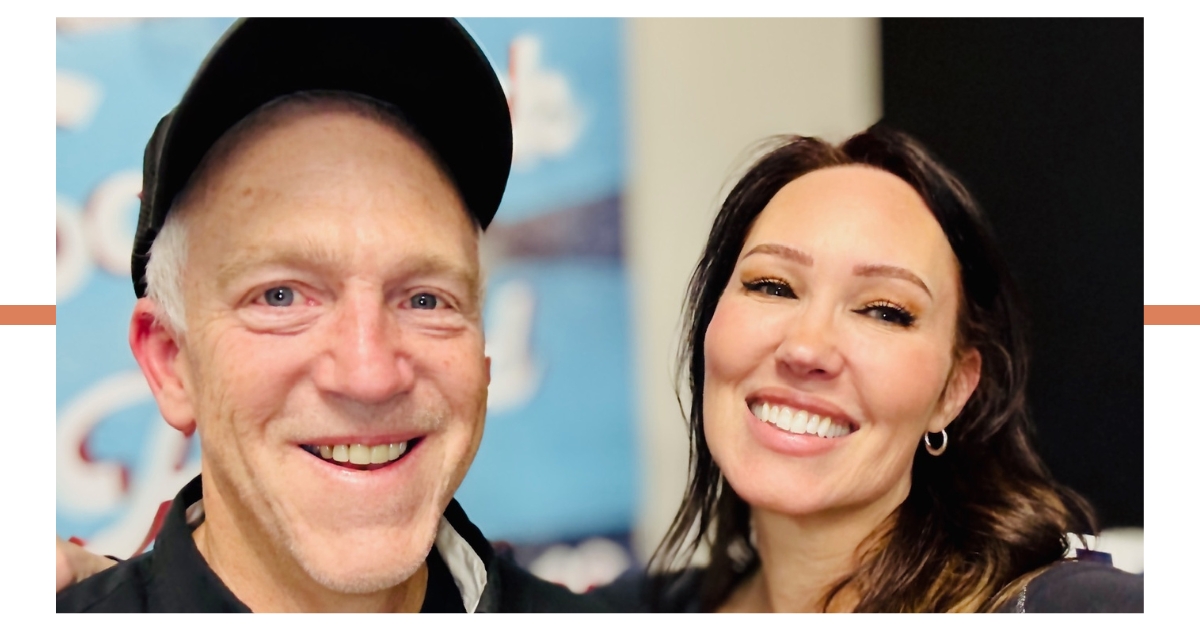
 For over 30 years, Stone Payton has been helping organizations and the people who lead them drive their business strategies more effectively.
Mr. Payton literally wrote the book on SPEED ® : Never Fry Bacon In The Nude: And Other Lessons From The Quick & The Dead, and has dedicated his career to helping others Produce Better Results In Less Time.
Connect with Stone on LinkedIn, Facebook and Instagram.
Websites:
This transcript is machine transcribed by Sonix
TRANSCRIPT
Intro: Broadcasting live from the Business RadioX studios in Woodstock, Georgia. This is fearless formula with Sharon Cline.
Sharon Cline: Welcome to Fearless Formula on Business RadioX, where we talk about the ups and downs of the business world and offer words of wisdom for business success. On a normal day, that’s what we do. But today is not a normal day. Today is a Tuesday where I get to talk about, well, the founder of everything regarding Business RadioX, one of the founders here in Atlanta, but specifically Stone’s studio here in Woodstock, Georgia. This is Stone Payton. Welcome to the show.
Stone Payton: Well thank you. Maybe we should rename it and call it Stone studio instead of Cherokee Business RadioX Stone studio. A little ring to it, doesn’t it? It does.
Sharon Cline: Look at me. I won’t charge you much for that. I’m so glad to talk to you to you today because we haven’t really sat down and discussed, you know, the the progress of Business RadioX and all of the different initiatives that you have right now, as well as the fact that, like, I don’t even get any personal chit chatty time with you like I used to because we’re both so busy.
Stone Payton: Well, especially you, right? It’s hunting season for me. So that’s part of why I’m busy. But you, you’re all over the place, you’re doing voiceover work, you’re doing radio work, you’re doing TV work. Yeah, commercials, all that stuff. You got a lot going on, lady.
Sharon Cline: Yeah, it all kind of happened at once, really quickly. Like doing this Fatal Attraction show. I’m so excited to do that on Thursday and Friday. And then I’ve got a couple different TV shows that are coming out from things that I filmed last year. They come out in February, so it’ll it’ll seem like a lot at once, but it’s all been in the making over time, except for Fatal Attraction. That was a big surprise. I get to be a detective. I’m so excited. I have lines, it’s the most amazing ever. So I’m so glad to share that with you too, because I always think of you as the person that was so supportive of me getting into radio with you, like almost three almost three years ago.
Stone Payton: So remember that when you start getting the royalty checks. Okay.
Sharon Cline: Oh, is that right? I don’t know if I’m.
Sharon Cline: The little people. I don’t know if I’ll remember that. You know what? No. I will never forget how kind you were to me when I was just like. Do you need someone to say a voiceover for you? Please. Anything.
Sharon Cline: You were so sweet to me. No.
Stone Payton: It’s been a great ride. We’d have a lot of fun together and, uh. And back at you, because a lot of the cool things we have going on here right now were born out of your creativity, your initiative, and your willingness to help me try to get some things off the ground. So it’s been a very, uh, at least fair energy exchange. And I have a feeling that the, the balance of the scales is much more in your.
Sharon Cline: Favor than mine. No.
Sharon Cline: Well, it’s been my pleasure. And everything that you’re doing is to not just help the community, but you really do take some personal one on one, um, interest in people and helping them to grow as well. Which is what’s so great about Business RadioX, because it does help to give people opportunities to, Uh, navigate different industries and and network and everybody wins in that, in that environment. Not only do you get to know new people, but you could also help to grow your own business. And it just grows and grows and grows. So not only do you do things for the community, but you do things individually. And I appreciate that about you.
Stone Payton: Well, thank you. And what you’re describing, that’s certainly consistent with my experience, both for me and the people that we bring into the Business RadioX family. One of the things that I thoroughly enjoy about being part of this thing of ours at this point in my career is it’s real easy to be the nice guy, the guy that knows the guy, and it’s real easy to to serve someone who is never going to write you a check. But with all of that in place, it makes perfect sense for very specific types of people in certain situations that meet, uh, some, some very distinct criteria. It makes all the sense in the world for them to at least have a conversation with us about writing us a check, because we Because we can provide a nice return on that check. But but I can also help a lot of people nonprofits, very small businesses, startups. So it’s it’s a neat place to be in terms of timing in the career and to have this, uh, this platform, this, this thing at my disposal.
Sharon Cline: Right.
Sharon Cline: Exactly. People are always impressed when they come in to see this little studio here. It’s like such a surprise. But it has always provided such a nice, intimate setting to get to know someone’s story in a way that I don’t get to have outside of this room. So I consider it an honor to be part of it.
Stone Payton: So thank you. Well that’s nice. Thank you for saying that.
Sharon Cline: Sure.
Sharon Cline: No problem. Well, let’s talk a little bit about some of the things that Business RadioX is doing right now. We’re actually we’ve talked about Main Street Warriors a couple times in the past, you and I on on air. But what is new with Main Street Warriors that we’ve been working on together?
Sharon Cline: Well, I.
Stone Payton: Think it’s a perfect example of a tenant that I’ve tried to live by, a mentor shared with me years and years Go. If you’re kind of getting mired down and you’re stuck in what you’re doing and you’ve got a problem or a set of problems and you’re just really struggling with it, take a day, take a couple of days, go work on somebody else’s problem, right. And so I was getting mired down in one challenge in that when I opened this studio, we’ve got a very well kind of, uh, baked, uh, well baked strategy methodology process for helping professional services clients who are kind of high end, uh, solve their prospecting problem. You know, a lot of people CPAs, lawyers, coaches, consultants, they may be exceedingly gifted at their craft, but a lot of them have a challenge in prospecting. So at the risk of sounding a little bit immodest, this thing of ours, we can fix that problem and we can really help them grow their business. And the fee structure is, uh, commensurate with that, right? So and you can make a very lucrative living running a Business RadioX studio. So there’s this whole tier of people that we serve, and that’s the way it ought to be. But lo and behold, I moved to Woodstock, Georgia, and very quickly I get to know a lot of people around town. I know every bartender in town, of course, but I know a lot of small business people that, you know, they’re not trying to take over the world or anything.
Stone Payton: They just have a neat little lifestyle business. I don’t care how good my thing works. My fee structure is out of reach, right? And so I’m scratching my head. What’s been almost three years now? Two years plus? I guess I’m scratching my head. How do I help these people? Right. Um, what I do at the at that fee structure makes no sense to them, but I really do want to help them. And so, uh, what what I did with a great deal of help from you to bring it into reality and just help from everybody around the community. Uh, you know, Lee Meyer with the highlight reel, just a whole bunch of people came together to support this. But we created this community partner program, uh, with your help, we called it Main Street Warriors. The very first time I tried to even articulate what we were doing and why. Diesel. David, David, Samuel, he says, well, what would it cost for me? I want to be the title sponsor. And I’m like, uh, I don’t know. And he goes, well, how about this number through his credit card? I’m like, okay. So like like without diesel, David, it never would have happened without you. It never would have had this. All these people came together. But what we created was a way for those all the smaller businesses, all these friends of mine that I see every week at, um, at young professionals of Woodstock.
Sharon Cline: Or Woodstock business meetings.
Stone Payton: There’s a way for them to play, a way for them to engage and do a couple of things. One, they can tap into some of the benefits of being a part of this, this thing where we amplify the voice of business and we give everybody an opportunity to share their story and promote their work. But another challenge that businesses at that level have at that revenue level, uh, they don’t have the resources to contribute to local causes the way they would like to. You know, they can write the $10 check. They can go to the $25 dinner, but they can’t be writing 1000 $5,000 checks to this association and this nonprofit. But as part of the Main Street Warriors program, the whole idea behind that is we’ll take that membership revenue, which is, I mean, very modest, right? I mean, it’s like a 10th of what it would cost if you were like a traditional client. Uh, and, uh, my initial, uh, commitment was we’d take 20% of that money, uh, just between me and you and a house cat and now your millions of listeners, I’m sure millions.
Sharon Cline: We’re actually.
Stone Payton: We’re actually, uh, giving about 120% at.
Sharon Cline: The moment.
Stone Payton: But we’re taking that money and we’re turning around and reinvesting it in the local nonprofits that causes, you know, all of them that, that, that we all support around here. You’ve heard of.
Sharon Cline: All of them, of.
Stone Payton: Course. And, um, and so but now that small business person gets an gets an opportunity to kind of come along for the ride on the traditional promotional marketing aspect of things. You know, maybe they’re a sponsor of a specific episode. Maybe we do a live read for them. Maybe we make it very clear that they are the the sponsor of this series. Stuff that doesn’t cost me a lot of money, right? Gives them some exposure. Uh, gives because they are a sponsor. They have kind of the inside track and inviting other people on Cherokee Business Radio, and they get to be a part of what we do for Wildlife Action Kids Expo, Limitless Disabilities Food Pantry, Next Step Ministries, Circle of Friends, all of these you know, they it’s not stone, it’s the main street.
Sharon Cline: Warriors that get to contribute.
Stone Payton: That got me started on Main Street Warriors. I just I love it.
Sharon Cline: I love that you have a golf cart that you ride around in.
Sharon Cline: Downtown Woodstock, and.
Sharon Cline: You can put, you know, the logos and, and the names of the businesses that are part of the Main Street Warrior program. So they get free advertising kind of.
Sharon Cline: In that way.
Stone Payton: Well, so like Renee Deardorff, she runs up level design studio. She made these magnetic signs. I need to put in another order with her. And she made these foam course signs that you see here in the studio. And I thought it was a really a marvelous idea. And she helped me think that through is we’ve got the steel, you know, that’s magnetic. And so you can just interchange the signs. Right. We’re going to do the same thing on the SS freedom, another project I’ll tell you about where we can do some interchangeable, uh, interchangeable signs. But, uh, yeah, the golf cart is fun.
Sharon Cline: I do have.
Sharon Cline: To say, when you consider the the level of income and the ability to financially contribute in a significant way to any kind of nonprofit, it does feel like, well, I need to be a millionaire or, you know, a six figure income kind of company. And it’s nice to know that you don’t have to have that high level in order to be able to make an impact on causes that you believe in.
Stone Payton: Absolutely. And this is just one vehicle for that. What I have come to to believe sincerely, though, what these different constituencies need and want. They don’t need the grand gesture. If you’ve got 100 grand, write a check for 100 grand, but you know, show up and help them paint the side of the building. Bring some lunch by. Go pat somebody on the back. It’s the it doesn’t have to be a grand gesture, but this particular program does help us kind of aggregate resources and have a big impact on any on any one thing can I talk about. So can I talk about the boat project?
Sharon Cline: Let’s talk about the boat. So I saw.
Sharon Cline: You posted about it.
Sharon Cline: On Facebook.
Stone Payton: I did today. And I’m not a big Facebook poster, but I mean, you must have been 30 people, you know, so like, you know, liked it and commented and all that stuff, which 30 in my world, guys is a big deal. I’m not a social media guy. Really. Uh, so yeah. So what we did, we, uh, we went out and bought the most stripped down pontoon boat we could find. It’s actually a Triton has three of those little thingies under it with the idea that we were we were going to we’re going to build out this boat so that we can get wheelchairs on, on and off easily. And that’s not the only constituency that we plan to serve is not just people in a wheelchair, but I learned through my work with Wildlife Action and doing the disabled hunts, um, and the youth hunts, man, you know, some of these folks, it’s really difficult for them to get out and enjoy the outdoors. I take it for granted, right? Like, if, um, you know, like, tomorrow morning, I’m going to I’m going to it’s the last few days of deer hunting season. I’m going to go hunt in the morning, and I just take that for granted. But, you know, people who are confined to a wheelchair or just even maybe less mobile like, but particularly disabled vets, it’s just it’s tough for them to get out.
Stone Payton: So in conjunction with Wildlife Action and Main Street and Main Street Warriors and design and remodel brothers LG, I mean, there’s a lot of people that have rallied around this are what we’re doing is building out a boat that is not just accessible to so that people can get on the thing, but it’s it’s, um, it’s wheelchair friendly and friendly to folks who are who are less mobile. I can’t tell you how rewarding it is that, you know, I just I, we just sort of had the very beginnings of the idea, you know, I mentioned it to you. I mentioned it to Jim and John, the designer and model brothers. I mentioned it to aunt Sandy, who we all at Young Professionals at Woodstock know who that is, but she’s my sister in law. But I call her aunt Sandy. Aunt Sandy was the first one to stroke a check. Boom! The minute I told her about it and. And the minute I told Jim about it, he said darn well wired everybody. People write checks on behalf of causes for Jim just because he’s Jim. You know, I mean, and, you know, he talked to Wesley, and now, you know, he wrote a check and we got.
Stone Payton: And so now it’s this big deal. Uh, we have a website out by the time this is published is probably going to be some kind of website, but I am so looking forward to just getting people out and think about. Think about the folks like Nick Carberry out there with Nick Step Ministries. You know, some of those folks, you know, are are like not mobile at all unless someone’s pushing them in a wheelchair and they, they really need and want stuff to go out and do. So it’s not just there’s the boat and there’s that project and that accessibility, but there’s also because our mission at Wildlife Action is to provide those experiences is there’s also 27 acres. So just imagine, you know, Nick’s crowd or page read over at Limitless Disability or Veterans, a disabled veterans group or any group coming out. And it’s like a whole experience. You’re cooking the s’mores and the hot dogs at the campsite. Maybe you stayed over last night, and then you’re hopping on the boat and going for a cruise. Or maybe if you were going for a fishing trip. I am so excited about this, I can’t see straight.
Sharon Cline: I wish people really knew more how satisfying and rewarding and and touching it is to see someone experience. Um, I don’t know, have have access to an experience they never had before. And to know that you had a small part in making someone feel that kind of joy. Oh, my. There’s nothing like it. You can’t. You can’t pay to have that feeling.
Sharon Cline: You have to do it.
Stone Payton: And I’m so blessed that I’ve experienced it at like three different levels. I’ve experienced at the level of just at the idea stage, people just, just just corralling around me to get it off the ground. And then I’ve and I’ve experienced at the where everybody just is. I mean, I’m getting calls and emails. What can I do to help? I’m a fabricator. I’m a welder, you know. Do you do you need some help getting the motor running? You know, all these people are coming. So it’s incredibly rewarding to see people around you helping. And then to your point, as we’re talking to people, well, I got to tell you, the initial inspiration for all of this was partially my experience with the disabled hunt, right? I mean, you talk, you take a guy double amputee in a wheelchair, and then you look at that guy with grinning ear to ear when he’s holding the eight point deer that he’s harvested, right. So as partially inspired by that experience doing the disabled hunt for the last couple of years and then but also my buddy Kyle Snowpack over at Young Professionals at Woods. Right. He wanted to go fishing. And candidly, it’s been difficult to work out the logistics and access. And so but that’s just it’s incredibly rewarding even at this stage where they just know it’s coming. But can you imagine how it’s going to feel in like in April, May? You know, we get into the warmer weather and we’re actually out doing it. Oh my.
Sharon Cline: God.
Sharon Cline: There’s so many dark things that happen in this world. I just any opportunity to show that there are people that really do think beyond themselves, that really do give selflessly, that that really do want to see other people genuinely happy with nothing back to themselves just to experience that moment. There aren’t enough opportunities for that in my book. Honestly, I really believe that.
Sharon Cline: Well, we.
Stone Payton: Got to keep creating them, but I’ll share something else that’s come of my experience from this. You talk about like like expecting nothing back. You can’t help it. It does come back. I can’t I’ve written quite a bit of business in the last six weeks that you could kind of tie it back to some of the early serve. First serve often. Methodology, ethos, value, system of Business RadioX. In general, people really appreciate that you’re out there helping other people. So I mean, you’ve heard me say this before, but I you know, I find the more people you help, the more money you make and the more money you make, the more people you help. And then once you get that flywheel going, you can’t you couldn’t stop it.
Sharon Cline: If you if you wanted to.
Stone Payton: So yeah, you can go into it like that. No, no expectation of immediate recompense. And you’re going to get, It, uh, emotional compensation, you know, just.
Sharon Cline: Off the chart.
Stone Payton: But it’s probably going to help your business.
Sharon Cline: Well, it looks like what you’re really doing is is encouraging people to think like you do. It’s not. It is the serving aspect of it. It’s it is not just let me grow my business and let me financially, you know, benefit. It’s more about it’s all of it. Everyone wins in that scenario. And that to me is the best. It’s the win win, the win win.
Stone Payton: The only win that I haven’t achieved yet. And it’s not going to happen because he’s on a whole nother trajectory. As I really wanted Sharon to take over this studio. I just wanted access to it. But she’s like, you know, on a whole nother trajectory.
Sharon Cline: Let’s talk about.
Sharon Cline: Taking over the studio at the.
Sharon Cline: End of this, because I am looking.
Stone Payton: I’m looking for a co-host slash studio person to handle the day to day because we’re busy expanding the network. We’re getting I’m getting more and more involved in the nonprofit cause side of life. Um, and so that really, you know, I know you didn’t mean this to be a recruiting ad, but I am kind of looking for a co-host of Cherokee Business Radio and and someone to run kind of the day to day of this studio.
Sharon Cline: So when you talk about expanding the network, what do you mean what’s going on?
Stone Payton: So right now we, uh, we are in maybe 61, 62 markets in some way. We have 19 of these rooms like this.
Sharon Cline: Around the country.
Stone Payton: Right. And I’m one of the 19. Right. So me and my business partner, Lee Kantor, uh, we own the business radio X network, and, uh, so that’s my day job, right? And then I also run Cherokee Business Radio. Uh, but on the expansion, we want to go from 19 to 1000. We feel like what’s happening here in Woodstock with John Ray is doing such a fabulous job with in North Fulton. Mike Salmon up in Gwinnett, Tom Sheldon out in northeast, bejesus, Georgia. Bowe up in Gainesville, Trisha out in Houston, Karen out in Phoenix. What these people are doing, those in those communities. Uh, well, we more than believe it now. We know it. It’s replicable. This could be happening in so many communities with all everything we’re describing. And so we are actively seeking people in other markets. And I’ll tell you what was it, John? Somebody gave me the word. I think it might have been John Cloonan, like the marketing lingo for the avatar. Oh, right. So I’ll give you the avatar and hope I don’t, uh, the ideal avatar and hope I don’t run into any legal trouble because it’s not a knockout factor if you’re a guy, but established female business coach if and so that’s like the established female business coach. Some additional pluses on the on in uh for that are, uh, credentialed like ICF certified veteran.
Stone Payton: There’s a lot of reasons for that. But it’s a that makes it a good fit for us. Now what makes it a good fit for them and at least them worth having a conversation with us is if they if they have a good established business. But the greatest opportunity for improvement in their practice is the Is the prospecting, right? Like that’s the hardest part. And that’s true for a lot of professional services folks CPAs, lawyers, consultants, coaches. But but it is a lot for for coaches because that’s a gap we know we can fill. We have very, uh, well established proven. It always works. I mean, uh, methodology for filling that gap. So if there’s a female business coach, veteran ICF, uh, credentialed in, you know, San Jose or Pittsburgh or, you know, or Tampa, and it would and she’s, uh, she I want to say she and she really believes me. If I could just get more initial beginning conversations, those initial relationships going. I mean, we probably should team up or we ought to at least have a or at least have a conversation. So my day job and one of the things I’m working on very diligently right now is just having those conversations. Um, now I use some of our own toys and methodology to do that.
Stone Payton: We started I just have have launched a new coaching series under the High Velocity Media Property High Velocity Radio Media property, because that helps me serve first serve early serve often give female business coaches and in some males, but give them an opportunity to share their story, promote their work. But, um, you know, by the time I invite them on the show, have a conversation with them about to get ready for the show, and then have them on the show. I have a great relationship with them. And, you know, it’s, you know, still, eight out of ten of them may not make any sense for us to team up directly, but how many of those people know people we ought to talk to? And then when people are looking at what we’re doing, they’re able to see, okay, these guys are real. They’re just good folks trying to do good work. I don’t, you know, I’m very transparent about what we’re doing. Like, it’s important to me that everybody does win in the equation. So I’m spending a lot of time doing virtual interviews instead of instead of the in-studio interviews, just to have conversations with people. Maybe we should, uh, we should team up with.
Sharon Cline: Well, I mean, it’s so exciting because it really feels like you’ve got momentum going, especially if you said in the last six weeks or whatever, you’ve just like, had more and more people get to know even what radio Business RadioX is about. Yeah. And and just knowing that what the goal is, the win win.
Sharon Cline: It really is. Right.
Sharon Cline: Every everyone does have a moment to where they can feel like they’ve been heard, seen and understood and no one is unhappy to have that kind of.
Sharon Cline: Shine on them.
Sharon Cline: But also they get to have a relationship that starts in that space, and then it grows and grows and grows and their network grows. But it all starts from such good energy and good intentions behind it.
Stone Payton: See why I want her to run the studio?
Sharon Cline: Oh.
Sharon Cline: Um, let’s let’s talk stone.
Stone Payton: We’ll table that. But when you’re ready.
Sharon Cline: Yeah. All right, all right, we’ll talk.
Sharon Cline: You’re hilarious. We’ll see why it’s so fun to work with Stone though, because you are very inspiring and your brain thinks so differently from mine. And I love that it does because I just have me. And sometimes that’s not the best place to be. But like listening to how you consider the different ways all across the country that people can be affected positively. I think here in Woodstock, this is our town and you’re like the world.
Sharon Cline: I’m like, wait.
Stone Payton: Well, and I mean, candidly, if if I would just focus on running this studio and particularly if I had a coaching practice, right, like if I was a sales and marketing coach for training and development people, because I know a few things about how to do that. And if I primarily use this studio just to grow that business and then maybe do a little bit of Business RadioX, I’m sure I’d make a ton more money. But, you know, it’s.
Sharon Cline: Not about it’s it’s interesting too.
Sharon Cline: Because it.
Sharon Cline: Isn’t. Oh, do you really?
Sharon Cline: That’s nice to know. I married up.
Stone Payton: My wife, had a real job. Now, now.
Sharon Cline: Now she’s all retired. Yeah.
Stone Payton: She’s retired. So maybe.
Sharon Cline: Maybe you do need to.
Stone Payton: Be coming to you for a job. Uh, but but no, I mean, and if that’s where a person is in that stage of their life, that’s what they ought to do. And that’s what we coach these, um, coaches to do that we team up with is look, first and foremost, we’re going to share everything we think we know about this. And the first thing we want to do is use it just like you will with your clients. If you really get in the Business RadioX business, let’s just use it to grow your own business. Let’s see, like coaches, uh, what we’re learning about that ecosystem, the, uh, the heartbeat of that is the the discovery calls just having genuine, open, um, authentic conversations with prospective clients because think about how just think about the level of trust one has to endure just to have an initial, you know, it’s not hey, you know, let’s have a cup of coffee. Hey, ho, what do you do? What do I do? A good referral for me? Yeah. No, you’re like a real conversation.
Sharon Cline: Well, it always feels like. What do you do you want from me?
Sharon Cline: You know.
Sharon Cline: What do you need from me? And how can I write you a check of some kind? Like, that’s what it always feels like when you’re in those moments.
Stone Payton: And in our thing that. No, we’re using this to serve. And it’s not like, you know, our methodology is the antithesis of this. So it’s not this. It’s not, hey, come on, my show. And okay, you’ve been on my show and I buy my thing. It’s not that with me talking to somebody in another town that might. And it’s not that at a studio. It’s not that. But it is a great way we have all these relationship building moments in our in our process. You know, just when you’ve experienced this, just reaching out and inviting someone to come in the studio and look in the studio is way beyond doing virtual. But there’s value in both just reaching out and inviting someone to come in the studio and share their story, promote their work, how many genuine relationships and new friends, many of whom will be lifelong friends, have you made just by having the Fearless Formula show right out of here?
Sharon Cline: So true. I was just talking to Doctor Trudy Simmons, who was on the show last week about how she was a stranger when she walked in. Nice to meet you. Shake your hand. We come to the studio. By the time an hour has passed, I. I feel like we’re we’ve I don’t know, we’re like it just quickly moves our friendship forward very quickly to where I feel like I could call her if I needed something, and I really believe she would be be there for me. It’s it’s exponentially quickly. I can’t explain it’s like magical. And I know that sounds I don’t know, I don’t want to talk esoterically.
Sharon Cline: And it’s.
Stone Payton: Not and I want to be clear about this because there are people who market it this way, and I guess they’re making it. It’s not a parlor trick to get a sale. It’s you got to get above all that crap and just go out there and just try to help people.
Sharon Cline: Yeah, because it’s not about it’s not about what you can get from them. It’s really just about sharing their story and and what it’s like to be them for a little while. And, and from a, from a place of genuine curiosity. Not what you can do for me.
Sharon Cline: It’s really.
Stone Payton: Not. And in the same breath, just think if let’s let’s say you did have something to sell for some reason, if you sold office furniture and, and, you know, and she met the criteria for if you called her six weeks from now, six days from now, I’ll bet you she’d take your call.
Sharon Cline: Yes. Right. Yes. She would.
Stone Payton: If you shared with her what you’re up to, I bet you would listen to you about your products and services with an open mind. And if her husband’s brother sold off his furniture, and there’s just no way it’s going to. She could get divorced if she buys office furniture from you. That ain’t going to happen, right?
Sharon Cline: Right.
Stone Payton: She’s still going to try to help you any way she can.
Sharon Cline: She’d find someone or something.
Stone Payton: And, I mean, I got 21 years of that 100,000. Not me personally, but there’s I, I just have that relationship with people and, you know, and I, I utilize it and capitalize on it judiciously. And again, in a, in a serve first manner. But there’s absolutely nothing wrong, at least in my view, to build a relationship with someone. And if you have something that you, um, that you do or that you sell that might serve them, you don’t have to be cagey about it because you’ve got a real relationship with them. Just like I have a real relationship with you. I can I can call you and say, hey, Sharon, I’m selling these new radios that just go great on motorcycles. And you were. I thought of you first. Okay. You’re going to listen to me about, you know.
Sharon Cline: Yes, I because we’ve got all this history. That’s right.
Stone Payton: Does that make sense?
Sharon Cline: It does.
Stone Payton: But I know some people might think, or maybe this is the way they do, that. It’s like a parlor trick to just, you know, to get the lead or whatever, that we’re so far above all that fray with the way we do it.
Sharon Cline: Well, there’s no way to. Okay. How do I want to say this? I would not want someone in the studio and interview them with the with the energy of, now you’re going to hire me to do a do a voiceover, or now you’re going to hire me to do whatever underneath it, because I don’t know. I feel like I could feel that kind of disingenuousness.
Stone Payton: And you can’t be, but and at the same time, how appropriate, organic, authentic, and all of that is if through the process of you being part of the Business RadioX family, providing this opportunity, building the relationship with the inviting, and maybe even having a conversation to help them get ready doing the show. If if either you intentionally and or just sort of comes out that you do voiceover work and they’re getting ready to to do an audio book or whatever, I mean, there’s nothing wrong with it. Like if there’s a it’s it’s perfectly appropriate and organic. And again, a the equation is a win win if you put yourself kind of at that next tier.
Sharon Cline: Right, right. If I were.
Sharon Cline: To say, listen, if you ever hear I’ve had many authors, many voiceover over artists, many actors on the show, which has been really fun because I get to kind of see what their world is like, but it is not with the idea of of please hire me. It’s more of, here’s my side of what it is that you’re doing. What is it like to be you for a while? And we get to talk about very similar things, themes that I don’t get to talk about with a plumber or someone that is in a different kind of industry. But I absolutely if it’s supposed to work out, it will work out. And that is just the way I look at it. I never expect anything from anyone. It’s just here’s what I do. If you like how I sound, great, but if you don’t, I might know someone in the voiceover world who could work for you better. And it just is a there’s room for everyone. There’s success for everyone out there. It does not have to be me controlling the whole world. I feel like things land the way they’re supposed to, and they and they work out the way they’re supposed to.
Sharon Cline: Well, two.
Stone Payton: Observations on that. It wouldn’t surprise me one bit to learn that some of those folks have you top of mind. They’re out there doing their thing and somebody needs or wants or they hear it and they believe, oh, you know, oh, you need someone who can do a British accent and sounds really cool. And I tell you who you ought to talk to is Sharon. I bet that happens. Wouldn’t surprise me at all. Um, if that happens. But it also reminds me of another thing that a mentor of mine shared with me years and years ago. And one of the things that this firm did so well, they were so far above in their positioning, everybody else in the space. And it just you didn’t have to sell it. You just had to do the work and be gracious and generous and providing the the counsel and the thought leadership. But what he told me, he said, Stone, serve your competition and you won’t have any. Oh, and that has proven itself over and over and over and over again. So like, for example, anyone who is out there trying to use like toys like these that we’re surrounded with right now in this.
Sharon Cline: Platform, the RODECaster and the.
Stone Payton: Computer and the microphone and the, uh, and the, uh, the, the distribution pipeline of all these third party podcasting platforms. There’s a ton of people doing that kind of stuff, and they’re all out there trying to to help folks. These people are not threatening my lifestyle or what I’m trying to do at all. And, um, in a lot of cases, someone will come to me and I’ve kind of, you know, determined a niche in doing these kinds of things at that high tier and these kinds of things over here with the Community Partner program. And there’s this big swath in the middle of like, more production services and marketing services associated with producing a podcast, distributing a podcast, leveraging all that stuff. And I mean, I’m on the phone. Hey, Sharon, do you want to take a look at this? Hey, you know, Tim, do you want to take a look at this? Logan? Um, anyway, for whatever that’s worth, it might be worth what you paid for it, but I will repeat it. Serve your competition, and you won’t have any.
Sharon Cline: I love it because that is such a theme of mine. Is that, like I was saying, there’s room for everyone in the voiceover world. There’s room for everyone in whatever their dream is. It’s not. I can’t own anything anyway. I can’t control anything anymore.
Sharon Cline: And a bad one’s.
Stone Payton: A wash out. The bad the market will the market will take care of the ones that are that are charlatans or don’t deliver good work or whatever.
Sharon Cline: But I would agree with that. I didn’t think about that.
Stone Payton: Anyone of substance, there’s there’s room for all of those folks. Well, we’ll never run out of people who need the help. And then it’s up to us to be creative. Okay. You know, maybe not everybody can write a $30,000 check every year to help them grow their business, but anybody can write a $2,500 check a year, if you know what I mean.
Sharon Cline: Like, you can help them all.
Stone Payton: And somewhere in between all that. Okay, then let me find somebody that can.
Sharon Cline: What would you what who would be sort of. How can you explain Main Street Warriors for a local business right now? Like what would what would be the different tiers that they could be involved in.
Stone Payton: So and I’m going to simplify it down to just one plain tier for the Main Street warriors. And right now there’s there’s a couple of different tiers. But if you’re that, you know, person with an idea on a cocktail napkin and you’re out there networking, you’re getting your thing off the ground, um, then then there’s something there for you. Or, you know, if you got a business that’s doing 150 grand a year or 50 grand a year, but you a little bit of promotion and you want to be associated with, uh, giving to the community, and you want to be you want to tap into some of that. If you’re a main Street warrior, there’s some things that that we can do that we’re going to be doing anyway. And it’s just you don’t want to pretend like I’m this great hero philanthropist, but, you know, like, right now, we could have opened the show. You know, today’s episode is brought to you in part by Marietta marine or, you know, or up level design studio. Please go check them out at bumpity. Bump.com. We could have made, uh, the we could have put, like a logo there. So when people go listen to it, they hear that and they see the line. And then and then Renee over at over at uplevel could send out a thing.
Stone Payton: Hey, you know, we just sponsored this latest episode, but as a main Street warrior, to me, the greatest benefit is you. You get, you get to do some of the stuff that are that are high end, premium fee clients get to do. If you’re a main Street warrior, you’re and we have several chapters now because we’ve kind of replicated. But if you’re a Cherokee chapter of Main Street Warriors, if you’re a main Street warrior, you can legitimately, legitimately and as truthful, you can go out into the marketplace and you’re talking to somebody instead of doing that, hey, ho, let’s get a cup of coffee. You know, here’s my business card. You can have a genuine conversation with them for a moment that don’t talk about you at all. It talks about them. Hey. Sounds interesting. I don’t know if you knew this or not, but I’m a sponsor of Cherokee Business Radio, and I think you’d be a good guest on the show. If you’d like to. Come on, I’ll send you a booking link. And, and and when they send the booking link. They are the ambassador, right? They are the. So now I know that it’s Renee or David or, you know, Andrew or whoever has sent them over here.
Stone Payton: So I know depending on what else is going on that day, I can I can give them all that, all that love. But forget about all that digital promotional stuff. Just the fact that now you’re out there in the community and you’re we’re giving you a vehicle, we’re giving you a method to express what you want to express you. Now, you’ve put that we’ve put that Main Street warrior in a position to serve first, serve early, serve often. And they get a lot of the benefits of the it’s it’s just a marvelous relationship building moment. And you know, they can follow they can listen to it either live or on demand. They can follow back up with that person. It’s just, again, it’s all built on on real relationship, you know, and you’re talking you know, actually I think right now it’s 1250 a year. We’re going to change. It may be a little bit more than that when this gets published, but it’s not going to be more than $2,500 a year, so I don’t even know what that is. There’s just, you know, it’s it’s if you don’t do it, it’ll be because you don’t. You’re not buying into what we’re doing because of the money.
Sharon Cline: You know what I mean?
Stone Payton: You’re spending that on something stupid already.
Sharon Cline: Lip gloss is what I say. My favorite thing, what I like, too, is Business RadioX has got this just this established, legitimate name that really does add a little bit more credibility to what you’re doing if you’re just on your own.
Stone Payton: Yeah. Well, part of I mean, we’re a 21 year overnight success story.
Sharon Cline: Right? Overnight?
Stone Payton: No, it’s taken a long time to get it where it is. And it’s not Lena. It’s the we’re doing this on the back of this. Our studio partners are marvelous. Our guests, you know, because of this is what it is. When you get a guest in here that has a compelling story to share and they have substance and, you know, 99.9% of them do they share it with their extended network. And so, yeah, over the 21 years, we have remarkable, You know, all the jazz, the domain authority, the brand equity, all that marketing stuff. And so it passes this like if you if you are a guest on the Business RadioX network and part of your marketing strategy this year is to go get on other shows. At the risk of sounding a little bit immodest, if you send them a link and they may not even go to it, but if you send them a link to your Business RadioX interview, it ain’t going to hurt you.
Sharon Cline: You know what I mean? It’s so true.
Stone Payton: It will help you.
Sharon Cline: Well, I love it because it really feels like, um, the things are growing. I mean, it’s 2025 and it’s January, and already there’s, like, such momentum.
Sharon Cline: It’s exciting.
Stone Payton: It is exciting. It’s a lot of fun. I still right now, the thing that’s the biggest twinkle in my eye right now.
Sharon Cline: Is the.
Stone Payton: Boat is the boat.
Sharon Cline: Thing is the boat. It really.
Stone Payton: Is. So it’ll be something else six weeks from now. But it is right now.
Sharon Cline: Will you talk a little bit about wildlife action?
Sharon Cline: Yeah.
Stone Payton: So this is the most marvelous organization. I’m on the board, and the mission is preservation and conservancy conservancy. So the people we interact with a great deal are often people that don’t have that opportunity to do the hiking, the canoeing, the fishing, the camping, the hunting, the fishing, all that stuff. And so we’re able to provide those opportunities for them. And I mean, like for 60 bucks a year, you could your whole family can be a member.
Sharon Cline: Where is it located?
Stone Payton: It’s located on Kellogg Creek.
Sharon Cline: Okay. And Woodstock.
Stone Payton: And so it’s actually technically Acworth, but. Yeah, but if you go to Bells Ferry and hang a left on Kellogg or coming from here, hang a left on Kellogg. It’s there’s Kellogg day use area. And right before you get there, it’s a wildlife action. And since.
Sharon Cline: We’re mentioning it.
Stone Payton: We’ll put the address 27 acres facing Kellogg Creek.
Sharon Cline: Wow.
Stone Payton: And so right there on the lake. And it’s just it is beautiful. We have Pioneer Village, which Boy Scout troops? Some group not even when it’s warm, but always when it’s warm. But I mean, last weekend. In this coming weekend, a group will rent Pioneer Village and. And we have these Adirondack huts that they can stay in. But I mean, we also I mean, there’ll be 30 tents there and we do all kinds of activities like, uh, the week before Halloween, we had instead of calling it Pioneer Village, we called it Haunted Village. And so families each took one of these, uh, like, huts and it was a trick or treat station. Earlier that day, we had pumpkin carving. All right. And then a couple weeks later, we had a youth and disabled turkey hunt. And so they’re not shooting turkeys, but they’re, uh, like a turkey target. Right?
Sharon Cline: Gotcha.
Stone Payton: Everybody goes home with a turkey.
Sharon Cline: Every kid.
Stone Payton: So again, envision you got an eight year old girl sitting on her granddaddy’s lap. She’s been shooting a BB gun or a crossbow or a bow. And I mean, again, grinning ear to ear with granddaddy. And she’s holding. She can barely hold it. She’s holding up the turkey. But just think of that experience. And so and then you got all the people surrounding you out there cooking their hamburgers. Uh, and then, uh, you know, you got the folks who are going to do the disabled hunt out there proving to the RV ranger that they won’t shoot themselves in the foot, you know. So it’s like this kind of safety orientation thing, but again, incredibly rewarding. And so so we have Pioneer Village and then we have this lodge. Oh my God, it’s gorgeous. You got to come out and see the property. And it faces Kellogg Creek and the lake. We have weddings, funerals, memorial services. Uh, there’s a there’s a church called Rolling Thunder that comes out. We have a chaplain outside chapel, and sometimes they rent the lodge and they’ll come out there several Sundays over the. But it’s.
Sharon Cline: Beautiful.
Stone Payton: It’s absolutely gorgeous. Great fishing. We have a whole area where you clean the deer and all, but you also clean fish. We have a whole nother education building at the top. We have a nature trail that goes through the. On the other side of the gravel road is 3 or 400 acres of acres of Army Corps land that you can get a permit to archery hunt, which I do in several of my buddies do. But there’s a nature trail that you can walk that when it’s not hunting season. There’s so much to do out there.
Sharon Cline: What do you think? If you can compare and contrast what it’s like to be in that environment and be kind of connected to nature and, and your community in that way. And then what most people and specifically children do these days, which is very much indoors and very much online and with their phones. There has to be some kind of disconnect that they’re not experiencing. You know, they don’t have that experience of being so present and grounded in the world.
Stone Payton: Well, in so many, I didn’t realize it because I grew up kind of in the country, you know, and all that. And then, uh, and I’ve always liked to hunt and fish, but there’s a whole group of people, a whole population that just haven’t been. Once they’re exposed, they come back. That’s the neat thing about it. Once, once the kids come, they they want to want to come back and play in the creek. They want to go fishing. They want to go swimming, you know, all that kind of stuff. I can tell you it is incredibly rewarding to, to to help all kids enjoy it and families enjoy it, but it is particularly rewarding. Like during our summer adventure camp, we have a day camp, uh, to watch kids that just don’t get out much. You know, they’re used to being on the video games and the phone and all that. And, you know, they get out there and fish for an hour. I mean, that’s all they want to do, you know, or swim and that kind of thing. And so that’s a great deal of fun for me personally. And it wasn’t all a product of being part of wildlife action, but it is all a product of being outdoors. I find a that I just thoroughly enjoy the experience itself while I’m having the experience, but I swear to you, I’m a better husband, father, radio host, business partner. I’m you’re balanced aspect of my life is better because in my case, I case, I went and sat in a tree for a couple of hours last Friday or this Friday is the last day of hunting season. I guarantee you I am a better person in all of those roles, because that is a part of my of my life.
Sharon Cline: So I metal detect as you know, this my.
Sharon Cline: Like, oh, wow.
Sharon Cline: My nerdy hobby. So yeah. Um, so anyway, I love being outside for that reason. It’s there is a balance that happens to me when I get to experience just something physical like that out in nature and breathe, you know, clean air and dig in the dirt a little bit. And it’s hours that I can do it because it’s like such focused energy and I love it. But I am different when I come back inside and have to go onto my computer. My brain doesn’t. It just functions differently. It balances me out. And I think that’s what you were talking about, being kind of more of a balanced person. And I think that there must be something, um, that they can even, um, detect through, uh, brain scans what, a child who doesn’t really get outdoor activity and what it would be like for a child that does. There’s got to because you can feel a change in yourself. So I think even now when I think about kids going out and playing like, you know, like we used to do, it seems less safe for some reason to just like go out and play in a yard and.
Sharon Cline: Like, come back in for dinner. Maybe it.
Stone Payton: Is in a lot of environments and that’s nice that you can come to a safe.
Sharon Cline: Place. Exactly.
Sharon Cline: That’s what I’m thinking is you’ve got a very controlled environment, but you also get that same freedom.
Sharon Cline: Yeah, freedom. Feel freedom.
Stone Payton: And it’s yet another outlet for me. There’s something going on every week. We’re serving like, you know, we got the polar plunge, we got the poker run, we got the disabled hunt. We got the adventure camp. We got the camping, the all of that, uh, stuff going. So for me personally, it is. And I think this too is good for the brain chemistry and all that is to always have that thing I was telling you about earlier, something where it’s not even working on somebody else’s problem, but just go help somebody else and just get off of your thing for a little bit.
Sharon Cline: So I had like kind of a tough holiday season, but one of the things that’s helped me so much is actually that very notion is to get out of my own head and to think about other things, someone else that needs attention. It it shifts something in myself. Helping someone else does help me too. But it’s that’s not why I’m doing it. It’s just kind of to cope. But knowing that I’m helping someone else does give me a sense of self esteem, which actually helps me in my ability to deal with something difficult.
Stone Payton: If that makes all the sense in the world. And how much fun is it when you do that? And you and you swim at that end of the pool, you not only bump into, but you become great friends with and build terrific relationships with the likes of, you know, Dan Thrailkill and Joe.
Sharon Cline: Since I can’t see Dan and Joe, a.
Sharon Cline: Front porch advisors.
Sharon Cline: Right?
Stone Payton: And Jim and John at Design Remodel Brothers, and Nick Carberry and Paige Reid and you just all these, you know, and Ashley over at LG Credit Union in Wesley. I mean, just just look at the Jacob Schluter The people you’re hanging out with are just good. Mo just hanging out with people like that. It makes your life better.
Sharon Cline: It does. And recently I had a tree fall in my backyard. I posted it on Facebook. It was so upsetting because the only thing I have in that backyard is, I mean, there’s like a little field that has nothing.
Sharon Cline: Right, right.
Sharon Cline: And then there’s like this little fire pit area, and this tree was so long and ginormous, and it just landed right in the one spot I didn’t want it to, which was where everything was. It broke everything, which it’s fine. But I did post about it on Facebook, like, okay, and I cried. I was so touched at how many people offered to help fix this for me, and it was some of the people that you were just mentioning, you.
Sharon Cline: Know, and I.
Sharon Cline: Don’t like being on the receiving end of help because I like to help.
Sharon Cline: I do just to just to.
Stone Payton: Set the record.
Sharon Cline: Straight. I love.
Stone Payton: Being on the receiving.
Sharon Cline: End. Well, then you’ve got a.
Sharon Cline: Good friend in me because I’ll help.
Sharon Cline: You all.
Sharon Cline: Day. But I never want to be the person that needs help. I’d much rather help, but oh my goodness, I was touched. I can’t even tell you. And it happened right around like the holidays where I was kind of struggling with some things. But anyway, that helped me to realize how many good people are out there in the world, and that not only do I get to help people in that opportunity, you know, have opportunities for that, and I get to help someone feel the way I got to feel when when they help me. Oh my goodness. I just loved it. And I think the same for you is like, if most people were out in the world experiencing what that genuine intention is for, they would do it more often because it really is something that is is on a special level.
Stone Payton: Yeah. And in their defense, I, you know, I’m at a I’m at a point in my life where a lot of things are comfortable, maybe too comfortable. And I understand you kind of, you know, you got to make the mortgage and you got to get the kids to soccer practice. I, I realize, you know, it’s maybe comes a little easier for me right now, but man, to whatever degree you can make that an important aspect of your being, I think. I think it’ll come. I think you’ll find it very rewarding.
Sharon Cline: Well, if someone wanted to find out more about wildlife action, how could they do that?
Stone Payton: So I should know better about how to contact Wildlife Action. I was I will study up on that man if you’ll reach out to me. I’m not great about answering the phone. I work mostly on scheduled calls, but I’m good about seeing text and get back to you. So my direct line and my text is (770) 335-2050 and my email is stone s t o n e at Business RadioX dot com. And it’s it’ll be up before too long because Jim and John are helping us in ash Davenport over to ash is setting up a SS freedom org if you want to hear about that.
Sharon Cline: Oh my gosh, so exciting.
Sharon Cline: Yeah. Also, and anyone who’s interested in Main Street Warrior program, they can contact you for that as well.
Sharon Cline: Right. And you can.
Stone Payton: Go to Main Street Warriors. Org I need to update that. You I told you earlier, I can take all the help I can get.
Sharon Cline: I got so.
Stone Payton: Many irons in the fire. You know, just. I’ll just tell Sharon and she’ll get it figured out. But Main Street warriors.org ss freedom org Business RadioX dot com or you know shoot me an email at stone at Business RadioX dot com or text me (770) 335-2050. Uh, you know, I’ll interview you if that’ll serve you. We’ll have a beer under the elm tree.
Sharon Cline: Uh, Reformation across the street.
Stone Payton: And all the above.
Sharon Cline: Well, it’s so exciting to see what’s happening, and I’m.
Sharon Cline: I’m proud to be part of it.
Sharon Cline: Of course. Is there anything else you’d like to say before we kind of close out everything?
Sharon Cline: You know what?
Stone Payton: I’ve talked more than enough. But I promise you, if we do have a beer, we will talk more about you than me. It’s just. Sharon set this up so that I did a lot of talking, because she’s really good at that. But I really am interested in you and what I can do to help you.
Sharon Cline: That sounds perfect.
Sharon Cline: That’s kind of how I feel with business. I mean, with Fearless Formula two. How can I serve you? So, yeah, if anyone who would like to get in touch with any of us, there are lots of methods out there. Sharon Cline on Facebook.
Sharon Cline: And yeah.
Stone Payton: Tell them how to get.
Sharon Cline: To you. Oh, yeah.
Sharon Cline: Well, yeah. I mean, okay. On Facebook, Instagram I Sharon Cline dot com my website. Um, but Stone, it has been a pleasure to chit chat with you. This has been sorely needed.
Sharon Cline: It has. Yeah. I’ve really missed you.
Stone Payton: We should have like the Stone. No, you should get top billing. The Sharon.
Sharon Cline: Stone chat.
Sharon Cline: The Sharon and Stone chat. Oh, how cute is that? Well, who knows what’ll come in the future. Maybe I’ll be owning the studio.
Sharon Cline: I hope so.
Stone Payton: I’ll sell it to you.
Sharon Cline: For a dollar.
Sharon Cline: Oh, nice. Okay. You heard it here first. That’s legal, I’m sure. All right, everyone, thanks for listening again to Fearless Formula on Business RadioX. And again, this is Sharon Cline and Stone Payton, reminding you that with knowledge and understanding, we can have our own fearless formula. Have a great day.
The National Black Business Pitch: Transforming Dreams into Reality for Black Entrepreneurs

/
RSS Feed
In this episode of Women in Motion, Lee Kantor discusses the National Black Business Pitch (NBBP) program with Dr. Pamela Williamson, TJ Jackson, and Tanya Nixon. They explore the NBBP’s mission to empower Black-owned businesses through mentorship, networking, and educational resources. Dr. Williamson highlights the program’s community impact, while Tanya emphasizes personal development and effective business articulation. TJ talks about the importance of economic parity and mentorship. They detail the application process, eligibility criteria, and the diverse range of businesses the program supports.
 Tanya Nixon is the Director, Supplier Diversity for Aflac.
Nixon is responsible for the overall strategy for supplier diversity to include company-wide programs to ensure opportunities for women & minority-owned vendors to participate in procurement activities in addition to tracking and reporting of the diverse spend.
Nixon identifies, strategizes, evaluates, and develops sourcing and purchasing practices meant to promote diversity among the organization’s suppliers and contractors.
Prior to joining Aflac, Nixon was Director, Supplier Diversity & Responsible Sourcing at Visa Inc and she also served for over ten years as a Manager, for the National Supplier Diversity/Impact Spending at Kaiser Permanente, the $80-plus billion Oakland, California-based healthcare organization.
In this role, Nixon oversaw and advocated for a portfolio of contracts worth more than $1 billion with diverse companies in the staffing, professional and business services, and marketing sector.
Ms. Nixon is known industry-wide for her strong leadership, enthusiastic champion of supplier diversity, and her generosity in helping other large organizations develop and expand their own programs. Nixon is also the Chair of WBEC-West.
Ms. Nixon holds a master’s degree in organizational development, a bachelor’s degree in business management, and a certificate in Human Resource Management.
Follow Aflac on LinkedIn.
 Todd Jackson (TJ), is Manager, Supplier Diversity with Republic Services.
TJ is the manager of Supplier Diversity at Republic Services. He’s responsible for creating and managing supplier diversity in the environmental service industry to meet Republic Services’ set initiatives by end of 2025 in the supply chain.
TJ’s career spans from manufacturing to program management with positions such as Process and Equipment Development Engineering, Strategic Sourcing and Supplier Diversity.
Prior to joining Republic Services, TJ is a former employee of Intel Corporation and Union Pacific Railroad and served in the United States Air Force. TJ has served in the capacity of several board of directors’ positions for non-profit organizations. Motto: “I can……”
Connect with Todd on LinkedIn.
About our Co-Host
 Dr. Pamela Williamson, President & CEO of WBEC-West, is an exemplary, dedicated individual, and has extensive experience as a senior leader for over twenty years.
She has served as the CEO of SABA 7 a consulting firm, overseen quality control at a Psychiatric urgent care facility of a National Behavioral Health Care Organization where she served as Vice President and Deputy Director,and has served as the CEO of WBEC-West, since 2008.
Her extensive experience in developing and implementing innovative alliances with key stakeholders has enabled the organizations to reach new levels of growth and stability. Her ability to lead and empower staff members creates a strong team environment which filters throughout the entire organization.
She takes an active role in facilitating connections between corporations and women business enterprises and sees a promising future for WBENC Certified women-owned businesses.
Dr. Williamson holds a Doctorate in Healthcare Administration, a Master’s degrees in Business Administration, and bachelor degrees in both Psychology and Sociology.
Connect with Dr. Williamson on LinkedIn.
Music Provided by M PATH MUSIC
This transcript is machine transcribed by Sonix
TRANSCRIPT
Intro: Broadcasting live from the Business RadioX studios, it’s time for Women in Motion. Brought to you by WBEC-West. Join forces. Succeed together. Now, here’s your host.
Lee Kantor: Lee Kantor here. Another episode of Women in Motion. And this is going to be a good one. But before we get started, it’s important to recognize our sponsor, WBEC-West. Without them, we wouldn’t be sharing these important stories. Over the past few years, there’s been a buzz in the air around an opportunity called the National Black Business Pitch. Today, I have Dr. Pamela Williamson, TJ Jackson, and Tanya Nixon, the brains behind this opportunity. Welcome, everybody.
TJ Jackson: Well, thank you.
Tanya Nixon: Thank you, thank you.
Lee Kantor: Now-
Dr. Pamela Williamson: Double thanks.
Lee Kantor: Well, before we really get into the meat of this thing, why, as we bequest board members, do you feel that this program is important and should continue to be supported? Dr. Pam, why don’t you kind of chime in here?
Dr. Pamela Williamson: Sure. I think the main reason is that we really want to support local businesses in the communities that we reside and in the communities that need it most. And we know that one of the ways to improve the economic vitality of communities is to really help small businesses. And mainly, we wanted to help small businesses, but we really wanted to concentrate on black-owned businesses partly because, a lot of times, they don’t have the information around the opportunities that are available within corporate America for them to do business with them, and also because we know that black-owned businesses tend to keep the bulk of their money in the communities that they reside, which helps to create job opportunities within those environments.
Tanya Nixon: This is Tanya. You know that was great, Pamela. And the only thing I would add to that because I 100% agree, and this might sound a little bit silly, but I think it’s okay to really help people show up to be the best version of themselves, right? And so, yes, this creates economic vitality and economic equity within our communities, but we’re also giving them that edge to really speak up and speak well about what it is that they do to be proud about it. So, I really think that’s cool. And also, at the end of the day, these judges are volunteering their time because they also see the value to this type of programing. So, super, super proud of it.
TJ Jackson: And I’d just chime on that too, but thanks for being part of this podcast. I really appreciate it. But from several reports, whether it’d be from Wells Fargo, whether it’d be from US Department of Commerce or any other reports,women-owned business make up the fastest growing segment of entrepreneurs. And so, whether that’s national, whether that’s international, and that even is stated on our on the website for WBEC-West. But first, as a board member, I just really believe in the vision and the mission of WBEC-West. And that’s really not only for the MVP, but it’s really to promote and build parity in the economic community. Also, increase that vitality that everyone has mentioned as well. And that the program is really based and open to black-owned, funded, founded and controlled businesses, which really has three folds that I see that happens, right? You provide a safe place for these mentees to practice and refine their pitch. And then, of course, the feedback is very important as well. And then, of course, the additional resources that they may receive during the MVP program as well. So, it’s a continuum. I will always support this because it just places the value that Tanya has talked about around some of the black-owned businesses that really impact the economy. So, that is why I am a proud board member to really support the NBBP.
Lee Kantor: Now-
Dr. Pamela Williamson: This is Pamela. I just want to add to something Tanya said, so that we don’t skip over it. There are 2 or 3 distinct phases of the National Black Business Pitch. And the one that Tanya mentioned that I think we often skip over is the whole mentee-mentor relationship that happens, which really does allow them to fine tune their pitch, to go on to compete in other opportunities with corporate America but also with other pitch programs. So, this program does a lot as far as the educational component to get business owners able to really talk about what their business does but, also, to really identify the niche or the problem that the business solves. And that’s the mentorship program. And we have some amazing corporate mentors that volunteer their time, as TJ said.
Lee Kantor: Can we talk a little bit about kind of let’s get into the weeds of somebody raised their hand and says, “kay, I want to pitch,” what is kind of the pre-work they had to have done in order to do that and what can they expect from going through the program? Like you mentioned the mentorship, you mentioned the coaching and things like that, but what exactly will a participant have experienced by going through this program? Because it sounds like just win or lose, going through the program is a win.
Dr. Pamela Williamson: This is Pamela. You are absolutely right. Going through the program, just having that opportunity, you definitely walk away with so much knowledge that you wouldn’t have had in any other experience that you could go through. So, when someone raises their hand and says, “Yes, I’m interested in participating,” there is an application process that you go through. Part of that is you have to upload a three-minute pitch. And that upload has to be that business owner presenting their pitch. Those are reviewed by phase one judges. We try to narrow that down to a hundred participants in phase one. Then, we do another sweep to try to narrow it down to 30. Those 30 finalists, they are paired with a corporate mentor that will work with them to fine tune their pitch. Meaning that they will work with them on identifying the problem that they solve and how to present their solution to an audience of corporate judges.
TJ Jackson: Yeah. This is-
Dr. Pamela Williamson: Go ahead TJ.
TJ Jackson: I was getting ready to say, yeah, it’s beyond. As Pamela was stating the phase one and phase two, it’s really beyond the cash prizes. First of all, that business is exposed to many corporate members just by participating in that. They’re assessable to different networks that the corporate members or the mentor has as well. And then, of course, they’re exposed to government entities that may use the information that they are providing in the pitch to make a potential business opportunity. So, it really prepares you for the moment to provide information for an opportunity, whether that’d be a product or services, and you’ll be able to pivot, whether that’ll be a one-minute speech or whether that’d be a three-minute speech.
Tanya Nixon: And, Lee, this is Tanya. Let me just add one more thing to TJ’s and Dr. Pamela’s great process description. We should just say, too, that first off, we want to make sure before they get there, this owner has to be at least 21 years of age. The company featured must be 51% or more black-owned and controlled and headquartered in the US. And then, the applicant must be the owner, the founder, CEO or controlling shareholder of the company for at least three months prior to the competition.
Lee Kantor: Now, what’s-
Tanya Nixon: That’s the weeds part for you, Lee.
Lee Kantor: Well, do they have to have a thriving business with sales? Can it be an idea at the start-up stage? You know, at what stage can they be at? Or do they have to be, “Oh, they’ve already been in business. This is kind of a proven entity,” or can it be somebody with, “Hey, this is my idea, I got incorporated. I checked all the boxes, but I just need help in launching”?
Dr. Pamela Williamson: It could be all of the above, lee, in all honesty. So, we have some individuals who come through, and they’ve set up their business structure, they have a business thought or idea. In all honesty, a lot of those don’t get through phase one, and that’s just because they haven’t fine-tuned things yet. Most of the individuals who get through phase one have an established business.
Lee Kantor: And then, is it industry agnostic or is it kind of does it have to be a certain type of industry in order to participate? Like, does it have to be technology, or can it be services? Does it have to be manufacturing? Is there any type of industry?
TJ Jackson: Absolutely. It is… absolutely not. It can be any. It could be any industry. And that’s the beauty of it. Whether it’d be in consulting, whether it’d be in technology, whether it’d be in environmental services, whether it’d be in banking, it’s all about the connection of solving that problem that is out there that people can use as a product or service.
Lee Kantor: Now, what happens? Like say, okay, I raised my hand, I’ve checked all the boxes, and now I’m going through the program, what does those first conversations with the people that are mentors and coaches with me as a business owner? Like, what are some of the questions you’re going to ask me? And what do I have to be prepared for in order to get the most out of this experience?
Tanya Nixon: Well, I think first, you need to make sure that the coach is going to… the corporate member, who’s the coach, is going to make sure or help them prepare that their presentation is clear. As we’ve said numerous times throughout this, you have to have the ability to identify a problem that you’re solving for a company, right? You have to be able to know the company’s business, right? So, whatever you’re solving, you should be well tuned to what it is that that organization does. You should present your expertise, right? You should come off as a subject matter expert and make sure you say clearly and why it is you’re doing what you’re doing. And the last and not least thing is they have to be ready to respond to the questions from the judges. We’ve seen folks give a great, great presentation, and then they fold right at the end when they get those spontaneous questions. So, I really think it’s key that the mentor – and I know they do this – really sort of pepper spray them with random questions while they’re doing their presentation to really get them grounded and comfortable.
TJ Jackson: And, Lee, I think also it could be more of I will always, when I mentor, it’s really about the ABCs. And when I say ABCs, I mean accuracy, brevity and clarity. If you’re putting those ABCs into that pitch, you will have no problem on how to present your information. So, as I say, just remember the ABCs.
Tanya Nixon: I love that. I just wrote that down. I’m going to use that for myself.
Lee Kantor: Now, what advice would you give an applicant in order to be coachable? Because a lot of times, somebody, especially a business owner, and a lot of times, an early-stage business owner, they feel like they have to have all the answers and know everything. But a lot of times, there’s a humility that needs to be involved where they have to be vulnerable and open to advice from other people. So, how would you recommend someone being more coachable?
Tanya Nixon: Oh, to be more coachable.
TJ Jackson: I think you really set those expectations upfront, Lee. So, when you are mentoring, there are certain expectations you want to create is and create a safe place for those, right? And you can do that by just explaining to them that, “Hey, you are the expert. I’m just going to provide you some information on how to get better and how I see it as a corporate member,” because you have to remember, their audience is going to be trying to get some type of work with corporate government or even business-to-business, right? So, that is the key to establishing that relationship when you get started. So, just setting the expectations right upfront because the corporate member that’s mentoring, he or she is there to just ensure that the best opportunity and the best foot is put forward when presenting their product and service.
Dr. Pamela Williamson: Well, yeah.
Tanya Nixon: I’m sorry. Go ahead, Pamela.
Dr. Pamela Williamson: The one thing that I would add from someone who’s going into a mentorship relationship, I think that you have to go in a space of thinking that, “I may know my product or the service that I’m providing, but I don’t know everything,” and to not take suggestions personally. View it as an opportunity to grow. And I think the biggest thing that happens when a mentee and mentor relationships break down, it’s because the mentee is taking things personal and not really just allowing for that space to be filled with a different perspective and really considering the perspective that the mentor is coming from.
Lee Kantor: Tanya, is there?
Tanya Nixon: You know, I don’t have anything to add to that. Pamela went right exactly where I was going. You you have to be receptive to learning. And so, I’m a pretty direct person. So, I really just try to establish that right upfront. I let them know who I am and from the place that I’m coming from, right? I’m coming from the passionate place and wanting that person to succeed. So, for myself, I really always try to explain who I am upfront, just to make sure… you know, to see if it’s a match because if it is a hypersensitive person, then we probably aren’t going to be a good match. And that’s okay, right? You know, vive la différence. But I just really try to be direct about that – excuse me – because at the end of the day, we both want the same thing, which is for them to get that business. And so, I’m there for them in any way, shape or form to try to help them to do that. That’s my motivation and that’s their motivation. And so, if we can remember that and walk that path together, and to Pamela’s point, this is just folks providing insights to you. You can take the shoe, and wear it or not.
TJ Jackson: Yeah. Yeah, Lee. It really about both people, both the mentee or the mentor just creating an opportunity, right? So, the mentee should just think about it as an opportunity. And that’s what we are here to do is really to increase those opportunities. And to do that, I think you have to be open to some solutions and create that space for that.
Lee Kantor: Now, are there any kind of kind of factors that you believe should be part of a successful pitch? And are there certain things that shouldn’t be? Like, are there things that when you see them pitching, you’re like, “Okay, that’s good, that’s good, that’s good,” or “Man, I wish they wouldn’t have brought that up here. This probably isn’t the right spot for that”? So, are there some do’s and don’ts or some must-haves and must-not-haves that you’ve seen in pitches?
TJ Jackson: Yeah, that’s a good question. Go ahead, Tanya.
Tanya Nixon: Okay. Thanks. I would say the must-haves and things I like is data, right? Data is always really good. So, if you’re solving a problem and if you can equate it with numbers, folks really respond well to that. So, you’re increasing revenue or you’re saving costs in some way, right? Folks love to hear that. And that’s whether you’re a sourcing person, or a supplier diversity person, or a business unit. I like if folks when they use if then statements. If you do this or if you use me for this, this will be your result. So, just always remember that the pitch really is to sell you and that the person listening to it, right, I’m listening to the pitch, and I’m going to take that pitch. And that’s really what I’m going to repeat to my internal customers to sort of get you that book of business, to get that winner, that book of business.
Dr. Pamela Williamson: Yeah. The only thing I would add is what I like to see when I’ve been a judge in other pitch competitions – because unfortunately, I can’t be a judge in this one – I like it when they come in and their message is really clear. It’s not bogged down with gobbledygook that doesn’t really fit or doesn’t really bring anything to the table in their pitch. I like it when they… I think that a pitch should really talk about what makes you different, especially if you’re in a field that’s oversaturated. Like what makes you unique from your competitor is important. And then, the other thing is, sometimes, people get nervous, which is understandable, and they start oversharing about stuff that doesn’t matter to the pitch. So, the one thing that I can… the best advice I could give is, one, practice, practice, practice. You should be able to pitch forward and backwards because you should know your business better than anybody else. And the other thing that most pitches are timed, so you need to make sure you stay within your time because going over is a negative. And then, the last thing that I would say is make sure that you have thought of every possible question a judge could possibly ask and be able to answer it because, again, you should know your business better than anybody else.
Tanya Nixon: Well said.
TJ Jackson: Yeah, well said. I wasn’t going to add much. So, I think everyone said exactly what should have happened in providing that pitch. So, the only thing I would say is, try to be a good storyteller within that pitch.
Lee Kantor: And you mean like taking some of the data, and then making it into like a real-life anecdote, where you’re talking about a human situation or an impact like that?
Tanya Nixon: Yes, because you want to make it relatable. And to Pamela’s point, it’s timed, right. And I can tell we all sing from the same hymnal because I love a good story too. And that was one of my points. Every story has a beginning, a middle and an end. So, if they look at it that way and you have three minutes, right, so you have one minute to tell the beginning, one minute to tell the middle, and one minute to close it out. So, it really, really… It sounds simple. I know it’s complicated, but it really is that simple.
Lee Kantor: Now, I know each of you have been involved in pitches, and judging, and mentoring in a variety of ways over the years. Is there anything that stands out, a story that stands out to you that when an entrepreneur went through one of these things, it doesn’t have to be this one specifically, but where you’ve seen a real impact from going through a competition, and you’ve seen it really take a business to a new level? Is there a favorite story any of you can share about something you’ve experienced in the past?
TJ Jackson: Yeah, I can actually share one. This is TJ. So, I think when I first joined a council in trying to do the pitch competition, and it was really about practice, it was a WBE, woman-owned business, and went through the pitch, and the pitch was like 4 to 5 minutes long. And so, from there, the person was really open on, how would we be able to get that down to three minutes and still keep my intention while adding the data, which is needed to make you different from the multiple consulting folks that are hired through corporations? With her being open and providing just a little bit of data tied to a result that happened to make that person income a little bit better would be the better portion of that that story. And so, when she actually put that in there and cut down some of the other things, she succeeded in creating that three-minute pitch. And to this day, I see her and she works with not only WBEC-West but she’s part of one of the WBEC-West WBE. So, that is phenomenal, that coming from probably, I say maybe three years ago, 3 to 4 years ago.
Tanya Nixon: All right. Well, I have one, Lee. Gosh, it goes back though a little bit longer than three years ago but it’s a woman-owned business and this was before NBBP. And lady was making her pitch, and she was in, I want to say like landscaping, landscaping business. And so, she gave the pitch and the judges started asking questions. And one of the questions was around expansion. Like, for just landscaping, if you’re living in the Bay area, and I was living in California at the time, if you’re living in the Bay area, and just what are you what are you doing for the winter months? And she didn’t have a response because she explained that with sort of the downside of her business. And the net, because I don’t want it to be longer than a three-minute pitch from the WBE, but the net was she got the idea to expand her business to not only just be landscaping, but to also be sort of like snow removal. So, to have year-round service, how could she provide her services year-round? And so, she actually expanded her business, partnered with another WBE, and expanded that. So, they were able to make the business work year-round as opposed to seasonal.
Lee Kantor: Now, if people want to participate in future National Black Business Pitches, what is the best way to do that?
Dr. Pamela Williamson: Lee, the best way to do that is go to the website, which is the National Black Business Pitch. Our applications don’t start this year until February. It normally launches the first week of February, but it will give them… that website gives them all the information about the pitch. It also has some great stories from past winners and past participants. And it also talks… it has all of the guidelines for the program.
Lee Kantor: And then, what is the the window? Once it begins, like how long does it go? And then, like, how long does the mentoring happen?
Dr. Pamela Williamson: So, the deadline for applications, it kicks off in February and the application window closes in June. We pair up the mentors with the mentees in late June. And they start the process of mentoring. And then, we typically end that in August, and we actually have the finals in September.
Lee Kantor: And then, you do it again, right? This is the ongoing thing.
Tanya Nixon: We do it all over again.
Lee Kantor: Now, have any of these relationships of people you mentored, has it gone beyond the competition where you still stay in touch with some of these folks?
Tanya Nixon: We have several applicants that are still in contact with their mentors, which is wonderful. And they’ve taken that beyond what our expectations were. So, definitely.
TJ Jackson: And I think what is also good about the NBBP is that if somebody is really trying to consider applying, my thing would be said like Nike’s slogan, right? Just do it. As stated before, you have a mentor that can really support you through the process. You can learn a lot from different perspectives. It’s the experience of how you craft your business pitch, being able to just speak it at a moment’s notice. It’s informative, it’s rewarding, it’s wonderful, right? It’s just a valuable thing that someone should always apply. And not only that, you get an opportunity to really support black business from just participating. So, yeah, please go to the website. Let’s listen to some of the testimonials that people are giving. Those are the winners and some that are the top 30. They give great testimony. So, those are some of the resources that you can look at.
Lee Kantor: And so, what do you need more of? Do you need more applicants to take part in the pitch competition? Do you need more mentors and judges? Like, is there a place for everybody in this ecosystem right now and where can people go to help?
Dr. Pamela Williamson: There is a place for everyone in the ecosystem, and they can go to the website in order to get more information, but also to say, “Hey, I’m interested in being a mentor.” And so, yes, we are. The applications again will kick off in February. We believe the more, the merrier. And so, appreciate the opportunity to give that shout out.
Lee Kantor: And so, you don’t have to be a certified woman business to participate, right?
Dr. Pamela Williamson: You do not. In fact, we would like more individuals that are not certified to participate. We truly market to individuals who are non-certified. They’re the individuals who typically don’t know about the amazing opportunities within corporations to do business with them. And they, typically, are the ones who really need the assistance in fine tuning their pitch.
Lee Kantor: So, if anybody knows any business owner that meets the criteria, they should really encourage them to check this out because this seems like a no brainer.
TJ Jackson: Absolutely.
Dr. Pamela Williamson: Yes, true.
Tanya Nixon: You know, I think so. And it’s more than just a contest, right? You know, this is an opportunity for you to expand your network.
Lee Kantor: Right, which everybody should be doing all the time.
Dr. Pamela Williamson: Yes.
Tanya Nixon: Yes, all the time. So, it’s great, of course, if you win. But even if not, you get down to the finalist. As Pamela said, you start with 100, and then you get down to 30 finalists, right, that are going to go through this process. Well, you should have 29 new best friends at the end of it.
Lee Kantor: Good stuff. Well, TJ, go ahead.
TJ Jackson: And I was getting ready to say, in WBEC-West, we are your advocacy, for sure. We will definitely help you and support you. And we want you to connect with folks for opportunities. So, please go to the website, apply, and go through the experience that is very valuable to you.
Dr. Pamela Williamson: Yes.
Lee Kantor: Well, thank you, all three, for doing what you do. You’re doing such important work, and we appreciate you.
Tanya Nixon: Well, thank you and thank you for this-
TJ Jackson: Thank you.
Tanya Nixon: … opportunity and platform.
TJ Jackson: Absolutely. Thank you.
Lee Kantor: All right. This is Lee Kantor. We’ll see you all next time on Women in Motion.
Steve Eppinger with Connector and Steve Rozeboom with No Longer Bound

/
RSS Feed
Atlanta startup Connector Technologies, an AI-enabled, location-based business networking company, today announced a partnership with Atlanta-based No Longer Bound, one of the nation’s leading treatment centers for men battling drug and alcohol addiction. Through this partnership, current residents at the facility and graduates of the program will use Connector to discreetly stay in touch with their peers in recovery, alleviating feelings of isolation and providing emotional support for those struggling with substance use disorders to achieve long-term sobriety.

 Steve Eppinger is Founder & CEO of Connector.
Connector is a location-based, AI-driven professional business networking platform. The app makes proactive relationship recommendations based on user locations, personal profiles and networking interests.
In short, it supercharges everyone’s ability to make genuine connections that drive meaningful relationships. Connector’s proprietary Value Score, which is applied to both inbound and outbound connection suggestions, is based on a patent-pending algorithm powered by AI.
Connector complements the value that other business networking platforms provide, introduces a new way to find real, high-value connections, and provides a wide range of options to connect, including through chat apps, face-to-face meet-ups, or simply through the exchange of contact information.
Connect with Steve on LinkedIn.

 Steve Rozeboom is representing No Longer Bound.
No Longer Bound is a long-term, residential, faith-based program for men in addiction.
We have a full staff of clinical therapists, recovery specialists, and medical professionals. We work with families to aid their recovery process and provide vocational training with 100% job placement after program completion.
Our vision is to transform lives beyond sobriety through lasting intimacy with God, self, and others.
Connect with Steve on LinkedIn
This transcript is machine transcribed by Sonix.
TRANSCRIPT
Intro: Broadcasting live from the Business RadioX studios in Atlanta, Georgia. It’s time for High Velocity Radio.
Stone Payton: Welcome to the High Velocity Radio show, where we celebrate top performers producing better results in less time. Stone Payton here with you this afternoon. You guys are in for a real treat. Please join me in welcoming to the broadcast first up on the High Velocity Radio show today with Connector Technologies. Mr. Steve Eppinger. How are you, man?
Steve Eppinger: I’m doing great. Stone, how are you?
Stone Payton: I am doing well. I should have said welcome back to the Business RadioX microphone. It’s been a minute. I think we decided maybe close to 20 years. But this is not your first rodeo, is it?
Steve Eppinger: It is not. Two decades since I’ve been in this studio or new studio, I guess. But, yeah, it’s it’s good to be back.
Stone Payton: So what are you up to these days? How are you trying to help folks? And folks. And who exactly are you trying to to serve?
Steve Eppinger: It’s called Connector. And, uh, the genesis of it, believe it or not, is jury duty. Um. Oh, my.
Stone Payton: I gotta hear this story.
Steve Eppinger: Sitting in jury duty a couple of years ago, and I’m kind of a an extrovert, in case you can’t tell. And looking for a way to find people that I could connect with. Uh, you know, people that were went to the same school, fraternity, whatever. And I figured I’ll fire up the networking app that we all know. Don’t think I want to say it here. Um, did not have that ability. I said, oh, well, there must be an app out there that can find people I know that are around me didn’t exist. So being an entrepreneur, I decided to build it.
Stone Payton: So what are you finding? How long? How long have you had this thing out?
Steve Eppinger: Uh, it’s been available for about four months now, but we’ve been working on it a little over a year.
Stone Payton: So what are you finding the most rewarding about that work? What’s what’s the most fun about it for you at this stage?
Steve Eppinger: Disruption. Uh, current state of networking. A lot of spam, a lot of just unvaluable connection opportunities. And with the connector app, we are looking to connect people on common interests. So say, for instance, there’s someone that grew up in your hometown that’s nearby. You, uh, say you find someone you know that’s in your fraternity. Um, these commonalities that create genuine opportunities to connect with people. That’s what the connector app looks to uncover.
Stone Payton: So it sounds marvelous to me on a cocktail napkin as we’re having a beer. Sounds like a fun project, but I gotta believe there’s a pretty huge gap between the cocktail napkin and getting this thing up and out. Tell us a little bit about that, uh, that journey, how you got it funded, how you got enough people to embrace it and really give you the steam you needed?
Steve Eppinger: Yeah, it’s a good story. I’m actually, uh, one of my good friends, Steve Rozeboom, is with us here, and, uh, you know, I’ve known him for nearly 20 years. Our kids grew up together, and, you know, he’s been generous enough to be one of my advisors and investors. Oh, my. And with that, he actually brought an absolutely amazing opportunity that we’ll talk about a little bit more today with a group called No Longer Bound.
Stone Payton: Oh, fun. Okay, Steve, I got to know what compelled you to pull the trigger on this thing and actually invest money in it.
Steve Rozeboom: Well, thank you for having me today, Stone. Um. Steve twisted my arm really hard.
Stone Payton: No, he played the friend card, didn’t he?
Steve Rozeboom: Yeah, a little bit. No.
Stone Payton: Your kids spent the night at my house.
Steve Rozeboom: Exactly. Would you like to invest in my. Absolutely.
Steve Eppinger: I’m not going to put the Viking games on.
Steve Rozeboom: Yeah, we didn’t do any of that. Um, you know, we it was interesting when I started talking to Steve about it, you know, he explained the business side of it. You know, like he just did. You know, it’s certain other apps out there just don’t provide the filtering and they don’t provide the provide the connection that we need. We were coming, you know, a couple of years, few years post Covid, and it was such a great, um, disrupter in the connections that we had, right? I mean, during Covid, it was all about disconnection. And so when he came out with this app a few years later, I thought, man, this is a perfect way for people to kind of come back together again without having to be really be in person in mass. Right. And so I thought to myself, wouldn’t it be cool to know, like I spent a lot of time in airports? You know, if my friend was two gates over or if a friend of mine was, you know, somewhere else in the airport, we can say, hey, let’s meet up and have some to eat.
Steve Rozeboom: And so that in itself, I thought, wow, that’s a great networking opportunity. But then I went to right to the, the AA and the recovery side of things. And I looked at, you know, I have 20 years of sobriety. And so the app to me said, why can’t we use this to keep in touch with our brothers in recovery. And and so, you know, Steve was like, it’s mostly a business app, but yeah, why couldn’t we, you know, and so we actually set up a separate group in connector. And we have all the guys from No Longer Bound. And you know, we kind of keep up with each other. And you know, when we see somebody nearby we say, hey, I’m just down the street, let’s have a cup of coffee. Um, if any of the guys feel squirrely, you know, they can get on the app and see who’s close. Close by. Um, we don’t do this yet, but if somebody ends up in the bluffs or they used to buy all their drugs, then it needs to be. No, no, no warning. Warning. But.
Stone Payton: So let’s get before we I am fascinated with this. I want to learn all about how it works, where it works best way to leverage it. But let’s get the backstory on on you. How did you land in this role of doing what you do for the folks? You do it.
Steve Rozeboom: Sure, sure. Um, you know, when when, um, when you get sober in AA, there’s AA meetings everywhere. I mean, you can find someone anywhere, anytime, any time of day. And the difference between that and some of the parachurch ministries and some of the, you know, recovery programs in town is that they’re small. I mean, they they turn out 30, 40, 50 people a year. And for those guys to stay connected, it’s really tough because you got to be at the no longer around. You got to go back up there to see the guys. There’s only one place, one meeting, one way to connect. And with this, they were very excited about the idea to maintain there’s a part in the program when the guys get their phones back and they’re actually just putting connector on their phones when they get their phones back, so that we can all stay in touch.
Stone Payton: Wow.
Steve Rozeboom: But I started using no longer Bound and working with them and employing their people. And 60, 70% of the people at specialty, the office furniture company that I own, are in one form or another of long term recovery. And so we get a lot of guys from no Longer bound there. And that was my connection to No Longer Bound.
Stone Payton: So you own an enterprise and you are clearly neck deep in No Longer Bound.
Steve Rozeboom: Yeah. That’s my that’s a ministry opportunity that I’m involved in. And you know, in AA you want to stay sober. You got to give it away. And there’s a lot of great people up there. And I subscribed to their way of doing it. They’re supported by Northpoint. And it’s a great ministry a great group of people. And so, you know, I’m grateful to Steve for letting us do it, you know, pro bono, basically, we’ve been able to test a thing and get a lot of people in it, and it’s worked out really well.
Stone Payton: Well, I’ve got to believe having you test it with a real group like that probably helped you refine the product, the approach, the sales and the marketing, the whole bit.
Steve Eppinger: Right, Steve? Yeah, it absolutely has. Um, you know, I think I mentioned it before, but connector conceived as a commercial product and it still is a commercial product. You know, we, uh, Steve mentioned airports. Uh, we think about airports, convention centers, uh, university campuses, any area where trade shows, where large groups of people gather and there’s networking opportunities. And as we talk to no longer bound about that and other organizations, it was quite interesting. They used the term alumni and fraternity for people that have graduated from their program and like, wow, that’s a very eerie parallel to connector, where one of our markets is fraternities and university alumni. So the idea of turning the app into something for the greater good was really a no brainer. I’m certainly hoping that No Longer Bound isn’t our last. I could see that as the, you know, the the ministry angle for the connector product. I mean, yeah, obviously for the greater good.
Stone Payton: Mhm. So does no longer bound kind of have their own sandbox in your world. For example, if we had uh, this thing set up for everybody who’s been a Business RadioX guest. Right. Because they kind of join the family, then they refer other guests and, you know, they come back on and sometimes they’re clients, that kind of kind of thing. So it’s no longer bound kind of have their sandbox and Business RadioX has their sandbox or how’s it structured?
Steve Eppinger: It can be structured that way. We we have two versions of the app. One is an open network, one is a closed network. So let’s say a closed network. You are the Coca-Cola company. To take an example of a large corporation in the Atlanta area. Good solid, solid product. Um, if they wanted to create an a, a school, a school, a company, alumni network and only show people that are current employees or former employees of Coca-Cola. Very easy for us to do. No longer bound. Actually wanted their people on an open network so they can they can foster networking opportunities outside of just members of No Longer Bound. But with that said, the app is branded for No Longer Bound, and there’s a visual indicator and you can filter for just people that happen to be nearby me that are from no longer bound.
Stone Payton: So the revenue model, if you don’t mind, should share. Like how do you make money with this thing? It is.
Steve Eppinger: Ad based. So the more eyeballs, the more users we have. That’s how we make money. Uh, that’s currently, I think longer term there’s licensing opportunities. And yeah.
Stone Payton: So getting it off the ground, getting a critical mass of people using it sounds like Steve helped, right? He did. Is that one of the biggest challenges in getting technology to be commercially viable?
Steve Eppinger: Yeah, absolutely. The biggest challenge, uh, with any product trying to go after one person at a time to use your your product is difficult. So you have to look at where are the the larger audiences, where are the groups of people? Um, no Longer Bound has added a number of people to the network. My fraternity, Sigma Phi Epsilon, um, because I’m a member, my son is a member and a recent graduate of South Carolina Gamecocks. Um, he’s been instrumental in getting his brothers to test the app. So we have several hundred sig apps out there that are using it. Um, we did our first trade show event back in August in Las Vegas, an event called the Mopar Vendor Expo that added a few hundred people to the network. So that’s kind of the phase we’re in right now, is let’s get some trade shows using it. Let’s get some fraternities using it. Let’s get some university alumni groups using it. And that’s ultimately how we’re going to build the network.
Stone Payton: Both of you are obviously successful entrepreneurs, successful, established business people that have been out there helping people, doing a lot of good for a long time. So I’m going to ask this question of both of you. I’m going to start with you, Eppinger. Um, have you had the benefit of one or more mentors in this space or a similar space that kind of helped you navigate the terrain along the way when you jumped into this arena?
Steve Eppinger: Yeah, there’s a number of people, um, I’ve always subscribed to the philosophy of surround yourself with smart people that will prevent you from getting arrested. So having been an entrepreneur for most of my life, and I actually had a 12 x exit back in 2008 when the economy was just horrible. You come to the realization that things like human resources and legal and accounting find good people to help you with that, find mentors to to guide you down that path. But also, you know, finding the opportunities out there. You always have to surround yourself with good people.
Stone Payton: And now you find yourself mentoring others, I’m sure, on a variety of topics and issues.
Steve Eppinger: Yeah. And that’s a if I fast forward my life ten, 15 years from now, I might be dead ten, 15 years, you know, give you insight into how old I am. Um, you know, that’s what I would love to do full time. I would love to maybe be on an advisory board for 20 different startups around the world and just lend my knowledge that that, to me, is the dream job.
Speaker5: All right.
Stone Payton: Rozeboom. So the organization that you head up is specialty. Am I remembering that right? That’s correct. Tell us a little bit more about that organization, how you got it off the ground. And then I’m going to swing back around to you on this mentor question too.
Steve Rozeboom: Yeah, sure. I you know, I started working there in, uh, about, uh, 17 years ago. 18 years ago. And came to work here with my dad, worked for him for a few years, and then ended up buying the company from him and sending him off to retirement. And since then, we’ve experienced tremendous growth. Um, but when I came back to work with my dad, he said, uh, I guess when I came back to work with him, I had two years of sobriety. And he said to me, um, don’t steal my stuff. Don’t lie to me and don’t use. And if you do, come resign because I don’t have the heart to let you go. And so I’ve been telling guys that ever since that day. And, like, 70% of our workforce is people in long term recovery.
Stone Payton: Really? Oh, man.
Steve Rozeboom: It’s been. Yeah, it’s a great business. We make office furniture, we make tables. I have a factory in Bulgaria, um, just outside of Sofia. And even over there. We’re very mission focused there as well. The gypsy gypsies over there, the underprivileged class. And so we hire from the gypsy community, and we bring them in and train them and give them a job where most people would not do that. Um, so we try and try and stay focused on the real mission. You know, I always say tables fund the mission. And so we make office furniture. It feels.
Steve Eppinger: So bad being the greedy capitalist here at the table.
Stone Payton: Yeah, really?
Steve Rozeboom: Not to say we don’t have good margins. I mean.
Stone Payton: Well, my instincts are that a lot of listeners would feel the same way because initially that feels to me like you’re taking quite a risk to put the future of your business in the hands of folks that have met with some challenges and don’t have, at least in their immediate past, you know, a great track record of doing all the things you want a good, strong team to do. But I get the very distinct sense that it hasn’t come back to bite you, if nothing else. On the contrary, on the other side of that, I wonder if you just don’t have even more loyal employees, more dedicated to you, more dedicated to the mission than the traditional. Yes.
Steve Rozeboom: Yeah, 100%. Percent. Hundred percent. Those guys would run through a wall for the company. And, you know, they have to have close to a year of sobriety to come in there. But our focus is really on restoring dignity, you know? And I remember the time when my wife’s looking at me changed when I had been working for a period of time and I had been saving some money. And I was, you know, being the man that I should have been. And that’s been our focus at specialty all along, is helping these young guys, you know, get their life started again and gain some respect in the community. So we’re not about getting them sober. They’re we’re about keeping them sober and teaching them how to live sober.
Stone Payton: So I mean, mentoring has to be so heavily interlaced in your everyday life, but, um, speak to mentoring, being a mentee, being a mentor a little bit from, from your experience on both sides of the table.
Steve Rozeboom: Yeah, I spend a lot. I do spend a lot of time doing that, but it’s, um, it’s through a group. So I’m in a roundtable CEO group, and it’s all it’s like minded CEOs, um, spiritually based program. And so we do a lot of work with each other in there. A lot of that mentoring happens in there. Um, as far as other business guys, but at the, you know, in the office, of course, we’re working with those those young guys all day. And it’s, you know, I just I had a meeting, we had an AA style meeting at our office at noon. So 12 to 1 every Thursday, and it’s open for anybody. But yeah, mostly for the people who work there. So yeah, we we do what we what we can.
Stone Payton: Well, you’ve got so much going for you, but I’m going to ask anyway, what do you need next. What do you need more of? Less of. How can we help?
Steve Rozeboom: Man, I you can buy more office furniture. Specialty net that always funds the it funds the mission. Yeah. Um. You know, but other than that, when when, you know, we always ask people when you know somebody who is in recovery, who needs a job, you know, give us a call. Um, we’re always hiring. We’re always sending people back into their original careers. You know, business school would tell you that turnover is the death of any company. But for us, we’re proud of turnover. Those guys mean that they’ve got back to where they are. They put their life back together and they go back to construction, estimating or whatever they used to do before. And so when they leave, we celebrate it. The guys in the back already have 3 or 4 guys lined up to come in without me even having to go recruit. And so they bring in the next guy, they train them up. And I don’t have to worry about a lot of training. They want to see him succeed. And it’s just it’s a self perpetuating program.
Stone Payton: So talk about a day in the life of Steve Rozeboom. It’s got to be a lot of variety. But what’s on your calendar week in and week out usually.
Steve Rozeboom: Oh man. Where do I begin? Um, it’s the last. The last few years have been really hard in the office furniture business. It was let’s take restaurants during Covid.
Stone Payton: So Covid really did have a negative impact.
Steve Rozeboom: Sure. 30% of the workforce went home. Wow. Which you know that another reason for connector. You know, it’s we’re at home. We’re running around. Some people work at home. I home. I mean, you just don’t see them. And so being able to get everybody together, you know, on that is great. But a day in the life, man. Just sell and sell and sell. And that’s what we do.
Stone Payton: On every front though. Yeah. You’re selling the furniture but you’re also selling the program. You’re the whole bit.
Steve Rozeboom: Yeah. That’s just I don’t know how you put that. That’s just, um, a lifestyle for me.
Steve Rozeboom: Right, right. That’s that’s my lifestyle. So it’s not really a chore. It’s not really work. It’s just that’s how we live. We surround ourselves with each other and we’re with each other all day.
Stone Payton: So let’s dive into the nuts and bolts of this. Is app the right word?
Steve Eppinger: We’ll call it an app.
Stone Payton: I don’t want to I don’t want to diminish what it is. I just I’m a techno idiot, but I’m not.
Steve Eppinger: I’m not the least bit offended. I refer to it as the connector app.
Stone Payton: The connector app. Let’s dive into the nuts and bolts and we can walk through an existing use case. Or if you want to walk through, you know, Stone getting on the app and utilizing it. But I really want to kind of paint the picture for folks.
Steve Eppinger: Paint the picture. There Are 500 million users of LinkedIn. There I used I used the actual app name.
Stone Payton: That’s right. I can fix it in post.
Steve Eppinger: No, no, I want that in there. Oh, okay. And, uh, the growing dissatisfaction with the use of that app is just off the charts right now. Uh, it was conceived as a way for people to network, but it has grown into social media and gaming and just things that are have they’ve they’ve drifted away from their primary purpose. Uh, connector provides a better way for people to not just find new connections, but stay connected with existing connections. Um, you know, if you talk to an 18 year old, 19 year old, they’ll use Snapchat. And there’s a feature in there called the Snap Map, which will tell them, hey, my friends are nearby. So that doesn’t exist in the business world. Well, it does now because it’s built into connector. Uh, connector will tell you if, let’s say you’re at a trade show and you connect with someone. Six months ago at the Sky club when you were traveling. And why did I did I connect with this person? Oh, I connected with them at the Sema show. And then six months later, I’m at another show. Hey, stones, at this show, I should send him a chat and maybe we can connect. It’s creating those genuine kind of meet up connection opportunities. That’s the underlying purpose for connector.
Stone Payton: All kinds of use cases are flying around in my mind, and I’m being a little bit selfish at the moment. But you know, I mentioned earlier like when guests come on Business RadioX, but I could I could also see having that for a guest of one of 257 media properties that we have. High Velocity Radio.
Steve Eppinger: Yeah, absolutely.
Stone Payton: Or people in the Cherokee Business RadioX family or the Business RadioX studio partners who run these studios.
Steve Eppinger: Exactly right. I mean, you think about the primary goal, if you think about it, for fraternities, sororities, trade associations, university alumni groups is to provide networking opportunities. That’s they’re a number one purpose. And then probably to fund raise number two. Uh, but there is no good way on LinkedIn to do it right now. The groups they’ve set up 15, 20 years ago are just they’re stale. They’re not really providing a lot of benefit. So again, we go back to disruption. We want to revolutionize how people network.
Stone Payton: So what do you need? What are you taking on? More investors. You just want more people on there that are genuinely you know, that where there is a practical use case for them. What would you if you could just wave the magic wand?
Steve Eppinger: Yes.
Stone Payton: Yes and yes and yes, yes, yes.
Steve Eppinger: Um, we are really at a point right now where that we’ve proven the product works. We’ve we’ve proven there’s a market for it. Uh, we are starting to do a lot of, uh, outbound business development work in all those segments that I mentioned earlier. Um, we are as well, looking for funding, and we are building the network kind of, you know, like I said, one person at a time is a bit of a challenge, but one show at a time, one fraternity at a time, one alumni Association. Eastern time, one trade group at a time. Yeah, that’s where we are. I would love to come back here in a year and say we have Alcoholics Anonymous using the app. We have no longer bound still using the app. We have you know, there’s Steve has brought to you. You hear Steve’s passion for the the non-corporate side of what he does.
Stone Payton: Oh, yeah. Loud and clear.
Steve Eppinger: He’s very much a mentor for me in that. That part of the world, if you will. So when I conceived of connector, I thought of it 100% as this is a commercial app, and I didn’t think we were going to take over the world to take over the world. I’d love to have an office in Italy. That’d be pretty cool. Yeah, we have a.
Steve Rozeboom: Prospect over there, don’t we? Yeah we do.
Steve Eppinger: Let’s go to Barcelona. Um, I my my way of thinking has changed over the last few months as we’ve started to work with no longer bound is. Hey, there needs to be a segment of this company and this product dedicated to the greater good. And whether that is addiction counseling or, you know, any segment that would need the product. I’m we’re all in on that.
Stone Payton: Well, I look forward to diving more into that a year from now or earlier at the on site broadcast in Barcelona, in Barcelona. So I’m looking forward to putting that whole thing together.
Steve Eppinger: Yeah, absolutely.
Steve Eppinger: Well, we’ll have a studio for you there.
Stone Payton: Great.
Stone Payton: So how are you? And I’m sure the answer is that it’s evolving. But I’m going to ask anyway how what is the whole sales and marketing thing like for a company like you’re like, is there the structured discipline thing or are you just out there shaking the tree? How do you get the new signups?
Steve Eppinger: It’s it’s guerrilla marketing right now, to be honest with you. Yeah, yeah, yeah. You know, right now, connector isn’t a 100% full time gig for me right now. Oh, really? Yeah, yeah. So it’s it’s a startup mode. Um, you know this. We’re just coming out of stealth, I guess, with the announcement, right? With no longer bound. Um, so a lot of phone calls, a lot of emails, a lot of posts on message boards and just trying to connect with as many people as I can to get the story out there.
Stone Payton: Yeah, just doing the work.
Steve Eppinger: So if you have any connections in the fraternity space, alumni associations, trade groups, be happy to hear about them.
Stone Payton: Well, and I will try and partially because I’m a good guy that wants to see you do well. But I got to tell you, one of the things I love about doing this kind of work is at least here locally, but on the national scale to some degree, because I’m part of the larger network. I’m the guy that knows the guy. And I just and I think a lot of us are this way. I take great pride in getting some form of non-monetary compensation, I guess, from being the guy that hooked you up and found, you know, and found, you know, Steve over here, Rozeboom what he needed. You know, like, I like being so.
Steve Eppinger: I talk about the big groups with hundreds of thousands of people that belong to them. But I think you touched on it. Chambers of commerce. You’ve got 10,000 businesses in north Fulton County. We’re based in Roswell, 10,000 businesses for the North Fulton Chamber of Commerce. Their primary purpose is purpose is networking as well. So why not a dedicated version of the app for them?
Stone Payton: Oh, I love it. Absolutely. Yeah. We gotta we gotta make that happen.
Steve Eppinger: Yeah. Another one of my advisors, um, he’s a he’s a national organ donor, and he said there’s a whole network of organ donors out here. And one of the cool things about connector is we help connect you on a number of different factors. It could be the industry you work in. It could be where you grew up, where you went to school, but also on interests and affiliations. So if we all went to the same church, wouldn’t it be really cool if you were on a business trip to Las Vegas and you were like, oh, there’s someone from Woodstock Baptist Church in the Sky club with me, I’m going to send him a chat.
Stone Payton: Or I’m going to make sure they don’t see me.
Steve Eppinger: Well, exactly.
Stone Payton: Whatever’s going to benefit you, right? It could go either way.
Steve Eppinger: Now, the beauty of connector is we have a lot of privacy tools built into that for for just that use case, if you do want to hide where you are, Las Vegas being a good example of where you might want to hide.
Stone Payton: Uh, you wouldn’t have known this, but you struck a very real and emotional chord for me with the organ donor thing. My wife, Holly, uh, about 18 months ago, donated a kidney. Her best friend growing up needed a kidney. They weren’t a match, but in the system, if she would give a kidney, it brought her friend Mary up the chain enough to where she got got hers. But we’ve had a handful of people through whatever organization helped make all that happen. Uh, one. I just have a conversation with Holly, and I can remember before Holly donated the kidney, her having conversations with other donors, you know, to help her prepare and, uh, and that kind of thing. That was invaluable.
Steve Eppinger: Absolutely.
Steve Eppinger: And that speaks to connector and making genuine connections with people. But what I say is that, you know, you’re not every person you connect with isn’t going to be that home run, multi-million dollar business opportunity, right? But it’s someone that you have something in common with and someone you’ll probably continue to speak with. And if your goal is 100% business networking, you will find an opportunity from that connection that you made. And it might be three connections down the road. But hey, I remember talking to Holly. I remember talking to Stone. Oh, you should talk to this person. But that initial conversation may have never taken place. If you didn’t know they were nearby, or that they went to the same school, or grew up in the same town, or both loved Italian wine.
Stone Payton: You struck another chord. He hit Italian wine.
Stone Payton: So I don’t I’m calling one Eppinger and one Rozeboom because they’re both names. Uh, and I’m going to ask you this, too. Uh, Steve. Number two. But I don’t know when or how you’d find the time, but, uh, passions outside the scope of the work that we’re talking about. My listeners know that I like to hunt, fish and travel. And I was sharing with you some of our community partner work and work, and how I’ve conveniently found a way to fold it in to hunt, fish, and travel. Uh, anything you have a tendency to nerd out about outside the scope of this kind of work right now? Or are you just neck deep?
Steve Eppinger: You know, honestly, uh, when I go into full entrepreneur mode, uh, I put 110% of my heart, soul and attention into that. Uh, yeah, I would say six months ago, I wanted connector to be successful. Um, when we announced the no longer bound partnership, I wanted this thing to rule the world. And I don’t mean financially. I mean, I want connector to have an impact on how people connect and network and stay connected. And that doesn’t necessarily mean being $1 billion company, but having a positive impact.
Stone Payton: Fantastic. And the answer may be similar to you. You got so much going on. You have this whole passion with no longer bound. But but I’ll ask.
Steve Rozeboom: Like, what do you mean? Like, how much time do I have to pursue my passions? Is that what you’re saying?
Stone Payton: Well, it’s interesting. Sometimes when you ask that question, somebody, You know, they you know, they their square dance instructor or something. You just don’t ever know. It’s always it’s often an interesting question.
Steve Eppinger: I turned Steve into a car enthusiast.
Steve Rozeboom: Yes he did.
Steve Rozeboom: He taught me how to bike like, you know, high end cars at good prices.
Steve Eppinger: Yeah, used cars.
Steve Rozeboom: We’re ready now.
Stone Payton: All right, so you guys do have that?
Steve Rozeboom: We do that.
Stone Payton: I knew if we kept digging, we’d find something.
Steve Rozeboom: Um, but, you know, when you say, um, how much free time do you have? Or how do you work your passion? My passion is interwoven into my business.
Stone Payton: Yeah, I can tell.
Steve Rozeboom: And so, you know, going to work for me is just. It’s great. You know, I get to hang out with all the guys and we have a good time, and we cut up and, you know, it’s just it’s it’s great. You know, I don’t have a big affinity for office furniture or tables. You know, it’s been paying the bills for my entire life, but. Right, right. At the end of the day, like I say, it funds the mission. You know, we get to hang out together and stay sober together. It’s great.
Steve Eppinger: I think we both have an affinity for family as well. Yeah. Um, you know, like, my son just got his first job. He works from home. My wife works from home. I work from home. And I feel so blessed to be able to spend so much time with them. So even when I’m working on connector, right, I’m still with my family. And so that that that helps drive me as well. That’s cool.
Stone Payton: So I’d love to before we wrap, if we could leave our listeners with a little something to chew on, nibble on. I call it kind of a walk away thought, and if I’d have been on top of my game before we went on the air, I would have shared with you guys, hey, I’m going to ask you for a walkaway thought. And then you’d have like, this well crafted 300 word essay. Uh, but but, uh, and I’ll start with you first. But if there was just a little something that if someone heard this, saw something about no longer bound, walked into a thrift shop struggling with addiction, whatever it was, um, if you could just, like, leave something that you felt like might stick with them a little bit, what might a thought or an idea might be? You’d leave them with?
Steve Rozeboom: Go get help now, I mean, if people are thinking about that, life isn’t, uh, life isn’t as boring on the other side of things as they think it is. You know, we have a heck of a lot of fun. You know, we have the relationships I’ve never had before, brothers I’ve never had before. I just say, don’t be afraid. Just go. You know, just go do it. Get sober, you know, and come work with us.
Steve Rozeboom: Yeah. I mean we’re a great group of guys. We have a good time staying sober together and figuring out how to do life together.
Stone Payton: Oh, fantastic.
Steve Rozeboom: Yep.
Steve Eppinger: See that? Now? Stone turns to Steve Eppinger for the commercial pitch.
Steve Rozeboom: That’s right. Give me the business.
Stone Payton: There you go.
Steve Eppinger: Stark contrast to that. I would say, if you’re one of the 500 million LinkedIn users out there and you’re dissatisfied with all the spam that you’re getting and irrelevant connection requests, go to the App Store or Google Play, search for the connector app, or go to connector app, not.com.co or download the app and try it out. And that obviously helps build our network to ultimately fund the mission of helping people like Steve and No Longer bound and, you know, kind of helping the greater good.
Stone Payton: Great. And color me there. I am definitely going to do that.
Steve Rozeboom: Let me go ahead and give the, um, close the deal part here.
Stone Payton: Please.
Steve Rozeboom: So if you are a trade show manager, an event manager responsible for huge groups of people that need to stay in touch. Call Steve.
Steve Eppinger: Leadership in a fraternity or sorority. Huge groups on a chamber of commerce. Anywhere that you think there’s better ways for your group to absolutely reach out.
Steve Rozeboom: Please. There’s nothing like it.
Stone Payton: I love the chamber idea. You know, one of our studios is in a chamber. Most of our studios have some kind of strategic alliance with their local community chamber. I love that idea, but they all sound. Sound.
Stone Payton: I interrupted you go ahead.
Steve Eppinger: You know what? I forgot that for some, because I’m not in this world, but Kiwanis, Lions, Rotary service, rotary service organizations. Another. They exist to network. They exist to help each other. So yeah.
Steve Rozeboom: So people don’t seem to think of it. But I’d get on the connector app and say, hey, do you guys know anybody who does office furniture? We’re moving.
Steve Rozeboom: That’s simple.
Stone Payton: That’s an interesting idea. My late father in law was grand Poobah of some region of the rotary, and I can imagine. So you go to rotary lunch every week here in Woodstock, and you find yourself in Dallas, and you start looking up the, you know, and see if anybody in the rotary is here.
Steve Eppinger: You don’t you probably don’t know everybody in your chapter. So what if you were to tell the connector app, hey, let me know when someone from rotary in the automotive industry is nearby me.
Stone Payton: There you go. Why not? Yeah. Perfect.
Stone Payton: Uh, coordinates for, uh, no longer bound. Coordinates for the, uh, for the company. Let’s make sure that we have that information. I’ll swing back around you one more time, too.
Steve Rozeboom: So how do you find no longer bound? Yes, sir. I would go to no longer bound com. Okay. And check out the program. Quick call up there. They’ll tell you how many beds they got left and you can get in.
Steve Eppinger: Dot com.org.
Steve Rozeboom: Org. Sorry. I think it might be dot dot org. No longer bound.org.
Stone Payton: It’s important that you travel together.
Stone Payton: You gotta watch each other.
Steve Rozeboom: And well after raising these kids, you know, it’s like she’s got about three quarters of her brain left. I got about three quarters between the two of us.
Stone Payton: And then for for those of us that may not need those services, there are these thrift stores that are that help support that as well.
Steve Rozeboom: Yeah, it’s great. Yeah, a lot of good stuff in there. And every everything, every bit of profit from those thrift stores goes right back into no longer bound to support the scholarship programs for guys who can’t afford to be there.
Stone Payton: Oh very nice.
Steve Eppinger: It is.com.
Steve Rozeboom: Yeah. Oh is it. It’s thanks they.
Stone Payton: How much post-show editing am I going to have to do here. Let me see. You know what. I’m not going to do any I’m going to let it roll.
Steve Rozeboom: And if you need office furniture, it’s specialty.net.
Stone Payton: Okay, Good stuff. All right. Eppinger, one more time. Coordinates for you and your work.
Steve Eppinger: Uh, Google Play or the App Store? Search for the connector app. Um, or go to connector app.co not.com.co.
Stone Payton: Well, gentlemen, it has been an absolute delight having you in the studio this afternoon. I’m quite sincere. And you know this Steve saying that I’d love to have you back. Keep us updated on your work, both of you. The work you’re doing is having such a tremendous impact on so many. And we sure appreciate you.
Steve Rozeboom: Yeah, thanks a lot. Thanks for having us.
Stone Payton: My pleasure. All right, until next time. This is Stone Payton for our guest today. And everyone here at the Business RadioX family saying we’ll see you in the fast lane.
Author, Coach, Speaker and President of The Bell Curve of Life, Farrell Middleton

/
RSS Feed
Brought to you by Diesel David and Main Street Warriors

 Farrell Middleton, Founder of The Bell Curve of Life, is now a teacher, coach, mentor, and speaker with the mission and focus to add value by helping individuals become A Level Performers and helping business owners and leaders create A level Environments.
If both can be attained, success will follow and failure will be rare. He spent 36 years as homebuilder in the Atlanta area until 2022 when he moved on to his second career.
You can find Farrell’s new book A Performer, A Environment: A Roadmap to Enhance Your Performance and Upgrade Your Environment on Amazon.
This transcript is machine transcribed by Sonix.
TRANSCRIPT
Intro: Broadcasting live from the Business RadioX studios in Woodstock, Georgia. It’s time for Cherokee Business Radio. Now, here’s your host.
Stone Payton: Welcome to another exciting and informative edition of Cherokee Business Radio. Stone Payton here with you this morning, and today’s episode is brought to you in part by our community Partner program, the Business RadioX Main Street Warriors Defending Capitalism, promoting small business, and supporting our local community. For more information, go to. Main Street Warriors and a special note of thanks to our title sponsor for the Cherokee chapter of Main Street Warriors Diesel David, Inc. please go check them out at diesel.david.com. You guys are in for a real treat this morning. Please join me in welcoming back to the Business RadioX microphone with the Bell Curve of Life. Mr. Farrell Middleton. How are you man?
Farrell Middleton: Stone I am doing great. It’s January again and I get to be here with you today and I love it. Thank you so much for having me.
Stone Payton: Well, it’s my pleasure. You’re looking good. You’re sounding good. I know you got a lot going on. I’d like to dive into some of those activities, but before we go there, let’s remind our listeners of who you are and what you’re out there trying to do for folks, man.
Farrell Middleton: All right. Excellent. Well, very quickly, on the personal side of things, uh, hit the big six zero last year. Very exciting birthday. Uh, but, uh, no. Lifelong Georgian. Grew up in Savannah. Been in Atlanta for a long time. Married 38 years now, uh, father of two now married daughters. Our last one got married about ten days ago, and we’re grandparents now. My oldest daughter has a nine month old grandson that lives here in Atlanta. We’re so thrilled with that. Our personal life is absolutely fantastic. It’s great right now.
Stone Payton: Well, good. So talk a little bit about the work, man. What are you. What are you guys doing?
Farrell Middleton: Okay. Basically, with the bell curve of life, uh, you know, I have been doing this for close to three years now. I was a former homebuilder. Left that a couple of years ago to, um, pursue my long awaited second career as a teacher, speaker, and now soon to be author. We’ll talk about that in a minute. But my goal and mission is to add value by helping individuals become A-level performers and helping business owners and leaders create A-level environments. And if both of those can be attained, success will follow and failure will be rare. That’s what I’m focused on.
Stone Payton: And you were really doing this, pursuing this, uh, in your own way, in your career. Well, before you made the transition to going out and coaching. I mean, you were doing this every day as part of your work.
Farrell Middleton: I actually was yeah, this was just what I was doing for a long time. I was, uh, kind of a high level guy in my in the home building companies I worked for. I was a high volume guy, but I had a lot a lot of responsibility and I tried as hard as I could to be an a performer, help others, be a performers, and create an a environment that everybody could succeed in. So I tried hard. Looking back, I probably could have done a little bit better, but that’s why I want to help people do it now.
Stone Payton: So in your experience, uh, where’s the the low hanging fruit? Early on in a conversation, you go into an organization or you’re working with an individual. Are there some patterns? And you’re like, yeah, I don’t know what else we’re going to be doing to help these folks or this person, but I’m almost certain we’re going to be looking at this, this and this.
Farrell Middleton: Yeah. What I’ve got is I’ve developed, uh, with the a performer and a environment materials, some traits of a performers. And they include attitude, relationship building, communication skills and a few other things. And then I have also created a blueprint for an a environment. And it includes, uh, vision, leadership, structure, relationships and a few other items as well. So that starts a conversation. But one big thing that I’m running into, and I don’t think I think I can trademark this phrase, but I call it internal customer service. And that relates to how well your internal associates and your external partners, those that help you provide your product to the marketplace every day. I was a homebuilder. I needed them suppliers and subcontractors and closing attorneys. I had to have them perform every day. So they’re the external partners. So if you can have your associates and external partners working in a good collaborative way to get your product or service to the marketplace, that’s internal customer service. And I firmly believe that until you have good internal customer service, you will struggle to provide external customer service to your final customers. So those are a couple of points that I start to have conversations with. And when we get into that, the conversation just starts flowing pretty easily because everybody’s got some challenges with it. Everybody does.
Stone Payton: Well, I’m sure they do. And you know, as an entrepreneur myself, you know, I’m a managing partner of a pretty successful media firm. And it’s easy in the in the chaos and with new client development, all that to sort of neglect that a little bit. And it just sort of builds on itself.
Farrell Middleton: Right? It can. Yeah. And especially in the larger companies. Let’s be clear. I worked with small companies. I worked with private companies, publicly held companies as well over the years. I had a 36 year career in homebuilding here in Atlanta, very successful, just ready to move on. But the larger the company gets, the easier it is for everybody to get into what we’ll call the silo effect. And you get into tunnel vision where you just focus on what am I supposed to do today? And a lot of people don’t really realize the impact that their performance has on their coworkers. You know, people wearing the same hat, you know, or the same name on the logo shirt or whatever. It’s amazing what I’m finding and what I found in my career as well is that inside large home building companies, for example, people just don’t realize what impact they have on their coworkers, and it’s really amazing and I can help with that. So it’s not that hard. You just got to pay attention to it.
Stone Payton: You’re like three years plus into this.
Farrell Middleton: Almost three years, almost three years in May and, uh, to this, uh, full time. And so that’s how long I’ve been doing it. Yeah.
Stone Payton: So have you found yourself gravitating to a certain type of organization or an industry or pretty agnostic in that regard?
Farrell Middleton: Uh, pretty agnostic, but I’d have to say that a lot of my contacts are in the home building industry here in Atlanta. It makes sense. Yeah. 36 years. Same city, same industry. Uh, I know a lot of people, and a lot of my clients are in that arena, but I’ve got other clients as well. I’ve done some work with, uh, for example, an oral surgeon firm did some work with the Georgia State Golf Association. So I’ve got a variety of things. And what I like to say, I have to be careful about this, getting into the, uh, you know, anti-marketing stuff and that kind of thing. Stone, I think I can help anybody. My material is what I call universal. The concepts are. It’s practical stuff. I’m a practical guy with practical experience, and I want to share that share that with as many people as I can. And it’s just there’s no big secret to it. It’s just a matter of focusing on it, you know, getting exposed to it and focusing on it. Yeah.
Stone Payton: Well, and I’m sure some, if not all of the, the key principles are, are timeless and universal, like you say. And then maybe even beyond that, maybe there also is some additional value in, uh, objective outside perspective that’s not, uh, buried or immersed in an industry to kind of have a different lens on things. You could probably bring some stuff to the table that they just haven’t thought of. Just like a guy who runs a surfboard company might really help a software firm see something different, right?
Farrell Middleton: Absolutely. Uh, we’ll call that, uh, kind of some cross information, if you will. I just made up that term. There you go. Calling that? Yeah. There we go. Yeah, yeah. But, uh, no, you’re absolutely right. It’s that, uh, the outside perspective. And what I can liken that to is we all know anybody that has children. If you’re trying to parent your children and give them guidance and advice, and they don’t pay attention to you. But then they have an athletic coach that says the same thing. They say, dad, guess what Coach Joey told me today? And I’m like, well, I’ve been telling you that for years. Yeah, for some reason, Stone and I’m a I don’t know. I’m a party to this as well. The outside source sometimes just carries more influence in delivering a message. And that’s okay. Maybe it’s the familiarity thing with everybody seeing everybody every day and like, oh, I’ve heard that guy talk before or whatever. Somebody outside comes in and it just resonates differently. It just does. And it’s a fascinating phenomenon. But it’s it’s real and it does happen. And I’ve experienced that with a lot of my clients.
Stone Payton: So day to day, what is the mechanism for the work. Is it a lot of one on one work. Is it some group work? Is it course work? Is it.
Farrell Middleton: Conversation? Uh, it’s one on one. I do one on one. Uh, private mentoring. I’ve got a few of those clients now, and I’ve got some of those that are out of state, so I’ll do that virtually. Now that’s the way the world works these days. I do love in person, though. In person, there’s just nothing like in person. Let’s be very clear. But I do the individual stuff and then I do small group of, let’s say 8 to 12 people, which is really my wheelhouse. I was with a group of folks yesterday. There were 11 people in the room and it was fantastic. It did a group last week. There were seven. And so that’s a really good thing, because the group interaction is where the real value can come in. All I do is get the conversation going. Yeah. And I’ll lob some grenades here and there and you know, just get the conversation going. But then everybody participates at their own comfort level. And what I’m finding is, is that people are learning as much, if not more from each other as they are from me. And that’s where the real magic can happen. It’s fascinating.
Stone Payton: Well, that’s an interesting point.
Stone Payton: This there’s as much value from the peer to peer interaction as opposed to you’re the guru at the top of the hill, just laying all the wisdom down. You’re you’re you’re facilitating that process. But there’s a lot of peer to peer learning.
Farrell Middleton: Happening, a lot of it. That’s really what I really like to do. And look, I could get up there, you know me now I can get up and talk for 60 or 90 minutes without a problem at all, without even taking a breath or a sip of water. Uh, but that would be boring. I tell people, if I’m going to do that, you’re going to go jump off the roof here pretty quick. So I like to get them involved in it because they engage and and they’re learning as well. So that’s a big part of it. But the other thing is that I’m starting to do some public speaking. And I have been the keynote speaker for, let’s say, um, some local business association lunches. I did one last week, and I’ve got two more next week in Cobb County. And so that’s an audience generally of anywhere from 50 to 100. And I’ve got my message, my a performer a environment message and getting some good feedback on that. So I’ve got a variety of ways that my program is structured. And for me to get my message out there to anybody that wants to listen to me.
Stone Payton: Now, when you first started doing the speaking, was that nerve wracking for you at all? I know it can be for some people. Or did it come pretty easy?
Farrell Middleton: It came, I guess, pretty easily. I’ve always had a comfort level in public speaking. I used to read in church as a child. I got tapped on the shoulder every once in a while to do that. And then I won an oratorical contest at the age of 12. Oh, wow. Believe it or not. And so I did that. So I’ve always been comfortable. But I need to hone my skills like everybody does. My first one, I filmed it. Oh my goodness. It was cringe worthy when I went back and looked at it. Videos are.
Stone Payton: Very unforgiving. Medium.
Farrell Middleton: It is really. You can’t go back and I’m sure he could edit it, but I said, give me, give me the raw footage, I gotta have it. Uh, so I’m like, oh my goodness. But, um, basically I’ve just gotten better, like we all do. You know, we all get better at our craft and I’m getting more comfortable with it. But, uh, I do, uh, what I call single event, um, sessions, which is like a lunch and learn or a staff meeting or an offsite retreat for companies. Like I said, I do the public speaking engagements. I’m going to be doing a lot more of that because I’ve got a strong message that I want to get out there to as many people as I can. And the bigger the audience, the better for the message to get out there. So that’s where I am with it.
Stone Payton: That’s probably a great part of your marketing mix, right? To get the message out. And I mean, you’re serving whether someone writes you a check or not. So that’s got to feel good. But I would think as you continue to do that, it just, you know, more and more people know what you’re doing and what you’re what you’re about. What was the the transition like because you were coming from a corporate world where presumably you made a comfortable living. You knew your stuff, you had it figured out, and then all of a sudden, well, I’m a little I won’t ask you to go into detail, but I’m a little bit interested in the conversation with your wife. Oh, honey, by the way, I’m going to go do this. But what was the transition like going from that world? That had to be a little scary. Yeah, it.
Farrell Middleton: Was a lot scary. Oh, yeah. Now, let’s be very clear. And, uh, my wife. Yes. Yeah. That conversation took place, and she’s like, have you lost your mind? And the answer was no, I have not. Uh, but basically, like I said, I was a I had that my primary career for 36 years. It was a very good career, and I provided a very good service to the society. I was a home builder here in Atlanta, and but my children are grown now, as I mentioned, and I was 57 at the time. I’ve always wanted to be a teacher of sorts in my second career. It’s been a lifelong desire, and I started really working on this program, noodling it in my head about ten years ago, and I’ve just been continuing to develop it. And so yes, it was a very scary transition. But Stone, I was 57 at the time. I have a lot of professional years left. I was just ready to to focus differently and provide a different service to people. And I heard something really, really important that resonated with me. I had the pleasure of hearing a public speaker, um, about last year, and he said, if you’re moving into your second career of speaking or teaching or teaching or whatever he said. You may have had a successful career in career number one. What I want you to do now is be significant. And I am on a path to being significant in my second career. That’s really what I wanted. I’ve got an enormous passion for this. I really do.
Stone Payton: I can tell. I mean, I can see it in your eyes. Everybody can hear it in your voice. So at this point, and if I ask you this again next year, the answer may be different, but what are you finding the most rewarding right now? What’s the most fun about it for you these days?
Farrell Middleton: I think the fun part I get out of it is when I do have the chance to engage with the small groups of, let’s say, 8 to 12 people, you know, give or take, right? When we conclude the session, I always go around the table. The last 5 or 10 minutes is, how have I helped you today? Oh, wow. And I get feedback immediately. And they’re like, man, well, I tell you what, let me tell you what I got out of this today and what I’m going to do with it. That is so rewarding. That’s what teachers do. They want people to learn and grow and develop and all those other phrases and words that we put to it. But that’s where the real value comes in. I got to do that yesterday. For example, yesterday I was with the Tommy Nobis Center. Oh, yeah. Yeah. And they helped disadvantaged people with jobs. I was in front of one of they called a cohort, and it was the third time I’ve done it with Tommy Nobis center, and it was fantastic. I had these young adults who have challenges, and I helped them yesterday. Boy, that felt good. Oh my gosh, that felt so good.
Stone Payton: So as you continue to refine your approaches, refine your practice, um, it makes sense to me that you’re kind of you’re probably parallel to that crafting the feral Middleton Bell Curve methodology, something that would be repeatable and come with transferable processes and tools. Any designs on on replicating yourself down, down the line?
Farrell Middleton: Uh, possibly. So I really want to want to consider that. But right now I am. What I’ve heard is an individual contributor. Okay. So yeah, it’s me. And the part of it with what I do is a lot of this comes from my heart and it’s my life. It’s my being alive for 60 years is the fundamental basis of the program. And I can get. And I tell my story when it makes sense for me to tell my story, to get the conversation going. And so, yes, that is on the radar screen. But for right now, I’m just focusing on what I can do to get my message out. You know, in, you know, individually I guess by myself at this point in time. But yeah, I’d like to be able to repeat it at some point, but I’ve got to make sure that the quality experience is going to be there. I’m about quality and value, not quantity and speed, and that’s where the real growth can happen. Quality and value is what I want to do.
Stone Payton: And now you have a new outlet for expressing some of this. You’ve written a book. I want to hear all about the book, and I’d like to to learn more about what, what’s in it and how to best leverage the book. But what compelled you to write it in the first place? Because knowing you, it wasn’t just for the marketing value. There was more. There’s more to it. Why did you write this thing?
Farrell Middleton: Well, uh, again, to get my message out, it’s very important material for me. And, uh, it is my a performer, a environment material. And it has become what is called the signature material of my program. I’m focusing on this a lot of really good value there. But that same speaker I mentioned a few minutes ago that told me about being successful, then significant. In that same presentation, somebody asked him, what would you have done differently or better or whatever? And he said, me and my contemporaries, which are the public speakers. He said, we would have written our first book much sooner, and that registered in my head. I’m like, okay, I got to get to work. And so I did, and I’ve gone the hybrid publishing route. But it is, it’s going to be going to be a really good book. It’s it’s practical information. It’s going to be an easy read. I’ve I’ve learned a lot about the psychology of reading as I’ve gone through the writing process with my publisher and things like structuring the pages and, you know, things like that. I won’t get into all those details, but it’s going to be easy on the eyes to read this book to start with that.
Stone Payton: So did you find in the experience of writing the book, did you find that some of it came together like super easy slam dunk, knocked out a bunch of pages, and then other times just kind of stalled and you can’t quite figure out, like, did some stuff come together a lot easier than, than others?
Farrell Middleton: Oh, absolutely. It sure did. And, uh, sometimes I was just sitting at my breakfast room table at, you know, 6:00 on a Sunday morning thinking, I gotta write something, I gotta write something. And finally I would get there and again, going this route with the publisher, I would sometimes I would just say, okay, I’m just going to throw stuff on the page and get it to him. And then he would kind of craft around it in that kind of thing. So that was, that was very. But oh yeah, some just float off. I mean in some. I couldn’t type fast enough getting thoughts out of my head, of course. And then others. Yeah, I’m sitting there like, doo doo doo doo doo. Yeah, it exists for everybody that writes a book. So, yeah.
Stone Payton: Not unlike speaking, but you’re kind of laying your heart out there, you know, in at least for an inner circle at first to, to critique it, to look at it, to fix it. And then, you know, when you release it, you know, you’re, you’re, you’re putting your heart out on the table for the world, right?
Farrell Middleton: Yeah. It’s there. But one thing I’ve heard as well, and I’ve learned a lot about this in the last couple of years, is don’t wait for perfect. If you wait for perfect, you’ll never do anything. So I’m sure you know when I look back at it and get some reviews on it, they’re going to say, hey, you know, you could have done X, Y, or Z. I’m expecting all of that. I hope to get it. And actually, it’s interesting, this book was not my first idea for the first book I wanted to write. Yeah, this just kind of came in secondarily. So I’ve still got that other material ready for my second book once this one hits the shelves and it goes from there. So but yeah, it was a it took about six months. Overall a daunting task, but extremely well worth it. I’m very proud of it. Very proud.
Stone Payton: So how did you decide to structure the book as a small chapters? Is it, you know, walk us through the structure.
Farrell Middleton: It is, it is. It’s, uh, two main sections. One, it starts with a performer, and that’s the individual side of things. Like I mentioned, with attitude, relationship building, a big one I’ve got is wake up frame of mind. Huge topic. Your day starts when you pull your head up off your pillow and it’ll set the tone for the day other things will come into play. But anyway, I’ve gotten really good out of that. But I’ve got 11 chapters on a performer and then I’ve got 12 chapters on a environment. Book is going to be about 200 pages long, but like I said, it’s going to be an easy read. The chapters are 8 to 10 pages long, and I’ve learned a lot about the psychology of reading from my publisher. His name is Tom, and one of the things is, and I didn’t realize this until I started thinking about it, when I pick up a book and read it, if it’s getting to getting to be 830 or 9:00 at night when I finish a chapter, the first thing I do is look at the index to see how long the next chapter is. And if it’s too long for that style of book, I’ll shut the book and pick it up again in a couple of days.
Farrell Middleton: And I don’t know if other people do that or not, but that’s what I do. And my publisher was like, yeah, people do that all the time. So it’s going to be nice. Short chapters. And they all have some really good content in them. And I’ve got an evaluation form at the end of each section where you can rate yourself on a scale of 1 to 5 for all of the characteristics we talk about. And it’s a very simple one, Webster’s thesaurus is a wonderful resource. My very complicated rating scale is one through five poor, moderate, satisfactory. Superior, and outstanding. Rate yourself on each of the topics that I present there. And if you got some twos and threes, work on the twos and threes. If you got some fours and fives, they probably don’t need attention at this point in time. So I want people to people to spend their time well and work on the things that they decide they want to work on to make their life better.
Stone Payton: You know, we were talking about the value of peer to peer learning earlier. The way you’ve structured this book and the kind of content that you chose to focus on, strikes me as it could be a really strong catalyst for a peer learning environment to like, yes, I could sit and read the book and that would be valuable. But then to turn around either chapter at a time or the whole thing, and then come into a group and then use different chapters as a catalyst for a peer to peer conversation, is that accurate? Is that?
Farrell Middleton: Absolutely it is. And in fact, I’m going to be a member of a book club here locally. I had to pause it late last year and early this year, but my book is going to be the book of focus when we start in March. Oh yeah. So I’m going to be in the room as the author. It’s going to be a little bit awkward, but the the other folks in the room, they’re like, man, no, this is great. So yes, it would be excellent for book. Yeah, this is a good a good individual read, but a group read as well, especially with people in the in the same company. And I’m hopeful I’m going to get, you know, copies of the book to some CEOs that I know. And I’m going to say, hey, if you see value in here, please recommend it to your internal associates and your external partners and the external partner thing. I really want to touch on that for a second. It’s very important. Yeah, because they can make your life in business really good or really poor. So you want them to be good performers and have a good environment. This can help them do that. They will in turn provide better products and services to you as an external partner. And so that’s what I’m hoping to do. Again, it’s just, you know, that that organic messaging, I guess, is the right way to say it. I just I want to get it in as many hands as I can, and hopefully they’ll like it and they’ll recommend it to everybody they know. That’s what I want to do.
Stone Payton: So as you know, a lot of our listenership, a lot of folks who tap into to listen to our content are also in the professional services arena, some of them very niche, some of them broader. If someone is out there that fits that description and they’re contemplating the idea of writing a book. Um, tips, uh, hard lessons learned. What what advice would you share with them?
Farrell Middleton: Well, they’re. From what I understand, there are three ways to publish a book. Number one is self-publishing. And again, with the world these days, doing a lot of stuff on your own is really good. But for me, I had no interest in learning how to publish a book. And a lot of people I know, a lot of people that have published their own books and they do a great job with it. That just wasn’t for me at that point in time. The hybrid publishing route, which is where I went, where, uh, all the content is mine. But he helped me. And there’s going to be royalty splits, you know, with, uh, with the money when it comes down to it. And then there’s the traditional publishing route with, like, a random house type of a publishing where it’s a big publishing outfit. And I, you know, I heard good, bad and indifferent things about all three of those choices. And for me, the hybrid route was the best one because I didn’t know how to write a book. I’ve got good content, but putting it in the right way to structure it in a book. I just needed help with that. It’s not my expertise. And, you know, I partnered with somebody. I’m very pleased with our results so far. So that’s why I wanted to go that route. And so it was for me. But investigate it, talk to people that have published their own books, talk to people that have done the hybrid, and talk to people that have done the full publishing route and get some ideas. And I interviewed him and I spoke with 3 or 4 other publishing outfits, and I decided on him, just liked him. And it’s worked out very well. And he’s out of state. He’s in Virginia. The world is electronic these days. Yeah. Doesn’t matter where they are.
Stone Payton: It really the world is a smaller place in a lot of respects, isn’t it?
Farrell Middleton: Oh, it sure is. It sure is. Yeah, yeah. So. But anyway. But it’s very exciting. It’s been a task that’s well worth it. And again, the title of the book is. It’s very simple, a performer, a environment. It’s real easy to remember.
Stone Payton: It is I love it. I feel like that title has some real legs and obviously the work is substantive. So related question. I’m trying to put myself in the I never worked in the corporate. I was unhirable. I never worked in a corporate environment.
Stone Payton: But I’m trying to envision that that man or woman in the corporate environment, maybe they’re at IBM or maybe, you know, they’ve had a very successful career. They want to take some of what they’ve learned in their career and apply it to a niche or to a to a broader community. Uh, tips, comments on making that transition and going out on your own and kind of doing your own thing for that, uh, that significant chapter of your life?
Farrell Middleton: Yeah. Uh, three years into this. My advice would be make sure you’re passionate about it and make sure that you’re committed to it. And you do have to get the support of those around you. And when I was considering this idea, I reached out to about 35 or 40 either personal friends or professional associates that I’ve, you know, given my relationships, go back over 30 years with some people in, uh, here in Atlanta, home building and confidant type stuff. And I ran the concept by them, and I got enough good feedback where people said, yeah, I think this is you’re on the right track here, so you gotta have some feedback from some folks. It’s very, very important, but you just have to decide if it’s right for you at that point in time. For me, my children were grown. The financial heavy lifting was done. They were both out of college at that point in time. My wife and I, we had sold the big house and we we live in a townhouse now. It’s me and my wife and a dog. Oh, it’s so easy. Oh, my. I recommend that to everybody. It is so easy. So my life is very uncomplicated at this point in time, and I was at a point in my professional career, and I’m sure a lot of people are out there as well. I was wearing pretty tight. Okay. My last few years. I was in the pressure cooker, everybody is or whatever. And fortunately for me, I had worked hard enough for those prior 36 years to where I put myself in a position where I could make this transition. It’s been scary. It hadn’t gone, you know, as quickly as I wanted it to. I haven’t had as many clients as I as I want all that stuff.
Farrell Middleton: And everybody’s going to run into that. And another bit of advice. When you do this, be prepared that where you think you’re going to get business and contacts, you won’t. And you’ll get random stuff from places you never expected. Well, I’ve talked to other business owners that have done that and they’re like, yeah, I just I thought it was going to be a layup with a bunch of people and it wasn’t. And then all of a sudden you get these random connections. You’re like, man, I want your service as fast as I can get it. So it’s just so that’s another bit of advice. Just be prepared for a lot of, uh, a lot of ups and downs and that kind of thing. But if you’re committed to it, we live in a society where this works and you can do it. So I suggest that to everybody.
Stone Payton: All right. So what’s the best way for our listeners to stay connected? Tap into your work because you you generate a tremendous amount of thought leadership and tips and things to think about. What’s the What’s the best way for them to kind of get in your circle?
Farrell Middleton: Okay, get in my circle. Uh, my, uh, cell phone number I love this is (678) 618-2024. My website is the Bell Curve of life.com, and my email address is Pharrell at the Bell curve of Life. And I have one other thing on the audience from a book, if you don’t mind.
Stone Payton: Oh, please.
Farrell Middleton: Yeah, I’ve got two audiences from my book. Go Big or Go Home, stone write. Every working professional should read this book, especially owners, directors and managers. And then my next audience is any young adult who has completed their education by earning either a diploma, a certificate, or a degree and are ready to enter the professional world. This is the first book they should read. It’ll set the stage for them to be able to enter the workplace in a productive fashion, and their career will just flourish if they read this book.
Stone Payton: Well, congratulations on the momentum and you’re doing incredible work. Thanks for coming by and visiting with us. It’s always a pleasure. You always have so much to offer. And it’s a delight. The the enthusiasm, the vigor. And you are really having a genuine impact on on so many. And, uh, it’s not going to stop. It’s only going to grow from here, man.
Farrell Middleton: I hope so. That’s right. I’m loving what I’m doing and I cannot thank you enough. This is the third time I’ve been with you. This is what I look forward to this every January. It is a great way for me to start my year, I love it. Thank you so much.
Stone Payton: Absolutely. My pleasure. All right, until next time. This is Stone Payton for our guest today. Farrell Middleton with the bell curve of life and everyone here at the Business RadioX family saying we’ll see you again on Cherokee Business Radio.
Kimberly Schultz with Revolution Financial Management
/
RSS Feed
 Kimberly Schultz is a financial literacy expert specializing in budgeting, savings, debt management, life insurance, retirement planning, and building generational wealth.
With experience serving families nationwide, she empowers individuals to achieve financial freedom. Before entering the financial services industry, she spent over three years in hospitality, excelling in sales and event planning.
Passionate about mentorship and giving back, Kimberly volunteers with American Corporate Partners and Vets2Industry, supporting military members and veterans. 
In her discussion with Trisha, Kimberly emphasized the importance of financial literacy for personal and professional success. They explored strategies to boost financial confidence and discussed her dedication to volunteering, networking, and connecting communities with valuable resources.
Connect with Kimberly on LinkedIn.
This transcript is machine transcribed by Sonix.
TRANSCRIPT
Intro: Broadcasting live from the Business RadioX studios in Houston, Texas. It’s time for Houston Business Radio. Now, here’s your host.
Trisha Stetzel: Hello, Houston. Trisha Stetzel here bringing you another episode of Houston Business Radio. It is my pleasure to bring Kimberly Schultz on the call with me today. She and I met a few months ago and automatically connected. She’s with Revolution Financial Management and so happy to have her. Kimberly, welcome to the show.
Kimberly Schultz : Thank you so much for having me. I’m really, really excited to be here.
Trisha Stetzel: Yeah. Me too. And, you know, we had such an exciting conversation before we even started recording. We should have been doing that already. So glad to have you on the show. Would you please just give the listeners a little bit of your background, kind of how you got here? And you know what doing this type of work of work really means to you.
Kimberly Schultz : So great question. Obviously no one is booking and planning events during that time period. So that is how I got started in the company. I actually started as a client because I wanted to hear the education, but what really resonated with me is what they were doing for families, how they were giving back to other communities. And I knew for me I was like, okay, I can do that. I had a purpose of giving back to other people. So that’s what really got me interested in the business and the company. I also have a passion for helping veterans and the community. So I do volunteer quite a bit with different organizations transitioning out of. They’re already a veteran, but outside of that, you know, I’m really passionate about giving back and making a difference for sure.
Trisha Stetzel: Yeah. Well, and I think honestly, that’s really how we connected, right. It’s all about the giving back. And we may have some connections in the veterans space too. But we’ll talk about that in a few minutes. I know one of the things, and particularly this term that you use a lot. I’d like to dive into the need for financial literacy. So when we say that, Kimberly, what does financial literacy mean?
Kimberly Schultz : So financial literacy can mean a different a lot of different things. It depends on the family, but it’s really having that competence and confidence in terms of, you know, if it’s saving money or if it’s getting out of debt. If it’s preparing for retirement. It’s having all the tools and the information. So that way you, the family can make better decisions and get to the place that they want to be in life. And if they’re not there, then they at least know the tools and the steps on really how to optimize and make better choices. So in the future, they’re hitting their goals long term. But it can be different for every family. You know, every family is going to be at a different spot. But it’s the things that constantly learning and the things we’re not being taught where people can get that information so that they can be successful in the future.
Trisha Stetzel: Yeah, absolutely. I mean, there’s such a need for it. I grew up in a generation where, uh, you know, we didn’t we didn’t even talk about money. And maybe it wasn’t the generation. Maybe it was just my family. Right. Uh, so that’s can be a scary topic or subject for a lot of people. So from a financial literacy or education perspective, Kimberly, what are the what what are the resources or the kinds of things that people can use or utilize in order to become more financially, financially literate?
Kimberly Schultz : Well, the first thing is definitely if you have access to the resources, find a professional that’s going to help you. Right. You can. There’s a lot of tips online for budgeting or getting out of debt or, you know, retirement or insurance, whatever that may be. But if you find someone that’s a professional, you know they’re really going to give you an outside perspective of it. You know, there’s lots of resources online that you can use. There’s a lot of programs out there, but I would say the big thing would be find a professional, because a lot of times people are they think they’re doing great and maybe they are, but because if you don’t have someone really that’s licensed to look at it, you might be missing out on something. So that’s a big one. Um, there’s a lot of books out there with different topics. You know, there’s tax free retirement. You know, there’s the financial pocket knife. There’s a lot of great books that are money, wealth and life insurance would be another one. A lot of them are really resourceful, especially in terms of concepts and things that people can implement. But you’re going to get the most out of it by actually talking to a professional in the industry.
Trisha Stetzel: So what Kimberly, what advice would you give to someone who’s looking for a professional? Is there? Is there a way to go about kind of selecting that person that you want to work with?
Kimberly Schultz : Absolutely. Everyone wants to work with somebody that they trust. So it’s got to be do your research. Right. I always tell people, make sure it’s a good fit. You know, when you’re when you’re reaching out to people, develop that relationship. Right. Because money is a taboo subject. A lot of people, like you said, don’t want to talk about it. So if you have to be able to have that trust with the person that you’re working with and, you know, you look at, you can look at the firm all day or the company all day. But at the end of the day, if you don’t, if you don’t jive really well with the professional themselves, it can really make or break the whole experience. So I would say do your research. Um, you know, a lot of times, like our industry, we operate on referrals. So we have a warm introduction. All of the people coming in to speak with us, they’ve either had another person that had that had a great experience or they’ve heard about us through somebody else. So referrals are key. You know, we always ask people, okay, you want to get your hair done, you need to get your car fixed. Where do we go to? Right. That’s going to be the the I guess the easiest way to do it. But if you are just looking and you’re figuring out resources of where to go, then I would say, you know, you can Google. I know that’s a loose term. You can Google and look at some things, but do your research and make sure you find someone that you feel comfortable with. And that’s going to really help build you because it’s not a one time thing, right? When people are learning the ins and outs of finance and really how to get to their goals, it’s an ongoing thing. So you want to be able to build that relationship with the person that you are getting the help from, for sure.
Trisha Stetzel: Yeah, it’s kind of like my clients, right? From a coaching perspective, I don’t want to engage in a relationship with a client for the next 12 to 18 months if we don’t trust each other, right? Uh. That’s huge. So, Kimberly, I want to take a little side road here because you talked about networking, and I know that you are like the connector queen. Uh, so if folks want to connect with you, they’re interested in, uh, connecting with you just to have another conversation. How will they find you?
Kimberly Schultz : They’ll be able to find me on LinkedIn. I’m very active there. Uh, my email address, too. I’m sure you have it. I don’t know if it’ll be posted, but my email address is really good to connect with me or even my cell phone. To be honest, most of my clients or families coming in, they either are introduced to me through my my phone number. So and I have a website as well. So any of those options I would say the phone call or my, my actual contact information is the quickest way to get to me. But I am very active on LinkedIn and I also am checking emails all the time. Email might be a little slower, but the phone and the uh, LinkedIn is is pretty, pretty pretty standard, I would say.
Trisha Stetzel: Yeah, absolutely. And it’s Kimberly Schultz s c h u l t z. You can find her on LinkedIn. So, Kimberly, uh, if it’s okay with you, I’d like to dive into all of the volunteer work that you do. Listen, you, uh, I don’t know when you sleep because you’re doing so much getting out into the community and working with, uh, American Corporate Partners program, and that’s the industry. Let’s talk about that. First, I want to start with, why do you volunteer in the first place?
Kimberly Schultz : For me, it’s all about the purpose. Uh, what can I do to be moving the needle to give back to the community? So it all started. You know, I’ve always. I have military family, so I have World War two vet grandparents, a Vietnam vet for my uncle. So even as a kid, we were always looking to really give back and make a difference in the military and veteran community. Um, then taking it a step further, I came across, ironically through LinkedIn, the company vets to Industry, and I was able to see what they were doing for families and really providing free resources for the community. And that’s something I definitely wanted to get on board with. I knew that, you know, whether it’s education or if it’s disability claim help or if it’s resources for education or even on the opportunity side, if they’re looking for, you know, a career. That’s what really got me intrigued into it. Um, what networking in general. You know, it takes work. It’s not an overnight thing. So it’s so important to really connect. And when you find things that you’re passionate about, it’s very easy.
Kimberly Schultz : You want you continuously want to do it. Now as far as American corporate partners, you know, I’ve been a mentor for that, for that program for over two years now. I’m going on my third year. That is very rewarding in itself because you are working with one person for a year and you get to see from start to finish the growth, and it could really be anything. So that’s why it’s so important to me why I’m so passionate about it. I mean, I could go on and on about networking for a long time, but for me, the key thing is having that sense of purpose where it’s bigger than yourself. It’s more for the community. It’s very, you know, everyone would agree it’s probably more fulfilling, right. In terms of doing that. So that’s why I do it. And, you know, I’m always looking for opportunities to really bridge the community, even if it’s not in my business or if it is, you know, relative to volunteering, anything I can do to help is really what I’m looking for.
Trisha Stetzel: I think that’s fantastic. So can we give just a little plug to vets, to industry and tell the listeners what that organization’s purpose is?
Kimberly Schultz : Yep. So vets to industry. It’s a nonprofit. They focus on providing free resources for military. You can be active duty and also a veteran. So they provide a ton of networking events. It’s usually monthly. They offer networking events where people can jump on whether they’re they’re a company and they are looking for good people or if they’re looking to connect. Or maybe they’re a school that offers scholarship opportunities they can jump on. If they’re a veteran business owner, they can also go spotlight their business, which is huge. And then the people who are looking for resources, they it it really connects them with a recruiters in general because you will go in smaller breakouts, but it also connects them with education resources. And if they need help with disability claims you know you can they there’s people to connect there. It just overall brings a sense of community. So they feel like they’re not alone. They have you know, if they need help, they are not afraid to ask. So that’s a big thing of what they do. They also recently I was I helped plan the first cruise. Last year they did a networking cruise, which was a lot of fun and they are doing that again this year. So for anybody that is interested in that, definitely reach out to me because I do have the details for that. But it’s a really great organization overall, and I’m very familiar with a lot of other organizations, but those ones speak to my heart for sure.
Trisha Stetzel: Yeah. That’s fantastic. And so if anyone listening would like to learn more about Vesta Industry, connect with Kimberly. She is like the connection queen and knows so many people. And I know you have a heart for making sure people are connected with the right people. And I very much appreciate that. I like to say my superpower is connecting as well, which is probably how we ended up here together.
Kimberly Schultz : Absolutely.
Trisha Stetzel: Yeah. Uh, tell me a little bit more about American Corporate Partners program. I know you’re doing some mentoring there. Uh, assuming that it’s in your industry and that type of mentoring is that am I on the right track?
Kimberly Schultz : Yes. So how it works with that program is if you are already out. So it’s really good for people that have an idea of what they want to do and what direction they want to go. It’s okay if you don’t, but the point of the program is to match you with a mentor that is either already doing what you want to do or is in the right industry. So they want to be able to connect you and really be efficient. So if you know the area you want to be in, you can do it’s free for them. It doesn’t cost them anything. They can apply for a mentor. What the company does is they’ll match you to a person who’s qualified to help in that area. And it’s a year long program. So it’s a year long program where you meet with your mentor at least once a month, for it could be 30 minutes an hour. I mean, for my guys, it’s usually more than once a month. But, you know, it just depends on the person’s schedule and they will match you to a to a great mentor. I can tell you from the program, you know, I have the entrepreneur background, so I usually get paired with the people that want to build businesses. So I’ve had some really great experiences with helping them get the ball rolling for different business opportunities and going over business plans and so on. So it’s been a great experience. I really, really love it. I’m looking forward to my third year, but yeah, I can highly recommend them. If anybody is looking for a mentor program, it’s a great program.
Trisha Stetzel: That’s fantastic. American Corporate Partners program. Kimberly, you’re I again, I don’t know when you sleep. You have so many things that you’re doing and giving back to the community, and I appreciate that so much. Let’s circle back to I’m just going to say money. And I mentioned earlier and I think that you, um, mentioned it back to me that a lot of people are afraid of the numbers. Right. Uh, I find in business and even in, in personal that sometimes we just bury our head in the sand because we don’t want to know what. What would you say would? How would I take the first step in getting better or more comfortable at looking at those things, either personal or business?
Kimberly Schultz : I would say the hardest part is ripping the Band-Aid off is what we call it. So the the first thing would be looking at a budget, right? Whether you sit with a professional or not, that’s something people can implement right away if they’re not following a budget. Because the reality is, is if you don’t know where your money is going, how can you really allocate and and really figure out where you need to be for your goals? I can honestly tell you that 60% of Americans are living paycheck to paycheck right now, which is a huge problem. So when you’re looking through and you’re going through budgets with people, what we find is that, you know, most people don’t have a spending problem. A lot of times it’s an income problem because we have inflation at an all time high right now. So with people getting started, the budget is the hardest part. That is something they can look at because even now it’s very there are tips where you can be mindful of what you’re spending. I always tell people, if you’re not sure where your money’s going, go look at your credit card statement or your account.
Kimberly Schultz : You can see that’ll tell you where your money’s going. If you can’t figure it out. So that’s a good initial step. And books are always great. You know, different concepts, different. You know people hear it all the time. You know there’s different things that they can really read and look into. Obviously, not every every scenario is going to be a fit for each family. And some things may work for a family and some may not. But knowing that, you know, even a third of Americans right now, they have more credit card debt than they do money saved for an emergency fund, which is alarming. So they need I want people to feel like they have a resource. They and that’s the scariest part for them is they is they think it costs too much money, or they don’t know where to turn, or they don’t know who to trust. So that’s why we take pride in what we’re doing, because we’re actually leading with the education and and really showing people the ins and outs of how money works.
Trisha Stetzel: That’s fantastic. So, um, any resources? I know you talked about a couple of books earlier and, you know, finding a budget worksheet to start with, but what other resources are out there that listeners can go and grab just to get started?
Kimberly Schultz : It depends on where they’re going to start going to look for it. But as far as there’s a lot of money saving hacks. You know, there’s the envelope method that people refer to if they’re not sure what that is. You know, now it’s become such a trend that they have little kits that they you can get the envelopes where they can save money every month. And that’s one way of doing it. Budget sheets. You know, people use Excel spreadsheets, but then there’s also a lot of free ones online that they can use and really start organizing that way if they need help, you know, on insurance, that’s another area of what we help families with. You always want to. It’s very it can get very complicated searching by yourself and figuring out the ins and outs and what you need and how much everything is and the different types out there. So you definitely want a professional for that. Yeah. Because here’s the thing. It can if you’re trying to do it on your yourself or by yourself, it can be challenging and that you may miss something because you’re not used to the terminology. And you know what your family might need as far as retirement goes.
Kimberly Schultz : You know, retirement, there’s a lot of resources. If people are into investing, then there’s a lot of great resources. You can start. There’s tons online and I can give you I could sit here all day talking about it, but there’s a lot of books and different companies out there that do that as well. But the biggest thing is knowing what they they if they don’t know something, it’s where to get the resources. But it all starts with finding someone you trust because remember, they have an outside view. They are trained and licensed to do it. So when you have the people that know what they’re looking for and really how to optimize it, that’s the biggest thing. And you can do it on your own. There’s a lot of different debt, you know, management methods out there. And you know there’s different credit opportunities how to boost your credit. But the biggest thing is finding someone you trust. And then you can start, you know, there’s different videos out there. There’s different websites. Um, but more importantly it’s finding a good person.
Trisha Stetzel: Yeah. Fantastic. Kimberly, thanks for sharing all of that information. And by the way, if you’re listening and you happen to be listening on one of our social channels, you can just tag Kimberly in the comments below, uh, to grab her attention and have a conversation with her. So, Kimberly, as we move to the back end of our conversation today, could you share, uh, maybe a story with us of something that’s happened over or, you know, either with, by or around you, uh, with someone that you would like to share.
Kimberly Schultz : Absolutely. I mean, there is a lot of stories I could share, but I will tell you this. You know, I with working with the military community, I do work a lot with them on the education and the client side as well, outside of the volunteering. So I have one client that I have worked with for not even a year now, and he needed help on the budgeting side. So we were able to help him with budgeting starting to save. He didn’t have an emergency fund at the time and he was a homeowner, which was great. Um, but more importantly, we were able to help him on the insurance side. We didn’t know if he would get approved because of the medical background. We were able to get him approved, but even his credit score, with just a few really a few months of working and showing him the tools of what we needed to do, he was able to boost his credit significantly. I it over 50 points, I will tell you that. So I can’t give too many specifics, but I will say he had we were able to set him up with also retirement, which is great.
Kimberly Schultz : He didn’t have that. And even in the military he didn’t have that. So for him it was really looking at multiple avenues, but really finding a method and a plan that would work for him. So he’s very excited. You know, a lot of my families will come back and they’re they’re happy to tell me, hey, you know, I bought a house. You know, we just had a baby. Thank you so much. You know, you’ve done so much for my family. They’ll even tell you. Hey, you’re like a part of our family now. So it’s very rewarding. Uh, there’s a lot of client stories out there, but the ones where they’re so appreciative of it and they’re so proud of themselves, that is the biggest thing, is seeing that. That you can see when you first start out with them, they’re not sure. And they’re trying to figure out the ins and outs. And by the end of it now, they’re really proud of what they’ve done. And just just from what you’ve shown them. So really, really inspiring for sure.
Trisha Stetzel: Yeah, absolutely. And you’re inspiring. You’ve helped so many people through your volunteer work and even the education that you’re providing out there to the general population. Right. And of course, alongside of your, your clients. So anybody who’s interested in having a conversation with Kimberly, please connect with her. You can catch her in the comments below, or even reach out and connect with her on LinkedIn. Uh, the website and her email are also in the show notes, so you guys can grab that as well. Kimberly, is there anything that you any parting words you’d like to leave for the listeners today?
Kimberly Schultz : That’s a good one. I would say for anybody that is just starting out, or even if maybe they’re halfway through their career, Don’t be afraid to take the step. You know, the sooner you do it, the better. It’s the hardest part is taking that initial step to really learn and get the education you need. But I promise you that when you know the tools and you learn the ins and outs, your family will thank you. Future generations will thank you. It is a hard step to take, but it’s just know that if you’re going through a season, it’s it’s temporary. It’s not forever. So once you get through that season, you know you’re going to come out on top regardless as long as you’re getting the tools that you need. So I would tell people, don’t be afraid to get started. But the other thing is too, is everyone keep dreaming. There are so many opportunities out there that don’t be afraid to go chasing your dreams. You know, as kids, we’re told, you know, you you’re you can be anything you want. You can do anything you want. But as adults, we get so caught up in the rat race of the day to day that we forget how to dream. So there’s nothing stopping you, even if you’re halfway through or even towards the end of your career, to be working towards something that’s important to you. So I will leave it at that. But hopefully everyone got something out of it. Anything that we talked about today?
Trisha Stetzel: Yeah, I love that. Be a dreamer, right. Bring back the astronaut and the veterinarian and the, uh, the dog walker. Right. All of those dreams that we had as little kids. I love it. Kimberly, thank you so much for being on the show today. It’s been my pleasure.
Kimberly Schultz : Thank you so much for having me. I really, really appreciate it. And I look forward to seeing what we can do in the future and collaborating.
Trisha Stetzel: Yeah. Me too. And that’s all the time we have for today’s show. Join us next time for another exciting episode of Houston Business Radio. Until then, stay tuned, stay inspired, and keep thriving in the Houston business community.














