Business RadioX ®

  • Home
  • Business RadioX ® Communities
    • Southeast
      • Alabama
        • Birmingham
      • Florida
        • Orlando
        • Pensacola
        • South Florida
        • Tampa
        • Tallahassee
      • Georgia
        • Atlanta
        • Cherokee
        • Forsyth
        • Greater Perimeter
        • Gwinnett
        • North Fulton
        • North Georgia
        • Northeast Georgia
        • Rome
        • Savannah
      • Louisiana
        • New Orleans
      • North Carolina
        • Charlotte
        • Raleigh
      • Tennessee
        • Chattanooga
        • Nashville
      • Virginia
        • Richmond
    • South Central
      • Arkansas
        • Northwest Arkansas
    • Midwest
      • Illinois
        • Chicago
      • Michigan
        • Detroit
      • Minnesota
        • Minneapolis St. Paul
      • Missouri
        • St. Louis
      • Ohio
        • Cleveland
        • Columbus
        • Dayton
    • Southwest
      • Arizona
        • Phoenix
        • Tucson
        • Valley
      • Texas
        • Austin
        • Dallas
        • Houston
    • West
      • California
        • Bay Area
        • LA
        • Pasadena
      • Colorado
        • Denver
      • Hawaii
        • Oahu
  • FAQs
  • About Us
    • Our Mission
    • Our Audience
    • Why It Works
    • What People Are Saying
    • BRX in the News
  • Resources
    • BRX Pro Tips
    • B2B Marketing: The 4Rs
    • High Velocity Selling Habits
    • Why Most B2B Media Strategies Fail
    • 9 Reasons To Sponsor A Business RadioX ® Show
  • Partner With Us
  • Veteran Business RadioX ®

Tamara Dawn Koen With The Classic Style Studio

October 10, 2025 by Jacob Lapera

High Velocity Radio
High Velocity Radio
Tamara Dawn Koen With The Classic Style Studio
Loading
00:00 /
RSS Feed
Share
Link
Embed

Download file

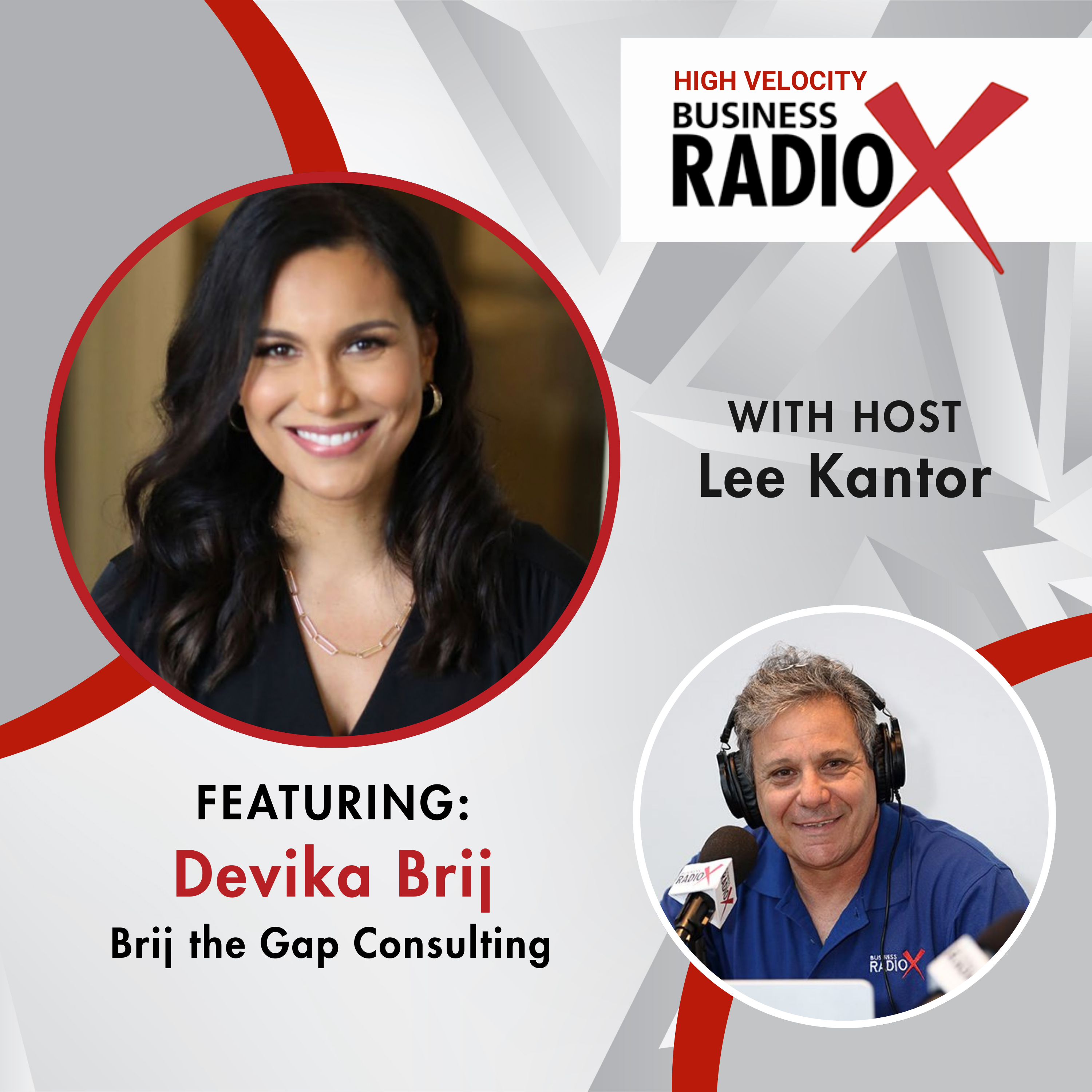
Tamara Dawn Koen is a Life Stylist, Consultant, and Founder of The Classic Style Studio, on a mission to help women over 50 clear the clutter—inside and out—and design a life they truly love. A former broadcast journalist and musical theatre performer turned transformation coach, Tamara blends personal style, mindset, and intentional living to guide women through life’s next chapter with clarity, confidence, and grace.

Drawing on her own journey—from undiagnosed learning challenges to redefining her identity after 50—Tamara developed a signature process that integrates principles like Ikigai and Shibui to help women align who they are with how they live. Known for her warm, relatable approach and eye for harmony, she empowers women to let go of what’s no longer serving them and embrace what brings them joy.

Whether it’s one-on-one coaching, workshops, or community programs, Tamara offers practical tools and soulful support for women ready to step forward with authenticity and purpose.

Follow Tamara on Facebook.

What You’ll Learn In This Episode

  • Redefining Life After 50: Tamara Dawn Koen’s Journey to finding confidence and purpose.

Transcript-iconThis transcript is machine transcribed by Sonix.


TRANSCRIPT

Intro: Broadcasting live from the Business RadioX studios in Atlanta, Georgia. It’s time for High Velocity Radio.

Lee Kantor: Lee Kantor here. Another episode of High Velocity Radio, and this is going to be a good one. Today on the show, we have Tamara Dawn Koen, who is a Life Stylist, Consultant and Founder of the Classic Style Studio and the SHIBUIQUE Technique For Women Over 50. Welcome.

Tamara Dawn Koen: Thank you. What a mouthful.

Lee Kantor: That was quite the intro. Well.

Tamara Dawn Koen: Thank you very much I appreciate that.

Lee Kantor: Well, I’m excited to learn what you’re up to. Tell us about your practice. How you serving folks?

Tamara Dawn Koen: Well, it’s it’s really very simple. When we hit that stage of life where we’re getting ready for our next best chapter. After. For many women it could be 50 years old, it could be 60, it could be 70 and beyond. When we just get to a point where we see that something really needs to change, and for most of us, it’s really just settling into a space that’s decluttered. And I don’t mean your closet and I don’t mean your home, I mean just inside and out, just finding something that really works. And that in many cases is creating a signature style. And at the classic style studio, that’s exactly what I do. I help women discover what works for them and what is most authentic to them.

Lee Kantor: So what’s your backstory? How’d you get involved in this line of work?

Tamara Dawn Koen: I’ve had quite a varied career. Um, I’m a left handed Gemini with late diagnosed ADHD, so, um, I’ve been a journalist. I have been a singer, um, an actor and also an inventor. I have a couple of patented inventions under my belt. And I really got to a point where I found it very, very difficult to. Shop. And, you know, as you get a little bit older, you start to feel as though, well. Things aren’t really being marketed towards you, whether it’s clothing or style. And I realized that what works best for me and I found across the board for many women that I worked with, what really works best is a very, very classic look. And classic is so simple. It’s just being able to identify it and what works for you as an individual.

Lee Kantor: So how did you kind of land on the the terminology life stylist?

Tamara Dawn Koen: Well, part of it is really creating this, the program that I work with and the name of it, as you had mentioned, so, so kindly in in the intro is seborrheic. And essentially what that involves is I’ve taken principles from a couple of Japanese techniques. One is shibai. And what Shibai is, is classic elegance. And it’s really identifying what a very simple look that is comfortable and elegant and quietly elegant. And ikigai is understanding what you love and your reason for being. And for most of us who are getting into that next stage or already there. And we’re trying to figure out what what is our what’s next. It’s really being able to identify that signature. And using Shibai, we’re able to identify a signature style. It’s in how we dress. It’s in how we present ourselves and how we step into the world and into that next line of work, line of volunteerism, whether it’s philanthropy or working with individuals, whatever it might be. Um, it just makes things so much easier. And, uh, you’re, you’re ready to to start your day. For me, I started to identify it when I was in journalism, I had a very nice budget to buy clothing. And back then this was in the the mid to late 90s. Shopping just seemed a lot easier. Everything was a lot more organized. You could go into a store and you could identify what you were looking at. You could identify your, uh, uh, silhouettes and the colors and the fabrics that you loved. Today it’s a little bit more difficult. Fashion comes and goes so quickly, and fads are here and there. So I really found that I needed to help myself and now help others make it just a little bit easier, because we’re living in a world with so much noise and so much confusion, that it’s really nice to know that we can count on something and we can count on ourselves to be able to identify what works for us best.

Lee Kantor: Well, it sounds like your practice, though. It’s it’s not just how a person looks that it’s it’s kind of more holistic than that.

Tamara Dawn Koen: It really is. You know, we only look as good as we feel, and we have to have confidence. And it’s sad but true that society tells us that as we get older, we’re less important. And it’s really interesting. And I and I talk to my clients about this all the time. When we have a coveted piece of vintage jewelry as an example, it becomes more valuable with age, it becomes more rare, and we treasure it more. And as we get older, it seems, especially for women, we seem to be set aside just a little bit. And part of what I do with women is, is help them realize that as we build our community, and community is our reason for being. Our community is what really keeps us standing and keeps us connected. That really becomes our purpose. And I think that, uh, for me and for the women that I work with, it’s it’s so incredibly helpful to work from the inside out. And when we when we when we look good, we feel good. And when we feel good, we carry ourselves differently.

Lee Kantor: So what’s happening in the lives of these women before they join your community? What are they struggling with? What are some of the symptoms, signs, signals that let them know, hey, maybe I should connect with Tamara and and join her community.

Tamara Dawn Koen: It’s interesting because women come from different places. It might be a woman who is all of a sudden experiencing empty nest syndrome. That can start in the 40s for, you know, women in their 40s. Um, it could also be a pivot in career. Maybe they’ve decided to move into something else or or they’ve been asked to retire at an age where maybe they weren’t quite ready. And sometimes you feel as though the rug is being pulled out from under you, and you’ve been perhaps wearing something, or not even knowing what your style actually is, and then going into a store and and saying, oh my gosh, I don’t even know what to wear because nothing fits and I’m so confused. I’d rather just stop. So women are coming from all different, different parts of of places in their lives. And what’s really great is that no matter what, we all come together with one thing. We all want to feel connected. We all want to be together with people whom we can work with, whom we can socialize with. We want to feel that we matter, and we have a purpose for being here. And it’s it’s very, very gratifying to know that I have just a, you know, a moment of their time throughout, throughout the day where they can lean back or lean in and say, wow, this is really incredibly helpful for me. And that’s really where our, our, our program begins. And it doesn’t end. It begins and really continues. Because what what is so incredibly heartwarming for me is that I’m bringing in women from all different avenues, all different parts of life where they’re saying, you know what? This is not the end. This is just my next chapter and I still have so many more chapters to go. And that’s really very exciting and gratifying at the same time.

Lee Kantor: So how do you deliver and serve your community? Is it via one on one coaching? Are there cohorts? Are there kind of community events and things you work on together? How does a person experience, uh, Tamara and her and the other like minded folks?

Tamara Dawn Koen: Right now we’re really doing one on one consulting, and that is something that we’re in the process of creating a community that will be an online community, and that’s coming very soon. But right now, I’ve been working with women individually, and it’s been a very organic process because we all come together, as I said, from different, different aspects of our, our, our place in life right now. Some of us are still working, some of us are not working, some of us have been working as homemakers and mothers, and they’re coming in and saying, you know, I want to do something else. I want to do something new and I just don’t know what to do. So it’s really a an opportunity to distill what and discover what you like. It’s really it’s it’s funny in a way. So many of us have a difficult time even deciding what would we like for dinner when when asked or, you know, well, what would you like to do today? And most of us stop and say, oh, I don’t know, what do you want to do? So when I asked women, one of the first questions I asked is, what is it that you enjoy? What do you love? What do you look forward to? And they have a hard time answering those questions right away. And so we have a series of questions that we go through. And it’s a very organic discussion. And we’re able to distill what matters to them, what makes them happy, and what makes them want to take that next step and do something that makes them feel good. And it begins with very simple rituals, doing something new every single day and then practicing it every day. And it’s amazing. It’s very easy for most of us to create bad habits, but it’s just as easy to create good habits. And that’s what I do with the women that I’m so lucky to be working with.

Lee Kantor: So when you’re working with the women, can you just, um, share a little bit of maybe what those initial conversations are? Um, when a person raises their hand and saying, hey, I’m interested in learning more. What what does that onboarding look like? So a person could, um, get clarity to make sure that you’re going to be the one that’s going to help them get the outcome they desire.

Tamara Dawn Koen: That’s a really great question. For most women, the first questions that I will ask is, tell me about yourself and tell me where you are and what you’re doing and what it is that you’re looking forward to. Because looking for what you’re looking forward to is your purpose. And if they need a little bit of help and guidance, then I know we’re probably on the right track. And then I have a series of questions that I’ll ask on a daily basis. Tell me what you do. What’s what is the what time do you wake up in the morning, and what’s the first thing that you do? And once again, if there’s still a little bit of hesitance and not really knowing, I don’t know. I have coffee in the morning and then, um, well, you know, I get, I get stuck. Then we talk about stepping into some of the healthy, easy rituals, maybe have a cup of tea in the morning, maybe invite a friend to take a walk with you. And let’s talk about what it is that you like. What what what attracts you and how do you dress in the morning? What do you typically gravitate toward? And we start to gather all of the information as to what they’re looking for. It’s essentially guiding them to a pathway to discovery of what they actually like. And that’s where Shibai and ikigai come in, because it really is being able to identify what they really love and what they want to do, and how they can be rewarded and be rewarded. In many ways, reward can mean actually working and earning a paycheck, but it could also mean the rewards that you receive when you’re practicing some sort of philanthropy. And once again, the women that I speak with, most of them, if not all of them, really want to be a part of something and be a part of a community.

Tamara Dawn Koen: As we get into our 50s and our children, if we’re if we’re mothers and the children are out of the house and they’re perhaps in college or they’re just not around as much, they might still be in high school. But we feel as though, well, what now? Well, the what now is something that we really feel the need for friends. And it’s it’s not as easy to meet new acquaintances as we get older and as we step out of our, our roles, we’re moms. We’re we’re running around doing things for so many other people. And the women that I’m working with really want to want to feel that connection. Connection is something that we lose, um, we lose very easily when we find ourselves doing so much for others and we forget about ourselves. It’s the the what we hear on, on, on an aircraft when we’re flying somewhere. One of the first things they talk about is safety is when the oxygen mask drops. Put the oxygen mask over your own mouth first before your face first before you help someone else. Because until you have the oxygen and you’re you can take care of yourself. You can’t take care of the person sitting next to you or the child sitting next to you. So it’s just a good life lesson that we really enhance in our program to to learn to make sure that you are taking care of yourself and you’re able to be the best person that you can be so you can serve others, be it family or friends or other loved ones.

Lee Kantor: Is there a story you can share that maybe illustrates the impact of this type of, uh, consulting? Uh, don’t name the name of the individual, but maybe share the challenge that they were dealing with and how you helped them get to a new level.

Tamara Dawn Koen: Or, um, I had a woman who came to me and she was really feeling as though she had been working so incredibly hard on losing weight, and yet she still she could she still wasn’t feeling good about herself, and she could go into a department store and try on all kinds of clothing that didn’t work for her before. Now everything was fitting and she was able to buy clothing, but she just she still didn’t feel good about herself. And the reason, ultimately, the reason we found was that she didn’t have anywhere to go. So all dressed up and nowhere to go. And she didn’t know where to start because she didn’t really have that confidence. And so as we started to work together, she realized that even if she was planning an event that might not happen, just that excitement of having something to look forward to helped her take those next steps. So ultimately she ended up doing some volunteer work. She ended up volunteering in a theater community where she felt, uh, very needed. And she was. And she became very quickly, she became very much a part of the community. And it was a very, very quick process for her because she discovered that she had a purpose.

Tamara Dawn Koen: She had a reason for getting up in the morning, and she had a reason for getting dressed, putting on her makeup and doing her hair. And she became alive. And it was really being able to identify what it was that she loved. And the way that we discovered it was going back to when you were a child, what made you happy? And as it turned out, she loved being part of a theater group because she could be in the front of the house. She could be in the back of the house, she could be performing no matter what. She was always a part of the community. And that’s something that is very special For her. Very special for me as well, because we can all relate to that at one point or another in our in our lives when we really felt connected. And she has gone on to continue her volunteer work at at a local level for a community theater, and she sometimes she’s collecting tickets and she’s an usher, and sometimes she’s helping in the box office, and sometimes she’s helping as a dresser backstage. But she’s made, made, made friends, and she’s built a community around her that gives her life’s purpose.

Lee Kantor: So if someone out there is looking for confidence and purpose and wants to join the community, what is the website? What’s the best way to connect?

Tamara Dawn Koen: The classic style studio and on the website, uh, you’ll be able to find me. You’ll be able to just click on, uh, email. You’ll be able to join my social media and get to know, get to know me. And I’d be happy to chat with you if you’d like to, uh, to any woman who would like to visit with me and see if my program is right for them, and I hope it is. I’m I’m welcoming women from all over the country and, uh, ultimately all over the world and hoping to really, um, as we venture into building the online community, which, as I said, is in the process right now, hoping to build a community that will help lift other women, because as we lift each other up, um, we become a part of the greater good. And I think that’s something that we’re all looking to be a part of.

Lee Kantor: The classic style studio. Tamara, thank you so much for sharing your story today, doing such important work, and we appreciate you.

Tamara Dawn Koen: Thank you. It was so great to meet with you. Thank you so much for this opportunity.

Lee Kantor: All right. This is Lee Kantor. We’ll see you all next time on High Velocity Radio.
Tagged With: Tamara Dawn Koen, The Classic Style Studio

Pat Abernathey With Caring Senior Service

October 10, 2025 by Jacob Lapera

Franchise Marketing Radio
Pat Abernathey With Caring Senior Service
Loading
00:00 /
RSS Feed
Share
Link
Embed

Download file

Pat Abernathey is the owner of Caring Senior Service of Boulder. He joined Caring Senior Service in 2005 as the Marketing Director. After holding many positions within the corporate structure — most recently as Franchise Business Consultant — he opened his own franchise office in Boulder. He later began managing offices in Lakewood and Fort Collins.

As the owner of Caring Senior Service, it’s his goal to give seniors in Boulder the control needed to live safely at home and to give their families peace of mind. Pat and his staff believe that every senior should be able to remain healthy, happy, and home.

Connect with Pat on LinkedIn and Facebook.

What You’ll Learn In This Episode

  • The factors that initially drew him to Caring Senior Service in 2005 and the reasons she has remained with the organization for nearly two decades
  • The philosophy of helping seniors stay healthy, happy, and home — and how that philosophy is put into practice
  • The ways he and his staff work to maintain independence and control for the seniors they serve
  • The biggest challenges currently facing seniors in Boulder and the surrounding areas
  • The methods he uses to work with families to build trust and provide peace of mind during emotional transitions

Transcript-iconThis transcript is machine transcribed by Sonix.


TRANSCRIPT

Intro: Coming to you live from the Business RadioX studio. It’s Franchise Marketing Radio.

Lee Kantor: Lee Kantor here. Another episode of Franchise Marketing Radio and this is going to be a good one. Today on the show we have Pat Abernathey. He is an agency director with Caring Senior Service. Welcome.

Pat Abernathey: Thank you for having me.

Lee Kantor: Well, I’m excited to learn what you’re up to. Tell us about Caring Senior Service. How are you serving folks?

Pat Abernathey: Yeah. So we’re a non-medical home care company. We’re the franchise is based out of San Antonio, Texas. I am a franchisee. I own three locations in Colorado Northern Colorado, Fort Collins, Boulder County, Colorado, and Lakewood, which is a western Denver area. So three three territories all together Other. They’re here in Colorado.

Lee Kantor: So what’s your backstory? How’d you get involved in this line of work?

Pat Abernathey: You know, Leah, actually, it’s it’s an accident. Uh, my, uh, background had been in, uh, marketing. Sports marketing for a university and had been working at a local university there in San Antonio, Texas. And, uh, was also I was involved in, uh, the local rugby community and a couple people who were involved in rugby as well. Uh, Jeff Salter and Ian Claeys, we knew each other. And Jeff had a company called Caring Senior Service that he had just started franchising. Not and this would have been 2005 when this was taking place. And Jeff and I were having a conversation and unrelated to business, in all honesty. See, and we hit it off. And he invited me to come work for the franchisor and I. And my job was to go teach franchise owners how to how to market their business, how to sell, how to get referrals. And I traveled around the country and that’s my that was my background. That’s how I came to Caring senior service.

Lee Kantor: So what did you learn about kind of that? Because you were kind of in the early stages of the franchising part of the equation. And, and your background wasn’t in franchising, but you had some experience in marketing. So how did you kind of blend the two to, uh, come up with a plan that helps people be successful as a franchisee? Because those being a franchisor is one kind of a business. You know, you start something, you have an idea, you replicate it. But running a franchise, being that franchisor is no longer really in the I gotta care for one individual person anymore. Now I’m trying to make my franchisees successful, that the business kind of shifts a little bit. So what are some of the things you learned about how to take a great concept and then kind of make it so that people in other markets can be successful with that same kind of playbook?

Pat Abernathey: Sure. Well, one part of that is I came from a coaching background as well. So teaching franchisees how to grow their business was was really coaching. Uh, no different from coaching on the athletic side. So, um, but taking a proven model of, um, and in the home care business, we use the word marketing. And this is also home health and hospice, when really we mean sales. We’re, um, but marketing has has a better connotation in the healthcare world, I think. So people prefer that word over sales, but we’re talking face to face sales, trying to, um, get referrals, convince people to refer to our companies. Other healthcare professionals. So what we were doing was going out, um, and teaching people how to make fake, how to make cold calls, how to make face to face conversations. Um, and using a proven method that Jeff had developed, uh, with the help of others, but also just over time, um, because he had been in the business since 1991. And when I got there in 2005, I mean, he had been running his locations not as franchise locations, but just as his, um, kind of corporate offices or home offices for a long time. And he knew how to get business, and we were implementing his model. Um, so what I, what I really learned is sales, whether you’re trying to sell advertising for, um, a, an athletics. Um, program or you’re trying to get referrals is very similar. You’re making you’re making calls, you’re making face to face visits. And we were teaching franchisees those types of skills, which they often did not come to us with. Um, you know, they might have come from the corporate world where they were managers, or they may have come from other, other sales opportunities or sales jobs, but not not face to face kind of hardcore getting referral, um, jobs. So what I, what I really learned is sales is sales. I know that sounds kind of simplistic, but it’s true.

Lee Kantor: But it’s about relationships. Like, this is a hard business to do without kind of having human relationships with other human beings. This is not a, you know, somebody who’s who’s deciding whether to put their mother or grandmother Somewhere to get service for them. They want to talk to a human. This is. You’re not going. I don’t know if you’re going to make that buying decision based on a billboard or a a banner ad on a website.

Pat Abernathey: Well, and and one reason we don’t spend a lot of money on advertising in our, our particular company, um, is because you’re absolutely right. You make a meal decision three times a day. So advertising for a, for a restaurant may have a lot of effect on, on people. Um, even buying a car or buying a house is something that happens generally more often in someone’s live life than choosing home care, whether it’s for themselves or for for a parent, an aging parent. So no one out there is thinking about home care in your general day to day life until you have to think about it. Um, so that’s a lot of wasted advertising dollars just out there in the ether. Um, and you’re absolutely right. When it comes time, they don’t want to they may use the internet as a validation tool, but they want to talk to a human right.

Lee Kantor: Because this is personal. This is this isn’t like you. You don’t want to screw this one up. You know, the stakes are too high.

Pat Abernathey: Exactly, exactly.

Lee Kantor: So, um, so you’re doing your work there, and, uh, what brought you to Colorado to to do your own thing and and say, okay, that’s good. I’ve helped a lot of people out there. Now it’s time for me to kind of take this machine and work it for myself.

Pat Abernathey: Yeah. Um, well, I first and foremost, I believed in the model 100% had been teaching it, um, had seen a lot of success and a lot of failure. I mean, it’s franchising, Um, but a lot of success and people are respected. Other owners, um, had had a lot of success implementing the model and working hard. And also I, my family was young and I was I was traveling a lot. I was kind of tired of traveling. Um, and being from Texas, we thought about initially staying in Texas, but the a lot of the territories were already already bought up. We needed a metro area. Um, Colorado provided a metro area, a good, good, um, way of life for us. Um, good quality of life. And I wanted to stay home. So but I believed in the model, so I traded everything in for to become a franchisee. Um, because I knew I would be successful if I implemented the model and worked hard. And that has been the case.

Lee Kantor: Now, you mentioned an important point, and I think a lot of folks in franchising, they think that, oh, I buy a franchise, then this is like a guarantee, you know, for success. But there’s still a lot of variables. Do you find that the people who don’t find success with franchising, they they didn’t really understand what they bought. Like, maybe they thought they bought something that it really wasn’t like, this isn’t something that you buy the franchise and then you you pay for it and then you just sit at home and then it successful. Like you still have to do some work like this is it’s not a magic box that you can just, uh, you know, put it on the table and walk away. And then it’s going to create this kind of passive income. Like, this is absolutely this is this is a you know, you’re not it’s not I don’t want to say it’s a job, but it’s definitely work.

Pat Abernathey: Yeah. And the I think the biggest misconception on the on the franchise buyer, um. Side is that you are buying some sort of, you know, magic box, like, like you said, like the franchisor is going to do all the work for me and I’m, I’m investing some money and then I’m going to get this, this good return without having to put too much work into it. And that cannot be farther from the truth. Anyone buying a franchise needs to understand that, um, especially most franchise franchise models out there are small businesses. They’re not, you know, uh, and you’re and most people are buying one one unit at a time. Um, and they, they are trying to become their own bosses, which is admirable, which is very good. Uh, but when you become your own boss, whether you’re buying a franchise or you’re hanging a shingle and starting up, you know, Dave’s auto repair, um, you will, unless you have a lot of capital to pay someone to do the work for you, which which has its own problems. Um, you’re going to do a lot of the work until you stabilize your business and until you are experienced enough to train your replacement, um, and make those things happen. But but it is a lot of work up front, and no one’s going to do it for you. The franchisor is not going to do it for you. Their representatives are not going to do it for you. Um, and that’s that’s not really what you’re buying when you buy a franchise. Uh, the work is still you. And it all comes down to owners. And that’s a huge misconception.

Pat Abernathey: And also something that needs to be, I think spread is any franchise location of any probably any model. It really comes down to the dedication of the owner, how much they’re willing to put in, especially at the beginning, and how much they’re willing to work on their business. Some at the beginning, you got to work in it, get all your systems down, make sure they’re there. And the thing is, you get the systems from the franchisor, but someone still has to implement those systems. It’s not. They don’t just happen, um, you know, by themselves. So the, the work, the I always liken it to the mom and pop store. You still got to sweep the floor, mop the floor. You still gotta clean the restrooms. You need to put in the work, um, to, you know, to keep your business going and, and and then grow it and identify where you’re growing it. Personally, I also think that gives the owner the knowledge, the wherewithal to understand that you know this business better than anyone, um, better than any of the people you’re going to hire because you’ve done it. You’ve been in, you know, you’ve rolled up your sleeves and, and put in that work to, um, to then be able to teach someone how to do it properly. Your ethos, your, um, and you may they may not be 100% you, but they’re going to give you a pretty good, um, facsimile of yourself and get the job done, at least to, you know, 80, 85%, 90% of what you need. Um, then you can start scaling your business and growing from there.

Lee Kantor: Now, what was it like when you were making the transition? So you’re like, okay, I’m going to do this now. I’m going to be the franchisee. I’m moving to Colorado. I’m going to set up shop. I’m going to, you know, I know this playbook inside out. I’ve been coaching it for a while. I, I know you know what needs to be done. But what was it like when it now it’s your name that’s getting the call. You’re the one who has to deal with things. You know, at two in the morning, you’re the one who is is kind of the boots on the ground there. You’re not. You’re no longer the coach, but you’re the. You’re the quarterback.

Pat Abernathey: Yeah. Um, it’s funny, the even though I had all this background and experience and believed in everything 100%, there was still a tiny bit of self-doubt in would this would this actually work? I’m moving to a state. I have no contacts, no. No ties to Colorado. Um, would this actually work? Um, and the why? I had that doubt, I will never know because I, I saw it, I saw other people do the exact same thing. You know, open a business that they had no experience in. Um, I had experience, but they and and do well and I but there was still just that little seed. Um, until until I answered the phone correctly, signed up my first client. Then I and then and and placed a caregiver exactly the way that Jeff Saltzer and the franchisor and I had been teaching people how to do when until that happened, there was always just a little bit of reservation of, you know, am I? But then when it worked exactly the way it was supposed to work, that’s when I that that feeling of, you know, just a little bit of self doubt that went away. It went away. It was like this, this, this, this works exactly the way it’s supposed to work. Um, and now and there’s no difference between Denver, Colorado or San Antonio, Texas, or Houston, Texas, or, um, Bergen County, new Jersey in terms of. There’s a need and we’re filling that need. The need doesn’t change.

Pat Abernathey: The workforce really doesn’t change. Um, the accents change, you know, depending on where you are in the country. But other than that, the workers are the same. The referral sources are the same. The clients are the same. They have the same needs. And you’re meeting that those needs, um, in the exact same way. And that that was very helpful just to, just to reinforce, um, just to reinforce. But but again, it only, it only took a month or two, you know, once we got on the ground to start that process and get, get clients and, and it then it then all doubt was removed. I mean then it was yeah. This everything I’ve been talking about is actually I mean yes, I’ve seen it work, but now it’s I’m, I can feel it working. Right. Um, but I’ll say I’ve made I’ve still made a couple of mistakes. You know, I, I got caught up in a couple of things. I advertised a little bit when I knew I wouldn’t. I shouldn’t have advertised. No need, no need to advertise. But of course a new business owner every now and then wants to do something, and I, um, and I wasted a few dollars on on something that I should not have wasted on. And I quickly learned my lesson and went, trust the process, trust the process, trust the process. Um, but I’ll freely admit that even even I went out on my own just a tiny bit.

Lee Kantor: Now, um, obviously the the senior population is growing dramatically, and there’s the need. There’s no kind of shade of gray when it comes to, uh, the need for these types of services. Is it becoming more of a challenge nowadays in terms of finding the right talent to be the ones you’re deploying to serve these seniors? And how are you kind of managing that side of the equation?

Pat Abernathey: You know, I wouldn’t call it more difficult. It’s always been a challenge. Um, the, you know, even even 30, 30 something years ago when Jeff started, uh, he, you know, he’ll talk about the challenge, the. Finding the right caregivers is is a challenge. And it’s a constant. It’s, um, similar to maybe the restaurant business where you’re you’re trying to find talent, but also, you know, you have a built in, um, sort of there’s a constant you’re you’re you’re constantly hiring. You cannot stop. You can’t. There’s no sweet spot if you will. Um, but I mean, we, for example, and because I have three locations that are, are all in one group, We we’ve refined our hiring process to be able to hire across the three territories. Um, and we’re lucky in that way. But we have a full time person who’s just recruiting, recruiting, recruiting. It’s so, so really, it’s your volume. You’re filling your hopper with just a huge amount of volume and then shaking that that volume out to meet our standards. Um, and it just never, never stops. And you’re lucky, you know, if you’re getting one, two, three good people a week, um, then you’re you’re actually lucky. Um, some days, some weeks, you don’t get anybody who meets our standards. So it’s just it’s a it’s really the cost of doing business. You have to you have to really fill up that hopper and, um, and be thorough. So, so I would say that the the and that hasn’t changed. That has not changed the the numbers. You know, we’re looking for a certain person, a quality caregiver. And um, and we’re able to find those people, but you just it’s a lot of weeding out, working through that. Um, and we have to know our expectations, you know, know what numbers we’re looking for and and be okay. We can’t we, um, we can’t lower our expectations and lower our standards in order to get higher volume. Um, we just have to and we we the process just has to be really adhered to religiously.

Lee Kantor: So, um, in the areas that you’re serving, what are kind of some of the challenges that seniors are facing that you’re able to help them with?

Pat Abernathey: Um, cost of living? Colorado has a has a pretty high cost of living. Uh, so you’ve got a lot of we’ve got a lot of seniors. Their houses have. Gone up in value quite a bit. So they’re, they’re often um, sitting on a, on a big resource. But they, they have challenges maybe uh, accessing some of those resources. Um, so there’s because so there’s, there’s some cost of living issues there also because of the cost of living here in Colorado, our hourly rates are a little higher than, um, some other states. So, so cost of doing business is a little bit bigger, and the cost of service is a little bit bigger. Not, not too much and not, um, not prohibitive. But it is a, it is a challenge. Um, also because of the cost of living, certain parts of Colorado are underserved because the workforce is having a hard time living in those areas. Um. The affordability. So then that increases the cost of service quite a bit because you got to pay someone to to go somewhere. Um, or they have to make more to be able to afford to live in certain spots. Um. So, for example, in Boulder, Colorado, the workforce is, is limited. Um, and a lot of the, the caregivers live on the periphery of Boulder, um, and even further away because of, because of the housing prices, um, and the cost of living. So there’s some and that trickles down and affects the seniors because it affects pricing, things like that. Right.

Lee Kantor: It becomes one of those spirals.

Pat Abernathey: Yes, absolutely. Absolutely. And, um.

Lee Kantor: But still, you know, aging at home is less expensive, typically, than going aging elsewhere, right?

Pat Abernathey: Yes. Yeah, absolutely. And, um. You get you get a lot more, um, a lot more for your dollar in with one on one care than you would in a, um, in a community sometimes because you’re getting one to many care as opposed to one on one and that so your quality of life, your ability, also your freedom. You, you know, you’re not waiting on a bus to and and someone else’s schedule to do the things you still want to do. You have someone who can provide you with that type of freedom and that flexibility to go do what you want to do when you want to do it, um, and give you some physical help so you can really not, Um, not less than your quality of life. As much as you may think you need to. So that’s those are also, um, a huge benefit that really can’t be totally, um, quantitative.

Lee Kantor: Now, is that one of the challenges? Also on the flip side of, okay, there’s issues, obviously, with the caregivers being able to get to where they got to get to. But on the other side is you have the the individual, the senior who might be hesitant to pull the trigger and work with you guys, just maybe out of an ego or pride situation where they really do need some help and the families may be oblivious to it because especially in today’s world where families are so spread out, you know, it’s not like back in the day when all the kids lived near the parents who lived near the grandparents, like we’re all in the same kind of area now. The kids can be anywhere in the country. So is that hard to kind of help the senior kind of make the decision to, hey, you’re independent. We’re not debating this, but you might need some help a little bit, you know, a few hours just to just to kind of cover some of the bases that maybe are challenging to you and that maybe you should, like, you shouldn’t maybe be getting on the roof to blow the leaves, you know.

Pat Abernathey: Like, yeah.

Lee Kantor: Back in the day you could do that. But maybe today you can.

Pat Abernathey: It’s an epidemic right now in the elderly community of waiting too long to get help and I. And that could be not just waiting. If someone did eventually want to move into an assisted living type situation, which is absolutely their choice. They’re still there, waiting longer to do that as well. And, um, and we all respect our parents or our elders. We’ve all, you know, if you grew up with your your one of your parents being a dominant figure in your life? Um, in a good way or bad way. You and or if you respect them, you respect their individuality, respect their independence. You don’t. If they say they’re okay, it’s natural for us to to as children to go, yeah, okay. Mom or dad have they’ve always been a rock for us or independent. And if they say they’re they’re okay, they’re okay. But like you said, we do not live in, um, tight knit family communities like we like. We’re in the past, so we don’t see people every day. Um, also, sometimes when you see someone every day, you don’t you’re not you don’t see the gradual decline. Um, it doesn’t it doesn’t jump out at you quite as much. So what is happening is people are forced to get care or move because an emergency happens. And one one thing we’re trying to spread the education about is getting help earlier, especially home care, to help us avoid some of those emergencies.

Pat Abernathey: If we if you had a little bit of help and keeping, you know, keeping a loved one from doing some, some work around the house that they’re not maybe not able to do anymore, like, um, being on the roof or something like that to of which might avoid a fall, which a fall is catastrophic. So um, and can some, some home care a couple times a week allow for some of those chores to be done or allow for, um, someone just to have an extra set of eyes and extra set of helping hands to avoid that emergency situation. That then because what happens is you have freedom of choice until you don’t have freedom of choice. And what some sort of physical, um, I want to age in place or and in some sort of physical. Or mental problem then forces you to do to not do what you want to do. If you want to age in place, getting some help earlier can help avoid that emergency that forces you to move when you really didn’t want to move. And that’s happening often in not just here in Colorado, but just all over the United States, where, um, parents, aging parents and their children are avoiding getting some help and then they’re stuck there, they’re hit with an emergency that forces them out of their choice system.

Lee Kantor: Right. Like it’s one of those gradually, then suddenly, like, you know, the parent might be missing, not taking their medication regularly and no one’s noticing, and but they’re not getting better or they’re having side effects, and then all of a sudden, you know, a bigger problem happens. Or or if they’re not, you know, checking to see if the food’s expired and no one’s noticing, and then all of a sudden they get sick and it’s like, how did this happen? It’s like you’re missing kind of subtle clues, uh, where if somebody was there a little bit, they would pick up on it. But because a lot of these families are so spread apart, no one’s there enough to kind of catch some of these minor things that turn into major things because no one’s, you know, there’s not good eyes on it.

Pat Abernathey: Yes. And what happens with elderly people a lot is they we often and this happens to everybody, we forget. Um, but then people just forget. Sometimes they forget what they ate or how much they ate, and there they end up eating once and or they eat very small amounts and their, their strength begins to fail because they’re not or dehydration.

Lee Kantor: How much of a problem is dehydration? That’s a tremendous problem. And if if someone’s not there a little bit, that can really turn into a big problem pretty quickly.

Pat Abernathey: Absolutely. I can tell you a hundred stories, Lee, of someone who dehydration led to a major issue, um, with either a urinary tract infection that caused tremendous, um, mental, you know, instability that then led to either a fall or some sort of near catastrophic episode, um, that led to a hospitalization that then led to, you know, almost a forced relocation. And that and it was all had to do with someone if someone were just reminding someone to drink more water, that the whole situation could have been avoided or mitigated and that that’s that’s a great example. Um, it happens all the time.

Lee Kantor: So if somebody wants to learn more, if they have issue in Boulder, um, or Colorado about senior care, what is the best way to contact you there? And, and where should they go if they want to learn more about the, uh, caring senior Service franchise?

Pat Abernathey: Uh, both the Caring Senior Service website, uh, will get you to both to the three my three locations Lake Caring senior service, Lakewood caring senior service, Boulder caring senior service, Fort Collins. Um but that also that website uh caring senior service. Com will also get you to the franchise system. Um, I’ve been very happy with our franchise system. Our support is excellent. Um, we’re still. We’re a good size franchise system, but we still are small enough where all the owners know one another. We get together on a regular basis. Um, you know, we know all the corporate people very well. So we we do feel like we’re we’re a little family in our own way. Um, but I would I would start with caring senior service and its caring senior service singular. Um, so, um, that’s where I would start.

Lee Kantor: All right. Pat, well, thank you so much for sharing your story. You’re doing such important work, and we appreciate you.

Pat Abernathey: Yeah. Lee, thanks for having me.

Lee Kantor: All right. This is Lee Kantor. We’ll see you all next time on Franchise Marketing Radio.

Tagged With: Caring Senior Service, Pat Abernathey

Elena Pastore With Allenatore Leadership & Career Coaching

October 7, 2025 by Jacob Lapera

High Velocity Radio
High Velocity Radio
Elena Pastore With Allenatore Leadership & Career Coaching
Loading
00:00 /
RSS Feed
Share
Link
Embed

Download file

The name Allenatore means “Coach” in Italian, reflecting Elena Pastore’s Italian heritage and the inspiration behind the founding of the company.

Elena Pastore is a Leadership and Career Coach who has transformed career development through a unique combination of neuroscience, integrative psychology, strategic career planning, and practical business strategy. Having coached over 400 professionals and spoken to audiences of more than 750, she has observed a key insight: the greatest obstacles to career growth stem from the mind, not the strategy.

Her methodology addresses these mindset barriers, enabling ambitious professionals and leaders to reach their full potential and achieve lasting transformation.

She believes that everyone deserves to engage in work that truly energizes them. She has developed a branded methodology that integrates holistic psychology with career development strategies. This dual-focused approach consistently uncovers and removes the hidden barriers that keep high-achievers from realizing their potential.

By addressing both mindset and technical aspects of career advancement, her clients experience profound, long-lasting results—unlocking a level of success that goes beyond conventional career strategies.

From publishing her first book, Here Comes Christmas, at the age of 14 to building a coaching organization that transforms careers across industries, Elena has consistently pushed boundaries and inspired her clients to do the same.

Her passion for career mentorship began in college, where she guided younger students toward their professional aspirations. Based in Tampa Bay, Florida, she combines creativity with science to help clients achieve what they once thought impossible.

Core Credentials

  • Coaching Expertise: Associate Certified Coach (ACC) with the International Coaching Federation, the global gold standard for coaching
  • Specialized Skills: Gallup Certified CliftonStrengths® Coach
  • Advanced Psychological Training: Certified Trainer of NLP, Master Practitioner in NLP, Mental and Emotional Release® (MER®), and Hypnotherapy
  • Academic Excellence: Master’s in International Business and Bachelor’s in Business Administration from the University of Florida
  • Leadership Recognition: Inducted into Florida Blue Key, the state’s most prestigious leadership honorary

Connect with Elena on LinkedIn and Facebook.

What You’ll Learn In This Episode

  • The neuroscience of communication
  • Integrative psychology/the role of psychology in the workplace
  • Managing emotions in career
  • How you get in the way of your own success
  • Why you’re stuck and how to thrive

Transcript-iconThis transcript is machine transcribed by Sonix.


TRANSCRIPT

Intro: Broadcasting live from the Business RadioX studios in Atlanta, Georgia. It’s time for High Velocity Radio.

Lee Kantor: Lee Kantor here. Another episode of High Velocity Radio, and this is going to be a good one. Today on the show we have Elena Pastore and she is with Allenatore Leadership & Career Coaching. Welcome.

Elena Pastore: Thank you Lee.

Lee Kantor: Well, I am so excited to learn about your practice. Tell us how you’re serving folks.

Elena Pastore: Yeah, so I’m a leadership and career coach. So I serve individuals, groups and teams to go from wherever they are in their careers, whether they are in a transition, feeling stuck, or just want to get to the next level and helping them get there so that they can have a happy, fulfilled career.

Lee Kantor: So what’s your backstory? How’d you get involved in this line of work?

Elena Pastore: I always knew that I wanted to help people, but I never knew as a kid what I wanted to be when I grew up. So after going to college, I first learned about consulting and then coaching, and I had already been teaching leadership and communication to younger business students when I was in the in the business school and college. So that was where my experience really started. But I didn’t know that you could really do that as a job until I left college and started working and seeing all the different careers pop up. So this month is five years actually in business, which is great. And the business has evolved a lot over the years, but it was really born out of the desire to help people enjoy their work more, whatever that looks like for them and to have that meaningful impact that a lot of people desire, but that they have a hard time finding in work.

Lee Kantor: Now do you? Do you work primarily with kind of individuals, or does an organization hire you to come in and work with their team or a group or, um, you know, the company as a whole?

Elena Pastore: It’s a mix of both. The majority of people that I work with are in the first camp that you said individual people.

Lee Kantor: So what is happening in their life where they’re like, I think I need kind of fresh eyes on this.

Elena Pastore: Yeah. So the people that most frequently find their way to me, the ones that feel stuck, pigeonholed, and their current job or career path. So they feel like they are not qualified for other things or not sure what else they can be qualified for. A lot of times they don’t have much confidence in knowing how to move forward at all, or even exploring what other options or opportunities might be. So they’ve often tried things on their own to switch, but haven’t had success, and realize that they need a professional and their court to help them strategically make those changes so that they, again, can navigate that transition and and have that meaningful job that I mentioned at the beginning.

Lee Kantor: Now, are they trying to stay within their current organization, or are they looking to just, you know, jump ship altogether, change careers? Are they looking to be like an entrepreneur? Like like what are you know, how how far are they willing to go here?

Elena Pastore: How far are they willing to go is a question that I asked them a lot. So it can be it can be any of those really. And the thing is, is when a lot of people initially are looking at exploring what other options could be, they are exploring that based on their current understanding of what they believe is possible. And what they believe is possible and what’s actually possible are always very different things. So sometimes people will have a half baked goal of, you know, Elena, I think I want to do x, x. Sounds good to me. And and you know, I’m cool with that. But there’s always this lack of real certainty in that. And so usually when we peel back the onion, we see that that thing really isn’t what they would choose. It’s just the best they think they could do. So it’s really about getting people to see the world is your oyster. It really is. Because outside from highly technical jobs like doctors, lawyers, accounting that, you know, you have to have some legal licenses to do those jobs. You really can transfer so many skill sets to different fields, just a matter of knowing how to make it happen and then how to communicate it with confidence.

Lee Kantor: So when these people are struggling, they obviously, uh, there’s a disconnect between their reality and what they’d like the reality to be. And when they think about moving to another job or another position, title, opportunity, whatever that might be, do you find that they’re doing that, like you kind of broached upon it, but and I’ve seen people that have gotten, you know, gone into college and said, I want to be a doctor and was a doctor or even began being a doctor for a minute and said, this is why did I do this? This is not me at all. Like, so they almost don’t have enough information to make an informed decision about a next move, but they’ve kind of mentally made a move.

Elena Pastore: Mhm. What specifically. Well that’s not my take on that or.

Lee Kantor: Well, I just do you find that that’s what happens, that they they don’t have enough information to really make that move into the next thing. They just think they do like they might have seen, they might know somebody that’s in that role or watched a YouTube of somebody that does a thing and they’re like, well, that sounds good, but they don’t really understand kind of layers deep of whatever that next move is.

Elena Pastore: The short answer is yes. And that’s not specific to students. It’s it’s everybody. The thing that I most often hear when I first talk to people about what they want is I want this because it makes sense or it makes sense for me to progress down this way. And I said to them, something that makes sense theoretically sounds good, right? Something that makes sense sounds better than something that doesn’t make any sense. But going down the path that makes sense. There’s really no choice in agency in that. And even if you might say, oh, I like biology, so it would make sense for me to be a doctor, right? Like, that’s not a wrong way to think. But nobody can possibly know every job that exists. You can make money doing anything. You can make a job out of anything if you really want to. But if you want to work for somebody else to say, you know, what are all of the jobs out there that would fulfill what I think I would get from being a doctor? You just have to really follow your curiosity, do your research, find people that work. You know, this is for any field. Find people that work in that field that you can ask questions to, that you can actually learn about what the job is like as opposed to what you think the job is like.

Elena Pastore: And if more people took the time to follow their interests and to be curious, I think a lot more people would not be doing a job that’s totally different from what they studied, or having those instances of becoming a doctor, doing it a couple of years and saying, you know, this isn’t what I meant to do. But it’s not just up to to themselves and what they think. It’s also society. My parents, if they’re especially if they’re someone else, is paying for them to go to school. Society what’s realistic? You know what I think I can I think I can make a good lifestyle, being a doctor or a lawyer and whatnot. And in any of those prestigious jobs, there’s still always it’s not always going to be what you think it’s chalked up to be. So there’s a lot of things at play that cause people to get in the wrong careers in the first place, or trick themselves, for lack of a better word, into thinking they should go into something that they really shouldn’t.

Lee Kantor: So when someone’s working with you, they come and they have this feeling of, um, disharmony. And they’re looking at you to help them, uh, you know, make the next move, whatever that might be. It might be staying where they’re at. Um, so how do you go about, like, what kind of what’s kind of your methodology in terms of assessing the situation, number one, and then kind of giving them some sort of a roadmap or a plan so they can, um, you know, make that next move or two.

Elena Pastore: Yeah. So the there is a process that everybody needs to go through. If you’re in this phase and you want to do something different, and then the way that that process is executed is what differs from person to person. So the first thing is to give a good, honest look at yourself and your life. Obviously your job, but your life and say how do I honestly feel? What do I honestly think about this life that I’m living and this career that I have? And it’s very hard for people to be honest with themselves, even when you have someone like me asking specific guided questions. I think sometimes it almost feels like if I’m fully honest, that then surfaces a big responsibility to change and as that’s something I’m really ready for. Once you do that, what do I want my life and my career to look like compared to what it is now? Okay, these things I would like to be different. Great. Now how can we make that happen? How do we need to translate your skills, help you talk about and think about your experiences in a different way, where there may be qualifications or requirements that you maybe don’t think you have? Or how can you again make those things transferable so that the future person will see you as a good fit? Building up your confidence because a lot of the time it’s it’s identity. I had someone ask me once, how do you get closure when you’re switching jobs? And I said, well, to me that question implies that your identity is wrapped up in it.

Elena Pastore: And when there’s a part of you that feels like there’s a permanence of what you do, being who you are, sometimes when you walk away from a job, it can be like, well, if I am not a fill in the blank professional, then then who actually am I as a person? So that’s a big part of it. And then starting to put yourself out there making it happen again. It’s more communication, more negotiation, not just in a salary offer negotiation. But you know what? Am I willing to negotiate with myself? How do I negotiate with the person on the other line to get them to see that I am a good fit for this role? And then all the way through to somebody accepting that role, starting that role. And then of course, getting onboarded, succeeding what? What new roadblocks and challenges are going to come up? How do I set boundaries? How do I establish a new professional reputation and personal brand for myself? So it really is a big a big process. And it’s so worth it because it it my client’s words, not mine. It changes your life. When you change such a big part of your life that you are so to your point in disharmony with.

Lee Kantor: And when you get in alignment with, you know, your superpowers and what you’re doing every day, you’re going to be a much happier person. There’s going to be less stress. There’s going to be life becomes a lot easier if you can, you know, create some alignment around those things.

Elena Pastore: Mhm. Happier. Less stress. Better with family. Better with your kids. Better with, you know anybody else that you come into contact friendships. It just really you know it. I’ve even had a client tell me his dating life got better. His physical fitness got better because he was able to focus on other areas when his career wasn’t such a big, you know, big ball of of confusion and questioning.

Lee Kantor: Now it sounds like you’re using, uh, like the blurring of the lines between coaching psychology. There’s a lot of, um, you know, kind of personality work that you’re dealing with. Behavioral work. How are you kind of managing, um, all of those things within a methodology and still stay within the kind of the coaching realm?

Elena Pastore: Yeah. So sometimes people will say, this kind of feels like therapy, you know, sorry for dumping all this on you. And I’m like, it’s all relevant. And it’s an it’s an emotional process. Even if you regardless of how long you are or were in the job that you are in, leaving can be emotional. It can and it is. And then there’s fear about the future. Like I said, confidence like those are all emotions and thoughts that need to be dealt with. And if or I should say handled because they’re just an inevitable part of the process, just like anything else in life. Right? Dating um, fitness like those all those all have so many emotions wrapped up in in any goal you may have in those areas. So I have a background in psychology as well. I have some other coaching related psychology certifications. So I do have some. I mean, I have the know how and how to tackle those conversations and, you know, bring them to the strategy that they ultimately need to tie into. And I have certain techniques also that I do that help people deal with some of those mental and emotional challenges and limitations head on. So that’s always a really exciting part for for people to move through, too.

Lee Kantor: And then you’re you’ve created your own methodology that kind of blends all of this together in the, uh, Elena the way.

Elena Pastore: Yes, I have the best way.

Lee Kantor: So, um, when you started doing this, did you have a client or a situation when you started working with them and they started getting traction and positive change? Did you have kind of that aha moment where you’re like, okay, I’m, I’m where I’m supposed to be?

Elena Pastore: That’s a good question. No one’s asked me that. And I do these a lot. I would say the first the I’m where I’m supposed to be. Came in when I heard somebody else that was a coach talk about coaching as her job. I had always had a lot of uncertainty around my career. Like I said in that introduction to coaching as a profession, I would say that was the moment that I there were just no questions after that that I was like, that’s I know that’s what I want to do. My first big client success story was Summer ish of 2021, and he was a client who was in a declining industry. It’s still I mean, it’s still is in existence and it’s still declining. And Hugh is vastly underpaid. And I was very knowledgeable then. I don’t have the skills that I have now. I was I still obviously knew what I was doing. I was very knowledgeable, even though my program isn’t as robust as it is now. And he got a new job in an adjacent field in a non dying industry with a 60% salary increase. 60. And that was when I was like okay this is. Pretty easy for me to guide people through because I know what the steps are. Just like anything else, it’s procedural. There are steps. And now I’ve gotten more granular with those steps and what success looks like within each step to ultimately. Have really a change on any level that somebody wants. Like you said, it’s how deep how far are they willing to go? How how much do they really want to change? It doesn’t have to be significant. But if they if they want it, it’s possible. So I still talk about him a lot because it was my my first, again, real big success story. Um, client. And you know, it’s people really underestimate what’s possible for themselves. And and that just goes to show even with just some simple real simple career coaching back then. So simple. That’s that’s what’s possible.

Lee Kantor: Right? The impact is real. When you have the right coach, the impact can be dramatic. And it doesn’t take, you know, years of years of kind of getting in the weeds of your past in order to, to move forward to a better place in your present or future.

Elena Pastore: Yeah.

Lee Kantor: Now, is there any advice you can share with somebody? Maybe they’re stuck right now. They’re in this kind of place where they don’t want to be. Is there some low hanging fruit, some action they can take right now listening to you, uh, that might kind of move them into a better place, or at least in the direction of a better place.

Elena Pastore: Yeah. So when you ask that, there’s a question that immediately pops into my head that everybody should be asking themselves. And this I didn’t make this up. I saw it on Instagram a long time ago, but it’s really stuck with me. And the question is. How am I complicit in creating the conditions I say I don’t want? It’s like if you drive outside your house every day to go to work and there’s a big pothole. First day you drive, you drive in it, second day you’re on the same route. Drive in it again. Forget that thing was there the third day. You see it and you still drive through it. And you say the city needs to clean up these potholes. Are you gonna keep driving through it or driving around it? You can’t change the fact that it’s someone else’s mess. But are you creating the conditions you say you don’t want by continuously showing up in a space, or putting yourself in situations that you know are not right for you, that you just don’t want to change. And that’s on you. That can be hard for people to hear and come to terms with. But ultimately, at the end of the day, nobody’s coming to save you. If you want your life to be different, you have to be the one to make that happen. People will be there to support you, to help you along the way, but you have to own your life.

Elena Pastore: So how am I creating the conditions or how am I complicit in creating the conditions I say I don’t want? Everybody needs to ask themselves that questions. Be very honest. Number two, what are the specific ways that I am hindering my own success which could be related to number one, there’s a self-sabotage assessment called saboteurs, and it’s created by this company, Positive Intelligence. So if you Google positive intelligence saboteur assessment, it’s free. It takes less than ten minutes. That’s another good one. And then you say, okay, now that I know how I’m holding myself back, what is it that I want? That’s number three. What do I want? What is my goal? My life, my my career, my salary? What type of how I’m impacting the world. And then you say, what’s preventing me? Or keeping me from getting from where I am now to where I want to be? That’s number four. What’s keeping me from getting where I am now to where I want to be. And what do I need to do? To get to where I want to be. There’s a lot of complexities and nuances beneath that, but those are the four big picture things to ask yourself and things to think about to get unstuck. If you’re doing it on your own.

Lee Kantor: It’s that personal accountability thing. People. People talk about it, but they a lot of times they don’t want to get any on themselves. Yep.

Elena Pastore: Yep.

Lee Kantor: And it’s something I remember telling my kid, um, when he wanted something, it’s like, uh, I can’t want this more than you.

Elena Pastore: Yes. Yep. Yep.

Lee Kantor: Um, and and, you know, that’s where the rubber hits the road, ultimately. You have more control than I think that you think you have. And you don’t have to be in a situation you don’t want to be. A lot of the time. So. But you got to do something. You have to do something. It can’t. I mean, the coach can give you kind of the roadmap, but ultimately the person has to make the moves.

Elena Pastore: Yep. I tell my clients that too. If they are behind on their homework and they’re things they need to do. You know, I’m like, I can’t care about it more than you. Because at the end of the day, you’re the one in the game, not me. You have to get out there and play.

Lee Kantor: So now how do you deliver your coaching? Is it kind of one on one? Do you do group? Do you have, um, cohorts? Uh, how do you deliver the coaching?

Elena Pastore: Yep. So it’s it’s one on one and group, and the group is you join at any point in time and everybody is kind of on, on their path. And you jump in and, and you start on your path wherever you need to start. And then it’s a great learning community because there’s always something to learn from each other regardless of what, what stage and what phase you’re at. So it’s really great to, you know, to hear different perspectives and to get some foresight about what you may face when you’re just starting or, you know, at the end of one cycle and starting another.

Lee Kantor: So if somebody wants to learn more, have a more substantive conversation with you. Uh, is there a website? What’s the best way to connect.

Elena Pastore: Yeah. So I have a website. It is Allenatore coaching. Com and Allenatore means coach in Italian and it just happens to look like my name. So I get asked about that a lot LinkedIn Elena Paxton on LinkedIn or email super direct Elena at Elena coaching.

Lee Kantor: Com and Elena is spelled a l l e n a t o r e coaching.com.

Elena Pastore: That’s right.

Lee Kantor: Well, Elena, thank you so much for sharing your story today. You’re doing such important work and we appreciate you.

Elena Pastore: Thank you, Lee, for having me and the great questions.

Lee Kantor: All right. This is Lee Kantor. We’ll see you all next time on High Velocity Radio.

Tagged With: Allenatore Leadership & Career Coaching, Elena Patore

Debra Siverson With Xponents

October 7, 2025 by Jacob Lapera

High Velocity Radio
High Velocity Radio
Debra Siverson With Xponents
Loading
00:00 /
RSS Feed
Share
Link
Embed

Download file

Deb Siverson is passionate about helping organizations drive results through connected and transparent conversations in the workplace. Her expertise includes design and delivery of leadership development programs, customized team development, individual and team coaching.

Her 20-year career inside Corporate 500 organizations included progressively senior roles in both line and staff positions. Her responsibility ranged from Market President with sales and business performance accountability, to Senior Vice President, where she led the team responsible for sales leadership training, sales measurement and reporting, and sales development for the Western United States.

As the owner and founder of Xponents, Deb has worked with a variety of clients in large and small firms, such as Advent Software, Nelnet, Hub International, Charter One, Wells Fargo, Bank of New York, Tenaris, Kyrio, Rio Tinto, Oracle and in government agencies such as the United States Forest Service, Department of Interior University, Bureau of Reclamation, Bureau of Indian Affairs, Department of Labor, and Department of Energy.

She is credentialed as a Professional Certified Coach by the International Coach Federation. She completed advanced education in organizational and relationships systems (team) coaching and is certified in a variety of assessment tools, including Emotional Intelligence (EQi), MBTI, and Human Patterns.

She holds a BS in Business from Regis University and an MSOL through University of Colorado-Boulder. She is the author of, The Cycle of Transformation: igniting organizational change through the leader coach.

Connect with Deb on LinkedIn.

What You’ll Learn In This Episode

  • Primary reasons leaders hire a coach
  • The most common challenges today’s managers/leaders face
  • The role of reflection in personal and professional growth
  • Strategies for fostering trust and autonomy
  • The importance of emotional intelligence in leadership

Transcript-iconThis transcript is machine transcribed by Sonix.


TRANSCRIPT

Intro: Broadcasting live from the Business RadioX studios in Atlanta, Georgia. It’s time for High Velocity Radio.

Lee Kantor: Lee Kantor here. Another episode of High Velocity Radio, and this is going to be a good one. Today on the show we have Deb Siverson. She is the Owner and President of Xponents. Welcome.

Debra Siverson: Ainsley. I’m excited to be here.

Lee Kantor: Well, I’m excited to learn what you’re up to. Tell us about Xponents. How you serving folks.

Debra Siverson: Yeah. Well Xponents was my own company that I co-founded or founded I’m sorry about 20. Gosh now it’s been 25 years ago. So I came out of corporate and had worked throughout my career in leadership roles and just decided that I wanted to spend most of my time focusing on developing and growing Leaders rather than, you know, some of the other administrative types of tasks that I found myself doing. So that’s what our focus is. We focus on leadership development, executive coaching, team development, not just ways for people to have a bigger impact.

Lee Kantor: Now, what was it like 20, 25 years ago in the coaching kind of world? Was coaching as accepted as it is today? Is that something that you’ve seen evolve and that’s what drew you to it?

Debra Siverson: Definitely. It’s been evolving over the course of the last 25 years. I certified as a coach in 2003, and I would say at that point in time, many didn’t even really know what it meant to be a coach. They thought of it in terms of like a sports coach or in the industry I came out of. It was more about performance coaching, so a little more focus on technical rather than people really transforming the way that they communicated and operated with other people.

Lee Kantor: Now, is your work today kind of at the organizational level where an organization will bring you in and you’ll work with teams or a variety of individuals, or are you coming in to kind of work with one person at a time because of their specific need?

Debra Siverson: Yeah, it’s a great question. I have always focused on entering through the organizational level. I mean, I certainly do and have, um, brought on individual clients that were separate from the organization. But it’s just, you know, frankly, it requires a lot more to market, uh, one on one to individuals to fill up your, your work space. So, yeah, I’ve always focused on organizations.

Lee Kantor: So what’s it so what’s your pitch when you’re going to an organization, are they coming to you to kind of proactively deal with the situation or are they coming to you to triage something? Like what? What’s kind of your entry into an organization?

Debra Siverson: It’s such a great question, I would say, and there’s been a variety of probably problems that organizations are seeking to solve using somebody that has, you know, my type of experience and credentials. So oftentimes, let me give you an example. It could be that there’s some sort of an initiative, and they’re wanting to support their leaders to be able to move through that initiative in a, in a way that helps them to be more even coach like. So sometimes I work in organizations to help leaders ask better questions, be more communicative with their teams, and in particular during times of of change.

Lee Kantor: Now what are like say you’re a leader of a company. What’s kind of some symptoms or Symptoms are signals that, hey, maybe I should bring in somebody with a coaching background that can really up level my team here. Are there some symptoms that are like, hey, this could be handled through coaching. This isn’t, you know, maybe that’s the best path here.

Debra Siverson: Yeah. It’s it’s not uncommon. I think for us in particular, when you think about a team, um, and the team is maybe not performing at its best, it could be that they need some sort of process improvement, but oftentimes underneath that is that they haven’t figured out together how to align around specific goals, for example, or, uh, roles in terms of who’s doing what. Uh, maybe they haven’t come up with almost they’re operating how they’re going to operate with each other. So for example, you know, uh, how do we communicate when things aren’t working well? And so, uh, some of that is Triaging so that they almost create the space so that work can happen, right? So sometimes that could be a challenge that that an organization sees. I’d say another really common one though is morale issues or engagement is low. Um, and so it’s almost like how do you help people reconnect with themselves and with the work. And, um, and help leaders learn how I think to, um, motivate people by creating psychological safety. And again, spaces where people can work without feeling like they’re walking on eggshells.

Lee Kantor: Now, in today’s world, that’s so turbulent and there’s so much chaos for the, you know, the for the worker. How do they how does a team today, uh, create that environment and culture of trust, uh, when you know every it feels like six months, 12 months, 18 months. There’s upheaval in the organization.

Debra Siverson: Yeah, I have actually, um, a methodology that I use when I’m working with organizations to accelerate trust and to my way of thinking. Uh, the first thing that needs to happen is the group needs to talk about, you know, what does trust look like? And, uh, what are the ways that we can authentically build trust with each other? And there’s a lot of research out there that would say that trust happens over time, and it’s usually through the making and keeping of commitments to each other. Well, there’s a way that we can actually do that intentionally and create, uh, agreements with each other so that that process can, uh, work its way through intentionally and and quicker. Right. So, uh, so I think that’s a piece of it. I think sometimes people just talking about, you know, what, It. Uh, what does it take for me to trust you? And what are some situations in the past where you felt like trust was broken? And by talking about those things, I think we can sometimes also avoid stepping, you know, into past situations that have not been healthy.

Lee Kantor: So now where in in your work? Uh, it sounds like a lot of what you’re dealing with and a lot of the skills you’re trying to impart are in and around kind of emotional intelligence rather than maybe the technical aspects of people’s jobs. Is that an area that you find that leaders are open to, um, kind of learning more about and delving into, or is that something that is a bridge too far for too many people?

Debra Siverson: Um, yeah, it it’s actually gotten quite, um, I would say mainstream more so than what it was 20 years ago when I certified in emotional intelligence. I used use that tool quite a bit in leadership development. Like especially 1 to 1. So having somebody maybe do AA3 hundred 60 leadership development, um, uh, assessment so that they can get a sense of how others view their emotional intelligence. And, um, I would say more and more, we recognize that, uh, people connect to leaders who are able to connect emotionally, right, to bigger picture, to, um, to the individuals, to what they need to what, uh, maybe their goals are. And so I think emotional intelligence, more and more, we recognize as being a critical skill set, uh, for leaders.

Lee Kantor: Now, how do you kind of unlock that? Um, the vulnerability and the empathy, uh, that’s needed in order to be effectively emotionally intelligent and avoid kind of those people that are me first, a narcissistic kind of people that it’s my way or the highway.

Debra Siverson: Yeah, I, I find that for the most part, people do want to have safe space to be able to be genuine and to talk about what’s really going on for them and maybe where their insecurities are. And so a part of the role I think, of coaches always is how you create that safety for other people. And I think one of the ways we do it is ensure that they know that if, in fact, you’re in a coaching relationship, certainly with someone that’s credentialed, we adhere to a code of ethics that includes confidentiality. So whatever, uh, is shared with me in a coaching setting stays with me. I’m never going to share it outside of the the two people that are in the conversation, myself and the coachee. So, uh, I do think that helps to build some of that safe space. Um, I also think that people, frankly, are not used to having, um, somebody that is so focused on them and that practices listening really well and having their only interest in, um, the coachee actually getting more of what they want. So I think that naturally builds some of that safety and vulnerability in. Once people see that, you know, you’re in it for them, that that’s your purpose is to help them be as successful as they want to be.

Lee Kantor: So early on when you come in, especially through an organization like it has to be conveyed to the individual, the coachee that, hey, the coach is going to be advocating for, or maybe not advocating, but working with you. And that is confidential, even though they are working for the organization. So there is kind of a church and state, um, Separation.

Debra Siverson: There absolutely is. And that’s a great way to actually think about it. And, uh, I always have the conversation also with if I’m being hired, for example, by a manager that says, I want you to coach, you know, John, I’ll use that as a and so I always have to be really clear that, you know, any information about the coaching that John and I are engaged in will come from John to you, uh, not from me. So it really does help to make sure that you set those clear expectations upfront with the organization so that they know that your alliance is to the coachee.

Lee Kantor: Right. And it’s important for the coachee to understand that, that there is a line there that they can it is a safe. It’s a truly safe place. This isn’t a place where they’re going to just all of a sudden get blindsided by something that was shared.

Debra Siverson: Yeah. And honestly, I think it’s one of the reasons that external coaches are so valuable in organizations is that it does allow for that vulnerability without any fear of consequences for the coachee so they can really explore the places they’re struggling. Uh, and, you know, you can’t always get that when you’re working, you know, with an internal coach or mentor. I don’t know that people can create that same level of safety. Um, you know, just because of the hierarchical nature of organizations.

Lee Kantor: Right. And the and the kind of unique politics, you’re not privy to any of that. But when you come in organizationally, you kind of get a glimpse behind the curtain a little bit.

Debra Siverson: Yeah, exactly.

Lee Kantor: Now, uh, tell us about the book, uh, the cycle of Transformation. How’d that come about?

Debra Siverson: Yeah, I, um, it’s so interesting. The Cycle of Transformation is a book. I actually wrote it. Now. It’s been almost ten years. In fact, I’m. I’m working on updating it right now, but I, um, as I mentioned earlier, I had grown up in a corporate environment. My first, uh, entrance into coaching was, uh, more performance coaching. And at some point, um, I really felt like there was an opportunity to help leaders learn how to use some of the coaching skills, even if they were in the organization. So with their direct reports, for example. And, um, so I, um, I wanted to create, um, some clarity around how I help other people, um, be able to get more of what they want. And so I created a methodology and I started using it first in workshops. So I was going in and teaching a certain, you know, set of skills and also an approach to having a coaching conversation in an organization as a as a leader, as a leader, coach. And, um, at some point I kept having people say, you should write a book, you should write, you should put this in a book. And so I finally did. I mean, one year, I, I just really, uh, committed to it. And I spent, um, a lot of time, uh, putting all of my thoughts into, uh, more of a book format, and, um, and there you have it. So, uh, it’s really just a way, again, I think, to create more transparency, I think in relationships, in a work setting that are based on authentic trust. I talk about authentic trust in the book. And, um, and just to give leaders, uh, some real tools to be able to have, uh, you know, more authentic conversations at work.

Lee Kantor: So if you were going to give advice to a leader right now, what are some low hanging fruit that they could be doing to create more of that authentic trust within their In their organization.

Debra Siverson: I think. Ask more questions. Uh, really value other people’s opinions about, um, you know, the work itself. Um, listen, uh, really well to what people are saying and maybe what they’re not saying, um, and really try to understand, you know, how to help people, um, be able to live more of their values in the workplace and also, um, to be able to, um, lean into their strengths more. So I think that leaders find that out by really being present and paying attention and asking the right questions.

Lee Kantor: Is there any advice for the folks who are working with a team that maybe is remote or hybrid? How do you create kind of that level of intimacy and kind of serendipity that maybe you would get if everybody was in the same place for all those hours every week. And now it’s it’s much less. And people are, you know, kind of their job and their life are, are, are blended in a different way than they were 20 years ago.

Debra Siverson: Yeah. It’s such a great question. It’s interesting. I did a research paper right before Covid about this very topic, because we were already kind of moving in the direction, right, where there was a lot of geographically dispersed, uh, work teams. And, um, and the research would say that when you’re the leader is not in the same geography, it does take a more effort to build trust. And so, um, I think if I were to give advice, it would be to make sure that, um, when you have those virtual meetings that that you have cameras on and that you’re actually, you know, seeing each other and that you’re spending some time, uh, really getting to know each other, um, at a human level. Um, not making it just all of a sudden just right. Always about work, but also about how people like to engage in the work. Um, so just changing up the way that you’re connecting, um, and I think you can do it virtually. To be honest, I do most of my work virtually these days, uh, since, uh, the Covid, um, you know, the pandemic, I mean, more and more, we had to move that direction. And I think it’s about just really intentionally connecting with people as people.

Lee Kantor: Yeah, I agree. I think that the when you’re dealing with kind of a remote workforce, you have to mindfully be intentional and schedule these things because you just take for granted. When everybody’s in the same place, you bump into people there. Serendipity. You see each other in the hallway or the elevator and, and you have those connections that aren’t there at all unless you mindfully, intentionally put them into place.

Debra Siverson: Yeah, it’s a great way to think about it. I mean, it connection is an intentional, uh, skill set, I think. I mean, you you decide to connect with another person, right? Um, or you decide to keep them at a distance. Um, really, I think we just want to be conscious about that. And what? That’s, um, you know, what the impact is of not creating connection.

Lee Kantor: Right? But if you’re remote, it doesn’t happen unless you you make you do it on purpose. Whereas in, in a business that everybody’s in the same location, you’re going to run into people like that’s going to happen unplanned.

Debra Siverson: You bet. Well, and I guess, I mean, Lee, you probably know even better than I mean, you’re also in the business of finding connection in these, you know, podcasts that you’re doing and, you know, you’re having conversations with people that you don’t know that you haven’t bumped into, right? Um, uh, and, and gotten to know. So, yeah, here I am. This is the coaching me, right? I want to say, how do you do it? How do you create those connections.

Lee Kantor: Right. For me personally is I have to lean into being a very good listener. Like, I can’t just go down a list of questions for my guests. I have to listen to what they’re saying. I have to look for any type of thread that I think is there that I can pull, that maybe we’ll unlock some more information and maybe share a deeper part of themselves that they didn’t think that they were going to talk about. But it’s important because my objective, again, I have an agenda here, and my agenda is to help you articulate what your superpower is, what makes you special and interesting and unique. And that’s the only thing I’m caring about. So I’m looking for opportunities to do that mindfully. So I’m listening very closely to what you’re saying. You have my undivided attention. Uh, whereas, you know, sometimes people who do this kind of work are multitasking. They’re doing 50 other things. I’m not. I’m just focused on you and trying to give you as good of a piece of content as I possibly can.

Debra Siverson: And I think that’s like the best advice that we can give leaders, right? If you think about, um, you know, when you’re a leader that can completely put your focus over there on the other person and have your mission to, um, actually support them presenting themselves in the best possible way, being as successful as possible. Uh, it’s magic, right? And so, um, yeah, I think I think it’s exactly what you said. That’s what we really want to create in those remote settings.

Lee Kantor: Right? I think because I’m a, a hyper introvert, it’s I lean into the listening part of my personality. And, um, I don’t like maybe in a real world setting that that wouldn’t come across as dramatically as it does in this setting. So I found a mechanism for myself to be as authentically myself and to serve the folks that I’m having conversations with, uh, as well.

Debra Siverson: That’s just a great example, too, of how, you know, sometimes, um, you know, somebody shines in one arena in a very specific way, right, because of the skills they bring to the table. And it kind of brings me back to leadership. You know, I think if leaders can really listen for where are those spaces that, uh, this person with their unique talents and gifts can actually, you know, really shine? I mean, that’s, uh, that’s the role of a leader, you know, how how do I, um, look for ways to leverage this person’s strengths and talents?

Lee Kantor: Yeah, that’s that’s where the magic is.

Debra Siverson: Yeah, absolutely.

Lee Kantor: Now, is there a story you can share that maybe illustrates how, uh, you you came on into a situation? Obviously don’t name the company or the individual, but maybe share what the challenge was they had and how you were able to help them get to a new level.

Debra Siverson: Yeah. I was thinking in terms of, um, an organization, I might tell a story that, um, that feels really poignant to me right now. I, um, had the opportunity to start working in a government agency about maybe 12, 13 years ago and, um, creating a leadership development program for them that, uh, we use for aspiring leaders. And there was a one group that like for each region, one group would be selected each year and they would, uh, they would go through the program. And, um, I think what was really amazing for me is that I at the time, the folks that I was working with, um, were very collaborative in terms of the content. So creating the content for the program really allowed me to use a lot of creative. Um, um, I don’t know, just ideas that were, um, some of them maybe a little, uh, um, untried in this particular organization. And it could have been a little bit risky, I think, for them, even, because, you know, how will this land will people be this open to this kind of content? And in fact, it, uh, they were um, and the, the program started to get just so much, um, energy every year when we would do the graduation, they would people would come in in droves to watch the graduation ceremony.

Debra Siverson: And then they would sign up for the next year. And, you know, it was just it became this momentum, right? That people wanted to be part of it in some way. And I have to say, and it’s the reason I say it, it feels very poignant to me right now is that, um, it was maybe one of the the pieces of work that I’m the most proud of, that I’ve had the opportunity to participate in over and over again. And I think it had a huge impact. Uh, people would send me messages and say, this is the most powerful thing I’ve ever been a part of. And, um, and then, of course, you know, with all of the things that are happening this year, um, I it’s it’s fairly clear that I, I may not be able to do it again. So it’s one of those things that, um, you know, feels like it’s kind of come, you know, to the end of that particular cycle. Um, and I still think about it, and my heart kind of fills, and I and I, I feel both. Um, you know, both sad and happy that I had a chance to be a part of it. Right.

Lee Kantor: Yeah. It’s bittersweet. I mean, you know, the impact is real, and then, you know, things end. So.

Debra Siverson: Yeah, very bittersweet. And it is a good reminder that everything has a beginning, a middle and an end. Right. Um, and, and, you know, we use those, those experiences to go on and do the next thing. Right. So, um, yeah. But I think also I’m very relationship driven person. So I love working with clients where there’s like this, um, connection over time. And we continue to do work together. So, um, so that’s always a blessing for me as well.

Lee Kantor: So who is that ideal client for you? Is it a government entity or nonprofit or fortune 500. Who is kind of that, uh, avatar for you?

Debra Siverson: It’s such a great question. I’ve done work in all, uh, in government, uh, many different agencies, um, in, in nonprofit and most, I would say in fortune 500, that’s been the probably the primary place that I’ve, I’ve worked over the course of my career. Um, I would say right now, um, government is probably something I’m not necessarily courting. Not that I wouldn’t, but I think that they’re still trying to sort some things out and figure out how they’re going to, you know, reorganize and and come together and create whatever the future looks like there in terms of leadership development. Um, but, you know, not that it’s off the table. Uh, so, yeah, for now, I’m, I’m, um, continuing to focus on, uh, folks that I know in different corporate settings. And, um, and that’s really my. Yeah, that’s really my focus area.

Lee Kantor: So if somebody wants to learn more, get Ahold of your book or just have a conversation with you or somebody on the team, what’s the website? What’s the best way to connect?

Debra Siverson: Yeah, yeah. Um, the best way to to connect probably would be just to, um, to drop me a line. Um, I think you’ve got my email address as well as the website, but the, the website is spelled with an x exponents.com. Um, and, uh, you can reach me at uh, d for Debra Severson. S I v e r s o n@exponent.com.

Lee Kantor: Well, Deb, thank you so much for sharing your story today, doing such important work. And we appreciate you.

Debra Siverson: Thank you Lee. It’s been a pleasure.

Lee Kantor: All right. This is Lee Kantor. We’ll see you all next time on High Velocity Radio.
Tagged With: Deb Siverson, Xponents

Barron Segar With World Food Program USA

October 7, 2025 by Jacob Lapera

Atlanta Business Radio
Barron Segar With World Food Program USA
Loading
00:00 /
RSS Feed
Share
Link
Embed

Download file

Barron Segar is the President and Chief Executive Officer of World Food Program USA, the nonprofit charged with inspiring and mobilizing people in the United States to support the U.N. World Food Programme’s mission to save and protect the world’s most vulnerable lives against hunger.

He has more than 25 years of experience growing philanthropic and cause marketing platforms for organizations spanning global humanitarian aid, public broadcasting and finance. Under his leadership, World Food Program USA quadrupled its revenue in less than three years and has earned exceptional ratings from multiple trusted agencies for its financial health, accountability and transparency.

A leading voice on global food security, he has been featured in major media outlets including Bloomberg TV, NBC News Now, CNN, MSNBC, Forbes, The Hill, The Guardian, The Chronicle of Philanthropy and at events hosted by the Reuters, Devex, Axios, World Affairs Councils of America, and the Global Philanthropy Forum. He has led visits to field operations in multiple countries including Lebanon, Liberia, Ethiopia, Nepal, Guatemala, El Salvador and the Polish border of Ukraine to shine a light on the lifesaving work of the U.N. World Food Programme.

Prior to World Food Program USA, he served as the Executive Vice President and Chief Development Officer at UNICEF USA, with organization-wide responsibility for strategy, budget, and critical operational priorities. He led the strategic direction of the Development Division and all regional offices, raising $500 million in annual revenue.

Previously, he served as the Director of Development for Georgia Public Broadcasting, where he and his team were nationally recognized for record breaking fundraising performance. Barron also has experience in the private sector working in financial services.

For the past five years, The NonProfit Times has recognized Barron on its Power & Influence Top 50 list for leadership centered on innovation, broad sector influence and developing replicable organizational models. He is a Founding Board Member of the Elton John AIDS Foundation, serving over 30 years on the National Board of Directors. He currently serves on the Advisory Board for Open Hand Atlanta and Board of Directors for the Non-Profit Alliance.

He is a graduate of Leadership Atlanta and earned a bachelor’s degree from Hampden-Sydney College.

Connect with Barron on LinkedIn.

What You’ll Learn In This Episode

  • The mission of the World Food Program USA and how do they work to combat global hunger

Transcript-iconThis transcript is machine transcribed by Sonix.


TRANSCRIPT

Intro: Broadcasting live from the Business RadioX studio in Atlanta, Georgia. It’s time for Atlanta Business Radio, brought to you by Kennesaw State University’s Executive MBA program. The accelerated degree program for working professionals looking to advance their career and enhance their leadership skills. And now, here’s your host.

Lee Kantor: Lee Kantor here, another episode of Atlanta Business Radio. And this is going to be a good one. But before we get started, it’s important to recognize our sponsor, CSU’s executive MBA program. Without them, we wouldn’t be sharing these important stories. Today on Atlanta Business Radio, we have Barron Segar, who is the President and CEO with World Food Program USA. Welcome.

Speaker3: Hey, Lee. So happy to be here today. And, uh, and as you mentioned, I’ve lived in Atlanta for 26 years, so I miss all my friends and, uh, colleagues there, probably listening in today.

Lee Kantor: Well, I’m excited to learn about the World Food Program USA. Do you mind sharing a little bit about mission purpose? How you serving folks?

Speaker3: Yeah, sure. So I’m based in Washington, D.C., the World Food Program, USA. We’re the nonprofit arm supporting the work of the United Nations World Food Program. Our job here for World Food Program USA is to make sure that we’re advocating, uh, from a policy perspective, developing partnerships with the private sector, businesses, faith based organizations, individuals and raising awareness. There are a lot of people, unfortunately, today that are suffering because of a lack of food. So our job is to make sure that we’re amplifying those stories. And again, our work is to support the World Food Program. The recipient of the Nobel Peace Prize in 2020, largest humanitarian An organization in the world fighting global hunger.

Lee Kantor: So do you mind sharing a little bit about some of the stats, and give us some idea of the context in which we’re dealing with when it comes to hunger?

Speaker3: Yeah, sure. I would say unfortunately, we’re at a pretty unprecedented level today. 300 million people around the world don’t know where their next meal is going to come from. And the very sad part of that narrative is in two countries, we are facing pockets of of famine. And I will say that, you know, on the positive, we always have to remember that hunger was actually on the decline up until about ten years ago. And so I have a lot of confidence that we’ll be able to reverse the trend today, and we’ll be able to see hunger declining. We are seeing, by the way, pockets of hunger declining in parts of central South America. So, you know, our job, though, is to make sure that everybody around the world has access to a nutritious meal.

Lee Kantor: And then what is some of the ways that you help them have access to it? Is it bringing them food or is it helping them kind of grow their own food or provide for themselves when it comes to, you know, having the food they need?

Speaker3: Yeah. So how about if I, if I told you if I gave you the answer all the above. So one of the ways that the World Food Program works, unfortunately, right now a lot of war is happening around the world. And this is where the World Food Program will transport deliver through trucks, planes and cargo ships, food. So on any given day. Lee, this is a pretty amazing statistic. The World Food Program has on the on the go about 5300 trucks, 30 plus cargo ships and about 100 planes delivering food. So again, emergency relief supplies going out today. We also provide what’s called a cash based transfer. So where you have individuals where there are functioning marketplaces, we do temporary cash based cards, uh, so that families can go in and buy food, um, on a very temporary basis. And the other part of, of our job at the World Food Program is around resiliency. So there are a lot of parts around the world that are creating income and sustainability for their families. When you think about business and you think about agriculture in most countries, uh, most individual lives, um, revolve around agriculture. So our job is to make sure that, uh, individuals have the training, the tools, the resources necessary to grow their crops, to feed their local communities, and to take those products to the market to create income.

Lee Kantor: So when you when you’re kind of transporting some of this food, where are you getting the food?

Speaker3: So, um, I’ll give you an example and I’ll give you two different examples. One is one of the hallmark programs of the World Food Program is called Homegrown School feeding. Um, about, uh, 20 million meals last year, uh, were provided through the help of the World Food Program. But this is not, uh, the World Food Program. Putting food on a truck or a plane. You have to remember that’s really expensive to do. And that that is a last resort. But what we do is we provide funding and a lot of different, uh, context is to make sure that, uh, that communities can have the funding so that they’re working with farmers to grow the food. Communities are, um, are then rallying around to, uh, to make the food for kids. And so it’s called, uh, locally homegrown school feeding. Uh, it also provides a resiliency factor for income for the, um, the local community. Li one of the things I have to tell you is when I was in Liberia, uh, earlier this year, a teacher came up to me and said that, um, that without school feeding, uh, kids wouldn’t be in school. They said you could have all the desks and the teachers and the training and the chalkboards and the latrines, but without school, kids are working. So, um, I’m super proud. So again, that’s homegrown school feeding. The other part that I may surprise some of your listeners is that the World Food Program, through the work of partnerships with, uh, the US State Department and USDA, we buy a lot of food from farmers here in the United States, putting them on cargo ships. And they typically go to countries that don’t have the ability of growing their own food.

Lee Kantor: Now, what is the the state of the Union when it comes to the United States, when it comes to hunger?

Speaker3: So, uh, the US, um, so what I would say is we have to care about hunger everywhere, whether it’s happening in our backyard or whether it is happening halfway around the world. We should be investing here in the United States. And and by the way, the US, I think does a pretty good job. There are safety nets here in the US. So I would say, you know, you don’t see, uh, you don’t see famine, you don’t see starvation. Uh, however, you see a lot of struggles where people struggle to find their next meal. When you think about the World Food Program, our work is really, you know, I would use the word we’re feeding the hungriest of the hungry. And so what that means is we’re talking to people that don’t have access to maybe it’s a Snap program or a local community food bank. These are individuals that are facing extreme levels of hunger.

Lee Kantor: Now, what’s your backstory? How’d you get involved in this line of work?

Speaker3: So, uh, my story actually has some ties to Atlanta. I’m very honored, uh, to be a founding member of the Elton John Aids Foundation. Li. We started that foundation, uh, in Atlanta back in 1992. And, uh, I knew Elton, Alton because of his, uh, recovery. Um, moved to Atlanta, and then he asked me to be one of his founding board members when he started the foundation. Long story short, um, through Alton’s foundation, I had the opportunity to go to the field. Um, and I met with so many individuals who were impacted or living with HIV Aids, and I saw the vulnerability of humanity and felt that personally, I could play a role, uh, around alleviating some of that hurt some of that, uh, that, that, um, the the lack of dignity that goes in to whether it’s an individual having HIV or an individual that can’t feed their kids because of school. And so I would say it’s a product of experiences, a product of opportunity. But, uh, again, through the honor of being a founding board member of the Elton John Aids Foundation, had an opportunity to go to the field, see firsthand what very few people get. And I gotta tell you, you know, I never got some of those images out of my mind, by the way. Not all negative. A lot of them. Very positive messages of hope. Um, but I really determined that this was going to be the future of what I wanted to do, and it was going to be that my life would really revolve around impact.

Lee Kantor: So when you’re working in an organization that you are, how do you. It seems so overwhelming. How do you kind of choose and prioritize where the effort needs? Like you said, this is kind of a global problem. How do you kind of decide where to put your energy and efforts and how to reach those people most effectively?

Speaker3: You know, it’s it’s probably the toughest, toughest decision again at the World Food Program USA. Our job is to support the programmatic efforts of the global organization. But I would tell you what I’ve learned is that it’s a very difficult process of deciding who eats and who does not. I cannot imagine anybody on this earth wanting to be put in that position. But there are some factors and some factors that are dependent on levels of nutrition, uh, whether it’s with children or whether it’s with families, how many days an individual or family goes without eating, uh, and general lack or access to food in those specific communities. Uh, I would also say, um, access, um, we have to have access to, uh, to feeding people. And unfortunately, today we’re living in an area where war is now, the number one reason that people are hungry and people are starving. Um, and so our job is to make sure that we also have to secure the safety of workers at the World Food Program, but it is really determined based on the hungriest of the hungry. Can we reach, can we get into these communities, can we effectively serve? And, you know, like a lot of organizations, Lee, you know, we’ve seen, uh, some cuts, uh, around federal funding. Um, we are still getting funding. I’m very grateful for that at the World Food Program. But we also have to have to look at how can we make a dollar go further. And in some cases, and in many cases, it also means, um, some people, uh, unfortunately have to go with fewer meals or in some cases, uh, not having meals provided at all. But in most cases it’s reducing the number of meals. And I would say this is where it comes to having really thoughtful partners like UPS here, um, in Atlanta, who’s helping us do more with less. They’re looking at our efficiencies. They’re looking at our transportation hubs. They’re investing in the World Food Program to help us make sure that we can reach the most number of people in the most efficient way.

Lee Kantor: So, um, what is that? Ask to the folks in the private sector, as you mentioned, that funding is a challenge. Uh, And nowadays, in a lot of areas, I would imagine that you have to lean more on the private sector and individual philanthropy. How, you know, give me the sales pitch to help them understand why this is where they should be investing their dollars.

Speaker3: Yeah. Uh, for for me, it’s a very easy, um, offering. I would say that I have always believed that we have a moral and an ethical responsibility, uh, to provide food for those who are hungry. Um, and I would also say that I’ve really been humbled at the number of, um, companies and foundations and individuals and faith based partners that have rallied around hunger. Um, I would say that we’re seeing a lot of companies that are partnering with the World Food Program who are going all in because their employees are demanding it, and their customers are also, um, really stakeholders to make sure that if they’re buying a product from a company, that that company is doing good. I’ll tell you a story that happened just last week. Um, I talked to, uh, one of our emerging corporate partners. It’s a fortune 100 company, and they just surveyed, um, about a thousand customers around what? What was important to them. And they thought that the answer would be climate or maybe education. But guess what? It was hunger. That hunger was top of mind for their audience. So they’re now going more all in with the World Food Program because they they believe it’s not only the right thing to do, the ethical thing to do. Everybody deserves the right to food for food, but it’s also good for their business that Gen Z and millennials are going to go more all in to companies that are giving back and that are supporting issues that they’re concerned about.

Lee Kantor: So how would you, um, how would you have the private enterprise, the private companies, the entrepreneurs and the business leaders out there? What’s a way, uh, that they can kind of make that decision to partner with your organization? How would you recommend that they, like you mentioned, maybe poll their customers, poll their employees, get a feel for what are the issues that are important to their constituents. And I’m sure that, uh, your organization would be on the list of that, but is that a good starting point for them to just get an idea of what issues are important to their constituents, and then have them invest some of the dollars into supporting and serving these types of organizations?

Speaker3: Yeah, I think Lee. Oh, actually, no, this, uh, more companies are leaning into food than ever before, and our job at the World Food Program USA is to really co-create, I would say, with companies, if they have an interest in the World Food Program, particularly with global food. Uh, the, the the best way is to get in touch with us. But I would also say, you know, know what’s important to your employees. And I have to say, you know, we talk a lot about, uh, about, uh, the customers. But the most important factor companies are listening to their employees and their employees want to work for a company that is thoughtful, that gives back, that cares. And hunger again is top of mind across the board for almost every company. And so, uh, I would say that, you know, yes, you want to have some data points to look at what your customers, what your employees are interested in. Uh, and then if you go to our website at the World Food Program, WFP, USA, there are lots of ways to get involved. We’ve also just launched a, a youth, uh, Gen Z, uh, a zero hunger generation program that engages Gen Zers around book clubs and and engagements with country offices and gaming and volunteerism. So I would say, and in all honesty, there are lots of ways to get involved. Some of them include just financially supporting us. Um, and then some of them, uh, involve more integrated partnerships. So I wish I had a one size fits all. But the good thing is, I don’t. Uh, I think the first step is determining that you want to be engaged with the World Food Program. You want to be engaged with solving hunger globally, and you want to have a voice in a seat at the table.

Lee Kantor: Now, do you have, um, kind of chapters and presence around the country, around the world, or is this something that’s based out of D.C. that is just kind of serving everybody virtually online? Obviously you have boots on the ground wherever they’re needed, but are there chapters around the country to get involved in?

Speaker3: You know, it’s a really, Um, great question. And I work for an organization previously that had regional offices and chapters. But I would tell you that one of my jobs here is not only to raise revenue, but to do it as efficiently as possible. So, you know, this year, our efficiency ratio, meaning the the amount of money that goes to programs, will be somewhere between 88 and $0.90 on the dollar, which puts us in the very top, probably 2 to 5% of all nonprofits in the US. Uh, we are based in DC, but we have staff, um, in multiple states. Um, so whether it’s whether it’s Texas or whether it’s Atlanta, by the way, uh, could be New York, could be California. We have staff, uh, located in various, um, cities throughout the US. But I did make the decision that we just couldn’t afford to open an office because the expense just gets too high. And my job is to make sure that as much as possible, uh, dollars go to support the programs supporting those who are hungry, or those programs that are creating resiliency and jobs to create incomes to stop hunger.

Lee Kantor: And then one more time, the website. If somebody wants to learn more, get involved.

Speaker3: Yeah. So I can’t say that too often. Right. Uh is w um dot wfp USA? Org. We just, uh, recently launched a hunger relief fund. Um, so check that out. That’s a way that companies can get involved with their employees. Um, and you know, Lee, we have a lot of companies that are interested in very specific parts of the world. So when you think about the World Food Program, we’re in about 120 countries. So you may have a specific interest in, uh, central South America. Maybe it’s, uh, it’s Gaza, maybe it’s Africa, maybe it’s India or Southeast Asia. Um, you know, there are a lot of different areas that we support that you could choose to support as well.

Lee Kantor: Well, thank you so much for sharing your story today. You’re doing such important work and we appreciate you.

Speaker3: Lee, I’m. Hey, I’m grateful for the opportunity to to share with your audience. I know it’s an important audience, and I would I would just end by saying, I’m. I need your help. Everybody listening? Please lean in to the World Food Program, USA. Please reach out to us. There’s an opportunity to engage you. Um, the world is depending on us. Um, and, uh, we just can’t keep going at the pace we are. There are far too many people that are hungry around the world that need our help.

Lee Kantor: Well, thank you again for sharing your story.

Speaker3: Thank you. Lee.

Lee Kantor: All right. This is Lee Kantor. We’ll see you all next time on Atlanta Business Radio.

Tagged With: Barron Segar, World Food Program USA

Laura Ries With RIES

October 6, 2025 by Jacob Lapera

Atlanta Business Radio
Laura Ries With RIES
Loading
00:00 /
RSS Feed
Share
Link
Embed

Download file

Laura Ries is a globally recognized positioning strategist and bestselling author. Since 2022, she continues her father’s legacy as Chairwoman of RIES, guiding the expansion and global influence of the firm where she has helped Fortune 500s and ambitious startups win through bold, focused brand positioning for over 30 years.

She’s a sought-after speaker, trusted advisor, and author of “The Strategic Enemy,” her new book that helps brands of any size build a position—and a business—worth fighting for.

Connect with Laura on LinkedIn.

What You’ll Learn In This Episode

  • The Strategic Enemy – How to build & position a brand worth fighting for
  • The biggest branding mistake entrepreneurs make

Transcript-iconThis transcript is machine transcribed by Sonix.


TRANSCRIPT

Intro: Broadcasting live from the Business RadioX studio in Atlanta, Georgia. It’s time for Atlanta Business Radio, brought to you by Kennesaw State University’s Executive MBA program. The accelerated degree program for working professionals looking to advance their career and enhance their leadership skills. And now, here’s your host.

Lee Kantor: Lee Kantor here, another episode of Atlanta Business Radio. And this is going to be a good one. But before we get started, it’s important to recognize our sponsor, CSU’s executive MBA program. Without them, we wouldn’t be sharing these important stories. Today’s show, the topic is The Strategic Enemy how to build and position a brand worth fighting for. Our guest today is Laura Ries. She is the author of the book The Strategic Enemy and chairwoman of the company RIES. Welcome.

Laura Ries: Thanks so much for being here. For me being here.

Lee Kantor: We’re all happy that we’re all here.

Laura Ries: Yes we are.

Lee Kantor: So, um, before we get too far into things, just tell us about Reese. How you serving folks?

Laura Ries: Well, um, we do brand strategy and positioning work, of course. Known for our books for many years. This is one of many of the Reese books, starting from positioning in the 22 Immutable Laws of Branding. And so, yeah, so we work on top level positioning strategy with clients around the world, as well as give speeches and do other workshops and of course, the books.

Lee Kantor: Now, um, as most of your work with enterprise level organizations or some of these strategies, can they work for small or midsize businesses as well?

Laura Ries: Yeah, we don’t focus on any one type of business or industry or size or anything because we’re all thinking about, you know, how that brand is positioned in the mind. And the mind doesn’t matter how care how big your business is. So we have over the decades and I’ve been at this three decades, um, you know, worked with global five hundreds as well as entrepreneurs and startups, nonprofits, institutions, all types of businesses, companies and organizations to help them with their brand of what they stand for in the mind of the consumer.

Lee Kantor: Now, in this book, the strategic enemy, are you talking is the enemy. Your competition is the enemy. Something else like why? Why the word enemy?

Laura Ries: Sure. Well, you know, as I said, I mean, our focus has always been about positioning, and positioning is about owning an idea in the mind. But really the best way to, you know, get that idea in the mind. Understood is by contrasting it to something. And that’s what the strategic enemy is about. It’s that oppositional force that your brand or category stands against. Now. Yes, it could be a competitor. Many times it is. It many times is another category, right? You’re a new category and the enemy is the old category. You’ve got electric vehicles then. And we have gas vehicles. It could be a convention of, you know, the old way of doing things or a concept or an idea. It’s just something that you are against, right? It is what you say no to what you are not. And sometimes by clearly defining what you’re not, it makes it easier to understand what you are.

Lee Kantor: So if you were counseling a new brand, is this something that would be at the forefront? Are you trying to kind of really understand, you know, what they stand for and then where they fit into the matrix of the decision making process.

Laura Ries: When thinking about, you know, branding and positioning differentiation is is a core idea necessary to build a brand? Um, you want, you know, if you can be new first, you’re pioneering an idea or somehow being different than what’s already out there and available. Why? I mean, that drives interest, excitement and shows the reason for your being. And really, most times entrepreneurs, you know, they start a company because they see a problem. And often that problem is the strategic enemy that you’re there to solve. Um, Kim Kardashian, you know, she went up against Spanx, which was beige. And she her is her shapewear is inclusive of all colors and sizes because that was an issue that Kim was facing. She was having to put her shapewear and, you know, try to get it a darker color to match her skin tone. Um, and that, you know, became a core principle of what her brand stands for and what it stands against.

Lee Kantor: But when she started and she was Kim Kardashian, she wanted to stand out and be noticed as an influencer. So her strategy, how did she, um, differentiate herself at that time? At the beginning, because it’s easy to talk about a lot of these brands that we know now, but that’s not how they started.

Laura Ries: Well, Kim Kardashian, the thing, she became famous, right? She became a famous celebrity personality and in the media and Keeping Up with the Kardashians. But she also put an attached her brand and her celebrity and tried to pitch many products. Most of them are forgettable and we don’t remember. It was the one business that really, I think, connected to what she stands for and her beautiful shape, um, being, you know, a standout feature that that is very recognizable but also solved a key problem and hole in the in the marketplace itself that was not being filled by everyone else. And so you have the traditional brand Spanx. And then for a newer generation, always, you know, what the young girls don’t want to wear with their moms were and I’m a mom and I’m wearing Spanx, right? And so the younger girls are maybe wearing skims, as you know, a choice of a new generation that’s always an opportunity in branding. But here, I mean, that is one example where you have a celebrity, but that’s not necessarily, you know, part of the equation. I mean, there’s many examples. How about dude wipes? These were some guys out of college who realized, you know, the benefits of using baby wipes and said, why isn’t there a product for us, something that’s flushable, that has, you know, branding that speaks to us, that, you know, really gets the job done? And they did a tremendous job by going up against the enemy, which was the category dry toilet paper and became a fabulous success.

Lee Kantor: So if you were starting from scratch and say you’re just a professional service B2B firm.

Laura Ries: Yeah.

Lee Kantor: How would you go about like say you’re you just graduated college, you’re an accountant, you want to put up your own shingle and be a lawyer accountant. How would you go about building a position for yourself?

Laura Ries: Absolutely. One another. One of the key principles of positioning, of building a brand is having a narrow focus. When you try to be everything to everybody. How are you going to communicate that, even if it’s true? It’s very difficult, almost impossible to communicate. So a narrow focus is key. Um, it means, you know, saying no to something, being a specialist in something. And so, yes, if I was setting up my own B2B accounting firm, I would think about what what can I focus on? Right. Can is it going to be the size of the companies I serve? Is it going to be the speed of of how I serve, or am I more personal? Am I more electronic? Am I more old school? I mean, what one thing can set me apart from again, looking out about the competition? I mean, who is my strategic enemy? Is it the big firms? Right. And I’m the more personalized touch because you’re working directly with Laura, and Laura’s going to sign off on everything. Um, you know, all of those things. Or maybe I have a specialty that I only work with personal trainers, and that’s my specialty, right? Or maybe it’s doctors. Um, all of these things can be leveraged to be able to narrow your focus so you can stand for something, you can be remembered, and you could be seen as the best in class into whatever category you’ve set yourself up in.

Lee Kantor: So if you were this accounting firm. So the first step, is it assessing what your superpower is or what your interest is so you can specialize. Is that the first step.

Laura Ries: Yeah. But I think that has to be done in parallel to what else is out there in the marketplace. Because too often you’re right. You think about what’s my superpower? What do I want to do? Well, that’s well and good and important, but if somebody else already owns that space, if, you know, Larry is set up a block away and he has the same specialty I want to be in, and Larry is known by everybody, it’s going to be very hard for me to, you know, nudge Larry out unless I have something that can truly differentiate myself. Maybe I need to tweak so I can, you know, better, distinguish myself, find that open hole and opportunity that’s not being served out there that I can stand for. And hopefully, you know, hopefully I’m excited and good at it too.

Lee Kantor: So in so in concert, you have to identify what you’re good at because you don’t want to own a space that isn’t something you like or are good at, right. That’s not going to help in the long run. But you also want to find kind of the blue ocean area where there may not be somebody else right now in that space, so that it’s more affordable for you to invest resources to own that sliver rather than, like you said, go for the whole pie there.

Laura Ries: And think about it. And most times, you know, companies, um, or even people are chasing, you know, who whatever the hot brand, whatever the hot product is, right? Everyone’s jumping on to copy that instead. Sometimes the best thing is to go in the opposite direction and do something totally different. Um, I mean, even think about what did liquid death do, I mean, all water was sold in plastic bottles. Well, they went the opposite and put it in cans, right? I mean, that was a major difference. And it also set up I mean, their stance was, you know, the death to plastics, that plastics was ruining our environment and then also positioned it in cans that had, you know, a more loud and beer like marketing, if you will, so that people that you know, didn’t want to be drinking alcohol could have and hold a can that was just as cool, um, as if they were.

Lee Kantor: And they had the kind of sense of humor in the wink at, you know, water is supposed to be good for you. And this is positioned as liquid death. So, I mean, does humor work in a B2B setting?

Laura Ries: I think it can, um, you know, look at if you go back in history, look at what Salesforce did, I mean, with their, you know, end to software, no software. And they were picketing Oracle conventions and they really went all out on on talking and proclaiming how software was the enemy. Software was not the future. Um, and made a very bold stance of it. Now, listen, I mean, humor doesn’t have to be, you know, part of it, but I think the core essence is if you can stand for something, you can have, you know, fun and hopefully, maybe even visual ways to talk about it. I worked with a software development company. And what was their, you know, difference? What were their what was their focus? Well, they’re in South America and that is in fact different. It’s um, and they were worried. They were like, oh, well, you know, should we we don’t really want to promote that. We want to try to look like we’re global. Well, I’m like, you’re not you know, 90% of of your people are in South America. Your name, in fact, was South Works. And so, you know, the best thing we can do is to own it, promote it, and build that. In fact, the reputation and it has been on the rise of South America as being a fantastic place for development. It’s got time zone affinity, right? It’s not 12 hours ahead or behind, like like Eastern Europe and India. And so there was a lot of advantages. And so we honed in on that. And not only that, they went again. What else could we say no to? I mean, thinking about, you know, instead of serving your customer, what more can we give them? What can we say we won’t do? And one other thing they said is we don’t do long term contracts. In fact, we named it development on demand. So you could ramp it up. Ramp it down. You’re not, you know, beholden to anything. Um, it was totally flexible. And that was a way that, you know, for people to grasp and understand what you are is by defining exactly what you’re not.

Lee Kantor: Now, in, uh, is is the customer the same, like your company goes back, uh, a while in terms of, um, being around and involved in marketing and advertising, obviously, um, is the consumer of marketing and advertising. Are they behaving in the same way that they did, you know, 50, 60 years ago? Is that is is the brand hold as much weight and and give the consumers much confidence in a world where I can go to Amazon and buy an item with some name I can’t even pronounce in a list of, you know, similarly named, um, products.

Laura Ries: Well, I mean, there’s a lot to unpack there. So let’s start with the first thing. Um, I mean, people are basically the same, but, you know, think back to, um, you know, I as you many may know, I work with my dad for, for decades. And, you know, when he wrote and talked about the problems of advertising in the 1970s and he said it was, you know, so over, you know, there was too much communication, the over communicated society. I mean, it’s kind of laughable. We think back now to I mean, that was the good old times. There were three channels on the, on the TV. Um, but that was the start of it. In terms of initially advertising, there were so few media out there that and so few people could afford advertising. It was fantastic. Right. So if you just got some ads out with a fairly decent product or service, you know, you were golden. Um, well, those days certainly are long gone. And, you know, the reality is, is people don’t love advertising, right? They don’t want to have advertising. What? Advertising is incredibly effective and important today, even today, is as a reminder to people to remind you of the power of, of the brand, of the company, of the category. But and here’s the thing, when you mention about going to Amazon and, you know, getting the knockoff at a good price, you know, delivered tomorrow, people don’t really care about brands. That’s the fallacy. They care about categories. And it is those cat. We verbalize those categories as brands. And you know, if that brand is strong and it can be symbolic and, you know, used as an, as a, you know, stand in for the category itself, it becomes powerful. So you have Kleenex tissue, right? You have bounty paper towels.

Laura Ries: And for people I’ve been buying bounty or Kleenex is the real thing. Anything else is a substitute. Now, maybe some people do want to save money and they will. But you know, those brands have tremendous power as being the real thing and dominating those categories that in most cases, you know, they were the brand that pioneered them as the quicker picker upper or the first, you know, facial tissue and a pop up box. Um, you know, those are powerful ideas. The problem long term at too many companies is, you know, the weakening, um, by a line extension of putting one brand name on too many categories and products. That’s what some brand like Scott did, right? It was scottie’s toilet paper. It was Scott toilet paper. Then it was scottie’s tissues and paper towels and napkins. All of a sudden it just became a company name with no real power, no real emotion. It wasn’t a substitute for any one category itself, and it lost its power and really then ability to drive, you know, profits and margins and all those good things that a real brand will deliver. Um, and so, you know, we see the, you know, both of those things happening out in the world where there are places where, you know, the brands are so weak they don’t really deliver. And people, you know, will buy anything on Amazon. Um, because it seems like a reasonable substitute. Um, yet in many categories we have those strong brands. I mean, you know, it’s for me, it’s tied or nothing or bounty or Kleenex or many of these products. Um, and so, you know, that’s the real difference. And that’s the, you know, the true opportunity of, of owning something and becoming the real thing in those categories themselves.

Lee Kantor: Um, but is the younger generation as brand loyal as maybe our generation was? Um, does it does it mean the same, like, does tide mean the same to a 20 year old today as it did to us or our parents?

Laura Ries: Well, if it doesn’t, shame on tide, because what an opportunity. But today we have tide. There’s a lot of line extension tide pods for one. Is it a liquid or a pod? I don’t know. They’re confusing people. Um, you do build that mind memory of those brands. Um, and that is the challenge. Because a new generation is born, new people are born every day. And so the consistency of those brands in understanding what they stand for and, you know, continuously reminding of that, like chick fil A and the chicken sandwich and telling us to eat more chicken, you’ve got BMW, the ultimate driving machine. I mean, those are powerful ideas of companies that are dedicated to it. So it is, you know, it is in fact, a challenge for these companies to make it relevant to a new generation and continually reinforce that one key idea. But sure, I think I think the younger generation is just as is interested in brands. If those brands, um, can clearly communicate, their difference and their importance to them. But here’s the thing not all brands are going to survive, right? I mean, some brands will, you know, unfortunately, are going to pass away. I mean, we’ve seen in our lifetime, I mean, things like Blockbuster Video and Kodak film. Why? Not because the brands were sad or weak. It was those categories themselves. Um, you know, suffered a demise. Um, and those brands, as a result, were not able to kind of go on into the future because they were too entrenched by owning and standing for those, you know, deceased categories in the mind.

Lee Kantor: But it’s, uh, it’s kind of a double edged sword, though, because you can you can die on your hill. And when the when your technology has been disrupted and then you’re the last one standing, you know, advocating for, you know, the Kodak film when a world that doesn’t use film. Uh, so that’s okay.

Laura Ries: I don’t. Don’t you worry. I’ve got the answer for you. It is called giving birth to your own enemy. Companies need to launch new brands. Instead of thinking, you know, how can we use the our Kodak name on Kodak Digital, right? Or Blockbuster on Blockbuster streaming or these things? The real opportunity for companies and the one that is going to ensure their future success, is always looking for ways and new categories and new brands they can launch. Where would Toyota be if they didn’t launch Lexus? Where would the gap be if they didn’t launch Old Navy? And one of my favorites, Mike’s Hard Lemonade. This was a big success in the early 2000, as kids were turning away from from beer and looking for other drinks. This was a hard lemonade. But then what happened? We all realized how much sugar, calories, and carbs were in those things, right? This was a big problem. What did they do? Well, yeah, they did do some line extension, but then they thought of a new brand and a new category called Hard Seltzer, and they called it White Claw. White claw has dominated the market and made the company more successful than ever. That’s the exciting opportunity, not trying to, you know, maintain the past success of those brands because, you know, sometimes things do go out of fashion. Um, and, you know, you continue that and, you know, drive it as long as it goes. But the real chance is to launch those new brands and new categories, and it’s something more companies need to think about doing.

Lee Kantor: So to kind of, um, put yourself or that brand out of business or be open to like, I mean, Netflix is kind of doing that, but they kept the brand Netflix. I mean, they’re one of the few places that blew themselves up.

Laura Ries: Yes. Well, I cover the Netflix story in, in, in full in the book because it’s such an interesting case. Um, you know, they they were the pioneer, as you and I, I’m sure remember the DVDs by mail. Right.

Lee Kantor: So that but the the enemy was blockbuster. That was an easy one. They were they were following your playbook.

Laura Ries: They were.

Lee Kantor: And and then they said, you know what? I see the future and it’s not this. And then let’s just do streaming and we’ll do House of cards. And now we are this other thing here that’s even better than forget about mailing things back and forth. But that is the exception. I mean, there’s a short list of companies that did that.

Laura Ries: Well, here’s here’s the thing about Netflix. What they didn’t do was wait for streaming to be big and then jump on it. They pioneered streaming. They did streaming before anyone even thought it was a good idea. They in fact, they gave it away initially to their, you know, mail by, you know, DVD by mail customers. They kind of get them hooked because back then streaming sucked. We didn’t have good Wi-Fi. It wasn’t very good, but they had they got in the mind early with the category itself. And then they they one day when they said, that’s it, we’re going all in on streaming. No more DVDs. They just shut it down. They didn’t shut it down, but they stopped talking about it. That was the they just. Well, they try to it’s a long story, but they tried to rename it Qwikster and do all these things and they realized, you know, don’t make a whole hullabaloo about it. We just very quietly never talk about the DVDs again. And about a decade or so later, it finally shut down. All everything went into Netflix being, you know, the the streaming service and building and pioneering the category. The thing is, most companies, they can’t do it because they weren’t first. Right. So Redbox, you know, they were the pioneer of the, you know, DVDs in the supermarket, right? Terrific. Yeah, they jumped on streaming, you know, in the way after, you know, Netflix is a huge success. Jumping on later as a me too ain’t going to work. You can’t make that transition. You can only do it if you’re the pioneer. And that happens as to your to your point, very few and far between times. Um, you know, most often companies sit around like blockbuster. I mean, at the very end, blockbuster Nokia dumb phones are making a ton of money before you know, it all goes away with a shift to a new category. And as a result, a new brand for that category like the iPhone or like Netflix and streaming.

Lee Kantor: I mean, it’s hard for, I mean, any business that’s mature and has a board of directors. I mean, the person that’s signing off on taking that kind of risk is, again, a very short list. I mean, only an entrepreneurial organization could pull something like that off.

Laura Ries: It’s you you do have to have a very tough stomach. Another one that did it was Nvidia. And why? Because Jensen Huang is a you know, he’s got a stomach of iron. Um, you know a brilliant I mean he an entrepreneurial type of CEO leading that company. And, you know, they did a lot of amazing things in pioneering the GPU and the graphics processor for, you know, basically high end gaming PCs. And then what did he do? He made a dramatic shift to reposition, refocus the company on AI chips, which at the early days everyone said he was crazy. The stock price took a huge hit. Um, but he saw the future. And you know, sometimes, you know, these people like Elon Musk seeing electric vehicles. Um, and, you know, honestly bet the company’s future on it. And of course, it, you know, paid off spectacularly. Um, because in today everyone’s into AI. But, you know, Nvidia is the leader in chips.

Lee Kantor: But is this, like, kind of a survivor bias? Um, where, you know, we’re not remembering all the ones that went all in on the bad bet that didn’t make it.

Laura Ries: Well, a little, but I mean, I do think in terms of, you know, and here’s the thing, Nvidia was doing fine. Um, and I think, you know, that the GPU was, you know, a big success. Um, but, you know, even greater success. What I study is, of course, you study things that fail. But when you look at the successes, you know, what was the thing that happened? And if you look at it, it is being first pioneering. Um, you know, jumping on the bandwagon doesn’t, you know, usually lead to success. Um, line extensions don’t usually lead to success unless everybody else’s line extended to, um, you know, so that’s where you know, these rules or, you know, you can look at a case and, you know, say, oh, well, you know, if all the beer, all the beer brands were line extended. So line extension is a good idea. Well, what if there wasn’t one? Right. Um, and you see then the rise of, of brands, like, for example, athletic beer, You know, a beer pioneered to, you know, be the not the only brand that you can order. You know by name. As you know, they’ve all in on nonalcoholic, you know, rising and really making a big deal about the category. It only comes in cans because they feel it’s for, you know, active lifestyles taking it places. Um, and because they’re focused, they can really have fun with the messaging. I mean, to your point about, you know, using humor. Well, they they can go all in on it and say, why are you, you know, why are you still drinking alcohol? Don’t you want to wake up and have a better tomorrow? I mean, they can go in on it. Where, you know, Heineken zero. How can they say alcohol’s bad when, you know 99% of their business is selling Heineken with alcohol.

Lee Kantor: So that you have to have congruity like, it has to all make sense in the mind of the consumer, or else they’re going to like, call it inauthentic, or maybe subconsciously they’re going to rebel against it and not buy it.

Laura Ries: Yeah, well, you don’t stand for anything.

Laura Ries: I mean, that’s where I mean, I, you know, how do you how do you establish authenticity, right? I mean, it’s kind of this mythical type of thing. And I do think consistency is a big part of it, of, you know, being one thing, standing for it, and then of course, reinforcing it. Um, you know, for, for many years and having, um, you know, authentic spokespeople that can, you know, be the voice and talk about it. I mean, that that over time, I mean, change is what undermines it. And that’s where you see the strong reactions to companies when they make even minor changes to a logo. I mean, two great examples. You look back at when Tropicana dropped the orange and the straw. I mean, the consumers revolted. Can you imagine just for a logo and a package, it was the same orange they didn’t touch. The orange juice was still, you know, fresh from concentrate, not fresh fresh juice from the orange, not from concentrate. Right. I mean, that was a pioneering idea. And then, you know, the more recently we have the Cracker Barrel debacle, You know, where they took off the, you know, iconic. When you have a visualization of your brand of your specifically your brand name that is very well known, removing it tends to be very jarring to people. Um, and you see the results of, of the, you know, all of the consumer uproar around it.

Lee Kantor: Now, um, it sounds like a lot of your work, you’re you’re not just sitting in an ivory tower coming up with great ideas. Research is at the heart of what you’re doing. You’re you’re kind of looking at case studies and you’re understanding or you’re trying to understand what is kind of the common threads where let me connect some dots that maybe other people aren’t seeing. Is there anything that came up in your research that maybe went against what you anticipated and surprised you?

Laura Ries: It’s a good question.

Laura Ries: I mean, you definitely, you know, you definitely got to get out into the marketplace, out in the muck. I think research is important, most importantly, researching what people are thinking about right now. Um, the one thing that’s very difficult is, you know, to try to predict what people will do in the future. Um, you know, there no one knows, right? It’s very hard to say what they would do when given a choice of a new brand, for example. Um, but I’m trying to think of there’s nothing really too shocking. I mean, most of the situations, um, you know, tend to be pretty straightforward. It’s just always, um, I find the stories of these brands, um, you know, fascinating. I mean, looking back and, um, studying the history and, of course, the brands that, you know, I’ve worked with for, for, for a long times. And, um, so now I can’t think of a good story on that one.

Lee Kantor: What about, um, how Costco’s been able to build the Kirkland brand? That goes kind of against what you were saying earlier about Scotts, where there’s one Kirkland brand, there’s not. You know, the Kirkland batteries are the same as the Kirkland jelly beans. It’s, uh, you know, we all know that they’re being made by another leading producer of those items, but it’s all going under the Kirkland brand, and the Kirkland brand is kind of dominating, um, as a private label brand. I don’t know if there’s many other private label brands that are larger than Kirkland. And and it’s really driving a lot of revenue for Costco.

Laura Ries: Um, gosh. Yeah. So well, it’s well, here’s the thing.

Laura Ries: I mean, Costco is a fantastic idea, right? I mean, the warehouse approach they have, you know, they stock fewer items, um, they make all their money on the membership card, right? So they can, you know, sell the stuff dirt cheap. So you always feel like you’re getting a deal. It’s also a pleasure to to go there because there’s not, you know, 18 choices. You know, there’s basically one choice in each category or there’s the one choice and there’s the Kirkland choice. Now, here’s the thing. They’ve built Kirkland over, you know, many, many years. It’s it’s a nice, simple name. And they’re very strategic about what they go in against and up against. Right? So they pick categories where they really feel they can deliver, you know, a good quality. Um, they can, you know, match or, you know, beat expectations. Um, and have, you know, a good shot where people will, you know, be very inclined to go with the Costco brand and those things. But Costco is itself is, you know, people are have such a strong feeling about it. And because they love Costco, because they know Kirkland is Costco’s brand, um, you know, that is built a very strong reputation. And so in any case, where the, you know, big named, you know, national brand is a little bit weak, that leaves an opportunity for Kirkland. People will jump over to Kirkland, and once they then have a good experience with the product, you know, they keep going back. And people are very loyal, um, to both Costco and Kirkland.

Lee Kantor: And they’ve been able to, um, really, I think dominate and attract a younger audience. This isn’t a brand. That’s just your grandfather’s Costco. I mean, young people are flocking to Costco nowadays.

Laura Ries: Oh, my, oh my my my son and his girlfriend. I mean, they’re obsessed. I mean, that’s their daily ritual. I mean, and what a what a, you know, interesting way because it, they have, you know, been very approachable to, to the younger generation. And I think because they want to save money, there’s an atmosphere of going and shopping in person. Right.

Lee Kantor: That and and discovering that, you know, that deal or that thing that you never knew you wanted and found that that treasure hunt kind of, uh.

Laura Ries: Well, that yeah, the the experience of going and touching and sampling, um, is, is very, very strong. And I think, you know, relevant just as much to, to my generation as to the younger generation and continually to, to not only do it but and outdo themselves. Right. They haven’t gotten lazy. Right. They are continually to improve, you know, their methods, their store, their Kirkland brand. What they’re doing, all of that is very strong. Instead of, you know, trying to go out in different directions. Now, I know they have an online, but you know, that in-store experience is so critical and they do such a great job of it. Another one is Trader Joe’s. Right. I mean, they also have, you know, their their home brand kind of focus as and make it also a simple pleasurable experience. It’s a smaller footprint of store. You don’t have a lot of options. And you you know and trust that Trader Joe’s is going to deliver, you know, a highly, um, you know, quality curated brand, product, etc..

Lee Kantor: So if you were counseling some of the others in the markets, like, like how does a, uh, a Kroger or a Publix, how would you if you were counseling them, how would you, uh, counsel them in terms of differentiating versus vis a vis a Trader Joe’s or a Costco?

Laura Ries: Yeah. Well, listen, I mean, there are little bit stuck what I call in the mushy middle, right? Because you’ve got at the high end, you know, you’ve got the Whole Foods and you’ve got the premium markets. And then at the low end, you know, you’ve got the Costco which kind of is a premium low end right discount. And you’ve got, you know, the behemoth which is Walmart. Um, so you know how you know what is a Kroger right. It’s not as you know, fancy and premium as Whole Foods, but it’s not as cheap as Walmart. It’s probably a little bit more convenient. You don’t have to drive as far. But I think one thing I mean fresh for everyone I think is a is a good message and slogan for Kroger. Um, because they are the the neighborhood store. The fact that and if they they need to deliver on it consistently across all stores, but the ability to have that good pricing fresh for everyone, um, you know, is, is probably their best bet. Um, and you know, the in-store experience and making sure that that is, you know, stellar is, you know, a challenge. But maybe, you know, opportunity. Publix has done a very good job on the service angle, right where shopping is a pleasure.

Laura Ries: Again, you got to deliver on that. That isn’t, you know, necessarily easy. As you know, you don’t have enough shopper lanes or, you know, help at the checkout. Um, but that perception and the continue if you can succeed in, you know, getting that idea people remember Publix is a pleasure to shop but you better deliver when you get in there because when people don’t have that matching and there’s a disassociation, um, that can be problematic. And listen, that’s what has happened in target, right? So target had a very good reputation as cheap chic, right. You know, Walmart was always low prices but target was a little bit more fashionable, right. They had a little bit more design touch. The stores were nice and clean, a little bit friendlier. Um, but you know, as costs went, you know, we’re tough. Um, and they lost some of that focus and they had some, you know, bad customer experiences. You know, they’ve been having some, you know, tough times recently. So it’s, you know, once you own an idea you’ve got to continually, you know, keep Keep the pedal to the metal on it. Right. Continue to get get better at what you’re doing. Reinforce in what you’re doing. Um, and, you know, continuing to drive that growth.

Lee Kantor: And it’s hard when you’re tying yourself to fashion, which is so subjective and fickle. That’s a tough one. You really got to be nimble because that things change and you better be moving or else you’re you’re old news.

Laura Ries: That that is very true. It is always, uh, you know, difficult. Which is crazy because what you’ve seen recently is Walmart trying to become more fashionable. They were at Fashion Week. They do these spreads. I mean, it is just insane because the thing you cannot do is change a mind that’s already made up. And to most people, Walmart is not where you go for fashionable stuff. Cheap? Yes. Right. So you know the best brands at always low prices. I mean, why isn’t anyone ever happy with having an amazing focus and business? Why does the grass always look greener. I mean, you probably remember back, you know, Sears. What did Sears I mean, Sears was the dominant hard goods leader. Yet they were running campaigns, the softer side of Sears and trying to sell dresses and ladies fashion disaster. When you have something so strong, you’re not going to be able to change a mind. And I don’t know why companies waste their time doing it.

Lee Kantor: Yeah. For Walmart, the thing that struck that I struggle with is like, I don’t like to go into it because it’s a mess. There’s stuff on the floor. It’s just a terrible experience for me to go in and do anything in there. But I never consider them online where I wouldn’t have to deal with any of that stuff, and I would just have the good price part of it. Um, but but there’s a disconnect in my mind. Like you were saying earlier, that once it’s locked in, it’s hard to unlock it.

Laura Ries: It’s it’s nearly impossible. And, you know, the funny thing is you got to go back to Walmart because they’ve made strides in making their stores much cleaner and much more organized. Guys and you know that person. But listen, that’s why perceptions last a long time once they’re strongly in that mind. And so, you know, they’ve been really fighting to to battle back for people who did have that experience. But um, you know, they’ve done very good in store. And they really they’re trying to ramp up. And it’s interesting you say that because I, I just recently used the Walmart, um, website to buy something. I kind of wanted to do my own customer research to test it out. Listen, it was pretty, um, pretty nice experience, actually, but who thinks of it? I go immediately to Amazon. I mean, trying to change my behavior to go to Walmart, which I instantly as soon as you say Walmart, I think a store, um, is a big challenge. I mean, again, they would have had such a great opportunity for a second brand in that case. I mean, you think about, you know, you have, you know, PetSmart, which is, you know, the store where you go for your pet stuff and buy pets. But chewy is a second online brand is such a great move, right? They purchased it, but they kept it separate. Um. And so chewy is becomes the dominant, you know, online shopping experience that can go all in on that. Yet you still keep the pet stores because if you need to buy fish or want to buy your kid a lizard, we’ve got a leopard gecko. I mean, I really don’t think you can order those online. That’d be kind of weird. Not to mention the fresh crickets. The thing eats like five times a week. Um, so, you know, but, you know, keeping those separate each can, you know, do best at what it does best. Um, and that’s the opportunity that too many companies miss.

Lee Kantor: Yeah. And I was saying that now there’s Chewy Vets or they’re, they’re some licensing of the brand for vets.

Laura Ries: Yes. Well there, there is. You know, there’s online docs for people. And now we’re getting these online doc brands for pets. But think about it. Do you want a pet you know, chewy doctor or do you want like a more appropriate doctor kind of website? I mean, the opportunity to go to. I mean, there’s no advantage in, you know, when online something is a click away, you can go to a specialist. I mean, the specialist has great advantage. Um, and, you know, taking that opportunity instead of companies thinking, you know, what else can we get into? Uh, what else can we leverage our brand? Instead of thinking maybe that might weaken our brand. Um, and, you know, maybe we can set up a new brand.

Lee Kantor: So when it comes to a brand and there’s someone out there listening and wants to connect with you or somebody on your team, what is that ideal customer look like for Reese?

Laura Ries: Well, anyone that has a passion for improving their positioning, building their brand, finding their focus, identifying their strategic enemy. Um, you know, I just I’d love to work with entrepreneurs, companies, um, to, you know, to really get in there and understand it, to clarify things, to simplify things. I mean, it’s a challenge to simplify, but when you can nail it, um, it leads to really great brand success and, you know, success. But to find me, I am just at com and it’s Aria com, we’ve got books, consulting, consulting, all sorts of resources to check out.

Lee Kantor: And the book, The Strategic Enemy, that’s out now. Right.

Laura Ries: It is. It just came out had the big party at the country club last week. So fun. Um, it’s been, uh, the first book I’ve come out with in about ten years. So there’s a lot of great, um, updated examples, excitement on how you can best position by first identifying that strategic enemy to position against.

Lee Kantor: Good stuff. Well, Laura, a pleasure talking to you. And congratulations on all the success. You’re doing such important work and we appreciate you.

Laura Ries: Well, thanks so much. So fun to talk.

Lee Kantor: All right. This is Lee Kantor. We’ll see you all next time on Atlanta Business Radio.

Tagged With: Laura Ries, RIES

Lisa M Vasquez With The Modern Menopause Consultancy

October 6, 2025 by Jacob Lapera

High Velocity Radio
High Velocity Radio
Lisa M Vasquez With The Modern Menopause Consultancy
Loading
00:00 /
RSS Feed
Share
Link
Embed

Download file

Lisa M. Vasquez is a Licensed Menopause Champion, certified health coach, podcast host, author, and founder of The Modern Menopause Consultancy. After 40+ years in breast health and radiology, she now guides women through hormonal transitions, chronic pain, and identity shifts—blending science, storytelling, and emotional literacy.

Her podcast and coaching programs spotlight invisible struggles like burnout and workplace exclusion, helping women reclaim energy, balance, and legacy. She’s also the author of Girl in the Red: Your Hormones Are Showing, a humorous and heartfelt puberty guide that empowers girls to understand their bodies with clarity and pride

Connect with Lisa on LinkedIn and Facebook.

What You’ll Learn In This Episode

  • Her new book—Girl in the Red.

Transcript-iconThis transcript is machine transcribed by Sonix.


TRANSCRIPT

Intro: Broadcasting live from the Business RadioX studios in Atlanta, Georgia. It’s time for High Velocity Radio.

Lee Kantor: Lee Kantor here. Another episode of High Velocity Radio, and this is going to be a good one. Today on the show we have Lisa Vasquez. She is with the Modern Menopause Consultancy. Welcome, Lisa.

Lisa Vasquez: Hi. Thank you so much. Today High Velocity Radio show. This is very exciting and I really appreciate having a voice here. Thank you.

Lee Kantor: Well, we’re excited to learn what you’re up to. Tell us about the modern menopause consultancy. How you serving folks?

Lisa Vasquez: Well, this is all, um, coming from groundwork of the past five years, but the history comes from 45 years of working in radiology. I specialize in breast cancer, breast health, and mammography. I was a technologist. I recently retired a year and a half ago, and so my biggest, what I really wanted to express was amplifying the voice of all the women behind closed doors that wouldn’t go through a lot of pain to uncaptured hormonal changes, things that lab work doesn’t really justify when they’re still feeling terrible. And so because of that, and then besides the seen through the lens of disease and destruction in radiology for 45 years, the changes of the decline in women’s health, you know, when I started was the 80s. So we had a little bit more nourishment in our soils, environments, and, you know, things were happening, but not to the extent of where we are today. So this is where that started from.

Lee Kantor: So how does the practice actually work? Like what are your clients coming to you to help them with?

Lisa Vasquez: Well, so my consultancy will be about hormones testing, you know, taking higher levels of a test besides what general insurance provides, so that we get the overall look of inflammation and different changes that are happening in the body. But aside from that, I actually just joined a global wellness company, partner Co and this is like over 100 excellent nutrient replacements for our body because I found through statistics and uh, interviewing women, a lot of women do not do vitamins. And I didn’t understand that. And the beauty about this company is something I’ve searched for a long time, was the fact that I grew up in the when I was 15, a noxzema girl. And, you know, the the slogan then was, you know, be an all natural, clean, you know, beauty girl, whatever. Anyway, so that’s where my all natural started. And as I developed on my path getting into radiology, growing up with women who became like a human library through all their challenges and things, this is what led me to create this program. And so I am also certified as a breast health certification. So I am creating a bootcamp for breast cancer awareness program because we are entering that month with International Menopause Day, and this bootcamp will be speaking on the grounds of or having a high rise in women under 5040s, higher rates of breast cancer that are occurring. And so, you know, I want you to be the best at your breast. And so this is where the consulting will come in because hormones are, you know, the weight loss, the mood swings, the different feelings and changes that a woman, uh, goes through in her cycle and her cycle, I should say.

Lee Kantor: So, um, have you started, uh, actually having clients working in this area, or is this something that you’re working towards?

Lisa Vasquez: This is something I’m working toward for 2026. So after all the groundwork of the groundwork during while I was working my full time job. This was all in a creation state. And so now it is evolving into the next level. And this brings me the excitement because, uh, I’m an author. So I created my first solo book I’ve been in for. But this is my solo called girl in the Red. Your hormones are showing. So this is taking us all back to kind of zero and empowering young little ladies who are entering this, uh, hormonal, uh, kayak waters, I call it, because the shifts in the waves and how these all change. But our generations have never had real stories about menstrual cycle and what it all means. And driving that lane and being there without proper nourishment and, um, processing every stage of these changes. This is what has been breaking women, um, on the road to, you know, their longevity through the workplace. So I also support women now to date in the workplace with these conversations? Because there’s so many structures there that haven’t changed, and women’s hormonal changes really have a bigger effect in their repairing their changes of coming from maternity, all these different things. So this is just a big thing of hormones that really, uh, is the identity of a woman.

Lee Kantor: So are you available to do speaking at companies uh, to to work with some of the women and educate them about this subject?

Lisa Vasquez: Yes. These are the doors that I really want to break down, because this is where the women are really behind, um, pain behind closed doors. And, you know, with the different, uh, cultures with different disabilities, these are women that kind of hide in shadows because they don’t want to provide a look of weakness, but they’re trying to be productive, as, you know, normal and, you know, hearing about the programs that you host with your company, with the boat rides for the disability. This was I was so fascinated by that, to come into this community and understand this world. But, you know, it’s not just about, you know, women. It’s we’re all hormonal men, women. But those changes that affect us in the workplace have really put a big damage on us. And these are the women that I would see in the mammography room that were presenteeism going to work, not really being there, you know, had no sleep the nights before. Uh, you know, just all kinds of different changes, you know, the nourishment, the hair loss that was starting to appear. There were so many things that started changing. So, yes, bringing education into the corporate world is the goal, because this is where we need to really open up. And that’s where the women are, you know, to really capture them. That’s where the journey is. Those are the paths they have to cross.

Lee Kantor: Now, a lot of folks out there would like to write a book, but you obviously have written a book and been involved in other books. Can you talk about, um, how you go about the book writing process when you wrote your book, The Girl in the Red? Uh, your hormones are showing. What was your process in kind of coming up with the concept and actually getting, you know, words down and actually, you know, then actually publishing it. Do you mind sharing a little bit about your author journey?

Lisa Vasquez: Oh, no, not at all. Because this is what’s so exciting is because where I stand today, I had five year goals my whole life. So looking back at the trail, when the menstrual started at 11, I had very bad cramps. Went through a lot, you know. But we don’t know this as young girls, you know, it’s just a process. These are things. As all women, this is where all our pain starts. We have to push through it. We have to go to school. So that was the journey, finding little girls who who discover their menstrual. And this is talking to women in my generation who were hidden in the restroom when they got this sign that appeared while they were in school, scared to come out. Mother picks them up. They’re just led to be given a pad. And, you know, here’s the new hygiene way you’re going to take care of yourself. And that’s the end of the conversation. So today we have period poverty where our women and women and young girls, they don’t have the, uh, um. Skins that we use, the sanitary pads or any of that. This is a limited, but we don’t know that it could be our own friend, but she’s not going to tell us. So, uh, my my menstrual started in Mexico, my first journey there in fifth grade. And there I was, hearing the story from my sister and why she picked that moment, I don’t know. And next thing you know, I went to the restroom and there I was. I screamed and oh my gosh. And now I’m in Mexico. Love, love Mexico. My my culture, my history. But at.

Lisa Vasquez: The time.

Lisa Vasquez: Back then in 72, 1972, there was no support. There wasn’t no place to, you know, plumbing for me where I was at in the little, uh, place I was little town and, uh, you know, pads were not easy to access. So I had the experience of what that could be like. And today, to even know that this this happens to children, women. It is very sad because back then, we didn’t look at it as though I had to decide if we were going to have dinner, or were they going to buy me my pads. And today it’s a different story. And again, not nourishing correctly. I want this next generation to really evolve in health and in their wealth of health. But it all starts with understanding how to nourish this in all those spaces.

Lee Kantor: So when you had the idea and you wanted to reflect on that past and then help the younger generation deal with what you had to deal with, um, how did you kind of come up with the tone? You did this with a bit of humor. You wanted to be, you know, educational, but you wanted to cover the topic in a way that’s accessible. Can you talk about why that was the path you decided to take?

Lisa Vasquez: Well, because the first part of it all starts with when I speak, I’m never alone. I carry all the thousands of women that I’ve served in the special touch in the mammography room. Their stories is what’s created all of this in me. And so I dedicated that book with them intentionally. And then I created my characters to bring hormones into Lady Estrogen, lady testosterone and Lady Progesterone. And they all have a conversation with me because our hormones are speaking. We’re just not listening. So to really bring that out, that was the most fascinating part. There’s scripts in there. And then back then, mother and Daughters, we separate and we didn’t know. But I discovered and through what I’ve studied and seen, our distance comes because I’m on a full tank and my mother’s, you know, declining in her hormonal fuel. So we’re not seeing eye to eye. I’m puffier and she’s, you know, bleeding out differently, but we don’t know that. And she’s in a different mood from where I’m at, so we’re never going to clash. So what I want to bring back is that mother daughter story. Because of the pain that I’ve seen of these separations, even when you’re 15. These hormones are like wild mustangs, and they make you think you don’t need your mother. But we need a hug from her all the time. We need to share a moment with her and have a movie and popcorn just to see what’s happening with each other. And so I talk about that. I have skits in there with her father joining in a conversation, because I have a lot of dead girls out there. And, um, how do they start? Where do they start? You know, like, oh, no, she’s got, you know, I mean, it’s just a hard conversation. And now I made it so easy. And I’m happy to hear the reviews of people really enjoying this because there is that science education. But there is my own anecdotes of life that come out of what happened to me at 1112, you know, up until 14. Next book will be different, but that’s part of what happened in this book.

Lee Kantor: Now, are there any challenges you can share when you’re building a consultancy, like you’re doing? Um, and you’re starting from kind of ground zero, you have all this experience, but to then go out into the world and find your own path, uh, do you mind sharing some of the challenges and how you’ve overcome them?

Lisa Vasquez: Well, the first part was I came across a program that had that was created in the UK. It’s called The Menopause Experts. And, um, they had a program, so that just came. Perfect timing for me and the education. The support is global, you know, so you hear everything and all kinds of stories. So that was a big part of really kicking off this foundation. The next part of breaking down those walls is when I started the conversation of breast cancer back in the 80s. Those walls had to be broken down. Mammography wasn’t being used. People were afraid of it. They didn’t understand it. We started bringing out education, having more and more about it. So we evolved to a point where we’re at. But unfortunately now we’re having a bigger another high rise in women, young women coming with this issue. So we’re taking that education and those steps that I took to create that I spoke on, that I do speak on that still today is where I’m doing with menopause because the subject, it’s a one day issue, it’s not a disease and it comes at any age. I mean, you could be 28 and have a full, uh, full hysterectomy and be in menopause.

Lisa Vasquez: So it’s not an age thing, but when you say that, they think, oh, that’s not me yet, but it’s all of us. Again, we have hormones. There’s people we need to understand what these phases of menstrual, peri and menopause and then especially post-menopausal women, they have a conversation of believing that there’s nothing else they need to do. You know, I’m done with that. That’s it. You know, I’m good, but there’s not. There’s this drive to go for optimal health within you because one out of seven women will live to be 100. And I don’t believe in that. My list, because my father just passed away a year ago at 98 full, you know, fully loaded. He was a great guy. And, uh, so I kind of feel like my uncle, his cousin 101, just passed away this year. So it’s a it seems like my life is going to last a little longer, but who knows? You know, we want to keep the quality. We don’t know. I mean, we don’t know how long the quantity is. Where it’s going to end up with the quality is what’s important to carry on.

Lee Kantor: So is there any advice you can give a woman right now who might be dealing with menopause? Is there are some do’s and don’ts on how you would, um, kind of manage menopause?

Lisa Vasquez: Well, there’s a lot of different ways. I mean, first of all, it’s really knowing and getting chemistry baselines of your hormones. We are not taught to do this. We are not trained to do that. People find out their chemistry when they’re already in menopause. And that shouldn’t have been because just like a mammogram, we need baseline studies, and we read every year and every other year to really do a comparison study, to see the travels of where you’re at. This is what hormonal chemistry panels can do for us. Give us. I use it like a printing cartridge, right. We know when the pink and the blues are running out. We need to see that as we evolve in our life and when we see small symptoms start to show up, we kind of confuse them that maybe that’s just, you know, I’ve been up all night because my, you know, I just had a baby or something, but could there be a hormonal shift in there? There’s small aches and pains that happen, but they all mean something when they start to develop. So 20s and 30s fully loaded. We’re doing good. Uh, 40s. We start walking on eggshells because that’s when the Perry pause comes in and all a lot of signs start to come up. 50s we become, we start to come into, um, more chronological by 60 or chronologically coming into age disease. We really want to capture 50 and really bring the wellness into our nutrition, our life, you know, throughout your life. But, you know, these are the years because we’re a little late behind us. So I have the new generation growing into this, but it’s the women in my generation today They that really need this awareness.

Lee Kantor: And so you think it’s important for women of all ages to kind of know what their hormonal situation is, so they can kind of keep an eye on it as they age.

Lisa Vasquez: Yes. Because we understand today a lot of signs come from these young girls when they’re having cramps, when they’re having different, uh, things happening during the beginning cycles of their menstrual cycle. So really teaching them, just as we are taught, you know, at a point, this is your doctor at a point and go to the gynecologist really teaching them young what this all means with education. And that’s what I’m hoping that my book is going to provide is make them more curious. But it’s really empowering to really, uh, trust and self love and self care for yourself.

Lee Kantor: So if somebody wants to learn more about your practice and get Ahold of your book, or maybe book you for speaking or some consulting. What is the best way to connect with you?

Lisa Vasquez: Um, currently through my email help my well-being at gmail.com.

Lee Kantor: And do you have a website or do you have are you on social media?

Lisa Vasquez: Social media? Facebook? I have a Facebook group called The Modern Menopause Evolution. Uh, Instagram. Female forward evolution. That was for my younger group, for my book and, um, just my social page. Lisa Vasquez.

Lee Kantor: Uh, Lisa Vasquez. They can, uh, look you up that way. And so there’s no kind of central website.

Lisa Vasquez: Uh, Lisa, Chico, this is under construction, but it still has access to come into my group. And, um, everything that’s going to be added to that is under construction right now. But it’s Lisa who see that, and it’s very interesting. It’s a new ride for me and I’m very excited about this and especially the opportunity to really talk to the world.

Lee Kantor: Well, congratulations on all the momentum. It sounds like you’re heading, uh, to an exciting adventure here. And congratulations.

Lisa Vasquez: Thank you, thank you. It is. It really is. It’s it’s a dream come true. Helping out about women. You know what they’ve given to me. You know, just giving it all back now. Fully loaded with. With answers and solutions and, you know, making moves and proving energy. And it’s just great.

Lee Kantor: Well, thank you again for sharing your story. You’re doing important work and we appreciate you.

Lisa Vasquez: Thank you.

Lee Kantor: All right. This is Lee Kantor. We’ll see you all next time on High Velocity Radio.

Building a Salon Empire: Lessons in Leadership and Community Engagement

October 2, 2025 by Jacob Lapera

HVR-Erin-Mills-Feature
High Velocity Radio
Building a Salon Empire: Lessons in Leadership and Community Engagement
Loading
00:00 /
RSS Feed
Share
Link
Embed

Download file

In this episode of High Velocity Radio, Lee Kantor interviews Erin Mills, founder of Theory Salons in Orlando. Erin shares her journey of launching her salon just before the COVID-19 pandemic, overcoming multiple crises, and building a debt-free, thriving business. She discusses her focus on community, innovative client engagement, and team development through a career playbook. Erin also reveals plans for expansion and franchising, emphasizing the importance of maintaining company culture. The episode highlights resilience, leadership, and sustainable growth in the salon industry.

Erin Mills is a visionary entrepreneur, multi-salon owner, and advocate for women’s healing and empowerment, driven by a mission to create spaces where safety, growth, and authenticity thrive.

After exploring careers in real estate and as a stylist, entrepreneurship always felt like a natural progression for her, fueled by a passion for big-picture thinking, leading teams, and making meaningful impact. Determined to challenge the male-dominated salon industry and its often unsafe environments, she built salons of 55+ team members where both clients and the team feel welcomed, supported, and uplifted.

Known for a unique ability to find solutions where others see roadblocks, she sees opportunity in everything and inspires those around her to reach their highest potential. That mindset was tested when she opened her first salon just five months before COVID shutdowns, only to face a devastating flood weeks after reopening.

Despite starting on savings and even selling her home, the outpouring of community support helped the business not only recover, but thrive—clearing debt, becoming profitable, and surpassing $1M in sales in its first year. This resilience reinforced Erin’s belief in focusing on impact as the key to lasting success.

Beyond the salons, she is committed to helping women break free from limitations imposed by trauma, grief, and societal expectations. Having personally experienced the transformative power of creating true safety—internally and externally—Erin teaches that healing begins when we can sit with ourselves, listen to our bodies, and embrace both pain and joy.

Through initiatives like a new meditation and tapping program, she guides women through the difficult but necessary journey of rediscovering who they were called to be, offering tools, support, and a reminder that no one is too broken to begin again.

Outside of work, she finds strength and renewal in nature, running half marathons, and spending quiet moments walking at dawn or dusk to stay grounded and connected to family. Whether on the beach or through music, she draws inspiration from faith and the natural world. Erin’s core message remains powerful and clear: It’s not too late, and you are not too broken to create the person you want to be.

Connect with Erin on LinkedIn.

What You’ll Learn In This Episode

  • From crisis to $1M: The entrepreneur who lost everything—then built a profitable salon empire rooted in impact

Transcript-iconThis transcript is machine transcribed by Sonix.


TRANSCRIPT

Intro: Broadcasting live from the Business RadioX studios in Atlanta, Georgia. It’s time for High Velocity Radio.

Lee Kantor: Lee Kantor here. Another episode of High Velocity Radio and this is gonna be a good one. Today’s topic is from crisis to $1 million. The entrepreneur who lost everything then built a profitable salon empire rooted in impact. Today’s guest is founder owner of three salons, Erin Mills. Welcome.

Erin Mills: Thank you so much for having me, Lee. I really appreciate it.

Lee Kantor: Well, I’m excited to learn more about your journey. Uh, first off, tell us about three salons. How are you serving, folks?

Erin Mills: Yes, well, we are we have two locations in Orlando, Florida. We have been around for six years. And, uh, what sets us apart is how you feel when you walk in the doors. You immediately feel like you are welcome there. This is a place I want to be, and we focus more on the small details than the big details. We have about 54 people that work between both of our locations and we’re growing every day.

Lee Kantor: So what’s the backstory? How’d you get involved in this line of work?

Erin Mills: Well, I’ve been in the hair industry for 16 years, and it had been a goal of mine to open a salon, and I just happened to choose to open a salon four months before Covid started. So, as you can imagine, it wasn’t exactly the best time to start short term. But long term. Man, I sure learned a lot of lessons. When we opened, we ended up having to close for two months straight. And you know, when you’re self-funded, you’re opening a brick and mortar business that can be devastating. 80% of salons closed within the first two years. So to keep open through that was monumental. As soon as we walked back in, we came back in excited to serve our customers. We had a salon flood and actually had to close down again. So that first year was just crisis after crisis and the community really rallied around us. We raised some money to help us get through that time. And man, within that first year, not only closing for a fourth of it, we ended up being within one year, completely debt free. So it was an incredible, hard, wonderful learning year.

Lee Kantor: So what were you doing to kind of build the community and get everybody on board about the mission and what you were trying to accomplish that year?

Erin Mills: We decided, well, if they can’t come to us, we’ll come to them because, you know, say they can’t get the services they normally get. Well, I can still provide the things, some of the things that they need at home. So five days a week I was building packages to bring to clients within an hour of our salon. And I would anything that they needed, I would bring to them. We gave them the ability to buy gift cards at a huge discount, and then through those gift cards, I would pay my team. So our community knew that we were reaching out, coming to them, giving them the ability to come back in a in a discounted way, and that if they did those things, then my team was going to get to continue to get paid while we were closed down as well. And then we would have monthly community outreach lives on Instagram. So we would talk about their concerns and try to still continue making an impact in a small way, virtually. So in person and virtually, we tried to stay as connected as possible to the people around us.

Lee Kantor: And then what kind of in what way were you staying connected? Were you texting? Were you using social media or email? Like how were you actually kind of, um, making those types of connections.

Erin Mills: So we would market our social media through email and let them know exactly when our lives would be so that they could come on and join us. But all of our interactions, besides being delivering the items in person, would be virtually through Instagram. Instagram is really where our focus was, because doing a live there is so easy and people can just join right in and you can send them save the dates. So you would send out save the dates. We would send out inspirational messages through text and email, but we would meet virtually on Instagram lives.

Lee Kantor: So when the salon opened up and people were able to come in person, did that change anything in terms of how these relationships were kind of being nurtured?

Erin Mills: Yeah, it’s almost like, you know, when you have a connection with people, a lot of that connection you don’t realize is with your facial expressions. So when we came back in the salons, everyone was wearing masks. There was a little bit of a weirdness that some people felt coming in there. But the ones that stayed connected to us. I mean, man, they were so excited to be back and support us. And it felt like a reunion after reunion for all the people that we got to see over the next few months, because they, as much as we were trying to make a small and big impact on them, they were really trying to make sure that we survived this because they knew being a new business, it was not it was not guaranteed that we would still be there when they returned. Um, so I think it was became a mutual, a mutual foundation of, oh, I hope that we can all do this together. And it brought us really close together.

Lee Kantor: Now, were you able to kind of leverage those relationships to move them virtually to in person, to then them kind of referring their friends and family, were you able to kind of, you know, close the loop in that way?

Erin Mills: Oh, absolutely. I think because we focused on the impact and connection. I mean, that year we had, Um, I think the number was 582 new clients, which is a huge number that I don’t think we would have been able to get if it weren’t for focusing on the things that we could focus on, because it would have been easy to just do nothing and be scared. But instead we made sure that that connection didn’t stop. So then that entire year, everyone that came to us before referred their friends, referred their, their community. And we we still six years later, have people that come to see us from out of state because of those connections.

Lee Kantor: So, um, what led you to this second salon?

Erin Mills: Well, we quickly I think because of that impact, we quickly grew out of our small location. So I, I had a wait list of about 50 something people that wanted to work there, we couldn’t fit any more clients in. It was getting to the point to where either I opened up a bigger location or a second location, so I did both. I opened up a second location twice as big right down the road, and that enabled me to to make our impact even bigger. And within two years, that second double the size location, we were able to be debt free there as well. And we now are still making an impact. We are still connecting with our community. And now my focus is on outside of outside of our Central Florida location and hoping to expand even further throughout, um, going further up to hopefully Tennessee, Atlanta, things like that.

Lee Kantor: So when you’re, uh, kind of growing your business, obviously at first you’re trying to get clients into the door. How have you been able to really, uh, enlist your the people working at the salon to be true team members and and feel the mission as well, and want to kind of invest this much time and energy in the growth of the salon as a whole.

Erin Mills: That’s a great question. I believe communication and culture are the absolute non-negotiables that I’ve had to focus on. So for my teams, I have created a leadership team within both locations so that I am constantly feeding in from the top. And then we’re also focused on growing from the bottom up as well. So we have people that are nurturing from the top up, and then we’re growing our lowest position so that they can learn how to be leaders from the very beginning. And the mission is something that we reiterate in every single one of our team meetings, our team outings. We try to I try to bring home how important it is that how we make people feel, and the impact we make means so much more than hair. It has everything and nothing to do with hair, so it’s a continual reminder and a a teaching that not only is our mission, it’s not just words, it is ingrained in every single thing that we do, from the lowest role to the most important role.

Lee Kantor: Now, how do you give them the kind of the career path that that makes all of that effort and emotional investment and, you know, time investment kind of feel like they’re going to get their ultimate dream coming true as well as yours.

Erin Mills: Ah, that’s a great question as well. We I developed a career playbook for my team so everyone knows where they’re going. And that means from the assistance, they know exactly how they’re going to get to being a hairstylist, to get to be on a commission, being an employee based team member to one day, being an independent team member. Everyone has a level system and a career path built into that playbook. So not only is it something that they’re just having aspirations to hopefully do one day, they their levels are built in to from the beginning. They come in there, they know exactly what they need to do to reach each new level. And I also built in two days a week. I have one on one meetings with anyone on my team who wants to meet with me, and we go over what they’re doing well, what they need to do better, and they break down by the day, by the hour, exactly what they’re doing well and what they’re missing in those levels to to keep moving forward. So it’s written out. We come up with it, we have the playbook. And then I go through them individually weekly to make sure that they’re they have what they need.

Lee Kantor: Now a lot of entrepreneurs struggle with attracting and retaining talent. Do you mind sharing a little bit about this playbook? How did it come about, and what are kind of the must haves when you’re putting together your own playbook?

Erin Mills: I think when you are putting together your own playbook, you have to look at what has worked well for you and go based off of that knowledge. Because if you try to create a playbook based on something you don’t know, then it’s not teachable from your perspective. You also have to look at the people around you and the climate. You know, the climate with our industry, everything in the last five years has has gone up 400 times in price just for us to do our normal job. So when I made the playbook, it was a lot different than what it is now. And once a year I go back and evaluate everything that I’ve put in there. But it comes from my own experience. It comes from doing everything that I’ve told them to do and creating a really successful career before I ever opened the salons. Um, it comes from experience. It comes from consistency. Consistency is the number one one of the number one core beliefs as well. Second to communication and culture. Because if you’re consistent in your daily small actions and they consistently follow these things, then there’s it may take more time than they want, but it will happen if they continually follow the plan.

Lee Kantor: Now, do you find that most of the people attracted to your industry, are they looking for kind of a secure job situation where they know they’re going to get paid every week? Or are they kind of like you, an entrepreneur that’s looking maybe to take some risk and to kind of go out on their own in some form or fashion?

Erin Mills: It’s a mixture of both. There are people who have been entrepreneurs who want to come back to security because they’ve been entrepreneurs for the past, for the last 10 to 15 years, and they are really looking to move differently in the next phase of their life. Going back to having a W2 is something that I continue to hear a lot, because you don’t realize as when you’re younger, the the benefits that that can bring you going back to possibly having a 401 K, going back to having team support, a lot of entrepreneurs have been going back to stability because as you go out through your career, I’ve noticed this in people who are in their 40s and 50s stability is something that if you haven’t had that you really crave. And then the second part is people that are wanting more and they are wanting to grow more. So it’s two different people. It’s people that have had freedom and they want to come back to stability and still be excited and grow. And then the other team is people who have not been able to grow yet in their career, and they’re looking for someone to help them do that.

Lee Kantor: So when they work with you either path, you give them a way to go.

Erin Mills: Oh, absolutely. I believe. You know, I think commission salons are great when they are ran really well. I also think that most people want to know that they are not limited in their growth. So there are options for both of those in my salons. I don’t think I would never want to be limited in my own journey. I don’t I personally don’t want to do that to anyone else. But there is a structure and there is a way to go about it. So, you know, in theory salons, everyone is supported and guided. And the more that you put into it, the more that you’re going to get out. But the freedom is always going to be there and stability is our foundation.

Lee Kantor: Now, when you’re working in an environment where the the person that’s doing the work on the client is has an opportunity to develop a really good relationship with that individual client, how do you kind of keep the brand at the forefront so that to remind them that they’re in a theory salon, that’s not, you know, Mary’s salon, it’s its theory salon. So you know that they don’t feel like, oh, I’ll just go with Mary if she moves down the street.

Erin Mills: Yeah. Well, to be honest, a lot of people do leave when their when their stylist leaves, but then a lot of people come back. And I think the reason is, is because how when they, how they feel in the salon, how they are treated. I mean, we the eye contact, the luxury service, the way that they are provided for is not something that most people can do when they go out on their own. So even if they left with the stylist who left and maybe got their hair done a few times, a good majority come back because they were missing that all inclusive luxury feeling experience. And most people, when they spend a lot of money, want to feel taken care of. They don’t just want to, you know, go in and get something done and and be one of the second or third clients in a small room. They truly want to feel like they are the priority. They are getting an experience, and that’s what they come back for.

Lee Kantor: So you mentioned kind of growing outside of the borders of Orlando or Central Florida. Is there? Um, so what what’s kind of on the roadmap are you looking to franchise, or are you looking to just kind of have your current crew, um, if they have intentions to move or go somewhere else to let them kind of be the boots on the ground in these new locations. What’s kind of on your growth roadmap?

Erin Mills: Well, I have someone now that I’m working with to open up her location. I can’t say where yet, but, um, she has been with me for since I ever even opened the salons. And she will be the first one that will be in, uh, in culture franchise, and I’m very excited about that for her. And that will happen in the next two years and other locations. We’ve had some stylists move, and they have been wanting to open a theory where they have moved, and so I’ve built the processes to be able to replicate that. And the, um, I’ve been working with someone to franchise it, but our franchise will be in house only for this time being. So we are going to be working only with people that have worked within the theory systems to be able to ensure that the culture is the same no matter where we go.

Lee Kantor: So what do you need more of right now and how can we help right now?

Erin Mills: Oh man, I, I’m just excited to branch out into different places beyond the salon world because, you know, as an entrepreneur, you realize although it’s it’s it’s a brick and mortar business, a lot of our foundations are the same. So I’m looking for like minded people who would love to talk about what they’ve learned so that I can grow and then be an asset to any other person who has opened a brick and mortar, or who is in charge of 50, plus more people who would like some guidance, possibly in how to continue building their culture and their brand.

Lee Kantor: So if somebody wants to connect with you or learn more about theory, what is the website? What’s the best way to connect.

Erin Mills: The website is theory. Salon.com. And personally, they can reach out to me on Instagram because I will love to connect there and all of our links are there as well. And mine is at Aaron Mills and I would be happy to connect with anyone there.

Lee Kantor: Well, Aaron, thank you so much for sharing your story today. You’re doing such important work and we appreciate you.

Erin Mills: Thank you so much, Lee. I really appreciate that.

Lee Kantor: All right. This is Lee Kantor. We’ll see you all next time on High Velocity Radio.

Tagged With: Erin Mills, Theory Salons

Adventure Dating: Where Love Meets the Great Outdoors

September 30, 2025 by Jacob Lapera

High Velocity Radio
High Velocity Radio
Adventure Dating: Where Love Meets the Great Outdoors
Loading
00:00 /
RSS Feed
Share
Link
Embed

Download file

In this episode of High Velocity Radio, Lee Kantor interviews Lisa Craft, founder and CEO of Adventure Dating. Lisa shares the inspiration behind her activity-based dating app, which connects active, like-minded individuals through shared adventures such as mountain biking and surfing. She discusses her entrepreneurial journey, challenges in app development, grassroots marketing strategies, and plans for expansion. The app emphasizes authentic connections and wellness, offering a 30-day free trial followed by a $19.99 monthly subscription. Lisa also highlights her focus on building communities and seeking brand ambassadors to grow Adventure Dating in new cities.

Lisa Craft is the founder and CEO of Adventure Dating, the first experience-first dating platform that transforms how people connect by pairing curated adventures with meaningful matches.

With a background in business operations and entrepreneurship, she has turned the dating model on its head—ditching small talk for real-life, memory-making activities.

Based in California, she blends her entrepreneurial spirit with a love for adventure, helping people break the ice in the most exciting way possible.

Connect with Lisa on LinkedIn.

What You’ll Learn In This Episode

  • Finding the gap in a crowded dating market — and turning it into a bold new concept
  • The ups and downs of bootstrapping a lifestyle startup in a post-pandemic world
  • Why traditional dating apps miss the mark — and how experience-first models are changing the game
  • Wellness, adventure, and human connection as the new competitive edge in tech

Transcript-iconThis transcript is machine transcribed by Sonix.


TRANSCRIPT

Intro: Broadcasting live from the Business RadioX studios in Atlanta, Georgia. It’s time for High Velocity Radio.

Lee Kantor: Lee Kantor here. Another episode of High Velocity Radio, and this is going to be a good one. Today on the show we have Lisa Craft, who is the founder and CEO of Adventure Dating. Welcome.

Lisa Craft: Hi Lee, thanks for having me today on your podcast.

Lee Kantor: Well, I’m excited to learn what you’re up to. Tell us a little bit about adventure dating.

Lisa Craft: Well, adventure dating is basically an activity based matching system. So let’s say you’re available on a Sunday and you want to ride a mountain bike within like 20 miles of your home. So you’ll put in the activity you want to do, the distance and the date you’re available. And then once we have enough users on the platform, it’s going to connect you with a like minded user and basically promoting wellness and healthy lifestyles and events, and connecting two people with an authentic experience.

Lee Kantor: And then was it always did it start out as being dating, or did it start out being activities.

Lisa Craft: Its activities leading into dating so you could find a friend or you could find a date on there?

Lee Kantor: Okay, so you were defining dating fairly broadly.

Lisa Craft: Yes. Well, I you know, the whole thing came to be I was on a ride on my mountain bike, and I thought how cool it would be if you’re only available, like one day a week, to be able to do an activity with a like minded person. And that’s kind of how the whole idea came about.

Lee Kantor: So you were saying, wouldn’t it be great if I could share this moment with somebody else, and there must be somebody else who’s also I mean, I look around me, there’s people riding their bike around me.

Lisa Craft: So exactly on a random Sunday. So basically what the app does, if you’re only available on Sunday, you can choose a bunch of different adventures. I call them mountain biking. Surfing. You could go to sports games and you’ll put in the date you’re available, the distance you’re willing to travel, and then you’ll be matched with somebody with like minded interest.

Lee Kantor: Now, had you ever done an app before? Is this a new venture? Are you a technologist?

Lisa Craft: No, this is a brand new venture. I’m coming out of CPR, first aid and AED training was my last company.

Lee Kantor: Okay, so you had been. You had been entrepreneur in the past?

Lisa Craft: Yes. I started being an entrepreneur in 2002.

Lee Kantor: And then when you moved into kind of the app world, was that like, how did you kind of, um, uplevel your skills in order to find, you know, the right technologist, the right technology? It’s a little tricky using technology as opposed to kind of in real life stuff.

Lisa Craft: Oh my God, it was a journey. So basically I came up with the idea and then I have a friend here in Los Angeles and he runs a computer company. He’s an IT specialist. So I got together with him and we brainstormed, and then we hired a team of engineers in India. And that was a challenge in itself. And then, uh, it took several years, but we finally got it built.

Lee Kantor: I mean, the technology is just part of it. How do you kind of develop this two sided marketplace?

Lisa Craft: A lot of trial and error.

Lee Kantor: Were you good at creating community in your other work?

Lisa Craft: Yes. So in my other work, I basically, um, that was primarily for like a lot of different, uh, doctors and like, corporate America. And I’d go in there and I’d train. And then I realized year after year, I didn’t need to advertise because I did such a great job with the original clients that that led to, like, all their family, their friends and other associates. So I’m trying to do the same thing with the grassroots and the word of mouth with the adventure dating now.

Lee Kantor: Um, what what’s some advice for folks who aren’t as good at this type of relationship building and community building that you are. What are some do’s and don’ts when it comes to starting building a community from Ground zero?

Lisa Craft: The first thing I would do is I’d buy a.com, because that that kind of solidifies that that’s going to be your company and that’s going to push you to build the company. Uh, the second thing I would do is if somebody is not working on your team as you’re building this, you got to learn to let them go, even if they’re friends or family members. And if something feels right, it is right. You just got to keep going for it.

Lee Kantor: But how do you begin that initial outreach? Like do you start with friends and family? Do you go online to communities like how do you start evangelizing the service?

Lisa Craft: Well, Lee, I’m into a lot of sports, so I go golfing and I go to there like the regular golf courses, the city golf courses, because that’s where a lot of the younger college kids are. And I’ll be playing. And somehow, some way they come up to me and I tell them, I’ve started an app, would you like to join? And the younger kids, the college kids all say yes, and they’ll pull out their phones and they’ll sign on. I’ve surfed for over 30 years, so when I’m in Malibu or Topanga, I’ll tell the younger kids I’ve started the app. Do you want to sign on? They say yes. And that’s kind of how I’ve started this. Um, we’re going to break into marketing now, into the colleges, and we’re going to see what kind of response we can get with the college kids.

Lee Kantor: Or how are you kind of, um, attacking the college campuses. Are you finding ambassadors? Are you finding kind of brand, uh, people that are going to support the brand?

Lisa Craft: I would love to do some brand ambassadors in L.A. and then once we get LA done, what we’re going to do is we’re going to replicate it in other cities.

Lee Kantor: So how do you, like, begin? Like, could you just show up at the UCLA campus and start walking around at the quad and start, you know, showing people the app.

Lisa Craft: I’m going to show up. You bet I am. And I’ll walk around and I’ll see what they’re doing, and I. This this app isn’t for everyone. It’s for, like, uh, adventurous, active people. It’s for people that want to get out. It’s for people that want to get off their phones. It’s for people that want to get into wellness. So there’s a certain group of people that this app is geared for now.

Lee Kantor: Um, when you named it dating, uh, that could mean that people think that this is kind of a hookup app. How are you kind of broadening that? And like, did you think about the rebranding of it as, you know, kind of more activity driven and common interest driven rather than something emotionally charged like the word dating?

Lisa Craft: Yes. So it’s it is a dating app, but it’s an activity based dating app, if that makes sense. And I don’t want it to be a hookup, because on those hookup apps, People spend hour after hour hour scrolling through pictures, and half of the time, those apps don’t even work. I think if we can get two people together with a common interest, like on their first date, they’re going to build an emotional connection through the experience, and I think that will lead them to a second date and to a third date.

Lee Kantor: Now, once you had the idea, you had people build it. Um, what were kind of those early beta testers like? What were those experiences? Were you following them around? Were how were you kind of making sure delivered in the way that you wanted it to?

Lisa Craft: Lee. It took 47 tries before I was happy on the app, 47 final tries. So basically my engineers built that app 47 different times before I was happy.

Lee Kantor: So it was always you being the kind of the test case on this stuff. Or were you did you have trusted, you know, like 100 trusted friends that you were like, okay, I need you to go on this and and play with it and do you know, test it.

Lisa Craft: It was me and a few friends. And then it was the engineers in India that went on it, and we tested it out.

Lee Kantor: And when was the when was the moment where you’re like, okay, we got something. What was kind of the signal to you that they had it right.

Lisa Craft: At the end of, I’m going to say, at the end of this last July, July 2025, I knew we were ready to go.

Lee Kantor: So what occurred? Like what? What about it made it like, okay, now it’s it’s ready.

Lisa Craft: Well, the audio, not the audio. The visuals were ready. And then, um, it all, everything just aligned all at once. Everything worked perfectly. Um, the payment gateway was in place. That was another challenge. Getting that done just once we had the finished product was probably at the end of July that I knew I had something and we were going to take it, take it further.

Lee Kantor: So what does it look like for the consumer of the product? Is it free? Is there a free level or is it tiered? How does it work?

Lisa Craft: Lee it’s a 30 day free trial for anybody to get on and try it out. And then after 30 days, it goes to 1999 a month if you want to continue it on.

Lee Kantor: And um, and then so they just pay 90. There’s no kind of if you pay more then you get extra benefits.

Lisa Craft: No, I made it very simple. I want people to have fun. I want people to actually get on and get off it and meet somebody. I don’t want to string people along with a six month or 12 month membership. I want people to go out, have fun, be healthy, and create a real relationship in a short amount of time.

Lee Kantor: Do you feel like that you might be missing an opportunity of just people who want to meet friends and have people to hang out with, and do activities that aren’t necessarily dating? That way they’d stay on the app longer.

Lisa Craft: I don’t feel like we’re missing out because I feel like it’s all going to happen the way it’s supposed to happen anyway. So some people, I feel, can go on one date and they’re going to find a perfect person on that one date, and then you have other people that may need to go on 120 dates before they find that perfect person.

Lee Kantor: So a victory for you. You’ll be high fiving your team. If somebody goes on one time, they find the perfect person and they get off. That’s a that’s a victory.

Lisa Craft: That’s success. Lee. There you go. Quick and easy.

Lee Kantor: So if everybody did that, you’d be a happy person.

Lisa Craft: Very happy. And Lee, this app is built for people with limited time. It’s. How much time do we actually have in a day when you’re a busy professional?

Lee Kantor: And, uh, is it out in the wild yet?

Lisa Craft: Yes, we have it on the Apple Store and it’s in the Google Play store.

Lee Kantor: And, um, it’s primarily in the California area.

Lisa Craft: Correct. I’m starting it. Um, the approach right now is local in Los Angeles. And then once we have the audience here, basically what I’m going to do is I’m going to replicate it in other cities.

Lee Kantor: And then what are some of the cities on your roadmap?

Lisa Craft: Uh, Boulder, Colorado would be a good one. I’d like to do Moab, Utah. I’d like to go to, um, Taos, New Mexico. I’d like to go to Honolulu and Hawaii. Um, just sort of go from here and we’re going to build it. Grassroots effort.

Lee Kantor: And so are you looking for folks in those markets to kind of raise their hand and say, hey, I’d like to be, you know, your boots on the ground in these markets?

Lisa Craft: Yes, I’d love that.

Lee Kantor: Um, and then what else do you need? Are you looking for funding? It sounds like you’ve kind of bootstrapped this thus far. Or do you have any financing?

Lisa Craft: I’ve bootstrapped the. I’ve bootstrapped the whole project so far. What? I like funding. Yes. If the right opportunity comes along, I’m going to take it. But as as of now, I’m still bootstrapping and I’m we’re doing great.

Lee Kantor: So if somebody wants to learn more about the app you mentioned they’re at the App Store. Is there a website or social media kind of for the adventure dating as well?

Lisa Craft: Thank you for asking. We’re on Instagram, the adventure dating app. We are on the X platform for adventure dating Datin um, and we have our website at Venture Dating.

Lee Kantor: Com and that’s, uh, adventure dating.com sure is.

Lisa Craft: Thank you for correcting that.

Lee Kantor: Well Lisa congratulations on all the momentum. I know this is an exciting time and it’s a big achievement to get as far as you’ve gotten. So congratulations on that.

Lisa Craft: Thank you Lee I’m I’m loving every step of this journey.

Lee Kantor: Yeah it’s a lot of fun launching um, kind of an online, uh, app like this. This is you’re going to really be impacting a lot of folks.

Lisa Craft: Hopefully that sounds amazing. Leah, you know, I feel like everything in my life is finally, like led up to this moment. It’s amazing. And to promote, uh, wellness, healthy lifestyles, it’s amazing. It’s absolutely amazing. I’m blessed to be here today. Thank you for having me.

Lee Kantor: And and thank you for being the catalyst to get more people wanting to live an active lifestyle.

Lisa Craft: Be great. And then they’ll live longer and they’ll live happier lives.

Lee Kantor: That’s right. All right. Well, Lisa, thank you again for sharing your story. You’re doing such important work and we appreciate you.

Lisa Craft: Oh that’s amazing. Thank you Leah. It’s a great opportunity I appreciate everything.

Lee Kantor: All right. Go to adventure dating. Com to learn more.

Lisa Craft: Thank you.

Lee Kantor: All right. This is Lee Kantor. We’ll see you all next time on High Velocity Radio.

Tagged With: Adventure Dating, Lisa Kraft

  • « Previous Page
  • 1
  • …
  • 3
  • 4
  • 5
  • 6
  • 7
  • …
  • 116
  • Next Page »

Business RadioX ® Network


Our Most Recent Episode

CONNECT WITH US

  • Email
  • Facebook
  • LinkedIn
  • Twitter
  • YouTube

Our Mission

We help local business leaders get the word out about the important work they’re doing to serve their market, their community, and their profession.

We support and celebrate business by sharing positive business stories that traditional media ignores. Some media leans left. Some media leans right. We lean business.

Sponsor a Show

Build Relationships and Grow Your Business. Click here for more details.

Partner With Us

Discover More Here

Terms and Conditions
Privacy Policy

Connect with us

Want to keep up with the latest in pro-business news across the network? Follow us on social media for the latest stories!
  • Email
  • Facebook
  • Google+
  • LinkedIn
  • Twitter
  • YouTube

Business RadioX® Headquarters
1000 Abernathy Rd. NE
Building 400, Suite L-10
Sandy Springs, GA 30328

© 2025 Business RadioX ® · Rainmaker Platform

BRXStudioCoversLA

Wait! Don’t Miss an Episode of LA Business Radio

BRXStudioCoversDENVER

Wait! Don’t Miss an Episode of Denver Business Radio

BRXStudioCoversPENSACOLA

Wait! Don’t Miss an Episode of Pensacola Business Radio

BRXStudioCoversBIRMINGHAM

Wait! Don’t Miss an Episode of Birmingham Business Radio

BRXStudioCoversTALLAHASSEE

Wait! Don’t Miss an Episode of Tallahassee Business Radio

BRXStudioCoversRALEIGH

Wait! Don’t Miss an Episode of Raleigh Business Radio

BRXStudioCoversRICHMONDNoWhite

Wait! Don’t Miss an Episode of Richmond Business Radio

BRXStudioCoversNASHVILLENoWhite

Wait! Don’t Miss an Episode of Nashville Business Radio

BRXStudioCoversDETROIT

Wait! Don’t Miss an Episode of Detroit Business Radio

BRXStudioCoversSTLOUIS

Wait! Don’t Miss an Episode of St. Louis Business Radio

BRXStudioCoversCOLUMBUS-small

Wait! Don’t Miss an Episode of Columbus Business Radio

Coachthecoach-08-08

Wait! Don’t Miss an Episode of Coach the Coach

BRXStudioCoversBAYAREA

Wait! Don’t Miss an Episode of Bay Area Business Radio

BRXStudioCoversCHICAGO

Wait! Don’t Miss an Episode of Chicago Business Radio

Wait! Don’t Miss an Episode of Atlanta Business Radio