Business RadioX ®

  • Home
  • Business RadioX ® Communities
    • Southeast
      • Alabama
        • Birmingham
      • Florida
        • Orlando
        • Pensacola
        • South Florida
        • Tampa
        • Tallahassee
      • Georgia
        • Atlanta
        • Cherokee
        • Forsyth
        • Greater Perimeter
        • Gwinnett
        • North Fulton
        • North Georgia
        • Northeast Georgia
        • Rome
        • Savannah
      • Louisiana
        • New Orleans
      • North Carolina
        • Charlotte
        • Raleigh
      • Tennessee
        • Chattanooga
        • Nashville
      • Virginia
        • Richmond
    • South Central
      • Arkansas
        • Northwest Arkansas
    • Midwest
      • Illinois
        • Chicago
      • Michigan
        • Detroit
      • Minnesota
        • Minneapolis St. Paul
      • Missouri
        • St. Louis
      • Ohio
        • Cleveland
        • Columbus
        • Dayton
    • Southwest
      • Arizona
        • Phoenix
        • Tucson
        • Valley
      • Texas
        • Austin
        • Dallas
        • Houston
    • West
      • California
        • Bay Area
        • LA
        • Pasadena
      • Colorado
        • Denver
      • Hawaii
        • Oahu
  • FAQs
  • About Us
    • Our Mission
    • Our Audience
    • Why It Works
    • What People Are Saying
    • BRX in the News
  • Resources
    • BRX Pro Tips
    • B2B Marketing: The 4Rs
    • High Velocity Selling Habits
    • Why Most B2B Media Strategies Fail
    • 9 Reasons To Sponsor A Business RadioX ® Show
  • Partner With Us
  • Veteran Business RadioX ®

Pallavi Ghanta, Help2Breathe

July 14, 2022 by John Ray

Help2Breathe
North Fulton Studio
Pallavi Ghanta, Help2Breathe
Loading
00:00 /
RSS Feed
Share
Link
Embed

Download file

Help2Breathe

Pallavi Ghanta, Help2Breathe (Episode 77, To Your Health with Dr. Jim Morrow)

On this edition of To Your Health, Dr, Morrow welcomes Pallavi Ghanta, a high school senior at Denmark High School, who founded Help2Breathe. As a nonprofit, Help2Breathe repurposes durable medical equipment and provides it to needy and homeless patients who otherwise might not have access to this needed care. They discussed the shortage of CPAP machines, her blog, how people can support Help2Breathe, and much more.

To Your Health is brought to you by Village Medical (formerly Morrow Family Medicine), which brings the care back to healthcare.

Help2Breathe

Help2Breathe (Help2Breathe.com) is a 501(c)(3) charity with the mission of collecting donations of used and unused medical equipment and with the help of medical volunteers providing them to needy and homeless patients.

The charity was started by Pallavi Ghanta, a rising senior at Denmark High School, Forsyth County. Pallavi, while volunteering at nursing homes noticed that medical equipment belonging to recently deceased residents was often disposed of.

Given her volunteer work at the Good Samaritan Health Center, a free clinic in Atlanta, she was well aware of the severe need for such equipment among the poor and homeless served at the clinic. Connecting the dots, she worked to salvage and ensure such equipment got a second life.

Company website | Instagram

Pallavi Ghanta, Founder, Help2Breathe

Pallavi Ghanta, Founder, Help2Breathe

Pallavi is a rising senior at Denmark High School. She has volunteered at several nursing homes, Northside Hospital Forsyth Case Management, and Good Samaritan. She has founded a 501(c)(3) charity Help2Breathe, which collects used and unused medical equipment and donates them to free clinics. She started a blog called Health Care Anxiety, where she interviews seniors who are still working to afford health care.

She is involved in several clubs at school (Debate, Environmental, Finance, Tedtalk). She has earned a Congressional Service Silver Award.

About Village Medical (formerly Morrow Family Medicine)

Village Medical, formerly Morrow Family Medicine, is an award-winning, state-of-the-art family practice with offices in Cumming and Milton, Georgia. The practice combines healthcare information technology with old-fashioned care to provide the type of care that many are in search of today. Two physicians, three physician assistants and two nurse practitioners are supported by a knowledgeable and friendly staff to make your visit to Village Medical one that will remind you of the way healthcare should be.  At Village Medical, we like to say we are “bringing the care back to healthcare!”  The practice has been named the “Best of Forsyth” in Family Medicine in all five years of the award, is a three-time consecutive winner of the “Best of North Atlanta” by readers of Appen Media, and the 2019 winner of “Best of Life” in North Fulton County.

Village Medical offers a comprehensive suite of primary care services including preventative care, treatment for illness and injury, and management of chronic conditions such as diabetes, congestive heart failure, chronic obstructive pulmonary disease (COPD) and kidney disease. Atlanta-area patients can learn more about the practice here.

Dr. Jim Morrow, Village Medical, and Host of To Your Health with Dr. Jim Morrow

Covid-19 misconceptionsDr. Jim Morrow is the founder of Morrow Family Medicine. He has been a trailblazer and evangelist in healthcare information technology, was named Physician IT Leader of the Year by HIMSS, a HIMSS Davies Award Winner, the Cumming-Forsyth Chamber of Commerce Steve Bloom Award Winner as Entrepreneur of the Year and he received a Phoenix Award as Community Leader of the Year from the Metro Atlanta Chamber of Commerce.  He is married to Peggie Morrow and together they founded the Forsyth BYOT Benefit, a charity in Forsyth County to support students in need of technology and devices. They have two Goldendoodles, a gaggle of grandchildren and enjoy life on and around Lake Lanier.

Facebook | LinkedIn | Twitter

The complete show archive of To Your Health with Dr. Jim Morrow addresses a wide range of health and wellness topics.

Tagged With: Dr. Jim Morrow, Help2Breathe, medical equipment, Nonprofit, Pallavi Ghanta, To Your Health With Dr. Jim Morrow, Village Medical

LIVE from RISKWORLD 2022: Lindsey Durosko and Chris von Eljaszewicz, Imperium Consulting

July 13, 2022 by John Ray

Imperium Consulting
Minneapolis St. Paul Studio
LIVE from RISKWORLD 2022: Lindsey Durosko and Chris von Eljaszewicz, Imperium Consulting
Loading
00:00 /
RSS Feed
Share
Link
Embed

Download file

Imperium Consulting

LIVE from RISKWORLD 2022: Lindsey Durosko and Chris von Eljaszewicz, Imperium Consulting

Lindsey Durosko and Chris von Eljaszewicz, each Managers at Imperium Consulting, sat down with host Jamie Gassmann in the R3 Continuum booth to share Imperium’s work as a claims consultant, supporting businesses in the cumbersome claims process. They discussed the kinds of claims they assist with, their process, their experience at the conference, and much more.

Workplace MVP is underwritten and presented by R3 Continuum and produced by the Minneapolis-St.Paul Studio of Business RadioX®.

This show was originally broadcast from the RIMS 2022 RISKWORLD Conference held at the Moscone Center in San Francisco, California.

Imperium Consulting

Recovery and resiliency are closely correlated with risk management before an event and claim resolution after a financial loss. Through a multidisciplinary team with specialized industry and financial expertise, Imperium Consulting Group helps clients measure and mitigate the economic impact of property loss and contract disputes, so organizations can keep growing.

Imperium goes beyond just being claims experts and provides sound strategies to help clients evaluate and make critical decisions. Core to this is an understanding that organizations facing uncertainty need to quickly assess the extent of a problem, what it will take to fix it, how much it will cost, and how long it will take.

Imperium Consulting Group’s core competencies are to measure time, scope, and cost. Imperium’s experts specialize in multiple claims processes, including insurance claims, contract disputes, and government contract claims. Our experts provide support ranging from presentations during a loss adjustment process to expert testimony as part of a dispute resolution process. Our multi-disciplined team helps clients focus a recovery strategy that uses best practices and common sense, tailored to the needs of an engagement.

Company website |  LinkedIn

Lindsey Durosko, Manager, Imperium Consulting

Lindsey Durosko, Manager, Imperium Consulting

Lindsey Durosko is a Manager for Imperium Consulting Group. Over the years, Lindsey has provided detailed analysis and day-to-day management of a variety of consulting engagements, including contract litigation/expert witness support; government contract claims; construction disputes and insurance claims, data analytics, and contract/project auditing.

  • BS in Systems Engineering and Business Administration, The George Washington University
  • Presidential Academic Scholarship, Victoria University in New Zealand
  • Professional Affiliations Member, NY RIMS Chapter

LinkedIn

Chris von Eljaszewicz, Manager, Imperium Consulting

Chris von Eljaszewicz, Manager, Imperium Consulting

Chris is a Director at Imperium Consulting Group. Chris adds to Imperium’s credentialing across a range of client solutions, including complex insurance claims, complex cyber claims, representation and warranty claims, construction-related claims, matters involving litigation, data analytics and corporate recovery. Chris is a 16-year financial advisory services industry veteran and has been providing complex damages analysis, litigation support and consulting services for clients on a wide variety of matters in various industries, including, but not limited to, energy, real estate, healthcare, and manufacturing.  In addition, Chris has experience in fraud investigations (fidelity claims), litigation support/dispute resolution consulting, financial and operational restructurings, and eDiscovery. MA in International Relations and National Security, St. Mary’s University.

  • BBA in Finance and Management, University of Texas
  • Professional Accreditations: CFE
  • Professional Affiliations: ACFE, YPE, Houston RIMS Chapter

LinkedIn

About Workplace MVP

Every day, around the world, organizations of all sizes face disruptive events and situations. Within those workplaces are everyday heroes in human resources, risk management, security, business continuity, and the C-suite. They don’t call themselves heroes though. On the contrary, they simply show up every day, laboring for the well-being of employees in their care, readying the workplace for and planning responses to disruption. This show, Workplace MVP, confers on these heroes the designation they deserve, Workplace MVP (Most Valuable Professionals), and gives them the forum to tell their story. As you hear their experiences, you will learn first-hand, real-life approaches to readying the workplace, responses to crisis situations, and overcoming challenges of disruption. Visit our show archive here.

Workplace MVP Host Jamie Gassmann

Jamie Gassmann, Host, “Workplace MVP”

In addition to serving as the host to the Workplace MVP podcast, Jamie Gassmann is the Director of Marketing at R3 Continuum (R3c). Collectively, she has more than fourteen years of marketing experience. Across her tenure, she has experience working in and with various industries including banking, real estate, retail, crisis management, insurance, business continuity, and more. She holds a Bachelor of Science Degree in Mass Communications with special interest in Advertising and Public Relations and a Master of Business Administration from Paseka School of Business, Minnesota State University.

R3 Continuum

R3 Continuum is a global leader in workplace behavioral health and security solutions. R3c helps ensure the psychological and physical safety of organizations and their people in today’s ever-changing and often unpredictable world. Through their continuum of tailored solutions, including evaluations, crisis response, executive optimization, protective services, and more, they help organizations maintain and cultivate a workplace of wellbeing so that their people can thrive. Learn more about R3c at www.r3c.com.

Company website | LinkedIn | Facebook | Twitter

TRANSCRIPT

Intro: [00:00:02] Broadcasting Live from RISKWORLD 2022 at the Moscone Center in San Francisco, it’s time for Workplace MVP. Brought to you by R3 Continuum, a global leader in helping workplaces thrive during disruptive times. Now, here’s your host.

Jamie Gassmann: [00:00:22] Hi, everyone. Your host, Jamie Gassmann here with Workplace MVP. And I am coming to you from the RISKWORLD 2022 Expo Hall in R3 Continuum’s booth. And joining me is Lindsey Durosko and Chris Chris von Eljaszewicz from Imperium Consulting Group.

Lindsey Durosko: [00:00:42] That’s right.

Jamie Gassmann: [00:00:43] Welcome to the show, you two.

Chris von Eljaszewicz: [00:00:44] Thanks for having us.

Lindsey Durosko: [00:00:45] Thanks so much. Excited to be here.

Jamie Gassmann: [00:00:47] And did I pronounce both your names accurately? I know I was practicing before we got on audio radio.

Chris von Eljaszewicz: [00:00:53] Right. That is correct.

Jamie Gassmann: [00:00:53] Wonderful. So, tell me a little bit about your company, and a little bit about you, and, you know, why you’re here at the RIMS Show.

Lindsey Durosko: [00:01:01] Yeah, I’ll start. So, claims consulting is really what we do. So, we do builder’s risk claims, contract dispute claims, anything where there’s been a loss or where there was a loss. Maybe a fire, a flood, we come in and help to mitigate that loss, recover any moneys to the policyholder, the insured, and help them recover to where they were pre-loss.

Jamie Gassmann: [00:01:23] OKay. And, no,w I know, Chris, you’re the director.

Chris von Eljaszewicz: [00:01:26] Yes.

Jamie Gassmann: [00:01:26] So, talk to me a little bit about kind of your background and what you do for the organization.

Lindsey Durosko: [00:01:31] Right. So, my background is in finance and management. So, I’ve been doing calculating economic damages for a long time now. And with Imperium, it’s basically the same thing. We calculate the loss, see what happened, and try to get as much value back to the policyholders as possible.

Jamie Gassmann: [00:01:51] Yeah. And so, you guys are an exhibitor here at the conference.

Chris von Eljaszewicz: [00:01:54] Yes.

Lindsey Durosko: [00:01:54] We are.

Jamie Gassmann: [00:01:55] So, you know, I know it’s kind of the first day, and it’s only about like halfway through, like, the first few hours of the show. So, how has it been so far for you in terms of traffic and the conversations that you’ve been having?

Lindsey Durosko: [00:02:09] Yeah, we’ve gotten quite a bit of traffic, which has been nice at our booth. We’re booth 410, to get that out there. Who’s been coming to our booth, Chris? A lot of people who are in risk, risk mitigation-

Chris von Eljaszewicz: [00:02:23] Mitigation, right.

Lindsey Durosko: [00:02:23] … and restoration companies. But we’ve been having great conversations just about how we can help mitigate losses. And everybody kind of has that same mindset here too, like what can we do to make sure we put the risk everywhere else? And that’s what-

Jamie Gassmann: [00:02:40] Yeah, and offset it. So, in terms of like a customer coming to you, and you talk about the mitigation of those losses, that’s from a physical perspective, right? Property laws maybe, some of the liability around that. Talk to me a little bit about what does that customer experience look like. So, if I’m a policyholder with you, and I’m coming to you because something has happened-

Chris von Eljaszewicz: [00:03:00] Something happened.

Jamie Gassmann: [00:03:01] … kind of walk me through the scenario of like what does your services look like, and how do you dive into evaluating that risk that I might have?

Chris von Eljaszewicz: [00:03:13] So, they would call us up, and we would kind of guide them through the process, like you would probably set up a couple of different account numbers just to pull in the costs with everything that’s related to the claim, so it’s easier to separate that from your daily business that you do. And then, they would just start sending us. For instance, if there’s a loss, they would start sending us like invoices and things like that. We would start to categorize those and review the policy to see how those fit in and just kind of put together a claim for them. And I had a conversation earlier with a gentleman, he didn’t know that even existed. But, actually, in the policy, there is a clause, a section there for a claim preparation. And it’s covered. It’s covered by the policy, so cost.

Jamie Gassmann: [00:03:59] Helps them kind of organize it, so they’re kind of maybe seeing everything collectively.

Chris von Eljaszewicz: [00:04:05] Right.

Lindsey Durosko: [00:04:05] Right. And I think, sometimes, it’s hard for the policyholder to translate their issues to the carrier. So, we kind of are the middleman to help them put together all their costs, put together that claim in a way that makes sense to the carrier to get as much money as we can from the carrier to the insured. So, we’re basically like an advocate on behalf of the client, working for them to make sure, you know, we can put everything together that’s possible. Like Chris said, putting together invoices, putting together all that backup documentation that the policyholders just don’t have the resources to do, you know, on a daily basis. And they become quite cumbersome, you know, these RFIs that we get back from the carrier. So, it’s good to have somebody else, an expert, come in and be able to evaluate and put together a strategy in, you know, recovering that claim and bringing you to the pre-loss, you know.

Jamie Gassmann: [00:04:53] Yeah. And I’m imagining if somebody is going through like, let’s say, a fire in their facility, I mean, that’s overwhelming in and of itself. They’ve got their people they’ve got to take care of.

Chris von Eljaszewicz: [00:05:00] All of these.

Jamie Gassmann: [00:05:01] So, having someone like you to be able to help them with-

Chris von Eljaszewicz: [00:05:03] We’ll take that off their heads, yeah.

Jamie Gassmann: [00:05:04] … that’s fantastic.

Chris von Eljaszewicz: [00:05:07] Yeah, yeah.

Lindsey Durosko: [00:05:07] It’s a little bit of peace of mind, too, for the insured. You know, somebody who’s gone through before and knows what they’re doing, especially if they’ve never had a claim or had that experience before because it’s scary, you know.

Lindsey Durosko: [00:05:20] And we take that off a lot, so they can worry about getting their business back together again, and we handle all the back stuff, so we can put the claim together. We also do BI values, business interruption values. So, if you’re in the renewal process or you’re trying to get insurance, like, okay, how much insurance should I buy for my business? And we also evaluate, okay, you know, where are your exposures and things like that, and we look at that too.

Jamie Gassmann: [00:05:45] Yeah, that’s fantastic because I mean, I got to imagine as a business owner, that’s really hard to calculate, right?

Chris von Eljaszewicz: [00:05:50] Yeah.

Jamie Gassmann: [00:05:51] You know, how much should I be purchasing to cover all of my assets and making sure that if something were to happen, I can-

Lindsey Durosko: [00:05:56] Right.

Jamie Gassmann: [00:05:57] Because obviously some of those situations, they’re not planned. They’re, you know-

Lindsey Durosko: [00:06:01] Exactly.

Jamie Gassmann: [00:06:02] You have no idea, and you’ve got now an interruption, and how do you get yourself back on track faster?

Chris von Eljaszewicz: [00:06:07] Exactly.

Jamie Gassmann: [00:06:07] Yeah.

Jamie Gassmann: [00:06:08] Amazing.

Lindsey Durosko: [00:06:08] Yeah. And you can imagine with COVID, all of these business have been interrupted. The world was interrupted. So, that’s been a huge, you know, setback for so many different companies. And we’ve come in and helped a lot of policyholders in that area.

Chris von Eljaszewicz: [00:06:21] And navigate the COVID stuff.

Lindsey Durosko: [00:06:23] Yeah.

Chris von Eljaszewicz: [00:06:23] Because it’s very challenging times.

Jamie Gassmann: [00:06:24] Yeah, absolutely. Well, it’s been awesome chatting with both of you.

Chris von Eljaszewicz: [00:06:28] Thank you.

Jamie Gassmann: [00:06:28] If somebody wanted to get a hold of you that might be listening in, how can they get a hold of you or would you want to direct them to get more information?

Lindsey Durosko: [00:06:36] They should visit us on our website. So, wwww.imperiumcg.com. And I’m Lindsay Durosko-

Chris von Eljaszewicz: [00:06:45] Or come by the booth.

Lindsey Durosko: [00:06:46] Yeah, Chris-

Chris von Eljaszewicz: [00:06:46] Come by the booth.

Lindsey Durosko: [00:06:46] Contact us straight from the website, come by our booth, booth 410.

Chris von Eljaszewicz: [00:06:53] Yeah.

Lindsey Durosko: [00:06:54] Again.

Jamie Gassmann: [00:06:54] Wonderful. Well, it’s been an absolute pleasure to have you both on the show. Thank you so much for joining us.

Chris von Eljaszewicz: [00:06:59] Thank you. Thank you very much.

Lindsey Durosko: [00:07:00] Thank you for having us.

Jamie Gassmann: [00:07:01] Absolutely.

Lindsey Durosko: [00:07:02] Having so much fun here at RISKWORLD.

Jamie Gassmann: [00:07:04] Yeah, blast.

Outro: [00:07:06] Thank you for joining us on Workplace MVP. R3 Continuum is a proud sponsor of this show and is delighted to celebrate most valuable professionals who work diligently to secure safe workplaces where employees can thrive.


Tagged With: Chris von Eljaszewicz, Claims consulting, Imperium Consulting, Jamie Gassmann, Lindsey Durosko, loss mitigation, R3 Continuum, RISKWORLD 2022, Workplace MVP

Stacey Ruth, Unstoppable Leader, and Author of Inside Out Smart

July 12, 2022 by John Ray

Inside Out Smart
North Fulton Business Radio
Stacey Ruth, Unstoppable Leader, and Author of Inside Out Smart
Loading
00:00 /
RSS Feed
Share
Link
Embed

Download file

Inside Out Smart

Stacey Ruth, Unstoppable Leader, and Author of Inside Out Smart (North Fulton Business Radio, Episode 470)

Stacey Ruth, CEO of Unstoppable Leader, was the guest on this episode of North Fulton Business Radio to announce her new book, Inside Out Smart. She and host John Ray considered what intuition is, how it’s cultivated, and its link with innovation. They also discussed the impact of using intuition as a leader, how she coaches individuals and leaders to maximize the power of their intuition, and much more.

North Fulton Business Radio is broadcast from the North Fulton studio of Business RadioX® inside Renasant Bank in Alpharetta.

Stacey Ruth, CPC, CEO, Unstoppable Leader

Stacey Ruth is unstoppable. She founded two multimillion-dollar agencies, has been among the Top 50 Entrepreneurs Under 50 in Atlanta, and twice awarded Top 100 “It” Agencies by Experiential Marketer.

As a novice entrepreneur, she made nearly every business decision mistake possible – and learned how to make the necessary personal transformations in order to thrive. Her businesses survived personal challenges, the fallout of 9/11, deep recessions, and her own health issues resulting from a battle with imposter syndrome. Today she coaches other CEOs and executives on how to make faster and more accurate decisions, using their inner wisdom. She is a passionate advocate for women leaders claiming their own seat at the table they design for themselves.

Her award-winning and best-selling books, Own Your Own Shift and Inside Out Smart are available now on Amazon.

Website | Stacey’s books | LinkedIn | Instagram | YouTube | Twitter | Facebook

Questions and Topics in this Interview:

  • Innovation
  • Intuitive Decision-making
  • Innovation using intuition
  • Decision fatigue
  • Leadership Decisions
  • Personal branding for growing your impact

North Fulton Business Radio is hosted by John Ray and broadcast and produced from the North Fulton studio of Business RadioX® inside Renasant Bank in Alpharetta. You can find the full archive of shows by following this link. The show is available on all the major podcast apps, including Apple Podcasts, Spotify, Google, Amazon, iHeart Radio, Stitcher, TuneIn, and others.

RenasantBank


Renasant Bank has humble roots, starting in 1904 as a $100,000 bank in a Lee County, Mississippi, bakery. Since then, Renasant has grown to become one of the Southeast’s strongest financial institutions with over $13 billion in assets and more than 190 banking, lending, wealth management and financial services offices in Mississippi, Alabama, Tennessee, Georgia and Florida. All of Renasant’s success stems from each of their banker’s commitment to investing in their communities as a way of better understanding the people they serve. At Renasant Bank, they understand you because they work and live alongside you every day.


Special thanks to A&S Culinary Concepts for their support of this edition of North Fulton Business Radio. A&S Culinary Concepts, based in Johns Creek, is an award-winning culinary studio, celebrated for corporate catering, corporate team building, Big Green Egg Boot Camps, and private group events. They also provide oven-ready, cooked from scratch meals to go they call “Let Us Cook for You.” To see their menus and events, go to their website or call 678-336-9196.

Tagged With: A&S Culinary Concepts, Inside Out Smart, intuition, North Fulton Business Radio, Own Your Own Shift, renasant bank, Stacey Ruth, Unstoppable Leader

Haven Conference with Kristin Stockdale and Tiffany Marchand

July 12, 2022 by John Ray

HAVEN
North Fulton Studio
Haven Conference with Kristin Stockdale and Tiffany Marchand
Loading
00:00 /
RSS Feed
Share
Link
Embed

Download file

HAVEN

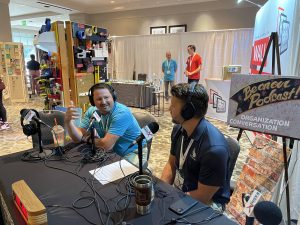
Haven Conference with Kristin Stockdale and Tiffany Marchand (Organization Conversation, Episode 28)

Kristin Stockdale, founder of WORKBENCHcon and HAVEN Conference joined the show, along with Tiffany Marchand of Night Carver Designs, to discuss the upcoming HAVEN Conference. They talked about the exciting collaboration between Kristin Stockdale and Tiffany, the story of the work behind the scenes, and how Tiffany was able to lend her energy and talents to help Haven get to the next level. They cover what’s new at HAVEN this year, effective platforms for connecting and marketing, and much more.

Organization Conversation is broadcast from the North Fulton studio of Business RadioX® inside Renasant Bank in Alpharetta.

Haven Conference

The Haven Conference is a place to celebrate the DIY spirit, learn new skills and build an online business! Entrepreneurs, makers and leading influencers gather to share, teach, and inspire. Mingle with sponsors, try new products, and grow your brand.

Most importantly, the Haven Conference is a place for community. Haven is more than just classes and hands-on demonstrations. There is time set aside to share knowledge, ask questions, and build relationships. The DIY/ home decor blogging niche is special, and you are encouraged to form connections with those in it!  You are guaranteed to walk away from Haven refreshed and inspired.

The next Haven Conference will be held in Atlanta at the Grand Hyatt Buckhead on July 21-23.

Website | Instagram | Facebook | Twitter | YouTube

WORKBENCHcon

WORKBENCHcon is the content creator conference curated for the DIY maker. This conference hosts over 500 niche influencers during a 2.5-day event. The experience includes business growth, hands-on demo, and inspirational sessions mixed in with several networking events throughout the time together. WORKBENCHcon is a powerful boost to any online business in the making community!

WORKBENCHcon 2023 will be held on March 2-4, 2023, in Atlanta.

Website | Instagram | Facebook | Twitter | YouTube

Kristin Stockdale

Kristin Stockdale, the owner of Stockdale Design, is lit up when she knows her passion for freedom is realized through her annual events. Stockdale Design started as an Interior Design shop and quickly became a special events company. The real transition came in 2012 when she co-founded the HAVEN conference; an energetic, fun, and inspiring DIY design niche influencer conference.

In 2017, Stockdale Design founded WORKBENCHcon, an intense DIY maker/content creator conference. Both HAVEN and WBC are intimate gatherings of like-minded people, based in connecting social influencers with brands and inspiring creatives with relevant content and networking events to transition their passion into a career. Seeing people transforming fills her soul, seeing so many lives changed by the doors that open at her conferences, just like here with the Inspo Conference – things happen when we gather! More personally, she values learning about different cultures through traveling and eating…You may also find her, at any given moment, gardening or creating a mean hand-crafted cocktail – Cheers!

LinkedIn

Tiffany Marchand, Owner, Night Carver Designs

Tiffany Marchand, Owner, Night Carver Designs

Tiff has been painting and making since she was a child. Her parents would do scrollsaw art and Tiff learned the process from them. She always knew she would be an artist.

She went into marketing and advertising and has done that for twenty years. At night, she does wood carving, hand-routed carving, creating custom pieces as well as a standing product line.

Tiff has a degree in Fine Art and a minor in graphic design.  She loves drawing inspiration from movies and music, and she is a huge movie nerd, which leads her to incorporate big bold colors and thick dark black lines into her art.

Company website | Instagram | YouTube

About Organization Conversation

Organization Conversation is hosted by Richard Grove and broadcast and produced from the North Fulton studio of Business RadioX® inside Renasant Bank in Alpharetta. You can find the full archive of shows by following this link. The show is available on all the major podcast apps, including Apple Podcasts, Spotify, Google, Amazon, iHeart Radio, Stitcher, TuneIn, and others.

About Richard Grove

Richard Grove, Host, Organization Conversation

Richard Grove‘s background is in engineering but what he enjoys most is brand building through relationships and creative marketing. Richard began his career with the Department of Defense as an engineer on the C-5 Galaxy Engineering Team based out of Warner Robins. While Richard found this experience both rewarding and fulfilling, he always knew deep down that he wanted to return to the small family business that originally triggered his interest in engineering.

Richard came to work for the family business, Dekalb Tool & Die, in 2008 as a Mechanical Engineer. At the time Wall Control was little more than a small ‘side hustle’ for Dekalb Tool & Die to try to produce some incremental income. There were no “Wall Control” employees, just a small warehouse with a single tool and die maker that would double as an “order fulfillment associate” on the occasion that the original WallControl.com website, which Richard’s grandmother built, pulled in an order.

In 2008, it became apparent that for the family business to survive they were going to have to produce their own branded product at scale to ensure jobs remained in-house and for the business to continue to move forward. Richard then turned his attention from tool and die to Wall Control to attempt this necessary pivot and his story with Wall Control began. Since that time, Richard has led Wall Control to significant growth while navigating two recessions.

Connect with Richard:

Instagram | Twitter | LinkedIn

About Wall Control

The Wall Control story began in 1968 in a small tool & die shop just outside Atlanta, Georgia. The first of three generations began their work in building a family-based US manufacturer with little more than hard work and the American Dream.

Over the past 50+ years, this family business has continued to grow and expand from what was once a small tool & die shop into an award-winning US manufacturer of products ranging from automobile components to satellite panels and now, the best wall-mounted tool storage system available today, Wall Control.

The Wall Control brand launched in 2003 and is a family-owned and operated business that not only produces a high-quality American Made product but sees the entire design, production, and distribution process happen under their own roof in Tucker, Georgia. Under that same roof, three generations of American Manufacturing are still hard at work creating the best tool storage products available today.

Connect with Wall Control:

Company website | Facebook | Instagram

Tagged With: design, DIY, Haven Conference, Kristin Stockdale, makers community, Night Carver Designs, Organization Conversation, Richard Grove, Tiff Marchand, Wall Control, WORKBENCHcon

Dr. Jason Reingold, Georgia Cardiovascular and Primary Care

July 12, 2022 by John Ray

Dr. Jason Reingold
North Fulton Business Radio
Dr. Jason Reingold, Georgia Cardiovascular and Primary Care
Loading
00:00 /
RSS Feed
Share
Link
Embed

Download file

Dr. Jason Reingold

Dr. Jason Reingold, Georgia Cardiovascular and Primary Care (North Fulton Business Radio, Episode 469)

Dr. Jason Reingold of Georgia Cardiovascular and Primary Care joined North Fulton Business Radio to announce the opening of their new flagship office in Alpharetta. He and host John Ray discussed this integrative cardiology practice, the 7% problem, and eight elements of optimal health. Dr. Reingold also mentioned the negative impacts of stress, including heightened inflammation and stress hormones, the steps his practice has taken to provide affordable care options, and much more.

North Fulton Business Radio is broadcast from the North Fulton studio of Business RadioX® inside Renasant Bank in Alpharetta.

Georgia Cardiovascular and Primary Care

Dr. Jason Reingold is a Harvard Trained, Board Certified Cardiovascular Disease specialist empowering patients to reduce complications of heart and vascular disease and to improve overall wellness. He and his team build relationships with patients and their families finding the best combination of lifestyle and pharmacologic treatments for optimal medical wellbeing.

As a recognized expert in heart and vascular diagnosis, Dr. Reingold helps patients choose the best test for their comprehensive health. When possible, he utilizes office-based, noninvasive testing to improve access, comfort, and convenience while reducing the cost of out-of-pocket expenses to patients. If you are experiencing symptoms of heart or vascular disease, need a second opinion, or want to know your risk, contact us to schedule a consultation with Dr. Jason Reingold.

Company Website |Facebook | Instagram

Dr. Jason Reingold, Cardiovascular Disease Specialist, Georgia Cardiovascular and Primary Care

Dr. Jason Reingold, Cardiovascular Disease Specialist, Georgia Cardiovascular and Primary Care

Dr. Jason Reingold is a Harvard-trained, board-certified cardiovascular disease specialist with additional certifications from the American College of Cardiology, National Institutes of Health, National Board of Echocardiography, and National Board of Nuclear Cardiology. Dr. Reingold is an adjunct assistant professor at Augusta University/Medical College of Georgia in addition to leading regulatory affairs for the Georgia Chapter of the American College of Cardiology.

Dr. Reingold graduated top of his class from the University of Georgia and Emory University School of Medicine. He completed his training in internal medicine at the University of California at San Francisco and went on to study cardiovascular disease at Massachusetts General Hospital/Harvard Medical School.

Dr. Reingold focuses on the prevention and reversal of heart and vascular disease in both the young and the elderly populations. He also takes interest in the overlap of cardiovascular disease focusing on weight management, kidney disease, and diabetes.

Additionally, Dr. Reingold offers his patients access to innovative diagnostic and treatment options through his work in clinical research trials. He has served as an investigator for trials through Saint Joseph’s Translational Research Institute, Saint Joseph’s Heart and Vascular Institute., and Atlanta Clinical Research Centers. Jason is married to Jennifer Alper Reingold, a pediatric speech pathologist. They live in Sandy Springs with their 2 daughters, Kaylie and Zoey, and rescue dog Teddy.

LinkedIn | Facebook

Questions and Topics in this Interview:

• It’s 2022: Why do we still need to talk about cardiovascular disease?
• Why did you pick Alpharetta as the location for your new practice?
• What makes your Alpharetta office unique?
• Aside from the physical office, what else differentiates your office from other practices?
• How is your practice philosophy different?
• You talk a lot about vascular health and disease, why is this so important to you
• I know reducing health care costs for employees is important for our listeners, please tell us more.
• What about patients who have insurance, are you in-network with insurance?


North Fulton Business Radio is hosted by John Ray and broadcast and produced from the North Fulton studio of Business RadioX® inside Renasant Bank in Alpharetta. You can find the full archive of shows by following this link. The show is available on all the major podcast apps, including Apple Podcasts, Spotify, Google, Amazon, iHeart Radio, Stitcher, TuneIn, and others.

RenasantBank


Renasant Bank has humble roots, starting in 1904 as a $100,000 bank in a Lee County, Mississippi, bakery. Since then, Renasant has grown to become one of the Southeast’s strongest financial institutions with over $13 billion in assets and more than 190 banking, lending, wealth management and financial services offices in Mississippi, Alabama, Tennessee, Georgia and Florida. All of Renasant’s success stems from each of their banker’s commitment to investing in their communities as a way of better understanding the people they serve. At Renasant Bank, they understand you because they work and live alongside you every day.
 

Special thanks to A&S Culinary Concepts for their support of this edition of North Fulton Business Radio. A&S Culinary Concepts, based in Johns Creek, is an award-winning culinary studio, celebrated for corporate catering, corporate team building, Big Green Egg Boot Camps, and private group events. They also provide oven-ready, cooked from scratch meals to go they call “Let Us Cook for You.” To see their menus and events, go to their website or call 678-336-9196.
Tagged With: A&S Culinary Concepts, cardiovascular disease, Dr. Jason Reingold, Georgia Cardiovascular and Primary Care, heart attack, heart disease, inflammation, integrative cardiology practice, North Fulton Business Radio, renasant bank, stress, Stroke, vascular health

Workplace MVP LIVE from SHRM 2022: Mario Pecoraro, Alliance Risk Group

July 12, 2022 by John Ray

Mario Pecoraro
Minneapolis St. Paul Studio
Workplace MVP LIVE from SHRM 2022: Mario Pecoraro, Alliance Risk Group
Loading
00:00 /
RSS Feed
Share
Link
Embed

Download file

Mario Pecoraro

Workplace MVP LIVE from SHRM 2022: Mario Pecoraro, Alliance Risk Group

On this episode of Workplace MVP, live from SHRM 2022 in New Orleans, host Jamie Gassmann was joined by Mario Pecoraro, CEO of Alliance Risk Group. Mario described his passion for investigation that led him to start Alliance Risk Group in 2005. He and Jamie discussed the types of investigations his firm conducts, various kinds of fraud they see, implications for companies, and much more.

Workplace MVP is underwritten and presented by R3 Continuum and produced by the Minneapolis-St.Paul Studio of Business RadioX®.

This show was originally broadcast live from the 2022 SHRM Annual Conference held at the New Orleans Convention Center in New Orleans, Louisiana.

Alliance Risk Group

Alliance Risk Group, Inc. (started out as Alliance Worldwide Investigative Group, a company founded in 2005 by CEO Mario Pecoraro. In 2020, the company united its services under one name – Alliance Risk Group, Inc., one logo, and one mission – to reduce risk and inspire confidence! Alliance Risk Group inspires confidence by providing risk mitigation solutions globally.

The services include due-diligence-based background investigations customizable to a variety of industries including banking/finance, technology, energy, gaming/hospitality, transportation, staffing, healthcare, and more. Alliance also performs surveillance and complete SIU investigations for insurance and corporate professionals.

In addition, their litigation support team (formerly known as Avvocato Litigation Support International) offers complete legal support including service of process on a local, state, national and international level. They serve law firms of all sizes, in-house legal departments of major corporations and government agencies that need service of process anywhere.

Their claims adjusting team, (formerly known as Preferred Adjustment Company) provides full-service claims handling and property/casualty adjusting services for insurance carriers, self-insured companies, and attorneys. Alliance Risk Group’s experienced crew of adjusters are strategically located throughout New York and surrounding states. They are available to service claims on a regional and multi-state level.

Company website | LinkedIn | Facebook |Twitter

Mario Pecoraro, CEO, Alliance Risk Group

Mario Pecoraro, CEO, Alliance Risk Group

Mario Pecoraro is an entrepreneur, corporate visionary, author, and founder of Alliance Risk Group Inc.  The company specializes in background screening and insurance fraud investigations. Our legal support team provides service of process on a local, state, national and international level. In addition, Alliance Risk Group provides full-service claims handling and property/casualty adjusting services for insurance carriers, self-insured companies and attorneys.  A member of the Professional Background Screening Association, (PBSA) Alliance employees hold FCRA Advanced Certification.  With more than 25 years of proven experience in due-diligence-based investigative services, Mario Pecoraro has spearheaded the growth of the company in a short period of time to become a leader in the insurance and background investigation fields, property/casualty adjusting and process service industries.

Prior to founding the company in 2005 (previously known as Alliance Worldwide Investigative Group) Mario worked for fifteen years as a private investigator in his parent’s family-owned firm and conducted in excess of 2,500 hours of field investigative work, skip-tracing, asset investigations and locating missing persons, heirs and witnesses. He graduated Cum Laude with a Bachelor of Science degree in Criminal Justice and Italian from the State University of New York at Albany.

Mario serves on the Executive Boards of many industry organizations and community not-for-profit organizations. He recently published a book, available on Amazon.com, that targets large employers, self-insured employers, insurance carriers, third-party administrators and workers’ comp professionals. “The Claim Game: Twenty Best Practices When Managing and Investigating Workers’ Comp Claims” provides readers with Best Practices on how best to reduce overall risk related to fraudulent workers’ compensation claims.

His second book, “Avoiding Costly Hiring Mistakes,” was published in the summer of 2019. It provides all the tips, best practices, and warning signs HR Professionals should look for when making hiring decisions.

Pecoraro conducts accredited webinars and has presented at conferences across the country. He is sought out as an expert on investigative matters and has been featured on local and national media outlets. The company was recently featured on ABC’s investigative news show 20/20 and described as the “gold standard” for those who want to screen out the fakes.” To view the segment, click here. He also interviewed by Brian Sullivan on Fox News Your World with Neil Cavuto discussing why some companies hire investigators when employees play hooky.

He was honored by his peers as an “outstanding business person” for conducting risk management and quality due-diligence based investigative services with integrity and his company was named a “2016 Best Places to Work” by the Albany Business Review.

LinkedIn

About Workplace MVP

Every day, around the world, organizations of all sizes face disruptive events and situations. Within those workplaces are everyday heroes in human resources, risk management, security, business continuity, and the C-suite. They don’t call themselves heroes though. On the contrary, they simply show up every day, laboring for the well-being of employees in their care, readying the workplace for and planning responses to disruption. This show, Workplace MVP, confers on these heroes the designation they deserve, Workplace MVP (Most Valuable Professionals), and gives them the forum to tell their story. As you hear their experiences, you will learn first-hand, real-life approaches to readying the workplace, responses to crisis situations, and overcoming challenges of disruption. Visit our show archive here.

Workplace MVP Host Jamie Gassmann

Jamie Gassmann, Host, “Workplace MVP”

In addition to serving as the host to the Workplace MVP podcast, Jamie Gassmann is the Director of Marketing at R3 Continuum (R3c). Collectively, she has more than fourteen years of marketing experience. Across her tenure, she has experience working in and with various industries including banking, real estate, retail, crisis management, insurance, business continuity, and more. She holds a Bachelor of Science Degree in Mass Communications with special interest in Advertising and Public Relations and a Master of Business Administration from Paseka School of Business, Minnesota State University.

R3 Continuum

R3 Continuum is a global leader in workplace behavioral health and security solutions. R3c helps ensure the psychological and physical safety of organizations and their people in today’s ever-changing and often unpredictable world. Through their continuum of tailored solutions, including evaluations, crisis response, executive optimization, protective services, and more, they help organizations maintain and cultivate a workplace of wellbeing so that their people can thrive. Learn more about R3c at www.r3c.com.

Company website | LinkedIn | Facebook | Twitter

TRANSCRIPT

Intro: [00:00:02] Broadcasting live from SHRM 2022 at the New Orleans Convention Center, it’s time for Workplace MVP. Brought to you by R3 Continuum, a global leader in helping workplaces thrive during disruptive times. Now, here’s your host.

Jamie Gassmann: [00:00:20] Hey, everyone. Your host here, Jaime Gassmann, at the R3 Continuum Booth, our show sponsor. And we are coming to you from SHRM 2022 Exhibit Hall. And with me is Mario Pecoraro from Alliance Risk Group. Welcome to the show, Mario.

Mario Pecoraro: [00:00:38] Good morning, Jamie. Thank you for having me.

Jamie Gassmann: [00:00:40] So, let’s start, tell us a little bit about your background and how you became the CEO of Alliance Risk Group and all of your expertise in what you do.

Mario Pecoraro: [00:00:48] Oh, great. So thank you once again for having me. I come to the industry with a pretty unique background and that I grew up in a family-owned business, worked with my dad, who was an old-school gumshoe, old-school private investigator. And, I learned at a pretty young age that I really had a strong passion for catching the bad guys, right, and doing the investigating needed to get the truth out there.

Mario Pecoraro: [00:01:15] So, I developed a strong passion probably at the age of 13, 14, was doing ride alongs with my dad, got to learn the ropes of what an investigator does, what surveillance is, how to screen people for organizations before background screening was a thing. And so, I took that strong passion and decided in 2005 that I wanted to launch my own firm, Alliance Risk Group, which was more focused on a scalable model of helping businesses reduce risk. So, Alliance Risk Group was born back in 2005.

Jamie Gassmann: [00:01:46] Yeah. And looking at risk and doing background checks, you have like, you know, I’m sure you’ve got some crazy interesting stories that H.R. leaders should be taking notice of. Do you have anything off the top of your mind that like is most interesting where you kind of use that as your way to warn why this is so important to look into?

Mario Pecoraro: [00:02:04] Yeah. So there are so many different aspects of background screening that are applicable. So, when it comes to the process itself, there’s a lot of regulations and rules that must be followed. And so, early on in the process, most of the companies doing this try to be as compliant as they could, but they struggle with how do you keep bad people out and reduce your risk. So through the years, a lot of laws have changed and a lot of compliance has taken place. But with that, the bad people have never really stopped, right? So, people are still trying to get into organizations. So, we’ve seen everything from people who falsified credentials, falsified resumes.

Mario Pecoraro: [00:02:41] We were privileged to be on ABC’s 2020 about six, seven years ago and they did a whole story on the extent to which an applicant will go to falsify their background. And the story was all about this guy that we ended up catching that was running a diploma mill out of Ohio. And by day, he was a factory worker. By night, he ran a diploma mill. So, if you wanted to graduate from DeVry University, you let him know. You tell him the year of graduation, he create a nice diploma. And basically, he did this for several people who were struggling. So, we were able to catch this on several people.

Jamie Gassmann: [00:03:16] Wow! That’s why I love doing this show. You always learn something new. I would have never thought that somebody would actually do that. That’s interesting.

Mario Pecoraro: [00:03:22] Yeah, for sure. So, people go to all extents to try to get a job. And so, besides references and diplomas, you also get into credentials, right? So, let’s just say they were at one point they needed to have a credential of, say, a manager or director level in the past job, a lot of employers may not verify a past employment, so they’re going to go out and say that they were a director at – we’ll use the example of IMED, a booth across the street. Well, who’s really going to verify that the person was a director at IMED and, you know, let’s just say that they didn’t even work there. If that’s not verified, that becomes an integrity issue. So, a lot of employees try to falsify things in order to justify the position they’re trying to get.

Jamie Gassmann: [00:04:02] Yeah. And looking at that, so they falsify the record of their resume or their background, what kind of risk does that put the company at in hiring somebody that’s done that?

Mario Pecoraro: [00:04:14] Great question. Yeah. So a lot of companies right now, so the risk that that puts them into is a number of risks. So, first of all, from a negligent hiring perspective, if they bring somebody into the workplace that should not have been brought in, whether it’s because of a violent background or false resume, they face potential of a really significant civil liability, not to mention the brand reputation that goes into that. Right? So, if they make a bad hire and now something bad happens and that hits the press, that has a huge impact on the company’s brand overall and its ability to stay in a positive light in the community.

Jamie Gassmann: [00:04:50] So, it could have a significant effect, not to mention the fact that if someone has a violent history and they’re able to get into an organization, we’ve all seen way too often the number of cases where there’s workplace violence, incidents that happened literally every day, where people go back to a job and they commit a violent act, not realizing that maybe a little bit of due diligence could have prevented that person from being brought on.

Jamie Gassmann: [00:05:12] Yeah. And now you are speaking at SHRM this year.

Mario Pecoraro: [00:05:15] I am.

Mario Pecoraro: [00:05:15] So, talk to me about what are you speaking on?

Mario Pecoraro: [00:05:18] So, having been in the industry my entire professional career, I’m very passionate about ensuring that best practices are followed and open in H.R. and talent acquisition leaders’ eyes as to not to take shortcuts in order to bring talent into the organization.

Mario Pecoraro: [00:05:36] So, today’s topic is actually one around the Fair Credit Reporting Act, often termed as FCRA, and some lawsuits that have happened in our industry where failure to follow due process, the proper best practices have resulted in millions of dollars in lawsuits and payouts as well as EEOC violations where there’s been discrimination. There’s also a big issue here with discrimination against people with criminal records that haven’t been given the opportunity for proper due process.

Jamie Gassmann: [00:06:05] Yeah. So if there were like three takeaways you want your audience to have when they walk out of the room after your presentation, what would those be?

Mario Pecoraro: [00:06:12] So, the first takeaway is, you know,there’s no shortcut to due process and due diligence. A lot of times, you know, with technology, people think, “Oh, with A.I. we can get into the background checks and get results quickly.” That’s partially true. But if you don’t do a thorough enough job, you could open the risk of potentially getting sued.

Mario Pecoraro: [00:06:33] The second piece takeaway that I’d like to ensure people walk away with is just reviewing their process, right? If the process has not been reviewed in a while, just make sure that they’re following the latest best practices to reduce risk. And the third is that it’s very easy to get sued today. So, be aware of what can happen to keep yourself out of that potential lawsuit.

Jamie Gassmann: [00:06:53] Yeah. Great advice for right now especially with some employers getting a little desperate for staffing.

Mario Pecoraro: [00:06:59] Very, very challenging these days for sure.

Jamie Gassmann: [00:07:01] Yeah. Wonderful. Well, thank you so much for for being on our show. If somebody wanted to get a hold of you to learn a little bit more or kind of, you know, ask some more questions about things they could be doing differently in their organization, how would they go about doing that?

Mario Pecoraro: [00:07:12] So, they could reach me. I’m on LinkedIn, Mario Pecoraro. You can email me, mpecoraro, that’s P-E-C-O-R-A-R-O, @allianceriskgroup. You can also reach me on Twitter, @marioawig. And, of course, if you Google me, you’ll find me as well, probably in a positive light, not negative one.

Jamie Gassmann: [00:07:33] Wonderful. Thanks again for being on the show. It’s been great chatting with you.

Mario Pecoraro: [00:07:36] Thanks for having me.

Outro: [00:07:41] Thank you for joining us on Workplace MVP. R3 Continuum is a proud sponsor of this show and is delighted to celebrate most valuable professionals who work diligently to secure safe workplaces where employees can thrive.


Tagged With: Alliance Risk Group, background check, investigation, Mario Pecoraro, R3 Continuum, SHRM 2022, Workplace MVP

Lindsay Karas Stencel, Startup and Venture Capital Attorney

July 11, 2022 by John Ray

Lindsay-Karas-Stencel-Inspiring-Women
Inspiring Women PodCast with Betty Collins
Lindsay Karas Stencel, Startup and Venture Capital Attorney
Loading
00:00 /
RSS Feed
Share
Link
Embed

Download file

Lindsay-Karas-Stencel-Inspiring-Women

Lindsay Karas Stencel, Startup and Venture Capital Attorney (Inspiring Women, Episode 48)

On this edition of Inspiring Women, Lindsay Karas Stencel joined host Betty Collins to discuss her career journey and how she navigates the male dominated world of venture capital.

The host of Inspiring Women is Betty Collins and the show is presented by Brady Ware & Company.

Betty’s Show Notes

My guest, Lindsay Karas Stencel, is a law firm partner, venture capitalist, podcaster, wellness advocate, fitnesser, adjunct law professor, and self-proclaimed dog mom.

One of the reasons that I have such a respect for her is that she thrives in a male-dominated venture capitalist environment. Women represent just 2% of the workforce in venture capitalism. So how does she navigate that world?

You always want to be in a position where you can make the decisions that are best for you and whether that’s for your career, for your family, for your mental health, whatever.

And when men dominate venture capital work, how does she work in that atmosphere?

I never even noticed it because I was just doing my job. Like, shame on me. I should have been better about that. In retrospect, I, I should have. But I was just doing my job. And then I realized like, holy smokes, I have a responsibility. Because if I’m one of the few people who was able to get a role that’s like this and start to pave a pathway for other females and diverse individuals to come, I better like do it right so that their path is a little bit easier. Because mine wasn’t easy.

Lindsey talks about what she would tell women today who are moving up in the corporate ranks.

You can never let that (intimidation) show, that it’s shaking you. If it’s shaking you, don’t let them see it. Because the second that they do, I think a lot of people smell blood in the water and they say like, oh, I can dig in here. The fight isn’t over. We’ve got a long way to go. And so people need to continue to push on.

And how do women do this?

You have to be prepared for that. And you have to be prepared to be better than everybody else that’s around you. And you’ve got to put in the time to do it.

Women can be really tough on women.

I think when people behave in that way, male or female, but females have a tendency to do it to other females for whatever reason. It’s usually a reflection of them. It’s not a reflection of us, right? It’s a reflection because they don’t feel good about themselves. They don’t feel enough. All of those things. Unfortunately, that’s not my problem. Right? That is a them problem and not a me problem.

Find out more about her here.

TRANSCRIPT

[00:00:00] Betty Collins
So today is just a really unique guest. I’ve always just admired her. Seen her a lot in the the events that are around town of Columbus, Ohio. And she’s always a big advocate for women. And she’s she’s just really cool. And I always call it the Marilyn Monroe of my life, because she’s just got the beauty of that, the hair, the whole thing. But but those are just some you know, she’s got a unique side to her. She’s tenacious and she just gets out there and but at the same time, you know, sometimes we tend to be we can be unique, but are we are we intentional and are we effective? Right. And it’s not even about I’m going to be tenacious, so I’ll be effective. No, I’m going to be effective. And I’m just having to be tenacious. I don’t know which one’s better, but but so today I have Lindsey Stencel. She is just a rock star in what she does. And it’s a man’s world, what she does, and she makes it look really easy from a distance. So Lindsey welcome today, and I’m just honored that you would take some time to be with us today. I know you’re a really busy person.

[00:01:05] Lindsay Karas Stencel
Well, that’s great.

[00:01:06] Betty Collins
Okay, great. So the first question I’m going to ask and I always hate reading bios because, you know, I’m reading them, I’d rather the person take two or 3 minutes and just tell us who you are, what you do, and then we’re going to get into your story, which I can’t wait to hear. So.

[00:01:22] Lindsay Karas Stencel
Sure. So Lindsey Stencel and I am born and raised in Buffalo, New York, and I’m a diehard Buffalo Bills fan to this day. Maybe this is our year.

[00:01:35] Betty Collins
Yeah, it might be. It might be.

[00:01:39] Lindsay Karas Stencel
And I went to high school in that area or college and that area where I played Division one lacrosse and was a student body president and then finally spread my wings to go to law school. Did my first year of law school out in New Jersey? Didn’t love that. I’m not sure if I didn’t love New Jersey or I didn’t love the school. And so I said, okay, I’m going to transfer to something more Midwestern. And that brought me to the Ohio State University, where I did another year of schooling. And then I still didn’t really love being a lawyer, which is funny because today I play a lawyer full time, but we’ll get there. Yeah. And I, I, you know, and it’s one of the things I advocate a lot of people do is just saying yes and jumping in if your gut says yes. So I ran into after my second year of law school, after my second year of working and during the summer, had a job lined up like everything was, you know, doing what it’s supposed to do if you’re in law school. Right? Right. And I just wasn’t happy and arena to someone who was talking about the Fisher Business School programs to include the MBA. And I just approached him afterwards and I said, hey, I’d love to get an MBA someday. I just don’t know what I’m going to do it.

[00:02:54] Lindsay Karas Stencel
And I’m old. So at the time the business school was on quarters at OSU and the and the law school was on semesters. So I was six weeks deep in my last fall semester of law school and I jumped ship and took a full time MBA program course load and kept my night classes in the law school. So I graduated with both degrees and that’s what set me on a path into venture capital. My first full time job was in a family of venture funds and ventures in Columbus, Ohio. I worked there for full time for 12 years. I started as a little associate and then fought and scratched and clawed my way up and we can talk all about that to become one of the managing partners and chief legal officer there. In the interim, I’d accidentally started a law firm, as one does, because I saw a need in the marketplace to help startups and venture funds in the area because at the time, venture and startup work was very nascent in Ohio, in the Midwest generally. And so I saw an opportunity to provide legal services the right way and at an affordable cost. And I didn’t intend to do anything but pay off my student loans. And it turned into this megalith of a thing that I needed to manage. And we can talk about that too. Yeah. And while that was happening, I was also running two different CrossFit gyms, one here and one in Buffalo in my hometown, and that was a lot.

[00:04:17] Lindsay Karas Stencel
And I also took on a role as chief investment officer for an organization in Buffalo called Launch New York, where I ran the most active seed fund in the state, one of the top ten most active in the country for four consecutive years before 2019, where we had a little bit of a health scare. And it sort of said to me, like, Hey, what’s the biggest priority in your life? And so I made some decisions to sell my law firm or roll it into Thompson. Hein So I’m a partner in Thompson High now, and I sit within the new ventures practice, which represents startups, and then I also oversee fund formation for the firm. So think venture funds, hedge funds, PE funds, real estate funds, all that kind of stuff. Sits under my purview now, and that’s what I get to do day to day. And there’s some other things I do, too. I teach at the law school and that’s fine, but it’s a lot of work. And I recently launched a nonprofit too, because I’m really big on entrepreneurial wellness, and I think it’s one of the things that hinders founders abilities to be rampantly successful because they just get caught up in mental health issues, physical health issues or financial health issues, right?

[00:05:29] Betty Collins
So if you haven’t heard the energy in her, then you kind of just you might as well end the clock as now because her energy and passion is so there. And one of the reasons that I have such a respect for is, I mean, it’s a tough environment and the VC is tough. I mean, it’s not anything that you just jump in and go do. I mean, it’s, you know, it’s relationship, it’s boldness. It’s going so now that we’ve heard, hey, here’s where I am right now. Today, when you started out in the journey, you know, and and you’re going up the hill and we’re going to talk a little bit, but the hills of 2020 and 21 and where the environment is today, can you take us back to those times where you had some wow, I don’t how am I going to navigate this? And what were your barriers in that whole navigation of? No, but this is what I really want to do. But I’ve got these barriers and the navigating is tough. Can you talk a little bit about that?

[00:06:33] Lindsay Karas Stencel
Yeah, sure. So that’s a really great question. So when I first started out in venture, it was 2008, 2009. And if we finally look back on that time, it was one of the worst economic times in history, really in the US. It was just atrocious and I was lucky enough that I did get a job. I was one of the 13% of people in my graduating law school, so that’s to get a job and not have their job rescinded. So that was great. But it was a really tough time because for a litany of reasons, one law school and taking four years of graduate work, I was lucky enough to not have undergraduate student debt, but good law school and MBA program, very expensive. And when you carry law student loans and things like that, it forces you to make decisions in certain ways, right? So it kind of handcuffs you. So I always joke with people. I’m like, you know, one of the things I learned is to interview and I won’t say the word on the podcast.

[00:07:39] Betty Collins
Right? Yeah, we’ll bleep that out. Yeah.

[00:07:43] Lindsay Karas Stencel
But what I mean by that is that you always want to be in a position where you can make the decisions that are best for you and whether that’s for your career, for your family, for your mental health, whatever. Because what I found is that I had to make certain decisions in my career which ultimately worked out very, very well. But, you know, part of the reason to start a law firm was to pay those student loans down faster. I had a full time job while that was happening. Right. And so you’re layering on an additional full time job to make something go away. And so it was a blessing because it gave me something that I have now and I’m very, very grateful. But I really do encourage people to really think about in any scenario that you’re in, like how can you be in a power position where if something isn’t a good fit for you or something isn’t working for you, you can make decisions accordingly that are best for you and for your health, right? The next layer of that was actually something I didn’t really recognize because when I started at my family of funds, I just put my head down. I loved the work. I thought it was like super interesting, super fun.

[00:08:55] Lindsay Karas Stencel
I was very engrossed in it. I was. And one of the things I also tell people is like, get really good at your craft. I got really good at the craft because I was in the craft 60 hours a week, head down, like didn’t leave my desk, you know, and it wasn’t really until 2013, 2014, where I started to kind of pop my head out more and take more meetings. And basically I had this personal philosophy of take every meeting. So every person who reached out to me to build my network, I made a conscious effort to take all of those. But I also said, Hey, if this person isn’t a great fit for some sort of relationship with with me, they could probably lead me to the next person who is. And so that ultimately led me to be able to be what I would classify as a super connector, because my network now is so big and broad because I was very generous with my time. So I think giving is very important. But the other piece of it is that my head was down, I was working. So her I was trying to be the best that I could be. I started to come up for. And I had lots of people who had come up to me and be like, you know, you’re the only woman in the room always.

[00:10:05] Lindsay Karas Stencel
Right? And I never even noticed it because I was just doing my job. Like, shame on me. I should have been better about that. In retrospect, I, I should have. But I was just doing my job. And then I realized like, holy smokes, I have a responsibility. Because if I’m one of the few people who was able to get a role that’s like this and start to pave a pathway for other females and diverse individuals to come. Right, man, I better like do it right so that their, their path is a little bit easier than maybe mine was because it wasn’t easy. You know, I had tons of people who I would be in the meeting. They wouldn’t even look at me when I would ask them a question, I would you know, I had people who would blatantly ignore me and pretend like I wasn’t in the room. I had people who asked me if my dad was coming to the meeting to supervise me. I had people at countless opportunities tell me to go get them their coffee and I was like, Did you see who the meeting is with? Like, go get me coffee. Like, right.

[00:11:09] Betty Collins
Exactly. Exactly.

[00:11:12] Lindsay Karas Stencel
It was just really it was hard for a long time and it still is hard. Don’t get me wrong. There’s still some of that in everyday life. There’s a lot of it really in my industry. But slowly but surely I like to think that it’s getting slightly better.

[00:11:28] Betty Collins
You know, we were just at an event together with the Columbus Metropolitan Club, and where Mary lives was with Lives was a big name back in the day in Columbus, and she was invited to speak at a lunch. Right. But they had to bring her in the back door because it was a men’s club. Only I’m real and you and I don’t relate to that. Right. So it’s certainly gotten better because we we were the topic at lunch. But, you know, it’s interesting when you talk about, hey, control your decisions, indecision is not good, know your craft and then you were a giver in hey, I’m going to get these relationships and build my network. But the be aware moment of I am the only woman in the room and I’ve had that where I went. I didn’t get that. And that’s one reason why I’m passionate about my women’s initiative internally, because I’m like, I have a responsibility to make sure that women that are coming up beneath me see it, that there’s a 40 year career. You don’t need to do everything in the first ten or whatever, whatever it is. Right? But to me, to hear you say someone was asking you for coffee, that just blows. I mean, I still can’t even comprehend that. But for.

[00:12:40] Lindsay Karas Stencel
You. Yeah. And like to.

[00:12:42] Betty Collins
Oh, oh, my gosh.

[00:12:43] Lindsay Karas Stencel
It was like I like it with too sweet and low and I was like, cool. I look cool and cream.

[00:12:49] Betty Collins
Yeah. My goodness. But what would you say to women today who are in your position? I mean, you’re you’re not because you had to work twice as hard, probably, right? I mean, because just like I had to now prove myself even more. And I have to be this level to do this to be to have some respect maybe, but help women not let that barrier get you. How did you push through that? Besides, yeah, I like cream and sugar too. Good luck, you know. But I mean, what are other things that you can think back? And this is what I did to push through that moment. I’m glad I did it.

[00:13:23] Lindsay Karas Stencel
Yeah. I mean, it’s it’s funny, right? Because some people sometimes say, oh, like, Lindsay, you do these things and you handle them with aplomb and like, it doesn’t even look hard. And I think the thing is, they’re like, people see the 10% on top of the water of the tip of the iceberg and they don’t see the 90% underneath of, you know, the times. Where did a conversation rock me that happened in person. And I would get back to my car where no one could see me and I would sob, right? Like because people were just heinous, you know? And I would still say even to this day, because I look how I look and I dress how I dress and I act how I act. And I say what I say. People still I still have to be 20% better than the best man in the room. People are always looking for me to fail in some way because then they can point and be like, well, like that’s what’s wrong. Because whatever. I mean, I had colleagues at a different firm. They’ve got some moles in their environment that they don’t know about. But, you know, they said I couldn’t possibly be a good attorney because of the way that I dress and the way that I do my nails. And I didn’t realize that my physical appearance was the thing that dictated whether or not my brain worked well.

[00:14:36] Lindsay Karas Stencel
I don’t know why it is what it is, but I would say, you know, you can never let that show that it’s shaking you if if it’s shaking you like high that stuff you need, don’t let them see it. Because the second that they do, I think a lot of people smell blood in the water and they say like, oh, I can dig in here. It’s the fight isn’t over like it’s we’ve got a long way to go. And so people need to continue to push on and they can’t think, Oh, will, I waltzed in the room and everything is going to be wonderful. And sunshine and rainbows. It’s still not in my world. It’s the man’s world. I mean, I can’t make that more clear. It’s 98% male. Right. And so it it is just one of those things where you just people just have to understand that it’s going to continue to be hard. It probably isn’t as hard as it used to be, let’s admit that. But it’s not going to be easy. And you have to be prepared for that. And you have to be prepared to be better than everybody else that’s around you. And you’ve got to put in the time to do it.

[00:15:44] Betty Collins
You’ve got to be prepared to react. Yeah, I mean, I mean because like there is a I’m sure you have a really good support system so that when you do go to your car and you’re like, I got to sob and I got to get this emotion out or I’ve got event vent, you have a support system that you know you can go to, right. Versus let let everyone around that that unfortunately doesn’t don’t they don’t want your success. They don’t think of your success. Right? They don’t want you to succeed in it. So but, you know, one of the things you are passionate about is small business and helping businesses. It’s not just I’m VC and I’m in this big name and I’m you know, you really have a passion about helping that smaller business or that woman owned business. Talk a little bit about the passion behind that. Or, you know, you could just work for five big clients, but, you know, you might have 20 smaller ones. Tell talk a little bit about that.

[00:16:39] Lindsay Karas Stencel
Yeah. I think it’s just sort of been a coming of age where women are in a place now where it’s normal for them to run the business or be the CEO or run the show. And I think a lot of. Women specifically, you know, they second guess themselves. They want everything to be really perfect all the time. And that’s fine, except for we miss a lot of our opportunities and we don’t do that. So when we do that, excuse me. So we need to sometimes just go. And so some of the things I think about is like, how do we push people to go a little bit faster? Why? Because I want to see them be successful. I want the business world, the working world, the legal world, the finance world to look like the rest of the world around us, like all of the businesses shouldn’t be owned and controlled by a middle aged white man. And I have nothing against the middle aged white man. I love my middle aged white man husband.

[00:17:32] Betty Collins
Right.

[00:17:35] Lindsay Karas Stencel
You know, that’s not real. That’s not that’s not how we get the best of the best. And and so for me, it’s, you know, I think my parents made a ton of sacrifices to allow my siblings and I to have really great opportunity. And I would be really mad at myself if I didn’t take that opportunity and turn it into something really great. So I want people to have everything that they could ever dream and desire. It’s people ask me, they’re like, Lindsay, you needs money on the table. Why do you do it the way you do it? And it’s like, well, sometimes it’s not about money, you know? Sometimes I tangibly just want to see people be successful, right? And because that makes the whole world.

[00:18:16] Betty Collins
Better, right? When I always say this, when the US economy and marketplace succeed, the world succeeds. We’re still that. And so how do you help as a CPA or as a venture capitalist or an attorney? How do you make sure that that’s happening? And when 80% of America is small business, then you have to jump in with that small business. Right now. One of the things about, you know, the barriers and and we talk about middle aged white men I’m married to. We’re old. We’re we’re the older white. I’m old the older white guy that’s 58. But but I mean women too, though can be the barrier to and I’m sure you have enough stories. I don’t want to we don’t have time for all of them but you know, speak to the audience about don’t do that, you know, how do you communicate? Because that I’m sure it happened to you. Can you believe that she’s this or can you believe that she’s that or why did she get this privilege or what? You know, women can be really tough on women. So talk a little bit about that.

[00:19:14] Lindsay Karas Stencel
Yeah, I think unfortunately it’s just really sad, right? Because I think when people behave in that way, male or female, but females have a tendency to do it to other females for whatever reason. It’s usually a reflection of them. It’s not a reflection of us, right? It’s a reflection because they don’t feel good about themselves. They don’t feel enough. All of those things. Unfortunately, that’s not my problem. Right? That is a them problem and not a me problem. But gosh, like the amount of energy that I have, I have watched people expend. I’m trying to point out flaws or discredit me or things of that nature. If they would just apply like 20% of that energy into like doing something for themselves, holy hell, could we have a place that would be so much better? And so part of it is just like, look, you can waste your time trying to attack other women because you don’t feel good about yourself. Or you could take yourself to therapy and you can figure out why you’re doing this, and then you can focus on you and knock the cover off the ball. Like for me, I literally don’t care what the people who have done less than scrupulous things to me in my life are doing today, I couldn’t tell you what they’re doing. I literally could care less, and I just wish that they would think about it that way to like, just get in your lane, know what that lane is in it and go.

[00:20:42] Lindsay Karas Stencel
But unfortunately I’ve seen, especially in my industry, it comes back to I think a lot of people because I hide well if something’s upsetting to me or has frustrated me or if I’m anxious about something, I hide it really well. Like I don’t think it’s something that the outside not that I don’t feel it. It’s just like I don’t think it’s relevant to the outside world that they need to see it. And I just don’t think people understand that it didn’t come easy. It came with a lot of scars, like the stress of doing what I, I mean, my life now is, is wonderful, but enough that it hasn’t been the whole time. But the stress of what I was doing when I listed off the approximately five full time jobs that I had at one time almost killed me. So I had this mask that formed in my sinus cavity and my frontal lobe that was literally killing me. It was cutting off like air. It was cutting off. Oh, my goodness. He couldn’t figure out why I was sick for like six consecutive months, but, like, my body just registered, like, we can’t do it all anymore. And so I think people just don’t see that there’s like, we all fight our battles, like, instead of fighting battles with each other, if we fought a common battle and move the ball forward differently, we’d all be in a much. Her place?

[00:21:56] Betty Collins
Absolutely. Absolutely. Well, hopefully the audience really heard that. Absorb that. Think about your behavior. Women with women especially and even women with men. Men are not the enemy that they’re just not. They can be your biggest advocate, you know. So but let’s talk your craft because you are really good at your craft. And you spoke at the Women’s Leadership Conference last year when it was virtual. And on a Friday you were the last one, right? It’s like, oh, my.

[00:22:20] Lindsay Karas Stencel
Well.

[00:22:21] Betty Collins
I know. But I’ll tell you, the women at Brady, where we were all in a room together watching the conference, they were so energized by man. I’m not sure what she does, but man, she knows what she does, right? She’s got energy behind it. So now we’re in this market in 22 going, yikes. You know, it’s feels like it kind of feels like 2008 except on steroids. So talk about, you know, VCs and what’s going on and give some optimism to people right now where we’re going. Are we really good? Yeah, we’re still really good. It’s just not the greatest. Maybe, but I’ll let you I’ll let you answer question first.

[00:22:57] Lindsay Karas Stencel
There’s lots of things that I think are less than ideal inflation, less than ideal interest rates going up, less than ideal. But, you know, the Fed is doing that because they’re trying to slow a train down. Right. So they need to be paying attention to economic theory like that’s why they’re doing it. Hopefully it’s like a short term thing. But, you know, overall, there’s tons of opportunity that remains in business. And so, you know, some of the greatest businesses in time are spawned out of times of recession because people go, I’ve got I see a problem. I can create a solution. I can get people to pay me more for the solution than the problems like let’s rock and roll. And so, first of all, I think there’s an opportunity in that always. Secondly, venture isn’t as economically impacted by massive macro scale economic downturn. You know, people might be a little bit more cautious with a valuation of a business or they might be a little bit more cautious with cash. But the right businesses that should be getting the funding typically don’t have an issue getting the funding right. And if the business is kind of in the right place at the right time, they’re still going to continue to excel despite what the market is doing. So one of the things I tend to encourage people to do is like, look, if you don’t love what the market is doing, you can hedge against that by investing in alternative investments, be adventurous things of that nature. And so now I think is an appropriate time to do that. I don’t think it’s the time to sit on cash and go, Oh, man, I, I’m afraid I’m going to put this under my mattress. I think it’s time to say, like, Hey, what are there some things that I’m really passionate about or have knowledge based in that I can invest in, that might be startup B or small businesses or whatever the case is going to be and see if I can make some money.

[00:24:59] Betty Collins
Yeah. I mean, in 08 i can remember it pretty clear where it was like, oh my goodness. And but it was a good wake up call just like maybe 2020 when we were all in a pandemic. But there was a lot of people who said, okay, now what? And they did. And right now, the people who are going to go, now what and what are we going to do just to climb this hill? It’s a little it’s a little taller. Right. And I was telling a client this morning, we were and he said, I’m sitting on this much cash. And I said, that’s fine if you don’t want to grow, if you don’t want to reinvest, if you want to go earn 2% for a while, if you whatever it is. Right. I said because it’s there’s a paralysis to that. And I’m not saying go out and just be crazy, but there’s a lot of opportunity market right now and you can’t listen to yesterday’s news on target lost whatever you know you’ve got to go och it’s probably a bad day for Target, but it doesn’t mean it’s a bad day for everyone.

[00:25:58] Lindsay Karas Stencel
Well, that in the index, the market usually index is upright over time. So yes, there’s good days and bad days and there you can’t look at it in a one day time frame. Yes. Are there days that have been worse than others in 1929 and 2000? Seven and eight? Sure. Right. But like, look how the market has rebounded since. And overall, the market does continue to index up so.

[00:26:21] Betty Collins
Well in just to give women some encouragement. I mean, the venture capital money’s out there. Access to capital is out there. And we tend to think it’s not there for us. So bankers don’t sit and go, here’s a pile for women. Here’s a pile for men. Right? They don’t do that when they get an application. It really isn’t that way. Some of it is what industries we tend to choose maybe are tougher to finance or you know. But let’s encourage you. How can you encourage women today to keep know, keep asking for that, you know, venture capital, keep pursuing it, you know, don’t give up on it. What do they do?

[00:26:57] Lindsay Karas Stencel
Yeah. So first things first. The answer is always no unless we ask, right? So if we don’t ask, we don’t.

[00:27:03] Betty Collins
Get that.

[00:27:03] Lindsay Karas Stencel
Love that we should be. It’s almost shocking to me when I ask for things, what I get. I mean just by asking. And then I get mad at myself for not asking for more because I’m like, Well, they’re just going to capitulate to this like, Geez, Louise, what would they have done otherwise? But I mean, I always start from a place of extreme fairness, so I feel good about it and hopefully they do too. But alas, that’s not what we’re talking about. So first ask.

[00:27:30] Betty Collins
Yes.

[00:27:31] Lindsay Karas Stencel
Second, there is an interesting thing happening in market where, yes, you might hear some of this on the SEC side, ESG environment, sustainability, governance, where we care about governance in terms of like what does the diversity of a board look like? What does diversity of maybe funding look like or things that get invested and look like? And so companies have been putting out mandates to say, yes, CEI, diversity, equity and inclusion is incredibly important to us. And I’m saying I’m talking here on the corporate side and oftentimes corporate investors are investing into venture funds or they have their own venture funds either way. But they have a lot of times mandates that they are needing to deploy capital into women and diverse led businesses, and a portion of their monies need to go there by their corporate mandates. And so we have never seen it like this before. So the wind, in a lot of ways is like at our back. And when the wind is at your back, you got to say, okay, that’s what you got to do. And it’s scary and it’s crummy. And asking people for money is hard, but like so is sitting where you are right now today.

[00:28:48] Lindsay Karas Stencel
So from my perspective it is get out there, take advantage of the wind at your back. Find allies that are in some of these different organizations and maybe not even just an ally, but an accomplice like someone who really wants to see something be successful for whatever reason. We’re all personally motivated in some way, shape or form. So what’s moving those people and how are you helping them achieve their goals and make the story simple for them? Like a lot of times it is a no brainer when you’re like, Hey, company, insurance company. I am a female and I have an insurance technology that could help you. Here’s how it can help you. It can help you on your initiative. It can help you because we make your stuff more efficient. It can make the story simple so that they. They can go. Oh, yeah, that that does make my life better. Like, look at this easy thing that I could do right now, and it’s never easy. But you get conceptually what I’m.

[00:29:48] Betty Collins
I’m involved with the High Women’s Coalition. And I was just talking with Rachel Weiner, who’s the executive director, you’re familiar with her. And she said some exciting news was that Intel, of course, is coming to the region. And they so, of course, Rachel is strategic. And hey, you know, how do we how do we get a conversation with them? They are so excited. Intel is that they’re going to get to talk to the Ohio Women’s Coalition and hear about it to know what can we do because we’re coming to the region. And you’re right, they want to invest in this, right? They want to give to this and not just give the women’s coalition a check, but it’s like, how can we help women business owners? What businesses are women to own? Who is certified? I mean, it’s exciting time. You’re right. You know, so so what I hear you say is to get up every day and do what you’re supposed to and tell your story. Because if you do and then, of course, ask the question that you want the answer to. So that is why I just love Lindsey Stenzel. I love listening to you even with your high state LinkedIn, things that are out there, it’s just always so very, very cool. But we’ll close today with just an inspiring something from Lindsey Stenzel to the audience of, you know, on whatever comes to your mind. I don’t know if that’s a terrible question.

[00:31:06] Lindsay Karas Stencel
No, it’s good. So that’s actually when I was little, my parents read me a book, say we read lots of books, but one book we also read every single day. And the book was called Duga and the Unusual Duck. And my dad always said it like Doug in the Unusual Suck.

[00:31:26] Betty Collins
I love it, I love it.

[00:31:28] Lindsay Karas Stencel
And some Asian Doogan had some disabilities, we’ll call it, and he was different than the other docs. But those differences made him very unique in a litany of ways which allowed him to be successful in a litany of ways that other people couldn’t be successful. And at the last sentence of the book is, Don’t be afraid to be different. Our differences make us special. And so it’s one of the things that I have lived by my entire life. You know, I have I don’t own a suit. I am a lawyer. I’m a partner in a law firm who does not own a suit. It’s a little challenging going to a meeting with the CEO of Chase yesterday where I was like, what does one wear.

[00:32:07] Betty Collins
This one wears? You always knock it out of the park. So I say Wear what you want.

[00:32:13] Lindsay Karas Stencel
But you know, I sort of embrace that in every aspect of my life. And I encourage other people to do it too, because I think when we are authentically us, the differences that do make us special, we are more comfortable in our own skin and we’re more more comfortable in our own skin. We’re not wasting our energy. Even if it’s a little bit of energy. I’m like, Oh, my suit’s uncomfortable. Or, you know, my my hair is not done the right way or whatever, you know, instead you’re just out there being comfortable you and pushing forward whatever the thing is that’s motivational to you and moves your soul. And so I, I desperately encourage people to not be afraid to be different because those differences make us special. And that is what ultimately can drive us to be. Oftentimes recognized and respected for the things that we do every day.

[00:32:59] Betty Collins
Okay. You had me at the dock, I guess. I mean, what a what a fabulous way to end. And I just appreciate you giving of your time today. I know you’re very busy, but what an inspirational message that my audience gets to hear today. So I so appreciate. And we will get this podcast out and get it to my audience. And again, thank you for joining us, Lindsey Karas Stencel.

Automated transcription by Sonix www.sonix.ai

 Hosted by Betty Collins, CPA, and Director at Brady Ware and Company. Betty also serves as the Committee Chair for Empowering Women, and Director of the Brady Ware Women Initiative. Each episode is presented by Brady Ware and Company, committed to empowering women to go their distance in the workplace and at home.

For more information, go to the Resources page at Brady Ware and Company.

Remember to follow this podcast on Apple Podcasts and Google Podcasts.  And forward our podcast along to other Inspiring Women in your life.

Tagged With: Betty Collins, Inspiring Women, Lindsay Karas Stencel, Startup, venture capital

Quick Tips for Time Well Spent: Nothing Time

July 11, 2022 by John Ray

Nothing
North Fulton Studio
Quick Tips for Time Well Spent: Nothing Time
Loading
00:00 /
RSS Feed
Share
Link
Embed

Download file

Nothing

Quick Tips for Time Well Spent:  Nothing Time

Personal concierge Julie Hullett suggests ways to cultivate “nothing time” to reduce stress and improve happiness.

Julie’s commentary was taken from this episode of Time Well Spent with Julie Hullett. 

Time Well Spent with Julie Hullett is presented by Julie Hullett Concierge, LLC and produced by the North Fulton studio of Business RadioX®.

About Time Well Spent

Time Well Spent with Julie Hullett features stories from busy professionals who have created more time to do what they love. Every other week, your host and personal concierge Julie Hullett speaks with entrepreneurs, community leaders, and influencers to answer the question: What would you do if you had more time?

The show is produced by the North Fulton studio of Business RadioX® and can be found on all the major podcast apps. The complete show archive is here.

Julie Hullett, Host of Time Well Spent with Julie Hullett

Julie Hullet, Host of Time Well Spent with Julie Hullett

Julie Hullett is the host of Time Well Spent with Julie Hullett.

Julie Hullett is a personal concierge and entrepreneur in Nashville, TN. She founded Julie Hullett Concierge, LLC in 2011 to give people their time back so they can do more of what they love. No stranger to big ideas and pursuing passions, Julie left corporate America to create her business. She capitalized on her skills—multi-tasking, attention to detail, and time management, to name a few—to build a successful business that gives back. Her clients enjoy ample free time. They’ve traveled more, spent more time with those they love, and have even created their own businesses.

Connect with Julie:

Website| LinkedIn | Instagram. Sign up to receive her newsletter.


Tagged With: Julie Hullett, Julie Hullett Concierge LLC, Nothing Time, Quick Tips for Time Well Spent, relaxation, rest, Time Well Spent

Decision Vision Episode 176: Should I Continue Investing in Sales and Marketing in a Recession?- An Interview with Amy Franko, Amy Franko Associates

July 7, 2022 by John Ray

Amy Franko
Decision Vision
Decision Vision Episode 176: Should I Continue Investing in Sales and Marketing in a Recession?- An Interview with Amy Franko, Amy Franko Associates
Loading
00:00 /
RSS Feed
Share
Link
Embed

Download file

Amy Franko

Decision Vision Episode 176: Should I Continue Investing in Sales and Marketing in a Recession?- An Interview with Amy Franko, Amy Franko Associates

Tempting as it may be to cut expenses such as sales and marketing when faced with the prospect of a recession, Amy Franko argues that is a mistake. Joining host Mike Blake on this episode of Decision Vision, Amy, the author of The Modern Seller, discussed sales and marketing as an investment, the ramifications of putting the brakes on it in an economic downturn, sensible strategies to prepare, the need for Sales and Marketing departments to be in alignment, and much more.

Decision Vision is presented by Brady Ware & Company and produced by the North Fulton studio of Business RadioX®.

In his introduction, Mike mentioned this 2020 Harvard Business Review article on marketing in a recession.

Amy Franko Associates

Amy Franko Associates works with mid-market and enterprise-level organizations to significantly grow their sales results. This includes consulting on sales strategy, and learning programs focused on growing sales team performance.

Company website | LinkedIn

Amy Franko, CEO, Amy Franko Associates

Amy Franko, CEO, Amy Franko Associates

Amy Franko is the leading sales strategist for growth-oriented mid-market organizations. She works with a variety of sectors to grow sales results, through both sales strategy and skill development programs. Her book, The Modern Seller, is an Amazon best seller and she is also recognized by LinkedIn as a Top Sales Voice.

Amy is the Chair of the Board of Directors for Girl Scouts of Ohio’s Heartland, a Top 25 non-profit in the Columbus, Ohio region. She resides in Columbus with her husband Dave and their very energetic black lab, Roxy. She loves all things fitness, enjoys travel, and is usually reading several books at once.

LinkedIn

Mike Blake, Brady Ware & Company

Mike Blake, Host of the “Decision Vision” podcast series

Michael Blake is the host of the Decision Vision podcast series and a Director of Brady Ware & Company. Mike specializes in the valuation of intellectual property-driven firms, such as software firms, aerospace firms, and professional services firms, most frequently in the capacity as a transaction advisor, helping clients obtain great outcomes from complex transaction opportunities. He is also a specialist in the appraisal of intellectual properties as stand-alone assets, such as software, trade secrets, and patents.

Mike has been a full-time business appraiser for 13 years with public accounting firms, boutique business appraisal firms, and an owner of his own firm. Prior to that, he spent 8 years in venture capital and investment banking, including transactions in the U.S., Israel, Russia, Ukraine, and Belarus.

LinkedIn | Facebook | Twitter | Instagram

Brady Ware & Company

Brady Ware & Company is a regional full-service accounting and advisory firm which helps businesses and entrepreneurs make visions a reality. Brady Ware services clients nationally from its offices in Alpharetta, GA; Columbus and Dayton, OH; and Richmond, IN. The firm is growth-minded, committed to the regions in which they operate, and most importantly, they make significant investments in their people and service offerings to meet the changing financial needs of those they are privileged to serve. The firm is dedicated to providing results that make a difference for its clients.

Decision Vision Podcast Series

Decision Vision is a podcast covering topics and issues facing small business owners and connecting them with solutions from leading experts. This series is presented by Brady Ware & Company. If you are a decision-maker for a small business, we’d love to hear from you. Contact us at decisionvision@bradyware.com and make sure to listen to every Thursday to the Decision Vision podcast.

Past episodes of Decision Vision can be found at decisionvisionpodcast.com. Decision Vision is produced by John Ray and the North Fulton studio of Business RadioX®.

Connect with Brady Ware & Company:

Website | LinkedIn | Facebook | Twitter | Instagram

TRANSCRIPT

Intro: [00:00:01] Welcome to Decision Vision, a podcast series focusing on critical business decisions. Brought to you by Brady Ware & Company. Brady Ware is a regional, full-service accounting and advisory firm that helps businesses and entrepreneurs make visions a reality.

Mike Blake: [00:00:21] Welcome to Decision Vision, a podcast giving you, the listener, a clear vision to make great decisions. In each episode, we discuss the process of decision making on a different topic from the business owners’ or executives’ perspective. We aren’t necessarily telling you what to do, but we can put you in a position to make an informed decision on your own and understand when you might need help along the way.

Mike Blake: [00:00:42] My name is Mike Blake, and I’m your host for today’s program. I’m the managing partner of Brady Ware Arpeggio, a data-driven management consultancy which brings clarity to owners and managers of unique businesses facing unique strategic decisions. Our parent, Brady Ware & Company, is sponsoring this podcast. Brady Ware is a public accounting firm with offices in Dayton, Ohio; Alpharetta, Georgia; Columbus, Ohio; and Richmond, Indiana.

Mike Blake: [00:01:06] If you would like to engage with me on social media with my Chart of the Day and other content, I’m on LinkedIn as myself and @unblakeable on Facebook, Twitter, and Instagram. I also host a LinkedIn group called Unblakeable’s Group That Doesn’t Suck, so please join that as well if you would like to engage.

Mike Blake: [00:01:23] Today’s topic is, Should I continue investing in sales and marketing in a recession?

Mike Blake: [00:01:27] So, as we record this on June 21st, literally the longest day, but I don’t think John Wayne’s making an appearance. I miss him. Speaking of Dayton, Ohio, by the way, I think he’s a native of Dayton, but anyway. It seems more likely than not certainly the people who claim to be in the know about these things, and I’m not, but I just read and pair it what other people who say they know what they’re talking about say that a recession seems more likely than not and maybe it’s even necessary. It may take a recession to sort of snap us out of this inflationary funk that our economy is currently in. And, who knows, maybe Paul Volcker is walking through that door.

Mike Blake: [00:02:10] So, I’m of the age where I do remember vaguely anyway the recession of 1980 and 81, where the Fed slammed on the brakes in a big time way. I remember having a CD that offered 18% interest, which is like credit card rates now. I don’t know if we’ll go that high. But it does seem like by hook or by crook in a recession, and if you don’t buy the Fed narrative, there’s always the Russia-Ukraine War and spiking oil prices, spiking food prices, and now monkeypox. Right? We’re not so afraid of murder hornets anymore, but thank God we have monkeypox coming to take its place. So, not necessarily a whole ton of optimism in the economy.

Mike Blake: [00:02:54] And so, given that a recession is at least forecasted by many, and let’s face it, we have pandemic aside from, and I realize it’s a bigger side, we have had a pretty long run, 2008 and ’09 to 2022 is a 13-year run without a recession. I don’t know exactly the history, but I’ll bet you that’s one of the longest runs in history. The only one that’s longer that I can remember is Reagan from ’82 to ’92 up until the Gulf War, the first Gulf War. So, we’ve had a long run. So, from a business cycle perspective, I guess we’re due.

Mike Blake: [00:03:34] And now, for good or ill, I’m old enough to have been through a few of these cycles now. I guess one of the benefits of having gray hair and two arthritic ankles is that companies now have to make a decision on how they’re going to allocate capital. Right? And, the ever-present Elon Musk, who apparently never misses an opportunity to say something inflammatory and he’s got the audience to do it, first announced that basically anybody who’s not in the office just isn’t working at all. And then, he decided to put an exclamation point on that by laying off 3.5% of Tesla, which really in the greater scheme of it, there have been much bigger layoffs, especially in the car industry.

Mike Blake: [00:04:20] So, not to minimize it but, frankly, if you’re in a recession, I want to be let go at the start, not in the middle of it. You have a chance to find a landing spot more quickly, but anyway. And having been through a couple of recessions, one of the things that has been a common theme that I have observed is many companies decide that they’re going to cut back on their sales and marketing under the guise. Well, nobody’s buying anyway, so why bother investing and selling? We’ll kind of come back and get them at another time.

Mike Blake: [00:04:51] And according to The Economist, advertising and marketing spend in the United States actually decreased by 13% in the first quarter of the 2008 recession; 13%. That is a massive number. I’ll bet it’s the largest that has ever been, sort of the Great Depression. But on the other hand, a 2020 Harvard Business Review article by – I hope I’m getting these names right, I’m probably not but we’ll have this in the show notes – Nirmalya Kumar and Koen Pauwels advise not to cut marketing expenditures during a recession. So, who is right? The people who are making the decisions or people who are writing to tell people about how to make the decisions? And I don’t know. I’m a finance guy, so I don’t know the first thing about marketing.

Mike Blake: [00:05:40] So, to help us with this conversation, I have brought in somebody who is an expert, and her name is Amy Franko, who is the leading sales strategist for growth-oriented and mid-market organizations. She works with a variety of sectors to grow sales results through both sales strategy and skill development programs. Her book, The Modern Seller, is an Amazon bestseller, and she is also recognized by LinkedIn as a top sales voice. You can learn more at amyfranko.com, with a K by the way.

Mike Blake: [00:06:10] Amy is the chair of the board of directors for Girl Scouts of Ohio’s Heartland, a top 25 nonprofit in the Columbus, Ohio region. She resides in Columbus with her husband, Dave, and their very energetic black lab. I think that’s redundant by the way. I have a black lab as well. Yeah, separate conversation. But if we ever have a power outage, we’re going to put it on a treadmill and a turbine because I think she can power air conditioning. She loves all things fitness. That’s Amy. I have no idea what the lab likes to do.

Mike Blake: [00:06:10] Amy loves all things fitness, enjoys travel, and is usually reading several books at once. Amy Franko Associates works with mid-market and enterprise-level organizations to significantly grow their sales results. This includes consulting on sales strategy and learning programs focused on growing sales team performance. Amy Franko, welcome to the Decision Division podcast.

Amy Franko: [00:07:01] Mike, it is so good to be here. Thank you for having me.

Mike Blake: [00:07:04] I want to talk about, from a very foundational standpoint, when we talk about investing in sales and marketing, what exactly does that mean? Because I think a lot of people don’t necessarily think of sales and marketing as an investment because that implies an asset. When we say that, what do you think it means?

Amy Franko: [00:07:24] So, before I answer that question, I just have to say, as I was listening to your opening monologue, as I was listening to that, I wrote down a phrase here and you talked about the funk. Sales and marketing can be one of your solutions for the funk. So, I want to open with that, and then share with you – I love that question about sales and marketing being an investment because that is what it is. Because when you make those investments and you being a finance guy, these things drop to the bottom line, the investments that you make in sales and marketing ideally should help improve the bottom line if you’re making the right investments.

Amy Franko: [00:08:07] But as I think about the elements of what it means to invest in sales and marketing, these are things like your sales and marketing strategy, the way that sales and marketing are integrated. And today, more than ever, sales functions and marketing functions are much more integrated, or they should be, if yours or not, in your organization. It’s also investment in talent and having a talent pipeline of sales professionals and marketing professionals. It’s investing in education. It’s investing in your key market segments. It’s innovation.

Amy Franko: [00:08:41] So, there are a lot of different things that we can kind of pick apart here when it comes to actually the investment in sales and marketing. But if you, as a leader, look at sales and marketing as an investment, that will guide your decisions differently than if you look at it as a liability or just something that you have to do, but not something that you want to do.

Mike Blake: [00:09:05] So, what about the argument that you’re in a recession, it’s too hard to sell anyway, got to conserve resources, let’s just sort of retrench a little bit and kind of ride this out. What do you think of that argument or that mindset?

Amy Franko: [00:09:20] I don’t love that mindset. As I was looking at, thinking about questions, I had a big no. Just one. A big no with an exclamation point. Sales is really your revenue and profit engine, and it should be your profit engine, not just your revenue engine. And, marketing is your awareness and your lead generation engines. And if you put those engines into idle or you turn them off completely, you’re not going to be able to move forward. At some point, you are going to be stuck and your competitors or the markets will pass you by. And not to say that you may not need to make some strategic adjustments to your investments.

Amy Franko: [00:10:08] So, for example, pandemic, live events during the pandemic is a really easy one. A lot of that stuff was cut. But if you’re going to be successful in the long run, if you are planning to be in business and successful five years from now, 10 years from now, you can’t turn off the marketing and sales engines today, you need to continue to invest, but you need to invest smart. And you may need to make some strategic adjustments here and there. But if you make wholesale cuts or you are not doing them with a strategic focus, you may not feel that today but you’re going to feel it down the road.

Mike Blake: [00:10:46] And, I wonder if a lot of this discussion has to do with a mindset, you know, and maybe this just means I’m a classical toxic male, but I like to be on offense. When I’m in business, I don’t like to be reactive and responsive. I like to be on offense. And, because life has taught me that when I’m on offense, better things happen, because at least you can force some of the action, right?

Mike Blake: [00:11:13] When you decide you’re going to kind of shut her up and shut down or step back, you’re kind of ceding control of the market, aren’t you, right? To me, that’s a much more defensive stance. And, you’re all about trying to prevent something bad from happening. And, to me, I would find it very difficult. And then, this recession coming up, it would be my first time running a company in a recession, but I would find it very difficult to stay on defense for very long. I find it very difficult to motivate my people to stay on defense for very long.

Amy Franko: [00:11:47] Yeah. And to probably use an overused sports analogy, successful teams have a combination of strong offense and strong defense. You absolutely need both in order to be successful. I personally take a similar viewpoint where the sales and marketing activities are offense-type activities. You may also be keeping your competitors out, which is more of a defensive type of play. But I do see sales and marketing as being offensive. It’s being market forward.

Amy Franko: [00:12:23] One of the mistakes I see organizations make is they shrink back during tough times. And that’s not a good posture in the marketplace. Your clients and prospective clients might start to question how healthy you are as an organization. So, it’s a matter of really thinking through if we make this decision here, what might be the cascading consequence, whether it’s tomorrow or a year from now.

Mike Blake: [00:12:51] So, in my view, we are in a period of measurement. We want to measure everything. We’ve figured out that we can measure a lot more things than we historically have. It’s been revolutionary in marketing, right? I don’t think many people are saying anymore that they’re wasting half their money on advertising. They don’t know which half. Right? That’s something that you’re fired now. But 10 to 15 years ago, that was the state of the art. Right?

Mike Blake: [00:13:18] And that’s a long preamble to the short question, which is this, that in a recession, now that everything is measured, it’s now putting quotas at risk, potentially compensation at risk for salespeople that are commission-based or marketing people or teams that have to meet certain targets on marketing that may or may not be realistic in a recession. So, as management, how do I react to that? And is there a balance you have to walk or establish between still trying to be aggressive and achieve goals, but at the same time not enabling and kind of letting people off the hook altogether because, oh, because recession?

Amy Franko: [00:14:04] Yeah. I think what makes the recession conversation interesting, some people don’t like to talk about recession because they think they’re going to bring it about by talking about it. But recession is often you’re looking out the rearview mirror. It’s, you know, GDP lowering over the course of I think it’s, what, two quarters in a row, so six months of time.

Amy Franko: [00:14:31] So, you realize that you’ve been in a recession when you’re looking in the rearview mirror, you can’t always anticipate what’s happening. And there are lots of companies that thrive during contracted periods of time in recessionary periods. So, just because the markets might be experiencing a recession, that doesn’t necessarily mean your organization is going to experience it if you are diversified, if you are smart about your product and solution mix, or where you happen to be.

Amy Franko: [00:15:05] But to directly answer your question about the quota piece of it, leaders do need to strike a balance, because what you don’t want to do is kill your sales culture. If you have something – I was thinking about this this morning and thinking about vulture culture, which means you might be going after the wrong customers to meet a bottom line. You might be changing compensation plans for your sales teams, which is a surefire way to have issues, let’s just say, you’re essentially creating an unhealthy culture.

Amy Franko: [00:15:44] So, as leaders, we have to really think about the decisions that we’re making when it comes to, you know, you might need to rightsize in the sales quota, you might need to rightsize some things, but to not do it in a vacuum and to think about how those changes could have cascading consequences, and to keep morale, you want to include your sales teams as much as possible in the conversations so that you could potentially come to some solutions together and, as leaders, you’re not just relying on one or two leaders making the decisions without input.

Mike Blake: [00:16:21] You know, in that part about culture, and I think by extension if I can put words in your mouth a little bit, almost a scarcity mentality.

Amy Franko: [00:16:30] Yeah.

Mike Blake: [00:16:31] Reminds me, actually, I watched – for the first time ever, I’m not a big movie guy, but on Friday for the first time ever, I actually watched the entirety of Glengarry Glen Ross, not just the coffees for closers thing. By the way, how Alec Baldwin gets third billing for about 5 minutes of dialogue, he must have had the best agent in the world. But anyway talk about a case study on a toxic culture where in effect most of those people felt like they were behind the 8 ball and frankly could not succeed and there was an absence of leadership and there was an absence of resources to at least make the salespeople feel like they could succeed in an ethical way. Right?

Mike Blake: [00:17:17] And I can’t help but think, as I was watching this – I didn’t do it to prepare for this podcast, just sort of worked out that way. But there is a risk I think even in 2022, so-called modern management, that a boiler room mentality can return, right, unless you adjust expectations and compensation structures.

Amy Franko: [00:17:41] Yeah. And there are plenty of tales of caution out there of those types of sales cultures that might work in the short term. But for the long term, you hurt your culture, which takes a long time to rebuild and probably would also mean a turnover in leadership to do that rebuild and you risk losing market share. So you might be chasing something for the short term, but for the long term, you lose out.

Mike Blake: [00:18:14] So, let’s talk a little bit about the disruption element of a recession. I think that sometimes people forget that some of the most interesting companies have actually been born during recessions, Apple being one during the first oil crisis. Can a recession be thought of perversely as an opportunity?

Amy Franko: [00:18:34] Yes, absolutely. I think there are a lot of opportunities that a recession can provide. You may have competitors that exit, that provide market share opportunities. To your point, you might create an entirely new business during a recession. You have the opportunity to maybe open a new market or find a new way of bringing an existing service to market. If you’re a company of strong cash reserves, you might be able to invest where others aren’t.

Amy Franko: [00:19:07] To prep for our conversation today, I was just doing a little bit of homework on the types of organizations that, or types of businesses I should say, that really thrived during the pandemic. So, these can be lessons for all of us even if we aren’t in these industries. So, like the cleaning industry, the delivery industry, the fitness industry, COVID remote testing, that type of industry. Those are examples of industries that really grew during the pandemic. And now the job of those companies is to continue to capitalize on that. And obviously, there are other challenges around supply chain and staffing shortages.

Amy Franko: [00:19:49] But just because we might be in the midst of a recession if we do look at it as an opportunity, and that comes back to your comment about mindset, we can choose how we look at it, and then if we choose to look at it as an opportunity and we use our actions and behaviors as leaders to look at it as opportunity, then we’re going to be in a much better position to actually find the opportunity versus just shutting our minds and shutting our eyes to finding them.

Mike Blake: [00:20:17] Yeah. You know, and the thing about recessions, it brings to mind a writer that I’m fond of, Nicholas Taleb. He wrote The Black Swan in addition to other things. He also wrote another book called Antifragile, which is effectively a book about resilience. And he made a fascinating observation, which I think is so profound, which is the difference between organisms and mechanisms, is that mechanisms, as they are used, depreciate and deplete. Organisms as they are used actually become stronger. Right?

Mike Blake: [00:20:51] So, people, as we use muscles, for example, they become stronger. Under stress, they become stronger. But machines under stress become weaker, more fragile. They’ll have to be maintained and overhauled. Right? And, I wonder if there’s – as I think about this upcoming recession, I think about and wonder, is that an opportunity for us to become stronger because it is going to create stress, and stress actually can produce very useful things. What do you think about that?

Amy Franko: [00:21:19] That’s such an interesting observation. And it’s reminding me of a conversation that I had with another sales consultant. I was interviewed on his podcast. His name is Victor Antonio, and he has an excellent podcast called The Sales Influencer, for anybody who’s interested in those topics. And what we were talking about, the observation was that in the last year or so, with things like supply chain shortage, resource, human resource shortage like staff shortage, we’ve both talked to so many organizations where sales professionals were saying, “I have so many orders. I can’t even fulfill the orders that I have because we have supply chain problems. We are growing like crazy because there’s so much demand for our service or a product.” You know, fill in the blank.

Amy Franko: [00:22:13] Now, what you’re seeing, and this was his observation which ties to what you just shared, is what sales skill atrophy, if you will. The muscles have not been used because they haven’t had to be. And now we might be entering a period where we have to flex those muscles again, but it’s going to take a few more workouts to get that strength back.

Amy Franko: [00:22:37] So, it’s a really interesting scenario. The people that have continued to work out all through this and keep those skills, whether it’s a leader making the investments or an individual continuing to sell, they’re the ones that are going to thrive. Whereas you’re going to see a lot of organizations that have had that atrophy and they’re going to have to figure it out.

Mike Blake: [00:22:59] I think that’s fascinating. I think that’s a really smart observation, because in a boom time like we’ve had, I do think that it’s been a good time for order takers. Right? But in a recession is when you really appreciate the order makers. Right? And you’re right if you have not been flexing that. And COVID is a perfect example. Right?

Mike Blake: [00:23:25] I went to my first networking meeting about, I guess is, last month in about two and a half years, and I basically drooled on the floor most of the time. I didn’t know how to talk to people anymore. I couldn’t have found my business card if you’d given me 10 minutes and a magnifying glass. Right? I was not at my smoothest, and, you know, a sales – we’re so not used to scarcity right now when it comes to revenue for a lot of us, now that I say this I’m going to lose all my customers tomorrow, so I’ve got to be really careful; knock on wood. But there is a muscle that probably is going to need to exercise.

Mike Blake: [00:24:03] So, with that in mind, I’m going to go off script a little bit because this brings to mind a really interesting – in my mind, a really interesting question. Assuming that people believe the same as I do that some form of recession is coming in the next, let’s say, by the end of the year, how can companies start to prepare now to either at least not be terribly hurt by the recession from a sales and marketing perspective, if not actually position themselves to thrive? How do you – what’s the equivalent of sort of buying all the storm windows before the hurricane hits?

Amy Franko: [00:24:40] Yeah, right. So, where I would counsel my clients to start is you need to get out your sales strategy and you need to get out your marketing strategy, and hopefully those two things exist in your organization. So if they exist, you need to pull them out and this is the time to take a look at them and to determine where you are and where you want to go into the future. If you don’t have these things, it’s not necessarily time to hit the panic button, but you want to get those things in place as well as you can because those can be your North Star, if you will. So, that’s where I would counsel my clients to start.

Amy Franko: [00:25:33] The other thing I would counsel my clients on is to not pivot too hard because I’ve seen organizations chase unproven markets where either they don’t know, they haven’t done their research on what the outcomes could be, or they don’t have enough of their own market share or visibility in those unproven markets. You can squander resources without return.

Amy Franko: [00:26:00] So, you want to take a look at where those resources are being invested and you want to take a look at your numbers. Where are you investing in sales? Where are you investing in marketing? Do you have the return on those investments? So, those are a few places that I would counsel my clients to start.

Mike Blake: [00:26:19] So, what are the landmines? What are the most common mistakes that companies do make in terms of responding to a recession from a perspective of investing in sales and marketing?

Amy Franko: [00:26:31] Yeah. I think the word react really comes to mind. It’s being reactive instead of proactive and not staying the course with the strategy that you’ve designed and not to say that strategy should be stagnant. You know, I am working with clients who are working on strategy that’s maybe a year to 18 months. So, I will work with clients on their sales strategy. And you want to stay the course, but you also want to take a look at what are the returns on those different investments. So, I would say a mistake is to not know your numbers when it comes to sales and marketing return.

Amy Franko: [00:27:17] One of the things that I see organizations do pretty regularly and it doesn’t matter, it’s not necessarily a comment on the recession. It’s really easy to hang on to resources whether they are people resources or other types of investments that you know aren’t performing. They’re dragging on the organization in some way, shape or form, whether it’s organizational morale or dragging on the bottom line and not being proactive with that. That hurts more during a recession. But I see it regardless of what the economy happens to be doing, and that’s a very common mistake.

Mike Blake: [00:27:59] You know that’s interesting because one of the benefits of recessions is, it does sort of separate wheat from the chaff. Right? And though you can – sometimes you can put up with mediocre performers because the recession allows you to do it, but, boy, a recession tends to reveal people’s shortcomings, especially on the sales and marketing side pretty quickly, doesn’t it?

Amy Franko: [00:28:20] It can. And this is where, even – you know, even really high performers, elite performers, aren’t immune to things that happen during a recession. I have seen very elite performers just the industries that they are selling into have hit slumps and some industries were hit much more heavily than others during the pandemic.

Amy Franko: [00:28:44] So, again, that is to your point where you separate the elite high performers from the others. Because the elite high performers, whether it’s in a sales function or a marketing function, they’re the ones that are going to be more resilient and they’re the ones that are going to say, “All right, things do not look good right now. I might be at 50% of my number or maybe even less. But here’s what I’m doing. Here’s how I’m thinking. Here’s what I’m going to go into the market with.” And they aren’t letting it – they aren’t letting it stop them from thinking creatively and being strategic. They’re not just going to sit back.

Amy Franko: [00:29:20] So, in the absence of seeing hard performance numbers like reaching a quota or numbers of leads generated from a marketing campaign, this is where leaders have a great opportunity to really get to know what their individual folks are doing and what their thought processes are and how they’re approaching because that’s going to tell you a lot about how they’ll recover when we do come out of whatever the latest disruption is.

Mike Blake: [00:29:48] What’s an example of a company that got marketing and sales right during the last recession? Can you think of one?

Amy Franko: [00:29:55] Well, you know, this may not be a recession conversation, but I think it’s a unique and interesting story that just speaks to kind of staying the course with strategy. And it’s an Ohio company. It’s a Gojo Industries, which is up in the Northeast Ohio area. And having been a family-owned business, you may not know who Gojo is, but you probably know the brand Purell. You know, Purell is on par with brands like Kleenex and Coke. It’s not hand sanitizer. It’s Purell. Right? But there was a time where that was a market, not a market, it was a loss leader for them. And it took them about a decade to get that product to where it is today, to profitability.

Amy Franko: [00:30:50] And, as I was reading about this, what really struck me was the leadership choices that the organization made, the leaders in the organization to say, you know, if we were perhaps a publicly-traded organization, this is an example of something that would have been cut years ago. But we really believed in it and we wanted to continue to bring it to market even though it took the time that it did and that investment paid off.

Amy Franko: [00:31:14] Now, that’s not necessarily a recession story. It is a story of understanding what your company values are and where you want to invest your resources and those decisions that you make from there. But, again, some of those industries, we could take some real lessons from industries that have thrived during pandemics. And I mentioned a few of them, but a couple of others are health care, telehealth, behavioral health, things like that. What are the lessons we can take from those and apply to our own businesses?

Mike Blake: [00:31:50] Your observation draws me to an observation I love you to react. I wonder if from a purely strategic perspective, privately-held companies actually have more freedom to operate in terms of recession and making investments because they at least have the freedom. Maybe they do or don’t do this, but they have the freedom to think in five and ten-year increments. Whereas in the public company sector, right, when a recession happens, you are expected to slash and burn. That’s what Wall Street wants to see. That’s where people’s bonuses are going to come from in terms of stock price, right, and not necessarily financial performance directly. Could the case be made that private companies actually have an advantage over public companies during a recession?

Amy Franko: [00:32:39] I think you can make the case that there is an advantage there. I think there’s also an advantage to – I think smaller organizations could have an advantage. They may not have the deep pockets, if you will, of larger organizations, but they can often be more nimble and more creative because they’re not constrained by their own mechanisms. Right? They have that ability to be a bit more creative.

Amy Franko: [00:33:04] I agree. I think a privately-held company could absolutely have an advantage. And even in uptimes, publicly-traded organizations are often running quarter to quarter and making these adjustments and pivots to product mix, how they’re incentivizing sales teams, what focus they’re going, what product focus or solution focus they’re going to put their time and attention toward because external forces are pressing down on them to make those decisions. Whereas a privately held organization, they’re going to have internal pressure, but they can make those decisions from the inside out versus the outside in.

Mike Blake: [00:33:46] So, you’ve brought up a term a couple of times that I want to pause on for a second because I do think it’s really important, and that is about reallocating resources. So, when a recession hits, I want to talk about first marketing and then sales. So first, how do you see companies or how should companies think about potentially, if not, reducing the amount of resources in a recession, how those same resources are allocated?

Amy Franko: [00:34:16] So, probably a recent one that can we probably all wrap our heads around is with the pandemic and just the fallout from that, the lack of live events, whether it’s a networking event, it’s a conference, you know what have you. The conference industry, of course, was rocked really hard by the pandemic. And it’s going to take multiple years for them to, for that industry, to recover. But that’s probably a pretty top-of-mind type of example, where if you’re an organization that put a lot of your marketing dollars into things like tradeshows, all of a sudden you had a complete marketing channel that you relied on heavily, it just completely dried up.

Amy Franko: [00:35:04] So, now as a leader, marketing leader or otherwise, you are faced with, all right, here’s this bucket of dollars that we are putting into one channel. I now have some decisions to make on where to reallocate that to. And if you have not had any diversification in those channels, you’re a little bit behind in the game to figure out where to reallocate those dollars or those people to. The other part of that is the replacement mechanisms, which were virtual conferences, a lot of my clients, frankly, did not get ROI out of virtual conferences because of the way that they are structured and just the way that you meet people and cultivate opportunities. It just wasn’t there.

Amy Franko: [00:35:52] So, you have to think about the replacement. Is the replacement going to be as good or better? And if I have this bucket of dollars and I’m going to pull it away, am I going to pull it away permanently, or am I going to maybe put a portion of those dollars back as things start to come online? So, that’s an example of where leaders have decisions to make about where to allocate marketing dollars and do they want to put the pie back to where it was pre-pandemic or pre-recession, or did they make those changes permanent?

Mike Blake: [00:36:29] So, I’ve read that social media tends to be the weapon of choice during a recession now. Have you heard that? Is there any truth to that? Is there any validity to that, or is it maybe –

Amy Franko: [00:36:44] Yeah. You know, I have a bit of an opposite viewpoint. Social media absolutely has its place. And for anyone that connects with me, you will see my presence on social media and definitely more on the business platforms. I use LinkedIn. I mean, I would argue that all the platforms can be used for some type of business.

Amy Franko: [00:37:07] Social media absolutely has its place. Where I see mistakes being made is that companies swing the pendulum so far in that social media direction that it can become a lot of noise. And, I’m a big believer that you have to have a really smart, business-oriented sales force to complement what you might be doing on social media. So, I believe in diversifying. And if all of your eggs are in a social media basket, I believe that you’ll be challenged as an organization moving forward.

Mike Blake: [00:37:45] Now, what about reallocating personnel, particularly sales force, during a recession? Is there a way to do that? Are our salespeople capable, willing to contribute in some other way that they just have to change the way that they sell? Are cutbacks perhaps inevitable whether deliberately or people are just sort of leaving to find a better opportunity? How do you see – what do you think best practices are for companies confronting personnel decisions during a recession?

Amy Franko: [00:38:18] Yeah. So, a lot of the things that you just talked about kind of wrapped up in that question about reallocating resources to other functions or how do we, for lack of a better phrase, rightsize the sales function? I think it starts with as a leader and this is whether you have a small sales team or you have multiple sales teams and you’re a global organization, having the right structures in place really show themselves during recessionary times or in disruptive times. And I mentioned this before that a lot of organizations hang on to professionals that are not not performing.

Amy Franko: [00:39:04] So, as a leader, you do have some options. You may need to cut back on your sales force. You may have some low performers on your team, which every organization has them. I’ve yet to come across an organization that doesn’t. This is also a choice where if you have really savvy sales professionals are going to find a way to stay productive and to continue to build relationships and to set themselves up for moving out of the recession, you have to know who those people are as a sales leader.

Amy Franko: [00:39:45] Most sales organizations don’t have the right sales processes. They don’t have the right skill development, and they don’t understand the skills of their team. If you understand the skills of your team and where they have strengths and weaknesses, that’s going to put you in a lot better position to understand the changes that you might have to make if you hit a period of contraction or some other type of disruption.

Mike Blake: [00:40:13] And what about the balance, if you will, or maybe the relationship between sales and marketing? Does that change? Do you – would you – do you think that best practices would indicate that companies are going to maybe tip the balance in favor of marketing in terms of lead generation? Or are they going to tip in favor of sales in terms of trying to close more of the leads that they have?

Amy Franko: [00:40:38] Yes. The best organizations that I see and work with are working toward an integration of marketing and sales. Now, you may have a chief sales officer or a VP of sales, and you may have a chief marketing officer. You may have people that are sitting in those roles and they’re leading their respective teams. But that type of sort of separated approach, you need to have those leaders that are on the same page moving forward, which is why I will often advocate for a sales and marketing strategy together. Even though you might be doing different activities, your marketing efforts have to support your sales teams, and your sales teams need to take what is created, assuming its quality, and move it through your sales process and your sales pipeline.

Amy Franko: [00:41:35] So, I find the best practice to be an integrated approach to sales and marketing where those leaders are in lockstep, and then that message kind of cascades down to the teams. And if I’m a sales professional, if I’m smart, I want to learn about what’s new in marketing and what my marketing team is doing. If I’m a smart, savvy marketing professional, I want to understand what’s happening in the sales landscape and spend time with my sales teams.

Mike Blake: [00:42:05] Now, what about the choice or the decision on whether or not you’re going to focus on maybe doing more work, more business with your existing customers versus new customer acquisition? How does a recession change, if at all, that calculus?

Amy Franko: [00:42:25] My philosophy is retaining and growing your existing customers is one of your best methods of offense during any type of period of contraction, recession, pandemic, or otherwise. And, every organization is a little bit different. But understanding what the right balance is for your organization, I tend to see a 70-30 split between expanding your existing customers and finding net new logos to add.

Amy Franko: [00:43:00] So, I think professional services, Mike, is a great example of where there’s been a lot of addition to what professional services firms offer. And especially, I work with a lot of public accounting firms, so about half of my business is public accounting and consulting. And, the organizations that have added ancillary high-value services to their portfolio now are in a great position to be able to go to current clients and offer these new services, new ways of thinking that maybe the client didn’t realize, “Oh, my gosh. I didn’t even realize you consulted on this. I absolutely need you to help me with this.” That’s offensive and defensive because not only are you providing a new value, which is offensive, you are ideally keeping your competitors out, which is a great defensive play.

Mike Blake: [00:43:50] So, not all recessions are created equal. Of course, the one that we went through in ’08 was really bad. It was a balance sheet recession that required systemic realignment throughout the economy to sort of rebound from. Others have not been nearly as severe. And so, my question is, does the – and this one doesn’t look like it’s necessarily going to be as severe as ones we’ve had in the past. Does that change at all how one should react to a recession or address a recession or approach a recession from a sales and marketing perspective, if you believe that the recession, for lack of a better term, just frankly just won’t be that bad?

Amy Franko: [00:44:33] Yeah. Sometimes I think it’s kind of the equivalent of pulling out your magic 8 ball and trying to figure out is it going to be bad or is it not? As I was thinking about our conversation today and kind of reflecting on that 2007 to 2009 period, we often talk about it like it was last year, but it was 13 or 14 years ago now. And if you look at your workforce, there’s probably a good portion of your workforce that were in high school when that 2008 recession was here, right, and they’re in their late 20s, maybe early 30s at this point.

Amy Franko: [00:45:13] So, I share that just as a way to give us a little bit of perspective that, like you said, not all recessions or contractionary period, contractive periods are the same. And it’s important to take the lessons that we’ve learned but to know that you may have a portion of your workforce that wasn’t even in the workforce when the last one hit so they may not have a frame of reference and just to treat each thing like its own individual time period and how can I be successful in this time period and also look to the future.

Mike Blake: [00:45:54] I’m talking with Amy Franko and the topic is, Should I continue investing in sales and marketing in a recession. Should a recession alter a company’s risk posture? And in fact, could an argument be made that a recession might be actually a better time to take risks?

Amy Franko: [00:46:12] Yeah. I think every leader is looking at, how do I maximize my upside and minimize my downside, right? So if you are looking to do that throughout your company’s history, whether it is an uptime or we’re hitting a period where we may hit some downtime, if we are smart and doing scenario planning while times are good, then we can minimize our downside ideally in downturns.

Amy Franko: [00:46:50] So, yes, if you have been, if you have good cash reserves, you have maintained a healthy balance sheet, you have diversified products and services, you can absolutely maximize downside. And companies are doing that all the time. It’s whether or not you have put yourself in a position to be one of those companies.

Mike Blake: [00:47:14] You’ve used the term a couple of times in this conversation that I want to come back to, because it’s a very important term, and that’s pivot. How do you decide whether or not the things you need to do or should do in a recession are of a nature where you’re simply rebalancing and adjusting versus a wholesale pivot, which to me implies you’re just going to abandon something and do something else because the thing you were doing just isn’t making it.

Amy Franko: [00:47:44] Yeah. Pivot’s one of those words you could put on a buzzword bingo board.

Mike Blake: [00:47:49] Absolutely. We’ll take that bingo board to the next level with that one.

Amy Franko: [00:47:53] Right. Right. So, between the words pivots and nimble and agile, I feel like we have a whole new game of buzzword bingo. So, yeah, how do you decide whether to pivot strategy, tactics, products, all of that? I think your scenario planning ahead of time can help you with that. Personally, I think that there is a balance between capitalizing on a market opportunity that can present itself during a downtime versus you pivot so hard and you put so many resources into something that isn’t going to pan out. And then, you find that now you have these resources that you’ve wasted.

Amy Franko: [00:48:39] So, your scenario planning ahead of time can be really important. Like, hey, if we do hit a downturn, what are our options? Or you’re in an uptime, what are the markets telling us what we might be able to capitalize on something and then when there is a downturn, you’re in a position to do that? So, it’s continually scanning the environment. So, when I’m doing strategy work with clients’ sales strategy primarily, we’re looking 12 to 18 months out instead of, say, the traditional three to five-year plan that typically gathers a lot of digital dust. And your risk tolerance will determine how hard you take, how sharp is that pivot.

Mike Blake: [00:49:22] So, before we wrap up, there’s a question I want to ask you. And I’m going to admit the question is blatantly unfair. In fact, it’s so blatantly unfair. And I kid you not, there’s no hyperbole here. I think it’s the most difficult question I’ve ever asked in the podcast. And this is episode 173, I think, 170 something.

Amy Franko: [00:49:41] You saved this one for me.

Mike Blake: [00:49:43] Yep.

Amy Franko: [00:49:44] All right. Let’s do it.

Amy Franko: [00:49:44] Because I think you can handle it. So in a recession, the reality may be that even though you advised a client to continue financing their sales and marketing operations, they may not have the money to do so. Right? They may be losing money, right? And they just got a cut. So, my blatantly unfair, horrible question is this. Assuming that the company had a clean, fairly strong balance sheet and assuming that the business owner had fairly middle-of-the-road risk tolerance, would you go so far as to advise a client or to yourself, if you’re in that situation, to actually consider taking on external money from a bank or an investor to keep up your sales and marketing during that recession until operations can recover and pay for it on its own?

Amy Franko: [00:50:43] That’s a really good question. When I think about taking on outside money, outside money could be you’re dipping into your line of credits. Outside money can be you are taking on an external investor who is putting money into your organization and now you have another stakeholder. So, there are probably a lot of considerations for taking on outside investment.

Amy Franko: [00:51:12] So, my answer to that, it’s a conditional yes, and here’s why. I am not opposed to companies taking on or using their debt instruments or outside investment instruments if they have a really clear picture of how they want to use it. If there isn’t a clear picture on how to use it, that can start to become another stressor on the balance sheet and on you as a leader, quite frankly, that you want to consider.

Amy Franko: [00:51:49] So, this is where having outside perspectives, whether it’s my perspective or might even your perspective with your areas of expertise, and really thinking through whether or not that outside investment is going to pay off. If the outside investment, especially if it’s like a line of credit and it’s a low-interest rate on a line of credit and that is a fairly low risk, then that might be an easier decision than taking on an actual outside investor who now has a say in how your company is run.

Amy Franko: [00:52:23] So, a long answer to your question, I wouldn’t leave it off the table, just having very clear parameters on how that’s going to play out and what your exit points are if you see it not working out.

Mike Blake: [00:52:38] Very good. You rose to the occasion. You answered a very tough question. Thank you. Thank you for doing that.

Mike Blake: [00:52:46] Amy, this has been a great conversation but we are running out of time. I’m sure there are questions that our audience wished we would have talked about or maybe talked about longer. If someone wants to contact you for more information about this topic or something related, can they do so? And if so, what’s the best way for them to do that?

Amy Franko: [00:53:03] Yes, please. I would love to hear from you. Two ways. The first is LinkedIn. I’m Amy Franko on LinkedIn. And, please mention that you heard me on our podcast here and I’d be happy to connect with you there. And then, also you are welcome to go out to amyfranko.com and reach out to me that way.

Mike Blake: [00:53:21] That’s going to wrap it up for today’s program. I’d like to thank Amy Franko so much for sharing her expertise with us.

Mike Blake: [00:53:28] We’ll be exploring a new topic each week, so please tune in so that when you’re faced with your next business decision, you have clear vision when making it. If you enjoy these podcasts, please consider leaving a review with your favorite podcast aggregator. It helps people find us so that we can help them.

Mike Blake: [00:53:44] If you would like to engage with me on social media with my Chart of the Day and other content I’m on, LinkedIn as myself and @unblakeable on Facebook, Twitter, and Instagram. Also, check out my LinkedIn group called Unblakeable’s Group That Doesn’t Suck. Once again, this is Mike Blake. Our sponsor is Brady Ware & Company. And this has been the Decision Vision podcast.


Tagged With: Amy Franko, Brady Ware & Company, Decision Vision, Mike Blake, recession, Sales and Marketing, sales strategy, sales teams, The Modern Seller

  • « Previous Page
  • 1
  • …
  • 126
  • 127
  • 128
  • 129
  • 130
  • …
  • 277
  • Next Page »

Business RadioX ® Network


Our Most Recent Episode

CONNECT WITH US

  • Email
  • Facebook
  • LinkedIn
  • Twitter
  • YouTube

Our Mission

We help local business leaders get the word out about the important work they’re doing to serve their market, their community, and their profession.

We support and celebrate business by sharing positive business stories that traditional media ignores. Some media leans left. Some media leans right. We lean business.

Sponsor a Show

Build Relationships and Grow Your Business. Click here for more details.

Partner With Us

Discover More Here

Terms and Conditions
Privacy Policy

Connect with us

Want to keep up with the latest in pro-business news across the network? Follow us on social media for the latest stories!
  • Email
  • Facebook
  • Google+
  • LinkedIn
  • Twitter
  • YouTube

Business RadioX® Headquarters
1000 Abernathy Rd. NE
Building 400, Suite L-10
Sandy Springs, GA 30328

© 2026 Business RadioX ® · Rainmaker Platform

BRXStudioCoversLA

Wait! Don’t Miss an Episode of LA Business Radio

BRXStudioCoversDENVER

Wait! Don’t Miss an Episode of Denver Business Radio

BRXStudioCoversPENSACOLA

Wait! Don’t Miss an Episode of Pensacola Business Radio

BRXStudioCoversBIRMINGHAM

Wait! Don’t Miss an Episode of Birmingham Business Radio

BRXStudioCoversTALLAHASSEE

Wait! Don’t Miss an Episode of Tallahassee Business Radio

BRXStudioCoversRALEIGH

Wait! Don’t Miss an Episode of Raleigh Business Radio

BRXStudioCoversRICHMONDNoWhite

Wait! Don’t Miss an Episode of Richmond Business Radio

BRXStudioCoversNASHVILLENoWhite

Wait! Don’t Miss an Episode of Nashville Business Radio

BRXStudioCoversDETROIT

Wait! Don’t Miss an Episode of Detroit Business Radio

BRXStudioCoversSTLOUIS

Wait! Don’t Miss an Episode of St. Louis Business Radio

BRXStudioCoversCOLUMBUS-small

Wait! Don’t Miss an Episode of Columbus Business Radio

Coachthecoach-08-08

Wait! Don’t Miss an Episode of Coach the Coach

BRXStudioCoversBAYAREA

Wait! Don’t Miss an Episode of Bay Area Business Radio

BRXStudioCoversCHICAGO

Wait! Don’t Miss an Episode of Chicago Business Radio

Wait! Don’t Miss an Episode of Atlanta Business Radio