Business RadioX ®

  • Home
  • Business RadioX ® Communities
    • Southeast
      • Alabama
        • Birmingham
      • Florida
        • Orlando
        • Pensacola
        • South Florida
        • Tampa
        • Tallahassee
      • Georgia
        • Atlanta
        • Cherokee
        • Forsyth
        • Greater Perimeter
        • Gwinnett
        • North Fulton
        • North Georgia
        • Northeast Georgia
        • Rome
        • Savannah
      • Louisiana
        • New Orleans
      • North Carolina
        • Charlotte
        • Raleigh
      • Tennessee
        • Chattanooga
        • Nashville
      • Virginia
        • Richmond
    • South Central
      • Arkansas
        • Northwest Arkansas
    • Midwest
      • Illinois
        • Chicago
      • Michigan
        • Detroit
      • Minnesota
        • Minneapolis St. Paul
      • Missouri
        • St. Louis
      • Ohio
        • Cleveland
        • Columbus
        • Dayton
    • Southwest
      • Arizona
        • Phoenix
        • Tucson
        • Valley
      • Texas
        • Austin
        • Dallas
        • Houston
    • West
      • California
        • Bay Area
        • LA
        • Pasadena
      • Colorado
        • Denver
      • Hawaii
        • Oahu
  • FAQs
  • About Us
    • Our Mission
    • Our Audience
    • Why It Works
    • What People Are Saying
    • BRX in the News
  • Resources
    • BRX Pro Tips
    • B2B Marketing: The 4Rs
    • High Velocity Selling Habits
    • Why Most B2B Media Strategies Fail
    • 9 Reasons To Sponsor A Business RadioX ® Show
  • Partner With Us
  • Veteran Business RadioX ®

Jeff Tucker, Studio Bank

May 1, 2023 by John Ray

Studio Bank
North Fulton Studio
Jeff Tucker, Studio Bank
Loading
00:00 /
RSS Feed
Share
Link
Embed

Download file

Studio BankJeff Tucker, Studio Bank (Time Well Spent with Julie Hullett, Episode 17)

Jeff Tucker, Senior Vice President at Studio Bank, talked with host Julie Hullett about how and why this unique bank was founded for creators.  Jeff also discussed the events the bank conducts, Jeff’s journey to banking, his take on the real estate market, and much more.

Following the interview, Julie shared a Quick Tip about clearing digital clutter.

Time Well Spent with Julie Hullett is presented by Julie Hullett Concierge, LLC and produced by the North Fulton studio of Business RadioX®.

Studio Bank

Studio Bank is a boutique bank located in The Gulch. A studio is a place where creators do their thing.

And they are the bank for Nashville’s creators. Whether you’re designing a company or creating a better life for your family, crafting a song or writing code, orchestrating social change or enhancing the quality of care, they want to collaborate with you.

They say welcome to the doers, change-makers, leaders… and even the brilliant misfits. A New Model for Banking. Membership-based, Tech-savvy, Hospitality-inspired… and pioneered right here in Nashville.

Website | LinkedIn | Facebook | Instagram

Jeff Tucker, Senior Vice President and Mortage Banker, Studio Bank

Jeff Tucker, Senior Vice President and Mortage Banker, Studio Bank

Jeff is a senior vice president and residential mortgage lending officer at Studio Bank, Nashville’s boutique bank serving Davidson, Williamson, and surrounding counties.

Jeff is a Certified Mortgage Banker; Accredited Mortgage Professional; Graduate of Mortgage Bankers Association School of Mortgage Banking; past President of Nashville Mortgage Bankers Association (2012) and President of Tennessee Mortgage Bankers Association (2019).


LinkedIn


About Time Well Spent

Time Well Spent with Julie Hullett features stories from busy professionals who have created more time to do what they love. Every other week, your host and personal concierge Julie Hullett speaks with entrepreneurs, community leaders, and influencers to answer the question: What would you do if you had more time?

The show is produced by the North Fulton studio of Business RadioX® and can be found on all the major podcast apps. The complete show archive is here.

Julie Hullett, Host of Time Well Spent with Julie Hullett

Julie Hullet, Host of Time Well Spent with Julie Hullett

Julie Hullett is the host of Time Well Spent with Julie Hullett.

Julie Hullett is a personal concierge and entrepreneur in Nashville, TN. She founded Julie Hullett Concierge, LLC in 2011 to give people their time back so they can do more of what they love. No stranger to big ideas and pursuing passions, Julie left corporate America to create her business. She capitalized on her skills—multi-tasking, attention to detail, and time management, to name a few—to build a successful business that gives back. Her clients enjoy ample free time. They’ve traveled more, spent more time with those they love, and have even created their own businesses.

Connect with Julie:

Website| LinkedIn | Instagram. Sign up to receive her newsletter.

Tagged With: Creatives, creators, Jeff Tucker, Julie Hullett, Julie Hullett Concierge LLC, makers, mortgage lender, Studio Bank, Time Well Spent, Time Well Spent with Julie Hullet

The Profitability Coach’s 14th Anniversary, with Bill McDermott, Host of ProfitSense

May 1, 2023 by John Ray

The Profitability Coach's 14th Anniversary, with Bill McDermott, Host of ProfitSense
North Fulton Studio
The Profitability Coach's 14th Anniversary, with Bill McDermott, Host of ProfitSense
Loading
00:00 /
RSS Feed
Share
Link
Embed

Download file

The Profitability Coach's 14th Anniversary, with Bill McDermott, Host of <i>ProfitSense</i>

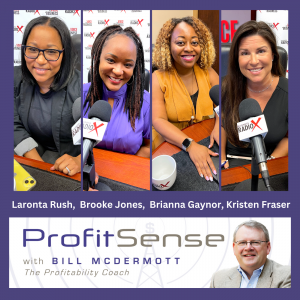
The Profitability Coach’s 14th Anniversary, with Bill McDermott, Host of ProfitSense

In this commentary from a recent episode of ProfitSense, Bill expresses gratitude as he celebrates 14 years as The Profitability Coach, helping businesses become more profitable.

ProfitSense with Bill McDermott is produced and broadcast by the North Fulton Studio of Business RadioX® in Alpharetta.

Bill’s commentary was taken from this episode of ProfitSense.

About ProfitSense and Your Host, Bill McDermott, The Profitability Coach

Bill McDermott
Bill McDermott

ProfitSense with Bill McDermott dives into the stories behind some of Atlanta’s successful businesses and owners and the professionals that advise them. This show helps local business leaders get the word out about the important work they’re doing to serve their market, their community, and their profession. The show is presented by McDermott Financial Solutions. McDermott Financial helps business owners improve cash flow and profitability, find financing, break through barriers to expansion, and financially prepare to exit their business. The show archive can be found at profitsenseradio.com.

Bill McDermott is Founder and CEO of McDermott Financial Solutions. When business owners want to increase their profitability, they don’t have the expertise to know where to start or what to do. Bill leverages his knowledge and relationships from 32 years as a banker to identify the hurdles getting in the way and create a plan to deliver profitability they never thought possible.

Bill currently serves as Treasurer for the Atlanta Executive Forum and has held previous positions as a board member for the Kennesaw State University Entrepreneurship Center and Gwinnett Habitat for Humanity and Treasurer for CEO NetWeavers. Bill is a graduate of Wake Forest University and he and his wife, Martha have called Atlanta home for over 40 years. Outside of work, Bill enjoys golf, traveling, and gardening.

Connect with Bill on LinkedIn and Twitter and follow McDermott Financial Solutions on LinkedIn.

Tagged With: 14th Anniversary, Bill McDermott, gratitude, Profit Sense, profitability, profitability coach, Profitability Coach Bill McDermott, ProfitSense with Bill McDermott, The Profitability Coach

Getting Out of a Rut, with Anthony Chen, Host of Family Business Radio

May 1, 2023 by John Ray

Getting Out of a Rut, with Anthony Chen, Host of Family Business Radio
Family Business Radio
Getting Out of a Rut, with Anthony Chen, Host of Family Business Radio
Loading
00:00 /
RSS Feed
Share
Link
Embed

Download file

Getting Out of a Rut, with Anthony Chen, Host of <i>Family Business Radio</i>

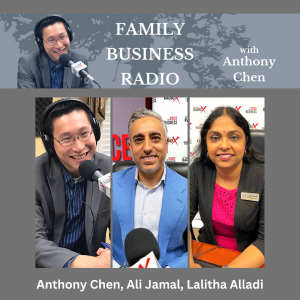
Getting Out of a Rut, with Anthony Chen, Host of Family Business Radio

In a commentary from a recent Family Business Radio episode, host Anthony Chen noted that the way to get out of a rut is to change your headspace, focusing on things you can control versus what you cannot.

Anthony’s commentary was taken from this episode of Family Business Radio. Family Business Radio is underwritten by Anthony Chen with Lighthouse Financial Network.

Anthony Chen, Host of Family Business Radio

Anthony Chen, Host of Family Business Radio

This show is sponsored and brought to you by Anthony Chen with Lighthouse Financial Network. Securities and advisory services are offered through Royal Alliance Associates, Inc. (RAA), member FINRA/SIPC. RAA is separately owned and other entities and/or marketing names, products, or services referenced here are independent of RAA. The main office address is 575 Broadhollow Rd. Melville, NY 11747. You can reach Anthony at 631-465-9090 ext. 5075 or by email at anthonychen@lfnllc.com.

Anthony Chen started his career in financial services with MetLife in Buffalo, NY in 2008. Born and raised in Elmhurst, Queens, he considers himself a full-blooded New Yorker while now enjoying his Atlanta, GA home. Specializing in family businesses and their owners, Anthony works to protect what is most important to them. From preserving to creating wealth, Anthony partners with CPAs and attorneys to help address all of the concerns and help clients achieve their goals. By using a combination of financial products ranging from life, disability, and long-term care insurance to many investment options through Royal Alliance. Anthony looks to be the eyes and ears for his client’s financial foundation. In his spare time, Anthony is an avid long-distance runner.

The complete show archive of Family Business Radio can be found at familybusinessradioshow.com.

Tagged With: Anthony Chen, Family Business, Family Business Radio, financial planner, financial planning, Getting Out of a Rut, Lighthouse Financial, Lighthouse Financial Network, rut

Generous Leadership

April 28, 2023 by John Ray

Generous Leadership
North Fulton Studio
Generous Leadership
Loading
00:00 /
RSS Feed
Share
Link
Embed

Download file

Generous LeadershipGenerous Leadership

Price and Value Journey host John Ray recently presented on generous leadership to a group of business owners and leaders, organized and led by Julie Keyes of KeyeStrategies. In his presentation, John discussed a generous mindset vs. a mindset of scarcity, focusing on assets vs. deficits, characteristics of generous leadership, including laughter, listening, and stability, and how generous leadership shows up with employees and team members, clients, and in marketing to prospects.

The Price and Value Journey is presented by John Ray and produced by the North Fulton studio of Business RadioX®.

KeyeStrategies, LLC

KeyeStrategies is an advisory firm for entrepreneurs looking to grow and improve their business, while also providing Exit Planning and Transition services for companies between $5-30M in annual revenue. The firm’s mission is to help business owners increase enterprise value and prepare the owner and the business for a future exit. Our tagline says it all… “Build enterprise value today, so you can exit on your own terms tomorrow”.

Website | LinkedIn | Facebook | Twitter

Julie Keyes, Founder/President, KeyeStrategies, LLC

Julie Keyes
Julie Keyes, KeyeStrategies, LLC and Host of the “Poised for Exit” Podcast

Julie Keyes is a Certified Exit Planning Advisor (CEPA) the founder of KeyeStrategies, LLC in Minneapolis, MN specializing in exit and transition consulting for owners of lower and middle market companies. Julie has been an entrepreneur most of her life. As the founder and operator of several companies, she understands what keeps owners up at night.

She works with business owners who seek to understand and maximize their exit and critical transition options. She is actively involved with the Exit Planning Institute, as a faculty member and regular content contributor, and winner of EPI’s “Thought Leader of Year” in 2017 and 2022.

She is also on faculty for Hoopis Performance Network and a Speaker Network member. Her speaking engagements for the financial services and entrepreneurial organizations have included NAIFA, WIFS, FPA, NAWBO, Merrill, UBS, LIMRA, Lincoln Financial Services, Principal Financial Group and Frost Bank.

Julie recently released the 2nd Edition of “Poised for Exit” a book which helps owners of privately held companies navigate the process of business exit. Her weekly podcast, also called “Poised for Exit”, provides content relevant to business owners and advisors alike, and can be found on all major podcast platforms.

She also produced an online course specifically to help advisers educate their clients and prospects on the process of Exit Planning called “Business Transition Readiness: An Owner’s Guide to the Process”.

On a personal note, Julie and her husband Shaun have 8 children and 10 grandchildren, so when she’s not working, she’s spending time with them doing something fun, active, and outdoors.

LinkedIn

TRANSCRIPT

John Ray: [00:00:00] Hello. I’m John Ray on The Price and Value Journey. Recently, I was honored to be invited by Julie Keyes to present to her group that meets once a month to learn about various issues around leadership and other important issues in team management, personal development, professional development and so forth.

And I was fortunate enough to be invited by Julie to present to her group about the power of a generous approach in team management and leadership. With her permission, I’ve been able to repurpose that presentation in this podcast. I hope you enjoy it.

Julie Keyes: [00:00:45] So, welcome everybody to another Keyes Strategies Learning session. This is something that we just started this year in 2023 on a quarterly basis to present on topics that we have been told and are hearing that are super important to business leaders all over the country.

And today, we have the honor of John Ray presenting for us, talking about leading with a generosity mindset. We know that we have a lot of businesses out there, privately held businesses, with leadership that’s going to be changing hands and has been changing hands. I have clients who are in the throes of doing that right now, and I have many who will be, right.

And so, what does that take? What does it take to be a really good leader? And what is having a generosity mindset? What does that got to do with it? So, John is a radio host and a podcast producer. We were just talking about podcasts. And he is also a partner with Studio, or I’m sorry, with North Fulton Studio of Business RadioX.

And he helps business to business professionals with pricing. That’s a huge topic. It’s a hot topic. It’s kind of a touchy topic sometimes with professional advisors, right, on pricing and he’s an expert on it. But today he’s going to be talking about grooming those leaders. And so, I’m just going to mute myself and take it away, John. And then when you’re finished, we will jump into some questions.

John Ray: [00:02:15] Thank you, Julie. And again, I’m so grateful that you had asked me to present to your group. That’s an honor and I appreciate the work you do. You and I have known each other a while now, and you do terrific work. And I appreciate following your work. So, thank you.

Julie Keyes: [00:02:32] Thanks for being here. It’s an honor to have you, too. You’ve got great expertise, and I’m anxious to hear what you have to say.

John Ray: [00:02:38] Yeah. Well, thank you. Well, just jumping off. So just to set this up for everyone and thank you for taking the time to come on, because your time is valuable, and I appreciate that.

As Julie said, I have a business advisory practice, and it’s aimed mostly at professional services firms. And I do some outside CFO work that I don’t really advertise that much. But most of that practice is oriented toward, as Julie said, helping professional services providers with their pricing. And then my fun job is I’m a podcast host and do that work and I’ll allude to that in a second.

But I’m working on a book, and the book is called The Price and Value Journey, Raising Your Confidence, Your Value and Your Prices using the Generosity Mindset Method. Now, this seems contradictory to people when I talk to them about this. It’s like, how do I be generous? How is being generous and raising my prices, how does that all fit together Well?

Well, that’s a great question, and I’m going to answer it in that book. But as I’ve written that book, what has occurred to me, and this may be my second book. Julie, we’ll see, you can challenge me on this later. But is that there’s a mindset of generosity that we can bring to our leadership roles, that is really important and valuable.

And so that’s really what I want to talk about, is what is the generous leadership and where does that show up and how do we think about that. Now, one way to define this for me is that generous leadership is leading through giving without the certainty of how that giving will come back to you.

Now, this flies in the face of a lot of things we learn in business school. It flies in the face of a lot of things that we have grown up believing. And I’m not saying that return on investment is suddenly a bad thing. So don’t get me wrong. But it is a belief in some principles that I think we know intuitively. I mean, one of those principles is the law of reciprocity.

So, a lot of you may have heard of the law of reciprocity where, you know, for example, if Julie does something nice for me, then I feel an obligation to Julie or I feel drawn to Julie, even better said, right, in some way, because she’s done something for me that’s thoughtful and generous and I’m drawn to her, right. And I want to reciprocate that in some way.

So when you’ve ever been in a business meeting and you’ve done something for someone as part of that meeting and they say, well, what can I do for you? Well, see, this is the law of reciprocity at work. But here’s the big but, I think generosity is the law of reciprocity without a giving to get mentality.

So, you’re not giving to get out of a particular relationship or out of a particular membership in an organization or out of a particular initiative that you’re doing. But your belief is that if I give to, and I’m going to say the universe, but you fill in the blank, if I give to my employees, if I give to my company, if I give to my community, I’m going to say the universe, if I give to the universe, that the universe will give back to me in multiple and unexpected ways.

And for me, that’s part of the fun. And the satisfaction of life is that when you do that, you get those gifts come back to you in unexpected ways. This avoids giving, which is transactional. And I’m not criticizing, I’m just observing, okay, here. But, you know, people give all the time to get their name on a building or, you know, what have you. And that’s good. It performs great work, but there’s something transactional in that, right.

And that doesn’t make, again, does not make it bad, but what it says, I think there’s something more here that we’re, I think as human beings, called to do. And that we don’t want to get ourselves in a situation where the only time we give is when it’s transactional. And I guess that’s the tension that we always have in our heads, to me, about this topic, right.

The reason I bring this up is because people’s radar is very acute. People can sniff transactional a mile away. This is whether it’s true from employees, our customers, our colleagues in our respective industries, they can sniff out when the transactional a mile away.

So, with that said, let me talk a little bit about, I guess, kind of what the characteristics or I guess the dichotomy is here. I mean, because what you’re talking about at its extremes or a generosity mindset versus a mindset of scarcity. Okay. And by the way, one point, any mindsets that we have, whether it’s about generosity or scarcity or anything else, they are not binary. And they’re not fixed.

We have a tendency, all of us, to be somewhere in the middle of these things. And none of us in most cases are at one extreme or the other. And we drift between these two extremes based on our predilections, how we were raised, the self-talk we have in our heads, our influences in life and our circumstances.

So, it’s kind of important for us to interrogate where we are and to be honest with where we are, right. So, let’s talk about some of what the characteristics of a generosity mindset versus a mindset of scarcity. For example, abundance. Abundance is present, always, and can be shared. Versus a mindset of scarcity which says resources are limited and must be hoarded.

So the world is a generous place. It gives to us if we give to it. It sometimes gives to us when we don’t give to it versus an idea that the pie is fixed. Enjoyment in giving and sharing and helping others versus seeing giving as a loss that must be avoided in some way or made up later.

And by the way, this outline that I’m working off of, I’m happy to send out later. So if that takes pressure off writing it down, I’m happy to give it to Julie and let her send it out to everyone. Being grateful for what’s given and seeking opportunities to give back in that gratefulness, in that gratitude versus the fear of not having enough. A collaborative approach seeking win-win solutions versus a competitive approach that everyone’s our competitor that, you know, it’s a tooth and claw world, right?

Encouraging personal growth and development versus hindering personal growth and development. I’ll talk about this with employees later. That life is full of abundance and possibilities versus limitations and obstacles. Again, just to reiterate, this is not — most people are not on either pole here. And we drift between these poles and sometimes we score higher on one of these elements than another.

So we’re not consistent all the way down the line here, but — oh, here’s another one I missed. Money and capital. Money and capital as a tool for creating opportunities and enriching lives versus money and capital as a scarce resource to be protected at all cost.

One example of that is I’m reading Bernie Marcus’ book right now. Bernie Marcus, co-founder of Home Depot. And one of the lines in that book that struck me was that they operated the company off this philosophy. They grew a little bit, you might say, over the years. Right. But they operated out of a philosophy of payroll is an investment. That’s what we’re talking about. Payroll creates opportunities and enriches lives versus being a scarce resource.

One place that this shows up here in the nonprofit world is a concept called asset-based community development. And this is a really important trend that we have seen in the way a lot of nonprofits and charitable organizations have looked at their role. And a lot of them have been real frank with themselves in saying the problem we’re trying to solve is not getting better. And so, we need to look at why that is.

And part of that has to do with looking at the community they serve. I’ll put it in that context. Instead of focusing on deficits, focusing on the assets in a community and building from there versus focusing on the deficits and needs. So, for example, looking at what is there versus what’s missing. Looking at possibilities versus problems, strengths, capacities and assets versus needs.

What are our strengths that we have? What are our assets that we have? Let’s go deep on that question. Doing with and enabling to do with whatever you have versus doing to. So working inside out in a community or in an organization versus a top-down command and control kind of philosophy.

There’s a lot more to say about ABCD, but I encourage you to maybe dip into it and think about it and I can answer more questions about it. But putting it into practice involves several things that I think all of us can take and use in our teams and our organizations. One is collecting stories. That’s one of the places ABCD starts is collecting stories.

And the idea of collecting stories is, number one, the stories are powerful. It’s almost built into our DNA in terms of how we respond to stories. Collecting stories in this case helps reinforce strengths. It helps discover strengths and discover assets. Sometimes when we ask people to share, we learn things about them that we never knew before.

One of the things I do when I facilitate a group is I go around as a — because I’m like the guy that knows nothing about anybody, right? So I go in and I say, tell me the one thing that you wish people would ask you about that they don’t know. Right. Tell me the one thing that people would be surprised about if they knew about you.

And it’s amazing what comes out of that. Just that one question. Right. And you discover assets that people have that they have been shy to talk about or have never shared before. And sometimes those assets are those capabilities you can use in some way in the organization.

Then mapping assets, gifts, and capabilities of group members. So, you collect these stories. And basically, you’re doing a census of the assets, the gifts, the capabilities of this group, of this community, of this organization, whatever you’re talking about here and you’re mapping those or compiling those, another way to say it.

And what that does is create a balance sheet of soft assets that you did not know maybe that you fully had, right, that you can utilize to the good of your organization. And then asking the group, because the group is already participating here, asking the group to contribute to a shared vision and plan that is based on those assets.

So that might be something very specific. That might be something wider, but you’ve done the work to help bring the group along toward being able to see the assets that maybe they didn’t recognize that can be used to fulfill that shared vision.

Let’s talk a little bit about characteristics of generous leadership. And this is not an all-inclusive list. But there are things that occur to me as I have done some of the work I’ve done and observed the people that I think are successful at putting this leadership of generosity mindset into place.

I’m going to — number one I’ve got on my list is laughter. That’s not the one that people would expect to be number one, but I put it number one for a simple reason is that the world sorely needs it right now. And if the world sorely needs it right now, then you can bet the people in your organization need it right now. Unless you’re doing a fantastic job keeping people in a good frame of mind all the time, and it’s hard.

Even if you’re trying, it’s hard, right, because unfortunately, they’re consuming a whole lot of stuff out there that you can’t control. But if you’re not thinking about that, I would encourage it.

And here’s the thing. Just the ability for us as leaders to laugh at ourselves is so important. It’s a trust builder. I mean, think about it. If I’m able to the people — well, let me put it this way. The people that I think about in my life, one of their consistent themes that stand out for the most successful ones are the ones that they have a great sense of humor about their mistakes. Right. I screwed that up. You know, I screwed that up bigger than Dallas. You know what I mean. I can hear some of them in my head, you know.

And that creates an openness. It relieves tension, and it relieves stress that people have. And it builds trust. And trust is the biggest currency I think we have in business, particularly today with the lack of trust that’s going on in the world, whether it — well, really across the board when it comes to institutions. And we know all those statistics and we see it played out in the world all the time.

I actually know of a company that for their awards dinner every year, they bring in a comedian and that comedian does the homework to make his emceeing work around that awards. He does his homework to figure out like where he needs to poke a little fun and have fun.

I know another company that they’re an accounting search firm. So they do executive search for accountants and CPAs. And their big thing is every year they raise, they have a big event where they raise money for junior achievement, but then the whole theme of it is they give an award to the world’s funniest accountant.

So they recruit accountants or CPAs from their network to enter this competition. And they rent out a whole comedy club. They close the place down and rent it out and they do a big fundraiser for junior achievement. And it’s a big deal, you know. And I love that because it’s not only laughter, but it goes against type, right? And so, it creates a different mindset around their whole business. And I love that.

So, another characteristic of generous leadership, you would expect me to say gratitude. And yes, I’m going to say gratitude. And gratitude is — let me just say this. Yes, gratitude is about being thankful. It’s about building relationships that get created and deepened because of gratitude. It’s creating a positive feedback loop because you’re encouraging gratitude in others. Right?

But I would say just one thing about gratitude is let’s think about using gratitude in a way beyond just, hey, great job on this thing I assigned you to. Here’s an idea. Thank you for having the courage to try something different. See, that really opens people up to innovation and ideas. And innovation and ideas are what drive our organizations in ways that we might not go otherwise.

Listening. So, you know, this is one of these things where I’ll just say we all think we listen better than we do. And that’s just not my opinion. That’s what the stats say. And we all think people have a perception of us that it’s not quite right because we don’t listen effectively enough. And everybody knows that two ears and one mouth thing. But it’s something we — it’s a lifetime amount of work to be an effective listener.

And so I’m constantly — well, I did another show on this. I’m posting it tomorrow on LinkedIn about an expert on listening. I’m doing that not because I think the world needs it as much as I need it. Okay. So, I do it for myself. And if somebody else wants to come along and benefit from that, great. But it reminds me of sharpening that skill because we can never sharpen that skill enough.

A subset of listing is asking questions and learning how to ask effective questions because you cannot ask effective questions if you’re not listening effectively. Catalytic questions are really important. Catalytic questions, this is a term, if you will, by a fellow named Hal Gregerson who talked about questions that break open and get the truth in the room.

One of the things he encourages, and we don’t have time to go into it right now, but he encourages a practice called Question Burst, where you attack a problem only with a group, small group, simply by asking questions about it. You’re limited to asking questions. Not providing solutions, asking questions. What if we did this? What about that?

And I know that sounds weird, but I’ve been through this exercise and it’s very powerful what comes out of it. So I’ll have that in the outline for you and you can look at that later. But so vulnerability, now, this is one where I know some people like want to hit like leave the meeting because we’ve heard so much about vulnerability. Right.

Here’s my thought about vulnerability. It’s not dramatically oversharing who you are. It’s just being human. Right. Because we have to examine our motivations for sharing what we share. Because sometimes it can be a little transactional, right?

I mean, you’ve seen that where people share in order to get a response and that’s not what vulnerability at its best is. It’s just being human and saying, hey, I’ve got these same problems you do, right. In the middle of the pandemic. I’m feeling the same things you’re feeling. That’s it.

And you don’t have to say, hey, my spouse has depression right now and it’s really dragging me down. You can say I’ve got things going on at home right now, and I just need your grace. That’s all you have to say. So I get the concern about what vulnerability is. That’s one way I think about it.

And then there’s stability. So stability in a very chaotic world is really, really important. I think calm is part of that as well. One of the most popular things I ever put up is a post was something I put up right at the beginning of the pandemic, was about calm.

Is that like as professional services providers, which is my tribe, our biggest value that we can give to people we could have given to people at that moment And frankly, right now, because it’s a crazy time right now, too, is calm. It just being the non-anxious presence that people can rely on. That we don’t bring a can of gasoline to the conversation.

Sometimes how we react to a negative event is much more important because it’s more memorable than the implications of the event itself. Now, think about that. Think about the people that you’ve run into in the past. Like think about the pandemic. Maybe that’s an example where we have come through that. Right. But you still remember those who reacted in certain ways, right. That really, again, brought gasoline to the problem instead of calm, instead of stability.

And then when we are calm and when we offer stability to our team, we’re modeling healthy coping mechanisms. And people need that today. That’s one thing people are lacking is healthy coping mechanisms. So I’m going to give a few examples of where generous leadership shows up. And I’ve got a few examples that involve customers, employees, and sales and marketing. So prospective clients.

Okay. So let’s talk about employees first. Encouraging personal growth and development. You know, I get really dismayed when I see corporate — major corporations are generally guilty of this. I will invite someone on a show. And they’ll tell me, well, I’m not allowed to speak for the organization or that has to go up through, you know, media approval or whatever. And I’m like, well, you know, or such and such speaks for the organization. I’m like, what, the invite’s not to such and such, I want to talk to you. Right.

And it’s odd to me that big corporations, as smart as they claim to be, can’t figure out a way to highlight their people any better than that. And that has a lot to do with encouraging personal growth and development. Right. Encouraging people to — figuring out a way to let people expand their horizons. Right. And that might not have anything to do with employee’s current role. And isn’t that kind of part of the point, right? We’re supposed to be developing people.

Speaking of Julie’s comment about, you know, developing leadership through the generations. How are you going to do that if you’re not actively trying to encourage bigger thinking and more capability in your employees in some way? And that’s a generous act. And sometimes you don’t get anything out back out of that that’s immediate at all.

But the practice itself comes back. A willingness to tolerate mistakes even when you know what the outcome will be. Boy, there’s a big one right there. When, you know, as the leader of the organization or the leader of the team, you know that everybody’s going down the wrong way, right — sorry, I’ve got Bernie Marcus on my mind because I’m finishing up his book right now.

But he talks about a meeting he had with Arthur Blank and a couple of other people and where he was on one side, and they were on the other side on a particular issue. And he said, you know, by George, I’m the CFO. I think the language was more colorful, but by George, I’m the CEO here and this is my decision. This is my company. And, you know, I’m making this decision. And so because he was tired of the arguing.

He slept on it and came back the next morning and he realized that was not the way to conclude that meeting. And he said., you all come back in here and we want to talk about this. And of course, everybody comes back in with heads down, you know, right, because they’re discouraged about that.

And he said to them, he says, I think I may have cut off that discussion in a way that was terrible. In fact, I didn’t — it wasn’t a situation where it was possible that I might have done that. I did it. Okay, so that’s the deal. I did it. So let’s talk it through.

I want to start at the beginning and let’s talk it through. And what I want to hear from everybody on why do you think this is the right way to go. And it turns out that they went ahead and they did that. And whatever decision was made on, I can’t remember what the topic was turned out to be the right decision and he was wrong.

That’s not always the case, we know this, but people cannot learn without making mistakes. And we know this in our lives, right? What we learn from are the mistakes that we’ve made. And we’ve got to tolerate mistakes, not the ones that take the organization off a cliff. I get that. But the ones that we know are simply tuition that we’re paying for people to learn.

I’m not pushing anything here because I don’t own one, but there are employee assistance programs that some of you may have in your organization. But they provide counseling and support services for employees, stress management services, financial counseling. Boy, that’s an important one for a lot of younger people that cannot afford a home, where home affordability is a problem across the United States in a lot of communities. Legal advice where younger employees cannot afford that.

These programs create much higher job satisfaction, lower levels of stress and anxiety, improved relations with coworkers. Statistically, that’s the case. So this is a work life balance question. That is a way to address work life balance without that having to be a big deal, right? So I just put that out there for you to think about real quickly, because I want to get to the end of this. And I’d rather hear your questions and thoughts as opposed to me talking much longer.

Let’s talk about customers. So empowering employees to fix problems. Ever been in an environment where somebody could fix a problem that you had without having to like go up eight levels to get that done? And how you felt about that organization when that happened? You felt a lot better about doing business with them, right? I mean, because we all know problems are going to occur. But when the employees are empowered to fix those problems, that really improves customer retention.

Listening and empathy. Just like we were talking about earlier about where the world is in terms of where people are in terms of the negatives that they see in the world. I think sometimes people are walking around with a chip on their shoulder just looking for a reason to unload.

And their problem is really not with your company. It’s really the fact that they can’t find anybody that will listen to them. And it’s not just the little old lady or the little old guy that is alone in the assisted living place and doesn’t have anybody to talk to and is calling customer service. It’s not just those folks, although they exist, but it’s people that don’t have any place to listen and they’re frustrated. They think the world’s a pretty negative place and they unload because that’s the way they see the world.

And sometimes just listening and being able to give employees tools with which to like diagnose that, and deal with that, and give them the grace to have a conversation. As opposed to — and we’re not giving people therapy, of course, but what we are doing is giving people a chance just to be human. Right.

And instead of doing the — I won’t mention any names, but, you know, the big mail order company that we all know and love and we’re all customers of that times their employee interactions and phone calls and make sure that their customer service number cannot be found, so, you know, that’s the difference, right?

Rooting customer complaint calls to the highest-ranking senior executive. Again, Home Depot did this for years until they got successor management and that got all screwed up, but they referred to it as calling Ben Hill. Ben Hill is actually the name of a road here in Atlanta.

And when a customer complaint would come in that was pretty serious, the operators were instructed to route that to Ben Hill. And Ben Hill happened to be whoever the highest-ranking senior executive that could be found. And that sometimes was Bernie Marcus. It sometimes was Arthur Blank.

But what they found was they learned a whole lot about the organization and its shortcomings by doing that. And, you know, there’s the old Bill Gates quote that people repeat, but maybe we all don’t put it into practice as much as we could, is our biggest source of learning is a disgruntled customer. So that’s what you’re really doing by creating a process around dealing with disgruntled customers.

Then sales and marketing. So let’s talk about that real briefly. And I see your question or your comment there, Julie, so I’ll come to that in a second. Sales as helping others find solutions to their problems. So sales defined that way. This means that their problem may not be one you have a solution for. So let’s just be frank about that, right? We don’t have a solution for everybody’s problem.

And so sometimes our solution may be simply to help them find answer to their problem elsewhere. And by the way, that’s better for us because if we’re taking on customers that we can’t really solve their problems, then we’re creating a monster.

So that’s getting comfortable with the idea that a successful sale might not result in immediate revenue. And I put “sale” in quotes there. That if we say that a sale is a solution, and sometimes the solution comes from outside our organization, then by definition we might not get revenue from that, but that act of generosity will come back. It always comes back. That’s what I have found in my work.

One of the little tactics this involves is getting rid of all the pre-made decks and presentations, okay, so on what my thing is. For example, I can help you with your pricing and having a pre-done deck that I dutifully march every prospect through. Wow, what a way to say that everybody’s going to fit in my box, not I’m going to try to understand them first. Right? Because that’s really what that involves.

This is why one reason talking about podcasting, just to bring that in for a second, this is one thing that really why I ended up getting involved in this as another business. Because, and actually Julie’s a great example of this, so. I’m just going to highlight you, Julie.

You can create a podcast that has — there are variations on this, of course, but you can do a podcast that is you as the guru talking about your thing, whatever that is, and sharing your expertise with the world. Some of that I can’t imagine anybody wants to listen to. I can’t imagine, I mean as much as I love my CPA, I can’t imagine listening to him go drone on and on about the latest tax act versus the idea that I’m going to highlight others.

I’m going to highlight others, interview others and showcase them. And I’m comfortable with that. Right. I don’t have the ego need of having to, like, talk about myself. I can highlight others. And here’s the interesting thing about that. When you have that kind of philosophy, that philosophy of generosity in a podcast, what happens is I’ve got a friend of mine who used to be an anchor here in Atlanta, one of the big television stations.

And he said, John, he says, when I was anchor, he said people thought I knew a lot just because I had a mic. Right. And he said, I get all these invites all over the place to speak and to be an emcee and, you know, be the master of ceremonies for this dinner and that dinner. You know, that was a lot of fun and profitable.

And it’s interesting that when you highlight others, and you do that in an organized way, and that’s really what Julie does in her podcast, you create that tribe. Really, you’re the mic at the center of that tribe, and that tribe wants to help you. And that’s what always happens in that environment.

And that’s what I advocate for my clients that do a podcast is to do it that way and quit talking about yourself. And you will get something out of it. And I actually had a — I’ve got an attorney right now, and if you know anything about the business of law, it’s extremely hard to recruit attorneys if you’re trying to build a firm.

And this guy has figured out I love this idea is the way he’s recruiting is to go out and interview other attorneys. Now, if you know anything about attorneys, you know that they like to talk. So they always are happy to get that invitation, right.

And so he’s building relationships out there among attorneys and hiring some of them for his firm through a podcast. And now that is pretty — that’s the best recruiting story I’ve got for you today. That’s a pretty good one. So those are some ideas about generosity in sales and marketing.

Yeah. So I think we’re getting kind of down to the end here, aren’t we, Julie?

Julie Keyes: [00:47:56] Sure. Yeah. There were a couple of questions that had come in from some folks previously that I popped into the chat.

John Ray: [00:48:04] Okay.

Julie Keyes: [00:48:05] And so, and I don’t see that there are any other questions right now, but if anyone out there has a question for John, we have a few minutes, so please feel free to pop one in while he’s addressing what we have here.

John Ray: [00:48:20] Yeah. So my background in the military. So I can’t claim to have that. The only background I’ve got is a proud father of a young man that’s in the Air Force and walking the line in Germany right now. So.

Julie Keyes: [00:48:40] Oh, wow.

John Ray: [00:48:40] Yeah.

Julie Keyes: [00:48:41] My apologies. I thought it was you that was in the military. That’s your son?

John Ray: [00:48:43] Yeah, it’s my son. So he –.

Julie Keyes: [00:48:46] That’s great.

John Ray: [00:48:46] Yeah, he’s —

Julie Keyes: [00:48:48] Congratulations.

John Ray: [00:48:48] Yeah. Thank you. Well, he’s doing good work, and he’s a combat arms instructor in Germany. So that’s what he does. So employee program. So you mean the employee assistance programs?

Julie Keyes: [00:49:04] Yeah. You briefly mentioned that. And I’ve got a client that actually is using the Dave Ramsey program under — it’s an employee like finance mentoring or advice or whatever. I’m not exactly sure how it runs, but it’s meant to help the employees with managing their finances, saving money, understanding how money works, that kind of thing, which we think we’d all know.

But they don’t teach you that in school. And if you didn’t get it at home, then you need to go find it, right. And they have a lot of young employees that work in the field. And so they’re using that program right now to help them out as an employee benefit, but you mentioned other ones that I had not heard of before.

John Ray: [00:49:50] Yeah. So if you — and I’m not going to like mention any names, because it’s like I’m endorsing them and I don’t know what, necessarily who is the best and whatnot. But if you do a search on employee assistance programs, you’ll find a whole series of organizations that will do that. And they do that for both larger and smaller organizations.

So the way they kind of bundle up their services, they give the benefit of what they do to smaller organizations as well. So they will have — I think I mentioned therapists on call.

Julie Keyes: [00:50:37] Yes.

John Ray: [00:50:39] Financial counselors, legal advice. And this is just some — one of these real basic things that employees run into that they don’t really necessarily want to share with the boss, us, right, but they need help and you’re acknowledging that fact.

Julie Keyes: [00:50:58] Yes.

John Ray: [00:50:58] Right. So that’s what I’m referring to there.

Julie Keyes: [00:51:04] For sure. I actually was in another meeting before we started this today And there were two people that were in the group. It’s like a women entrepreneurial roundtable who were both specifically mental health specialists. So, one actually goes into companies and helps them create programs to foster mental health because the suicide rate is so high everywhere in the country, not just with lower-level employees or mid-level employees, but like executives, too.

And so that’s what they were both actually just talking about that. So thanks for bringing that up because that’s a huge topic. We have a question here from Tara. What are other specific examples for a generous leadership with your employees? That’s a good question.

John Ray: [00:51:50] Yeah. That’s a great question. You know, I think trusting in poise with where they see their development. Sometimes we’ve got — or maybe we don’t, maybe we don’t think about this enough. Is giving people a clear path as to where they can go in the organization.

Julie Keyes: [00:52:29] Right.

John Ray: [00:52:29] Right. And having conversations around that. And sometimes it’s also saying you know what, we’ve done all we can do for you here and you need to go someplace else. And I had that circumstance happen to me. If I can just share that. I had a lady in a company that I ran, smaller company, 15 employees. And she was the person at the front desk. And given what we did, there was no place for her to go. And she had been there, I don’t know, three years or something like that.

And I called her in. And I gave this some thought. I called her in, and I said I’m doing you a favor and I’m letting You go because you need to do something better for yourself than what you’re doing right now. And you’re going along in this role, but you’ve done all you can do and you’re not growing anymore.

Well, she is now at Emory University running some sort of prevention program that Emory has. It’s a big job. And she called me several years later and said, I want to have lunch with you. And I was a little trepidatious for this, right, because I’d essentially let her go, fired her, right, with love, but I had fired her.

And she said to me, she says that was the best thing that anybody’s ever done for me, the biggest gift. And so, if we’re just looking out for people’s own individual development in whatever direction that takes, it will come back to us.

Julie Keyes: [00:54:22] For sure. Well, maybe we could summarize really quick here because we got to wrap up. So some of the key takeaways that you talked about that I think all of us could spend more time pondering. One that you said was learning how to be a better listener. You said that you’ve got an event tomorrow. You also are working on a new book that you’re going to be publishing soon. So we’re going to definitely have that in as a link in our recording. So you’ll have to send me a link on how to go about ordering that book.

But you said listening. You said letting employees make mistakes. What else did you say, John? Assistance programs.

John Ray: [00:55:09] Yes.

Julie Keyes: [00:55:10] Let’s put in the chat here so that we have a good summary. Just like you said before, trusting the employees with understanding and knowing their own development or wanting what they really — like there’s a question that I have my clients ask a lot, and that is of their employees, where do you see yourself in the future within the company?

John Ray: [00:55:31] Right.

Julie Keyes: [00:55:32] They don’t always ask that question. And I think it’s important for them to ask that question.

John Ray: [00:55:37] Yeah.

Julie Keyes: [00:55:38] Because we might get surprised by the answer.

John Ray: [00:55:39] Well, and to be comfortable with the answer, right. So how do we react to the answer is sometimes just as important as the answer. Maybe more important.

Julie Keyes: [00:55:50] Well, great. Well, thank you, everyone, for joining us today. Thank you, John, for your generosity and for being a part of this program. We really appreciate it.

John Ray: [00:56:01] And that’s it. And I would like to thank again Julie Keys of Keye Strategies so much for inviting me to present to her group. If you’d like to know more about Julie, go to keyestrategies.com, K-E-Y-E-strategies.com. You can learn more about her and her work.

And I particularly endorse her Poised for Exit podcast. It’s a show for and by business owners about a range of issues in planning your business exit strategy. So check that out. It’s on your favorite podcast app. Again, Poised for Exit podcast.

And if you would like to know more about this series, go to pricevaluejourney.com. You can find the show archive series there. You can also find the series on your favorite podcast app. And I’d be honored if you’re not already subscriber to subscribe. Thank you in advance for that.

If you’d like to know more about my upcoming book that will be released later in 2023. You can also find out more information at pricevaluejourney.com. The name of the book is The Price and Value Journey, Raising Your Confidence, Your Value, and Your Prices Using the Generosity Mindset Method. If you’d like to connect with me directly, feel free to send me an email, John@JohnRay.co. Thank you for joining me.


About The Price and Value Journey

The title of this show describes the journey all professional services providers are on:  building a services practice by seeking to convince the world of the value we offer, helping clients achieve the outcomes they desire, and trying to do all that at pricing which reflects the value we deliver.

If you feel like you’re working too hard for too little money in your solo or small firm practice, this show is for you. Even if you’re reasonably happy with your practice, you’ll hear ways to improve both your bottom line as well as the mindset you bring to your business.

The show is produced by the North Fulton studio of Business RadioX® and can be found on all the major podcast apps. The complete show archive is here.

John Ray, Host of The Price and Value Journey

John Ray The Price and Value Journey
John Ray, Host of “The Price and Value Journey”

John Ray is the host of The Price and Value Journey.

John owns Ray Business Advisors, a business advisory practice. John’s services include advising solopreneur and small professional services firms on their pricing. John is passionate about the power of pricing for business owners, as changing pricing is the fastest way to change the profitability of a business. His clients are professionals who are selling their “grey matter,” such as attorneys, CPAs, accountants and bookkeepers, consultants, marketing professionals, and other professional services practitioners.

In his other business, John is a Studio Owner, Producer, and Show Host with Business RadioX®, and works with business owners who want to do their own podcast. As a veteran B2B services provider, John’s special sauce is coaching B2B professionals to use a podcast to build relationships in a non-salesy way which translates into revenue.

John is the host of North Fulton Business Radio, Minneapolis-St. Paul Business Radio, Alpharetta Tech Talk, and Business Leaders Radio. house shows which feature a wide range of business leaders and companies. John has hosted and/or produced over 2,000 podcast episodes.

Coming in 2023:  A New Book!

John’s working on a book that will be released in 2023:  The Price and Value Journey: Raise Your Confidence, Your Value, and Your Prices Using The Generosity Mindset. The book covers topics like value and adopting a mindset of value, pricing your services more effectively, proposals, and essential elements of growing your business. For more information or to sign up to receive updates on the book release, go to pricevaluejourney.com.

Connect with John Ray:

Website | LinkedIn | Twitter

Business RadioX®:  LinkedIn | Twitter | Facebook | Instagram

Tagged With: generosity, generous leadership, generous mindset, gratitude, John Ray, Leadership, listening, Price and Value Journey, pricing, professional services, professional services providers, reciprocity, solopreneurs, value, value pricing, vulnerability

Point of Service Plans with Patrick O’Rourke, Host of Dental Business Radio

April 27, 2023 by John Ray

point of service plans
Dental Business Radio
Point of Service Plans with Patrick O’Rourke, Host of Dental Business Radio
Loading
00:00 /
RSS Feed
Share
Link
Embed

Download file

point of service plans

Point of Service Plans, with Patrick O’Rourke, Host of Dental Business Radio 

Patrick O’Rourke, the host of Dental Business Radio, uses an automobile analogy to explain Point of Service Plans available to dental patients.

You can find the video of this episode here.

Dental Business Radio is underwritten and presented by Practice Quotient: PPO Negotiations & Analysis and produced by the North Fulton studio of Business RadioX®.

About Dental Business Radio

Patrick O'Rourke
Patrick O’Rourke, Host of “Dental Business Radio”

Dental Business Radio covers the business side of dentistry. Host Patrick O’Rourke and his guests cover industry trends, insights, success stories, and more in this wide-ranging show. The show’s guests include successful doctors across the spectrum of dental practice providers, as well as trusted advisors and noted industry participants. Dental Business Radio is underwritten and presented by Practice Quotient and produced by the North Fulton studio of Business RadioX®. The show can be found on all the major podcast apps and a complete show archive is here.


Practice Quotient

Dental Business Radio is sponsored by Practice Quotient. Practice Quotient, Inc. serves as a bridge between the payor and provider communities. Their clients include general dentist and dental specialty practices across the nation of all sizes, from completely fee-for-service-only to active network participation with every dental plan possible. They work with independent practices, emerging multi-practice entities, and various large ownership entities in the dental space. Their PPO negotiations and analysis projects evaluate the merits of the various in-network participation contract options specific to your Practice’s patient acquisition strategy. There is no one-size-fits-all solution.

Connect with Practice Quotient

Website | LinkedIn | Facebook | Twitter

TRANSCRIPT

Patrick O’Rourke: [00:00:00] Hi. This is Patrick O’Rourke. We’ve been getting some questions and I’ve been asked about dental insurance, Point of Service Plans or the acronym POS.

Patrick O’Rourke: [00:00:13] Point of Service Plans sort of look like a PPO. They’re a hybrid between a PPO and HMO. Interestingly enough, in the medical world, these are very popular, particularly in metropolitan areas, but it looks like a PPO and then it’s put on an HMO chassis. Where, in the dental insurance world, it looks like, more often than not, they’re trying to make an HMO and cram it onto a PPO chassis, albeit a very low reimbursing PPO in most cases. All right.

Patrick O’Rourke: [00:00:00] So, the POS or the Point of Service Plan in dental insurance looks like a PPO, but the out of network benefits are going to be skewed heavily, so it’s going to incentivize or steer you in network. And then, if it says something like when you go out of network, the out of network allowable is going to be whatever we want it to be, then you’re going to get dinged again.

Patrick O’Rourke: [00:01:16] So, it’s not just the percentages are less, but also whatever they decide the allowable rate is for that plan, which probably will not be disclosed to you until the transaction or the insurance transaction is complete, is very likely to be even less, which is going to hurt the provider and cause a big balance bill for your patient.

Patrick O’Rourke: [00:01:45] I like analogies, so let me use another analogy. So, POS means something in the automobile world too. And it is not altogether uncommon for companies to give a company car as a perk, as a way to attract and retain talent. Much like dental insurance is a benefit for the employees, for them to come in and say, “Look we got great dental insurance and so here’s our point of service.”

Patrick O’Rourke: [00:02:19] If I’m using an analogy for the layperson out there that’s listening to this for whatever reason, it would your new boss is, “Welcome to the team. We’re going to give you that company car.” And then, he walks you out there to the car lot outside in the parking lot and it’s a Yugo. That’s a POS in the automobile world.

Patrick O’Rourke: [00:02:46] I hope that’s helpful. Until next time.

Tagged With: Dental Business Radio, dental insurance, Dental Practice, HMO, Patrick O'Rourke, Point of Service Plan, pos, PPO, Practice Quotient, Yugo

Dr. Mark McLaughlin, Radiation Oncologist, and Dr. Kenneth Brooks, Medical Physicist, Wellstar North Fulton Cancer Center

April 26, 2023 by John Ray

McLaughlin and Brooks
North Fulton Business Radio
Dr. Mark McLaughlin, Radiation Oncologist, and Dr. Kenneth Brooks, Medical Physicist, Wellstar North Fulton Cancer Center
Loading
00:00 /
RSS Feed
Share
Link
Embed

Download file

Dr. Mark McLaughlin and Dr. Kenneth Brooks, Wellstar North Fulton Cancer Center

Dr. Mark McLaughlin, Radiation Oncologist, and Dr. Kenneth Brooks, Medical Physicist, Wellstar North Fulton Cancer Center (North Fulton Business Radio, Episode 657)

Dr. Mark McLaughlin and Dr. Kenneth Brooks, Wellstar North Fulton Cancer Center, joined host John Ray on this episode of North Fulton Business Radio. Drs. McLaughlin and Brooks discussed the innovative CyberKnife technology employed by the Cancer Center and their respective roles as a radiation oncologist and medical physicist. They also shared why CyberKnife technology is so groundbreaking, what types of cancers it is best suited for, how it improves the patient experience and outcomes, why people should choose Wellstar North Fulton for cancer care, and much more.

North Fulton Business Radio is broadcast from the North Fulton studio of Business RadioX® inside Renasant Bank in Alpharetta.

Wellstar Cancer Care

People face cancer with confidence at Wellstar because of their multidisciplinary care model, physicians’ expertise, and advanced treatments close to home. In fact, they have more than 300 healthcare providers that provide expert cancer care at nine cancer programs with convenient locations across Georgia.

Their multidisciplinary teams surround patients and their families with knowledgeable and compassionate support. Specialty programs for patients are led by physicians with advanced training. Here, patients see leading specialists who are experts in their fields.

Wellstar invests in state-of-the-art technology and participates in clinical trials to give patients access to a variety of advanced treatments including minimally-invasive surgery, high-precision radiation dosages by CyberKnife and TrueBeam delivery systems, intraoperative radiation therapy (IORT), Hyperthermic Intraperitoneal Chemoperfusion (HIPEC) as well as chemotherapy, immunotherapy, and targeted therapies based on the latest advances in biomarker testing. Patients who qualify for clinical trials have access to groundbreaking treatments, often years before they are FDA-approved.

Because of Wellstar’s integrated approach to cancer treatment, their programs are nationally recognized by The American College of Surgeons (ACS) Commission on Cancer and the Care Continuum Centers of Excellence (CCCOE), a program of the GO2 Foundation for Lung Cancer, among others.

Radiation Oncology

At Wellstar, radiation oncologists design a personalized plan for each patient. Radiation therapy delivers targeted energy from X-rays or radioactive sources to destroy cancer cells in a localized area.

Cancer is caused by cells with mutations in the DNA that cause them to grow uncontrollably. Wellstar radiation oncologists use advanced radiation techniques and technology to turn cancer’s strength into its greatest weakness. Radiation attacks cancer by altering the DNA within cancer cells and preventing them from reproducing and growing. Radiation therapy is completely painless—what patients experience during the radiation treatment is similar to undergoing imaging X-rays.

Radiation is effective for treating patients with many different types of cancer, including lung, breast, and prostate cancer. Wellstar radiation oncologists design the best radiation therapy for each person based on the cancer type, the stage, and various factors. The patient may benefit from radiation alone or combined with other cancer treatments such as surgery, targeted therapy, immunotherapy, or chemotherapy.

Website | LinkedIn | Facebook | Instagram 

Dr. Mark McLaughlin, Radiation Oncologist, Wellstar Radiation Oncology

Dr. Mark McLaughlin, Radiation Oncologist, Wellstar Radiation Oncology

Dr. McLaughlin received his bachelor’s degree in computer science from Duke University and his medical degree from the Medical College of Georgia in Augusta. He completed his surgical internship at Shands Teaching Hospital, College of Medicine at the University of Florida, where he also completed his residency in radiation oncology. Dr. McLaughlin also holds a master’s degree in healthcare administration from Central Michigan University.

Dr. McLaughlin is board-certified in radiation oncology. In his spare time, he enjoys sports, travel, gardening, boating, martial arts, and reading.

LinkedIn


Dr. Kenneth Brooks, Medical Physicist, Wellstar Health System

Dr. Kenneth Brooks, Medical Physicist, Wellstar Health System

Dr. Kenneth Brooks is a Medical Physicist with Wellstar Health Systems.

His specialties are radiation oncology, diagnostic imaging, and nuclear medicine.

LinkedIn


Questions and Topics in this Interview:

  • What’s so great about Wellstar North Fulton Opening the Cyberknife Center?
  • What is CyberKnife technology?
  • What types of Cancer does CyberKnife treat?
  • How does CyberKnife improve the patient experience and outcomes?
  • Why should people choose Wellstar North Fulton for cancer care?

North Fulton Business Radio is hosted by John Ray and broadcast and produced from the North Fulton studio of Business RadioX® inside Renasant Bank in Alpharetta. You can find the full archive of shows by following this link. The show is available on all the major podcast apps, including Apple Podcasts, Spotify, Google, Amazon, iHeart Radio, Stitcher, TuneIn, and others.

RenasantBank


Renasant Bank has humble roots, starting in 1904 as a $100,000 bank in a Lee County, Mississippi, bakery. Since then, Renasant has grown to become one of the Southeast’s strongest financial institutions with over $13 billion in assets and more than 190 banking, lending, wealth management, and financial services offices in Mississippi, Alabama, Tennessee, Georgia, and Florida. All of Renasant’s success stems from each of their banker’s commitment to investing in their communities as a way of better understanding the people they serve. At Renasant Bank, they understand you because they work and live alongside you every day.

Since 2000, Office Angels® has been restoring joy to the life of small business owners, enabling them to focus on what they do best. At the same time, we honor and support at-home experts who wish to continue working on an as-needed basis. Not a temp firm or a placement service, Office Angels matches a business owner’s support needs with Angels who have the talent and experience necessary to handle work that is essential to creating and maintaining a successful small business. Need help with administrative tasks, bookkeeping, marketing, presentations, workshops, speaking engagements, and more? Visit us at https://officeangels.us/.

Tagged With: cancer treatment, Cyberknife Center, Cyberknife Technology, Dr. Kenneth Brooks, Dr. Mark McLaughlin, John Ray, Medical Physicist, North Fulton Business Radio X, North Fulton Radio, Office Angels, Radiation Oncologist, renasant bank, Wellstar Health, Wellstar North Fulton, Wellstar North Fulton Cancer Center

Richard Morgan, Morgan and DiSalvo, PC

April 26, 2023 by John Ray

Richard Morgan, Morgan and DiSalvo
North Fulton Business Radio
Richard Morgan, Morgan and DiSalvo, PC
Loading
00:00 /
RSS Feed
Share
Link
Embed

Download file

Richard Morgan, Morgan and DiSalvo

Richard Morgan, Morgan & DiSalvo, PC (North Fulton Business Radio, Episode 656)

On this episode of North Fulton Business Radio, Richard Morgan, Partner with Morgan & DiSalvo, joined host John Ray to discuss his estate planning practice. Richard talked about the unique estate planning issues blended families confront, what questions spouses of blended families and couples without children need to discuss to begin the planning process, how assets are passed upon the death of the first spouse, and much more.

North Fulton Business Radio is broadcast from the North Fulton studio of Business RadioX® inside Renasant Bank in Alpharetta.

Morgan & DiSalvo, PC

Morgan & DisSalvo, PC is a boutique law firm (four attorneys, one counsel attorney, and two paralegals) that focuses on providing top-quality, personalized service to people who need help in the areas of estate planning (including Wills, trusts, powers of attorney, and advanced directives for health care), estate and gift tax planning, estate administration and probate, trust administration, estate and trust dispute resolution, elder and disability-related issues, and business succession planning.

Morgan & DiSalvo also assist with tax controversies, income, employment, estate, gift, and generation-skipping transfer taxes. They are located in Alpharetta, which is convenient for nearly all parts of metro Atlanta.

Website | Facebook | LinkedIn

Richard Morgan, Partner, Morgan & DiSalvo

Richard Morgan, Partner, Morgan & DiSalvo

Richard M. Morgan has been practicing law in Georgia since 1987. Richard founded the award-winning Alpharetta law firm of Morgan & DiSalvo, P.C. in 1995 to help individuals and families plan and prepare for the many changes that life brings. Morgan & DiSalvo is recognized as a U.S. News & World Report and Best Lawyers.com “Best Law Firm” since 2013. Morgan & DiSalvo received the highest “Tier 1” rating in Trusts and Estates Law, a distinction held by only 23 law firms in Georgia.

Richard prides himself on bringing peace of mind to individuals and families by helping them prepare for significant life events. Richard specializes in finding creative solutions for clients in the areas of estate & tax planning, estate & trust dispute resolution, business succession planning, planning for special needs beneficiaries, charitable gift planning, and tax controversies.

Richard’s work is differentiated by his level of service and attention to detail. His technical and analytical capabilities and problem-solving approach are unique among attorneys. A leader in his field, Richard is past president of the Taxation Sections of both the Georgia and Atlanta Bar Associations, the Estate Planning & Probate Section of the Atlanta Bar Association, the North Georgia Estate Planning Council, and the Georgia Planned Giving Council. Richard serves on the Executive, Legislative, and Georgia Trust Code Revision committees of the Fiduciary law section of the Georgia Bar Association. Richard also serves on a 2 member sub-committee of the Fiduciary Law Section to propose a Technical Corrections Bill to improve the 2017 Georgia Uniform Power of Attorney Act.

In 2014, Richard was elected as a Fellow in The American College of Trust and Estate Counsel (ACTEC). This is the most prestigious group of Trusts and Estates attorneys in the country, with only 59 Fellows in the State of Georgia. ACTEC membership is only offered to those who have provided substantial contributions to the field of trusts and estates law. Richard has used his charitable gift-planning expertise over the years by serving as the chairman or member of professional advisory committees of several large Atlanta organizations including the Jewish Federation of Greater Atlanta, Jewish Family & Career Services, the Community Foundation of Greater Atlanta, and YMCA of Metropolitan Atlanta.

Richard received his B.B.A. in Accounting, cum laude, and his J.D. degree, cum laude, from the University of Georgia. He received his LL.M. in Taxation from Emory University. Richard is a frequent speaker on estate and tax planning, charitable gift planning, and other tax-related topics.

Richard loves life and all that it has to offer, but his greatest accomplishments have all been related to his wonderful and loving family, including his incredible wife and three children, and of course, now two Goldendoodles.

LinkedIn

Questions and Topics

  • What questions do the spouses of blended families and couples without children, need to discuss to begin planning their estate?
  • To whom and how are assets passed upon the death of the first spouse?
  • How are remaining assets passed after the surviving spouse’s death?
  • How do you determine the primary planning document needed – will or revocable living trust?
  • What are the viable options to benefit both the surviving spouse and other desired beneficiaries?

North Fulton Business Radio is hosted by John Ray and broadcast and produced from the North Fulton studio of Business RadioX® inside Renasant Bank in Alpharetta. You can find the full archive of shows by following this link. The show is available on all the major podcast apps, including Apple Podcasts, Spotify, Google, Amazon, iHeart Radio, Stitcher, TuneIn, and others.

RenasantBank


Renasant Bank has humble roots, starting in 1904 as a $100,000 bank in a Lee County, Mississippi, bakery. Since then, Renasant has grown to become one of the Southeast’s strongest financial institutions with over $13 billion in assets and more than 190 banking, lending, wealth management, and financial services offices in Mississippi, Alabama, Tennessee, Georgia, and Florida. All of Renasant’s success stems from each of their banker’s commitment to investing in their communities as a way of better understanding the people they serve. At Renasant Bank, they understand you because they work and live alongside you every day.

Since 2000, Office Angels® has been restoring joy to the life of small business owners, enabling them to focus on what they do best. At the same time, we honor and support at-home experts who wish to continue working on an as-needed basis. Not a temp firm or a placement service, Office Angels matches a business owner’s support needs with Angels who have the talent and experience necessary to handle work that is essential to creating and maintaining a successful small business. Need help with administrative tasks, bookkeeping, marketing, presentations, workshops, speaking engagements, and more? Visit us at https://officeangels.us/.

Tagged With: Business Radio X, estate planning, John Ray, Morgan DiSalvo, North Fulton Business Radio X, North Fulton Radio, Office Angels, renasant bank, richard morgan, trusts, wills

Sunny Brown, Comedienne

April 26, 2023 by John Ray

Sunny Brown
Hello, Self . . .
Sunny Brown, Comedienne
Loading
00:00 /
RSS Feed
Share
Link
Embed

Download file

Sunny Brown

Sunny Brown, Comedienne (Hello, Self… Episode 18)

Comedienne, entertainer and writer Sunny Brown was Patricia Leonard’s guest and they had a lively conversation about women in comedy.  Sunny talked about her discovery of comedy, blogging, the amazing story of debuting her one-woman show, finding her audience, and many Hello, Self.. moments.

Hello, Self… is presented by Patricia Leonard & Associates  and produced by Arlia Hoffman in association with the North Fulton studio of Business RadioX®.

Sunny Brown, Comedienne

Sunny Brown, Comedienne

Sunny’s charismatic, bubbly blonde personality always comes shining through in everything she does to the delight of her audiences, readers and fans.

Even though as a child she was always making her family laugh, and they always called her “Gracie” (a nod to the great comedienne Gracie Allen), she was a “Late Bloomer” and did not actually realize her talent for comedy until she was 47 years old.  It was at this time that she had a life changing epiphany, an experience that changed the course of her life, and she took an unexpected pivot into comedy.

Born in Birmingham, Alabama Sunny studied dance at Birmingham-Southern College under the acclaimed teachers Mira Popovich and Ruth Ammons Henry as well as voice under the renowned instructor Andrew Gainey.  She danced professionally with the Birmingham Stallions professional dance team, the “Fillies”,  as well as touring in shows with Seventeen Magazine.

She was signed with the L’Agence Modeling Agency in Miami/Atlanta which lead to working internationally by signing with the Cosmopolitan Modeling Agency in Osaka, Japan.  Upon returning home to Birmingham, Sunny married award winning professional photographer, Billy Brown.  Unexpectedly she was asked to perform the lead role in a theatre production of “Born Yesterday” and received rave reviews for her comedic turn starring as the “dumb blonde”, Billie Dawn. (She still didn’t realize that she had a gift for comedy!)

Other starring roles in comedy followed and after years of working on the stage and in front of the camera she took an extended hiatus from performing to raise her two children.  It was during this time that she began to try blogging.  She began writing for Sashay Magazine and now writes a monthly humor column for B-Metro Magazine.  After becoming an “Empty Nester” she decided it was time to return to the stage.

Sunny wrote and performed her one-woman show “Confessions of a Glamorous Mind” debuting at the historic Virginia Samford Theatre, based on the popular essays from her magazine column. Her comedic talent won her the monthly talent competition at the well respected Stardome Comedy Club and she was invited back to perform on their main stage.

Sunny joined forces with three other lovely ladies of laughter and they frequently perform to sold-out audiences as the all-female comedy variety act “Feminine Hyjinx”.  She wrote and starred in her latest show “An Invisible Woman ~ the disappearing act of a woman over 50!” and again premiered it at the historic Virginia Samford Theatre to outstanding success.

Sunny believes that laughter can unify and heel and has lent her talents for many philanthropic organizations.

Website | Facebook | Twitter

About Hello, Self…

Hello, Self… is a biweekly podcast focused on inspiring stories of turning dreams into reality. Join coach and author Patricia Leonard and her guests as they share life-changing Hello, Self… moments.

Hello, Self… is brought to you by Patricia Leonard & Associates and is based on the new book by Patricia Leonard, Hello, Self.., available here.

The show is produced by Arlia Hoffman in association with Business RadioX®. You can find this show on all the major podcast apps. The complete show archive is here.

Patricia Leonard, Host of Hello, Self…

Patricia Leonard, Host of Hello, Self…

Patricia Leonard is President of RUNWAY TO SUCCESS, a division of Patricia Leonard & Associates located in Nashville, TN.  She is a MESSAGE ARTIST speaker, career & business coach, author and magazine columnist.  Patricia consults with clients on leadership, empowerment, career management, entrepreneurship and the power of language.  Her work is focused on helping clients find their runway to success!

She has a professional background in management, human resources, corporate training, business consulting and talent development.   Patricia has worked with companies in the service, music, banking, manufacturing, publishing, warehousing, healthcare, academic, retail and financial industries, and has taught management classes as an adjunct professor.

Patricia has a degree in Human Resource Management, is certified as a Career Coach and Consulting Hypnotist and is MBTI qualified.

Her volunteer energies are focused on Women in Film and Television-Nashville, where she is a Board Vice President; Dress for Success as the Advisory Board President; and International Coaching Federation-Nashville where she held Board roles for several years.

Patricia is the author of Wearing High Heels in a Flip Flop World, BECOMING WOMAN…a journal of personal discovery, THE NOW, HOW & WOW of Success, Happenings, a full year calendar of inspirational messages and a spoken word album titled, I AM…

She enjoys songwriting, creating poetry and has written a one-woman show and artistic speech she performs titled Hello, Self…, about a woman in midlife reinventing herself, which led to her new book by the same name, available here.

On the personal side, Patricia, describes herself as a woman, lover of life, mother, grandmother, career professional and message artist; AND in that order!  Her goal is to continue inspiring others, of any age, to START NOW creating and expanding their Runway to Success.

She believes that life is a gift, the way we wrap it is our choice.

Connect with Patricia:

Website| LinkedIn | Facebook | Twitter | Instagram

Tagged With: Actress, comedian, comedienne, Comedy, entertainer, Hello Self Moments, Hello Self Podcast, Hello Self..., One woman show, Patricia Leonard, Patricia Leonard & Associates, Sunny Brown, writer

The Lionheart School, Lionheart WORKS, and Lionheart Radio USA

April 25, 2023 by John Ray

NFBRLionheartAlbum
North Fulton Business Radio
The Lionheart School, Lionheart WORKS, and Lionheart Radio USA
Loading
00:00 /
RSS Feed
Share
Link
Embed

Download file

NFBRLionheartAlbum

The Lionheart School, Lionheart WORKS, and Lionheart Radio USA (North Fulton Business Radio, Episode 655)

North Fulton Business Radio host John Ray was live in the studio by a variety of community members from The Lionheart School and Lionheart WORKS, including Davis, Marco, Ryan, Garrison, Griffin, and Mason. Teacher Abigail Patel spoke about the school and especially about the Heart Reach Class she leads, which teaches on-the-job skills. Katie Menosky explained how the Lionheart WORKS program provides vocational training for students after graduation. As one component of the Lionheart WORKS program, Lionheart Radio USA is a 24/7 internet radio station staffed by Lionheart’s students and young adults who are interested in radio as a vocation. Radio mentors Jimmy Moore and Michael Hessing talked about how Lionheart Radio USA was started and has grown.

North Fulton Business Radio is produced and broadcast by the North Fulton studio of Business RadioX® inside Renasant Bank in Alpharetta.

The Lionheart School

The Lionheart School is a non-profit 501(c)(3) organization founded in the year 2000 by a group of parents and professionals who created a supportive and nurturing environment for children with challenges in relating and communicating.

Lionheart started in a small cottage on the grounds of the Alpharetta Presbyterian Church and worked diligently to create a model program that focused on each child’s individual differences.

Abigail Patel, Lionheart School Heart Reach Class

In 2010, with the support of families, friends, foundations, and the community, Lionheart moved into a new building that was designed specifically for the population it serves. The Lionheart School emphasizes relationships, emotional intelligence, abstract critical thinking, problem-solving, and social cognition. The academic program integrates the principles of evidence-based practices for students with learning differences while always considering their individual profiles. Each student has an individual learning plan that considers interests, strengths, and preferences, as well as strategies to address targeted challenge areas.

Website | Twitter | Facebook  | Instagram | YouTube

Lionheart Works

Katie Menosky, Lionheart WORKS

Lionheart WORKS is a vocational training program for young adults ages 18 and up with autism and other neurodevelopmental differences who desire an individualized, person-centered program that prepares and supports them in the workforce.

The goal of Lionheart WORKS is to secure meaningful and sustainable employment by matching participants with their ideal work site while maximizing independence and natural support on the job. Participants entering the WORKS program begin with a discovery process to identify affinities, abilities, and work readiness. Individualized vocational instruction, social thinking, and self-advocacy skill building, as related to the work environment, occur in the training center and at work sites. The program assigns trained job coaches who are specifically paired with individual participants based on their interests and needs.
Their worksites are businesses, organizations, schools, and churches in the north metro Atlanta area that want to train and employ our participants. Each worksite makes a commitment to the growth and vocational success of the participants they employ with the goal of sustainable employment. Participants’ families, Lionheart WORKS staff, vocational counselors, and worksite supervisors form a team to encourage participants to attain their highest level of independence and happiness.

Lionheart Works staff comes from a variety of backgrounds including social work, speech and language pathology, psychology, education, recreation, and political science. They are ACRE (Association of Community Rehabilitation Educators) trained and members of TASH and APSE on the national level. Our staff participates in continuing education opportunities yearly.

Interested businesses can contact the school through the website and Instagram. Heather Wagner is the Director of Lionheart Works.

Website | Instagram

Lionheart Radio USA

Jimmy Moore, Mentor, Lionheart Radio USA
Michael Hessing, Mentor, Lionheart Radio USA

Offering a variety of music and sports, Lionheart Radio is on 24/7 and is staffed by students at Lionheart Works and is led by Jimmy Moore. Mr. Moore is a retired YMCA director who is now the volunteer and radio mentor for Lionheart Radio. Michael Hessing also serves as a mentor at Lionheart Radio USA. Mr. Hessing is a campus coordinator and instructor at the Connecticut School of Broadcasting.

Lionheart Radio USA

Marco
Davis


Garrison
Ryan


Mason
Griffin


North Fulton Business Radio is hosted by John Ray and broadcast and produced from the North Fulton studio of Business RadioX® inside Renasant Bank in Alpharetta. You can find the full archive of shows by following this link. The show is available on all the major podcast apps, including Apple Podcasts, Spotify, Google, Amazon, iHeart Radio, Stitcher, TuneIn, and others.

RenasantBank

Renasant Bank has humble roots, starting in 1904 as a $100,000 bank in a Lee County, Mississippi, bakery. Since then, Renasant has grown to become one of the Southeast’s strongest financial institutions with over $13 billion in assets and more than 190 banking, lending, wealth management and financial services offices in Mississippi, Alabama, Tennessee, Georgia, and Florida. All of Renasant’s success stems from each of their bankers’ commitment to investing in their communities as a way of better understanding the people they serve. At Renasant Bank, they understand you because they work and live alongside you every day.

Since 2000, Office Angels® has been restoring joy to the life of small business owners, enabling them to focus on what they do best. At the same time, we honor and support at-home experts who wish to continue working on an as-needed basis. Not a temp firm or a placement service, Office Angels matches a business owner’s support needs with Angels who have the talent and experience necessary to handle work that is essential to creating and maintaining a successful small business. Need help with administrative tasks, bookkeeping, marketing, presentations, workshops, speaking engagements, and more? Visit us at https://officeangels.us/.

Tagged With: John Ray, Lionheart Radio USA, Lionheart School, Lionheart School Heart Reach Class, Lionheart Works, North Fulton Business Radio X, North Fulton Radio, Office Angels, renasant bank

  • « Previous Page
  • 1
  • …
  • 73
  • 74
  • 75
  • 76
  • 77
  • …
  • 275
  • Next Page »

Business RadioX ® Network


Our Most Recent Episode

CONNECT WITH US

  • Email
  • Facebook
  • LinkedIn
  • Twitter
  • YouTube

Our Mission

We help local business leaders get the word out about the important work they’re doing to serve their market, their community, and their profession.

We support and celebrate business by sharing positive business stories that traditional media ignores. Some media leans left. Some media leans right. We lean business.

Sponsor a Show

Build Relationships and Grow Your Business. Click here for more details.

Partner With Us

Discover More Here

Terms and Conditions
Privacy Policy

Connect with us

Want to keep up with the latest in pro-business news across the network? Follow us on social media for the latest stories!
  • Email
  • Facebook
  • Google+
  • LinkedIn
  • Twitter
  • YouTube

Business RadioX® Headquarters
1000 Abernathy Rd. NE
Building 400, Suite L-10
Sandy Springs, GA 30328

© 2025 Business RadioX ® · Rainmaker Platform

BRXStudioCoversLA

Wait! Don’t Miss an Episode of LA Business Radio

BRXStudioCoversDENVER

Wait! Don’t Miss an Episode of Denver Business Radio

BRXStudioCoversPENSACOLA

Wait! Don’t Miss an Episode of Pensacola Business Radio

BRXStudioCoversBIRMINGHAM

Wait! Don’t Miss an Episode of Birmingham Business Radio

BRXStudioCoversTALLAHASSEE

Wait! Don’t Miss an Episode of Tallahassee Business Radio

BRXStudioCoversRALEIGH

Wait! Don’t Miss an Episode of Raleigh Business Radio

BRXStudioCoversRICHMONDNoWhite

Wait! Don’t Miss an Episode of Richmond Business Radio

BRXStudioCoversNASHVILLENoWhite

Wait! Don’t Miss an Episode of Nashville Business Radio

BRXStudioCoversDETROIT

Wait! Don’t Miss an Episode of Detroit Business Radio

BRXStudioCoversSTLOUIS

Wait! Don’t Miss an Episode of St. Louis Business Radio

BRXStudioCoversCOLUMBUS-small

Wait! Don’t Miss an Episode of Columbus Business Radio

Coachthecoach-08-08

Wait! Don’t Miss an Episode of Coach the Coach

BRXStudioCoversBAYAREA

Wait! Don’t Miss an Episode of Bay Area Business Radio

BRXStudioCoversCHICAGO

Wait! Don’t Miss an Episode of Chicago Business Radio

Wait! Don’t Miss an Episode of Atlanta Business Radio