

Business RadioX ®

  • Home
  • Business RadioX ® Communities
    • Southeast
      • Alabama
        • Birmingham
      • Florida
        • Orlando
        • Pensacola
        • South Florida
        • Tampa
        • Tallahassee
      • Georgia
        • Atlanta
        • Cherokee
        • Forsyth
        • Greater Perimeter
        • Gwinnett
        • North Fulton
        • North Georgia
        • Northeast Georgia
        • Rome
        • Savannah
      • Louisiana
        • New Orleans
      • North Carolina
        • Charlotte
        • Raleigh
      • Tennessee
        • Chattanooga
        • Nashville
      • Virginia
        • Richmond
    • South Central
      • Arkansas
        • Northwest Arkansas
    • Midwest
      • Illinois
        • Chicago
      • Michigan
        • Detroit
      • Minnesota
        • Minneapolis St. Paul
      • Missouri
        • St. Louis
      • Ohio
        • Cleveland
        • Columbus
        • Dayton
    • Southwest
      • Arizona
        • Phoenix
        • Tucson
        • Valley
      • Texas
        • Austin
        • Dallas
        • Houston
    • West
      • California
        • Bay Area
        • LA
        • Pasadena
      • Colorado
        • Denver
      • Hawaii
        • Oahu
  • FAQs
  • About Us
    • Our Mission
    • Our Audience
    • Why It Works
    • What People Are Saying
    • BRX in the News
  • Resources
    • BRX Pro Tips
    • B2B Marketing: The 4Rs
    • High Velocity Selling Habits
    • Why Most B2B Media Strategies Fail
    • 9 Reasons To Sponsor A Business RadioX ® Show
  • Partner With Us
  • Veteran Business RadioX ®

Search Results for: marketing matters

Neuroscience and Archetypal Leadership Communication – WBE Feature

June 4, 2024 by angishields

WIM-Articulate-Real-and-Clear-Featurev2
Women in Motion
Neuroscience and Archetypal Leadership Communication - WBE Feature
Loading
00:00 /
RSS Feed
Share
Link
Embed

Download file

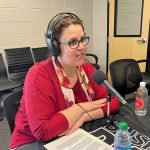
In this episode of Women in Motion, Lee Kantor interviews Dr. Robin Miller, founder of Articulate Real & Clear, a firm specializing in teaching and coaching leadership and teams with a focus on artistic communication. Dr. Miller discusses the importance of effective communication in building corporate culture, the signs of communication issues, and the coaching process her firm uses, including the concept of “feedforward.” She emphasizes the measurability of their work’s impact on employee engagement and retention. The episode also touches on the firm’s involvement with WBEC West to support women and supplier diversity.

Articulate-logo

Robin-MillerDr. Robin Miller is an Executive Coach grounded in neuroscience and archetypal leadership communication. She focuses on leadership and teams – how they communicate – how they work and how they resolve conflict to move forward.

Robin is a cofounder and COO of ARTiculate Real & Clear. She holds a PhD in Musicology from The University of North Texas, an MDiv from Iliff School of Theology, and is credentialed through the International Coach Federation (PCC).

Connect with Robin on Linkedin.

Music Provided by M PATH MUSIC

Transcript-iconThis transcript is machine transcribed by Sonix


TRANSCRIPT

Intro: Broadcasting live from the Business RadioX studios. It’s time for Women in Motion. Brought to you by WBEC West. Join forces. Succeed together. Now here’s your host.

Lee Kantor: Lee Kantor here, another episode of Women in Motion and this is going to be a good one. But before we get started, it’s important to recognize our sponsor. WBEC West. Without them, we couldn’t be sharing these important stories. Today on the show, we have Dr. Robin Miller with Articulate Real & Clear. Welcome.

Dr. Robin Miller: Hi. Good morning everyone.

Lee Kantor: I am so excited to learn about your firm. Tell us a little bit about it. How do you serve folks?

Dr. Robin Miller: We are actually product service company, meaning that we teach and coach leadership and teams. We’re service because we serve leadership and teams, and we have specific areas that we focus on which is product. So we have a combination of two. We’ve been in business over 13 years and we’re artists. So we bring the artistic energy to any kind of organization, mostly corporate and some associations to help leaders move forward faster and help teams get along better.

Lee Kantor: So what’s your backstory? How did you get into this line of work?

Dr. Robin Miller: Oh wow, Lee, that’s that’s what I call the Renaissance woman story. I got into this line of work by getting my education, moving into it as a customer relationship manager, moving into a service line of work with going to Iliff School of Theology here in Denver, and then meeting up with my business partner, and decided that we wanted to bring our artistic skill set to the corporate environment. So we started articulate, real and clear so that we could, as artists, go in and use all the tools and the skills that we’ve learned to go in and help others move forward in their business and move forward in their teens.

Lee Kantor: So you use the word art several times, and it’s obviously part of the word articulate. How do you kind of view art in the business world?

Dr. Robin Miller: It’s an art to communicate well and we focus only on communication. So whether it’s facilitation, whether it’s executive presence, whether it is team building, we are constantly focused on communication. And if you’re building a culture in an organization, you can’t do it without communication. And to do it well, you have to do it artistically, which means finding out what works, how to make it work better, and moving it forward. So as artists, we bring that to the world.

Lee Kantor: Now, how do people realize they have communication issues? Is there some symptoms or some clues that maybe they aren’t communicating as effectively as they think they are?

Dr. Robin Miller: Sometimes I spend a lot of my time with the team doing executive leadership coaching, and sometimes people are sent to me for coaching because in their three 60s, they’re getting information that says they could do some things better. So we go on a coaching journey together and we explore what those things are, and we work on things of so that they can communicate better. It sometimes people want to do a keynote at a conference for an organization, and they don’t feel comfortable getting up. In the past, a lot of people have used the word fear of public speaking to motivate people. And we say, you know what? If you don’t have nerves getting up on the stage, you should get off the stage because we also have nerves as artists. So a clue could be, I want to give keynotes. I want to give some public speaking. I don’t feel comfortable doing it. They would come to us. And then if you have teams that are having difficulty communicating with each other, maybe you were just promoted out of that team to be a leader, and you don’t understand the type of communication that’s needed now, and the role and the strategy that’s needed to be that leader. We also work with those individuals as well as well as the teams.

Lee Kantor: So when you work individually, can you share a little bit about what maybe those first conversations or sessions are like, what do you give them homework to begin? Or like how does it how does it start?

Dr. Robin Miller: We’ll do an intake with individuals and find out from them what they say their goal is, because we’re always driving toward their goal, not our goal as coaches. And as I’m listening to the intake, because I will do the intakes with individuals, I’m finding what else is showing up. And so we call it feedforward. We ask people if they would like the feedforward. They usually say yes, and I’ll say here’s what I’m also noticing as well. Then we will create a journey map for them, for their coaching experience, for the goal that they have and the additional things that showed up. And then they move toward accomplishing those things by the end of their coaching retainer.

Lee Kantor: Now you use the word feed forward instead of feed back. Can you explain?

Dr. Robin Miller: I do use feedforward. I believe that you can’t go back. You can only take information and move it forward. So we’re always feeding forward, feeding the individual forward rather than taking them back. And if I know what wasn’t working well in the past, then I have information that I can change the way that I’m doing something, the way that I’m saying something, and I feed it forward so that I can make a difference.

Lee Kantor: Now, you mentioned that a lot of your work is around, um, helping people speak is do you believe that anyone could be a good speaker or is this something you’re born with?

Dr. Robin Miller: I believe. Yes, we can all learn to communicate better. It doesn’t matter if you’re on a conference stage or if you’re one on one talking with your manager, or if you’re a CEO that has never had any kind of presentation executive presence. We can all learn to do things some better. And I will also say, are we all meant to be on the main stage? Probably not. Okay. There are individuals that are driven toward that, and if I have a passion to do that, we can actually help that individual with tools and techniques and coaching to get them on that stage. And then it’s up to them.

Lee Kantor: Is there any kind of low hanging fruit for individuals that maybe the listener right now that, um, has some anxiety around speaking or even leading? Is there some easy things that they can be doing, any actions they can be taking right now that can help them?

Dr. Robin Miller: Yes, I’m going to say, as a coach, we come into this world with breath and we go out of this world with breath. And the thing that that actually supports us to stay connected to our thoughts and the thing that actually gets our voice up and out of our body, and the thing that actually keeps us from. From allowing the cortisol spike to take us over is breath. So we have to pay attention to our breath. Are we holding our breath high and tight? And if we are, then we need to exhale. So many people tell you to inhale, and all that does is, is provide tension up in your shoulder area and gives you a shallow breath. We say it articulate. Exhale first. And then bring the air in and sit with that. It’s a good meditation technique and it’s also a good speaking technique. It all depends on the breath. So first notice what’s happening for you. Is your breath working for you or is your breath working against you?

Lee Kantor: Let’s switch gears a little and talk about maybe the beginning of your journey. Um. Uh, what was it like going after that first client? Um, when you’re an entrepreneur, you say, okay, I’m going to be an entrepreneur. I’m going to go down this path. Was it difficult to communicate that how you were doing things is different than maybe how they have done things in the past, like was that can you share a little bit about what that was like early on as you were kind of, um, crafting your messaging?

Dr. Robin Miller: Yeah, for us, because we had worked in the arts world prior to starting the company. And I say us, my co-owner and I, people knew about us. And so it was the first clients were people who already knew and wanted and knew that we were credible and that we, our team, we and our team were gifted and that we could give them what they were looking for. So they came easily. And I have to say that prior to the pandemic, we call it the dandelion effect. People love the work that we do, and people love the change that they actually experienced. And as they move from company to company, they would bring us into those companies. Now the dandelion effect is starting to show up again, and there were a few years, pandemic wise, where the dandelion effect didn’t work anymore. And you really do have to rely on marketing. So what I’m going to say to people is regardless of your your dandelion effect or your first initial clients getting a really strong marketing program underneath you and getting a really clear message is going to go a long way.

Lee Kantor: Now when it came to your message and your marketing of your message. So how do you go about, um, doing that? Do you lean on education? Do you lean on your own speaking?

Dr. Robin Miller: I’m not sure I so I’m going to practice what I would have my client do. I’m not sure what you’re asking with that question.

Lee Kantor: Well, when you’re transitioning from, uh, getting clients from reputation and referrals and other clients, and now you’re saying I’m going to lean on marketing, how do you, as a firm say, okay, now how do we begin this process to market? Are we going to do it by educating? Are we going to be doing this by going out and speaking more in general to kind of drum up business? So how do you how do you begin your marketing kind of journey?

Dr. Robin Miller: Yes, speaking. It’s what we do and it’s what we coach our clients to do. One on one we have Hillary, the co-owner, is a fantastic, fantastic keynote speaker and she loves to do breakouts and take the main stage. She was just on the ATD stage yesterday down in New Orleans. So we get the word out by actually practicing and doing what what it is that we do, which is speaking and networking, going out and continuing to meet new individuals and finding out what their needs are and building a relationship. Article is about relationship. So as a company, we always let our clients know we are not one and done. We are connected and we’re here to support them during the training, prior to the training and after the training. So for us, we really do walk the talk and believe what we say when we tell our clients. It’s all about relationship and it’s about connection. So keynote speaking, doing podcasts, going out and networking are things that we consider part of our marketing effort.

Lee Kantor: Was there a moment, uh, maybe early in your career that you had that. Aha. Like, this is what I’m meant to do. This is why I do what I do.

Dr. Robin Miller: Yes there was. I was just speaking with one of my teammates this morning, Courtney Cawthorne, and thinking about this podcast. My journey has been one between the balancing act of how do I care and serve others, and how do I learn more about business. And as I made that journey to being part of this company, I’ve realized that I can get bored easily. And the fact that I get to learn and continually learn about business to improve our business, and I get to coach and support other people. The Aha is I’m in the best of both worlds. Constant learning and continuing to take care of others and help them become the best that they, they can and want to be. So that feeds me. And that’s where I thrive.

Lee Kantor: Now is the kind of work that you do when you’re speaking somewhere, or you’re coaching someone to speak. Is this something that is measurable? Is there a way to go, okay, that we have an ROI that I can point to because of that?

Speaker4: You started. You’re starting to sound like my corporate clients.

Dr. Robin Miller: Lee. Yeah. There is. Everything can be measured. And if you have a starting point, if we take a video of you doing one on one coaching and you say, these are my goals, and at the end of the coaching, we take another video of you, then we can see the difference in what you got coached on and how you’re showing up. That can be measured. We just coached with a company here in town in Denver, and they wanted their leadership to understand more about how to deliver feedback in a way that it could be received better and it would improve employee engagement. So a measurement would be we went in and we trained, and we’re supporting them on finding the best way that they can deliver feedback to the individuals on their teams. And at the end of that, we can measure, hey, how have your employee engagements improved and how has the the ease for your managers improved in delivering feedback with the different tools that we offer to them?

Lee Kantor: Is part of the measurement like things. Such as, um, less turnover or, um, you know, more engagement with the employees. Like, what are some of the things that are you are able to measure.

Dr. Robin Miller: I think if someone does an employee engagement and they ask their employees. Do you feel that your leadership is being more transparent with what’s happening in the company, and do you feel that you’re getting the feedback that you need from your leader in a way that speaks to you? That is going to lead to more retention. And it is going to lead to a more engaged workforce. Because if I feel you’re being transparent. Then, and I feel like you’re delivering feedback, which we call feed forward to me, so that you care about me and I can improve more. Then I’m going to stay with that company. If your people are more. Especially in the last year, we’re finding that there are fewer people being driven by money and more are being driven by belonging. And so what are the ways that we can shift things in our communication as leadership and teams to help people feel like they do belong and that they matter and that you are listening.

Lee Kantor: And is an offering a service like yours to the team. A demonstration of the character and culture of the organization.

Dr. Robin Miller: Absolutely. Absolutely. I’m surprised by how many organizations. Find it difficult. To actually open up clearer lines of communication. And the ones that actually do step into it are the companies that I find that are thriving. Because they do care about their employees, and they’re not afraid about what their employees are going to say, because that’s all feed forward for me as an organization. And if I have truth for my employees, then I know what I can shift to make it matter.

Lee Kantor: Yeah, I was always a believer that the culture is going to happen whether you’re proactive about it or not, so you might as well be proactive about it and build the culture you you know, you’re proud of and you want.

Dr. Robin Miller: Absolutely. Yeah. And finding out from people what’s going to matter to them that their working relationships have improved, because it’s not always about the leader. We hear a lot about the leaders in writing and in the media. It’s not always about the leader. Sometimes it’s about the people that you work with. And if those relationships improve for them, then that makes it more desirable for them to stay there as well, because they feel like they have a family or a community or a workforce that they click with. So we’re about that as well. How do you make your teams thrive so that people want to stay?

Lee Kantor: Now, why was it important for your firm, uh, to be involved with we back west?

Dr. Robin Miller: It’s important because early on, I realized that one of the ways to help businesses thrive is through diversification. That’s one of the first businesses principle business principles that I learned. And so by joining this organization, the first thing was I get to diversify my business. The second thing was it’s a women’s organization and it matters to be a part of it and to be credentialed through it. And I, I have a lot of friends and colleagues that are credentialed through this organization. So if I can support women moving forward, uh, supplier diversity moving forward, then I’m going to support that.

Lee Kantor: So what do you need more of? How can we help you?

Speaker4: I need more people to know about.

Dr. Robin Miller: Us and to get the word out that articulate is a woman owned business. We’ve been in business for 13 plus years, that we are a diverse supplier, and we are here to help support them, communicate them, get them up on a main stage if they want to be on the main stage and help make them better or help work with their teams. So getting the word out about us and that we are a vendor that you can trust, and your we are a vendor that we stand behind our word. So. Reach out and we’ll reach back because we want to build relationships and connections that matter. We also want to build partnerships. So if you have a way that we can partner with you, we’re artists, we partner, we collaborate, we want to partner with you.

Lee Kantor: Is there a niche? You mentioned associations, but do you work in certain industries or is it across all sectors?

Dr. Robin Miller: We do work across all sectors. And I just got back from a program. The Tuck Executive Education Program, and I’m bringing all the learning I have from that. I was able to go to that because we’re a diverse supplier and we have that through WebEx. And so, um. Using that to move the business forward and and asking the team if we’re going to niche, what is that niche going to be? And we understand that we work with people really well that want to shift, want to make changes. They’re really bright. They’re usually engineers, they’re it folk. They’re uh. But entrepreneurs that have grown their business and want to take the next step with a new team. We’re part of small business organizations through Vistage, and so these are the individuals that haven’t grown so large that they’ve lost sight of the human being, uh, and need that extra support.

Lee Kantor: So if somebody wants to learn more, have a more substantive conversation with you or somebody on the team. What’s a website?

Dr. Robin Miller: Where w w w. Articulate. A r t I c u l a t e r c like rc cola. But it stands for real and clear. Articulate. Wrc.com. Go out to our website, find out what we do and how we can support you. And we would love to reach back and create a greater, stronger relationship.

Lee Kantor: Well, Doctor Robin Miller, thank you so much for sharing your story today. You’re doing such important work and we appreciate you.

Speaker4: Thank you. Lee.

Lee Kantor: All right. This is Lee Kantor. We’ll see you all next time on Women in Motion.


Tagged With: Articulate Real & Clear

BRX Pro Tip: 3 Common Ways to Measure Success of a B2B Podcast

May 16, 2024 by angishields

BRXmic99
BRX Pro Tips
BRX Pro Tip: 3 Common Ways to Measure Success of a B2B Podcast
Loading
00:00 /
RSS Feed
Share
Link
Embed

Download file

BRX-Banner

BRX Pro Tip: 3 Common Ways to Measure Success of a B2B Podcast

Stone Payton: [00:00:01] Welcome back to Business RadioX Pro Tips. Stone Payton and Lee Kantor here with you. Lee, what’s your counsel on measuring the success of your B2B podcast?

Lee Kantor: [00:00:13] Well, there’s one way I like to do it. There’s three ways that most people do it. I’d like to address all three of those things. The first way some people like to measure the success of a B2B podcast is audience growth, like downloads and subscribers. A second way they like to measure is audience engagement, like number of reviews or social media shares. And to me, the most important one is number three, lead generation, like revenue or ROI, return on investment.

Lee Kantor: [00:00:44] There’s a reason that close to 90 percent of B2B podcasts fail, and it’s because the B2B podcaster spends far too much time and energy worried about the cost metrics of audience growth and listener engagement. And they’re not investing enough time on the one metric that matters, which is lead generation and a healthy ROI.

Lee Kantor: [00:01:09] Audience growth and listener engagement are nice to haves. Sure, you want that to happen. that’d be great if that happens. But if your podcast isn’t generating leads and building a healthy ROI, it’s not going to work. Lead generation and healthy ROI is a must have. That’s not a nice to have. Audience growth and listener engagement are nice to have. Sure, that’d be great if that happens, but if it’s not generating leads or money, then why are you doing this?

Lee Kantor: [00:01:37] You know, a B2B podcast is there to grow your business. If it’s not growing your business, it’s not a marketing tool. It’s just a hobby that you get emotional satisfaction from. And I’m not saying that you should stop doing it for that reason. But just understand, if that’s what the objective is, you’re not going to make money from it, you’ll be emotionally satisfied. There’s nothing wrong with that. But don’t consider it a marketing tactic. This is just something you enjoy doing.

Lee Kantor: [00:02:06] So, if you want to use a B2B podcast as a marketing vehicle, then focus in on the metric that matters, and that’s lead generation and having an ROI. And that’s something that we do at Business RadioX. That’s why our podcasts go on for a long time, our clients stay with us for a long time because we’re focused like a laser on growing their business, focusing on the metric that matters, which is lead generation and ROI. That’s how we want to be judged, not by audience or engagement. Those are nice to haves. So, when you’re ready to fix your broken B2B podcast, hang out with us at Business RadioX.

Attorney Howard Abrams

May 6, 2024 by angishields

CBR-Howard-Abrams-Featurev2
Chicago Business Radio
Attorney Howard Abrams
Loading
00:00 /
RSS Feed
Share
Link
Embed

Download file

In this episode of Chicago Business Radio, Stone Payton interviews Howard Abrams, a plaintiff’s personal injury attorney, about his journey in the legal profession and the mission of his law firm. Abrams shares insights into the complexities of personal injury cases, emphasizing the importance of building trust and establishing a personal relationship with clients. He discusses the evolving landscape of personal injury law, including changes in courtroom procedures and the challenges posed by insurance companies. Abrams also provides valuable advice for individuals involved in accidents, emphasizing the significance of seeking legal counsel and avoiding common pitfalls. 

Howard-Abrams-Law-logo

Howard-AbramsHoward S. Abrams is the founding partner, specializing in personal injury, at the Howard Abrams Law in Chicago, Illinois, where he handles and oversees a wide variety of plaintiffs’ personal injury and professional negligence matters, both pre-litigation and through trial.

Howard has been the lead trial attorney in over 50 jury and bench trials, successfully resolving numerous cases through mediation and arbitration. After receiving his bachelor’s degree from the University of Illinois in Champaign-Urbana, and his law degree from Chicago-Kent College of Law in Chicago, Howard was a trial attorney at various Chicago-based law firms for nearly a decade before opening his own firm in 2016, where he has dedicated himself to serving all of Chicago and its surrounding suburbs with passionate legal representation.

Connect with Howard on LinkedIn.

Transcript-iconThis transcript is machine transcribed by Sonix


TRANSCRIPT

Intro: [00:00:05] Broadcasting live from the Business RadioX Studios in Chicago, Illinois, it’s time for Chicago Business Radio. Now, here’s your host.

Stone Payton: [00:00:18] Welcome to another exciting and informative edition of Chicago Business Radio. Stone Payton here with you this afternoon. Please join me in welcoming to the broadcast with Howard Abrams Law, the man himself, Mr. Howard Abrams. How are you, man?

Howard Abrams: [00:00:36] Good. Thanks for having me, Stone.

Stone Payton: [00:00:38] Oh, delighted to have you on the show, man. I got a ton of questions. I, I know we’re not going to get to them all, but I, I think maybe a good place to start is if you could give us just a little bit of an overview, mission, purpose. What are you and your team really out there trying to do for folks, man.

Howard Abrams: [00:00:56] Well, I mean, I’ve been a plaintiff’s personal injury attorney since 2006. And, you know, I started my career like everyone else did in, uh, you know, law firm law clerking, learning how things go, and then realized there’s two worlds to, you know, being a lawyer. There’s the courtroom, uh, where I spent the first ten plus years of my career. And then there’s the claims side where you try to resolve cases outside the courtroom. And I took a sort of hybrid approach when I started my law firm in 2016 of handling both prelate and litigation files. And I found that, you know, the litigation skills don’t go away as long as you keep going to court. But there is a different area of the law and practice of handling these claims outside the court when the clients first got injured. So my focus has been since Covid, when things kind of came a little bit of a halt in the litigation arena on helping clients really at the beginning of the cases, which in turn helps them at the end of the case.

Stone Payton: [00:01:58] So what prompted you to go out on your own?

Howard Abrams: [00:02:03] Uh, it’s a good question. I didn’t it wasn’t one exact moment. It was sort of a domino effect of like. Things happening in my career and the law firms I was at while I had good relationships there. Didn’t really have anywhere for me to like, advance or be promoted. You know, there’s partners and. There could be an equity or non-equity or, you know, you can pay people more and all those types of things. But once you. Uh, develop a clientele or way to get cases. It’s hard to stay somewhere that doesn’t, you know, value that. And so the firms I was at at the time, while they valued my skills as an attorney, I didn’t think valued, you know, the business I was bringing in. And after talking to other colleagues who had went out on their own, it seemed like that was at least a no brainer approach to my next step. Instead of just trying to find another law firm that might value me that I had no relationship with besides, you know, knowing who each other were.

Stone Payton: [00:03:06] So after all those years of practicing and now particularly out on your own, what’s what’s the most rewarding man? What’s the most fun about the work for you?

Howard Abrams: [00:03:17] The fun part is, while it’s usually the hardest part on the clients is giving them, not always. It’s not necessarily legal advice where it’s about the law, like you get in a car accident. It’s not rocket science to figure out right and wrong, right? Like we know what the traffic laws are. We can kind of, you know, use common sense approaches to who was at fault or, you know, it’s the little games that the insurance companies like to play in the beginning. And it’s amazing. Even though people know the answers, they’re just not expecting that, like they’re being put to a test by the insurance companies. And when I give them this, you know, introductory or free consult, and then they become my client, you know, they’re like, oh, all that stuff you told me was true. And like, because it happens to them. Because even though insurance companies technically aren’t supposed to call clients, once they know they’re retained by attorneys, they still do. And, you know, it’s only, you know, for the benefit of the insurance company, not for the injured party.

Stone Payton: [00:04:17] So how does the whole, I guess, the whole sales and marketing thing worked for a law practice? Because you don’t really need a personal injury attorney until you need one, right?

Howard Abrams: [00:04:29] Oh, that is something that I’ve been trying to figure out, you know, especially since I’ve been out on my own and there’s sort of two schools of thought. There is, you know, the good old fashioned advertising. You used to see it, you still see it, but billboards, TV commercials, it used to be the good old Yellow Pages, which not many people even know what those are anymore. Um, then, you know, the internet era of Google is still the. Traditional way to advertise, which you know is only increasing. Um, but then there’s this good old fashioned marketing where there’s a lot of lawyers, there’s a lot of professionals that are lawyers that get in touch or people that get injured have contact with, and it’s knowing how to market to them or being able to be a leader or a presence. Um, so those people seek you out when they are recommending attorneys to somebody who was injured. So I take the latter approach.

Stone Payton: [00:05:33] Got it. So I bet there’s been a lot of changes in your in your tenure as an attorney. Has a lot changed over the years.

Howard Abrams: [00:05:44] Yes. Um. Too many to count or too many to talk about. But, you know, the biggest changes are that, you know, things used to be done, you know, the old fashioned way on typewriters and mail and, you know, you would go to court and come back and write up a whole summary where now with technology and apps, you know, I can communicate with my clients via text or, uh, email, obviously the court system. Until Covid, I would say didn’t go through a lot of changes. I mean, yes, they have increased the use of technology, but you still had to go to court in person. Um, zoom didn’t really come into play at all. I didn’t even know what it was until Covid hit. Mhm. Um, they knew what a video call was, but I don’t think I ever did one besides maybe Skype, you know, which I’m not even sure if that still exists. Uh, but what has happened now is the ability for remote proceedings has allowed one attorney’s to branch across multiple jurisdictions where you usually just practice where you, you know, your office is. And two, I’ve seen a lot of law firm growth in terms of these we could call mega firms. I don’t know how you would define it, but these firms that are starting to go nationwide. And while that’s not to discount that they are they have quality lawyers. You just don’t know unless you do your research as a client, if that attorney is even, you know, present in the state, which I think has some downside, if you are, you know, considering a court case.

Stone Payton: [00:07:22] Yeah. I’ll bet. All right. Let’s talk about the work a little bit. And, um, I guess the only way I know to attack this is from my perspective, if if I think I might have a claim or I’ve been in an accident or something, I reach out to you or I’ve been referred to you because I have another trusted advisor in some other capacity that says, oh, for that, you need to talk to Howard. Um, I come to your office, we sit down and chat. What? What is that? Especially the early stages of that engagement or process look like?

Howard Abrams: [00:07:54] Yeah. I mean, a lot of it is fact finding. I mean, usually if, you know, we’ll use automobiles because those are the bread and butter and personal injury. Although I do every type of personal injury case from, you know, slip and falls premises, uh, animal attacks. Uh, you know, medical malpractice, which is, you know, a very complicated field. There’s construction, I mean, but, you know, the the, the majority of cases do fall in the automobile, uh, arena. Um, in this day and age, I mean, people don’t even usually have the police report. I mean, they get, like a report number, which is then uploaded to a site like LexisNexis or some, depending on the the size of the county or town that you get the accident in. You have to do a FOIA request, but it’s getting the accident report that’s, you know, the starting point of any good consult. Mhm. Um, you know, obviously you’re going to get the version that the driver or a passenger that they have. And but a lot of times they come in and they don’t even necessarily, you know, know they just know they got hit like they don’t know where the person came from or what speed they were going. So you know, the police reports, the big part, I then, you know, still believe in good old fashioned investigative work where, you know, not on every case, but I will tend to take my client to the scene of the accident, because you will find that when you bring someone to the scene of any sort of trauma, no matter big or small, things come back to them. They remember certain things that you, you know, there’s just, you know, it’s one thing if you’re stopped at a red light and you get rear ended, it’s another thing if the driver’s coming from, you get T-boned.

Howard Abrams: [00:09:39] And you said you had a green light and the police report says, you know, both drivers said they had the green light. We both know that’s not possible, but somebody’s not telling the truth. Right. So I tend to, you know, sometimes I just meet them initially at the scene if it’s convenient because the sooner I can get there with them in time, as opposed to going out there six months later, you’d be amazed on the information that I can get from a client, and it’s a free consult in the beginning. Or even if they’re signed up, I’m not charging them an hourly rate or contingency fee, so we only get paid at the end of the case if we collect for them. So all these things we’re doing is for their benefit. And why would I do something that wasn’t, you know, the further the prospects of the case, you know, and I find that the clients that want to meet me in person or want to go to the scene, you know, they have a vested interest and are probably, you know, injured to the point where, you know, there’s things going on there. We don’t know the extent, but they have a real injury. They’re not just, oh, I got bumped and bruised and yes, you have a case, but do you really need a lawyer? You know, for some bumps and bruises you should probably handle, you know, talk to the insurance company on your own.

Stone Payton: [00:10:47] Uh, so these scenarios, um, any of them that you describe strike me as a, a good opportunity to shoot yourself in the foot if you don’t, um, if you don’t at least consult with someone like you first, or do you run into some of the same mistakes over and over, or or do you find yourself, you know, like very quickly saying, okay, do this, do this. Whatever you do, don’t do that till we talk, that kind of thing.

Howard Abrams: [00:11:13] Yeah. I mean, there’s some golden rules that any attorney who’s been, you know, actually does this type of practice and not just, you know, represents them. Because once you’re an attorney, you can, you know, there’s no like it’s not like medicine where you get, you know, you get a subspecialty in orthopedics or anesthesiology or, you know, ear, nose and throat. Any lawyer can do personal injury. Just like I could hold myself out as a criminal lawyer, you know, there’s nothing that all I need is a license. I don’t need anything else. What? You know what separates, I think, myself or others that have had the experience I have, and I have almost 20 years of plaintiffs personal injury work, having started off as a litigator in the courtroom doing jury trials. You see the end of the case, right? And the end of the case, good or bad? Mostly good in my world. Um, you’re prepared for anything then, right? You know, so talking to somebody now, 15 years later or 14 years later, when I went out on my own talking to people at the beginning of the case, I was already thinking about the end of the case, what jurors told me, what mistakes clients made and what the you know, all those things help, you know, separate. I think the attorneys that actually, you know, do more than just file an insurance claim for the plaintiff, uh, or potential plaintiff. And, um, you know, I think that shows when I meet with a client, right.

Howard Abrams: [00:12:37] Like, anyone can tell you anything over the phone, anybody can. You know, everyone can be a salesman for something. Um, but where I, where I remind people, is what those conversations they have at the beginning about. Hey, you’re going to get a call from the insurance company, you’re going to get a call from, you know, four other lawyers looking for your business. That’s fine. You know, that’s just the world we work in. You don’t just get, you know, one lawyer recommendation these days. Um, and if you go on Google, you can get a thousand. Um, it’s telling them the things up front that they’re going to experience or what they’re not going to experience. I can tell sometimes just from talking to a potential client, I guarantee you I had one the other day I signed up, uh, he’s out of state in Maryland, but he was here for work in a rental car. Right. Which nothing wrong with that. He gets rear ended, he returns the Hertz rental car, um, for property damage. He was going home three days later. He didn’t think he was seriously hurt. So he’s like, I’ll see how I feel. He went home. He wasn’t feeling well, so he went to the, you know, urgent care at home and his family doctor at home. And he got my name from a prior client. And when I talked to him, I go it had been almost a week, right. Which doesn’t sound like a lot of time, but in automobile world, that’s a lot can happen in a week.

Howard Abrams: [00:13:53] I go, well, have you heard from XYZ Insurance Company? You know, um, and he goes, no. And I go, well, you’re never going to hear from them. And he goes, why not? I’m like, because you’re in a Hertz rental car with no reported injury from Hertz, because they probably didn’t even ask you. And Hertz is only concerned about getting the car fixed. And, you know, I said, you know, he signed my paperwork, but I haven’t even sent out my letter rep to the insurance company because I wanted to get some medical records in. It’s been now two weeks, and he called me the other day. He’s like, yeah, I haven’t heard anything. I was like, you won’t. They’re gonna they’re gonna get a letter from me as their first knowledge because insurance companies aren’t. You know, actively looking for claims, right? You know, but they’re looking at this as a property damage only claim they’re not going to even ask for it if the other party was injured. They want to wait for you to make the claim. So you know that that gentleman, had he not had his friend who I represented successfully, might have waited a month. And that doesn’t necessarily mean he does he still have a claim? Yes. But had he not sought medical treatment, had he not taught, you know, then they’re denying the case just because they don’t believe he’s injured.

Stone Payton: [00:15:04] In the path to take can can vary. When you take all that into account, you do your investigation. You get the information. You may very well go. My whole frame of reference for this is watching stuff on TV. So forgive me, but you, you, you might go to a courtroom, or you might take a whole different path and settle and settle it out of a courtroom environment. Yes.

Howard Abrams: [00:15:28] Of course. And listen, I don’t avoid court. I mean, that’s. Silly, for lack of a better word. I’m not trying to think of a better word to put out. You know, uh, put on it. But port is long. It is exhausting. And the insurance companies know that, and they are built to withstand the time. Right. It’s not their you know, they are a business corporation. You know, they have X, you know, millions of dollars, you know, otherwise they’d be out of business. Um, they don’t care if a case lasts three, 4 or 5 years. But in Illinois, for example, it’s a two year statute of limitations for personal injury. So you have up to two years. You don’t have to wait that long. And most attorneys don’t. But you don’t also want to rush off and file a lawsuit, because in Cook County, where the city of Chicago is, where my office is, is, you know, the. You know, third largest media market. And I think it’s I think besides Los Angeles County, the highest volume of um, cases are filed. Wow. Statistics. So, yes. Does everybody get their day in court under our legal system? Of course. But it’s going to take longer than in a smaller town or where there’s only so many files or cases.

Howard Abrams: [00:16:52] Do we have more judges? Yeah, we do, but there’s always, you know, short judges or short staff or short jurors, and you wait and wait and wait. I tell any client from the beginning that if we can’t resolve their case outside of court, you plus and you have to file a lawsuit on average, you will wait. I tell them 2 to 3 years, and I can probably count on one hand the amount of cases. I got the jury trial in two years. Wow. It is much closer. Three and that was before Covid. Covid then had a backlog. Depending on who you ask, they will tell you that that backlog has cleaned up. I, I am skeptical of that belief, but you know it doesn’t. It is still 2 to 3 years minimum as opposed to 2 to 3 years in your case will be resolved. Um, and that’s in addition to the one, you know, six months, a year, 18 months, up to two years that you might try and resolve it outside of. So you’re talking 4 to 5 years to go to jury trial from when the accident actually happened.

Stone Payton: [00:17:55] Wow. This is a very sobering conversation. Okay, let’s go back to the one where the guy got rear ended or anything like that. What if I’m the guy that did the rear ending? Should I still also maybe be in touch with a with some legal counsel as well, just in anticipation of what might be coming down the pike?

Howard Abrams: [00:18:15] Uh, yeah. I mean, I tell every client or potential client, I should say, or any referral source, they’re like, oh, so and so I said, have them call me. I tell them, or call somebody, right. Like one. It’s free. I mean, like, I know that’s like silly and that’s like a line on every advertisement. Like, no, you know, it is literally a free consult. It doesn’t cost you anything but your time. And sometimes you don’t know what may or may not be coming down the pipeline. That’s what talking to an attorney does, is it gives you one free advice and help you. Sometimes I call clients and I tell them, yes, you have a case, yes, I can help you, but it’s really not worth your time and energy to hire a lawyer because you told me you went to the emergency room only you’re not going to seek follow up treatment. It’s been 45 days since the accident. Your car has been fixed by the insurance company. You just don’t know what to settle for.

Stone Payton: [00:19:13] Right.

Howard Abrams: [00:19:14] And you don’t want an attorney for that situation. But calling an attorney, someone like me and will still give him a five minute talk and I say, hey, what’s your er bill? And I’ll, I’ll be like, I would demand something like this. Do I get paid on it? No. Will that person ever call me again? No, no, but it doesn’t hurt. Um, you know, from a marketing standpoint, that person might know somebody or think of something like helping people out is, you know what I’m in the business of doing? I would always say, even if you don’t think it’s the case, or even if you’re not sure, you should always call an attorney, because even the ones that will charge you the initial consult or initial call isn’t going to cost you. They don’t charge you 500 bucks just to get on the phone. They do go running. Um, it can’t hurt. It can only help. So, you know, that’s my my, you know, long and winded answer to that is I would always call an attorney if you’re concerned whether from a defendant or a plaintiff side. Okay.

Stone Payton: [00:20:09] So from either side. Yeah that’s okay. So like even if I think or know that it’s pretty sure it’s my fault, then at least have a conversation.

Howard Abrams: [00:20:17] I’d have a conversation and you call your insurance company because that’s what you’re paying them for.

Stone Payton: [00:20:21] Gotcha. And then I guess I and maybe the maybe, you know, good counsel. I don’t have to worry about it too much, but I gotta I gotta say, I’m a little intimidated at this point. Like, I don’t even know what to ask or or what red flags are like. If if I were to hire a consultant, I came from that world. I know some things to look for, but I don’t know what to red flags, you know, yellow flags and or green flags. And talking to a potential engaging an attorney.

Howard Abrams: [00:20:50] Yeah. I think, you know, the good advice is that it sounds too good to be true. You know, it still rings true for anything in the sales world, right? If an attorney tells you he could do it quicker or cheaper. There’s a reason why. Because you’re not getting the same level of service. I mean, personal injury work has been, you know, around since the United States, you know, developed its legal system, right, like in some fashion. And personal injury contracts have more or less looked the same for well over 100 years. I don’t know how long exactly. I’d have to do some digging on that answer, but there’s no there’s nothing in a personal injury like retainer contract that shouldn’t tell you exactly what the fees are. You’re you’re paying that there’s no fee unless you recover. You know what costs are. You know that the attorney is fronting and can reimburse for. And then every state has like a right to in Illinois, it’s like up to five days after you sign a contract, you can null and void it for any reason with either side. Like if you don’t understand the document that you’re signing, then you know and the attorney doesn’t explain it to you. There’s your first red flag, right? You know, I always when I get on the phone and I explain what I do, I, you know, I give them a short version, the legal documents longer it’s one page because they’re not going to look at anything longer than that. And I always tell them, read it.

Howard Abrams: [00:22:15] Any questions, let me know you know, and we’ll go through it line by line if you want. But you know the attorneys or. People that you know are just looking to make a quick buck. As I like to say to clients, they’re the ones rushing in to sign the paperwork, rushing you to settle the case, doing everything just what seems like very quickly, which again, you know, I believe I know people get frustrated with the length of a case sometimes and like you are hearing me talk about and I’m not saying longer is better, but you have to take into account a timeline, right? If you get into an accident. And you’re hurt. At a minimum, it’s usually a 2 to 3 month acute injury phase where you’re getting treatment or therapy or seeing specialists. Right. And any good lawyer is going to. Even if you sign up the client from day one, I don’t evaluate a case for settlement until I see a discharge from therapy. The specialist, wherever, because that tells me that the client has healed right? And then I still wait another 30 days because people have setbacks. So you’re talking about at a minimum from date of accident, six months is what I tell clients before I’m even talking to the insurance company about a settlement, because I don’t know what your injury is. How can I evaluate or make a demand or make any sort of suggestion about what your case is worth if you’re still in treatment or you’re still hurting?

Stone Payton: [00:23:51] Sounds to me like rushing it is probably. There must be several mistakes and pitfalls, but like the biggest mistake you could possibly make and in trying to in filing a claim is just getting in a hurry.

Howard Abrams: [00:24:06] Correct. I always tell clients like the consult, and if you and the other benefit of what I’ve learned from the prelate phase, what I call outside accord is, you know, luckily I do get a lot of clients relatively soon to the accident, which isn’t an easy thing to do, is they get this free advice. And I said, listen, you can sign with me six months from now, right? But you’re still going to pay me the same attorney’s fee. I don’t reduce my attorney’s fees because I work for me less. It’s contingency by signing with me on, you know, day one or day seven, whatever day it is after the accident. Now you get to call. I mean, I don’t want you to call me every day, but you get to ask me whatever questions you want because you hired me as your attorney, and that’s my job. And I walk them through this, you know, step by step. And there’s a lot of, you know, a lot of attorneys just want to go to court. Um, and that’s okay. But there’s a lot to work to do before you go to court. And that’s where I’ve sort of specialized the last few years, is walking these clients through these steps in anticipation that if I can settle it with the insurance company. You don’t have these red flags or pitfalls in your case in the courtroom that, you know, the defense attorney is going to try and wave the wave, the flag about that, why you’re not as injured as bad as you say you are.

Stone Payton: [00:25:25] I’ll tell you something that’s coming to light for me during the course of this conversation, I guess I in my mind, I was thinking that your relationship with the attorney would be more transactional. But it seems to me like you’ve got to establish so much trust and that, I mean, your work is really pretty heavily grounded in relationship, everything from the sales and marketing aspect of it, but actually trying to work with and get the best set of results for a client. I mean, it’s really pretty heavily grounded in relationship, isn’t it?

Howard Abrams: [00:25:57] I think, you know, I think you nailed it right on the head. And that’s the service that I’m trying to offer my clients is there are a lot of good litigators out there. I would not pretend then to, you know, say that who’s the best? And there’s a lot of, you know, media or marketing or advertising that says that, you know, this attorney is the best here, this one. There’s a lot of us, you know, who can litigate. And yes, some, I guess, you know, it’s subjective, some objective. Who’s the best one. And, you know, I’m not even gonna, you know, pretend to say that that’s who that is or why that is. What I think is important is again. It’s not. We’re not talking a you know, there are complex personal injury cases. Okay. There’s product liability and things like that where, you know, people have developed specialties and that’s why it’s good to, you know, be in the industry for a while. You can refer cases to other attorneys if you think it’s something outside your wheelhouse. But for your standard personal injury case or for an auto case, um, I think the personal level of service is something that is missing, you know, and it’s not required. It’s not something that is, you know, you’re required to do to handle the case. But it’s personal injury. It’s personal. I’m like, I’m not trying to make a joke, but it is personal. So I mean, you got hurt like you lost time from work or all those different, you know, areas of damages.

Howard Abrams: [00:27:21] But, you know, those are the main ones. It’s very personal to the client. And yes, it’s a transactional, you know, relationship. But, you know, someone told me a long time ago, you almost like, you know, a therapist for the client to, you know, I would recommend they see, you know, factual help if they really need it. But they’re going through a lot. Their car needs to get fixed and they need it for work. They, you know, their job won’t give them time off to seek medical treatment. All these things that they have to deal with because someone else caused an accident or caused them an injury that they’re not, you know, necessarily going to get compensated for. Because at the end of the day, an insurance claim is a loss for the insurance, right? They’re in the business of writing underwriting policies and collecting premiums and investing that money for their business. The claims department is where they lose money. So their goal at the end of the day is not to just pay you off. Their goal is to pay you as little as they can or not at all, because it’s better for their business. Bottom line. So, you know, taking those two things into account if you don’t establish some sort of personal relationship, I don’t know how you can best represent a client in this business.

Stone Payton: [00:28:33] Well said. So what’s next for you? You’re going to try to grow the firm and expand what’s on the horizon for you.

Howard Abrams: [00:28:43] Um, expansion is definitely a consideration. I think I’d like to continue to focus on the early stages. I know how to litigate, and I can teach other attorneys how to do that. So I’m happy to sort of push some of that work onto, you know, other attorneys or, uh, as I grow my law firm and continue to focus on, like, the early stages, I can always go. I mean, I’m never going to stop going to court. Uh, it’s time consuming. And, you know, I find lately that I’m better service of my clients in the beginning. And as long as my law firm can offer every stage, whether it’s me, you know, the whole time or other people taking over, if we go to court, I’m comfortable with that. And, you know, I think I could do the best for my clients by being involved, um, early on and staying involved early on and not being like, oh, can I call you later? Because you can get stuck in court all day. And the client. Yes. You know, their question may might not have been urgent, but it was important to them.

Howard Abrams: [00:29:49] And it’s hard for me to be able to, you know, have a full conversation with them because the judge is, you know, yelling at me to get in the courtroom. So, yeah, I mean, that is the plan is to continue, you know, to expand so that I, you know, because when you’re in pre-suit there, besides the statute of limitations to file the claim, there’s no deadlines. You know, the insurance company might make you think there are or that you have to get them something or they’re not going to. That’s just, um, you know, trying to make you do things that you don’t want to do is I can take the time, whether it’s a five second conversation or a five hour conversation, I hope not with my clients, I can I can give that level of service because the other attorneys in my firm are handling the court calls and the court cases, and if I need to go to court, I will, but it won’t be. You know, I used to spend every day of my life in court, and it can be exhausting.

Stone Payton: [00:30:47] I’ll bet. All right, man, what’s the best way to contact you? Have a conversation with you or someone on the team. Whatever you feel like is appropriate website, email, LinkedIn, whatever.

Howard Abrams: [00:30:58] Yes, it’s all pretty easy. It’s Howard Abrams Law.com is the website, uh, phone number (312) 985-7368. And if you want to reach me by email Howard at Howard Abrams Law com.

Stone Payton: [00:31:13] Well, Howard, it has been a real delight having you on the program. Thank you for joining us. Thank you for your insight, your perspective. We sure appreciate it, man. You’re doing important work.

Howard Abrams: [00:31:26] I appreciate your time today. This was a lot of fun.

Stone Payton: [00:31:28] My pleasure. All right, until next time. This is Stone Payton for our guest today, Howard Abrams with Howard Abrams Law, and everyone here at the Business RadioX family saying, we’ll see you again on Chicago Business Radio.


Tagged With: Howard Abrams Law

Breaking Down the Complexities of Insurance: A Conversation with Snellings Walters

May 2, 2024 by angishields

SSBRX-Snellings-Walters-Insurance-feature
Sandy Springs Business Radio
Breaking Down the Complexities of Insurance: A Conversation with Snellings Walters
Loading
00:00 /
RSS Feed
Share
Link
Embed

Download file

SSBRX-Snellings-Walters-Insurance-banner

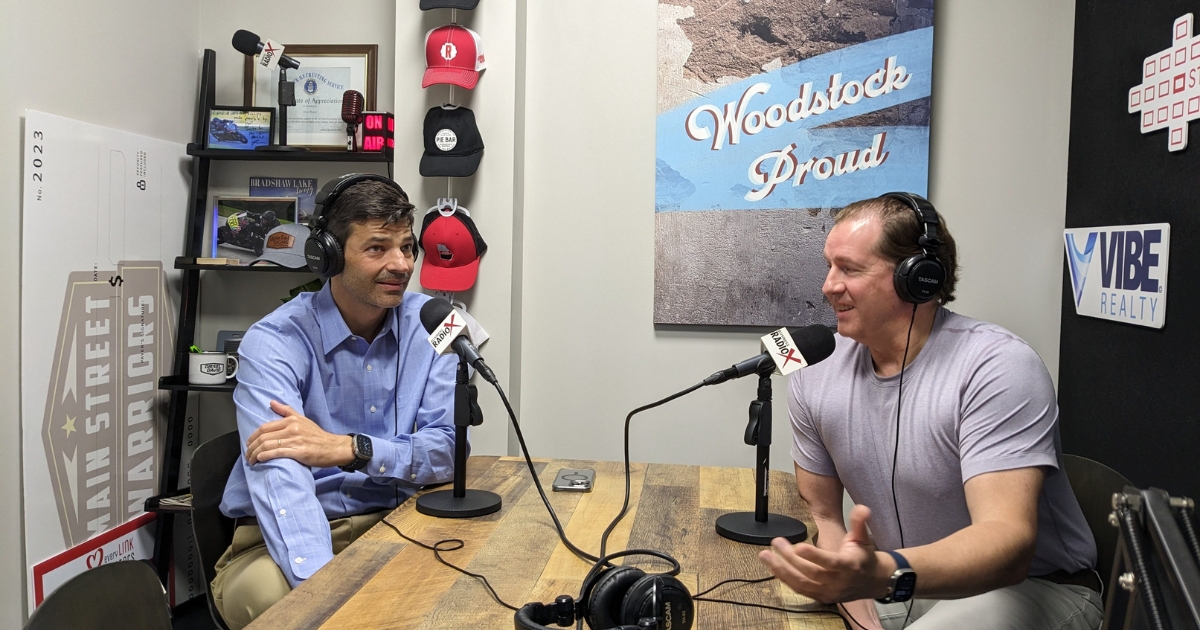
In this episode of Sandy Springs Business Radio, Lee Kantor discusses Snellings Walters Insurance Agency with team members Chip Renno, Kurt Seiler, and David Roos. They delve into the agency’s services, history, and client-focused approach. Chip highlights the agency’s independence and ability to offer a wide range of insurance options. Kurt talks about providing employee benefits to help companies attract talent while ensuring compliance with regulations. David focuses on educating small business owners about the importance of comprehensive coverage. The team emphasizes their commitment to personalized service and building long-term client relationships in a challenging insurance market.

Chip-Renno-2002Chip Renno specializes in the design and placement of the most favorable Property and Casualty Insurance and Risk Management programs achievable in the marketplace. Chip has worked diligently to be an advocate and professional advisor for his wide variety of commercial clients for over 30 years.

Chip received his undergraduate degree in Risk Management from Terry College of Business at the University of Georgia. He believes continuing education is essential in the Insurance Industry, so he continuously strives to learn and grow.

His passion for industry knowledge has led him to earning several sought-after professional designations including: CIC (CertifiedInsurance Counselor), CRM (Certified Risk Manager), ARM (Associate of RiskManagement), CPIA (Certified Professional Insurance Agent), and CWCP (Certified Workers’ Compensation Professional).

Outside of Snellings Walters, Chip and his wife Tammy enjoy spending time with their two sons. They also enjoy supporting their community via various charitable causes. Some of Chip’s hobbies include snowboarding, golfing, and wakeboarding.

David-RoosA Georgia native from the Atlanta area, David Roos began his college career at Rhodes College where he was a member of their baseball program. After two years at Rhodes, David decided to transfer to the University of Georgia where he graduated from the Terry College of Business with a degree in Risk Management and Insurance.

David’s interest in insurance began during his first internship at Snellings Walters in the summer of 2021 and then continued the internship program during the following summer.

David’s experience playing college athletics taught him valuable relationship and time management skills that drive his success. In his free time, David can be found spending time with friends and family, enjoying the outdoors, and cheering on his favorite sports teams, the Atlanta Braves and all UGA Athletics.

Kurt-Seiler-headshotKurt Seiler began his insurance career on the carrier side working for State Farm during his college days at Kennesaw State University. He learned through early formative experiences that insurance wasn’t just about a policy or a piece of paper that says you’re covered – it’s about having the client’s back and fulfilling promises.

His favorite career moment to this day is riding along with that State Farm agent as he hand-delivered a loss-of-use check to a homeowner whose house had just burned to the ground the night before. “Without that immediate assistance from our office, he might not have been able to get a roof over their head or a rental car for his family that week.

In that moment he realized money was not just a means of keeping score, but rather to accomplish the necessary utilities of life. What really has meaning is being there for your family, your clients, and your community when they need it the most.

Fastforwarding to now with almost a decade of experience on the independent agency side, those early lessons still have a strong hold on Kurt. He will never lose sight of what matters – protecting families and employees through the conduit of insurance.

Kurt grew up in Atlanta and still resides in the heart of the city today. An avid fan of competition and challenging puzzles, he is a participant in combat sports and competitive swimming.
In his downtime, he enjoys touring Georgia’s vineyards with his girlfriend and scooter surfing Atlanta’s “beltline.”

Follow Snellings Walters on LinkedIn, Facebook, X and Instagram.

Transcript-iconThis transcript is machine transcribed by Sonix.


TRANSCRIPT

Intro: [00:00:07] Broadcasting live from the Business RadioX studios in Sandy Springs, Georgia. It’s time for Sandy Springs Business Radio. Now, here’s your host.

Lee Kantor: [00:00:24] Lee Kantor here, another episode of Sandy Springs Business Radio, and this is going to be a good one. Today we’re doing a special episode focusing in on Snellings Walters Insurance Agency. We have with us today a few folks from that agency, and we’re going to lead off with Chip Renno, one of the principals. Welcome, Chip.

Chip Renno: [00:00:45] Thank you, Lee, for having us.

Lee Kantor: [00:00:47] Well, I am so excited to learn what you are up to. Tell us a little bit about Snellings Walters. How are you serving folks?

Chip Renno: [00:00:54] We are privately owned insurance agency located here in Sandy Springs. I’ve been in business for over 70 years, started in 1952 by John Snellings, and we have about 85 employees and do insurance in a number of different areas commercial property and casualty insurance, employee benefits, personal lines, insurance, etc..

Lee Kantor: [00:01:24] So what was the genesis of the agency like? How did this come about?

Chip Renno: [00:01:29] So John Snelling started the agency as mainly a personal lines agency and a small business agency, and ran it with another partner, Nunley Walters, for probably about 20 years, and then eventually brought in their son, his son, Clay Snellings, who is still with the firm. Clay has been with the firm for about 35 years.

Lee Kantor: [00:01:54] And then, as it always been, based in Sandy Springs.

Chip Renno: [00:01:57] Always based in Sandy Springs.

Lee Kantor: [00:01:58] And what kind of what draws you to Sandy Springs? Why is that so important for you all to be based out of here?

Chip Renno: [00:02:05] Well, central Atlanta is a great place to be because we can we have clients all over metro Atlanta, and it’s very convenient for them and for us when we go to see the clients and when the clients come to see us.

Lee Kantor: [00:02:20] Now, is insurance still done kind of that face to face in person, or is that something that your agency strives to do?

Chip Renno: [00:02:26] We strive to see our clients in person. Uh, do as few zoom calls as I can, but we have obviously a lot of clients who prefer to do a zoom when things are busy, and it’s hard to get a lot of people together in the same place. And so we do. We do both.

Lee Kantor: [00:02:44] Now, when a business person is shopping for insurance, like, what are some of the do’s and don’ts in order to find the right agency for your firm?

Chip Renno: [00:02:54] They want to interview the multiple agents. And we always tell prospective clients, pick who you like best, who who you think is going to do the best job for you, somebody that you like and trust, and then let that person go to market for you, assuming that they represent a, you know, a tremendous amount of insurance companies like we do.

Lee Kantor: [00:03:16] And then that’s one of your niches is that you are independent, that you’re not representing one firm and kind of force fitting everybody into that one.

Chip Renno: [00:03:25] Correct? Correct. We represent about 60 different insurance companies directly, and then we have a lot of indirect representation as well.

Lee Kantor: [00:03:33] And that benefits the end user, because now they’re getting kind of the whole market to choose from rather than just being force fit into one solution.

Chip Renno: [00:03:41] That’s correct. So we represent all of the national insurance companies like the travelers and Hartfords of the world. And then we also represent about 95% of the regional insurance companies who do business primarily in the southeast.

Lee Kantor: [00:03:54] And then your insurance, at least. Um, in my personal, the insurance company is one thing and my insurance agent is another. How do you kind of help when something does go wrong? And I need to kind of lean on the insurance that I have been paying for. Like, how do you advocate for your clients?

Chip Renno: [00:04:13] Well, we we advocate both from a coverage standpoint, if we need to buy, you know, additional limits of umbrellas or we need to buy more property coverage, then we go with work with the underwriter on getting that negotiated. Um, and rates as well. Of course, we’re always negotiating rates, but.

Lee Kantor: [00:04:33] When something goes wrong is that do I call you or I’m calling that agent agency that I was that you helped us.

Chip Renno: [00:04:40] The insurance company know that typically you’re coming to us and then we’re advocating whether it’s a claim problem, a coverage problem, something like that. Then you’re coming directly to us and then we’re handling it where your.

Lee Kantor: [00:04:51] Advocate now is that kind of where the value comes in. Is that your secret sauce?

Chip Renno: [00:04:57] Absolutely. We are we dig into the details. We’re, um, very high on giving coverage, advice to clients, giving them options to look at. We have our own claims advocacy group, practice group that helps with specific claims, um, help. And, um, we have people that are doing specifically marketing for our accounts as well out to the insurance companies.

Lee Kantor: [00:05:23] Now, your firm, uh, has several focuses, right? I mean, you have a couple of folks here that are in charge, I guess, of each of those. Can you correct?

Chip Renno: [00:05:31] We have Kurt Seiler, who is in our employee benefits department and handles all sides of accounts. And we also have David Roos, who is with us, who works directly and indirectly with me on, um, the emerging market clients that are in this smaller space, um, typically those clients whose revenues are, you know, anywhere from zero up to a couple million dollars in revenue.

Lee Kantor: [00:05:59] All right. So let’s get into it with Kurt. Welcome, Kurt.

Kurt Seiler: [00:06:02] Thanks for having me, Lee.

Lee Kantor: [00:06:03] Well, uh, tell us about your specialty. How are you serving, folks?

Kurt Seiler: [00:06:07] Sure. So, uh, employee benefits is mainly designed for most companies to retain, retain and attract talent. But how we add value is to look out for compliance issues, to make sure that the government isn’t fining you or, uh, putting penalties on your company because you’re not doing something right. We all know about the Affordable Care Act, so that changed a lot of things. And the employee benefits and medical plan marketplace.

David Roos: [00:06:33] Um.

Kurt Seiler: [00:06:33] Uh, one of the common mistakes I see when I look at a company is say they have 100 or more enrolled, and they haven’t filed 5500 forms to report their benefit plans. Who’s in it, what the employees are getting for it, uh, how they’re covered. And those fines are pretty steep. Uh, the Department of Labor will find you $2,600 a day with no cap. The IRS can find you a few hundred dollars a day with $150,000 cap. So say you have a broker or agent who just hasn’t been paying attention to your health plan. They’ve just been giving you cookie cutter policies over the years and renewing you at increases. Uh, if they haven’t paid attention to the details and the compliance stuff, then your company could get, you know, serious penalty and fines and that’ll really affect your cash flow of your business. So what we do in employee benefits is keep an eye on that, provide you with coverage to keep your employees happy, help them get access to care. And also when claims come through on the back end, we make sure that they’re getting paid out correctly and promptly. So your doctor isn’t, you know, sending you bills in the mail over and over and maybe restricting your access to care.

Lee Kantor: [00:07:35] So, uh, is there a niche that you specialize in? Like, does a company have to be of a certain size to benefit from your service?

Kurt Seiler: [00:07:42] You know, that’s something we try to accommodate for because some of the larger firms like an Aon, you know, big publicly traded corporation, they don’t really pay attention to the to the small and medium sized business. Even a company with a few hundred employees to them is is not really a focus. We try to serve everybody, especially the people in our community, and we can at least give you advice if you’re a small company with five employees. But, uh, where we can help the most is probably companies between 25 to 300 employees. Mhm. Uh, that’s where we can get creative with the medical plans. We can put you in plans that give you an opportunity to earn profit back from your plan. Uh, for example, if you don’t have the amount of claims in a specific year that that they expect, you can actually get a surplus back, uh, from your medical insurance carrier. That’s something a lot of people don’t know about. You think you just pay premiums into the insurance marketplace and, uh, you know, it’s just sunk cost. But that’s not always the case. Uh, if you can get creative with the plan design, you can put in certain, uh, lost control, uh, tactics, like a pharmacy benefit manager. You can get them, you know, like I said, level funded, self-funded plans. Uh, you can also help them go to certain pharmacies where the cost of the prescriptions are lower. You can get them a better network of doctors and make sure that it’s they’re billing you the correct amount in comparison to the area’s claims. Uh, there’s a lot of things you can do to to bring value back into the business, and we can get most creative in that space.

Lee Kantor: [00:09:14] Now, are your clients, uh, is this the first time they’ve worked with an agency like yours, or are they moving to you from something? Or is this, uh, you know, are they leaving a competitor to come to you? Like, what’s kind of the the, uh, point of you getting involved with them?

Kurt Seiler: [00:09:32] Yeah, typically they’ve been on a plan with a with an agent or a broker for many years, and they just haven’t looked at it. They’re getting ten, 17% increases every year, and they’re just kind of paying the money and dealing with it. A lot of times those agents and brokers are lazy, uh, or they don’t care. We don’t really know sometimes. But when we look at it, it’s it’s like, why are your suggestions to just contribute less to your employees coverage? Uh, or make the plan worse, raise deductibles, lower coinsurance, and just put that cost back on your employees. And then they and then those companies will wonder why they have a problem retaining and attracting talent. Uh, what those companies really need is, is an agent who’s going to pay attention to the details and, and give, you know, care about their business enough to give them the ideas that will help them grow and, and take part in this.

Lee Kantor: [00:10:21] So is that one of the reasons that somebody should reach out to you is if their premiums just keep creeping higher, or the level of service is creeping lower, those are kind of symptoms of maybe you don’t have the optimal agent.

Kurt Seiler: [00:10:34] Exactly, exactly.

Lee Kantor: [00:10:35] Now, um, when you’re working with somebody, how does it like what’s the typical beginning? Like what does that look like. So they they’re frustrated with their certain situation. Then they come to you. What happens next? Like is there, uh, some way that you educate people, like what’s your kind of initial point of entry?

Kurt Seiler: [00:10:55] Sure. Uh, what we would typically do is do a review of their current plan and get a census of their employee population. That way we can figure out what market, what what doctor network and what area, uh, they should be covered in. And then you can find the right provider for them. For example, if someone is in northeast Georgia, um, you know, Northside Hospital is a is a great resource for doctors up there you don’t want to be with, like, a United Health care because they’re in a dispute with that hospital system. So that isn’t part of their network. So there are companies who are still with United up there, and then their employees go to the doctor and then they’re paying out of network, uh, prices on all of their, their claims, all of their medical care. And that’s just driving up the claim cost for the company. Then you’re going to get a high renewal every year. Uh, what you want to do is, is make sure that it’s tailored to the population of the company and the geographic area they’re located in.

Lee Kantor: [00:11:48] Now, is there a story you can share, maybe with one of your you don’t name the name of the client, but maybe the problem that they were having and how you were able to come in and maybe save them money or provide more services. Yeah.

Kurt Seiler: [00:12:00] And uh, yeah, definitely don’t want to name the client because this is actually an ongoing situation. But I mentioned this earlier. The 5500 forms, it’s required by the Department of Labor and the IRS. So so if you have over 100 or more enrolled on any one of the benefit plans. So, for example, most companies give out free life insurance to their employees. That’s pretty standard across any corporation or most jobs, right? You have more than 100 people who get that free life insurance coverage. You need to file a form. And it’s as simple as just filling out a one page document. Send it to the Department of Labor that shows who’s on the plan, what benefit they’re receiving, how much the company is paying for it, etc. if you don’t file that form, like I said, you can get fined $2,600 a day until you’re compliant. There are companies, and the company that I’m actually referring to is, uh, based in New York. They they haven’t filed in over. Five years, so we could be looking at a potential of millions of dollars of fines. I mean, that’ll cripple a company’s cash flow and operations, right? Or at least severely hurt it.

Lee Kantor: [00:13:03] So now the reason they wouldn’t have filed, they weren’t aware of it. Like what would be kind of the rationale their previous agency wasn’t kind of on top of the paperwork.

Kurt Seiler: [00:13:14] You hit the nail on the head that it’s all on the broker, the agent. That’s a simple form that we send out for the client. I mean, we’re doing the medical plans, right?

Lee Kantor: [00:13:23] So, you know, all the whatever they’re doing.

Kurt Seiler: [00:13:25] Exactly. We know we know what’s on that form because they’re paying us to know, right? They’re paying us to do it. Right. So it’s just as simple as filling it out and sending an email. And some of these agents, they don’t do it. They forget to do it. They don’t realize they have to do it. That company is self-insured or self-funded, which sounds like a very scary term, but all it means is that you put together a plan that pays for your claims. You purchase stop loss insurance, you purchase a doctor network and a pharmacy benefit manager, and it feels just like a fully insured health plan. It’s your employees wouldn’t notice a difference. You’re still going to have an ID card that says Aetna or Cigna or whoever, right? So when you’re self-funded, level funded, self-insured, you have to file those forms. If you’re fully insured, which means you just buy a cookie cutter plan with ACA Community ratings, which that means that you’re paying for your zip code, right? Everyone in that zip code has a certain claims rating you’re paying for, for the health of that area that you’re based in. When you’re self-funded or level funded, you’re just paying for the rating of your company’s population. So if you have a healthy company, uh, younger folks on the plan, you’re going to pay a lot less in premium, sometimes even half.

Lee Kantor: [00:14:40] Uh, but that’s part of the value you add. You kind of can assess what is the best solution for them, and then you can, uh, kind of make your recommendations based on what you see for them specifically, not just kind of generally.

Kurt Seiler: [00:14:54] Exactly. You want it. You want to get it as customizable as possible for the business and the population. They’re fully insured. Might be better for a company with a lot of older folks or a lot of sick folks. Right. But level funded, self-funded, you can get a surplus back and you’re paying a much lower rating for your actual company.

Lee Kantor: [00:15:11] Now, this level of service, um, does it are you meeting with your clients on a regular basis to see if there’s any changes or any, uh, new desires or needs from them? Like, how does that kind of once you once you’re working with a client, how often are you kind of communicating with them to understand how their business is changing and how you might better best serve them?

Kurt Seiler: [00:15:33] So the agent usually checks in 2 or 3 times a year at least, unless there’s an issue that comes up or they want to change something. But the we’re just the point of contact, right? We set it up, we check in, we always make sure renewal goes well. There’s a whole team behind us of hard working folks at Snellings that actually have a compliance calendar, where they’re checking in every few months on the company, making sure they’re compliant, making sure the health plan is running well, making sure that employees aren’t complaining about claims not being paid. So that’s a tough question to answer it, uh, I would say at least 2 to 3 times a year for the agent, maybe six or more times a year for the service team.

Lee Kantor: [00:16:13] Right. But one of your points of differentiation is this level of service. Because sometimes if you get one of these mega firms, um, you know, you’re just a line on a spreadsheet and you might be forgotten in the mix. It’s easy to kind of just be a number and not kind of have a this type of relationship where someone’s watching your back.

Kurt Seiler: [00:16:32] Absolutely. That’s a great point. Uh, those mega firms, it’s just it’s so impersonal. It’s just a number on the spreadsheet. You’re just a number to them. Uh, whereas to a firm like us, we’re privately held. Uh, our culture is everything. We’re not just about writing sales, right? We’re not just about growing numbers. We’re actually about growing personally. And the clients feel that, like we actually care about their business and who they are as a person, too. And we make sure a company aligns with us and our values. We don’t just work with anybody. I mean, we’ve got to be on the same page so that we can have that healthy working relationship.

Lee Kantor: [00:17:07] Now, David Roos, um, can you share a little bit about your role and how you’re serving the emerging markets?

David Roos: [00:17:14] Sure. Uh, Lee, thank you for having us. Um, so I’m in the small commercial space, typically working on accounts that pay $50,000 in premium and below. Um, so I’m actually not going out and seeking new business. Uh, most of the referrals that come in go to middle market and then come to me if it doesn’t fit their book, um, as well as current client referrals coming over. If someone’s starting a new business, um, well, where we add value is really just having a conversation and understanding what is their pain. Because if someone’s coming to us looking for a cheaper price, we may be able to get them a cheaper premium that first year or second year even. But the state of the market with it being so hard, um.

David Roos: [00:18:03] You know, we typically tell them we try to get you the best coverage for the best price, but you’re buying insurance for it to pay out in the event of a claim. And most of these new business, new business owners or new ventures, or if they’re starting a new company, don’t want to affect their cash flow as much. So they typically will go to a direct rider and get something that will satisfy their insurance requirements. Um, however, if there were to be a claim, um, you know, it’s unsure if that will be paid out. Um, so we typically try to get them the best coverage for the best price, but also making sure they understand what they’re buying. Um, because nobody wants to just, you know, put a big sum of money out there and not really understand what they’re buying. Um, so we try to do it educationally, but also, um, kind of change their process because these smaller businesses typically typically tend to be a little bit more transactional and not looking for a relationship at that point just because they’re trying to get their business started and hit the ground running.

Lee Kantor: [00:19:05] But one of the challenges in that that it might be transactional at the beginning, but a lot of those small businesses turned into midsize or large businesses down the road. So you you don’t know which one is going to be kind of the golden ticket, right? Like you don’t know which one is the one that’s going to make it and that you’ll be able to serve them. And it may be a deeper level later. So how do you kind of, um. Create that value on an ongoing basis so that you do stay in front of them so that you do kind of serve them in the way they need to be served, even though they don’t maybe have the resources of some of the larger firms.

David Roos: [00:19:39] Yeah, and I think that’s what separates Snellings. Um, there are a lot of agencies that say they have a small business unit. Um, but it’s kind of a catch all for those agencies, or it’s a dumping ground where, hey, they don’t want to put this book, this business on their individual books, so they’re going to send it to the small business unit. Um, it’s snellings there’s a large interaction between middle market and small market. I go into Chip’s office just about every day, talk to him about, hey, what what are the exposures here? What am I not seeing? Um, and so I think if you come to Snellings, especially with our small business unit, if you were to graduate and outgrow us, um, the middle market team, you know, we can transition an account from small business to middle market and can’t really outgrow our agency.

Lee Kantor: [00:20:27] So now, when you’re talking to the small business owner, um, what are those conversations looking like? What are their kind of chief concerns? Usually?

David Roos: [00:20:36] Typically they just want to get paid. So they’re trying to get a certificate of insurance that meets the insurance requirements that they’re having, uh, that they’re required. But. We, um. Sorry. I just lost my train of thought. Um, are you.

Lee Kantor: [00:20:52] Working with them to help create a benefits plan and, uh, for their employees? Or is it sometimes just them as individuals?

David Roos: [00:21:00] Um, I’m on the property and casualty side, so general liability property insurance, auto liability umbrella. Um, from a benefits side, that would be more on Kurt’s team. Um.

Lee Kantor: [00:21:11] So, Kurt, you’re working with small businesses also of that, you know, kind of these micro businesses or.

Kurt Seiler: [00:21:17] Yes. So when like I said, when there are about 5 to 10 employees, it’s there’s less you can do as far as getting creative with the health plan.

Lee Kantor: [00:21:25] Right. Because there’s just less choices. Right. Because there’s less money that they’re spending on premiums. Right.

Kurt Seiler: [00:21:30] And then another thing is it’s basically volunteer voluntary on the company’s behalf. They are just offering benefits to retain and attract talent. The IRS rules don’t kick in until you have about 50 employees. That’s when you’re required to provide benefits. So a lot of times with the smaller market, uh, smaller businesses, they like to reimburse their employees while they’re out getting their own coverage, which is actually not allowed. It’s not legal under ACA rules. Uh, and not to mention, when they kick out those reimbursements to the employees, they’re paying FICA payroll taxes on that reimbursement, whereas you could set up, um, an ICRA, which is an individual coverage health reimbursement arrangement, and then you identify who in your company is on that, and then you you don’t have to pay FICA taxes. You’re able to reimburse them legally, right?

Lee Kantor: [00:22:20] So the business owner doesn’t understand all the this minutia of this. This is what you live every day, right? You understand the ins and outs of it. And I think that’s where it’s important for business people to understand that it’s better sometimes to hire professional, that this is all they think about. 24 seven you’re trying to run your business. You don’t know all the ins and outs of the rules.

Kurt Seiler: [00:22:42] Exactly. Like if you if you had a problem with the the wiring in your building, you would hire an electrician, right? Someone who specialized in who’s licensed and who has experience doing this. We look at it the same way, right? We specialize in this and we have your back. We’ll make sure you get the solutions your business needs.

Lee Kantor: [00:22:59] And then this is something that is more complex than just, oh, I just buy this premium and then I’m done. Right. Like this is a it’s a moving target to in order to help your employees and your company kind of thrive when it comes to insurance.

Kurt Seiler: [00:23:14] Exactly.

Lee Kantor: [00:23:16] So, Chip. Um. What is kind of the future? What kind of trends are you seeing in the marketplace?

Speaker6: [00:23:23] Um.

Chip Renno: [00:23:24] Uh, the marketplace by and large, right now is is very difficult. Um, the most difficult that I’ve seen it probably in the last 30 years. So a lot of reasons for that. Um, the property insurance market is, is very difficult due to inflation. All the weather related events. Um, values of buildings, you know, it costing a lot to rebuild something. Um, there’s a lot of reasons for that. As you you may have seen all the tornadoes in Nebraska this weekend. You know, the, the crazy weather events are really, um, hampering the insurance companies ability to make money. So, um, on the property side, that’s what’s going on there. Um, in Georgia, specifically, the auto, um, liability arena is very difficult because of the nuclear verdicts. Georgia, unfortunately, is the number one worst state in the country for nuclear verdicts.

Lee Kantor: [00:24:32] What is a nuclear verdict?

Chip Renno: [00:24:34] That’s a verdict where, um, someone has gone to court and it’s an auto liability claim. And, uh, the jury awards an amount that’s substantially above what should be reasonably paid. So as a result of that, a lot of the insurance companies have continued to raise rates so that they can break even. And, um, that’s been going on for about the past three years steadily. And insurance companies are being extremely selective on the auto accounts they write. And then that flows into the liability umbrellas, um, because it goes right on top of the auto coverages. So, um, that’s what we’ve been dealing with. And uh, Georgia and I think most states are dealing with that with the same kind of issues. So, uh, plaintiff’s attorneys are taking quite advantage of that. And, um, they’re getting the insurance companies to settle claims way above, typically where they should be.

Lee Kantor: [00:25:38] Now, um. When it comes to issues like you mentioned, climate issues, is that something that you’re seeing as a reality in the marketplace, like in some states now? Aren’t insurance companies just kind of walking away like we’re not going to insure absolutely. This type of, uh, of a situation anymore because of what’s happening.

Chip Renno: [00:26:01] Absolutely. Lots of insurance companies have completely walked away. Um, California is a very difficult state for property. Texas is also a very difficult state for property. Um, anything that’s along or near the coast is very difficult to insure.

Lee Kantor: [00:26:16] So when that happens, what does an individual do? They just are rolling the dice. Like if something happens, it’s everything’s out of pocket.

Chip Renno: [00:26:24] Well, typically, uh, they’re required to have insurance. Obviously if they have a loan on their, their property. So they’re having to buy, you know, um, coverage with large deductibles, um, much larger than they have in the past just to bring the premium to some sort of relatively, you know, um, affordable, uh, amount.

Lee Kantor: [00:26:46] So that’s that’s really the only course of.

Chip Renno: [00:26:49] Action that’s really it shopping it have making sure they have an agent that shops it you know, um amongst all the carriers that will consider an account that’s um difficult to place.

Lee Kantor: [00:26:58] Or they have to just buy the property outright so they don’t kind of need insurance.

Chip Renno: [00:27:02] Well, they can they can do that if you’re, you can self-insure if you’re, you know, if you own it and don’t have a loan on it. Mhm.

Lee Kantor: [00:27:09] So it sounds like it’s, it’s becoming more and more difficult like if not impossible in some places. Yeah.

Chip Renno: [00:27:14] It’s it’s definitely difficult. And the coastal issues are, are, are quite uh extreme.

Lee Kantor: [00:27:22] So what are the kind of the ramifications of that if that continues and expands.

Chip Renno: [00:27:27] Um. Uh, that’s a good question. Um, I mean, I think the, the states, you know, like Florida has always had a hurricane, you know, option. Um, where, uh, they’ve got an emergency fund set up. And I think more and more of the states are having to do look at this, the same sort of thing.

Lee Kantor: [00:27:48] So then the state will have to step in.

Speaker6: [00:27:50] Correct.

Lee Kantor: [00:27:52] And then for your firm, what do you need more of and how can we help you?

Chip Renno: [00:27:57] Uh, what do we need more of? Well, we’re always looking to bring in new clients that look for long term relationships. Whether that’s on the personal side, the business side, property casualty, employee benefits. Um, we look for, for those long term relationships and, um, uh, and, and we want to work with companies that appreciate, uh, professionals, uh, and the advice we give. So that’s what we’re, we’re primarily looking for.

Lee Kantor: [00:28:25] What about talent? Are you hiring right now?

Chip Renno: [00:28:27] Always hiring. Um. We’ve grown. We’ve probably grown 30% in the last, uh, 2 to 3 years. And our targets are to continue to grow at, at a at a very hefty clip clip. So we’re always looking for, um, people that are accountable and engaged, um, and want to, um, have a better place to work.

Lee Kantor: [00:28:50] Now, are they typically, like, coming right out of college or are you getting more veteran?

Chip Renno: [00:28:56] Um, some of both. Um, we bring the people out of college, like Mr. Royce here, who recently graduated from the University of Georgia with a risk management degree. And, uh, and then we bring in a lot of, um, uh, service, uh, support staff that are, uh, very experienced, um, and are looking to make a change to a better firm.

Lee Kantor: [00:29:19] And if somebody wants to learn more, have a more substantive conversation with you or somebody on the team. What is the website coordinates?

Chip Renno: [00:29:26] Uh snellings. Walters.com. And then, um, easy to find us on LinkedIn as well.

Lee Kantor: [00:29:32] Good stuff. Well, thank you all for sharing your story today. You’re doing important work and we appreciate you.

Chip Renno: [00:29:37] Thank you. Thank you, Lee, very much.

Lee Kantor: [00:29:39] All right. This Lee Kantor we’ll see y’all next time on Sandy Springs Business Radio.


Tagged With: Snellings Walters Insurance Agency

Charles Potts With Independent Community Bankers of America®

April 26, 2024 by Jacob Lapera

Atlanta Business Radio
Charles Potts With Independent Community Bankers of America®
Loading
00:00 /
RSS Feed
Share
Link
Embed

Download file

Charles E. Potts is Executive Vice President and Chief Innovation Officer for the Independent Community Bankers of America® (ICBA).

In this role, he drives ICBA’s innovation initiatives, and financial technology strategies, working with ICBA leadership to develop impactful, value-added solutions that help community banks seize new market opportunities to meet customers’ evolving financial services’ needs.

His extensive experience in banking and financial service firms provided the background he needed to start, co-found or lead various fintech start-ups including digital banking, mobile engagement, financial management and payments providers. Many had successful exits via IPO’s or acquisition via strategic acquirers. A frequent speaker at national trade shows and conferences, he previously served as executive managing director at First Performance Global, where he led international business and corporate development activities for its card-control and fraud alert platform.

Before that he served as CEO for NetClarity, a start-up in the University of Florida’s Business Incubation Hub. Prior to ICBA, he worked at the Advanced Technology Development Center (ATDC), leading the fintech practice where he mentored startups as part of the Georgia Tech-based incubator. He attended the Georgia Institute of Technology, did his graduate studies at Georgia State University in Atlanta and attended the Graduate School of Banking at LSU.

Charles, an avid masters runner, cyclist and soccer fan, lives with his wife in Atlanta, GA. They have a daughter who recently graduated from the University of North Carolina at Chapel Hill where she was a nationally ranked pole vaulter on the Track and Field team.

Connect with Charles on LinkedIn and follow ICBA on Twitter.

What You’ll Learn In This Episode

  • Why community banks are so critical, and what unique advantages they offer to their customers and the local communities they serve
  • What innovation looks like for community banks
  • How the banking industry has evolved over his career
  • The strategies for achieving growth in today’s digital landscape
  • What is top of mind for community bankers right now and how they compete and succeed in today’s market

Transcript-iconThis transcript is machine transcribed by Sonix.


TRANSCRIPT

Intro: [00:00:04] Broadcasting live from the Business RadioX studios in Atlanta, Georgia. It’s time for Atlanta Business Radio. Brought to you by On pay. Atlanta’s new standard in payroll. Now, here’s your host.

Lee Kantor: [00:00:25] Lee Kantor here, another episode of Atlanta Business Radio, and this is going to be a good one. But before we get started, it’s important to recognize our sponsor, Onpay. Without them, we couldn’t be sharing these important stories. Today on Atlanta Business Radio, we have Charles Potts, EVP and Chief Innovation Officer with the Independent Community Bankers of America. Welcome.

Charles Potts: [00:00:47] Thank you. Lee. Thanks for having me today.

Lee Kantor: [00:00:50] Well, before we get too far into things, can you tell us about Icba? How you serving folks?

Charles Potts: [00:00:56] Yeah. So Icba Independent Community Bankers is the national trade association, um, and advocacy organizations solely focused on community banks. Um, our primary mission based around that advocacy. So, as you can imagine, given our, you know, nearly 95 years of history, we spend a lot of time lobbying on Capitol Hill, based in DC. Our legislative outreach and regulatory engagement is is a key part of our history. We’ve also built an education arm that does hundreds of training courses every year, with thousands of bankers keeping them up to speed on all the regulatory matters, all the compliance, polishing their skills and certification from marketing to risk management to lending. And then the third part of our organization, the third pillar is really our innovation arm. And and I have the pleasure of, of running an important part of our innovation initiatives where where we really look to find ways to help our community banks continue to to flourish and have the kinds of tools and services and innovative approaches they need to better serve their customers and communities.

Lee Kantor: [00:02:13] Now, for the layperson who maybe doesn’t know the difference between a bank and a community bank, can you explain? Like how does a I call them a stadium bank? A bank that would appear on a stadium be different than a community bank?

Charles Potts: [00:02:29] Well, uh, look, let me let me just say that community banks, the, you know, the the thousands of them around the United States have been here for hundreds of years and are really deeply entrenched in their local communities. Um, these have a, a very local community presence. A lot of the deposits that they gather are, are, are loaned back into these communities. Community banks are where almost two thirds of all small business lending takes place. Over 80% of agricultural lending comes out of community banks. Um, they tend to be in the in the more, um, uh, you know, uh, rural, um, uh, suburban areas, uh, where there is, you know, a strong community presence and a strong demand for the kinds of personalized, uh, products and services that, uh, that these bankers, uh, can provide. Um, you you, uh, you would be, um, amazed to see the economic development engine that is, uh, that is really driven by community banks around the country. Have you think back to the PGP program? Um, an overwhelming majority of small businesses were served by community banks. I think the numbers are, you know, they they, um, they did more, more loans, um, in general, uh, to small business America. And that is, uh, that is where they play now.

Lee Kantor: [00:03:59] Is their target primarily the small business owner? Is it the people that live in the community, like, who is an ideal customer for a community bank?

Charles Potts: [00:04:08] Well, oftentimes that is that is one and the same. So if you think about the small business owner and then their employees, they are all a part of that community. And so the, the community bank, uh, is there to, to really meet the needs, um, of, of all of those, um, all of those constituencies in that community. So it’s not only the commercial lending to the business, um, the, the business loans itself, but it’s then servicing the, the individuals as consumers with their own retail banking needs as well.

Lee Kantor: [00:04:40] Now, when you talk about those retail banking needs, is a customer going to get kind of a similar experience in terms of all the amenities that are out there in terms of an app, and I can make deposits easy. I don’t have to physically go into the bank. Am I getting all of those things? And I’m just that.

Charles Potts: [00:05:00] Is that Lee is exactly why we have this innovation arm, and that is to ensure that we have solution providers out there who are able to deliver those kinds of products and technology needs to the community banks to ensure that their customers, whether it’s a consumer or a small business or a commercial, um, enterprise, have at. Their disposal the same capabilities as any large international global bank or fintech provider. And and we believe in this day and time and it really is fundamental to the work that we do. Uh, we believe we know we have seen in action that those solutions exist. And, and community banks are able to, to deliver, uh, similar services from a technology standpoint. And then the huge differentiator is really the personal relationship. We like to call it high tech meets high touch. Um, because, you know, frankly, you’re going to, you know, if you’re in a if you’re in a local community, you’re going to know who runs, owns and operates that bank. And so you not only have the advantage of the modern technology, but you have the force multiplier of of actually knowing who you’re banking with.

Lee Kantor: [00:06:18] And then for a small business owner, having that kind of personal relationship with a banker could make or break that business where I don’t. I think a lot of, uh, small business owners, I don’t think they’re appreciating the importance of that type of a relationship where the person knows who you are as opposed to you’re just a line on a spreadsheet in some of these mega banks.

Charles Potts: [00:06:42] Well, look again, the the numbers. The numbers don’t lie from from PGP, the heroic work that community banks did all over this country. Um, still should be applauded by everybody. And the the soundbite I heard from, uh, from a number of business owners, uh, some are close personal friends of mine, and, uh, and I was one of them, uh, in a previous life as well, an entrepreneur who built my own businesses. The the thing that that stood out was this quote, I learned that I needed to do it. I learned that I needed to be doing business with a banker, not just a bank.

Lee Kantor: [00:07:27] Yeah, that’s a big difference differentiator. Yeah, I just don’t think people understand the level of I don’t even want to call it customer service. It’s a level of relationship that you can have.

Charles Potts: [00:07:42] These these bankers, these banks are the centerpiece of many of these communities. And so all, all of all of these people in these communities, they’re their kids are going to school together. They’re at Friday night football games. They’re going to the PTA and the rotary. Uh, they’re seeing people, you know, on Sunday or Saturdays at their their places of worship. Um, they’re buying and shopping from one another. I mean, they, they, they are personally connected at a, at a very deep level. And, and that is a very empowering thing, uh, when you’re, when you’re considering your financial service needs and knowing where your money’s going, who’s taking care of it and, and how it’s being used to strengthen that community.

Lee Kantor: [00:08:36] So what is kind of the health of the industry? Is it something that is growing? Is it you hear a lot about consolidation in banking, like what is kind of the the landscape for the community banks?

Charles Potts: [00:08:51] You look into those numbers, the the the the trends are still showing a very healthy, strong and resilient community bank marketplace. And where some of the quote unquote consolidation is happening tends to be, um, at your larger regional, super regional banks out there, um, in general. But it is, uh, it is a very healthy industry. There are there are some 4500 community banks plus or minus out there. And um, and that is, uh, that is still a very, uh, very strong and resilient, uh, reflection of the strength of our small business economy and where job growth, uh, you know, really takes place. And you know this as well, given what you do. I mean, small business America is the economic engine that creates jobs, and community banks are the ones fueling that growth with Small Business America.

Lee Kantor: [00:09:50] Now as part of your role in the association? Maybe not yours individually, but the association as a whole is sharing best practices among the bankers so they can quickly iterate and learn from what’s happening. Well, elsewhere.

Charles Potts: [00:10:05] Yeah, yeah. And, you know, kind of going back, if you think about the three pillars of our organization advocacy, which is the core, you know, kind of lobbying stuff. But between education and innovation, we spend a lot of time we have a lot of our activities oriented to really help educate, coach, mentor, nurture, um, our bankers in best practices, whether it’s purely educational in terms of lending and compliance, um, or marketing, um, or even, um, uh, running, uh, the bank directors, um, uh, education as well. Or on the innovation side, how how digital transformation works, how this journey takes place. Um, the best way to handle, uh, third party risk management and vendor due diligence. We we have a lot of our focus around making sure that we elevate, um, the game, if you will elevate the, the experiences and knowledge and expertise of all of our bankers.

Lee Kantor: [00:11:12] Now, what advice would you give an entrepreneur to, um, take advantage and build a better relationship with their community banker?

Charles Potts: [00:11:21] The the the number one thing for an entrepreneur when dealing with a community bank is to, um, listen. Ask good questions and listen. Uh, you’re going to find community bankers will give you time. They will give you their insights. They will give you their experiences and knowledge. Um, to help your business, help your product, solution, service, whatever it may be. Uh, be better. And and the discovery side of of entrepreneurism and innovation of of of starting, uh, you know, a new business, um, is critically important. You got to go out there and talk to bankers, you got to ask them questions, and you got to be a really good listener because they will tell you. They will tell you what they need. They will tell you what their problems and issues and concerns are. Uh, they will tell you how products and services need to work properly, um, to work inside the framework of the typical community bank. Uh, they will tell you exactly how things need to work in order to satisfy the kind of small business operation that is typically a community bank.

Lee Kantor: [00:12:33] Now, what’s on your roadmap in terms of innovation for the community banks? Um, or is there any emerging technologies that we should be aware of?

Charles Potts: [00:12:41] Well, um, I, I would say that, um, our innovation initiatives and the programs that we, we run, um, the, the crown jewel of which is, is something we call the Icba think Tech accelerator are designed to help find solutions, solution companies, really early stage companies that are addressing very specific problems to your question. And, and our bankers, um, really drive that process for us. They help inform us of what are those concerns. And, and look, cybersecurity continues to be at the top of that list. It’s it it only gets bigger and more complex. Um, and it is a it is a constant investment that banks are making, uh, to address those needs. Um, risk and compliance management in general is always top of mind with bankers and uh, irrespective of what’s going on, either technologically or economically, uh, those are very important practices that banks are looking to always, um, uh, always improve upon, uh, make more efficient and more effective. And, uh, and right now, uh, I have to say laughingly, in the year 2024, who thought check fraud would be a a hot topic again? But here it is. We’re seeing a resurgence of check fraud. And, uh, and so the banks are paying very much, uh, close attention to it and looking to find new solutions to help, you know, mitigate some of the risks associated with with that and, and address, um, this, uh, this growing volume and then in general and we try to, we try to avoid, you know, dragging a bunch of shiny objects in front of the bankers.

Charles Potts: [00:14:39] We tend to focus more on, on very, uh, targeted solutions to very targeted problems. But the whole field of artificial intelligence in general, um, has a lot of promise in terms of the types of tools that are that are in that bucket of things that we call artificial intelligence, um, that can actually help with a number of things we talked about, whether it’s risk and compliance, whether it’s check fraud or it’s how do I make my bank more efficient? How do I how do I automate more of those redundant, repetitive, labor intensive tasks to make my people more efficient and effective and more valuable in what they’re doing? Those are the things that are very much top of mind. Uh, probably laying over the top of, of this subject, um, is really the data and analytics side of, of, of, uh, of banking and, and how do I, how do I, um, um, acquire, access, manage, manipulate, um, and then analyze and and deploy, um, sound and prudent, um, uh, activities with the data I have available to me. How do I make my bank better? How do I provide better services to my customers leveraging data and analytics? Um, and and things such as, uh, again, fraud, uh, detection and risk and compliance management.

Lee Kantor: [00:16:19] Now, is there any strategies or tips you can share, uh, for the community bankers right now in order for them to be successful in growing, um, in today’s digital landscape?

Charles Potts: [00:16:31] Yeah. Look, we we spend a lot of time, um, with this topic and talking to bankers on a national level or grassroots through some of our state association partners, um, or through our educational webinars and so forth. And, and really, the, the the short answer is get started. There are a wealth of resources that we’ve made available inside Icba that help the banks start to navigate, um, this landscape wherever they’re at on that journey. We have some very, uh, sharp, very progressive banks. At one end of the spectrum, we have a lot of banks that are still, um, you know, still following and learning and dipping their toe into the water, so to speak. And we try to make available to them a continuum of, of resources to help them on this journey. Um, come participate in our Icba think Tech accelerator programs. Um, this is a way for them to see the way these companies think and work and how they are working to solve problems that that community banks have. And then. You know, and then work through your state association and the innovation initiatives that that they’re offering. And taking on this ecosystem that we’re continuing to foster is very collaborative in nature. And so we know that there are a wealth of resources that can help banks of all shapes and sizes really navigate what oftentimes can be a daunting landscape.

Lee Kantor: [00:18:09] Now, where can people go if they want to learn more about Icba or your innovation efforts, uh, connect with you or connect with the association?

Charles Potts: [00:18:19] Yep. Start on our website icba. Org forward slash innovation that’ll give you access to all of our programs, all of our resources. It’ll help you get started on how to find us, um, how to find our calendar of activities and events that are going on. Uh, we’re getting ready here in, uh, in a few weeks to launch our seventh accelerator program. Uh, which is very exciting. We’ve got another cohort of six companies that we will be taking through our ten week program. Um, and, and banks can participate in this program, and they can find a way to sign up through our, our website. And we’d love for them to come, uh, come see what we’re doing, see what these companies are doing, and, frankly, give us the the feedback and guidance that we know is critically important to make sure we’re addressing their needs.

Lee Kantor: [00:19:14] Well, Charles, thank you so much for sharing your story today. You’re doing such important work and we appreciate you.

Charles Potts: [00:19:19] Lee, I appreciate the time to talk to your audience and and thank you for doing this.

Lee Kantor: [00:19:24] All right. This is Lee Kantor. We’ll see you all next time on Atlanta Business Radio.

About Our Sponsor

OnPay’sOnPay-Dots payroll services and HR software give you more time to focus on what’s most important. Rated “Excellent” by PC Magazine, we make it easy to pay employees fast, we automate all payroll taxes, and we even keep all your HR and benefits organized and compliant.

Our award-winning customer service includes an accuracy guarantee, deep integrations with popular accounting software, and we’ll even enter all your employee information for you — whether you have five employees or 500. Take a closer look to see all the ways we can save you time and money in the back office.

Follow OnPay on LinkedIn, Facebook, and Twitter

Tagged With: Charles Potts, Independent Community Bankers of America®

WBE Feature – Women‘s Month & Stress Awareness: Stress Management

April 23, 2024 by angishields

WBE-Feature-Womens-Month-Stress-Awareness-Stress-Management-Feature
Women in Motion
WBE Feature - Women‘s Month & Stress Awareness: Stress Management
Loading
00:00 /
RSS Feed
Share
Link
Embed

Download file

In this episode of Women in Motion, Lee Kantor and Dr. Pamela Williamson discuss stress awareness with guests Heather Cox and Sarah Hope, both CEOs managing their businesses and personal lives. Heather shares how she balances running Certify My Company and raising five children, emphasizing independence, scheduling, and exercise. Sarah talks about juggling three businesses through extensive lists, calendar management, and delegation. The conversation also touches on leveraging certifications for business growth, the value of organizational systems, and the significance of thorough hiring processes to protect company interests.

Heather-CoxHeather Cox is a champion and a cheerleader for underestimated women entrepreneurs!

As president of CMC, Heather works with both diverse businesses and corporations to increase visibility in supplier markets, and connects certified businesses with the corporations eager to do business with them.

Heather educates corporations about diversity practices and collaborates with managers of supplier diversity programs to help them reach their diversity goals, including a coveted seat at the Billion Dollar Roundtable.

She sits on the board of the national and regional forums for Women’s Business Enterprise Council – West, and has held past posts with the Women Presidents’ Educational Organization (WPEO-NY), WBENC National Council, the National Association of Women Business Owners (NAWBO) and the Advisory Board for Super Bowl XLVIII.

Away from her many professional pursuits, Heather enjoys not relaxing with her husband and five small children.

Follow Certify My Company on LinkedIn, Facebook and Twitter.

Sarah-HopeSarah Hope, a dynamic and visionary serial entrepreneur, leads several thriving ventures including Vertical Identity, 911OccMed, The Mission Wedding Chapel, and Easy Trim Weight Loss Clinic.

Her exceptional ability to envision future pathways and assemble formidable teams has been pivotal in scaling her businesses. With her husband Jason—a steadfast partner and the executor of her visions—by her side, Sarah navigates both her professional and personal life with a blend of determination and strategic foresight.

Recently, Sarah has embraced Alaska as her newfound haven, where she is embarking on an exciting journey to establish a general contracting business in 2024. Amidst evolving her enterprises, Sarah is keenly focused on steering her businesses towards the future by integrating Artificial Intelligence, ensuring they remain at the forefront of innovation and efficiency.

About Our Co-Host

Pamela-Williamson-WBEC-WestDr. Pamela Williamson, President & CEO of WBEC-West,  is an exemplary, dedicated individual, and has extensive experience as a senior leader for over twenty years.

She has served as the CEO of SABA 7 a consulting firm, overseen quality control at a Psychiatric urgent care facility of a National Behavioral Health Care Organization where she served as Vice President and Deputy Director,and has served as the CEO of WBEC-West, since 2008.

Her extensive experience in developing and implementing innovative alliances with key stakeholders has enabled the organizations to reach new levels of growth and stability. Her ability to lead and empower staff members creates a strong team environment which filters throughout the entire organization.

She takes an active role in facilitating connections between corporations and women business enterprises and sees a promising future for WBENC Certified women-owned businesses.

Dr. Williamson holds a Doctorate in Healthcare Administration, a Master’s degrees in Business Administration, and bachelor degrees in both Psychology and Sociology.

Connect with Dr. Williamson on LinkedIn.

Music Provided by M PATH MUSIC

Transcript-iconThis transcript is machine transcribed by Sonix


TRANSCRIPT

Transcript
Intro: [00:00:07] Broadcasting live from the Business RadioX Studios, it’s time for Women In Motion. Brought to you by WBEC-West. Join forces. Succeed together. Now here’s your host.

Lee Kantor: [00:00:27] Lee Kantor here with Dr. Pamela Williamson. Another episode of Women In Motion, brought to you by WBEC-West. Dr. Pamela, have you fully recovered from the big weekend in Colorado?

Dr. Pamela Williamson: [00:00:42] You know, Lee, I am not going to lie, I have not. I think I need another three or four days of rest. The conference was fantastic. Almost a little shy of 5,000 attendees, 300 corporate members, and just a gigantic trade show floor to get through, so it was a pretty exhausting experience.

Lee Kantor: [00:01:06] And it’s so important that the conference happens like that in person, having 5,000 people like that, the energy must have been off the charts.

Dr. Pamela Williamson: [00:01:18] I would say that it was beyond any chart that has ever been measured. It was absolutely crazy connections happening everywhere.

Lee Kantor: [00:01:29] Well, it’s great to be back with you here in the studio and so excited to be talking to our guests. The theme this month is Stress Awareness Month, and we have Sarah Hope and Heather Cox with us. Anything you’d like to share or talk to them about before we get going?

Dr. Pamela Williamson: [00:01:47] Yeah, I would love to. So, I have known both of these ladies for a very long time. I have watched them go through the trials and tribulation of growth and expansion and I have seen them both handle stress amazingly.

Dr. Pamela Williamson: [00:02:04] So, I’m going to start with you, Heather, and have you introduce yourself. Heather Cox is the CEO and President of Certify My Company. And I don’t want to say this wrong, Heather, I am counting on my fingers, but I think you have five kids while you are also trying to run a very successful business that is expanding. Can you tell me a little bit about your business?

Heather Cox: [00:02:28] So, Certify My Company, we work with diverse entrepreneurs and corporations to make sure that (A) they get matched up, but also to make sure that everybody in the supply chain that should be certified is certified with the right certifications for them and their business. Otherwise, you know, like really use it for what they want to use it for.

Heather Cox: [00:02:48] And, yes, I do have five children. I started the company right after I had baby number one, which is when you start a business, right, like right when you have a new baby? And so, there have been plenty of conferences that I was pregnant at.

Dr. Pamela Williamson: [00:03:02] So, I want to bring in Sarah Hope into this conversation. Sarah Hope, I’ve also known for a very long time. Sarah, I think when I first met you, you only had one company and your kids were at home. Now, if my recollection is correct, you have three companies. You you separate your time between here and Alaska, here being Arizona. But can you tell us a little bit about your company?

Sarah Hope: [00:03:31] Yes. It’s been ten years. Can you believe it? Next year is our ten year anniversary for Vertical Identity, which I’m the CEO and Founder and ultimate visionary. My biggest issue with Vertical Identity or any other business that I start is I love starting, and then I get absolutely bored whenever running it. So, I definitely need an implementer to help me just to run the companies and execute the vision for sure. That’s one of the biggest takeaways that I’ve taken from the last ten years, my love is just starting the company.

Sarah Hope: [00:04:12] So, I have Vertical Identity, which is a background screening and employment screening company. We do a lot of compliance also for trucking companies. We also recently started a easy trim weight loss clinic. So, after I lost 30 pounds, mind you, that I had gained because I was working 24/7 for the first seven years or so of my business journey, and gained some weight and then realized an amazing new technology that has basically come out, a medicine that’s really helping women all over the world at this point. It is a game changer for obesity in America.

Sarah Hope: [00:04:54] So, we switched over. We had drug testing facilities, four of them. We were also frontline in COVID and frontline with mass COVID vaccinations and testing. Got through that and then I just pivoted and did the weight loss clinics. And we also own a little wedding chapel. So, I have my hands in a bunch of different stuff. But, yes, my kids are gone, so now I can just work 24/7, right?

Dr. Pamela Williamson: [00:05:19] Thank you, Sarah. Hey, Heather, I do have a question for you, which I think is on all of our listeners mind, is, what is the secret of running a successful business and raising five kids? And none of your children are teenagers, right?

Heather Cox: [00:05:37] No. My big two are 15 and 13 so, yes, we have a lot of attitude also in the house now. I don’t think there’s a secret. I mean, people say to me all the time, “I only have two and I can’t do it.” I don’t know if it’s two or five, but I don’t think it matters. Kids are kids. They all need your attention in different ways, different times.

Heather Cox: [00:06:02] I will say that my kids are very independent from a very young age. They make their own lunches for school. My big two do their own laundry. Some people do allowances and they can earn money in the house, but there’s citizens of the household chores because we all live here, we all have to take responsibility. So, I think that independence is huge when it comes to having to run a business.

Heather Cox: [00:06:30] I started a second one and I have a JV as well, so I think it’s just a matter of keeping things going. Schedules are very important. During COVID actually, I was interviewed by GoDaddy. They asked me, you know, How are you doing it? I was like, schedule, schedule, schedule. Schedule is so important because everybody knows what’s expected of them at that point.

Heather Cox: [00:06:51] Same for me. I live by my calendar. If it’s not on the calendar, it’s probably not going to happen because this brain can only hold so much information and it’s already reached its limit. So, we do a lot of scheduling, and I think that’s really the only way. And then, as far as like the stress part goes, the gym is the reason that I don’t lose it quite often because I get that stress out at the gym.

Dr. Pamela Williamson: [00:07:13] Well, I also see you, because we both were joined together on Peloton, so I see your name sometimes and I check out your workout.

Heather Cox: [00:07:21] I am in the Peloton cults. I do love it. It’s easy. It’s in my room. I run upstairs if I need to. But I just think that was such a great shift. Of all the technology, I think, that’s happened over the years, that one, because you still get the camaraderie of being in a class but you can roll out of bed and jump right on the bike.

Dr. Pamela Williamson: [00:07:41] Yeah. Hey, Sarah, with your juggling your three businesses, how do you handle stress?

Sarah Hope: [00:07:51] Well, like Heather, the calendar is basically my Bible. So, if it is not on my calendar, it is out of sight, out of mind. A trick that I learned some time ago is that our internal mindset is really important. So, for a while, all I would do is continue to remind myself of the things that I had to do. So, in order to stop that, I keep extensive lists. So, I’m super old fashioned, if something comes up, either comes up in my email or someone asks me to do something, I give myself permission to not continuously think about it all the time.

Sarah Hope: [00:08:37] So, I have different lists for different things. I have a business list for each business, and then I have a personal list – and then I’m in a pretty big legal battle right now with an ex-employee that’s costing me a lot of stress – and I have a legal list. So that way, I don’t miss anything because I think, for me, there’s so much stuff going on all the time that I cannot miss anything as a result between my calendar and then keeping my list.

Sarah Hope: [00:09:11] But then the other thing too is – I hate this word, but it’s so important – compartmentalizing tasks, so I shut things off. If I’m going to do something, all of my notifications on my phone go off, I don’t look at my email. I focus on that one thing and get it done for an hour or two, which is really hard, but there’s no way that I can be as productive as I am without having major organization.

Heather Cox: [00:09:43] Do you delegate well to, Sarah? Are you a good delegater?

Sarah Hope: [00:09:45] Yes. At this point, absolutely, you have to delegate. We run on EOS, so it’s based on the book called Traction, so it’s the Entrepreneurial Organizational System. And we have our Level 10s at our meetings and how we’ve set up the company to where – you know, I’m famous for interrupting everybody’s day when I want to know a number or something – the promise of everybody is that on our Level 10, each company communicates to me where we’re at. So that way, I’m not having to blow up people’s day or hour or I want that because I know that I’m going to get all the numbers that I need on the Level 10. But, yeah, delegation is certainly key when you’re managing a lot of different projects.

Lee Kantor: [00:10:33] Now, were you always this way or was this something that you started having a bunch of kids or you started having a bunch of companies and you were like, “I better change some behaviors or else I’m going to have to manage this.”

Sarah Hope: [00:10:45] This was so much fun in the beginning, because my husband is in the business with me too. And we say we’ve been married now for ten years, but it’s more like 20 or 30 because we’re together all the time. But I remember when we first started the business, we were like, “There’s nothing going on, let’s go see a movie.” Those days are long gone. And we did. When we started the business, we had four teenagers at home and managing their schedules.

Sarah Hope: [00:11:15] What we did at that time, forget it. Our office, we had a tiny little office. We paid $350 a month. It was the best thing ever, like, ten years ago when it was simple. We would drive to that collection site. It was a drug testing collection site. We got a contract with Valley Metro at the time, and we started off that way. And then, we were only open, like, 9:00 to 3:00. Now, looking back, it was so cute, right? Like we were so cute. So, we would leave so we didn’t have to drive traffic. It was 30 miles there, 30 miles back. We would be like, “Okay. There’s no one coming, let’s go catch a movie.”

Sarah Hope: [00:11:50] Those days are long gone because you get so busy. You have to have so much grit to get through the last ten years. I mean, it’s literally flown and we’ve grown so much. I think the first year we did, like, 18,000 in revenue. The next year, we did, like, 50, we got up to 100. And then, we were like whew. whew. Well, two years ago – well, it’s been a few years now, we had a million. And then, last year we hit 4 million in revenue.

Sarah Hope: [00:12:20] I mean, the difference of the journey of what actually goes on and the multiple different levels of things that you have to handle, things that you don’t even realize that you had to learn because, as Allison Maslan says from Pinnacle, what got us here isn’t going to get us there. And so many things changed along the way and we have to adapt. As the leadership of the company, you don’t have a choice because everybody’s staring at you like, What’s next? So, yeah, stress management is really important.

Lee Kantor: [00:13:02] Now, Heather, let’s go back in time with you a little bit. What was the impetus of your business idea? Like what was the pain that you were going through that you were like, “Hey, I might be able to solve this.”

Heather Cox: [00:13:14] This wasn’t even my own pain. When I was pregnant with that first baby way back, you know, 16 years ago or 15 years ago – she’s 15 so nine months before that – I was asking, I knew I had to work. I didn’t know exactly what that looked like, but I knew I would have to work. And I’d always done sales and operations. And I was asking a lot of women about their experience as working moms, whether they were executives or part-time or worked for themselves, whatever it was, I’m asking a lot of questions.

Heather Cox: [00:13:43] And the business owners, I just really, like, gravitated toward. I thought they were amazing. I loved their energy, their passion. And when I started talking to the ones, especially the ones that were doing business-to-business sales, I really was like, “Wow. This is fascinating” and I just kept asking them more questions. And at some point a couple of them said to me, “Oh. There’s this certification that I need, they want me to get, but I just can’t get it done.” I’m like, “Hold on. You run a $2 million business, whatever, a $250,000 business, $2 million business, or $2 billion business, what do you mean you can’t get it done? I don’t understand.”

Heather Cox: [00:14:20] So, I went home and did a little research, and my husband’s an attorney, and he’s never worked in my business because I would like to stay married. Unlike Sarah, she’s much braver than I am. But I asked him, like, What’s an operating agreement or what’s a certificate of organization? He’s like, “Well, in some states -” I’m like, “Wait. Some states?” So, that’s when I realized that documents are called different names in different places.

Heather Cox: [00:14:41] So, if you’re a busy business owner and your time is – this is even before I was a busy business owner or a mom of five, I’m like, “Well, how do you know what it is?” And he said not everybody knows what they don’t know, and so they’ll be spending hours and hours trying to find their certificate of organization, only to find out their state doesn’t do that.

Heather Cox: [00:14:58] So, I said I could do it for you. I had no idea what I was getting myself into. I never really thought about running a business before. And then, this one told that one, that one told that one. And then, someone said Can you do minority? Can you do this one? Can you do that one? And then, about five years later, we had our first corporate contract and they started calling me a certification expert. And I’m like, “Yeah. I sure am.” I went with it.

Heather Cox: [00:15:23] So, that’s really how it started, was just somebody had the need and I have always said one of my biggest attributes is I’m a very resourceful person. And so, I just figured it out, and now I have five people who work on my team with me to figure it out for them.

Lee Kantor: [00:15:40] Now, how did you kind of figure out pricing? You know, you figured out, I’m sure the first time you were doing it as it was as if they were doing it. So, you had to learn like they would have learned. But you’re just doing it now so many times, you now probably no shortcuts and you know where all the landmines are, where the regular person doesn’t know that. So, how did you kind of build it into a business that you could delegate and you could teach other people how to do it?

Heather Cox: [00:16:11] Yeah. I mean, until probably eight, nine years ago, it was just me doing everything. And, yeah, first the pricing is just kind of were like, “Yeah. This sounds good and no one said no,” the first few times we did it. And then, now, obviously there’s metrics behind it and there’s information statistics. We know how long it takes us. We know what payroll is. We have a lot more actual data behind what we’re doing. But we just kind of, “So, this is the price.” And then, I realized everyone’s saying yes, it probably means it’s too low. Everyone’s saying yes. So, we raised it and then slowly just kind of changed a little bit here and there until we really found our sweet spot.

Lee Kantor: [00:16:55] And, Sarah, what about you, what was kind of your back story on beginning your adventure in business?

Sarah Hope: [00:17:03] So, I have a huge risk. I have a huge fear of failure, so it dominates in everything that I do in my life. So, as a result, I have chosen businesses all the way up through the weight loss business that are required by law. Why? Because I felt like if it’s required by law that you get a DOT drug test, or that you have to have compliance for your trucking company, or that you have to do a pre-employment background screening because you have a federal contract, then that’s safe for me because then it’s more about not trying to convince someone that they need something, but they’re coming to you because it’s required.

Sarah Hope: [00:17:55] And so, as a result for me, it was easier because then I can go shop the competition. So, understanding your market and what you have to offer. And then, at first it was more about price. But now that I understand more about the values that we have and what we bring to the table, especially, for example, with our background screening process, we have really, really great turnaround times.

Sarah Hope: [00:18:23] I was talking to a friend that they were getting hired at a retail store, I’m not going to say who it is. But it took them, like, a month. They’re like, “I couldn’t get the job. It took a month to get my background check back.” And I just started giggling because we do a lot of school districts in Arizona and their turnaround time, we got them down to, like, three days. And that’s really important for whenever you’re trying to hire a teacher with a teacher shortages and they’re competing. They’re competing with another school to get the teacher. So, it’s not even so much about price. It’s more of how can you get us what we need in the timeframe that we need.

Sarah Hope: [00:19:02] Cooperative contracts have been really huge with the state, especially because the State of Arizona, they do have a DBE program, but it’s not very friendly as far as I’m concerned. So, getting in front of cooperative contracts – and I don’t know if everybody’s familiar with what a cooperative contract is. So, just imagine Costco or Sam’s Club. If you belong to Costco or Sam’s Club, then you can buy there at a certain rate. With cooperative contracts, every state has them and it’s like cooperative association.

Sarah Hope: [00:19:47] So, one of ours for the State of Arizona – actually, they cover a lot more – it’s Mohave Cooperative. And under Mohave Cooperative is they have, for example, electricians and plumbers and background training companies and people who build the outside yard toys for the kids and office supplies. And they bid them out every, you know, three to five years.

Sarah Hope: [00:20:09] So, this contract that I finally won, this my third try and it was actually another WBE that helped me, The RFP Success.

Heather Cox: [00:20:24] Love her.

Sarah Hope: [00:20:25] Yes. So, I had her check out my RFP because our lives revolve around responding to RFPs. And sometimes we’re too close to the tree or too close to – what do they say? – you’re too much in the woods to see the trees or whatever, so anyway, I had her check it and helped me with it. And we won the contract and now people are just lining up. So, it’s not necessarily price all the time. It’s you have to look at the market, really understand what people need.

Sarah Hope: [00:20:53] And, Heather, one of my biggest things is I became an ADA certified. Oh, my gosh. Do you do that?

Heather Cox: [00:21:01] No.

Lee Kantor: [00:21:02] She means she will do it shortly, right?

Sarah Hope: [00:21:07] I cried. I remember the process was so painful. It’s a federal certification. I remember getting back something that I didn’t do something right. And I remember being in Thailand on vacation, because I thought it was all the way on the other end of it, and I was in tears because I was like, “Oh. They’re asking us for something else that I don’t even know.” And it took me, like, two years to get the certification. It was the worst thing.

Heather Cox: [00:21:35] We have a partner that does it, and I have my own thoughts on it, but that’s not what this conversation is about.

Sarah Hope: [00:21:40] What about stress?

Heather Cox: [00:21:41] I will say, though, that your point was right, Sarah, you talked about changing over the years and it becomes less about price and more about value. So, now that we are the leaders in what we do, there are other people who say they do what we do. There is nobody who does it to the extent that we do it to the level that we do it. So much so that we’ve had a good number of our corporate clients who are like, “You know what? We want to divide your contract into two because this other company is less expensive.” And every single time, they’ve come back and given us the entire contract, every time, because they just don’t have the process. They don’t have the expertise that we have the way we do it.

Heather Cox: [00:22:21] And we’ve had other people who’ve tried to compete with us, but they’re just not in the same level. I mean, there are some people who are more expensive than us, people who are less expensive than us, but I always tell entrepreneurs, especially, I say after polling a bunch of our customers, we found out we saved a lot of our clients approximately 22 hours of work. That’s about the time that we’ve saved them by outsourcing the process to us. So, I tell them, you take what your hour is worth to you, whether it’s your billable hour, whatever it is, multiply it by 22. If it’s more than our fee, you’re saving money. If it’s less than our fee, then you might want to try to do it yourself. It just depends on how valuable your time is.

Heather Cox: [00:23:03] I outsource everything I possibly can. I remember one time all five of my kids got lice at the same time. All five. I was like, “Where’s that lice lady?” I called up a lice lady. I was like, I’m not doing this. There’s no way I was going to spend all that time and get it wrong. Because you know what? If you don’t have a time or money to do something once, you don’t have the time or money to do it twice. So, I did not need to do that again. So, I outsource everything I can, taxes, marketing. People are like, “Do your website?” It’ll look like I did my website and it’s going to cost me more in the end.

Sarah Hope: [00:23:34] I wish I had my card because when I first started my business in 2015, I was a lice picker on the side because I got paid $35 an hour.

Heather Cox: [00:23:41] Oh, that’s so funny. A lice lady.

Sarah Hope: [00:23:42] Yeah. And I was just like, whatever I could do to get a little bit of income. I mean, I would have stood in the corner of the road and sold water like they do in Hialeah when it’s hot. I would have been like, “Here’s some lemons. Here’s some water.” Whatever it is that you need to get your business going because you’ve got to make it and you’re so great in time. But, yeah, I just saw my card recently from the lice doctors.

Heather Cox: [00:24:15] And I think we used lice happens or whatever.

Sarah Hope: [00:24:17] Yeah. It was awesome.

Heather Cox: [00:24:19] See, outsource and delegate, that’s how you make it happen.

Lee Kantor: [00:24:23] Now, you both mentioned the importance of systems, processes, these kinds of delegation, can we talk a little bit about AI. Are either one of you kind of leaning into AI or leveraging AI at this point in your business? And if you’re not, are you seeing that as part of the future that you’re going to have to at some point kind of lean into that?

Heather Cox: [00:24:45] I mean, we are in some respects, obviously, a lot more automation than we’ve ever had. Through our CRM, we’ve included a lot of automation and sort of take away some of the manual tasks that are just time consuming for the team. So, we’ve definitely done a lot of AI with that.

Lee Kantor: [00:25:02] Sarah?

Sarah Hope: [00:25:03] I am really deep into AI. So, not only am I investing in every single AI stock that I can get my hands on, Nvidia was at 400 recently, up to over 900. I bought some AMD. So, I’m researching everything. But more importantly is I’m embracing it to the extent. So, I have just replaced my outbound sales team with outbound AI callers. So, I have basically two fulltime AI caller – I don’t even know what to call them – agents that are making outbound calls to trucking companies.

Heather Cox: [00:25:50] They’re like robocalls, Sarah?

Sarah Hope: [00:25:51] Yeah. But they sound exactly like a human. You listen to the call and you listen to the conversation that our potential customers are having with them and they’re like, “Yeah. do you want to get transferred?” And then, we initiate a transfer to the live team. But they don’t know. They don’t know the difference at all.

Sarah Hope: [00:26:13] And the most beautiful thing about AI is that you can upload your knowledge base, so you can upload the questions and answers. Like for us, it would be DOT Part 40 of the regulations of what a trucking company has to do to be compliant with the drug and alcohol testing policies, and the randoms and all the things that they have to do. Again, back to my fear of failure, this is not something an optional. Nobody wants someone in an 18 wheeler getting into an accident being on drugs, so we manage those processes for trucking companies. And as a result, every new trucker, we reach out to them. We were having live agents do that.

Sarah Hope: [00:26:53] And the AI, the AI doesn’t have any feelings. The AI is going to ask every single question that you tell it to ask and it’s going to have a conversation. So, it is completely fascinating. Our sales, since we launched that, have gone up drastically. So, we were getting about five new signups a week, and we’re getting three a day now. So, yes, it’s been huge AI.

Sarah Hope: [00:27:24] Then, the other changes that we’re making is that I know where this is going, so while I’m not [inaudible] yet, but I’m on it. Like everyday, I get up in the morning and I watch YouTube about whatever new came out. Because my goal is to transition a lot of the administrative duties that we have internally to an AI process, to where, literally, the AI can record your screen, follow whatever admin tasks that you’re doing.

Sarah Hope: [00:28:05] For us, a lot of times it’s like, What collection site for drug test do you have in zip code 85086? Now, it’s a human that has to go in and enter the stuff. The AI, you can train it to go log in here, check here, answer here. Imagine not only being able to service our customers 24/7 to be able to automate that process, make them feel like – well, it’s not just make them feel. Honestly, a lot of this, let’s face it, our employees don’t always do what we ask them to do. Our team skips questions because of whatever it is that they think is happening. The AI doesn’t have that emotional response. They’re just going to ask the question, and it’s so polite. And you can pick male voice, female voice. I mean, I can’t even tell you how much fun we’re having with it. It is absolutely amazing.

Lee Kantor: [00:29:03] Did you have someone kind of Sherpa-ing you through this? Like, how did you kind of find the service you’re using for this? Or is this just you kind of just dove into a ChatGPT and just started doing it yourself?

Sarah Hope: [00:29:19] Oh, I’m a ChatGPT queen, too. Let me tell you, I want to write a book about ChatGPT because it’s handling my entire legal case. By the way, I didn’t even hire an attorney. It is my attorney. It’s writing all of my motions. It’s writing everything for me. It’s handling my entire legal case with this ex-employee issue that I have, so I’m using ChatGPT for that.

Sarah Hope: [00:29:41] But I ended up going to Traffic & Conversion. And at Traffic & Conversion, there is one called AIRAI, and they kind of kicked it off. But at Traffic & Conversion, there was a company called Acquisition AI and that’s who I use. So, I liked their setup fee, it was pretty reasonable. Don’t quote me, I want to say it was about $1,000. It’s about, I want to say, $800 a month for two fulltime AI. So, I gave them the script, everything that we wanted, and then they set it all up, and then we launched. And I want to say, it probably took about ten days to get it all set up and for them to set it up on there, and test it, and run it, and run with it.

Sarah Hope: [00:30:28] But I did a lot of research. Again, YouTube is my best friend because how I use YouTube in the morning is I’ll sit and have my coffee, and then I’m like, What’s new in AI? And AI is going to revolutionize the entire world. And I know that there’s a lot of people that are like, “Oh. I’m afraid. I’m afraid.” Don’t be afraid. Open AI is the main source of the large language model, but it is written in an open language. So, there’s a lot of large language models that are being built under that.

Sarah Hope: [00:31:04] So, it’s not like one big brain. It’s kind of like the gremlins. You have one and then there’s a ton of large language models under it. So, I don’t feel like they’re going to take over and the robots are going to kill us all and all of that stuff. It’s more of, how can we use a large language model that can really understand our business, that can really help our customers, that can facilitate the changes that we need, improve processes, better customer service. I love it. I’m completely obsessed.

Lee Kantor: [00:31:38] Well, Sarah, I mean, you could tell how passionate you are about this. Is there a fourth business kind of lurking there? An AI business?

Sarah Hope: [00:31:46] I wish I had the time. That’s something I’ve been playing with. I actually named it and everything. I named it Denali Sky. But we’ve recently started purchasing a lot of property up in Alaska, so I’m starting a general contracting business up there. So, it’s called Denali Sky Builders and Contractors. So, I’m kind of involved in remodeling and flipping some houses up there while we’re there for the summer and just learning Alaska. But part of that is also subcontracting and using the technologies that are coming with AI and being able to facilitate a lot of these smaller businesses and being able to get their marketing out.

Sarah Hope: [00:32:24] But AI, guys, this is bigger than the internet. I don’t think that people are realizing the effect that this is going to have in all of our lives daily and how amazing everything is going to be. I am so excited to be alive to be part of this.

Heather Cox: [00:32:45] I also love it. I just need to make sure my children know how to actually write an essay also and not just use ChatGPT, so there’s that part that I need them to use their brains. But we use it a lot also for those type of things, marketing documents, things like that. That’s my only downside to it, is that I still have little ones who I’m trying to raise to use their intelligence and intellect.

Sarah Hope: [00:33:06] I don’t know if you’re going to be able to stop it though. So, that’s the biggest thing, is that unless we start taking things away —

Heather Cox: [00:33:15] Well, so far they don’t have smartphones. I’m a very mean mommy.

Sarah Hope: [00:33:18] Oh, well that’s good. But there’s a lot going on with AI. The thing is that people like jobs, right? So, I do think that a lot of analytical jobs that are going to be – I’m using it as an attorney. I don’t have no else to go. I’m not suggesting anybody go replace your attorney with this. But if I need a case law or whatever, I’m researching it, or what the rules are for Maricopa County, or what I have to respond to this motion or whatever, it’s a matter of prompting ChatGPT and asking the questions so you don’t have to be sitting out there waiting or going through tons of Google questions and answers, because it’s a conversation that you have back and forth.

Sarah Hope: [00:34:00] And there’s software out there that is doing automatic training, like day traning for you because it’s learn. And it can look at the stocks analytically in a way that our brain can’t do it. So, I think that the human touch is still going to be really important, that the relationships are going to be really important, but how we use AI to help our processes and our business, it’s going to help us be more profitable, keep our costs down in this very expensive world we live in. And it’s amazing. I’m so excited.

Lee Kantor: [00:34:44] Now, Heather, do you mind sharing a little advice for folks out there that have maybe joined some associations, got some certifications, but they aren’t leveraging it and they’re not kind of maximizing their investment into that. Because there are so many people that go, “Oh. I have to be certified or I have to join this group,” and they check the box and they think they’re done. And then, they go back to work and they’re like, “Well, where’s the ROI on this? I don’t see it. It’s not working for me.” So, can you give some advice to kind of maximizing your certification or leveraging your association?

Heather Cox: [00:35:22] Absolutely. I mean, we tell people all the time, it’s a tool and not a magic wand. It is not if you certify it, they will come. You really have to leverage it and use it, as you said.

Heather Cox: [00:35:32] So much so we created a whole program called Diversity Masterminds, because after hearing so many of our clients say like, “I’m not renewing my certification. I didn’t get anything out of it.” And I would say, “Did you do this? Did you go here? Did you talk to these people?” “No. I didn’t know I could. I didn’t know I should.” And so, we really wanted them to understand how to leverage the certification to maximize growth. And so, we created a whole program both on demand and in person to do that.

Heather Cox: [00:35:59] But it’s really about being part of the organization. I would say that’s probably one of my biggest pieces of advice is that, you know, when I moved from New Jersey to Nevada, I immediately reached out to Dr. Pamela Williamson and just said, “Hey. Now I’m one of your WBEs out here in Nevada,” and then I was all in. I was like, I want to be part of however I can support the organization because I think that – what’s that expression? – rising tides bring all the boats to the top, whatever that is. You know that expression?

Lee Kantor: [00:36:31] Yes.

Heather Cox: [00:36:31] So, I really believe in that. I believe in elevating each other elevates ourselves as well. And so, just any way that I can meet more of the WBEs, be part of it, show up, and you have to really let go of any kind of entitlement that like, “Well, I’m certified. Where’s my contract?” Because that will get you nowhere. It’ll actually get you less than nowhere, whenever that’s possible.

Heather Cox: [00:36:55] But that’s what I think what it is, is kind of wherever you can, sharing your expertise with those around you, and they’ll share with you, obviously you’re not going to give things away for free, but just having conversations with your other WBEs and the network, everybody knows someone or something that you don’t. And so, by being part of this organization and the network, you have so much exposure to resources you never even knew you needed and never knew you had.

Heather Cox: [00:37:26] And so, that’s what I think at the WBENC conference last week during the WBEC-West RPO breakout, both Dr. Williamson and myself mentioned that elevating the other people that were there at the conference was a game changer for your conference. Not just their conference, but your conference. And I think that’s what people underestimate.

Heather Cox: [00:37:45] And, also, the business development part of the certification, people get. They understand that’s the logical part. What people often forget, what entrepreneurs often forget is the company development and the leadership development opportunities that are out there. [Inaudible] scholarship to go to the talk education business, the executive MBA program, or being a part of mentorship opportunities, these are all parts of the organization, parts of your certification that are underutilized and under recognized, in my opinion, by the entrepreneurs out there.

Heather Cox: [00:38:21] I think there’s so much that they can take advantage of, even WBEC-West has the – oh, my gosh. Dr. Williamson, I’m blanking on the name of it.

Dr. Pamela Williamson: [00:38:31] I’m going to take a guess, Platinum Supplier Program.

Heather Cox: [00:38:35] Platinum Supplier Program. Thank you. Platinum Supplier Program that really teaches you how to elevate the use of your certification. And so, I think people forget about those and they get so caught up in just filling out RFPs or just buy for me, buy for me, buy for me. They forget about the relationship part of it and, really, the other aspects of the certification.

Lee Kantor: [00:38:56] Now, who is the ideal client for you? What’s your ideal client profile?

Heather Cox: [00:39:01] Well, we really have two sets of clients. We have our corporate clients who utilize us to make sure that everybody in their supply chain understands the value of diversity certification, and what it is, and how to use it, so we do a lot of webinars and trainings. And, also, they’ll engage us to work with the suppliers in their supply chain that should be certified but are not, that they have relationships with.

Heather Cox: [00:39:21] And then, our the entrepreneurs that hire us are people who understand their time and worth of their time. But also companies who are already doing business-to-business sales or either have already started doing business with the Fortune 1000 or the government entities or are just about to, who maybe have been a tier 2 supplier previously and they maybe seen the opportunity cost. So, really anybody who understands the value of outsourcing and also the people who are business-to-business and are ready to take that next step.

Lee Kantor: [00:39:52] And if somebody wants to learn more, what’s the website?

Heather Cox: [00:39:55] It is certifymycompany.com.

Lee Kantor: [00:39:59] And, Sarah, who is your ideal client?

Sarah Hope: [00:40:04] My ideal client is a company that needs help with compliance and screening their employees, basically. Making sure that they have the right team. One thing is the interview, but another thing is their history. You know, California Act, California recently just passed a law – before it was seven years. If you had any felonies before seven years, they didn’t show up. Now it’s after four years, they’re completely expunged. And now California has decided to not verify dates of birth.

Sarah Hope: [00:40:57] So, let us just take Heather Cox. I don’t know if there’s more than one Heather Cox in California. But if there is, it makes it very difficult for us to run a background check and then to actually verify who you are. And if you have an employee that has felonies – one of my ex-employees, the one that I’m in a legal battle with right now, had eight felonies and we did not know. We ran a background check, but California kept the information because they were not allowed to release it.

Sarah Hope: [00:41:42] And so, understanding that, we put everything into our business. Our business is everything. It’s like our children. And then, you allow someone like this. People can change. It just so happens that this person didn’t. And I found out about it after the fact in the investigation. I’m horrified. I’m horrified for myself and my company. I’m horrified for possible new companies that come in. But this is happening everywhere.

Sarah Hope: [00:42:16] You know, California isn’t the only one, but the ramifications that come from not having the right hire, which you’re not completely, I guess, immune to, I mean we are a background screening company and it didn’t come up. The background check was completely clear, so we didn’t do anything wrong because we didn’t have any idea. But then, what goes through my mind is, “Oh, my gosh. What if a teacher comes over from California and we’re hiring a teacher for a school district, and we can’t release this information or we don’t see?” There’s so much. There’s so much stress that goes along with it.

Sarah Hope: [00:42:58] So, I just think it’s really important to screen and to do the reference checks for as painful as it is to talk to their personal references, to talk to their prior business references. It’s not just about the criminal background check. You guys, check. Check who you’re hiring. Protect your company. So, that’s my ideal hire, someone that really wants to protect what they’re doing and have a background check and compliance. And let us be human with you and help you navigate this journey.

Lee Kantor: [00:43:33] Now, what’s a website for Vertical Identity?

Sarah Hope: [00:43:36] Vertical Identity, so vertical, like horizontal and vertical, and identity, like in stolen identity, .com.

Lee Kantor: [00:43:42] Well, thank you so much for sharing your story. Dr. Pam, what an episode. A lot of smart people in this room.

Dr. Pamela Williamson: [00:43:50] There are a lot of smart people and a lot of great information. We discussed AI. We discussed health and stress. We discussed positive energy. I think we discussed everything possible under this topic. So, I really want to thank Sarah and Heather for joining us and sharing all the nuggets that they did. I appreciate you both.

Sarah Hope: [00:44:15] Yes. Thank you for having me. It was nice to see you both, all of you.

Heather Cox: [00:44:20] Thank you.

Lee Kantor: [00:44:21] All right. Well, that’s a wrap for this episode of Women In Motion. This is Lee Kantor for Dr. Pamela Williamson. We’ll see you all next time.


Raj Choudhury with Alloy and Brooke MacLean with Marketwake

April 18, 2024 by angishields

Tech-Talk-Feature
Atlanta Business Radio
Raj Choudhury with Alloy and Brooke MacLean with Marketwake
Loading
00:00 /
RSS Feed
Share
Link
Embed

Download file

Tech-Talk-Alloy-Marketwake-banner

In this episode of Tech Talk, host Joey Kline talks with Raj Choudhury of Alloy and Brooke MacLean of Marketwake, both leaders of Atlanta-based companies. Raj discusses his journey from starting as a creative to operating units and emphasizes the importance of building teams, culture, and tackling underserved markets in agency services. Alloy, under Choudhury’s leadership, focuses on bridging gaps in transactional and creative marketing for technology firms and large-scale nonprofits, leveraging acquisitions to enhance their service offerings.

Brooke MacLean shares insights into Marketwake’s approach to campaign strategy and performance marketing, valuing specialist talents and fostering a collaborative, fun work environment. The acquisition of software company Punch List by Marketwake exemplifies their growth and adaptability, reinforcing the significance of internal culture and client relationships. Both guests underline the critical role of Atlanta’s dynamic environment in fostering entrepreneurial success and technological innovation.

Raj-Choudhury-AlloyRaj Choudhury is CEO of Alloy. His leadership style focuses on building strong cultures and teams that drive to tackle complex problems with innovative solutions for some of the best brands in the world.

In his earlier career, Raj co-founded Spunlogic in 1998, leading it to become one of the largest privately-held digital agencies in Atlanta. Spunlogic was acquired in 2008 by Halyard Capital to form Engauge, which was then acquired by Publicis Groupe and merged with Moxie to create the largest digital agency in the Southeast.

More recently, Raj served as chief delivery and innovation officer for Ansira, one of the largest global independent technology and marketing agencies with over 1,700 employees. Raj came to Ansira through the 2019 acquisition of BrightWave, a leading eCRM and cross-channel agency, where he was president.

During his tenure there, he helped build an incredible high-performance team and culture that was sought after by leading brands. He also previously served as CEO for the social advertising tech company BLiNQ Media to provide new vision and rebuild its technology teams before merging the business unit within Tegna.

Raj is an investor in a number of technology startups, as well as a mentor to fellow entrepreneurs. Through his unique agency endeavors, he has become known for his hands-on approach, calm manner and work-hard, play-hard mentality.

Additionally, Raj participates as a board member and advisor for a number of non-profit groups, including 48in48 and the Atlanta BeltLine Partnership (ABLP).

Born in Uganda, Raj moved to London at age nine. He earned dual Bachelor of Science degrees in Economics and Geography from Kingston University (London) and an Executive MBA at Georgia State University.

He has traveled extensively throughout the world and is always looking to explore new places, or at least blow off some steam snowboarding. Raj has three young children and a dog and has called Atlanta home for over 24 years.

Connect with Raj on LinkedIn.

Brooke-MacLeanBrooke MacLean currently serves as the CEO of Marketwake, an award-winning Growth Marketing agency offering two key areas of mastery: Campaign Strategy and Performance Marketing.

By fusing our award-winning creative campaign expertise with our advanced performance marketing strategies, Marketwake empowers your brand to reach new levels of success and growth. With an ever-growing pool of clients across the globe, Marketwake has been on the Inc. 5000 Fastest-Growing Businesses list four years in a row. Under Brooke’s leadership, Marketwake was also named one of Inc.’s Best Places to Work three years running.

In 2023 Marketwake announced their first acquisition of a software company, Punchlist. Punchlist is a feedback management tool that centralizes comments and streamlines QA. This strategic move is aligned with Marketwake’s vision to strive for excellence by enhancing the way they serve clients, which includes innovating beyond the creative domain.

Brooke acts as chairman and founder of Marketwake Ventures, an investment firm backed by Marketwake which invests in early-stage companies.  In addition, Brooke is a sought-after speaker and host.

She has given a TEDTalk and acted as the premier host for Venture Atlanta, the Southeast’s leading venture conference. She has spoken in front of audiences across the nation on key topics including digital marketing as well as topics around leadership, culture, and growing a successful organization.

Before founding Marketwake, Brooke served as the CEO of Kevy, an email marketing automation company. She is a proud graduate of The University of Georgia and was later nominated for UGA’s 40 Under 40 Class of 2019 list. She also won the John E. Drewry Award in 2017 for her noteworthy career developments in the years closely following her graduation.

Keep up with Brooke on LinkedIn for marketing insights, leadership thoughts, and so much more.

Transcript-iconThis transcript is machine transcribed by Sonix


TRANSCRIPT

Intro: [00:00:11] Coming to you live from Atlanta, Georgia. It’s time for another episode of Tech Talk with your host, Joey Kline.

Joey Kline: [00:00:22] Welcome to the latest episode of Tech Talk, and we have two fantastic executives for you to talk to today of Atlanta based companies. First, we’re going to talk to Raj Choudhury of Alloy.

Raj Choudhury: [00:00:37] Hello. How’s things?

Joey Kline: [00:00:38] Doing well. Looking forward to chatting. And then we’re going to chat with Brooke MacLean of Marketwake, CEO and founder. How are you, Brooke?

Brooke MacLean: [00:00:45] Doing great. Thrilled to be here okay.

Joey Kline: [00:00:48] All right. We’re going to go alphabetical as normal. So we are going to start with Raj. Raj, how are you doing today? Oh, not too bad.

Raj Choudhury: [00:00:53] You know, getting through the lovely weather of the weekend. It’s great.

Joey Kline: [00:00:56] Was it was it lovely or do you have allergies?

Raj Choudhury: [00:00:59] I have allergies, but I found the secret ingredient of the right kind of, uh, allergy meds. So I’m good.

Joey Kline: [00:01:06] Just like a whole thing of Claritin crushed up into anything.

Raj Choudhury: [00:01:10] That works, right?

Joey Kline: [00:01:10] Yeah. That’s right. Yeah, I hear you. It’s about survival. So. So let’s talk alloy. So we want to get into obviously what alloy does. And you know how it’s growing here in Atlanta. But a little background on yourself and how you got to alloy.

Raj Choudhury: [00:01:28] Sure sure. So um I accidentally started an agency I’ll say that, um, I was, uh, you know, as, as most folks sometimes do after after school, I ended up traveling around the world and, uh, kind of fell into web design and ended up starting my first agency with my old college roommate, a guy called Jeff Hillmyer, um, out of Toronto, Canada, and he was actually still in his dorm room in Charlotte, North Carolina. And we started, uh, spun, uh, spun logic and, uh, kind of winged it, if you will, uh, grew the agency pretty well. We were based out of Atlanta. That’s how I ended up here in Atlanta. Um, and then just, you know, did did great work, did just had a fantastic team. Uh, we exited that business and then, uh, went into another venture that pushed into it, which was called engage. Um, and then from there sold into Publicis. So I kind of started getting a history of, um, you know, a lot of kind of M&A building up units and selling the units and so forth. So my background is actually creative, which is kind of odd. So I moved from creative to really operating units and moved much more into the finance side of things. So, uh, you know, fast forward, um, you know, built up and sold four units. Um, I really enjoy building up teams. Um, love the work still. Um, and just love, uh, the people aspect of, of, uh, agencies and the culture that comes with it.

Joey Kline: [00:03:00] So. So why do it again? What’s the or is it, uh, you don’t have hobbies at this point. Addicted. What’s what’s the what’s the drive? Um, for doing this with alloy. And why do you think alloy kind of fills a niche that your other ventures did not.

Raj Choudhury: [00:03:16] Yeah. So every time I’ve gone into a venture, it’s trying to create, um, an agency unit that’s, uh, that perhaps, you know, the market’s underserving or that there’s an area that, um, that can, um, you can, can really take advantage of. So, uh, as I was thinking through my, you know, my next adventure, if you will. Um, and between everything I do, sabbaticals, by the way, which is also a great kind of break point between them, but, um, I started thinking about, um, the type of marketing that goes on with technology firms and really more so the, the nature of transactional marketing versus large brand creative marketing that is lacking with a lot of kind of B2B marketing. And so we seek out to basically create a unit to tackle larger concept ideas as opposed to just transactional marketing, which is very, very typical, especially in the in the tech sector. So alloy is built around, um, really bringing together best in class agencies. So we acquire, uh, units, uh, we put them together into the alloy brand. Um, and then we stitch up the capabilities to basically push into technology sector primarily, but also large scale nonprofits, um, and really through ideation. So we can bring storytelling, uh, to precision execution throughout. So kind of parts, if you will.

Joey Kline: [00:04:38] Why, on the surface, one might look at this focus on technology companies and nonprofits and think that there’s not much overlap there. Why the what what is the relationship, if any, between those two industries, or at least in terms of serving that clientele?

Raj Choudhury: [00:04:55] Yeah. So the technology sector moves extremely fast. So that’s why we love it. Right? It’s it’s not stagnant. It’s it’s constantly being challenged. So you know, as a brand architect within the alloy side of things, we’re out to disrupt the agency industry itself. Uh, both the com side of things as well as the digital side, which typically don’t marry up often very well. Um, so from a disruption standpoint, we’re trying to also disrupt how agencies operate. And technology brands tend to allow you to experiment a lot more fluidly than say, you know, say retail or, um, tourism or, you know, manufacturing as an example. Right? Those will be kind of tried and true, hard to kind of really push new concepts and ideas. So that allows us to basically really reinvent how we work and how we, uh, work with those clients. And then similarly on the, on the large scale, uh, nonprofits, that’s that’s to be honest, we can take a lot of those kind of principles and drive it into the nonprofits, which tend not to innovate that often, but they their dollars have to go extremely far, you know. Um, and so from that perspective, there’s a tie in from how we enable experiences and technology and PR uh, but also from a purpose standpoint, it’s also great for our employees. So, you know, culture is a huge component of any agency unit. So, uh, for us, those are purpose driven, uh, elements. And that the work that’s, that’s meaningful, all work is meaningful. But sometimes when you’re doing some of the nonprofit work, it’s very meaningful for, uh, employees. And they enjoy that side of things. Oh, look.

Joey Kline: [00:06:37] I can understand that, right? You know, we we we do our best to, uh, give 110% to all of our clients. But not all projects are created equal in terms of just the internal passion that you might bring to the particular cause.

Raj Choudhury: [00:06:51] Yeah, absolutely. Yeah. And especially in local markets where we operate, whether it’s New Orleans or Atlanta, uh, there are certain things that, you know, matter much more to to folks locally.

Joey Kline: [00:07:01] Sure. You want to do good work. You also want to be a good corporate citizen. Absolutely. Um, your personal background is actually of particular interest to me just because I feel. Well, look, uh, it’s a, you know, somewhat of a, um, uh, you know, trite statement that our background, of course, influences how we act in the world. But you have a particularly interesting one that I’d be curious if you’ve, I don’t know, subconsciously or consciously kind of drawn any parallels or lessons that have helped you in your professional life.

Raj Choudhury: [00:07:30] Yeah. I mean, you know, so first off, I’m a, you know, a bit of a model of the world, right? As you know, uh, you know, so born in East Africa, grew up in London, then traveled everywhere. Right. And so, um, I’ve also, um, you know, got to realize that, um, you know, the people side of the business matters way more than the money side of the business. Um, that’s, you know, you build a team that fights together, um, that, um, a culturally bound together. You can do some great work. And ultimately, if you do great work, you can build a successful business if you just focus on the numbers on its own. Um, it’s really not enough to move the needle. Um, so a lot of my parallels around, um, the communities I’ve lived in, um, and Atlanta has become home to that, but it’s also the teams that we pull together and how we kind of interact socially. Uh, so, uh, I kind of work in the mantra of kind of work hard, you know, play hard side of things and, and very, very in tune to that. Within kind of the service industry, you work hard for your clients, you make them shine, you do great work, and you’ll get rewarded as a result. And so that kind of prevails in every unit that we, we work with. Um, and the types of units that we try and pull into, into the alloy platform.

Joey Kline: [00:08:51] You talked about people and hopefully it’s not it’s not necessarily a groundbreaking statement, right. That the people are the what matter most in business. You would you would hope that any good leader after a, you know, a certain period of time generally recognizes that because the people are what make the money and what make the organization actually go, um, you have, of course, at this point recruited for many, many different jobs across a number of different agencies. And I’m curious if you have any, um, best practices just seems to corporate of a firm. But any particular mantra or guiding principles that you go by when you’re looking at candidates?

Raj Choudhury: [00:09:33] Yeah. I mean, there’s a few. Right. Um, and they’re very based on roles, obviously, but in. In general, I’d say that, you know. Especially in our industry. You know, if you don’t have a natural ability to, um, want to learn or aren’t afraid to run into the fire, you know, it’s hard for you to survive in the agency world. You’ve got to be able to do things other people haven’t done before. And so that kind of natural learning ability and curiosity and ability to not be afraid of the unknown. So that’s one aspect. The second, you know, I think I may have mentioned this to you, but I always ask a question in all the interviews, which is, you know, what is on your bucket list, right? And that’s always an indication of the person’s true passions and character. Right? If it’s something to do with, um, you know, something coal based or perhaps travel or a hobby or something like that, you know, that’s truly a passion. If it’s around, I want to buy a sports car or I want to buy a yacht, that typically not going to work well within alloy because they’re money driven and their mindset as opposed to purpose driven.

Joey Kline: [00:10:41] I think that that is. In a in a universe now in which I feel like we have somewhat of a split workforce, we have a workforce that I think some of whom want to be around people and grow, and some of whom want to sit behind a computer and find the easy way out. And when you choose the latter path, all you’re really getting out of your employer is money. And when all you’re getting out of your employer is money, it makes it much easier to jump to something else. And so it I think that you just you eventually see the difference. Because if all you’re getting is money, that is not going to fulfill you long terme. Exactly. That’s not to say that you shouldn’t be compensated fairly, but if that’s literally all it is, there’s just not going to be anything keeping you being that much loyal to that organization.

Raj Choudhury: [00:11:33] No, I agree, I mean, I think ultimately, you know, you do the best work when you’re around the best people and, um, you know, the best people get the best work out of you. Uh, and it’s, it’s, I think people who want to do great work, um, there’s a difference between doing great work and just getting a paycheck.

Joey Kline: [00:11:51] That is that is correct. And and yes, I think that your point about just being around the right people, I mean, that’s life, really. You are a you are a sum of the people with whom you spend the most time. And I forget who said this or if it was even someone notable, but said, I never want to be the the most attractive or wealthiest person in the room. I was like, I like that because, you know, you should have people around you that are challenging you in some way, shape or form.

Raj Choudhury: [00:12:17] Yeah, and even even my own role. Right. I don’t want to be the only person thinking about things. I want to be challenged, and I want to have incredible leaders around me who are pushing me as well.

Joey Kline: [00:12:29] So. So let’s talk about alloy a bit more. Granularly you guys had some big news in the last couple of weeks.

Raj Choudhury: [00:12:34] Yeah. So, um, you know, we’ve, uh, we’ve had actually a number of just different kind of, uh, announcements. But the biggest one is that we moved, we got a great investment from the purpose Group, which is an investment firm, actually, actually, ironically, uh, started by, um, Jeff Helmer and David Cummings. Uh, Jeff was my old roommate, as I said. And, David, um, we’ve all known each other for a while, and I’m sure a lot of the listeners probably know David Cummings. Uh, so it’s a great infusion of capital into alloy. It allows us to, uh, kind of continue, um, kind of our aggressive M&A strategy, uh, that we’ve been using, obviously, we’re quite a unit in 2022, which was alpl, which is kind of best in class tech tech PR firm. And then last year we acquired um, uh, Narwhal Digital, um, which is just a fantastic kind of brand creative shop. Um, so we’ll be looking to continue that kind of path, um, over the years. So we’ll be using, um, you know, capital from the purpose group to kind of fuel alloy’s, uh, M&A growth strategy around it. So it’s also the other side of things is it’s great to be back in business with, uh, with Jeff and and David. Um, I have a ton of respect for those guys. Um, you know, they’re extremely influential in, uh, in our industry as well, both on the tech side of things as well as on the on the marketing side of things. So on a personal level, that’s that’s fantastic. And, um, I know my leadership team is, is kind of like, uh, pumped around that as well. Yeah.

Joey Kline: [00:14:04] That’s that’s big. Um, you know, I find it interesting when I talk to organizations who are a big part of their growth is, um, you know, M&A strategy because, you know, yes, there’s a technological fit. But at the end of the day, as we’ve been talking about, I think as big or a bigger piece in that is a cultural fit as well. And I am curious kind of how you go about sourcing opportunities and sussing out does it fit both of those buckets?

Raj Choudhury: [00:14:32] Yeah. I mean, to be honest, the the most important site is the cultural fit, right? Um, and unfortunately, I think in a lot of M&A, uh, a lot of people focus on the financials, right, and try and show that there’s a cross-sell element and the economics are going to make sense. Yes, the economics have to make sense. But if you don’t nail the people side of things, then you really don’t have an asset, uh, that you can kind of grow out out through. So, um, yeah, we, we look at, uh, we look at shoring up capabilities, but really through talent. Um, so when we’re looking at units, we’re looking at from a capability standpoint where we need to basically own the end to end side of things. So we already own, um, I’d say the PL com side of things to the brand and KCS side of things. So, uh, we’ll be looking to kind of shore up other elements, whether it’s on the data side of things or the martech side of things. So those are the next targets or even just amplifying existing capabilities. But first and foremost, we’re looking at, um, you know, great founders, um, great teams, um, and great work, um, that that matters most. The numbers themselves matter less to us, uh, in honesty, because we bring units in. To our platform and we already have the infrastructure in place, both on the financial side, the HR side, um, you know, the sales and marketing side and the workflow infrastructure side of things. So that’s less of a concern. So we’re not necessarily looking at units to bring those capabilities. We’re just really looking at fantastic talent and folks who want to take it to the next level within our platform.

Joey Kline: [00:16:04] So I know AR, PR is a local Atlanta firm. Was I forget his Narwal local or. Yeah. Yes. Yeah.

Raj Choudhury: [00:16:10] So actually LPL was out of both Atlanta and New Orleans. That’s kind of how we have our footing in New Orleans. And um, Norwell was actually here in Atlanta. Um, you know, it just happened that both were in Atlanta. We weren’t necessarily sourcing in Atlanta. Uh, but it works out sometimes, you know, you know, the entrepreneurs. Uh, so that brings a level of trust. Uh, and then sometimes doing acquisitions, you you don’t know what you’re getting until you close. Um, but you know, when, when we, we bring a unit in, we’re, we’re sourcing anywhere from 60 to 75 companies. Um, you know, initially just to bring it down to the right fit and make sure that the people side of things. And then when we integrate, we’re focusing right off the bat on cultural integration. That’s that’s the primary focus. And then we move into the the financials. Okay.

Joey Kline: [00:16:59] So I think you probably answered my question. Is this a national or regional strategy. It sounds like this is national. If it if it’s in my own backyard, so be it. But it doesn’t have to be.

Raj Choudhury: [00:17:08] That’s right. Yeah. I mean our workforce has changed changed quite a bit. That’s right from the pandemic side of things. So the centralized office strategy isn’t isn’t the strategy anymore. Um, it’s really finding the best talent and the best work, um, regardless of location, you know, so we’re we’re open to all locations.

Joey Kline: [00:17:24] Is there a certain target that you have in terms of acquisitions per year or. It’s. Yeah.

Raj Choudhury: [00:17:30] Yeah. So, you know, the hardest thing in acquisition is there’s there’s teams that can get acquired and then there’s teams that know how to acquire. And so we’re targeting one a year right now for the next couple of years. And then um, as the team is used to that pattern of acquiring we’re moving to two a year. Um, so that’s, that’s the general plan. So we’ll stay fairly aggressive in the marketplace within that. But um, the harder challenge obviously is, is bringing in a unit, making sure that, you know, our management team is set up for it. Our systems are set up for it. We can we can, you know, culturally integrate quickly. We can culturally, um, you know, move through and grow the, you know, this hub because every single unit has a different, you know, DNA and different culture. So you don’t want to you’re buying something that’s special. And so you don’t want to ruin that. So you want to add to it.

Joey Kline: [00:18:24] That’s right. Um, you know, you’ve done this a couple of times now. And so I’m curious, as you have really integrated your experience into alloy, what what have you found? What would you I guess it’s sort of two sides of the same coin. It’s have you learned something that you would go back and tell your younger self, or have you taken experiences that were maybe fumbles in the past that you have corrected this time around?

Raj Choudhury: [00:18:51] Well, I think the biggest aspect is, um, you know, a lot of deals are done based on numbers, right? And, um, you know, what I found is and especially on the private because I came from the private equity side of things. Right. And so that’s the basis of, of a lot of deals. Um, so the numbers matter. It’s not that they don’t matter. Um, but I truly believe that there’s an element of understanding the capabilities. You’re, you’re adding to the team and understanding the threats to both teams and openly talking about it. And so we prescribe to a very kind of open management, um, system. So when we’re going through that side of things, even through, um, kind of the honeymoon phase, if you will, the pre diligence side of things, we’re very open to what’s going to happen. So, uh, folks understand their roles, you know, what’s going to happen, which teams are getting integrated, which ones are standalone and so forth. So even through the pre diligence period, I found in the past where we’ve moved fast through the financials and then created an integration plan after the fact. Um, and that’s not always the best thing. Sometimes you have to start the integration plans actually in pre diligence. So that’s one one big aspect. The other is not to overthink a deal. Right. Um you can over try and correct to mitigate risk. Um and just kind of cycle through way too much time and effort on something that probably isn’t going to be a big deal. Um, and so I’ve learned over the years that, you know, yes, you’re trying to mitigate risk, but you’re never going to be able to mitigate all risk.

Joey Kline: [00:20:32] Don’t let the perfect be the enemy of the good. That’s right. Yeah. Okay. Well, that that is all super exciting. Raj, if someone wants to learn a little bit more about alloy, where would they go? How do they get in touch with you? Yeah, absolutely.

Raj Choudhury: [00:20:43] So alloycrew.com is our website. You can certainly go there. Check out our work. Check out our people. Um, you know, the different types of experiences and certainly find us on LinkedIn again, Alloy Crew or Instagram or anything like that. For me personally, you can find me on LinkedIn. That’s probably the easiest place, just Raj Chowdhury, uh, there’s I think two of us out there, but, uh, one’s a Harvard professor. He’s doing fantastic. Um, and then, uh, there’s me.

Joey Kline: [00:21:12] Do you guys do you guys ever get each other’s emails?

Raj Choudhury: [00:21:14] You know, I don’t, but people mistake me for him because he talks a lot about his, uh, interesting professor who talks about work culture and, uh, uh, you know, the changes in and work behavior that’s happened, you know, since the pandemic, certainly. But office culture to work at home. So people think sometimes that I’ve written those papers and I’m like, no, no, no, this guy is way smarter than me. So yeah, but I share similar philosophies so that people mistake.

Joey Kline: [00:21:42] It sounds like there are worse people to be mistaken for.

Raj Choudhury: [00:21:44] Exactly.

Joey Kline: [00:21:45] Yeah. Great. All right. Well, Raj, thanks a lot for sharing the experience, I appreciate it. Yeah. Brooke, how are we doing?

Brooke MacLean: [00:21:50] Doing great.

Joey Kline: [00:21:51] Yeah.

Brooke MacLean: [00:21:52] Loved listening. Fantastic story.

Joey Kline: [00:21:56] Well, I think I mean, you know, look, the reason we don’t have anyone on here who’s, who’s a dud in terms of storytelling. So it’s true. The goal is.

Brooke MacLean: [00:22:04] You filter well.

Joey Kline: [00:22:05] Well, you know, we want to make this interesting. So speaking of stories, you are the founder and CEO of Marketwake.

Brooke MacLean: [00:22:14] Yes, that is correct.

Joey Kline: [00:22:16] And you had you have had entrepreneurial experience in the past. Right. But I believe this is kind of your first. First venture of your own in terms of like, full founder.

Brooke MacLean: [00:22:28] That’s true. It’s true. Well, it’s funny listening to your story because we’ve crossed over. My original entry into the startup world was actually with David Cummings also. So fantastic. Congratulations. There I was working for with him on one of his companies for a while, ended up becoming the CEO for a time and learned so much. It was it was one of those phases I had started. Marketwake came back to be the CEO of the company while it was undergoing a pivot. I say all the time I would never do both again at the same time, but I would never change the fact that I did because of how much I learned and what I can now apply to Market Week.

Joey Kline: [00:23:08] That’s right. I think that, you know, when people ask you like, do you have regrets? Would you change anything? It’s like, well, if you’re generally happy with where you are, you can’t change a thing because that one flap of the butterfly then changes your present as well.

Brooke MacLean: [00:23:21] Absolutely. And it was interesting doing software and services at the same time. Right. So it was they’re very different ways that you run both companies. And the crash course in software was extensive working with investors, building a product, having CTO, doing sales, transferring everything from a previous version into what it became while trying to build behind the scenes the soft, the services side. Because I knew at the end of the day, that’s where I would go back to once we got it to a stable place. And now fast forward six, seven years later, we just acquired a software company Punch List. And so now I’m back and managing software and services at the same time. So it is funny how that happens. You think, wow, that was really, really hard. And all it is, is just preparing you for a later date.

Joey Kline: [00:24:14] David Cummings does seem to touch all things Atlanta. He does companies for you too. And of course, I was touring his new real estate acquisition the other day. And um, we I think Atlanta has always had good boosters, but I think that it certainly in the past decade, decade and a half, we have a group of kind of new executives that have experienced success that are really giving back in a really amazing way. I agree. Um, so so let’s talk about why you went back to the services side of things. What was it that drew you to that part of the industry?

Brooke MacLean: [00:24:53] I love the energy of the services. I think that in order and Raj alluded to this a little bit, you have to have the ability to work with a lot of different people, a lot of different industries and retain. A great deal of information simultaneously. So for those of us who are fast paced, we like learning a lot. And even outside of work, those of us who are excited and not overwhelmed by the rush of tight deadlines, I think services is an unbelievably powerful outlet for this type of person, and it is not for everyone. There are a lot of people who prefer the brand side, where there’s a singular focus and singular product and singular aspect to their role. We’re on the services side, the agency side, you where a lot of different hats. You’re working with, a lot of different team members, lots of different personalities. And I think that for those of us who are energized by that and not overwhelmed by that, it’s just a beautiful industry to work within.

Joey Kline: [00:25:55] Okay, for the uninitiated out there, talk about the very basic differences between the services side and the brand side of things and what you have chosen to specialize in at Market Week?

Brooke MacLean: [00:26:08] Absolutely. Market week. We specialize in two distinct areas. One is campaign strategy and the other is performance marketing. The campaign strategy comes in and figuring out what does a client have to say, what is important about it, and how are we going to roll that out into the masses. The performance side of what we do is really the channel execution. And a lot of a lot of companies come to us and they’re very interested in a specific channel, let’s say it’s paid media or SEO or content creation. And that’s amazing. Absolutely. We can step in and support them in a singular channel. Oftentimes, though, we have to back up and say, what are we saying to the world through that channel? That’s just a means to the end. If we were to back up a little bit and say, what is your story and is it resonating with your audience, that’s where the campaign strategy comes into play. And sometimes campaign strategy takes the entire brand into consideration, and sometimes it is more of, in which case an evergreen campaign. Sure. Other times it comes in form of hey, what’s going to be entertaining? We live in a very high demand, high frequency world right now. There’s a lot of news and content and videos and what is going to be entertaining and really cut through, whether that is a B2B client or a B2C client. It really comes down to the same thing. What are we saying? And then where are we going to say it? The brand side. When I’m referring to the brand side that is a client, uh, those are any company that we work with. Typically they have a singular product, um, sometimes singular service. But oftentimes those brands are very large, sweeping known companies, household names.

Joey Kline: [00:27:49] Sure. Okay. All right. That, that I think that helps delineate. So do you I think we talk a lot about people on this podcast. Okay. For for good reason. Um, I’m trying to think of another industry in which the talent has to be so up to date and ever learning on different forms of technology, communication and strategy. Uh, I’m having a hard time even thinking of one that surpasses.

Brooke MacLean: [00:28:19] If you find one, let me know. Yeah, because that’ll be our new hiring pool. Right?

Joey Kline: [00:28:23] Right. Um. It is. Look, you need to be on your toes in every industry, I think, to be the best professional that you can be. But in your world, it is so ever changing. So where I’m getting to is, do you have do you hire for specific capabilities like you mentioned, campaign versus performance strategy. Right. Do you hire people that are better at some type of services work than the other, or are you are you saying, look, we are a nimble, small, growing organization. You’ve got to be able to do all of this if you want to rise up and be on this team.

Brooke MacLean: [00:28:58] We very much lean into. We’re a little over 60 full time people now, so we’ve very much lean into specialty. We used to be the jack of all trades, where you have to know a little bit about it all, and you do still have to have a working knowledge of all of it. But there is no way that someone who is excellent at paid media can also be excellent at creative. Those are very different skill sets, so we really look for people who want to be a craftsman, honestly, in the skill that they bring to the table. Now, does that mean if we find incredible talent that we’re going to pass them by? No. I think that there’s an ability to train people and really find what they’re best at. But we are at the point of looking at specialists over generalists. Okay.

Joey Kline: [00:29:42] Do you think that that sets you apart from maybe your competitors, or is that a strategy that most executives have kind of narrowed in on?

Brooke MacLean: [00:29:52] Um, both. And yeah, it does. It depends on the size, the scale and then really what the expertise is. For instance, our account manager is a lot of times, uh, agencies use account managers is really the, the front lines and means of communication. Our account managers, their strategists, they’re the ones who have experience ideally in-house, somewhere on brand side, who know what it’s like to answer to investors, to answer to board members, to answer to an executive team, to have to work with sales and customer success. They have that working knowledge. And so when they come to be an account manager on our side, it’s not just agency experience that they’re bringing to the table, it’s empathy to our own clients. And that has been astronomical in our growth.

Joey Kline: [00:30:38] Sure. I mean, people want to work with people that they like. They do. You know, it’s look, obviously you the the price of entry as you have to be incredible at what you do. But beyond that, it’s um, it’s actually somewhat freeing, assuming that you’re a nice, interesting person that likes other people. How much? Just you and your own personality, um, can really drive success and retention of clientele.

Brooke MacLean: [00:31:04] Amen there. And also, there’s so much of just business professionalism that we hide behind of. We’re supposed to present something a certain way. And here are the numbers. And here’s how we’re going to tell that story. And and you lose so much by I call it the theatrics of the presentation, because there is a level of dissociation that occurs when you are trying to be the most professional version of yourself versus sitting on the same side of the table with your clients to say, all right, here’s where we’re at. Here’s what we think is going to work. Here’s why we think that. Here’s the data to support it. Are you on board with this and that collaboration of of lowering your own guard, not taking yourself too seriously, but being on the same side of the table to get the job done together? It goes a really long way. And I think, I think clients, they’re used to working with, uh, agencies who have a little bit of a, an arm’s length approach to things. And we I mean, we’ve been to baby showers and weddings and trips with our clients, and that’s the way we like it.

Joey Kline: [00:32:07] I think that’s right. And it’s so it’s almost shocking. Like what such a little difference like that can make or. No, it’s not shocking that that makes a difference. It’s understandable. What is shocking is that most people still hide behind that veneer of, um, formality, maybe a little bit too much. Um, I was I was talking with someone recently who started a new construction company, and they said what they thought was somewhat of a novel statement, like, we just like to be fun, we want to be fun to work with. And I was like, I can’t tell you, like, how often I’ve actually used that word because, like, yes, you need to be really good at what you do, but let’s enjoy each other’s time, right? There are going to be moments in any client, um, service relationship that are stressful. And the more that we can at least have some levity and fun with each other, it just makes for a nicer experience in the day.

Brooke MacLean: [00:33:07] It does, it does. And I think it also directly impacts and lowers the degree of miscommunications, because if you trust the person that you’re working with on a daily basis, you give them the benefit of the doubt. Maybe their email, their slack came off a little harsh, but you know them because you’ve had good conversations with them outside of the workspace workforce. And in that all of these slights and miscommunications and defense mechanisms, they start to just disseminate. And that is really why, um, we put a lot of emphasis in our culture of connecting with people first.

Joey Kline: [00:33:45] Um, what do you think is the most surprising thing that you wouldn’t have expected to be a reality of your day to day since you kind of, you know, full time kind of got back into market wake.

Brooke MacLean: [00:33:58] Uh, reality of my day to day, uh, the amount of meetings. So we are very much of an in person culture. I think it I mean, even back in 2020, we were still very much an in person culture. And I think it has given us an edge to this point of being able to work quickly and efficiently and connect with each other. Our onboarding is weeks instead of months, which is very nice. I think I spent a lot of my day doing gut checks, making sure that I can be a sounding board for people. Uh, and then in this most recent acquisition, it’s now building up a new team to run software in the middle of our our normal day to day role of serving clients.

Joey Kline: [00:34:40] You know you would. I don’t think you will be shocked at how in my line of business, how many executives get who ask me, it’s like I can’t get I can’t get people to come in like, what do I do? What’s the silver bullet? I’m like it. It’s like I’m not trying to be reductive, but as long as you’re modeling that behavior and you’re making this like a good, enjoyable place to be and you have interesting people to be around, it shouldn’t be that hard. There is not some magic formula here. This is like, do I have a mission that people believe in? Do I have other people that people want to be around? And it’s you know, I imagine it sounds like this is just something that you’ve been doing. It’s not like there’s this big magic formula of how I, you know, x plus y plus z equals people want to be around each other.

Brooke MacLean: [00:35:31] That that is it. That is it. One. Absolutely. To the modeling, the behavior, the number of people that there. How do you do this? I say, well, I’m in the office every single day. Oh well I can’t do that. Well then how do you expect your team to do that? You have to do it first. So I am in the office, but and then also from a culture perspective, we like each other. We have fun. It is a dog friendly office, which is helpful because I do think that that that matters. I can.

Joey Kline: [00:35:56] Attest that is a very enjoyable part of being.

Brooke MacLean: [00:35:58] In your office. Very enjoyable. But across the board we enjoy spending time together and it’s fun. Our employees, they do trips together, they go to the beach together, they go skiing together. So they’re friends in and outside of work, which again helps us just move so quickly because we start sharing brains, which sounds crazy, but we do. We start storing information in each other’s minds. We know what someone else is going to say. We spend a lot of time together, and it just helps us all be in sync. So our clients have a very similar experience, whether they’re working with someone on the paid media side or on the creative side, or in social media, because we are all really in sync and speaking the same language. But yes, you have to be able to model it. If you’re not willing to do it, they probably won’t either.

Joey Kline: [00:36:42] That’s right. I mean, the, the, the, the work friendship, both personally and professionally is so valuable and special. I just don’t I feel very bad for people that are totally missing out on that. I don’t think I don’t think they’re going to realize until later in their career like what they actually missed out on.

Brooke MacLean: [00:37:00] That’s exactly because we spend so much time at work, so much time in our jobs and in our careers and pursuing growth. And why not have a little fun along the way and do it with people that you actually care about personally, not just professionally? Totally.

Joey Kline: [00:37:15] I met my wife at work. It’s you know if, you know?

Brooke MacLean: [00:37:18] Well, there you go.

Joey Kline: [00:37:19] There you go.

Brooke MacLean: [00:37:19] I love that.

Joey Kline: [00:37:21] Right? Um, okay, let’s let’s talk about this recent acquisition, because I think that’s very interesting. My guess. And you will confirm this or deny this, that this wasn’t necessarily something that was planned. It just kind of happened.

Brooke MacLean: [00:37:34] Yes, absolutely. We’ve we have had a goal of some sort of acquisition for the past two years. We have been down the road pretty far with a few different companies. And then at the last minute, and Raj, you’ve mentioned this too, but it falls apart for whatever reason. And there are sometimes necessary reasons where that happens. This one, it came in our radar and a couple months later it kind of came back into our radar. And then a couple months later it came back. And so it was one of those that I couldn’t shake, but I wasn’t sure if it was the right direction to go. Software again. Now, this is a tool that we use all the time. So we already had the benefit of having integrated into our work streams. Our clients were familiar with it, our team was familiar with it. So really it came down to, okay, do we have it in us to integrate a software into our processes seamlessly? How separate are these teams going to be? Because we have an amazing culture, and what we don’t want to do is feel like we have two totally different teams working within the same umbrella. So what does that look like? And then do we have the appetite to scale? And when all of those came back, yes, we have the appetite to scale. No, we do not need to keep these very separate teams. Our our team already has a lot of information on how to scale a tech company, because the majority of our clients are B2B. Uh, we can do this. And it was really it was very interesting to see the excitement that our management team and our leadership team had around this idea. When I brought it to them, they were all in, and I was expecting and anticipating a little bit of pushback, and we received none. So when we went down that path, um, it’s been amazing to see the adoption, the integration, the excitement and the growth that our our team treats it, the software and that team as if they’ve always been here. That’s great.

Joey Kline: [00:39:27] That’s wonderful. It’s. And it sounds like that was. I’m sure you didn’t expect maybe negativity, but it sounds like the seamlessness and the positivity was maybe somewhat surprising to you.

Brooke MacLean: [00:39:40] Yes, absolutely. Well, yes it was. The product is fantastic. It works well. So I think that that made it a whole lot easier to when they knew what a solid platform this was, especially uh, it’s a company called Punch List. And the the purpose of it is to collect aggregate feedback, especially for creative teams of which we are. So it’s amazing. It integrates with asana. It integrates with Monday, it integrates with teamwork, all of these other web applications to manage projects and do project management. It already integrates with those. So for us to be able to collect feedback in one mechanism for whether it’s a website or a PDF or, um, any kind of creative material, and then sync it into our project management system and create those tasks, it eliminated 15 steps from our day. So for our team, it was a no brainer because it’s already making our daily lives easier. Why not own it and grow it for sure?

Joey Kline: [00:40:38] Um, final topic here. You know, Atlanta is kind of the, uh, excuse the, uh, potentially, uh, you know, obscure reference, but it’s it’s kind of the Greek chorus in the background. I feel like, of this, this show. Right. There’s typically an Atlanta story, whether we’re talking about organizations that are homegrown here in Atlanta or some sort of a business unit that moves here. Right? It’s always kind of shifting in the background, speaking to us in a different way. And I’m curious what how you feel Atlanta has affected your success in your company.

Brooke MacLean: [00:41:13] I love it. I really do. I grew up here and promised myself I would never live here. So right after college.

Brooke MacLean: [00:41:21] So I never, ever, ever really live here. I traveled about 32 weeks a year. I was working for a company out in California for thought that was going to be my new home, and after traveling that much for so many years, I realized there’s nowhere like Atlanta. The opportunities, the people, the culture, the the intersection of all different types. I mean, we have amazing to see here. Direct to consumer. We have amazing B2B in tech. We have amazing fintech, we have incredible investors and opportunities. It really is a playground for being an entrepreneur. And so I love it. And I think that the talent that we find here is pretty amazing. So as we’re looking to grow and expand, it’s another reason why we’ve continued to source talent here. And not to say that we don’t have talent in other places, but we’ve just found over and over people are more willing to move here than even wanting to stay where they are and work remote.

Joey Kline: [00:42:13] Sure. Yeah. Well, especially if you’re going to look if if you’re going to join a company like yours, I think that that person that you have vetted, right, if they’ve come out the other end, they they want to be part of the mission at this stage in the company. Yes. And of course, it helps that we happen to be located in a pretty cool city.

Brooke MacLean: [00:42:32] It sure does. Yeah, it really does.

Joey Kline: [00:42:34] Yeah. Look, I felt the exact same way. And in I think I’ve learned but also Atlanta has, I think, become a much more interesting, fun place to live in the past 15 to 20 years or so.

Brooke MacLean: [00:42:46] I think so too. It is. It has changed quickly. It is not going to slow down by any means. I mean, even looking at I can’t remember, but I think it’s between 6 and 10 million more people were anticipating over the next ten plus years. That’s a lot of people. Um, so I think that we’re just getting started, to be honest with you.

Joey Kline: [00:43:05] I would agree the I think the the most the most recent jump is we have gone from the ninth largest metro about five years ago to the sixth largest metro, uh, leapfrogging Miami, Philly and DC. Um, which is pretty impressive feat. No small feat. Yes. Um, Brooke, if someone listening to this wants to learn more about Marketwake, learn more about you. Where do they go? How do they do that?

Brooke MacLean: [00:43:29] Marketwake.com that is Marketwake. We get it all the time. Is it week? Is it? It’s Marketwake.

Joey Kline: [00:43:36] Wake? Yes.

Brooke MacLean: [00:43:38] Marketwake.com. And then feel free to connect with me on LinkedIn. Brooke B McLean.

Joey Kline: [00:43:42] Okay.

Joey Kline: [00:43:43] Brooke Raj, thank you so much for sharing your stories.

Brooke MacLean: [00:43:46] Absolutely thrilled to be here. Thank you.

Joey Kline: [00:43:48] Okay, have a good day everyone. Thanks for listening to Tech Talk.

Matt Thomas and Lee Meyer with The Highlight Reel

April 16, 2024 by angishields

FF-The-Highlight-Reel-feature
Cherokee Business Radio
Matt Thomas and Lee Meyer with The Highlight Reel
Loading
00:00 /
RSS Feed
Share
Link
Embed

Download file

FF-The-Highlight-Reel-Banner

Matt Thomas and Lee Meyer of The Highlight Reel are not just any video production company. They are a group of creative and passionate video producers who are dedicated to bringing your unique story to life through video.

Matt-Thomas-Fearless-FormulaMatt, the Creative Director and co-owner of The Highlight Reel, combined his passions for music, technology, and visual arts into a dynamic career.

With a background as diverse as his interests, Matt’s journey is a testament to his creative spirit and entrepreneurial heart.


Lee-Meyer-Fearless-FormulaLee, the Creative Strategist and co-owner of The Highlight Reel, brings a unique blend of creativity, business savvy, and a passion for people to her work.

Born and raised in the Midwest, Lee’s love for storytelling and design has been with her since childhood.

Follow The Highlight Reel on Facebook and Instagram.

Transcript-iconThis transcript is machine transcribed by Sonix


TRANSCRIPT

Intro: [00:00:07] Coming to you live from the Business RadioX Studio in Woodstock, Georgia. This is fearless formula with Sharon Cline.

Sharon Cline: [00:00:17] Welcome to Fearless Formula on Business RadioX, where we talk about the ups and downs of the business world and offer words of wisdom for business success. I am your host, Sharon Cline. And today in the studio I’ve got the Creative Director and the Creative Strategist, which I love these names, of The Highlight Reel and I’m so excited to talk to both of you. We’ve got Matt Thomas and Lee Meyer. Thank you for coming in.

Matt Thomas: [00:00:41] Thank you for having us.

Sharon Cline: [00:00:42] Sure.

Lee Meyer: [00:00:43] I’m so excited.

Sharon Cline: [00:00:44] I know. And you know what? I’ve seen so many good things that you’ve been doing in the community with the highlight reel, and it’s not even been in business that long. So I see such huge growth. Matt, why don’t you tell me a little bit about the history of getting started?

Matt Thomas: [00:00:57] Yeah. So that’s actually kind of funny. Um, excuse me, I was still working my full time IT job early 2022, and I can’t remember where I was, but I got a random call from Lee re, came out of a meeting and had this inspiration and she’s like, I’m not telling me or I’m not telling you that you have to start a business with me, but you got to start a business with me. We got to make some videos.

Sharon Cline: [00:01:22] Well, you had done a little bit of work with her previously, correct? Yes. I remember seeing you at one of the social events with a camera. So. Yeah, I.

Matt Thomas: [00:01:31] Was just I was just out just capturing photos and, you know, that was kind of like my go to disconnect.

Sharon Cline: [00:01:38] Yeah. Like, it’s like creative fun things like no.

Matt Thomas: [00:01:41] Stress all day working it. And it’s like I’m going to get out and take some photos and just have fun with it.

Sharon Cline: [00:01:46] So and so you all work together a little bit already.

Matt Thomas: [00:01:49] Yeah. Yeah.

Sharon Cline: [00:01:50] So I love that you, you had had your it’s sort of like your side project, your thing that you really enjoyed. You had your one thing that you were making, you know, your basic. Right. And then now look how it’s kind of grown and become something that you can do all the time.

Matt Thomas: [00:02:04] It’s pretty amazing to be able to take a passion and make it your full time gig.

Sharon Cline: [00:02:10] Leave. What was it that you saw in Matt that sort of made you have that moment of calling him?

Speaker4: [00:02:14] Well, Matt and I had we had developed a really good friendship first and foremost. Um, for people that don’t know us really well, we’re also in a relationship, a dating relationship now. But it really started purely as a friendship, and it was because I was around him for other business matters. Um, and when we were developing that friendship, he would talk about his passions and the things that he loved to do. And, um, that mainly revolved around photography and videography. And he would be so excited, you know, for the year before we started our business, he would show me things that he had been working on, and I was just blown away by it, especially because he wasn’t a quote unquote, you know, professional. He wasn’t selling it. He wasn’t trying. He didn’t even want to monetize it. Which was the funny thing. I thought that, yeah, you fought.

Sharon Cline: [00:03:07] You fought the monetizing.

Matt Thomas: [00:03:09] Yeah, I fought it really hard.

Sharon Cline: [00:03:10] Why did you fight it, do you think?

Matt Thomas: [00:03:11] Well, um, so I have a past with audio engineering as well. Um, and. In the process of building up a recording studio and bringing in clients and working with music all day long. For some reason, it just it ruined it for me. Like I couldn’t listen to music the same. I didn’t see music the same anymore, and I was just afraid that that was going to happen to something else. So photography and videography for me, I was just holding on to so tightly like, no, you’re not going to, we’re not going to take this away from me.

Sharon Cline: [00:03:44] I’ve heard people say that if they have something as their hobby, you know, when they make it their full time thing, it’s not as enjoyable somehow or the pressure of it, it just feels different. So I can get I get why if you really loved it, you wouldn’t want to surrender that feeling for money, you know? Yeah, and.

Matt Thomas: [00:04:02] The process has not ruined video for me at all. I love it even more. It’s just something you just continue to grow at and, you know, learn from. And it’s just been amazing.

Speaker4: [00:04:12] That was my hope. And I didn’t want to ever push him or or push a boundary, because I don’t believe in pushing people to to do things that they really don’t want to do. But for me, knowing him so deeply and having such a deep relationship, I felt like that was based out of fear from what had happened previously. And I really wanted him to try to be open minded and and think just because this happened before doesn’t mean it has to happen again. I think as creatives, it’s really, really important to let yourself stay in that space. Um, yes, we run a business and our clients have needs and that is a huge priority. But there’s I believe there’s always a way to find some sort of balance, um, to where you can really have both and you can enjoy it and have it as a business as well.

Sharon Cline: [00:05:04] What were you doing, Lee, previous to this as well?

Speaker4: [00:05:07] So I was running. I have another small business myself as well. It’s called go getter personal assistant services and um, it has obviously majorly taken a back seat. I do still run it on a very low level when I have some downtime with the highlight reel, because I just personally love helping people. Um, so I had been hired, um, to come into an office and do a design project, and that happens to be the office that Matt was working at. So before that, I did not know him, I did not know who he was, and I had to spend a few months in this office because we were doing, you know, painting and furniture and all of the things that go along with design. And Matt got stuck with me, and we always tell this story. It’s funny, when he met me, he didn’t actually even like me.

Lee Meyer: [00:05:58] What?

Sharon Cline: [00:05:59] How is that possible?

Matt Thomas: [00:06:00] I don’t know, I was yeah, I was just stuck in a computer screen and, you know, working all day.

Sharon Cline: [00:06:06] That’s a different energy.

Matt Thomas: [00:06:07] She comes in all bubbly and happy and I’m just like, loud, get out of my office.

Speaker4: [00:06:12] And now he’s stuck with me forever.

Matt Thomas: [00:06:16] I love it.

Sharon Cline: [00:06:18] So when you approached him about starting this company, did you have a vision of how you thought it would be Lee.

Speaker4: [00:06:23] I did, um, very loosely in the beginning. Um, very, very loosely. In fact, I didn’t even really know how I would be able to truly contribute, because everybody knows that Matt is the talent that you see on the screen, and I’m the business side of that. Um, but when I just didn’t know what that was going to look like or how I could really be valuable in a way to match his value. So that was a really big concern when we started. And luckily it’s just blossomed. And we we both know our roles now and we do have equal contributions. And it’s it’s been it’s been an amazing journey.

Sharon Cline: [00:07:05] What a leap of faith. Yeah. When you think about it, so many people talk about their dreams and you know, someday all this or that, but you actually did it, you know, you really did.

Speaker4: [00:07:16] It’s one of those things you look at and it’s honestly doesn’t feel real sometimes because you I think anybody that starts an entrepreneurial journey or any journey of growth or, or things where you want to develop your skill set, even if you’re in a corporate job or whatever it is, it it does feel terrifying. And you hear those stories of people that took the jump and they made it. And and you think to yourself, well, how do people actually do that? And going through that ourselves, to be honest, we look back and and we can tell the story and we we know truly we’ve made it because we’ve had a lot of support from our community and and people backing us up and all of these things. We wouldn’t be here without those folks. Well, you know, 100%. It’s just we look back and we’re like, how did we even go through this journey? How did we get here? It feels like a huge blessing.

Sharon Cline: [00:08:08] Well, a lot of people, the financial part of it so scary, right. And that stops so many people. Right. It’s the bottom line of everything. What was it about sort of that exact perfect alchemy of moments that made you not afraid? Like, what was it?

Lee Meyer: [00:08:24] We weren’t. Not afraid. You were afraid. You were.

Speaker4: [00:08:27] Terrified. Um. Terrifying. Terrifying. And to be honest, I feel like this isn’t something that’s talked about publicly and widely enough. You hear? Well, you got to take a risk and you got to give it your all. But you don’t necessarily know what that looks like in your life. And for me, I’ve decided that I want to be really vulnerable and authentic with this journey because I think it’s really important we can sit here all day and be like, business is great, community is great, like and it is. But there’s obviously a lot that goes into that. And um, prior to starting my second business with Matt, the highlight reel, you know, I was in a good financial spot and I did have savings and I did have all of those things going. But when you have to take time away to build up, you know, sales or build up your branding and all of those things, it doesn’t just happen instantaneously. And so we have taken financial hits, both of us, and we are in debt. And that’s because we have had to keep the faith and say, you know what? Right now we we are in this place, but it doesn’t feel like a bad place. It feels hopeful because we know that we are putting our all in and we are giving it our all. We’ve drained everything that we have to invest, everything that we have to create what it’s become, and we feel really hopeful where it’s at.

Sharon Cline: [00:09:58] So, Matt, it’s not about being afraid as much as it is about being afraid, but still moving forward because you trust in the product. You trust in what you’re doing.

Matt Thomas: [00:10:07] Right? Right. Um.

Speaker5: [00:10:11] Sorry. Blank.

Sharon Cline: [00:10:12] No that’s okay. It’s the. But that’s part of it is to me. I let fear make a lot of decisions for me. Like all day long. Yeah. And so but the moments that I decide to do something that I’m, you know, a trepidatious, trepidatious about where I will actually throw caution to the wind and say, well, I’m just going to go and we’ll see what happens. You know, there’s there’s always been a bit of a pride at the end of it. Like, look, I did something I was afraid of, but I’ve never had like a positive feeling when I’ve ever let fear make a decision for me. I’ve always just been like, yeah, that was yeah, well, maybe another opportunity will come. You know, like, I just try to tell myself it’ll be okay. But that’s different than what you all did 100%.

Speaker4: [00:10:50] Yeah. That fear, um, I, I guess, have let fear control a lot of my life. And I think that before starting my business, I spent years getting inspired by people, um, you know, their stories and following their companies. And just because I wanted to be that person that could make a jump and that could be brave and all of these things that I saw all these people doing and I just, I, I guess just submersing yourself in people that are doing that constantly and also not being irrational about it either. I think that there’s a difference. You mentioned feeling secure in the product, and it’s not just about the product necessarily. Obviously, I think that we do deliver a good product because that is really important. People don’t want a video that makes them look in a bad light or their company or their product quality, and that’s all so, so important. Um. And I just had a blank.

Lee Meyer: [00:11:58] But it’s not.

Sharon Cline: [00:11:59] Just so much about the product. There’s other sides to it too.

Lee Meyer: [00:12:02] Right.

Speaker4: [00:12:03] And the passion and we know kind of our hearts and we know the connection. It’s deeper than a video. We know the connections we have with the people when we’re working with them. And we’ve seen the impact that the video does for people. And we kind of have a motto that’s a core value in our company and that’s use video for good. And we really believe that video has a strong purpose in helping people. And that’s kind of where our heart is. It’s not about the money, it’s not about the product. It’s about what it’s doing for people, for their lives, for their business, whatever, for their mission.

Sharon Cline: [00:12:40] I love that it’s similar to the way I look at voiceover, because it’s not just me saying here by this solo cup, it’s what will this solo cup do for your life? You would posted something on Facebook because I did a little cyberstalking you. You posted something on Facebook about how important it is to highlight what your videos make people feel. And I love that because that’s ultimately what we’re talking about is the emotion behind the product, which is, you know, when I’m trying to sell something, I want someone to feel like, oh my gosh, this is going to really help me. I’m going to have peace because of this, where I imagine you all think, look at what somebody is doing and how they’re helping the community or look at look at this company. Um, it’s not just what they’re doing, but it’s why they’re doing what they’re doing. So you get to do similar things that I do. You’re using communication just a little different medium to get people to see the truth about who people are 100%. But I also think that when you’re in that vein, when you know that you are doing something like with that energy behind it, it’s got integrity, you believe it 100%. It lands where it’s supposed to land. Things work out the way they’re supposed to because you know, you’re doing your true north, I guess.

Lee Meyer: [00:13:50] Absolutely.

Speaker4: [00:13:51] And, um, I also am a very big, faith based person, and I don’t believe that Jesus is going to make my business successful or give me all of these things. But I do have faith, and that carries you a long way. Faith goes a long way. And and feedback from people that we we’ve gotten enough of the vibes to know that we need to stay committed and keep going. And if there’s problems along the way, we’re learning, you know, as this goes on to, to be better and to communicate better as partners and to be able to support each other. You know, maybe we both have different fears about different things. So it’s just really important to have people in your corner. And it’s not just Matt. We have a whole community and friends in our corner as well. You got to keep that present and if you’re doing the right thing and you’re not being negligent, keep pushing past the fear.

Sharon Cline: [00:14:49] A lot of companies that I’ve had in here have talked about how important it is to surround you with yourself, with the right people, and also how important it is to work on your strengths. So, Matt, what would you say your strengths are? And then, Lee, what would you say yours are? Because the both of you makes kind of the perfect team, right? The dream team strengths wise?

Matt Thomas: [00:15:10] Um, I would say. Man, it’s really hard to talk about myself.

Lee Meyer: [00:15:17] He does not like.

Matt Thomas: [00:15:19] We’re.

Lee Meyer: [00:15:19] Working on that.

Matt Thomas: [00:15:20] So working on that one. Um, strength wise, I don’t really know. I mean, I know that.

Speaker4: [00:15:26] Maybe I could tell your strengths.

Lee Meyer: [00:15:28] Oh, that’s.

Speaker4: [00:15:28] You could tell mine.

Matt Thomas: [00:15:29] There we go. We’ll do.

Lee Meyer: [00:15:30] That. Okay. So Matt’s.

Speaker4: [00:15:33] You know, he’s just, um, like, our powerhouse and our backbone. Um, obviously anything creatively that gets done, he’s just got a really good eye. And when we started this, I didn’t just want anybody that had a camera. I wanted somebody that would deliver people things that were very beautiful and very meaningful and really evoke emotion. I think that’s really important. He just has that natural eye and he’s just a really honest, solid person. You know, people don’t realize that when you’re doing work with video, we’re in the weeds with a lot of of delicate information. And when you’re hiring somebody and you’re partnering with somebody, it’s really important to have somebody that you can trust and that has a lot of integrity and not, you know, just is that through and through? Um, not to mention his extremely strong, you know, 15 year background in it. He is our guru for, you know, our back end, all of our setup, all of the technology. Um, you know, he has led a very diverse life. So it it leads to him having a lot of talents. Um, he mentioned that he opened a recording studio many years ago. So he’s got a lot of audio engineering capabilities that really go a long way for our clients and help be able to deliver them extra value, because we don’t have to hire an extra audio person. Matt honestly gives away a lot of those talents for free because we do love being able to add extra. Um, I could honestly go on and on, but he’s our tech. He’s our our strong one. He’s I tell him this like he’s the calm. I’m the I feel like every partnership kind of usually has a crazy one and the voice of reason. And he’s our voice of reason.

Lee Meyer: [00:17:25] Ah.

Sharon Cline: [00:17:26] What do you think about Lee?

Matt Thomas: [00:17:27] So Lee is our crazy one. Yeah. She’s the the perfect complement in business that I could ever ask for. Like. Everything that I can’t do like that well, or I’m not confident in. She has that confidence. You know, when it comes to business sense. Like, you know, I came from the perspective of, you know, working for people. Now, I did open a studio and I had no idea what I was doing when it came to business. Um, so on the business side, she definitely comes in, you know, with that knowledge. Um, the, um, just she’s very, very detail oriented, um, helps keep me in line a lot. Uh, not in a bad way, but, you know, you know, very, you know, processes and procedures and things like that, that just keep things running as smooth as possible. She can literally talk to anybody. And I think that’s amazing because I struggle with that so much. Um. She’s just has such a big heart for everything that we do. And like, you know, again, going back to the emotion part of it, like the emotion comes from both of us. Like, yes, I’ll be working on the video, but the final result is both of us putting our hearts and souls into whatever project we’re working on to get that message across.

Sharon Cline: [00:18:50] This is so sweet. Just stay.

Lee Meyer: [00:18:53] Stay in here. Got me a little misty.

Matt Thomas: [00:18:55] So, did you get a little misty eyed?

Sharon Cline: [00:18:56] I got a little misty eyed, too.

Lee Meyer: [00:18:58] It’s so sweet.

Speaker4: [00:18:58] We’re not making you throw up.

Lee Meyer: [00:18:59] That’s fine. Quite the opposite.

Sharon Cline: [00:19:02] I actually think that it’s. What you’re talking about is ultimately at the end is storytelling, and that you each bring a strength to storytelling. And I think that it does seem so important to be able to have someone who’s really great at the communication side with the outside world, and then someone who can kind of shut everything down and really focus on what needs to be done. So it seems like that’s the perfect little setup for what it really is.

Matt Thomas: [00:19:29] It’s worked really, really well.

Sharon Cline: [00:19:30] You know, are there things that you now that you’ve gotten further into the company, things that you wish you had known before you got started? Are there sort of like hard lessons that you learned?

Speaker4: [00:19:42] Oh, yeah. I mean.

Lee Meyer: [00:19:43] How much time.

Speaker4: [00:19:44] Do we have?

Lee Meyer: [00:19:46] Hard lesson. I mean.

Sharon Cline: [00:19:48] What would you wish you had known beforehand? I mean, one of the things that I do talk about to just to give you an example of what I’m asking about, is just the struggle of of being business owners, but then putting limits about how much you put into the business with your time.

Lee Meyer: [00:20:03] Oh, yeah.

Speaker4: [00:20:04] I think anybody that you talk to, anybody that’s ever been in this realm at all, they know that being in business super difficult just in that on its own. Then you add a partner. We knew what we were. We didn’t know what we were getting into, but we knew that we were going to be embarking on a really difficult journey. Um, just because it is, you know, when you have a, yeah, you have another person that you’re you’re doing so much big stuff with. There’s a lot to communicate about. And I think that’s probably one of the biggest lessons we’ve learned. Everybody anybody you talk to will say communication is king. Um, but you don’t really know what that means until you learn how to effectively do it. So I would say for us, the biggest lesson we’ve learned is even when you think you’re communicating well, you’re not. Yeah.

Lee Meyer: [00:20:59] No way. You’re not. Um.

Speaker4: [00:21:01] And we’ve we’ve grown and we’ve gotten a lot better. I will say, um, this is another thing I firmly believe in. Matt and I both really prioritize self care, and we are both in therapy separately so that we continue to work on our best selves and learn how to work on communication. There’s nothing wrong. It’s just constantly putting in that effort because we don’t want, you know, when we’re off and we’ve been off. You know, anybody that’s in a relationship or in business has those moments. Um, we come out stronger because we look for the problems to create opportunities to grow from.

Sharon Cline: [00:21:42] So you have a proper perspective on what the problems are. It’s not like you did this or you did this, but you’re actually looking at the problem to solve together.

Speaker4: [00:21:50] Sometimes when the.

Lee Meyer: [00:21:51] Argument first starts, you know, the day one, it might be a little bit like that, but.

Speaker4: [00:21:57] We do. That’s one thing I, you know, I love about my partner is that we have that respect and we can come there. And that’s really important for anybody, um, to, to try to just really see that other person and communicate well solves a lot of problems.

Sharon Cline: [00:22:11] So that’s huge communication. And that’s in you’re in that industry, right. But you also have a relationship on top of that. So I can see how it can get kind of I don’t know complicated.

Lee Meyer: [00:22:22] Yeah. It can get hairy.

Matt Thomas: [00:22:23] Yeah. Just assuming that somebody knows this or that, you know, I have a bad habit of talking in my head a lot. And so I’ve already had the conversation in my head. I’m thinking, oh, everything’s good. No, I haven’t actually said it yet.

Lee Meyer: [00:22:35] You didn’t tell me that.

Matt Thomas: [00:22:37] So just trying to remember to just communicate. Communicate and then communicate again.

Sharon Cline: [00:22:42] Gotcha.

Matt Thomas: [00:22:43] That just helps.

Sharon Cline: [00:22:45] Do you have to put limits on the amount of time that you invest in, in the company? Like, you know, it’s 5:00 on a Friday. Do you kind of shut things down, or do you always feel like you have to be putting effort into growing the business?

Matt Thomas: [00:22:57] I think there’s the the that constant drive of, you know, we have to keep going. We have to, you know, a lot of work to do. So we could just keep going all the time. But we do regularly communicate. Hey. You want to, like, take some time for us this afternoon and then maybe pick back up a little bit tonight or, you know, we’ll change the schedule around to make it work for us.

Sharon Cline: [00:23:20] That’s wonderful that you can.

Speaker4: [00:23:21] And it’s still a balance. You know, we’re doing these things, but we’re constantly not constantly, consistently. We have to keep ourselves in check. And um, when I talked about that years of research of just trying to be inspired by people, that was another thing I saw was I noticed that there’s this huge problem with burnout and just severe stress and anxiety and, um, not managing your life to, to where you just don’t have a life anymore. Your life is your business. Your identity is your business. Your kids have grown up and all they saw was you running your business. And I very strongly I started my business so that I could have a life that I wanted for my children. So keeping that in the forefront of our minds, it’s important and we try to do that again. It’s not perfect. You’re always going to have to keep yourself in check, and it’s just that constant check in. What am I doing? How have I structured my day, my week, my time? It’s very tempting to work all the time, but you can’t.

Sharon Cline: [00:24:28] How do you advertise? Do you advertise?

Lee Meyer: [00:24:32] No, we don’t advertise.

Speaker4: [00:24:34] We are making a commitment this year. Our third year in business, to finally pull. Our problem is, since we’ve started, we’ve just been okay, let’s work, work, work. And we just we work a lot and we don’t prioritize that back end enough. And I think we’re finally catching our breath this year. And we’re telling ourselves, hey, let’s get serious. We have social media and we have a website, and you have.

Sharon Cline: [00:25:04] Products that you can refer to, like people can see what you’ve.

Lee Meyer: [00:25:07] Done.

Speaker4: [00:25:07] Yeah, absolutely. It’s it’s all out there. But a, a true a true strategic marketing advertising. We have not yet and we’re, it’s on the list.

Sharon Cline: [00:25:17] But what I love is that so far you really haven’t had to because word of mouth is, is sometimes more powerful than anything.

Speaker4: [00:25:23] It is. And we feel really blessed. I mean, we talk about our community all the time. We literally love our community, and we try to be as supportive and involved as we can because we know that we were given that, and we have had so many people from the community and businesses and just I’ve never seen anything like where we live.

Sharon Cline: [00:25:46] I haven’t special, it is special. A lot of people say that that, you know, you go a little bit farther south, Marietta or whatever, and there’s just a totally different feel to what this community is, is like. And it’s um, it’s something that like, makes you want to protect it a little bit.

Speaker4: [00:26:01] It’s a little piece.

Lee Meyer: [00:26:02] Of.

Speaker4: [00:26:03] A little.

Lee Meyer: [00:26:03] Bubble, a little bubble, a little.

Speaker4: [00:26:05] Special bubble.

Sharon Cline: [00:26:06] So I saw that you also on your website, you have different markets that you work with. It’s not just Atlanta, but they’re like different cities all over. So how did you get involved with different cities really?

Speaker4: [00:26:19] That’s just from people finding our products online. Or honestly, you talk about word of mouth that even goes across the US. We’ve just been really fortunate enough to have some really solid relationships with people that have referred us, and we love traveling.

Lee Meyer: [00:26:37] I was going to say.

Sharon Cline: [00:26:38] How does that feel? Like Miami? Let’s go. Yeah, I don’t know.

Lee Meyer: [00:26:41] No, we love it, love it.

Matt Thomas: [00:26:42] It’s exciting is what we want to do.

Lee Meyer: [00:26:45] Yes.

Speaker4: [00:26:46] Our plan, you know, now that we’re entering our third year because we want everything, we love our community and we want to travel. So strategically, we’re trying to base our time so that we’re about 50% in our, you know, here local and then 50% travel. And that works well because, you know, my kids will be with their dad. And it just gives us a lot of freedom to get to do all these wonderful things.

Sharon Cline: [00:27:11] You get paid to travel, right? Yes. That’s the best.

Lee Meyer: [00:27:14] It’s kind of the best of the dream. Yeah. For sure.

Sharon Cline: [00:27:17] Who is your ideal client?

Lee Meyer: [00:27:20] So you take that one, okay.

Speaker4: [00:27:23] So honestly, that is really tough to answer. But in a basic sense, it’s anybody who has something that they want to share with people and they want it to to be done in a way that makes them feel true and authentic to who they are and their mission and their product. Um, authenticity, I feel like is a buzzword for this year, and everybody is saying that, and I know that’s a thing, but that’s because it’s true. And people are really tired of the fake advertising and the commercials and the sales, and people are really invested in who businesses are and what they stand for and what their heart is. And for us, anybody that wants to show anything with authenticity, with with true heart, that really wants to be reflected in a great way. I mean, we work with small business owners a lot. We work with cities, we work with local governments, we work with corporations, we work with non-profits. That’s a huge part of our company. And our heart is again, that use video for good. Do you have, um, an event this year that you’re trying to raise a lot of money? Because maybe it’s cancer research, maybe it’s organ transplantation, maybe it, you know, it’s it’s big things. It’s saving people’s lives. Sometimes it’s a product that’s going to make your life easier. It’s in any facet, even personal. We work with a lot of folks that just want to tell personal stories, because maybe they want their family legacy captured, and they want their great grandchildren and their great great grandchildren to know who they are. There’s so many ways.

Sharon Cline: [00:29:04] My goodness, I never thought about that boy. I’d be so emotional in those, you know, because it does feel like what you’re doing is leaving a legacy, but not just for that family, but for the different companies that you’re representing or the different non-profits. You are making a piece of media that will live eternally.

Lee Meyer: [00:29:22] Absolutely.

Sharon Cline: [00:29:23] The internet’s forever.

Speaker4: [00:29:24] And a lot of times what we have found is that we have a big heart for small business owners. And we we know ourselves, too. You don’t always see yourself the way that other people see you, and for us, it’s a huge gift to get to deliver a video to somebody and just make them feel really good about all the heart and soul and passion and financial, you know, all of these things that they’ve poured in. I had a I’ll make this really quick. I had a business owner in the community that I had been trying to work with for months, and I was stopping by her office and visiting her, which I normally I don’t do that, but I thought her story was so cool. And I told her, I said, I’m not here to try to sell you. Obviously I would be selling you a video.

Lee Meyer: [00:30:13] But but I really.

Speaker4: [00:30:16] Want to work with you because I love your story. And I don’t know if it was a question of like, why? It was, why do you love my story? Like, what is it about my story that makes you want to work with me? And I went off on a tangent for like 20 minutes, telling her all the things that I see in her and all the things that she’s done and all the the roadblocks she’s overcome and just the legacy that she really has truly created. And after I got done with my story, she just kind of looked at me wide eyed and she was like, I’ve never thought about myself like that. I, I’ve never seen myself like that. And I’m like, well, it’s very obvious to me and I just think it’s so beautiful. So it’s, you just really want to help people see themselves the way that you see them, too.

Sharon Cline: [00:31:05] That’s a gift. And, you know, to give someone that validation and to highlight things that when you’re in the weeds of everything, your every day routine, those moments or whatever it is that you see, they’re just part of your story. But it’s not that important. I got to do this. I got to do that all day long. But for someone to take a step back and see it from such a beautiful point of view of growth and positivity, that must have been like an emotional moment, too.

Speaker4: [00:31:33] It was. And that’s the moments we live for. We. We strive for true connectedness with our clients. Um, we we want to empower them. We want to help them feel just ready to represent themselves in the world digitally in the best way. And we are truly not happy if our clients aren’t happy and we stand by that.

Sharon Cline: [00:31:58] Are what good energy in the world you know, there’s a lot of negative there. There just is. And so it’s wonderful to see. Can I ask you briefly before we finish, what was the 2024 Cherokee Film Summit that you were associated with?

Matt Thomas: [00:32:14] Is it? That’s a just a giant group of area creatives coming together. They had panelists and different classes that were being taught on various different subjects. It’s just a really amazing gathering of all of these professionals in the movie industry and other, you know, videography companies, you know, production companies, things like that. Um, the one of the coolest parts about it for me was in the morning, they have a students section, like this whole session of, you know, a bunch of different schools coming together, and you just get to see these kids just absorbing this information like, oh my gosh, like, I want to do this and they get to play with the props or, you know, get to ask questions, play with, you know, equipment. Um, so yeah, that was, that was probably. It’s one of the coolest things to be involved in, for sure.

Sharon Cline: [00:33:09] It’s like you’re helping the future, you know, to do similar things to you. Like, wouldn’t it have been nice if someone had kind of come to you and said, here’s a way that you can get involved? A lot of times we’re just figuring it out ourselves, you know?

Speaker4: [00:33:21] Absolutely. And I know I had those moments as a kid. I have had adults pour into me, and I think it’s that full circle moment that also makes our business so special, is finding any ways that we can to get to be involved, you know, and in that experience. And the Film Summit is actually put on and run by the Cherokee County Office of Economic Development. And Molly Mercer and her team run that, and they just do a phenomenal job. Um, I don’t think a lot of people know about that organization in our community and all of the wonderful things they do for us and for small business owners. But, um, they bring a lot of revenue into our community, which is really good for everybody. Um, you know, you wouldn’t think that we would have major motion.

Lee Meyer: [00:34:10] Films right here, right here in Cherokee County.

Sharon Cline: [00:34:13] Yeah, yeah, I definitely don’t think that that’s highlighted so much. Many people think just Atlanta, but we’ve got, um, a talent agencies here. I was thinking about how the fact that you are on this panel, like you’ve only been in business a couple of years, look at how much you’ve been able to affect not just our community proper, but like the next generation of people that will come up.

Speaker4: [00:34:35] Just to clarify, we’re not on the panel.

Lee Meyer: [00:34:37] Giving expert advice.

Speaker4: [00:34:38] We’re filming it. We sponsor with with The Office because they’ve poured into us and we love what they do and we want to give back as well. And they’re just phenomenal. But we are there to create a story of what’s happened for the day. We do enjoy the panelists, though, and what they have to offer, and it’s it’s just really cool. Even though we’re not making movies. Um, it’s just really neat to connect with people in that area. And it’s just another way that Cherokee County stands out, um, just as an amazing place. And if anybody is listening to this and is intrigued by that, I highly encourage them to reach out to the coed office. That’s their acronym. Um, they help with even film scouting and just jobs for local. I mean, there’s just so many wonderful things they do.

Sharon Cline: [00:35:25] But how neat is it to see young students to or young people be so excited about something that you know so much about, you know, and that they genuinely have. And it’s not because of money, but it’s genuinely what they want to be involved in. You know, it’s like, um, I meet a lot of people who want to get involved in voiceovers all the time. I kind of sit down and explain kind of the basics of what I’ve done in the industry. It’s a very small amount, but you know, when you don’t know anything, it’s great to just have someone explain. So when you are talking to someone who really just wants to be like, loves the idea of voiceover and you’re just like, oh, I feed off that energy too. You know, it makes me excited for what I do. And then it’s almost like I get in my own weeds of, oh, I’ve got to do this. I got to edit that. Oh, you know, I sound horrible because of the allergies lately. Like, I just plain, you know. But the truth is it is a it is a change, a reframing of appreciation, you know? So and I love the idea of the fact that you are not just making you’re not just part of it in that you’re filming, but you’re giving students real time opportunity, real in that moment, to see what it’s like to actually use the equipment. It’s not just theory.

Lee Meyer: [00:36:34] Yeah.

Speaker4: [00:36:34] And we got to interview some of the students and that was that was probably some of my favorite parts of the day. Because you see the passion in their eyes and you see how excited they are. And just to have those opportunities, it’s really meaningful. And Matt and I talked about it after, uh, our day was done filming that day and I said, you know, we should really look into finding a way that we could help mentor some of these younger kids and possibly even pay them to intern. And so smart, you know, really be able to help them develop their skills and feel happy and excited about getting any way that we can help. We’re just now that we’ve got a little bit of feet under us. You know, we’re thinking about how can we do that and how can we expand that, because it is so cool. You want to help these kids? Yeah.

Sharon Cline: [00:37:23] It’s giving back to directly to the community, which is wonderful. Yeah. Where do you see yourself in five years?

Matt Thomas: [00:37:30] Oh, man.

Lee Meyer: [00:37:31] We we ten years.

Sharon Cline: [00:37:34] Whatever. Whatever timeline you’d like. Where do you.

Lee Meyer: [00:37:36] See?

Speaker4: [00:37:36] What’s funny about us is we just. We are in a little bit of a transition right now. We thought we had an idea for what we wanted to do. And it it’s still very much, you know, our core values of creating video for people, you know, doing good work, creating great relationships, all of that basis. But we had thought that we were going to open a physical studio and as a five year plan, and we’re actually kind of thinking that we may not do that now. So that’s going to be a TBD. And normally I can answer this, but you literally caught us in the middle of a, a transitionary.

Lee Meyer: [00:38:15] Period.

Sharon Cline: [00:38:16] It’s what that’s it’s kind of unfolding the way it’s supposed to then, because you don’t need a physical brick and mortar store technically or studio, because so much can be done at home these days too, right? Yeah.

Speaker4: [00:38:29] And we love going to people, and we love seeing their space and traveling and and getting to connect with people all over. So it’s.

Sharon Cline: [00:38:38] It’s all unfolding. It’s like the journey.

Lee Meyer: [00:38:40] It’s still the.

Speaker4: [00:38:41] Journey we’re on. The journey.

Lee Meyer: [00:38:43] Continues.

Matt Thomas: [00:38:44] Yes.

Sharon Cline: [00:38:44] Well, how can people get in touch with you if they would like to hear more about you or or use your services so.

Speaker4: [00:38:50] They can find us on Facebook, Instagram, LinkedIn, we are the highlight reel ATL. You can also go to the Highlight Reel ATL comm. We always offer anybody that’s interested, even in chatting. Um, maybe you’re not ready to make the jump, but you just want to see, hey, what would this look like? And what do you think about my business or my product or my event? And what could you creatively, you know, spitball with me? I love spit balling. So give us a call like we’re happy to just chat. And we are bad business people because we will always find a way.

Lee Meyer: [00:39:23] To tell people.

Speaker4: [00:39:24] How they can do things themselves as much as possible as well. So we’re here to help.

Sharon Cline: [00:39:30] Sorry we’re bad business people. We are not. That’s not the tagline we want to leave you with.

Speaker4: [00:39:37] But I’m like, hey, you may not. Sometimes people don’t always need a super high end professional video. It’s not necessary and that’s a waste of their resources. So I’m never going to convince somebody to do video. You know, on this scale if it doesn’t make sense. So that’s why I joke and I’m like, we’re bad.

Lee Meyer: [00:39:56] But.

Speaker4: [00:39:57] It’s what’s best.

Sharon Cline: [00:39:58] So no, it’s honest and it’s and it’s looking out for what ultimately the, you know, is best for what the client needs. It’s not about what you need, but it’s about what the client needs. And that’s like having that reframe of what’s most important is making the client happy. Ultimately, you know, releases all of that kind of negative karma that comes when people are just like money driven all the time. I don’t know, I seem to find that a lot of people that have that energy of being truly in an almost an altruistic mindset, things just work out. Things are that that’s a beautiful energy to be in. Yeah. You know, and you can feel it. You can feel it too. So I feel it in here. Yay!

Lee Meyer: [00:40:37] She tells you people, it’s real, it’s real real.

Sharon Cline: [00:40:41] It’s real for the highlight reel. Um, well, I can’t thank you enough, Lee and Matt, for coming into the studio today and sharing your story. Um, and please come back again, because it’s just so fun to see how your journey is evolving. And it’s it’s inspiring for me to know that even if there are obviously fears, you still you manage them. And that’s the biggest thing to me is as a business owner, I mean, even you guys are talking about sort of at the end of the pandemic, starting this, you know, or sort of in the middle of the pandemic, you still did it. You know, so many businesses didn’t survive. And yours, you know, got started and is thriving. So yay.

Lee Meyer: [00:41:18] Well, I appreciate it.

Sharon Cline: [00:41:19] I do a golf clap for you, some golf clapping for you here in the studio. So exciting.

Lee Meyer: [00:41:23] Thank you so much.

Sharon Cline: [00:41:24] You’re welcome. And thank you all for listening to Fearless Formula on Business RadioX. And again, this is Sharon Cline reminding you that with knowledge and understanding, we can all have our own fearless formula. Have a great day!


Tagged With: The Highlight Reel

Tom Kosnik with Visus Group

April 12, 2024 by angishields

HVR-Visus-Group-Feature
High Velocity Radio
Tom Kosnik with Visus Group
Loading
00:00 /
RSS Feed
Share
Link
Embed

Download file

Tom-KosnikTom Kosnik, founder and president of the Visus Group is one of the staffing industry’s leading experts in organizational design, profitability improvement and work culture transformation. With a commitment to empowering staffing firms with the knowledge and tools to help business owners increase the value of their enterprise asset by helping them grow their business. Tom has coached and consulted hundreds of staffing executives throughout North America using his empirical based “Organizational Development Business Model” (ODBM). Most notably, Tom is the founder of the Presidents RoundTable, a nationwide leadership forum program strategically aimed at helping staffing professionals collaborate and solve industry challenges.

With over 25 years of consulting experience in the staffing industry, Tom’s diverse array of services have helped numerous staffing firms across the country improve their operations and bottom lines. As a RoundTable facilitator, Tom leads real world business problem-solving sessions in which he advises top executives on a variety of matters, including how to make winning business decisions; achieve profitability benchmarking; and reach peak performance through best practices. To date, he has conducted over thousands of RoundTable forums for all types of staffing professionals, including presidents and CEO’s, CFO’s, CRO’s, and CMO’s.

Throughout the course of his career, Tom has been a frequent speaker for many world-renowned industry organizations and corporate groups, including the American Staffing Association (Staffing World); National Independent Staffing Association (NISA); Illinois Staffing Association (ISSA); California Staffing Professionals (CSP); Missouri and Kansas Search and Staffing Association (MKSSA); and Massachusetts Staffing Association (MSA). He has presented on a variety of topics, including leadership development; strategic planning for small and large staffing firms; compensation planning; best management techniques; and mergers and acquisitions, among countless other topics.

Tom’s research and expertise has been published in dozens of national industry publications, including Staffing Industry Review; International Human Resource Management Journal; and Chicago Law Journal, just to name a few.

Tom holds an M.A. from Bowling Green State University in Organizational Development and a B.A. in Psychology from Seattle University. In addition, he is certified with the Center for Creative Leadership and a leading sales enhancement organization, MH Group.

Connect with Tom on LinkedIn.

The Harvard Business Review Article

Transcript-iconThis transcript is machine transcribed by Sonix.


TRANSCRIPT

Intro: [00:00:04] Broadcasting live from the Business RadioX studios in Atlanta, Georgia. It’s time for High Velocity Radio.

Stone Payton: [00:00:14] Welcome to the High Velocity Radio show, where we celebrate top performers producing better results in less time. Stone Payton here with you this afternoon. You guys are in for a real treat. Please join me in welcoming to the broadcast with the Visus Group, Mr. Tom Kosnik. How are you, man?

Tom Kosnik: [00:00:34] I’m doing fantastic. Thank you so much for having me on the show. It’s, uh, the day after the eclipse, and, uh, I am just full of positive energy.

Stone Payton: [00:00:47] Well, we are delighted to have you on the show. When I first saw that we were going to have a chance to to visit I, in my mind, I was thinking we would be talking to a staffing company. But no, you’re actually consulting to helping staffing firms produce better results in less time, aren’t you?

Tom Kosnik: [00:01:05] That’s absolutely correct.

Stone Payton: [00:01:07] Well, I got a ton of questions. We’re probably not going to get to them all, Tom. But. But maybe that’s a good place to start is just mission. Purpose? What you and, uh, you and your team are really out there trying to do for folks, man.

Tom Kosnik: [00:01:19] Yeah, yeah, great. We, uh, work with the senior leadership of staffing companies, uh, predominantly privately held staffing companies. And, uh, it from the outside, it looks like an easy industry, but, uh, Stone, you’ve got you got candidates and, uh, contract employees that walk and talk and have their idiosyncrasies, and you have clients that walk and talk and have their idiosyncrasies. And the staffing companies are really the mediator between those two entities. It’s the only it’s the only business where, uh, where, where the, the product that you’re representing is, uh, is a live, live, uh, person. And uh, so the staffing we, we help staffing companies grow and we have about 120 active staffing businesses across the United States and, and the Canada and, uh, yeah, it, uh, it’s great work.

Stone Payton: [00:02:18] Well, it sounds like noble and probably lucrative work, if you can get it, but I got to know what, uh, what’s the backstory, man? How in the world did you find yourself doing this kind of work for these kind of people?

Tom Kosnik: [00:02:31] Yeah, yeah, it’s a it’s a great question. I was making a career change, and I connected my, uh, my father in law, who’s a serial entrepreneur, he introduced me to a gentleman out of Cincinnati that taught in some of the business schools, and he was managing a small peer to peer round table program. And he he was interested in expanding and my, uh, buddy. But he wasn’t interested in managing people. So we struck a deal, and he taught me how to develop these, uh, these roundtables, these peer to peer roundtables. And at that, at that point, uh, the staffing industry was growing at 12% a year. And off we went. And and three years later, we had over 100 staffing companies and 8 or 10 different, uh, peer roundtables that, uh, that I was facilitating. And that’s all we did at that time was manage the peer roundtables. And, uh, and today now we have president roundtables, CFO roundtables, CRO roundtables, and CMO roundtables and, uh, yeah, no, no, uh, no dull moment. So it was a was a career change and, uh, just worked the network and, uh, lucked into it. And, uh, and here we are. Here we are today.

Stone Payton: [00:03:53] Well, I am genuinely intrigued with this peer to peer learning discovery growth model. Can you speak to the the virtues, the advantages of a peer to peer model for people who are trying to accomplish more?

Tom Kosnik: [00:04:10] Yeah, our our clients tell us that the most effective learning that they can get, and we do have a lot of we do have a lot of clients that read books and take classes and do things online. Uh, but they tell us that the most effective, uh, way that they learn how to grow their business is peer learning. And that is people that have that are in the same industry that have tried, uh, tried certain things, have accomplished certain goals, have climbed certain mountains. And to learn from that experience, uh, is is invaluable. And that’s so that’s, that’s one side of the coin. And the other side of the coin is is what? We do, how we break open these these questions, these topics, these issues, these challenges that that the men and women that own and manage these businesses have and trying to get them to see things differently. So Stone, the the Einstein said, you cannot solve a problem at the same by thinking at the problem the same way you’ve been thinking. So you really have to change the way that you think about the the problem in order to come up with a creative, creative solution.

Stone Payton: [00:05:40] So it’s certainly one thing to get a group of people like that together. And even if we got them together over a glass of bourbon, there’s probably something good that would come out of it. But but for you to to do your work, there must be structure, methodology, rigor, discipline around all this. Can you speak to to that a little bit?

Tom Kosnik: [00:05:58] Absolutely, absolutely. We one of our differentiators is that we facilitate through a creative problem solving process. There are a lot of really good peer to peer, uh, roundtables and, uh, things like that. But but what what differentiates us is the creative problem solving process that, that we facilitate through. And the way that that works. It’s, uh, a little bit of a touch of organizational development, but but Arthur Van Gundy, who was the grandfather of creative problem solving, he taught at the University of Nebraska and Lincoln and and I was trained by him. And he connected me with a bunch of, uh, his associates that taught me all kinds of great things about creative problem solving. But it’s really a process of allowing somebody to unpack an issue. And then for the rest of us that are in the room to ask questions, you know, the five level deep questioning, uh, where tell me more about that. Tell me more about that. Tell me more about that. And Stone, here’s here’s what we never talk about. And this is this applies to your your life with your kids, your spouse, your your business associates, anything that you’re trying. I want to lose weight. I want to run a marathon. Uh, we have certain assumptions about the way that the world works, about the way that men and women relate about the economy, about employees, about how sales are done. And in order to get somebody to, uh, resolve, resolve an issue at a different level, we have to ask questions, good questions deep enough where we get those unspoken assumptions out on the table.

Tom Kosnik: [00:07:57] And if, if, if once those assumptions come out on the table, then the person who is in the batter’s box, so to speak, that’s trying to resolve an issue or trying to get past an issue, uh, which if we get those assumptions out on the table and then put those assumptions under the microscope, and if we can get them to change those assumptions, two things, two things happen. One, the whole construct of what they’re trying to achieve changes. They see the world differently and they behave differently towards the problem. And ultimately, you’ve heard it, uh, how many times do people try to solve a problem by doing the same thing that they’ve always done before? And it’s not a it’s just it’s human nature. But the reason that one of the reasons that is, is because they are operating under the same unspoken assumptions that they have about how the world and business and people, uh, work together. And so that’s that’s what we do at, uh, at the roundtable and, uh, many, many, many times, uh, the business owners that are with us, uh, say the, the, uh, that phase of our creative problem discussion where people are asking really deep, thoughtful. Moving questions becomes even more important than somebody telling me, well, I did this and these were the results. And if I were in Usher’s shoes, I would do that. They tell us that that’s that’s almost more important than getting actual responses from from other attendees in the, in the group. Uh.

Stone Payton: [00:09:45] So I have an observation from admittedly very limited experience in some kind of group setting where, you know, a small group of us were genuinely trying to help another person think through, through their, uh, through their challenges. Well, a couple of observations. One, we didn’t have to be geniuses about their thing. We just kind of made it easier for them to to talk about and ask themselves some questions. So that was one observation that was kind of revealing for me. But also I came away from that, even though the purpose of that period of time was to help Bill, I felt like I came away from it better to like like my thinking was more crystallized, solidified in my it made me that much better of a practitioner in my cases. Is that something that you see a lot? Is that a unique.

Tom Kosnik: [00:10:35] Oh, absolutely. Yeah, absolutely. I mean, there are some times where, uh, yeah, where people come where people come to the roundtable and they may not have an issue at all. Yet they come up to me and say, Tom, this was the best roundtable I’ve been to in the last five years. Uh, because they learned something. Somebody else had an issue that they may have not even realized was an issue for their business also. And, uh, and then, of course, their, their mind is, is is reeling and then look, uh, we, we, we do want to help people. So at, uh, most most individuals do want to help each other. And there’s that sense of giving and that sense of building community and a sense of of helping one another. That really is a it’s a good, a good, uh, not an ego, but just a good human development sort of thing. And I should say the other the other piece of it, stone, is the, the what we call the leadership development piece of it. And that is that. Uh. Uh, no. Well, of course you’re going to be thinking about things differently, you know, upon your departure. But the leadership development is that one one is developing as a leader, one is growing, one is developing particular competencies about about. So for example, I have a, a client that’s been in the roundtable for, you know, maybe 12 years. And he recently shared with me, uh, I’m really Tom. I’m really trying to slow down, really understand what’s going on in my business and just ask, observe and ask much better questions, not only of myself, but my key reports so that we can not just make a decision, but that we can make a prudent decision. That’s, that’s that’s not just based on hearsay, not based on emotion, not based on solely on fact, but just good, solid decision making. So there’s that dynamic of of leadership development that happens as a result of these of these peer groups as well.

Stone Payton: [00:12:54] So now that you’ve been at this a while, what’s the most rewarding? What’s what’s the most fun about it for you?

Tom Kosnik: [00:13:02] You would think that after 30 years of facilitating these, these roundtables, that that I would be bored and would want to move on. But it’s more exciting now than it has ever been because things are changing so fast. But the most, the most rewarding is really to see, see our clients develop and grow and become the leaders that they were called to become. And it’s a it’s a it’s a very great thing when, you know, a company that’s got 350 employees or 525 employees, you know, is that is that company grows and becomes more profitable, there’s more opportunity all the way down from the leader down. So we’re really affecting opportunity for all those individuals within those within that organization. And it’s a it’s a very honorable, very honorable thing to, to be to be a part of.

Stone Payton: [00:14:05] You must sleep very well at night because, I mean, clearly you’re doing important, important work, and I’m sure it’s financially lucrative, but I, I just I get the sense that a great deal of your comp package is, uh, what I would characterize as emotional compensation. Yeah, yeah.

Tom Kosnik: [00:14:20] Yeah, yeah, that would be fair. That would be fair to say. That’d be fair to say.

Stone Payton: [00:14:24] So how does the whole sales and marketing thing work for a guy like you? A practice like yours that is mature as it is, do you still find yourself out there with a need for a systemic methodology or strategy for getting new clients? The stuff just come in over the transom.

Tom Kosnik: [00:14:45] Oh yeah. No, absolutely. I mean methodology, discipline, there’s there’s freedom and discipline, right. That uh uh, so we we have a method, we have two selling methodologies, one, uh, for bringing in new roundtable guests to, uh, to find out if they would make for a good member in a roundtable program. And then we also do a lot of consulting, organizational development, consulting work. And so that’s a different, uh, different. And it all starts with knowing knowing the ideal client, knowing the buyer persona, knowing the buyer journey, uh, not getting ahead of ourselves or too far behind ourselves in terms of that. There’s alignment between, you know, the buyer journey and what we’re presenting to, to the buyer, uh, and, uh, and then managing that, having a CRM and doing things on LinkedIn and doing posts and social media, all those, you really have to have some kind of a game plan and a methodology and consistent execution. That’s where a lot of, unfortunately, a lot of companies, uh. They get going on something and then they it goes by the wayside or, uh. But consistency is is the big thing consistent and persistent is.

Stone Payton: [00:16:11] Sounds like you’ve been reading my mail because, you know, uh, my business partner, Lee and I, we run the business radio network, and we’ll latch on to to something, a methodology, a framework. And it just it works so well, we stopped doing it, you know? Yeah. Right.

Tom Kosnik: [00:16:27] How is it? How does that happen? Right. Uh, it’s it’s funny.

Stone Payton: [00:16:32] Speaking of methodology and framework, you’ve kind of handcrafted and refined. Refined your own model for the odd work. Right. The organizational development work in, in I’m operating under the impression you, um, you establish and execute on that model, but you’re probably at a point now where you’ve also got to bring on other people that can execute that without. Uh, correct. Too much dilution. Yeah. Yeah.

Tom Kosnik: [00:16:57] We’ll we’ll get involved in strategic planning, financial analysis, some mergers and acquisitions, work compensation development. Uh, interim interim CFO, interim sales manager. But that’s not me. Uh, we, uh, I was three years into this, and I decided to get a master’s in organizational development from Bowling Green State University, which which is in a top three, uh, organizational development programs in the country. Uh, so now, uh, you get you we have over over 100 independently owned companies as clients. They all have challenges and issues and things that we can help them with. Uh, and so now it yes, we we, we have people that have competencies and expertise in certain ways, whether that’s valuation work, whether that’s interim sales management, whether that’s coaching CFO, whether that’s looking at a tax tech stack, whether that’s doing an internal assessment on the business overall, like all those all those projects, we we have people on staff that are that are that are executing on on those. So it’s it’s a good spot. It’s a good spot to be to be in.

Stone Payton: [00:18:12] It sounds like you’re able to keep the work fresh. And at the same time, I got to believe that you must run into some, uh, patterns, I guess, like with. And maybe you don’t vocalize that just yet this early in the conversation with them, but you’re thinking to yourself, yep, I’ve seen this one. Oh yeah.

Tom Kosnik: [00:18:31] Yeah yeah yeah, yeah. Although every time I say I’ve seen it all, uh, sure enough, uh, something gets said or something gets shown to me and I’m like, wow, I thought I seen it all, but that’s. I never, never seen that. Uh, there are some similarities. Uh, and I would say, uh, the, uh, the plateaus that, uh, there’s a lot of entrepreneurs that start a business and they hit a plateau. And there are various levels of plateaus. Uh, there’s the owner operator that gets in his own way or can’t not delegate or, uh, or doesn’t doesn’t, uh, doesn’t believe in methodologies and processes and, uh, and then there’s the middle market guys, the guys that are too big to be small, but too small to be big. And and they get what, what we call stuck in the middle. And then they start stagnating at 50 million or 80 million in revenue. And they can’t seem to they can’t seem to to grow past that. And, and and the funny thing is, is that, uh, oftentimes they, they make the same mistakes. Stone. All I need is a one more rainmaker. I just need to hire the lucky charm. And then somebody comes by who says I’m the rainmaker. And my salary needs to be 150 K, and I need to make 350,000. And I want to guarantee in the first year. And and they a lot of entrepreneurs fall for that. And, uh. In any year later. There’s no deals closed.

Stone Payton: [00:20:11] Yeah, another year and a half million dollars later.

Tom Kosnik: [00:20:14] Another. Another common. Another common mistake is, uh, is is, uh, uh, these businesses will go out and hire a president that came from a much larger organization. Well, if they were in that kind of an organization, they can come in and teach us how to go from here to there. But, you know, companies are made up of people. Every company has a different culture. Every company has a different mission and vision that they’re trying to accomplish. And and a lot of times, the execs that are coming from those big companies, they actually didn’t build anything. They they got on board after the business was a certain size. And they may have a lot of competencies and a lot of areas. But when it comes to, well, how do you take the business from 50 million to a half a billion? They’ve never done that before. And so I see I see that that’s another common, common error that that business owners will, will make as they’re trying to trying to grow the business. But yeah, we do see a lot of we do see a lot of common commonality in some of these things.

Stone Payton: [00:21:22] Well, with your pedigree, your experience base and I dare say maybe some scar tissue that you can call up when needed. I got to believe you’re called on to to speak. Do you find yourself on the dais talking to companies associations as a professional speaker?

Tom Kosnik: [00:21:39] Sure. Yeah. We we speak at, uh, state associations. National associations. We do a lot of podcasts like this. We do. We do quite a bit of that, uh, that work. Yeah. Well, the.

Stone Payton: [00:21:50] Reason I’m asking is I’m curious to know, like when you started speaking in front of large groups and you. And you’ve got this depth of knowledge, did it take you a while to figure out how to distill it to, to where it would be very beneficial for that short time period, but set the foundation to go do some real work at the opportunity presented it. So like, what was it like? What kind of shifts, if any, do you have to make when you’re speaking as opposed to facilitating? Because I think there is a pretty good distinction there, right? Oh, the first, the first.

Tom Kosnik: [00:22:24] When I first started speaking, I was terrible, terrible. Uh, and uh, a good friend of mine, I did a, I did a short stint. It was like a 15 minute thing and I thought I did well. And, uh, so I asked an associate of mine, hey, on a scale of 1 to 10, what would you rate me? And, uh, he rated me like, a four. Like four. And, well, you know, tell me why you rated me a four. And so then I went and got a, uh, a coaching for a, uh, to, uh, speaking, coaching and the best money I ever spent. And I try to I try to invest in myself, try to develop, uh, every year there’s certain things that I’m trying to learn or get better at. And so I’ll either I’ll either invest in, in a class or a coach or a program. And, uh, so anyway, I went ahead and, and, uh, and, and found a speaking coach and. My gosh, you just don’t know what you don’t know. You don’t know all the mistakes that you’re making. And and she was has has been continues to be a tremendous help. She’s helped me with speaking in front of groups of people, developing the outlines, uh, the execution, the and not just not just like in front of groups of people, but when I’m on camera, on, on, on video, when I’m doing these kinds of things, she really has, has educated me tremendously. I, you know, so that was that was my my experience.

Stone Payton: [00:24:02] Well, what a marvelous reminder. And I think important piece of counsel for anybody who’s listening out there. I don’t care how accomplished you are. The, the good ones, the great ones, man. They continue getting coaching and they’re life learners. And that’s the.

Tom Kosnik: [00:24:21] Yeah that’s the Stephen Covey right. Always be sharpening the saw.

Speaker4: [00:24:24] Yeah.

Tom Kosnik: [00:24:26] There’s a there’s a great you can put I don’t know if you have notes in your, in your uh in your podcast. But there’s a HBR Harvard Business Review, uh, uh, uh, paper that was written and I can’t remember the author’s name right now, but the, the, the title of it is The Power to see ourselves, the power to See ourselves. And it is I was written back in 1962. And Stone, let me tell you, if you read it, you would say, this is so applicable to to today, to every executive out there. Uh, and it just it really talks about taking ownership of my own development, uh, becoming a professional leader, a professional manager, and the whole that whole process. And there’s too much in that article for me to kind of go into. But it, uh, yeah, it’s such a great read. I yeah, such a great read. Well, believe.

Stone Payton: [00:25:28] Me when I tell you I’m going to read it. But speaking of reading, is there a a book in you? Do you have any designs on on writing a book?

Tom Kosnik: [00:25:37] Yeah, I’d love to. I’d love to. Yes. Uh, the, uh, in fact, I’ve got a little project going on right now. Uh, and, uh, once we get through that, I have an editor. Once I get to that, uh, I’ve got a couple more ideas, but I’m hoping to, uh, hoping to be able to to get a little bit more published. I’ve been published in magazines and things like that, but, uh, but a book. Book? Uh, I, uh, I’d love to some some of my lessons learned. I’ve got a handful of ideas that I want to, I want to process. So I’m on the front end, front end of that one stone.

Stone Payton: [00:26:13] Well, I look forward to reading that and following the story. And if you’re up for it, when you get ready to to release that, let’s let’s have you back on the show and talk about it.

Tom Kosnik: [00:26:23] Yeah. Yeah, we’d love to. I’d love to.

Stone Payton: [00:26:25] All right. What’s the best way for our listeners to tap into your work touch base, have a conversation with you or someone on your team.

Tom Kosnik: [00:26:32] You can look you can look us up on, uh, on LinkedIn or on the internet. We’ve got all the contact information and ways to to reach us. Uh, the website is Vise’s group. That’s v like Victor I s u s group. Group.com. Uh, and you can look you can also find us on LinkedIn. We post pretty regularly on LinkedIn. Uh, we’ve got a page, uh, Vise’s group page on LinkedIn, and I’m on LinkedIn. It’s, uh, it’s such a great, great tool for us.

Stone Payton: [00:27:04] Well, it has been an absolute delight to have you on the show, man. I really appreciate you sharing your insight and your perspective. You’re doing really important work and we sure appreciate you, man.

Tom Kosnik: [00:27:16] Thank you. Thank you so much. I, uh, I appreciate you saying so.

Stone Payton: [00:27:20] My pleasure. All right, until next time. This is Stone Payton for our guest today, Tom Kosnik with Vise’s Group and everyone here at the Business RadioX family saying, we’ll see you in the fast lane.


Tagged With: Visus Group

  • « Previous Page
  • 1
  • …
  • 21
  • 22
  • 23
  • 24
  • 25
  • …
  • 67
  • Next Page »

Business RadioX ® Network


Our Most Recent Episode

CONNECT WITH US

  • Email
  • Facebook
  • LinkedIn
  • Twitter
  • YouTube

Our Mission

We help local business leaders get the word out about the important work they’re doing to serve their market, their community, and their profession.

We support and celebrate business by sharing positive business stories that traditional media ignores. Some media leans left. Some media leans right. We lean business.

Sponsor a Show

Build Relationships and Grow Your Business. Click here for more details.

Partner With Us

Discover More Here

Terms and Conditions
Privacy Policy

Connect with us

Want to keep up with the latest in pro-business news across the network? Follow us on social media for the latest stories!
  • Email
  • Facebook
  • Google+
  • LinkedIn
  • Twitter
  • YouTube

Business RadioX® Headquarters
1000 Abernathy Rd. NE
Building 400, Suite L-10
Sandy Springs, GA 30328

© 2026 Business RadioX ® · Rainmaker Platform

BRXStudioCoversLA

Wait! Don’t Miss an Episode of LA Business Radio

BRXStudioCoversDENVER

Wait! Don’t Miss an Episode of Denver Business Radio

BRXStudioCoversPENSACOLA

Wait! Don’t Miss an Episode of Pensacola Business Radio

BRXStudioCoversBIRMINGHAM

Wait! Don’t Miss an Episode of Birmingham Business Radio

BRXStudioCoversTALLAHASSEE

Wait! Don’t Miss an Episode of Tallahassee Business Radio

BRXStudioCoversRALEIGH

Wait! Don’t Miss an Episode of Raleigh Business Radio

BRXStudioCoversRICHMONDNoWhite

Wait! Don’t Miss an Episode of Richmond Business Radio

BRXStudioCoversNASHVILLENoWhite

Wait! Don’t Miss an Episode of Nashville Business Radio

BRXStudioCoversDETROIT

Wait! Don’t Miss an Episode of Detroit Business Radio

BRXStudioCoversSTLOUIS

Wait! Don’t Miss an Episode of St. Louis Business Radio

BRXStudioCoversCOLUMBUS-small

Wait! Don’t Miss an Episode of Columbus Business Radio

Coachthecoach-08-08

Wait! Don’t Miss an Episode of Coach the Coach

BRXStudioCoversBAYAREA

Wait! Don’t Miss an Episode of Bay Area Business Radio

BRXStudioCoversCHICAGO

Wait! Don’t Miss an Episode of Chicago Business Radio

Wait! Don’t Miss an Episode of Atlanta Business Radio