Business RadioX ®

  • Home
  • Business RadioX ® Communities
    • Southeast
      • Alabama
        • Birmingham
      • Florida
        • Orlando
        • Pensacola
        • South Florida
        • Tampa
        • Tallahassee
      • Georgia
        • Atlanta
        • Cherokee
        • Forsyth
        • Greater Perimeter
        • Gwinnett
        • North Fulton
        • North Georgia
        • Northeast Georgia
        • Rome
        • Savannah
      • Louisiana
        • New Orleans
      • North Carolina
        • Charlotte
        • Raleigh
      • Tennessee
        • Chattanooga
        • Nashville
      • Virginia
        • Richmond
    • South Central
      • Arkansas
        • Northwest Arkansas
    • Midwest
      • Illinois
        • Chicago
      • Michigan
        • Detroit
      • Minnesota
        • Minneapolis St. Paul
      • Missouri
        • St. Louis
      • Ohio
        • Cleveland
        • Columbus
        • Dayton
    • Southwest
      • Arizona
        • Phoenix
        • Tucson
        • Valley
      • Texas
        • Austin
        • Dallas
        • Houston
    • West
      • California
        • Bay Area
        • LA
        • Pasadena
      • Colorado
        • Denver
      • Hawaii
        • Oahu
  • FAQs
  • About Us
    • Our Mission
    • Our Audience
    • Why It Works
    • What People Are Saying
    • BRX in the News
  • Resources
    • BRX Pro Tips
    • B2B Marketing: The 4Rs
    • High Velocity Selling Habits
    • Why Most B2B Media Strategies Fail
    • 9 Reasons To Sponsor A Business RadioX ® Show
  • Partner With Us
  • Veteran Business RadioX ®

Search Results for: marketing matters

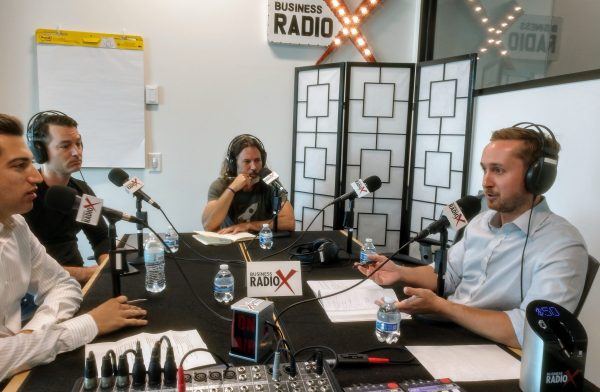
John Foshee with MyPorter, Fred McGill with SimpleShowing and Jesse Lindsley with Thrust Interactive

September 19, 2019 by angishields

Tech-Talk-Feature-9-19
Atlanta Business Radio
John Foshee with MyPorter, Fred McGill with SimpleShowing and Jesse Lindsley with Thrust Interactive
Loading
00:00 /
RSS Feed
Share
Link
Embed

Download file

Tech-Talk-Group-9-18

John Foshee is MyPorter’s Co-CEO CMO, responsible for generating demand and bringing MyPorter’s message out to the
market.

Prior to MyPorter, John worked for five years at Deloitte Digital Consulting specializing in marketing performance & strategy. Trained in digital & classic media, he advised clients on their customer and marketing strategies.

Connect with John on LinkedIn.

Fred McGill is the Co-Founder & CEO of SimpleShowing – the new way to tour and buy a home. SimpleShowing is a residential real estate technology company based in Atlanta, GA.

Fred was previously VP of Marketing at Redox, a health tech startup and served in sales roles at Fortune 500 companies such as Johnson & Johnson and Salesforce.com. Fred is a graduate of Georgia Tech (MBA) and Samford University (BS).

Connect with Fred on LinkedIn.

Jesse Lindsley is the CEO & Co-Founder of Thrust Interactive. The Thrust team has been creating video games and interactive experiences together for 10 years with over 200 product launches. We are game developers, game designers and behavioral scientists who believe that innovation through collaboration can make a difference.

Our Game Science philosophy applies a research-based approach to agile game development to create socially responsible solutions that influence behavior.

Connect with Jesse on LinkedIn.

About Your Host
JoeyKlineJoey Kline is a Vice President at JLL, specializing in office brokerage and tenant representation. As an Atlanta native, he has a deep passion for promoting the economic growth and continued competitiveness of communities in and around Atlanta, as well as the Southeast as a whole. He has completed transactions in every major submarket of metro Atlanta, and works primarily with start-ups, advertising/marketing agencies, and publicly-traded companies. With a healthy mix of tenacious drive and analytical insights, Joey is a skilled negotiator who advises clients on a myriad of complex real estate matters.

With a strategy and business development background, Joey is first and foremost a pragmatic advisor to his clients. Most recently, he was the Director of Business Development for American Fueling Systems, an Atlanta-based alternative energy company. While at JLL, he has become a member of the Million Dollar Club, and has built a reputation as an expert on the intersection of transit-accessibility and urban real estate. With intimate involvement in site selection and planning/zoning concerns, Joey approaches real estate from the perspective of the end user, and thus possesses a unique lens through which to serve his clients.

Joey holds a Master of Business Administration from Emory University, and a Bachelor of Arts from Washington University in St. Louis. He is a founder, board member, and the treasurer of Advance Atlanta, and also sits on the Selection Committee for the Association for Corporate Growth’s Fast 40 event. In addition, he is a member of CoreNet and the Urban Land Institute. Finally, he is part of LEAD Atlanta’s Class of 2019.

Connect with Joey on LinkedIn.
Tagged With: MyPorter, SimpleShowing, Thrust Interactive

Susan Ratliff with Susan Ratliff Presents and LaCoya Shelton with Revolutionary HR Consulting

September 17, 2019 by angishields

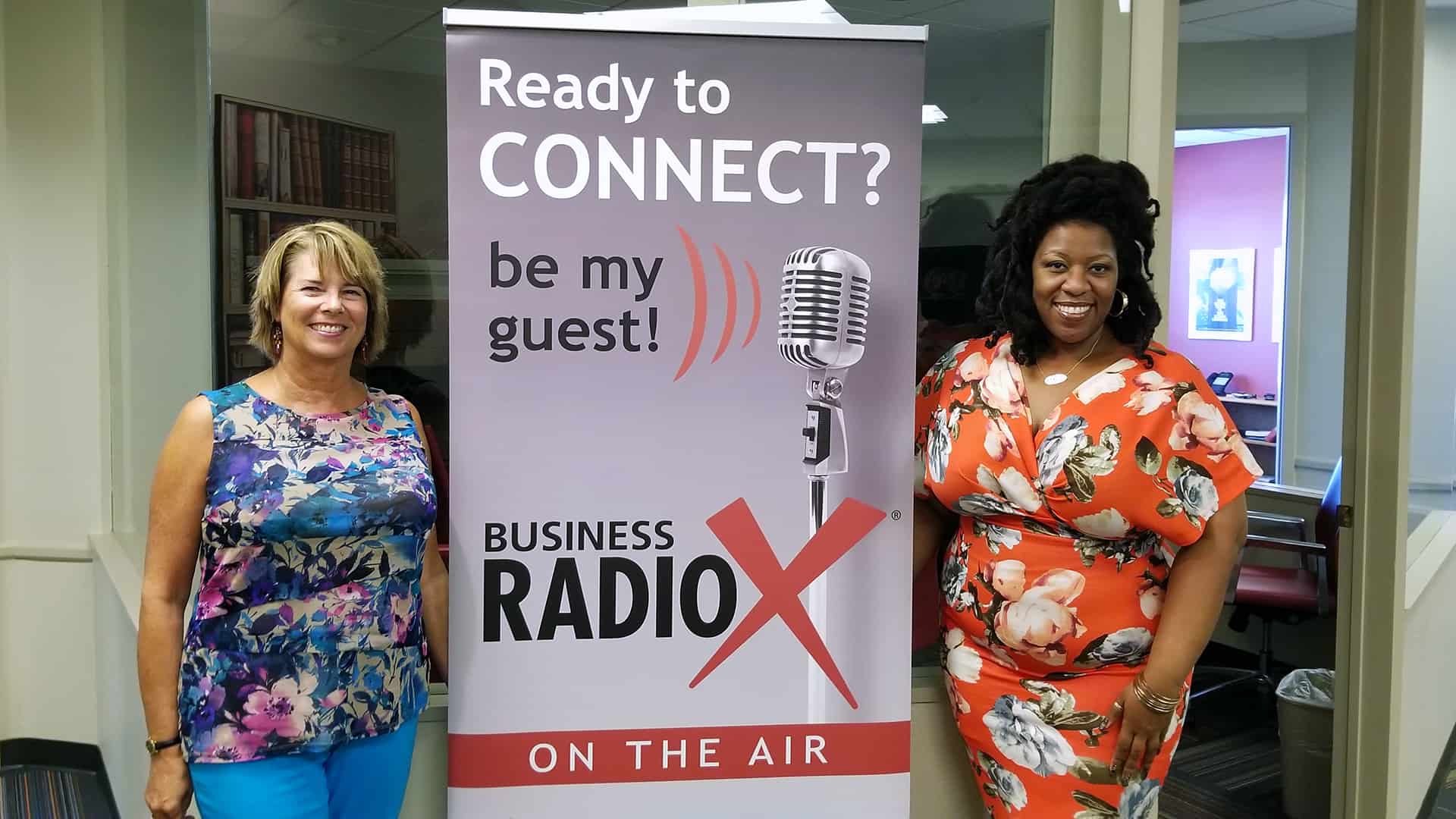
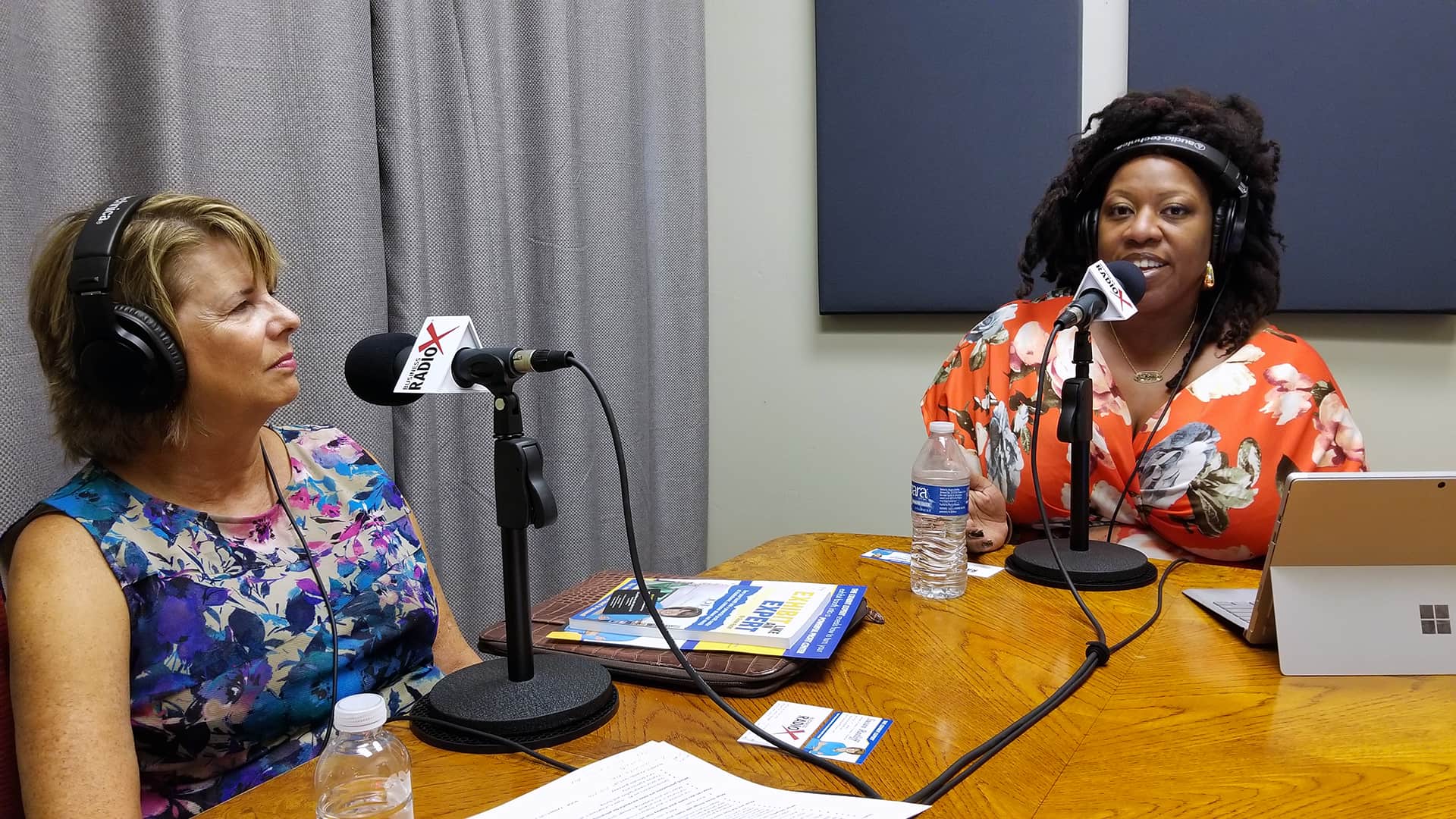
Susan Ratliff with Susan Ratliff Presents and LaCoya Shelton with Revolutionary HR Consulting speaking on Valley Business RadioX in Phoenix, Arizona


Susan Ratliff

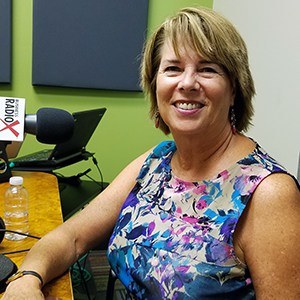
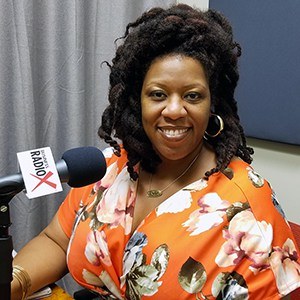
Susan Ratliff with Susan Ratliff Presents in the studio at Valley Business RadioX in Phoenix, ArizonaSusan Ratliff is the owner of Susan Ratliff Presents, a consulting and training company specializing in trade show marketing and industry trade show and public consumer show exhibitor education services.

Known in the industry as The Exhibit Expert, Susan has unique insight into how to generate leads and maximize profits from a booth. For 30 years she’s worked both sides of the exhibit aisle, gathered knowledge, discovered shortcuts and made mistakes she teaches her audiences to avoid.

Susan started her career in the trenches selling personalized children’s books at craft fairs and family expos. She’s produced sports related consumer shows and women’s business conferences. Susan is an author, award-winning entrepreneur and founder of a reputable trade show display company where for 16 years she helped thousands of companies polish their presence and produce profits at industry trade shows and public consumer shows.

She knows what attendees want, how exhibitors think, and what they both need to be successful. Her personal experiences and exhibit marketing strategies will educate and motivate both novice and veteran exhibitors leaving them with keys to a competitive advantage and the knowledge to work a show like a pro.

Connect with Susan Ratliff on LinkedIn, Facebook, and Twitter.


LaCoya Shelton

LaCoya Shelton with Revolutionary HR Consulting in the studio at Valley Business RadioX in Phoenix, ArizonaLaCoya Shelton is CEO of Revolutionary HR Consulting, an Arizona based firm that partners with organizations of all sizes and industry to create alignment between HR systems and business strategies. By strengthening HR’s ability to build the capacity to align people, structure and process in a sustainable way, businesses gain a competitive advantage improving their ability to build and maintain the workforce needed today and in the future. Revolutionary HR Consulting specializes in helping conscious businesses operate consciously recognizing that high-impact HR is critical to this end. Revolutionary HR Consulting captures what HR does, compares it to what you need, to create the HR that you want.

Revolutionary HR Consulting also provides consultative support in all aspects of talent management for small businesses and start-ups and provides expert HR witness services for both plaintiff and defendant cases arising from various employment scenarios across industries.

Prior to launching Revolutionary HR Consulting at the beginning of this year, LaCoya spent many years in the C-suite. She served as Vice Chancellor for Human Resources with Maricopa Community Colleges, the largest community colleges district in the nation. Her previous roles include Chief HR Officer overseeing the full delivery of HR services for 70 Arizona state agencies, boards and commissions, healthcare and private sector human resources. She specializes in the design and execution of high-impact, transformational HR recognizing that HR is the intersection between business strategies and the human beings responsible for its success.

LaCoya also serves as an expert HR witness providing expert HR opinions in a variety of legal matters involving employment given her background and expertise in Human Resources. She teaches HR management and leadership part-time at Grand Canyon University, serves on the City of Surprise Personnel Board and is a member of the Conscious Capitalism Arizona Chapter leadership team. LaCoya is a graduate of Arizona State University.

Connect with LaCoya Shelton on LinkedIn, and follow Revolutionary HR Consulting on LinkedIn and Twitter.


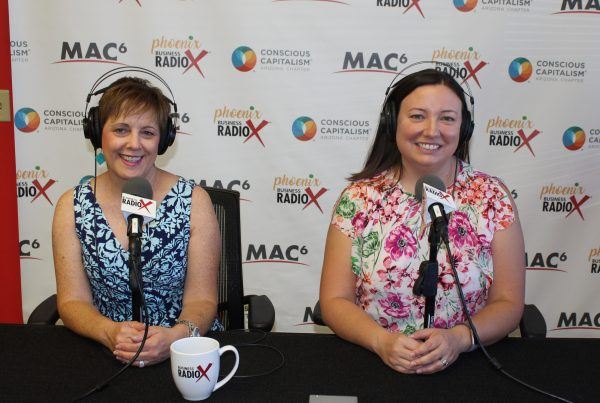
Susan Ratliff with Susan Ratliff Presents and LaCoya Shelton with Revolutionary HR Consulting on the radio at Valley Business RadioX in Phoenix, Arizona

Susan Ratliff with Susan Ratliff Presents and LaCoya Shelton with Revolutionary HR Consulting visit the Valley Business RadioX studio in Phoenix, Arizona

ATDC Radio: Danielle Claffey with Kuck Baxter Immigration and Danielle Major with Smart Convos

August 22, 2019 by angishields

ATDC-Ep-2-Feature
ATDC Radio
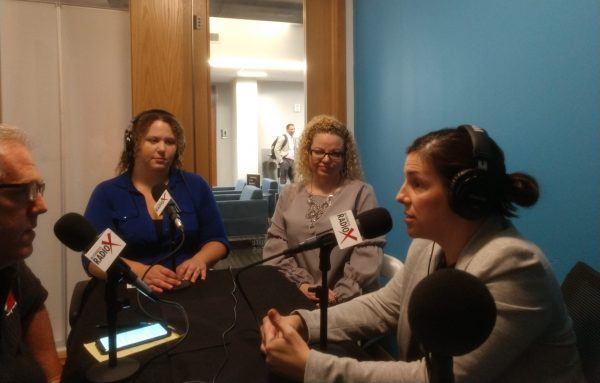
ATDC Radio: Danielle Claffey with Kuck Baxter Immigration and Danielle Major with Smart Convos
Loading
00:00 /
RSS Feed
Share
Link
Embed

Download file

ATDC-Ep-2-Group

Danielle Claffey is a Partner with Kuck Baxter Immigration LLC and practices in all areas of U.S. immigration and nationality law. She has more than 12 years of experience in business immigration matters including employment-based visa petitions, investor petitions, family based immigration, affirmative asylum, nonimmigrant visas, consular processing and federal court litigation.

Ms. Claffey is also highly experienced in deportation, cancellation of removal and asylum proceedings before the immigration courts and the U.S. Court of Appeals.

Danielle Major, CEO of Conversational Marketing Startup company Smart Convos, is a creative tech-loving executive with a desire to break communications barriers between businesses and consumers through new technology. She enjoys using her strong communication skills , creative chaos, and ingenuity to help build innovative ideas and relationships with others.

Danielle has a background in web design and marketing. She has a deep passion for helping others succeed, is always positive and loves meeting new people for great conversation.

Follow Smart Convos on LinkedIn, Twitter and Facebook.

Tagged With: E-2, employment based immigration, green card, green cards, H-1B Petitions, immigration, investment options, national interest waiver, visa petitions, Visa sponsorship

Decision Vision Episode 29: Should I Cooperate with a Competitor? – An Interview with Tom Brooks, Windham Brannon

August 22, 2019 by John Ray

Decision Vision
Decision Vision
Decision Vision Episode 29: Should I Cooperate with a Competitor? – An Interview with Tom Brooks, Windham Brannon
Loading
00:00 /
RSS Feed
Share
Link
Embed

Download file

Mike Blake and Tom Brooks

Should I Cooperate with a Competitor?

Why would you collaborate with a competitor? How do you establish and maintain trust with a competitor you cooperate with?  Host Mike Blake, Head of the Valuation Practice at Brady Ware, discusses these questions and more with Tom Brooks, Director of the Valuation Practice at Windham Brannon. “Decision Vision” is presented by Brady Ware & Company.

Tom Brooks, Windham Brannon

Tom Brooks, Windham Brannon

Tom Brooks is a Principal and Director of the Valuation Practice at Windham Brannon. Tom has over 20 years of experience handling valuation and litigation support matters. He specializes in guiding clients with the valuation of their businesses, business interests, and intangible assets for mergers and acquisitions, gift and estate planning, financial and tax reporting, charitable giving, strategic planning, shareholder disputes, commercial litigation, and marital dissolution. Tom has worked with businesses of all sizes, including start-up companies to larger companies with over $1 billion in revenues. He is effective at communicating complex valuation issues and collaborating with his clients in building successful relationships.

Prior to joining Windham Brannon, he was a Senior Manager in the Valuation practice of a leading tax and advisory firm. As a licensed CPA in Georgia, Accredited in Business Valuation (ABV) and as an Accredited Senior Appraiser (ASA), Tom often speaks for organizations such as the Atlanta National Association of Certified Valuation Analysts (NACVA) chapter, the Georgia Society of Certified Public Accountants and Atlanta Alumni of Retired Revenue Agents. He has also presented for Georgia Tech and LaGrange College accounting students and at Merrill Lynch seminars.

Michael Blake, Brady Ware & Company

Mike Blake, Host of “Decision Vision”

Michael Blake is Host of the “Decision Vision” podcast series and a Director of Brady Ware & Company. Mike specializes in the valuation of intellectual property-driven firms, such as software firms, aerospace firms and professional services firms, most frequently in the capacity as a transaction advisor, helping clients obtain great outcomes from complex transaction opportunities. He is also a specialist in the appraisal of intellectual properties as stand-alone assets, such as software, trade secrets, and patents.

Mike has been a full-time business appraiser for 13 years with public accounting firms, boutique business appraisal firms, and an owner of his own firm. Prior to that, he spent 8 years in venture capital and investment banking, including transactions in the U.S., Israel, Russia, Ukraine, and Belarus.

Brady Ware & Company

Brady Ware & Company is a regional full-service accounting and advisory firm which helps businesses and entrepreneurs make visions a reality. Brady Ware services clients nationally from its offices in Alpharetta, GA; Columbus and Dayton, OH; and Richmond, IN. The firm is growth minded, committed to the regions in which they operate, and most importantly, they make significant investments in their people and service offerings to meet the changing financial needs of those they are privileged to serve. The firm is dedicated to providing results that make a difference for its clients.

Decision Vision Podcast Series

“Decision Vision” is a podcast covering topics and issues facing small business owners and connecting them with solutions from leading experts. This series is presented by Brady Ware & Company. If you are a decision maker for a small business, we’d love to hear from you. Contact us at decisionvision@bradyware.com and make sure to listen to every Thursday to the “Decision Vision” podcast. Past episodes of “Decision Vision” can be found here. “Decision Vision” is produced and broadcast by the North Fulton studio of Business RadioX®.

Visit Brady Ware & Company on social media:

LinkedIn:  https://www.linkedin.com/company/brady-ware/

Facebook: https://www.facebook.com/bradywareCPAs/

Twitter: https://twitter.com/BradyWare

Instagram: https://www.instagram.com/bradywarecompany/

Show Transcript

Intro: [00:00:01] Welcome to Decision Vision, a podcast series focusing on critical business decisions, brought to you by Brady Ware & Company. Brady Ware is a regional, full-service, accounting and advisory firm that helps businesses and entrepreneurs make vision a reality.

Michael Blake: [00:00:20] And welcome to Decision Vision, a podcast giving you, the listener, clear vision to make great decisions. In each episode, we discuss the process of decision making on a different topic. Rather than making recommendations because everyone’s circumstances are different, we talk to subject matter experts about how they would recommend thinking about that decision.

Michael Blake: [00:00:37] My name is Mike Blake, and I’m your host for today’s program. I’m a Director at Brady Ware & Company, a full-service accounting firm based in Dayton, Ohio, with offices in Dayton; Columbus, Ohio; Richmond, Indiana; and Alpharetta, Georgia, which is where we are recording today. Brady Ware is sponsoring this podcast. If you like this podcast, please subscribe on your favorite podcast aggregator. And please also consider leaving a review of the podcast as well.

Michael Blake: [00:01:01] So, our topic today is cooperating with competitors. And this is a a ticklish topic. We think of competitors in the marketplace, regardless of our industry, it could be public accounting, it could be advisory, it could be manufacturing cars, it could be airlines. Very few businesses are not in a competitive scenario in some case. And by the way, if you are in a business that isn’t in one, please write me. I’d like to know what that is, so I can then compete with you because that sounds great.

Michael Blake: [00:01:38] And what I’ve learned over the last 15 years or so that I’ve been in business is that some industries just can’t get along. Like years and years ago, I did a project for Coca-Cola Enterprises. And I was a contractor there doing some financial analysis. And at the time, you walk into their office, and everything is Coca-Cola red. They got polar bears all over the place, and bottles of Coke, and everything else. And it’s definitely rah-rah, sort of, company branding is at the forefront. And if—I did not do this, but somebody else I knew did, went off premises, and then came back with a bag full of Taco Bell, which at the time was owned by Pepsi Co. Now, Yum! Brands, I don’t know if Pepsi is owned by them or not, but that was a big no-no. Like even having food from the competing beverage was not a fireable offense, but boy, you’ve got the Coca-Cola stink eye, and then some when you did that.

Michael Blake: [00:02:39] I imagine there was a time when you had that kind of rivalry at Microsoft and Apple. I don’t think that’s the case today. And we think of of competition as something that, frankly, we have to destroy, that they are enemies, that they are opposing us, that they are taking food out of our mouths, and that they are something to be feared and disliked. But I think in modern business, that’s not necessarily always the case. And you see industries where, in certain cases, competitors do band together. The auto industry, as competitive as they are, they do band together in order to promote safety in their industry. They band together to make sure that regulations aren’t too constraining.

Michael Blake: [00:03:27] In the airline industry, I think the same thing. I think the same thing is true. You see partnerships all over the place where maybe companies are cross-selling each other’s services. And maybe, I’ll go back to airlines, they’re actually a really good example too because of your quote sharing. So, my family and I are going to take a trip to Scandinavia later this year, and our plane ticket says Delta. But at some point, we’re probably going to be put on an SAS plane, or a Norwegian airplane, or something. We don’t know that, but because those are competitors that are cooperating, right, that’s the kind of customer experience that we’re going to have. And because they cooperate, we don’t have to get out at Paris, and then walk the rest of the way to Copenhagen, which would be a real pain in the neck.

Michael Blake: [00:04:12] And so, I wanted to explore this because in my particular practice—and I don’t know if I’m exceptional in either direction or right about the average, but I can tell you in my practice in business valuation, about somewhere between 20% and 30% of my business actually comes from competing firms. And I don’t necessarily know that I’m exceptional, but on the off chance that is exceptional some way, that means that there’s a lesson to learn. I want to talk about what if your competitors aren’t your mortal enemies? What if you’re not just always locked in a life-and-death struggle with your competitors? And not in a way where you’re forming a cartel. I mean, our firm is not a big enough firm. I’m not going to cartel anything. But there’s a long—there’s a big gap between cartel and cutthroat, winner-take-all competition.

Michael Blake: [00:05:10] And so, that’s what I want to talk about today because if you’re not thinking about competitors in terms of if there’s a potential partnership and a potential cooperation and opportunity, you may be leaving money on the table. You may be leaving business value on the table. And maybe, also, you’re living a more stressful life than you have to. And so, I’ve brought in a guest today that, I think, this will be a little bit of a different conversation because I’m going to be more of an active participant rather than an interviewer.

Michael Blake: [00:05:38] But I brought in my friend Tom Brooks today, who is a competitor with whom that I cooperate quite a bit. Tom is a Director in the Valuation of Litigation Services Group of Windham Brannon PC, a midsized certified public accounting firm in Atlanta. I think about the same size as Brady Ware. I haven’t measured it, but I get the sense we’re about roughly the same size. Tom has over 20 years of experience handling valuation and litigation support matters. He specializes in guiding clients at the valuation of their businesses, business interests, and intangible assets for mergers and acquisitions, gift and estate planning, financial and tax reporting, charitable giving, strategic planning, shareholder disputes, commercial litigation, and marital dissolution. Tom has worked with businesses of all sizes, including startup companies to larger companies with over $1 billion in revenues. He is effective at communicating complex valuation issues, and collaborating with his clients, and building successful relationships.

Michael Blake: [00:06:35] Prior to joining Windham Brannon, he was a Senior Manager in the Valuation Practice of a leading tax advisory firm. As a licensed CPA in Georgia, accredited in business valuation, and as an accredited senior appraiser, Tom often speaks for organizations such as the Atlanta National Association for Certified Valuation Analysts or NACVA – that has got to be the weirdest, most awkward acronym in the history of mankind. And I’m a NACVA member, so I can speak to that internally – the Georgia Society of Certified Public Accountants and Atlanta Alumni of Retired Revenue Agents. He has also presented for Georgia Tech, and LaGrange College Accounting Students, and at Merrill Lynch seminars. And Tom and I used to work together. And he won’t admit this, but I actually worked for him technically, at least, 15 years ago. And we have tracked each other’s careers and have been good friends ever since. And it’s a terrific pleasure to have Tom Brooks in the program. Tom, thanks for coming on.

Tom Brooks: [00:07:32] It’s great to be on. Mike, I appreciate it. That’s quite an intro, and I think it makes me sound a little better than I really am. And yeah, you really didn’t work for me, Mike. That wasn’t really the case.

Michael Blake: [00:07:43] So, you see. I mean, he’s only saying that, so that if I do something bad, he doesn’t want the blame for it. So, talk to us a little bit about your practice in Windham Brannon. How big is that practice, generally speaking? I’m not looking for a number of terms or anything. And what do you focus on within that practice?

Tom Brooks: [00:08:01] Yeah. Our practice highlights a lot of what you highlighted in my bio, which is a mouthful, but traditional business valuation of privately held entities. A number of reasons that clients may perform those. You’ve probably talked about those a lot on your program and on the podcast here. But we do a lot of work around exit planning for our clients, management planning, which can be very broad, to keeping a scorecard.

Tom Brooks: [00:08:28] What’s my business worth? Why am I—the investments that I’m making, the growth that I’m achieving, why is that happening and how does it impact value? We do a lot of work as a firm in Windham Brannon. We’ve got a large high-net worth practice. So, we do a lot of work with our high-net worth clients that have their businesses. And they may be looking at transition planning. How do we transition the business to the next generation? If there’s no next generation, what’s the next—how do we exit? And then, financial reporting. And for accounting purposes, valuation for purchase price allocations, goodwill impairment, stock compensation. And then, finally, probably the last piece to our puzzle in terms of our jigsaw puzzle of our practice would be litigation support in terms of commercial litigation cases and where valuation comes into play in those.

Tom Brooks: [00:09:20] Our practice has been in existence now for 18 months. And we have within—we practice as a litigation and valuation group together. We’ve got two partners and a senior manager in that group. So, I will say that I’ve been announced as a new principal in the firm, Mike, so-

Michael Blake: [00:09:42] Oh, Congratulations! We heard it here first.

Tom Brooks: [00:09:46] So, it’s a great—it’s been a good—we’ve had a good, very successful start in the 18 months that I’ve been in Windham Brannon.

Michael Blake: [00:09:51] That is great. That is great to hear. I know that was kind of the plan when you joined, but I know you never take anything for granted. And that road to principle can be a bumpy one too. So, we’ll amend that bio. You’re a principal now at Windham Brannon. Your Excellency.

Tom Brooks: [00:10:08] Don’t go there, Mike.

Michael Blake: [00:10:12] So, you have chosen, I think, in your career, really, to be pretty open about cooperating with competing firm, not just ours, but others. We don’t need to be exclusive, so. But why is that? Why do you have that outlook and that philosophy?

Tom Brooks: [00:10:30] I think it all comes back to—and this may hit—this may be a recurring theme this afternoon. It comes back to trust. I mean, it’s not—I’m not an open book that no matter who I sit down with in terms of my competitors, but I’m not afraid to ask questions when you develop that level of trust with somebody to say, “Am I handling this client situation right?” And it’s not like we’re sitting here sharing our Rolodex or client names and revealing that. It’s talking more about issues that we may face as practitioners. And again, I’m sure these are topics that you’ve talked about. If we were to talk about technical topics and valuation, you and I could have two—there could be two very different approaches. And they may not be or they could be similar.

Tom Brooks: [00:11:13] So, so much of our—and in the career field of valuation, frequently, it said that it may be more science or more art than science, rather. And so, why wouldn’t you—in my case, I think it’s just kind of how I’m wired as well. Why wouldn’t you open yourself up and be trustworthy of some other folks potentially? Again, it’s not everybody but those, that over time, you developed a relationship like that with. You’ve just got to develop that high level of trust before you can get to where you’re going to kind of be a friendly, friendly competitor.

Michael Blake: [00:11:49] And I’ll interject to that. I think another ingredient to that is ego. I think in the valuation profession, more than most other areas of accounting, ego is more prominent and more pronounced, right? And we both know practitioners that what other faults they have, healthy self-esteem is not one of them.

Tom Brooks: [00:12:09] Right.

Michael Blake: [00:12:09] Right? And I do think that our profession, sometimes, encourages or discourages that. I think our profession, sometimes, a little bit more water coolery. Nobody is either sort of is good or maybe good in a certain area. But what we tend to put people in the bucket. They’re either a genius or an idiot, right? Not learning, not trending, whatever, right?

Tom Brooks: [00:12:35] Right.

Michael Blake: [00:12:36] And I think part of the willingness to cooperate is a willingness to be vulnerable, right?

Tom Brooks: [00:12:43] Right.

Michael Blake: [00:12:43] And say, “Look, I don’t know everything about this. I don’t.” We do some estate and gift tax work, but you do 10 times more work there. And that’s okay, I’m willing to say, “Look, I don’t think I need to necessarily give up the engagement, but I do need to sort of phone a friend,” right?

Tom Brooks: [00:13:02] And like you, I’ve got other—and you and I probably just talked about issues like that. And there have been issues that I’ve raised around technology that I’ve phoned you about. And I have other former co-workers and, now, competitors that, again, have very good relationships with. The same thing, you referenced the gift and estate. They’ll call and say, “Hey, I’m dealing with this issue. I don’t deal with it that often. Can you…”  Usually, most of the time even, you or somebody else are going to call and say, “Here’s the way I’m thinking about it.” They’re not asking you to solve their problem. They’re asking you to help them. And you may take them in a completely different direction. But that does speak yet of that vulnerability to be willing to listen, and ask somebody, and say, “Okay, there’s a better way to do it than the way I’m thinking about it. And I want to go find the right way,” because that’s the best answer for your client.

Michael Blake: [00:13:48] Yeah. And you’ll learn something, right?

Tom Brooks: [00:13:49] Right.

Michael Blake: [00:13:49] And one question you have to ask later. And you mentioned something I didn’t thought of. I think it’s a really important point. My father was in this industry too, but he had two jobs over the course of his career. I think I’m on number eight now, and I’ve got, at least, 17 or 18 years of work left in me, give or take health. So, will this be my last job? I don’t know. I think we all hope it is. That’s why I’m a director. But we’re, now, building networks of people that we worked with in our generation and subsequent generations much more rapidly than I think generations before us, aren’t we? And that probably contributes to this, doesn’t it?

Tom Brooks: [00:14:29] I think that’s the case. And again, this is not—there’s no, I guess, poll data to back it up. But I think you’re right. I think especially—and I can’t speak to any other platform other than accounting firms. That’s where I’ve spent most of my career. But you do, at times, get that hesitancy and sense. And maybe it is from some of the older partners or the generation before us. And it’s not to say all of them are that way, but there can be a very strong hesitancy. “Well, Tom, you want to refer our client that we can’t do work for to another accounting firm?” And that is one reason I would say our success has been great at Windham Brannon because my partners aren’t thinking that way. It’s just—but I’ve seen it throughout life in terms of my career, and I’ve seen it. Other practitioners will tell me the same thing that they experience some of those same roadblocks when you do want to have this healthy, friendly, competitive nature to your relationship.

Michael Blake: [00:15:32] Well, and we’ve had—you and I have had that because the firm I used to work for before Brady Ware was of that mind was that just referring stuff to another CPA firm, that was just not on the table.

Tom Brooks: [00:15:44] Right.

Michael Blake: [00:15:44] And it killed me that I had to basically tell you that because I didn’t want you to refer stuff thinking of those stuff coming back because it was not, and it did not. So, that was a very liberating thing about sort of planting my flag. And I think now, that other firm has sort of started to loosen up a little bit in terms of sharing. But that can be a real issue. And I’ll admit, maybe 10 years ago, I might have had—10-12 years ago, I might have had that same mindset. You’ve just got to hold on to every client like they’re the last life vest on the Titanic.

Tom Brooks: [00:16:15] Right.

Michael Blake: [00:16:17] Right? But then, with us, especially, we can get into something, what I call a valuation Vietnam, where you think you’re getting into something that’s going to turn out fine. And then, you get in, and you’re not, and it’s not. And maybe—and you look back, you think, “Boy, I’m not sure I should have taken that on.” But halfway through, you’re, kind of, committed. You just got to figure it out. And you learn that I don’t know that I even did myself a favor by taking every seat. If Tom were here doing this, he would have been done three weeks ago. And here I am, here I am tearing my hair out at 2:00 a.m. trying to figure out this problem. And I think there’s a maturity element to that.

Tom Brooks: [00:16:56] No, time teaches you a lot in any form no matter what your career choice is. I believe that especially when you listen to business owners and entrepreneurs. We’ve all failed probably in some capacity somewhere, and it’s how do you learn from that. And, again, it’s taking the ego out of it, and being willing to learn, and being open. It’s not—I think it’s along the same lines that when we’re told no, or we don’t win an assignment, probably when I first started, that would hurt me a lot more than it does now. You have to lose some engagements to figure some things out and to learn a little bit more about how people view you in the marketplace.

Tom Brooks: [00:17:38] And so, I think it just goes to some humility along the way too that you learn, and you make some mistakes, and being willing to learn from those. And so, again, as you age and mature in your business career, hopefully, you become more open to these types of concepts.

Michael Blake: [00:17:57] And I think it helps to have definition in terms of what you just know. You just know in your heart of hearts, you’re not very good at doing. I’ve been very open with you and anybody who’ll listen, I don’t do litigation. I’m not very good at it, and I’m not willing or interested to make the investment required to become even mediocre at it. So, being a mediocre expert witness, that’s a bad day, being deposed when you know you’re not that great.

Michael Blake: [00:18:29] And that is maturity, but I think it’s also liberating. And I think in a certain way to it, it actually helps your brand, right? I don’t get a lot of litigation referrals anymore, either now, because the market has known like, “Blake, he’s just not going to do it.” But I think that tends to lead to more projects that you are good at being sent your way. And I think the market respects you more when you’ll turn them down, right?

Tom Brooks: [00:18:58] I agree. I mean, what you and I do is professional services. This isn’t just about being a CPA. And for listeners out there, especially in professional services arena, this is really what it gets back to. It’s your firm’s reputation. And some people may have their own firm. So, the name may go—your individual name may go with the firm name. But at the end of the day, as a practicing valuation specialist at Windham Brannon, it’s both my reputation and the firm’s reputation every day that are on the line. And that’s a risk that I have to manage as a practice leader. And with firm leadership, when you have questions about engagements that you may or may not want to take on.

Tom Brooks: [00:19:36] But like you said, it’s kind of one of those, “Maybe I would have been better off.” But thinking ahead and as you encounter something that’s going to be considered maybe outside your comfort zone, it doesn’t mean that we don’t take all assignments outside our comfort zone because, sometimes, it relates to something we’ve done before, and you just got to stretch yourself and learn, like you said earlier in the podcast. And that’s what we—many times, that’s the way we take new tasks on or responsibilities is we learn. And some of it for us is on the job. And we don’t have all the answers, as you said, but, sometimes, it’s almost like phone a friend, right?

Michael Blake: [00:20:13] Yeah.

Tom Brooks: [00:20:13] I mean that’s what you just talked about. And sometimes, those things will help you kind of navigate those challenging situations. But, again, having those open relationships that you can do that, to use your word, it’s liberating to be able to know that in the event that I’m struggling with something, I’ve got a lifeline out there to help me make sure that I’m doing the right thing for my client.

Michael Blake: [00:20:36] So, I’d like to revisit the trust discussion because I think so much of that, ultimately, comes down to that. And there are two areas I want to explore. One is, what are some of those dimensions of trust? It’s obvious, part of it is going to be just, are you competent, right? I’ll give you the fine China, don’t drop it, please. But there are kind of other elements of trust that belong there too, right? So, talk a little bit about what those trust features look like.

Tom Brooks: [00:21:05] Yeah, I think that’s one of the things in thinking about what we’re going to talk about today as I went through in my head. It’s kind of, like you said, the opposite, potentially, of trust. Like you, you get to see a lot of work product come across your desk of your competitors, whether it’d be just one of your partners is asking you to review something because they had a valuation done by an outside firm, or maybe it’s the on the accounting side that our audit team needs something reviewed, and I’m looking at it. So, the first element is kind of that competency. It’s just kind of that, does the expert that we may send this out to, do they have the competency, and will they be taken care of? The way I think of it as well is, will my client or the firm’s client be taken care of as well as they would have been taken care of by me?

Tom Brooks: [00:22:03] So, it really does come down to that trust. Some of it is just years and years. In my case, it’s years. I mean we, I think, have trusted each other a lot longer probably than just the 10-15 years, and we departed the firm that we worked with together, but it’s also developed over time. And so, I think it’s time. So, there’s a time element to it because you got to get to know the person.

Tom Brooks: [00:22:25] I think you have to also understand – and I think maybe this is an element of trust is – are they motivated to do the right thing? Again, I think that’s something that you’ve got to gage. There’s a high level—in doing this, there’s nothing that we can grab at and grasp. There’s nothing tangible. All this is intangible, and there’s risk associated with that when you do that, when you’re putting yourself out there, and potentially handing another name off. So, I think it’s that, again, at the end of the day, these are all elements of trust. But really, that is the key element, at the end of the day, the kind of that you got to come back to.

Michael Blake: [00:23:05] And in the second point I want to ask about trust is, trust between the two direct participants, such as between you and me is great, but it’s not enough, right? We also have to have organizational trust. And unless you have another announcement to make, you’re not the managing partner of your firm.

Tom Brooks: [00:23:26] No.

Michael Blake: [00:23:26] And I’m not the managing partner of my firm. And there is no danger of that announcement ever being made. I can promise you that.

Tom Brooks: [00:23:32] This side as well.

Michael Blake: [00:23:32] So, in our case, in the case of many people, we also had to help build organizational trust, right?

Tom Brooks: [00:23:43] Absolutely. That was—when you and I first landed between Brady Ware and Windham Brannon, it was one of the first things that we did because our moves kind of coincided with each other.

Michael Blake: [00:23:51] We’re a month apart.

Tom Brooks: [00:23:52] Yeah. It was we got together for breakfast with our managing partners and some of our other key senior partners. And you just did begin to develop that rapport, and that openness, and, again, those lines of communication. Maybe this is the word I was looking for in the prior answer but transparency. And, again, it doesn’t mean that we’re coming with a client roster list and go, “And here’s ours. Where’s yours? Here’s yours.” And we’re just exchanging names like that.

Michael Blake: [00:24:17] Like lineup cards.

Tom Brooks: [00:24:18] Right. Client confidentiality still trumps all these and precedes all of these. So, that’s the utmost important thing that we have is to maintain. And again, in that confidence, that’s where your trust comes in. But it does take, in our case, where you’re with a larger firm organizationally, you’ve got to have that confidence because many times for you and I, it’s not just something that comes across my desk that comes through, say, a referral to me from one of my outside sources outside the firm. It’s something inside the firm. So, my partners have to trust that again and have that confidence that Mike Blake and Brady Ware are going to take care of them. And so, you’re right, organizational trust on top of the individual relational trust that exists is really critical as well.

Michael Blake: [00:25:05] And take care of them and not try to exploit the opportunity too, right?

Tom Brooks: [00:25:11] Yeah, right. That becomes an underlying element. And I think that goes back to when we talked about some of the distrust that occurs within many firms and across probably every professional service line there is that you would have in terms of thinking about sending a potential client out to a competitor is right. Are they going to poach them completely? Are they going to be looking to market other service lines in there? And you’ve got to have those conversations, and they’re just really open and direct. Those who are not, I would share when we had ours, those were not difficult conversations. It was just, “Well, here’s how we conduct ourselves.” And I guess it’s kind of like dating. I mean, it’s kind of like we were just figuring each other out, so to speak. And in our case, it’s worked really well that, again, between us and the relationship we already had and our partners, it’s just gone. We’re able to do that.

Michael Blake: [00:26:10] So, sometimes there can be speed bumps in a partnership, right? And these are—by definition, they’re sensitive relationships. No matter how long the trust is, there’s always going to be a speed bump. And to my mind, I’m always kind of worried that, “Oh, boy.”

Tom Brooks: [00:26:28] What did Tom do now?

Michael Blake: [00:26:29] Well, anybody, right?

Tom Brooks: [00:26:31] Right. No.

Michael Blake: [00:26:31] And I’ll tell you that I kind of tell our people, “This is a Windham Brannon referral. This has got to be red as red carpets on this one, because I don’t want to go back and tell—I don’t want to face him if it’s not great.” But there can be speed bumps. And how do you—what do you think is the best way to kind of handle those speed bumps, so that they don’t jeopardize the broader relationship?

Tom Brooks: [00:27:01] I think it goes back to what we kind of just articulated and spoke about in our last answer was that it’s got to be open lines of communication and transparency. You’re right. I mean, even if I had never handed that client off and, I could have done the work for whatever reason, clients are complex in terms of the issues that we face, and the demands that we face, the time, whether it’d be—the demands are just numerous. And it’s what we signed up for. We love serving our clients, but that hiccup could have occurred with anybody.

Tom Brooks: [00:27:39] So, I think it’s just important to know that, again, take the ego out of it. None of us are perfect. None of us has—again, these are intangible issues that we’re dealing with typically with clients. The technical issues, yes, but relational, this is all soft skills. These aren’t hard, tangible skills. So, I think, it’s, again, having that open line of communication and transparency.

Tom Brooks: [00:28:04] And if there was a hiccup, I think, first, come up with an action plan to solve the problem if you’re the firm that received kind of the referral. And then, obviously, if there was something that was significant enough, you need to reach back out across the aisle to the firm that referred the work to you, and say, “Hey, here’s what happened. Here’s what we did.” And if there is anything, potentially, they can help you with to get over that hump, then that’s it. I mean, the client has to come first, and their interests have to come first, and serving them, and making sure you get to the finish line. So, I think it’s just what has to happen to do that.

Michael Blake: [00:28:42] Now, one area that is most common that leads to competitor cooperation in our industry is a conflict, right?

Tom Brooks: [00:28:51] Right.

Michael Blake: [00:28:51] We can just get conflict. I tried to send you a piece of work, you got conflicted out of it. I know that was very painful, but you have to do the right thing for an existing client, right? But talk to our audience, what does a conflict look like? Is a conflict always black and white or the sort of shades of gray we have to make a judgment call? What is that conflict thought process look like?

Tom Brooks: [00:29:17] Yeah, I think there can be shades of gray. I mean, some are very obvious.  Let’s just—to use an example, litigation that if we were working for the plaintiff in some capacity, obviously, we’re probably hired by their legal counsel, and we’ve got an underlying client. But if we had been on—and then you look at the defendant, and go, “Oh, they’re an audit client of Windham Brannon. We’re not going to take that on. I mean, that’s just a conflict for us. It’s not something that where we would want to go. And I think there’s a direct conflict anyways.”

Tom Brooks: [00:29:50] Some of them can be a little more gray. I mean, this is more of an independence issue that we face as well. It’s not gray, but I’ll highlight it. So, for our auditors, our audit clients that have financial reporting issues that have valuation embedded in them, Windham Brannon can’t do that valuation work. So, we call it independence, but it’s really a conflict. We can’t produce a valuation, then, that one of my audit or that our audit teams goes and audits and signs off on it because we’re all under the same house of Windham Brannon. So, those are obvious.

Tom Brooks: [00:30:22] I think, sometimes, it can be—maybe it’s going back to the litigation scenario to paint just kind of a grey issue is you may not have a direct or a perceived direct conflict, but it may be that, in this case, again, let’s just say we were potentially representing the plaintiff. The defendant, somehow, isn’t a client of Windham Brannon, but they’re close to Windham Brannon. They have maybe referred some work to Windham Brannon. That’s just not a position. Potentially, again, it’s not that we couldn’t take the assignment, but you also may not take it because you’d say, “Well, that’s just not a position we want to put ourselves in with that defendant that the spigot may turn off or it may create, as you described before, one of those speed bumps. We really don’t want to have to navigate that speed bump.”

Michael Blake: [00:31:13] There are no speed bumps by accident. You don’t want to go making them on your own, right?

Tom Brooks: [00:31:16] Right, exactly. Well said, yeah.

Michael Blake: [00:31:17] So, another conflict I run to on occasion, which is not strictly one, but I get very uncomfortable with and, usually, we’ll try to try to sidestep it is maybe it’s not a litigation but a partner buyout, right? So, the client will come to us and say, “I want to buy out my partner,” or their service partner will come to me and say, “We have a client that want to buy the partner. Can we do an appraisal?” I said, “Well, we could do an appraisal.” And strictly speaking, there’s no conflict there, right? But let me ask you this question, if we come up with an answer that the client doesn’t like, right, is it going to make them mad at you?” They said yes. So, I don’t think we want to do this then, right?

Tom Brooks: [00:32:00] Right.

Michael Blake: [00:32:01] That’s not a conflict with a capital C.

Tom Brooks: [00:32:03] Right.

Michael Blake: [00:32:03] But it’s a conflict with a small C with a lot of underlines underneath it.

Tom Brooks: [00:32:07] Yeah. It’s kind of managing your firm risk at the end of the day. It comes back to, just like I said, just assessing, is that a place or a client relationship that we want to be in and take on? Sometimes, I laugh at it. You turn something away, or what you perceive is to do the right thing in some capacity, or you lose an engagement for whatever reason. Well, probably within, it may not be 24 hours, but within a week, there’s a better opportunity that turns around that you like better than the last one that had some hair on it, so.

Michael Blake: [00:32:43] Yeah, that’s called maturity. I like to think that in exchange for my gray hair and two arthritic ankles, I get some benefit out of that. In fact, to that point, I can think of a few assignments that I wish I had not taken. I can’t think of a single one that I turned down, and I wished I’d hung on to.

Tom Brooks: [00:33:04] Right.

Michael Blake: [00:33:04] Not a single one. Oh man, it never happened.

Tom Brooks: [00:33:06] Right.

Michael Blake: [00:33:08] So, talk about the sort of cooperation. In your mind, do you think you need to have sort of a written agreement? Does everything have to be kind of a papered over joint venture, or can these relationships be sustained on an informal basis?

Tom Brooks: [00:33:26] I think they can. I think it’s situational-dependent. So, we’ll go with it depends, which is always a good answer, right?

Michael Blake: [00:33:36] Jim would not like that one, right?

Tom Brooks: [00:33:38] That’s right, exactly. So, I think there’s—I can think back to 20 years ago at a prior firm where I had gone to work with. And I was a manager at that time, but was brought on to help kind of manage the valuation practice day to day that it wasn’t all the way up to a day-to-day practice. And before I got there, there were two tax partners. They had a retainer agreement with one of the more nationally known valuation experts. Then, it was the same thing like we talked about earlier, “Hey, I got this question,” or “Can you review this for us?” And that was padded with an agreement and a retainer that the experts, so to speak, just stayed out in front of.

Tom Brooks: [00:34:24] And I’ve had it as well where it’s not necessarily padded. You just, “Hey, I need another set of eyes to see this,” almost like a QC capacity, helping me review a project, and there’s no agreement in place, but a bill comes, and we pay it, and that is what it is. And then, there’s a larger—then, you may have a larger project maybe where it’s more of a subcontracting nature. Maybe you’re in a spot that you can’t produce all the volume of work, but at the same time, you certainly can manage it if you’re able to subcontract that. And that probably gets memorialized with an agreement with rates, and everything else, and protective language, “Yes, we’re not going to solicit your client,” those types of things.

Tom Brooks: [00:35:17] So, it may be a little bit of a long answer, but it depends. On each three of those scenarios or two of the three, you had an agreement. The other one, you don’t, I think some of it, then, comes back to that trust level as well. Again, we’ll keep harping on that as to the nature of that relationship that you have, whether you need to have it written or not. And then, it’s really up to both firms or individuals to figure out, how do we cement that?

Michael Blake: [00:35:47] So, one area that some of our listeners are probably thinking about is – boy, I’m not sure I like this one – when competitors start to cooperate, that sounds like they’re forming some kind of cartel, right. This is how it got started or whatnot. But in most cases, that really isn’t what happens. When we do this, we’re not price fixing or anything like that, are we?

Tom Brooks: [00:36:11] No, not at all. It’s, “Hey, here’s an opportunity.” Again, there’s no expected, “I’m going to get this back in return,” or no price fixing. It’s what’s best for our client. So, there’s just no, I’d say, illicit concepts in the background, lurking in the background that’s in either of our minds and what we’ve done. And I would never associate myself with somebody that would have that. To me, the world is too big, and there’s too many valuation assignments out there that even though, sometimes, you’re going, “Oh, man. I wish I had another one,” or whatever, but there’s plenty of opportunities for all of us to be efficient in the same pond. The pond is actually really big. And I actually think it’s really deep.

Tom Brooks: [00:36:57] So, many times, for the people even that I know and meet with as competitors, I can say that I’m very friendly with. It’s frequent that I don’t come up against them even in—whether it’s through RFP or there’s an opportunity, and somebody is reaching out to two or three valuation firms. Now, I don’t come across them. So, it’s just the concept, I think, of – again, I’ll repeat it – doing the right thing for your client, and who is that most trusted source, then, that you need to send him to for the situation you have?

Tom Brooks: [00:37:31] And I wouldn’t expect you to send me every assignment. You may say, “This isn’t right for Tom and Windham Brannon. It’s not something that—it doesn’t fit Tom’s bailiwick on what he does.” And I know that you’ve got other folks that you work with or that you spend time with in terms of opportunity. So, that’s not offensive to me.

Michael Blake: [00:37:50] Right. We’re seeing other people.

Tom Brooks: [00:37:51] Right. Yes.

Michael Blake: [00:37:52] And we know that. We don’t have each other’s varsity jacket, or a letter ring, or anything like that, right?

Tom Brooks: [00:37:57] You don’t have my class ring?

Michael Blake: [00:37:57] So, I want to draw this out. We’ve talked a lot about the valuation world, but I want to draw this out a little bit sort of higher level. So, one thing I’ve observed, and I’m curious about your experience, is that one way where competitors may cooperate is on an exit, right? If you’re a company that you’re getting to that point where you’re looking for a sale or for a strategic expansion either way, right, one of the most logical targets is going to be a competitor because they understand your business. They probably understand you.

Tom Brooks: [00:38:33] Right.

Michael Blake: [00:38:33] You may have some relationship with them. And down the road, that may be a very important value-building relationship. Have you seen something similar?

Tom Brooks: [00:38:45] I can’t say that I’ve necessarily seen it, but what I hear from the business owners I talk to, and I think you talked about it as well, and I’m not going to say that it’s generational, but I am amazed that when you do talk to clients and, again, business owners, entrepreneurs, how much they do know and how much time they do spend frequently with their competitors. And I don’t think it’s always just at a conference, like an industry conference. And maybe that is where a lot of these conversations occur, but I do get the impression that, again, it’s not sharing everything about whether it’d be their cost structure, if they’re a manufacturing client. “Well, we’ve got this technology now in place and this is setting us apart.” You’re not going to share that, but very much, many, I find, of my clients do know a lot about their competitors, or if they are looking at an exit, why certain competitors, they would prefer them to be a potential buyer versus others.

Michael Blake: [00:39:46] So, I want to be respectful of your time here. We’re going to wrap things up, but I do have a couple of other questions. If we can kind of sum up here ingredients that go into a good cooperative competitive relationship. We’ve talked about trust. That’s clearly one. Are there one or two other ingredients you can think of that help make relationships like that be mutually lucrative and sustainable?

Tom Brooks: [00:40:10] I think, I’ve used—the other word that I used is transparency and communication. It will probably be the other two words that I think if you summed it up. Again, transparency, to repeat, it isn’t just, “I’m going to tell you everything about my practice.” It’s, “Here’s a little bit about my practice. Here’s about our clients.” And obviously, when it comes to a specific referral, yes, you’re going to probably have a name at that point. But even when you’re meeting with people, whether it’d be over launch, or coffee, or a meeting at somebody’s office as a competitor, again, you’ve got to—if you want to, I’ll say, kind of be on the receiving end, probably, then you need to be, again, talking openly about your own business. So, that’s transparency.

Tom Brooks: [00:40:52] And then, that open line of communication is just be willing to—the other word, I guess, we’d say for it as vulnerable, as you talked about. And so, that’s just kind of just as a—I think you’ve got to get comfortable with that. And if you’re not, then you may struggle getting to that point. And the folks that you’re trying to be more friendly with may pick up on that.

Tom Brooks: [00:41:17] But the other thing that I’ve said frequently is that I’m willing to be the first one to extend the olive branch in a case because you don’t know how it’s going to go. Many times, probably—I don’t know if anybody else’s lunches are like mine, but sometimes it just becomes more of a social lunch. You have a great lunch, but you kind of go, “Well, that was great. And I really got to know somebody. And I think we could work together,” but does the phone ever ring for the work?

Michael Blake: [00:41:45] Right.

Tom Brooks: [00:41:45] So, I think that happens to all of us. But, now, now it becomes, how do you become more purposeful? And then, translating that to a relationship. So, it’s kind of that same thing. Be willing to be vulnerable and extend that olive branch to be the first one because, sometimes, it’s, “Well, are they in the boat with me or out? I have one foot in. Are we all in the boat?” So, that comfort level of knowing that I could extend it one time, and I may not ever get anything that comes back to me or an opportunity that I see come my way.

Michael Blake: [00:42:21] And alongside that notion of vulnerability, I think it’s also differentiation and defining yourself, right? I think if you’re in a business where you truly feel or think that it’s important that you handle every opportunity that comes through, no matter what, it’s much harder to find grounds for cooperating with a competitor.

Tom Brooks: [00:42:48] Right.

Michael Blake: [00:42:48] Right? And maybe that’s right, maybe that’s wrong for your practice. For mine, it’s not right. But on the other hand, if you tend towards more specialization, as I certainly believe. I’m a big fan of Rod Burkhardt. In this regard, he is a strong advocate of specialization and differentiating yourself that way. Then, the opportunities for cooperation, I think, become much more obvious-

Tom Brooks: [00:43:13] Right.

Michael Blake: [00:43:14] … and they become much more natural.

Tom Brooks: [00:43:16] Agree.

Michael Blake: [00:43:16] Right? This is in the wrong box. I know Tom’s got this box. So, we’re just going to do this. It really just sort of becomes a system.

Tom Brooks: [00:43:23] Right.

Michael Blake: [00:43:24] I don’t have to think about it.

Tom Brooks: [00:43:25] Right. No, absolutely. You got to know your own strengths and weaknesses. And again, maybe we’ll call that maturity. It does take some time to figure that out and as you’re building a practice. What do you want to be when you grow up? And we’re always refining that. But it just is that time teaches you a lot, and I still have a lot to learn.

Michael Blake: [00:43:50] And I will say this, a way that I benefit from cooperating with competitors is one of my marketing points that I use with prospects is that we get about 25% of our referrals from our competitors, right?

Tom Brooks: [00:44:08] That’s a good point. I mean, we’ve touched on it. I think it suggests that you know what you’re doing, and that you are qualified because in our world, Mike, as you know, and, again, maybe some of your listeners know in your podcast is that, you don’t have to have any credentials to sign a valuation report.

Michael Blake: [00:44:25] No.

Tom Brooks: [00:44:26] There’s nothing that you have to do. I mean, you could just hang a shingle and you could be mister, “Hey, I can appraise your business.” And it’s not all about the credentials behind your name. That’s part of it. So, that’s the first thing you potentially want to look at or consider when you’re thinking about looking at a friendly competitor, but then it becomes that reputation, and do they have the ability to do it? And so, yeah, if you can sit there and tell your prospect, “Yeah, 25%-30% of my work comes from my competitors,” that shines a pretty bright light on you. I think, it sets the bar pretty high for you as that specialist in that space.

Michael Blake: [00:44:59] I found that, I mean, especially since I don’t do litigation, they don’t even care about the letters after my name, right? I mean, they don’t know what they are.

Tom Brooks: [00:45:07] Right.

Michael Blake: [00:45:07] Sometimes, they ask and get bored about halfway through. But that part, because when your competitors are validating you, because ostensibly you know how to evaluate me much better than the prospect, well, that carries a lot of weight.

Tom Brooks: [00:45:21] Well, that’s right. And I’ve kind of figured out some math. And I don’t know if this is right, but I’ve probably reviewed several hundred appraisals of other firms, and I get to see their work. So, again, you begin to get to see-

Michael Blake: [00:45:35] That’s a lot.

Tom Brooks: [00:45:35] You get to see what your competitors and what their work product looks like. And so, you can begin to, in your mind, go, “Okay. Just even from a technical perspective, I can trust them,” or “I can’t trust them,” or they’re doing some things technically that you go, “I couldn’t agree with or sign off on. I don’t want our client to have to potentially get to a wrong answer because their provider is not doing the right thing technically for them.”

Michael Blake: [00:46:05] Right. So, we’re coming up to the end of our time here, but can people contact you if they have a question about a coopetition or cooperating with a competitor?

Tom Brooks: [00:46:15] Sure. Always be glad to chat with folks or email correspondence. Email is tbrooks@windhambrannon.com. And direct dial 678-510-2748 at the office.

Michael Blake: [00:46:40] All right. And there you have it. That’s going to wrap it up for today’s program on Cooperating with Competitors. I’d like to thank my pal, Tom Brooks, very much for joining us and sharing his expertise with us today. We’ll be exploring a new topic each week. So, please tune in, so that when you’re faced with your next business decision, you have clear vision when making it. If you enjoy this podcast, please consider leaving a review with your favorite podcast aggregator. It helps people find us, so that we can help them. Once again, this is Mike Blake. Our sponsor is Brady Ware & Company. And this has been the Decision Vision Podcast.

Tagged With: CPa, CPA firm, Dayton accounting, Dayton business advisory, Dayton CPA, Dayton CPA firm, Decision Vision, litigation, Michael Blake, Mike Blake, referral, referrals, referrals to competitors, Tom Brooks, Transparency, trust, valuations, Windham Brannon

Teen Strong Founder Sherry Eklund E23

August 19, 2019 by Karen

Teen Strong Founder Sherry Eklund E23
Phoenix Business Radio
Teen Strong Founder Sherry Eklund E23
Loading
00:00 /
RSS Feed
Share
Link
Embed

Download file

Teen Strong Founder Sherry Eklund E23

Teen Strong Founder Sherry Eklund E23

Teen Strong is an organization that was formed for the sole purpose of creating the website www.teenstrongaz.com. The website is a place for teen girls in AZ to go to find information and resources to support their physical and emotional health & well-being. Teen Strong Founder Sherry Eklund E23

Components of the website include Trending Articles, Resource Directory, Q & A with Health & Wellness Team, Money Matters, Essential Job Skills, and Animated Videos.

Sherry-Eklund-on-Phoenix-Business-RadioXSherry Eklund is the founder of Teen Strong. With a B.S. in Child Development and M.S. in Educational Computing, children and youth has always been a passion.

She is now dedicating her time to getting the word out to our teens…You are not alone and there are people who are ready to help!

For the last 13 years, Sherry, along with her husband, has been the owner of Desert View Aerial Photography.

Connect with Sherry on LinkedIn and follow Teen Strong on Facebook and Instagram.

About 3C Amplified

3C Amplified is a space to highlight businesses, nonprofit organizations and individuals collaborating to amplify their impact in the community.  We share real world examples for how partnerships allow for growth both within our businesses and our communities. Listen in as we share how others are connecting, creating and collaborating and how you can be part of something greater.

About Jacqueline Destremps

HostJacquelineDestrempsHeadShotJacqueline Destremps is a creative marketing strategist and founded Another Hand Advantage, LLC in 2014 to help community minded small business owners and nonprofit professionals move forward more confidently with their marketing strategy.  After graduating from Arizona State University with a degree in Psychology, she has spent her professional career working in both the nonprofit and for-profit sector.

She now enjoys being self-employed and the flexibility it provides to allow more time to volunteer, serve on nonprofit boards, choose pro-bono projects, run 100+ Women Who Care Valley of the Sun (which she co-founded in 2014) and travel the world.  Jacqueline believes in creating connections between businesses and nonprofits in the community to stimulate growth and collaboration.

Follow AHA on Twitter and Facebook.

Tagged With: Teen girls help Arizona teen girls

Chris Carneal with Booster Enterprises, Erik Bush with Demand Driven Technologies and Scott Roby with Ware2Go

August 19, 2019 by angishields

Tech-Talk-8-16
Atlanta Business Radio
Chris Carneal with Booster Enterprises, Erik Bush with Demand Driven Technologies and Scott Roby with Ware2Go
Loading
00:00 /
RSS Feed
Share
Link
Embed

Download file

Tech-Talk-Group-8-16

Chris Carneal is grateful to be the Founder and CEO of Booster, the #1 school fundraising company in America. Since 2002, Booster has raised schools over $300 million for local education through its flagship program the Boosterthon Fun Run.

As the son of an educator, Chris created Booster to help schools flourish. It profits schools more than ever, impact students through character and fitness programming, and saves teachers and administrators valuable time so they could focus on their highest calling—teaching.

Chris has launched more offerings like Booster Spirit Wear, Booster’s custom apparel company with client care as exceptional as their spirit wear. Today, 1,000 team members serve schools in all 50 states. Each leader is propelled by Booster’s six Virtues, that when lived out, shapes a person into their best.

Chris believes in creating a remarkable company culture, hiring caring leaders, and innovating like crazy, so that clients not only win, they become stronger.

Erik Bush has lead the growth of Demand Driven Technologies since its formation in the fall of 2011. Under his leadership the company has experienced exceptional growth and now supports clients on 6 continents around the world. He has lead the development of a global network of channel partners who represent DD Tech solutions in their respective markets while overseeing the migration of our solutions to a predominantly cloud based offering.

Erik retired from IBM in 2010 after 31 years of experience with the company, the majority of which was in executive and management positions. He was the executive responsible for the rapid growth and expansion of IBM’s Network of GBS Global Delivery Centers. Erik also served as the Vice President of Operations for IBM’s Global Business Services units in Europe and the Americas.

Erik has extensive experience working with clients in the production and distribution industries. He leads through a deep commitment to delivering tangible benefits to his clients through a pragmatic, results oriented approach. He holds a BS degree in Economics from Miami University of Ohio.

Scott Roby, Co-Founder and General Manager of Ware2Go, is a 30 year UPS executive with a diverse background in corporate development, marketing, transportation, industrial engineering and UPS Airlines.

About Your Host

JoeyKlineJoey Kline is a Vice President at JLL, specializing in office brokerage and tenant representation. As an Atlanta native, he has a deep passion for promoting the economic growth and continued competitiveness of communities in and around Atlanta, as well as the Southeast as a whole. He has completed transactions in every major submarket of metro Atlanta, and works primarily with start-ups, advertising/marketing agencies, and publicly-traded companies. With a healthy mix of tenacious drive and analytical insights, Joey is a skilled negotiator who advises clients on a myriad of complex real estate matters.

With a strategy and business development background, Joey is first and foremost a pragmatic advisor to his clients. Most recently, he was the Director of Business Development for American Fueling Systems, an Atlanta-based alternative energy company. While at JLL, he has become a member of the Million Dollar Club, and has built a reputation as an expert on the intersection of transit-accessibility and urban real estate. With intimate involvement in site selection and planning/zoning concerns, Joey approaches real estate from the perspective of the end user, and thus possesses a unique lens through which to serve his clients.

Joey holds a Master of Business Administration from Emory University, and a Bachelor of Arts from Washington University in St. Louis. He is a founder, board member, and the treasurer of Advance Atlanta, and also sits on the Selection Committee for the Association for Corporate Growth’s Fast 40 event. In addition, he is a member of CoreNet and the Urban Land Institute. Finally, he is part of LEAD Atlanta’s Class of 2019.

Connect with Joey on LinkedIn.
Tagged With: Demand Driven Technologies, Technology, Ware2Go

John Peak with Candid Partners, Aleks Cardwell with Smarp and Marshall Mosher with Vestigo

August 16, 2019 by angishields

TechTalk-Feature-8-15
Atlanta Business Radio
John Peak with Candid Partners, Aleks Cardwell with Smarp and Marshall Mosher with Vestigo
Loading
00:00 /
RSS Feed
Share
Link
Embed

Download file

TechTalk-Group-8-15

John Peak is a die-hard technologist, who at 26 decided to start his own company – so he learned how to raise capital, manage people, and many more things that the software developer in him never thought he would have to deal with. Come hear about his journey and the work that goes on at Candid Partners – a company that has a 4.7 (out of 5) rating on Glassdoor.

John is the co-founder and a Managing Partner of Candid Partners, Atlanta’s premier cloud consulting firm and AWS Partner. A self-proclaimed “cloud geek” he brings more than 25 years of expertise in application architecture plus 6 years in cloud architecture to lead and advise the transformation of Fortune 500 companies.

Prior to Candid Partners, John founded three other start-ups beginning at age 26. John started the Atlanta Java Users Group (AJUG), attained AWS certifications for both Solutions Architect and DevOps Engineer, and has a Bachelor’s degree from Vanderbilt University in Computer Science and Mathematics.

Follow Candid Partners on LinkedIn, Twitter and Facebook.

Aleksander Cardwell is the Product Marketing Manager at Smarp, an employee communication platform that services major enterprise organizations across the world. At Smarp, Aleks is responsible for everything from strategic narrative and content creation all the way to sales enablement, demo strategy and storytelling.

After spending time living, studying and working in 3 continents, Aleks eventually made the jump from Finland to Atlanta when Smarp chose the city as the location for their North American headquarters. The city has welcomed Smarp and Aleks with open arms and served as the perfect springboard into the US market.

Aleks is a graduate from Aalto University in Helsinki, Finland. If he’s not in the office working on how to tell the next great story, he’s probably out in the park showing the locals how they play basketball back home.

Follow Smarp on LinkedIn, Twitter, Facebook and Instagram.

Marshall Mosher, from Atlanta, Georgia, is a 2015 graduate of the University of Georgia where he completed a triple major in Biology, Psychology, and Economics along with a Masters in Public Health Administration.

After graduation, Marshall participated in a summer at NASA and Google at the Silicon Valley technology incubator Singularity University’s annual Global Startup Program (GSP) where he was dedicated to positively impacting America’s obesity problem in encouraging a more active and healthy lifestyle through the power of exponential technology.

In an effort to encourage physical activity as a tool for both physical and mental enhancement, Marshall combined his passions for Public Health and action/adventure sports with the founding of Vestigo. With clients like CNN, Home Depot, and Chick-fil-A, Vestigo utilizes the mental performance enhancing power of adventure sports, both real and virtual, to create experiences that train teams to embrace innovation, tap into the Flow State, and successfully navigate change, using adventure as a catalyst for both positive health impact and fostering a mindset of limitless possibilities.

To live by this mindset in his personal life, Marshall is a semi-pro multisport adventure athlete constantly seeking to challenge his own limits as a Class V Whitewater paddler, paraglider pilot, Jet Suit pilot, Ultralight pilot, mountain biker, snowboarder, kite boarder, scuba diver, caver, and climber. Currently, Marshall is training to set a world record with the tallest Summit to Sea expedition ever completed, a completely human-powered journey from the top of Mt Everest to the Indian Ocean via mountaineering, paragliding, whitewater kayaking, and mountain biking.

Follow Vestigo on LinkedIn, Twitter and Facebook.

About Your Host

JoeyKlineJoey Kline is a Vice President at JLL, specializing in office brokerage and tenant representation. As an Atlanta native, he has a deep passion for promoting the economic growth and continued competitiveness of communities in and around Atlanta, as well as the Southeast as a whole. He has completed transactions in every major submarket of metro Atlanta, and works primarily with start-ups, advertising/marketing agencies, and publicly-traded companies. With a healthy mix of tenacious drive and analytical insights, Joey is a skilled negotiator who advises clients on a myriad of complex real estate matters.

With a strategy and business development background, Joey is first and foremost a pragmatic advisor to his clients. Most recently, he was the Director of Business Development for American Fueling Systems, an Atlanta-based alternative energy company. While at JLL, he has become a member of the Million Dollar Club, and has built a reputation as an expert on the intersection of transit-accessibility and urban real estate. With intimate involvement in site selection and planning/zoning concerns, Joey approaches real estate from the perspective of the end user, and thus possesses a unique lens through which to serve his clients.

Joey holds a Master of Business Administration from Emory University, and a Bachelor of Arts from Washington University in St. Louis. He is a founder, board member, and the treasurer of Advance Atlanta, and also sits on the Selection Committee for the Association for Corporate Growth’s Fast 40 event. In addition, he is a member of CoreNet and the Urban Land Institute. Finally, he is part of LEAD Atlanta’s Class of 2019.

Connect with Joey on LinkedIn.
Tagged With: IT, professional services, Smarp, Vestigo

Jenn Graham with Civic Dinners

July 31, 2019 by angishields

Jenn Graham on Atlanta Business Radio
Atlanta Business Radio
Jenn Graham with Civic Dinners
Loading
00:00 /
RSS Feed
Share
Link
Embed

Download file

Welcome to Daring To, a podcast that finds out how CEOs and entrepreneurs navigate today’s business world – the conventions they’re breaking, the challenges they’ve faced and the decisions that they’ve made, and lastly, just what makes them different.

Jenn Graham on Atlanta Business RadioJenn Graham is the founder and CEO of Civic Dinners, an award-winning civic engagement platform that brings diverse voices together over food for conversations that matter. Civic Dinners works with cities, regions, government agencies, foundations, nonprofits and companies to design and launch community conversations that spark real and lasting change.

Jenn is also the founder of Aha! Strategy, a social innovation design firm working with nonprofit and government leaders at the national, state, regional and local level to design issue-based campaigns and interventions that drive positive social change.

Her work has received recognition from President Obama, The White House, The Atlantic, Atlanta Magazine, Creative Loafing, Atlanta Business Chronicle, American Planning Association, Urban Land Institute and the Public Relations Society of America. In 2016, Jenn was recognized by the Atlanta Business Chronicle as one of the 40 under 40 and graduated from the Regional Leadership Institute Class of 2016. She was a 2017 New Leaders Council Atlanta Fellow, a 2018 Civic Innovation Fellow, and is currently one of the 15 women entrepreneurs as part of the 2018-2019 Women’s Entrepreneurship Initiative led by the City of Atlanta. And she is a 2019 Civic Innovation Resident with the Center for Civic Innovation, funded by the Sara Blakely Foundation.

Connect with Jenn on LinkedIn, and follow Civic Dinners on LinkedIn, Facebook and Twitter.

Show Transcript

Intro: [00:00:02] Welcome to Daring To, a podcast that finds out how CEOs and entrepreneurs navigate today’s business world. The conventions they’re breaking, the challenges they faced, and the decisions that they’ve made, and lastly, just what makes them different?

Rita Trehan: [00:00:19] Hi. Well, I’m delighted today to do my first podcast in Atlanta. Joining me today on this first podcast is Jenn Graham. And you are the CEO of Civic Dinners. Is that right?

Jenn Graham: [00:00:30] That’s right.

Rita Trehan: [00:00:30] I think we’re going to have a really great conversation today because these podcasts are all about people that all daring to. And having read a bit about you and seen your website and what your company is trying to do, there is no doubt in my mind that you are daring to do something that is not only very different, but it’s breaking the bounds of what many people won’t even be thinking about today. So, I think you’re going to bring some really interesting perspective.

Rita Trehan: [00:00:54] So, let’s start, Jenn. Let’s talk a little bit about you. I read about you at college, there you were, a business major, like hitting you out of the park. And then, you had, I guess, like an aha moment. I think you used the word aha quite a lot. And you described it as like kind of thinking like the video game has come to an end, and you’ve kind of won, and you’re thinking about, “Well, what now? What do I do now?” So, that you on a track to go join the corporate world, do everything that’s textbook in terms of a career, and it sounds like you made a bit of a transition from that, did you?

Jenn Graham: [00:01:28] I did. I had always been a closet designer my whole life, but I never admitted it to anyone, or thought it was an actual legit career. I had assumed that anyone who went into the art world or the artistic space would end up making quilts, living in a trailer with nine cats. So, I assumed-

Rita Trehan: [00:01:46] And do you? Do you have a trailer and nine cats?

Jenn Graham: [00:01:47] No.

Rita Trehan: [00:01:47] No, okay, good.

Jenn Graham: [00:01:48] No. And so, I kind of always thought that I would end up being some kind of professional, right, bound to have something that my parents would be proud of, that I could have a decent living and earning a wage. But this love for design and just as aesthetics really started to tug at me when I discovered graphic design. It was the senior year, second semester of my college at UNC. And I had snuck into a couple different communications courses, studying all about website design, and logo design, and identity, and was just blown away about the power of using design to actually change people’s behavior.

Jenn Graham: [00:02:25] And so, I actually had — it was a network journalism networking night at the College of Journalism at UNC that I snuck into. I wasn’t actually allowed. It’s only for journalism majors, but I found my way in. And I heard this amazing guy speak about how he, at age 30, was basically — and worked commercial real estate, and would tell the story of his warehouses through the perspective of a ghost and used his creativity to sell warehouses.

Jenn Graham: [00:02:59] But then, an ad agency in New York got a hold of it and was like, “Oh, my gosh, this is a brilliant prospective. Are you in design? Do you want to go and design? You should.” So, they sent him to the school in Atlanta called Portfolio Center, where he learned the art of storytelling, the art of graphic design and identity, where he then went after graduating, moved to New York City, ended up working in the agency, won a ton of awards. Then, moved back to Chapel Hill, and started his own company that was doing some incredible grassroots guerrilla marketing work.

Jenn Graham: [00:03:28] So, first, the lesson to me was, well, it’s not too late. It’s not like you set your course, and you’ve got to continue the way you’re going. You can always change. And he had been 10 years older than me when he had changed his career and gone back to school. And the, second thing was like, “Wow, there’s really power in design to actually not just persuade people to buy things, but actually persuade people to think differently.” And in that moment, I decided in my head, I’m going to go to Portfolio Center in Atlanta. I had no idea, didn’t know how to tell my parents, or my mom and my dad that, “Hey, guys, I just graduated but going back to art school.” But when I told them, they were like, “What took you so long?”

Rita Trehan: [00:04:05] So, they already knew.

Jenn Graham: [00:04:07] They already knew. And it just had taken me that long to finally give in to the natural talent or desires that I had always been feeling. So, it came down to Atlanta, fell in love with just the art of storytelling, design, design thinking where there is no rule book, there is no curriculum, there’s no case study, there’s no best example. You’re given a project to create an identity for a company that doesn’t exist, and you’re told to create a world that doesn’t exist that no one can live without. And so, just your mind explodes, and you dive into research, and you uncover the problems and the real challenge, you talk to people, you understand the root causes, and then you design solutions that fit those needs. And so, it really opened my eyes to human-centered design and the need for that, the need for complex approaches to different problems solving that isn’t taught in business school, and it should be.

Rita Trehan: [00:04:59] And it seems like it’s a really important thing today. If I look at businesses today and how they are trying to basically build cultures that are all-inclusive and appeal to customers, or clients, or stakeholders around what they’re doing, and they’re recognizing there needs to be a higher purpose than that, that storytelling is really important in terms of signaling their differentiation.

Rita Trehan: [00:05:23] This seems like you’ve taken it to another level in some ways because, actually, what you’re doing today in terms of what Civic Dinners is, which I think people are going to be curious to know what that is, so I’m going to ask you about that, but you describe yourself, right, as a social innovator and designer, a social innovation designer. I go, “Wow, that sounds so cool. Can I be one of those?” Like, what does that look like? I haven’t seen that job description yet. How do I find that job?

Rita Trehan: [00:05:51] But actually, it, sort of, seems like it connects some of the things that you’ve been talking about, the social piece of like understanding what people want and talking to people. The innovation piece about thinking very differently that there are no rule books. And then, this design concept of actually producing solutions that matter. So, what is a social innovation designer? Please tell me.

Jenn Graham: [00:06:15] I think you just described it. To be honest, I made it up. There was no job description about it. But in essence, it takes the core pieces of what I care most about. So, one is social. Meaning that we are social humans and social beings, and we need love, we need that direct connection to people. And, also, the social impact areas. We need to be thinking about more than just profit. We need to be thinking about the impact that business has on society, and on the environment, and the longevity of our actual species. So, the humanity element.

Jenn Graham: [00:06:52] The innovation exactly, that’s a social innovation. Meaning coming at a problem not with an immediate solution. So, not parachuting in an existing solution and expecting it to work, but really looking internally, analyzing it, and being able to tweak and modify. And the design part is exactly that. It’s part of as a creator and as a natural kind of design thinker, there are no templates to work with. So, we have to design new processes, methodologies. We have to design how we approach and how we even tell the story. So, the design, I feel like, there’s no better other word for. It’s way more than graphic design, but it’s actual systems design, and the processes, and just kind of how we approach problem solving in today’s world.

Rita Trehan: [00:07:40] Well, problem solving is a big deal, right? Because we got a lot of problems in the world. And I wish we didn’t, but we do. And Civic Dinners has really been, I guess, put together and formulated with this vision and this idea. It brings civic engagement to a different level. You described civic engagement as needing to be fun, meaningful, and interesting, and engaging. And I’m sure there are other words that you use to describe it. But I bet, if I went out on the street today or, in fact, in this studio that we’re in today, and ask 10 people, “Tell me what you think civic engagement is,” do you think they’d know?

Jenn Graham: [00:08:14] No. They’d probably think it’s going to their local neighborhood association meeting, or a community meeting, or maybe filling out a census survey perhaps or voting. Some people think it’s their civic engagement is showing up at the polls. But it’s way more than that. And I think civic engagement, like our whole country and many other countries are built on the notion of democracy. But in order for a functioning democracy to be healthy, it’s dependent upon people to be educated on the issues and to be knowledgeable about not just one-sided arguments but fully understanding the complexity of the challenges and how connected and interrelated so many issues are. You can talk about transportation without talking about education, or property taxes, or a property itself, or affordable housing as part of that.

Jenn Graham: [00:09:04] And so, what we’re trying to do is to make civic engagement easier because a lot of people want to be involved in what they care about their city, but they just don’t know what steps to take or how to actually make that first step. And so, what we’ve done with Civic Dinners is make it fun. Make it fun and social.

Rita Trehan: [00:09:25] How did you decide that that was the path that you wanted to do? There must have been something that triggered it that said, “You know what, I’ve done all this design work. I’ve worked for some big companies. I’ve done the storytelling. I’ve done the design thinking. But there’s a bigger purpose for me in my life.” It sounds like that there was a bigger purpose that kind of hit you in the face that got you going into Civic Dinners. So, tell the audience what that is because, often, people want to follow their passion in their dreams but don’t do it. So, what was your kind of daring-to moment, if you like?

Jenn Graham: [00:09:59] Yeah. Well, I a lot of people find their calling. I fell into mine. So, literally, on my way to work, I had a parallel grate.

Rita Trehan: [00:10:08] So, you did literally fall into it.

Jenn Graham: [00:10:10] Literally fall into it. And my front wheel all got stuck, and my bike stopped, and I kept going. So, I supermanned over the bike. Thankfully, I was okay. There are no cars behind me. But I had a bloody nose and a broken arm. But from that experience, immediately, my first instinct was, ‘This shouldn’t be here. This is illegal.” And I emailed the entire communications arm of the mayor’s office because I didn’t know who else to reach out to. Who do you talk to in that situation?

Jenn Graham: [00:10:40] And so, I emailed them. I took photos. I said, “You need to fix this right away.” And they did. Within 48 hours, they had sent even photos to prove it. So, I was feeling pretty good for a little bit of a civic win. I got in touch with the Atlanta Bicycle Coalition and found out there were 200 other parallel grates just like that that had been reported but not fixed. So, I put pressure on them, said, “Please fix this. I am also going to be on the media, so please fix this.”

Rita Trehan: [00:11:07] How could we help?

Jenn Graham: [00:11:08] So, that did help because I’ve contacted the commuter dude of Atlanta and said, “Hey.” They wanted to do a story on it.” And then, when they did the story, it was embarrassing. I was called the two-wheeled tumble. They made a big deal about that. They had me staring longingly at the grate and dramatize it with bloody nose and dangling arms. She escaped from the lane. You know what media does. They like to dramatize things. But at the end though, the commuter dude said, “Well, good job, Jenn. You fixed these parallel grates, That’s awesome. But Atlanta is not a bicycle-friendly city. I wish it was, but it’s not.” And at that moment, I was furious. first of all, he used my story of fixing something to, then, twist it to support the same narrative that has been told that Atlanta’s not bike-friendly. I wish it was, but it’s.

Rita Trehan: [00:12:00] So, therefore, it was okay.

Jenn Graham: [00:12:01] And that it was okay.

Rita Trehan: [00:12:01] He’s basically saying it was okay not to change.

Jenn Graham: [00:12:03] Exactly. He was reinforcing the status quo. And my response to that was, “Oh, no. Get ready because I’m about to pour every ounce of everything that I’ve ever learned into making Atlanta more bike-friendly just to prove you wrong that this is not okay. The status quo is not okay. That we can’t let people, who want alternative modes of transportation, to risk their lives to get from home to work. And a lot of people who aren’t — it was an equity issue for me. It was like, “Yes, I have the means to have a car and get to work. But for those that don’t, that’s not okay. And the transportation is not okay. The lack of transportation infrastructure is not okay.”

Jenn Graham: [00:12:43] In that moment, I decided I went to the back to the Atlanta Bicycle Coalition. I said, “I’ve got skills in design, organizing, anything. What can I do to help make Atlanta more bike-friendly?” And that’s when she said we got this project called the Atlanta Streets Alive. It just started. It’s on Edgewood. We’ve got maybe 5000 people that come out, but it’s an open-streets event where they closed the streets to cars and open them to people where anybody can come out. They ride their bikes, they scooter, they cartwheel, they do Zumba, they do yoga, they do whatever they want to do in the street for four hours. It’s a temporary experience. And my mind was blown. I got to experience one. And it was exactly what my design teacher had taught me. She said, “Your role as a designer is to create a world that doesn’t exist that no one can live without.”

Rita Trehan: [00:13:28] I love that.

Jenn Graham: [00:13:28] And if you can for a moment just create that world, allow people to experience it, and then say, “Well, why can’t we have more of this more often?” And so, that’s what we did with Atlanta Streets Alive. I helped rebrand it. We organized it. We gave it like human-powered amusement. We made it fun. We had the circus theme going on. We literally brought the circus to the streets. We had partnerships with the local amazing organizations on the ground to make it so whimsical, so people could feel like they’re a kid again, and go out, and experience the streets. And then, that has grown from the first 5000 to 15,000 to 20,000 to 60,000 to a hundred. Now, 140,000 people-

Rita Trehan: [00:14:07] Wow!

Jenn Graham: [00:14:07] … come out three times a year to Atlanta Streets Alive. It’s the largest one in the country. And it’s how I met my husband. I was speaking at a conference in LA on behalf of Atlanta Bicycle Coalition and discovered there was a gentleman who was all about making the world more bike-friendly. And so, I also stalked him and brought him to Atlanta.

Rita Trehan: [00:14:29] Look, guys, if you’re listening, not only is it a really good thing to do. Not only is it creating, I guess, sort of, inclusion in a way, and equality, and making the street sort of free for people to be able to move around, meet other people. It’s also potentially a good way to meet other people, right?

Jenn Graham: [00:14:46] Exactly.

Rita Trehan: [00:14:47] So, there’s an added benefit on it. And most of all, it’s environmentally friendly, right, which in today’s world has to be important. We have to be thinking about the environment. And I get the sense that Civic Dinners, in terms of the organization, is building on that. Is that the case?

Jenn Graham: [00:15:05] Yes, yes. So, what I learned from the success of the Atlanta Streets Alive is that we gave people a role to play. If you could just show up, if you could just — one thing, it’s just come participate. The second level is you could host an activity. So, we engaged hundreds of different partners from yoga studios, to Zumba instructors, to any kind of organization, the Beltline, to help activate and provide an activity that had to be some kind of physical — physically active, doing it on the street, on the route, whether it’s three miles or eight miles. They would have a location.

Jenn Graham: [00:15:38] So, we gave plenty of opportunities to participate and to activate. And that created a sense of ownership and love that it became Atlanta’s most beloved community event. It was free. It was open. People could participate for free. There was no charge to be part of it and that it was fun. We would have a bicycle parade where people would dress up into costume, and just make it fun, and create a community event.

Jenn Graham: [00:16:06] So, what I learned from that was make it fun, make it social, and make it meaningful. The fact that it’s been meaningful is how — it’s actually helped raise the profile of the Atlanta Bicycle Coalition. They have a seat at the table. They’ve hosted candidate forums for the mayors. They’ve helped double the amount of bicycle lanes that the City of Atlanta has. And they even raised funds to get a chief bicycle officer-

Rita Trehan: [00:16:30] Wow.

Jenn Graham: [00:16:30] … because of it. And so, they’re really able to harness the energy that comes from these big events to actually improve policy change and improve bike infrastructure, which, at the end of the day, is what the whole point is.

Rita Trehan: [00:16:43] And do you think that some of the lessons that were learned from that are actually applicable to business today? I mean, if I think about all the businesses that I work with and their real desire to, one, sort of engage their workforce into coming up with solutions and ideas, and feeling that they’re part of a company today, which I think is particularly important when we’ve got five generations working together in the same workplace but, also, in terms of the expectations of their customers and clients, how do you make the parallel self like connection between that?

Jenn Graham: [00:17:14] Oh, my gosh. Well, where do I start? Wow! Just that people look to cities as if they can solve everything on their own. But in, actuality, companies, especially local companies, play a huge role because they hold the employee base and have on its sleeve, usually, the most diverse audience. They’re right there sitting with them from 9:00 to 5:00 every day, and an opportunity to engage them in civic and social issues within the local level. But also, customers are demanding, and they’re expecting more of companies. It’s true, especially millennials, which are now the largest workforce in the country, the world-

Rita Trehan: [00:17:57] Don’t you want to be one? I want to be one.

Jenn Graham: [00:18:00] I am one, actually.

Rita Trehan: [00:18:00] You are, you are.

Jenn Graham: [00:18:00] On the front end. Very, very front end, but what do they call that? Like immature millennials. But what I’ve learned is that we, millennials, crave companies that actually take a stand for something. And if you’re not taking a stand for something, people will find out. We’re live in a transparent world where we’ve got the smartphones at our fingertips. The world is at our fingertips. We can look up a company and know where they stand on certain issues. And if they don’t align with our values, we quickly have other options and shop elsewhere or partner with other organizations that support our values. So, it’s so important for companies to — they can’t just hide behind this agnostic role anymore or hide behind any opaque — what am I trying to say? Curtain.

Rita Trehan: [00:18:51] Yes. Just giving the vanilla kind of view that-

Jenn Graham: [00:18:54] Yeah.

Rita Trehan: [00:18:54] Right? Without actually really having a say in what they’re supposed to stand for. I think that’s very true.

Jenn Graham: [00:19:01] And especially now that social issues are creeping into the workforce environment more and more from the Black Lives Matter to the Me Too Movement. You can’t ignore these topics. And if you do, you’re going to appear very outdated and very out of touch with reality. So, giving companies the tools to be able to have these meaningful conversations is crucial, whether they’re starting them on having conversations on race, or internally, or even on gender and identity, LGBTQ, and how a lot of companies are struggling with exactly, how do you create an inclusive culture? And cities are having the same struggle as well, and so are nonprofits on how do we make sure everybody feels invited and engaged in their workplace and work space, so that they feel like their best ideas can be heard and that it improves the ultimate bottom line.

Rita Trehan: [00:19:50] And so, Civic Dinner sounds like it’s trying to do that, right? It’s trying to get that social engagement of people within the community to actually help shape the community and the cities that they want.

Jenn Graham: [00:20:03] Yes.

Rita Trehan: [00:20:03] And tell us about some of the successes of what you’ve had since you started that. And, also, maybe some of the lows. Like, if you had any lows where you’ve gone like, “What did I do this for? Where did I get this crazy idea?”

Jenn Graham: [00:20:16] Oh, daily. So, where do I start? Also, first, at Civic Dinner, the model is so simple. And we’ve tried to boil it and simplify it down to, really, a recipe. So, we have a host, 6 to 10 guests of different backgrounds or perspectives. It could be race. It could be gender. It could be identity. You, as the host, get to help curate it or just have it available up on the platform for random people to sign up. And then, you get three big questions, which we provide the hosts guide on a specific topic, whether that’s bridging the racial divide, the voice of women, or the lovable city. And then, the only rules are it’s equal time to share with one voice at a time, so that you walk through the questions that are provided and share.

Jenn Graham: [00:20:59] And so, the format is flexible to be used for a broad different number of topics but, also, different size events. So, we’ve had everything from small group conversations, 6 to 10 people in people’s homes, or in restaurants, or in pubs, or office spaces during Brown Bag Lunch, or like large conferences. We’ve had over 300 people participate in a Civic Dinner during an aging conference event in partnership with the Atlanta Regional Commission. And phenomenal, as long as you have, at least, a person who’s at the table that’s able to help facilitate, and guide, and keeps this conversation on track and on time, but the question and the hard work has already been done as far as creating the desired flow.

Jenn Graham: [00:21:42] And then, what we’ve had, we just, two weeks ago, had a conversation within Coca-Cola as part of their launch of Unlabeled. And so, imagine the world’s most recognizable brand removing their label from their Coke cans to start a conversation about labels.

Rita Trehan: [00:22:01] Now way. Wow!

Jenn Graham: [00:22:01] Yes way! So cool. And we were so excited to be involved and engaged in this conversation to help them really frame, how do we have a conversation about labels? Where do they come from? Which ones have we been labeled? Do they give us wings, or do they give us chains? Can they be chains? And then, also, when have we labeled someone else? And when did they surprise us? Or how can we create environments in the workplace where people feel like they can bring their whole selves? And so, conversations like that that are so needed and wanted in the workplace but then in the city, in general.

Jenn Graham: [00:22:39] We’ve had tremendous — I mean, really, we were born out of work with the Atlanta Regional Commission. That was the first real collaboration between just our idea of using dinners to actually influence policy change at the regional level. And so, all the way back in 2015, we partnered with ARC, the Atlanta Regional Commission, to design with their millennial advisory panel three big conversations – one on mobility, livability, and prosperity. And we, over the course of three months, had over 35 dinners with just these millennials, and they engage more deeply into their counties that they represented. And what emerged were eight key themes that were reflected across no matter which dinner you attended. These themes seemed to emerge.

Jenn Graham: [00:23:27] So, one was the need for regional transit vision. Another was for healthy food on every corner. Another was affordable housing. I mean, they’re kind of the same themes that we’re hearing now, where it’s the same ones we heard back then. But what we did was we get caught. These are the themes. Now, it’s your time to roll up your sleeves and get to work. So, we invited them to join an action team on each of those eight core themes. We gave them assignments. So, they had to develop a point of view and write an op ed as a group to use their voice to actually influence other perspectives. Then secondly, they had to interview other people using the design center process, right, to talk about the issues, make sure they’re not reinventing the wheel in their recommendations.

Jenn Graham: [00:24:08] And then, lastly, create a pitch to regional leaders where they actually got to be onstage, presenting to the who’s who of Atlanta, from commissioners, to city council members, to mayors, and philanthropic leaders from across the region. And there, they got to present what their story, why this matters, why this issue matters to them, and what they expect to do something about it, to what they want to do about it, and what they want the region to do about it.

Jenn Graham: [00:24:37] And since then, all of those ideas have been incorporated into some form of policy change, whether the one around transit turned into Advance Atlanta that has actually helped put critical referendums on the ballot, including the one that passed two years ago for the City of Atlanta, over $2.8 billion referendum. Another one, we had two other teams, a forum where it helped pass register resolutions from affordable housing to even getting something passed in the state regarding even like sex and rape kits that were that were needed. And then lastly, we had five members run for office, including Bee Nguyen, who took Stacey Abrams seat when she ran for governor and is the only Asian-American female and House representatives.

Rita Trehan: [00:25:20] There we go. Shout out to her.

Jenn Graham: [00:25:21] Yes.

Rita Trehan: [00:25:22] And I think it’s a really important and very interesting insight that you’ve just given, which, I think, the listeners should really take heed of, which is actually what you did there was not simply create something that resulted in a change, but it’s a sustainable change-

Jenn Graham: [00:25:39] Right.

Rita Trehan: [00:25:39] … because my assumption is that these individuals that have now got engaged are not stepping away from that-

Jenn Graham: [00:25:45] No.

Rita Trehan: [00:25:45] … but they are engaging more.

Jenn Graham: [00:25:46] Even more.

Rita Trehan: [00:25:46] And it feels like it’s almost like a multiplier effect.

Jenn Graham: [00:25:49] Exactly.

Rita Trehan: [00:25:49] Do you see that happening?

Jenn Graham: [00:25:50] Yes, yes, yes. And we have only just begun to start reaching back out to those who have participated in Civic Dinner. We’ve had over 1200 around the world. And we only know the impacts of just a few because that’s when we ask. Actually, just found out about the fact that two women met at a State of Women’s Civic Dinner three years ago, and they ended up founding a company together called Love the Lola, which is all about creating a community for women and a coworking space and community to support women and women entrepreneurs.

Jenn Graham: [00:26:26] And so, how cool. I only found out about them because they happened to be presenting after me. And they were like, “Oh, by the way, we met at a Civic Dinner.” And so, those kinds of — like where we know that what we’re really trying to do is help awaken, help connect, and help inspire the next generation of civic leaders.

Jenn Graham: [00:26:45] And if we can do that just by getting the right people in the room who care about the community, who care about the issues, and want to make it better, then that’s the hard work, the convening part. And then, giving them the conversation, tools, and guidelines to really go deep and get kind of beyond just the surface level, topics, and conversations to build trust, build a sense of camaraderie, and then give them kind of gentle nudges about potential suggested actions that they could do moving forward.

Jenn Graham: [00:27:17] And then, once they know that they have permission to change the world, once they know that they have the tools and the access to the right people, that they can just go out and create what they want, then that’s pure magic.

Rita Trehan: [00:27:30] So, do you envisage that playing out in sort of governments and how governments sort of get people’s opinions today? I’m from the UK. You’re from the States. Both our countries are going through significant political change at the moment. We won’t pass comment on what we think about that. We can maybe have that conversation afterwards. But the bigger question is, really, how do the governments hear the voice of the people and design countries, cities, and the fundamental aspects that are so important to life, from education, to work, to the engagement, to inclusiveness? How do governments apply some of what you have shown and proven to be true? What advice would you give them?

Jenn Graham: [00:28:16] Oh, wow. First, the advice I would give is really listen. And when we listen, create opportunities to really listen to what people have to say. And I know it’s tough because a lot of city leaders, all they hear from people when they ask for feedback or complaints. And I think that anybody who receives a lot of negative feedback would be hesitant to ask what people think or really feel. But I think the way we’ve designed our conversations are really meant to kind of think about it the opposite way. Rather than asking for feedback or even line editing a plan that they’ve gotten just to checkmark the box of, “Oh, we asked the people, and they said they like it. Let’s roll with it.”

Jenn Graham: [00:29:02] But in reality, instead of like, “Let’s get deeper. Let’s start to really listen to the concerns that they have at the root level and the whys. And then, even just capturing that and reflecting it back to them just to make sure that they know you heard them.” That alone builds the sense of trust and transparency that is crucial for working and functioning democracy. And I think, we did this actually when we first launched our platform officially after we built it through 2016. In 2017, we launched it and New Zealand, partnered with a group there called Action Station, and worked with them. We had 92 dinners across the country, their winter, our summer, and all around the values and visions for the future of New Zealand because they were about to go through their general election.

Jenn Graham: [00:29:52] And it was phenomenal. People hosted in cafes, and people’s homes, and it translated to include the Maori language. So, we had the values that represented their indigenous people. And it was — just blown away, the feedback. And what we did was we captured it. It was also like surveys as part of that to reach people who couldn’t come to a dinner or community conversation. We had big events that they launched and managed. But overall, then we reflected back, “Here’s what we heard. Here are the key themes that emerged,” and created almost like a people’s agenda. And then, asked the candidates to respond to the people’s agenda. So, it’s the other way around. “Here’s what we want. What are you going to do for us? What policies are you going to create that address our needs, and our wants, and our desires.” And since then, that election has been — Jacinda Ardern was elected prime minister.

Rita Trehan: [00:30:45] I was just going through my head and thinking like, well, they obviously had a massive impact if you just think about the reaction of the New Zealand prime minister with that.

Jenn Graham: [00:30:52] I’d like to hope. I’d hope so. Yes.

Rita Trehan: [00:30:53] You have to believe that.

Jenn Graham: [00:30:56] I have to believe.

Rita Trehan: [00:30:56] You have to believe it. It was like some small part.

Jenn Graham: [00:31:00] Some small part. Even just knowing if we played some small part in that, it’s just magical. She’s such a badass, and just a mother, a new mother as myself, and relate to her on so many things. And I think that’s the kind of leadership that we want, and we need. And I think, once we get real clear about what we, as a society, expect just in what we want for our future, then our leaders need and have to respond to that, and they have to live into that.

Jenn Graham: [00:31:26] That’s what the role with servant leadership. They work for us. And therefore, we need to tell them what we want. But there’s, right now, no real clear mechanism to do that. There’s no receiver, especially in the US right now. There’s no federal entity that’s receiving from people about what they want or what they hope. And unfortunately, most of the mechanisms for community feedback are even closing. Those doors are being closed. And so, what we want to do is provide cities, states, and even agencies or nonprofits with the tools to be able to create almost like a third-party way of asking what people want, and then being able to reflect that back to city leadership and, also, back to the people to create that simple, “Here are the key themes that emerged. Here’s what you can do, and here’s ways. Here’s what the people want.”

Rita Trehan: [00:32:16] And it sounds like you’re trying to do that with what you have termed as lovable city. And you have a very ambitious goal, I think, by 2020. Is that right?

Jenn Graham: [00:32:24] Yes.

Rita Trehan: [00:32:25] So, talk a little bit about that because I think, this, again, is really important. If you think about — I put it in the context of businesses where I spend most my time, but also with some governments that I’ve done some work within the past, and say what you are trying to do in terms of the engagement and to build a future.

Jenn Graham: [00:32:42] Yeah.

Rita Trehan: [00:32:43] And it’s really about future thinking. Talk about what the — by the way, I just love the name of it, right? Lovable Cities, you want to love the city. You think about having some people ask you like, do you like Atlanta? Don’t you like where you live and where you happened to have come from? And you’ve kind of switched it and called it lovable-

Jenn Graham: [00:33:01] Lovable.

Rita Trehan: [00:33:01] … which is taking it to the next level. So, talk a little bit about Lovable Cities.

Jenn Graham: [00:33:05] Yeah. Well, it started, the idea came about because that’s really the root of how Civic Dinners started. Back in 2014, Atlanta was easy to hate. We had just failed to pass the TISBUS, which was promised to unclog our roadways and transportation funding. We also had our public-school system cheating scandals all over national news. And so, it was a kind of a “Wah, wah,” The mojo and energy of Atlanta was quite low.

Jenn Graham: [00:33:37] And so, we felt there were a lot of people that genuinely loved Atlanta and wanted to make sure that they had a voice in creating the future that they knew was possible, the potential. It’s like a bloom, a small flower that was about to bloom. And it could go really well, or it could go really wrong. So, how could we actually have a voice and also change the narrative? Going back to knowing how important narrative is and how people believe or perceive things. How could we actually focus on the positives and not make as much room for complaining?

Jenn Graham: [00:34:08] So, we decided to launch a dinner party project. And the conversations were threefold. What’s your favorite secret spot? What do you love about Atlanta? What would you love about Atlanta? So, what would you want to love? And then, what role do you want to play in creating that lovable future? And it was such a hit. We ended up having like 60 dinners in six weeks with no marketing. We had no plan. Those are just the questions itself. But we struck a chord, which is a common theme around, “I love my city and I want to make it better, but I don’t know how. I don’t know where to go.”

Jenn Graham: [00:34:40] And so, this was an invitation for anybody who loved Atlanta or even just was curious to meet others and get plugged in, whether you’re a newcomer to come in, or you’ve been here your whole life, but you see it changing, and you want to have a voice in that. But what we learned from that was that they wanted to be heard by leaders. They wanted to make sure that their perspectives and voice were actually going to be listened to by leadership. And they wanted you to know the next steps.

Jenn Graham: [00:35:06] And so, with the Lovable City, it kind of hit me on the head on a flight back from a conference in California where, why don’t we just go back to what really started this, and invite other cities to just kick this conversation off in their own town, and to see what magic might emerge? Because when we bring people back to focus in on kind of more of a general conversation, most of ours are more topic-centric, whether it’s around transportation, or education, or sustainability. But even just opening up first with like an introduction conversation around the love of your city, and using that as a way to pull people in, find ways to just appreciate each other for our commonalities, and even find ways to communicate with others or even bump into others that you may not have seen or ever interacted with.

Jenn Graham: [00:35:55] And then, from there, be able to consolidate and synthesize the key ideas and issues that might emerge. How cool would it be to have a list of the top ten things people love the most about Atlanta, right? We’ve never really done that before. Or what are the top things people would love to love? And what’s on that list? And how does it marry up with the priorities of the city right now? Just to reflect back what the people want.

Jenn Graham: [00:36:22] And so, that’s what we aimed to do. And we do have a crazy, ambitious goal of trying to get a hundred cities across the US initially. Also, we just launched with the Global Shapers National or the North American convening this past weekend and had over 30 cities be like, “Yes, we’re in. We’re going to figure this out and do it.” So, October is going to be the month, but we’re really literally flooding restaurants, and homes, and parks having the conversations around what people love about their city, and how can we then reflect back across individual cities to find what makes-

Jenn Graham: [00:36:57] Because each city is unique, and it has its own unique challenges, but there are also shared challenges across all cities that we can then roll out in 2020. Some really amazing conversations around race, around gentrification, affordable housing, climate change, and the future of water, the future of work, really national conversations that need to be had that we just, right now, don’t have a mechanism for having, convening, or even receiving the responses and reflecting them back.

Rita Trehan: [00:37:24] And I love the idea that, actually, you’re taking massive issues, like big issues for the world but, actually, synthesizing them down and saying, “Let’s start small. Let’s just start the conversation first.” And it will, as you say, “kind of like that flower will bloom. And then, you can get into the much bigger topics, which if you start with, some people might be very nervous about, “Can I contribute to this? or “This is just too big a topic.” So, I really hope that we do see you, not only reach that target, but like knock it out of the park.

Rita Trehan: [00:37:54] Now, I want to shift just a little bit of conversation because we’ve heard about what the Civic Dinners is about, and how you started, and how you’ve grown. But I have to say it, you are a woman, you are a CEO, you are in the technology field. Talk about negative press, what they get, like there aren’t enough women. We don’t have any women in tech. I’ve interviewed several women that are in tech who are CEOs and who are changing the world. But let’s be honest, it’s not the norm. So, how do you convince — and you talked about like you are the voice, that you have a millennial voice, right? That’s probably the group, amongst others, that we want to target. You said earlier on, it’s never too late.

Jenn Graham: [00:38:37] It’s never too late.

Rita Trehan: [00:38:38] So, how would you help other women think about becoming leaders within the organizations that they’re in today, becoming the CEO of their own business, and/or guiding others around “It’s possible”?

Jenn Graham: [00:38:53] Yeah, wow. I would say just do it. I believe that — well, one of my favorite people in the whole world is Lynne Twist. And she’s an incredible humanitarian working around the world, working in Africa to help end hunger. And she’s also been a part of the Pachamama Alliance. I just butchered the pronunciation of that. But she’s done some work in the Amazon protecting the rainforest. Anyway, she tells this amazing prophecy of where we are in society right now, she said, this prophecy talks about the Bird of Humanity. And apparently, for centuries, the Bird of Humanity has been flying lopsided with one wing fully extended, but the other wing only partially extended, being the feminine wing. So, you’ve got the masculine wing fully extended to the right, and then the feminine wing only partially expanded.

Jenn Graham: [00:39:53] Because of that, the masculine wing has had to flap violently in order to stay afloat. But in response, as you know, it flies in circles because of the imbalance. But apparently, we’re living through the Sofia century, which is the century where the feminine wing finally fully extends itself. The masculine wing can relax, and the Bird of Humanity can finally soar.

Jenn Graham: [00:40:19] You hear that, guys? If you can just relax. We can fly. We can fly. And, actually, it could create a perfect balance, which is actually what you want, right?

Jenn Graham: [00:40:28] Exactly, it’s balance.

Rita Trehan: [00:40:28] You want to create that perfect balance, right? Just like the listeners can’t see this, but it’s like my body was almost like turning, and I am trying to see what does it feel like to be lopsided versus, like, balanced. So, like, it’s amazing what they can’t see. But like visually, I hope that they are visualizing just the picture that you gave because, I think, it’s a fantastic way to describe actually what’s in play today. We are seeing changes.

Jenn Graham: [00:40:53] We are seeing changes. And that’s what gives me hope. More women stepping up to run for office and actually getting into office. There are more women fighting for their role than leadership, whether it’s in the companies or stepping into our own confidence, and credibility, and where we stand. And I feel I’m guilty of this. My weakness is not asking for the limelight as much as my male counterparts do. My male counterparts will just have an idea, and get on NPR, and then that’s it. But for women, we often have to prove that it works. We have to come with years of experience.

Rita Trehan: [00:41:29] Yeah, let’s stop that now, Jenn.

Jenn Graham: [00:41:29] I know.

Rita Trehan: [00:41:29] I’m going to give you some tough love on that.

Jenn Graham: [00:41:34] I know.

Rita Trehan: [00:41:34] That’s what I did to other colleagues, and CEOs, and friends. It’s like we don’t have to wait for it to be perfect. We have to have the confidence and the courage to do what our fellow-

Jenn Graham: [00:41:45] Exactly. Just get it out there and just live in that. And like one of my colleagues just say, you’ve got the credibility. You’ve earned it. You’ve got all the backing to do it. Now, you just have to stand in it and not like just melt.

Rita Trehan: [00:42:02] The listeners that don’t know, you were one of the 40 under 40 in Atlanta and have won a number of awards. So, not only are you following your passion, but you are creating a business with purpose, which is so important in today’s world, and trying to create this inclusive world, which is about civic engagement, which is about getting people involved of all nationalities, preferences, diversity of thinking. It’s bringing that together. And all generations. Even if we can only make small steps-

Jenn Graham: [00:42:33] Definitely.

Rita Trehan: [00:42:34] That’s a significant step forward for the world of tomorrow and for your child that you’ll be growing up in this world for many years to come from now. So, let’s talk about some of the — I want to come back to two questions before we end today because, I think, they’re quite important questions. One is, like, there must have been some challenges, right. We’ve heard some great start.

Jenn Graham: [00:42:57] Oh yeah.

Rita Trehan: [00:42:57] But talk about some of the challenges because, I think, sometimes, people, when they think about being CEOs, they think, “That’s not my life. My life’s not like that. I’ve got this challenge and that challenge. And I woke up today, and I just thought I am going to pack it all in.” So, talk about that because there is a way through that adversity. And it’s not accurate to think it doesn’t exist.

Jenn Graham: [00:43:19] Yeah. Oh, my gosh. I think a founder, when we have an idea, and you want it real instantly, you want it so bad that you want it ready to go and launched like a month from now. And I think the reality of what I’ve had to kind of just admit in myself is that my sense of urgency can only be extended through 24 hours a day that I have, that I have to work with, and I can control myself. But then, society just — what’s the right word to say this? But you have to kind of work within the environment that you’re in.

Jenn Graham: [00:43:58] And I would say, like, I didn’t just jump into this, I let it be a slow burn from an idea to a spark, to kind of catch fire a little bit, and just kind of test it out, fan the flame here in there, pilot it. We tried it out in different ways. And I held on to my day job working at a design firm for five years before knowing that I was learning the skills that I would need to run a company eventually but, really, trying to absorb anything that I could learn potentially in the future. And so, from there, once I had enough side hustle going where I had-

Rita Trehan: [00:44:35] I was just going to say that word.

Jenn Graham: [00:44:36] Yeah.

Rita Trehan: [00:44:36] I’m so please. I know it now. I liked every opportunity I can bring in.

Jenn Graham: [00:44:41] Yeah, totally. And I started Aha Strategy, which was a social innovation design company that was mostly meant to work with nonprofits and local governments on the side, just to help them tell their stories, and from a brand perspective. And so, I got my feet wet, and just managing clients on the side, and running, making sure that I was able to (A), provide a service that I could run on my own or pull in other people and perspectives initially. So, I was able to still keep my security, and my roof over my head, and be able to pay off my student loans with my current job, which I love. But then, also, being able to flex other skills and other muscles and develop new skills that I knew I would need if I was going to be running my own company.

Jenn Graham: [00:45:25] And then, once I got comfortable where I could let go and jump in, I kind of just started really nurturing the relationships that I had first off. I grew organically through referrals or word of mouth through some of my clients. I know that for consulting, that works pretty well. For other companies, marketing is essential, but I didn’t have any marketing when I first started. And then, from there, word of mouth started spreading. And then, through different projects, I learned different things.

Jenn Graham: [00:45:53] Civic Dinners really spun out of work that I had started with Aha Strategy working with the Atlanta Regional Commission, and just exploring, and following that curiosity. I remember, it was after I got married in 2016, my husband and I had a bike date, and we strolled, and he asked me a question because we wanted to start a family. We knew that was our next big step. Get married, check. Buy a house, check. Now, it’s time to start a family. What are we going to do?

Jenn Graham: [00:46:23] And so, as we’re thinking about timeline, we knew we would give ourselves about two years. So, this is three and a half years ago. And I was like, “You know what? Based on what we learned from the Millennial Advisory Panel, I want to make this thing fly. I really want to pour everything I can into building this.” And he’s like, “Let’s do it.” So, he’s been with me the whole time. I’ve been learning from him. He’s also an entrepreneur in the tech space as well and lent me. I borrowed his developer at cost internally. And we were very resourceful in covering our costs and kind of keeping things going. But the timeline, of course, looking out in 2016 when the election happened, I was devastated because I was like, “If this existed now, we wouldn’t have this problem.” And I felt this sense of real sadness, and grief, and urgency around like, “I have to put everything into this now. The time is now. And I need to accelerate and get this together.”

Jenn Graham: [00:47:18] So, I started signing up for incubators and accelerators that were free and accessible in Atlanta. Anybody that would except me, I was in, and was just trying to absorb and learn how to manage a team. I’d never done that before. How to grow? How to create enterprise relationships? How to create systems and infrastructures that I could scale? Because I knew that this work couldn’t just be in Atlanta. It had to really open its wings and become a system that others could use in. As we learned from the Millennial Advisory Panel, we soon got — after winning several awards for that process, other regions and non-profits started reaching out saying, “How do we use dinners to engage our alumni, our members, our students, you name it, and citizens, residents and just community members?” So, we knew we had found something. It was just a matter of building the technology that would help support it and really working with the right clients to help build it with them and for them.

Jenn Graham: [00:48:17] And so, Atlanta Regional Commission kind of became our founding partner in this. We got to test a lot of things with them, make sure that it was actually something that people wanted, and would buy, and would reuse, and it would be useful for them. So, designing tools with them and for them. And it took way longer than I had ever imagined. But now, we’re finally at a point where we know we’ve got a system, a process, and a platform that works, and then gets real results. And now, we’re ready to bring it to other cities around the world.

Rita Trehan: [00:48:44] I think there’s so many nuggets of great advice and learnings for anybody listening to that and hearing about your experience of how you’ve kind of taken this business, this idea, and really brought it to fruition, and recognizing that there’s still so much more to do. You have inspired me beyond belief. I’m sure that we will continue this conversation. Unfortunately, we do have to bring this podcast to close. But anybody that’s listening internationally, here in Atlanta, anywhere in the US, anywhere in the world, in fact, if they want to know about you, Jenn, what’s the best way for them to get in contact with you?

Jenn Graham: [00:49:18] I’d say first, follow us on all social media. We have Instagram, Twitter, Facebook. It’s @civicdinners. So, Civic Dinners. And then, if you want to reach out, if you want to learn more, if you want to bring us to your city, we’d love to join you in this work. And so, you can email us at hello@civicdinners.com.

Rita Trehan: [00:49:37] Okay, great. And if you want to hear more about Dare Worldwide, you can find out about Day Worldwide on www.dareworldwide.com. If you want to follow me on Twitter, it’s @rita_trehan. And of course, if you listen to Daring To, the podcast, you’ll get to hear Jenn, lots of other people, but most importantly, you’ll get to hear from entrepreneurs and CEOs who are really daring to change the world. Thank you so much.

Jenn Graham: [00:50:02] Thank you so much.

Rita Trehan: [00:50:02] Thank you, listeners. I hope you enjoyed this episode.

Outro: [00:50:05] Thanks for listening. Enjoyed the conversation? Make sure you subscribe, so you don’t miss out on future episodes of Daring To. Also, check out our website, dareworldwide.com for some great resources around business, in general, leadership, and how to bring about change. See you next time.

Fynn Glover with Matcha and Ravi Venkatesan with Bridge2 Solutions

July 29, 2019 by angishields

TechTalk-Feature
Atlanta Business Radio
Fynn Glover with Matcha and Ravi Venkatesan with Bridge2 Solutions
Loading
00:00 /
RSS Feed
Share
Link
Embed

Download file

Techtalk-Group

Fynn Glover founded RootsRated.com in 2012. The company leveraged its origins as a digital publisher to develop content marketing SaaS for small e-commerce businesses and rebranded as Matcha. In 2018, the company raised its Series A from Atlanta-based TechOperators and relocated from Chattanooga to Atlanta. He has a BA from the University of Richmond, where he played soccer and studied international relations and French.

Ravi Venkatesan is a Product and Technology Leader specializing in driving Business and Technology alignment with Bridge2 Solutions. Passionate disruptive new product development and innovation. His top strengths include lateral thinking, being a talent magnet, simplifying complex business problems using technology.

Ravi has 15 years of experience in Consulting, Product Development, and Technology and has worked with industry leaders including 7 years with Accenture deploying large-scale technologies for Fortune 100 clients, and 4 years with Cbeyond deploying technology to power Cloud and Communications products for SMBs.

About Your Host

JoeyKlineJoey Kline is a Vice President at JLL, specializing in office brokerage and tenant representation. As an Atlanta native, he has a deep passion for promoting the economic growth and continued competitiveness of communities in and around Atlanta, as well as the Southeast as a whole. He has completed transactions in every major submarket of metro Atlanta, and works primarily with start-ups, advertising/marketing agencies, and publicly-traded companies. With a healthy mix of tenacious drive and analytical insights, Joey is a skilled negotiator who advises clients on a myriad of complex real estate matters.

With a strategy and business development background, Joey is first and foremost a pragmatic advisor to his clients. Most recently, he was the Director of Business Development for American Fueling Systems, an Atlanta-based alternative energy company. While at JLL, he has become a member of the Million Dollar Club, and has built a reputation as an expert on the intersection of transit-accessibility and urban real estate. With intimate involvement in site selection and planning/zoning concerns, Joey approaches real estate from the perspective of the end user, and thus possesses a unique lens through which to serve his clients.

Joey holds a Master of Business Administration from Emory University, and a Bachelor of Arts from Washington University in St. Louis. He is a founder, board member, and the treasurer of Advance Atlanta, and also sits on the Selection Committee for the Association for Corporate Growth’s Fast 40 event. In addition, he is a member of CoreNet and the Urban Land Institute. Finally, he is part of LEAD Atlanta’s Class of 2019.

Connect with Joey on LinkedIn.
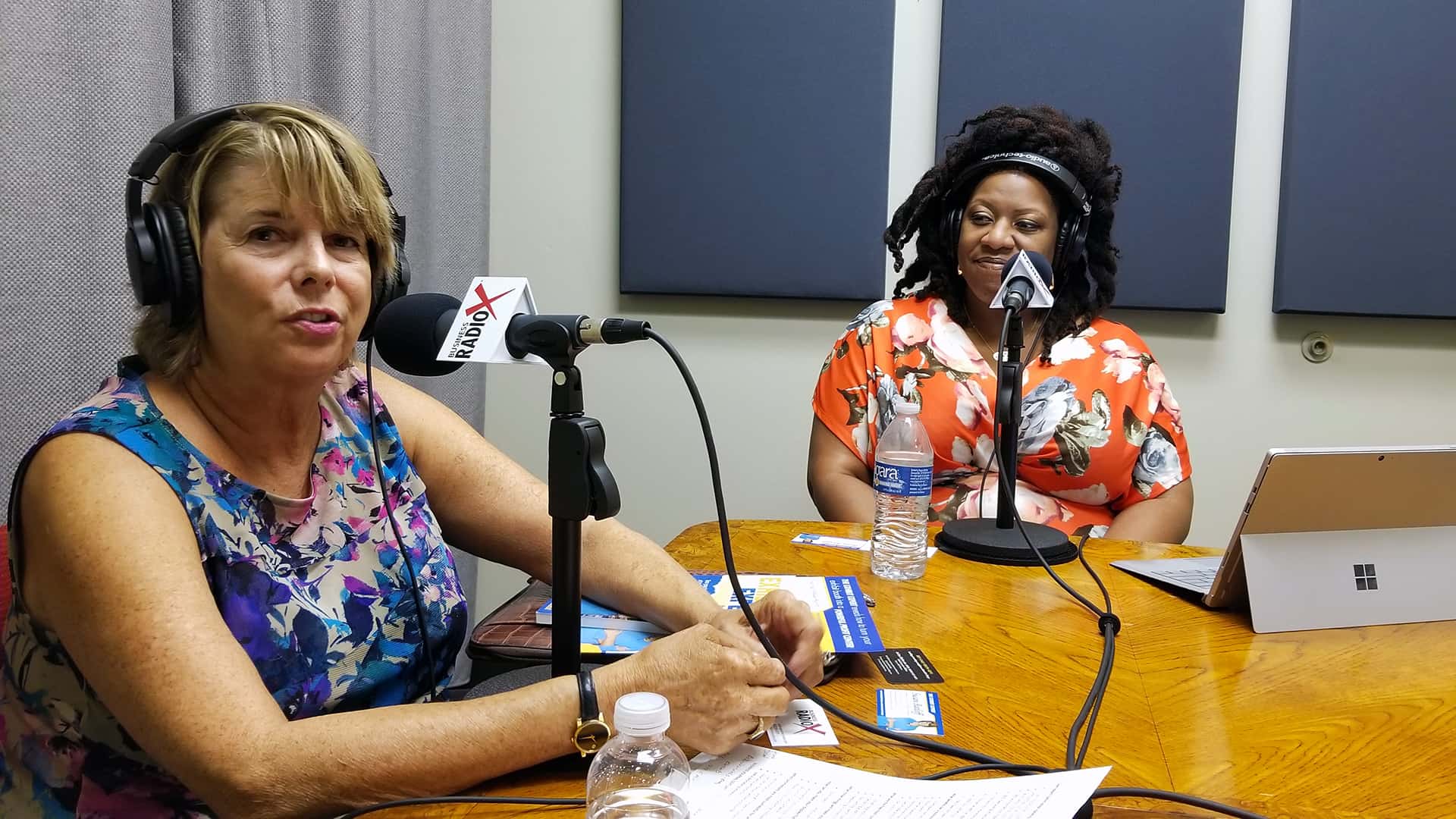
  • « Previous Page
  • 1
  • …
  • 51
  • 52
  • 53
  • 54
  • 55
  • …
  • 67
  • Next Page »

Business RadioX ® Network


Our Most Recent Episode

CONNECT WITH US

  • Email
  • Facebook
  • LinkedIn
  • Twitter
  • YouTube

Our Mission

We help local business leaders get the word out about the important work they’re doing to serve their market, their community, and their profession.

We support and celebrate business by sharing positive business stories that traditional media ignores. Some media leans left. Some media leans right. We lean business.

Sponsor a Show

Build Relationships and Grow Your Business. Click here for more details.

Partner With Us

Discover More Here

Terms and Conditions
Privacy Policy

Connect with us

Want to keep up with the latest in pro-business news across the network? Follow us on social media for the latest stories!
  • Email
  • Facebook
  • Google+
  • LinkedIn
  • Twitter
  • YouTube

Business RadioX® Headquarters
1000 Abernathy Rd. NE
Building 400, Suite L-10
Sandy Springs, GA 30328

© 2026 Business RadioX ® · Rainmaker Platform

BRXStudioCoversLA

Wait! Don’t Miss an Episode of LA Business Radio

BRXStudioCoversDENVER

Wait! Don’t Miss an Episode of Denver Business Radio

BRXStudioCoversPENSACOLA

Wait! Don’t Miss an Episode of Pensacola Business Radio

BRXStudioCoversBIRMINGHAM

Wait! Don’t Miss an Episode of Birmingham Business Radio

BRXStudioCoversTALLAHASSEE

Wait! Don’t Miss an Episode of Tallahassee Business Radio

BRXStudioCoversRALEIGH

Wait! Don’t Miss an Episode of Raleigh Business Radio

BRXStudioCoversRICHMONDNoWhite

Wait! Don’t Miss an Episode of Richmond Business Radio

BRXStudioCoversNASHVILLENoWhite

Wait! Don’t Miss an Episode of Nashville Business Radio

BRXStudioCoversDETROIT

Wait! Don’t Miss an Episode of Detroit Business Radio

BRXStudioCoversSTLOUIS

Wait! Don’t Miss an Episode of St. Louis Business Radio

BRXStudioCoversCOLUMBUS-small

Wait! Don’t Miss an Episode of Columbus Business Radio

Coachthecoach-08-08

Wait! Don’t Miss an Episode of Coach the Coach

BRXStudioCoversBAYAREA

Wait! Don’t Miss an Episode of Bay Area Business Radio

BRXStudioCoversCHICAGO

Wait! Don’t Miss an Episode of Chicago Business Radio

Wait! Don’t Miss an Episode of Atlanta Business Radio