Business RadioX ®

  • Home
  • Business RadioX ® Communities
    • Southeast
      • Alabama
        • Birmingham
      • Florida
        • Orlando
        • Pensacola
        • South Florida
        • Tampa
        • Tallahassee
      • Georgia
        • Atlanta
        • Cherokee
        • Forsyth
        • Greater Perimeter
        • Gwinnett
        • North Fulton
        • North Georgia
        • Northeast Georgia
        • Rome
        • Savannah
      • Louisiana
        • New Orleans
      • North Carolina
        • Charlotte
        • Raleigh
      • Tennessee
        • Chattanooga
        • Nashville
      • Virginia
        • Richmond
    • South Central
      • Arkansas
        • Northwest Arkansas
    • Midwest
      • Illinois
        • Chicago
      • Michigan
        • Detroit
      • Minnesota
        • Minneapolis St. Paul
      • Missouri
        • St. Louis
      • Ohio
        • Cleveland
        • Columbus
        • Dayton
    • Southwest
      • Arizona
        • Phoenix
        • Tucson
        • Valley
      • Texas
        • Austin
        • Dallas
        • Houston
    • West
      • California
        • Bay Area
        • LA
        • Pasadena
      • Colorado
        • Denver
      • Hawaii
        • Oahu
  • FAQs
  • About Us
    • Our Mission
    • Our Audience
    • Why It Works
    • What People Are Saying
    • BRX in the News
  • Resources
    • BRX Pro Tips
    • B2B Marketing: The 4Rs
    • High Velocity Selling Habits
    • Why Most B2B Media Strategies Fail
    • 9 Reasons To Sponsor A Business RadioX ® Show
  • Partner With Us
  • Veteran Business RadioX ®

Search Results for: regions business radio

Decision Vision Episode 55: Should I Change My Customer Profile? – An Interview with Andy Goldstrom, Midcourse Advisors

March 12, 2020 by John Ray

should I change my customer profile
Decision Vision
Decision Vision Episode 55: Should I Change My Customer Profile? – An Interview with Andy Goldstrom, Midcourse Advisors
Loading
00:00 /
RSS Feed
Share
Link
Embed

Download file

should I change my customer profile
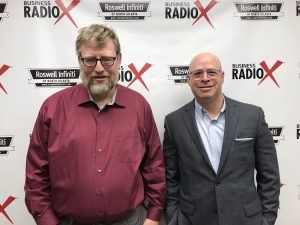
Mike Blake and Andy Goldstrom

Decision Vision Episode 55:  Should I Change My Customer Profile? – An Interview with Andy Goldstrom, Midcourse Advisors

Why is developing a customer profile so important? How should I develop a customer profile? Andy Goldstrom, Midcourse Advisors, answers these questions and much more when he joins host Mike Blake on this edition of “Decision Vision,” presented by Brady Ware & Company.

Andy Goldstrom, Midcourse Advisors
should I change my customer profile
Andy Goldstrom

As Managing Partner at Midcourse Advisors, Andy Goldstrom and his team grow companies profitably and do it fast. Andy is an expert with B2B companies and is a sought-after business partner and speaker.

Early in his career, Andy started and built a division of a real estate brokerage company that generated 30%+ margins and grew from 1 to over 500 employees. After that, he took over an existing national recycling company and grew the top line from $70M to $100M and profit from $10M to $17M in 3 years. Both businesses were both designated as Inc. 500 companies, the fastest growing privately help companies nationwide, and subsequently sold to Fortune 500 companies at high multiples. Most recently, he served as Global  Director at a major investment bank, where he grew service capabilities over in 70 countries while saving $12M annually.

In each case, Andy led sales teams that competed efficiently and effectively to win an extraordinary amount of business. In addition, he reduced cycle times and increased the frequency of incoming sustainable business, creating incremental value that was monetized when the companies were sold.

He started Midcourse Advisors as a way to give back to the B2B services community and now offers his knowledge and experience to organizations looking for ways to grow and improve.

For more information, go to the Midcourse Advisors website.

Michael Blake, Brady Ware & Company

Mike Blake, Host of “Decision Vision”

Michael Blake is Host of the “Decision Vision” podcast series and a Director of Brady Ware & Company. Mike specializes in the valuation of intellectual property-driven firms, such as software firms, aerospace firms and professional services firms, most frequently in the capacity as a transaction advisor, helping clients obtain great outcomes from complex transaction opportunities. He is also a specialist in the appraisal of intellectual properties as stand-alone assets, such as software, trade secrets, and patents.

Mike has been a full-time business appraiser for 13 years with public accounting firms, boutique business appraisal firms, and an owner of his own firm. Prior to that, he spent 8 years in venture capital and investment banking, including transactions in the U.S., Israel, Russia, Ukraine, and Belarus.

Brady Ware & Company

Brady Ware & Company is a regional full-service accounting and advisory firm which helps businesses and entrepreneurs make visions a reality. Brady Ware services clients nationally from its offices in Alpharetta, GA; Columbus and Dayton, OH; and Richmond, IN. The firm is growth minded, committed to the regions in which they operate, and most importantly, they make significant investments in their people and service offerings to meet the changing financial needs of those they are privileged to serve. The firm is dedicated to providing results that make a difference for its clients.

Decision Vision Podcast Series

should i change my customer profile“Decision Vision” is a podcast covering topics and issues facing small business owners and connecting them with solutions from leading experts. This series is presented by Brady Ware & Company. If you are a decision maker for a small business, we’d love to hear from you. Contact us at decisionvision@bradyware.com and make sure to listen to every Thursday to the “Decision Vision” podcast. Past episodes of “Decision Vision” can be found here. “Decision Vision” is produced and broadcast by the North Fulton studio of Business RadioX®.

Visit Brady Ware & Company on social media:

LinkedIn:  https://www.linkedin.com/company/brady-ware/

Facebook: https://www.facebook.com/bradywareCPAs/

Twitter: https://twitter.com/BradyWare

Instagram: https://www.instagram.com/bradywarecompany/

Show Transcript

Intro: [00:00:01] Welcome to Decision Vision, a podcast series focusing on critical business decisions brought to you by Brady Ware & Company. Brady Ware is a regional, full-service accounting and advisory firm that helps businesses and entrepreneurs make visions a reality.

Mike Blake: [00:00:20] Welcome to Decision Vision, a podcast giving you, the listener, clear vision to make great decisions. In each episode, we discuss the process of decision making on a different topic from the business owners’ or executives’ perspective. We aren’t necessarily telling you what to do, but we can put you in a position to make an informed decision on your own and understand when you might need help along the way.

Mike Blake: [00:00:39] My name is Mike Blake and I’m your host for today’s program. I’m a Director at Brady Ware & Company, a full-service accounting firm based in Dayton, Ohio, with offices in Dayton; Columbus, Ohio; Richmond, Indiana; and Alpharetta, Georgia, which is where we are recording today. Brady Ware is sponsoring this podcast? If you like this podcast, please subscribe on your favorite podcast aggregator and please consider leaving a review of the podcast as well.

Mike Blake: [00:01:04] So, today, we’re going to talk about whether you should change your customer profile. And I’m excited about this topic. I mentioned this topic for a number of reasons. Number one, as it happens, it’s very timely. I just came back from a strategy meeting at our global headquarters in Dayton, Ohio, where the valuation practice of Brady Ware got together and we decided, in effect, our strategy for the next five years.

Mike Blake: [00:01:36] And in the nine hours that we had that meeting, about eight of them talked about defining what our customer profile is going to be going forward. And I think that’s so critical because unless you figure out what your customer profile as all the other things that you want to talk about in terms of marketing and staffing, investment, and other strategy, none of those are going to be right unless you understand what your customer profile is going to be.

Mike Blake: [00:02:06] It’s that central, it’s that foundational to your business strategy. And therefore, you know, we decided that if that’s all we accomplish in that particular day, then that was going to be a win for us. And I’m not leading up to a big announcement or anything like that. But, you know, we will probably, in about four to six weeks, as we flesh out the strategy. But the strategy part is not time well-spent unless you’ve identified that customer.

Mike Blake: [00:02:39] The other neat part about going out to Dayton was I discovered something that I did not know because I do not pay attention to college basketball that much, now that Georgetown has somehow managed to be irrelevant in college basketball. But the Dayton Flyers, I don’t know if I ever realized it, Dayton Flyers are ranked number six or seven in the country. I have no idea. So, anyway, good for Dayton out there. And by the way, what a cool name, the Flyers.

Mike Blake: [00:03:04] Of course, with the Flyers because that’s where the Wright brothers originated, even though they did their flight in North Carolina. So, a shout out to the Dayton Flyers. We’ll be rooting for them when the tournament shows up. But, you know, the customer profile is so foundational. And, you know, when companies—every company, I don’t think there’s a company in the world that is satisfied with selling. Every company believes that it can sell better than it’s currently doing.

Mike Blake: [00:03:31] I think most companies look at revenue and sales and says, you know, look, when I wake up in the morning, that’s one of the things that I worry about. It’s one of things that I worry about going to bed the night before, too, is sales. And if you don’t have that customer profile right, everything else just doesn’t matter. And that requires, quite frankly, deep thought and requires some understanding of what that customer is going to be because you’re literally going to build everything around that.

Mike Blake: [00:04:01] And in spite of having a big powwow about this, I’m not the expert on that. But instead, we’ve brought in somebody who is an expert on this. And that’s my friend, Andy Goldstrom, who is managing partner of Midcourse Advisors. Midcourse Advisors are business strategists and growth experts for small and medium-sized service businesses. They help leaders focus on the right pursuits and execute effectively using proprietary tools and methodologies that enable them to scale their businesses and grow rapidly.

Mike Blake: [00:04:29] As managing partner of Midcourse Advisors, Andy and his team grow companies profitably and do it fast. Andy’s an expert with business-to-business companies and is a sought-after business partner and speaker. Early in his career, Andy started and built a division of a real estate brokerage company that generated over 30% margins and grew to over 500 employees from one. After that, he took over an existing national recycling company, grew the top line from $70 million to $100 million in revenue and profit from $10 to $17 million in three years.

Mike Blake: [00:05:02] Both businesses were designated as Inc. 500 companies, the fastest growing privately-held companies nationwide and subsequently sold to Fortune 500 companies at high multiples. Most recently, he served as global director at a major investment bank, where he grew service capabilities in over 70 countries while saving $12 million, annually. He started Midcourse Advisors as a way to give back to the business community and now offers his knowledge and experience to organizations looking for ways to grow and improve. Andy, thanks for coming on the program.

Andy Goldstrom: [00:05:33] Thanks so much for having me. And good to see you after we met several years back and have been in touch.

Mike Blake: [00:05:39] Yeah.

Andy Goldstrom: [00:05:39] I appreciate being on your show.

Mike Blake: [00:05:42] So, before we get started, have you just published a book or is a book about to come out?

Andy Goldstrom: [00:05:48] I have a book coming out. I’m just working on the right promotion.

Mike Blake: [00:05:53] Okay.

Andy Goldstrom: [00:05:53] I got all the content in place, but it’s got all the basics about how to grow your business lessons from an Inc. 500 person, an executive. And it has some things about customer profile in it that can be used, tools and methodologies and anecdotes and case studies and all the rest.

Mike Blake: [00:06:14] And when do you think that book will come out?

Andy Goldstrom: [00:06:16] Probably in the next 60 days.

Mike Blake: [00:06:18] Okay.

Andy Goldstrom: [00:06:18] And when we reference my website, you can see a link for it.

Mike Blake: [00:06:22] And do you know what is the title of the book? Do we know that yet?

Andy Goldstrom: [00:06:25] We’re trying to finalize that.

Mike Blake: [00:06:28] Okay.

Andy Goldstrom: [00:06:29] Yeah. Right now, it’s called the Ten Deadly Sins of Growing Your Business.

Mike Blake: [00:06:35] Oh, nice.

Andy Goldstrom: [00:06:36] Yeah. So, I’ve got 10 themes. The only thing I’m trying to struggle with and I’m getting feedback from experts is that if you Google that, you get a lot of other junk.

Mike Blake: [00:06:47] Okay. I guess that makes sense.

Andy Goldstrom: [00:06:49] Right? So, I just want it to be poignant and on point. Title is an important thing.

Mike Blake: [00:06:54] Okay.

Andy Goldstrom: [00:06:54] So-

Mike Blake: [00:06:55] Well, good luck with that.

Andy Goldstrom: [00:06:56] Thanks.

Mike Blake: [00:06:56] And make sure we know about when the book is launched, so we can publicize it.

Andy Goldstrom: [00:07:00] I will. Absolutely.

Mike Blake: [00:07:03] So, you mentioned in your book, in fact, you deliberately discuss or separately discuss customer profiles. So, let’s get the vocabulary right. What is a customer profile? Is it the same thing as what people call a customer avatar?

Andy Goldstrom: [00:07:16] Sure. The first thing I just want to do is step back. When you talk about customer profile and when you had your meetings in Dayton, you had gotten to a specific point, knowing that you were serving the customer in certain markets and you knew you were doing accounting work and valuation work and other work. So, there’s a bigger picture than just the customer profile to successfully grow a business, but the customer profile is foundational.

Andy Goldstrom: [00:07:40] So, you need to know your industry and your target market and your customer segment before you even get to your customer profile. But when you get to that point, it’s really a representation of your ideal customer and it’s defined. It’s something that allows you to target, given that you have limited resources. And the thing that happens is most companies don’t do a really good job and it inhibits them from reaching their goals, which is a credit to you and your company in terms of how much time you’re spending on the, trying to get right.

Mike Blake: [00:08:16] Well, you know, we hope we got it right. Now, we got to execute.

Andy Goldstrom: [00:08:19] Yeah.

Mike Blake: [00:08:19] So, it all looks great on the whiteboard. We’ll see how it turns out in practice, but-

Andy Goldstrom: [00:08:23] And you mentioned the avatar.

Mike Blake: [00:08:25] Yeah.

Andy Goldstrom: [00:08:26] So, an Avatar is kind of a physical representation of it. I teach at Georgia State in addition to doing my consulting and we call it a persona. And it’s a physical representation with a name to it, so you can kind of feel it and look at it. So, for instance, as an example, just if someone’s a really avid tennis player and you know that they’re going to buy premium products because they love tennis so much and they want to differentiate their game and have every advantage possible, that avatar might be Peter, the professional tennis player or something like that. So, you actually can have a physical look as an avatar in terms of what that target customer could be or what that customer profile would look like. And then, obviously, there are a lot of different characteristics associated with that person.

Mike Blake: [00:09:17] It’s interesting. I never thought of it from a physical manifestation perspective, but that makes sense. And I know you specialize in service businesses. Do you go through that process with service businesses, too? Can you do that with professional services in terms of building a customer avatar like that?

Andy Goldstrom: [00:09:33] Absolutely. So, I’ll give you an example. I worked with a company that was a generalist type of company and they weren’t growing as fast as they want. They happened to be in the real estate services space, which is one of the things I focus on. I work with companies outside of that, but I’m focused on my customer profile. And they had expertise and background and hung out in technology areas, like where you sometimes spend your time, Michael.

Andy Goldstrom: [00:10:05] And so, we said you have to create an avatar or a customer profile based upon what that technology company leader looks like and what he looks for and what he cares about. And so, we developed a profile on that and it was Tom, the technologist. And literally, it was an opportunity to understand how they need flexibility in what they’re doing, how they care about vision, how they want to be able to grow their business quickly and how they care about all the technological aspects in the wiz bank things. And so, that kind of profile and being able to address their needs specifically knowing what they’re like compared to a corporate executive is very important.

Mike Blake: [00:10:55] So, you obviously agree, we think a customer profile is important or critical, but can a business theoretically be successful without one? Is that what we would think of as a mass market? For example, does Procter and Gamble have a customer avatar for Tide? Do they make Tide? I think they do.

Andy Goldstrom: [00:11:17] I think that’s right.

Mike Blake: [00:11:18] So, for some of us, that’s truly mass market. You know, do they have a customer profile, do you think or do they just make a product they think is really good, position it and distribute it in a certain way and sort of off they go? What do you think that looks like?

Andy Goldstrom: [00:11:33] No, they definitely have an avatar and it might be broader. But when they first started making Tide, it wasn’t as mass market or broad as it is. So, when you get a certain appeal, you can expand it. The example I use is McDonald’s. McDonald’s actually has brand ambassadors to focus on specific customer profiles for their specific type of food that they sell. So, they actually have somebody who just focuses on salads, you know, and people who just focus on burgers and literally, the customer segment that would be more in line with that.

Mike Blake: [00:12:15] You know, that’s interesting. I’d like to drill down on that for a second because I would not have guessed that, but I guess that perhaps makes sense because when McDonald’s—I find McDonald’s fascinating. I worked there as a kid. I used to think the way they produce things is just so cool.

Andy Goldstrom: [00:12:30] The whole story about, you know, the mass customization and the way that-

Mike Blake: [00:12:35] Yeah, it really is fascinating. But anyway, when they first introduced salads, that did not go well for them initially, right? Because it’s very confusing to the market, right? Because I think they didn’t have a customer avatar for that. And it sounds like what you think they discovered is maybe they have multiple customer profiles.

Andy Goldstrom: [00:12:58] They do. But they started from a foundational element and a base. And if you’re a new company, you really can’t afford to spread yourself too thin.

Mike Blake: [00:13:06] Right.

Andy Goldstrom: [00:13:06] And if you’re an existing company that’s starting something new, it’s just as important.

Mike Blake: [00:13:12] So, what are the pieces or components of a customer profile?

Andy Goldstrom: [00:13:18] Sure. There are several pieces. The key thing, what’s really important is it needs to be data-driven. So, it’s not something where you talk to your friend or you see something on TV or you just have something in your gut that tells you this is what my customer could look like. You really have to do the research to understand it, to inform your decisions. And, you know, Michael, when you post on LinkedIn, you have all these data charts and data, and I think you do it because it’s interesting, but you also do it because it can inform—you know, it’s sparks curiosity, but also informs how people make decisions.

Mike Blake: [00:14:01] And it also is indicative of my ideal customer profile.

Andy Goldstrom: [00:14:04] That’s right.

Mike Blake: [00:14:05] Right? If you like to guess, you’ll need to pay me to guess.

Andy Goldstrom: [00:14:09] Right.

Mike Blake: [00:14:09] It’s like when, you know, I tell my son, “Go tell your mother something”, right? And then, he just screams at the bottom of the staircase, like I could have done that. I wanted to go up the stairs and do that. The same thing, you don’t need to pay me to guess, right? But I’m trying to build a brand that suggests that we’re data-driven.

Andy Goldstrom: [00:14:27] That’s right.

Mike Blake: [00:14:27] I’m glad you picked up on that. I might be doing something right.

Andy Goldstrom: [00:14:30] Right. Absolutely. So, let me answer your question. Common elements are demographics. So, if it’s a B2C, it tends to be income, gender, marital status, things like that. For B2B, it’s the size of the opportunity, the industry and the location. You have to focus on customer needs. And it’s interesting. Customer needs are both perceived in latent needs. And it’s really interesting. A latent need is so important in terms of getting somebody to buy. And a perceived need is something that a customer knows, a latent need, they might not know or might not be out in front, but it’s something that drives their purchasing behavior.

Andy Goldstrom: [00:15:11] And the example I’d like to give best is just a phone, like the iPhone, you know, the perceived need is it’s a communication tool, right? It’s a way I can look up things on the internet, call my friends, text whatever. But it’s actually a security blanket for people. That’s their latent need. They feel a sense of connection and they need it. And when they don’t have it, it’s a problem. So, when people buy, you have to understand both the perceived and the latent needs when you’re looking at your customer profile.

Mike Blake: [00:15:43] Steve Jobs is so good at that, by the way. I mean, he was the Mozart of understanding that latent need, wasn’t he?

Andy Goldstrom: [00:15:50] He created a market, which is hard to do. He created several markets.

Mike Blake: [00:15:54] More than once.

Andy Goldstrom: [00:15:54] Yes, he created several markets. And so, yeah, he was the master at that for sure. Other elements are attitude. So, it’s the values and beliefs of the customer profile or the customer. Behaviors, which are use cases, meaning how they will consume the product or service and then, their purchase preferences, like what information? Do they need to understand what they’re buying? What channels are they going to find in order to be able to purchase it via online or store or in-office or somewhere else and how frequently they may purchase. So, if you understand all of those things in a data-driven way, you can actually put on a whiteboard, you know, with the customer in the center, all the different elements that influence their buying behavior and understand what your customer looks like.

Mike Blake: [00:16:48] Now, when you say data, that can scare some people. And it doesn’t even have that much to do about understanding how to do basic math, but data can also be very expensive, right? Some of the things you’re talking about on the surface sound like you’ve got to hire a marketing research firm to do surveys and focus groups and all those things can be very expensive. Is that true? Do you have to go that way or are there ways you can get data that is at least sufficient, where you’re not making multi-thousand-dollar investments in specialized studies?

Andy Goldstrom: [00:17:26] Sure. It depends on the scale and the size of the product or service that’s being implemented. There are a lot of resources that are available that don’t cost any money that are just on the net. PricewaterhouseCoopers has information. You look for companies that have traded and see what the profile of that competition looks like. There’s a lot of opportunity to find things on the net. At Georgia State where I teach, they’ve got a myriad of resources. You can find it through the SBA. There are a lot of different ways to do it.

Andy Goldstrom: [00:18:03] There certainly are paid resources where you can hire, you know, a professional firm that collects that information and does that all day and night and is an expert in that. And if you have the resources to do it, that might not be a bad thing. But ultimately, the data is not just looking up facts and figures. It’s actually engaging with prospective customers to get feedback on what their beliefs are and why they would buy something and what their feedback is. And there’s a term called ethnography. You ever heard of that term?

Mike Blake: [00:18:39] I have.

Andy Goldstrom: [00:18:40] There you go. Well, ethnography is direct observation and interviewing of potential customers, suppliers and partners, right? And if you are trying to get data or feedback from potential customers and you’re doing it on the phone or you’re doing it via email, you’re not going to get—the quality of the feedback you’re getting and the context of the feedback you’re getting isn’t going to be as good.

Andy Goldstrom: [00:19:09] And I can assure you that whether it is Procter and Gamble or McDonald’s or, you know, some of the other small to medium companies that I typically consult with or the students in my class, they get in front of their ideal client to be able to actually understand that feedback. And they draw on some other sources of information in order to understand the income brackets and things of that nature in order to do it. And they typically say you need 10 to 12 quality interviews or discovery sessions in order to develop a pattern or have enough of a sense. And certainly, you know, some companies go well beyond that.

Mike Blake: [00:19:55] Interesting. So, what you’re talking about resonates with a couple of things. One, Atlanta has an interesting technology market. You know, we’re not Silicon Valley, but we’re very deep in a few areas, right? And the venture market, in my view, has improved tremendously over the last 10 years or so. But one of the practices that is very much involved here, I think, more so than other places is something called customer discovery, where investors want entrepreneurs to have gone out and talked to lots of potential customers. In fact, in the Georgia Tech and Emory entrepreneurship programs, you cannot graduate without having actually gone out and talked to potential customers, even for a hypothetical venture. They make you develop that skill.

Andy Goldstrom: [00:20:49] I do that with my students, too.

Mike Blake: [00:20:50] You do, too.

Andy Goldstrom: [00:20:51] Absolutely.

Mike Blake: [00:20:51] Okay. And what a valuable skill and valuable asset that is. And it’s interesting that that intersects with a recent experience of mine. In preparation for the strategy meeting that I described, I read twice Michael Porter’s book on competitive strategy. And Appendix B, I think, of that book is entirely dedicated to the practice of interviewing customers and developing customer profiles, which I did not expect. I didn’t think it would be that granular.

Andy Goldstrom: [00:21:24] It is. And the way you ask the questions is really important. As an example, you want them to be open ended and not be yes or no answers.

Mike Blake: [00:21:34] And I think it might have actually been the most useful part of the book I read. I’m so glad because normally, I’m so happy I got to the end of a book that I skipped the appendices. For whatever reason, I didn’t this time. And I’m really glad because that is so chock-full—because conducting a customer interview is not walk into an office and just start asking questions.

Andy Goldstrom: [00:21:58] Appendices are where you get most of your charts, right, Michael?

Mike Blake: [00:22:02] They are.

Andy Goldstrom: [00:22:03] There you go.

Mike Blake: [00:22:03] They are, yeah. Especially in academic papers, for sure. So, what are some signs that maybe you have a customer profile that’s not working?

Andy Goldstrom: [00:22:21] The signs that it’s not working is you’re not getting traction.

Mike Blake: [00:22:25] Okay.

Andy Goldstrom: [00:22:25] Right? So, if you have initial traction with innovative customers who can validate, you can solve their problem, then you know you probably have the right customer profile. And a lot of people don’t because they’re not data-driven or they’re too broad in their customer profile that they’re focused on. And so, you know, results speak. And there’s actually something called the law of diffusion of innovation. Long, interesting, impressive set of words that I believe in, but I haven’t put together, that kind of tells you where your tipping point is relating to having that kind of traction. And it’s why people accept new ideas.

Mike Blake: [00:23:09] I love that. So, like calculus in it.

Andy Goldstrom: [00:23:12] It does. It does.

Mike Blake: [00:23:12] When you work it through. So, you’re talking dirty to me now. But I think where I want to get to is I think executives and entrepreneurs sometimes fall into the trap of thinking that they’re failing to get traction not because they have the wrong customer profile, but because they are not executing approaching that customer profile well or correctly or maybe they don’t have enough resources, right?

Mike Blake: [00:23:42] So, theoretically, maybe you do have exactly the right customer profile, but the thought process goes, “You know, we know who our customer is, but we just don’t have the right salespeople. The salespeople aren’t doing their job. Marketing is not doing their job. We don’t have enough money to get in front of those customers”, et cetera. You’ve heard all these things before, right? And this is a hard question, but that’s what we’re about on this podcast. The hard question is how do you know if your failure to gain traction is in fact the result of poor execution versus having the poor, the incorrect foundational customer profile?

Andy Goldstrom: [00:24:21] You’re right. It is an excellent and complex question. And it could be something else, right? Your sales team might not be executing well. Even though you have the right customer profile or avatar, you might not be executing once you get the sale, which impacts your reputation and ability to sell. So, there are a lot of different aspects to it. And all you have to do is be able to measure with certain KPIs about each stage of that process to get the appropriate feedback.

Andy Goldstrom: [00:24:59] And certainly, if you’re not getting any inbound interest, if you’re not getting good feedback on what your product or service could be, if there’s not a problem that you’re solving, you’re not going to pass go. You’re not even going to get started. And then, there’s the question that you have to measure, is, okay, a sales cycle is a multi-stage process, right? You have to have marketing and good salespeople and a good value proposition and good references. And they all have to work together. But if you don’t have the right target, none of it matters.

Mike Blake: [00:25:30] And the main part of it goes back to what we just talked about a few minutes ago, which is maybe you just ask the question, “Why did I think I had the right customer profile? Did I do the work that you just talked about in terms of actually going out and talking to 10, 15 customers? And did I do so in kind of a rigorous way?” You revisit how you got to the customer profile.

Andy Goldstrom: [00:25:55] The first Inc. 500 company I was with, I joined in 1995 and we grew really quickly in a period of time and became an Inc. 500 company in 2001. And we didn’t have all these tools, a business model, canvasses and customer profiles and avatars and things like that. We just had good common sense to be able to see a need in the marketplace that we could solve, there were changes going on in the marketplace. Getting some customers who were lead innovative end users who were willing to give us feedback and also pay us for the service even though it wasn’t fully fleshed out yet.

Andy Goldstrom: [00:26:46] And so, in essence, we were doing those things in a less structured way. And it provided validation along the way. Now, there are amazing tools and methodologies that are used in corporations by consultants who understand this stuff. It’s taught in schools. And if you use it right and do the right due diligence, you’re reducing your risk. And being an entrepreneur or being somebody who’s an intrapreneur in a bigger company, who’s trying to target a new business, what you’re trying to do is you’re trying to peel the onion back and reduce the risk in each stage.

Andy Goldstrom: [00:27:26] And so, if your customer profile is right and you were talking about discovery that investors in Atlanta are looking for, if you’ve done that discovery correctly, you’re reducing the risk and you go on to the next stage in terms of—and if you’re looking for investment along the way, like beyond friends and family to angels and series A and series B, you have to have reached certain milestones in terms of revenue, customers, discovery that you’ve done in order to get to those platforms.

Andy Goldstrom: [00:27:58] And then, the best companies are ones that actually start with a narrow solution to a problem via a product or service and then, they build on it modularly. So, an example is like Salesforce. Salesforce started out with like a free type of app or free system, where you could manage certain aspects of your CRM, but then, they have higher level premium services that you can choose based upon the number of users or the sophistication that you want. But it’s built on the same chassis, just like an Infiniti is, you know, built on a Nissan chassis.

Mike Blake: [00:28:42] Now, let’s move up from the startup into maybe a more mature company. At some point, presumably somehow, whether they do it analytically or reluctant with, they had a customer profile match and a successful identification, can a customer profile change? Is it possible that, you know, once a company reaches a more mature stage, they see sales growth drop off or maybe even retrench? Is it something that executives need to look out for, as maybe your customer profile can change over time?

Andy Goldstrom: [00:29:18] It can almost change overnight. So, you really have to stay with the times. And the reason things change overnight is innovation, communication channels, time and social systems have all been compressed. And the communication channels have been compressed because of the internet. The social systems have been compressed because of social media. And time has been compressed because of technology. So, what happens is trends change and preferences change and you need to keep up with that. Some of the big trends are relating to demographics, millennials and baby boomers on both sides of the spectrum in terms of their needs and in the size of that demographic.

Andy Goldstrom: [00:30:08] Technology and regulation are all changing. So, an example of a trend that, you know, could change very quickly or has changed is people weren’t as concerned about their health. You know, they cared about their health, but they weren’t as concerned. And, you know, there’s a big push and it’s not so new anymore. But all of a sudden, things change when people really cared about organic and pure products and, you know, there are a lot of vegetarians and vegans. And I think, you know, Amazon purchased Whole Foods for a variety of reasons, including distribution. But one of the reasons was to reach that audience, which is growing.

Mike Blake: [00:30:49] You know, one of those areas where I’m seeing it, we’re recording on Valentine’s Day today, although this will be published probably closer to St. Patrick’s Day.

Andy Goldstrom: [00:30:57] Happy Valentine’s.

Mike Blake: [00:30:58] Happy Valentine’s Day and happy St. Patrick’s Day coming up and whatever else is coming up. But you know, one of the things I sort of had to do in order to purchase for my wife is she’s big into the fair-trade chocolate now, which is harder to get, right? Organic chocolates, not hard to get now. But then, you got to make sure that it’s fair trade, which is an up and coming trend.

Andy Goldstrom: [00:31:23] Sure.

Mike Blake: [00:31:24] I’m not sure that’s overnight, but these customer profile things, I think, change the way a lot of things do. The change is very subtle for a long period of time. And then, it seems to sort of change overnight. Organic food was definitely like that. You know, this meat alternative, Beyond Meat and so forth, I think, looks like that. And fair trade may be the next thing which will delight me because I spent more time looking for fair trade chocolate than I think the whole of my Christmas shopping this year. So, it can’t happen fast enough.

Andy Goldstrom: [00:31:56] Did you find it?

Mike Blake: [00:31:57] I did eventually. Yes.

Andy Goldstrom: [00:31:58] Okay.

Mike Blake: [00:31:58] I did. And in a nick of time because my wife is actually on—she and my children left on vacation today. So, I had to come through it last night and I did. It was a buzzer beater.

Andy Goldstrom: [00:32:08] Good for you.

Mike Blake: [00:32:11] We touched on this a little bit, but I want to come back to it because I think it’s important to hit. Companies can evolve into multiple customer profiles, too, right? It may not be that your customer profile is wrong, but you may need to add to it, correct?

Andy Goldstrom: [00:32:26] You do, but there’s a method that you need to evolve in order to do that.

Mike Blake: [00:32:33] Okay.

Andy Goldstrom: [00:32:34] And again, whether you’re in a startup or whether you’re an established firm, you don’t just all of a sudden cater to try to cater to everybody. And so, what you usually try and do and what we teach and what I work on with my clients is getting a beachhead strategy. So, it’s what’s a use case for a particular customer that you can focus on in that first year? Use the law of the diffusion of innovation, where you can actually get some market share and prove up and get some cash in the door.

Andy Goldstrom: [00:33:10] And then, you can grow from there to other use cases to other types of customers with other different profiles. And that could work. In the chocolate case, for instance, there are some people who eat chocolate because it’s a snack. There are some people who eat it because it’s healthy for them. They have these, you know, health bars now Clif Bars and other things. And some people want to give it as a gift, right? And then, there are different customer types along those lines depending upon their age bracket.

Andy Goldstrom: [00:33:42] So, you can’t be everything to everybody out of the gate, but if you focus on one of those uses and one of those age brackets to get started, to get traction, then you can leverage and go from there. And that’s the best way to do it. There’s a client I have in town that is a technology company that does app development and they do training. So, they’ll train people how to be app developers or to have the newest, latest and greatest to do it. And they also develop apps. They were trying to go out to both customers and the message got mixed and diluted.

Andy Goldstrom: [00:34:24] And so, they didn’t know, their customer base didn’t know what they really were and this company itself didn’t know where to really put its resources into because they thought that the growth area was the one that was the low-margin business, which isn’t necessarily a good play. But they thought that that was where they wanted to put their emphasis and they really had to pick and choose one. And when they did, which was, “We’re an app developer”, their business took off.

Mike Blake: [00:34:55] Now, when a customer profile changes, it can be an existential threat to the company if it comes as a surprise to you and you don’t act upon it, right? I mean, you know, Microsoft was putting a lot of trouble because, you know, Steve Ballmer just blew it on mobile. And it caused them a lot of problems, I would argue Major League Baseball has some issues because their customer profile is primarily White and older. And that’s not the way the demographics of the country are currently going. That’s something they’ve got to figure out. Is customer profile so important that if it changes on you, do you agree that it actually could be a company killer?

Andy Goldstrom: [00:35:43] No doubt.

Mike Blake: [00:35:44] And if so, once you make that discovery, let’s say you’re kind of late to the game, say, “Crap. My customers just flat out changed. They don’t want a beef anymore. They want to eat something that’s not beef”, right? But all I do is I raise cattle, right? How do you go about kind of a crash course, if you will, to basically kind of save the company if you’re late to the game and you make that realization or by that point, is it already too late?

Andy Goldstrom: [00:36:20] The answer is it depends.

Mike Blake: [00:36:22] Okay. Yeah.

Andy Goldstrom: [00:36:22] Right?

Mike Blake: [00:36:22] I figured.

Andy Goldstrom: [00:36:22] So, you’re talking about baseball. I’m a big baseball fan. Grew up as a stats guy and loved baseball. And you saw what happened here in Atlanta. Atlanta saw that the demographics were changing and they actually moved their stadium to where the demographics were more applicable to them.

Mike Blake: [00:36:39] Yeah.

Andy Goldstrom: [00:36:39] Now, not everybody can pick up and change like that. That was an expensive proposition for them, but it seems to have paid off. But for other businesses, you want to be in the growth area, not the mature area of a business. And so, if you’re trying to make a pivot, you can certainly make that pivot, but you don’t want to change your business. You want to find customers that are a better fit for what you have. And so, if it’s a new business, hopefully, you can do it right the first time and adjust along the way.

Andy Goldstrom: [00:37:16] But if it’s an existing business, find new customers that are a better or closer fit. And the reason, primarily, is you’ve got all this investment and knowledge in your existing business, don’t try to be something that you’re not just because you’re trying to chase something, because you’re not going to have the knowledge or the relationships or the understanding to be able to actually solve that problem. So, find a problem based upon where you are and what you have and you can make subtle adjustments to it, but don’t try to be something that you’re not all of a sudden.

Mike Blake: [00:37:48] So, interesting. What I take away from that is one, option for a company that finds that their customer profile has shifted and maybe their business can’t necessarily shift with it as easily. Let’s take the beef example. All right. Maybe that means you get out of mass-market beef, but then, you switch to a niche market of organic or Kobe steaks or something that is lower volume, but higher margin, something like that as, you know, a ham-handed example.

Andy Goldstrom: [00:38:20] Sure. You know, if you’re Burger King, which came out with, I guess, the Impossible Burger first and was the one that kind of made the name, their distribution channels and the way that they serve their customer didn’t change. So, they had a lot of things in place. All they had to do was get the raw product to be able to serve it. Most other customers don’t, you know, have a bigger change than that.

Mike Blake: [00:38:46] I’m going to be really interested to see how Burger King does with that, because I actually like an Impossible Burger, but I’m not sure what the use case is because if you bother to look at the nutritional information, it’s for the most part unhealthy for you in a different way than conventional beef.

Andy Goldstrom: [00:39:06] It’s still just caloric, is it?

Mike Blake: [00:39:08] It is just as caloric. It is a lot less cholesterol, but it is massively higher in sodium, right? So, it’s a different kind of-

Andy Goldstrom: [00:39:17] So, we talked about latent needs.

Mike Blake: [00:39:19] Yeah.

Andy Goldstrom: [00:39:22] People who care about animals and don’t want—you know, some people are vegetarians because it’s for their health, but some of it don’t want animals to be killed.

Mike Blake: [00:39:31] And also environmental, right? We’re now hearing that-

Andy Goldstrom: [00:39:33] So, it’s an environmental thing so that’s serving a latent need that they’re trying to cater to as opposed to just people who just want to eat supposedly healthier.

Mike Blake: [00:39:42] Right. But I don’t see that that in their commercials yet, right? Maybe that’s their next phase. Right now, it’s, “Hey, this is just as good as any other Whopper, so you might as well have one.” But I don’t see the—I guess they’re just saying, “Well, if you’re just inclined to eat vegetarian, anyway, here it is.”

Andy Goldstrom: [00:40:02] Businesses don’t typically promote latent needs, but they need to understand them in order to capture the business.

Mike Blake: [00:40:11] Interesting. So, I’m being blatantly unfair, by the way. This is off-the-cuff questions for Andy. I’m asking to analyze a strategy of a multinational corporation real time. So-

Andy Goldstrom: [00:40:23] And I haven’t had an Impossible Burger yet, but I’ve heard it’s good.

Mike Blake: [00:40:28] Now, I’m getting hungry. So, how long do you think it takes to develop or maybe redevelop a customer profile?

Andy Goldstrom: [00:40:39] Depends on the size.

Mike Blake: [00:40:40] Does it have to take years?

Andy Goldstrom: [00:40:41] No, not if it’s done right.

Mike Blake: [00:40:44] Okay.

Andy Goldstrom: [00:40:44] So, you know, in my classroom, we’ve got people, young students, some of them are as old as 27, 28 because they’ve worked full time and they’re going back to school or, you know—but some of them are 18, 19, 20 years old who actually go through what we’re doing and are actually able to launch a business that I stay in touch with them. And they’ve actually launched fruitful businesses. One is launching a supplement product for gamers.

Mike Blake: [00:41:21] Okay.

Andy Goldstrom: [00:41:21] That’s specific to gamers. There’s another one that has an app that actually connects people to hold them accountable at the student level, where when it comes to health or getting somebody who can study with you or go to the gym. And they went through a process over several weeks as opposed to months and years to actually validate that that used the right tools or methodologies and did that.

Andy Goldstrom: [00:41:46] And when I work with my clients, it’s the same kind of thing. It doesn’t require push—you know, you don’t have to be Sisyphus. We’re not trying to push the boulder up the hill. You really can do it relatively quickly. And obviously, if you’re in a larger corporation, there are more stakeholders to please. That doesn’t mean the work needs to take longer. It just means that there are more stakeholders who you need buy-in from.

Mike Blake: [00:42:12] And it’s worth emphasizing. You have students that are doing this.

Andy Goldstrom: [00:42:15] I have students that are doing this and doing it well. And some of them, it’s just a practical exercise in class that instead of it just being a textbook kind of thing, which makes it more real, but some of them are actually pursuing these business opportunities and have been successful at it, believe it or not. And it’s exciting. And then, what I do with my clients, you know, it’s just as exciting because frankly, there’s more at stake.

Mike Blake: [00:42:46] Yeah.

Andy Goldstrom: [00:42:46] You know, they have families to feed. They have house, you know, mortgages. And they don’t have unlimited resources in terms of money or time or cash. And so, making the right choices and the right decisions along the customer profile route or how they manage their money or how they operate as they grow is really important. And I take a lot of pride in how I work with customers to do that.

Mike Blake: [00:43:11] And we are running out of time, so we’re going to have to wrap it up. This is a topic that, you know, probably deserves a lot more treatment than we’re able to give it in the span of one episode. But if people want to contact you to learn more about this topic, can they do so? And if so, what’s the best way to do it?

Andy Goldstrom: [00:43:28] Sure. Well, Michael, thanks for your time. I hope, you know, we covered enough, that people that were listening actually understand how important it is. And maybe it piques their interest or reinforces what they’re doing correctly or makes them think a little bit harder about what they need to do in order to really hone in on, you know, who they’re approaching and how they’re marketing their services or products.

Andy Goldstrom: [00:43:52] I can be reached at midcourseadvisors.com. My company is named Midcourse because it’s kind of the mid-course of a journey of a company, where adjustments need to be made. And my email address is agoldstrom@midcourseadvisors.com. And my phone number 770-633-2260. And you can find me on LinkedIn. And be happy to talk to anybody, to share, to learn about their perspectives and share any background I have.

Mike Blake: [00:44:19] Well, that’s going to wrap it up for today’s program. I’d like to thank Andy Goldstrom so much for joining us and sharing his expertise with us. We’ll be exploring a new topic each week. So, please tune in so that when you’re faced with your next executive decision, you have clear vision when making it. If you enjoy these podcasts, please consider leaving a review with your favorite podcast aggregator. It helps people find us so that we can help them. Once again, this is Mike Blake. Our sponsor is Brady Ware & Company. And this has been the Decision Vision podcast.

Tagged With: customer avatar, customer profile, Decision Vision, Decision Vision podcast, Michael Blake, midcourse advisors, Mike Blake

Decision Vision Episode 54: Should I Fire My Attorney? – An Interview with Jeff Berman, Berman Fink Van Horn, PC

March 5, 2020 by John Ray

should I fire my attorney?
Decision Vision
Decision Vision Episode 54: Should I Fire My Attorney? – An Interview with Jeff Berman, Berman Fink Van Horn, PC
Loading
00:00 /
RSS Feed
Share
Link
Embed

Download file

should I fire my attorney?
Mike Blake and Jeff Berman

Decision Vision Episode 54: Should I Fire My Attorney? – An Interview with Jeff Berman, Berman Fink Van Horn, PC

“Should I fire my attorney?” is a question a lot of business clients consider, particularly in emotionally-charged situations such as litigation. “Decision Vision” host Mike Blake explores different aspects of this question with veteran business attorney Jeff Berman of Berman Fink Van Horn PC. “Decision Vision” is presented by Brady Ware & Company.

Jeff Berman, Berman Fink Van Horn, PC

should I fire my attorney?
Jeff Berman

Berman Fink Van Horn is a full-service law firm that provides legal services to a diverse group of clients in the areas of business and real estate litigation; non-compete and trade secrets; mergers, acquisitions and corporate finance; labor and employment; banking & creditors’ rights; commercial real estate; and general legal services for mid-market companies, family-owned businesses and entrepreneurial/start-up endeavors. Their attorneys take great pride in delivering results-driven, high quality experience based on knowledge, expertise and a personal touch unique to Berman Fink Van Horn.

A Shareholder at Berman Fink Van Horn, Jeff Berman leads the firm’s corporate and business practice. In addition to day-to-day business matters, this practice includes mergers and acquisitions for middle market companies, employment agreements, succession and estate planning for business owners, commercial real estate and contracts and agreements of all kinds. In the community, Jeff serves on the Jewish HomeLife Board of Directors and as Chair of the Business and Strategic Planning Committee. He is a Georgia native, having grown up in Augusta. Jeff graduated from the University of North Carolina at Chapel Hill and Emory University School of Law.

For more information, go to the firm’s website.

Michael Blake, Brady Ware & Company

Mike Blake, Host of “Decision Vision”

Michael Blake is Host of the “Decision Vision” podcast series and a Director of Brady Ware & Company. Mike specializes in the valuation of intellectual property-driven firms, such as software firms, aerospace firms and professional services firms, most frequently in the capacity as a transaction advisor, helping clients obtain great outcomes from complex transaction opportunities. He is also a specialist in the appraisal of intellectual properties as stand-alone assets, such as software, trade secrets, and patents.

Mike has been a full-time business appraiser for 13 years with public accounting firms, boutique business appraisal firms, and an owner of his own firm. Prior to that, he spent 8 years in venture capital and investment banking, including transactions in the U.S., Israel, Russia, Ukraine, and Belarus.

Brady Ware & Company

Brady Ware & Company is a regional full-service accounting and advisory firm which helps businesses and entrepreneurs make visions a reality. Brady Ware services clients nationally from its offices in Alpharetta, GA; Columbus and Dayton, OH; and Richmond, IN. The firm is growth minded, committed to the regions in which they operate, and most importantly, they make significant investments in their people and service offerings to meet the changing financial needs of those they are privileged to serve. The firm is dedicated to providing results that make a difference for its clients.

Decision Vision Podcast Series

“Decision Vision” is a podcast covering topics and issues facing small business owners and connecting them with solutions from leading experts. This series is presented by Brady Ware & Company. If you are a decision maker for a small business, we’d love to hear from you. Contact us at decisionvision@bradyware.com and make sure to listen to every Thursday to the “Decision Vision” podcast. Past episodes of “Decision Vision” can be found here. “Decision Vision” is produced and broadcast by the North Fulton studio of Business RadioX®.

Visit Brady Ware & Company on social media:

LinkedIn:  https://www.linkedin.com/company/brady-ware/

Facebook: https://www.facebook.com/bradywareCPAs/

Twitter: https://twitter.com/BradyWare

Instagram: https://www.instagram.com/bradywarecompany/

Show Transcript

Intro: [00:00:02] Welcome to Decision Vision, a podcast series focusing on critical business decisions, brought to you by Brady Ware & Company. Brady Ware is a regional, full-service accounting and advisory firm that helps businesses and entrepreneurs make visions a reality.

Mike Blake: [00:00:20] Welcome to Decision Vision, a podcast giving you, the listener, clear vision to make great decisions. In each episode, we discuss the process of decision making on a different topic from the business owner’s or executive’s perspective. We aren’t necessarily telling you what to do, but we can put you in a position to make an informed decision on your own and understand when you might need help along the way.

Mike Blake: [00:00:40] My name is Mike Blake, and I’m your host for today’s program. I’m a Director at Brady Ware & Company, a full-service accounting firm based in Dayton, Ohio, with offices in Dayton; Columbus, Ohio; Richmond, Indiana; and Alpharetta, Georgia, which is where we are recording today. Brady Ware is sponsoring this podcast. If you like this podcast, please subscribe on your favorite podcast aggregator and please consider leaving a review of the podcast as well.

Mike Blake: [00:01:04] So, today, we’re going to talk a little bit about a somewhat contentious topic, which is, should I fire my lawyer? And I want to address this topic because as a business advisor, I’m asked to frankly opine on whether or not a client is getting good representation from their lawyer and maybe why that is. And now, I’m not an attorney. I don’t opine on matters of law. I have no idea if somebody is getting good legal advice or not. But I think what we’re going to find is that the legal advice itself is a fraction of what goes into a constructive or a non-constructive client-lawyer relationship.

Mike Blake: [00:02:04] And I like this topic because I think as a service provider myself, with some of our clients, we do go through our ups and downs. Sometimes, it’s something that I wish I would have done differently. Sometimes, it’s really nobody’s fault of their own. And sometimes, you find that maybe that isn’t a relationship that’s working, and it really is best for both parties to kind of go their separate ways. And in other cases, it’s actually an opportunity to kind of strengthen the relationship.

Mike Blake: [00:02:40] But a lawyer, legal counsel is one of the most important and intimate relationships you can have in business. I think that, particularly, in United States, because we have such a highly developed legal culture and the nature of a lawyer as a business advisor I think is as strong here as it is in any place in the world. And it’s really hard to do business well and the long term if you don’t have great legal advice. And if you’re really not getting the kind of relationship that you want, then maybe you should think about changing.

Mike Blake: [00:03:15] But I think the part where I caution my clients on making a change is understand what is it exactly that you’re unhappy about, right? Understand what is it that that your legal counsel can reasonably impact versus maybe they’re getting you the best out of a suboptimal situation. And in fairness, in about a month or so, we’ll record a podcast, and should I fire my CPA, too. So, this is not taking a shot at lawyers.

Mike Blake: [00:03:50] It’s really trying to walk through what I think is a healthy process that when you have people in your circle who are trusted advisors, I think it is critical that, every once in a while, you take a step back, and you reassess, “Is that trusted advisor relationship working as well for me as it can and should? And if it’s not, what is the remedy? Is the remedy to, then, make the relationship better or is the remedy to terminate the relationship and do something else?” But spoiler alert, it’s not, “I’m pissed off today. And so, I’m just going to fire everybody and move on.” That’s usually not the right—sometimes, it’s the right answer but, usually, it’s not. And we’re going to kind of walk through that today.

Mike Blake: [00:04:41] And joining us today to talk about this topic is my pal, Jeff Berman, who’s a partner and co-founder of Berman Fink Van Horn. Berman Fink Van Horn is a full-service law firm that provides legal services to a diverse group of clients in the areas of business and real estate litigation, non-compete agreements and trade secrets, mergers, acquisitions and corporate finance, labor and employment, banking and creditors rights, commercial real estate and general legal services for mid-market companies, family-owned businesses and entrepreneurial startup endeavors. Their attorneys take great pride in delivering results-driven, high-quality experience based on knowledge, expertise and a personal touch unique to Berman Fink Van Horn.

Mike Blake: [00:05:24] A shareholder at Berman Fink Van Horn, Jeff leads the firm’s corporate and business practice. In addition to day-to-day business matters, the practice includes mergers and acquisitions for middle-market companies, employment agreements, succession and estate planning for business owners, commercial real estate and contracts and agreements of all kinds. In the community, Jeff serves on the Jewish HomeLife Board of Directors and is Chair of the Business Strategic Planning Committee. He’s a Georgia native, having grown up in Augusta, Georgia, graduate of the University of North Carolina at Chapel Hill and Emory University School of Law. Jeff Berman, thank you for coming to the program.

Jeff Berman: [00:05:59] My pleasure. Thank you, Michael, for having me.

Mike Blake: [00:06:01] And really thank you because I think it’s brave to talk about this topic. And frankly, that’s why I reached out to you because I don’t think everybody would have the courage to talk about this this topic. Because it is sensitive and it requires, I think, vulnerability and introspection and self-reflection to some extent. Because I won’t put words in your mouth, but I’ll put myself up out there, you know, not every client relationship I’ve had in my career has lasted forever and has been happily ever after. And sometimes, it’s appropriate for that relationship to end.

Mike Blake: [00:06:43] But there are a lot more people, frankly, who have legal counsel in their circle than some idiot valuation guy like me. And so, I think there’s a much wider appeal to this discussion. So, again, kudos to you for being willing to address it, though I’m not at all surprised. So, let me dive right into it. You know, how often do clients fire their lawyers? Is that a fairly common occurrence? Is that rare? Is it all over the board? What’s your experience in that regard?

Jeff Berman: [00:07:13] I think my experience and I think it’s different from, say, a litigation practice, a lawyer that practices litigation and a lawyer that’s in a transactional corporate practice, which is what I’m in. And I think a lot of it depends upon the type of practice. For instance, a lawyer that handles divorces. Those lawyers are probably attuned to people are going to fire them because people do not like their divorce lawyers.

Mike Blake: [00:07:46] And talking about an emotionally-charged situation anywhere where you’re probably walking in mad.

Jeff Berman: [00:07:50] Correct. I’ve had family lawyers, divorce lawyers tell me that they are reluctant to even referred their clients to, say, a financial adviser because by the time the relationship between that divorce lawyer and their client end, the client hates the lawyer. So, therefore, they’re going to hate the financial advisers. So, they know, going in, there’s a lot of risk. PI lawyers, probably a high-

Mike Blake: [00:08:17] Personal injury.

Jeff Berman: [00:08:17] Yeah, personal injury lawyers probably a high risk also. Generally, though, people do fire their lawyers. And as a lawyer and I know we’ll talk about as we go on today, that’s fraught with a lot of anxiety. And many times, it’s fraught with making a mistake. So, I know as we go on, we’ll delve into that a little bit more. It does happen and probably, it happens pretty frequently. We’re fortunate in my firm that it doesn’t happen a whole lot.

Mike Blake: [00:08:54] Yeah.

Jeff Berman: [00:08:54] And I think it’s the way we deal with clients that prevents it from happening with us.

Mike Blake: [00:09:01] Yeah. And sometimes, this is not necessarily something—the relationship goes both ways necessarily and interestingly, I think to this day, our most popular podcast is on the topic, should I fire a client? And that was the second one that we did. And that one just sort of blew up and put us on the map. I did not think it would have been that popular, but it was. But, you know, sometimes, I think lawyers do fire their clients as well, right?

Jeff Berman: [00:09:27] Absolutely. When I was very early in my practice, n older attorney said to me, “Jeff, don’t take every client that walks in the door.” And that is advice to live by. Most law firms should have engagement letters. And those engagement letters typically would explain the reasons why a lawyer may terminate the relationship. For instance, our engagement letter says that if a client insists upon us presenting a claim or a defense that isn’t warranted by law, and we don’t think there’s a reasonable expectation that the law could change. That’s one reason we would fire a client.

Jeff Berman: [00:10:13] If the client wanted us to pursue some illegal activity, that would be a reason we would say we need to terminate this relationship. If the client doesn’t pay us, that’s a big one, of course. We are a business and that’s how we earn our living. But if a client doesn’t pay us, that is grounds for us to terminate our relationship. And generally, if the client just fails to cooperate. If we need to have a conversation about a particular matter and we need to have it today or tomorrow and the client just disappears, we’re not going to be able to provide the service the client wants. They’re going to be unhappy. That’s a reason to terminate a relationship.

Mike Blake: [00:10:56] In my own experience, one thing, I think, at which I have improved, I’m certainly not perfect, now, I like to think it’s one of the benefits of aging and having gray hair and two arthritic ankles is, I’ve learned when to fire clients as well, and walk away from clients. And doesn’t mean that they’re bad people, but one thing I’ve observed in my life, in my career is that I can tell you the letter, every client that I regretted taking, there’s not a single client I can identify that I regretted walking away from.

Jeff Berman: [00:11:36] Agreed.

Mike Blake: [00:11:37] Right.

Jeff Berman: [00:11:37] Yes.

Mike Blake: [00:11:37] There wasn’t, “Why did I do that?” Right? But every time I’ve walked away from one, like yeah, that was the right decision.

Jeff Berman: [00:11:45] And we still talk about those type of clients all the time in our office as a learning experience. This was a reason it didn’t work. Avoid this in the future.

Mike Blake: [00:11:53] The cautionary tales. Not for us, just for us, our partners and our younger associates, right?

Jeff Berman: [00:11:57] Absolutely.

Mike Blake: [00:11:57] “Don’t do it the way that I did it.”

Jeff Berman: [00:11:59] Correct.

Mike Blake: [00:12:00] So, you know, I hadn’t thought of this, but to me, it’s intuitively right that certain kinds of law, I think, are more prone to changing legal counsel. And probably, the more emotionally-charged the matter is, the more likely it is, I guess, you’re going to change, which implies to me that the decision to change legal counsel is largely or a very heavily emotionally-charged decision.

Jeff Berman: [00:12:23] Yes.

Mike Blake: [00:12:23] Is that fair?

Jeff Berman: [00:12:24] I think yes.

Mike Blake: [00:12:25] And so, is emotion a big driver then behind that decision? And if so, what are the emotions you think that kind of take charge or lead that decision process?

Jeff Berman: [00:12:39] I think that a lot of lawyers or if clients are going to leave lawyers, there’s probably a litany of reasons. And emotion is a very big driver in that. It’s important that a lawyer communicates with their client. And communication is certainly sending emails, sending text, making phone calls when there’s something really important. You don’t want to send a client a really important matter or issue by email, call them.

Jeff Berman: [00:13:12] Communication is also, you want that client to be involved in decisions. You want the client to be engaged. You want them to be involved in their case. And if they’re not, they’re going to drift away. In litigation, again, to separate that from, say, a transactional practice, in litigation, if a matter is in court and a motion is lost, something that the client is asking the court to do, and the court disagrees, clients take that hard. And emotionally, they are very unhappy.

Jeff Berman: [00:13:50] If the attorney had communicated, had explained the risk, had explained that they could lose, but it’s worth the risk, then the client is much more likely to stay. I think clients hate to bring up billing again, but billing is one of those reasons that clients may leave. They may not understand clearly the billing process. So, it’s incumbent upon the lawyer to explain that early, early, early in the process. And for instance, in addition, at at our firm, our bills are extremely detailed. We believe clients pay more attention to our bill than they made to anything else they get from our law firm.

Mike Blake: [00:14:31] Right.

Jeff Berman: [00:14:31] And if you just simply say work performed $X, that doesn’t tell them what you’re doing. So, that’s a form of communication for us. Also, if a lawyer is unprofessional, the lawyer doesn’t show up on time for a meeting, doesn’t appear to be prepared, that may be grounds to at least start thinking about, “I may need another lawyer.” Sometimes, clients don’t agree with how a matter is being handled. And again, you want to communicate with your client, explain why. But if the client’s unhappy, then they may well terminate the relationship. If the lawyer seems incompetent and sometimes, that’s difficult for a client to tell because we’re the lawyers, they’re not. They’re seeking advice from us.

Jeff Berman: [00:14:31] And if you’re talking to your lawyer and that lawyer just does not have answers to probably issues that you would think they should, then maybe they’re not the right lawyer. And that should be a reason to consider moving on to another attorney. And maybe finally, just incompatible styles. Some lawyers are bulldogs, some lawyers are not. That doesn’t make one better than the other. But if you’re a client that want somebody just to go beat the other side over the head and your client’s not that bulldog, it’s a relationship that’s prone to be unsuccessful. So, that would be a reason, I think, that a client would move on to another to another lawyer.

Mike Blake: [00:16:03] Let me sink my teeth in that last one a bit because I think that’s really interesting. I don’t do litigation. I’m not a particularly good or enthusiastic expert witness. But I know enough about the process. I can talk about it intelligently. And when I’m asked for a referral to a litigation attorney, I often will counsel my clients to hire somebody that is the direct opposite of who they are emotionally, right? In other words, if I have a client who I sense is a passive type that I think has a bias towards conciliation, then I think a more aggressive attorney serves them well because that attorney’s going to counterbalance that and make sure they’re not leaving opportunities on the table that they should be more aggressive in pursuing.

Mike Blake: [00:16:03] Conversely, if I have somebody that I know is loaded for bear and they’re very combative and they just want to run to the courtroom, I tend to refer to them an attorney that I know is going to oppose them, I think, you know, that likes to negotiate, that likes to try to settle things and find that middle ground where appropriate to help manage expectations, for example, that you’re not going to have two people charging in, thinking they got a slam-dunk case when, in fact, that they don’t. I’m curious what you think about that about that mindset.

Jeff Berman: [00:17:34] Michael, I know that the advice you’re suggesting is well-meaning, but I tend to disagree with it.

Mike Blake: [00:17:42] Good.

Jeff Berman: [00:17:43] I think that if a client is looking for someone to just pound away and be extremely aggressive, if you pair that client with a more reasonable attorney, reasonable is probably not the best word, but calmer, more deliberate attorney, that client’s going to get incredibly frustrated. It happens. I’ve seen it. Likewise, if you are a client that is calm, is thoughtful, wants to be sure they’re making the right decision and wants a lot of interaction with the lawyer and explanations on why things are being done the way they are, I think that that client will work better with the lawyer that provides that kind of service. Litigation is incredibly stressful for everybody, including the lawyers.

Mike Blake: [00:18:41] Yeah.

Jeff Berman: [00:18:41] And if that relationship is not a relationship that you can sit down and have a beer with the person, you talk through the issues, it’s just not going to be a good relationship.

Mike Blake: [00:18:54] Interesting. Okay. So, I’m going to leave that there. I’m going to go back and process that.

Jeff Berman: [00:19:01] Okay.

Mike Blake: [00:19:03] One other thing that you brought up that I think is important and underrated is on billing, right? Yeah. I think my experience is that most clients are perfectly willing to pay for value, but they would like some transparency in it. And I’m delighted to hear that it sounds like you tend to be on the side of being overly detailed rather than undetailed in your billing. Is that a fair characterization?

Jeff Berman: [00:19:29] Very fair, yes.

Mike Blake: [00:19:30] And I discovered only recently in our firm, we’re the exact opposite. You know, when we sent bills out, I don’t always see kind of the final version as it goes out. I only learned that we don’t send out a lot of detail, which we are now going to fix.

Jeff Berman: [00:19:48] Good. Good.

Mike Blake: [00:19:48] Because I really don’t like that. I’m candidly surprised that we haven’t heard more objections from our clients over that, right? Even when we have a fixed fee, is mostly my model, I still think it’s important that the client understand kind of, you know, there was time spent and where was that spent and who spent it, right? I just think that’s a reasonable thing for a client to expect. And lack of transparency leads to lack of trust, which lets imaginations run wild, which then creates other problems in the relationship.

Jeff Berman: [00:20:19] And again, detailed bills also allow a client to see exactly what is going on so that it’s just another way to communicate with the client as to what’s going on in the case.

Mike Blake: [00:20:33] So, lawyers aren’t cheap, for the most part.

Jeff Berman: [00:20:37] Correct.

Mike Blake: [00:20:38] And most CPAs are not cheap either. Is it unreasonable to demand perfection?

Jeff Berman: [00:20:44] That’s a tough question to answer. I would start the answer by, to a client, what is perfection? Is perfection in a transaction asking in an employment agreement if you’re going to be the employee to get two years severance? And as a lawyer, you know, the employer is not going to give two years severance. If the client wants that and that’s perfection to them, then I’m not going to provide perfection because I can estimate that the employer’s not going to give that.

Jeff Berman: [00:21:24] So, understanding from the client what they think is perfection is important. On the litigation side, if you have a case and there are certain amount of damages that you believe you’re entitled to, and at the end of the day, you don’t get that, is that a failure of perfection or is it just a matter of the facts that you came to the lawyer with would not allow for the result exactly like you wanted? So, yes, you want a lawyer to do a really good job for you. And I think that’s the best we can provide. To anticipate perfection is going to lead you to being disappointed.

Mike Blake: [00:22:13] So, I want to expand upon that a little bit, especially in litigation. You know, I believe and please tell me if I’m wrong, you know, you can try a great case and still come up short.

Jeff Berman: [00:22:27] Absolutely.

Mike Blake: [00:22:28] Because you don’t control all of the outcomes, right? Even assuming for the moment, the client gives you everything you need, which isn’t always the case, but assuming the client even gives you everything that you need, judges make mistakes, juries make mistakes. I believe, anyway, you may not want to go on record saying that, but I firmly believe judges and juries make mistakes. I think they do it. I think they do it a lot because they’re human beings.

Jeff Berman: [00:22:53] And that’s why we have appeals courts. We have a process that if a mistake is made or perceived mistake, that there is a higher court typically that can review it.

Mike Blake: [00:23:05] Right. But it’s, you know, most lawyers don’t exist in a world in which they control every avenue, right? Even state lawyers don’t control everything. There’s always a probate court. There’s an unknown error, there’s something, there’s some variable out there that, you know, is just not reasonably foreseeable by any practitioner, right?

Jeff Berman: [00:23:30] Right.

Mike Blake: [00:23:30] And so, I think the way you responded to this question is really interesting because it’s really about understanding what is the standard of perfection, right?

Jeff Berman: [00:23:40] Yes.

Mike Blake: [00:23:41] And I guess what we’re really getting to is, the standard of perfection is, are you doing your best? Do you have a command of the facts and the law and have the capacity to put in the mental energy and focus required to be that vigorous advocate for your client?

Jeff Berman: [00:24:03] Correct. And it’s also, you need to set reasonable expectations for your client.

Mike Blake: [00:24:09] Yeah.

Jeff Berman: [00:24:09] And as long as you’re setting reasonable expectations and you can come close to those reasonable expectations, then arguably, that’s perfection.

Mike Blake: [00:24:21] Yeah.

Jeff Berman: [00:24:21] You’ve done what you said you could do and if you don’t accomplish it, as long as the client understands, you know, you’ve done the best you could.

Mike Blake: [00:24:32] So, if somebody decides they do want to make a change, what are they facing? What is the to-do list or the process look like? And I guess it probably differs, I guess, in the nature of the law that you’re practicing. So, answer this however you feel the most comfortable.

Jeff Berman: [00:24:48] Sure.

Mike Blake: [00:24:49] But what’s involved in changing legal counsel?

Jeff Berman: [00:24:51] It is very different from, say, a transactional lawyer, a corporate lawyer and a litigation lawyer or dealing with a litigation matter. A transaction lawyer can be fired on the spot and the client can walk in or send an email or text and say, “You’re fired.” And that’s the end of the relationship. You have to deal with, how do you move the file to a new attorney? But that, again, can be a pretty simple process. From the litigation side, it is much more cumbersome.

Jeff Berman: [00:25:25] From the litigation side, the attorney has to actually file something to withdraw. And that would be just the attorney wanting to withdraw. The client and the attorney could agree to a withdrawal. In both cases, a court has to approve it. Sometimes, new counsel and the client would enter what’s called a notice of appearance, where the lawyer is saying, “I am stepping in now to replace another lawyer.” So, in the litigation setting, it’s more cumbersome. For lawyers, they do it. But it’s still more steps. Whereas again, on the transactional side, it’s very easy to accomplish. The results of that change, you know, are not as simple as the actual change itself.

Mike Blake: [00:26:19] Right. Well, let’s talk about the transaction side here because that’s the area, I guess, where I feel most comfortable talking about. And I can appreciate, you know, on one level, you can sort of change attorneys and you don’t need anybody’s court permission, right? Pay the outstanding invoice. I imagine there’s some process that maybe is governed by bar ethics, I guess, in terms of turning over work files and doing so in a prompt fashion, I guess, you can comment on that. But even that isn’t necessarily costless. If you’re involved in a transaction, let’s say, and, you know, if I’m negotiating a deal with a party and then, midway through, the party changes attorneys, that can be pretty jarring to the discussion as well, can’t it?

Jeff Berman: [00:27:07] It can be very jarring. And you mentioned about at the termination of a relationship, paying fees and/or getting the file transferred. Ethically, we need to turn over the file. We can also say, “Wait a minute, we’re going to hold the file until you pay us.”

Mike Blake: [00:27:27] Yeah.

Jeff Berman: [00:27:27] The standard is if we are really negatively affecting the client by not turning over the file, whether we’ve been paid or not, that’s really the standard. And if we are going to be negatively impacting the client, then we need to go ahead and turn the file over and hopefully get paid later. Changing lawyers in mid-course, and I will talk as you want to in a transaction setting, I think the first thing that would say to me, if the other side changes lawyers in the middle is something’s wrong with that client or something is going on between the client and the attorney. The client may be being very unreasonable.

Mike Blake: [00:28:12] Yeah.

Jeff Berman: [00:28:12] So, that’s not a good look. Also, once you’ve got an attorney that’s got that institutional knowledge and ideally knows all of the facts because they’ve been involved from the beginning, a new attorney in the matter, I believe, is just going to have a really difficult time catching up with all the nuances. And plus, the cost for that attorney to catch up to those nuances is going to be very expensive. So, you are probably not doubling the fees you would have paid all in, but you’re certainly increasing them by 30% to 50%. So, there are those risks. It’s the appearance and the cost factor. And at the end of the day, will you get the result you want potentially because something gets missed, not purposefully, but just by virtue of the change.

Mike Blake: [00:29:07] So, yeah, I can imagine that as an attorney trying to jump in mid-deal, it may be hard to find attorneys that would even be willing to take the case. I guess depends on how busy they are, frankly, right? But you’re really asking somebody to jump on a treadmill going full speed from a dead stop.

Jeff Berman: [00:29:27] Yes.

Mike Blake: [00:29:27] And that’s hard.

Jeff Berman: [00:29:28] It’s very hard and they’re different places.

Mike Blake: [00:29:31] And there’s risk in that, too, right?

Jeff Berman: [00:29:33] Yes.

Mike Blake: [00:29:33] It’s not just about not looking incompetent, but like jumping on a treadmill, you get that wrong, next thing you know, you got a busted ankle.

Jeff Berman: [00:29:42] Absolutely. There may be something you didn’t know that you missed in the final document or you know, the question is always, are you taking on exposure somehow because the prior lawyer didn’t do something and you didn’t know that it should or should not have been done? So, are you taking on risk that the prior counsel didn’t do the job that they should have done? So, that’s always a risk also by taking the case in the middle.

Mike Blake: [00:30:13] And that’s something I hear a lot. When lawyers are approached about taking a case, taking some sort of matter midstream like that is, you know, they’re often reluctant because what don’t I know, especially, you know, the legal field, particularly if it’s local, tends to be a small world, right? So, you have a sense as to who you think the good attorneys are and the not-as-good attorneys are, at least the ones you kind of think, you know, “I wouldn’t necessarily practice law in that way.” We’ll just leave it at that, right? And in particular, if they fire somebody that you think is a pretty good attorney and now, they’re coming to you thinking they got a different result, it may be difficult to hire somebody as good a caliber as what they had going in, right?

Jeff Berman: [00:31:03] Yes.

Mike Blake: [00:31:04] Because, you know, there’s no law that says you have to take the case.

Jeff Berman: [00:31:08] And I think it’s very difficult, ultimately, for a client to truly appreciate the quality of an attorney. They’re just so many nuances that we have to deal with and so much gray area. And some attorneys may handle it one way, some attorneys may handle it another. And it doesn’t make it right or wrong, but, you know, I look at clients sometimes and think, do you really understand what we’re talking about here? Because it’s complicated.

Mike Blake: [00:31:39] Yeah.

Jeff Berman: [00:31:39] And there may been law school classes that taught about that particular subject, in here, the clients being asked to grasp it in 15 minutes. So, it’s hard. It’s very hard. And I think, you know, dangerous isn’t the right word when you’re changing attorneys, but there is certainly risk involved.

Mike Blake: [00:32:01] You definitely have to sort of pick your way around the landmines for sure, right?

Jeff Berman: [00:32:04] Yes.

Mike Blake: [00:32:04] And I think in that way, your profession and mine are actually quite similar because they’re highly technical. In most cases, we are working with clients that would find it very hard independently to evaluate the strength of our work. And often, the only objective in their mind, view in terms of how good a job we’re doing, is, are we meeting their expectations on the way in?

Jeff Berman: [00:32:34] Yes.

Mike Blake: [00:32:35] But, you know, things change. And in my world, you know, I can tell you right now, a client’s going to be happy if I determine or appraise a company at roughly the number they thought I was going in, which when that happens, terrifies me, right? Because it ought to be at least a little bit different, right? And if it’s not the number they thought, then I’m just a hack, right? And it takes a little bit of work to kind of get through that. And so, maybe I’m a hack, but let’s just assume I’m not for a minute and kind of walk through kind of what we did. I think the law sort of works that way, too, because, again, it’s not all up to you. Sometimes, you have to work within a set of constraints that may or may not provide that straight and clear path to the desired result, right?

Jeff Berman: [00:33:25] And things are in negotiation.

Mike Blake: [00:33:27] Right.

Jeff Berman: [00:33:27] Assuming you’ve got competent counsel on the other side, a client that I’m representing is not going to get everything they want. It’s just a given. So, it’s a negotiation. Again, setting client expectations is key. One thing I need to point out that I think we missed or not, didn’t point out, in terms of changing lawyers, it’s different if you are a company. If a company engages a lawyer and then, that company terminates the lawyer, particularly in litigation, a company cannot represent itself. Like an individual can be pro se. They could go into court and not have an attorney. A corporation, a company has to have an attorney. That’s just one of the rules.

Mike Blake: [00:34:18] Okay. I didn’t know that.

Jeff Berman: [00:34:20] So, anybody listening that is thinking of changing an attorney and you are part of a company that’s doing that, you need to have another lawyer ready to go immediately.

Mike Blake: [00:34:30] So, your in-house counsel cannot represent you.

Jeff Berman: [00:34:32] Correct. You have to have an attorney, an outside counsel who is performing the legal services for you.

Mike Blake: [00:34:39] Okay. Interesting. So, here’s another question. It’s not on the script, but I think it’s important. As new counsel coming in, whether it’s litigation or some other matter, A, are you allowed to talk to the prior counsel? Are they allowed to talk to you? And if so, is that something that you would do as the new attorney, is your due diligence as to whether or not you’d want to take on that case?

Jeff Berman: [00:35:06] Absolutely. And I would hope that the client would approve that. And I think it really comes down to, will the client authorize prior counsel to talk? That’s really the way that it would need to proceed. And if for no other reason than cost savings, I can sit and review a 60-page purchase and sale agreement, I can talk to the first lawyer and that lawyer can likely help me understand what’s in those 60 pages a lot quicker than I can pick it up by reading those 60 pages. Still need to read them, but if I’ve got the insight prior to reading it, it will help me and ultimately help the client and also save costs. So, I would hope that a client would say, “Yes, you can talk to the prior attorney.”

Mike Blake: [00:35:59] Now-

Jeff Berman: [00:36:01] If you say no, it’s kind of a red flag. If the client says no, it’s kind of a red flag also. What’s that attorney going to say?

Mike Blake: [00:36:08] Well, yeah. And that’s what I wanted to get in because you answered that question a little bit differently than I thought you would, but it’s still a good answer. But I’ll ask it differently because of another piece of information I want to tease out. If I was the potential new attorney coming in on the matter, before I took on the case, I would just want to talk to the attorney and say, “Why didn’t that relationship work out?” Right? “Is this person a lunatic?” Maybe it’s something benign, maybe that you suddenly discovered that you had a conflict or for whatever reason. But I would think, if you can, you’d want to learn that initially to get that post-mortem, right?

Jeff Berman: [00:36:49] I think you could. You can get high-level information like you’ve described. Is that person a lunatic or not? But in terms of anything substantive, I think you really need the client’s permission for that to happen.

Mike Blake: [00:37:03] But would you ask for that permission-

Jeff Berman: [00:37:06] Absolutely.

Mike Blake: [00:37:07] … even before you’re engaged to kind of vet that, right?

Jeff Berman: [00:37:10] Yes. Yeah. Just part of our due diligence on whether we should take that client or not.

Mike Blake: [00:37:16] Yeah.

Jeff Berman: [00:37:16] And I mentioned due diligence. I would encourage clients to do due diligence on their lawyers.

Mike Blake: [00:37:24] Yeah.

Jeff Berman: [00:37:24] You know, whether that’s talking to other people, whether that’s talking to other lawyers, whether that’s going online and searching. One of my pet peeves, though, is even though you can search online and there are all kinds of awards that lawyers seem to have, I’m not sure those awards are always truly indicative of the legal competence of the lawyer. That’s probably speaking out of school a little bit. Not many lawyers would like to hear that. But that’s the way I’d look at it. So, it’s really doing your due diligence, sitting down, talking with the attorney, making sure that it is a good relationship, that it’s a person you can get along with because it’s a very close relationship. And if you can’t get along with each other, that should be a red flag.

Mike Blake: [00:38:14] So, a follow-up question I want to ask on this because I think given where this is going, this is really important, given what I’m learning today, if somebody is in a position to think they might want to change an attorney, I think one of the piece of advice I would give him is, “If you decide to change legal counsel, this needs to be your last change for a long time.”

Jeff Berman: [00:38:41] Ideally, yes. Going to a third lawyer, you’re going to have a tough time finding that third lawyer.

Mike Blake: [00:38:48] Right. Right. That’s going to be some of the most likely desperate for the business, right?

Jeff Berman: [00:38:54] Yes.

Mike Blake: [00:38:54] One change, okay. Things didn’t work out. Maybe there’s just a bad connection or that lawyer in that particular case didn’t do a good job, but man, you’re going to change twice in the same matter or more, you know, that just streams warning, Will Robinson, that kind of thing, right?

Jeff Berman: [00:39:13] Yes.

Mike Blake: [00:39:14] So, part of that calculus is, you know, if you’re going to make that change, be sure that person is going to follow you, that that’s going to be the person because you’re probably not going to have an opportunity to make that change again and improve your situation realistically.

Jeff Berman: [00:39:29] So, you’re really reinforcing the idea of when you are looking for an attorney, do your absolute best to be sure the first when you engage is someone that’s going to be able to handle the case like you want it to be handled or handled the transaction like you want it to be handled. Of course, if the lawyer is unprofessional, turns out to be incompetent, misses deadlines, that those kinds of reasons would make it easier to go to a second lawyer. That second lawyer would understand and appreciate that.

Mike Blake: [00:39:58] Right.

Jeff Berman: [00:39:59] But again, going to a third lawyer at some point, people aren’t going to want to take your case for fear that you’re going to leave them and go to try to find a lawyer number four.

Mike Blake: [00:40:11] Right. At some point, it’s not everybody else, it’s you.

Jeff Berman: [00:40:14] Correct.

Mike Blake: [00:40:14] So, here’s a potentially unfair question, but I like unfair questions, should you fire a lawyer over one mistake?

Jeff Berman: [00:40:25] Again, that gets back similar to the discussion about perfection.

Mike Blake: [00:40:30] Yeah.

Jeff Berman: [00:40:31] It’s identifying the mistake, for one thing. But again, early in my career, and this goes back many years, an older attorney at that time told me that, “Jeff, all attorneys make mistakes. The good ones get out of them.” And I think that there is truth to that.

Mike Blake: [00:40:52] Yeah.

Jeff Berman: [00:40:52] And, you know, again, keep in mind, lawyers are humans. Humans, probably somewhere in the definition says we make mistakes. So, mistakes can be somewhat anticipated, but it’s the impact of the mistake.

Mike Blake: [00:41:08] Yeah.

Jeff Berman: [00:41:08] You know, if a paragraph gets left out of a purchase and sale agreement or an employment agreement and the client picks up on that and says, “Hey, you forgot this paragraph and I want it in there” or “I want this particular term, I want this particular amount for severance”, and the lawyer puts the incorrect number or forgets to put it, that’s a mistake. Is that a mistake worthy of firing the attorney? To me, no. Again, as long as the relationship otherwise is really strong.

Mike Blake: [00:41:42] Right.

Jeff Berman: [00:41:43] There are mistakes like missing a deadline. You have to have an answer filed in court by April 1 and the lawyer misses that. That’s a pretty serious mistake. And that’s certainly a mistake worthy of thinking about, should I change lawyers? And I would encourage somebody in that position, a client in that position, to really sit down with the lawyer and understand why it happened and what the impact is going to be and how do we get out of it? Because, again, the lawyer may have—I hate to say a valid excuse because I’m not sure there is really a good excuse for missing a deadline, but sitting down, talking with a lawyer, understanding it may be the preferred way to go as opposed to jumping to another lawyer because of all of the issues related to jumping to another lawyer.

Mike Blake: [00:42:34] Right. Okay. So, sometimes, the thought process of changing counsel may be prompted by another legal counsel suitor jumping in that would like that business. And I’m curious. It’s even awkward to ask the question because it’s hard to ask it in a way that doesn’t make me sound like a gold-plated jerk. But I already mentioned that, so I’ll just thought out there anyway. You know, is it common, I guess, in your profession where maybe someone’s kind of nipping at the heels, trying to displace you, for example, as legal counsel because they would like that client?

Mike Blake: [00:43:17] Is that considered ethical? Is it gray business. Is it something that you encounter all the time? And if so, if a client sort of hears that, saying, “You know what, Jeff’s a great guy, but I think I can do a lot better. Let’s meet and review your case and see if we can get a better result than maybe, you know, what Jeff is getting for you guys.” There’s a question in there somewhere if you can kind of parse as you process this. How do you react to that kind of scenario?

Jeff Berman: [00:43:45] We think in my firm that other lawyers are always looking to poach clients, that it’s a given. Any client or any person out in the community potentially is going to run across other lawyers, and you can’t help but talk about your case somewhat, so you’re going to get opinions. There are also those lawyers who are just really looking to poach clients, particularly if it’s a corporation that’s a significant client.

Jeff Berman: [00:44:19] So, we do our best, again, going back to what we talked about earlier, of keeping clients informed, giving bills that make sense, being fair and reasonable in our billing. So, it clearly happens. I would suggest to clients to be careful because I don’t know how or it’d be very difficult to say I can get a better result for you than another attorney because probably at that point, we don’t know what the result is anyway.

Mike Blake: [00:44:51] Right.

Jeff Berman: [00:44:51] So, how do you measure “I can do better”? There may be times, however, that if you’re dealing with a lawyer that really doesn’t have the experience in the area and you talk to another lawyer and that lawyer seems to have much more knowledge about the kind of law you’re dealing with, then maybe the poach is a good thing. It clearly happens. We try to avoid letting it happen. It’s not unethical.

Mike Blake: [00:45:24] Okay.

Jeff Berman: [00:45:24] Whether it’s gray, maybe so. But it’s a competitive industry.

Mike Blake: [00:45:30] Okay.

Jeff Berman: [00:45:30] A lot of good lawyers out there, lot of lawyers that aren’t as good, but it clearly happens.

Mike Blake: [00:45:37] Interesting. Okay. So, just because somebody is kind of making a pitch for the business, that doesn’t necessarily mean they’re a bad person or a person of questionable ethics. That’s just what happens in a competitive business, I think is what I’m hearing you say.

Jeff Berman: [00:45:51] It is. And I mean, in my firm, I don’t think we would aggressively try to convince a client to leave an attorney.

Mike Blake: [00:46:00] Yeah. Yeah. And as a matter of personal practice, I generally don’t do that either. I typically will tell a client, you know, “If you’re happy with what you’ve got going on, great. If you have a question, happy to take the call.” But I generally won’t go further than that. But maybe I’m a sucker.

Jeff Berman: [00:46:18] And, you know, you mentioned earlier that there are a lot of lawyers in Atlanta and in the metro area, but it’s still a pretty small community.

Mike Blake: [00:46:26] Yeah.

Jeff Berman: [00:46:26] And if you get the reputation of being somebody that’s poaching clients, probably, to me, that’s not a reputation you want to have.

Mike Blake: [00:46:38] So, we’re running out of time here, but last question I want to get in here before we wrap up is, if you’re thinking about changing a lawyer, what are the three or four things that are most likely to represent a reasonable basis for changing counsel?

Jeff Berman: [00:47:01] Lack of communication.

Mike Blake: [00:47:04] Okay.

Jeff Berman: [00:47:04] We believe that you return emails daily as soon as you can. You just do it. You take phone calls. You keep clients informed of what’s going on in their matter. Failure to do those things are going to lead clients away from you. So, if your lawyer just doesn’t communicate with you, that’s just not a person you necessarily want to deal with in any relationship, especially one that is as tension-filled and as difficult as a relationship with a lawyer and a client. Again, if the lawyer just comes across as incompetent, yeah, you probably should start looking around.

Mike Blake: [00:47:52] And incompetent means not knowing answers to what ought to be fairly basic questions, obviously missing filing dates. To me, that’s borderline malpractice. You know, things of that nature might speak to the competence or lack thereof.

Jeff Berman: [00:48:06] Correct. Just again, an example, in any M&A transaction, there’s going to be due diligence where one side wants to look at all the information about the other side. And if you’re talking to a lawyer about an M&A deal, and they really don’t have a handle on due diligence, that’s probably not the lawyer you want to use because that’s almost as basic as you can get. And that’s probably an extreme example, but it’s still an example of where you expect lawyers to have some good knowledge of the transaction and to be able to walk you through it and explain to you what’s going to be involved. And if they can’t do that, that should be a red flag.

Mike Blake: [00:48:49] So, Jeff, we’re going to wrap up. There’s a lot more that we could have talked about today, but didn’t. But I do want to underscore that I think a key takeaway from this conversation is, if somebody is thinking about changing legal counsel, it’s not something to be taken lightly, right? And in some cases, that may be the result of a poor decision on the client’s part rather than anything that the lawyer necessarily did, has done, is doing. But it’s obviously a very complex decision. If somebody would like to learn more and maybe, you know, they’d like to get your expert insight into that thought process, can they contact you? And if so, what’s the best way to do that?

Jeff Berman: [00:49:33] Absolutely. Yes. Probably the best way to get in touch with me is through our website or through my email address, which is jberman@bfvlaw.com. I’d be very happy to talk to people and listen to why they are considering leaving or moving to another attorney and certainly giving my opinion, understanding it’s only my opinion, is that a good reason, a valid reason? And will a new attorney understand those reasons as valid reasons?

Mike Blake: [00:50:14] So, that’s going to wrap it up for today’s program. I’d like to thank Jeff Berman so much for joining us and sharing his expertise with us today. We’ll be exploring a new topic each week. So, please tune in so that when you’re faced with your next executive decision, you have clear vision when making it. If you enjoy these podcasts, please consider leaving a review with your favorite podcast aggregator. It helps people find us so that we can help them. Once again, this is Mike Blake. Our sponsor is Brady Ware & Company. And this has been the Decision Vision podcast.

Tagged With: corporate attorney, fire attorney, Michael Blake, Mike Blake

Decision Vision Episode 53: Should I Join a Chamber of Commerce? – An Interview with Deborah Lanham, Alpharetta Chamber of Commerce

February 27, 2020 by John Ray

should I join a chamber of commerce
Decision Vision
Decision Vision Episode 53: Should I Join a Chamber of Commerce? – An Interview with Deborah Lanham, Alpharetta Chamber of Commerce
Loading
00:00 /
RSS Feed
Share
Link
Embed

Download file

should I join a chamber of commerce
Mike Blake and Deborah Lanham

Decision Vision Episode 53: Should I Join a Chamber of Commerce? – An Interview with Deborah Lanham, Alpharetta Chamber of Commerce

Should I join a chamber of commerce? How should I maximize the benefit of my chamber membership? Answers to these questions and much more come from host Mike Blake’s interview with Deborah Lanham, President and CEO of the Alpharetta Chamber of Commerce. “Decision Vision” is presented by Brady Ware & Company.

Deborah Lanham, Alpharetta Chamber of Commerce

should I join a chamber of commerce
Deborah Lanham

Deborah Lanham is the President and CEO of the Alpharetta Chamber of Commerce.

The mission of the Alpharetta Chamber of Commerce is to promote a vibrant business climate and economy while enhancing the quality of life within our surrounding community.

The Alpharetta Chamber of Commerce was established in November 2013 by a group of business leaders who wanted to build a business identity for Alpharetta much like the Chambers in Johns Creek, Sandy Springs, and Roswell Inc. do for their cities. The goal was to create an organization that Alpharetta businesses would be proud to be a member of, and use to grow its current and prospective business base.

For further information on the Alpharetta Chamber of Commerce, go to their website.

Michael Blake, Brady Ware & Company

Mike Blake, Host of “Decision Vision”

Michael Blake is Host of the “Decision Vision” podcast series and a Director of Brady Ware & Company. Mike specializes in the valuation of intellectual property-driven firms, such as software firms, aerospace firms and professional services firms, most frequently in the capacity as a transaction advisor, helping clients obtain great outcomes from complex transaction opportunities. He is also a specialist in the appraisal of intellectual properties as stand-alone assets, such as software, trade secrets, and patents.

Mike has been a full-time business appraiser for 13 years with public accounting firms, boutique business appraisal firms, and an owner of his own firm. Prior to that, he spent 8 years in venture capital and investment banking, including transactions in the U.S., Israel, Russia, Ukraine, and Belarus.

Brady Ware & Company

Brady Ware & Company is a regional full-service accounting and advisory firm which helps businesses and entrepreneurs make visions a reality. Brady Ware services clients nationally from its offices in Alpharetta, GA; Columbus and Dayton, OH; and Richmond, IN. The firm is growth minded, committed to the regions in which they operate, and most importantly, they make significant investments in their people and service offerings to meet the changing financial needs of those they are privileged to serve. The firm is dedicated to providing results that make a difference for its clients.

Decision Vision Podcast Series

should I join a chamber of commerce“Decision Vision” is a podcast covering topics and issues facing small business owners and connecting them with solutions from leading experts. This series is presented by Brady Ware & Company. If you are a decision maker for a small business, we’d love to hear from you. Contact us at decisionvision@bradyware.com and make sure to listen to every Thursday to the “Decision Vision” podcast. Past episodes of “Decision Vision” can be found here. “Decision Vision” is produced and broadcast by the North Fulton studio of Business RadioX®.

Visit Brady Ware & Company on social media:

LinkedIn:  https://www.linkedin.com/company/brady-ware/

Facebook: https://www.facebook.com/bradywareCPAs/

Twitter: https://twitter.com/BradyWare

Instagram: https://www.instagram.com/bradywarecompany/

Show Transcript

Intro: [00:00:02] Welcome to Decision Vision, a podcast series focusing on critical business decisions brought to you by Brady Ware & Company. Brady Ware is a regional full-service accounting and advisory firm that helps businesses and entrepreneurs make visions a reality.

Michael Blake: [00:00:20] And welcome to Decision Vision, a podcast giving you, the listener, a clear vision to make great decisions. In each episode, we discuss the process of decision making on a different topic from the business owners’ or executives’ perspective. We aren’t necessarily telling you what to do, but we can put you in a position to make an informed decision on your own and understand when you might need help along the way.

Michael Blake: [00:00:39] My name is Mike Blake and I’m your host for today’s program. I’m a director at Brady Ware & Company, a full-service accounting firm based in Dayton, Ohio, with offices in Dayton, Columbus, Ohio, Richmond, Indiana, and Alpharetta, Georgia, which is where we’re recording today. Brady Ware is sponsoring this podcast. If you like this podcast, please subscribe on your favorite podcast aggregator and please consider leaving review of the podcast as well.

Michael Blake: [00:01:01] So, we’re recording here in Alpharetta on February 14th and you’re probably going to be listening, somewhere around Leap Day, probably, something like that. So, it’s odd because of the time delay we have here. I’m dressed in red. Others in the studio are dressed in red. So, I feel awkward if I don’t wish people a happy Valentine’s Day, even though by the time somebody listens to this, it will be irrelevant. But it’s the internet, so we can play fast and loose with this, assuming.

Michael Blake: [00:01:33] Today, we’re going to talk about chambers of commerce. And should your company consider joining one or staying in one? And I chose this topic, because as most of our listeners know, I hang out a lot with entrepreneurs, have long been fascinated with startups. I’ve done a share of startups. And, you know, one of the things that you read a lot when you read some advice on, you know, what do you do when you start your business, start marketing?

Michael Blake: [00:02:03] One of the things they tell you as a go-to item is, well, make sure you find out what your chamber of commerce says and join it. And I think, you know, larger companies, I kind of do that as a matter of course and we’ll talk about the varying motivations. You know, some do it because there’s a direct path to business. Others do it because they feel like it’s the right thing to do as a corporate citizen. And there are other kind of kind of motivations.

Michael Blake: [00:02:30] But, you know, chambers of commerce are not all alike, and not everybody’s experience are alike. And I think if you talk to a lot of people that have either participated in chambers of commerce or at least have studied chambers of commerce with any level of depth, you’re going to get a wide range of answers in terms of how useful an exercise that is. And frankly, there is no simple answer. I live in a town called Chamblee, Georgia, which is a suburb about 10 miles north and east of Downtown Atlanta.

Michael Blake: [00:03:09] And we have a chamber of commerce. It’s fine. I just never go. But they’re very active. They meet, they’ve been around for about three, four years, split off from Dunwoody. But that particular chamber of commerce just doesn’t do the things that I particularly find of interest and doesn’t really have a client base for me. But my company, Brady Ware is a member, I believe, of the Greater North Fulton Chamber of Commerce, I’m not sure for member of Alpharetta. I have to find out about that.

Michael Blake: [00:03:37] But the point is that this is something that comes up, I think, often. And so, I hope you’ll find this to be an interesting topic. I know that that I will. And since I’m doing the interview, I guess I get to decide that. But joining us today is my friend, Deborah Lanham, I’ve not seen in ages. But she is the brand-new CEO or president, I guess, for the Alpharetta, Georgia Chamber of Commerce. And Alpharetta is a city about 20 miles north of Downtown Atlanta.

Michael Blake: [00:04:06] It’s one of the fastest growing cities, not just in the state, but in the country, actually. And the Alpharetta Chamber is also relatively new. Established in 2013, has a mission of promoting a vibrant business climate and economy while enhancing the quality of life within the surrounding community. Deborah served as a top executive with the Greater North Fulton Chamber of Commerce for nearly eight years, the last four as vice president of business development.

Michael Blake: [00:04:29] During her successful tenure at the Greater North Fulton Chamber of Commerce, she promoted diversity and inclusion in all levels of the organization while achieving record-breaking growth in individual business and corporate memberships. She also helped expand business-focused programs and services in the areas of technology, women in business, and young business professionals. After leaving the Greater North Fulton Chamber of Commerce in 2018, Deborah launched Sufficient Imagination, LLC, a successful business development consultancy that assisted a number of startup and established companies in launching, expanding, and growing new revenue opportunities.

Michael Blake: [00:05:05] Born in Arizona and raised in Michigan, Deborah worked in Metro Detroit before relocating to the Alpharetta area 22 years ago. She has decades of business, volunteer, and community experience in Metro Atlanta. She currently sits on the Technology Association of Georgia North Metro Advisory Board and has served on the Tech Alpharetta Board of Directors, United Way of Greater Atlanta, North Fulton Advisory Board, and North Fulton Mental Health Collaborative. Deborah, thanks for coming on the show.

Deborah Lanham: [00:05:31] Oh, my goodness. Thank you so much. Great to be with you today.

Michael Blake: [00:05:35] I didn’t realize that you’ve really moved around a lot.

Deborah Lanham: [00:05:38] I have.

Michael Blake: [00:05:38] Arizona and Michigan and here to the greater Atlanta area, you’re almost at that magical 25-year point where people actually consider you non-transient.

Deborah Lanham: [00:05:49] It’s kind of scary.

Michael Blake: [00:05:50] Right. So, congratulations.

Deborah Lanham: [00:05:51] Thank you.

Michael Blake: [00:05:52] I’m at 17 years, so I have eight more years to go before I get that medal.

Deborah Lanham: [00:05:55] Well, thank you, Michael. And you are my friend as well. And it’s great to be with you. It has been a bit of time since we’ve been together and converse. But thank you for having me on your show today.

Michael Blake: [00:06:05] So, we’ll get into the formal interview for a second. But I’m curious. You left the chamber of commerce game after a long, successful tenure doing that. You did your own thing. And now, you came back as a brand—January 1st, I think, was your first day. So-

Deborah Lanham: [00:06:22] Yeah, January 15.

Michael Blake: [00:06:23] January 15.

Deborah Lanham: [00:06:24] I was in the door.

Michael Blake: [00:06:24] Right. So, it has the new job smell and everything, right?

Deborah Lanham: [00:06:28] It does.

Michael Blake: [00:06:28] So, why did you come back into this industry?

Deborah Lanham: [00:06:32] Great question. And when the opportunity presented itself to me—and let me back up a little bit. Sufficient Imagination, I just love that name. And it was really, you know, wanting to spend more time with creatives and helping creatives in the area of business development. So, in a-year-and-a-half after leaving the Greater North Fulton Chamber, I had the opportunity be a part of some business development teams and found myself working with global technology companies who were also developing not necessarily startups, maybe four or five years already at it, but just learned a ton in a-year-and-a-half.

Deborah Lanham: [00:07:11] And then, the call came that there was an opportunity at the Alpharetta Chamber. And because there was more than one call and it was my peers in the community that were saying, “Take a look at this. And would you consider?” And in doing so, I found that this would be too hard to pass up. And I actually went to my sons. They’re all grown, but we have a lot of conversation. And I said, “What do you guys think”, you know? And one of my sons, Trent, said, “Mom, it just seems as though you weren’t done yet in what you were able to accomplish in the industry.” And so, here I am. I’ve accepted this position. I’m excited. And it’s the Alpharetta Chamber of Commerce that has Alpharetta in the name. So much possibility.

Michael Blake: [00:07:53] And I’m grateful for it, because now that I work for Brady Ware and I’m at least in the office one or two times a week, this is now sort of my second home. So, I’m sure we’re going to get a chance to work more together. So, you’ve been in the chamber game for a long time, probably almost a decade, really, all combined. So, I don’t think there’s anybody better qualified to answer this question. What is a chamber of commerce? We hear of a chamber commerce, what exactly is it? And generally speaking, if you can talk about that, what are they supposed to do?

Deborah Lanham: [00:08:28] Yeah. Great question. And basically, a nonprofit organization that is member-driven and to promote and provide resources and tools for business in a particular community.

Michael Blake: [00:08:42] And so, what are some other broad themes of the kinds of tools and facilities and resources that most chamber of commerce does have in common in terms of their offerings?

Deborah Lanham: [00:08:53] I think so. Really understanding that we are going to be, you know, bringing in those community partners to help us deliver some of this, because we have score here. We have our Small Business Administration housed in Atlanta. And we also, you know, have the universities and colleges that are here that provide some offerings of, you know, tools, resources as well to help businesses. So, we will put all of this community partners together and create what we think.

Deborah Lanham: [00:09:24] And I say we, chambers have different partners themselves and can decide what they want for Alpharetta. It would be working with a SCORE. And these are free tools and coaches that are the experts that come in and volunteer their time to teach and provide those resources and tools. Besides those partnerships, I was going to say, also then and kind of start walking down the aisle of, you know, programming and the kinds of events we plan, then that’s also considered part of those resources to put businesses first.

Michael Blake: [00:10:00] And SCORE is Service Corps of Retired Executives, correct?

Deborah Lanham: [00:10:03] Exactly.

Michael Blake: [00:10:04] Right. And as I recall, that is also a nonprofit of retired folks that serve on a pro bono basis as mentors to small business people, budding entrepreneurs, that sort of thing.

Deborah Lanham: [00:10:17] Exactly.

Michael Blake: [00:10:18] Okay.

Deborah Lanham: [00:10:18] Right here and right in Alpharetta and housed in local business and here and available to coach.

Michael Blake: [00:10:25] So, I can sense that you’re very excited about having this, being Alpharetta Chamber of Commerce and separate from Greater North Fulton, right? Which historically, Greater North Fulton sort of encapsulated Alpharetta. So, I’m going to go off the script a little bit. But why are you so excited that there’s an Alpharetta Chamber of Commerce? Why is it important that a Chamber of Commerce have a local flavor to it?

Deborah Lanham: [00:10:49] Well, it’s, again, a great question, because here we are, almost seven years old now in the community, but it’s the way we see the growth in the city alone. What has happened in Alpharetta? You mentioned earlier, I came down from Detroit 22 years ago. We moved into kind of Alpharetta township, because there there wasn’t the City of Milton, which now exists, the City of Johns Creek. So, we’ve seen the formation of cities all around the area. And Alpharetta has been here for many years and has a rich history. But it didn’t have a downtown epicenter. It didn’t have a place for businesses or the community to really gather.

Deborah Lanham: [00:11:28] And that’s the transformational activity that has taken place in the 22 years I’ve been here. And I mentioned I have sons. They went through—the Milton High School was right Downtown Alpharetta. There wasn’t anywhere they could walk after school to go enjoy, you know, fellowship with their friends. And now, we see this transformation. So, I am excited, because the tech industry alone has brought over 700 businesses in the Alpharetta’s, you know, lineup. And it’s just incredible what has happened. So, I think this is a perfect time for local to be a superstar.

Michael Blake: [00:12:08] Okay. So, I want to give you a chance to address this, because it’s such a unique opportunity, given that you’re just starting this role, walking in, giving your creative proclivities, what is your vision for that Alpharetta Chamber walking in?

Deborah Lanham: [00:12:25] It really needs to be that premier local chamber of commerce. And again, the name Alpharetta, it means, something now. And so, when we start to launch our new marketing strategy, it will involve the name Alpharetta. And someone came up to me the other day and said, you know, I had a sweatshirt on that said Alpharetta, I was walking through an airport in Dallas and I was stopped, “Oh, are you from Alpharetta, Georgia? We’ve heard about Alpharetta. That’s exciting.” So, my vision is to not only get us in position. So, that means some internal strategy and organization to be as efficient as possible. We’re small-staffed, but then, the plan to grow. And it really can be that premier chamber of commerce that will be a gathering of business in the city.

Michael Blake: [00:13:16] So, small business owners are going to be encouraged to join a chamber of commerce. What does that mean? Does that mean the same thing to everybody in every case?

Deborah Lanham: [00:13:31] Small business?

Michael Blake: [00:13:32] Yeah.

Deborah Lanham: [00:13:34] Well, I think the businesses that we serve, that business category that all chambers of commerce serve best would be the small businesses. They seem to be the ones that have the most need. And I would say, and encourage small business. The minute you decide to start a business, open a restaurant, you should absolutely be thinking about joining the chamber of commerce, because you don’t want to wait until now, the revenue isn’t coming in. You’re having a hard time finding employees. And now, you join your chamber and expect that this is going to turn things around for you.

Michael Blake: [00:14:11] Right.

Deborah Lanham: [00:14:11] So, it should be a plan as a part of and we teach SCORE to also like walk them over to us. We want to make sure that if you’re getting them first, that they understand the value of a chamber of commerce. And certainly, for small business. There are levels, too. And when you’re joining, you start and have a pretty reasonable rate as a small business to come in. But then, we also think about the other side of that, where we need those strong supporters that will allow us to do even more to strengthen our community, where the small business will benefit from that investment as well.

Michael Blake: [00:14:45] So, if I decide that I’m going to join the chamber of commerce, whatever it is, I pay my annual due, presumably, that’s how most of them work, I think, right? Is that where the commitment and engagement end or as a member of the chamber, do I need to be doing other things?

Deborah Lanham: [00:15:05] Well, that’s a great question, because it shouldn’t end there. Yes, you’re going to invest, but there’s an engagement meeting we would have with every single member joining. And that is to share what this pathway now looks like to come into the chamber and how to navigate your way through and how to make the most out of that membership and to see a return on that investment. And so, yeah, as a small business coming in, we’re going to make sure that you’re educated and that—you know, we we say you need to be engaged. You need to attend events. But you also need to be realistic about the kind of time you can devote to that membership.

Deborah Lanham: [00:15:46] Because what we don’t want to see happen is someone saying, “I can never get there”, and not make a commitment. So, we will help you walk through, navigate your way, and find those events that are most meaningful to you and that the connections and relationships you desire not only to help you grow your business, but also to be referring business to you. That’s what it’s all about. So, I think that that has to happen or you’re not going to feel at the end of a year that you got anything out of that membership.

Michael Blake: [00:16:16] So, it’s more than just having a plaque on your wall or a little badge on your website that says, “Proud member of the Alpharetta Chamber of Commerce”, right? There’s a time and energy commitment. There’s a personal investment that has to be made.

Deborah Lanham: [00:16:29] I think that’s important. But at the same time, there are those that would rather be a part of a chamber of commerce than be noted on a Better Business Bureau, because that usually is seen maybe of businesses in trouble and companies call the Better Business Bureau to investigate or to see how this business is scoring.

Michael Blake: [00:16:48] Yeah.

Deborah Lanham: [00:16:48] It’s important to align yourself with an organization that is pro-business and is going to promote your business. And we even do something like exchanging logos. You know, we’ll put your logo on our website and you should be putting your chamber of commerce logo on your website showing the association. That’s powerful when the outside world is looking in to see what it is you do and how are you rated, you know, in your community as a business owner or a business, in general.

Michael Blake: [00:17:19] So, you talked about one piece of advice you’ve already given, is when you’re starting a business or when the first opportunity arises, join the chamber of commerce early, right? And I get that. And to me, the philosophy there is don’t wait until you’re hungry to start planting seeds, right?

Deborah Lanham: [00:17:39] Exactly.

Michael Blake: [00:17:39] Because it’s going to take too long. As a business owner or executive and I’m weighing in my mind whether I should join a chamber of commerce, what are realistic objectives that I should have in mind as I contemplate joining a chamber?

Deborah Lanham: [00:17:58] Well, again, it’s going to be growing your network. I feel that if you’re a leader, you’re an executive, you should have a circle of influence. You should have a leader quality network. And if you don’t, if that’s lacking, a chamber of commerce is going to help you develop that network. So, that’s one objective. The other would be that you are promoting your business. We’re here to help you promote. And there’s a variety of ways we can do that.

Deborah Lanham: [00:18:21] And it may cost a little in terms of an investment in a sponsorship, that kind of thing, but those are real returns that when you’re out there and you’re the expert in the room and people see that of you and your business is in the front supporting the work of a chamber of commerce at whatever event it might be, that’s another great way for you to get the recognition and then, to also get those leads that will help you turn, you know, into business.

Deborah Lanham: [00:18:47] So, not only network promoting and then, also, I would say refining. We talked about the small business. A lot of times, they just need to refine the business plan, refine the marketing strategy, enhance those strategies. And so, we are going to, as a chamber of commerce, also provide that. And that’s very important. Especially in the day and age now with social media, some business owners haven’t, even today, engaged in much of that. And we will show you how to become more relevant as a business.

Michael Blake: [00:19:20] So, one of the things that I think we’re teasing out here and I want to make sure that we underscore this, because I think it’s such an important point, is yeah, there’s business to be generated through a chamber of commerce, but there’s also learning and educational opportunities, right? And for small business people or even for somebody like myself, I’ll divert here a little bit, because I think it’s instructive, as it turns out, I hold an MBA. And I had my own shingle for a couple of years or so. And that company did fine before Brady Ware acquired it.

Michael Blake: [00:19:58] But one of the things that struck me was, you know, most MBAs do not train you on how to be an independent small business person. They’re great at having you work for McKinsey or Bain or someplace in Wall Street and look at billion-dollar deals, right? But working out of your basement and guerilla marketing and how do you get clients when you have a marketing budget of 500 bucks a month, right? That is not something they put in a Harvard Business School case study, right? Things like joining chambers of commerce. I think even for somebody who thinks they have a pretty strong business education, I think help a lot with that sort of thing, the tactical roll your sleeves up, day-to-day running of a business. Is that fair?

Deborah Lanham: [00:20:41] It is fair. And, you know, what’s beautiful about chambers of commerce, again, is it’s the partnerships that a chamber is going to surround itself. So, for example, you mentioned I served on the Tech Alpharetta Board and I’m now on the Technology Association of Georgia’s North Metro Advisory Board. Well, I have the ability to meet and connect with those experts. And I can bring them into the chamber. They’re probably already members of our organization. But it’s collaborative. Now, suddenly, I am surrounded by those individuals who are in the business to educate business.

Michael Blake: [00:21:21] Yeah.

Deborah Lanham: [00:21:21] And I have in my past and will be doing this at the Alpharetta Chamber, is bringing in that kind of content to events, where you are learning and you’re also networking and then, you’re just in community with one another. So, that is fair. And, you know, you think about college students go and they get, like you were mentioning, your MBA. You go and you get a great education, but they’re coming out of there and unable to do their own finances. And so, we find that even in business, we are going to have financial experts, are going to help you get your business in line.

Deborah Lanham: [00:21:55] I can’t tell you how many businesses are not yet using—not a plug for QuickBooks, but QuickBooks Online is an amazing tool and some are still using the desktop version. So, it’s not something to be afraid of, but to embrace. And so, that’s just one small example of how we collaborate with those experts and provide that training, that education for businesses of all sizes to be able to continue to grow not only as a business, but as an individual and a professional. So, come on over, Michael.

Michael Blake: [00:22:27] All right. I will. You can count on it. But let’s now talk about the flip side. Not everybody who joined the chamber of commerce stays until the end of time, right? And people do sort of leave and they leave, because obviously, they feel like for whatever reason, they’re not getting value out of that particular membership, at that particular period of time. So, my question is this, are there expectations that some members or potential members might have of a chamber of commerce that are not realistic, right?

Michael Blake: [00:23:05] For example, you talked about the time to join the chamber of commerce is not when you’re starving for customers or clients, but, well, in advance, right? So, it seems to me that an unrealistic expectation is you join your chamber of commerce, you pay $500, $1,000, whatever it is and then, there’s just this fire hose of clients that just comes your way. That seems unrealistic, right? So, A, is that true? And then, you know, B, are there other kind of expectations that some folks may have of a chamber of commerce that are unrealistic and maybe there are other resources they need to look at instead or in conjunction with being a member?

Deborah Lanham: [00:23:43] And you’re articulating that well. I think the conversations that I have had in the past provides me the knowledge and how to do a better job going forward, because chambers try to be all things to every business member that comes in there. And it’s just not possible. We are a nonprofit organization and that usually translates into, you don’t have a large staff to get all of this done. So, that’s why you provide committee opportunities for service board. You know, all of that engagement is important.

Deborah Lanham: [00:24:15] And so, I think on those levels, especially your executive board and your board of directors, it is engaging businesses that really are committing to the chamber and the work of the chamber and the community that they’re in business in. And so, that means longevity. But I have had conversations where a business will come in, sit down with me in a conference room and say, “Oh, yeah, yeah, that’s all great”, because we go over the membership information. “That’s all. Okay. I need the short cut.”

Michael Blake: [00:24:40] Right.

Deborah Lanham: [00:24:42] “I need the short cut.”

Michael Blake: [00:24:42] Right.

Deborah Lanham: [00:24:42] And I, you know, answer politely, “There isn’t a shortcut.” But we also are in community together with other organizations. And there are many. And there’s many options. And it’s friendly. If this isn’t a good fit for you, then find what is, but it’s important that you are belonging to something. You know, you can join a country club and belong to a club and you enjoy that. You’re going to invest, you’re going to spend money, and you understand what that club is going to offer you.

Deborah Lanham: [00:25:12] You’re going to play a great round of golf. You’re going to have some food. And you’re going to sit around with other club members and enjoy those contacts and engagement. Chambers of commerce are the same way. You’re engaging in a membership that provides you those things that are going to be known. What are those programs and events? What are the business tools and resources I’m going to be getting? And what is this network like? And is it valuable?

Deborah Lanham: [00:25:35] And is it, you know, enhancing my business, because I am not only getting business out of it, but I have people that I know and trust that I can go to and tell them, “I’m having a particular problem in this area and they’re going to, you know, work on my behalf to find and provide a solution”? So, I hope that answers what your thought and question is, but we’re okay if you come and say, “Look, this didn’t work out so well for me. No offense, I’m going to move on.” And we say, “Let us help you. What is it that you really are needing that we weren’t able to provide?”

Deborah Lanham: [00:26:08] But I will tell you this, across this nation, if you don’t like change as a chamber of commerce, you’re going to need to love irrelevance, because you need to be relevant and you need to change your lineup as a chamber of commerce to what those needs are. And it’s changing. And part of that change is embracing our young professionals. And that’s a big part of what we’re doing now, is these are our next leaders. And so, we’re working hard to make sure, yes, we’ve got our established business centers, but we’ve young professionals that are now interested and are coming in and we’re embracing them as well.

Michael Blake: [00:26:42] Well, let’s talk about that. I’m going to pull a Tom Keenan, Bloomberg and sort of rip up the script here for a second. Because I think that’s a really interesting point.

Deborah Lanham: [00:26:51] Sure. I love it.

Michael Blake: [00:26:51] So, a funny thing happened and that is I’m starting to get old and decrepit. And by becoming old and decrepit, millennials are suddenly not skateboard-riding, pot-smoking hipsters that have 9,000 participation trophies in a box someplace. But they’re now becoming decision makers and executives and business owners, right?

Deborah Lanham: [00:27:19] Exactly.

Michael Blake: [00:27:19] And they’re in that smartphone, always-on, remote relationship, 10,000 Facebook friends or TikTok or Instagram generation.

Deborah Lanham: [00:27:29] Yes.

Michael Blake: [00:27:29] All right.

Deborah Lanham: [00:27:29] Yes.

Michael Blake: [00:27:30] And I won’t say struggle, we’re grappling with this at Brady Ware, right? How do we serve our traditional clients and how do we serve this new wave of clients who want entirely different client and customer experience? Entirely different. You must be facing that same thing. So, what are some of your thoughts walking in? You had a clean slate at Alpharetta Chamber of how you’re going to address that market. I think that’s really interesting, because, you know, quite frankly, the younger people are the more likely to be listening to a podcast.

Deborah Lanham: [00:27:59] Yeah. And I have a millennial that is on staff, Caitlin. Amazing. And young and talented. And that’s what I looked to. And she is leading our young professionals, Alpha Pro or Alpha Professionals Group and that’s exciting.

Michael Blake: [00:28:15] I love that.

Deborah Lanham: [00:28:15] Yeah.

Michael Blake: [00:28:16] I love that name.

Deborah Lanham: [00:28:17] Yeah. Alpha Professionals.

Michael Blake: [00:28:17] Sounds so testosterone. Alpha Pro.

Deborah Lanham: [00:28:20] Alpha Pro. Yeah. That’s a good name. We better use that. I like that too. But that’s what you do as an organization. You allow your young professionals to gather those other young professionals, their peer group. And then, you weigh in, you know, in those informative meetings as you’re putting together whatever the programs are. But that’s the way I address it and how I’m approaching it. And certainly, being a part of a larger organization and being involved in that work, it’s important that, you know, as it relates to the skill gaps, the work gaps, the employment issues that we know we’re having, it takes all of us.

Deborah Lanham: [00:28:58] And so, I don’t want to see a room full of unemployed 50 and 60-year olds who are viable and still some, you know, experts that we need to lean into. How do we get them employed? Because they’re out there and they don’t want to be unemployed at this stage. And yet, also embracing our young professionals who have a lot to offer. And so, there are companies that we have listened to that are doing both. They’re not only keeping their senior employees, but they are hiring the young and they’re bringing them all together.

Deborah Lanham: [00:29:31] And they’re finding. And this, you know, comes to the diversity and inclusion piece that it’s more of a business opportunity. Not so much about the diversity of us in our color and our background and all of that, it’s our business diversity and it makes these teams more successful and more productive. And it’s a business opportunity in terms of revenue, because you have all of those individuals in place that weigh in on whatever the particular, you know, strategy is or work that needs to get done. Much more effective.

Michael Blake: [00:30:07] So, I’m actually reading a book right now called Super Forecasting. And it’s a book that talks about—and I’m not all the way through it, but the first half of what I’m through, I like and I think had some interesting things to say. And one of the things that they talk about, the authors have run experiments on forecasting and what creates sort of sort of super people who are better at forecasting than others. And one of the drivers that seems to produce superior forecasting outcomes are crowd-sourced forecasting.

Michael Blake: [00:30:41] And the more diverse range of opinions, viewpoints, experiences you have in the room, the more likely that the average forecast is going to wind up being accurate in the long-term, right? And the reason for that is because it gets rid of the confirmation bias. You always have someone in the room saying, “Well, what if you’re wrong? And I think that’s one of the biggest benefits you get from diversity, is somebody’s going to say, “What if you’re wrong?” And just asking that question, it turns out, leads to much better predictive outcomes. But I digress.

Deborah Lanham: [00:31:17] Excellent. And I wrote that down. I want to read that book. It sounds very interesting.

Michael Blake: [00:31:20] Yeah, so far so good.

Deborah Lanham: [00:31:20] Excellent.

Michael Blake: [00:31:22] But as far as I know, the butler did it. But-

Deborah Lanham: [00:31:25] Well, I think about attending a tag event and the speaker was with GE and just talk about how technology was a disruptor. We’ve heard that word a lot over the last few years. But because it was such a gigantic organization and to move it, it was just slow in moving that, the technology leak fraud. And it’s just so hard to catch up. And we are so aware now of what we are embarking on with our young professionals coming out of millennials. And we see it with every generation.

Deborah Lanham: [00:31:59] You know, there another name for the next generation. But we absolutely do need to look like the community we serve. So, the Alpharetta Chamber will be very engaged with our young professionals, because they’re here and they’re eager and they have a lot to offer. But I’m serious, we need to make sure that we are getting our 50-plus year experienced professionals back to work, too. And that’s our challenge.

Michael Blake: [00:32:27] So, one thing I suppose has got to be something that you’re then thinking about, is that it seems to me that as this younger generation takes hold and becomes more important, I’ll bet your location becomes less important. One of the things at Metro Atlanta Chamber of Commerce, which I think dates back to pre-Civil War. I’m not sure, but I think it’s one of the old chambers in the United States. They had, you know, downtown, next to Centennial Park, that huge building for forever, right? And they finally did vacate it. And I think that’s always been kind of one of the trappings of “real chamber of commerce”, you had your own dedicated facility, event space, things like that. I would have to imagine that has to shift now. That can’t be quite as important, as attractive now that, you know, in particular, younger generations embrace a virtual relationship pattern.

Deborah Lanham: [00:33:26] Interesting. You know, I answer that this way, in touring an office a couple of years ago down in midtown and walking around beanbag chairs and young professionals with iPads and the room was darkened and there were no offices. And, you know, I was really amazed that you could get anything done.

Michael Blake: [00:33:51] Yeah. Yeah.

Deborah Lanham: [00:33:52] That wouldn’t be how I needed to have my environment for me to be able to get my work done, but it works. And I don’t know with the explosion of even e-sports and just seeing how there’s just so much out there and more tools available. And it is technology-driven that, you know, that’s where we’re at. But does it work for everybody? No. And is that what the future continues to look like? I don’t think so. I think it’s ever-changing and we continue to learn.

Deborah Lanham: [00:34:22] I think the virtual piece, you know—one thing that I mentioned in my first board meeting with the Alpharetta Chamber is that we need to embrace the technology and use everything that we have, you know, access to right now, just because we’re in Alpharetta and it’s the tech hub of the south. And let’s just make sure that we’re embracing it, but not embracing it just for the sake of embracing it and following a trend, but that it’s meaningful and our, you know, businesses are successful as a result. Otherwise, it just weighs you down and there’s no point in it.

Michael Blake: [00:34:59] Yeah. So, now, I don’t know if that’s the case for Alpharetta, you can tell me, but many chambers have events that are open to members and to non-members, right? So, I mean, to be perfectly blunt, you can, to a certain extent, freeload, right? You can go to events as a non-member. Maybe you pay more to attend that event. That’s usually the model, right?

Deborah Lanham: [00:35:22] Exactly. Yeah.

Michael Blake: [00:35:22] But certainly, you can collect some of the benefits of chamber association without actually being a member, right? So, in your mind, what’s the value proposition of stepping up from being a non-member participant to actually then committing to becoming a member?

Deborah Lanham: [00:35:40] Great question. Well, again, I talk about belonging and being a part of something. People know when you’re not a member. And, you know, when you’re with the members and you, yet, had not made that decision. Not to mention I strong-arm you. I make sure I see you continue to come. No. Everyone is welcome. They do pay that non-member rate. But, you know, I think that individual that business knows that, “I am on the fence and I need to make a decision one way or the other.” Because really, you do want to be a part of what’s happening and be a member. But, you know, there are going to be those individuals that can’t commit.

Deborah Lanham: [00:36:15] And so, they’re welcome to come. I just don’t think there’s a way to really regulate that other than to say it’s important. And the value of being a member is far greater because you are belonging. It means something to be a part of this association. And your investment allows us to continue to do what we do in our community as a business organization. And we are going to help you when it comes to connecting with city hall and the leaders in the community. And there are a lot of nonprofits in our community and people care about that work as well. And so, it’s just a good thing to do. And the value comes in that you feel like you are being a responsible, you know, business center in your community.

Michael Blake: [00:36:59] A common concern or even criticism or yeah, downside of joining a chamber of commerce is I might look at it and say, “You know what”, and this is for trade associations, too, “I’m just going to run into a bunch of my competitors”, right? Most chambers of commerce are not exclusive. Don’t just have one accounting firm, for example. You know, why do I want to hang out with a bunch of my competitors, potentially even help a competitor? What is the argument to that? What is the response to that?

Deborah Lanham: [00:37:31] It’s true. And I do hear that from time to time. I think that there are certain industries, there’s many professionals that are in that industry, whether they’re entrepreneurs or out on their own or they’re a part of an organization that has like, for example, an insurance or financial services, wealth management, that kind of thing, real estate. But again, that that is where you get to excel and explain what is the difference. I have to do that as a team chamber executive.

Deborah Lanham: [00:37:59] What’s the difference between your organization and the organization, you know, down the street or in another community? Professionals need to do that, too. And I think having that variety is important. I also feel it’s important in my responsibility to make sure that I look at the business categories and the members that are in this organization. And that’s what I’m doing right now, is taking this 90-day audit of the chamber and how we look all through our work, including the membership.

Deborah Lanham: [00:38:27] If I’m lacking in a particular category of industry of business, it’s important, because it exists in the community and it’s a part of the Alpharetta business community that I invite them to come in and be a part of that and join. Because it makes then that overall networking more successful and more valuable. Because we’ve taken the time to make sure, hey, are we reaching out to X company or X industry and getting them in here?

Michael Blake: [00:38:51] So, not all chambers are alike. And, you know, just in our area, you could plausibly join a dozen or more chambers, right? If you live and work in Alpharetta, you could join the Alpharetta Chamber, plus you could join Greater North Fulton, you could join the Metro Atlanta Chamber, you could join the Georgia Chamber, the American Chamber of Commerce. The list goes on and on. How do you decide which one—you can’t do them all. Most people can’t do. Well, some people, they can, but they’re probably clinically insane. How do you choose which one is right for you?

Deborah Lanham: [00:39:27] I think you’re right. And the reason you can’t be a part of all of them is budget won’t allow you to be a part of all of them. Where budget isn’t necessarily an issue for an organization, then they have the ability to be very strategic about where they put their people. And so, they may join all of their large county chambers. You have, you know, the Metro Atlanta Chamber, you have Cobb and Gwinnett. And then, we have, you know, the Georgia Chamber of Commerce, our large state chamber.

Deborah Lanham: [00:39:55] So, that is a great smart thing to do as a business organization to assign your people and usually has to do with where do they start their day or end their day, because we know it’s difficult for my employee to get all the way over into Cobb and then, drive all the way back home over into Forsyth County. So, I think that’s a strategy that a business would come up with. If you’re in a community and it’s, you know, a small company or a mid-sized company, and Alpharetta is your home, Alpharetta is where your business is located, then it makes sense to be a part of your Alpharetta Chamber.

Deborah Lanham: [00:40:29] And it’s not taxing on your time or on your budget. And it makes sense, because there is value and you’re going to grow your business. And let me just add, the partnerships that chambers have with one another. You know, I’m very connected to the Georgia Chamber. I’ve known Hala Moddelmog as a part of the Metro Chamber and worked with Jack Murphy there. And obviously, the Greater North Fulton Chamber of Commerce right here in our footprint as well, a regional chamber over the North Fulton region. And so, these are important strategic partnerships that we have one another.

Deborah Lanham: [00:41:06] I worked very closely with Vince DeSilva over at the Gwinnett Chamber, who’s now with TAG. And it’s great to see him in a new role with the Technology Association of Georgia. But these are relationships that you have with individuals and it strengthens the work in it’s whole. And that’s why I think it’s important that these organizations are aligned and working together and our partners for the greater good of not only our communities, but our state. And we have such a wonderful state with all of this business coming to Georgia right now. It’s just been incredible.

Michael Blake: [00:41:39] So, we’re running out of time. We’ll just have time for a couple more questions here. But one I want to make sure I ask is, I do not know if this is true for Alpharetta, but most chambers have varying levels of membership, right? And there’s usually some form of metal, right? Ranging from zinc, I guess, to platinum. And I guess my question is, how do you decide if you want to kind of step up your membership to that more precious metal, if you will, right? What’s the value proposition that’s being offered there?

Deborah Lanham: [00:42:15] We do. We have multiple levels to join. And I’m going to be simplifying some of that right now. So, what you would see on my website will be enhanced or changed in some way or form. But still, there’s an entry level for small business and it’s, you know, one or five employees and then, you start at that $300 level. But yeah, I have a $10,000 visionary level, which is special for that business, that professional who wants to engage on our board, who wants to be a part of the life of the chamber and the community it serves and wants to get more involved in Alpharetta, for example, for us.

Deborah Lanham: [00:42:54] And so, I would say, you know, when we look at those levels and the members that are at these different levels, there may be an opportunity to talk to someone whose mid-grade membership might be able to be enhanced. And then you start applying some of the—for example, at a $10,000 or even a $5000 chairman circle, now, you’re going to be able to roll in the costs of the breakfast every month or rolling costs so that you’re paying one time and then, you’re able to, in that membership, enjoy events, some sponsorship possibly, and even serve on our board.

Deborah Lanham: [00:43:31] So, those are things that we like to discuss individually with each member. But those opportunities are available for those businesses who do want to. I would say at that visionary level, that’s very special. That’s a business that’s saying we really want to engage in the Alpharetta Chamber, in our community and have more of a presence here and want, for the greater good of our community, support and advance your work as a chamber of commerce.

Michael Blake: [00:43:57] Deborah, we’ve learned a ton over the 45 minutes or so. We could do another hour, as is the case with most of these episodes, so this is no exception. But if people want to learn more about whether it’s the Alpharetta Chamber of Commerce or maybe they live in Nebraska and they just are curious about the Omaha Chamber of Commerce and is joining a chamber right for them, can they contact you? And if so, how could they do that?

Deborah Lanham: [00:44:20] Absolutely. I would love to hear from you and email is a great way to connect with me. It’s deborah, D-E-B-O-R-A-H, @alpharettachamber.com. And would love to hear from you. And I know people in Omaha.

Michael Blake: [00:44:37] Okay. Very good. So, that’s going to wrap it up. Maybe Warren Buffett is listening. So, that’s going to wrap it up for today’s program. I’d like to thank Deborah Lanham so much for joining us and sharing her expertise with us today. We’ll be exploring a new topic each week. So, please tune in so that when you’re faced with your next executive decision, you have clear vision when making it. If you enjoy this podcast, please consider leaving a review with your favorite podcast aggregator. It helps people find us so that we can help them. Once again, this is Mike Blake. Our sponsor is Brady Ware & Company. And this has been the Decision Vision podcast.

Tagged With: Deborah Lanham, Mike Blake, networking, promoting business

Decision Vision Episode 52: Should I Have a Veterans Hiring Program? – An Interview with Jason Jones, CRESA

February 20, 2020 by John Ray

veterans hiring program
Decision Vision
Decision Vision Episode 52: Should I Have a Veterans Hiring Program? - An Interview with Jason Jones, CRESA
Loading
00:00 /
RSS Feed
Share
Link
Embed

Download file

veterans hiring program
Mike Blake and Jason Jones

Decision Vision Episode 52: Should I Have a Veterans Hiring Program? – An Interview with Jason Jones, CRESA

What benefits does employing veterans as part of a veterans hiring program bring to my company? What are some of the unique skills and perspectives veterans will bring to my company? Former Naval Flight Officer now technology and telecommunications advisor Jason Jones answers these questions and much more in this episode of “Decision Vision.” The “Decision Vision” series is hosted by Mike Blake and presented by Brady Ware & Company.

Jason Jones, CRESA

veterans hiring program
Jason Jones

Raised in Atlanta, GA, Jason Jones attended Duke University in Durham, NC on a Navy ROTC scholarship. After graduating from Duke in 1991 with a degree in political science, he traveled to Pensacola, FL and enrolled in naval flight school. In 1993 upon moving to Virginia Beach, VA, he learned to fly the A-6E Intruder as a Bombardier/Navigator and was subsequently assigned to a fleet squadron, deploying on the USS Enterprise.

In 1997 Jason left Virginia Beach to begin a tour of duty as a navy medical recruiter in Phoenix, AZ while attending Arizona State University’s Evening M.B.A. program. After leaving the Navy in 1999 he worked for one and a half years as a civilian headhunter recruiting senior executives for health insurance companies.

Upon finishing his M.B.A. in August of 2000 and before entering the business world full-time, Jason departed on a 15-month world trip on September 18th, 2000, returning to the United States on December 18th, 2001. He later documented his travels in the book Nomad:  Letters From a Westward Lap of the World.

After returning from his trip, Jason entered the commercial real estate industry, ultimately landing at Cresa.

Jason leads Cresa’s technology infrastructure advisory service line, C3, which assists clients with Communications (voice), Connectivity (Internet) and Cloud services – especially during a relocation. Choices for phones, Internet and cloud services are endless and constantly changing, leaving companies little time to stay on top of current options and put together the best solutions. C3 helps clients navigate the confusion caused by evolving and disruptive technologies and ensures coordination between the real estate and IT departments. IT leaders benefit from C3’s experience analyzing technologies from a vendor-neutral perspective and selecting best in-class solutions to match their specific needs. Solutions include hosted VoIP, SD-WAN, cloud hosting and cybersecurity.

To contact Jason, follow this link.

For more information on Hire Heroes, which Jason mentioned during the show, follow this link.

Michael Blake, Brady Ware & Company

Mike Blake

Michael Blake is Host of the “Decision Vision” podcast series and a Director of Brady Ware & Company. Mike specializes in the valuation of intellectual property-driven firms, such as software firms, aerospace firms and professional services firms, most frequently in the capacity as a transaction advisor, helping clients obtain great outcomes from complex transaction opportunities. He is also a specialist in the appraisal of intellectual properties as stand-alone assets, such as software, trade secrets, and patents.

Mike has been a full-time business appraiser for 13 years with public accounting firms, boutique business appraisal firms, and an owner of his own firm. Prior to that, he spent 8 years in venture capital and investment banking, including transactions in the U.S., Israel, Russia, Ukraine, and Belarus.

Brady Ware & Company

Brady Ware & Company is a regional full-service accounting and advisory firm which helps businesses and entrepreneurs make visions a reality. Brady Ware services clients nationally from its offices in Alpharetta, GA; Columbus and Dayton, OH; and Richmond, IN. The firm is growth minded, committed to the regions in which they operate, and most importantly, they make significant investments in their people and service offerings to meet the changing financial needs of those they are privileged to serve. The firm is dedicated to providing results that make a difference for its clients.

Decision Vision Podcast Series

veterans hiring program“Decision Vision” is a podcast covering topics and issues facing small business owners and connecting them with solutions from leading experts. This series is presented by Brady Ware & Company. If you are a decision maker for a small business, we’d love to hear from you. Contact us at decisionvision@bradyware.com and make sure to listen to every Thursday to the “Decision Vision” podcast. Past episodes of “Decision Vision” can be found here. “Decision Vision” is produced and broadcast by the North Fulton studio of Business RadioX®.

Visit Brady Ware & Company on social media:

LinkedIn:  https://www.linkedin.com/company/brady-ware/

Facebook: https://www.facebook.com/bradywareCPAs/

Twitter: https://twitter.com/BradyWare

Instagram: https://www.instagram.com/bradywarecompany/

Show Transcript

Intro: [00:00:01] Welcome to Decision Vision, a podcast series focusing on critical business decisions brought to you by Brady Ware & Company. Brady Ware is a regional full-service accounting and advisory firm that helps businesses and entrepreneurs make visions a reality.

Mike Blake: [00:00:20] And welcome to Decision Vision, a podcast giving you, the listener, clear vision to make great decisions. In each episode, we discuss the process of decision making on a different topic from the business owners or executives’ perspective. We aren’t necessarily telling you what to do, but we can put you in a position to make an informed decision on your own and understand when you might need help along the way.

Mike Blake: [00:00:38] My name is Mike Blake and I’m your host for today’s program. I’m a director at Brady Ware & Company, a full-service accounting firm based in Dayton, Ohio, with offices in Dayton, Columbus, Ohio, Richmond, Indiana, and Alpharetta, Georgia, which is where we are recording today. Brady Ware is sponsoring this podcast. If you like this podcast, please subscribe on your favorite podcast aggregator and please consider leaving a review of the podcast as well.

Mike Blake: [00:01:03] So, the question and decision point that we’re talking about today is should I put in a veteran hiring program? And, you know, this topic is one that comes up every once in a while, but I think it’s particularly timely, because we are in an economy, at least, by some measures of unprecedented growth. It’s inarguable that we’re at historic lows in terms of unemployment. And I’m not going to debate on this podcast what that means or does not mean.

Mike Blake: [00:01:38] I’m sure there’s an economics podcast out there you can listen to if you really want to get in the weeds of that. But the fact of the matter is that, you know, it’s pretty easy to find a job and it’s pretty hard for employers to find qualified people to fill those slots at just about any level. And we are seeing some indications that wages at all levels of the labor force, including at the so-called unskilled or bottom end of the wage scale are creeping up.

Mike Blake: [00:02:07] So, that’s telling you there’s some tightness in the marketplace as we record this on January 10, 2020. And one of the things that then comes to my mind and gets me thinking is, you know, are we, as an economy, hiring everybody that we could? Are we leaving, you know, stones unturned? And there are two groups in particular that interest me in this area. I mean, everybody talks about, you know, people who have been out of the workforce a long time and now, they’re being pulled back in, talk about moms or even potentially stay-at-home dads that are coming back into the labor force.

Mike Blake: [00:02:44] But two groups that are getting, I think, now more attention are people with criminal records. That’s a topic I definitely want to approach. And I’ve got a guest that I’m eventually going to track him down and get him to come on, but we’re not going to do that today. And then, veterans, not that I would put them in the same group, but there are two groups that I think are historically neglected for, you know, whatever reason.

Mike Blake: [00:03:08] And, you know, I hear a lot of stories where, you know, veterans perform their service to our country for some period of time, whether it’s, you know, a brief enlistment or whether it’s a long career up until retirement. And then, they find that the civilian work environment is not particularly welcoming for veterans that are making that transition. And so, I think it’s interesting to kind of explore why that is and also interesting then to talk about, you know, what is the case for hiring a veteran.

Mike Blake: [00:03:43] And full disclosure, I think some of the best business leadership books I’ve ever read have been written from a military perspective. One of them is called Semper Fi. And I read this, I’m going to say, about 15 years ago. And it talks about the application of US Marine Corps team building methods, particularly, when they train recruits from day one until they get through the crucible. And I think that’s an outstanding book.

Mike Blake: [00:04:11] Not that we’re necessarily going to have accountants that are climbing rope ladders and so forth and staying out in the woods for 72 hours of food or water, but there are a lot of things there that I think are useful. And then, another one, by a guy named Michael Abrashoff, retired captain of the US Navy, called it, It’s Your Ship. And it’s a story about how he turned around the USS Benfold, which was the worst performing ship in the US Pacific fleet into the second highest performing ship with only a two-year tour of duty.

Mike Blake: [00:04:45] And I heard him speak on that, fascinating, read the book, learned a ton. So, you know, to me, you know, the military has a lot to offer in terms of skills that can translate into business. I find it perplexing that employers, sometimes, find themselves hesitant to hire veterans. So, I want to talk about that. And as you know, from our show, I don’t talk about these things myself, because I don’t know anything about it, so we’re going to bring in people who do know something about it.

Mike Blake: [00:05:18] And joining us today is a longtime friend, Jason Jones. Jason leads a C3 service line at Cresa, the world’s most trusted occupier-centric commercial real estate firm. C3 stands for communications, connectivity, and cloud. And helps information technology leaders navigate the decisions that lie at the intersection of real estate, finance, and information technology. And, you know, as an aside, that’s an interesting place to be, because not that long ago, we thought that information technology was going to obviate our need for real estate and real estate is going to go away, and it’s turned out to be the exact opposite just like we thought paperless technology gets rid of paper.

Mike Blake: [00:05:59] Information technology leaders benefit from Jason’s experience selecting best in class infrastructure service providers who can match each firm’s specific needs. Cresa is an international commercial real estate firm headquartered in Washington, D.C. Cresa represents tenants and provides real estate services, including corporate services, strategic planning, transaction management, project manager, facilities management, workforce and location planning, portfolio lease administration, capital markets, supply chain management, sustainability, sublease, and distribution.

Mike Blake: [00:06:29] Formed in 1993, Cresa now has more than 60 offices and 900 employees. In addition to Jason’s information technology consultation and real estate experience, Jason brings lessons learned during his military career. His naval service included flying A-6 Intruder attack jets off of aircraft carriers. While planning and flying tactical missions, he developed a talent for communicating details with concise, mission-oriented focus.

Mike Blake: [00:06:56] Jason has successfully turned his disciplined approach as a naval aviator into a methodical approach for helping companies optimize their corporate real estate and information technology services. After departing the Navy, Jason earned an MBA from Arizona State University and complete a 15-month solo trip around the world about which he wrote and published a book, which I believe is called, NOMAD: Letters from a Westward Lap of the World.

Mike Blake: [00:07:21] His military travel and academic background give him the depth and character to guide his clients to the most effective solutions. Since then, Jason has been active as an advocate to help companies understand the benefits of hiring military veterans and coaching veterans in how to prepare themselves for civilian employment. Jason’s affiliations include the Atlanta Commercial Board of REALTORS, Million Dollar Club, Buckhead Church member, Starting Point leader, and Duke’s C-Level graduates of Duke University and is a founder.

Mike Blake: [00:07:50] He is a flight school Top Gun recipient. And that’s not exactly what you may think it means. We’ll ask Jason to explain that. It’s still good, it’s just not the movie. Published the book that we just talked about. He’s a CoStar Power Broker from 2005, ’07, ’08, Volunteer of the Year, and two-time recipient of the Forever Duke Award. Jason, thank you for coming on our program and thank you for your service to our country.

Jason Jones: [00:08:16] Michael, it is a pleasure to be here. And I just want to say, I’m so glad that I’m at the right podcast. I got a little nervous when you talked about the criminal records and I thought, “Well, maybe that’s the one I should have supposed to do.” But showed up with the right one. I’m glad this is the right fit.

Mike Blake: [00:08:30] You did show up at the right one, yes.

Jason Jones: [00:08:32] Thank you.

Mike Blake: [00:08:32] Yes. Now, when we do that other one, we’ll—no, Jason is about as squeaky clean as it comes. And it’s because of people like Jason that shrieking cowards like me can post anything they want on Facebook. So, thank you for that. So, before we get into this, as I was telling you, you know, before we actually hit the record button, you know, when I invite people on the show, some people are people I’ve known a long time, something about meeting for the first time on the show, you and, I have known each other for, I think, a decade now.

Jason Jones: [00:09:03] Yeah, a

Mike Blake: [00:09:03] t least. And I did not know that you were a Top Gun recipient. What does that mean?

Jason Jones: [00:09:08] Sure. Well, when I was going through flight school, it’s a very challenging time. As I mentioned, this was back in the early-’90s. And the key to flight school is you only get to select the jet that you want to fly, is if you graduate number one in the class. And so, there’s a lot of incentive and we’re naturally competitive people anyways.

Mike Blake: [00:09:36] Yeah.

Jason Jones: [00:09:36] And the award that they give to that person is called the Top Gun award. So, that was what that was.

Mike Blake: [00:09:42] Interesting. So, you chose the A-6 Intruder?

Jason Jones: [00:09:45] I did.

Mike Blake: [00:09:45] Why?

Jason Jones: [00:09:46] You know, I was a bombardier navigator. I was a naval flight officer, which means that I ran systems on the aircraft. I help navigate the aircraft to help do all the mission planning and the strike planning and the bomb weaponeering, et cetera. And out of all the jets that were available for that type of position in the fleet, the one that I found most attractive is the one that was really at the center piece of the carrier battle group. And when you think about it, the aircraft carriers are made to put bombs on target.

Mike Blake: [00:10:17] Yeah.

Jason Jones: [00:10:17] Ultimately, it’s to project power. The jet that does that and the person who is putting crosshairs on the target and planning those missions is the bombardier navigator in the A-6 Intruder. So, that’s the one place I wanted to be.

Mike Blake: [00:10:31] Okay.

Jason Jones: [00:10:31] It was a great ride.

Mike Blake: [00:10:33] And so, you published a book. I was aware of your trip around the world, did not realize you published a book, so that’s going to go into my Kindle reading list. Tell me-

Jason Jones: [00:10:41] Well, really quick, as I like to tell people, when you read it, remember, it’s not Hemingway, it’s Jones. So, set your expectations.

Mike Blake: [00:10:52] Well, the good news, I’ve not been able to get through a Hemingway book in my entire life.

Jason Jones: [00:10:55] There you go.

Mike Blake: [00:10:55] So, I actually think that’s a positive. But tell us a little bit about the book and what drove you to write that book?

Jason Jones: [00:11:04] Yeah. Sure. Well, you know, I’ve always had a love of adventure. And I think that’s part of what attracted me to naval aviation. And so, when I got out of the Navy, after an eight-year tour of service, I decided to travel around the world by myself on a backpacker’s budget, $40 a day. And as I traveled, I kept a journal, as I was taught as a young child on family vacations, to always keep a log or journal. So, I did that. And then, I started drafting e-mails to friends and family, letting them know what I was doing, where I was.

Jason Jones: [00:11:43] And as I kept doing that, going from country to country to country, because this was a 15-month trip, I went to approximately 25 countries. And we’re not talking about Europe, where everything’s real close to each other, we’re talking about Africa and South America and it’s a pretty long distance. So, I covered some ground. But I got the idea, I’m going to share this with other people. I’m going to encourage especially Americans to contemplate to consider international travel. I think that’s a good thing for those people and also, just for relations between people in different countries.

Mike Blake: [00:12:18] Yeah.

Jason Jones: [00:12:18] And that’s why I made the effort to put it together into a book.

Mike Blake: [00:12:22] I could not agree with you more. You know, as you know, I’ve lived abroad early in my career and in Russia. And one of the more striking things from that era was that I worked in a building in Minsk that was a bomb shelter, right? And then, you realize those bombs are supposed to be coming from my home country, right?

Jason Jones: [00:12:45] Yeah.

Mike Blake: [00:12:45] And that’s a point, for me, I realized, you know, they have a different economic system-

Jason Jones: [00:12:50] Yeah.

Mike Blake: [00:12:50] … but they’re afraid of this. You know, they’re every bit as afraid of us as we were of them.

Jason Jones: [00:12:54] Yes.

Mike Blake: [00:12:55] Right?

Jason Jones: [00:12:55] Yeah.

Mike Blake: [00:12:55] And all concerned and everything else. And, you know, unless you go there and you see that and you touch it, you just never experience that. And, you know, I’ll also take that option to brag on one of my cousins. She also was a naval aviator.

Jason Jones: [00:13:11] Oh, nice.

Mike Blake: [00:13:11] Was flying—whatever the term is with the person who operates the radar.

Jason Jones: [00:13:18] Okay.

Mike Blake: [00:13:18] I believe it’s called a Hawkeye aircraft, surveillance kind of-

Jason Jones: [00:13:20] Yeah, E-2C Hawkeye.

Mike Blake: [00:13:22] There you go.

Jason Jones: [00:13:22] Sure.

Mike Blake: [00:13:23] But she was recently admitted into the Monterey Foreign Language School, where she’s now learning Arabic.

Jason Jones: [00:13:30] Yeah.

Mike Blake: [00:13:30] So, her goal was to get stationed over there. And-

Jason Jones: [00:13:32] Yeah.

Mike Blake: [00:13:32] … you know, what a great opportunity, right? Again, there is no danger of my joining the military, but there’s one part of which I was envious, that language school, it’s the finest language structure the world and she’s going to take that opportunity to learn about the Arabic world, right?

Jason Jones: [00:13:49] That’s right.

Mike Blake: [00:13:49] Which is so very different. And Jennifer, you’re awesome. So, if you’re listening to this podcast, you heard it here over the internet. All right. So, you know, you’ve been successful, you joined The Million Dollar Club, which I assume has something to do with doing something that’s worth a million dollars.

Jason Jones: [00:14:09] Somewhat.

Mike Blake: [00:14:09] Somewhat, right?

Jason Jones: [00:14:10] Yeah.

Mike Blake: [00:14:10] So, how, in your mind, has your military service helped you get to that point?

Jason Jones: [00:14:18] You know, I think what the military and specifically, I’ll speak to naval aviation.

Mike Blake: [00:14:25] Yeah.

Jason Jones: [00:14:25] Because that’s what I come from.

Mike Blake: [00:14:26] Yeah.

Jason Jones: [00:14:26] Tactical aviation, launching off the aircraft carriers. It ingrained in me deeply sort of three character traits or qualities. One is I became very detail-oriented, I became process-driven and mission-focused. Those three things, detail-oriented, process-driven, mission-focused. And as I break each of those down, you know, in the Navy, when you’re flying jets and you’re dropping bombs, you really do need to pay attention to the details, okay?

Mike Blake: [00:15:00] I guess so. That makes sense to me.

Jason Jones: [00:15:02] And a little tiny detail, I’ll give you one example, so you might get a couple of sea stories here on this podcast.

Mike Blake: [00:15:08] That’s what I’m hoping.

Jason Jones: [00:15:09] Okay? I had an instructor in flight school who was doing some practice bombing runs in a training exercise. And you have some settings on the armament control unit that will determine the distance that the bombs will hit the ground or the time interval between release of bombs and those two are related. And then, you have another number that’s the number of bombs you’re going to release. And the A-6 could carry 24, 25 500-pound bombs. Typically, we only carried, you know, 12 or so and then, maybe a missile or two.

Jason Jones: [00:15:50] But in this case, they were going through the practice area, they were running out of their time on target on station and they said, “Well, let’s do one more run through and let’s run up the number to clear all of our bombs off of our jet.” The problem with that was their settings for the timing in between the release of bombs was too short of a time for safety. It was only good for dropping one at a time. So, when they dialed up the number of bombs and there was a little note in the weaponeering that said, “Do not drop more than one bomb at a time”, under the settings.

Jason Jones: [00:16:29] So, they were under pressure. They need to get these bombs off. They need to get out of the target area, because you got some other jets that are coming in. They dialed it up, had a bomb-to-bomb collision under the jet, it exploded, and they had to eject. So, that’s a sort of a real-life story. And it’s not that in the business world, we have, you know, situations where, you know, the cost of a missed detail is your life, but you certainly learn it with that level of intensity when you’re in the military. And I think that can roll over into being a really good employee who pays attention to the details.

Mike Blake: [00:17:06] And, you know, business being more forgiving, right? Very few people die.

Jason Jones: [00:17:10] Yes.

Mike Blake: [00:17:10] It might be embarrassing. You might even lose a job, right?

Jason Jones: [00:17:12] That’s right.

Mike Blake: [00:17:13] But nobody’s going to die from it. By definition, that makes it more forgiving, right?

Jason Jones: [00:17:18] That’s right.

Mike Blake: [00:17:18] So, if you have a mental kind of fault tolerance of that military, you know, you make mistakes, people die kind of thing-

Jason Jones: [00:17:25] Precisely.

Mike Blake: [00:17:27] … then it must seem like almost like child’s play-

Jason Jones: [00:17:30] Yeah.

Mike Blake: [00:17:30] …in a more forgiving environment.

Jason Jones: [00:17:32] You’re right. It’s more forgiving. But the second part of that, so I mentioned being process-driven. And my sea story there that I think is kind of somewhat humorous in how it applies to the private sector is I had a squadron mate who was taking off of the aircraft carrier. And naval aviation and the military, in general, but certainly, naval aviation is really big on checklists. All of aviation is, for that matter.

Mike Blake: [00:18:04] Right. My dad was a pilot. Even up until the day he couldn’t fly anymore, 30 years, always had the same checklist.

Jason Jones: [00:18:10] Yes, precisely. It’s a process. It helps with error avoidance and increasing efficiency. So, he was taxiing around the deck of the aircraft carrier. And as you taxi, you know, you have your rudders, are your steering wheel. So, that changes with the nose gear points. You also tap your brakes. So, he pulls up into the catapult and, you know, gets hooked up to the carrier, then he goes into what’s called tension, which is where you go to full power, but they haven’t shot you off the front end yet. And now, you do a quick checklist. You check your flight surfaces are moving properly with your stick. You check that the weight that you have communicated to the catapult officer is correct, because they’re going to set the pressure of the steam to launch you based on what your weight is. They don’t want to do too fast, don’t want it too slow, it’s got to be just right.

Mike Blake: [00:19:10] Yeah.

Jason Jones: [00:19:10] So, you’re cross-checking that. And the other thing that you check is that your feet are off the brakes and you say it out loud, “Feet off the brakes.” So, he goes through his checklist, salutes the catapult officer. Catapult officer fires the button to send him down the front. And we hear this loud boom, boom. That was his two main mounts, his tires blowing, because they didn’t roll, because he still had his feet on the brakes. So, guess what his call sign is for the rest of his career? Boom-Boom. So, it’s just a-

Mike Blake: [00:19:45] He’s lucky he still had a career.

Jason Jones: [00:19:47] Yeah. Well, precisely, but there is some forgiveness for things like this.

Mike Blake: [00:19:50] Yeah.

Jason Jones: [00:19:50] And he was fairly young and new. But the whole point of that is there’s a process. And that process, it sometimes includes a checklist. It increases efficiencies in error avoidance. And that’s a good thing in the private sector also.

Mike Blake: [00:20:07] And I thought for sure you’re going to give us some story about landing on an aircraft carrier, which, to me, has got to be one of the hardest and most terrorizing things to do. I mean, talk of something that needs precision and discipline.

Jason Jones: [00:20:20] Precisely. And, you know, kind of depends on the weather and time of day. Nighttime, bad weather, not so fun.

Mike Blake: [00:20:29] Oh, no.

Jason Jones: [00:20:29] Daytime, good weather, actually fun.

Mike Blake: [00:20:32] Okay.

Jason Jones: [00:20:32] Could be a good time.

Mike Blake: [00:20:33] Okay.

Jason Jones: [00:20:35] But, you know, that’s a process also. And the more consistently you can do the processes and trust the process, take the time to think about what should be the right process, the better success that you’re going to have, the fewer errors you’re going to have, the greater efficiencies you’re going to have. And again, all of that translates into a good employee, someone who has an appreciation for details, for process. And then, my third one was mission-focused. And that’s sort of the X factor that I think has helped me in my career.

Jason Jones: [00:21:08] It’s not getting lost in details, understanding that there’s a bigger picture, and that we’re going to accomplish the mission. That’s the thing about somebody coming out of the military, is if you give them a goal, if you give them a mission, that’s what feeds them. They want to accomplish the mission and they’ll do whatever it takes when you have their loyalty and you tell them that you’ve got their back. So, I think that’s another key attribute of, A, what helped me in the private sector and I think what the benefit is of hiring someone and having a veteran-hiring program.

Mike Blake: [00:21:43] So, you know, it certainly sounds to me like you credit your military service pretty heavily with the success that you have been able to achieve and sustain. Is that why you’re so passionate about sort of helping other veterans find their place and helping other companies find, you know, a great employee?

Jason Jones: [00:21:59] Yes. So, it’s a couple of things. One is, I do see the benefit it gave to me and how that parlays itself into the benefits to my company that I work for and the clients that I work for. But there’s also just a sense of having walked a mile in those shoes of making that transition and it can be a very difficult time for someone coming out of the military. And when you’ve been through that crucible, you naturally want to help people get through it as well.

Mike Blake: [00:22:35] And was it hard for you?

Jason Jones: [00:22:36] It was very hard.

Mike Blake: [00:22:37] What about it was so hard?

Jason Jones: [00:22:38] You know, it was one of those things where, A, I didn’t know exactly what I wanted to do. So, I needed some help there, some guidance as to what’s the right fit for me, so I can be a good fit for the company I work with ore a good fit for the clients that I work with. So, I needed some help there. It happened to be a terrible economy when I was getting out. This was not too long after 9/11 and that was a terrible time to try to get hired by anybody, particularly a 100% commission only-based job in commercial real estate, where most people are older and have more experience and that’s how they get hired. But thankfully, I had an angel that flew into my life who hired me. And we’ve been partners for 19 years. So, it can work out to hire someone fresh out of the military.

Mike Blake: [00:23:30] Oh, there’s that loyalty, too, right?

Jason Jones: [00:23:32] And, you know, that’s another thing that I was going to say. I described attributes for me as a naval aviator, as a tactical aviator, I also think there are three characteristics of anyone coming out of the military, just generally speaking, that they’re going to have their benefit to the private sector, to companies hiring them. And you hit on one of them. But I would say it is, they have a tremendous work ethic, they’re extremely loyal, and they have a sense of personal responsibility.

Jason Jones: [00:24:09] So, tremendous work ethic, extremely loyal, and a strong sense of personal responsibility. Those three characteristics go a long way. I mean, you can do a lot with that raw talent, those raw materials. You just have to have a program to capture that talent, to bring it into your organization and then, you’ve got to have some degree of training to help. And that would be the case with anyone coming into an organization now. But I think that’s the investment that’s worth making by private sector companies.

Mike Blake: [00:24:46] And that last part about not giving up and, you know, making sure that you complete your task, as I’ve read books on military leadership, I think that’s something that they do exceptionally, exceptionally well. They’re so good at team building.

Jason Jones: [00:25:05] Yeah.

Mike Blake: [00:25:06] Because ultimately, you have to be able to rely on those people in combat, ultimately, right? So, there’s just no F-ing around at that point, I have to imagine.

Jason Jones: [00:25:15] Right.

Mike Blake: [00:25:15] And, you know, one thing that struck me about the Marine training program, you know, that one of the ways they trained people, I don’t know if it’s the same way in the Navy, but basically, if somebody in the platoon screws up, the entire platoon suffers, right? And to my mind, I think that’s about as effective a motivator as anybody. It’s one thing if you suffer all the time when you screw up.

Jason Jones: [00:25:39] Yeah.

Mike Blake: [00:25:39] But then, you see that other people are going to pay a price when you screw up, which is exactly what they’re trying to do, right?

Jason Jones: [00:25:43] Yeah.

Mike Blake: [00:25:43] You screw up, they die.

Jason Jones: [00:25:44] That’s right, yeah.

Mike Blake: [00:25:45] I think that is immensely effective. But then, it produces somebody whose focus is not even on the dollars, right?

Jason Jones: [00:25:52] Right.

Mike Blake: [00:25:52] Once you’re on that team, you’re just like, “I don’t want to be the weak link.”

Jason Jones: [00:25:56] That’s right.

Mike Blake: [00:25:56] Period.

Jason Jones: [00:25:57] Well, you reckon, A, there’s that sort of comradeship and being a part of something larger than yourself are great qualities for any organization. And you also have, again, that sense of personal responsibility, that accountability to each other. And I’ll give you a good example of the kind of accountability that’s expected in the military. And I think, gosh, this is the kind of person that I would want to have in my organization. There was someone I knew, he was a Marine Corps officer, and he was stationed for a period of time at the Pentagon.

Jason Jones: [00:26:36] So, he’s living in Arlington, I believe it was. And he’s got to drive in the next morning. It’s his day to do what’s called stand the duty. So, every command has a duty officer, someone who answers the phone. If there’s some type of emergency, they would be the one that’s in charge. And it’s a typically a shift during the day. You’re the squadron duty officer for that day or whatever the case may be. There was a terrible snowstorm and ice everywhere on the roads. He couldn’t make it in to stand the duty the next morning.

Jason Jones: [00:27:14] It happened overnight. So, he calls up to his boss and he says, “Hey, look, as you know, there’s this terrible snowstorm or ice storm, I can’t get in to stand the duty.” Well, the response from his boss was, “Why didn’t you drive in last night?” You saw that the weather report said, “There might be—your job is to be here and we don’t shut down, we don’t not go to war, we don’t not do our duty just because it snowed or there was ice on the roads.

Mike Blake: [00:27:47] Yeah.

Jason Jones: [00:27:47] You should have come in, set up a cot, and slept here overnight. That’s the level of accountability that I’m talking about. Now, am I saying that we really need to go that far in the private sector? Not really. But boy, wouldn’t you want somebody who comes from that type of mentality working in your organization?

Mike Blake: [00:28:06] And the underlying texts of that are our time management-

Jason Jones: [00:28:09] Yeah.

Mike Blake: [00:28:09] … and contingency planning.

Jason Jones: [00:28:12] Correct.

Mike Blake: [00:28:12] Right?

Jason Jones: [00:28:13] Yes.

Mike Blake: [00:28:13] And contingency planning and making sure that you control the outcome.

Jason Jones: [00:28:19] Right.

Mike Blake: [00:28:20] Right. What happened in that case is that that individual allowed nature to control the outcome-

Jason Jones: [00:28:26] Right.

Mike Blake: [00:28:26] … which is not—like you said, you know, the military doesn’t just take days off.

Jason Jones: [00:28:31] Right. “Oh, it snowed today.”

Mike Blake: [00:28:32] That’s a great way to get bombed. So-

Jason Jones: [00:28:35] That’s right.

Mike Blake: [00:28:37] So, why do you think veterans have had trouble finding places in—actually, I’m going to come back to that because I want to go back to something that I think is so important to your transition. It’s better than any of the questions that I wrote down-

Jason Jones: [00:28:54] Okay.

Mike Blake: [00:28:54] … which is you talked about that difficulty transitioning from military into civilian life.

Jason Jones: [00:29:02] Yes.

Mike Blake: [00:29:03] What was it that made the transition possible? So, an angel came down, gave you a shot.

Jason Jones: [00:29:09] Yes.

Mike Blake: [00:29:09] 19 years later, you’re still there.

Jason Jones: [00:29:11] Right.

Mike Blake: [00:29:11] I want to drill down more into the micro there, right? They hired you, but you knew how to navigate and how to drop bombs on people.

Jason Jones: [00:29:21] That’s right.

Mike Blake: [00:29:23] As far as I’m aware, that’s not part of the Cresa job description. You’ve never mentioned either of that coming up when you’re selling at least to a data center.

Jason Jones: [00:29:29] Right.

Mike Blake: [00:29:30] Right?

Jason Jones: [00:29:30] That’s correct, yeah.

Mike Blake: [00:29:31] So, what was that process like to get you from that to where you are? Did they have to train you a ton? Was it learning by doing? Was it formal training? Was it mentoring? Something else I can’t even think, dumb luck, what was it?

Jason Jones: [00:29:48] Grit. Grit. I mean, this is the other thing, it’s that I mentioned the mission-focused and just doing whatever it takes to get the job done. One of the things that—A, I love to learn, so that’s convenient. But as soon as I-

Mike Blake: [00:30:10] You don’t go to Duke if you’re a rotten student.

Jason Jones: [00:30:13] My application got put in the wrong pile, I’m telling you. I don’t know how I got in there, but I just feel like, you know, someone took a chance, so to speak, on me, because they saw raw talent. And then, I had the grit to persevere and teach myself to a large degree, but thankfully, I had the grit and the humility to go to people and learn from them and ask for help. And that’s really what I did. It took me 90 job interviews to get that job.

Mike Blake: [00:30:50] Ninety?

Jason Jones: [00:30:51] Ninety.

Mike Blake: [00:30:52] Wow.

Jason Jones: [00:30:52] I counted it out. Now, these job interviews were not all interviews for a specific job, it was all informational interviews.

Mike Blake: [00:30:58] Right.

Jason Jones: [00:30:58] But I counted it up and it was 90 people in the commercial real estate industry in Atlanta. Number 90 hired me and hired me on the spot. But I kept learning along the way. And then, once I got that position, I kept those interviews going with, now, people inside the organization so that I could learn. And it was all on the job training and that’s part of what was tough about the transition. But what I sensed coming out of the military is it gives you all of these raw material qualities that put you in a position for success and to really contribute significantly to whatever organization does themselves a favor, in my opinion, and hires you.

Mike Blake: [00:31:45] So, you know, that’s interesting. So, a learning point that I’m getting out of this is that, you know, if you’re an employee and you’re looking at a veteran and most of the time, you’re going to look at somebody that does not have a directly translatable skill, right? Some of them are. You know, I have another cousin who is in information security and satellite communications. He’s a major in the army. He’ll transition to civilian business.

Jason Jones: [00:32:09] Yeah.

Mike Blake: [00:32:09] Just in fact, he may just stay in the same place, change his uniform-

Jason Jones: [00:32:13] Yeah.

Mike Blake: [00:32:13] for a suit, basically, or khakis. But I think what I’m learning is that as a hirer, I need to evaluate a little differently, right? Because, you know, most people are not going to walk in, “Oh, I have five years of experience in accounting”, right? Or, “I have four years of experience in law”, you know, whatever, real estate. But the X factor is that a lot of civilian candidates, if they don’t have that, it’s a wild card as to whether or not they’ll be able to get there from there to here.

Jason Jones: [00:32:53] Correct.

Mike Blake: [00:32:53] Right? With a military person, with the military background or a veteran, that sounds like that’s a lot less of a wildcard.

Jason Jones: [00:33:01] Correct.

Mike Blake: [00:33:02] Because again, now, here’s new mission, right? And it doesn’t even enter your mind that this isn’t going to work out, you just figure it out.

Jason Jones: [00:33:13] We’re going to burn the ships and we’re going to make it happen.

Mike Blake: [00:33:15] We’re going to burn the ships and we’re going to make it happen.

Jason Jones: [00:33:16] Yeah.

Mike Blake: [00:33:16] So, you know-

Jason Jones: [00:33:16] And also, one thing I’ll add is you also tend to get, particularly, if you’re hiring into a junior position, which really, sort of needs to be for a lot of folks that are, you know, four to eight years out of either college or high school and they’re now transitioning into the private sector for the first time, they’re not going to go straight into an advanced position.

Mike Blake: [00:33:38] Yeah.

Jason Jones: [00:33:38] It’s going to be entry level. And they understand that they’re going to rise up quickly and they’re going to want to. And I think you should give them that opportunity. But the thing that you get is you get maturity. This is someone who’s not straight out of college, who’s not straight out of high school. They’ve got some life experience under their belt. And that has to translate into greater productivity, better culture, all these things as you want that, really, you talk about culture, that’s an X factor. And when you have someone who is detail-oriented, process-driven, mission-focused, extremely loyal, tremendous work ethic, understands personal accountability, that’s the kind of person I want in my culture.

Mike Blake: [00:34:15] And, you know, think about how old were you when you were flying, right? It’s even A-6.

Jason Jones: [00:34:18] It would’ve been from the ages of, you know, graduate college when you’re 21 to 28.

Mike Blake: [00:34:26] So, at that age, you’re in charge of, say, a $20-million aircraft? $15-million, 20-million asset?

Jason Jones: [00:34:32] Easily.

Mike Blake: [00:34:33] Right?

Jason Jones: [00:34:33] Yes.

Mike Blake: [00:34:33] How many 22-year-olds are in charge of a $20-million balance sheet?

Jason Jones: [00:34:37] Well, it’s not only that, you’re in charge of where your bombs go.

Mike Blake: [00:34:42] Right. Yeah. Right. Yeah.

Jason Jones: [00:34:43] And that can be a lot more expensive.

Mike Blake: [00:34:45] And as we’ve learned, not all at once. Wherever they go, don’t do it all at once, right?

Jason Jones: [00:34:50] Yeah. Or, just pay attention to the details and do them in the right amount and the right settings, yeah.

Mike Blake: [00:34:55] Yeah. Okay. So, you brought up culture, which is great because that segues exactly to the question I want to go to next, which is, I think an interesting thing about the military, I don’t know if it’s good or bad, but it’s a fairly uniform culture by design. I’m sure there are different leaders, other different styles, but at the end of the day, you’re in the US military or you’re not, right? And if I’m wrong, please correct me, because, again, I don’t know anything, just the movies talking basically and having beers with my cousins.

Jason Jones: [00:35:29] Keep going.

Mike Blake: [00:35:32] You’re not going to see that in the business world, right? You’re going to see a wide gamut of cultures, some of which are highly ordered and regimented, some of which are highly decentralized, some of which may seem flat-out insane, right? I’m thinking of Silicon Valley startups, something like that, right? Are there certain cultures that you think veterans are going to gravitate more naturally towards or are veterans more of a Swiss Army knife, where they can adapt and succeed in whatever culture in which they happen to find themselves.

Jason Jones: [00:36:06] So, I think that is an excellent question and I’m so glad you asked it, because it gives me the opportunity to dispel a preconceived notion or just the wrong notion about the military and its culture.

Mike Blake: [00:36:26] Good.

Jason Jones: [00:36:26] So, what I’m going to say is counter-intuitive. The culture where someone from the military will probably not do well would be a highly regimented, militaristic culture.

Mike Blake: [00:36:41] Huh?

Jason Jones: [00:36:42] So, here’s why. What folks don’t realize is the culture of any type of military service, particularly those that are combat services, those that are going to require someone to go into combat, require that person, by definition, to operate in a dynamic environment. They have to be a decision maker. They need the freedom to make decision. So, what you do as a good leader for combat services is you explain the big picture, you tell them what the mission is.

Jason Jones: [00:37:20] And then, you leave it up to them to figure out how to do it, because you never know what happens in the haze of combat, where the circumstances are going to change. They’re going to have to call an audible. They’re going to have to adapt to the circumstances. But as long as they know the big picture and the ultimate goal, they’ll be able to make those changes in that rapidly changing dynamic environment to accomplish the mission.

Mike Blake: [00:37:48] That reminds me of something I think is attributed to Eisenhower, who said that every battle plan is great until the first shot is fired.

Jason Jones: [00:37:57] There you go.

Mike Blake: [00:37:57] Or, something like that, right?

Jason Jones: [00:37:59] That’s right.

Mike Blake: [00:37:59] You think about D-Day, there are so many things that went wrong in the invasion of D-Day. And to a certain extent, one of the reasons the Allies prevail was more things went wrong for the Germans, but it was not a flawless-

Jason Jones: [00:38:09] Whatever it takes.

Mike Blake: [00:38:10] Yeah, it was not a flawless-

Jason Jones: [00:38:11] No, of course not.

Mike Blake: [00:38:12] … operation, people landing where they weren’t supposed to.

Jason Jones: [00:38:16] Exactly.

Mike Blake: [00:38:16] Those poor guys crossing the British Channel, they’re fed like a 3,000-calorie breakfast. And, you know, you could predict how that worked out. Again, sort of best-laid plans. You’re right. It is counter-intuitive, because the stereotype is I’ve got to have almost a Marine boot camp-style of management to let somebody from the military really flourish. But in point of fact, where the military succeeds is when they have to think for themselves.

Jason Jones: [00:38:44] It’s-

Mike Blake: [00:38:44] Because you’re not always going to have somebody telling you what to do.

Jason Jones: [00:38:47] That’s what all of the training is about in the military, is putting that person in position to be able to think creatively for themselves, yet keep the bigger picture mission in mind. I can think of no better employee that I would want to hire.

Mike Blake: [00:39:05] Yeah.

Jason Jones: [00:39:05] Right?

Mike Blake: [00:39:06] Yeah.

Jason Jones: [00:39:06] That’s what you call, to some degree, this is a little slang, is a fire-and-forget-type employee.

Mike Blake: [00:39:15] Yeah.

Jason Jones: [00:39:15] Okay? And I got this from one of the guys who used to work for Buddy’s Copycat. And this person, when Scott was describing him as a mutual friend of ours, he said, “Oh, yeah, that guy’s fire-and-forget.” And what he means by that is there are anti-tank missiles, this is just one example where when you shoot that missile at the tank from a shoulder-fired launcher, there’s a little wire that uncoils, but it’s connected to that missile and you guide it all the way to the tank. That’s a guided-all-the-way-to-the-tank missile. But fire-and-forget would be that anti-tank missile can lock on to the heat signature of that tank or in some other way where it no longer requires guidance once you fire it out of the tube. So, it’s fire and forget. You see what I’m saying?

Mike Blake: [00:40:08] Yeah.

Jason Jones: [00:40:08] So, that’s the kind of employees you want and that’s where the culture, back to your original question, where someone from the military is going to thrive is when you give that person as much leeway, as much freedom as possible, build the walls that they have to operate in very high, but make them very, very wide and say, “Go get it done.” And then, you’re going to let the horses out of the gate and they’re just going to do amazing things for you.

Mike Blake: [00:40:37] So, all these sounds fantastic and as an aside, we actually have a Marine that is starting in our group starting on Monday. So, I’m really happy about that.

Jason Jones: [00:40:53] Yeah.

Mike Blake: [00:40:53] With all this that’s going for veterans, why does it seem like they have trouble getting hired?

Jason Jones: [00:40:59] Well, those that may have trouble and so, I don’t know what the statistics are or what have you, but I think there’s a couple of things. One is their preparation for transition. I can only speak to my experience.

Mike Blake: [00:41:14] Yeah.

Jason Jones: [00:41:14] I got out of the Navy in 1999 so that was a long time ago. It wasn’t a really great process for preparing me for that transition. So, I think preparation is one challenge, but the other challenge is, and that’s why I’m so glad to have an opportunity to do this podcast, is awareness on the business side, in the private sector of how to translate their experience, their character traits, the qualities that they bring to their organization, being able to have the vision of—the employer, having the vision of how can I plug this great talent into my organization. What type of veteran-hiring program can I put in place that’s going to attract that talent and then, how do I train it? And so, I think that that piece is a little bit missing. And there are some organizations out there that are dedicated to helping bridge that gap between those two sides.

Mike Blake: [00:42:15] You know, what it seems to me the way you’re describing it, it’s kind of a shift of cost, right? If I take somebody out of college who also has little civilian work experience and maybe they even do have work experience, the issue, I may have some comfort on the direct skill set translation side and the place that I’m going to wind up spending most of my time is on building culture, discipline, work ethic, the desirable, ironically, the soft things that make an employee long-term successful, right? If I hire a veteran, I may have to invest more, a little bit more in the skills training side, but those other things, in terms of showing up to work on time and following company procedures and getting along with people and stuff-

Jason Jones: [00:43:06] Being able to think creatively.

Mike Blake: [00:43:08] Yeah.

Jason Jones: [00:43:08] Keeping in the mission-focused.

Mike Blake: [00:43:09] Fire and forget.

Jason Jones: [00:43:09] Yes.

Mike Blake: [00:43:10] Right. That’s done. All right. I can check off the box and I can forget about it, right? And in the long run, it’s probably cheaper, easier, and more effective to train the execution skill than it is to train the person in terms of how they’re going to be as an employee and a team player, because the military’s already done that for you.

Jason Jones: [00:43:30] The execution skill piece, you know, that’s a repeatable process.

Mike Blake: [00:43:33] Yeah.

Jason Jones: [00:43:34] And the soft-side stuff, it’s more difficult.

Mike Blake: [00:43:40] And you may not know the answer to this question, so, you know, I’m going to give you a pass anyway, but I’m curious-

Jason Jones: [00:43:46] I can always pretend.

Mike Blake: [00:43:48] Yeah, well, there you go. So, one question I’m curious about, if somebody were to apply for a job at my organization, can I call the military and ask for a reference or is there a military record, something that I can access as a matter of public record? How do check somebody’s background the same way I might check a civilian applicant?

Jason Jones: [00:44:09] Yeah. My only answer to that that I’m aware of is that you can, at a minimum, ask the former service member for what’s called their DD 214.

Mike Blake: [00:44:22] Okay.

Jason Jones: [00:44:22] Department of Defense Form 214, which is your exit paperwork, which basically says, “Were you given an honorable discharge, a dishonorable discharge, a bad conduct discharge?” And that will at least let you know that standing. There may be more, Mike, but that’s the only one that I’m aware.

Mike Blake: [00:44:43] Okay, fair enough. So, this has been great, I’ve learned a ton. I think one last question I want to ask before we wrap up here is, is there a difference—you’ve talked a lot about, because I think this your direct experience, you know, you retired from the military relatively early in your life on the right side of 30, as they say, but there are others who go into the workforce that have had a full, is it 20 or 25-year retirement.

Jason Jones: [00:45:15] Twenty years.

Mike Blake: [00:45:15] Twenty years, right?

Jason Jones: [00:45:16] Yeah, in all of these.

Mike Blake: [00:45:17] And so, they’re going to, you know, have retired and they’re going to have someone coming, because they’ve earned it, is there any kind of—but a lot of them want to kind of have that second career, right? They’re only 45-ish and a lot of life left, right? Maybe you’re not ready to play golf for the next 50 years or so.

Jason Jones: [00:45:39] I’m over that number and I got a lot of life left.

Mike Blake: [00:45:41] There you go. God willing, right? So-

Jason Jones: [00:45:43] Right.

Mike Blake: [00:45:43] But is there a difference in your mind, do you think, in hiring somebody that’s had that full military career and is going for Chapter 2 as opposed to somebody who is relatively young and maybe, there’s a different kind of life priority? Am I making any sense with that question?

Jason Jones: [00:46:00] Yeah, I think the idea is how motivated are they going to be, really?

Mike Blake: [00:46:05] Yeah.

Jason Jones: [00:46:05] What kind of effort are they going to put in? How much initiative do they have, really? My thought there is, you know, let’s take a look at some private sector folks that never spent a day in the military and had a career change.

Mike Blake: [00:46:27] Okay.

Jason Jones: [00:46:27] So, for instance, let’s take one example. You’re familiar with David Cummings.

Mike Blake: [00:46:30] Sure.

Jason Jones: [00:46:31] Right? So, for those listening who don’t know, David Cummings is a highly successful entrepreneur, a serial entrepreneur-type. So, he had an exit, a big one with a company called Pardot. He had to be in his early-30s, I’m not sure, but he was young. When he sold out and made his gajillion-figure number and he came to you and he said, “Mike, you know, I’ve got an idea. I’ve got some ideas. I want to go to work”, would you hire that guy?

Mike Blake: [00:47:06] I think I would find a way to hire him, yes.

Jason Jones: [00:47:08] I think I’d find a way. David, if you want a job, if you’re listening, let us know. I’ll get you in touch with our HR person.

Mike Blake: [00:47:14] Right. He left that big exit, which was a barely big number, and, you know, bought a building and started a startup community.

Jason Jones: [00:47:25] Yeah.

Mike Blake: [00:47:25] The Atlanta Technology Village.

Jason Jones: [00:47:26] And a fund and-.

Mike Blake: [00:47:27] And, you know, all sorts of things. So, it’s less about, are you at the end of one career and how motivated are you, because you finished up this career and maybe you have a pension, it’s really about the person. How hungry is that person? I just think the fact that they were in the military and they hit a retirement age is really irrelevant. It might be something, okay, we need to ask this question, but that doesn’t mean that they’re not going to have initiative and not be motivated, et cetera. Plenty of life left in somebody who is now in their mid-40s and ready for the next thing.

Mike Blake: [00:48:08] All right. Well, we’re running out of time and it’s time to wrap up, but there probably lots more questions that could be asked and our listeners are going to think of. If someone wants to reach out to you to maybe ask a question about maybe they’re a veteran looking for some help or they’re considering hiring a veteran or putting in a veteran employment program, can they contact you if they want some advice and guidance?

Jason Jones: [00:48:28] Yeah, sure. I think there’s two things that I would say. Number one, very easy to find me. The easiest way is just my name and you can Google it with the word Atlanta, because that’s where I live. You Google Jason Jones, Atlanta, my profile on my bio for my company, Cresa.

Mike Blake: [00:48:48] Yeah.

Jason Jones: [00:48:48] Right? All folks with voice communications and network connectivity will come up, top of the page, amazingly. We must have a really good marketing person who’s working on the search engine optimization. But the other thing that I would say is there’s one organization that I do want to mention that as I mentioned earlier, you know, there’s two sides to the coin of a veteran getting hired. One is the veteran being prepared and being able to translate what their skill set is to the private sector. And the other is the private sector company understanding. And one nonprofit that actually is headquartered here in Atlanta, although they do work all over the world is called Hire Heroes.

Jason Jones: [00:49:28] And you can obviously just Google that. Hire Heroes, they have job boards, where companies can post their position and veterans can go to take a look at what’s available. Obviously, these are people who are interested in the benefits of hiring a veteran or having a veteran employment program. They do employer training, which is where they will train your HR staff on veteran hiring and retention. They’ll do virtual career fairs. They’ll have talent sourcing where you get pre-screened e-mails, direct your inbox. So, I think that would be a good organization to look into if you have an interest in veterans.

Mike Blake: [00:50:03] All right. Very good. Little information nugget at the end. Thank you so much. That’s going to wrap it up for today’s program. And I’d like to thank Jason Jones so much for joining us and sharing his expertise with us today. We’ll be exploring a new topic each week, so please tune in so that when you’re faced with your next executive decision, you have clear vision when making it. If you enjoy these podcasts, please consider leaving a review with your other favorite podcast aggregator. It helps people find us so that we can help them. Once again, this is Mike Blake. Our sponsor is Brady Ware & Company. And this has been the Decision Vision podcast.

Tagged With: CRESA, Cresa Atlanta, Employing Veterans, Hire Heroes USA, hiring veterans, Michael Blake, Mike Blake, military veterans, veterans hiring program

Decision Vision Episode 50: Should I Sell on Amazon? – An Interview with Cordelia Blake

February 6, 2020 by John Ray

should i sell on Amazon
Decision Vision
Decision Vision Episode 50: Should I Sell on Amazon? - An Interview with Cordelia Blake
Loading
00:00 /
RSS Feed
Share
Link
Embed

Download file

should i sell on amazon
Cordelia Blake and Mike Blake

Decision Vision Episode 49:  Should I Sell on Amazon? – An Interview with Cordelia Blake

What are the pros and cons of selling your products on Amazon? How do you get started? What are the skills you need to succeed as an Amazon seller? Veteran e-commerce professional Cordelia Blake answers these questions and much more in this edition of “Decision Vision,” hosted by Mike Blake and presented by Brady Ware & Company.

Cordelia Blake, CordeliaBlake.com

should i sell on Amazon
Cordelia Blake

Cordelia Blake has been a successful business owner in the fields of technology and e-commerce for over 20 years. Her diverse skill set spans systems administration, web development, training, training development, customer service, and e-commerce.

After running her own e-commerce company for 5 years which included launching a clothing line, gourmet gift baskets and branded merchandise, she joined the HuntGirl team in 2018. She is also a public speaker, consultant and trainer in the field of e-commerce and runs an organization of Amazon sellers, Scanner Society.

A Philadelphia native who happily transplanted with her family to Atlanta, Cordelia is a graduate of Franklin and Marshall College. She resides with her husband, 2 sons, black lab, and 2 cats in Chamblee, GA.

To learn more, go to Cordelia’s website or her YouTube channel. You can also connect with her on LinkedIn.

Michael Blake, Brady Ware & Company

Mike Blake, Host of “Decision Vision”

Michael Blake is Host of the “Decision Vision” podcast series and a Director of Brady Ware & Company. Mike specializes in the valuation of intellectual property-driven firms, such as software firms, aerospace firms and professional services firms, most frequently in the capacity as a transaction advisor, helping clients obtain great outcomes from complex transaction opportunities. He is also a specialist in the appraisal of intellectual properties as stand-alone assets, such as software, trade secrets, and patents.

Mike has been a full-time business appraiser for 13 years with public accounting firms, boutique business appraisal firms, and an owner of his own firm. Prior to that, he spent 8 years in venture capital and investment banking, including transactions in the U.S., Israel, Russia, Ukraine, and Belarus.

Brady Ware & Company

Brady Ware & Company is a regional full-service accounting and advisory firm which helps businesses and entrepreneurs make visions a reality. Brady Ware services clients nationally from its offices in Alpharetta, GA; Columbus and Dayton, OH; and Richmond, IN. The firm is growth minded, committed to the regions in which they operate, and most importantly, they make significant investments in their people and service offerings to meet the changing financial needs of those they are privileged to serve. The firm is dedicated to providing results that make a difference for its clients.

Decision Vision Podcast Series

should I sell on Amazon“Decision Vision” is a podcast covering topics and issues facing small business owners and connecting them with solutions from leading experts. This series is presented by Brady Ware & Company. If you are a decision maker for a small business, we’d love to hear from you. Contact us at decisionvision@bradyware.com and make sure to listen to every Thursday to the “Decision Vision” podcast. Past episodes of “Decision Vision” can be found here. “Decision Vision” is produced and broadcast by the North Fulton studio of Business RadioX®.

Visit Brady Ware & Company on social media:

LinkedIn:  https://www.linkedin.com/company/brady-ware/

Facebook: https://www.facebook.com/bradywareCPAs/

Twitter: https://twitter.com/BradyWare

Instagram: https://www.instagram.com/bradywarecompany/

Show Transcript

Intro: [00:00:02] Welcome to Decision Vision, a podcast series focusing on critical business decisions brought to you by Brady Ware & Company. Brady Ware is a regional full-service accounting and advisory firm that helps businesses and entrepreneurs make visions a reality.

Mike Blake: [00:00:20] And welcome to Decision Vision, a podcast giving you, the listener, a clear vision to make great decisions. In each episode, we discuss the process of decision making on a different topic from a business owners or executives’ perspective. We aren’t necessarily telling you what to do, but we can put you in a position to make an informed decision on your own and understand when you might need help along the way.

Mike Blake: [00:00:39] My name is Mike Blake and I’m your host for today’s program. I’m a director at Brady Ware & Company, a full-service accounting firm based in Dayton, Ohio, with offices in Dayton, Columbus, Ohio, Richmond, Indiana, and Alpharetta, Georgia, which is where we are recording today. Brady Ware is sponsoring this podcast. If you like this podcast, please subscribe on your favorite podcast aggregator and please consider leaving a review of the podcast, as well.

Mike Blake: [00:01:01] So, today’s topic is about using Amazon as a sales channel and, should you adopt Amazon or expand the use of Amazon as a sales channel? And anybody who’s listening to this is obviously familiar with the internet. And you’ve heard of this little company called Amazon that started out about 25 years ago selling books online and now, have come to dominate almost anything that we can think of, whether it’s television media or selling laptops and TVs and music and now, smart devices in our home, but, you know, what you may not realize is that Amazon’s selling its own stuff on its own account is actually less than 50% of the business.

Mike Blake: [00:01:52] What are called third-party sellers account for over 50% of Amazon’s annual revenue. It has been that way for some period of time now. So, what that’s done is that that has, to a large extent, democratized the retail sector. You know, you see, back in the old days, if you want to sell stuff online, you did on eBay or you had to put up your own website and build your entire unique e-commerce platform. And that’s no longer the case.

Mike Blake: [00:02:22] You know, there are very few places in the world, certainly, no place in United States you cannot reach by Amazon at this point. Now, is it necessarily for everybody? No. We’re going to learn more about that. But, you know, if you’re thinking about, you know, how do you get Amazon to pick your stuff up, it’s not necessarily that hard to get Amazon to pick your product up, but it’s hard to kind of keep it there because they do have a fairly tightly regulated ship.

Mike Blake: [00:02:49] And there are some pros and cons. If you are going to put products on Amazon, you are going to give some things up in order to do it. And so, I am not qualified, as is the case for most of our topics. I’m not qualified to talk about that topic other than what I just said. And so, I have brought in a very special guest expert for our show today. And her name is Cordelia Blake. And yes, that Cordelia Blake, the fabulous and marvelous Cordelia Blake.

Mike Blake: [00:03:21] And in spite of the fact that she is indeed my wife, she is very successful and has been a successful business owner in the fields of technology and e-commerce for over 20 years. Her diverse skill set spans systems administration, web development, training development, customer service, and e-commerce. After running her own e-commerce company for five years, which included launching her clothing line, gourmet gift baskets, and branded merchandise, she joined HuntGirl in 2018, where she is a partner.

Mike Blake: [00:03:50] She is also a public speaker, consultant, and trainer in the field of e-commerce and also runs an organization of Amazon sellers called Scanner Society. You can also see at least some of her Amazon training and informational videos on YouTube. A Philadelphia native who happily transplanted with her family to Atlanta, Cordelia is a graduate of Franklin & Marshall College. We actually met in the registration line in freshman year. She resides with her husband, me. I think that’s me anyway, two sons, a black lab, and we want a dog, by the way, anyway, and two cats in Chamblee, Georgia. Cordelia, dear, welcome to the program.

Cordelia Blake: [00:04:27] Thank you so much for having me on, honey.

Mike Blake: [00:04:30] So, this Amazon thing, it’s so big, it’s kind of hard to get your arms around, isn’t it?

Cordelia Blake: [00:04:39] It is, and frequently the last people you should ask about it are anybody that works at Amazon. So, that makes it like doubly difficult to find out what to do.

Mike Blake: [00:04:49] So, I was right in not finding somebody who’s an Amazon driver or a warehouse worker to come on and do the podcast, they’re not going to know the knots and bolts.

Cordelia Blake: [00:04:56] Or even an executive.

Mike Blake: [00:04:57] Yeah.

Cordelia Blake: [00:04:57] Even an Amazon executive. I’ve spoken with Amazon executives there. The way they run their ship is very vertical. So, if you’re in one division of Amazon, you know that division and nothing else. I’ve met executives who have literally not heard of other things Amazon’s doing. They just don’t stay up to date. So, they’re not really your business partner. They’re just a service provider that you need to manage.

Mike Blake: [00:05:23] So, maybe this is obvious, but I don’t want to assume, if a company is not already selling their products on Amazon, why should they consider doing that?

Cordelia Blake: [00:05:34] So, a company, I kind of want to unpack that a little bit. So, companies who sell products is a little bit vague. So, you have companies that produce their own products. Maybe it’s, you know, their patented product or their dream product or their passion product. Commonly, you’ll have a company that is a distributor for other companies. That’s a model that’s been around for hundreds of years and still very much in play. So, they sell, you know, like a Foot Locker doesn’t really sell Foot Locker shoes, they sell Nike, they sell Adidas. They’re essentially a re-seller for other brands, but they have products to sell. So, there’s different kinds of product companies and different solutions that work for the size of the company and what kind of products they sell.

Mike Blake: [00:06:25] And so, you talked about something I think is a very important distinction, and in particular, I think your comment’s going to be interesting, because you’ve drifted back and forth between those worlds. There are companies that indeed sell their own products on Amazon as a garden variety retail channel.

Cordelia Blake: [00:06:43] Correct.

Mike Blake: [00:06:43] Right? And then, there are the re-sellers, right? The third-party sellers-

Cordelia Blake: [00:06:47] Right.

Mike Blake: [00:06:47] … and something called retail arbitrage we’d maybe get into later in the show.

Cordelia Blake: [00:06:52] Well-

Mike Blake: [00:06:52] But what is the difference between those two?

Cordelia Blake: [00:06:54] So, there’s also a scale difference. So, Foot Locker, which is the example I gave, they’re essentially a re-seller, right? I mean, you go to Foot Locker, you’re not buying Foot Locker sneakers, but they’re a massive company with lots of revenue. Then, you also have people who are essentially hustling out of their garage or they have smaller businesses where they’re reselling products, whether they acquire them wholesale like Foot Locker does or they acquire them arbitrage, which is a term used to describe really buying stuff retail, whether you buy it at Walmart or you buy it at Walgreens or you buy it on walgreens.com and then, you just sell it on Amazon.

Cordelia Blake: [00:07:33] Now, that business model is a lot dicier than it was five years ago. But there are many, what I would call, more legitimate like bigger established brands and companies that are essentially re-sellers that are distributors. And so, for them, you know, their business model is valid. They just have to understand how e-commerce can now integrate within it.

Mike Blake: [00:08:00] Now, a fun example of the retail arbitrage or RA, as it’s called in your community, is, I remember when you used to sell Trader Joe’s peppermint tea.

Cordelia Blake: [00:08:11] I do.

Mike Blake: [00:08:12] Right?

Cordelia Blake: [00:08:13] Yes.

Mike Blake: [00:08:13] And that used to be a big moneymaker, because it was a seasonal item and Trader Joe’s still has only select locations, they’re not ubiquitous like a Kroger is, right? And they haven’t caught on or if you can even still do this anymore. Well, you have to tell me why you stopped.

Cordelia Blake: [00:08:28] It’s still on Amazon.

Mike Blake: [00:08:28] But I remember there was a time that we went into, I think, the Buckhead Trader Joe’s, right? And I’m the idiot. I’m starting to like put the stuff in the shopping cart. You’re like, “No, no, no. Wait here”, right? You went back to the manager, you basically said, you know, “How much can I just buy all of your inventory?” Right? And we lucked with that inventory, filled up our old broken down CRV with peppermint tea and the truck smelled great and that stuff sold very well and made a pretty tidy profit with that.

Cordelia Blake: [00:08:58] I did. I think I tripled my money on that. So-

Mike Blake: [00:09:00] But those are getting harder to come by as, I guess, people are catching on and-

Cordelia Blake: [00:09:04] And also, brands are a lot more savvy now than they were even a few years ago. So, now, Trader Joe’s, you can actually still find that tea on Amazon. Trader Joe’s does not sell on Amazon. So, what Amazon does is they essentially take advantage of the third-party smaller sellers to fill the gaps in inventory for companies that won’t sell to them. So, if they go to Nike or Trader Joe’s, they’re like, “Hey, we want to sell your products”, and they’re like, “F you, we don’t want to sell on Amazon. You’re going to kill our product.” They’re like, “Fine, Cordelia will sell it”, you know. So, I don’t do arbitrage anymore.

Cordelia Blake: [00:09:39] Right.

Cordelia Blake: [00:09:39] I don’t do that business model anymore for a lot of reasons. But yeah, you could go and so, those tea boxes were about $2.50 each and a four-pack, so that costs $10, four boxes selling for $25 to $30 on Amazon. Now, that’s not all profit because Amazon, you know, they’re like the dealer in Vegas, right? The dealer always gets paid. So, that would be about, you know, a $7 profit per unit.

Mike Blake: [00:10:07] But you sell enough of them and it becomes worthwhile, right?

Cordelia Blake: [00:10:10] It’s nice.

Mike Blake: [00:10:10] So-

Cordelia Blake: [00:10:10] Yeah. And Trader Joe’s runs out. It’s a seasonal product. And people love that tea, they buy it as long as it’s available.

Mike Blake: [00:10:17] So, lots of companies aren’t already selling on Amazon. I think to me, you would think that Amazon being so ever present, right? You can’t get away from Amazon anymore. I don’t think there’s a place in country you could hide out from Amazon conceivably. But there are companies that are not yet selling on Amazon. You know, in your mind, why do you think that is? And you said that there’s some companies that do not want to sell on Amazon. Why do they make that choice?

Cordelia Blake: [00:10:46] So, Amazon is its own ecosystem. They have their own rules. They’re irrational. They don’t do what they say they do. It’s crazy. And so, you really need to know that ecosystem well. And there’s not that many people that actually know it well. So, if you treat selling on Amazon like, say, any other channel that you might sell on, then you’re probably going to have a bad experience because you don’t understand the rules of Amazon. And Amazon, they don’t always tell you the rules, you kind of have to figure them out, which is why bringing in a consultant or somebody else who can help you on your team is a really important part of that decision, in my opinion.

Mike Blake: [00:11:25] So, what’s an example? In fact, you and I are having lunch, I think, you gave a good example of this. What’s an example of somebody accidentally stepping on a landmine? Because I didn’t understand how Amazon works, that you’re telling me a story about there’s this individual inside a company thought they’re doing everything right, right? That was their intent.

Cordelia Blake: [00:11:43] Yeah.

Mike Blake: [00:11:43] Right. And then, bad things happen. So, why don’t you take us through that story, because I think it’s very illustrative.

Cordelia Blake: [00:11:47] So, this was a business, a completely legitimate business. They were selling wholesale and private label products on Amazon, had an employee who, you know, did all the things that he was supposed to do. This employee decided to open their own Amazon account and do their own selling.

Mike Blake: [00:12:05] Now, with competing products, it turned entirely different.

Cordelia Blake: [00:12:07] They weren’t, in any way, competing, they weren’t trying to be devious or difficult, they were just doing their own thing on the side. But they used the same cell phone number on that account as they had listed on their user account on this business account. And that business account got shut down for months. They finally had to go through legal to get unsuspended. And she had to fire the employee. It was a disaster. Months of revenue just gone.

Cordelia Blake: [00:12:38] So, I mean, this is kind of a bigger picture thing. I actually think Amazon really needs to be regulated in the US, but there’s very little recourse like she should have been able to just say, “Hey, this guy did his own thing. We don’t sell the same accounts.” And he shut down his account. As soon as it happened, he felt terrible. It was not intentionally done. And she said, “The account shut down, the cell phone is disconnected. It was-“, blah, blah, blah. All you get is like a bot. You’re not getting a human being who’s actually taking your case.

Mike Blake: [00:13:15] Right.

Cordelia Blake: [00:13:15] And so, for her, you know, this was her business, tens of thousands of dollars of revenue a month, and for Amazon, it just wasn’t even on their radar. And so, a lot of what we do in the consulting world is work to prevent suspension. We tell our clients, “Don’t do this because you might get in trouble”, not because it’s rational or makes sense, but just because I’ve known people who it’s happened to.

Mike Blake: [00:13:41] So, you know, if you’re in a sell on Amazon, then you need to make a commitment to understanding that ecosystem. Is it fair to say there’s kind of a language to Amazon as well?

Cordelia Blake: [00:13:50] There is. And if you’re a larger company, which I know that’s what your audience is, it’s more larger companies, I’m still surprised at how many large companies treat the decision to sell on Amazon as if it’s like a side hustle. So, you could have $500 million in revenue and you’re still really essentially treating it like a side hustle. And I just feel like you need to treat it, if you were opening like a new amazing facility in midtown Manhattan, right?

Cordelia Blake: [00:14:19] And you were investing in the pretty storefront and you had a grand opening with models and movie stars. You wouldn’t get your junior intern who was still in college to manage that, but that is what big companies do with Amazon all the time. They don’t treat it like that midtown Manhattan opening. They treat it like the side hustle. And then, the top-level executives in the companies don’t understand. They don’t know what’s happening. They don’t know how to make these decisions.

Cordelia Blake: [00:14:48] And so, things go wrong. And so, some companies, rather than dealing with any of that, they just opt out. So, that kind of goes back to your original question, why would a company not sell, because they’re just not ready for that commitment or they don’t even know where to get the information, because there’s no certification for Amazon consultant. So, everybody says they’re the best and that they know what they’re doing.

Mike Blake: [00:15:10] Right.

Cordelia Blake: [00:15:10] So, you have to kind of suss that out.

Mike Blake: [00:15:13] But what makes them more confounding is it sounds like it’s a lot like Google, that Google has algorithms that they maintain or change or whatever, and they don’t tell anybody, right? In fact, their model is to keep people guessing, I guess. And I don’t fully understand why that is, but their model is to keep people guessing. And I guess Amazon kind of works the same way, too. So, even if you think you’ve got Amazon nailed right today, January 10th, the day we’re recording this podcast, you know, by July 1st, it could be completely undone.

Cordelia Blake: [00:15:54] It could be and, you know, their trade secrets, the way they do the AI, there’s actually some legislation in Europe to regulate this in terms of informing sellers how search works. But here, we don’t have anything about that. And so, we’re all basically trial and erroring what works and what doesn’t, because what they tell us is basically wrong.

Mike Blake: [00:16:21] So, there are smaller sellers and larger sellers on Amazon. I’m curious, I can be of two minds, do you think larger companies have an easier time on Amazon or do you think smaller companies may have an easier time because they’re more willing to learn, they’re more nimble?

Cordelia Blake: [00:16:38] Well, I think like any business, it really depends what your goal is. So, if your goal is to have like a small income, then as a small salary, you definitely have an advantage. But if your goal is to use Amazon as a tool to both increase your sales by millions and also increase your marketing reach, because, you know, people see your product there, then a bigger company has an advantage because really, any business that can like lose money longer has an advantage. A smaller business, they have to be profitable to eat. But a larger company can pour tens of thousands of dollars into something and say, “Okay, well, we know in five years, this is going to be profitable to this point, so we’re going invest this much.” And it is very hard for a smaller seller to be able to have those resources to do that.

Mike Blake: [00:17:31] So, you know, let’s say that somebody comes to you and they want to know about Amazon, they say, you know, “I know all about online selling, I’m on a website. I’ve sold on eBay. I’ve sold on jet.com”, are they pretty much all the same? How much does that experience with other channels translate into an Amazon exercise?

Cordelia Blake: [00:17:54] I mean, every channel has its own rules, its own ecosystem, its own platform. And so, just as I know people who are Amazon sellers who fail utterly at eBay, because they don’t take the time to learn how eBay is different. If you are really good at your own e-commerce site or your own brick and mortar location or whatever your current business model is, any time you venture into a whole new area, which is what Amazon is, it’s a whole new area, and people, again, they don’t really treat it like that, then, you know, you have to learn the way that works.

Cordelia Blake: [00:18:26] I see all the time, like even catalog listings, you can tell by looking at a listing once you kind of know what to look for, that they just took their listing off their website and upload it to Amazon. They didn’t actually take the time to learn how an Amazon listing is its own separate thing. And you can tell. So, absolutely, any kind of knowledge you have in another area, it doesn’t necessarily apply to Amazon.

Mike Blake: [00:18:51] So, I’m going to change gears a little bit, but one thing that strikes me about the Amazon platform that I’ve learned observing you and observing how you advise your clients is Amazon has one big drawback that would concern me and that as the seller, you’re never going to own that retail channel, right? At the end of the day, you are completely at the whim and the mercy of what Amazon decides to do with you, unless you have an exceptionally large legal budget, basically, right? And including if you have an Amazon account and identity, it’s hard to even transfer that. If I’m a business and I’m selling a lot through Amazon, it’s actually hard to transfer that to a buying party, isn’t it?

Cordelia Blake: [00:19:45] Technically, you’re really not supposed to even do that.

Mike Blake: [00:19:47] Right. Okay. Yeah.

Cordelia Blake: [00:19:48] Yeah.

Mike Blake: [00:19:48] Technically, you’re not even supposed to do it, right? So, now, if I’m selling my stuff on Amazon, technically, my business is not saleable, because I’d had to shut it down.

Cordelia Blake: [00:19:57] So, the nuance of that is, the way that you handle that is if you’re setting up an account correctly, what a lot of people do is they set it up in their name and their personal email or their personal business email. So, I would do, you know, my accounts in are Cordelia Blake, cordelia@whatever, whatever, right? But what they should do is to the extent keep—their possible is have all the emails be generic.

Cordelia Blake: [00:20:19] So, have your, you know, amazon@mycompany.com. And so, then you’re not really selling your Amazon account, you’re actually selling your business entity and your bank account. So, if you came in, acquired my business, and you have the bank account and the email and all of the inventory and the log in, you can essentially take over the operation of that account, because it’s not in my personal name.

Mike Blake: [00:20:46] Right. So then, that becomes transparent.

Cordelia Blake: [00:20:49] It’s like an asset of your business. But if you read Amazon’s policies, they say that you’re not allowed to sell an account to somebody else.

Mike Blake: [00:20:57] Right. Right. You know, it’s a little bit minutia, but it’s important if you sell the company that owns the account, right? Then, if you set it up correctly, then as far as Amazon is concerned, that’s entirely a transparent process.

Cordelia Blake: [00:21:15] I mean, honestly, they won’t even know about it.

Mike Blake: [00:21:16] They won’t even know, right?

Cordelia Blake: [00:21:17] Right.

Mike Blake: [00:21:18] And I would imagine on some level really don’t care, what they need to make sure is that there’s some sort of chain of accountability, right? That’s what Amazon’s got to be looking for.

Cordelia Blake: [00:21:28] Today, maybe yeah.

Mike Blake: [00:21:30] Today, maybe yeah. Again, check back with us in six months, right?

Cordelia Blake: [00:21:34] Yeah.

Mike Blake: [00:21:34] You ought to do an Amazon podcast. You never thought of that before, right? All right. So, we’ve gone through this, we’ve set up some of the risks. What does it cost to sell on Amazon?

Cordelia Blake: [00:21:47] It actually costs very little in terms of actual, like you just write a check. A professional seller’s account, and this is the same account every seller has, whether you’re, you know, me, little in my garage or you have a multi-million-dollar account or whatever, it’s $39.99 a month for your sellers account.

Mike Blake: [00:22:05] Okay.

Cordelia Blake: [00:22:05] That’s it. That’s really the only fee. Now, of course, there’s like business costs, like pay per click and inventory and all that kind of stuff, but the actual costs, whereas if you started your own e-commerce site, you know, you’re going to have to invest in the infrastructure of your site, warehousing. I mean, Amazon even will let you use their warehouse. And you’re fulfilled by Amazon and you just pay us a fee based on the number of units that you have in the warehouse. So, it’s not like you have to pay a flat monthly rent. Like if you rented a warehouse, you have to pay rent whether you have stuff or not.

Mike Blake: [00:22:38] Yeah.

Cordelia Blake: [00:22:39] Whereas at Amazon, you only pay on the stuff you actually have in the warehouse at the moment. And so, there are a lot of advantages they give to smaller businesses that would be very hard to leverage on your own.

Mike Blake: [00:22:52] And do they take a percentage of the sales price as well?

Cordelia Blake: [00:22:55] Yeah, they take a percentage of the sales price. They take a fee for fulfillment. They take some other fees and some more fees.

Mike Blake: [00:23:03] That sounds great. We need to build Amazon. Screw this podcast.

Cordelia Blake: [00:23:07] Yeah.

Mike Blake: [00:23:07] We’re going to build an Amazon competitor right now. Forget it.

Cordelia Blake: [00:23:10] I actually know an entrepreneur who built a marketplace. It wasn’t Amazon, but he did turn his business into a marketplace so that he could sell other people’s products as well as his own.

Mike Blake: [00:23:19] Okay.

Cordelia Blake: [00:23:19] So, that is a viable business option if you’re in a niche market.

Mike Blake: [00:23:24] Okay. Now, you said something that might surprise a listener and that is pay per click. When most of us think about pay per click, we think that that’s basically Google, right?

Cordelia Blake: [00:23:35] Right.

Mike Blake: [00:23:35] But Amazon has its own pay per click, its own search algorithm, its own search ecosystem, correct?

Cordelia Blake: [00:23:42] It does. And it’s kind of funny, because now, you read all these articles about how Amazon’s growing their advertising revenue. And I’m like, “That means they’re making me pay more money for my ads.”

Mike Blake: [00:23:53] Okay.

Cordelia Blake: [00:23:53] That’s what that translates as, in case you’re wondering.

Mike Blake: [00:23:56] So, maybe the short answer is if you’re an Amazon re-seller, at least have Amazon stock so that you get some of that back.

Cordelia Blake: [00:24:02] It used to be-

Mike Blake: [00:24:02] Not an investment recommendation.

Cordelia Blake: [00:24:04] It used to be that if you had a product that was relevant to the customer, that wasn’t saturated, that was niche-specific, and was a good fit for what the customer wanted, you really didn’t need pay per click. You could just launch, you could write a solid listing and the customer would find your product. And if it was what they wanted, you know, I’m not talking about selling people’s stuff they don’t want, but like, if you’re really into grass-fed cattle jerky and you sell grass-fed cattle jerky, then you could sell them on Amazon.

Cordelia Blake: [00:24:33] I still want stuff all the time, no ads. But in the last year, that has really changed. It’s almost impossible to do a product launch at any level now without pay per click on Amazon. And then, there’s a lot of Amazon sellers, especially larger companies who, you know, they have off-Amazon marketing as well. And so, that helps their Amazon sells, too.

Mike Blake: [00:24:55] Yeah, I know one of my clients, you know, opened their own Amazon channel about two years ago and they combined that with influencer campaigns, because they do consumer products, right? And basically, there’s an element of affiliate marketing with it. And then, you know, press the Amazon link and then buy through Amazon, right? So, what I’ve learned, it sounds like you’re saying is correct, is that you could make your distribution effort and marketing effort entirely self-contained within the Amazon ecosystem or the Amazon ecosystem and retail channel could be supported by other by other marketing channels as well.

Cordelia Blake: [00:25:35] It could be. And, you know, a lot of times, and I’ve done this, you know, you’ll get a Facebook ad for something that you’re interested in. And instead of clicking through the ad, I switch over to Amazon and look for that product, because I’m like, is that legit or are they going to take me to somewhere, website or whatever? I don’t know, it’s suspicious, whereas there is this trust of Amazon.

Cordelia Blake: [00:25:53] And so, there’s a lot of companies who it’s not always a direct click, where, you know, you click from the Facebook ad to the Amazon product, but that marketing results in increase in your Amazon sales, because people then start searching for your product. And I think if you have a product that you produce or represent that, at the very least, you should have enough of an Amazon presence so that if people are already searching for it on Amazon, you’re not losing those sales, because you’re not there. So, that’s kind of a minimal level of Amazon participation, I think, a lot of companies should have that they don’t necessarily have.

Mike Blake: [00:26:31] And I have to imagine that’s even made all the more complex, because Amazon, itself, is now offering an increasing array of its own products.

Cordelia Blake: [00:26:39] They are. And they will steal your customers like without even thinking about it.

Mike Blake: [00:26:44] Right. They lose less than zero sleep over that.

Cordelia Blake: [00:26:49] They do.

Mike Blake: [00:26:49] Right.

Cordelia Blake: [00:26:49] And in fact, one real issue that a lot of larger companies are having that used to sort of master their whole, you know, like say a paper towel company or a diaper company, you know, they don’t really have a patentable product, it’s just paper towels.

Mike Blake: [00:27:03] Right.

Cordelia Blake: [00:27:03] But they’ve built their reputation over the last 100 years and their supply chain and they know how to make paper towels really well. Well, Amazon’s like, “I can make paper towels, no problem.” And so, they will actually advertise in, you know, let’s say your bounty listing on Amazon for Amazon Essentials paper towels for $3 less than the bounty one and literally just steal that sale.

Mike Blake: [00:27:30] That’s cold blooded, man.

Cordelia Blake: [00:27:32] And that’s where you have, Europe is starting to look at regulating that, because they’re saying, “There’s no way that you can.” I think in the next five years, we’re going to start to see regulations around marketplaces selling their own products and competing against their third-party sellers because it’s a real data gray area.

Mike Blake: [00:27:53] All right. So, let’s switch gears a little bit. You know, our listener, we’ve walked the listener through the pros and a lot of the cons and the cautions about selling for Amazon, but the listener says, “You know what, I get it. I think I’m going to give this thing a shot.” What are the first couple of steps you undertake to now start an Amazon selling channel?

Cordelia Blake: [00:28:15] Well, there’s a lot of learning. So, it really depends. If you’re talking like, you know, somebody who has a small business and they just want to sell on Amazon versus a larger company. So, we’ll simplify it again.

Mike Blake: [00:28:26] Well, I’d be very surprised if Nike executives are listening to this.

Cordelia Blake: [00:28:32] They are, they’re totally.

Mike Blake: [00:28:33] Yeah. Well, hi. Love your shoes. Wearing Air Monarchs, by the way, which my son actually says they’re cool. He’s so delighted I’m not wearing Skechers anymore. No, I think our audience is going to be a small and mid-sized business and they’ve got their own products they’re selling. But, you know, they have probably heard some of the horror stories or have not gotten around to selling on Amazon. And now, we’ve convinced them that that’s something they may want to consider doing. So, I’m in that $20, $30 million a year company, I want to start selling on Amazon. What’s sort of the initial checklist to get started?

Cordelia Blake: [00:29:08] Well, I would honestly reach out to somebody like me. There’s a lot of great consultants out there who really know what they’re talking about. And one of the things that surprises me, I’ve had several companies reach out to me and the first thing I usually do, especially if they’re kind of new to Amazon, is we offer to do a report for them, where we say, “Okay, we’re going to look at your costs. We’re going to look at, you know, the dimensions of your product, the weight, the competitive marketplace. We’re going to see who else is selling what you’re selling and we’re going to deliver you report and basically tell you how this might work for you.” Good, bad, you know, all of it. And they come already having made a decision based on very little data.

Mike Blake: [00:29:50] Right.

Cordelia Blake: [00:29:50] And they don’t want that report.

Mike Blake: [00:29:52] Right.

Cordelia Blake: [00:29:52] And I’m like, “Why would you not want that report?”

Mike Blake: [00:29:53] “Shut up and take my money.”.

Cordelia Blake: [00:29:55] So, I mean, I had a client not hire me, because we really felt like they were making a bad strategic decision.

Mike Blake: [00:30:02] I remember that.

Cordelia Blake: [00:30:02] And they didn’t want to hear it. And I didn’t really want to help them make this bad strategic decision, because I felt like we were just going to end up in an unhappy situation.

Mike Blake: [00:30:10] And you don’t want your name on that.

Cordelia Blake: [00:30:11] So, I would say, if you’re starting out, get that damn report. Get somebody to write you a report. It doesn’t necessarily cost that much in terms of your—and explain the fees for your product, explain the market for your product, the number of searches for not just your product itself, but the category, what the competition looks like, what their costs are, and really start to understand, because the Amazon ecosystem, it’s different. Like I have one client, you know, they sell products in one industry.

Cordelia Blake: [00:30:44] And so, they’ll give me a list of their top competitors. They’re like, “Well, this is our thing and this is what all our competitors are selling it for.” None of those competitors are on Amazon. Those are their brick and mortar competitors. They’re some Chinese company that you never heard of that’s stealing 90% of this business, because they know how to do Amazon. So, the Amazon competitive marketplace may look completely different than the real world’s competitive marketplace. And somebody can do a report for you on that.

Mike Blake: [00:31:14] So, I guess, are there some products that sell better than others or worse than others? And how do you decide what you’re going to sell on Amazon?

Cordelia Blake: [00:31:24] Well, I mean, shipping, right? You can’t live without it.

Mike Blake: [00:31:29] Yeah.

Cordelia Blake: [00:31:29] Shipping is expensive. And so, one big factor is how much does your product weigh? How big is it? How much is it going to cost to ship it?

Mike Blake: [00:31:37] Like FedEx and I think all the other shipping services followed suit, they lowered the bonus threshold to 50 pounds as opposed to 70 pounds, right?

Cordelia Blake: [00:31:46] It’s really getting to the point. I mean, look, shipping costs money and at some point, somebody is going to pay for it.

Mike Blake: [00:31:52] Yeah.

Cordelia Blake: [00:31:52] And so, the big thing is if you sell anvils versus if you sell toothpicks, it’s going to be a different analysis. But the other thing a lot of companies don’t do is they really don’t work the shipping costs into their profitability, so they’ll come and be like, “Our costs are $5 and these are selling for $50, so it’s a win.” And I’m like, “Yeah, but it costs you 40 bucks to ship it.” So, that is one thing I would look at. And then, the other thing is, how can you strategically increase the price of your product?

Cordelia Blake: [00:32:20] You know, if your product is cheap, let’s say you sell a toothpick box, which is $2. There’s like no way that’s worth selling online. But if you sold 20 of those toothpick boxes, it might be. And that’s another thing that surprised me. A lot of companies don’t think about how they can bundle or combine their products to make a higher value product to solve their customer problems and, you know, sell 10 products with the same number of profits as if he sold 100. It’s a lot less work, a lot less labor, all that stuff. So, that’s another way you can be strategic.

Mike Blake: [00:32:51] Now, if I understand correctly, there are certain products Amazon will not allow you to sell.

Cordelia Blake: [00:32:57] Like CBD.

Mike Blake: [00:32:58] CBD. And-

Cordelia Blake: [00:32:59] You may wonder how I know that.

Mike Blake: [00:33:03] Yeah.

Cordelia Blake: [00:33:03] Somebody asked me, “Hey, I’ve got a great source for CBD products.” I’m like, “Yes. So, does everybody and their brother.”

Mike Blake: [00:33:09] Right.

Cordelia Blake: [00:33:09] You cannot sell. And people will say, “But it’s on Amazon.” Because you can buy CBD on Amazon or hemp oil, whatever you want to call it.

Mike Blake: [00:33:18] Right.

Cordelia Blake: [00:33:18] But it’s like, “Yeah, but they’re violating terms, so I’m not going to do that.”

Mike Blake: [00:33:22] Right. Just because they haven’t got caught yet doesn’t mean-

Cordelia Blake: [00:33:24] Right.

Mike Blake: [00:33:24] … they’re not breaking the rules.

Cordelia Blake: [00:33:25] Right.

Mike Blake: [00:33:27] Now, from my understanding, also from going back to kind of the retail arbitrage perspective, there are certain products you can’t sell as well, correct? Because companies have some sort of unique channel relationship arrangement to make sure that third-party sellers can’t compete with the primary supplier, correct?

Cordelia Blake: [00:33:46] Yeah. So, you know, you can brand-register your brand and then, just like, you know, anything else. Larger companies, they have bigger lawyers, bigger law firms that represent them, they’re willing to pursue IP infringement and things like that. And the smaller business can’t necessarily fight that. So, it used to be that you could sell Barbie and you could sell Lego and you could sell all these brands that you just bought, you know, at Toys R Us. Haha. Back in the olden days.

Mike Blake: [00:34:10] They’re coming back.

Cordelia Blake: [00:34:12] But now, you know, those brands are regulated. Some of them are restricted. And there are things that like if you meet somebody who say, “I sold an Amazon for 10 years”, they’re going to just be allowed to sell stuff that you’ll never be allowed to sell if you just start out today. So, it is different. It’s more restricted now.

Mike Blake: [00:34:31] So, as you have been an Amazon seller of some kind for a number of years now, what skills have you found that you have needed to develop in order to be more successful as well as to evolve with how that marketplace works?

Cordelia Blake: [00:34:47] I mean, I’ve just had to become a stronger business person, in general. You know, when I first started selling on Amazon, you could basically sneeze and make money. I didn’t really know that at the time. I just thought it was easy money and it was great.

Mike Blake: [00:34:59] You thought you’re brilliant.

Cordelia Blake: [00:35:01] Because I’m brilliant, you know. But I’ve had to really evolve as a business person and understand things like long-term profits and investing in infrastructure and things that I really didn’t grasp when I first started doing this as a side hustle six years ago, seven years ago. So, Amazon now, it’s a real business. So, just like you wouldn’t go into any other business and assume that you could invest very little money and make a ton of money in the first week, Amazon is the same way. But one of the bad things about YouTube is people will search up videos and videos from five years ago, come up and they’re like, “Oh, this is so easy”, right? And then, they go do this stuff that people were teaching five years ago. And there are teachers out there that are still teaching that. And it’s very bad. So-

Mike Blake: [00:35:55] But even if they’re not teaching it, it’s just some legacy archive video. You look at the timestamp, you realize that it’s basically like being in a time machine.

Cordelia Blake: [00:36:04] Yeah. And people get mad. They’re like, you know, “Why are people taking the price?” And I’m like, “Well, you just did that, because you want that sale.” Like, they just want to have this bubble and it doesn’t exist anymore. So, if you’re going to sell on Amazon, you need to treat it like a real business, whether you’re a re-seller or sourcing your own products. However you do it, it’s a true channel for your business and you really need to understand it and treat it accordingly.

Mike Blake: [00:36:29] And I would also observe that you’ve had to become a much better data analyst than you have been.

Cordelia Blake: [00:36:37] Yes.

Mike Blake: [00:36:37] And had to embrace that.

Cordelia Blake: [00:36:38] I’ve had to embrace data, bookkeeping, I hate bookkeeping. No. But yeah.

Mike Blake: [00:36:45] Thank you for saying that on an accounting podcast, we do appreciate that.

Cordelia Blake: [00:36:48] That’s why you hire people to do that for you.

Mike Blake: [00:36:49] Yes, it is.

Cordelia Blake: [00:36:50] Like Brady Ware.

Mike Blake: [00:36:50] If you hate bookkeeping, call Brady Ware.

Cordelia Blake: [00:36:52] Call Brady Ware. But seriously, yeah, data analytics are important and creative data analytics, which is what I like. So, some people will, you know, their software you pay and I pay for the software and there’s software you get through Amazon if you’re brand-registered, which I love, called Brand Analytics and I could geek out on data all day long. But yeah, there’s data available and you definitely need to learn how to leverage data. And the Amazon data is different from marketplace data.

Mike Blake: [00:37:25] So, how do you use Amazon’s data to figure out which products to sell? I know in your business, you’re selling products and you don’t just sort of say, “Hey, this looks cool. Let’s start selling some.” You’ve done that in the past, you’re no longer doing it.

Cordelia Blake: [00:37:43] It used to work.

Mike Blake: [00:37:43] You could get away with it before, right? But now, you have to be a little bit more thoughtful. So, walk us through a little bit about your process. How does a product make the cut-

Cordelia Blake: [00:37:52] Okay.

Mike Blake: [00:37:52] … to become a product that HuntGirl is going to carry?

Cordelia Blake: [00:37:56] So, I will give you an actual example of a product that I wanted to sell, because I really liked it. And as usual, I teach people stuff from the mistakes I made, because that’s how you learn and I hope to prevent you from making the same mistake. But it’s a leather bracelet. It’s a beautiful leather bracelet, has inspirational sayings on it. It’s just the kind of thing that makes you feel good to wear. It’s attractive, it’s gorgeous, it’s ethically sourced, blah, blah, blah, blah. It’s wonderful, right? So, I’ve seen it off trade shows.

Mike Blake: [00:38:23] The cows voluntarily gave up the leather.

Cordelia Blake: [00:38:24] They did. So, the first thing you do is you look up to see if it’s on Amazon. So, when you do a search on the Amazon, it’ll tell you how many search results there are. So, if you put in coffee mug, for example, into an Amazon search window right now, you will see like 50,000 results. So, that might indicate to you that that’s a little bit saturated.

Mike Blake: [00:38:47] A little bit, of course.

Cordelia Blake: [00:38:49] Right. And maybe you don’t want to sell coffee mugs, but like let’s just say you were trying to do insulated coffee mugs that are made from ethically sourced stainless steel, if there is such a thing, I don’t even know if that exists. Well, then that’s going to be less result. So, the first thing you want to do is do some searching to see how saturated on Amazon your product is. In general, I try to find stuff that has less than 4,000 search results.

Cordelia Blake: [00:39:15] And really, under 2 is ideal. So then, the next thing is, so everything on Amazon is ranked. So, everything has what’s called a BSR or best seller rank. So, just like on a New York Times book list, you want to be the number one best seller, while you want to be the number one best seller on Amazon, too. But there’s a lot of things on Amazon. So, kind of anything under, this is super rough, under 100,000 is usually a decent rank. That’s a very broad generalization and-

Mike Blake: [00:39:43] That shows you how big Amazon is.

Cordelia Blake: [00:39:47] Yes. But certainly, under 50,000 is good. That’s a good rank.

Mike Blake: [00:39:53] Okay.

Cordelia Blake: [00:39:53] So, you want to see if in your search results, there’s stuff that has—because sometimes, you’ll look something up and you’ll be like, “Oh, there’s only 30 results.” And then, everything is like 10 million BSR. You don’t want to sell that. That means nobody’s looking for it. Nobody’s buying it. So, if you have on a search result page, let’s say half your results are, you know, under 50,000, then that’s good. Not only are people searching for that, it’s not saturated, but it’s selling. And then, this is the thing that I made the mistake with the leather bracelets. You want to see the prices stuff is selling for.

Mike Blake: [00:40:28] Okay.

Cordelia Blake: [00:40:28] And if you want to compete on that. So, sometimes, you’ll look and like everything selling for like $20 each and your thing is going to cost $20. And so, you’re like, “All right, I can write a good listing. I can throw some pay per click. I can compete.” But maybe everything is selling for like $8, which is what happened with the leather bracelet. So, I got this beautiful leather bracelet that sells for $40 and every leather bracelet on Amazon was selling for like $6.

Cordelia Blake: [00:40:57] So, I ended up having to donate all those leather bracelets. So, you want to look at the price point. Are you competitive on price and can you realistically compete? Because, you know, there’s some battles that are worth fighting and some battles that are better to walk away from. So, if everything is selling for $6 and there is like 50,00 things that are selling for $6, most likely, it’s just better to walk away. So, those are my three. So, you see how many search results, the ranks of the search results and then, the price point.

Mike Blake: [00:41:32] What’s the most common mistake you see made by people ore companies selling on Amazon.

Cordelia Blake: [00:41:37] They really do not take the time to learn how to sell on Amazon. They want their first thing to be a hit. And they’re like, “I sold one thing. Why didn’t it work well”, instead of really thinking like, “All right. I’m going to sell 100 things and then, I’ll learn.” So, the biggest thing is really to give yourself time for that learning curve and money for the learning curve. Whatever your budget is, divide it by 10 things or a hundred things and just know that you’re going to screw stuff up, you’re going to learn, and just that’s part of it. You can hire a consultant, you can take a high-priced class, you are still going to have a learning curve. It just is part of the process.

Mike Blake: [00:42:16] There’s going to be some trial and error.

Cordelia Blake: [00:42:18] Yeah.

Mike Blake: [00:42:18] As is often the case in e-commerce.

Cordelia Blake: [00:42:20] Or any business, really.

Mike Blake: [00:42:23] Well, we’re running out of time here. There’s a lot more questions we could ask, but I know we got to get you moving along. If people want to learn more about the Amazon Channel, how to take advantage of it, how can they contact you?

Cordelia Blake: [00:42:34] So, they can go to my website, which is cordeliablake.com. I have a couple different companies, so I just unified it all into one website. And then, I’m on YouTube, Cordelia Blake TV on YouTube. I’m on Facebook, I’m kind of on Instagram. So, I do educational videos. You can reach me on LinkedIn. I’m pretty easy to find.

Mike Blake: [00:42:58] Well, that’s going to wrap it up for today’s program. I’d like to thank Cordelia Blake so much for joining us and sharing her expertise with us. We’ll be exploring a new topic each week. So, please tune in so that when you’re faced with your next executive decision, you have clear vision when making it. If you enjoy these podcasts, please consider leaving a review with your favorite podcast aggregator. It helps people find us so that we can help them. Once again, this is Mike Blake. Our sponsor is Brady Ware & Company. And this has been the Decision Vision podcast.

Tagged With: Cordelia Blake, eCommerce, Mike Blake, selling on Amazon

Decision Vision Episode 49: Should I Sue My Financial Advisor? – An Interview with Robert Port, Gaslowitz Frankel LLC

January 30, 2020 by John Ray

sbould i sue my financial advisor
Decision Vision
Decision Vision Episode 49: Should I Sue My Financial Advisor? - An Interview with Robert Port, Gaslowitz Frankel LLC
Loading
00:00 /
RSS Feed
Share
Link
Embed

Download file

sbould i sue my financial advisor
Mike Blake and Robert Port

Decision Vision Episode 49:  Should I Sue My Financial Advisor? – An Interview with Robert Port, Gaslowitz Frankel LLC

Should I sue my financial advisor? What factors should I assess in making this decision? The answers to these questions and much more come out of this interview with Robert Port, Gaslowitz Frankel LLC. The host of “Decision Vision” is Mike Blake and the series is presented by Brady Ware & Company.

Robert Port, Gaslowitz Frankel LLC

should i sue my financial advisor
Robert Port

Robert Port is a business litigation attorney with Gaslowitz Frankel LLC. He has extensive experience in general commercial litigation and fiduciary disputes involving wills, trusts, estates, guardianships and conservatorships. Robert also has significant experience representing investors harmed by the misconduct of their stockbroker, investment advisor, insurance agent, or other trusted advisor. This includes matters arising from inappropriate investment strategies, unsuitable sales of annuities and life insurance products, failed or unlawfully offered private placements, real estate investment trusts (REITs) and other complex investment products, excessive trading (churning), unauthorized trading, sale of unregistered securities, and losses suffered as a result of Ponzi schemes.

Robert graduated with honors from the University of North Carolina at Chapel Hill with Bachelors of Science in Political Science and Psychology. He then went on to receive his J.D. with honors from University of North Carolina at Chapel Hill.

Gaslowitz Frankel LLC specializes in all aspects of fiduciary disputes, representing individuals, executors, trustees, investors, shareholders, and financial institutions in complex fiduciary disputes involving wills, estates, trusts, guardianships, businesses, and securities.

Michael Blake, Brady Ware & Company

Mike Blake, Host of “Decision Vision”

Michael Blake is Host of the “Decision Vision” podcast series and a Director of Brady Ware & Company. Mike specializes in the valuation of intellectual property-driven firms, such as software firms, aerospace firms and professional services firms, most frequently in the capacity as a transaction advisor, helping clients obtain great outcomes from complex transaction opportunities. He is also a specialist in the appraisal of intellectual properties as stand-alone assets, such as software, trade secrets, and patents.

Mike has been a full-time business appraiser for 13 years with public accounting firms, boutique business appraisal firms, and an owner of his own firm. Prior to that, he spent 8 years in venture capital and investment banking, including transactions in the U.S., Israel, Russia, Ukraine, and Belarus.

Brady Ware & Company

Brady Ware & Company is a regional full-service accounting and advisory firm which helps businesses and entrepreneurs make visions a reality. Brady Ware services clients nationally from its offices in Alpharetta, GA; Columbus and Dayton, OH; and Richmond, IN. The firm is growth minded, committed to the regions in which they operate, and most importantly, they make significant investments in their people and service offerings to meet the changing financial needs of those they are privileged to serve. The firm is dedicated to providing results that make a difference for its clients.

Decision Vision Podcast Series

should i sue my financial advisor“Decision Vision” is a podcast covering topics and issues facing small business owners and connecting them with solutions from leading experts. This series is presented by Brady Ware & Company. If you are a decision maker for a small business, we’d love to hear from you. Contact us at decisionvision@bradyware.com and make sure to listen to every Thursday to the “Decision Vision” podcast. Past episodes of “Decision Vision” can be found here. “Decision Vision” is produced and broadcast by the North Fulton studio of Business RadioX®.

Visit Brady Ware & Company on social media:

LinkedIn:  https://www.linkedin.com/company/brady-ware/

Facebook: https://www.facebook.com/bradywareCPAs/

Twitter: https://twitter.com/BradyWare

Instagram: https://www.instagram.com/bradywarecompany/

Show Transcript

Intro: [00:00:02] Welcome to Decision Vision, a podcast series focusing on critical business decisions brought to you by Brady Ware & Company. Brady Ware is a regional full-service accounting and advisory firm that helps businesses and entrepreneurs make visions a reality.

Mike Blake: [00:00:20] Welcome to Decision Vision, a podcast giving you, the listener, a clear vision to make great decisions. In each episode, we discuss the process of decision making on a different topic from the business owners or executives’ perspective. We aren’t necessarily telling you what to do, but we can put you in a position to make an informed decision on your own and understand when you might need help along the way.

Mike Blake: [00:00:39] My name is Mike Blake and I’m your host for today’s program. I’m a director at Brady Ware & Company, a full-service accounting firm based in Dayton, Ohio, with offices in Dayton, Columbus, Ohio, Richmond, Indiana, and Alpharetta, Georgia, which is where we are recording today. Brady Ware is sponsoring this podcast. If you like this podcast, please subscribe on your favorite podcast aggregator and please consider leaving a review of the podcast, as well.

Mike Blake: [00:01:03] And so, today’s topic is understanding if your financial adviser is truly working for you. And if you think that they’re not, what steps can you take to either correct that scenario or if there have been losses that have resulted from a financial adviser not doing what they’re supposed to be doing for you, how you might go about recovering them or securing some kind of restitution. And I want to be clear about a couple of things about this topic.

Mike Blake: [00:01:35] It’s easy to kind of look at the title of this podcast and say that while this is just going to be a hatchet job on financial advisers. And that’s not really the goal. I know many financial advisers and wealth planners and actually hold the CFA Charter, which is an accreditation that some wealth managers decide to pursue. And I’ll tell you, I have nothing but respect for the financial advisory profession as a whole. And I’ve told people this offline, I tell them all the time, I think it’s actually one of the hardest, if not the hardest profession in finance, because it is highly regulated.

Mike Blake: [00:02:17] It is a business in which the sales cycle typically is measured in years, not days and months. And it requires a different kind of skill set than most financial people have, like, you know, I couldn’t do it. I’m a quant jock that sits behind a spreadsheet all day. And developing the kinds of relationships and that result in somebody entrusting you with their wealth, often, their life’s savings or maybe the savings of several generations of their family in some cases is an extremely hard thing to do.

Mike Blake: [00:02:58] And so, you know, I think the days of, you know, the typical kind of stockbroker dialing for dollars, boiler room kind of thing, Wall Street kind of thing, you know, the movies kind of put those out there, but, you know, they don’t really match reality. I don’t think anymore, although maybe our guests will have something to say about that. But at the same time, I think that this topic is important because a piece of advice I often give clients and anybody else who cares to listen is that, you know, if something’s really important and if you hire an expert to help you with it, it’s not a bad idea to get a second expert to look over the shoulder of the first expert.

Mike Blake: [00:03:40] Because you don’t really know if that expert is doing a great job for you, because they’re the expert, you’re not. You’re entrusting them with your relationship with whatever task or mandate that you’re giving to them, right? And I’ll put myself out there as an example, I’m a business appraiser. And you could argue that a business appraiser doesn’t even understand what we do, but what we do is a very complex thing, a complex task. We sometimes do a good job of communicating what we’ve done and how we’ve done it, sometimes, we don’t.

Mike Blake: [00:04:16] But, you know, the fact of the matter is, is I can tell you from my experience in over half the cases, a client decides I’ve done a good job or not a good job if my number comes out to what they thought the number was coming in. And so, if they thought their business is worth a million dollars and I say, “Yeah, your business is worth a million dollars, I’m a genius. “On the other hand, if they thought it was a million dollars and I come in, I say it’s $3 million, then, you know, I’m an idiot, “I can’t believe that I hired you”, et cetera, right?

Mike Blake: [00:04:48] But the fact of the matter is that the most clients are not in a position really to assess my work. And so, in my field of profession, there actually is now another industry of people that do reviews of what I do. And I hold that accreditation called the Credit and Business Appraisal Review, whose job it is and whose role it is to come in behind the appraise and tell the client, “Yeah, they did what they’re doing. They’re doing a good job”, because as a client, you don’t necessarily have the skill set to make that assessment on your own.

Mike Blake: [00:05:22] It’s really no different than if you’re being told that you need to have a kidney taken out and you decided to get a second or maybe third opinion, right? Because you can’t really tell, you don’t have the medical training. And this applies to the financial advisory space as well. If you entrust your wealth, whether it’s in part or in whole, you know, how do you know whether that person is doing a good job or not? And usually, you only find out if they’re doing a bad job if something happens.

Mike Blake: [00:05:54] You look at your brokerage statement one day and there’s a lot less value there than there should be, for whatever reason, or there may be other triggers that we’ll talk about, right? But the reality is that event may be years or even decades in the making, depending on how comfortable you are with following your brokered statements, how engaged you are with managing your wealth and not all clients are that engaged in management. And that’s the value proposition, right?

Mike Blake: [00:06:24] “Turn over me. You can go out and play golf. You don’t have to pay attention to this necessarily, we’ll touch base every few months”, and off you go. And that’s fine as far as it goes. But what it also does, it puts the client in a tremendously vulnerable position. And again, I can’t emphasize this enough. I know many wealth advisers. And the ones that I know, I would not hesitate to refer clients out to them, I think they play a very important role in society and in the economy, because managing wealth is an important and complex thing to do.

Mike Blake: [00:07:02] But because it’s important and complex, you know, I think you, as a listener, need to understand how do you evaluate the job that the financial advisers are doing. In particular, to make sure that you’re not being taken advantage of in a vulnerable situation. And if it turns out that you are being taken advantage of, what is your recourse? And just as importantly, and we’ll talk about this in the interview, you know, just because you lose money, that doesn’t mean that your financial adviser screwed you.

Mike Blake: [00:07:35] Sometimes, investments just don’t work out, that, you know, there’s just no guarantee of that, right? And so, it’s equally important to understand that just because you lost money, that doesn’t mean the next thing you do is you get on the phone with an attorney and start throwing lawsuits around and complaints at the SEC around, you know, the market take it and the market give it and take it away. So, with that as kind of the background of setting the stage, I’d like to introduce our guest today, my friend Robert Port, who is a partner with the Atlanta law firm of Gaslowitz Frankel LLC.

Mike Blake: [00:08:14] The firm focuses on all aspects of fiduciary disputes representing individuals, executors, trustees, investors, shareholders, and financial institutions in complex fiduciary disputes involving wills, estates, trusts, guardianships, businesses, and securities litigation and arbitration. Robert has significant experience representing investors harmed by the misconduct of their stockbroker, investment adviser, insurance agent, or other trusted adviser. Robert is AV rated by Martindale-Hubbell. Maybe he’ll tell us what AV means and has been repeatedly selected as a Georgia super lawyer.

Mike Blake: [00:08:46] I think he left the cape in the car in the practice areas of securities litigation and fiduciary litigation. Robert is a frequent speaker on fiduciary litigation and securities litigation and arbitration before a variety of audiences, including the Georgia Institute of Continuing Legal Education, the Atlanta Bar Association, and Strafford CLE seminars, the National Association of Personal Financial Advisors, the Georgia Society of CPAs, and the National Business Institute. He has appeared on many media outlets, ones that are far more prominent and important than this one. So, I’m very grateful today that Robert has agreed to come on our little program. Robert, welcome.

Robert Port: [00:09:26] Well, thank you very much for inviting me, Mike. Excellent, excellent introduction. You touched on a lot of things that I think are very important in evaluating what I do and how I approach potential cases in this area.

Mike Blake: [00:09:41] So, let’s jump right into that. So, your role, how do you describe your role in that discussion?

Robert Port: [00:09:52] All right. Let me step back a little bit and talk about what I think about when a potential client calls. So, a call will come in and someone will tell me, you know, I think I have an issue with my adviser or my account to is X. Now, it’s X minus Y or they sold me something I didn’t understand, whatever the case may be. And one of the things that I need to do is approach it as though I were an adviser. I’m not licensed in that area, but I need to know enough to determine whether the investments that the adviser recommended if it was a recommendation situation or if the adviser had discretion.

Robert Port: [00:10:37] Meaning, the adviser had the right to buy and sell things without seeking approval beforehand, whether the investments that the adviser put together are appropriate, suitable is often a word used, for the particular individual. So, that is sort of the benchmark and there is no black and white area here. But generically, you have to look at somebody’s age, experience, income, net worth, their needs, their own personal risk tolerance to try and get a sense of what was suitable and appropriate for them. So, to paint a sort of broad-brush picture, my two boys who are in their 30s have a different risk profile than I do in my 60s. They may not want to, but theoretically, they can tolerate more risk.

Mike Blake: [00:11:36] They can put money into the company that turns peanut butter in a jet fuel.

Robert Port: [00:11:41] Absolutely. And I hope they do. And I hope they make zillions of dollars and this can support dad in his retirement. So, that’s the first thing I need to do. And going back to one of the points you made in the introduction is you are correct that a lot of people hear what I do. And in this area of securities litigation and arbitration and the impression is, “All right. You know, we’re going to sue somebody. My Apple stock went down $2 yesterday”, run down to the courthouse. Clearly, not the case for a whole bunch of reasons.

Robert Port: [00:12:17] One of which is I need to maintain my own credibility in this area. So, going back to my prior point, the first thing I need to think about is, what is the appropriate investment profile for the person who’s calling? And without getting too much into the weeds, looking at various other investments, you can get a sense over the time period that they’re concerned about how an investment would have performed. And what I try and look at is generically, if you can do a profile of what somebody would have been invested and how would that have turned out?

Robert Port: [00:13:00] It may have gone up. It may have gone down. And then, you compare that to where they actually ended up. And the mere fact that you’ve lost money, even substantial money, does not necessarily mean you have a legal case. And the perfect example of that was what people call the Great Recession in ’07, ’08, where generically, a basket of securities comprising a fair mix of the S&P 500 and some bonds, as best I recall, would have been down 35, 40%. Now, that’s a lot to go down. That’s a third of your value.

Robert Port: [00:13:42] But for a vast majority of investors, it was entirely appropriate that they have investments like that. And as a result, it was entirely, I wouldn’t say appropriate, but reasonable that their portfolio would have lost that much. On the other hand, I had cases during that era with, I recall one case with a widow who was in her 70s whose portfolio lost 80% during that period. You know, that alone does not indicate that there’s a case, but it’s certainly a red flag to dig further and see whether what happened was inappropriate for her.

Mike Blake: [00:14:30] So, it’s one thing, you know, in the Great Recession, pretty much everybody lost money, right? The question was how much.

Robert Port: [00:14:36] Right.

Mike Blake: [00:14:37] But the red flag is, well, this one person who probably should have had a lower risk profile, why do they lose twice as much money as most everybody else, right? That’s the red flag?

Robert Port: [00:14:48] Right. And in that particular case, as I recall, and that’s been about 10 years ago now, her adviser had put her in. What we’d call, you know, penny stocks and more risky investments. Now, if she had been in, you know, people talk about blue chip stocks, you know, the names we all know, I’m not going to say any here, because I’m not going to do anything that sounds like a recommendation, but the names who we all know that have been around for a while and pay dividends, those went down as well. And in fact, some well-known names stopped paying dividends, but that would have been appropriate for her. And if she had called and said, “My portfolio’s down 25%”, I would have said, as politely as possible, “You’re lucky, you know. You went down less than everybody else.”

Mike Blake: [00:15:40] Right.

Robert Port: [00:15:40] So, the point is, as an attorney, the first thing I need to do is determine whether or not there are legally recognizable damages and to articulate that in words rather than numbers, from my perspective, as someone who represents investors, that legally cognizable damage number is the difference between where they should have been with a portfolio that was suitable or an appropriate versus where they are. It’s the difference. And let me also add to that. Many lay people and this goes to your comments about getting expertise and having knowledge, I enjoy this stuff. I know everybody else. A lot of folks don’t. It’s just gobbledygook. They don’t open up their statements, because they don’t understand them. That’s not exactly what I like to see, but it’s a fact.

Mike Blake: [00:16:39] Yeah.

Robert Port: [00:16:39] It happens.

Mike Blake: [00:16:39] Yeah, people are people.

Robert Port: [00:16:42] People are people. And so, one of the things is many folks will look at their statements or talking to their friends and they will see that their portfolio is up X, but here, that their neighbor, whose adviser are on their own, was lucky enough to buy, pick a name, Google when it was 2 cents and it’s now whatever it is, they made a fortune.

Mike Blake: [00:17:09] Not a recommendation.

Robert Port: [00:17:09] Not a recommendation. But the point there is in hindsight, it is entirely inappropriate to say, “Well, I would have picked only things”, or, “My advisers should have picked things that only went up.” No one knows what the future holds. Your adviser’s obligation at the time they make the recommendation or exercise their discretion to purchase something for you is, again, to do something that reasonably matches your own personal risk profile, your needs, what you’ve told the adviser or what you want. And the last point on that I’d make is sort of this analogy.

Robert Port: [00:17:55] When we go shopping for clothes, you go to the store and there are different sizes, there are different styles. And that is because the old saying, one size does not fit all. And that’s true in investments. One size does not fit all. What your neighbor has may or may not be right for you. And one of the red flags I’d caution people to think about or keep an eye on is an adviser who seemingly has the same solution for everyone, all right? You see them, they sell you or trying to sell you the same variable annuity that your neighbor has or their other clients have or this portfolio or this fund or whatever it is. Investments need to be tailored to the individual.

Mike Blake: [00:18:48] And that segues actually nicely into the next question, because there’s an important piece of vocabulary in this world that I want to make sure the listener understands, and that is the term fiduciary, right? What is the term fiduciary mean and where does that enter into this discussion that you’re describing?

Robert Port: [00:19:11] Well, the word fiduciary in legal terms means that the person who acts as a fiduciary is supposed to take your interests, your best interests into account in making decisions to avoid conflicts of interest and to do solely what is in your best interest. Think of someone who is a trustee of a trust. They’re not supposed to self-deal, they’re only supposed to do what’s right and appropriate as directed by the trust documents. And the same thing, in my view, with respect to financial advisers, the advice they have to give, in my view, is only what is in your best interest.

Robert Port: [00:19:58] They should not be motivated by the fact that they might earn a lot of commissions by selling you a mutual fund or annuity or if you’re dealing with an insurance person a insurance policy. Now, if I can get into the weeds a little bit, one of the things that lay people generally don’t understand is that there is a distinction in the law, and certainly, the investment community understands this, between what are generally known as stockbrokers versus what are called financial advisers.

Robert Port: [00:20:36] And in the law, financial adviser is actually an important term. A financial adviser who is registered under what’s called the 1940 Investment Advisers Act has an obligation to act as a fiduciary, as a matter of statutory law in the Supreme Court case law. In contrast, a stockbroker, depending upon their licensing, is obligated to only adhere to what’s called a suitability standard, which is a lesser standard than a fiduciary. And in fact, and this is a debate I often have in cases with the attorneys who are on the other side of the case, I believe that even a stockbroker has a fiduciary obligation.

Robert Port: [00:21:25] I believe there’s a case law that supports that, but to be candid, there are arguments that can be made that a stockbroker only has an obligation of suitability, which is generally described as an obligation to only recommend investments that are suitable based on the customer’s age, income, risk tolerance, and things like that. And the distinction, you know, sort of lawyerly, it may sound to some people like we’re arguing over, what’s the phrase, the head of a pin or something like that.

Mike Blake: [00:22:00] Like dancing on the head of a pin.

Robert Port: [00:22:01] Dancing on the head of a pin, the distinction is that the suitability obligation is a lesser obligation than the fiduciary obligation. So, someone can recommend something that is arguably suitable but is not in the client’s best interest. Stockbroker could, for example, recommend an investment that has higher fees to the client, earns them higher commissions, where there would be an argument that if they were acting as a fiduciary, that wouldn’t be the case, that they can’t do that.

Robert Port: [00:22:33] So, to the extent I have a recommendation as a lawyer, I would only use a financial adviser who forthrightly acknowledges that they have a fiduciary obligation and that technically means they need to work for an entity that is a registered investment advisor, RIA. And that means that they, as individuals, are an investment adviser representative, an IAR. Those people, there are no guarantees, even fiduciary is messed up. But to the extent that people willingly and knowingly take on that obligation, whatever the opposite of a red flag is, that’s a-

Mike Blake: [00:23:25] Green light.

Robert Port: [00:23:25] Green light, that there is a probability that they may well, in fact, understand what they’re doing, have the expertise that Mike spoke about in his introduction. And again, a probability, only a probability, nobody can give you any guarantees that they will do what is right for you and in your best interests.

Mike Blake: [00:23:46] Now, in this discussion, there’s also a distinction between a prudent person, you speak of a prudent man, I think, a prudent person is now the term of art, and a prudent expert. Are you familiar with that or am I-

Robert Port: [00:23:59] I’m not.

Mike Blake: [00:23:59] Okay.

Robert Port: [00:24:00] But Let’s explore it.

Mike Blake: [00:24:01] Okay.

Robert Port: [00:24:01] Sounds interesting.

Mike Blake: [00:24:02] So, I’m curious if you’ve run into this. So, it does come up in the CFA curriculum and a prudent person is when they’re in a position of making decisions on behalf of somebody. If, say, they’re an executor of a trust, but they’re not necessarily a trustee, but they have been entrusted with a certain role, but you’re not necessarily an expert. Like, say, you know, somebody who works in retail suddenly is put in a position, maybe they didn’t realize that they’re put in a position of managing their family’s assets, their parents passed away, the will named that person as the executor and now, this person, you know, may have experience handling assets, perhaps, doesn’t, right?

Mike Blake: [00:24:47] As I understand it, maybe not legal standard, but the professional standard to which that person is held is a prudent person, meaning that you’re supposed to be a reasonably intelligent person. You’re supposed to apply common sense in how you manage those assets. But because you weren’t holding yourself out as an expert, that doesn’t mean that you’re necessarily competent, but it does mean that you’re logical and you’re trying to basically do the right thing, as opposed to a prudent expert.

Mike Blake: [00:25:16] And I’ve seen this in cases where I’ve worked with one case I had a few years ago, where a family asset went into conservatorship. And the conservator, as it turned out, was the business owner’s daughter who was a CPA. And she was very unhappy about this. So, she wants to get rid of this like it’s a grenade with the pin pulled out, I can tell you that. But she was put in the position of being a prudent expert because she held a CPA license. And therefore, was assumed to have a greater body of knowledge around finance that another person may not necessarily have.

Mike Blake: [00:25:54] And so, I guess that’s a long preamble to making an observation of which I would like you to comment, that sometimes, financial advisers are, in fact, accidental, right? You don’t realize you’re going to be put in that position. All of a sudden, you are, right? And in that case, does the law provide for additional leeway when you say, “Look, I didn’t sign up for this. I kind of did the best I could, but, you know-

Robert Port: [00:26:23] Right. No, I’ve got it. And that’s fantastic. I’ve never actually heard of the prudent expert concept, and I’d have to think about that a little bit, but—

Mike Blake: [00:26:33] It may not be a legal term—

Robert Port: [00:26:34] Yeah.

Mike Blake: [00:26:34] … may just be in my professional standards.

Robert Port: [00:26:36] Right. But what your comment made me think of is this, Georgia and a lot of states have a trust code and under the trust codes, someone who takes on the position of being a trustee, either voluntarily or because they’re thrust into it, because maybe even unbeknownst to them, a relative or somebody wrote in their will or in the trust that, “When I die or when I become incompetent under my trust, you’re my trustee”, and the law imposes an obligation of prudence, I forgot exactly what the precise terminology is, but it’s essentially what you’ve described.

Robert Port: [00:27:20] So, again, without giving detailed thought to it, I don’t believe you get much of a pass if you take on that role, which under the law means you’re a fiduciary, whether you want it to be or not, I would say you don’t get a pass, because, you know, I don’t know a stock from a kumquat. I don’t know anything about investing. If you take on that role or thrust into it, it seems, to me, entirely reasonable to insist that you either resign and get someone to do it or seek the assistance of someone who knows what they’re doing. And, you know, a lot of answers to questions that people ask me about the law are it depends.

Mike Blake: [00:28:16] Yeah.

Robert Port: [00:28:17] Which is a reference to, you know, what are the background facts? You know, there’s a lot of things in the law that aren’t black and white, they’re shades of gray. And so, this is one where, again, if I were writing on a clean slate and I’m thinking of some of the cases my firm does in the area of trust and estates litigation, where clearly, I have one going on now, someone without the expertise to be a trustee has been handling a trust and has caused hundreds of thousands of dollars’ worth of damage in our view.

Robert Port: [00:28:56] And I am pursuing the case under the assumption, an argument that it really doesn’t matter that he didn’t have the expertise. And if I can, that’s a segue for me to mention this, I am, by nature, very adverse to, adding what Warren Buffett sometimes calls, all the helpers. You know, the CPAs, the attorneys, the financial advisers, everybody is getting a little piece of the action. By my nature, I’m not thrilled with that.

Robert Port: [00:29:38] On the other hand, I have learned in this practice dealing with fiduciary disputes in the wills, trust, and estates area and in the securities area, that it is well worth the cost, presuming the costs are reasonable and appropriate, to get the expertise that Mike has described, to get a professional fiduciary. There are entire companies of substantial worth whose business is to manage assets. And the way I view those fees is the fees you will pay for doing that, which are generally a percentage of assets under management, I view that as an insurance policy to avoid having assets managed by someone who does not know what they are doing and the risk of that.

Robert Port: [00:30:29] That is like an insurance premium. And most of the cases we see in the trust and estates area, almost all of them are lay people who’ve been thrust in these roles. You know, the oldest son who’s the attorney, the daughter who’s a CPA, the son who’s the doctor, and mom and dad think, “Yeah, sure. They’re smart, they can handle this.” And either intentionally or unintentionally, they don’t have a clue of what they’re doing. And that can range from mere negligence to essentially outright embezzlement.

Mike Blake: [00:31:12] And, you know, the funny thing about embezzlement and white collar—

Robert Port: [00:31:17] Not to the person that’s being embezzled.

Mike Blake: [00:31:19] Yeah, that’s true. But not funny, humorous, but funny, strange, is-

Robert Port: [00:31:24] Yeah.

Mike Blake: [00:31:24] Especially if you’re a lay person and you’re not used to this, I think many of those crimes are committed quasi-accidentally and that they don’t understand kind of where the line necessarily is. Now, what you bring up in that scenario is interesting because it actually applies to me. So, you know, my parents wanted me initially to be the trustee of their estate, which with my financial background, I am fully qualified to do. But perfectly candid, I do not get along very well with my sister. And so, what I told them was that if you do that, the returns on the estate will be great and there’ll be a lot of very happy lawyers, right?

Mike Blake: [00:32:05] Because I just know the way that relationship’s going to go. So, you know, even in that particular case, because one thing you have to look at is family dynamics, too. Just because I’m technically qualified, that doesn’t necessarily mean that I’m the best person for that job and somebody independent, I think, and that thankfully, my parents ultimately saw the wisdom of that, providing for an independent trustee is going to go a long way to making sure that the wealth does what it’s supposed to do.

Robert Port: [00:32:35] Yeah, you’re a very wise son. And you raise one other issue, which we see in our practice. And sometimes, folks will ask, “Well, what’s a bit of advice you give to people?” And this is true I think generically with dealing with family money is, to the extent possible, transparency, disclosure, and explaining to your heirs or whomever needs to know why it is you’re making the decisions you’re making.

Robert Port: [00:33:09] What’s been interesting to me is to realize that even people of nominal means over a lifetime can accidentally accumulate a meaningful amount of money, you know, seven figures is not unusual if you’re middle class, you don’t burn through your money, and it just sits there and accumulates. And what is interesting is for some reason in our society, talking about money is taboo. And mom and dad don’t want the kids to know that, “When I die, you guys are going to split one million, two million, five million.”.

Robert Port: [00:33:51] And surprise, we’re both gone and now, you’ve got to wrestle with it. So, we advocate within the extent possible to have some disclosure, to have some transparency if there are, for example, a reason you want to give one child more than the other, explain that. If you want to leave the marital home or the vacation home to one child or the other or give it all to the ASPCA. Whatever it i, explain that.

Robert Port: [00:34:20] It may not eliminate the disputes, but to the extent your heirs can understand your rationale, it’s very helpful. And when you couple that with, as you have wisely done for the circumstances you’ve described, have a third party in there, it has the probability of tamping down disputes. Now, you know, your family members may get into a dispute with the third party, but, you know, you’ve done what’s appropriate and hopefully, they have executed their duties appropriately.

Mike Blake: [00:34:57] So, I want to come back to the primary topic, because there’s one question I want to make sure that we get kind of out there, which is, you know, if I’m not happy with my portfolio, what are kind of the signs that, as somebody who’s an investor, I might see my portfolio that might lead me to conclude that there is something amiss, some sort of malfeasance, as opposed to, “It’s just my tough luck, a loss”, right?

Mike Blake: [00:35:32] How can I triage initially to make sure I’m not just sort of running to you every time I lose 2% where, right? As opposed to, you know, “This is really bad. I shouldn’t have taken 10% of my portfolio and invested in his brother’s alpaca farm”, right? It’s typically not that egregious. So, in your experience, what are kind of the breadcrumbs that say, you know, you really ought to think about talking to somebody to see if there was something amiss?

Robert Port: [00:36:02] Sure. I think the first thing to think about is reflect back on your initial discussions with your adviser. Did he or she take as much of a deep dive as they could into learning about you? You know, what are your needs? Do you have kids that need to go to college? Are you worried about your retirement? Do you have aging parents who might have to support? Are you going to lie awake at night if you see in the paper that the stock market’s gone down, you know, X percent today or tomorrow?

Robert Port: [00:36:37] Reflect back on whether you feel that the adviser got a good picture of who you are. And that goes back to what I said before, which is one size does not fit all. You know, if you’re dealing with an adviser whom is uninterested in any of that or doesn’t appear to be and doesn’t really find out about you, I think that’s a red flag. If you can, not to get started, but if you’re there, reflect back on that.

Robert Port: [00:37:10] The other thing, there’s a number of other things that come to mind, I would get an understanding as to whether or not the investments seem to be, I’ll say, ordinary and boring or that stocks and bonds and mutual funds or are they calling you about hedge funds and real estate investments and annuity abuse, particularly, variable annuities and what’s called equity-indexed annuities are a problem. You know, do the investments sound overly complicated?

Robert Port: [00:37:52] And one way to think about this is this is your money, you’ve worked a lifetime or your working career to accumulate it, if you can’t explain to, you know, a child who is 10 years old what your money is doing and where it is, you ought to ask yourself whether that ought to be the case. If you don’t understand what’s happening with your money, that’s potentially a red flag. Now, you know, Mike talked about expertise and I often make analogies, too, to going to the doctor.

Robert Port: [00:38:29] You know, you go to the doctor and here, she says, “Well, you have this issue and you need this operation or take this medicine.” And hopefully, they explain it enough, so you understand what the problem is. And think about that with your own adviser and with your investments as well, you know. You may not be able to talk about PE ratios and, you know, Delta and all the other ways that someone like Mike knows how to measure investment performance, but you should have an understanding, generically, how much of my portfolio is exposed to stocks, how much is exposed to bonds. What else is going on? Do I need investment income, dividends, and things like that?

Robert Port: [00:39:17] I would also be concerned about something that Mike alluded to, which is, you know, is the adviser suggesting you invest in things that are, if you will, offline. You know, this adviser call, I’ve had cases where the adviser says, “Well, you know, I’m getting into rental housing and, you know, I need some investors”, or, you know, “My brother-in-law’s alpaca farm” or, you know, “My buddy is starting a hedge fund and, you know, needs some money and, you know, I think it’s a great investment.” And another one is there are no guarantees against loss, I guess, except maybe if you buy government bonds.

Mike Blake: [00:40:09] Right.

Robert Port: [00:40:09] There’s a debate about loss there. But if you hold them to the end, you know, unless the world blows up, you’ll get your principal back.

Mike Blake: [00:40:15] Nominally, you’ll get your principal back.

Robert Port: [00:40:16] Right. So, be concerned if an adviser says, “Oh, it’s guaranteed.” That doesn’t necessarily apply to annuities. They’re backed by insurance companies and you get your money back. But on annuities, and again, I’m talking about particular types of annuities, immediate annuities are generally not an issue, but when you’re sold an annuity, for example, there is a prospectus, that may not be the exact right word for annuities, but generally, a thick document written by a whole room full of lawyers explaining how this thing works.

Mike Blake: [00:40:56] Explaining in quotations.

Robert Port: [00:40:59] Yeah, in air quotes. That’s exactly right. And I have had cases where these are incomprehensible. I had one case where I hired an expert who has something like a PhD from MIT in mathematics. And he said it took him and his three colleagues, who also have similar credentials like a week to figure out how this thing worked.

Mike Blake: [00:41:21] Jesus.

Robert Port: [00:41:23] And it goes back to what I said before, if you can’t read and understand what’s happening with your money, even though, you know, you may find out later, you could have tripled your money in two weeks, don’t do it. And that sort of leads me to something else. And I can obviously go on and on here. But one of the principal things, I think, folks need to understand is, what is a reasonable rate of return?

Robert Port: [00:41:52] One of the things that Ponzi schemes and you can think about Bernie Madoff, if you will, as an example, is that they promise folks unreasonable rates of return. And I’m speaking from memory here, but one of the things to think about, is what is a fair rate of return, unreasonable investments right now? So, if I’m recalling correctly, if you were to buy government bonds right now, you might get, what? One-and-a-half, 2% a year?

Mike Blake: [00:42:24] Yeah. Give or take the term, yes.

Robert Port: [00:42:26] Right. If you buy generically all of the stocks in the S&P 500, you know, historically, depending upon what numbers you use, including dividends or not, you know, maybe 7, 8% and so on and so forth. So, if someone comes to you and says, and I’ve seen this, 15% per month guaranteed, it might happen, but there’s no free lunch, return is not without risk. And to me, you know, that sort of screams some sort of fraud. So, I’ve talked about bench marking before in terms of figuring out your damages.

Robert Port: [00:43:09] One other thing in terms of figuring out whether you are in a place that you ought to be is if your adviser is guaranteeing returns, guaranteeing against loss of income, what return is he or she guaranteeing? You know, Bernie Madoff’s brilliance, if I can use that word, is that he structured his Ponzi scheme, so he returned 10% essentially per year, year-after-year, which interestingly enough, comes very close to a little bit more risky investment portfolio, which is not outrageous. So, he sort of slipped under the radar there. But what a lot of lay people didn’t realize was that it is almost impossible to have annual returns like that year-after-year.

Robert Port: [00:44:02] You know, I said a moment ago, the S&P returns, maybe, you know, 7, 8%. That’s not year-after-year-after-year. That’s over 20, 30 years. You know, it might go up 15% one year, down 20% the next. And that is an average. So, you know, be careful out there. Understand what you’re getting into. Be able to explain it. Don’t believe that you’re special and you’re getting these fabulous returns. Because candidly, one of the things that I often think about is if, in fact, there was an investment that had, you know, 15% per month returns, I don’t know why anyone would sell that to anyone else, I’d keep that all to myself.

Mike Blake: [00:44:53] Absolutely.

Robert Port: [00:44:54] And I’d benefit from that. And I wouldn’t be selling it to people for a small commission on getting them into it.

Mike Blake: [00:45:02] You know, what you’re talking about, these Ponzi schemes remind me, and you would have gotten a kick out of this, you know, I started my career in Russia and I started at a point where they were going through privatization. You may recall they had vouchers where you basically got a certificate from the government that basically said you had equity in the state’s assets. That was the way they tried to privatize. But the problem is, 150 million Russians have these vouchers.

Mike Blake: [00:45:34] On an individual basis, they really weren’t worth a whole lot, right? And that was not a society that accumulated a lot of wealth. It was designed to prevent that, right? Communism. And so, I still remember there are commercials for this company, at the time, it was called MMM Invest. And this was before they had our kind of securities laws in terms of disclosures, what you can say and what you can’t say. And they would brazenly come on and say, “If you invest your voucher with us and we’re guaranteeing, you know, a 30% rate of return every quarter.”.

Mike Blake: [00:46:08] And they’d have these people come on and saying, “I invested my voucher with MMM Invest and now, I’m driving a Rolls Royce”, that kind of thing, right? And it just shows, you know, their securities laws have since evolved somewhat, I’m not sure at our level, but it was it was interesting to see when you kind of take the safeties off of the regulations, right? You don’t see that on TV here. But without regulations, you’d see that all the time.

Robert Port: [00:46:36] Well, that’s a fascinating story. I’ve always wondered about the transition from communism to whatever it’s become. But I will say this, if you hearken back to right before the Great Depression, your listeners may recall the commercials on TV, where someone’s invested with ABC company and now, they’re on a yacht and now, they’re sitting on a beach with their broker in front of their presumably fancy second, third, or fourth home.

Robert Port: [00:47:09] So, you know, they may not come on TV and say 30% per year, but they’re saying, “Well, trust us and we’ll turn your money into this.” And that actually made me think of one other thing that is important to me and in fact, how I think about investing for me personally, and again, I’m not an adviser, but this this is the way I think about it, there is nothing wrong with batting for average, all right? Going back to what I said before, you know, a basket of securities broadly invested across stocks and bonds over the last, you know, 30, 40, 50 years, yes, there have been terrible ups and downs.

Robert Port: [00:48:00] And if you go back even further to the Great Depression, you know, it was horrific. But over long periods of time, if you can stomach the ups and downs and that goes to what’s reasonable and appropriate for you, you will get a fair average return or I won’t say you will, because that’s predicting, but you have. Nobody knows what the future holds. And what’s interesting is there are study-after-study that demonstrate that, but also, at the same time, have looked at actual investors’ returns.

Robert Port: [00:48:39] You know, taking into account the people who watch TV and buy this, sell this, and they trade and they incur commissions and tax costs and just sort of, I don’t recall the exact numbers, but let’s say over the last 20 years, the S&P diversified portfolio, let’s say, has return, I’ll pick a number, 7%. What they find is people who think they can predict the market and buy and sell or do different things, they generally, on average, I think that the differential is, you know, something like 5 or 4%.

Robert Port: [00:49:17] You know, they’re losing conceptually 3% a year because they’re trading and because they think they know the future. So, A, bat for average. B, understand that no matter how brilliant your adviser is or you think they are, they don’t know what the future holds. And one way to think about this, in my mind, is lots of folks will point to, “Well, Warren Buffett has earned these fabulous returns.” I forget what they are, but it’s approaching, what, 15, 20% year over year over year since the ’50s?

Mike Blake: [00:49:56] Yeah, although the last two years have not been kind to Berkshire Hathaway. But until then, yes.

Robert Port: [00:50:00] Okay. But the point I’d leave your listeners with is that’s fine. Mike, as a numbers guy, will understand what I say, that there is a probability that people like Warren Buffet exist, what they would call outliers, they get more than average returns. The question for any investor, I think, is what is the probability of the hundreds of thousands of advisers out there? What’s the probability that today, you’re going to pick the adviser who will 20 or 25 years from now be the next Warren Buffett? And I’d respectfully suggest that probability is approaching zero.

Mike Blake: [00:50:45] It is. I often characterize Warren Buffett, and I call Warren, he calls me, who the hell are you? But I characterize him as Mozart.

Robert Port: [00:50:54] Yeah.

Mike Blake: [00:50:55] Right. And there’s only one Mozart in several generations. Even Warren Buffett has said, “If you wake up in the morning and you look in the mirror and somebody besides me is staring back at you, you ought to be in index funds.”

Robert Port: [00:51:07] That’s exactly right.

Mike Blake: [00:51:10] Robert, we’re running out of time. There’s one other question I want to ask before we let you go, because we talked about some kind of the smoking gun elements where maybe, there’s something that somebody might come to you and ask a question about and I want to ask specifically about a lot of account activity, right? And you talked about the people that do their own churning, they’re day traders, and, you know, maybe you beat the market by 2%, but you’ve paid 4%, so you’re really not even on that.

Robert Port: [00:51:37] Well, plus taxes.

Mike Blake: [00:51:37] Plus taxes, right? So, my question is, if they have an actively managed account, they open their broker’s statement and see there’s a lot of activity, is that often a smoking gun?

Robert Port: [00:51:52] Well, thank you for raising that. Yes, it can be. And what’s important to understand in this day and age is the manner in which funds are invested now by investors is a little different than it used to be. So, Mike used the word churning and the concept in the law is a lot of buying and selling in your account to generate commissions for the broker that may or may not be good for you. So, yes, lots of activity in the account can be an indication that there’s a problem.

Robert Port: [00:52:33] But the caveat is that many brokerage firms, in particular, and indeed other advisers are going to what are called the managed accounts now, where your funds are actually placed with another investment management fund and they do, in fact, trade, as best I can tell, every day. And the way some of those are structured is you will get a statement, I’ve seen these, where, you know, it’ll be pages and pages and pages because the transaction’s done in what’s called the managed account flow through to you.

Robert Port: [00:53:12] That might not be a problem if, in fact, the setup is a managed account run by an independent adviser, where the fee is simply computed on assets on their management and they’re not taken a commission on every trade. But the bottom line is, yes, lots of activity can indicate a problem, it could indicate your broker is churning your account because his kid needs to go to college or he wants a new boat or he wants to compete with the broker down the hall who just got a new Maserati, whatever the case may be.

Robert Port: [00:53:47] So, you know, look at that. Is it a black and white issue? Sometimes, it is. And just a short story years ago, I represented an elderly widow whose account had what we call turnover rate of 21 annually. And what that meant was, and Michael could explain how that’s done, because I had someone other than me do it, but when you do the math, functionally, what was happening is her entire account was bought and sold every other week.

Robert Port: [00:54:29] Right. And she started with, I think the numbers were $160,000. And over the course of a year, when she came to me, she had $1,500 dollars left and the broker had earned $40,000 in commission. Now, that’s probably one of the most egregious cases I will see, but that goes to churning. So, bottom line is, yes, lots of activity, particularly, if you have not given your adviser what we call discretion or authorization to trade without calling you, that can be very much of a problem.

Mike Blake: [00:55:14] Robert, we’re out of time, but there are lots more questions that we could ask and somebody may have, how can somebody reach you if they want to learn more about this?

Robert Port: [00:55:22] Sure. The name of our law firm is Gaslowitz, that’s G-A-S-L-O-W-I-T-Z, Frankel, F-R-A-N-K-E-L. You can find us on the web at gaslowitzfrankel.com. My phone number is 404-892-9797. And if you want to shoot me an email, it’s rport@ga, for Georgia, gadisputes.com.

Mike Blake: [00:55:50] And that’s going to wrap it up for today’s program. I’d like to thank Robert Port so much for joining us and sharing his expertise with us today. We’ll be exploring a new topic each week, so please tune in so that when you’re facing your next executive decision, you have clear vision when making it. If you enjoy this podcast, please consider leaving a review with your favorite podcast aggregator. It helps people find us so that we can help them. Once again, this is Mike Blake. Our sponsor is Brady Ware & Company. And this has been the Decision Vision podcast.

Tagged With: fiduciary abuse, fiduciary litigation, Gaslowitz Frankel, gaslowitz frankel llc, Mike Blake, Robert Port

Decision Vision Episode 47: How Can I Get My Employees to Think Independently? – An Interview with Joanna Bloor, The Amplify Lab

January 16, 2020 by John Ray

how can i get my employees to think independently
Decision Vision
Decision Vision Episode 47: How Can I Get My Employees to Think Independently? - An Interview with Joanna Bloor, The Amplify Lab
Loading
00:00 /
RSS Feed
Share
Link
Embed

Download file

how do i get my employees to think independently
Mike Blake and Joanna Bloor

Decision Vision Episode 47: How Can I Get My Employees to Think Independently? – An Interview with Joanna Bloor

This episode took a right turn into a question many business owners struggle with:  “how can I get my employees to think independently?” Joanna Bloor and “Decision Vision” host Mike Blake veered into this important topic in a fascinating and insightful discussion. “Decision Vision” is presented by Brady Ware & Company.

Joanna Bloor, The Amplify Lab

how do I get my employees to think independently
Joanna Bloor

Introduction expert and Founder of The Amplify Lab, Joanna Bloor is on a mission to help us prepare for the big leap into the future. To uncover and articulate our value and our place in the next chapter of humankind. No big deal. Why? Because we all need to rethink how we prepare for the future of work. The what, where, when and how of work is changing – and so is the who.

And it all starts with understanding why and how you need to have a better answer to the question “What do you do?

An “eternal student of what is around the next technology corner” Joanna started her career by scaling the revenue strategies of brands such as Ticketmaster, Cars.com, OpenTable, and Pandora. Then a conversation in line at TED 2016 led to a realization that what we are known for has far-reaching impact as an individual and a leader.

In front of audiences that range from thinkers at TED, to technologists at Dreamforce, to entrepreneurs at Gathering of Titans – like a Fairy Godmother – Joanna’s known for “live amplification” of audience members while zinging the audience with moments of surprise and laughter. All wrapped up with the practical guidance of what you too, can do next.

“Joanna shines a light on long-forgotten ingredients that make up our secret sauce, reminding us that we’re not awesome by accident.” — Cristina Jones, EVP Trailblazer Marketing Salesforce.com.

You can learn more about Joanna at her website, or connect with her through social media on LinkedIn and on Twitter.

Michael Blake, Brady Ware & Company

Mike Blake, Host of “Decision Vision”

Michael Blake is Host of the “Decision Vision” podcast series and a Director of Brady Ware & Company. Mike specializes in the valuation of intellectual property-driven firms, such as software firms, aerospace firms and professional services firms, most frequently in the capacity as a transaction advisor, helping clients obtain great outcomes from complex transaction opportunities. He is also a specialist in the appraisal of intellectual properties as stand-alone assets, such as software, trade secrets, and patents.

Mike has been a full-time business appraiser for 13 years with public accounting firms, boutique business appraisal firms, and an owner of his own firm. Prior to that, he spent 8 years in venture capital and investment banking, including transactions in the U.S., Israel, Russia, Ukraine, and Belarus.

Brady Ware & Company

Brady Ware & Company is a regional full-service accounting and advisory firm which helps businesses and entrepreneurs make visions a reality. Brady Ware services clients nationally from its offices in Alpharetta, GA; Columbus and Dayton, OH; and Richmond, IN. The firm is growth minded, committed to the regions in which they operate, and most importantly, they make significant investments in their people and service offerings to meet the changing financial needs of those they are privileged to serve. The firm is dedicated to providing results that make a difference for its clients.

Decision Vision Podcast Series

“Decision Vision” is a podcast covering topics and issues facing small business owners and connecting them with solutions from leading experts. This series is presented by Brady Ware & Company. If you are a decision maker for a small business, we’d love to hear from you. Contact us at decisionvision@bradyware.com and make sure to listen to every Thursday to the “Decision Vision” podcast. Past episodes of “Decision Vision” can be found here. “Decision Vision” is produced and broadcast by the North Fulton studio of Business RadioX®.

Visit Brady Ware & Company on social media:

LinkedIn:  https://www.linkedin.com/company/brady-ware/

Facebook: https://www.facebook.com/bradywareCPAs/

Twitter: https://twitter.com/BradyWare

Instagram: https://www.instagram.com/bradywarecompany/

Show Transcript

Mike Blake: [00:00:01] Hi and welcome to the Decision Vision podcast. We’re going to do a little of a prologue before you listen to this podcast, because I don’t want to be accused of false advertising. The discussion is about the nature of work and the changing nature of work. And we had a terrific discussion with Joanna Bloor. And I do hope that you’ll listen to this, even though the topic is a little bit different than the way it’s presented in the introduction.

Mike Blake: [00:00:29] We had originally thought that the discussion was going to be around labor models and to a lesser extent, employee engagement, but really adapting to new realities, generally, in the labor force. And the way that the conversation turned, and I decided that it was a good turn, so we just sort of ran with it, is really talking about, at a high-level, employee engagement and how do you unlock the full potential of your employees as thinking organic human beings.

Mike Blake: [00:01:02] And, you know, if you don’t think that’s a good thing, then you probably don’t want to listen to this podcast because we’re going to talk about things that you’re just not going to really jive with. But if you think that is something that’s worthwhile, I know a lot of people that come to me and say, you know, “Boy, I love to get my employees to think on their feet better. I love to get them more engaged. How do I do that?” Then, I think you’re going to find this conversation to be very interesting. It’s kind of like a TED talk but a little bit longer and with no slides, but I think a very high-level intellectual conversation.

Mike Blake: [00:01:35] So, we’ll go back and take another look with a different episode at actual models of work when we can do something a little bit more specifically. But, you know, I don’t want to have you go in 20 minutes and wonder kind of when is the topic that was advertised coming up and waste your time. And I want to be respectful of your time. So, if you’re going to listen to another podcast, thank you for doing that. Otherwise, you’re gonna stick around, sit back and relax and enjoy the infotainment.

Intro: [00:02:04] Welcome to Decision Vision, a podcast series focusing on critical business decisions brought to you by Brady Ware & Company. Brady Ware is a regional full-service accounting and advisory firm that helps businesses and entrepreneurs make visions a reality.

Mike Blake: [00:02:22] Welcome to Decision Vision, a podcast giving you, the listener, clear vision to make great decisions. In each episode, we discuss the process of decision making on a different topic from the business owners or executives’ perspective. We aren’t necessarily telling you what to do, but we can put you in a position to make an informed decision on your own and understand when you might need help along the way.

Mike Blake: [00:02:41] My name is Mike Blake and I’m your host for today’s program. I’m a director at Brady Ware & Company, a full-service accounting firm based in Dayton, Ohio, with offices in Dayton, Columbus, Ohio, Richmond, Indiana, and Alpharetta, Georgia, which is where we are recording today. Brady Ware is sponsoring this podcast. If you like this podcast, please subscribe on your favorite podcast aggregator and please consider leaving a review of the podcast as well.

Mike Blake: [00:03:05] Today, we’re going to talk about the nature of work. A seemingly esoteric topic, but one that is getting increasing attention and it’s receiving increased attention from a number of angles. One, there’s a macrosocial angle that is forcing us to revisit how we consider work, because we are finding increasingly that more and more of us are becoming, if not expendable, then certainly ancillary to technology that is now capable of performing more complex tasks than were even imaginable 10 to 15 years ago.

Mike Blake: [00:03:50] And to that end now, we are experimenting with different economic systems to help us cope with that, frankly, without necessarily having to sabotage technological progress, because there are very real reasons we want to do that. And, you know, the so-called Star Trek economy is great, but they don’t show you kind of the painful transition that gets you from this economy into that Star Trek economy. And that painful transition is, you know, what do people do when robots do everything that people want?

Mike Blake: [00:04:28] And, you know, some countries are now experimenting with something called a universal basic income. There’s at least one Democratic presidential candidate who is embracing that as a way to cushion the blow. But we’re forced to reexamine the role of labor, if you will, in our economy and our society because, you know, automation is not only expanding, but its rate of acceleration is increasing as well.

Mike Blake: [00:04:57] And then, on a micro-level, we’re being compelled to reexamine what work looks like because, you know, particularly in the American economy in an unprecedented level of competition in many areas, not every area, to be sure, but certainly, in professional services and other areas, you know, we have competition from places we never would have dreamed we’d have competition before, whether it’s China, whether it’s India, whether it’s startups, whether it’s, again, AI.

Mike Blake: [00:05:33] We are being forced to rethink what role labor is really meant to play in the workplace. And then, you know, at some point, because there’s really a limit to how much you can improve your labor force by simply raising pay and increase in the value that you extract from your labor force by doing that, it’s compelling us to rethink models of work, whether that’s working from home, whether it’s the four-day workweek or the four-hour workweek, as we sometimes hear about, job sharing, and flex time and the gig economy and so forth.

Mike Blake: [00:06:16] And they’ve all been around to some extent, but they have not been sort of up close, in person, and in our faces the way that they have become in the last five to 10 years or so. And if you’re a business owner or an executive and you’re not thinking about this, you need to start because this is a hard puzzle to solve. And if you do solve it, then you’re going to create a significant competitive advantage for yourself. And if your competitors solve it before you do, watch out.

Mike Blake: [00:06:46] So, as usual, with all of our topics, I’m not the subject matter expert, I’m just the person who brings on the person who is the subject matter expert. And to help us work through this today is Joanna Bloor, who is expert and founder of The Amplify Lab. Joanna Bloor is on a mission to help us prepare for the big leap into the future, to uncover and articulate our value and our place in the next chapter of humankind.

Mike Blake: [00:07:08] Why? Because we all need to rethink how we prepare for the future of work. The what, where, when, and however work is changing and so is the who and I would argue the why as well. And we’ll talk about that today. It all starts with the understanding of why and how you need to have a better answer to the question, what do you do? An eternal student of what is around the next technology corner, Joanna started her career by scaling the revenue strategies of brands such as Ticketmaster, cars.com, OpenTable and Pandora.

Mike Blake: [00:07:37] Then, a conversation online at a TED 2016 led to a realization of what we are known for as far reaching impact as an individual and as a leader. In front of audiences that range from thinkers at TED to technologists at Dreamforce to entrepreneurs, a gathering of titans like a fairy godmother, Joanna is known for live amplification of audience members while zinging the audience with moments of surprise and laughter.

Mike Blake: [00:08:00] And I can attest to that. We had a preliminary conversation to come on here. It seemed like it was two minutes, before we knew it, an-hour-and-a-half had gone by. I’ll wrap up with a practical guidance of what you, too, can do next. And as a testimonial, Joanna shines a light on long-forgotten ingredients that make up our secret sauce, reminding us that we’re not awesome by accident. And that was by an executive from salesforce.com. Joanna, welcome to the program.

Joanna Bloor: [00:08:28] Thank you so much for having me. I’m excited to continue our conversation.

Mike Blake: [00:08:32] Yeah. So, let’s get people caught up because otherwise, they’re gonna be jumping on a treadmill, going 30-miles-an-hour. Why are we having this conversation? I mean, you know, do what I say make sense in terms that we’re being confronted with just this need to reconsider the very nature of work?

Joanna Bloor: [00:08:49] Yes. Yes. Well, I was thinking about this as preparing and how do I kind of macro this up, because you talked about the Star Trek being future and how do we get there. And in looking at work, and I actually think there are lots of people talking about the future of work and how do we get there, the reality is, I think, we’re actually here today. And part of the challenge that we see our whole marketplace in, and I will start by saying what is really interesting about work is it’s a double-sided marketplace.

Joanna Bloor: [00:09:29] They are buyers. The employer chooses the employee, the employee chooses the employer, which adds a whole level of complexity and questions and everything to the entire thing. It’s not like you’re buying a pair of shoes that you get to walk out the store with. But what I was thinking about, this whole question about, well, what does work look like in the 21st century? I really actually took a step backwards and said, well, what has happened to work over time?

Joanna Bloor: [00:09:59] And then, separate it because how humans travel through work, how business is run, and how technology is run potentially have different patterns. And what I ultimately noticed was that, well, if you look at technology, most technology companies are running around and saying, you know, “We’re in the fourth industrial revolution.” And I go, okay. So, we’ve gotten from the original industrial revolution when we saw the shift from farming to factories and all those sorts of things.

Joanna Bloor: [00:10:34] And, you know, technology has had enormous play in that. But I would argue that the human revolution hasn’t happened yet. So, while technology has gone through major shifts and transformation and then, I would actually say that business has started to make major shifts and transformations, humans haven’t. So, let’s just say, okay, we’re just going to use the base model of the industrial revolution and how business and technology has run.

Joanna Bloor: [00:11:08] The past was very one dimensional and at best, binary. So, you think about how companies grew, it was all about supply chain optimization. It was all about operational efficiency. It’s all about growth and what does your P&L look like. And are you returning investment to whoever is investing to you, whether you’re public, private or whatever the financial structure is. And yet, if you look at technology, it’s gone from very ones and zeros to we’re now in the world of quantum and AI and gosh, robotics and all sorts of really multidimensional things and business has to.

Joanna Bloor: [00:11:56] And, you know, you talk to any company today and they’re starting to think about up to triple bottom-line economics. And so, both technology and business have become much more multidimensional. And when you look at the human element, all of the tools, the elements of humans, and these job descriptions, performance reviews, measurements of productivity, measurement of almost everything is still very binary. It’s still, do you have that skill set? Do you not have have that skill set?

Joanna Bloor: [00:12:35] And what I think everybody, and I know everybody who is listening is going, “Wait a second. I’m way more interesting than just a skill set.” And I go, “Yeah. Absolutely.” You look in a business and I think any business owner, any leader would say the most multidimensional interesting thing in my company are the humans and yet, all of the tools in the supply chain about, how do we navigate that marketplace? A very one and two-dimensional work in this multidimensional world.

Joanna Bloor: [00:13:07] So, I sit here and I say, so as human beings, we aren’t in the fourth industrial revolution. We’re still trying to get out of the first industrial revolution. And I think what we are starting to see with the gig economy and people really pushing back on companies around where are they investing with them and career path and all of the elements that come into play when you’re talking about humans are really beginning to change.

Joanna Bloor: [00:13:35] And the question then becomes as because it’s a double-sided marketplace as both a leader, a business owner, whatever your role is in this or as a team member, how do you start thinking about how to change the narrative about you and say, “Look, a resume isn’t the thing that tells me who I am, a job description isn’t the job.” And how do we start thinking about talent in much more of a multidimensional structure? Then, you start talking about like how all that happens.

Mike Blake: [00:14:10] So, although this is, I think, subsiding a little bit, I think we’re past the point of peak blame, but you still sort of hear it plenty, is that we’re only having this conversation because Millennials and Gen Zs are basically modern-day hippies without the tie-dye shirts and they don’t want to work hard. You know, how do you react to that? Is that a legitimate analysis or is that just a cop-out?

Joanna Bloor: [00:14:35] No. I think that is the same argument every older generation has about the generation before. Plus, let’s be real, because I wanted to say this, that like Millennials, Gen Z, Gen X, Boomer, it’s just a marketing category. This is just a sticker and a label that we have put on people. And yes, as human beings, we do need to categorize things, otherwise, our heads explode, unless the sticker is really, really good, like winner of X or the best at Ys, we don’t actually like to be labeled.

Joanna Bloor: [00:15:17] And so, first of all, I always talk to teams and say like, “Let’s step away from the stickers and let’s also recognize-“, you know, I was, for lack of a better term, it’s what a punk, 20-something-year old myself once upon a time. And I was running around saying, “Well, hang on, why are the rules the way they are? And what’s happening?” This happens, I think, with every single generation. But where I do come back is, and say like, “Where are the labels actually helpful?”

Joanna Bloor: [00:15:48] So, I’m now going to disagree with myself, is I do think as you were looking at the talent in your organization, we do need to actually give a bit of a nod to what has been, in essence, the career path. And I say this kind of airports around it of the talent that comes into your organization. And the reality is, for all of us, our career path actually starts when we’re little teeny tiny kids and start going to school.

Joanna Bloor: [00:16:19] So, I’ll give myself the sticker of Gen X. So, I was brought up in a generation in, you know, my formative years when I started to actually realize that it was more than just play out there, were in the ’80s. And if you think about what life is like for a Gen X’er in the ’80s, there wasn’t a lot of after-school programming. We were the first generation of parents of divorce. And so, there’s a concept of a latchkey kid, which is kids used to go home after school and let themselves into their own homes.

Joanna Bloor: [00:16:55] And while we all did just fine, we kind of had little to no parental supervision. And at the same time, for the boom and bust of the ’80s, you then roll those same people into the ’90s where the internet started to become a thing and technology became such a major part of young people’s lives. We were the first adapters of technology and were the first people to be described as digital first. What was true about that period, and especially for those of us, including myself, who got to really be in those early stage companies who were building the internet.

Joanna Bloor: [00:17:34] My first, I want to say, dot-com job was in 1995, but I had been playing with technology for fun for, gosh, almost a decade before that. And what was true about that era is there were no rules, you know, from, I’d say, 1995 until the present day. Every single job title I have had has been made up and every single job description I have had is made up. And I say this for myself, but that’s the same for my entire peer group of people who ran through that period of time.

Joanna Bloor: [00:18:13] And I say all of that because what I think it means is that anybody who that resonated with, can sit here and go, “Well, hang on a second. I’m really used to there not being rules and rules are made to be broken. And a job description is just a suggestion.” And really, I am going to sit here and say, “How can I play with technology as opposed to asking about career paths?” And then, I flip it around and say, “Well, what is that same narrative for people?”.

Joanna Bloor: [00:18:44] And instead of giving them a sticker, let’s say, you know, anywhere from 30 to 35 and younger, the reality is, it’s both their education and their entertainment, because it was the age of fairness. It was never about here’s the trophy for participation, it was a, here’s a trophy for playing as a team, in an age of what I call a fairness in their education and attainment. You have an entire generation of people who’ve been brought up both in school, where at the beginning of school, they’re told, “This is what you need to do to get an A. Here are the rules.”.

Joanna Bloor: [00:19:21] And you think about even sports and other games, it’s very rule-based. And this is what you do to succeed and level up in all of those sorts of things. And then, you look at entertainment, too, and even the most simple and basic video game—and I will absolutely own that I do play Candy Crush on airplanes while I’m passing out on the runway and it’s something to do to distract my mind. Very simple, basic video games.

Mike Blake: [00:19:46] I’m right there with you.

Joanna Bloor: [00:19:46] You’d think we’d find a little time to meditate or something during that period. I’m not worried about that. But you look at that and in video games, if you break the rules, you die. Oh, but FYI, you also get four more lives. And so, when I look at those pattern and then, also look at the boomer generation, and I sit here and I go, why are we surprised that the talent that is coming into our organization is sitting here saying, “Tell me what the rules are and I will do it. But then, I will expect to level up.”.

Joanna Bloor: [00:20:28] And then, you have an entire leadership team who says, “Hang on a second. Rules are made to be broken”, et cetera. And I sit here and I go, this is why I think there’s a bit of angst between some of the generations because we’ve had different experiences and different patterns. But I also sit here and say, on a much bigger level, I actually think the generations coming into the workplace have it right.

Joanna Bloor: [00:20:55] I do think that questions around what is the right measure of success are the right questions to have. What does success look like? I do think they’re right to come in, like I know that they’ve given that really terrible moniker of snowflake. But what’s true about that is every snowflake is scientifically different. But the reality is, as human beings, we are all incredibly different. And that’s actually what is amazing about human beings.

Joanna Bloor: [00:21:26] And so, I don’t sit here and say, well, hang on, we’re all right in this scenario. You should learn how to break the rules. And everybody is different. And so, I sit here and go, well, the supply chain of the industrial world, which is scalable, repeatable, mechanistic, is about productivity. It shouldn’t be applied to humans because with this, much more organic, evolving, changing things. And so, I say, kill the resume, kill the job description, kill all of it.

Joanna Bloor: [00:22:01] And I know the next question is like, what do you do then? And I actually start to look at, how do you look at your talent, which is, again, for any company, probably the most important thing that you have and say, well, how do we actually shift to the supply chain of human talent? And instead of coming in and saying it’s about stickers and badges and tenure and skills and all of those sorts of things and actually look back again in time to the world before the industrial revolution and say, wow, hang on a second.

Joanna Bloor: [00:22:35] When you or somebody in the workplace prior to, what is that, like late 1800s, they had the equivalent of an internship. We were all artisans and we all learned to craft and apprenticeships. And there was a lot more of almost currency transactions beyond currency when you went to go work for somebody. So, if you were an apprentice working with a master and I will say it was with more than four, there was an expectation that it was more than just a paycheck. And so, I suggest that, you know, the workplace actually becomes much more like school and say, okay.

Joanna Bloor: [00:23:28] As talent is coming in and as you’re having the conversation around the multidimensional changing human and the value of the human, how do you then start to think about, okay, so if the job description is actually trying to solve this problem, what is the combination of skills that we are looking for? But then, starting to ask the question of, what is the potential that we are looking for? Because you’re looking for somebody with ideas, you’re looking for somebody’s brain to come into the conversation. And that has much more of apprenticeship model than I think the employee model of today.

Mike Blake: [00:24:05] So, let me jump in on that, because-

Joanna Bloor: [00:24:09] Okay.

Mike Blake: [00:24:09] … I think there’s a lot to unpack there. And we may just spend the rest of our time kind of unpacking that, which is fine. But a thought that occurs based on what you just said that I think is a critical takeaway is that the nature of work and the way we structure it really is about making it easy to get rid of people, when you really boil right down to it, right? The job descriptions, the leveling up, so to speak. And I love that term, by the way. It’s really all about protecting the firm from being basically attacked by the employee, instead of, what if our approach was we’re just never going to be sued by an employee because we’re just going to focus our efforts on making them good. And therefore, they’d be nuts to sue us and we’d be nuts to fire them.

Joanna Bloor: [00:25:08] Yes. Yes, I’ve had this conversation with a couple of—like the conversation around—my first conversation was let’s get rid of the resume, because I think it’s such a single dimensional document and people spend far too much energy, and the HR executives I’ve talked to across the board have said, “Oh, but we need it so that we don’t get sued.” And while fairness in employment practice and appropriate employment practice, I think, is critically important and really understanding who a person is, is critically important, but any business owner would tell you that if you are putting into practice so that you don’t get sued, you’re actually limiting yourself rather than expanding the opportunity.

Mike Blake: [00:26:00] So, you know, let me ask this, is that tug of war? And one thing we’re hearing a lot more about now is mental health in the workplace. I’m a big advocate for mental health. I think it cannot be talked about too much. You know, is that tug of war between the desire of employees to grow and to develop versus the firm that is trying to protect itself from its own employees? Is that literally driving employees crazy?

Joanna Bloor: [00:26:41] That’s a really interesting question. Not a psychologist, not-

Mike Blake: [00:26:46] Me neither.

Joanna Bloor: [00:26:46] … a doctor.

Mike Blake: [00:26:47] Just you and me talking here.

Joanna Bloor: [00:26:49] It’s just you and me. Okay. My only inclination is to say, of course, it is. You know, there’s been endless studies around the whole carrot and stick science of reward for employees. And you come back to what I said earlier about how both, you know, the, what is it you need to do to get an A, how do you level up within your application, that feedback loop that we’ve all gotten a little bit addicted to. But well done. You got a gold star. You’re the champion on the leader board.

Joanna Bloor: [00:27:25] Like whatever it is, that feedback would just become so easy, that when we’re not getting that feedback looped within our workplace, we start to get anxiety around it. You know, am I doing okay? Is everything working? And then, you add on the fact that the challenge of business is there isn’t always a right answer, which speaks to that multidimensionality and the fact that unless I would argue, I think about like what is the product of the human being in the workplace.

Joanna Bloor: [00:28:12] And it’s their brain time. And even if you have an employee who is working in a retail store, you want them there to think critically as opposed to just being a robot and a machine. And yes, all of the things we have surrounding human’s process, the feedback loop, the, what are you doing, how are you doing it really talks to us more like we’re machines rather than as really interesting human beings.

Mike Blake: [00:28:44] And, you know, think about from a consumer’s perspective, if you have a question or a challenge, what’s the most infuriating thing you can hear? So, well, that’s the rule and I can’t break it, right?

Joanna Bloor: [00:28:56] Exactly.

Mike Blake: [00:28:57] Or if I do that for you, I get fired. And that, more than anything, it makes me want to take my phone and smash it, except it’s worth as much as my wife’s engagement ring, so I’m not going to do that. But, you know-

Joanna Bloor: [00:29:12] But you think about—yeah.

Mike Blake: [00:29:12] But that thinking-

Joanna Bloor: [00:29:14] So, I was think really thoughtfully.

Mike Blake: [00:29:14] … that brainpower is what leads to satisfaction.

Joanna Bloor: [00:29:16] Yeah. So, I just want to give a real example about this because I don’t want to sit completely esoteric on this whole scenario. So, I’m actually going to talk about a situation that I just encountered. So, I want to just lay the land of what’s out there. So, you have just a group of people who have been taught over and over and over again through time, follow the rules, follow the rules, follow the rules.

Joanna Bloor: [00:29:45] They come work for a company and I mean, use—I’m not actually going to say the name of the company since I just had a conversation with the CEO about this because I was curious, but it was a food service company that I was interacting with. And clearly, they had done a really innovative process with food that was part of the experience of the food eating process. That’s about as far as I can go on this. It was a really fun store and I was excited to be in there.

Joanna Bloor: [00:30:15] And I went in to buy the product and the person behind the counter said, “Well, what is your name?” And I said, “Well, I’m literally buying the product. You’re not making anything custom for me. It’s in this package. I just want to walk out the store. Why do you need my name?” And he goes, “But that’s what I’m supposed to do.” And I was like, well, I go and ask like, “Can we just do this?” I was in a rush, just do the credit card and run out.

Joanna Bloor: [00:30:39] Oh, that’s a very simple, easy transaction. What stuck with me afterwards is just like, gosh, if I was GM of this company, I was the CEO of this company, I’m not, what I would want my employee to know that they had the wiggle room to do is actually take the critical thinking and say, hey, look, this woman rolls in. It’s clearly moving at 100 miles an hour, kind of the pace that I operate at. Because she’s not getting something custom made for her, she’s actually just buying a thing off the shelf and literally wants to swipe and go.

Joanna Bloor: [00:31:13] Well, I’m just going to put Bob in the machine and who cares? Because it wasn’t going to take a point where it was, oh, they want my email address so they can send me marketing materials. It was literally to make that process work better. Do they have the bandwidth to break the rules to say, hey, I’m just going to skip the process and actually see that my customer across from me wants to move quickly and service that need as opposed to serving the need of company.

Joanna Bloor: [00:31:44] And I know that seems really myopic and individual and I sometimes wonder if when I describe it, I sound a bit like a whiny customer, which maybe I am. But I sit here and I say, as somebody who understands the retail experience as an example, I would much prefer the employee who understood that the rules could be broken there and that they wouldn’t actually get dinged, punished, whatever for not just being a cog in the machine, while it is a very complex machine that they are running because they’re doing all sorts of customizations and all lots of stuff.

Joanna Bloor: [00:32:19] And I sit here and I go, that this structure of, here is the job description, here are the rules, here is the process, here are the expectations, here’s what’s correct, here’s what’s incorrect is really making our employees into machines more than the amazing thing that they really are. And so, how do you actually help people understand that rules can be broken while also recognizing that we have brainwashed people into saying that you have to follow the rules. Like I think we’ve just roboticized the workforce because you might get sued, because you want to move faster, because of all of these sorts of things. And I come back to, okay, we have got to shift into this more multidimensional space. And again, I could go on, on all of these sorts of things.

Mike Blake: [00:33:10] Well, let’s drill into that actually. So, I’m just gonna tear up the script. And to be perfectly candid, we’re not talking about what I thought I would talk about today, but I think this is really cool and we’re just going to roll with it, okay?

Joanna Bloor: [00:33:20] Okay.

Mike Blake: [00:33:21] And that is because the question I’m really driving at, because you’ve uncovered something I think is important and I think that business people and executives and owners want to know is, how do you deroboticize your workforce? Right? Everybody is subject to this roboticism. And even the places where we don’t want people to be robots, look at customer service representatives, right? We all know they’re looking at a screen.

Mike Blake: [00:33:49] And based on what we tell the CSR on the other end of the phone, assuming they’re human, is that there’s an algorithm in front of them then telling them what the choices are they can give back to me in order to try to resolve whatever it is we’re trying to resolve, right? So, even there, they’re robots, it’s just that there’s a human interface to a robot, basically. So, maybe let’s go with number three, what are three things that an executive should be thinking about if they’re concerned that their workforce is too robotic, too going through the motions, too rigid, and encourage them to, you know, be the thoughtful, organic beings that is there in our nature.

Joanna Bloor: [00:34:34] Okay. Big question, but I will try and get it to three. So, the first one, I would say, is really looking at—so, if you know that you are currently getting roboticized humans, let’s just call them that for right now, the result that you were getting from your current processes of roboticized humans, then I sit here and I say like any products that you are looking at within your company, look at your purchase process.

Joanna Bloor: [00:35:03] You know, if you were buying software as an example, which is, in essence, it is the same thing you’re doing, you would have an RFP process and you would say like, were they nice to have, were they enough to have, like what is that entire purchase process that you are going through? And my guess is for any companies that if you really sat and broke it down and said like, what is—and let’s think about the sales process as a whole and the sale’s funnel starts with how you get into consideration sets.

Joanna Bloor: [00:35:38] What is that first step of consideration set for you? And is it what it is today for most people, which is resumes and keywords and all of those sorts of things. And maybe that is the right set of criteria to get somebody into consideration set. But then, I sit here and say, okay, then there’s the evaluation process of protecting somebody, which currently sits, sometimes, with recruiter, sometimes, with just the hiring manager and say like, are we actually interviewing, for lack of a better term, a robot or are we interviewing for critical thinking?

Joanna Bloor: [00:36:17] And then, the customer service world, like what is it you’re actually asking for and taking them through that? And so, really looking at your purchase process of somebody’s brain time and saying like, what are the different things that we should be looking for as opposed to what does the machine look like, which, I think, on the machine side, tends to lean more to, what are your experiences in the past? What is your skill set?

Joanna Bloor: [00:36:48] You know, I’ll actually use myself as an example of where I threw a purchase process completely out of the windows for a company when I was early in my career. You know, I was a manager of a high-end swimsuit store, where I think it was like $100 to $200 for a swimsuit sort of situation and had, through people that I knew, gotten an opportunity to interview for a dot-com, where I was going to shift from selling swimsuits to selling websites.

Joanna Bloor: [00:37:25] And in today’s world, I absolutely would have not made it through the consideration set because while sales was a consistent skill set, absolutely nothing else on my resume said anything about media, said anything about understanding how to sell to small to medium-sized business, like literally would have not made it through. But because I knew the right people, et cetera, I managed to get a meeting.

Joanna Bloor: [00:37:51] And in the process, and now, I look back on it, I could hear the VP himself really having a hard time trying to bridge my experience in the past with what he needed for me to be a critical thinker for in the future. And we were getting really stuck on a conversation about objection handling and did I know how to handle objections in the media space? And I remember saying to him quite sassily and I held my hands up and I said, “I’ve been selling a piece of fabric this big-“, put my hands fairly close together, “…to more than this big”, and I move my hands apart, then I said, “I’m making them feel great about themselves, at the end today, I don’t think objections are my problem.”.

Joanna Bloor: [00:38:34] And that started the whole hilarious conversation where we really talked about how we transferred, how I think about selling swimwear, and what was the decision-making process for a customer in a swimsuit store, and how did I bridge that to how that would also manifest in this whole internet world because the internet didn’t really exist and somehow, lots of stuff until I was given the opportunity to make that bridge and that required them to rethink their buying process.

Joanna Bloor: [00:39:02] And it worked out for all sorts of reasons. So, I sit here and I say, how do you think about how you were buying people and not necessarily saying, “Look, in my RFP process, they need to be this exact thing, go to this exact school, have this exact skill set.” Because unless you’re having that conversation, you can’t bridge. So, that’s the first one. The second one is really understanding as an employer, that your employers do their job, they don’t marry it.

Joanna Bloor: [00:39:35] It is a transaction. You are renting their brain. And right now, in the robot world, what if it’s just a cash transaction? Well, the only thing is like let’s look at how are you measuring success in the robot-based world. The only things that you can sit here and say like, this is where I can show success for the employee is compensation and title. And I sit here and I say, well, gosh, if you have a real conversation with an employee that, is compensation or title important? Absolutely. But is everything else important, too, because they’re multidimensional? Absolutely, as well.

Joanna Bloor: [00:40:20] And so, I look at it and I say like if you were working for somebody that you are an apprentice with us. And as an apprentice and you’re an apprentice for a, I don’t know how much time I’m going to get with you because it is a double-sided marketplace and my employee might choose to leave. And so, how do I sit here and say, where can I add value that actually helps them much more intrinsically to themselves.

Joanna Bloor: [00:40:48] As opposed to just saying, well, I’m going to add value by adding a ping pong table or bringing in lunch or whatever the pool sparkly thing is today or I’m in a different compensation and/or title and actually come back and say like, who is this human being and how can I actually help them? And I heard people say develop and grow, but it’s not just on their skills to make them more of a human, but actually development in their thinking approach. This brings back to my-

Mike Blake: [00:41:18] Yeah. How do you help them evolve?

Joanna Bloor: [00:41:20] Yeah. And now, I’m going to jump the shark for a second because I sit here and I say like I have been—I mean, I’ve been obsessed about this whole idea for decades and, you know, a lot of this whole narrative on how do you think about talent, which really forced upon me as an executive at Pandora, because I had a team that went from 30 to 400 over three years with revenue numbers that were around $100 million annually to $1 billion annually over that same period of time. And so, everything was moving at a ridiculous speed. And then, the majority of those 400 people were maybe second job out of college, 27, I think, was the average age. And what I realized really quickly was I couldn’t promote every single one of them every six months. Not physically possible.

Mike Blake: [00:42:16] Right.

Joanna Bloor: [00:42:17] I couldn’t give them a raise every single six months. So, coming back to this whole how do you have a conversation was about who they really are and what is their value to the organization completely shifted the narrative around who they were and what they were all about. And as the executive in charge, I would literally go around and be like, “This is why you are important and this is why you are important.” And we’d have a conversation around their value.

Joanna Bloor: [00:42:41] And it had a dramatic difference on their engagements, their tenure, their ability to collaborate with each other, all of those sorts of things. When I sit here and I say like, think about more as apprentices and that you get to borrow their brain. And how do you do that? But what I saw in not only getting our hand forced at Pandora but then, also, as I started to really study this phenomena out in the real world and started to build The Amplify Lab was that, I’d say, 99.9% of the people that I engage with, and it doesn’t matter if they are 18 or 60, have no idea who they want to be when they grow up.

Joanna Bloor: [00:43:27] There’s a tiny percent of people who go, “Oh, no, I have complete and utter clarity about who I want to be and how I can get there.” Well, actually, not necessarily how they can get there, but actually what that thing is or if they have an idea of who it is they want to be. And again, I’m going to come back to the, what are the experiences of the younger, and I say younger, I’m an old lady, younger generations is there’s so much feedback today. Like I just got tagged two times on Instagram today and I was like, “Well, look at that. I got an instant feedback.” There’s so much feedback on am I successful, et cetera. People are then also terrified of breaking the rules, which is also a part of the problem because we are these multidimensional people. So-

Mike Blake: [00:44:17] So-

Joanna Bloor: [00:44:17] I just sit here and I say, let’s-yeah, sorry, go ahead.

Mike Blake: [00:44:19] Well-

Joanna Bloor: [00:44:20] I really jumped the shark just on a bit there, but getting back in.

Mike Blake: [00:44:22] No. Well, actually, you segued because I think then the way to summarize that is, is that third principle is really get to know your employees.

Joanna Bloor: [00:44:29] Yeah.

Mike Blake: [00:44:30] And get to know them for who they are, not what their resumé says they are.

Joanna Bloor: [00:44:35] Right. And it’s not get to know them and say like, “How are your kids”, and all of that sort of stuff, it’s—and thank you for helping me bridge it back—just get to know them, but also help them see themselves and see what their potential could be. And I have absolutely no doubt that every single one of your listeners has a person, whether they have worked for them or not, but they have engaged with where they’ve gone, “Wow, this person has enormous potential and I’m going to put my relationship capital on the line for them and open doors for them and make connections and guide them.” Some people might call this mentors. I think that’s the wrong thing. I think that they are sponsors.

Mike Blake: [00:45:25] Yeah.

Joanna Bloor: [00:45:26] Because when you are putting your own capital on the line, it’s a little bit different. But we sit here and we look at this contract of potential and that is what we’re looking for. Reverse that transaction and say, okay, who are the people who saw that in your personal career path up? And I’ll tell you today, if any one of the people who opened doors for me, who taught me things that made me better, that said, “Gosh, Joanna. Here is your potential”, if they picked up the phone today and said, “Hey, Joanna, I need something from you” or “Hey, Joanna, will you come work with me on-“, whatever it is they’re doing, I would drop everything and go do stuff for them.

Joanna Bloor: [00:46:13] And you sit here and as a manager and you say, okay, how do I get my entire organization to be that excited to work with you? It’s because you have seen the potential in them. And, again, it’s coming back to that double-sided marketplace. And if anybody is listening who is an employee, I sit here and say like, consider that in who you’re working with and that, “Yes, we absolutely want you to do a good job and there’s stuff that needs to get done.”.

Joanna Bloor: [00:46:51] But we are hired, we are promoted, we are given opportunities based on our potential, and it is justified by our past. And so, having that whole conversation about potential and not only for the individual, but what is at their life that they want to go down? And how do you get to know them and know that it’s not just—although, again, because we live in this binary business construct, how do you take just title and compensation off the table and have a conversation about what will actually stretch you, help you grow, help you learn, you know, what is your potential, where am I seeing patterns of something that you’re uniquely good at that maybe you haven’t even considered them?

Joanna Bloor: [00:47:41] Instead of, you know, being almost myopic and saying, “I’m going to follow this career path to be X”. And of course, you want to be a physician and then, I think we will observe a bit different there. But how do you get off that path and actually start to pattern what has happened with business and technology, which again, I’ll say they have shifted and used some of the business constructs of agile developments and beta testing ideas and redeploying one part of the organization, another part of the organization. You would take all of these constructs and do them with human things as well, which allow for a much more multidimensional workplace.

Joanna Bloor: [00:48:26] Like some of my favorite team members in all of my jobs who worked with me were ones that I gave to other departments and said, “I think they’d be really great for you.” While, yes, they don’t have any experience in fill in the blank here, legal, finance, creative, employee development, didn’t matter, but they showed the potential in this space and helping them move into that space. I’ve now got an ally in another part of the company who we’ve got this great relationship with and it always ends up paying off and allows the person to actually start to make more of a portfolio of who they are.

Mike Blake: [00:49:07] So, Joanna, as I predicted, I blinked and about an hour has gone by, so we will have to continue this at some point. But I want to thank you so much for coming on and having this conversation. If somebody wants to pick this up with you, how can they best reach you?

Joanna Bloor: [00:49:24] Well, I am across all of the social medias at Joanna Bloor. I have them all, so come find me anywhere there or they can go to joannabloor.com and find out how to contact us there. Very easy to get through. Clearly, I can talk about all of this ad nauseam and like the nicest notes like say, we are all different, so we will have different questions. So, it’s important to think about how that looks for you.

Mike Blake: [00:49:54] So, before we go, I’m going to test your social media street cred. Do you have a TikTok account?

Joanna Bloor: [00:50:01] No.

Mike Blake: [00:50:03] That’s a shame.

Joanna Bloor: [00:50:04] I know. You know, I am too wary of data and data privacy issues. In my former life, I was an ad technology executive.

Mike Blake: [00:50:17] Okay.

Joanna Bloor: [00:50:19] I have yet to be convinced that that is an environment where the data of me is actually where I want it to be. And so, yeah, I’m going to hold off on TikTok. Yeah.

Mike Blake: [00:50:34] Well, when you do, hopefully, you’ll do something—

Joanna Bloor: [00:50:36] It is off at the moment.

Mike Blake: [00:50:36] When you do, since you’re a child of the ’80s, as am I, I’m hoping you’ll do a Pat Benatar cover and then, make that available.

Joanna Bloor: [00:50:45] Perfect. Done.

Mike Blake: [00:50:46] So, that’s going to wrap it up for today’s program. I’d like to thank Johanna Bloor so much for joining us and sharing her expertise with us. We’ll be exploring a new topic each week, so please tune in so that when you’re faced with your next executive decision, you have clear vision when making it. If you enjoy these podcasts, please consider leaving a review with your favorite podcast aggregator. It helps people find us so that we can help them. Once again, this is Mike Blake. Our sponsor is Brady Ware & Company. And this has been the Decision Vision podcast.
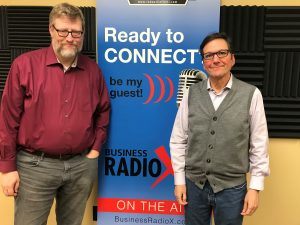

Tagged With: CPa, CPA firm, Dayton accounting, Dayton business advisory, Dayton CPA, Dayton CPA firm, Decision Vision, Employee Engagement, employee relations, Michael Blake, Mike Blake

Tuesdays with Corey Episode 27

January 15, 2020 by angishields

CAB-Incorporated-TWC-Feature-1-14-20
Atlanta Business Radio
Tuesdays with Corey Episode 27
Loading
00:00 /
RSS Feed
Share
Link
Embed

Download file

TWCAB-Incorporated-TWC-Group-1-14-20C-Group-1-14-20

Terri Jondahl joined CAB in 1995 and serves as the CEO of CAB Incorporated and CAB Worldwide Holdings Inc operations in the U.S., South Africa, China, India, Korea and Vietnam. She is the majority shareholder of CAB, which holds certification as a Women’s Business Enterprise. Jondahl has extensive hands-on experience in sales management, financial management, overseas supplier management and production and quality management;

Terri Jondahl is very active in the community, serving on the Executive Board of the Gwinnett Chamber of Commerce (where she served as the 2011 Chair), Board of Directors, Gwinnett Health System, Board of Trustees of the Georgia Gwinnett College Foundation, Gwinnett Medical Foundation and Gwinnett County Public Schools Foundation and several other organizations. She was recently appointed by Governor Nathan Deal to serve on the Lake Lanier Islands Development Authority.

Jondahl has served as the State President of The Texas Federation of Business & Professional Women and President of the Federation of Business and Professional Women in the Ukiah, California and Nacogdoches, Texas regions. Jondahl was honored in the 2008 Atlanta Woman Magazine as one of the “Top 25 Professional Women to Watch.” Jondahl received an A.A. in Business Administration at Mendocino College.

She loves to paint and spend time boating or jet skiing on Lake Lanier.

How to Connect with Terri

  • Website: https://www.cabinc.com/
  • LinkedIn: https://www.linkedin.com/in/terrijondahl/
  • Facebook: https://www.facebook.com/cabincorporated
  • Twitter: https://twitter.com/CABIncorporated

About Your Host

Corey_RieckCorey Rieck is the President and Founder of The Long Term Care Planning Group, a firm that specializes in delivering Long Term Care education and coverage to companies, high net worth individuals and large organizations. Since 2001, Corey has devoted his career to Long Term Care as a result of multiple personal experiences. 

A neutral provider of Long Term Care Solutions since 2001, Corey brings a unique and comprehensive consultative perspective to this issue.  Since 2003, part of his commitment to the Long Term Care Industry includes his having trained over 3,500 advisors from San Francisco to Wall Street on how to properly position Long Term Care to clients through the CLTC organization. Additionally, he has authored dozens of published industry articles on Long Term Care and has assisted many of the nation’s leading LTC carriers on operational and educational matters.

Decision Vision Episode 46: Does My Corporate Culture Need More Humor? – Karyn Buxman, The HumorLab

January 9, 2020 by John Ray

Does My Corporate Culture Need More Humor?
Decision Vision
Decision Vision Episode 46: Does My Corporate Culture Need More Humor? - Karyn Buxman, The HumorLab
Loading
00:00 /
RSS Feed
Share
Link
Embed

Download file

Decision Vision Episode 46:  Does My Corporate Culture Need More Humor? – Karyn Buxman, The HumorLab

Does my corporate culture need more humor? What are the benefits of humor in the workplace? What’s the best way to inject humor while avoiding the risks? Answers to these questions and much more come from neurohumorist Karyn Buxman on this edition of “Decision Vision.” Mike Blake is the host of “Decision Vision,” presented by Brady Ware & Company.

Karyn Buxman, The HumorLab

Karyn Buxman

Karyn Buxman is Founder and President of The HumorLab. The HumorLab is dedicated to serving high performers who have gone from good to great and now want to go from great to world class through the use of strategic humor.

Karyn Buxman is a research-based thought leader on applied humor, whose latest undertakings are her TEDx talk—“How Humor Saved the World”—and her upcoming Forbes book, Funny Means Money. Strategic Humor for Influence & World Domination. As a neurohumorist Karyn’s career resides at the intersection of humor and the brain. She is as masterfully funny, but her passion and calling are sharing the practical benefits of humor.

Karyn is one of 194 professionals (and one of only 43 women) in the world to be inducted into the Speaker Hall of Fame. Karyn speaks internationally to organizations that grasp the important role humor plays in business, health and life. Among her 800+ clients over 25 years are Genentech, State Farm, USDA, Cigna and the Million Dollar Roundtable.

For more information, go to Karyn’s website or You can also download a copy of Karyn’s new book, Funny Means Money, at humorforme.com.

Michael Blake, Brady Ware & Company

Mike Blake, Host of “Decision Vision”

Michael Blake is Host of the “Decision Vision” podcast series and a Director of Brady Ware & Company. Mike specializes in the valuation of intellectual property-driven firms, such as software firms, aerospace firms and professional services firms, most frequently in the capacity as a transaction advisor, helping clients obtain great outcomes from complex transaction opportunities. He is also a specialist in the appraisal of intellectual properties as stand-alone assets, such as software, trade secrets, and patents.

Mike has been a full-time business appraiser for 13 years with public accounting firms, boutique business appraisal firms, and an owner of his own firm. Prior to that, he spent 8 years in venture capital and investment banking, including transactions in the U.S., Israel, Russia, Ukraine, and Belarus.

Brady Ware & Company

Brady Ware & Company is a regional full-service accounting and advisory firm which helps businesses and entrepreneurs make visions a reality. Brady Ware services clients nationally from its offices in Alpharetta, GA; Columbus and Dayton, OH; and Richmond, IN. The firm is growth minded, committed to the regions in which they operate, and most importantly, they make significant investments in their people and service offerings to meet the changing financial needs of those they are privileged to serve. The firm is dedicated to providing results that make a difference for its clients.

Decision Vision Podcast Series

“Decision Vision” is a podcast covering topics and issues facing small business owners and connecting them with solutions from leading experts. This series is presented by Brady Ware & Company. If you are a decision maker for a small business, we’d love to hear from you. Contact us at decisionvision@bradyware.com and make sure to listen to every Thursday to the “Decision Vision” podcast. Past episodes of “Decision Vision” can be found here. “Decision Vision” is produced and broadcast by the North Fulton studio of Business RadioX®.

Visit Brady Ware & Company on social media:

LinkedIn:  https://www.linkedin.com/company/brady-ware/

Facebook: https://www.facebook.com/bradywareCPAs/

Twitter: https://twitter.com/BradyWare

Instagram: https://www.instagram.com/bradywarecompany/

Show Transcript

Intro: [00:00:02] Welcome to Decision Vision, a podcast series focusing on critical business decisions brought to you by Brady Ware & Company. Brady Ware is a regional full-service accounting and advisory that helps businesses and entrepreneurs make visions a reality.

Mike Blake: [00:00:20] And welcome back to Decision Vision, a podcast giving you, the listener, clear vision to make great decisions. In each episode, we discuss the process of decision making on a different topic from the business owners or executives’ perspective. We aren’t necessarily telling you what decision to make, but we can put you in a position to make an informed decision on your own and understand when you might need help along the way.

Mike Blake: [00:00:41] My name is Mike Blake and I’m your host for today’s program. I’m a director at Brady Ware & Company, a full-service accounting firm based in Dayton, Ohio, with offices in Dayton, Columbus, Ohio, Richmond, Indiana, and Alpharetta, Georgia, which is where we’re recording today. Brady Ware is sponsoring this podcast. If you like this podcast, please subscribe on your favorite podcast aggregator and please consider leaving a review of the podcast as well.

Mike Blake: [00:01:05] So, today, we’re going to discuss humor in the workplace and injecting humor into a workplace culture. And I’m sure everybody who is listening to this podcast is thinking, “Well, you work for a CPA firm. That’s a perfect place to start talking about humor in the workplace”, because obviously, we sort of yak it up all day long. We’re just known for that. Although in our defense, I will point out that probably—certainly, the top three comedians, Bob Newhart actually started his career as a CPA.

Mike Blake: [00:01:38] Obviously, the entertainment gig did very well by him, but accountants do produce funny people at least once in a generation, so it can happen. But, you know, I think this topic is so important and so interesting. We’re learning more about the state of mental health in the workplace and we’re learning more about—and this is related to so-called work-life balance and we’re learning about the pressure that we’re under, as we’re always under increasing pressure to kind of do more with less.

Mike Blake: [00:02:15] And, you know, we’re hearing more about people, frankly, kind of struggle to adapt to that. And we struggle to adapt to that. Whether you’re a line worker, whether you’re a cashier, whether you’re middle management, whether you’re executive management, whether you are the owner of the business, there is always something out there that is going to challenge you mentally. And most of us, myself included, feel like there’s something out there, every hour, to challenge us mentally.

Mike Blake: [00:02:46] And it can lead to places, you know, that are humorless places to work. And places that are humorless places to work, as our guest is going to discuss, are neither pleasant nor very effective workplaces. And there’s a fine line, and maybe not so fine line, we’re going to find out that, you know, just because you have a sense of humor and there’s a sense of humor and humoring in the business culture, that does not mean that you don’t take your job seriously.

Mike Blake: [00:03:21] You know, for example, Southwest Airlines is known for encouraging their employees, you go in a Southwest flight, right? Some of those flight attendants could easily be stand-up comedians and maybe they are when they’re not actually on a flight. But I’m also confident that they take flight safety very seriously because they all want to make it home. But I think there’s a misperception. And in my industry, I think particularly if you’re old school, you want to create this image of being sort of the buttoned down, very serious person, because you’re talking about finance, you’re talking about money, you’re talking about financial stability and solvency.

Mike Blake: [00:04:01] And, you know, for some clients, maybe that’s right. For others, maybe it’s not. So, I think we’re going to have a lot of fun. I think there’s a lot to learn from this topic today. And joining us today is an expert on this topic from beautiful San Diego. So, in contrast to Atlanta, where it’s currently 38 and raining and overcast, about three layers of clouds, let me just take a guess, well, it’s 9:00 a.m. there, so it’s probably about 72 and sunny there?

Karyn Buxman: [00:04:34] Well, it’s not quite that warm. I mean, it’s chilly here, it’s probably 64.

Mike Blake: [00:04:39] Oh, okay. Well, hopefully you can throw a sweater on, you’ll be able to pull through it. So, Karyn is founder of the Humor Lab. And the Humor Lab is dedicated to serving high performers who have gone from good to great and now want to go from great to world class with the use of strategic humor. Karyn Buxman is a research-based thought leader in applied humor whose latest undertakings are her TEDx talk, How Humor Saved the World and her upcoming ForbesBook, Funny Makes Money, Strategic Humor for Influence and World Domination.

Mike Blake: [00:05:10] As a neurohumorist, Karyn’s career resides at the intersection of humor and the brain. She is as masterfully funny, but her passion and calling are sharing the practical benefits of humor. Karyn is one of 194 professionals and one of only 43 women in the world to be inducted into the Speaker Hall of Fame. Karyn speaks internationally to organizations that grasp the important role that humor plays in business, health, and life. Among her over 800 clients over 25 years are Genentech, State Farm, now an Atlanta-based company, the US Department of Agriculture, Cigna, and the Million Dollar Roundtable. Karyn, thanks so much for coming on the program.

Karyn Buxman: [00:05:52] Mike, I’m so excited to be here with you.

Mike Blake: [00:05:55] So, Karyn, I’ve got to ask one question right off the bat. I’m tearing up the script, but I know you can handle it. What are the speeches like at the International Speaker Hall of Fame? When somebody gives an induction speech at the Speaker Hall of Fame, what are they like?

Karyn Buxman: [00:06:10] You know, I have to say, it’s really kind of a weird situation because let me put it this way, how many speakers does it take to change a light bulb? Yeah, 100. One can change a light bulb and 99 to sit in the audience going, “That should be me up there on the stage.” And that’s kind of how it is, you know, with the Hall of Fame. But it’s wonderful. I think that’s one of the accomplishments that I most treasure because, you know, it’s one thing when your mom or your spouse says, “Oh, my God, you’re the best thing since Velcro.” But when your peers say that, that’s very, very rewarding. So, I feel very honored to have received that award, that I can have-

Mike Blake: [00:07:01] Yeah. I can imagine.

Karyn Buxman: [00:07:01] … that recognition.

Mike Blake: [00:07:02] Where are they located?

Karyn Buxman: [00:07:06] The National Speakers Association is actually a global organization and their headquarters are located in Tempe, part of Phoenix, in Arizona.

Mike Blake: [00:07:19] Okay. Very good. Because the next time I go to Phoenix, I can visit and see your plaque and your induction speech and all that, I guess.

Karyn Buxman: [00:07:26] Yeah, you know. And I have this little statue, it’s kind of like the Oscars.

Mike Blake: [00:07:30] Sweet.

Karyn Buxman: [00:07:31] And so, that’s sitting on one of my shelves. And so, yeah. But not to take it too seriously, like don’t tell the headquarters I did this because they would probably be agog. But I found online these little outfits that you could get for wine bottles to dress them up, you know, kind of like, I guess, there was one for weddings and there was one for various kinds of holidays, a Santa outfit or a 4th of July outfit that you could put on a wine bottle to gift it. And it fits my statue perfectly. So, periodically, we dress it up.

Mike Blake: [00:08:10] Well, good. And we both know how hard it can be to find something that sits off the rack so that works out well.

Karyn Buxman: [00:08:16] Exactly.

Mike Blake: [00:08:19] So, you categorize yourself as a neurohumorist. What is that?

Karyn Buxman: [00:08:25] Yes. A neurohumorist is one who lives at the intersection of humor and the brain. I have been researching the field of humor within the field of psychoneuroimmunology and positive psychology for thirty years. And over the last decade, I’ve really delved deep into humor and the effects on the brain and vice versa. And it’s just amazing. It really was. It was like the missing piece. And so much of what I have discovered in the last couple of years is what I think makes this so pertinent for you and for your listeners. Because really, so much of the interactions with your listeners and your executive, these are the things that our brain-based.

Karyn Buxman: [00:09:22] And it really helps us get a better understanding of why we behave like we do and why others respond to us like they do and how can we influence that. And so, the brain piece is something that people, you know, up until now had not really looked at. What is the relationship between humor and the brain? But this is the sweet spot. This is really the sweet spot. And so, the people who are listening to us today, both of them, they’re going to be-

Mike Blake: [00:09:56] We had a spike.

Karyn Buxman: [00:09:57] … drawing information that is very cutting edge. This gives them a competitive edge even.

Mike Blake: [00:10:04] So, are you teaching leaders of the Genentechs and State Farms of the world then, you know, how to how to be funny? I don’t know who their CEOs are, but, you know, are they now qualified to do stand-up or what does that look like?

Karyn Buxman: [00:10:23] I’m so happy you asked that because this is the biggest misconception that when I’m teaching people or encouraging people to leverage the power of humor, that what I’m really talking about is entertainment. How do you get other people to laugh? And that is not the case. What I’ve identified are three purposes of humor. And the first purpose of humor is entertainment. And that’s the one that everybody knows and is familiar with.

Karyn Buxman: [00:11:03] And when our purpose is entertainment, we measure our success by laughter. But there’s two other purposes. One of the purposes is influence and the other is well-being. And just in your intro, when you were talking, I thought, “Oh, man. Boom, boom. Both of those are relevant to our listeners today.” And so, with influence, we don’t measure the success of humor and influence by laughter, we measure it by the quality of the relationships that we have.

Karyn Buxman: [00:11:41] And with well-being, we measure the success of applied humor by the levels of health and wellness within areas that are physical, psychological, social, and even spiritual. So, it’s this power of humor when you apply it. And when you apply humor to business, you can create success. When you apply it in profitability, when you apply to education, you can create more knowledge. When you apply it to health, we can create well-being. When you apply humor to an individual situation, we can create even intimacy. And when we apply it to a group, we can create community.

Karyn Buxman: [00:12:28] And so, it goes so far beyond being funny, which is great. Because when I’m talking to high performers, one of the top three push-backs I get is, “What if I’m not funny?” And I say, “Great because you don’t have to be funny”, which I know a bunch of accountants are going, “Oh, my God, thank God, you’re so right on.” I mean, oh, my gosh, Bob Newhart, he just makes me laugh so hard, I cry. And if there is anyone listening who has not ever listened to the piece on Bob Newhart as the psychologist, he’s trying to help a woman stop her OCD habits and phobias, it’s fall down, hysterical.

Karyn Buxman: [00:13:15] So, you know, here we go, we’re not trying to be funny, we’re trying to see funny. We’re trying to raise our awareness, raise our appreciation of humor so that we can experience it more. And in so doing, now, we recognize and can leverage opportunities of humor so that we can use those in our efforts to be more persuasive, be more informative, be more relatable, all of those kinds of things. And so, for everyone listening today, here’s a big takeaway, you don’t have to be the humor initiator, you can be the humor appreciator and you can still gain the benefit of humor in furthering your success.

Mike Blake: [00:14:10] Well, okay. And even if you think about entertainment, right? I mean, Dean Martin and Ed McMahon did pretty well being the straight guys, right?

Karyn Buxman: [00:14:18] Yes. Yes. And when you recognize the power of humor and to leverage humor, you can leverage other people’s humor. You don’t have to be the funny person. You can leverage your client’s humor. You can leverage humor that has to do with your environment. You can leverage humor that’s going on in the news. There’s all different ways that you can use that without ever having to say something funny yourself. Although I will say, if you practice appreciating humor on a regular basis, most people will get funnier. I mean, you can’t help it.

Karyn Buxman: [00:15:05] Here’s a quick little story, because I do entertain audiences, I mean, from 10 to 10,000-plus around the planet and I do make people laugh and I had a gentleman come up to me after one of my presentations and he said, “Oh, my gosh, were you always this funny?” And nobody has ever asked me that before. And I thought, “Yeah, I guess so.” But a couple of months later, I went back home. I met with my mom and I said, “Hey, mom, by the way, was I always funny?” And she looked at me and kind of kept her head thoughtfully and then, she said, “No.” And my mouth dropped up. And she said, “You were always the one with the sunny disposition.”

Karyn Buxman: [00:15:48] And at first, I was a little taken aback. But then, I got excited because what I realized was that because of my research and because I was so excited about the benefits, I was willing to practice more humor. I was willing to take a few more risks because the benefits outweighed the risks. And I became funnier in the process. And so, I think that others can also go down this path of appreciating humor, studying humor, experiencing humor. And eventually, they could be funny, too, if they desire. Not everybody wants to be funny.

Mike Blake: [00:16:30] So, let me share with you an experience we had in our firm. So, when I joined Brady Ware, because I’m a geek and I worked in the really quant jock area of our firm, I decided that we would celebrate Pi Day, which is, of course, March 14th. And we celebrate it promptly at 1:59 p.m. and 27 seconds, right?

Karyn Buxman: [00:16:52] I love it.

Mike Blake: [00:16:53] And so, the first thing we did, I ran out and I bought a bunch of pies. I had a bunch of pies and I was fine. This year, you know, I was told we have a fun committee. Okay. So, nothing says more fun than a committee. But anyway, I went to the committee and I said, “Hey, regarding this Pi Day, do you want to do anything different?” And they said, “You know, what we really like to do is we would like to throw pies at the partners.” And I said, “Okay, well, if you can convince the other partners and partners are in, I’m in.” And to the partners’ credit, they all readily said, “Yeah, I’m in.” Now, none of them, I think, are people that necessarily—I mean, some of them can crack a joke, others are more not the joke crackers. But, you know, everybody stood up there and took their pie lumps for about 15 minutes or so.

Karyn Buxman: [00:17:45] Oh, my God.

Mike Blake: [00:17:46] And I think you can predict what the morale impact on the company was on that exercise. We didn’t say a joke, we didn’t do anything that was funny, but we let ourselves be part of a gag. We let ourselves be the target of a gag.

Karyn Buxman: [00:18:03] Oh, my God, you’ve just opened the—number one, that is awesome. That is an incredible story. And two, let’s break this down. Can we unpack this for a minute?

Mike Blake: [00:18:16] That’s why I brought it up. We’re just going to tear out the script. This may be a three-parter.

Karyn Buxman: [00:18:20] Yes. So, here’s something, let’s unpack this a little bit, because one, you know, I think as we also celebrate Pi Day and then, there was Ultimate Pi Day, which was 3.14.15. And that was like, we’re kind of geeky around that as well. But in allowing your people to be the recipients of the humor, you allowed them to be the recipients of the humor, and in so doing, now, they have shown a little bit of vulnerability.

Karyn Buxman: [00:18:59] And in that vulnerability, this is where we create trust equity. Trust equity. Because earlier, we were talking about brains. And with brains, we have a state when we are leaning toward an individual, when we are connecting with an individual, when our brain chemicals are in a toward state of connection. This is something that facilitates relationship rapport, bonding. But when our brains are in an away state, when your epinephrine is going up and when our cortisol is going up and when our dopamine is going down and serotonin is going down and all these other connecting hormones and proteins, this is when we call this an away state.

Karyn Buxman: [00:19:57] And when we’re in an away state, it can be a low level stress, it can be a fear. The purpose of our brains are to protect us. And so, it’s always looking for threat. And you guys may not want to hear this, but, you know, as somebody who is in the field of managing people’s money, you automatically put someone’s brain in a threat state. I would say anybody who handles someone’s money or somebody’s body, you are working with a clientele whose brain is in an away state, a threat state.

Karyn Buxman: [00:20:37] How do you reverse that? Because if the brain is in an away state and the person’s amygdala is hijacked, you know, you’re not going to be able to inform them. You’re not going to be able to help them. You’re not going to be able to persuade them to the degree that you could if they were in a toward state. And humor creates that toward state. And so, what you did in so doing this exercise was the people who allowed someone to throw pies at them, they’re showing, in a humorous way, some vulnerability. And other people look at that and say, “Wow, that person is a little bit vulnerable. And that means I am safer.” And so, this isn’t even at a conscious level.

Karyn Buxman: [00:21:33] But anybody who would learn about this as a client or as a potential client or customer, that helps create that toward state. And in so doing, even among the team, now, we’ve created a toward state so that people are connecting more, the morale improves, the connectedness improves. And for so many reasons, you facilitated that and you probably didn’t even intentionally know that that was going to be the outcome. But here’s the great thing, now, you do. And with great power comes great responsibility, Mike. So, now, you want to look for other opportunities to create that toward state intentionally, because that’s what strategic humor is about. It’s humor by choice, not by chance.

Mike Blake: [00:22:30] Yeah. So-

Karyn Buxman: [00:22:32] Kudos to you.

Mike Blake: [00:22:32] Well, thank you. You know, it’s actually not that hard to have a pie thrown on your face, so if I can put that on my LinkedIn as a skill, I will. So, let me ask. So, the second part to this then is there is debate as to whether or not we’re going to post the pictures and videos on social media. We decided to do that. Did we do the right thing or wrong thing there?

Karyn Buxman: [00:22:59] It depends. I would say yes. I would say it’s the right thing to do. And I will say that there have been other professions who have posted similar kinds of situations. And occasionally, they get some push-back. But here’s what I would say, I’ve identified seven building blocks that are fundamental to successful humor in terms of influence. And those seven are bond, environments, authenticity, safety, distance and that’s both temporal and geographical content and delivery.

Karyn Buxman: [00:23:44] But the very first one, bond, is one that is so important and one that people often misunderstand. And what you’re asking actually has to do with the first one, bond, and the second one, environment. So, let’s look at this. In terms of bond, the question is, did this move trust equity forward with the people that you were sharing it with? And my guess is, yes, with your target audience, with your avatar, with the people that you know and that know you.

Karyn Buxman: [00:24:23] The biggest mistake that people make when they share humor is to not understand the relationship between themselves and the person they’re sharing the humor with. And our brains are designed as such that at times, we misunderstand or we misperceive how alike we really are. Like, “Oh, well, you know, I’m in Atlanta, he’s in Atlanta, we both like the same sports team, so we probably vote for the same person.” Well, that’s not a good assumption.

Karyn Buxman: [00:25:00] And, you know, we probably like the same kind of humor. Same kind of thing, not necessarily safe to assume. But the more you know your audience and kind of the longer period of time, the more trust equity you’ve built up, the riskier humor can be. But I’m going to stay on bond, I’m going to say yes, with your avatar, that would be totally appropriate. In terms of environment, the question is, has your humor been shared with anybody who is outside of your circle, outside of your group of trust?

Karyn Buxman: [00:25:40] And with social media, that’s harder to control. Because not only can you share it with your group, but they can share it to others outside your group. I’m going to say still, this is benign enough because if we go to the building block of safety, could anybody have been physically or emotionally hurt? You know, there’s a small chance that somebody could have been hurt with a pie in the face. You know, it’s like, well, what if, you know, they left the aluminum part of it on and that hit somebody-

Mike Blake: [00:26:15] Right.

Karyn Buxman: [00:26:15] … on their skin or in their eyeball?

Mike Blake: [00:26:17] Somebody hit you a frozen chicken pot pie, that would not turn out as well.

Karyn Buxman: [00:26:20] Yeah. Yeah. But, you know, could anybody feel bullied or embarrassed? You know, well, there’s a there’s a possibility, but it still feels pretty low if they voluntarily stepped up, pardon the pun to the pie plate. So, with all of those things, I’m going to say that the benefits would outweigh the risks. You know, if somebody is offended, why would they be offended? Because, you know, there’s some kind of a secret organization that is anti pie in the face? I mean, I can’t really even think of it.

Karyn Buxman: [00:26:57] You know, there’s going to be some, they’re like, “Oh, my gosh, is that really professional?” And again, those people have the misunderstanding, somewhere along the way, we confuse professionalism with solemnness. I’m not sure where that happened because we have leaders who are tremendously influential, who are incredibly professional, who are looked upon in the highest regard. You look at, you know, Churchill, you look at Gandhi, you look at President Kennedy and Reagan, I mean, there’s Lincoln, all these people were recognized as influential leaders and professional and yet they had an amazing sense of humor. So, I think that what you did was awesome.

Mike Blake: [00:27:51] So, where is that line or is there a line between, you know, humor and crossing that line to undermining your credibility? Is there some meter or some scale where, you know, you’re trying to be too yak yak and therefore, it’s going to make a little bit—you know, as you’re being wheeled in for brain surgery, do you necessarily want a knock knock joke out of the people in the operating room or, you know,I mean, maybe you do because it’ll take some of the tension out before they drill in your head, I’m not sure. But can you go too far with it?

Karyn Buxman: [00:28:33] This is such a great question and this is why I’m guaranteed, you know, enough work for my lifetime. There is a line, but it’s not a stationary line. That line is moving and it is moving based on those seven building blocks. And I actually have devised a tool where when I’m working with groups or when I’m consulting with someone, we take these situations and we actually break them down. We quantify each of these seven steps so that people can begin to get a feel for, where is that line?

Karyn Buxman: [00:29:17] Because sometimes, we intuitively know it. Sometimes, we misjudge it. And when you do cross that line or fall over that line, you want to pick yourself back up and then, you want to examine what happens. If someone was offended, you want to address that with them. And then, you want to learn from it and do it again. You want to adjust. It’s a scientific process. You know, you create your hypothesis. You put into place an action. And then, you observe, you assess what was the result of that action. And then, you adjust and you repeat.

Karyn Buxman: [00:30:01] And so, these are the kinds of things in terms of that moving line. But I mean, we all know the person who recognized that, “Oh, humor is a good thing, so we’re going to use more humor.” And then, they just become obnoxious because they try to be humorous or funny all the time. You know, I had mentioned earlier that one of the push-backs I get is, “What if I’m not funny?” A second concern that I hear is, “Well, what if everybody’s goofing off? We’ll never get anything done around here.”.

Karyn Buxman: [00:30:33] And here’s the key to this, the key to this is you need to have intentionally your goal, your desired outcome, your standards. And then, you also set the tone for humor. And here’s why, because you pair the two. Because if you only set the tone for high performance and hard work and high aspirations and that’s all that you do, eventually, people assume that the philosophy at work is the firings will continue until morale improves. If you only set the tone for humor without having a high benchmark for performance, then it becomes Animal House. And if anybody here is listening to this and doesn’t know the reference to Animal House and John Belushi, go look that up on YouTube.

Karyn Buxman: [00:31:35] But when you pair the two, now, you have high expectations per performance and you have set the tone for humor. And now, people have a better guideline of where to go. But for leaders to actually mentor their followers, their colleagues, their co-workers, their clients, their students, their family, to mentor others on the appropriate use of humor so that you leverage it and get the most benefits from it, I think, is really to be in a sweet spot.

Mike Blake: [00:32:12] So, let’s dig into this. You know, we’ve talked around this a little bit, but I want to make sure that we hit this hard, because it really is the heart of the topic, which is, you know, what benefits can I expect by creating a—is it fair to call it a humor-centric, if you will, business culture? And I think that’s important, because one of the things about humor is that there is risk. There is risk to humor-

Karyn Buxman: [00:32:41] Yes. Yes.

Mike Blake: [00:32:41] … which is one of the things we admire people who do it well. And if there’s risk, there’s got to be some return on the other end. So, you know, for companies that you’ve helped or have tried to help, you know, what is the carrot that makes it worth the risk of adopting or integrating humor into the culture?

Karyn Buxman: [00:33:00] God, that’s a great question. And I have identified 10 habits of high-performance humor. And one of those habits is risk management. And quite frankly, most of the listeners are in some form of risk management. And, you know, you want to look at, particularly, the seven building blocks that I spoke of and understand how to really embrace those and practice those so that you lower your risk. I think that if you really understand those seven building blocks, you embrace them, you practice them. I think you reduce your risk down to as low as 1 percent.

Karyn Buxman: [00:33:44] You know, there’s always going to be the oddball who comes in with their own agenda and their own backpack filled with all of their complaints and concerns. And it doesn’t matter how carefully you tiptoe, it doesn’t matter even if you’re not using humor, they’re going to find something to be offended about. So, the risks, I think, are worthy of noting and you really do need to include risk management. But in terms of benefits, it’s physiological, psychological, social, all of these things.

Karyn Buxman: [00:34:20] In terms of executives who are listening, I think one of the most exciting benefits that we’ve identified now is the cognitive capacity. The fact is that cognitive capacity, which is more or less a snapshot of your cognitive ability at any given time, we can increase cognitive capacity. And here’s how that works, humor is the connecting of two ideas that are not alike, that are disconnected. And when we connect those two disconnected dots, we create neuroplasticity.

Karyn Buxman: [00:35:06] We’re creating new pathways in our brain. And this creates a cascade effect. Because when we connect the disconnected dots and we create this neuroplasticity, which creates a higher level of cognitive ability, this, in turn, results in a higher level of problem-solving, which, in effect, allows an executive, particularly, your CEO level. They’re the visionaries. They’re the ones that need to have that cognitive capacity that is so high that they can forecast into the future.

Karyn Buxman: [00:35:44] When we did brain studies on people who were experiencing humor, one of the things that my colleague, Dr. Lee Berk, who is a leading researcher up in Loma Linda, discovered was that the brain pattern that we see is inclusive of gamma waves and the gamma wave pattern, which we’ve only been able to measure with digital technology, which has been created in the last decade or so. This is the same gamma wave pattern that we see in people who practice deep meditation and deep mindfulness. And people may say, “Well, so what?” Well, you know, who here couldn’t use more focus? Who couldn’t use a little more productivity? Who couldn’t use a little more creativity? Now, I know for people in accounting, you don’t want to get too wild and crazy for the creativity.

Mike Blake: [00:36:45] We could use more, believe me.

Karyn Buxman: [00:36:49] But these are the benefits cognitively. One of the things that you mentioned in the intro was this can be wearing and tearing on somebody, this field that you’re in. In terms of the financial world, whether it’s in accounting or financial management or whatever area that someone may be in, if they experience any kind of stress, what we have found is that short-term humor is an amazing coping ability. It’s a healthy coping mechanism.

Karyn Buxman: [00:37:22] And when practiced consistently and over time, we find that we can build resilience. And so, who in this field wouldn’t want to benefit from that? Socially, we benefit from bonding, whether that’s with our customer and our client or whether it’s our colleagues, our families, our friends. We find that it also is raising levels of emotion so that for people who are experiencing depression, we can move them up the emotional scale so that eventually they could achieve happiness, you know, at least for periods of time. Well, I think that’s very exciting. Who wouldn’t like a little more happiness? And then, of course, there’s all of the financial benefits that we can recognize.

Karyn Buxman: [00:38:11] Because in a sales process, you know, when we get people in a toward brain state, people make their purchases based on emotions. Logic tells that emotion sells. You can give them all sorts of data. But unless there is some kind of an emotional hook, they’re probably going to continue to shop around and get more information until they find that emotional hook to buy. And so, I would ask who’s in sales and maybe one or two people raise their hands. No, we’re all in sales. Whether you’re trying to sell an idea or sell a concept, sell your services, you know, negotiate a bedtime with a five-year old. Oh, my gosh. Five-year olds are like the most intense negotiators on the planet.

Mike Blake: [00:39:02] I think negotiating the Vietnam peace accord was easier than negotiating the typical bedtime with a five-year old.

Karyn Buxman: [00:39:08] Isn’t that the truth?

Mike Blake: [00:39:09] Henry Kissinger probably had a very hard time getting his kids to bed and that literally prepared him for Vietnam.

Karyn Buxman: [00:39:17] Isn’t that so? Isn’t that so? So, we’re all in sales, which is most people don’t realize it. And so, humor helps with that. You know, it helps with that. For those in positions of leadership, you know, when you read Cialdini’s book on influence and persuasion, you know, the number one influencer that he enlisted is likability. All things being equal, people would rather do business with someone that they find fun, that they find likable, that they find enjoyable. And so, these are some of the few reasons that people would want to start incorporating more humor into their work environment, into their corporate culture, because they’re going to find so many of these benefits come their way when they practice it intentionally and consistently. Those are two key factors that are really, really important to get the benefits.

Mike Blake: [00:40:23] So, good. So, let’s then drill down to the next step. I’m listening to this podcast and I decide that my company would benefit from having more humor integrated into its culture. At a high level, what are the steps to that look like?

Karyn Buxman: [00:40:44] I would encourage people first just to really assess where they are on the scale of both humor appreciation and humor application. I developed an assessment called the Humor Quotient, or HQ. We’ve heard of IQ, EQ, this is HQ. And I’ll give you the thumbnail version of this. And then, for people who would like to learn more about it, there is a download we can tell them about at the end of this conversation that we’re having.

Karyn Buxman: [00:41:22] And the humor quotient measures, again, your appreciation on a scale of one to 10, how easily can you find amusement that results in a smile, a laugh, or feelings of enjoyment. And then, on a scale of one to 10, how readily and how frequently do you apply humor toward a desired outcome intentionally and consistently over time? And we have, you know, a questionnaire that goes into a little more detail than that.

Karyn Buxman: [00:42:07] But first, just get a picture where you are and understand a little bit about that and where there are areas for improvement. I have found that one of the most important steps is the appreciation, because what I started out doing in this process was teaching people how to apply humor, realizing that they didn’t have an appreciation of humor enough to even understand and recognize where those opportunities were for the application.

Karyn Buxman: [00:42:42] And so, you know, I have a process that I take people through. But first of all, I would say manipulate your mindset. Ask yourself, you know, are you finding and experiencing the humor that surrounds you? Now, I’ll tell you, some people are thinking to themselves, “Well, she doesn’t understand. There’s nothing funny. In my life, there’s nothing funny about my work. You know, my family’s not funny, my coworkers aren’t funny. There’s nothing funny.”.

Karyn Buxman: [00:43:13] And I will tell you right now, if that is your belief, that is your reality. Because I’m going to tell you, there’s humor abundant around you the majority of the time. And again, this goes back to our brain process of recognizing it, because there’s a brain formation that’s about the size of your finger and it’s called the reticular activating system. And when you tell your brain that you want to be aware of something, this part of your brain is activated and it will start showing you more of that.

Karyn Buxman: [00:43:50] It’s like, you know, I bought a yellow car and then, you start looking out on the highway and all of a sudden, you see all these yellow cars and you think, “Oh, my gosh, where did these come from? I’ve never seen a yellow car out on the highway before.” But you’re your brain now is raising your awareness to be able to see those. So, start looking for the humor around you and you’re going to find it on a more regular basis. Manipulate your mindset.

Karyn Buxman: [00:44:15] Manipulate your environment is the second thing I would encourage people to do. And that is how can you increase the likelihood of experiencing more humor? What can you do to put in your environment so that you can have it readily available? Do you have humorous books or cues, that’s C-U-E-S, cues, which are a reminder of lightening up. My husband and I love Comic-Con. And anybody who’s ever watched Big Bang Theory would have heard of Comic-Con.

Karyn Buxman: [00:44:53] It’s this huge nerdy conference. 140,000 people over four days here in San Diego. And, you know, cosplay and all that other stuff. But we love that. It makes us smile. It makes us laugh. It makes us feel good. And so, around our house, we have little things from Comic-Con that when we see them, we feel better. How can you do that? You never have to be further than your phone to have humor at your disposal now, there’s apps, there’s websites, there’s social media.

Karyn Buxman: [00:45:24] I keep funny audio books. I bookmark funny videos. And as a last resort, here’s a humor hack. If you’re in a bad mood, you Google laughing babies. It’s like go to YouTube, laughing babies. If you can’t smile when you are watching laughing babies or at least internally have that feeling of amusement, then you need to call me. It’s like we need to work on this. This is an emergency situation. Because anybody with a healthy brain, because of your mirror neurons, you’re going to find some amusement in that and you’re going to feel better.

Karyn Buxman: [00:46:10] But manipulating your mindset and manipulating your environment, finding an accountability partner. I have a partner and every day, we have made a commitment to one another that we’re going to send something to one another. And here was the benefit that I didn’t anticipate, but now, I’m fully enjoying. Every morning, I spend 15 to 20 minutes looking for something that I know she will enjoy and that is appropriate for her.

Karyn Buxman: [00:46:40] But now, what I’m doing is I am starting my day framing it by looking for humor. Do you know how much that positively affects my mood and my outlook for the next part of my day? It’s been a wonderful benefit for me and I thought I was doing it for her. I still get the dopamine hit because I’m doing an act of kindness and paying it forward. But it’s really a double-benefit, I get to do something for her and for myself.

Karyn Buxman: [00:47:18] And I think the last thing that I would tell people, and there’s so much more but because of our time, I would tell them, become a student of humor. That’s another one of the humor habits, is become a student of humor. This is a new field. It’s an exploding field. Compared to other fields, it’s really still very young in its existence. And there are magazines. There are books. There are organizations.

Karyn Buxman: [00:47:46] There’s a nonprofit organization, I have no financial ties to this organization, but the organization is called the Association for Applied and Therapeutic Humor, aath.org. They have all different kinds of articles and resources on their website. I have lots of articles and resources and books and things that I would love to share with people. But find a resource that works for you and study this and then, practice it on a consistent basis. How does that sound? Does that resonate with you?

Mike Blake: [00:48:21] Yeah. And I love the part about, you know, becoming a student of humor. I think if you observe and surround yourself with humor, that’s how you can get good at it. And if you don’t have humor in your life, you don’t know what it looks like. And so, that makes perfect sense.

Karyn Buxman: [00:48:42] Exactly.

Mike Blake: [00:48:42] So, I want to be respectful of your time because you’re just starting your day out there in beautiful San Diego. If somebody wants to learn more about neurohumor and how to integrate it into their business strategically, how can they contact you?

Karyn Buxman: [00:48:58] I love connecting with people on social media, reach out to me on LinkedIn. I think that in the show notes, you may be including some of this. I love connecting with professionals and high performers on LinkedIn and the other areas of social media. My website is karynbuxman.com. But for those who would like to see a sample, this is like, again, a sneak peek of the book that will be coming out with ForbesBooks Fall 2020, the book, Funny Means Money, Strategic Humor for Influence and World Domination.

Karyn Buxman: [00:49:33] We have a download of that available. And that also includes a further description of the humor quotient, along with a lot of the other tools and things that we slightly touched on or didn’t even begin to touch on. And that can be found at the web domain, humorforme, the word humor, H-U-M-O-R-F-O-R-M-E, humorforme.com. And I would love for them to download that sample book, get more information and then, take it from there.

Mike Blake: [00:50:07] Well, good. Thank you so much. That’s going to wrap it up for today’s program. I’d like to thank Karyn Buxman so much for joining us and sharing her expertise with us today. We’ll be exploring a new topic each week. So, please tune in so that when you’re faced with your next executive decision, you have clear vision when making it. If you enjoy these podcasts, please consider leaving a review with your favorite podcast aggregator. It helps people find us so that we can help them. Once again, this is Mike Blake. Our sponsor is Brady Ware & Company. And this has been the Decision Vision podcast.

Tagged With: CPa, CPA firm, credibility, Dayton accounting, Dayton business advisory, Dayton CPA, Dayton CPA firm, Decision Vision, distance, humor, humor in business, humor quotient, humor-centric business culture, Karyn Buxman, laughing babies, laughter, Michael Blake, Mike Blake, neurohumor, neurohumorist, neuroplasticity, the power of laughter at work

  • « Previous Page
  • 1
  • …
  • 70
  • 71
  • 72
  • 73
  • 74
  • …
  • 81
  • Next Page »

Business RadioX ® Network


Our Most Recent Episode

CONNECT WITH US

  • Email
  • Facebook
  • LinkedIn
  • Twitter
  • YouTube

Our Mission

We help local business leaders get the word out about the important work they’re doing to serve their market, their community, and their profession.

We support and celebrate business by sharing positive business stories that traditional media ignores. Some media leans left. Some media leans right. We lean business.


Sponsor a Show

Build Relationships and Grow Your Business. Click here for more details.

Partner With Us

Discover More Here

Terms and Conditions
Privacy Policy

Connect with us

Want to keep up with the latest in pro-business news across the network? Follow us on social media for the latest stories!
  • Email
  • Facebook
  • Google+
  • LinkedIn
  • Twitter
  • YouTube

Business RadioX® Headquarters
1000 Abernathy Rd. NE
Building 400, Suite L-10
Sandy Springs, GA 30328

© 2025 Business RadioX ® · Rainmaker Platform

BRXStudioCoversLA

Wait! Don’t Miss an Episode of LA Business Radio

BRXStudioCoversDENVER

Wait! Don’t Miss an Episode of Denver Business Radio

BRXStudioCoversPENSACOLA

Wait! Don’t Miss an Episode of Pensacola Business Radio

BRXStudioCoversBIRMINGHAM

Wait! Don’t Miss an Episode of Birmingham Business Radio

BRXStudioCoversTALLAHASSEE

Wait! Don’t Miss an Episode of Tallahassee Business Radio

BRXStudioCoversRALEIGH

Wait! Don’t Miss an Episode of Raleigh Business Radio

BRXStudioCoversRICHMONDNoWhite

Wait! Don’t Miss an Episode of Richmond Business Radio

BRXStudioCoversNASHVILLENoWhite

Wait! Don’t Miss an Episode of Nashville Business Radio

BRXStudioCoversDETROIT

Wait! Don’t Miss an Episode of Detroit Business Radio

BRXStudioCoversSTLOUIS

Wait! Don’t Miss an Episode of St. Louis Business Radio

BRXStudioCoversCOLUMBUS-small

Wait! Don’t Miss an Episode of Columbus Business Radio

Coachthecoach-08-08

Wait! Don’t Miss an Episode of Coach the Coach

BRXStudioCoversBAYAREA

Wait! Don’t Miss an Episode of Bay Area Business Radio

BRXStudioCoversCHICAGO

Wait! Don’t Miss an Episode of Chicago Business Radio

Wait! Don’t Miss an Episode of Atlanta Business Radio